
Cut anything you can name.


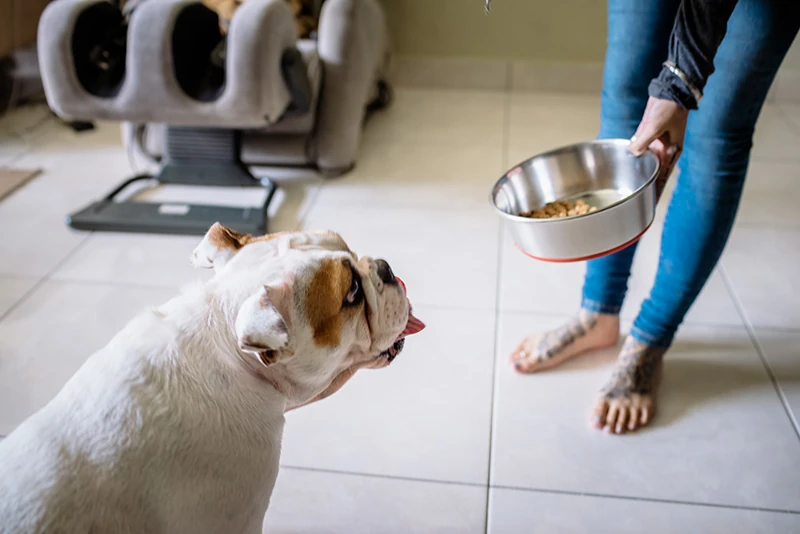 |
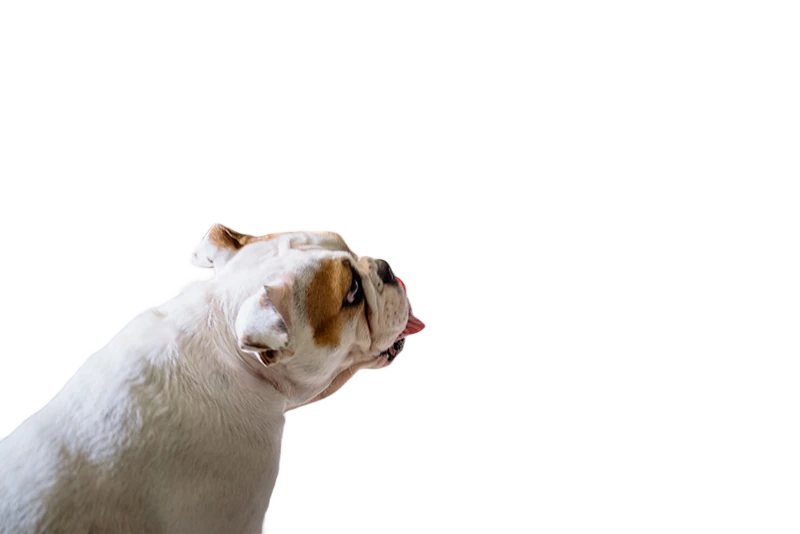 |
 |
 |
input |
"the dog" |
"the dog bowl" |
"the jeans" |
 |
 |
 |
input |
"the cats" |
"the remote" |
 |
 |
input (crop) |
cutout (crop) |
 † No sibling in the training mix. DAVIS-S and DUT-OMRON are the two fully cross-domain splits here,
so they are the pair to read for generalization — and MultiMatte's best absolute score lands on
DAVIS-S at 0.979.
**Naming the concept helps, before and after training.** On DIS-VD, a real human-written phrase adds
0.150 `S_α` to base SAM 3 for zero gradient steps, and still adds 0.036 to MultiMatte after
fine-tuning. Prompt supervision made the model better at both pathways rather than making it
prompt-insensitive.
## Training
| feature | detail |
|:--|:--|
| Base model | [`facebook/sam3`](https://huggingface.co/facebook/sam3), 0.86 B parameters |
| Method | LoRA, rank 16, merged into the released weights |
| Trainable | 19.49 M parameters — 2.27 % of the model |
| Targets | Attention and MLP projections in every tower, including the CLIP text tower |
| Objective | Focal loss + Dice loss (SAM 3's own semantic segmentation objective) |
| Steps | 14,000 |
| Data | 19,953 images: salient objects, camouflage, high-resolution subjects, hair, marine scenes |
| Prompt supervision | 4,949 images (24.8 %) with human-written per-image concept phrases |
| Input resolution | 1008 × 1008 |
## Citation
```bibtex
@note{multimatte2026,
title = {MultiMatte: Cut Out Anything You Can Name},
author = {Hichri, Hafedh and Feyn Research},
year = {2026},
venue = {Feyn Field Notes}
}
```
Please also cite the base model and the adaptation method:
```bibtex
@article{sam3,
title={SAM 3: Segment Anything with Concepts},
author={Carion, Nicolas and Gustafson, Laura and Hu, Yuan-Ting and Debnath, Shoubhik and Hu, Ronghang and Suris, Didac and Ryali, Chaitanya and Alwala, Kalyan Vasudev and Khedr, Haitham and Huang, Andrew and Lei, Jie and Ma, Tengyu and Guo, Baishan and Marks, Markus and Greer, Joseph and Wang, Meng and Sun, Peize and R{\"a}dle, Roman and Afouras, Triantafyllos and Mavroudi, Effrosyni and Dollar, Piotr and Ravi, Nikhila and Saenko, Kate and Zhang, Pengchuan and Feichtenhofer, Christoph},
journal={arXiv preprint arXiv:2511.16719},
year={2025},
url={https://ai.meta.com/research/publications/sam-3-segment-anything-with-concepts/},
}
@article{lora,
title={LoRA: Low-Rank Adaptation of Large Language Models},
author={Hu, Edward J. and Shen, Yelong and Wallis, Phillip and Allen-Zhu, Zeyuan and Li, Yuanzhi and Wang, Shean and Wang, Lu and Chen, Weizhu},
journal={arXiv preprint arXiv:2106.09685},
year={2021},
}
```
## Acknowledgements
Built on Meta's SAM 3. FlowDIS supplied the human-written DIS5K phrases used for training and
evaluation. Thinking Machines' LoRA analysis informed the adapter configuration. Thanks to the
dataset authors whose released work made the training mix and evaluation possible.
† No sibling in the training mix. DAVIS-S and DUT-OMRON are the two fully cross-domain splits here,
so they are the pair to read for generalization — and MultiMatte's best absolute score lands on
DAVIS-S at 0.979.
**Naming the concept helps, before and after training.** On DIS-VD, a real human-written phrase adds
0.150 `S_α` to base SAM 3 for zero gradient steps, and still adds 0.036 to MultiMatte after
fine-tuning. Prompt supervision made the model better at both pathways rather than making it
prompt-insensitive.
## Training
| feature | detail |
|:--|:--|
| Base model | [`facebook/sam3`](https://huggingface.co/facebook/sam3), 0.86 B parameters |
| Method | LoRA, rank 16, merged into the released weights |
| Trainable | 19.49 M parameters — 2.27 % of the model |
| Targets | Attention and MLP projections in every tower, including the CLIP text tower |
| Objective | Focal loss + Dice loss (SAM 3's own semantic segmentation objective) |
| Steps | 14,000 |
| Data | 19,953 images: salient objects, camouflage, high-resolution subjects, hair, marine scenes |
| Prompt supervision | 4,949 images (24.8 %) with human-written per-image concept phrases |
| Input resolution | 1008 × 1008 |
## Citation
```bibtex
@note{multimatte2026,
title = {MultiMatte: Cut Out Anything You Can Name},
author = {Hichri, Hafedh and Feyn Research},
year = {2026},
venue = {Feyn Field Notes}
}
```
Please also cite the base model and the adaptation method:
```bibtex
@article{sam3,
title={SAM 3: Segment Anything with Concepts},
author={Carion, Nicolas and Gustafson, Laura and Hu, Yuan-Ting and Debnath, Shoubhik and Hu, Ronghang and Suris, Didac and Ryali, Chaitanya and Alwala, Kalyan Vasudev and Khedr, Haitham and Huang, Andrew and Lei, Jie and Ma, Tengyu and Guo, Baishan and Marks, Markus and Greer, Joseph and Wang, Meng and Sun, Peize and R{\"a}dle, Roman and Afouras, Triantafyllos and Mavroudi, Effrosyni and Dollar, Piotr and Ravi, Nikhila and Saenko, Kate and Zhang, Pengchuan and Feichtenhofer, Christoph},
journal={arXiv preprint arXiv:2511.16719},
year={2025},
url={https://ai.meta.com/research/publications/sam-3-segment-anything-with-concepts/},
}
@article{lora,
title={LoRA: Low-Rank Adaptation of Large Language Models},
author={Hu, Edward J. and Shen, Yelong and Wallis, Phillip and Allen-Zhu, Zeyuan and Li, Yuanzhi and Wang, Shean and Wang, Lu and Chen, Weizhu},
journal={arXiv preprint arXiv:2106.09685},
year={2021},
}
```
## Acknowledgements
Built on Meta's SAM 3. FlowDIS supplied the human-written DIS5K phrases used for training and
evaluation. Thinking Machines' LoRA analysis informed the adapter configuration. Thanks to the
dataset authors whose released work made the training mix and evaluation possible.