diff --git a/node_modules/victory-vendor/lib-vendor/d3-shape/src/curve/basisClosed.js b/node_modules/victory-vendor/lib-vendor/d3-shape/src/curve/basisClosed.js
new file mode 100644
index 0000000000000000000000000000000000000000..819cddef7d3fcb4954b8de908e9a1b81dfa88cd0
--- /dev/null
+++ b/node_modules/victory-vendor/lib-vendor/d3-shape/src/curve/basisClosed.js
@@ -0,0 +1,70 @@
+"use strict";
+
+Object.defineProperty(exports, "__esModule", {
+ value: true
+});
+exports.default = _default;
+var _noop = _interopRequireDefault(require("../noop.js"));
+var _basis = require("./basis.js");
+function _interopRequireDefault(obj) { return obj && obj.__esModule ? obj : { default: obj }; }
+function BasisClosed(context) {
+ this._context = context;
+}
+BasisClosed.prototype = {
+ areaStart: _noop.default,
+ areaEnd: _noop.default,
+ lineStart: function () {
+ this._x0 = this._x1 = this._x2 = this._x3 = this._x4 = this._y0 = this._y1 = this._y2 = this._y3 = this._y4 = NaN;
+ this._point = 0;
+ },
+ lineEnd: function () {
+ switch (this._point) {
+ case 1:
+ {
+ this._context.moveTo(this._x2, this._y2);
+ this._context.closePath();
+ break;
+ }
+ case 2:
+ {
+ this._context.moveTo((this._x2 + 2 * this._x3) / 3, (this._y2 + 2 * this._y3) / 3);
+ this._context.lineTo((this._x3 + 2 * this._x2) / 3, (this._y3 + 2 * this._y2) / 3);
+ this._context.closePath();
+ break;
+ }
+ case 3:
+ {
+ this.point(this._x2, this._y2);
+ this.point(this._x3, this._y3);
+ this.point(this._x4, this._y4);
+ break;
+ }
+ }
+ },
+ point: function (x, y) {
+ x = +x, y = +y;
+ switch (this._point) {
+ case 0:
+ this._point = 1;
+ this._x2 = x, this._y2 = y;
+ break;
+ case 1:
+ this._point = 2;
+ this._x3 = x, this._y3 = y;
+ break;
+ case 2:
+ this._point = 3;
+ this._x4 = x, this._y4 = y;
+ this._context.moveTo((this._x0 + 4 * this._x1 + x) / 6, (this._y0 + 4 * this._y1 + y) / 6);
+ break;
+ default:
+ (0, _basis.point)(this, x, y);
+ break;
+ }
+ this._x0 = this._x1, this._x1 = x;
+ this._y0 = this._y1, this._y1 = y;
+ }
+};
+function _default(context) {
+ return new BasisClosed(context);
+}
\ No newline at end of file
diff --git a/node_modules/victory-vendor/lib-vendor/d3-shape/src/curve/basisOpen.js b/node_modules/victory-vendor/lib-vendor/d3-shape/src/curve/basisOpen.js
new file mode 100644
index 0000000000000000000000000000000000000000..993a1fc114e89e541f1d8dad878236ed53a4134a
--- /dev/null
+++ b/node_modules/victory-vendor/lib-vendor/d3-shape/src/curve/basisOpen.js
@@ -0,0 +1,54 @@
+"use strict";
+
+Object.defineProperty(exports, "__esModule", {
+ value: true
+});
+exports.default = _default;
+var _basis = require("./basis.js");
+function BasisOpen(context) {
+ this._context = context;
+}
+BasisOpen.prototype = {
+ areaStart: function () {
+ this._line = 0;
+ },
+ areaEnd: function () {
+ this._line = NaN;
+ },
+ lineStart: function () {
+ this._x0 = this._x1 = this._y0 = this._y1 = NaN;
+ this._point = 0;
+ },
+ lineEnd: function () {
+ if (this._line || this._line !== 0 && this._point === 3) this._context.closePath();
+ this._line = 1 - this._line;
+ },
+ point: function (x, y) {
+ x = +x, y = +y;
+ switch (this._point) {
+ case 0:
+ this._point = 1;
+ break;
+ case 1:
+ this._point = 2;
+ break;
+ case 2:
+ this._point = 3;
+ var x0 = (this._x0 + 4 * this._x1 + x) / 6,
+ y0 = (this._y0 + 4 * this._y1 + y) / 6;
+ this._line ? this._context.lineTo(x0, y0) : this._context.moveTo(x0, y0);
+ break;
+ case 3:
+ this._point = 4;
+ // falls through
+ default:
+ (0, _basis.point)(this, x, y);
+ break;
+ }
+ this._x0 = this._x1, this._x1 = x;
+ this._y0 = this._y1, this._y1 = y;
+ }
+};
+function _default(context) {
+ return new BasisOpen(context);
+}
\ No newline at end of file
diff --git a/node_modules/victory-vendor/lib-vendor/d3-shape/src/curve/bump.js b/node_modules/victory-vendor/lib-vendor/d3-shape/src/curve/bump.js
new file mode 100644
index 0000000000000000000000000000000000000000..dd5c5c3ec571c38ebf7dee41f2075d01585a931a
--- /dev/null
+++ b/node_modules/victory-vendor/lib-vendor/d3-shape/src/curve/bump.js
@@ -0,0 +1,80 @@
+"use strict";
+
+Object.defineProperty(exports, "__esModule", {
+ value: true
+});
+exports.bumpRadial = bumpRadial;
+exports.bumpX = bumpX;
+exports.bumpY = bumpY;
+var _pointRadial = _interopRequireDefault(require("../pointRadial.js"));
+function _interopRequireDefault(obj) { return obj && obj.__esModule ? obj : { default: obj }; }
+class Bump {
+ constructor(context, x) {
+ this._context = context;
+ this._x = x;
+ }
+ areaStart() {
+ this._line = 0;
+ }
+ areaEnd() {
+ this._line = NaN;
+ }
+ lineStart() {
+ this._point = 0;
+ }
+ lineEnd() {
+ if (this._line || this._line !== 0 && this._point === 1) this._context.closePath();
+ this._line = 1 - this._line;
+ }
+ point(x, y) {
+ x = +x, y = +y;
+ switch (this._point) {
+ case 0:
+ {
+ this._point = 1;
+ if (this._line) this._context.lineTo(x, y);else this._context.moveTo(x, y);
+ break;
+ }
+ case 1:
+ this._point = 2;
+ // falls through
+ default:
+ {
+ if (this._x) this._context.bezierCurveTo(this._x0 = (this._x0 + x) / 2, this._y0, this._x0, y, x, y);else this._context.bezierCurveTo(this._x0, this._y0 = (this._y0 + y) / 2, x, this._y0, x, y);
+ break;
+ }
+ }
+ this._x0 = x, this._y0 = y;
+ }
+}
+class BumpRadial {
+ constructor(context) {
+ this._context = context;
+ }
+ lineStart() {
+ this._point = 0;
+ }
+ lineEnd() {}
+ point(x, y) {
+ x = +x, y = +y;
+ if (this._point++ === 0) {
+ this._x0 = x, this._y0 = y;
+ } else {
+ const p0 = (0, _pointRadial.default)(this._x0, this._y0);
+ const p1 = (0, _pointRadial.default)(this._x0, this._y0 = (this._y0 + y) / 2);
+ const p2 = (0, _pointRadial.default)(x, this._y0);
+ const p3 = (0, _pointRadial.default)(x, y);
+ this._context.moveTo(...p0);
+ this._context.bezierCurveTo(...p1, ...p2, ...p3);
+ }
+ }
+}
+function bumpX(context) {
+ return new Bump(context, true);
+}
+function bumpY(context) {
+ return new Bump(context, false);
+}
+function bumpRadial(context) {
+ return new BumpRadial(context);
+}
\ No newline at end of file
diff --git a/node_modules/victory-vendor/lib-vendor/d3-shape/src/curve/bundle.js b/node_modules/victory-vendor/lib-vendor/d3-shape/src/curve/bundle.js
new file mode 100644
index 0000000000000000000000000000000000000000..913dc639d77faa0f34596ecd6efa33875d65b3bd
--- /dev/null
+++ b/node_modules/victory-vendor/lib-vendor/d3-shape/src/curve/bundle.js
@@ -0,0 +1,50 @@
+"use strict";
+
+Object.defineProperty(exports, "__esModule", {
+ value: true
+});
+exports.default = void 0;
+var _basis = require("./basis.js");
+function Bundle(context, beta) {
+ this._basis = new _basis.Basis(context);
+ this._beta = beta;
+}
+Bundle.prototype = {
+ lineStart: function () {
+ this._x = [];
+ this._y = [];
+ this._basis.lineStart();
+ },
+ lineEnd: function () {
+ var x = this._x,
+ y = this._y,
+ j = x.length - 1;
+ if (j > 0) {
+ var x0 = x[0],
+ y0 = y[0],
+ dx = x[j] - x0,
+ dy = y[j] - y0,
+ i = -1,
+ t;
+ while (++i <= j) {
+ t = i / j;
+ this._basis.point(this._beta * x[i] + (1 - this._beta) * (x0 + t * dx), this._beta * y[i] + (1 - this._beta) * (y0 + t * dy));
+ }
+ }
+ this._x = this._y = null;
+ this._basis.lineEnd();
+ },
+ point: function (x, y) {
+ this._x.push(+x);
+ this._y.push(+y);
+ }
+};
+var _default = exports.default = function custom(beta) {
+ function bundle(context) {
+ return beta === 1 ? new _basis.Basis(context) : new Bundle(context, beta);
+ }
+ bundle.beta = function (beta) {
+ return custom(+beta);
+ };
+ return bundle;
+}(0.85);
\ No newline at end of file
diff --git a/node_modules/victory-vendor/lib-vendor/d3-shape/src/curve/cardinal.js b/node_modules/victory-vendor/lib-vendor/d3-shape/src/curve/cardinal.js
new file mode 100644
index 0000000000000000000000000000000000000000..408455b401c707e2afaadf68d3448593c4e16bb7
--- /dev/null
+++ b/node_modules/victory-vendor/lib-vendor/d3-shape/src/curve/cardinal.js
@@ -0,0 +1,69 @@
+"use strict";
+
+Object.defineProperty(exports, "__esModule", {
+ value: true
+});
+exports.Cardinal = Cardinal;
+exports.default = void 0;
+exports.point = point;
+function point(that, x, y) {
+ that._context.bezierCurveTo(that._x1 + that._k * (that._x2 - that._x0), that._y1 + that._k * (that._y2 - that._y0), that._x2 + that._k * (that._x1 - x), that._y2 + that._k * (that._y1 - y), that._x2, that._y2);
+}
+function Cardinal(context, tension) {
+ this._context = context;
+ this._k = (1 - tension) / 6;
+}
+Cardinal.prototype = {
+ areaStart: function () {
+ this._line = 0;
+ },
+ areaEnd: function () {
+ this._line = NaN;
+ },
+ lineStart: function () {
+ this._x0 = this._x1 = this._x2 = this._y0 = this._y1 = this._y2 = NaN;
+ this._point = 0;
+ },
+ lineEnd: function () {
+ switch (this._point) {
+ case 2:
+ this._context.lineTo(this._x2, this._y2);
+ break;
+ case 3:
+ point(this, this._x1, this._y1);
+ break;
+ }
+ if (this._line || this._line !== 0 && this._point === 1) this._context.closePath();
+ this._line = 1 - this._line;
+ },
+ point: function (x, y) {
+ x = +x, y = +y;
+ switch (this._point) {
+ case 0:
+ this._point = 1;
+ this._line ? this._context.lineTo(x, y) : this._context.moveTo(x, y);
+ break;
+ case 1:
+ this._point = 2;
+ this._x1 = x, this._y1 = y;
+ break;
+ case 2:
+ this._point = 3;
+ // falls through
+ default:
+ point(this, x, y);
+ break;
+ }
+ this._x0 = this._x1, this._x1 = this._x2, this._x2 = x;
+ this._y0 = this._y1, this._y1 = this._y2, this._y2 = y;
+ }
+};
+var _default = exports.default = function custom(tension) {
+ function cardinal(context) {
+ return new Cardinal(context, tension);
+ }
+ cardinal.tension = function (tension) {
+ return custom(+tension);
+ };
+ return cardinal;
+}(0);
\ No newline at end of file
diff --git a/node_modules/victory-vendor/lib-vendor/d3-shape/src/curve/cardinalClosed.js b/node_modules/victory-vendor/lib-vendor/d3-shape/src/curve/cardinalClosed.js
new file mode 100644
index 0000000000000000000000000000000000000000..7b7a9c7f2c30c029ad855b1a72f3f1d81b8b6fb1
--- /dev/null
+++ b/node_modules/victory-vendor/lib-vendor/d3-shape/src/curve/cardinalClosed.js
@@ -0,0 +1,76 @@
+"use strict";
+
+Object.defineProperty(exports, "__esModule", {
+ value: true
+});
+exports.CardinalClosed = CardinalClosed;
+exports.default = void 0;
+var _noop = _interopRequireDefault(require("../noop.js"));
+var _cardinal = require("./cardinal.js");
+function _interopRequireDefault(obj) { return obj && obj.__esModule ? obj : { default: obj }; }
+function CardinalClosed(context, tension) {
+ this._context = context;
+ this._k = (1 - tension) / 6;
+}
+CardinalClosed.prototype = {
+ areaStart: _noop.default,
+ areaEnd: _noop.default,
+ lineStart: function () {
+ this._x0 = this._x1 = this._x2 = this._x3 = this._x4 = this._x5 = this._y0 = this._y1 = this._y2 = this._y3 = this._y4 = this._y5 = NaN;
+ this._point = 0;
+ },
+ lineEnd: function () {
+ switch (this._point) {
+ case 1:
+ {
+ this._context.moveTo(this._x3, this._y3);
+ this._context.closePath();
+ break;
+ }
+ case 2:
+ {
+ this._context.lineTo(this._x3, this._y3);
+ this._context.closePath();
+ break;
+ }
+ case 3:
+ {
+ this.point(this._x3, this._y3);
+ this.point(this._x4, this._y4);
+ this.point(this._x5, this._y5);
+ break;
+ }
+ }
+ },
+ point: function (x, y) {
+ x = +x, y = +y;
+ switch (this._point) {
+ case 0:
+ this._point = 1;
+ this._x3 = x, this._y3 = y;
+ break;
+ case 1:
+ this._point = 2;
+ this._context.moveTo(this._x4 = x, this._y4 = y);
+ break;
+ case 2:
+ this._point = 3;
+ this._x5 = x, this._y5 = y;
+ break;
+ default:
+ (0, _cardinal.point)(this, x, y);
+ break;
+ }
+ this._x0 = this._x1, this._x1 = this._x2, this._x2 = x;
+ this._y0 = this._y1, this._y1 = this._y2, this._y2 = y;
+ }
+};
+var _default = exports.default = function custom(tension) {
+ function cardinal(context) {
+ return new CardinalClosed(context, tension);
+ }
+ cardinal.tension = function (tension) {
+ return custom(+tension);
+ };
+ return cardinal;
+}(0);
\ No newline at end of file
diff --git a/node_modules/victory-vendor/lib-vendor/d3-shape/src/curve/cardinalOpen.js b/node_modules/victory-vendor/lib-vendor/d3-shape/src/curve/cardinalOpen.js
new file mode 100644
index 0000000000000000000000000000000000000000..f6bb864bec66272e8432666bd7b94d63818723e7
--- /dev/null
+++ b/node_modules/victory-vendor/lib-vendor/d3-shape/src/curve/cardinalOpen.js
@@ -0,0 +1,60 @@
+"use strict";
+
+Object.defineProperty(exports, "__esModule", {
+ value: true
+});
+exports.CardinalOpen = CardinalOpen;
+exports.default = void 0;
+var _cardinal = require("./cardinal.js");
+function CardinalOpen(context, tension) {
+ this._context = context;
+ this._k = (1 - tension) / 6;
+}
+CardinalOpen.prototype = {
+ areaStart: function () {
+ this._line = 0;
+ },
+ areaEnd: function () {
+ this._line = NaN;
+ },
+ lineStart: function () {
+ this._x0 = this._x1 = this._x2 = this._y0 = this._y1 = this._y2 = NaN;
+ this._point = 0;
+ },
+ lineEnd: function () {
+ if (this._line || this._line !== 0 && this._point === 3) this._context.closePath();
+ this._line = 1 - this._line;
+ },
+ point: function (x, y) {
+ x = +x, y = +y;
+ switch (this._point) {
+ case 0:
+ this._point = 1;
+ break;
+ case 1:
+ this._point = 2;
+ break;
+ case 2:
+ this._point = 3;
+ this._line ? this._context.lineTo(this._x2, this._y2) : this._context.moveTo(this._x2, this._y2);
+ break;
+ case 3:
+ this._point = 4;
+ // falls through
+ default:
+ (0, _cardinal.point)(this, x, y);
+ break;
+ }
+ this._x0 = this._x1, this._x1 = this._x2, this._x2 = x;
+ this._y0 = this._y1, this._y1 = this._y2, this._y2 = y;
+ }
+};
+var _default = exports.default = function custom(tension) {
+ function cardinal(context) {
+ return new CardinalOpen(context, tension);
+ }
+ cardinal.tension = function (tension) {
+ return custom(+tension);
+ };
+ return cardinal;
+}(0);
\ No newline at end of file
diff --git a/node_modules/victory-vendor/lib-vendor/d3-shape/src/curve/catmullRom.js b/node_modules/victory-vendor/lib-vendor/d3-shape/src/curve/catmullRom.js
new file mode 100644
index 0000000000000000000000000000000000000000..a1323aca799bcb0e22cff643558e12c2461b32d2
--- /dev/null
+++ b/node_modules/victory-vendor/lib-vendor/d3-shape/src/curve/catmullRom.js
@@ -0,0 +1,92 @@
+"use strict";
+
+Object.defineProperty(exports, "__esModule", {
+ value: true
+});
+exports.default = void 0;
+exports.point = point;
+var _math = require("../math.js");
+var _cardinal = require("./cardinal.js");
+function point(that, x, y) {
+ var x1 = that._x1,
+ y1 = that._y1,
+ x2 = that._x2,
+ y2 = that._y2;
+ if (that._l01_a > _math.epsilon) {
+ var a = 2 * that._l01_2a + 3 * that._l01_a * that._l12_a + that._l12_2a,
+ n = 3 * that._l01_a * (that._l01_a + that._l12_a);
+ x1 = (x1 * a - that._x0 * that._l12_2a + that._x2 * that._l01_2a) / n;
+ y1 = (y1 * a - that._y0 * that._l12_2a + that._y2 * that._l01_2a) / n;
+ }
+ if (that._l23_a > _math.epsilon) {
+ var b = 2 * that._l23_2a + 3 * that._l23_a * that._l12_a + that._l12_2a,
+ m = 3 * that._l23_a * (that._l23_a + that._l12_a);
+ x2 = (x2 * b + that._x1 * that._l23_2a - x * that._l12_2a) / m;
+ y2 = (y2 * b + that._y1 * that._l23_2a - y * that._l12_2a) / m;
+ }
+ that._context.bezierCurveTo(x1, y1, x2, y2, that._x2, that._y2);
+}
+function CatmullRom(context, alpha) {
+ this._context = context;
+ this._alpha = alpha;
+}
+CatmullRom.prototype = {
+ areaStart: function () {
+ this._line = 0;
+ },
+ areaEnd: function () {
+ this._line = NaN;
+ },
+ lineStart: function () {
+ this._x0 = this._x1 = this._x2 = this._y0 = this._y1 = this._y2 = NaN;
+ this._l01_a = this._l12_a = this._l23_a = this._l01_2a = this._l12_2a = this._l23_2a = this._point = 0;
+ },
+ lineEnd: function () {
+ switch (this._point) {
+ case 2:
+ this._context.lineTo(this._x2, this._y2);
+ break;
+ case 3:
+ this.point(this._x2, this._y2);
+ break;
+ }
+ if (this._line || this._line !== 0 && this._point === 1) this._context.closePath();
+ this._line = 1 - this._line;
+ },
+ point: function (x, y) {
+ x = +x, y = +y;
+ if (this._point) {
+ var x23 = this._x2 - x,
+ y23 = this._y2 - y;
+ this._l23_a = Math.sqrt(this._l23_2a = Math.pow(x23 * x23 + y23 * y23, this._alpha));
+ }
+ switch (this._point) {
+ case 0:
+ this._point = 1;
+ this._line ? this._context.lineTo(x, y) : this._context.moveTo(x, y);
+ break;
+ case 1:
+ this._point = 2;
+ break;
+ case 2:
+ this._point = 3;
+ // falls through
+ default:
+ point(this, x, y);
+ break;
+ }
+ this._l01_a = this._l12_a, this._l12_a = this._l23_a;
+ this._l01_2a = this._l12_2a, this._l12_2a = this._l23_2a;
+ this._x0 = this._x1, this._x1 = this._x2, this._x2 = x;
+ this._y0 = this._y1, this._y1 = this._y2, this._y2 = y;
+ }
+};
+var _default = exports.default = function custom(alpha) {
+ function catmullRom(context) {
+ return alpha ? new CatmullRom(context, alpha) : new _cardinal.Cardinal(context, 0);
+ }
+ catmullRom.alpha = function (alpha) {
+ return custom(+alpha);
+ };
+ return catmullRom;
+}(0.5);
\ No newline at end of file
diff --git a/node_modules/victory-vendor/lib-vendor/d3-shape/src/curve/catmullRomClosed.js b/node_modules/victory-vendor/lib-vendor/d3-shape/src/curve/catmullRomClosed.js
new file mode 100644
index 0000000000000000000000000000000000000000..1bbfcce3b4ff46dd51fc1dd3868960799375c748
--- /dev/null
+++ b/node_modules/victory-vendor/lib-vendor/d3-shape/src/curve/catmullRomClosed.js
@@ -0,0 +1,83 @@
+"use strict";
+
+Object.defineProperty(exports, "__esModule", {
+ value: true
+});
+exports.default = void 0;
+var _cardinalClosed = require("./cardinalClosed.js");
+var _noop = _interopRequireDefault(require("../noop.js"));
+var _catmullRom = require("./catmullRom.js");
+function _interopRequireDefault(obj) { return obj && obj.__esModule ? obj : { default: obj }; }
+function CatmullRomClosed(context, alpha) {
+ this._context = context;
+ this._alpha = alpha;
+}
+CatmullRomClosed.prototype = {
+ areaStart: _noop.default,
+ areaEnd: _noop.default,
+ lineStart: function () {
+ this._x0 = this._x1 = this._x2 = this._x3 = this._x4 = this._x5 = this._y0 = this._y1 = this._y2 = this._y3 = this._y4 = this._y5 = NaN;
+ this._l01_a = this._l12_a = this._l23_a = this._l01_2a = this._l12_2a = this._l23_2a = this._point = 0;
+ },
+ lineEnd: function () {
+ switch (this._point) {
+ case 1:
+ {
+ this._context.moveTo(this._x3, this._y3);
+ this._context.closePath();
+ break;
+ }
+ case 2:
+ {
+ this._context.lineTo(this._x3, this._y3);
+ this._context.closePath();
+ break;
+ }
+ case 3:
+ {
+ this.point(this._x3, this._y3);
+ this.point(this._x4, this._y4);
+ this.point(this._x5, this._y5);
+ break;
+ }
+ }
+ },
+ point: function (x, y) {
+ x = +x, y = +y;
+ if (this._point) {
+ var x23 = this._x2 - x,
+ y23 = this._y2 - y;
+ this._l23_a = Math.sqrt(this._l23_2a = Math.pow(x23 * x23 + y23 * y23, this._alpha));
+ }
+ switch (this._point) {
+ case 0:
+ this._point = 1;
+ this._x3 = x, this._y3 = y;
+ break;
+ case 1:
+ this._point = 2;
+ this._context.moveTo(this._x4 = x, this._y4 = y);
+ break;
+ case 2:
+ this._point = 3;
+ this._x5 = x, this._y5 = y;
+ break;
+ default:
+ (0, _catmullRom.point)(this, x, y);
+ break;
+ }
+ this._l01_a = this._l12_a, this._l12_a = this._l23_a;
+ this._l01_2a = this._l12_2a, this._l12_2a = this._l23_2a;
+ this._x0 = this._x1, this._x1 = this._x2, this._x2 = x;
+ this._y0 = this._y1, this._y1 = this._y2, this._y2 = y;
+ }
+};
+var _default = exports.default = function custom(alpha) {
+ function catmullRom(context) {
+ return alpha ? new CatmullRomClosed(context, alpha) : new _cardinalClosed.CardinalClosed(context, 0);
+ }
+ catmullRom.alpha = function (alpha) {
+ return custom(+alpha);
+ };
+ return catmullRom;
+}(0.5);
\ No newline at end of file
diff --git a/node_modules/victory-vendor/lib-vendor/d3-shape/src/curve/catmullRomOpen.js b/node_modules/victory-vendor/lib-vendor/d3-shape/src/curve/catmullRomOpen.js
new file mode 100644
index 0000000000000000000000000000000000000000..35a4a8708222050565c4b30bf8b50024ef70068d
--- /dev/null
+++ b/node_modules/victory-vendor/lib-vendor/d3-shape/src/curve/catmullRomOpen.js
@@ -0,0 +1,67 @@
+"use strict";
+
+Object.defineProperty(exports, "__esModule", {
+ value: true
+});
+exports.default = void 0;
+var _cardinalOpen = require("./cardinalOpen.js");
+var _catmullRom = require("./catmullRom.js");
+function CatmullRomOpen(context, alpha) {
+ this._context = context;
+ this._alpha = alpha;
+}
+CatmullRomOpen.prototype = {
+ areaStart: function () {
+ this._line = 0;
+ },
+ areaEnd: function () {
+ this._line = NaN;
+ },
+ lineStart: function () {
+ this._x0 = this._x1 = this._x2 = this._y0 = this._y1 = this._y2 = NaN;
+ this._l01_a = this._l12_a = this._l23_a = this._l01_2a = this._l12_2a = this._l23_2a = this._point = 0;
+ },
+ lineEnd: function () {
+ if (this._line || this._line !== 0 && this._point === 3) this._context.closePath();
+ this._line = 1 - this._line;
+ },
+ point: function (x, y) {
+ x = +x, y = +y;
+ if (this._point) {
+ var x23 = this._x2 - x,
+ y23 = this._y2 - y;
+ this._l23_a = Math.sqrt(this._l23_2a = Math.pow(x23 * x23 + y23 * y23, this._alpha));
+ }
+ switch (this._point) {
+ case 0:
+ this._point = 1;
+ break;
+ case 1:
+ this._point = 2;
+ break;
+ case 2:
+ this._point = 3;
+ this._line ? this._context.lineTo(this._x2, this._y2) : this._context.moveTo(this._x2, this._y2);
+ break;
+ case 3:
+ this._point = 4;
+ // falls through
+ default:
+ (0, _catmullRom.point)(this, x, y);
+ break;
+ }
+ this._l01_a = this._l12_a, this._l12_a = this._l23_a;
+ this._l01_2a = this._l12_2a, this._l12_2a = this._l23_2a;
+ this._x0 = this._x1, this._x1 = this._x2, this._x2 = x;
+ this._y0 = this._y1, this._y1 = this._y2, this._y2 = y;
+ }
+};
+var _default = exports.default = function custom(alpha) {
+ function catmullRom(context) {
+ return alpha ? new CatmullRomOpen(context, alpha) : new _cardinalOpen.CardinalOpen(context, 0);
+ }
+ catmullRom.alpha = function (alpha) {
+ return custom(+alpha);
+ };
+ return catmullRom;
+}(0.5);
\ No newline at end of file
diff --git a/node_modules/victory-vendor/lib-vendor/d3-shape/src/curve/linear.js b/node_modules/victory-vendor/lib-vendor/d3-shape/src/curve/linear.js
new file mode 100644
index 0000000000000000000000000000000000000000..0dd374187b2a6bb9d21f50b892d4ef7d15998f01
--- /dev/null
+++ b/node_modules/victory-vendor/lib-vendor/d3-shape/src/curve/linear.js
@@ -0,0 +1,42 @@
+"use strict";
+
+Object.defineProperty(exports, "__esModule", {
+ value: true
+});
+exports.default = _default;
+function Linear(context) {
+ this._context = context;
+}
+Linear.prototype = {
+ areaStart: function () {
+ this._line = 0;
+ },
+ areaEnd: function () {
+ this._line = NaN;
+ },
+ lineStart: function () {
+ this._point = 0;
+ },
+ lineEnd: function () {
+ if (this._line || this._line !== 0 && this._point === 1) this._context.closePath();
+ this._line = 1 - this._line;
+ },
+ point: function (x, y) {
+ x = +x, y = +y;
+ switch (this._point) {
+ case 0:
+ this._point = 1;
+ this._line ? this._context.lineTo(x, y) : this._context.moveTo(x, y);
+ break;
+ case 1:
+ this._point = 2;
+ // falls through
+ default:
+ this._context.lineTo(x, y);
+ break;
+ }
+ }
+};
+function _default(context) {
+ return new Linear(context);
+}
\ No newline at end of file
diff --git a/node_modules/victory-vendor/lib-vendor/d3-shape/src/curve/linearClosed.js b/node_modules/victory-vendor/lib-vendor/d3-shape/src/curve/linearClosed.js
new file mode 100644
index 0000000000000000000000000000000000000000..a27cf44024a3527abfc14df36660a676577bca5c
--- /dev/null
+++ b/node_modules/victory-vendor/lib-vendor/d3-shape/src/curve/linearClosed.js
@@ -0,0 +1,28 @@
+"use strict";
+
+Object.defineProperty(exports, "__esModule", {
+ value: true
+});
+exports.default = _default;
+var _noop = _interopRequireDefault(require("../noop.js"));
+function _interopRequireDefault(obj) { return obj && obj.__esModule ? obj : { default: obj }; }
+function LinearClosed(context) {
+ this._context = context;
+}
+LinearClosed.prototype = {
+ areaStart: _noop.default,
+ areaEnd: _noop.default,
+ lineStart: function () {
+ this._point = 0;
+ },
+ lineEnd: function () {
+ if (this._point) this._context.closePath();
+ },
+ point: function (x, y) {
+ x = +x, y = +y;
+ if (this._point) this._context.lineTo(x, y);else this._point = 1, this._context.moveTo(x, y);
+ }
+};
+function _default(context) {
+ return new LinearClosed(context);
+}
\ No newline at end of file
diff --git a/node_modules/victory-vendor/lib-vendor/d3-shape/src/curve/monotone.js b/node_modules/victory-vendor/lib-vendor/d3-shape/src/curve/monotone.js
new file mode 100644
index 0000000000000000000000000000000000000000..b2a9f087c2eec08367fb8fbe7db940b99e78ce0b
--- /dev/null
+++ b/node_modules/victory-vendor/lib-vendor/d3-shape/src/curve/monotone.js
@@ -0,0 +1,121 @@
+"use strict";
+
+Object.defineProperty(exports, "__esModule", {
+ value: true
+});
+exports.monotoneX = monotoneX;
+exports.monotoneY = monotoneY;
+function sign(x) {
+ return x < 0 ? -1 : 1;
+}
+
+// Calculate the slopes of the tangents (Hermite-type interpolation) based on
+// the following paper: Steffen, M. 1990. A Simple Method for Monotonic
+// Interpolation in One Dimension. Astronomy and Astrophysics, Vol. 239, NO.
+// NOV(II), P. 443, 1990.
+function slope3(that, x2, y2) {
+ var h0 = that._x1 - that._x0,
+ h1 = x2 - that._x1,
+ s0 = (that._y1 - that._y0) / (h0 || h1 < 0 && -0),
+ s1 = (y2 - that._y1) / (h1 || h0 < 0 && -0),
+ p = (s0 * h1 + s1 * h0) / (h0 + h1);
+ return (sign(s0) + sign(s1)) * Math.min(Math.abs(s0), Math.abs(s1), 0.5 * Math.abs(p)) || 0;
+}
+
+// Calculate a one-sided slope.
+function slope2(that, t) {
+ var h = that._x1 - that._x0;
+ return h ? (3 * (that._y1 - that._y0) / h - t) / 2 : t;
+}
+
+// According to https://en.wikipedia.org/wiki/Cubic_Hermite_spline#Representations
+// "you can express cubic Hermite interpolation in terms of cubic Bézier curves
+// with respect to the four values p0, p0 + m0 / 3, p1 - m1 / 3, p1".
+function point(that, t0, t1) {
+ var x0 = that._x0,
+ y0 = that._y0,
+ x1 = that._x1,
+ y1 = that._y1,
+ dx = (x1 - x0) / 3;
+ that._context.bezierCurveTo(x0 + dx, y0 + dx * t0, x1 - dx, y1 - dx * t1, x1, y1);
+}
+function MonotoneX(context) {
+ this._context = context;
+}
+MonotoneX.prototype = {
+ areaStart: function () {
+ this._line = 0;
+ },
+ areaEnd: function () {
+ this._line = NaN;
+ },
+ lineStart: function () {
+ this._x0 = this._x1 = this._y0 = this._y1 = this._t0 = NaN;
+ this._point = 0;
+ },
+ lineEnd: function () {
+ switch (this._point) {
+ case 2:
+ this._context.lineTo(this._x1, this._y1);
+ break;
+ case 3:
+ point(this, this._t0, slope2(this, this._t0));
+ break;
+ }
+ if (this._line || this._line !== 0 && this._point === 1) this._context.closePath();
+ this._line = 1 - this._line;
+ },
+ point: function (x, y) {
+ var t1 = NaN;
+ x = +x, y = +y;
+ if (x === this._x1 && y === this._y1) return; // Ignore coincident points.
+ switch (this._point) {
+ case 0:
+ this._point = 1;
+ this._line ? this._context.lineTo(x, y) : this._context.moveTo(x, y);
+ break;
+ case 1:
+ this._point = 2;
+ break;
+ case 2:
+ this._point = 3;
+ point(this, slope2(this, t1 = slope3(this, x, y)), t1);
+ break;
+ default:
+ point(this, this._t0, t1 = slope3(this, x, y));
+ break;
+ }
+ this._x0 = this._x1, this._x1 = x;
+ this._y0 = this._y1, this._y1 = y;
+ this._t0 = t1;
+ }
+};
+function MonotoneY(context) {
+ this._context = new ReflectContext(context);
+}
+(MonotoneY.prototype = Object.create(MonotoneX.prototype)).point = function (x, y) {
+ MonotoneX.prototype.point.call(this, y, x);
+};
+function ReflectContext(context) {
+ this._context = context;
+}
+ReflectContext.prototype = {
+ moveTo: function (x, y) {
+ this._context.moveTo(y, x);
+ },
+ closePath: function () {
+ this._context.closePath();
+ },
+ lineTo: function (x, y) {
+ this._context.lineTo(y, x);
+ },
+ bezierCurveTo: function (x1, y1, x2, y2, x, y) {
+ this._context.bezierCurveTo(y1, x1, y2, x2, y, x);
+ }
+};
+function monotoneX(context) {
+ return new MonotoneX(context);
+}
+function monotoneY(context) {
+ return new MonotoneY(context);
+}
\ No newline at end of file
diff --git a/node_modules/victory-vendor/lib-vendor/d3-shape/src/curve/natural.js b/node_modules/victory-vendor/lib-vendor/d3-shape/src/curve/natural.js
new file mode 100644
index 0000000000000000000000000000000000000000..a5bd1caf0d60d3f3d4b7c23066194bbd5de57a04
--- /dev/null
+++ b/node_modules/victory-vendor/lib-vendor/d3-shape/src/curve/natural.js
@@ -0,0 +1,67 @@
+"use strict";
+
+Object.defineProperty(exports, "__esModule", {
+ value: true
+});
+exports.default = _default;
+function Natural(context) {
+ this._context = context;
+}
+Natural.prototype = {
+ areaStart: function () {
+ this._line = 0;
+ },
+ areaEnd: function () {
+ this._line = NaN;
+ },
+ lineStart: function () {
+ this._x = [];
+ this._y = [];
+ },
+ lineEnd: function () {
+ var x = this._x,
+ y = this._y,
+ n = x.length;
+ if (n) {
+ this._line ? this._context.lineTo(x[0], y[0]) : this._context.moveTo(x[0], y[0]);
+ if (n === 2) {
+ this._context.lineTo(x[1], y[1]);
+ } else {
+ var px = controlPoints(x),
+ py = controlPoints(y);
+ for (var i0 = 0, i1 = 1; i1 < n; ++i0, ++i1) {
+ this._context.bezierCurveTo(px[0][i0], py[0][i0], px[1][i0], py[1][i0], x[i1], y[i1]);
+ }
+ }
+ }
+ if (this._line || this._line !== 0 && n === 1) this._context.closePath();
+ this._line = 1 - this._line;
+ this._x = this._y = null;
+ },
+ point: function (x, y) {
+ this._x.push(+x);
+ this._y.push(+y);
+ }
+};
+
+// See https://www.particleincell.com/2012/bezier-splines/ for derivation.
+function controlPoints(x) {
+ var i,
+ n = x.length - 1,
+ m,
+ a = new Array(n),
+ b = new Array(n),
+ r = new Array(n);
+ a[0] = 0, b[0] = 2, r[0] = x[0] + 2 * x[1];
+ for (i = 1; i < n - 1; ++i) a[i] = 1, b[i] = 4, r[i] = 4 * x[i] + 2 * x[i + 1];
+ a[n - 1] = 2, b[n - 1] = 7, r[n - 1] = 8 * x[n - 1] + x[n];
+ for (i = 1; i < n; ++i) m = a[i] / b[i - 1], b[i] -= m, r[i] -= m * r[i - 1];
+ a[n - 1] = r[n - 1] / b[n - 1];
+ for (i = n - 2; i >= 0; --i) a[i] = (r[i] - a[i + 1]) / b[i];
+ b[n - 1] = (x[n] + a[n - 1]) / 2;
+ for (i = 0; i < n - 1; ++i) b[i] = 2 * x[i + 1] - a[i + 1];
+ return [a, b];
+}
+function _default(context) {
+ return new Natural(context);
+}
\ No newline at end of file
diff --git a/node_modules/victory-vendor/lib-vendor/d3-shape/src/curve/radial.js b/node_modules/victory-vendor/lib-vendor/d3-shape/src/curve/radial.js
new file mode 100644
index 0000000000000000000000000000000000000000..47dc3fe4cd999570ff5c35d0254390a9fb961669
--- /dev/null
+++ b/node_modules/victory-vendor/lib-vendor/d3-shape/src/curve/radial.js
@@ -0,0 +1,37 @@
+"use strict";
+
+Object.defineProperty(exports, "__esModule", {
+ value: true
+});
+exports.curveRadialLinear = void 0;
+exports.default = curveRadial;
+var _linear = _interopRequireDefault(require("./linear.js"));
+function _interopRequireDefault(obj) { return obj && obj.__esModule ? obj : { default: obj }; }
+var curveRadialLinear = exports.curveRadialLinear = curveRadial(_linear.default);
+function Radial(curve) {
+ this._curve = curve;
+}
+Radial.prototype = {
+ areaStart: function () {
+ this._curve.areaStart();
+ },
+ areaEnd: function () {
+ this._curve.areaEnd();
+ },
+ lineStart: function () {
+ this._curve.lineStart();
+ },
+ lineEnd: function () {
+ this._curve.lineEnd();
+ },
+ point: function (a, r) {
+ this._curve.point(r * Math.sin(a), r * -Math.cos(a));
+ }
+};
+function curveRadial(curve) {
+ function radial(context) {
+ return new Radial(curve(context));
+ }
+ radial._curve = curve;
+ return radial;
+}
\ No newline at end of file
diff --git a/node_modules/victory-vendor/lib-vendor/d3-shape/src/curve/step.js b/node_modules/victory-vendor/lib-vendor/d3-shape/src/curve/step.js
new file mode 100644
index 0000000000000000000000000000000000000000..faba07377ca25112946dd89dfc7fe6e81cad63a2
--- /dev/null
+++ b/node_modules/victory-vendor/lib-vendor/d3-shape/src/curve/step.js
@@ -0,0 +1,63 @@
+"use strict";
+
+Object.defineProperty(exports, "__esModule", {
+ value: true
+});
+exports.default = _default;
+exports.stepAfter = stepAfter;
+exports.stepBefore = stepBefore;
+function Step(context, t) {
+ this._context = context;
+ this._t = t;
+}
+Step.prototype = {
+ areaStart: function () {
+ this._line = 0;
+ },
+ areaEnd: function () {
+ this._line = NaN;
+ },
+ lineStart: function () {
+ this._x = this._y = NaN;
+ this._point = 0;
+ },
+ lineEnd: function () {
+ if (0 < this._t && this._t < 1 && this._point === 2) this._context.lineTo(this._x, this._y);
+ if (this._line || this._line !== 0 && this._point === 1) this._context.closePath();
+ if (this._line >= 0) this._t = 1 - this._t, this._line = 1 - this._line;
+ },
+ point: function (x, y) {
+ x = +x, y = +y;
+ switch (this._point) {
+ case 0:
+ this._point = 1;
+ this._line ? this._context.lineTo(x, y) : this._context.moveTo(x, y);
+ break;
+ case 1:
+ this._point = 2;
+ // falls through
+ default:
+ {
+ if (this._t <= 0) {
+ this._context.lineTo(this._x, y);
+ this._context.lineTo(x, y);
+ } else {
+ var x1 = this._x * (1 - this._t) + x * this._t;
+ this._context.lineTo(x1, this._y);
+ this._context.lineTo(x1, y);
+ }
+ break;
+ }
+ }
+ this._x = x, this._y = y;
+ }
+};
+function _default(context) {
+ return new Step(context, 0.5);
+}
+function stepBefore(context) {
+ return new Step(context, 0);
+}
+function stepAfter(context) {
+ return new Step(context, 1);
+}
\ No newline at end of file
diff --git a/node_modules/victory-vendor/lib-vendor/d3-shape/src/descending.js b/node_modules/victory-vendor/lib-vendor/d3-shape/src/descending.js
new file mode 100644
index 0000000000000000000000000000000000000000..6df215954b0e2a000af04c5890dac944e4b32bd6
--- /dev/null
+++ b/node_modules/victory-vendor/lib-vendor/d3-shape/src/descending.js
@@ -0,0 +1,9 @@
+"use strict";
+
+Object.defineProperty(exports, "__esModule", {
+ value: true
+});
+exports.default = _default;
+function _default(a, b) {
+ return b < a ? -1 : b > a ? 1 : b >= a ? 0 : NaN;
+}
\ No newline at end of file
diff --git a/node_modules/victory-vendor/lib-vendor/d3-shape/src/identity.js b/node_modules/victory-vendor/lib-vendor/d3-shape/src/identity.js
new file mode 100644
index 0000000000000000000000000000000000000000..66d957a7cc5a6120009ba9c3405dfef5ad24b9e0
--- /dev/null
+++ b/node_modules/victory-vendor/lib-vendor/d3-shape/src/identity.js
@@ -0,0 +1,9 @@
+"use strict";
+
+Object.defineProperty(exports, "__esModule", {
+ value: true
+});
+exports.default = _default;
+function _default(d) {
+ return d;
+}
\ No newline at end of file
diff --git a/node_modules/victory-vendor/lib-vendor/d3-shape/src/index.js b/node_modules/victory-vendor/lib-vendor/d3-shape/src/index.js
new file mode 100644
index 0000000000000000000000000000000000000000..f1681506ff78ff8705d1d62079bf8a95baf78944
--- /dev/null
+++ b/node_modules/victory-vendor/lib-vendor/d3-shape/src/index.js
@@ -0,0 +1,430 @@
+"use strict";
+
+Object.defineProperty(exports, "__esModule", {
+ value: true
+});
+Object.defineProperty(exports, "arc", {
+ enumerable: true,
+ get: function () {
+ return _arc.default;
+ }
+});
+Object.defineProperty(exports, "area", {
+ enumerable: true,
+ get: function () {
+ return _area.default;
+ }
+});
+Object.defineProperty(exports, "areaRadial", {
+ enumerable: true,
+ get: function () {
+ return _areaRadial.default;
+ }
+});
+Object.defineProperty(exports, "curveBasis", {
+ enumerable: true,
+ get: function () {
+ return _basis.default;
+ }
+});
+Object.defineProperty(exports, "curveBasisClosed", {
+ enumerable: true,
+ get: function () {
+ return _basisClosed.default;
+ }
+});
+Object.defineProperty(exports, "curveBasisOpen", {
+ enumerable: true,
+ get: function () {
+ return _basisOpen.default;
+ }
+});
+Object.defineProperty(exports, "curveBumpX", {
+ enumerable: true,
+ get: function () {
+ return _bump.bumpX;
+ }
+});
+Object.defineProperty(exports, "curveBumpY", {
+ enumerable: true,
+ get: function () {
+ return _bump.bumpY;
+ }
+});
+Object.defineProperty(exports, "curveBundle", {
+ enumerable: true,
+ get: function () {
+ return _bundle.default;
+ }
+});
+Object.defineProperty(exports, "curveCardinal", {
+ enumerable: true,
+ get: function () {
+ return _cardinal.default;
+ }
+});
+Object.defineProperty(exports, "curveCardinalClosed", {
+ enumerable: true,
+ get: function () {
+ return _cardinalClosed.default;
+ }
+});
+Object.defineProperty(exports, "curveCardinalOpen", {
+ enumerable: true,
+ get: function () {
+ return _cardinalOpen.default;
+ }
+});
+Object.defineProperty(exports, "curveCatmullRom", {
+ enumerable: true,
+ get: function () {
+ return _catmullRom.default;
+ }
+});
+Object.defineProperty(exports, "curveCatmullRomClosed", {
+ enumerable: true,
+ get: function () {
+ return _catmullRomClosed.default;
+ }
+});
+Object.defineProperty(exports, "curveCatmullRomOpen", {
+ enumerable: true,
+ get: function () {
+ return _catmullRomOpen.default;
+ }
+});
+Object.defineProperty(exports, "curveLinear", {
+ enumerable: true,
+ get: function () {
+ return _linear.default;
+ }
+});
+Object.defineProperty(exports, "curveLinearClosed", {
+ enumerable: true,
+ get: function () {
+ return _linearClosed.default;
+ }
+});
+Object.defineProperty(exports, "curveMonotoneX", {
+ enumerable: true,
+ get: function () {
+ return _monotone.monotoneX;
+ }
+});
+Object.defineProperty(exports, "curveMonotoneY", {
+ enumerable: true,
+ get: function () {
+ return _monotone.monotoneY;
+ }
+});
+Object.defineProperty(exports, "curveNatural", {
+ enumerable: true,
+ get: function () {
+ return _natural.default;
+ }
+});
+Object.defineProperty(exports, "curveStep", {
+ enumerable: true,
+ get: function () {
+ return _step.default;
+ }
+});
+Object.defineProperty(exports, "curveStepAfter", {
+ enumerable: true,
+ get: function () {
+ return _step.stepAfter;
+ }
+});
+Object.defineProperty(exports, "curveStepBefore", {
+ enumerable: true,
+ get: function () {
+ return _step.stepBefore;
+ }
+});
+Object.defineProperty(exports, "line", {
+ enumerable: true,
+ get: function () {
+ return _line.default;
+ }
+});
+Object.defineProperty(exports, "lineRadial", {
+ enumerable: true,
+ get: function () {
+ return _lineRadial.default;
+ }
+});
+Object.defineProperty(exports, "link", {
+ enumerable: true,
+ get: function () {
+ return _link.link;
+ }
+});
+Object.defineProperty(exports, "linkHorizontal", {
+ enumerable: true,
+ get: function () {
+ return _link.linkHorizontal;
+ }
+});
+Object.defineProperty(exports, "linkRadial", {
+ enumerable: true,
+ get: function () {
+ return _link.linkRadial;
+ }
+});
+Object.defineProperty(exports, "linkVertical", {
+ enumerable: true,
+ get: function () {
+ return _link.linkVertical;
+ }
+});
+Object.defineProperty(exports, "pie", {
+ enumerable: true,
+ get: function () {
+ return _pie.default;
+ }
+});
+Object.defineProperty(exports, "pointRadial", {
+ enumerable: true,
+ get: function () {
+ return _pointRadial.default;
+ }
+});
+Object.defineProperty(exports, "radialArea", {
+ enumerable: true,
+ get: function () {
+ return _areaRadial.default;
+ }
+});
+Object.defineProperty(exports, "radialLine", {
+ enumerable: true,
+ get: function () {
+ return _lineRadial.default;
+ }
+});
+Object.defineProperty(exports, "stack", {
+ enumerable: true,
+ get: function () {
+ return _stack.default;
+ }
+});
+Object.defineProperty(exports, "stackOffsetDiverging", {
+ enumerable: true,
+ get: function () {
+ return _diverging.default;
+ }
+});
+Object.defineProperty(exports, "stackOffsetExpand", {
+ enumerable: true,
+ get: function () {
+ return _expand.default;
+ }
+});
+Object.defineProperty(exports, "stackOffsetNone", {
+ enumerable: true,
+ get: function () {
+ return _none.default;
+ }
+});
+Object.defineProperty(exports, "stackOffsetSilhouette", {
+ enumerable: true,
+ get: function () {
+ return _silhouette.default;
+ }
+});
+Object.defineProperty(exports, "stackOffsetWiggle", {
+ enumerable: true,
+ get: function () {
+ return _wiggle.default;
+ }
+});
+Object.defineProperty(exports, "stackOrderAppearance", {
+ enumerable: true,
+ get: function () {
+ return _appearance.default;
+ }
+});
+Object.defineProperty(exports, "stackOrderAscending", {
+ enumerable: true,
+ get: function () {
+ return _ascending.default;
+ }
+});
+Object.defineProperty(exports, "stackOrderDescending", {
+ enumerable: true,
+ get: function () {
+ return _descending.default;
+ }
+});
+Object.defineProperty(exports, "stackOrderInsideOut", {
+ enumerable: true,
+ get: function () {
+ return _insideOut.default;
+ }
+});
+Object.defineProperty(exports, "stackOrderNone", {
+ enumerable: true,
+ get: function () {
+ return _none2.default;
+ }
+});
+Object.defineProperty(exports, "stackOrderReverse", {
+ enumerable: true,
+ get: function () {
+ return _reverse.default;
+ }
+});
+Object.defineProperty(exports, "symbol", {
+ enumerable: true,
+ get: function () {
+ return _symbol.default;
+ }
+});
+Object.defineProperty(exports, "symbolAsterisk", {
+ enumerable: true,
+ get: function () {
+ return _asterisk.default;
+ }
+});
+Object.defineProperty(exports, "symbolCircle", {
+ enumerable: true,
+ get: function () {
+ return _circle.default;
+ }
+});
+Object.defineProperty(exports, "symbolCross", {
+ enumerable: true,
+ get: function () {
+ return _cross.default;
+ }
+});
+Object.defineProperty(exports, "symbolDiamond", {
+ enumerable: true,
+ get: function () {
+ return _diamond.default;
+ }
+});
+Object.defineProperty(exports, "symbolDiamond2", {
+ enumerable: true,
+ get: function () {
+ return _diamond2.default;
+ }
+});
+Object.defineProperty(exports, "symbolPlus", {
+ enumerable: true,
+ get: function () {
+ return _plus.default;
+ }
+});
+Object.defineProperty(exports, "symbolSquare", {
+ enumerable: true,
+ get: function () {
+ return _square.default;
+ }
+});
+Object.defineProperty(exports, "symbolSquare2", {
+ enumerable: true,
+ get: function () {
+ return _square2.default;
+ }
+});
+Object.defineProperty(exports, "symbolStar", {
+ enumerable: true,
+ get: function () {
+ return _star.default;
+ }
+});
+Object.defineProperty(exports, "symbolTriangle", {
+ enumerable: true,
+ get: function () {
+ return _triangle.default;
+ }
+});
+Object.defineProperty(exports, "symbolTriangle2", {
+ enumerable: true,
+ get: function () {
+ return _triangle2.default;
+ }
+});
+Object.defineProperty(exports, "symbolWye", {
+ enumerable: true,
+ get: function () {
+ return _wye.default;
+ }
+});
+Object.defineProperty(exports, "symbolX", {
+ enumerable: true,
+ get: function () {
+ return _x.default;
+ }
+});
+Object.defineProperty(exports, "symbols", {
+ enumerable: true,
+ get: function () {
+ return _symbol.symbolsFill;
+ }
+});
+Object.defineProperty(exports, "symbolsFill", {
+ enumerable: true,
+ get: function () {
+ return _symbol.symbolsFill;
+ }
+});
+Object.defineProperty(exports, "symbolsStroke", {
+ enumerable: true,
+ get: function () {
+ return _symbol.symbolsStroke;
+ }
+});
+var _arc = _interopRequireDefault(require("./arc.js"));
+var _area = _interopRequireDefault(require("./area.js"));
+var _line = _interopRequireDefault(require("./line.js"));
+var _pie = _interopRequireDefault(require("./pie.js"));
+var _areaRadial = _interopRequireDefault(require("./areaRadial.js"));
+var _lineRadial = _interopRequireDefault(require("./lineRadial.js"));
+var _pointRadial = _interopRequireDefault(require("./pointRadial.js"));
+var _link = require("./link.js");
+var _symbol = _interopRequireWildcard(require("./symbol.js"));
+var _asterisk = _interopRequireDefault(require("./symbol/asterisk.js"));
+var _circle = _interopRequireDefault(require("./symbol/circle.js"));
+var _cross = _interopRequireDefault(require("./symbol/cross.js"));
+var _diamond = _interopRequireDefault(require("./symbol/diamond.js"));
+var _diamond2 = _interopRequireDefault(require("./symbol/diamond2.js"));
+var _plus = _interopRequireDefault(require("./symbol/plus.js"));
+var _square = _interopRequireDefault(require("./symbol/square.js"));
+var _square2 = _interopRequireDefault(require("./symbol/square2.js"));
+var _star = _interopRequireDefault(require("./symbol/star.js"));
+var _triangle = _interopRequireDefault(require("./symbol/triangle.js"));
+var _triangle2 = _interopRequireDefault(require("./symbol/triangle2.js"));
+var _wye = _interopRequireDefault(require("./symbol/wye.js"));
+var _x = _interopRequireDefault(require("./symbol/x.js"));
+var _basisClosed = _interopRequireDefault(require("./curve/basisClosed.js"));
+var _basisOpen = _interopRequireDefault(require("./curve/basisOpen.js"));
+var _basis = _interopRequireDefault(require("./curve/basis.js"));
+var _bump = require("./curve/bump.js");
+var _bundle = _interopRequireDefault(require("./curve/bundle.js"));
+var _cardinalClosed = _interopRequireDefault(require("./curve/cardinalClosed.js"));
+var _cardinalOpen = _interopRequireDefault(require("./curve/cardinalOpen.js"));
+var _cardinal = _interopRequireDefault(require("./curve/cardinal.js"));
+var _catmullRomClosed = _interopRequireDefault(require("./curve/catmullRomClosed.js"));
+var _catmullRomOpen = _interopRequireDefault(require("./curve/catmullRomOpen.js"));
+var _catmullRom = _interopRequireDefault(require("./curve/catmullRom.js"));
+var _linearClosed = _interopRequireDefault(require("./curve/linearClosed.js"));
+var _linear = _interopRequireDefault(require("./curve/linear.js"));
+var _monotone = require("./curve/monotone.js");
+var _natural = _interopRequireDefault(require("./curve/natural.js"));
+var _step = _interopRequireWildcard(require("./curve/step.js"));
+var _stack = _interopRequireDefault(require("./stack.js"));
+var _expand = _interopRequireDefault(require("./offset/expand.js"));
+var _diverging = _interopRequireDefault(require("./offset/diverging.js"));
+var _none = _interopRequireDefault(require("./offset/none.js"));
+var _silhouette = _interopRequireDefault(require("./offset/silhouette.js"));
+var _wiggle = _interopRequireDefault(require("./offset/wiggle.js"));
+var _appearance = _interopRequireDefault(require("./order/appearance.js"));
+var _ascending = _interopRequireDefault(require("./order/ascending.js"));
+var _descending = _interopRequireDefault(require("./order/descending.js"));
+var _insideOut = _interopRequireDefault(require("./order/insideOut.js"));
+var _none2 = _interopRequireDefault(require("./order/none.js"));
+var _reverse = _interopRequireDefault(require("./order/reverse.js"));
+function _getRequireWildcardCache(e) { if ("function" != typeof WeakMap) return null; var r = new WeakMap(), t = new WeakMap(); return (_getRequireWildcardCache = function (e) { return e ? t : r; })(e); }
+function _interopRequireWildcard(e, r) { if (!r && e && e.__esModule) return e; if (null === e || "object" != typeof e && "function" != typeof e) return { default: e }; var t = _getRequireWildcardCache(r); if (t && t.has(e)) return t.get(e); var n = { __proto__: null }, a = Object.defineProperty && Object.getOwnPropertyDescriptor; for (var u in e) if ("default" !== u && Object.prototype.hasOwnProperty.call(e, u)) { var i = a ? Object.getOwnPropertyDescriptor(e, u) : null; i && (i.get || i.set) ? Object.defineProperty(n, u, i) : n[u] = e[u]; } return n.default = e, t && t.set(e, n), n; }
+function _interopRequireDefault(obj) { return obj && obj.__esModule ? obj : { default: obj }; }
\ No newline at end of file
diff --git a/node_modules/victory-vendor/lib-vendor/d3-shape/src/line.js b/node_modules/victory-vendor/lib-vendor/d3-shape/src/line.js
new file mode 100644
index 0000000000000000000000000000000000000000..98bbcd8d3abec5b72c660e3ab1f25ab43e9ee55a
--- /dev/null
+++ b/node_modules/victory-vendor/lib-vendor/d3-shape/src/line.js
@@ -0,0 +1,51 @@
+"use strict";
+
+Object.defineProperty(exports, "__esModule", {
+ value: true
+});
+exports.default = _default;
+var _index = require("../../../lib-vendor/d3-path/src/index.js");
+var _array = _interopRequireDefault(require("./array.js"));
+var _constant = _interopRequireDefault(require("./constant.js"));
+var _linear = _interopRequireDefault(require("./curve/linear.js"));
+var _point = require("./point.js");
+function _interopRequireDefault(obj) { return obj && obj.__esModule ? obj : { default: obj }; }
+function _default(x, y) {
+ var defined = (0, _constant.default)(true),
+ context = null,
+ curve = _linear.default,
+ output = null;
+ x = typeof x === "function" ? x : x === undefined ? _point.x : (0, _constant.default)(x);
+ y = typeof y === "function" ? y : y === undefined ? _point.y : (0, _constant.default)(y);
+ function line(data) {
+ var i,
+ n = (data = (0, _array.default)(data)).length,
+ d,
+ defined0 = false,
+ buffer;
+ if (context == null) output = curve(buffer = (0, _index.path)());
+ for (i = 0; i <= n; ++i) {
+ if (!(i < n && defined(d = data[i], i, data)) === defined0) {
+ if (defined0 = !defined0) output.lineStart();else output.lineEnd();
+ }
+ if (defined0) output.point(+x(d, i, data), +y(d, i, data));
+ }
+ if (buffer) return output = null, buffer + "" || null;
+ }
+ line.x = function (_) {
+ return arguments.length ? (x = typeof _ === "function" ? _ : (0, _constant.default)(+_), line) : x;
+ };
+ line.y = function (_) {
+ return arguments.length ? (y = typeof _ === "function" ? _ : (0, _constant.default)(+_), line) : y;
+ };
+ line.defined = function (_) {
+ return arguments.length ? (defined = typeof _ === "function" ? _ : (0, _constant.default)(!!_), line) : defined;
+ };
+ line.curve = function (_) {
+ return arguments.length ? (curve = _, context != null && (output = curve(context)), line) : curve;
+ };
+ line.context = function (_) {
+ return arguments.length ? (_ == null ? context = output = null : output = curve(context = _), line) : context;
+ };
+ return line;
+}
\ No newline at end of file
diff --git a/node_modules/victory-vendor/lib-vendor/d3-shape/src/lineRadial.js b/node_modules/victory-vendor/lib-vendor/d3-shape/src/lineRadial.js
new file mode 100644
index 0000000000000000000000000000000000000000..e48add867c81db7bc525babe674e8f83e9ba3127
--- /dev/null
+++ b/node_modules/victory-vendor/lib-vendor/d3-shape/src/lineRadial.js
@@ -0,0 +1,24 @@
+"use strict";
+
+Object.defineProperty(exports, "__esModule", {
+ value: true
+});
+exports.default = _default;
+exports.lineRadial = lineRadial;
+var _radial = _interopRequireWildcard(require("./curve/radial.js"));
+var _line = _interopRequireDefault(require("./line.js"));
+function _interopRequireDefault(obj) { return obj && obj.__esModule ? obj : { default: obj }; }
+function _getRequireWildcardCache(e) { if ("function" != typeof WeakMap) return null; var r = new WeakMap(), t = new WeakMap(); return (_getRequireWildcardCache = function (e) { return e ? t : r; })(e); }
+function _interopRequireWildcard(e, r) { if (!r && e && e.__esModule) return e; if (null === e || "object" != typeof e && "function" != typeof e) return { default: e }; var t = _getRequireWildcardCache(r); if (t && t.has(e)) return t.get(e); var n = { __proto__: null }, a = Object.defineProperty && Object.getOwnPropertyDescriptor; for (var u in e) if ("default" !== u && Object.prototype.hasOwnProperty.call(e, u)) { var i = a ? Object.getOwnPropertyDescriptor(e, u) : null; i && (i.get || i.set) ? Object.defineProperty(n, u, i) : n[u] = e[u]; } return n.default = e, t && t.set(e, n), n; }
+function lineRadial(l) {
+ var c = l.curve;
+ l.angle = l.x, delete l.x;
+ l.radius = l.y, delete l.y;
+ l.curve = function (_) {
+ return arguments.length ? c((0, _radial.default)(_)) : c()._curve;
+ };
+ return l;
+}
+function _default() {
+ return lineRadial((0, _line.default)().curve(_radial.curveRadialLinear));
+}
\ No newline at end of file
diff --git a/node_modules/victory-vendor/lib-vendor/d3-shape/src/link.js b/node_modules/victory-vendor/lib-vendor/d3-shape/src/link.js
new file mode 100644
index 0000000000000000000000000000000000000000..ec4ecc2ab1ff0f7a1dcc6af4ac1181fdcef34bd8
--- /dev/null
+++ b/node_modules/victory-vendor/lib-vendor/d3-shape/src/link.js
@@ -0,0 +1,69 @@
+"use strict";
+
+Object.defineProperty(exports, "__esModule", {
+ value: true
+});
+exports.link = link;
+exports.linkHorizontal = linkHorizontal;
+exports.linkRadial = linkRadial;
+exports.linkVertical = linkVertical;
+var _index = require("../../../lib-vendor/d3-path/src/index.js");
+var _array = require("./array.js");
+var _constant = _interopRequireDefault(require("./constant.js"));
+var _bump = require("./curve/bump.js");
+var _point = require("./point.js");
+function _interopRequireDefault(obj) { return obj && obj.__esModule ? obj : { default: obj }; }
+function linkSource(d) {
+ return d.source;
+}
+function linkTarget(d) {
+ return d.target;
+}
+function link(curve) {
+ let source = linkSource;
+ let target = linkTarget;
+ let x = _point.x;
+ let y = _point.y;
+ let context = null;
+ let output = null;
+ function link() {
+ let buffer;
+ const argv = _array.slice.call(arguments);
+ const s = source.apply(this, argv);
+ const t = target.apply(this, argv);
+ if (context == null) output = curve(buffer = (0, _index.path)());
+ output.lineStart();
+ argv[0] = s, output.point(+x.apply(this, argv), +y.apply(this, argv));
+ argv[0] = t, output.point(+x.apply(this, argv), +y.apply(this, argv));
+ output.lineEnd();
+ if (buffer) return output = null, buffer + "" || null;
+ }
+ link.source = function (_) {
+ return arguments.length ? (source = _, link) : source;
+ };
+ link.target = function (_) {
+ return arguments.length ? (target = _, link) : target;
+ };
+ link.x = function (_) {
+ return arguments.length ? (x = typeof _ === "function" ? _ : (0, _constant.default)(+_), link) : x;
+ };
+ link.y = function (_) {
+ return arguments.length ? (y = typeof _ === "function" ? _ : (0, _constant.default)(+_), link) : y;
+ };
+ link.context = function (_) {
+ return arguments.length ? (_ == null ? context = output = null : output = curve(context = _), link) : context;
+ };
+ return link;
+}
+function linkHorizontal() {
+ return link(_bump.bumpX);
+}
+function linkVertical() {
+ return link(_bump.bumpY);
+}
+function linkRadial() {
+ const l = link(_bump.bumpRadial);
+ l.angle = l.x, delete l.x;
+ l.radius = l.y, delete l.y;
+ return l;
+}
\ No newline at end of file
diff --git a/node_modules/victory-vendor/lib-vendor/d3-shape/src/math.js b/node_modules/victory-vendor/lib-vendor/d3-shape/src/math.js
new file mode 100644
index 0000000000000000000000000000000000000000..445051a2d036dd8baedf9b202c26dabb78735232
--- /dev/null
+++ b/node_modules/victory-vendor/lib-vendor/d3-shape/src/math.js
@@ -0,0 +1,26 @@
+"use strict";
+
+Object.defineProperty(exports, "__esModule", {
+ value: true
+});
+exports.abs = void 0;
+exports.acos = acos;
+exports.asin = asin;
+exports.tau = exports.sqrt = exports.sin = exports.pi = exports.min = exports.max = exports.halfPi = exports.epsilon = exports.cos = exports.atan2 = void 0;
+const abs = exports.abs = Math.abs;
+const atan2 = exports.atan2 = Math.atan2;
+const cos = exports.cos = Math.cos;
+const max = exports.max = Math.max;
+const min = exports.min = Math.min;
+const sin = exports.sin = Math.sin;
+const sqrt = exports.sqrt = Math.sqrt;
+const epsilon = exports.epsilon = 1e-12;
+const pi = exports.pi = Math.PI;
+const halfPi = exports.halfPi = pi / 2;
+const tau = exports.tau = 2 * pi;
+function acos(x) {
+ return x > 1 ? 0 : x < -1 ? pi : Math.acos(x);
+}
+function asin(x) {
+ return x >= 1 ? halfPi : x <= -1 ? -halfPi : Math.asin(x);
+}
\ No newline at end of file
diff --git a/node_modules/victory-vendor/lib-vendor/d3-shape/src/noop.js b/node_modules/victory-vendor/lib-vendor/d3-shape/src/noop.js
new file mode 100644
index 0000000000000000000000000000000000000000..1209259b537efe5f644881eb3d8cd90fe18a3c07
--- /dev/null
+++ b/node_modules/victory-vendor/lib-vendor/d3-shape/src/noop.js
@@ -0,0 +1,7 @@
+"use strict";
+
+Object.defineProperty(exports, "__esModule", {
+ value: true
+});
+exports.default = _default;
+function _default() {}
\ No newline at end of file
diff --git a/node_modules/victory-vendor/lib-vendor/d3-shape/src/offset/diverging.js b/node_modules/victory-vendor/lib-vendor/d3-shape/src/offset/diverging.js
new file mode 100644
index 0000000000000000000000000000000000000000..d638c817a0c1a695e420fa549b0e1b04be020d0e
--- /dev/null
+++ b/node_modules/victory-vendor/lib-vendor/d3-shape/src/offset/diverging.js
@@ -0,0 +1,20 @@
+"use strict";
+
+Object.defineProperty(exports, "__esModule", {
+ value: true
+});
+exports.default = _default;
+function _default(series, order) {
+ if (!((n = series.length) > 0)) return;
+ for (var i, j = 0, d, dy, yp, yn, n, m = series[order[0]].length; j < m; ++j) {
+ for (yp = yn = 0, i = 0; i < n; ++i) {
+ if ((dy = (d = series[order[i]][j])[1] - d[0]) > 0) {
+ d[0] = yp, d[1] = yp += dy;
+ } else if (dy < 0) {
+ d[1] = yn, d[0] = yn += dy;
+ } else {
+ d[0] = 0, d[1] = dy;
+ }
+ }
+ }
+}
\ No newline at end of file
diff --git a/node_modules/victory-vendor/lib-vendor/d3-shape/src/offset/expand.js b/node_modules/victory-vendor/lib-vendor/d3-shape/src/offset/expand.js
new file mode 100644
index 0000000000000000000000000000000000000000..e488063f7e14e369b228c7d64b29f433eb319120
--- /dev/null
+++ b/node_modules/victory-vendor/lib-vendor/d3-shape/src/offset/expand.js
@@ -0,0 +1,16 @@
+"use strict";
+
+Object.defineProperty(exports, "__esModule", {
+ value: true
+});
+exports.default = _default;
+var _none = _interopRequireDefault(require("./none.js"));
+function _interopRequireDefault(obj) { return obj && obj.__esModule ? obj : { default: obj }; }
+function _default(series, order) {
+ if (!((n = series.length) > 0)) return;
+ for (var i, n, j = 0, m = series[0].length, y; j < m; ++j) {
+ for (y = i = 0; i < n; ++i) y += series[i][j][1] || 0;
+ if (y) for (i = 0; i < n; ++i) series[i][j][1] /= y;
+ }
+ (0, _none.default)(series, order);
+}
\ No newline at end of file
diff --git a/node_modules/victory-vendor/lib-vendor/d3-shape/src/offset/none.js b/node_modules/victory-vendor/lib-vendor/d3-shape/src/offset/none.js
new file mode 100644
index 0000000000000000000000000000000000000000..c2d15b8837d3fe9334ecac89c09de3fe1979eac5
--- /dev/null
+++ b/node_modules/victory-vendor/lib-vendor/d3-shape/src/offset/none.js
@@ -0,0 +1,15 @@
+"use strict";
+
+Object.defineProperty(exports, "__esModule", {
+ value: true
+});
+exports.default = _default;
+function _default(series, order) {
+ if (!((n = series.length) > 1)) return;
+ for (var i = 1, j, s0, s1 = series[order[0]], n, m = s1.length; i < n; ++i) {
+ s0 = s1, s1 = series[order[i]];
+ for (j = 0; j < m; ++j) {
+ s1[j][1] += s1[j][0] = isNaN(s0[j][1]) ? s0[j][0] : s0[j][1];
+ }
+ }
+}
\ No newline at end of file
diff --git a/node_modules/victory-vendor/lib-vendor/d3-shape/src/offset/silhouette.js b/node_modules/victory-vendor/lib-vendor/d3-shape/src/offset/silhouette.js
new file mode 100644
index 0000000000000000000000000000000000000000..942d9dbed572add58b30908173d88cf33797d268
--- /dev/null
+++ b/node_modules/victory-vendor/lib-vendor/d3-shape/src/offset/silhouette.js
@@ -0,0 +1,16 @@
+"use strict";
+
+Object.defineProperty(exports, "__esModule", {
+ value: true
+});
+exports.default = _default;
+var _none = _interopRequireDefault(require("./none.js"));
+function _interopRequireDefault(obj) { return obj && obj.__esModule ? obj : { default: obj }; }
+function _default(series, order) {
+ if (!((n = series.length) > 0)) return;
+ for (var j = 0, s0 = series[order[0]], n, m = s0.length; j < m; ++j) {
+ for (var i = 0, y = 0; i < n; ++i) y += series[i][j][1] || 0;
+ s0[j][1] += s0[j][0] = -y / 2;
+ }
+ (0, _none.default)(series, order);
+}
\ No newline at end of file
diff --git a/node_modules/victory-vendor/lib-vendor/d3-shape/src/offset/wiggle.js b/node_modules/victory-vendor/lib-vendor/d3-shape/src/offset/wiggle.js
new file mode 100644
index 0000000000000000000000000000000000000000..1ecd5d4e0914b9dc9851ca152ad9c6aad5fc6a57
--- /dev/null
+++ b/node_modules/victory-vendor/lib-vendor/d3-shape/src/offset/wiggle.js
@@ -0,0 +1,30 @@
+"use strict";
+
+Object.defineProperty(exports, "__esModule", {
+ value: true
+});
+exports.default = _default;
+var _none = _interopRequireDefault(require("./none.js"));
+function _interopRequireDefault(obj) { return obj && obj.__esModule ? obj : { default: obj }; }
+function _default(series, order) {
+ if (!((n = series.length) > 0) || !((m = (s0 = series[order[0]]).length) > 0)) return;
+ for (var y = 0, j = 1, s0, m, n; j < m; ++j) {
+ for (var i = 0, s1 = 0, s2 = 0; i < n; ++i) {
+ var si = series[order[i]],
+ sij0 = si[j][1] || 0,
+ sij1 = si[j - 1][1] || 0,
+ s3 = (sij0 - sij1) / 2;
+ for (var k = 0; k < i; ++k) {
+ var sk = series[order[k]],
+ skj0 = sk[j][1] || 0,
+ skj1 = sk[j - 1][1] || 0;
+ s3 += skj0 - skj1;
+ }
+ s1 += sij0, s2 += s3 * sij0;
+ }
+ s0[j - 1][1] += s0[j - 1][0] = y;
+ if (s1) y -= s2 / s1;
+ }
+ s0[j - 1][1] += s0[j - 1][0] = y;
+ (0, _none.default)(series, order);
+}
\ No newline at end of file
diff --git a/node_modules/victory-vendor/lib-vendor/d3-shape/src/order/appearance.js b/node_modules/victory-vendor/lib-vendor/d3-shape/src/order/appearance.js
new file mode 100644
index 0000000000000000000000000000000000000000..e6e3aec00c81282588ada426f693dab66623a0f2
--- /dev/null
+++ b/node_modules/victory-vendor/lib-vendor/d3-shape/src/order/appearance.js
@@ -0,0 +1,23 @@
+"use strict";
+
+Object.defineProperty(exports, "__esModule", {
+ value: true
+});
+exports.default = _default;
+var _none = _interopRequireDefault(require("./none.js"));
+function _interopRequireDefault(obj) { return obj && obj.__esModule ? obj : { default: obj }; }
+function _default(series) {
+ var peaks = series.map(peak);
+ return (0, _none.default)(series).sort(function (a, b) {
+ return peaks[a] - peaks[b];
+ });
+}
+function peak(series) {
+ var i = -1,
+ j = 0,
+ n = series.length,
+ vi,
+ vj = -Infinity;
+ while (++i < n) if ((vi = +series[i][1]) > vj) vj = vi, j = i;
+ return j;
+}
\ No newline at end of file
diff --git a/node_modules/victory-vendor/lib-vendor/d3-shape/src/order/ascending.js b/node_modules/victory-vendor/lib-vendor/d3-shape/src/order/ascending.js
new file mode 100644
index 0000000000000000000000000000000000000000..6308623f43dc00b499838f24675488a72a230631
--- /dev/null
+++ b/node_modules/victory-vendor/lib-vendor/d3-shape/src/order/ascending.js
@@ -0,0 +1,23 @@
+"use strict";
+
+Object.defineProperty(exports, "__esModule", {
+ value: true
+});
+exports.default = _default;
+exports.sum = sum;
+var _none = _interopRequireDefault(require("./none.js"));
+function _interopRequireDefault(obj) { return obj && obj.__esModule ? obj : { default: obj }; }
+function _default(series) {
+ var sums = series.map(sum);
+ return (0, _none.default)(series).sort(function (a, b) {
+ return sums[a] - sums[b];
+ });
+}
+function sum(series) {
+ var s = 0,
+ i = -1,
+ n = series.length,
+ v;
+ while (++i < n) if (v = +series[i][1]) s += v;
+ return s;
+}
\ No newline at end of file
diff --git a/node_modules/victory-vendor/lib-vendor/d3-shape/src/order/descending.js b/node_modules/victory-vendor/lib-vendor/d3-shape/src/order/descending.js
new file mode 100644
index 0000000000000000000000000000000000000000..fbf4a65dab40be7a2db1e9454de671cef852fe4a
--- /dev/null
+++ b/node_modules/victory-vendor/lib-vendor/d3-shape/src/order/descending.js
@@ -0,0 +1,11 @@
+"use strict";
+
+Object.defineProperty(exports, "__esModule", {
+ value: true
+});
+exports.default = _default;
+var _ascending = _interopRequireDefault(require("./ascending.js"));
+function _interopRequireDefault(obj) { return obj && obj.__esModule ? obj : { default: obj }; }
+function _default(series) {
+ return (0, _ascending.default)(series).reverse();
+}
\ No newline at end of file
diff --git a/node_modules/victory-vendor/lib-vendor/d3-shape/src/order/insideOut.js b/node_modules/victory-vendor/lib-vendor/d3-shape/src/order/insideOut.js
new file mode 100644
index 0000000000000000000000000000000000000000..1e48d5b7640b642cda1b2e75a05dcd7950d766e5
--- /dev/null
+++ b/node_modules/victory-vendor/lib-vendor/d3-shape/src/order/insideOut.js
@@ -0,0 +1,31 @@
+"use strict";
+
+Object.defineProperty(exports, "__esModule", {
+ value: true
+});
+exports.default = _default;
+var _appearance = _interopRequireDefault(require("./appearance.js"));
+var _ascending = require("./ascending.js");
+function _interopRequireDefault(obj) { return obj && obj.__esModule ? obj : { default: obj }; }
+function _default(series) {
+ var n = series.length,
+ i,
+ j,
+ sums = series.map(_ascending.sum),
+ order = (0, _appearance.default)(series),
+ top = 0,
+ bottom = 0,
+ tops = [],
+ bottoms = [];
+ for (i = 0; i < n; ++i) {
+ j = order[i];
+ if (top < bottom) {
+ top += sums[j];
+ tops.push(j);
+ } else {
+ bottom += sums[j];
+ bottoms.push(j);
+ }
+ }
+ return bottoms.reverse().concat(tops);
+}
\ No newline at end of file
diff --git a/node_modules/victory-vendor/lib-vendor/d3-shape/src/order/none.js b/node_modules/victory-vendor/lib-vendor/d3-shape/src/order/none.js
new file mode 100644
index 0000000000000000000000000000000000000000..06a85f6b222d13ad5e4964e05ebe81e5474cbd52
--- /dev/null
+++ b/node_modules/victory-vendor/lib-vendor/d3-shape/src/order/none.js
@@ -0,0 +1,12 @@
+"use strict";
+
+Object.defineProperty(exports, "__esModule", {
+ value: true
+});
+exports.default = _default;
+function _default(series) {
+ var n = series.length,
+ o = new Array(n);
+ while (--n >= 0) o[n] = n;
+ return o;
+}
\ No newline at end of file
diff --git a/node_modules/victory-vendor/lib-vendor/d3-shape/src/order/reverse.js b/node_modules/victory-vendor/lib-vendor/d3-shape/src/order/reverse.js
new file mode 100644
index 0000000000000000000000000000000000000000..ea5edd7839ef43f94d32ca6431d03bf212f9f648
--- /dev/null
+++ b/node_modules/victory-vendor/lib-vendor/d3-shape/src/order/reverse.js
@@ -0,0 +1,11 @@
+"use strict";
+
+Object.defineProperty(exports, "__esModule", {
+ value: true
+});
+exports.default = _default;
+var _none = _interopRequireDefault(require("./none.js"));
+function _interopRequireDefault(obj) { return obj && obj.__esModule ? obj : { default: obj }; }
+function _default(series) {
+ return (0, _none.default)(series).reverse();
+}
\ No newline at end of file
diff --git a/node_modules/victory-vendor/lib-vendor/d3-shape/src/pie.js b/node_modules/victory-vendor/lib-vendor/d3-shape/src/pie.js
new file mode 100644
index 0000000000000000000000000000000000000000..9b0146dfb088a6c748fae8df2a3bce2fe365886c
--- /dev/null
+++ b/node_modules/victory-vendor/lib-vendor/d3-shape/src/pie.js
@@ -0,0 +1,79 @@
+"use strict";
+
+Object.defineProperty(exports, "__esModule", {
+ value: true
+});
+exports.default = _default;
+var _array = _interopRequireDefault(require("./array.js"));
+var _constant = _interopRequireDefault(require("./constant.js"));
+var _descending = _interopRequireDefault(require("./descending.js"));
+var _identity = _interopRequireDefault(require("./identity.js"));
+var _math = require("./math.js");
+function _interopRequireDefault(obj) { return obj && obj.__esModule ? obj : { default: obj }; }
+function _default() {
+ var value = _identity.default,
+ sortValues = _descending.default,
+ sort = null,
+ startAngle = (0, _constant.default)(0),
+ endAngle = (0, _constant.default)(_math.tau),
+ padAngle = (0, _constant.default)(0);
+ function pie(data) {
+ var i,
+ n = (data = (0, _array.default)(data)).length,
+ j,
+ k,
+ sum = 0,
+ index = new Array(n),
+ arcs = new Array(n),
+ a0 = +startAngle.apply(this, arguments),
+ da = Math.min(_math.tau, Math.max(-_math.tau, endAngle.apply(this, arguments) - a0)),
+ a1,
+ p = Math.min(Math.abs(da) / n, padAngle.apply(this, arguments)),
+ pa = p * (da < 0 ? -1 : 1),
+ v;
+ for (i = 0; i < n; ++i) {
+ if ((v = arcs[index[i] = i] = +value(data[i], i, data)) > 0) {
+ sum += v;
+ }
+ }
+
+ // Optionally sort the arcs by previously-computed values or by data.
+ if (sortValues != null) index.sort(function (i, j) {
+ return sortValues(arcs[i], arcs[j]);
+ });else if (sort != null) index.sort(function (i, j) {
+ return sort(data[i], data[j]);
+ });
+
+ // Compute the arcs! They are stored in the original data's order.
+ for (i = 0, k = sum ? (da - n * pa) / sum : 0; i < n; ++i, a0 = a1) {
+ j = index[i], v = arcs[j], a1 = a0 + (v > 0 ? v * k : 0) + pa, arcs[j] = {
+ data: data[j],
+ index: i,
+ value: v,
+ startAngle: a0,
+ endAngle: a1,
+ padAngle: p
+ };
+ }
+ return arcs;
+ }
+ pie.value = function (_) {
+ return arguments.length ? (value = typeof _ === "function" ? _ : (0, _constant.default)(+_), pie) : value;
+ };
+ pie.sortValues = function (_) {
+ return arguments.length ? (sortValues = _, sort = null, pie) : sortValues;
+ };
+ pie.sort = function (_) {
+ return arguments.length ? (sort = _, sortValues = null, pie) : sort;
+ };
+ pie.startAngle = function (_) {
+ return arguments.length ? (startAngle = typeof _ === "function" ? _ : (0, _constant.default)(+_), pie) : startAngle;
+ };
+ pie.endAngle = function (_) {
+ return arguments.length ? (endAngle = typeof _ === "function" ? _ : (0, _constant.default)(+_), pie) : endAngle;
+ };
+ pie.padAngle = function (_) {
+ return arguments.length ? (padAngle = typeof _ === "function" ? _ : (0, _constant.default)(+_), pie) : padAngle;
+ };
+ return pie;
+}
\ No newline at end of file
diff --git a/node_modules/victory-vendor/lib-vendor/d3-shape/src/point.js b/node_modules/victory-vendor/lib-vendor/d3-shape/src/point.js
new file mode 100644
index 0000000000000000000000000000000000000000..eb6cee240b53f0cc5cb2e8e4c01cffc3653bf79a
--- /dev/null
+++ b/node_modules/victory-vendor/lib-vendor/d3-shape/src/point.js
@@ -0,0 +1,13 @@
+"use strict";
+
+Object.defineProperty(exports, "__esModule", {
+ value: true
+});
+exports.x = x;
+exports.y = y;
+function x(p) {
+ return p[0];
+}
+function y(p) {
+ return p[1];
+}
\ No newline at end of file
diff --git a/node_modules/victory-vendor/lib-vendor/d3-shape/src/pointRadial.js b/node_modules/victory-vendor/lib-vendor/d3-shape/src/pointRadial.js
new file mode 100644
index 0000000000000000000000000000000000000000..6940a07bb5a92e537f27c7d53252f3a565e98a55
--- /dev/null
+++ b/node_modules/victory-vendor/lib-vendor/d3-shape/src/pointRadial.js
@@ -0,0 +1,9 @@
+"use strict";
+
+Object.defineProperty(exports, "__esModule", {
+ value: true
+});
+exports.default = _default;
+function _default(x, y) {
+ return [(y = +y) * Math.cos(x -= Math.PI / 2), y * Math.sin(x)];
+}
\ No newline at end of file
diff --git a/node_modules/victory-vendor/lib-vendor/d3-shape/src/stack.js b/node_modules/victory-vendor/lib-vendor/d3-shape/src/stack.js
new file mode 100644
index 0000000000000000000000000000000000000000..3527ba768a5c5f6c92faea016f1ad71120f99534
--- /dev/null
+++ b/node_modules/victory-vendor/lib-vendor/d3-shape/src/stack.js
@@ -0,0 +1,55 @@
+"use strict";
+
+Object.defineProperty(exports, "__esModule", {
+ value: true
+});
+exports.default = _default;
+var _array = _interopRequireDefault(require("./array.js"));
+var _constant = _interopRequireDefault(require("./constant.js"));
+var _none = _interopRequireDefault(require("./offset/none.js"));
+var _none2 = _interopRequireDefault(require("./order/none.js"));
+function _interopRequireDefault(obj) { return obj && obj.__esModule ? obj : { default: obj }; }
+function stackValue(d, key) {
+ return d[key];
+}
+function stackSeries(key) {
+ const series = [];
+ series.key = key;
+ return series;
+}
+function _default() {
+ var keys = (0, _constant.default)([]),
+ order = _none2.default,
+ offset = _none.default,
+ value = stackValue;
+ function stack(data) {
+ var sz = Array.from(keys.apply(this, arguments), stackSeries),
+ i,
+ n = sz.length,
+ j = -1,
+ oz;
+ for (const d of data) {
+ for (i = 0, ++j; i < n; ++i) {
+ (sz[i][j] = [0, +value(d, sz[i].key, j, data)]).data = d;
+ }
+ }
+ for (i = 0, oz = (0, _array.default)(order(sz)); i < n; ++i) {
+ sz[oz[i]].index = i;
+ }
+ offset(sz, oz);
+ return sz;
+ }
+ stack.keys = function (_) {
+ return arguments.length ? (keys = typeof _ === "function" ? _ : (0, _constant.default)(Array.from(_)), stack) : keys;
+ };
+ stack.value = function (_) {
+ return arguments.length ? (value = typeof _ === "function" ? _ : (0, _constant.default)(+_), stack) : value;
+ };
+ stack.order = function (_) {
+ return arguments.length ? (order = _ == null ? _none2.default : typeof _ === "function" ? _ : (0, _constant.default)(Array.from(_)), stack) : order;
+ };
+ stack.offset = function (_) {
+ return arguments.length ? (offset = _ == null ? _none.default : _, stack) : offset;
+ };
+ return stack;
+}
\ No newline at end of file
diff --git a/node_modules/victory-vendor/lib-vendor/d3-shape/src/symbol.js b/node_modules/victory-vendor/lib-vendor/d3-shape/src/symbol.js
new file mode 100644
index 0000000000000000000000000000000000000000..3eed32124fb60827d5e8e3c7e746e840085b00d5
--- /dev/null
+++ b/node_modules/victory-vendor/lib-vendor/d3-shape/src/symbol.js
@@ -0,0 +1,49 @@
+"use strict";
+
+Object.defineProperty(exports, "__esModule", {
+ value: true
+});
+exports.default = Symbol;
+exports.symbolsStroke = exports.symbolsFill = void 0;
+var _index = require("../../../lib-vendor/d3-path/src/index.js");
+var _constant = _interopRequireDefault(require("./constant.js"));
+var _asterisk = _interopRequireDefault(require("./symbol/asterisk.js"));
+var _circle = _interopRequireDefault(require("./symbol/circle.js"));
+var _cross = _interopRequireDefault(require("./symbol/cross.js"));
+var _diamond = _interopRequireDefault(require("./symbol/diamond.js"));
+var _diamond2 = _interopRequireDefault(require("./symbol/diamond2.js"));
+var _plus = _interopRequireDefault(require("./symbol/plus.js"));
+var _square = _interopRequireDefault(require("./symbol/square.js"));
+var _square2 = _interopRequireDefault(require("./symbol/square2.js"));
+var _star = _interopRequireDefault(require("./symbol/star.js"));
+var _triangle = _interopRequireDefault(require("./symbol/triangle.js"));
+var _triangle2 = _interopRequireDefault(require("./symbol/triangle2.js"));
+var _wye = _interopRequireDefault(require("./symbol/wye.js"));
+var _x = _interopRequireDefault(require("./symbol/x.js"));
+function _interopRequireDefault(obj) { return obj && obj.__esModule ? obj : { default: obj }; }
+// These symbols are designed to be filled.
+const symbolsFill = exports.symbolsFill = [_circle.default, _cross.default, _diamond.default, _square.default, _star.default, _triangle.default, _wye.default];
+
+// These symbols are designed to be stroked (with a width of 1.5px and round caps).
+const symbolsStroke = exports.symbolsStroke = [_circle.default, _plus.default, _x.default, _triangle2.default, _asterisk.default, _square2.default, _diamond2.default];
+function Symbol(type, size) {
+ let context = null;
+ type = typeof type === "function" ? type : (0, _constant.default)(type || _circle.default);
+ size = typeof size === "function" ? size : (0, _constant.default)(size === undefined ? 64 : +size);
+ function symbol() {
+ let buffer;
+ if (!context) context = buffer = (0, _index.path)();
+ type.apply(this, arguments).draw(context, +size.apply(this, arguments));
+ if (buffer) return context = null, buffer + "" || null;
+ }
+ symbol.type = function (_) {
+ return arguments.length ? (type = typeof _ === "function" ? _ : (0, _constant.default)(_), symbol) : type;
+ };
+ symbol.size = function (_) {
+ return arguments.length ? (size = typeof _ === "function" ? _ : (0, _constant.default)(+_), symbol) : size;
+ };
+ symbol.context = function (_) {
+ return arguments.length ? (context = _ == null ? null : _, symbol) : context;
+ };
+ return symbol;
+}
\ No newline at end of file
diff --git a/node_modules/victory-vendor/lib-vendor/d3-shape/src/symbol/asterisk.js b/node_modules/victory-vendor/lib-vendor/d3-shape/src/symbol/asterisk.js
new file mode 100644
index 0000000000000000000000000000000000000000..95553b92c399444d394a7ac81aa1f0e61bd49b8f
--- /dev/null
+++ b/node_modules/victory-vendor/lib-vendor/d3-shape/src/symbol/asterisk.js
@@ -0,0 +1,21 @@
+"use strict";
+
+Object.defineProperty(exports, "__esModule", {
+ value: true
+});
+exports.default = void 0;
+var _math = require("../math.js");
+const sqrt3 = (0, _math.sqrt)(3);
+var _default = exports.default = {
+ draw(context, size) {
+ const r = (0, _math.sqrt)(size + (0, _math.min)(size / 28, 0.75)) * 0.59436;
+ const t = r / 2;
+ const u = t * sqrt3;
+ context.moveTo(0, r);
+ context.lineTo(0, -r);
+ context.moveTo(-u, -t);
+ context.lineTo(u, t);
+ context.moveTo(-u, t);
+ context.lineTo(u, -t);
+ }
+};
\ No newline at end of file
diff --git a/node_modules/victory-vendor/lib-vendor/d3-shape/src/symbol/circle.js b/node_modules/victory-vendor/lib-vendor/d3-shape/src/symbol/circle.js
new file mode 100644
index 0000000000000000000000000000000000000000..a248c50bf64648095bdee43c30101764408c1f5d
--- /dev/null
+++ b/node_modules/victory-vendor/lib-vendor/d3-shape/src/symbol/circle.js
@@ -0,0 +1,14 @@
+"use strict";
+
+Object.defineProperty(exports, "__esModule", {
+ value: true
+});
+exports.default = void 0;
+var _math = require("../math.js");
+var _default = exports.default = {
+ draw(context, size) {
+ const r = (0, _math.sqrt)(size / _math.pi);
+ context.moveTo(r, 0);
+ context.arc(0, 0, r, 0, _math.tau);
+ }
+};
\ No newline at end of file
diff --git a/node_modules/victory-vendor/lib-vendor/d3-shape/src/symbol/cross.js b/node_modules/victory-vendor/lib-vendor/d3-shape/src/symbol/cross.js
new file mode 100644
index 0000000000000000000000000000000000000000..3a0a7018d0d8c3668802596cc299ae8b3fd61f66
--- /dev/null
+++ b/node_modules/victory-vendor/lib-vendor/d3-shape/src/symbol/cross.js
@@ -0,0 +1,25 @@
+"use strict";
+
+Object.defineProperty(exports, "__esModule", {
+ value: true
+});
+exports.default = void 0;
+var _math = require("../math.js");
+var _default = exports.default = {
+ draw(context, size) {
+ const r = (0, _math.sqrt)(size / 5) / 2;
+ context.moveTo(-3 * r, -r);
+ context.lineTo(-r, -r);
+ context.lineTo(-r, -3 * r);
+ context.lineTo(r, -3 * r);
+ context.lineTo(r, -r);
+ context.lineTo(3 * r, -r);
+ context.lineTo(3 * r, r);
+ context.lineTo(r, r);
+ context.lineTo(r, 3 * r);
+ context.lineTo(-r, 3 * r);
+ context.lineTo(-r, r);
+ context.lineTo(-3 * r, r);
+ context.closePath();
+ }
+};
\ No newline at end of file
diff --git a/node_modules/victory-vendor/lib-vendor/d3-shape/src/symbol/diamond.js b/node_modules/victory-vendor/lib-vendor/d3-shape/src/symbol/diamond.js
new file mode 100644
index 0000000000000000000000000000000000000000..7c1d04e70e4fd5ac09317eed97a06d9dec115a2e
--- /dev/null
+++ b/node_modules/victory-vendor/lib-vendor/d3-shape/src/symbol/diamond.js
@@ -0,0 +1,20 @@
+"use strict";
+
+Object.defineProperty(exports, "__esModule", {
+ value: true
+});
+exports.default = void 0;
+var _math = require("../math.js");
+const tan30 = (0, _math.sqrt)(1 / 3);
+const tan30_2 = tan30 * 2;
+var _default = exports.default = {
+ draw(context, size) {
+ const y = (0, _math.sqrt)(size / tan30_2);
+ const x = y * tan30;
+ context.moveTo(0, -y);
+ context.lineTo(x, 0);
+ context.lineTo(0, y);
+ context.lineTo(-x, 0);
+ context.closePath();
+ }
+};
\ No newline at end of file
diff --git a/node_modules/victory-vendor/lib-vendor/d3-shape/src/symbol/diamond2.js b/node_modules/victory-vendor/lib-vendor/d3-shape/src/symbol/diamond2.js
new file mode 100644
index 0000000000000000000000000000000000000000..38db01c2ef8747711afa8bca2b274958a5e84ad8
--- /dev/null
+++ b/node_modules/victory-vendor/lib-vendor/d3-shape/src/symbol/diamond2.js
@@ -0,0 +1,17 @@
+"use strict";
+
+Object.defineProperty(exports, "__esModule", {
+ value: true
+});
+exports.default = void 0;
+var _math = require("../math.js");
+var _default = exports.default = {
+ draw(context, size) {
+ const r = (0, _math.sqrt)(size) * 0.62625;
+ context.moveTo(0, -r);
+ context.lineTo(r, 0);
+ context.lineTo(0, r);
+ context.lineTo(-r, 0);
+ context.closePath();
+ }
+};
\ No newline at end of file
diff --git a/node_modules/victory-vendor/lib-vendor/d3-shape/src/symbol/plus.js b/node_modules/victory-vendor/lib-vendor/d3-shape/src/symbol/plus.js
new file mode 100644
index 0000000000000000000000000000000000000000..eac65f85be1b1ec0b1cd7179275860e86f136b0a
--- /dev/null
+++ b/node_modules/victory-vendor/lib-vendor/d3-shape/src/symbol/plus.js
@@ -0,0 +1,16 @@
+"use strict";
+
+Object.defineProperty(exports, "__esModule", {
+ value: true
+});
+exports.default = void 0;
+var _math = require("../math.js");
+var _default = exports.default = {
+ draw(context, size) {
+ const r = (0, _math.sqrt)(size - (0, _math.min)(size / 7, 2)) * 0.87559;
+ context.moveTo(-r, 0);
+ context.lineTo(r, 0);
+ context.moveTo(0, r);
+ context.lineTo(0, -r);
+ }
+};
\ No newline at end of file
diff --git a/node_modules/victory-vendor/lib-vendor/d3-shape/src/symbol/square.js b/node_modules/victory-vendor/lib-vendor/d3-shape/src/symbol/square.js
new file mode 100644
index 0000000000000000000000000000000000000000..eb217fcc2b68e7ac7491b46aba5935270e277421
--- /dev/null
+++ b/node_modules/victory-vendor/lib-vendor/d3-shape/src/symbol/square.js
@@ -0,0 +1,14 @@
+"use strict";
+
+Object.defineProperty(exports, "__esModule", {
+ value: true
+});
+exports.default = void 0;
+var _math = require("../math.js");
+var _default = exports.default = {
+ draw(context, size) {
+ const w = (0, _math.sqrt)(size);
+ const x = -w / 2;
+ context.rect(x, x, w, w);
+ }
+};
\ No newline at end of file
diff --git a/node_modules/victory-vendor/lib-vendor/d3-shape/src/symbol/square2.js b/node_modules/victory-vendor/lib-vendor/d3-shape/src/symbol/square2.js
new file mode 100644
index 0000000000000000000000000000000000000000..a78921823c949bf8aac1f9c9e536afc494158fc8
--- /dev/null
+++ b/node_modules/victory-vendor/lib-vendor/d3-shape/src/symbol/square2.js
@@ -0,0 +1,17 @@
+"use strict";
+
+Object.defineProperty(exports, "__esModule", {
+ value: true
+});
+exports.default = void 0;
+var _math = require("../math.js");
+var _default = exports.default = {
+ draw(context, size) {
+ const r = (0, _math.sqrt)(size) * 0.4431;
+ context.moveTo(r, r);
+ context.lineTo(r, -r);
+ context.lineTo(-r, -r);
+ context.lineTo(-r, r);
+ context.closePath();
+ }
+};
\ No newline at end of file
diff --git a/node_modules/victory-vendor/lib-vendor/d3-shape/src/symbol/star.js b/node_modules/victory-vendor/lib-vendor/d3-shape/src/symbol/star.js
new file mode 100644
index 0000000000000000000000000000000000000000..fb353c754776c47c703f292eda129c870ea607bd
--- /dev/null
+++ b/node_modules/victory-vendor/lib-vendor/d3-shape/src/symbol/star.js
@@ -0,0 +1,28 @@
+"use strict";
+
+Object.defineProperty(exports, "__esModule", {
+ value: true
+});
+exports.default = void 0;
+var _math = require("../math.js");
+const ka = 0.89081309152928522810;
+const kr = (0, _math.sin)(_math.pi / 10) / (0, _math.sin)(7 * _math.pi / 10);
+const kx = (0, _math.sin)(_math.tau / 10) * kr;
+const ky = -(0, _math.cos)(_math.tau / 10) * kr;
+var _default = exports.default = {
+ draw(context, size) {
+ const r = (0, _math.sqrt)(size * ka);
+ const x = kx * r;
+ const y = ky * r;
+ context.moveTo(0, -r);
+ context.lineTo(x, y);
+ for (let i = 1; i < 5; ++i) {
+ const a = _math.tau * i / 5;
+ const c = (0, _math.cos)(a);
+ const s = (0, _math.sin)(a);
+ context.lineTo(s * r, -c * r);
+ context.lineTo(c * x - s * y, s * x + c * y);
+ }
+ context.closePath();
+ }
+};
\ No newline at end of file
diff --git a/node_modules/victory-vendor/lib-vendor/d3-shape/src/symbol/triangle.js b/node_modules/victory-vendor/lib-vendor/d3-shape/src/symbol/triangle.js
new file mode 100644
index 0000000000000000000000000000000000000000..682e80d97b1ddf16172a6280738302ac0f8bdc20
--- /dev/null
+++ b/node_modules/victory-vendor/lib-vendor/d3-shape/src/symbol/triangle.js
@@ -0,0 +1,17 @@
+"use strict";
+
+Object.defineProperty(exports, "__esModule", {
+ value: true
+});
+exports.default = void 0;
+var _math = require("../math.js");
+const sqrt3 = (0, _math.sqrt)(3);
+var _default = exports.default = {
+ draw(context, size) {
+ const y = -(0, _math.sqrt)(size / (sqrt3 * 3));
+ context.moveTo(0, y * 2);
+ context.lineTo(-sqrt3 * y, -y);
+ context.lineTo(sqrt3 * y, -y);
+ context.closePath();
+ }
+};
\ No newline at end of file
diff --git a/node_modules/victory-vendor/lib-vendor/d3-shape/src/symbol/triangle2.js b/node_modules/victory-vendor/lib-vendor/d3-shape/src/symbol/triangle2.js
new file mode 100644
index 0000000000000000000000000000000000000000..e1f4588ca6466069cdc6e8fe779d9c9554c87542
--- /dev/null
+++ b/node_modules/victory-vendor/lib-vendor/d3-shape/src/symbol/triangle2.js
@@ -0,0 +1,19 @@
+"use strict";
+
+Object.defineProperty(exports, "__esModule", {
+ value: true
+});
+exports.default = void 0;
+var _math = require("../math.js");
+const sqrt3 = (0, _math.sqrt)(3);
+var _default = exports.default = {
+ draw(context, size) {
+ const s = (0, _math.sqrt)(size) * 0.6824;
+ const t = s / 2;
+ const u = s * sqrt3 / 2; // cos(Math.PI / 6)
+ context.moveTo(0, -s);
+ context.lineTo(u, t);
+ context.lineTo(-u, t);
+ context.closePath();
+ }
+};
\ No newline at end of file
diff --git a/node_modules/victory-vendor/lib-vendor/d3-shape/src/symbol/wye.js b/node_modules/victory-vendor/lib-vendor/d3-shape/src/symbol/wye.js
new file mode 100644
index 0000000000000000000000000000000000000000..7008cc867f81c35be6d905cd39ed8f9df45ff2bf
--- /dev/null
+++ b/node_modules/victory-vendor/lib-vendor/d3-shape/src/symbol/wye.js
@@ -0,0 +1,32 @@
+"use strict";
+
+Object.defineProperty(exports, "__esModule", {
+ value: true
+});
+exports.default = void 0;
+var _math = require("../math.js");
+const c = -0.5;
+const s = (0, _math.sqrt)(3) / 2;
+const k = 1 / (0, _math.sqrt)(12);
+const a = (k / 2 + 1) * 3;
+var _default = exports.default = {
+ draw(context, size) {
+ const r = (0, _math.sqrt)(size / a);
+ const x0 = r / 2,
+ y0 = r * k;
+ const x1 = x0,
+ y1 = r * k + r;
+ const x2 = -x1,
+ y2 = y1;
+ context.moveTo(x0, y0);
+ context.lineTo(x1, y1);
+ context.lineTo(x2, y2);
+ context.lineTo(c * x0 - s * y0, s * x0 + c * y0);
+ context.lineTo(c * x1 - s * y1, s * x1 + c * y1);
+ context.lineTo(c * x2 - s * y2, s * x2 + c * y2);
+ context.lineTo(c * x0 + s * y0, c * y0 - s * x0);
+ context.lineTo(c * x1 + s * y1, c * y1 - s * x1);
+ context.lineTo(c * x2 + s * y2, c * y2 - s * x2);
+ context.closePath();
+ }
+};
\ No newline at end of file
diff --git a/node_modules/victory-vendor/lib-vendor/d3-shape/src/symbol/x.js b/node_modules/victory-vendor/lib-vendor/d3-shape/src/symbol/x.js
new file mode 100644
index 0000000000000000000000000000000000000000..15fce57f18b4714db01438c8a025790a05c13039
--- /dev/null
+++ b/node_modules/victory-vendor/lib-vendor/d3-shape/src/symbol/x.js
@@ -0,0 +1,16 @@
+"use strict";
+
+Object.defineProperty(exports, "__esModule", {
+ value: true
+});
+exports.default = void 0;
+var _math = require("../math.js");
+var _default = exports.default = {
+ draw(context, size) {
+ const r = (0, _math.sqrt)(size - (0, _math.min)(size / 6, 1.7)) * 0.6189;
+ context.moveTo(-r, -r);
+ context.lineTo(r, r);
+ context.moveTo(-r, r);
+ context.lineTo(r, -r);
+ }
+};
\ No newline at end of file
diff --git a/node_modules/victory-vendor/lib-vendor/d3-time-format/LICENSE b/node_modules/victory-vendor/lib-vendor/d3-time-format/LICENSE
new file mode 100644
index 0000000000000000000000000000000000000000..b0145150fd35f3e325d7ddec6ed3be68c457975e
--- /dev/null
+++ b/node_modules/victory-vendor/lib-vendor/d3-time-format/LICENSE
@@ -0,0 +1,13 @@
+Copyright 2010-2021 Mike Bostock
+
+Permission to use, copy, modify, and/or distribute this software for any purpose
+with or without fee is hereby granted, provided that the above copyright notice
+and this permission notice appear in all copies.
+
+THE SOFTWARE IS PROVIDED "AS IS" AND THE AUTHOR DISCLAIMS ALL WARRANTIES WITH
+REGARD TO THIS SOFTWARE INCLUDING ALL IMPLIED WARRANTIES OF MERCHANTABILITY AND
+FITNESS. IN NO EVENT SHALL THE AUTHOR BE LIABLE FOR ANY SPECIAL, DIRECT,
+INDIRECT, OR CONSEQUENTIAL DAMAGES OR ANY DAMAGES WHATSOEVER RESULTING FROM LOSS
+OF USE, DATA OR PROFITS, WHETHER IN AN ACTION OF CONTRACT, NEGLIGENCE OR OTHER
+TORTIOUS ACTION, ARISING OUT OF OR IN CONNECTION WITH THE USE OR PERFORMANCE OF
+THIS SOFTWARE.
diff --git a/node_modules/victory-vendor/lib-vendor/d3-time-format/src/defaultLocale.js b/node_modules/victory-vendor/lib-vendor/d3-time-format/src/defaultLocale.js
new file mode 100644
index 0000000000000000000000000000000000000000..d3611c9213ce812426fd5d991cc1decb7c2cdf37
--- /dev/null
+++ b/node_modules/victory-vendor/lib-vendor/d3-time-format/src/defaultLocale.js
@@ -0,0 +1,32 @@
+"use strict";
+
+Object.defineProperty(exports, "__esModule", {
+ value: true
+});
+exports.default = defaultLocale;
+exports.utcParse = exports.utcFormat = exports.timeParse = exports.timeFormat = void 0;
+var _locale = _interopRequireDefault(require("./locale.js"));
+function _interopRequireDefault(obj) { return obj && obj.__esModule ? obj : { default: obj }; }
+var locale;
+var timeFormat;
+var timeParse;
+var utcFormat;
+var utcParse;
+defaultLocale({
+ dateTime: "%x, %X",
+ date: "%-m/%-d/%Y",
+ time: "%-I:%M:%S %p",
+ periods: ["AM", "PM"],
+ days: ["Sunday", "Monday", "Tuesday", "Wednesday", "Thursday", "Friday", "Saturday"],
+ shortDays: ["Sun", "Mon", "Tue", "Wed", "Thu", "Fri", "Sat"],
+ months: ["January", "February", "March", "April", "May", "June", "July", "August", "September", "October", "November", "December"],
+ shortMonths: ["Jan", "Feb", "Mar", "Apr", "May", "Jun", "Jul", "Aug", "Sep", "Oct", "Nov", "Dec"]
+});
+function defaultLocale(definition) {
+ locale = (0, _locale.default)(definition);
+ exports.timeFormat = timeFormat = locale.format;
+ exports.timeParse = timeParse = locale.parse;
+ exports.utcFormat = utcFormat = locale.utcFormat;
+ exports.utcParse = utcParse = locale.utcParse;
+ return locale;
+}
\ No newline at end of file
diff --git a/node_modules/victory-vendor/lib-vendor/d3-time-format/src/index.js b/node_modules/victory-vendor/lib-vendor/d3-time-format/src/index.js
new file mode 100644
index 0000000000000000000000000000000000000000..95c2e42a82d8f1b33c74453b7986cb9bff62d084
--- /dev/null
+++ b/node_modules/victory-vendor/lib-vendor/d3-time-format/src/index.js
@@ -0,0 +1,60 @@
+"use strict";
+
+Object.defineProperty(exports, "__esModule", {
+ value: true
+});
+Object.defineProperty(exports, "isoFormat", {
+ enumerable: true,
+ get: function () {
+ return _isoFormat.default;
+ }
+});
+Object.defineProperty(exports, "isoParse", {
+ enumerable: true,
+ get: function () {
+ return _isoParse.default;
+ }
+});
+Object.defineProperty(exports, "timeFormat", {
+ enumerable: true,
+ get: function () {
+ return _defaultLocale.timeFormat;
+ }
+});
+Object.defineProperty(exports, "timeFormatDefaultLocale", {
+ enumerable: true,
+ get: function () {
+ return _defaultLocale.default;
+ }
+});
+Object.defineProperty(exports, "timeFormatLocale", {
+ enumerable: true,
+ get: function () {
+ return _locale.default;
+ }
+});
+Object.defineProperty(exports, "timeParse", {
+ enumerable: true,
+ get: function () {
+ return _defaultLocale.timeParse;
+ }
+});
+Object.defineProperty(exports, "utcFormat", {
+ enumerable: true,
+ get: function () {
+ return _defaultLocale.utcFormat;
+ }
+});
+Object.defineProperty(exports, "utcParse", {
+ enumerable: true,
+ get: function () {
+ return _defaultLocale.utcParse;
+ }
+});
+var _defaultLocale = _interopRequireWildcard(require("./defaultLocale.js"));
+var _locale = _interopRequireDefault(require("./locale.js"));
+var _isoFormat = _interopRequireDefault(require("./isoFormat.js"));
+var _isoParse = _interopRequireDefault(require("./isoParse.js"));
+function _interopRequireDefault(obj) { return obj && obj.__esModule ? obj : { default: obj }; }
+function _getRequireWildcardCache(e) { if ("function" != typeof WeakMap) return null; var r = new WeakMap(), t = new WeakMap(); return (_getRequireWildcardCache = function (e) { return e ? t : r; })(e); }
+function _interopRequireWildcard(e, r) { if (!r && e && e.__esModule) return e; if (null === e || "object" != typeof e && "function" != typeof e) return { default: e }; var t = _getRequireWildcardCache(r); if (t && t.has(e)) return t.get(e); var n = { __proto__: null }, a = Object.defineProperty && Object.getOwnPropertyDescriptor; for (var u in e) if ("default" !== u && Object.prototype.hasOwnProperty.call(e, u)) { var i = a ? Object.getOwnPropertyDescriptor(e, u) : null; i && (i.get || i.set) ? Object.defineProperty(n, u, i) : n[u] = e[u]; } return n.default = e, t && t.set(e, n), n; }
\ No newline at end of file
diff --git a/node_modules/victory-vendor/lib-vendor/d3-time-format/src/isoFormat.js b/node_modules/victory-vendor/lib-vendor/d3-time-format/src/isoFormat.js
new file mode 100644
index 0000000000000000000000000000000000000000..6873561cec823b44aaf41465f9764a8a35dad7d0
--- /dev/null
+++ b/node_modules/victory-vendor/lib-vendor/d3-time-format/src/isoFormat.js
@@ -0,0 +1,13 @@
+"use strict";
+
+Object.defineProperty(exports, "__esModule", {
+ value: true
+});
+exports.isoSpecifier = exports.default = void 0;
+var _defaultLocale = require("./defaultLocale.js");
+var isoSpecifier = exports.isoSpecifier = "%Y-%m-%dT%H:%M:%S.%LZ";
+function formatIsoNative(date) {
+ return date.toISOString();
+}
+var formatIso = Date.prototype.toISOString ? formatIsoNative : (0, _defaultLocale.utcFormat)(isoSpecifier);
+var _default = exports.default = formatIso;
\ No newline at end of file
diff --git a/node_modules/victory-vendor/lib-vendor/d3-time-format/src/isoParse.js b/node_modules/victory-vendor/lib-vendor/d3-time-format/src/isoParse.js
new file mode 100644
index 0000000000000000000000000000000000000000..b43d3b9bd16cb11b0cff53add82a32b0bc9f92ee
--- /dev/null
+++ b/node_modules/victory-vendor/lib-vendor/d3-time-format/src/isoParse.js
@@ -0,0 +1,14 @@
+"use strict";
+
+Object.defineProperty(exports, "__esModule", {
+ value: true
+});
+exports.default = void 0;
+var _isoFormat = require("./isoFormat.js");
+var _defaultLocale = require("./defaultLocale.js");
+function parseIsoNative(string) {
+ var date = new Date(string);
+ return isNaN(date) ? null : date;
+}
+var parseIso = +new Date("2000-01-01T00:00:00.000Z") ? parseIsoNative : (0, _defaultLocale.utcParse)(_isoFormat.isoSpecifier);
+var _default = exports.default = parseIso;
\ No newline at end of file
diff --git a/node_modules/victory-vendor/lib-vendor/d3-time-format/src/locale.js b/node_modules/victory-vendor/lib-vendor/d3-time-format/src/locale.js
new file mode 100644
index 0000000000000000000000000000000000000000..3b21337139c0c05d300a46c6fc4f3c8806e723bc
--- /dev/null
+++ b/node_modules/victory-vendor/lib-vendor/d3-time-format/src/locale.js
@@ -0,0 +1,606 @@
+"use strict";
+
+Object.defineProperty(exports, "__esModule", {
+ value: true
+});
+exports.default = formatLocale;
+var _index = require("../../../lib-vendor/d3-time/src/index.js");
+function localDate(d) {
+ if (0 <= d.y && d.y < 100) {
+ var date = new Date(-1, d.m, d.d, d.H, d.M, d.S, d.L);
+ date.setFullYear(d.y);
+ return date;
+ }
+ return new Date(d.y, d.m, d.d, d.H, d.M, d.S, d.L);
+}
+function utcDate(d) {
+ if (0 <= d.y && d.y < 100) {
+ var date = new Date(Date.UTC(-1, d.m, d.d, d.H, d.M, d.S, d.L));
+ date.setUTCFullYear(d.y);
+ return date;
+ }
+ return new Date(Date.UTC(d.y, d.m, d.d, d.H, d.M, d.S, d.L));
+}
+function newDate(y, m, d) {
+ return {
+ y: y,
+ m: m,
+ d: d,
+ H: 0,
+ M: 0,
+ S: 0,
+ L: 0
+ };
+}
+function formatLocale(locale) {
+ var locale_dateTime = locale.dateTime,
+ locale_date = locale.date,
+ locale_time = locale.time,
+ locale_periods = locale.periods,
+ locale_weekdays = locale.days,
+ locale_shortWeekdays = locale.shortDays,
+ locale_months = locale.months,
+ locale_shortMonths = locale.shortMonths;
+ var periodRe = formatRe(locale_periods),
+ periodLookup = formatLookup(locale_periods),
+ weekdayRe = formatRe(locale_weekdays),
+ weekdayLookup = formatLookup(locale_weekdays),
+ shortWeekdayRe = formatRe(locale_shortWeekdays),
+ shortWeekdayLookup = formatLookup(locale_shortWeekdays),
+ monthRe = formatRe(locale_months),
+ monthLookup = formatLookup(locale_months),
+ shortMonthRe = formatRe(locale_shortMonths),
+ shortMonthLookup = formatLookup(locale_shortMonths);
+ var formats = {
+ "a": formatShortWeekday,
+ "A": formatWeekday,
+ "b": formatShortMonth,
+ "B": formatMonth,
+ "c": null,
+ "d": formatDayOfMonth,
+ "e": formatDayOfMonth,
+ "f": formatMicroseconds,
+ "g": formatYearISO,
+ "G": formatFullYearISO,
+ "H": formatHour24,
+ "I": formatHour12,
+ "j": formatDayOfYear,
+ "L": formatMilliseconds,
+ "m": formatMonthNumber,
+ "M": formatMinutes,
+ "p": formatPeriod,
+ "q": formatQuarter,
+ "Q": formatUnixTimestamp,
+ "s": formatUnixTimestampSeconds,
+ "S": formatSeconds,
+ "u": formatWeekdayNumberMonday,
+ "U": formatWeekNumberSunday,
+ "V": formatWeekNumberISO,
+ "w": formatWeekdayNumberSunday,
+ "W": formatWeekNumberMonday,
+ "x": null,
+ "X": null,
+ "y": formatYear,
+ "Y": formatFullYear,
+ "Z": formatZone,
+ "%": formatLiteralPercent
+ };
+ var utcFormats = {
+ "a": formatUTCShortWeekday,
+ "A": formatUTCWeekday,
+ "b": formatUTCShortMonth,
+ "B": formatUTCMonth,
+ "c": null,
+ "d": formatUTCDayOfMonth,
+ "e": formatUTCDayOfMonth,
+ "f": formatUTCMicroseconds,
+ "g": formatUTCYearISO,
+ "G": formatUTCFullYearISO,
+ "H": formatUTCHour24,
+ "I": formatUTCHour12,
+ "j": formatUTCDayOfYear,
+ "L": formatUTCMilliseconds,
+ "m": formatUTCMonthNumber,
+ "M": formatUTCMinutes,
+ "p": formatUTCPeriod,
+ "q": formatUTCQuarter,
+ "Q": formatUnixTimestamp,
+ "s": formatUnixTimestampSeconds,
+ "S": formatUTCSeconds,
+ "u": formatUTCWeekdayNumberMonday,
+ "U": formatUTCWeekNumberSunday,
+ "V": formatUTCWeekNumberISO,
+ "w": formatUTCWeekdayNumberSunday,
+ "W": formatUTCWeekNumberMonday,
+ "x": null,
+ "X": null,
+ "y": formatUTCYear,
+ "Y": formatUTCFullYear,
+ "Z": formatUTCZone,
+ "%": formatLiteralPercent
+ };
+ var parses = {
+ "a": parseShortWeekday,
+ "A": parseWeekday,
+ "b": parseShortMonth,
+ "B": parseMonth,
+ "c": parseLocaleDateTime,
+ "d": parseDayOfMonth,
+ "e": parseDayOfMonth,
+ "f": parseMicroseconds,
+ "g": parseYear,
+ "G": parseFullYear,
+ "H": parseHour24,
+ "I": parseHour24,
+ "j": parseDayOfYear,
+ "L": parseMilliseconds,
+ "m": parseMonthNumber,
+ "M": parseMinutes,
+ "p": parsePeriod,
+ "q": parseQuarter,
+ "Q": parseUnixTimestamp,
+ "s": parseUnixTimestampSeconds,
+ "S": parseSeconds,
+ "u": parseWeekdayNumberMonday,
+ "U": parseWeekNumberSunday,
+ "V": parseWeekNumberISO,
+ "w": parseWeekdayNumberSunday,
+ "W": parseWeekNumberMonday,
+ "x": parseLocaleDate,
+ "X": parseLocaleTime,
+ "y": parseYear,
+ "Y": parseFullYear,
+ "Z": parseZone,
+ "%": parseLiteralPercent
+ };
+
+ // These recursive directive definitions must be deferred.
+ formats.x = newFormat(locale_date, formats);
+ formats.X = newFormat(locale_time, formats);
+ formats.c = newFormat(locale_dateTime, formats);
+ utcFormats.x = newFormat(locale_date, utcFormats);
+ utcFormats.X = newFormat(locale_time, utcFormats);
+ utcFormats.c = newFormat(locale_dateTime, utcFormats);
+ function newFormat(specifier, formats) {
+ return function (date) {
+ var string = [],
+ i = -1,
+ j = 0,
+ n = specifier.length,
+ c,
+ pad,
+ format;
+ if (!(date instanceof Date)) date = new Date(+date);
+ while (++i < n) {
+ if (specifier.charCodeAt(i) === 37) {
+ string.push(specifier.slice(j, i));
+ if ((pad = pads[c = specifier.charAt(++i)]) != null) c = specifier.charAt(++i);else pad = c === "e" ? " " : "0";
+ if (format = formats[c]) c = format(date, pad);
+ string.push(c);
+ j = i + 1;
+ }
+ }
+ string.push(specifier.slice(j, i));
+ return string.join("");
+ };
+ }
+ function newParse(specifier, Z) {
+ return function (string) {
+ var d = newDate(1900, undefined, 1),
+ i = parseSpecifier(d, specifier, string += "", 0),
+ week,
+ day;
+ if (i != string.length) return null;
+
+ // If a UNIX timestamp is specified, return it.
+ if ("Q" in d) return new Date(d.Q);
+ if ("s" in d) return new Date(d.s * 1000 + ("L" in d ? d.L : 0));
+
+ // If this is utcParse, never use the local timezone.
+ if (Z && !("Z" in d)) d.Z = 0;
+
+ // The am-pm flag is 0 for AM, and 1 for PM.
+ if ("p" in d) d.H = d.H % 12 + d.p * 12;
+
+ // If the month was not specified, inherit from the quarter.
+ if (d.m === undefined) d.m = "q" in d ? d.q : 0;
+
+ // Convert day-of-week and week-of-year to day-of-year.
+ if ("V" in d) {
+ if (d.V < 1 || d.V > 53) return null;
+ if (!("w" in d)) d.w = 1;
+ if ("Z" in d) {
+ week = utcDate(newDate(d.y, 0, 1)), day = week.getUTCDay();
+ week = day > 4 || day === 0 ? _index.utcMonday.ceil(week) : (0, _index.utcMonday)(week);
+ week = _index.utcDay.offset(week, (d.V - 1) * 7);
+ d.y = week.getUTCFullYear();
+ d.m = week.getUTCMonth();
+ d.d = week.getUTCDate() + (d.w + 6) % 7;
+ } else {
+ week = localDate(newDate(d.y, 0, 1)), day = week.getDay();
+ week = day > 4 || day === 0 ? _index.timeMonday.ceil(week) : (0, _index.timeMonday)(week);
+ week = _index.timeDay.offset(week, (d.V - 1) * 7);
+ d.y = week.getFullYear();
+ d.m = week.getMonth();
+ d.d = week.getDate() + (d.w + 6) % 7;
+ }
+ } else if ("W" in d || "U" in d) {
+ if (!("w" in d)) d.w = "u" in d ? d.u % 7 : "W" in d ? 1 : 0;
+ day = "Z" in d ? utcDate(newDate(d.y, 0, 1)).getUTCDay() : localDate(newDate(d.y, 0, 1)).getDay();
+ d.m = 0;
+ d.d = "W" in d ? (d.w + 6) % 7 + d.W * 7 - (day + 5) % 7 : d.w + d.U * 7 - (day + 6) % 7;
+ }
+
+ // If a time zone is specified, all fields are interpreted as UTC and then
+ // offset according to the specified time zone.
+ if ("Z" in d) {
+ d.H += d.Z / 100 | 0;
+ d.M += d.Z % 100;
+ return utcDate(d);
+ }
+
+ // Otherwise, all fields are in local time.
+ return localDate(d);
+ };
+ }
+ function parseSpecifier(d, specifier, string, j) {
+ var i = 0,
+ n = specifier.length,
+ m = string.length,
+ c,
+ parse;
+ while (i < n) {
+ if (j >= m) return -1;
+ c = specifier.charCodeAt(i++);
+ if (c === 37) {
+ c = specifier.charAt(i++);
+ parse = parses[c in pads ? specifier.charAt(i++) : c];
+ if (!parse || (j = parse(d, string, j)) < 0) return -1;
+ } else if (c != string.charCodeAt(j++)) {
+ return -1;
+ }
+ }
+ return j;
+ }
+ function parsePeriod(d, string, i) {
+ var n = periodRe.exec(string.slice(i));
+ return n ? (d.p = periodLookup.get(n[0].toLowerCase()), i + n[0].length) : -1;
+ }
+ function parseShortWeekday(d, string, i) {
+ var n = shortWeekdayRe.exec(string.slice(i));
+ return n ? (d.w = shortWeekdayLookup.get(n[0].toLowerCase()), i + n[0].length) : -1;
+ }
+ function parseWeekday(d, string, i) {
+ var n = weekdayRe.exec(string.slice(i));
+ return n ? (d.w = weekdayLookup.get(n[0].toLowerCase()), i + n[0].length) : -1;
+ }
+ function parseShortMonth(d, string, i) {
+ var n = shortMonthRe.exec(string.slice(i));
+ return n ? (d.m = shortMonthLookup.get(n[0].toLowerCase()), i + n[0].length) : -1;
+ }
+ function parseMonth(d, string, i) {
+ var n = monthRe.exec(string.slice(i));
+ return n ? (d.m = monthLookup.get(n[0].toLowerCase()), i + n[0].length) : -1;
+ }
+ function parseLocaleDateTime(d, string, i) {
+ return parseSpecifier(d, locale_dateTime, string, i);
+ }
+ function parseLocaleDate(d, string, i) {
+ return parseSpecifier(d, locale_date, string, i);
+ }
+ function parseLocaleTime(d, string, i) {
+ return parseSpecifier(d, locale_time, string, i);
+ }
+ function formatShortWeekday(d) {
+ return locale_shortWeekdays[d.getDay()];
+ }
+ function formatWeekday(d) {
+ return locale_weekdays[d.getDay()];
+ }
+ function formatShortMonth(d) {
+ return locale_shortMonths[d.getMonth()];
+ }
+ function formatMonth(d) {
+ return locale_months[d.getMonth()];
+ }
+ function formatPeriod(d) {
+ return locale_periods[+(d.getHours() >= 12)];
+ }
+ function formatQuarter(d) {
+ return 1 + ~~(d.getMonth() / 3);
+ }
+ function formatUTCShortWeekday(d) {
+ return locale_shortWeekdays[d.getUTCDay()];
+ }
+ function formatUTCWeekday(d) {
+ return locale_weekdays[d.getUTCDay()];
+ }
+ function formatUTCShortMonth(d) {
+ return locale_shortMonths[d.getUTCMonth()];
+ }
+ function formatUTCMonth(d) {
+ return locale_months[d.getUTCMonth()];
+ }
+ function formatUTCPeriod(d) {
+ return locale_periods[+(d.getUTCHours() >= 12)];
+ }
+ function formatUTCQuarter(d) {
+ return 1 + ~~(d.getUTCMonth() / 3);
+ }
+ return {
+ format: function (specifier) {
+ var f = newFormat(specifier += "", formats);
+ f.toString = function () {
+ return specifier;
+ };
+ return f;
+ },
+ parse: function (specifier) {
+ var p = newParse(specifier += "", false);
+ p.toString = function () {
+ return specifier;
+ };
+ return p;
+ },
+ utcFormat: function (specifier) {
+ var f = newFormat(specifier += "", utcFormats);
+ f.toString = function () {
+ return specifier;
+ };
+ return f;
+ },
+ utcParse: function (specifier) {
+ var p = newParse(specifier += "", true);
+ p.toString = function () {
+ return specifier;
+ };
+ return p;
+ }
+ };
+}
+var pads = {
+ "-": "",
+ "_": " ",
+ "0": "0"
+ },
+ numberRe = /^\s*\d+/,
+ // note: ignores next directive
+ percentRe = /^%/,
+ requoteRe = /[\\^$*+?|[\]().{}]/g;
+function pad(value, fill, width) {
+ var sign = value < 0 ? "-" : "",
+ string = (sign ? -value : value) + "",
+ length = string.length;
+ return sign + (length < width ? new Array(width - length + 1).join(fill) + string : string);
+}
+function requote(s) {
+ return s.replace(requoteRe, "\\$&");
+}
+function formatRe(names) {
+ return new RegExp("^(?:" + names.map(requote).join("|") + ")", "i");
+}
+function formatLookup(names) {
+ return new Map(names.map((name, i) => [name.toLowerCase(), i]));
+}
+function parseWeekdayNumberSunday(d, string, i) {
+ var n = numberRe.exec(string.slice(i, i + 1));
+ return n ? (d.w = +n[0], i + n[0].length) : -1;
+}
+function parseWeekdayNumberMonday(d, string, i) {
+ var n = numberRe.exec(string.slice(i, i + 1));
+ return n ? (d.u = +n[0], i + n[0].length) : -1;
+}
+function parseWeekNumberSunday(d, string, i) {
+ var n = numberRe.exec(string.slice(i, i + 2));
+ return n ? (d.U = +n[0], i + n[0].length) : -1;
+}
+function parseWeekNumberISO(d, string, i) {
+ var n = numberRe.exec(string.slice(i, i + 2));
+ return n ? (d.V = +n[0], i + n[0].length) : -1;
+}
+function parseWeekNumberMonday(d, string, i) {
+ var n = numberRe.exec(string.slice(i, i + 2));
+ return n ? (d.W = +n[0], i + n[0].length) : -1;
+}
+function parseFullYear(d, string, i) {
+ var n = numberRe.exec(string.slice(i, i + 4));
+ return n ? (d.y = +n[0], i + n[0].length) : -1;
+}
+function parseYear(d, string, i) {
+ var n = numberRe.exec(string.slice(i, i + 2));
+ return n ? (d.y = +n[0] + (+n[0] > 68 ? 1900 : 2000), i + n[0].length) : -1;
+}
+function parseZone(d, string, i) {
+ var n = /^(Z)|([+-]\d\d)(?::?(\d\d))?/.exec(string.slice(i, i + 6));
+ return n ? (d.Z = n[1] ? 0 : -(n[2] + (n[3] || "00")), i + n[0].length) : -1;
+}
+function parseQuarter(d, string, i) {
+ var n = numberRe.exec(string.slice(i, i + 1));
+ return n ? (d.q = n[0] * 3 - 3, i + n[0].length) : -1;
+}
+function parseMonthNumber(d, string, i) {
+ var n = numberRe.exec(string.slice(i, i + 2));
+ return n ? (d.m = n[0] - 1, i + n[0].length) : -1;
+}
+function parseDayOfMonth(d, string, i) {
+ var n = numberRe.exec(string.slice(i, i + 2));
+ return n ? (d.d = +n[0], i + n[0].length) : -1;
+}
+function parseDayOfYear(d, string, i) {
+ var n = numberRe.exec(string.slice(i, i + 3));
+ return n ? (d.m = 0, d.d = +n[0], i + n[0].length) : -1;
+}
+function parseHour24(d, string, i) {
+ var n = numberRe.exec(string.slice(i, i + 2));
+ return n ? (d.H = +n[0], i + n[0].length) : -1;
+}
+function parseMinutes(d, string, i) {
+ var n = numberRe.exec(string.slice(i, i + 2));
+ return n ? (d.M = +n[0], i + n[0].length) : -1;
+}
+function parseSeconds(d, string, i) {
+ var n = numberRe.exec(string.slice(i, i + 2));
+ return n ? (d.S = +n[0], i + n[0].length) : -1;
+}
+function parseMilliseconds(d, string, i) {
+ var n = numberRe.exec(string.slice(i, i + 3));
+ return n ? (d.L = +n[0], i + n[0].length) : -1;
+}
+function parseMicroseconds(d, string, i) {
+ var n = numberRe.exec(string.slice(i, i + 6));
+ return n ? (d.L = Math.floor(n[0] / 1000), i + n[0].length) : -1;
+}
+function parseLiteralPercent(d, string, i) {
+ var n = percentRe.exec(string.slice(i, i + 1));
+ return n ? i + n[0].length : -1;
+}
+function parseUnixTimestamp(d, string, i) {
+ var n = numberRe.exec(string.slice(i));
+ return n ? (d.Q = +n[0], i + n[0].length) : -1;
+}
+function parseUnixTimestampSeconds(d, string, i) {
+ var n = numberRe.exec(string.slice(i));
+ return n ? (d.s = +n[0], i + n[0].length) : -1;
+}
+function formatDayOfMonth(d, p) {
+ return pad(d.getDate(), p, 2);
+}
+function formatHour24(d, p) {
+ return pad(d.getHours(), p, 2);
+}
+function formatHour12(d, p) {
+ return pad(d.getHours() % 12 || 12, p, 2);
+}
+function formatDayOfYear(d, p) {
+ return pad(1 + _index.timeDay.count((0, _index.timeYear)(d), d), p, 3);
+}
+function formatMilliseconds(d, p) {
+ return pad(d.getMilliseconds(), p, 3);
+}
+function formatMicroseconds(d, p) {
+ return formatMilliseconds(d, p) + "000";
+}
+function formatMonthNumber(d, p) {
+ return pad(d.getMonth() + 1, p, 2);
+}
+function formatMinutes(d, p) {
+ return pad(d.getMinutes(), p, 2);
+}
+function formatSeconds(d, p) {
+ return pad(d.getSeconds(), p, 2);
+}
+function formatWeekdayNumberMonday(d) {
+ var day = d.getDay();
+ return day === 0 ? 7 : day;
+}
+function formatWeekNumberSunday(d, p) {
+ return pad(_index.timeSunday.count((0, _index.timeYear)(d) - 1, d), p, 2);
+}
+function dISO(d) {
+ var day = d.getDay();
+ return day >= 4 || day === 0 ? (0, _index.timeThursday)(d) : _index.timeThursday.ceil(d);
+}
+function formatWeekNumberISO(d, p) {
+ d = dISO(d);
+ return pad(_index.timeThursday.count((0, _index.timeYear)(d), d) + ((0, _index.timeYear)(d).getDay() === 4), p, 2);
+}
+function formatWeekdayNumberSunday(d) {
+ return d.getDay();
+}
+function formatWeekNumberMonday(d, p) {
+ return pad(_index.timeMonday.count((0, _index.timeYear)(d) - 1, d), p, 2);
+}
+function formatYear(d, p) {
+ return pad(d.getFullYear() % 100, p, 2);
+}
+function formatYearISO(d, p) {
+ d = dISO(d);
+ return pad(d.getFullYear() % 100, p, 2);
+}
+function formatFullYear(d, p) {
+ return pad(d.getFullYear() % 10000, p, 4);
+}
+function formatFullYearISO(d, p) {
+ var day = d.getDay();
+ d = day >= 4 || day === 0 ? (0, _index.timeThursday)(d) : _index.timeThursday.ceil(d);
+ return pad(d.getFullYear() % 10000, p, 4);
+}
+function formatZone(d) {
+ var z = d.getTimezoneOffset();
+ return (z > 0 ? "-" : (z *= -1, "+")) + pad(z / 60 | 0, "0", 2) + pad(z % 60, "0", 2);
+}
+function formatUTCDayOfMonth(d, p) {
+ return pad(d.getUTCDate(), p, 2);
+}
+function formatUTCHour24(d, p) {
+ return pad(d.getUTCHours(), p, 2);
+}
+function formatUTCHour12(d, p) {
+ return pad(d.getUTCHours() % 12 || 12, p, 2);
+}
+function formatUTCDayOfYear(d, p) {
+ return pad(1 + _index.utcDay.count((0, _index.utcYear)(d), d), p, 3);
+}
+function formatUTCMilliseconds(d, p) {
+ return pad(d.getUTCMilliseconds(), p, 3);
+}
+function formatUTCMicroseconds(d, p) {
+ return formatUTCMilliseconds(d, p) + "000";
+}
+function formatUTCMonthNumber(d, p) {
+ return pad(d.getUTCMonth() + 1, p, 2);
+}
+function formatUTCMinutes(d, p) {
+ return pad(d.getUTCMinutes(), p, 2);
+}
+function formatUTCSeconds(d, p) {
+ return pad(d.getUTCSeconds(), p, 2);
+}
+function formatUTCWeekdayNumberMonday(d) {
+ var dow = d.getUTCDay();
+ return dow === 0 ? 7 : dow;
+}
+function formatUTCWeekNumberSunday(d, p) {
+ return pad(_index.utcSunday.count((0, _index.utcYear)(d) - 1, d), p, 2);
+}
+function UTCdISO(d) {
+ var day = d.getUTCDay();
+ return day >= 4 || day === 0 ? (0, _index.utcThursday)(d) : _index.utcThursday.ceil(d);
+}
+function formatUTCWeekNumberISO(d, p) {
+ d = UTCdISO(d);
+ return pad(_index.utcThursday.count((0, _index.utcYear)(d), d) + ((0, _index.utcYear)(d).getUTCDay() === 4), p, 2);
+}
+function formatUTCWeekdayNumberSunday(d) {
+ return d.getUTCDay();
+}
+function formatUTCWeekNumberMonday(d, p) {
+ return pad(_index.utcMonday.count((0, _index.utcYear)(d) - 1, d), p, 2);
+}
+function formatUTCYear(d, p) {
+ return pad(d.getUTCFullYear() % 100, p, 2);
+}
+function formatUTCYearISO(d, p) {
+ d = UTCdISO(d);
+ return pad(d.getUTCFullYear() % 100, p, 2);
+}
+function formatUTCFullYear(d, p) {
+ return pad(d.getUTCFullYear() % 10000, p, 4);
+}
+function formatUTCFullYearISO(d, p) {
+ var day = d.getUTCDay();
+ d = day >= 4 || day === 0 ? (0, _index.utcThursday)(d) : _index.utcThursday.ceil(d);
+ return pad(d.getUTCFullYear() % 10000, p, 4);
+}
+function formatUTCZone() {
+ return "+0000";
+}
+function formatLiteralPercent() {
+ return "%";
+}
+function formatUnixTimestamp(d) {
+ return +d;
+}
+function formatUnixTimestampSeconds(d) {
+ return Math.floor(+d / 1000);
+}
\ No newline at end of file
diff --git a/node_modules/victory-vendor/lib-vendor/d3-time/LICENSE b/node_modules/victory-vendor/lib-vendor/d3-time/LICENSE
new file mode 100644
index 0000000000000000000000000000000000000000..b0145150fd35f3e325d7ddec6ed3be68c457975e
--- /dev/null
+++ b/node_modules/victory-vendor/lib-vendor/d3-time/LICENSE
@@ -0,0 +1,13 @@
+Copyright 2010-2021 Mike Bostock
+
+Permission to use, copy, modify, and/or distribute this software for any purpose
+with or without fee is hereby granted, provided that the above copyright notice
+and this permission notice appear in all copies.
+
+THE SOFTWARE IS PROVIDED "AS IS" AND THE AUTHOR DISCLAIMS ALL WARRANTIES WITH
+REGARD TO THIS SOFTWARE INCLUDING ALL IMPLIED WARRANTIES OF MERCHANTABILITY AND
+FITNESS. IN NO EVENT SHALL THE AUTHOR BE LIABLE FOR ANY SPECIAL, DIRECT,
+INDIRECT, OR CONSEQUENTIAL DAMAGES OR ANY DAMAGES WHATSOEVER RESULTING FROM LOSS
+OF USE, DATA OR PROFITS, WHETHER IN AN ACTION OF CONTRACT, NEGLIGENCE OR OTHER
+TORTIOUS ACTION, ARISING OUT OF OR IN CONNECTION WITH THE USE OR PERFORMANCE OF
+THIS SOFTWARE.
diff --git a/node_modules/victory-vendor/lib-vendor/d3-time/src/day.js b/node_modules/victory-vendor/lib-vendor/d3-time/src/day.js
new file mode 100644
index 0000000000000000000000000000000000000000..86d5fa76efdb8320b0ff5e08b1ec313582252258
--- /dev/null
+++ b/node_modules/victory-vendor/lib-vendor/d3-time/src/day.js
@@ -0,0 +1,12 @@
+"use strict";
+
+Object.defineProperty(exports, "__esModule", {
+ value: true
+});
+exports.default = exports.days = void 0;
+var _interval = _interopRequireDefault(require("./interval.js"));
+var _duration = require("./duration.js");
+function _interopRequireDefault(obj) { return obj && obj.__esModule ? obj : { default: obj }; }
+var day = (0, _interval.default)(date => date.setHours(0, 0, 0, 0), (date, step) => date.setDate(date.getDate() + step), (start, end) => (end - start - (end.getTimezoneOffset() - start.getTimezoneOffset()) * _duration.durationMinute) / _duration.durationDay, date => date.getDate() - 1);
+var _default = exports.default = day;
+var days = exports.days = day.range;
\ No newline at end of file
diff --git a/node_modules/victory-vendor/lib-vendor/d3-time/src/duration.js b/node_modules/victory-vendor/lib-vendor/d3-time/src/duration.js
new file mode 100644
index 0000000000000000000000000000000000000000..6e5e52af362ea253217b63ccad09f3cfbd299773
--- /dev/null
+++ b/node_modules/victory-vendor/lib-vendor/d3-time/src/duration.js
@@ -0,0 +1,13 @@
+"use strict";
+
+Object.defineProperty(exports, "__esModule", {
+ value: true
+});
+exports.durationYear = exports.durationWeek = exports.durationSecond = exports.durationMonth = exports.durationMinute = exports.durationHour = exports.durationDay = void 0;
+const durationSecond = exports.durationSecond = 1000;
+const durationMinute = exports.durationMinute = durationSecond * 60;
+const durationHour = exports.durationHour = durationMinute * 60;
+const durationDay = exports.durationDay = durationHour * 24;
+const durationWeek = exports.durationWeek = durationDay * 7;
+const durationMonth = exports.durationMonth = durationDay * 30;
+const durationYear = exports.durationYear = durationDay * 365;
\ No newline at end of file
diff --git a/node_modules/victory-vendor/lib-vendor/d3-time/src/hour.js b/node_modules/victory-vendor/lib-vendor/d3-time/src/hour.js
new file mode 100644
index 0000000000000000000000000000000000000000..7070842d1dd90e56ec10a42e7084116eeb8d51dd
--- /dev/null
+++ b/node_modules/victory-vendor/lib-vendor/d3-time/src/hour.js
@@ -0,0 +1,20 @@
+"use strict";
+
+Object.defineProperty(exports, "__esModule", {
+ value: true
+});
+exports.hours = exports.default = void 0;
+var _interval = _interopRequireDefault(require("./interval.js"));
+var _duration = require("./duration.js");
+function _interopRequireDefault(obj) { return obj && obj.__esModule ? obj : { default: obj }; }
+var hour = (0, _interval.default)(function (date) {
+ date.setTime(date - date.getMilliseconds() - date.getSeconds() * _duration.durationSecond - date.getMinutes() * _duration.durationMinute);
+}, function (date, step) {
+ date.setTime(+date + step * _duration.durationHour);
+}, function (start, end) {
+ return (end - start) / _duration.durationHour;
+}, function (date) {
+ return date.getHours();
+});
+var _default = exports.default = hour;
+var hours = exports.hours = hour.range;
\ No newline at end of file
diff --git a/node_modules/victory-vendor/lib-vendor/d3-time/src/index.js b/node_modules/victory-vendor/lib-vendor/d3-time/src/index.js
new file mode 100644
index 0000000000000000000000000000000000000000..4addf68079e301394f45ef34085bbdceb675eefc
--- /dev/null
+++ b/node_modules/victory-vendor/lib-vendor/d3-time/src/index.js
@@ -0,0 +1,414 @@
+"use strict";
+
+Object.defineProperty(exports, "__esModule", {
+ value: true
+});
+Object.defineProperty(exports, "timeDay", {
+ enumerable: true,
+ get: function () {
+ return _day.default;
+ }
+});
+Object.defineProperty(exports, "timeDays", {
+ enumerable: true,
+ get: function () {
+ return _day.days;
+ }
+});
+Object.defineProperty(exports, "timeFriday", {
+ enumerable: true,
+ get: function () {
+ return _week.friday;
+ }
+});
+Object.defineProperty(exports, "timeFridays", {
+ enumerable: true,
+ get: function () {
+ return _week.fridays;
+ }
+});
+Object.defineProperty(exports, "timeHour", {
+ enumerable: true,
+ get: function () {
+ return _hour.default;
+ }
+});
+Object.defineProperty(exports, "timeHours", {
+ enumerable: true,
+ get: function () {
+ return _hour.hours;
+ }
+});
+Object.defineProperty(exports, "timeInterval", {
+ enumerable: true,
+ get: function () {
+ return _interval.default;
+ }
+});
+Object.defineProperty(exports, "timeMillisecond", {
+ enumerable: true,
+ get: function () {
+ return _millisecond.default;
+ }
+});
+Object.defineProperty(exports, "timeMilliseconds", {
+ enumerable: true,
+ get: function () {
+ return _millisecond.milliseconds;
+ }
+});
+Object.defineProperty(exports, "timeMinute", {
+ enumerable: true,
+ get: function () {
+ return _minute.default;
+ }
+});
+Object.defineProperty(exports, "timeMinutes", {
+ enumerable: true,
+ get: function () {
+ return _minute.minutes;
+ }
+});
+Object.defineProperty(exports, "timeMonday", {
+ enumerable: true,
+ get: function () {
+ return _week.monday;
+ }
+});
+Object.defineProperty(exports, "timeMondays", {
+ enumerable: true,
+ get: function () {
+ return _week.mondays;
+ }
+});
+Object.defineProperty(exports, "timeMonth", {
+ enumerable: true,
+ get: function () {
+ return _month.default;
+ }
+});
+Object.defineProperty(exports, "timeMonths", {
+ enumerable: true,
+ get: function () {
+ return _month.months;
+ }
+});
+Object.defineProperty(exports, "timeSaturday", {
+ enumerable: true,
+ get: function () {
+ return _week.saturday;
+ }
+});
+Object.defineProperty(exports, "timeSaturdays", {
+ enumerable: true,
+ get: function () {
+ return _week.saturdays;
+ }
+});
+Object.defineProperty(exports, "timeSecond", {
+ enumerable: true,
+ get: function () {
+ return _second.default;
+ }
+});
+Object.defineProperty(exports, "timeSeconds", {
+ enumerable: true,
+ get: function () {
+ return _second.seconds;
+ }
+});
+Object.defineProperty(exports, "timeSunday", {
+ enumerable: true,
+ get: function () {
+ return _week.sunday;
+ }
+});
+Object.defineProperty(exports, "timeSundays", {
+ enumerable: true,
+ get: function () {
+ return _week.sundays;
+ }
+});
+Object.defineProperty(exports, "timeThursday", {
+ enumerable: true,
+ get: function () {
+ return _week.thursday;
+ }
+});
+Object.defineProperty(exports, "timeThursdays", {
+ enumerable: true,
+ get: function () {
+ return _week.thursdays;
+ }
+});
+Object.defineProperty(exports, "timeTickInterval", {
+ enumerable: true,
+ get: function () {
+ return _ticks.timeTickInterval;
+ }
+});
+Object.defineProperty(exports, "timeTicks", {
+ enumerable: true,
+ get: function () {
+ return _ticks.timeTicks;
+ }
+});
+Object.defineProperty(exports, "timeTuesday", {
+ enumerable: true,
+ get: function () {
+ return _week.tuesday;
+ }
+});
+Object.defineProperty(exports, "timeTuesdays", {
+ enumerable: true,
+ get: function () {
+ return _week.tuesdays;
+ }
+});
+Object.defineProperty(exports, "timeWednesday", {
+ enumerable: true,
+ get: function () {
+ return _week.wednesday;
+ }
+});
+Object.defineProperty(exports, "timeWednesdays", {
+ enumerable: true,
+ get: function () {
+ return _week.wednesdays;
+ }
+});
+Object.defineProperty(exports, "timeWeek", {
+ enumerable: true,
+ get: function () {
+ return _week.sunday;
+ }
+});
+Object.defineProperty(exports, "timeWeeks", {
+ enumerable: true,
+ get: function () {
+ return _week.sundays;
+ }
+});
+Object.defineProperty(exports, "timeYear", {
+ enumerable: true,
+ get: function () {
+ return _year.default;
+ }
+});
+Object.defineProperty(exports, "timeYears", {
+ enumerable: true,
+ get: function () {
+ return _year.years;
+ }
+});
+Object.defineProperty(exports, "utcDay", {
+ enumerable: true,
+ get: function () {
+ return _utcDay.default;
+ }
+});
+Object.defineProperty(exports, "utcDays", {
+ enumerable: true,
+ get: function () {
+ return _utcDay.utcDays;
+ }
+});
+Object.defineProperty(exports, "utcFriday", {
+ enumerable: true,
+ get: function () {
+ return _utcWeek.utcFriday;
+ }
+});
+Object.defineProperty(exports, "utcFridays", {
+ enumerable: true,
+ get: function () {
+ return _utcWeek.utcFridays;
+ }
+});
+Object.defineProperty(exports, "utcHour", {
+ enumerable: true,
+ get: function () {
+ return _utcHour.default;
+ }
+});
+Object.defineProperty(exports, "utcHours", {
+ enumerable: true,
+ get: function () {
+ return _utcHour.utcHours;
+ }
+});
+Object.defineProperty(exports, "utcMillisecond", {
+ enumerable: true,
+ get: function () {
+ return _millisecond.default;
+ }
+});
+Object.defineProperty(exports, "utcMilliseconds", {
+ enumerable: true,
+ get: function () {
+ return _millisecond.milliseconds;
+ }
+});
+Object.defineProperty(exports, "utcMinute", {
+ enumerable: true,
+ get: function () {
+ return _utcMinute.default;
+ }
+});
+Object.defineProperty(exports, "utcMinutes", {
+ enumerable: true,
+ get: function () {
+ return _utcMinute.utcMinutes;
+ }
+});
+Object.defineProperty(exports, "utcMonday", {
+ enumerable: true,
+ get: function () {
+ return _utcWeek.utcMonday;
+ }
+});
+Object.defineProperty(exports, "utcMondays", {
+ enumerable: true,
+ get: function () {
+ return _utcWeek.utcMondays;
+ }
+});
+Object.defineProperty(exports, "utcMonth", {
+ enumerable: true,
+ get: function () {
+ return _utcMonth.default;
+ }
+});
+Object.defineProperty(exports, "utcMonths", {
+ enumerable: true,
+ get: function () {
+ return _utcMonth.utcMonths;
+ }
+});
+Object.defineProperty(exports, "utcSaturday", {
+ enumerable: true,
+ get: function () {
+ return _utcWeek.utcSaturday;
+ }
+});
+Object.defineProperty(exports, "utcSaturdays", {
+ enumerable: true,
+ get: function () {
+ return _utcWeek.utcSaturdays;
+ }
+});
+Object.defineProperty(exports, "utcSecond", {
+ enumerable: true,
+ get: function () {
+ return _second.default;
+ }
+});
+Object.defineProperty(exports, "utcSeconds", {
+ enumerable: true,
+ get: function () {
+ return _second.seconds;
+ }
+});
+Object.defineProperty(exports, "utcSunday", {
+ enumerable: true,
+ get: function () {
+ return _utcWeek.utcSunday;
+ }
+});
+Object.defineProperty(exports, "utcSundays", {
+ enumerable: true,
+ get: function () {
+ return _utcWeek.utcSundays;
+ }
+});
+Object.defineProperty(exports, "utcThursday", {
+ enumerable: true,
+ get: function () {
+ return _utcWeek.utcThursday;
+ }
+});
+Object.defineProperty(exports, "utcThursdays", {
+ enumerable: true,
+ get: function () {
+ return _utcWeek.utcThursdays;
+ }
+});
+Object.defineProperty(exports, "utcTickInterval", {
+ enumerable: true,
+ get: function () {
+ return _ticks.utcTickInterval;
+ }
+});
+Object.defineProperty(exports, "utcTicks", {
+ enumerable: true,
+ get: function () {
+ return _ticks.utcTicks;
+ }
+});
+Object.defineProperty(exports, "utcTuesday", {
+ enumerable: true,
+ get: function () {
+ return _utcWeek.utcTuesday;
+ }
+});
+Object.defineProperty(exports, "utcTuesdays", {
+ enumerable: true,
+ get: function () {
+ return _utcWeek.utcTuesdays;
+ }
+});
+Object.defineProperty(exports, "utcWednesday", {
+ enumerable: true,
+ get: function () {
+ return _utcWeek.utcWednesday;
+ }
+});
+Object.defineProperty(exports, "utcWednesdays", {
+ enumerable: true,
+ get: function () {
+ return _utcWeek.utcWednesdays;
+ }
+});
+Object.defineProperty(exports, "utcWeek", {
+ enumerable: true,
+ get: function () {
+ return _utcWeek.utcSunday;
+ }
+});
+Object.defineProperty(exports, "utcWeeks", {
+ enumerable: true,
+ get: function () {
+ return _utcWeek.utcSundays;
+ }
+});
+Object.defineProperty(exports, "utcYear", {
+ enumerable: true,
+ get: function () {
+ return _utcYear.default;
+ }
+});
+Object.defineProperty(exports, "utcYears", {
+ enumerable: true,
+ get: function () {
+ return _utcYear.utcYears;
+ }
+});
+var _interval = _interopRequireDefault(require("./interval.js"));
+var _millisecond = _interopRequireWildcard(require("./millisecond.js"));
+var _second = _interopRequireWildcard(require("./second.js"));
+var _minute = _interopRequireWildcard(require("./minute.js"));
+var _hour = _interopRequireWildcard(require("./hour.js"));
+var _day = _interopRequireWildcard(require("./day.js"));
+var _week = require("./week.js");
+var _month = _interopRequireWildcard(require("./month.js"));
+var _year = _interopRequireWildcard(require("./year.js"));
+var _utcMinute = _interopRequireWildcard(require("./utcMinute.js"));
+var _utcHour = _interopRequireWildcard(require("./utcHour.js"));
+var _utcDay = _interopRequireWildcard(require("./utcDay.js"));
+var _utcWeek = require("./utcWeek.js");
+var _utcMonth = _interopRequireWildcard(require("./utcMonth.js"));
+var _utcYear = _interopRequireWildcard(require("./utcYear.js"));
+var _ticks = require("./ticks.js");
+function _getRequireWildcardCache(e) { if ("function" != typeof WeakMap) return null; var r = new WeakMap(), t = new WeakMap(); return (_getRequireWildcardCache = function (e) { return e ? t : r; })(e); }
+function _interopRequireWildcard(e, r) { if (!r && e && e.__esModule) return e; if (null === e || "object" != typeof e && "function" != typeof e) return { default: e }; var t = _getRequireWildcardCache(r); if (t && t.has(e)) return t.get(e); var n = { __proto__: null }, a = Object.defineProperty && Object.getOwnPropertyDescriptor; for (var u in e) if ("default" !== u && Object.prototype.hasOwnProperty.call(e, u)) { var i = a ? Object.getOwnPropertyDescriptor(e, u) : null; i && (i.get || i.set) ? Object.defineProperty(n, u, i) : n[u] = e[u]; } return n.default = e, t && t.set(e, n), n; }
+function _interopRequireDefault(obj) { return obj && obj.__esModule ? obj : { default: obj }; }
\ No newline at end of file
diff --git a/node_modules/victory-vendor/lib-vendor/d3-time/src/interval.js b/node_modules/victory-vendor/lib-vendor/d3-time/src/interval.js
new file mode 100644
index 0000000000000000000000000000000000000000..2418f2808d0c21e6780d03f1c3a248a2ee48bb36
--- /dev/null
+++ b/node_modules/victory-vendor/lib-vendor/d3-time/src/interval.js
@@ -0,0 +1,65 @@
+"use strict";
+
+Object.defineProperty(exports, "__esModule", {
+ value: true
+});
+exports.default = newInterval;
+var t0 = new Date(),
+ t1 = new Date();
+function newInterval(floori, offseti, count, field) {
+ function interval(date) {
+ return floori(date = arguments.length === 0 ? new Date() : new Date(+date)), date;
+ }
+ interval.floor = function (date) {
+ return floori(date = new Date(+date)), date;
+ };
+ interval.ceil = function (date) {
+ return floori(date = new Date(date - 1)), offseti(date, 1), floori(date), date;
+ };
+ interval.round = function (date) {
+ var d0 = interval(date),
+ d1 = interval.ceil(date);
+ return date - d0 < d1 - date ? d0 : d1;
+ };
+ interval.offset = function (date, step) {
+ return offseti(date = new Date(+date), step == null ? 1 : Math.floor(step)), date;
+ };
+ interval.range = function (start, stop, step) {
+ var range = [],
+ previous;
+ start = interval.ceil(start);
+ step = step == null ? 1 : Math.floor(step);
+ if (!(start < stop) || !(step > 0)) return range; // also handles Invalid Date
+ do range.push(previous = new Date(+start)), offseti(start, step), floori(start); while (previous < start && start < stop);
+ return range;
+ };
+ interval.filter = function (test) {
+ return newInterval(function (date) {
+ if (date >= date) while (floori(date), !test(date)) date.setTime(date - 1);
+ }, function (date, step) {
+ if (date >= date) {
+ if (step < 0) while (++step <= 0) {
+ while (offseti(date, -1), !test(date)) {} // eslint-disable-line no-empty
+ } else while (--step >= 0) {
+ while (offseti(date, +1), !test(date)) {} // eslint-disable-line no-empty
+ }
+ }
+ });
+ };
+ if (count) {
+ interval.count = function (start, end) {
+ t0.setTime(+start), t1.setTime(+end);
+ floori(t0), floori(t1);
+ return Math.floor(count(t0, t1));
+ };
+ interval.every = function (step) {
+ step = Math.floor(step);
+ return !isFinite(step) || !(step > 0) ? null : !(step > 1) ? interval : interval.filter(field ? function (d) {
+ return field(d) % step === 0;
+ } : function (d) {
+ return interval.count(0, d) % step === 0;
+ });
+ };
+ }
+ return interval;
+}
\ No newline at end of file
diff --git a/node_modules/victory-vendor/lib-vendor/d3-time/src/millisecond.js b/node_modules/victory-vendor/lib-vendor/d3-time/src/millisecond.js
new file mode 100644
index 0000000000000000000000000000000000000000..f3b8c5c6113607e09d7abc7d50a6a30ce6b0b901
--- /dev/null
+++ b/node_modules/victory-vendor/lib-vendor/d3-time/src/millisecond.js
@@ -0,0 +1,31 @@
+"use strict";
+
+Object.defineProperty(exports, "__esModule", {
+ value: true
+});
+exports.milliseconds = exports.default = void 0;
+var _interval = _interopRequireDefault(require("./interval.js"));
+function _interopRequireDefault(obj) { return obj && obj.__esModule ? obj : { default: obj }; }
+var millisecond = (0, _interval.default)(function () {
+ // noop
+}, function (date, step) {
+ date.setTime(+date + step);
+}, function (start, end) {
+ return end - start;
+});
+
+// An optimized implementation for this simple case.
+millisecond.every = function (k) {
+ k = Math.floor(k);
+ if (!isFinite(k) || !(k > 0)) return null;
+ if (!(k > 1)) return millisecond;
+ return (0, _interval.default)(function (date) {
+ date.setTime(Math.floor(date / k) * k);
+ }, function (date, step) {
+ date.setTime(+date + step * k);
+ }, function (start, end) {
+ return (end - start) / k;
+ });
+};
+var _default = exports.default = millisecond;
+var milliseconds = exports.milliseconds = millisecond.range;
\ No newline at end of file
diff --git a/node_modules/victory-vendor/lib-vendor/d3-time/src/minute.js b/node_modules/victory-vendor/lib-vendor/d3-time/src/minute.js
new file mode 100644
index 0000000000000000000000000000000000000000..8e7ffdfa324f91839ad448ee8a3c0b4c259aaa3e
--- /dev/null
+++ b/node_modules/victory-vendor/lib-vendor/d3-time/src/minute.js
@@ -0,0 +1,20 @@
+"use strict";
+
+Object.defineProperty(exports, "__esModule", {
+ value: true
+});
+exports.minutes = exports.default = void 0;
+var _interval = _interopRequireDefault(require("./interval.js"));
+var _duration = require("./duration.js");
+function _interopRequireDefault(obj) { return obj && obj.__esModule ? obj : { default: obj }; }
+var minute = (0, _interval.default)(function (date) {
+ date.setTime(date - date.getMilliseconds() - date.getSeconds() * _duration.durationSecond);
+}, function (date, step) {
+ date.setTime(+date + step * _duration.durationMinute);
+}, function (start, end) {
+ return (end - start) / _duration.durationMinute;
+}, function (date) {
+ return date.getMinutes();
+});
+var _default = exports.default = minute;
+var minutes = exports.minutes = minute.range;
\ No newline at end of file
diff --git a/node_modules/victory-vendor/lib-vendor/d3-time/src/month.js b/node_modules/victory-vendor/lib-vendor/d3-time/src/month.js
new file mode 100644
index 0000000000000000000000000000000000000000..6400a7b8db5dabe4b9ef9f01174d8056cd783f84
--- /dev/null
+++ b/node_modules/victory-vendor/lib-vendor/d3-time/src/month.js
@@ -0,0 +1,20 @@
+"use strict";
+
+Object.defineProperty(exports, "__esModule", {
+ value: true
+});
+exports.months = exports.default = void 0;
+var _interval = _interopRequireDefault(require("./interval.js"));
+function _interopRequireDefault(obj) { return obj && obj.__esModule ? obj : { default: obj }; }
+var month = (0, _interval.default)(function (date) {
+ date.setDate(1);
+ date.setHours(0, 0, 0, 0);
+}, function (date, step) {
+ date.setMonth(date.getMonth() + step);
+}, function (start, end) {
+ return end.getMonth() - start.getMonth() + (end.getFullYear() - start.getFullYear()) * 12;
+}, function (date) {
+ return date.getMonth();
+});
+var _default = exports.default = month;
+var months = exports.months = month.range;
\ No newline at end of file
diff --git a/node_modules/victory-vendor/lib-vendor/d3-time/src/second.js b/node_modules/victory-vendor/lib-vendor/d3-time/src/second.js
new file mode 100644
index 0000000000000000000000000000000000000000..3f3142af5637d1ddc7acb7468cf362439ce8def5
--- /dev/null
+++ b/node_modules/victory-vendor/lib-vendor/d3-time/src/second.js
@@ -0,0 +1,20 @@
+"use strict";
+
+Object.defineProperty(exports, "__esModule", {
+ value: true
+});
+exports.seconds = exports.default = void 0;
+var _interval = _interopRequireDefault(require("./interval.js"));
+var _duration = require("./duration.js");
+function _interopRequireDefault(obj) { return obj && obj.__esModule ? obj : { default: obj }; }
+var second = (0, _interval.default)(function (date) {
+ date.setTime(date - date.getMilliseconds());
+}, function (date, step) {
+ date.setTime(+date + step * _duration.durationSecond);
+}, function (start, end) {
+ return (end - start) / _duration.durationSecond;
+}, function (date) {
+ return date.getUTCSeconds();
+});
+var _default = exports.default = second;
+var seconds = exports.seconds = second.range;
\ No newline at end of file
diff --git a/node_modules/victory-vendor/lib-vendor/d3-time/src/ticks.js b/node_modules/victory-vendor/lib-vendor/d3-time/src/ticks.js
new file mode 100644
index 0000000000000000000000000000000000000000..fef16cca65c2bd6eafa1a7f0dba6f770466c5948
--- /dev/null
+++ b/node_modules/victory-vendor/lib-vendor/d3-time/src/ticks.js
@@ -0,0 +1,48 @@
+"use strict";
+
+Object.defineProperty(exports, "__esModule", {
+ value: true
+});
+exports.utcTicks = exports.utcTickInterval = exports.timeTicks = exports.timeTickInterval = void 0;
+var _index = require("../../../lib-vendor/d3-array/src/index.js");
+var _duration = require("./duration.js");
+var _millisecond = _interopRequireDefault(require("./millisecond.js"));
+var _second = _interopRequireDefault(require("./second.js"));
+var _minute = _interopRequireDefault(require("./minute.js"));
+var _hour = _interopRequireDefault(require("./hour.js"));
+var _day = _interopRequireDefault(require("./day.js"));
+var _week = require("./week.js");
+var _month = _interopRequireDefault(require("./month.js"));
+var _year = _interopRequireDefault(require("./year.js"));
+var _utcMinute = _interopRequireDefault(require("./utcMinute.js"));
+var _utcHour = _interopRequireDefault(require("./utcHour.js"));
+var _utcDay = _interopRequireDefault(require("./utcDay.js"));
+var _utcWeek = require("./utcWeek.js");
+var _utcMonth = _interopRequireDefault(require("./utcMonth.js"));
+var _utcYear = _interopRequireDefault(require("./utcYear.js"));
+function _interopRequireDefault(obj) { return obj && obj.__esModule ? obj : { default: obj }; }
+function ticker(year, month, week, day, hour, minute) {
+ const tickIntervals = [[_second.default, 1, _duration.durationSecond], [_second.default, 5, 5 * _duration.durationSecond], [_second.default, 15, 15 * _duration.durationSecond], [_second.default, 30, 30 * _duration.durationSecond], [minute, 1, _duration.durationMinute], [minute, 5, 5 * _duration.durationMinute], [minute, 15, 15 * _duration.durationMinute], [minute, 30, 30 * _duration.durationMinute], [hour, 1, _duration.durationHour], [hour, 3, 3 * _duration.durationHour], [hour, 6, 6 * _duration.durationHour], [hour, 12, 12 * _duration.durationHour], [day, 1, _duration.durationDay], [day, 2, 2 * _duration.durationDay], [week, 1, _duration.durationWeek], [month, 1, _duration.durationMonth], [month, 3, 3 * _duration.durationMonth], [year, 1, _duration.durationYear]];
+ function ticks(start, stop, count) {
+ const reverse = stop < start;
+ if (reverse) [start, stop] = [stop, start];
+ const interval = count && typeof count.range === "function" ? count : tickInterval(start, stop, count);
+ const ticks = interval ? interval.range(start, +stop + 1) : []; // inclusive stop
+ return reverse ? ticks.reverse() : ticks;
+ }
+ function tickInterval(start, stop, count) {
+ const target = Math.abs(stop - start) / count;
+ const i = (0, _index.bisector)(([,, step]) => step).right(tickIntervals, target);
+ if (i === tickIntervals.length) return year.every((0, _index.tickStep)(start / _duration.durationYear, stop / _duration.durationYear, count));
+ if (i === 0) return _millisecond.default.every(Math.max((0, _index.tickStep)(start, stop, count), 1));
+ const [t, step] = tickIntervals[target / tickIntervals[i - 1][2] < tickIntervals[i][2] / target ? i - 1 : i];
+ return t.every(step);
+ }
+ return [ticks, tickInterval];
+}
+const [utcTicks, utcTickInterval] = ticker(_utcYear.default, _utcMonth.default, _utcWeek.utcSunday, _utcDay.default, _utcHour.default, _utcMinute.default);
+exports.utcTickInterval = utcTickInterval;
+exports.utcTicks = utcTicks;
+const [timeTicks, timeTickInterval] = ticker(_year.default, _month.default, _week.sunday, _day.default, _hour.default, _minute.default);
+exports.timeTickInterval = timeTickInterval;
+exports.timeTicks = timeTicks;
\ No newline at end of file
diff --git a/node_modules/victory-vendor/lib-vendor/d3-time/src/utcDay.js b/node_modules/victory-vendor/lib-vendor/d3-time/src/utcDay.js
new file mode 100644
index 0000000000000000000000000000000000000000..c43a1e6a184779a0e59e198aae494d98c3877a10
--- /dev/null
+++ b/node_modules/victory-vendor/lib-vendor/d3-time/src/utcDay.js
@@ -0,0 +1,20 @@
+"use strict";
+
+Object.defineProperty(exports, "__esModule", {
+ value: true
+});
+exports.utcDays = exports.default = void 0;
+var _interval = _interopRequireDefault(require("./interval.js"));
+var _duration = require("./duration.js");
+function _interopRequireDefault(obj) { return obj && obj.__esModule ? obj : { default: obj }; }
+var utcDay = (0, _interval.default)(function (date) {
+ date.setUTCHours(0, 0, 0, 0);
+}, function (date, step) {
+ date.setUTCDate(date.getUTCDate() + step);
+}, function (start, end) {
+ return (end - start) / _duration.durationDay;
+}, function (date) {
+ return date.getUTCDate() - 1;
+});
+var _default = exports.default = utcDay;
+var utcDays = exports.utcDays = utcDay.range;
\ No newline at end of file
diff --git a/node_modules/victory-vendor/lib-vendor/d3-time/src/utcHour.js b/node_modules/victory-vendor/lib-vendor/d3-time/src/utcHour.js
new file mode 100644
index 0000000000000000000000000000000000000000..72129e883bd15928dac0525dfbd6db89e755984f
--- /dev/null
+++ b/node_modules/victory-vendor/lib-vendor/d3-time/src/utcHour.js
@@ -0,0 +1,20 @@
+"use strict";
+
+Object.defineProperty(exports, "__esModule", {
+ value: true
+});
+exports.utcHours = exports.default = void 0;
+var _interval = _interopRequireDefault(require("./interval.js"));
+var _duration = require("./duration.js");
+function _interopRequireDefault(obj) { return obj && obj.__esModule ? obj : { default: obj }; }
+var utcHour = (0, _interval.default)(function (date) {
+ date.setUTCMinutes(0, 0, 0);
+}, function (date, step) {
+ date.setTime(+date + step * _duration.durationHour);
+}, function (start, end) {
+ return (end - start) / _duration.durationHour;
+}, function (date) {
+ return date.getUTCHours();
+});
+var _default = exports.default = utcHour;
+var utcHours = exports.utcHours = utcHour.range;
\ No newline at end of file
diff --git a/node_modules/victory-vendor/lib-vendor/d3-time/src/utcMinute.js b/node_modules/victory-vendor/lib-vendor/d3-time/src/utcMinute.js
new file mode 100644
index 0000000000000000000000000000000000000000..2c102fd3c28c3f07fa2cf36f9b64aaaa08aa038c
--- /dev/null
+++ b/node_modules/victory-vendor/lib-vendor/d3-time/src/utcMinute.js
@@ -0,0 +1,20 @@
+"use strict";
+
+Object.defineProperty(exports, "__esModule", {
+ value: true
+});
+exports.utcMinutes = exports.default = void 0;
+var _interval = _interopRequireDefault(require("./interval.js"));
+var _duration = require("./duration.js");
+function _interopRequireDefault(obj) { return obj && obj.__esModule ? obj : { default: obj }; }
+var utcMinute = (0, _interval.default)(function (date) {
+ date.setUTCSeconds(0, 0);
+}, function (date, step) {
+ date.setTime(+date + step * _duration.durationMinute);
+}, function (start, end) {
+ return (end - start) / _duration.durationMinute;
+}, function (date) {
+ return date.getUTCMinutes();
+});
+var _default = exports.default = utcMinute;
+var utcMinutes = exports.utcMinutes = utcMinute.range;
\ No newline at end of file
diff --git a/node_modules/victory-vendor/lib-vendor/d3-time/src/utcMonth.js b/node_modules/victory-vendor/lib-vendor/d3-time/src/utcMonth.js
new file mode 100644
index 0000000000000000000000000000000000000000..00e356dfbb2f409ef4a547e5f2674ac74b383962
--- /dev/null
+++ b/node_modules/victory-vendor/lib-vendor/d3-time/src/utcMonth.js
@@ -0,0 +1,20 @@
+"use strict";
+
+Object.defineProperty(exports, "__esModule", {
+ value: true
+});
+exports.utcMonths = exports.default = void 0;
+var _interval = _interopRequireDefault(require("./interval.js"));
+function _interopRequireDefault(obj) { return obj && obj.__esModule ? obj : { default: obj }; }
+var utcMonth = (0, _interval.default)(function (date) {
+ date.setUTCDate(1);
+ date.setUTCHours(0, 0, 0, 0);
+}, function (date, step) {
+ date.setUTCMonth(date.getUTCMonth() + step);
+}, function (start, end) {
+ return end.getUTCMonth() - start.getUTCMonth() + (end.getUTCFullYear() - start.getUTCFullYear()) * 12;
+}, function (date) {
+ return date.getUTCMonth();
+});
+var _default = exports.default = utcMonth;
+var utcMonths = exports.utcMonths = utcMonth.range;
\ No newline at end of file
diff --git a/node_modules/victory-vendor/lib-vendor/d3-time/src/utcWeek.js b/node_modules/victory-vendor/lib-vendor/d3-time/src/utcWeek.js
new file mode 100644
index 0000000000000000000000000000000000000000..b68eea7a336bb650a9ff35bcf7ebf545009f06aa
--- /dev/null
+++ b/node_modules/victory-vendor/lib-vendor/d3-time/src/utcWeek.js
@@ -0,0 +1,33 @@
+"use strict";
+
+Object.defineProperty(exports, "__esModule", {
+ value: true
+});
+exports.utcWednesdays = exports.utcWednesday = exports.utcTuesdays = exports.utcTuesday = exports.utcThursdays = exports.utcThursday = exports.utcSundays = exports.utcSunday = exports.utcSaturdays = exports.utcSaturday = exports.utcMondays = exports.utcMonday = exports.utcFridays = exports.utcFriday = void 0;
+var _interval = _interopRequireDefault(require("./interval.js"));
+var _duration = require("./duration.js");
+function _interopRequireDefault(obj) { return obj && obj.__esModule ? obj : { default: obj }; }
+function utcWeekday(i) {
+ return (0, _interval.default)(function (date) {
+ date.setUTCDate(date.getUTCDate() - (date.getUTCDay() + 7 - i) % 7);
+ date.setUTCHours(0, 0, 0, 0);
+ }, function (date, step) {
+ date.setUTCDate(date.getUTCDate() + step * 7);
+ }, function (start, end) {
+ return (end - start) / _duration.durationWeek;
+ });
+}
+var utcSunday = exports.utcSunday = utcWeekday(0);
+var utcMonday = exports.utcMonday = utcWeekday(1);
+var utcTuesday = exports.utcTuesday = utcWeekday(2);
+var utcWednesday = exports.utcWednesday = utcWeekday(3);
+var utcThursday = exports.utcThursday = utcWeekday(4);
+var utcFriday = exports.utcFriday = utcWeekday(5);
+var utcSaturday = exports.utcSaturday = utcWeekday(6);
+var utcSundays = exports.utcSundays = utcSunday.range;
+var utcMondays = exports.utcMondays = utcMonday.range;
+var utcTuesdays = exports.utcTuesdays = utcTuesday.range;
+var utcWednesdays = exports.utcWednesdays = utcWednesday.range;
+var utcThursdays = exports.utcThursdays = utcThursday.range;
+var utcFridays = exports.utcFridays = utcFriday.range;
+var utcSaturdays = exports.utcSaturdays = utcSaturday.range;
\ No newline at end of file
diff --git a/node_modules/victory-vendor/lib-vendor/d3-time/src/utcYear.js b/node_modules/victory-vendor/lib-vendor/d3-time/src/utcYear.js
new file mode 100644
index 0000000000000000000000000000000000000000..9f246fb4e41a6487ee1ea6a9ababdb958e011d3c
--- /dev/null
+++ b/node_modules/victory-vendor/lib-vendor/d3-time/src/utcYear.js
@@ -0,0 +1,31 @@
+"use strict";
+
+Object.defineProperty(exports, "__esModule", {
+ value: true
+});
+exports.utcYears = exports.default = void 0;
+var _interval = _interopRequireDefault(require("./interval.js"));
+function _interopRequireDefault(obj) { return obj && obj.__esModule ? obj : { default: obj }; }
+var utcYear = (0, _interval.default)(function (date) {
+ date.setUTCMonth(0, 1);
+ date.setUTCHours(0, 0, 0, 0);
+}, function (date, step) {
+ date.setUTCFullYear(date.getUTCFullYear() + step);
+}, function (start, end) {
+ return end.getUTCFullYear() - start.getUTCFullYear();
+}, function (date) {
+ return date.getUTCFullYear();
+});
+
+// An optimized implementation for this simple case.
+utcYear.every = function (k) {
+ return !isFinite(k = Math.floor(k)) || !(k > 0) ? null : (0, _interval.default)(function (date) {
+ date.setUTCFullYear(Math.floor(date.getUTCFullYear() / k) * k);
+ date.setUTCMonth(0, 1);
+ date.setUTCHours(0, 0, 0, 0);
+ }, function (date, step) {
+ date.setUTCFullYear(date.getUTCFullYear() + step * k);
+ });
+};
+var _default = exports.default = utcYear;
+var utcYears = exports.utcYears = utcYear.range;
\ No newline at end of file
diff --git a/node_modules/victory-vendor/lib-vendor/d3-time/src/week.js b/node_modules/victory-vendor/lib-vendor/d3-time/src/week.js
new file mode 100644
index 0000000000000000000000000000000000000000..ec37638c65bba358e785d0c1cc68de7b8b79d6d1
--- /dev/null
+++ b/node_modules/victory-vendor/lib-vendor/d3-time/src/week.js
@@ -0,0 +1,33 @@
+"use strict";
+
+Object.defineProperty(exports, "__esModule", {
+ value: true
+});
+exports.wednesdays = exports.wednesday = exports.tuesdays = exports.tuesday = exports.thursdays = exports.thursday = exports.sundays = exports.sunday = exports.saturdays = exports.saturday = exports.mondays = exports.monday = exports.fridays = exports.friday = void 0;
+var _interval = _interopRequireDefault(require("./interval.js"));
+var _duration = require("./duration.js");
+function _interopRequireDefault(obj) { return obj && obj.__esModule ? obj : { default: obj }; }
+function weekday(i) {
+ return (0, _interval.default)(function (date) {
+ date.setDate(date.getDate() - (date.getDay() + 7 - i) % 7);
+ date.setHours(0, 0, 0, 0);
+ }, function (date, step) {
+ date.setDate(date.getDate() + step * 7);
+ }, function (start, end) {
+ return (end - start - (end.getTimezoneOffset() - start.getTimezoneOffset()) * _duration.durationMinute) / _duration.durationWeek;
+ });
+}
+var sunday = exports.sunday = weekday(0);
+var monday = exports.monday = weekday(1);
+var tuesday = exports.tuesday = weekday(2);
+var wednesday = exports.wednesday = weekday(3);
+var thursday = exports.thursday = weekday(4);
+var friday = exports.friday = weekday(5);
+var saturday = exports.saturday = weekday(6);
+var sundays = exports.sundays = sunday.range;
+var mondays = exports.mondays = monday.range;
+var tuesdays = exports.tuesdays = tuesday.range;
+var wednesdays = exports.wednesdays = wednesday.range;
+var thursdays = exports.thursdays = thursday.range;
+var fridays = exports.fridays = friday.range;
+var saturdays = exports.saturdays = saturday.range;
\ No newline at end of file
diff --git a/node_modules/victory-vendor/lib-vendor/d3-time/src/year.js b/node_modules/victory-vendor/lib-vendor/d3-time/src/year.js
new file mode 100644
index 0000000000000000000000000000000000000000..46e6aebad29ae888b51603fc76fc106516c4748b
--- /dev/null
+++ b/node_modules/victory-vendor/lib-vendor/d3-time/src/year.js
@@ -0,0 +1,31 @@
+"use strict";
+
+Object.defineProperty(exports, "__esModule", {
+ value: true
+});
+exports.years = exports.default = void 0;
+var _interval = _interopRequireDefault(require("./interval.js"));
+function _interopRequireDefault(obj) { return obj && obj.__esModule ? obj : { default: obj }; }
+var year = (0, _interval.default)(function (date) {
+ date.setMonth(0, 1);
+ date.setHours(0, 0, 0, 0);
+}, function (date, step) {
+ date.setFullYear(date.getFullYear() + step);
+}, function (start, end) {
+ return end.getFullYear() - start.getFullYear();
+}, function (date) {
+ return date.getFullYear();
+});
+
+// An optimized implementation for this simple case.
+year.every = function (k) {
+ return !isFinite(k = Math.floor(k)) || !(k > 0) ? null : (0, _interval.default)(function (date) {
+ date.setFullYear(Math.floor(date.getFullYear() / k) * k);
+ date.setMonth(0, 1);
+ date.setHours(0, 0, 0, 0);
+ }, function (date, step) {
+ date.setFullYear(date.getFullYear() + step * k);
+ });
+};
+var _default = exports.default = year;
+var years = exports.years = year.range;
\ No newline at end of file
diff --git a/node_modules/victory-vendor/lib-vendor/d3-timer/LICENSE b/node_modules/victory-vendor/lib-vendor/d3-timer/LICENSE
new file mode 100644
index 0000000000000000000000000000000000000000..b0145150fd35f3e325d7ddec6ed3be68c457975e
--- /dev/null
+++ b/node_modules/victory-vendor/lib-vendor/d3-timer/LICENSE
@@ -0,0 +1,13 @@
+Copyright 2010-2021 Mike Bostock
+
+Permission to use, copy, modify, and/or distribute this software for any purpose
+with or without fee is hereby granted, provided that the above copyright notice
+and this permission notice appear in all copies.
+
+THE SOFTWARE IS PROVIDED "AS IS" AND THE AUTHOR DISCLAIMS ALL WARRANTIES WITH
+REGARD TO THIS SOFTWARE INCLUDING ALL IMPLIED WARRANTIES OF MERCHANTABILITY AND
+FITNESS. IN NO EVENT SHALL THE AUTHOR BE LIABLE FOR ANY SPECIAL, DIRECT,
+INDIRECT, OR CONSEQUENTIAL DAMAGES OR ANY DAMAGES WHATSOEVER RESULTING FROM LOSS
+OF USE, DATA OR PROFITS, WHETHER IN AN ACTION OF CONTRACT, NEGLIGENCE OR OTHER
+TORTIOUS ACTION, ARISING OUT OF OR IN CONNECTION WITH THE USE OR PERFORMANCE OF
+THIS SOFTWARE.
diff --git a/node_modules/victory-vendor/lib-vendor/d3-timer/src/index.js b/node_modules/victory-vendor/lib-vendor/d3-timer/src/index.js
new file mode 100644
index 0000000000000000000000000000000000000000..fce2e519572dc485c1d9130f6ddccad9e1036d33
--- /dev/null
+++ b/node_modules/victory-vendor/lib-vendor/d3-timer/src/index.js
@@ -0,0 +1,39 @@
+"use strict";
+
+Object.defineProperty(exports, "__esModule", {
+ value: true
+});
+Object.defineProperty(exports, "interval", {
+ enumerable: true,
+ get: function () {
+ return _interval.default;
+ }
+});
+Object.defineProperty(exports, "now", {
+ enumerable: true,
+ get: function () {
+ return _timer.now;
+ }
+});
+Object.defineProperty(exports, "timeout", {
+ enumerable: true,
+ get: function () {
+ return _timeout.default;
+ }
+});
+Object.defineProperty(exports, "timer", {
+ enumerable: true,
+ get: function () {
+ return _timer.timer;
+ }
+});
+Object.defineProperty(exports, "timerFlush", {
+ enumerable: true,
+ get: function () {
+ return _timer.timerFlush;
+ }
+});
+var _timer = require("./timer.js");
+var _timeout = _interopRequireDefault(require("./timeout.js"));
+var _interval = _interopRequireDefault(require("./interval.js"));
+function _interopRequireDefault(obj) { return obj && obj.__esModule ? obj : { default: obj }; }
\ No newline at end of file
diff --git a/node_modules/victory-vendor/lib-vendor/d3-timer/src/interval.js b/node_modules/victory-vendor/lib-vendor/d3-timer/src/interval.js
new file mode 100644
index 0000000000000000000000000000000000000000..a8c9ab94d6a0b3d63e8844d23af1050eed9cb1ab
--- /dev/null
+++ b/node_modules/victory-vendor/lib-vendor/d3-timer/src/interval.js
@@ -0,0 +1,23 @@
+"use strict";
+
+Object.defineProperty(exports, "__esModule", {
+ value: true
+});
+exports.default = _default;
+var _timer = require("./timer.js");
+function _default(callback, delay, time) {
+ var t = new _timer.Timer(),
+ total = delay;
+ if (delay == null) return t.restart(callback, delay, time), t;
+ t._restart = t.restart;
+ t.restart = function (callback, delay, time) {
+ delay = +delay, time = time == null ? (0, _timer.now)() : +time;
+ t._restart(function tick(elapsed) {
+ elapsed += total;
+ t._restart(tick, total += delay, time);
+ callback(elapsed);
+ }, delay, time);
+ };
+ t.restart(callback, delay, time);
+ return t;
+}
\ No newline at end of file
diff --git a/node_modules/victory-vendor/lib-vendor/d3-timer/src/timeout.js b/node_modules/victory-vendor/lib-vendor/d3-timer/src/timeout.js
new file mode 100644
index 0000000000000000000000000000000000000000..65192cc68a1da1841a021fc5faf1b5e6775065f9
--- /dev/null
+++ b/node_modules/victory-vendor/lib-vendor/d3-timer/src/timeout.js
@@ -0,0 +1,16 @@
+"use strict";
+
+Object.defineProperty(exports, "__esModule", {
+ value: true
+});
+exports.default = _default;
+var _timer = require("./timer.js");
+function _default(callback, delay, time) {
+ var t = new _timer.Timer();
+ delay = delay == null ? 0 : +delay;
+ t.restart(elapsed => {
+ t.stop();
+ callback(elapsed + delay);
+ }, delay, time);
+ return t;
+}
\ No newline at end of file
diff --git a/node_modules/victory-vendor/lib-vendor/d3-timer/src/timer.js b/node_modules/victory-vendor/lib-vendor/d3-timer/src/timer.js
new file mode 100644
index 0000000000000000000000000000000000000000..ad16ab5bb6026e7cac949342d17fdd9a4e7413af
--- /dev/null
+++ b/node_modules/victory-vendor/lib-vendor/d3-timer/src/timer.js
@@ -0,0 +1,117 @@
+"use strict";
+
+Object.defineProperty(exports, "__esModule", {
+ value: true
+});
+exports.Timer = Timer;
+exports.now = now;
+exports.timer = timer;
+exports.timerFlush = timerFlush;
+var frame = 0,
+ // is an animation frame pending?
+ timeout = 0,
+ // is a timeout pending?
+ interval = 0,
+ // are any timers active?
+ pokeDelay = 1000,
+ // how frequently we check for clock skew
+ taskHead,
+ taskTail,
+ clockLast = 0,
+ clockNow = 0,
+ clockSkew = 0,
+ clock = typeof performance === "object" && performance.now ? performance : Date,
+ setFrame = typeof window === "object" && window.requestAnimationFrame ? window.requestAnimationFrame.bind(window) : function (f) {
+ setTimeout(f, 17);
+ };
+function now() {
+ return clockNow || (setFrame(clearNow), clockNow = clock.now() + clockSkew);
+}
+function clearNow() {
+ clockNow = 0;
+}
+function Timer() {
+ this._call = this._time = this._next = null;
+}
+Timer.prototype = timer.prototype = {
+ constructor: Timer,
+ restart: function (callback, delay, time) {
+ if (typeof callback !== "function") throw new TypeError("callback is not a function");
+ time = (time == null ? now() : +time) + (delay == null ? 0 : +delay);
+ if (!this._next && taskTail !== this) {
+ if (taskTail) taskTail._next = this;else taskHead = this;
+ taskTail = this;
+ }
+ this._call = callback;
+ this._time = time;
+ sleep();
+ },
+ stop: function () {
+ if (this._call) {
+ this._call = null;
+ this._time = Infinity;
+ sleep();
+ }
+ }
+};
+function timer(callback, delay, time) {
+ var t = new Timer();
+ t.restart(callback, delay, time);
+ return t;
+}
+function timerFlush() {
+ now(); // Get the current time, if not already set.
+ ++frame; // Pretend we’ve set an alarm, if we haven’t already.
+ var t = taskHead,
+ e;
+ while (t) {
+ if ((e = clockNow - t._time) >= 0) t._call.call(undefined, e);
+ t = t._next;
+ }
+ --frame;
+}
+function wake() {
+ clockNow = (clockLast = clock.now()) + clockSkew;
+ frame = timeout = 0;
+ try {
+ timerFlush();
+ } finally {
+ frame = 0;
+ nap();
+ clockNow = 0;
+ }
+}
+function poke() {
+ var now = clock.now(),
+ delay = now - clockLast;
+ if (delay > pokeDelay) clockSkew -= delay, clockLast = now;
+}
+function nap() {
+ var t0,
+ t1 = taskHead,
+ t2,
+ time = Infinity;
+ while (t1) {
+ if (t1._call) {
+ if (time > t1._time) time = t1._time;
+ t0 = t1, t1 = t1._next;
+ } else {
+ t2 = t1._next, t1._next = null;
+ t1 = t0 ? t0._next = t2 : taskHead = t2;
+ }
+ }
+ taskTail = t0;
+ sleep(time);
+}
+function sleep(time) {
+ if (frame) return; // Soonest alarm already set, or will be.
+ if (timeout) timeout = clearTimeout(timeout);
+ var delay = time - clockNow; // Strictly less than if we recomputed clockNow.
+ if (delay > 24) {
+ if (time < Infinity) timeout = setTimeout(wake, time - clock.now() - clockSkew);
+ if (interval) interval = clearInterval(interval);
+ } else {
+ if (!interval) clockLast = clock.now(), interval = setInterval(poke, pokeDelay);
+ frame = 1, setFrame(wake);
+ }
+}
\ No newline at end of file
diff --git a/node_modules/victory-vendor/lib-vendor/d3-voronoi/LICENSE b/node_modules/victory-vendor/lib-vendor/d3-voronoi/LICENSE
new file mode 100644
index 0000000000000000000000000000000000000000..9e0af43e2d23c193c2a3e490f8acad602f0873aa
--- /dev/null
+++ b/node_modules/victory-vendor/lib-vendor/d3-voronoi/LICENSE
@@ -0,0 +1,50 @@
+Copyright 2010-2016 Mike Bostock
+All rights reserved.
+
+Redistribution and use in source and binary forms, with or without modification,
+are permitted provided that the following conditions are met:
+
+* Redistributions of source code must retain the above copyright notice, this
+ list of conditions and the following disclaimer.
+
+* Redistributions in binary form must reproduce the above copyright notice,
+ this list of conditions and the following disclaimer in the documentation
+ and/or other materials provided with the distribution.
+
+* Neither the name of the author nor the names of contributors may be used to
+ endorse or promote products derived from this software without specific prior
+ written permission.
+
+THIS SOFTWARE IS PROVIDED BY THE COPYRIGHT HOLDERS AND CONTRIBUTORS "AS IS" AND
+ANY EXPRESS OR IMPLIED WARRANTIES, INCLUDING, BUT NOT LIMITED TO, THE IMPLIED
+WARRANTIES OF MERCHANTABILITY AND FITNESS FOR A PARTICULAR PURPOSE ARE
+DISCLAIMED. IN NO EVENT SHALL THE COPYRIGHT OWNER OR CONTRIBUTORS BE LIABLE FOR
+ANY DIRECT, INDIRECT, INCIDENTAL, SPECIAL, EXEMPLARY, OR CONSEQUENTIAL DAMAGES
+(INCLUDING, BUT NOT LIMITED TO, PROCUREMENT OF SUBSTITUTE GOODS OR SERVICES;
+LOSS OF USE, DATA, OR PROFITS; OR BUSINESS INTERRUPTION) HOWEVER CAUSED AND ON
+ANY THEORY OF LIABILITY, WHETHER IN CONTRACT, STRICT LIABILITY, OR TORT
+(INCLUDING NEGLIGENCE OR OTHERWISE) ARISING IN ANY WAY OUT OF THE USE OF THIS
+SOFTWARE, EVEN IF ADVISED OF THE POSSIBILITY OF SUCH DAMAGE.
+
+Copyright (C) 2010-2013 Raymond Hill
+https://github.com/gorhill/Javascript-Voronoi
+
+Licensed under The MIT License
+http://en.wikipedia.org/wiki/MIT_License
+
+Permission is hereby granted, free of charge, to any person obtaining a copy of
+this software and associated documentation files (the "Software"), to deal in
+the Software without restriction, including without limitation the rights to
+use, copy, modify, merge, publish, distribute, sublicense, and/or sell copies of
+the Software, and to permit persons to whom the Software is furnished to do so,
+subject to the following conditions:
+
+The above copyright notice and this permission notice shall be included in all
+copies or substantial portions of the Software.
+
+THE SOFTWARE IS PROVIDED "AS IS", WITHOUT WARRANTY OF ANY KIND, EXPRESS OR
+IMPLIED, INCLUDING BUT NOT LIMITED TO THE WARRANTIES OF MERCHANTABILITY, FITNESS
+FOR A PARTICULAR PURPOSE AND NONINFRINGEMENT. IN NO EVENT SHALL THE AUTHORS OR
+COPYRIGHT HOLDERS BE LIABLE FOR ANY CLAIM, DAMAGES OR OTHER LIABILITY, WHETHER
+IN AN ACTION OF CONTRACT, TORT OR OTHERWISE, ARISING FROM, OUT OF OR IN
+CONNECTION WITH THE SOFTWARE OR THE USE OR OTHER DEALINGS IN THE SOFTWARE.
diff --git a/node_modules/victory-vendor/lib-vendor/d3-voronoi/src/Beach.js b/node_modules/victory-vendor/lib-vendor/d3-voronoi/src/Beach.js
new file mode 100644
index 0000000000000000000000000000000000000000..f6cfcd2623e710b46074fb182a25a8937818067c
--- /dev/null
+++ b/node_modules/victory-vendor/lib-vendor/d3-voronoi/src/Beach.js
@@ -0,0 +1,165 @@
+"use strict";
+
+Object.defineProperty(exports, "__esModule", {
+ value: true
+});
+exports.addBeach = addBeach;
+exports.removeBeach = removeBeach;
+var _RedBlackTree = require("./RedBlackTree");
+var _Cell = require("./Cell");
+var _Circle = require("./Circle");
+var _Edge = require("./Edge");
+var _Diagram = require("./Diagram");
+var beachPool = [];
+function Beach() {
+ (0, _RedBlackTree.RedBlackNode)(this);
+ this.edge = this.site = this.circle = null;
+}
+function createBeach(site) {
+ var beach = beachPool.pop() || new Beach();
+ beach.site = site;
+ return beach;
+}
+function detachBeach(beach) {
+ (0, _Circle.detachCircle)(beach);
+ _Diagram.beaches.remove(beach);
+ beachPool.push(beach);
+ (0, _RedBlackTree.RedBlackNode)(beach);
+}
+function removeBeach(beach) {
+ var circle = beach.circle,
+ x = circle.x,
+ y = circle.cy,
+ vertex = [x, y],
+ previous = beach.P,
+ next = beach.N,
+ disappearing = [beach];
+ detachBeach(beach);
+ var lArc = previous;
+ while (lArc.circle && Math.abs(x - lArc.circle.x) < _Diagram.epsilon && Math.abs(y - lArc.circle.cy) < _Diagram.epsilon) {
+ previous = lArc.P;
+ disappearing.unshift(lArc);
+ detachBeach(lArc);
+ lArc = previous;
+ }
+ disappearing.unshift(lArc);
+ (0, _Circle.detachCircle)(lArc);
+ var rArc = next;
+ while (rArc.circle && Math.abs(x - rArc.circle.x) < _Diagram.epsilon && Math.abs(y - rArc.circle.cy) < _Diagram.epsilon) {
+ next = rArc.N;
+ disappearing.push(rArc);
+ detachBeach(rArc);
+ rArc = next;
+ }
+ disappearing.push(rArc);
+ (0, _Circle.detachCircle)(rArc);
+ var nArcs = disappearing.length,
+ iArc;
+ for (iArc = 1; iArc < nArcs; ++iArc) {
+ rArc = disappearing[iArc];
+ lArc = disappearing[iArc - 1];
+ (0, _Edge.setEdgeEnd)(rArc.edge, lArc.site, rArc.site, vertex);
+ }
+ lArc = disappearing[0];
+ rArc = disappearing[nArcs - 1];
+ rArc.edge = (0, _Edge.createEdge)(lArc.site, rArc.site, null, vertex);
+ (0, _Circle.attachCircle)(lArc);
+ (0, _Circle.attachCircle)(rArc);
+}
+function addBeach(site) {
+ var x = site[0],
+ directrix = site[1],
+ lArc,
+ rArc,
+ dxl,
+ dxr,
+ node = _Diagram.beaches._;
+ while (node) {
+ dxl = leftBreakPoint(node, directrix) - x;
+ if (dxl > _Diagram.epsilon) node = node.L;else {
+ dxr = x - rightBreakPoint(node, directrix);
+ if (dxr > _Diagram.epsilon) {
+ if (!node.R) {
+ lArc = node;
+ break;
+ }
+ node = node.R;
+ } else {
+ if (dxl > -_Diagram.epsilon) {
+ lArc = node.P;
+ rArc = node;
+ } else if (dxr > -_Diagram.epsilon) {
+ lArc = node;
+ rArc = node.N;
+ } else {
+ lArc = rArc = node;
+ }
+ break;
+ }
+ }
+ }
+ (0, _Cell.createCell)(site);
+ var newArc = createBeach(site);
+ _Diagram.beaches.insert(lArc, newArc);
+ if (!lArc && !rArc) return;
+ if (lArc === rArc) {
+ (0, _Circle.detachCircle)(lArc);
+ rArc = createBeach(lArc.site);
+ _Diagram.beaches.insert(newArc, rArc);
+ newArc.edge = rArc.edge = (0, _Edge.createEdge)(lArc.site, newArc.site);
+ (0, _Circle.attachCircle)(lArc);
+ (0, _Circle.attachCircle)(rArc);
+ return;
+ }
+ if (!rArc) {
+ // && lArc
+ newArc.edge = (0, _Edge.createEdge)(lArc.site, newArc.site);
+ return;
+ }
+
+ // else lArc !== rArc
+ (0, _Circle.detachCircle)(lArc);
+ (0, _Circle.detachCircle)(rArc);
+ var lSite = lArc.site,
+ ax = lSite[0],
+ ay = lSite[1],
+ bx = site[0] - ax,
+ by = site[1] - ay,
+ rSite = rArc.site,
+ cx = rSite[0] - ax,
+ cy = rSite[1] - ay,
+ d = 2 * (bx * cy - by * cx),
+ hb = bx * bx + by * by,
+ hc = cx * cx + cy * cy,
+ vertex = [(cy * hb - by * hc) / d + ax, (bx * hc - cx * hb) / d + ay];
+ (0, _Edge.setEdgeEnd)(rArc.edge, lSite, rSite, vertex);
+ newArc.edge = (0, _Edge.createEdge)(lSite, site, null, vertex);
+ rArc.edge = (0, _Edge.createEdge)(site, rSite, null, vertex);
+ (0, _Circle.attachCircle)(lArc);
+ (0, _Circle.attachCircle)(rArc);
+}
+function leftBreakPoint(arc, directrix) {
+ var site = arc.site,
+ rfocx = site[0],
+ rfocy = site[1],
+ pby2 = rfocy - directrix;
+ if (!pby2) return rfocx;
+ var lArc = arc.P;
+ if (!lArc) return -Infinity;
+ site = lArc.site;
+ var lfocx = site[0],
+ lfocy = site[1],
+ plby2 = lfocy - directrix;
+ if (!plby2) return lfocx;
+ var hl = lfocx - rfocx,
+ aby2 = 1 / pby2 - 1 / plby2,
+ b = hl / plby2;
+ if (aby2) return (-b + Math.sqrt(b * b - 2 * aby2 * (hl * hl / (-2 * plby2) - lfocy + plby2 / 2 + rfocy - pby2 / 2))) / aby2 + rfocx;
+ return (rfocx + lfocx) / 2;
+}
+function rightBreakPoint(arc, directrix) {
+ var rArc = arc.N;
+ if (rArc) return leftBreakPoint(rArc, directrix);
+ var site = arc.site;
+ return site[1] === directrix ? site[0] : Infinity;
+}
\ No newline at end of file
diff --git a/node_modules/victory-vendor/lib-vendor/d3-voronoi/src/Cell.js b/node_modules/victory-vendor/lib-vendor/d3-voronoi/src/Cell.js
new file mode 100644
index 0000000000000000000000000000000000000000..39056c46c9297e5a82d6437f165bfdca324bb6a2
--- /dev/null
+++ b/node_modules/victory-vendor/lib-vendor/d3-voronoi/src/Cell.js
@@ -0,0 +1,123 @@
+"use strict";
+
+Object.defineProperty(exports, "__esModule", {
+ value: true
+});
+exports.cellHalfedgeEnd = cellHalfedgeEnd;
+exports.cellHalfedgeStart = cellHalfedgeStart;
+exports.clipCells = clipCells;
+exports.createCell = createCell;
+exports.sortCellHalfedges = sortCellHalfedges;
+var _Edge = require("./Edge");
+var _Diagram = require("./Diagram");
+function createCell(site) {
+ return _Diagram.cells[site.index] = {
+ site: site,
+ halfedges: []
+ };
+}
+function cellHalfedgeAngle(cell, edge) {
+ var site = cell.site,
+ va = edge.left,
+ vb = edge.right;
+ if (site === vb) vb = va, va = site;
+ if (vb) return Math.atan2(vb[1] - va[1], vb[0] - va[0]);
+ if (site === va) va = edge[1], vb = edge[0];else va = edge[0], vb = edge[1];
+ return Math.atan2(va[0] - vb[0], vb[1] - va[1]);
+}
+function cellHalfedgeStart(cell, edge) {
+ return edge[+(edge.left !== cell.site)];
+}
+function cellHalfedgeEnd(cell, edge) {
+ return edge[+(edge.left === cell.site)];
+}
+function sortCellHalfedges() {
+ for (var i = 0, n = _Diagram.cells.length, cell, halfedges, j, m; i < n; ++i) {
+ if ((cell = _Diagram.cells[i]) && (m = (halfedges = cell.halfedges).length)) {
+ var index = new Array(m),
+ array = new Array(m);
+ for (j = 0; j < m; ++j) index[j] = j, array[j] = cellHalfedgeAngle(cell, _Diagram.edges[halfedges[j]]);
+ index.sort(function (i, j) {
+ return array[j] - array[i];
+ });
+ for (j = 0; j < m; ++j) array[j] = halfedges[index[j]];
+ for (j = 0; j < m; ++j) halfedges[j] = array[j];
+ }
+ }
+}
+function clipCells(x0, y0, x1, y1) {
+ var nCells = _Diagram.cells.length,
+ iCell,
+ cell,
+ site,
+ iHalfedge,
+ halfedges,
+ nHalfedges,
+ start,
+ startX,
+ startY,
+ end,
+ endX,
+ endY,
+ cover = true;
+ for (iCell = 0; iCell < nCells; ++iCell) {
+ if (cell = _Diagram.cells[iCell]) {
+ site = cell.site;
+ halfedges = cell.halfedges;
+ iHalfedge = halfedges.length;
+
+ // Remove any dangling clipped edges.
+ while (iHalfedge--) {
+ if (!_Diagram.edges[halfedges[iHalfedge]]) {
+ halfedges.splice(iHalfedge, 1);
+ }
+ }
+
+ // Insert any border edges as necessary.
+ iHalfedge = 0, nHalfedges = halfedges.length;
+ while (iHalfedge < nHalfedges) {
+ end = cellHalfedgeEnd(cell, _Diagram.edges[halfedges[iHalfedge]]), endX = end[0], endY = end[1];
+ start = cellHalfedgeStart(cell, _Diagram.edges[halfedges[++iHalfedge % nHalfedges]]), startX = start[0], startY = start[1];
+ if (Math.abs(endX - startX) > _Diagram.epsilon || Math.abs(endY - startY) > _Diagram.epsilon) {
+ halfedges.splice(iHalfedge, 0, _Diagram.edges.push((0, _Edge.createBorderEdge)(site, end, Math.abs(endX - x0) < _Diagram.epsilon && y1 - endY > _Diagram.epsilon ? [x0, Math.abs(startX - x0) < _Diagram.epsilon ? startY : y1] : Math.abs(endY - y1) < _Diagram.epsilon && x1 - endX > _Diagram.epsilon ? [Math.abs(startY - y1) < _Diagram.epsilon ? startX : x1, y1] : Math.abs(endX - x1) < _Diagram.epsilon && endY - y0 > _Diagram.epsilon ? [x1, Math.abs(startX - x1) < _Diagram.epsilon ? startY : y0] : Math.abs(endY - y0) < _Diagram.epsilon && endX - x0 > _Diagram.epsilon ? [Math.abs(startY - y0) < _Diagram.epsilon ? startX : x0, y0] : null)) - 1);
+ ++nHalfedges;
+ }
+ }
+ if (nHalfedges) cover = false;
+ }
+ }
+
+ // If there weren’t any edges, have the closest site cover the extent.
+ // It doesn’t matter which corner of the extent we measure!
+ if (cover) {
+ var dx,
+ dy,
+ d2,
+ dc = Infinity;
+ for (iCell = 0, cover = null; iCell < nCells; ++iCell) {
+ if (cell = _Diagram.cells[iCell]) {
+ site = cell.site;
+ dx = site[0] - x0;
+ dy = site[1] - y0;
+ d2 = dx * dx + dy * dy;
+ if (d2 < dc) dc = d2, cover = cell;
+ }
+ }
+ if (cover) {
+ var v00 = [x0, y0],
+ v01 = [x0, y1],
+ v11 = [x1, y1],
+ v10 = [x1, y0];
+ cover.halfedges.push(_Diagram.edges.push((0, _Edge.createBorderEdge)(site = cover.site, v00, v01)) - 1, _Diagram.edges.push((0, _Edge.createBorderEdge)(site, v01, v11)) - 1, _Diagram.edges.push((0, _Edge.createBorderEdge)(site, v11, v10)) - 1, _Diagram.edges.push((0, _Edge.createBorderEdge)(site, v10, v00)) - 1);
+ }
+ }
+
+ // Lastly delete any cells with no edges; these were entirely clipped.
+ for (iCell = 0; iCell < nCells; ++iCell) {
+ if (cell = _Diagram.cells[iCell]) {
+ if (!cell.halfedges.length) {
+ delete _Diagram.cells[iCell];
+ }
+ }
+ }
+}
\ No newline at end of file
diff --git a/node_modules/victory-vendor/lib-vendor/d3-voronoi/src/Circle.js b/node_modules/victory-vendor/lib-vendor/d3-voronoi/src/Circle.js
new file mode 100644
index 0000000000000000000000000000000000000000..fe1d9da75f8bb1cb7694795ca0f14ebdadfaa450
--- /dev/null
+++ b/node_modules/victory-vendor/lib-vendor/d3-voronoi/src/Circle.js
@@ -0,0 +1,71 @@
+"use strict";
+
+Object.defineProperty(exports, "__esModule", {
+ value: true
+});
+exports.attachCircle = attachCircle;
+exports.detachCircle = detachCircle;
+exports.firstCircle = void 0;
+var _RedBlackTree = require("./RedBlackTree");
+var _Diagram = require("./Diagram");
+var circlePool = [];
+var firstCircle;
+function Circle() {
+ (0, _RedBlackTree.RedBlackNode)(this);
+ this.x = this.y = this.arc = this.site = this.cy = null;
+}
+function attachCircle(arc) {
+ var lArc = arc.P,
+ rArc = arc.N;
+ if (!lArc || !rArc) return;
+ var lSite = lArc.site,
+ cSite = arc.site,
+ rSite = rArc.site;
+ if (lSite === rSite) return;
+ var bx = cSite[0],
+ by = cSite[1],
+ ax = lSite[0] - bx,
+ ay = lSite[1] - by,
+ cx = rSite[0] - bx,
+ cy = rSite[1] - by;
+ var d = 2 * (ax * cy - ay * cx);
+ if (d >= -_Diagram.epsilon2) return;
+ var ha = ax * ax + ay * ay,
+ hc = cx * cx + cy * cy,
+ x = (cy * ha - ay * hc) / d,
+ y = (ax * hc - cx * ha) / d;
+ var circle = circlePool.pop() || new Circle();
+ circle.arc = arc;
+ circle.site = cSite;
+ circle.x = x + bx;
+ circle.y = (circle.cy = y + by) + Math.sqrt(x * x + y * y); // y bottom
+
+ arc.circle = circle;
+ var before = null,
+ node = _Diagram.circles._;
+ while (node) {
+ if (circle.y < node.y || circle.y === node.y && circle.x <= node.x) {
+ if (node.L) node = node.L;else {
+ before = node.P;
+ break;
+ }
+ } else {
+ if (node.R) node = node.R;else {
+ before = node;
+ break;
+ }
+ }
+ }
+ _Diagram.circles.insert(before, circle);
+ if (!before) exports.firstCircle = firstCircle = circle;
+}
+function detachCircle(arc) {
+ var circle = arc.circle;
+ if (circle) {
+ if (!circle.P) exports.firstCircle = firstCircle = circle.N;
+ _Diagram.circles.remove(circle);
+ circlePool.push(circle);
+ (0, _RedBlackTree.RedBlackNode)(circle);
+ arc.circle = null;
+ }
+}
\ No newline at end of file
diff --git a/node_modules/victory-vendor/lib-vendor/d3-voronoi/src/Diagram.js b/node_modules/victory-vendor/lib-vendor/d3-voronoi/src/Diagram.js
new file mode 100644
index 0000000000000000000000000000000000000000..6bb89350d7f58a6e7f6b214c4a40cb34e601345f
--- /dev/null
+++ b/node_modules/victory-vendor/lib-vendor/d3-voronoi/src/Diagram.js
@@ -0,0 +1,137 @@
+"use strict";
+
+Object.defineProperty(exports, "__esModule", {
+ value: true
+});
+exports.circles = exports.cells = exports.beaches = void 0;
+exports.default = Diagram;
+exports.epsilon2 = exports.epsilon = exports.edges = void 0;
+var _Beach = require("./Beach");
+var _Cell = require("./Cell");
+var _Circle = require("./Circle");
+var _Edge = require("./Edge");
+var _RedBlackTree = _interopRequireDefault(require("./RedBlackTree"));
+function _interopRequireDefault(obj) { return obj && obj.__esModule ? obj : { default: obj }; }
+var epsilon = exports.epsilon = 1e-6;
+var epsilon2 = exports.epsilon2 = 1e-12;
+var beaches;
+var cells;
+var circles;
+var edges;
+function triangleArea(a, b, c) {
+ return (a[0] - c[0]) * (b[1] - a[1]) - (a[0] - b[0]) * (c[1] - a[1]);
+}
+function lexicographic(a, b) {
+ return b[1] - a[1] || b[0] - a[0];
+}
+function Diagram(sites, extent) {
+ var site = sites.sort(lexicographic).pop(),
+ x,
+ y,
+ circle;
+ exports.edges = edges = [];
+ exports.cells = cells = new Array(sites.length);
+ exports.beaches = beaches = new _RedBlackTree.default();
+ exports.circles = circles = new _RedBlackTree.default();
+ while (true) {
+ circle = _Circle.firstCircle;
+ if (site && (!circle || site[1] < circle.y || site[1] === circle.y && site[0] < circle.x)) {
+ if (site[0] !== x || site[1] !== y) {
+ (0, _Beach.addBeach)(site);
+ x = site[0], y = site[1];
+ }
+ site = sites.pop();
+ } else if (circle) {
+ (0, _Beach.removeBeach)(circle.arc);
+ } else {
+ break;
+ }
+ }
+ (0, _Cell.sortCellHalfedges)();
+ if (extent) {
+ var x0 = +extent[0][0],
+ y0 = +extent[0][1],
+ x1 = +extent[1][0],
+ y1 = +extent[1][1];
+ (0, _Edge.clipEdges)(x0, y0, x1, y1);
+ (0, _Cell.clipCells)(x0, y0, x1, y1);
+ }
+ this.edges = edges;
+ this.cells = cells;
+ exports.beaches = beaches = exports.circles = circles = exports.edges = edges = exports.cells = cells = null;
+}
+Diagram.prototype = {
+ constructor: Diagram,
+ polygons: function () {
+ var edges = this.edges;
+ return this.cells.map(function (cell) {
+ var polygon = cell.halfedges.map(function (i) {
+ return (0, _Cell.cellHalfedgeStart)(cell, edges[i]);
+ });
+ polygon.data = cell.site.data;
+ return polygon;
+ });
+ },
+ triangles: function () {
+ var triangles = [],
+ edges = this.edges;
+ this.cells.forEach(function (cell, i) {
+ if (!(m = (halfedges = cell.halfedges).length)) return;
+ var site = cell.site,
+ halfedges,
+ j = -1,
+ m,
+ s0,
+ e1 = edges[halfedges[m - 1]],
+ s1 = e1.left === site ? e1.right : e1.left;
+ while (++j < m) {
+ s0 = s1;
+ e1 = edges[halfedges[j]];
+ s1 = e1.left === site ? e1.right : e1.left;
+ if (s0 && s1 && i < s0.index && i < s1.index && triangleArea(site, s0, s1) < 0) {
+ triangles.push([site.data, s0.data, s1.data]);
+ }
+ }
+ });
+ return triangles;
+ },
+ links: function () {
+ return this.edges.filter(function (edge) {
+ return edge.right;
+ }).map(function (edge) {
+ return {
+ source: edge.left.data,
+ target: edge.right.data
+ };
+ });
+ },
+ find: function (x, y, radius) {
+ var that = this,
+ i0,
+ i1 = that._found || 0,
+ n = that.cells.length,
+ cell;
+
+ // Use the previously-found cell, or start with an arbitrary one.
+ while (!(cell = that.cells[i1])) if (++i1 >= n) return null;
+ var dx = x - cell.site[0],
+ dy = y - cell.site[1],
+ d2 = dx * dx + dy * dy;
+
+ // Traverse the half-edges to find a closer cell, if any.
+ do {
+ cell = that.cells[i0 = i1], i1 = null;
+ cell.halfedges.forEach(function (e) {
+ var edge = that.edges[e],
+ v = edge.left;
+ if ((v === cell.site || !v) && !(v = edge.right)) return;
+ var vx = x - v[0],
+ vy = y - v[1],
+ v2 = vx * vx + vy * vy;
+ if (v2 < d2) d2 = v2, i1 = v.index;
+ });
+ } while (i1 !== null);
+ that._found = i0;
+ return radius == null || d2 <= radius * radius ? cell.site : null;
+ }
+};
\ No newline at end of file
diff --git a/node_modules/victory-vendor/lib-vendor/d3-voronoi/src/Edge.js b/node_modules/victory-vendor/lib-vendor/d3-voronoi/src/Edge.js
new file mode 100644
index 0000000000000000000000000000000000000000..af2b3ef40dbe6dd65be7bc515fb66a2a119d5053
--- /dev/null
+++ b/node_modules/victory-vendor/lib-vendor/d3-voronoi/src/Edge.js
@@ -0,0 +1,154 @@
+"use strict";
+
+Object.defineProperty(exports, "__esModule", {
+ value: true
+});
+exports.clipEdges = clipEdges;
+exports.createBorderEdge = createBorderEdge;
+exports.createEdge = createEdge;
+exports.setEdgeEnd = setEdgeEnd;
+var _Diagram = require("./Diagram");
+function createEdge(left, right, v0, v1) {
+ var edge = [null, null],
+ index = _Diagram.edges.push(edge) - 1;
+ edge.left = left;
+ edge.right = right;
+ if (v0) setEdgeEnd(edge, left, right, v0);
+ if (v1) setEdgeEnd(edge, right, left, v1);
+ _Diagram.cells[left.index].halfedges.push(index);
+ _Diagram.cells[right.index].halfedges.push(index);
+ return edge;
+}
+function createBorderEdge(left, v0, v1) {
+ var edge = [v0, v1];
+ edge.left = left;
+ return edge;
+}
+function setEdgeEnd(edge, left, right, vertex) {
+ if (!edge[0] && !edge[1]) {
+ edge[0] = vertex;
+ edge.left = left;
+ edge.right = right;
+ } else if (edge.left === right) {
+ edge[1] = vertex;
+ } else {
+ edge[0] = vertex;
+ }
+}
+
+// Liang–Barsky line clipping.
+function clipEdge(edge, x0, y0, x1, y1) {
+ var a = edge[0],
+ b = edge[1],
+ ax = a[0],
+ ay = a[1],
+ bx = b[0],
+ by = b[1],
+ t0 = 0,
+ t1 = 1,
+ dx = bx - ax,
+ dy = by - ay,
+ r;
+ r = x0 - ax;
+ if (!dx && r > 0) return;
+ r /= dx;
+ if (dx < 0) {
+ if (r < t0) return;
+ if (r < t1) t1 = r;
+ } else if (dx > 0) {
+ if (r > t1) return;
+ if (r > t0) t0 = r;
+ }
+ r = x1 - ax;
+ if (!dx && r < 0) return;
+ r /= dx;
+ if (dx < 0) {
+ if (r > t1) return;
+ if (r > t0) t0 = r;
+ } else if (dx > 0) {
+ if (r < t0) return;
+ if (r < t1) t1 = r;
+ }
+ r = y0 - ay;
+ if (!dy && r > 0) return;
+ r /= dy;
+ if (dy < 0) {
+ if (r < t0) return;
+ if (r < t1) t1 = r;
+ } else if (dy > 0) {
+ if (r > t1) return;
+ if (r > t0) t0 = r;
+ }
+ r = y1 - ay;
+ if (!dy && r < 0) return;
+ r /= dy;
+ if (dy < 0) {
+ if (r > t1) return;
+ if (r > t0) t0 = r;
+ } else if (dy > 0) {
+ if (r < t0) return;
+ if (r < t1) t1 = r;
+ }
+ if (!(t0 > 0) && !(t1 < 1)) return true; // TODO Better check?
+
+ if (t0 > 0) edge[0] = [ax + t0 * dx, ay + t0 * dy];
+ if (t1 < 1) edge[1] = [ax + t1 * dx, ay + t1 * dy];
+ return true;
+}
+function connectEdge(edge, x0, y0, x1, y1) {
+ var v1 = edge[1];
+ if (v1) return true;
+ var v0 = edge[0],
+ left = edge.left,
+ right = edge.right,
+ lx = left[0],
+ ly = left[1],
+ rx = right[0],
+ ry = right[1],
+ fx = (lx + rx) / 2,
+ fy = (ly + ry) / 2,
+ fm,
+ fb;
+ if (ry === ly) {
+ if (fx < x0 || fx >= x1) return;
+ if (lx > rx) {
+ if (!v0) v0 = [fx, y0];else if (v0[1] >= y1) return;
+ v1 = [fx, y1];
+ } else {
+ if (!v0) v0 = [fx, y1];else if (v0[1] < y0) return;
+ v1 = [fx, y0];
+ }
+ } else {
+ fm = (lx - rx) / (ry - ly);
+ fb = fy - fm * fx;
+ if (fm < -1 || fm > 1) {
+ if (lx > rx) {
+ if (!v0) v0 = [(y0 - fb) / fm, y0];else if (v0[1] >= y1) return;
+ v1 = [(y1 - fb) / fm, y1];
+ } else {
+ if (!v0) v0 = [(y1 - fb) / fm, y1];else if (v0[1] < y0) return;
+ v1 = [(y0 - fb) / fm, y0];
+ }
+ } else {
+ if (ly < ry) {
+ if (!v0) v0 = [x0, fm * x0 + fb];else if (v0[0] >= x1) return;
+ v1 = [x1, fm * x1 + fb];
+ } else {
+ if (!v0) v0 = [x1, fm * x1 + fb];else if (v0[0] < x0) return;
+ v1 = [x0, fm * x0 + fb];
+ }
+ }
+ }
+ edge[0] = v0;
+ edge[1] = v1;
+ return true;
+}
+function clipEdges(x0, y0, x1, y1) {
+ var i = _Diagram.edges.length,
+ edge;
+ while (i--) {
+ if (!connectEdge(edge = _Diagram.edges[i], x0, y0, x1, y1) || !clipEdge(edge, x0, y0, x1, y1) || !(Math.abs(edge[0][0] - edge[1][0]) > _Diagram.epsilon || Math.abs(edge[0][1] - edge[1][1]) > _Diagram.epsilon)) {
+ delete _Diagram.edges[i];
+ }
+ }
+}
\ No newline at end of file
diff --git a/node_modules/victory-vendor/lib-vendor/d3-voronoi/src/RedBlackTree.js b/node_modules/victory-vendor/lib-vendor/d3-voronoi/src/RedBlackTree.js
new file mode 100644
index 0000000000000000000000000000000000000000..cad2c1a34a7cf65e8b6a53dc6ea3eeea5cfd2a19
--- /dev/null
+++ b/node_modules/victory-vendor/lib-vendor/d3-voronoi/src/RedBlackTree.js
@@ -0,0 +1,224 @@
+"use strict";
+
+Object.defineProperty(exports, "__esModule", {
+ value: true
+});
+exports.RedBlackNode = RedBlackNode;
+exports.default = void 0;
+function RedBlackTree() {
+ this._ = null; // root node
+}
+function RedBlackNode(node) {
+ node.U =
+ // parent node
+ node.C =
+ // color - true for red, false for black
+ node.L =
+ // left node
+ node.R =
+ // right node
+ node.P =
+ // previous node
+ node.N = null; // next node
+}
+RedBlackTree.prototype = {
+ constructor: RedBlackTree,
+ insert: function (after, node) {
+ var parent, grandpa, uncle;
+ if (after) {
+ node.P = after;
+ node.N = after.N;
+ if (after.N) after.N.P = node;
+ after.N = node;
+ if (after.R) {
+ after = after.R;
+ while (after.L) after = after.L;
+ after.L = node;
+ } else {
+ after.R = node;
+ }
+ parent = after;
+ } else if (this._) {
+ after = RedBlackFirst(this._);
+ node.P = null;
+ node.N = after;
+ after.P = after.L = node;
+ parent = after;
+ } else {
+ node.P = node.N = null;
+ this._ = node;
+ parent = null;
+ }
+ node.L = node.R = null;
+ node.U = parent;
+ node.C = true;
+ after = node;
+ while (parent && parent.C) {
+ grandpa = parent.U;
+ if (parent === grandpa.L) {
+ uncle = grandpa.R;
+ if (uncle && uncle.C) {
+ parent.C = uncle.C = false;
+ grandpa.C = true;
+ after = grandpa;
+ } else {
+ if (after === parent.R) {
+ RedBlackRotateLeft(this, parent);
+ after = parent;
+ parent = after.U;
+ }
+ parent.C = false;
+ grandpa.C = true;
+ RedBlackRotateRight(this, grandpa);
+ }
+ } else {
+ uncle = grandpa.L;
+ if (uncle && uncle.C) {
+ parent.C = uncle.C = false;
+ grandpa.C = true;
+ after = grandpa;
+ } else {
+ if (after === parent.L) {
+ RedBlackRotateRight(this, parent);
+ after = parent;
+ parent = after.U;
+ }
+ parent.C = false;
+ grandpa.C = true;
+ RedBlackRotateLeft(this, grandpa);
+ }
+ }
+ parent = after.U;
+ }
+ this._.C = false;
+ },
+ remove: function (node) {
+ if (node.N) node.N.P = node.P;
+ if (node.P) node.P.N = node.N;
+ node.N = node.P = null;
+ var parent = node.U,
+ sibling,
+ left = node.L,
+ right = node.R,
+ next,
+ red;
+ if (!left) next = right;else if (!right) next = left;else next = RedBlackFirst(right);
+ if (parent) {
+ if (parent.L === node) parent.L = next;else parent.R = next;
+ } else {
+ this._ = next;
+ }
+ if (left && right) {
+ red = next.C;
+ next.C = node.C;
+ next.L = left;
+ left.U = next;
+ if (next !== right) {
+ parent = next.U;
+ next.U = node.U;
+ node = next.R;
+ parent.L = node;
+ next.R = right;
+ right.U = next;
+ } else {
+ next.U = parent;
+ parent = next;
+ node = next.R;
+ }
+ } else {
+ red = node.C;
+ node = next;
+ }
+ if (node) node.U = parent;
+ if (red) return;
+ if (node && node.C) {
+ node.C = false;
+ return;
+ }
+ do {
+ if (node === this._) break;
+ if (node === parent.L) {
+ sibling = parent.R;
+ if (sibling.C) {
+ sibling.C = false;
+ parent.C = true;
+ RedBlackRotateLeft(this, parent);
+ sibling = parent.R;
+ }
+ if (sibling.L && sibling.L.C || sibling.R && sibling.R.C) {
+ if (!sibling.R || !sibling.R.C) {
+ sibling.L.C = false;
+ sibling.C = true;
+ RedBlackRotateRight(this, sibling);
+ sibling = parent.R;
+ }
+ sibling.C = parent.C;
+ parent.C = sibling.R.C = false;
+ RedBlackRotateLeft(this, parent);
+ node = this._;
+ break;
+ }
+ } else {
+ sibling = parent.L;
+ if (sibling.C) {
+ sibling.C = false;
+ parent.C = true;
+ RedBlackRotateRight(this, parent);
+ sibling = parent.L;
+ }
+ if (sibling.L && sibling.L.C || sibling.R && sibling.R.C) {
+ if (!sibling.L || !sibling.L.C) {
+ sibling.R.C = false;
+ sibling.C = true;
+ RedBlackRotateLeft(this, sibling);
+ sibling = parent.L;
+ }
+ sibling.C = parent.C;
+ parent.C = sibling.L.C = false;
+ RedBlackRotateRight(this, parent);
+ node = this._;
+ break;
+ }
+ }
+ sibling.C = true;
+ node = parent;
+ parent = parent.U;
+ } while (!node.C);
+ if (node) node.C = false;
+ }
+};
+function RedBlackRotateLeft(tree, node) {
+ var p = node,
+ q = node.R,
+ parent = p.U;
+ if (parent) {
+ if (parent.L === p) parent.L = q;else parent.R = q;
+ } else {
+ tree._ = q;
+ }
+ q.U = parent;
+ p.U = q;
+ p.R = q.L;
+ if (p.R) p.R.U = p;
+ q.L = p;
+}
+function RedBlackRotateRight(tree, node) {
+ var p = node,
+ q = node.L,
+ parent = p.U;
+ if (parent) {
+ if (parent.L === p) parent.L = q;else parent.R = q;
+ } else {
+ tree._ = q;
+ }
+ q.U = parent;
+ p.U = q;
+ p.L = q.R;
+ if (p.L) p.L.U = p;
+ q.R = p;
+}
+function RedBlackFirst(node) {
+ while (node.L) node = node.L;
+ return node;
+}
+var _default = exports.default = RedBlackTree;
\ No newline at end of file
diff --git a/node_modules/victory-vendor/lib-vendor/d3-voronoi/src/constant.js b/node_modules/victory-vendor/lib-vendor/d3-voronoi/src/constant.js
new file mode 100644
index 0000000000000000000000000000000000000000..f4e3ed73c9e73e9a2b03cc8c61d4c134451a3753
--- /dev/null
+++ b/node_modules/victory-vendor/lib-vendor/d3-voronoi/src/constant.js
@@ -0,0 +1,11 @@
+"use strict";
+
+Object.defineProperty(exports, "__esModule", {
+ value: true
+});
+exports.default = _default;
+function _default(x) {
+ return function () {
+ return x;
+ };
+}
\ No newline at end of file
diff --git a/node_modules/victory-vendor/lib-vendor/d3-voronoi/src/index.js b/node_modules/victory-vendor/lib-vendor/d3-voronoi/src/index.js
new file mode 100644
index 0000000000000000000000000000000000000000..825686a61834de8ad157ba4113775659e214b3e6
--- /dev/null
+++ b/node_modules/victory-vendor/lib-vendor/d3-voronoi/src/index.js
@@ -0,0 +1,13 @@
+"use strict";
+
+Object.defineProperty(exports, "__esModule", {
+ value: true
+});
+Object.defineProperty(exports, "voronoi", {
+ enumerable: true,
+ get: function () {
+ return _voronoi.default;
+ }
+});
+var _voronoi = _interopRequireDefault(require("./voronoi"));
+function _interopRequireDefault(obj) { return obj && obj.__esModule ? obj : { default: obj }; }
\ No newline at end of file
diff --git a/node_modules/victory-vendor/lib-vendor/d3-voronoi/src/point.js b/node_modules/victory-vendor/lib-vendor/d3-voronoi/src/point.js
new file mode 100644
index 0000000000000000000000000000000000000000..f7d305a76c5e9a23be4a65a62a8bd69097ecf6aa
--- /dev/null
+++ b/node_modules/victory-vendor/lib-vendor/d3-voronoi/src/point.js
@@ -0,0 +1,13 @@
+"use strict";
+
+Object.defineProperty(exports, "__esModule", {
+ value: true
+});
+exports.x = x;
+exports.y = y;
+function x(d) {
+ return d[0];
+}
+function y(d) {
+ return d[1];
+}
\ No newline at end of file
diff --git a/node_modules/victory-vendor/lib-vendor/d3-voronoi/src/voronoi.js b/node_modules/victory-vendor/lib-vendor/d3-voronoi/src/voronoi.js
new file mode 100644
index 0000000000000000000000000000000000000000..d63a8f6a59bbb7e03812755d3615362234542784
--- /dev/null
+++ b/node_modules/victory-vendor/lib-vendor/d3-voronoi/src/voronoi.js
@@ -0,0 +1,47 @@
+"use strict";
+
+Object.defineProperty(exports, "__esModule", {
+ value: true
+});
+exports.default = _default;
+var _constant = _interopRequireDefault(require("./constant"));
+var _point = require("./point");
+var _Diagram = _interopRequireWildcard(require("./Diagram"));
+function _getRequireWildcardCache(e) { if ("function" != typeof WeakMap) return null; var r = new WeakMap(), t = new WeakMap(); return (_getRequireWildcardCache = function (e) { return e ? t : r; })(e); }
+function _interopRequireWildcard(e, r) { if (!r && e && e.__esModule) return e; if (null === e || "object" != typeof e && "function" != typeof e) return { default: e }; var t = _getRequireWildcardCache(r); if (t && t.has(e)) return t.get(e); var n = { __proto__: null }, a = Object.defineProperty && Object.getOwnPropertyDescriptor; for (var u in e) if ("default" !== u && Object.prototype.hasOwnProperty.call(e, u)) { var i = a ? Object.getOwnPropertyDescriptor(e, u) : null; i && (i.get || i.set) ? Object.defineProperty(n, u, i) : n[u] = e[u]; } return n.default = e, t && t.set(e, n), n; }
+function _interopRequireDefault(obj) { return obj && obj.__esModule ? obj : { default: obj }; }
+function _default() {
+ var x = _point.x,
+ y = _point.y,
+ extent = null;
+ function voronoi(data) {
+ return new _Diagram.default(data.map(function (d, i) {
+ var s = [Math.round(x(d, i, data) / _Diagram.epsilon) * _Diagram.epsilon, Math.round(y(d, i, data) / _Diagram.epsilon) * _Diagram.epsilon];
+ s.index = i;
+ s.data = d;
+ return s;
+ }), extent);
+ }
+ voronoi.polygons = function (data) {
+ return voronoi(data).polygons();
+ };
+ voronoi.links = function (data) {
+ return voronoi(data).links();
+ };
+ voronoi.triangles = function (data) {
+ return voronoi(data).triangles();
+ };
+ voronoi.x = function (_) {
+ return arguments.length ? (x = typeof _ === "function" ? _ : (0, _constant.default)(+_), voronoi) : x;
+ };
+ voronoi.y = function (_) {
+ return arguments.length ? (y = typeof _ === "function" ? _ : (0, _constant.default)(+_), voronoi) : y;
+ };
+ voronoi.extent = function (_) {
+ return arguments.length ? (extent = _ == null ? null : [[+_[0][0], +_[0][1]], [+_[1][0], +_[1][1]]], voronoi) : extent && [[extent[0][0], extent[0][1]], [extent[1][0], extent[1][1]]];
+ };
+ voronoi.size = function (_) {
+ return arguments.length ? (extent = _ == null ? null : [[0, 0], [+_[0], +_[1]]], voronoi) : extent && [extent[1][0] - extent[0][0], extent[1][1] - extent[0][1]];
+ };
+ return voronoi;
+}
\ No newline at end of file
diff --git a/node_modules/victory-vendor/lib-vendor/internmap/LICENSE b/node_modules/victory-vendor/lib-vendor/internmap/LICENSE
new file mode 100644
index 0000000000000000000000000000000000000000..6fca7113f8ba5615c3732af9f030c2a933f61aee
--- /dev/null
+++ b/node_modules/victory-vendor/lib-vendor/internmap/LICENSE
@@ -0,0 +1,13 @@
+Copyright 2021 Mike Bostock
+
+Permission to use, copy, modify, and/or distribute this software for any purpose
+with or without fee is hereby granted, provided that the above copyright notice
+and this permission notice appear in all copies.
+
+THE SOFTWARE IS PROVIDED "AS IS" AND THE AUTHOR DISCLAIMS ALL WARRANTIES WITH
+REGARD TO THIS SOFTWARE INCLUDING ALL IMPLIED WARRANTIES OF MERCHANTABILITY AND
+FITNESS. IN NO EVENT SHALL THE AUTHOR BE LIABLE FOR ANY SPECIAL, DIRECT,
+INDIRECT, OR CONSEQUENTIAL DAMAGES OR ANY DAMAGES WHATSOEVER RESULTING FROM LOSS
+OF USE, DATA OR PROFITS, WHETHER IN AN ACTION OF CONTRACT, NEGLIGENCE OR OTHER
+TORTIOUS ACTION, ARISING OUT OF OR IN CONNECTION WITH THE USE OR PERFORMANCE OF
+THIS SOFTWARE.
diff --git a/node_modules/victory-vendor/lib-vendor/internmap/src/index.js b/node_modules/victory-vendor/lib-vendor/internmap/src/index.js
new file mode 100644
index 0000000000000000000000000000000000000000..9dc9704b86a2b8b46628bed3bb8f41d9e8b0f984
--- /dev/null
+++ b/node_modules/victory-vendor/lib-vendor/internmap/src/index.js
@@ -0,0 +1,87 @@
+"use strict";
+
+Object.defineProperty(exports, "__esModule", {
+ value: true
+});
+exports.InternSet = exports.InternMap = void 0;
+class InternMap extends Map {
+ constructor(entries, key = keyof) {
+ super();
+ Object.defineProperties(this, {
+ _intern: {
+ value: new Map()
+ },
+ _key: {
+ value: key
+ }
+ });
+ if (entries != null) for (const [key, value] of entries) this.set(key, value);
+ }
+ get(key) {
+ return super.get(intern_get(this, key));
+ }
+ has(key) {
+ return super.has(intern_get(this, key));
+ }
+ set(key, value) {
+ return super.set(intern_set(this, key), value);
+ }
+ delete(key) {
+ return super.delete(intern_delete(this, key));
+ }
+}
+exports.InternMap = InternMap;
+class InternSet extends Set {
+ constructor(values, key = keyof) {
+ super();
+ Object.defineProperties(this, {
+ _intern: {
+ value: new Map()
+ },
+ _key: {
+ value: key
+ }
+ });
+ if (values != null) for (const value of values) this.add(value);
+ }
+ has(value) {
+ return super.has(intern_get(this, value));
+ }
+ add(value) {
+ return super.add(intern_set(this, value));
+ }
+ delete(value) {
+ return super.delete(intern_delete(this, value));
+ }
+}
+exports.InternSet = InternSet;
+function intern_get({
+ _intern,
+ _key
+}, value) {
+ const key = _key(value);
+ return _intern.has(key) ? _intern.get(key) : value;
+}
+function intern_set({
+ _intern,
+ _key
+}, value) {
+ const key = _key(value);
+ if (_intern.has(key)) return _intern.get(key);
+ _intern.set(key, value);
+ return value;
+}
+function intern_delete({
+ _intern,
+ _key
+}, value) {
+ const key = _key(value);
+ if (_intern.has(key)) {
+ value = _intern.get(key);
+ _intern.delete(key);
+ }
+ return value;
+}
+function keyof(value) {
+ return value !== null && typeof value === "object" ? value.valueOf() : value;
+}
\ No newline at end of file
diff --git a/node_modules/victory-vendor/node_modules/d3-array/LICENSE b/node_modules/victory-vendor/node_modules/d3-array/LICENSE
new file mode 100644
index 0000000000000000000000000000000000000000..3594fffaf63c7a0dddc35ff82b781e224230bea1
--- /dev/null
+++ b/node_modules/victory-vendor/node_modules/d3-array/LICENSE
@@ -0,0 +1,13 @@
+Copyright 2010-2023 Mike Bostock
+
+Permission to use, copy, modify, and/or distribute this software for any purpose
+with or without fee is hereby granted, provided that the above copyright notice
+and this permission notice appear in all copies.
+
+THE SOFTWARE IS PROVIDED "AS IS" AND THE AUTHOR DISCLAIMS ALL WARRANTIES WITH
+REGARD TO THIS SOFTWARE INCLUDING ALL IMPLIED WARRANTIES OF MERCHANTABILITY AND
+FITNESS. IN NO EVENT SHALL THE AUTHOR BE LIABLE FOR ANY SPECIAL, DIRECT,
+INDIRECT, OR CONSEQUENTIAL DAMAGES OR ANY DAMAGES WHATSOEVER RESULTING FROM LOSS
+OF USE, DATA OR PROFITS, WHETHER IN AN ACTION OF CONTRACT, NEGLIGENCE OR OTHER
+TORTIOUS ACTION, ARISING OUT OF OR IN CONNECTION WITH THE USE OR PERFORMANCE OF
+THIS SOFTWARE.
diff --git a/node_modules/victory-vendor/node_modules/d3-array/README.md b/node_modules/victory-vendor/node_modules/d3-array/README.md
new file mode 100644
index 0000000000000000000000000000000000000000..84fb28f3b75dca5f099445d4891729f58cc8c180
--- /dev/null
+++ b/node_modules/victory-vendor/node_modules/d3-array/README.md
@@ -0,0 +1,954 @@
+# d3-array
+
+Data in JavaScript is often represented by an iterable (such as an [array](https://developer.mozilla.org/docs/Web/JavaScript/Reference/Global_Objects/Array), [set](https://developer.mozilla.org/docs/Web/JavaScript/Reference/Global_Objects/Set) or [generator](https://developer.mozilla.org/docs/Web/JavaScript/Reference/Global_Objects/Generator)), and so iterable manipulation is a common task when analyzing or visualizing data. For example, you might take a contiguous slice (subset) of an array, filter an array using a predicate function, or map an array to a parallel set of values using a transform function. Before looking at the methods that d3-array provides, familiarize yourself with the powerful [array methods built-in to JavaScript](https://developer.mozilla.org/docs/Web/JavaScript/Reference/Global_Objects/Array).
+
+JavaScript includes **mutation methods** that modify the array:
+
+* [*array*.pop](https://developer.mozilla.org/docs/Web/JavaScript/Reference/Global_Objects/Array/pop) - Remove the last element from the array.
+* [*array*.push](https://developer.mozilla.org/docs/Web/JavaScript/Reference/Global_Objects/Array/push) - Add one or more elements to the end of the array.
+* [*array*.reverse](https://developer.mozilla.org/docs/Web/JavaScript/Reference/Global_Objects/Array/reverse) - Reverse the order of the elements of the array.
+* [*array*.shift](https://developer.mozilla.org/docs/Web/JavaScript/Reference/Global_Objects/Array/shift) - Remove the first element from the array.
+* [*array*.sort](https://developer.mozilla.org/docs/Web/JavaScript/Reference/Global_Objects/Array/sort) - Sort the elements of the array.
+* [*array*.splice](https://developer.mozilla.org/docs/Web/JavaScript/Reference/Global_Objects/Array/splice) - Add or remove elements from the array.
+* [*array*.unshift](https://developer.mozilla.org/docs/Web/JavaScript/Reference/Global_Objects/Array/unshift) - Add one or more elements to the front of the array.
+
+There are also **access methods** that return some representation of the array:
+
+* [*array*.concat](https://developer.mozilla.org/docs/Web/JavaScript/Reference/Global_Objects/Array/concat) - Join the array with other array(s) or value(s).
+* [*array*.join](https://developer.mozilla.org/docs/Web/JavaScript/Reference/Global_Objects/Array/join) - Join all elements of the array into a string.
+* [*array*.slice](https://developer.mozilla.org/docs/Web/JavaScript/Reference/Global_Objects/Array/slice) - Extract a section of the array.
+* [*array*.indexOf](https://developer.mozilla.org/docs/Web/JavaScript/Reference/Global_Objects/Array/indexOf) - Find the first occurrence of a value within the array.
+* [*array*.lastIndexOf](https://developer.mozilla.org/docs/Web/JavaScript/Reference/Global_Objects/Array/lastIndexOf) - Find the last occurrence of a value within the array.
+
+And finally **iteration methods** that apply functions to elements in the array:
+
+* [*array*.filter](https://developer.mozilla.org/docs/Web/JavaScript/Reference/Global_Objects/Array/filter) - Create a new array with only the elements for which a predicate is true.
+* [*array*.forEach](https://developer.mozilla.org/docs/Web/JavaScript/Reference/Global_Objects/Array/forEach) - Call a function for each element in the array.
+* [*array*.every](https://developer.mozilla.org/docs/Web/JavaScript/Reference/Global_Objects/Array/every) - See if every element in the array satisfies a predicate.
+* [*array*.map](https://developer.mozilla.org/docs/Web/JavaScript/Reference/Global_Objects/Array/map) - Create a new array with the result of calling a function on every element in the array.
+* [*array*.some](https://developer.mozilla.org/docs/Web/JavaScript/Reference/Global_Objects/Array/some) - See if at least one element in the array satisfies a predicate.
+* [*array*.reduce](https://developer.mozilla.org/docs/Web/JavaScript/Reference/Global_Objects/Array/reduce) - Apply a function to reduce the array to a single value (from left-to-right).
+* [*array*.reduceRight](https://developer.mozilla.org/docs/Web/JavaScript/Reference/Global_Objects/Array/reduceRight) - Apply a function to reduce the array to a single value (from right-to-left).
+
+## Installing
+
+If you use npm, `npm install d3-array`. You can also download the [latest release on GitHub](https://github.com/d3/d3-array/releases/latest). For vanilla HTML in modern browsers, import d3-array from jsDelivr:
+
+```html
+
+```
+
+For legacy environments, you can load d3-array’s UMD bundle; a `d3` global is exported:
+
+```html
+
+
+```
+
+## API Reference
+
+* [Statistics](#statistics)
+* [Search](#search)
+* [Transformations](#transformations)
+* [Iterables](#iterables)
+* [Sets](#sets)
+* [Bins](#bins)
+* [Interning](#interning)
+
+### Statistics
+
+Methods for computing basic summary statistics.
+
+# d3.min(iterable[, accessor]) · [Source](https://github.com/d3/d3-array/blob/main/src/min.js), [Examples](https://observablehq.com/@d3/d3-extent)
+
+Returns the minimum value in the given *iterable* using natural order. If the iterable contains no comparable values, returns undefined. An optional *accessor* function may be specified, which is equivalent to calling Array.from before computing the minimum value.
+
+Unlike the built-in [Math.min](https://developer.mozilla.org/docs/Web/JavaScript/Reference/Global_Objects/Math/min), this method ignores undefined, null and NaN values; this is useful for ignoring missing data. In addition, elements are compared using natural order rather than numeric order. For example, the minimum of the strings [“20”, “3”] is “20”, while the minimum of the numbers [20, 3] is 3.
+
+See also [extent](#extent).
+
+# d3.minIndex(iterable[, accessor]) · [Source](https://github.com/d3/d3-array/blob/main/src/minIndex.js), [Examples](https://observablehq.com/@d3/d3-extent)
+
+Returns the index of the minimum value in the given *iterable* using natural order. If the iterable contains no comparable values, returns -1. An optional *accessor* function may be specified, which is equivalent to calling Array.from before computing the minimum value.
+
+Unlike the built-in [Math.min](https://developer.mozilla.org/docs/Web/JavaScript/Reference/Global_Objects/Math/min), this method ignores undefined, null and NaN values; this is useful for ignoring missing data. In addition, elements are compared using natural order rather than numeric order. For example, the minimum of the strings [“20”, “3”] is “20”, while the minimum of the numbers [20, 3] is 3.
+
+# d3.max(iterable[, accessor]) · [Source](https://github.com/d3/d3-array/blob/main/src/max.js), [Examples](https://observablehq.com/@d3/d3-extent)
+
+Returns the maximum value in the given *iterable* using natural order. If the iterable contains no comparable values, returns undefined. An optional *accessor* function may be specified, which is equivalent to calling Array.from before computing the maximum value.
+
+Unlike the built-in [Math.max](https://developer.mozilla.org/docs/Web/JavaScript/Reference/Global_Objects/Math/max), this method ignores undefined values; this is useful for ignoring missing data. In addition, elements are compared using natural order rather than numeric order. For example, the maximum of the strings [“20”, “3”] is “3”, while the maximum of the numbers [20, 3] is 20.
+
+See also [extent](#extent).
+
+# d3.maxIndex(iterable[, accessor]) · [Source](https://github.com/d3/d3-array/blob/main/src/maxIndex.js), [Examples](https://observablehq.com/@d3/d3-extent)
+
+Returns the index of the maximum value in the given *iterable* using natural order. If the iterable contains no comparable values, returns -1. An optional *accessor* function may be specified, which is equivalent to calling Array.from before computing the maximum value.
+
+Unlike the built-in [Math.max](https://developer.mozilla.org/docs/Web/JavaScript/Reference/Global_Objects/Math/max), this method ignores undefined values; this is useful for ignoring missing data. In addition, elements are compared using natural order rather than numeric order. For example, the maximum of the strings [“20”, “3”] is “3”, while the maximum of the numbers [20, 3] is 20.
+
+# d3.extent(iterable[, accessor]) · [Source](https://github.com/d3/d3-array/blob/main/src/extent.js), [Examples](https://observablehq.com/@d3/d3-extent)
+
+Returns the [minimum](#min) and [maximum](#max) value in the given *iterable* using natural order. If the iterable contains no comparable values, returns [undefined, undefined]. An optional *accessor* function may be specified, which is equivalent to calling Array.from before computing the extent.
+
+# d3.mode(iterable[, accessor]) · [Source](https://github.com/d3/d3-array/blob/main/src/mode.js), [Examples](https://observablehq.com/@d3/d3-mode)
+
+Returns the mode of the given *iterable*, *i.e.* the value which appears the most often. In case of equality, returns the first of the relevant values. If the iterable contains no comparable values, returns undefined. An optional *accessor* function may be specified, which is equivalent to calling Array.from before computing the mode. This method ignores undefined, null and NaN values; this is useful for ignoring missing data.
+
+# d3.sum(iterable[, accessor]) · [Source](https://github.com/d3/d3-array/blob/main/src/sum.js), [Examples](https://observablehq.com/@d3/d3-sum)
+
+Returns the sum of the given *iterable* of numbers. If the iterable contains no numbers, returns 0. An optional *accessor* function may be specified, which is equivalent to calling Array.from before computing the sum. This method ignores undefined and NaN values; this is useful for ignoring missing data.
+
+# d3.mean(iterable[, accessor]) · [Source](https://github.com/d3/d3-array/blob/main/src/mean.js), [Examples](https://observablehq.com/@d3/d3-mean-d3-median-and-friends)
+
+Returns the mean of the given *iterable* of numbers. If the iterable contains no numbers, returns undefined. An optional *accessor* function may be specified, which is equivalent to calling Array.from before computing the mean. This method ignores undefined and NaN values; this is useful for ignoring missing data.
+
+# d3.median(iterable[, accessor]) · [Source](https://github.com/d3/d3-array/blob/main/src/median.js), [Examples](https://observablehq.com/@d3/d3-mean-d3-median-and-friends)
+
+Returns the median of the given *iterable* of numbers using the [R-7 method](https://en.wikipedia.org/wiki/Quantile#Estimating_quantiles_from_a_sample). If the iterable contains no numbers, returns undefined. An optional *accessor* function may be specified, which is equivalent to calling Array.from before computing the median. This method ignores undefined and NaN values; this is useful for ignoring missing data.
+
+# d3.medianIndex(array[, accessor]) · [Source](https://github.com/d3/d3-array/blob/main/src/median.js)
+
+Similar to *median*, but returns the index of the element to the left of the median.
+
+# d3.cumsum(iterable[, accessor]) · [Source](https://github.com/d3/d3-array/blob/main/src/cumsum.js), [Examples](https://observablehq.com/@d3/d3-cumsum)
+
+Returns the cumulative sum of the given *iterable* of numbers, as a Float64Array of the same length. If the iterable contains no numbers, returns zeros. An optional *accessor* function may be specified, which is equivalent to calling Array.from before computing the cumulative sum. This method ignores undefined and NaN values; this is useful for ignoring missing data.
+
+# d3.quantile(iterable, p[, accessor]) · [Source](https://github.com/d3/d3-array/blob/main/src/quantile.js), [Examples](https://observablehq.com/@d3/d3-mean-d3-median-and-friends)
+
+Returns the *p*-quantile of the given *iterable* of numbers, where *p* is a number in the range [0, 1]. For example, the median can be computed using *p* = 0.5, the first quartile at *p* = 0.25, and the third quartile at *p* = 0.75. This particular implementation uses the [R-7 method](http://en.wikipedia.org/wiki/Quantile#Quantiles_of_a_population), which is the default for the R programming language and Excel. For example:
+
+```js
+var a = [0, 10, 30];
+d3.quantile(a, 0); // 0
+d3.quantile(a, 0.5); // 10
+d3.quantile(a, 1); // 30
+d3.quantile(a, 0.25); // 5
+d3.quantile(a, 0.75); // 20
+d3.quantile(a, 0.1); // 2
+```
+
+An optional *accessor* function may be specified, which is equivalent to calling *array*.map(*accessor*) before computing the quantile.
+
+# d3.quantileIndex(array, p[, accessor]) [Source](https://github.com/d3/d3-array/blob/main/src/quantile.js "Source")
+
+Similar to *quantile*, but returns the index to the left of *p*.
+
+# d3.quantileSorted(array, p[, accessor]) · [Source](https://github.com/d3/d3-array/blob/main/src/quantile.js), [Examples](https://observablehq.com/@d3/d3-mean-d3-median-and-friends)
+
+Similar to *quantile*, but expects the input to be a **sorted** *array* of values. In contrast with *quantile*, the accessor is only called on the elements needed to compute the quantile.
+
+# d3.rank(iterable[, comparator]) · [Source](https://github.com/d3/d3-array/blob/main/src/rank.js), [Examples](https://observablehq.com/@d3/rank)
+
# d3.rank(iterable[, accessor])
+
+Returns an array with the rank of each value in the *iterable*, *i.e.* the zero-based index of the value when the iterable is sorted. Nullish values are sorted to the end and ranked NaN. An optional *comparator* or *accessor* function may be specified; the latter is equivalent to calling *array*.map(*accessor*) before computing the ranks. If *comparator* is not specified, it defaults to [ascending](#ascending). Ties (equivalent values) all get the same rank, defined as the first time the value is found.
+
+```js
+d3.rank([{x: 1}, {}, {x: 2}, {x: 0}], d => d.x); // [1, NaN, 2, 0]
+d3.rank(["b", "c", "b", "a"]); // [1, 3, 1, 0]
+d3.rank([1, 2, 3], d3.descending); // [2, 1, 0]
+```
+
+# d3.variance(iterable[, accessor]) · [Source](https://github.com/d3/d3-array/blob/main/src/variance.js), [Examples](https://observablehq.com/@d3/d3-mean-d3-median-and-friends)
+
+Returns an [unbiased estimator of the population variance](http://mathworld.wolfram.com/SampleVariance.html) of the given *iterable* of numbers using [Welford’s algorithm](https://en.wikipedia.org/wiki/Algorithms_for_calculating_variance#Welford's_online_algorithm). If the iterable has fewer than two numbers, returns undefined. An optional *accessor* function may be specified, which is equivalent to calling Array.from before computing the variance. This method ignores undefined and NaN values; this is useful for ignoring missing data.
+
+# d3.deviation(iterable[, accessor]) · [Source](https://github.com/d3/d3-array/blob/main/src/deviation.js), [Examples](https://observablehq.com/@d3/d3-mean-d3-median-and-friends)
+
+Returns the standard deviation, defined as the square root of the [bias-corrected variance](#variance), of the given *iterable* of numbers. If the iterable has fewer than two numbers, returns undefined. An optional *accessor* function may be specified, which is equivalent to calling Array.from before computing the standard deviation. This method ignores undefined and NaN values; this is useful for ignoring missing data.
+
+# d3.fsum([values][, accessor]) · [Source](https://github.com/d3/d3-array/blob/main/src/fsum.js), [Examples](https://observablehq.com/@d3/d3-fsum)
+
+Returns a full precision summation of the given *values*.
+
+```js
+d3.fsum([.1, .1, .1, .1, .1, .1, .1, .1, .1, .1]); // 1
+d3.sum([.1, .1, .1, .1, .1, .1, .1, .1, .1, .1]); // 0.9999999999999999
+```
+
+Although slower, d3.fsum can replace d3.sum wherever greater precision is needed. Uses d3.Adder.
+
+# d3.fcumsum([values][, accessor]) · [Source](https://github.com/d3/d3-array/blob/main/src/fsum.js), [Examples](https://observablehq.com/@d3/d3-fcumsum)
+
+Returns a full precision cumulative sum of the given *values*.
+
+```js
+d3.fcumsum([1, 1e-14, -1]); // [1, 1.00000000000001, 1e-14]
+d3.cumsum([1, 1e-14, -1]); // [1, 1.00000000000001, 9.992e-15]
+```
+
+Although slower, d3.fcumsum can replace d3.cumsum when greater precision is needed. Uses d3.Adder.
+
+# new d3.Adder()
+
+Creates a full precision adder for [IEEE 754](https://en.wikipedia.org/wiki/IEEE_754) floating point numbers, setting its initial value to 0.
+
+# *adder*.add(number)
+
+Adds the specified *number* to the adder’s current value and returns the adder.
+
+# *adder*.valueOf()
+
+Returns the IEEE 754 double precision representation of the adder’s current value. Most useful as the short-hand notation `+adder`.
+
+### Search
+
+Methods for searching arrays for a specific element.
+
+# d3.least(iterable[, comparator]) · [Source](https://github.com/d3/d3-array/blob/main/src/least.js), [Examples](https://observablehq.com/@d3/d3-least)
+
# d3.least(iterable[, accessor])
+
+Returns the least element of the specified *iterable* according to the specified *comparator* or *accessor*. If the given *iterable* contains no comparable elements (*i.e.*, the comparator returns NaN when comparing each element to itself), returns undefined. If *comparator* is not specified, it defaults to [ascending](#ascending). For example:
+
+```js
+const array = [{foo: 42}, {foo: 91}];
+d3.least(array, (a, b) => a.foo - b.foo); // {foo: 42}
+d3.least(array, (a, b) => b.foo - a.foo); // {foo: 91}
+d3.least(array, a => a.foo); // {foo: 42}
+```
+
+This function is similar to [min](#min), except it allows the use of a comparator rather than an accessor.
+
+# d3.leastIndex(iterable[, comparator]) · [Source](https://github.com/d3/d3-array/blob/main/src/leastIndex.js), [Examples](https://observablehq.com/@d3/d3-least)
+
# d3.leastIndex(iterable[, accessor])
+
+Returns the index of the least element of the specified *iterable* according to the specified *comparator* or *accessor*. If the given *iterable* contains no comparable elements (*i.e.*, the comparator returns NaN when comparing each element to itself), returns -1. If *comparator* is not specified, it defaults to [ascending](#ascending). For example:
+
+```js
+const array = [{foo: 42}, {foo: 91}];
+d3.leastIndex(array, (a, b) => a.foo - b.foo); // 0
+d3.leastIndex(array, (a, b) => b.foo - a.foo); // 1
+d3.leastIndex(array, a => a.foo); // 0
+```
+
+This function is similar to [minIndex](#minIndex), except it allows the use of a comparator rather than an accessor.
+
+# d3.greatest(iterable[, comparator]) · [Source](https://github.com/d3/d3-array/blob/main/src/greatest.js), [Examples](https://observablehq.com/@d3/d3-least)
+
# d3.greatest(iterable[, accessor])
+
+Returns the greatest element of the specified *iterable* according to the specified *comparator* or *accessor*. If the given *iterable* contains no comparable elements (*i.e.*, the comparator returns NaN when comparing each element to itself), returns undefined. If *comparator* is not specified, it defaults to [ascending](#ascending). For example:
+
+```js
+const array = [{foo: 42}, {foo: 91}];
+d3.greatest(array, (a, b) => a.foo - b.foo); // {foo: 91}
+d3.greatest(array, (a, b) => b.foo - a.foo); // {foo: 42}
+d3.greatest(array, a => a.foo); // {foo: 91}
+```
+
+This function is similar to [max](#max), except it allows the use of a comparator rather than an accessor.
+
+# d3.greatestIndex(iterable[, comparator]) · [Source](https://github.com/d3/d3-array/blob/main/src/greatestIndex.js), [Examples](https://observablehq.com/@d3/d3-least)
+
# d3.greatestIndex(iterable[, accessor])
+
+Returns the index of the greatest element of the specified *iterable* according to the specified *comparator* or *accessor*. If the given *iterable* contains no comparable elements (*i.e.*, the comparator returns NaN when comparing each element to itself), returns -1. If *comparator* is not specified, it defaults to [ascending](#ascending). For example:
+
+```js
+const array = [{foo: 42}, {foo: 91}];
+d3.greatestIndex(array, (a, b) => a.foo - b.foo); // 1
+d3.greatestIndex(array, (a, b) => b.foo - a.foo); // 0
+d3.greatestIndex(array, a => a.foo); // 1
+```
+
+This function is similar to [maxIndex](#maxIndex), except it allows the use of a comparator rather than an accessor.
+
+# d3.bisectLeft(array, x[, lo[, hi]]) · [Source](https://github.com/d3/d3-array/blob/main/src/bisect.js)
+
+Returns the insertion point for *x* in *array* to maintain sorted order. The arguments *lo* and *hi* may be used to specify a subset of the array which should be considered; by default the entire array is used. If *x* is already present in *array*, the insertion point will be before (to the left of) any existing entries. The return value is suitable for use as the first argument to [splice](https://developer.mozilla.org/docs/Web/JavaScript/Reference/Global_Objects/Array/splice) assuming that *array* is already sorted. The returned insertion point *i* partitions the *array* into two halves so that all *v* < *x* for *v* in *array*.slice(*lo*, *i*) for the left side and all *v* >= *x* for *v* in *array*.slice(*i*, *hi*) for the right side.
+
+# d3.bisect(array, x[, lo[, hi]]) · [Source](https://github.com/d3/d3-array/blob/main/src/bisect.js), [Examples](https://observablehq.com/@d3/d3-bisect)
+
# d3.bisectRight(array, x[, lo[, hi]])
+
+Similar to [bisectLeft](#bisectLeft), but returns an insertion point which comes after (to the right of) any existing entries of *x* in *array*. The returned insertion point *i* partitions the *array* into two halves so that all *v* <= *x* for *v* in *array*.slice(*lo*, *i*) for the left side and all *v* > *x* for *v* in *array*.slice(*i*, *hi*) for the right side.
+
+# d3.bisectCenter(array, x[, lo[, hi]]) · [Source](https://github.com/d3/d3-array/blob/main/src/bisect.js), [Examples](https://observablehq.com/@d3/multi-line-chart)
+
+Returns the index of the value closest to *x* in the given *array* of numbers. The arguments *lo* (inclusive) and *hi* (exclusive) may be used to specify a subset of the array which should be considered; by default the entire array is used.
+
+See [*bisector*.center](#bisector_center).
+
+# d3.bisector(accessor) · [Source](https://github.com/d3/d3-array/blob/main/src/bisector.js)
+
# d3.bisector(comparator)
+
+Returns a new bisector using the specified *accessor* or *comparator* function. This method can be used to bisect arrays of objects instead of being limited to simple arrays of primitives. For example, given the following array of objects:
+
+```js
+var data = [
+ {date: new Date(2011, 1, 1), value: 0.5},
+ {date: new Date(2011, 2, 1), value: 0.6},
+ {date: new Date(2011, 3, 1), value: 0.7},
+ {date: new Date(2011, 4, 1), value: 0.8}
+];
+```
+
+A suitable bisect function could be constructed as:
+
+```js
+var bisectDate = d3.bisector(function(d) { return d.date; }).right;
+```
+
+This is equivalent to specifying a comparator:
+
+```js
+var bisectDate = d3.bisector(function(d, x) { return d.date - x; }).right;
+```
+
+And then applied as *bisectDate*(*array*, *date*), returning an index. Note that the comparator is always passed the search value *x* as the second argument. Use a comparator rather than an accessor if you want values to be sorted in an order different than natural order, such as in descending rather than ascending order.
+
+# bisector.left(array, x[, lo[, hi]]) · [Source](https://github.com/d3/d3-array/blob/main/src/bisector.js)
+
+Equivalent to [bisectLeft](#bisectLeft), but uses this bisector’s associated comparator.
+
+# bisector.right(array, x[, lo[, hi]]) · [Source](https://github.com/d3/d3-array/blob/main/src/bisector.js)
+
+Equivalent to [bisectRight](#bisectRight), but uses this bisector’s associated comparator.
+
+# bisector.center(array, x[, lo[, hi]]) · [Source](https://github.com/d3/d3-array/blob/main/src/bisector.js)
+
+Returns the index of the closest value to *x* in the given sorted *array*. This expects that the bisector’s associated accessor returns a quantitative value, or that the bisector’s associated comparator returns a signed distance; otherwise, this method is equivalent to *bisector*.left.
+
+# d3.quickselect(array, k, left = 0, right = array.length - 1, compare = ascending) · [Source](https://github.com/d3/d3-array/blob/main/src/quickselect.js), [Examples](https://observablehq.com/@d3/d3-quickselect)
+
+See [mourner/quickselect](https://github.com/mourner/quickselect/blob/master/README.md).
+
+# d3.ascending(a, b) · [Source](https://github.com/d3/d3-array/blob/main/src/ascending.js), [Examples](https://observablehq.com/@d3/d3-ascending)
+
+Returns -1 if *a* is less than *b*, or 1 if *a* is greater than *b*, or 0. This is the comparator function for natural order, and can be used in conjunction with the built-in [*array*.sort](https://developer.mozilla.org/docs/Web/JavaScript/Reference/Global_Objects/Array/sort) method to arrange elements in ascending order. It is implemented as:
+
+```js
+function ascending(a, b) {
+ return a == null || b == null ? NaN : a < b ? -1 : a > b ? 1 : a >= b ? 0 : NaN;
+}
+```
+
+Note that if no comparator function is specified to the built-in sort method, the default order is lexicographic (alphabetical), not natural! This can lead to surprising behavior when sorting an array of numbers.
+
+# d3.descending(a, b) · [Source](https://github.com/d3/d3-array/blob/main/src/descending.js), [Examples](https://observablehq.com/@d3/d3-ascending)
+
+Returns -1 if *a* is greater than *b*, or 1 if *a* is less than *b*, or 0. This is the comparator function for reverse natural order, and can be used in conjunction with the built-in array sort method to arrange elements in descending order. It is implemented as:
+
+```js
+function descending(a, b) {
+ return a == null || b == null ? NaN : b < a ? -1 : b > a ? 1 : b >= a ? 0 : NaN;
+}
+```
+
+Note that if no comparator function is specified to the built-in sort method, the default order is lexicographic (alphabetical), not natural! This can lead to surprising behavior when sorting an array of numbers.
+
+### Transformations
+
+Methods for transforming arrays and for generating new arrays.
+
+# d3.group(iterable, ...keys) · [Source](https://github.com/d3/d3-array/blob/main/src/group.js), [Examples](https://observablehq.com/@d3/d3-group-d3-rollup)
+
+Groups the specified *iterable* of values into an [InternMap](#InternMap) from *key* to array of value. For example, given some data:
+
+```js
+data = [
+ {name: "jim", amount: "34.0", date: "11/12/2015"},
+ {name: "carl", amount: "120.11", date: "11/12/2015"},
+ {name: "stacy", amount: "12.01", date: "01/04/2016"},
+ {name: "stacy", amount: "34.05", date: "01/04/2016"}
+]
+```
+
+To group the data by name:
+
+```js
+d3.group(data, d => d.name)
+```
+
+This produces:
+
+```js
+Map(3) {
+ "jim" => Array(1)
+ "carl" => Array(1)
+ "stacy" => Array(2)
+}
+```
+
+If more than one *key* is specified, a nested InternMap is returned. For example:
+
+```js
+d3.group(data, d => d.name, d => d.date)
+```
+
+This produces:
+
+```js
+Map(3) {
+ "jim" => Map(1) {
+ "11/12/2015" => Array(1)
+ }
+ "carl" => Map(1) {
+ "11/12/2015" => Array(1)
+ }
+ "stacy" => Map(1) {
+ "01/04/2016" => Array(2)
+ }
+}
+```
+
+To convert a Map to an Array, use [Array.from](https://developer.mozilla.org/en-US/docs/Web/JavaScript/Reference/Global_Objects/Array/from). For example:
+
+```js
+Array.from(d3.group(data, d => d.name))
+```
+
+This produces:
+
+```js
+[
+ ["jim", Array(1)],
+ ["carl", Array(1)],
+ ["stacy", Array(2)]
+]
+```
+
+You can also simultaneously convert the [*key*, *value*] to some other representation by passing a map function to Array.from:
+
+```js
+Array.from(d3.group(data, d => d.name), ([key, value]) => ({key, value}))
+```
+
+This produces:
+
+```js
+[
+ {key: "jim", value: Array(1)},
+ {key: "carl", value: Array(1)},
+ {key: "stacy", value: Array(2)}
+]
+```
+
+[*selection*.data](https://github.com/d3/d3-selection/blob/main/README.md#selection_data) accepts iterables directly, meaning that you can use a Map (or Set or other iterable) to perform a data join without first needing to convert to an array.
+
+# d3.groups(iterable, ...keys) · [Source](https://github.com/d3/d3-array/blob/main/src/group.js), [Examples](https://observablehq.com/@d3/d3-group-d3-rollup)
+
+Equivalent to [group](#group), but returns nested arrays instead of nested maps.
+
+# d3.flatGroup(iterable, ...keys) · [Source](https://github.com/d3/d3-array/blob/main/src/group.js), [Examples](https://observablehq.com/@d3/d3-flatgroup)
+
+Equivalent to [group](#group), but returns a flat array of [*key0*, *key1*, …, *values*] instead of nested maps.
+
+# d3.index(iterable, ...keys) · [Source](https://github.com/d3/d3-array/blob/main/src/group.js), [Examples](https://observablehq.com/@d3/d3-group)
+
+Equivalent to [group](#group) but returns a unique value per compound key instead of an array, throwing if the key is not unique.
+
+For example, given the data defined above,
+
+```js
+d3.index(data, d => d.amount)
+```
+
+returns
+
+```js
+Map(4) {
+ "34.0" => Object {name: "jim", amount: "34.0", date: "11/12/2015"}
+ "120.11" => Object {name: "carl", amount: "120.11", date: "11/12/2015"}
+ "12.01" => Object {name: "stacy", amount: "12.01", date: "01/04/2016"}
+ "34.05" => Object {name: "stacy", amount: "34.05", date: "01/04/2016"}
+}
+```
+
+On the other hand,
+
+```js
+d3.index(data, d => d.name)
+```
+
+throws an error because two objects share the same name.
+
+# d3.indexes(iterable, ...keys) · [Source](https://github.com/d3/d3-array/blob/main/src/group.js), [Examples](https://observablehq.com/@d3/d3-group)
+
+Equivalent to [index](#index), but returns nested arrays instead of nested maps.
+
+# d3.rollup(iterable, reduce, ...keys) · [Source](https://github.com/d3/d3-array/blob/main/src/group.js), [Examples](https://observablehq.com/@d3/d3-group-d3-rollup)
+
+[Groups](#group) and reduces the specified *iterable* of values into an InternMap from *key* to value. For example, given some data:
+
+```js
+data = [
+ {name: "jim", amount: "34.0", date: "11/12/2015"},
+ {name: "carl", amount: "120.11", date: "11/12/2015"},
+ {name: "stacy", amount: "12.01", date: "01/04/2016"},
+ {name: "stacy", amount: "34.05", date: "01/04/2016"}
+]
+```
+
+To count the number of elements by name:
+
+```js
+d3.rollup(data, v => v.length, d => d.name)
+```
+
+This produces:
+
+```js
+Map(3) {
+ "jim" => 1
+ "carl" => 1
+ "stacy" => 2
+}
+```
+
+If more than one *key* is specified, a nested Map is returned. For example:
+
+```js
+d3.rollup(data, v => v.length, d => d.name, d => d.date)
+```
+
+This produces:
+
+```js
+Map(3) {
+ "jim" => Map(1) {
+ "11/12/2015" => 1
+ }
+ "carl" => Map(1) {
+ "11/12/2015" => 1
+ }
+ "stacy" => Map(1) {
+ "01/04/2016" => 2
+ }
+}
+```
+
+To convert a Map to an Array, use [Array.from](https://developer.mozilla.org/en-US/docs/Web/JavaScript/Reference/Global_Objects/Array/from). See [d3.group](#group) for examples.
+
+# d3.rollups(iterable, reduce, ...keys) · [Source](https://github.com/d3/d3-array/blob/main/src/group.js), [Examples](https://observablehq.com/@d3/d3-group-d3-rollup)
+
+Equivalent to [rollup](#rollup), but returns nested arrays instead of nested maps.
+
+# d3.flatRollup(iterable, reduce, ...keys) · [Source](https://github.com/d3/d3-array/blob/main/src/group.js), [Examples](https://observablehq.com/@d3/d3-flatgroup)
+
+Equivalent to [rollup](#rollup), but returns a flat array of [*key0*, *key1*, …, *value*] instead of nested maps.
+
+# d3.groupSort(iterable, comparator, key) · [Source](https://github.com/d3/d3-array/blob/main/src/groupSort.js), [Examples](https://observablehq.com/@d3/d3-groupsort)
+
# d3.groupSort(iterable, accessor, key)
+
+Groups the specified *iterable* of elements according to the specified *key* function, sorts the groups according to the specified *comparator*, and then returns an array of keys in sorted order. For example, if you had a table of barley yields for different varieties, sites, and years, to sort the barley varieties by ascending median yield:
+
+```js
+d3.groupSort(barley, g => d3.median(g, d => d.yield), d => d.variety)
+```
+
+For descending order, negate the group value:
+
+```js
+d3.groupSort(barley, g => -d3.median(g, d => d.yield), d => d.variety)
+```
+
+If a *comparator* is passed instead of an *accessor* (i.e., if the second argument is a function that takes exactly two arguments), it will be asked to compare two groups *a* and *b* and should return a negative value if *a* should be before *b*, a positive value if *a* should be after *b*, or zero for a partial ordering.
+
+# d3.count(iterable[, accessor]) · [Source](https://github.com/d3/d3-array/blob/main/src/count.js), [Examples](https://observablehq.com/@d3/d3-count)
+
+Returns the number of valid number values (*i.e.*, not null, NaN, or undefined) in the specified *iterable*; accepts an accessor.
+
+For example:
+
+```js
+d3.count([{n: "Alice", age: NaN}, {n: "Bob", age: 18}, {n: "Other"}], d => d.age) // 1
+```
+# d3.cross(...iterables[, reducer]) · [Source](https://github.com/d3/d3-array/blob/main/src/cross.js), [Examples](https://observablehq.com/@d3/d3-cross)
+
+Returns the [Cartesian product](https://en.wikipedia.org/wiki/Cartesian_product) of the specified *iterables*. For example, if two iterables *a* and *b* are specified, for each element *i* in the iterable *a* and each element *j* in the iterable *b*, in order, invokes the specified *reducer* function passing the element *i* and element *j*. If a *reducer* is not specified, it defaults to a function which creates a two-element array for each pair:
+
+```js
+function pair(a, b) {
+ return [a, b];
+}
+```
+
+For example:
+
+```js
+d3.cross([1, 2], ["x", "y"]); // returns [[1, "x"], [1, "y"], [2, "x"], [2, "y"]]
+d3.cross([1, 2], ["x", "y"], (a, b) => a + b); // returns ["1x", "1y", "2x", "2y"]
+```
+
+# d3.merge(iterables) · [Source](https://github.com/d3/d3-array/blob/main/src/merge.js), [Examples](https://observablehq.com/@d3/d3-merge)
+
+Merges the specified iterable of *iterables* into a single array. This method is similar to the built-in array concat method; the only difference is that it is more convenient when you have an array of arrays.
+
+```js
+d3.merge([[1], [2, 3]]); // returns [1, 2, 3]
+```
+
+# d3.pairs(iterable[, reducer]) · [Source](https://github.com/d3/d3-array/blob/main/src/pairs.js), [Examples](https://observablehq.com/@d3/d3-pairs)
+
+For each adjacent pair of elements in the specified *iterable*, in order, invokes the specified *reducer* function passing the element *i* and element *i* - 1. If a *reducer* is not specified, it defaults to a function which creates a two-element array for each pair:
+
+```js
+function pair(a, b) {
+ return [a, b];
+}
+```
+
+For example:
+
+```js
+d3.pairs([1, 2, 3, 4]); // returns [[1, 2], [2, 3], [3, 4]]
+d3.pairs([1, 2, 3, 4], (a, b) => b - a); // returns [1, 1, 1];
+```
+
+If the specified iterable has fewer than two elements, returns the empty array.
+
+# d3.permute(source, keys) · [Source](https://github.com/d3/d3-array/blob/main/src/permute.js), [Examples](https://observablehq.com/@d3/d3-permute)
+
+Returns a permutation of the specified *source* object (or array) using the specified iterable of *keys*. The returned array contains the corresponding property of the source object for each key in *keys*, in order. For example:
+
+```js
+permute(["a", "b", "c"], [1, 2, 0]); // returns ["b", "c", "a"]
+```
+
+It is acceptable to have more keys than source elements, and for keys to be duplicated or omitted.
+
+This method can also be used to extract the values from an object into an array with a stable order. Extracting keyed values in order can be useful for generating data arrays in nested selections. For example:
+
+```js
+let object = {yield: 27, variety: "Manchuria", year: 1931, site: "University Farm"};
+let fields = ["site", "variety", "yield"];
+
+d3.permute(object, fields); // returns ["University Farm", "Manchuria", 27]
+```
+
+# d3.shuffle(array[, start[, stop]]) · [Source](https://github.com/d3/d3-array/blob/main/src/shuffle.js), [Examples](https://observablehq.com/@d3/d3-shuffle)
+
+Randomizes the order of the specified *array* in-place using the [Fisher–Yates shuffle](https://bost.ocks.org/mike/shuffle/) and returns the *array*. If *start* is specified, it is the starting index (inclusive) of the *array* to shuffle; if *start* is not specified, it defaults to zero. If *stop* is specified, it is the ending index (exclusive) of the *array* to shuffle; if *stop* is not specified, it defaults to *array*.length. For example, to shuffle the first ten elements of the *array*: shuffle(*array*, 0, 10).
+
+# d3.shuffler(random) · [Source](https://github.com/d3/d3-array/blob/main/src/shuffle.js)
+
+Returns a [shuffle function](#shuffle) given the specified random source. For example, using [d3.randomLcg](https://github.com/d3/d3-random/blob/main/README.md#randomLcg):
+
+```js
+const random = d3.randomLcg(0.9051667019185816);
+const shuffle = d3.shuffler(random);
+
+shuffle([0, 1, 2, 3, 4, 5, 6, 7, 8, 9]); // returns [7, 4, 5, 3, 9, 0, 6, 1, 2, 8]
+```
+
+# d3.ticks(start, stop, count) · [Source](https://github.com/d3/d3-array/blob/main/src/ticks.js), [Examples](https://observablehq.com/@d3/d3-ticks)
+
+Returns an array of approximately *count* + 1 uniformly-spaced, nicely-rounded values between *start* and *stop* (inclusive). Each value is a power of ten multiplied by 1, 2 or 5. See also [d3.tickIncrement](#tickIncrement), [d3.tickStep](#tickStep) and [*linear*.ticks](https://github.com/d3/d3-scale/blob/main/README.md#linear_ticks).
+
+Ticks are inclusive in the sense that they may include the specified *start* and *stop* values if (and only if) they are exact, nicely-rounded values consistent with the inferred [step](#tickStep). More formally, each returned tick *t* satisfies *start* ≤ *t* and *t* ≤ *stop*.
+
+# d3.tickIncrement(start, stop, count) · [Source](https://github.com/d3/d3-array/blob/main/src/ticks.js), [Examples](https://observablehq.com/@d3/d3-ticks)
+
+Like [d3.tickStep](#tickStep), except requires that *start* is always less than or equal to *stop*, and if the tick step for the given *start*, *stop* and *count* would be less than one, returns the negative inverse tick step instead. This method is always guaranteed to return an integer, and is used by [d3.ticks](#ticks) to guarantee that the returned tick values are represented as precisely as possible in IEEE 754 floating point.
+
+# d3.tickStep(start, stop, count) · [Source](https://github.com/d3/d3-array/blob/main/src/ticks.js), [Examples](https://observablehq.com/@d3/d3-ticks)
+
+Returns the difference between adjacent tick values if the same arguments were passed to [d3.ticks](#ticks): a nicely-rounded value that is a power of ten multiplied by 1, 2 or 5. Note that due to the limited precision of IEEE 754 floating point, the returned value may not be exact decimals; use [d3-format](https://github.com/d3/d3-format) to format numbers for human consumption.
+
+# d3.nice(start, stop, count) · [Source](https://github.com/d3/d3-array/blob/main/src/nice.js)
+
+Returns a new interval [*niceStart*, *niceStop*] covering the given interval [*start*, *stop*] and where *niceStart* and *niceStop* are guaranteed to align with the corresponding [tick step](#tickStep). Like [d3.tickIncrement](#tickIncrement), this requires that *start* is less than or equal to *stop*.
+
+# d3.range([start, ]stop[, step]) · [Source](https://github.com/d3/d3-array/blob/main/src/range.js), [Examples](https://observablehq.com/@d3/d3-range)
+
+Returns an array containing an arithmetic progression, similar to the Python built-in [range](http://docs.python.org/library/functions.html#range). This method is often used to iterate over a sequence of uniformly-spaced numeric values, such as the indexes of an array or the ticks of a linear scale. (See also [d3.ticks](#ticks) for nicely-rounded values.)
+
+If *step* is omitted, it defaults to 1. If *start* is omitted, it defaults to 0. The *stop* value is exclusive; it is not included in the result. If *step* is positive, the last element is the largest *start* + *i* \* *step* less than *stop*; if *step* is negative, the last element is the smallest *start* + *i* \* *step* greater than *stop*. If the returned array would contain an infinite number of values, an empty range is returned.
+
+The arguments are not required to be integers; however, the results are more predictable if they are. The values in the returned array are defined as *start* + *i* \* *step*, where *i* is an integer from zero to one minus the total number of elements in the returned array. For example:
+
+```js
+d3.range(0, 1, 0.2) // [0, 0.2, 0.4, 0.6000000000000001, 0.8]
+```
+
+This unexpected behavior is due to IEEE 754 double-precision floating point, which defines 0.2 * 3 = 0.6000000000000001. Use [d3-format](https://github.com/d3/d3-format) to format numbers for human consumption with appropriate rounding; see also [linear.tickFormat](https://github.com/d3/d3-scale/blob/main/README.md#linear_tickFormat) in [d3-scale](https://github.com/d3/d3-scale).
+
+Likewise, if the returned array should have a specific length, consider using [array.map](https://developer.mozilla.org/docs/Web/JavaScript/Reference/Global_Objects/Array/map) on an integer range. For example:
+
+```js
+d3.range(0, 1, 1 / 49); // BAD: returns 50 elements!
+d3.range(49).map(function(d) { return d / 49; }); // GOOD: returns 49 elements.
+```
+
+# d3.transpose(matrix) · [Source](https://github.com/d3/d3-array/blob/main/src/transpose.js), [Examples](https://observablehq.com/@d3/d3-transpose)
+
+Uses the [zip](#zip) operator as a two-dimensional [matrix transpose](http://en.wikipedia.org/wiki/Transpose).
+
+# d3.zip(arrays…) · [Source](https://github.com/d3/d3-array/blob/main/src/zip.js), [Examples](https://observablehq.com/@d3/d3-transpose)
+
+Returns an array of arrays, where the *i*th array contains the *i*th element from each of the argument *arrays*. The returned array is truncated in length to the shortest array in *arrays*. If *arrays* contains only a single array, the returned array contains one-element arrays. With no arguments, the returned array is empty.
+
+```js
+d3.zip([1, 2], [3, 4]); // returns [[1, 3], [2, 4]]
+```
+
+#### Blur
+
+# d3.blur(*data*, *radius*) · [Source](https://github.com/d3/d3-array/blob/main/src/blur.js), [Examples](https://observablehq.com/@d3/d3-blur)
+
+Blurs an array of *data* in-place by applying three iterations of a moving average transform, for a fast approximation of a gaussian kernel of the given *radius*, a non-negative number, and returns the array.
+
+```js
+const randomWalk = d3.cumsum({length: 1000}, () => Math.random() - 0.5);
+blur(randomWalk, 5);
+```
+
+Copy the data if you don’t want to smooth it in-place:
+```js
+const smoothed = blur(randomWalk.slice(), 5);
+```
+
+# d3.blur2({*data*, *width*[, *height*]}, *rx*[, *ry*]) · [Source](https://github.com/d3/d3-array/blob/main/src/blur.js), [Examples](https://observablehq.com/@d3/d3-blur)
+
+Blurs a matrix of the given *width* and *height* in-place, by applying an horizontal blur of radius *rx* and a vertical blur or radius *ry* (which defaults to *rx*). The matrix *data* is stored in a flat array, used to determine the *height* if it is not specified. Returns the blurred {data, width, height}.
+
+```js
+data = [
+ 1, 0, 0,
+ 0, 0, 0,
+ 0, 0, 1
+];
+blur2({data, width: 3}, 1);
+```
+
+# d3.blurImage(*imageData*, *rx*[, *ry*]) · [Source](https://github.com/d3/d3-array/blob/main/src/blur.js), [Examples](https://observablehq.com/@d3/d3-blurimage)
+
+Blurs an [ImageData](https://developer.mozilla.org/en-US/docs/Web/API/ImageData) structure in-place, blurring each of the RGBA layers independently by applying an horizontal blur of radius *rx* and a vertical blur or radius *ry* (which defaults to *rx*). Returns the blurred ImageData.
+
+```js
+const imData = context.getImageData(0, 0, width, height);
+blurImage(imData, 5);
+```
+
+### Iterables
+
+These are equivalent to built-in array methods, but work with any iterable including Map, Set, and Generator.
+
+# d3.every(iterable, test) · [Source](https://github.com/d3/d3-array/blob/main/src/every.js)
+
+Returns true if the given *test* function returns true for every value in the given *iterable*. This method returns as soon as *test* returns a non-truthy value or all values are iterated over. Equivalent to [*array*.every](https://developer.mozilla.org/en-US/docs/Web/JavaScript/Reference/Global_Objects/Array/every):
+
+```js
+d3.every(new Set([1, 3, 5, 7]), x => x & 1) // true
+```
+
+# d3.some(iterable, test) · [Source](https://github.com/d3/d3-array/blob/main/src/some.js)
+
+Returns true if the given *test* function returns true for any value in the given *iterable*. This method returns as soon as *test* returns a truthy value or all values are iterated over. Equivalent to [*array*.some](https://developer.mozilla.org/en-US/docs/Web/JavaScript/Reference/Global_Objects/Array/some):
+
+```js
+d3.some(new Set([0, 2, 3, 4]), x => x & 1) // true
+```
+
+# d3.filter(iterable, test) · [Source](https://github.com/d3/d3-array/blob/main/src/filter.js)
+
+Returns a new array containing the values from *iterable*, in order, for which the given *test* function returns true. Equivalent to [*array*.filter](https://developer.mozilla.org/en-US/docs/Web/JavaScript/Reference/Global_Objects/Array/filter):
+
+```js
+d3.filter(new Set([0, 2, 3, 4]), x => x & 1) // [3]
+```
+
+# d3.map(iterable, mapper) · [Source](https://github.com/d3/d3-array/blob/main/src/map.js)
+
+Returns a new array containing the mapped values from *iterable*, in order, as defined by given *mapper* function. Equivalent to [*array*.map](https://developer.mozilla.org/en-US/docs/Web/JavaScript/Reference/Global_Objects/Array/map) and [Array.from](https://developer.mozilla.org/en-US/docs/Web/JavaScript/Reference/Global_Objects/Array/from):
+
+```js
+d3.map(new Set([0, 2, 3, 4]), x => x & 1) // [0, 0, 1, 0]
+```
+
+# d3.reduce(iterable, reducer[, initialValue]) · [Source](https://github.com/d3/d3-array/blob/main/src/reduce.js)
+
+Returns the reduced value defined by given *reducer* function, which is repeatedly invoked for each value in *iterable*, being passed the current reduced value and the next value. Equivalent to [*array*.reduce](https://developer.mozilla.org/en-US/docs/Web/JavaScript/Reference/Global_Objects/Array/reduce):
+
+```js
+d3.reduce(new Set([0, 2, 3, 4]), (p, v) => p + v, 0) // 9
+```
+
+# d3.reverse(iterable) · [Source](https://github.com/d3/d3-array/blob/main/src/reverse.js)
+
+Returns an array containing the values in the given *iterable* in reverse order. Equivalent to [*array*.reverse](https://developer.mozilla.org/en-US/docs/Web/JavaScript/Reference/Global_Objects/Array/reverse), except that it does not mutate the given *iterable*:
+
+```js
+d3.reverse(new Set([0, 2, 3, 1])) // [1, 3, 2, 0]
+```
+
+# d3.sort(iterable, comparator = d3.ascending) · [Source](https://github.com/d3/d3-array/blob/main/src/sort.js)
+
# d3.sort(iterable, ...accessors)
+
+Returns an array containing the values in the given *iterable* in the sorted order defined by the given *comparator* or *accessor* function. If *comparator* is not specified, it defaults to [d3.ascending](#ascending). Equivalent to [*array*.sort](https://developer.mozilla.org/en-US/docs/Web/JavaScript/Reference/Global_Objects/Array/sort), except that it does not mutate the given *iterable*, and the comparator defaults to natural order instead of lexicographic order:
+
+```js
+d3.sort(new Set([0, 2, 3, 1])) // [0, 1, 2, 3]
+```
+
+If an *accessor* (a function that does not take exactly two arguments) is specified,
+
+```js
+d3.sort(data, d => d.value)
+```
+
+it is equivalent to a *comparator* using [natural order](#ascending):
+
+```js
+d3.sort(data, (a, b) => d3.ascending(a.value, b.value))
+```
+
+The *accessor* is only invoked once per element, and thus the returned sorted order is consistent even if the accessor is nondeterministic.
+
+Multiple accessors may be specified to break ties:
+
+```js
+d3.sort(points, ({x}) => x, ({y}) => y)
+```
+
+This is equivalent to:
+
+```js
+d3.sort(data, (a, b) => d3.ascending(a.x, b.x) || d3.ascending(a.y, b.y))
+```
+
+### Sets
+
+This methods implement basic set operations for any iterable.
+
+# d3.difference(iterable, ...others) · [Source](https://github.com/d3/d3-array/blob/main/src/difference.js)
+
+Returns a new InternSet containing every value in *iterable* that is not in any of the *others* iterables.
+
+```js
+d3.difference([0, 1, 2, 0], [1]) // Set {0, 2}
+```
+
+# d3.union(...iterables) · [Source](https://github.com/d3/d3-array/blob/main/src/union.js)
+
+Returns a new InternSet containing every (distinct) value that appears in any of the given *iterables*. The order of values in the returned set is based on their first occurrence in the given *iterables*.
+
+```js
+d3.union([0, 2, 1, 0], [1, 3]) // Set {0, 2, 1, 3}
+```
+
+# d3.intersection(...iterables) · [Source](https://github.com/d3/d3-array/blob/main/src/intersection.js)
+
+Returns a new InternSet containing every (distinct) value that appears in all of the given *iterables*. The order of values in the returned set is based on their first occurrence in the given *iterables*.
+
+```js
+d3.intersection([0, 2, 1, 0], [1, 3]) // Set {1}
+```
+
+# d3.superset(a, b) · [Source](https://github.com/d3/d3-array/blob/main/src/superset.js)
+
+Returns true if *a* is a superset of *b*: if every value in the given iterable *b* is also in the given iterable *a*.
+
+```js
+d3.superset([0, 2, 1, 3, 0], [1, 3]) // true
+```
+
+# d3.subset(a, b) · [Source](https://github.com/d3/d3-array/blob/main/src/subset.js)
+
+Returns true if *a* is a subset of *b*: if every value in the given iterable *a* is also in the given iterable *b*.
+
+```js
+d3.subset([1, 3], [0, 2, 1, 3, 0]) // true
+```
+
+# d3.disjoint(a, b) · [Source](https://github.com/d3/d3-array/blob/main/src/disjoint.js)
+
+Returns true if *a* and *b* are disjoint: if *a* and *b* contain no shared value.
+
+```js
+d3.disjoint([1, 3], [2, 4]) // true
+```
+
+### Bins
+
+[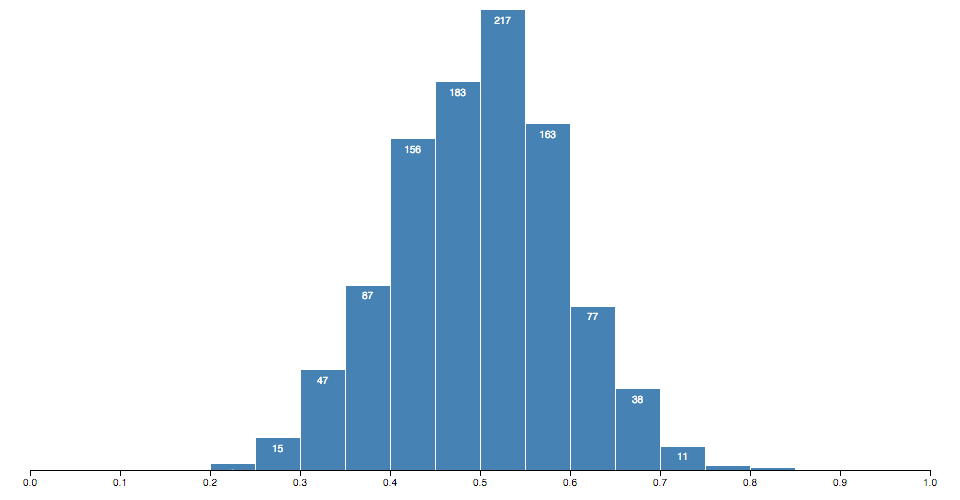 ](http://bl.ocks.org/mbostock/3048450)
+
+Binning groups discrete samples into a smaller number of consecutive, non-overlapping intervals. They are often used to visualize the distribution of numerical data as histograms.
+
+# d3.bin() · [Source](https://github.com/d3/d3-array/blob/main/src/bin.js), [Examples](https://observablehq.com/@d3/d3-bin)
+
+Constructs a new bin generator with the default settings.
+
+# bin(data) · [Source](https://github.com/d3/d3-array/blob/main/src/bin.js), [Examples](https://observablehq.com/@d3/d3-bin)
+
+Bins the given iterable of *data* samples. Returns an array of bins, where each bin is an array containing the associated elements from the input *data*. Thus, the `length` of the bin is the number of elements in that bin. Each bin has two additional attributes:
+
+* `x0` - the lower bound of the bin (inclusive).
+* `x1` - the upper bound of the bin (exclusive, except for the last bin).
+
+Any null or non-comparable values in the given *data*, or those outside the [domain](#bin_domain), are ignored.
+
+# bin.value([value]) · [Source](https://github.com/d3/d3-array/blob/main/src/bin.js), [Examples](https://observablehq.com/@d3/d3-bin)
+
+If *value* is specified, sets the value accessor to the specified function or constant and returns this bin generator. If *value* is not specified, returns the current value accessor, which defaults to the identity function.
+
+When bins are [generated](#_bin), the value accessor will be invoked for each element in the input data array, being passed the element `d`, the index `i`, and the array `data` as three arguments. The default value accessor assumes that the input data are orderable (comparable), such as numbers or dates. If your data are not, then you should specify an accessor that returns the corresponding orderable value for a given datum.
+
+This is similar to mapping your data to values before invoking the bin generator, but has the benefit that the input data remains associated with the returned bins, thereby making it easier to access other fields of the data.
+
+# bin.domain([domain]) · [Source](https://github.com/d3/d3-array/blob/main/src/bin.js), [Examples](https://observablehq.com/@d3/d3-bin)
+
+If *domain* is specified, sets the domain accessor to the specified function or array and returns this bin generator. If *domain* is not specified, returns the current domain accessor, which defaults to [extent](#extent). The bin domain is defined as an array [*min*, *max*], where *min* is the minimum observable value and *max* is the maximum observable value; both values are inclusive. Any value outside of this domain will be ignored when the bins are [generated](#_bin).
+
+For example, if you are using the bin generator in conjunction with a [linear scale](https://github.com/d3/d3-scale/blob/main/README.md#linear-scales) `x`, you might say:
+
+```js
+var bin = d3.bin()
+ .domain(x.domain())
+ .thresholds(x.ticks(20));
+```
+
+You can then compute the bins from an array of numbers like so:
+
+```js
+var bins = bin(numbers);
+```
+
+If the default [extent](#extent) domain is used and the [thresholds](#bin_thresholds) are specified as a count (rather than explicit values), then the computed domain will be [niced](#nice) such that all bins are uniform width.
+
+Note that the domain accessor is invoked on the materialized array of [values](#bin_value), not on the input data array.
+
+# bin.thresholds([count]) · [Source](https://github.com/d3/d3-array/blob/main/src/bin.js), [Examples](https://observablehq.com/@d3/d3-bin)
+
# bin.thresholds([thresholds])
+
+If *thresholds* is specified, sets the [threshold generator](#bin-thresholds) to the specified function or array and returns this bin generator. If *thresholds* is not specified, returns the current threshold generator, which by default implements [Sturges’ formula](#thresholdSturges). (Thus by default, the values to be binned must be numbers!) Thresholds are defined as an array of values [*x0*, *x1*, …]. Any value less than *x0* will be placed in the first bin; any value greater than or equal to *x0* but less than *x1* will be placed in the second bin; and so on. Thus, the [generated bins](#_bin) will have *thresholds*.length + 1 bins. See [bin thresholds](#bin-thresholds) for more information.
+
+Any threshold values outside the [domain](#bin_domain) are ignored. The first *bin*.x0 is always equal to the minimum domain value, and the last *bin*.x1 is always equal to the maximum domain value.
+
+If a *count* is specified instead of an array of *thresholds*, then the [domain](#bin_domain) will be uniformly divided into approximately *count* bins; see [ticks](#ticks).
+
+#### Bin Thresholds
+
+These functions are typically not used directly; instead, pass them to [*bin*.thresholds](#bin_thresholds).
+
+# d3.thresholdFreedmanDiaconis(values, min, max) · [Source](https://github.com/d3/d3-array/blob/main/src/threshold/freedmanDiaconis.js), [Examples](https://observablehq.com/@d3/d3-bin)
+
+Returns the number of bins according to the [Freedman–Diaconis rule](https://en.wikipedia.org/wiki/Histogram#Mathematical_definition); the input *values* must be numbers.
+
+# d3.thresholdScott(values, min, max) · [Source](https://github.com/d3/d3-array/blob/main/src/threshold/scott.js), [Examples](https://observablehq.com/@d3/d3-bin)
+
+Returns the number of bins according to [Scott’s normal reference rule](https://en.wikipedia.org/wiki/Histogram#Mathematical_definition); the input *values* must be numbers.
+
+# d3.thresholdSturges(values) · [Source](https://github.com/d3/d3-array/blob/main/src/threshold/sturges.js), [Examples](https://observablehq.com/@d3/d3-bin)
+
+Returns the number of bins according to [Sturges’ formula](https://en.wikipedia.org/wiki/Histogram#Mathematical_definition); the input *values* must be numbers.
+
+You may also implement your own threshold generator taking three arguments: the array of input [*values*](#bin_value) derived from the data, and the [observable domain](#bin_domain) represented as *min* and *max*. The generator may then return either the array of numeric thresholds or the *count* of bins; in the latter case the domain is divided uniformly into approximately *count* bins; see [ticks](#ticks).
+
+For instance, when binning date values, you might want to use the ticks from a time scale ([Example](https://observablehq.com/@d3/d3-bin-time-thresholds)).
+
+### Interning
+
+# new d3.InternMap([iterable][, key]) · [Source](https://github.com/mbostock/internmap/blob/main/src/index.js), [Examples](https://observablehq.com/d/d4c5f6ad343866b9)
+
# new d3.InternSet([iterable][, key]) · [Source](https://github.com/mbostock/internmap/blob/main/src/index.js), [Examples](https://observablehq.com/d/d4c5f6ad343866b9)
+
+The [InternMap and InternSet](https://github.com/mbostock/internmap) classes extend the native JavaScript Map and Set classes, respectively, allowing Dates and other non-primitive keys by bypassing the [SameValueZero algorithm](https://developer.mozilla.org/en-US/docs/Web/JavaScript/Equality_comparisons_and_sameness) when determining key equality. d3.group, d3.rollup and d3.index use an InternMap rather than a native Map. These two classes are exported for convenience.
diff --git a/node_modules/victory-vendor/node_modules/d3-array/dist/d3-array.js b/node_modules/victory-vendor/node_modules/d3-array/dist/d3-array.js
new file mode 100644
index 0000000000000000000000000000000000000000..0644ded592e5ba5d82157e675f072b5ce5eb7e65
--- /dev/null
+++ b/node_modules/victory-vendor/node_modules/d3-array/dist/d3-array.js
@@ -0,0 +1,1455 @@
+// https://d3js.org/d3-array/ v3.2.4 Copyright 2010-2023 Mike Bostock
+(function (global, factory) {
+typeof exports === 'object' && typeof module !== 'undefined' ? factory(exports) :
+typeof define === 'function' && define.amd ? define(['exports'], factory) :
+(global = typeof globalThis !== 'undefined' ? globalThis : global || self, factory(global.d3 = global.d3 || {}));
+})(this, (function (exports) { 'use strict';
+
+function ascending(a, b) {
+ return a == null || b == null ? NaN : a < b ? -1 : a > b ? 1 : a >= b ? 0 : NaN;
+}
+
+function descending(a, b) {
+ return a == null || b == null ? NaN
+ : b < a ? -1
+ : b > a ? 1
+ : b >= a ? 0
+ : NaN;
+}
+
+function bisector(f) {
+ let compare1, compare2, delta;
+
+ // If an accessor is specified, promote it to a comparator. In this case we
+ // can test whether the search value is (self-) comparable. We can’t do this
+ // for a comparator (except for specific, known comparators) because we can’t
+ // tell if the comparator is symmetric, and an asymmetric comparator can’t be
+ // used to test whether a single value is comparable.
+ if (f.length !== 2) {
+ compare1 = ascending;
+ compare2 = (d, x) => ascending(f(d), x);
+ delta = (d, x) => f(d) - x;
+ } else {
+ compare1 = f === ascending || f === descending ? f : zero;
+ compare2 = f;
+ delta = f;
+ }
+
+ function left(a, x, lo = 0, hi = a.length) {
+ if (lo < hi) {
+ if (compare1(x, x) !== 0) return hi;
+ do {
+ const mid = (lo + hi) >>> 1;
+ if (compare2(a[mid], x) < 0) lo = mid + 1;
+ else hi = mid;
+ } while (lo < hi);
+ }
+ return lo;
+ }
+
+ function right(a, x, lo = 0, hi = a.length) {
+ if (lo < hi) {
+ if (compare1(x, x) !== 0) return hi;
+ do {
+ const mid = (lo + hi) >>> 1;
+ if (compare2(a[mid], x) <= 0) lo = mid + 1;
+ else hi = mid;
+ } while (lo < hi);
+ }
+ return lo;
+ }
+
+ function center(a, x, lo = 0, hi = a.length) {
+ const i = left(a, x, lo, hi - 1);
+ return i > lo && delta(a[i - 1], x) > -delta(a[i], x) ? i - 1 : i;
+ }
+
+ return {left, center, right};
+}
+
+function zero() {
+ return 0;
+}
+
+function number(x) {
+ return x === null ? NaN : +x;
+}
+
+function* numbers(values, valueof) {
+ if (valueof === undefined) {
+ for (let value of values) {
+ if (value != null && (value = +value) >= value) {
+ yield value;
+ }
+ }
+ } else {
+ let index = -1;
+ for (let value of values) {
+ if ((value = valueof(value, ++index, values)) != null && (value = +value) >= value) {
+ yield value;
+ }
+ }
+ }
+}
+
+const ascendingBisect = bisector(ascending);
+const bisectRight = ascendingBisect.right;
+const bisectLeft = ascendingBisect.left;
+const bisectCenter = bisector(number).center;
+var bisect = bisectRight;
+
+function blur(values, r) {
+ if (!((r = +r) >= 0)) throw new RangeError("invalid r");
+ let length = values.length;
+ if (!((length = Math.floor(length)) >= 0)) throw new RangeError("invalid length");
+ if (!length || !r) return values;
+ const blur = blurf(r);
+ const temp = values.slice();
+ blur(values, temp, 0, length, 1);
+ blur(temp, values, 0, length, 1);
+ blur(values, temp, 0, length, 1);
+ return values;
+}
+
+const blur2 = Blur2(blurf);
+
+const blurImage = Blur2(blurfImage);
+
+function Blur2(blur) {
+ return function(data, rx, ry = rx) {
+ if (!((rx = +rx) >= 0)) throw new RangeError("invalid rx");
+ if (!((ry = +ry) >= 0)) throw new RangeError("invalid ry");
+ let {data: values, width, height} = data;
+ if (!((width = Math.floor(width)) >= 0)) throw new RangeError("invalid width");
+ if (!((height = Math.floor(height !== undefined ? height : values.length / width)) >= 0)) throw new RangeError("invalid height");
+ if (!width || !height || (!rx && !ry)) return data;
+ const blurx = rx && blur(rx);
+ const blury = ry && blur(ry);
+ const temp = values.slice();
+ if (blurx && blury) {
+ blurh(blurx, temp, values, width, height);
+ blurh(blurx, values, temp, width, height);
+ blurh(blurx, temp, values, width, height);
+ blurv(blury, values, temp, width, height);
+ blurv(blury, temp, values, width, height);
+ blurv(blury, values, temp, width, height);
+ } else if (blurx) {
+ blurh(blurx, values, temp, width, height);
+ blurh(blurx, temp, values, width, height);
+ blurh(blurx, values, temp, width, height);
+ } else if (blury) {
+ blurv(blury, values, temp, width, height);
+ blurv(blury, temp, values, width, height);
+ blurv(blury, values, temp, width, height);
+ }
+ return data;
+ };
+}
+
+function blurh(blur, T, S, w, h) {
+ for (let y = 0, n = w * h; y < n;) {
+ blur(T, S, y, y += w, 1);
+ }
+}
+
+function blurv(blur, T, S, w, h) {
+ for (let x = 0, n = w * h; x < w; ++x) {
+ blur(T, S, x, x + n, w);
+ }
+}
+
+function blurfImage(radius) {
+ const blur = blurf(radius);
+ return (T, S, start, stop, step) => {
+ start <<= 2, stop <<= 2, step <<= 2;
+ blur(T, S, start + 0, stop + 0, step);
+ blur(T, S, start + 1, stop + 1, step);
+ blur(T, S, start + 2, stop + 2, step);
+ blur(T, S, start + 3, stop + 3, step);
+ };
+}
+
+// Given a target array T, a source array S, sets each value T[i] to the average
+// of {S[i - r], …, S[i], …, S[i + r]}, where r = ⌊radius⌋, start <= i < stop,
+// for each i, i + step, i + 2 * step, etc., and where S[j] is clamped between
+// S[start] (inclusive) and S[stop] (exclusive). If the given radius is not an
+// integer, S[i - r - 1] and S[i + r + 1] are added to the sum, each weighted
+// according to r - ⌊radius⌋.
+function blurf(radius) {
+ const radius0 = Math.floor(radius);
+ if (radius0 === radius) return bluri(radius);
+ const t = radius - radius0;
+ const w = 2 * radius + 1;
+ return (T, S, start, stop, step) => { // stop must be aligned!
+ if (!((stop -= step) >= start)) return; // inclusive stop
+ let sum = radius0 * S[start];
+ const s0 = step * radius0;
+ const s1 = s0 + step;
+ for (let i = start, j = start + s0; i < j; i += step) {
+ sum += S[Math.min(stop, i)];
+ }
+ for (let i = start, j = stop; i <= j; i += step) {
+ sum += S[Math.min(stop, i + s0)];
+ T[i] = (sum + t * (S[Math.max(start, i - s1)] + S[Math.min(stop, i + s1)])) / w;
+ sum -= S[Math.max(start, i - s0)];
+ }
+ };
+}
+
+// Like blurf, but optimized for integer radius.
+function bluri(radius) {
+ const w = 2 * radius + 1;
+ return (T, S, start, stop, step) => { // stop must be aligned!
+ if (!((stop -= step) >= start)) return; // inclusive stop
+ let sum = radius * S[start];
+ const s = step * radius;
+ for (let i = start, j = start + s; i < j; i += step) {
+ sum += S[Math.min(stop, i)];
+ }
+ for (let i = start, j = stop; i <= j; i += step) {
+ sum += S[Math.min(stop, i + s)];
+ T[i] = sum / w;
+ sum -= S[Math.max(start, i - s)];
+ }
+ };
+}
+
+function count(values, valueof) {
+ let count = 0;
+ if (valueof === undefined) {
+ for (let value of values) {
+ if (value != null && (value = +value) >= value) {
+ ++count;
+ }
+ }
+ } else {
+ let index = -1;
+ for (let value of values) {
+ if ((value = valueof(value, ++index, values)) != null && (value = +value) >= value) {
+ ++count;
+ }
+ }
+ }
+ return count;
+}
+
+function length$1(array) {
+ return array.length | 0;
+}
+
+function empty(length) {
+ return !(length > 0);
+}
+
+function arrayify(values) {
+ return typeof values !== "object" || "length" in values ? values : Array.from(values);
+}
+
+function reducer(reduce) {
+ return values => reduce(...values);
+}
+
+function cross(...values) {
+ const reduce = typeof values[values.length - 1] === "function" && reducer(values.pop());
+ values = values.map(arrayify);
+ const lengths = values.map(length$1);
+ const j = values.length - 1;
+ const index = new Array(j + 1).fill(0);
+ const product = [];
+ if (j < 0 || lengths.some(empty)) return product;
+ while (true) {
+ product.push(index.map((j, i) => values[i][j]));
+ let i = j;
+ while (++index[i] === lengths[i]) {
+ if (i === 0) return reduce ? product.map(reduce) : product;
+ index[i--] = 0;
+ }
+ }
+}
+
+function cumsum(values, valueof) {
+ var sum = 0, index = 0;
+ return Float64Array.from(values, valueof === undefined
+ ? v => (sum += +v || 0)
+ : v => (sum += +valueof(v, index++, values) || 0));
+}
+
+function variance(values, valueof) {
+ let count = 0;
+ let delta;
+ let mean = 0;
+ let sum = 0;
+ if (valueof === undefined) {
+ for (let value of values) {
+ if (value != null && (value = +value) >= value) {
+ delta = value - mean;
+ mean += delta / ++count;
+ sum += delta * (value - mean);
+ }
+ }
+ } else {
+ let index = -1;
+ for (let value of values) {
+ if ((value = valueof(value, ++index, values)) != null && (value = +value) >= value) {
+ delta = value - mean;
+ mean += delta / ++count;
+ sum += delta * (value - mean);
+ }
+ }
+ }
+ if (count > 1) return sum / (count - 1);
+}
+
+function deviation(values, valueof) {
+ const v = variance(values, valueof);
+ return v ? Math.sqrt(v) : v;
+}
+
+function extent(values, valueof) {
+ let min;
+ let max;
+ if (valueof === undefined) {
+ for (const value of values) {
+ if (value != null) {
+ if (min === undefined) {
+ if (value >= value) min = max = value;
+ } else {
+ if (min > value) min = value;
+ if (max < value) max = value;
+ }
+ }
+ }
+ } else {
+ let index = -1;
+ for (let value of values) {
+ if ((value = valueof(value, ++index, values)) != null) {
+ if (min === undefined) {
+ if (value >= value) min = max = value;
+ } else {
+ if (min > value) min = value;
+ if (max < value) max = value;
+ }
+ }
+ }
+ }
+ return [min, max];
+}
+
+// https://github.com/python/cpython/blob/a74eea238f5baba15797e2e8b570d153bc8690a7/Modules/mathmodule.c#L1423
+class Adder {
+ constructor() {
+ this._partials = new Float64Array(32);
+ this._n = 0;
+ }
+ add(x) {
+ const p = this._partials;
+ let i = 0;
+ for (let j = 0; j < this._n && j < 32; j++) {
+ const y = p[j],
+ hi = x + y,
+ lo = Math.abs(x) < Math.abs(y) ? x - (hi - y) : y - (hi - x);
+ if (lo) p[i++] = lo;
+ x = hi;
+ }
+ p[i] = x;
+ this._n = i + 1;
+ return this;
+ }
+ valueOf() {
+ const p = this._partials;
+ let n = this._n, x, y, lo, hi = 0;
+ if (n > 0) {
+ hi = p[--n];
+ while (n > 0) {
+ x = hi;
+ y = p[--n];
+ hi = x + y;
+ lo = y - (hi - x);
+ if (lo) break;
+ }
+ if (n > 0 && ((lo < 0 && p[n - 1] < 0) || (lo > 0 && p[n - 1] > 0))) {
+ y = lo * 2;
+ x = hi + y;
+ if (y == x - hi) hi = x;
+ }
+ }
+ return hi;
+ }
+}
+
+function fsum(values, valueof) {
+ const adder = new Adder();
+ if (valueof === undefined) {
+ for (let value of values) {
+ if (value = +value) {
+ adder.add(value);
+ }
+ }
+ } else {
+ let index = -1;
+ for (let value of values) {
+ if (value = +valueof(value, ++index, values)) {
+ adder.add(value);
+ }
+ }
+ }
+ return +adder;
+}
+
+function fcumsum(values, valueof) {
+ const adder = new Adder();
+ let index = -1;
+ return Float64Array.from(values, valueof === undefined
+ ? v => adder.add(+v || 0)
+ : v => adder.add(+valueof(v, ++index, values) || 0)
+ );
+}
+
+class InternMap extends Map {
+ constructor(entries, key = keyof) {
+ super();
+ Object.defineProperties(this, {_intern: {value: new Map()}, _key: {value: key}});
+ if (entries != null) for (const [key, value] of entries) this.set(key, value);
+ }
+ get(key) {
+ return super.get(intern_get(this, key));
+ }
+ has(key) {
+ return super.has(intern_get(this, key));
+ }
+ set(key, value) {
+ return super.set(intern_set(this, key), value);
+ }
+ delete(key) {
+ return super.delete(intern_delete(this, key));
+ }
+}
+
+class InternSet extends Set {
+ constructor(values, key = keyof) {
+ super();
+ Object.defineProperties(this, {_intern: {value: new Map()}, _key: {value: key}});
+ if (values != null) for (const value of values) this.add(value);
+ }
+ has(value) {
+ return super.has(intern_get(this, value));
+ }
+ add(value) {
+ return super.add(intern_set(this, value));
+ }
+ delete(value) {
+ return super.delete(intern_delete(this, value));
+ }
+}
+
+function intern_get({_intern, _key}, value) {
+ const key = _key(value);
+ return _intern.has(key) ? _intern.get(key) : value;
+}
+
+function intern_set({_intern, _key}, value) {
+ const key = _key(value);
+ if (_intern.has(key)) return _intern.get(key);
+ _intern.set(key, value);
+ return value;
+}
+
+function intern_delete({_intern, _key}, value) {
+ const key = _key(value);
+ if (_intern.has(key)) {
+ value = _intern.get(key);
+ _intern.delete(key);
+ }
+ return value;
+}
+
+function keyof(value) {
+ return value !== null && typeof value === "object" ? value.valueOf() : value;
+}
+
+function identity(x) {
+ return x;
+}
+
+function group(values, ...keys) {
+ return nest(values, identity, identity, keys);
+}
+
+function groups(values, ...keys) {
+ return nest(values, Array.from, identity, keys);
+}
+
+function flatten$1(groups, keys) {
+ for (let i = 1, n = keys.length; i < n; ++i) {
+ groups = groups.flatMap(g => g.pop().map(([key, value]) => [...g, key, value]));
+ }
+ return groups;
+}
+
+function flatGroup(values, ...keys) {
+ return flatten$1(groups(values, ...keys), keys);
+}
+
+function flatRollup(values, reduce, ...keys) {
+ return flatten$1(rollups(values, reduce, ...keys), keys);
+}
+
+function rollup(values, reduce, ...keys) {
+ return nest(values, identity, reduce, keys);
+}
+
+function rollups(values, reduce, ...keys) {
+ return nest(values, Array.from, reduce, keys);
+}
+
+function index(values, ...keys) {
+ return nest(values, identity, unique, keys);
+}
+
+function indexes(values, ...keys) {
+ return nest(values, Array.from, unique, keys);
+}
+
+function unique(values) {
+ if (values.length !== 1) throw new Error("duplicate key");
+ return values[0];
+}
+
+function nest(values, map, reduce, keys) {
+ return (function regroup(values, i) {
+ if (i >= keys.length) return reduce(values);
+ const groups = new InternMap();
+ const keyof = keys[i++];
+ let index = -1;
+ for (const value of values) {
+ const key = keyof(value, ++index, values);
+ const group = groups.get(key);
+ if (group) group.push(value);
+ else groups.set(key, [value]);
+ }
+ for (const [key, values] of groups) {
+ groups.set(key, regroup(values, i));
+ }
+ return map(groups);
+ })(values, 0);
+}
+
+function permute(source, keys) {
+ return Array.from(keys, key => source[key]);
+}
+
+function sort(values, ...F) {
+ if (typeof values[Symbol.iterator] !== "function") throw new TypeError("values is not iterable");
+ values = Array.from(values);
+ let [f] = F;
+ if ((f && f.length !== 2) || F.length > 1) {
+ const index = Uint32Array.from(values, (d, i) => i);
+ if (F.length > 1) {
+ F = F.map(f => values.map(f));
+ index.sort((i, j) => {
+ for (const f of F) {
+ const c = ascendingDefined(f[i], f[j]);
+ if (c) return c;
+ }
+ });
+ } else {
+ f = values.map(f);
+ index.sort((i, j) => ascendingDefined(f[i], f[j]));
+ }
+ return permute(values, index);
+ }
+ return values.sort(compareDefined(f));
+}
+
+function compareDefined(compare = ascending) {
+ if (compare === ascending) return ascendingDefined;
+ if (typeof compare !== "function") throw new TypeError("compare is not a function");
+ return (a, b) => {
+ const x = compare(a, b);
+ if (x || x === 0) return x;
+ return (compare(b, b) === 0) - (compare(a, a) === 0);
+ };
+}
+
+function ascendingDefined(a, b) {
+ return (a == null || !(a >= a)) - (b == null || !(b >= b)) || (a < b ? -1 : a > b ? 1 : 0);
+}
+
+function groupSort(values, reduce, key) {
+ return (reduce.length !== 2
+ ? sort(rollup(values, reduce, key), (([ak, av], [bk, bv]) => ascending(av, bv) || ascending(ak, bk)))
+ : sort(group(values, key), (([ak, av], [bk, bv]) => reduce(av, bv) || ascending(ak, bk))))
+ .map(([key]) => key);
+}
+
+var array = Array.prototype;
+
+var slice = array.slice;
+
+function constant(x) {
+ return () => x;
+}
+
+const e10 = Math.sqrt(50),
+ e5 = Math.sqrt(10),
+ e2 = Math.sqrt(2);
+
+function tickSpec(start, stop, count) {
+ const step = (stop - start) / Math.max(0, count),
+ power = Math.floor(Math.log10(step)),
+ error = step / Math.pow(10, power),
+ factor = error >= e10 ? 10 : error >= e5 ? 5 : error >= e2 ? 2 : 1;
+ let i1, i2, inc;
+ if (power < 0) {
+ inc = Math.pow(10, -power) / factor;
+ i1 = Math.round(start * inc);
+ i2 = Math.round(stop * inc);
+ if (i1 / inc < start) ++i1;
+ if (i2 / inc > stop) --i2;
+ inc = -inc;
+ } else {
+ inc = Math.pow(10, power) * factor;
+ i1 = Math.round(start / inc);
+ i2 = Math.round(stop / inc);
+ if (i1 * inc < start) ++i1;
+ if (i2 * inc > stop) --i2;
+ }
+ if (i2 < i1 && 0.5 <= count && count < 2) return tickSpec(start, stop, count * 2);
+ return [i1, i2, inc];
+}
+
+function ticks(start, stop, count) {
+ stop = +stop, start = +start, count = +count;
+ if (!(count > 0)) return [];
+ if (start === stop) return [start];
+ const reverse = stop < start, [i1, i2, inc] = reverse ? tickSpec(stop, start, count) : tickSpec(start, stop, count);
+ if (!(i2 >= i1)) return [];
+ const n = i2 - i1 + 1, ticks = new Array(n);
+ if (reverse) {
+ if (inc < 0) for (let i = 0; i < n; ++i) ticks[i] = (i2 - i) / -inc;
+ else for (let i = 0; i < n; ++i) ticks[i] = (i2 - i) * inc;
+ } else {
+ if (inc < 0) for (let i = 0; i < n; ++i) ticks[i] = (i1 + i) / -inc;
+ else for (let i = 0; i < n; ++i) ticks[i] = (i1 + i) * inc;
+ }
+ return ticks;
+}
+
+function tickIncrement(start, stop, count) {
+ stop = +stop, start = +start, count = +count;
+ return tickSpec(start, stop, count)[2];
+}
+
+function tickStep(start, stop, count) {
+ stop = +stop, start = +start, count = +count;
+ const reverse = stop < start, inc = reverse ? tickIncrement(stop, start, count) : tickIncrement(start, stop, count);
+ return (reverse ? -1 : 1) * (inc < 0 ? 1 / -inc : inc);
+}
+
+function nice(start, stop, count) {
+ let prestep;
+ while (true) {
+ const step = tickIncrement(start, stop, count);
+ if (step === prestep || step === 0 || !isFinite(step)) {
+ return [start, stop];
+ } else if (step > 0) {
+ start = Math.floor(start / step) * step;
+ stop = Math.ceil(stop / step) * step;
+ } else if (step < 0) {
+ start = Math.ceil(start * step) / step;
+ stop = Math.floor(stop * step) / step;
+ }
+ prestep = step;
+ }
+}
+
+function thresholdSturges(values) {
+ return Math.max(1, Math.ceil(Math.log(count(values)) / Math.LN2) + 1);
+}
+
+function bin() {
+ var value = identity,
+ domain = extent,
+ threshold = thresholdSturges;
+
+ function histogram(data) {
+ if (!Array.isArray(data)) data = Array.from(data);
+
+ var i,
+ n = data.length,
+ x,
+ step,
+ values = new Array(n);
+
+ for (i = 0; i < n; ++i) {
+ values[i] = value(data[i], i, data);
+ }
+
+ var xz = domain(values),
+ x0 = xz[0],
+ x1 = xz[1],
+ tz = threshold(values, x0, x1);
+
+ // Convert number of thresholds into uniform thresholds, and nice the
+ // default domain accordingly.
+ if (!Array.isArray(tz)) {
+ const max = x1, tn = +tz;
+ if (domain === extent) [x0, x1] = nice(x0, x1, tn);
+ tz = ticks(x0, x1, tn);
+
+ // If the domain is aligned with the first tick (which it will by
+ // default), then we can use quantization rather than bisection to bin
+ // values, which is substantially faster.
+ if (tz[0] <= x0) step = tickIncrement(x0, x1, tn);
+
+ // If the last threshold is coincident with the domain’s upper bound, the
+ // last bin will be zero-width. If the default domain is used, and this
+ // last threshold is coincident with the maximum input value, we can
+ // extend the niced upper bound by one tick to ensure uniform bin widths;
+ // otherwise, we simply remove the last threshold. Note that we don’t
+ // coerce values or the domain to numbers, and thus must be careful to
+ // compare order (>=) rather than strict equality (===)!
+ if (tz[tz.length - 1] >= x1) {
+ if (max >= x1 && domain === extent) {
+ const step = tickIncrement(x0, x1, tn);
+ if (isFinite(step)) {
+ if (step > 0) {
+ x1 = (Math.floor(x1 / step) + 1) * step;
+ } else if (step < 0) {
+ x1 = (Math.ceil(x1 * -step) + 1) / -step;
+ }
+ }
+ } else {
+ tz.pop();
+ }
+ }
+ }
+
+ // Remove any thresholds outside the domain.
+ // Be careful not to mutate an array owned by the user!
+ var m = tz.length, a = 0, b = m;
+ while (tz[a] <= x0) ++a;
+ while (tz[b - 1] > x1) --b;
+ if (a || b < m) tz = tz.slice(a, b), m = b - a;
+
+ var bins = new Array(m + 1),
+ bin;
+
+ // Initialize bins.
+ for (i = 0; i <= m; ++i) {
+ bin = bins[i] = [];
+ bin.x0 = i > 0 ? tz[i - 1] : x0;
+ bin.x1 = i < m ? tz[i] : x1;
+ }
+
+ // Assign data to bins by value, ignoring any outside the domain.
+ if (isFinite(step)) {
+ if (step > 0) {
+ for (i = 0; i < n; ++i) {
+ if ((x = values[i]) != null && x0 <= x && x <= x1) {
+ bins[Math.min(m, Math.floor((x - x0) / step))].push(data[i]);
+ }
+ }
+ } else if (step < 0) {
+ for (i = 0; i < n; ++i) {
+ if ((x = values[i]) != null && x0 <= x && x <= x1) {
+ const j = Math.floor((x0 - x) * step);
+ bins[Math.min(m, j + (tz[j] <= x))].push(data[i]); // handle off-by-one due to rounding
+ }
+ }
+ }
+ } else {
+ for (i = 0; i < n; ++i) {
+ if ((x = values[i]) != null && x0 <= x && x <= x1) {
+ bins[bisect(tz, x, 0, m)].push(data[i]);
+ }
+ }
+ }
+
+ return bins;
+ }
+
+ histogram.value = function(_) {
+ return arguments.length ? (value = typeof _ === "function" ? _ : constant(_), histogram) : value;
+ };
+
+ histogram.domain = function(_) {
+ return arguments.length ? (domain = typeof _ === "function" ? _ : constant([_[0], _[1]]), histogram) : domain;
+ };
+
+ histogram.thresholds = function(_) {
+ return arguments.length ? (threshold = typeof _ === "function" ? _ : constant(Array.isArray(_) ? slice.call(_) : _), histogram) : threshold;
+ };
+
+ return histogram;
+}
+
+function max(values, valueof) {
+ let max;
+ if (valueof === undefined) {
+ for (const value of values) {
+ if (value != null
+ && (max < value || (max === undefined && value >= value))) {
+ max = value;
+ }
+ }
+ } else {
+ let index = -1;
+ for (let value of values) {
+ if ((value = valueof(value, ++index, values)) != null
+ && (max < value || (max === undefined && value >= value))) {
+ max = value;
+ }
+ }
+ }
+ return max;
+}
+
+function maxIndex(values, valueof) {
+ let max;
+ let maxIndex = -1;
+ let index = -1;
+ if (valueof === undefined) {
+ for (const value of values) {
+ ++index;
+ if (value != null
+ && (max < value || (max === undefined && value >= value))) {
+ max = value, maxIndex = index;
+ }
+ }
+ } else {
+ for (let value of values) {
+ if ((value = valueof(value, ++index, values)) != null
+ && (max < value || (max === undefined && value >= value))) {
+ max = value, maxIndex = index;
+ }
+ }
+ }
+ return maxIndex;
+}
+
+function min(values, valueof) {
+ let min;
+ if (valueof === undefined) {
+ for (const value of values) {
+ if (value != null
+ && (min > value || (min === undefined && value >= value))) {
+ min = value;
+ }
+ }
+ } else {
+ let index = -1;
+ for (let value of values) {
+ if ((value = valueof(value, ++index, values)) != null
+ && (min > value || (min === undefined && value >= value))) {
+ min = value;
+ }
+ }
+ }
+ return min;
+}
+
+function minIndex(values, valueof) {
+ let min;
+ let minIndex = -1;
+ let index = -1;
+ if (valueof === undefined) {
+ for (const value of values) {
+ ++index;
+ if (value != null
+ && (min > value || (min === undefined && value >= value))) {
+ min = value, minIndex = index;
+ }
+ }
+ } else {
+ for (let value of values) {
+ if ((value = valueof(value, ++index, values)) != null
+ && (min > value || (min === undefined && value >= value))) {
+ min = value, minIndex = index;
+ }
+ }
+ }
+ return minIndex;
+}
+
+// Based on https://github.com/mourner/quickselect
+// ISC license, Copyright 2018 Vladimir Agafonkin.
+function quickselect(array, k, left = 0, right = Infinity, compare) {
+ k = Math.floor(k);
+ left = Math.floor(Math.max(0, left));
+ right = Math.floor(Math.min(array.length - 1, right));
+
+ if (!(left <= k && k <= right)) return array;
+
+ compare = compare === undefined ? ascendingDefined : compareDefined(compare);
+
+ while (right > left) {
+ if (right - left > 600) {
+ const n = right - left + 1;
+ const m = k - left + 1;
+ const z = Math.log(n);
+ const s = 0.5 * Math.exp(2 * z / 3);
+ const sd = 0.5 * Math.sqrt(z * s * (n - s) / n) * (m - n / 2 < 0 ? -1 : 1);
+ const newLeft = Math.max(left, Math.floor(k - m * s / n + sd));
+ const newRight = Math.min(right, Math.floor(k + (n - m) * s / n + sd));
+ quickselect(array, k, newLeft, newRight, compare);
+ }
+
+ const t = array[k];
+ let i = left;
+ let j = right;
+
+ swap(array, left, k);
+ if (compare(array[right], t) > 0) swap(array, left, right);
+
+ while (i < j) {
+ swap(array, i, j), ++i, --j;
+ while (compare(array[i], t) < 0) ++i;
+ while (compare(array[j], t) > 0) --j;
+ }
+
+ if (compare(array[left], t) === 0) swap(array, left, j);
+ else ++j, swap(array, j, right);
+
+ if (j <= k) left = j + 1;
+ if (k <= j) right = j - 1;
+ }
+
+ return array;
+}
+
+function swap(array, i, j) {
+ const t = array[i];
+ array[i] = array[j];
+ array[j] = t;
+}
+
+function greatest(values, compare = ascending) {
+ let max;
+ let defined = false;
+ if (compare.length === 1) {
+ let maxValue;
+ for (const element of values) {
+ const value = compare(element);
+ if (defined
+ ? ascending(value, maxValue) > 0
+ : ascending(value, value) === 0) {
+ max = element;
+ maxValue = value;
+ defined = true;
+ }
+ }
+ } else {
+ for (const value of values) {
+ if (defined
+ ? compare(value, max) > 0
+ : compare(value, value) === 0) {
+ max = value;
+ defined = true;
+ }
+ }
+ }
+ return max;
+}
+
+function quantile(values, p, valueof) {
+ values = Float64Array.from(numbers(values, valueof));
+ if (!(n = values.length) || isNaN(p = +p)) return;
+ if (p <= 0 || n < 2) return min(values);
+ if (p >= 1) return max(values);
+ var n,
+ i = (n - 1) * p,
+ i0 = Math.floor(i),
+ value0 = max(quickselect(values, i0).subarray(0, i0 + 1)),
+ value1 = min(values.subarray(i0 + 1));
+ return value0 + (value1 - value0) * (i - i0);
+}
+
+function quantileSorted(values, p, valueof = number) {
+ if (!(n = values.length) || isNaN(p = +p)) return;
+ if (p <= 0 || n < 2) return +valueof(values[0], 0, values);
+ if (p >= 1) return +valueof(values[n - 1], n - 1, values);
+ var n,
+ i = (n - 1) * p,
+ i0 = Math.floor(i),
+ value0 = +valueof(values[i0], i0, values),
+ value1 = +valueof(values[i0 + 1], i0 + 1, values);
+ return value0 + (value1 - value0) * (i - i0);
+}
+
+function quantileIndex(values, p, valueof = number) {
+ if (isNaN(p = +p)) return;
+ numbers = Float64Array.from(values, (_, i) => number(valueof(values[i], i, values)));
+ if (p <= 0) return minIndex(numbers);
+ if (p >= 1) return maxIndex(numbers);
+ var numbers,
+ index = Uint32Array.from(values, (_, i) => i),
+ j = numbers.length - 1,
+ i = Math.floor(j * p);
+ quickselect(index, i, 0, j, (i, j) => ascendingDefined(numbers[i], numbers[j]));
+ i = greatest(index.subarray(0, i + 1), (i) => numbers[i]);
+ return i >= 0 ? i : -1;
+}
+
+function thresholdFreedmanDiaconis(values, min, max) {
+ const c = count(values), d = quantile(values, 0.75) - quantile(values, 0.25);
+ return c && d ? Math.ceil((max - min) / (2 * d * Math.pow(c, -1 / 3))) : 1;
+}
+
+function thresholdScott(values, min, max) {
+ const c = count(values), d = deviation(values);
+ return c && d ? Math.ceil((max - min) * Math.cbrt(c) / (3.49 * d)) : 1;
+}
+
+function mean(values, valueof) {
+ let count = 0;
+ let sum = 0;
+ if (valueof === undefined) {
+ for (let value of values) {
+ if (value != null && (value = +value) >= value) {
+ ++count, sum += value;
+ }
+ }
+ } else {
+ let index = -1;
+ for (let value of values) {
+ if ((value = valueof(value, ++index, values)) != null && (value = +value) >= value) {
+ ++count, sum += value;
+ }
+ }
+ }
+ if (count) return sum / count;
+}
+
+function median(values, valueof) {
+ return quantile(values, 0.5, valueof);
+}
+
+function medianIndex(values, valueof) {
+ return quantileIndex(values, 0.5, valueof);
+}
+
+function* flatten(arrays) {
+ for (const array of arrays) {
+ yield* array;
+ }
+}
+
+function merge(arrays) {
+ return Array.from(flatten(arrays));
+}
+
+function mode(values, valueof) {
+ const counts = new InternMap();
+ if (valueof === undefined) {
+ for (let value of values) {
+ if (value != null && value >= value) {
+ counts.set(value, (counts.get(value) || 0) + 1);
+ }
+ }
+ } else {
+ let index = -1;
+ for (let value of values) {
+ if ((value = valueof(value, ++index, values)) != null && value >= value) {
+ counts.set(value, (counts.get(value) || 0) + 1);
+ }
+ }
+ }
+ let modeValue;
+ let modeCount = 0;
+ for (const [value, count] of counts) {
+ if (count > modeCount) {
+ modeCount = count;
+ modeValue = value;
+ }
+ }
+ return modeValue;
+}
+
+function pairs(values, pairof = pair) {
+ const pairs = [];
+ let previous;
+ let first = false;
+ for (const value of values) {
+ if (first) pairs.push(pairof(previous, value));
+ previous = value;
+ first = true;
+ }
+ return pairs;
+}
+
+function pair(a, b) {
+ return [a, b];
+}
+
+function range(start, stop, step) {
+ start = +start, stop = +stop, step = (n = arguments.length) < 2 ? (stop = start, start = 0, 1) : n < 3 ? 1 : +step;
+
+ var i = -1,
+ n = Math.max(0, Math.ceil((stop - start) / step)) | 0,
+ range = new Array(n);
+
+ while (++i < n) {
+ range[i] = start + i * step;
+ }
+
+ return range;
+}
+
+function rank(values, valueof = ascending) {
+ if (typeof values[Symbol.iterator] !== "function") throw new TypeError("values is not iterable");
+ let V = Array.from(values);
+ const R = new Float64Array(V.length);
+ if (valueof.length !== 2) V = V.map(valueof), valueof = ascending;
+ const compareIndex = (i, j) => valueof(V[i], V[j]);
+ let k, r;
+ values = Uint32Array.from(V, (_, i) => i);
+ // Risky chaining due to Safari 14 https://github.com/d3/d3-array/issues/123
+ values.sort(valueof === ascending ? (i, j) => ascendingDefined(V[i], V[j]) : compareDefined(compareIndex));
+ values.forEach((j, i) => {
+ const c = compareIndex(j, k === undefined ? j : k);
+ if (c >= 0) {
+ if (k === undefined || c > 0) k = j, r = i;
+ R[j] = r;
+ } else {
+ R[j] = NaN;
+ }
+ });
+ return R;
+}
+
+function least(values, compare = ascending) {
+ let min;
+ let defined = false;
+ if (compare.length === 1) {
+ let minValue;
+ for (const element of values) {
+ const value = compare(element);
+ if (defined
+ ? ascending(value, minValue) < 0
+ : ascending(value, value) === 0) {
+ min = element;
+ minValue = value;
+ defined = true;
+ }
+ }
+ } else {
+ for (const value of values) {
+ if (defined
+ ? compare(value, min) < 0
+ : compare(value, value) === 0) {
+ min = value;
+ defined = true;
+ }
+ }
+ }
+ return min;
+}
+
+function leastIndex(values, compare = ascending) {
+ if (compare.length === 1) return minIndex(values, compare);
+ let minValue;
+ let min = -1;
+ let index = -1;
+ for (const value of values) {
+ ++index;
+ if (min < 0
+ ? compare(value, value) === 0
+ : compare(value, minValue) < 0) {
+ minValue = value;
+ min = index;
+ }
+ }
+ return min;
+}
+
+function greatestIndex(values, compare = ascending) {
+ if (compare.length === 1) return maxIndex(values, compare);
+ let maxValue;
+ let max = -1;
+ let index = -1;
+ for (const value of values) {
+ ++index;
+ if (max < 0
+ ? compare(value, value) === 0
+ : compare(value, maxValue) > 0) {
+ maxValue = value;
+ max = index;
+ }
+ }
+ return max;
+}
+
+function scan(values, compare) {
+ const index = leastIndex(values, compare);
+ return index < 0 ? undefined : index;
+}
+
+var shuffle = shuffler(Math.random);
+
+function shuffler(random) {
+ return function shuffle(array, i0 = 0, i1 = array.length) {
+ let m = i1 - (i0 = +i0);
+ while (m) {
+ const i = random() * m-- | 0, t = array[m + i0];
+ array[m + i0] = array[i + i0];
+ array[i + i0] = t;
+ }
+ return array;
+ };
+}
+
+function sum(values, valueof) {
+ let sum = 0;
+ if (valueof === undefined) {
+ for (let value of values) {
+ if (value = +value) {
+ sum += value;
+ }
+ }
+ } else {
+ let index = -1;
+ for (let value of values) {
+ if (value = +valueof(value, ++index, values)) {
+ sum += value;
+ }
+ }
+ }
+ return sum;
+}
+
+function transpose(matrix) {
+ if (!(n = matrix.length)) return [];
+ for (var i = -1, m = min(matrix, length), transpose = new Array(m); ++i < m;) {
+ for (var j = -1, n, row = transpose[i] = new Array(n); ++j < n;) {
+ row[j] = matrix[j][i];
+ }
+ }
+ return transpose;
+}
+
+function length(d) {
+ return d.length;
+}
+
+function zip() {
+ return transpose(arguments);
+}
+
+function every(values, test) {
+ if (typeof test !== "function") throw new TypeError("test is not a function");
+ let index = -1;
+ for (const value of values) {
+ if (!test(value, ++index, values)) {
+ return false;
+ }
+ }
+ return true;
+}
+
+function some(values, test) {
+ if (typeof test !== "function") throw new TypeError("test is not a function");
+ let index = -1;
+ for (const value of values) {
+ if (test(value, ++index, values)) {
+ return true;
+ }
+ }
+ return false;
+}
+
+function filter(values, test) {
+ if (typeof test !== "function") throw new TypeError("test is not a function");
+ const array = [];
+ let index = -1;
+ for (const value of values) {
+ if (test(value, ++index, values)) {
+ array.push(value);
+ }
+ }
+ return array;
+}
+
+function map(values, mapper) {
+ if (typeof values[Symbol.iterator] !== "function") throw new TypeError("values is not iterable");
+ if (typeof mapper !== "function") throw new TypeError("mapper is not a function");
+ return Array.from(values, (value, index) => mapper(value, index, values));
+}
+
+function reduce(values, reducer, value) {
+ if (typeof reducer !== "function") throw new TypeError("reducer is not a function");
+ const iterator = values[Symbol.iterator]();
+ let done, next, index = -1;
+ if (arguments.length < 3) {
+ ({done, value} = iterator.next());
+ if (done) return;
+ ++index;
+ }
+ while (({done, value: next} = iterator.next()), !done) {
+ value = reducer(value, next, ++index, values);
+ }
+ return value;
+}
+
+function reverse(values) {
+ if (typeof values[Symbol.iterator] !== "function") throw new TypeError("values is not iterable");
+ return Array.from(values).reverse();
+}
+
+function difference(values, ...others) {
+ values = new InternSet(values);
+ for (const other of others) {
+ for (const value of other) {
+ values.delete(value);
+ }
+ }
+ return values;
+}
+
+function disjoint(values, other) {
+ const iterator = other[Symbol.iterator](), set = new InternSet();
+ for (const v of values) {
+ if (set.has(v)) return false;
+ let value, done;
+ while (({value, done} = iterator.next())) {
+ if (done) break;
+ if (Object.is(v, value)) return false;
+ set.add(value);
+ }
+ }
+ return true;
+}
+
+function intersection(values, ...others) {
+ values = new InternSet(values);
+ others = others.map(set);
+ out: for (const value of values) {
+ for (const other of others) {
+ if (!other.has(value)) {
+ values.delete(value);
+ continue out;
+ }
+ }
+ }
+ return values;
+}
+
+function set(values) {
+ return values instanceof InternSet ? values : new InternSet(values);
+}
+
+function superset(values, other) {
+ const iterator = values[Symbol.iterator](), set = new Set();
+ for (const o of other) {
+ const io = intern(o);
+ if (set.has(io)) continue;
+ let value, done;
+ while (({value, done} = iterator.next())) {
+ if (done) return false;
+ const ivalue = intern(value);
+ set.add(ivalue);
+ if (Object.is(io, ivalue)) break;
+ }
+ }
+ return true;
+}
+
+function intern(value) {
+ return value !== null && typeof value === "object" ? value.valueOf() : value;
+}
+
+function subset(values, other) {
+ return superset(other, values);
+}
+
+function union(...others) {
+ const set = new InternSet();
+ for (const other of others) {
+ for (const o of other) {
+ set.add(o);
+ }
+ }
+ return set;
+}
+
+exports.Adder = Adder;
+exports.InternMap = InternMap;
+exports.InternSet = InternSet;
+exports.ascending = ascending;
+exports.bin = bin;
+exports.bisect = bisect;
+exports.bisectCenter = bisectCenter;
+exports.bisectLeft = bisectLeft;
+exports.bisectRight = bisectRight;
+exports.bisector = bisector;
+exports.blur = blur;
+exports.blur2 = blur2;
+exports.blurImage = blurImage;
+exports.count = count;
+exports.cross = cross;
+exports.cumsum = cumsum;
+exports.descending = descending;
+exports.deviation = deviation;
+exports.difference = difference;
+exports.disjoint = disjoint;
+exports.every = every;
+exports.extent = extent;
+exports.fcumsum = fcumsum;
+exports.filter = filter;
+exports.flatGroup = flatGroup;
+exports.flatRollup = flatRollup;
+exports.fsum = fsum;
+exports.greatest = greatest;
+exports.greatestIndex = greatestIndex;
+exports.group = group;
+exports.groupSort = groupSort;
+exports.groups = groups;
+exports.histogram = bin;
+exports.index = index;
+exports.indexes = indexes;
+exports.intersection = intersection;
+exports.least = least;
+exports.leastIndex = leastIndex;
+exports.map = map;
+exports.max = max;
+exports.maxIndex = maxIndex;
+exports.mean = mean;
+exports.median = median;
+exports.medianIndex = medianIndex;
+exports.merge = merge;
+exports.min = min;
+exports.minIndex = minIndex;
+exports.mode = mode;
+exports.nice = nice;
+exports.pairs = pairs;
+exports.permute = permute;
+exports.quantile = quantile;
+exports.quantileIndex = quantileIndex;
+exports.quantileSorted = quantileSorted;
+exports.quickselect = quickselect;
+exports.range = range;
+exports.rank = rank;
+exports.reduce = reduce;
+exports.reverse = reverse;
+exports.rollup = rollup;
+exports.rollups = rollups;
+exports.scan = scan;
+exports.shuffle = shuffle;
+exports.shuffler = shuffler;
+exports.some = some;
+exports.sort = sort;
+exports.subset = subset;
+exports.sum = sum;
+exports.superset = superset;
+exports.thresholdFreedmanDiaconis = thresholdFreedmanDiaconis;
+exports.thresholdScott = thresholdScott;
+exports.thresholdSturges = thresholdSturges;
+exports.tickIncrement = tickIncrement;
+exports.tickStep = tickStep;
+exports.ticks = ticks;
+exports.transpose = transpose;
+exports.union = union;
+exports.variance = variance;
+exports.zip = zip;
+
+}));
diff --git a/node_modules/victory-vendor/node_modules/d3-array/dist/d3-array.min.js b/node_modules/victory-vendor/node_modules/d3-array/dist/d3-array.min.js
new file mode 100644
index 0000000000000000000000000000000000000000..8ac3c09849e2c5453bf74598c5668a356d64e9df
--- /dev/null
+++ b/node_modules/victory-vendor/node_modules/d3-array/dist/d3-array.min.js
@@ -0,0 +1,2 @@
+// https://d3js.org/d3-array/ v3.2.4 Copyright 2010-2023 Mike Bostock
+!function(t,n){"object"==typeof exports&&"undefined"!=typeof module?n(exports):"function"==typeof define&&define.amd?define(["exports"],n):n((t="undefined"!=typeof globalThis?globalThis:t||self).d3=t.d3||{})}(this,(function(t){"use strict";function n(t,n){return null==t||null==n?NaN:tn?1:t>=n?0:NaN}function r(t,n){return null==t||null==n?NaN:nt?1:n>=t?0:NaN}function e(t){let e,f,i;function u(t,n,r=0,o=t.length){if(r>>1;f(t[e],n)<0?r=e+1:o=e}while(rn(t(r),e),i=(n,r)=>t(n)-r):(e=t===n||t===r?t:o,f=t,i=t),{left:u,center:function(t,n,r=0,e=t.length){const o=u(t,n,r,e-1);return o>r&&i(t[o-1],n)>-i(t[o],n)?o-1:o},right:function(t,n,r=0,o=t.length){if(r>>1;f(t[e],n)<=0?r=e+1:o=e}while(r{n(t,r,(e<<=2)+0,(o<<=2)+0,f<<=2),n(t,r,e+1,o+1,f),n(t,r,e+2,o+2,f),n(t,r,e+3,o+3,f)}}));function d(t){return function(n,r,e=r){if(!((r=+r)>=0))throw new RangeError("invalid rx");if(!((e=+e)>=0))throw new RangeError("invalid ry");let{data:o,width:f,height:i}=n;if(!((f=Math.floor(f))>=0))throw new RangeError("invalid width");if(!((i=Math.floor(void 0!==i?i:o.length/f))>=0))throw new RangeError("invalid height");if(!f||!i||!r&&!e)return n;const u=r&&t(r),l=e&&t(e),c=o.slice();return u&&l?(p(u,c,o,f,i),p(u,o,c,f,i),p(u,c,o,f,i),y(l,o,c,f,i),y(l,c,o,f,i),y(l,o,c,f,i)):u?(p(u,o,c,f,i),p(u,c,o,f,i),p(u,o,c,f,i)):l&&(y(l,o,c,f,i),y(l,c,o,f,i),y(l,o,c,f,i)),n}}function p(t,n,r,e,o){for(let f=0,i=e*o;f{if(!((f-=i)>=o))return;let u=t*e[o];const l=i*t;for(let t=o,n=o+l;t{if(!((i-=u)>=f))return;let l=n*o[f];const c=u*n,s=c+u;for(let t=f,n=f+c;t=n&&++r;else{let e=-1;for(let o of t)null!=(o=n(o,++e,t))&&(o=+o)>=o&&++r}return r}function v(t){return 0|t.length}function M(t){return!(t>0)}function w(t){return"object"!=typeof t||"length"in t?t:Array.from(t)}function b(t,n){let r,e=0,o=0,f=0;if(void 0===n)for(let n of t)null!=n&&(n=+n)>=n&&(r=n-o,o+=r/++e,f+=r*(n-o));else{let i=-1;for(let u of t)null!=(u=n(u,++i,t))&&(u=+u)>=u&&(r=u-o,o+=r/++e,f+=r*(u-o))}if(e>1)return f/(e-1)}function A(t,n){const r=b(t,n);return r?Math.sqrt(r):r}function x(t,n){let r,e;if(void 0===n)for(const n of t)null!=n&&(void 0===r?n>=n&&(r=e=n):(r>n&&(r=n),e=f&&(r=e=f):(r>f&&(r=f),e0){for(f=t[--o];o>0&&(n=f,r=t[--o],f=n+r,e=r-(f-n),!e););o>0&&(e<0&&t[o-1]<0||e>0&&t[o-1]>0)&&(r=2*e,n=f+r,r==n-f&&(f=n))}return f}}class InternMap extends Map{constructor(t,n=k){if(super(),Object.defineProperties(this,{_intern:{value:new Map},_key:{value:n}}),null!=t)for(const[n,r]of t)this.set(n,r)}get(t){return super.get(E(this,t))}has(t){return super.has(E(this,t))}set(t,n){return super.set(_(this,t),n)}delete(t){return super.delete(S(this,t))}}class InternSet extends Set{constructor(t,n=k){if(super(),Object.defineProperties(this,{_intern:{value:new Map},_key:{value:n}}),null!=t)for(const n of t)this.add(n)}has(t){return super.has(E(this,t))}add(t){return super.add(_(this,t))}delete(t){return super.delete(S(this,t))}}function E({_intern:t,_key:n},r){const e=n(r);return t.has(e)?t.get(e):r}function _({_intern:t,_key:n},r){const e=n(r);return t.has(e)?t.get(e):(t.set(e,r),r)}function S({_intern:t,_key:n},r){const e=n(r);return t.has(e)&&(r=t.get(e),t.delete(e)),r}function k(t){return null!==t&&"object"==typeof t?t.valueOf():t}function T(t){return t}function F(t,...n){return U(t,T,T,n)}function I(t,...n){return U(t,Array.from,T,n)}function j(t,n){for(let r=1,e=n.length;rt.pop().map((([n,r])=>[...t,n,r]))));return t}function q(t,n,...r){return U(t,T,n,r)}function R(t,n,...r){return U(t,Array.from,n,r)}function O(t){if(1!==t.length)throw new Error("duplicate key");return t[0]}function U(t,n,r,e){return function t(o,f){if(f>=e.length)return r(o);const i=new InternMap,u=e[f++];let l=-1;for(const t of o){const n=u(t,++l,o),r=i.get(n);r?r.push(t):i.set(n,[t])}for(const[n,r]of i)i.set(n,t(r,f));return n(i)}(t,0)}function L(t,n){return Array.from(n,(n=>t[n]))}function P(t,...n){if("function"!=typeof t[Symbol.iterator])throw new TypeError("values is not iterable");t=Array.from(t);let[r]=n;if(r&&2!==r.length||n.length>1){const e=Uint32Array.from(t,((t,n)=>n));return n.length>1?(n=n.map((n=>t.map(n))),e.sort(((t,r)=>{for(const e of n){const n=C(e[t],e[r]);if(n)return n}}))):(r=t.map(r),e.sort(((t,n)=>C(r[t],r[n])))),L(t,e)}return t.sort(z(r))}function z(t=n){if(t===n)return C;if("function"!=typeof t)throw new TypeError("compare is not a function");return(n,r)=>{const e=t(n,r);return e||0===e?e:(0===t(r,r))-(0===t(n,n))}}function C(t,n){return(null==t||!(t>=t))-(null==n||!(n>=n))||(tn?1:0)}var D=Array.prototype.slice;function G(t){return()=>t}const B=Math.sqrt(50),H=Math.sqrt(10),J=Math.sqrt(2);function K(t,n,r){const e=(n-t)/Math.max(0,r),o=Math.floor(Math.log10(e)),f=e/Math.pow(10,o),i=f>=B?10:f>=H?5:f>=J?2:1;let u,l,c;return o<0?(c=Math.pow(10,-o)/i,u=Math.round(t*c),l=Math.round(n*c),u/cn&&--l,c=-c):(c=Math.pow(10,o)*i,u=Math.round(t/c),l=Math.round(n/c),u*cn&&--l),l0))return[];if((t=+t)===(n=+n))return[t];const e=n=o))return[];const u=f-o+1,l=new Array(u);if(e)if(i<0)for(let t=0;t0?(t=Math.floor(t/o)*o,n=Math.ceil(n/o)*o):o<0&&(t=Math.ceil(t*o)/o,n=Math.floor(n*o)/o),e=o}}function X(t){return Math.max(1,Math.ceil(Math.log(g(t))/Math.LN2)+1)}function Y(){var t=T,n=x,r=X;function e(e){Array.isArray(e)||(e=Array.from(e));var o,f,i,u=e.length,l=new Array(u);for(o=0;o=h)if(t>=h&&n===x){const t=V(a,h,r);isFinite(t)&&(t>0?h=(Math.floor(h/t)+1)*t:t<0&&(h=(Math.ceil(h*-t)+1)/-t))}else d.pop()}for(var p=d.length,y=0,m=p;d[y]<=a;)++y;for(;d[m-1]>h;)--m;(y||m0?d[o-1]:a,g.x1=o0)for(o=0;o=n)&&(r=n);else{let e=-1;for(let o of t)null!=(o=n(o,++e,t))&&(r=o)&&(r=o)}return r}function $(t,n){let r,e=-1,o=-1;if(void 0===n)for(const n of t)++o,null!=n&&(r=n)&&(r=n,e=o);else for(let f of t)null!=(f=n(f,++o,t))&&(r=f)&&(r=f,e=o);return e}function tt(t,n){let r;if(void 0===n)for(const n of t)null!=n&&(r>n||void 0===r&&n>=n)&&(r=n);else{let e=-1;for(let o of t)null!=(o=n(o,++e,t))&&(r>o||void 0===r&&o>=o)&&(r=o)}return r}function nt(t,n){let r,e=-1,o=-1;if(void 0===n)for(const n of t)++o,null!=n&&(r>n||void 0===r&&n>=n)&&(r=n,e=o);else for(let f of t)null!=(f=n(f,++o,t))&&(r>f||void 0===r&&f>=f)&&(r=f,e=o);return e}function rt(t,n,r=0,e=1/0,o){if(n=Math.floor(n),r=Math.floor(Math.max(0,r)),e=Math.floor(Math.min(t.length-1,e)),!(r<=n&&n<=e))return t;for(o=void 0===o?C:z(o);e>r;){if(e-r>600){const f=e-r+1,i=n-r+1,u=Math.log(f),l=.5*Math.exp(2*u/3),c=.5*Math.sqrt(u*l*(f-l)/f)*(i-f/2<0?-1:1);rt(t,n,Math.max(r,Math.floor(n-i*l/f+c)),Math.min(e,Math.floor(n+(f-i)*l/f+c)),o)}const f=t[n];let i=r,u=e;for(et(t,r,n),o(t[e],f)>0&&et(t,r,e);i0;)--u}0===o(t[r],f)?et(t,r,u):(++u,et(t,u,e)),u<=n&&(r=u+1),n<=u&&(e=u-1)}return t}function et(t,n,r){const e=t[n];t[n]=t[r],t[r]=e}function ot(t,r=n){let e,o=!1;if(1===r.length){let f;for(const i of t){const t=r(i);(o?n(t,f)>0:0===n(t,t))&&(e=i,f=t,o=!0)}}else for(const n of t)(o?r(n,e)>0:0===r(n,n))&&(e=n,o=!0);return e}function ft(t,n,r){if(t=Float64Array.from(function*(t,n){if(void 0===n)for(let n of t)null!=n&&(n=+n)>=n&&(yield n);else{let r=-1;for(let e of t)null!=(e=n(e,++r,t))&&(e=+e)>=e&&(yield e)}}(t,r)),(e=t.length)&&!isNaN(n=+n)){if(n<=0||e<2)return tt(t);if(n>=1)return Z(t);var e,o=(e-1)*n,f=Math.floor(o),i=Z(rt(t,f).subarray(0,f+1));return i+(tt(t.subarray(f+1))-i)*(o-f)}}function it(t,n,r=f){if(!isNaN(n=+n)){if(e=Float64Array.from(t,((n,e)=>f(r(t[e],e,t)))),n<=0)return nt(e);if(n>=1)return $(e);var e,o=Uint32Array.from(t,((t,n)=>n)),i=e.length-1,u=Math.floor(i*n);return rt(o,u,0,i,((t,n)=>C(e[t],e[n]))),(u=ot(o.subarray(0,u+1),(t=>e[t])))>=0?u:-1}}function ut(t,n){return[t,n]}function lt(t,r=n){if(1===r.length)return nt(t,r);let e,o=-1,f=-1;for(const n of t)++f,(o<0?0===r(n,n):r(n,e)<0)&&(e=n,o=f);return o}var ct=st(Math.random);function st(t){return function(n,r=0,e=n.length){let o=e-(r=+r);for(;o;){const e=t()*o--|0,f=n[o+r];n[o+r]=n[e+r],n[e+r]=f}return n}}function at(t){if(!(o=t.length))return[];for(var n=-1,r=tt(t,ht),e=new Array(r);++n=0))throw new RangeError("invalid r");let r=t.length;if(!((r=Math.floor(r))>=0))throw new RangeError("invalid length");if(!r||!n)return t;const e=m(n),o=t.slice();return e(t,o,0,r,1),e(o,t,0,r,1),e(t,o,0,r,1),t},t.blur2=a,t.blurImage=h,t.count=g,t.cross=function(...t){const n="function"==typeof t[t.length-1]&&function(t){return n=>t(...n)}(t.pop()),r=(t=t.map(w)).map(v),e=t.length-1,o=new Array(e+1).fill(0),f=[];if(e<0||r.some(M))return f;for(;;){f.push(o.map(((n,r)=>t[r][n])));let i=e;for(;++o[i]===r[i];){if(0===i)return n?f.map(n):f;o[i--]=0}}},t.cumsum=function(t,n){var r=0,e=0;return Float64Array.from(t,void 0===n?t=>r+=+t||0:o=>r+=+n(o,e++,t)||0)},t.descending=r,t.deviation=A,t.difference=function(t,...n){t=new InternSet(t);for(const r of n)for(const n of r)t.delete(n);return t},t.disjoint=function(t,n){const r=n[Symbol.iterator](),e=new InternSet;for(const n of t){if(e.has(n))return!1;let t,o;for(;({value:t,done:o}=r.next())&&!o;){if(Object.is(n,t))return!1;e.add(t)}}return!0},t.every=function(t,n){if("function"!=typeof n)throw new TypeError("test is not a function");let r=-1;for(const e of t)if(!n(e,++r,t))return!1;return!0},t.extent=x,t.fcumsum=function(t,n){const r=new N;let e=-1;return Float64Array.from(t,void 0===n?t=>r.add(+t||0):o=>r.add(+n(o,++e,t)||0))},t.filter=function(t,n){if("function"!=typeof n)throw new TypeError("test is not a function");const r=[];let e=-1;for(const o of t)n(o,++e,t)&&r.push(o);return r},t.flatGroup=function(t,...n){return j(I(t,...n),n)},t.flatRollup=function(t,n,...r){return j(R(t,n,...r),r)},t.fsum=function(t,n){const r=new N;if(void 0===n)for(let n of t)(n=+n)&&r.add(n);else{let e=-1;for(let o of t)(o=+n(o,++e,t))&&r.add(o)}return+r},t.greatest=ot,t.greatestIndex=function(t,r=n){if(1===r.length)return $(t,r);let e,o=-1,f=-1;for(const n of t)++f,(o<0?0===r(n,n):r(n,e)>0)&&(e=n,o=f);return o},t.group=F,t.groupSort=function(t,r,e){return(2!==r.length?P(q(t,r,e),(([t,r],[e,o])=>n(r,o)||n(t,e))):P(F(t,e),(([t,e],[o,f])=>r(e,f)||n(t,o)))).map((([t])=>t))},t.groups=I,t.histogram=Y,t.index=function(t,...n){return U(t,T,O,n)},t.indexes=function(t,...n){return U(t,Array.from,O,n)},t.intersection=function(t,...n){t=new InternSet(t),n=n.map(dt);t:for(const r of t)for(const e of n)if(!e.has(r)){t.delete(r);continue t}return t},t.least=function(t,r=n){let e,o=!1;if(1===r.length){let f;for(const i of t){const t=r(i);(o?n(t,f)<0:0===n(t,t))&&(e=i,f=t,o=!0)}}else for(const n of t)(o?r(n,e)<0:0===r(n,n))&&(e=n,o=!0);return e},t.leastIndex=lt,t.map=function(t,n){if("function"!=typeof t[Symbol.iterator])throw new TypeError("values is not iterable");if("function"!=typeof n)throw new TypeError("mapper is not a function");return Array.from(t,((r,e)=>n(r,e,t)))},t.max=Z,t.maxIndex=$,t.mean=function(t,n){let r=0,e=0;if(void 0===n)for(let n of t)null!=n&&(n=+n)>=n&&(++r,e+=n);else{let o=-1;for(let f of t)null!=(f=n(f,++o,t))&&(f=+f)>=f&&(++r,e+=f)}if(r)return e/r},t.median=function(t,n){return ft(t,.5,n)},t.medianIndex=function(t,n){return it(t,.5,n)},t.merge=function(t){return Array.from(function*(t){for(const n of t)yield*n}(t))},t.min=tt,t.minIndex=nt,t.mode=function(t,n){const r=new InternMap;if(void 0===n)for(let n of t)null!=n&&n>=n&&r.set(n,(r.get(n)||0)+1);else{let e=-1;for(let o of t)null!=(o=n(o,++e,t))&&o>=o&&r.set(o,(r.get(o)||0)+1)}let e,o=0;for(const[t,n]of r)n>o&&(o=n,e=t);return e},t.nice=W,t.pairs=function(t,n=ut){const r=[];let e,o=!1;for(const f of t)o&&r.push(n(e,f)),e=f,o=!0;return r},t.permute=L,t.quantile=ft,t.quantileIndex=it,t.quantileSorted=function(t,n,r=f){if((e=t.length)&&!isNaN(n=+n)){if(n<=0||e<2)return+r(t[0],0,t);if(n>=1)return+r(t[e-1],e-1,t);var e,o=(e-1)*n,i=Math.floor(o),u=+r(t[i],i,t);return u+(+r(t[i+1],i+1,t)-u)*(o-i)}},t.quickselect=rt,t.range=function(t,n,r){t=+t,n=+n,r=(o=arguments.length)<2?(n=t,t=0,1):o<3?1:+r;for(var e=-1,o=0|Math.max(0,Math.ceil((n-t)/r)),f=new Array(o);++er(e[t],e[n]);let i,u;return(t=Uint32Array.from(e,((t,n)=>n))).sort(r===n?(t,n)=>C(e[t],e[n]):z(f)),t.forEach(((t,n)=>{const r=f(t,void 0===i?t:i);r>=0?((void 0===i||r>0)&&(i=t,u=n),o[t]=u):o[t]=NaN})),o},t.reduce=function(t,n,r){if("function"!=typeof n)throw new TypeError("reducer is not a function");const e=t[Symbol.iterator]();let o,f,i=-1;if(arguments.length<3){if(({done:o,value:r}=e.next()),o)return;++i}for(;({done:o,value:f}=e.next()),!o;)r=n(r,f,++i,t);return r},t.reverse=function(t){if("function"!=typeof t[Symbol.iterator])throw new TypeError("values is not iterable");return Array.from(t).reverse()},t.rollup=q,t.rollups=R,t.scan=function(t,n){const r=lt(t,n);return r<0?void 0:r},t.shuffle=ct,t.shuffler=st,t.some=function(t,n){if("function"!=typeof n)throw new TypeError("test is not a function");let r=-1;for(const e of t)if(n(e,++r,t))return!0;return!1},t.sort=P,t.subset=function(t,n){return pt(n,t)},t.sum=function(t,n){let r=0;if(void 0===n)for(let n of t)(n=+n)&&(r+=n);else{let e=-1;for(let o of t)(o=+n(o,++e,t))&&(r+=o)}return r},t.superset=pt,t.thresholdFreedmanDiaconis=function(t,n,r){const e=g(t),o=ft(t,.75)-ft(t,.25);return e&&o?Math.ceil((r-n)/(2*o*Math.pow(e,-1/3))):1},t.thresholdScott=function(t,n,r){const e=g(t),o=A(t);return e&&o?Math.ceil((r-n)*Math.cbrt(e)/(3.49*o)):1},t.thresholdSturges=X,t.tickIncrement=V,t.tickStep=function(t,n,r){r=+r;const e=(n=+n)<(t=+t),o=e?V(n,t,r):V(t,n,r);return(e?-1:1)*(o<0?1/-o:o)},t.ticks=Q,t.transpose=at,t.union=function(...t){const n=new InternSet;for(const r of t)for(const t of r)n.add(t);return n},t.variance=b,t.zip=function(){return at(arguments)}}));
diff --git a/node_modules/victory-vendor/node_modules/d3-array/package.json b/node_modules/victory-vendor/node_modules/d3-array/package.json
new file mode 100644
index 0000000000000000000000000000000000000000..d0c54eea5970522f33a3ee92ee7e61fd8f674e2b
--- /dev/null
+++ b/node_modules/victory-vendor/node_modules/d3-array/package.json
@@ -0,0 +1,61 @@
+{
+ "name": "d3-array",
+ "version": "3.2.4",
+ "description": "Array manipulation, ordering, searching, summarizing, etc.",
+ "homepage": "https://d3js.org/d3-array/",
+ "repository": {
+ "type": "git",
+ "url": "https://github.com/d3/d3-array.git"
+ },
+ "keywords": [
+ "d3",
+ "d3-module",
+ "histogram",
+ "bisect",
+ "shuffle",
+ "statistics",
+ "search",
+ "sort",
+ "array"
+ ],
+ "license": "ISC",
+ "author": {
+ "name": "Mike Bostock",
+ "url": "http://bost.ocks.org/mike"
+ },
+ "type": "module",
+ "files": [
+ "dist/**/*.js",
+ "src/**/*.js"
+ ],
+ "module": "src/index.js",
+ "main": "src/index.js",
+ "jsdelivr": "dist/d3-array.min.js",
+ "unpkg": "dist/d3-array.min.js",
+ "exports": {
+ "umd": "./dist/d3-array.min.js",
+ "default": "./src/index.js"
+ },
+ "sideEffects": false,
+ "dependencies": {
+ "internmap": "1 - 2"
+ },
+ "devDependencies": {
+ "@rollup/plugin-node-resolve": "15",
+ "d3-dsv": "3",
+ "d3-random": "2 - 3",
+ "eslint": "8",
+ "jsdom": "21",
+ "mocha": "10",
+ "rollup": "3",
+ "rollup-plugin-terser": "7"
+ },
+ "scripts": {
+ "test": "mocha 'test/**/*-test.js' && eslint src test",
+ "prepublishOnly": "rm -rf dist && rollup -c",
+ "postpublish": "git push && git push --tags && cd ../d3.github.com && git pull && cp ../${npm_package_name}/dist/${npm_package_name}.js ${npm_package_name}.v${npm_package_version%%.*}.js && cp ../${npm_package_name}/dist/${npm_package_name}.min.js ${npm_package_name}.v${npm_package_version%%.*}.min.js && git add ${npm_package_name}.v${npm_package_version%%.*}.js ${npm_package_name}.v${npm_package_version%%.*}.min.js && git commit -m \"${npm_package_name} ${npm_package_version}\" && git push && cd -"
+ },
+ "engines": {
+ "node": ">=12"
+ }
+}
diff --git a/node_modules/victory-vendor/node_modules/d3-array/src/array.js b/node_modules/victory-vendor/node_modules/d3-array/src/array.js
new file mode 100644
index 0000000000000000000000000000000000000000..80084030e57eea14e15c90d72598f8443fd42f7b
--- /dev/null
+++ b/node_modules/victory-vendor/node_modules/d3-array/src/array.js
@@ -0,0 +1,4 @@
+var array = Array.prototype;
+
+export var slice = array.slice;
+export var map = array.map;
diff --git a/node_modules/victory-vendor/node_modules/d3-array/src/ascending.js b/node_modules/victory-vendor/node_modules/d3-array/src/ascending.js
new file mode 100644
index 0000000000000000000000000000000000000000..7527ea79703483bb2c94615882089b83808886cf
--- /dev/null
+++ b/node_modules/victory-vendor/node_modules/d3-array/src/ascending.js
@@ -0,0 +1,3 @@
+export default function ascending(a, b) {
+ return a == null || b == null ? NaN : a < b ? -1 : a > b ? 1 : a >= b ? 0 : NaN;
+}
diff --git a/node_modules/victory-vendor/node_modules/d3-array/src/bin.js b/node_modules/victory-vendor/node_modules/d3-array/src/bin.js
new file mode 100644
index 0000000000000000000000000000000000000000..4557e104bcbe8597bc3b920d2d3a3a278f2c554c
--- /dev/null
+++ b/node_modules/victory-vendor/node_modules/d3-array/src/bin.js
@@ -0,0 +1,125 @@
+import {slice} from "./array.js";
+import bisect from "./bisect.js";
+import constant from "./constant.js";
+import extent from "./extent.js";
+import identity from "./identity.js";
+import nice from "./nice.js";
+import ticks, {tickIncrement} from "./ticks.js";
+import sturges from "./threshold/sturges.js";
+
+export default function bin() {
+ var value = identity,
+ domain = extent,
+ threshold = sturges;
+
+ function histogram(data) {
+ if (!Array.isArray(data)) data = Array.from(data);
+
+ var i,
+ n = data.length,
+ x,
+ step,
+ values = new Array(n);
+
+ for (i = 0; i < n; ++i) {
+ values[i] = value(data[i], i, data);
+ }
+
+ var xz = domain(values),
+ x0 = xz[0],
+ x1 = xz[1],
+ tz = threshold(values, x0, x1);
+
+ // Convert number of thresholds into uniform thresholds, and nice the
+ // default domain accordingly.
+ if (!Array.isArray(tz)) {
+ const max = x1, tn = +tz;
+ if (domain === extent) [x0, x1] = nice(x0, x1, tn);
+ tz = ticks(x0, x1, tn);
+
+ // If the domain is aligned with the first tick (which it will by
+ // default), then we can use quantization rather than bisection to bin
+ // values, which is substantially faster.
+ if (tz[0] <= x0) step = tickIncrement(x0, x1, tn);
+
+ // If the last threshold is coincident with the domain’s upper bound, the
+ // last bin will be zero-width. If the default domain is used, and this
+ // last threshold is coincident with the maximum input value, we can
+ // extend the niced upper bound by one tick to ensure uniform bin widths;
+ // otherwise, we simply remove the last threshold. Note that we don’t
+ // coerce values or the domain to numbers, and thus must be careful to
+ // compare order (>=) rather than strict equality (===)!
+ if (tz[tz.length - 1] >= x1) {
+ if (max >= x1 && domain === extent) {
+ const step = tickIncrement(x0, x1, tn);
+ if (isFinite(step)) {
+ if (step > 0) {
+ x1 = (Math.floor(x1 / step) + 1) * step;
+ } else if (step < 0) {
+ x1 = (Math.ceil(x1 * -step) + 1) / -step;
+ }
+ }
+ } else {
+ tz.pop();
+ }
+ }
+ }
+
+ // Remove any thresholds outside the domain.
+ // Be careful not to mutate an array owned by the user!
+ var m = tz.length, a = 0, b = m;
+ while (tz[a] <= x0) ++a;
+ while (tz[b - 1] > x1) --b;
+ if (a || b < m) tz = tz.slice(a, b), m = b - a;
+
+ var bins = new Array(m + 1),
+ bin;
+
+ // Initialize bins.
+ for (i = 0; i <= m; ++i) {
+ bin = bins[i] = [];
+ bin.x0 = i > 0 ? tz[i - 1] : x0;
+ bin.x1 = i < m ? tz[i] : x1;
+ }
+
+ // Assign data to bins by value, ignoring any outside the domain.
+ if (isFinite(step)) {
+ if (step > 0) {
+ for (i = 0; i < n; ++i) {
+ if ((x = values[i]) != null && x0 <= x && x <= x1) {
+ bins[Math.min(m, Math.floor((x - x0) / step))].push(data[i]);
+ }
+ }
+ } else if (step < 0) {
+ for (i = 0; i < n; ++i) {
+ if ((x = values[i]) != null && x0 <= x && x <= x1) {
+ const j = Math.floor((x0 - x) * step);
+ bins[Math.min(m, j + (tz[j] <= x))].push(data[i]); // handle off-by-one due to rounding
+ }
+ }
+ }
+ } else {
+ for (i = 0; i < n; ++i) {
+ if ((x = values[i]) != null && x0 <= x && x <= x1) {
+ bins[bisect(tz, x, 0, m)].push(data[i]);
+ }
+ }
+ }
+
+ return bins;
+ }
+
+ histogram.value = function(_) {
+ return arguments.length ? (value = typeof _ === "function" ? _ : constant(_), histogram) : value;
+ };
+
+ histogram.domain = function(_) {
+ return arguments.length ? (domain = typeof _ === "function" ? _ : constant([_[0], _[1]]), histogram) : domain;
+ };
+
+ histogram.thresholds = function(_) {
+ return arguments.length ? (threshold = typeof _ === "function" ? _ : constant(Array.isArray(_) ? slice.call(_) : _), histogram) : threshold;
+ };
+
+ return histogram;
+}
diff --git a/node_modules/victory-vendor/node_modules/d3-array/src/bisect.js b/node_modules/victory-vendor/node_modules/d3-array/src/bisect.js
new file mode 100644
index 0000000000000000000000000000000000000000..333a7e431589dbde04f0717d81177a1b6110c174
--- /dev/null
+++ b/node_modules/victory-vendor/node_modules/d3-array/src/bisect.js
@@ -0,0 +1,9 @@
+import ascending from "./ascending.js";
+import bisector from "./bisector.js";
+import number from "./number.js";
+
+const ascendingBisect = bisector(ascending);
+export const bisectRight = ascendingBisect.right;
+export const bisectLeft = ascendingBisect.left;
+export const bisectCenter = bisector(number).center;
+export default bisectRight;
diff --git a/node_modules/victory-vendor/node_modules/d3-array/src/bisector.js b/node_modules/victory-vendor/node_modules/d3-array/src/bisector.js
new file mode 100644
index 0000000000000000000000000000000000000000..07e4c342b7d16442cb06768f42593763216127d3
--- /dev/null
+++ b/node_modules/victory-vendor/node_modules/d3-array/src/bisector.js
@@ -0,0 +1,56 @@
+import ascending from "./ascending.js";
+import descending from "./descending.js";
+
+export default function bisector(f) {
+ let compare1, compare2, delta;
+
+ // If an accessor is specified, promote it to a comparator. In this case we
+ // can test whether the search value is (self-) comparable. We can’t do this
+ // for a comparator (except for specific, known comparators) because we can’t
+ // tell if the comparator is symmetric, and an asymmetric comparator can’t be
+ // used to test whether a single value is comparable.
+ if (f.length !== 2) {
+ compare1 = ascending;
+ compare2 = (d, x) => ascending(f(d), x);
+ delta = (d, x) => f(d) - x;
+ } else {
+ compare1 = f === ascending || f === descending ? f : zero;
+ compare2 = f;
+ delta = f;
+ }
+
+ function left(a, x, lo = 0, hi = a.length) {
+ if (lo < hi) {
+ if (compare1(x, x) !== 0) return hi;
+ do {
+ const mid = (lo + hi) >>> 1;
+ if (compare2(a[mid], x) < 0) lo = mid + 1;
+ else hi = mid;
+ } while (lo < hi);
+ }
+ return lo;
+ }
+
+ function right(a, x, lo = 0, hi = a.length) {
+ if (lo < hi) {
+ if (compare1(x, x) !== 0) return hi;
+ do {
+ const mid = (lo + hi) >>> 1;
+ if (compare2(a[mid], x) <= 0) lo = mid + 1;
+ else hi = mid;
+ } while (lo < hi);
+ }
+ return lo;
+ }
+
+ function center(a, x, lo = 0, hi = a.length) {
+ const i = left(a, x, lo, hi - 1);
+ return i > lo && delta(a[i - 1], x) > -delta(a[i], x) ? i - 1 : i;
+ }
+
+ return {left, center, right};
+}
+
+function zero() {
+ return 0;
+}
diff --git a/node_modules/victory-vendor/node_modules/d3-array/src/blur.js b/node_modules/victory-vendor/node_modules/d3-array/src/blur.js
new file mode 100644
index 0000000000000000000000000000000000000000..7021cbf3dcad811256178278fcd0384b9fb93375
--- /dev/null
+++ b/node_modules/victory-vendor/node_modules/d3-array/src/blur.js
@@ -0,0 +1,115 @@
+export function blur(values, r) {
+ if (!((r = +r) >= 0)) throw new RangeError("invalid r");
+ let length = values.length;
+ if (!((length = Math.floor(length)) >= 0)) throw new RangeError("invalid length");
+ if (!length || !r) return values;
+ const blur = blurf(r);
+ const temp = values.slice();
+ blur(values, temp, 0, length, 1);
+ blur(temp, values, 0, length, 1);
+ blur(values, temp, 0, length, 1);
+ return values;
+}
+
+export const blur2 = Blur2(blurf);
+
+export const blurImage = Blur2(blurfImage);
+
+function Blur2(blur) {
+ return function(data, rx, ry = rx) {
+ if (!((rx = +rx) >= 0)) throw new RangeError("invalid rx");
+ if (!((ry = +ry) >= 0)) throw new RangeError("invalid ry");
+ let {data: values, width, height} = data;
+ if (!((width = Math.floor(width)) >= 0)) throw new RangeError("invalid width");
+ if (!((height = Math.floor(height !== undefined ? height : values.length / width)) >= 0)) throw new RangeError("invalid height");
+ if (!width || !height || (!rx && !ry)) return data;
+ const blurx = rx && blur(rx);
+ const blury = ry && blur(ry);
+ const temp = values.slice();
+ if (blurx && blury) {
+ blurh(blurx, temp, values, width, height);
+ blurh(blurx, values, temp, width, height);
+ blurh(blurx, temp, values, width, height);
+ blurv(blury, values, temp, width, height);
+ blurv(blury, temp, values, width, height);
+ blurv(blury, values, temp, width, height);
+ } else if (blurx) {
+ blurh(blurx, values, temp, width, height);
+ blurh(blurx, temp, values, width, height);
+ blurh(blurx, values, temp, width, height);
+ } else if (blury) {
+ blurv(blury, values, temp, width, height);
+ blurv(blury, temp, values, width, height);
+ blurv(blury, values, temp, width, height);
+ }
+ return data;
+ };
+}
+
+function blurh(blur, T, S, w, h) {
+ for (let y = 0, n = w * h; y < n;) {
+ blur(T, S, y, y += w, 1);
+ }
+}
+
+function blurv(blur, T, S, w, h) {
+ for (let x = 0, n = w * h; x < w; ++x) {
+ blur(T, S, x, x + n, w);
+ }
+}
+
+function blurfImage(radius) {
+ const blur = blurf(radius);
+ return (T, S, start, stop, step) => {
+ start <<= 2, stop <<= 2, step <<= 2;
+ blur(T, S, start + 0, stop + 0, step);
+ blur(T, S, start + 1, stop + 1, step);
+ blur(T, S, start + 2, stop + 2, step);
+ blur(T, S, start + 3, stop + 3, step);
+ };
+}
+
+// Given a target array T, a source array S, sets each value T[i] to the average
+// of {S[i - r], …, S[i], …, S[i + r]}, where r = ⌊radius⌋, start <= i < stop,
+// for each i, i + step, i + 2 * step, etc., and where S[j] is clamped between
+// S[start] (inclusive) and S[stop] (exclusive). If the given radius is not an
+// integer, S[i - r - 1] and S[i + r + 1] are added to the sum, each weighted
+// according to r - ⌊radius⌋.
+function blurf(radius) {
+ const radius0 = Math.floor(radius);
+ if (radius0 === radius) return bluri(radius);
+ const t = radius - radius0;
+ const w = 2 * radius + 1;
+ return (T, S, start, stop, step) => { // stop must be aligned!
+ if (!((stop -= step) >= start)) return; // inclusive stop
+ let sum = radius0 * S[start];
+ const s0 = step * radius0;
+ const s1 = s0 + step;
+ for (let i = start, j = start + s0; i < j; i += step) {
+ sum += S[Math.min(stop, i)];
+ }
+ for (let i = start, j = stop; i <= j; i += step) {
+ sum += S[Math.min(stop, i + s0)];
+ T[i] = (sum + t * (S[Math.max(start, i - s1)] + S[Math.min(stop, i + s1)])) / w;
+ sum -= S[Math.max(start, i - s0)];
+ }
+ };
+}
+
+// Like blurf, but optimized for integer radius.
+function bluri(radius) {
+ const w = 2 * radius + 1;
+ return (T, S, start, stop, step) => { // stop must be aligned!
+ if (!((stop -= step) >= start)) return; // inclusive stop
+ let sum = radius * S[start];
+ const s = step * radius;
+ for (let i = start, j = start + s; i < j; i += step) {
+ sum += S[Math.min(stop, i)];
+ }
+ for (let i = start, j = stop; i <= j; i += step) {
+ sum += S[Math.min(stop, i + s)];
+ T[i] = sum / w;
+ sum -= S[Math.max(start, i - s)];
+ }
+ };
+}
diff --git a/node_modules/victory-vendor/node_modules/d3-array/src/constant.js b/node_modules/victory-vendor/node_modules/d3-array/src/constant.js
new file mode 100644
index 0000000000000000000000000000000000000000..bb0ec8605c4d2257b0af885ae7494266a0fb5e5e
--- /dev/null
+++ b/node_modules/victory-vendor/node_modules/d3-array/src/constant.js
@@ -0,0 +1,3 @@
+export default function constant(x) {
+ return () => x;
+}
diff --git a/node_modules/victory-vendor/node_modules/d3-array/src/count.js b/node_modules/victory-vendor/node_modules/d3-array/src/count.js
new file mode 100644
index 0000000000000000000000000000000000000000..b8783f08b2f39adcb29a76f69787eb6dab6d997c
--- /dev/null
+++ b/node_modules/victory-vendor/node_modules/d3-array/src/count.js
@@ -0,0 +1,18 @@
+export default function count(values, valueof) {
+ let count = 0;
+ if (valueof === undefined) {
+ for (let value of values) {
+ if (value != null && (value = +value) >= value) {
+ ++count;
+ }
+ }
+ } else {
+ let index = -1;
+ for (let value of values) {
+ if ((value = valueof(value, ++index, values)) != null && (value = +value) >= value) {
+ ++count;
+ }
+ }
+ }
+ return count;
+}
diff --git a/node_modules/victory-vendor/node_modules/d3-array/src/cross.js b/node_modules/victory-vendor/node_modules/d3-array/src/cross.js
new file mode 100644
index 0000000000000000000000000000000000000000..7efdbe3cd033a71cd37a6256d81873e30ca7122c
--- /dev/null
+++ b/node_modules/victory-vendor/node_modules/d3-array/src/cross.js
@@ -0,0 +1,33 @@
+function length(array) {
+ return array.length | 0;
+}
+
+function empty(length) {
+ return !(length > 0);
+}
+
+function arrayify(values) {
+ return typeof values !== "object" || "length" in values ? values : Array.from(values);
+}
+
+function reducer(reduce) {
+ return values => reduce(...values);
+}
+
+export default function cross(...values) {
+ const reduce = typeof values[values.length - 1] === "function" && reducer(values.pop());
+ values = values.map(arrayify);
+ const lengths = values.map(length);
+ const j = values.length - 1;
+ const index = new Array(j + 1).fill(0);
+ const product = [];
+ if (j < 0 || lengths.some(empty)) return product;
+ while (true) {
+ product.push(index.map((j, i) => values[i][j]));
+ let i = j;
+ while (++index[i] === lengths[i]) {
+ if (i === 0) return reduce ? product.map(reduce) : product;
+ index[i--] = 0;
+ }
+ }
+}
diff --git a/node_modules/victory-vendor/node_modules/d3-array/src/cumsum.js b/node_modules/victory-vendor/node_modules/d3-array/src/cumsum.js
new file mode 100644
index 0000000000000000000000000000000000000000..86fb0522cc6e1e260c987635c616802775fe2372
--- /dev/null
+++ b/node_modules/victory-vendor/node_modules/d3-array/src/cumsum.js
@@ -0,0 +1,6 @@
+export default function cumsum(values, valueof) {
+ var sum = 0, index = 0;
+ return Float64Array.from(values, valueof === undefined
+ ? v => (sum += +v || 0)
+ : v => (sum += +valueof(v, index++, values) || 0));
+}
\ No newline at end of file
diff --git a/node_modules/victory-vendor/node_modules/d3-array/src/descending.js b/node_modules/victory-vendor/node_modules/d3-array/src/descending.js
new file mode 100644
index 0000000000000000000000000000000000000000..215f81ea26c8a333aa6d960953b857178fda93c0
--- /dev/null
+++ b/node_modules/victory-vendor/node_modules/d3-array/src/descending.js
@@ -0,0 +1,7 @@
+export default function descending(a, b) {
+ return a == null || b == null ? NaN
+ : b < a ? -1
+ : b > a ? 1
+ : b >= a ? 0
+ : NaN;
+}
diff --git a/node_modules/victory-vendor/node_modules/d3-array/src/deviation.js b/node_modules/victory-vendor/node_modules/d3-array/src/deviation.js
new file mode 100644
index 0000000000000000000000000000000000000000..d5dbe7a9839485d1f311bf059ec1d828d2d9dfa0
--- /dev/null
+++ b/node_modules/victory-vendor/node_modules/d3-array/src/deviation.js
@@ -0,0 +1,6 @@
+import variance from "./variance.js";
+
+export default function deviation(values, valueof) {
+ const v = variance(values, valueof);
+ return v ? Math.sqrt(v) : v;
+}
diff --git a/node_modules/victory-vendor/node_modules/d3-array/src/difference.js b/node_modules/victory-vendor/node_modules/d3-array/src/difference.js
new file mode 100644
index 0000000000000000000000000000000000000000..c19ba7882ca34371e0b4927bf9a308241f199e40
--- /dev/null
+++ b/node_modules/victory-vendor/node_modules/d3-array/src/difference.js
@@ -0,0 +1,11 @@
+import {InternSet} from "internmap";
+
+export default function difference(values, ...others) {
+ values = new InternSet(values);
+ for (const other of others) {
+ for (const value of other) {
+ values.delete(value);
+ }
+ }
+ return values;
+}
diff --git a/node_modules/victory-vendor/node_modules/d3-array/src/disjoint.js b/node_modules/victory-vendor/node_modules/d3-array/src/disjoint.js
new file mode 100644
index 0000000000000000000000000000000000000000..d62a67010310dfa71b6f1b2d088621e1fdf4fc71
--- /dev/null
+++ b/node_modules/victory-vendor/node_modules/d3-array/src/disjoint.js
@@ -0,0 +1,15 @@
+import {InternSet} from "internmap";
+
+export default function disjoint(values, other) {
+ const iterator = other[Symbol.iterator](), set = new InternSet();
+ for (const v of values) {
+ if (set.has(v)) return false;
+ let value, done;
+ while (({value, done} = iterator.next())) {
+ if (done) break;
+ if (Object.is(v, value)) return false;
+ set.add(value);
+ }
+ }
+ return true;
+}
diff --git a/node_modules/victory-vendor/node_modules/d3-array/src/every.js b/node_modules/victory-vendor/node_modules/d3-array/src/every.js
new file mode 100644
index 0000000000000000000000000000000000000000..484cac23efffd1253b68164cb4efada62c0c2fcd
--- /dev/null
+++ b/node_modules/victory-vendor/node_modules/d3-array/src/every.js
@@ -0,0 +1,10 @@
+export default function every(values, test) {
+ if (typeof test !== "function") throw new TypeError("test is not a function");
+ let index = -1;
+ for (const value of values) {
+ if (!test(value, ++index, values)) {
+ return false;
+ }
+ }
+ return true;
+}
diff --git a/node_modules/victory-vendor/node_modules/d3-array/src/extent.js b/node_modules/victory-vendor/node_modules/d3-array/src/extent.js
new file mode 100644
index 0000000000000000000000000000000000000000..580171fd3554af31b42558576f0e4bf54e96cb5e
--- /dev/null
+++ b/node_modules/victory-vendor/node_modules/d3-array/src/extent.js
@@ -0,0 +1,29 @@
+export default function extent(values, valueof) {
+ let min;
+ let max;
+ if (valueof === undefined) {
+ for (const value of values) {
+ if (value != null) {
+ if (min === undefined) {
+ if (value >= value) min = max = value;
+ } else {
+ if (min > value) min = value;
+ if (max < value) max = value;
+ }
+ }
+ }
+ } else {
+ let index = -1;
+ for (let value of values) {
+ if ((value = valueof(value, ++index, values)) != null) {
+ if (min === undefined) {
+ if (value >= value) min = max = value;
+ } else {
+ if (min > value) min = value;
+ if (max < value) max = value;
+ }
+ }
+ }
+ }
+ return [min, max];
+}
diff --git a/node_modules/victory-vendor/node_modules/d3-array/src/filter.js b/node_modules/victory-vendor/node_modules/d3-array/src/filter.js
new file mode 100644
index 0000000000000000000000000000000000000000..d653392f25e93b7c73de3d0feb9655ba063c52f2
--- /dev/null
+++ b/node_modules/victory-vendor/node_modules/d3-array/src/filter.js
@@ -0,0 +1,11 @@
+export default function filter(values, test) {
+ if (typeof test !== "function") throw new TypeError("test is not a function");
+ const array = [];
+ let index = -1;
+ for (const value of values) {
+ if (test(value, ++index, values)) {
+ array.push(value);
+ }
+ }
+ return array;
+}
diff --git a/node_modules/victory-vendor/node_modules/d3-array/src/fsum.js b/node_modules/victory-vendor/node_modules/d3-array/src/fsum.js
new file mode 100644
index 0000000000000000000000000000000000000000..4a8e1cfc1fd2628e9d5c5e15c898bfdb717d44ea
--- /dev/null
+++ b/node_modules/victory-vendor/node_modules/d3-array/src/fsum.js
@@ -0,0 +1,69 @@
+// https://github.com/python/cpython/blob/a74eea238f5baba15797e2e8b570d153bc8690a7/Modules/mathmodule.c#L1423
+export class Adder {
+ constructor() {
+ this._partials = new Float64Array(32);
+ this._n = 0;
+ }
+ add(x) {
+ const p = this._partials;
+ let i = 0;
+ for (let j = 0; j < this._n && j < 32; j++) {
+ const y = p[j],
+ hi = x + y,
+ lo = Math.abs(x) < Math.abs(y) ? x - (hi - y) : y - (hi - x);
+ if (lo) p[i++] = lo;
+ x = hi;
+ }
+ p[i] = x;
+ this._n = i + 1;
+ return this;
+ }
+ valueOf() {
+ const p = this._partials;
+ let n = this._n, x, y, lo, hi = 0;
+ if (n > 0) {
+ hi = p[--n];
+ while (n > 0) {
+ x = hi;
+ y = p[--n];
+ hi = x + y;
+ lo = y - (hi - x);
+ if (lo) break;
+ }
+ if (n > 0 && ((lo < 0 && p[n - 1] < 0) || (lo > 0 && p[n - 1] > 0))) {
+ y = lo * 2;
+ x = hi + y;
+ if (y == x - hi) hi = x;
+ }
+ }
+ return hi;
+ }
+}
+
+export function fsum(values, valueof) {
+ const adder = new Adder();
+ if (valueof === undefined) {
+ for (let value of values) {
+ if (value = +value) {
+ adder.add(value);
+ }
+ }
+ } else {
+ let index = -1;
+ for (let value of values) {
+ if (value = +valueof(value, ++index, values)) {
+ adder.add(value);
+ }
+ }
+ }
+ return +adder;
+}
+
+export function fcumsum(values, valueof) {
+ const adder = new Adder();
+ let index = -1;
+ return Float64Array.from(values, valueof === undefined
+ ? v => adder.add(+v || 0)
+ : v => adder.add(+valueof(v, ++index, values) || 0)
+ );
+}
diff --git a/node_modules/victory-vendor/node_modules/d3-array/src/greatest.js b/node_modules/victory-vendor/node_modules/d3-array/src/greatest.js
new file mode 100644
index 0000000000000000000000000000000000000000..521f4f5c037e8bbad4a56c2961072c0bb56b1ea2
--- /dev/null
+++ b/node_modules/victory-vendor/node_modules/d3-array/src/greatest.js
@@ -0,0 +1,29 @@
+import ascending from "./ascending.js";
+
+export default function greatest(values, compare = ascending) {
+ let max;
+ let defined = false;
+ if (compare.length === 1) {
+ let maxValue;
+ for (const element of values) {
+ const value = compare(element);
+ if (defined
+ ? ascending(value, maxValue) > 0
+ : ascending(value, value) === 0) {
+ max = element;
+ maxValue = value;
+ defined = true;
+ }
+ }
+ } else {
+ for (const value of values) {
+ if (defined
+ ? compare(value, max) > 0
+ : compare(value, value) === 0) {
+ max = value;
+ defined = true;
+ }
+ }
+ }
+ return max;
+}
diff --git a/node_modules/victory-vendor/node_modules/d3-array/src/greatestIndex.js b/node_modules/victory-vendor/node_modules/d3-array/src/greatestIndex.js
new file mode 100644
index 0000000000000000000000000000000000000000..2f390e5b42b8e04958a108026eea7bfbb785f74c
--- /dev/null
+++ b/node_modules/victory-vendor/node_modules/d3-array/src/greatestIndex.js
@@ -0,0 +1,19 @@
+import ascending from "./ascending.js";
+import maxIndex from "./maxIndex.js";
+
+export default function greatestIndex(values, compare = ascending) {
+ if (compare.length === 1) return maxIndex(values, compare);
+ let maxValue;
+ let max = -1;
+ let index = -1;
+ for (const value of values) {
+ ++index;
+ if (max < 0
+ ? compare(value, value) === 0
+ : compare(value, maxValue) > 0) {
+ maxValue = value;
+ max = index;
+ }
+ }
+ return max;
+}
diff --git a/node_modules/victory-vendor/node_modules/d3-array/src/group.js b/node_modules/victory-vendor/node_modules/d3-array/src/group.js
new file mode 100644
index 0000000000000000000000000000000000000000..0c30d7e9622d8dea3b7f8c72eb90f19941a8230c
--- /dev/null
+++ b/node_modules/victory-vendor/node_modules/d3-array/src/group.js
@@ -0,0 +1,65 @@
+import {InternMap} from "internmap";
+import identity from "./identity.js";
+
+export default function group(values, ...keys) {
+ return nest(values, identity, identity, keys);
+}
+
+export function groups(values, ...keys) {
+ return nest(values, Array.from, identity, keys);
+}
+
+function flatten(groups, keys) {
+ for (let i = 1, n = keys.length; i < n; ++i) {
+ groups = groups.flatMap(g => g.pop().map(([key, value]) => [...g, key, value]));
+ }
+ return groups;
+}
+
+export function flatGroup(values, ...keys) {
+ return flatten(groups(values, ...keys), keys);
+}
+
+export function flatRollup(values, reduce, ...keys) {
+ return flatten(rollups(values, reduce, ...keys), keys);
+}
+
+export function rollup(values, reduce, ...keys) {
+ return nest(values, identity, reduce, keys);
+}
+
+export function rollups(values, reduce, ...keys) {
+ return nest(values, Array.from, reduce, keys);
+}
+
+export function index(values, ...keys) {
+ return nest(values, identity, unique, keys);
+}
+
+export function indexes(values, ...keys) {
+ return nest(values, Array.from, unique, keys);
+}
+
+function unique(values) {
+ if (values.length !== 1) throw new Error("duplicate key");
+ return values[0];
+}
+
+function nest(values, map, reduce, keys) {
+ return (function regroup(values, i) {
+ if (i >= keys.length) return reduce(values);
+ const groups = new InternMap();
+ const keyof = keys[i++];
+ let index = -1;
+ for (const value of values) {
+ const key = keyof(value, ++index, values);
+ const group = groups.get(key);
+ if (group) group.push(value);
+ else groups.set(key, [value]);
+ }
+ for (const [key, values] of groups) {
+ groups.set(key, regroup(values, i));
+ }
+ return map(groups);
+ })(values, 0);
+}
diff --git a/node_modules/victory-vendor/node_modules/d3-array/src/groupSort.js b/node_modules/victory-vendor/node_modules/d3-array/src/groupSort.js
new file mode 100644
index 0000000000000000000000000000000000000000..2d56ccf0d00380a24e70718082de3928bdfc251c
--- /dev/null
+++ b/node_modules/victory-vendor/node_modules/d3-array/src/groupSort.js
@@ -0,0 +1,10 @@
+import ascending from "./ascending.js";
+import group, {rollup} from "./group.js";
+import sort from "./sort.js";
+
+export default function groupSort(values, reduce, key) {
+ return (reduce.length !== 2
+ ? sort(rollup(values, reduce, key), (([ak, av], [bk, bv]) => ascending(av, bv) || ascending(ak, bk)))
+ : sort(group(values, key), (([ak, av], [bk, bv]) => reduce(av, bv) || ascending(ak, bk))))
+ .map(([key]) => key);
+}
diff --git a/node_modules/victory-vendor/node_modules/d3-array/src/identity.js b/node_modules/victory-vendor/node_modules/d3-array/src/identity.js
new file mode 100644
index 0000000000000000000000000000000000000000..0c86fdf011dbdde1fb19fd34fb4cdbbc3fe01c98
--- /dev/null
+++ b/node_modules/victory-vendor/node_modules/d3-array/src/identity.js
@@ -0,0 +1,3 @@
+export default function identity(x) {
+ return x;
+}
diff --git a/node_modules/victory-vendor/node_modules/d3-array/src/index.js b/node_modules/victory-vendor/node_modules/d3-array/src/index.js
new file mode 100644
index 0000000000000000000000000000000000000000..7759f6dbb8b93af5c7f45f2db59ce4faa3e54411
--- /dev/null
+++ b/node_modules/victory-vendor/node_modules/d3-array/src/index.js
@@ -0,0 +1,57 @@
+export {default as bisect, bisectRight, bisectLeft, bisectCenter} from "./bisect.js";
+export {default as ascending} from "./ascending.js";
+export {default as bisector} from "./bisector.js";
+export {blur, blur2, blurImage} from "./blur.js";
+export {default as count} from "./count.js";
+export {default as cross} from "./cross.js";
+export {default as cumsum} from "./cumsum.js";
+export {default as descending} from "./descending.js";
+export {default as deviation} from "./deviation.js";
+export {default as extent} from "./extent.js";
+export {Adder, fsum, fcumsum} from "./fsum.js";
+export {default as group, flatGroup, flatRollup, groups, index, indexes, rollup, rollups} from "./group.js";
+export {default as groupSort} from "./groupSort.js";
+export {default as bin, default as histogram} from "./bin.js"; // Deprecated; use bin.
+export {default as thresholdFreedmanDiaconis} from "./threshold/freedmanDiaconis.js";
+export {default as thresholdScott} from "./threshold/scott.js";
+export {default as thresholdSturges} from "./threshold/sturges.js";
+export {default as max} from "./max.js";
+export {default as maxIndex} from "./maxIndex.js";
+export {default as mean} from "./mean.js";
+export {default as median, medianIndex} from "./median.js";
+export {default as merge} from "./merge.js";
+export {default as min} from "./min.js";
+export {default as minIndex} from "./minIndex.js";
+export {default as mode} from "./mode.js";
+export {default as nice} from "./nice.js";
+export {default as pairs} from "./pairs.js";
+export {default as permute} from "./permute.js";
+export {default as quantile, quantileIndex, quantileSorted} from "./quantile.js";
+export {default as quickselect} from "./quickselect.js";
+export {default as range} from "./range.js";
+export {default as rank} from "./rank.js";
+export {default as least} from "./least.js";
+export {default as leastIndex} from "./leastIndex.js";
+export {default as greatest} from "./greatest.js";
+export {default as greatestIndex} from "./greatestIndex.js";
+export {default as scan} from "./scan.js"; // Deprecated; use leastIndex.
+export {default as shuffle, shuffler} from "./shuffle.js";
+export {default as sum} from "./sum.js";
+export {default as ticks, tickIncrement, tickStep} from "./ticks.js";
+export {default as transpose} from "./transpose.js";
+export {default as variance} from "./variance.js";
+export {default as zip} from "./zip.js";
+export {default as every} from "./every.js";
+export {default as some} from "./some.js";
+export {default as filter} from "./filter.js";
+export {default as map} from "./map.js";
+export {default as reduce} from "./reduce.js";
+export {default as reverse} from "./reverse.js";
+export {default as sort} from "./sort.js";
+export {default as difference} from "./difference.js";
+export {default as disjoint} from "./disjoint.js";
+export {default as intersection} from "./intersection.js";
+export {default as subset} from "./subset.js";
+export {default as superset} from "./superset.js";
+export {default as union} from "./union.js";
+export {InternMap, InternSet} from "internmap";
diff --git a/node_modules/victory-vendor/node_modules/d3-array/src/intersection.js b/node_modules/victory-vendor/node_modules/d3-array/src/intersection.js
new file mode 100644
index 0000000000000000000000000000000000000000..43aff3994156d27f77d71389bd44559517652f15
--- /dev/null
+++ b/node_modules/victory-vendor/node_modules/d3-array/src/intersection.js
@@ -0,0 +1,19 @@
+import {InternSet} from "internmap";
+
+export default function intersection(values, ...others) {
+ values = new InternSet(values);
+ others = others.map(set);
+ out: for (const value of values) {
+ for (const other of others) {
+ if (!other.has(value)) {
+ values.delete(value);
+ continue out;
+ }
+ }
+ }
+ return values;
+}
+
+function set(values) {
+ return values instanceof InternSet ? values : new InternSet(values);
+}
diff --git a/node_modules/victory-vendor/node_modules/d3-array/src/least.js b/node_modules/victory-vendor/node_modules/d3-array/src/least.js
new file mode 100644
index 0000000000000000000000000000000000000000..a756abf4c757d18f408de40ec421246b06c74d73
--- /dev/null
+++ b/node_modules/victory-vendor/node_modules/d3-array/src/least.js
@@ -0,0 +1,29 @@
+import ascending from "./ascending.js";
+
+export default function least(values, compare = ascending) {
+ let min;
+ let defined = false;
+ if (compare.length === 1) {
+ let minValue;
+ for (const element of values) {
+ const value = compare(element);
+ if (defined
+ ? ascending(value, minValue) < 0
+ : ascending(value, value) === 0) {
+ min = element;
+ minValue = value;
+ defined = true;
+ }
+ }
+ } else {
+ for (const value of values) {
+ if (defined
+ ? compare(value, min) < 0
+ : compare(value, value) === 0) {
+ min = value;
+ defined = true;
+ }
+ }
+ }
+ return min;
+}
diff --git a/node_modules/victory-vendor/node_modules/d3-array/src/leastIndex.js b/node_modules/victory-vendor/node_modules/d3-array/src/leastIndex.js
new file mode 100644
index 0000000000000000000000000000000000000000..ee3542be8bd1ec4c6e88da86ccd7a1d7b8244bea
--- /dev/null
+++ b/node_modules/victory-vendor/node_modules/d3-array/src/leastIndex.js
@@ -0,0 +1,19 @@
+import ascending from "./ascending.js";
+import minIndex from "./minIndex.js";
+
+export default function leastIndex(values, compare = ascending) {
+ if (compare.length === 1) return minIndex(values, compare);
+ let minValue;
+ let min = -1;
+ let index = -1;
+ for (const value of values) {
+ ++index;
+ if (min < 0
+ ? compare(value, value) === 0
+ : compare(value, minValue) < 0) {
+ minValue = value;
+ min = index;
+ }
+ }
+ return min;
+}
diff --git a/node_modules/victory-vendor/node_modules/d3-array/src/map.js b/node_modules/victory-vendor/node_modules/d3-array/src/map.js
new file mode 100644
index 0000000000000000000000000000000000000000..4e5681907f95d6cf91cd54ebb72567d782233bd6
--- /dev/null
+++ b/node_modules/victory-vendor/node_modules/d3-array/src/map.js
@@ -0,0 +1,5 @@
+export default function map(values, mapper) {
+ if (typeof values[Symbol.iterator] !== "function") throw new TypeError("values is not iterable");
+ if (typeof mapper !== "function") throw new TypeError("mapper is not a function");
+ return Array.from(values, (value, index) => mapper(value, index, values));
+}
diff --git a/node_modules/victory-vendor/node_modules/d3-array/src/max.js b/node_modules/victory-vendor/node_modules/d3-array/src/max.js
new file mode 100644
index 0000000000000000000000000000000000000000..ce287368eb4402d359f18ec1c6c81dde0c774cc5
--- /dev/null
+++ b/node_modules/victory-vendor/node_modules/d3-array/src/max.js
@@ -0,0 +1,20 @@
+export default function max(values, valueof) {
+ let max;
+ if (valueof === undefined) {
+ for (const value of values) {
+ if (value != null
+ && (max < value || (max === undefined && value >= value))) {
+ max = value;
+ }
+ }
+ } else {
+ let index = -1;
+ for (let value of values) {
+ if ((value = valueof(value, ++index, values)) != null
+ && (max < value || (max === undefined && value >= value))) {
+ max = value;
+ }
+ }
+ }
+ return max;
+}
diff --git a/node_modules/victory-vendor/node_modules/d3-array/src/maxIndex.js b/node_modules/victory-vendor/node_modules/d3-array/src/maxIndex.js
new file mode 100644
index 0000000000000000000000000000000000000000..87da1a2c48b87096a44883ef7f72b3a8cdd2991a
--- /dev/null
+++ b/node_modules/victory-vendor/node_modules/d3-array/src/maxIndex.js
@@ -0,0 +1,22 @@
+export default function maxIndex(values, valueof) {
+ let max;
+ let maxIndex = -1;
+ let index = -1;
+ if (valueof === undefined) {
+ for (const value of values) {
+ ++index;
+ if (value != null
+ && (max < value || (max === undefined && value >= value))) {
+ max = value, maxIndex = index;
+ }
+ }
+ } else {
+ for (let value of values) {
+ if ((value = valueof(value, ++index, values)) != null
+ && (max < value || (max === undefined && value >= value))) {
+ max = value, maxIndex = index;
+ }
+ }
+ }
+ return maxIndex;
+}
diff --git a/node_modules/victory-vendor/node_modules/d3-array/src/mean.js b/node_modules/victory-vendor/node_modules/d3-array/src/mean.js
new file mode 100644
index 0000000000000000000000000000000000000000..ff6fc461f6c9c1023a6b2af20601df21b80de997
--- /dev/null
+++ b/node_modules/victory-vendor/node_modules/d3-array/src/mean.js
@@ -0,0 +1,19 @@
+export default function mean(values, valueof) {
+ let count = 0;
+ let sum = 0;
+ if (valueof === undefined) {
+ for (let value of values) {
+ if (value != null && (value = +value) >= value) {
+ ++count, sum += value;
+ }
+ }
+ } else {
+ let index = -1;
+ for (let value of values) {
+ if ((value = valueof(value, ++index, values)) != null && (value = +value) >= value) {
+ ++count, sum += value;
+ }
+ }
+ }
+ if (count) return sum / count;
+}
diff --git a/node_modules/victory-vendor/node_modules/d3-array/src/median.js b/node_modules/victory-vendor/node_modules/d3-array/src/median.js
new file mode 100644
index 0000000000000000000000000000000000000000..2604df878b3e412f83b067d9babb3b81149b1339
--- /dev/null
+++ b/node_modules/victory-vendor/node_modules/d3-array/src/median.js
@@ -0,0 +1,9 @@
+import quantile, {quantileIndex} from "./quantile.js";
+
+export default function median(values, valueof) {
+ return quantile(values, 0.5, valueof);
+}
+
+export function medianIndex(values, valueof) {
+ return quantileIndex(values, 0.5, valueof);
+}
diff --git a/node_modules/victory-vendor/node_modules/d3-array/src/merge.js b/node_modules/victory-vendor/node_modules/d3-array/src/merge.js
new file mode 100644
index 0000000000000000000000000000000000000000..a368002876bb4b47eb04acfbcedf120028fb0194
--- /dev/null
+++ b/node_modules/victory-vendor/node_modules/d3-array/src/merge.js
@@ -0,0 +1,9 @@
+function* flatten(arrays) {
+ for (const array of arrays) {
+ yield* array;
+ }
+}
+
+export default function merge(arrays) {
+ return Array.from(flatten(arrays));
+}
diff --git a/node_modules/victory-vendor/node_modules/d3-array/src/min.js b/node_modules/victory-vendor/node_modules/d3-array/src/min.js
new file mode 100644
index 0000000000000000000000000000000000000000..df88bfb2676e32bec9e7ff3416aa3c5d65a585d3
--- /dev/null
+++ b/node_modules/victory-vendor/node_modules/d3-array/src/min.js
@@ -0,0 +1,20 @@
+export default function min(values, valueof) {
+ let min;
+ if (valueof === undefined) {
+ for (const value of values) {
+ if (value != null
+ && (min > value || (min === undefined && value >= value))) {
+ min = value;
+ }
+ }
+ } else {
+ let index = -1;
+ for (let value of values) {
+ if ((value = valueof(value, ++index, values)) != null
+ && (min > value || (min === undefined && value >= value))) {
+ min = value;
+ }
+ }
+ }
+ return min;
+}
diff --git a/node_modules/victory-vendor/node_modules/d3-array/src/minIndex.js b/node_modules/victory-vendor/node_modules/d3-array/src/minIndex.js
new file mode 100644
index 0000000000000000000000000000000000000000..5c07d1ead978be18312c5fd4cdb22852d452a56e
--- /dev/null
+++ b/node_modules/victory-vendor/node_modules/d3-array/src/minIndex.js
@@ -0,0 +1,22 @@
+export default function minIndex(values, valueof) {
+ let min;
+ let minIndex = -1;
+ let index = -1;
+ if (valueof === undefined) {
+ for (const value of values) {
+ ++index;
+ if (value != null
+ && (min > value || (min === undefined && value >= value))) {
+ min = value, minIndex = index;
+ }
+ }
+ } else {
+ for (let value of values) {
+ if ((value = valueof(value, ++index, values)) != null
+ && (min > value || (min === undefined && value >= value))) {
+ min = value, minIndex = index;
+ }
+ }
+ }
+ return minIndex;
+}
diff --git a/node_modules/victory-vendor/node_modules/d3-array/src/mode.js b/node_modules/victory-vendor/node_modules/d3-array/src/mode.js
new file mode 100644
index 0000000000000000000000000000000000000000..386be57988a33dce5cfa70396573bfd8dfd48c5a
--- /dev/null
+++ b/node_modules/victory-vendor/node_modules/d3-array/src/mode.js
@@ -0,0 +1,28 @@
+import {InternMap} from "internmap";
+
+export default function mode(values, valueof) {
+ const counts = new InternMap();
+ if (valueof === undefined) {
+ for (let value of values) {
+ if (value != null && value >= value) {
+ counts.set(value, (counts.get(value) || 0) + 1);
+ }
+ }
+ } else {
+ let index = -1;
+ for (let value of values) {
+ if ((value = valueof(value, ++index, values)) != null && value >= value) {
+ counts.set(value, (counts.get(value) || 0) + 1);
+ }
+ }
+ }
+ let modeValue;
+ let modeCount = 0;
+ for (const [value, count] of counts) {
+ if (count > modeCount) {
+ modeCount = count;
+ modeValue = value;
+ }
+ }
+ return modeValue;
+}
diff --git a/node_modules/victory-vendor/node_modules/d3-array/src/nice.js b/node_modules/victory-vendor/node_modules/d3-array/src/nice.js
new file mode 100644
index 0000000000000000000000000000000000000000..579b418c71fcbcd5eeb8173b8599bd93b82c256c
--- /dev/null
+++ b/node_modules/victory-vendor/node_modules/d3-array/src/nice.js
@@ -0,0 +1,18 @@
+import {tickIncrement} from "./ticks.js";
+
+export default function nice(start, stop, count) {
+ let prestep;
+ while (true) {
+ const step = tickIncrement(start, stop, count);
+ if (step === prestep || step === 0 || !isFinite(step)) {
+ return [start, stop];
+ } else if (step > 0) {
+ start = Math.floor(start / step) * step;
+ stop = Math.ceil(stop / step) * step;
+ } else if (step < 0) {
+ start = Math.ceil(start * step) / step;
+ stop = Math.floor(stop * step) / step;
+ }
+ prestep = step;
+ }
+}
diff --git a/node_modules/victory-vendor/node_modules/d3-array/src/number.js b/node_modules/victory-vendor/node_modules/d3-array/src/number.js
new file mode 100644
index 0000000000000000000000000000000000000000..f282cdfb7b697a6e95bb79500fc31e6dd4680336
--- /dev/null
+++ b/node_modules/victory-vendor/node_modules/d3-array/src/number.js
@@ -0,0 +1,20 @@
+export default function number(x) {
+ return x === null ? NaN : +x;
+}
+
+export function* numbers(values, valueof) {
+ if (valueof === undefined) {
+ for (let value of values) {
+ if (value != null && (value = +value) >= value) {
+ yield value;
+ }
+ }
+ } else {
+ let index = -1;
+ for (let value of values) {
+ if ((value = valueof(value, ++index, values)) != null && (value = +value) >= value) {
+ yield value;
+ }
+ }
+ }
+}
diff --git a/node_modules/victory-vendor/node_modules/d3-array/src/pairs.js b/node_modules/victory-vendor/node_modules/d3-array/src/pairs.js
new file mode 100644
index 0000000000000000000000000000000000000000..bfaafece59c7e059ebf471d4db6da5c6b7fb5a03
--- /dev/null
+++ b/node_modules/victory-vendor/node_modules/d3-array/src/pairs.js
@@ -0,0 +1,15 @@
+export default function pairs(values, pairof = pair) {
+ const pairs = [];
+ let previous;
+ let first = false;
+ for (const value of values) {
+ if (first) pairs.push(pairof(previous, value));
+ previous = value;
+ first = true;
+ }
+ return pairs;
+}
+
+export function pair(a, b) {
+ return [a, b];
+}
diff --git a/node_modules/victory-vendor/node_modules/d3-array/src/permute.js b/node_modules/victory-vendor/node_modules/d3-array/src/permute.js
new file mode 100644
index 0000000000000000000000000000000000000000..f050865cbdb4b1205c34c255348b0c843793c56e
--- /dev/null
+++ b/node_modules/victory-vendor/node_modules/d3-array/src/permute.js
@@ -0,0 +1,3 @@
+export default function permute(source, keys) {
+ return Array.from(keys, key => source[key]);
+}
diff --git a/node_modules/victory-vendor/node_modules/d3-array/src/quantile.js b/node_modules/victory-vendor/node_modules/d3-array/src/quantile.js
new file mode 100644
index 0000000000000000000000000000000000000000..75d97268e92a23478021df6a7697218fea8e25d9
--- /dev/null
+++ b/node_modules/victory-vendor/node_modules/d3-array/src/quantile.js
@@ -0,0 +1,47 @@
+import max from "./max.js";
+import maxIndex from "./maxIndex.js";
+import min from "./min.js";
+import minIndex from "./minIndex.js";
+import quickselect from "./quickselect.js";
+import number, {numbers} from "./number.js";
+import {ascendingDefined} from "./sort.js";
+import greatest from "./greatest.js";
+
+export default function quantile(values, p, valueof) {
+ values = Float64Array.from(numbers(values, valueof));
+ if (!(n = values.length) || isNaN(p = +p)) return;
+ if (p <= 0 || n < 2) return min(values);
+ if (p >= 1) return max(values);
+ var n,
+ i = (n - 1) * p,
+ i0 = Math.floor(i),
+ value0 = max(quickselect(values, i0).subarray(0, i0 + 1)),
+ value1 = min(values.subarray(i0 + 1));
+ return value0 + (value1 - value0) * (i - i0);
+}
+
+export function quantileSorted(values, p, valueof = number) {
+ if (!(n = values.length) || isNaN(p = +p)) return;
+ if (p <= 0 || n < 2) return +valueof(values[0], 0, values);
+ if (p >= 1) return +valueof(values[n - 1], n - 1, values);
+ var n,
+ i = (n - 1) * p,
+ i0 = Math.floor(i),
+ value0 = +valueof(values[i0], i0, values),
+ value1 = +valueof(values[i0 + 1], i0 + 1, values);
+ return value0 + (value1 - value0) * (i - i0);
+}
+
+export function quantileIndex(values, p, valueof = number) {
+ if (isNaN(p = +p)) return;
+ numbers = Float64Array.from(values, (_, i) => number(valueof(values[i], i, values)));
+ if (p <= 0) return minIndex(numbers);
+ if (p >= 1) return maxIndex(numbers);
+ var numbers,
+ index = Uint32Array.from(values, (_, i) => i),
+ j = numbers.length - 1,
+ i = Math.floor(j * p);
+ quickselect(index, i, 0, j, (i, j) => ascendingDefined(numbers[i], numbers[j]));
+ i = greatest(index.subarray(0, i + 1), (i) => numbers[i]);
+ return i >= 0 ? i : -1;
+}
diff --git a/node_modules/victory-vendor/node_modules/d3-array/src/quickselect.js b/node_modules/victory-vendor/node_modules/d3-array/src/quickselect.js
new file mode 100644
index 0000000000000000000000000000000000000000..19dbb4670eff563fc8a4514f5e94990091897d68
--- /dev/null
+++ b/node_modules/victory-vendor/node_modules/d3-array/src/quickselect.js
@@ -0,0 +1,53 @@
+import {ascendingDefined, compareDefined} from "./sort.js";
+
+// Based on https://github.com/mourner/quickselect
+// ISC license, Copyright 2018 Vladimir Agafonkin.
+export default function quickselect(array, k, left = 0, right = Infinity, compare) {
+ k = Math.floor(k);
+ left = Math.floor(Math.max(0, left));
+ right = Math.floor(Math.min(array.length - 1, right));
+
+ if (!(left <= k && k <= right)) return array;
+
+ compare = compare === undefined ? ascendingDefined : compareDefined(compare);
+
+ while (right > left) {
+ if (right - left > 600) {
+ const n = right - left + 1;
+ const m = k - left + 1;
+ const z = Math.log(n);
+ const s = 0.5 * Math.exp(2 * z / 3);
+ const sd = 0.5 * Math.sqrt(z * s * (n - s) / n) * (m - n / 2 < 0 ? -1 : 1);
+ const newLeft = Math.max(left, Math.floor(k - m * s / n + sd));
+ const newRight = Math.min(right, Math.floor(k + (n - m) * s / n + sd));
+ quickselect(array, k, newLeft, newRight, compare);
+ }
+
+ const t = array[k];
+ let i = left;
+ let j = right;
+
+ swap(array, left, k);
+ if (compare(array[right], t) > 0) swap(array, left, right);
+
+ while (i < j) {
+ swap(array, i, j), ++i, --j;
+ while (compare(array[i], t) < 0) ++i;
+ while (compare(array[j], t) > 0) --j;
+ }
+
+ if (compare(array[left], t) === 0) swap(array, left, j);
+ else ++j, swap(array, j, right);
+
+ if (j <= k) left = j + 1;
+ if (k <= j) right = j - 1;
+ }
+
+ return array;
+}
+
+function swap(array, i, j) {
+ const t = array[i];
+ array[i] = array[j];
+ array[j] = t;
+}
diff --git a/node_modules/victory-vendor/node_modules/d3-array/src/range.js b/node_modules/victory-vendor/node_modules/d3-array/src/range.js
new file mode 100644
index 0000000000000000000000000000000000000000..5b86b561d771889456b63d7c70e7c591856a392f
--- /dev/null
+++ b/node_modules/victory-vendor/node_modules/d3-array/src/range.js
@@ -0,0 +1,13 @@
+export default function range(start, stop, step) {
+ start = +start, stop = +stop, step = (n = arguments.length) < 2 ? (stop = start, start = 0, 1) : n < 3 ? 1 : +step;
+
+ var i = -1,
+ n = Math.max(0, Math.ceil((stop - start) / step)) | 0,
+ range = new Array(n);
+
+ while (++i < n) {
+ range[i] = start + i * step;
+ }
+
+ return range;
+}
diff --git a/node_modules/victory-vendor/node_modules/d3-array/src/rank.js b/node_modules/victory-vendor/node_modules/d3-array/src/rank.js
new file mode 100644
index 0000000000000000000000000000000000000000..44fb675bafa56bffba3df9ff0dc28c9c96de1cb8
--- /dev/null
+++ b/node_modules/victory-vendor/node_modules/d3-array/src/rank.js
@@ -0,0 +1,24 @@
+import ascending from "./ascending.js";
+import {ascendingDefined, compareDefined} from "./sort.js";
+
+export default function rank(values, valueof = ascending) {
+ if (typeof values[Symbol.iterator] !== "function") throw new TypeError("values is not iterable");
+ let V = Array.from(values);
+ const R = new Float64Array(V.length);
+ if (valueof.length !== 2) V = V.map(valueof), valueof = ascending;
+ const compareIndex = (i, j) => valueof(V[i], V[j]);
+ let k, r;
+ values = Uint32Array.from(V, (_, i) => i);
+ // Risky chaining due to Safari 14 https://github.com/d3/d3-array/issues/123
+ values.sort(valueof === ascending ? (i, j) => ascendingDefined(V[i], V[j]) : compareDefined(compareIndex));
+ values.forEach((j, i) => {
+ const c = compareIndex(j, k === undefined ? j : k);
+ if (c >= 0) {
+ if (k === undefined || c > 0) k = j, r = i;
+ R[j] = r;
+ } else {
+ R[j] = NaN;
+ }
+ });
+ return R;
+}
diff --git a/node_modules/victory-vendor/node_modules/d3-array/src/reduce.js b/node_modules/victory-vendor/node_modules/d3-array/src/reduce.js
new file mode 100644
index 0000000000000000000000000000000000000000..3b49cf56b2823f7ecb4964d75eb5a7ca0b884aa8
--- /dev/null
+++ b/node_modules/victory-vendor/node_modules/d3-array/src/reduce.js
@@ -0,0 +1,14 @@
+export default function reduce(values, reducer, value) {
+ if (typeof reducer !== "function") throw new TypeError("reducer is not a function");
+ const iterator = values[Symbol.iterator]();
+ let done, next, index = -1;
+ if (arguments.length < 3) {
+ ({done, value} = iterator.next());
+ if (done) return;
+ ++index;
+ }
+ while (({done, value: next} = iterator.next()), !done) {
+ value = reducer(value, next, ++index, values);
+ }
+ return value;
+}
diff --git a/node_modules/victory-vendor/node_modules/d3-array/src/reverse.js b/node_modules/victory-vendor/node_modules/d3-array/src/reverse.js
new file mode 100644
index 0000000000000000000000000000000000000000..da6742cf276c9dc0a896a8828d76e3ec080fc354
--- /dev/null
+++ b/node_modules/victory-vendor/node_modules/d3-array/src/reverse.js
@@ -0,0 +1,4 @@
+export default function reverse(values) {
+ if (typeof values[Symbol.iterator] !== "function") throw new TypeError("values is not iterable");
+ return Array.from(values).reverse();
+}
diff --git a/node_modules/victory-vendor/node_modules/d3-array/src/scan.js b/node_modules/victory-vendor/node_modules/d3-array/src/scan.js
new file mode 100644
index 0000000000000000000000000000000000000000..9c538f8a1894f9d3697dcf387d5c299ebf1ee30e
--- /dev/null
+++ b/node_modules/victory-vendor/node_modules/d3-array/src/scan.js
@@ -0,0 +1,6 @@
+import leastIndex from "./leastIndex.js";
+
+export default function scan(values, compare) {
+ const index = leastIndex(values, compare);
+ return index < 0 ? undefined : index;
+}
diff --git a/node_modules/victory-vendor/node_modules/d3-array/src/shuffle.js b/node_modules/victory-vendor/node_modules/d3-array/src/shuffle.js
new file mode 100644
index 0000000000000000000000000000000000000000..426cdac065a9b3a40aade00bcac4780aa718690e
--- /dev/null
+++ b/node_modules/victory-vendor/node_modules/d3-array/src/shuffle.js
@@ -0,0 +1,13 @@
+export default shuffler(Math.random);
+
+export function shuffler(random) {
+ return function shuffle(array, i0 = 0, i1 = array.length) {
+ let m = i1 - (i0 = +i0);
+ while (m) {
+ const i = random() * m-- | 0, t = array[m + i0];
+ array[m + i0] = array[i + i0];
+ array[i + i0] = t;
+ }
+ return array;
+ };
+}
diff --git a/node_modules/victory-vendor/node_modules/d3-array/src/some.js b/node_modules/victory-vendor/node_modules/d3-array/src/some.js
new file mode 100644
index 0000000000000000000000000000000000000000..0b8f98b914d815854a04b04bbd43a85599131d22
--- /dev/null
+++ b/node_modules/victory-vendor/node_modules/d3-array/src/some.js
@@ -0,0 +1,10 @@
+export default function some(values, test) {
+ if (typeof test !== "function") throw new TypeError("test is not a function");
+ let index = -1;
+ for (const value of values) {
+ if (test(value, ++index, values)) {
+ return true;
+ }
+ }
+ return false;
+}
diff --git a/node_modules/victory-vendor/node_modules/d3-array/src/sort.js b/node_modules/victory-vendor/node_modules/d3-array/src/sort.js
new file mode 100644
index 0000000000000000000000000000000000000000..14541beb75344728acaae85e545bbf292c7f9895
--- /dev/null
+++ b/node_modules/victory-vendor/node_modules/d3-array/src/sort.js
@@ -0,0 +1,39 @@
+import ascending from "./ascending.js";
+import permute from "./permute.js";
+
+export default function sort(values, ...F) {
+ if (typeof values[Symbol.iterator] !== "function") throw new TypeError("values is not iterable");
+ values = Array.from(values);
+ let [f] = F;
+ if ((f && f.length !== 2) || F.length > 1) {
+ const index = Uint32Array.from(values, (d, i) => i);
+ if (F.length > 1) {
+ F = F.map(f => values.map(f));
+ index.sort((i, j) => {
+ for (const f of F) {
+ const c = ascendingDefined(f[i], f[j]);
+ if (c) return c;
+ }
+ });
+ } else {
+ f = values.map(f);
+ index.sort((i, j) => ascendingDefined(f[i], f[j]));
+ }
+ return permute(values, index);
+ }
+ return values.sort(compareDefined(f));
+}
+
+export function compareDefined(compare = ascending) {
+ if (compare === ascending) return ascendingDefined;
+ if (typeof compare !== "function") throw new TypeError("compare is not a function");
+ return (a, b) => {
+ const x = compare(a, b);
+ if (x || x === 0) return x;
+ return (compare(b, b) === 0) - (compare(a, a) === 0);
+ };
+}
+
+export function ascendingDefined(a, b) {
+ return (a == null || !(a >= a)) - (b == null || !(b >= b)) || (a < b ? -1 : a > b ? 1 : 0);
+}
diff --git a/node_modules/victory-vendor/node_modules/d3-array/src/subset.js b/node_modules/victory-vendor/node_modules/d3-array/src/subset.js
new file mode 100644
index 0000000000000000000000000000000000000000..8a1c56407ef3d476e67af176b82ac09b2d31f82e
--- /dev/null
+++ b/node_modules/victory-vendor/node_modules/d3-array/src/subset.js
@@ -0,0 +1,5 @@
+import superset from "./superset.js";
+
+export default function subset(values, other) {
+ return superset(other, values);
+}
diff --git a/node_modules/victory-vendor/node_modules/d3-array/src/sum.js b/node_modules/victory-vendor/node_modules/d3-array/src/sum.js
new file mode 100644
index 0000000000000000000000000000000000000000..0720e2a1f8d6a5e4e5995093a18394455598263d
--- /dev/null
+++ b/node_modules/victory-vendor/node_modules/d3-array/src/sum.js
@@ -0,0 +1,18 @@
+export default function sum(values, valueof) {
+ let sum = 0;
+ if (valueof === undefined) {
+ for (let value of values) {
+ if (value = +value) {
+ sum += value;
+ }
+ }
+ } else {
+ let index = -1;
+ for (let value of values) {
+ if (value = +valueof(value, ++index, values)) {
+ sum += value;
+ }
+ }
+ }
+ return sum;
+}
diff --git a/node_modules/victory-vendor/node_modules/d3-array/src/superset.js b/node_modules/victory-vendor/node_modules/d3-array/src/superset.js
new file mode 100644
index 0000000000000000000000000000000000000000..d178e9c24acc926e3bc9b9da4dafe03df57d0ed0
--- /dev/null
+++ b/node_modules/victory-vendor/node_modules/d3-array/src/superset.js
@@ -0,0 +1,19 @@
+export default function superset(values, other) {
+ const iterator = values[Symbol.iterator](), set = new Set();
+ for (const o of other) {
+ const io = intern(o);
+ if (set.has(io)) continue;
+ let value, done;
+ while (({value, done} = iterator.next())) {
+ if (done) return false;
+ const ivalue = intern(value);
+ set.add(ivalue);
+ if (Object.is(io, ivalue)) break;
+ }
+ }
+ return true;
+}
+
+function intern(value) {
+ return value !== null && typeof value === "object" ? value.valueOf() : value;
+}
diff --git a/node_modules/victory-vendor/node_modules/d3-array/src/threshold/freedmanDiaconis.js b/node_modules/victory-vendor/node_modules/d3-array/src/threshold/freedmanDiaconis.js
new file mode 100644
index 0000000000000000000000000000000000000000..c78cff407bed831238fca89379932172c9f8c987
--- /dev/null
+++ b/node_modules/victory-vendor/node_modules/d3-array/src/threshold/freedmanDiaconis.js
@@ -0,0 +1,7 @@
+import count from "../count.js";
+import quantile from "../quantile.js";
+
+export default function thresholdFreedmanDiaconis(values, min, max) {
+ const c = count(values), d = quantile(values, 0.75) - quantile(values, 0.25);
+ return c && d ? Math.ceil((max - min) / (2 * d * Math.pow(c, -1 / 3))) : 1;
+}
diff --git a/node_modules/victory-vendor/node_modules/d3-array/src/threshold/scott.js b/node_modules/victory-vendor/node_modules/d3-array/src/threshold/scott.js
new file mode 100644
index 0000000000000000000000000000000000000000..2541d2dc6b985c76894385eb876ad35bc034cbe3
--- /dev/null
+++ b/node_modules/victory-vendor/node_modules/d3-array/src/threshold/scott.js
@@ -0,0 +1,7 @@
+import count from "../count.js";
+import deviation from "../deviation.js";
+
+export default function thresholdScott(values, min, max) {
+ const c = count(values), d = deviation(values);
+ return c && d ? Math.ceil((max - min) * Math.cbrt(c) / (3.49 * d)) : 1;
+}
diff --git a/node_modules/victory-vendor/node_modules/d3-array/src/threshold/sturges.js b/node_modules/victory-vendor/node_modules/d3-array/src/threshold/sturges.js
new file mode 100644
index 0000000000000000000000000000000000000000..3370968e9ac5d668c60228a8bead548e9826f3c8
--- /dev/null
+++ b/node_modules/victory-vendor/node_modules/d3-array/src/threshold/sturges.js
@@ -0,0 +1,5 @@
+import count from "../count.js";
+
+export default function thresholdSturges(values) {
+ return Math.max(1, Math.ceil(Math.log(count(values)) / Math.LN2) + 1);
+}
diff --git a/node_modules/victory-vendor/node_modules/d3-array/src/ticks.js b/node_modules/victory-vendor/node_modules/d3-array/src/ticks.js
new file mode 100644
index 0000000000000000000000000000000000000000..5868d8d20b312bd901fd3bc595d2ea9afdae2a37
--- /dev/null
+++ b/node_modules/victory-vendor/node_modules/d3-array/src/ticks.js
@@ -0,0 +1,55 @@
+const e10 = Math.sqrt(50),
+ e5 = Math.sqrt(10),
+ e2 = Math.sqrt(2);
+
+function tickSpec(start, stop, count) {
+ const step = (stop - start) / Math.max(0, count),
+ power = Math.floor(Math.log10(step)),
+ error = step / Math.pow(10, power),
+ factor = error >= e10 ? 10 : error >= e5 ? 5 : error >= e2 ? 2 : 1;
+ let i1, i2, inc;
+ if (power < 0) {
+ inc = Math.pow(10, -power) / factor;
+ i1 = Math.round(start * inc);
+ i2 = Math.round(stop * inc);
+ if (i1 / inc < start) ++i1;
+ if (i2 / inc > stop) --i2;
+ inc = -inc;
+ } else {
+ inc = Math.pow(10, power) * factor;
+ i1 = Math.round(start / inc);
+ i2 = Math.round(stop / inc);
+ if (i1 * inc < start) ++i1;
+ if (i2 * inc > stop) --i2;
+ }
+ if (i2 < i1 && 0.5 <= count && count < 2) return tickSpec(start, stop, count * 2);
+ return [i1, i2, inc];
+}
+
+export default function ticks(start, stop, count) {
+ stop = +stop, start = +start, count = +count;
+ if (!(count > 0)) return [];
+ if (start === stop) return [start];
+ const reverse = stop < start, [i1, i2, inc] = reverse ? tickSpec(stop, start, count) : tickSpec(start, stop, count);
+ if (!(i2 >= i1)) return [];
+ const n = i2 - i1 + 1, ticks = new Array(n);
+ if (reverse) {
+ if (inc < 0) for (let i = 0; i < n; ++i) ticks[i] = (i2 - i) / -inc;
+ else for (let i = 0; i < n; ++i) ticks[i] = (i2 - i) * inc;
+ } else {
+ if (inc < 0) for (let i = 0; i < n; ++i) ticks[i] = (i1 + i) / -inc;
+ else for (let i = 0; i < n; ++i) ticks[i] = (i1 + i) * inc;
+ }
+ return ticks;
+}
+
+export function tickIncrement(start, stop, count) {
+ stop = +stop, start = +start, count = +count;
+ return tickSpec(start, stop, count)[2];
+}
+
+export function tickStep(start, stop, count) {
+ stop = +stop, start = +start, count = +count;
+ const reverse = stop < start, inc = reverse ? tickIncrement(stop, start, count) : tickIncrement(start, stop, count);
+ return (reverse ? -1 : 1) * (inc < 0 ? 1 / -inc : inc);
+}
diff --git a/node_modules/victory-vendor/node_modules/d3-array/src/transpose.js b/node_modules/victory-vendor/node_modules/d3-array/src/transpose.js
new file mode 100644
index 0000000000000000000000000000000000000000..de6caebdee8087ef4de340d24d70314c62ce9fca
--- /dev/null
+++ b/node_modules/victory-vendor/node_modules/d3-array/src/transpose.js
@@ -0,0 +1,15 @@
+import min from "./min.js";
+
+export default function transpose(matrix) {
+ if (!(n = matrix.length)) return [];
+ for (var i = -1, m = min(matrix, length), transpose = new Array(m); ++i < m;) {
+ for (var j = -1, n, row = transpose[i] = new Array(n); ++j < n;) {
+ row[j] = matrix[j][i];
+ }
+ }
+ return transpose;
+}
+
+function length(d) {
+ return d.length;
+}
diff --git a/node_modules/victory-vendor/node_modules/d3-array/src/union.js b/node_modules/victory-vendor/node_modules/d3-array/src/union.js
new file mode 100644
index 0000000000000000000000000000000000000000..57c20b108b0fb2aedb26c01c9d109416a5869698
--- /dev/null
+++ b/node_modules/victory-vendor/node_modules/d3-array/src/union.js
@@ -0,0 +1,11 @@
+import {InternSet} from "internmap";
+
+export default function union(...others) {
+ const set = new InternSet();
+ for (const other of others) {
+ for (const o of other) {
+ set.add(o);
+ }
+ }
+ return set;
+}
diff --git a/node_modules/victory-vendor/node_modules/d3-array/src/variance.js b/node_modules/victory-vendor/node_modules/d3-array/src/variance.js
new file mode 100644
index 0000000000000000000000000000000000000000..2428bf85fbd3a79c2f1558b960171707a0b42386
--- /dev/null
+++ b/node_modules/victory-vendor/node_modules/d3-array/src/variance.js
@@ -0,0 +1,25 @@
+export default function variance(values, valueof) {
+ let count = 0;
+ let delta;
+ let mean = 0;
+ let sum = 0;
+ if (valueof === undefined) {
+ for (let value of values) {
+ if (value != null && (value = +value) >= value) {
+ delta = value - mean;
+ mean += delta / ++count;
+ sum += delta * (value - mean);
+ }
+ }
+ } else {
+ let index = -1;
+ for (let value of values) {
+ if ((value = valueof(value, ++index, values)) != null && (value = +value) >= value) {
+ delta = value - mean;
+ mean += delta / ++count;
+ sum += delta * (value - mean);
+ }
+ }
+ }
+ if (count > 1) return sum / (count - 1);
+}
diff --git a/node_modules/victory-vendor/node_modules/d3-array/src/zip.js b/node_modules/victory-vendor/node_modules/d3-array/src/zip.js
new file mode 100644
index 0000000000000000000000000000000000000000..48cfb425abd9ede84035a697124fb9433c6838ec
--- /dev/null
+++ b/node_modules/victory-vendor/node_modules/d3-array/src/zip.js
@@ -0,0 +1,5 @@
+import transpose from "./transpose.js";
+
+export default function zip() {
+ return transpose(arguments);
+}
diff --git a/node_modules/victory-vendor/node_modules/d3-path/LICENSE b/node_modules/victory-vendor/node_modules/d3-path/LICENSE
new file mode 100644
index 0000000000000000000000000000000000000000..ed25746bbfc87b6d39e0479e6f9cba8f8eaa1d34
--- /dev/null
+++ b/node_modules/victory-vendor/node_modules/d3-path/LICENSE
@@ -0,0 +1,13 @@
+Copyright 2015-2022 Mike Bostock
+
+Permission to use, copy, modify, and/or distribute this software for any purpose
+with or without fee is hereby granted, provided that the above copyright notice
+and this permission notice appear in all copies.
+
+THE SOFTWARE IS PROVIDED "AS IS" AND THE AUTHOR DISCLAIMS ALL WARRANTIES WITH
+REGARD TO THIS SOFTWARE INCLUDING ALL IMPLIED WARRANTIES OF MERCHANTABILITY AND
+FITNESS. IN NO EVENT SHALL THE AUTHOR BE LIABLE FOR ANY SPECIAL, DIRECT,
+INDIRECT, OR CONSEQUENTIAL DAMAGES OR ANY DAMAGES WHATSOEVER RESULTING FROM LOSS
+OF USE, DATA OR PROFITS, WHETHER IN AN ACTION OF CONTRACT, NEGLIGENCE OR OTHER
+TORTIOUS ACTION, ARISING OUT OF OR IN CONNECTION WITH THE USE OR PERFORMANCE OF
+THIS SOFTWARE.
diff --git a/node_modules/victory-vendor/node_modules/d3-path/README.md b/node_modules/victory-vendor/node_modules/d3-path/README.md
new file mode 100644
index 0000000000000000000000000000000000000000..344f686d8d9e0a43f01962b5257178da25516b16
--- /dev/null
+++ b/node_modules/victory-vendor/node_modules/d3-path/README.md
@@ -0,0 +1,94 @@
+# d3-path
+
+Say you have some code that draws to a 2D canvas:
+
+```js
+function drawCircle(context, radius) {
+ context.moveTo(radius, 0);
+ context.arc(0, 0, radius, 0, 2 * Math.PI);
+}
+```
+
+The d3-path module lets you take this exact code and additionally render to [SVG](http://www.w3.org/TR/SVG/paths.html). It works by [serializing](#path_toString) [CanvasPathMethods](http://www.w3.org/TR/2dcontext/#canvaspathmethods) calls to [SVG path data](http://www.w3.org/TR/SVG/paths.html#PathData). For example:
+
+```js
+const context = d3.path();
+drawCircle(context, 40);
+pathElement.setAttribute("d", context.toString());
+```
+
+Now code you write once can be used with both Canvas (for performance) and SVG (for convenience). For a practical example, see [d3-shape](https://github.com/d3/d3-shape).
+
+## Installing
+
+If you use npm, `npm install d3-path`. You can also download the [latest release on GitHub](https://github.com/d3/d3-path/releases/latest). In modern browsers, you can import d3-path from jsDelivr:
+
+```html
+
+```
+
+For legacy environments, you can load d3-path’s UMD bundle from an npm-based CDN such as jsDelivr; a `d3` global is exported:
+
+```html
+
+
+```
+
+## API Reference
+
+# d3.path() · [Source](https://github.com/d3/d3-path/blob/master/src/path.js), [Examples](https://observablehq.com/@d3/d3-path)
+
+Constructs a new path serializer that implements [CanvasPathMethods](http://www.w3.org/TR/2dcontext/#canvaspathmethods).
+
+# path.moveTo(x, y)
+
+Move to the specified point ⟨*x*, *y*⟩. Equivalent to [*context*.moveTo](http://www.w3.org/TR/2dcontext/#dom-context-2d-moveto) and SVG’s [“moveto” command](http://www.w3.org/TR/SVG/paths.html#PathDataMovetoCommands).
+
+# path.closePath()
+
+Ends the current subpath and causes an automatic straight line to be drawn from the current point to the initial point of the current subpath. Equivalent to [*context*.closePath](http://www.w3.org/TR/2dcontext/#dom-context-2d-closepath) and SVG’s [“closepath” command](http://www.w3.org/TR/SVG/paths.html#PathDataClosePathCommand).
+
+# path.lineTo(x, y)
+
+Draws a straight line from the current point to the specified point ⟨*x*, *y*⟩. Equivalent to [*context*.lineTo](http://www.w3.org/TR/2dcontext/#dom-context-2d-lineto) and SVG’s [“lineto” command](http://www.w3.org/TR/SVG/paths.html#PathDataLinetoCommands).
+
+# path.quadraticCurveTo(cpx, cpy, x, y)
+
+Draws a quadratic Bézier segment from the current point to the specified point ⟨*x*, *y*⟩, with the specified control point ⟨*cpx*, *cpy*⟩. Equivalent to [*context*.quadraticCurveTo](http://www.w3.org/TR/2dcontext/#dom-context-2d-quadraticcurveto) and SVG’s [quadratic Bézier curve commands](http://www.w3.org/TR/SVG/paths.html#PathDataQuadraticBezierCommands).
+
+# path.bezierCurveTo(cpx1, cpy1, cpx2, cpy2, x, y)
+
+Draws a cubic Bézier segment from the current point to the specified point ⟨*x*, *y*⟩, with the specified control points ⟨*cpx1*, *cpy1*⟩ and ⟨*cpx2*, *cpy2*⟩. Equivalent to [*context*.bezierCurveTo](http://www.w3.org/TR/2dcontext/#dom-context-2d-beziercurveto) and SVG’s [cubic Bézier curve commands](http://www.w3.org/TR/SVG/paths.html#PathDataCubicBezierCommands).
+
+# path.arcTo(x1, y1, x2, y2, radius)
+
+Draws a circular arc segment with the specified *radius* that starts tangent to the line between the current point and the specified point ⟨*x1*, *y1*⟩ and ends tangent to the line between the specified points ⟨*x1*, *y1*⟩ and ⟨*x2*, *y2*⟩. If the first tangent point is not equal to the current point, a straight line is drawn between the current point and the first tangent point. Equivalent to [*context*.arcTo](http://www.w3.org/TR/2dcontext/#dom-context-2d-arcto) and uses SVG’s [elliptical arc curve commands](http://www.w3.org/TR/SVG/paths.html#PathDataEllipticalArcCommands).
+
+# path.arc(x, y, radius, startAngle, endAngle[, anticlockwise])
+
+Draws a circular arc segment with the specified center ⟨*x*, *y*⟩, *radius*, *startAngle* and *endAngle*. If *anticlockwise* is true, the arc is drawn in the anticlockwise direction; otherwise, it is drawn in the clockwise direction. If the current point is not equal to the starting point of the arc, a straight line is drawn from the current point to the start of the arc. Equivalent to [*context*.arc](http://www.w3.org/TR/2dcontext/#dom-context-2d-arc) and uses SVG’s [elliptical arc curve commands](http://www.w3.org/TR/SVG/paths.html#PathDataEllipticalArcCommands).
+
+# path.rect(x, y, w, h)
+
+Creates a new subpath containing just the four points ⟨*x*, *y*⟩, ⟨*x* + *w*, *y*⟩, ⟨*x* + *w*, *y* + *h*⟩, ⟨*x*, *y* + *h*⟩, with those four points connected by straight lines, and then marks the subpath as closed. Equivalent to [*context*.rect](http://www.w3.org/TR/2dcontext/#dom-context-2d-rect) and uses SVG’s [“lineto” commands](http://www.w3.org/TR/SVG/paths.html#PathDataLinetoCommands).
+
+# path.toString()
+
+Returns the string representation of this *path* according to SVG’s [path data specification](http://www.w3.org/TR/SVG/paths.html#PathData).
+
+# d3.pathRound(*digits* = 3) · [Source](https://github.com/d3/d3-path/blob/master/src/path.js), [Examples](https://observablehq.com/@d3/d3-path)
+
+Like [d3.path](#path), except limits the digits after the decimal to the specified number of *digits*.
diff --git a/node_modules/victory-vendor/node_modules/d3-path/dist/d3-path.js b/node_modules/victory-vendor/node_modules/d3-path/dist/d3-path.js
new file mode 100644
index 0000000000000000000000000000000000000000..22957bf40c3487604690648baa1a017060a734c0
--- /dev/null
+++ b/node_modules/victory-vendor/node_modules/d3-path/dist/d3-path.js
@@ -0,0 +1,169 @@
+// https://d3js.org/d3-path/ v3.1.0 Copyright 2015-2022 Mike Bostock
+(function (global, factory) {
+typeof exports === 'object' && typeof module !== 'undefined' ? factory(exports) :
+typeof define === 'function' && define.amd ? define(['exports'], factory) :
+(global = typeof globalThis !== 'undefined' ? globalThis : global || self, factory(global.d3 = global.d3 || {}));
+})(this, (function (exports) { 'use strict';
+
+const pi = Math.PI,
+ tau = 2 * pi,
+ epsilon = 1e-6,
+ tauEpsilon = tau - epsilon;
+
+function append(strings) {
+ this._ += strings[0];
+ for (let i = 1, n = strings.length; i < n; ++i) {
+ this._ += arguments[i] + strings[i];
+ }
+}
+
+function appendRound(digits) {
+ let d = Math.floor(digits);
+ if (!(d >= 0)) throw new Error(`invalid digits: ${digits}`);
+ if (d > 15) return append;
+ const k = 10 ** d;
+ return function(strings) {
+ this._ += strings[0];
+ for (let i = 1, n = strings.length; i < n; ++i) {
+ this._ += Math.round(arguments[i] * k) / k + strings[i];
+ }
+ };
+}
+
+class Path {
+ constructor(digits) {
+ this._x0 = this._y0 = // start of current subpath
+ this._x1 = this._y1 = null; // end of current subpath
+ this._ = "";
+ this._append = digits == null ? append : appendRound(digits);
+ }
+ moveTo(x, y) {
+ this._append`M${this._x0 = this._x1 = +x},${this._y0 = this._y1 = +y}`;
+ }
+ closePath() {
+ if (this._x1 !== null) {
+ this._x1 = this._x0, this._y1 = this._y0;
+ this._append`Z`;
+ }
+ }
+ lineTo(x, y) {
+ this._append`L${this._x1 = +x},${this._y1 = +y}`;
+ }
+ quadraticCurveTo(x1, y1, x, y) {
+ this._append`Q${+x1},${+y1},${this._x1 = +x},${this._y1 = +y}`;
+ }
+ bezierCurveTo(x1, y1, x2, y2, x, y) {
+ this._append`C${+x1},${+y1},${+x2},${+y2},${this._x1 = +x},${this._y1 = +y}`;
+ }
+ arcTo(x1, y1, x2, y2, r) {
+ x1 = +x1, y1 = +y1, x2 = +x2, y2 = +y2, r = +r;
+
+ // Is the radius negative? Error.
+ if (r < 0) throw new Error(`negative radius: ${r}`);
+
+ let x0 = this._x1,
+ y0 = this._y1,
+ x21 = x2 - x1,
+ y21 = y2 - y1,
+ x01 = x0 - x1,
+ y01 = y0 - y1,
+ l01_2 = x01 * x01 + y01 * y01;
+
+ // Is this path empty? Move to (x1,y1).
+ if (this._x1 === null) {
+ this._append`M${this._x1 = x1},${this._y1 = y1}`;
+ }
+
+ // Or, is (x1,y1) coincident with (x0,y0)? Do nothing.
+ else if (!(l01_2 > epsilon));
+
+ // Or, are (x0,y0), (x1,y1) and (x2,y2) collinear?
+ // Equivalently, is (x1,y1) coincident with (x2,y2)?
+ // Or, is the radius zero? Line to (x1,y1).
+ else if (!(Math.abs(y01 * x21 - y21 * x01) > epsilon) || !r) {
+ this._append`L${this._x1 = x1},${this._y1 = y1}`;
+ }
+
+ // Otherwise, draw an arc!
+ else {
+ let x20 = x2 - x0,
+ y20 = y2 - y0,
+ l21_2 = x21 * x21 + y21 * y21,
+ l20_2 = x20 * x20 + y20 * y20,
+ l21 = Math.sqrt(l21_2),
+ l01 = Math.sqrt(l01_2),
+ l = r * Math.tan((pi - Math.acos((l21_2 + l01_2 - l20_2) / (2 * l21 * l01))) / 2),
+ t01 = l / l01,
+ t21 = l / l21;
+
+ // If the start tangent is not coincident with (x0,y0), line to.
+ if (Math.abs(t01 - 1) > epsilon) {
+ this._append`L${x1 + t01 * x01},${y1 + t01 * y01}`;
+ }
+
+ this._append`A${r},${r},0,0,${+(y01 * x20 > x01 * y20)},${this._x1 = x1 + t21 * x21},${this._y1 = y1 + t21 * y21}`;
+ }
+ }
+ arc(x, y, r, a0, a1, ccw) {
+ x = +x, y = +y, r = +r, ccw = !!ccw;
+
+ // Is the radius negative? Error.
+ if (r < 0) throw new Error(`negative radius: ${r}`);
+
+ let dx = r * Math.cos(a0),
+ dy = r * Math.sin(a0),
+ x0 = x + dx,
+ y0 = y + dy,
+ cw = 1 ^ ccw,
+ da = ccw ? a0 - a1 : a1 - a0;
+
+ // Is this path empty? Move to (x0,y0).
+ if (this._x1 === null) {
+ this._append`M${x0},${y0}`;
+ }
+
+ // Or, is (x0,y0) not coincident with the previous point? Line to (x0,y0).
+ else if (Math.abs(this._x1 - x0) > epsilon || Math.abs(this._y1 - y0) > epsilon) {
+ this._append`L${x0},${y0}`;
+ }
+
+ // Is this arc empty? We’re done.
+ if (!r) return;
+
+ // Does the angle go the wrong way? Flip the direction.
+ if (da < 0) da = da % tau + tau;
+
+ // Is this a complete circle? Draw two arcs to complete the circle.
+ if (da > tauEpsilon) {
+ this._append`A${r},${r},0,1,${cw},${x - dx},${y - dy}A${r},${r},0,1,${cw},${this._x1 = x0},${this._y1 = y0}`;
+ }
+
+ // Is this arc non-empty? Draw an arc!
+ else if (da > epsilon) {
+ this._append`A${r},${r},0,${+(da >= pi)},${cw},${this._x1 = x + r * Math.cos(a1)},${this._y1 = y + r * Math.sin(a1)}`;
+ }
+ }
+ rect(x, y, w, h) {
+ this._append`M${this._x0 = this._x1 = +x},${this._y0 = this._y1 = +y}h${w = +w}v${+h}h${-w}Z`;
+ }
+ toString() {
+ return this._;
+ }
+}
+
+function path() {
+ return new Path;
+}
+
+// Allow instanceof d3.path
+path.prototype = Path.prototype;
+
+function pathRound(digits = 3) {
+ return new Path(+digits);
+}
+
+exports.Path = Path;
+exports.path = path;
+exports.pathRound = pathRound;
+
+}));
diff --git a/node_modules/victory-vendor/node_modules/d3-path/dist/d3-path.min.js b/node_modules/victory-vendor/node_modules/d3-path/dist/d3-path.min.js
new file mode 100644
index 0000000000000000000000000000000000000000..db2e96bc9f159c35166823d9e4f526a66bb5f765
--- /dev/null
+++ b/node_modules/victory-vendor/node_modules/d3-path/dist/d3-path.min.js
@@ -0,0 +1,2 @@
+// https://d3js.org/d3-path/ v3.1.0 Copyright 2015-2022 Mike Bostock
+!function(t,i){"object"==typeof exports&&"undefined"!=typeof module?i(exports):"function"==typeof define&&define.amd?define(["exports"],i):i((t="undefined"!=typeof globalThis?globalThis:t||self).d3=t.d3||{})}(this,(function(t){"use strict";const i=Math.PI,s=2*i,h=1e-6,e=s-h;function n(t){this._+=t[0];for(let i=1,s=t.length;i=0))throw new Error(`invalid digits: ${t}`);if(i>15)return n;const s=10**i;return function(t){this._+=t[0];for(let i=1,h=t.length;ih)if(Math.abs(d*o-r*p)>h&&_){let u=e-a,f=n-$,x=o*o+r*r,y=u*u+f*f,c=Math.sqrt(x),M=Math.sqrt(l),b=_*Math.tan((i-Math.acos((x+l-y)/(2*c*M)))/2),g=b/M,w=b/c;Math.abs(g-1)>h&&this._append`L${t+g*p},${s+g*d}`,this._append`A${_},${_},0,0,${+(d*u>p*f)},${this._x1=t+w*o},${this._y1=s+w*r}`}else this._append`L${this._x1=t},${this._y1=s}`;else;}arc(t,n,_,a,$,o){if(t=+t,n=+n,o=!!o,(_=+_)<0)throw new Error(`negative radius: ${_}`);let r=_*Math.cos(a),p=_*Math.sin(a),d=t+r,l=n+p,u=1^o,f=o?a-$:$-a;null===this._x1?this._append`M${d},${l}`:(Math.abs(this._x1-d)>h||Math.abs(this._y1-l)>h)&&this._append`L${d},${l}`,_&&(f<0&&(f=f%s+s),f>e?this._append`A${_},${_},0,1,${u},${t-r},${n-p}A${_},${_},0,1,${u},${this._x1=d},${this._y1=l}`:f>h&&this._append`A${_},${_},0,${+(f>=i)},${u},${this._x1=t+_*Math.cos($)},${this._y1=n+_*Math.sin($)}`)}rect(t,i,s,h){this._append`M${this._x0=this._x1=+t},${this._y0=this._y1=+i}h${s=+s}v${+h}h${-s}Z`}toString(){return this._}}function a(){return new _}a.prototype=_.prototype,t.Path=_,t.path=a,t.pathRound=function(t=3){return new _(+t)}}));
diff --git a/node_modules/victory-vendor/node_modules/d3-path/package.json b/node_modules/victory-vendor/node_modules/d3-path/package.json
new file mode 100644
index 0000000000000000000000000000000000000000..e254f9c0723046e9419c4d9c5df36a089eacd5ee
--- /dev/null
+++ b/node_modules/victory-vendor/node_modules/d3-path/package.json
@@ -0,0 +1,54 @@
+{
+ "name": "d3-path",
+ "version": "3.1.0",
+ "description": "Serialize Canvas path commands to SVG.",
+ "homepage": "https://d3js.org/d3-path/",
+ "repository": {
+ "type": "git",
+ "url": "https://github.com/d3/d3-path.git"
+ },
+ "keywords": [
+ "d3",
+ "d3-module",
+ "canvas",
+ "path",
+ "svg",
+ "graphics",
+ "CanvasRenderingContext2D",
+ "CanvasPathMethods",
+ "Path2D"
+ ],
+ "license": "ISC",
+ "author": {
+ "name": "Mike Bostock",
+ "url": "http://bost.ocks.org/mike"
+ },
+ "type": "module",
+ "files": [
+ "dist/**/*.js",
+ "src/**/*.js"
+ ],
+ "module": "src/index.js",
+ "main": "src/index.js",
+ "jsdelivr": "dist/d3-path.min.js",
+ "unpkg": "dist/d3-path.min.js",
+ "exports": {
+ "umd": "./dist/d3-path.min.js",
+ "default": "./src/index.js"
+ },
+ "sideEffects": false,
+ "devDependencies": {
+ "eslint": "8",
+ "mocha": "10",
+ "rollup": "3",
+ "rollup-plugin-terser": "7"
+ },
+ "scripts": {
+ "test": "mocha 'test/**/*-test.js' && eslint src test",
+ "prepublishOnly": "rm -rf dist && yarn test && rollup -c",
+ "postpublish": "git push && git push --tags && cd ../d3.github.com && git pull && cp ../${npm_package_name}/dist/${npm_package_name}.js ${npm_package_name}.v${npm_package_version%%.*}.js && cp ../${npm_package_name}/dist/${npm_package_name}.min.js ${npm_package_name}.v${npm_package_version%%.*}.min.js && git add ${npm_package_name}.v${npm_package_version%%.*}.js ${npm_package_name}.v${npm_package_version%%.*}.min.js && git commit -m \"${npm_package_name} ${npm_package_version}\" && git push && cd -"
+ },
+ "engines": {
+ "node": ">=12"
+ }
+}
diff --git a/node_modules/victory-vendor/node_modules/d3-path/src/index.js b/node_modules/victory-vendor/node_modules/d3-path/src/index.js
new file mode 100644
index 0000000000000000000000000000000000000000..389003fc8fb281c27bd1abb39bc047ca8bc0407b
--- /dev/null
+++ b/node_modules/victory-vendor/node_modules/d3-path/src/index.js
@@ -0,0 +1 @@
+export {Path, path, pathRound} from "./path.js";
diff --git a/node_modules/victory-vendor/node_modules/d3-path/src/path.js b/node_modules/victory-vendor/node_modules/d3-path/src/path.js
new file mode 100644
index 0000000000000000000000000000000000000000..e0b35cbb545b62993cd4b31181db3f5eef01b5df
--- /dev/null
+++ b/node_modules/victory-vendor/node_modules/d3-path/src/path.js
@@ -0,0 +1,156 @@
+const pi = Math.PI,
+ tau = 2 * pi,
+ epsilon = 1e-6,
+ tauEpsilon = tau - epsilon;
+
+function append(strings) {
+ this._ += strings[0];
+ for (let i = 1, n = strings.length; i < n; ++i) {
+ this._ += arguments[i] + strings[i];
+ }
+}
+
+function appendRound(digits) {
+ let d = Math.floor(digits);
+ if (!(d >= 0)) throw new Error(`invalid digits: ${digits}`);
+ if (d > 15) return append;
+ const k = 10 ** d;
+ return function(strings) {
+ this._ += strings[0];
+ for (let i = 1, n = strings.length; i < n; ++i) {
+ this._ += Math.round(arguments[i] * k) / k + strings[i];
+ }
+ };
+}
+
+export class Path {
+ constructor(digits) {
+ this._x0 = this._y0 = // start of current subpath
+ this._x1 = this._y1 = null; // end of current subpath
+ this._ = "";
+ this._append = digits == null ? append : appendRound(digits);
+ }
+ moveTo(x, y) {
+ this._append`M${this._x0 = this._x1 = +x},${this._y0 = this._y1 = +y}`;
+ }
+ closePath() {
+ if (this._x1 !== null) {
+ this._x1 = this._x0, this._y1 = this._y0;
+ this._append`Z`;
+ }
+ }
+ lineTo(x, y) {
+ this._append`L${this._x1 = +x},${this._y1 = +y}`;
+ }
+ quadraticCurveTo(x1, y1, x, y) {
+ this._append`Q${+x1},${+y1},${this._x1 = +x},${this._y1 = +y}`;
+ }
+ bezierCurveTo(x1, y1, x2, y2, x, y) {
+ this._append`C${+x1},${+y1},${+x2},${+y2},${this._x1 = +x},${this._y1 = +y}`;
+ }
+ arcTo(x1, y1, x2, y2, r) {
+ x1 = +x1, y1 = +y1, x2 = +x2, y2 = +y2, r = +r;
+
+ // Is the radius negative? Error.
+ if (r < 0) throw new Error(`negative radius: ${r}`);
+
+ let x0 = this._x1,
+ y0 = this._y1,
+ x21 = x2 - x1,
+ y21 = y2 - y1,
+ x01 = x0 - x1,
+ y01 = y0 - y1,
+ l01_2 = x01 * x01 + y01 * y01;
+
+ // Is this path empty? Move to (x1,y1).
+ if (this._x1 === null) {
+ this._append`M${this._x1 = x1},${this._y1 = y1}`;
+ }
+
+ // Or, is (x1,y1) coincident with (x0,y0)? Do nothing.
+ else if (!(l01_2 > epsilon));
+
+ // Or, are (x0,y0), (x1,y1) and (x2,y2) collinear?
+ // Equivalently, is (x1,y1) coincident with (x2,y2)?
+ // Or, is the radius zero? Line to (x1,y1).
+ else if (!(Math.abs(y01 * x21 - y21 * x01) > epsilon) || !r) {
+ this._append`L${this._x1 = x1},${this._y1 = y1}`;
+ }
+
+ // Otherwise, draw an arc!
+ else {
+ let x20 = x2 - x0,
+ y20 = y2 - y0,
+ l21_2 = x21 * x21 + y21 * y21,
+ l20_2 = x20 * x20 + y20 * y20,
+ l21 = Math.sqrt(l21_2),
+ l01 = Math.sqrt(l01_2),
+ l = r * Math.tan((pi - Math.acos((l21_2 + l01_2 - l20_2) / (2 * l21 * l01))) / 2),
+ t01 = l / l01,
+ t21 = l / l21;
+
+ // If the start tangent is not coincident with (x0,y0), line to.
+ if (Math.abs(t01 - 1) > epsilon) {
+ this._append`L${x1 + t01 * x01},${y1 + t01 * y01}`;
+ }
+
+ this._append`A${r},${r},0,0,${+(y01 * x20 > x01 * y20)},${this._x1 = x1 + t21 * x21},${this._y1 = y1 + t21 * y21}`;
+ }
+ }
+ arc(x, y, r, a0, a1, ccw) {
+ x = +x, y = +y, r = +r, ccw = !!ccw;
+
+ // Is the radius negative? Error.
+ if (r < 0) throw new Error(`negative radius: ${r}`);
+
+ let dx = r * Math.cos(a0),
+ dy = r * Math.sin(a0),
+ x0 = x + dx,
+ y0 = y + dy,
+ cw = 1 ^ ccw,
+ da = ccw ? a0 - a1 : a1 - a0;
+
+ // Is this path empty? Move to (x0,y0).
+ if (this._x1 === null) {
+ this._append`M${x0},${y0}`;
+ }
+
+ // Or, is (x0,y0) not coincident with the previous point? Line to (x0,y0).
+ else if (Math.abs(this._x1 - x0) > epsilon || Math.abs(this._y1 - y0) > epsilon) {
+ this._append`L${x0},${y0}`;
+ }
+
+ // Is this arc empty? We’re done.
+ if (!r) return;
+
+ // Does the angle go the wrong way? Flip the direction.
+ if (da < 0) da = da % tau + tau;
+
+ // Is this a complete circle? Draw two arcs to complete the circle.
+ if (da > tauEpsilon) {
+ this._append`A${r},${r},0,1,${cw},${x - dx},${y - dy}A${r},${r},0,1,${cw},${this._x1 = x0},${this._y1 = y0}`;
+ }
+
+ // Is this arc non-empty? Draw an arc!
+ else if (da > epsilon) {
+ this._append`A${r},${r},0,${+(da >= pi)},${cw},${this._x1 = x + r * Math.cos(a1)},${this._y1 = y + r * Math.sin(a1)}`;
+ }
+ }
+ rect(x, y, w, h) {
+ this._append`M${this._x0 = this._x1 = +x},${this._y0 = this._y1 = +y}h${w = +w}v${+h}h${-w}Z`;
+ }
+ toString() {
+ return this._;
+ }
+}
+
+export function path() {
+ return new Path;
+}
+
+// Allow instanceof d3.path
+path.prototype = Path.prototype;
+
+export function pathRound(digits = 3) {
+ return new Path(+digits);
+}
diff --git a/node_modules/victory-vendor/node_modules/d3-shape/LICENSE b/node_modules/victory-vendor/node_modules/d3-shape/LICENSE
new file mode 100644
index 0000000000000000000000000000000000000000..fbe44bdc9ad516c2d0e9a52d686cd97b592ab9b0
--- /dev/null
+++ b/node_modules/victory-vendor/node_modules/d3-shape/LICENSE
@@ -0,0 +1,13 @@
+Copyright 2010-2022 Mike Bostock
+
+Permission to use, copy, modify, and/or distribute this software for any purpose
+with or without fee is hereby granted, provided that the above copyright notice
+and this permission notice appear in all copies.
+
+THE SOFTWARE IS PROVIDED "AS IS" AND THE AUTHOR DISCLAIMS ALL WARRANTIES WITH
+REGARD TO THIS SOFTWARE INCLUDING ALL IMPLIED WARRANTIES OF MERCHANTABILITY AND
+FITNESS. IN NO EVENT SHALL THE AUTHOR BE LIABLE FOR ANY SPECIAL, DIRECT,
+INDIRECT, OR CONSEQUENTIAL DAMAGES OR ANY DAMAGES WHATSOEVER RESULTING FROM LOSS
+OF USE, DATA OR PROFITS, WHETHER IN AN ACTION OF CONTRACT, NEGLIGENCE OR OTHER
+TORTIOUS ACTION, ARISING OUT OF OR IN CONNECTION WITH THE USE OR PERFORMANCE OF
+THIS SOFTWARE.
diff --git a/node_modules/victory-vendor/node_modules/d3-shape/README.md b/node_modules/victory-vendor/node_modules/d3-shape/README.md
new file mode 100644
index 0000000000000000000000000000000000000000..2eba5c15206aa58d96882e73014907427769f12b
--- /dev/null
+++ b/node_modules/victory-vendor/node_modules/d3-shape/README.md
@@ -0,0 +1,1227 @@
+# d3-shape
+
+Visualizations typically consist of discrete graphical marks, such as [symbols](#symbols), [arcs](#arcs), [lines](#lines) and [areas](#areas). While the rectangles of a bar chart may be easy enough to generate directly using [SVG](http://www.w3.org/TR/SVG/paths.html#PathData) or [Canvas](http://www.w3.org/TR/2dcontext/#canvaspathmethods), other shapes are complex, such as rounded annular sectors and centripetal Catmull–Rom splines. This module provides a variety of shape generators for your convenience.
+
+As with other aspects of D3, these shapes are driven by data: each shape generator exposes accessors that control how the input data are mapped to a visual representation. For example, you might define a line generator for a time series by [scaling](https://github.com/d3/d3-scale) fields of your data to fit the chart:
+
+```js
+const line = d3.line()
+ .x(d => x(d.date))
+ .y(d => y(d.value));
+```
+
+This line generator can then be used to compute the `d` attribute of an SVG path element:
+
+```js
+path.datum(data).attr("d", line);
+```
+
+Or you can use it to render to a Canvas 2D context:
+
+```js
+line.context(context)(data);
+```
+
+For more, read [Introducing d3-shape](https://medium.com/@mbostock/introducing-d3-shape-73f8367e6d12).
+
+## Installing
+
+If you use npm, `npm install d3-shape`. You can also download the [latest release on GitHub](https://github.com/d3/d3-shape/releases/latest). For vanilla HTML in modern browsers, import d3-shape from jsDelivr:
+
+```html
+
+```
+
+For legacy environments, you can load d3-shape’s UMD bundle; a `d3` global is exported:
+
+```html
+
+
+
+```
+
+## API Reference
+
+* [Arcs](#arcs)
+* [Pies](#pies)
+* [Lines](#lines)
+* [Areas](#areas)
+* [Curves](#curves)
+* [Custom Curves](#custom-curves)
+* [Links](#links)
+* [Symbols](#symbols)
+* [Custom Symbol Types](#custom-symbol-types)
+* [Stacks](#stacks)
+
+Note: all the methods that accept arrays also accept iterables and convert them to arrays internally.
+
+### Arcs
+
+[ ](https://observablehq.com/@d3/pie-chart)[
 ](https://observablehq.com/@d3/donut-chart)
+
+The arc generator produces a [circular](https://en.wikipedia.org/wiki/Circular_sector) or [annular](https://en.wikipedia.org/wiki/Annulus_\(mathematics\)) sector, as in a pie or donut chart. If the absolute difference between the [start](#arc_startAngle) and [end](#arc_endAngle) angles (the *angular span*) is greater than [τ](https://en.wikipedia.org/wiki/Turn_\(geometry\)#Tau_proposal), the arc generator will produce a complete circle or annulus. If it is less than τ, the arc’s angular length will be equal to the absolute difference between the two angles (going clockwise if the signed difference is positive and anticlockwise if it is negative). If the absolute difference is less than τ, the arc may have [rounded corners](#arc_cornerRadius) and [angular padding](#arc_padAngle). Arcs are always centered at ⟨0,0⟩; use a transform (see: [SVG](http://www.w3.org/TR/SVG/coords.html#TransformAttribute), [Canvas](http://www.w3.org/TR/2dcontext/#transformations)) to move the arc to a different position.
+
+See also the [pie generator](#pies), which computes the necessary angles to represent an array of data as a pie or donut chart; these angles can then be passed to an arc generator.
+
+# d3.arc() · [Source](https://github.com/d3/d3-shape/blob/main/src/arc.js)
+
+Constructs a new arc generator with the default settings.
+
+# arc(arguments…) · [Source](https://github.com/d3/d3-shape/blob/main/src/arc.js)
+
+Generates an arc for the given *arguments*. The *arguments* are arbitrary; they are simply propagated to the arc generator’s accessor functions along with the `this` object. For example, with the default settings, an object with radii and angles is expected:
+
+```js
+const arc = d3.arc();
+
+arc({
+ innerRadius: 0,
+ outerRadius: 100,
+ startAngle: 0,
+ endAngle: Math.PI / 2
+}); // "M0,-100A100,100,0,0,1,100,0L0,0Z"
+```
+
+If the radii and angles are instead defined as constants, you can generate an arc without any arguments:
+
+```js
+const arc = d3.arc()
+ .innerRadius(0)
+ .outerRadius(100)
+ .startAngle(0)
+ .endAngle(Math.PI / 2);
+
+arc(); // "M0,-100A100,100,0,0,1,100,0L0,0Z"
+```
+
+If the arc generator has a [context](#arc_context), then the arc is rendered to this context as a sequence of [path method](http://www.w3.org/TR/2dcontext/#canvaspathmethods) calls and this function returns void. Otherwise, a [path data](http://www.w3.org/TR/SVG/paths.html#PathData) string is returned.
+
+# arc.centroid(arguments…) · [Source](https://github.com/d3/d3-shape/blob/main/src/arc.js)
+
+Computes the midpoint [*x*, *y*] of the center line of the arc that would be [generated](#_arc) by the given *arguments*. The *arguments* are arbitrary; they are simply propagated to the arc generator’s accessor functions along with the `this` object. To be consistent with the generated arc, the accessors must be deterministic, *i.e.*, return the same value given the same arguments. The midpoint is defined as ([startAngle](#arc_startAngle) + [endAngle](#arc_endAngle)) / 2 and ([innerRadius](#arc_innerRadius) + [outerRadius](#arc_outerRadius)) / 2. For example:
+
+[
 ](https://observablehq.com/@d3/pie-settings)[
 ](https://observablehq.com/@d3/pie-settings)
+
+Note that this is **not the geometric center** of the arc, which may be outside the arc; this method is merely a convenience for positioning labels.
+
+# arc.innerRadius([radius]) · [Source](https://github.com/d3/d3-shape/blob/main/src/arc.js)
+
+If *radius* is specified, sets the inner radius to the specified function or number and returns this arc generator. If *radius* is not specified, returns the current inner radius accessor, which defaults to:
+
+```js
+function innerRadius(d) {
+ return d.innerRadius;
+}
+```
+
+Specifying the inner radius as a function is useful for constructing a stacked polar bar chart, often in conjunction with a [sqrt scale](https://github.com/d3/d3-scale#sqrt). More commonly, a constant inner radius is used for a donut or pie chart. If the outer radius is smaller than the inner radius, the inner and outer radii are swapped. A negative value is treated as zero.
+
+# arc.outerRadius([radius]) · [Source](https://github.com/d3/d3-shape/blob/main/src/arc.js)
+
+If *radius* is specified, sets the outer radius to the specified function or number and returns this arc generator. If *radius* is not specified, returns the current outer radius accessor, which defaults to:
+
+```js
+function outerRadius(d) {
+ return d.outerRadius;
+}
+```
+
+Specifying the outer radius as a function is useful for constructing a coxcomb or polar bar chart, often in conjunction with a [sqrt scale](https://github.com/d3/d3-scale#sqrt). More commonly, a constant outer radius is used for a pie or donut chart. If the outer radius is smaller than the inner radius, the inner and outer radii are swapped. A negative value is treated as zero.
+
+# arc.cornerRadius([radius]) · [Source](https://github.com/d3/d3-shape/blob/main/src/arc.js)
+
+If *radius* is specified, sets the corner radius to the specified function or number and returns this arc generator. If *radius* is not specified, returns the current corner radius accessor, which defaults to:
+
+```js
+function cornerRadius() {
+ return 0;
+}
+```
+
+If the corner radius is greater than zero, the corners of the arc are rounded using circles of the given radius. For a circular sector, the two outer corners are rounded; for an annular sector, all four corners are rounded. The corner circles are shown in this diagram:
+
+[
 ](https://observablehq.com/@d3/pie-settings)[
 ](https://observablehq.com/@d3/pie-settings)
+
+The corner radius may not be larger than ([outerRadius](#arc_outerRadius) - [innerRadius](#arc_innerRadius)) / 2. In addition, for arcs whose angular span is less than π, the corner radius may be reduced as two adjacent rounded corners intersect. This is occurs more often with the inner corners. See the [arc corners animation](https://observablehq.com/@d3/arc-corners) for illustration.
+
+# arc.startAngle([angle]) · [Source](https://github.com/d3/d3-shape/blob/main/src/arc.js)
+
+If *angle* is specified, sets the start angle to the specified function or number and returns this arc generator. If *angle* is not specified, returns the current start angle accessor, which defaults to:
+
+```js
+function startAngle(d) {
+ return d.startAngle;
+}
+```
+
+The *angle* is specified in radians, with 0 at -*y* (12 o’clock) and positive angles proceeding clockwise. If |endAngle - startAngle| ≥ τ, a complete circle or annulus is generated rather than a sector.
+
+# arc.endAngle([angle]) · [Source](https://github.com/d3/d3-shape/blob/main/src/arc.js)
+
+If *angle* is specified, sets the end angle to the specified function or number and returns this arc generator. If *angle* is not specified, returns the current end angle accessor, which defaults to:
+
+```js
+function endAngle(d) {
+ return d.endAngle;
+}
+```
+
+The *angle* is specified in radians, with 0 at -*y* (12 o’clock) and positive angles proceeding clockwise. If |endAngle - startAngle| ≥ τ, a complete circle or annulus is generated rather than a sector.
+
+# arc.padAngle([angle]) · [Source](https://github.com/d3/d3-shape/blob/main/src/arc.js)
+
+If *angle* is specified, sets the pad angle to the specified function or number and returns this arc generator. If *angle* is not specified, returns the current pad angle accessor, which defaults to:
+
+```js
+function padAngle() {
+ return d && d.padAngle;
+}
+```
+
+The pad angle is converted to a fixed linear distance separating adjacent arcs, defined as [padRadius](#arc_padRadius) * padAngle. This distance is subtracted equally from the [start](#arc_startAngle) and [end](#arc_endAngle) of the arc. If the arc forms a complete circle or annulus, as when |endAngle - startAngle| ≥ τ, the pad angle is ignored.
+
+If the [inner radius](#arc_innerRadius) or angular span is small relative to the pad angle, it may not be possible to maintain parallel edges between adjacent arcs. In this case, the inner edge of the arc may collapse to a point, similar to a circular sector. For this reason, padding is typically only applied to annular sectors (*i.e.*, when innerRadius is positive), as shown in this diagram:
+
+[
 ](https://observablehq.com/@d3/pie-settings)[
 ](https://observablehq.com/@d3/pie-settings)
+
+The recommended minimum inner radius when using padding is outerRadius \* padAngle / sin(θ), where θ is the angular span of the smallest arc before padding. For example, if the outer radius is 200 pixels and the pad angle is 0.02 radians, a reasonable θ is 0.04 radians, and a reasonable inner radius is 100 pixels. See the [arc padding animation](https://observablehq.com/@d3/arc-pad-angle) for illustration.
+
+Often, the pad angle is not set directly on the arc generator, but is instead computed by the [pie generator](#pies) so as to ensure that the area of padded arcs is proportional to their value; see [*pie*.padAngle](#pie_padAngle). See the [pie padding animation](https://observablehq.com/@d3/arc-pad-angle) for illustration. If you apply a constant pad angle to the arc generator directly, it tends to subtract disproportionately from smaller arcs, introducing distortion.
+
+# arc.padRadius([radius]) · [Source](https://github.com/d3/d3-shape/blob/main/src/arc.js)
+
+If *radius* is specified, sets the pad radius to the specified function or number and returns this arc generator. If *radius* is not specified, returns the current pad radius accessor, which defaults to null, indicating that the pad radius should be automatically computed as sqrt([innerRadius](#arc_innerRadius) * innerRadius + [outerRadius](#arc_outerRadius) * outerRadius). The pad radius determines the fixed linear distance separating adjacent arcs, defined as padRadius * [padAngle](#arc_padAngle).
+
+# arc.context([context]) · [Source](https://github.com/d3/d3-shape/blob/main/src/arc.js)
+
+If *context* is specified, sets the context and returns this arc generator. If *context* is not specified, returns the current context, which defaults to null. If the context is not null, then the [generated arc](#_arc) is rendered to this context as a sequence of [path method](http://www.w3.org/TR/2dcontext/#canvaspathmethods) calls. Otherwise, a [path data](http://www.w3.org/TR/SVG/paths.html#PathData) string representing the generated arc is returned.
+
+# arc.digits([digits]) · [Source](https://github.com/d3/d3-shape/blob/main/src/arc.js)
+
+If *digits* is specified, sets the maximum number of digits after the decimal separator and returns this arc generator. If *digits* is not specified, returns the current maximum fraction digits, which defaults to 3. This option only applies when the associated [*context*](#arc_context) is null, as when this arc generator is used to produce [path data](http://www.w3.org/TR/SVG/paths.html#PathData).
+
+### Pies
+
+The pie generator does not produce a shape directly, but instead computes the necessary angles to represent a tabular dataset as a pie or donut chart; these angles can then be passed to an [arc generator](#arcs).
+
+# d3.pie() · [Source](https://github.com/d3/d3-shape/blob/main/src/pie.js)
+
+Constructs a new pie generator with the default settings.
+
+# pie(data[, arguments…]) · [Source](https://github.com/d3/d3-shape/blob/main/src/pie.js)
+
+Generates a pie for the given array of *data*, returning an array of objects representing each datum’s arc angles. Any additional *arguments* are arbitrary; they are simply propagated to the pie generator’s accessor functions along with the `this` object. The length of the returned array is the same as *data*, and each element *i* in the returned array corresponds to the element *i* in the input data. Each object in the returned array has the following properties:
+
+* `data` - the input datum; the corresponding element in the input data array.
+* `value` - the numeric [value](#pie_value) of the arc.
+* `index` - the zero-based [sorted index](#pie_sort) of the arc.
+* `startAngle` - the [start angle](#pie_startAngle) of the arc.
+* `endAngle` - the [end angle](#pie_endAngle) of the arc.
+* `padAngle` - the [pad angle](#pie_padAngle) of the arc.
+
+This representation is designed to work with the arc generator’s default [startAngle](#arc_startAngle), [endAngle](#arc_endAngle) and [padAngle](#arc_padAngle) accessors. The angular units are arbitrary, but if you plan to use the pie generator in conjunction with an [arc generator](#arcs), you should specify angles in radians, with 0 at -*y* (12 o’clock) and positive angles proceeding clockwise.
+
+Given a small dataset of numbers, here is how to compute the arc angles to render this data as a pie chart:
+
+```js
+const data = [1, 1, 2, 3, 5, 8, 13, 21];
+const arcs = d3.pie()(data);
+```
+
+The first pair of parens, `pie()`, [constructs](#pie) a default pie generator. The second, `pie()(data)`, [invokes](#_pie) this generator on the dataset, returning an array of objects:
+
+```json
+[
+ {"data": 1, "value": 1, "index": 6, "startAngle": 6.050474740247008, "endAngle": 6.166830023713296, "padAngle": 0},
+ {"data": 1, "value": 1, "index": 7, "startAngle": 6.166830023713296, "endAngle": 6.283185307179584, "padAngle": 0},
+ {"data": 2, "value": 2, "index": 5, "startAngle": 5.817764173314431, "endAngle": 6.050474740247008, "padAngle": 0},
+ {"data": 3, "value": 3, "index": 4, "startAngle": 5.468698322915565, "endAngle": 5.817764173314431, "padAngle": 0},
+ {"data": 5, "value": 5, "index": 3, "startAngle": 4.886921905584122, "endAngle": 5.468698322915565, "padAngle": 0},
+ {"data": 8, "value": 8, "index": 2, "startAngle": 3.956079637853813, "endAngle": 4.886921905584122, "padAngle": 0},
+ {"data": 13, "value": 13, "index": 1, "startAngle": 2.443460952792061, "endAngle": 3.956079637853813, "padAngle": 0},
+ {"data": 21, "value": 21, "index": 0, "startAngle": 0.000000000000000, "endAngle": 2.443460952792061, "padAngle": 0}
+]
+```
+
+Note that the returned array is in the same order as the data, even though this pie chart is [sorted](#pie_sortValues) by descending value, starting with the arc for the last datum (value 21) at 12 o’clock.
+
+# pie.value([value]) · [Source](https://github.com/d3/d3-shape/blob/main/src/pie.js)
+
+If *value* is specified, sets the value accessor to the specified function or number and returns this pie generator. If *value* is not specified, returns the current value accessor, which defaults to:
+
+```js
+function value(d) {
+ return d;
+}
+```
+
+When a pie is [generated](#_pie), the value accessor will be invoked for each element in the input data array, being passed the element `d`, the index `i`, and the array `data` as three arguments. The default value accessor assumes that the input data are numbers, or that they are coercible to numbers using [valueOf](https://developer.mozilla.org/en-US/docs/Web/JavaScript/Reference/Global_Objects/Object/valueOf). If your data are not simply numbers, then you should specify an accessor that returns the corresponding numeric value for a given datum. For example:
+
+```js
+const data = [
+ {"number": 4, "name": "Locke"},
+ {"number": 8, "name": "Reyes"},
+ {"number": 15, "name": "Ford"},
+ {"number": 16, "name": "Jarrah"},
+ {"number": 23, "name": "Shephard"},
+ {"number": 42, "name": "Kwon"}
+];
+
+const arcs = d3.pie()
+ .value(d => d.number)
+ (data);
+```
+
+This is similar to [mapping](https://developer.mozilla.org/en-US/docs/Web/JavaScript/Reference/Global_Objects/Array/map) your data to values before invoking the pie generator:
+
+```js
+const arcs = d3.pie()(data.map(d => d.number));
+```
+
+The benefit of an accessor is that the input data remains associated with the returned objects, thereby making it easier to access other fields of the data, for example to set the color or to add text labels.
+
+# pie.sort([compare]) · [Source](https://github.com/d3/d3-shape/blob/main/src/pie.js)
+
+If *compare* is specified, sets the data comparator to the specified function and returns this pie generator. If *compare* is not specified, returns the current data comparator, which defaults to null. If both the data comparator and the value comparator are null, then arcs are positioned in the original input order. Otherwise, the data is sorted according to the data comparator, and the resulting order is used. Setting the data comparator implicitly sets the [value comparator](#pie_sortValues) to null.
+
+The *compare* function takes two arguments *a* and *b*, each elements from the input data array. If the arc for *a* should be before the arc for *b*, then the comparator must return a number less than zero; if the arc for *a* should be after the arc for *b*, then the comparator must return a number greater than zero; returning zero means that the relative order of *a* and *b* is unspecified. For example, to sort arcs by their associated name:
+
+```js
+pie.sort((a, b) => a.name.localeCompare(b.name));
+```
+
+Sorting does not affect the order of the [generated arc array](#_pie) which is always in the same order as the input data array; it merely affects the computed angles of each arc. The first arc starts at the [start angle](#pie_startAngle) and the last arc ends at the [end angle](#pie_endAngle).
+
+# pie.sortValues([compare]) · [Source](https://github.com/d3/d3-shape/blob/main/src/pie.js)
+
+If *compare* is specified, sets the value comparator to the specified function and returns this pie generator. If *compare* is not specified, returns the current value comparator, which defaults to descending value. The default value comparator is implemented as:
+
+```js
+function compare(a, b) {
+ return b - a;
+}
+```
+
+If both the data comparator and the value comparator are null, then arcs are positioned in the original input order. Otherwise, the data is sorted according to the data comparator, and the resulting order is used. Setting the value comparator implicitly sets the [data comparator](#pie_sort) to null.
+
+The value comparator is similar to the [data comparator](#pie_sort), except the two arguments *a* and *b* are values derived from the input data array using the [value accessor](#pie_value), not the data elements. If the arc for *a* should be before the arc for *b*, then the comparator must return a number less than zero; if the arc for *a* should be after the arc for *b*, then the comparator must return a number greater than zero; returning zero means that the relative order of *a* and *b* is unspecified. For example, to sort arcs by ascending value:
+
+```js
+pie.sortValues((a, b) => a - b);
+```
+
+Sorting does not affect the order of the [generated arc array](#_pie) which is always in the same order as the input data array; it merely affects the computed angles of each arc. The first arc starts at the [start angle](#pie_startAngle) and the last arc ends at the [end angle](#pie_endAngle).
+
+# pie.startAngle([angle]) · [Source](https://github.com/d3/d3-shape/blob/main/src/pie.js)
+
+If *angle* is specified, sets the overall start angle of the pie to the specified function or number and returns this pie generator. If *angle* is not specified, returns the current start angle accessor, which defaults to:
+
+```js
+function startAngle() {
+ return 0;
+}
+```
+
+The start angle here means the *overall* start angle of the pie, *i.e.*, the start angle of the first arc. The start angle accessor is invoked once, being passed the same arguments and `this` context as the [pie generator](#_pie). The units of *angle* are arbitrary, but if you plan to use the pie generator in conjunction with an [arc generator](#arcs), you should specify an angle in radians, with 0 at -*y* (12 o’clock) and positive angles proceeding clockwise.
+
+# pie.endAngle([angle]) · [Source](https://github.com/d3/d3-shape/blob/main/src/pie.js)
+
+If *angle* is specified, sets the overall end angle of the pie to the specified function or number and returns this pie generator. If *angle* is not specified, returns the current end angle accessor, which defaults to:
+
+```js
+function endAngle() {
+ return 2 * Math.PI;
+}
+```
+
+The end angle here means the *overall* end angle of the pie, *i.e.*, the end angle of the last arc. The end angle accessor is invoked once, being passed the same arguments and `this` context as the [pie generator](#_pie). The units of *angle* are arbitrary, but if you plan to use the pie generator in conjunction with an [arc generator](#arcs), you should specify an angle in radians, with 0 at -*y* (12 o’clock) and positive angles proceeding clockwise.
+
+The value of the end angle is constrained to [startAngle](#pie_startAngle) ± τ, such that |endAngle - startAngle| ≤ τ.
+
+# pie.padAngle([angle]) · [Source](https://github.com/d3/d3-shape/blob/main/src/pie.js)
+
+If *angle* is specified, sets the pad angle to the specified function or number and returns this pie generator. If *angle* is not specified, returns the current pad angle accessor, which defaults to:
+
+```js
+function padAngle() {
+ return 0;
+}
+```
+
+The pad angle here means the angular separation between each adjacent arc. The total amount of padding reserved is the specified *angle* times the number of elements in the input data array, and at most |endAngle - startAngle|; the remaining space is then divided proportionally by [value](#pie_value) such that the relative area of each arc is preserved. See the [pie padding animation](https://observablehq.com/@d3/arc-pad-angle) for illustration. The pad angle accessor is invoked once, being passed the same arguments and `this` context as the [pie generator](#_pie). The units of *angle* are arbitrary, but if you plan to use the pie generator in conjunction with an [arc generator](#arcs), you should specify an angle in radians.
+
+### Lines
+
+[
 ](https://observablehq.com/@d3/line-chart)
+
+The line generator produces a [spline](https://en.wikipedia.org/wiki/Spline_\(mathematics\)) or [polyline](https://en.wikipedia.org/wiki/Polygonal_chain), as in a line chart. Lines also appear in many other visualization types, such as the links in [hierarchical edge bundling](https://observablehq.com/@d3/hierarchical-edge-bundling).
+
+# d3.line([x][, y]) · [Source](https://github.com/d3/d3-shape/blob/main/src/line.js), [Examples](https://observablehq.com/@d3/d3-line)
+
+Constructs a new line generator with the default settings. If *x* or *y* are specified, sets the corresponding accessors to the specified function or number and returns this line generator.
+
+# line(data) · [Source](https://github.com/d3/d3-shape/blob/main/src/line.js), [Examples](https://observablehq.com/@d3/d3-line)
+
+Generates a line for the given array of *data*. Depending on this line generator’s associated [curve](#line_curve), the given input *data* may need to be sorted by *x*-value before being passed to the line generator. If the line generator has a [context](#line_context), then the line is rendered to this context as a sequence of [path method](http://www.w3.org/TR/2dcontext/#canvaspathmethods) calls and this function returns void. Otherwise, a [path data](http://www.w3.org/TR/SVG/paths.html#PathData) string is returned.
+
+# line.x([x]) · [Source](https://github.com/d3/d3-shape/blob/main/src/line.js), [Examples](https://observablehq.com/@d3/d3-line)
+
+If *x* is specified, sets the x accessor to the specified function or number and returns this line generator. If *x* is not specified, returns the current x accessor, which defaults to:
+
+```js
+function x(d) {
+ return d[0];
+}
+```
+
+When a line is [generated](#_line), the x accessor will be invoked for each [defined](#line_defined) element in the input data array, being passed the element `d`, the index `i`, and the array `data` as three arguments. The default x accessor assumes that the input data are two-element arrays of numbers. If your data are in a different format, or if you wish to transform the data before rendering, then you should specify a custom accessor. For example, if `x` is a [time scale](https://github.com/d3/d3-scale#time-scales) and `y` is a [linear scale](https://github.com/d3/d3-scale#linear-scales):
+
+```js
+const data = [
+ {date: new Date(2007, 3, 24), value: 93.24},
+ {date: new Date(2007, 3, 25), value: 95.35},
+ {date: new Date(2007, 3, 26), value: 98.84},
+ {date: new Date(2007, 3, 27), value: 99.92},
+ {date: new Date(2007, 3, 30), value: 99.80},
+ {date: new Date(2007, 4, 1), value: 99.47},
+ …
+];
+
+const line = d3.line()
+ .x(d => x(d.date))
+ .y(d => y(d.value));
+```
+
+# line.y([y]) · [Source](https://github.com/d3/d3-shape/blob/main/src/line.js), [Examples](https://observablehq.com/@d3/d3-line)
+
+If *y* is specified, sets the y accessor to the specified function or number and returns this line generator. If *y* is not specified, returns the current y accessor, which defaults to:
+
+```js
+function y(d) {
+ return d[1];
+}
+```
+
+When a line is [generated](#_line), the y accessor will be invoked for each [defined](#line_defined) element in the input data array, being passed the element `d`, the index `i`, and the array `data` as three arguments. The default y accessor assumes that the input data are two-element arrays of numbers. See [*line*.x](#line_x) for more information.
+
+# line.defined([defined]) · [Source](https://github.com/d3/d3-shape/blob/main/src/line.js), [Examples](https://observablehq.com/@d3/d3-line)
+
+If *defined* is specified, sets the defined accessor to the specified function or boolean and returns this line generator. If *defined* is not specified, returns the current defined accessor, which defaults to:
+
+```js
+function defined() {
+ return true;
+}
+```
+
+The default accessor thus assumes that the input data is always defined. When a line is [generated](#_line), the defined accessor will be invoked for each element in the input data array, being passed the element `d`, the index `i`, and the array `data` as three arguments. If the given element is defined (*i.e.*, if the defined accessor returns a truthy value for this element), the [x](#line_x) and [y](#line_y) accessors will subsequently be evaluated and the point will be added to the current line segment. Otherwise, the element will be skipped, the current line segment will be ended, and a new line segment will be generated for the next defined point. As a result, the generated line may have several discrete segments. For example:
+
+[
 ](https://observablehq.com/@d3/line-with-missing-data)
+
+Note that if a line segment consists of only a single point, it may appear invisible unless rendered with rounded or square [line caps](https://developer.mozilla.org/en-US/docs/Web/SVG/Attribute/stroke-linecap). In addition, some curves such as [curveCardinalOpen](#curveCardinalOpen) only render a visible segment if it contains multiple points.
+
+# line.curve([curve]) · [Source](https://github.com/d3/d3-shape/blob/main/src/line.js), [Examples](https://observablehq.com/@d3/d3-line)
+
+If *curve* is specified, sets the [curve factory](#curves) and returns this line generator. If *curve* is not specified, returns the current curve factory, which defaults to [curveLinear](#curveLinear).
+
+# line.context([context]) · [Source](https://github.com/d3/d3-shape/blob/main/src/line.js), [Examples](https://observablehq.com/@d3/d3-line)
+
+If *context* is specified, sets the context and returns this line generator. If *context* is not specified, returns the current context, which defaults to null. If the context is not null, then the [generated line](#_line) is rendered to this context as a sequence of [path method](http://www.w3.org/TR/2dcontext/#canvaspathmethods) calls. Otherwise, a [path data](http://www.w3.org/TR/SVG/paths.html#PathData) string representing the generated line is returned.
+
+# line.digits([digits]) · [Source](https://github.com/d3/d3-shape/blob/main/src/line.js)
+
+If *digits* is specified, sets the maximum number of digits after the decimal separator and returns this line generator. If *digits* is not specified, returns the current maximum fraction digits, which defaults to 3. This option only applies when the associated [*context*](#line_context) is null, as when this line generator is used to produce [path data](http://www.w3.org/TR/SVG/paths.html#PathData).
+
+# d3.lineRadial() · [Source](https://github.com/d3/d3-shape/blob/main/src/lineRadial.js), [Examples](https://observablehq.com/@d3/d3-lineradial)
+
+
 +
+Constructs a new radial line generator with the default settings. A radial line generator is equivalent to the standard Cartesian [line generator](#line), except the [x](#line_x) and [y](#line_y) accessors are replaced with [angle](#lineRadial_angle) and [radius](#lineRadial_radius) accessors. Radial lines are always positioned relative to ⟨0,0⟩; use a transform (see: [SVG](http://www.w3.org/TR/SVG/coords.html#TransformAttribute), [Canvas](http://www.w3.org/TR/2dcontext/#transformations)) to change the origin.
+
+# lineRadial(data) · [Source](https://github.com/d3/d3-shape/blob/main/src/lineRadial.js#L4), [Examples](https://observablehq.com/@d3/d3-lineradial)
+
+Equivalent to [*line*](#_line).
+
+# lineRadial.angle([angle]) · [Source](https://github.com/d3/d3-shape/blob/main/src/lineRadial.js#L7), [Examples](https://observablehq.com/@d3/d3-lineradial)
+
+Equivalent to [*line*.x](#line_x), except the accessor returns the angle in radians, with 0 at -*y* (12 o’clock).
+
+# lineRadial.radius([radius]) · [Source](https://github.com/d3/d3-shape/blob/main/src/lineRadial.js#L8), [Examples](https://observablehq.com/@d3/d3-lineradial)
+
+Equivalent to [*line*.y](#line_y), except the accessor returns the radius: the distance from the origin ⟨0,0⟩.
+
+# lineRadial.defined([defined])
+
+Equivalent to [*line*.defined](#line_defined).
+
+# lineRadial.curve([curve]) · [Source](https://github.com/d3/d3-shape/blob/main/src/lineRadial.js), [Examples](https://observablehq.com/@d3/d3-lineradial)
+
+Equivalent to [*line*.curve](#line_curve). Note that [curveMonotoneX](#curveMonotoneX) or [curveMonotoneY](#curveMonotoneY) are not recommended for radial lines because they assume that the data is monotonic in *x* or *y*, which is typically untrue of radial lines.
+
+# lineRadial.context([context])
+
+Equivalent to [*line*.context](#line_context).
+
+### Areas
+
+[
 ](https://observablehq.com/@d3/area-chart)[
 ](https://observablehq.com/@d3/stacked-area-chart)[
 ](https://observablehq.com/@d3/difference-chart)
+
+The area generator produces an area, as in an area chart. An area is defined by two bounding [lines](#lines), either splines or polylines. Typically, the two lines share the same [*x*-values](#area_x) ([x0](#area_x0) = [x1](#area_x1)), differing only in *y*-value ([y0](#area_y0) and [y1](#area_y1)); most commonly, y0 is defined as a constant representing [zero](http://www.vox.com/2015/11/19/9758062/y-axis-zero-chart). The first line (the topline) is defined by x1 and y1 and is rendered first; the second line (the baseline) is defined by x0 and y0 and is rendered second, with the points in reverse order. With a [curveLinear](#curveLinear) [curve](#area_curve), this produces a clockwise polygon.
+
+# d3.area([x][, y0][, y1]) · [Source](https://github.com/d3/d3-shape/blob/main/src/area.js)
+
+Constructs a new area generator with the default settings. If *x*, *y0* or *y1* are specified, sets the corresponding accessors to the specified function or number and returns this area generator.
+
+# area(data) · [Source](https://github.com/d3/d3-shape/blob/main/src/area.js)
+
+Generates an area for the given array of *data*. Depending on this area generator’s associated [curve](#area_curve), the given input *data* may need to be sorted by *x*-value before being passed to the area generator. If the area generator has a [context](#line_context), then the area is rendered to this context as a sequence of [path method](http://www.w3.org/TR/2dcontext/#canvaspathmethods) calls and this function returns void. Otherwise, a [path data](http://www.w3.org/TR/SVG/paths.html#PathData) string is returned.
+
+# area.x([x]) · [Source](https://github.com/d3/d3-shape/blob/main/src/area.js)
+
+If *x* is specified, sets [x0](#area_x0) to *x* and [x1](#area_x1) to null and returns this area generator. If *x* is not specified, returns the current x0 accessor.
+
+# area.x0([x]) · [Source](https://github.com/d3/d3-shape/blob/main/src/area.js)
+
+If *x* is specified, sets the x0 accessor to the specified function or number and returns this area generator. If *x* is not specified, returns the current x0 accessor, which defaults to:
+
+```js
+function x(d) {
+ return d[0];
+}
+```
+
+When an area is [generated](#_area), the x0 accessor will be invoked for each [defined](#area_defined) element in the input data array, being passed the element `d`, the index `i`, and the array `data` as three arguments. The default x0 accessor assumes that the input data are two-element arrays of numbers. If your data are in a different format, or if you wish to transform the data before rendering, then you should specify a custom accessor. For example, if `x` is a [time scale](https://github.com/d3/d3-scale#time-scales) and `y` is a [linear scale](https://github.com/d3/d3-scale#linear-scales):
+
+```js
+const data = [
+ {date: new Date(2007, 3, 24), value: 93.24},
+ {date: new Date(2007, 3, 25), value: 95.35},
+ {date: new Date(2007, 3, 26), value: 98.84},
+ {date: new Date(2007, 3, 27), value: 99.92},
+ {date: new Date(2007, 3, 30), value: 99.80},
+ {date: new Date(2007, 4, 1), value: 99.47},
+ …
+];
+
+const area = d3.area()
+ .x(d => x(d.date))
+ .y1(d => y(d.value))
+ .y0(y(0));
+```
+
+# area.x1([x]) · [Source](https://github.com/d3/d3-shape/blob/main/src/area.js)
+
+If *x* is specified, sets the x1 accessor to the specified function or number and returns this area generator. If *x* is not specified, returns the current x1 accessor, which defaults to null, indicating that the previously-computed [x0](#area_x0) value should be reused for the x1 value.
+
+When an area is [generated](#_area), the x1 accessor will be invoked for each [defined](#area_defined) element in the input data array, being passed the element `d`, the index `i`, and the array `data` as three arguments. See [*area*.x0](#area_x0) for more information.
+
+# area.y([y]) · [Source](https://github.com/d3/d3-shape/blob/main/src/area.js)
+
+If *y* is specified, sets [y0](#area_y0) to *y* and [y1](#area_y1) to null and returns this area generator. If *y* is not specified, returns the current y0 accessor.
+
+# area.y0([y]) · [Source](https://github.com/d3/d3-shape/blob/main/src/area.js)
+
+If *y* is specified, sets the y0 accessor to the specified function or number and returns this area generator. If *y* is not specified, returns the current y0 accessor, which defaults to:
+
+```js
+function y() {
+ return 0;
+}
+```
+
+When an area is [generated](#_area), the y0 accessor will be invoked for each [defined](#area_defined) element in the input data array, being passed the element `d`, the index `i`, and the array `data` as three arguments. See [*area*.x0](#area_x0) for more information.
+
+# area.y1([y]) · [Source](https://github.com/d3/d3-shape/blob/main/src/area.js)
+
+If *y* is specified, sets the y1 accessor to the specified function or number and returns this area generator. If *y* is not specified, returns the current y1 accessor, which defaults to:
+
+```js
+function y(d) {
+ return d[1];
+}
+```
+
+A null accessor is also allowed, indicating that the previously-computed [y0](#area_y0) value should be reused for the y1 value. When an area is [generated](#_area), the y1 accessor will be invoked for each [defined](#area_defined) element in the input data array, being passed the element `d`, the index `i`, and the array `data` as three arguments. See [*area*.x0](#area_x0) for more information.
+
+# area.defined([defined]) · [Source](https://github.com/d3/d3-shape/blob/main/src/area.js)
+
+If *defined* is specified, sets the defined accessor to the specified function or boolean and returns this area generator. If *defined* is not specified, returns the current defined accessor, which defaults to:
+
+```js
+function defined() {
+ return true;
+}
+```
+
+The default accessor thus assumes that the input data is always defined. When an area is [generated](#_area), the defined accessor will be invoked for each element in the input data array, being passed the element `d`, the index `i`, and the array `data` as three arguments. If the given element is defined (*i.e.*, if the defined accessor returns a truthy value for this element), the [x0](#area_x0), [x1](#area_x1), [y0](#area_y0) and [y1](#area_y1) accessors will subsequently be evaluated and the point will be added to the current area segment. Otherwise, the element will be skipped, the current area segment will be ended, and a new area segment will be generated for the next defined point. As a result, the generated area may have several discrete segments. For example:
+
+[
 ](https://observablehq.com/@d3/area-with-missing-data)
+
+Note that if an area segment consists of only a single point, it may appear invisible unless rendered with rounded or square [line caps](https://developer.mozilla.org/en-US/docs/Web/SVG/Attribute/stroke-linecap). In addition, some curves such as [curveCardinalOpen](#curveCardinalOpen) only render a visible segment if it contains multiple points.
+
+# area.curve([curve]) · [Source](https://github.com/d3/d3-shape/blob/main/src/area.js)
+
+If *curve* is specified, sets the [curve factory](#curves) and returns this area generator. If *curve* is not specified, returns the current curve factory, which defaults to [curveLinear](#curveLinear).
+
+# area.context([context]) · [Source](https://github.com/d3/d3-shape/blob/main/src/area.js)
+
+If *context* is specified, sets the context and returns this area generator. If *context* is not specified, returns the current context, which defaults to null. If the context is not null, then the [generated area](#_area) is rendered to this context as a sequence of [path method](http://www.w3.org/TR/2dcontext/#canvaspathmethods) calls. Otherwise, a [path data](http://www.w3.org/TR/SVG/paths.html#PathData) string representing the generated area is returned.
+
+# area.digits([digits]) · [Source](https://github.com/d3/d3-shape/blob/main/src/area.js)
+
+If *digits* is specified, sets the maximum number of digits after the decimal separator and returns this area generator. If *digits* is not specified, returns the current maximum fraction digits, which defaults to 3. This option only applies when the associated [*context*](#area_context) is null, as when this area generator is used to produce [path data](http://www.w3.org/TR/SVG/paths.html#PathData).
+
+# area.lineX0() · [Source](https://github.com/d3/d3-shape/blob/main/src/area.js)
+
# area.lineY0() · [Source](https://github.com/d3/d3-shape/blob/main/src/area.js)
+
+Returns a new [line generator](#lines) that has this area generator’s current [defined accessor](#area_defined), [curve](#area_curve) and [context](#area_context). The line’s [*x*-accessor](#line_x) is this area’s [*x0*-accessor](#area_x0), and the line’s [*y*-accessor](#line_y) is this area’s [*y0*-accessor](#area_y0).
+
+# area.lineX1() · [Source](https://github.com/d3/d3-shape/blob/main/src/area.js)
+
+Returns a new [line generator](#lines) that has this area generator’s current [defined accessor](#area_defined), [curve](#area_curve) and [context](#area_context). The line’s [*x*-accessor](#line_x) is this area’s [*x1*-accessor](#area_x1), and the line’s [*y*-accessor](#line_y) is this area’s [*y0*-accessor](#area_y0).
+
+# area.lineY1() · [Source](https://github.com/d3/d3-shape/blob/main/src/area.js)
+
+Returns a new [line generator](#lines) that has this area generator’s current [defined accessor](#area_defined), [curve](#area_curve) and [context](#area_context). The line’s [*x*-accessor](#line_x) is this area’s [*x0*-accessor](#area_x0), and the line’s [*y*-accessor](#line_y) is this area’s [*y1*-accessor](#area_y1).
+
+# d3.areaRadial() · [Source](https://github.com/d3/d3-shape/blob/main/src/areaRadial.js)
+
+ +
+Constructs a new radial area generator with the default settings. A radial area generator is equivalent to the standard Cartesian [area generator](#area), except the [x](#area_x) and [y](#area_y) accessors are replaced with [angle](#areaRadial_angle) and [radius](#areaRadial_radius) accessors. Radial areas are always positioned relative to ⟨0,0⟩; use a transform (see: [SVG](http://www.w3.org/TR/SVG/coords.html#TransformAttribute), [Canvas](http://www.w3.org/TR/2dcontext/#transformations)) to change the origin.
+
+# areaRadial(data)
+
+Equivalent to [*area*](#_area).
+
+# areaRadial.angle([angle]) · [Source](https://github.com/d3/d3-shape/blob/main/src/areaRadial.js)
+
+Equivalent to [*area*.x](#area_x), except the accessor returns the angle in radians, with 0 at -*y* (12 o’clock).
+
+# areaRadial.startAngle([angle]) · [Source](https://github.com/d3/d3-shape/blob/main/src/areaRadial.js)
+
+Equivalent to [*area*.x0](#area_x0), except the accessor returns the angle in radians, with 0 at -*y* (12 o’clock). Note: typically [angle](#areaRadial_angle) is used instead of setting separate start and end angles.
+
+# areaRadial.endAngle([angle]) · [Source](https://github.com/d3/d3-shape/blob/main/src/areaRadial.js)
+
+Equivalent to [*area*.x1](#area_x1), except the accessor returns the angle in radians, with 0 at -*y* (12 o’clock). Note: typically [angle](#areaRadial_angle) is used instead of setting separate start and end angles.
+
+# areaRadial.radius([radius]) · [Source](https://github.com/d3/d3-shape/blob/main/src/areaRadial.js)
+
+Equivalent to [*area*.y](#area_y), except the accessor returns the radius: the distance from the origin ⟨0,0⟩.
+
+# areaRadial.innerRadius([radius]) · [Source](https://github.com/d3/d3-shape/blob/main/src/areaRadial.js)
+
+Equivalent to [*area*.y0](#area_y0), except the accessor returns the radius: the distance from the origin ⟨0,0⟩.
+
+# areaRadial.outerRadius([radius]) · [Source](https://github.com/d3/d3-shape/blob/main/src/areaRadial.js)
+
+Equivalent to [*area*.y1](#area_y1), except the accessor returns the radius: the distance from the origin ⟨0,0⟩.
+
+# areaRadial.defined([defined])
+
+Equivalent to [*area*.defined](#area_defined).
+
+# areaRadial.curve([curve]) · [Source](https://github.com/d3/d3-shape/blob/main/src/areaRadial.js)
+
+Equivalent to [*area*.curve](#area_curve). Note that [curveMonotoneX](#curveMonotoneX) or [curveMonotoneY](#curveMonotoneY) are not recommended for radial areas because they assume that the data is monotonic in *x* or *y*, which is typically untrue of radial areas.
+
+# areaRadial.context([context])
+
+Equivalent to [*line*.context](#line_context).
+
+# areaRadial.lineStartAngle() · [Source](https://github.com/d3/d3-shape/blob/main/src/areaRadial.js)
+
# areaRadial.lineInnerRadius() · [Source](https://github.com/d3/d3-shape/blob/main/src/areaRadial.js)
+
+Returns a new [radial line generator](#lineRadial) that has this radial area generator’s current [defined accessor](#areaRadial_defined), [curve](#areaRadial_curve) and [context](#areaRadial_context). The line’s [angle accessor](#lineRadial_angle) is this area’s [start angle accessor](#areaRadial_startAngle), and the line’s [radius accessor](#lineRadial_radius) is this area’s [inner radius accessor](#areaRadial_innerRadius).
+
+# areaRadial.lineEndAngle() · [Source](https://github.com/d3/d3-shape/blob/main/src/areaRadial.js)
+
+Returns a new [radial line generator](#lineRadial) that has this radial area generator’s current [defined accessor](#areaRadial_defined), [curve](#areaRadial_curve) and [context](#areaRadial_context). The line’s [angle accessor](#lineRadial_angle) is this area’s [end angle accessor](#areaRadial_endAngle), and the line’s [radius accessor](#lineRadial_radius) is this area’s [inner radius accessor](#areaRadial_innerRadius).
+
+# areaRadial.lineOuterRadius() · [Source](https://github.com/d3/d3-shape/blob/main/src/areaRadial.js)
+
+Returns a new [radial line generator](#lineRadial) that has this radial area generator’s current [defined accessor](#areaRadial_defined), [curve](#areaRadial_curve) and [context](#areaRadial_context). The line’s [angle accessor](#lineRadial_angle) is this area’s [start angle accessor](#areaRadial_startAngle), and the line’s [radius accessor](#lineRadial_radius) is this area’s [outer radius accessor](#areaRadial_outerRadius).
+
+### Curves
+
+While [lines](#lines) are defined as a sequence of two-dimensional [*x*, *y*] points, and [areas](#areas) are similarly defined by a topline and a baseline, there remains the task of transforming this discrete representation into a continuous shape: *i.e.*, how to interpolate between the points. A variety of curves are provided for this purpose.
+
+Curves are typically not constructed or used directly, instead being passed to [*line*.curve](#line_curve) and [*area*.curve](#area_curve). For example:
+
+```js
+const line = d3.line(d => d.date, d => d.value)
+ .curve(d3.curveCatmullRom.alpha(0.5));
+```
+
+# d3.curveBasis(context) · [Source](https://github.com/d3/d3-shape/blob/main/src/curve/basis.js)
+
+ +
+Produces a cubic [basis spline](https://en.wikipedia.org/wiki/B-spline) using the specified control points. The first and last points are triplicated such that the spline starts at the first point and ends at the last point, and is tangent to the line between the first and second points, and to the line between the penultimate and last points.
+
+# d3.curveBasisClosed(context) · [Source](https://github.com/d3/d3-shape/blob/main/src/curve/basisClosed.js)
+
+
 +
+Produces a closed cubic [basis spline](https://en.wikipedia.org/wiki/B-spline) using the specified control points. When a line segment ends, the first three control points are repeated, producing a closed loop with C2 continuity.
+
+# d3.curveBasisOpen(context) · [Source](https://github.com/d3/d3-shape/blob/main/src/curve/basisOpen.js)
+
+
 +
+Produces a cubic [basis spline](https://en.wikipedia.org/wiki/B-spline) using the specified control points. Unlike [basis](#basis), the first and last points are not repeated, and thus the curve typically does not intersect these points.
+
+# d3.curveBumpX(context) · [Source](https://github.com/d3/d3-shape/blob/main/src/curve/bump.js)
+
+
 +
+Produces a Bézier curve between each pair of points, with horizontal tangents at each point.
+
+# d3.curveBumpY(context) · [Source](https://github.com/d3/d3-shape/blob/main/src/curve/bump.js)
+
+
 +
+Produces a Bézier curve between each pair of points, with vertical tangents at each point.
+
+# d3.curveBundle(context) · [Source](https://github.com/d3/d3-shape/blob/main/src/curve/bundle.js)
+
+
 +
+Produces a straightened cubic [basis spline](https://en.wikipedia.org/wiki/B-spline) using the specified control points, with the spline straightened according to the curve’s [*beta*](#curveBundle_beta), which defaults to 0.85. This curve is typically used in [hierarchical edge bundling](https://observablehq.com/@d3/hierarchical-edge-bundling) to disambiguate connections, as proposed by [Danny Holten](https://www.win.tue.nl/vis1/home/dholten/) in [Hierarchical Edge Bundles: Visualization of Adjacency Relations in Hierarchical Data](https://www.win.tue.nl/vis1/home/dholten/papers/bundles_infovis.pdf). This curve does not implement [*curve*.areaStart](#curve_areaStart) and [*curve*.areaEnd](#curve_areaEnd); it is intended to work with [d3.line](#lines), not [d3.area](#areas).
+
+# bundle.beta(beta) · [Source](https://github.com/d3/d3-shape/blob/main/src/curve/bundle.js)
+
+Returns a bundle curve with the specified *beta* in the range [0, 1], representing the bundle strength. If *beta* equals zero, a straight line between the first and last point is produced; if *beta* equals one, a standard [basis](#basis) spline is produced. For example:
+
+```js
+const line = d3.line().curve(d3.curveBundle.beta(0.5));
+```
+
+# d3.curveCardinal(context) · [Source](https://github.com/d3/d3-shape/blob/main/src/curve/cardinal.js)
+
+
 +
+Produces a cubic [cardinal spline](https://en.wikipedia.org/wiki/Cubic_Hermite_spline#Cardinal_spline) using the specified control points, with one-sided differences used for the first and last piece. The default [tension](#curveCardinal_tension) is 0.
+
+# d3.curveCardinalClosed(context) · [Source](https://github.com/d3/d3-shape/blob/main/src/curve/cardinalClosed.js)
+
+
 +
+Produces a closed cubic [cardinal spline](https://en.wikipedia.org/wiki/Cubic_Hermite_spline#Cardinal_spline) using the specified control points. When a line segment ends, the first three control points are repeated, producing a closed loop. The default [tension](#curveCardinal_tension) is 0.
+
+# d3.curveCardinalOpen(context) · [Source](https://github.com/d3/d3-shape/blob/main/src/curve/cardinalOpen.js)
+
+
 +
+Produces a cubic [cardinal spline](https://en.wikipedia.org/wiki/Cubic_Hermite_spline#Cardinal_spline) using the specified control points. Unlike [curveCardinal](#curveCardinal), one-sided differences are not used for the first and last piece, and thus the curve starts at the second point and ends at the penultimate point. The default [tension](#curveCardinal_tension) is 0.
+
+# cardinal.tension(tension) · [Source](https://github.com/d3/d3-shape/blob/main/src/curve/cardinalOpen.js)
+
+Returns a cardinal curve with the specified *tension* in the range [0, 1]. The *tension* determines the length of the tangents: a *tension* of one yields all zero tangents, equivalent to [curveLinear](#curveLinear); a *tension* of zero produces a uniform [Catmull–Rom](#curveCatmullRom) spline. For example:
+
+```js
+const line = d3.line().curve(d3.curveCardinal.tension(0.5));
+```
+
+# d3.curveCatmullRom(context) · [Source](https://github.com/d3/d3-shape/blob/main/src/curve/catmullRom.js)
+
+
 +
+Produces a cubic Catmull–Rom spline using the specified control points and the parameter [*alpha*](#curveCatmullRom_alpha), which defaults to 0.5, as proposed by Yuksel et al. in [On the Parameterization of Catmull–Rom Curves](http://www.cemyuksel.com/research/catmullrom_param/), with one-sided differences used for the first and last piece.
+
+# d3.curveCatmullRomClosed(context) · [Source](https://github.com/d3/d3-shape/blob/main/src/curve/catmullRomClosed.js)
+
+
 +
+Produces a closed cubic Catmull–Rom spline using the specified control points and the parameter [*alpha*](#curveCatmullRom_alpha), which defaults to 0.5, as proposed by Yuksel et al. When a line segment ends, the first three control points are repeated, producing a closed loop.
+
+# d3.curveCatmullRomOpen(context) · [Source](https://github.com/d3/d3-shape/blob/main/src/curve/catmullRomOpen.js)
+
+
 +
+Produces a cubic Catmull–Rom spline using the specified control points and the parameter [*alpha*](#curveCatmullRom_alpha), which defaults to 0.5, as proposed by Yuksel et al. Unlike [curveCatmullRom](#curveCatmullRom), one-sided differences are not used for the first and last piece, and thus the curve starts at the second point and ends at the penultimate point.
+
+# catmullRom.alpha(alpha) · [Source](https://github.com/d3/d3-shape/blob/main/src/curve/catmullRom.js)
+
+Returns a cubic Catmull–Rom curve with the specified *alpha* in the range [0, 1]. If *alpha* is zero, produces a uniform spline, equivalent to [curveCardinal](#curveCardinal) with a tension of zero; if *alpha* is one, produces a chordal spline; if *alpha* is 0.5, produces a [centripetal spline](https://en.wikipedia.org/wiki/Centripetal_Catmull–Rom_spline). Centripetal splines are recommended to avoid self-intersections and overshoot. For example:
+
+```js
+const line = d3.line().curve(d3.curveCatmullRom.alpha(0.5));
+```
+
+# d3.curveLinear(context) · [Source](https://github.com/d3/d3-shape/blob/main/src/curve/linear.js)
+
+
 +
+Produces a polyline through the specified points.
+
+# d3.curveLinearClosed(context) · [Source](https://github.com/d3/d3-shape/blob/main/src/curve/linearClosed.js)
+
+
 +
+Produces a closed polyline through the specified points by repeating the first point when the line segment ends.
+
+# d3.curveMonotoneX(context) · [Source](https://github.com/d3/d3-shape/blob/main/src/curve/monotone.js)
+
+
 +
+Produces a cubic spline that [preserves monotonicity](https://en.wikipedia.org/wiki/Monotone_cubic_interpolation) in *y*, assuming monotonicity in *x*, as proposed by Steffen in [A simple method for monotonic interpolation in one dimension](http://adsabs.harvard.edu/full/1990A%26A...239..443S): “a smooth curve with continuous first-order derivatives that passes through any given set of data points without spurious oscillations. Local extrema can occur only at grid points where they are given by the data, but not in between two adjacent grid points.”
+
+# d3.curveMonotoneY(context) · [Source](https://github.com/d3/d3-shape/blob/main/src/curve/monotone.js)
+
+
 +
+Produces a cubic spline that [preserves monotonicity](https://en.wikipedia.org/wiki/Monotone_cubic_interpolation) in *x*, assuming monotonicity in *y*, as proposed by Steffen in [A simple method for monotonic interpolation in one dimension](http://adsabs.harvard.edu/full/1990A%26A...239..443S): “a smooth curve with continuous first-order derivatives that passes through any given set of data points without spurious oscillations. Local extrema can occur only at grid points where they are given by the data, but not in between two adjacent grid points.”
+
+# d3.curveNatural(context) · [Source](https://github.com/d3/d3-shape/blob/main/src/curve/natural.js)
+
+
 +
+Produces a [natural](https://en.wikipedia.org/wiki/Spline_interpolation) [cubic spline](http://mathworld.wolfram.com/CubicSpline.html) with the second derivative of the spline set to zero at the endpoints.
+
+# d3.curveStep(context) · [Source](https://github.com/d3/d3-shape/blob/main/src/curve/step.js)
+
+
 +
+Produces a piecewise constant function (a [step function](https://en.wikipedia.org/wiki/Step_function)) consisting of alternating horizontal and vertical lines. The *y*-value changes at the midpoint of each pair of adjacent *x*-values.
+
+# d3.curveStepAfter(context) · [Source](https://github.com/d3/d3-shape/blob/main/src/curve/step.js)
+
+
 +
+Produces a piecewise constant function (a [step function](https://en.wikipedia.org/wiki/Step_function)) consisting of alternating horizontal and vertical lines. The *y*-value changes after the *x*-value.
+
+# d3.curveStepBefore(context) · [Source](https://github.com/d3/d3-shape/blob/main/src/curve/step.js)
+
+
 +
+Produces a piecewise constant function (a [step function](https://en.wikipedia.org/wiki/Step_function)) consisting of alternating horizontal and vertical lines. The *y*-value changes before the *x*-value.
+
+### Custom Curves
+
+Curves are typically not used directly, instead being passed to [*line*.curve](#line_curve) and [*area*.curve](#area_curve). However, you can define your own curve implementation should none of the built-in curves satisfy your needs using the following interface. You can also use this low-level interface with a built-in curve type as an alternative to the line and area generators.
+
+# curve.areaStart() · [Source](https://github.com/d3/d3-shape/blob/main/src/curve/step.js#L7)
+
+Indicates the start of a new area segment. Each area segment consists of exactly two [line segments](#curve_lineStart): the topline, followed by the baseline, with the baseline points in reverse order.
+
+# curve.areaEnd() · [Source](https://github.com/d3/d3-shape/blob/main/src/curve/step.js)
+
+Indicates the end of the current area segment.
+
+# curve.lineStart() · [Source](https://github.com/d3/d3-shape/blob/main/src/curve/step.js)
+
+Indicates the start of a new line segment. Zero or more [points](#curve_point) will follow.
+
+# curve.lineEnd() · [Source](https://github.com/d3/d3-shape/blob/main/src/curve/step.js)
+
+Indicates the end of the current line segment.
+
+# curve.point(x, y) · [Source](https://github.com/d3/d3-shape/blob/main/src/curve/step.js)
+
+Indicates a new point in the current line segment with the given *x*- and *y*-values.
+
+### Links
+
+[
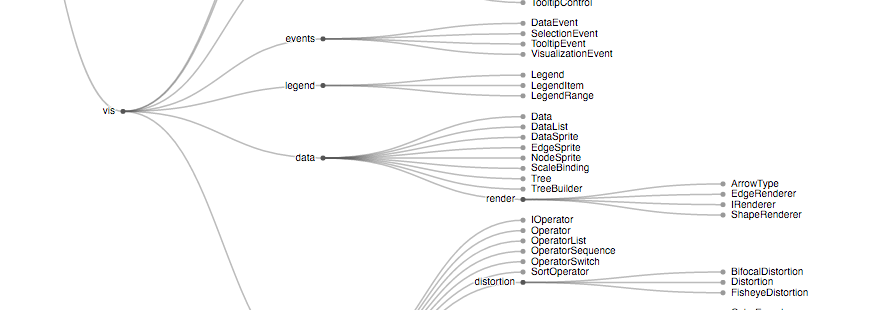 ](https://observablehq.com/@d3/tidy-tree)
+
+The **link** shape generates a smooth cubic Bézier curve from a source point to a target point. The tangents of the curve at the start and end are either [vertical](#linkVertical), [horizontal](#linkHorizontal) or [radial](#linkRadial).
+
+# d3.link(curve) · [Source](https://github.com/d3/d3-shape/blob/main/src/link.js)
+
+Returns a new [link generator](#_link) using the specified curve. For example, to visualize [links](https://github.com/d3/d3-hierarchy/blob/master/README.md#node_links) in a [tree diagram](https://github.com/d3/d3-hierarchy/blob/master/README.md#tree) rooted on the top edge of the display, you might say:
+
+```js
+const link = d3.link(d3.curveBumpY)
+ .x(d => d.x)
+ .y(d => d.y);
+```
+
+# d3.linkVertical() · [Source](https://github.com/d3/d3-shape/blob/main/src/link.js)
+
+Shorthand for [d3.link](#link) with [d3.curveBumpY](#curveBumpY); suitable for visualizing [links](https://github.com/d3/d3-hierarchy/blob/master/README.md#node_links) in a [tree diagram](https://github.com/d3/d3-hierarchy/blob/master/README.md#tree) rooted on the top edge of the display. Equivalent to:
+
+```js
+const link = d3.link(d3.curveBumpY);
+```
+
+# d3.linkHorizontal() · [Source](https://github.com/d3/d3-shape/blob/main/src/link.js)
+
+Shorthand for [d3.link](#link) with [d3.curveBumpX](#curveBumpX); suitable for visualizing [links](https://github.com/d3/d3-hierarchy/blob/master/README.md#node_links) in a [tree diagram](https://github.com/d3/d3-hierarchy/blob/master/README.md#tree) rooted on the left edge of the display. Equivalent to:
+
+```js
+const link = d3.link(d3.curveBumpX);
+```
+
+# link(arguments…) · [Source](https://github.com/d3/d3-shape/blob/main/src/link.js)
+
+Generates a link for the given *arguments*. The *arguments* are arbitrary; they are simply propagated to the link generator’s accessor functions along with the `this` object. For example, with the default settings, an object expected:
+
+```js
+link({
+ source: [100, 100],
+ target: [300, 300]
+});
+```
+
+# link.source([source]) · [Source](https://github.com/d3/d3-shape/blob/main/src/link.js)
+
+If *source* is specified, sets the source accessor to the specified function and returns this link generator. If *source* is not specified, returns the current source accessor, which defaults to:
+
+```js
+function source(d) {
+ return d.source;
+}
+```
+
+# link.target([target]) · [Source](https://github.com/d3/d3-shape/blob/main/src/link.js)
+
+If *target* is specified, sets the target accessor to the specified function and returns this link generator. If *target* is not specified, returns the current target accessor, which defaults to:
+
+```js
+function target(d) {
+ return d.target;
+}
+```
+
+# link.x([x]) · [Source](https://github.com/d3/d3-shape/blob/main/src/link.js)
+
+If *x* is specified, sets the *x*-accessor to the specified function or number and returns this link generator. If *x* is not specified, returns the current *x*-accessor, which defaults to:
+
+```js
+function x(d) {
+ return d[0];
+}
+```
+
+# link.y([y]) · [Source](https://github.com/d3/d3-shape/blob/main/src/link.js)
+
+If *y* is specified, sets the *y*-accessor to the specified function or number and returns this link generator. If *y* is not specified, returns the current *y*-accessor, which defaults to:
+
+```js
+function y(d) {
+ return d[1];
+}
+```
+
+# link.context([context]) · [Source](https://github.com/d3/d3-shape/blob/main/src/link.js)
+
+If *context* is specified, sets the context and returns this link generator. If *context* is not specified, returns the current context, which defaults to null. If the context is not null, then the [generated link](#_link) is rendered to this context as a sequence of [path method](http://www.w3.org/TR/2dcontext/#canvaspathmethods) calls. Otherwise, a [path data](http://www.w3.org/TR/SVG/paths.html#PathData) string representing the generated link is returned. See also [d3-path](https://github.com/d3/d3-path).
+
+# link.digits([digits]) · [Source](https://github.com/d3/d3-shape/blob/main/src/link.js)
+
+If *digits* is specified, sets the maximum number of digits after the decimal separator and returns this link generator. If *digits* is not specified, returns the current maximum fraction digits, which defaults to 3. This option only applies when the associated [*context*](#link_context) is null, as when this link generator is used to produce [path data](http://www.w3.org/TR/SVG/paths.html#PathData).
+
+# d3.linkRadial() · [Source](https://github.com/d3/d3-shape/blob/main/src/link.js)
+
+Returns a new [link generator](#_link) with radial tangents. For example, to visualize [links](https://github.com/d3/d3-hierarchy/blob/master/README.md#node_links) in a [tree diagram](https://github.com/d3/d3-hierarchy/blob/master/README.md#tree) rooted in the center of the display, you might say:
+
+```js
+const link = d3.linkRadial()
+ .angle(d => d.x)
+ .radius(d => d.y);
+```
+
+# linkRadial.angle([angle]) · [Source](https://github.com/d3/d3-shape/blob/main/src/link.js)
+
+Equivalent to [*link*.x](#link_x), except the accessor returns the angle in radians, with 0 at -*y* (12 o’clock).
+
+# linkRadial.radius([radius]) · [Source](https://github.com/d3/d3-shape/blob/main/src/link.js)
+
+Equivalent to [*link*.y](#link_y), except the accessor returns the radius: the distance from the origin ⟨0,0⟩.
+
+### Symbols
+
+Symbols provide a categorical shape encoding as is commonly used in scatterplots. Symbols are always centered at ⟨0,0⟩; use a transform (see: [SVG](http://www.w3.org/TR/SVG/coords.html#TransformAttribute), [Canvas](http://www.w3.org/TR/2dcontext/#transformations)) to move the symbol to a different position.
+
+# d3.symbol([type][, size]) · [Source](https://github.com/d3/d3-shape/blob/main/src/symbol.js), [Examples](https://observablehq.com/@d3/fitted-symbols)
+
+Constructs a new symbol generator of the specified [type](#symbol_type) and [size](#symbol_size). If not specified, *type* defaults to a circle, and *size* defaults to 64.
+
+# symbol(arguments…) · [Source](https://github.com/d3/d3-shape/blob/main/src/symbol.js)
+
+Generates a symbol for the given *arguments*. The *arguments* are arbitrary; they are simply propagated to the symbol generator’s accessor functions along with the `this` object. For example, with the default settings, no arguments are needed to produce a circle with area 64 square pixels. If the symbol generator has a [context](#symbol_context), then the symbol is rendered to this context as a sequence of [path method](http://www.w3.org/TR/2dcontext/#canvaspathmethods) calls and this function returns void. Otherwise, a [path data](http://www.w3.org/TR/SVG/paths.html#PathData) string is returned.
+
+# symbol.type([type]) · [Source](https://github.com/d3/d3-shape/blob/main/src/symbol.js)
+
+If *type* is specified, sets the symbol type to the specified function or symbol type and returns this symbol generator. If *type* is a function, the symbol generator’s arguments and *this* are passed through. (See [*selection*.attr](https://github.com/d3/d3-selection/blob/master/README.md#selection_attr) if you are using d3-selection.) If *type* is not specified, returns the current symbol type accessor, which defaults to:
+
+```js
+function type() {
+ return circle;
+}
+```
+
+See [symbolsFill](#symbolsFill) and [symbolsStroke](#symbolsStroke) for built-in symbol types. To implement a custom symbol type, pass an object that implements [*symbolType*.draw](#symbolType_draw).
+
+# symbol.size([size]) · [Source](https://github.com/d3/d3-shape/blob/main/src/symbol.js)
+
+If *size* is specified, sets the size to the specified function or number and returns this symbol generator. If *size* is a function, the symbol generator’s arguments and *this* are passed through. (See [*selection*.attr](https://github.com/d3/d3-selection/blob/master/README.md#selection_attr) if you are using d3-selection.) If *size* is not specified, returns the current size accessor, which defaults to:
+
+```js
+function size() {
+ return 64;
+}
+```
+
+Specifying the size as a function is useful for constructing a scatterplot with a size encoding. If you wish to scale the symbol to fit a given bounding box, rather than by area, try [SVG’s getBBox](https://observablehq.com/d/1fac2626b9e1b65f).
+
+# symbol.context([context]) · [Source](https://github.com/d3/d3-shape/blob/main/src/symbol.js)
+
+If *context* is specified, sets the context and returns this symbol generator. If *context* is not specified, returns the current context, which defaults to null. If the context is not null, then the [generated symbol](#_symbol) is rendered to this context as a sequence of [path method](http://www.w3.org/TR/2dcontext/#canvaspathmethods) calls. Otherwise, a [path data](http://www.w3.org/TR/SVG/paths.html#PathData) string representing the generated symbol is returned.
+
+# symbol.digits([digits]) · [Source](https://github.com/d3/d3-shape/blob/main/src/symbol.js)
+
+If *digits* is specified, sets the maximum number of digits after the decimal separator and returns this symbol generator. If *digits* is not specified, returns the current maximum fraction digits, which defaults to 3. This option only applies when the associated [*context*](#symbol_context) is null, as when this symbol generator is used to produce [path data](http://www.w3.org/TR/SVG/paths.html#PathData).
+
+# d3.symbolsFill · [Source](https://github.com/d3/d3-shape/blob/main/src/symbol.js)
+
+


 +
+An array containing a set of symbol types designed for filling: [circle](#symbolCircle), [cross](#symbolCross), [diamond](#symbolDiamond), [square](#symbolSquare), [star](#symbolStar), [triangle](#symbolTriangle), and [wye](#symbolWye). Useful for constructing the range of an [ordinal scale](https://github.com/d3/d3-scale#ordinal-scales) should you wish to use a shape encoding for categorical data.
+
+# d3.symbolsStroke · [Source](https://github.com/d3/d3-shape/blob/main/src/symbol.js)
+
+An array containing a set of symbol types designed for stroking: [circle](#symbolCircle), [plus](#symbolPlus), [times](#symbolTimes), [triangle2](#symbolTriangle2), [asterisk](#symbolAsterisk), [square2](#symbolSquare2), and [diamond2](#symbolDiamond2). Useful for constructing the range of an [ordinal scale](https://github.com/d3/d3-scale#ordinal-scales) should you wish to use a shape encoding for categorical data.
+
+# d3.symbolAsterisk · [Source](https://github.com/d3/d3-shape/blob/main/src/symbol/asterisk.js)
+
+The asterisk symbol type; intended for stroking.
+
+# d3.symbolCircle · [Source](https://github.com/d3/d3-shape/blob/main/src/symbol/circle.js)
+
+The circle symbol type; intended for either filling or stroking.
+
+# d3.symbolCross · [Source](https://github.com/d3/d3-shape/blob/main/src/symbol/cross.js)
+
+The Greek cross symbol type, with arms of equal length; intended for filling.
+
+# d3.symbolDiamond · [Source](https://github.com/d3/d3-shape/blob/main/src/symbol/diamond.js)
+
+The rhombus symbol type; intended for filling.
+
+# d3.symbolDiamond2 · [Source](https://github.com/d3/d3-shape/blob/main/src/symbol/diamond.js)
+
+The rotated square symbol type; intended for stroking.
+
+# d3.symbolPlus · [Source](https://github.com/d3/d3-shape/blob/main/src/symbol/plus.js)
+
+The plus symbol type; intended for stroking.
+
+# d3.symbolSquare · [Source](https://github.com/d3/d3-shape/blob/main/src/symbol/square.js)
+
+The square symbol type; intended for filling.
+
+# d3.symbolSquare2 · [Source](https://github.com/d3/d3-shape/blob/main/src/symbol/square2.js)
+
+The square2 symbol type; intended for stroking.
+
+# d3.symbolStar · [Source](https://github.com/d3/d3-shape/blob/main/src/symbol/star.js)
+
+The pentagonal star (pentagram) symbol type; intended for filling.
+
+# d3.symbolTriangle · [Source](https://github.com/d3/d3-shape/blob/main/src/symbol/triangle.js)
+
+The up-pointing triangle symbol type; intended for filling.
+
+# d3.symbolTriangle2 · [Source](https://github.com/d3/d3-shape/blob/main/src/symbol/triangle2.js)
+
+The up-pointing triangle symbol type; intended for stroking.
+
+# d3.symbolWye · [Source](https://github.com/d3/d3-shape/blob/main/src/symbol/wye.js)
+
+The Y-shape symbol type; intended for filling.
+
+# d3.symbolTimes · [Source](https://github.com/d3/d3-shape/blob/main/src/symbol/times.js)
+
+The X-shape symbol type; intended for stroking.
+
+# d3.pointRadial(angle, radius) · [Source](https://github.com/d3/d3-shape/blob/main/src/pointRadial.js), [Examples](https://observablehq.com/@d3/radial-area-chart)
+
+Returns the point [x, y] for the given *angle* in radians, with 0 at -*y* (12 o’clock) and positive angles proceeding clockwise, and the given *radius*.
+
+### Custom Symbol Types
+
+Symbol types are typically not used directly, instead being passed to [*symbol*.type](#symbol_type). However, you can define your own symbol type implementation should none of the built-in types satisfy your needs using the following interface. You can also use this low-level interface with a built-in symbol type as an alternative to the symbol generator.
+
+# symbolType.draw(context, size)
+
+Renders this symbol type to the specified *context* with the specified *size* in square pixels. The *context* implements the [CanvasPathMethods](http://www.w3.org/TR/2dcontext/#canvaspathmethods) interface. (Note that this is a subset of the CanvasRenderingContext2D interface!)
+
+### Stacks
+
+[
 ](https://observablehq.com/@d3/stacked-bar-chart)[
 ](https://observablehq.com/@mbostock/streamgraph-transitions)
+
+Some shape types can be stacked, placing one shape adjacent to another. For example, a bar chart of monthly sales might be broken down into a multi-series bar chart by product category, stacking bars vertically. This is equivalent to subdividing a bar chart by an ordinal dimension (such as product category) and applying a color encoding.
+
+Stacked charts can show overall value and per-category value simultaneously; however, it is typically harder to compare across categories, as only the bottom layer of the stack is aligned. So, chose the [stack order](#stack_order) carefully, and consider a [streamgraph](#stackOffsetWiggle). (See also [grouped charts](https://observablehq.com/@d3/grouped-bar-chart).)
+
+Like the [pie generator](#pies), the stack generator does not produce a shape directly. Instead it computes positions which you can then pass to an [area generator](#areas) or use directly, say to position bars.
+
+# d3.stack() · [Source](https://github.com/d3/d3-shape/blob/main/src/stack.js)
+
+Constructs a new stack generator with the default settings.
+
+# stack(data[, arguments…]) · [Source](https://github.com/d3/d3-shape/blob/main/src/stack.js)
+
+Generates a stack for the given array of *data*, returning an array representing each series. Any additional *arguments* are arbitrary; they are simply propagated to accessors along with the `this` object.
+
+The series are determined by the [keys accessor](#stack_keys); each series *i* in the returned array corresponds to the *i*th key. Each series is an array of points, where each point *j* corresponds to the *j*th element in the input *data*. Lastly, each point is represented as an array [*y0*, *y1*] where *y0* is the lower value (baseline) and *y1* is the upper value (topline); the difference between *y0* and *y1* corresponds to the computed [value](#stack_value) for this point. The key for each series is available as *series*.key, and the [index](#stack_order) as *series*.index. The input data element for each point is available as *point*.data.
+
+For example, consider the following table representing monthly sales of fruits:
+
+Month | Apples | Bananas | Cherries | Durians
+--------|--------|---------|----------|---------
+ 1/2015 | 3840 | 1920 | 960 | 400
+ 2/2015 | 1600 | 1440 | 960 | 400
+ 3/2015 | 640 | 960 | 640 | 400
+ 4/2015 | 320 | 480 | 640 | 400
+
+This might be represented in JavaScript as an array of objects:
+
+```js
+const data = [
+ {month: new Date(2015, 0, 1), apples: 3840, bananas: 1920, cherries: 960, durians: 400},
+ {month: new Date(2015, 1, 1), apples: 1600, bananas: 1440, cherries: 960, durians: 400},
+ {month: new Date(2015, 2, 1), apples: 640, bananas: 960, cherries: 640, durians: 400},
+ {month: new Date(2015, 3, 1), apples: 320, bananas: 480, cherries: 640, durians: 400}
+];
+```
+
+To produce a stack for this data:
+
+```js
+const stack = d3.stack()
+ .keys(["apples", "bananas", "cherries", "durians"])
+ .order(d3.stackOrderNone)
+ .offset(d3.stackOffsetNone);
+
+const series = stack(data);
+```
+
+The resulting array has one element per *series*. Each series has one point per month, and each point has a lower and upper value defining the baseline and topline:
+
+```js
+[
+ [[ 0, 3840], [ 0, 1600], [ 0, 640], [ 0, 320]], // apples
+ [[3840, 5760], [1600, 3040], [ 640, 1600], [ 320, 800]], // bananas
+ [[5760, 6720], [3040, 4000], [1600, 2240], [ 800, 1440]], // cherries
+ [[6720, 7120], [4000, 4400], [2240, 2640], [1440, 1840]], // durians
+]
+```
+
+Each series in then typically passed to an [area generator](#areas) to render an area chart, or used to construct rectangles for a bar chart.
+
+# stack.keys([keys]) · [Source](https://github.com/d3/d3-shape/blob/main/src/stack.js)
+
+If *keys* is specified, sets the keys accessor to the specified function or array and returns this stack generator. If *keys* is not specified, returns the current keys accessor, which defaults to the empty array. A series (layer) is [generated](#_stack) for each key. Keys are typically strings, but they may be arbitrary values. The series’ key is passed to the [value accessor](#stack_value), along with each data point, to compute the point’s value.
+
+# stack.value([value]) · [Source](https://github.com/d3/d3-shape/blob/main/src/stack.js)
+
+If *value* is specified, sets the value accessor to the specified function or number and returns this stack generator. If *value* is not specified, returns the current value accessor, which defaults to:
+
+```js
+function value(d, key) {
+ return d[key];
+}
+```
+
+Thus, by default the stack generator assumes that the input data is an array of objects, with each object exposing named properties with numeric values; see [*stack*](#_stack) for an example.
+
+# stack.order([order]) · [Source](https://github.com/d3/d3-shape/blob/main/src/stack.js)
+
+If *order* is specified, sets the order accessor to the specified function or array and returns this stack generator. If *order* is not specified, returns the current order accessor, which defaults to [stackOrderNone](#stackOrderNone); this uses the order given by the [key accessor](#stack_key). See [stack orders](#stack-orders) for the built-in orders.
+
+If *order* is a function, it is passed the generated series array and must return an array of numeric indexes representing the stack order. For example, the default order is defined as:
+
+```js
+function orderNone(series) {
+ let n = series.length;
+ const o = new Array(n);
+ while (--n >= 0) o[n] = n;
+ return o;
+}
+```
+
+The stack order is computed prior to the [offset](#stack_offset); thus, the lower value for all points is zero at the time the order is computed. The index attribute for each series is also not set until after the order is computed.
+
+# stack.offset([offset]) · [Source](https://github.com/d3/d3-shape/blob/main/src/stack.js)
+
+If *offset* is specified, sets the offset accessor to the specified function and returns this stack generator. If *offset* is not specified, returns the current offset acccesor, which defaults to [stackOffsetNone](#stackOffsetNone); this uses a zero baseline. See [stack offsets](#stack-offsets) for the built-in offsets.
+
+The offset function is passed the generated series array and the order index array; it is then responsible for updating the lower and upper values in the series array. For example, the default offset is defined as:
+
+```js
+function offsetNone(series, order) {
+ if (!((n = series.length) > 1)) return;
+ for (let i = 1, s0, s1 = series[order[0]], n, m = s1.length; i < n; ++i) {
+ s0 = s1, s1 = series[order[i]];
+ for (let j = 0; j < m; ++j) {
+ s1[j][1] += s1[j][0] = s0[j][1];
+ }
+ }
+}
+```
+
+### Stack Orders
+
+Stack orders are typically not used directly, but are instead passed to [*stack*.order](#stack_order).
+
+# d3.stackOrderAppearance(series) · [Source](https://github.com/d3/d3-shape/blob/main/src/order/appearance.js)
+
+Returns a series order such that the earliest series (according to the maximum value) is at the bottom.
+
+# d3.stackOrderAscending(series) · [Source](https://github.com/d3/d3-shape/blob/main/src/order/ascending.js)
+
+Returns a series order such that the smallest series (according to the sum of values) is at the bottom.
+
+# d3.stackOrderDescending(series) · [Source](https://github.com/d3/d3-shape/blob/main/src/order/descending.js)
+
+Returns a series order such that the largest series (according to the sum of values) is at the bottom.
+
+# d3.stackOrderInsideOut(series) · [Source](https://github.com/d3/d3-shape/blob/main/src/order/insideOut.js)
+
+Returns a series order such that the earliest series (according to the maximum value) are on the inside and the later series are on the outside. This order is recommended for streamgraphs in conjunction with the [wiggle offset](#stackOffsetWiggle). See [Stacked Graphs—Geometry & Aesthetics](http://leebyron.com/streamgraph/) by Byron & Wattenberg for more information.
+
+# d3.stackOrderNone(series) · [Source](https://github.com/d3/d3-shape/blob/main/src/order/none.js)
+
+Returns the given series order [0, 1, … *n* - 1] where *n* is the number of elements in *series*. Thus, the stack order is given by the [key accessor](#stack_keys).
+
+# d3.stackOrderReverse(series) · [Source](https://github.com/d3/d3-shape/blob/main/src/order/reverse.js)
+
+Returns the reverse of the given series order [*n* - 1, *n* - 2, … 0] where *n* is the number of elements in *series*. Thus, the stack order is given by the reverse of the [key accessor](#stack_keys).
+
+### Stack Offsets
+
+Stack offsets are typically not used directly, but are instead passed to [*stack*.offset](#stack_offset).
+
+# d3.stackOffsetExpand(series, order) · [Source](https://github.com/d3/d3-shape/blob/main/src/offset/expand.js)
+
+Applies a zero baseline and normalizes the values for each point such that the topline is always one.
+
+# d3.stackOffsetDiverging(series, order) · [Source](https://github.com/d3/d3-shape/blob/main/src/offset/diverging.js)
+
+Positive values are stacked above zero, negative values are [stacked below zero](https://observablehq.com/@d3/diverging-stacked-bar-chart), and zero values are stacked at zero.
+
+# d3.stackOffsetNone(series, order) · [Source](https://github.com/d3/d3-shape/blob/main/src/offset/none.js)
+
+Applies a zero baseline.
+
+# d3.stackOffsetSilhouette(series, order) · [Source](https://github.com/d3/d3-shape/blob/main/src/offset/silhouette.js)
+
+Shifts the baseline down such that the center of the streamgraph is always at zero.
+
+# d3.stackOffsetWiggle(series, order) · [Source](https://github.com/d3/d3-shape/blob/main/src/offset/wiggle.js)
+
+Shifts the baseline so as to minimize the weighted wiggle of layers. This offset is recommended for streamgraphs in conjunction with the [inside-out order](#stackOrderInsideOut). See [Stacked Graphs—Geometry & Aesthetics](http://leebyron.com/streamgraph/) by Bryon & Wattenberg for more information.
diff --git a/node_modules/victory-vendor/node_modules/d3-shape/dist/d3-shape.js b/node_modules/victory-vendor/node_modules/d3-shape/dist/d3-shape.js
new file mode 100644
index 0000000000000000000000000000000000000000..62e76d08f1c3bf006d787bccc9ddd1956ad73080
--- /dev/null
+++ b/node_modules/victory-vendor/node_modules/d3-shape/dist/d3-shape.js
@@ -0,0 +1,2141 @@
+// https://d3js.org/d3-shape/ v3.2.0 Copyright 2010-2022 Mike Bostock
+(function (global, factory) {
+typeof exports === 'object' && typeof module !== 'undefined' ? factory(exports, require('d3-path')) :
+typeof define === 'function' && define.amd ? define(['exports', 'd3-path'], factory) :
+(global = typeof globalThis !== 'undefined' ? globalThis : global || self, factory(global.d3 = global.d3 || {}, global.d3));
+})(this, (function (exports, d3Path) { 'use strict';
+
+function constant(x) {
+ return function constant() {
+ return x;
+ };
+}
+
+const abs = Math.abs;
+const atan2 = Math.atan2;
+const cos = Math.cos;
+const max = Math.max;
+const min = Math.min;
+const sin = Math.sin;
+const sqrt = Math.sqrt;
+
+const epsilon = 1e-12;
+const pi = Math.PI;
+const halfPi = pi / 2;
+const tau = 2 * pi;
+
+function acos(x) {
+ return x > 1 ? 0 : x < -1 ? pi : Math.acos(x);
+}
+
+function asin(x) {
+ return x >= 1 ? halfPi : x <= -1 ? -halfPi : Math.asin(x);
+}
+
+function withPath(shape) {
+ let digits = 3;
+
+ shape.digits = function(_) {
+ if (!arguments.length) return digits;
+ if (_ == null) {
+ digits = null;
+ } else {
+ const d = Math.floor(_);
+ if (!(d >= 0)) throw new RangeError(`invalid digits: ${_}`);
+ digits = d;
+ }
+ return shape;
+ };
+
+ return () => new d3Path.Path(digits);
+}
+
+function arcInnerRadius(d) {
+ return d.innerRadius;
+}
+
+function arcOuterRadius(d) {
+ return d.outerRadius;
+}
+
+function arcStartAngle(d) {
+ return d.startAngle;
+}
+
+function arcEndAngle(d) {
+ return d.endAngle;
+}
+
+function arcPadAngle(d) {
+ return d && d.padAngle; // Note: optional!
+}
+
+function intersect(x0, y0, x1, y1, x2, y2, x3, y3) {
+ var x10 = x1 - x0, y10 = y1 - y0,
+ x32 = x3 - x2, y32 = y3 - y2,
+ t = y32 * x10 - x32 * y10;
+ if (t * t < epsilon) return;
+ t = (x32 * (y0 - y2) - y32 * (x0 - x2)) / t;
+ return [x0 + t * x10, y0 + t * y10];
+}
+
+// Compute perpendicular offset line of length rc.
+// http://mathworld.wolfram.com/Circle-LineIntersection.html
+function cornerTangents(x0, y0, x1, y1, r1, rc, cw) {
+ var x01 = x0 - x1,
+ y01 = y0 - y1,
+ lo = (cw ? rc : -rc) / sqrt(x01 * x01 + y01 * y01),
+ ox = lo * y01,
+ oy = -lo * x01,
+ x11 = x0 + ox,
+ y11 = y0 + oy,
+ x10 = x1 + ox,
+ y10 = y1 + oy,
+ x00 = (x11 + x10) / 2,
+ y00 = (y11 + y10) / 2,
+ dx = x10 - x11,
+ dy = y10 - y11,
+ d2 = dx * dx + dy * dy,
+ r = r1 - rc,
+ D = x11 * y10 - x10 * y11,
+ d = (dy < 0 ? -1 : 1) * sqrt(max(0, r * r * d2 - D * D)),
+ cx0 = (D * dy - dx * d) / d2,
+ cy0 = (-D * dx - dy * d) / d2,
+ cx1 = (D * dy + dx * d) / d2,
+ cy1 = (-D * dx + dy * d) / d2,
+ dx0 = cx0 - x00,
+ dy0 = cy0 - y00,
+ dx1 = cx1 - x00,
+ dy1 = cy1 - y00;
+
+ // Pick the closer of the two intersection points.
+ // TODO Is there a faster way to determine which intersection to use?
+ if (dx0 * dx0 + dy0 * dy0 > dx1 * dx1 + dy1 * dy1) cx0 = cx1, cy0 = cy1;
+
+ return {
+ cx: cx0,
+ cy: cy0,
+ x01: -ox,
+ y01: -oy,
+ x11: cx0 * (r1 / r - 1),
+ y11: cy0 * (r1 / r - 1)
+ };
+}
+
+function arc() {
+ var innerRadius = arcInnerRadius,
+ outerRadius = arcOuterRadius,
+ cornerRadius = constant(0),
+ padRadius = null,
+ startAngle = arcStartAngle,
+ endAngle = arcEndAngle,
+ padAngle = arcPadAngle,
+ context = null,
+ path = withPath(arc);
+
+ function arc() {
+ var buffer,
+ r,
+ r0 = +innerRadius.apply(this, arguments),
+ r1 = +outerRadius.apply(this, arguments),
+ a0 = startAngle.apply(this, arguments) - halfPi,
+ a1 = endAngle.apply(this, arguments) - halfPi,
+ da = abs(a1 - a0),
+ cw = a1 > a0;
+
+ if (!context) context = buffer = path();
+
+ // Ensure that the outer radius is always larger than the inner radius.
+ if (r1 < r0) r = r1, r1 = r0, r0 = r;
+
+ // Is it a point?
+ if (!(r1 > epsilon)) context.moveTo(0, 0);
+
+ // Or is it a circle or annulus?
+ else if (da > tau - epsilon) {
+ context.moveTo(r1 * cos(a0), r1 * sin(a0));
+ context.arc(0, 0, r1, a0, a1, !cw);
+ if (r0 > epsilon) {
+ context.moveTo(r0 * cos(a1), r0 * sin(a1));
+ context.arc(0, 0, r0, a1, a0, cw);
+ }
+ }
+
+ // Or is it a circular or annular sector?
+ else {
+ var a01 = a0,
+ a11 = a1,
+ a00 = a0,
+ a10 = a1,
+ da0 = da,
+ da1 = da,
+ ap = padAngle.apply(this, arguments) / 2,
+ rp = (ap > epsilon) && (padRadius ? +padRadius.apply(this, arguments) : sqrt(r0 * r0 + r1 * r1)),
+ rc = min(abs(r1 - r0) / 2, +cornerRadius.apply(this, arguments)),
+ rc0 = rc,
+ rc1 = rc,
+ t0,
+ t1;
+
+ // Apply padding? Note that since r1 ≥ r0, da1 ≥ da0.
+ if (rp > epsilon) {
+ var p0 = asin(rp / r0 * sin(ap)),
+ p1 = asin(rp / r1 * sin(ap));
+ if ((da0 -= p0 * 2) > epsilon) p0 *= (cw ? 1 : -1), a00 += p0, a10 -= p0;
+ else da0 = 0, a00 = a10 = (a0 + a1) / 2;
+ if ((da1 -= p1 * 2) > epsilon) p1 *= (cw ? 1 : -1), a01 += p1, a11 -= p1;
+ else da1 = 0, a01 = a11 = (a0 + a1) / 2;
+ }
+
+ var x01 = r1 * cos(a01),
+ y01 = r1 * sin(a01),
+ x10 = r0 * cos(a10),
+ y10 = r0 * sin(a10);
+
+ // Apply rounded corners?
+ if (rc > epsilon) {
+ var x11 = r1 * cos(a11),
+ y11 = r1 * sin(a11),
+ x00 = r0 * cos(a00),
+ y00 = r0 * sin(a00),
+ oc;
+
+ // Restrict the corner radius according to the sector angle. If this
+ // intersection fails, it’s probably because the arc is too small, so
+ // disable the corner radius entirely.
+ if (da < pi) {
+ if (oc = intersect(x01, y01, x00, y00, x11, y11, x10, y10)) {
+ var ax = x01 - oc[0],
+ ay = y01 - oc[1],
+ bx = x11 - oc[0],
+ by = y11 - oc[1],
+ kc = 1 / sin(acos((ax * bx + ay * by) / (sqrt(ax * ax + ay * ay) * sqrt(bx * bx + by * by))) / 2),
+ lc = sqrt(oc[0] * oc[0] + oc[1] * oc[1]);
+ rc0 = min(rc, (r0 - lc) / (kc - 1));
+ rc1 = min(rc, (r1 - lc) / (kc + 1));
+ } else {
+ rc0 = rc1 = 0;
+ }
+ }
+ }
+
+ // Is the sector collapsed to a line?
+ if (!(da1 > epsilon)) context.moveTo(x01, y01);
+
+ // Does the sector’s outer ring have rounded corners?
+ else if (rc1 > epsilon) {
+ t0 = cornerTangents(x00, y00, x01, y01, r1, rc1, cw);
+ t1 = cornerTangents(x11, y11, x10, y10, r1, rc1, cw);
+
+ context.moveTo(t0.cx + t0.x01, t0.cy + t0.y01);
+
+ // Have the corners merged?
+ if (rc1 < rc) context.arc(t0.cx, t0.cy, rc1, atan2(t0.y01, t0.x01), atan2(t1.y01, t1.x01), !cw);
+
+ // Otherwise, draw the two corners and the ring.
+ else {
+ context.arc(t0.cx, t0.cy, rc1, atan2(t0.y01, t0.x01), atan2(t0.y11, t0.x11), !cw);
+ context.arc(0, 0, r1, atan2(t0.cy + t0.y11, t0.cx + t0.x11), atan2(t1.cy + t1.y11, t1.cx + t1.x11), !cw);
+ context.arc(t1.cx, t1.cy, rc1, atan2(t1.y11, t1.x11), atan2(t1.y01, t1.x01), !cw);
+ }
+ }
+
+ // Or is the outer ring just a circular arc?
+ else context.moveTo(x01, y01), context.arc(0, 0, r1, a01, a11, !cw);
+
+ // Is there no inner ring, and it’s a circular sector?
+ // Or perhaps it’s an annular sector collapsed due to padding?
+ if (!(r0 > epsilon) || !(da0 > epsilon)) context.lineTo(x10, y10);
+
+ // Does the sector’s inner ring (or point) have rounded corners?
+ else if (rc0 > epsilon) {
+ t0 = cornerTangents(x10, y10, x11, y11, r0, -rc0, cw);
+ t1 = cornerTangents(x01, y01, x00, y00, r0, -rc0, cw);
+
+ context.lineTo(t0.cx + t0.x01, t0.cy + t0.y01);
+
+ // Have the corners merged?
+ if (rc0 < rc) context.arc(t0.cx, t0.cy, rc0, atan2(t0.y01, t0.x01), atan2(t1.y01, t1.x01), !cw);
+
+ // Otherwise, draw the two corners and the ring.
+ else {
+ context.arc(t0.cx, t0.cy, rc0, atan2(t0.y01, t0.x01), atan2(t0.y11, t0.x11), !cw);
+ context.arc(0, 0, r0, atan2(t0.cy + t0.y11, t0.cx + t0.x11), atan2(t1.cy + t1.y11, t1.cx + t1.x11), cw);
+ context.arc(t1.cx, t1.cy, rc0, atan2(t1.y11, t1.x11), atan2(t1.y01, t1.x01), !cw);
+ }
+ }
+
+ // Or is the inner ring just a circular arc?
+ else context.arc(0, 0, r0, a10, a00, cw);
+ }
+
+ context.closePath();
+
+ if (buffer) return context = null, buffer + "" || null;
+ }
+
+ arc.centroid = function() {
+ var r = (+innerRadius.apply(this, arguments) + +outerRadius.apply(this, arguments)) / 2,
+ a = (+startAngle.apply(this, arguments) + +endAngle.apply(this, arguments)) / 2 - pi / 2;
+ return [cos(a) * r, sin(a) * r];
+ };
+
+ arc.innerRadius = function(_) {
+ return arguments.length ? (innerRadius = typeof _ === "function" ? _ : constant(+_), arc) : innerRadius;
+ };
+
+ arc.outerRadius = function(_) {
+ return arguments.length ? (outerRadius = typeof _ === "function" ? _ : constant(+_), arc) : outerRadius;
+ };
+
+ arc.cornerRadius = function(_) {
+ return arguments.length ? (cornerRadius = typeof _ === "function" ? _ : constant(+_), arc) : cornerRadius;
+ };
+
+ arc.padRadius = function(_) {
+ return arguments.length ? (padRadius = _ == null ? null : typeof _ === "function" ? _ : constant(+_), arc) : padRadius;
+ };
+
+ arc.startAngle = function(_) {
+ return arguments.length ? (startAngle = typeof _ === "function" ? _ : constant(+_), arc) : startAngle;
+ };
+
+ arc.endAngle = function(_) {
+ return arguments.length ? (endAngle = typeof _ === "function" ? _ : constant(+_), arc) : endAngle;
+ };
+
+ arc.padAngle = function(_) {
+ return arguments.length ? (padAngle = typeof _ === "function" ? _ : constant(+_), arc) : padAngle;
+ };
+
+ arc.context = function(_) {
+ return arguments.length ? ((context = _ == null ? null : _), arc) : context;
+ };
+
+ return arc;
+}
+
+var slice = Array.prototype.slice;
+
+function array(x) {
+ return typeof x === "object" && "length" in x
+ ? x // Array, TypedArray, NodeList, array-like
+ : Array.from(x); // Map, Set, iterable, string, or anything else
+}
+
+function Linear(context) {
+ this._context = context;
+}
+
+Linear.prototype = {
+ areaStart: function() {
+ this._line = 0;
+ },
+ areaEnd: function() {
+ this._line = NaN;
+ },
+ lineStart: function() {
+ this._point = 0;
+ },
+ lineEnd: function() {
+ if (this._line || (this._line !== 0 && this._point === 1)) this._context.closePath();
+ this._line = 1 - this._line;
+ },
+ point: function(x, y) {
+ x = +x, y = +y;
+ switch (this._point) {
+ case 0: this._point = 1; this._line ? this._context.lineTo(x, y) : this._context.moveTo(x, y); break;
+ case 1: this._point = 2; // falls through
+ default: this._context.lineTo(x, y); break;
+ }
+ }
+};
+
+function curveLinear(context) {
+ return new Linear(context);
+}
+
+function x(p) {
+ return p[0];
+}
+
+function y(p) {
+ return p[1];
+}
+
+function line(x$1, y$1) {
+ var defined = constant(true),
+ context = null,
+ curve = curveLinear,
+ output = null,
+ path = withPath(line);
+
+ x$1 = typeof x$1 === "function" ? x$1 : (x$1 === undefined) ? x : constant(x$1);
+ y$1 = typeof y$1 === "function" ? y$1 : (y$1 === undefined) ? y : constant(y$1);
+
+ function line(data) {
+ var i,
+ n = (data = array(data)).length,
+ d,
+ defined0 = false,
+ buffer;
+
+ if (context == null) output = curve(buffer = path());
+
+ for (i = 0; i <= n; ++i) {
+ if (!(i < n && defined(d = data[i], i, data)) === defined0) {
+ if (defined0 = !defined0) output.lineStart();
+ else output.lineEnd();
+ }
+ if (defined0) output.point(+x$1(d, i, data), +y$1(d, i, data));
+ }
+
+ if (buffer) return output = null, buffer + "" || null;
+ }
+
+ line.x = function(_) {
+ return arguments.length ? (x$1 = typeof _ === "function" ? _ : constant(+_), line) : x$1;
+ };
+
+ line.y = function(_) {
+ return arguments.length ? (y$1 = typeof _ === "function" ? _ : constant(+_), line) : y$1;
+ };
+
+ line.defined = function(_) {
+ return arguments.length ? (defined = typeof _ === "function" ? _ : constant(!!_), line) : defined;
+ };
+
+ line.curve = function(_) {
+ return arguments.length ? (curve = _, context != null && (output = curve(context)), line) : curve;
+ };
+
+ line.context = function(_) {
+ return arguments.length ? (_ == null ? context = output = null : output = curve(context = _), line) : context;
+ };
+
+ return line;
+}
+
+function area(x0, y0, y1) {
+ var x1 = null,
+ defined = constant(true),
+ context = null,
+ curve = curveLinear,
+ output = null,
+ path = withPath(area);
+
+ x0 = typeof x0 === "function" ? x0 : (x0 === undefined) ? x : constant(+x0);
+ y0 = typeof y0 === "function" ? y0 : (y0 === undefined) ? constant(0) : constant(+y0);
+ y1 = typeof y1 === "function" ? y1 : (y1 === undefined) ? y : constant(+y1);
+
+ function area(data) {
+ var i,
+ j,
+ k,
+ n = (data = array(data)).length,
+ d,
+ defined0 = false,
+ buffer,
+ x0z = new Array(n),
+ y0z = new Array(n);
+
+ if (context == null) output = curve(buffer = path());
+
+ for (i = 0; i <= n; ++i) {
+ if (!(i < n && defined(d = data[i], i, data)) === defined0) {
+ if (defined0 = !defined0) {
+ j = i;
+ output.areaStart();
+ output.lineStart();
+ } else {
+ output.lineEnd();
+ output.lineStart();
+ for (k = i - 1; k >= j; --k) {
+ output.point(x0z[k], y0z[k]);
+ }
+ output.lineEnd();
+ output.areaEnd();
+ }
+ }
+ if (defined0) {
+ x0z[i] = +x0(d, i, data), y0z[i] = +y0(d, i, data);
+ output.point(x1 ? +x1(d, i, data) : x0z[i], y1 ? +y1(d, i, data) : y0z[i]);
+ }
+ }
+
+ if (buffer) return output = null, buffer + "" || null;
+ }
+
+ function arealine() {
+ return line().defined(defined).curve(curve).context(context);
+ }
+
+ area.x = function(_) {
+ return arguments.length ? (x0 = typeof _ === "function" ? _ : constant(+_), x1 = null, area) : x0;
+ };
+
+ area.x0 = function(_) {
+ return arguments.length ? (x0 = typeof _ === "function" ? _ : constant(+_), area) : x0;
+ };
+
+ area.x1 = function(_) {
+ return arguments.length ? (x1 = _ == null ? null : typeof _ === "function" ? _ : constant(+_), area) : x1;
+ };
+
+ area.y = function(_) {
+ return arguments.length ? (y0 = typeof _ === "function" ? _ : constant(+_), y1 = null, area) : y0;
+ };
+
+ area.y0 = function(_) {
+ return arguments.length ? (y0 = typeof _ === "function" ? _ : constant(+_), area) : y0;
+ };
+
+ area.y1 = function(_) {
+ return arguments.length ? (y1 = _ == null ? null : typeof _ === "function" ? _ : constant(+_), area) : y1;
+ };
+
+ area.lineX0 =
+ area.lineY0 = function() {
+ return arealine().x(x0).y(y0);
+ };
+
+ area.lineY1 = function() {
+ return arealine().x(x0).y(y1);
+ };
+
+ area.lineX1 = function() {
+ return arealine().x(x1).y(y0);
+ };
+
+ area.defined = function(_) {
+ return arguments.length ? (defined = typeof _ === "function" ? _ : constant(!!_), area) : defined;
+ };
+
+ area.curve = function(_) {
+ return arguments.length ? (curve = _, context != null && (output = curve(context)), area) : curve;
+ };
+
+ area.context = function(_) {
+ return arguments.length ? (_ == null ? context = output = null : output = curve(context = _), area) : context;
+ };
+
+ return area;
+}
+
+function descending$1(a, b) {
+ return b < a ? -1 : b > a ? 1 : b >= a ? 0 : NaN;
+}
+
+function identity(d) {
+ return d;
+}
+
+function pie() {
+ var value = identity,
+ sortValues = descending$1,
+ sort = null,
+ startAngle = constant(0),
+ endAngle = constant(tau),
+ padAngle = constant(0);
+
+ function pie(data) {
+ var i,
+ n = (data = array(data)).length,
+ j,
+ k,
+ sum = 0,
+ index = new Array(n),
+ arcs = new Array(n),
+ a0 = +startAngle.apply(this, arguments),
+ da = Math.min(tau, Math.max(-tau, endAngle.apply(this, arguments) - a0)),
+ a1,
+ p = Math.min(Math.abs(da) / n, padAngle.apply(this, arguments)),
+ pa = p * (da < 0 ? -1 : 1),
+ v;
+
+ for (i = 0; i < n; ++i) {
+ if ((v = arcs[index[i] = i] = +value(data[i], i, data)) > 0) {
+ sum += v;
+ }
+ }
+
+ // Optionally sort the arcs by previously-computed values or by data.
+ if (sortValues != null) index.sort(function(i, j) { return sortValues(arcs[i], arcs[j]); });
+ else if (sort != null) index.sort(function(i, j) { return sort(data[i], data[j]); });
+
+ // Compute the arcs! They are stored in the original data's order.
+ for (i = 0, k = sum ? (da - n * pa) / sum : 0; i < n; ++i, a0 = a1) {
+ j = index[i], v = arcs[j], a1 = a0 + (v > 0 ? v * k : 0) + pa, arcs[j] = {
+ data: data[j],
+ index: i,
+ value: v,
+ startAngle: a0,
+ endAngle: a1,
+ padAngle: p
+ };
+ }
+
+ return arcs;
+ }
+
+ pie.value = function(_) {
+ return arguments.length ? (value = typeof _ === "function" ? _ : constant(+_), pie) : value;
+ };
+
+ pie.sortValues = function(_) {
+ return arguments.length ? (sortValues = _, sort = null, pie) : sortValues;
+ };
+
+ pie.sort = function(_) {
+ return arguments.length ? (sort = _, sortValues = null, pie) : sort;
+ };
+
+ pie.startAngle = function(_) {
+ return arguments.length ? (startAngle = typeof _ === "function" ? _ : constant(+_), pie) : startAngle;
+ };
+
+ pie.endAngle = function(_) {
+ return arguments.length ? (endAngle = typeof _ === "function" ? _ : constant(+_), pie) : endAngle;
+ };
+
+ pie.padAngle = function(_) {
+ return arguments.length ? (padAngle = typeof _ === "function" ? _ : constant(+_), pie) : padAngle;
+ };
+
+ return pie;
+}
+
+var curveRadialLinear = curveRadial(curveLinear);
+
+function Radial(curve) {
+ this._curve = curve;
+}
+
+Radial.prototype = {
+ areaStart: function() {
+ this._curve.areaStart();
+ },
+ areaEnd: function() {
+ this._curve.areaEnd();
+ },
+ lineStart: function() {
+ this._curve.lineStart();
+ },
+ lineEnd: function() {
+ this._curve.lineEnd();
+ },
+ point: function(a, r) {
+ this._curve.point(r * Math.sin(a), r * -Math.cos(a));
+ }
+};
+
+function curveRadial(curve) {
+
+ function radial(context) {
+ return new Radial(curve(context));
+ }
+
+ radial._curve = curve;
+
+ return radial;
+}
+
+function lineRadial(l) {
+ var c = l.curve;
+
+ l.angle = l.x, delete l.x;
+ l.radius = l.y, delete l.y;
+
+ l.curve = function(_) {
+ return arguments.length ? c(curveRadial(_)) : c()._curve;
+ };
+
+ return l;
+}
+
+function lineRadial$1() {
+ return lineRadial(line().curve(curveRadialLinear));
+}
+
+function areaRadial() {
+ var a = area().curve(curveRadialLinear),
+ c = a.curve,
+ x0 = a.lineX0,
+ x1 = a.lineX1,
+ y0 = a.lineY0,
+ y1 = a.lineY1;
+
+ a.angle = a.x, delete a.x;
+ a.startAngle = a.x0, delete a.x0;
+ a.endAngle = a.x1, delete a.x1;
+ a.radius = a.y, delete a.y;
+ a.innerRadius = a.y0, delete a.y0;
+ a.outerRadius = a.y1, delete a.y1;
+ a.lineStartAngle = function() { return lineRadial(x0()); }, delete a.lineX0;
+ a.lineEndAngle = function() { return lineRadial(x1()); }, delete a.lineX1;
+ a.lineInnerRadius = function() { return lineRadial(y0()); }, delete a.lineY0;
+ a.lineOuterRadius = function() { return lineRadial(y1()); }, delete a.lineY1;
+
+ a.curve = function(_) {
+ return arguments.length ? c(curveRadial(_)) : c()._curve;
+ };
+
+ return a;
+}
+
+function pointRadial(x, y) {
+ return [(y = +y) * Math.cos(x -= Math.PI / 2), y * Math.sin(x)];
+}
+
+class Bump {
+ constructor(context, x) {
+ this._context = context;
+ this._x = x;
+ }
+ areaStart() {
+ this._line = 0;
+ }
+ areaEnd() {
+ this._line = NaN;
+ }
+ lineStart() {
+ this._point = 0;
+ }
+ lineEnd() {
+ if (this._line || (this._line !== 0 && this._point === 1)) this._context.closePath();
+ this._line = 1 - this._line;
+ }
+ point(x, y) {
+ x = +x, y = +y;
+ switch (this._point) {
+ case 0: {
+ this._point = 1;
+ if (this._line) this._context.lineTo(x, y);
+ else this._context.moveTo(x, y);
+ break;
+ }
+ case 1: this._point = 2; // falls through
+ default: {
+ if (this._x) this._context.bezierCurveTo(this._x0 = (this._x0 + x) / 2, this._y0, this._x0, y, x, y);
+ else this._context.bezierCurveTo(this._x0, this._y0 = (this._y0 + y) / 2, x, this._y0, x, y);
+ break;
+ }
+ }
+ this._x0 = x, this._y0 = y;
+ }
+}
+
+class BumpRadial {
+ constructor(context) {
+ this._context = context;
+ }
+ lineStart() {
+ this._point = 0;
+ }
+ lineEnd() {}
+ point(x, y) {
+ x = +x, y = +y;
+ if (this._point === 0) {
+ this._point = 1;
+ } else {
+ const p0 = pointRadial(this._x0, this._y0);
+ const p1 = pointRadial(this._x0, this._y0 = (this._y0 + y) / 2);
+ const p2 = pointRadial(x, this._y0);
+ const p3 = pointRadial(x, y);
+ this._context.moveTo(...p0);
+ this._context.bezierCurveTo(...p1, ...p2, ...p3);
+ }
+ this._x0 = x, this._y0 = y;
+ }
+}
+
+function bumpX(context) {
+ return new Bump(context, true);
+}
+
+function bumpY(context) {
+ return new Bump(context, false);
+}
+
+function bumpRadial(context) {
+ return new BumpRadial(context);
+}
+
+function linkSource(d) {
+ return d.source;
+}
+
+function linkTarget(d) {
+ return d.target;
+}
+
+function link(curve) {
+ let source = linkSource,
+ target = linkTarget,
+ x$1 = x,
+ y$1 = y,
+ context = null,
+ output = null,
+ path = withPath(link);
+
+ function link() {
+ let buffer;
+ const argv = slice.call(arguments);
+ const s = source.apply(this, argv);
+ const t = target.apply(this, argv);
+ if (context == null) output = curve(buffer = path());
+ output.lineStart();
+ argv[0] = s, output.point(+x$1.apply(this, argv), +y$1.apply(this, argv));
+ argv[0] = t, output.point(+x$1.apply(this, argv), +y$1.apply(this, argv));
+ output.lineEnd();
+ if (buffer) return output = null, buffer + "" || null;
+ }
+
+ link.source = function(_) {
+ return arguments.length ? (source = _, link) : source;
+ };
+
+ link.target = function(_) {
+ return arguments.length ? (target = _, link) : target;
+ };
+
+ link.x = function(_) {
+ return arguments.length ? (x$1 = typeof _ === "function" ? _ : constant(+_), link) : x$1;
+ };
+
+ link.y = function(_) {
+ return arguments.length ? (y$1 = typeof _ === "function" ? _ : constant(+_), link) : y$1;
+ };
+
+ link.context = function(_) {
+ return arguments.length ? (_ == null ? context = output = null : output = curve(context = _), link) : context;
+ };
+
+ return link;
+}
+
+function linkHorizontal() {
+ return link(bumpX);
+}
+
+function linkVertical() {
+ return link(bumpY);
+}
+
+function linkRadial() {
+ const l = link(bumpRadial);
+ l.angle = l.x, delete l.x;
+ l.radius = l.y, delete l.y;
+ return l;
+}
+
+const sqrt3$2 = sqrt(3);
+
+var asterisk = {
+ draw(context, size) {
+ const r = sqrt(size + min(size / 28, 0.75)) * 0.59436;
+ const t = r / 2;
+ const u = t * sqrt3$2;
+ context.moveTo(0, r);
+ context.lineTo(0, -r);
+ context.moveTo(-u, -t);
+ context.lineTo(u, t);
+ context.moveTo(-u, t);
+ context.lineTo(u, -t);
+ }
+};
+
+var circle = {
+ draw(context, size) {
+ const r = sqrt(size / pi);
+ context.moveTo(r, 0);
+ context.arc(0, 0, r, 0, tau);
+ }
+};
+
+var cross = {
+ draw(context, size) {
+ const r = sqrt(size / 5) / 2;
+ context.moveTo(-3 * r, -r);
+ context.lineTo(-r, -r);
+ context.lineTo(-r, -3 * r);
+ context.lineTo(r, -3 * r);
+ context.lineTo(r, -r);
+ context.lineTo(3 * r, -r);
+ context.lineTo(3 * r, r);
+ context.lineTo(r, r);
+ context.lineTo(r, 3 * r);
+ context.lineTo(-r, 3 * r);
+ context.lineTo(-r, r);
+ context.lineTo(-3 * r, r);
+ context.closePath();
+ }
+};
+
+const tan30 = sqrt(1 / 3);
+const tan30_2 = tan30 * 2;
+
+var diamond = {
+ draw(context, size) {
+ const y = sqrt(size / tan30_2);
+ const x = y * tan30;
+ context.moveTo(0, -y);
+ context.lineTo(x, 0);
+ context.lineTo(0, y);
+ context.lineTo(-x, 0);
+ context.closePath();
+ }
+};
+
+var diamond2 = {
+ draw(context, size) {
+ const r = sqrt(size) * 0.62625;
+ context.moveTo(0, -r);
+ context.lineTo(r, 0);
+ context.lineTo(0, r);
+ context.lineTo(-r, 0);
+ context.closePath();
+ }
+};
+
+var plus = {
+ draw(context, size) {
+ const r = sqrt(size - min(size / 7, 2)) * 0.87559;
+ context.moveTo(-r, 0);
+ context.lineTo(r, 0);
+ context.moveTo(0, r);
+ context.lineTo(0, -r);
+ }
+};
+
+var square = {
+ draw(context, size) {
+ const w = sqrt(size);
+ const x = -w / 2;
+ context.rect(x, x, w, w);
+ }
+};
+
+var square2 = {
+ draw(context, size) {
+ const r = sqrt(size) * 0.4431;
+ context.moveTo(r, r);
+ context.lineTo(r, -r);
+ context.lineTo(-r, -r);
+ context.lineTo(-r, r);
+ context.closePath();
+ }
+};
+
+const ka = 0.89081309152928522810;
+const kr = sin(pi / 10) / sin(7 * pi / 10);
+const kx = sin(tau / 10) * kr;
+const ky = -cos(tau / 10) * kr;
+
+var star = {
+ draw(context, size) {
+ const r = sqrt(size * ka);
+ const x = kx * r;
+ const y = ky * r;
+ context.moveTo(0, -r);
+ context.lineTo(x, y);
+ for (let i = 1; i < 5; ++i) {
+ const a = tau * i / 5;
+ const c = cos(a);
+ const s = sin(a);
+ context.lineTo(s * r, -c * r);
+ context.lineTo(c * x - s * y, s * x + c * y);
+ }
+ context.closePath();
+ }
+};
+
+const sqrt3$1 = sqrt(3);
+
+var triangle = {
+ draw(context, size) {
+ const y = -sqrt(size / (sqrt3$1 * 3));
+ context.moveTo(0, y * 2);
+ context.lineTo(-sqrt3$1 * y, -y);
+ context.lineTo(sqrt3$1 * y, -y);
+ context.closePath();
+ }
+};
+
+const sqrt3 = sqrt(3);
+
+var triangle2 = {
+ draw(context, size) {
+ const s = sqrt(size) * 0.6824;
+ const t = s / 2;
+ const u = (s * sqrt3) / 2; // cos(Math.PI / 6)
+ context.moveTo(0, -s);
+ context.lineTo(u, t);
+ context.lineTo(-u, t);
+ context.closePath();
+ }
+};
+
+const c = -0.5;
+const s = sqrt(3) / 2;
+const k = 1 / sqrt(12);
+const a = (k / 2 + 1) * 3;
+
+var wye = {
+ draw(context, size) {
+ const r = sqrt(size / a);
+ const x0 = r / 2, y0 = r * k;
+ const x1 = x0, y1 = r * k + r;
+ const x2 = -x1, y2 = y1;
+ context.moveTo(x0, y0);
+ context.lineTo(x1, y1);
+ context.lineTo(x2, y2);
+ context.lineTo(c * x0 - s * y0, s * x0 + c * y0);
+ context.lineTo(c * x1 - s * y1, s * x1 + c * y1);
+ context.lineTo(c * x2 - s * y2, s * x2 + c * y2);
+ context.lineTo(c * x0 + s * y0, c * y0 - s * x0);
+ context.lineTo(c * x1 + s * y1, c * y1 - s * x1);
+ context.lineTo(c * x2 + s * y2, c * y2 - s * x2);
+ context.closePath();
+ }
+};
+
+var times = {
+ draw(context, size) {
+ const r = sqrt(size - min(size / 6, 1.7)) * 0.6189;
+ context.moveTo(-r, -r);
+ context.lineTo(r, r);
+ context.moveTo(-r, r);
+ context.lineTo(r, -r);
+ }
+};
+
+// These symbols are designed to be filled.
+const symbolsFill = [
+ circle,
+ cross,
+ diamond,
+ square,
+ star,
+ triangle,
+ wye
+];
+
+// These symbols are designed to be stroked (with a width of 1.5px and round caps).
+const symbolsStroke = [
+ circle,
+ plus,
+ times,
+ triangle2,
+ asterisk,
+ square2,
+ diamond2
+];
+
+function Symbol(type, size) {
+ let context = null,
+ path = withPath(symbol);
+
+ type = typeof type === "function" ? type : constant(type || circle);
+ size = typeof size === "function" ? size : constant(size === undefined ? 64 : +size);
+
+ function symbol() {
+ let buffer;
+ if (!context) context = buffer = path();
+ type.apply(this, arguments).draw(context, +size.apply(this, arguments));
+ if (buffer) return context = null, buffer + "" || null;
+ }
+
+ symbol.type = function(_) {
+ return arguments.length ? (type = typeof _ === "function" ? _ : constant(_), symbol) : type;
+ };
+
+ symbol.size = function(_) {
+ return arguments.length ? (size = typeof _ === "function" ? _ : constant(+_), symbol) : size;
+ };
+
+ symbol.context = function(_) {
+ return arguments.length ? (context = _ == null ? null : _, symbol) : context;
+ };
+
+ return symbol;
+}
+
+function noop() {}
+
+function point$3(that, x, y) {
+ that._context.bezierCurveTo(
+ (2 * that._x0 + that._x1) / 3,
+ (2 * that._y0 + that._y1) / 3,
+ (that._x0 + 2 * that._x1) / 3,
+ (that._y0 + 2 * that._y1) / 3,
+ (that._x0 + 4 * that._x1 + x) / 6,
+ (that._y0 + 4 * that._y1 + y) / 6
+ );
+}
+
+function Basis(context) {
+ this._context = context;
+}
+
+Basis.prototype = {
+ areaStart: function() {
+ this._line = 0;
+ },
+ areaEnd: function() {
+ this._line = NaN;
+ },
+ lineStart: function() {
+ this._x0 = this._x1 =
+ this._y0 = this._y1 = NaN;
+ this._point = 0;
+ },
+ lineEnd: function() {
+ switch (this._point) {
+ case 3: point$3(this, this._x1, this._y1); // falls through
+ case 2: this._context.lineTo(this._x1, this._y1); break;
+ }
+ if (this._line || (this._line !== 0 && this._point === 1)) this._context.closePath();
+ this._line = 1 - this._line;
+ },
+ point: function(x, y) {
+ x = +x, y = +y;
+ switch (this._point) {
+ case 0: this._point = 1; this._line ? this._context.lineTo(x, y) : this._context.moveTo(x, y); break;
+ case 1: this._point = 2; break;
+ case 2: this._point = 3; this._context.lineTo((5 * this._x0 + this._x1) / 6, (5 * this._y0 + this._y1) / 6); // falls through
+ default: point$3(this, x, y); break;
+ }
+ this._x0 = this._x1, this._x1 = x;
+ this._y0 = this._y1, this._y1 = y;
+ }
+};
+
+function basis(context) {
+ return new Basis(context);
+}
+
+function BasisClosed(context) {
+ this._context = context;
+}
+
+BasisClosed.prototype = {
+ areaStart: noop,
+ areaEnd: noop,
+ lineStart: function() {
+ this._x0 = this._x1 = this._x2 = this._x3 = this._x4 =
+ this._y0 = this._y1 = this._y2 = this._y3 = this._y4 = NaN;
+ this._point = 0;
+ },
+ lineEnd: function() {
+ switch (this._point) {
+ case 1: {
+ this._context.moveTo(this._x2, this._y2);
+ this._context.closePath();
+ break;
+ }
+ case 2: {
+ this._context.moveTo((this._x2 + 2 * this._x3) / 3, (this._y2 + 2 * this._y3) / 3);
+ this._context.lineTo((this._x3 + 2 * this._x2) / 3, (this._y3 + 2 * this._y2) / 3);
+ this._context.closePath();
+ break;
+ }
+ case 3: {
+ this.point(this._x2, this._y2);
+ this.point(this._x3, this._y3);
+ this.point(this._x4, this._y4);
+ break;
+ }
+ }
+ },
+ point: function(x, y) {
+ x = +x, y = +y;
+ switch (this._point) {
+ case 0: this._point = 1; this._x2 = x, this._y2 = y; break;
+ case 1: this._point = 2; this._x3 = x, this._y3 = y; break;
+ case 2: this._point = 3; this._x4 = x, this._y4 = y; this._context.moveTo((this._x0 + 4 * this._x1 + x) / 6, (this._y0 + 4 * this._y1 + y) / 6); break;
+ default: point$3(this, x, y); break;
+ }
+ this._x0 = this._x1, this._x1 = x;
+ this._y0 = this._y1, this._y1 = y;
+ }
+};
+
+function basisClosed(context) {
+ return new BasisClosed(context);
+}
+
+function BasisOpen(context) {
+ this._context = context;
+}
+
+BasisOpen.prototype = {
+ areaStart: function() {
+ this._line = 0;
+ },
+ areaEnd: function() {
+ this._line = NaN;
+ },
+ lineStart: function() {
+ this._x0 = this._x1 =
+ this._y0 = this._y1 = NaN;
+ this._point = 0;
+ },
+ lineEnd: function() {
+ if (this._line || (this._line !== 0 && this._point === 3)) this._context.closePath();
+ this._line = 1 - this._line;
+ },
+ point: function(x, y) {
+ x = +x, y = +y;
+ switch (this._point) {
+ case 0: this._point = 1; break;
+ case 1: this._point = 2; break;
+ case 2: this._point = 3; var x0 = (this._x0 + 4 * this._x1 + x) / 6, y0 = (this._y0 + 4 * this._y1 + y) / 6; this._line ? this._context.lineTo(x0, y0) : this._context.moveTo(x0, y0); break;
+ case 3: this._point = 4; // falls through
+ default: point$3(this, x, y); break;
+ }
+ this._x0 = this._x1, this._x1 = x;
+ this._y0 = this._y1, this._y1 = y;
+ }
+};
+
+function basisOpen(context) {
+ return new BasisOpen(context);
+}
+
+function Bundle(context, beta) {
+ this._basis = new Basis(context);
+ this._beta = beta;
+}
+
+Bundle.prototype = {
+ lineStart: function() {
+ this._x = [];
+ this._y = [];
+ this._basis.lineStart();
+ },
+ lineEnd: function() {
+ var x = this._x,
+ y = this._y,
+ j = x.length - 1;
+
+ if (j > 0) {
+ var x0 = x[0],
+ y0 = y[0],
+ dx = x[j] - x0,
+ dy = y[j] - y0,
+ i = -1,
+ t;
+
+ while (++i <= j) {
+ t = i / j;
+ this._basis.point(
+ this._beta * x[i] + (1 - this._beta) * (x0 + t * dx),
+ this._beta * y[i] + (1 - this._beta) * (y0 + t * dy)
+ );
+ }
+ }
+
+ this._x = this._y = null;
+ this._basis.lineEnd();
+ },
+ point: function(x, y) {
+ this._x.push(+x);
+ this._y.push(+y);
+ }
+};
+
+var bundle = (function custom(beta) {
+
+ function bundle(context) {
+ return beta === 1 ? new Basis(context) : new Bundle(context, beta);
+ }
+
+ bundle.beta = function(beta) {
+ return custom(+beta);
+ };
+
+ return bundle;
+})(0.85);
+
+function point$2(that, x, y) {
+ that._context.bezierCurveTo(
+ that._x1 + that._k * (that._x2 - that._x0),
+ that._y1 + that._k * (that._y2 - that._y0),
+ that._x2 + that._k * (that._x1 - x),
+ that._y2 + that._k * (that._y1 - y),
+ that._x2,
+ that._y2
+ );
+}
+
+function Cardinal(context, tension) {
+ this._context = context;
+ this._k = (1 - tension) / 6;
+}
+
+Cardinal.prototype = {
+ areaStart: function() {
+ this._line = 0;
+ },
+ areaEnd: function() {
+ this._line = NaN;
+ },
+ lineStart: function() {
+ this._x0 = this._x1 = this._x2 =
+ this._y0 = this._y1 = this._y2 = NaN;
+ this._point = 0;
+ },
+ lineEnd: function() {
+ switch (this._point) {
+ case 2: this._context.lineTo(this._x2, this._y2); break;
+ case 3: point$2(this, this._x1, this._y1); break;
+ }
+ if (this._line || (this._line !== 0 && this._point === 1)) this._context.closePath();
+ this._line = 1 - this._line;
+ },
+ point: function(x, y) {
+ x = +x, y = +y;
+ switch (this._point) {
+ case 0: this._point = 1; this._line ? this._context.lineTo(x, y) : this._context.moveTo(x, y); break;
+ case 1: this._point = 2; this._x1 = x, this._y1 = y; break;
+ case 2: this._point = 3; // falls through
+ default: point$2(this, x, y); break;
+ }
+ this._x0 = this._x1, this._x1 = this._x2, this._x2 = x;
+ this._y0 = this._y1, this._y1 = this._y2, this._y2 = y;
+ }
+};
+
+var cardinal = (function custom(tension) {
+
+ function cardinal(context) {
+ return new Cardinal(context, tension);
+ }
+
+ cardinal.tension = function(tension) {
+ return custom(+tension);
+ };
+
+ return cardinal;
+})(0);
+
+function CardinalClosed(context, tension) {
+ this._context = context;
+ this._k = (1 - tension) / 6;
+}
+
+CardinalClosed.prototype = {
+ areaStart: noop,
+ areaEnd: noop,
+ lineStart: function() {
+ this._x0 = this._x1 = this._x2 = this._x3 = this._x4 = this._x5 =
+ this._y0 = this._y1 = this._y2 = this._y3 = this._y4 = this._y5 = NaN;
+ this._point = 0;
+ },
+ lineEnd: function() {
+ switch (this._point) {
+ case 1: {
+ this._context.moveTo(this._x3, this._y3);
+ this._context.closePath();
+ break;
+ }
+ case 2: {
+ this._context.lineTo(this._x3, this._y3);
+ this._context.closePath();
+ break;
+ }
+ case 3: {
+ this.point(this._x3, this._y3);
+ this.point(this._x4, this._y4);
+ this.point(this._x5, this._y5);
+ break;
+ }
+ }
+ },
+ point: function(x, y) {
+ x = +x, y = +y;
+ switch (this._point) {
+ case 0: this._point = 1; this._x3 = x, this._y3 = y; break;
+ case 1: this._point = 2; this._context.moveTo(this._x4 = x, this._y4 = y); break;
+ case 2: this._point = 3; this._x5 = x, this._y5 = y; break;
+ default: point$2(this, x, y); break;
+ }
+ this._x0 = this._x1, this._x1 = this._x2, this._x2 = x;
+ this._y0 = this._y1, this._y1 = this._y2, this._y2 = y;
+ }
+};
+
+var cardinalClosed = (function custom(tension) {
+
+ function cardinal(context) {
+ return new CardinalClosed(context, tension);
+ }
+
+ cardinal.tension = function(tension) {
+ return custom(+tension);
+ };
+
+ return cardinal;
+})(0);
+
+function CardinalOpen(context, tension) {
+ this._context = context;
+ this._k = (1 - tension) / 6;
+}
+
+CardinalOpen.prototype = {
+ areaStart: function() {
+ this._line = 0;
+ },
+ areaEnd: function() {
+ this._line = NaN;
+ },
+ lineStart: function() {
+ this._x0 = this._x1 = this._x2 =
+ this._y0 = this._y1 = this._y2 = NaN;
+ this._point = 0;
+ },
+ lineEnd: function() {
+ if (this._line || (this._line !== 0 && this._point === 3)) this._context.closePath();
+ this._line = 1 - this._line;
+ },
+ point: function(x, y) {
+ x = +x, y = +y;
+ switch (this._point) {
+ case 0: this._point = 1; break;
+ case 1: this._point = 2; break;
+ case 2: this._point = 3; this._line ? this._context.lineTo(this._x2, this._y2) : this._context.moveTo(this._x2, this._y2); break;
+ case 3: this._point = 4; // falls through
+ default: point$2(this, x, y); break;
+ }
+ this._x0 = this._x1, this._x1 = this._x2, this._x2 = x;
+ this._y0 = this._y1, this._y1 = this._y2, this._y2 = y;
+ }
+};
+
+var cardinalOpen = (function custom(tension) {
+
+ function cardinal(context) {
+ return new CardinalOpen(context, tension);
+ }
+
+ cardinal.tension = function(tension) {
+ return custom(+tension);
+ };
+
+ return cardinal;
+})(0);
+
+function point$1(that, x, y) {
+ var x1 = that._x1,
+ y1 = that._y1,
+ x2 = that._x2,
+ y2 = that._y2;
+
+ if (that._l01_a > epsilon) {
+ var a = 2 * that._l01_2a + 3 * that._l01_a * that._l12_a + that._l12_2a,
+ n = 3 * that._l01_a * (that._l01_a + that._l12_a);
+ x1 = (x1 * a - that._x0 * that._l12_2a + that._x2 * that._l01_2a) / n;
+ y1 = (y1 * a - that._y0 * that._l12_2a + that._y2 * that._l01_2a) / n;
+ }
+
+ if (that._l23_a > epsilon) {
+ var b = 2 * that._l23_2a + 3 * that._l23_a * that._l12_a + that._l12_2a,
+ m = 3 * that._l23_a * (that._l23_a + that._l12_a);
+ x2 = (x2 * b + that._x1 * that._l23_2a - x * that._l12_2a) / m;
+ y2 = (y2 * b + that._y1 * that._l23_2a - y * that._l12_2a) / m;
+ }
+
+ that._context.bezierCurveTo(x1, y1, x2, y2, that._x2, that._y2);
+}
+
+function CatmullRom(context, alpha) {
+ this._context = context;
+ this._alpha = alpha;
+}
+
+CatmullRom.prototype = {
+ areaStart: function() {
+ this._line = 0;
+ },
+ areaEnd: function() {
+ this._line = NaN;
+ },
+ lineStart: function() {
+ this._x0 = this._x1 = this._x2 =
+ this._y0 = this._y1 = this._y2 = NaN;
+ this._l01_a = this._l12_a = this._l23_a =
+ this._l01_2a = this._l12_2a = this._l23_2a =
+ this._point = 0;
+ },
+ lineEnd: function() {
+ switch (this._point) {
+ case 2: this._context.lineTo(this._x2, this._y2); break;
+ case 3: this.point(this._x2, this._y2); break;
+ }
+ if (this._line || (this._line !== 0 && this._point === 1)) this._context.closePath();
+ this._line = 1 - this._line;
+ },
+ point: function(x, y) {
+ x = +x, y = +y;
+
+ if (this._point) {
+ var x23 = this._x2 - x,
+ y23 = this._y2 - y;
+ this._l23_a = Math.sqrt(this._l23_2a = Math.pow(x23 * x23 + y23 * y23, this._alpha));
+ }
+
+ switch (this._point) {
+ case 0: this._point = 1; this._line ? this._context.lineTo(x, y) : this._context.moveTo(x, y); break;
+ case 1: this._point = 2; break;
+ case 2: this._point = 3; // falls through
+ default: point$1(this, x, y); break;
+ }
+
+ this._l01_a = this._l12_a, this._l12_a = this._l23_a;
+ this._l01_2a = this._l12_2a, this._l12_2a = this._l23_2a;
+ this._x0 = this._x1, this._x1 = this._x2, this._x2 = x;
+ this._y0 = this._y1, this._y1 = this._y2, this._y2 = y;
+ }
+};
+
+var catmullRom = (function custom(alpha) {
+
+ function catmullRom(context) {
+ return alpha ? new CatmullRom(context, alpha) : new Cardinal(context, 0);
+ }
+
+ catmullRom.alpha = function(alpha) {
+ return custom(+alpha);
+ };
+
+ return catmullRom;
+})(0.5);
+
+function CatmullRomClosed(context, alpha) {
+ this._context = context;
+ this._alpha = alpha;
+}
+
+CatmullRomClosed.prototype = {
+ areaStart: noop,
+ areaEnd: noop,
+ lineStart: function() {
+ this._x0 = this._x1 = this._x2 = this._x3 = this._x4 = this._x5 =
+ this._y0 = this._y1 = this._y2 = this._y3 = this._y4 = this._y5 = NaN;
+ this._l01_a = this._l12_a = this._l23_a =
+ this._l01_2a = this._l12_2a = this._l23_2a =
+ this._point = 0;
+ },
+ lineEnd: function() {
+ switch (this._point) {
+ case 1: {
+ this._context.moveTo(this._x3, this._y3);
+ this._context.closePath();
+ break;
+ }
+ case 2: {
+ this._context.lineTo(this._x3, this._y3);
+ this._context.closePath();
+ break;
+ }
+ case 3: {
+ this.point(this._x3, this._y3);
+ this.point(this._x4, this._y4);
+ this.point(this._x5, this._y5);
+ break;
+ }
+ }
+ },
+ point: function(x, y) {
+ x = +x, y = +y;
+
+ if (this._point) {
+ var x23 = this._x2 - x,
+ y23 = this._y2 - y;
+ this._l23_a = Math.sqrt(this._l23_2a = Math.pow(x23 * x23 + y23 * y23, this._alpha));
+ }
+
+ switch (this._point) {
+ case 0: this._point = 1; this._x3 = x, this._y3 = y; break;
+ case 1: this._point = 2; this._context.moveTo(this._x4 = x, this._y4 = y); break;
+ case 2: this._point = 3; this._x5 = x, this._y5 = y; break;
+ default: point$1(this, x, y); break;
+ }
+
+ this._l01_a = this._l12_a, this._l12_a = this._l23_a;
+ this._l01_2a = this._l12_2a, this._l12_2a = this._l23_2a;
+ this._x0 = this._x1, this._x1 = this._x2, this._x2 = x;
+ this._y0 = this._y1, this._y1 = this._y2, this._y2 = y;
+ }
+};
+
+var catmullRomClosed = (function custom(alpha) {
+
+ function catmullRom(context) {
+ return alpha ? new CatmullRomClosed(context, alpha) : new CardinalClosed(context, 0);
+ }
+
+ catmullRom.alpha = function(alpha) {
+ return custom(+alpha);
+ };
+
+ return catmullRom;
+})(0.5);
+
+function CatmullRomOpen(context, alpha) {
+ this._context = context;
+ this._alpha = alpha;
+}
+
+CatmullRomOpen.prototype = {
+ areaStart: function() {
+ this._line = 0;
+ },
+ areaEnd: function() {
+ this._line = NaN;
+ },
+ lineStart: function() {
+ this._x0 = this._x1 = this._x2 =
+ this._y0 = this._y1 = this._y2 = NaN;
+ this._l01_a = this._l12_a = this._l23_a =
+ this._l01_2a = this._l12_2a = this._l23_2a =
+ this._point = 0;
+ },
+ lineEnd: function() {
+ if (this._line || (this._line !== 0 && this._point === 3)) this._context.closePath();
+ this._line = 1 - this._line;
+ },
+ point: function(x, y) {
+ x = +x, y = +y;
+
+ if (this._point) {
+ var x23 = this._x2 - x,
+ y23 = this._y2 - y;
+ this._l23_a = Math.sqrt(this._l23_2a = Math.pow(x23 * x23 + y23 * y23, this._alpha));
+ }
+
+ switch (this._point) {
+ case 0: this._point = 1; break;
+ case 1: this._point = 2; break;
+ case 2: this._point = 3; this._line ? this._context.lineTo(this._x2, this._y2) : this._context.moveTo(this._x2, this._y2); break;
+ case 3: this._point = 4; // falls through
+ default: point$1(this, x, y); break;
+ }
+
+ this._l01_a = this._l12_a, this._l12_a = this._l23_a;
+ this._l01_2a = this._l12_2a, this._l12_2a = this._l23_2a;
+ this._x0 = this._x1, this._x1 = this._x2, this._x2 = x;
+ this._y0 = this._y1, this._y1 = this._y2, this._y2 = y;
+ }
+};
+
+var catmullRomOpen = (function custom(alpha) {
+
+ function catmullRom(context) {
+ return alpha ? new CatmullRomOpen(context, alpha) : new CardinalOpen(context, 0);
+ }
+
+ catmullRom.alpha = function(alpha) {
+ return custom(+alpha);
+ };
+
+ return catmullRom;
+})(0.5);
+
+function LinearClosed(context) {
+ this._context = context;
+}
+
+LinearClosed.prototype = {
+ areaStart: noop,
+ areaEnd: noop,
+ lineStart: function() {
+ this._point = 0;
+ },
+ lineEnd: function() {
+ if (this._point) this._context.closePath();
+ },
+ point: function(x, y) {
+ x = +x, y = +y;
+ if (this._point) this._context.lineTo(x, y);
+ else this._point = 1, this._context.moveTo(x, y);
+ }
+};
+
+function linearClosed(context) {
+ return new LinearClosed(context);
+}
+
+function sign(x) {
+ return x < 0 ? -1 : 1;
+}
+
+// Calculate the slopes of the tangents (Hermite-type interpolation) based on
+// the following paper: Steffen, M. 1990. A Simple Method for Monotonic
+// Interpolation in One Dimension. Astronomy and Astrophysics, Vol. 239, NO.
+// NOV(II), P. 443, 1990.
+function slope3(that, x2, y2) {
+ var h0 = that._x1 - that._x0,
+ h1 = x2 - that._x1,
+ s0 = (that._y1 - that._y0) / (h0 || h1 < 0 && -0),
+ s1 = (y2 - that._y1) / (h1 || h0 < 0 && -0),
+ p = (s0 * h1 + s1 * h0) / (h0 + h1);
+ return (sign(s0) + sign(s1)) * Math.min(Math.abs(s0), Math.abs(s1), 0.5 * Math.abs(p)) || 0;
+}
+
+// Calculate a one-sided slope.
+function slope2(that, t) {
+ var h = that._x1 - that._x0;
+ return h ? (3 * (that._y1 - that._y0) / h - t) / 2 : t;
+}
+
+// According to https://en.wikipedia.org/wiki/Cubic_Hermite_spline#Representations
+// "you can express cubic Hermite interpolation in terms of cubic Bézier curves
+// with respect to the four values p0, p0 + m0 / 3, p1 - m1 / 3, p1".
+function point(that, t0, t1) {
+ var x0 = that._x0,
+ y0 = that._y0,
+ x1 = that._x1,
+ y1 = that._y1,
+ dx = (x1 - x0) / 3;
+ that._context.bezierCurveTo(x0 + dx, y0 + dx * t0, x1 - dx, y1 - dx * t1, x1, y1);
+}
+
+function MonotoneX(context) {
+ this._context = context;
+}
+
+MonotoneX.prototype = {
+ areaStart: function() {
+ this._line = 0;
+ },
+ areaEnd: function() {
+ this._line = NaN;
+ },
+ lineStart: function() {
+ this._x0 = this._x1 =
+ this._y0 = this._y1 =
+ this._t0 = NaN;
+ this._point = 0;
+ },
+ lineEnd: function() {
+ switch (this._point) {
+ case 2: this._context.lineTo(this._x1, this._y1); break;
+ case 3: point(this, this._t0, slope2(this, this._t0)); break;
+ }
+ if (this._line || (this._line !== 0 && this._point === 1)) this._context.closePath();
+ this._line = 1 - this._line;
+ },
+ point: function(x, y) {
+ var t1 = NaN;
+
+ x = +x, y = +y;
+ if (x === this._x1 && y === this._y1) return; // Ignore coincident points.
+ switch (this._point) {
+ case 0: this._point = 1; this._line ? this._context.lineTo(x, y) : this._context.moveTo(x, y); break;
+ case 1: this._point = 2; break;
+ case 2: this._point = 3; point(this, slope2(this, t1 = slope3(this, x, y)), t1); break;
+ default: point(this, this._t0, t1 = slope3(this, x, y)); break;
+ }
+
+ this._x0 = this._x1, this._x1 = x;
+ this._y0 = this._y1, this._y1 = y;
+ this._t0 = t1;
+ }
+};
+
+function MonotoneY(context) {
+ this._context = new ReflectContext(context);
+}
+
+(MonotoneY.prototype = Object.create(MonotoneX.prototype)).point = function(x, y) {
+ MonotoneX.prototype.point.call(this, y, x);
+};
+
+function ReflectContext(context) {
+ this._context = context;
+}
+
+ReflectContext.prototype = {
+ moveTo: function(x, y) { this._context.moveTo(y, x); },
+ closePath: function() { this._context.closePath(); },
+ lineTo: function(x, y) { this._context.lineTo(y, x); },
+ bezierCurveTo: function(x1, y1, x2, y2, x, y) { this._context.bezierCurveTo(y1, x1, y2, x2, y, x); }
+};
+
+function monotoneX(context) {
+ return new MonotoneX(context);
+}
+
+function monotoneY(context) {
+ return new MonotoneY(context);
+}
+
+function Natural(context) {
+ this._context = context;
+}
+
+Natural.prototype = {
+ areaStart: function() {
+ this._line = 0;
+ },
+ areaEnd: function() {
+ this._line = NaN;
+ },
+ lineStart: function() {
+ this._x = [];
+ this._y = [];
+ },
+ lineEnd: function() {
+ var x = this._x,
+ y = this._y,
+ n = x.length;
+
+ if (n) {
+ this._line ? this._context.lineTo(x[0], y[0]) : this._context.moveTo(x[0], y[0]);
+ if (n === 2) {
+ this._context.lineTo(x[1], y[1]);
+ } else {
+ var px = controlPoints(x),
+ py = controlPoints(y);
+ for (var i0 = 0, i1 = 1; i1 < n; ++i0, ++i1) {
+ this._context.bezierCurveTo(px[0][i0], py[0][i0], px[1][i0], py[1][i0], x[i1], y[i1]);
+ }
+ }
+ }
+
+ if (this._line || (this._line !== 0 && n === 1)) this._context.closePath();
+ this._line = 1 - this._line;
+ this._x = this._y = null;
+ },
+ point: function(x, y) {
+ this._x.push(+x);
+ this._y.push(+y);
+ }
+};
+
+// See https://www.particleincell.com/2012/bezier-splines/ for derivation.
+function controlPoints(x) {
+ var i,
+ n = x.length - 1,
+ m,
+ a = new Array(n),
+ b = new Array(n),
+ r = new Array(n);
+ a[0] = 0, b[0] = 2, r[0] = x[0] + 2 * x[1];
+ for (i = 1; i < n - 1; ++i) a[i] = 1, b[i] = 4, r[i] = 4 * x[i] + 2 * x[i + 1];
+ a[n - 1] = 2, b[n - 1] = 7, r[n - 1] = 8 * x[n - 1] + x[n];
+ for (i = 1; i < n; ++i) m = a[i] / b[i - 1], b[i] -= m, r[i] -= m * r[i - 1];
+ a[n - 1] = r[n - 1] / b[n - 1];
+ for (i = n - 2; i >= 0; --i) a[i] = (r[i] - a[i + 1]) / b[i];
+ b[n - 1] = (x[n] + a[n - 1]) / 2;
+ for (i = 0; i < n - 1; ++i) b[i] = 2 * x[i + 1] - a[i + 1];
+ return [a, b];
+}
+
+function natural(context) {
+ return new Natural(context);
+}
+
+function Step(context, t) {
+ this._context = context;
+ this._t = t;
+}
+
+Step.prototype = {
+ areaStart: function() {
+ this._line = 0;
+ },
+ areaEnd: function() {
+ this._line = NaN;
+ },
+ lineStart: function() {
+ this._x = this._y = NaN;
+ this._point = 0;
+ },
+ lineEnd: function() {
+ if (0 < this._t && this._t < 1 && this._point === 2) this._context.lineTo(this._x, this._y);
+ if (this._line || (this._line !== 0 && this._point === 1)) this._context.closePath();
+ if (this._line >= 0) this._t = 1 - this._t, this._line = 1 - this._line;
+ },
+ point: function(x, y) {
+ x = +x, y = +y;
+ switch (this._point) {
+ case 0: this._point = 1; this._line ? this._context.lineTo(x, y) : this._context.moveTo(x, y); break;
+ case 1: this._point = 2; // falls through
+ default: {
+ if (this._t <= 0) {
+ this._context.lineTo(this._x, y);
+ this._context.lineTo(x, y);
+ } else {
+ var x1 = this._x * (1 - this._t) + x * this._t;
+ this._context.lineTo(x1, this._y);
+ this._context.lineTo(x1, y);
+ }
+ break;
+ }
+ }
+ this._x = x, this._y = y;
+ }
+};
+
+function step(context) {
+ return new Step(context, 0.5);
+}
+
+function stepBefore(context) {
+ return new Step(context, 0);
+}
+
+function stepAfter(context) {
+ return new Step(context, 1);
+}
+
+function none$1(series, order) {
+ if (!((n = series.length) > 1)) return;
+ for (var i = 1, j, s0, s1 = series[order[0]], n, m = s1.length; i < n; ++i) {
+ s0 = s1, s1 = series[order[i]];
+ for (j = 0; j < m; ++j) {
+ s1[j][1] += s1[j][0] = isNaN(s0[j][1]) ? s0[j][0] : s0[j][1];
+ }
+ }
+}
+
+function none(series) {
+ var n = series.length, o = new Array(n);
+ while (--n >= 0) o[n] = n;
+ return o;
+}
+
+function stackValue(d, key) {
+ return d[key];
+}
+
+function stackSeries(key) {
+ const series = [];
+ series.key = key;
+ return series;
+}
+
+function stack() {
+ var keys = constant([]),
+ order = none,
+ offset = none$1,
+ value = stackValue;
+
+ function stack(data) {
+ var sz = Array.from(keys.apply(this, arguments), stackSeries),
+ i, n = sz.length, j = -1,
+ oz;
+
+ for (const d of data) {
+ for (i = 0, ++j; i < n; ++i) {
+ (sz[i][j] = [0, +value(d, sz[i].key, j, data)]).data = d;
+ }
+ }
+
+ for (i = 0, oz = array(order(sz)); i < n; ++i) {
+ sz[oz[i]].index = i;
+ }
+
+ offset(sz, oz);
+ return sz;
+ }
+
+ stack.keys = function(_) {
+ return arguments.length ? (keys = typeof _ === "function" ? _ : constant(Array.from(_)), stack) : keys;
+ };
+
+ stack.value = function(_) {
+ return arguments.length ? (value = typeof _ === "function" ? _ : constant(+_), stack) : value;
+ };
+
+ stack.order = function(_) {
+ return arguments.length ? (order = _ == null ? none : typeof _ === "function" ? _ : constant(Array.from(_)), stack) : order;
+ };
+
+ stack.offset = function(_) {
+ return arguments.length ? (offset = _ == null ? none$1 : _, stack) : offset;
+ };
+
+ return stack;
+}
+
+function expand(series, order) {
+ if (!((n = series.length) > 0)) return;
+ for (var i, n, j = 0, m = series[0].length, y; j < m; ++j) {
+ for (y = i = 0; i < n; ++i) y += series[i][j][1] || 0;
+ if (y) for (i = 0; i < n; ++i) series[i][j][1] /= y;
+ }
+ none$1(series, order);
+}
+
+function diverging(series, order) {
+ if (!((n = series.length) > 0)) return;
+ for (var i, j = 0, d, dy, yp, yn, n, m = series[order[0]].length; j < m; ++j) {
+ for (yp = yn = 0, i = 0; i < n; ++i) {
+ if ((dy = (d = series[order[i]][j])[1] - d[0]) > 0) {
+ d[0] = yp, d[1] = yp += dy;
+ } else if (dy < 0) {
+ d[1] = yn, d[0] = yn += dy;
+ } else {
+ d[0] = 0, d[1] = dy;
+ }
+ }
+ }
+}
+
+function silhouette(series, order) {
+ if (!((n = series.length) > 0)) return;
+ for (var j = 0, s0 = series[order[0]], n, m = s0.length; j < m; ++j) {
+ for (var i = 0, y = 0; i < n; ++i) y += series[i][j][1] || 0;
+ s0[j][1] += s0[j][0] = -y / 2;
+ }
+ none$1(series, order);
+}
+
+function wiggle(series, order) {
+ if (!((n = series.length) > 0) || !((m = (s0 = series[order[0]]).length) > 0)) return;
+ for (var y = 0, j = 1, s0, m, n; j < m; ++j) {
+ for (var i = 0, s1 = 0, s2 = 0; i < n; ++i) {
+ var si = series[order[i]],
+ sij0 = si[j][1] || 0,
+ sij1 = si[j - 1][1] || 0,
+ s3 = (sij0 - sij1) / 2;
+ for (var k = 0; k < i; ++k) {
+ var sk = series[order[k]],
+ skj0 = sk[j][1] || 0,
+ skj1 = sk[j - 1][1] || 0;
+ s3 += skj0 - skj1;
+ }
+ s1 += sij0, s2 += s3 * sij0;
+ }
+ s0[j - 1][1] += s0[j - 1][0] = y;
+ if (s1) y -= s2 / s1;
+ }
+ s0[j - 1][1] += s0[j - 1][0] = y;
+ none$1(series, order);
+}
+
+function appearance(series) {
+ var peaks = series.map(peak);
+ return none(series).sort(function(a, b) { return peaks[a] - peaks[b]; });
+}
+
+function peak(series) {
+ var i = -1, j = 0, n = series.length, vi, vj = -Infinity;
+ while (++i < n) if ((vi = +series[i][1]) > vj) vj = vi, j = i;
+ return j;
+}
+
+function ascending(series) {
+ var sums = series.map(sum);
+ return none(series).sort(function(a, b) { return sums[a] - sums[b]; });
+}
+
+function sum(series) {
+ var s = 0, i = -1, n = series.length, v;
+ while (++i < n) if (v = +series[i][1]) s += v;
+ return s;
+}
+
+function descending(series) {
+ return ascending(series).reverse();
+}
+
+function insideOut(series) {
+ var n = series.length,
+ i,
+ j,
+ sums = series.map(sum),
+ order = appearance(series),
+ top = 0,
+ bottom = 0,
+ tops = [],
+ bottoms = [];
+
+ for (i = 0; i < n; ++i) {
+ j = order[i];
+ if (top < bottom) {
+ top += sums[j];
+ tops.push(j);
+ } else {
+ bottom += sums[j];
+ bottoms.push(j);
+ }
+ }
+
+ return bottoms.reverse().concat(tops);
+}
+
+function reverse(series) {
+ return none(series).reverse();
+}
+
+exports.arc = arc;
+exports.area = area;
+exports.areaRadial = areaRadial;
+exports.curveBasis = basis;
+exports.curveBasisClosed = basisClosed;
+exports.curveBasisOpen = basisOpen;
+exports.curveBumpX = bumpX;
+exports.curveBumpY = bumpY;
+exports.curveBundle = bundle;
+exports.curveCardinal = cardinal;
+exports.curveCardinalClosed = cardinalClosed;
+exports.curveCardinalOpen = cardinalOpen;
+exports.curveCatmullRom = catmullRom;
+exports.curveCatmullRomClosed = catmullRomClosed;
+exports.curveCatmullRomOpen = catmullRomOpen;
+exports.curveLinear = curveLinear;
+exports.curveLinearClosed = linearClosed;
+exports.curveMonotoneX = monotoneX;
+exports.curveMonotoneY = monotoneY;
+exports.curveNatural = natural;
+exports.curveStep = step;
+exports.curveStepAfter = stepAfter;
+exports.curveStepBefore = stepBefore;
+exports.line = line;
+exports.lineRadial = lineRadial$1;
+exports.link = link;
+exports.linkHorizontal = linkHorizontal;
+exports.linkRadial = linkRadial;
+exports.linkVertical = linkVertical;
+exports.pie = pie;
+exports.pointRadial = pointRadial;
+exports.radialArea = areaRadial;
+exports.radialLine = lineRadial$1;
+exports.stack = stack;
+exports.stackOffsetDiverging = diverging;
+exports.stackOffsetExpand = expand;
+exports.stackOffsetNone = none$1;
+exports.stackOffsetSilhouette = silhouette;
+exports.stackOffsetWiggle = wiggle;
+exports.stackOrderAppearance = appearance;
+exports.stackOrderAscending = ascending;
+exports.stackOrderDescending = descending;
+exports.stackOrderInsideOut = insideOut;
+exports.stackOrderNone = none;
+exports.stackOrderReverse = reverse;
+exports.symbol = Symbol;
+exports.symbolAsterisk = asterisk;
+exports.symbolCircle = circle;
+exports.symbolCross = cross;
+exports.symbolDiamond = diamond;
+exports.symbolDiamond2 = diamond2;
+exports.symbolPlus = plus;
+exports.symbolSquare = square;
+exports.symbolSquare2 = square2;
+exports.symbolStar = star;
+exports.symbolTimes = times;
+exports.symbolTriangle = triangle;
+exports.symbolTriangle2 = triangle2;
+exports.symbolWye = wye;
+exports.symbolX = times;
+exports.symbols = symbolsFill;
+exports.symbolsFill = symbolsFill;
+exports.symbolsStroke = symbolsStroke;
+
+}));
diff --git a/node_modules/victory-vendor/node_modules/d3-shape/dist/d3-shape.min.js b/node_modules/victory-vendor/node_modules/d3-shape/dist/d3-shape.min.js
new file mode 100644
index 0000000000000000000000000000000000000000..7cc20385414e4596e83ac9a82ac41d3a59351522
--- /dev/null
+++ b/node_modules/victory-vendor/node_modules/d3-shape/dist/d3-shape.min.js
@@ -0,0 +1,2 @@
+// https://d3js.org/d3-shape/ v3.2.0 Copyright 2010-2022 Mike Bostock
+!function(t,n){"object"==typeof exports&&"undefined"!=typeof module?n(exports,require("d3-path")):"function"==typeof define&&define.amd?define(["exports","d3-path"],n):n((t="undefined"!=typeof globalThis?globalThis:t||self).d3=t.d3||{},t.d3)}(this,(function(t,n){"use strict";function i(t){return function(){return t}}const e=Math.abs,s=Math.atan2,o=Math.cos,h=Math.max,_=Math.min,r=Math.sin,a=Math.sqrt,l=1e-12,c=Math.PI,u=c/2,f=2*c;function y(t){return t>1?0:t<-1?c:Math.acos(t)}function x(t){return t>=1?u:t<=-1?-u:Math.asin(t)}function p(t){let i=3;return t.digits=function(n){if(!arguments.length)return i;if(null==n)i=null;else{const t=Math.floor(n);if(!(t>=0))throw new RangeError(`invalid digits: ${n}`);i=t}return t},()=>new n.Path(i)}function v(t){return t.innerRadius}function d(t){return t.outerRadius}function T(t){return t.startAngle}function g(t){return t.endAngle}function m(t){return t&&t.padAngle}function b(t,n,i,e,s,o,h,_){var r=i-t,a=e-n,c=h-s,u=_-o,f=u*r-c*a;if(!(f*fR*R+O*O&&(S=A,E=P),{cx:S,cy:E,x01:-u,y01:-f,x11:S*(s/w-1),y11:E*(s/w-1)}}var k=Array.prototype.slice;function N(t){return"object"==typeof t&&"length"in t?t:Array.from(t)}function S(t){this._context=t}function E(t){return new S(t)}function A(t){return t[0]}function P(t){return t[1]}function M(t,n){var e=i(!0),s=null,o=E,h=null,_=p(r);function r(i){var r,a,l,c=(i=N(i)).length,u=!1;for(null==s&&(h=o(l=_())),r=0;r<=c;++r)!(r=c;--u)r.point(v[u],d[u]);r.lineEnd(),r.areaEnd()}p&&(v[l]=+t(f,l,i),d[l]=+n(f,l,i),r.point(s?+s(f,l,i):v[l],e?+e(f,l,i):d[l]))}if(y)return r=null,y+""||null}function c(){return M().defined(o).curve(_).context(h)}return t="function"==typeof t?t:void 0===t?A:i(+t),n="function"==typeof n?n:i(void 0===n?0:+n),e="function"==typeof e?e:void 0===e?P:i(+e),l.x=function(n){return arguments.length?(t="function"==typeof n?n:i(+n),s=null,l):t},l.x0=function(n){return arguments.length?(t="function"==typeof n?n:i(+n),l):t},l.x1=function(t){return arguments.length?(s=null==t?null:"function"==typeof t?t:i(+t),l):s},l.y=function(t){return arguments.length?(n="function"==typeof t?t:i(+t),e=null,l):n},l.y0=function(t){return arguments.length?(n="function"==typeof t?t:i(+t),l):n},l.y1=function(t){return arguments.length?(e=null==t?null:"function"==typeof t?t:i(+t),l):e},l.lineX0=l.lineY0=function(){return c().x(t).y(n)},l.lineY1=function(){return c().x(t).y(e)},l.lineX1=function(){return c().x(s).y(n)},l.defined=function(t){return arguments.length?(o="function"==typeof t?t:i(!!t),l):o},l.curve=function(t){return arguments.length?(_=t,null!=h&&(r=_(h)),l):_},l.context=function(t){return arguments.length?(null==t?h=r=null:r=_(h=t),l):h},l}function R(t,n){return nt?1:n>=t?0:NaN}function O(t){return t}S.prototype={areaStart:function(){this._line=0},areaEnd:function(){this._line=NaN},lineStart:function(){this._point=0},lineEnd:function(){(this._line||0!==this._line&&1===this._point)&&this._context.closePath(),this._line=1-this._line},point:function(t,n){switch(t=+t,n=+n,this._point){case 0:this._point=1,this._line?this._context.lineTo(t,n):this._context.moveTo(t,n);break;case 1:this._point=2;default:this._context.lineTo(t,n)}}};var z=Y(E);function X(t){this._curve=t}function Y(t){function n(n){return new X(t(n))}return n._curve=t,n}function q(t){var n=t.curve;return t.angle=t.x,delete t.x,t.radius=t.y,delete t.y,t.curve=function(t){return arguments.length?n(Y(t)):n()._curve},t}function B(){return q(M().curve(z))}function D(){var t=C().curve(z),n=t.curve,i=t.lineX0,e=t.lineX1,s=t.lineY0,o=t.lineY1;return t.angle=t.x,delete t.x,t.startAngle=t.x0,delete t.x0,t.endAngle=t.x1,delete t.x1,t.radius=t.y,delete t.y,t.innerRadius=t.y0,delete t.y0,t.outerRadius=t.y1,delete t.y1,t.lineStartAngle=function(){return q(i())},delete t.lineX0,t.lineEndAngle=function(){return q(e())},delete t.lineX1,t.lineInnerRadius=function(){return q(s())},delete t.lineY0,t.lineOuterRadius=function(){return q(o())},delete t.lineY1,t.curve=function(t){return arguments.length?n(Y(t)):n()._curve},t}function I(t,n){return[(n=+n)*Math.cos(t-=Math.PI/2),n*Math.sin(t)]}X.prototype={areaStart:function(){this._curve.areaStart()},areaEnd:function(){this._curve.areaEnd()},lineStart:function(){this._curve.lineStart()},lineEnd:function(){this._curve.lineEnd()},point:function(t,n){this._curve.point(n*Math.sin(t),n*-Math.cos(t))}};class j{constructor(t,n){this._context=t,this._x=n}areaStart(){this._line=0}areaEnd(){this._line=NaN}lineStart(){this._point=0}lineEnd(){(this._line||0!==this._line&&1===this._point)&&this._context.closePath(),this._line=1-this._line}point(t,n){switch(t=+t,n=+n,this._point){case 0:this._point=1,this._line?this._context.lineTo(t,n):this._context.moveTo(t,n);break;case 1:this._point=2;default:this._x?this._context.bezierCurveTo(this._x0=(this._x0+t)/2,this._y0,this._x0,n,t,n):this._context.bezierCurveTo(this._x0,this._y0=(this._y0+n)/2,t,this._y0,t,n)}this._x0=t,this._y0=n}}class L{constructor(t){this._context=t}lineStart(){this._point=0}lineEnd(){}point(t,n){if(t=+t,n=+n,0===this._point)this._point=1;else{const i=I(this._x0,this._y0),e=I(this._x0,this._y0=(this._y0+n)/2),s=I(t,this._y0),o=I(t,n);this._context.moveTo(...i),this._context.bezierCurveTo(...e,...s,...o)}this._x0=t,this._y0=n}}function V(t){return new j(t,!0)}function W(t){return new j(t,!1)}function F(t){return new L(t)}function H(t){return t.source}function $(t){return t.target}function G(t){let n=H,e=$,s=A,o=P,h=null,_=null,r=p(a);function a(){let i;const a=k.call(arguments),l=n.apply(this,a),c=e.apply(this,a);if(null==h&&(_=t(i=r())),_.lineStart(),a[0]=l,_.point(+s.apply(this,a),+o.apply(this,a)),a[0]=c,_.point(+s.apply(this,a),+o.apply(this,a)),_.lineEnd(),i)return _=null,i+""||null}return a.source=function(t){return arguments.length?(n=t,a):n},a.target=function(t){return arguments.length?(e=t,a):e},a.x=function(t){return arguments.length?(s="function"==typeof t?t:i(+t),a):s},a.y=function(t){return arguments.length?(o="function"==typeof t?t:i(+t),a):o},a.context=function(n){return arguments.length?(null==n?h=_=null:_=t(h=n),a):h},a}const J=a(3);var K={draw(t,n){const i=.59436*a(n+_(n/28,.75)),e=i/2,s=e*J;t.moveTo(0,i),t.lineTo(0,-i),t.moveTo(-s,-e),t.lineTo(s,e),t.moveTo(-s,e),t.lineTo(s,-e)}},Q={draw(t,n){const i=a(n/c);t.moveTo(i,0),t.arc(0,0,i,0,f)}},U={draw(t,n){const i=a(n/5)/2;t.moveTo(-3*i,-i),t.lineTo(-i,-i),t.lineTo(-i,-3*i),t.lineTo(i,-3*i),t.lineTo(i,-i),t.lineTo(3*i,-i),t.lineTo(3*i,i),t.lineTo(i,i),t.lineTo(i,3*i),t.lineTo(-i,3*i),t.lineTo(-i,i),t.lineTo(-3*i,i),t.closePath()}};const Z=a(1/3),tt=2*Z;var nt={draw(t,n){const i=a(n/tt),e=i*Z;t.moveTo(0,-i),t.lineTo(e,0),t.lineTo(0,i),t.lineTo(-e,0),t.closePath()}},it={draw(t,n){const i=.62625*a(n);t.moveTo(0,-i),t.lineTo(i,0),t.lineTo(0,i),t.lineTo(-i,0),t.closePath()}},et={draw(t,n){const i=.87559*a(n-_(n/7,2));t.moveTo(-i,0),t.lineTo(i,0),t.moveTo(0,i),t.lineTo(0,-i)}},st={draw(t,n){const i=a(n),e=-i/2;t.rect(e,e,i,i)}},ot={draw(t,n){const i=.4431*a(n);t.moveTo(i,i),t.lineTo(i,-i),t.lineTo(-i,-i),t.lineTo(-i,i),t.closePath()}};const ht=r(c/10)/r(7*c/10),_t=r(f/10)*ht,rt=-o(f/10)*ht;var at={draw(t,n){const i=a(.8908130915292852*n),e=_t*i,s=rt*i;t.moveTo(0,-i),t.lineTo(e,s);for(let n=1;n<5;++n){const h=f*n/5,_=o(h),a=r(h);t.lineTo(a*i,-_*i),t.lineTo(_*e-a*s,a*e+_*s)}t.closePath()}};const lt=a(3);var ct={draw(t,n){const i=-a(n/(3*lt));t.moveTo(0,2*i),t.lineTo(-lt*i,-i),t.lineTo(lt*i,-i),t.closePath()}};const ut=a(3);var ft={draw(t,n){const i=.6824*a(n),e=i/2,s=i*ut/2;t.moveTo(0,-i),t.lineTo(s,e),t.lineTo(-s,e),t.closePath()}};const yt=-.5,xt=a(3)/2,pt=1/a(12),vt=3*(pt/2+1);var dt={draw(t,n){const i=a(n/vt),e=i/2,s=i*pt,o=e,h=i*pt+i,_=-o,r=h;t.moveTo(e,s),t.lineTo(o,h),t.lineTo(_,r),t.lineTo(yt*e-xt*s,xt*e+yt*s),t.lineTo(yt*o-xt*h,xt*o+yt*h),t.lineTo(yt*_-xt*r,xt*_+yt*r),t.lineTo(yt*e+xt*s,yt*s-xt*e),t.lineTo(yt*o+xt*h,yt*h-xt*o),t.lineTo(yt*_+xt*r,yt*r-xt*_),t.closePath()}},Tt={draw(t,n){const i=.6189*a(n-_(n/6,1.7));t.moveTo(-i,-i),t.lineTo(i,i),t.moveTo(-i,i),t.lineTo(i,-i)}};const gt=[Q,U,nt,st,at,ct,dt],mt=[Q,et,Tt,ft,K,ot,it];function bt(){}function wt(t,n,i){t._context.bezierCurveTo((2*t._x0+t._x1)/3,(2*t._y0+t._y1)/3,(t._x0+2*t._x1)/3,(t._y0+2*t._y1)/3,(t._x0+4*t._x1+n)/6,(t._y0+4*t._y1+i)/6)}function kt(t){this._context=t}function Nt(t){this._context=t}function St(t){this._context=t}function Et(t,n){this._basis=new kt(t),this._beta=n}kt.prototype={areaStart:function(){this._line=0},areaEnd:function(){this._line=NaN},lineStart:function(){this._x0=this._x1=this._y0=this._y1=NaN,this._point=0},lineEnd:function(){switch(this._point){case 3:wt(this,this._x1,this._y1);case 2:this._context.lineTo(this._x1,this._y1)}(this._line||0!==this._line&&1===this._point)&&this._context.closePath(),this._line=1-this._line},point:function(t,n){switch(t=+t,n=+n,this._point){case 0:this._point=1,this._line?this._context.lineTo(t,n):this._context.moveTo(t,n);break;case 1:this._point=2;break;case 2:this._point=3,this._context.lineTo((5*this._x0+this._x1)/6,(5*this._y0+this._y1)/6);default:wt(this,t,n)}this._x0=this._x1,this._x1=t,this._y0=this._y1,this._y1=n}},Nt.prototype={areaStart:bt,areaEnd:bt,lineStart:function(){this._x0=this._x1=this._x2=this._x3=this._x4=this._y0=this._y1=this._y2=this._y3=this._y4=NaN,this._point=0},lineEnd:function(){switch(this._point){case 1:this._context.moveTo(this._x2,this._y2),this._context.closePath();break;case 2:this._context.moveTo((this._x2+2*this._x3)/3,(this._y2+2*this._y3)/3),this._context.lineTo((this._x3+2*this._x2)/3,(this._y3+2*this._y2)/3),this._context.closePath();break;case 3:this.point(this._x2,this._y2),this.point(this._x3,this._y3),this.point(this._x4,this._y4)}},point:function(t,n){switch(t=+t,n=+n,this._point){case 0:this._point=1,this._x2=t,this._y2=n;break;case 1:this._point=2,this._x3=t,this._y3=n;break;case 2:this._point=3,this._x4=t,this._y4=n,this._context.moveTo((this._x0+4*this._x1+t)/6,(this._y0+4*this._y1+n)/6);break;default:wt(this,t,n)}this._x0=this._x1,this._x1=t,this._y0=this._y1,this._y1=n}},St.prototype={areaStart:function(){this._line=0},areaEnd:function(){this._line=NaN},lineStart:function(){this._x0=this._x1=this._y0=this._y1=NaN,this._point=0},lineEnd:function(){(this._line||0!==this._line&&3===this._point)&&this._context.closePath(),this._line=1-this._line},point:function(t,n){switch(t=+t,n=+n,this._point){case 0:this._point=1;break;case 1:this._point=2;break;case 2:this._point=3;var i=(this._x0+4*this._x1+t)/6,e=(this._y0+4*this._y1+n)/6;this._line?this._context.lineTo(i,e):this._context.moveTo(i,e);break;case 3:this._point=4;default:wt(this,t,n)}this._x0=this._x1,this._x1=t,this._y0=this._y1,this._y1=n}},Et.prototype={lineStart:function(){this._x=[],this._y=[],this._basis.lineStart()},lineEnd:function(){var t=this._x,n=this._y,i=t.length-1;if(i>0)for(var e,s=t[0],o=n[0],h=t[i]-s,_=n[i]-o,r=-1;++r<=i;)e=r/i,this._basis.point(this._beta*t[r]+(1-this._beta)*(s+e*h),this._beta*n[r]+(1-this._beta)*(o+e*_));this._x=this._y=null,this._basis.lineEnd()},point:function(t,n){this._x.push(+t),this._y.push(+n)}};var At=function t(n){function i(t){return 1===n?new kt(t):new Et(t,n)}return i.beta=function(n){return t(+n)},i}(.85);function Pt(t,n,i){t._context.bezierCurveTo(t._x1+t._k*(t._x2-t._x0),t._y1+t._k*(t._y2-t._y0),t._x2+t._k*(t._x1-n),t._y2+t._k*(t._y1-i),t._x2,t._y2)}function Mt(t,n){this._context=t,this._k=(1-n)/6}Mt.prototype={areaStart:function(){this._line=0},areaEnd:function(){this._line=NaN},lineStart:function(){this._x0=this._x1=this._x2=this._y0=this._y1=this._y2=NaN,this._point=0},lineEnd:function(){switch(this._point){case 2:this._context.lineTo(this._x2,this._y2);break;case 3:Pt(this,this._x1,this._y1)}(this._line||0!==this._line&&1===this._point)&&this._context.closePath(),this._line=1-this._line},point:function(t,n){switch(t=+t,n=+n,this._point){case 0:this._point=1,this._line?this._context.lineTo(t,n):this._context.moveTo(t,n);break;case 1:this._point=2,this._x1=t,this._y1=n;break;case 2:this._point=3;default:Pt(this,t,n)}this._x0=this._x1,this._x1=this._x2,this._x2=t,this._y0=this._y1,this._y1=this._y2,this._y2=n}};var Ct=function t(n){function i(t){return new Mt(t,n)}return i.tension=function(n){return t(+n)},i}(0);function Rt(t,n){this._context=t,this._k=(1-n)/6}Rt.prototype={areaStart:bt,areaEnd:bt,lineStart:function(){this._x0=this._x1=this._x2=this._x3=this._x4=this._x5=this._y0=this._y1=this._y2=this._y3=this._y4=this._y5=NaN,this._point=0},lineEnd:function(){switch(this._point){case 1:this._context.moveTo(this._x3,this._y3),this._context.closePath();break;case 2:this._context.lineTo(this._x3,this._y3),this._context.closePath();break;case 3:this.point(this._x3,this._y3),this.point(this._x4,this._y4),this.point(this._x5,this._y5)}},point:function(t,n){switch(t=+t,n=+n,this._point){case 0:this._point=1,this._x3=t,this._y3=n;break;case 1:this._point=2,this._context.moveTo(this._x4=t,this._y4=n);break;case 2:this._point=3,this._x5=t,this._y5=n;break;default:Pt(this,t,n)}this._x0=this._x1,this._x1=this._x2,this._x2=t,this._y0=this._y1,this._y1=this._y2,this._y2=n}};var Ot=function t(n){function i(t){return new Rt(t,n)}return i.tension=function(n){return t(+n)},i}(0);function zt(t,n){this._context=t,this._k=(1-n)/6}zt.prototype={areaStart:function(){this._line=0},areaEnd:function(){this._line=NaN},lineStart:function(){this._x0=this._x1=this._x2=this._y0=this._y1=this._y2=NaN,this._point=0},lineEnd:function(){(this._line||0!==this._line&&3===this._point)&&this._context.closePath(),this._line=1-this._line},point:function(t,n){switch(t=+t,n=+n,this._point){case 0:this._point=1;break;case 1:this._point=2;break;case 2:this._point=3,this._line?this._context.lineTo(this._x2,this._y2):this._context.moveTo(this._x2,this._y2);break;case 3:this._point=4;default:Pt(this,t,n)}this._x0=this._x1,this._x1=this._x2,this._x2=t,this._y0=this._y1,this._y1=this._y2,this._y2=n}};var Xt=function t(n){function i(t){return new zt(t,n)}return i.tension=function(n){return t(+n)},i}(0);function Yt(t,n,i){var e=t._x1,s=t._y1,o=t._x2,h=t._y2;if(t._l01_a>l){var _=2*t._l01_2a+3*t._l01_a*t._l12_a+t._l12_2a,r=3*t._l01_a*(t._l01_a+t._l12_a);e=(e*_-t._x0*t._l12_2a+t._x2*t._l01_2a)/r,s=(s*_-t._y0*t._l12_2a+t._y2*t._l01_2a)/r}if(t._l23_a>l){var a=2*t._l23_2a+3*t._l23_a*t._l12_a+t._l12_2a,c=3*t._l23_a*(t._l23_a+t._l12_a);o=(o*a+t._x1*t._l23_2a-n*t._l12_2a)/c,h=(h*a+t._y1*t._l23_2a-i*t._l12_2a)/c}t._context.bezierCurveTo(e,s,o,h,t._x2,t._y2)}function qt(t,n){this._context=t,this._alpha=n}qt.prototype={areaStart:function(){this._line=0},areaEnd:function(){this._line=NaN},lineStart:function(){this._x0=this._x1=this._x2=this._y0=this._y1=this._y2=NaN,this._l01_a=this._l12_a=this._l23_a=this._l01_2a=this._l12_2a=this._l23_2a=this._point=0},lineEnd:function(){switch(this._point){case 2:this._context.lineTo(this._x2,this._y2);break;case 3:this.point(this._x2,this._y2)}(this._line||0!==this._line&&1===this._point)&&this._context.closePath(),this._line=1-this._line},point:function(t,n){if(t=+t,n=+n,this._point){var i=this._x2-t,e=this._y2-n;this._l23_a=Math.sqrt(this._l23_2a=Math.pow(i*i+e*e,this._alpha))}switch(this._point){case 0:this._point=1,this._line?this._context.lineTo(t,n):this._context.moveTo(t,n);break;case 1:this._point=2;break;case 2:this._point=3;default:Yt(this,t,n)}this._l01_a=this._l12_a,this._l12_a=this._l23_a,this._l01_2a=this._l12_2a,this._l12_2a=this._l23_2a,this._x0=this._x1,this._x1=this._x2,this._x2=t,this._y0=this._y1,this._y1=this._y2,this._y2=n}};var Bt=function t(n){function i(t){return n?new qt(t,n):new Mt(t,0)}return i.alpha=function(n){return t(+n)},i}(.5);function Dt(t,n){this._context=t,this._alpha=n}Dt.prototype={areaStart:bt,areaEnd:bt,lineStart:function(){this._x0=this._x1=this._x2=this._x3=this._x4=this._x5=this._y0=this._y1=this._y2=this._y3=this._y4=this._y5=NaN,this._l01_a=this._l12_a=this._l23_a=this._l01_2a=this._l12_2a=this._l23_2a=this._point=0},lineEnd:function(){switch(this._point){case 1:this._context.moveTo(this._x3,this._y3),this._context.closePath();break;case 2:this._context.lineTo(this._x3,this._y3),this._context.closePath();break;case 3:this.point(this._x3,this._y3),this.point(this._x4,this._y4),this.point(this._x5,this._y5)}},point:function(t,n){if(t=+t,n=+n,this._point){var i=this._x2-t,e=this._y2-n;this._l23_a=Math.sqrt(this._l23_2a=Math.pow(i*i+e*e,this._alpha))}switch(this._point){case 0:this._point=1,this._x3=t,this._y3=n;break;case 1:this._point=2,this._context.moveTo(this._x4=t,this._y4=n);break;case 2:this._point=3,this._x5=t,this._y5=n;break;default:Yt(this,t,n)}this._l01_a=this._l12_a,this._l12_a=this._l23_a,this._l01_2a=this._l12_2a,this._l12_2a=this._l23_2a,this._x0=this._x1,this._x1=this._x2,this._x2=t,this._y0=this._y1,this._y1=this._y2,this._y2=n}};var It=function t(n){function i(t){return n?new Dt(t,n):new Rt(t,0)}return i.alpha=function(n){return t(+n)},i}(.5);function jt(t,n){this._context=t,this._alpha=n}jt.prototype={areaStart:function(){this._line=0},areaEnd:function(){this._line=NaN},lineStart:function(){this._x0=this._x1=this._x2=this._y0=this._y1=this._y2=NaN,this._l01_a=this._l12_a=this._l23_a=this._l01_2a=this._l12_2a=this._l23_2a=this._point=0},lineEnd:function(){(this._line||0!==this._line&&3===this._point)&&this._context.closePath(),this._line=1-this._line},point:function(t,n){if(t=+t,n=+n,this._point){var i=this._x2-t,e=this._y2-n;this._l23_a=Math.sqrt(this._l23_2a=Math.pow(i*i+e*e,this._alpha))}switch(this._point){case 0:this._point=1;break;case 1:this._point=2;break;case 2:this._point=3,this._line?this._context.lineTo(this._x2,this._y2):this._context.moveTo(this._x2,this._y2);break;case 3:this._point=4;default:Yt(this,t,n)}this._l01_a=this._l12_a,this._l12_a=this._l23_a,this._l01_2a=this._l12_2a,this._l12_2a=this._l23_2a,this._x0=this._x1,this._x1=this._x2,this._x2=t,this._y0=this._y1,this._y1=this._y2,this._y2=n}};var Lt=function t(n){function i(t){return n?new jt(t,n):new zt(t,0)}return i.alpha=function(n){return t(+n)},i}(.5);function Vt(t){this._context=t}function Wt(t){return t<0?-1:1}function Ft(t,n,i){var e=t._x1-t._x0,s=n-t._x1,o=(t._y1-t._y0)/(e||s<0&&-0),h=(i-t._y1)/(s||e<0&&-0),_=(o*s+h*e)/(e+s);return(Wt(o)+Wt(h))*Math.min(Math.abs(o),Math.abs(h),.5*Math.abs(_))||0}function Ht(t,n){var i=t._x1-t._x0;return i?(3*(t._y1-t._y0)/i-n)/2:n}function $t(t,n,i){var e=t._x0,s=t._y0,o=t._x1,h=t._y1,_=(o-e)/3;t._context.bezierCurveTo(e+_,s+_*n,o-_,h-_*i,o,h)}function Gt(t){this._context=t}function Jt(t){this._context=new Kt(t)}function Kt(t){this._context=t}function Qt(t){this._context=t}function Ut(t){var n,i,e=t.length-1,s=new Array(e),o=new Array(e),h=new Array(e);for(s[0]=0,o[0]=2,h[0]=t[0]+2*t[1],n=1;n=0;--n)s[n]=(h[n]-s[n+1])/o[n];for(o[e-1]=(t[e]+s[e-1])/2,n=0;n1)for(var i,e,s,o=1,h=t[n[0]],_=h.length;o=0;)i[n]=n;return i}function en(t,n){return t[n]}function sn(t){const n=[];return n.key=t,n}function on(t){var n=t.map(hn);return nn(t).sort((function(t,i){return n[t]-n[i]}))}function hn(t){for(var n,i=-1,e=0,s=t.length,o=-1/0;++io&&(o=n,e=i);return e}function _n(t){var n=t.map(rn);return nn(t).sort((function(t,i){return n[t]-n[i]}))}function rn(t){for(var n,i=0,e=-1,s=t.length;++e=0&&(this._t=1-this._t,this._line=1-this._line)},point:function(t,n){switch(t=+t,n=+n,this._point){case 0:this._point=1,this._line?this._context.lineTo(t,n):this._context.moveTo(t,n);break;case 1:this._point=2;default:if(this._t<=0)this._context.lineTo(this._x,n),this._context.lineTo(t,n);else{var i=this._x*(1-this._t)+t*this._t;this._context.lineTo(i,this._y),this._context.lineTo(i,n)}}this._x=t,this._y=n}},t.arc=function(){var t=v,n=d,h=i(0),k=null,N=T,S=g,E=m,A=null,P=p(M);function M(){var i,p,v=+t.apply(this,arguments),d=+n.apply(this,arguments),T=N.apply(this,arguments)-u,g=S.apply(this,arguments)-u,m=e(g-T),M=g>T;if(A||(A=i=P()),dl)if(m>f-l)A.moveTo(d*o(T),d*r(T)),A.arc(0,0,d,T,g,!M),v>l&&(A.moveTo(v*o(g),v*r(g)),A.arc(0,0,v,g,T,M));else{var C,R,O=T,z=g,X=T,Y=g,q=m,B=m,D=E.apply(this,arguments)/2,I=D>l&&(k?+k.apply(this,arguments):a(v*v+d*d)),j=_(e(d-v)/2,+h.apply(this,arguments)),L=j,V=j;if(I>l){var W=x(I/v*r(D)),F=x(I/d*r(D));(q-=2*W)>l?(X+=W*=M?1:-1,Y-=W):(q=0,X=Y=(T+g)/2),(B-=2*F)>l?(O+=F*=M?1:-1,z-=F):(B=0,O=z=(T+g)/2)}var H=d*o(O),$=d*r(O),G=v*o(Y),J=v*r(Y);if(j>l){var K,Q=d*o(z),U=d*r(z),Z=v*o(X),tt=v*r(X);if(ml?V>l?(C=w(Z,tt,H,$,d,V,M),R=w(Q,U,G,J,d,V,M),A.moveTo(C.cx+C.x01,C.cy+C.y01),Vl&&q>l?L>l?(C=w(G,J,Q,U,v,-L,M),R=w(H,$,Z,tt,v,-L,M),A.lineTo(C.cx+C.x01,C.cy+C.y01),L0&&(y+=c);for(null!=n?x.sort((function(t,i){return n(p[t],p[i])})):null!=e&&x.sort((function(t,n){return e(i[t],i[n])})),_=0,a=y?(d-u*g)/y:0;_0?c*a:0)+g,p[r]={data:i[r],index:_,value:c,startAngle:v,endAngle:l,padAngle:T};return p}return _.value=function(n){return arguments.length?(t="function"==typeof n?n:i(+n),_):t},_.sortValues=function(t){return arguments.length?(n=t,e=null,_):n},_.sort=function(t){return arguments.length?(e=t,n=null,_):e},_.startAngle=function(t){return arguments.length?(s="function"==typeof t?t:i(+t),_):s},_.endAngle=function(t){return arguments.length?(o="function"==typeof t?t:i(+t),_):o},_.padAngle=function(t){return arguments.length?(h="function"==typeof t?t:i(+t),_):h},_},t.pointRadial=I,t.radialArea=D,t.radialLine=B,t.stack=function(){var t=i([]),n=nn,e=tn,s=en;function o(i){var o,h,_=Array.from(t.apply(this,arguments),sn),r=_.length,a=-1;for(const t of i)for(o=0,++a;o0)for(var i,e,s,o,h,_,r=0,a=t[n[0]].length;r0?(e[0]=o,e[1]=o+=s):s<0?(e[1]=h,e[0]=h+=s):(e[0]=0,e[1]=s)},t.stackOffsetExpand=function(t,n){if((e=t.length)>0){for(var i,e,s,o=0,h=t[0].length;o0){for(var i,e=0,s=t[n[0]],o=s.length;e0&&(e=(i=t[n[0]]).length)>0){for(var i,e,s,o=0,h=1;h=12"
+ }
+}
diff --git a/node_modules/victory-vendor/node_modules/d3-shape/src/arc.js b/node_modules/victory-vendor/node_modules/d3-shape/src/arc.js
new file mode 100644
index 0000000000000000000000000000000000000000..f98e420afd240848eec25e4c32efebd39c2fc280
--- /dev/null
+++ b/node_modules/victory-vendor/node_modules/d3-shape/src/arc.js
@@ -0,0 +1,268 @@
+import constant from "./constant.js";
+import {abs, acos, asin, atan2, cos, epsilon, halfPi, max, min, pi, sin, sqrt, tau} from "./math.js";
+import {withPath} from "./path.js";
+
+function arcInnerRadius(d) {
+ return d.innerRadius;
+}
+
+function arcOuterRadius(d) {
+ return d.outerRadius;
+}
+
+function arcStartAngle(d) {
+ return d.startAngle;
+}
+
+function arcEndAngle(d) {
+ return d.endAngle;
+}
+
+function arcPadAngle(d) {
+ return d && d.padAngle; // Note: optional!
+}
+
+function intersect(x0, y0, x1, y1, x2, y2, x3, y3) {
+ var x10 = x1 - x0, y10 = y1 - y0,
+ x32 = x3 - x2, y32 = y3 - y2,
+ t = y32 * x10 - x32 * y10;
+ if (t * t < epsilon) return;
+ t = (x32 * (y0 - y2) - y32 * (x0 - x2)) / t;
+ return [x0 + t * x10, y0 + t * y10];
+}
+
+// Compute perpendicular offset line of length rc.
+// http://mathworld.wolfram.com/Circle-LineIntersection.html
+function cornerTangents(x0, y0, x1, y1, r1, rc, cw) {
+ var x01 = x0 - x1,
+ y01 = y0 - y1,
+ lo = (cw ? rc : -rc) / sqrt(x01 * x01 + y01 * y01),
+ ox = lo * y01,
+ oy = -lo * x01,
+ x11 = x0 + ox,
+ y11 = y0 + oy,
+ x10 = x1 + ox,
+ y10 = y1 + oy,
+ x00 = (x11 + x10) / 2,
+ y00 = (y11 + y10) / 2,
+ dx = x10 - x11,
+ dy = y10 - y11,
+ d2 = dx * dx + dy * dy,
+ r = r1 - rc,
+ D = x11 * y10 - x10 * y11,
+ d = (dy < 0 ? -1 : 1) * sqrt(max(0, r * r * d2 - D * D)),
+ cx0 = (D * dy - dx * d) / d2,
+ cy0 = (-D * dx - dy * d) / d2,
+ cx1 = (D * dy + dx * d) / d2,
+ cy1 = (-D * dx + dy * d) / d2,
+ dx0 = cx0 - x00,
+ dy0 = cy0 - y00,
+ dx1 = cx1 - x00,
+ dy1 = cy1 - y00;
+
+ // Pick the closer of the two intersection points.
+ // TODO Is there a faster way to determine which intersection to use?
+ if (dx0 * dx0 + dy0 * dy0 > dx1 * dx1 + dy1 * dy1) cx0 = cx1, cy0 = cy1;
+
+ return {
+ cx: cx0,
+ cy: cy0,
+ x01: -ox,
+ y01: -oy,
+ x11: cx0 * (r1 / r - 1),
+ y11: cy0 * (r1 / r - 1)
+ };
+}
+
+export default function() {
+ var innerRadius = arcInnerRadius,
+ outerRadius = arcOuterRadius,
+ cornerRadius = constant(0),
+ padRadius = null,
+ startAngle = arcStartAngle,
+ endAngle = arcEndAngle,
+ padAngle = arcPadAngle,
+ context = null,
+ path = withPath(arc);
+
+ function arc() {
+ var buffer,
+ r,
+ r0 = +innerRadius.apply(this, arguments),
+ r1 = +outerRadius.apply(this, arguments),
+ a0 = startAngle.apply(this, arguments) - halfPi,
+ a1 = endAngle.apply(this, arguments) - halfPi,
+ da = abs(a1 - a0),
+ cw = a1 > a0;
+
+ if (!context) context = buffer = path();
+
+ // Ensure that the outer radius is always larger than the inner radius.
+ if (r1 < r0) r = r1, r1 = r0, r0 = r;
+
+ // Is it a point?
+ if (!(r1 > epsilon)) context.moveTo(0, 0);
+
+ // Or is it a circle or annulus?
+ else if (da > tau - epsilon) {
+ context.moveTo(r1 * cos(a0), r1 * sin(a0));
+ context.arc(0, 0, r1, a0, a1, !cw);
+ if (r0 > epsilon) {
+ context.moveTo(r0 * cos(a1), r0 * sin(a1));
+ context.arc(0, 0, r0, a1, a0, cw);
+ }
+ }
+
+ // Or is it a circular or annular sector?
+ else {
+ var a01 = a0,
+ a11 = a1,
+ a00 = a0,
+ a10 = a1,
+ da0 = da,
+ da1 = da,
+ ap = padAngle.apply(this, arguments) / 2,
+ rp = (ap > epsilon) && (padRadius ? +padRadius.apply(this, arguments) : sqrt(r0 * r0 + r1 * r1)),
+ rc = min(abs(r1 - r0) / 2, +cornerRadius.apply(this, arguments)),
+ rc0 = rc,
+ rc1 = rc,
+ t0,
+ t1;
+
+ // Apply padding? Note that since r1 ≥ r0, da1 ≥ da0.
+ if (rp > epsilon) {
+ var p0 = asin(rp / r0 * sin(ap)),
+ p1 = asin(rp / r1 * sin(ap));
+ if ((da0 -= p0 * 2) > epsilon) p0 *= (cw ? 1 : -1), a00 += p0, a10 -= p0;
+ else da0 = 0, a00 = a10 = (a0 + a1) / 2;
+ if ((da1 -= p1 * 2) > epsilon) p1 *= (cw ? 1 : -1), a01 += p1, a11 -= p1;
+ else da1 = 0, a01 = a11 = (a0 + a1) / 2;
+ }
+
+ var x01 = r1 * cos(a01),
+ y01 = r1 * sin(a01),
+ x10 = r0 * cos(a10),
+ y10 = r0 * sin(a10);
+
+ // Apply rounded corners?
+ if (rc > epsilon) {
+ var x11 = r1 * cos(a11),
+ y11 = r1 * sin(a11),
+ x00 = r0 * cos(a00),
+ y00 = r0 * sin(a00),
+ oc;
+
+ // Restrict the corner radius according to the sector angle. If this
+ // intersection fails, it’s probably because the arc is too small, so
+ // disable the corner radius entirely.
+ if (da < pi) {
+ if (oc = intersect(x01, y01, x00, y00, x11, y11, x10, y10)) {
+ var ax = x01 - oc[0],
+ ay = y01 - oc[1],
+ bx = x11 - oc[0],
+ by = y11 - oc[1],
+ kc = 1 / sin(acos((ax * bx + ay * by) / (sqrt(ax * ax + ay * ay) * sqrt(bx * bx + by * by))) / 2),
+ lc = sqrt(oc[0] * oc[0] + oc[1] * oc[1]);
+ rc0 = min(rc, (r0 - lc) / (kc - 1));
+ rc1 = min(rc, (r1 - lc) / (kc + 1));
+ } else {
+ rc0 = rc1 = 0;
+ }
+ }
+ }
+
+ // Is the sector collapsed to a line?
+ if (!(da1 > epsilon)) context.moveTo(x01, y01);
+
+ // Does the sector’s outer ring have rounded corners?
+ else if (rc1 > epsilon) {
+ t0 = cornerTangents(x00, y00, x01, y01, r1, rc1, cw);
+ t1 = cornerTangents(x11, y11, x10, y10, r1, rc1, cw);
+
+ context.moveTo(t0.cx + t0.x01, t0.cy + t0.y01);
+
+ // Have the corners merged?
+ if (rc1 < rc) context.arc(t0.cx, t0.cy, rc1, atan2(t0.y01, t0.x01), atan2(t1.y01, t1.x01), !cw);
+
+ // Otherwise, draw the two corners and the ring.
+ else {
+ context.arc(t0.cx, t0.cy, rc1, atan2(t0.y01, t0.x01), atan2(t0.y11, t0.x11), !cw);
+ context.arc(0, 0, r1, atan2(t0.cy + t0.y11, t0.cx + t0.x11), atan2(t1.cy + t1.y11, t1.cx + t1.x11), !cw);
+ context.arc(t1.cx, t1.cy, rc1, atan2(t1.y11, t1.x11), atan2(t1.y01, t1.x01), !cw);
+ }
+ }
+
+ // Or is the outer ring just a circular arc?
+ else context.moveTo(x01, y01), context.arc(0, 0, r1, a01, a11, !cw);
+
+ // Is there no inner ring, and it’s a circular sector?
+ // Or perhaps it’s an annular sector collapsed due to padding?
+ if (!(r0 > epsilon) || !(da0 > epsilon)) context.lineTo(x10, y10);
+
+ // Does the sector’s inner ring (or point) have rounded corners?
+ else if (rc0 > epsilon) {
+ t0 = cornerTangents(x10, y10, x11, y11, r0, -rc0, cw);
+ t1 = cornerTangents(x01, y01, x00, y00, r0, -rc0, cw);
+
+ context.lineTo(t0.cx + t0.x01, t0.cy + t0.y01);
+
+ // Have the corners merged?
+ if (rc0 < rc) context.arc(t0.cx, t0.cy, rc0, atan2(t0.y01, t0.x01), atan2(t1.y01, t1.x01), !cw);
+
+ // Otherwise, draw the two corners and the ring.
+ else {
+ context.arc(t0.cx, t0.cy, rc0, atan2(t0.y01, t0.x01), atan2(t0.y11, t0.x11), !cw);
+ context.arc(0, 0, r0, atan2(t0.cy + t0.y11, t0.cx + t0.x11), atan2(t1.cy + t1.y11, t1.cx + t1.x11), cw);
+ context.arc(t1.cx, t1.cy, rc0, atan2(t1.y11, t1.x11), atan2(t1.y01, t1.x01), !cw);
+ }
+ }
+
+ // Or is the inner ring just a circular arc?
+ else context.arc(0, 0, r0, a10, a00, cw);
+ }
+
+ context.closePath();
+
+ if (buffer) return context = null, buffer + "" || null;
+ }
+
+ arc.centroid = function() {
+ var r = (+innerRadius.apply(this, arguments) + +outerRadius.apply(this, arguments)) / 2,
+ a = (+startAngle.apply(this, arguments) + +endAngle.apply(this, arguments)) / 2 - pi / 2;
+ return [cos(a) * r, sin(a) * r];
+ };
+
+ arc.innerRadius = function(_) {
+ return arguments.length ? (innerRadius = typeof _ === "function" ? _ : constant(+_), arc) : innerRadius;
+ };
+
+ arc.outerRadius = function(_) {
+ return arguments.length ? (outerRadius = typeof _ === "function" ? _ : constant(+_), arc) : outerRadius;
+ };
+
+ arc.cornerRadius = function(_) {
+ return arguments.length ? (cornerRadius = typeof _ === "function" ? _ : constant(+_), arc) : cornerRadius;
+ };
+
+ arc.padRadius = function(_) {
+ return arguments.length ? (padRadius = _ == null ? null : typeof _ === "function" ? _ : constant(+_), arc) : padRadius;
+ };
+
+ arc.startAngle = function(_) {
+ return arguments.length ? (startAngle = typeof _ === "function" ? _ : constant(+_), arc) : startAngle;
+ };
+
+ arc.endAngle = function(_) {
+ return arguments.length ? (endAngle = typeof _ === "function" ? _ : constant(+_), arc) : endAngle;
+ };
+
+ arc.padAngle = function(_) {
+ return arguments.length ? (padAngle = typeof _ === "function" ? _ : constant(+_), arc) : padAngle;
+ };
+
+ arc.context = function(_) {
+ return arguments.length ? ((context = _ == null ? null : _), arc) : context;
+ };
+
+ return arc;
+}
diff --git a/node_modules/victory-vendor/node_modules/d3-shape/src/area.js b/node_modules/victory-vendor/node_modules/d3-shape/src/area.js
new file mode 100644
index 0000000000000000000000000000000000000000..7129f14dc6f563cc628353256fddb74c6c38aeb7
--- /dev/null
+++ b/node_modules/victory-vendor/node_modules/d3-shape/src/area.js
@@ -0,0 +1,112 @@
+import array from "./array.js";
+import constant from "./constant.js";
+import curveLinear from "./curve/linear.js";
+import line from "./line.js";
+import {withPath} from "./path.js";
+import {x as pointX, y as pointY} from "./point.js";
+
+export default function(x0, y0, y1) {
+ var x1 = null,
+ defined = constant(true),
+ context = null,
+ curve = curveLinear,
+ output = null,
+ path = withPath(area);
+
+ x0 = typeof x0 === "function" ? x0 : (x0 === undefined) ? pointX : constant(+x0);
+ y0 = typeof y0 === "function" ? y0 : (y0 === undefined) ? constant(0) : constant(+y0);
+ y1 = typeof y1 === "function" ? y1 : (y1 === undefined) ? pointY : constant(+y1);
+
+ function area(data) {
+ var i,
+ j,
+ k,
+ n = (data = array(data)).length,
+ d,
+ defined0 = false,
+ buffer,
+ x0z = new Array(n),
+ y0z = new Array(n);
+
+ if (context == null) output = curve(buffer = path());
+
+ for (i = 0; i <= n; ++i) {
+ if (!(i < n && defined(d = data[i], i, data)) === defined0) {
+ if (defined0 = !defined0) {
+ j = i;
+ output.areaStart();
+ output.lineStart();
+ } else {
+ output.lineEnd();
+ output.lineStart();
+ for (k = i - 1; k >= j; --k) {
+ output.point(x0z[k], y0z[k]);
+ }
+ output.lineEnd();
+ output.areaEnd();
+ }
+ }
+ if (defined0) {
+ x0z[i] = +x0(d, i, data), y0z[i] = +y0(d, i, data);
+ output.point(x1 ? +x1(d, i, data) : x0z[i], y1 ? +y1(d, i, data) : y0z[i]);
+ }
+ }
+
+ if (buffer) return output = null, buffer + "" || null;
+ }
+
+ function arealine() {
+ return line().defined(defined).curve(curve).context(context);
+ }
+
+ area.x = function(_) {
+ return arguments.length ? (x0 = typeof _ === "function" ? _ : constant(+_), x1 = null, area) : x0;
+ };
+
+ area.x0 = function(_) {
+ return arguments.length ? (x0 = typeof _ === "function" ? _ : constant(+_), area) : x0;
+ };
+
+ area.x1 = function(_) {
+ return arguments.length ? (x1 = _ == null ? null : typeof _ === "function" ? _ : constant(+_), area) : x1;
+ };
+
+ area.y = function(_) {
+ return arguments.length ? (y0 = typeof _ === "function" ? _ : constant(+_), y1 = null, area) : y0;
+ };
+
+ area.y0 = function(_) {
+ return arguments.length ? (y0 = typeof _ === "function" ? _ : constant(+_), area) : y0;
+ };
+
+ area.y1 = function(_) {
+ return arguments.length ? (y1 = _ == null ? null : typeof _ === "function" ? _ : constant(+_), area) : y1;
+ };
+
+ area.lineX0 =
+ area.lineY0 = function() {
+ return arealine().x(x0).y(y0);
+ };
+
+ area.lineY1 = function() {
+ return arealine().x(x0).y(y1);
+ };
+
+ area.lineX1 = function() {
+ return arealine().x(x1).y(y0);
+ };
+
+ area.defined = function(_) {
+ return arguments.length ? (defined = typeof _ === "function" ? _ : constant(!!_), area) : defined;
+ };
+
+ area.curve = function(_) {
+ return arguments.length ? (curve = _, context != null && (output = curve(context)), area) : curve;
+ };
+
+ area.context = function(_) {
+ return arguments.length ? (_ == null ? context = output = null : output = curve(context = _), area) : context;
+ };
+
+ return area;
+}
diff --git a/node_modules/victory-vendor/node_modules/d3-shape/src/areaRadial.js b/node_modules/victory-vendor/node_modules/d3-shape/src/areaRadial.js
new file mode 100644
index 0000000000000000000000000000000000000000..61e01d78ee1cf9c8967c4fcf86628ba32bf1e2a7
--- /dev/null
+++ b/node_modules/victory-vendor/node_modules/d3-shape/src/areaRadial.js
@@ -0,0 +1,29 @@
+import curveRadial, {curveRadialLinear} from "./curve/radial.js";
+import area from "./area.js";
+import {lineRadial} from "./lineRadial.js";
+
+export default function() {
+ var a = area().curve(curveRadialLinear),
+ c = a.curve,
+ x0 = a.lineX0,
+ x1 = a.lineX1,
+ y0 = a.lineY0,
+ y1 = a.lineY1;
+
+ a.angle = a.x, delete a.x;
+ a.startAngle = a.x0, delete a.x0;
+ a.endAngle = a.x1, delete a.x1;
+ a.radius = a.y, delete a.y;
+ a.innerRadius = a.y0, delete a.y0;
+ a.outerRadius = a.y1, delete a.y1;
+ a.lineStartAngle = function() { return lineRadial(x0()); }, delete a.lineX0;
+ a.lineEndAngle = function() { return lineRadial(x1()); }, delete a.lineX1;
+ a.lineInnerRadius = function() { return lineRadial(y0()); }, delete a.lineY0;
+ a.lineOuterRadius = function() { return lineRadial(y1()); }, delete a.lineY1;
+
+ a.curve = function(_) {
+ return arguments.length ? c(curveRadial(_)) : c()._curve;
+ };
+
+ return a;
+}
diff --git a/node_modules/victory-vendor/node_modules/d3-shape/src/array.js b/node_modules/victory-vendor/node_modules/d3-shape/src/array.js
new file mode 100644
index 0000000000000000000000000000000000000000..90808ffe6a29bfc57fc047a22222c0451f8935be
--- /dev/null
+++ b/node_modules/victory-vendor/node_modules/d3-shape/src/array.js
@@ -0,0 +1,7 @@
+export var slice = Array.prototype.slice;
+
+export default function(x) {
+ return typeof x === "object" && "length" in x
+ ? x // Array, TypedArray, NodeList, array-like
+ : Array.from(x); // Map, Set, iterable, string, or anything else
+}
diff --git a/node_modules/victory-vendor/node_modules/d3-shape/src/constant.js b/node_modules/victory-vendor/node_modules/d3-shape/src/constant.js
new file mode 100644
index 0000000000000000000000000000000000000000..6fa95b71b7ba96d403092bd1d97f0bb4c0c9b274
--- /dev/null
+++ b/node_modules/victory-vendor/node_modules/d3-shape/src/constant.js
@@ -0,0 +1,5 @@
+export default function(x) {
+ return function constant() {
+ return x;
+ };
+}
diff --git a/node_modules/victory-vendor/node_modules/d3-shape/src/curve/basis.js b/node_modules/victory-vendor/node_modules/d3-shape/src/curve/basis.js
new file mode 100644
index 0000000000000000000000000000000000000000..e6b1ea3ce8eaa5c57df728894720bcfef13f2fa5
--- /dev/null
+++ b/node_modules/victory-vendor/node_modules/d3-shape/src/curve/basis.js
@@ -0,0 +1,51 @@
+export function point(that, x, y) {
+ that._context.bezierCurveTo(
+ (2 * that._x0 + that._x1) / 3,
+ (2 * that._y0 + that._y1) / 3,
+ (that._x0 + 2 * that._x1) / 3,
+ (that._y0 + 2 * that._y1) / 3,
+ (that._x0 + 4 * that._x1 + x) / 6,
+ (that._y0 + 4 * that._y1 + y) / 6
+ );
+}
+
+export function Basis(context) {
+ this._context = context;
+}
+
+Basis.prototype = {
+ areaStart: function() {
+ this._line = 0;
+ },
+ areaEnd: function() {
+ this._line = NaN;
+ },
+ lineStart: function() {
+ this._x0 = this._x1 =
+ this._y0 = this._y1 = NaN;
+ this._point = 0;
+ },
+ lineEnd: function() {
+ switch (this._point) {
+ case 3: point(this, this._x1, this._y1); // falls through
+ case 2: this._context.lineTo(this._x1, this._y1); break;
+ }
+ if (this._line || (this._line !== 0 && this._point === 1)) this._context.closePath();
+ this._line = 1 - this._line;
+ },
+ point: function(x, y) {
+ x = +x, y = +y;
+ switch (this._point) {
+ case 0: this._point = 1; this._line ? this._context.lineTo(x, y) : this._context.moveTo(x, y); break;
+ case 1: this._point = 2; break;
+ case 2: this._point = 3; this._context.lineTo((5 * this._x0 + this._x1) / 6, (5 * this._y0 + this._y1) / 6); // falls through
+ default: point(this, x, y); break;
+ }
+ this._x0 = this._x1, this._x1 = x;
+ this._y0 = this._y1, this._y1 = y;
+ }
+};
+
+export default function(context) {
+ return new Basis(context);
+}
diff --git a/node_modules/victory-vendor/node_modules/d3-shape/src/curve/basisClosed.js b/node_modules/victory-vendor/node_modules/d3-shape/src/curve/basisClosed.js
new file mode 100644
index 0000000000000000000000000000000000000000..535df90f02f457924e3ed293fe0c773de0336654
--- /dev/null
+++ b/node_modules/victory-vendor/node_modules/d3-shape/src/curve/basisClosed.js
@@ -0,0 +1,52 @@
+import noop from "../noop.js";
+import {point} from "./basis.js";
+
+function BasisClosed(context) {
+ this._context = context;
+}
+
+BasisClosed.prototype = {
+ areaStart: noop,
+ areaEnd: noop,
+ lineStart: function() {
+ this._x0 = this._x1 = this._x2 = this._x3 = this._x4 =
+ this._y0 = this._y1 = this._y2 = this._y3 = this._y4 = NaN;
+ this._point = 0;
+ },
+ lineEnd: function() {
+ switch (this._point) {
+ case 1: {
+ this._context.moveTo(this._x2, this._y2);
+ this._context.closePath();
+ break;
+ }
+ case 2: {
+ this._context.moveTo((this._x2 + 2 * this._x3) / 3, (this._y2 + 2 * this._y3) / 3);
+ this._context.lineTo((this._x3 + 2 * this._x2) / 3, (this._y3 + 2 * this._y2) / 3);
+ this._context.closePath();
+ break;
+ }
+ case 3: {
+ this.point(this._x2, this._y2);
+ this.point(this._x3, this._y3);
+ this.point(this._x4, this._y4);
+ break;
+ }
+ }
+ },
+ point: function(x, y) {
+ x = +x, y = +y;
+ switch (this._point) {
+ case 0: this._point = 1; this._x2 = x, this._y2 = y; break;
+ case 1: this._point = 2; this._x3 = x, this._y3 = y; break;
+ case 2: this._point = 3; this._x4 = x, this._y4 = y; this._context.moveTo((this._x0 + 4 * this._x1 + x) / 6, (this._y0 + 4 * this._y1 + y) / 6); break;
+ default: point(this, x, y); break;
+ }
+ this._x0 = this._x1, this._x1 = x;
+ this._y0 = this._y1, this._y1 = y;
+ }
+};
+
+export default function(context) {
+ return new BasisClosed(context);
+}
diff --git a/node_modules/victory-vendor/node_modules/d3-shape/src/curve/basisOpen.js b/node_modules/victory-vendor/node_modules/d3-shape/src/curve/basisOpen.js
new file mode 100644
index 0000000000000000000000000000000000000000..4ef5343bd387abb5f83d08b0ef13ec0b5ca814b8
--- /dev/null
+++ b/node_modules/victory-vendor/node_modules/d3-shape/src/curve/basisOpen.js
@@ -0,0 +1,39 @@
+import {point} from "./basis.js";
+
+function BasisOpen(context) {
+ this._context = context;
+}
+
+BasisOpen.prototype = {
+ areaStart: function() {
+ this._line = 0;
+ },
+ areaEnd: function() {
+ this._line = NaN;
+ },
+ lineStart: function() {
+ this._x0 = this._x1 =
+ this._y0 = this._y1 = NaN;
+ this._point = 0;
+ },
+ lineEnd: function() {
+ if (this._line || (this._line !== 0 && this._point === 3)) this._context.closePath();
+ this._line = 1 - this._line;
+ },
+ point: function(x, y) {
+ x = +x, y = +y;
+ switch (this._point) {
+ case 0: this._point = 1; break;
+ case 1: this._point = 2; break;
+ case 2: this._point = 3; var x0 = (this._x0 + 4 * this._x1 + x) / 6, y0 = (this._y0 + 4 * this._y1 + y) / 6; this._line ? this._context.lineTo(x0, y0) : this._context.moveTo(x0, y0); break;
+ case 3: this._point = 4; // falls through
+ default: point(this, x, y); break;
+ }
+ this._x0 = this._x1, this._x1 = x;
+ this._y0 = this._y1, this._y1 = y;
+ }
+};
+
+export default function(context) {
+ return new BasisOpen(context);
+}
diff --git a/node_modules/victory-vendor/node_modules/d3-shape/src/curve/bump.js b/node_modules/victory-vendor/node_modules/d3-shape/src/curve/bump.js
new file mode 100644
index 0000000000000000000000000000000000000000..9b960cff5b808a05fb7246db1b71eccbf8d7e636
--- /dev/null
+++ b/node_modules/victory-vendor/node_modules/d3-shape/src/curve/bump.js
@@ -0,0 +1,75 @@
+import pointRadial from "../pointRadial.js";
+
+class Bump {
+ constructor(context, x) {
+ this._context = context;
+ this._x = x;
+ }
+ areaStart() {
+ this._line = 0;
+ }
+ areaEnd() {
+ this._line = NaN;
+ }
+ lineStart() {
+ this._point = 0;
+ }
+ lineEnd() {
+ if (this._line || (this._line !== 0 && this._point === 1)) this._context.closePath();
+ this._line = 1 - this._line;
+ }
+ point(x, y) {
+ x = +x, y = +y;
+ switch (this._point) {
+ case 0: {
+ this._point = 1;
+ if (this._line) this._context.lineTo(x, y);
+ else this._context.moveTo(x, y);
+ break;
+ }
+ case 1: this._point = 2; // falls through
+ default: {
+ if (this._x) this._context.bezierCurveTo(this._x0 = (this._x0 + x) / 2, this._y0, this._x0, y, x, y);
+ else this._context.bezierCurveTo(this._x0, this._y0 = (this._y0 + y) / 2, x, this._y0, x, y);
+ break;
+ }
+ }
+ this._x0 = x, this._y0 = y;
+ }
+}
+
+class BumpRadial {
+ constructor(context) {
+ this._context = context;
+ }
+ lineStart() {
+ this._point = 0;
+ }
+ lineEnd() {}
+ point(x, y) {
+ x = +x, y = +y;
+ if (this._point === 0) {
+ this._point = 1;
+ } else {
+ const p0 = pointRadial(this._x0, this._y0);
+ const p1 = pointRadial(this._x0, this._y0 = (this._y0 + y) / 2);
+ const p2 = pointRadial(x, this._y0);
+ const p3 = pointRadial(x, y);
+ this._context.moveTo(...p0);
+ this._context.bezierCurveTo(...p1, ...p2, ...p3);
+ }
+ this._x0 = x, this._y0 = y;
+ }
+}
+
+export function bumpX(context) {
+ return new Bump(context, true);
+}
+
+export function bumpY(context) {
+ return new Bump(context, false);
+}
+
+export function bumpRadial(context) {
+ return new BumpRadial(context);
+}
diff --git a/node_modules/victory-vendor/node_modules/d3-shape/src/curve/bundle.js b/node_modules/victory-vendor/node_modules/d3-shape/src/curve/bundle.js
new file mode 100644
index 0000000000000000000000000000000000000000..ac1014ebc0324e8a0fed7f8a5082f47f31f3b553
--- /dev/null
+++ b/node_modules/victory-vendor/node_modules/d3-shape/src/curve/bundle.js
@@ -0,0 +1,56 @@
+import {Basis} from "./basis.js";
+
+function Bundle(context, beta) {
+ this._basis = new Basis(context);
+ this._beta = beta;
+}
+
+Bundle.prototype = {
+ lineStart: function() {
+ this._x = [];
+ this._y = [];
+ this._basis.lineStart();
+ },
+ lineEnd: function() {
+ var x = this._x,
+ y = this._y,
+ j = x.length - 1;
+
+ if (j > 0) {
+ var x0 = x[0],
+ y0 = y[0],
+ dx = x[j] - x0,
+ dy = y[j] - y0,
+ i = -1,
+ t;
+
+ while (++i <= j) {
+ t = i / j;
+ this._basis.point(
+ this._beta * x[i] + (1 - this._beta) * (x0 + t * dx),
+ this._beta * y[i] + (1 - this._beta) * (y0 + t * dy)
+ );
+ }
+ }
+
+ this._x = this._y = null;
+ this._basis.lineEnd();
+ },
+ point: function(x, y) {
+ this._x.push(+x);
+ this._y.push(+y);
+ }
+};
+
+export default (function custom(beta) {
+
+ function bundle(context) {
+ return beta === 1 ? new Basis(context) : new Bundle(context, beta);
+ }
+
+ bundle.beta = function(beta) {
+ return custom(+beta);
+ };
+
+ return bundle;
+})(0.85);
diff --git a/node_modules/victory-vendor/node_modules/d3-shape/src/curve/cardinal.js b/node_modules/victory-vendor/node_modules/d3-shape/src/curve/cardinal.js
new file mode 100644
index 0000000000000000000000000000000000000000..7e64c14c6259722ecde438f4f31b82ffb03265ff
--- /dev/null
+++ b/node_modules/victory-vendor/node_modules/d3-shape/src/curve/cardinal.js
@@ -0,0 +1,61 @@
+export function point(that, x, y) {
+ that._context.bezierCurveTo(
+ that._x1 + that._k * (that._x2 - that._x0),
+ that._y1 + that._k * (that._y2 - that._y0),
+ that._x2 + that._k * (that._x1 - x),
+ that._y2 + that._k * (that._y1 - y),
+ that._x2,
+ that._y2
+ );
+}
+
+export function Cardinal(context, tension) {
+ this._context = context;
+ this._k = (1 - tension) / 6;
+}
+
+Cardinal.prototype = {
+ areaStart: function() {
+ this._line = 0;
+ },
+ areaEnd: function() {
+ this._line = NaN;
+ },
+ lineStart: function() {
+ this._x0 = this._x1 = this._x2 =
+ this._y0 = this._y1 = this._y2 = NaN;
+ this._point = 0;
+ },
+ lineEnd: function() {
+ switch (this._point) {
+ case 2: this._context.lineTo(this._x2, this._y2); break;
+ case 3: point(this, this._x1, this._y1); break;
+ }
+ if (this._line || (this._line !== 0 && this._point === 1)) this._context.closePath();
+ this._line = 1 - this._line;
+ },
+ point: function(x, y) {
+ x = +x, y = +y;
+ switch (this._point) {
+ case 0: this._point = 1; this._line ? this._context.lineTo(x, y) : this._context.moveTo(x, y); break;
+ case 1: this._point = 2; this._x1 = x, this._y1 = y; break;
+ case 2: this._point = 3; // falls through
+ default: point(this, x, y); break;
+ }
+ this._x0 = this._x1, this._x1 = this._x2, this._x2 = x;
+ this._y0 = this._y1, this._y1 = this._y2, this._y2 = y;
+ }
+};
+
+export default (function custom(tension) {
+
+ function cardinal(context) {
+ return new Cardinal(context, tension);
+ }
+
+ cardinal.tension = function(tension) {
+ return custom(+tension);
+ };
+
+ return cardinal;
+})(0);
diff --git a/node_modules/victory-vendor/node_modules/d3-shape/src/curve/cardinalClosed.js b/node_modules/victory-vendor/node_modules/d3-shape/src/curve/cardinalClosed.js
new file mode 100644
index 0000000000000000000000000000000000000000..acef52e3094ba4c64295d2381ab8a4117a69dd1a
--- /dev/null
+++ b/node_modules/victory-vendor/node_modules/d3-shape/src/curve/cardinalClosed.js
@@ -0,0 +1,61 @@
+import noop from "../noop.js";
+import {point} from "./cardinal.js";
+
+export function CardinalClosed(context, tension) {
+ this._context = context;
+ this._k = (1 - tension) / 6;
+}
+
+CardinalClosed.prototype = {
+ areaStart: noop,
+ areaEnd: noop,
+ lineStart: function() {
+ this._x0 = this._x1 = this._x2 = this._x3 = this._x4 = this._x5 =
+ this._y0 = this._y1 = this._y2 = this._y3 = this._y4 = this._y5 = NaN;
+ this._point = 0;
+ },
+ lineEnd: function() {
+ switch (this._point) {
+ case 1: {
+ this._context.moveTo(this._x3, this._y3);
+ this._context.closePath();
+ break;
+ }
+ case 2: {
+ this._context.lineTo(this._x3, this._y3);
+ this._context.closePath();
+ break;
+ }
+ case 3: {
+ this.point(this._x3, this._y3);
+ this.point(this._x4, this._y4);
+ this.point(this._x5, this._y5);
+ break;
+ }
+ }
+ },
+ point: function(x, y) {
+ x = +x, y = +y;
+ switch (this._point) {
+ case 0: this._point = 1; this._x3 = x, this._y3 = y; break;
+ case 1: this._point = 2; this._context.moveTo(this._x4 = x, this._y4 = y); break;
+ case 2: this._point = 3; this._x5 = x, this._y5 = y; break;
+ default: point(this, x, y); break;
+ }
+ this._x0 = this._x1, this._x1 = this._x2, this._x2 = x;
+ this._y0 = this._y1, this._y1 = this._y2, this._y2 = y;
+ }
+};
+
+export default (function custom(tension) {
+
+ function cardinal(context) {
+ return new CardinalClosed(context, tension);
+ }
+
+ cardinal.tension = function(tension) {
+ return custom(+tension);
+ };
+
+ return cardinal;
+})(0);
diff --git a/node_modules/victory-vendor/node_modules/d3-shape/src/curve/cardinalOpen.js b/node_modules/victory-vendor/node_modules/d3-shape/src/curve/cardinalOpen.js
new file mode 100644
index 0000000000000000000000000000000000000000..f73ac8b0e75a22c1d46915be077a482e1429233e
--- /dev/null
+++ b/node_modules/victory-vendor/node_modules/d3-shape/src/curve/cardinalOpen.js
@@ -0,0 +1,49 @@
+import {point} from "./cardinal.js";
+
+export function CardinalOpen(context, tension) {
+ this._context = context;
+ this._k = (1 - tension) / 6;
+}
+
+CardinalOpen.prototype = {
+ areaStart: function() {
+ this._line = 0;
+ },
+ areaEnd: function() {
+ this._line = NaN;
+ },
+ lineStart: function() {
+ this._x0 = this._x1 = this._x2 =
+ this._y0 = this._y1 = this._y2 = NaN;
+ this._point = 0;
+ },
+ lineEnd: function() {
+ if (this._line || (this._line !== 0 && this._point === 3)) this._context.closePath();
+ this._line = 1 - this._line;
+ },
+ point: function(x, y) {
+ x = +x, y = +y;
+ switch (this._point) {
+ case 0: this._point = 1; break;
+ case 1: this._point = 2; break;
+ case 2: this._point = 3; this._line ? this._context.lineTo(this._x2, this._y2) : this._context.moveTo(this._x2, this._y2); break;
+ case 3: this._point = 4; // falls through
+ default: point(this, x, y); break;
+ }
+ this._x0 = this._x1, this._x1 = this._x2, this._x2 = x;
+ this._y0 = this._y1, this._y1 = this._y2, this._y2 = y;
+ }
+};
+
+export default (function custom(tension) {
+
+ function cardinal(context) {
+ return new CardinalOpen(context, tension);
+ }
+
+ cardinal.tension = function(tension) {
+ return custom(+tension);
+ };
+
+ return cardinal;
+})(0);
diff --git a/node_modules/victory-vendor/node_modules/d3-shape/src/curve/catmullRom.js b/node_modules/victory-vendor/node_modules/d3-shape/src/curve/catmullRom.js
new file mode 100644
index 0000000000000000000000000000000000000000..3a4b1a75c2ee973e8b64c6ad8cc5f6ce2ac576c5
--- /dev/null
+++ b/node_modules/victory-vendor/node_modules/d3-shape/src/curve/catmullRom.js
@@ -0,0 +1,88 @@
+import {epsilon} from "../math.js";
+import {Cardinal} from "./cardinal.js";
+
+export function point(that, x, y) {
+ var x1 = that._x1,
+ y1 = that._y1,
+ x2 = that._x2,
+ y2 = that._y2;
+
+ if (that._l01_a > epsilon) {
+ var a = 2 * that._l01_2a + 3 * that._l01_a * that._l12_a + that._l12_2a,
+ n = 3 * that._l01_a * (that._l01_a + that._l12_a);
+ x1 = (x1 * a - that._x0 * that._l12_2a + that._x2 * that._l01_2a) / n;
+ y1 = (y1 * a - that._y0 * that._l12_2a + that._y2 * that._l01_2a) / n;
+ }
+
+ if (that._l23_a > epsilon) {
+ var b = 2 * that._l23_2a + 3 * that._l23_a * that._l12_a + that._l12_2a,
+ m = 3 * that._l23_a * (that._l23_a + that._l12_a);
+ x2 = (x2 * b + that._x1 * that._l23_2a - x * that._l12_2a) / m;
+ y2 = (y2 * b + that._y1 * that._l23_2a - y * that._l12_2a) / m;
+ }
+
+ that._context.bezierCurveTo(x1, y1, x2, y2, that._x2, that._y2);
+}
+
+function CatmullRom(context, alpha) {
+ this._context = context;
+ this._alpha = alpha;
+}
+
+CatmullRom.prototype = {
+ areaStart: function() {
+ this._line = 0;
+ },
+ areaEnd: function() {
+ this._line = NaN;
+ },
+ lineStart: function() {
+ this._x0 = this._x1 = this._x2 =
+ this._y0 = this._y1 = this._y2 = NaN;
+ this._l01_a = this._l12_a = this._l23_a =
+ this._l01_2a = this._l12_2a = this._l23_2a =
+ this._point = 0;
+ },
+ lineEnd: function() {
+ switch (this._point) {
+ case 2: this._context.lineTo(this._x2, this._y2); break;
+ case 3: this.point(this._x2, this._y2); break;
+ }
+ if (this._line || (this._line !== 0 && this._point === 1)) this._context.closePath();
+ this._line = 1 - this._line;
+ },
+ point: function(x, y) {
+ x = +x, y = +y;
+
+ if (this._point) {
+ var x23 = this._x2 - x,
+ y23 = this._y2 - y;
+ this._l23_a = Math.sqrt(this._l23_2a = Math.pow(x23 * x23 + y23 * y23, this._alpha));
+ }
+
+ switch (this._point) {
+ case 0: this._point = 1; this._line ? this._context.lineTo(x, y) : this._context.moveTo(x, y); break;
+ case 1: this._point = 2; break;
+ case 2: this._point = 3; // falls through
+ default: point(this, x, y); break;
+ }
+
+ this._l01_a = this._l12_a, this._l12_a = this._l23_a;
+ this._l01_2a = this._l12_2a, this._l12_2a = this._l23_2a;
+ this._x0 = this._x1, this._x1 = this._x2, this._x2 = x;
+ this._y0 = this._y1, this._y1 = this._y2, this._y2 = y;
+ }
+};
+
+export default (function custom(alpha) {
+
+ function catmullRom(context) {
+ return alpha ? new CatmullRom(context, alpha) : new Cardinal(context, 0);
+ }
+
+ catmullRom.alpha = function(alpha) {
+ return custom(+alpha);
+ };
+
+ return catmullRom;
+})(0.5);
diff --git a/node_modules/victory-vendor/node_modules/d3-shape/src/curve/catmullRomClosed.js b/node_modules/victory-vendor/node_modules/d3-shape/src/curve/catmullRomClosed.js
new file mode 100644
index 0000000000000000000000000000000000000000..6c6b965588909fb427f12cc2ad6953fcb0cbfda2
--- /dev/null
+++ b/node_modules/victory-vendor/node_modules/d3-shape/src/curve/catmullRomClosed.js
@@ -0,0 +1,74 @@
+import {CardinalClosed} from "./cardinalClosed.js";
+import noop from "../noop.js";
+import {point} from "./catmullRom.js";
+
+function CatmullRomClosed(context, alpha) {
+ this._context = context;
+ this._alpha = alpha;
+}
+
+CatmullRomClosed.prototype = {
+ areaStart: noop,
+ areaEnd: noop,
+ lineStart: function() {
+ this._x0 = this._x1 = this._x2 = this._x3 = this._x4 = this._x5 =
+ this._y0 = this._y1 = this._y2 = this._y3 = this._y4 = this._y5 = NaN;
+ this._l01_a = this._l12_a = this._l23_a =
+ this._l01_2a = this._l12_2a = this._l23_2a =
+ this._point = 0;
+ },
+ lineEnd: function() {
+ switch (this._point) {
+ case 1: {
+ this._context.moveTo(this._x3, this._y3);
+ this._context.closePath();
+ break;
+ }
+ case 2: {
+ this._context.lineTo(this._x3, this._y3);
+ this._context.closePath();
+ break;
+ }
+ case 3: {
+ this.point(this._x3, this._y3);
+ this.point(this._x4, this._y4);
+ this.point(this._x5, this._y5);
+ break;
+ }
+ }
+ },
+ point: function(x, y) {
+ x = +x, y = +y;
+
+ if (this._point) {
+ var x23 = this._x2 - x,
+ y23 = this._y2 - y;
+ this._l23_a = Math.sqrt(this._l23_2a = Math.pow(x23 * x23 + y23 * y23, this._alpha));
+ }
+
+ switch (this._point) {
+ case 0: this._point = 1; this._x3 = x, this._y3 = y; break;
+ case 1: this._point = 2; this._context.moveTo(this._x4 = x, this._y4 = y); break;
+ case 2: this._point = 3; this._x5 = x, this._y5 = y; break;
+ default: point(this, x, y); break;
+ }
+
+ this._l01_a = this._l12_a, this._l12_a = this._l23_a;
+ this._l01_2a = this._l12_2a, this._l12_2a = this._l23_2a;
+ this._x0 = this._x1, this._x1 = this._x2, this._x2 = x;
+ this._y0 = this._y1, this._y1 = this._y2, this._y2 = y;
+ }
+};
+
+export default (function custom(alpha) {
+
+ function catmullRom(context) {
+ return alpha ? new CatmullRomClosed(context, alpha) : new CardinalClosed(context, 0);
+ }
+
+ catmullRom.alpha = function(alpha) {
+ return custom(+alpha);
+ };
+
+ return catmullRom;
+})(0.5);
diff --git a/node_modules/victory-vendor/node_modules/d3-shape/src/curve/catmullRomOpen.js b/node_modules/victory-vendor/node_modules/d3-shape/src/curve/catmullRomOpen.js
new file mode 100644
index 0000000000000000000000000000000000000000..a372a70ded06391ef83ff5d4e892042db57b06e5
--- /dev/null
+++ b/node_modules/victory-vendor/node_modules/d3-shape/src/curve/catmullRomOpen.js
@@ -0,0 +1,62 @@
+import {CardinalOpen} from "./cardinalOpen.js";
+import {point} from "./catmullRom.js";
+
+function CatmullRomOpen(context, alpha) {
+ this._context = context;
+ this._alpha = alpha;
+}
+
+CatmullRomOpen.prototype = {
+ areaStart: function() {
+ this._line = 0;
+ },
+ areaEnd: function() {
+ this._line = NaN;
+ },
+ lineStart: function() {
+ this._x0 = this._x1 = this._x2 =
+ this._y0 = this._y1 = this._y2 = NaN;
+ this._l01_a = this._l12_a = this._l23_a =
+ this._l01_2a = this._l12_2a = this._l23_2a =
+ this._point = 0;
+ },
+ lineEnd: function() {
+ if (this._line || (this._line !== 0 && this._point === 3)) this._context.closePath();
+ this._line = 1 - this._line;
+ },
+ point: function(x, y) {
+ x = +x, y = +y;
+
+ if (this._point) {
+ var x23 = this._x2 - x,
+ y23 = this._y2 - y;
+ this._l23_a = Math.sqrt(this._l23_2a = Math.pow(x23 * x23 + y23 * y23, this._alpha));
+ }
+
+ switch (this._point) {
+ case 0: this._point = 1; break;
+ case 1: this._point = 2; break;
+ case 2: this._point = 3; this._line ? this._context.lineTo(this._x2, this._y2) : this._context.moveTo(this._x2, this._y2); break;
+ case 3: this._point = 4; // falls through
+ default: point(this, x, y); break;
+ }
+
+ this._l01_a = this._l12_a, this._l12_a = this._l23_a;
+ this._l01_2a = this._l12_2a, this._l12_2a = this._l23_2a;
+ this._x0 = this._x1, this._x1 = this._x2, this._x2 = x;
+ this._y0 = this._y1, this._y1 = this._y2, this._y2 = y;
+ }
+};
+
+export default (function custom(alpha) {
+
+ function catmullRom(context) {
+ return alpha ? new CatmullRomOpen(context, alpha) : new CardinalOpen(context, 0);
+ }
+
+ catmullRom.alpha = function(alpha) {
+ return custom(+alpha);
+ };
+
+ return catmullRom;
+})(0.5);
diff --git a/node_modules/victory-vendor/node_modules/d3-shape/src/curve/linear.js b/node_modules/victory-vendor/node_modules/d3-shape/src/curve/linear.js
new file mode 100644
index 0000000000000000000000000000000000000000..68e169ade9d8f294affb9a73d1c9b1ee9df288dd
--- /dev/null
+++ b/node_modules/victory-vendor/node_modules/d3-shape/src/curve/linear.js
@@ -0,0 +1,31 @@
+function Linear(context) {
+ this._context = context;
+}
+
+Linear.prototype = {
+ areaStart: function() {
+ this._line = 0;
+ },
+ areaEnd: function() {
+ this._line = NaN;
+ },
+ lineStart: function() {
+ this._point = 0;
+ },
+ lineEnd: function() {
+ if (this._line || (this._line !== 0 && this._point === 1)) this._context.closePath();
+ this._line = 1 - this._line;
+ },
+ point: function(x, y) {
+ x = +x, y = +y;
+ switch (this._point) {
+ case 0: this._point = 1; this._line ? this._context.lineTo(x, y) : this._context.moveTo(x, y); break;
+ case 1: this._point = 2; // falls through
+ default: this._context.lineTo(x, y); break;
+ }
+ }
+};
+
+export default function(context) {
+ return new Linear(context);
+}
diff --git a/node_modules/victory-vendor/node_modules/d3-shape/src/curve/linearClosed.js b/node_modules/victory-vendor/node_modules/d3-shape/src/curve/linearClosed.js
new file mode 100644
index 0000000000000000000000000000000000000000..e25606ff7af2a04ead269244f6b5acbad6d4f6f2
--- /dev/null
+++ b/node_modules/victory-vendor/node_modules/d3-shape/src/curve/linearClosed.js
@@ -0,0 +1,25 @@
+import noop from "../noop.js";
+
+function LinearClosed(context) {
+ this._context = context;
+}
+
+LinearClosed.prototype = {
+ areaStart: noop,
+ areaEnd: noop,
+ lineStart: function() {
+ this._point = 0;
+ },
+ lineEnd: function() {
+ if (this._point) this._context.closePath();
+ },
+ point: function(x, y) {
+ x = +x, y = +y;
+ if (this._point) this._context.lineTo(x, y);
+ else this._point = 1, this._context.moveTo(x, y);
+ }
+};
+
+export default function(context) {
+ return new LinearClosed(context);
+}
diff --git a/node_modules/victory-vendor/node_modules/d3-shape/src/curve/monotone.js b/node_modules/victory-vendor/node_modules/d3-shape/src/curve/monotone.js
new file mode 100644
index 0000000000000000000000000000000000000000..2599031ccd6f425d2fa6d61b1db9b0803aa38096
--- /dev/null
+++ b/node_modules/victory-vendor/node_modules/d3-shape/src/curve/monotone.js
@@ -0,0 +1,104 @@
+function sign(x) {
+ return x < 0 ? -1 : 1;
+}
+
+// Calculate the slopes of the tangents (Hermite-type interpolation) based on
+// the following paper: Steffen, M. 1990. A Simple Method for Monotonic
+// Interpolation in One Dimension. Astronomy and Astrophysics, Vol. 239, NO.
+// NOV(II), P. 443, 1990.
+function slope3(that, x2, y2) {
+ var h0 = that._x1 - that._x0,
+ h1 = x2 - that._x1,
+ s0 = (that._y1 - that._y0) / (h0 || h1 < 0 && -0),
+ s1 = (y2 - that._y1) / (h1 || h0 < 0 && -0),
+ p = (s0 * h1 + s1 * h0) / (h0 + h1);
+ return (sign(s0) + sign(s1)) * Math.min(Math.abs(s0), Math.abs(s1), 0.5 * Math.abs(p)) || 0;
+}
+
+// Calculate a one-sided slope.
+function slope2(that, t) {
+ var h = that._x1 - that._x0;
+ return h ? (3 * (that._y1 - that._y0) / h - t) / 2 : t;
+}
+
+// According to https://en.wikipedia.org/wiki/Cubic_Hermite_spline#Representations
+// "you can express cubic Hermite interpolation in terms of cubic Bézier curves
+// with respect to the four values p0, p0 + m0 / 3, p1 - m1 / 3, p1".
+function point(that, t0, t1) {
+ var x0 = that._x0,
+ y0 = that._y0,
+ x1 = that._x1,
+ y1 = that._y1,
+ dx = (x1 - x0) / 3;
+ that._context.bezierCurveTo(x0 + dx, y0 + dx * t0, x1 - dx, y1 - dx * t1, x1, y1);
+}
+
+function MonotoneX(context) {
+ this._context = context;
+}
+
+MonotoneX.prototype = {
+ areaStart: function() {
+ this._line = 0;
+ },
+ areaEnd: function() {
+ this._line = NaN;
+ },
+ lineStart: function() {
+ this._x0 = this._x1 =
+ this._y0 = this._y1 =
+ this._t0 = NaN;
+ this._point = 0;
+ },
+ lineEnd: function() {
+ switch (this._point) {
+ case 2: this._context.lineTo(this._x1, this._y1); break;
+ case 3: point(this, this._t0, slope2(this, this._t0)); break;
+ }
+ if (this._line || (this._line !== 0 && this._point === 1)) this._context.closePath();
+ this._line = 1 - this._line;
+ },
+ point: function(x, y) {
+ var t1 = NaN;
+
+ x = +x, y = +y;
+ if (x === this._x1 && y === this._y1) return; // Ignore coincident points.
+ switch (this._point) {
+ case 0: this._point = 1; this._line ? this._context.lineTo(x, y) : this._context.moveTo(x, y); break;
+ case 1: this._point = 2; break;
+ case 2: this._point = 3; point(this, slope2(this, t1 = slope3(this, x, y)), t1); break;
+ default: point(this, this._t0, t1 = slope3(this, x, y)); break;
+ }
+
+ this._x0 = this._x1, this._x1 = x;
+ this._y0 = this._y1, this._y1 = y;
+ this._t0 = t1;
+ }
+}
+
+function MonotoneY(context) {
+ this._context = new ReflectContext(context);
+}
+
+(MonotoneY.prototype = Object.create(MonotoneX.prototype)).point = function(x, y) {
+ MonotoneX.prototype.point.call(this, y, x);
+};
+
+function ReflectContext(context) {
+ this._context = context;
+}
+
+ReflectContext.prototype = {
+ moveTo: function(x, y) { this._context.moveTo(y, x); },
+ closePath: function() { this._context.closePath(); },
+ lineTo: function(x, y) { this._context.lineTo(y, x); },
+ bezierCurveTo: function(x1, y1, x2, y2, x, y) { this._context.bezierCurveTo(y1, x1, y2, x2, y, x); }
+};
+
+export function monotoneX(context) {
+ return new MonotoneX(context);
+}
+
+export function monotoneY(context) {
+ return new MonotoneY(context);
+}
diff --git a/node_modules/victory-vendor/node_modules/d3-shape/src/curve/natural.js b/node_modules/victory-vendor/node_modules/d3-shape/src/curve/natural.js
new file mode 100644
index 0000000000000000000000000000000000000000..d51eb513527f181e23c1e731c20b417b9a0a05fe
--- /dev/null
+++ b/node_modules/victory-vendor/node_modules/d3-shape/src/curve/natural.js
@@ -0,0 +1,65 @@
+function Natural(context) {
+ this._context = context;
+}
+
+Natural.prototype = {
+ areaStart: function() {
+ this._line = 0;
+ },
+ areaEnd: function() {
+ this._line = NaN;
+ },
+ lineStart: function() {
+ this._x = [];
+ this._y = [];
+ },
+ lineEnd: function() {
+ var x = this._x,
+ y = this._y,
+ n = x.length;
+
+ if (n) {
+ this._line ? this._context.lineTo(x[0], y[0]) : this._context.moveTo(x[0], y[0]);
+ if (n === 2) {
+ this._context.lineTo(x[1], y[1]);
+ } else {
+ var px = controlPoints(x),
+ py = controlPoints(y);
+ for (var i0 = 0, i1 = 1; i1 < n; ++i0, ++i1) {
+ this._context.bezierCurveTo(px[0][i0], py[0][i0], px[1][i0], py[1][i0], x[i1], y[i1]);
+ }
+ }
+ }
+
+ if (this._line || (this._line !== 0 && n === 1)) this._context.closePath();
+ this._line = 1 - this._line;
+ this._x = this._y = null;
+ },
+ point: function(x, y) {
+ this._x.push(+x);
+ this._y.push(+y);
+ }
+};
+
+// See https://www.particleincell.com/2012/bezier-splines/ for derivation.
+function controlPoints(x) {
+ var i,
+ n = x.length - 1,
+ m,
+ a = new Array(n),
+ b = new Array(n),
+ r = new Array(n);
+ a[0] = 0, b[0] = 2, r[0] = x[0] + 2 * x[1];
+ for (i = 1; i < n - 1; ++i) a[i] = 1, b[i] = 4, r[i] = 4 * x[i] + 2 * x[i + 1];
+ a[n - 1] = 2, b[n - 1] = 7, r[n - 1] = 8 * x[n - 1] + x[n];
+ for (i = 1; i < n; ++i) m = a[i] / b[i - 1], b[i] -= m, r[i] -= m * r[i - 1];
+ a[n - 1] = r[n - 1] / b[n - 1];
+ for (i = n - 2; i >= 0; --i) a[i] = (r[i] - a[i + 1]) / b[i];
+ b[n - 1] = (x[n] + a[n - 1]) / 2;
+ for (i = 0; i < n - 1; ++i) b[i] = 2 * x[i + 1] - a[i + 1];
+ return [a, b];
+}
+
+export default function(context) {
+ return new Natural(context);
+}
diff --git a/node_modules/victory-vendor/node_modules/d3-shape/src/curve/radial.js b/node_modules/victory-vendor/node_modules/d3-shape/src/curve/radial.js
new file mode 100644
index 0000000000000000000000000000000000000000..730c989f98cdcde1d8d554939600e5c4676e349f
--- /dev/null
+++ b/node_modules/victory-vendor/node_modules/d3-shape/src/curve/radial.js
@@ -0,0 +1,36 @@
+import curveLinear from "./linear.js";
+
+export var curveRadialLinear = curveRadial(curveLinear);
+
+function Radial(curve) {
+ this._curve = curve;
+}
+
+Radial.prototype = {
+ areaStart: function() {
+ this._curve.areaStart();
+ },
+ areaEnd: function() {
+ this._curve.areaEnd();
+ },
+ lineStart: function() {
+ this._curve.lineStart();
+ },
+ lineEnd: function() {
+ this._curve.lineEnd();
+ },
+ point: function(a, r) {
+ this._curve.point(r * Math.sin(a), r * -Math.cos(a));
+ }
+};
+
+export default function curveRadial(curve) {
+
+ function radial(context) {
+ return new Radial(curve(context));
+ }
+
+ radial._curve = curve;
+
+ return radial;
+}
diff --git a/node_modules/victory-vendor/node_modules/d3-shape/src/curve/step.js b/node_modules/victory-vendor/node_modules/d3-shape/src/curve/step.js
new file mode 100644
index 0000000000000000000000000000000000000000..6f6aa05acfc318f240787f775fb58017e8c69490
--- /dev/null
+++ b/node_modules/victory-vendor/node_modules/d3-shape/src/curve/step.js
@@ -0,0 +1,53 @@
+function Step(context, t) {
+ this._context = context;
+ this._t = t;
+}
+
+Step.prototype = {
+ areaStart: function() {
+ this._line = 0;
+ },
+ areaEnd: function() {
+ this._line = NaN;
+ },
+ lineStart: function() {
+ this._x = this._y = NaN;
+ this._point = 0;
+ },
+ lineEnd: function() {
+ if (0 < this._t && this._t < 1 && this._point === 2) this._context.lineTo(this._x, this._y);
+ if (this._line || (this._line !== 0 && this._point === 1)) this._context.closePath();
+ if (this._line >= 0) this._t = 1 - this._t, this._line = 1 - this._line;
+ },
+ point: function(x, y) {
+ x = +x, y = +y;
+ switch (this._point) {
+ case 0: this._point = 1; this._line ? this._context.lineTo(x, y) : this._context.moveTo(x, y); break;
+ case 1: this._point = 2; // falls through
+ default: {
+ if (this._t <= 0) {
+ this._context.lineTo(this._x, y);
+ this._context.lineTo(x, y);
+ } else {
+ var x1 = this._x * (1 - this._t) + x * this._t;
+ this._context.lineTo(x1, this._y);
+ this._context.lineTo(x1, y);
+ }
+ break;
+ }
+ }
+ this._x = x, this._y = y;
+ }
+};
+
+export default function(context) {
+ return new Step(context, 0.5);
+}
+
+export function stepBefore(context) {
+ return new Step(context, 0);
+}
+
+export function stepAfter(context) {
+ return new Step(context, 1);
+}
diff --git a/node_modules/victory-vendor/node_modules/d3-shape/src/descending.js b/node_modules/victory-vendor/node_modules/d3-shape/src/descending.js
new file mode 100644
index 0000000000000000000000000000000000000000..a4e2d7fbee0f0d7b9c8ac58e20d61f9f3cd4f2fe
--- /dev/null
+++ b/node_modules/victory-vendor/node_modules/d3-shape/src/descending.js
@@ -0,0 +1,3 @@
+export default function(a, b) {
+ return b < a ? -1 : b > a ? 1 : b >= a ? 0 : NaN;
+}
diff --git a/node_modules/victory-vendor/node_modules/d3-shape/src/identity.js b/node_modules/victory-vendor/node_modules/d3-shape/src/identity.js
new file mode 100644
index 0000000000000000000000000000000000000000..ca161abe8439bb37dc5844dfcc0cce182865fb57
--- /dev/null
+++ b/node_modules/victory-vendor/node_modules/d3-shape/src/identity.js
@@ -0,0 +1,3 @@
+export default function(d) {
+ return d;
+}
diff --git a/node_modules/victory-vendor/node_modules/d3-shape/src/index.js b/node_modules/victory-vendor/node_modules/d3-shape/src/index.js
new file mode 100644
index 0000000000000000000000000000000000000000..988d401fba2c930b27d4008dcc16ae07a43f21f9
--- /dev/null
+++ b/node_modules/victory-vendor/node_modules/d3-shape/src/index.js
@@ -0,0 +1,53 @@
+export {default as arc} from "./arc.js";
+export {default as area} from "./area.js";
+export {default as line} from "./line.js";
+export {default as pie} from "./pie.js";
+export {default as areaRadial, default as radialArea} from "./areaRadial.js"; // Note: radialArea is deprecated!
+export {default as lineRadial, default as radialLine} from "./lineRadial.js"; // Note: radialLine is deprecated!
+export {default as pointRadial} from "./pointRadial.js";
+export {link, linkHorizontal, linkVertical, linkRadial} from "./link.js";
+
+export {default as symbol, symbolsStroke, symbolsFill, symbolsFill as symbols} from "./symbol.js";
+export {default as symbolAsterisk} from "./symbol/asterisk.js";
+export {default as symbolCircle} from "./symbol/circle.js";
+export {default as symbolCross} from "./symbol/cross.js";
+export {default as symbolDiamond} from "./symbol/diamond.js";
+export {default as symbolDiamond2} from "./symbol/diamond2.js";
+export {default as symbolPlus} from "./symbol/plus.js";
+export {default as symbolSquare} from "./symbol/square.js";
+export {default as symbolSquare2} from "./symbol/square2.js";
+export {default as symbolStar} from "./symbol/star.js";
+export {default as symbolTriangle} from "./symbol/triangle.js";
+export {default as symbolTriangle2} from "./symbol/triangle2.js";
+export {default as symbolWye} from "./symbol/wye.js";
+export {default as symbolTimes, default as symbolX} from "./symbol/times.js";
+
+export {default as curveBasisClosed} from "./curve/basisClosed.js";
+export {default as curveBasisOpen} from "./curve/basisOpen.js";
+export {default as curveBasis} from "./curve/basis.js";
+export {bumpX as curveBumpX, bumpY as curveBumpY} from "./curve/bump.js";
+export {default as curveBundle} from "./curve/bundle.js";
+export {default as curveCardinalClosed} from "./curve/cardinalClosed.js";
+export {default as curveCardinalOpen} from "./curve/cardinalOpen.js";
+export {default as curveCardinal} from "./curve/cardinal.js";
+export {default as curveCatmullRomClosed} from "./curve/catmullRomClosed.js";
+export {default as curveCatmullRomOpen} from "./curve/catmullRomOpen.js";
+export {default as curveCatmullRom} from "./curve/catmullRom.js";
+export {default as curveLinearClosed} from "./curve/linearClosed.js";
+export {default as curveLinear} from "./curve/linear.js";
+export {monotoneX as curveMonotoneX, monotoneY as curveMonotoneY} from "./curve/monotone.js";
+export {default as curveNatural} from "./curve/natural.js";
+export {default as curveStep, stepAfter as curveStepAfter, stepBefore as curveStepBefore} from "./curve/step.js";
+
+export {default as stack} from "./stack.js";
+export {default as stackOffsetExpand} from "./offset/expand.js";
+export {default as stackOffsetDiverging} from "./offset/diverging.js";
+export {default as stackOffsetNone} from "./offset/none.js";
+export {default as stackOffsetSilhouette} from "./offset/silhouette.js";
+export {default as stackOffsetWiggle} from "./offset/wiggle.js";
+export {default as stackOrderAppearance} from "./order/appearance.js";
+export {default as stackOrderAscending} from "./order/ascending.js";
+export {default as stackOrderDescending} from "./order/descending.js";
+export {default as stackOrderInsideOut} from "./order/insideOut.js";
+export {default as stackOrderNone} from "./order/none.js";
+export {default as stackOrderReverse} from "./order/reverse.js";
diff --git a/node_modules/victory-vendor/node_modules/d3-shape/src/line.js b/node_modules/victory-vendor/node_modules/d3-shape/src/line.js
new file mode 100644
index 0000000000000000000000000000000000000000..84bfb26a4751f809556defa801da1657970ef338
--- /dev/null
+++ b/node_modules/victory-vendor/node_modules/d3-shape/src/line.js
@@ -0,0 +1,58 @@
+import array from "./array.js";
+import constant from "./constant.js";
+import curveLinear from "./curve/linear.js";
+import {withPath} from "./path.js";
+import {x as pointX, y as pointY} from "./point.js";
+
+export default function(x, y) {
+ var defined = constant(true),
+ context = null,
+ curve = curveLinear,
+ output = null,
+ path = withPath(line);
+
+ x = typeof x === "function" ? x : (x === undefined) ? pointX : constant(x);
+ y = typeof y === "function" ? y : (y === undefined) ? pointY : constant(y);
+
+ function line(data) {
+ var i,
+ n = (data = array(data)).length,
+ d,
+ defined0 = false,
+ buffer;
+
+ if (context == null) output = curve(buffer = path());
+
+ for (i = 0; i <= n; ++i) {
+ if (!(i < n && defined(d = data[i], i, data)) === defined0) {
+ if (defined0 = !defined0) output.lineStart();
+ else output.lineEnd();
+ }
+ if (defined0) output.point(+x(d, i, data), +y(d, i, data));
+ }
+
+ if (buffer) return output = null, buffer + "" || null;
+ }
+
+ line.x = function(_) {
+ return arguments.length ? (x = typeof _ === "function" ? _ : constant(+_), line) : x;
+ };
+
+ line.y = function(_) {
+ return arguments.length ? (y = typeof _ === "function" ? _ : constant(+_), line) : y;
+ };
+
+ line.defined = function(_) {
+ return arguments.length ? (defined = typeof _ === "function" ? _ : constant(!!_), line) : defined;
+ };
+
+ line.curve = function(_) {
+ return arguments.length ? (curve = _, context != null && (output = curve(context)), line) : curve;
+ };
+
+ line.context = function(_) {
+ return arguments.length ? (_ == null ? context = output = null : output = curve(context = _), line) : context;
+ };
+
+ return line;
+}
diff --git a/node_modules/victory-vendor/node_modules/d3-shape/src/lineRadial.js b/node_modules/victory-vendor/node_modules/d3-shape/src/lineRadial.js
new file mode 100644
index 0000000000000000000000000000000000000000..beaf57735a3674cd7897c1ef9706db1e7c3291a0
--- /dev/null
+++ b/node_modules/victory-vendor/node_modules/d3-shape/src/lineRadial.js
@@ -0,0 +1,19 @@
+import curveRadial, {curveRadialLinear} from "./curve/radial.js";
+import line from "./line.js";
+
+export function lineRadial(l) {
+ var c = l.curve;
+
+ l.angle = l.x, delete l.x;
+ l.radius = l.y, delete l.y;
+
+ l.curve = function(_) {
+ return arguments.length ? c(curveRadial(_)) : c()._curve;
+ };
+
+ return l;
+}
+
+export default function() {
+ return lineRadial(line().curve(curveRadialLinear));
+}
diff --git a/node_modules/victory-vendor/node_modules/d3-shape/src/link.js b/node_modules/victory-vendor/node_modules/d3-shape/src/link.js
new file mode 100644
index 0000000000000000000000000000000000000000..a1c7a8f802e1a4158ecc901467d4f6b0e6ca37fa
--- /dev/null
+++ b/node_modules/victory-vendor/node_modules/d3-shape/src/link.js
@@ -0,0 +1,73 @@
+import {slice} from "./array.js";
+import constant from "./constant.js";
+import {bumpX, bumpY, bumpRadial} from "./curve/bump.js";
+import {withPath} from "./path.js";
+import {x as pointX, y as pointY} from "./point.js";
+
+function linkSource(d) {
+ return d.source;
+}
+
+function linkTarget(d) {
+ return d.target;
+}
+
+export function link(curve) {
+ let source = linkSource,
+ target = linkTarget,
+ x = pointX,
+ y = pointY,
+ context = null,
+ output = null,
+ path = withPath(link);
+
+ function link() {
+ let buffer;
+ const argv = slice.call(arguments);
+ const s = source.apply(this, argv);
+ const t = target.apply(this, argv);
+ if (context == null) output = curve(buffer = path());
+ output.lineStart();
+ argv[0] = s, output.point(+x.apply(this, argv), +y.apply(this, argv));
+ argv[0] = t, output.point(+x.apply(this, argv), +y.apply(this, argv));
+ output.lineEnd();
+ if (buffer) return output = null, buffer + "" || null;
+ }
+
+ link.source = function(_) {
+ return arguments.length ? (source = _, link) : source;
+ };
+
+ link.target = function(_) {
+ return arguments.length ? (target = _, link) : target;
+ };
+
+ link.x = function(_) {
+ return arguments.length ? (x = typeof _ === "function" ? _ : constant(+_), link) : x;
+ };
+
+ link.y = function(_) {
+ return arguments.length ? (y = typeof _ === "function" ? _ : constant(+_), link) : y;
+ };
+
+ link.context = function(_) {
+ return arguments.length ? (_ == null ? context = output = null : output = curve(context = _), link) : context;
+ };
+
+ return link;
+}
+
+export function linkHorizontal() {
+ return link(bumpX);
+}
+
+export function linkVertical() {
+ return link(bumpY);
+}
+
+export function linkRadial() {
+ const l = link(bumpRadial);
+ l.angle = l.x, delete l.x;
+ l.radius = l.y, delete l.y;
+ return l;
+}
diff --git a/node_modules/victory-vendor/node_modules/d3-shape/src/math.js b/node_modules/victory-vendor/node_modules/d3-shape/src/math.js
new file mode 100644
index 0000000000000000000000000000000000000000..272303db66cf11b9f7dfbdbe06e10063fcacda8d
--- /dev/null
+++ b/node_modules/victory-vendor/node_modules/d3-shape/src/math.js
@@ -0,0 +1,20 @@
+export const abs = Math.abs;
+export const atan2 = Math.atan2;
+export const cos = Math.cos;
+export const max = Math.max;
+export const min = Math.min;
+export const sin = Math.sin;
+export const sqrt = Math.sqrt;
+
+export const epsilon = 1e-12;
+export const pi = Math.PI;
+export const halfPi = pi / 2;
+export const tau = 2 * pi;
+
+export function acos(x) {
+ return x > 1 ? 0 : x < -1 ? pi : Math.acos(x);
+}
+
+export function asin(x) {
+ return x >= 1 ? halfPi : x <= -1 ? -halfPi : Math.asin(x);
+}
diff --git a/node_modules/victory-vendor/node_modules/d3-shape/src/noop.js b/node_modules/victory-vendor/node_modules/d3-shape/src/noop.js
new file mode 100644
index 0000000000000000000000000000000000000000..6ab80bc8d76f773adb2ad898b2ebf98afca9e6f0
--- /dev/null
+++ b/node_modules/victory-vendor/node_modules/d3-shape/src/noop.js
@@ -0,0 +1 @@
+export default function() {}
diff --git a/node_modules/victory-vendor/node_modules/d3-shape/src/offset/diverging.js b/node_modules/victory-vendor/node_modules/d3-shape/src/offset/diverging.js
new file mode 100644
index 0000000000000000000000000000000000000000..45a5fff6ea7a9d4011e8fe5c62005092e78e299a
--- /dev/null
+++ b/node_modules/victory-vendor/node_modules/d3-shape/src/offset/diverging.js
@@ -0,0 +1,14 @@
+export default function(series, order) {
+ if (!((n = series.length) > 0)) return;
+ for (var i, j = 0, d, dy, yp, yn, n, m = series[order[0]].length; j < m; ++j) {
+ for (yp = yn = 0, i = 0; i < n; ++i) {
+ if ((dy = (d = series[order[i]][j])[1] - d[0]) > 0) {
+ d[0] = yp, d[1] = yp += dy;
+ } else if (dy < 0) {
+ d[1] = yn, d[0] = yn += dy;
+ } else {
+ d[0] = 0, d[1] = dy;
+ }
+ }
+ }
+}
diff --git a/node_modules/victory-vendor/node_modules/d3-shape/src/offset/expand.js b/node_modules/victory-vendor/node_modules/d3-shape/src/offset/expand.js
new file mode 100644
index 0000000000000000000000000000000000000000..965bea1e9d9d0337fc5c81f706c63aeb01f87fce
--- /dev/null
+++ b/node_modules/victory-vendor/node_modules/d3-shape/src/offset/expand.js
@@ -0,0 +1,10 @@
+import none from "./none.js";
+
+export default function(series, order) {
+ if (!((n = series.length) > 0)) return;
+ for (var i, n, j = 0, m = series[0].length, y; j < m; ++j) {
+ for (y = i = 0; i < n; ++i) y += series[i][j][1] || 0;
+ if (y) for (i = 0; i < n; ++i) series[i][j][1] /= y;
+ }
+ none(series, order);
+}
diff --git a/node_modules/victory-vendor/node_modules/d3-shape/src/offset/none.js b/node_modules/victory-vendor/node_modules/d3-shape/src/offset/none.js
new file mode 100644
index 0000000000000000000000000000000000000000..d8e11dcbc7c81f5f5f0acfc3aaf961cdf77571e6
--- /dev/null
+++ b/node_modules/victory-vendor/node_modules/d3-shape/src/offset/none.js
@@ -0,0 +1,9 @@
+export default function(series, order) {
+ if (!((n = series.length) > 1)) return;
+ for (var i = 1, j, s0, s1 = series[order[0]], n, m = s1.length; i < n; ++i) {
+ s0 = s1, s1 = series[order[i]];
+ for (j = 0; j < m; ++j) {
+ s1[j][1] += s1[j][0] = isNaN(s0[j][1]) ? s0[j][0] : s0[j][1];
+ }
+ }
+}
diff --git a/node_modules/victory-vendor/node_modules/d3-shape/src/offset/silhouette.js b/node_modules/victory-vendor/node_modules/d3-shape/src/offset/silhouette.js
new file mode 100644
index 0000000000000000000000000000000000000000..87829becd8628b49de766b5fc04eee32b1d637e4
--- /dev/null
+++ b/node_modules/victory-vendor/node_modules/d3-shape/src/offset/silhouette.js
@@ -0,0 +1,10 @@
+import none from "./none.js";
+
+export default function(series, order) {
+ if (!((n = series.length) > 0)) return;
+ for (var j = 0, s0 = series[order[0]], n, m = s0.length; j < m; ++j) {
+ for (var i = 0, y = 0; i < n; ++i) y += series[i][j][1] || 0;
+ s0[j][1] += s0[j][0] = -y / 2;
+ }
+ none(series, order);
+}
diff --git a/node_modules/victory-vendor/node_modules/d3-shape/src/offset/wiggle.js b/node_modules/victory-vendor/node_modules/d3-shape/src/offset/wiggle.js
new file mode 100644
index 0000000000000000000000000000000000000000..8db717cd3138cc8aaeacd22a3c6bc15e02d1ab5f
--- /dev/null
+++ b/node_modules/victory-vendor/node_modules/d3-shape/src/offset/wiggle.js
@@ -0,0 +1,24 @@
+import none from "./none.js";
+
+export default function(series, order) {
+ if (!((n = series.length) > 0) || !((m = (s0 = series[order[0]]).length) > 0)) return;
+ for (var y = 0, j = 1, s0, m, n; j < m; ++j) {
+ for (var i = 0, s1 = 0, s2 = 0; i < n; ++i) {
+ var si = series[order[i]],
+ sij0 = si[j][1] || 0,
+ sij1 = si[j - 1][1] || 0,
+ s3 = (sij0 - sij1) / 2;
+ for (var k = 0; k < i; ++k) {
+ var sk = series[order[k]],
+ skj0 = sk[j][1] || 0,
+ skj1 = sk[j - 1][1] || 0;
+ s3 += skj0 - skj1;
+ }
+ s1 += sij0, s2 += s3 * sij0;
+ }
+ s0[j - 1][1] += s0[j - 1][0] = y;
+ if (s1) y -= s2 / s1;
+ }
+ s0[j - 1][1] += s0[j - 1][0] = y;
+ none(series, order);
+}
diff --git a/node_modules/victory-vendor/node_modules/d3-shape/src/order/appearance.js b/node_modules/victory-vendor/node_modules/d3-shape/src/order/appearance.js
new file mode 100644
index 0000000000000000000000000000000000000000..e052924bfd655ed5ce924c91497473e569382478
--- /dev/null
+++ b/node_modules/victory-vendor/node_modules/d3-shape/src/order/appearance.js
@@ -0,0 +1,12 @@
+import none from "./none.js";
+
+export default function(series) {
+ var peaks = series.map(peak);
+ return none(series).sort(function(a, b) { return peaks[a] - peaks[b]; });
+}
+
+function peak(series) {
+ var i = -1, j = 0, n = series.length, vi, vj = -Infinity;
+ while (++i < n) if ((vi = +series[i][1]) > vj) vj = vi, j = i;
+ return j;
+}
diff --git a/node_modules/victory-vendor/node_modules/d3-shape/src/order/ascending.js b/node_modules/victory-vendor/node_modules/d3-shape/src/order/ascending.js
new file mode 100644
index 0000000000000000000000000000000000000000..e0d28e3ea0fb96c237b6b6e0a26b0e19a3c8e62a
--- /dev/null
+++ b/node_modules/victory-vendor/node_modules/d3-shape/src/order/ascending.js
@@ -0,0 +1,12 @@
+import none from "./none.js";
+
+export default function(series) {
+ var sums = series.map(sum);
+ return none(series).sort(function(a, b) { return sums[a] - sums[b]; });
+}
+
+export function sum(series) {
+ var s = 0, i = -1, n = series.length, v;
+ while (++i < n) if (v = +series[i][1]) s += v;
+ return s;
+}
diff --git a/node_modules/victory-vendor/node_modules/d3-shape/src/order/descending.js b/node_modules/victory-vendor/node_modules/d3-shape/src/order/descending.js
new file mode 100644
index 0000000000000000000000000000000000000000..dd272014d0883fd1a245dff948d77e34c094a733
--- /dev/null
+++ b/node_modules/victory-vendor/node_modules/d3-shape/src/order/descending.js
@@ -0,0 +1,5 @@
+import ascending from "./ascending.js";
+
+export default function(series) {
+ return ascending(series).reverse();
+}
diff --git a/node_modules/victory-vendor/node_modules/d3-shape/src/order/insideOut.js b/node_modules/victory-vendor/node_modules/d3-shape/src/order/insideOut.js
new file mode 100644
index 0000000000000000000000000000000000000000..b0b2abdabdd64f6d13c78edb28699c5a61b622c4
--- /dev/null
+++ b/node_modules/victory-vendor/node_modules/d3-shape/src/order/insideOut.js
@@ -0,0 +1,27 @@
+import appearance from "./appearance.js";
+import {sum} from "./ascending.js";
+
+export default function(series) {
+ var n = series.length,
+ i,
+ j,
+ sums = series.map(sum),
+ order = appearance(series),
+ top = 0,
+ bottom = 0,
+ tops = [],
+ bottoms = [];
+
+ for (i = 0; i < n; ++i) {
+ j = order[i];
+ if (top < bottom) {
+ top += sums[j];
+ tops.push(j);
+ } else {
+ bottom += sums[j];
+ bottoms.push(j);
+ }
+ }
+
+ return bottoms.reverse().concat(tops);
+}
diff --git a/node_modules/victory-vendor/node_modules/d3-shape/src/order/none.js b/node_modules/victory-vendor/node_modules/d3-shape/src/order/none.js
new file mode 100644
index 0000000000000000000000000000000000000000..b0d7d6f598bfb8c1bcda31004038fdf345303053
--- /dev/null
+++ b/node_modules/victory-vendor/node_modules/d3-shape/src/order/none.js
@@ -0,0 +1,5 @@
+export default function(series) {
+ var n = series.length, o = new Array(n);
+ while (--n >= 0) o[n] = n;
+ return o;
+}
diff --git a/node_modules/victory-vendor/node_modules/d3-shape/src/order/reverse.js b/node_modules/victory-vendor/node_modules/d3-shape/src/order/reverse.js
new file mode 100644
index 0000000000000000000000000000000000000000..8380ca04490f23c4ff09a80c5ed8063e1768e72b
--- /dev/null
+++ b/node_modules/victory-vendor/node_modules/d3-shape/src/order/reverse.js
@@ -0,0 +1,5 @@
+import none from "./none.js";
+
+export default function(series) {
+ return none(series).reverse();
+}
diff --git a/node_modules/victory-vendor/node_modules/d3-shape/src/path.js b/node_modules/victory-vendor/node_modules/d3-shape/src/path.js
new file mode 100644
index 0000000000000000000000000000000000000000..a1c68e6f6a710756f9b991a616f51ff47bb99c22
--- /dev/null
+++ b/node_modules/victory-vendor/node_modules/d3-shape/src/path.js
@@ -0,0 +1,19 @@
+import {Path} from "d3-path";
+
+export function withPath(shape) {
+ let digits = 3;
+
+ shape.digits = function(_) {
+ if (!arguments.length) return digits;
+ if (_ == null) {
+ digits = null;
+ } else {
+ const d = Math.floor(_);
+ if (!(d >= 0)) throw new RangeError(`invalid digits: ${_}`);
+ digits = d;
+ }
+ return shape;
+ };
+
+ return () => new Path(digits);
+}
diff --git a/node_modules/victory-vendor/node_modules/d3-shape/src/pie.js b/node_modules/victory-vendor/node_modules/d3-shape/src/pie.js
new file mode 100644
index 0000000000000000000000000000000000000000..6748f45fb6ad3da91e7a84da366b7837b6724114
--- /dev/null
+++ b/node_modules/victory-vendor/node_modules/d3-shape/src/pie.js
@@ -0,0 +1,80 @@
+import array from "./array.js";
+import constant from "./constant.js";
+import descending from "./descending.js";
+import identity from "./identity.js";
+import {tau} from "./math.js";
+
+export default function() {
+ var value = identity,
+ sortValues = descending,
+ sort = null,
+ startAngle = constant(0),
+ endAngle = constant(tau),
+ padAngle = constant(0);
+
+ function pie(data) {
+ var i,
+ n = (data = array(data)).length,
+ j,
+ k,
+ sum = 0,
+ index = new Array(n),
+ arcs = new Array(n),
+ a0 = +startAngle.apply(this, arguments),
+ da = Math.min(tau, Math.max(-tau, endAngle.apply(this, arguments) - a0)),
+ a1,
+ p = Math.min(Math.abs(da) / n, padAngle.apply(this, arguments)),
+ pa = p * (da < 0 ? -1 : 1),
+ v;
+
+ for (i = 0; i < n; ++i) {
+ if ((v = arcs[index[i] = i] = +value(data[i], i, data)) > 0) {
+ sum += v;
+ }
+ }
+
+ // Optionally sort the arcs by previously-computed values or by data.
+ if (sortValues != null) index.sort(function(i, j) { return sortValues(arcs[i], arcs[j]); });
+ else if (sort != null) index.sort(function(i, j) { return sort(data[i], data[j]); });
+
+ // Compute the arcs! They are stored in the original data's order.
+ for (i = 0, k = sum ? (da - n * pa) / sum : 0; i < n; ++i, a0 = a1) {
+ j = index[i], v = arcs[j], a1 = a0 + (v > 0 ? v * k : 0) + pa, arcs[j] = {
+ data: data[j],
+ index: i,
+ value: v,
+ startAngle: a0,
+ endAngle: a1,
+ padAngle: p
+ };
+ }
+
+ return arcs;
+ }
+
+ pie.value = function(_) {
+ return arguments.length ? (value = typeof _ === "function" ? _ : constant(+_), pie) : value;
+ };
+
+ pie.sortValues = function(_) {
+ return arguments.length ? (sortValues = _, sort = null, pie) : sortValues;
+ };
+
+ pie.sort = function(_) {
+ return arguments.length ? (sort = _, sortValues = null, pie) : sort;
+ };
+
+ pie.startAngle = function(_) {
+ return arguments.length ? (startAngle = typeof _ === "function" ? _ : constant(+_), pie) : startAngle;
+ };
+
+ pie.endAngle = function(_) {
+ return arguments.length ? (endAngle = typeof _ === "function" ? _ : constant(+_), pie) : endAngle;
+ };
+
+ pie.padAngle = function(_) {
+ return arguments.length ? (padAngle = typeof _ === "function" ? _ : constant(+_), pie) : padAngle;
+ };
+
+ return pie;
+}
diff --git a/node_modules/victory-vendor/node_modules/d3-shape/src/point.js b/node_modules/victory-vendor/node_modules/d3-shape/src/point.js
new file mode 100644
index 0000000000000000000000000000000000000000..c34525730a9e118b1319e3e64e2b6d68fac2b405
--- /dev/null
+++ b/node_modules/victory-vendor/node_modules/d3-shape/src/point.js
@@ -0,0 +1,7 @@
+export function x(p) {
+ return p[0];
+}
+
+export function y(p) {
+ return p[1];
+}
diff --git a/node_modules/victory-vendor/node_modules/d3-shape/src/pointRadial.js b/node_modules/victory-vendor/node_modules/d3-shape/src/pointRadial.js
new file mode 100644
index 0000000000000000000000000000000000000000..1cccb705a8c93222bf5383ea7303ff508ca3664a
--- /dev/null
+++ b/node_modules/victory-vendor/node_modules/d3-shape/src/pointRadial.js
@@ -0,0 +1,3 @@
+export default function(x, y) {
+ return [(y = +y) * Math.cos(x -= Math.PI / 2), y * Math.sin(x)];
+}
diff --git a/node_modules/victory-vendor/node_modules/d3-shape/src/stack.js b/node_modules/victory-vendor/node_modules/d3-shape/src/stack.js
new file mode 100644
index 0000000000000000000000000000000000000000..c4d30b1b2b8169976985699e9acaad1d86918bca
--- /dev/null
+++ b/node_modules/victory-vendor/node_modules/d3-shape/src/stack.js
@@ -0,0 +1,58 @@
+import array from "./array.js";
+import constant from "./constant.js";
+import offsetNone from "./offset/none.js";
+import orderNone from "./order/none.js";
+
+function stackValue(d, key) {
+ return d[key];
+}
+
+function stackSeries(key) {
+ const series = [];
+ series.key = key;
+ return series;
+}
+
+export default function() {
+ var keys = constant([]),
+ order = orderNone,
+ offset = offsetNone,
+ value = stackValue;
+
+ function stack(data) {
+ var sz = Array.from(keys.apply(this, arguments), stackSeries),
+ i, n = sz.length, j = -1,
+ oz;
+
+ for (const d of data) {
+ for (i = 0, ++j; i < n; ++i) {
+ (sz[i][j] = [0, +value(d, sz[i].key, j, data)]).data = d;
+ }
+ }
+
+ for (i = 0, oz = array(order(sz)); i < n; ++i) {
+ sz[oz[i]].index = i;
+ }
+
+ offset(sz, oz);
+ return sz;
+ }
+
+ stack.keys = function(_) {
+ return arguments.length ? (keys = typeof _ === "function" ? _ : constant(Array.from(_)), stack) : keys;
+ };
+
+ stack.value = function(_) {
+ return arguments.length ? (value = typeof _ === "function" ? _ : constant(+_), stack) : value;
+ };
+
+ stack.order = function(_) {
+ return arguments.length ? (order = _ == null ? orderNone : typeof _ === "function" ? _ : constant(Array.from(_)), stack) : order;
+ };
+
+ stack.offset = function(_) {
+ return arguments.length ? (offset = _ == null ? offsetNone : _, stack) : offset;
+ };
+
+ return stack;
+}
diff --git a/node_modules/victory-vendor/node_modules/d3-shape/src/symbol.js b/node_modules/victory-vendor/node_modules/d3-shape/src/symbol.js
new file mode 100644
index 0000000000000000000000000000000000000000..f6e6d7b86c879a22bac35235276174a16f0c86f7
--- /dev/null
+++ b/node_modules/victory-vendor/node_modules/d3-shape/src/symbol.js
@@ -0,0 +1,66 @@
+import constant from "./constant.js";
+import {withPath} from "./path.js";
+import asterisk from "./symbol/asterisk.js";
+import circle from "./symbol/circle.js";
+import cross from "./symbol/cross.js";
+import diamond from "./symbol/diamond.js";
+import diamond2 from "./symbol/diamond2.js";
+import plus from "./symbol/plus.js";
+import square from "./symbol/square.js";
+import square2 from "./symbol/square2.js";
+import star from "./symbol/star.js";
+import triangle from "./symbol/triangle.js";
+import triangle2 from "./symbol/triangle2.js";
+import wye from "./symbol/wye.js";
+import times from "./symbol/times.js";
+
+// These symbols are designed to be filled.
+export const symbolsFill = [
+ circle,
+ cross,
+ diamond,
+ square,
+ star,
+ triangle,
+ wye
+];
+
+// These symbols are designed to be stroked (with a width of 1.5px and round caps).
+export const symbolsStroke = [
+ circle,
+ plus,
+ times,
+ triangle2,
+ asterisk,
+ square2,
+ diamond2
+];
+
+export default function Symbol(type, size) {
+ let context = null,
+ path = withPath(symbol);
+
+ type = typeof type === "function" ? type : constant(type || circle);
+ size = typeof size === "function" ? size : constant(size === undefined ? 64 : +size);
+
+ function symbol() {
+ let buffer;
+ if (!context) context = buffer = path();
+ type.apply(this, arguments).draw(context, +size.apply(this, arguments));
+ if (buffer) return context = null, buffer + "" || null;
+ }
+
+ symbol.type = function(_) {
+ return arguments.length ? (type = typeof _ === "function" ? _ : constant(_), symbol) : type;
+ };
+
+ symbol.size = function(_) {
+ return arguments.length ? (size = typeof _ === "function" ? _ : constant(+_), symbol) : size;
+ };
+
+ symbol.context = function(_) {
+ return arguments.length ? (context = _ == null ? null : _, symbol) : context;
+ };
+
+ return symbol;
+}
diff --git a/node_modules/victory-vendor/node_modules/d3-shape/src/symbol/asterisk.js b/node_modules/victory-vendor/node_modules/d3-shape/src/symbol/asterisk.js
new file mode 100644
index 0000000000000000000000000000000000000000..05eb9a2b57b94b3b6f0ac9343cd2ec95caa971c0
--- /dev/null
+++ b/node_modules/victory-vendor/node_modules/d3-shape/src/symbol/asterisk.js
@@ -0,0 +1,17 @@
+import {min, sqrt} from "../math.js";
+
+const sqrt3 = sqrt(3);
+
+export default {
+ draw(context, size) {
+ const r = sqrt(size + min(size / 28, 0.75)) * 0.59436;
+ const t = r / 2;
+ const u = t * sqrt3;
+ context.moveTo(0, r);
+ context.lineTo(0, -r);
+ context.moveTo(-u, -t);
+ context.lineTo(u, t);
+ context.moveTo(-u, t);
+ context.lineTo(u, -t);
+ }
+};
diff --git a/node_modules/victory-vendor/node_modules/d3-shape/src/symbol/circle.js b/node_modules/victory-vendor/node_modules/d3-shape/src/symbol/circle.js
new file mode 100644
index 0000000000000000000000000000000000000000..485e06c3c7d59625843126ec75a30cfcff8d5cb9
--- /dev/null
+++ b/node_modules/victory-vendor/node_modules/d3-shape/src/symbol/circle.js
@@ -0,0 +1,9 @@
+import {pi, sqrt, tau} from "../math.js";
+
+export default {
+ draw(context, size) {
+ const r = sqrt(size / pi);
+ context.moveTo(r, 0);
+ context.arc(0, 0, r, 0, tau);
+ }
+};
diff --git a/node_modules/victory-vendor/node_modules/d3-shape/src/symbol/cross.js b/node_modules/victory-vendor/node_modules/d3-shape/src/symbol/cross.js
new file mode 100644
index 0000000000000000000000000000000000000000..5e586e91b415118dc2e5f85b8dbf971c197eaceb
--- /dev/null
+++ b/node_modules/victory-vendor/node_modules/d3-shape/src/symbol/cross.js
@@ -0,0 +1,20 @@
+import {sqrt} from "../math.js";
+
+export default {
+ draw(context, size) {
+ const r = sqrt(size / 5) / 2;
+ context.moveTo(-3 * r, -r);
+ context.lineTo(-r, -r);
+ context.lineTo(-r, -3 * r);
+ context.lineTo(r, -3 * r);
+ context.lineTo(r, -r);
+ context.lineTo(3 * r, -r);
+ context.lineTo(3 * r, r);
+ context.lineTo(r, r);
+ context.lineTo(r, 3 * r);
+ context.lineTo(-r, 3 * r);
+ context.lineTo(-r, r);
+ context.lineTo(-3 * r, r);
+ context.closePath();
+ }
+};
diff --git a/node_modules/victory-vendor/node_modules/d3-shape/src/symbol/diamond.js b/node_modules/victory-vendor/node_modules/d3-shape/src/symbol/diamond.js
new file mode 100644
index 0000000000000000000000000000000000000000..7f4d60abb8e128d5c6eb7f3c860b3c2d65cbbb79
--- /dev/null
+++ b/node_modules/victory-vendor/node_modules/d3-shape/src/symbol/diamond.js
@@ -0,0 +1,16 @@
+import {sqrt} from "../math.js";
+
+const tan30 = sqrt(1 / 3);
+const tan30_2 = tan30 * 2;
+
+export default {
+ draw(context, size) {
+ const y = sqrt(size / tan30_2);
+ const x = y * tan30;
+ context.moveTo(0, -y);
+ context.lineTo(x, 0);
+ context.lineTo(0, y);
+ context.lineTo(-x, 0);
+ context.closePath();
+ }
+};
diff --git a/node_modules/victory-vendor/node_modules/d3-shape/src/symbol/diamond2.js b/node_modules/victory-vendor/node_modules/d3-shape/src/symbol/diamond2.js
new file mode 100644
index 0000000000000000000000000000000000000000..f4df0b35dbe26d2dbab3400a3efc6def3414d9be
--- /dev/null
+++ b/node_modules/victory-vendor/node_modules/d3-shape/src/symbol/diamond2.js
@@ -0,0 +1,12 @@
+import {sqrt} from "../math.js";
+
+export default {
+ draw(context, size) {
+ const r = sqrt(size) * 0.62625;
+ context.moveTo(0, -r);
+ context.lineTo(r, 0);
+ context.lineTo(0, r);
+ context.lineTo(-r, 0);
+ context.closePath();
+ }
+};
diff --git a/node_modules/victory-vendor/node_modules/d3-shape/src/symbol/plus.js b/node_modules/victory-vendor/node_modules/d3-shape/src/symbol/plus.js
new file mode 100644
index 0000000000000000000000000000000000000000..bbb77415d5d8647391e59f6d14042eecb4b58c90
--- /dev/null
+++ b/node_modules/victory-vendor/node_modules/d3-shape/src/symbol/plus.js
@@ -0,0 +1,11 @@
+import {min, sqrt} from "../math.js";
+
+export default {
+ draw(context, size) {
+ const r = sqrt(size - min(size / 7, 2)) * 0.87559;
+ context.moveTo(-r, 0);
+ context.lineTo(r, 0);
+ context.moveTo(0, r);
+ context.lineTo(0, -r);
+ }
+};
diff --git a/node_modules/victory-vendor/node_modules/d3-shape/src/symbol/square.js b/node_modules/victory-vendor/node_modules/d3-shape/src/symbol/square.js
new file mode 100644
index 0000000000000000000000000000000000000000..6a8d5dd41388faf79e63b1d225f85157a71258cd
--- /dev/null
+++ b/node_modules/victory-vendor/node_modules/d3-shape/src/symbol/square.js
@@ -0,0 +1,9 @@
+import {sqrt} from "../math.js";
+
+export default {
+ draw(context, size) {
+ const w = sqrt(size);
+ const x = -w / 2;
+ context.rect(x, x, w, w);
+ }
+};
diff --git a/node_modules/victory-vendor/node_modules/d3-shape/src/symbol/square2.js b/node_modules/victory-vendor/node_modules/d3-shape/src/symbol/square2.js
new file mode 100644
index 0000000000000000000000000000000000000000..508d504120fc5237aafc184042d71db8289b058a
--- /dev/null
+++ b/node_modules/victory-vendor/node_modules/d3-shape/src/symbol/square2.js
@@ -0,0 +1,12 @@
+import {sqrt} from "../math.js";
+
+export default {
+ draw(context, size) {
+ const r = sqrt(size) * 0.4431;
+ context.moveTo(r, r);
+ context.lineTo(r, -r);
+ context.lineTo(-r, -r);
+ context.lineTo(-r, r);
+ context.closePath();
+ }
+};
diff --git a/node_modules/victory-vendor/node_modules/d3-shape/src/symbol/star.js b/node_modules/victory-vendor/node_modules/d3-shape/src/symbol/star.js
new file mode 100644
index 0000000000000000000000000000000000000000..e5000d9456c75a4f5778c65c09b84e7c01f28095
--- /dev/null
+++ b/node_modules/victory-vendor/node_modules/d3-shape/src/symbol/star.js
@@ -0,0 +1,24 @@
+import {sin, cos, sqrt, pi, tau} from "../math.js";
+
+const ka = 0.89081309152928522810;
+const kr = sin(pi / 10) / sin(7 * pi / 10);
+const kx = sin(tau / 10) * kr;
+const ky = -cos(tau / 10) * kr;
+
+export default {
+ draw(context, size) {
+ const r = sqrt(size * ka);
+ const x = kx * r;
+ const y = ky * r;
+ context.moveTo(0, -r);
+ context.lineTo(x, y);
+ for (let i = 1; i < 5; ++i) {
+ const a = tau * i / 5;
+ const c = cos(a);
+ const s = sin(a);
+ context.lineTo(s * r, -c * r);
+ context.lineTo(c * x - s * y, s * x + c * y);
+ }
+ context.closePath();
+ }
+};
diff --git a/node_modules/victory-vendor/node_modules/d3-shape/src/symbol/times.js b/node_modules/victory-vendor/node_modules/d3-shape/src/symbol/times.js
new file mode 100644
index 0000000000000000000000000000000000000000..1d8c829aeac1296b2dd545931132247c5f824162
--- /dev/null
+++ b/node_modules/victory-vendor/node_modules/d3-shape/src/symbol/times.js
@@ -0,0 +1,11 @@
+import {min, sqrt} from "../math.js";
+
+export default {
+ draw(context, size) {
+ const r = sqrt(size - min(size / 6, 1.7)) * 0.6189;
+ context.moveTo(-r, -r);
+ context.lineTo(r, r);
+ context.moveTo(-r, r);
+ context.lineTo(r, -r);
+ }
+};
diff --git a/node_modules/victory-vendor/node_modules/d3-shape/src/symbol/triangle.js b/node_modules/victory-vendor/node_modules/d3-shape/src/symbol/triangle.js
new file mode 100644
index 0000000000000000000000000000000000000000..023e8243d54eb639e31cb881a88afefbf5036b09
--- /dev/null
+++ b/node_modules/victory-vendor/node_modules/d3-shape/src/symbol/triangle.js
@@ -0,0 +1,13 @@
+import {sqrt} from "../math.js";
+
+const sqrt3 = sqrt(3);
+
+export default {
+ draw(context, size) {
+ const y = -sqrt(size / (sqrt3 * 3));
+ context.moveTo(0, y * 2);
+ context.lineTo(-sqrt3 * y, -y);
+ context.lineTo(sqrt3 * y, -y);
+ context.closePath();
+ }
+};
diff --git a/node_modules/victory-vendor/node_modules/d3-shape/src/symbol/triangle2.js b/node_modules/victory-vendor/node_modules/d3-shape/src/symbol/triangle2.js
new file mode 100644
index 0000000000000000000000000000000000000000..6b189e473e90185d71e63a26b2ed834e00daa139
--- /dev/null
+++ b/node_modules/victory-vendor/node_modules/d3-shape/src/symbol/triangle2.js
@@ -0,0 +1,15 @@
+import {sqrt} from "../math.js";
+
+const sqrt3 = sqrt(3);
+
+export default {
+ draw(context, size) {
+ const s = sqrt(size) * 0.6824;
+ const t = s / 2;
+ const u = (s * sqrt3) / 2; // cos(Math.PI / 6)
+ context.moveTo(0, -s);
+ context.lineTo(u, t);
+ context.lineTo(-u, t);
+ context.closePath();
+ }
+};
diff --git a/node_modules/victory-vendor/node_modules/d3-shape/src/symbol/wye.js b/node_modules/victory-vendor/node_modules/d3-shape/src/symbol/wye.js
new file mode 100644
index 0000000000000000000000000000000000000000..b8fad359add4d6f6034519b3125f8f297add261d
--- /dev/null
+++ b/node_modules/victory-vendor/node_modules/d3-shape/src/symbol/wye.js
@@ -0,0 +1,25 @@
+import {sqrt} from "../math.js";
+
+const c = -0.5;
+const s = sqrt(3) / 2;
+const k = 1 / sqrt(12);
+const a = (k / 2 + 1) * 3;
+
+export default {
+ draw(context, size) {
+ const r = sqrt(size / a);
+ const x0 = r / 2, y0 = r * k;
+ const x1 = x0, y1 = r * k + r;
+ const x2 = -x1, y2 = y1;
+ context.moveTo(x0, y0);
+ context.lineTo(x1, y1);
+ context.lineTo(x2, y2);
+ context.lineTo(c * x0 - s * y0, s * x0 + c * y0);
+ context.lineTo(c * x1 - s * y1, s * x1 + c * y1);
+ context.lineTo(c * x2 - s * y2, s * x2 + c * y2);
+ context.lineTo(c * x0 + s * y0, c * y0 - s * x0);
+ context.lineTo(c * x1 + s * y1, c * y1 - s * x1);
+ context.lineTo(c * x2 + s * y2, c * y2 - s * x2);
+ context.closePath();
+ }
+};
diff --git a/node_modules/victory-vendor/node_modules/d3-time/LICENSE b/node_modules/victory-vendor/node_modules/d3-time/LICENSE
new file mode 100644
index 0000000000000000000000000000000000000000..fbe44bdc9ad516c2d0e9a52d686cd97b592ab9b0
--- /dev/null
+++ b/node_modules/victory-vendor/node_modules/d3-time/LICENSE
@@ -0,0 +1,13 @@
+Copyright 2010-2022 Mike Bostock
+
+Permission to use, copy, modify, and/or distribute this software for any purpose
+with or without fee is hereby granted, provided that the above copyright notice
+and this permission notice appear in all copies.
+
+THE SOFTWARE IS PROVIDED "AS IS" AND THE AUTHOR DISCLAIMS ALL WARRANTIES WITH
+REGARD TO THIS SOFTWARE INCLUDING ALL IMPLIED WARRANTIES OF MERCHANTABILITY AND
+FITNESS. IN NO EVENT SHALL THE AUTHOR BE LIABLE FOR ANY SPECIAL, DIRECT,
+INDIRECT, OR CONSEQUENTIAL DAMAGES OR ANY DAMAGES WHATSOEVER RESULTING FROM LOSS
+OF USE, DATA OR PROFITS, WHETHER IN AN ACTION OF CONTRACT, NEGLIGENCE OR OTHER
+TORTIOUS ACTION, ARISING OUT OF OR IN CONNECTION WITH THE USE OR PERFORMANCE OF
+THIS SOFTWARE.
diff --git a/node_modules/victory-vendor/node_modules/d3-time/README.md b/node_modules/victory-vendor/node_modules/d3-time/README.md
new file mode 100644
index 0000000000000000000000000000000000000000..4a05cdf9350654af59b03bd1f211d918bc6c4e6b
--- /dev/null
+++ b/node_modules/victory-vendor/node_modules/d3-time/README.md
@@ -0,0 +1,380 @@
+# d3-time
+
+When visualizing time series data, analyzing temporal patterns, or working with time in general, the irregularities of conventional time units quickly become apparent. In the [Gregorian calendar](https://en.wikipedia.org/wiki/Gregorian_calendar), for example, most months have 31 days but some have 28, 29 or 30; most years have 365 days but [leap years](https://en.wikipedia.org/wiki/Leap_year) have 366; and with [daylight saving](https://en.wikipedia.org/wiki/Daylight_saving_time), most days have 24 hours but some have 23 or 25. Adding to complexity, daylight saving conventions vary around the world.
+
+As a result of these temporal peculiarities, it can be difficult to perform seemingly-trivial tasks. For example, if you want to compute the number of days that have passed between two dates, you can’t simply subtract and divide by 24 hours (86,400,000 ms):
+
+```js
+start = new Date(2015, 02, 01) // 2015-03-01T00:00
+end = new Date(2015, 03, 01) // 2015-04-01T00:00
+(end - start) / 864e5 // 30.958333333333332, oops! 🤯
+```
+
+You can, however, use [d3.timeDay](#timeDay).[count](#interval_count):
+
+```js
+d3.timeDay.count(start, end) // 31 😌
+```
+
+The [day](#day) [interval](#api-reference) is one of several provided by d3-time. Each interval represents a conventional unit of time—[hours](#timeHour), [weeks](#timeWeek), [months](#timeMonth), *etc.*—and has methods to calculate boundary dates. For example, [d3.timeDay](#timeDay) computes midnight (typically 12:00 AM local time) of the corresponding day. In addition to [rounding](#interval_round) and [counting](#interval_count), intervals can also be used to generate arrays of boundary dates. For example, to compute each Sunday in the current month:
+
+```js
+start = d3.timeMonth.floor() // 2015-01-01T00:00
+stop = d3.timeMonth.ceil() // 2015-02-01T00:00
+d3.timeWeek.range(start, stop) // [2015-01-07T00:00, 2015-01-14T00:00, 2015-01-21T00:00, 2015-01-28T00:00]
+```
+
+The d3-time module does not implement its own calendaring system; it merely implements a convenient API for calendar math on top of ECMAScript [Date](https://developer.mozilla.org/en-US/docs/Web/JavaScript/Reference/Global_Objects/Date). Thus, it ignores leap seconds and can only work with the local time zone and [Coordinated Universal Time](https://en.wikipedia.org/wiki/Coordinated_Universal_Time) (UTC).
+
+This module is used by D3’s time scales to generate sensible ticks, by D3’s time format, and can also be used directly to do things like [calendar layouts](http://bl.ocks.org/mbostock/4063318).
+
+## Installing
+
+If you use npm, `npm install d3-time`. You can also download the [latest release on GitHub](https://github.com/d3/d3-time/releases/latest). For vanilla HTML in modern browsers, import d3-time from Skypack:
+
+```html
+
+```
+
+For legacy environments, you can load d3-time’s UMD bundle from an npm-based CDN such as jsDelivr; a `d3` global is exported:
+
+```html
+
+
+
+```
+
+[Try d3-time in your browser.](https://observablehq.com/collection/@d3/d3-time)
+
+## API Reference
+
+# interval([date]) · [Source](https://github.com/d3/d3-time/blob/main/src/interval.js)
+
+Equivalent to [*interval*.floor](#interval_floor), except if *date* is not specified, it defaults to the current time. For example, [d3.timeYear](#timeYear)(*date*) and d3.timeYear.floor(*date*) are equivalent.
+
+```js
+monday = d3.timeMonday() // the latest preceeding Monday, local time
+```
+
+# interval.floor(date) · [Source](https://github.com/d3/d3-time/blob/main/src/interval.js)
+
+Returns a new date representing the latest interval boundary date before or equal to *date*. For example, [d3.timeDay](#timeDay).floor(*date*) typically returns 12:00 AM local time on the given *date*.
+
+This method is idempotent: if the specified *date* is already floored to the current interval, a new date with an identical time is returned. Furthermore, the returned date is the minimum expressible value of the associated interval, such that *interval*.floor(*interval*.floor(*date*) - 1) returns the preceeding interval boundary date.
+
+Note that the `==` and `===` operators do not compare by value with [Date](https://developer.mozilla.org/en-US/docs/Web/JavaScript/Reference/Global_Objects/Date) objects, and thus you cannot use them to tell whether the specified *date* has already been floored. Instead, coerce to a number and then compare:
+
+```js
+// Returns true if the specified date is a day boundary.
+function isDay(date) {
+ return +d3.timeDay.floor(date) === +date;
+}
+```
+
+This is more reliable than testing whether the time is 12:00 AM, as in some time zones midnight may not exist due to daylight saving.
+
+# interval.round(date) · [Source](https://github.com/d3/d3-time/blob/main/src/interval.js)
+
+Returns a new date representing the closest interval boundary date to *date*. For example, [d3.timeDay](#timeDay).round(*date*) typically returns 12:00 AM local time on the given *date* if it is on or before noon, and 12:00 AM of the following day if it is after noon.
+
+This method is idempotent: if the specified *date* is already rounded to the current interval, a new date with an identical time is returned.
+
+# interval.ceil(date) · [Source](https://github.com/d3/d3-time/blob/main/src/interval.js)
+
+Returns a new date representing the earliest interval boundary date after or equal to *date*. For example, [d3.timeDay](#timeDay).ceil(*date*) typically returns 12:00 AM local time on the date following the given *date*.
+
+This method is idempotent: if the specified *date* is already ceilinged to the current interval, a new date with an identical time is returned. Furthermore, the returned date is the maximum expressible value of the associated interval, such that *interval*.ceil(*interval*.ceil(*date*) + 1) returns the following interval boundary date.
+
+# interval.offset(date[, step]) · [Source](https://github.com/d3/d3-time/blob/main/src/interval.js)
+
+Returns a new date equal to *date* plus *step* intervals. If *step* is not specified it defaults to 1. If *step* is negative, then the returned date will be before the specified *date*; if *step* is zero, then a copy of the specified *date* is returned; if *step* is not an integer, it is [floored](https://developer.mozilla.org/en-US/docs/Web/JavaScript/Reference/Global_Objects/Math/floor). This method does not round the specified *date* to the interval. For example, if *date* is today at 5:34 PM, then [d3.timeDay](#timeDay).offset(*date*, 1) returns 5:34 PM tomorrow (even if daylight saving changes!).
+
+# interval.range(start, stop[, step]) · [Source](https://github.com/d3/d3-time/blob/main/src/interval.js)
+
+Returns an array of dates representing every interval boundary after or equal to *start* (inclusive) and before *stop* (exclusive). If *step* is specified, then every *step*th boundary will be returned; for example, for the [d3.timeDay](#timeDay) interval a *step* of 2 will return every other day. If *step* is not an integer, it is [floored](https://developer.mozilla.org/en-US/docs/Web/JavaScript/Reference/Global_Objects/Math/floor).
+
+The first date in the returned array is the earliest boundary after or equal to *start*; subsequent dates are [offset](#interval_offset) by *step* intervals and [floored](#interval_floor). Thus, two overlapping ranges may be consistent. For example, this range contains odd days:
+
+```js
+d3.timeDay.range(new Date(2015, 0, 1), new Date(2015, 0, 7), 2) // [2015-01-01T00:00, 2015-01-03T00:00, 2015-01-05T00:00]
+```
+
+While this contains even days:
+
+```js
+d3.timeDay.range(new Date(2015, 0, 2), new Date(2015, 0, 8), 2) // [2015-01-02T00:00, 2015-01-04T00:00, 2015-01-06T00:00]
+```
+
+To make ranges consistent when a *step* is specified, use [*interval*.every](#interval_every) instead.
+
+# interval.filter(test) · [Source](https://github.com/d3/d3-time/blob/main/src/interval.js)
+
+Returns a new interval that is a filtered subset of this interval using the specified *test* function. The *test* function is passed a date and should return true if and only if the specified date should be considered part of the interval. For example, to create an interval that returns the 1st, 11th, 21th and 31th (if it exists) of each month:
+
+```js
+d3.timeDay.filter(d => (d.getDate() - 1) % 10 === 0)
+```
+
+The returned filtered interval does not support [*interval*.count](#interval_count). See also [*interval*.every](#interval_every).
+
+# interval.every(step) · [Source](https://github.com/d3/d3-time/blob/main/src/interval.js)
+
+Returns a [filtered](#interval_filter) view of this interval representing every *step*th date. The meaning of *step* is dependent on this interval’s parent interval as defined by the field function. For example, [d3.timeMinute](#timeMinute).every(15) returns an interval representing every fifteen minutes, starting on the hour: :00, :15, :30, :45, etc. Note that for some intervals, the resulting dates may not be uniformly-spaced; [d3.timeDay](#timeDay)’s parent interval is [d3.timeMonth](#timeMonth), and thus the interval number resets at the start of each month. If *step* is not valid, returns null. If *step* is one, returns this interval.
+
+This method can be used in conjunction with [*interval*.range](#interval_range) to ensure that two overlapping ranges are consistent. For example, this range contains odd days:
+
+```js
+d3.timeDay.every(2).range(new Date(2015, 0, 1), new Date(2015, 0, 7)) // [2015-01-01T00:00, 2015-01-03T00:00, 2015-01-05T00:00]
+```
+
+As does this one:
+
+```js
+d3.timeDay.every(2).range(new Date(2015, 0, 2), new Date(2015, 0, 8)) // [2015-01-03T00:00, 2015-01-05T00:00, 2015-01-07T00:00]
+```
+
+The returned filtered interval does not support [*interval*.count](#interval_count). See also [*interval*.filter](#interval_filter).
+
+# interval.count(start, end) · [Source](https://github.com/d3/d3-time/blob/main/src/interval.js)
+
+Returns the number of interval boundaries after *start* (exclusive) and before or equal to *end* (inclusive). Note that this behavior is slightly different than [*interval*.range](#interval_range) because its purpose is to return the zero-based number of the specified *end* date relative to the specified *start* date. For example, to compute the current zero-based day-of-year number:
+
+```js
+d3.timeDay.count(d3.timeYear(now), now) // 177
+```
+
+Likewise, to compute the current zero-based week-of-year number for weeks that start on Sunday:
+
+```js
+d3.timeSunday.count(d3.timeYear(now), now) // 25
+```
+
+# d3.timeInterval(floor, offset[, count[, field]]) · [Source](https://github.com/d3/d3-time/blob/main/src/interval.js)
+
+Constructs a new custom interval given the specified *floor* and *offset* functions and an optional *count* function.
+
+The *floor* function takes a single date as an argument and rounds it down to the nearest interval boundary.
+
+The *offset* function takes a date and an integer step as arguments and advances the specified date by the specified number of boundaries; the step may be positive, negative or zero.
+
+The optional *count* function takes a start date and an end date, already floored to the current interval, and returns the number of boundaries between the start (exclusive) and end (inclusive). If a *count* function is not specified, the returned interval does not expose [*interval*.count](#interval_count) or [*interval*.every](#interval_every) methods. Note: due to an internal optimization, the specified *count* function must not invoke *interval*.count on other time intervals.
+
+The optional *field* function takes a date, already floored to the current interval, and returns the field value of the specified date, corresponding to the number of boundaries between this date (exclusive) and the latest previous parent boundary. For example, for the [d3.timeDay](#timeDay) interval, this returns the number of days since the start of the month. If a *field* function is not specified, it defaults to counting the number of interval boundaries since the UNIX epoch of January 1, 1970 UTC. The *field* function defines the behavior of [*interval*.every](#interval_every).
+
+### Intervals
+
+The following intervals are provided:
+
+# d3.timeMillisecond · [Source](https://github.com/d3/d3-time/blob/main/src/millisecond.js "Source")
+
# d3.utcMillisecond
+
+Milliseconds; the shortest available time unit.
+
+# d3.timeSecond · [Source](https://github.com/d3/d3-time/blob/main/src/second.js "Source")
+
# d3.utcSecond
+
+Seconds (e.g., 01:23:45.0000 AM); 1,000 milliseconds.
+
+# d3.timeMinute · [Source](https://github.com/d3/d3-time/blob/main/src/minute.js "Source")
+
# d3.utcMinute · [Source](https://github.com/d3/d3-time/blob/main/src/utcMinute.js "Source")
+
+Minutes (e.g., 01:02:00 AM); 60 seconds. Note that ECMAScript [ignores leap seconds](http://www.ecma-international.org/ecma-262/5.1/#sec-15.9.1.1).
+
+# d3.timeHour · [Source](https://github.com/d3/d3-time/blob/main/src/hour.js "Source")
+
# d3.utcHour · [Source](https://github.com/d3/d3-time/blob/main/src/utcHour.js "Source")
+
+Hours (e.g., 01:00 AM); 60 minutes. Note that advancing time by one hour in local time can return the same hour or skip an hour due to daylight saving.
+
+# d3.timeDay · [Source](https://github.com/d3/d3-time/blob/main/src/day.js "Source")
+
# d3.utcDay · [Source](https://github.com/d3/d3-time/blob/main/src/utcDay.js "Source")
+
# d3.unixDay · [Source](https://github.com/d3/d3-time/blob/main/src/unixDay.js "Source")
+
+Days (e.g., February 7, 2012 at 12:00 AM); typically 24 hours. Days in local time may range from 23 to 25 hours due to daylight saving. d3.unixDay is like [d3.utcDay](#timeDay), except it counts days since the UNIX epoch (January 1, 1970) such that *interval*.every returns uniformly-spaced dates rather than varying based on day-of-month.
+
+# d3.timeWeek · [Source](https://github.com/d3/d3-time/blob/main/src/week.js "Source")
+
# d3.utcWeek · [Source](https://github.com/d3/d3-time/blob/main/src/utcWeek.js "Source")
+
+Alias for [d3.timeSunday](#timeSunday); 7 days and typically 168 hours. Weeks in local time may range from 167 to 169 hours due to daylight saving.
+
+# d3.timeSunday · [Source](https://github.com/d3/d3-time/blob/main/src/week.js)
+
# d3.utcSunday · [Source](https://github.com/d3/d3-time/blob/main/src/utcWeek.js)
+
+Sunday-based weeks (e.g., February 5, 2012 at 12:00 AM).
+
+# d3.timeMonday · [Source](https://github.com/d3/d3-time/blob/main/src/week.js)
+
# d3.utcMonday · [Source](https://github.com/d3/d3-time/blob/main/src/utcWeek.js)
+
+Monday-based weeks (e.g., February 6, 2012 at 12:00 AM).
+
+# d3.timeTuesday · [Source](https://github.com/d3/d3-time/blob/main/src/week.js)
+
# d3.utcTuesday · [Source](https://github.com/d3/d3-time/blob/main/src/utcWeek.js)
+
+Tuesday-based weeks (e.g., February 7, 2012 at 12:00 AM).
+
+# d3.timeWednesday · [Source](https://github.com/d3/d3-time/blob/main/src/week.js)
+
# d3.utcWednesday · [Source](https://github.com/d3/d3-time/blob/main/src/utcWeek.js)
+
+Wednesday-based weeks (e.g., February 8, 2012 at 12:00 AM).
+
+# d3.timeThursday · [Source](https://github.com/d3/d3-time/blob/main/src/week.js)
+
# d3.utcThursday · [Source](https://github.com/d3/d3-time/blob/main/src/utcWeek.js)
+
+Thursday-based weeks (e.g., February 9, 2012 at 12:00 AM).
+
+# d3.timeFriday · [Source](https://github.com/d3/d3-time/blob/main/src/week.js)
+
# d3.utcFriday · [Source](https://github.com/d3/d3-time/blob/main/src/utcWeek.js)
+
+Friday-based weeks (e.g., February 10, 2012 at 12:00 AM).
+
+# d3.timeSaturday · [Source](https://github.com/d3/d3-time/blob/main/src/week.js)
+
# d3.utcSaturday · [Source](https://github.com/d3/d3-time/blob/main/src/utcWeek.js)
+
+Saturday-based weeks (e.g., February 11, 2012 at 12:00 AM).
+
+# d3.timeMonth · [Source](https://github.com/d3/d3-time/blob/main/src/month.js "Source")
+
# d3.utcMonth · [Source](https://github.com/d3/d3-time/blob/main/src/utcMonth.js "Source")
+
+Months (e.g., February 1, 2012 at 12:00 AM); ranges from 28 to 31 days.
+
+# d3.timeYear · [Source](https://github.com/d3/d3-time/blob/main/src/year.js "Source")
+
# d3.utcYear · [Source](https://github.com/d3/d3-time/blob/main/src/utcYear.js "Source")
+
+Years (e.g., January 1, 2012 at 12:00 AM); ranges from 365 to 366 days.
+
+### Ranges
+
+For convenience, aliases for [*interval*.range](#interval_range) are also provided as plural forms of the corresponding interval.
+
+# d3.timeMilliseconds(start, stop[, step]) · [Source](https://github.com/d3/d3-time/blob/main/src/millisecond.js)
+
# d3.utcMilliseconds(start, stop[, step])
+
+Aliases for [d3.timeMillisecond](#timeMillisecond).[range](#interval_range) and [d3.utcMillisecond](#timeMillisecond).[range](#interval_range).
+
+# d3.timeSeconds(start, stop[, step]) · [Source](https://github.com/d3/d3-time/blob/main/src/second.js)
+
# d3.utcSeconds(start, stop[, step])
+
+Aliases for [d3.timeSecond](#timeSecond).[range](#interval_range) and [d3.utcSecond](#timeSecond).[range](#interval_range).
+
+# d3.timeMinutes(start, stop[, step]) · [Source](https://github.com/d3/d3-time/blob/main/src/minute.js)
+
# d3.utcMinutes(start, stop[, step]) · [Source](https://github.com/d3/d3-time/blob/main/src/utcMinute.js)
+
+Aliases for [d3.timeMinute](#timeMinute).[range](#interval_range) and [d3.utcMinute](#timeMinute).[range](#interval_range).
+
+# d3.timeHours(start, stop[, step]) · [Source](https://github.com/d3/d3-time/blob/main/src/hour.js)
+
# d3.utcHours(start, stop[, step]) · [Source](https://github.com/d3/d3-time/blob/main/src/utcHour.js)
+
+Aliases for [d3.timeHour](#timeHour).[range](#interval_range) and [d3.utcHour](#timeHour).[range](#interval_range).
+
+# d3.timeDays(start, stop[, step]) · [Source](https://github.com/d3/d3-time/blob/main/src/day.js)
+
# d3.utcDays(start, stop[, step]) · [Source](https://github.com/d3/d3-time/blob/main/src/utcDay.js)
+
# d3.unixDays(start, stop[, step]) · [Source](https://github.com/d3/d3-time/blob/main/src/unixDay.js)
+
+Aliases for [d3.timeDay](#timeDay).[range](#interval_range), [d3.utcDay](#timeDay).[range](#interval_range), and [d3.unixDay](#timeDay).[range](#interval_range).
+
+# d3.timeWeeks(start, stop[, step])
+
# d3.utcWeeks(start, stop[, step])
+
+Aliases for [d3.timeWeek](#timeWeek).[range](#interval_range) and [d3.utcWeek](#timeWeek).[range](#interval_range).
+
+# d3.timeSundays(start, stop[, step]) · [Source](https://github.com/d3/d3-time/blob/main/src/week.js)
+
# d3.utcSundays(start, stop[, step]) · [Source](https://github.com/d3/d3-time/blob/main/src/utcWeek.js)
+
+Aliases for [d3.timeSunday](#timeSunday).[range](#interval_range) and [d3.utcSunday](#timeSunday).[range](#interval_range).
+
+# d3.timeMondays(start, stop[, step]) · [Source](https://github.com/d3/d3-time/blob/main/src/week.js)
+
# d3.utcMondays(start, stop[, step]) · [Source](https://github.com/d3/d3-time/blob/main/src/utcWeek.js)
+
+Aliases for [d3.timeMonday](#timeMonday).[range](#interval_range) and [d3.utcMonday](#timeMonday).[range](#interval_range).
+
+# d3.timeTuesdays(start, stop[, step]) · [Source](https://github.com/d3/d3-time/blob/main/src/week.js)
+
# d3.utcTuesdays(start, stop[, step]) · [Source](https://github.com/d3/d3-time/blob/main/src/utcWeek.js)
+
+Aliases for [d3.timeTuesday](#timeTuesday).[range](#interval_range) and [d3.utcTuesday](#timeTuesday).[range](#interval_range).
+
+# d3.timeWednesdays(start, stop[, step]) · [Source](https://github.com/d3/d3-time/blob/main/src/week.js)
+
# d3.utcWednesdays(start, stop[, step]) · [Source](https://github.com/d3/d3-time/blob/main/src/utcWeek.js)
+
+Aliases for [d3.timeWednesday](#timeWednesday).[range](#interval_range) and [d3.utcWednesday](#timeWednesday).[range](#interval_range).
+
+# d3.timeThursdays(start, stop[, step]) · [Source](https://github.com/d3/d3-time/blob/main/src/week.js)
+
# d3.utcThursdays(start, stop[, step]) · [Source](https://github.com/d3/d3-time/blob/main/src/utcWeek.js)
+
+Aliases for [d3.timeThursday](#timeThursday).[range](#interval_range) and [d3.utcThursday](#timeThursday).[range](#interval_range).
+
+# d3.timeFridays(start, stop[, step]) · [Source](https://github.com/d3/d3-time/blob/main/src/week.js)
+
# d3.utcFridays(start, stop[, step]) · [Source](https://github.com/d3/d3-time/blob/main/src/utcWeek.js)
+
+Aliases for [d3.timeFriday](#timeFriday).[range](#interval_range) and [d3.utcFriday](#timeFriday).[range](#interval_range).
+
+# d3.timeSaturdays(start, stop[, step]) · [Source](https://github.com/d3/d3-time/blob/main/src/week.js)
+
# d3.utcSaturdays(start, stop[, step]) · [Source](https://github.com/d3/d3-time/blob/main/src/utcWeek.js)
+
+Aliases for [d3.timeSaturday](#timeSaturday).[range](#interval_range) and [d3.utcSaturday](#timeSaturday).[range](#interval_range).
+
+# d3.timeMonths(start, stop[, step]) · [Source](https://github.com/d3/d3-time/blob/main/src/month.js)
+
# d3.utcMonths(start, stop[, step]) · [Source](https://github.com/d3/d3-time/blob/main/src/utcMonth.js)
+
+Aliases for [d3.timeMonth](#timeMonth).[range](#interval_range) and [d3.utcMonth](#timeMonth).[range](#interval_range).
+
+# d3.timeYears(start, stop[, step]) · [Source](https://github.com/d3/d3-time/blob/main/src/year.js)
+
# d3.utcYears(start, stop[, step]) · [Source](https://github.com/d3/d3-time/blob/main/src/utcYear.js)
+
+Aliases for [d3.timeYear](#timeYear).[range](#interval_range) and [d3.utcYear](#timeYear).[range](#interval_range).
+
+### Ticks
+
+# d3.timeTicks(start, stop, count) · [Source](https://github.com/d3/d3-time/blob/main/src/ticks.js)
+
+Equivalent to [d3.utcTicks](#utcTicks), but in local time.
+
+# d3.timeTickInterval(start, stop, count) · [Source](https://github.com/d3/d3-time/blob/main/src/ticks.js)
+
+Returns the time interval that would be used by [d3.timeTicks](#timeTicks) given the same arguments.
+
+# d3.utcTicks(start, stop, count) · [Source](https://github.com/d3/d3-time/blob/main/src/ticks.js)
+
+Returns an array of approximately *count* dates at regular intervals between *start* and *stop* (inclusive). If *stop* is before *start*, dates are returned in reverse chronological order; otherwise dates are returned in chronological order. The following UTC time intervals are considered:
+
+* 1 second
+* 5 seconds
+* 15 seconds
+* 30 seconds
+* 1 minute
+* 5 minutes
+* 15 minutes
+* 30 minutes
+* 1 hour
+* 3 hours
+* 6 hours
+* 12 hours
+* 1 day
+* 2 days
+* 1 week
+* 1 month
+* 3 months
+* 1 year
+
+Multiples of milliseconds (for small ranges) and years (for large ranges) are also considered, following the rules of [d3.ticks](https://github.com/d3/d3-array/blob/main/README.md#ticks). The interval producing the number of dates that is closest to *count* is used. For example:
+
+```js
+start = new Date(Date.UTC(1970, 2, 1))
+stop = new Date(Date.UTC(1996, 2, 19))
+count = 4
+d3.utcTicks(start, stop, count) // [1975-01-01, 1980-01-01, 1985-01-01, 1990-01-01, 1995-01-01]
+```
+
+If *count* is a time interval, this function behaves similarly to [*interval*.range](#interval_range) except that both *start* and *stop* are inclusive and it may return dates in reverse chronological order if *stop* is before *start*.
+
+# d3.utcTickInterval(start, stop, count) · [Source](https://github.com/d3/d3-time/blob/main/src/ticks.js)
+
+Returns the time interval that would be used by [d3.utcTicks](#utcTicks) given the same arguments. If there is no associated interval, such as when *start* or *stop* is invalid, returns null.
diff --git a/node_modules/victory-vendor/node_modules/d3-time/dist/d3-time.js b/node_modules/victory-vendor/node_modules/d3-time/dist/d3-time.js
new file mode 100644
index 0000000000000000000000000000000000000000..6ca6e2d21e814cbb0e5baa457a34ed4c679b21be
--- /dev/null
+++ b/node_modules/victory-vendor/node_modules/d3-time/dist/d3-time.js
@@ -0,0 +1,445 @@
+// https://d3js.org/d3-time/ v3.1.0 Copyright 2010-2022 Mike Bostock
+(function (global, factory) {
+typeof exports === 'object' && typeof module !== 'undefined' ? factory(exports, require('d3-array')) :
+typeof define === 'function' && define.amd ? define(['exports', 'd3-array'], factory) :
+(global = typeof globalThis !== 'undefined' ? globalThis : global || self, factory(global.d3 = global.d3 || {}, global.d3));
+})(this, (function (exports, d3Array) { 'use strict';
+
+const t0 = new Date, t1 = new Date;
+
+function timeInterval(floori, offseti, count, field) {
+
+ function interval(date) {
+ return floori(date = arguments.length === 0 ? new Date : new Date(+date)), date;
+ }
+
+ interval.floor = (date) => {
+ return floori(date = new Date(+date)), date;
+ };
+
+ interval.ceil = (date) => {
+ return floori(date = new Date(date - 1)), offseti(date, 1), floori(date), date;
+ };
+
+ interval.round = (date) => {
+ const d0 = interval(date), d1 = interval.ceil(date);
+ return date - d0 < d1 - date ? d0 : d1;
+ };
+
+ interval.offset = (date, step) => {
+ return offseti(date = new Date(+date), step == null ? 1 : Math.floor(step)), date;
+ };
+
+ interval.range = (start, stop, step) => {
+ const range = [];
+ start = interval.ceil(start);
+ step = step == null ? 1 : Math.floor(step);
+ if (!(start < stop) || !(step > 0)) return range; // also handles Invalid Date
+ let previous;
+ do range.push(previous = new Date(+start)), offseti(start, step), floori(start);
+ while (previous < start && start < stop);
+ return range;
+ };
+
+ interval.filter = (test) => {
+ return timeInterval((date) => {
+ if (date >= date) while (floori(date), !test(date)) date.setTime(date - 1);
+ }, (date, step) => {
+ if (date >= date) {
+ if (step < 0) while (++step <= 0) {
+ while (offseti(date, -1), !test(date)) {} // eslint-disable-line no-empty
+ } else while (--step >= 0) {
+ while (offseti(date, +1), !test(date)) {} // eslint-disable-line no-empty
+ }
+ }
+ });
+ };
+
+ if (count) {
+ interval.count = (start, end) => {
+ t0.setTime(+start), t1.setTime(+end);
+ floori(t0), floori(t1);
+ return Math.floor(count(t0, t1));
+ };
+
+ interval.every = (step) => {
+ step = Math.floor(step);
+ return !isFinite(step) || !(step > 0) ? null
+ : !(step > 1) ? interval
+ : interval.filter(field
+ ? (d) => field(d) % step === 0
+ : (d) => interval.count(0, d) % step === 0);
+ };
+ }
+
+ return interval;
+}
+
+const millisecond = timeInterval(() => {
+ // noop
+}, (date, step) => {
+ date.setTime(+date + step);
+}, (start, end) => {
+ return end - start;
+});
+
+// An optimized implementation for this simple case.
+millisecond.every = (k) => {
+ k = Math.floor(k);
+ if (!isFinite(k) || !(k > 0)) return null;
+ if (!(k > 1)) return millisecond;
+ return timeInterval((date) => {
+ date.setTime(Math.floor(date / k) * k);
+ }, (date, step) => {
+ date.setTime(+date + step * k);
+ }, (start, end) => {
+ return (end - start) / k;
+ });
+};
+
+const milliseconds = millisecond.range;
+
+const durationSecond = 1000;
+const durationMinute = durationSecond * 60;
+const durationHour = durationMinute * 60;
+const durationDay = durationHour * 24;
+const durationWeek = durationDay * 7;
+const durationMonth = durationDay * 30;
+const durationYear = durationDay * 365;
+
+const second = timeInterval((date) => {
+ date.setTime(date - date.getMilliseconds());
+}, (date, step) => {
+ date.setTime(+date + step * durationSecond);
+}, (start, end) => {
+ return (end - start) / durationSecond;
+}, (date) => {
+ return date.getUTCSeconds();
+});
+
+const seconds = second.range;
+
+const timeMinute = timeInterval((date) => {
+ date.setTime(date - date.getMilliseconds() - date.getSeconds() * durationSecond);
+}, (date, step) => {
+ date.setTime(+date + step * durationMinute);
+}, (start, end) => {
+ return (end - start) / durationMinute;
+}, (date) => {
+ return date.getMinutes();
+});
+
+const timeMinutes = timeMinute.range;
+
+const utcMinute = timeInterval((date) => {
+ date.setUTCSeconds(0, 0);
+}, (date, step) => {
+ date.setTime(+date + step * durationMinute);
+}, (start, end) => {
+ return (end - start) / durationMinute;
+}, (date) => {
+ return date.getUTCMinutes();
+});
+
+const utcMinutes = utcMinute.range;
+
+const timeHour = timeInterval((date) => {
+ date.setTime(date - date.getMilliseconds() - date.getSeconds() * durationSecond - date.getMinutes() * durationMinute);
+}, (date, step) => {
+ date.setTime(+date + step * durationHour);
+}, (start, end) => {
+ return (end - start) / durationHour;
+}, (date) => {
+ return date.getHours();
+});
+
+const timeHours = timeHour.range;
+
+const utcHour = timeInterval((date) => {
+ date.setUTCMinutes(0, 0, 0);
+}, (date, step) => {
+ date.setTime(+date + step * durationHour);
+}, (start, end) => {
+ return (end - start) / durationHour;
+}, (date) => {
+ return date.getUTCHours();
+});
+
+const utcHours = utcHour.range;
+
+const timeDay = timeInterval(
+ date => date.setHours(0, 0, 0, 0),
+ (date, step) => date.setDate(date.getDate() + step),
+ (start, end) => (end - start - (end.getTimezoneOffset() - start.getTimezoneOffset()) * durationMinute) / durationDay,
+ date => date.getDate() - 1
+);
+
+const timeDays = timeDay.range;
+
+const utcDay = timeInterval((date) => {
+ date.setUTCHours(0, 0, 0, 0);
+}, (date, step) => {
+ date.setUTCDate(date.getUTCDate() + step);
+}, (start, end) => {
+ return (end - start) / durationDay;
+}, (date) => {
+ return date.getUTCDate() - 1;
+});
+
+const utcDays = utcDay.range;
+
+const unixDay = timeInterval((date) => {
+ date.setUTCHours(0, 0, 0, 0);
+}, (date, step) => {
+ date.setUTCDate(date.getUTCDate() + step);
+}, (start, end) => {
+ return (end - start) / durationDay;
+}, (date) => {
+ return Math.floor(date / durationDay);
+});
+
+const unixDays = unixDay.range;
+
+function timeWeekday(i) {
+ return timeInterval((date) => {
+ date.setDate(date.getDate() - (date.getDay() + 7 - i) % 7);
+ date.setHours(0, 0, 0, 0);
+ }, (date, step) => {
+ date.setDate(date.getDate() + step * 7);
+ }, (start, end) => {
+ return (end - start - (end.getTimezoneOffset() - start.getTimezoneOffset()) * durationMinute) / durationWeek;
+ });
+}
+
+const timeSunday = timeWeekday(0);
+const timeMonday = timeWeekday(1);
+const timeTuesday = timeWeekday(2);
+const timeWednesday = timeWeekday(3);
+const timeThursday = timeWeekday(4);
+const timeFriday = timeWeekday(5);
+const timeSaturday = timeWeekday(6);
+
+const timeSundays = timeSunday.range;
+const timeMondays = timeMonday.range;
+const timeTuesdays = timeTuesday.range;
+const timeWednesdays = timeWednesday.range;
+const timeThursdays = timeThursday.range;
+const timeFridays = timeFriday.range;
+const timeSaturdays = timeSaturday.range;
+
+function utcWeekday(i) {
+ return timeInterval((date) => {
+ date.setUTCDate(date.getUTCDate() - (date.getUTCDay() + 7 - i) % 7);
+ date.setUTCHours(0, 0, 0, 0);
+ }, (date, step) => {
+ date.setUTCDate(date.getUTCDate() + step * 7);
+ }, (start, end) => {
+ return (end - start) / durationWeek;
+ });
+}
+
+const utcSunday = utcWeekday(0);
+const utcMonday = utcWeekday(1);
+const utcTuesday = utcWeekday(2);
+const utcWednesday = utcWeekday(3);
+const utcThursday = utcWeekday(4);
+const utcFriday = utcWeekday(5);
+const utcSaturday = utcWeekday(6);
+
+const utcSundays = utcSunday.range;
+const utcMondays = utcMonday.range;
+const utcTuesdays = utcTuesday.range;
+const utcWednesdays = utcWednesday.range;
+const utcThursdays = utcThursday.range;
+const utcFridays = utcFriday.range;
+const utcSaturdays = utcSaturday.range;
+
+const timeMonth = timeInterval((date) => {
+ date.setDate(1);
+ date.setHours(0, 0, 0, 0);
+}, (date, step) => {
+ date.setMonth(date.getMonth() + step);
+}, (start, end) => {
+ return end.getMonth() - start.getMonth() + (end.getFullYear() - start.getFullYear()) * 12;
+}, (date) => {
+ return date.getMonth();
+});
+
+const timeMonths = timeMonth.range;
+
+const utcMonth = timeInterval((date) => {
+ date.setUTCDate(1);
+ date.setUTCHours(0, 0, 0, 0);
+}, (date, step) => {
+ date.setUTCMonth(date.getUTCMonth() + step);
+}, (start, end) => {
+ return end.getUTCMonth() - start.getUTCMonth() + (end.getUTCFullYear() - start.getUTCFullYear()) * 12;
+}, (date) => {
+ return date.getUTCMonth();
+});
+
+const utcMonths = utcMonth.range;
+
+const timeYear = timeInterval((date) => {
+ date.setMonth(0, 1);
+ date.setHours(0, 0, 0, 0);
+}, (date, step) => {
+ date.setFullYear(date.getFullYear() + step);
+}, (start, end) => {
+ return end.getFullYear() - start.getFullYear();
+}, (date) => {
+ return date.getFullYear();
+});
+
+// An optimized implementation for this simple case.
+timeYear.every = (k) => {
+ return !isFinite(k = Math.floor(k)) || !(k > 0) ? null : timeInterval((date) => {
+ date.setFullYear(Math.floor(date.getFullYear() / k) * k);
+ date.setMonth(0, 1);
+ date.setHours(0, 0, 0, 0);
+ }, (date, step) => {
+ date.setFullYear(date.getFullYear() + step * k);
+ });
+};
+
+const timeYears = timeYear.range;
+
+const utcYear = timeInterval((date) => {
+ date.setUTCMonth(0, 1);
+ date.setUTCHours(0, 0, 0, 0);
+}, (date, step) => {
+ date.setUTCFullYear(date.getUTCFullYear() + step);
+}, (start, end) => {
+ return end.getUTCFullYear() - start.getUTCFullYear();
+}, (date) => {
+ return date.getUTCFullYear();
+});
+
+// An optimized implementation for this simple case.
+utcYear.every = (k) => {
+ return !isFinite(k = Math.floor(k)) || !(k > 0) ? null : timeInterval((date) => {
+ date.setUTCFullYear(Math.floor(date.getUTCFullYear() / k) * k);
+ date.setUTCMonth(0, 1);
+ date.setUTCHours(0, 0, 0, 0);
+ }, (date, step) => {
+ date.setUTCFullYear(date.getUTCFullYear() + step * k);
+ });
+};
+
+const utcYears = utcYear.range;
+
+function ticker(year, month, week, day, hour, minute) {
+
+ const tickIntervals = [
+ [second, 1, durationSecond],
+ [second, 5, 5 * durationSecond],
+ [second, 15, 15 * durationSecond],
+ [second, 30, 30 * durationSecond],
+ [minute, 1, durationMinute],
+ [minute, 5, 5 * durationMinute],
+ [minute, 15, 15 * durationMinute],
+ [minute, 30, 30 * durationMinute],
+ [ hour, 1, durationHour ],
+ [ hour, 3, 3 * durationHour ],
+ [ hour, 6, 6 * durationHour ],
+ [ hour, 12, 12 * durationHour ],
+ [ day, 1, durationDay ],
+ [ day, 2, 2 * durationDay ],
+ [ week, 1, durationWeek ],
+ [ month, 1, durationMonth ],
+ [ month, 3, 3 * durationMonth ],
+ [ year, 1, durationYear ]
+ ];
+
+ function ticks(start, stop, count) {
+ const reverse = stop < start;
+ if (reverse) [start, stop] = [stop, start];
+ const interval = count && typeof count.range === "function" ? count : tickInterval(start, stop, count);
+ const ticks = interval ? interval.range(start, +stop + 1) : []; // inclusive stop
+ return reverse ? ticks.reverse() : ticks;
+ }
+
+ function tickInterval(start, stop, count) {
+ const target = Math.abs(stop - start) / count;
+ const i = d3Array.bisector(([,, step]) => step).right(tickIntervals, target);
+ if (i === tickIntervals.length) return year.every(d3Array.tickStep(start / durationYear, stop / durationYear, count));
+ if (i === 0) return millisecond.every(Math.max(d3Array.tickStep(start, stop, count), 1));
+ const [t, step] = tickIntervals[target / tickIntervals[i - 1][2] < tickIntervals[i][2] / target ? i - 1 : i];
+ return t.every(step);
+ }
+
+ return [ticks, tickInterval];
+}
+
+const [utcTicks, utcTickInterval] = ticker(utcYear, utcMonth, utcSunday, unixDay, utcHour, utcMinute);
+const [timeTicks, timeTickInterval] = ticker(timeYear, timeMonth, timeSunday, timeDay, timeHour, timeMinute);
+
+exports.timeDay = timeDay;
+exports.timeDays = timeDays;
+exports.timeFriday = timeFriday;
+exports.timeFridays = timeFridays;
+exports.timeHour = timeHour;
+exports.timeHours = timeHours;
+exports.timeInterval = timeInterval;
+exports.timeMillisecond = millisecond;
+exports.timeMilliseconds = milliseconds;
+exports.timeMinute = timeMinute;
+exports.timeMinutes = timeMinutes;
+exports.timeMonday = timeMonday;
+exports.timeMondays = timeMondays;
+exports.timeMonth = timeMonth;
+exports.timeMonths = timeMonths;
+exports.timeSaturday = timeSaturday;
+exports.timeSaturdays = timeSaturdays;
+exports.timeSecond = second;
+exports.timeSeconds = seconds;
+exports.timeSunday = timeSunday;
+exports.timeSundays = timeSundays;
+exports.timeThursday = timeThursday;
+exports.timeThursdays = timeThursdays;
+exports.timeTickInterval = timeTickInterval;
+exports.timeTicks = timeTicks;
+exports.timeTuesday = timeTuesday;
+exports.timeTuesdays = timeTuesdays;
+exports.timeWednesday = timeWednesday;
+exports.timeWednesdays = timeWednesdays;
+exports.timeWeek = timeSunday;
+exports.timeWeeks = timeSundays;
+exports.timeYear = timeYear;
+exports.timeYears = timeYears;
+exports.unixDay = unixDay;
+exports.unixDays = unixDays;
+exports.utcDay = utcDay;
+exports.utcDays = utcDays;
+exports.utcFriday = utcFriday;
+exports.utcFridays = utcFridays;
+exports.utcHour = utcHour;
+exports.utcHours = utcHours;
+exports.utcMillisecond = millisecond;
+exports.utcMilliseconds = milliseconds;
+exports.utcMinute = utcMinute;
+exports.utcMinutes = utcMinutes;
+exports.utcMonday = utcMonday;
+exports.utcMondays = utcMondays;
+exports.utcMonth = utcMonth;
+exports.utcMonths = utcMonths;
+exports.utcSaturday = utcSaturday;
+exports.utcSaturdays = utcSaturdays;
+exports.utcSecond = second;
+exports.utcSeconds = seconds;
+exports.utcSunday = utcSunday;
+exports.utcSundays = utcSundays;
+exports.utcThursday = utcThursday;
+exports.utcThursdays = utcThursdays;
+exports.utcTickInterval = utcTickInterval;
+exports.utcTicks = utcTicks;
+exports.utcTuesday = utcTuesday;
+exports.utcTuesdays = utcTuesdays;
+exports.utcWednesday = utcWednesday;
+exports.utcWednesdays = utcWednesdays;
+exports.utcWeek = utcSunday;
+exports.utcWeeks = utcSundays;
+exports.utcYear = utcYear;
+exports.utcYears = utcYears;
+
+}));
diff --git a/node_modules/victory-vendor/node_modules/d3-time/dist/d3-time.min.js b/node_modules/victory-vendor/node_modules/d3-time/dist/d3-time.min.js
new file mode 100644
index 0000000000000000000000000000000000000000..27b04dbbd76f57b75433ba3162fdfa1f0d3b6fe0
--- /dev/null
+++ b/node_modules/victory-vendor/node_modules/d3-time/dist/d3-time.min.js
@@ -0,0 +1,2 @@
+// https://d3js.org/d3-time/ v3.1.0 Copyright 2010-2022 Mike Bostock
+!function(e,t){"object"==typeof exports&&"undefined"!=typeof module?t(exports,require("d3-array")):"function"==typeof define&&define.amd?define(["exports","d3-array"],t):t((e="undefined"!=typeof globalThis?globalThis:e||self).d3=e.d3||{},e.d3)}(this,(function(e,t){"use strict";const n=new Date,s=new Date;function r(e,t,a,u){function i(t){return e(t=0===arguments.length?new Date:new Date(+t)),t}return i.floor=t=>(e(t=new Date(+t)),t),i.ceil=n=>(e(n=new Date(n-1)),t(n,1),e(n),n),i.round=e=>{const t=i(e),n=i.ceil(e);return e-t(t(e=new Date(+e),null==n?1:Math.floor(n)),e),i.range=(n,s,r)=>{const a=[];if(n=i.ceil(n),r=null==r?1:Math.floor(r),!(n0))return a;let u;do{a.push(u=new Date(+n)),t(n,r),e(n)}while(ur((t=>{if(t>=t)for(;e(t),!n(t);)t.setTime(t-1)}),((e,s)=>{if(e>=e)if(s<0)for(;++s<=0;)for(;t(e,-1),!n(e););else for(;--s>=0;)for(;t(e,1),!n(e););})),a&&(i.count=(t,r)=>(n.setTime(+t),s.setTime(+r),e(n),e(s),Math.floor(a(n,s))),i.every=e=>(e=Math.floor(e),isFinite(e)&&e>0?e>1?i.filter(u?t=>u(t)%e==0:t=>i.count(0,t)%e==0):i:null)),i}const a=r((()=>{}),((e,t)=>{e.setTime(+e+t)}),((e,t)=>t-e));a.every=e=>(e=Math.floor(e),isFinite(e)&&e>0?e>1?r((t=>{t.setTime(Math.floor(t/e)*e)}),((t,n)=>{t.setTime(+t+n*e)}),((t,n)=>(n-t)/e)):a:null);const u=a.range,i=1e3,o=6e4,l=36e5,c=864e5,g=6048e5,T=2592e6,d=31536e6,f=r((e=>{e.setTime(e-e.getMilliseconds())}),((e,t)=>{e.setTime(+e+t*i)}),((e,t)=>(t-e)/i),(e=>e.getUTCSeconds())),m=f.range,y=r((e=>{e.setTime(e-e.getMilliseconds()-e.getSeconds()*i)}),((e,t)=>{e.setTime(+e+t*o)}),((e,t)=>(t-e)/o),(e=>e.getMinutes())),M=y.range,h=r((e=>{e.setUTCSeconds(0,0)}),((e,t)=>{e.setTime(+e+t*o)}),((e,t)=>(t-e)/o),(e=>e.getUTCMinutes())),C=h.range,U=r((e=>{e.setTime(e-e.getMilliseconds()-e.getSeconds()*i-e.getMinutes()*o)}),((e,t)=>{e.setTime(+e+t*l)}),((e,t)=>(t-e)/l),(e=>e.getHours())),D=U.range,F=r((e=>{e.setUTCMinutes(0,0,0)}),((e,t)=>{e.setTime(+e+t*l)}),((e,t)=>(t-e)/l),(e=>e.getUTCHours())),Y=F.range,S=r((e=>e.setHours(0,0,0,0)),((e,t)=>e.setDate(e.getDate()+t)),((e,t)=>(t-e-(t.getTimezoneOffset()-e.getTimezoneOffset())*o)/c),(e=>e.getDate()-1)),H=S.range,p=r((e=>{e.setUTCHours(0,0,0,0)}),((e,t)=>{e.setUTCDate(e.getUTCDate()+t)}),((e,t)=>(t-e)/c),(e=>e.getUTCDate()-1)),v=p.range,k=r((e=>{e.setUTCHours(0,0,0,0)}),((e,t)=>{e.setUTCDate(e.getUTCDate()+t)}),((e,t)=>(t-e)/c),(e=>Math.floor(e/c))),w=k.range;function W(e){return r((t=>{t.setDate(t.getDate()-(t.getDay()+7-e)%7),t.setHours(0,0,0,0)}),((e,t)=>{e.setDate(e.getDate()+7*t)}),((e,t)=>(t-e-(t.getTimezoneOffset()-e.getTimezoneOffset())*o)/g))}const x=W(0),b=W(1),z=W(2),O=W(3),I=W(4),j=W(5),q=W(6),A=x.range,B=b.range,E=z.range,G=O.range,J=I.range,K=j.range,L=q.range;function N(e){return r((t=>{t.setUTCDate(t.getUTCDate()-(t.getUTCDay()+7-e)%7),t.setUTCHours(0,0,0,0)}),((e,t)=>{e.setUTCDate(e.getUTCDate()+7*t)}),((e,t)=>(t-e)/g))}const P=N(0),Q=N(1),R=N(2),V=N(3),X=N(4),Z=N(5),$=N(6),_=P.range,ee=Q.range,te=R.range,ne=V.range,se=X.range,re=Z.range,ae=$.range,ue=r((e=>{e.setDate(1),e.setHours(0,0,0,0)}),((e,t)=>{e.setMonth(e.getMonth()+t)}),((e,t)=>t.getMonth()-e.getMonth()+12*(t.getFullYear()-e.getFullYear())),(e=>e.getMonth())),ie=ue.range,oe=r((e=>{e.setUTCDate(1),e.setUTCHours(0,0,0,0)}),((e,t)=>{e.setUTCMonth(e.getUTCMonth()+t)}),((e,t)=>t.getUTCMonth()-e.getUTCMonth()+12*(t.getUTCFullYear()-e.getUTCFullYear())),(e=>e.getUTCMonth())),le=oe.range,ce=r((e=>{e.setMonth(0,1),e.setHours(0,0,0,0)}),((e,t)=>{e.setFullYear(e.getFullYear()+t)}),((e,t)=>t.getFullYear()-e.getFullYear()),(e=>e.getFullYear()));ce.every=e=>isFinite(e=Math.floor(e))&&e>0?r((t=>{t.setFullYear(Math.floor(t.getFullYear()/e)*e),t.setMonth(0,1),t.setHours(0,0,0,0)}),((t,n)=>{t.setFullYear(t.getFullYear()+n*e)})):null;const ge=ce.range,Te=r((e=>{e.setUTCMonth(0,1),e.setUTCHours(0,0,0,0)}),((e,t)=>{e.setUTCFullYear(e.getUTCFullYear()+t)}),((e,t)=>t.getUTCFullYear()-e.getUTCFullYear()),(e=>e.getUTCFullYear()));Te.every=e=>isFinite(e=Math.floor(e))&&e>0?r((t=>{t.setUTCFullYear(Math.floor(t.getUTCFullYear()/e)*e),t.setUTCMonth(0,1),t.setUTCHours(0,0,0,0)}),((t,n)=>{t.setUTCFullYear(t.getUTCFullYear()+n*e)})):null;const de=Te.range;function fe(e,n,s,r,u,m){const y=[[f,1,i],[f,5,5e3],[f,15,15e3],[f,30,3e4],[m,1,o],[m,5,3e5],[m,15,9e5],[m,30,18e5],[u,1,l],[u,3,108e5],[u,6,216e5],[u,12,432e5],[r,1,c],[r,2,1728e5],[s,1,g],[n,1,T],[n,3,7776e6],[e,1,d]];function M(n,s,r){const u=Math.abs(s-n)/r,i=t.bisector((([,,e])=>e)).right(y,u);if(i===y.length)return e.every(t.tickStep(n/d,s/d,r));if(0===i)return a.every(Math.max(t.tickStep(n,s,r),1));const[o,l]=y[u/y[i-1][2]=12"
+ }
+}
diff --git a/node_modules/victory-vendor/node_modules/d3-time/src/day.js b/node_modules/victory-vendor/node_modules/d3-time/src/day.js
new file mode 100644
index 0000000000000000000000000000000000000000..2b5d4b6ecf25983159fdab35d529285f4fc802ef
--- /dev/null
+++ b/node_modules/victory-vendor/node_modules/d3-time/src/day.js
@@ -0,0 +1,35 @@
+import {timeInterval} from "./interval.js";
+import {durationDay, durationMinute} from "./duration.js";
+
+export const timeDay = timeInterval(
+ date => date.setHours(0, 0, 0, 0),
+ (date, step) => date.setDate(date.getDate() + step),
+ (start, end) => (end - start - (end.getTimezoneOffset() - start.getTimezoneOffset()) * durationMinute) / durationDay,
+ date => date.getDate() - 1
+);
+
+export const timeDays = timeDay.range;
+
+export const utcDay = timeInterval((date) => {
+ date.setUTCHours(0, 0, 0, 0);
+}, (date, step) => {
+ date.setUTCDate(date.getUTCDate() + step);
+}, (start, end) => {
+ return (end - start) / durationDay;
+}, (date) => {
+ return date.getUTCDate() - 1;
+});
+
+export const utcDays = utcDay.range;
+
+export const unixDay = timeInterval((date) => {
+ date.setUTCHours(0, 0, 0, 0);
+}, (date, step) => {
+ date.setUTCDate(date.getUTCDate() + step);
+}, (start, end) => {
+ return (end - start) / durationDay;
+}, (date) => {
+ return Math.floor(date / durationDay);
+});
+
+export const unixDays = unixDay.range;
diff --git a/node_modules/victory-vendor/node_modules/d3-time/src/duration.js b/node_modules/victory-vendor/node_modules/d3-time/src/duration.js
new file mode 100644
index 0000000000000000000000000000000000000000..341fa8fe8f480474c10c3faca32a38407534704a
--- /dev/null
+++ b/node_modules/victory-vendor/node_modules/d3-time/src/duration.js
@@ -0,0 +1,7 @@
+export const durationSecond = 1000;
+export const durationMinute = durationSecond * 60;
+export const durationHour = durationMinute * 60;
+export const durationDay = durationHour * 24;
+export const durationWeek = durationDay * 7;
+export const durationMonth = durationDay * 30;
+export const durationYear = durationDay * 365;
diff --git a/node_modules/victory-vendor/node_modules/d3-time/src/hour.js b/node_modules/victory-vendor/node_modules/d3-time/src/hour.js
new file mode 100644
index 0000000000000000000000000000000000000000..77b77a3b59a8120a5ecdbccdd28302491d4b459e
--- /dev/null
+++ b/node_modules/victory-vendor/node_modules/d3-time/src/hour.js
@@ -0,0 +1,26 @@
+import {timeInterval} from "./interval.js";
+import {durationHour, durationMinute, durationSecond} from "./duration.js";
+
+export const timeHour = timeInterval((date) => {
+ date.setTime(date - date.getMilliseconds() - date.getSeconds() * durationSecond - date.getMinutes() * durationMinute);
+}, (date, step) => {
+ date.setTime(+date + step * durationHour);
+}, (start, end) => {
+ return (end - start) / durationHour;
+}, (date) => {
+ return date.getHours();
+});
+
+export const timeHours = timeHour.range;
+
+export const utcHour = timeInterval((date) => {
+ date.setUTCMinutes(0, 0, 0);
+}, (date, step) => {
+ date.setTime(+date + step * durationHour);
+}, (start, end) => {
+ return (end - start) / durationHour;
+}, (date) => {
+ return date.getUTCHours();
+});
+
+export const utcHours = utcHour.range;
diff --git a/node_modules/victory-vendor/node_modules/d3-time/src/index.js b/node_modules/victory-vendor/node_modules/d3-time/src/index.js
new file mode 100644
index 0000000000000000000000000000000000000000..d6dfd9024f2eb0a1d50f70bd091e4fb025221091
--- /dev/null
+++ b/node_modules/victory-vendor/node_modules/d3-time/src/index.js
@@ -0,0 +1,96 @@
+export {
+ timeInterval
+} from "./interval.js";
+
+export {
+ millisecond as utcMillisecond,
+ milliseconds as utcMilliseconds,
+ millisecond as timeMillisecond,
+ milliseconds as timeMilliseconds
+} from "./millisecond.js";
+
+export {
+ second as utcSecond,
+ seconds as utcSeconds,
+ second as timeSecond,
+ seconds as timeSeconds
+} from "./second.js";
+
+export {
+ timeMinute,
+ timeMinutes,
+ utcMinute,
+ utcMinutes
+} from "./minute.js";
+
+export {
+ timeHour,
+ timeHours,
+ utcHour,
+ utcHours
+} from "./hour.js";
+
+export {
+ timeDay,
+ timeDays,
+ utcDay,
+ utcDays,
+ unixDay,
+ unixDays
+} from "./day.js";
+
+export {
+ timeSunday as timeWeek,
+ timeSundays as timeWeeks,
+ timeSunday,
+ timeSundays,
+ timeMonday,
+ timeMondays,
+ timeTuesday,
+ timeTuesdays,
+ timeWednesday,
+ timeWednesdays,
+ timeThursday,
+ timeThursdays,
+ timeFriday,
+ timeFridays,
+ timeSaturday,
+ timeSaturdays,
+ utcSunday as utcWeek,
+ utcSundays as utcWeeks,
+ utcSunday,
+ utcSundays,
+ utcMonday,
+ utcMondays,
+ utcTuesday,
+ utcTuesdays,
+ utcWednesday,
+ utcWednesdays,
+ utcThursday,
+ utcThursdays,
+ utcFriday,
+ utcFridays,
+ utcSaturday,
+ utcSaturdays
+} from "./week.js";
+
+export {
+ timeMonth,
+ timeMonths,
+ utcMonth,
+ utcMonths
+} from "./month.js";
+
+export {
+ timeYear,
+ timeYears,
+ utcYear,
+ utcYears
+} from "./year.js";
+
+export {
+ utcTicks,
+ utcTickInterval,
+ timeTicks,
+ timeTickInterval
+} from "./ticks.js";
diff --git a/node_modules/victory-vendor/node_modules/d3-time/src/interval.js b/node_modules/victory-vendor/node_modules/d3-time/src/interval.js
new file mode 100644
index 0000000000000000000000000000000000000000..492ae909e7d72d4af401b0da86fd0fb4ca2f0a01
--- /dev/null
+++ b/node_modules/victory-vendor/node_modules/d3-time/src/interval.js
@@ -0,0 +1,69 @@
+const t0 = new Date, t1 = new Date;
+
+export function timeInterval(floori, offseti, count, field) {
+
+ function interval(date) {
+ return floori(date = arguments.length === 0 ? new Date : new Date(+date)), date;
+ }
+
+ interval.floor = (date) => {
+ return floori(date = new Date(+date)), date;
+ };
+
+ interval.ceil = (date) => {
+ return floori(date = new Date(date - 1)), offseti(date, 1), floori(date), date;
+ };
+
+ interval.round = (date) => {
+ const d0 = interval(date), d1 = interval.ceil(date);
+ return date - d0 < d1 - date ? d0 : d1;
+ };
+
+ interval.offset = (date, step) => {
+ return offseti(date = new Date(+date), step == null ? 1 : Math.floor(step)), date;
+ };
+
+ interval.range = (start, stop, step) => {
+ const range = [];
+ start = interval.ceil(start);
+ step = step == null ? 1 : Math.floor(step);
+ if (!(start < stop) || !(step > 0)) return range; // also handles Invalid Date
+ let previous;
+ do range.push(previous = new Date(+start)), offseti(start, step), floori(start);
+ while (previous < start && start < stop);
+ return range;
+ };
+
+ interval.filter = (test) => {
+ return timeInterval((date) => {
+ if (date >= date) while (floori(date), !test(date)) date.setTime(date - 1);
+ }, (date, step) => {
+ if (date >= date) {
+ if (step < 0) while (++step <= 0) {
+ while (offseti(date, -1), !test(date)) {} // eslint-disable-line no-empty
+ } else while (--step >= 0) {
+ while (offseti(date, +1), !test(date)) {} // eslint-disable-line no-empty
+ }
+ }
+ });
+ };
+
+ if (count) {
+ interval.count = (start, end) => {
+ t0.setTime(+start), t1.setTime(+end);
+ floori(t0), floori(t1);
+ return Math.floor(count(t0, t1));
+ };
+
+ interval.every = (step) => {
+ step = Math.floor(step);
+ return !isFinite(step) || !(step > 0) ? null
+ : !(step > 1) ? interval
+ : interval.filter(field
+ ? (d) => field(d) % step === 0
+ : (d) => interval.count(0, d) % step === 0);
+ };
+ }
+
+ return interval;
+}
diff --git a/node_modules/victory-vendor/node_modules/d3-time/src/millisecond.js b/node_modules/victory-vendor/node_modules/d3-time/src/millisecond.js
new file mode 100644
index 0000000000000000000000000000000000000000..e3aa380aa490b6ed5112e039f723f5e281656a55
--- /dev/null
+++ b/node_modules/victory-vendor/node_modules/d3-time/src/millisecond.js
@@ -0,0 +1,25 @@
+import {timeInterval} from "./interval.js";
+
+export const millisecond = timeInterval(() => {
+ // noop
+}, (date, step) => {
+ date.setTime(+date + step);
+}, (start, end) => {
+ return end - start;
+});
+
+// An optimized implementation for this simple case.
+millisecond.every = (k) => {
+ k = Math.floor(k);
+ if (!isFinite(k) || !(k > 0)) return null;
+ if (!(k > 1)) return millisecond;
+ return timeInterval((date) => {
+ date.setTime(Math.floor(date / k) * k);
+ }, (date, step) => {
+ date.setTime(+date + step * k);
+ }, (start, end) => {
+ return (end - start) / k;
+ });
+};
+
+export const milliseconds = millisecond.range;
diff --git a/node_modules/victory-vendor/node_modules/d3-time/src/minute.js b/node_modules/victory-vendor/node_modules/d3-time/src/minute.js
new file mode 100644
index 0000000000000000000000000000000000000000..ba8e4d9e045a38297d75c971b2fdec15e020da65
--- /dev/null
+++ b/node_modules/victory-vendor/node_modules/d3-time/src/minute.js
@@ -0,0 +1,26 @@
+import {timeInterval} from "./interval.js";
+import {durationMinute, durationSecond} from "./duration.js";
+
+export const timeMinute = timeInterval((date) => {
+ date.setTime(date - date.getMilliseconds() - date.getSeconds() * durationSecond);
+}, (date, step) => {
+ date.setTime(+date + step * durationMinute);
+}, (start, end) => {
+ return (end - start) / durationMinute;
+}, (date) => {
+ return date.getMinutes();
+});
+
+export const timeMinutes = timeMinute.range;
+
+export const utcMinute = timeInterval((date) => {
+ date.setUTCSeconds(0, 0);
+}, (date, step) => {
+ date.setTime(+date + step * durationMinute);
+}, (start, end) => {
+ return (end - start) / durationMinute;
+}, (date) => {
+ return date.getUTCMinutes();
+});
+
+export const utcMinutes = utcMinute.range;
diff --git a/node_modules/victory-vendor/node_modules/d3-time/src/month.js b/node_modules/victory-vendor/node_modules/d3-time/src/month.js
new file mode 100644
index 0000000000000000000000000000000000000000..6dab69cf570fd74a2eafe024676cabbf6924461f
--- /dev/null
+++ b/node_modules/victory-vendor/node_modules/d3-time/src/month.js
@@ -0,0 +1,27 @@
+import {timeInterval} from "./interval.js";
+
+export const timeMonth = timeInterval((date) => {
+ date.setDate(1);
+ date.setHours(0, 0, 0, 0);
+}, (date, step) => {
+ date.setMonth(date.getMonth() + step);
+}, (start, end) => {
+ return end.getMonth() - start.getMonth() + (end.getFullYear() - start.getFullYear()) * 12;
+}, (date) => {
+ return date.getMonth();
+});
+
+export const timeMonths = timeMonth.range;
+
+export const utcMonth = timeInterval((date) => {
+ date.setUTCDate(1);
+ date.setUTCHours(0, 0, 0, 0);
+}, (date, step) => {
+ date.setUTCMonth(date.getUTCMonth() + step);
+}, (start, end) => {
+ return end.getUTCMonth() - start.getUTCMonth() + (end.getUTCFullYear() - start.getUTCFullYear()) * 12;
+}, (date) => {
+ return date.getUTCMonth();
+});
+
+export const utcMonths = utcMonth.range;
diff --git a/node_modules/victory-vendor/node_modules/d3-time/src/second.js b/node_modules/victory-vendor/node_modules/d3-time/src/second.js
new file mode 100644
index 0000000000000000000000000000000000000000..47b2f43c0c8f48c0c9db912a4bab94b9a46381e0
--- /dev/null
+++ b/node_modules/victory-vendor/node_modules/d3-time/src/second.js
@@ -0,0 +1,14 @@
+import {timeInterval} from "./interval.js";
+import {durationSecond} from "./duration.js";
+
+export const second = timeInterval((date) => {
+ date.setTime(date - date.getMilliseconds());
+}, (date, step) => {
+ date.setTime(+date + step * durationSecond);
+}, (start, end) => {
+ return (end - start) / durationSecond;
+}, (date) => {
+ return date.getUTCSeconds();
+});
+
+export const seconds = second.range;
diff --git a/node_modules/victory-vendor/node_modules/d3-time/src/ticks.js b/node_modules/victory-vendor/node_modules/d3-time/src/ticks.js
new file mode 100644
index 0000000000000000000000000000000000000000..c314789a0e03f4181cb575726775366efcf87ba9
--- /dev/null
+++ b/node_modules/victory-vendor/node_modules/d3-time/src/ticks.js
@@ -0,0 +1,58 @@
+import {bisector, tickStep} from "d3-array";
+import {durationDay, durationHour, durationMinute, durationMonth, durationSecond, durationWeek, durationYear} from "./duration.js";
+import {millisecond} from "./millisecond.js";
+import {second} from "./second.js";
+import {timeMinute, utcMinute} from "./minute.js";
+import {timeHour, utcHour} from "./hour.js";
+import {timeDay, unixDay} from "./day.js";
+import {timeSunday, utcSunday} from "./week.js";
+import {timeMonth, utcMonth} from "./month.js";
+import {timeYear, utcYear} from "./year.js";
+
+function ticker(year, month, week, day, hour, minute) {
+
+ const tickIntervals = [
+ [second, 1, durationSecond],
+ [second, 5, 5 * durationSecond],
+ [second, 15, 15 * durationSecond],
+ [second, 30, 30 * durationSecond],
+ [minute, 1, durationMinute],
+ [minute, 5, 5 * durationMinute],
+ [minute, 15, 15 * durationMinute],
+ [minute, 30, 30 * durationMinute],
+ [ hour, 1, durationHour ],
+ [ hour, 3, 3 * durationHour ],
+ [ hour, 6, 6 * durationHour ],
+ [ hour, 12, 12 * durationHour ],
+ [ day, 1, durationDay ],
+ [ day, 2, 2 * durationDay ],
+ [ week, 1, durationWeek ],
+ [ month, 1, durationMonth ],
+ [ month, 3, 3 * durationMonth ],
+ [ year, 1, durationYear ]
+ ];
+
+ function ticks(start, stop, count) {
+ const reverse = stop < start;
+ if (reverse) [start, stop] = [stop, start];
+ const interval = count && typeof count.range === "function" ? count : tickInterval(start, stop, count);
+ const ticks = interval ? interval.range(start, +stop + 1) : []; // inclusive stop
+ return reverse ? ticks.reverse() : ticks;
+ }
+
+ function tickInterval(start, stop, count) {
+ const target = Math.abs(stop - start) / count;
+ const i = bisector(([,, step]) => step).right(tickIntervals, target);
+ if (i === tickIntervals.length) return year.every(tickStep(start / durationYear, stop / durationYear, count));
+ if (i === 0) return millisecond.every(Math.max(tickStep(start, stop, count), 1));
+ const [t, step] = tickIntervals[target / tickIntervals[i - 1][2] < tickIntervals[i][2] / target ? i - 1 : i];
+ return t.every(step);
+ }
+
+ return [ticks, tickInterval];
+}
+
+const [utcTicks, utcTickInterval] = ticker(utcYear, utcMonth, utcSunday, unixDay, utcHour, utcMinute);
+const [timeTicks, timeTickInterval] = ticker(timeYear, timeMonth, timeSunday, timeDay, timeHour, timeMinute);
+
+export {utcTicks, utcTickInterval, timeTicks, timeTickInterval};
diff --git a/node_modules/victory-vendor/node_modules/d3-time/src/week.js b/node_modules/victory-vendor/node_modules/d3-time/src/week.js
new file mode 100644
index 0000000000000000000000000000000000000000..f75ff52973632a8d08080e6fb7f8f697d03cd8d3
--- /dev/null
+++ b/node_modules/victory-vendor/node_modules/d3-time/src/week.js
@@ -0,0 +1,56 @@
+import {timeInterval} from "./interval.js";
+import {durationMinute, durationWeek} from "./duration.js";
+
+function timeWeekday(i) {
+ return timeInterval((date) => {
+ date.setDate(date.getDate() - (date.getDay() + 7 - i) % 7);
+ date.setHours(0, 0, 0, 0);
+ }, (date, step) => {
+ date.setDate(date.getDate() + step * 7);
+ }, (start, end) => {
+ return (end - start - (end.getTimezoneOffset() - start.getTimezoneOffset()) * durationMinute) / durationWeek;
+ });
+}
+
+export const timeSunday = timeWeekday(0);
+export const timeMonday = timeWeekday(1);
+export const timeTuesday = timeWeekday(2);
+export const timeWednesday = timeWeekday(3);
+export const timeThursday = timeWeekday(4);
+export const timeFriday = timeWeekday(5);
+export const timeSaturday = timeWeekday(6);
+
+export const timeSundays = timeSunday.range;
+export const timeMondays = timeMonday.range;
+export const timeTuesdays = timeTuesday.range;
+export const timeWednesdays = timeWednesday.range;
+export const timeThursdays = timeThursday.range;
+export const timeFridays = timeFriday.range;
+export const timeSaturdays = timeSaturday.range;
+
+function utcWeekday(i) {
+ return timeInterval((date) => {
+ date.setUTCDate(date.getUTCDate() - (date.getUTCDay() + 7 - i) % 7);
+ date.setUTCHours(0, 0, 0, 0);
+ }, (date, step) => {
+ date.setUTCDate(date.getUTCDate() + step * 7);
+ }, (start, end) => {
+ return (end - start) / durationWeek;
+ });
+}
+
+export const utcSunday = utcWeekday(0);
+export const utcMonday = utcWeekday(1);
+export const utcTuesday = utcWeekday(2);
+export const utcWednesday = utcWeekday(3);
+export const utcThursday = utcWeekday(4);
+export const utcFriday = utcWeekday(5);
+export const utcSaturday = utcWeekday(6);
+
+export const utcSundays = utcSunday.range;
+export const utcMondays = utcMonday.range;
+export const utcTuesdays = utcTuesday.range;
+export const utcWednesdays = utcWednesday.range;
+export const utcThursdays = utcThursday.range;
+export const utcFridays = utcFriday.range;
+export const utcSaturdays = utcSaturday.range;
diff --git a/node_modules/victory-vendor/node_modules/d3-time/src/year.js b/node_modules/victory-vendor/node_modules/d3-time/src/year.js
new file mode 100644
index 0000000000000000000000000000000000000000..9eadff3454b86abc0ab18dad1e3218d15cb64306
--- /dev/null
+++ b/node_modules/victory-vendor/node_modules/d3-time/src/year.js
@@ -0,0 +1,49 @@
+import {timeInterval} from "./interval.js";
+
+export const timeYear = timeInterval((date) => {
+ date.setMonth(0, 1);
+ date.setHours(0, 0, 0, 0);
+}, (date, step) => {
+ date.setFullYear(date.getFullYear() + step);
+}, (start, end) => {
+ return end.getFullYear() - start.getFullYear();
+}, (date) => {
+ return date.getFullYear();
+});
+
+// An optimized implementation for this simple case.
+timeYear.every = (k) => {
+ return !isFinite(k = Math.floor(k)) || !(k > 0) ? null : timeInterval((date) => {
+ date.setFullYear(Math.floor(date.getFullYear() / k) * k);
+ date.setMonth(0, 1);
+ date.setHours(0, 0, 0, 0);
+ }, (date, step) => {
+ date.setFullYear(date.getFullYear() + step * k);
+ });
+};
+
+export const timeYears = timeYear.range;
+
+export const utcYear = timeInterval((date) => {
+ date.setUTCMonth(0, 1);
+ date.setUTCHours(0, 0, 0, 0);
+}, (date, step) => {
+ date.setUTCFullYear(date.getUTCFullYear() + step);
+}, (start, end) => {
+ return end.getUTCFullYear() - start.getUTCFullYear();
+}, (date) => {
+ return date.getUTCFullYear();
+});
+
+// An optimized implementation for this simple case.
+utcYear.every = (k) => {
+ return !isFinite(k = Math.floor(k)) || !(k > 0) ? null : timeInterval((date) => {
+ date.setUTCFullYear(Math.floor(date.getUTCFullYear() / k) * k);
+ date.setUTCMonth(0, 1);
+ date.setUTCHours(0, 0, 0, 0);
+ }, (date, step) => {
+ date.setUTCFullYear(date.getUTCFullYear() + step * k);
+ });
+};
+
+export const utcYears = utcYear.range;
diff --git a/node_modules/victory-vendor/node_modules/d3-timer/LICENSE b/node_modules/victory-vendor/node_modules/d3-timer/LICENSE
new file mode 100644
index 0000000000000000000000000000000000000000..b0145150fd35f3e325d7ddec6ed3be68c457975e
--- /dev/null
+++ b/node_modules/victory-vendor/node_modules/d3-timer/LICENSE
@@ -0,0 +1,13 @@
+Copyright 2010-2021 Mike Bostock
+
+Permission to use, copy, modify, and/or distribute this software for any purpose
+with or without fee is hereby granted, provided that the above copyright notice
+and this permission notice appear in all copies.
+
+THE SOFTWARE IS PROVIDED "AS IS" AND THE AUTHOR DISCLAIMS ALL WARRANTIES WITH
+REGARD TO THIS SOFTWARE INCLUDING ALL IMPLIED WARRANTIES OF MERCHANTABILITY AND
+FITNESS. IN NO EVENT SHALL THE AUTHOR BE LIABLE FOR ANY SPECIAL, DIRECT,
+INDIRECT, OR CONSEQUENTIAL DAMAGES OR ANY DAMAGES WHATSOEVER RESULTING FROM LOSS
+OF USE, DATA OR PROFITS, WHETHER IN AN ACTION OF CONTRACT, NEGLIGENCE OR OTHER
+TORTIOUS ACTION, ARISING OUT OF OR IN CONNECTION WITH THE USE OR PERFORMANCE OF
+THIS SOFTWARE.
diff --git a/node_modules/victory-vendor/node_modules/d3-timer/README.md b/node_modules/victory-vendor/node_modules/d3-timer/README.md
new file mode 100644
index 0000000000000000000000000000000000000000..a78ce3e67d4f1432f4ccc36ff97043035c302f78
--- /dev/null
+++ b/node_modules/victory-vendor/node_modules/d3-timer/README.md
@@ -0,0 +1,87 @@
+# d3-timer
+
+This module provides an efficient queue capable of managing thousands of concurrent animations, while guaranteeing consistent, synchronized timing with concurrent or staged animations. Internally, it uses [requestAnimationFrame](https://developer.mozilla.org/en-US/docs/Web/API/window/requestAnimationFrame) for fluid animation (if available), switching to [setTimeout](https://developer.mozilla.org/en-US/docs/Web/API/WindowTimers/setTimeout) for delays longer than 24ms.
+
+## Installing
+
+If you use npm, `npm install d3-timer`. You can also download the [latest release on GitHub](https://github.com/d3/d3-timer/releases/latest). For vanilla HTML in modern browsers, import d3-timer from Skypack:
+
+```html
+
+```
+
+For legacy environments, you can load d3-timer’s UMD bundle from an npm-based CDN such as jsDelivr; a `d3` global is exported:
+
+```html
+
+
+```
+
+## API Reference
+
+# d3.now() [<>](https://github.com/d3/d3-timer/blob/master/src/timer.js "Source")
+
+Returns the current time as defined by [performance.now](https://developer.mozilla.org/en-US/docs/Web/API/Performance/now) if available, and [Date.now](https://developer.mozilla.org/en-US/docs/JavaScript/Reference/Global_Objects/Date/now) if not. The current time is updated at the start of a frame; it is thus consistent during the frame, and any timers scheduled during the same frame will be synchronized. If this method is called outside of a frame, such as in response to a user event, the current time is calculated and then fixed until the next frame, again ensuring consistent timing during event handling.
+
+# d3.timer(callback[, delay[, time]]) [<>](https://github.com/d3/d3-timer/blob/master/src/timer.js "Source")
+
+Schedules a new timer, invoking the specified *callback* repeatedly until the timer is [stopped](#timer_stop). An optional numeric *delay* in milliseconds may be specified to invoke the given *callback* after a delay; if *delay* is not specified, it defaults to zero. The delay is relative to the specified *time* in milliseconds; if *time* is not specified, it defaults to [now](#now).
+
+The *callback* is passed the (apparent) *elapsed* time since the timer became active. For example:
+
+```js
+const t = d3.timer((elapsed) => {
+ console.log(elapsed);
+ if (elapsed > 200) t.stop();
+}, 150);
+```
+
+This produces roughly the following console output:
+
+```
+3
+25
+48
+65
+85
+106
+125
+146
+167
+189
+209
+```
+
+(The exact values may vary depending on your JavaScript runtime and what else your computer is doing.) Note that the first *elapsed* time is 3ms: this is the elapsed time since the timer started, not since the timer was scheduled. Here the timer started 150ms after it was scheduled due to the specified delay. The apparent *elapsed* time may be less than the true *elapsed* time if the page is backgrounded and [requestAnimationFrame](https://developer.mozilla.org/en-US/docs/Web/API/window/requestAnimationFrame) is paused; in the background, apparent time is frozen.
+
+If [timer](#timer) is called within the callback of another timer, the new timer callback (if eligible as determined by the specified *delay* and *time*) will be invoked immediately at the end of the current frame, rather than waiting until the next frame. Within a frame, timer callbacks are guaranteed to be invoked in the order they were scheduled, regardless of their start time.
+
+# timer.restart(callback[, delay[, time]]) [<>](https://github.com/d3/d3-timer/blob/master/src/timer.js "Source")
+
+Restart a timer with the specified *callback* and optional *delay* and *time*. This is equivalent to stopping this timer and creating a new timer with the specified arguments, although this timer retains the original invocation priority.
+
+# timer.stop() [<>](https://github.com/d3/d3-timer/blob/master/src/timer.js "Source")
+
+Stops this timer, preventing subsequent callbacks. This method has no effect if the timer has already stopped.
+
+# d3.timerFlush() [<>](https://github.com/d3/d3-timer/blob/master/src/timer.js "Source")
+
+Immediately invoke any eligible timer callbacks. Note that zero-delay timers are normally first executed after one frame (~17ms). This can cause a brief flicker because the browser renders the page twice: once at the end of the first event loop, then again immediately on the first timer callback. By flushing the timer queue at the end of the first event loop, you can run any zero-delay timers immediately and avoid the flicker.
+
+# d3.timeout(callback[, delay[, time]]) [<>](https://github.com/d3/d3-timer/blob/master/src/timeout.js "Source")
+
+Like [timer](#timer), except the timer automatically [stops](#timer_stop) on its first callback. A suitable replacement for [setTimeout](https://developer.mozilla.org/en-US/docs/Web/API/WindowTimers/setTimeout) that is guaranteed to not run in the background. The *callback* is passed the elapsed time.
+
+# d3.interval(callback[, delay[, time]]) [<>](https://github.com/d3/d3-timer/blob/master/src/interval.js "Source")
+
+Like [timer](#timer), except the *callback* is invoked only every *delay* milliseconds; if *delay* is not specified, this is equivalent to [timer](#timer). A suitable replacement for [setInterval](https://developer.mozilla.org/en-US/docs/Web/API/WindowTimers/setInterval) that is guaranteed to not run in the background. The *callback* is passed the elapsed time.
diff --git a/node_modules/victory-vendor/node_modules/d3-timer/dist/d3-timer.js b/node_modules/victory-vendor/node_modules/d3-timer/dist/d3-timer.js
new file mode 100644
index 0000000000000000000000000000000000000000..023aa5c075ff51e171e8413280ce2feb2a26b6ab
--- /dev/null
+++ b/node_modules/victory-vendor/node_modules/d3-timer/dist/d3-timer.js
@@ -0,0 +1,153 @@
+// https://d3js.org/d3-timer/ v3.0.1 Copyright 2010-2021 Mike Bostock
+(function (global, factory) {
+typeof exports === 'object' && typeof module !== 'undefined' ? factory(exports) :
+typeof define === 'function' && define.amd ? define(['exports'], factory) :
+(global = typeof globalThis !== 'undefined' ? globalThis : global || self, factory(global.d3 = global.d3 || {}));
+}(this, (function (exports) { 'use strict';
+
+var frame = 0, // is an animation frame pending?
+ timeout$1 = 0, // is a timeout pending?
+ interval$1 = 0, // are any timers active?
+ pokeDelay = 1000, // how frequently we check for clock skew
+ taskHead,
+ taskTail,
+ clockLast = 0,
+ clockNow = 0,
+ clockSkew = 0,
+ clock = typeof performance === "object" && performance.now ? performance : Date,
+ setFrame = typeof window === "object" && window.requestAnimationFrame ? window.requestAnimationFrame.bind(window) : function(f) { setTimeout(f, 17); };
+
+function now() {
+ return clockNow || (setFrame(clearNow), clockNow = clock.now() + clockSkew);
+}
+
+function clearNow() {
+ clockNow = 0;
+}
+
+function Timer() {
+ this._call =
+ this._time =
+ this._next = null;
+}
+
+Timer.prototype = timer.prototype = {
+ constructor: Timer,
+ restart: function(callback, delay, time) {
+ if (typeof callback !== "function") throw new TypeError("callback is not a function");
+ time = (time == null ? now() : +time) + (delay == null ? 0 : +delay);
+ if (!this._next && taskTail !== this) {
+ if (taskTail) taskTail._next = this;
+ else taskHead = this;
+ taskTail = this;
+ }
+ this._call = callback;
+ this._time = time;
+ sleep();
+ },
+ stop: function() {
+ if (this._call) {
+ this._call = null;
+ this._time = Infinity;
+ sleep();
+ }
+ }
+};
+
+function timer(callback, delay, time) {
+ var t = new Timer;
+ t.restart(callback, delay, time);
+ return t;
+}
+
+function timerFlush() {
+ now(); // Get the current time, if not already set.
+ ++frame; // Pretend we’ve set an alarm, if we haven’t already.
+ var t = taskHead, e;
+ while (t) {
+ if ((e = clockNow - t._time) >= 0) t._call.call(undefined, e);
+ t = t._next;
+ }
+ --frame;
+}
+
+function wake() {
+ clockNow = (clockLast = clock.now()) + clockSkew;
+ frame = timeout$1 = 0;
+ try {
+ timerFlush();
+ } finally {
+ frame = 0;
+ nap();
+ clockNow = 0;
+ }
+}
+
+function poke() {
+ var now = clock.now(), delay = now - clockLast;
+ if (delay > pokeDelay) clockSkew -= delay, clockLast = now;
+}
+
+function nap() {
+ var t0, t1 = taskHead, t2, time = Infinity;
+ while (t1) {
+ if (t1._call) {
+ if (time > t1._time) time = t1._time;
+ t0 = t1, t1 = t1._next;
+ } else {
+ t2 = t1._next, t1._next = null;
+ t1 = t0 ? t0._next = t2 : taskHead = t2;
+ }
+ }
+ taskTail = t0;
+ sleep(time);
+}
+
+function sleep(time) {
+ if (frame) return; // Soonest alarm already set, or will be.
+ if (timeout$1) timeout$1 = clearTimeout(timeout$1);
+ var delay = time - clockNow; // Strictly less than if we recomputed clockNow.
+ if (delay > 24) {
+ if (time < Infinity) timeout$1 = setTimeout(wake, time - clock.now() - clockSkew);
+ if (interval$1) interval$1 = clearInterval(interval$1);
+ } else {
+ if (!interval$1) clockLast = clock.now(), interval$1 = setInterval(poke, pokeDelay);
+ frame = 1, setFrame(wake);
+ }
+}
+
+function timeout(callback, delay, time) {
+ var t = new Timer;
+ delay = delay == null ? 0 : +delay;
+ t.restart(elapsed => {
+ t.stop();
+ callback(elapsed + delay);
+ }, delay, time);
+ return t;
+}
+
+function interval(callback, delay, time) {
+ var t = new Timer, total = delay;
+ if (delay == null) return t.restart(callback, delay, time), t;
+ t._restart = t.restart;
+ t.restart = function(callback, delay, time) {
+ delay = +delay, time = time == null ? now() : +time;
+ t._restart(function tick(elapsed) {
+ elapsed += total;
+ t._restart(tick, total += delay, time);
+ callback(elapsed);
+ }, delay, time);
+ };
+ t.restart(callback, delay, time);
+ return t;
+}
+
+exports.interval = interval;
+exports.now = now;
+exports.timeout = timeout;
+exports.timer = timer;
+exports.timerFlush = timerFlush;
+
+Object.defineProperty(exports, '__esModule', { value: true });
+
+})));
diff --git a/node_modules/victory-vendor/node_modules/d3-timer/dist/d3-timer.min.js b/node_modules/victory-vendor/node_modules/d3-timer/dist/d3-timer.min.js
new file mode 100644
index 0000000000000000000000000000000000000000..7fee9675fa2712b230e821616dbc431342e67f6b
--- /dev/null
+++ b/node_modules/victory-vendor/node_modules/d3-timer/dist/d3-timer.min.js
@@ -0,0 +1,2 @@
+// https://d3js.org/d3-timer/ v3.0.1 Copyright 2010-2021 Mike Bostock
+!function(t,n){"object"==typeof exports&&"undefined"!=typeof module?n(exports):"function"==typeof define&&define.amd?define(["exports"],n):n((t="undefined"!=typeof globalThis?globalThis:t||self).d3=t.d3||{})}(this,(function(t){"use strict";var n,e,o=0,i=0,r=0,l=0,u=0,a=0,s="object"==typeof performance&&performance.now?performance:Date,c="object"==typeof window&&window.requestAnimationFrame?window.requestAnimationFrame.bind(window):function(t){setTimeout(t,17)};function f(){return u||(c(_),u=s.now()+a)}function _(){u=0}function m(){this._call=this._time=this._next=null}function p(t,n,e){var o=new m;return o.restart(t,n,e),o}function w(){f(),++o;for(var t,e=n;e;)(t=u-e._time)>=0&&e._call.call(void 0,t),e=e._next;--o}function d(){u=(l=s.now())+a,o=i=0;try{w()}finally{o=0,function(){var t,o,i=n,r=1/0;for(;i;)i._call?(r>i._time&&(r=i._time),t=i,i=i._next):(o=i._next,i._next=null,i=t?t._next=o:n=o);e=t,y(r)}(),u=0}}function h(){var t=s.now(),n=t-l;n>1e3&&(a-=n,l=t)}function y(t){o||(i&&(i=clearTimeout(i)),t-u>24?(t<1/0&&(i=setTimeout(d,t-s.now()-a)),r&&(r=clearInterval(r))):(r||(l=s.now(),r=setInterval(h,1e3)),o=1,c(d)))}m.prototype=p.prototype={constructor:m,restart:function(t,o,i){if("function"!=typeof t)throw new TypeError("callback is not a function");i=(null==i?f():+i)+(null==o?0:+o),this._next||e===this||(e?e._next=this:n=this,e=this),this._call=t,this._time=i,y()},stop:function(){this._call&&(this._call=null,this._time=1/0,y())}},t.interval=function(t,n,e){var o=new m,i=n;return null==n?(o.restart(t,n,e),o):(o._restart=o.restart,o.restart=function(t,n,e){n=+n,e=null==e?f():+e,o._restart((function r(l){l+=i,o._restart(r,i+=n,e),t(l)}),n,e)},o.restart(t,n,e),o)},t.now=f,t.timeout=function(t,n,e){var o=new m;return n=null==n?0:+n,o.restart((e=>{o.stop(),t(e+n)}),n,e),o},t.timer=p,t.timerFlush=w,Object.defineProperty(t,"__esModule",{value:!0})}));
diff --git a/node_modules/victory-vendor/node_modules/d3-timer/package.json b/node_modules/victory-vendor/node_modules/d3-timer/package.json
new file mode 100644
index 0000000000000000000000000000000000000000..fc52f55e30992456eceb17489547367f2ee762de
--- /dev/null
+++ b/node_modules/victory-vendor/node_modules/d3-timer/package.json
@@ -0,0 +1,53 @@
+{
+ "name": "d3-timer",
+ "version": "3.0.1",
+ "description": "An efficient queue capable of managing thousands of concurrent animations.",
+ "homepage": "https://d3js.org/d3-timer/",
+ "repository": {
+ "type": "git",
+ "url": "https://github.com/d3/d3-timer.git"
+ },
+ "keywords": [
+ "d3",
+ "d3-module",
+ "timer",
+ "transition",
+ "animation",
+ "requestAnimationFrame",
+ "setTimeout",
+ "setInterval"
+ ],
+ "license": "ISC",
+ "author": {
+ "name": "Mike Bostock",
+ "url": "http://bost.ocks.org/mike"
+ },
+ "type": "module",
+ "files": [
+ "dist/**/*.js",
+ "src/**/*.js"
+ ],
+ "module": "src/index.js",
+ "main": "src/index.js",
+ "jsdelivr": "dist/d3-timer.min.js",
+ "unpkg": "dist/d3-timer.min.js",
+ "exports": {
+ "umd": "./dist/d3-timer.min.js",
+ "default": "./src/index.js"
+ },
+ "sideEffects": false,
+ "devDependencies": {
+ "eslint": "7",
+ "mocha": "8",
+ "rollup": "2",
+ "rollup-plugin-terser": "7"
+ },
+ "scripts": {
+ "test": "mocha 'test/**/*-test.js' && eslint src test",
+ "prepublishOnly": "rm -rf dist && yarn test && rollup -c",
+ "postpublish": "git push && git push --tags && cd ../d3.github.com && git pull && cp ../${npm_package_name}/dist/${npm_package_name}.js ${npm_package_name}.v${npm_package_version%%.*}.js && cp ../${npm_package_name}/dist/${npm_package_name}.min.js ${npm_package_name}.v${npm_package_version%%.*}.min.js && git add ${npm_package_name}.v${npm_package_version%%.*}.js ${npm_package_name}.v${npm_package_version%%.*}.min.js && git commit -m \"${npm_package_name} ${npm_package_version}\" && git push && cd -"
+ },
+ "engines": {
+ "node": ">=12"
+ }
+}
diff --git a/node_modules/victory-vendor/node_modules/d3-timer/src/index.js b/node_modules/victory-vendor/node_modules/d3-timer/src/index.js
new file mode 100644
index 0000000000000000000000000000000000000000..66fb8c97b904c4222a396f6668a10cd79c8678fc
--- /dev/null
+++ b/node_modules/victory-vendor/node_modules/d3-timer/src/index.js
@@ -0,0 +1,13 @@
+export {
+ now,
+ timer,
+ timerFlush
+} from "./timer.js";
+
+export {
+ default as timeout
+} from "./timeout.js";
+
+export {
+ default as interval
+} from "./interval.js";
diff --git a/node_modules/victory-vendor/node_modules/d3-timer/src/interval.js b/node_modules/victory-vendor/node_modules/d3-timer/src/interval.js
new file mode 100644
index 0000000000000000000000000000000000000000..e38e1bd81d5e6c0fc39b2942c56eaeb74e71dab1
--- /dev/null
+++ b/node_modules/victory-vendor/node_modules/d3-timer/src/interval.js
@@ -0,0 +1,17 @@
+import {Timer, now} from "./timer.js";
+
+export default function(callback, delay, time) {
+ var t = new Timer, total = delay;
+ if (delay == null) return t.restart(callback, delay, time), t;
+ t._restart = t.restart;
+ t.restart = function(callback, delay, time) {
+ delay = +delay, time = time == null ? now() : +time;
+ t._restart(function tick(elapsed) {
+ elapsed += total;
+ t._restart(tick, total += delay, time);
+ callback(elapsed);
+ }, delay, time);
+ }
+ t.restart(callback, delay, time);
+ return t;
+}
diff --git a/node_modules/victory-vendor/node_modules/d3-timer/src/timeout.js b/node_modules/victory-vendor/node_modules/d3-timer/src/timeout.js
new file mode 100644
index 0000000000000000000000000000000000000000..29b4dd2d2d71e7ae39470ed3743fb703404e75a6
--- /dev/null
+++ b/node_modules/victory-vendor/node_modules/d3-timer/src/timeout.js
@@ -0,0 +1,11 @@
+import {Timer} from "./timer.js";
+
+export default function(callback, delay, time) {
+ var t = new Timer;
+ delay = delay == null ? 0 : +delay;
+ t.restart(elapsed => {
+ t.stop();
+ callback(elapsed + delay);
+ }, delay, time);
+ return t;
+}
diff --git a/node_modules/victory-vendor/node_modules/d3-timer/src/timer.js b/node_modules/victory-vendor/node_modules/d3-timer/src/timer.js
new file mode 100644
index 0000000000000000000000000000000000000000..79cdf107bdd92bd970c02f825641d47a84625a6e
--- /dev/null
+++ b/node_modules/victory-vendor/node_modules/d3-timer/src/timer.js
@@ -0,0 +1,110 @@
+var frame = 0, // is an animation frame pending?
+ timeout = 0, // is a timeout pending?
+ interval = 0, // are any timers active?
+ pokeDelay = 1000, // how frequently we check for clock skew
+ taskHead,
+ taskTail,
+ clockLast = 0,
+ clockNow = 0,
+ clockSkew = 0,
+ clock = typeof performance === "object" && performance.now ? performance : Date,
+ setFrame = typeof window === "object" && window.requestAnimationFrame ? window.requestAnimationFrame.bind(window) : function(f) { setTimeout(f, 17); };
+
+export function now() {
+ return clockNow || (setFrame(clearNow), clockNow = clock.now() + clockSkew);
+}
+
+function clearNow() {
+ clockNow = 0;
+}
+
+export function Timer() {
+ this._call =
+ this._time =
+ this._next = null;
+}
+
+Timer.prototype = timer.prototype = {
+ constructor: Timer,
+ restart: function(callback, delay, time) {
+ if (typeof callback !== "function") throw new TypeError("callback is not a function");
+ time = (time == null ? now() : +time) + (delay == null ? 0 : +delay);
+ if (!this._next && taskTail !== this) {
+ if (taskTail) taskTail._next = this;
+ else taskHead = this;
+ taskTail = this;
+ }
+ this._call = callback;
+ this._time = time;
+ sleep();
+ },
+ stop: function() {
+ if (this._call) {
+ this._call = null;
+ this._time = Infinity;
+ sleep();
+ }
+ }
+};
+
+export function timer(callback, delay, time) {
+ var t = new Timer;
+ t.restart(callback, delay, time);
+ return t;
+}
+
+export function timerFlush() {
+ now(); // Get the current time, if not already set.
+ ++frame; // Pretend we’ve set an alarm, if we haven’t already.
+ var t = taskHead, e;
+ while (t) {
+ if ((e = clockNow - t._time) >= 0) t._call.call(undefined, e);
+ t = t._next;
+ }
+ --frame;
+}
+
+function wake() {
+ clockNow = (clockLast = clock.now()) + clockSkew;
+ frame = timeout = 0;
+ try {
+ timerFlush();
+ } finally {
+ frame = 0;
+ nap();
+ clockNow = 0;
+ }
+}
+
+function poke() {
+ var now = clock.now(), delay = now - clockLast;
+ if (delay > pokeDelay) clockSkew -= delay, clockLast = now;
+}
+
+function nap() {
+ var t0, t1 = taskHead, t2, time = Infinity;
+ while (t1) {
+ if (t1._call) {
+ if (time > t1._time) time = t1._time;
+ t0 = t1, t1 = t1._next;
+ } else {
+ t2 = t1._next, t1._next = null;
+ t1 = t0 ? t0._next = t2 : taskHead = t2;
+ }
+ }
+ taskTail = t0;
+ sleep(time);
+}
+
+function sleep(time) {
+ if (frame) return; // Soonest alarm already set, or will be.
+ if (timeout) timeout = clearTimeout(timeout);
+ var delay = time - clockNow; // Strictly less than if we recomputed clockNow.
+ if (delay > 24) {
+ if (time < Infinity) timeout = setTimeout(wake, time - clock.now() - clockSkew);
+ if (interval) interval = clearInterval(interval);
+ } else {
+ if (!interval) clockLast = clock.now(), interval = setInterval(poke, pokeDelay);
+ frame = 1, setFrame(wake);
+ }
+}
diff --git a/node_modules/victory-vendor/package.json b/node_modules/victory-vendor/package.json
new file mode 100644
index 0000000000000000000000000000000000000000..c47a432f9675ae3389f95f61e7a407444776e021
--- /dev/null
+++ b/node_modules/victory-vendor/package.json
@@ -0,0 +1,157 @@
+{
+ "name": "victory-vendor",
+ "version": "37.3.6",
+ "description": "Vendored dependencies for Victory",
+ "keywords": [
+ "data visualization",
+ "React",
+ "d3",
+ "charting"
+ ],
+ "repository": {
+ "type": "git",
+ "url": "https://github.com/FormidableLabs/victory"
+ },
+ "homepage": "https://commerce.nearform.com/open-source/victory",
+ "author": "Formidable",
+ "license": "MIT AND ISC",
+ "exports": {
+ "./package.json": "./package.json",
+ "./d3-*": {
+ "types": "./d3-*.d.ts",
+ "import": "./es/d3-*.js",
+ "default": "./lib/d3-*.js"
+ }
+ },
+ "dependencies": {
+ "@types/d3-array": "^3.0.3",
+ "@types/d3-ease": "^3.0.0",
+ "@types/d3-interpolate": "^3.0.1",
+ "@types/d3-scale": "^4.0.2",
+ "@types/d3-shape": "^3.1.0",
+ "@types/d3-time": "^3.0.0",
+ "@types/d3-timer": "^3.0.0",
+ "d3-array": "^3.1.6",
+ "d3-ease": "^3.0.1",
+ "d3-interpolate": "^3.0.1",
+ "d3-scale": "^4.0.2",
+ "d3-shape": "^3.1.0",
+ "d3-time": "^3.0.0",
+ "d3-timer": "^3.0.1"
+ },
+ "devDependencies": {
+ "d3-color": "^3.1.0",
+ "d3-format": "^3.1.0",
+ "d3-path": "^3.0.1",
+ "d3-time-format": "^4.1.0",
+ "d3-voronoi": "^1.1.4",
+ "internmap": "^2.0.3",
+ "execa": "^6.1.0",
+ "rimraf": "^3.0.2"
+ },
+ "publishConfig": {
+ "provenance": true
+ },
+ "wireit": {
+ "build": {
+ "command": "node ./scripts/build.js",
+ "files": [
+ ".babelrc.js",
+ "scripts/build.js",
+ "node_modules/**"
+ ],
+ "output": [
+ "es/**",
+ "lib/**",
+ "lib-vendor/**",
+ "d3-*"
+ ],
+ "packageLocks": [
+ "pnpm-lock.yaml"
+ ]
+ },
+ "build:lib:esm": {
+ "dependencies": [
+ "build"
+ ]
+ },
+ "build:lib:cjs": {
+ "dependencies": [
+ "build"
+ ]
+ },
+ "build:dist": {
+ "dependencies": [
+ "build"
+ ]
+ },
+ "build:dist:dev": {
+ "dependencies": [
+ "build"
+ ]
+ },
+ "build:dist:min": {
+ "dependencies": [
+ "build"
+ ]
+ },
+ "check": {
+ "dependencies": [
+ "types:check",
+ "jest",
+ "format",
+ "lint"
+ ]
+ },
+ "types:check": {
+ "command": "echo \"No types to check here\"",
+ "files": [],
+ "output": []
+ },
+ "types:create": {
+ "dependencies": [
+ "build"
+ ]
+ },
+ "lint": {
+ "command": "eslint scripts",
+ "files": [
+ "scripts/**"
+ ],
+ "output": [],
+ "packageLocks": [
+ "pnpm-lock.yaml"
+ ]
+ },
+ "lint:fix": {
+ "command": "eslint --fix scripts",
+ "files": [
+ "scripts/**"
+ ],
+ "output": [],
+ "packageLocks": [
+ "pnpm-lock.yaml"
+ ]
+ },
+ "jest": {
+ "command": "echo victory-vendor has no tests",
+ "files": [],
+ "output": []
+ }
+ },
+ "scripts": {
+ "build": "wireit",
+ "build:lib": "wireit",
+ "build:lib:esm": "wireit",
+ "build:lib:cjs": "wireit",
+ "build:dist": "wireit",
+ "build:dist:dev": "wireit",
+ "build:dist:min": "wireit",
+ "check": "wireit",
+ "types:check": "wireit",
+ "types:create": "wireit",
+ "lint": "wireit",
+ "lint:fix": "wireit",
+ "jest": "wireit"
+ }
+}
\ No newline at end of file
diff --git a/node_modules/vite-plugin-node-polyfills/LICENSE b/node_modules/vite-plugin-node-polyfills/LICENSE
new file mode 100644
index 0000000000000000000000000000000000000000..31753ae3afc035722c5d2d5d97020bbb1aace916
--- /dev/null
+++ b/node_modules/vite-plugin-node-polyfills/LICENSE
@@ -0,0 +1,21 @@
+MIT License
+
+Copyright (c) 2022 David R. Myers
+
+Permission is hereby granted, free of charge, to any person obtaining a copy
+of this software and associated documentation files (the "Software"), to deal
+in the Software without restriction, including without limitation the rights
+to use, copy, modify, merge, publish, distribute, sublicense, and/or sell
+copies of the Software, and to permit persons to whom the Software is
+furnished to do so, subject to the following conditions:
+
+The above copyright notice and this permission notice shall be included in all
+copies or substantial portions of the Software.
+
+THE SOFTWARE IS PROVIDED "AS IS", WITHOUT WARRANTY OF ANY KIND, EXPRESS OR
+IMPLIED, INCLUDING BUT NOT LIMITED TO THE WARRANTIES OF MERCHANTABILITY,
+FITNESS FOR A PARTICULAR PURPOSE AND NONINFRINGEMENT. IN NO EVENT SHALL THE
+AUTHORS OR COPYRIGHT HOLDERS BE LIABLE FOR ANY CLAIM, DAMAGES OR OTHER
+LIABILITY, WHETHER IN AN ACTION OF CONTRACT, TORT OR OTHERWISE, ARISING FROM,
+OUT OF OR IN CONNECTION WITH THE SOFTWARE OR THE USE OR OTHER DEALINGS IN THE
+SOFTWARE.
diff --git a/node_modules/vite-plugin-node-polyfills/README.md b/node_modules/vite-plugin-node-polyfills/README.md
new file mode 100644
index 0000000000000000000000000000000000000000..cf9f0f0eab7925859a8b46ad2a42ff4383aff168
--- /dev/null
+++ b/node_modules/vite-plugin-node-polyfills/README.md
@@ -0,0 +1,134 @@
+[](https://voracious.link/sponsor)
+[](https://voracious.link/donate)
+
+# vite-plugin-node-polyfills
+
+A Vite plugin to polyfill Node's Core Modules for browser environments. Supports [`node:` protocol imports](https://nodejs.org/dist/latest-v16.x/docs/api/esm.html#node-imports).
+
+## Why do I need this?
+
+```
+Module "stream" has been externalized for browser compatibility. Cannot access "stream.Readable" in client code.
+```
+
+Since browsers do not support Node's [Core Modules](https://nodejs.org/dist/latest-v16.x/docs/api/modules.html#core-modules), packages that use them must be polyfilled to function in browser environments. In an attempt to prevent runtime errors, Vite produces [errors](https://github.com/vitejs/vite/issues/9200) or [warnings](https://github.com/vitejs/vite/pull/9837) when your code references builtin modules such as `fs` or `path`.
+
+## Getting Started
+
+Install the package as a dev dependency.
+
+```sh
+# npm
+npm install --save-dev vite-plugin-node-polyfills
+
+# pnpm
+pnpm install --save-dev vite-plugin-node-polyfills
+
+# yarn
+yarn add --dev vite-plugin-node-polyfills
+```
+
+Add the plugin to your `vite.config.ts` file.
+
+```ts
+import { defineConfig } from 'vite'
+import { nodePolyfills } from 'vite-plugin-node-polyfills'
+
+// https://vitejs.dev/config/
+export default defineConfig({
+ plugins: [
+ nodePolyfills(),
+ ],
+})
+```
+
+### Customizable when you need it
+
+The following options are available to customize it for your needs.
+
+```ts
+import { defineConfig } from 'vite'
+import { nodePolyfills } from 'vite-plugin-node-polyfills'
+
+// https://vitejs.dev/config/
+export default defineConfig({
+ plugins: [
+ nodePolyfills({
+ // To add only specific polyfills, add them here. If no option is passed, adds all polyfills
+ include: ['path'],
+ // To exclude specific polyfills, add them to this list. Note: if include is provided, this has no effect
+ exclude: [
+ 'http', // Excludes the polyfill for `http` and `node:http`.
+ ],
+ // Whether to polyfill specific globals.
+ globals: {
+ Buffer: true, // can also be 'build', 'dev', or false
+ global: true,
+ process: true,
+ },
+ // Override the default polyfills for specific modules.
+ overrides: {
+ // Since `fs` is not supported in browsers, we can use the `memfs` package to polyfill it.
+ fs: 'memfs',
+ },
+ // Whether to polyfill `node:` protocol imports.
+ protocolImports: true,
+ }),
+ ],
+})
+```
+
+### All polyfills
+
+- If protocolImports is true, also adds node:[module]
+
+```js
+[
+ '_stream_duplex',
+ '_stream_passthrough',
+ '_stream_readable',
+ '_stream_transform',
+ '_stream_writable',
+ 'assert',
+ 'buffer',
+ 'child_process',
+ 'cluster',
+ 'console',
+ 'constants',
+ 'crypto',
+ 'dgram',
+ 'dns',
+ 'domain',
+ 'events',
+ 'fs',
+ 'http',
+ 'http2',
+ 'https',
+ 'module',
+ 'net',
+ 'os',
+ 'path',
+ 'process',
+ 'punycode',
+ 'querystring',
+ 'readline',
+ 'repl',
+ 'stream',
+ 'string_decoder',
+ 'sys',
+ 'timers',
+ 'timers/promises',
+ 'tls',
+ 'tty',
+ 'url',
+ 'util',
+ 'vm',
+ 'zlib',
+]
+```
+
+## About the author
+
+Hello! My name is David, and in my spare time, I build tools to help developers be more productive. If you find my work valuable, I would really appreciate a [sponsorship](https://voracious.link/sponsor) or [donation](https://voracious.link/donate). If you want to see more of my work, check out [davidmyers.dev](https://davidmyers.dev).
+
+Thanks for your support! 🪴
diff --git a/node_modules/vite-plugin-node-polyfills/dist/index.cjs b/node_modules/vite-plugin-node-polyfills/dist/index.cjs
new file mode 100644
index 0000000000000000000000000000000000000000..835fc54b10d46f4f8e2153377c71f24f83eaa284
--- /dev/null
+++ b/node_modules/vite-plugin-node-polyfills/dist/index.cjs
@@ -0,0 +1,3 @@
+"use strict";Object.defineProperty(exports,Symbol.toStringTag,{value:"Module"});const T=require("node:module"),w=require("@rollup/plugin-inject"),x=require("node-stdlib-browser"),O=require("node-stdlib-browser/helpers/rollup/plugin"),P=require("node-stdlib-browser/helpers/esbuild/plugin");var h=typeof document<"u"?document.currentScript:null;const g=l=>l&&l.__esModule?l:{default:l},R=g(w),S=g(x),q=g(P),_=(l,e)=>b(l)===b(e),s=(l,e)=>l?l===!0?!0:l===e:!1,$=l=>l.startsWith("node:"),I=l=>{const e=l.replace(/[.*+?^${}()|[\]\\]/g,"\\$&");return new RegExp(`^${e}$`)},b=l=>l.replace(/^node:/,""),a={buffer:["import __buffer_polyfill from 'vite-plugin-node-polyfills/shims/buffer'","globalThis.Buffer = globalThis.Buffer || __buffer_polyfill"],global:["import __global_polyfill from 'vite-plugin-node-polyfills/shims/global'","globalThis.global = globalThis.global || __global_polyfill"],process:["import __process_polyfill from 'vite-plugin-node-polyfills/shims/process'","globalThis.process = globalThis.process || __process_polyfill"]},D=(l={})=>{const e={include:[],exclude:[],overrides:{},protocolImports:!0,...l,globals:{Buffer:!0,global:!0,process:!0,...l.globals}},y=o=>e.include.length>0?!e.include.some(r=>_(o,r)):e.exclude.some(r=>_(o,r)),B=o=>{if(s(e.globals.Buffer,"dev")&&/^buffer$/.test(o))return"vite-plugin-node-polyfills/shims/buffer";if(s(e.globals.global,"dev")&&/^global$/.test(o))return"vite-plugin-node-polyfills/shims/global";if(s(e.globals.process,"dev")&&/^process$/.test(o))return"vite-plugin-node-polyfills/shims/process";if(o in e.overrides)return e.overrides[o]},u=Object.entries(S.default).reduce((o,[r,i])=>(!e.protocolImports&&$(r)||y(r)||(o[r]=B(b(r))||i),o),{}),f=T.createRequire(typeof document>"u"?require("url").pathToFileURL(__filename).href:h&&h.src||new URL("index.cjs",document.baseURI).href),p=[...s(e.globals.Buffer,"dev")?[f.resolve("vite-plugin-node-polyfills/shims/buffer")]:[],...s(e.globals.global,"dev")?[f.resolve("vite-plugin-node-polyfills/shims/global")]:[],...s(e.globals.process,"dev")?[f.resolve("vite-plugin-node-polyfills/shims/process")]:[]],d=[...s(e.globals.Buffer,"dev")?a.buffer:[],...s(e.globals.global,"dev")?a.global:[],...s(e.globals.process,"dev")?a.process:[],""].join(`
+`);return{name:"vite-plugin-node-polyfills",config(o,r){const i=r.command==="serve",v=!!this?.meta?.rolldownVersion,m={...i&&s(e.globals.Buffer,"dev")?{Buffer:"Buffer"}:{},...i&&s(e.globals.global,"dev")?{global:"global"}:{},...i&&s(e.globals.process,"dev")?{process:"process"}:{}},c={...s(e.globals.Buffer,"build")?{Buffer:"vite-plugin-node-polyfills/shims/buffer"}:{},...s(e.globals.global,"build")?{global:"vite-plugin-node-polyfills/shims/global"}:{},...s(e.globals.process,"build")?{process:"vite-plugin-node-polyfills/shims/process"}:{}};return{build:{rollupOptions:{onwarn:(t,n)=>{O.handleCircularDependancyWarning(t,()=>{if(o.build?.rollupOptions?.onwarn)return o.build.rollupOptions.onwarn(t,n);n(t)})},...Object.keys(c).length>0?v?{transform:{inject:c}}:{plugins:[R.default(c)]}:{}}},esbuild:{banner:i?d:void 0},optimizeDeps:{exclude:[...p],...v?{rolldownOptions:{resolve:{alias:{...u}},transform:{define:m},plugins:[{name:"vite-plugin-node-polyfills:optimizer",banner:i?d:void 0}]}}:{esbuildOptions:{banner:i?{js:d}:void 0,define:m,inject:[...p],plugins:[q.default(u),{name:"vite-plugin-node-polyfills-shims-resolver",setup(t){for(const n of p){const j=I(n);t.onResolve({filter:j},()=>({external:!1,path:n}))}}}]}}},resolve:{alias:{...u}}}}}};exports.nodePolyfills=D;
+//# sourceMappingURL=index.cjs.map
diff --git a/node_modules/vite-plugin-node-polyfills/dist/index.cjs.map b/node_modules/vite-plugin-node-polyfills/dist/index.cjs.map
new file mode 100644
index 0000000000000000000000000000000000000000..27eb7bb509991de940d6179dec8cefa509a12e56
--- /dev/null
+++ b/node_modules/vite-plugin-node-polyfills/dist/index.cjs.map
@@ -0,0 +1 @@
+{"version":3,"file":"index.cjs","sources":["../src/utils.ts","../src/index.ts"],"sourcesContent":["import type { BooleanOrBuildTarget, ModuleName, ModuleNameWithoutNodePrefix } from './index'\n\nexport const compareModuleNames = (moduleA: ModuleName, moduleB: ModuleName) => {\n return withoutNodeProtocol(moduleA) === withoutNodeProtocol(moduleB)\n}\n\nexport const isEnabled = (value: BooleanOrBuildTarget, mode: 'build' | 'dev') => {\n if (!value) return false\n if (value === true) return true\n\n return value === mode\n}\n\nexport const isNodeProtocolImport = (name: string) => {\n return name.startsWith('node:')\n}\n\nexport const toRegExp = (text: string) => {\n // https://developer.mozilla.org/en-US/docs/Web/JavaScript/Guide/Regular_Expressions#escaping\n const escapedText = text.replace(/[.*+?^${}()|[\\]\\\\]/g, '\\\\$&')\n\n return new RegExp(`^${escapedText}$`)\n}\n\nexport const withoutNodeProtocol = (name: ModuleName): ModuleNameWithoutNodePrefix => {\n return name.replace(/^node:/, '') as ModuleNameWithoutNodePrefix\n}\n","import { createRequire } from 'node:module'\nimport inject from '@rollup/plugin-inject'\nimport stdLibBrowser from 'node-stdlib-browser'\nimport { handleCircularDependancyWarning } from 'node-stdlib-browser/helpers/rollup/plugin'\nimport esbuildPlugin from 'node-stdlib-browser/helpers/esbuild/plugin'\nimport type { Plugin } from 'vite'\nimport { compareModuleNames, isEnabled, isNodeProtocolImport, toRegExp, withoutNodeProtocol } from './utils'\n\nexport type BuildTarget = 'build' | 'dev'\nexport type BooleanOrBuildTarget = boolean | BuildTarget\nexport type ModuleName = keyof typeof stdLibBrowser\nexport type ModuleNameWithoutNodePrefix = T extends `node:${infer P}` ? P : never\n\nexport type PolyfillOptions = {\n /**\n * Includes specific modules. If empty, includes all modules\n * @example\n *\n * ```ts\n * nodePolyfills({\n * include: ['fs', 'path'],\n * })\n * ```\n */\n include?: ModuleNameWithoutNodePrefix[],\n /**\n * @example\n *\n * ```ts\n * nodePolyfills({\n * exclude: ['fs', 'path'],\n * })\n * ```\n */\n exclude?: ModuleNameWithoutNodePrefix[],\n /**\n * Specify whether specific globals should be polyfilled.\n *\n * @example\n *\n * ```ts\n * nodePolyfills({\n * globals: {\n * Buffer: false,\n * global: true,\n * process: 'build',\n * },\n * })\n * ```\n */\n globals?: {\n Buffer?: BooleanOrBuildTarget,\n global?: BooleanOrBuildTarget,\n process?: BooleanOrBuildTarget,\n },\n /**\n * Specify alternative modules to use in place of the default polyfills.\n *\n * @example\n *\n * ```ts\n * nodePolyfills({\n * overrides: {\n * fs: 'memfs',\n * },\n * })\n * ```\n */\n overrides?: { [Key in ModuleNameWithoutNodePrefix]?: string },\n /**\n * Specify whether the Node protocol version of an import (e.g. `node:buffer`) should be polyfilled too.\n *\n * @default true\n */\n protocolImports?: boolean,\n}\n\nexport type PolyfillOptionsResolved = {\n include: ModuleNameWithoutNodePrefix[],\n exclude: ModuleNameWithoutNodePrefix[],\n globals: {\n Buffer: BooleanOrBuildTarget,\n global: BooleanOrBuildTarget,\n process: BooleanOrBuildTarget,\n },\n overrides: { [Key in ModuleNameWithoutNodePrefix]?: string },\n protocolImports: boolean,\n}\n\nconst globalShimBanners = {\n buffer: [\n `import __buffer_polyfill from 'vite-plugin-node-polyfills/shims/buffer'`,\n `globalThis.Buffer = globalThis.Buffer || __buffer_polyfill`,\n ],\n global: [\n `import __global_polyfill from 'vite-plugin-node-polyfills/shims/global'`,\n `globalThis.global = globalThis.global || __global_polyfill`,\n ],\n process: [\n `import __process_polyfill from 'vite-plugin-node-polyfills/shims/process'`,\n `globalThis.process = globalThis.process || __process_polyfill`,\n ],\n}\n\n/**\n * Returns a Vite plugin to polyfill Node's Core Modules for browser environments. Supports `node:` protocol imports.\n *\n * @example\n *\n * ```ts\n * // vite.config.ts\n * import { defineConfig } from 'vite'\n * import { nodePolyfills } from 'vite-plugin-node-polyfills'\n *\n * export default defineConfig({\n * plugins: [\n * nodePolyfills({\n * // Specific modules that should not be polyfilled.\n * exclude: [],\n * // Whether to polyfill specific globals.\n * globals: {\n * Buffer: true, // can also be 'build', 'dev', or false\n * global: true,\n * process: true,\n * },\n * // Whether to polyfill `node:` protocol imports.\n * protocolImports: true,\n * }),\n * ],\n * })\n * ```\n */\nexport const nodePolyfills = (options: PolyfillOptions = {}): Plugin => {\n const optionsResolved: PolyfillOptionsResolved = {\n include: [],\n exclude: [],\n overrides: {},\n protocolImports: true,\n ...options,\n globals: {\n Buffer: true,\n global: true,\n process: true,\n ...options.globals,\n },\n }\n\n const isExcluded = (moduleName: ModuleName) => {\n if (optionsResolved.include.length > 0) {\n return !optionsResolved.include.some((includedName) => compareModuleNames(moduleName, includedName))\n }\n\n return optionsResolved.exclude.some((excludedName) => compareModuleNames(moduleName, excludedName))\n }\n\n const toOverride = (name: ModuleNameWithoutNodePrefix): string | void => {\n if (isEnabled(optionsResolved.globals.Buffer, 'dev') && /^buffer$/.test(name)) {\n return 'vite-plugin-node-polyfills/shims/buffer'\n }\n\n if (isEnabled(optionsResolved.globals.global, 'dev') && /^global$/.test(name)) {\n return 'vite-plugin-node-polyfills/shims/global'\n }\n\n if (isEnabled(optionsResolved.globals.process, 'dev') && /^process$/.test(name)) {\n return 'vite-plugin-node-polyfills/shims/process'\n }\n\n if (name in optionsResolved.overrides) {\n return optionsResolved.overrides[name]\n }\n }\n\n const polyfills = (Object.entries(stdLibBrowser) as Array<[ModuleName, string]>).reduce>((included, [name, value]) => {\n if (!optionsResolved.protocolImports) {\n if (isNodeProtocolImport(name)) {\n return included\n }\n }\n\n if (!isExcluded(name)) {\n included[name] = toOverride(withoutNodeProtocol(name)) || value\n }\n\n return included\n }, {} as Record)\n\n const require = createRequire(import.meta.url)\n const globalShimPaths = [\n ...((isEnabled(optionsResolved.globals.Buffer, 'dev')) ? [require.resolve('vite-plugin-node-polyfills/shims/buffer')] : []),\n ...((isEnabled(optionsResolved.globals.global, 'dev')) ? [require.resolve('vite-plugin-node-polyfills/shims/global')] : []),\n ...((isEnabled(optionsResolved.globals.process, 'dev')) ? [require.resolve('vite-plugin-node-polyfills/shims/process')] : []),\n ]\n\n const globalShimsBanner = [\n ...((isEnabled(optionsResolved.globals.Buffer, 'dev')) ? globalShimBanners.buffer : []),\n ...((isEnabled(optionsResolved.globals.global, 'dev')) ? globalShimBanners.global : []),\n ...((isEnabled(optionsResolved.globals.process, 'dev')) ? globalShimBanners.process : []),\n ``,\n ].join('\\n')\n\n return {\n name: 'vite-plugin-node-polyfills',\n config(config, env) {\n const isDev = env.command === 'serve'\n // @ts-expect-error - this.meta.rolldownVersion only exists with rolldown-vite 7+\n const isRolldownVite = !!this?.meta?.rolldownVersion\n\n // https://github.com/niksy/node-stdlib-browser/blob/3e7cd7f3d115ac5c4593b550e7d8c4a82a0d4ac4/README.md?plain=1#L203-L209\n const defines = {\n ...((isDev && isEnabled(optionsResolved.globals.Buffer, 'dev')) ? { Buffer: 'Buffer' } : {}),\n ...((isDev && isEnabled(optionsResolved.globals.global, 'dev')) ? { global: 'global' } : {}),\n ...((isDev && isEnabled(optionsResolved.globals.process, 'dev')) ? { process: 'process' } : {}),\n }\n\n const shimsToInject = {\n // https://github.com/niksy/node-stdlib-browser/blob/3e7cd7f3d115ac5c4593b550e7d8c4a82a0d4ac4/README.md#vite\n ...(isEnabled(optionsResolved.globals.Buffer, 'build') ? { Buffer: 'vite-plugin-node-polyfills/shims/buffer' } : {}),\n ...(isEnabled(optionsResolved.globals.global, 'build') ? { global: 'vite-plugin-node-polyfills/shims/global' } : {}),\n ...(isEnabled(optionsResolved.globals.process, 'build') ? { process: 'vite-plugin-node-polyfills/shims/process' } : {}),\n }\n\n return {\n build: {\n rollupOptions: {\n onwarn: (warning, rollupWarn) => {\n handleCircularDependancyWarning(warning, () => {\n if (config.build?.rollupOptions?.onwarn) {\n return config.build.rollupOptions.onwarn(warning, rollupWarn)\n }\n\n rollupWarn(warning)\n })\n },\n ...Object.keys(shimsToInject).length > 0\n ? isRolldownVite\n ? { transform: { inject: shimsToInject } }\n : { plugins: [inject(shimsToInject)] }\n : {},\n },\n },\n esbuild: {\n // In dev, the global polyfills need to be injected as a banner in order for isolated scripts (such as Vue SFCs) to have access to them.\n banner: isDev ? globalShimsBanner : undefined,\n },\n optimizeDeps: {\n exclude: [\n ...globalShimPaths,\n ],\n ...isRolldownVite\n ? {\n rolldownOptions: {\n resolve: {\n // https://github.com/niksy/node-stdlib-browser/blob/3e7cd7f3d115ac5c4593b550e7d8c4a82a0d4ac4/README.md?plain=1#L150\n alias: {\n ...polyfills,\n },\n },\n transform: {\n define: defines,\n },\n plugins: [\n {\n name: 'vite-plugin-node-polyfills:optimizer',\n banner: isDev ? globalShimsBanner : undefined,\n },\n ],\n },\n }\n : {\n esbuildOptions: {\n banner: isDev ? { js: globalShimsBanner } : undefined,\n define: defines,\n inject: [\n ...globalShimPaths,\n ],\n plugins: [\n esbuildPlugin(polyfills),\n // Supress the 'injected path \"...\" cannot be marked as external' error in Vite 4 (emitted by esbuild).\n // https://github.com/evanw/esbuild/blob/edede3c49ad6adddc6ea5b3c78c6ea7507e03020/internal/bundler/bundler.go#L1469\n {\n name: 'vite-plugin-node-polyfills-shims-resolver',\n setup(build) {\n for (const globalShimPath of globalShimPaths) {\n const globalShimsFilter = toRegExp(globalShimPath)\n\n // https://esbuild.github.io/plugins/#on-resolve\n build.onResolve({ filter: globalShimsFilter }, () => {\n return {\n // https://github.com/evanw/esbuild/blob/edede3c49ad6adddc6ea5b3c78c6ea7507e03020/internal/bundler/bundler.go#L1468\n external: false,\n path: globalShimPath,\n }\n })\n }\n },\n },\n ],\n },\n },\n },\n resolve: {\n // https://github.com/niksy/node-stdlib-browser/blob/3e7cd7f3d115ac5c4593b550e7d8c4a82a0d4ac4/README.md?plain=1#L150\n alias: {\n ...polyfills,\n },\n },\n }\n },\n }\n}\n"],"names":["compareModuleNames","moduleA","moduleB","withoutNodeProtocol","isEnabled","value","mode","isNodeProtocolImport","name","toRegExp","text","escapedText","globalShimBanners","nodePolyfills","options","optionsResolved","isExcluded","moduleName","includedName","excludedName","toOverride","polyfills","stdLibBrowser","included","require","createRequire","_documentCurrentScript","globalShimPaths","globalShimsBanner","config","env","isDev","isRolldownVite","defines","shimsToInject","warning","rollupWarn","handleCircularDependancyWarning","inject","esbuildPlugin","build","globalShimPath","globalShimsFilter"],"mappings":"sZAEaA,EAAqB,CAACC,EAAqBC,IAC/CC,EAAoBF,CAAO,IAAME,EAAoBD,CAAO,EAGxDE,EAAY,CAACC,EAA6BC,IAChDD,EACDA,IAAU,GAAa,GAEpBA,IAAUC,EAHE,GAMRC,EAAwBC,GAC5BA,EAAK,WAAW,OAAO,EAGnBC,EAAYC,GAAiB,CAExC,MAAMC,EAAcD,EAAK,QAAQ,sBAAuB,MAAM,EAE9D,OAAO,IAAI,OAAO,IAAIC,CAAW,GAAG,CACtC,EAEaR,EAAuBK,GAC3BA,EAAK,QAAQ,SAAU,EAAE,ECgE5BI,EAAoB,CACxB,OAAQ,CACN,0EACA,4DACF,EACA,OAAQ,CACN,0EACA,4DACF,EACA,QAAS,CACP,4EACA,+DACF,CACF,EA8BaC,EAAgB,CAACC,EAA2B,KAAe,CACtE,MAAMC,EAA2C,CAC/C,QAAS,CAAC,EACV,QAAS,CAAC,EACV,UAAW,CAAC,EACZ,gBAAiB,GACjB,GAAGD,EACH,QAAS,CACP,OAAQ,GACR,OAAQ,GACR,QAAS,GACT,GAAGA,EAAQ,OACb,CAAA,EAGIE,EAAcC,GACdF,EAAgB,QAAQ,OAAS,EAC5B,CAACA,EAAgB,QAAQ,KAAMG,GAAiBlB,EAAmBiB,EAAYC,CAAY,CAAC,EAG9FH,EAAgB,QAAQ,KAAMI,GAAiBnB,EAAmBiB,EAAYE,CAAY,CAAC,EAG9FC,EAAcZ,GAAqD,CACnE,GAAAJ,EAAUW,EAAgB,QAAQ,OAAQ,KAAK,GAAK,WAAW,KAAKP,CAAI,EACnE,MAAA,0CAGL,GAAAJ,EAAUW,EAAgB,QAAQ,OAAQ,KAAK,GAAK,WAAW,KAAKP,CAAI,EACnE,MAAA,0CAGL,GAAAJ,EAAUW,EAAgB,QAAQ,QAAS,KAAK,GAAK,YAAY,KAAKP,CAAI,EACrE,MAAA,2CAGL,GAAAA,KAAQO,EAAgB,UACnB,OAAAA,EAAgB,UAAUP,CAAI,CACvC,EAGIa,EAAa,OAAO,QAAQC,SAAa,EAAkC,OAAmC,CAACC,EAAU,CAACf,EAAMH,CAAK,KACrI,CAACU,EAAgB,iBACfR,EAAqBC,CAAI,GAK1BQ,EAAWR,CAAI,IAClBe,EAASf,CAAI,EAAIY,EAAWjB,EAAoBK,CAAI,CAAC,GAAKH,GAGrDkB,GACN,CAAgC,CAAA,EAE7BC,EAAUC,gBAAc,OAAA,SAAA,IAAA,QAAA,KAAA,EAAA,cAAA,UAAA,EAAA,KAAAC,GAAAA,EAAA,KAAA,IAAA,IAAA,YAAA,SAAA,OAAA,EAAA,IAAe,EACvCC,EAAkB,CACtB,GAAKvB,EAAUW,EAAgB,QAAQ,OAAQ,KAAK,EAAK,CAACS,EAAQ,QAAQ,yCAAyC,CAAC,EAAI,CAAC,EACzH,GAAKpB,EAAUW,EAAgB,QAAQ,OAAQ,KAAK,EAAK,CAACS,EAAQ,QAAQ,yCAAyC,CAAC,EAAI,CAAC,EACzH,GAAKpB,EAAUW,EAAgB,QAAQ,QAAS,KAAK,EAAK,CAACS,EAAQ,QAAQ,0CAA0C,CAAC,EAAI,CAAC,CAAA,EAGvHI,EAAoB,CACxB,GAAKxB,EAAUW,EAAgB,QAAQ,OAAQ,KAAK,EAAKH,EAAkB,OAAS,CAAC,EACrF,GAAKR,EAAUW,EAAgB,QAAQ,OAAQ,KAAK,EAAKH,EAAkB,OAAS,CAAC,EACrF,GAAKR,EAAUW,EAAgB,QAAQ,QAAS,KAAK,EAAKH,EAAkB,QAAU,CAAC,EACvF,EAAA,EACA,KAAK;AAAA,CAAI,EAEJ,MAAA,CACL,KAAM,6BACN,OAAOiB,EAAQC,EAAK,CACZ,MAAAC,EAAQD,EAAI,UAAY,QAExBE,EAAiB,CAAC,CAAC,MAAM,MAAM,gBAG/BC,EAAU,CACd,GAAKF,GAAS3B,EAAUW,EAAgB,QAAQ,OAAQ,KAAK,EAAK,CAAE,OAAQ,QAAS,EAAI,CAAC,EAC1F,GAAKgB,GAAS3B,EAAUW,EAAgB,QAAQ,OAAQ,KAAK,EAAK,CAAE,OAAQ,QAAS,EAAI,CAAC,EAC1F,GAAKgB,GAAS3B,EAAUW,EAAgB,QAAQ,QAAS,KAAK,EAAK,CAAE,QAAS,SAAU,EAAI,CAAC,CAAA,EAGzFmB,EAAgB,CAEpB,GAAI9B,EAAUW,EAAgB,QAAQ,OAAQ,OAAO,EAAI,CAAE,OAAQ,yCAA0C,EAAI,CAAC,EAClH,GAAIX,EAAUW,EAAgB,QAAQ,OAAQ,OAAO,EAAI,CAAE,OAAQ,yCAA0C,EAAI,CAAC,EAClH,GAAIX,EAAUW,EAAgB,QAAQ,QAAS,OAAO,EAAI,CAAE,QAAS,0CAA2C,EAAI,CAAC,CAAA,EAGhH,MAAA,CACL,MAAO,CACL,cAAe,CACb,OAAQ,CAACoB,EAASC,IAAe,CAC/BC,EAAA,gCAAgCF,EAAS,IAAM,CACzC,GAAAN,EAAO,OAAO,eAAe,OAC/B,OAAOA,EAAO,MAAM,cAAc,OAAOM,EAASC,CAAU,EAG9DA,EAAWD,CAAO,CAAA,CACnB,CACH,EACA,GAAG,OAAO,KAAKD,CAAa,EAAE,OAAS,EACnCF,EACE,CAAE,UAAW,CAAE,OAAQE,CAAc,CACrC,EAAA,CAAE,QAAS,CAACI,EAAAA,QAAOJ,CAAa,CAAC,CAAE,EACrC,CAAC,CACP,CACF,EACA,QAAS,CAEP,OAAQH,EAAQH,EAAoB,MACtC,EACA,aAAc,CACZ,QAAS,CACP,GAAGD,CACL,EACA,GAAGK,EACC,CACE,gBAAiB,CACf,QAAS,CAEP,MAAO,CACL,GAAGX,CACL,CACF,EACA,UAAW,CACT,OAAQY,CACV,EACA,QAAS,CACP,CACE,KAAM,uCACN,OAAQF,EAAQH,EAAoB,MACtC,CACF,CACF,CAAA,EAEF,CACE,eAAgB,CACd,OAAQG,EAAQ,CAAE,GAAIH,GAAsB,OAC5C,OAAQK,EACR,OAAQ,CACN,GAAGN,CACL,EACA,QAAS,CACPY,EAAAA,QAAclB,CAAS,EAGvB,CACE,KAAM,4CACN,MAAMmB,EAAO,CACX,UAAWC,KAAkBd,EAAiB,CACtC,MAAAe,EAAoBjC,EAASgC,CAAc,EAGjDD,EAAM,UAAU,CAAE,OAAQE,GAAqB,KACtC,CAEL,SAAU,GACV,KAAMD,CAAA,EAET,CACH,CACF,CACF,CACF,CACF,CACF,CACN,EACA,QAAS,CAEP,MAAO,CACL,GAAGpB,CACL,CACF,CAAA,CAEJ,CAAA,CAEJ"}
\ No newline at end of file
diff --git a/node_modules/vite-plugin-node-polyfills/dist/index.d.ts b/node_modules/vite-plugin-node-polyfills/dist/index.d.ts
new file mode 100644
index 0000000000000000000000000000000000000000..42c6632c5fd2b3e25fcaeaeca098408378ffa189
--- /dev/null
+++ b/node_modules/vite-plugin-node-polyfills/dist/index.d.ts
@@ -0,0 +1,113 @@
+import stdLibBrowser from 'node-stdlib-browser';
+import type { Plugin } from 'vite';
+export declare type BuildTarget = 'build' | 'dev';
+export declare type BooleanOrBuildTarget = boolean | BuildTarget;
+export declare type ModuleName = keyof typeof stdLibBrowser;
+export declare type ModuleNameWithoutNodePrefix = T extends `node:${infer P}` ? P : never;
+export declare type PolyfillOptions = {
+ /**
+ * Includes specific modules. If empty, includes all modules
+ * @example
+ *
+ * ```ts
+ * nodePolyfills({
+ * include: ['fs', 'path'],
+ * })
+ * ```
+ */
+ include?: ModuleNameWithoutNodePrefix[];
+ /**
+ * @example
+ *
+ * ```ts
+ * nodePolyfills({
+ * exclude: ['fs', 'path'],
+ * })
+ * ```
+ */
+ exclude?: ModuleNameWithoutNodePrefix[];
+ /**
+ * Specify whether specific globals should be polyfilled.
+ *
+ * @example
+ *
+ * ```ts
+ * nodePolyfills({
+ * globals: {
+ * Buffer: false,
+ * global: true,
+ * process: 'build',
+ * },
+ * })
+ * ```
+ */
+ globals?: {
+ Buffer?: BooleanOrBuildTarget;
+ global?: BooleanOrBuildTarget;
+ process?: BooleanOrBuildTarget;
+ };
+ /**
+ * Specify alternative modules to use in place of the default polyfills.
+ *
+ * @example
+ *
+ * ```ts
+ * nodePolyfills({
+ * overrides: {
+ * fs: 'memfs',
+ * },
+ * })
+ * ```
+ */
+ overrides?: {
+ [Key in ModuleNameWithoutNodePrefix]?: string;
+ };
+ /**
+ * Specify whether the Node protocol version of an import (e.g. `node:buffer`) should be polyfilled too.
+ *
+ * @default true
+ */
+ protocolImports?: boolean;
+};
+export declare type PolyfillOptionsResolved = {
+ include: ModuleNameWithoutNodePrefix[];
+ exclude: ModuleNameWithoutNodePrefix[];
+ globals: {
+ Buffer: BooleanOrBuildTarget;
+ global: BooleanOrBuildTarget;
+ process: BooleanOrBuildTarget;
+ };
+ overrides: {
+ [Key in ModuleNameWithoutNodePrefix]?: string;
+ };
+ protocolImports: boolean;
+};
+/**
+ * Returns a Vite plugin to polyfill Node's Core Modules for browser environments. Supports `node:` protocol imports.
+ *
+ * @example
+ *
+ * ```ts
+ * // vite.config.ts
+ * import { defineConfig } from 'vite'
+ * import { nodePolyfills } from 'vite-plugin-node-polyfills'
+ *
+ * export default defineConfig({
+ * plugins: [
+ * nodePolyfills({
+ * // Specific modules that should not be polyfilled.
+ * exclude: [],
+ * // Whether to polyfill specific globals.
+ * globals: {
+ * Buffer: true, // can also be 'build', 'dev', or false
+ * global: true,
+ * process: true,
+ * },
+ * // Whether to polyfill `node:` protocol imports.
+ * protocolImports: true,
+ * }),
+ * ],
+ * })
+ * ```
+ */
+export declare const nodePolyfills: (options?: PolyfillOptions) => Plugin;
diff --git a/node_modules/vite-plugin-node-polyfills/dist/index.js b/node_modules/vite-plugin-node-polyfills/dist/index.js
new file mode 100644
index 0000000000000000000000000000000000000000..007d9a62c8b5c9d4fbcfd25f4352e765bddd986e
--- /dev/null
+++ b/node_modules/vite-plugin-node-polyfills/dist/index.js
@@ -0,0 +1,148 @@
+import { createRequire as B } from "node:module";
+import x from "@rollup/plugin-inject";
+import j from "node-stdlib-browser";
+import { handleCircularDependancyWarning as O } from "node-stdlib-browser/helpers/rollup/plugin";
+import T from "node-stdlib-browser/helpers/esbuild/plugin";
+const v = (s, l) => d(s) === d(l), e = (s, l) => s ? s === !0 ? !0 : s === l : !1, w = (s) => s.startsWith("node:"), $ = (s) => {
+ const l = s.replace(/[.*+?^${}()|[\]\\]/g, "\\$&");
+ return new RegExp(`^${l}$`);
+}, d = (s) => s.replace(/^node:/, ""), g = {
+ buffer: [
+ "import __buffer_polyfill from 'vite-plugin-node-polyfills/shims/buffer'",
+ "globalThis.Buffer = globalThis.Buffer || __buffer_polyfill"
+ ],
+ global: [
+ "import __global_polyfill from 'vite-plugin-node-polyfills/shims/global'",
+ "globalThis.global = globalThis.global || __global_polyfill"
+ ],
+ process: [
+ "import __process_polyfill from 'vite-plugin-node-polyfills/shims/process'",
+ "globalThis.process = globalThis.process || __process_polyfill"
+ ]
+}, D = (s = {}) => {
+ const l = {
+ include: [],
+ exclude: [],
+ overrides: {},
+ protocolImports: !0,
+ ...s,
+ globals: {
+ Buffer: !0,
+ global: !0,
+ process: !0,
+ ...s.globals
+ }
+ }, h = (o) => l.include.length > 0 ? !l.include.some((r) => v(o, r)) : l.exclude.some((r) => v(o, r)), y = (o) => {
+ if (e(l.globals.Buffer, "dev") && /^buffer$/.test(o))
+ return "vite-plugin-node-polyfills/shims/buffer";
+ if (e(l.globals.global, "dev") && /^global$/.test(o))
+ return "vite-plugin-node-polyfills/shims/global";
+ if (e(l.globals.process, "dev") && /^process$/.test(o))
+ return "vite-plugin-node-polyfills/shims/process";
+ if (o in l.overrides)
+ return l.overrides[o];
+ }, p = Object.entries(j).reduce((o, [r, i]) => (!l.protocolImports && w(r) || h(r) || (o[r] = y(d(r)) || i), o), {}), f = B(import.meta.url), u = [
+ ...e(l.globals.Buffer, "dev") ? [f.resolve("vite-plugin-node-polyfills/shims/buffer")] : [],
+ ...e(l.globals.global, "dev") ? [f.resolve("vite-plugin-node-polyfills/shims/global")] : [],
+ ...e(l.globals.process, "dev") ? [f.resolve("vite-plugin-node-polyfills/shims/process")] : []
+ ], a = [
+ ...e(l.globals.Buffer, "dev") ? g.buffer : [],
+ ...e(l.globals.global, "dev") ? g.global : [],
+ ...e(l.globals.process, "dev") ? g.process : [],
+ ""
+ ].join(`
+`);
+ return {
+ name: "vite-plugin-node-polyfills",
+ config(o, r) {
+ const i = r.command === "serve", c = !!this?.meta?.rolldownVersion, m = {
+ ...i && e(l.globals.Buffer, "dev") ? { Buffer: "Buffer" } : {},
+ ...i && e(l.globals.global, "dev") ? { global: "global" } : {},
+ ...i && e(l.globals.process, "dev") ? { process: "process" } : {}
+ }, b = {
+ // https://github.com/niksy/node-stdlib-browser/blob/3e7cd7f3d115ac5c4593b550e7d8c4a82a0d4ac4/README.md#vite
+ ...e(l.globals.Buffer, "build") ? { Buffer: "vite-plugin-node-polyfills/shims/buffer" } : {},
+ ...e(l.globals.global, "build") ? { global: "vite-plugin-node-polyfills/shims/global" } : {},
+ ...e(l.globals.process, "build") ? { process: "vite-plugin-node-polyfills/shims/process" } : {}
+ };
+ return {
+ build: {
+ rollupOptions: {
+ onwarn: (t, n) => {
+ O(t, () => {
+ if (o.build?.rollupOptions?.onwarn)
+ return o.build.rollupOptions.onwarn(t, n);
+ n(t);
+ });
+ },
+ ...Object.keys(b).length > 0 ? c ? { transform: { inject: b } } : { plugins: [x(b)] } : {}
+ }
+ },
+ esbuild: {
+ // In dev, the global polyfills need to be injected as a banner in order for isolated scripts (such as Vue SFCs) to have access to them.
+ banner: i ? a : void 0
+ },
+ optimizeDeps: {
+ exclude: [
+ ...u
+ ],
+ ...c ? {
+ rolldownOptions: {
+ resolve: {
+ // https://github.com/niksy/node-stdlib-browser/blob/3e7cd7f3d115ac5c4593b550e7d8c4a82a0d4ac4/README.md?plain=1#L150
+ alias: {
+ ...p
+ }
+ },
+ transform: {
+ define: m
+ },
+ plugins: [
+ {
+ name: "vite-plugin-node-polyfills:optimizer",
+ banner: i ? a : void 0
+ }
+ ]
+ }
+ } : {
+ esbuildOptions: {
+ banner: i ? { js: a } : void 0,
+ define: m,
+ inject: [
+ ...u
+ ],
+ plugins: [
+ T(p),
+ // Supress the 'injected path "..." cannot be marked as external' error in Vite 4 (emitted by esbuild).
+ // https://github.com/evanw/esbuild/blob/edede3c49ad6adddc6ea5b3c78c6ea7507e03020/internal/bundler/bundler.go#L1469
+ {
+ name: "vite-plugin-node-polyfills-shims-resolver",
+ setup(t) {
+ for (const n of u) {
+ const _ = $(n);
+ t.onResolve({ filter: _ }, () => ({
+ // https://github.com/evanw/esbuild/blob/edede3c49ad6adddc6ea5b3c78c6ea7507e03020/internal/bundler/bundler.go#L1468
+ external: !1,
+ path: n
+ }));
+ }
+ }
+ }
+ ]
+ }
+ }
+ },
+ resolve: {
+ // https://github.com/niksy/node-stdlib-browser/blob/3e7cd7f3d115ac5c4593b550e7d8c4a82a0d4ac4/README.md?plain=1#L150
+ alias: {
+ ...p
+ }
+ }
+ };
+ }
+ };
+};
+export {
+ D as nodePolyfills
+};
+//# sourceMappingURL=index.js.map
diff --git a/node_modules/vite-plugin-node-polyfills/dist/index.js.map b/node_modules/vite-plugin-node-polyfills/dist/index.js.map
new file mode 100644
index 0000000000000000000000000000000000000000..caffda6d6199e6b913c653fe4b8d1f628a8d75f9
--- /dev/null
+++ b/node_modules/vite-plugin-node-polyfills/dist/index.js.map
@@ -0,0 +1 @@
+{"version":3,"file":"index.js","sources":["../src/utils.ts","../src/index.ts"],"sourcesContent":["import type { BooleanOrBuildTarget, ModuleName, ModuleNameWithoutNodePrefix } from './index'\n\nexport const compareModuleNames = (moduleA: ModuleName, moduleB: ModuleName) => {\n return withoutNodeProtocol(moduleA) === withoutNodeProtocol(moduleB)\n}\n\nexport const isEnabled = (value: BooleanOrBuildTarget, mode: 'build' | 'dev') => {\n if (!value) return false\n if (value === true) return true\n\n return value === mode\n}\n\nexport const isNodeProtocolImport = (name: string) => {\n return name.startsWith('node:')\n}\n\nexport const toRegExp = (text: string) => {\n // https://developer.mozilla.org/en-US/docs/Web/JavaScript/Guide/Regular_Expressions#escaping\n const escapedText = text.replace(/[.*+?^${}()|[\\]\\\\]/g, '\\\\$&')\n\n return new RegExp(`^${escapedText}$`)\n}\n\nexport const withoutNodeProtocol = (name: ModuleName): ModuleNameWithoutNodePrefix => {\n return name.replace(/^node:/, '') as ModuleNameWithoutNodePrefix\n}\n","import { createRequire } from 'node:module'\nimport inject from '@rollup/plugin-inject'\nimport stdLibBrowser from 'node-stdlib-browser'\nimport { handleCircularDependancyWarning } from 'node-stdlib-browser/helpers/rollup/plugin'\nimport esbuildPlugin from 'node-stdlib-browser/helpers/esbuild/plugin'\nimport type { Plugin } from 'vite'\nimport { compareModuleNames, isEnabled, isNodeProtocolImport, toRegExp, withoutNodeProtocol } from './utils'\n\nexport type BuildTarget = 'build' | 'dev'\nexport type BooleanOrBuildTarget = boolean | BuildTarget\nexport type ModuleName = keyof typeof stdLibBrowser\nexport type ModuleNameWithoutNodePrefix = T extends `node:${infer P}` ? P : never\n\nexport type PolyfillOptions = {\n /**\n * Includes specific modules. If empty, includes all modules\n * @example\n *\n * ```ts\n * nodePolyfills({\n * include: ['fs', 'path'],\n * })\n * ```\n */\n include?: ModuleNameWithoutNodePrefix[],\n /**\n * @example\n *\n * ```ts\n * nodePolyfills({\n * exclude: ['fs', 'path'],\n * })\n * ```\n */\n exclude?: ModuleNameWithoutNodePrefix[],\n /**\n * Specify whether specific globals should be polyfilled.\n *\n * @example\n *\n * ```ts\n * nodePolyfills({\n * globals: {\n * Buffer: false,\n * global: true,\n * process: 'build',\n * },\n * })\n * ```\n */\n globals?: {\n Buffer?: BooleanOrBuildTarget,\n global?: BooleanOrBuildTarget,\n process?: BooleanOrBuildTarget,\n },\n /**\n * Specify alternative modules to use in place of the default polyfills.\n *\n * @example\n *\n * ```ts\n * nodePolyfills({\n * overrides: {\n * fs: 'memfs',\n * },\n * })\n * ```\n */\n overrides?: { [Key in ModuleNameWithoutNodePrefix]?: string },\n /**\n * Specify whether the Node protocol version of an import (e.g. `node:buffer`) should be polyfilled too.\n *\n * @default true\n */\n protocolImports?: boolean,\n}\n\nexport type PolyfillOptionsResolved = {\n include: ModuleNameWithoutNodePrefix[],\n exclude: ModuleNameWithoutNodePrefix[],\n globals: {\n Buffer: BooleanOrBuildTarget,\n global: BooleanOrBuildTarget,\n process: BooleanOrBuildTarget,\n },\n overrides: { [Key in ModuleNameWithoutNodePrefix]?: string },\n protocolImports: boolean,\n}\n\nconst globalShimBanners = {\n buffer: [\n `import __buffer_polyfill from 'vite-plugin-node-polyfills/shims/buffer'`,\n `globalThis.Buffer = globalThis.Buffer || __buffer_polyfill`,\n ],\n global: [\n `import __global_polyfill from 'vite-plugin-node-polyfills/shims/global'`,\n `globalThis.global = globalThis.global || __global_polyfill`,\n ],\n process: [\n `import __process_polyfill from 'vite-plugin-node-polyfills/shims/process'`,\n `globalThis.process = globalThis.process || __process_polyfill`,\n ],\n}\n\n/**\n * Returns a Vite plugin to polyfill Node's Core Modules for browser environments. Supports `node:` protocol imports.\n *\n * @example\n *\n * ```ts\n * // vite.config.ts\n * import { defineConfig } from 'vite'\n * import { nodePolyfills } from 'vite-plugin-node-polyfills'\n *\n * export default defineConfig({\n * plugins: [\n * nodePolyfills({\n * // Specific modules that should not be polyfilled.\n * exclude: [],\n * // Whether to polyfill specific globals.\n * globals: {\n * Buffer: true, // can also be 'build', 'dev', or false\n * global: true,\n * process: true,\n * },\n * // Whether to polyfill `node:` protocol imports.\n * protocolImports: true,\n * }),\n * ],\n * })\n * ```\n */\nexport const nodePolyfills = (options: PolyfillOptions = {}): Plugin => {\n const optionsResolved: PolyfillOptionsResolved = {\n include: [],\n exclude: [],\n overrides: {},\n protocolImports: true,\n ...options,\n globals: {\n Buffer: true,\n global: true,\n process: true,\n ...options.globals,\n },\n }\n\n const isExcluded = (moduleName: ModuleName) => {\n if (optionsResolved.include.length > 0) {\n return !optionsResolved.include.some((includedName) => compareModuleNames(moduleName, includedName))\n }\n\n return optionsResolved.exclude.some((excludedName) => compareModuleNames(moduleName, excludedName))\n }\n\n const toOverride = (name: ModuleNameWithoutNodePrefix): string | void => {\n if (isEnabled(optionsResolved.globals.Buffer, 'dev') && /^buffer$/.test(name)) {\n return 'vite-plugin-node-polyfills/shims/buffer'\n }\n\n if (isEnabled(optionsResolved.globals.global, 'dev') && /^global$/.test(name)) {\n return 'vite-plugin-node-polyfills/shims/global'\n }\n\n if (isEnabled(optionsResolved.globals.process, 'dev') && /^process$/.test(name)) {\n return 'vite-plugin-node-polyfills/shims/process'\n }\n\n if (name in optionsResolved.overrides) {\n return optionsResolved.overrides[name]\n }\n }\n\n const polyfills = (Object.entries(stdLibBrowser) as Array<[ModuleName, string]>).reduce>((included, [name, value]) => {\n if (!optionsResolved.protocolImports) {\n if (isNodeProtocolImport(name)) {\n return included\n }\n }\n\n if (!isExcluded(name)) {\n included[name] = toOverride(withoutNodeProtocol(name)) || value\n }\n\n return included\n }, {} as Record)\n\n const require = createRequire(import.meta.url)\n const globalShimPaths = [\n ...((isEnabled(optionsResolved.globals.Buffer, 'dev')) ? [require.resolve('vite-plugin-node-polyfills/shims/buffer')] : []),\n ...((isEnabled(optionsResolved.globals.global, 'dev')) ? [require.resolve('vite-plugin-node-polyfills/shims/global')] : []),\n ...((isEnabled(optionsResolved.globals.process, 'dev')) ? [require.resolve('vite-plugin-node-polyfills/shims/process')] : []),\n ]\n\n const globalShimsBanner = [\n ...((isEnabled(optionsResolved.globals.Buffer, 'dev')) ? globalShimBanners.buffer : []),\n ...((isEnabled(optionsResolved.globals.global, 'dev')) ? globalShimBanners.global : []),\n ...((isEnabled(optionsResolved.globals.process, 'dev')) ? globalShimBanners.process : []),\n ``,\n ].join('\\n')\n\n return {\n name: 'vite-plugin-node-polyfills',\n config(config, env) {\n const isDev = env.command === 'serve'\n // @ts-expect-error - this.meta.rolldownVersion only exists with rolldown-vite 7+\n const isRolldownVite = !!this?.meta?.rolldownVersion\n\n // https://github.com/niksy/node-stdlib-browser/blob/3e7cd7f3d115ac5c4593b550e7d8c4a82a0d4ac4/README.md?plain=1#L203-L209\n const defines = {\n ...((isDev && isEnabled(optionsResolved.globals.Buffer, 'dev')) ? { Buffer: 'Buffer' } : {}),\n ...((isDev && isEnabled(optionsResolved.globals.global, 'dev')) ? { global: 'global' } : {}),\n ...((isDev && isEnabled(optionsResolved.globals.process, 'dev')) ? { process: 'process' } : {}),\n }\n\n const shimsToInject = {\n // https://github.com/niksy/node-stdlib-browser/blob/3e7cd7f3d115ac5c4593b550e7d8c4a82a0d4ac4/README.md#vite\n ...(isEnabled(optionsResolved.globals.Buffer, 'build') ? { Buffer: 'vite-plugin-node-polyfills/shims/buffer' } : {}),\n ...(isEnabled(optionsResolved.globals.global, 'build') ? { global: 'vite-plugin-node-polyfills/shims/global' } : {}),\n ...(isEnabled(optionsResolved.globals.process, 'build') ? { process: 'vite-plugin-node-polyfills/shims/process' } : {}),\n }\n\n return {\n build: {\n rollupOptions: {\n onwarn: (warning, rollupWarn) => {\n handleCircularDependancyWarning(warning, () => {\n if (config.build?.rollupOptions?.onwarn) {\n return config.build.rollupOptions.onwarn(warning, rollupWarn)\n }\n\n rollupWarn(warning)\n })\n },\n ...Object.keys(shimsToInject).length > 0\n ? isRolldownVite\n ? { transform: { inject: shimsToInject } }\n : { plugins: [inject(shimsToInject)] }\n : {},\n },\n },\n esbuild: {\n // In dev, the global polyfills need to be injected as a banner in order for isolated scripts (such as Vue SFCs) to have access to them.\n banner: isDev ? globalShimsBanner : undefined,\n },\n optimizeDeps: {\n exclude: [\n ...globalShimPaths,\n ],\n ...isRolldownVite\n ? {\n rolldownOptions: {\n resolve: {\n // https://github.com/niksy/node-stdlib-browser/blob/3e7cd7f3d115ac5c4593b550e7d8c4a82a0d4ac4/README.md?plain=1#L150\n alias: {\n ...polyfills,\n },\n },\n transform: {\n define: defines,\n },\n plugins: [\n {\n name: 'vite-plugin-node-polyfills:optimizer',\n banner: isDev ? globalShimsBanner : undefined,\n },\n ],\n },\n }\n : {\n esbuildOptions: {\n banner: isDev ? { js: globalShimsBanner } : undefined,\n define: defines,\n inject: [\n ...globalShimPaths,\n ],\n plugins: [\n esbuildPlugin(polyfills),\n // Supress the 'injected path \"...\" cannot be marked as external' error in Vite 4 (emitted by esbuild).\n // https://github.com/evanw/esbuild/blob/edede3c49ad6adddc6ea5b3c78c6ea7507e03020/internal/bundler/bundler.go#L1469\n {\n name: 'vite-plugin-node-polyfills-shims-resolver',\n setup(build) {\n for (const globalShimPath of globalShimPaths) {\n const globalShimsFilter = toRegExp(globalShimPath)\n\n // https://esbuild.github.io/plugins/#on-resolve\n build.onResolve({ filter: globalShimsFilter }, () => {\n return {\n // https://github.com/evanw/esbuild/blob/edede3c49ad6adddc6ea5b3c78c6ea7507e03020/internal/bundler/bundler.go#L1468\n external: false,\n path: globalShimPath,\n }\n })\n }\n },\n },\n ],\n },\n },\n },\n resolve: {\n // https://github.com/niksy/node-stdlib-browser/blob/3e7cd7f3d115ac5c4593b550e7d8c4a82a0d4ac4/README.md?plain=1#L150\n alias: {\n ...polyfills,\n },\n },\n }\n },\n }\n}\n"],"names":["compareModuleNames","moduleA","moduleB","withoutNodeProtocol","isEnabled","value","mode","isNodeProtocolImport","name","toRegExp","text","escapedText","globalShimBanners","nodePolyfills","options","optionsResolved","isExcluded","moduleName","includedName","excludedName","toOverride","polyfills","stdLibBrowser","included","require","createRequire","globalShimPaths","globalShimsBanner","config","env","isDev","isRolldownVite","defines","shimsToInject","warning","rollupWarn","handleCircularDependancyWarning","inject","esbuildPlugin","build","globalShimPath","globalShimsFilter"],"mappings":";;;;;AAEa,MAAAA,IAAqB,CAACC,GAAqBC,MAC/CC,EAAoBF,CAAO,MAAME,EAAoBD,CAAO,GAGxDE,IAAY,CAACC,GAA6BC,MAChDD,IACDA,MAAU,KAAa,KAEpBA,MAAUC,IAHE,IAMRC,IAAuB,CAACC,MAC5BA,EAAK,WAAW,OAAO,GAGnBC,IAAW,CAACC,MAAiB;AAExC,QAAMC,IAAcD,EAAK,QAAQ,uBAAuB,MAAM;AAE9D,SAAO,IAAI,OAAO,IAAIC,CAAW,GAAG;AACtC,GAEaR,IAAsB,CAACK,MAC3BA,EAAK,QAAQ,UAAU,EAAE,GCgE5BI,IAAoB;AAAA,EACxB,QAAQ;AAAA,IACN;AAAA,IACA;AAAA,EACF;AAAA,EACA,QAAQ;AAAA,IACN;AAAA,IACA;AAAA,EACF;AAAA,EACA,SAAS;AAAA,IACP;AAAA,IACA;AAAA,EACF;AACF,GA8BaC,IAAgB,CAACC,IAA2B,OAAe;AACtE,QAAMC,IAA2C;AAAA,IAC/C,SAAS,CAAC;AAAA,IACV,SAAS,CAAC;AAAA,IACV,WAAW,CAAC;AAAA,IACZ,iBAAiB;AAAA,IACjB,GAAGD;AAAA,IACH,SAAS;AAAA,MACP,QAAQ;AAAA,MACR,QAAQ;AAAA,MACR,SAAS;AAAA,MACT,GAAGA,EAAQ;AAAA,IACb;AAAA,EAAA,GAGIE,IAAa,CAACC,MACdF,EAAgB,QAAQ,SAAS,IAC5B,CAACA,EAAgB,QAAQ,KAAK,CAACG,MAAiBlB,EAAmBiB,GAAYC,CAAY,CAAC,IAG9FH,EAAgB,QAAQ,KAAK,CAACI,MAAiBnB,EAAmBiB,GAAYE,CAAY,CAAC,GAG9FC,IAAa,CAACZ,MAAqD;AACnE,QAAAJ,EAAUW,EAAgB,QAAQ,QAAQ,KAAK,KAAK,WAAW,KAAKP,CAAI;AACnE,aAAA;AAGL,QAAAJ,EAAUW,EAAgB,QAAQ,QAAQ,KAAK,KAAK,WAAW,KAAKP,CAAI;AACnE,aAAA;AAGL,QAAAJ,EAAUW,EAAgB,QAAQ,SAAS,KAAK,KAAK,YAAY,KAAKP,CAAI;AACrE,aAAA;AAGL,QAAAA,KAAQO,EAAgB;AACnB,aAAAA,EAAgB,UAAUP,CAAI;AAAA,EACvC,GAGIa,IAAa,OAAO,QAAQC,CAAa,EAAkC,OAAmC,CAACC,GAAU,CAACf,GAAMH,CAAK,OACrI,CAACU,EAAgB,mBACfR,EAAqBC,CAAI,KAK1BQ,EAAWR,CAAI,MAClBe,EAASf,CAAI,IAAIY,EAAWjB,EAAoBK,CAAI,CAAC,KAAKH,IAGrDkB,IACN,CAAgC,CAAA,GAE7BC,IAAUC,EAAc,YAAY,GAAG,GACvCC,IAAkB;AAAA,IACtB,GAAKtB,EAAUW,EAAgB,QAAQ,QAAQ,KAAK,IAAK,CAACS,EAAQ,QAAQ,yCAAyC,CAAC,IAAI,CAAC;AAAA,IACzH,GAAKpB,EAAUW,EAAgB,QAAQ,QAAQ,KAAK,IAAK,CAACS,EAAQ,QAAQ,yCAAyC,CAAC,IAAI,CAAC;AAAA,IACzH,GAAKpB,EAAUW,EAAgB,QAAQ,SAAS,KAAK,IAAK,CAACS,EAAQ,QAAQ,0CAA0C,CAAC,IAAI,CAAC;AAAA,EAAA,GAGvHG,IAAoB;AAAA,IACxB,GAAKvB,EAAUW,EAAgB,QAAQ,QAAQ,KAAK,IAAKH,EAAkB,SAAS,CAAC;AAAA,IACrF,GAAKR,EAAUW,EAAgB,QAAQ,QAAQ,KAAK,IAAKH,EAAkB,SAAS,CAAC;AAAA,IACrF,GAAKR,EAAUW,EAAgB,QAAQ,SAAS,KAAK,IAAKH,EAAkB,UAAU,CAAC;AAAA,IACvF;AAAA,EAAA,EACA,KAAK;AAAA,CAAI;AAEJ,SAAA;AAAA,IACL,MAAM;AAAA,IACN,OAAOgB,GAAQC,GAAK;AACZ,YAAAC,IAAQD,EAAI,YAAY,SAExBE,IAAiB,CAAC,CAAC,MAAM,MAAM,iBAG/BC,IAAU;AAAA,QACd,GAAKF,KAAS1B,EAAUW,EAAgB,QAAQ,QAAQ,KAAK,IAAK,EAAE,QAAQ,SAAS,IAAI,CAAC;AAAA,QAC1F,GAAKe,KAAS1B,EAAUW,EAAgB,QAAQ,QAAQ,KAAK,IAAK,EAAE,QAAQ,SAAS,IAAI,CAAC;AAAA,QAC1F,GAAKe,KAAS1B,EAAUW,EAAgB,QAAQ,SAAS,KAAK,IAAK,EAAE,SAAS,UAAU,IAAI,CAAC;AAAA,MAAA,GAGzFkB,IAAgB;AAAA;AAAA,QAEpB,GAAI7B,EAAUW,EAAgB,QAAQ,QAAQ,OAAO,IAAI,EAAE,QAAQ,0CAA0C,IAAI,CAAC;AAAA,QAClH,GAAIX,EAAUW,EAAgB,QAAQ,QAAQ,OAAO,IAAI,EAAE,QAAQ,0CAA0C,IAAI,CAAC;AAAA,QAClH,GAAIX,EAAUW,EAAgB,QAAQ,SAAS,OAAO,IAAI,EAAE,SAAS,2CAA2C,IAAI,CAAC;AAAA,MAAA;AAGhH,aAAA;AAAA,QACL,OAAO;AAAA,UACL,eAAe;AAAA,YACb,QAAQ,CAACmB,GAASC,MAAe;AAC/B,cAAAC,EAAgCF,GAAS,MAAM;AACzC,oBAAAN,EAAO,OAAO,eAAe;AAC/B,yBAAOA,EAAO,MAAM,cAAc,OAAOM,GAASC,CAAU;AAG9D,gBAAAA,EAAWD,CAAO;AAAA,cAAA,CACnB;AAAA,YACH;AAAA,YACA,GAAG,OAAO,KAAKD,CAAa,EAAE,SAAS,IACnCF,IACE,EAAE,WAAW,EAAE,QAAQE,EAAc,EACrC,IAAA,EAAE,SAAS,CAACI,EAAOJ,CAAa,CAAC,EAAE,IACrC,CAAC;AAAA,UACP;AAAA,QACF;AAAA,QACA,SAAS;AAAA;AAAA,UAEP,QAAQH,IAAQH,IAAoB;AAAA,QACtC;AAAA,QACA,cAAc;AAAA,UACZ,SAAS;AAAA,YACP,GAAGD;AAAA,UACL;AAAA,UACA,GAAGK,IACC;AAAA,YACE,iBAAiB;AAAA,cACf,SAAS;AAAA;AAAA,gBAEP,OAAO;AAAA,kBACL,GAAGV;AAAA,gBACL;AAAA,cACF;AAAA,cACA,WAAW;AAAA,gBACT,QAAQW;AAAA,cACV;AAAA,cACA,SAAS;AAAA,gBACP;AAAA,kBACE,MAAM;AAAA,kBACN,QAAQF,IAAQH,IAAoB;AAAA,gBACtC;AAAA,cACF;AAAA,YACF;AAAA,UAAA,IAEF;AAAA,YACE,gBAAgB;AAAA,cACd,QAAQG,IAAQ,EAAE,IAAIH,MAAsB;AAAA,cAC5C,QAAQK;AAAA,cACR,QAAQ;AAAA,gBACN,GAAGN;AAAA,cACL;AAAA,cACA,SAAS;AAAA,gBACPY,EAAcjB,CAAS;AAAA;AAAA;AAAA,gBAGvB;AAAA,kBACE,MAAM;AAAA,kBACN,MAAMkB,GAAO;AACX,+BAAWC,KAAkBd,GAAiB;AACtC,4BAAAe,IAAoBhC,EAAS+B,CAAc;AAGjD,sBAAAD,EAAM,UAAU,EAAE,QAAQE,KAAqB,OACtC;AAAA;AAAA,wBAEL,UAAU;AAAA,wBACV,MAAMD;AAAA,sBAAA,EAET;AAAA,oBACH;AAAA,kBACF;AAAA,gBACF;AAAA,cACF;AAAA,YACF;AAAA,UACF;AAAA,QACN;AAAA,QACA,SAAS;AAAA;AAAA,UAEP,OAAO;AAAA,YACL,GAAGnB;AAAA,UACL;AAAA,QACF;AAAA,MAAA;AAAA,IAEJ;AAAA,EAAA;AAEJ;"}
\ No newline at end of file
diff --git a/node_modules/vite-plugin-node-polyfills/dist/utils.d.ts b/node_modules/vite-plugin-node-polyfills/dist/utils.d.ts
new file mode 100644
index 0000000000000000000000000000000000000000..5d5a24ee4abd184cb4c5c1dbd5db90d3b667b910
--- /dev/null
+++ b/node_modules/vite-plugin-node-polyfills/dist/utils.d.ts
@@ -0,0 +1,6 @@
+import type { BooleanOrBuildTarget, ModuleName, ModuleNameWithoutNodePrefix } from './index';
+export declare const compareModuleNames: (moduleA: ModuleName, moduleB: ModuleName) => boolean;
+export declare const isEnabled: (value: BooleanOrBuildTarget, mode: 'build' | 'dev') => boolean;
+export declare const isNodeProtocolImport: (name: string) => boolean;
+export declare const toRegExp: (text: string) => RegExp;
+export declare const withoutNodeProtocol: (name: ModuleName) => ModuleNameWithoutNodePrefix;
diff --git a/node_modules/vite-plugin-node-polyfills/package.json b/node_modules/vite-plugin-node-polyfills/package.json
new file mode 100644
index 0000000000000000000000000000000000000000..cc4fe424b5e0892b423236265bea1430132dea59
--- /dev/null
+++ b/node_modules/vite-plugin-node-polyfills/package.json
@@ -0,0 +1,120 @@
+{
+ "name": "vite-plugin-node-polyfills",
+ "type": "module",
+ "version": "0.25.0",
+ "description": "A Vite plugin to polyfill Node's Core Modules for browser environments.",
+ "author": "David Myers ",
+ "license": "MIT",
+ "funding": "https://github.com/sponsors/davidmyersdev",
+ "homepage": "https://github.com/davidmyersdev/vite-plugin-node-polyfills",
+ "repository": {
+ "type": "git",
+ "url": "git+https://github.com/davidmyersdev/vite-plugin-node-polyfills.git"
+ },
+ "keywords": [
+ "node",
+ "node-core-modules",
+ "node-polyfills",
+ "node-stdlib",
+ "polyfills",
+ "vite",
+ "vite-plugin"
+ ],
+ "exports": {
+ ".": {
+ "types": "./dist/index.d.ts",
+ "require": "./dist/index.cjs",
+ "import": "./dist/index.js"
+ },
+ "./shims": {
+ "require": "./shims/dist/index.cjs",
+ "import": "./shims/dist/index.js"
+ },
+ "./shims/buffer": {
+ "require": "./shims/buffer/dist/index.cjs",
+ "import": "./shims/buffer/dist/index.js"
+ },
+ "./shims/buffer/": {
+ "require": "./shims/buffer/dist/index.cjs",
+ "import": "./shims/buffer/dist/index.js"
+ },
+ "./shims/global": {
+ "require": "./shims/global/dist/index.cjs",
+ "import": "./shims/global/dist/index.js"
+ },
+ "./shims/global/": {
+ "require": "./shims/global/dist/index.cjs",
+ "import": "./shims/global/dist/index.js"
+ },
+ "./shims/process": {
+ "require": "./shims/process/dist/index.cjs",
+ "import": "./shims/process/dist/index.js"
+ },
+ "./shims/process/": {
+ "require": "./shims/process/dist/index.cjs",
+ "import": "./shims/process/dist/index.js"
+ }
+ },
+ "main": "./dist/index.cjs",
+ "module": "./dist/index.js",
+ "types": "./dist/index.d.ts",
+ "files": [
+ "dist",
+ "shims"
+ ],
+ "peerDependencies": {
+ "vite": "^2.0.0 || ^3.0.0 || ^4.0.0 || ^5.0.0 || ^6.0.0 || ^7.0.0"
+ },
+ "dependencies": {
+ "@rollup/plugin-inject": "^5.0.5",
+ "node-stdlib-browser": "^1.3.1"
+ },
+ "devDependencies": {
+ "@playwright/test": "^1.40.1",
+ "@types/node": "^18.18.8",
+ "buffer": "6.0.3",
+ "esbuild": "^0.19.8",
+ "eslint": "^8.54.0",
+ "eslint-config-artisan": "^0.2.1",
+ "npm-run-all": "^4.1.5",
+ "process": "^0.11.10",
+ "rollup": "^4.6.0",
+ "typescript": "4.8.3",
+ "vite": "^5.0.2",
+ "vite-node": "^0.34.6",
+ "vite-plugin-externalize-deps": "^0.1.5",
+ "vite-plugin-inspect": "^0.7.42",
+ "vitest": "^1.2.2",
+ "vite-plugin-node-polyfills": "0.25.0"
+ },
+ "publishConfig": {
+ "access": "public"
+ },
+ "scripts": {
+ "build": "run-s build:core build:shims build:types",
+ "build:core": "vite build",
+ "build:shims": "run-p build:shims:*",
+ "build:shims:buffer": "vite build -c ./shims/vite.config.ts ./shims/buffer",
+ "build:shims:global": "vite build -c ./shims/vite.config.ts ./shims/global",
+ "build:shims:process": "vite build -c ./shims/vite.config.ts ./shims/process",
+ "build:types": "run-s typecheck",
+ "lint": "eslint .",
+ "lint:fix": "eslint --fix .",
+ "test": "run-p test:build test:error-repros test:unit",
+ "test:build": "run-p test:build:*",
+ "test:build:react": "pnpm -C ./examples/react run build",
+ "test:build:vanilla": "pnpm -C ./examples/vanilla run build",
+ "test:build:vue": "pnpm -C ./examples/vue run build",
+ "test:dev:react": "pnpm -C ./examples/react run dev",
+ "test:dev:vanilla": "pnpm -C ./examples/vanilla run dev",
+ "test:dev:vue": "pnpm -C ./examples/vue run dev",
+ "test:error-repros": "run-p test:error-repros:*",
+ "test:error-repros:vite-scan-buffer-import-error": "pnpm --filter vite-scan-buffer-import-error test",
+ "test:unit": "vitest run --dir ./test",
+ "typecheck": "run-p typecheck:*",
+ "typecheck:core": "tsc",
+ "typecheck:react": "pnpm -C ./examples/react run typecheck",
+ "typecheck:vanilla": "pnpm -C ./examples/vanilla run typecheck",
+ "typecheck:vue": "pnpm -C ./examples/vue run typecheck"
+ }
+}
\ No newline at end of file
diff --git a/node_modules/vite-plugin-node-polyfills/shims/buffer/dist/index.cjs b/node_modules/vite-plugin-node-polyfills/shims/buffer/dist/index.cjs
new file mode 100644
index 0000000000000000000000000000000000000000..78b9e9e4d840003052588b282897e8e9e5dcdbe5
--- /dev/null
+++ b/node_modules/vite-plugin-node-polyfills/shims/buffer/dist/index.cjs
@@ -0,0 +1,2375 @@
+'use strict';
+
+Object.defineProperties(exports, { __esModule: { value: true }, [Symbol.toStringTag]: { value: 'Module' } });
+
+var buffer = {};
+
+var base64Js = {};
+
+base64Js.byteLength = byteLength;
+base64Js.toByteArray = toByteArray;
+base64Js.fromByteArray = fromByteArray;
+
+var lookup = [];
+var revLookup = [];
+var Arr = typeof Uint8Array !== 'undefined' ? Uint8Array : Array;
+
+var code = 'ABCDEFGHIJKLMNOPQRSTUVWXYZabcdefghijklmnopqrstuvwxyz0123456789+/';
+for (var i = 0, len = code.length; i < len; ++i) {
+ lookup[i] = code[i];
+ revLookup[code.charCodeAt(i)] = i;
+}
+
+// Support decoding URL-safe base64 strings, as Node.js does.
+// See: https://en.wikipedia.org/wiki/Base64#URL_applications
+revLookup['-'.charCodeAt(0)] = 62;
+revLookup['_'.charCodeAt(0)] = 63;
+
+function getLens (b64) {
+ var len = b64.length;
+
+ if (len % 4 > 0) {
+ throw new Error('Invalid string. Length must be a multiple of 4')
+ }
+
+ // Trim off extra bytes after placeholder bytes are found
+ // See: https://github.com/beatgammit/base64-js/issues/42
+ var validLen = b64.indexOf('=');
+ if (validLen === -1) validLen = len;
+
+ var placeHoldersLen = validLen === len
+ ? 0
+ : 4 - (validLen % 4);
+
+ return [validLen, placeHoldersLen]
+}
+
+// base64 is 4/3 + up to two characters of the original data
+function byteLength (b64) {
+ var lens = getLens(b64);
+ var validLen = lens[0];
+ var placeHoldersLen = lens[1];
+ return ((validLen + placeHoldersLen) * 3 / 4) - placeHoldersLen
+}
+
+function _byteLength (b64, validLen, placeHoldersLen) {
+ return ((validLen + placeHoldersLen) * 3 / 4) - placeHoldersLen
+}
+
+function toByteArray (b64) {
+ var tmp;
+ var lens = getLens(b64);
+ var validLen = lens[0];
+ var placeHoldersLen = lens[1];
+
+ var arr = new Arr(_byteLength(b64, validLen, placeHoldersLen));
+
+ var curByte = 0;
+
+ // if there are placeholders, only get up to the last complete 4 chars
+ var len = placeHoldersLen > 0
+ ? validLen - 4
+ : validLen;
+
+ var i;
+ for (i = 0; i < len; i += 4) {
+ tmp =
+ (revLookup[b64.charCodeAt(i)] << 18) |
+ (revLookup[b64.charCodeAt(i + 1)] << 12) |
+ (revLookup[b64.charCodeAt(i + 2)] << 6) |
+ revLookup[b64.charCodeAt(i + 3)];
+ arr[curByte++] = (tmp >> 16) & 0xFF;
+ arr[curByte++] = (tmp >> 8) & 0xFF;
+ arr[curByte++] = tmp & 0xFF;
+ }
+
+ if (placeHoldersLen === 2) {
+ tmp =
+ (revLookup[b64.charCodeAt(i)] << 2) |
+ (revLookup[b64.charCodeAt(i + 1)] >> 4);
+ arr[curByte++] = tmp & 0xFF;
+ }
+
+ if (placeHoldersLen === 1) {
+ tmp =
+ (revLookup[b64.charCodeAt(i)] << 10) |
+ (revLookup[b64.charCodeAt(i + 1)] << 4) |
+ (revLookup[b64.charCodeAt(i + 2)] >> 2);
+ arr[curByte++] = (tmp >> 8) & 0xFF;
+ arr[curByte++] = tmp & 0xFF;
+ }
+
+ return arr
+}
+
+function tripletToBase64 (num) {
+ return lookup[num >> 18 & 0x3F] +
+ lookup[num >> 12 & 0x3F] +
+ lookup[num >> 6 & 0x3F] +
+ lookup[num & 0x3F]
+}
+
+function encodeChunk (uint8, start, end) {
+ var tmp;
+ var output = [];
+ for (var i = start; i < end; i += 3) {
+ tmp =
+ ((uint8[i] << 16) & 0xFF0000) +
+ ((uint8[i + 1] << 8) & 0xFF00) +
+ (uint8[i + 2] & 0xFF);
+ output.push(tripletToBase64(tmp));
+ }
+ return output.join('')
+}
+
+function fromByteArray (uint8) {
+ var tmp;
+ var len = uint8.length;
+ var extraBytes = len % 3; // if we have 1 byte left, pad 2 bytes
+ var parts = [];
+ var maxChunkLength = 16383; // must be multiple of 3
+
+ // go through the array every three bytes, we'll deal with trailing stuff later
+ for (var i = 0, len2 = len - extraBytes; i < len2; i += maxChunkLength) {
+ parts.push(encodeChunk(uint8, i, (i + maxChunkLength) > len2 ? len2 : (i + maxChunkLength)));
+ }
+
+ // pad the end with zeros, but make sure to not forget the extra bytes
+ if (extraBytes === 1) {
+ tmp = uint8[len - 1];
+ parts.push(
+ lookup[tmp >> 2] +
+ lookup[(tmp << 4) & 0x3F] +
+ '=='
+ );
+ } else if (extraBytes === 2) {
+ tmp = (uint8[len - 2] << 8) + uint8[len - 1];
+ parts.push(
+ lookup[tmp >> 10] +
+ lookup[(tmp >> 4) & 0x3F] +
+ lookup[(tmp << 2) & 0x3F] +
+ '='
+ );
+ }
+
+ return parts.join('')
+}
+
+var ieee754 = {};
+
+/*! ieee754. BSD-3-Clause License. Feross Aboukhadijeh */
+
+ieee754.read = function (buffer, offset, isLE, mLen, nBytes) {
+ var e, m;
+ var eLen = (nBytes * 8) - mLen - 1;
+ var eMax = (1 << eLen) - 1;
+ var eBias = eMax >> 1;
+ var nBits = -7;
+ var i = isLE ? (nBytes - 1) : 0;
+ var d = isLE ? -1 : 1;
+ var s = buffer[offset + i];
+
+ i += d;
+
+ e = s & ((1 << (-nBits)) - 1);
+ s >>= (-nBits);
+ nBits += eLen;
+ for (; nBits > 0; e = (e * 256) + buffer[offset + i], i += d, nBits -= 8) {}
+
+ m = e & ((1 << (-nBits)) - 1);
+ e >>= (-nBits);
+ nBits += mLen;
+ for (; nBits > 0; m = (m * 256) + buffer[offset + i], i += d, nBits -= 8) {}
+
+ if (e === 0) {
+ e = 1 - eBias;
+ } else if (e === eMax) {
+ return m ? NaN : ((s ? -1 : 1) * Infinity)
+ } else {
+ m = m + Math.pow(2, mLen);
+ e = e - eBias;
+ }
+ return (s ? -1 : 1) * m * Math.pow(2, e - mLen)
+};
+
+ieee754.write = function (buffer, value, offset, isLE, mLen, nBytes) {
+ var e, m, c;
+ var eLen = (nBytes * 8) - mLen - 1;
+ var eMax = (1 << eLen) - 1;
+ var eBias = eMax >> 1;
+ var rt = (mLen === 23 ? Math.pow(2, -24) - Math.pow(2, -77) : 0);
+ var i = isLE ? 0 : (nBytes - 1);
+ var d = isLE ? 1 : -1;
+ var s = value < 0 || (value === 0 && 1 / value < 0) ? 1 : 0;
+
+ value = Math.abs(value);
+
+ if (isNaN(value) || value === Infinity) {
+ m = isNaN(value) ? 1 : 0;
+ e = eMax;
+ } else {
+ e = Math.floor(Math.log(value) / Math.LN2);
+ if (value * (c = Math.pow(2, -e)) < 1) {
+ e--;
+ c *= 2;
+ }
+ if (e + eBias >= 1) {
+ value += rt / c;
+ } else {
+ value += rt * Math.pow(2, 1 - eBias);
+ }
+ if (value * c >= 2) {
+ e++;
+ c /= 2;
+ }
+
+ if (e + eBias >= eMax) {
+ m = 0;
+ e = eMax;
+ } else if (e + eBias >= 1) {
+ m = ((value * c) - 1) * Math.pow(2, mLen);
+ e = e + eBias;
+ } else {
+ m = value * Math.pow(2, eBias - 1) * Math.pow(2, mLen);
+ e = 0;
+ }
+ }
+
+ for (; mLen >= 8; buffer[offset + i] = m & 0xff, i += d, m /= 256, mLen -= 8) {}
+
+ e = (e << mLen) | m;
+ eLen += mLen;
+ for (; eLen > 0; buffer[offset + i] = e & 0xff, i += d, e /= 256, eLen -= 8) {}
+
+ buffer[offset + i - d] |= s * 128;
+};
+
+/*!
+ * The buffer module from node.js, for the browser.
+ *
+ * @author Feross Aboukhadijeh
+ * @license MIT
+ */
+
+(function (exports) {
+
+ const base64 = base64Js;
+ const ieee754$1 = ieee754;
+ const customInspectSymbol =
+ (typeof Symbol === 'function' && typeof Symbol['for'] === 'function') // eslint-disable-line dot-notation
+ ? Symbol['for']('nodejs.util.inspect.custom') // eslint-disable-line dot-notation
+ : null;
+
+ exports.Buffer = Buffer;
+ exports.SlowBuffer = SlowBuffer;
+ exports.INSPECT_MAX_BYTES = 50;
+
+ const K_MAX_LENGTH = 0x7fffffff;
+ exports.kMaxLength = K_MAX_LENGTH;
+ const { Uint8Array: GlobalUint8Array, ArrayBuffer: GlobalArrayBuffer, SharedArrayBuffer: GlobalSharedArrayBuffer } = globalThis;
+
+ /**
+ * If `Buffer.TYPED_ARRAY_SUPPORT`:
+ * === true Use Uint8Array implementation (fastest)
+ * === false Print warning and recommend using `buffer` v4.x which has an Object
+ * implementation (most compatible, even IE6)
+ *
+ * Browsers that support typed arrays are IE 10+, Firefox 4+, Chrome 7+, Safari 5.1+,
+ * Opera 11.6+, iOS 4.2+.
+ *
+ * We report that the browser does not support typed arrays if the are not subclassable
+ * using __proto__. Firefox 4-29 lacks support for adding new properties to `Uint8Array`
+ * (See: https://bugzilla.mozilla.org/show_bug.cgi?id=695438). IE 10 lacks support
+ * for __proto__ and has a buggy typed array implementation.
+ */
+ Buffer.TYPED_ARRAY_SUPPORT = typedArraySupport();
+
+ if (!Buffer.TYPED_ARRAY_SUPPORT && typeof console !== 'undefined' &&
+ typeof console.error === 'function') {
+ console.error(
+ 'This browser lacks typed array (Uint8Array) support which is required by ' +
+ '`buffer` v5.x. Use `buffer` v4.x if you require old browser support.'
+ );
+ }
+
+ function typedArraySupport () {
+ // Can typed array instances can be augmented?
+ try {
+ const arr = new GlobalUint8Array(1);
+ const proto = { foo: function () { return 42 } };
+ Object.setPrototypeOf(proto, GlobalUint8Array.prototype);
+ Object.setPrototypeOf(arr, proto);
+ return arr.foo() === 42
+ } catch (e) {
+ return false
+ }
+ }
+
+ Object.defineProperty(Buffer.prototype, 'parent', {
+ enumerable: true,
+ get: function () {
+ if (!Buffer.isBuffer(this)) return undefined
+ return this.buffer
+ }
+ });
+
+ Object.defineProperty(Buffer.prototype, 'offset', {
+ enumerable: true,
+ get: function () {
+ if (!Buffer.isBuffer(this)) return undefined
+ return this.byteOffset
+ }
+ });
+
+ function createBuffer (length) {
+ if (length > K_MAX_LENGTH) {
+ throw new RangeError('The value "' + length + '" is invalid for option "size"')
+ }
+ // Return an augmented `Uint8Array` instance
+ const buf = new GlobalUint8Array(length);
+ Object.setPrototypeOf(buf, Buffer.prototype);
+ return buf
+ }
+
+ /**
+ * The Buffer constructor returns instances of `Uint8Array` that have their
+ * prototype changed to `Buffer.prototype`. Furthermore, `Buffer` is a subclass of
+ * `Uint8Array`, so the returned instances will have all the node `Buffer` methods
+ * and the `Uint8Array` methods. Square bracket notation works as expected -- it
+ * returns a single octet.
+ *
+ * The `Uint8Array` prototype remains unmodified.
+ */
+
+ function Buffer (arg, encodingOrOffset, length) {
+ // Common case.
+ if (typeof arg === 'number') {
+ if (typeof encodingOrOffset === 'string') {
+ throw new TypeError(
+ 'The "string" argument must be of type string. Received type number'
+ )
+ }
+ return allocUnsafe(arg)
+ }
+ return from(arg, encodingOrOffset, length)
+ }
+
+ Buffer.poolSize = 8192; // not used by this implementation
+
+ function from (value, encodingOrOffset, length) {
+ if (typeof value === 'string') {
+ return fromString(value, encodingOrOffset)
+ }
+
+ if (GlobalArrayBuffer.isView(value)) {
+ return fromArrayView(value)
+ }
+
+ if (value == null) {
+ throw new TypeError(
+ 'The first argument must be one of type string, Buffer, ArrayBuffer, Array, ' +
+ 'or Array-like Object. Received type ' + (typeof value)
+ )
+ }
+
+ if (isInstance(value, GlobalArrayBuffer) ||
+ (value && isInstance(value.buffer, GlobalArrayBuffer))) {
+ return fromArrayBuffer(value, encodingOrOffset, length)
+ }
+
+ if (typeof GlobalSharedArrayBuffer !== 'undefined' &&
+ (isInstance(value, GlobalSharedArrayBuffer) ||
+ (value && isInstance(value.buffer, GlobalSharedArrayBuffer)))) {
+ return fromArrayBuffer(value, encodingOrOffset, length)
+ }
+
+ if (typeof value === 'number') {
+ throw new TypeError(
+ 'The "value" argument must not be of type number. Received type number'
+ )
+ }
+
+ const valueOf = value.valueOf && value.valueOf();
+ if (valueOf != null && valueOf !== value) {
+ return Buffer.from(valueOf, encodingOrOffset, length)
+ }
+
+ const b = fromObject(value);
+ if (b) return b
+
+ if (typeof Symbol !== 'undefined' && Symbol.toPrimitive != null &&
+ typeof value[Symbol.toPrimitive] === 'function') {
+ return Buffer.from(value[Symbol.toPrimitive]('string'), encodingOrOffset, length)
+ }
+
+ throw new TypeError(
+ 'The first argument must be one of type string, Buffer, ArrayBuffer, Array, ' +
+ 'or Array-like Object. Received type ' + (typeof value)
+ )
+ }
+
+ /**
+ * Functionally equivalent to Buffer(arg, encoding) but throws a TypeError
+ * if value is a number.
+ * Buffer.from(str[, encoding])
+ * Buffer.from(array)
+ * Buffer.from(buffer)
+ * Buffer.from(arrayBuffer[, byteOffset[, length]])
+ **/
+ Buffer.from = function (value, encodingOrOffset, length) {
+ return from(value, encodingOrOffset, length)
+ };
+
+ // Note: Change prototype *after* Buffer.from is defined to workaround Chrome bug:
+ // https://github.com/feross/buffer/pull/148
+ Object.setPrototypeOf(Buffer.prototype, GlobalUint8Array.prototype);
+ Object.setPrototypeOf(Buffer, GlobalUint8Array);
+
+ function assertSize (size) {
+ if (typeof size !== 'number') {
+ throw new TypeError('"size" argument must be of type number')
+ } else if (size < 0) {
+ throw new RangeError('The value "' + size + '" is invalid for option "size"')
+ }
+ }
+
+ function alloc (size, fill, encoding) {
+ assertSize(size);
+ if (size <= 0) {
+ return createBuffer(size)
+ }
+ if (fill !== undefined) {
+ // Only pay attention to encoding if it's a string. This
+ // prevents accidentally sending in a number that would
+ // be interpreted as a start offset.
+ return typeof encoding === 'string'
+ ? createBuffer(size).fill(fill, encoding)
+ : createBuffer(size).fill(fill)
+ }
+ return createBuffer(size)
+ }
+
+ /**
+ * Creates a new filled Buffer instance.
+ * alloc(size[, fill[, encoding]])
+ **/
+ Buffer.alloc = function (size, fill, encoding) {
+ return alloc(size, fill, encoding)
+ };
+
+ function allocUnsafe (size) {
+ assertSize(size);
+ return createBuffer(size < 0 ? 0 : checked(size) | 0)
+ }
+
+ /**
+ * Equivalent to Buffer(num), by default creates a non-zero-filled Buffer instance.
+ * */
+ Buffer.allocUnsafe = function (size) {
+ return allocUnsafe(size)
+ };
+ /**
+ * Equivalent to SlowBuffer(num), by default creates a non-zero-filled Buffer instance.
+ */
+ Buffer.allocUnsafeSlow = function (size) {
+ return allocUnsafe(size)
+ };
+
+ function fromString (string, encoding) {
+ if (typeof encoding !== 'string' || encoding === '') {
+ encoding = 'utf8';
+ }
+
+ if (!Buffer.isEncoding(encoding)) {
+ throw new TypeError('Unknown encoding: ' + encoding)
+ }
+
+ const length = byteLength(string, encoding) | 0;
+ let buf = createBuffer(length);
+
+ const actual = buf.write(string, encoding);
+
+ if (actual !== length) {
+ // Writing a hex string, for example, that contains invalid characters will
+ // cause everything after the first invalid character to be ignored. (e.g.
+ // 'abxxcd' will be treated as 'ab')
+ buf = buf.slice(0, actual);
+ }
+
+ return buf
+ }
+
+ function fromArrayLike (array) {
+ const length = array.length < 0 ? 0 : checked(array.length) | 0;
+ const buf = createBuffer(length);
+ for (let i = 0; i < length; i += 1) {
+ buf[i] = array[i] & 255;
+ }
+ return buf
+ }
+
+ function fromArrayView (arrayView) {
+ if (isInstance(arrayView, GlobalUint8Array)) {
+ const copy = new GlobalUint8Array(arrayView);
+ return fromArrayBuffer(copy.buffer, copy.byteOffset, copy.byteLength)
+ }
+ return fromArrayLike(arrayView)
+ }
+
+ function fromArrayBuffer (array, byteOffset, length) {
+ if (byteOffset < 0 || array.byteLength < byteOffset) {
+ throw new RangeError('"offset" is outside of buffer bounds')
+ }
+
+ if (array.byteLength < byteOffset + (length || 0)) {
+ throw new RangeError('"length" is outside of buffer bounds')
+ }
+
+ let buf;
+ if (byteOffset === undefined && length === undefined) {
+ buf = new GlobalUint8Array(array);
+ } else if (length === undefined) {
+ buf = new GlobalUint8Array(array, byteOffset);
+ } else {
+ buf = new GlobalUint8Array(array, byteOffset, length);
+ }
+
+ // Return an augmented `Uint8Array` instance
+ Object.setPrototypeOf(buf, Buffer.prototype);
+
+ return buf
+ }
+
+ function fromObject (obj) {
+ if (Buffer.isBuffer(obj)) {
+ const len = checked(obj.length) | 0;
+ const buf = createBuffer(len);
+
+ if (buf.length === 0) {
+ return buf
+ }
+
+ obj.copy(buf, 0, 0, len);
+ return buf
+ }
+
+ if (obj.length !== undefined) {
+ if (typeof obj.length !== 'number' || numberIsNaN(obj.length)) {
+ return createBuffer(0)
+ }
+ return fromArrayLike(obj)
+ }
+
+ if (obj.type === 'Buffer' && Array.isArray(obj.data)) {
+ return fromArrayLike(obj.data)
+ }
+ }
+
+ function checked (length) {
+ // Note: cannot use `length < K_MAX_LENGTH` here because that fails when
+ // length is NaN (which is otherwise coerced to zero.)
+ if (length >= K_MAX_LENGTH) {
+ throw new RangeError('Attempt to allocate Buffer larger than maximum ' +
+ 'size: 0x' + K_MAX_LENGTH.toString(16) + ' bytes')
+ }
+ return length | 0
+ }
+
+ function SlowBuffer (length) {
+ if (+length != length) { // eslint-disable-line eqeqeq
+ length = 0;
+ }
+ return Buffer.alloc(+length)
+ }
+
+ Buffer.isBuffer = function isBuffer (b) {
+ return b != null && b._isBuffer === true &&
+ b !== Buffer.prototype // so Buffer.isBuffer(Buffer.prototype) will be false
+ };
+
+ Buffer.compare = function compare (a, b) {
+ if (isInstance(a, GlobalUint8Array)) a = Buffer.from(a, a.offset, a.byteLength);
+ if (isInstance(b, GlobalUint8Array)) b = Buffer.from(b, b.offset, b.byteLength);
+ if (!Buffer.isBuffer(a) || !Buffer.isBuffer(b)) {
+ throw new TypeError(
+ 'The "buf1", "buf2" arguments must be one of type Buffer or Uint8Array'
+ )
+ }
+
+ if (a === b) return 0
+
+ let x = a.length;
+ let y = b.length;
+
+ for (let i = 0, len = Math.min(x, y); i < len; ++i) {
+ if (a[i] !== b[i]) {
+ x = a[i];
+ y = b[i];
+ break
+ }
+ }
+
+ if (x < y) return -1
+ if (y < x) return 1
+ return 0
+ };
+
+ Buffer.isEncoding = function isEncoding (encoding) {
+ switch (String(encoding).toLowerCase()) {
+ case 'hex':
+ case 'utf8':
+ case 'utf-8':
+ case 'ascii':
+ case 'latin1':
+ case 'binary':
+ case 'base64':
+ case 'ucs2':
+ case 'ucs-2':
+ case 'utf16le':
+ case 'utf-16le':
+ return true
+ default:
+ return false
+ }
+ };
+
+ Buffer.concat = function concat (list, length) {
+ if (!Array.isArray(list)) {
+ throw new TypeError('"list" argument must be an Array of Buffers')
+ }
+
+ if (list.length === 0) {
+ return Buffer.alloc(0)
+ }
+
+ let i;
+ if (length === undefined) {
+ length = 0;
+ for (i = 0; i < list.length; ++i) {
+ length += list[i].length;
+ }
+ }
+
+ const buffer = Buffer.allocUnsafe(length);
+ let pos = 0;
+ for (i = 0; i < list.length; ++i) {
+ let buf = list[i];
+ if (isInstance(buf, GlobalUint8Array)) {
+ if (pos + buf.length > buffer.length) {
+ if (!Buffer.isBuffer(buf)) buf = Buffer.from(buf);
+ buf.copy(buffer, pos);
+ } else {
+ GlobalUint8Array.prototype.set.call(
+ buffer,
+ buf,
+ pos
+ );
+ }
+ } else if (!Buffer.isBuffer(buf)) {
+ throw new TypeError('"list" argument must be an Array of Buffers')
+ } else {
+ buf.copy(buffer, pos);
+ }
+ pos += buf.length;
+ }
+ return buffer
+ };
+
+ function byteLength (string, encoding) {
+ if (Buffer.isBuffer(string)) {
+ return string.length
+ }
+ if (GlobalArrayBuffer.isView(string) || isInstance(string, GlobalArrayBuffer)) {
+ return string.byteLength
+ }
+ if (typeof string !== 'string') {
+ throw new TypeError(
+ 'The "string" argument must be one of type string, Buffer, or ArrayBuffer. ' +
+ 'Received type ' + typeof string
+ )
+ }
+
+ const len = string.length;
+ const mustMatch = (arguments.length > 2 && arguments[2] === true);
+ if (!mustMatch && len === 0) return 0
+
+ // Use a for loop to avoid recursion
+ let loweredCase = false;
+ for (;;) {
+ switch (encoding) {
+ case 'ascii':
+ case 'latin1':
+ case 'binary':
+ return len
+ case 'utf8':
+ case 'utf-8':
+ return utf8ToBytes(string).length
+ case 'ucs2':
+ case 'ucs-2':
+ case 'utf16le':
+ case 'utf-16le':
+ return len * 2
+ case 'hex':
+ return len >>> 1
+ case 'base64':
+ return base64ToBytes(string).length
+ default:
+ if (loweredCase) {
+ return mustMatch ? -1 : utf8ToBytes(string).length // assume utf8
+ }
+ encoding = ('' + encoding).toLowerCase();
+ loweredCase = true;
+ }
+ }
+ }
+ Buffer.byteLength = byteLength;
+
+ function slowToString (encoding, start, end) {
+ let loweredCase = false;
+
+ // No need to verify that "this.length <= MAX_UINT32" since it's a read-only
+ // property of a typed array.
+
+ // This behaves neither like String nor Uint8Array in that we set start/end
+ // to their upper/lower bounds if the value passed is out of range.
+ // undefined is handled specially as per ECMA-262 6th Edition,
+ // Section 13.3.3.7 Runtime Semantics: KeyedBindingInitialization.
+ if (start === undefined || start < 0) {
+ start = 0;
+ }
+ // Return early if start > this.length. Done here to prevent potential uint32
+ // coercion fail below.
+ if (start > this.length) {
+ return ''
+ }
+
+ if (end === undefined || end > this.length) {
+ end = this.length;
+ }
+
+ if (end <= 0) {
+ return ''
+ }
+
+ // Force coercion to uint32. This will also coerce falsey/NaN values to 0.
+ end >>>= 0;
+ start >>>= 0;
+
+ if (end <= start) {
+ return ''
+ }
+
+ if (!encoding) encoding = 'utf8';
+
+ while (true) {
+ switch (encoding) {
+ case 'hex':
+ return hexSlice(this, start, end)
+
+ case 'utf8':
+ case 'utf-8':
+ return utf8Slice(this, start, end)
+
+ case 'ascii':
+ return asciiSlice(this, start, end)
+
+ case 'latin1':
+ case 'binary':
+ return latin1Slice(this, start, end)
+
+ case 'base64':
+ return base64Slice(this, start, end)
+
+ case 'ucs2':
+ case 'ucs-2':
+ case 'utf16le':
+ case 'utf-16le':
+ return utf16leSlice(this, start, end)
+
+ default:
+ if (loweredCase) throw new TypeError('Unknown encoding: ' + encoding)
+ encoding = (encoding + '').toLowerCase();
+ loweredCase = true;
+ }
+ }
+ }
+
+ // This property is used by `Buffer.isBuffer` (and the `is-buffer` npm package)
+ // to detect a Buffer instance. It's not possible to use `instanceof Buffer`
+ // reliably in a browserify context because there could be multiple different
+ // copies of the 'buffer' package in use. This method works even for Buffer
+ // instances that were created from another copy of the `buffer` package.
+ // See: https://github.com/feross/buffer/issues/154
+ Buffer.prototype._isBuffer = true;
+
+ function swap (b, n, m) {
+ const i = b[n];
+ b[n] = b[m];
+ b[m] = i;
+ }
+
+ Buffer.prototype.swap16 = function swap16 () {
+ const len = this.length;
+ if (len % 2 !== 0) {
+ throw new RangeError('Buffer size must be a multiple of 16-bits')
+ }
+ for (let i = 0; i < len; i += 2) {
+ swap(this, i, i + 1);
+ }
+ return this
+ };
+
+ Buffer.prototype.swap32 = function swap32 () {
+ const len = this.length;
+ if (len % 4 !== 0) {
+ throw new RangeError('Buffer size must be a multiple of 32-bits')
+ }
+ for (let i = 0; i < len; i += 4) {
+ swap(this, i, i + 3);
+ swap(this, i + 1, i + 2);
+ }
+ return this
+ };
+
+ Buffer.prototype.swap64 = function swap64 () {
+ const len = this.length;
+ if (len % 8 !== 0) {
+ throw new RangeError('Buffer size must be a multiple of 64-bits')
+ }
+ for (let i = 0; i < len; i += 8) {
+ swap(this, i, i + 7);
+ swap(this, i + 1, i + 6);
+ swap(this, i + 2, i + 5);
+ swap(this, i + 3, i + 4);
+ }
+ return this
+ };
+
+ Buffer.prototype.toString = function toString () {
+ const length = this.length;
+ if (length === 0) return ''
+ if (arguments.length === 0) return utf8Slice(this, 0, length)
+ return slowToString.apply(this, arguments)
+ };
+
+ Buffer.prototype.toLocaleString = Buffer.prototype.toString;
+
+ Buffer.prototype.equals = function equals (b) {
+ if (!Buffer.isBuffer(b)) throw new TypeError('Argument must be a Buffer')
+ if (this === b) return true
+ return Buffer.compare(this, b) === 0
+ };
+
+ Buffer.prototype.inspect = function inspect () {
+ let str = '';
+ const max = exports.INSPECT_MAX_BYTES;
+ str = this.toString('hex', 0, max).replace(/(.{2})/g, '$1 ').trim();
+ if (this.length > max) str += ' ... ';
+ return ''
+ };
+ if (customInspectSymbol) {
+ Buffer.prototype[customInspectSymbol] = Buffer.prototype.inspect;
+ }
+
+ Buffer.prototype.compare = function compare (target, start, end, thisStart, thisEnd) {
+ if (isInstance(target, GlobalUint8Array)) {
+ target = Buffer.from(target, target.offset, target.byteLength);
+ }
+ if (!Buffer.isBuffer(target)) {
+ throw new TypeError(
+ 'The "target" argument must be one of type Buffer or Uint8Array. ' +
+ 'Received type ' + (typeof target)
+ )
+ }
+
+ if (start === undefined) {
+ start = 0;
+ }
+ if (end === undefined) {
+ end = target ? target.length : 0;
+ }
+ if (thisStart === undefined) {
+ thisStart = 0;
+ }
+ if (thisEnd === undefined) {
+ thisEnd = this.length;
+ }
+
+ if (start < 0 || end > target.length || thisStart < 0 || thisEnd > this.length) {
+ throw new RangeError('out of range index')
+ }
+
+ if (thisStart >= thisEnd && start >= end) {
+ return 0
+ }
+ if (thisStart >= thisEnd) {
+ return -1
+ }
+ if (start >= end) {
+ return 1
+ }
+
+ start >>>= 0;
+ end >>>= 0;
+ thisStart >>>= 0;
+ thisEnd >>>= 0;
+
+ if (this === target) return 0
+
+ let x = thisEnd - thisStart;
+ let y = end - start;
+ const len = Math.min(x, y);
+
+ const thisCopy = this.slice(thisStart, thisEnd);
+ const targetCopy = target.slice(start, end);
+
+ for (let i = 0; i < len; ++i) {
+ if (thisCopy[i] !== targetCopy[i]) {
+ x = thisCopy[i];
+ y = targetCopy[i];
+ break
+ }
+ }
+
+ if (x < y) return -1
+ if (y < x) return 1
+ return 0
+ };
+
+ // Finds either the first index of `val` in `buffer` at offset >= `byteOffset`,
+ // OR the last index of `val` in `buffer` at offset <= `byteOffset`.
+ //
+ // Arguments:
+ // - buffer - a Buffer to search
+ // - val - a string, Buffer, or number
+ // - byteOffset - an index into `buffer`; will be clamped to an int32
+ // - encoding - an optional encoding, relevant is val is a string
+ // - dir - true for indexOf, false for lastIndexOf
+ function bidirectionalIndexOf (buffer, val, byteOffset, encoding, dir) {
+ // Empty buffer means no match
+ if (buffer.length === 0) return -1
+
+ // Normalize byteOffset
+ if (typeof byteOffset === 'string') {
+ encoding = byteOffset;
+ byteOffset = 0;
+ } else if (byteOffset > 0x7fffffff) {
+ byteOffset = 0x7fffffff;
+ } else if (byteOffset < -0x80000000) {
+ byteOffset = -0x80000000;
+ }
+ byteOffset = +byteOffset; // Coerce to Number.
+ if (numberIsNaN(byteOffset)) {
+ // byteOffset: it it's undefined, null, NaN, "foo", etc, search whole buffer
+ byteOffset = dir ? 0 : (buffer.length - 1);
+ }
+
+ // Normalize byteOffset: negative offsets start from the end of the buffer
+ if (byteOffset < 0) byteOffset = buffer.length + byteOffset;
+ if (byteOffset >= buffer.length) {
+ if (dir) return -1
+ else byteOffset = buffer.length - 1;
+ } else if (byteOffset < 0) {
+ if (dir) byteOffset = 0;
+ else return -1
+ }
+
+ // Normalize val
+ if (typeof val === 'string') {
+ val = Buffer.from(val, encoding);
+ }
+
+ // Finally, search either indexOf (if dir is true) or lastIndexOf
+ if (Buffer.isBuffer(val)) {
+ // Special case: looking for empty string/buffer always fails
+ if (val.length === 0) {
+ return -1
+ }
+ return arrayIndexOf(buffer, val, byteOffset, encoding, dir)
+ } else if (typeof val === 'number') {
+ val = val & 0xFF; // Search for a byte value [0-255]
+ if (typeof GlobalUint8Array.prototype.indexOf === 'function') {
+ if (dir) {
+ return GlobalUint8Array.prototype.indexOf.call(buffer, val, byteOffset)
+ } else {
+ return GlobalUint8Array.prototype.lastIndexOf.call(buffer, val, byteOffset)
+ }
+ }
+ return arrayIndexOf(buffer, [val], byteOffset, encoding, dir)
+ }
+
+ throw new TypeError('val must be string, number or Buffer')
+ }
+
+ function arrayIndexOf (arr, val, byteOffset, encoding, dir) {
+ let indexSize = 1;
+ let arrLength = arr.length;
+ let valLength = val.length;
+
+ if (encoding !== undefined) {
+ encoding = String(encoding).toLowerCase();
+ if (encoding === 'ucs2' || encoding === 'ucs-2' ||
+ encoding === 'utf16le' || encoding === 'utf-16le') {
+ if (arr.length < 2 || val.length < 2) {
+ return -1
+ }
+ indexSize = 2;
+ arrLength /= 2;
+ valLength /= 2;
+ byteOffset /= 2;
+ }
+ }
+
+ function read (buf, i) {
+ if (indexSize === 1) {
+ return buf[i]
+ } else {
+ return buf.readUInt16BE(i * indexSize)
+ }
+ }
+
+ let i;
+ if (dir) {
+ let foundIndex = -1;
+ for (i = byteOffset; i < arrLength; i++) {
+ if (read(arr, i) === read(val, foundIndex === -1 ? 0 : i - foundIndex)) {
+ if (foundIndex === -1) foundIndex = i;
+ if (i - foundIndex + 1 === valLength) return foundIndex * indexSize
+ } else {
+ if (foundIndex !== -1) i -= i - foundIndex;
+ foundIndex = -1;
+ }
+ }
+ } else {
+ if (byteOffset + valLength > arrLength) byteOffset = arrLength - valLength;
+ for (i = byteOffset; i >= 0; i--) {
+ let found = true;
+ for (let j = 0; j < valLength; j++) {
+ if (read(arr, i + j) !== read(val, j)) {
+ found = false;
+ break
+ }
+ }
+ if (found) return i
+ }
+ }
+
+ return -1
+ }
+
+ Buffer.prototype.includes = function includes (val, byteOffset, encoding) {
+ return this.indexOf(val, byteOffset, encoding) !== -1
+ };
+
+ Buffer.prototype.indexOf = function indexOf (val, byteOffset, encoding) {
+ return bidirectionalIndexOf(this, val, byteOffset, encoding, true)
+ };
+
+ Buffer.prototype.lastIndexOf = function lastIndexOf (val, byteOffset, encoding) {
+ return bidirectionalIndexOf(this, val, byteOffset, encoding, false)
+ };
+
+ function hexWrite (buf, string, offset, length) {
+ offset = Number(offset) || 0;
+ const remaining = buf.length - offset;
+ if (!length) {
+ length = remaining;
+ } else {
+ length = Number(length);
+ if (length > remaining) {
+ length = remaining;
+ }
+ }
+
+ const strLen = string.length;
+
+ if (length > strLen / 2) {
+ length = strLen / 2;
+ }
+ let i;
+ for (i = 0; i < length; ++i) {
+ const parsed = parseInt(string.substr(i * 2, 2), 16);
+ if (numberIsNaN(parsed)) return i
+ buf[offset + i] = parsed;
+ }
+ return i
+ }
+
+ function utf8Write (buf, string, offset, length) {
+ return blitBuffer(utf8ToBytes(string, buf.length - offset), buf, offset, length)
+ }
+
+ function asciiWrite (buf, string, offset, length) {
+ return blitBuffer(asciiToBytes(string), buf, offset, length)
+ }
+
+ function base64Write (buf, string, offset, length) {
+ return blitBuffer(base64ToBytes(string), buf, offset, length)
+ }
+
+ function ucs2Write (buf, string, offset, length) {
+ return blitBuffer(utf16leToBytes(string, buf.length - offset), buf, offset, length)
+ }
+
+ Buffer.prototype.write = function write (string, offset, length, encoding) {
+ // Buffer#write(string)
+ if (offset === undefined) {
+ encoding = 'utf8';
+ length = this.length;
+ offset = 0;
+ // Buffer#write(string, encoding)
+ } else if (length === undefined && typeof offset === 'string') {
+ encoding = offset;
+ length = this.length;
+ offset = 0;
+ // Buffer#write(string, offset[, length][, encoding])
+ } else if (isFinite(offset)) {
+ offset = offset >>> 0;
+ if (isFinite(length)) {
+ length = length >>> 0;
+ if (encoding === undefined) encoding = 'utf8';
+ } else {
+ encoding = length;
+ length = undefined;
+ }
+ } else {
+ throw new Error(
+ 'Buffer.write(string, encoding, offset[, length]) is no longer supported'
+ )
+ }
+
+ const remaining = this.length - offset;
+ if (length === undefined || length > remaining) length = remaining;
+
+ if ((string.length > 0 && (length < 0 || offset < 0)) || offset > this.length) {
+ throw new RangeError('Attempt to write outside buffer bounds')
+ }
+
+ if (!encoding) encoding = 'utf8';
+
+ let loweredCase = false;
+ for (;;) {
+ switch (encoding) {
+ case 'hex':
+ return hexWrite(this, string, offset, length)
+
+ case 'utf8':
+ case 'utf-8':
+ return utf8Write(this, string, offset, length)
+
+ case 'ascii':
+ case 'latin1':
+ case 'binary':
+ return asciiWrite(this, string, offset, length)
+
+ case 'base64':
+ // Warning: maxLength not taken into account in base64Write
+ return base64Write(this, string, offset, length)
+
+ case 'ucs2':
+ case 'ucs-2':
+ case 'utf16le':
+ case 'utf-16le':
+ return ucs2Write(this, string, offset, length)
+
+ default:
+ if (loweredCase) throw new TypeError('Unknown encoding: ' + encoding)
+ encoding = ('' + encoding).toLowerCase();
+ loweredCase = true;
+ }
+ }
+ };
+
+ Buffer.prototype.toJSON = function toJSON () {
+ return {
+ type: 'Buffer',
+ data: Array.prototype.slice.call(this._arr || this, 0)
+ }
+ };
+
+ function base64Slice (buf, start, end) {
+ if (start === 0 && end === buf.length) {
+ return base64.fromByteArray(buf)
+ } else {
+ return base64.fromByteArray(buf.slice(start, end))
+ }
+ }
+
+ function utf8Slice (buf, start, end) {
+ end = Math.min(buf.length, end);
+ const res = [];
+
+ let i = start;
+ while (i < end) {
+ const firstByte = buf[i];
+ let codePoint = null;
+ let bytesPerSequence = (firstByte > 0xEF)
+ ? 4
+ : (firstByte > 0xDF)
+ ? 3
+ : (firstByte > 0xBF)
+ ? 2
+ : 1;
+
+ if (i + bytesPerSequence <= end) {
+ let secondByte, thirdByte, fourthByte, tempCodePoint;
+
+ switch (bytesPerSequence) {
+ case 1:
+ if (firstByte < 0x80) {
+ codePoint = firstByte;
+ }
+ break
+ case 2:
+ secondByte = buf[i + 1];
+ if ((secondByte & 0xC0) === 0x80) {
+ tempCodePoint = (firstByte & 0x1F) << 0x6 | (secondByte & 0x3F);
+ if (tempCodePoint > 0x7F) {
+ codePoint = tempCodePoint;
+ }
+ }
+ break
+ case 3:
+ secondByte = buf[i + 1];
+ thirdByte = buf[i + 2];
+ if ((secondByte & 0xC0) === 0x80 && (thirdByte & 0xC0) === 0x80) {
+ tempCodePoint = (firstByte & 0xF) << 0xC | (secondByte & 0x3F) << 0x6 | (thirdByte & 0x3F);
+ if (tempCodePoint > 0x7FF && (tempCodePoint < 0xD800 || tempCodePoint > 0xDFFF)) {
+ codePoint = tempCodePoint;
+ }
+ }
+ break
+ case 4:
+ secondByte = buf[i + 1];
+ thirdByte = buf[i + 2];
+ fourthByte = buf[i + 3];
+ if ((secondByte & 0xC0) === 0x80 && (thirdByte & 0xC0) === 0x80 && (fourthByte & 0xC0) === 0x80) {
+ tempCodePoint = (firstByte & 0xF) << 0x12 | (secondByte & 0x3F) << 0xC | (thirdByte & 0x3F) << 0x6 | (fourthByte & 0x3F);
+ if (tempCodePoint > 0xFFFF && tempCodePoint < 0x110000) {
+ codePoint = tempCodePoint;
+ }
+ }
+ }
+ }
+
+ if (codePoint === null) {
+ // we did not generate a valid codePoint so insert a
+ // replacement char (U+FFFD) and advance only 1 byte
+ codePoint = 0xFFFD;
+ bytesPerSequence = 1;
+ } else if (codePoint > 0xFFFF) {
+ // encode to utf16 (surrogate pair dance)
+ codePoint -= 0x10000;
+ res.push(codePoint >>> 10 & 0x3FF | 0xD800);
+ codePoint = 0xDC00 | codePoint & 0x3FF;
+ }
+
+ res.push(codePoint);
+ i += bytesPerSequence;
+ }
+
+ return decodeCodePointsArray(res)
+ }
+
+ // Based on http://stackoverflow.com/a/22747272/680742, the browser with
+ // the lowest limit is Chrome, with 0x10000 args.
+ // We go 1 magnitude less, for safety
+ const MAX_ARGUMENTS_LENGTH = 0x1000;
+
+ function decodeCodePointsArray (codePoints) {
+ const len = codePoints.length;
+ if (len <= MAX_ARGUMENTS_LENGTH) {
+ return String.fromCharCode.apply(String, codePoints) // avoid extra slice()
+ }
+
+ // Decode in chunks to avoid "call stack size exceeded".
+ let res = '';
+ let i = 0;
+ while (i < len) {
+ res += String.fromCharCode.apply(
+ String,
+ codePoints.slice(i, i += MAX_ARGUMENTS_LENGTH)
+ );
+ }
+ return res
+ }
+
+ function asciiSlice (buf, start, end) {
+ let ret = '';
+ end = Math.min(buf.length, end);
+
+ for (let i = start; i < end; ++i) {
+ ret += String.fromCharCode(buf[i] & 0x7F);
+ }
+ return ret
+ }
+
+ function latin1Slice (buf, start, end) {
+ let ret = '';
+ end = Math.min(buf.length, end);
+
+ for (let i = start; i < end; ++i) {
+ ret += String.fromCharCode(buf[i]);
+ }
+ return ret
+ }
+
+ function hexSlice (buf, start, end) {
+ const len = buf.length;
+
+ if (!start || start < 0) start = 0;
+ if (!end || end < 0 || end > len) end = len;
+
+ let out = '';
+ for (let i = start; i < end; ++i) {
+ out += hexSliceLookupTable[buf[i]];
+ }
+ return out
+ }
+
+ function utf16leSlice (buf, start, end) {
+ const bytes = buf.slice(start, end);
+ let res = '';
+ // If bytes.length is odd, the last 8 bits must be ignored (same as node.js)
+ for (let i = 0; i < bytes.length - 1; i += 2) {
+ res += String.fromCharCode(bytes[i] + (bytes[i + 1] * 256));
+ }
+ return res
+ }
+
+ Buffer.prototype.slice = function slice (start, end) {
+ const len = this.length;
+ start = ~~start;
+ end = end === undefined ? len : ~~end;
+
+ if (start < 0) {
+ start += len;
+ if (start < 0) start = 0;
+ } else if (start > len) {
+ start = len;
+ }
+
+ if (end < 0) {
+ end += len;
+ if (end < 0) end = 0;
+ } else if (end > len) {
+ end = len;
+ }
+
+ if (end < start) end = start;
+
+ const newBuf = this.subarray(start, end);
+ // Return an augmented `Uint8Array` instance
+ Object.setPrototypeOf(newBuf, Buffer.prototype);
+
+ return newBuf
+ };
+
+ /*
+ * Need to make sure that buffer isn't trying to write out of bounds.
+ */
+ function checkOffset (offset, ext, length) {
+ if ((offset % 1) !== 0 || offset < 0) throw new RangeError('offset is not uint')
+ if (offset + ext > length) throw new RangeError('Trying to access beyond buffer length')
+ }
+
+ Buffer.prototype.readUintLE =
+ Buffer.prototype.readUIntLE = function readUIntLE (offset, byteLength, noAssert) {
+ offset = offset >>> 0;
+ byteLength = byteLength >>> 0;
+ if (!noAssert) checkOffset(offset, byteLength, this.length);
+
+ let val = this[offset];
+ let mul = 1;
+ let i = 0;
+ while (++i < byteLength && (mul *= 0x100)) {
+ val += this[offset + i] * mul;
+ }
+
+ return val
+ };
+
+ Buffer.prototype.readUintBE =
+ Buffer.prototype.readUIntBE = function readUIntBE (offset, byteLength, noAssert) {
+ offset = offset >>> 0;
+ byteLength = byteLength >>> 0;
+ if (!noAssert) {
+ checkOffset(offset, byteLength, this.length);
+ }
+
+ let val = this[offset + --byteLength];
+ let mul = 1;
+ while (byteLength > 0 && (mul *= 0x100)) {
+ val += this[offset + --byteLength] * mul;
+ }
+
+ return val
+ };
+
+ Buffer.prototype.readUint8 =
+ Buffer.prototype.readUInt8 = function readUInt8 (offset, noAssert) {
+ offset = offset >>> 0;
+ if (!noAssert) checkOffset(offset, 1, this.length);
+ return this[offset]
+ };
+
+ Buffer.prototype.readUint16LE =
+ Buffer.prototype.readUInt16LE = function readUInt16LE (offset, noAssert) {
+ offset = offset >>> 0;
+ if (!noAssert) checkOffset(offset, 2, this.length);
+ return this[offset] | (this[offset + 1] << 8)
+ };
+
+ Buffer.prototype.readUint16BE =
+ Buffer.prototype.readUInt16BE = function readUInt16BE (offset, noAssert) {
+ offset = offset >>> 0;
+ if (!noAssert) checkOffset(offset, 2, this.length);
+ return (this[offset] << 8) | this[offset + 1]
+ };
+
+ Buffer.prototype.readUint32LE =
+ Buffer.prototype.readUInt32LE = function readUInt32LE (offset, noAssert) {
+ offset = offset >>> 0;
+ if (!noAssert) checkOffset(offset, 4, this.length);
+
+ return ((this[offset]) |
+ (this[offset + 1] << 8) |
+ (this[offset + 2] << 16)) +
+ (this[offset + 3] * 0x1000000)
+ };
+
+ Buffer.prototype.readUint32BE =
+ Buffer.prototype.readUInt32BE = function readUInt32BE (offset, noAssert) {
+ offset = offset >>> 0;
+ if (!noAssert) checkOffset(offset, 4, this.length);
+
+ return (this[offset] * 0x1000000) +
+ ((this[offset + 1] << 16) |
+ (this[offset + 2] << 8) |
+ this[offset + 3])
+ };
+
+ Buffer.prototype.readBigUInt64LE = defineBigIntMethod(function readBigUInt64LE (offset) {
+ offset = offset >>> 0;
+ validateNumber(offset, 'offset');
+ const first = this[offset];
+ const last = this[offset + 7];
+ if (first === undefined || last === undefined) {
+ boundsError(offset, this.length - 8);
+ }
+
+ const lo = first +
+ this[++offset] * 2 ** 8 +
+ this[++offset] * 2 ** 16 +
+ this[++offset] * 2 ** 24;
+
+ const hi = this[++offset] +
+ this[++offset] * 2 ** 8 +
+ this[++offset] * 2 ** 16 +
+ last * 2 ** 24;
+
+ return BigInt(lo) + (BigInt(hi) << BigInt(32))
+ });
+
+ Buffer.prototype.readBigUInt64BE = defineBigIntMethod(function readBigUInt64BE (offset) {
+ offset = offset >>> 0;
+ validateNumber(offset, 'offset');
+ const first = this[offset];
+ const last = this[offset + 7];
+ if (first === undefined || last === undefined) {
+ boundsError(offset, this.length - 8);
+ }
+
+ const hi = first * 2 ** 24 +
+ this[++offset] * 2 ** 16 +
+ this[++offset] * 2 ** 8 +
+ this[++offset];
+
+ const lo = this[++offset] * 2 ** 24 +
+ this[++offset] * 2 ** 16 +
+ this[++offset] * 2 ** 8 +
+ last;
+
+ return (BigInt(hi) << BigInt(32)) + BigInt(lo)
+ });
+
+ Buffer.prototype.readIntLE = function readIntLE (offset, byteLength, noAssert) {
+ offset = offset >>> 0;
+ byteLength = byteLength >>> 0;
+ if (!noAssert) checkOffset(offset, byteLength, this.length);
+
+ let val = this[offset];
+ let mul = 1;
+ let i = 0;
+ while (++i < byteLength && (mul *= 0x100)) {
+ val += this[offset + i] * mul;
+ }
+ mul *= 0x80;
+
+ if (val >= mul) val -= Math.pow(2, 8 * byteLength);
+
+ return val
+ };
+
+ Buffer.prototype.readIntBE = function readIntBE (offset, byteLength, noAssert) {
+ offset = offset >>> 0;
+ byteLength = byteLength >>> 0;
+ if (!noAssert) checkOffset(offset, byteLength, this.length);
+
+ let i = byteLength;
+ let mul = 1;
+ let val = this[offset + --i];
+ while (i > 0 && (mul *= 0x100)) {
+ val += this[offset + --i] * mul;
+ }
+ mul *= 0x80;
+
+ if (val >= mul) val -= Math.pow(2, 8 * byteLength);
+
+ return val
+ };
+
+ Buffer.prototype.readInt8 = function readInt8 (offset, noAssert) {
+ offset = offset >>> 0;
+ if (!noAssert) checkOffset(offset, 1, this.length);
+ if (!(this[offset] & 0x80)) return (this[offset])
+ return ((0xff - this[offset] + 1) * -1)
+ };
+
+ Buffer.prototype.readInt16LE = function readInt16LE (offset, noAssert) {
+ offset = offset >>> 0;
+ if (!noAssert) checkOffset(offset, 2, this.length);
+ const val = this[offset] | (this[offset + 1] << 8);
+ return (val & 0x8000) ? val | 0xFFFF0000 : val
+ };
+
+ Buffer.prototype.readInt16BE = function readInt16BE (offset, noAssert) {
+ offset = offset >>> 0;
+ if (!noAssert) checkOffset(offset, 2, this.length);
+ const val = this[offset + 1] | (this[offset] << 8);
+ return (val & 0x8000) ? val | 0xFFFF0000 : val
+ };
+
+ Buffer.prototype.readInt32LE = function readInt32LE (offset, noAssert) {
+ offset = offset >>> 0;
+ if (!noAssert) checkOffset(offset, 4, this.length);
+
+ return (this[offset]) |
+ (this[offset + 1] << 8) |
+ (this[offset + 2] << 16) |
+ (this[offset + 3] << 24)
+ };
+
+ Buffer.prototype.readInt32BE = function readInt32BE (offset, noAssert) {
+ offset = offset >>> 0;
+ if (!noAssert) checkOffset(offset, 4, this.length);
+
+ return (this[offset] << 24) |
+ (this[offset + 1] << 16) |
+ (this[offset + 2] << 8) |
+ (this[offset + 3])
+ };
+
+ Buffer.prototype.readBigInt64LE = defineBigIntMethod(function readBigInt64LE (offset) {
+ offset = offset >>> 0;
+ validateNumber(offset, 'offset');
+ const first = this[offset];
+ const last = this[offset + 7];
+ if (first === undefined || last === undefined) {
+ boundsError(offset, this.length - 8);
+ }
+
+ const val = this[offset + 4] +
+ this[offset + 5] * 2 ** 8 +
+ this[offset + 6] * 2 ** 16 +
+ (last << 24); // Overflow
+
+ return (BigInt(val) << BigInt(32)) +
+ BigInt(first +
+ this[++offset] * 2 ** 8 +
+ this[++offset] * 2 ** 16 +
+ this[++offset] * 2 ** 24)
+ });
+
+ Buffer.prototype.readBigInt64BE = defineBigIntMethod(function readBigInt64BE (offset) {
+ offset = offset >>> 0;
+ validateNumber(offset, 'offset');
+ const first = this[offset];
+ const last = this[offset + 7];
+ if (first === undefined || last === undefined) {
+ boundsError(offset, this.length - 8);
+ }
+
+ const val = (first << 24) + // Overflow
+ this[++offset] * 2 ** 16 +
+ this[++offset] * 2 ** 8 +
+ this[++offset];
+
+ return (BigInt(val) << BigInt(32)) +
+ BigInt(this[++offset] * 2 ** 24 +
+ this[++offset] * 2 ** 16 +
+ this[++offset] * 2 ** 8 +
+ last)
+ });
+
+ Buffer.prototype.readFloatLE = function readFloatLE (offset, noAssert) {
+ offset = offset >>> 0;
+ if (!noAssert) checkOffset(offset, 4, this.length);
+ return ieee754$1.read(this, offset, true, 23, 4)
+ };
+
+ Buffer.prototype.readFloatBE = function readFloatBE (offset, noAssert) {
+ offset = offset >>> 0;
+ if (!noAssert) checkOffset(offset, 4, this.length);
+ return ieee754$1.read(this, offset, false, 23, 4)
+ };
+
+ Buffer.prototype.readDoubleLE = function readDoubleLE (offset, noAssert) {
+ offset = offset >>> 0;
+ if (!noAssert) checkOffset(offset, 8, this.length);
+ return ieee754$1.read(this, offset, true, 52, 8)
+ };
+
+ Buffer.prototype.readDoubleBE = function readDoubleBE (offset, noAssert) {
+ offset = offset >>> 0;
+ if (!noAssert) checkOffset(offset, 8, this.length);
+ return ieee754$1.read(this, offset, false, 52, 8)
+ };
+
+ function checkInt (buf, value, offset, ext, max, min) {
+ if (!Buffer.isBuffer(buf)) throw new TypeError('"buffer" argument must be a Buffer instance')
+ if (value > max || value < min) throw new RangeError('"value" argument is out of bounds')
+ if (offset + ext > buf.length) throw new RangeError('Index out of range')
+ }
+
+ Buffer.prototype.writeUintLE =
+ Buffer.prototype.writeUIntLE = function writeUIntLE (value, offset, byteLength, noAssert) {
+ value = +value;
+ offset = offset >>> 0;
+ byteLength = byteLength >>> 0;
+ if (!noAssert) {
+ const maxBytes = Math.pow(2, 8 * byteLength) - 1;
+ checkInt(this, value, offset, byteLength, maxBytes, 0);
+ }
+
+ let mul = 1;
+ let i = 0;
+ this[offset] = value & 0xFF;
+ while (++i < byteLength && (mul *= 0x100)) {
+ this[offset + i] = (value / mul) & 0xFF;
+ }
+
+ return offset + byteLength
+ };
+
+ Buffer.prototype.writeUintBE =
+ Buffer.prototype.writeUIntBE = function writeUIntBE (value, offset, byteLength, noAssert) {
+ value = +value;
+ offset = offset >>> 0;
+ byteLength = byteLength >>> 0;
+ if (!noAssert) {
+ const maxBytes = Math.pow(2, 8 * byteLength) - 1;
+ checkInt(this, value, offset, byteLength, maxBytes, 0);
+ }
+
+ let i = byteLength - 1;
+ let mul = 1;
+ this[offset + i] = value & 0xFF;
+ while (--i >= 0 && (mul *= 0x100)) {
+ this[offset + i] = (value / mul) & 0xFF;
+ }
+
+ return offset + byteLength
+ };
+
+ Buffer.prototype.writeUint8 =
+ Buffer.prototype.writeUInt8 = function writeUInt8 (value, offset, noAssert) {
+ value = +value;
+ offset = offset >>> 0;
+ if (!noAssert) checkInt(this, value, offset, 1, 0xff, 0);
+ this[offset] = (value & 0xff);
+ return offset + 1
+ };
+
+ Buffer.prototype.writeUint16LE =
+ Buffer.prototype.writeUInt16LE = function writeUInt16LE (value, offset, noAssert) {
+ value = +value;
+ offset = offset >>> 0;
+ if (!noAssert) checkInt(this, value, offset, 2, 0xffff, 0);
+ this[offset] = (value & 0xff);
+ this[offset + 1] = (value >>> 8);
+ return offset + 2
+ };
+
+ Buffer.prototype.writeUint16BE =
+ Buffer.prototype.writeUInt16BE = function writeUInt16BE (value, offset, noAssert) {
+ value = +value;
+ offset = offset >>> 0;
+ if (!noAssert) checkInt(this, value, offset, 2, 0xffff, 0);
+ this[offset] = (value >>> 8);
+ this[offset + 1] = (value & 0xff);
+ return offset + 2
+ };
+
+ Buffer.prototype.writeUint32LE =
+ Buffer.prototype.writeUInt32LE = function writeUInt32LE (value, offset, noAssert) {
+ value = +value;
+ offset = offset >>> 0;
+ if (!noAssert) checkInt(this, value, offset, 4, 0xffffffff, 0);
+ this[offset + 3] = (value >>> 24);
+ this[offset + 2] = (value >>> 16);
+ this[offset + 1] = (value >>> 8);
+ this[offset] = (value & 0xff);
+ return offset + 4
+ };
+
+ Buffer.prototype.writeUint32BE =
+ Buffer.prototype.writeUInt32BE = function writeUInt32BE (value, offset, noAssert) {
+ value = +value;
+ offset = offset >>> 0;
+ if (!noAssert) checkInt(this, value, offset, 4, 0xffffffff, 0);
+ this[offset] = (value >>> 24);
+ this[offset + 1] = (value >>> 16);
+ this[offset + 2] = (value >>> 8);
+ this[offset + 3] = (value & 0xff);
+ return offset + 4
+ };
+
+ function wrtBigUInt64LE (buf, value, offset, min, max) {
+ checkIntBI(value, min, max, buf, offset, 7);
+
+ let lo = Number(value & BigInt(0xffffffff));
+ buf[offset++] = lo;
+ lo = lo >> 8;
+ buf[offset++] = lo;
+ lo = lo >> 8;
+ buf[offset++] = lo;
+ lo = lo >> 8;
+ buf[offset++] = lo;
+ let hi = Number(value >> BigInt(32) & BigInt(0xffffffff));
+ buf[offset++] = hi;
+ hi = hi >> 8;
+ buf[offset++] = hi;
+ hi = hi >> 8;
+ buf[offset++] = hi;
+ hi = hi >> 8;
+ buf[offset++] = hi;
+ return offset
+ }
+
+ function wrtBigUInt64BE (buf, value, offset, min, max) {
+ checkIntBI(value, min, max, buf, offset, 7);
+
+ let lo = Number(value & BigInt(0xffffffff));
+ buf[offset + 7] = lo;
+ lo = lo >> 8;
+ buf[offset + 6] = lo;
+ lo = lo >> 8;
+ buf[offset + 5] = lo;
+ lo = lo >> 8;
+ buf[offset + 4] = lo;
+ let hi = Number(value >> BigInt(32) & BigInt(0xffffffff));
+ buf[offset + 3] = hi;
+ hi = hi >> 8;
+ buf[offset + 2] = hi;
+ hi = hi >> 8;
+ buf[offset + 1] = hi;
+ hi = hi >> 8;
+ buf[offset] = hi;
+ return offset + 8
+ }
+
+ Buffer.prototype.writeBigUInt64LE = defineBigIntMethod(function writeBigUInt64LE (value, offset = 0) {
+ return wrtBigUInt64LE(this, value, offset, BigInt(0), BigInt('0xffffffffffffffff'))
+ });
+
+ Buffer.prototype.writeBigUInt64BE = defineBigIntMethod(function writeBigUInt64BE (value, offset = 0) {
+ return wrtBigUInt64BE(this, value, offset, BigInt(0), BigInt('0xffffffffffffffff'))
+ });
+
+ Buffer.prototype.writeIntLE = function writeIntLE (value, offset, byteLength, noAssert) {
+ value = +value;
+ offset = offset >>> 0;
+ if (!noAssert) {
+ const limit = Math.pow(2, (8 * byteLength) - 1);
+
+ checkInt(this, value, offset, byteLength, limit - 1, -limit);
+ }
+
+ let i = 0;
+ let mul = 1;
+ let sub = 0;
+ this[offset] = value & 0xFF;
+ while (++i < byteLength && (mul *= 0x100)) {
+ if (value < 0 && sub === 0 && this[offset + i - 1] !== 0) {
+ sub = 1;
+ }
+ this[offset + i] = ((value / mul) >> 0) - sub & 0xFF;
+ }
+
+ return offset + byteLength
+ };
+
+ Buffer.prototype.writeIntBE = function writeIntBE (value, offset, byteLength, noAssert) {
+ value = +value;
+ offset = offset >>> 0;
+ if (!noAssert) {
+ const limit = Math.pow(2, (8 * byteLength) - 1);
+
+ checkInt(this, value, offset, byteLength, limit - 1, -limit);
+ }
+
+ let i = byteLength - 1;
+ let mul = 1;
+ let sub = 0;
+ this[offset + i] = value & 0xFF;
+ while (--i >= 0 && (mul *= 0x100)) {
+ if (value < 0 && sub === 0 && this[offset + i + 1] !== 0) {
+ sub = 1;
+ }
+ this[offset + i] = ((value / mul) >> 0) - sub & 0xFF;
+ }
+
+ return offset + byteLength
+ };
+
+ Buffer.prototype.writeInt8 = function writeInt8 (value, offset, noAssert) {
+ value = +value;
+ offset = offset >>> 0;
+ if (!noAssert) checkInt(this, value, offset, 1, 0x7f, -0x80);
+ if (value < 0) value = 0xff + value + 1;
+ this[offset] = (value & 0xff);
+ return offset + 1
+ };
+
+ Buffer.prototype.writeInt16LE = function writeInt16LE (value, offset, noAssert) {
+ value = +value;
+ offset = offset >>> 0;
+ if (!noAssert) checkInt(this, value, offset, 2, 0x7fff, -0x8000);
+ this[offset] = (value & 0xff);
+ this[offset + 1] = (value >>> 8);
+ return offset + 2
+ };
+
+ Buffer.prototype.writeInt16BE = function writeInt16BE (value, offset, noAssert) {
+ value = +value;
+ offset = offset >>> 0;
+ if (!noAssert) checkInt(this, value, offset, 2, 0x7fff, -0x8000);
+ this[offset] = (value >>> 8);
+ this[offset + 1] = (value & 0xff);
+ return offset + 2
+ };
+
+ Buffer.prototype.writeInt32LE = function writeInt32LE (value, offset, noAssert) {
+ value = +value;
+ offset = offset >>> 0;
+ if (!noAssert) checkInt(this, value, offset, 4, 0x7fffffff, -0x80000000);
+ this[offset] = (value & 0xff);
+ this[offset + 1] = (value >>> 8);
+ this[offset + 2] = (value >>> 16);
+ this[offset + 3] = (value >>> 24);
+ return offset + 4
+ };
+
+ Buffer.prototype.writeInt32BE = function writeInt32BE (value, offset, noAssert) {
+ value = +value;
+ offset = offset >>> 0;
+ if (!noAssert) checkInt(this, value, offset, 4, 0x7fffffff, -0x80000000);
+ if (value < 0) value = 0xffffffff + value + 1;
+ this[offset] = (value >>> 24);
+ this[offset + 1] = (value >>> 16);
+ this[offset + 2] = (value >>> 8);
+ this[offset + 3] = (value & 0xff);
+ return offset + 4
+ };
+
+ Buffer.prototype.writeBigInt64LE = defineBigIntMethod(function writeBigInt64LE (value, offset = 0) {
+ return wrtBigUInt64LE(this, value, offset, -BigInt('0x8000000000000000'), BigInt('0x7fffffffffffffff'))
+ });
+
+ Buffer.prototype.writeBigInt64BE = defineBigIntMethod(function writeBigInt64BE (value, offset = 0) {
+ return wrtBigUInt64BE(this, value, offset, -BigInt('0x8000000000000000'), BigInt('0x7fffffffffffffff'))
+ });
+
+ function checkIEEE754 (buf, value, offset, ext, max, min) {
+ if (offset + ext > buf.length) throw new RangeError('Index out of range')
+ if (offset < 0) throw new RangeError('Index out of range')
+ }
+
+ function writeFloat (buf, value, offset, littleEndian, noAssert) {
+ value = +value;
+ offset = offset >>> 0;
+ if (!noAssert) {
+ checkIEEE754(buf, value, offset, 4);
+ }
+ ieee754$1.write(buf, value, offset, littleEndian, 23, 4);
+ return offset + 4
+ }
+
+ Buffer.prototype.writeFloatLE = function writeFloatLE (value, offset, noAssert) {
+ return writeFloat(this, value, offset, true, noAssert)
+ };
+
+ Buffer.prototype.writeFloatBE = function writeFloatBE (value, offset, noAssert) {
+ return writeFloat(this, value, offset, false, noAssert)
+ };
+
+ function writeDouble (buf, value, offset, littleEndian, noAssert) {
+ value = +value;
+ offset = offset >>> 0;
+ if (!noAssert) {
+ checkIEEE754(buf, value, offset, 8);
+ }
+ ieee754$1.write(buf, value, offset, littleEndian, 52, 8);
+ return offset + 8
+ }
+
+ Buffer.prototype.writeDoubleLE = function writeDoubleLE (value, offset, noAssert) {
+ return writeDouble(this, value, offset, true, noAssert)
+ };
+
+ Buffer.prototype.writeDoubleBE = function writeDoubleBE (value, offset, noAssert) {
+ return writeDouble(this, value, offset, false, noAssert)
+ };
+
+ // copy(targetBuffer, targetStart=0, sourceStart=0, sourceEnd=buffer.length)
+ Buffer.prototype.copy = function copy (target, targetStart, start, end) {
+ if (!Buffer.isBuffer(target)) throw new TypeError('argument should be a Buffer')
+ if (!start) start = 0;
+ if (!end && end !== 0) end = this.length;
+ if (targetStart >= target.length) targetStart = target.length;
+ if (!targetStart) targetStart = 0;
+ if (end > 0 && end < start) end = start;
+
+ // Copy 0 bytes; we're done
+ if (end === start) return 0
+ if (target.length === 0 || this.length === 0) return 0
+
+ // Fatal error conditions
+ if (targetStart < 0) {
+ throw new RangeError('targetStart out of bounds')
+ }
+ if (start < 0 || start >= this.length) throw new RangeError('Index out of range')
+ if (end < 0) throw new RangeError('sourceEnd out of bounds')
+
+ // Are we oob?
+ if (end > this.length) end = this.length;
+ if (target.length - targetStart < end - start) {
+ end = target.length - targetStart + start;
+ }
+
+ const len = end - start;
+
+ if (this === target && typeof GlobalUint8Array.prototype.copyWithin === 'function') {
+ // Use built-in when available, missing from IE11
+ this.copyWithin(targetStart, start, end);
+ } else {
+ GlobalUint8Array.prototype.set.call(
+ target,
+ this.subarray(start, end),
+ targetStart
+ );
+ }
+
+ return len
+ };
+
+ // Usage:
+ // buffer.fill(number[, offset[, end]])
+ // buffer.fill(buffer[, offset[, end]])
+ // buffer.fill(string[, offset[, end]][, encoding])
+ Buffer.prototype.fill = function fill (val, start, end, encoding) {
+ // Handle string cases:
+ if (typeof val === 'string') {
+ if (typeof start === 'string') {
+ encoding = start;
+ start = 0;
+ end = this.length;
+ } else if (typeof end === 'string') {
+ encoding = end;
+ end = this.length;
+ }
+ if (encoding !== undefined && typeof encoding !== 'string') {
+ throw new TypeError('encoding must be a string')
+ }
+ if (typeof encoding === 'string' && !Buffer.isEncoding(encoding)) {
+ throw new TypeError('Unknown encoding: ' + encoding)
+ }
+ if (val.length === 1) {
+ const code = val.charCodeAt(0);
+ if ((encoding === 'utf8' && code < 128) ||
+ encoding === 'latin1') {
+ // Fast path: If `val` fits into a single byte, use that numeric value.
+ val = code;
+ }
+ }
+ } else if (typeof val === 'number') {
+ val = val & 255;
+ } else if (typeof val === 'boolean') {
+ val = Number(val);
+ }
+
+ // Invalid ranges are not set to a default, so can range check early.
+ if (start < 0 || this.length < start || this.length < end) {
+ throw new RangeError('Out of range index')
+ }
+
+ if (end <= start) {
+ return this
+ }
+
+ start = start >>> 0;
+ end = end === undefined ? this.length : end >>> 0;
+
+ if (!val) val = 0;
+
+ let i;
+ if (typeof val === 'number') {
+ for (i = start; i < end; ++i) {
+ this[i] = val;
+ }
+ } else {
+ const bytes = Buffer.isBuffer(val)
+ ? val
+ : Buffer.from(val, encoding);
+ const len = bytes.length;
+ if (len === 0) {
+ throw new TypeError('The value "' + val +
+ '" is invalid for argument "value"')
+ }
+ for (i = 0; i < end - start; ++i) {
+ this[i + start] = bytes[i % len];
+ }
+ }
+
+ return this
+ };
+
+ // CUSTOM ERRORS
+ // =============
+
+ // Simplified versions from Node, changed for Buffer-only usage
+ const errors = {};
+ function E (sym, getMessage, Base) {
+ errors[sym] = class NodeError extends Base {
+ constructor () {
+ super();
+
+ Object.defineProperty(this, 'message', {
+ value: getMessage.apply(this, arguments),
+ writable: true,
+ configurable: true
+ });
+
+ // Add the error code to the name to include it in the stack trace.
+ this.name = `${this.name} [${sym}]`;
+ // Access the stack to generate the error message including the error code
+ // from the name.
+ this.stack; // eslint-disable-line no-unused-expressions
+ // Reset the name to the actual name.
+ delete this.name;
+ }
+
+ get code () {
+ return sym
+ }
+
+ set code (value) {
+ Object.defineProperty(this, 'code', {
+ configurable: true,
+ enumerable: true,
+ value,
+ writable: true
+ });
+ }
+
+ toString () {
+ return `${this.name} [${sym}]: ${this.message}`
+ }
+ };
+ }
+
+ E('ERR_BUFFER_OUT_OF_BOUNDS',
+ function (name) {
+ if (name) {
+ return `${name} is outside of buffer bounds`
+ }
+
+ return 'Attempt to access memory outside buffer bounds'
+ }, RangeError);
+ E('ERR_INVALID_ARG_TYPE',
+ function (name, actual) {
+ return `The "${name}" argument must be of type number. Received type ${typeof actual}`
+ }, TypeError);
+ E('ERR_OUT_OF_RANGE',
+ function (str, range, input) {
+ let msg = `The value of "${str}" is out of range.`;
+ let received = input;
+ if (Number.isInteger(input) && Math.abs(input) > 2 ** 32) {
+ received = addNumericalSeparator(String(input));
+ } else if (typeof input === 'bigint') {
+ received = String(input);
+ if (input > BigInt(2) ** BigInt(32) || input < -(BigInt(2) ** BigInt(32))) {
+ received = addNumericalSeparator(received);
+ }
+ received += 'n';
+ }
+ msg += ` It must be ${range}. Received ${received}`;
+ return msg
+ }, RangeError);
+
+ function addNumericalSeparator (val) {
+ let res = '';
+ let i = val.length;
+ const start = val[0] === '-' ? 1 : 0;
+ for (; i >= start + 4; i -= 3) {
+ res = `_${val.slice(i - 3, i)}${res}`;
+ }
+ return `${val.slice(0, i)}${res}`
+ }
+
+ // CHECK FUNCTIONS
+ // ===============
+
+ function checkBounds (buf, offset, byteLength) {
+ validateNumber(offset, 'offset');
+ if (buf[offset] === undefined || buf[offset + byteLength] === undefined) {
+ boundsError(offset, buf.length - (byteLength + 1));
+ }
+ }
+
+ function checkIntBI (value, min, max, buf, offset, byteLength) {
+ if (value > max || value < min) {
+ const n = typeof min === 'bigint' ? 'n' : '';
+ let range;
+ if (byteLength > 3) {
+ if (min === 0 || min === BigInt(0)) {
+ range = `>= 0${n} and < 2${n} ** ${(byteLength + 1) * 8}${n}`;
+ } else {
+ range = `>= -(2${n} ** ${(byteLength + 1) * 8 - 1}${n}) and < 2 ** ` +
+ `${(byteLength + 1) * 8 - 1}${n}`;
+ }
+ } else {
+ range = `>= ${min}${n} and <= ${max}${n}`;
+ }
+ throw new errors.ERR_OUT_OF_RANGE('value', range, value)
+ }
+ checkBounds(buf, offset, byteLength);
+ }
+
+ function validateNumber (value, name) {
+ if (typeof value !== 'number') {
+ throw new errors.ERR_INVALID_ARG_TYPE(name, 'number', value)
+ }
+ }
+
+ function boundsError (value, length, type) {
+ if (Math.floor(value) !== value) {
+ validateNumber(value, type);
+ throw new errors.ERR_OUT_OF_RANGE(type || 'offset', 'an integer', value)
+ }
+
+ if (length < 0) {
+ throw new errors.ERR_BUFFER_OUT_OF_BOUNDS()
+ }
+
+ throw new errors.ERR_OUT_OF_RANGE(type || 'offset',
+ `>= ${type ? 1 : 0} and <= ${length}`,
+ value)
+ }
+
+ // HELPER FUNCTIONS
+ // ================
+
+ const INVALID_BASE64_RE = /[^+/0-9A-Za-z-_]/g;
+
+ function base64clean (str) {
+ // Node takes equal signs as end of the Base64 encoding
+ str = str.split('=')[0];
+ // Node strips out invalid characters like \n and \t from the string, base64-js does not
+ str = str.trim().replace(INVALID_BASE64_RE, '');
+ // Node converts strings with length < 2 to ''
+ if (str.length < 2) return ''
+ // Node allows for non-padded base64 strings (missing trailing ===), base64-js does not
+ while (str.length % 4 !== 0) {
+ str = str + '=';
+ }
+ return str
+ }
+
+ function utf8ToBytes (string, units) {
+ units = units || Infinity;
+ let codePoint;
+ const length = string.length;
+ let leadSurrogate = null;
+ const bytes = [];
+
+ for (let i = 0; i < length; ++i) {
+ codePoint = string.charCodeAt(i);
+
+ // is surrogate component
+ if (codePoint > 0xD7FF && codePoint < 0xE000) {
+ // last char was a lead
+ if (!leadSurrogate) {
+ // no lead yet
+ if (codePoint > 0xDBFF) {
+ // unexpected trail
+ if ((units -= 3) > -1) bytes.push(0xEF, 0xBF, 0xBD);
+ continue
+ } else if (i + 1 === length) {
+ // unpaired lead
+ if ((units -= 3) > -1) bytes.push(0xEF, 0xBF, 0xBD);
+ continue
+ }
+
+ // valid lead
+ leadSurrogate = codePoint;
+
+ continue
+ }
+
+ // 2 leads in a row
+ if (codePoint < 0xDC00) {
+ if ((units -= 3) > -1) bytes.push(0xEF, 0xBF, 0xBD);
+ leadSurrogate = codePoint;
+ continue
+ }
+
+ // valid surrogate pair
+ codePoint = (leadSurrogate - 0xD800 << 10 | codePoint - 0xDC00) + 0x10000;
+ } else if (leadSurrogate) {
+ // valid bmp char, but last char was a lead
+ if ((units -= 3) > -1) bytes.push(0xEF, 0xBF, 0xBD);
+ }
+
+ leadSurrogate = null;
+
+ // encode utf8
+ if (codePoint < 0x80) {
+ if ((units -= 1) < 0) break
+ bytes.push(codePoint);
+ } else if (codePoint < 0x800) {
+ if ((units -= 2) < 0) break
+ bytes.push(
+ codePoint >> 0x6 | 0xC0,
+ codePoint & 0x3F | 0x80
+ );
+ } else if (codePoint < 0x10000) {
+ if ((units -= 3) < 0) break
+ bytes.push(
+ codePoint >> 0xC | 0xE0,
+ codePoint >> 0x6 & 0x3F | 0x80,
+ codePoint & 0x3F | 0x80
+ );
+ } else if (codePoint < 0x110000) {
+ if ((units -= 4) < 0) break
+ bytes.push(
+ codePoint >> 0x12 | 0xF0,
+ codePoint >> 0xC & 0x3F | 0x80,
+ codePoint >> 0x6 & 0x3F | 0x80,
+ codePoint & 0x3F | 0x80
+ );
+ } else {
+ throw new Error('Invalid code point')
+ }
+ }
+
+ return bytes
+ }
+
+ function asciiToBytes (str) {
+ const byteArray = [];
+ for (let i = 0; i < str.length; ++i) {
+ // Node's code seems to be doing this and not & 0x7F..
+ byteArray.push(str.charCodeAt(i) & 0xFF);
+ }
+ return byteArray
+ }
+
+ function utf16leToBytes (str, units) {
+ let c, hi, lo;
+ const byteArray = [];
+ for (let i = 0; i < str.length; ++i) {
+ if ((units -= 2) < 0) break
+
+ c = str.charCodeAt(i);
+ hi = c >> 8;
+ lo = c % 256;
+ byteArray.push(lo);
+ byteArray.push(hi);
+ }
+
+ return byteArray
+ }
+
+ function base64ToBytes (str) {
+ return base64.toByteArray(base64clean(str))
+ }
+
+ function blitBuffer (src, dst, offset, length) {
+ let i;
+ for (i = 0; i < length; ++i) {
+ if ((i + offset >= dst.length) || (i >= src.length)) break
+ dst[i + offset] = src[i];
+ }
+ return i
+ }
+
+ // ArrayBuffer or Uint8Array objects from other contexts (i.e. iframes) do not pass
+ // the `instanceof` check but they should be treated as of that type.
+ // See: https://github.com/feross/buffer/issues/166
+ function isInstance (obj, type) {
+ return obj instanceof type ||
+ (obj != null && obj.constructor != null && obj.constructor.name != null &&
+ obj.constructor.name === type.name)
+ }
+ function numberIsNaN (obj) {
+ // For IE11 support
+ return obj !== obj // eslint-disable-line no-self-compare
+ }
+
+ // Create lookup table for `toString('hex')`
+ // See: https://github.com/feross/buffer/issues/219
+ const hexSliceLookupTable = (function () {
+ const alphabet = '0123456789abcdef';
+ const table = new Array(256);
+ for (let i = 0; i < 16; ++i) {
+ const i16 = i * 16;
+ for (let j = 0; j < 16; ++j) {
+ table[i16 + j] = alphabet[i] + alphabet[j];
+ }
+ }
+ return table
+ })();
+
+ // Return not function with Error if BigInt not supported
+ function defineBigIntMethod (fn) {
+ return typeof BigInt === 'undefined' ? BufferBigIntNotDefined : fn
+ }
+
+ function BufferBigIntNotDefined () {
+ throw new Error('BigInt not supported')
+ }
+} (buffer));
+
+const Buffer = buffer.Buffer;
+
+exports.Blob = buffer.Blob;
+exports.BlobOptions = buffer.BlobOptions;
+exports.Buffer = buffer.Buffer;
+exports.File = buffer.File;
+exports.FileOptions = buffer.FileOptions;
+exports.INSPECT_MAX_BYTES = buffer.INSPECT_MAX_BYTES;
+exports.SlowBuffer = buffer.SlowBuffer;
+exports.TranscodeEncoding = buffer.TranscodeEncoding;
+exports.atob = buffer.atob;
+exports.btoa = buffer.btoa;
+exports.constants = buffer.constants;
+exports.default = Buffer;
+exports.isAscii = buffer.isAscii;
+exports.isUtf8 = buffer.isUtf8;
+exports.kMaxLength = buffer.kMaxLength;
+exports.kStringMaxLength = buffer.kStringMaxLength;
+exports.resolveObjectURL = buffer.resolveObjectURL;
+exports.transcode = buffer.transcode;
+//# sourceMappingURL=index.cjs.map
diff --git a/node_modules/vite-plugin-node-polyfills/shims/buffer/dist/index.cjs.map b/node_modules/vite-plugin-node-polyfills/shims/buffer/dist/index.cjs.map
new file mode 100644
index 0000000000000000000000000000000000000000..7fed68a951cbeccea99c36ca093d3f35b9703633
--- /dev/null
+++ b/node_modules/vite-plugin-node-polyfills/shims/buffer/dist/index.cjs.map
@@ -0,0 +1 @@
+{"version":3,"file":"index.cjs","sources":["../../../node_modules/.pnpm/base64-js@1.5.1/node_modules/base64-js/index.js","../../../node_modules/.pnpm/ieee754@1.2.1/node_modules/ieee754/index.js","../../../node_modules/.pnpm/buffer@6.0.3_patch_hash=zkkuxompt5d553skpnegwi5wuy/node_modules/buffer/index.js","../index.ts"],"sourcesContent":["'use strict'\n\nexports.byteLength = byteLength\nexports.toByteArray = toByteArray\nexports.fromByteArray = fromByteArray\n\nvar lookup = []\nvar revLookup = []\nvar Arr = typeof Uint8Array !== 'undefined' ? Uint8Array : Array\n\nvar code = 'ABCDEFGHIJKLMNOPQRSTUVWXYZabcdefghijklmnopqrstuvwxyz0123456789+/'\nfor (var i = 0, len = code.length; i < len; ++i) {\n lookup[i] = code[i]\n revLookup[code.charCodeAt(i)] = i\n}\n\n// Support decoding URL-safe base64 strings, as Node.js does.\n// See: https://en.wikipedia.org/wiki/Base64#URL_applications\nrevLookup['-'.charCodeAt(0)] = 62\nrevLookup['_'.charCodeAt(0)] = 63\n\nfunction getLens (b64) {\n var len = b64.length\n\n if (len % 4 > 0) {\n throw new Error('Invalid string. Length must be a multiple of 4')\n }\n\n // Trim off extra bytes after placeholder bytes are found\n // See: https://github.com/beatgammit/base64-js/issues/42\n var validLen = b64.indexOf('=')\n if (validLen === -1) validLen = len\n\n var placeHoldersLen = validLen === len\n ? 0\n : 4 - (validLen % 4)\n\n return [validLen, placeHoldersLen]\n}\n\n// base64 is 4/3 + up to two characters of the original data\nfunction byteLength (b64) {\n var lens = getLens(b64)\n var validLen = lens[0]\n var placeHoldersLen = lens[1]\n return ((validLen + placeHoldersLen) * 3 / 4) - placeHoldersLen\n}\n\nfunction _byteLength (b64, validLen, placeHoldersLen) {\n return ((validLen + placeHoldersLen) * 3 / 4) - placeHoldersLen\n}\n\nfunction toByteArray (b64) {\n var tmp\n var lens = getLens(b64)\n var validLen = lens[0]\n var placeHoldersLen = lens[1]\n\n var arr = new Arr(_byteLength(b64, validLen, placeHoldersLen))\n\n var curByte = 0\n\n // if there are placeholders, only get up to the last complete 4 chars\n var len = placeHoldersLen > 0\n ? validLen - 4\n : validLen\n\n var i\n for (i = 0; i < len; i += 4) {\n tmp =\n (revLookup[b64.charCodeAt(i)] << 18) |\n (revLookup[b64.charCodeAt(i + 1)] << 12) |\n (revLookup[b64.charCodeAt(i + 2)] << 6) |\n revLookup[b64.charCodeAt(i + 3)]\n arr[curByte++] = (tmp >> 16) & 0xFF\n arr[curByte++] = (tmp >> 8) & 0xFF\n arr[curByte++] = tmp & 0xFF\n }\n\n if (placeHoldersLen === 2) {\n tmp =\n (revLookup[b64.charCodeAt(i)] << 2) |\n (revLookup[b64.charCodeAt(i + 1)] >> 4)\n arr[curByte++] = tmp & 0xFF\n }\n\n if (placeHoldersLen === 1) {\n tmp =\n (revLookup[b64.charCodeAt(i)] << 10) |\n (revLookup[b64.charCodeAt(i + 1)] << 4) |\n (revLookup[b64.charCodeAt(i + 2)] >> 2)\n arr[curByte++] = (tmp >> 8) & 0xFF\n arr[curByte++] = tmp & 0xFF\n }\n\n return arr\n}\n\nfunction tripletToBase64 (num) {\n return lookup[num >> 18 & 0x3F] +\n lookup[num >> 12 & 0x3F] +\n lookup[num >> 6 & 0x3F] +\n lookup[num & 0x3F]\n}\n\nfunction encodeChunk (uint8, start, end) {\n var tmp\n var output = []\n for (var i = start; i < end; i += 3) {\n tmp =\n ((uint8[i] << 16) & 0xFF0000) +\n ((uint8[i + 1] << 8) & 0xFF00) +\n (uint8[i + 2] & 0xFF)\n output.push(tripletToBase64(tmp))\n }\n return output.join('')\n}\n\nfunction fromByteArray (uint8) {\n var tmp\n var len = uint8.length\n var extraBytes = len % 3 // if we have 1 byte left, pad 2 bytes\n var parts = []\n var maxChunkLength = 16383 // must be multiple of 3\n\n // go through the array every three bytes, we'll deal with trailing stuff later\n for (var i = 0, len2 = len - extraBytes; i < len2; i += maxChunkLength) {\n parts.push(encodeChunk(uint8, i, (i + maxChunkLength) > len2 ? len2 : (i + maxChunkLength)))\n }\n\n // pad the end with zeros, but make sure to not forget the extra bytes\n if (extraBytes === 1) {\n tmp = uint8[len - 1]\n parts.push(\n lookup[tmp >> 2] +\n lookup[(tmp << 4) & 0x3F] +\n '=='\n )\n } else if (extraBytes === 2) {\n tmp = (uint8[len - 2] << 8) + uint8[len - 1]\n parts.push(\n lookup[tmp >> 10] +\n lookup[(tmp >> 4) & 0x3F] +\n lookup[(tmp << 2) & 0x3F] +\n '='\n )\n }\n\n return parts.join('')\n}\n","/*! ieee754. BSD-3-Clause License. Feross Aboukhadijeh */\nexports.read = function (buffer, offset, isLE, mLen, nBytes) {\n var e, m\n var eLen = (nBytes * 8) - mLen - 1\n var eMax = (1 << eLen) - 1\n var eBias = eMax >> 1\n var nBits = -7\n var i = isLE ? (nBytes - 1) : 0\n var d = isLE ? -1 : 1\n var s = buffer[offset + i]\n\n i += d\n\n e = s & ((1 << (-nBits)) - 1)\n s >>= (-nBits)\n nBits += eLen\n for (; nBits > 0; e = (e * 256) + buffer[offset + i], i += d, nBits -= 8) {}\n\n m = e & ((1 << (-nBits)) - 1)\n e >>= (-nBits)\n nBits += mLen\n for (; nBits > 0; m = (m * 256) + buffer[offset + i], i += d, nBits -= 8) {}\n\n if (e === 0) {\n e = 1 - eBias\n } else if (e === eMax) {\n return m ? NaN : ((s ? -1 : 1) * Infinity)\n } else {\n m = m + Math.pow(2, mLen)\n e = e - eBias\n }\n return (s ? -1 : 1) * m * Math.pow(2, e - mLen)\n}\n\nexports.write = function (buffer, value, offset, isLE, mLen, nBytes) {\n var e, m, c\n var eLen = (nBytes * 8) - mLen - 1\n var eMax = (1 << eLen) - 1\n var eBias = eMax >> 1\n var rt = (mLen === 23 ? Math.pow(2, -24) - Math.pow(2, -77) : 0)\n var i = isLE ? 0 : (nBytes - 1)\n var d = isLE ? 1 : -1\n var s = value < 0 || (value === 0 && 1 / value < 0) ? 1 : 0\n\n value = Math.abs(value)\n\n if (isNaN(value) || value === Infinity) {\n m = isNaN(value) ? 1 : 0\n e = eMax\n } else {\n e = Math.floor(Math.log(value) / Math.LN2)\n if (value * (c = Math.pow(2, -e)) < 1) {\n e--\n c *= 2\n }\n if (e + eBias >= 1) {\n value += rt / c\n } else {\n value += rt * Math.pow(2, 1 - eBias)\n }\n if (value * c >= 2) {\n e++\n c /= 2\n }\n\n if (e + eBias >= eMax) {\n m = 0\n e = eMax\n } else if (e + eBias >= 1) {\n m = ((value * c) - 1) * Math.pow(2, mLen)\n e = e + eBias\n } else {\n m = value * Math.pow(2, eBias - 1) * Math.pow(2, mLen)\n e = 0\n }\n }\n\n for (; mLen >= 8; buffer[offset + i] = m & 0xff, i += d, m /= 256, mLen -= 8) {}\n\n e = (e << mLen) | m\n eLen += mLen\n for (; eLen > 0; buffer[offset + i] = e & 0xff, i += d, e /= 256, eLen -= 8) {}\n\n buffer[offset + i - d] |= s * 128\n}\n","/*!\n * The buffer module from node.js, for the browser.\n *\n * @author Feross Aboukhadijeh \n * @license MIT\n */\n/* eslint-disable no-proto */\n\n'use strict'\n\nconst base64 = require('base64-js')\nconst ieee754 = require('ieee754')\nconst customInspectSymbol =\n (typeof Symbol === 'function' && typeof Symbol['for'] === 'function') // eslint-disable-line dot-notation\n ? Symbol['for']('nodejs.util.inspect.custom') // eslint-disable-line dot-notation\n : null\n\nexports.Buffer = Buffer\nexports.SlowBuffer = SlowBuffer\nexports.INSPECT_MAX_BYTES = 50\n\nconst K_MAX_LENGTH = 0x7fffffff\nexports.kMaxLength = K_MAX_LENGTH\nconst { Uint8Array: GlobalUint8Array, ArrayBuffer: GlobalArrayBuffer, SharedArrayBuffer: GlobalSharedArrayBuffer } = globalThis\n\n/**\n * If `Buffer.TYPED_ARRAY_SUPPORT`:\n * === true Use Uint8Array implementation (fastest)\n * === false Print warning and recommend using `buffer` v4.x which has an Object\n * implementation (most compatible, even IE6)\n *\n * Browsers that support typed arrays are IE 10+, Firefox 4+, Chrome 7+, Safari 5.1+,\n * Opera 11.6+, iOS 4.2+.\n *\n * We report that the browser does not support typed arrays if the are not subclassable\n * using __proto__. Firefox 4-29 lacks support for adding new properties to `Uint8Array`\n * (See: https://bugzilla.mozilla.org/show_bug.cgi?id=695438). IE 10 lacks support\n * for __proto__ and has a buggy typed array implementation.\n */\nBuffer.TYPED_ARRAY_SUPPORT = typedArraySupport()\n\nif (!Buffer.TYPED_ARRAY_SUPPORT && typeof console !== 'undefined' &&\n typeof console.error === 'function') {\n console.error(\n 'This browser lacks typed array (Uint8Array) support which is required by ' +\n '`buffer` v5.x. Use `buffer` v4.x if you require old browser support.'\n )\n}\n\nfunction typedArraySupport () {\n // Can typed array instances can be augmented?\n try {\n const arr = new GlobalUint8Array(1)\n const proto = { foo: function () { return 42 } }\n Object.setPrototypeOf(proto, GlobalUint8Array.prototype)\n Object.setPrototypeOf(arr, proto)\n return arr.foo() === 42\n } catch (e) {\n return false\n }\n}\n\nObject.defineProperty(Buffer.prototype, 'parent', {\n enumerable: true,\n get: function () {\n if (!Buffer.isBuffer(this)) return undefined\n return this.buffer\n }\n})\n\nObject.defineProperty(Buffer.prototype, 'offset', {\n enumerable: true,\n get: function () {\n if (!Buffer.isBuffer(this)) return undefined\n return this.byteOffset\n }\n})\n\nfunction createBuffer (length) {\n if (length > K_MAX_LENGTH) {\n throw new RangeError('The value \"' + length + '\" is invalid for option \"size\"')\n }\n // Return an augmented `Uint8Array` instance\n const buf = new GlobalUint8Array(length)\n Object.setPrototypeOf(buf, Buffer.prototype)\n return buf\n}\n\n/**\n * The Buffer constructor returns instances of `Uint8Array` that have their\n * prototype changed to `Buffer.prototype`. Furthermore, `Buffer` is a subclass of\n * `Uint8Array`, so the returned instances will have all the node `Buffer` methods\n * and the `Uint8Array` methods. Square bracket notation works as expected -- it\n * returns a single octet.\n *\n * The `Uint8Array` prototype remains unmodified.\n */\n\nfunction Buffer (arg, encodingOrOffset, length) {\n // Common case.\n if (typeof arg === 'number') {\n if (typeof encodingOrOffset === 'string') {\n throw new TypeError(\n 'The \"string\" argument must be of type string. Received type number'\n )\n }\n return allocUnsafe(arg)\n }\n return from(arg, encodingOrOffset, length)\n}\n\nBuffer.poolSize = 8192 // not used by this implementation\n\nfunction from (value, encodingOrOffset, length) {\n if (typeof value === 'string') {\n return fromString(value, encodingOrOffset)\n }\n\n if (GlobalArrayBuffer.isView(value)) {\n return fromArrayView(value)\n }\n\n if (value == null) {\n throw new TypeError(\n 'The first argument must be one of type string, Buffer, ArrayBuffer, Array, ' +\n 'or Array-like Object. Received type ' + (typeof value)\n )\n }\n\n if (isInstance(value, GlobalArrayBuffer) ||\n (value && isInstance(value.buffer, GlobalArrayBuffer))) {\n return fromArrayBuffer(value, encodingOrOffset, length)\n }\n\n if (typeof GlobalSharedArrayBuffer !== 'undefined' &&\n (isInstance(value, GlobalSharedArrayBuffer) ||\n (value && isInstance(value.buffer, GlobalSharedArrayBuffer)))) {\n return fromArrayBuffer(value, encodingOrOffset, length)\n }\n\n if (typeof value === 'number') {\n throw new TypeError(\n 'The \"value\" argument must not be of type number. Received type number'\n )\n }\n\n const valueOf = value.valueOf && value.valueOf()\n if (valueOf != null && valueOf !== value) {\n return Buffer.from(valueOf, encodingOrOffset, length)\n }\n\n const b = fromObject(value)\n if (b) return b\n\n if (typeof Symbol !== 'undefined' && Symbol.toPrimitive != null &&\n typeof value[Symbol.toPrimitive] === 'function') {\n return Buffer.from(value[Symbol.toPrimitive]('string'), encodingOrOffset, length)\n }\n\n throw new TypeError(\n 'The first argument must be one of type string, Buffer, ArrayBuffer, Array, ' +\n 'or Array-like Object. Received type ' + (typeof value)\n )\n}\n\n/**\n * Functionally equivalent to Buffer(arg, encoding) but throws a TypeError\n * if value is a number.\n * Buffer.from(str[, encoding])\n * Buffer.from(array)\n * Buffer.from(buffer)\n * Buffer.from(arrayBuffer[, byteOffset[, length]])\n **/\nBuffer.from = function (value, encodingOrOffset, length) {\n return from(value, encodingOrOffset, length)\n}\n\n// Note: Change prototype *after* Buffer.from is defined to workaround Chrome bug:\n// https://github.com/feross/buffer/pull/148\nObject.setPrototypeOf(Buffer.prototype, GlobalUint8Array.prototype)\nObject.setPrototypeOf(Buffer, GlobalUint8Array)\n\nfunction assertSize (size) {\n if (typeof size !== 'number') {\n throw new TypeError('\"size\" argument must be of type number')\n } else if (size < 0) {\n throw new RangeError('The value \"' + size + '\" is invalid for option \"size\"')\n }\n}\n\nfunction alloc (size, fill, encoding) {\n assertSize(size)\n if (size <= 0) {\n return createBuffer(size)\n }\n if (fill !== undefined) {\n // Only pay attention to encoding if it's a string. This\n // prevents accidentally sending in a number that would\n // be interpreted as a start offset.\n return typeof encoding === 'string'\n ? createBuffer(size).fill(fill, encoding)\n : createBuffer(size).fill(fill)\n }\n return createBuffer(size)\n}\n\n/**\n * Creates a new filled Buffer instance.\n * alloc(size[, fill[, encoding]])\n **/\nBuffer.alloc = function (size, fill, encoding) {\n return alloc(size, fill, encoding)\n}\n\nfunction allocUnsafe (size) {\n assertSize(size)\n return createBuffer(size < 0 ? 0 : checked(size) | 0)\n}\n\n/**\n * Equivalent to Buffer(num), by default creates a non-zero-filled Buffer instance.\n * */\nBuffer.allocUnsafe = function (size) {\n return allocUnsafe(size)\n}\n/**\n * Equivalent to SlowBuffer(num), by default creates a non-zero-filled Buffer instance.\n */\nBuffer.allocUnsafeSlow = function (size) {\n return allocUnsafe(size)\n}\n\nfunction fromString (string, encoding) {\n if (typeof encoding !== 'string' || encoding === '') {\n encoding = 'utf8'\n }\n\n if (!Buffer.isEncoding(encoding)) {\n throw new TypeError('Unknown encoding: ' + encoding)\n }\n\n const length = byteLength(string, encoding) | 0\n let buf = createBuffer(length)\n\n const actual = buf.write(string, encoding)\n\n if (actual !== length) {\n // Writing a hex string, for example, that contains invalid characters will\n // cause everything after the first invalid character to be ignored. (e.g.\n // 'abxxcd' will be treated as 'ab')\n buf = buf.slice(0, actual)\n }\n\n return buf\n}\n\nfunction fromArrayLike (array) {\n const length = array.length < 0 ? 0 : checked(array.length) | 0\n const buf = createBuffer(length)\n for (let i = 0; i < length; i += 1) {\n buf[i] = array[i] & 255\n }\n return buf\n}\n\nfunction fromArrayView (arrayView) {\n if (isInstance(arrayView, GlobalUint8Array)) {\n const copy = new GlobalUint8Array(arrayView)\n return fromArrayBuffer(copy.buffer, copy.byteOffset, copy.byteLength)\n }\n return fromArrayLike(arrayView)\n}\n\nfunction fromArrayBuffer (array, byteOffset, length) {\n if (byteOffset < 0 || array.byteLength < byteOffset) {\n throw new RangeError('\"offset\" is outside of buffer bounds')\n }\n\n if (array.byteLength < byteOffset + (length || 0)) {\n throw new RangeError('\"length\" is outside of buffer bounds')\n }\n\n let buf\n if (byteOffset === undefined && length === undefined) {\n buf = new GlobalUint8Array(array)\n } else if (length === undefined) {\n buf = new GlobalUint8Array(array, byteOffset)\n } else {\n buf = new GlobalUint8Array(array, byteOffset, length)\n }\n\n // Return an augmented `Uint8Array` instance\n Object.setPrototypeOf(buf, Buffer.prototype)\n\n return buf\n}\n\nfunction fromObject (obj) {\n if (Buffer.isBuffer(obj)) {\n const len = checked(obj.length) | 0\n const buf = createBuffer(len)\n\n if (buf.length === 0) {\n return buf\n }\n\n obj.copy(buf, 0, 0, len)\n return buf\n }\n\n if (obj.length !== undefined) {\n if (typeof obj.length !== 'number' || numberIsNaN(obj.length)) {\n return createBuffer(0)\n }\n return fromArrayLike(obj)\n }\n\n if (obj.type === 'Buffer' && Array.isArray(obj.data)) {\n return fromArrayLike(obj.data)\n }\n}\n\nfunction checked (length) {\n // Note: cannot use `length < K_MAX_LENGTH` here because that fails when\n // length is NaN (which is otherwise coerced to zero.)\n if (length >= K_MAX_LENGTH) {\n throw new RangeError('Attempt to allocate Buffer larger than maximum ' +\n 'size: 0x' + K_MAX_LENGTH.toString(16) + ' bytes')\n }\n return length | 0\n}\n\nfunction SlowBuffer (length) {\n if (+length != length) { // eslint-disable-line eqeqeq\n length = 0\n }\n return Buffer.alloc(+length)\n}\n\nBuffer.isBuffer = function isBuffer (b) {\n return b != null && b._isBuffer === true &&\n b !== Buffer.prototype // so Buffer.isBuffer(Buffer.prototype) will be false\n}\n\nBuffer.compare = function compare (a, b) {\n if (isInstance(a, GlobalUint8Array)) a = Buffer.from(a, a.offset, a.byteLength)\n if (isInstance(b, GlobalUint8Array)) b = Buffer.from(b, b.offset, b.byteLength)\n if (!Buffer.isBuffer(a) || !Buffer.isBuffer(b)) {\n throw new TypeError(\n 'The \"buf1\", \"buf2\" arguments must be one of type Buffer or Uint8Array'\n )\n }\n\n if (a === b) return 0\n\n let x = a.length\n let y = b.length\n\n for (let i = 0, len = Math.min(x, y); i < len; ++i) {\n if (a[i] !== b[i]) {\n x = a[i]\n y = b[i]\n break\n }\n }\n\n if (x < y) return -1\n if (y < x) return 1\n return 0\n}\n\nBuffer.isEncoding = function isEncoding (encoding) {\n switch (String(encoding).toLowerCase()) {\n case 'hex':\n case 'utf8':\n case 'utf-8':\n case 'ascii':\n case 'latin1':\n case 'binary':\n case 'base64':\n case 'ucs2':\n case 'ucs-2':\n case 'utf16le':\n case 'utf-16le':\n return true\n default:\n return false\n }\n}\n\nBuffer.concat = function concat (list, length) {\n if (!Array.isArray(list)) {\n throw new TypeError('\"list\" argument must be an Array of Buffers')\n }\n\n if (list.length === 0) {\n return Buffer.alloc(0)\n }\n\n let i\n if (length === undefined) {\n length = 0\n for (i = 0; i < list.length; ++i) {\n length += list[i].length\n }\n }\n\n const buffer = Buffer.allocUnsafe(length)\n let pos = 0\n for (i = 0; i < list.length; ++i) {\n let buf = list[i]\n if (isInstance(buf, GlobalUint8Array)) {\n if (pos + buf.length > buffer.length) {\n if (!Buffer.isBuffer(buf)) buf = Buffer.from(buf)\n buf.copy(buffer, pos)\n } else {\n GlobalUint8Array.prototype.set.call(\n buffer,\n buf,\n pos\n )\n }\n } else if (!Buffer.isBuffer(buf)) {\n throw new TypeError('\"list\" argument must be an Array of Buffers')\n } else {\n buf.copy(buffer, pos)\n }\n pos += buf.length\n }\n return buffer\n}\n\nfunction byteLength (string, encoding) {\n if (Buffer.isBuffer(string)) {\n return string.length\n }\n if (GlobalArrayBuffer.isView(string) || isInstance(string, GlobalArrayBuffer)) {\n return string.byteLength\n }\n if (typeof string !== 'string') {\n throw new TypeError(\n 'The \"string\" argument must be one of type string, Buffer, or ArrayBuffer. ' +\n 'Received type ' + typeof string\n )\n }\n\n const len = string.length\n const mustMatch = (arguments.length > 2 && arguments[2] === true)\n if (!mustMatch && len === 0) return 0\n\n // Use a for loop to avoid recursion\n let loweredCase = false\n for (;;) {\n switch (encoding) {\n case 'ascii':\n case 'latin1':\n case 'binary':\n return len\n case 'utf8':\n case 'utf-8':\n return utf8ToBytes(string).length\n case 'ucs2':\n case 'ucs-2':\n case 'utf16le':\n case 'utf-16le':\n return len * 2\n case 'hex':\n return len >>> 1\n case 'base64':\n return base64ToBytes(string).length\n default:\n if (loweredCase) {\n return mustMatch ? -1 : utf8ToBytes(string).length // assume utf8\n }\n encoding = ('' + encoding).toLowerCase()\n loweredCase = true\n }\n }\n}\nBuffer.byteLength = byteLength\n\nfunction slowToString (encoding, start, end) {\n let loweredCase = false\n\n // No need to verify that \"this.length <= MAX_UINT32\" since it's a read-only\n // property of a typed array.\n\n // This behaves neither like String nor Uint8Array in that we set start/end\n // to their upper/lower bounds if the value passed is out of range.\n // undefined is handled specially as per ECMA-262 6th Edition,\n // Section 13.3.3.7 Runtime Semantics: KeyedBindingInitialization.\n if (start === undefined || start < 0) {\n start = 0\n }\n // Return early if start > this.length. Done here to prevent potential uint32\n // coercion fail below.\n if (start > this.length) {\n return ''\n }\n\n if (end === undefined || end > this.length) {\n end = this.length\n }\n\n if (end <= 0) {\n return ''\n }\n\n // Force coercion to uint32. This will also coerce falsey/NaN values to 0.\n end >>>= 0\n start >>>= 0\n\n if (end <= start) {\n return ''\n }\n\n if (!encoding) encoding = 'utf8'\n\n while (true) {\n switch (encoding) {\n case 'hex':\n return hexSlice(this, start, end)\n\n case 'utf8':\n case 'utf-8':\n return utf8Slice(this, start, end)\n\n case 'ascii':\n return asciiSlice(this, start, end)\n\n case 'latin1':\n case 'binary':\n return latin1Slice(this, start, end)\n\n case 'base64':\n return base64Slice(this, start, end)\n\n case 'ucs2':\n case 'ucs-2':\n case 'utf16le':\n case 'utf-16le':\n return utf16leSlice(this, start, end)\n\n default:\n if (loweredCase) throw new TypeError('Unknown encoding: ' + encoding)\n encoding = (encoding + '').toLowerCase()\n loweredCase = true\n }\n }\n}\n\n// This property is used by `Buffer.isBuffer` (and the `is-buffer` npm package)\n// to detect a Buffer instance. It's not possible to use `instanceof Buffer`\n// reliably in a browserify context because there could be multiple different\n// copies of the 'buffer' package in use. This method works even for Buffer\n// instances that were created from another copy of the `buffer` package.\n// See: https://github.com/feross/buffer/issues/154\nBuffer.prototype._isBuffer = true\n\nfunction swap (b, n, m) {\n const i = b[n]\n b[n] = b[m]\n b[m] = i\n}\n\nBuffer.prototype.swap16 = function swap16 () {\n const len = this.length\n if (len % 2 !== 0) {\n throw new RangeError('Buffer size must be a multiple of 16-bits')\n }\n for (let i = 0; i < len; i += 2) {\n swap(this, i, i + 1)\n }\n return this\n}\n\nBuffer.prototype.swap32 = function swap32 () {\n const len = this.length\n if (len % 4 !== 0) {\n throw new RangeError('Buffer size must be a multiple of 32-bits')\n }\n for (let i = 0; i < len; i += 4) {\n swap(this, i, i + 3)\n swap(this, i + 1, i + 2)\n }\n return this\n}\n\nBuffer.prototype.swap64 = function swap64 () {\n const len = this.length\n if (len % 8 !== 0) {\n throw new RangeError('Buffer size must be a multiple of 64-bits')\n }\n for (let i = 0; i < len; i += 8) {\n swap(this, i, i + 7)\n swap(this, i + 1, i + 6)\n swap(this, i + 2, i + 5)\n swap(this, i + 3, i + 4)\n }\n return this\n}\n\nBuffer.prototype.toString = function toString () {\n const length = this.length\n if (length === 0) return ''\n if (arguments.length === 0) return utf8Slice(this, 0, length)\n return slowToString.apply(this, arguments)\n}\n\nBuffer.prototype.toLocaleString = Buffer.prototype.toString\n\nBuffer.prototype.equals = function equals (b) {\n if (!Buffer.isBuffer(b)) throw new TypeError('Argument must be a Buffer')\n if (this === b) return true\n return Buffer.compare(this, b) === 0\n}\n\nBuffer.prototype.inspect = function inspect () {\n let str = ''\n const max = exports.INSPECT_MAX_BYTES\n str = this.toString('hex', 0, max).replace(/(.{2})/g, '$1 ').trim()\n if (this.length > max) str += ' ... '\n return ''\n}\nif (customInspectSymbol) {\n Buffer.prototype[customInspectSymbol] = Buffer.prototype.inspect\n}\n\nBuffer.prototype.compare = function compare (target, start, end, thisStart, thisEnd) {\n if (isInstance(target, GlobalUint8Array)) {\n target = Buffer.from(target, target.offset, target.byteLength)\n }\n if (!Buffer.isBuffer(target)) {\n throw new TypeError(\n 'The \"target\" argument must be one of type Buffer or Uint8Array. ' +\n 'Received type ' + (typeof target)\n )\n }\n\n if (start === undefined) {\n start = 0\n }\n if (end === undefined) {\n end = target ? target.length : 0\n }\n if (thisStart === undefined) {\n thisStart = 0\n }\n if (thisEnd === undefined) {\n thisEnd = this.length\n }\n\n if (start < 0 || end > target.length || thisStart < 0 || thisEnd > this.length) {\n throw new RangeError('out of range index')\n }\n\n if (thisStart >= thisEnd && start >= end) {\n return 0\n }\n if (thisStart >= thisEnd) {\n return -1\n }\n if (start >= end) {\n return 1\n }\n\n start >>>= 0\n end >>>= 0\n thisStart >>>= 0\n thisEnd >>>= 0\n\n if (this === target) return 0\n\n let x = thisEnd - thisStart\n let y = end - start\n const len = Math.min(x, y)\n\n const thisCopy = this.slice(thisStart, thisEnd)\n const targetCopy = target.slice(start, end)\n\n for (let i = 0; i < len; ++i) {\n if (thisCopy[i] !== targetCopy[i]) {\n x = thisCopy[i]\n y = targetCopy[i]\n break\n }\n }\n\n if (x < y) return -1\n if (y < x) return 1\n return 0\n}\n\n// Finds either the first index of `val` in `buffer` at offset >= `byteOffset`,\n// OR the last index of `val` in `buffer` at offset <= `byteOffset`.\n//\n// Arguments:\n// - buffer - a Buffer to search\n// - val - a string, Buffer, or number\n// - byteOffset - an index into `buffer`; will be clamped to an int32\n// - encoding - an optional encoding, relevant is val is a string\n// - dir - true for indexOf, false for lastIndexOf\nfunction bidirectionalIndexOf (buffer, val, byteOffset, encoding, dir) {\n // Empty buffer means no match\n if (buffer.length === 0) return -1\n\n // Normalize byteOffset\n if (typeof byteOffset === 'string') {\n encoding = byteOffset\n byteOffset = 0\n } else if (byteOffset > 0x7fffffff) {\n byteOffset = 0x7fffffff\n } else if (byteOffset < -0x80000000) {\n byteOffset = -0x80000000\n }\n byteOffset = +byteOffset // Coerce to Number.\n if (numberIsNaN(byteOffset)) {\n // byteOffset: it it's undefined, null, NaN, \"foo\", etc, search whole buffer\n byteOffset = dir ? 0 : (buffer.length - 1)\n }\n\n // Normalize byteOffset: negative offsets start from the end of the buffer\n if (byteOffset < 0) byteOffset = buffer.length + byteOffset\n if (byteOffset >= buffer.length) {\n if (dir) return -1\n else byteOffset = buffer.length - 1\n } else if (byteOffset < 0) {\n if (dir) byteOffset = 0\n else return -1\n }\n\n // Normalize val\n if (typeof val === 'string') {\n val = Buffer.from(val, encoding)\n }\n\n // Finally, search either indexOf (if dir is true) or lastIndexOf\n if (Buffer.isBuffer(val)) {\n // Special case: looking for empty string/buffer always fails\n if (val.length === 0) {\n return -1\n }\n return arrayIndexOf(buffer, val, byteOffset, encoding, dir)\n } else if (typeof val === 'number') {\n val = val & 0xFF // Search for a byte value [0-255]\n if (typeof GlobalUint8Array.prototype.indexOf === 'function') {\n if (dir) {\n return GlobalUint8Array.prototype.indexOf.call(buffer, val, byteOffset)\n } else {\n return GlobalUint8Array.prototype.lastIndexOf.call(buffer, val, byteOffset)\n }\n }\n return arrayIndexOf(buffer, [val], byteOffset, encoding, dir)\n }\n\n throw new TypeError('val must be string, number or Buffer')\n}\n\nfunction arrayIndexOf (arr, val, byteOffset, encoding, dir) {\n let indexSize = 1\n let arrLength = arr.length\n let valLength = val.length\n\n if (encoding !== undefined) {\n encoding = String(encoding).toLowerCase()\n if (encoding === 'ucs2' || encoding === 'ucs-2' ||\n encoding === 'utf16le' || encoding === 'utf-16le') {\n if (arr.length < 2 || val.length < 2) {\n return -1\n }\n indexSize = 2\n arrLength /= 2\n valLength /= 2\n byteOffset /= 2\n }\n }\n\n function read (buf, i) {\n if (indexSize === 1) {\n return buf[i]\n } else {\n return buf.readUInt16BE(i * indexSize)\n }\n }\n\n let i\n if (dir) {\n let foundIndex = -1\n for (i = byteOffset; i < arrLength; i++) {\n if (read(arr, i) === read(val, foundIndex === -1 ? 0 : i - foundIndex)) {\n if (foundIndex === -1) foundIndex = i\n if (i - foundIndex + 1 === valLength) return foundIndex * indexSize\n } else {\n if (foundIndex !== -1) i -= i - foundIndex\n foundIndex = -1\n }\n }\n } else {\n if (byteOffset + valLength > arrLength) byteOffset = arrLength - valLength\n for (i = byteOffset; i >= 0; i--) {\n let found = true\n for (let j = 0; j < valLength; j++) {\n if (read(arr, i + j) !== read(val, j)) {\n found = false\n break\n }\n }\n if (found) return i\n }\n }\n\n return -1\n}\n\nBuffer.prototype.includes = function includes (val, byteOffset, encoding) {\n return this.indexOf(val, byteOffset, encoding) !== -1\n}\n\nBuffer.prototype.indexOf = function indexOf (val, byteOffset, encoding) {\n return bidirectionalIndexOf(this, val, byteOffset, encoding, true)\n}\n\nBuffer.prototype.lastIndexOf = function lastIndexOf (val, byteOffset, encoding) {\n return bidirectionalIndexOf(this, val, byteOffset, encoding, false)\n}\n\nfunction hexWrite (buf, string, offset, length) {\n offset = Number(offset) || 0\n const remaining = buf.length - offset\n if (!length) {\n length = remaining\n } else {\n length = Number(length)\n if (length > remaining) {\n length = remaining\n }\n }\n\n const strLen = string.length\n\n if (length > strLen / 2) {\n length = strLen / 2\n }\n let i\n for (i = 0; i < length; ++i) {\n const parsed = parseInt(string.substr(i * 2, 2), 16)\n if (numberIsNaN(parsed)) return i\n buf[offset + i] = parsed\n }\n return i\n}\n\nfunction utf8Write (buf, string, offset, length) {\n return blitBuffer(utf8ToBytes(string, buf.length - offset), buf, offset, length)\n}\n\nfunction asciiWrite (buf, string, offset, length) {\n return blitBuffer(asciiToBytes(string), buf, offset, length)\n}\n\nfunction base64Write (buf, string, offset, length) {\n return blitBuffer(base64ToBytes(string), buf, offset, length)\n}\n\nfunction ucs2Write (buf, string, offset, length) {\n return blitBuffer(utf16leToBytes(string, buf.length - offset), buf, offset, length)\n}\n\nBuffer.prototype.write = function write (string, offset, length, encoding) {\n // Buffer#write(string)\n if (offset === undefined) {\n encoding = 'utf8'\n length = this.length\n offset = 0\n // Buffer#write(string, encoding)\n } else if (length === undefined && typeof offset === 'string') {\n encoding = offset\n length = this.length\n offset = 0\n // Buffer#write(string, offset[, length][, encoding])\n } else if (isFinite(offset)) {\n offset = offset >>> 0\n if (isFinite(length)) {\n length = length >>> 0\n if (encoding === undefined) encoding = 'utf8'\n } else {\n encoding = length\n length = undefined\n }\n } else {\n throw new Error(\n 'Buffer.write(string, encoding, offset[, length]) is no longer supported'\n )\n }\n\n const remaining = this.length - offset\n if (length === undefined || length > remaining) length = remaining\n\n if ((string.length > 0 && (length < 0 || offset < 0)) || offset > this.length) {\n throw new RangeError('Attempt to write outside buffer bounds')\n }\n\n if (!encoding) encoding = 'utf8'\n\n let loweredCase = false\n for (;;) {\n switch (encoding) {\n case 'hex':\n return hexWrite(this, string, offset, length)\n\n case 'utf8':\n case 'utf-8':\n return utf8Write(this, string, offset, length)\n\n case 'ascii':\n case 'latin1':\n case 'binary':\n return asciiWrite(this, string, offset, length)\n\n case 'base64':\n // Warning: maxLength not taken into account in base64Write\n return base64Write(this, string, offset, length)\n\n case 'ucs2':\n case 'ucs-2':\n case 'utf16le':\n case 'utf-16le':\n return ucs2Write(this, string, offset, length)\n\n default:\n if (loweredCase) throw new TypeError('Unknown encoding: ' + encoding)\n encoding = ('' + encoding).toLowerCase()\n loweredCase = true\n }\n }\n}\n\nBuffer.prototype.toJSON = function toJSON () {\n return {\n type: 'Buffer',\n data: Array.prototype.slice.call(this._arr || this, 0)\n }\n}\n\nfunction base64Slice (buf, start, end) {\n if (start === 0 && end === buf.length) {\n return base64.fromByteArray(buf)\n } else {\n return base64.fromByteArray(buf.slice(start, end))\n }\n}\n\nfunction utf8Slice (buf, start, end) {\n end = Math.min(buf.length, end)\n const res = []\n\n let i = start\n while (i < end) {\n const firstByte = buf[i]\n let codePoint = null\n let bytesPerSequence = (firstByte > 0xEF)\n ? 4\n : (firstByte > 0xDF)\n ? 3\n : (firstByte > 0xBF)\n ? 2\n : 1\n\n if (i + bytesPerSequence <= end) {\n let secondByte, thirdByte, fourthByte, tempCodePoint\n\n switch (bytesPerSequence) {\n case 1:\n if (firstByte < 0x80) {\n codePoint = firstByte\n }\n break\n case 2:\n secondByte = buf[i + 1]\n if ((secondByte & 0xC0) === 0x80) {\n tempCodePoint = (firstByte & 0x1F) << 0x6 | (secondByte & 0x3F)\n if (tempCodePoint > 0x7F) {\n codePoint = tempCodePoint\n }\n }\n break\n case 3:\n secondByte = buf[i + 1]\n thirdByte = buf[i + 2]\n if ((secondByte & 0xC0) === 0x80 && (thirdByte & 0xC0) === 0x80) {\n tempCodePoint = (firstByte & 0xF) << 0xC | (secondByte & 0x3F) << 0x6 | (thirdByte & 0x3F)\n if (tempCodePoint > 0x7FF && (tempCodePoint < 0xD800 || tempCodePoint > 0xDFFF)) {\n codePoint = tempCodePoint\n }\n }\n break\n case 4:\n secondByte = buf[i + 1]\n thirdByte = buf[i + 2]\n fourthByte = buf[i + 3]\n if ((secondByte & 0xC0) === 0x80 && (thirdByte & 0xC0) === 0x80 && (fourthByte & 0xC0) === 0x80) {\n tempCodePoint = (firstByte & 0xF) << 0x12 | (secondByte & 0x3F) << 0xC | (thirdByte & 0x3F) << 0x6 | (fourthByte & 0x3F)\n if (tempCodePoint > 0xFFFF && tempCodePoint < 0x110000) {\n codePoint = tempCodePoint\n }\n }\n }\n }\n\n if (codePoint === null) {\n // we did not generate a valid codePoint so insert a\n // replacement char (U+FFFD) and advance only 1 byte\n codePoint = 0xFFFD\n bytesPerSequence = 1\n } else if (codePoint > 0xFFFF) {\n // encode to utf16 (surrogate pair dance)\n codePoint -= 0x10000\n res.push(codePoint >>> 10 & 0x3FF | 0xD800)\n codePoint = 0xDC00 | codePoint & 0x3FF\n }\n\n res.push(codePoint)\n i += bytesPerSequence\n }\n\n return decodeCodePointsArray(res)\n}\n\n// Based on http://stackoverflow.com/a/22747272/680742, the browser with\n// the lowest limit is Chrome, with 0x10000 args.\n// We go 1 magnitude less, for safety\nconst MAX_ARGUMENTS_LENGTH = 0x1000\n\nfunction decodeCodePointsArray (codePoints) {\n const len = codePoints.length\n if (len <= MAX_ARGUMENTS_LENGTH) {\n return String.fromCharCode.apply(String, codePoints) // avoid extra slice()\n }\n\n // Decode in chunks to avoid \"call stack size exceeded\".\n let res = ''\n let i = 0\n while (i < len) {\n res += String.fromCharCode.apply(\n String,\n codePoints.slice(i, i += MAX_ARGUMENTS_LENGTH)\n )\n }\n return res\n}\n\nfunction asciiSlice (buf, start, end) {\n let ret = ''\n end = Math.min(buf.length, end)\n\n for (let i = start; i < end; ++i) {\n ret += String.fromCharCode(buf[i] & 0x7F)\n }\n return ret\n}\n\nfunction latin1Slice (buf, start, end) {\n let ret = ''\n end = Math.min(buf.length, end)\n\n for (let i = start; i < end; ++i) {\n ret += String.fromCharCode(buf[i])\n }\n return ret\n}\n\nfunction hexSlice (buf, start, end) {\n const len = buf.length\n\n if (!start || start < 0) start = 0\n if (!end || end < 0 || end > len) end = len\n\n let out = ''\n for (let i = start; i < end; ++i) {\n out += hexSliceLookupTable[buf[i]]\n }\n return out\n}\n\nfunction utf16leSlice (buf, start, end) {\n const bytes = buf.slice(start, end)\n let res = ''\n // If bytes.length is odd, the last 8 bits must be ignored (same as node.js)\n for (let i = 0; i < bytes.length - 1; i += 2) {\n res += String.fromCharCode(bytes[i] + (bytes[i + 1] * 256))\n }\n return res\n}\n\nBuffer.prototype.slice = function slice (start, end) {\n const len = this.length\n start = ~~start\n end = end === undefined ? len : ~~end\n\n if (start < 0) {\n start += len\n if (start < 0) start = 0\n } else if (start > len) {\n start = len\n }\n\n if (end < 0) {\n end += len\n if (end < 0) end = 0\n } else if (end > len) {\n end = len\n }\n\n if (end < start) end = start\n\n const newBuf = this.subarray(start, end)\n // Return an augmented `Uint8Array` instance\n Object.setPrototypeOf(newBuf, Buffer.prototype)\n\n return newBuf\n}\n\n/*\n * Need to make sure that buffer isn't trying to write out of bounds.\n */\nfunction checkOffset (offset, ext, length) {\n if ((offset % 1) !== 0 || offset < 0) throw new RangeError('offset is not uint')\n if (offset + ext > length) throw new RangeError('Trying to access beyond buffer length')\n}\n\nBuffer.prototype.readUintLE =\nBuffer.prototype.readUIntLE = function readUIntLE (offset, byteLength, noAssert) {\n offset = offset >>> 0\n byteLength = byteLength >>> 0\n if (!noAssert) checkOffset(offset, byteLength, this.length)\n\n let val = this[offset]\n let mul = 1\n let i = 0\n while (++i < byteLength && (mul *= 0x100)) {\n val += this[offset + i] * mul\n }\n\n return val\n}\n\nBuffer.prototype.readUintBE =\nBuffer.prototype.readUIntBE = function readUIntBE (offset, byteLength, noAssert) {\n offset = offset >>> 0\n byteLength = byteLength >>> 0\n if (!noAssert) {\n checkOffset(offset, byteLength, this.length)\n }\n\n let val = this[offset + --byteLength]\n let mul = 1\n while (byteLength > 0 && (mul *= 0x100)) {\n val += this[offset + --byteLength] * mul\n }\n\n return val\n}\n\nBuffer.prototype.readUint8 =\nBuffer.prototype.readUInt8 = function readUInt8 (offset, noAssert) {\n offset = offset >>> 0\n if (!noAssert) checkOffset(offset, 1, this.length)\n return this[offset]\n}\n\nBuffer.prototype.readUint16LE =\nBuffer.prototype.readUInt16LE = function readUInt16LE (offset, noAssert) {\n offset = offset >>> 0\n if (!noAssert) checkOffset(offset, 2, this.length)\n return this[offset] | (this[offset + 1] << 8)\n}\n\nBuffer.prototype.readUint16BE =\nBuffer.prototype.readUInt16BE = function readUInt16BE (offset, noAssert) {\n offset = offset >>> 0\n if (!noAssert) checkOffset(offset, 2, this.length)\n return (this[offset] << 8) | this[offset + 1]\n}\n\nBuffer.prototype.readUint32LE =\nBuffer.prototype.readUInt32LE = function readUInt32LE (offset, noAssert) {\n offset = offset >>> 0\n if (!noAssert) checkOffset(offset, 4, this.length)\n\n return ((this[offset]) |\n (this[offset + 1] << 8) |\n (this[offset + 2] << 16)) +\n (this[offset + 3] * 0x1000000)\n}\n\nBuffer.prototype.readUint32BE =\nBuffer.prototype.readUInt32BE = function readUInt32BE (offset, noAssert) {\n offset = offset >>> 0\n if (!noAssert) checkOffset(offset, 4, this.length)\n\n return (this[offset] * 0x1000000) +\n ((this[offset + 1] << 16) |\n (this[offset + 2] << 8) |\n this[offset + 3])\n}\n\nBuffer.prototype.readBigUInt64LE = defineBigIntMethod(function readBigUInt64LE (offset) {\n offset = offset >>> 0\n validateNumber(offset, 'offset')\n const first = this[offset]\n const last = this[offset + 7]\n if (first === undefined || last === undefined) {\n boundsError(offset, this.length - 8)\n }\n\n const lo = first +\n this[++offset] * 2 ** 8 +\n this[++offset] * 2 ** 16 +\n this[++offset] * 2 ** 24\n\n const hi = this[++offset] +\n this[++offset] * 2 ** 8 +\n this[++offset] * 2 ** 16 +\n last * 2 ** 24\n\n return BigInt(lo) + (BigInt(hi) << BigInt(32))\n})\n\nBuffer.prototype.readBigUInt64BE = defineBigIntMethod(function readBigUInt64BE (offset) {\n offset = offset >>> 0\n validateNumber(offset, 'offset')\n const first = this[offset]\n const last = this[offset + 7]\n if (first === undefined || last === undefined) {\n boundsError(offset, this.length - 8)\n }\n\n const hi = first * 2 ** 24 +\n this[++offset] * 2 ** 16 +\n this[++offset] * 2 ** 8 +\n this[++offset]\n\n const lo = this[++offset] * 2 ** 24 +\n this[++offset] * 2 ** 16 +\n this[++offset] * 2 ** 8 +\n last\n\n return (BigInt(hi) << BigInt(32)) + BigInt(lo)\n})\n\nBuffer.prototype.readIntLE = function readIntLE (offset, byteLength, noAssert) {\n offset = offset >>> 0\n byteLength = byteLength >>> 0\n if (!noAssert) checkOffset(offset, byteLength, this.length)\n\n let val = this[offset]\n let mul = 1\n let i = 0\n while (++i < byteLength && (mul *= 0x100)) {\n val += this[offset + i] * mul\n }\n mul *= 0x80\n\n if (val >= mul) val -= Math.pow(2, 8 * byteLength)\n\n return val\n}\n\nBuffer.prototype.readIntBE = function readIntBE (offset, byteLength, noAssert) {\n offset = offset >>> 0\n byteLength = byteLength >>> 0\n if (!noAssert) checkOffset(offset, byteLength, this.length)\n\n let i = byteLength\n let mul = 1\n let val = this[offset + --i]\n while (i > 0 && (mul *= 0x100)) {\n val += this[offset + --i] * mul\n }\n mul *= 0x80\n\n if (val >= mul) val -= Math.pow(2, 8 * byteLength)\n\n return val\n}\n\nBuffer.prototype.readInt8 = function readInt8 (offset, noAssert) {\n offset = offset >>> 0\n if (!noAssert) checkOffset(offset, 1, this.length)\n if (!(this[offset] & 0x80)) return (this[offset])\n return ((0xff - this[offset] + 1) * -1)\n}\n\nBuffer.prototype.readInt16LE = function readInt16LE (offset, noAssert) {\n offset = offset >>> 0\n if (!noAssert) checkOffset(offset, 2, this.length)\n const val = this[offset] | (this[offset + 1] << 8)\n return (val & 0x8000) ? val | 0xFFFF0000 : val\n}\n\nBuffer.prototype.readInt16BE = function readInt16BE (offset, noAssert) {\n offset = offset >>> 0\n if (!noAssert) checkOffset(offset, 2, this.length)\n const val = this[offset + 1] | (this[offset] << 8)\n return (val & 0x8000) ? val | 0xFFFF0000 : val\n}\n\nBuffer.prototype.readInt32LE = function readInt32LE (offset, noAssert) {\n offset = offset >>> 0\n if (!noAssert) checkOffset(offset, 4, this.length)\n\n return (this[offset]) |\n (this[offset + 1] << 8) |\n (this[offset + 2] << 16) |\n (this[offset + 3] << 24)\n}\n\nBuffer.prototype.readInt32BE = function readInt32BE (offset, noAssert) {\n offset = offset >>> 0\n if (!noAssert) checkOffset(offset, 4, this.length)\n\n return (this[offset] << 24) |\n (this[offset + 1] << 16) |\n (this[offset + 2] << 8) |\n (this[offset + 3])\n}\n\nBuffer.prototype.readBigInt64LE = defineBigIntMethod(function readBigInt64LE (offset) {\n offset = offset >>> 0\n validateNumber(offset, 'offset')\n const first = this[offset]\n const last = this[offset + 7]\n if (first === undefined || last === undefined) {\n boundsError(offset, this.length - 8)\n }\n\n const val = this[offset + 4] +\n this[offset + 5] * 2 ** 8 +\n this[offset + 6] * 2 ** 16 +\n (last << 24) // Overflow\n\n return (BigInt(val) << BigInt(32)) +\n BigInt(first +\n this[++offset] * 2 ** 8 +\n this[++offset] * 2 ** 16 +\n this[++offset] * 2 ** 24)\n})\n\nBuffer.prototype.readBigInt64BE = defineBigIntMethod(function readBigInt64BE (offset) {\n offset = offset >>> 0\n validateNumber(offset, 'offset')\n const first = this[offset]\n const last = this[offset + 7]\n if (first === undefined || last === undefined) {\n boundsError(offset, this.length - 8)\n }\n\n const val = (first << 24) + // Overflow\n this[++offset] * 2 ** 16 +\n this[++offset] * 2 ** 8 +\n this[++offset]\n\n return (BigInt(val) << BigInt(32)) +\n BigInt(this[++offset] * 2 ** 24 +\n this[++offset] * 2 ** 16 +\n this[++offset] * 2 ** 8 +\n last)\n})\n\nBuffer.prototype.readFloatLE = function readFloatLE (offset, noAssert) {\n offset = offset >>> 0\n if (!noAssert) checkOffset(offset, 4, this.length)\n return ieee754.read(this, offset, true, 23, 4)\n}\n\nBuffer.prototype.readFloatBE = function readFloatBE (offset, noAssert) {\n offset = offset >>> 0\n if (!noAssert) checkOffset(offset, 4, this.length)\n return ieee754.read(this, offset, false, 23, 4)\n}\n\nBuffer.prototype.readDoubleLE = function readDoubleLE (offset, noAssert) {\n offset = offset >>> 0\n if (!noAssert) checkOffset(offset, 8, this.length)\n return ieee754.read(this, offset, true, 52, 8)\n}\n\nBuffer.prototype.readDoubleBE = function readDoubleBE (offset, noAssert) {\n offset = offset >>> 0\n if (!noAssert) checkOffset(offset, 8, this.length)\n return ieee754.read(this, offset, false, 52, 8)\n}\n\nfunction checkInt (buf, value, offset, ext, max, min) {\n if (!Buffer.isBuffer(buf)) throw new TypeError('\"buffer\" argument must be a Buffer instance')\n if (value > max || value < min) throw new RangeError('\"value\" argument is out of bounds')\n if (offset + ext > buf.length) throw new RangeError('Index out of range')\n}\n\nBuffer.prototype.writeUintLE =\nBuffer.prototype.writeUIntLE = function writeUIntLE (value, offset, byteLength, noAssert) {\n value = +value\n offset = offset >>> 0\n byteLength = byteLength >>> 0\n if (!noAssert) {\n const maxBytes = Math.pow(2, 8 * byteLength) - 1\n checkInt(this, value, offset, byteLength, maxBytes, 0)\n }\n\n let mul = 1\n let i = 0\n this[offset] = value & 0xFF\n while (++i < byteLength && (mul *= 0x100)) {\n this[offset + i] = (value / mul) & 0xFF\n }\n\n return offset + byteLength\n}\n\nBuffer.prototype.writeUintBE =\nBuffer.prototype.writeUIntBE = function writeUIntBE (value, offset, byteLength, noAssert) {\n value = +value\n offset = offset >>> 0\n byteLength = byteLength >>> 0\n if (!noAssert) {\n const maxBytes = Math.pow(2, 8 * byteLength) - 1\n checkInt(this, value, offset, byteLength, maxBytes, 0)\n }\n\n let i = byteLength - 1\n let mul = 1\n this[offset + i] = value & 0xFF\n while (--i >= 0 && (mul *= 0x100)) {\n this[offset + i] = (value / mul) & 0xFF\n }\n\n return offset + byteLength\n}\n\nBuffer.prototype.writeUint8 =\nBuffer.prototype.writeUInt8 = function writeUInt8 (value, offset, noAssert) {\n value = +value\n offset = offset >>> 0\n if (!noAssert) checkInt(this, value, offset, 1, 0xff, 0)\n this[offset] = (value & 0xff)\n return offset + 1\n}\n\nBuffer.prototype.writeUint16LE =\nBuffer.prototype.writeUInt16LE = function writeUInt16LE (value, offset, noAssert) {\n value = +value\n offset = offset >>> 0\n if (!noAssert) checkInt(this, value, offset, 2, 0xffff, 0)\n this[offset] = (value & 0xff)\n this[offset + 1] = (value >>> 8)\n return offset + 2\n}\n\nBuffer.prototype.writeUint16BE =\nBuffer.prototype.writeUInt16BE = function writeUInt16BE (value, offset, noAssert) {\n value = +value\n offset = offset >>> 0\n if (!noAssert) checkInt(this, value, offset, 2, 0xffff, 0)\n this[offset] = (value >>> 8)\n this[offset + 1] = (value & 0xff)\n return offset + 2\n}\n\nBuffer.prototype.writeUint32LE =\nBuffer.prototype.writeUInt32LE = function writeUInt32LE (value, offset, noAssert) {\n value = +value\n offset = offset >>> 0\n if (!noAssert) checkInt(this, value, offset, 4, 0xffffffff, 0)\n this[offset + 3] = (value >>> 24)\n this[offset + 2] = (value >>> 16)\n this[offset + 1] = (value >>> 8)\n this[offset] = (value & 0xff)\n return offset + 4\n}\n\nBuffer.prototype.writeUint32BE =\nBuffer.prototype.writeUInt32BE = function writeUInt32BE (value, offset, noAssert) {\n value = +value\n offset = offset >>> 0\n if (!noAssert) checkInt(this, value, offset, 4, 0xffffffff, 0)\n this[offset] = (value >>> 24)\n this[offset + 1] = (value >>> 16)\n this[offset + 2] = (value >>> 8)\n this[offset + 3] = (value & 0xff)\n return offset + 4\n}\n\nfunction wrtBigUInt64LE (buf, value, offset, min, max) {\n checkIntBI(value, min, max, buf, offset, 7)\n\n let lo = Number(value & BigInt(0xffffffff))\n buf[offset++] = lo\n lo = lo >> 8\n buf[offset++] = lo\n lo = lo >> 8\n buf[offset++] = lo\n lo = lo >> 8\n buf[offset++] = lo\n let hi = Number(value >> BigInt(32) & BigInt(0xffffffff))\n buf[offset++] = hi\n hi = hi >> 8\n buf[offset++] = hi\n hi = hi >> 8\n buf[offset++] = hi\n hi = hi >> 8\n buf[offset++] = hi\n return offset\n}\n\nfunction wrtBigUInt64BE (buf, value, offset, min, max) {\n checkIntBI(value, min, max, buf, offset, 7)\n\n let lo = Number(value & BigInt(0xffffffff))\n buf[offset + 7] = lo\n lo = lo >> 8\n buf[offset + 6] = lo\n lo = lo >> 8\n buf[offset + 5] = lo\n lo = lo >> 8\n buf[offset + 4] = lo\n let hi = Number(value >> BigInt(32) & BigInt(0xffffffff))\n buf[offset + 3] = hi\n hi = hi >> 8\n buf[offset + 2] = hi\n hi = hi >> 8\n buf[offset + 1] = hi\n hi = hi >> 8\n buf[offset] = hi\n return offset + 8\n}\n\nBuffer.prototype.writeBigUInt64LE = defineBigIntMethod(function writeBigUInt64LE (value, offset = 0) {\n return wrtBigUInt64LE(this, value, offset, BigInt(0), BigInt('0xffffffffffffffff'))\n})\n\nBuffer.prototype.writeBigUInt64BE = defineBigIntMethod(function writeBigUInt64BE (value, offset = 0) {\n return wrtBigUInt64BE(this, value, offset, BigInt(0), BigInt('0xffffffffffffffff'))\n})\n\nBuffer.prototype.writeIntLE = function writeIntLE (value, offset, byteLength, noAssert) {\n value = +value\n offset = offset >>> 0\n if (!noAssert) {\n const limit = Math.pow(2, (8 * byteLength) - 1)\n\n checkInt(this, value, offset, byteLength, limit - 1, -limit)\n }\n\n let i = 0\n let mul = 1\n let sub = 0\n this[offset] = value & 0xFF\n while (++i < byteLength && (mul *= 0x100)) {\n if (value < 0 && sub === 0 && this[offset + i - 1] !== 0) {\n sub = 1\n }\n this[offset + i] = ((value / mul) >> 0) - sub & 0xFF\n }\n\n return offset + byteLength\n}\n\nBuffer.prototype.writeIntBE = function writeIntBE (value, offset, byteLength, noAssert) {\n value = +value\n offset = offset >>> 0\n if (!noAssert) {\n const limit = Math.pow(2, (8 * byteLength) - 1)\n\n checkInt(this, value, offset, byteLength, limit - 1, -limit)\n }\n\n let i = byteLength - 1\n let mul = 1\n let sub = 0\n this[offset + i] = value & 0xFF\n while (--i >= 0 && (mul *= 0x100)) {\n if (value < 0 && sub === 0 && this[offset + i + 1] !== 0) {\n sub = 1\n }\n this[offset + i] = ((value / mul) >> 0) - sub & 0xFF\n }\n\n return offset + byteLength\n}\n\nBuffer.prototype.writeInt8 = function writeInt8 (value, offset, noAssert) {\n value = +value\n offset = offset >>> 0\n if (!noAssert) checkInt(this, value, offset, 1, 0x7f, -0x80)\n if (value < 0) value = 0xff + value + 1\n this[offset] = (value & 0xff)\n return offset + 1\n}\n\nBuffer.prototype.writeInt16LE = function writeInt16LE (value, offset, noAssert) {\n value = +value\n offset = offset >>> 0\n if (!noAssert) checkInt(this, value, offset, 2, 0x7fff, -0x8000)\n this[offset] = (value & 0xff)\n this[offset + 1] = (value >>> 8)\n return offset + 2\n}\n\nBuffer.prototype.writeInt16BE = function writeInt16BE (value, offset, noAssert) {\n value = +value\n offset = offset >>> 0\n if (!noAssert) checkInt(this, value, offset, 2, 0x7fff, -0x8000)\n this[offset] = (value >>> 8)\n this[offset + 1] = (value & 0xff)\n return offset + 2\n}\n\nBuffer.prototype.writeInt32LE = function writeInt32LE (value, offset, noAssert) {\n value = +value\n offset = offset >>> 0\n if (!noAssert) checkInt(this, value, offset, 4, 0x7fffffff, -0x80000000)\n this[offset] = (value & 0xff)\n this[offset + 1] = (value >>> 8)\n this[offset + 2] = (value >>> 16)\n this[offset + 3] = (value >>> 24)\n return offset + 4\n}\n\nBuffer.prototype.writeInt32BE = function writeInt32BE (value, offset, noAssert) {\n value = +value\n offset = offset >>> 0\n if (!noAssert) checkInt(this, value, offset, 4, 0x7fffffff, -0x80000000)\n if (value < 0) value = 0xffffffff + value + 1\n this[offset] = (value >>> 24)\n this[offset + 1] = (value >>> 16)\n this[offset + 2] = (value >>> 8)\n this[offset + 3] = (value & 0xff)\n return offset + 4\n}\n\nBuffer.prototype.writeBigInt64LE = defineBigIntMethod(function writeBigInt64LE (value, offset = 0) {\n return wrtBigUInt64LE(this, value, offset, -BigInt('0x8000000000000000'), BigInt('0x7fffffffffffffff'))\n})\n\nBuffer.prototype.writeBigInt64BE = defineBigIntMethod(function writeBigInt64BE (value, offset = 0) {\n return wrtBigUInt64BE(this, value, offset, -BigInt('0x8000000000000000'), BigInt('0x7fffffffffffffff'))\n})\n\nfunction checkIEEE754 (buf, value, offset, ext, max, min) {\n if (offset + ext > buf.length) throw new RangeError('Index out of range')\n if (offset < 0) throw new RangeError('Index out of range')\n}\n\nfunction writeFloat (buf, value, offset, littleEndian, noAssert) {\n value = +value\n offset = offset >>> 0\n if (!noAssert) {\n checkIEEE754(buf, value, offset, 4, 3.4028234663852886e+38, -3.4028234663852886e+38)\n }\n ieee754.write(buf, value, offset, littleEndian, 23, 4)\n return offset + 4\n}\n\nBuffer.prototype.writeFloatLE = function writeFloatLE (value, offset, noAssert) {\n return writeFloat(this, value, offset, true, noAssert)\n}\n\nBuffer.prototype.writeFloatBE = function writeFloatBE (value, offset, noAssert) {\n return writeFloat(this, value, offset, false, noAssert)\n}\n\nfunction writeDouble (buf, value, offset, littleEndian, noAssert) {\n value = +value\n offset = offset >>> 0\n if (!noAssert) {\n checkIEEE754(buf, value, offset, 8, 1.7976931348623157E+308, -1.7976931348623157E+308)\n }\n ieee754.write(buf, value, offset, littleEndian, 52, 8)\n return offset + 8\n}\n\nBuffer.prototype.writeDoubleLE = function writeDoubleLE (value, offset, noAssert) {\n return writeDouble(this, value, offset, true, noAssert)\n}\n\nBuffer.prototype.writeDoubleBE = function writeDoubleBE (value, offset, noAssert) {\n return writeDouble(this, value, offset, false, noAssert)\n}\n\n// copy(targetBuffer, targetStart=0, sourceStart=0, sourceEnd=buffer.length)\nBuffer.prototype.copy = function copy (target, targetStart, start, end) {\n if (!Buffer.isBuffer(target)) throw new TypeError('argument should be a Buffer')\n if (!start) start = 0\n if (!end && end !== 0) end = this.length\n if (targetStart >= target.length) targetStart = target.length\n if (!targetStart) targetStart = 0\n if (end > 0 && end < start) end = start\n\n // Copy 0 bytes; we're done\n if (end === start) return 0\n if (target.length === 0 || this.length === 0) return 0\n\n // Fatal error conditions\n if (targetStart < 0) {\n throw new RangeError('targetStart out of bounds')\n }\n if (start < 0 || start >= this.length) throw new RangeError('Index out of range')\n if (end < 0) throw new RangeError('sourceEnd out of bounds')\n\n // Are we oob?\n if (end > this.length) end = this.length\n if (target.length - targetStart < end - start) {\n end = target.length - targetStart + start\n }\n\n const len = end - start\n\n if (this === target && typeof GlobalUint8Array.prototype.copyWithin === 'function') {\n // Use built-in when available, missing from IE11\n this.copyWithin(targetStart, start, end)\n } else {\n GlobalUint8Array.prototype.set.call(\n target,\n this.subarray(start, end),\n targetStart\n )\n }\n\n return len\n}\n\n// Usage:\n// buffer.fill(number[, offset[, end]])\n// buffer.fill(buffer[, offset[, end]])\n// buffer.fill(string[, offset[, end]][, encoding])\nBuffer.prototype.fill = function fill (val, start, end, encoding) {\n // Handle string cases:\n if (typeof val === 'string') {\n if (typeof start === 'string') {\n encoding = start\n start = 0\n end = this.length\n } else if (typeof end === 'string') {\n encoding = end\n end = this.length\n }\n if (encoding !== undefined && typeof encoding !== 'string') {\n throw new TypeError('encoding must be a string')\n }\n if (typeof encoding === 'string' && !Buffer.isEncoding(encoding)) {\n throw new TypeError('Unknown encoding: ' + encoding)\n }\n if (val.length === 1) {\n const code = val.charCodeAt(0)\n if ((encoding === 'utf8' && code < 128) ||\n encoding === 'latin1') {\n // Fast path: If `val` fits into a single byte, use that numeric value.\n val = code\n }\n }\n } else if (typeof val === 'number') {\n val = val & 255\n } else if (typeof val === 'boolean') {\n val = Number(val)\n }\n\n // Invalid ranges are not set to a default, so can range check early.\n if (start < 0 || this.length < start || this.length < end) {\n throw new RangeError('Out of range index')\n }\n\n if (end <= start) {\n return this\n }\n\n start = start >>> 0\n end = end === undefined ? this.length : end >>> 0\n\n if (!val) val = 0\n\n let i\n if (typeof val === 'number') {\n for (i = start; i < end; ++i) {\n this[i] = val\n }\n } else {\n const bytes = Buffer.isBuffer(val)\n ? val\n : Buffer.from(val, encoding)\n const len = bytes.length\n if (len === 0) {\n throw new TypeError('The value \"' + val +\n '\" is invalid for argument \"value\"')\n }\n for (i = 0; i < end - start; ++i) {\n this[i + start] = bytes[i % len]\n }\n }\n\n return this\n}\n\n// CUSTOM ERRORS\n// =============\n\n// Simplified versions from Node, changed for Buffer-only usage\nconst errors = {}\nfunction E (sym, getMessage, Base) {\n errors[sym] = class NodeError extends Base {\n constructor () {\n super()\n\n Object.defineProperty(this, 'message', {\n value: getMessage.apply(this, arguments),\n writable: true,\n configurable: true\n })\n\n // Add the error code to the name to include it in the stack trace.\n this.name = `${this.name} [${sym}]`\n // Access the stack to generate the error message including the error code\n // from the name.\n this.stack // eslint-disable-line no-unused-expressions\n // Reset the name to the actual name.\n delete this.name\n }\n\n get code () {\n return sym\n }\n\n set code (value) {\n Object.defineProperty(this, 'code', {\n configurable: true,\n enumerable: true,\n value,\n writable: true\n })\n }\n\n toString () {\n return `${this.name} [${sym}]: ${this.message}`\n }\n }\n}\n\nE('ERR_BUFFER_OUT_OF_BOUNDS',\n function (name) {\n if (name) {\n return `${name} is outside of buffer bounds`\n }\n\n return 'Attempt to access memory outside buffer bounds'\n }, RangeError)\nE('ERR_INVALID_ARG_TYPE',\n function (name, actual) {\n return `The \"${name}\" argument must be of type number. Received type ${typeof actual}`\n }, TypeError)\nE('ERR_OUT_OF_RANGE',\n function (str, range, input) {\n let msg = `The value of \"${str}\" is out of range.`\n let received = input\n if (Number.isInteger(input) && Math.abs(input) > 2 ** 32) {\n received = addNumericalSeparator(String(input))\n } else if (typeof input === 'bigint') {\n received = String(input)\n if (input > BigInt(2) ** BigInt(32) || input < -(BigInt(2) ** BigInt(32))) {\n received = addNumericalSeparator(received)\n }\n received += 'n'\n }\n msg += ` It must be ${range}. Received ${received}`\n return msg\n }, RangeError)\n\nfunction addNumericalSeparator (val) {\n let res = ''\n let i = val.length\n const start = val[0] === '-' ? 1 : 0\n for (; i >= start + 4; i -= 3) {\n res = `_${val.slice(i - 3, i)}${res}`\n }\n return `${val.slice(0, i)}${res}`\n}\n\n// CHECK FUNCTIONS\n// ===============\n\nfunction checkBounds (buf, offset, byteLength) {\n validateNumber(offset, 'offset')\n if (buf[offset] === undefined || buf[offset + byteLength] === undefined) {\n boundsError(offset, buf.length - (byteLength + 1))\n }\n}\n\nfunction checkIntBI (value, min, max, buf, offset, byteLength) {\n if (value > max || value < min) {\n const n = typeof min === 'bigint' ? 'n' : ''\n let range\n if (byteLength > 3) {\n if (min === 0 || min === BigInt(0)) {\n range = `>= 0${n} and < 2${n} ** ${(byteLength + 1) * 8}${n}`\n } else {\n range = `>= -(2${n} ** ${(byteLength + 1) * 8 - 1}${n}) and < 2 ** ` +\n `${(byteLength + 1) * 8 - 1}${n}`\n }\n } else {\n range = `>= ${min}${n} and <= ${max}${n}`\n }\n throw new errors.ERR_OUT_OF_RANGE('value', range, value)\n }\n checkBounds(buf, offset, byteLength)\n}\n\nfunction validateNumber (value, name) {\n if (typeof value !== 'number') {\n throw new errors.ERR_INVALID_ARG_TYPE(name, 'number', value)\n }\n}\n\nfunction boundsError (value, length, type) {\n if (Math.floor(value) !== value) {\n validateNumber(value, type)\n throw new errors.ERR_OUT_OF_RANGE(type || 'offset', 'an integer', value)\n }\n\n if (length < 0) {\n throw new errors.ERR_BUFFER_OUT_OF_BOUNDS()\n }\n\n throw new errors.ERR_OUT_OF_RANGE(type || 'offset',\n `>= ${type ? 1 : 0} and <= ${length}`,\n value)\n}\n\n// HELPER FUNCTIONS\n// ================\n\nconst INVALID_BASE64_RE = /[^+/0-9A-Za-z-_]/g\n\nfunction base64clean (str) {\n // Node takes equal signs as end of the Base64 encoding\n str = str.split('=')[0]\n // Node strips out invalid characters like \\n and \\t from the string, base64-js does not\n str = str.trim().replace(INVALID_BASE64_RE, '')\n // Node converts strings with length < 2 to ''\n if (str.length < 2) return ''\n // Node allows for non-padded base64 strings (missing trailing ===), base64-js does not\n while (str.length % 4 !== 0) {\n str = str + '='\n }\n return str\n}\n\nfunction utf8ToBytes (string, units) {\n units = units || Infinity\n let codePoint\n const length = string.length\n let leadSurrogate = null\n const bytes = []\n\n for (let i = 0; i < length; ++i) {\n codePoint = string.charCodeAt(i)\n\n // is surrogate component\n if (codePoint > 0xD7FF && codePoint < 0xE000) {\n // last char was a lead\n if (!leadSurrogate) {\n // no lead yet\n if (codePoint > 0xDBFF) {\n // unexpected trail\n if ((units -= 3) > -1) bytes.push(0xEF, 0xBF, 0xBD)\n continue\n } else if (i + 1 === length) {\n // unpaired lead\n if ((units -= 3) > -1) bytes.push(0xEF, 0xBF, 0xBD)\n continue\n }\n\n // valid lead\n leadSurrogate = codePoint\n\n continue\n }\n\n // 2 leads in a row\n if (codePoint < 0xDC00) {\n if ((units -= 3) > -1) bytes.push(0xEF, 0xBF, 0xBD)\n leadSurrogate = codePoint\n continue\n }\n\n // valid surrogate pair\n codePoint = (leadSurrogate - 0xD800 << 10 | codePoint - 0xDC00) + 0x10000\n } else if (leadSurrogate) {\n // valid bmp char, but last char was a lead\n if ((units -= 3) > -1) bytes.push(0xEF, 0xBF, 0xBD)\n }\n\n leadSurrogate = null\n\n // encode utf8\n if (codePoint < 0x80) {\n if ((units -= 1) < 0) break\n bytes.push(codePoint)\n } else if (codePoint < 0x800) {\n if ((units -= 2) < 0) break\n bytes.push(\n codePoint >> 0x6 | 0xC0,\n codePoint & 0x3F | 0x80\n )\n } else if (codePoint < 0x10000) {\n if ((units -= 3) < 0) break\n bytes.push(\n codePoint >> 0xC | 0xE0,\n codePoint >> 0x6 & 0x3F | 0x80,\n codePoint & 0x3F | 0x80\n )\n } else if (codePoint < 0x110000) {\n if ((units -= 4) < 0) break\n bytes.push(\n codePoint >> 0x12 | 0xF0,\n codePoint >> 0xC & 0x3F | 0x80,\n codePoint >> 0x6 & 0x3F | 0x80,\n codePoint & 0x3F | 0x80\n )\n } else {\n throw new Error('Invalid code point')\n }\n }\n\n return bytes\n}\n\nfunction asciiToBytes (str) {\n const byteArray = []\n for (let i = 0; i < str.length; ++i) {\n // Node's code seems to be doing this and not & 0x7F..\n byteArray.push(str.charCodeAt(i) & 0xFF)\n }\n return byteArray\n}\n\nfunction utf16leToBytes (str, units) {\n let c, hi, lo\n const byteArray = []\n for (let i = 0; i < str.length; ++i) {\n if ((units -= 2) < 0) break\n\n c = str.charCodeAt(i)\n hi = c >> 8\n lo = c % 256\n byteArray.push(lo)\n byteArray.push(hi)\n }\n\n return byteArray\n}\n\nfunction base64ToBytes (str) {\n return base64.toByteArray(base64clean(str))\n}\n\nfunction blitBuffer (src, dst, offset, length) {\n let i\n for (i = 0; i < length; ++i) {\n if ((i + offset >= dst.length) || (i >= src.length)) break\n dst[i + offset] = src[i]\n }\n return i\n}\n\n// ArrayBuffer or Uint8Array objects from other contexts (i.e. iframes) do not pass\n// the `instanceof` check but they should be treated as of that type.\n// See: https://github.com/feross/buffer/issues/166\nfunction isInstance (obj, type) {\n return obj instanceof type ||\n (obj != null && obj.constructor != null && obj.constructor.name != null &&\n obj.constructor.name === type.name)\n}\nfunction numberIsNaN (obj) {\n // For IE11 support\n return obj !== obj // eslint-disable-line no-self-compare\n}\n\n// Create lookup table for `toString('hex')`\n// See: https://github.com/feross/buffer/issues/219\nconst hexSliceLookupTable = (function () {\n const alphabet = '0123456789abcdef'\n const table = new Array(256)\n for (let i = 0; i < 16; ++i) {\n const i16 = i * 16\n for (let j = 0; j < 16; ++j) {\n table[i16 + j] = alphabet[i] + alphabet[j]\n }\n }\n return table\n})()\n\n// Return not function with Error if BigInt not supported\nfunction defineBigIntMethod (fn) {\n return typeof BigInt === 'undefined' ? BufferBigIntNotDefined : fn\n}\n\nfunction BufferBigIntNotDefined () {\n throw new Error('BigInt not supported')\n}\n","import {\n Blob,\n BlobOptions,\n Buffer,\n File,\n FileOptions,\n INSPECT_MAX_BYTES,\n // eslint-disable-next-line n/no-deprecated-api\n SlowBuffer,\n TranscodeEncoding,\n atob,\n btoa,\n constants,\n isAscii,\n isUtf8,\n kMaxLength,\n kStringMaxLength,\n resolveObjectURL,\n transcode,\n// eslint-disable-next-line unicorn/prefer-node-protocol\n} from 'buffer'\n\nexport {\n Blob,\n BlobOptions,\n Buffer,\n File,\n FileOptions,\n INSPECT_MAX_BYTES,\n SlowBuffer,\n TranscodeEncoding,\n atob,\n btoa,\n constants,\n isAscii,\n isUtf8,\n kMaxLength,\n kStringMaxLength,\n resolveObjectURL,\n transcode,\n}\n\nexport default Buffer\n"],"names":["require$$0","ieee754","require$$1","Buffer"],"mappings":";;;;;;;;AAEA,QAAA,CAAA,UAAkB,GAAG,WAAU;AAC/B,QAAA,CAAA,WAAmB,GAAG,YAAW;AACjC,QAAA,CAAA,aAAqB,GAAG,cAAa;AACrC;AACA,IAAI,MAAM,GAAG,GAAE;AACf,IAAI,SAAS,GAAG,GAAE;AAClB,IAAI,GAAG,GAAG,OAAO,UAAU,KAAK,WAAW,GAAG,UAAU,GAAG,MAAK;AAChE;AACA,IAAI,IAAI,GAAG,mEAAkE;AAC7E,KAAK,IAAI,CAAC,GAAG,CAAC,EAAE,GAAG,GAAG,IAAI,CAAC,MAAM,EAAE,CAAC,GAAG,GAAG,EAAE,EAAE,CAAC,EAAE;AACjD,EAAE,MAAM,CAAC,CAAC,CAAC,GAAG,IAAI,CAAC,CAAC,EAAC;AACrB,EAAE,SAAS,CAAC,IAAI,CAAC,UAAU,CAAC,CAAC,CAAC,CAAC,GAAG,EAAC;AACnC,CAAC;AACD;AACA;AACA;AACA,SAAS,CAAC,GAAG,CAAC,UAAU,CAAC,CAAC,CAAC,CAAC,GAAG,GAAE;AACjC,SAAS,CAAC,GAAG,CAAC,UAAU,CAAC,CAAC,CAAC,CAAC,GAAG,GAAE;AACjC;AACA,SAAS,OAAO,EAAE,GAAG,EAAE;AACvB,EAAE,IAAI,GAAG,GAAG,GAAG,CAAC,OAAM;AACtB;AACA,EAAE,IAAI,GAAG,GAAG,CAAC,GAAG,CAAC,EAAE;AACnB,IAAI,MAAM,IAAI,KAAK,CAAC,gDAAgD,CAAC;AACrE,GAAG;AACH;AACA;AACA;AACA,EAAE,IAAI,QAAQ,GAAG,GAAG,CAAC,OAAO,CAAC,GAAG,EAAC;AACjC,EAAE,IAAI,QAAQ,KAAK,CAAC,CAAC,EAAE,QAAQ,GAAG,IAAG;AACrC;AACA,EAAE,IAAI,eAAe,GAAG,QAAQ,KAAK,GAAG;AACxC,MAAM,CAAC;AACP,MAAM,CAAC,IAAI,QAAQ,GAAG,CAAC,EAAC;AACxB;AACA,EAAE,OAAO,CAAC,QAAQ,EAAE,eAAe,CAAC;AACpC,CAAC;AACD;AACA;AACA,SAAS,UAAU,EAAE,GAAG,EAAE;AAC1B,EAAE,IAAI,IAAI,GAAG,OAAO,CAAC,GAAG,EAAC;AACzB,EAAE,IAAI,QAAQ,GAAG,IAAI,CAAC,CAAC,EAAC;AACxB,EAAE,IAAI,eAAe,GAAG,IAAI,CAAC,CAAC,EAAC;AAC/B,EAAE,OAAO,CAAC,CAAC,QAAQ,GAAG,eAAe,IAAI,CAAC,GAAG,CAAC,IAAI,eAAe;AACjE,CAAC;AACD;AACA,SAAS,WAAW,EAAE,GAAG,EAAE,QAAQ,EAAE,eAAe,EAAE;AACtD,EAAE,OAAO,CAAC,CAAC,QAAQ,GAAG,eAAe,IAAI,CAAC,GAAG,CAAC,IAAI,eAAe;AACjE,CAAC;AACD;AACA,SAAS,WAAW,EAAE,GAAG,EAAE;AAC3B,EAAE,IAAI,IAAG;AACT,EAAE,IAAI,IAAI,GAAG,OAAO,CAAC,GAAG,EAAC;AACzB,EAAE,IAAI,QAAQ,GAAG,IAAI,CAAC,CAAC,EAAC;AACxB,EAAE,IAAI,eAAe,GAAG,IAAI,CAAC,CAAC,EAAC;AAC/B;AACA,EAAE,IAAI,GAAG,GAAG,IAAI,GAAG,CAAC,WAAW,CAAC,GAAG,EAAE,QAAQ,EAAE,eAAe,CAAC,EAAC;AAChE;AACA,EAAE,IAAI,OAAO,GAAG,EAAC;AACjB;AACA;AACA,EAAE,IAAI,GAAG,GAAG,eAAe,GAAG,CAAC;AAC/B,MAAM,QAAQ,GAAG,CAAC;AAClB,MAAM,SAAQ;AACd;AACA,EAAE,IAAI,EAAC;AACP,EAAE,KAAK,CAAC,GAAG,CAAC,EAAE,CAAC,GAAG,GAAG,EAAE,CAAC,IAAI,CAAC,EAAE;AAC/B,IAAI,GAAG;AACP,MAAM,CAAC,SAAS,CAAC,GAAG,CAAC,UAAU,CAAC,CAAC,CAAC,CAAC,IAAI,EAAE;AACzC,OAAO,SAAS,CAAC,GAAG,CAAC,UAAU,CAAC,CAAC,GAAG,CAAC,CAAC,CAAC,IAAI,EAAE,CAAC;AAC9C,OAAO,SAAS,CAAC,GAAG,CAAC,UAAU,CAAC,CAAC,GAAG,CAAC,CAAC,CAAC,IAAI,CAAC,CAAC;AAC7C,MAAM,SAAS,CAAC,GAAG,CAAC,UAAU,CAAC,CAAC,GAAG,CAAC,CAAC,EAAC;AACtC,IAAI,GAAG,CAAC,OAAO,EAAE,CAAC,GAAG,CAAC,GAAG,IAAI,EAAE,IAAI,KAAI;AACvC,IAAI,GAAG,CAAC,OAAO,EAAE,CAAC,GAAG,CAAC,GAAG,IAAI,CAAC,IAAI,KAAI;AACtC,IAAI,GAAG,CAAC,OAAO,EAAE,CAAC,GAAG,GAAG,GAAG,KAAI;AAC/B,GAAG;AACH;AACA,EAAE,IAAI,eAAe,KAAK,CAAC,EAAE;AAC7B,IAAI,GAAG;AACP,MAAM,CAAC,SAAS,CAAC,GAAG,CAAC,UAAU,CAAC,CAAC,CAAC,CAAC,IAAI,CAAC;AACxC,OAAO,SAAS,CAAC,GAAG,CAAC,UAAU,CAAC,CAAC,GAAG,CAAC,CAAC,CAAC,IAAI,CAAC,EAAC;AAC7C,IAAI,GAAG,CAAC,OAAO,EAAE,CAAC,GAAG,GAAG,GAAG,KAAI;AAC/B,GAAG;AACH;AACA,EAAE,IAAI,eAAe,KAAK,CAAC,EAAE;AAC7B,IAAI,GAAG;AACP,MAAM,CAAC,SAAS,CAAC,GAAG,CAAC,UAAU,CAAC,CAAC,CAAC,CAAC,IAAI,EAAE;AACzC,OAAO,SAAS,CAAC,GAAG,CAAC,UAAU,CAAC,CAAC,GAAG,CAAC,CAAC,CAAC,IAAI,CAAC,CAAC;AAC7C,OAAO,SAAS,CAAC,GAAG,CAAC,UAAU,CAAC,CAAC,GAAG,CAAC,CAAC,CAAC,IAAI,CAAC,EAAC;AAC7C,IAAI,GAAG,CAAC,OAAO,EAAE,CAAC,GAAG,CAAC,GAAG,IAAI,CAAC,IAAI,KAAI;AACtC,IAAI,GAAG,CAAC,OAAO,EAAE,CAAC,GAAG,GAAG,GAAG,KAAI;AAC/B,GAAG;AACH;AACA,EAAE,OAAO,GAAG;AACZ,CAAC;AACD;AACA,SAAS,eAAe,EAAE,GAAG,EAAE;AAC/B,EAAE,OAAO,MAAM,CAAC,GAAG,IAAI,EAAE,GAAG,IAAI,CAAC;AACjC,IAAI,MAAM,CAAC,GAAG,IAAI,EAAE,GAAG,IAAI,CAAC;AAC5B,IAAI,MAAM,CAAC,GAAG,IAAI,CAAC,GAAG,IAAI,CAAC;AAC3B,IAAI,MAAM,CAAC,GAAG,GAAG,IAAI,CAAC;AACtB,CAAC;AACD;AACA,SAAS,WAAW,EAAE,KAAK,EAAE,KAAK,EAAE,GAAG,EAAE;AACzC,EAAE,IAAI,IAAG;AACT,EAAE,IAAI,MAAM,GAAG,GAAE;AACjB,EAAE,KAAK,IAAI,CAAC,GAAG,KAAK,EAAE,CAAC,GAAG,GAAG,EAAE,CAAC,IAAI,CAAC,EAAE;AACvC,IAAI,GAAG;AACP,MAAM,CAAC,CAAC,KAAK,CAAC,CAAC,CAAC,IAAI,EAAE,IAAI,QAAQ;AAClC,OAAO,CAAC,KAAK,CAAC,CAAC,GAAG,CAAC,CAAC,IAAI,CAAC,IAAI,MAAM,CAAC;AACpC,OAAO,KAAK,CAAC,CAAC,GAAG,CAAC,CAAC,GAAG,IAAI,EAAC;AAC3B,IAAI,MAAM,CAAC,IAAI,CAAC,eAAe,CAAC,GAAG,CAAC,EAAC;AACrC,GAAG;AACH,EAAE,OAAO,MAAM,CAAC,IAAI,CAAC,EAAE,CAAC;AACxB,CAAC;AACD;AACA,SAAS,aAAa,EAAE,KAAK,EAAE;AAC/B,EAAE,IAAI,IAAG;AACT,EAAE,IAAI,GAAG,GAAG,KAAK,CAAC,OAAM;AACxB,EAAE,IAAI,UAAU,GAAG,GAAG,GAAG,EAAC;AAC1B,EAAE,IAAI,KAAK,GAAG,GAAE;AAChB,EAAE,IAAI,cAAc,GAAG,MAAK;AAC5B;AACA;AACA,EAAE,KAAK,IAAI,CAAC,GAAG,CAAC,EAAE,IAAI,GAAG,GAAG,GAAG,UAAU,EAAE,CAAC,GAAG,IAAI,EAAE,CAAC,IAAI,cAAc,EAAE;AAC1E,IAAI,KAAK,CAAC,IAAI,CAAC,WAAW,CAAC,KAAK,EAAE,CAAC,EAAE,CAAC,CAAC,GAAG,cAAc,IAAI,IAAI,GAAG,IAAI,IAAI,CAAC,GAAG,cAAc,CAAC,CAAC,EAAC;AAChG,GAAG;AACH;AACA;AACA,EAAE,IAAI,UAAU,KAAK,CAAC,EAAE;AACxB,IAAI,GAAG,GAAG,KAAK,CAAC,GAAG,GAAG,CAAC,EAAC;AACxB,IAAI,KAAK,CAAC,IAAI;AACd,MAAM,MAAM,CAAC,GAAG,IAAI,CAAC,CAAC;AACtB,MAAM,MAAM,CAAC,CAAC,GAAG,IAAI,CAAC,IAAI,IAAI,CAAC;AAC/B,MAAM,IAAI;AACV,MAAK;AACL,GAAG,MAAM,IAAI,UAAU,KAAK,CAAC,EAAE;AAC/B,IAAI,GAAG,GAAG,CAAC,KAAK,CAAC,GAAG,GAAG,CAAC,CAAC,IAAI,CAAC,IAAI,KAAK,CAAC,GAAG,GAAG,CAAC,EAAC;AAChD,IAAI,KAAK,CAAC,IAAI;AACd,MAAM,MAAM,CAAC,GAAG,IAAI,EAAE,CAAC;AACvB,MAAM,MAAM,CAAC,CAAC,GAAG,IAAI,CAAC,IAAI,IAAI,CAAC;AAC/B,MAAM,MAAM,CAAC,CAAC,GAAG,IAAI,CAAC,IAAI,IAAI,CAAC;AAC/B,MAAM,GAAG;AACT,MAAK;AACL,GAAG;AACH;AACA,EAAE,OAAO,KAAK,CAAC,IAAI,CAAC,EAAE,CAAC;AACvB;;;;;;ACpJY,OAAA,CAAA,IAAA,GAAG,UAAU,MAAM,EAAE,MAAM,EAAE,IAAI,EAAE,IAAI,EAAE,MAAM,EAAE;AAC7D,EAAE,IAAI,CAAC,EAAE,EAAC;AACV,EAAE,IAAI,IAAI,GAAG,CAAC,MAAM,GAAG,CAAC,IAAI,IAAI,GAAG,EAAC;AACpC,EAAE,IAAI,IAAI,GAAG,CAAC,CAAC,IAAI,IAAI,IAAI,EAAC;AAC5B,EAAE,IAAI,KAAK,GAAG,IAAI,IAAI,EAAC;AACvB,EAAE,IAAI,KAAK,GAAG,CAAC,EAAC;AAChB,EAAE,IAAI,CAAC,GAAG,IAAI,IAAI,MAAM,GAAG,CAAC,IAAI,EAAC;AACjC,EAAE,IAAI,CAAC,GAAG,IAAI,GAAG,CAAC,CAAC,GAAG,EAAC;AACvB,EAAE,IAAI,CAAC,GAAG,MAAM,CAAC,MAAM,GAAG,CAAC,EAAC;AAC5B;AACA,EAAE,CAAC,IAAI,EAAC;AACR;AACA,EAAE,CAAC,GAAG,CAAC,IAAI,CAAC,CAAC,KAAK,CAAC,KAAK,CAAC,IAAI,CAAC,EAAC;AAC/B,EAAE,CAAC,MAAM,CAAC,KAAK,EAAC;AAChB,EAAE,KAAK,IAAI,KAAI;AACf,EAAE,OAAO,KAAK,GAAG,CAAC,EAAE,CAAC,GAAG,CAAC,CAAC,GAAG,GAAG,IAAI,MAAM,CAAC,MAAM,GAAG,CAAC,CAAC,EAAE,CAAC,IAAI,CAAC,EAAE,KAAK,IAAI,CAAC,EAAE,EAAE;AAC9E;AACA,EAAE,CAAC,GAAG,CAAC,IAAI,CAAC,CAAC,KAAK,CAAC,KAAK,CAAC,IAAI,CAAC,EAAC;AAC/B,EAAE,CAAC,MAAM,CAAC,KAAK,EAAC;AAChB,EAAE,KAAK,IAAI,KAAI;AACf,EAAE,OAAO,KAAK,GAAG,CAAC,EAAE,CAAC,GAAG,CAAC,CAAC,GAAG,GAAG,IAAI,MAAM,CAAC,MAAM,GAAG,CAAC,CAAC,EAAE,CAAC,IAAI,CAAC,EAAE,KAAK,IAAI,CAAC,EAAE,EAAE;AAC9E;AACA,EAAE,IAAI,CAAC,KAAK,CAAC,EAAE;AACf,IAAI,CAAC,GAAG,CAAC,GAAG,MAAK;AACjB,GAAG,MAAM,IAAI,CAAC,KAAK,IAAI,EAAE;AACzB,IAAI,OAAO,CAAC,GAAG,GAAG,IAAI,CAAC,CAAC,GAAG,CAAC,CAAC,GAAG,CAAC,IAAI,QAAQ,CAAC;AAC9C,GAAG,MAAM;AACT,IAAI,CAAC,GAAG,CAAC,GAAG,IAAI,CAAC,GAAG,CAAC,CAAC,EAAE,IAAI,EAAC;AAC7B,IAAI,CAAC,GAAG,CAAC,GAAG,MAAK;AACjB,GAAG;AACH,EAAE,OAAO,CAAC,CAAC,GAAG,CAAC,CAAC,GAAG,CAAC,IAAI,CAAC,GAAG,IAAI,CAAC,GAAG,CAAC,CAAC,EAAE,CAAC,GAAG,IAAI,CAAC;AACjD,EAAC;AACD;AACA,OAAA,CAAA,KAAa,GAAG,UAAU,MAAM,EAAE,KAAK,EAAE,MAAM,EAAE,IAAI,EAAE,IAAI,EAAE,MAAM,EAAE;AACrE,EAAE,IAAI,CAAC,EAAE,CAAC,EAAE,EAAC;AACb,EAAE,IAAI,IAAI,GAAG,CAAC,MAAM,GAAG,CAAC,IAAI,IAAI,GAAG,EAAC;AACpC,EAAE,IAAI,IAAI,GAAG,CAAC,CAAC,IAAI,IAAI,IAAI,EAAC;AAC5B,EAAE,IAAI,KAAK,GAAG,IAAI,IAAI,EAAC;AACvB,EAAE,IAAI,EAAE,IAAI,IAAI,KAAK,EAAE,GAAG,IAAI,CAAC,GAAG,CAAC,CAAC,EAAE,CAAC,EAAE,CAAC,GAAG,IAAI,CAAC,GAAG,CAAC,CAAC,EAAE,CAAC,EAAE,CAAC,GAAG,CAAC,EAAC;AAClE,EAAE,IAAI,CAAC,GAAG,IAAI,GAAG,CAAC,IAAI,MAAM,GAAG,CAAC,EAAC;AACjC,EAAE,IAAI,CAAC,GAAG,IAAI,GAAG,CAAC,GAAG,CAAC,EAAC;AACvB,EAAE,IAAI,CAAC,GAAG,KAAK,GAAG,CAAC,KAAK,KAAK,KAAK,CAAC,IAAI,CAAC,GAAG,KAAK,GAAG,CAAC,CAAC,GAAG,CAAC,GAAG,EAAC;AAC7D;AACA,EAAE,KAAK,GAAG,IAAI,CAAC,GAAG,CAAC,KAAK,EAAC;AACzB;AACA,EAAE,IAAI,KAAK,CAAC,KAAK,CAAC,IAAI,KAAK,KAAK,QAAQ,EAAE;AAC1C,IAAI,CAAC,GAAG,KAAK,CAAC,KAAK,CAAC,GAAG,CAAC,GAAG,EAAC;AAC5B,IAAI,CAAC,GAAG,KAAI;AACZ,GAAG,MAAM;AACT,IAAI,CAAC,GAAG,IAAI,CAAC,KAAK,CAAC,IAAI,CAAC,GAAG,CAAC,KAAK,CAAC,GAAG,IAAI,CAAC,GAAG,EAAC;AAC9C,IAAI,IAAI,KAAK,IAAI,CAAC,GAAG,IAAI,CAAC,GAAG,CAAC,CAAC,EAAE,CAAC,CAAC,CAAC,CAAC,GAAG,CAAC,EAAE;AAC3C,MAAM,CAAC,GAAE;AACT,MAAM,CAAC,IAAI,EAAC;AACZ,KAAK;AACL,IAAI,IAAI,CAAC,GAAG,KAAK,IAAI,CAAC,EAAE;AACxB,MAAM,KAAK,IAAI,EAAE,GAAG,EAAC;AACrB,KAAK,MAAM;AACX,MAAM,KAAK,IAAI,EAAE,GAAG,IAAI,CAAC,GAAG,CAAC,CAAC,EAAE,CAAC,GAAG,KAAK,EAAC;AAC1C,KAAK;AACL,IAAI,IAAI,KAAK,GAAG,CAAC,IAAI,CAAC,EAAE;AACxB,MAAM,CAAC,GAAE;AACT,MAAM,CAAC,IAAI,EAAC;AACZ,KAAK;AACL;AACA,IAAI,IAAI,CAAC,GAAG,KAAK,IAAI,IAAI,EAAE;AAC3B,MAAM,CAAC,GAAG,EAAC;AACX,MAAM,CAAC,GAAG,KAAI;AACd,KAAK,MAAM,IAAI,CAAC,GAAG,KAAK,IAAI,CAAC,EAAE;AAC/B,MAAM,CAAC,GAAG,CAAC,CAAC,KAAK,GAAG,CAAC,IAAI,CAAC,IAAI,IAAI,CAAC,GAAG,CAAC,CAAC,EAAE,IAAI,EAAC;AAC/C,MAAM,CAAC,GAAG,CAAC,GAAG,MAAK;AACnB,KAAK,MAAM;AACX,MAAM,CAAC,GAAG,KAAK,GAAG,IAAI,CAAC,GAAG,CAAC,CAAC,EAAE,KAAK,GAAG,CAAC,CAAC,GAAG,IAAI,CAAC,GAAG,CAAC,CAAC,EAAE,IAAI,EAAC;AAC5D,MAAM,CAAC,GAAG,EAAC;AACX,KAAK;AACL,GAAG;AACH;AACA,EAAE,OAAO,IAAI,IAAI,CAAC,EAAE,MAAM,CAAC,MAAM,GAAG,CAAC,CAAC,GAAG,CAAC,GAAG,IAAI,EAAE,CAAC,IAAI,CAAC,EAAE,CAAC,IAAI,GAAG,EAAE,IAAI,IAAI,CAAC,EAAE,EAAE;AAClF;AACA,EAAE,CAAC,GAAG,CAAC,CAAC,IAAI,IAAI,IAAI,EAAC;AACrB,EAAE,IAAI,IAAI,KAAI;AACd,EAAE,OAAO,IAAI,GAAG,CAAC,EAAE,MAAM,CAAC,MAAM,GAAG,CAAC,CAAC,GAAG,CAAC,GAAG,IAAI,EAAE,CAAC,IAAI,CAAC,EAAE,CAAC,IAAI,GAAG,EAAE,IAAI,IAAI,CAAC,EAAE,EAAE;AACjF;AACA,EAAE,MAAM,CAAC,MAAM,GAAG,CAAC,GAAG,CAAC,CAAC,IAAI,CAAC,GAAG,IAAG;AACnC;;;;;;;;;;AC3EA;CACA,MAAM,MAAM,GAAGA,SAAoB;CACnC,MAAMC,SAAO,GAAGC,QAAkB;AAClC,CAAA,MAAM,mBAAmB;AACzB,GAAE,CAAC,OAAO,MAAM,KAAK,UAAU,IAAI,OAAO,MAAM,CAAC,KAAK,CAAC,KAAK,UAAU;AACtE,OAAM,MAAM,CAAC,KAAK,CAAC,CAAC,4BAA4B,CAAC;AACjD,OAAM,KAAI;AACV;AACA,CAAA,OAAA,CAAA,MAAA,GAAiB,OAAM;AACvB,CAAA,OAAA,CAAA,UAAA,GAAqB,WAAU;AAC/B,CAAA,OAAA,CAAA,iBAAA,GAA4B,GAAE;AAC9B;CACA,MAAM,YAAY,GAAG,WAAU;AAC/B,CAAA,OAAA,CAAA,UAAA,GAAqB,aAAY;AACjC,CAAA,MAAM,EAAE,UAAU,EAAE,gBAAgB,EAAE,WAAW,EAAE,iBAAiB,EAAE,iBAAiB,EAAE,uBAAuB,EAAE,GAAG,WAAU;AAC/H;AACA;AACA;AACA;AACA;AACA;AACA;AACA;AACA;AACA;AACA;AACA;AACA;AACA;AACA;AACA,CAAA,MAAM,CAAC,mBAAmB,GAAG,iBAAiB,GAAE;AAChD;CACA,IAAI,CAAC,MAAM,CAAC,mBAAmB,IAAI,OAAO,OAAO,KAAK,WAAW;AACjE,KAAI,OAAO,OAAO,CAAC,KAAK,KAAK,UAAU,EAAE;GACvC,OAAO,CAAC,KAAK;AACf,KAAI,2EAA2E;AAC/E,KAAI,sEAAsE;KACvE;EACF;AACD;AACA,CAAA,SAAS,iBAAiB,IAAI;AAC9B;AACA,GAAE,IAAI;AACN,KAAI,MAAM,GAAG,GAAG,IAAI,gBAAgB,CAAC,CAAC,EAAC;KACnC,MAAM,KAAK,GAAG,EAAE,GAAG,EAAE,YAAY,EAAE,OAAO,EAAE,EAAE,GAAE;KAChD,MAAM,CAAC,cAAc,CAAC,KAAK,EAAE,gBAAgB,CAAC,SAAS,EAAC;AAC5D,KAAI,MAAM,CAAC,cAAc,CAAC,GAAG,EAAE,KAAK,EAAC;AACrC,KAAI,OAAO,GAAG,CAAC,GAAG,EAAE,KAAK,EAAE;IACxB,CAAC,OAAO,CAAC,EAAE;AACd,KAAI,OAAO,KAAK;IACb;EACF;AACD;CACA,MAAM,CAAC,cAAc,CAAC,MAAM,CAAC,SAAS,EAAE,QAAQ,EAAE;GAChD,UAAU,EAAE,IAAI;GAChB,GAAG,EAAE,YAAY;KACf,IAAI,CAAC,MAAM,CAAC,QAAQ,CAAC,IAAI,CAAC,EAAE,OAAO,SAAS;KAC5C,OAAO,IAAI,CAAC,MAAM;IACnB;AACH,EAAC,EAAC;AACF;CACA,MAAM,CAAC,cAAc,CAAC,MAAM,CAAC,SAAS,EAAE,QAAQ,EAAE;GAChD,UAAU,EAAE,IAAI;GAChB,GAAG,EAAE,YAAY;KACf,IAAI,CAAC,MAAM,CAAC,QAAQ,CAAC,IAAI,CAAC,EAAE,OAAO,SAAS;KAC5C,OAAO,IAAI,CAAC,UAAU;IACvB;AACH,EAAC,EAAC;AACF;CACA,SAAS,YAAY,EAAE,MAAM,EAAE;AAC/B,GAAE,IAAI,MAAM,GAAG,YAAY,EAAE;KACzB,MAAM,IAAI,UAAU,CAAC,aAAa,GAAG,MAAM,GAAG,gCAAgC,CAAC;IAChF;AACH;AACA,GAAE,MAAM,GAAG,GAAG,IAAI,gBAAgB,CAAC,MAAM,EAAC;GACxC,MAAM,CAAC,cAAc,CAAC,GAAG,EAAE,MAAM,CAAC,SAAS,EAAC;AAC9C,GAAE,OAAO,GAAG;EACX;AACD;AACA;AACA;AACA;AACA;AACA;AACA;AACA;AACA;AACA;AACA;AACA,CAAA,SAAS,MAAM,EAAE,GAAG,EAAE,gBAAgB,EAAE,MAAM,EAAE;AAChD;AACA,GAAE,IAAI,OAAO,GAAG,KAAK,QAAQ,EAAE;AAC/B,KAAI,IAAI,OAAO,gBAAgB,KAAK,QAAQ,EAAE;OACxC,MAAM,IAAI,SAAS;AACzB,SAAQ,oEAAoE;QACrE;MACF;AACL,KAAI,OAAO,WAAW,CAAC,GAAG,CAAC;IACxB;GACD,OAAO,IAAI,CAAC,GAAG,EAAE,gBAAgB,EAAE,MAAM,CAAC;EAC3C;AACD;CACA,MAAM,CAAC,QAAQ,GAAG,KAAI;AACtB;AACA,CAAA,SAAS,IAAI,EAAE,KAAK,EAAE,gBAAgB,EAAE,MAAM,EAAE;AAChD,GAAE,IAAI,OAAO,KAAK,KAAK,QAAQ,EAAE;AACjC,KAAI,OAAO,UAAU,CAAC,KAAK,EAAE,gBAAgB,CAAC;IAC3C;AACH;AACA,GAAE,IAAI,iBAAiB,CAAC,MAAM,CAAC,KAAK,CAAC,EAAE;AACvC,KAAI,OAAO,aAAa,CAAC,KAAK,CAAC;IAC5B;AACH;AACA,GAAE,IAAI,KAAK,IAAI,IAAI,EAAE;KACjB,MAAM,IAAI,SAAS;AACvB,OAAM,6EAA6E;AACnF,OAAM,sCAAsC,IAAI,OAAO,KAAK,CAAC;MACxD;IACF;AACH;AACA,GAAE,IAAI,UAAU,CAAC,KAAK,EAAE,iBAAiB,CAAC;QACnC,KAAK,IAAI,UAAU,CAAC,KAAK,CAAC,MAAM,EAAE,iBAAiB,CAAC,CAAC,EAAE;KAC1D,OAAO,eAAe,CAAC,KAAK,EAAE,gBAAgB,EAAE,MAAM,CAAC;IACxD;AACH;AACA,GAAE,IAAI,OAAO,uBAAuB,KAAK,WAAW;AACpD,QAAO,UAAU,CAAC,KAAK,EAAE,uBAAuB,CAAC;AACjD,QAAO,KAAK,IAAI,UAAU,CAAC,KAAK,CAAC,MAAM,EAAE,uBAAuB,CAAC,CAAC,CAAC,EAAE;KACjE,OAAO,eAAe,CAAC,KAAK,EAAE,gBAAgB,EAAE,MAAM,CAAC;IACxD;AACH;AACA,GAAE,IAAI,OAAO,KAAK,KAAK,QAAQ,EAAE;KAC7B,MAAM,IAAI,SAAS;AACvB,OAAM,uEAAuE;MACxE;IACF;AACH;GACE,MAAM,OAAO,GAAG,KAAK,CAAC,OAAO,IAAI,KAAK,CAAC,OAAO,GAAE;GAChD,IAAI,OAAO,IAAI,IAAI,IAAI,OAAO,KAAK,KAAK,EAAE;KACxC,OAAO,MAAM,CAAC,IAAI,CAAC,OAAO,EAAE,gBAAgB,EAAE,MAAM,CAAC;IACtD;AACH;AACA,GAAE,MAAM,CAAC,GAAG,UAAU,CAAC,KAAK,EAAC;AAC7B,GAAE,IAAI,CAAC,EAAE,OAAO,CAAC;AACjB;GACE,IAAI,OAAO,MAAM,KAAK,WAAW,IAAI,MAAM,CAAC,WAAW,IAAI,IAAI;OAC3D,OAAO,KAAK,CAAC,MAAM,CAAC,WAAW,CAAC,KAAK,UAAU,EAAE;AACvD,KAAI,OAAO,MAAM,CAAC,IAAI,CAAC,KAAK,CAAC,MAAM,CAAC,WAAW,CAAC,CAAC,QAAQ,CAAC,EAAE,gBAAgB,EAAE,MAAM,CAAC;IAClF;AACH;GACE,MAAM,IAAI,SAAS;AACrB,KAAI,6EAA6E;AACjF,KAAI,sCAAsC,IAAI,OAAO,KAAK,CAAC;IACxD;EACF;AACD;AACA;AACA;AACA;AACA;AACA;AACA;AACA;AACA;CACA,MAAM,CAAC,IAAI,GAAG,UAAU,KAAK,EAAE,gBAAgB,EAAE,MAAM,EAAE;GACvD,OAAO,IAAI,CAAC,KAAK,EAAE,gBAAgB,EAAE,MAAM,CAAC;GAC7C;AACD;AACA;AACA;CACA,MAAM,CAAC,cAAc,CAAC,MAAM,CAAC,SAAS,EAAE,gBAAgB,CAAC,SAAS,EAAC;AACnE,CAAA,MAAM,CAAC,cAAc,CAAC,MAAM,EAAE,gBAAgB,EAAC;AAC/C;CACA,SAAS,UAAU,EAAE,IAAI,EAAE;AAC3B,GAAE,IAAI,OAAO,IAAI,KAAK,QAAQ,EAAE;AAChC,KAAI,MAAM,IAAI,SAAS,CAAC,wCAAwC,CAAC;AACjE,IAAG,MAAM,IAAI,IAAI,GAAG,CAAC,EAAE;KACnB,MAAM,IAAI,UAAU,CAAC,aAAa,GAAG,IAAI,GAAG,gCAAgC,CAAC;IAC9E;EACF;AACD;AACA,CAAA,SAAS,KAAK,EAAE,IAAI,EAAE,IAAI,EAAE,QAAQ,EAAE;GACpC,UAAU,CAAC,IAAI,EAAC;AAClB,GAAE,IAAI,IAAI,IAAI,CAAC,EAAE;AACjB,KAAI,OAAO,YAAY,CAAC,IAAI,CAAC;IAC1B;AACH,GAAE,IAAI,IAAI,KAAK,SAAS,EAAE;AAC1B;AACA;AACA;AACA,KAAI,OAAO,OAAO,QAAQ,KAAK,QAAQ;SAC/B,YAAY,CAAC,IAAI,CAAC,CAAC,IAAI,CAAC,IAAI,EAAE,QAAQ,CAAC;SACvC,YAAY,CAAC,IAAI,CAAC,CAAC,IAAI,CAAC,IAAI,CAAC;IAClC;AACH,GAAE,OAAO,YAAY,CAAC,IAAI,CAAC;EAC1B;AACD;AACA;AACA;AACA;AACA;CACA,MAAM,CAAC,KAAK,GAAG,UAAU,IAAI,EAAE,IAAI,EAAE,QAAQ,EAAE;GAC7C,OAAO,KAAK,CAAC,IAAI,EAAE,IAAI,EAAE,QAAQ,CAAC;GACnC;AACD;CACA,SAAS,WAAW,EAAE,IAAI,EAAE;GAC1B,UAAU,CAAC,IAAI,EAAC;AAClB,GAAE,OAAO,YAAY,CAAC,IAAI,GAAG,CAAC,GAAG,CAAC,GAAG,OAAO,CAAC,IAAI,CAAC,GAAG,CAAC,CAAC;EACtD;AACD;AACA;AACA;AACA;AACA,CAAA,MAAM,CAAC,WAAW,GAAG,UAAU,IAAI,EAAE;AACrC,GAAE,OAAO,WAAW,CAAC,IAAI,CAAC;GACzB;AACD;AACA;AACA;AACA,CAAA,MAAM,CAAC,eAAe,GAAG,UAAU,IAAI,EAAE;AACzC,GAAE,OAAO,WAAW,CAAC,IAAI,CAAC;GACzB;AACD;AACA,CAAA,SAAS,UAAU,EAAE,MAAM,EAAE,QAAQ,EAAE;GACrC,IAAI,OAAO,QAAQ,KAAK,QAAQ,IAAI,QAAQ,KAAK,EAAE,EAAE;KACnD,QAAQ,GAAG,OAAM;IAClB;AACH;GACE,IAAI,CAAC,MAAM,CAAC,UAAU,CAAC,QAAQ,CAAC,EAAE;AACpC,KAAI,MAAM,IAAI,SAAS,CAAC,oBAAoB,GAAG,QAAQ,CAAC;IACrD;AACH;GACE,MAAM,MAAM,GAAG,UAAU,CAAC,MAAM,EAAE,QAAQ,CAAC,GAAG,EAAC;AACjD,GAAE,IAAI,GAAG,GAAG,YAAY,CAAC,MAAM,EAAC;AAChC;GACE,MAAM,MAAM,GAAG,GAAG,CAAC,KAAK,CAAC,MAAM,EAAE,QAAQ,EAAC;AAC5C;AACA,GAAE,IAAI,MAAM,KAAK,MAAM,EAAE;AACzB;AACA;AACA;KACI,GAAG,GAAG,GAAG,CAAC,KAAK,CAAC,CAAC,EAAE,MAAM,EAAC;IAC3B;AACH;AACA,GAAE,OAAO,GAAG;EACX;AACD;CACA,SAAS,aAAa,EAAE,KAAK,EAAE;AAC/B,GAAE,MAAM,MAAM,GAAG,KAAK,CAAC,MAAM,GAAG,CAAC,GAAG,CAAC,GAAG,OAAO,CAAC,KAAK,CAAC,MAAM,CAAC,GAAG,EAAC;AACjE,GAAE,MAAM,GAAG,GAAG,YAAY,CAAC,MAAM,EAAC;AAClC,GAAE,KAAK,IAAI,CAAC,GAAG,CAAC,EAAE,CAAC,GAAG,MAAM,EAAE,CAAC,IAAI,CAAC,EAAE;KAClC,GAAG,CAAC,CAAC,CAAC,GAAG,KAAK,CAAC,CAAC,CAAC,GAAG,IAAG;IACxB;AACH,GAAE,OAAO,GAAG;EACX;AACD;CACA,SAAS,aAAa,EAAE,SAAS,EAAE;AACnC,GAAE,IAAI,UAAU,CAAC,SAAS,EAAE,gBAAgB,CAAC,EAAE;AAC/C,KAAI,MAAM,IAAI,GAAG,IAAI,gBAAgB,CAAC,SAAS,EAAC;AAChD,KAAI,OAAO,eAAe,CAAC,IAAI,CAAC,MAAM,EAAE,IAAI,CAAC,UAAU,EAAE,IAAI,CAAC,UAAU,CAAC;IACtE;AACH,GAAE,OAAO,aAAa,CAAC,SAAS,CAAC;EAChC;AACD;AACA,CAAA,SAAS,eAAe,EAAE,KAAK,EAAE,UAAU,EAAE,MAAM,EAAE;GACnD,IAAI,UAAU,GAAG,CAAC,IAAI,KAAK,CAAC,UAAU,GAAG,UAAU,EAAE;AACvD,KAAI,MAAM,IAAI,UAAU,CAAC,sCAAsC,CAAC;IAC7D;AACH;GACE,IAAI,KAAK,CAAC,UAAU,GAAG,UAAU,IAAI,MAAM,IAAI,CAAC,CAAC,EAAE;AACrD,KAAI,MAAM,IAAI,UAAU,CAAC,sCAAsC,CAAC;IAC7D;AACH;AACA,GAAE,IAAI,IAAG;GACP,IAAI,UAAU,KAAK,SAAS,IAAI,MAAM,KAAK,SAAS,EAAE;AACxD,KAAI,GAAG,GAAG,IAAI,gBAAgB,CAAC,KAAK,EAAC;AACrC,IAAG,MAAM,IAAI,MAAM,KAAK,SAAS,EAAE;KAC/B,GAAG,GAAG,IAAI,gBAAgB,CAAC,KAAK,EAAE,UAAU,EAAC;AACjD,IAAG,MAAM;KACL,GAAG,GAAG,IAAI,gBAAgB,CAAC,KAAK,EAAE,UAAU,EAAE,MAAM,EAAC;IACtD;AACH;AACA;GACE,MAAM,CAAC,cAAc,CAAC,GAAG,EAAE,MAAM,CAAC,SAAS,EAAC;AAC9C;AACA,GAAE,OAAO,GAAG;EACX;AACD;CACA,SAAS,UAAU,EAAE,GAAG,EAAE;AAC1B,GAAE,IAAI,MAAM,CAAC,QAAQ,CAAC,GAAG,CAAC,EAAE;KACxB,MAAM,GAAG,GAAG,OAAO,CAAC,GAAG,CAAC,MAAM,CAAC,GAAG,EAAC;AACvC,KAAI,MAAM,GAAG,GAAG,YAAY,CAAC,GAAG,EAAC;AACjC;AACA,KAAI,IAAI,GAAG,CAAC,MAAM,KAAK,CAAC,EAAE;AAC1B,OAAM,OAAO,GAAG;MACX;AACL;KACI,GAAG,CAAC,IAAI,CAAC,GAAG,EAAE,CAAC,EAAE,CAAC,EAAE,GAAG,EAAC;AAC5B,KAAI,OAAO,GAAG;IACX;AACH;AACA,GAAE,IAAI,GAAG,CAAC,MAAM,KAAK,SAAS,EAAE;AAChC,KAAI,IAAI,OAAO,GAAG,CAAC,MAAM,KAAK,QAAQ,IAAI,WAAW,CAAC,GAAG,CAAC,MAAM,CAAC,EAAE;AACnE,OAAM,OAAO,YAAY,CAAC,CAAC,CAAC;MACvB;AACL,KAAI,OAAO,aAAa,CAAC,GAAG,CAAC;IAC1B;AACH;AACA,GAAE,IAAI,GAAG,CAAC,IAAI,KAAK,QAAQ,IAAI,KAAK,CAAC,OAAO,CAAC,GAAG,CAAC,IAAI,CAAC,EAAE;AACxD,KAAI,OAAO,aAAa,CAAC,GAAG,CAAC,IAAI,CAAC;IAC/B;EACF;AACD;CACA,SAAS,OAAO,EAAE,MAAM,EAAE;AAC1B;AACA;AACA,GAAE,IAAI,MAAM,IAAI,YAAY,EAAE;AAC9B,KAAI,MAAM,IAAI,UAAU,CAAC,iDAAiD;0BACjD,UAAU,GAAG,YAAY,CAAC,QAAQ,CAAC,EAAE,CAAC,GAAG,QAAQ,CAAC;IACxE;GACD,OAAO,MAAM,GAAG,CAAC;EAClB;AACD;CACA,SAAS,UAAU,EAAE,MAAM,EAAE;AAC7B,GAAE,IAAI,CAAC,MAAM,IAAI,MAAM,EAAE;KACrB,MAAM,GAAG,EAAC;IACX;AACH,GAAE,OAAO,MAAM,CAAC,KAAK,CAAC,CAAC,MAAM,CAAC;EAC7B;AACD;AACA,CAAA,MAAM,CAAC,QAAQ,GAAG,SAAS,QAAQ,EAAE,CAAC,EAAE;GACtC,OAAO,CAAC,IAAI,IAAI,IAAI,CAAC,CAAC,SAAS,KAAK,IAAI;AAC1C,KAAI,CAAC,KAAK,MAAM,CAAC,SAAS;GACzB;AACD;CACA,MAAM,CAAC,OAAO,GAAG,SAAS,OAAO,EAAE,CAAC,EAAE,CAAC,EAAE;GACvC,IAAI,UAAU,CAAC,CAAC,EAAE,gBAAgB,CAAC,EAAE,CAAC,GAAG,MAAM,CAAC,IAAI,CAAC,CAAC,EAAE,CAAC,CAAC,MAAM,EAAE,CAAC,CAAC,UAAU,EAAC;GAC/E,IAAI,UAAU,CAAC,CAAC,EAAE,gBAAgB,CAAC,EAAE,CAAC,GAAG,MAAM,CAAC,IAAI,CAAC,CAAC,EAAE,CAAC,CAAC,MAAM,EAAE,CAAC,CAAC,UAAU,EAAC;AACjF,GAAE,IAAI,CAAC,MAAM,CAAC,QAAQ,CAAC,CAAC,CAAC,IAAI,CAAC,MAAM,CAAC,QAAQ,CAAC,CAAC,CAAC,EAAE;KAC9C,MAAM,IAAI,SAAS;AACvB,OAAM,uEAAuE;MACxE;IACF;AACH;AACA,GAAE,IAAI,CAAC,KAAK,CAAC,EAAE,OAAO,CAAC;AACvB;AACA,GAAE,IAAI,CAAC,GAAG,CAAC,CAAC,OAAM;AAClB,GAAE,IAAI,CAAC,GAAG,CAAC,CAAC,OAAM;AAClB;GACE,KAAK,IAAI,CAAC,GAAG,CAAC,EAAE,GAAG,GAAG,IAAI,CAAC,GAAG,CAAC,CAAC,EAAE,CAAC,CAAC,EAAE,CAAC,GAAG,GAAG,EAAE,EAAE,CAAC,EAAE;KAClD,IAAI,CAAC,CAAC,CAAC,CAAC,KAAK,CAAC,CAAC,CAAC,CAAC,EAAE;AACvB,OAAM,CAAC,GAAG,CAAC,CAAC,CAAC,EAAC;AACd,OAAM,CAAC,GAAG,CAAC,CAAC,CAAC,EAAC;AACd,OAAM,KAAK;MACN;IACF;AACH;AACA,GAAE,IAAI,CAAC,GAAG,CAAC,EAAE,OAAO,CAAC,CAAC;AACtB,GAAE,IAAI,CAAC,GAAG,CAAC,EAAE,OAAO,CAAC;AACrB,GAAE,OAAO,CAAC;GACT;AACD;AACA,CAAA,MAAM,CAAC,UAAU,GAAG,SAAS,UAAU,EAAE,QAAQ,EAAE;AACnD,GAAE,QAAQ,MAAM,CAAC,QAAQ,CAAC,CAAC,WAAW,EAAE;KACpC,KAAK,KAAK,CAAC;KACX,KAAK,MAAM,CAAC;KACZ,KAAK,OAAO,CAAC;KACb,KAAK,OAAO,CAAC;KACb,KAAK,QAAQ,CAAC;KACd,KAAK,QAAQ,CAAC;KACd,KAAK,QAAQ,CAAC;KACd,KAAK,MAAM,CAAC;KACZ,KAAK,OAAO,CAAC;KACb,KAAK,SAAS,CAAC;AACnB,KAAI,KAAK,UAAU;AACnB,OAAM,OAAO,IAAI;KACb;AACJ,OAAM,OAAO,KAAK;IACf;GACF;AACD;CACA,MAAM,CAAC,MAAM,GAAG,SAAS,MAAM,EAAE,IAAI,EAAE,MAAM,EAAE;GAC7C,IAAI,CAAC,KAAK,CAAC,OAAO,CAAC,IAAI,CAAC,EAAE;AAC5B,KAAI,MAAM,IAAI,SAAS,CAAC,6CAA6C,CAAC;IACnE;AACH;AACA,GAAE,IAAI,IAAI,CAAC,MAAM,KAAK,CAAC,EAAE;AACzB,KAAI,OAAO,MAAM,CAAC,KAAK,CAAC,CAAC,CAAC;IACvB;AACH;AACA,GAAE,IAAI,EAAC;AACP,GAAE,IAAI,MAAM,KAAK,SAAS,EAAE;KACxB,MAAM,GAAG,EAAC;AACd,KAAI,KAAK,CAAC,GAAG,CAAC,EAAE,CAAC,GAAG,IAAI,CAAC,MAAM,EAAE,EAAE,CAAC,EAAE;AACtC,OAAM,MAAM,IAAI,IAAI,CAAC,CAAC,CAAC,CAAC,OAAM;MACzB;IACF;AACH;GACE,MAAM,MAAM,GAAG,MAAM,CAAC,WAAW,CAAC,MAAM,EAAC;GACzC,IAAI,GAAG,GAAG,EAAC;AACb,GAAE,KAAK,CAAC,GAAG,CAAC,EAAE,CAAC,GAAG,IAAI,CAAC,MAAM,EAAE,EAAE,CAAC,EAAE;AACpC,KAAI,IAAI,GAAG,GAAG,IAAI,CAAC,CAAC,EAAC;AACrB,KAAI,IAAI,UAAU,CAAC,GAAG,EAAE,gBAAgB,CAAC,EAAE;OACrC,IAAI,GAAG,GAAG,GAAG,CAAC,MAAM,GAAG,MAAM,CAAC,MAAM,EAAE;AAC5C,SAAQ,IAAI,CAAC,MAAM,CAAC,QAAQ,CAAC,GAAG,CAAC,EAAE,GAAG,GAAG,MAAM,CAAC,IAAI,CAAC,GAAG,EAAC;AACzD,SAAQ,GAAG,CAAC,IAAI,CAAC,MAAM,EAAE,GAAG,EAAC;AAC7B,QAAO,MAAM;AACb,SAAQ,gBAAgB,CAAC,SAAS,CAAC,GAAG,CAAC,IAAI;AAC3C,WAAU,MAAM;AAChB,WAAU,GAAG;AACb,WAAU,GAAG;WACJ;QACF;MACF,MAAM,IAAI,CAAC,MAAM,CAAC,QAAQ,CAAC,GAAG,CAAC,EAAE;AACtC,OAAM,MAAM,IAAI,SAAS,CAAC,6CAA6C,CAAC;AACxE,MAAK,MAAM;AACX,OAAM,GAAG,CAAC,IAAI,CAAC,MAAM,EAAE,GAAG,EAAC;MACtB;AACL,KAAI,GAAG,IAAI,GAAG,CAAC,OAAM;IAClB;AACH,GAAE,OAAO,MAAM;GACd;AACD;AACA,CAAA,SAAS,UAAU,EAAE,MAAM,EAAE,QAAQ,EAAE;AACvC,GAAE,IAAI,MAAM,CAAC,QAAQ,CAAC,MAAM,CAAC,EAAE;KAC3B,OAAO,MAAM,CAAC,MAAM;IACrB;AACH,GAAE,IAAI,iBAAiB,CAAC,MAAM,CAAC,MAAM,CAAC,IAAI,UAAU,CAAC,MAAM,EAAE,iBAAiB,CAAC,EAAE;KAC7E,OAAO,MAAM,CAAC,UAAU;IACzB;AACH,GAAE,IAAI,OAAO,MAAM,KAAK,QAAQ,EAAE;KAC9B,MAAM,IAAI,SAAS;AACvB,OAAM,4EAA4E;OAC5E,gBAAgB,GAAG,OAAO,MAAM;MACjC;IACF;AACH;AACA,GAAE,MAAM,GAAG,GAAG,MAAM,CAAC,OAAM;AAC3B,GAAE,MAAM,SAAS,IAAI,SAAS,CAAC,MAAM,GAAG,CAAC,IAAI,SAAS,CAAC,CAAC,CAAC,KAAK,IAAI,EAAC;GACjE,IAAI,CAAC,SAAS,IAAI,GAAG,KAAK,CAAC,EAAE,OAAO,CAAC;AACvC;AACA;GACE,IAAI,WAAW,GAAG,MAAK;AACzB,GAAE,SAAS;AACX,KAAI,QAAQ,QAAQ;OACd,KAAK,OAAO,CAAC;OACb,KAAK,QAAQ,CAAC;AACpB,OAAM,KAAK,QAAQ;AACnB,SAAQ,OAAO,GAAG;OACZ,KAAK,MAAM,CAAC;AAClB,OAAM,KAAK,OAAO;AAClB,SAAQ,OAAO,WAAW,CAAC,MAAM,CAAC,CAAC,MAAM;OACnC,KAAK,MAAM,CAAC;OACZ,KAAK,OAAO,CAAC;OACb,KAAK,SAAS,CAAC;AACrB,OAAM,KAAK,UAAU;SACb,OAAO,GAAG,GAAG,CAAC;AACtB,OAAM,KAAK,KAAK;SACR,OAAO,GAAG,KAAK,CAAC;AACxB,OAAM,KAAK,QAAQ;AACnB,SAAQ,OAAO,aAAa,CAAC,MAAM,CAAC,CAAC,MAAM;OACrC;SACE,IAAI,WAAW,EAAE;WACf,OAAO,SAAS,GAAG,CAAC,CAAC,GAAG,WAAW,CAAC,MAAM,CAAC,CAAC,MAAM;UACnD;SACD,QAAQ,GAAG,CAAC,EAAE,GAAG,QAAQ,EAAE,WAAW,GAAE;SACxC,WAAW,GAAG,KAAI;MACrB;IACF;EACF;CACD,MAAM,CAAC,UAAU,GAAG,WAAU;AAC9B;AACA,CAAA,SAAS,YAAY,EAAE,QAAQ,EAAE,KAAK,EAAE,GAAG,EAAE;GAC3C,IAAI,WAAW,GAAG,MAAK;AACzB;AACA;AACA;AACA;AACA;AACA;AACA;AACA;GACE,IAAI,KAAK,KAAK,SAAS,IAAI,KAAK,GAAG,CAAC,EAAE;KACpC,KAAK,GAAG,EAAC;IACV;AACH;AACA;AACA,GAAE,IAAI,KAAK,GAAG,IAAI,CAAC,MAAM,EAAE;AAC3B,KAAI,OAAO,EAAE;IACV;AACH;GACE,IAAI,GAAG,KAAK,SAAS,IAAI,GAAG,GAAG,IAAI,CAAC,MAAM,EAAE;AAC9C,KAAI,GAAG,GAAG,IAAI,CAAC,OAAM;IAClB;AACH;AACA,GAAE,IAAI,GAAG,IAAI,CAAC,EAAE;AAChB,KAAI,OAAO,EAAE;IACV;AACH;AACA;GACE,GAAG,MAAM,EAAC;GACV,KAAK,MAAM,EAAC;AACd;AACA,GAAE,IAAI,GAAG,IAAI,KAAK,EAAE;AACpB,KAAI,OAAO,EAAE;IACV;AACH;AACA,GAAE,IAAI,CAAC,QAAQ,EAAE,QAAQ,GAAG,OAAM;AAClC;GACE,OAAO,IAAI,EAAE;AACf,KAAI,QAAQ,QAAQ;AACpB,OAAM,KAAK,KAAK;SACR,OAAO,QAAQ,CAAC,IAAI,EAAE,KAAK,EAAE,GAAG,CAAC;AACzC;OACM,KAAK,MAAM,CAAC;AAClB,OAAM,KAAK,OAAO;SACV,OAAO,SAAS,CAAC,IAAI,EAAE,KAAK,EAAE,GAAG,CAAC;AAC1C;AACA,OAAM,KAAK,OAAO;SACV,OAAO,UAAU,CAAC,IAAI,EAAE,KAAK,EAAE,GAAG,CAAC;AAC3C;OACM,KAAK,QAAQ,CAAC;AACpB,OAAM,KAAK,QAAQ;SACX,OAAO,WAAW,CAAC,IAAI,EAAE,KAAK,EAAE,GAAG,CAAC;AAC5C;AACA,OAAM,KAAK,QAAQ;SACX,OAAO,WAAW,CAAC,IAAI,EAAE,KAAK,EAAE,GAAG,CAAC;AAC5C;OACM,KAAK,MAAM,CAAC;OACZ,KAAK,OAAO,CAAC;OACb,KAAK,SAAS,CAAC;AACrB,OAAM,KAAK,UAAU;SACb,OAAO,YAAY,CAAC,IAAI,EAAE,KAAK,EAAE,GAAG,CAAC;AAC7C;OACM;SACE,IAAI,WAAW,EAAE,MAAM,IAAI,SAAS,CAAC,oBAAoB,GAAG,QAAQ,CAAC;SACrE,QAAQ,GAAG,CAAC,QAAQ,GAAG,EAAE,EAAE,WAAW,GAAE;SACxC,WAAW,GAAG,KAAI;MACrB;IACF;EACF;AACD;AACA;AACA;AACA;AACA;AACA;AACA;AACA,CAAA,MAAM,CAAC,SAAS,CAAC,SAAS,GAAG,KAAI;AACjC;AACA,CAAA,SAAS,IAAI,EAAE,CAAC,EAAE,CAAC,EAAE,CAAC,EAAE;AACxB,GAAE,MAAM,CAAC,GAAG,CAAC,CAAC,CAAC,EAAC;GACd,CAAC,CAAC,CAAC,CAAC,GAAG,CAAC,CAAC,CAAC,EAAC;AACb,GAAE,CAAC,CAAC,CAAC,CAAC,GAAG,EAAC;EACT;AACD;AACA,CAAA,MAAM,CAAC,SAAS,CAAC,MAAM,GAAG,SAAS,MAAM,IAAI;AAC7C,GAAE,MAAM,GAAG,GAAG,IAAI,CAAC,OAAM;AACzB,GAAE,IAAI,GAAG,GAAG,CAAC,KAAK,CAAC,EAAE;AACrB,KAAI,MAAM,IAAI,UAAU,CAAC,2CAA2C,CAAC;IAClE;AACH,GAAE,KAAK,IAAI,CAAC,GAAG,CAAC,EAAE,CAAC,GAAG,GAAG,EAAE,CAAC,IAAI,CAAC,EAAE;KAC/B,IAAI,CAAC,IAAI,EAAE,CAAC,EAAE,CAAC,GAAG,CAAC,EAAC;IACrB;AACH,GAAE,OAAO,IAAI;GACZ;AACD;AACA,CAAA,MAAM,CAAC,SAAS,CAAC,MAAM,GAAG,SAAS,MAAM,IAAI;AAC7C,GAAE,MAAM,GAAG,GAAG,IAAI,CAAC,OAAM;AACzB,GAAE,IAAI,GAAG,GAAG,CAAC,KAAK,CAAC,EAAE;AACrB,KAAI,MAAM,IAAI,UAAU,CAAC,2CAA2C,CAAC;IAClE;AACH,GAAE,KAAK,IAAI,CAAC,GAAG,CAAC,EAAE,CAAC,GAAG,GAAG,EAAE,CAAC,IAAI,CAAC,EAAE;KAC/B,IAAI,CAAC,IAAI,EAAE,CAAC,EAAE,CAAC,GAAG,CAAC,EAAC;KACpB,IAAI,CAAC,IAAI,EAAE,CAAC,GAAG,CAAC,EAAE,CAAC,GAAG,CAAC,EAAC;IACzB;AACH,GAAE,OAAO,IAAI;GACZ;AACD;AACA,CAAA,MAAM,CAAC,SAAS,CAAC,MAAM,GAAG,SAAS,MAAM,IAAI;AAC7C,GAAE,MAAM,GAAG,GAAG,IAAI,CAAC,OAAM;AACzB,GAAE,IAAI,GAAG,GAAG,CAAC,KAAK,CAAC,EAAE;AACrB,KAAI,MAAM,IAAI,UAAU,CAAC,2CAA2C,CAAC;IAClE;AACH,GAAE,KAAK,IAAI,CAAC,GAAG,CAAC,EAAE,CAAC,GAAG,GAAG,EAAE,CAAC,IAAI,CAAC,EAAE;KAC/B,IAAI,CAAC,IAAI,EAAE,CAAC,EAAE,CAAC,GAAG,CAAC,EAAC;KACpB,IAAI,CAAC,IAAI,EAAE,CAAC,GAAG,CAAC,EAAE,CAAC,GAAG,CAAC,EAAC;KACxB,IAAI,CAAC,IAAI,EAAE,CAAC,GAAG,CAAC,EAAE,CAAC,GAAG,CAAC,EAAC;KACxB,IAAI,CAAC,IAAI,EAAE,CAAC,GAAG,CAAC,EAAE,CAAC,GAAG,CAAC,EAAC;IACzB;AACH,GAAE,OAAO,IAAI;GACZ;AACD;AACA,CAAA,MAAM,CAAC,SAAS,CAAC,QAAQ,GAAG,SAAS,QAAQ,IAAI;AACjD,GAAE,MAAM,MAAM,GAAG,IAAI,CAAC,OAAM;AAC5B,GAAE,IAAI,MAAM,KAAK,CAAC,EAAE,OAAO,EAAE;AAC7B,GAAE,IAAI,SAAS,CAAC,MAAM,KAAK,CAAC,EAAE,OAAO,SAAS,CAAC,IAAI,EAAE,CAAC,EAAE,MAAM,CAAC;GAC7D,OAAO,YAAY,CAAC,KAAK,CAAC,IAAI,EAAE,SAAS,CAAC;GAC3C;AACD;CACA,MAAM,CAAC,SAAS,CAAC,cAAc,GAAG,MAAM,CAAC,SAAS,CAAC,SAAQ;AAC3D;CACA,MAAM,CAAC,SAAS,CAAC,MAAM,GAAG,SAAS,MAAM,EAAE,CAAC,EAAE;AAC9C,GAAE,IAAI,CAAC,MAAM,CAAC,QAAQ,CAAC,CAAC,CAAC,EAAE,MAAM,IAAI,SAAS,CAAC,2BAA2B,CAAC;AAC3E,GAAE,IAAI,IAAI,KAAK,CAAC,EAAE,OAAO,IAAI;GAC3B,OAAO,MAAM,CAAC,OAAO,CAAC,IAAI,EAAE,CAAC,CAAC,KAAK,CAAC;GACrC;AACD;AACA,CAAA,MAAM,CAAC,SAAS,CAAC,OAAO,GAAG,SAAS,OAAO,IAAI;GAC7C,IAAI,GAAG,GAAG,GAAE;AACd,GAAE,MAAM,GAAG,GAAG,OAAO,CAAC,kBAAiB;GACrC,GAAG,GAAG,IAAI,CAAC,QAAQ,CAAC,KAAK,EAAE,CAAC,EAAE,GAAG,CAAC,CAAC,OAAO,CAAC,SAAS,EAAE,KAAK,CAAC,CAAC,IAAI,GAAE;GACnE,IAAI,IAAI,CAAC,MAAM,GAAG,GAAG,EAAE,GAAG,IAAI,QAAO;AACvC,GAAE,OAAO,UAAU,GAAG,GAAG,GAAG,GAAG;GAC9B;AACD,CAAA,IAAI,mBAAmB,EAAE;GACvB,MAAM,CAAC,SAAS,CAAC,mBAAmB,CAAC,GAAG,MAAM,CAAC,SAAS,CAAC,QAAO;EACjE;AACD;AACA,CAAA,MAAM,CAAC,SAAS,CAAC,OAAO,GAAG,SAAS,OAAO,EAAE,MAAM,EAAE,KAAK,EAAE,GAAG,EAAE,SAAS,EAAE,OAAO,EAAE;AACrF,GAAE,IAAI,UAAU,CAAC,MAAM,EAAE,gBAAgB,CAAC,EAAE;AAC5C,KAAI,MAAM,GAAG,MAAM,CAAC,IAAI,CAAC,MAAM,EAAE,MAAM,CAAC,MAAM,EAAE,MAAM,CAAC,UAAU,EAAC;IAC/D;GACD,IAAI,CAAC,MAAM,CAAC,QAAQ,CAAC,MAAM,CAAC,EAAE;KAC5B,MAAM,IAAI,SAAS;AACvB,OAAM,kEAAkE;AACxE,OAAM,gBAAgB,IAAI,OAAO,MAAM,CAAC;MACnC;IACF;AACH;AACA,GAAE,IAAI,KAAK,KAAK,SAAS,EAAE;KACvB,KAAK,GAAG,EAAC;IACV;AACH,GAAE,IAAI,GAAG,KAAK,SAAS,EAAE;KACrB,GAAG,GAAG,MAAM,GAAG,MAAM,CAAC,MAAM,GAAG,EAAC;IACjC;AACH,GAAE,IAAI,SAAS,KAAK,SAAS,EAAE;KAC3B,SAAS,GAAG,EAAC;IACd;AACH,GAAE,IAAI,OAAO,KAAK,SAAS,EAAE;AAC7B,KAAI,OAAO,GAAG,IAAI,CAAC,OAAM;IACtB;AACH;GACE,IAAI,KAAK,GAAG,CAAC,IAAI,GAAG,GAAG,MAAM,CAAC,MAAM,IAAI,SAAS,GAAG,CAAC,IAAI,OAAO,GAAG,IAAI,CAAC,MAAM,EAAE;AAClF,KAAI,MAAM,IAAI,UAAU,CAAC,oBAAoB,CAAC;IAC3C;AACH;GACE,IAAI,SAAS,IAAI,OAAO,IAAI,KAAK,IAAI,GAAG,EAAE;AAC5C,KAAI,OAAO,CAAC;IACT;AACH,GAAE,IAAI,SAAS,IAAI,OAAO,EAAE;KACxB,OAAO,CAAC,CAAC;IACV;AACH,GAAE,IAAI,KAAK,IAAI,GAAG,EAAE;AACpB,KAAI,OAAO,CAAC;IACT;AACH;GACE,KAAK,MAAM,EAAC;GACZ,GAAG,MAAM,EAAC;GACV,SAAS,MAAM,EAAC;GAChB,OAAO,MAAM,EAAC;AAChB;AACA,GAAE,IAAI,IAAI,KAAK,MAAM,EAAE,OAAO,CAAC;AAC/B;AACA,GAAE,IAAI,CAAC,GAAG,OAAO,GAAG,UAAS;AAC7B,GAAE,IAAI,CAAC,GAAG,GAAG,GAAG,MAAK;GACnB,MAAM,GAAG,GAAG,IAAI,CAAC,GAAG,CAAC,CAAC,EAAE,CAAC,EAAC;AAC5B;GACE,MAAM,QAAQ,GAAG,IAAI,CAAC,KAAK,CAAC,SAAS,EAAE,OAAO,EAAC;GAC/C,MAAM,UAAU,GAAG,MAAM,CAAC,KAAK,CAAC,KAAK,EAAE,GAAG,EAAC;AAC7C;AACA,GAAE,KAAK,IAAI,CAAC,GAAG,CAAC,EAAE,CAAC,GAAG,GAAG,EAAE,EAAE,CAAC,EAAE;KAC5B,IAAI,QAAQ,CAAC,CAAC,CAAC,KAAK,UAAU,CAAC,CAAC,CAAC,EAAE;AACvC,OAAM,CAAC,GAAG,QAAQ,CAAC,CAAC,EAAC;AACrB,OAAM,CAAC,GAAG,UAAU,CAAC,CAAC,EAAC;AACvB,OAAM,KAAK;MACN;IACF;AACH;AACA,GAAE,IAAI,CAAC,GAAG,CAAC,EAAE,OAAO,CAAC,CAAC;AACtB,GAAE,IAAI,CAAC,GAAG,CAAC,EAAE,OAAO,CAAC;AACrB,GAAE,OAAO,CAAC;GACT;AACD;AACA;AACA;AACA;AACA;AACA;AACA;AACA;AACA;AACA;CACA,SAAS,oBAAoB,EAAE,MAAM,EAAE,GAAG,EAAE,UAAU,EAAE,QAAQ,EAAE,GAAG,EAAE;AACvE;GACE,IAAI,MAAM,CAAC,MAAM,KAAK,CAAC,EAAE,OAAO,CAAC,CAAC;AACpC;AACA;AACA,GAAE,IAAI,OAAO,UAAU,KAAK,QAAQ,EAAE;KAClC,QAAQ,GAAG,WAAU;KACrB,UAAU,GAAG,EAAC;AAClB,IAAG,MAAM,IAAI,UAAU,GAAG,UAAU,EAAE;KAClC,UAAU,GAAG,WAAU;AAC3B,IAAG,MAAM,IAAI,UAAU,GAAG,CAAC,UAAU,EAAE;KACnC,UAAU,GAAG,CAAC,WAAU;IACzB;GACD,UAAU,GAAG,CAAC,WAAU;AAC1B,GAAE,IAAI,WAAW,CAAC,UAAU,CAAC,EAAE;AAC/B;KACI,UAAU,GAAG,GAAG,GAAG,CAAC,IAAI,MAAM,CAAC,MAAM,GAAG,CAAC,EAAC;IAC3C;AACH;AACA;GACE,IAAI,UAAU,GAAG,CAAC,EAAE,UAAU,GAAG,MAAM,CAAC,MAAM,GAAG,WAAU;AAC7D,GAAE,IAAI,UAAU,IAAI,MAAM,CAAC,MAAM,EAAE;AACnC,KAAI,IAAI,GAAG,EAAE,OAAO,CAAC,CAAC;AACtB,UAAS,UAAU,GAAG,MAAM,CAAC,MAAM,GAAG,EAAC;AACvC,IAAG,MAAM,IAAI,UAAU,GAAG,CAAC,EAAE;AAC7B,KAAI,IAAI,GAAG,EAAE,UAAU,GAAG,EAAC;UAClB,OAAO,CAAC,CAAC;IACf;AACH;AACA;AACA,GAAE,IAAI,OAAO,GAAG,KAAK,QAAQ,EAAE;KAC3B,GAAG,GAAG,MAAM,CAAC,IAAI,CAAC,GAAG,EAAE,QAAQ,EAAC;IACjC;AACH;AACA;AACA,GAAE,IAAI,MAAM,CAAC,QAAQ,CAAC,GAAG,CAAC,EAAE;AAC5B;AACA,KAAI,IAAI,GAAG,CAAC,MAAM,KAAK,CAAC,EAAE;OACpB,OAAO,CAAC,CAAC;MACV;AACL,KAAI,OAAO,YAAY,CAAC,MAAM,EAAE,GAAG,EAAE,UAAU,EAAE,QAAQ,EAAE,GAAG,CAAC;AAC/D,IAAG,MAAM,IAAI,OAAO,GAAG,KAAK,QAAQ,EAAE;AACtC,KAAI,GAAG,GAAG,GAAG,GAAG,KAAI;KAChB,IAAI,OAAO,gBAAgB,CAAC,SAAS,CAAC,OAAO,KAAK,UAAU,EAAE;OAC5D,IAAI,GAAG,EAAE;AACf,SAAQ,OAAO,gBAAgB,CAAC,SAAS,CAAC,OAAO,CAAC,IAAI,CAAC,MAAM,EAAE,GAAG,EAAE,UAAU,CAAC;AAC/E,QAAO,MAAM;AACb,SAAQ,OAAO,gBAAgB,CAAC,SAAS,CAAC,WAAW,CAAC,IAAI,CAAC,MAAM,EAAE,GAAG,EAAE,UAAU,CAAC;QAC5E;MACF;AACL,KAAI,OAAO,YAAY,CAAC,MAAM,EAAE,CAAC,GAAG,CAAC,EAAE,UAAU,EAAE,QAAQ,EAAE,GAAG,CAAC;IAC9D;AACH;AACA,GAAE,MAAM,IAAI,SAAS,CAAC,sCAAsC,CAAC;EAC5D;AACD;CACA,SAAS,YAAY,EAAE,GAAG,EAAE,GAAG,EAAE,UAAU,EAAE,QAAQ,EAAE,GAAG,EAAE;GAC1D,IAAI,SAAS,GAAG,EAAC;AACnB,GAAE,IAAI,SAAS,GAAG,GAAG,CAAC,OAAM;AAC5B,GAAE,IAAI,SAAS,GAAG,GAAG,CAAC,OAAM;AAC5B;AACA,GAAE,IAAI,QAAQ,KAAK,SAAS,EAAE;KAC1B,QAAQ,GAAG,MAAM,CAAC,QAAQ,CAAC,CAAC,WAAW,GAAE;AAC7C,KAAI,IAAI,QAAQ,KAAK,MAAM,IAAI,QAAQ,KAAK,OAAO;AACnD,SAAQ,QAAQ,KAAK,SAAS,IAAI,QAAQ,KAAK,UAAU,EAAE;AAC3D,OAAM,IAAI,GAAG,CAAC,MAAM,GAAG,CAAC,IAAI,GAAG,CAAC,MAAM,GAAG,CAAC,EAAE;SACpC,OAAO,CAAC,CAAC;QACV;OACD,SAAS,GAAG,EAAC;OACb,SAAS,IAAI,EAAC;OACd,SAAS,IAAI,EAAC;OACd,UAAU,IAAI,EAAC;MAChB;IACF;AACH;AACA,GAAE,SAAS,IAAI,EAAE,GAAG,EAAE,CAAC,EAAE;AACzB,KAAI,IAAI,SAAS,KAAK,CAAC,EAAE;AACzB,OAAM,OAAO,GAAG,CAAC,CAAC,CAAC;AACnB,MAAK,MAAM;OACL,OAAO,GAAG,CAAC,YAAY,CAAC,CAAC,GAAG,SAAS,CAAC;MACvC;IACF;AACH;AACA,GAAE,IAAI,EAAC;GACL,IAAI,GAAG,EAAE;AACX,KAAI,IAAI,UAAU,GAAG,CAAC,EAAC;KACnB,KAAK,CAAC,GAAG,UAAU,EAAE,CAAC,GAAG,SAAS,EAAE,CAAC,EAAE,EAAE;OACvC,IAAI,IAAI,CAAC,GAAG,EAAE,CAAC,CAAC,KAAK,IAAI,CAAC,GAAG,EAAE,UAAU,KAAK,CAAC,CAAC,GAAG,CAAC,GAAG,CAAC,GAAG,UAAU,CAAC,EAAE;SACtE,IAAI,UAAU,KAAK,CAAC,CAAC,EAAE,UAAU,GAAG,EAAC;AAC7C,SAAQ,IAAI,CAAC,GAAG,UAAU,GAAG,CAAC,KAAK,SAAS,EAAE,OAAO,UAAU,GAAG,SAAS;AAC3E,QAAO,MAAM;SACL,IAAI,UAAU,KAAK,CAAC,CAAC,EAAE,CAAC,IAAI,CAAC,GAAG,WAAU;SAC1C,UAAU,GAAG,CAAC,EAAC;QAChB;MACF;AACL,IAAG,MAAM;KACL,IAAI,UAAU,GAAG,SAAS,GAAG,SAAS,EAAE,UAAU,GAAG,SAAS,GAAG,UAAS;KAC1E,KAAK,CAAC,GAAG,UAAU,EAAE,CAAC,IAAI,CAAC,EAAE,CAAC,EAAE,EAAE;OAChC,IAAI,KAAK,GAAG,KAAI;AACtB,OAAM,KAAK,IAAI,CAAC,GAAG,CAAC,EAAE,CAAC,GAAG,SAAS,EAAE,CAAC,EAAE,EAAE;AAC1C,SAAQ,IAAI,IAAI,CAAC,GAAG,EAAE,CAAC,GAAG,CAAC,CAAC,KAAK,IAAI,CAAC,GAAG,EAAE,CAAC,CAAC,EAAE;WACrC,KAAK,GAAG,MAAK;AACvB,WAAU,KAAK;UACN;QACF;AACP,OAAM,IAAI,KAAK,EAAE,OAAO,CAAC;MACpB;IACF;AACH;GACE,OAAO,CAAC,CAAC;EACV;AACD;AACA,CAAA,MAAM,CAAC,SAAS,CAAC,QAAQ,GAAG,SAAS,QAAQ,EAAE,GAAG,EAAE,UAAU,EAAE,QAAQ,EAAE;AAC1E,GAAE,OAAO,IAAI,CAAC,OAAO,CAAC,GAAG,EAAE,UAAU,EAAE,QAAQ,CAAC,KAAK,CAAC,CAAC;GACtD;AACD;AACA,CAAA,MAAM,CAAC,SAAS,CAAC,OAAO,GAAG,SAAS,OAAO,EAAE,GAAG,EAAE,UAAU,EAAE,QAAQ,EAAE;AACxE,GAAE,OAAO,oBAAoB,CAAC,IAAI,EAAE,GAAG,EAAE,UAAU,EAAE,QAAQ,EAAE,IAAI,CAAC;GACnE;AACD;AACA,CAAA,MAAM,CAAC,SAAS,CAAC,WAAW,GAAG,SAAS,WAAW,EAAE,GAAG,EAAE,UAAU,EAAE,QAAQ,EAAE;AAChF,GAAE,OAAO,oBAAoB,CAAC,IAAI,EAAE,GAAG,EAAE,UAAU,EAAE,QAAQ,EAAE,KAAK,CAAC;GACpE;AACD;CACA,SAAS,QAAQ,EAAE,GAAG,EAAE,MAAM,EAAE,MAAM,EAAE,MAAM,EAAE;AAChD,GAAE,MAAM,GAAG,MAAM,CAAC,MAAM,CAAC,IAAI,EAAC;AAC9B,GAAE,MAAM,SAAS,GAAG,GAAG,CAAC,MAAM,GAAG,OAAM;GACrC,IAAI,CAAC,MAAM,EAAE;KACX,MAAM,GAAG,UAAS;AACtB,IAAG,MAAM;AACT,KAAI,MAAM,GAAG,MAAM,CAAC,MAAM,EAAC;AAC3B,KAAI,IAAI,MAAM,GAAG,SAAS,EAAE;OACtB,MAAM,GAAG,UAAS;MACnB;IACF;AACH;AACA,GAAE,MAAM,MAAM,GAAG,MAAM,CAAC,OAAM;AAC9B;AACA,GAAE,IAAI,MAAM,GAAG,MAAM,GAAG,CAAC,EAAE;AAC3B,KAAI,MAAM,GAAG,MAAM,GAAG,EAAC;IACpB;AACH,GAAE,IAAI,EAAC;GACL,KAAK,CAAC,GAAG,CAAC,EAAE,CAAC,GAAG,MAAM,EAAE,EAAE,CAAC,EAAE;AAC/B,KAAI,MAAM,MAAM,GAAG,QAAQ,CAAC,MAAM,CAAC,MAAM,CAAC,CAAC,GAAG,CAAC,EAAE,CAAC,CAAC,EAAE,EAAE,EAAC;AACxD,KAAI,IAAI,WAAW,CAAC,MAAM,CAAC,EAAE,OAAO,CAAC;AACrC,KAAI,GAAG,CAAC,MAAM,GAAG,CAAC,CAAC,GAAG,OAAM;IACzB;AACH,GAAE,OAAO,CAAC;EACT;AACD;CACA,SAAS,SAAS,EAAE,GAAG,EAAE,MAAM,EAAE,MAAM,EAAE,MAAM,EAAE;AACjD,GAAE,OAAO,UAAU,CAAC,WAAW,CAAC,MAAM,EAAE,GAAG,CAAC,MAAM,GAAG,MAAM,CAAC,EAAE,GAAG,EAAE,MAAM,EAAE,MAAM,CAAC;EACjF;AACD;CACA,SAAS,UAAU,EAAE,GAAG,EAAE,MAAM,EAAE,MAAM,EAAE,MAAM,EAAE;AAClD,GAAE,OAAO,UAAU,CAAC,YAAY,CAAC,MAAM,CAAC,EAAE,GAAG,EAAE,MAAM,EAAE,MAAM,CAAC;EAC7D;AACD;CACA,SAAS,WAAW,EAAE,GAAG,EAAE,MAAM,EAAE,MAAM,EAAE,MAAM,EAAE;AACnD,GAAE,OAAO,UAAU,CAAC,aAAa,CAAC,MAAM,CAAC,EAAE,GAAG,EAAE,MAAM,EAAE,MAAM,CAAC;EAC9D;AACD;CACA,SAAS,SAAS,EAAE,GAAG,EAAE,MAAM,EAAE,MAAM,EAAE,MAAM,EAAE;AACjD,GAAE,OAAO,UAAU,CAAC,cAAc,CAAC,MAAM,EAAE,GAAG,CAAC,MAAM,GAAG,MAAM,CAAC,EAAE,GAAG,EAAE,MAAM,EAAE,MAAM,CAAC;EACpF;AACD;AACA,CAAA,MAAM,CAAC,SAAS,CAAC,KAAK,GAAG,SAAS,KAAK,EAAE,MAAM,EAAE,MAAM,EAAE,MAAM,EAAE,QAAQ,EAAE;AAC3E;AACA,GAAE,IAAI,MAAM,KAAK,SAAS,EAAE;KACxB,QAAQ,GAAG,OAAM;AACrB,KAAI,MAAM,GAAG,IAAI,CAAC,OAAM;KACpB,MAAM,GAAG,EAAC;AACd;IACG,MAAM,IAAI,MAAM,KAAK,SAAS,IAAI,OAAO,MAAM,KAAK,QAAQ,EAAE;KAC7D,QAAQ,GAAG,OAAM;AACrB,KAAI,MAAM,GAAG,IAAI,CAAC,OAAM;KACpB,MAAM,GAAG,EAAC;AACd;AACA,IAAG,MAAM,IAAI,QAAQ,CAAC,MAAM,CAAC,EAAE;AAC/B,KAAI,MAAM,GAAG,MAAM,KAAK,EAAC;AACzB,KAAI,IAAI,QAAQ,CAAC,MAAM,CAAC,EAAE;AAC1B,OAAM,MAAM,GAAG,MAAM,KAAK,EAAC;AAC3B,OAAM,IAAI,QAAQ,KAAK,SAAS,EAAE,QAAQ,GAAG,OAAM;AACnD,MAAK,MAAM;OACL,QAAQ,GAAG,OAAM;OACjB,MAAM,GAAG,UAAS;MACnB;AACL,IAAG,MAAM;KACL,MAAM,IAAI,KAAK;AACnB,OAAM,yEAAyE;MAC1E;IACF;AACH;AACA,GAAE,MAAM,SAAS,GAAG,IAAI,CAAC,MAAM,GAAG,OAAM;GACtC,IAAI,MAAM,KAAK,SAAS,IAAI,MAAM,GAAG,SAAS,EAAE,MAAM,GAAG,UAAS;AACpE;GACE,IAAI,CAAC,MAAM,CAAC,MAAM,GAAG,CAAC,KAAK,MAAM,GAAG,CAAC,IAAI,MAAM,GAAG,CAAC,CAAC,KAAK,MAAM,GAAG,IAAI,CAAC,MAAM,EAAE;AACjF,KAAI,MAAM,IAAI,UAAU,CAAC,wCAAwC,CAAC;IAC/D;AACH;AACA,GAAE,IAAI,CAAC,QAAQ,EAAE,QAAQ,GAAG,OAAM;AAClC;GACE,IAAI,WAAW,GAAG,MAAK;AACzB,GAAE,SAAS;AACX,KAAI,QAAQ,QAAQ;AACpB,OAAM,KAAK,KAAK;SACR,OAAO,QAAQ,CAAC,IAAI,EAAE,MAAM,EAAE,MAAM,EAAE,MAAM,CAAC;AACrD;OACM,KAAK,MAAM,CAAC;AAClB,OAAM,KAAK,OAAO;SACV,OAAO,SAAS,CAAC,IAAI,EAAE,MAAM,EAAE,MAAM,EAAE,MAAM,CAAC;AACtD;OACM,KAAK,OAAO,CAAC;OACb,KAAK,QAAQ,CAAC;AACpB,OAAM,KAAK,QAAQ;SACX,OAAO,UAAU,CAAC,IAAI,EAAE,MAAM,EAAE,MAAM,EAAE,MAAM,CAAC;AACvD;AACA,OAAM,KAAK,QAAQ;AACnB;SACQ,OAAO,WAAW,CAAC,IAAI,EAAE,MAAM,EAAE,MAAM,EAAE,MAAM,CAAC;AACxD;OACM,KAAK,MAAM,CAAC;OACZ,KAAK,OAAO,CAAC;OACb,KAAK,SAAS,CAAC;AACrB,OAAM,KAAK,UAAU;SACb,OAAO,SAAS,CAAC,IAAI,EAAE,MAAM,EAAE,MAAM,EAAE,MAAM,CAAC;AACtD;OACM;SACE,IAAI,WAAW,EAAE,MAAM,IAAI,SAAS,CAAC,oBAAoB,GAAG,QAAQ,CAAC;SACrE,QAAQ,GAAG,CAAC,EAAE,GAAG,QAAQ,EAAE,WAAW,GAAE;SACxC,WAAW,GAAG,KAAI;MACrB;IACF;GACF;AACD;AACA,CAAA,MAAM,CAAC,SAAS,CAAC,MAAM,GAAG,SAAS,MAAM,IAAI;AAC7C,GAAE,OAAO;KACL,IAAI,EAAE,QAAQ;AAClB,KAAI,IAAI,EAAE,KAAK,CAAC,SAAS,CAAC,KAAK,CAAC,IAAI,CAAC,IAAI,CAAC,IAAI,IAAI,IAAI,EAAE,CAAC,CAAC;IACvD;GACF;AACD;AACA,CAAA,SAAS,WAAW,EAAE,GAAG,EAAE,KAAK,EAAE,GAAG,EAAE;GACrC,IAAI,KAAK,KAAK,CAAC,IAAI,GAAG,KAAK,GAAG,CAAC,MAAM,EAAE;AACzC,KAAI,OAAO,MAAM,CAAC,aAAa,CAAC,GAAG,CAAC;AACpC,IAAG,MAAM;AACT,KAAI,OAAO,MAAM,CAAC,aAAa,CAAC,GAAG,CAAC,KAAK,CAAC,KAAK,EAAE,GAAG,CAAC,CAAC;IACnD;EACF;AACD;AACA,CAAA,SAAS,SAAS,EAAE,GAAG,EAAE,KAAK,EAAE,GAAG,EAAE;GACnC,GAAG,GAAG,IAAI,CAAC,GAAG,CAAC,GAAG,CAAC,MAAM,EAAE,GAAG,EAAC;GAC/B,MAAM,GAAG,GAAG,GAAE;AAChB;GACE,IAAI,CAAC,GAAG,MAAK;AACf,GAAE,OAAO,CAAC,GAAG,GAAG,EAAE;AAClB,KAAI,MAAM,SAAS,GAAG,GAAG,CAAC,CAAC,EAAC;KACxB,IAAI,SAAS,GAAG,KAAI;AACxB,KAAI,IAAI,gBAAgB,GAAG,CAAC,SAAS,GAAG,IAAI;AAC5C,SAAQ,CAAC;SACD,CAAC,SAAS,GAAG,IAAI;AACzB,aAAY,CAAC;aACD,CAAC,SAAS,GAAG,IAAI;AAC7B,iBAAgB,CAAC;AACjB,iBAAgB,EAAC;AACjB;AACA,KAAI,IAAI,CAAC,GAAG,gBAAgB,IAAI,GAAG,EAAE;AACrC,OAAM,IAAI,UAAU,EAAE,SAAS,EAAE,UAAU,EAAE,cAAa;AAC1D;AACA,OAAM,QAAQ,gBAAgB;AAC9B,SAAQ,KAAK,CAAC;AACd,WAAU,IAAI,SAAS,GAAG,IAAI,EAAE;aACpB,SAAS,GAAG,UAAS;YACtB;AACX,WAAU,KAAK;AACf,SAAQ,KAAK,CAAC;AACd,WAAU,UAAU,GAAG,GAAG,CAAC,CAAC,GAAG,CAAC,EAAC;AACjC,WAAU,IAAI,CAAC,UAAU,GAAG,IAAI,MAAM,IAAI,EAAE;AAC5C,aAAY,aAAa,GAAG,CAAC,SAAS,GAAG,IAAI,KAAK,GAAG,IAAI,UAAU,GAAG,IAAI,EAAC;AAC3E,aAAY,IAAI,aAAa,GAAG,IAAI,EAAE;eACxB,SAAS,GAAG,cAAa;cAC1B;YACF;AACX,WAAU,KAAK;AACf,SAAQ,KAAK,CAAC;AACd,WAAU,UAAU,GAAG,GAAG,CAAC,CAAC,GAAG,CAAC,EAAC;AACjC,WAAU,SAAS,GAAG,GAAG,CAAC,CAAC,GAAG,CAAC,EAAC;AAChC,WAAU,IAAI,CAAC,UAAU,GAAG,IAAI,MAAM,IAAI,IAAI,CAAC,SAAS,GAAG,IAAI,MAAM,IAAI,EAAE;AAC3E,aAAY,aAAa,GAAG,CAAC,SAAS,GAAG,GAAG,KAAK,GAAG,GAAG,CAAC,UAAU,GAAG,IAAI,KAAK,GAAG,IAAI,SAAS,GAAG,IAAI,EAAC;AACtG,aAAY,IAAI,aAAa,GAAG,KAAK,KAAK,aAAa,GAAG,MAAM,IAAI,aAAa,GAAG,MAAM,CAAC,EAAE;eAC/E,SAAS,GAAG,cAAa;cAC1B;YACF;AACX,WAAU,KAAK;AACf,SAAQ,KAAK,CAAC;AACd,WAAU,UAAU,GAAG,GAAG,CAAC,CAAC,GAAG,CAAC,EAAC;AACjC,WAAU,SAAS,GAAG,GAAG,CAAC,CAAC,GAAG,CAAC,EAAC;AAChC,WAAU,UAAU,GAAG,GAAG,CAAC,CAAC,GAAG,CAAC,EAAC;WACvB,IAAI,CAAC,UAAU,GAAG,IAAI,MAAM,IAAI,IAAI,CAAC,SAAS,GAAG,IAAI,MAAM,IAAI,IAAI,CAAC,UAAU,GAAG,IAAI,MAAM,IAAI,EAAE;aAC/F,aAAa,GAAG,CAAC,SAAS,GAAG,GAAG,KAAK,IAAI,GAAG,CAAC,UAAU,GAAG,IAAI,KAAK,GAAG,GAAG,CAAC,SAAS,GAAG,IAAI,KAAK,GAAG,IAAI,UAAU,GAAG,IAAI,EAAC;aACxH,IAAI,aAAa,GAAG,MAAM,IAAI,aAAa,GAAG,QAAQ,EAAE;eACtD,SAAS,GAAG,cAAa;cAC1B;YACF;QACJ;MACF;AACL;AACA,KAAI,IAAI,SAAS,KAAK,IAAI,EAAE;AAC5B;AACA;OACM,SAAS,GAAG,OAAM;OAClB,gBAAgB,GAAG,EAAC;AAC1B,MAAK,MAAM,IAAI,SAAS,GAAG,MAAM,EAAE;AACnC;OACM,SAAS,IAAI,QAAO;OACpB,GAAG,CAAC,IAAI,CAAC,SAAS,KAAK,EAAE,GAAG,KAAK,GAAG,MAAM,EAAC;AACjD,OAAM,SAAS,GAAG,MAAM,GAAG,SAAS,GAAG,MAAK;MACvC;AACL;AACA,KAAI,GAAG,CAAC,IAAI,CAAC,SAAS,EAAC;KACnB,CAAC,IAAI,iBAAgB;IACtB;AACH;AACA,GAAE,OAAO,qBAAqB,CAAC,GAAG,CAAC;EAClC;AACD;AACA;AACA;AACA;CACA,MAAM,oBAAoB,GAAG,OAAM;AACnC;CACA,SAAS,qBAAqB,EAAE,UAAU,EAAE;AAC5C,GAAE,MAAM,GAAG,GAAG,UAAU,CAAC,OAAM;AAC/B,GAAE,IAAI,GAAG,IAAI,oBAAoB,EAAE;KAC/B,OAAO,MAAM,CAAC,YAAY,CAAC,KAAK,CAAC,MAAM,EAAE,UAAU,CAAC;IACrD;AACH;AACA;GACE,IAAI,GAAG,GAAG,GAAE;GACZ,IAAI,CAAC,GAAG,EAAC;AACX,GAAE,OAAO,CAAC,GAAG,GAAG,EAAE;AAClB,KAAI,GAAG,IAAI,MAAM,CAAC,YAAY,CAAC,KAAK;AACpC,OAAM,MAAM;OACN,UAAU,CAAC,KAAK,CAAC,CAAC,EAAE,CAAC,IAAI,oBAAoB,CAAC;OAC/C;IACF;AACH,GAAE,OAAO,GAAG;EACX;AACD;AACA,CAAA,SAAS,UAAU,EAAE,GAAG,EAAE,KAAK,EAAE,GAAG,EAAE;GACpC,IAAI,GAAG,GAAG,GAAE;GACZ,GAAG,GAAG,IAAI,CAAC,GAAG,CAAC,GAAG,CAAC,MAAM,EAAE,GAAG,EAAC;AACjC;AACA,GAAE,KAAK,IAAI,CAAC,GAAG,KAAK,EAAE,CAAC,GAAG,GAAG,EAAE,EAAE,CAAC,EAAE;AACpC,KAAI,GAAG,IAAI,MAAM,CAAC,YAAY,CAAC,GAAG,CAAC,CAAC,CAAC,GAAG,IAAI,EAAC;IAC1C;AACH,GAAE,OAAO,GAAG;EACX;AACD;AACA,CAAA,SAAS,WAAW,EAAE,GAAG,EAAE,KAAK,EAAE,GAAG,EAAE;GACrC,IAAI,GAAG,GAAG,GAAE;GACZ,GAAG,GAAG,IAAI,CAAC,GAAG,CAAC,GAAG,CAAC,MAAM,EAAE,GAAG,EAAC;AACjC;AACA,GAAE,KAAK,IAAI,CAAC,GAAG,KAAK,EAAE,CAAC,GAAG,GAAG,EAAE,EAAE,CAAC,EAAE;KAChC,GAAG,IAAI,MAAM,CAAC,YAAY,CAAC,GAAG,CAAC,CAAC,CAAC,EAAC;IACnC;AACH,GAAE,OAAO,GAAG;EACX;AACD;AACA,CAAA,SAAS,QAAQ,EAAE,GAAG,EAAE,KAAK,EAAE,GAAG,EAAE;AACpC,GAAE,MAAM,GAAG,GAAG,GAAG,CAAC,OAAM;AACxB;GACE,IAAI,CAAC,KAAK,IAAI,KAAK,GAAG,CAAC,EAAE,KAAK,GAAG,EAAC;AACpC,GAAE,IAAI,CAAC,GAAG,IAAI,GAAG,GAAG,CAAC,IAAI,GAAG,GAAG,GAAG,EAAE,GAAG,GAAG,IAAG;AAC7C;GACE,IAAI,GAAG,GAAG,GAAE;AACd,GAAE,KAAK,IAAI,CAAC,GAAG,KAAK,EAAE,CAAC,GAAG,GAAG,EAAE,EAAE,CAAC,EAAE;KAChC,GAAG,IAAI,mBAAmB,CAAC,GAAG,CAAC,CAAC,CAAC,EAAC;IACnC;AACH,GAAE,OAAO,GAAG;EACX;AACD;AACA,CAAA,SAAS,YAAY,EAAE,GAAG,EAAE,KAAK,EAAE,GAAG,EAAE;GACtC,MAAM,KAAK,GAAG,GAAG,CAAC,KAAK,CAAC,KAAK,EAAE,GAAG,EAAC;GACnC,IAAI,GAAG,GAAG,GAAE;AACd;AACA,GAAE,KAAK,IAAI,CAAC,GAAG,CAAC,EAAE,CAAC,GAAG,KAAK,CAAC,MAAM,GAAG,CAAC,EAAE,CAAC,IAAI,CAAC,EAAE;KAC5C,GAAG,IAAI,MAAM,CAAC,YAAY,CAAC,KAAK,CAAC,CAAC,CAAC,IAAI,KAAK,CAAC,CAAC,GAAG,CAAC,CAAC,GAAG,GAAG,CAAC,EAAC;IAC5D;AACH,GAAE,OAAO,GAAG;EACX;AACD;CACA,MAAM,CAAC,SAAS,CAAC,KAAK,GAAG,SAAS,KAAK,EAAE,KAAK,EAAE,GAAG,EAAE;AACrD,GAAE,MAAM,GAAG,GAAG,IAAI,CAAC,OAAM;AACzB,GAAE,KAAK,GAAG,CAAC,CAAC,MAAK;GACf,GAAG,GAAG,GAAG,KAAK,SAAS,GAAG,GAAG,GAAG,CAAC,CAAC,IAAG;AACvC;AACA,GAAE,IAAI,KAAK,GAAG,CAAC,EAAE;KACb,KAAK,IAAI,IAAG;AAChB,KAAI,IAAI,KAAK,GAAG,CAAC,EAAE,KAAK,GAAG,EAAC;AAC5B,IAAG,MAAM,IAAI,KAAK,GAAG,GAAG,EAAE;KACtB,KAAK,GAAG,IAAG;IACZ;AACH;AACA,GAAE,IAAI,GAAG,GAAG,CAAC,EAAE;KACX,GAAG,IAAI,IAAG;AACd,KAAI,IAAI,GAAG,GAAG,CAAC,EAAE,GAAG,GAAG,EAAC;AACxB,IAAG,MAAM,IAAI,GAAG,GAAG,GAAG,EAAE;KACpB,GAAG,GAAG,IAAG;IACV;AACH;AACA,GAAE,IAAI,GAAG,GAAG,KAAK,EAAE,GAAG,GAAG,MAAK;AAC9B;GACE,MAAM,MAAM,GAAG,IAAI,CAAC,QAAQ,CAAC,KAAK,EAAE,GAAG,EAAC;AAC1C;GACE,MAAM,CAAC,cAAc,CAAC,MAAM,EAAE,MAAM,CAAC,SAAS,EAAC;AACjD;AACA,GAAE,OAAO,MAAM;GACd;AACD;AACA;AACA;AACA;AACA,CAAA,SAAS,WAAW,EAAE,MAAM,EAAE,GAAG,EAAE,MAAM,EAAE;AAC3C,GAAE,IAAI,CAAC,MAAM,GAAG,CAAC,MAAM,CAAC,IAAI,MAAM,GAAG,CAAC,EAAE,MAAM,IAAI,UAAU,CAAC,oBAAoB,CAAC;AAClF,GAAE,IAAI,MAAM,GAAG,GAAG,GAAG,MAAM,EAAE,MAAM,IAAI,UAAU,CAAC,uCAAuC,CAAC;EACzF;AACD;CACA,MAAM,CAAC,SAAS,CAAC,UAAU;AAC3B,CAAA,MAAM,CAAC,SAAS,CAAC,UAAU,GAAG,SAAS,UAAU,EAAE,MAAM,EAAE,UAAU,EAAE,QAAQ,EAAE;AACjF,GAAE,MAAM,GAAG,MAAM,KAAK,EAAC;AACvB,GAAE,UAAU,GAAG,UAAU,KAAK,EAAC;AAC/B,GAAE,IAAI,CAAC,QAAQ,EAAE,WAAW,CAAC,MAAM,EAAE,UAAU,EAAE,IAAI,CAAC,MAAM,EAAC;AAC7D;AACA,GAAE,IAAI,GAAG,GAAG,IAAI,CAAC,MAAM,EAAC;GACtB,IAAI,GAAG,GAAG,EAAC;GACX,IAAI,CAAC,GAAG,EAAC;GACT,OAAO,EAAE,CAAC,GAAG,UAAU,KAAK,GAAG,IAAI,KAAK,CAAC,EAAE;KACzC,GAAG,IAAI,IAAI,CAAC,MAAM,GAAG,CAAC,CAAC,GAAG,IAAG;IAC9B;AACH;AACA,GAAE,OAAO,GAAG;GACX;AACD;CACA,MAAM,CAAC,SAAS,CAAC,UAAU;AAC3B,CAAA,MAAM,CAAC,SAAS,CAAC,UAAU,GAAG,SAAS,UAAU,EAAE,MAAM,EAAE,UAAU,EAAE,QAAQ,EAAE;AACjF,GAAE,MAAM,GAAG,MAAM,KAAK,EAAC;AACvB,GAAE,UAAU,GAAG,UAAU,KAAK,EAAC;GAC7B,IAAI,CAAC,QAAQ,EAAE;KACb,WAAW,CAAC,MAAM,EAAE,UAAU,EAAE,IAAI,CAAC,MAAM,EAAC;IAC7C;AACH;GACE,IAAI,GAAG,GAAG,IAAI,CAAC,MAAM,GAAG,EAAE,UAAU,EAAC;GACrC,IAAI,GAAG,GAAG,EAAC;GACX,OAAO,UAAU,GAAG,CAAC,KAAK,GAAG,IAAI,KAAK,CAAC,EAAE;KACvC,GAAG,IAAI,IAAI,CAAC,MAAM,GAAG,EAAE,UAAU,CAAC,GAAG,IAAG;IACzC;AACH;AACA,GAAE,OAAO,GAAG;GACX;AACD;CACA,MAAM,CAAC,SAAS,CAAC,SAAS;CAC1B,MAAM,CAAC,SAAS,CAAC,SAAS,GAAG,SAAS,SAAS,EAAE,MAAM,EAAE,QAAQ,EAAE;AACnE,GAAE,MAAM,GAAG,MAAM,KAAK,EAAC;AACvB,GAAE,IAAI,CAAC,QAAQ,EAAE,WAAW,CAAC,MAAM,EAAE,CAAC,EAAE,IAAI,CAAC,MAAM,EAAC;AACpD,GAAE,OAAO,IAAI,CAAC,MAAM,CAAC;GACpB;AACD;CACA,MAAM,CAAC,SAAS,CAAC,YAAY;CAC7B,MAAM,CAAC,SAAS,CAAC,YAAY,GAAG,SAAS,YAAY,EAAE,MAAM,EAAE,QAAQ,EAAE;AACzE,GAAE,MAAM,GAAG,MAAM,KAAK,EAAC;AACvB,GAAE,IAAI,CAAC,QAAQ,EAAE,WAAW,CAAC,MAAM,EAAE,CAAC,EAAE,IAAI,CAAC,MAAM,EAAC;AACpD,GAAE,OAAO,IAAI,CAAC,MAAM,CAAC,IAAI,IAAI,CAAC,MAAM,GAAG,CAAC,CAAC,IAAI,CAAC,CAAC;GAC9C;AACD;CACA,MAAM,CAAC,SAAS,CAAC,YAAY;CAC7B,MAAM,CAAC,SAAS,CAAC,YAAY,GAAG,SAAS,YAAY,EAAE,MAAM,EAAE,QAAQ,EAAE;AACzE,GAAE,MAAM,GAAG,MAAM,KAAK,EAAC;AACvB,GAAE,IAAI,CAAC,QAAQ,EAAE,WAAW,CAAC,MAAM,EAAE,CAAC,EAAE,IAAI,CAAC,MAAM,EAAC;AACpD,GAAE,OAAO,CAAC,IAAI,CAAC,MAAM,CAAC,IAAI,CAAC,IAAI,IAAI,CAAC,MAAM,GAAG,CAAC,CAAC;GAC9C;AACD;CACA,MAAM,CAAC,SAAS,CAAC,YAAY;CAC7B,MAAM,CAAC,SAAS,CAAC,YAAY,GAAG,SAAS,YAAY,EAAE,MAAM,EAAE,QAAQ,EAAE;AACzE,GAAE,MAAM,GAAG,MAAM,KAAK,EAAC;AACvB,GAAE,IAAI,CAAC,QAAQ,EAAE,WAAW,CAAC,MAAM,EAAE,CAAC,EAAE,IAAI,CAAC,MAAM,EAAC;AACpD;AACA,GAAE,OAAO,CAAC,CAAC,IAAI,CAAC,MAAM,CAAC;QAChB,IAAI,CAAC,MAAM,GAAG,CAAC,CAAC,IAAI,CAAC,CAAC;QACtB,IAAI,CAAC,MAAM,GAAG,CAAC,CAAC,IAAI,EAAE,CAAC;QACvB,IAAI,CAAC,MAAM,GAAG,CAAC,CAAC,GAAG,SAAS,CAAC;GACnC;AACD;CACA,MAAM,CAAC,SAAS,CAAC,YAAY;CAC7B,MAAM,CAAC,SAAS,CAAC,YAAY,GAAG,SAAS,YAAY,EAAE,MAAM,EAAE,QAAQ,EAAE;AACzE,GAAE,MAAM,GAAG,MAAM,KAAK,EAAC;AACvB,GAAE,IAAI,CAAC,QAAQ,EAAE,WAAW,CAAC,MAAM,EAAE,CAAC,EAAE,IAAI,CAAC,MAAM,EAAC;AACpD;AACA,GAAE,OAAO,CAAC,IAAI,CAAC,MAAM,CAAC,GAAG,SAAS;MAC7B,CAAC,IAAI,CAAC,MAAM,GAAG,CAAC,CAAC,IAAI,EAAE;MACvB,IAAI,CAAC,MAAM,GAAG,CAAC,CAAC,IAAI,CAAC,CAAC;AAC3B,KAAI,IAAI,CAAC,MAAM,GAAG,CAAC,CAAC,CAAC;GACpB;AACD;CACA,MAAM,CAAC,SAAS,CAAC,eAAe,GAAG,kBAAkB,CAAC,SAAS,eAAe,EAAE,MAAM,EAAE;AACxF,GAAE,MAAM,GAAG,MAAM,KAAK,EAAC;AACvB,GAAE,cAAc,CAAC,MAAM,EAAE,QAAQ,EAAC;AAClC,GAAE,MAAM,KAAK,GAAG,IAAI,CAAC,MAAM,EAAC;GAC1B,MAAM,IAAI,GAAG,IAAI,CAAC,MAAM,GAAG,CAAC,EAAC;GAC7B,IAAI,KAAK,KAAK,SAAS,IAAI,IAAI,KAAK,SAAS,EAAE;KAC7C,WAAW,CAAC,MAAM,EAAE,IAAI,CAAC,MAAM,GAAG,CAAC,EAAC;IACrC;AACH;GACE,MAAM,EAAE,GAAG,KAAK;KACd,IAAI,CAAC,EAAE,MAAM,CAAC,GAAG,CAAC,IAAI,CAAC;KACvB,IAAI,CAAC,EAAE,MAAM,CAAC,GAAG,CAAC,IAAI,EAAE;KACxB,IAAI,CAAC,EAAE,MAAM,CAAC,GAAG,CAAC,IAAI,GAAE;AAC5B;AACA,GAAE,MAAM,EAAE,GAAG,IAAI,CAAC,EAAE,MAAM,CAAC;KACvB,IAAI,CAAC,EAAE,MAAM,CAAC,GAAG,CAAC,IAAI,CAAC;KACvB,IAAI,CAAC,EAAE,MAAM,CAAC,GAAG,CAAC,IAAI,EAAE;AAC5B,KAAI,IAAI,GAAG,CAAC,IAAI,GAAE;AAClB;AACA,GAAE,OAAO,MAAM,CAAC,EAAE,CAAC,IAAI,MAAM,CAAC,EAAE,CAAC,IAAI,MAAM,CAAC,EAAE,CAAC,CAAC;AAChD,EAAC,EAAC;AACF;CACA,MAAM,CAAC,SAAS,CAAC,eAAe,GAAG,kBAAkB,CAAC,SAAS,eAAe,EAAE,MAAM,EAAE;AACxF,GAAE,MAAM,GAAG,MAAM,KAAK,EAAC;AACvB,GAAE,cAAc,CAAC,MAAM,EAAE,QAAQ,EAAC;AAClC,GAAE,MAAM,KAAK,GAAG,IAAI,CAAC,MAAM,EAAC;GAC1B,MAAM,IAAI,GAAG,IAAI,CAAC,MAAM,GAAG,CAAC,EAAC;GAC7B,IAAI,KAAK,KAAK,SAAS,IAAI,IAAI,KAAK,SAAS,EAAE;KAC7C,WAAW,CAAC,MAAM,EAAE,IAAI,CAAC,MAAM,GAAG,CAAC,EAAC;IACrC;AACH;AACA,GAAE,MAAM,EAAE,GAAG,KAAK,GAAG,CAAC,IAAI,EAAE;KACxB,IAAI,CAAC,EAAE,MAAM,CAAC,GAAG,CAAC,IAAI,EAAE;KACxB,IAAI,CAAC,EAAE,MAAM,CAAC,GAAG,CAAC,IAAI,CAAC;AAC3B,KAAI,IAAI,CAAC,EAAE,MAAM,EAAC;AAClB;GACE,MAAM,EAAE,GAAG,IAAI,CAAC,EAAE,MAAM,CAAC,GAAG,CAAC,IAAI,EAAE;KACjC,IAAI,CAAC,EAAE,MAAM,CAAC,GAAG,CAAC,IAAI,EAAE;KACxB,IAAI,CAAC,EAAE,MAAM,CAAC,GAAG,CAAC,IAAI,CAAC;AAC3B,KAAI,KAAI;AACR;AACA,GAAE,OAAO,CAAC,MAAM,CAAC,EAAE,CAAC,IAAI,MAAM,CAAC,EAAE,CAAC,IAAI,MAAM,CAAC,EAAE,CAAC;AAChD,EAAC,EAAC;AACF;AACA,CAAA,MAAM,CAAC,SAAS,CAAC,SAAS,GAAG,SAAS,SAAS,EAAE,MAAM,EAAE,UAAU,EAAE,QAAQ,EAAE;AAC/E,GAAE,MAAM,GAAG,MAAM,KAAK,EAAC;AACvB,GAAE,UAAU,GAAG,UAAU,KAAK,EAAC;AAC/B,GAAE,IAAI,CAAC,QAAQ,EAAE,WAAW,CAAC,MAAM,EAAE,UAAU,EAAE,IAAI,CAAC,MAAM,EAAC;AAC7D;AACA,GAAE,IAAI,GAAG,GAAG,IAAI,CAAC,MAAM,EAAC;GACtB,IAAI,GAAG,GAAG,EAAC;GACX,IAAI,CAAC,GAAG,EAAC;GACT,OAAO,EAAE,CAAC,GAAG,UAAU,KAAK,GAAG,IAAI,KAAK,CAAC,EAAE;KACzC,GAAG,IAAI,IAAI,CAAC,MAAM,GAAG,CAAC,CAAC,GAAG,IAAG;IAC9B;GACD,GAAG,IAAI,KAAI;AACb;AACA,GAAE,IAAI,GAAG,IAAI,GAAG,EAAE,GAAG,IAAI,IAAI,CAAC,GAAG,CAAC,CAAC,EAAE,CAAC,GAAG,UAAU,EAAC;AACpD;AACA,GAAE,OAAO,GAAG;GACX;AACD;AACA,CAAA,MAAM,CAAC,SAAS,CAAC,SAAS,GAAG,SAAS,SAAS,EAAE,MAAM,EAAE,UAAU,EAAE,QAAQ,EAAE;AAC/E,GAAE,MAAM,GAAG,MAAM,KAAK,EAAC;AACvB,GAAE,UAAU,GAAG,UAAU,KAAK,EAAC;AAC/B,GAAE,IAAI,CAAC,QAAQ,EAAE,WAAW,CAAC,MAAM,EAAE,UAAU,EAAE,IAAI,CAAC,MAAM,EAAC;AAC7D;GACE,IAAI,CAAC,GAAG,WAAU;GAClB,IAAI,GAAG,GAAG,EAAC;GACX,IAAI,GAAG,GAAG,IAAI,CAAC,MAAM,GAAG,EAAE,CAAC,EAAC;GAC5B,OAAO,CAAC,GAAG,CAAC,KAAK,GAAG,IAAI,KAAK,CAAC,EAAE;KAC9B,GAAG,IAAI,IAAI,CAAC,MAAM,GAAG,EAAE,CAAC,CAAC,GAAG,IAAG;IAChC;GACD,GAAG,IAAI,KAAI;AACb;AACA,GAAE,IAAI,GAAG,IAAI,GAAG,EAAE,GAAG,IAAI,IAAI,CAAC,GAAG,CAAC,CAAC,EAAE,CAAC,GAAG,UAAU,EAAC;AACpD;AACA,GAAE,OAAO,GAAG;GACX;AACD;CACA,MAAM,CAAC,SAAS,CAAC,QAAQ,GAAG,SAAS,QAAQ,EAAE,MAAM,EAAE,QAAQ,EAAE;AACjE,GAAE,MAAM,GAAG,MAAM,KAAK,EAAC;AACvB,GAAE,IAAI,CAAC,QAAQ,EAAE,WAAW,CAAC,MAAM,EAAE,CAAC,EAAE,IAAI,CAAC,MAAM,EAAC;AACpD,GAAE,IAAI,EAAE,IAAI,CAAC,MAAM,CAAC,GAAG,IAAI,CAAC,EAAE,QAAQ,IAAI,CAAC,MAAM,CAAC,CAAC;AACnD,GAAE,QAAQ,CAAC,IAAI,GAAG,IAAI,CAAC,MAAM,CAAC,GAAG,CAAC,IAAI,CAAC,CAAC,CAAC;GACxC;AACD;CACA,MAAM,CAAC,SAAS,CAAC,WAAW,GAAG,SAAS,WAAW,EAAE,MAAM,EAAE,QAAQ,EAAE;AACvE,GAAE,MAAM,GAAG,MAAM,KAAK,EAAC;AACvB,GAAE,IAAI,CAAC,QAAQ,EAAE,WAAW,CAAC,MAAM,EAAE,CAAC,EAAE,IAAI,CAAC,MAAM,EAAC;AACpD,GAAE,MAAM,GAAG,GAAG,IAAI,CAAC,MAAM,CAAC,IAAI,IAAI,CAAC,MAAM,GAAG,CAAC,CAAC,IAAI,CAAC,EAAC;GAClD,OAAO,CAAC,GAAG,GAAG,MAAM,IAAI,GAAG,GAAG,UAAU,GAAG,GAAG;GAC/C;AACD;CACA,MAAM,CAAC,SAAS,CAAC,WAAW,GAAG,SAAS,WAAW,EAAE,MAAM,EAAE,QAAQ,EAAE;AACvE,GAAE,MAAM,GAAG,MAAM,KAAK,EAAC;AACvB,GAAE,IAAI,CAAC,QAAQ,EAAE,WAAW,CAAC,MAAM,EAAE,CAAC,EAAE,IAAI,CAAC,MAAM,EAAC;AACpD,GAAE,MAAM,GAAG,GAAG,IAAI,CAAC,MAAM,GAAG,CAAC,CAAC,IAAI,IAAI,CAAC,MAAM,CAAC,IAAI,CAAC,EAAC;GAClD,OAAO,CAAC,GAAG,GAAG,MAAM,IAAI,GAAG,GAAG,UAAU,GAAG,GAAG;GAC/C;AACD;CACA,MAAM,CAAC,SAAS,CAAC,WAAW,GAAG,SAAS,WAAW,EAAE,MAAM,EAAE,QAAQ,EAAE;AACvE,GAAE,MAAM,GAAG,MAAM,KAAK,EAAC;AACvB,GAAE,IAAI,CAAC,QAAQ,EAAE,WAAW,CAAC,MAAM,EAAE,CAAC,EAAE,IAAI,CAAC,MAAM,EAAC;AACpD;AACA,GAAE,OAAO,CAAC,IAAI,CAAC,MAAM,CAAC;MACjB,IAAI,CAAC,MAAM,GAAG,CAAC,CAAC,IAAI,CAAC,CAAC;MACtB,IAAI,CAAC,MAAM,GAAG,CAAC,CAAC,IAAI,EAAE,CAAC;MACvB,IAAI,CAAC,MAAM,GAAG,CAAC,CAAC,IAAI,EAAE,CAAC;GAC3B;AACD;CACA,MAAM,CAAC,SAAS,CAAC,WAAW,GAAG,SAAS,WAAW,EAAE,MAAM,EAAE,QAAQ,EAAE;AACvE,GAAE,MAAM,GAAG,MAAM,KAAK,EAAC;AACvB,GAAE,IAAI,CAAC,QAAQ,EAAE,WAAW,CAAC,MAAM,EAAE,CAAC,EAAE,IAAI,CAAC,MAAM,EAAC;AACpD;AACA,GAAE,OAAO,CAAC,IAAI,CAAC,MAAM,CAAC,IAAI,EAAE;MACvB,IAAI,CAAC,MAAM,GAAG,CAAC,CAAC,IAAI,EAAE,CAAC;MACvB,IAAI,CAAC,MAAM,GAAG,CAAC,CAAC,IAAI,CAAC,CAAC;AAC3B,MAAK,IAAI,CAAC,MAAM,GAAG,CAAC,CAAC,CAAC;GACrB;AACD;CACA,MAAM,CAAC,SAAS,CAAC,cAAc,GAAG,kBAAkB,CAAC,SAAS,cAAc,EAAE,MAAM,EAAE;AACtF,GAAE,MAAM,GAAG,MAAM,KAAK,EAAC;AACvB,GAAE,cAAc,CAAC,MAAM,EAAE,QAAQ,EAAC;AAClC,GAAE,MAAM,KAAK,GAAG,IAAI,CAAC,MAAM,EAAC;GAC1B,MAAM,IAAI,GAAG,IAAI,CAAC,MAAM,GAAG,CAAC,EAAC;GAC7B,IAAI,KAAK,KAAK,SAAS,IAAI,IAAI,KAAK,SAAS,EAAE;KAC7C,WAAW,CAAC,MAAM,EAAE,IAAI,CAAC,MAAM,GAAG,CAAC,EAAC;IACrC;AACH;GACE,MAAM,GAAG,GAAG,IAAI,CAAC,MAAM,GAAG,CAAC,CAAC;KAC1B,IAAI,CAAC,MAAM,GAAG,CAAC,CAAC,GAAG,CAAC,IAAI,CAAC;KACzB,IAAI,CAAC,MAAM,GAAG,CAAC,CAAC,GAAG,CAAC,IAAI,EAAE;MACzB,IAAI,IAAI,EAAE,EAAC;AAChB;GACE,OAAO,CAAC,MAAM,CAAC,GAAG,CAAC,IAAI,MAAM,CAAC,EAAE,CAAC;KAC/B,MAAM,CAAC,KAAK;KACZ,IAAI,CAAC,EAAE,MAAM,CAAC,GAAG,CAAC,IAAI,CAAC;KACvB,IAAI,CAAC,EAAE,MAAM,CAAC,GAAG,CAAC,IAAI,EAAE;KACxB,IAAI,CAAC,EAAE,MAAM,CAAC,GAAG,CAAC,IAAI,EAAE,CAAC;AAC7B,EAAC,EAAC;AACF;CACA,MAAM,CAAC,SAAS,CAAC,cAAc,GAAG,kBAAkB,CAAC,SAAS,cAAc,EAAE,MAAM,EAAE;AACtF,GAAE,MAAM,GAAG,MAAM,KAAK,EAAC;AACvB,GAAE,cAAc,CAAC,MAAM,EAAE,QAAQ,EAAC;AAClC,GAAE,MAAM,KAAK,GAAG,IAAI,CAAC,MAAM,EAAC;GAC1B,MAAM,IAAI,GAAG,IAAI,CAAC,MAAM,GAAG,CAAC,EAAC;GAC7B,IAAI,KAAK,KAAK,SAAS,IAAI,IAAI,KAAK,SAAS,EAAE;KAC7C,WAAW,CAAC,MAAM,EAAE,IAAI,CAAC,MAAM,GAAG,CAAC,EAAC;IACrC;AACH;AACA,GAAE,MAAM,GAAG,GAAG,CAAC,KAAK,IAAI,EAAE;KACtB,IAAI,CAAC,EAAE,MAAM,CAAC,GAAG,CAAC,IAAI,EAAE;KACxB,IAAI,CAAC,EAAE,MAAM,CAAC,GAAG,CAAC,IAAI,CAAC;AAC3B,KAAI,IAAI,CAAC,EAAE,MAAM,EAAC;AAClB;GACE,OAAO,CAAC,MAAM,CAAC,GAAG,CAAC,IAAI,MAAM,CAAC,EAAE,CAAC;KAC/B,MAAM,CAAC,IAAI,CAAC,EAAE,MAAM,CAAC,GAAG,CAAC,IAAI,EAAE;KAC/B,IAAI,CAAC,EAAE,MAAM,CAAC,GAAG,CAAC,IAAI,EAAE;KACxB,IAAI,CAAC,EAAE,MAAM,CAAC,GAAG,CAAC,IAAI,CAAC;AAC3B,KAAI,IAAI,CAAC;AACT,EAAC,EAAC;AACF;CACA,MAAM,CAAC,SAAS,CAAC,WAAW,GAAG,SAAS,WAAW,EAAE,MAAM,EAAE,QAAQ,EAAE;AACvE,GAAE,MAAM,GAAG,MAAM,KAAK,EAAC;AACvB,GAAE,IAAI,CAAC,QAAQ,EAAE,WAAW,CAAC,MAAM,EAAE,CAAC,EAAE,IAAI,CAAC,MAAM,EAAC;AACpD,GAAE,OAAOD,SAAO,CAAC,IAAI,CAAC,IAAI,EAAE,MAAM,EAAE,IAAI,EAAE,EAAE,EAAE,CAAC,CAAC;GAC/C;AACD;CACA,MAAM,CAAC,SAAS,CAAC,WAAW,GAAG,SAAS,WAAW,EAAE,MAAM,EAAE,QAAQ,EAAE;AACvE,GAAE,MAAM,GAAG,MAAM,KAAK,EAAC;AACvB,GAAE,IAAI,CAAC,QAAQ,EAAE,WAAW,CAAC,MAAM,EAAE,CAAC,EAAE,IAAI,CAAC,MAAM,EAAC;AACpD,GAAE,OAAOA,SAAO,CAAC,IAAI,CAAC,IAAI,EAAE,MAAM,EAAE,KAAK,EAAE,EAAE,EAAE,CAAC,CAAC;GAChD;AACD;CACA,MAAM,CAAC,SAAS,CAAC,YAAY,GAAG,SAAS,YAAY,EAAE,MAAM,EAAE,QAAQ,EAAE;AACzE,GAAE,MAAM,GAAG,MAAM,KAAK,EAAC;AACvB,GAAE,IAAI,CAAC,QAAQ,EAAE,WAAW,CAAC,MAAM,EAAE,CAAC,EAAE,IAAI,CAAC,MAAM,EAAC;AACpD,GAAE,OAAOA,SAAO,CAAC,IAAI,CAAC,IAAI,EAAE,MAAM,EAAE,IAAI,EAAE,EAAE,EAAE,CAAC,CAAC;GAC/C;AACD;CACA,MAAM,CAAC,SAAS,CAAC,YAAY,GAAG,SAAS,YAAY,EAAE,MAAM,EAAE,QAAQ,EAAE;AACzE,GAAE,MAAM,GAAG,MAAM,KAAK,EAAC;AACvB,GAAE,IAAI,CAAC,QAAQ,EAAE,WAAW,CAAC,MAAM,EAAE,CAAC,EAAE,IAAI,CAAC,MAAM,EAAC;AACpD,GAAE,OAAOA,SAAO,CAAC,IAAI,CAAC,IAAI,EAAE,MAAM,EAAE,KAAK,EAAE,EAAE,EAAE,CAAC,CAAC;GAChD;AACD;AACA,CAAA,SAAS,QAAQ,EAAE,GAAG,EAAE,KAAK,EAAE,MAAM,EAAE,GAAG,EAAE,GAAG,EAAE,GAAG,EAAE;AACtD,GAAE,IAAI,CAAC,MAAM,CAAC,QAAQ,CAAC,GAAG,CAAC,EAAE,MAAM,IAAI,SAAS,CAAC,6CAA6C,CAAC;AAC/F,GAAE,IAAI,KAAK,GAAG,GAAG,IAAI,KAAK,GAAG,GAAG,EAAE,MAAM,IAAI,UAAU,CAAC,mCAAmC,CAAC;AAC3F,GAAE,IAAI,MAAM,GAAG,GAAG,GAAG,GAAG,CAAC,MAAM,EAAE,MAAM,IAAI,UAAU,CAAC,oBAAoB,CAAC;EAC1E;AACD;CACA,MAAM,CAAC,SAAS,CAAC,WAAW;AAC5B,CAAA,MAAM,CAAC,SAAS,CAAC,WAAW,GAAG,SAAS,WAAW,EAAE,KAAK,EAAE,MAAM,EAAE,UAAU,EAAE,QAAQ,EAAE;GACxF,KAAK,GAAG,CAAC,MAAK;AAChB,GAAE,MAAM,GAAG,MAAM,KAAK,EAAC;AACvB,GAAE,UAAU,GAAG,UAAU,KAAK,EAAC;GAC7B,IAAI,CAAC,QAAQ,EAAE;AACjB,KAAI,MAAM,QAAQ,GAAG,IAAI,CAAC,GAAG,CAAC,CAAC,EAAE,CAAC,GAAG,UAAU,CAAC,GAAG,EAAC;AACpD,KAAI,QAAQ,CAAC,IAAI,EAAE,KAAK,EAAE,MAAM,EAAE,UAAU,EAAE,QAAQ,EAAE,CAAC,EAAC;IACvD;AACH;GACE,IAAI,GAAG,GAAG,EAAC;GACX,IAAI,CAAC,GAAG,EAAC;AACX,GAAE,IAAI,CAAC,MAAM,CAAC,GAAG,KAAK,GAAG,KAAI;GAC3B,OAAO,EAAE,CAAC,GAAG,UAAU,KAAK,GAAG,IAAI,KAAK,CAAC,EAAE;AAC7C,KAAI,IAAI,CAAC,MAAM,GAAG,CAAC,CAAC,GAAG,CAAC,KAAK,GAAG,GAAG,IAAI,KAAI;IACxC;AACH;GACE,OAAO,MAAM,GAAG,UAAU;GAC3B;AACD;CACA,MAAM,CAAC,SAAS,CAAC,WAAW;AAC5B,CAAA,MAAM,CAAC,SAAS,CAAC,WAAW,GAAG,SAAS,WAAW,EAAE,KAAK,EAAE,MAAM,EAAE,UAAU,EAAE,QAAQ,EAAE;GACxF,KAAK,GAAG,CAAC,MAAK;AAChB,GAAE,MAAM,GAAG,MAAM,KAAK,EAAC;AACvB,GAAE,UAAU,GAAG,UAAU,KAAK,EAAC;GAC7B,IAAI,CAAC,QAAQ,EAAE;AACjB,KAAI,MAAM,QAAQ,GAAG,IAAI,CAAC,GAAG,CAAC,CAAC,EAAE,CAAC,GAAG,UAAU,CAAC,GAAG,EAAC;AACpD,KAAI,QAAQ,CAAC,IAAI,EAAE,KAAK,EAAE,MAAM,EAAE,UAAU,EAAE,QAAQ,EAAE,CAAC,EAAC;IACvD;AACH;AACA,GAAE,IAAI,CAAC,GAAG,UAAU,GAAG,EAAC;GACtB,IAAI,GAAG,GAAG,EAAC;GACX,IAAI,CAAC,MAAM,GAAG,CAAC,CAAC,GAAG,KAAK,GAAG,KAAI;GAC/B,OAAO,EAAE,CAAC,IAAI,CAAC,KAAK,GAAG,IAAI,KAAK,CAAC,EAAE;AACrC,KAAI,IAAI,CAAC,MAAM,GAAG,CAAC,CAAC,GAAG,CAAC,KAAK,GAAG,GAAG,IAAI,KAAI;IACxC;AACH;GACE,OAAO,MAAM,GAAG,UAAU;GAC3B;AACD;CACA,MAAM,CAAC,SAAS,CAAC,UAAU;AAC3B,CAAA,MAAM,CAAC,SAAS,CAAC,UAAU,GAAG,SAAS,UAAU,EAAE,KAAK,EAAE,MAAM,EAAE,QAAQ,EAAE;GAC1E,KAAK,GAAG,CAAC,MAAK;AAChB,GAAE,MAAM,GAAG,MAAM,KAAK,EAAC;AACvB,GAAE,IAAI,CAAC,QAAQ,EAAE,QAAQ,CAAC,IAAI,EAAE,KAAK,EAAE,MAAM,EAAE,CAAC,EAAE,IAAI,EAAE,CAAC,EAAC;GACxD,IAAI,CAAC,MAAM,CAAC,IAAI,KAAK,GAAG,IAAI,EAAC;GAC7B,OAAO,MAAM,GAAG,CAAC;GAClB;AACD;CACA,MAAM,CAAC,SAAS,CAAC,aAAa;AAC9B,CAAA,MAAM,CAAC,SAAS,CAAC,aAAa,GAAG,SAAS,aAAa,EAAE,KAAK,EAAE,MAAM,EAAE,QAAQ,EAAE;GAChF,KAAK,GAAG,CAAC,MAAK;AAChB,GAAE,MAAM,GAAG,MAAM,KAAK,EAAC;AACvB,GAAE,IAAI,CAAC,QAAQ,EAAE,QAAQ,CAAC,IAAI,EAAE,KAAK,EAAE,MAAM,EAAE,CAAC,EAAE,MAAM,EAAE,CAAC,EAAC;GAC1D,IAAI,CAAC,MAAM,CAAC,IAAI,KAAK,GAAG,IAAI,EAAC;GAC7B,IAAI,CAAC,MAAM,GAAG,CAAC,CAAC,IAAI,KAAK,KAAK,CAAC,EAAC;GAChC,OAAO,MAAM,GAAG,CAAC;GAClB;AACD;CACA,MAAM,CAAC,SAAS,CAAC,aAAa;AAC9B,CAAA,MAAM,CAAC,SAAS,CAAC,aAAa,GAAG,SAAS,aAAa,EAAE,KAAK,EAAE,MAAM,EAAE,QAAQ,EAAE;GAChF,KAAK,GAAG,CAAC,MAAK;AAChB,GAAE,MAAM,GAAG,MAAM,KAAK,EAAC;AACvB,GAAE,IAAI,CAAC,QAAQ,EAAE,QAAQ,CAAC,IAAI,EAAE,KAAK,EAAE,MAAM,EAAE,CAAC,EAAE,MAAM,EAAE,CAAC,EAAC;GAC1D,IAAI,CAAC,MAAM,CAAC,IAAI,KAAK,KAAK,CAAC,EAAC;GAC5B,IAAI,CAAC,MAAM,GAAG,CAAC,CAAC,IAAI,KAAK,GAAG,IAAI,EAAC;GACjC,OAAO,MAAM,GAAG,CAAC;GAClB;AACD;CACA,MAAM,CAAC,SAAS,CAAC,aAAa;AAC9B,CAAA,MAAM,CAAC,SAAS,CAAC,aAAa,GAAG,SAAS,aAAa,EAAE,KAAK,EAAE,MAAM,EAAE,QAAQ,EAAE;GAChF,KAAK,GAAG,CAAC,MAAK;AAChB,GAAE,MAAM,GAAG,MAAM,KAAK,EAAC;AACvB,GAAE,IAAI,CAAC,QAAQ,EAAE,QAAQ,CAAC,IAAI,EAAE,KAAK,EAAE,MAAM,EAAE,CAAC,EAAE,UAAU,EAAE,CAAC,EAAC;GAC9D,IAAI,CAAC,MAAM,GAAG,CAAC,CAAC,IAAI,KAAK,KAAK,EAAE,EAAC;GACjC,IAAI,CAAC,MAAM,GAAG,CAAC,CAAC,IAAI,KAAK,KAAK,EAAE,EAAC;GACjC,IAAI,CAAC,MAAM,GAAG,CAAC,CAAC,IAAI,KAAK,KAAK,CAAC,EAAC;GAChC,IAAI,CAAC,MAAM,CAAC,IAAI,KAAK,GAAG,IAAI,EAAC;GAC7B,OAAO,MAAM,GAAG,CAAC;GAClB;AACD;CACA,MAAM,CAAC,SAAS,CAAC,aAAa;AAC9B,CAAA,MAAM,CAAC,SAAS,CAAC,aAAa,GAAG,SAAS,aAAa,EAAE,KAAK,EAAE,MAAM,EAAE,QAAQ,EAAE;GAChF,KAAK,GAAG,CAAC,MAAK;AAChB,GAAE,MAAM,GAAG,MAAM,KAAK,EAAC;AACvB,GAAE,IAAI,CAAC,QAAQ,EAAE,QAAQ,CAAC,IAAI,EAAE,KAAK,EAAE,MAAM,EAAE,CAAC,EAAE,UAAU,EAAE,CAAC,EAAC;GAC9D,IAAI,CAAC,MAAM,CAAC,IAAI,KAAK,KAAK,EAAE,EAAC;GAC7B,IAAI,CAAC,MAAM,GAAG,CAAC,CAAC,IAAI,KAAK,KAAK,EAAE,EAAC;GACjC,IAAI,CAAC,MAAM,GAAG,CAAC,CAAC,IAAI,KAAK,KAAK,CAAC,EAAC;GAChC,IAAI,CAAC,MAAM,GAAG,CAAC,CAAC,IAAI,KAAK,GAAG,IAAI,EAAC;GACjC,OAAO,MAAM,GAAG,CAAC;GAClB;AACD;CACA,SAAS,cAAc,EAAE,GAAG,EAAE,KAAK,EAAE,MAAM,EAAE,GAAG,EAAE,GAAG,EAAE;AACvD,GAAE,UAAU,CAAC,KAAK,EAAE,GAAG,EAAE,GAAG,EAAE,GAAG,EAAE,MAAM,EAAE,CAAC,EAAC;AAC7C;GACE,IAAI,EAAE,GAAG,MAAM,CAAC,KAAK,GAAG,MAAM,CAAC,UAAU,CAAC,EAAC;AAC7C,GAAE,GAAG,CAAC,MAAM,EAAE,CAAC,GAAG,GAAE;AACpB,GAAE,EAAE,GAAG,EAAE,IAAI,EAAC;AACd,GAAE,GAAG,CAAC,MAAM,EAAE,CAAC,GAAG,GAAE;AACpB,GAAE,EAAE,GAAG,EAAE,IAAI,EAAC;AACd,GAAE,GAAG,CAAC,MAAM,EAAE,CAAC,GAAG,GAAE;AACpB,GAAE,EAAE,GAAG,EAAE,IAAI,EAAC;AACd,GAAE,GAAG,CAAC,MAAM,EAAE,CAAC,GAAG,GAAE;AACpB,GAAE,IAAI,EAAE,GAAG,MAAM,CAAC,KAAK,IAAI,MAAM,CAAC,EAAE,CAAC,GAAG,MAAM,CAAC,UAAU,CAAC,EAAC;AAC3D,GAAE,GAAG,CAAC,MAAM,EAAE,CAAC,GAAG,GAAE;AACpB,GAAE,EAAE,GAAG,EAAE,IAAI,EAAC;AACd,GAAE,GAAG,CAAC,MAAM,EAAE,CAAC,GAAG,GAAE;AACpB,GAAE,EAAE,GAAG,EAAE,IAAI,EAAC;AACd,GAAE,GAAG,CAAC,MAAM,EAAE,CAAC,GAAG,GAAE;AACpB,GAAE,EAAE,GAAG,EAAE,IAAI,EAAC;AACd,GAAE,GAAG,CAAC,MAAM,EAAE,CAAC,GAAG,GAAE;AACpB,GAAE,OAAO,MAAM;EACd;AACD;CACA,SAAS,cAAc,EAAE,GAAG,EAAE,KAAK,EAAE,MAAM,EAAE,GAAG,EAAE,GAAG,EAAE;AACvD,GAAE,UAAU,CAAC,KAAK,EAAE,GAAG,EAAE,GAAG,EAAE,GAAG,EAAE,MAAM,EAAE,CAAC,EAAC;AAC7C;GACE,IAAI,EAAE,GAAG,MAAM,CAAC,KAAK,GAAG,MAAM,CAAC,UAAU,CAAC,EAAC;AAC7C,GAAE,GAAG,CAAC,MAAM,GAAG,CAAC,CAAC,GAAG,GAAE;AACtB,GAAE,EAAE,GAAG,EAAE,IAAI,EAAC;AACd,GAAE,GAAG,CAAC,MAAM,GAAG,CAAC,CAAC,GAAG,GAAE;AACtB,GAAE,EAAE,GAAG,EAAE,IAAI,EAAC;AACd,GAAE,GAAG,CAAC,MAAM,GAAG,CAAC,CAAC,GAAG,GAAE;AACtB,GAAE,EAAE,GAAG,EAAE,IAAI,EAAC;AACd,GAAE,GAAG,CAAC,MAAM,GAAG,CAAC,CAAC,GAAG,GAAE;AACtB,GAAE,IAAI,EAAE,GAAG,MAAM,CAAC,KAAK,IAAI,MAAM,CAAC,EAAE,CAAC,GAAG,MAAM,CAAC,UAAU,CAAC,EAAC;AAC3D,GAAE,GAAG,CAAC,MAAM,GAAG,CAAC,CAAC,GAAG,GAAE;AACtB,GAAE,EAAE,GAAG,EAAE,IAAI,EAAC;AACd,GAAE,GAAG,CAAC,MAAM,GAAG,CAAC,CAAC,GAAG,GAAE;AACtB,GAAE,EAAE,GAAG,EAAE,IAAI,EAAC;AACd,GAAE,GAAG,CAAC,MAAM,GAAG,CAAC,CAAC,GAAG,GAAE;AACtB,GAAE,EAAE,GAAG,EAAE,IAAI,EAAC;AACd,GAAE,GAAG,CAAC,MAAM,CAAC,GAAG,GAAE;GAChB,OAAO,MAAM,GAAG,CAAC;EAClB;AACD;AACA,CAAA,MAAM,CAAC,SAAS,CAAC,gBAAgB,GAAG,kBAAkB,CAAC,SAAS,gBAAgB,EAAE,KAAK,EAAE,MAAM,GAAG,CAAC,EAAE;AACrG,GAAE,OAAO,cAAc,CAAC,IAAI,EAAE,KAAK,EAAE,MAAM,EAAE,MAAM,CAAC,CAAC,CAAC,EAAE,MAAM,CAAC,oBAAoB,CAAC,CAAC;AACrF,EAAC,EAAC;AACF;AACA,CAAA,MAAM,CAAC,SAAS,CAAC,gBAAgB,GAAG,kBAAkB,CAAC,SAAS,gBAAgB,EAAE,KAAK,EAAE,MAAM,GAAG,CAAC,EAAE;AACrG,GAAE,OAAO,cAAc,CAAC,IAAI,EAAE,KAAK,EAAE,MAAM,EAAE,MAAM,CAAC,CAAC,CAAC,EAAE,MAAM,CAAC,oBAAoB,CAAC,CAAC;AACrF,EAAC,EAAC;AACF;AACA,CAAA,MAAM,CAAC,SAAS,CAAC,UAAU,GAAG,SAAS,UAAU,EAAE,KAAK,EAAE,MAAM,EAAE,UAAU,EAAE,QAAQ,EAAE;GACtF,KAAK,GAAG,CAAC,MAAK;AAChB,GAAE,MAAM,GAAG,MAAM,KAAK,EAAC;GACrB,IAAI,CAAC,QAAQ,EAAE;AACjB,KAAI,MAAM,KAAK,GAAG,IAAI,CAAC,GAAG,CAAC,CAAC,EAAE,CAAC,CAAC,GAAG,UAAU,IAAI,CAAC,EAAC;AACnD;AACA,KAAI,QAAQ,CAAC,IAAI,EAAE,KAAK,EAAE,MAAM,EAAE,UAAU,EAAE,KAAK,GAAG,CAAC,EAAE,CAAC,KAAK,EAAC;IAC7D;AACH;GACE,IAAI,CAAC,GAAG,EAAC;GACT,IAAI,GAAG,GAAG,EAAC;GACX,IAAI,GAAG,GAAG,EAAC;AACb,GAAE,IAAI,CAAC,MAAM,CAAC,GAAG,KAAK,GAAG,KAAI;GAC3B,OAAO,EAAE,CAAC,GAAG,UAAU,KAAK,GAAG,IAAI,KAAK,CAAC,EAAE;AAC7C,KAAI,IAAI,KAAK,GAAG,CAAC,IAAI,GAAG,KAAK,CAAC,IAAI,IAAI,CAAC,MAAM,GAAG,CAAC,GAAG,CAAC,CAAC,KAAK,CAAC,EAAE;OACxD,GAAG,GAAG,EAAC;MACR;AACL,KAAI,IAAI,CAAC,MAAM,GAAG,CAAC,CAAC,GAAG,CAAC,CAAC,KAAK,GAAG,GAAG,KAAK,CAAC,IAAI,GAAG,GAAG,KAAI;IACrD;AACH;GACE,OAAO,MAAM,GAAG,UAAU;GAC3B;AACD;AACA,CAAA,MAAM,CAAC,SAAS,CAAC,UAAU,GAAG,SAAS,UAAU,EAAE,KAAK,EAAE,MAAM,EAAE,UAAU,EAAE,QAAQ,EAAE;GACtF,KAAK,GAAG,CAAC,MAAK;AAChB,GAAE,MAAM,GAAG,MAAM,KAAK,EAAC;GACrB,IAAI,CAAC,QAAQ,EAAE;AACjB,KAAI,MAAM,KAAK,GAAG,IAAI,CAAC,GAAG,CAAC,CAAC,EAAE,CAAC,CAAC,GAAG,UAAU,IAAI,CAAC,EAAC;AACnD;AACA,KAAI,QAAQ,CAAC,IAAI,EAAE,KAAK,EAAE,MAAM,EAAE,UAAU,EAAE,KAAK,GAAG,CAAC,EAAE,CAAC,KAAK,EAAC;IAC7D;AACH;AACA,GAAE,IAAI,CAAC,GAAG,UAAU,GAAG,EAAC;GACtB,IAAI,GAAG,GAAG,EAAC;GACX,IAAI,GAAG,GAAG,EAAC;GACX,IAAI,CAAC,MAAM,GAAG,CAAC,CAAC,GAAG,KAAK,GAAG,KAAI;GAC/B,OAAO,EAAE,CAAC,IAAI,CAAC,KAAK,GAAG,IAAI,KAAK,CAAC,EAAE;AACrC,KAAI,IAAI,KAAK,GAAG,CAAC,IAAI,GAAG,KAAK,CAAC,IAAI,IAAI,CAAC,MAAM,GAAG,CAAC,GAAG,CAAC,CAAC,KAAK,CAAC,EAAE;OACxD,GAAG,GAAG,EAAC;MACR;AACL,KAAI,IAAI,CAAC,MAAM,GAAG,CAAC,CAAC,GAAG,CAAC,CAAC,KAAK,GAAG,GAAG,KAAK,CAAC,IAAI,GAAG,GAAG,KAAI;IACrD;AACH;GACE,OAAO,MAAM,GAAG,UAAU;GAC3B;AACD;AACA,CAAA,MAAM,CAAC,SAAS,CAAC,SAAS,GAAG,SAAS,SAAS,EAAE,KAAK,EAAE,MAAM,EAAE,QAAQ,EAAE;GACxE,KAAK,GAAG,CAAC,MAAK;AAChB,GAAE,MAAM,GAAG,MAAM,KAAK,EAAC;AACvB,GAAE,IAAI,CAAC,QAAQ,EAAE,QAAQ,CAAC,IAAI,EAAE,KAAK,EAAE,MAAM,EAAE,CAAC,EAAE,IAAI,EAAE,CAAC,IAAI,EAAC;GAC5D,IAAI,KAAK,GAAG,CAAC,EAAE,KAAK,GAAG,IAAI,GAAG,KAAK,GAAG,EAAC;GACvC,IAAI,CAAC,MAAM,CAAC,IAAI,KAAK,GAAG,IAAI,EAAC;GAC7B,OAAO,MAAM,GAAG,CAAC;GAClB;AACD;AACA,CAAA,MAAM,CAAC,SAAS,CAAC,YAAY,GAAG,SAAS,YAAY,EAAE,KAAK,EAAE,MAAM,EAAE,QAAQ,EAAE;GAC9E,KAAK,GAAG,CAAC,MAAK;AAChB,GAAE,MAAM,GAAG,MAAM,KAAK,EAAC;AACvB,GAAE,IAAI,CAAC,QAAQ,EAAE,QAAQ,CAAC,IAAI,EAAE,KAAK,EAAE,MAAM,EAAE,CAAC,EAAE,MAAM,EAAE,CAAC,MAAM,EAAC;GAChE,IAAI,CAAC,MAAM,CAAC,IAAI,KAAK,GAAG,IAAI,EAAC;GAC7B,IAAI,CAAC,MAAM,GAAG,CAAC,CAAC,IAAI,KAAK,KAAK,CAAC,EAAC;GAChC,OAAO,MAAM,GAAG,CAAC;GAClB;AACD;AACA,CAAA,MAAM,CAAC,SAAS,CAAC,YAAY,GAAG,SAAS,YAAY,EAAE,KAAK,EAAE,MAAM,EAAE,QAAQ,EAAE;GAC9E,KAAK,GAAG,CAAC,MAAK;AAChB,GAAE,MAAM,GAAG,MAAM,KAAK,EAAC;AACvB,GAAE,IAAI,CAAC,QAAQ,EAAE,QAAQ,CAAC,IAAI,EAAE,KAAK,EAAE,MAAM,EAAE,CAAC,EAAE,MAAM,EAAE,CAAC,MAAM,EAAC;GAChE,IAAI,CAAC,MAAM,CAAC,IAAI,KAAK,KAAK,CAAC,EAAC;GAC5B,IAAI,CAAC,MAAM,GAAG,CAAC,CAAC,IAAI,KAAK,GAAG,IAAI,EAAC;GACjC,OAAO,MAAM,GAAG,CAAC;GAClB;AACD;AACA,CAAA,MAAM,CAAC,SAAS,CAAC,YAAY,GAAG,SAAS,YAAY,EAAE,KAAK,EAAE,MAAM,EAAE,QAAQ,EAAE;GAC9E,KAAK,GAAG,CAAC,MAAK;AAChB,GAAE,MAAM,GAAG,MAAM,KAAK,EAAC;AACvB,GAAE,IAAI,CAAC,QAAQ,EAAE,QAAQ,CAAC,IAAI,EAAE,KAAK,EAAE,MAAM,EAAE,CAAC,EAAE,UAAU,EAAE,CAAC,UAAU,EAAC;GACxE,IAAI,CAAC,MAAM,CAAC,IAAI,KAAK,GAAG,IAAI,EAAC;GAC7B,IAAI,CAAC,MAAM,GAAG,CAAC,CAAC,IAAI,KAAK,KAAK,CAAC,EAAC;GAChC,IAAI,CAAC,MAAM,GAAG,CAAC,CAAC,IAAI,KAAK,KAAK,EAAE,EAAC;GACjC,IAAI,CAAC,MAAM,GAAG,CAAC,CAAC,IAAI,KAAK,KAAK,EAAE,EAAC;GACjC,OAAO,MAAM,GAAG,CAAC;GAClB;AACD;AACA,CAAA,MAAM,CAAC,SAAS,CAAC,YAAY,GAAG,SAAS,YAAY,EAAE,KAAK,EAAE,MAAM,EAAE,QAAQ,EAAE;GAC9E,KAAK,GAAG,CAAC,MAAK;AAChB,GAAE,MAAM,GAAG,MAAM,KAAK,EAAC;AACvB,GAAE,IAAI,CAAC,QAAQ,EAAE,QAAQ,CAAC,IAAI,EAAE,KAAK,EAAE,MAAM,EAAE,CAAC,EAAE,UAAU,EAAE,CAAC,UAAU,EAAC;GACxE,IAAI,KAAK,GAAG,CAAC,EAAE,KAAK,GAAG,UAAU,GAAG,KAAK,GAAG,EAAC;GAC7C,IAAI,CAAC,MAAM,CAAC,IAAI,KAAK,KAAK,EAAE,EAAC;GAC7B,IAAI,CAAC,MAAM,GAAG,CAAC,CAAC,IAAI,KAAK,KAAK,EAAE,EAAC;GACjC,IAAI,CAAC,MAAM,GAAG,CAAC,CAAC,IAAI,KAAK,KAAK,CAAC,EAAC;GAChC,IAAI,CAAC,MAAM,GAAG,CAAC,CAAC,IAAI,KAAK,GAAG,IAAI,EAAC;GACjC,OAAO,MAAM,GAAG,CAAC;GAClB;AACD;AACA,CAAA,MAAM,CAAC,SAAS,CAAC,eAAe,GAAG,kBAAkB,CAAC,SAAS,eAAe,EAAE,KAAK,EAAE,MAAM,GAAG,CAAC,EAAE;AACnG,GAAE,OAAO,cAAc,CAAC,IAAI,EAAE,KAAK,EAAE,MAAM,EAAE,CAAC,MAAM,CAAC,oBAAoB,CAAC,EAAE,MAAM,CAAC,oBAAoB,CAAC,CAAC;AACzG,EAAC,EAAC;AACF;AACA,CAAA,MAAM,CAAC,SAAS,CAAC,eAAe,GAAG,kBAAkB,CAAC,SAAS,eAAe,EAAE,KAAK,EAAE,MAAM,GAAG,CAAC,EAAE;AACnG,GAAE,OAAO,cAAc,CAAC,IAAI,EAAE,KAAK,EAAE,MAAM,EAAE,CAAC,MAAM,CAAC,oBAAoB,CAAC,EAAE,MAAM,CAAC,oBAAoB,CAAC,CAAC;AACzG,EAAC,EAAC;AACF;AACA,CAAA,SAAS,YAAY,EAAE,GAAG,EAAE,KAAK,EAAE,MAAM,EAAE,GAAG,EAAE,GAAG,EAAE,GAAG,EAAE;AAC1D,GAAE,IAAI,MAAM,GAAG,GAAG,GAAG,GAAG,CAAC,MAAM,EAAE,MAAM,IAAI,UAAU,CAAC,oBAAoB,CAAC;GACzE,IAAI,MAAM,GAAG,CAAC,EAAE,MAAM,IAAI,UAAU,CAAC,oBAAoB,CAAC;EAC3D;AACD;CACA,SAAS,UAAU,EAAE,GAAG,EAAE,KAAK,EAAE,MAAM,EAAE,YAAY,EAAE,QAAQ,EAAE;GAC/D,KAAK,GAAG,CAAC,MAAK;AAChB,GAAE,MAAM,GAAG,MAAM,KAAK,EAAC;GACrB,IAAI,CAAC,QAAQ,EAAE;AACjB,KAAI,YAAY,CAAC,GAAG,EAAE,KAAK,EAAE,MAAM,EAAE,CAAkD,EAAC;IACrF;AACH,GAAEA,SAAO,CAAC,KAAK,CAAC,GAAG,EAAE,KAAK,EAAE,MAAM,EAAE,YAAY,EAAE,EAAE,EAAE,CAAC,EAAC;GACtD,OAAO,MAAM,GAAG,CAAC;EAClB;AACD;AACA,CAAA,MAAM,CAAC,SAAS,CAAC,YAAY,GAAG,SAAS,YAAY,EAAE,KAAK,EAAE,MAAM,EAAE,QAAQ,EAAE;AAChF,GAAE,OAAO,UAAU,CAAC,IAAI,EAAE,KAAK,EAAE,MAAM,EAAE,IAAI,EAAE,QAAQ,CAAC;GACvD;AACD;AACA,CAAA,MAAM,CAAC,SAAS,CAAC,YAAY,GAAG,SAAS,YAAY,EAAE,KAAK,EAAE,MAAM,EAAE,QAAQ,EAAE;AAChF,GAAE,OAAO,UAAU,CAAC,IAAI,EAAE,KAAK,EAAE,MAAM,EAAE,KAAK,EAAE,QAAQ,CAAC;GACxD;AACD;CACA,SAAS,WAAW,EAAE,GAAG,EAAE,KAAK,EAAE,MAAM,EAAE,YAAY,EAAE,QAAQ,EAAE;GAChE,KAAK,GAAG,CAAC,MAAK;AAChB,GAAE,MAAM,GAAG,MAAM,KAAK,EAAC;GACrB,IAAI,CAAC,QAAQ,EAAE;AACjB,KAAI,YAAY,CAAC,GAAG,EAAE,KAAK,EAAE,MAAM,EAAE,CAAoD,EAAC;IACvF;AACH,GAAEA,SAAO,CAAC,KAAK,CAAC,GAAG,EAAE,KAAK,EAAE,MAAM,EAAE,YAAY,EAAE,EAAE,EAAE,CAAC,EAAC;GACtD,OAAO,MAAM,GAAG,CAAC;EAClB;AACD;AACA,CAAA,MAAM,CAAC,SAAS,CAAC,aAAa,GAAG,SAAS,aAAa,EAAE,KAAK,EAAE,MAAM,EAAE,QAAQ,EAAE;AAClF,GAAE,OAAO,WAAW,CAAC,IAAI,EAAE,KAAK,EAAE,MAAM,EAAE,IAAI,EAAE,QAAQ,CAAC;GACxD;AACD;AACA,CAAA,MAAM,CAAC,SAAS,CAAC,aAAa,GAAG,SAAS,aAAa,EAAE,KAAK,EAAE,MAAM,EAAE,QAAQ,EAAE;AAClF,GAAE,OAAO,WAAW,CAAC,IAAI,EAAE,KAAK,EAAE,MAAM,EAAE,KAAK,EAAE,QAAQ,CAAC;GACzD;AACD;AACA;AACA,CAAA,MAAM,CAAC,SAAS,CAAC,IAAI,GAAG,SAAS,IAAI,EAAE,MAAM,EAAE,WAAW,EAAE,KAAK,EAAE,GAAG,EAAE;AACxE,GAAE,IAAI,CAAC,MAAM,CAAC,QAAQ,CAAC,MAAM,CAAC,EAAE,MAAM,IAAI,SAAS,CAAC,6BAA6B,CAAC;AAClF,GAAE,IAAI,CAAC,KAAK,EAAE,KAAK,GAAG,EAAC;AACvB,GAAE,IAAI,CAAC,GAAG,IAAI,GAAG,KAAK,CAAC,EAAE,GAAG,GAAG,IAAI,CAAC,OAAM;GACxC,IAAI,WAAW,IAAI,MAAM,CAAC,MAAM,EAAE,WAAW,GAAG,MAAM,CAAC,OAAM;AAC/D,GAAE,IAAI,CAAC,WAAW,EAAE,WAAW,GAAG,EAAC;GACjC,IAAI,GAAG,GAAG,CAAC,IAAI,GAAG,GAAG,KAAK,EAAE,GAAG,GAAG,MAAK;AACzC;AACA;AACA,GAAE,IAAI,GAAG,KAAK,KAAK,EAAE,OAAO,CAAC;AAC7B,GAAE,IAAI,MAAM,CAAC,MAAM,KAAK,CAAC,IAAI,IAAI,CAAC,MAAM,KAAK,CAAC,EAAE,OAAO,CAAC;AACxD;AACA;AACA,GAAE,IAAI,WAAW,GAAG,CAAC,EAAE;AACvB,KAAI,MAAM,IAAI,UAAU,CAAC,2BAA2B,CAAC;IAClD;AACH,GAAE,IAAI,KAAK,GAAG,CAAC,IAAI,KAAK,IAAI,IAAI,CAAC,MAAM,EAAE,MAAM,IAAI,UAAU,CAAC,oBAAoB,CAAC;GACjF,IAAI,GAAG,GAAG,CAAC,EAAE,MAAM,IAAI,UAAU,CAAC,yBAAyB,CAAC;AAC9D;AACA;GACE,IAAI,GAAG,GAAG,IAAI,CAAC,MAAM,EAAE,GAAG,GAAG,IAAI,CAAC,OAAM;GACxC,IAAI,MAAM,CAAC,MAAM,GAAG,WAAW,GAAG,GAAG,GAAG,KAAK,EAAE;KAC7C,GAAG,GAAG,MAAM,CAAC,MAAM,GAAG,WAAW,GAAG,MAAK;IAC1C;AACH;AACA,GAAE,MAAM,GAAG,GAAG,GAAG,GAAG,MAAK;AACzB;AACA,GAAE,IAAI,IAAI,KAAK,MAAM,IAAI,OAAO,gBAAgB,CAAC,SAAS,CAAC,UAAU,KAAK,UAAU,EAAE;AACtF;KACI,IAAI,CAAC,UAAU,CAAC,WAAW,EAAE,KAAK,EAAE,GAAG,EAAC;AAC5C,IAAG,MAAM;AACT,KAAI,gBAAgB,CAAC,SAAS,CAAC,GAAG,CAAC,IAAI;AACvC,OAAM,MAAM;AACZ,OAAM,IAAI,CAAC,QAAQ,CAAC,KAAK,EAAE,GAAG,CAAC;AAC/B,OAAM,WAAW;OACZ;IACF;AACH;AACA,GAAE,OAAO,GAAG;GACX;AACD;AACA;AACA;AACA;AACA;AACA,CAAA,MAAM,CAAC,SAAS,CAAC,IAAI,GAAG,SAAS,IAAI,EAAE,GAAG,EAAE,KAAK,EAAE,GAAG,EAAE,QAAQ,EAAE;AAClE;AACA,GAAE,IAAI,OAAO,GAAG,KAAK,QAAQ,EAAE;AAC/B,KAAI,IAAI,OAAO,KAAK,KAAK,QAAQ,EAAE;OAC7B,QAAQ,GAAG,MAAK;OAChB,KAAK,GAAG,EAAC;AACf,OAAM,GAAG,GAAG,IAAI,CAAC,OAAM;AACvB,MAAK,MAAM,IAAI,OAAO,GAAG,KAAK,QAAQ,EAAE;OAClC,QAAQ,GAAG,IAAG;AACpB,OAAM,GAAG,GAAG,IAAI,CAAC,OAAM;MAClB;KACD,IAAI,QAAQ,KAAK,SAAS,IAAI,OAAO,QAAQ,KAAK,QAAQ,EAAE;AAChE,OAAM,MAAM,IAAI,SAAS,CAAC,2BAA2B,CAAC;MACjD;AACL,KAAI,IAAI,OAAO,QAAQ,KAAK,QAAQ,IAAI,CAAC,MAAM,CAAC,UAAU,CAAC,QAAQ,CAAC,EAAE;AACtE,OAAM,MAAM,IAAI,SAAS,CAAC,oBAAoB,GAAG,QAAQ,CAAC;MACrD;AACL,KAAI,IAAI,GAAG,CAAC,MAAM,KAAK,CAAC,EAAE;OACpB,MAAM,IAAI,GAAG,GAAG,CAAC,UAAU,CAAC,CAAC,EAAC;OAC9B,IAAI,CAAC,QAAQ,KAAK,MAAM,IAAI,IAAI,GAAG,GAAG;WAClC,QAAQ,KAAK,QAAQ,EAAE;AACjC;SACQ,GAAG,GAAG,KAAI;QACX;MACF;AACL,IAAG,MAAM,IAAI,OAAO,GAAG,KAAK,QAAQ,EAAE;AACtC,KAAI,GAAG,GAAG,GAAG,GAAG,IAAG;AACnB,IAAG,MAAM,IAAI,OAAO,GAAG,KAAK,SAAS,EAAE;AACvC,KAAI,GAAG,GAAG,MAAM,CAAC,GAAG,EAAC;IAClB;AACH;AACA;AACA,GAAE,IAAI,KAAK,GAAG,CAAC,IAAI,IAAI,CAAC,MAAM,GAAG,KAAK,IAAI,IAAI,CAAC,MAAM,GAAG,GAAG,EAAE;AAC7D,KAAI,MAAM,IAAI,UAAU,CAAC,oBAAoB,CAAC;IAC3C;AACH;AACA,GAAE,IAAI,GAAG,IAAI,KAAK,EAAE;AACpB,KAAI,OAAO,IAAI;IACZ;AACH;AACA,GAAE,KAAK,GAAG,KAAK,KAAK,EAAC;AACrB,GAAE,GAAG,GAAG,GAAG,KAAK,SAAS,GAAG,IAAI,CAAC,MAAM,GAAG,GAAG,KAAK,EAAC;AACnD;AACA,GAAE,IAAI,CAAC,GAAG,EAAE,GAAG,GAAG,EAAC;AACnB;AACA,GAAE,IAAI,EAAC;AACP,GAAE,IAAI,OAAO,GAAG,KAAK,QAAQ,EAAE;KAC3B,KAAK,CAAC,GAAG,KAAK,EAAE,CAAC,GAAG,GAAG,EAAE,EAAE,CAAC,EAAE;AAClC,OAAM,IAAI,CAAC,CAAC,CAAC,GAAG,IAAG;MACd;AACL,IAAG,MAAM;KACL,MAAM,KAAK,GAAG,MAAM,CAAC,QAAQ,CAAC,GAAG,CAAC;AACtC,SAAQ,GAAG;AACX,SAAQ,MAAM,CAAC,IAAI,CAAC,GAAG,EAAE,QAAQ,EAAC;AAClC,KAAI,MAAM,GAAG,GAAG,KAAK,CAAC,OAAM;AAC5B,KAAI,IAAI,GAAG,KAAK,CAAC,EAAE;AACnB,OAAM,MAAM,IAAI,SAAS,CAAC,aAAa,GAAG,GAAG;AAC7C,SAAQ,mCAAmC,CAAC;MACvC;AACL,KAAI,KAAK,CAAC,GAAG,CAAC,EAAE,CAAC,GAAG,GAAG,GAAG,KAAK,EAAE,EAAE,CAAC,EAAE;AACtC,OAAM,IAAI,CAAC,CAAC,GAAG,KAAK,CAAC,GAAG,KAAK,CAAC,CAAC,GAAG,GAAG,EAAC;MACjC;IACF;AACH;AACA,GAAE,OAAO,IAAI;GACZ;AACD;AACA;AACA;AACA;AACA;CACA,MAAM,MAAM,GAAG,GAAE;AACjB,CAAA,SAAS,CAAC,EAAE,GAAG,EAAE,UAAU,EAAE,IAAI,EAAE;GACjC,MAAM,CAAC,GAAG,CAAC,GAAG,MAAM,SAAS,SAAS,IAAI,CAAC;KACzC,WAAW,CAAC,GAAG;AACnB,OAAM,KAAK,GAAE;AACb;AACA,OAAM,MAAM,CAAC,cAAc,CAAC,IAAI,EAAE,SAAS,EAAE;SACrC,KAAK,EAAE,UAAU,CAAC,KAAK,CAAC,IAAI,EAAE,SAAS,CAAC;SACxC,QAAQ,EAAE,IAAI;SACd,YAAY,EAAE,IAAI;AAC1B,QAAO,EAAC;AACR;AACA;AACA,OAAM,IAAI,CAAC,IAAI,GAAG,CAAC,EAAE,IAAI,CAAC,IAAI,CAAC,EAAE,EAAE,GAAG,CAAC,CAAC,EAAC;AACzC;AACA;OACM,IAAI,CAAC,MAAK;AAChB;OACM,OAAO,IAAI,CAAC,KAAI;MACjB;AACL;KACI,IAAI,IAAI,CAAC,GAAG;AAChB,OAAM,OAAO,GAAG;MACX;AACL;AACA,KAAI,IAAI,IAAI,CAAC,CAAC,KAAK,EAAE;AACrB,OAAM,MAAM,CAAC,cAAc,CAAC,IAAI,EAAE,MAAM,EAAE;SAClC,YAAY,EAAE,IAAI;SAClB,UAAU,EAAE,IAAI;AACxB,SAAQ,KAAK;SACL,QAAQ,EAAE,IAAI;AACtB,QAAO,EAAC;MACH;AACL;KACI,QAAQ,CAAC,GAAG;AAChB,OAAM,OAAO,CAAC,EAAE,IAAI,CAAC,IAAI,CAAC,EAAE,EAAE,GAAG,CAAC,GAAG,EAAE,IAAI,CAAC,OAAO,CAAC,CAAC;MAChD;KACF;EACF;AACD;AACA,CAAA,CAAC,CAAC,0BAA0B;GAC1B,UAAU,IAAI,EAAE;KACd,IAAI,IAAI,EAAE;AACd,OAAM,OAAO,CAAC,EAAE,IAAI,CAAC,4BAA4B,CAAC;MAC7C;AACL;AACA,KAAI,OAAO,gDAAgD;IACxD,EAAE,UAAU,EAAC;AAChB,CAAA,CAAC,CAAC,sBAAsB;AACxB,GAAE,UAAU,IAAI,EAAE,MAAM,EAAE;KACtB,OAAO,CAAC,KAAK,EAAE,IAAI,CAAC,iDAAiD,EAAE,OAAO,MAAM,CAAC,CAAC;IACvF,EAAE,SAAS,EAAC;AACf,CAAA,CAAC,CAAC,kBAAkB;AACpB,GAAE,UAAU,GAAG,EAAE,KAAK,EAAE,KAAK,EAAE;KAC3B,IAAI,GAAG,GAAG,CAAC,cAAc,EAAE,GAAG,CAAC,kBAAkB,EAAC;KAClD,IAAI,QAAQ,GAAG,MAAK;AACxB,KAAI,IAAI,MAAM,CAAC,SAAS,CAAC,KAAK,CAAC,IAAI,IAAI,CAAC,GAAG,CAAC,KAAK,CAAC,GAAG,CAAC,IAAI,EAAE,EAAE;OACxD,QAAQ,GAAG,qBAAqB,CAAC,MAAM,CAAC,KAAK,CAAC,EAAC;AACrD,MAAK,MAAM,IAAI,OAAO,KAAK,KAAK,QAAQ,EAAE;AAC1C,OAAM,QAAQ,GAAG,MAAM,CAAC,KAAK,EAAC;OACxB,IAAI,KAAK,GAAG,MAAM,CAAC,CAAC,CAAC,IAAI,MAAM,CAAC,EAAE,CAAC,IAAI,KAAK,GAAG,EAAE,MAAM,CAAC,CAAC,CAAC,IAAI,MAAM,CAAC,EAAE,CAAC,CAAC,EAAE;AACjF,SAAQ,QAAQ,GAAG,qBAAqB,CAAC,QAAQ,EAAC;QAC3C;OACD,QAAQ,IAAI,IAAG;MAChB;KACD,GAAG,IAAI,CAAC,YAAY,EAAE,KAAK,CAAC,WAAW,EAAE,QAAQ,CAAC,EAAC;AACvD,KAAI,OAAO,GAAG;IACX,EAAE,UAAU,EAAC;AAChB;CACA,SAAS,qBAAqB,EAAE,GAAG,EAAE;GACnC,IAAI,GAAG,GAAG,GAAE;AACd,GAAE,IAAI,CAAC,GAAG,GAAG,CAAC,OAAM;AACpB,GAAE,MAAM,KAAK,GAAG,GAAG,CAAC,CAAC,CAAC,KAAK,GAAG,GAAG,CAAC,GAAG,EAAC;GACpC,OAAO,CAAC,IAAI,KAAK,GAAG,CAAC,EAAE,CAAC,IAAI,CAAC,EAAE;AACjC,KAAI,GAAG,GAAG,CAAC,CAAC,EAAE,GAAG,CAAC,KAAK,CAAC,CAAC,GAAG,CAAC,EAAE,CAAC,CAAC,CAAC,EAAE,GAAG,CAAC,EAAC;IACtC;AACH,GAAE,OAAO,CAAC,EAAE,GAAG,CAAC,KAAK,CAAC,CAAC,EAAE,CAAC,CAAC,CAAC,EAAE,GAAG,CAAC,CAAC;EAClC;AACD;AACA;AACA;AACA;AACA,CAAA,SAAS,WAAW,EAAE,GAAG,EAAE,MAAM,EAAE,UAAU,EAAE;AAC/C,GAAE,cAAc,CAAC,MAAM,EAAE,QAAQ,EAAC;AAClC,GAAE,IAAI,GAAG,CAAC,MAAM,CAAC,KAAK,SAAS,IAAI,GAAG,CAAC,MAAM,GAAG,UAAU,CAAC,KAAK,SAAS,EAAE;AAC3E,KAAI,WAAW,CAAC,MAAM,EAAE,GAAG,CAAC,MAAM,IAAI,UAAU,GAAG,CAAC,CAAC,EAAC;IACnD;EACF;AACD;AACA,CAAA,SAAS,UAAU,EAAE,KAAK,EAAE,GAAG,EAAE,GAAG,EAAE,GAAG,EAAE,MAAM,EAAE,UAAU,EAAE;GAC7D,IAAI,KAAK,GAAG,GAAG,IAAI,KAAK,GAAG,GAAG,EAAE;KAC9B,MAAM,CAAC,GAAG,OAAO,GAAG,KAAK,QAAQ,GAAG,GAAG,GAAG,GAAE;AAChD,KAAI,IAAI,MAAK;AACb,KAAI,IAAI,UAAU,GAAG,CAAC,EAAE;OAClB,IAAI,GAAG,KAAK,CAAC,IAAI,GAAG,KAAK,MAAM,CAAC,CAAC,CAAC,EAAE;SAClC,KAAK,GAAG,CAAC,IAAI,EAAE,CAAC,CAAC,QAAQ,EAAE,CAAC,CAAC,IAAI,EAAE,CAAC,UAAU,GAAG,CAAC,IAAI,CAAC,CAAC,EAAE,CAAC,CAAC,EAAC;AACrE,QAAO,MAAM;SACL,KAAK,GAAG,CAAC,MAAM,EAAE,CAAC,CAAC,IAAI,EAAE,CAAC,UAAU,GAAG,CAAC,IAAI,CAAC,GAAG,CAAC,CAAC,EAAE,CAAC,CAAC,aAAa,CAAC;AAC5E,iBAAgB,CAAC,EAAE,CAAC,UAAU,GAAG,CAAC,IAAI,CAAC,GAAG,CAAC,CAAC,EAAE,CAAC,CAAC,EAAC;QAC1C;AACP,MAAK,MAAM;AACX,OAAM,KAAK,GAAG,CAAC,GAAG,EAAE,GAAG,CAAC,EAAE,CAAC,CAAC,QAAQ,EAAE,GAAG,CAAC,EAAE,CAAC,CAAC,EAAC;MAC1C;KACD,MAAM,IAAI,MAAM,CAAC,gBAAgB,CAAC,OAAO,EAAE,KAAK,EAAE,KAAK,CAAC;IACzD;AACH,GAAE,WAAW,CAAC,GAAG,EAAE,MAAM,EAAE,UAAU,EAAC;EACrC;AACD;AACA,CAAA,SAAS,cAAc,EAAE,KAAK,EAAE,IAAI,EAAE;AACtC,GAAE,IAAI,OAAO,KAAK,KAAK,QAAQ,EAAE;KAC7B,MAAM,IAAI,MAAM,CAAC,oBAAoB,CAAC,IAAI,EAAE,QAAQ,EAAE,KAAK,CAAC;IAC7D;EACF;AACD;AACA,CAAA,SAAS,WAAW,EAAE,KAAK,EAAE,MAAM,EAAE,IAAI,EAAE;GACzC,IAAI,IAAI,CAAC,KAAK,CAAC,KAAK,CAAC,KAAK,KAAK,EAAE;AACnC,KAAI,cAAc,CAAC,KAAK,EAAE,IAAI,EAAC;AAC/B,KAAI,MAAM,IAAI,MAAM,CAAC,gBAAgB,CAAC,IAAI,IAAI,QAAQ,EAAE,YAAY,EAAE,KAAK,CAAC;IACzE;AACH;AACA,GAAE,IAAI,MAAM,GAAG,CAAC,EAAE;AAClB,KAAI,MAAM,IAAI,MAAM,CAAC,wBAAwB,EAAE;IAC5C;AACH;GACE,MAAM,IAAI,MAAM,CAAC,gBAAgB,CAAC,IAAI,IAAI,QAAQ;AACpD,qCAAoC,CAAC,GAAG,EAAE,IAAI,GAAG,CAAC,GAAG,CAAC,CAAC,QAAQ,EAAE,MAAM,CAAC,CAAC;AACzE,qCAAoC,KAAK,CAAC;EACzC;AACD;AACA;AACA;AACA;CACA,MAAM,iBAAiB,GAAG,oBAAmB;AAC7C;CACA,SAAS,WAAW,EAAE,GAAG,EAAE;AAC3B;GACE,GAAG,GAAG,GAAG,CAAC,KAAK,CAAC,GAAG,CAAC,CAAC,CAAC,EAAC;AACzB;AACA,GAAE,GAAG,GAAG,GAAG,CAAC,IAAI,EAAE,CAAC,OAAO,CAAC,iBAAiB,EAAE,EAAE,EAAC;AACjD;GACE,IAAI,GAAG,CAAC,MAAM,GAAG,CAAC,EAAE,OAAO,EAAE;AAC/B;GACE,OAAO,GAAG,CAAC,MAAM,GAAG,CAAC,KAAK,CAAC,EAAE;AAC/B,KAAI,GAAG,GAAG,GAAG,GAAG,IAAG;IAChB;AACH,GAAE,OAAO,GAAG;EACX;AACD;AACA,CAAA,SAAS,WAAW,EAAE,MAAM,EAAE,KAAK,EAAE;AACrC,GAAE,KAAK,GAAG,KAAK,IAAI,SAAQ;AAC3B,GAAE,IAAI,UAAS;AACf,GAAE,MAAM,MAAM,GAAG,MAAM,CAAC,OAAM;GAC5B,IAAI,aAAa,GAAG,KAAI;GACxB,MAAM,KAAK,GAAG,GAAE;AAClB;AACA,GAAE,KAAK,IAAI,CAAC,GAAG,CAAC,EAAE,CAAC,GAAG,MAAM,EAAE,EAAE,CAAC,EAAE;AACnC,KAAI,SAAS,GAAG,MAAM,CAAC,UAAU,CAAC,CAAC,EAAC;AACpC;AACA;KACI,IAAI,SAAS,GAAG,MAAM,IAAI,SAAS,GAAG,MAAM,EAAE;AAClD;OACM,IAAI,CAAC,aAAa,EAAE;AAC1B;AACA,SAAQ,IAAI,SAAS,GAAG,MAAM,EAAE;AAChC;AACA,WAAU,IAAI,CAAC,KAAK,IAAI,CAAC,IAAI,CAAC,CAAC,EAAE,KAAK,CAAC,IAAI,CAAC,IAAI,EAAE,IAAI,EAAE,IAAI,EAAC;AAC7D,WAAU,QAAQ;AAClB,UAAS,MAAM,IAAI,CAAC,GAAG,CAAC,KAAK,MAAM,EAAE;AACrC;AACA,WAAU,IAAI,CAAC,KAAK,IAAI,CAAC,IAAI,CAAC,CAAC,EAAE,KAAK,CAAC,IAAI,CAAC,IAAI,EAAE,IAAI,EAAE,IAAI,EAAC;AAC7D,WAAU,QAAQ;UACT;AACT;AACA;SACQ,aAAa,GAAG,UAAS;AACjC;AACA,SAAQ,QAAQ;QACT;AACP;AACA;AACA,OAAM,IAAI,SAAS,GAAG,MAAM,EAAE;AAC9B,SAAQ,IAAI,CAAC,KAAK,IAAI,CAAC,IAAI,CAAC,CAAC,EAAE,KAAK,CAAC,IAAI,CAAC,IAAI,EAAE,IAAI,EAAE,IAAI,EAAC;SACnD,aAAa,GAAG,UAAS;AACjC,SAAQ,QAAQ;QACT;AACP;AACA;AACA,OAAM,SAAS,GAAG,CAAC,aAAa,GAAG,MAAM,IAAI,EAAE,GAAG,SAAS,GAAG,MAAM,IAAI,QAAO;MAC1E,MAAM,IAAI,aAAa,EAAE;AAC9B;AACA,OAAM,IAAI,CAAC,KAAK,IAAI,CAAC,IAAI,CAAC,CAAC,EAAE,KAAK,CAAC,IAAI,CAAC,IAAI,EAAE,IAAI,EAAE,IAAI,EAAC;MACpD;AACL;KACI,aAAa,GAAG,KAAI;AACxB;AACA;AACA,KAAI,IAAI,SAAS,GAAG,IAAI,EAAE;OACpB,IAAI,CAAC,KAAK,IAAI,CAAC,IAAI,CAAC,EAAE,KAAK;AACjC,OAAM,KAAK,CAAC,IAAI,CAAC,SAAS,EAAC;AAC3B,MAAK,MAAM,IAAI,SAAS,GAAG,KAAK,EAAE;OAC5B,IAAI,CAAC,KAAK,IAAI,CAAC,IAAI,CAAC,EAAE,KAAK;OAC3B,KAAK,CAAC,IAAI;AAChB,SAAQ,SAAS,IAAI,GAAG,GAAG,IAAI;AAC/B,SAAQ,SAAS,GAAG,IAAI,GAAG,IAAI;SACxB;AACP,MAAK,MAAM,IAAI,SAAS,GAAG,OAAO,EAAE;OAC9B,IAAI,CAAC,KAAK,IAAI,CAAC,IAAI,CAAC,EAAE,KAAK;OAC3B,KAAK,CAAC,IAAI;AAChB,SAAQ,SAAS,IAAI,GAAG,GAAG,IAAI;AAC/B,SAAQ,SAAS,IAAI,GAAG,GAAG,IAAI,GAAG,IAAI;AACtC,SAAQ,SAAS,GAAG,IAAI,GAAG,IAAI;SACxB;AACP,MAAK,MAAM,IAAI,SAAS,GAAG,QAAQ,EAAE;OAC/B,IAAI,CAAC,KAAK,IAAI,CAAC,IAAI,CAAC,EAAE,KAAK;OAC3B,KAAK,CAAC,IAAI;AAChB,SAAQ,SAAS,IAAI,IAAI,GAAG,IAAI;AAChC,SAAQ,SAAS,IAAI,GAAG,GAAG,IAAI,GAAG,IAAI;AACtC,SAAQ,SAAS,IAAI,GAAG,GAAG,IAAI,GAAG,IAAI;AACtC,SAAQ,SAAS,GAAG,IAAI,GAAG,IAAI;SACxB;AACP,MAAK,MAAM;AACX,OAAM,MAAM,IAAI,KAAK,CAAC,oBAAoB,CAAC;MACtC;IACF;AACH;AACA,GAAE,OAAO,KAAK;EACb;AACD;CACA,SAAS,YAAY,EAAE,GAAG,EAAE;GAC1B,MAAM,SAAS,GAAG,GAAE;AACtB,GAAE,KAAK,IAAI,CAAC,GAAG,CAAC,EAAE,CAAC,GAAG,GAAG,CAAC,MAAM,EAAE,EAAE,CAAC,EAAE;AACvC;AACA,KAAI,SAAS,CAAC,IAAI,CAAC,GAAG,CAAC,UAAU,CAAC,CAAC,CAAC,GAAG,IAAI,EAAC;IACzC;AACH,GAAE,OAAO,SAAS;EACjB;AACD;AACA,CAAA,SAAS,cAAc,EAAE,GAAG,EAAE,KAAK,EAAE;AACrC,GAAE,IAAI,CAAC,EAAE,EAAE,EAAE,GAAE;GACb,MAAM,SAAS,GAAG,GAAE;AACtB,GAAE,KAAK,IAAI,CAAC,GAAG,CAAC,EAAE,CAAC,GAAG,GAAG,CAAC,MAAM,EAAE,EAAE,CAAC,EAAE;KACnC,IAAI,CAAC,KAAK,IAAI,CAAC,IAAI,CAAC,EAAE,KAAK;AAC/B;AACA,KAAI,CAAC,GAAG,GAAG,CAAC,UAAU,CAAC,CAAC,EAAC;AACzB,KAAI,EAAE,GAAG,CAAC,IAAI,EAAC;AACf,KAAI,EAAE,GAAG,CAAC,GAAG,IAAG;AAChB,KAAI,SAAS,CAAC,IAAI,CAAC,EAAE,EAAC;AACtB,KAAI,SAAS,CAAC,IAAI,CAAC,EAAE,EAAC;IACnB;AACH;AACA,GAAE,OAAO,SAAS;EACjB;AACD;CACA,SAAS,aAAa,EAAE,GAAG,EAAE;GAC3B,OAAO,MAAM,CAAC,WAAW,CAAC,WAAW,CAAC,GAAG,CAAC,CAAC;EAC5C;AACD;CACA,SAAS,UAAU,EAAE,GAAG,EAAE,GAAG,EAAE,MAAM,EAAE,MAAM,EAAE;AAC/C,GAAE,IAAI,EAAC;GACL,KAAK,CAAC,GAAG,CAAC,EAAE,CAAC,GAAG,MAAM,EAAE,EAAE,CAAC,EAAE;AAC/B,KAAI,IAAI,CAAC,CAAC,GAAG,MAAM,IAAI,GAAG,CAAC,MAAM,MAAM,CAAC,IAAI,GAAG,CAAC,MAAM,CAAC,EAAE,KAAK;KAC1D,GAAG,CAAC,CAAC,GAAG,MAAM,CAAC,GAAG,GAAG,CAAC,CAAC,EAAC;IACzB;AACH,GAAE,OAAO,CAAC;EACT;AACD;AACA;AACA;AACA;AACA,CAAA,SAAS,UAAU,EAAE,GAAG,EAAE,IAAI,EAAE;GAC9B,OAAO,GAAG,YAAY,IAAI;AAC5B,MAAK,GAAG,IAAI,IAAI,IAAI,GAAG,CAAC,WAAW,IAAI,IAAI,IAAI,GAAG,CAAC,WAAW,CAAC,IAAI,IAAI,IAAI;OACrE,GAAG,CAAC,WAAW,CAAC,IAAI,KAAK,IAAI,CAAC,IAAI,CAAC;EACxC;CACD,SAAS,WAAW,EAAE,GAAG,EAAE;AAC3B;GACE,OAAO,GAAG,KAAK,GAAG;EACnB;AACD;AACA;AACA;CACA,MAAM,mBAAmB,GAAG,CAAC,YAAY;GACvC,MAAM,QAAQ,GAAG,mBAAkB;AACrC,GAAE,MAAM,KAAK,GAAG,IAAI,KAAK,CAAC,GAAG,EAAC;AAC9B,GAAE,KAAK,IAAI,CAAC,GAAG,CAAC,EAAE,CAAC,GAAG,EAAE,EAAE,EAAE,CAAC,EAAE;AAC/B,KAAI,MAAM,GAAG,GAAG,CAAC,GAAG,GAAE;AACtB,KAAI,KAAK,IAAI,CAAC,GAAG,CAAC,EAAE,CAAC,GAAG,EAAE,EAAE,EAAE,CAAC,EAAE;AACjC,OAAM,KAAK,CAAC,GAAG,GAAG,CAAC,CAAC,GAAG,QAAQ,CAAC,CAAC,CAAC,GAAG,QAAQ,CAAC,CAAC,EAAC;MAC3C;IACF;AACH,GAAE,OAAO,KAAK;AACd,EAAC,IAAG;AACJ;AACA;CACA,SAAS,kBAAkB,EAAE,EAAE,EAAE;GAC/B,OAAO,OAAO,MAAM,KAAK,WAAW,GAAG,sBAAsB,GAAG,EAAE;EACnE;AACD;AACA,CAAA,SAAS,sBAAsB,IAAI;AACnC,GAAE,MAAM,IAAI,KAAK,CAAC,sBAAsB,CAAC;AACzC,EAAA;;;AChhEA,eAAeE,aAAA;;;;;;;;;;;;;;;;;;;;;","x_google_ignoreList":[0,1,2]}
\ No newline at end of file
diff --git a/node_modules/vite-plugin-node-polyfills/shims/buffer/dist/index.js b/node_modules/vite-plugin-node-polyfills/shims/buffer/dist/index.js
new file mode 100644
index 0000000000000000000000000000000000000000..70cdd527ffa297e831582c874148c41b1bfe7b1f
--- /dev/null
+++ b/node_modules/vite-plugin-node-polyfills/shims/buffer/dist/index.js
@@ -0,0 +1,2371 @@
+var buffer = {};
+
+var base64Js = {};
+
+base64Js.byteLength = byteLength;
+base64Js.toByteArray = toByteArray;
+base64Js.fromByteArray = fromByteArray;
+
+var lookup = [];
+var revLookup = [];
+var Arr = typeof Uint8Array !== 'undefined' ? Uint8Array : Array;
+
+var code = 'ABCDEFGHIJKLMNOPQRSTUVWXYZabcdefghijklmnopqrstuvwxyz0123456789+/';
+for (var i = 0, len = code.length; i < len; ++i) {
+ lookup[i] = code[i];
+ revLookup[code.charCodeAt(i)] = i;
+}
+
+// Support decoding URL-safe base64 strings, as Node.js does.
+// See: https://en.wikipedia.org/wiki/Base64#URL_applications
+revLookup['-'.charCodeAt(0)] = 62;
+revLookup['_'.charCodeAt(0)] = 63;
+
+function getLens (b64) {
+ var len = b64.length;
+
+ if (len % 4 > 0) {
+ throw new Error('Invalid string. Length must be a multiple of 4')
+ }
+
+ // Trim off extra bytes after placeholder bytes are found
+ // See: https://github.com/beatgammit/base64-js/issues/42
+ var validLen = b64.indexOf('=');
+ if (validLen === -1) validLen = len;
+
+ var placeHoldersLen = validLen === len
+ ? 0
+ : 4 - (validLen % 4);
+
+ return [validLen, placeHoldersLen]
+}
+
+// base64 is 4/3 + up to two characters of the original data
+function byteLength (b64) {
+ var lens = getLens(b64);
+ var validLen = lens[0];
+ var placeHoldersLen = lens[1];
+ return ((validLen + placeHoldersLen) * 3 / 4) - placeHoldersLen
+}
+
+function _byteLength (b64, validLen, placeHoldersLen) {
+ return ((validLen + placeHoldersLen) * 3 / 4) - placeHoldersLen
+}
+
+function toByteArray (b64) {
+ var tmp;
+ var lens = getLens(b64);
+ var validLen = lens[0];
+ var placeHoldersLen = lens[1];
+
+ var arr = new Arr(_byteLength(b64, validLen, placeHoldersLen));
+
+ var curByte = 0;
+
+ // if there are placeholders, only get up to the last complete 4 chars
+ var len = placeHoldersLen > 0
+ ? validLen - 4
+ : validLen;
+
+ var i;
+ for (i = 0; i < len; i += 4) {
+ tmp =
+ (revLookup[b64.charCodeAt(i)] << 18) |
+ (revLookup[b64.charCodeAt(i + 1)] << 12) |
+ (revLookup[b64.charCodeAt(i + 2)] << 6) |
+ revLookup[b64.charCodeAt(i + 3)];
+ arr[curByte++] = (tmp >> 16) & 0xFF;
+ arr[curByte++] = (tmp >> 8) & 0xFF;
+ arr[curByte++] = tmp & 0xFF;
+ }
+
+ if (placeHoldersLen === 2) {
+ tmp =
+ (revLookup[b64.charCodeAt(i)] << 2) |
+ (revLookup[b64.charCodeAt(i + 1)] >> 4);
+ arr[curByte++] = tmp & 0xFF;
+ }
+
+ if (placeHoldersLen === 1) {
+ tmp =
+ (revLookup[b64.charCodeAt(i)] << 10) |
+ (revLookup[b64.charCodeAt(i + 1)] << 4) |
+ (revLookup[b64.charCodeAt(i + 2)] >> 2);
+ arr[curByte++] = (tmp >> 8) & 0xFF;
+ arr[curByte++] = tmp & 0xFF;
+ }
+
+ return arr
+}
+
+function tripletToBase64 (num) {
+ return lookup[num >> 18 & 0x3F] +
+ lookup[num >> 12 & 0x3F] +
+ lookup[num >> 6 & 0x3F] +
+ lookup[num & 0x3F]
+}
+
+function encodeChunk (uint8, start, end) {
+ var tmp;
+ var output = [];
+ for (var i = start; i < end; i += 3) {
+ tmp =
+ ((uint8[i] << 16) & 0xFF0000) +
+ ((uint8[i + 1] << 8) & 0xFF00) +
+ (uint8[i + 2] & 0xFF);
+ output.push(tripletToBase64(tmp));
+ }
+ return output.join('')
+}
+
+function fromByteArray (uint8) {
+ var tmp;
+ var len = uint8.length;
+ var extraBytes = len % 3; // if we have 1 byte left, pad 2 bytes
+ var parts = [];
+ var maxChunkLength = 16383; // must be multiple of 3
+
+ // go through the array every three bytes, we'll deal with trailing stuff later
+ for (var i = 0, len2 = len - extraBytes; i < len2; i += maxChunkLength) {
+ parts.push(encodeChunk(uint8, i, (i + maxChunkLength) > len2 ? len2 : (i + maxChunkLength)));
+ }
+
+ // pad the end with zeros, but make sure to not forget the extra bytes
+ if (extraBytes === 1) {
+ tmp = uint8[len - 1];
+ parts.push(
+ lookup[tmp >> 2] +
+ lookup[(tmp << 4) & 0x3F] +
+ '=='
+ );
+ } else if (extraBytes === 2) {
+ tmp = (uint8[len - 2] << 8) + uint8[len - 1];
+ parts.push(
+ lookup[tmp >> 10] +
+ lookup[(tmp >> 4) & 0x3F] +
+ lookup[(tmp << 2) & 0x3F] +
+ '='
+ );
+ }
+
+ return parts.join('')
+}
+
+var ieee754 = {};
+
+/*! ieee754. BSD-3-Clause License. Feross Aboukhadijeh */
+
+ieee754.read = function (buffer, offset, isLE, mLen, nBytes) {
+ var e, m;
+ var eLen = (nBytes * 8) - mLen - 1;
+ var eMax = (1 << eLen) - 1;
+ var eBias = eMax >> 1;
+ var nBits = -7;
+ var i = isLE ? (nBytes - 1) : 0;
+ var d = isLE ? -1 : 1;
+ var s = buffer[offset + i];
+
+ i += d;
+
+ e = s & ((1 << (-nBits)) - 1);
+ s >>= (-nBits);
+ nBits += eLen;
+ for (; nBits > 0; e = (e * 256) + buffer[offset + i], i += d, nBits -= 8) {}
+
+ m = e & ((1 << (-nBits)) - 1);
+ e >>= (-nBits);
+ nBits += mLen;
+ for (; nBits > 0; m = (m * 256) + buffer[offset + i], i += d, nBits -= 8) {}
+
+ if (e === 0) {
+ e = 1 - eBias;
+ } else if (e === eMax) {
+ return m ? NaN : ((s ? -1 : 1) * Infinity)
+ } else {
+ m = m + Math.pow(2, mLen);
+ e = e - eBias;
+ }
+ return (s ? -1 : 1) * m * Math.pow(2, e - mLen)
+};
+
+ieee754.write = function (buffer, value, offset, isLE, mLen, nBytes) {
+ var e, m, c;
+ var eLen = (nBytes * 8) - mLen - 1;
+ var eMax = (1 << eLen) - 1;
+ var eBias = eMax >> 1;
+ var rt = (mLen === 23 ? Math.pow(2, -24) - Math.pow(2, -77) : 0);
+ var i = isLE ? 0 : (nBytes - 1);
+ var d = isLE ? 1 : -1;
+ var s = value < 0 || (value === 0 && 1 / value < 0) ? 1 : 0;
+
+ value = Math.abs(value);
+
+ if (isNaN(value) || value === Infinity) {
+ m = isNaN(value) ? 1 : 0;
+ e = eMax;
+ } else {
+ e = Math.floor(Math.log(value) / Math.LN2);
+ if (value * (c = Math.pow(2, -e)) < 1) {
+ e--;
+ c *= 2;
+ }
+ if (e + eBias >= 1) {
+ value += rt / c;
+ } else {
+ value += rt * Math.pow(2, 1 - eBias);
+ }
+ if (value * c >= 2) {
+ e++;
+ c /= 2;
+ }
+
+ if (e + eBias >= eMax) {
+ m = 0;
+ e = eMax;
+ } else if (e + eBias >= 1) {
+ m = ((value * c) - 1) * Math.pow(2, mLen);
+ e = e + eBias;
+ } else {
+ m = value * Math.pow(2, eBias - 1) * Math.pow(2, mLen);
+ e = 0;
+ }
+ }
+
+ for (; mLen >= 8; buffer[offset + i] = m & 0xff, i += d, m /= 256, mLen -= 8) {}
+
+ e = (e << mLen) | m;
+ eLen += mLen;
+ for (; eLen > 0; buffer[offset + i] = e & 0xff, i += d, e /= 256, eLen -= 8) {}
+
+ buffer[offset + i - d] |= s * 128;
+};
+
+/*!
+ * The buffer module from node.js, for the browser.
+ *
+ * @author Feross Aboukhadijeh
+ * @license MIT
+ */
+
+(function (exports) {
+
+ const base64 = base64Js;
+ const ieee754$1 = ieee754;
+ const customInspectSymbol =
+ (typeof Symbol === 'function' && typeof Symbol['for'] === 'function') // eslint-disable-line dot-notation
+ ? Symbol['for']('nodejs.util.inspect.custom') // eslint-disable-line dot-notation
+ : null;
+
+ exports.Buffer = Buffer;
+ exports.SlowBuffer = SlowBuffer;
+ exports.INSPECT_MAX_BYTES = 50;
+
+ const K_MAX_LENGTH = 0x7fffffff;
+ exports.kMaxLength = K_MAX_LENGTH;
+ const { Uint8Array: GlobalUint8Array, ArrayBuffer: GlobalArrayBuffer, SharedArrayBuffer: GlobalSharedArrayBuffer } = globalThis;
+
+ /**
+ * If `Buffer.TYPED_ARRAY_SUPPORT`:
+ * === true Use Uint8Array implementation (fastest)
+ * === false Print warning and recommend using `buffer` v4.x which has an Object
+ * implementation (most compatible, even IE6)
+ *
+ * Browsers that support typed arrays are IE 10+, Firefox 4+, Chrome 7+, Safari 5.1+,
+ * Opera 11.6+, iOS 4.2+.
+ *
+ * We report that the browser does not support typed arrays if the are not subclassable
+ * using __proto__. Firefox 4-29 lacks support for adding new properties to `Uint8Array`
+ * (See: https://bugzilla.mozilla.org/show_bug.cgi?id=695438). IE 10 lacks support
+ * for __proto__ and has a buggy typed array implementation.
+ */
+ Buffer.TYPED_ARRAY_SUPPORT = typedArraySupport();
+
+ if (!Buffer.TYPED_ARRAY_SUPPORT && typeof console !== 'undefined' &&
+ typeof console.error === 'function') {
+ console.error(
+ 'This browser lacks typed array (Uint8Array) support which is required by ' +
+ '`buffer` v5.x. Use `buffer` v4.x if you require old browser support.'
+ );
+ }
+
+ function typedArraySupport () {
+ // Can typed array instances can be augmented?
+ try {
+ const arr = new GlobalUint8Array(1);
+ const proto = { foo: function () { return 42 } };
+ Object.setPrototypeOf(proto, GlobalUint8Array.prototype);
+ Object.setPrototypeOf(arr, proto);
+ return arr.foo() === 42
+ } catch (e) {
+ return false
+ }
+ }
+
+ Object.defineProperty(Buffer.prototype, 'parent', {
+ enumerable: true,
+ get: function () {
+ if (!Buffer.isBuffer(this)) return undefined
+ return this.buffer
+ }
+ });
+
+ Object.defineProperty(Buffer.prototype, 'offset', {
+ enumerable: true,
+ get: function () {
+ if (!Buffer.isBuffer(this)) return undefined
+ return this.byteOffset
+ }
+ });
+
+ function createBuffer (length) {
+ if (length > K_MAX_LENGTH) {
+ throw new RangeError('The value "' + length + '" is invalid for option "size"')
+ }
+ // Return an augmented `Uint8Array` instance
+ const buf = new GlobalUint8Array(length);
+ Object.setPrototypeOf(buf, Buffer.prototype);
+ return buf
+ }
+
+ /**
+ * The Buffer constructor returns instances of `Uint8Array` that have their
+ * prototype changed to `Buffer.prototype`. Furthermore, `Buffer` is a subclass of
+ * `Uint8Array`, so the returned instances will have all the node `Buffer` methods
+ * and the `Uint8Array` methods. Square bracket notation works as expected -- it
+ * returns a single octet.
+ *
+ * The `Uint8Array` prototype remains unmodified.
+ */
+
+ function Buffer (arg, encodingOrOffset, length) {
+ // Common case.
+ if (typeof arg === 'number') {
+ if (typeof encodingOrOffset === 'string') {
+ throw new TypeError(
+ 'The "string" argument must be of type string. Received type number'
+ )
+ }
+ return allocUnsafe(arg)
+ }
+ return from(arg, encodingOrOffset, length)
+ }
+
+ Buffer.poolSize = 8192; // not used by this implementation
+
+ function from (value, encodingOrOffset, length) {
+ if (typeof value === 'string') {
+ return fromString(value, encodingOrOffset)
+ }
+
+ if (GlobalArrayBuffer.isView(value)) {
+ return fromArrayView(value)
+ }
+
+ if (value == null) {
+ throw new TypeError(
+ 'The first argument must be one of type string, Buffer, ArrayBuffer, Array, ' +
+ 'or Array-like Object. Received type ' + (typeof value)
+ )
+ }
+
+ if (isInstance(value, GlobalArrayBuffer) ||
+ (value && isInstance(value.buffer, GlobalArrayBuffer))) {
+ return fromArrayBuffer(value, encodingOrOffset, length)
+ }
+
+ if (typeof GlobalSharedArrayBuffer !== 'undefined' &&
+ (isInstance(value, GlobalSharedArrayBuffer) ||
+ (value && isInstance(value.buffer, GlobalSharedArrayBuffer)))) {
+ return fromArrayBuffer(value, encodingOrOffset, length)
+ }
+
+ if (typeof value === 'number') {
+ throw new TypeError(
+ 'The "value" argument must not be of type number. Received type number'
+ )
+ }
+
+ const valueOf = value.valueOf && value.valueOf();
+ if (valueOf != null && valueOf !== value) {
+ return Buffer.from(valueOf, encodingOrOffset, length)
+ }
+
+ const b = fromObject(value);
+ if (b) return b
+
+ if (typeof Symbol !== 'undefined' && Symbol.toPrimitive != null &&
+ typeof value[Symbol.toPrimitive] === 'function') {
+ return Buffer.from(value[Symbol.toPrimitive]('string'), encodingOrOffset, length)
+ }
+
+ throw new TypeError(
+ 'The first argument must be one of type string, Buffer, ArrayBuffer, Array, ' +
+ 'or Array-like Object. Received type ' + (typeof value)
+ )
+ }
+
+ /**
+ * Functionally equivalent to Buffer(arg, encoding) but throws a TypeError
+ * if value is a number.
+ * Buffer.from(str[, encoding])
+ * Buffer.from(array)
+ * Buffer.from(buffer)
+ * Buffer.from(arrayBuffer[, byteOffset[, length]])
+ **/
+ Buffer.from = function (value, encodingOrOffset, length) {
+ return from(value, encodingOrOffset, length)
+ };
+
+ // Note: Change prototype *after* Buffer.from is defined to workaround Chrome bug:
+ // https://github.com/feross/buffer/pull/148
+ Object.setPrototypeOf(Buffer.prototype, GlobalUint8Array.prototype);
+ Object.setPrototypeOf(Buffer, GlobalUint8Array);
+
+ function assertSize (size) {
+ if (typeof size !== 'number') {
+ throw new TypeError('"size" argument must be of type number')
+ } else if (size < 0) {
+ throw new RangeError('The value "' + size + '" is invalid for option "size"')
+ }
+ }
+
+ function alloc (size, fill, encoding) {
+ assertSize(size);
+ if (size <= 0) {
+ return createBuffer(size)
+ }
+ if (fill !== undefined) {
+ // Only pay attention to encoding if it's a string. This
+ // prevents accidentally sending in a number that would
+ // be interpreted as a start offset.
+ return typeof encoding === 'string'
+ ? createBuffer(size).fill(fill, encoding)
+ : createBuffer(size).fill(fill)
+ }
+ return createBuffer(size)
+ }
+
+ /**
+ * Creates a new filled Buffer instance.
+ * alloc(size[, fill[, encoding]])
+ **/
+ Buffer.alloc = function (size, fill, encoding) {
+ return alloc(size, fill, encoding)
+ };
+
+ function allocUnsafe (size) {
+ assertSize(size);
+ return createBuffer(size < 0 ? 0 : checked(size) | 0)
+ }
+
+ /**
+ * Equivalent to Buffer(num), by default creates a non-zero-filled Buffer instance.
+ * */
+ Buffer.allocUnsafe = function (size) {
+ return allocUnsafe(size)
+ };
+ /**
+ * Equivalent to SlowBuffer(num), by default creates a non-zero-filled Buffer instance.
+ */
+ Buffer.allocUnsafeSlow = function (size) {
+ return allocUnsafe(size)
+ };
+
+ function fromString (string, encoding) {
+ if (typeof encoding !== 'string' || encoding === '') {
+ encoding = 'utf8';
+ }
+
+ if (!Buffer.isEncoding(encoding)) {
+ throw new TypeError('Unknown encoding: ' + encoding)
+ }
+
+ const length = byteLength(string, encoding) | 0;
+ let buf = createBuffer(length);
+
+ const actual = buf.write(string, encoding);
+
+ if (actual !== length) {
+ // Writing a hex string, for example, that contains invalid characters will
+ // cause everything after the first invalid character to be ignored. (e.g.
+ // 'abxxcd' will be treated as 'ab')
+ buf = buf.slice(0, actual);
+ }
+
+ return buf
+ }
+
+ function fromArrayLike (array) {
+ const length = array.length < 0 ? 0 : checked(array.length) | 0;
+ const buf = createBuffer(length);
+ for (let i = 0; i < length; i += 1) {
+ buf[i] = array[i] & 255;
+ }
+ return buf
+ }
+
+ function fromArrayView (arrayView) {
+ if (isInstance(arrayView, GlobalUint8Array)) {
+ const copy = new GlobalUint8Array(arrayView);
+ return fromArrayBuffer(copy.buffer, copy.byteOffset, copy.byteLength)
+ }
+ return fromArrayLike(arrayView)
+ }
+
+ function fromArrayBuffer (array, byteOffset, length) {
+ if (byteOffset < 0 || array.byteLength < byteOffset) {
+ throw new RangeError('"offset" is outside of buffer bounds')
+ }
+
+ if (array.byteLength < byteOffset + (length || 0)) {
+ throw new RangeError('"length" is outside of buffer bounds')
+ }
+
+ let buf;
+ if (byteOffset === undefined && length === undefined) {
+ buf = new GlobalUint8Array(array);
+ } else if (length === undefined) {
+ buf = new GlobalUint8Array(array, byteOffset);
+ } else {
+ buf = new GlobalUint8Array(array, byteOffset, length);
+ }
+
+ // Return an augmented `Uint8Array` instance
+ Object.setPrototypeOf(buf, Buffer.prototype);
+
+ return buf
+ }
+
+ function fromObject (obj) {
+ if (Buffer.isBuffer(obj)) {
+ const len = checked(obj.length) | 0;
+ const buf = createBuffer(len);
+
+ if (buf.length === 0) {
+ return buf
+ }
+
+ obj.copy(buf, 0, 0, len);
+ return buf
+ }
+
+ if (obj.length !== undefined) {
+ if (typeof obj.length !== 'number' || numberIsNaN(obj.length)) {
+ return createBuffer(0)
+ }
+ return fromArrayLike(obj)
+ }
+
+ if (obj.type === 'Buffer' && Array.isArray(obj.data)) {
+ return fromArrayLike(obj.data)
+ }
+ }
+
+ function checked (length) {
+ // Note: cannot use `length < K_MAX_LENGTH` here because that fails when
+ // length is NaN (which is otherwise coerced to zero.)
+ if (length >= K_MAX_LENGTH) {
+ throw new RangeError('Attempt to allocate Buffer larger than maximum ' +
+ 'size: 0x' + K_MAX_LENGTH.toString(16) + ' bytes')
+ }
+ return length | 0
+ }
+
+ function SlowBuffer (length) {
+ if (+length != length) { // eslint-disable-line eqeqeq
+ length = 0;
+ }
+ return Buffer.alloc(+length)
+ }
+
+ Buffer.isBuffer = function isBuffer (b) {
+ return b != null && b._isBuffer === true &&
+ b !== Buffer.prototype // so Buffer.isBuffer(Buffer.prototype) will be false
+ };
+
+ Buffer.compare = function compare (a, b) {
+ if (isInstance(a, GlobalUint8Array)) a = Buffer.from(a, a.offset, a.byteLength);
+ if (isInstance(b, GlobalUint8Array)) b = Buffer.from(b, b.offset, b.byteLength);
+ if (!Buffer.isBuffer(a) || !Buffer.isBuffer(b)) {
+ throw new TypeError(
+ 'The "buf1", "buf2" arguments must be one of type Buffer or Uint8Array'
+ )
+ }
+
+ if (a === b) return 0
+
+ let x = a.length;
+ let y = b.length;
+
+ for (let i = 0, len = Math.min(x, y); i < len; ++i) {
+ if (a[i] !== b[i]) {
+ x = a[i];
+ y = b[i];
+ break
+ }
+ }
+
+ if (x < y) return -1
+ if (y < x) return 1
+ return 0
+ };
+
+ Buffer.isEncoding = function isEncoding (encoding) {
+ switch (String(encoding).toLowerCase()) {
+ case 'hex':
+ case 'utf8':
+ case 'utf-8':
+ case 'ascii':
+ case 'latin1':
+ case 'binary':
+ case 'base64':
+ case 'ucs2':
+ case 'ucs-2':
+ case 'utf16le':
+ case 'utf-16le':
+ return true
+ default:
+ return false
+ }
+ };
+
+ Buffer.concat = function concat (list, length) {
+ if (!Array.isArray(list)) {
+ throw new TypeError('"list" argument must be an Array of Buffers')
+ }
+
+ if (list.length === 0) {
+ return Buffer.alloc(0)
+ }
+
+ let i;
+ if (length === undefined) {
+ length = 0;
+ for (i = 0; i < list.length; ++i) {
+ length += list[i].length;
+ }
+ }
+
+ const buffer = Buffer.allocUnsafe(length);
+ let pos = 0;
+ for (i = 0; i < list.length; ++i) {
+ let buf = list[i];
+ if (isInstance(buf, GlobalUint8Array)) {
+ if (pos + buf.length > buffer.length) {
+ if (!Buffer.isBuffer(buf)) buf = Buffer.from(buf);
+ buf.copy(buffer, pos);
+ } else {
+ GlobalUint8Array.prototype.set.call(
+ buffer,
+ buf,
+ pos
+ );
+ }
+ } else if (!Buffer.isBuffer(buf)) {
+ throw new TypeError('"list" argument must be an Array of Buffers')
+ } else {
+ buf.copy(buffer, pos);
+ }
+ pos += buf.length;
+ }
+ return buffer
+ };
+
+ function byteLength (string, encoding) {
+ if (Buffer.isBuffer(string)) {
+ return string.length
+ }
+ if (GlobalArrayBuffer.isView(string) || isInstance(string, GlobalArrayBuffer)) {
+ return string.byteLength
+ }
+ if (typeof string !== 'string') {
+ throw new TypeError(
+ 'The "string" argument must be one of type string, Buffer, or ArrayBuffer. ' +
+ 'Received type ' + typeof string
+ )
+ }
+
+ const len = string.length;
+ const mustMatch = (arguments.length > 2 && arguments[2] === true);
+ if (!mustMatch && len === 0) return 0
+
+ // Use a for loop to avoid recursion
+ let loweredCase = false;
+ for (;;) {
+ switch (encoding) {
+ case 'ascii':
+ case 'latin1':
+ case 'binary':
+ return len
+ case 'utf8':
+ case 'utf-8':
+ return utf8ToBytes(string).length
+ case 'ucs2':
+ case 'ucs-2':
+ case 'utf16le':
+ case 'utf-16le':
+ return len * 2
+ case 'hex':
+ return len >>> 1
+ case 'base64':
+ return base64ToBytes(string).length
+ default:
+ if (loweredCase) {
+ return mustMatch ? -1 : utf8ToBytes(string).length // assume utf8
+ }
+ encoding = ('' + encoding).toLowerCase();
+ loweredCase = true;
+ }
+ }
+ }
+ Buffer.byteLength = byteLength;
+
+ function slowToString (encoding, start, end) {
+ let loweredCase = false;
+
+ // No need to verify that "this.length <= MAX_UINT32" since it's a read-only
+ // property of a typed array.
+
+ // This behaves neither like String nor Uint8Array in that we set start/end
+ // to their upper/lower bounds if the value passed is out of range.
+ // undefined is handled specially as per ECMA-262 6th Edition,
+ // Section 13.3.3.7 Runtime Semantics: KeyedBindingInitialization.
+ if (start === undefined || start < 0) {
+ start = 0;
+ }
+ // Return early if start > this.length. Done here to prevent potential uint32
+ // coercion fail below.
+ if (start > this.length) {
+ return ''
+ }
+
+ if (end === undefined || end > this.length) {
+ end = this.length;
+ }
+
+ if (end <= 0) {
+ return ''
+ }
+
+ // Force coercion to uint32. This will also coerce falsey/NaN values to 0.
+ end >>>= 0;
+ start >>>= 0;
+
+ if (end <= start) {
+ return ''
+ }
+
+ if (!encoding) encoding = 'utf8';
+
+ while (true) {
+ switch (encoding) {
+ case 'hex':
+ return hexSlice(this, start, end)
+
+ case 'utf8':
+ case 'utf-8':
+ return utf8Slice(this, start, end)
+
+ case 'ascii':
+ return asciiSlice(this, start, end)
+
+ case 'latin1':
+ case 'binary':
+ return latin1Slice(this, start, end)
+
+ case 'base64':
+ return base64Slice(this, start, end)
+
+ case 'ucs2':
+ case 'ucs-2':
+ case 'utf16le':
+ case 'utf-16le':
+ return utf16leSlice(this, start, end)
+
+ default:
+ if (loweredCase) throw new TypeError('Unknown encoding: ' + encoding)
+ encoding = (encoding + '').toLowerCase();
+ loweredCase = true;
+ }
+ }
+ }
+
+ // This property is used by `Buffer.isBuffer` (and the `is-buffer` npm package)
+ // to detect a Buffer instance. It's not possible to use `instanceof Buffer`
+ // reliably in a browserify context because there could be multiple different
+ // copies of the 'buffer' package in use. This method works even for Buffer
+ // instances that were created from another copy of the `buffer` package.
+ // See: https://github.com/feross/buffer/issues/154
+ Buffer.prototype._isBuffer = true;
+
+ function swap (b, n, m) {
+ const i = b[n];
+ b[n] = b[m];
+ b[m] = i;
+ }
+
+ Buffer.prototype.swap16 = function swap16 () {
+ const len = this.length;
+ if (len % 2 !== 0) {
+ throw new RangeError('Buffer size must be a multiple of 16-bits')
+ }
+ for (let i = 0; i < len; i += 2) {
+ swap(this, i, i + 1);
+ }
+ return this
+ };
+
+ Buffer.prototype.swap32 = function swap32 () {
+ const len = this.length;
+ if (len % 4 !== 0) {
+ throw new RangeError('Buffer size must be a multiple of 32-bits')
+ }
+ for (let i = 0; i < len; i += 4) {
+ swap(this, i, i + 3);
+ swap(this, i + 1, i + 2);
+ }
+ return this
+ };
+
+ Buffer.prototype.swap64 = function swap64 () {
+ const len = this.length;
+ if (len % 8 !== 0) {
+ throw new RangeError('Buffer size must be a multiple of 64-bits')
+ }
+ for (let i = 0; i < len; i += 8) {
+ swap(this, i, i + 7);
+ swap(this, i + 1, i + 6);
+ swap(this, i + 2, i + 5);
+ swap(this, i + 3, i + 4);
+ }
+ return this
+ };
+
+ Buffer.prototype.toString = function toString () {
+ const length = this.length;
+ if (length === 0) return ''
+ if (arguments.length === 0) return utf8Slice(this, 0, length)
+ return slowToString.apply(this, arguments)
+ };
+
+ Buffer.prototype.toLocaleString = Buffer.prototype.toString;
+
+ Buffer.prototype.equals = function equals (b) {
+ if (!Buffer.isBuffer(b)) throw new TypeError('Argument must be a Buffer')
+ if (this === b) return true
+ return Buffer.compare(this, b) === 0
+ };
+
+ Buffer.prototype.inspect = function inspect () {
+ let str = '';
+ const max = exports.INSPECT_MAX_BYTES;
+ str = this.toString('hex', 0, max).replace(/(.{2})/g, '$1 ').trim();
+ if (this.length > max) str += ' ... ';
+ return ''
+ };
+ if (customInspectSymbol) {
+ Buffer.prototype[customInspectSymbol] = Buffer.prototype.inspect;
+ }
+
+ Buffer.prototype.compare = function compare (target, start, end, thisStart, thisEnd) {
+ if (isInstance(target, GlobalUint8Array)) {
+ target = Buffer.from(target, target.offset, target.byteLength);
+ }
+ if (!Buffer.isBuffer(target)) {
+ throw new TypeError(
+ 'The "target" argument must be one of type Buffer or Uint8Array. ' +
+ 'Received type ' + (typeof target)
+ )
+ }
+
+ if (start === undefined) {
+ start = 0;
+ }
+ if (end === undefined) {
+ end = target ? target.length : 0;
+ }
+ if (thisStart === undefined) {
+ thisStart = 0;
+ }
+ if (thisEnd === undefined) {
+ thisEnd = this.length;
+ }
+
+ if (start < 0 || end > target.length || thisStart < 0 || thisEnd > this.length) {
+ throw new RangeError('out of range index')
+ }
+
+ if (thisStart >= thisEnd && start >= end) {
+ return 0
+ }
+ if (thisStart >= thisEnd) {
+ return -1
+ }
+ if (start >= end) {
+ return 1
+ }
+
+ start >>>= 0;
+ end >>>= 0;
+ thisStart >>>= 0;
+ thisEnd >>>= 0;
+
+ if (this === target) return 0
+
+ let x = thisEnd - thisStart;
+ let y = end - start;
+ const len = Math.min(x, y);
+
+ const thisCopy = this.slice(thisStart, thisEnd);
+ const targetCopy = target.slice(start, end);
+
+ for (let i = 0; i < len; ++i) {
+ if (thisCopy[i] !== targetCopy[i]) {
+ x = thisCopy[i];
+ y = targetCopy[i];
+ break
+ }
+ }
+
+ if (x < y) return -1
+ if (y < x) return 1
+ return 0
+ };
+
+ // Finds either the first index of `val` in `buffer` at offset >= `byteOffset`,
+ // OR the last index of `val` in `buffer` at offset <= `byteOffset`.
+ //
+ // Arguments:
+ // - buffer - a Buffer to search
+ // - val - a string, Buffer, or number
+ // - byteOffset - an index into `buffer`; will be clamped to an int32
+ // - encoding - an optional encoding, relevant is val is a string
+ // - dir - true for indexOf, false for lastIndexOf
+ function bidirectionalIndexOf (buffer, val, byteOffset, encoding, dir) {
+ // Empty buffer means no match
+ if (buffer.length === 0) return -1
+
+ // Normalize byteOffset
+ if (typeof byteOffset === 'string') {
+ encoding = byteOffset;
+ byteOffset = 0;
+ } else if (byteOffset > 0x7fffffff) {
+ byteOffset = 0x7fffffff;
+ } else if (byteOffset < -0x80000000) {
+ byteOffset = -0x80000000;
+ }
+ byteOffset = +byteOffset; // Coerce to Number.
+ if (numberIsNaN(byteOffset)) {
+ // byteOffset: it it's undefined, null, NaN, "foo", etc, search whole buffer
+ byteOffset = dir ? 0 : (buffer.length - 1);
+ }
+
+ // Normalize byteOffset: negative offsets start from the end of the buffer
+ if (byteOffset < 0) byteOffset = buffer.length + byteOffset;
+ if (byteOffset >= buffer.length) {
+ if (dir) return -1
+ else byteOffset = buffer.length - 1;
+ } else if (byteOffset < 0) {
+ if (dir) byteOffset = 0;
+ else return -1
+ }
+
+ // Normalize val
+ if (typeof val === 'string') {
+ val = Buffer.from(val, encoding);
+ }
+
+ // Finally, search either indexOf (if dir is true) or lastIndexOf
+ if (Buffer.isBuffer(val)) {
+ // Special case: looking for empty string/buffer always fails
+ if (val.length === 0) {
+ return -1
+ }
+ return arrayIndexOf(buffer, val, byteOffset, encoding, dir)
+ } else if (typeof val === 'number') {
+ val = val & 0xFF; // Search for a byte value [0-255]
+ if (typeof GlobalUint8Array.prototype.indexOf === 'function') {
+ if (dir) {
+ return GlobalUint8Array.prototype.indexOf.call(buffer, val, byteOffset)
+ } else {
+ return GlobalUint8Array.prototype.lastIndexOf.call(buffer, val, byteOffset)
+ }
+ }
+ return arrayIndexOf(buffer, [val], byteOffset, encoding, dir)
+ }
+
+ throw new TypeError('val must be string, number or Buffer')
+ }
+
+ function arrayIndexOf (arr, val, byteOffset, encoding, dir) {
+ let indexSize = 1;
+ let arrLength = arr.length;
+ let valLength = val.length;
+
+ if (encoding !== undefined) {
+ encoding = String(encoding).toLowerCase();
+ if (encoding === 'ucs2' || encoding === 'ucs-2' ||
+ encoding === 'utf16le' || encoding === 'utf-16le') {
+ if (arr.length < 2 || val.length < 2) {
+ return -1
+ }
+ indexSize = 2;
+ arrLength /= 2;
+ valLength /= 2;
+ byteOffset /= 2;
+ }
+ }
+
+ function read (buf, i) {
+ if (indexSize === 1) {
+ return buf[i]
+ } else {
+ return buf.readUInt16BE(i * indexSize)
+ }
+ }
+
+ let i;
+ if (dir) {
+ let foundIndex = -1;
+ for (i = byteOffset; i < arrLength; i++) {
+ if (read(arr, i) === read(val, foundIndex === -1 ? 0 : i - foundIndex)) {
+ if (foundIndex === -1) foundIndex = i;
+ if (i - foundIndex + 1 === valLength) return foundIndex * indexSize
+ } else {
+ if (foundIndex !== -1) i -= i - foundIndex;
+ foundIndex = -1;
+ }
+ }
+ } else {
+ if (byteOffset + valLength > arrLength) byteOffset = arrLength - valLength;
+ for (i = byteOffset; i >= 0; i--) {
+ let found = true;
+ for (let j = 0; j < valLength; j++) {
+ if (read(arr, i + j) !== read(val, j)) {
+ found = false;
+ break
+ }
+ }
+ if (found) return i
+ }
+ }
+
+ return -1
+ }
+
+ Buffer.prototype.includes = function includes (val, byteOffset, encoding) {
+ return this.indexOf(val, byteOffset, encoding) !== -1
+ };
+
+ Buffer.prototype.indexOf = function indexOf (val, byteOffset, encoding) {
+ return bidirectionalIndexOf(this, val, byteOffset, encoding, true)
+ };
+
+ Buffer.prototype.lastIndexOf = function lastIndexOf (val, byteOffset, encoding) {
+ return bidirectionalIndexOf(this, val, byteOffset, encoding, false)
+ };
+
+ function hexWrite (buf, string, offset, length) {
+ offset = Number(offset) || 0;
+ const remaining = buf.length - offset;
+ if (!length) {
+ length = remaining;
+ } else {
+ length = Number(length);
+ if (length > remaining) {
+ length = remaining;
+ }
+ }
+
+ const strLen = string.length;
+
+ if (length > strLen / 2) {
+ length = strLen / 2;
+ }
+ let i;
+ for (i = 0; i < length; ++i) {
+ const parsed = parseInt(string.substr(i * 2, 2), 16);
+ if (numberIsNaN(parsed)) return i
+ buf[offset + i] = parsed;
+ }
+ return i
+ }
+
+ function utf8Write (buf, string, offset, length) {
+ return blitBuffer(utf8ToBytes(string, buf.length - offset), buf, offset, length)
+ }
+
+ function asciiWrite (buf, string, offset, length) {
+ return blitBuffer(asciiToBytes(string), buf, offset, length)
+ }
+
+ function base64Write (buf, string, offset, length) {
+ return blitBuffer(base64ToBytes(string), buf, offset, length)
+ }
+
+ function ucs2Write (buf, string, offset, length) {
+ return blitBuffer(utf16leToBytes(string, buf.length - offset), buf, offset, length)
+ }
+
+ Buffer.prototype.write = function write (string, offset, length, encoding) {
+ // Buffer#write(string)
+ if (offset === undefined) {
+ encoding = 'utf8';
+ length = this.length;
+ offset = 0;
+ // Buffer#write(string, encoding)
+ } else if (length === undefined && typeof offset === 'string') {
+ encoding = offset;
+ length = this.length;
+ offset = 0;
+ // Buffer#write(string, offset[, length][, encoding])
+ } else if (isFinite(offset)) {
+ offset = offset >>> 0;
+ if (isFinite(length)) {
+ length = length >>> 0;
+ if (encoding === undefined) encoding = 'utf8';
+ } else {
+ encoding = length;
+ length = undefined;
+ }
+ } else {
+ throw new Error(
+ 'Buffer.write(string, encoding, offset[, length]) is no longer supported'
+ )
+ }
+
+ const remaining = this.length - offset;
+ if (length === undefined || length > remaining) length = remaining;
+
+ if ((string.length > 0 && (length < 0 || offset < 0)) || offset > this.length) {
+ throw new RangeError('Attempt to write outside buffer bounds')
+ }
+
+ if (!encoding) encoding = 'utf8';
+
+ let loweredCase = false;
+ for (;;) {
+ switch (encoding) {
+ case 'hex':
+ return hexWrite(this, string, offset, length)
+
+ case 'utf8':
+ case 'utf-8':
+ return utf8Write(this, string, offset, length)
+
+ case 'ascii':
+ case 'latin1':
+ case 'binary':
+ return asciiWrite(this, string, offset, length)
+
+ case 'base64':
+ // Warning: maxLength not taken into account in base64Write
+ return base64Write(this, string, offset, length)
+
+ case 'ucs2':
+ case 'ucs-2':
+ case 'utf16le':
+ case 'utf-16le':
+ return ucs2Write(this, string, offset, length)
+
+ default:
+ if (loweredCase) throw new TypeError('Unknown encoding: ' + encoding)
+ encoding = ('' + encoding).toLowerCase();
+ loweredCase = true;
+ }
+ }
+ };
+
+ Buffer.prototype.toJSON = function toJSON () {
+ return {
+ type: 'Buffer',
+ data: Array.prototype.slice.call(this._arr || this, 0)
+ }
+ };
+
+ function base64Slice (buf, start, end) {
+ if (start === 0 && end === buf.length) {
+ return base64.fromByteArray(buf)
+ } else {
+ return base64.fromByteArray(buf.slice(start, end))
+ }
+ }
+
+ function utf8Slice (buf, start, end) {
+ end = Math.min(buf.length, end);
+ const res = [];
+
+ let i = start;
+ while (i < end) {
+ const firstByte = buf[i];
+ let codePoint = null;
+ let bytesPerSequence = (firstByte > 0xEF)
+ ? 4
+ : (firstByte > 0xDF)
+ ? 3
+ : (firstByte > 0xBF)
+ ? 2
+ : 1;
+
+ if (i + bytesPerSequence <= end) {
+ let secondByte, thirdByte, fourthByte, tempCodePoint;
+
+ switch (bytesPerSequence) {
+ case 1:
+ if (firstByte < 0x80) {
+ codePoint = firstByte;
+ }
+ break
+ case 2:
+ secondByte = buf[i + 1];
+ if ((secondByte & 0xC0) === 0x80) {
+ tempCodePoint = (firstByte & 0x1F) << 0x6 | (secondByte & 0x3F);
+ if (tempCodePoint > 0x7F) {
+ codePoint = tempCodePoint;
+ }
+ }
+ break
+ case 3:
+ secondByte = buf[i + 1];
+ thirdByte = buf[i + 2];
+ if ((secondByte & 0xC0) === 0x80 && (thirdByte & 0xC0) === 0x80) {
+ tempCodePoint = (firstByte & 0xF) << 0xC | (secondByte & 0x3F) << 0x6 | (thirdByte & 0x3F);
+ if (tempCodePoint > 0x7FF && (tempCodePoint < 0xD800 || tempCodePoint > 0xDFFF)) {
+ codePoint = tempCodePoint;
+ }
+ }
+ break
+ case 4:
+ secondByte = buf[i + 1];
+ thirdByte = buf[i + 2];
+ fourthByte = buf[i + 3];
+ if ((secondByte & 0xC0) === 0x80 && (thirdByte & 0xC0) === 0x80 && (fourthByte & 0xC0) === 0x80) {
+ tempCodePoint = (firstByte & 0xF) << 0x12 | (secondByte & 0x3F) << 0xC | (thirdByte & 0x3F) << 0x6 | (fourthByte & 0x3F);
+ if (tempCodePoint > 0xFFFF && tempCodePoint < 0x110000) {
+ codePoint = tempCodePoint;
+ }
+ }
+ }
+ }
+
+ if (codePoint === null) {
+ // we did not generate a valid codePoint so insert a
+ // replacement char (U+FFFD) and advance only 1 byte
+ codePoint = 0xFFFD;
+ bytesPerSequence = 1;
+ } else if (codePoint > 0xFFFF) {
+ // encode to utf16 (surrogate pair dance)
+ codePoint -= 0x10000;
+ res.push(codePoint >>> 10 & 0x3FF | 0xD800);
+ codePoint = 0xDC00 | codePoint & 0x3FF;
+ }
+
+ res.push(codePoint);
+ i += bytesPerSequence;
+ }
+
+ return decodeCodePointsArray(res)
+ }
+
+ // Based on http://stackoverflow.com/a/22747272/680742, the browser with
+ // the lowest limit is Chrome, with 0x10000 args.
+ // We go 1 magnitude less, for safety
+ const MAX_ARGUMENTS_LENGTH = 0x1000;
+
+ function decodeCodePointsArray (codePoints) {
+ const len = codePoints.length;
+ if (len <= MAX_ARGUMENTS_LENGTH) {
+ return String.fromCharCode.apply(String, codePoints) // avoid extra slice()
+ }
+
+ // Decode in chunks to avoid "call stack size exceeded".
+ let res = '';
+ let i = 0;
+ while (i < len) {
+ res += String.fromCharCode.apply(
+ String,
+ codePoints.slice(i, i += MAX_ARGUMENTS_LENGTH)
+ );
+ }
+ return res
+ }
+
+ function asciiSlice (buf, start, end) {
+ let ret = '';
+ end = Math.min(buf.length, end);
+
+ for (let i = start; i < end; ++i) {
+ ret += String.fromCharCode(buf[i] & 0x7F);
+ }
+ return ret
+ }
+
+ function latin1Slice (buf, start, end) {
+ let ret = '';
+ end = Math.min(buf.length, end);
+
+ for (let i = start; i < end; ++i) {
+ ret += String.fromCharCode(buf[i]);
+ }
+ return ret
+ }
+
+ function hexSlice (buf, start, end) {
+ const len = buf.length;
+
+ if (!start || start < 0) start = 0;
+ if (!end || end < 0 || end > len) end = len;
+
+ let out = '';
+ for (let i = start; i < end; ++i) {
+ out += hexSliceLookupTable[buf[i]];
+ }
+ return out
+ }
+
+ function utf16leSlice (buf, start, end) {
+ const bytes = buf.slice(start, end);
+ let res = '';
+ // If bytes.length is odd, the last 8 bits must be ignored (same as node.js)
+ for (let i = 0; i < bytes.length - 1; i += 2) {
+ res += String.fromCharCode(bytes[i] + (bytes[i + 1] * 256));
+ }
+ return res
+ }
+
+ Buffer.prototype.slice = function slice (start, end) {
+ const len = this.length;
+ start = ~~start;
+ end = end === undefined ? len : ~~end;
+
+ if (start < 0) {
+ start += len;
+ if (start < 0) start = 0;
+ } else if (start > len) {
+ start = len;
+ }
+
+ if (end < 0) {
+ end += len;
+ if (end < 0) end = 0;
+ } else if (end > len) {
+ end = len;
+ }
+
+ if (end < start) end = start;
+
+ const newBuf = this.subarray(start, end);
+ // Return an augmented `Uint8Array` instance
+ Object.setPrototypeOf(newBuf, Buffer.prototype);
+
+ return newBuf
+ };
+
+ /*
+ * Need to make sure that buffer isn't trying to write out of bounds.
+ */
+ function checkOffset (offset, ext, length) {
+ if ((offset % 1) !== 0 || offset < 0) throw new RangeError('offset is not uint')
+ if (offset + ext > length) throw new RangeError('Trying to access beyond buffer length')
+ }
+
+ Buffer.prototype.readUintLE =
+ Buffer.prototype.readUIntLE = function readUIntLE (offset, byteLength, noAssert) {
+ offset = offset >>> 0;
+ byteLength = byteLength >>> 0;
+ if (!noAssert) checkOffset(offset, byteLength, this.length);
+
+ let val = this[offset];
+ let mul = 1;
+ let i = 0;
+ while (++i < byteLength && (mul *= 0x100)) {
+ val += this[offset + i] * mul;
+ }
+
+ return val
+ };
+
+ Buffer.prototype.readUintBE =
+ Buffer.prototype.readUIntBE = function readUIntBE (offset, byteLength, noAssert) {
+ offset = offset >>> 0;
+ byteLength = byteLength >>> 0;
+ if (!noAssert) {
+ checkOffset(offset, byteLength, this.length);
+ }
+
+ let val = this[offset + --byteLength];
+ let mul = 1;
+ while (byteLength > 0 && (mul *= 0x100)) {
+ val += this[offset + --byteLength] * mul;
+ }
+
+ return val
+ };
+
+ Buffer.prototype.readUint8 =
+ Buffer.prototype.readUInt8 = function readUInt8 (offset, noAssert) {
+ offset = offset >>> 0;
+ if (!noAssert) checkOffset(offset, 1, this.length);
+ return this[offset]
+ };
+
+ Buffer.prototype.readUint16LE =
+ Buffer.prototype.readUInt16LE = function readUInt16LE (offset, noAssert) {
+ offset = offset >>> 0;
+ if (!noAssert) checkOffset(offset, 2, this.length);
+ return this[offset] | (this[offset + 1] << 8)
+ };
+
+ Buffer.prototype.readUint16BE =
+ Buffer.prototype.readUInt16BE = function readUInt16BE (offset, noAssert) {
+ offset = offset >>> 0;
+ if (!noAssert) checkOffset(offset, 2, this.length);
+ return (this[offset] << 8) | this[offset + 1]
+ };
+
+ Buffer.prototype.readUint32LE =
+ Buffer.prototype.readUInt32LE = function readUInt32LE (offset, noAssert) {
+ offset = offset >>> 0;
+ if (!noAssert) checkOffset(offset, 4, this.length);
+
+ return ((this[offset]) |
+ (this[offset + 1] << 8) |
+ (this[offset + 2] << 16)) +
+ (this[offset + 3] * 0x1000000)
+ };
+
+ Buffer.prototype.readUint32BE =
+ Buffer.prototype.readUInt32BE = function readUInt32BE (offset, noAssert) {
+ offset = offset >>> 0;
+ if (!noAssert) checkOffset(offset, 4, this.length);
+
+ return (this[offset] * 0x1000000) +
+ ((this[offset + 1] << 16) |
+ (this[offset + 2] << 8) |
+ this[offset + 3])
+ };
+
+ Buffer.prototype.readBigUInt64LE = defineBigIntMethod(function readBigUInt64LE (offset) {
+ offset = offset >>> 0;
+ validateNumber(offset, 'offset');
+ const first = this[offset];
+ const last = this[offset + 7];
+ if (first === undefined || last === undefined) {
+ boundsError(offset, this.length - 8);
+ }
+
+ const lo = first +
+ this[++offset] * 2 ** 8 +
+ this[++offset] * 2 ** 16 +
+ this[++offset] * 2 ** 24;
+
+ const hi = this[++offset] +
+ this[++offset] * 2 ** 8 +
+ this[++offset] * 2 ** 16 +
+ last * 2 ** 24;
+
+ return BigInt(lo) + (BigInt(hi) << BigInt(32))
+ });
+
+ Buffer.prototype.readBigUInt64BE = defineBigIntMethod(function readBigUInt64BE (offset) {
+ offset = offset >>> 0;
+ validateNumber(offset, 'offset');
+ const first = this[offset];
+ const last = this[offset + 7];
+ if (first === undefined || last === undefined) {
+ boundsError(offset, this.length - 8);
+ }
+
+ const hi = first * 2 ** 24 +
+ this[++offset] * 2 ** 16 +
+ this[++offset] * 2 ** 8 +
+ this[++offset];
+
+ const lo = this[++offset] * 2 ** 24 +
+ this[++offset] * 2 ** 16 +
+ this[++offset] * 2 ** 8 +
+ last;
+
+ return (BigInt(hi) << BigInt(32)) + BigInt(lo)
+ });
+
+ Buffer.prototype.readIntLE = function readIntLE (offset, byteLength, noAssert) {
+ offset = offset >>> 0;
+ byteLength = byteLength >>> 0;
+ if (!noAssert) checkOffset(offset, byteLength, this.length);
+
+ let val = this[offset];
+ let mul = 1;
+ let i = 0;
+ while (++i < byteLength && (mul *= 0x100)) {
+ val += this[offset + i] * mul;
+ }
+ mul *= 0x80;
+
+ if (val >= mul) val -= Math.pow(2, 8 * byteLength);
+
+ return val
+ };
+
+ Buffer.prototype.readIntBE = function readIntBE (offset, byteLength, noAssert) {
+ offset = offset >>> 0;
+ byteLength = byteLength >>> 0;
+ if (!noAssert) checkOffset(offset, byteLength, this.length);
+
+ let i = byteLength;
+ let mul = 1;
+ let val = this[offset + --i];
+ while (i > 0 && (mul *= 0x100)) {
+ val += this[offset + --i] * mul;
+ }
+ mul *= 0x80;
+
+ if (val >= mul) val -= Math.pow(2, 8 * byteLength);
+
+ return val
+ };
+
+ Buffer.prototype.readInt8 = function readInt8 (offset, noAssert) {
+ offset = offset >>> 0;
+ if (!noAssert) checkOffset(offset, 1, this.length);
+ if (!(this[offset] & 0x80)) return (this[offset])
+ return ((0xff - this[offset] + 1) * -1)
+ };
+
+ Buffer.prototype.readInt16LE = function readInt16LE (offset, noAssert) {
+ offset = offset >>> 0;
+ if (!noAssert) checkOffset(offset, 2, this.length);
+ const val = this[offset] | (this[offset + 1] << 8);
+ return (val & 0x8000) ? val | 0xFFFF0000 : val
+ };
+
+ Buffer.prototype.readInt16BE = function readInt16BE (offset, noAssert) {
+ offset = offset >>> 0;
+ if (!noAssert) checkOffset(offset, 2, this.length);
+ const val = this[offset + 1] | (this[offset] << 8);
+ return (val & 0x8000) ? val | 0xFFFF0000 : val
+ };
+
+ Buffer.prototype.readInt32LE = function readInt32LE (offset, noAssert) {
+ offset = offset >>> 0;
+ if (!noAssert) checkOffset(offset, 4, this.length);
+
+ return (this[offset]) |
+ (this[offset + 1] << 8) |
+ (this[offset + 2] << 16) |
+ (this[offset + 3] << 24)
+ };
+
+ Buffer.prototype.readInt32BE = function readInt32BE (offset, noAssert) {
+ offset = offset >>> 0;
+ if (!noAssert) checkOffset(offset, 4, this.length);
+
+ return (this[offset] << 24) |
+ (this[offset + 1] << 16) |
+ (this[offset + 2] << 8) |
+ (this[offset + 3])
+ };
+
+ Buffer.prototype.readBigInt64LE = defineBigIntMethod(function readBigInt64LE (offset) {
+ offset = offset >>> 0;
+ validateNumber(offset, 'offset');
+ const first = this[offset];
+ const last = this[offset + 7];
+ if (first === undefined || last === undefined) {
+ boundsError(offset, this.length - 8);
+ }
+
+ const val = this[offset + 4] +
+ this[offset + 5] * 2 ** 8 +
+ this[offset + 6] * 2 ** 16 +
+ (last << 24); // Overflow
+
+ return (BigInt(val) << BigInt(32)) +
+ BigInt(first +
+ this[++offset] * 2 ** 8 +
+ this[++offset] * 2 ** 16 +
+ this[++offset] * 2 ** 24)
+ });
+
+ Buffer.prototype.readBigInt64BE = defineBigIntMethod(function readBigInt64BE (offset) {
+ offset = offset >>> 0;
+ validateNumber(offset, 'offset');
+ const first = this[offset];
+ const last = this[offset + 7];
+ if (first === undefined || last === undefined) {
+ boundsError(offset, this.length - 8);
+ }
+
+ const val = (first << 24) + // Overflow
+ this[++offset] * 2 ** 16 +
+ this[++offset] * 2 ** 8 +
+ this[++offset];
+
+ return (BigInt(val) << BigInt(32)) +
+ BigInt(this[++offset] * 2 ** 24 +
+ this[++offset] * 2 ** 16 +
+ this[++offset] * 2 ** 8 +
+ last)
+ });
+
+ Buffer.prototype.readFloatLE = function readFloatLE (offset, noAssert) {
+ offset = offset >>> 0;
+ if (!noAssert) checkOffset(offset, 4, this.length);
+ return ieee754$1.read(this, offset, true, 23, 4)
+ };
+
+ Buffer.prototype.readFloatBE = function readFloatBE (offset, noAssert) {
+ offset = offset >>> 0;
+ if (!noAssert) checkOffset(offset, 4, this.length);
+ return ieee754$1.read(this, offset, false, 23, 4)
+ };
+
+ Buffer.prototype.readDoubleLE = function readDoubleLE (offset, noAssert) {
+ offset = offset >>> 0;
+ if (!noAssert) checkOffset(offset, 8, this.length);
+ return ieee754$1.read(this, offset, true, 52, 8)
+ };
+
+ Buffer.prototype.readDoubleBE = function readDoubleBE (offset, noAssert) {
+ offset = offset >>> 0;
+ if (!noAssert) checkOffset(offset, 8, this.length);
+ return ieee754$1.read(this, offset, false, 52, 8)
+ };
+
+ function checkInt (buf, value, offset, ext, max, min) {
+ if (!Buffer.isBuffer(buf)) throw new TypeError('"buffer" argument must be a Buffer instance')
+ if (value > max || value < min) throw new RangeError('"value" argument is out of bounds')
+ if (offset + ext > buf.length) throw new RangeError('Index out of range')
+ }
+
+ Buffer.prototype.writeUintLE =
+ Buffer.prototype.writeUIntLE = function writeUIntLE (value, offset, byteLength, noAssert) {
+ value = +value;
+ offset = offset >>> 0;
+ byteLength = byteLength >>> 0;
+ if (!noAssert) {
+ const maxBytes = Math.pow(2, 8 * byteLength) - 1;
+ checkInt(this, value, offset, byteLength, maxBytes, 0);
+ }
+
+ let mul = 1;
+ let i = 0;
+ this[offset] = value & 0xFF;
+ while (++i < byteLength && (mul *= 0x100)) {
+ this[offset + i] = (value / mul) & 0xFF;
+ }
+
+ return offset + byteLength
+ };
+
+ Buffer.prototype.writeUintBE =
+ Buffer.prototype.writeUIntBE = function writeUIntBE (value, offset, byteLength, noAssert) {
+ value = +value;
+ offset = offset >>> 0;
+ byteLength = byteLength >>> 0;
+ if (!noAssert) {
+ const maxBytes = Math.pow(2, 8 * byteLength) - 1;
+ checkInt(this, value, offset, byteLength, maxBytes, 0);
+ }
+
+ let i = byteLength - 1;
+ let mul = 1;
+ this[offset + i] = value & 0xFF;
+ while (--i >= 0 && (mul *= 0x100)) {
+ this[offset + i] = (value / mul) & 0xFF;
+ }
+
+ return offset + byteLength
+ };
+
+ Buffer.prototype.writeUint8 =
+ Buffer.prototype.writeUInt8 = function writeUInt8 (value, offset, noAssert) {
+ value = +value;
+ offset = offset >>> 0;
+ if (!noAssert) checkInt(this, value, offset, 1, 0xff, 0);
+ this[offset] = (value & 0xff);
+ return offset + 1
+ };
+
+ Buffer.prototype.writeUint16LE =
+ Buffer.prototype.writeUInt16LE = function writeUInt16LE (value, offset, noAssert) {
+ value = +value;
+ offset = offset >>> 0;
+ if (!noAssert) checkInt(this, value, offset, 2, 0xffff, 0);
+ this[offset] = (value & 0xff);
+ this[offset + 1] = (value >>> 8);
+ return offset + 2
+ };
+
+ Buffer.prototype.writeUint16BE =
+ Buffer.prototype.writeUInt16BE = function writeUInt16BE (value, offset, noAssert) {
+ value = +value;
+ offset = offset >>> 0;
+ if (!noAssert) checkInt(this, value, offset, 2, 0xffff, 0);
+ this[offset] = (value >>> 8);
+ this[offset + 1] = (value & 0xff);
+ return offset + 2
+ };
+
+ Buffer.prototype.writeUint32LE =
+ Buffer.prototype.writeUInt32LE = function writeUInt32LE (value, offset, noAssert) {
+ value = +value;
+ offset = offset >>> 0;
+ if (!noAssert) checkInt(this, value, offset, 4, 0xffffffff, 0);
+ this[offset + 3] = (value >>> 24);
+ this[offset + 2] = (value >>> 16);
+ this[offset + 1] = (value >>> 8);
+ this[offset] = (value & 0xff);
+ return offset + 4
+ };
+
+ Buffer.prototype.writeUint32BE =
+ Buffer.prototype.writeUInt32BE = function writeUInt32BE (value, offset, noAssert) {
+ value = +value;
+ offset = offset >>> 0;
+ if (!noAssert) checkInt(this, value, offset, 4, 0xffffffff, 0);
+ this[offset] = (value >>> 24);
+ this[offset + 1] = (value >>> 16);
+ this[offset + 2] = (value >>> 8);
+ this[offset + 3] = (value & 0xff);
+ return offset + 4
+ };
+
+ function wrtBigUInt64LE (buf, value, offset, min, max) {
+ checkIntBI(value, min, max, buf, offset, 7);
+
+ let lo = Number(value & BigInt(0xffffffff));
+ buf[offset++] = lo;
+ lo = lo >> 8;
+ buf[offset++] = lo;
+ lo = lo >> 8;
+ buf[offset++] = lo;
+ lo = lo >> 8;
+ buf[offset++] = lo;
+ let hi = Number(value >> BigInt(32) & BigInt(0xffffffff));
+ buf[offset++] = hi;
+ hi = hi >> 8;
+ buf[offset++] = hi;
+ hi = hi >> 8;
+ buf[offset++] = hi;
+ hi = hi >> 8;
+ buf[offset++] = hi;
+ return offset
+ }
+
+ function wrtBigUInt64BE (buf, value, offset, min, max) {
+ checkIntBI(value, min, max, buf, offset, 7);
+
+ let lo = Number(value & BigInt(0xffffffff));
+ buf[offset + 7] = lo;
+ lo = lo >> 8;
+ buf[offset + 6] = lo;
+ lo = lo >> 8;
+ buf[offset + 5] = lo;
+ lo = lo >> 8;
+ buf[offset + 4] = lo;
+ let hi = Number(value >> BigInt(32) & BigInt(0xffffffff));
+ buf[offset + 3] = hi;
+ hi = hi >> 8;
+ buf[offset + 2] = hi;
+ hi = hi >> 8;
+ buf[offset + 1] = hi;
+ hi = hi >> 8;
+ buf[offset] = hi;
+ return offset + 8
+ }
+
+ Buffer.prototype.writeBigUInt64LE = defineBigIntMethod(function writeBigUInt64LE (value, offset = 0) {
+ return wrtBigUInt64LE(this, value, offset, BigInt(0), BigInt('0xffffffffffffffff'))
+ });
+
+ Buffer.prototype.writeBigUInt64BE = defineBigIntMethod(function writeBigUInt64BE (value, offset = 0) {
+ return wrtBigUInt64BE(this, value, offset, BigInt(0), BigInt('0xffffffffffffffff'))
+ });
+
+ Buffer.prototype.writeIntLE = function writeIntLE (value, offset, byteLength, noAssert) {
+ value = +value;
+ offset = offset >>> 0;
+ if (!noAssert) {
+ const limit = Math.pow(2, (8 * byteLength) - 1);
+
+ checkInt(this, value, offset, byteLength, limit - 1, -limit);
+ }
+
+ let i = 0;
+ let mul = 1;
+ let sub = 0;
+ this[offset] = value & 0xFF;
+ while (++i < byteLength && (mul *= 0x100)) {
+ if (value < 0 && sub === 0 && this[offset + i - 1] !== 0) {
+ sub = 1;
+ }
+ this[offset + i] = ((value / mul) >> 0) - sub & 0xFF;
+ }
+
+ return offset + byteLength
+ };
+
+ Buffer.prototype.writeIntBE = function writeIntBE (value, offset, byteLength, noAssert) {
+ value = +value;
+ offset = offset >>> 0;
+ if (!noAssert) {
+ const limit = Math.pow(2, (8 * byteLength) - 1);
+
+ checkInt(this, value, offset, byteLength, limit - 1, -limit);
+ }
+
+ let i = byteLength - 1;
+ let mul = 1;
+ let sub = 0;
+ this[offset + i] = value & 0xFF;
+ while (--i >= 0 && (mul *= 0x100)) {
+ if (value < 0 && sub === 0 && this[offset + i + 1] !== 0) {
+ sub = 1;
+ }
+ this[offset + i] = ((value / mul) >> 0) - sub & 0xFF;
+ }
+
+ return offset + byteLength
+ };
+
+ Buffer.prototype.writeInt8 = function writeInt8 (value, offset, noAssert) {
+ value = +value;
+ offset = offset >>> 0;
+ if (!noAssert) checkInt(this, value, offset, 1, 0x7f, -0x80);
+ if (value < 0) value = 0xff + value + 1;
+ this[offset] = (value & 0xff);
+ return offset + 1
+ };
+
+ Buffer.prototype.writeInt16LE = function writeInt16LE (value, offset, noAssert) {
+ value = +value;
+ offset = offset >>> 0;
+ if (!noAssert) checkInt(this, value, offset, 2, 0x7fff, -0x8000);
+ this[offset] = (value & 0xff);
+ this[offset + 1] = (value >>> 8);
+ return offset + 2
+ };
+
+ Buffer.prototype.writeInt16BE = function writeInt16BE (value, offset, noAssert) {
+ value = +value;
+ offset = offset >>> 0;
+ if (!noAssert) checkInt(this, value, offset, 2, 0x7fff, -0x8000);
+ this[offset] = (value >>> 8);
+ this[offset + 1] = (value & 0xff);
+ return offset + 2
+ };
+
+ Buffer.prototype.writeInt32LE = function writeInt32LE (value, offset, noAssert) {
+ value = +value;
+ offset = offset >>> 0;
+ if (!noAssert) checkInt(this, value, offset, 4, 0x7fffffff, -0x80000000);
+ this[offset] = (value & 0xff);
+ this[offset + 1] = (value >>> 8);
+ this[offset + 2] = (value >>> 16);
+ this[offset + 3] = (value >>> 24);
+ return offset + 4
+ };
+
+ Buffer.prototype.writeInt32BE = function writeInt32BE (value, offset, noAssert) {
+ value = +value;
+ offset = offset >>> 0;
+ if (!noAssert) checkInt(this, value, offset, 4, 0x7fffffff, -0x80000000);
+ if (value < 0) value = 0xffffffff + value + 1;
+ this[offset] = (value >>> 24);
+ this[offset + 1] = (value >>> 16);
+ this[offset + 2] = (value >>> 8);
+ this[offset + 3] = (value & 0xff);
+ return offset + 4
+ };
+
+ Buffer.prototype.writeBigInt64LE = defineBigIntMethod(function writeBigInt64LE (value, offset = 0) {
+ return wrtBigUInt64LE(this, value, offset, -BigInt('0x8000000000000000'), BigInt('0x7fffffffffffffff'))
+ });
+
+ Buffer.prototype.writeBigInt64BE = defineBigIntMethod(function writeBigInt64BE (value, offset = 0) {
+ return wrtBigUInt64BE(this, value, offset, -BigInt('0x8000000000000000'), BigInt('0x7fffffffffffffff'))
+ });
+
+ function checkIEEE754 (buf, value, offset, ext, max, min) {
+ if (offset + ext > buf.length) throw new RangeError('Index out of range')
+ if (offset < 0) throw new RangeError('Index out of range')
+ }
+
+ function writeFloat (buf, value, offset, littleEndian, noAssert) {
+ value = +value;
+ offset = offset >>> 0;
+ if (!noAssert) {
+ checkIEEE754(buf, value, offset, 4);
+ }
+ ieee754$1.write(buf, value, offset, littleEndian, 23, 4);
+ return offset + 4
+ }
+
+ Buffer.prototype.writeFloatLE = function writeFloatLE (value, offset, noAssert) {
+ return writeFloat(this, value, offset, true, noAssert)
+ };
+
+ Buffer.prototype.writeFloatBE = function writeFloatBE (value, offset, noAssert) {
+ return writeFloat(this, value, offset, false, noAssert)
+ };
+
+ function writeDouble (buf, value, offset, littleEndian, noAssert) {
+ value = +value;
+ offset = offset >>> 0;
+ if (!noAssert) {
+ checkIEEE754(buf, value, offset, 8);
+ }
+ ieee754$1.write(buf, value, offset, littleEndian, 52, 8);
+ return offset + 8
+ }
+
+ Buffer.prototype.writeDoubleLE = function writeDoubleLE (value, offset, noAssert) {
+ return writeDouble(this, value, offset, true, noAssert)
+ };
+
+ Buffer.prototype.writeDoubleBE = function writeDoubleBE (value, offset, noAssert) {
+ return writeDouble(this, value, offset, false, noAssert)
+ };
+
+ // copy(targetBuffer, targetStart=0, sourceStart=0, sourceEnd=buffer.length)
+ Buffer.prototype.copy = function copy (target, targetStart, start, end) {
+ if (!Buffer.isBuffer(target)) throw new TypeError('argument should be a Buffer')
+ if (!start) start = 0;
+ if (!end && end !== 0) end = this.length;
+ if (targetStart >= target.length) targetStart = target.length;
+ if (!targetStart) targetStart = 0;
+ if (end > 0 && end < start) end = start;
+
+ // Copy 0 bytes; we're done
+ if (end === start) return 0
+ if (target.length === 0 || this.length === 0) return 0
+
+ // Fatal error conditions
+ if (targetStart < 0) {
+ throw new RangeError('targetStart out of bounds')
+ }
+ if (start < 0 || start >= this.length) throw new RangeError('Index out of range')
+ if (end < 0) throw new RangeError('sourceEnd out of bounds')
+
+ // Are we oob?
+ if (end > this.length) end = this.length;
+ if (target.length - targetStart < end - start) {
+ end = target.length - targetStart + start;
+ }
+
+ const len = end - start;
+
+ if (this === target && typeof GlobalUint8Array.prototype.copyWithin === 'function') {
+ // Use built-in when available, missing from IE11
+ this.copyWithin(targetStart, start, end);
+ } else {
+ GlobalUint8Array.prototype.set.call(
+ target,
+ this.subarray(start, end),
+ targetStart
+ );
+ }
+
+ return len
+ };
+
+ // Usage:
+ // buffer.fill(number[, offset[, end]])
+ // buffer.fill(buffer[, offset[, end]])
+ // buffer.fill(string[, offset[, end]][, encoding])
+ Buffer.prototype.fill = function fill (val, start, end, encoding) {
+ // Handle string cases:
+ if (typeof val === 'string') {
+ if (typeof start === 'string') {
+ encoding = start;
+ start = 0;
+ end = this.length;
+ } else if (typeof end === 'string') {
+ encoding = end;
+ end = this.length;
+ }
+ if (encoding !== undefined && typeof encoding !== 'string') {
+ throw new TypeError('encoding must be a string')
+ }
+ if (typeof encoding === 'string' && !Buffer.isEncoding(encoding)) {
+ throw new TypeError('Unknown encoding: ' + encoding)
+ }
+ if (val.length === 1) {
+ const code = val.charCodeAt(0);
+ if ((encoding === 'utf8' && code < 128) ||
+ encoding === 'latin1') {
+ // Fast path: If `val` fits into a single byte, use that numeric value.
+ val = code;
+ }
+ }
+ } else if (typeof val === 'number') {
+ val = val & 255;
+ } else if (typeof val === 'boolean') {
+ val = Number(val);
+ }
+
+ // Invalid ranges are not set to a default, so can range check early.
+ if (start < 0 || this.length < start || this.length < end) {
+ throw new RangeError('Out of range index')
+ }
+
+ if (end <= start) {
+ return this
+ }
+
+ start = start >>> 0;
+ end = end === undefined ? this.length : end >>> 0;
+
+ if (!val) val = 0;
+
+ let i;
+ if (typeof val === 'number') {
+ for (i = start; i < end; ++i) {
+ this[i] = val;
+ }
+ } else {
+ const bytes = Buffer.isBuffer(val)
+ ? val
+ : Buffer.from(val, encoding);
+ const len = bytes.length;
+ if (len === 0) {
+ throw new TypeError('The value "' + val +
+ '" is invalid for argument "value"')
+ }
+ for (i = 0; i < end - start; ++i) {
+ this[i + start] = bytes[i % len];
+ }
+ }
+
+ return this
+ };
+
+ // CUSTOM ERRORS
+ // =============
+
+ // Simplified versions from Node, changed for Buffer-only usage
+ const errors = {};
+ function E (sym, getMessage, Base) {
+ errors[sym] = class NodeError extends Base {
+ constructor () {
+ super();
+
+ Object.defineProperty(this, 'message', {
+ value: getMessage.apply(this, arguments),
+ writable: true,
+ configurable: true
+ });
+
+ // Add the error code to the name to include it in the stack trace.
+ this.name = `${this.name} [${sym}]`;
+ // Access the stack to generate the error message including the error code
+ // from the name.
+ this.stack; // eslint-disable-line no-unused-expressions
+ // Reset the name to the actual name.
+ delete this.name;
+ }
+
+ get code () {
+ return sym
+ }
+
+ set code (value) {
+ Object.defineProperty(this, 'code', {
+ configurable: true,
+ enumerable: true,
+ value,
+ writable: true
+ });
+ }
+
+ toString () {
+ return `${this.name} [${sym}]: ${this.message}`
+ }
+ };
+ }
+
+ E('ERR_BUFFER_OUT_OF_BOUNDS',
+ function (name) {
+ if (name) {
+ return `${name} is outside of buffer bounds`
+ }
+
+ return 'Attempt to access memory outside buffer bounds'
+ }, RangeError);
+ E('ERR_INVALID_ARG_TYPE',
+ function (name, actual) {
+ return `The "${name}" argument must be of type number. Received type ${typeof actual}`
+ }, TypeError);
+ E('ERR_OUT_OF_RANGE',
+ function (str, range, input) {
+ let msg = `The value of "${str}" is out of range.`;
+ let received = input;
+ if (Number.isInteger(input) && Math.abs(input) > 2 ** 32) {
+ received = addNumericalSeparator(String(input));
+ } else if (typeof input === 'bigint') {
+ received = String(input);
+ if (input > BigInt(2) ** BigInt(32) || input < -(BigInt(2) ** BigInt(32))) {
+ received = addNumericalSeparator(received);
+ }
+ received += 'n';
+ }
+ msg += ` It must be ${range}. Received ${received}`;
+ return msg
+ }, RangeError);
+
+ function addNumericalSeparator (val) {
+ let res = '';
+ let i = val.length;
+ const start = val[0] === '-' ? 1 : 0;
+ for (; i >= start + 4; i -= 3) {
+ res = `_${val.slice(i - 3, i)}${res}`;
+ }
+ return `${val.slice(0, i)}${res}`
+ }
+
+ // CHECK FUNCTIONS
+ // ===============
+
+ function checkBounds (buf, offset, byteLength) {
+ validateNumber(offset, 'offset');
+ if (buf[offset] === undefined || buf[offset + byteLength] === undefined) {
+ boundsError(offset, buf.length - (byteLength + 1));
+ }
+ }
+
+ function checkIntBI (value, min, max, buf, offset, byteLength) {
+ if (value > max || value < min) {
+ const n = typeof min === 'bigint' ? 'n' : '';
+ let range;
+ if (byteLength > 3) {
+ if (min === 0 || min === BigInt(0)) {
+ range = `>= 0${n} and < 2${n} ** ${(byteLength + 1) * 8}${n}`;
+ } else {
+ range = `>= -(2${n} ** ${(byteLength + 1) * 8 - 1}${n}) and < 2 ** ` +
+ `${(byteLength + 1) * 8 - 1}${n}`;
+ }
+ } else {
+ range = `>= ${min}${n} and <= ${max}${n}`;
+ }
+ throw new errors.ERR_OUT_OF_RANGE('value', range, value)
+ }
+ checkBounds(buf, offset, byteLength);
+ }
+
+ function validateNumber (value, name) {
+ if (typeof value !== 'number') {
+ throw new errors.ERR_INVALID_ARG_TYPE(name, 'number', value)
+ }
+ }
+
+ function boundsError (value, length, type) {
+ if (Math.floor(value) !== value) {
+ validateNumber(value, type);
+ throw new errors.ERR_OUT_OF_RANGE(type || 'offset', 'an integer', value)
+ }
+
+ if (length < 0) {
+ throw new errors.ERR_BUFFER_OUT_OF_BOUNDS()
+ }
+
+ throw new errors.ERR_OUT_OF_RANGE(type || 'offset',
+ `>= ${type ? 1 : 0} and <= ${length}`,
+ value)
+ }
+
+ // HELPER FUNCTIONS
+ // ================
+
+ const INVALID_BASE64_RE = /[^+/0-9A-Za-z-_]/g;
+
+ function base64clean (str) {
+ // Node takes equal signs as end of the Base64 encoding
+ str = str.split('=')[0];
+ // Node strips out invalid characters like \n and \t from the string, base64-js does not
+ str = str.trim().replace(INVALID_BASE64_RE, '');
+ // Node converts strings with length < 2 to ''
+ if (str.length < 2) return ''
+ // Node allows for non-padded base64 strings (missing trailing ===), base64-js does not
+ while (str.length % 4 !== 0) {
+ str = str + '=';
+ }
+ return str
+ }
+
+ function utf8ToBytes (string, units) {
+ units = units || Infinity;
+ let codePoint;
+ const length = string.length;
+ let leadSurrogate = null;
+ const bytes = [];
+
+ for (let i = 0; i < length; ++i) {
+ codePoint = string.charCodeAt(i);
+
+ // is surrogate component
+ if (codePoint > 0xD7FF && codePoint < 0xE000) {
+ // last char was a lead
+ if (!leadSurrogate) {
+ // no lead yet
+ if (codePoint > 0xDBFF) {
+ // unexpected trail
+ if ((units -= 3) > -1) bytes.push(0xEF, 0xBF, 0xBD);
+ continue
+ } else if (i + 1 === length) {
+ // unpaired lead
+ if ((units -= 3) > -1) bytes.push(0xEF, 0xBF, 0xBD);
+ continue
+ }
+
+ // valid lead
+ leadSurrogate = codePoint;
+
+ continue
+ }
+
+ // 2 leads in a row
+ if (codePoint < 0xDC00) {
+ if ((units -= 3) > -1) bytes.push(0xEF, 0xBF, 0xBD);
+ leadSurrogate = codePoint;
+ continue
+ }
+
+ // valid surrogate pair
+ codePoint = (leadSurrogate - 0xD800 << 10 | codePoint - 0xDC00) + 0x10000;
+ } else if (leadSurrogate) {
+ // valid bmp char, but last char was a lead
+ if ((units -= 3) > -1) bytes.push(0xEF, 0xBF, 0xBD);
+ }
+
+ leadSurrogate = null;
+
+ // encode utf8
+ if (codePoint < 0x80) {
+ if ((units -= 1) < 0) break
+ bytes.push(codePoint);
+ } else if (codePoint < 0x800) {
+ if ((units -= 2) < 0) break
+ bytes.push(
+ codePoint >> 0x6 | 0xC0,
+ codePoint & 0x3F | 0x80
+ );
+ } else if (codePoint < 0x10000) {
+ if ((units -= 3) < 0) break
+ bytes.push(
+ codePoint >> 0xC | 0xE0,
+ codePoint >> 0x6 & 0x3F | 0x80,
+ codePoint & 0x3F | 0x80
+ );
+ } else if (codePoint < 0x110000) {
+ if ((units -= 4) < 0) break
+ bytes.push(
+ codePoint >> 0x12 | 0xF0,
+ codePoint >> 0xC & 0x3F | 0x80,
+ codePoint >> 0x6 & 0x3F | 0x80,
+ codePoint & 0x3F | 0x80
+ );
+ } else {
+ throw new Error('Invalid code point')
+ }
+ }
+
+ return bytes
+ }
+
+ function asciiToBytes (str) {
+ const byteArray = [];
+ for (let i = 0; i < str.length; ++i) {
+ // Node's code seems to be doing this and not & 0x7F..
+ byteArray.push(str.charCodeAt(i) & 0xFF);
+ }
+ return byteArray
+ }
+
+ function utf16leToBytes (str, units) {
+ let c, hi, lo;
+ const byteArray = [];
+ for (let i = 0; i < str.length; ++i) {
+ if ((units -= 2) < 0) break
+
+ c = str.charCodeAt(i);
+ hi = c >> 8;
+ lo = c % 256;
+ byteArray.push(lo);
+ byteArray.push(hi);
+ }
+
+ return byteArray
+ }
+
+ function base64ToBytes (str) {
+ return base64.toByteArray(base64clean(str))
+ }
+
+ function blitBuffer (src, dst, offset, length) {
+ let i;
+ for (i = 0; i < length; ++i) {
+ if ((i + offset >= dst.length) || (i >= src.length)) break
+ dst[i + offset] = src[i];
+ }
+ return i
+ }
+
+ // ArrayBuffer or Uint8Array objects from other contexts (i.e. iframes) do not pass
+ // the `instanceof` check but they should be treated as of that type.
+ // See: https://github.com/feross/buffer/issues/166
+ function isInstance (obj, type) {
+ return obj instanceof type ||
+ (obj != null && obj.constructor != null && obj.constructor.name != null &&
+ obj.constructor.name === type.name)
+ }
+ function numberIsNaN (obj) {
+ // For IE11 support
+ return obj !== obj // eslint-disable-line no-self-compare
+ }
+
+ // Create lookup table for `toString('hex')`
+ // See: https://github.com/feross/buffer/issues/219
+ const hexSliceLookupTable = (function () {
+ const alphabet = '0123456789abcdef';
+ const table = new Array(256);
+ for (let i = 0; i < 16; ++i) {
+ const i16 = i * 16;
+ for (let j = 0; j < 16; ++j) {
+ table[i16 + j] = alphabet[i] + alphabet[j];
+ }
+ }
+ return table
+ })();
+
+ // Return not function with Error if BigInt not supported
+ function defineBigIntMethod (fn) {
+ return typeof BigInt === 'undefined' ? BufferBigIntNotDefined : fn
+ }
+
+ function BufferBigIntNotDefined () {
+ throw new Error('BigInt not supported')
+ }
+} (buffer));
+
+const Buffer = buffer.Buffer;
+
+const Blob = buffer.Blob;
+const BlobOptions = buffer.BlobOptions;
+const Buffer$1 = buffer.Buffer;
+const File = buffer.File;
+const FileOptions = buffer.FileOptions;
+const INSPECT_MAX_BYTES = buffer.INSPECT_MAX_BYTES;
+const SlowBuffer = buffer.SlowBuffer;
+const TranscodeEncoding = buffer.TranscodeEncoding;
+const atob = buffer.atob;
+const btoa = buffer.btoa;
+const constants = buffer.constants;
+const isAscii = buffer.isAscii;
+const isUtf8 = buffer.isUtf8;
+const kMaxLength = buffer.kMaxLength;
+const kStringMaxLength = buffer.kStringMaxLength;
+const resolveObjectURL = buffer.resolveObjectURL;
+const transcode = buffer.transcode;
+export { Blob, BlobOptions, Buffer$1 as Buffer, File, FileOptions, INSPECT_MAX_BYTES, SlowBuffer, TranscodeEncoding, atob, btoa, constants, Buffer as default, isAscii, isUtf8, kMaxLength, kStringMaxLength, resolveObjectURL, transcode };
+//# sourceMappingURL=index.js.map
diff --git a/node_modules/vite-plugin-node-polyfills/shims/buffer/dist/index.js.map b/node_modules/vite-plugin-node-polyfills/shims/buffer/dist/index.js.map
new file mode 100644
index 0000000000000000000000000000000000000000..7b066d0a742842053f75e78af42515504583bbe5
--- /dev/null
+++ b/node_modules/vite-plugin-node-polyfills/shims/buffer/dist/index.js.map
@@ -0,0 +1 @@
+{"version":3,"file":"index.js","sources":["../../../node_modules/.pnpm/base64-js@1.5.1/node_modules/base64-js/index.js","../../../node_modules/.pnpm/ieee754@1.2.1/node_modules/ieee754/index.js","../../../node_modules/.pnpm/buffer@6.0.3_patch_hash=zkkuxompt5d553skpnegwi5wuy/node_modules/buffer/index.js","../index.ts"],"sourcesContent":["'use strict'\n\nexports.byteLength = byteLength\nexports.toByteArray = toByteArray\nexports.fromByteArray = fromByteArray\n\nvar lookup = []\nvar revLookup = []\nvar Arr = typeof Uint8Array !== 'undefined' ? Uint8Array : Array\n\nvar code = 'ABCDEFGHIJKLMNOPQRSTUVWXYZabcdefghijklmnopqrstuvwxyz0123456789+/'\nfor (var i = 0, len = code.length; i < len; ++i) {\n lookup[i] = code[i]\n revLookup[code.charCodeAt(i)] = i\n}\n\n// Support decoding URL-safe base64 strings, as Node.js does.\n// See: https://en.wikipedia.org/wiki/Base64#URL_applications\nrevLookup['-'.charCodeAt(0)] = 62\nrevLookup['_'.charCodeAt(0)] = 63\n\nfunction getLens (b64) {\n var len = b64.length\n\n if (len % 4 > 0) {\n throw new Error('Invalid string. Length must be a multiple of 4')\n }\n\n // Trim off extra bytes after placeholder bytes are found\n // See: https://github.com/beatgammit/base64-js/issues/42\n var validLen = b64.indexOf('=')\n if (validLen === -1) validLen = len\n\n var placeHoldersLen = validLen === len\n ? 0\n : 4 - (validLen % 4)\n\n return [validLen, placeHoldersLen]\n}\n\n// base64 is 4/3 + up to two characters of the original data\nfunction byteLength (b64) {\n var lens = getLens(b64)\n var validLen = lens[0]\n var placeHoldersLen = lens[1]\n return ((validLen + placeHoldersLen) * 3 / 4) - placeHoldersLen\n}\n\nfunction _byteLength (b64, validLen, placeHoldersLen) {\n return ((validLen + placeHoldersLen) * 3 / 4) - placeHoldersLen\n}\n\nfunction toByteArray (b64) {\n var tmp\n var lens = getLens(b64)\n var validLen = lens[0]\n var placeHoldersLen = lens[1]\n\n var arr = new Arr(_byteLength(b64, validLen, placeHoldersLen))\n\n var curByte = 0\n\n // if there are placeholders, only get up to the last complete 4 chars\n var len = placeHoldersLen > 0\n ? validLen - 4\n : validLen\n\n var i\n for (i = 0; i < len; i += 4) {\n tmp =\n (revLookup[b64.charCodeAt(i)] << 18) |\n (revLookup[b64.charCodeAt(i + 1)] << 12) |\n (revLookup[b64.charCodeAt(i + 2)] << 6) |\n revLookup[b64.charCodeAt(i + 3)]\n arr[curByte++] = (tmp >> 16) & 0xFF\n arr[curByte++] = (tmp >> 8) & 0xFF\n arr[curByte++] = tmp & 0xFF\n }\n\n if (placeHoldersLen === 2) {\n tmp =\n (revLookup[b64.charCodeAt(i)] << 2) |\n (revLookup[b64.charCodeAt(i + 1)] >> 4)\n arr[curByte++] = tmp & 0xFF\n }\n\n if (placeHoldersLen === 1) {\n tmp =\n (revLookup[b64.charCodeAt(i)] << 10) |\n (revLookup[b64.charCodeAt(i + 1)] << 4) |\n (revLookup[b64.charCodeAt(i + 2)] >> 2)\n arr[curByte++] = (tmp >> 8) & 0xFF\n arr[curByte++] = tmp & 0xFF\n }\n\n return arr\n}\n\nfunction tripletToBase64 (num) {\n return lookup[num >> 18 & 0x3F] +\n lookup[num >> 12 & 0x3F] +\n lookup[num >> 6 & 0x3F] +\n lookup[num & 0x3F]\n}\n\nfunction encodeChunk (uint8, start, end) {\n var tmp\n var output = []\n for (var i = start; i < end; i += 3) {\n tmp =\n ((uint8[i] << 16) & 0xFF0000) +\n ((uint8[i + 1] << 8) & 0xFF00) +\n (uint8[i + 2] & 0xFF)\n output.push(tripletToBase64(tmp))\n }\n return output.join('')\n}\n\nfunction fromByteArray (uint8) {\n var tmp\n var len = uint8.length\n var extraBytes = len % 3 // if we have 1 byte left, pad 2 bytes\n var parts = []\n var maxChunkLength = 16383 // must be multiple of 3\n\n // go through the array every three bytes, we'll deal with trailing stuff later\n for (var i = 0, len2 = len - extraBytes; i < len2; i += maxChunkLength) {\n parts.push(encodeChunk(uint8, i, (i + maxChunkLength) > len2 ? len2 : (i + maxChunkLength)))\n }\n\n // pad the end with zeros, but make sure to not forget the extra bytes\n if (extraBytes === 1) {\n tmp = uint8[len - 1]\n parts.push(\n lookup[tmp >> 2] +\n lookup[(tmp << 4) & 0x3F] +\n '=='\n )\n } else if (extraBytes === 2) {\n tmp = (uint8[len - 2] << 8) + uint8[len - 1]\n parts.push(\n lookup[tmp >> 10] +\n lookup[(tmp >> 4) & 0x3F] +\n lookup[(tmp << 2) & 0x3F] +\n '='\n )\n }\n\n return parts.join('')\n}\n","/*! ieee754. BSD-3-Clause License. Feross Aboukhadijeh */\nexports.read = function (buffer, offset, isLE, mLen, nBytes) {\n var e, m\n var eLen = (nBytes * 8) - mLen - 1\n var eMax = (1 << eLen) - 1\n var eBias = eMax >> 1\n var nBits = -7\n var i = isLE ? (nBytes - 1) : 0\n var d = isLE ? -1 : 1\n var s = buffer[offset + i]\n\n i += d\n\n e = s & ((1 << (-nBits)) - 1)\n s >>= (-nBits)\n nBits += eLen\n for (; nBits > 0; e = (e * 256) + buffer[offset + i], i += d, nBits -= 8) {}\n\n m = e & ((1 << (-nBits)) - 1)\n e >>= (-nBits)\n nBits += mLen\n for (; nBits > 0; m = (m * 256) + buffer[offset + i], i += d, nBits -= 8) {}\n\n if (e === 0) {\n e = 1 - eBias\n } else if (e === eMax) {\n return m ? NaN : ((s ? -1 : 1) * Infinity)\n } else {\n m = m + Math.pow(2, mLen)\n e = e - eBias\n }\n return (s ? -1 : 1) * m * Math.pow(2, e - mLen)\n}\n\nexports.write = function (buffer, value, offset, isLE, mLen, nBytes) {\n var e, m, c\n var eLen = (nBytes * 8) - mLen - 1\n var eMax = (1 << eLen) - 1\n var eBias = eMax >> 1\n var rt = (mLen === 23 ? Math.pow(2, -24) - Math.pow(2, -77) : 0)\n var i = isLE ? 0 : (nBytes - 1)\n var d = isLE ? 1 : -1\n var s = value < 0 || (value === 0 && 1 / value < 0) ? 1 : 0\n\n value = Math.abs(value)\n\n if (isNaN(value) || value === Infinity) {\n m = isNaN(value) ? 1 : 0\n e = eMax\n } else {\n e = Math.floor(Math.log(value) / Math.LN2)\n if (value * (c = Math.pow(2, -e)) < 1) {\n e--\n c *= 2\n }\n if (e + eBias >= 1) {\n value += rt / c\n } else {\n value += rt * Math.pow(2, 1 - eBias)\n }\n if (value * c >= 2) {\n e++\n c /= 2\n }\n\n if (e + eBias >= eMax) {\n m = 0\n e = eMax\n } else if (e + eBias >= 1) {\n m = ((value * c) - 1) * Math.pow(2, mLen)\n e = e + eBias\n } else {\n m = value * Math.pow(2, eBias - 1) * Math.pow(2, mLen)\n e = 0\n }\n }\n\n for (; mLen >= 8; buffer[offset + i] = m & 0xff, i += d, m /= 256, mLen -= 8) {}\n\n e = (e << mLen) | m\n eLen += mLen\n for (; eLen > 0; buffer[offset + i] = e & 0xff, i += d, e /= 256, eLen -= 8) {}\n\n buffer[offset + i - d] |= s * 128\n}\n","/*!\n * The buffer module from node.js, for the browser.\n *\n * @author Feross Aboukhadijeh \n * @license MIT\n */\n/* eslint-disable no-proto */\n\n'use strict'\n\nconst base64 = require('base64-js')\nconst ieee754 = require('ieee754')\nconst customInspectSymbol =\n (typeof Symbol === 'function' && typeof Symbol['for'] === 'function') // eslint-disable-line dot-notation\n ? Symbol['for']('nodejs.util.inspect.custom') // eslint-disable-line dot-notation\n : null\n\nexports.Buffer = Buffer\nexports.SlowBuffer = SlowBuffer\nexports.INSPECT_MAX_BYTES = 50\n\nconst K_MAX_LENGTH = 0x7fffffff\nexports.kMaxLength = K_MAX_LENGTH\nconst { Uint8Array: GlobalUint8Array, ArrayBuffer: GlobalArrayBuffer, SharedArrayBuffer: GlobalSharedArrayBuffer } = globalThis\n\n/**\n * If `Buffer.TYPED_ARRAY_SUPPORT`:\n * === true Use Uint8Array implementation (fastest)\n * === false Print warning and recommend using `buffer` v4.x which has an Object\n * implementation (most compatible, even IE6)\n *\n * Browsers that support typed arrays are IE 10+, Firefox 4+, Chrome 7+, Safari 5.1+,\n * Opera 11.6+, iOS 4.2+.\n *\n * We report that the browser does not support typed arrays if the are not subclassable\n * using __proto__. Firefox 4-29 lacks support for adding new properties to `Uint8Array`\n * (See: https://bugzilla.mozilla.org/show_bug.cgi?id=695438). IE 10 lacks support\n * for __proto__ and has a buggy typed array implementation.\n */\nBuffer.TYPED_ARRAY_SUPPORT = typedArraySupport()\n\nif (!Buffer.TYPED_ARRAY_SUPPORT && typeof console !== 'undefined' &&\n typeof console.error === 'function') {\n console.error(\n 'This browser lacks typed array (Uint8Array) support which is required by ' +\n '`buffer` v5.x. Use `buffer` v4.x if you require old browser support.'\n )\n}\n\nfunction typedArraySupport () {\n // Can typed array instances can be augmented?\n try {\n const arr = new GlobalUint8Array(1)\n const proto = { foo: function () { return 42 } }\n Object.setPrototypeOf(proto, GlobalUint8Array.prototype)\n Object.setPrototypeOf(arr, proto)\n return arr.foo() === 42\n } catch (e) {\n return false\n }\n}\n\nObject.defineProperty(Buffer.prototype, 'parent', {\n enumerable: true,\n get: function () {\n if (!Buffer.isBuffer(this)) return undefined\n return this.buffer\n }\n})\n\nObject.defineProperty(Buffer.prototype, 'offset', {\n enumerable: true,\n get: function () {\n if (!Buffer.isBuffer(this)) return undefined\n return this.byteOffset\n }\n})\n\nfunction createBuffer (length) {\n if (length > K_MAX_LENGTH) {\n throw new RangeError('The value \"' + length + '\" is invalid for option \"size\"')\n }\n // Return an augmented `Uint8Array` instance\n const buf = new GlobalUint8Array(length)\n Object.setPrototypeOf(buf, Buffer.prototype)\n return buf\n}\n\n/**\n * The Buffer constructor returns instances of `Uint8Array` that have their\n * prototype changed to `Buffer.prototype`. Furthermore, `Buffer` is a subclass of\n * `Uint8Array`, so the returned instances will have all the node `Buffer` methods\n * and the `Uint8Array` methods. Square bracket notation works as expected -- it\n * returns a single octet.\n *\n * The `Uint8Array` prototype remains unmodified.\n */\n\nfunction Buffer (arg, encodingOrOffset, length) {\n // Common case.\n if (typeof arg === 'number') {\n if (typeof encodingOrOffset === 'string') {\n throw new TypeError(\n 'The \"string\" argument must be of type string. Received type number'\n )\n }\n return allocUnsafe(arg)\n }\n return from(arg, encodingOrOffset, length)\n}\n\nBuffer.poolSize = 8192 // not used by this implementation\n\nfunction from (value, encodingOrOffset, length) {\n if (typeof value === 'string') {\n return fromString(value, encodingOrOffset)\n }\n\n if (GlobalArrayBuffer.isView(value)) {\n return fromArrayView(value)\n }\n\n if (value == null) {\n throw new TypeError(\n 'The first argument must be one of type string, Buffer, ArrayBuffer, Array, ' +\n 'or Array-like Object. Received type ' + (typeof value)\n )\n }\n\n if (isInstance(value, GlobalArrayBuffer) ||\n (value && isInstance(value.buffer, GlobalArrayBuffer))) {\n return fromArrayBuffer(value, encodingOrOffset, length)\n }\n\n if (typeof GlobalSharedArrayBuffer !== 'undefined' &&\n (isInstance(value, GlobalSharedArrayBuffer) ||\n (value && isInstance(value.buffer, GlobalSharedArrayBuffer)))) {\n return fromArrayBuffer(value, encodingOrOffset, length)\n }\n\n if (typeof value === 'number') {\n throw new TypeError(\n 'The \"value\" argument must not be of type number. Received type number'\n )\n }\n\n const valueOf = value.valueOf && value.valueOf()\n if (valueOf != null && valueOf !== value) {\n return Buffer.from(valueOf, encodingOrOffset, length)\n }\n\n const b = fromObject(value)\n if (b) return b\n\n if (typeof Symbol !== 'undefined' && Symbol.toPrimitive != null &&\n typeof value[Symbol.toPrimitive] === 'function') {\n return Buffer.from(value[Symbol.toPrimitive]('string'), encodingOrOffset, length)\n }\n\n throw new TypeError(\n 'The first argument must be one of type string, Buffer, ArrayBuffer, Array, ' +\n 'or Array-like Object. Received type ' + (typeof value)\n )\n}\n\n/**\n * Functionally equivalent to Buffer(arg, encoding) but throws a TypeError\n * if value is a number.\n * Buffer.from(str[, encoding])\n * Buffer.from(array)\n * Buffer.from(buffer)\n * Buffer.from(arrayBuffer[, byteOffset[, length]])\n **/\nBuffer.from = function (value, encodingOrOffset, length) {\n return from(value, encodingOrOffset, length)\n}\n\n// Note: Change prototype *after* Buffer.from is defined to workaround Chrome bug:\n// https://github.com/feross/buffer/pull/148\nObject.setPrototypeOf(Buffer.prototype, GlobalUint8Array.prototype)\nObject.setPrototypeOf(Buffer, GlobalUint8Array)\n\nfunction assertSize (size) {\n if (typeof size !== 'number') {\n throw new TypeError('\"size\" argument must be of type number')\n } else if (size < 0) {\n throw new RangeError('The value \"' + size + '\" is invalid for option \"size\"')\n }\n}\n\nfunction alloc (size, fill, encoding) {\n assertSize(size)\n if (size <= 0) {\n return createBuffer(size)\n }\n if (fill !== undefined) {\n // Only pay attention to encoding if it's a string. This\n // prevents accidentally sending in a number that would\n // be interpreted as a start offset.\n return typeof encoding === 'string'\n ? createBuffer(size).fill(fill, encoding)\n : createBuffer(size).fill(fill)\n }\n return createBuffer(size)\n}\n\n/**\n * Creates a new filled Buffer instance.\n * alloc(size[, fill[, encoding]])\n **/\nBuffer.alloc = function (size, fill, encoding) {\n return alloc(size, fill, encoding)\n}\n\nfunction allocUnsafe (size) {\n assertSize(size)\n return createBuffer(size < 0 ? 0 : checked(size) | 0)\n}\n\n/**\n * Equivalent to Buffer(num), by default creates a non-zero-filled Buffer instance.\n * */\nBuffer.allocUnsafe = function (size) {\n return allocUnsafe(size)\n}\n/**\n * Equivalent to SlowBuffer(num), by default creates a non-zero-filled Buffer instance.\n */\nBuffer.allocUnsafeSlow = function (size) {\n return allocUnsafe(size)\n}\n\nfunction fromString (string, encoding) {\n if (typeof encoding !== 'string' || encoding === '') {\n encoding = 'utf8'\n }\n\n if (!Buffer.isEncoding(encoding)) {\n throw new TypeError('Unknown encoding: ' + encoding)\n }\n\n const length = byteLength(string, encoding) | 0\n let buf = createBuffer(length)\n\n const actual = buf.write(string, encoding)\n\n if (actual !== length) {\n // Writing a hex string, for example, that contains invalid characters will\n // cause everything after the first invalid character to be ignored. (e.g.\n // 'abxxcd' will be treated as 'ab')\n buf = buf.slice(0, actual)\n }\n\n return buf\n}\n\nfunction fromArrayLike (array) {\n const length = array.length < 0 ? 0 : checked(array.length) | 0\n const buf = createBuffer(length)\n for (let i = 0; i < length; i += 1) {\n buf[i] = array[i] & 255\n }\n return buf\n}\n\nfunction fromArrayView (arrayView) {\n if (isInstance(arrayView, GlobalUint8Array)) {\n const copy = new GlobalUint8Array(arrayView)\n return fromArrayBuffer(copy.buffer, copy.byteOffset, copy.byteLength)\n }\n return fromArrayLike(arrayView)\n}\n\nfunction fromArrayBuffer (array, byteOffset, length) {\n if (byteOffset < 0 || array.byteLength < byteOffset) {\n throw new RangeError('\"offset\" is outside of buffer bounds')\n }\n\n if (array.byteLength < byteOffset + (length || 0)) {\n throw new RangeError('\"length\" is outside of buffer bounds')\n }\n\n let buf\n if (byteOffset === undefined && length === undefined) {\n buf = new GlobalUint8Array(array)\n } else if (length === undefined) {\n buf = new GlobalUint8Array(array, byteOffset)\n } else {\n buf = new GlobalUint8Array(array, byteOffset, length)\n }\n\n // Return an augmented `Uint8Array` instance\n Object.setPrototypeOf(buf, Buffer.prototype)\n\n return buf\n}\n\nfunction fromObject (obj) {\n if (Buffer.isBuffer(obj)) {\n const len = checked(obj.length) | 0\n const buf = createBuffer(len)\n\n if (buf.length === 0) {\n return buf\n }\n\n obj.copy(buf, 0, 0, len)\n return buf\n }\n\n if (obj.length !== undefined) {\n if (typeof obj.length !== 'number' || numberIsNaN(obj.length)) {\n return createBuffer(0)\n }\n return fromArrayLike(obj)\n }\n\n if (obj.type === 'Buffer' && Array.isArray(obj.data)) {\n return fromArrayLike(obj.data)\n }\n}\n\nfunction checked (length) {\n // Note: cannot use `length < K_MAX_LENGTH` here because that fails when\n // length is NaN (which is otherwise coerced to zero.)\n if (length >= K_MAX_LENGTH) {\n throw new RangeError('Attempt to allocate Buffer larger than maximum ' +\n 'size: 0x' + K_MAX_LENGTH.toString(16) + ' bytes')\n }\n return length | 0\n}\n\nfunction SlowBuffer (length) {\n if (+length != length) { // eslint-disable-line eqeqeq\n length = 0\n }\n return Buffer.alloc(+length)\n}\n\nBuffer.isBuffer = function isBuffer (b) {\n return b != null && b._isBuffer === true &&\n b !== Buffer.prototype // so Buffer.isBuffer(Buffer.prototype) will be false\n}\n\nBuffer.compare = function compare (a, b) {\n if (isInstance(a, GlobalUint8Array)) a = Buffer.from(a, a.offset, a.byteLength)\n if (isInstance(b, GlobalUint8Array)) b = Buffer.from(b, b.offset, b.byteLength)\n if (!Buffer.isBuffer(a) || !Buffer.isBuffer(b)) {\n throw new TypeError(\n 'The \"buf1\", \"buf2\" arguments must be one of type Buffer or Uint8Array'\n )\n }\n\n if (a === b) return 0\n\n let x = a.length\n let y = b.length\n\n for (let i = 0, len = Math.min(x, y); i < len; ++i) {\n if (a[i] !== b[i]) {\n x = a[i]\n y = b[i]\n break\n }\n }\n\n if (x < y) return -1\n if (y < x) return 1\n return 0\n}\n\nBuffer.isEncoding = function isEncoding (encoding) {\n switch (String(encoding).toLowerCase()) {\n case 'hex':\n case 'utf8':\n case 'utf-8':\n case 'ascii':\n case 'latin1':\n case 'binary':\n case 'base64':\n case 'ucs2':\n case 'ucs-2':\n case 'utf16le':\n case 'utf-16le':\n return true\n default:\n return false\n }\n}\n\nBuffer.concat = function concat (list, length) {\n if (!Array.isArray(list)) {\n throw new TypeError('\"list\" argument must be an Array of Buffers')\n }\n\n if (list.length === 0) {\n return Buffer.alloc(0)\n }\n\n let i\n if (length === undefined) {\n length = 0\n for (i = 0; i < list.length; ++i) {\n length += list[i].length\n }\n }\n\n const buffer = Buffer.allocUnsafe(length)\n let pos = 0\n for (i = 0; i < list.length; ++i) {\n let buf = list[i]\n if (isInstance(buf, GlobalUint8Array)) {\n if (pos + buf.length > buffer.length) {\n if (!Buffer.isBuffer(buf)) buf = Buffer.from(buf)\n buf.copy(buffer, pos)\n } else {\n GlobalUint8Array.prototype.set.call(\n buffer,\n buf,\n pos\n )\n }\n } else if (!Buffer.isBuffer(buf)) {\n throw new TypeError('\"list\" argument must be an Array of Buffers')\n } else {\n buf.copy(buffer, pos)\n }\n pos += buf.length\n }\n return buffer\n}\n\nfunction byteLength (string, encoding) {\n if (Buffer.isBuffer(string)) {\n return string.length\n }\n if (GlobalArrayBuffer.isView(string) || isInstance(string, GlobalArrayBuffer)) {\n return string.byteLength\n }\n if (typeof string !== 'string') {\n throw new TypeError(\n 'The \"string\" argument must be one of type string, Buffer, or ArrayBuffer. ' +\n 'Received type ' + typeof string\n )\n }\n\n const len = string.length\n const mustMatch = (arguments.length > 2 && arguments[2] === true)\n if (!mustMatch && len === 0) return 0\n\n // Use a for loop to avoid recursion\n let loweredCase = false\n for (;;) {\n switch (encoding) {\n case 'ascii':\n case 'latin1':\n case 'binary':\n return len\n case 'utf8':\n case 'utf-8':\n return utf8ToBytes(string).length\n case 'ucs2':\n case 'ucs-2':\n case 'utf16le':\n case 'utf-16le':\n return len * 2\n case 'hex':\n return len >>> 1\n case 'base64':\n return base64ToBytes(string).length\n default:\n if (loweredCase) {\n return mustMatch ? -1 : utf8ToBytes(string).length // assume utf8\n }\n encoding = ('' + encoding).toLowerCase()\n loweredCase = true\n }\n }\n}\nBuffer.byteLength = byteLength\n\nfunction slowToString (encoding, start, end) {\n let loweredCase = false\n\n // No need to verify that \"this.length <= MAX_UINT32\" since it's a read-only\n // property of a typed array.\n\n // This behaves neither like String nor Uint8Array in that we set start/end\n // to their upper/lower bounds if the value passed is out of range.\n // undefined is handled specially as per ECMA-262 6th Edition,\n // Section 13.3.3.7 Runtime Semantics: KeyedBindingInitialization.\n if (start === undefined || start < 0) {\n start = 0\n }\n // Return early if start > this.length. Done here to prevent potential uint32\n // coercion fail below.\n if (start > this.length) {\n return ''\n }\n\n if (end === undefined || end > this.length) {\n end = this.length\n }\n\n if (end <= 0) {\n return ''\n }\n\n // Force coercion to uint32. This will also coerce falsey/NaN values to 0.\n end >>>= 0\n start >>>= 0\n\n if (end <= start) {\n return ''\n }\n\n if (!encoding) encoding = 'utf8'\n\n while (true) {\n switch (encoding) {\n case 'hex':\n return hexSlice(this, start, end)\n\n case 'utf8':\n case 'utf-8':\n return utf8Slice(this, start, end)\n\n case 'ascii':\n return asciiSlice(this, start, end)\n\n case 'latin1':\n case 'binary':\n return latin1Slice(this, start, end)\n\n case 'base64':\n return base64Slice(this, start, end)\n\n case 'ucs2':\n case 'ucs-2':\n case 'utf16le':\n case 'utf-16le':\n return utf16leSlice(this, start, end)\n\n default:\n if (loweredCase) throw new TypeError('Unknown encoding: ' + encoding)\n encoding = (encoding + '').toLowerCase()\n loweredCase = true\n }\n }\n}\n\n// This property is used by `Buffer.isBuffer` (and the `is-buffer` npm package)\n// to detect a Buffer instance. It's not possible to use `instanceof Buffer`\n// reliably in a browserify context because there could be multiple different\n// copies of the 'buffer' package in use. This method works even for Buffer\n// instances that were created from another copy of the `buffer` package.\n// See: https://github.com/feross/buffer/issues/154\nBuffer.prototype._isBuffer = true\n\nfunction swap (b, n, m) {\n const i = b[n]\n b[n] = b[m]\n b[m] = i\n}\n\nBuffer.prototype.swap16 = function swap16 () {\n const len = this.length\n if (len % 2 !== 0) {\n throw new RangeError('Buffer size must be a multiple of 16-bits')\n }\n for (let i = 0; i < len; i += 2) {\n swap(this, i, i + 1)\n }\n return this\n}\n\nBuffer.prototype.swap32 = function swap32 () {\n const len = this.length\n if (len % 4 !== 0) {\n throw new RangeError('Buffer size must be a multiple of 32-bits')\n }\n for (let i = 0; i < len; i += 4) {\n swap(this, i, i + 3)\n swap(this, i + 1, i + 2)\n }\n return this\n}\n\nBuffer.prototype.swap64 = function swap64 () {\n const len = this.length\n if (len % 8 !== 0) {\n throw new RangeError('Buffer size must be a multiple of 64-bits')\n }\n for (let i = 0; i < len; i += 8) {\n swap(this, i, i + 7)\n swap(this, i + 1, i + 6)\n swap(this, i + 2, i + 5)\n swap(this, i + 3, i + 4)\n }\n return this\n}\n\nBuffer.prototype.toString = function toString () {\n const length = this.length\n if (length === 0) return ''\n if (arguments.length === 0) return utf8Slice(this, 0, length)\n return slowToString.apply(this, arguments)\n}\n\nBuffer.prototype.toLocaleString = Buffer.prototype.toString\n\nBuffer.prototype.equals = function equals (b) {\n if (!Buffer.isBuffer(b)) throw new TypeError('Argument must be a Buffer')\n if (this === b) return true\n return Buffer.compare(this, b) === 0\n}\n\nBuffer.prototype.inspect = function inspect () {\n let str = ''\n const max = exports.INSPECT_MAX_BYTES\n str = this.toString('hex', 0, max).replace(/(.{2})/g, '$1 ').trim()\n if (this.length > max) str += ' ... '\n return ''\n}\nif (customInspectSymbol) {\n Buffer.prototype[customInspectSymbol] = Buffer.prototype.inspect\n}\n\nBuffer.prototype.compare = function compare (target, start, end, thisStart, thisEnd) {\n if (isInstance(target, GlobalUint8Array)) {\n target = Buffer.from(target, target.offset, target.byteLength)\n }\n if (!Buffer.isBuffer(target)) {\n throw new TypeError(\n 'The \"target\" argument must be one of type Buffer or Uint8Array. ' +\n 'Received type ' + (typeof target)\n )\n }\n\n if (start === undefined) {\n start = 0\n }\n if (end === undefined) {\n end = target ? target.length : 0\n }\n if (thisStart === undefined) {\n thisStart = 0\n }\n if (thisEnd === undefined) {\n thisEnd = this.length\n }\n\n if (start < 0 || end > target.length || thisStart < 0 || thisEnd > this.length) {\n throw new RangeError('out of range index')\n }\n\n if (thisStart >= thisEnd && start >= end) {\n return 0\n }\n if (thisStart >= thisEnd) {\n return -1\n }\n if (start >= end) {\n return 1\n }\n\n start >>>= 0\n end >>>= 0\n thisStart >>>= 0\n thisEnd >>>= 0\n\n if (this === target) return 0\n\n let x = thisEnd - thisStart\n let y = end - start\n const len = Math.min(x, y)\n\n const thisCopy = this.slice(thisStart, thisEnd)\n const targetCopy = target.slice(start, end)\n\n for (let i = 0; i < len; ++i) {\n if (thisCopy[i] !== targetCopy[i]) {\n x = thisCopy[i]\n y = targetCopy[i]\n break\n }\n }\n\n if (x < y) return -1\n if (y < x) return 1\n return 0\n}\n\n// Finds either the first index of `val` in `buffer` at offset >= `byteOffset`,\n// OR the last index of `val` in `buffer` at offset <= `byteOffset`.\n//\n// Arguments:\n// - buffer - a Buffer to search\n// - val - a string, Buffer, or number\n// - byteOffset - an index into `buffer`; will be clamped to an int32\n// - encoding - an optional encoding, relevant is val is a string\n// - dir - true for indexOf, false for lastIndexOf\nfunction bidirectionalIndexOf (buffer, val, byteOffset, encoding, dir) {\n // Empty buffer means no match\n if (buffer.length === 0) return -1\n\n // Normalize byteOffset\n if (typeof byteOffset === 'string') {\n encoding = byteOffset\n byteOffset = 0\n } else if (byteOffset > 0x7fffffff) {\n byteOffset = 0x7fffffff\n } else if (byteOffset < -0x80000000) {\n byteOffset = -0x80000000\n }\n byteOffset = +byteOffset // Coerce to Number.\n if (numberIsNaN(byteOffset)) {\n // byteOffset: it it's undefined, null, NaN, \"foo\", etc, search whole buffer\n byteOffset = dir ? 0 : (buffer.length - 1)\n }\n\n // Normalize byteOffset: negative offsets start from the end of the buffer\n if (byteOffset < 0) byteOffset = buffer.length + byteOffset\n if (byteOffset >= buffer.length) {\n if (dir) return -1\n else byteOffset = buffer.length - 1\n } else if (byteOffset < 0) {\n if (dir) byteOffset = 0\n else return -1\n }\n\n // Normalize val\n if (typeof val === 'string') {\n val = Buffer.from(val, encoding)\n }\n\n // Finally, search either indexOf (if dir is true) or lastIndexOf\n if (Buffer.isBuffer(val)) {\n // Special case: looking for empty string/buffer always fails\n if (val.length === 0) {\n return -1\n }\n return arrayIndexOf(buffer, val, byteOffset, encoding, dir)\n } else if (typeof val === 'number') {\n val = val & 0xFF // Search for a byte value [0-255]\n if (typeof GlobalUint8Array.prototype.indexOf === 'function') {\n if (dir) {\n return GlobalUint8Array.prototype.indexOf.call(buffer, val, byteOffset)\n } else {\n return GlobalUint8Array.prototype.lastIndexOf.call(buffer, val, byteOffset)\n }\n }\n return arrayIndexOf(buffer, [val], byteOffset, encoding, dir)\n }\n\n throw new TypeError('val must be string, number or Buffer')\n}\n\nfunction arrayIndexOf (arr, val, byteOffset, encoding, dir) {\n let indexSize = 1\n let arrLength = arr.length\n let valLength = val.length\n\n if (encoding !== undefined) {\n encoding = String(encoding).toLowerCase()\n if (encoding === 'ucs2' || encoding === 'ucs-2' ||\n encoding === 'utf16le' || encoding === 'utf-16le') {\n if (arr.length < 2 || val.length < 2) {\n return -1\n }\n indexSize = 2\n arrLength /= 2\n valLength /= 2\n byteOffset /= 2\n }\n }\n\n function read (buf, i) {\n if (indexSize === 1) {\n return buf[i]\n } else {\n return buf.readUInt16BE(i * indexSize)\n }\n }\n\n let i\n if (dir) {\n let foundIndex = -1\n for (i = byteOffset; i < arrLength; i++) {\n if (read(arr, i) === read(val, foundIndex === -1 ? 0 : i - foundIndex)) {\n if (foundIndex === -1) foundIndex = i\n if (i - foundIndex + 1 === valLength) return foundIndex * indexSize\n } else {\n if (foundIndex !== -1) i -= i - foundIndex\n foundIndex = -1\n }\n }\n } else {\n if (byteOffset + valLength > arrLength) byteOffset = arrLength - valLength\n for (i = byteOffset; i >= 0; i--) {\n let found = true\n for (let j = 0; j < valLength; j++) {\n if (read(arr, i + j) !== read(val, j)) {\n found = false\n break\n }\n }\n if (found) return i\n }\n }\n\n return -1\n}\n\nBuffer.prototype.includes = function includes (val, byteOffset, encoding) {\n return this.indexOf(val, byteOffset, encoding) !== -1\n}\n\nBuffer.prototype.indexOf = function indexOf (val, byteOffset, encoding) {\n return bidirectionalIndexOf(this, val, byteOffset, encoding, true)\n}\n\nBuffer.prototype.lastIndexOf = function lastIndexOf (val, byteOffset, encoding) {\n return bidirectionalIndexOf(this, val, byteOffset, encoding, false)\n}\n\nfunction hexWrite (buf, string, offset, length) {\n offset = Number(offset) || 0\n const remaining = buf.length - offset\n if (!length) {\n length = remaining\n } else {\n length = Number(length)\n if (length > remaining) {\n length = remaining\n }\n }\n\n const strLen = string.length\n\n if (length > strLen / 2) {\n length = strLen / 2\n }\n let i\n for (i = 0; i < length; ++i) {\n const parsed = parseInt(string.substr(i * 2, 2), 16)\n if (numberIsNaN(parsed)) return i\n buf[offset + i] = parsed\n }\n return i\n}\n\nfunction utf8Write (buf, string, offset, length) {\n return blitBuffer(utf8ToBytes(string, buf.length - offset), buf, offset, length)\n}\n\nfunction asciiWrite (buf, string, offset, length) {\n return blitBuffer(asciiToBytes(string), buf, offset, length)\n}\n\nfunction base64Write (buf, string, offset, length) {\n return blitBuffer(base64ToBytes(string), buf, offset, length)\n}\n\nfunction ucs2Write (buf, string, offset, length) {\n return blitBuffer(utf16leToBytes(string, buf.length - offset), buf, offset, length)\n}\n\nBuffer.prototype.write = function write (string, offset, length, encoding) {\n // Buffer#write(string)\n if (offset === undefined) {\n encoding = 'utf8'\n length = this.length\n offset = 0\n // Buffer#write(string, encoding)\n } else if (length === undefined && typeof offset === 'string') {\n encoding = offset\n length = this.length\n offset = 0\n // Buffer#write(string, offset[, length][, encoding])\n } else if (isFinite(offset)) {\n offset = offset >>> 0\n if (isFinite(length)) {\n length = length >>> 0\n if (encoding === undefined) encoding = 'utf8'\n } else {\n encoding = length\n length = undefined\n }\n } else {\n throw new Error(\n 'Buffer.write(string, encoding, offset[, length]) is no longer supported'\n )\n }\n\n const remaining = this.length - offset\n if (length === undefined || length > remaining) length = remaining\n\n if ((string.length > 0 && (length < 0 || offset < 0)) || offset > this.length) {\n throw new RangeError('Attempt to write outside buffer bounds')\n }\n\n if (!encoding) encoding = 'utf8'\n\n let loweredCase = false\n for (;;) {\n switch (encoding) {\n case 'hex':\n return hexWrite(this, string, offset, length)\n\n case 'utf8':\n case 'utf-8':\n return utf8Write(this, string, offset, length)\n\n case 'ascii':\n case 'latin1':\n case 'binary':\n return asciiWrite(this, string, offset, length)\n\n case 'base64':\n // Warning: maxLength not taken into account in base64Write\n return base64Write(this, string, offset, length)\n\n case 'ucs2':\n case 'ucs-2':\n case 'utf16le':\n case 'utf-16le':\n return ucs2Write(this, string, offset, length)\n\n default:\n if (loweredCase) throw new TypeError('Unknown encoding: ' + encoding)\n encoding = ('' + encoding).toLowerCase()\n loweredCase = true\n }\n }\n}\n\nBuffer.prototype.toJSON = function toJSON () {\n return {\n type: 'Buffer',\n data: Array.prototype.slice.call(this._arr || this, 0)\n }\n}\n\nfunction base64Slice (buf, start, end) {\n if (start === 0 && end === buf.length) {\n return base64.fromByteArray(buf)\n } else {\n return base64.fromByteArray(buf.slice(start, end))\n }\n}\n\nfunction utf8Slice (buf, start, end) {\n end = Math.min(buf.length, end)\n const res = []\n\n let i = start\n while (i < end) {\n const firstByte = buf[i]\n let codePoint = null\n let bytesPerSequence = (firstByte > 0xEF)\n ? 4\n : (firstByte > 0xDF)\n ? 3\n : (firstByte > 0xBF)\n ? 2\n : 1\n\n if (i + bytesPerSequence <= end) {\n let secondByte, thirdByte, fourthByte, tempCodePoint\n\n switch (bytesPerSequence) {\n case 1:\n if (firstByte < 0x80) {\n codePoint = firstByte\n }\n break\n case 2:\n secondByte = buf[i + 1]\n if ((secondByte & 0xC0) === 0x80) {\n tempCodePoint = (firstByte & 0x1F) << 0x6 | (secondByte & 0x3F)\n if (tempCodePoint > 0x7F) {\n codePoint = tempCodePoint\n }\n }\n break\n case 3:\n secondByte = buf[i + 1]\n thirdByte = buf[i + 2]\n if ((secondByte & 0xC0) === 0x80 && (thirdByte & 0xC0) === 0x80) {\n tempCodePoint = (firstByte & 0xF) << 0xC | (secondByte & 0x3F) << 0x6 | (thirdByte & 0x3F)\n if (tempCodePoint > 0x7FF && (tempCodePoint < 0xD800 || tempCodePoint > 0xDFFF)) {\n codePoint = tempCodePoint\n }\n }\n break\n case 4:\n secondByte = buf[i + 1]\n thirdByte = buf[i + 2]\n fourthByte = buf[i + 3]\n if ((secondByte & 0xC0) === 0x80 && (thirdByte & 0xC0) === 0x80 && (fourthByte & 0xC0) === 0x80) {\n tempCodePoint = (firstByte & 0xF) << 0x12 | (secondByte & 0x3F) << 0xC | (thirdByte & 0x3F) << 0x6 | (fourthByte & 0x3F)\n if (tempCodePoint > 0xFFFF && tempCodePoint < 0x110000) {\n codePoint = tempCodePoint\n }\n }\n }\n }\n\n if (codePoint === null) {\n // we did not generate a valid codePoint so insert a\n // replacement char (U+FFFD) and advance only 1 byte\n codePoint = 0xFFFD\n bytesPerSequence = 1\n } else if (codePoint > 0xFFFF) {\n // encode to utf16 (surrogate pair dance)\n codePoint -= 0x10000\n res.push(codePoint >>> 10 & 0x3FF | 0xD800)\n codePoint = 0xDC00 | codePoint & 0x3FF\n }\n\n res.push(codePoint)\n i += bytesPerSequence\n }\n\n return decodeCodePointsArray(res)\n}\n\n// Based on http://stackoverflow.com/a/22747272/680742, the browser with\n// the lowest limit is Chrome, with 0x10000 args.\n// We go 1 magnitude less, for safety\nconst MAX_ARGUMENTS_LENGTH = 0x1000\n\nfunction decodeCodePointsArray (codePoints) {\n const len = codePoints.length\n if (len <= MAX_ARGUMENTS_LENGTH) {\n return String.fromCharCode.apply(String, codePoints) // avoid extra slice()\n }\n\n // Decode in chunks to avoid \"call stack size exceeded\".\n let res = ''\n let i = 0\n while (i < len) {\n res += String.fromCharCode.apply(\n String,\n codePoints.slice(i, i += MAX_ARGUMENTS_LENGTH)\n )\n }\n return res\n}\n\nfunction asciiSlice (buf, start, end) {\n let ret = ''\n end = Math.min(buf.length, end)\n\n for (let i = start; i < end; ++i) {\n ret += String.fromCharCode(buf[i] & 0x7F)\n }\n return ret\n}\n\nfunction latin1Slice (buf, start, end) {\n let ret = ''\n end = Math.min(buf.length, end)\n\n for (let i = start; i < end; ++i) {\n ret += String.fromCharCode(buf[i])\n }\n return ret\n}\n\nfunction hexSlice (buf, start, end) {\n const len = buf.length\n\n if (!start || start < 0) start = 0\n if (!end || end < 0 || end > len) end = len\n\n let out = ''\n for (let i = start; i < end; ++i) {\n out += hexSliceLookupTable[buf[i]]\n }\n return out\n}\n\nfunction utf16leSlice (buf, start, end) {\n const bytes = buf.slice(start, end)\n let res = ''\n // If bytes.length is odd, the last 8 bits must be ignored (same as node.js)\n for (let i = 0; i < bytes.length - 1; i += 2) {\n res += String.fromCharCode(bytes[i] + (bytes[i + 1] * 256))\n }\n return res\n}\n\nBuffer.prototype.slice = function slice (start, end) {\n const len = this.length\n start = ~~start\n end = end === undefined ? len : ~~end\n\n if (start < 0) {\n start += len\n if (start < 0) start = 0\n } else if (start > len) {\n start = len\n }\n\n if (end < 0) {\n end += len\n if (end < 0) end = 0\n } else if (end > len) {\n end = len\n }\n\n if (end < start) end = start\n\n const newBuf = this.subarray(start, end)\n // Return an augmented `Uint8Array` instance\n Object.setPrototypeOf(newBuf, Buffer.prototype)\n\n return newBuf\n}\n\n/*\n * Need to make sure that buffer isn't trying to write out of bounds.\n */\nfunction checkOffset (offset, ext, length) {\n if ((offset % 1) !== 0 || offset < 0) throw new RangeError('offset is not uint')\n if (offset + ext > length) throw new RangeError('Trying to access beyond buffer length')\n}\n\nBuffer.prototype.readUintLE =\nBuffer.prototype.readUIntLE = function readUIntLE (offset, byteLength, noAssert) {\n offset = offset >>> 0\n byteLength = byteLength >>> 0\n if (!noAssert) checkOffset(offset, byteLength, this.length)\n\n let val = this[offset]\n let mul = 1\n let i = 0\n while (++i < byteLength && (mul *= 0x100)) {\n val += this[offset + i] * mul\n }\n\n return val\n}\n\nBuffer.prototype.readUintBE =\nBuffer.prototype.readUIntBE = function readUIntBE (offset, byteLength, noAssert) {\n offset = offset >>> 0\n byteLength = byteLength >>> 0\n if (!noAssert) {\n checkOffset(offset, byteLength, this.length)\n }\n\n let val = this[offset + --byteLength]\n let mul = 1\n while (byteLength > 0 && (mul *= 0x100)) {\n val += this[offset + --byteLength] * mul\n }\n\n return val\n}\n\nBuffer.prototype.readUint8 =\nBuffer.prototype.readUInt8 = function readUInt8 (offset, noAssert) {\n offset = offset >>> 0\n if (!noAssert) checkOffset(offset, 1, this.length)\n return this[offset]\n}\n\nBuffer.prototype.readUint16LE =\nBuffer.prototype.readUInt16LE = function readUInt16LE (offset, noAssert) {\n offset = offset >>> 0\n if (!noAssert) checkOffset(offset, 2, this.length)\n return this[offset] | (this[offset + 1] << 8)\n}\n\nBuffer.prototype.readUint16BE =\nBuffer.prototype.readUInt16BE = function readUInt16BE (offset, noAssert) {\n offset = offset >>> 0\n if (!noAssert) checkOffset(offset, 2, this.length)\n return (this[offset] << 8) | this[offset + 1]\n}\n\nBuffer.prototype.readUint32LE =\nBuffer.prototype.readUInt32LE = function readUInt32LE (offset, noAssert) {\n offset = offset >>> 0\n if (!noAssert) checkOffset(offset, 4, this.length)\n\n return ((this[offset]) |\n (this[offset + 1] << 8) |\n (this[offset + 2] << 16)) +\n (this[offset + 3] * 0x1000000)\n}\n\nBuffer.prototype.readUint32BE =\nBuffer.prototype.readUInt32BE = function readUInt32BE (offset, noAssert) {\n offset = offset >>> 0\n if (!noAssert) checkOffset(offset, 4, this.length)\n\n return (this[offset] * 0x1000000) +\n ((this[offset + 1] << 16) |\n (this[offset + 2] << 8) |\n this[offset + 3])\n}\n\nBuffer.prototype.readBigUInt64LE = defineBigIntMethod(function readBigUInt64LE (offset) {\n offset = offset >>> 0\n validateNumber(offset, 'offset')\n const first = this[offset]\n const last = this[offset + 7]\n if (first === undefined || last === undefined) {\n boundsError(offset, this.length - 8)\n }\n\n const lo = first +\n this[++offset] * 2 ** 8 +\n this[++offset] * 2 ** 16 +\n this[++offset] * 2 ** 24\n\n const hi = this[++offset] +\n this[++offset] * 2 ** 8 +\n this[++offset] * 2 ** 16 +\n last * 2 ** 24\n\n return BigInt(lo) + (BigInt(hi) << BigInt(32))\n})\n\nBuffer.prototype.readBigUInt64BE = defineBigIntMethod(function readBigUInt64BE (offset) {\n offset = offset >>> 0\n validateNumber(offset, 'offset')\n const first = this[offset]\n const last = this[offset + 7]\n if (first === undefined || last === undefined) {\n boundsError(offset, this.length - 8)\n }\n\n const hi = first * 2 ** 24 +\n this[++offset] * 2 ** 16 +\n this[++offset] * 2 ** 8 +\n this[++offset]\n\n const lo = this[++offset] * 2 ** 24 +\n this[++offset] * 2 ** 16 +\n this[++offset] * 2 ** 8 +\n last\n\n return (BigInt(hi) << BigInt(32)) + BigInt(lo)\n})\n\nBuffer.prototype.readIntLE = function readIntLE (offset, byteLength, noAssert) {\n offset = offset >>> 0\n byteLength = byteLength >>> 0\n if (!noAssert) checkOffset(offset, byteLength, this.length)\n\n let val = this[offset]\n let mul = 1\n let i = 0\n while (++i < byteLength && (mul *= 0x100)) {\n val += this[offset + i] * mul\n }\n mul *= 0x80\n\n if (val >= mul) val -= Math.pow(2, 8 * byteLength)\n\n return val\n}\n\nBuffer.prototype.readIntBE = function readIntBE (offset, byteLength, noAssert) {\n offset = offset >>> 0\n byteLength = byteLength >>> 0\n if (!noAssert) checkOffset(offset, byteLength, this.length)\n\n let i = byteLength\n let mul = 1\n let val = this[offset + --i]\n while (i > 0 && (mul *= 0x100)) {\n val += this[offset + --i] * mul\n }\n mul *= 0x80\n\n if (val >= mul) val -= Math.pow(2, 8 * byteLength)\n\n return val\n}\n\nBuffer.prototype.readInt8 = function readInt8 (offset, noAssert) {\n offset = offset >>> 0\n if (!noAssert) checkOffset(offset, 1, this.length)\n if (!(this[offset] & 0x80)) return (this[offset])\n return ((0xff - this[offset] + 1) * -1)\n}\n\nBuffer.prototype.readInt16LE = function readInt16LE (offset, noAssert) {\n offset = offset >>> 0\n if (!noAssert) checkOffset(offset, 2, this.length)\n const val = this[offset] | (this[offset + 1] << 8)\n return (val & 0x8000) ? val | 0xFFFF0000 : val\n}\n\nBuffer.prototype.readInt16BE = function readInt16BE (offset, noAssert) {\n offset = offset >>> 0\n if (!noAssert) checkOffset(offset, 2, this.length)\n const val = this[offset + 1] | (this[offset] << 8)\n return (val & 0x8000) ? val | 0xFFFF0000 : val\n}\n\nBuffer.prototype.readInt32LE = function readInt32LE (offset, noAssert) {\n offset = offset >>> 0\n if (!noAssert) checkOffset(offset, 4, this.length)\n\n return (this[offset]) |\n (this[offset + 1] << 8) |\n (this[offset + 2] << 16) |\n (this[offset + 3] << 24)\n}\n\nBuffer.prototype.readInt32BE = function readInt32BE (offset, noAssert) {\n offset = offset >>> 0\n if (!noAssert) checkOffset(offset, 4, this.length)\n\n return (this[offset] << 24) |\n (this[offset + 1] << 16) |\n (this[offset + 2] << 8) |\n (this[offset + 3])\n}\n\nBuffer.prototype.readBigInt64LE = defineBigIntMethod(function readBigInt64LE (offset) {\n offset = offset >>> 0\n validateNumber(offset, 'offset')\n const first = this[offset]\n const last = this[offset + 7]\n if (first === undefined || last === undefined) {\n boundsError(offset, this.length - 8)\n }\n\n const val = this[offset + 4] +\n this[offset + 5] * 2 ** 8 +\n this[offset + 6] * 2 ** 16 +\n (last << 24) // Overflow\n\n return (BigInt(val) << BigInt(32)) +\n BigInt(first +\n this[++offset] * 2 ** 8 +\n this[++offset] * 2 ** 16 +\n this[++offset] * 2 ** 24)\n})\n\nBuffer.prototype.readBigInt64BE = defineBigIntMethod(function readBigInt64BE (offset) {\n offset = offset >>> 0\n validateNumber(offset, 'offset')\n const first = this[offset]\n const last = this[offset + 7]\n if (first === undefined || last === undefined) {\n boundsError(offset, this.length - 8)\n }\n\n const val = (first << 24) + // Overflow\n this[++offset] * 2 ** 16 +\n this[++offset] * 2 ** 8 +\n this[++offset]\n\n return (BigInt(val) << BigInt(32)) +\n BigInt(this[++offset] * 2 ** 24 +\n this[++offset] * 2 ** 16 +\n this[++offset] * 2 ** 8 +\n last)\n})\n\nBuffer.prototype.readFloatLE = function readFloatLE (offset, noAssert) {\n offset = offset >>> 0\n if (!noAssert) checkOffset(offset, 4, this.length)\n return ieee754.read(this, offset, true, 23, 4)\n}\n\nBuffer.prototype.readFloatBE = function readFloatBE (offset, noAssert) {\n offset = offset >>> 0\n if (!noAssert) checkOffset(offset, 4, this.length)\n return ieee754.read(this, offset, false, 23, 4)\n}\n\nBuffer.prototype.readDoubleLE = function readDoubleLE (offset, noAssert) {\n offset = offset >>> 0\n if (!noAssert) checkOffset(offset, 8, this.length)\n return ieee754.read(this, offset, true, 52, 8)\n}\n\nBuffer.prototype.readDoubleBE = function readDoubleBE (offset, noAssert) {\n offset = offset >>> 0\n if (!noAssert) checkOffset(offset, 8, this.length)\n return ieee754.read(this, offset, false, 52, 8)\n}\n\nfunction checkInt (buf, value, offset, ext, max, min) {\n if (!Buffer.isBuffer(buf)) throw new TypeError('\"buffer\" argument must be a Buffer instance')\n if (value > max || value < min) throw new RangeError('\"value\" argument is out of bounds')\n if (offset + ext > buf.length) throw new RangeError('Index out of range')\n}\n\nBuffer.prototype.writeUintLE =\nBuffer.prototype.writeUIntLE = function writeUIntLE (value, offset, byteLength, noAssert) {\n value = +value\n offset = offset >>> 0\n byteLength = byteLength >>> 0\n if (!noAssert) {\n const maxBytes = Math.pow(2, 8 * byteLength) - 1\n checkInt(this, value, offset, byteLength, maxBytes, 0)\n }\n\n let mul = 1\n let i = 0\n this[offset] = value & 0xFF\n while (++i < byteLength && (mul *= 0x100)) {\n this[offset + i] = (value / mul) & 0xFF\n }\n\n return offset + byteLength\n}\n\nBuffer.prototype.writeUintBE =\nBuffer.prototype.writeUIntBE = function writeUIntBE (value, offset, byteLength, noAssert) {\n value = +value\n offset = offset >>> 0\n byteLength = byteLength >>> 0\n if (!noAssert) {\n const maxBytes = Math.pow(2, 8 * byteLength) - 1\n checkInt(this, value, offset, byteLength, maxBytes, 0)\n }\n\n let i = byteLength - 1\n let mul = 1\n this[offset + i] = value & 0xFF\n while (--i >= 0 && (mul *= 0x100)) {\n this[offset + i] = (value / mul) & 0xFF\n }\n\n return offset + byteLength\n}\n\nBuffer.prototype.writeUint8 =\nBuffer.prototype.writeUInt8 = function writeUInt8 (value, offset, noAssert) {\n value = +value\n offset = offset >>> 0\n if (!noAssert) checkInt(this, value, offset, 1, 0xff, 0)\n this[offset] = (value & 0xff)\n return offset + 1\n}\n\nBuffer.prototype.writeUint16LE =\nBuffer.prototype.writeUInt16LE = function writeUInt16LE (value, offset, noAssert) {\n value = +value\n offset = offset >>> 0\n if (!noAssert) checkInt(this, value, offset, 2, 0xffff, 0)\n this[offset] = (value & 0xff)\n this[offset + 1] = (value >>> 8)\n return offset + 2\n}\n\nBuffer.prototype.writeUint16BE =\nBuffer.prototype.writeUInt16BE = function writeUInt16BE (value, offset, noAssert) {\n value = +value\n offset = offset >>> 0\n if (!noAssert) checkInt(this, value, offset, 2, 0xffff, 0)\n this[offset] = (value >>> 8)\n this[offset + 1] = (value & 0xff)\n return offset + 2\n}\n\nBuffer.prototype.writeUint32LE =\nBuffer.prototype.writeUInt32LE = function writeUInt32LE (value, offset, noAssert) {\n value = +value\n offset = offset >>> 0\n if (!noAssert) checkInt(this, value, offset, 4, 0xffffffff, 0)\n this[offset + 3] = (value >>> 24)\n this[offset + 2] = (value >>> 16)\n this[offset + 1] = (value >>> 8)\n this[offset] = (value & 0xff)\n return offset + 4\n}\n\nBuffer.prototype.writeUint32BE =\nBuffer.prototype.writeUInt32BE = function writeUInt32BE (value, offset, noAssert) {\n value = +value\n offset = offset >>> 0\n if (!noAssert) checkInt(this, value, offset, 4, 0xffffffff, 0)\n this[offset] = (value >>> 24)\n this[offset + 1] = (value >>> 16)\n this[offset + 2] = (value >>> 8)\n this[offset + 3] = (value & 0xff)\n return offset + 4\n}\n\nfunction wrtBigUInt64LE (buf, value, offset, min, max) {\n checkIntBI(value, min, max, buf, offset, 7)\n\n let lo = Number(value & BigInt(0xffffffff))\n buf[offset++] = lo\n lo = lo >> 8\n buf[offset++] = lo\n lo = lo >> 8\n buf[offset++] = lo\n lo = lo >> 8\n buf[offset++] = lo\n let hi = Number(value >> BigInt(32) & BigInt(0xffffffff))\n buf[offset++] = hi\n hi = hi >> 8\n buf[offset++] = hi\n hi = hi >> 8\n buf[offset++] = hi\n hi = hi >> 8\n buf[offset++] = hi\n return offset\n}\n\nfunction wrtBigUInt64BE (buf, value, offset, min, max) {\n checkIntBI(value, min, max, buf, offset, 7)\n\n let lo = Number(value & BigInt(0xffffffff))\n buf[offset + 7] = lo\n lo = lo >> 8\n buf[offset + 6] = lo\n lo = lo >> 8\n buf[offset + 5] = lo\n lo = lo >> 8\n buf[offset + 4] = lo\n let hi = Number(value >> BigInt(32) & BigInt(0xffffffff))\n buf[offset + 3] = hi\n hi = hi >> 8\n buf[offset + 2] = hi\n hi = hi >> 8\n buf[offset + 1] = hi\n hi = hi >> 8\n buf[offset] = hi\n return offset + 8\n}\n\nBuffer.prototype.writeBigUInt64LE = defineBigIntMethod(function writeBigUInt64LE (value, offset = 0) {\n return wrtBigUInt64LE(this, value, offset, BigInt(0), BigInt('0xffffffffffffffff'))\n})\n\nBuffer.prototype.writeBigUInt64BE = defineBigIntMethod(function writeBigUInt64BE (value, offset = 0) {\n return wrtBigUInt64BE(this, value, offset, BigInt(0), BigInt('0xffffffffffffffff'))\n})\n\nBuffer.prototype.writeIntLE = function writeIntLE (value, offset, byteLength, noAssert) {\n value = +value\n offset = offset >>> 0\n if (!noAssert) {\n const limit = Math.pow(2, (8 * byteLength) - 1)\n\n checkInt(this, value, offset, byteLength, limit - 1, -limit)\n }\n\n let i = 0\n let mul = 1\n let sub = 0\n this[offset] = value & 0xFF\n while (++i < byteLength && (mul *= 0x100)) {\n if (value < 0 && sub === 0 && this[offset + i - 1] !== 0) {\n sub = 1\n }\n this[offset + i] = ((value / mul) >> 0) - sub & 0xFF\n }\n\n return offset + byteLength\n}\n\nBuffer.prototype.writeIntBE = function writeIntBE (value, offset, byteLength, noAssert) {\n value = +value\n offset = offset >>> 0\n if (!noAssert) {\n const limit = Math.pow(2, (8 * byteLength) - 1)\n\n checkInt(this, value, offset, byteLength, limit - 1, -limit)\n }\n\n let i = byteLength - 1\n let mul = 1\n let sub = 0\n this[offset + i] = value & 0xFF\n while (--i >= 0 && (mul *= 0x100)) {\n if (value < 0 && sub === 0 && this[offset + i + 1] !== 0) {\n sub = 1\n }\n this[offset + i] = ((value / mul) >> 0) - sub & 0xFF\n }\n\n return offset + byteLength\n}\n\nBuffer.prototype.writeInt8 = function writeInt8 (value, offset, noAssert) {\n value = +value\n offset = offset >>> 0\n if (!noAssert) checkInt(this, value, offset, 1, 0x7f, -0x80)\n if (value < 0) value = 0xff + value + 1\n this[offset] = (value & 0xff)\n return offset + 1\n}\n\nBuffer.prototype.writeInt16LE = function writeInt16LE (value, offset, noAssert) {\n value = +value\n offset = offset >>> 0\n if (!noAssert) checkInt(this, value, offset, 2, 0x7fff, -0x8000)\n this[offset] = (value & 0xff)\n this[offset + 1] = (value >>> 8)\n return offset + 2\n}\n\nBuffer.prototype.writeInt16BE = function writeInt16BE (value, offset, noAssert) {\n value = +value\n offset = offset >>> 0\n if (!noAssert) checkInt(this, value, offset, 2, 0x7fff, -0x8000)\n this[offset] = (value >>> 8)\n this[offset + 1] = (value & 0xff)\n return offset + 2\n}\n\nBuffer.prototype.writeInt32LE = function writeInt32LE (value, offset, noAssert) {\n value = +value\n offset = offset >>> 0\n if (!noAssert) checkInt(this, value, offset, 4, 0x7fffffff, -0x80000000)\n this[offset] = (value & 0xff)\n this[offset + 1] = (value >>> 8)\n this[offset + 2] = (value >>> 16)\n this[offset + 3] = (value >>> 24)\n return offset + 4\n}\n\nBuffer.prototype.writeInt32BE = function writeInt32BE (value, offset, noAssert) {\n value = +value\n offset = offset >>> 0\n if (!noAssert) checkInt(this, value, offset, 4, 0x7fffffff, -0x80000000)\n if (value < 0) value = 0xffffffff + value + 1\n this[offset] = (value >>> 24)\n this[offset + 1] = (value >>> 16)\n this[offset + 2] = (value >>> 8)\n this[offset + 3] = (value & 0xff)\n return offset + 4\n}\n\nBuffer.prototype.writeBigInt64LE = defineBigIntMethod(function writeBigInt64LE (value, offset = 0) {\n return wrtBigUInt64LE(this, value, offset, -BigInt('0x8000000000000000'), BigInt('0x7fffffffffffffff'))\n})\n\nBuffer.prototype.writeBigInt64BE = defineBigIntMethod(function writeBigInt64BE (value, offset = 0) {\n return wrtBigUInt64BE(this, value, offset, -BigInt('0x8000000000000000'), BigInt('0x7fffffffffffffff'))\n})\n\nfunction checkIEEE754 (buf, value, offset, ext, max, min) {\n if (offset + ext > buf.length) throw new RangeError('Index out of range')\n if (offset < 0) throw new RangeError('Index out of range')\n}\n\nfunction writeFloat (buf, value, offset, littleEndian, noAssert) {\n value = +value\n offset = offset >>> 0\n if (!noAssert) {\n checkIEEE754(buf, value, offset, 4, 3.4028234663852886e+38, -3.4028234663852886e+38)\n }\n ieee754.write(buf, value, offset, littleEndian, 23, 4)\n return offset + 4\n}\n\nBuffer.prototype.writeFloatLE = function writeFloatLE (value, offset, noAssert) {\n return writeFloat(this, value, offset, true, noAssert)\n}\n\nBuffer.prototype.writeFloatBE = function writeFloatBE (value, offset, noAssert) {\n return writeFloat(this, value, offset, false, noAssert)\n}\n\nfunction writeDouble (buf, value, offset, littleEndian, noAssert) {\n value = +value\n offset = offset >>> 0\n if (!noAssert) {\n checkIEEE754(buf, value, offset, 8, 1.7976931348623157E+308, -1.7976931348623157E+308)\n }\n ieee754.write(buf, value, offset, littleEndian, 52, 8)\n return offset + 8\n}\n\nBuffer.prototype.writeDoubleLE = function writeDoubleLE (value, offset, noAssert) {\n return writeDouble(this, value, offset, true, noAssert)\n}\n\nBuffer.prototype.writeDoubleBE = function writeDoubleBE (value, offset, noAssert) {\n return writeDouble(this, value, offset, false, noAssert)\n}\n\n// copy(targetBuffer, targetStart=0, sourceStart=0, sourceEnd=buffer.length)\nBuffer.prototype.copy = function copy (target, targetStart, start, end) {\n if (!Buffer.isBuffer(target)) throw new TypeError('argument should be a Buffer')\n if (!start) start = 0\n if (!end && end !== 0) end = this.length\n if (targetStart >= target.length) targetStart = target.length\n if (!targetStart) targetStart = 0\n if (end > 0 && end < start) end = start\n\n // Copy 0 bytes; we're done\n if (end === start) return 0\n if (target.length === 0 || this.length === 0) return 0\n\n // Fatal error conditions\n if (targetStart < 0) {\n throw new RangeError('targetStart out of bounds')\n }\n if (start < 0 || start >= this.length) throw new RangeError('Index out of range')\n if (end < 0) throw new RangeError('sourceEnd out of bounds')\n\n // Are we oob?\n if (end > this.length) end = this.length\n if (target.length - targetStart < end - start) {\n end = target.length - targetStart + start\n }\n\n const len = end - start\n\n if (this === target && typeof GlobalUint8Array.prototype.copyWithin === 'function') {\n // Use built-in when available, missing from IE11\n this.copyWithin(targetStart, start, end)\n } else {\n GlobalUint8Array.prototype.set.call(\n target,\n this.subarray(start, end),\n targetStart\n )\n }\n\n return len\n}\n\n// Usage:\n// buffer.fill(number[, offset[, end]])\n// buffer.fill(buffer[, offset[, end]])\n// buffer.fill(string[, offset[, end]][, encoding])\nBuffer.prototype.fill = function fill (val, start, end, encoding) {\n // Handle string cases:\n if (typeof val === 'string') {\n if (typeof start === 'string') {\n encoding = start\n start = 0\n end = this.length\n } else if (typeof end === 'string') {\n encoding = end\n end = this.length\n }\n if (encoding !== undefined && typeof encoding !== 'string') {\n throw new TypeError('encoding must be a string')\n }\n if (typeof encoding === 'string' && !Buffer.isEncoding(encoding)) {\n throw new TypeError('Unknown encoding: ' + encoding)\n }\n if (val.length === 1) {\n const code = val.charCodeAt(0)\n if ((encoding === 'utf8' && code < 128) ||\n encoding === 'latin1') {\n // Fast path: If `val` fits into a single byte, use that numeric value.\n val = code\n }\n }\n } else if (typeof val === 'number') {\n val = val & 255\n } else if (typeof val === 'boolean') {\n val = Number(val)\n }\n\n // Invalid ranges are not set to a default, so can range check early.\n if (start < 0 || this.length < start || this.length < end) {\n throw new RangeError('Out of range index')\n }\n\n if (end <= start) {\n return this\n }\n\n start = start >>> 0\n end = end === undefined ? this.length : end >>> 0\n\n if (!val) val = 0\n\n let i\n if (typeof val === 'number') {\n for (i = start; i < end; ++i) {\n this[i] = val\n }\n } else {\n const bytes = Buffer.isBuffer(val)\n ? val\n : Buffer.from(val, encoding)\n const len = bytes.length\n if (len === 0) {\n throw new TypeError('The value \"' + val +\n '\" is invalid for argument \"value\"')\n }\n for (i = 0; i < end - start; ++i) {\n this[i + start] = bytes[i % len]\n }\n }\n\n return this\n}\n\n// CUSTOM ERRORS\n// =============\n\n// Simplified versions from Node, changed for Buffer-only usage\nconst errors = {}\nfunction E (sym, getMessage, Base) {\n errors[sym] = class NodeError extends Base {\n constructor () {\n super()\n\n Object.defineProperty(this, 'message', {\n value: getMessage.apply(this, arguments),\n writable: true,\n configurable: true\n })\n\n // Add the error code to the name to include it in the stack trace.\n this.name = `${this.name} [${sym}]`\n // Access the stack to generate the error message including the error code\n // from the name.\n this.stack // eslint-disable-line no-unused-expressions\n // Reset the name to the actual name.\n delete this.name\n }\n\n get code () {\n return sym\n }\n\n set code (value) {\n Object.defineProperty(this, 'code', {\n configurable: true,\n enumerable: true,\n value,\n writable: true\n })\n }\n\n toString () {\n return `${this.name} [${sym}]: ${this.message}`\n }\n }\n}\n\nE('ERR_BUFFER_OUT_OF_BOUNDS',\n function (name) {\n if (name) {\n return `${name} is outside of buffer bounds`\n }\n\n return 'Attempt to access memory outside buffer bounds'\n }, RangeError)\nE('ERR_INVALID_ARG_TYPE',\n function (name, actual) {\n return `The \"${name}\" argument must be of type number. Received type ${typeof actual}`\n }, TypeError)\nE('ERR_OUT_OF_RANGE',\n function (str, range, input) {\n let msg = `The value of \"${str}\" is out of range.`\n let received = input\n if (Number.isInteger(input) && Math.abs(input) > 2 ** 32) {\n received = addNumericalSeparator(String(input))\n } else if (typeof input === 'bigint') {\n received = String(input)\n if (input > BigInt(2) ** BigInt(32) || input < -(BigInt(2) ** BigInt(32))) {\n received = addNumericalSeparator(received)\n }\n received += 'n'\n }\n msg += ` It must be ${range}. Received ${received}`\n return msg\n }, RangeError)\n\nfunction addNumericalSeparator (val) {\n let res = ''\n let i = val.length\n const start = val[0] === '-' ? 1 : 0\n for (; i >= start + 4; i -= 3) {\n res = `_${val.slice(i - 3, i)}${res}`\n }\n return `${val.slice(0, i)}${res}`\n}\n\n// CHECK FUNCTIONS\n// ===============\n\nfunction checkBounds (buf, offset, byteLength) {\n validateNumber(offset, 'offset')\n if (buf[offset] === undefined || buf[offset + byteLength] === undefined) {\n boundsError(offset, buf.length - (byteLength + 1))\n }\n}\n\nfunction checkIntBI (value, min, max, buf, offset, byteLength) {\n if (value > max || value < min) {\n const n = typeof min === 'bigint' ? 'n' : ''\n let range\n if (byteLength > 3) {\n if (min === 0 || min === BigInt(0)) {\n range = `>= 0${n} and < 2${n} ** ${(byteLength + 1) * 8}${n}`\n } else {\n range = `>= -(2${n} ** ${(byteLength + 1) * 8 - 1}${n}) and < 2 ** ` +\n `${(byteLength + 1) * 8 - 1}${n}`\n }\n } else {\n range = `>= ${min}${n} and <= ${max}${n}`\n }\n throw new errors.ERR_OUT_OF_RANGE('value', range, value)\n }\n checkBounds(buf, offset, byteLength)\n}\n\nfunction validateNumber (value, name) {\n if (typeof value !== 'number') {\n throw new errors.ERR_INVALID_ARG_TYPE(name, 'number', value)\n }\n}\n\nfunction boundsError (value, length, type) {\n if (Math.floor(value) !== value) {\n validateNumber(value, type)\n throw new errors.ERR_OUT_OF_RANGE(type || 'offset', 'an integer', value)\n }\n\n if (length < 0) {\n throw new errors.ERR_BUFFER_OUT_OF_BOUNDS()\n }\n\n throw new errors.ERR_OUT_OF_RANGE(type || 'offset',\n `>= ${type ? 1 : 0} and <= ${length}`,\n value)\n}\n\n// HELPER FUNCTIONS\n// ================\n\nconst INVALID_BASE64_RE = /[^+/0-9A-Za-z-_]/g\n\nfunction base64clean (str) {\n // Node takes equal signs as end of the Base64 encoding\n str = str.split('=')[0]\n // Node strips out invalid characters like \\n and \\t from the string, base64-js does not\n str = str.trim().replace(INVALID_BASE64_RE, '')\n // Node converts strings with length < 2 to ''\n if (str.length < 2) return ''\n // Node allows for non-padded base64 strings (missing trailing ===), base64-js does not\n while (str.length % 4 !== 0) {\n str = str + '='\n }\n return str\n}\n\nfunction utf8ToBytes (string, units) {\n units = units || Infinity\n let codePoint\n const length = string.length\n let leadSurrogate = null\n const bytes = []\n\n for (let i = 0; i < length; ++i) {\n codePoint = string.charCodeAt(i)\n\n // is surrogate component\n if (codePoint > 0xD7FF && codePoint < 0xE000) {\n // last char was a lead\n if (!leadSurrogate) {\n // no lead yet\n if (codePoint > 0xDBFF) {\n // unexpected trail\n if ((units -= 3) > -1) bytes.push(0xEF, 0xBF, 0xBD)\n continue\n } else if (i + 1 === length) {\n // unpaired lead\n if ((units -= 3) > -1) bytes.push(0xEF, 0xBF, 0xBD)\n continue\n }\n\n // valid lead\n leadSurrogate = codePoint\n\n continue\n }\n\n // 2 leads in a row\n if (codePoint < 0xDC00) {\n if ((units -= 3) > -1) bytes.push(0xEF, 0xBF, 0xBD)\n leadSurrogate = codePoint\n continue\n }\n\n // valid surrogate pair\n codePoint = (leadSurrogate - 0xD800 << 10 | codePoint - 0xDC00) + 0x10000\n } else if (leadSurrogate) {\n // valid bmp char, but last char was a lead\n if ((units -= 3) > -1) bytes.push(0xEF, 0xBF, 0xBD)\n }\n\n leadSurrogate = null\n\n // encode utf8\n if (codePoint < 0x80) {\n if ((units -= 1) < 0) break\n bytes.push(codePoint)\n } else if (codePoint < 0x800) {\n if ((units -= 2) < 0) break\n bytes.push(\n codePoint >> 0x6 | 0xC0,\n codePoint & 0x3F | 0x80\n )\n } else if (codePoint < 0x10000) {\n if ((units -= 3) < 0) break\n bytes.push(\n codePoint >> 0xC | 0xE0,\n codePoint >> 0x6 & 0x3F | 0x80,\n codePoint & 0x3F | 0x80\n )\n } else if (codePoint < 0x110000) {\n if ((units -= 4) < 0) break\n bytes.push(\n codePoint >> 0x12 | 0xF0,\n codePoint >> 0xC & 0x3F | 0x80,\n codePoint >> 0x6 & 0x3F | 0x80,\n codePoint & 0x3F | 0x80\n )\n } else {\n throw new Error('Invalid code point')\n }\n }\n\n return bytes\n}\n\nfunction asciiToBytes (str) {\n const byteArray = []\n for (let i = 0; i < str.length; ++i) {\n // Node's code seems to be doing this and not & 0x7F..\n byteArray.push(str.charCodeAt(i) & 0xFF)\n }\n return byteArray\n}\n\nfunction utf16leToBytes (str, units) {\n let c, hi, lo\n const byteArray = []\n for (let i = 0; i < str.length; ++i) {\n if ((units -= 2) < 0) break\n\n c = str.charCodeAt(i)\n hi = c >> 8\n lo = c % 256\n byteArray.push(lo)\n byteArray.push(hi)\n }\n\n return byteArray\n}\n\nfunction base64ToBytes (str) {\n return base64.toByteArray(base64clean(str))\n}\n\nfunction blitBuffer (src, dst, offset, length) {\n let i\n for (i = 0; i < length; ++i) {\n if ((i + offset >= dst.length) || (i >= src.length)) break\n dst[i + offset] = src[i]\n }\n return i\n}\n\n// ArrayBuffer or Uint8Array objects from other contexts (i.e. iframes) do not pass\n// the `instanceof` check but they should be treated as of that type.\n// See: https://github.com/feross/buffer/issues/166\nfunction isInstance (obj, type) {\n return obj instanceof type ||\n (obj != null && obj.constructor != null && obj.constructor.name != null &&\n obj.constructor.name === type.name)\n}\nfunction numberIsNaN (obj) {\n // For IE11 support\n return obj !== obj // eslint-disable-line no-self-compare\n}\n\n// Create lookup table for `toString('hex')`\n// See: https://github.com/feross/buffer/issues/219\nconst hexSliceLookupTable = (function () {\n const alphabet = '0123456789abcdef'\n const table = new Array(256)\n for (let i = 0; i < 16; ++i) {\n const i16 = i * 16\n for (let j = 0; j < 16; ++j) {\n table[i16 + j] = alphabet[i] + alphabet[j]\n }\n }\n return table\n})()\n\n// Return not function with Error if BigInt not supported\nfunction defineBigIntMethod (fn) {\n return typeof BigInt === 'undefined' ? BufferBigIntNotDefined : fn\n}\n\nfunction BufferBigIntNotDefined () {\n throw new Error('BigInt not supported')\n}\n","import {\n Blob,\n BlobOptions,\n Buffer,\n File,\n FileOptions,\n INSPECT_MAX_BYTES,\n // eslint-disable-next-line n/no-deprecated-api\n SlowBuffer,\n TranscodeEncoding,\n atob,\n btoa,\n constants,\n isAscii,\n isUtf8,\n kMaxLength,\n kStringMaxLength,\n resolveObjectURL,\n transcode,\n// eslint-disable-next-line unicorn/prefer-node-protocol\n} from 'buffer'\n\nexport {\n Blob,\n BlobOptions,\n Buffer,\n File,\n FileOptions,\n INSPECT_MAX_BYTES,\n SlowBuffer,\n TranscodeEncoding,\n atob,\n btoa,\n constants,\n isAscii,\n isUtf8,\n kMaxLength,\n kStringMaxLength,\n resolveObjectURL,\n transcode,\n}\n\nexport default Buffer\n"],"names":["require$$0","ieee754","require$$1","Buffer"],"mappings":";;;;AAEA,QAAA,CAAA,UAAkB,GAAG,WAAU;AAC/B,QAAA,CAAA,WAAmB,GAAG,YAAW;AACjC,QAAA,CAAA,aAAqB,GAAG,cAAa;AACrC;AACA,IAAI,MAAM,GAAG,GAAE;AACf,IAAI,SAAS,GAAG,GAAE;AAClB,IAAI,GAAG,GAAG,OAAO,UAAU,KAAK,WAAW,GAAG,UAAU,GAAG,MAAK;AAChE;AACA,IAAI,IAAI,GAAG,mEAAkE;AAC7E,KAAK,IAAI,CAAC,GAAG,CAAC,EAAE,GAAG,GAAG,IAAI,CAAC,MAAM,EAAE,CAAC,GAAG,GAAG,EAAE,EAAE,CAAC,EAAE;AACjD,EAAE,MAAM,CAAC,CAAC,CAAC,GAAG,IAAI,CAAC,CAAC,EAAC;AACrB,EAAE,SAAS,CAAC,IAAI,CAAC,UAAU,CAAC,CAAC,CAAC,CAAC,GAAG,EAAC;AACnC,CAAC;AACD;AACA;AACA;AACA,SAAS,CAAC,GAAG,CAAC,UAAU,CAAC,CAAC,CAAC,CAAC,GAAG,GAAE;AACjC,SAAS,CAAC,GAAG,CAAC,UAAU,CAAC,CAAC,CAAC,CAAC,GAAG,GAAE;AACjC;AACA,SAAS,OAAO,EAAE,GAAG,EAAE;AACvB,EAAE,IAAI,GAAG,GAAG,GAAG,CAAC,OAAM;AACtB;AACA,EAAE,IAAI,GAAG,GAAG,CAAC,GAAG,CAAC,EAAE;AACnB,IAAI,MAAM,IAAI,KAAK,CAAC,gDAAgD,CAAC;AACrE,GAAG;AACH;AACA;AACA;AACA,EAAE,IAAI,QAAQ,GAAG,GAAG,CAAC,OAAO,CAAC,GAAG,EAAC;AACjC,EAAE,IAAI,QAAQ,KAAK,CAAC,CAAC,EAAE,QAAQ,GAAG,IAAG;AACrC;AACA,EAAE,IAAI,eAAe,GAAG,QAAQ,KAAK,GAAG;AACxC,MAAM,CAAC;AACP,MAAM,CAAC,IAAI,QAAQ,GAAG,CAAC,EAAC;AACxB;AACA,EAAE,OAAO,CAAC,QAAQ,EAAE,eAAe,CAAC;AACpC,CAAC;AACD;AACA;AACA,SAAS,UAAU,EAAE,GAAG,EAAE;AAC1B,EAAE,IAAI,IAAI,GAAG,OAAO,CAAC,GAAG,EAAC;AACzB,EAAE,IAAI,QAAQ,GAAG,IAAI,CAAC,CAAC,EAAC;AACxB,EAAE,IAAI,eAAe,GAAG,IAAI,CAAC,CAAC,EAAC;AAC/B,EAAE,OAAO,CAAC,CAAC,QAAQ,GAAG,eAAe,IAAI,CAAC,GAAG,CAAC,IAAI,eAAe;AACjE,CAAC;AACD;AACA,SAAS,WAAW,EAAE,GAAG,EAAE,QAAQ,EAAE,eAAe,EAAE;AACtD,EAAE,OAAO,CAAC,CAAC,QAAQ,GAAG,eAAe,IAAI,CAAC,GAAG,CAAC,IAAI,eAAe;AACjE,CAAC;AACD;AACA,SAAS,WAAW,EAAE,GAAG,EAAE;AAC3B,EAAE,IAAI,IAAG;AACT,EAAE,IAAI,IAAI,GAAG,OAAO,CAAC,GAAG,EAAC;AACzB,EAAE,IAAI,QAAQ,GAAG,IAAI,CAAC,CAAC,EAAC;AACxB,EAAE,IAAI,eAAe,GAAG,IAAI,CAAC,CAAC,EAAC;AAC/B;AACA,EAAE,IAAI,GAAG,GAAG,IAAI,GAAG,CAAC,WAAW,CAAC,GAAG,EAAE,QAAQ,EAAE,eAAe,CAAC,EAAC;AAChE;AACA,EAAE,IAAI,OAAO,GAAG,EAAC;AACjB;AACA;AACA,EAAE,IAAI,GAAG,GAAG,eAAe,GAAG,CAAC;AAC/B,MAAM,QAAQ,GAAG,CAAC;AAClB,MAAM,SAAQ;AACd;AACA,EAAE,IAAI,EAAC;AACP,EAAE,KAAK,CAAC,GAAG,CAAC,EAAE,CAAC,GAAG,GAAG,EAAE,CAAC,IAAI,CAAC,EAAE;AAC/B,IAAI,GAAG;AACP,MAAM,CAAC,SAAS,CAAC,GAAG,CAAC,UAAU,CAAC,CAAC,CAAC,CAAC,IAAI,EAAE;AACzC,OAAO,SAAS,CAAC,GAAG,CAAC,UAAU,CAAC,CAAC,GAAG,CAAC,CAAC,CAAC,IAAI,EAAE,CAAC;AAC9C,OAAO,SAAS,CAAC,GAAG,CAAC,UAAU,CAAC,CAAC,GAAG,CAAC,CAAC,CAAC,IAAI,CAAC,CAAC;AAC7C,MAAM,SAAS,CAAC,GAAG,CAAC,UAAU,CAAC,CAAC,GAAG,CAAC,CAAC,EAAC;AACtC,IAAI,GAAG,CAAC,OAAO,EAAE,CAAC,GAAG,CAAC,GAAG,IAAI,EAAE,IAAI,KAAI;AACvC,IAAI,GAAG,CAAC,OAAO,EAAE,CAAC,GAAG,CAAC,GAAG,IAAI,CAAC,IAAI,KAAI;AACtC,IAAI,GAAG,CAAC,OAAO,EAAE,CAAC,GAAG,GAAG,GAAG,KAAI;AAC/B,GAAG;AACH;AACA,EAAE,IAAI,eAAe,KAAK,CAAC,EAAE;AAC7B,IAAI,GAAG;AACP,MAAM,CAAC,SAAS,CAAC,GAAG,CAAC,UAAU,CAAC,CAAC,CAAC,CAAC,IAAI,CAAC;AACxC,OAAO,SAAS,CAAC,GAAG,CAAC,UAAU,CAAC,CAAC,GAAG,CAAC,CAAC,CAAC,IAAI,CAAC,EAAC;AAC7C,IAAI,GAAG,CAAC,OAAO,EAAE,CAAC,GAAG,GAAG,GAAG,KAAI;AAC/B,GAAG;AACH;AACA,EAAE,IAAI,eAAe,KAAK,CAAC,EAAE;AAC7B,IAAI,GAAG;AACP,MAAM,CAAC,SAAS,CAAC,GAAG,CAAC,UAAU,CAAC,CAAC,CAAC,CAAC,IAAI,EAAE;AACzC,OAAO,SAAS,CAAC,GAAG,CAAC,UAAU,CAAC,CAAC,GAAG,CAAC,CAAC,CAAC,IAAI,CAAC,CAAC;AAC7C,OAAO,SAAS,CAAC,GAAG,CAAC,UAAU,CAAC,CAAC,GAAG,CAAC,CAAC,CAAC,IAAI,CAAC,EAAC;AAC7C,IAAI,GAAG,CAAC,OAAO,EAAE,CAAC,GAAG,CAAC,GAAG,IAAI,CAAC,IAAI,KAAI;AACtC,IAAI,GAAG,CAAC,OAAO,EAAE,CAAC,GAAG,GAAG,GAAG,KAAI;AAC/B,GAAG;AACH;AACA,EAAE,OAAO,GAAG;AACZ,CAAC;AACD;AACA,SAAS,eAAe,EAAE,GAAG,EAAE;AAC/B,EAAE,OAAO,MAAM,CAAC,GAAG,IAAI,EAAE,GAAG,IAAI,CAAC;AACjC,IAAI,MAAM,CAAC,GAAG,IAAI,EAAE,GAAG,IAAI,CAAC;AAC5B,IAAI,MAAM,CAAC,GAAG,IAAI,CAAC,GAAG,IAAI,CAAC;AAC3B,IAAI,MAAM,CAAC,GAAG,GAAG,IAAI,CAAC;AACtB,CAAC;AACD;AACA,SAAS,WAAW,EAAE,KAAK,EAAE,KAAK,EAAE,GAAG,EAAE;AACzC,EAAE,IAAI,IAAG;AACT,EAAE,IAAI,MAAM,GAAG,GAAE;AACjB,EAAE,KAAK,IAAI,CAAC,GAAG,KAAK,EAAE,CAAC,GAAG,GAAG,EAAE,CAAC,IAAI,CAAC,EAAE;AACvC,IAAI,GAAG;AACP,MAAM,CAAC,CAAC,KAAK,CAAC,CAAC,CAAC,IAAI,EAAE,IAAI,QAAQ;AAClC,OAAO,CAAC,KAAK,CAAC,CAAC,GAAG,CAAC,CAAC,IAAI,CAAC,IAAI,MAAM,CAAC;AACpC,OAAO,KAAK,CAAC,CAAC,GAAG,CAAC,CAAC,GAAG,IAAI,EAAC;AAC3B,IAAI,MAAM,CAAC,IAAI,CAAC,eAAe,CAAC,GAAG,CAAC,EAAC;AACrC,GAAG;AACH,EAAE,OAAO,MAAM,CAAC,IAAI,CAAC,EAAE,CAAC;AACxB,CAAC;AACD;AACA,SAAS,aAAa,EAAE,KAAK,EAAE;AAC/B,EAAE,IAAI,IAAG;AACT,EAAE,IAAI,GAAG,GAAG,KAAK,CAAC,OAAM;AACxB,EAAE,IAAI,UAAU,GAAG,GAAG,GAAG,EAAC;AAC1B,EAAE,IAAI,KAAK,GAAG,GAAE;AAChB,EAAE,IAAI,cAAc,GAAG,MAAK;AAC5B;AACA;AACA,EAAE,KAAK,IAAI,CAAC,GAAG,CAAC,EAAE,IAAI,GAAG,GAAG,GAAG,UAAU,EAAE,CAAC,GAAG,IAAI,EAAE,CAAC,IAAI,cAAc,EAAE;AAC1E,IAAI,KAAK,CAAC,IAAI,CAAC,WAAW,CAAC,KAAK,EAAE,CAAC,EAAE,CAAC,CAAC,GAAG,cAAc,IAAI,IAAI,GAAG,IAAI,IAAI,CAAC,GAAG,cAAc,CAAC,CAAC,EAAC;AAChG,GAAG;AACH;AACA;AACA,EAAE,IAAI,UAAU,KAAK,CAAC,EAAE;AACxB,IAAI,GAAG,GAAG,KAAK,CAAC,GAAG,GAAG,CAAC,EAAC;AACxB,IAAI,KAAK,CAAC,IAAI;AACd,MAAM,MAAM,CAAC,GAAG,IAAI,CAAC,CAAC;AACtB,MAAM,MAAM,CAAC,CAAC,GAAG,IAAI,CAAC,IAAI,IAAI,CAAC;AAC/B,MAAM,IAAI;AACV,MAAK;AACL,GAAG,MAAM,IAAI,UAAU,KAAK,CAAC,EAAE;AAC/B,IAAI,GAAG,GAAG,CAAC,KAAK,CAAC,GAAG,GAAG,CAAC,CAAC,IAAI,CAAC,IAAI,KAAK,CAAC,GAAG,GAAG,CAAC,EAAC;AAChD,IAAI,KAAK,CAAC,IAAI;AACd,MAAM,MAAM,CAAC,GAAG,IAAI,EAAE,CAAC;AACvB,MAAM,MAAM,CAAC,CAAC,GAAG,IAAI,CAAC,IAAI,IAAI,CAAC;AAC/B,MAAM,MAAM,CAAC,CAAC,GAAG,IAAI,CAAC,IAAI,IAAI,CAAC;AAC/B,MAAM,GAAG;AACT,MAAK;AACL,GAAG;AACH;AACA,EAAE,OAAO,KAAK,CAAC,IAAI,CAAC,EAAE,CAAC;AACvB;;;;;;ACpJY,OAAA,CAAA,IAAA,GAAG,UAAU,MAAM,EAAE,MAAM,EAAE,IAAI,EAAE,IAAI,EAAE,MAAM,EAAE;AAC7D,EAAE,IAAI,CAAC,EAAE,EAAC;AACV,EAAE,IAAI,IAAI,GAAG,CAAC,MAAM,GAAG,CAAC,IAAI,IAAI,GAAG,EAAC;AACpC,EAAE,IAAI,IAAI,GAAG,CAAC,CAAC,IAAI,IAAI,IAAI,EAAC;AAC5B,EAAE,IAAI,KAAK,GAAG,IAAI,IAAI,EAAC;AACvB,EAAE,IAAI,KAAK,GAAG,CAAC,EAAC;AAChB,EAAE,IAAI,CAAC,GAAG,IAAI,IAAI,MAAM,GAAG,CAAC,IAAI,EAAC;AACjC,EAAE,IAAI,CAAC,GAAG,IAAI,GAAG,CAAC,CAAC,GAAG,EAAC;AACvB,EAAE,IAAI,CAAC,GAAG,MAAM,CAAC,MAAM,GAAG,CAAC,EAAC;AAC5B;AACA,EAAE,CAAC,IAAI,EAAC;AACR;AACA,EAAE,CAAC,GAAG,CAAC,IAAI,CAAC,CAAC,KAAK,CAAC,KAAK,CAAC,IAAI,CAAC,EAAC;AAC/B,EAAE,CAAC,MAAM,CAAC,KAAK,EAAC;AAChB,EAAE,KAAK,IAAI,KAAI;AACf,EAAE,OAAO,KAAK,GAAG,CAAC,EAAE,CAAC,GAAG,CAAC,CAAC,GAAG,GAAG,IAAI,MAAM,CAAC,MAAM,GAAG,CAAC,CAAC,EAAE,CAAC,IAAI,CAAC,EAAE,KAAK,IAAI,CAAC,EAAE,EAAE;AAC9E;AACA,EAAE,CAAC,GAAG,CAAC,IAAI,CAAC,CAAC,KAAK,CAAC,KAAK,CAAC,IAAI,CAAC,EAAC;AAC/B,EAAE,CAAC,MAAM,CAAC,KAAK,EAAC;AAChB,EAAE,KAAK,IAAI,KAAI;AACf,EAAE,OAAO,KAAK,GAAG,CAAC,EAAE,CAAC,GAAG,CAAC,CAAC,GAAG,GAAG,IAAI,MAAM,CAAC,MAAM,GAAG,CAAC,CAAC,EAAE,CAAC,IAAI,CAAC,EAAE,KAAK,IAAI,CAAC,EAAE,EAAE;AAC9E;AACA,EAAE,IAAI,CAAC,KAAK,CAAC,EAAE;AACf,IAAI,CAAC,GAAG,CAAC,GAAG,MAAK;AACjB,GAAG,MAAM,IAAI,CAAC,KAAK,IAAI,EAAE;AACzB,IAAI,OAAO,CAAC,GAAG,GAAG,IAAI,CAAC,CAAC,GAAG,CAAC,CAAC,GAAG,CAAC,IAAI,QAAQ,CAAC;AAC9C,GAAG,MAAM;AACT,IAAI,CAAC,GAAG,CAAC,GAAG,IAAI,CAAC,GAAG,CAAC,CAAC,EAAE,IAAI,EAAC;AAC7B,IAAI,CAAC,GAAG,CAAC,GAAG,MAAK;AACjB,GAAG;AACH,EAAE,OAAO,CAAC,CAAC,GAAG,CAAC,CAAC,GAAG,CAAC,IAAI,CAAC,GAAG,IAAI,CAAC,GAAG,CAAC,CAAC,EAAE,CAAC,GAAG,IAAI,CAAC;AACjD,EAAC;AACD;AACA,OAAA,CAAA,KAAa,GAAG,UAAU,MAAM,EAAE,KAAK,EAAE,MAAM,EAAE,IAAI,EAAE,IAAI,EAAE,MAAM,EAAE;AACrE,EAAE,IAAI,CAAC,EAAE,CAAC,EAAE,EAAC;AACb,EAAE,IAAI,IAAI,GAAG,CAAC,MAAM,GAAG,CAAC,IAAI,IAAI,GAAG,EAAC;AACpC,EAAE,IAAI,IAAI,GAAG,CAAC,CAAC,IAAI,IAAI,IAAI,EAAC;AAC5B,EAAE,IAAI,KAAK,GAAG,IAAI,IAAI,EAAC;AACvB,EAAE,IAAI,EAAE,IAAI,IAAI,KAAK,EAAE,GAAG,IAAI,CAAC,GAAG,CAAC,CAAC,EAAE,CAAC,EAAE,CAAC,GAAG,IAAI,CAAC,GAAG,CAAC,CAAC,EAAE,CAAC,EAAE,CAAC,GAAG,CAAC,EAAC;AAClE,EAAE,IAAI,CAAC,GAAG,IAAI,GAAG,CAAC,IAAI,MAAM,GAAG,CAAC,EAAC;AACjC,EAAE,IAAI,CAAC,GAAG,IAAI,GAAG,CAAC,GAAG,CAAC,EAAC;AACvB,EAAE,IAAI,CAAC,GAAG,KAAK,GAAG,CAAC,KAAK,KAAK,KAAK,CAAC,IAAI,CAAC,GAAG,KAAK,GAAG,CAAC,CAAC,GAAG,CAAC,GAAG,EAAC;AAC7D;AACA,EAAE,KAAK,GAAG,IAAI,CAAC,GAAG,CAAC,KAAK,EAAC;AACzB;AACA,EAAE,IAAI,KAAK,CAAC,KAAK,CAAC,IAAI,KAAK,KAAK,QAAQ,EAAE;AAC1C,IAAI,CAAC,GAAG,KAAK,CAAC,KAAK,CAAC,GAAG,CAAC,GAAG,EAAC;AAC5B,IAAI,CAAC,GAAG,KAAI;AACZ,GAAG,MAAM;AACT,IAAI,CAAC,GAAG,IAAI,CAAC,KAAK,CAAC,IAAI,CAAC,GAAG,CAAC,KAAK,CAAC,GAAG,IAAI,CAAC,GAAG,EAAC;AAC9C,IAAI,IAAI,KAAK,IAAI,CAAC,GAAG,IAAI,CAAC,GAAG,CAAC,CAAC,EAAE,CAAC,CAAC,CAAC,CAAC,GAAG,CAAC,EAAE;AAC3C,MAAM,CAAC,GAAE;AACT,MAAM,CAAC,IAAI,EAAC;AACZ,KAAK;AACL,IAAI,IAAI,CAAC,GAAG,KAAK,IAAI,CAAC,EAAE;AACxB,MAAM,KAAK,IAAI,EAAE,GAAG,EAAC;AACrB,KAAK,MAAM;AACX,MAAM,KAAK,IAAI,EAAE,GAAG,IAAI,CAAC,GAAG,CAAC,CAAC,EAAE,CAAC,GAAG,KAAK,EAAC;AAC1C,KAAK;AACL,IAAI,IAAI,KAAK,GAAG,CAAC,IAAI,CAAC,EAAE;AACxB,MAAM,CAAC,GAAE;AACT,MAAM,CAAC,IAAI,EAAC;AACZ,KAAK;AACL;AACA,IAAI,IAAI,CAAC,GAAG,KAAK,IAAI,IAAI,EAAE;AAC3B,MAAM,CAAC,GAAG,EAAC;AACX,MAAM,CAAC,GAAG,KAAI;AACd,KAAK,MAAM,IAAI,CAAC,GAAG,KAAK,IAAI,CAAC,EAAE;AAC/B,MAAM,CAAC,GAAG,CAAC,CAAC,KAAK,GAAG,CAAC,IAAI,CAAC,IAAI,IAAI,CAAC,GAAG,CAAC,CAAC,EAAE,IAAI,EAAC;AAC/C,MAAM,CAAC,GAAG,CAAC,GAAG,MAAK;AACnB,KAAK,MAAM;AACX,MAAM,CAAC,GAAG,KAAK,GAAG,IAAI,CAAC,GAAG,CAAC,CAAC,EAAE,KAAK,GAAG,CAAC,CAAC,GAAG,IAAI,CAAC,GAAG,CAAC,CAAC,EAAE,IAAI,EAAC;AAC5D,MAAM,CAAC,GAAG,EAAC;AACX,KAAK;AACL,GAAG;AACH;AACA,EAAE,OAAO,IAAI,IAAI,CAAC,EAAE,MAAM,CAAC,MAAM,GAAG,CAAC,CAAC,GAAG,CAAC,GAAG,IAAI,EAAE,CAAC,IAAI,CAAC,EAAE,CAAC,IAAI,GAAG,EAAE,IAAI,IAAI,CAAC,EAAE,EAAE;AAClF;AACA,EAAE,CAAC,GAAG,CAAC,CAAC,IAAI,IAAI,IAAI,EAAC;AACrB,EAAE,IAAI,IAAI,KAAI;AACd,EAAE,OAAO,IAAI,GAAG,CAAC,EAAE,MAAM,CAAC,MAAM,GAAG,CAAC,CAAC,GAAG,CAAC,GAAG,IAAI,EAAE,CAAC,IAAI,CAAC,EAAE,CAAC,IAAI,GAAG,EAAE,IAAI,IAAI,CAAC,EAAE,EAAE;AACjF;AACA,EAAE,MAAM,CAAC,MAAM,GAAG,CAAC,GAAG,CAAC,CAAC,IAAI,CAAC,GAAG,IAAG;AACnC;;;;;;;;;;AC3EA;CACA,MAAM,MAAM,GAAGA,SAAoB;CACnC,MAAMC,SAAO,GAAGC,QAAkB;AAClC,CAAA,MAAM,mBAAmB;AACzB,GAAE,CAAC,OAAO,MAAM,KAAK,UAAU,IAAI,OAAO,MAAM,CAAC,KAAK,CAAC,KAAK,UAAU;AACtE,OAAM,MAAM,CAAC,KAAK,CAAC,CAAC,4BAA4B,CAAC;AACjD,OAAM,KAAI;AACV;AACA,CAAA,OAAA,CAAA,MAAA,GAAiB,OAAM;AACvB,CAAA,OAAA,CAAA,UAAA,GAAqB,WAAU;AAC/B,CAAA,OAAA,CAAA,iBAAA,GAA4B,GAAE;AAC9B;CACA,MAAM,YAAY,GAAG,WAAU;AAC/B,CAAA,OAAA,CAAA,UAAA,GAAqB,aAAY;AACjC,CAAA,MAAM,EAAE,UAAU,EAAE,gBAAgB,EAAE,WAAW,EAAE,iBAAiB,EAAE,iBAAiB,EAAE,uBAAuB,EAAE,GAAG,WAAU;AAC/H;AACA;AACA;AACA;AACA;AACA;AACA;AACA;AACA;AACA;AACA;AACA;AACA;AACA;AACA;AACA,CAAA,MAAM,CAAC,mBAAmB,GAAG,iBAAiB,GAAE;AAChD;CACA,IAAI,CAAC,MAAM,CAAC,mBAAmB,IAAI,OAAO,OAAO,KAAK,WAAW;AACjE,KAAI,OAAO,OAAO,CAAC,KAAK,KAAK,UAAU,EAAE;GACvC,OAAO,CAAC,KAAK;AACf,KAAI,2EAA2E;AAC/E,KAAI,sEAAsE;KACvE;EACF;AACD;AACA,CAAA,SAAS,iBAAiB,IAAI;AAC9B;AACA,GAAE,IAAI;AACN,KAAI,MAAM,GAAG,GAAG,IAAI,gBAAgB,CAAC,CAAC,EAAC;KACnC,MAAM,KAAK,GAAG,EAAE,GAAG,EAAE,YAAY,EAAE,OAAO,EAAE,EAAE,GAAE;KAChD,MAAM,CAAC,cAAc,CAAC,KAAK,EAAE,gBAAgB,CAAC,SAAS,EAAC;AAC5D,KAAI,MAAM,CAAC,cAAc,CAAC,GAAG,EAAE,KAAK,EAAC;AACrC,KAAI,OAAO,GAAG,CAAC,GAAG,EAAE,KAAK,EAAE;IACxB,CAAC,OAAO,CAAC,EAAE;AACd,KAAI,OAAO,KAAK;IACb;EACF;AACD;CACA,MAAM,CAAC,cAAc,CAAC,MAAM,CAAC,SAAS,EAAE,QAAQ,EAAE;GAChD,UAAU,EAAE,IAAI;GAChB,GAAG,EAAE,YAAY;KACf,IAAI,CAAC,MAAM,CAAC,QAAQ,CAAC,IAAI,CAAC,EAAE,OAAO,SAAS;KAC5C,OAAO,IAAI,CAAC,MAAM;IACnB;AACH,EAAC,EAAC;AACF;CACA,MAAM,CAAC,cAAc,CAAC,MAAM,CAAC,SAAS,EAAE,QAAQ,EAAE;GAChD,UAAU,EAAE,IAAI;GAChB,GAAG,EAAE,YAAY;KACf,IAAI,CAAC,MAAM,CAAC,QAAQ,CAAC,IAAI,CAAC,EAAE,OAAO,SAAS;KAC5C,OAAO,IAAI,CAAC,UAAU;IACvB;AACH,EAAC,EAAC;AACF;CACA,SAAS,YAAY,EAAE,MAAM,EAAE;AAC/B,GAAE,IAAI,MAAM,GAAG,YAAY,EAAE;KACzB,MAAM,IAAI,UAAU,CAAC,aAAa,GAAG,MAAM,GAAG,gCAAgC,CAAC;IAChF;AACH;AACA,GAAE,MAAM,GAAG,GAAG,IAAI,gBAAgB,CAAC,MAAM,EAAC;GACxC,MAAM,CAAC,cAAc,CAAC,GAAG,EAAE,MAAM,CAAC,SAAS,EAAC;AAC9C,GAAE,OAAO,GAAG;EACX;AACD;AACA;AACA;AACA;AACA;AACA;AACA;AACA;AACA;AACA;AACA;AACA,CAAA,SAAS,MAAM,EAAE,GAAG,EAAE,gBAAgB,EAAE,MAAM,EAAE;AAChD;AACA,GAAE,IAAI,OAAO,GAAG,KAAK,QAAQ,EAAE;AAC/B,KAAI,IAAI,OAAO,gBAAgB,KAAK,QAAQ,EAAE;OACxC,MAAM,IAAI,SAAS;AACzB,SAAQ,oEAAoE;QACrE;MACF;AACL,KAAI,OAAO,WAAW,CAAC,GAAG,CAAC;IACxB;GACD,OAAO,IAAI,CAAC,GAAG,EAAE,gBAAgB,EAAE,MAAM,CAAC;EAC3C;AACD;CACA,MAAM,CAAC,QAAQ,GAAG,KAAI;AACtB;AACA,CAAA,SAAS,IAAI,EAAE,KAAK,EAAE,gBAAgB,EAAE,MAAM,EAAE;AAChD,GAAE,IAAI,OAAO,KAAK,KAAK,QAAQ,EAAE;AACjC,KAAI,OAAO,UAAU,CAAC,KAAK,EAAE,gBAAgB,CAAC;IAC3C;AACH;AACA,GAAE,IAAI,iBAAiB,CAAC,MAAM,CAAC,KAAK,CAAC,EAAE;AACvC,KAAI,OAAO,aAAa,CAAC,KAAK,CAAC;IAC5B;AACH;AACA,GAAE,IAAI,KAAK,IAAI,IAAI,EAAE;KACjB,MAAM,IAAI,SAAS;AACvB,OAAM,6EAA6E;AACnF,OAAM,sCAAsC,IAAI,OAAO,KAAK,CAAC;MACxD;IACF;AACH;AACA,GAAE,IAAI,UAAU,CAAC,KAAK,EAAE,iBAAiB,CAAC;QACnC,KAAK,IAAI,UAAU,CAAC,KAAK,CAAC,MAAM,EAAE,iBAAiB,CAAC,CAAC,EAAE;KAC1D,OAAO,eAAe,CAAC,KAAK,EAAE,gBAAgB,EAAE,MAAM,CAAC;IACxD;AACH;AACA,GAAE,IAAI,OAAO,uBAAuB,KAAK,WAAW;AACpD,QAAO,UAAU,CAAC,KAAK,EAAE,uBAAuB,CAAC;AACjD,QAAO,KAAK,IAAI,UAAU,CAAC,KAAK,CAAC,MAAM,EAAE,uBAAuB,CAAC,CAAC,CAAC,EAAE;KACjE,OAAO,eAAe,CAAC,KAAK,EAAE,gBAAgB,EAAE,MAAM,CAAC;IACxD;AACH;AACA,GAAE,IAAI,OAAO,KAAK,KAAK,QAAQ,EAAE;KAC7B,MAAM,IAAI,SAAS;AACvB,OAAM,uEAAuE;MACxE;IACF;AACH;GACE,MAAM,OAAO,GAAG,KAAK,CAAC,OAAO,IAAI,KAAK,CAAC,OAAO,GAAE;GAChD,IAAI,OAAO,IAAI,IAAI,IAAI,OAAO,KAAK,KAAK,EAAE;KACxC,OAAO,MAAM,CAAC,IAAI,CAAC,OAAO,EAAE,gBAAgB,EAAE,MAAM,CAAC;IACtD;AACH;AACA,GAAE,MAAM,CAAC,GAAG,UAAU,CAAC,KAAK,EAAC;AAC7B,GAAE,IAAI,CAAC,EAAE,OAAO,CAAC;AACjB;GACE,IAAI,OAAO,MAAM,KAAK,WAAW,IAAI,MAAM,CAAC,WAAW,IAAI,IAAI;OAC3D,OAAO,KAAK,CAAC,MAAM,CAAC,WAAW,CAAC,KAAK,UAAU,EAAE;AACvD,KAAI,OAAO,MAAM,CAAC,IAAI,CAAC,KAAK,CAAC,MAAM,CAAC,WAAW,CAAC,CAAC,QAAQ,CAAC,EAAE,gBAAgB,EAAE,MAAM,CAAC;IAClF;AACH;GACE,MAAM,IAAI,SAAS;AACrB,KAAI,6EAA6E;AACjF,KAAI,sCAAsC,IAAI,OAAO,KAAK,CAAC;IACxD;EACF;AACD;AACA;AACA;AACA;AACA;AACA;AACA;AACA;AACA;CACA,MAAM,CAAC,IAAI,GAAG,UAAU,KAAK,EAAE,gBAAgB,EAAE,MAAM,EAAE;GACvD,OAAO,IAAI,CAAC,KAAK,EAAE,gBAAgB,EAAE,MAAM,CAAC;GAC7C;AACD;AACA;AACA;CACA,MAAM,CAAC,cAAc,CAAC,MAAM,CAAC,SAAS,EAAE,gBAAgB,CAAC,SAAS,EAAC;AACnE,CAAA,MAAM,CAAC,cAAc,CAAC,MAAM,EAAE,gBAAgB,EAAC;AAC/C;CACA,SAAS,UAAU,EAAE,IAAI,EAAE;AAC3B,GAAE,IAAI,OAAO,IAAI,KAAK,QAAQ,EAAE;AAChC,KAAI,MAAM,IAAI,SAAS,CAAC,wCAAwC,CAAC;AACjE,IAAG,MAAM,IAAI,IAAI,GAAG,CAAC,EAAE;KACnB,MAAM,IAAI,UAAU,CAAC,aAAa,GAAG,IAAI,GAAG,gCAAgC,CAAC;IAC9E;EACF;AACD;AACA,CAAA,SAAS,KAAK,EAAE,IAAI,EAAE,IAAI,EAAE,QAAQ,EAAE;GACpC,UAAU,CAAC,IAAI,EAAC;AAClB,GAAE,IAAI,IAAI,IAAI,CAAC,EAAE;AACjB,KAAI,OAAO,YAAY,CAAC,IAAI,CAAC;IAC1B;AACH,GAAE,IAAI,IAAI,KAAK,SAAS,EAAE;AAC1B;AACA;AACA;AACA,KAAI,OAAO,OAAO,QAAQ,KAAK,QAAQ;SAC/B,YAAY,CAAC,IAAI,CAAC,CAAC,IAAI,CAAC,IAAI,EAAE,QAAQ,CAAC;SACvC,YAAY,CAAC,IAAI,CAAC,CAAC,IAAI,CAAC,IAAI,CAAC;IAClC;AACH,GAAE,OAAO,YAAY,CAAC,IAAI,CAAC;EAC1B;AACD;AACA;AACA;AACA;AACA;CACA,MAAM,CAAC,KAAK,GAAG,UAAU,IAAI,EAAE,IAAI,EAAE,QAAQ,EAAE;GAC7C,OAAO,KAAK,CAAC,IAAI,EAAE,IAAI,EAAE,QAAQ,CAAC;GACnC;AACD;CACA,SAAS,WAAW,EAAE,IAAI,EAAE;GAC1B,UAAU,CAAC,IAAI,EAAC;AAClB,GAAE,OAAO,YAAY,CAAC,IAAI,GAAG,CAAC,GAAG,CAAC,GAAG,OAAO,CAAC,IAAI,CAAC,GAAG,CAAC,CAAC;EACtD;AACD;AACA;AACA;AACA;AACA,CAAA,MAAM,CAAC,WAAW,GAAG,UAAU,IAAI,EAAE;AACrC,GAAE,OAAO,WAAW,CAAC,IAAI,CAAC;GACzB;AACD;AACA;AACA;AACA,CAAA,MAAM,CAAC,eAAe,GAAG,UAAU,IAAI,EAAE;AACzC,GAAE,OAAO,WAAW,CAAC,IAAI,CAAC;GACzB;AACD;AACA,CAAA,SAAS,UAAU,EAAE,MAAM,EAAE,QAAQ,EAAE;GACrC,IAAI,OAAO,QAAQ,KAAK,QAAQ,IAAI,QAAQ,KAAK,EAAE,EAAE;KACnD,QAAQ,GAAG,OAAM;IAClB;AACH;GACE,IAAI,CAAC,MAAM,CAAC,UAAU,CAAC,QAAQ,CAAC,EAAE;AACpC,KAAI,MAAM,IAAI,SAAS,CAAC,oBAAoB,GAAG,QAAQ,CAAC;IACrD;AACH;GACE,MAAM,MAAM,GAAG,UAAU,CAAC,MAAM,EAAE,QAAQ,CAAC,GAAG,EAAC;AACjD,GAAE,IAAI,GAAG,GAAG,YAAY,CAAC,MAAM,EAAC;AAChC;GACE,MAAM,MAAM,GAAG,GAAG,CAAC,KAAK,CAAC,MAAM,EAAE,QAAQ,EAAC;AAC5C;AACA,GAAE,IAAI,MAAM,KAAK,MAAM,EAAE;AACzB;AACA;AACA;KACI,GAAG,GAAG,GAAG,CAAC,KAAK,CAAC,CAAC,EAAE,MAAM,EAAC;IAC3B;AACH;AACA,GAAE,OAAO,GAAG;EACX;AACD;CACA,SAAS,aAAa,EAAE,KAAK,EAAE;AAC/B,GAAE,MAAM,MAAM,GAAG,KAAK,CAAC,MAAM,GAAG,CAAC,GAAG,CAAC,GAAG,OAAO,CAAC,KAAK,CAAC,MAAM,CAAC,GAAG,EAAC;AACjE,GAAE,MAAM,GAAG,GAAG,YAAY,CAAC,MAAM,EAAC;AAClC,GAAE,KAAK,IAAI,CAAC,GAAG,CAAC,EAAE,CAAC,GAAG,MAAM,EAAE,CAAC,IAAI,CAAC,EAAE;KAClC,GAAG,CAAC,CAAC,CAAC,GAAG,KAAK,CAAC,CAAC,CAAC,GAAG,IAAG;IACxB;AACH,GAAE,OAAO,GAAG;EACX;AACD;CACA,SAAS,aAAa,EAAE,SAAS,EAAE;AACnC,GAAE,IAAI,UAAU,CAAC,SAAS,EAAE,gBAAgB,CAAC,EAAE;AAC/C,KAAI,MAAM,IAAI,GAAG,IAAI,gBAAgB,CAAC,SAAS,EAAC;AAChD,KAAI,OAAO,eAAe,CAAC,IAAI,CAAC,MAAM,EAAE,IAAI,CAAC,UAAU,EAAE,IAAI,CAAC,UAAU,CAAC;IACtE;AACH,GAAE,OAAO,aAAa,CAAC,SAAS,CAAC;EAChC;AACD;AACA,CAAA,SAAS,eAAe,EAAE,KAAK,EAAE,UAAU,EAAE,MAAM,EAAE;GACnD,IAAI,UAAU,GAAG,CAAC,IAAI,KAAK,CAAC,UAAU,GAAG,UAAU,EAAE;AACvD,KAAI,MAAM,IAAI,UAAU,CAAC,sCAAsC,CAAC;IAC7D;AACH;GACE,IAAI,KAAK,CAAC,UAAU,GAAG,UAAU,IAAI,MAAM,IAAI,CAAC,CAAC,EAAE;AACrD,KAAI,MAAM,IAAI,UAAU,CAAC,sCAAsC,CAAC;IAC7D;AACH;AACA,GAAE,IAAI,IAAG;GACP,IAAI,UAAU,KAAK,SAAS,IAAI,MAAM,KAAK,SAAS,EAAE;AACxD,KAAI,GAAG,GAAG,IAAI,gBAAgB,CAAC,KAAK,EAAC;AACrC,IAAG,MAAM,IAAI,MAAM,KAAK,SAAS,EAAE;KAC/B,GAAG,GAAG,IAAI,gBAAgB,CAAC,KAAK,EAAE,UAAU,EAAC;AACjD,IAAG,MAAM;KACL,GAAG,GAAG,IAAI,gBAAgB,CAAC,KAAK,EAAE,UAAU,EAAE,MAAM,EAAC;IACtD;AACH;AACA;GACE,MAAM,CAAC,cAAc,CAAC,GAAG,EAAE,MAAM,CAAC,SAAS,EAAC;AAC9C;AACA,GAAE,OAAO,GAAG;EACX;AACD;CACA,SAAS,UAAU,EAAE,GAAG,EAAE;AAC1B,GAAE,IAAI,MAAM,CAAC,QAAQ,CAAC,GAAG,CAAC,EAAE;KACxB,MAAM,GAAG,GAAG,OAAO,CAAC,GAAG,CAAC,MAAM,CAAC,GAAG,EAAC;AACvC,KAAI,MAAM,GAAG,GAAG,YAAY,CAAC,GAAG,EAAC;AACjC;AACA,KAAI,IAAI,GAAG,CAAC,MAAM,KAAK,CAAC,EAAE;AAC1B,OAAM,OAAO,GAAG;MACX;AACL;KACI,GAAG,CAAC,IAAI,CAAC,GAAG,EAAE,CAAC,EAAE,CAAC,EAAE,GAAG,EAAC;AAC5B,KAAI,OAAO,GAAG;IACX;AACH;AACA,GAAE,IAAI,GAAG,CAAC,MAAM,KAAK,SAAS,EAAE;AAChC,KAAI,IAAI,OAAO,GAAG,CAAC,MAAM,KAAK,QAAQ,IAAI,WAAW,CAAC,GAAG,CAAC,MAAM,CAAC,EAAE;AACnE,OAAM,OAAO,YAAY,CAAC,CAAC,CAAC;MACvB;AACL,KAAI,OAAO,aAAa,CAAC,GAAG,CAAC;IAC1B;AACH;AACA,GAAE,IAAI,GAAG,CAAC,IAAI,KAAK,QAAQ,IAAI,KAAK,CAAC,OAAO,CAAC,GAAG,CAAC,IAAI,CAAC,EAAE;AACxD,KAAI,OAAO,aAAa,CAAC,GAAG,CAAC,IAAI,CAAC;IAC/B;EACF;AACD;CACA,SAAS,OAAO,EAAE,MAAM,EAAE;AAC1B;AACA;AACA,GAAE,IAAI,MAAM,IAAI,YAAY,EAAE;AAC9B,KAAI,MAAM,IAAI,UAAU,CAAC,iDAAiD;0BACjD,UAAU,GAAG,YAAY,CAAC,QAAQ,CAAC,EAAE,CAAC,GAAG,QAAQ,CAAC;IACxE;GACD,OAAO,MAAM,GAAG,CAAC;EAClB;AACD;CACA,SAAS,UAAU,EAAE,MAAM,EAAE;AAC7B,GAAE,IAAI,CAAC,MAAM,IAAI,MAAM,EAAE;KACrB,MAAM,GAAG,EAAC;IACX;AACH,GAAE,OAAO,MAAM,CAAC,KAAK,CAAC,CAAC,MAAM,CAAC;EAC7B;AACD;AACA,CAAA,MAAM,CAAC,QAAQ,GAAG,SAAS,QAAQ,EAAE,CAAC,EAAE;GACtC,OAAO,CAAC,IAAI,IAAI,IAAI,CAAC,CAAC,SAAS,KAAK,IAAI;AAC1C,KAAI,CAAC,KAAK,MAAM,CAAC,SAAS;GACzB;AACD;CACA,MAAM,CAAC,OAAO,GAAG,SAAS,OAAO,EAAE,CAAC,EAAE,CAAC,EAAE;GACvC,IAAI,UAAU,CAAC,CAAC,EAAE,gBAAgB,CAAC,EAAE,CAAC,GAAG,MAAM,CAAC,IAAI,CAAC,CAAC,EAAE,CAAC,CAAC,MAAM,EAAE,CAAC,CAAC,UAAU,EAAC;GAC/E,IAAI,UAAU,CAAC,CAAC,EAAE,gBAAgB,CAAC,EAAE,CAAC,GAAG,MAAM,CAAC,IAAI,CAAC,CAAC,EAAE,CAAC,CAAC,MAAM,EAAE,CAAC,CAAC,UAAU,EAAC;AACjF,GAAE,IAAI,CAAC,MAAM,CAAC,QAAQ,CAAC,CAAC,CAAC,IAAI,CAAC,MAAM,CAAC,QAAQ,CAAC,CAAC,CAAC,EAAE;KAC9C,MAAM,IAAI,SAAS;AACvB,OAAM,uEAAuE;MACxE;IACF;AACH;AACA,GAAE,IAAI,CAAC,KAAK,CAAC,EAAE,OAAO,CAAC;AACvB;AACA,GAAE,IAAI,CAAC,GAAG,CAAC,CAAC,OAAM;AAClB,GAAE,IAAI,CAAC,GAAG,CAAC,CAAC,OAAM;AAClB;GACE,KAAK,IAAI,CAAC,GAAG,CAAC,EAAE,GAAG,GAAG,IAAI,CAAC,GAAG,CAAC,CAAC,EAAE,CAAC,CAAC,EAAE,CAAC,GAAG,GAAG,EAAE,EAAE,CAAC,EAAE;KAClD,IAAI,CAAC,CAAC,CAAC,CAAC,KAAK,CAAC,CAAC,CAAC,CAAC,EAAE;AACvB,OAAM,CAAC,GAAG,CAAC,CAAC,CAAC,EAAC;AACd,OAAM,CAAC,GAAG,CAAC,CAAC,CAAC,EAAC;AACd,OAAM,KAAK;MACN;IACF;AACH;AACA,GAAE,IAAI,CAAC,GAAG,CAAC,EAAE,OAAO,CAAC,CAAC;AACtB,GAAE,IAAI,CAAC,GAAG,CAAC,EAAE,OAAO,CAAC;AACrB,GAAE,OAAO,CAAC;GACT;AACD;AACA,CAAA,MAAM,CAAC,UAAU,GAAG,SAAS,UAAU,EAAE,QAAQ,EAAE;AACnD,GAAE,QAAQ,MAAM,CAAC,QAAQ,CAAC,CAAC,WAAW,EAAE;KACpC,KAAK,KAAK,CAAC;KACX,KAAK,MAAM,CAAC;KACZ,KAAK,OAAO,CAAC;KACb,KAAK,OAAO,CAAC;KACb,KAAK,QAAQ,CAAC;KACd,KAAK,QAAQ,CAAC;KACd,KAAK,QAAQ,CAAC;KACd,KAAK,MAAM,CAAC;KACZ,KAAK,OAAO,CAAC;KACb,KAAK,SAAS,CAAC;AACnB,KAAI,KAAK,UAAU;AACnB,OAAM,OAAO,IAAI;KACb;AACJ,OAAM,OAAO,KAAK;IACf;GACF;AACD;CACA,MAAM,CAAC,MAAM,GAAG,SAAS,MAAM,EAAE,IAAI,EAAE,MAAM,EAAE;GAC7C,IAAI,CAAC,KAAK,CAAC,OAAO,CAAC,IAAI,CAAC,EAAE;AAC5B,KAAI,MAAM,IAAI,SAAS,CAAC,6CAA6C,CAAC;IACnE;AACH;AACA,GAAE,IAAI,IAAI,CAAC,MAAM,KAAK,CAAC,EAAE;AACzB,KAAI,OAAO,MAAM,CAAC,KAAK,CAAC,CAAC,CAAC;IACvB;AACH;AACA,GAAE,IAAI,EAAC;AACP,GAAE,IAAI,MAAM,KAAK,SAAS,EAAE;KACxB,MAAM,GAAG,EAAC;AACd,KAAI,KAAK,CAAC,GAAG,CAAC,EAAE,CAAC,GAAG,IAAI,CAAC,MAAM,EAAE,EAAE,CAAC,EAAE;AACtC,OAAM,MAAM,IAAI,IAAI,CAAC,CAAC,CAAC,CAAC,OAAM;MACzB;IACF;AACH;GACE,MAAM,MAAM,GAAG,MAAM,CAAC,WAAW,CAAC,MAAM,EAAC;GACzC,IAAI,GAAG,GAAG,EAAC;AACb,GAAE,KAAK,CAAC,GAAG,CAAC,EAAE,CAAC,GAAG,IAAI,CAAC,MAAM,EAAE,EAAE,CAAC,EAAE;AACpC,KAAI,IAAI,GAAG,GAAG,IAAI,CAAC,CAAC,EAAC;AACrB,KAAI,IAAI,UAAU,CAAC,GAAG,EAAE,gBAAgB,CAAC,EAAE;OACrC,IAAI,GAAG,GAAG,GAAG,CAAC,MAAM,GAAG,MAAM,CAAC,MAAM,EAAE;AAC5C,SAAQ,IAAI,CAAC,MAAM,CAAC,QAAQ,CAAC,GAAG,CAAC,EAAE,GAAG,GAAG,MAAM,CAAC,IAAI,CAAC,GAAG,EAAC;AACzD,SAAQ,GAAG,CAAC,IAAI,CAAC,MAAM,EAAE,GAAG,EAAC;AAC7B,QAAO,MAAM;AACb,SAAQ,gBAAgB,CAAC,SAAS,CAAC,GAAG,CAAC,IAAI;AAC3C,WAAU,MAAM;AAChB,WAAU,GAAG;AACb,WAAU,GAAG;WACJ;QACF;MACF,MAAM,IAAI,CAAC,MAAM,CAAC,QAAQ,CAAC,GAAG,CAAC,EAAE;AACtC,OAAM,MAAM,IAAI,SAAS,CAAC,6CAA6C,CAAC;AACxE,MAAK,MAAM;AACX,OAAM,GAAG,CAAC,IAAI,CAAC,MAAM,EAAE,GAAG,EAAC;MACtB;AACL,KAAI,GAAG,IAAI,GAAG,CAAC,OAAM;IAClB;AACH,GAAE,OAAO,MAAM;GACd;AACD;AACA,CAAA,SAAS,UAAU,EAAE,MAAM,EAAE,QAAQ,EAAE;AACvC,GAAE,IAAI,MAAM,CAAC,QAAQ,CAAC,MAAM,CAAC,EAAE;KAC3B,OAAO,MAAM,CAAC,MAAM;IACrB;AACH,GAAE,IAAI,iBAAiB,CAAC,MAAM,CAAC,MAAM,CAAC,IAAI,UAAU,CAAC,MAAM,EAAE,iBAAiB,CAAC,EAAE;KAC7E,OAAO,MAAM,CAAC,UAAU;IACzB;AACH,GAAE,IAAI,OAAO,MAAM,KAAK,QAAQ,EAAE;KAC9B,MAAM,IAAI,SAAS;AACvB,OAAM,4EAA4E;OAC5E,gBAAgB,GAAG,OAAO,MAAM;MACjC;IACF;AACH;AACA,GAAE,MAAM,GAAG,GAAG,MAAM,CAAC,OAAM;AAC3B,GAAE,MAAM,SAAS,IAAI,SAAS,CAAC,MAAM,GAAG,CAAC,IAAI,SAAS,CAAC,CAAC,CAAC,KAAK,IAAI,EAAC;GACjE,IAAI,CAAC,SAAS,IAAI,GAAG,KAAK,CAAC,EAAE,OAAO,CAAC;AACvC;AACA;GACE,IAAI,WAAW,GAAG,MAAK;AACzB,GAAE,SAAS;AACX,KAAI,QAAQ,QAAQ;OACd,KAAK,OAAO,CAAC;OACb,KAAK,QAAQ,CAAC;AACpB,OAAM,KAAK,QAAQ;AACnB,SAAQ,OAAO,GAAG;OACZ,KAAK,MAAM,CAAC;AAClB,OAAM,KAAK,OAAO;AAClB,SAAQ,OAAO,WAAW,CAAC,MAAM,CAAC,CAAC,MAAM;OACnC,KAAK,MAAM,CAAC;OACZ,KAAK,OAAO,CAAC;OACb,KAAK,SAAS,CAAC;AACrB,OAAM,KAAK,UAAU;SACb,OAAO,GAAG,GAAG,CAAC;AACtB,OAAM,KAAK,KAAK;SACR,OAAO,GAAG,KAAK,CAAC;AACxB,OAAM,KAAK,QAAQ;AACnB,SAAQ,OAAO,aAAa,CAAC,MAAM,CAAC,CAAC,MAAM;OACrC;SACE,IAAI,WAAW,EAAE;WACf,OAAO,SAAS,GAAG,CAAC,CAAC,GAAG,WAAW,CAAC,MAAM,CAAC,CAAC,MAAM;UACnD;SACD,QAAQ,GAAG,CAAC,EAAE,GAAG,QAAQ,EAAE,WAAW,GAAE;SACxC,WAAW,GAAG,KAAI;MACrB;IACF;EACF;CACD,MAAM,CAAC,UAAU,GAAG,WAAU;AAC9B;AACA,CAAA,SAAS,YAAY,EAAE,QAAQ,EAAE,KAAK,EAAE,GAAG,EAAE;GAC3C,IAAI,WAAW,GAAG,MAAK;AACzB;AACA;AACA;AACA;AACA;AACA;AACA;AACA;GACE,IAAI,KAAK,KAAK,SAAS,IAAI,KAAK,GAAG,CAAC,EAAE;KACpC,KAAK,GAAG,EAAC;IACV;AACH;AACA;AACA,GAAE,IAAI,KAAK,GAAG,IAAI,CAAC,MAAM,EAAE;AAC3B,KAAI,OAAO,EAAE;IACV;AACH;GACE,IAAI,GAAG,KAAK,SAAS,IAAI,GAAG,GAAG,IAAI,CAAC,MAAM,EAAE;AAC9C,KAAI,GAAG,GAAG,IAAI,CAAC,OAAM;IAClB;AACH;AACA,GAAE,IAAI,GAAG,IAAI,CAAC,EAAE;AAChB,KAAI,OAAO,EAAE;IACV;AACH;AACA;GACE,GAAG,MAAM,EAAC;GACV,KAAK,MAAM,EAAC;AACd;AACA,GAAE,IAAI,GAAG,IAAI,KAAK,EAAE;AACpB,KAAI,OAAO,EAAE;IACV;AACH;AACA,GAAE,IAAI,CAAC,QAAQ,EAAE,QAAQ,GAAG,OAAM;AAClC;GACE,OAAO,IAAI,EAAE;AACf,KAAI,QAAQ,QAAQ;AACpB,OAAM,KAAK,KAAK;SACR,OAAO,QAAQ,CAAC,IAAI,EAAE,KAAK,EAAE,GAAG,CAAC;AACzC;OACM,KAAK,MAAM,CAAC;AAClB,OAAM,KAAK,OAAO;SACV,OAAO,SAAS,CAAC,IAAI,EAAE,KAAK,EAAE,GAAG,CAAC;AAC1C;AACA,OAAM,KAAK,OAAO;SACV,OAAO,UAAU,CAAC,IAAI,EAAE,KAAK,EAAE,GAAG,CAAC;AAC3C;OACM,KAAK,QAAQ,CAAC;AACpB,OAAM,KAAK,QAAQ;SACX,OAAO,WAAW,CAAC,IAAI,EAAE,KAAK,EAAE,GAAG,CAAC;AAC5C;AACA,OAAM,KAAK,QAAQ;SACX,OAAO,WAAW,CAAC,IAAI,EAAE,KAAK,EAAE,GAAG,CAAC;AAC5C;OACM,KAAK,MAAM,CAAC;OACZ,KAAK,OAAO,CAAC;OACb,KAAK,SAAS,CAAC;AACrB,OAAM,KAAK,UAAU;SACb,OAAO,YAAY,CAAC,IAAI,EAAE,KAAK,EAAE,GAAG,CAAC;AAC7C;OACM;SACE,IAAI,WAAW,EAAE,MAAM,IAAI,SAAS,CAAC,oBAAoB,GAAG,QAAQ,CAAC;SACrE,QAAQ,GAAG,CAAC,QAAQ,GAAG,EAAE,EAAE,WAAW,GAAE;SACxC,WAAW,GAAG,KAAI;MACrB;IACF;EACF;AACD;AACA;AACA;AACA;AACA;AACA;AACA;AACA,CAAA,MAAM,CAAC,SAAS,CAAC,SAAS,GAAG,KAAI;AACjC;AACA,CAAA,SAAS,IAAI,EAAE,CAAC,EAAE,CAAC,EAAE,CAAC,EAAE;AACxB,GAAE,MAAM,CAAC,GAAG,CAAC,CAAC,CAAC,EAAC;GACd,CAAC,CAAC,CAAC,CAAC,GAAG,CAAC,CAAC,CAAC,EAAC;AACb,GAAE,CAAC,CAAC,CAAC,CAAC,GAAG,EAAC;EACT;AACD;AACA,CAAA,MAAM,CAAC,SAAS,CAAC,MAAM,GAAG,SAAS,MAAM,IAAI;AAC7C,GAAE,MAAM,GAAG,GAAG,IAAI,CAAC,OAAM;AACzB,GAAE,IAAI,GAAG,GAAG,CAAC,KAAK,CAAC,EAAE;AACrB,KAAI,MAAM,IAAI,UAAU,CAAC,2CAA2C,CAAC;IAClE;AACH,GAAE,KAAK,IAAI,CAAC,GAAG,CAAC,EAAE,CAAC,GAAG,GAAG,EAAE,CAAC,IAAI,CAAC,EAAE;KAC/B,IAAI,CAAC,IAAI,EAAE,CAAC,EAAE,CAAC,GAAG,CAAC,EAAC;IACrB;AACH,GAAE,OAAO,IAAI;GACZ;AACD;AACA,CAAA,MAAM,CAAC,SAAS,CAAC,MAAM,GAAG,SAAS,MAAM,IAAI;AAC7C,GAAE,MAAM,GAAG,GAAG,IAAI,CAAC,OAAM;AACzB,GAAE,IAAI,GAAG,GAAG,CAAC,KAAK,CAAC,EAAE;AACrB,KAAI,MAAM,IAAI,UAAU,CAAC,2CAA2C,CAAC;IAClE;AACH,GAAE,KAAK,IAAI,CAAC,GAAG,CAAC,EAAE,CAAC,GAAG,GAAG,EAAE,CAAC,IAAI,CAAC,EAAE;KAC/B,IAAI,CAAC,IAAI,EAAE,CAAC,EAAE,CAAC,GAAG,CAAC,EAAC;KACpB,IAAI,CAAC,IAAI,EAAE,CAAC,GAAG,CAAC,EAAE,CAAC,GAAG,CAAC,EAAC;IACzB;AACH,GAAE,OAAO,IAAI;GACZ;AACD;AACA,CAAA,MAAM,CAAC,SAAS,CAAC,MAAM,GAAG,SAAS,MAAM,IAAI;AAC7C,GAAE,MAAM,GAAG,GAAG,IAAI,CAAC,OAAM;AACzB,GAAE,IAAI,GAAG,GAAG,CAAC,KAAK,CAAC,EAAE;AACrB,KAAI,MAAM,IAAI,UAAU,CAAC,2CAA2C,CAAC;IAClE;AACH,GAAE,KAAK,IAAI,CAAC,GAAG,CAAC,EAAE,CAAC,GAAG,GAAG,EAAE,CAAC,IAAI,CAAC,EAAE;KAC/B,IAAI,CAAC,IAAI,EAAE,CAAC,EAAE,CAAC,GAAG,CAAC,EAAC;KACpB,IAAI,CAAC,IAAI,EAAE,CAAC,GAAG,CAAC,EAAE,CAAC,GAAG,CAAC,EAAC;KACxB,IAAI,CAAC,IAAI,EAAE,CAAC,GAAG,CAAC,EAAE,CAAC,GAAG,CAAC,EAAC;KACxB,IAAI,CAAC,IAAI,EAAE,CAAC,GAAG,CAAC,EAAE,CAAC,GAAG,CAAC,EAAC;IACzB;AACH,GAAE,OAAO,IAAI;GACZ;AACD;AACA,CAAA,MAAM,CAAC,SAAS,CAAC,QAAQ,GAAG,SAAS,QAAQ,IAAI;AACjD,GAAE,MAAM,MAAM,GAAG,IAAI,CAAC,OAAM;AAC5B,GAAE,IAAI,MAAM,KAAK,CAAC,EAAE,OAAO,EAAE;AAC7B,GAAE,IAAI,SAAS,CAAC,MAAM,KAAK,CAAC,EAAE,OAAO,SAAS,CAAC,IAAI,EAAE,CAAC,EAAE,MAAM,CAAC;GAC7D,OAAO,YAAY,CAAC,KAAK,CAAC,IAAI,EAAE,SAAS,CAAC;GAC3C;AACD;CACA,MAAM,CAAC,SAAS,CAAC,cAAc,GAAG,MAAM,CAAC,SAAS,CAAC,SAAQ;AAC3D;CACA,MAAM,CAAC,SAAS,CAAC,MAAM,GAAG,SAAS,MAAM,EAAE,CAAC,EAAE;AAC9C,GAAE,IAAI,CAAC,MAAM,CAAC,QAAQ,CAAC,CAAC,CAAC,EAAE,MAAM,IAAI,SAAS,CAAC,2BAA2B,CAAC;AAC3E,GAAE,IAAI,IAAI,KAAK,CAAC,EAAE,OAAO,IAAI;GAC3B,OAAO,MAAM,CAAC,OAAO,CAAC,IAAI,EAAE,CAAC,CAAC,KAAK,CAAC;GACrC;AACD;AACA,CAAA,MAAM,CAAC,SAAS,CAAC,OAAO,GAAG,SAAS,OAAO,IAAI;GAC7C,IAAI,GAAG,GAAG,GAAE;AACd,GAAE,MAAM,GAAG,GAAG,OAAO,CAAC,kBAAiB;GACrC,GAAG,GAAG,IAAI,CAAC,QAAQ,CAAC,KAAK,EAAE,CAAC,EAAE,GAAG,CAAC,CAAC,OAAO,CAAC,SAAS,EAAE,KAAK,CAAC,CAAC,IAAI,GAAE;GACnE,IAAI,IAAI,CAAC,MAAM,GAAG,GAAG,EAAE,GAAG,IAAI,QAAO;AACvC,GAAE,OAAO,UAAU,GAAG,GAAG,GAAG,GAAG;GAC9B;AACD,CAAA,IAAI,mBAAmB,EAAE;GACvB,MAAM,CAAC,SAAS,CAAC,mBAAmB,CAAC,GAAG,MAAM,CAAC,SAAS,CAAC,QAAO;EACjE;AACD;AACA,CAAA,MAAM,CAAC,SAAS,CAAC,OAAO,GAAG,SAAS,OAAO,EAAE,MAAM,EAAE,KAAK,EAAE,GAAG,EAAE,SAAS,EAAE,OAAO,EAAE;AACrF,GAAE,IAAI,UAAU,CAAC,MAAM,EAAE,gBAAgB,CAAC,EAAE;AAC5C,KAAI,MAAM,GAAG,MAAM,CAAC,IAAI,CAAC,MAAM,EAAE,MAAM,CAAC,MAAM,EAAE,MAAM,CAAC,UAAU,EAAC;IAC/D;GACD,IAAI,CAAC,MAAM,CAAC,QAAQ,CAAC,MAAM,CAAC,EAAE;KAC5B,MAAM,IAAI,SAAS;AACvB,OAAM,kEAAkE;AACxE,OAAM,gBAAgB,IAAI,OAAO,MAAM,CAAC;MACnC;IACF;AACH;AACA,GAAE,IAAI,KAAK,KAAK,SAAS,EAAE;KACvB,KAAK,GAAG,EAAC;IACV;AACH,GAAE,IAAI,GAAG,KAAK,SAAS,EAAE;KACrB,GAAG,GAAG,MAAM,GAAG,MAAM,CAAC,MAAM,GAAG,EAAC;IACjC;AACH,GAAE,IAAI,SAAS,KAAK,SAAS,EAAE;KAC3B,SAAS,GAAG,EAAC;IACd;AACH,GAAE,IAAI,OAAO,KAAK,SAAS,EAAE;AAC7B,KAAI,OAAO,GAAG,IAAI,CAAC,OAAM;IACtB;AACH;GACE,IAAI,KAAK,GAAG,CAAC,IAAI,GAAG,GAAG,MAAM,CAAC,MAAM,IAAI,SAAS,GAAG,CAAC,IAAI,OAAO,GAAG,IAAI,CAAC,MAAM,EAAE;AAClF,KAAI,MAAM,IAAI,UAAU,CAAC,oBAAoB,CAAC;IAC3C;AACH;GACE,IAAI,SAAS,IAAI,OAAO,IAAI,KAAK,IAAI,GAAG,EAAE;AAC5C,KAAI,OAAO,CAAC;IACT;AACH,GAAE,IAAI,SAAS,IAAI,OAAO,EAAE;KACxB,OAAO,CAAC,CAAC;IACV;AACH,GAAE,IAAI,KAAK,IAAI,GAAG,EAAE;AACpB,KAAI,OAAO,CAAC;IACT;AACH;GACE,KAAK,MAAM,EAAC;GACZ,GAAG,MAAM,EAAC;GACV,SAAS,MAAM,EAAC;GAChB,OAAO,MAAM,EAAC;AAChB;AACA,GAAE,IAAI,IAAI,KAAK,MAAM,EAAE,OAAO,CAAC;AAC/B;AACA,GAAE,IAAI,CAAC,GAAG,OAAO,GAAG,UAAS;AAC7B,GAAE,IAAI,CAAC,GAAG,GAAG,GAAG,MAAK;GACnB,MAAM,GAAG,GAAG,IAAI,CAAC,GAAG,CAAC,CAAC,EAAE,CAAC,EAAC;AAC5B;GACE,MAAM,QAAQ,GAAG,IAAI,CAAC,KAAK,CAAC,SAAS,EAAE,OAAO,EAAC;GAC/C,MAAM,UAAU,GAAG,MAAM,CAAC,KAAK,CAAC,KAAK,EAAE,GAAG,EAAC;AAC7C;AACA,GAAE,KAAK,IAAI,CAAC,GAAG,CAAC,EAAE,CAAC,GAAG,GAAG,EAAE,EAAE,CAAC,EAAE;KAC5B,IAAI,QAAQ,CAAC,CAAC,CAAC,KAAK,UAAU,CAAC,CAAC,CAAC,EAAE;AACvC,OAAM,CAAC,GAAG,QAAQ,CAAC,CAAC,EAAC;AACrB,OAAM,CAAC,GAAG,UAAU,CAAC,CAAC,EAAC;AACvB,OAAM,KAAK;MACN;IACF;AACH;AACA,GAAE,IAAI,CAAC,GAAG,CAAC,EAAE,OAAO,CAAC,CAAC;AACtB,GAAE,IAAI,CAAC,GAAG,CAAC,EAAE,OAAO,CAAC;AACrB,GAAE,OAAO,CAAC;GACT;AACD;AACA;AACA;AACA;AACA;AACA;AACA;AACA;AACA;AACA;CACA,SAAS,oBAAoB,EAAE,MAAM,EAAE,GAAG,EAAE,UAAU,EAAE,QAAQ,EAAE,GAAG,EAAE;AACvE;GACE,IAAI,MAAM,CAAC,MAAM,KAAK,CAAC,EAAE,OAAO,CAAC,CAAC;AACpC;AACA;AACA,GAAE,IAAI,OAAO,UAAU,KAAK,QAAQ,EAAE;KAClC,QAAQ,GAAG,WAAU;KACrB,UAAU,GAAG,EAAC;AAClB,IAAG,MAAM,IAAI,UAAU,GAAG,UAAU,EAAE;KAClC,UAAU,GAAG,WAAU;AAC3B,IAAG,MAAM,IAAI,UAAU,GAAG,CAAC,UAAU,EAAE;KACnC,UAAU,GAAG,CAAC,WAAU;IACzB;GACD,UAAU,GAAG,CAAC,WAAU;AAC1B,GAAE,IAAI,WAAW,CAAC,UAAU,CAAC,EAAE;AAC/B;KACI,UAAU,GAAG,GAAG,GAAG,CAAC,IAAI,MAAM,CAAC,MAAM,GAAG,CAAC,EAAC;IAC3C;AACH;AACA;GACE,IAAI,UAAU,GAAG,CAAC,EAAE,UAAU,GAAG,MAAM,CAAC,MAAM,GAAG,WAAU;AAC7D,GAAE,IAAI,UAAU,IAAI,MAAM,CAAC,MAAM,EAAE;AACnC,KAAI,IAAI,GAAG,EAAE,OAAO,CAAC,CAAC;AACtB,UAAS,UAAU,GAAG,MAAM,CAAC,MAAM,GAAG,EAAC;AACvC,IAAG,MAAM,IAAI,UAAU,GAAG,CAAC,EAAE;AAC7B,KAAI,IAAI,GAAG,EAAE,UAAU,GAAG,EAAC;UAClB,OAAO,CAAC,CAAC;IACf;AACH;AACA;AACA,GAAE,IAAI,OAAO,GAAG,KAAK,QAAQ,EAAE;KAC3B,GAAG,GAAG,MAAM,CAAC,IAAI,CAAC,GAAG,EAAE,QAAQ,EAAC;IACjC;AACH;AACA;AACA,GAAE,IAAI,MAAM,CAAC,QAAQ,CAAC,GAAG,CAAC,EAAE;AAC5B;AACA,KAAI,IAAI,GAAG,CAAC,MAAM,KAAK,CAAC,EAAE;OACpB,OAAO,CAAC,CAAC;MACV;AACL,KAAI,OAAO,YAAY,CAAC,MAAM,EAAE,GAAG,EAAE,UAAU,EAAE,QAAQ,EAAE,GAAG,CAAC;AAC/D,IAAG,MAAM,IAAI,OAAO,GAAG,KAAK,QAAQ,EAAE;AACtC,KAAI,GAAG,GAAG,GAAG,GAAG,KAAI;KAChB,IAAI,OAAO,gBAAgB,CAAC,SAAS,CAAC,OAAO,KAAK,UAAU,EAAE;OAC5D,IAAI,GAAG,EAAE;AACf,SAAQ,OAAO,gBAAgB,CAAC,SAAS,CAAC,OAAO,CAAC,IAAI,CAAC,MAAM,EAAE,GAAG,EAAE,UAAU,CAAC;AAC/E,QAAO,MAAM;AACb,SAAQ,OAAO,gBAAgB,CAAC,SAAS,CAAC,WAAW,CAAC,IAAI,CAAC,MAAM,EAAE,GAAG,EAAE,UAAU,CAAC;QAC5E;MACF;AACL,KAAI,OAAO,YAAY,CAAC,MAAM,EAAE,CAAC,GAAG,CAAC,EAAE,UAAU,EAAE,QAAQ,EAAE,GAAG,CAAC;IAC9D;AACH;AACA,GAAE,MAAM,IAAI,SAAS,CAAC,sCAAsC,CAAC;EAC5D;AACD;CACA,SAAS,YAAY,EAAE,GAAG,EAAE,GAAG,EAAE,UAAU,EAAE,QAAQ,EAAE,GAAG,EAAE;GAC1D,IAAI,SAAS,GAAG,EAAC;AACnB,GAAE,IAAI,SAAS,GAAG,GAAG,CAAC,OAAM;AAC5B,GAAE,IAAI,SAAS,GAAG,GAAG,CAAC,OAAM;AAC5B;AACA,GAAE,IAAI,QAAQ,KAAK,SAAS,EAAE;KAC1B,QAAQ,GAAG,MAAM,CAAC,QAAQ,CAAC,CAAC,WAAW,GAAE;AAC7C,KAAI,IAAI,QAAQ,KAAK,MAAM,IAAI,QAAQ,KAAK,OAAO;AACnD,SAAQ,QAAQ,KAAK,SAAS,IAAI,QAAQ,KAAK,UAAU,EAAE;AAC3D,OAAM,IAAI,GAAG,CAAC,MAAM,GAAG,CAAC,IAAI,GAAG,CAAC,MAAM,GAAG,CAAC,EAAE;SACpC,OAAO,CAAC,CAAC;QACV;OACD,SAAS,GAAG,EAAC;OACb,SAAS,IAAI,EAAC;OACd,SAAS,IAAI,EAAC;OACd,UAAU,IAAI,EAAC;MAChB;IACF;AACH;AACA,GAAE,SAAS,IAAI,EAAE,GAAG,EAAE,CAAC,EAAE;AACzB,KAAI,IAAI,SAAS,KAAK,CAAC,EAAE;AACzB,OAAM,OAAO,GAAG,CAAC,CAAC,CAAC;AACnB,MAAK,MAAM;OACL,OAAO,GAAG,CAAC,YAAY,CAAC,CAAC,GAAG,SAAS,CAAC;MACvC;IACF;AACH;AACA,GAAE,IAAI,EAAC;GACL,IAAI,GAAG,EAAE;AACX,KAAI,IAAI,UAAU,GAAG,CAAC,EAAC;KACnB,KAAK,CAAC,GAAG,UAAU,EAAE,CAAC,GAAG,SAAS,EAAE,CAAC,EAAE,EAAE;OACvC,IAAI,IAAI,CAAC,GAAG,EAAE,CAAC,CAAC,KAAK,IAAI,CAAC,GAAG,EAAE,UAAU,KAAK,CAAC,CAAC,GAAG,CAAC,GAAG,CAAC,GAAG,UAAU,CAAC,EAAE;SACtE,IAAI,UAAU,KAAK,CAAC,CAAC,EAAE,UAAU,GAAG,EAAC;AAC7C,SAAQ,IAAI,CAAC,GAAG,UAAU,GAAG,CAAC,KAAK,SAAS,EAAE,OAAO,UAAU,GAAG,SAAS;AAC3E,QAAO,MAAM;SACL,IAAI,UAAU,KAAK,CAAC,CAAC,EAAE,CAAC,IAAI,CAAC,GAAG,WAAU;SAC1C,UAAU,GAAG,CAAC,EAAC;QAChB;MACF;AACL,IAAG,MAAM;KACL,IAAI,UAAU,GAAG,SAAS,GAAG,SAAS,EAAE,UAAU,GAAG,SAAS,GAAG,UAAS;KAC1E,KAAK,CAAC,GAAG,UAAU,EAAE,CAAC,IAAI,CAAC,EAAE,CAAC,EAAE,EAAE;OAChC,IAAI,KAAK,GAAG,KAAI;AACtB,OAAM,KAAK,IAAI,CAAC,GAAG,CAAC,EAAE,CAAC,GAAG,SAAS,EAAE,CAAC,EAAE,EAAE;AAC1C,SAAQ,IAAI,IAAI,CAAC,GAAG,EAAE,CAAC,GAAG,CAAC,CAAC,KAAK,IAAI,CAAC,GAAG,EAAE,CAAC,CAAC,EAAE;WACrC,KAAK,GAAG,MAAK;AACvB,WAAU,KAAK;UACN;QACF;AACP,OAAM,IAAI,KAAK,EAAE,OAAO,CAAC;MACpB;IACF;AACH;GACE,OAAO,CAAC,CAAC;EACV;AACD;AACA,CAAA,MAAM,CAAC,SAAS,CAAC,QAAQ,GAAG,SAAS,QAAQ,EAAE,GAAG,EAAE,UAAU,EAAE,QAAQ,EAAE;AAC1E,GAAE,OAAO,IAAI,CAAC,OAAO,CAAC,GAAG,EAAE,UAAU,EAAE,QAAQ,CAAC,KAAK,CAAC,CAAC;GACtD;AACD;AACA,CAAA,MAAM,CAAC,SAAS,CAAC,OAAO,GAAG,SAAS,OAAO,EAAE,GAAG,EAAE,UAAU,EAAE,QAAQ,EAAE;AACxE,GAAE,OAAO,oBAAoB,CAAC,IAAI,EAAE,GAAG,EAAE,UAAU,EAAE,QAAQ,EAAE,IAAI,CAAC;GACnE;AACD;AACA,CAAA,MAAM,CAAC,SAAS,CAAC,WAAW,GAAG,SAAS,WAAW,EAAE,GAAG,EAAE,UAAU,EAAE,QAAQ,EAAE;AAChF,GAAE,OAAO,oBAAoB,CAAC,IAAI,EAAE,GAAG,EAAE,UAAU,EAAE,QAAQ,EAAE,KAAK,CAAC;GACpE;AACD;CACA,SAAS,QAAQ,EAAE,GAAG,EAAE,MAAM,EAAE,MAAM,EAAE,MAAM,EAAE;AAChD,GAAE,MAAM,GAAG,MAAM,CAAC,MAAM,CAAC,IAAI,EAAC;AAC9B,GAAE,MAAM,SAAS,GAAG,GAAG,CAAC,MAAM,GAAG,OAAM;GACrC,IAAI,CAAC,MAAM,EAAE;KACX,MAAM,GAAG,UAAS;AACtB,IAAG,MAAM;AACT,KAAI,MAAM,GAAG,MAAM,CAAC,MAAM,EAAC;AAC3B,KAAI,IAAI,MAAM,GAAG,SAAS,EAAE;OACtB,MAAM,GAAG,UAAS;MACnB;IACF;AACH;AACA,GAAE,MAAM,MAAM,GAAG,MAAM,CAAC,OAAM;AAC9B;AACA,GAAE,IAAI,MAAM,GAAG,MAAM,GAAG,CAAC,EAAE;AAC3B,KAAI,MAAM,GAAG,MAAM,GAAG,EAAC;IACpB;AACH,GAAE,IAAI,EAAC;GACL,KAAK,CAAC,GAAG,CAAC,EAAE,CAAC,GAAG,MAAM,EAAE,EAAE,CAAC,EAAE;AAC/B,KAAI,MAAM,MAAM,GAAG,QAAQ,CAAC,MAAM,CAAC,MAAM,CAAC,CAAC,GAAG,CAAC,EAAE,CAAC,CAAC,EAAE,EAAE,EAAC;AACxD,KAAI,IAAI,WAAW,CAAC,MAAM,CAAC,EAAE,OAAO,CAAC;AACrC,KAAI,GAAG,CAAC,MAAM,GAAG,CAAC,CAAC,GAAG,OAAM;IACzB;AACH,GAAE,OAAO,CAAC;EACT;AACD;CACA,SAAS,SAAS,EAAE,GAAG,EAAE,MAAM,EAAE,MAAM,EAAE,MAAM,EAAE;AACjD,GAAE,OAAO,UAAU,CAAC,WAAW,CAAC,MAAM,EAAE,GAAG,CAAC,MAAM,GAAG,MAAM,CAAC,EAAE,GAAG,EAAE,MAAM,EAAE,MAAM,CAAC;EACjF;AACD;CACA,SAAS,UAAU,EAAE,GAAG,EAAE,MAAM,EAAE,MAAM,EAAE,MAAM,EAAE;AAClD,GAAE,OAAO,UAAU,CAAC,YAAY,CAAC,MAAM,CAAC,EAAE,GAAG,EAAE,MAAM,EAAE,MAAM,CAAC;EAC7D;AACD;CACA,SAAS,WAAW,EAAE,GAAG,EAAE,MAAM,EAAE,MAAM,EAAE,MAAM,EAAE;AACnD,GAAE,OAAO,UAAU,CAAC,aAAa,CAAC,MAAM,CAAC,EAAE,GAAG,EAAE,MAAM,EAAE,MAAM,CAAC;EAC9D;AACD;CACA,SAAS,SAAS,EAAE,GAAG,EAAE,MAAM,EAAE,MAAM,EAAE,MAAM,EAAE;AACjD,GAAE,OAAO,UAAU,CAAC,cAAc,CAAC,MAAM,EAAE,GAAG,CAAC,MAAM,GAAG,MAAM,CAAC,EAAE,GAAG,EAAE,MAAM,EAAE,MAAM,CAAC;EACpF;AACD;AACA,CAAA,MAAM,CAAC,SAAS,CAAC,KAAK,GAAG,SAAS,KAAK,EAAE,MAAM,EAAE,MAAM,EAAE,MAAM,EAAE,QAAQ,EAAE;AAC3E;AACA,GAAE,IAAI,MAAM,KAAK,SAAS,EAAE;KACxB,QAAQ,GAAG,OAAM;AACrB,KAAI,MAAM,GAAG,IAAI,CAAC,OAAM;KACpB,MAAM,GAAG,EAAC;AACd;IACG,MAAM,IAAI,MAAM,KAAK,SAAS,IAAI,OAAO,MAAM,KAAK,QAAQ,EAAE;KAC7D,QAAQ,GAAG,OAAM;AACrB,KAAI,MAAM,GAAG,IAAI,CAAC,OAAM;KACpB,MAAM,GAAG,EAAC;AACd;AACA,IAAG,MAAM,IAAI,QAAQ,CAAC,MAAM,CAAC,EAAE;AAC/B,KAAI,MAAM,GAAG,MAAM,KAAK,EAAC;AACzB,KAAI,IAAI,QAAQ,CAAC,MAAM,CAAC,EAAE;AAC1B,OAAM,MAAM,GAAG,MAAM,KAAK,EAAC;AAC3B,OAAM,IAAI,QAAQ,KAAK,SAAS,EAAE,QAAQ,GAAG,OAAM;AACnD,MAAK,MAAM;OACL,QAAQ,GAAG,OAAM;OACjB,MAAM,GAAG,UAAS;MACnB;AACL,IAAG,MAAM;KACL,MAAM,IAAI,KAAK;AACnB,OAAM,yEAAyE;MAC1E;IACF;AACH;AACA,GAAE,MAAM,SAAS,GAAG,IAAI,CAAC,MAAM,GAAG,OAAM;GACtC,IAAI,MAAM,KAAK,SAAS,IAAI,MAAM,GAAG,SAAS,EAAE,MAAM,GAAG,UAAS;AACpE;GACE,IAAI,CAAC,MAAM,CAAC,MAAM,GAAG,CAAC,KAAK,MAAM,GAAG,CAAC,IAAI,MAAM,GAAG,CAAC,CAAC,KAAK,MAAM,GAAG,IAAI,CAAC,MAAM,EAAE;AACjF,KAAI,MAAM,IAAI,UAAU,CAAC,wCAAwC,CAAC;IAC/D;AACH;AACA,GAAE,IAAI,CAAC,QAAQ,EAAE,QAAQ,GAAG,OAAM;AAClC;GACE,IAAI,WAAW,GAAG,MAAK;AACzB,GAAE,SAAS;AACX,KAAI,QAAQ,QAAQ;AACpB,OAAM,KAAK,KAAK;SACR,OAAO,QAAQ,CAAC,IAAI,EAAE,MAAM,EAAE,MAAM,EAAE,MAAM,CAAC;AACrD;OACM,KAAK,MAAM,CAAC;AAClB,OAAM,KAAK,OAAO;SACV,OAAO,SAAS,CAAC,IAAI,EAAE,MAAM,EAAE,MAAM,EAAE,MAAM,CAAC;AACtD;OACM,KAAK,OAAO,CAAC;OACb,KAAK,QAAQ,CAAC;AACpB,OAAM,KAAK,QAAQ;SACX,OAAO,UAAU,CAAC,IAAI,EAAE,MAAM,EAAE,MAAM,EAAE,MAAM,CAAC;AACvD;AACA,OAAM,KAAK,QAAQ;AACnB;SACQ,OAAO,WAAW,CAAC,IAAI,EAAE,MAAM,EAAE,MAAM,EAAE,MAAM,CAAC;AACxD;OACM,KAAK,MAAM,CAAC;OACZ,KAAK,OAAO,CAAC;OACb,KAAK,SAAS,CAAC;AACrB,OAAM,KAAK,UAAU;SACb,OAAO,SAAS,CAAC,IAAI,EAAE,MAAM,EAAE,MAAM,EAAE,MAAM,CAAC;AACtD;OACM;SACE,IAAI,WAAW,EAAE,MAAM,IAAI,SAAS,CAAC,oBAAoB,GAAG,QAAQ,CAAC;SACrE,QAAQ,GAAG,CAAC,EAAE,GAAG,QAAQ,EAAE,WAAW,GAAE;SACxC,WAAW,GAAG,KAAI;MACrB;IACF;GACF;AACD;AACA,CAAA,MAAM,CAAC,SAAS,CAAC,MAAM,GAAG,SAAS,MAAM,IAAI;AAC7C,GAAE,OAAO;KACL,IAAI,EAAE,QAAQ;AAClB,KAAI,IAAI,EAAE,KAAK,CAAC,SAAS,CAAC,KAAK,CAAC,IAAI,CAAC,IAAI,CAAC,IAAI,IAAI,IAAI,EAAE,CAAC,CAAC;IACvD;GACF;AACD;AACA,CAAA,SAAS,WAAW,EAAE,GAAG,EAAE,KAAK,EAAE,GAAG,EAAE;GACrC,IAAI,KAAK,KAAK,CAAC,IAAI,GAAG,KAAK,GAAG,CAAC,MAAM,EAAE;AACzC,KAAI,OAAO,MAAM,CAAC,aAAa,CAAC,GAAG,CAAC;AACpC,IAAG,MAAM;AACT,KAAI,OAAO,MAAM,CAAC,aAAa,CAAC,GAAG,CAAC,KAAK,CAAC,KAAK,EAAE,GAAG,CAAC,CAAC;IACnD;EACF;AACD;AACA,CAAA,SAAS,SAAS,EAAE,GAAG,EAAE,KAAK,EAAE,GAAG,EAAE;GACnC,GAAG,GAAG,IAAI,CAAC,GAAG,CAAC,GAAG,CAAC,MAAM,EAAE,GAAG,EAAC;GAC/B,MAAM,GAAG,GAAG,GAAE;AAChB;GACE,IAAI,CAAC,GAAG,MAAK;AACf,GAAE,OAAO,CAAC,GAAG,GAAG,EAAE;AAClB,KAAI,MAAM,SAAS,GAAG,GAAG,CAAC,CAAC,EAAC;KACxB,IAAI,SAAS,GAAG,KAAI;AACxB,KAAI,IAAI,gBAAgB,GAAG,CAAC,SAAS,GAAG,IAAI;AAC5C,SAAQ,CAAC;SACD,CAAC,SAAS,GAAG,IAAI;AACzB,aAAY,CAAC;aACD,CAAC,SAAS,GAAG,IAAI;AAC7B,iBAAgB,CAAC;AACjB,iBAAgB,EAAC;AACjB;AACA,KAAI,IAAI,CAAC,GAAG,gBAAgB,IAAI,GAAG,EAAE;AACrC,OAAM,IAAI,UAAU,EAAE,SAAS,EAAE,UAAU,EAAE,cAAa;AAC1D;AACA,OAAM,QAAQ,gBAAgB;AAC9B,SAAQ,KAAK,CAAC;AACd,WAAU,IAAI,SAAS,GAAG,IAAI,EAAE;aACpB,SAAS,GAAG,UAAS;YACtB;AACX,WAAU,KAAK;AACf,SAAQ,KAAK,CAAC;AACd,WAAU,UAAU,GAAG,GAAG,CAAC,CAAC,GAAG,CAAC,EAAC;AACjC,WAAU,IAAI,CAAC,UAAU,GAAG,IAAI,MAAM,IAAI,EAAE;AAC5C,aAAY,aAAa,GAAG,CAAC,SAAS,GAAG,IAAI,KAAK,GAAG,IAAI,UAAU,GAAG,IAAI,EAAC;AAC3E,aAAY,IAAI,aAAa,GAAG,IAAI,EAAE;eACxB,SAAS,GAAG,cAAa;cAC1B;YACF;AACX,WAAU,KAAK;AACf,SAAQ,KAAK,CAAC;AACd,WAAU,UAAU,GAAG,GAAG,CAAC,CAAC,GAAG,CAAC,EAAC;AACjC,WAAU,SAAS,GAAG,GAAG,CAAC,CAAC,GAAG,CAAC,EAAC;AAChC,WAAU,IAAI,CAAC,UAAU,GAAG,IAAI,MAAM,IAAI,IAAI,CAAC,SAAS,GAAG,IAAI,MAAM,IAAI,EAAE;AAC3E,aAAY,aAAa,GAAG,CAAC,SAAS,GAAG,GAAG,KAAK,GAAG,GAAG,CAAC,UAAU,GAAG,IAAI,KAAK,GAAG,IAAI,SAAS,GAAG,IAAI,EAAC;AACtG,aAAY,IAAI,aAAa,GAAG,KAAK,KAAK,aAAa,GAAG,MAAM,IAAI,aAAa,GAAG,MAAM,CAAC,EAAE;eAC/E,SAAS,GAAG,cAAa;cAC1B;YACF;AACX,WAAU,KAAK;AACf,SAAQ,KAAK,CAAC;AACd,WAAU,UAAU,GAAG,GAAG,CAAC,CAAC,GAAG,CAAC,EAAC;AACjC,WAAU,SAAS,GAAG,GAAG,CAAC,CAAC,GAAG,CAAC,EAAC;AAChC,WAAU,UAAU,GAAG,GAAG,CAAC,CAAC,GAAG,CAAC,EAAC;WACvB,IAAI,CAAC,UAAU,GAAG,IAAI,MAAM,IAAI,IAAI,CAAC,SAAS,GAAG,IAAI,MAAM,IAAI,IAAI,CAAC,UAAU,GAAG,IAAI,MAAM,IAAI,EAAE;aAC/F,aAAa,GAAG,CAAC,SAAS,GAAG,GAAG,KAAK,IAAI,GAAG,CAAC,UAAU,GAAG,IAAI,KAAK,GAAG,GAAG,CAAC,SAAS,GAAG,IAAI,KAAK,GAAG,IAAI,UAAU,GAAG,IAAI,EAAC;aACxH,IAAI,aAAa,GAAG,MAAM,IAAI,aAAa,GAAG,QAAQ,EAAE;eACtD,SAAS,GAAG,cAAa;cAC1B;YACF;QACJ;MACF;AACL;AACA,KAAI,IAAI,SAAS,KAAK,IAAI,EAAE;AAC5B;AACA;OACM,SAAS,GAAG,OAAM;OAClB,gBAAgB,GAAG,EAAC;AAC1B,MAAK,MAAM,IAAI,SAAS,GAAG,MAAM,EAAE;AACnC;OACM,SAAS,IAAI,QAAO;OACpB,GAAG,CAAC,IAAI,CAAC,SAAS,KAAK,EAAE,GAAG,KAAK,GAAG,MAAM,EAAC;AACjD,OAAM,SAAS,GAAG,MAAM,GAAG,SAAS,GAAG,MAAK;MACvC;AACL;AACA,KAAI,GAAG,CAAC,IAAI,CAAC,SAAS,EAAC;KACnB,CAAC,IAAI,iBAAgB;IACtB;AACH;AACA,GAAE,OAAO,qBAAqB,CAAC,GAAG,CAAC;EAClC;AACD;AACA;AACA;AACA;CACA,MAAM,oBAAoB,GAAG,OAAM;AACnC;CACA,SAAS,qBAAqB,EAAE,UAAU,EAAE;AAC5C,GAAE,MAAM,GAAG,GAAG,UAAU,CAAC,OAAM;AAC/B,GAAE,IAAI,GAAG,IAAI,oBAAoB,EAAE;KAC/B,OAAO,MAAM,CAAC,YAAY,CAAC,KAAK,CAAC,MAAM,EAAE,UAAU,CAAC;IACrD;AACH;AACA;GACE,IAAI,GAAG,GAAG,GAAE;GACZ,IAAI,CAAC,GAAG,EAAC;AACX,GAAE,OAAO,CAAC,GAAG,GAAG,EAAE;AAClB,KAAI,GAAG,IAAI,MAAM,CAAC,YAAY,CAAC,KAAK;AACpC,OAAM,MAAM;OACN,UAAU,CAAC,KAAK,CAAC,CAAC,EAAE,CAAC,IAAI,oBAAoB,CAAC;OAC/C;IACF;AACH,GAAE,OAAO,GAAG;EACX;AACD;AACA,CAAA,SAAS,UAAU,EAAE,GAAG,EAAE,KAAK,EAAE,GAAG,EAAE;GACpC,IAAI,GAAG,GAAG,GAAE;GACZ,GAAG,GAAG,IAAI,CAAC,GAAG,CAAC,GAAG,CAAC,MAAM,EAAE,GAAG,EAAC;AACjC;AACA,GAAE,KAAK,IAAI,CAAC,GAAG,KAAK,EAAE,CAAC,GAAG,GAAG,EAAE,EAAE,CAAC,EAAE;AACpC,KAAI,GAAG,IAAI,MAAM,CAAC,YAAY,CAAC,GAAG,CAAC,CAAC,CAAC,GAAG,IAAI,EAAC;IAC1C;AACH,GAAE,OAAO,GAAG;EACX;AACD;AACA,CAAA,SAAS,WAAW,EAAE,GAAG,EAAE,KAAK,EAAE,GAAG,EAAE;GACrC,IAAI,GAAG,GAAG,GAAE;GACZ,GAAG,GAAG,IAAI,CAAC,GAAG,CAAC,GAAG,CAAC,MAAM,EAAE,GAAG,EAAC;AACjC;AACA,GAAE,KAAK,IAAI,CAAC,GAAG,KAAK,EAAE,CAAC,GAAG,GAAG,EAAE,EAAE,CAAC,EAAE;KAChC,GAAG,IAAI,MAAM,CAAC,YAAY,CAAC,GAAG,CAAC,CAAC,CAAC,EAAC;IACnC;AACH,GAAE,OAAO,GAAG;EACX;AACD;AACA,CAAA,SAAS,QAAQ,EAAE,GAAG,EAAE,KAAK,EAAE,GAAG,EAAE;AACpC,GAAE,MAAM,GAAG,GAAG,GAAG,CAAC,OAAM;AACxB;GACE,IAAI,CAAC,KAAK,IAAI,KAAK,GAAG,CAAC,EAAE,KAAK,GAAG,EAAC;AACpC,GAAE,IAAI,CAAC,GAAG,IAAI,GAAG,GAAG,CAAC,IAAI,GAAG,GAAG,GAAG,EAAE,GAAG,GAAG,IAAG;AAC7C;GACE,IAAI,GAAG,GAAG,GAAE;AACd,GAAE,KAAK,IAAI,CAAC,GAAG,KAAK,EAAE,CAAC,GAAG,GAAG,EAAE,EAAE,CAAC,EAAE;KAChC,GAAG,IAAI,mBAAmB,CAAC,GAAG,CAAC,CAAC,CAAC,EAAC;IACnC;AACH,GAAE,OAAO,GAAG;EACX;AACD;AACA,CAAA,SAAS,YAAY,EAAE,GAAG,EAAE,KAAK,EAAE,GAAG,EAAE;GACtC,MAAM,KAAK,GAAG,GAAG,CAAC,KAAK,CAAC,KAAK,EAAE,GAAG,EAAC;GACnC,IAAI,GAAG,GAAG,GAAE;AACd;AACA,GAAE,KAAK,IAAI,CAAC,GAAG,CAAC,EAAE,CAAC,GAAG,KAAK,CAAC,MAAM,GAAG,CAAC,EAAE,CAAC,IAAI,CAAC,EAAE;KAC5C,GAAG,IAAI,MAAM,CAAC,YAAY,CAAC,KAAK,CAAC,CAAC,CAAC,IAAI,KAAK,CAAC,CAAC,GAAG,CAAC,CAAC,GAAG,GAAG,CAAC,EAAC;IAC5D;AACH,GAAE,OAAO,GAAG;EACX;AACD;CACA,MAAM,CAAC,SAAS,CAAC,KAAK,GAAG,SAAS,KAAK,EAAE,KAAK,EAAE,GAAG,EAAE;AACrD,GAAE,MAAM,GAAG,GAAG,IAAI,CAAC,OAAM;AACzB,GAAE,KAAK,GAAG,CAAC,CAAC,MAAK;GACf,GAAG,GAAG,GAAG,KAAK,SAAS,GAAG,GAAG,GAAG,CAAC,CAAC,IAAG;AACvC;AACA,GAAE,IAAI,KAAK,GAAG,CAAC,EAAE;KACb,KAAK,IAAI,IAAG;AAChB,KAAI,IAAI,KAAK,GAAG,CAAC,EAAE,KAAK,GAAG,EAAC;AAC5B,IAAG,MAAM,IAAI,KAAK,GAAG,GAAG,EAAE;KACtB,KAAK,GAAG,IAAG;IACZ;AACH;AACA,GAAE,IAAI,GAAG,GAAG,CAAC,EAAE;KACX,GAAG,IAAI,IAAG;AACd,KAAI,IAAI,GAAG,GAAG,CAAC,EAAE,GAAG,GAAG,EAAC;AACxB,IAAG,MAAM,IAAI,GAAG,GAAG,GAAG,EAAE;KACpB,GAAG,GAAG,IAAG;IACV;AACH;AACA,GAAE,IAAI,GAAG,GAAG,KAAK,EAAE,GAAG,GAAG,MAAK;AAC9B;GACE,MAAM,MAAM,GAAG,IAAI,CAAC,QAAQ,CAAC,KAAK,EAAE,GAAG,EAAC;AAC1C;GACE,MAAM,CAAC,cAAc,CAAC,MAAM,EAAE,MAAM,CAAC,SAAS,EAAC;AACjD;AACA,GAAE,OAAO,MAAM;GACd;AACD;AACA;AACA;AACA;AACA,CAAA,SAAS,WAAW,EAAE,MAAM,EAAE,GAAG,EAAE,MAAM,EAAE;AAC3C,GAAE,IAAI,CAAC,MAAM,GAAG,CAAC,MAAM,CAAC,IAAI,MAAM,GAAG,CAAC,EAAE,MAAM,IAAI,UAAU,CAAC,oBAAoB,CAAC;AAClF,GAAE,IAAI,MAAM,GAAG,GAAG,GAAG,MAAM,EAAE,MAAM,IAAI,UAAU,CAAC,uCAAuC,CAAC;EACzF;AACD;CACA,MAAM,CAAC,SAAS,CAAC,UAAU;AAC3B,CAAA,MAAM,CAAC,SAAS,CAAC,UAAU,GAAG,SAAS,UAAU,EAAE,MAAM,EAAE,UAAU,EAAE,QAAQ,EAAE;AACjF,GAAE,MAAM,GAAG,MAAM,KAAK,EAAC;AACvB,GAAE,UAAU,GAAG,UAAU,KAAK,EAAC;AAC/B,GAAE,IAAI,CAAC,QAAQ,EAAE,WAAW,CAAC,MAAM,EAAE,UAAU,EAAE,IAAI,CAAC,MAAM,EAAC;AAC7D;AACA,GAAE,IAAI,GAAG,GAAG,IAAI,CAAC,MAAM,EAAC;GACtB,IAAI,GAAG,GAAG,EAAC;GACX,IAAI,CAAC,GAAG,EAAC;GACT,OAAO,EAAE,CAAC,GAAG,UAAU,KAAK,GAAG,IAAI,KAAK,CAAC,EAAE;KACzC,GAAG,IAAI,IAAI,CAAC,MAAM,GAAG,CAAC,CAAC,GAAG,IAAG;IAC9B;AACH;AACA,GAAE,OAAO,GAAG;GACX;AACD;CACA,MAAM,CAAC,SAAS,CAAC,UAAU;AAC3B,CAAA,MAAM,CAAC,SAAS,CAAC,UAAU,GAAG,SAAS,UAAU,EAAE,MAAM,EAAE,UAAU,EAAE,QAAQ,EAAE;AACjF,GAAE,MAAM,GAAG,MAAM,KAAK,EAAC;AACvB,GAAE,UAAU,GAAG,UAAU,KAAK,EAAC;GAC7B,IAAI,CAAC,QAAQ,EAAE;KACb,WAAW,CAAC,MAAM,EAAE,UAAU,EAAE,IAAI,CAAC,MAAM,EAAC;IAC7C;AACH;GACE,IAAI,GAAG,GAAG,IAAI,CAAC,MAAM,GAAG,EAAE,UAAU,EAAC;GACrC,IAAI,GAAG,GAAG,EAAC;GACX,OAAO,UAAU,GAAG,CAAC,KAAK,GAAG,IAAI,KAAK,CAAC,EAAE;KACvC,GAAG,IAAI,IAAI,CAAC,MAAM,GAAG,EAAE,UAAU,CAAC,GAAG,IAAG;IACzC;AACH;AACA,GAAE,OAAO,GAAG;GACX;AACD;CACA,MAAM,CAAC,SAAS,CAAC,SAAS;CAC1B,MAAM,CAAC,SAAS,CAAC,SAAS,GAAG,SAAS,SAAS,EAAE,MAAM,EAAE,QAAQ,EAAE;AACnE,GAAE,MAAM,GAAG,MAAM,KAAK,EAAC;AACvB,GAAE,IAAI,CAAC,QAAQ,EAAE,WAAW,CAAC,MAAM,EAAE,CAAC,EAAE,IAAI,CAAC,MAAM,EAAC;AACpD,GAAE,OAAO,IAAI,CAAC,MAAM,CAAC;GACpB;AACD;CACA,MAAM,CAAC,SAAS,CAAC,YAAY;CAC7B,MAAM,CAAC,SAAS,CAAC,YAAY,GAAG,SAAS,YAAY,EAAE,MAAM,EAAE,QAAQ,EAAE;AACzE,GAAE,MAAM,GAAG,MAAM,KAAK,EAAC;AACvB,GAAE,IAAI,CAAC,QAAQ,EAAE,WAAW,CAAC,MAAM,EAAE,CAAC,EAAE,IAAI,CAAC,MAAM,EAAC;AACpD,GAAE,OAAO,IAAI,CAAC,MAAM,CAAC,IAAI,IAAI,CAAC,MAAM,GAAG,CAAC,CAAC,IAAI,CAAC,CAAC;GAC9C;AACD;CACA,MAAM,CAAC,SAAS,CAAC,YAAY;CAC7B,MAAM,CAAC,SAAS,CAAC,YAAY,GAAG,SAAS,YAAY,EAAE,MAAM,EAAE,QAAQ,EAAE;AACzE,GAAE,MAAM,GAAG,MAAM,KAAK,EAAC;AACvB,GAAE,IAAI,CAAC,QAAQ,EAAE,WAAW,CAAC,MAAM,EAAE,CAAC,EAAE,IAAI,CAAC,MAAM,EAAC;AACpD,GAAE,OAAO,CAAC,IAAI,CAAC,MAAM,CAAC,IAAI,CAAC,IAAI,IAAI,CAAC,MAAM,GAAG,CAAC,CAAC;GAC9C;AACD;CACA,MAAM,CAAC,SAAS,CAAC,YAAY;CAC7B,MAAM,CAAC,SAAS,CAAC,YAAY,GAAG,SAAS,YAAY,EAAE,MAAM,EAAE,QAAQ,EAAE;AACzE,GAAE,MAAM,GAAG,MAAM,KAAK,EAAC;AACvB,GAAE,IAAI,CAAC,QAAQ,EAAE,WAAW,CAAC,MAAM,EAAE,CAAC,EAAE,IAAI,CAAC,MAAM,EAAC;AACpD;AACA,GAAE,OAAO,CAAC,CAAC,IAAI,CAAC,MAAM,CAAC;QAChB,IAAI,CAAC,MAAM,GAAG,CAAC,CAAC,IAAI,CAAC,CAAC;QACtB,IAAI,CAAC,MAAM,GAAG,CAAC,CAAC,IAAI,EAAE,CAAC;QACvB,IAAI,CAAC,MAAM,GAAG,CAAC,CAAC,GAAG,SAAS,CAAC;GACnC;AACD;CACA,MAAM,CAAC,SAAS,CAAC,YAAY;CAC7B,MAAM,CAAC,SAAS,CAAC,YAAY,GAAG,SAAS,YAAY,EAAE,MAAM,EAAE,QAAQ,EAAE;AACzE,GAAE,MAAM,GAAG,MAAM,KAAK,EAAC;AACvB,GAAE,IAAI,CAAC,QAAQ,EAAE,WAAW,CAAC,MAAM,EAAE,CAAC,EAAE,IAAI,CAAC,MAAM,EAAC;AACpD;AACA,GAAE,OAAO,CAAC,IAAI,CAAC,MAAM,CAAC,GAAG,SAAS;MAC7B,CAAC,IAAI,CAAC,MAAM,GAAG,CAAC,CAAC,IAAI,EAAE;MACvB,IAAI,CAAC,MAAM,GAAG,CAAC,CAAC,IAAI,CAAC,CAAC;AAC3B,KAAI,IAAI,CAAC,MAAM,GAAG,CAAC,CAAC,CAAC;GACpB;AACD;CACA,MAAM,CAAC,SAAS,CAAC,eAAe,GAAG,kBAAkB,CAAC,SAAS,eAAe,EAAE,MAAM,EAAE;AACxF,GAAE,MAAM,GAAG,MAAM,KAAK,EAAC;AACvB,GAAE,cAAc,CAAC,MAAM,EAAE,QAAQ,EAAC;AAClC,GAAE,MAAM,KAAK,GAAG,IAAI,CAAC,MAAM,EAAC;GAC1B,MAAM,IAAI,GAAG,IAAI,CAAC,MAAM,GAAG,CAAC,EAAC;GAC7B,IAAI,KAAK,KAAK,SAAS,IAAI,IAAI,KAAK,SAAS,EAAE;KAC7C,WAAW,CAAC,MAAM,EAAE,IAAI,CAAC,MAAM,GAAG,CAAC,EAAC;IACrC;AACH;GACE,MAAM,EAAE,GAAG,KAAK;KACd,IAAI,CAAC,EAAE,MAAM,CAAC,GAAG,CAAC,IAAI,CAAC;KACvB,IAAI,CAAC,EAAE,MAAM,CAAC,GAAG,CAAC,IAAI,EAAE;KACxB,IAAI,CAAC,EAAE,MAAM,CAAC,GAAG,CAAC,IAAI,GAAE;AAC5B;AACA,GAAE,MAAM,EAAE,GAAG,IAAI,CAAC,EAAE,MAAM,CAAC;KACvB,IAAI,CAAC,EAAE,MAAM,CAAC,GAAG,CAAC,IAAI,CAAC;KACvB,IAAI,CAAC,EAAE,MAAM,CAAC,GAAG,CAAC,IAAI,EAAE;AAC5B,KAAI,IAAI,GAAG,CAAC,IAAI,GAAE;AAClB;AACA,GAAE,OAAO,MAAM,CAAC,EAAE,CAAC,IAAI,MAAM,CAAC,EAAE,CAAC,IAAI,MAAM,CAAC,EAAE,CAAC,CAAC;AAChD,EAAC,EAAC;AACF;CACA,MAAM,CAAC,SAAS,CAAC,eAAe,GAAG,kBAAkB,CAAC,SAAS,eAAe,EAAE,MAAM,EAAE;AACxF,GAAE,MAAM,GAAG,MAAM,KAAK,EAAC;AACvB,GAAE,cAAc,CAAC,MAAM,EAAE,QAAQ,EAAC;AAClC,GAAE,MAAM,KAAK,GAAG,IAAI,CAAC,MAAM,EAAC;GAC1B,MAAM,IAAI,GAAG,IAAI,CAAC,MAAM,GAAG,CAAC,EAAC;GAC7B,IAAI,KAAK,KAAK,SAAS,IAAI,IAAI,KAAK,SAAS,EAAE;KAC7C,WAAW,CAAC,MAAM,EAAE,IAAI,CAAC,MAAM,GAAG,CAAC,EAAC;IACrC;AACH;AACA,GAAE,MAAM,EAAE,GAAG,KAAK,GAAG,CAAC,IAAI,EAAE;KACxB,IAAI,CAAC,EAAE,MAAM,CAAC,GAAG,CAAC,IAAI,EAAE;KACxB,IAAI,CAAC,EAAE,MAAM,CAAC,GAAG,CAAC,IAAI,CAAC;AAC3B,KAAI,IAAI,CAAC,EAAE,MAAM,EAAC;AAClB;GACE,MAAM,EAAE,GAAG,IAAI,CAAC,EAAE,MAAM,CAAC,GAAG,CAAC,IAAI,EAAE;KACjC,IAAI,CAAC,EAAE,MAAM,CAAC,GAAG,CAAC,IAAI,EAAE;KACxB,IAAI,CAAC,EAAE,MAAM,CAAC,GAAG,CAAC,IAAI,CAAC;AAC3B,KAAI,KAAI;AACR;AACA,GAAE,OAAO,CAAC,MAAM,CAAC,EAAE,CAAC,IAAI,MAAM,CAAC,EAAE,CAAC,IAAI,MAAM,CAAC,EAAE,CAAC;AAChD,EAAC,EAAC;AACF;AACA,CAAA,MAAM,CAAC,SAAS,CAAC,SAAS,GAAG,SAAS,SAAS,EAAE,MAAM,EAAE,UAAU,EAAE,QAAQ,EAAE;AAC/E,GAAE,MAAM,GAAG,MAAM,KAAK,EAAC;AACvB,GAAE,UAAU,GAAG,UAAU,KAAK,EAAC;AAC/B,GAAE,IAAI,CAAC,QAAQ,EAAE,WAAW,CAAC,MAAM,EAAE,UAAU,EAAE,IAAI,CAAC,MAAM,EAAC;AAC7D;AACA,GAAE,IAAI,GAAG,GAAG,IAAI,CAAC,MAAM,EAAC;GACtB,IAAI,GAAG,GAAG,EAAC;GACX,IAAI,CAAC,GAAG,EAAC;GACT,OAAO,EAAE,CAAC,GAAG,UAAU,KAAK,GAAG,IAAI,KAAK,CAAC,EAAE;KACzC,GAAG,IAAI,IAAI,CAAC,MAAM,GAAG,CAAC,CAAC,GAAG,IAAG;IAC9B;GACD,GAAG,IAAI,KAAI;AACb;AACA,GAAE,IAAI,GAAG,IAAI,GAAG,EAAE,GAAG,IAAI,IAAI,CAAC,GAAG,CAAC,CAAC,EAAE,CAAC,GAAG,UAAU,EAAC;AACpD;AACA,GAAE,OAAO,GAAG;GACX;AACD;AACA,CAAA,MAAM,CAAC,SAAS,CAAC,SAAS,GAAG,SAAS,SAAS,EAAE,MAAM,EAAE,UAAU,EAAE,QAAQ,EAAE;AAC/E,GAAE,MAAM,GAAG,MAAM,KAAK,EAAC;AACvB,GAAE,UAAU,GAAG,UAAU,KAAK,EAAC;AAC/B,GAAE,IAAI,CAAC,QAAQ,EAAE,WAAW,CAAC,MAAM,EAAE,UAAU,EAAE,IAAI,CAAC,MAAM,EAAC;AAC7D;GACE,IAAI,CAAC,GAAG,WAAU;GAClB,IAAI,GAAG,GAAG,EAAC;GACX,IAAI,GAAG,GAAG,IAAI,CAAC,MAAM,GAAG,EAAE,CAAC,EAAC;GAC5B,OAAO,CAAC,GAAG,CAAC,KAAK,GAAG,IAAI,KAAK,CAAC,EAAE;KAC9B,GAAG,IAAI,IAAI,CAAC,MAAM,GAAG,EAAE,CAAC,CAAC,GAAG,IAAG;IAChC;GACD,GAAG,IAAI,KAAI;AACb;AACA,GAAE,IAAI,GAAG,IAAI,GAAG,EAAE,GAAG,IAAI,IAAI,CAAC,GAAG,CAAC,CAAC,EAAE,CAAC,GAAG,UAAU,EAAC;AACpD;AACA,GAAE,OAAO,GAAG;GACX;AACD;CACA,MAAM,CAAC,SAAS,CAAC,QAAQ,GAAG,SAAS,QAAQ,EAAE,MAAM,EAAE,QAAQ,EAAE;AACjE,GAAE,MAAM,GAAG,MAAM,KAAK,EAAC;AACvB,GAAE,IAAI,CAAC,QAAQ,EAAE,WAAW,CAAC,MAAM,EAAE,CAAC,EAAE,IAAI,CAAC,MAAM,EAAC;AACpD,GAAE,IAAI,EAAE,IAAI,CAAC,MAAM,CAAC,GAAG,IAAI,CAAC,EAAE,QAAQ,IAAI,CAAC,MAAM,CAAC,CAAC;AACnD,GAAE,QAAQ,CAAC,IAAI,GAAG,IAAI,CAAC,MAAM,CAAC,GAAG,CAAC,IAAI,CAAC,CAAC,CAAC;GACxC;AACD;CACA,MAAM,CAAC,SAAS,CAAC,WAAW,GAAG,SAAS,WAAW,EAAE,MAAM,EAAE,QAAQ,EAAE;AACvE,GAAE,MAAM,GAAG,MAAM,KAAK,EAAC;AACvB,GAAE,IAAI,CAAC,QAAQ,EAAE,WAAW,CAAC,MAAM,EAAE,CAAC,EAAE,IAAI,CAAC,MAAM,EAAC;AACpD,GAAE,MAAM,GAAG,GAAG,IAAI,CAAC,MAAM,CAAC,IAAI,IAAI,CAAC,MAAM,GAAG,CAAC,CAAC,IAAI,CAAC,EAAC;GAClD,OAAO,CAAC,GAAG,GAAG,MAAM,IAAI,GAAG,GAAG,UAAU,GAAG,GAAG;GAC/C;AACD;CACA,MAAM,CAAC,SAAS,CAAC,WAAW,GAAG,SAAS,WAAW,EAAE,MAAM,EAAE,QAAQ,EAAE;AACvE,GAAE,MAAM,GAAG,MAAM,KAAK,EAAC;AACvB,GAAE,IAAI,CAAC,QAAQ,EAAE,WAAW,CAAC,MAAM,EAAE,CAAC,EAAE,IAAI,CAAC,MAAM,EAAC;AACpD,GAAE,MAAM,GAAG,GAAG,IAAI,CAAC,MAAM,GAAG,CAAC,CAAC,IAAI,IAAI,CAAC,MAAM,CAAC,IAAI,CAAC,EAAC;GAClD,OAAO,CAAC,GAAG,GAAG,MAAM,IAAI,GAAG,GAAG,UAAU,GAAG,GAAG;GAC/C;AACD;CACA,MAAM,CAAC,SAAS,CAAC,WAAW,GAAG,SAAS,WAAW,EAAE,MAAM,EAAE,QAAQ,EAAE;AACvE,GAAE,MAAM,GAAG,MAAM,KAAK,EAAC;AACvB,GAAE,IAAI,CAAC,QAAQ,EAAE,WAAW,CAAC,MAAM,EAAE,CAAC,EAAE,IAAI,CAAC,MAAM,EAAC;AACpD;AACA,GAAE,OAAO,CAAC,IAAI,CAAC,MAAM,CAAC;MACjB,IAAI,CAAC,MAAM,GAAG,CAAC,CAAC,IAAI,CAAC,CAAC;MACtB,IAAI,CAAC,MAAM,GAAG,CAAC,CAAC,IAAI,EAAE,CAAC;MACvB,IAAI,CAAC,MAAM,GAAG,CAAC,CAAC,IAAI,EAAE,CAAC;GAC3B;AACD;CACA,MAAM,CAAC,SAAS,CAAC,WAAW,GAAG,SAAS,WAAW,EAAE,MAAM,EAAE,QAAQ,EAAE;AACvE,GAAE,MAAM,GAAG,MAAM,KAAK,EAAC;AACvB,GAAE,IAAI,CAAC,QAAQ,EAAE,WAAW,CAAC,MAAM,EAAE,CAAC,EAAE,IAAI,CAAC,MAAM,EAAC;AACpD;AACA,GAAE,OAAO,CAAC,IAAI,CAAC,MAAM,CAAC,IAAI,EAAE;MACvB,IAAI,CAAC,MAAM,GAAG,CAAC,CAAC,IAAI,EAAE,CAAC;MACvB,IAAI,CAAC,MAAM,GAAG,CAAC,CAAC,IAAI,CAAC,CAAC;AAC3B,MAAK,IAAI,CAAC,MAAM,GAAG,CAAC,CAAC,CAAC;GACrB;AACD;CACA,MAAM,CAAC,SAAS,CAAC,cAAc,GAAG,kBAAkB,CAAC,SAAS,cAAc,EAAE,MAAM,EAAE;AACtF,GAAE,MAAM,GAAG,MAAM,KAAK,EAAC;AACvB,GAAE,cAAc,CAAC,MAAM,EAAE,QAAQ,EAAC;AAClC,GAAE,MAAM,KAAK,GAAG,IAAI,CAAC,MAAM,EAAC;GAC1B,MAAM,IAAI,GAAG,IAAI,CAAC,MAAM,GAAG,CAAC,EAAC;GAC7B,IAAI,KAAK,KAAK,SAAS,IAAI,IAAI,KAAK,SAAS,EAAE;KAC7C,WAAW,CAAC,MAAM,EAAE,IAAI,CAAC,MAAM,GAAG,CAAC,EAAC;IACrC;AACH;GACE,MAAM,GAAG,GAAG,IAAI,CAAC,MAAM,GAAG,CAAC,CAAC;KAC1B,IAAI,CAAC,MAAM,GAAG,CAAC,CAAC,GAAG,CAAC,IAAI,CAAC;KACzB,IAAI,CAAC,MAAM,GAAG,CAAC,CAAC,GAAG,CAAC,IAAI,EAAE;MACzB,IAAI,IAAI,EAAE,EAAC;AAChB;GACE,OAAO,CAAC,MAAM,CAAC,GAAG,CAAC,IAAI,MAAM,CAAC,EAAE,CAAC;KAC/B,MAAM,CAAC,KAAK;KACZ,IAAI,CAAC,EAAE,MAAM,CAAC,GAAG,CAAC,IAAI,CAAC;KACvB,IAAI,CAAC,EAAE,MAAM,CAAC,GAAG,CAAC,IAAI,EAAE;KACxB,IAAI,CAAC,EAAE,MAAM,CAAC,GAAG,CAAC,IAAI,EAAE,CAAC;AAC7B,EAAC,EAAC;AACF;CACA,MAAM,CAAC,SAAS,CAAC,cAAc,GAAG,kBAAkB,CAAC,SAAS,cAAc,EAAE,MAAM,EAAE;AACtF,GAAE,MAAM,GAAG,MAAM,KAAK,EAAC;AACvB,GAAE,cAAc,CAAC,MAAM,EAAE,QAAQ,EAAC;AAClC,GAAE,MAAM,KAAK,GAAG,IAAI,CAAC,MAAM,EAAC;GAC1B,MAAM,IAAI,GAAG,IAAI,CAAC,MAAM,GAAG,CAAC,EAAC;GAC7B,IAAI,KAAK,KAAK,SAAS,IAAI,IAAI,KAAK,SAAS,EAAE;KAC7C,WAAW,CAAC,MAAM,EAAE,IAAI,CAAC,MAAM,GAAG,CAAC,EAAC;IACrC;AACH;AACA,GAAE,MAAM,GAAG,GAAG,CAAC,KAAK,IAAI,EAAE;KACtB,IAAI,CAAC,EAAE,MAAM,CAAC,GAAG,CAAC,IAAI,EAAE;KACxB,IAAI,CAAC,EAAE,MAAM,CAAC,GAAG,CAAC,IAAI,CAAC;AAC3B,KAAI,IAAI,CAAC,EAAE,MAAM,EAAC;AAClB;GACE,OAAO,CAAC,MAAM,CAAC,GAAG,CAAC,IAAI,MAAM,CAAC,EAAE,CAAC;KAC/B,MAAM,CAAC,IAAI,CAAC,EAAE,MAAM,CAAC,GAAG,CAAC,IAAI,EAAE;KAC/B,IAAI,CAAC,EAAE,MAAM,CAAC,GAAG,CAAC,IAAI,EAAE;KACxB,IAAI,CAAC,EAAE,MAAM,CAAC,GAAG,CAAC,IAAI,CAAC;AAC3B,KAAI,IAAI,CAAC;AACT,EAAC,EAAC;AACF;CACA,MAAM,CAAC,SAAS,CAAC,WAAW,GAAG,SAAS,WAAW,EAAE,MAAM,EAAE,QAAQ,EAAE;AACvE,GAAE,MAAM,GAAG,MAAM,KAAK,EAAC;AACvB,GAAE,IAAI,CAAC,QAAQ,EAAE,WAAW,CAAC,MAAM,EAAE,CAAC,EAAE,IAAI,CAAC,MAAM,EAAC;AACpD,GAAE,OAAOD,SAAO,CAAC,IAAI,CAAC,IAAI,EAAE,MAAM,EAAE,IAAI,EAAE,EAAE,EAAE,CAAC,CAAC;GAC/C;AACD;CACA,MAAM,CAAC,SAAS,CAAC,WAAW,GAAG,SAAS,WAAW,EAAE,MAAM,EAAE,QAAQ,EAAE;AACvE,GAAE,MAAM,GAAG,MAAM,KAAK,EAAC;AACvB,GAAE,IAAI,CAAC,QAAQ,EAAE,WAAW,CAAC,MAAM,EAAE,CAAC,EAAE,IAAI,CAAC,MAAM,EAAC;AACpD,GAAE,OAAOA,SAAO,CAAC,IAAI,CAAC,IAAI,EAAE,MAAM,EAAE,KAAK,EAAE,EAAE,EAAE,CAAC,CAAC;GAChD;AACD;CACA,MAAM,CAAC,SAAS,CAAC,YAAY,GAAG,SAAS,YAAY,EAAE,MAAM,EAAE,QAAQ,EAAE;AACzE,GAAE,MAAM,GAAG,MAAM,KAAK,EAAC;AACvB,GAAE,IAAI,CAAC,QAAQ,EAAE,WAAW,CAAC,MAAM,EAAE,CAAC,EAAE,IAAI,CAAC,MAAM,EAAC;AACpD,GAAE,OAAOA,SAAO,CAAC,IAAI,CAAC,IAAI,EAAE,MAAM,EAAE,IAAI,EAAE,EAAE,EAAE,CAAC,CAAC;GAC/C;AACD;CACA,MAAM,CAAC,SAAS,CAAC,YAAY,GAAG,SAAS,YAAY,EAAE,MAAM,EAAE,QAAQ,EAAE;AACzE,GAAE,MAAM,GAAG,MAAM,KAAK,EAAC;AACvB,GAAE,IAAI,CAAC,QAAQ,EAAE,WAAW,CAAC,MAAM,EAAE,CAAC,EAAE,IAAI,CAAC,MAAM,EAAC;AACpD,GAAE,OAAOA,SAAO,CAAC,IAAI,CAAC,IAAI,EAAE,MAAM,EAAE,KAAK,EAAE,EAAE,EAAE,CAAC,CAAC;GAChD;AACD;AACA,CAAA,SAAS,QAAQ,EAAE,GAAG,EAAE,KAAK,EAAE,MAAM,EAAE,GAAG,EAAE,GAAG,EAAE,GAAG,EAAE;AACtD,GAAE,IAAI,CAAC,MAAM,CAAC,QAAQ,CAAC,GAAG,CAAC,EAAE,MAAM,IAAI,SAAS,CAAC,6CAA6C,CAAC;AAC/F,GAAE,IAAI,KAAK,GAAG,GAAG,IAAI,KAAK,GAAG,GAAG,EAAE,MAAM,IAAI,UAAU,CAAC,mCAAmC,CAAC;AAC3F,GAAE,IAAI,MAAM,GAAG,GAAG,GAAG,GAAG,CAAC,MAAM,EAAE,MAAM,IAAI,UAAU,CAAC,oBAAoB,CAAC;EAC1E;AACD;CACA,MAAM,CAAC,SAAS,CAAC,WAAW;AAC5B,CAAA,MAAM,CAAC,SAAS,CAAC,WAAW,GAAG,SAAS,WAAW,EAAE,KAAK,EAAE,MAAM,EAAE,UAAU,EAAE,QAAQ,EAAE;GACxF,KAAK,GAAG,CAAC,MAAK;AAChB,GAAE,MAAM,GAAG,MAAM,KAAK,EAAC;AACvB,GAAE,UAAU,GAAG,UAAU,KAAK,EAAC;GAC7B,IAAI,CAAC,QAAQ,EAAE;AACjB,KAAI,MAAM,QAAQ,GAAG,IAAI,CAAC,GAAG,CAAC,CAAC,EAAE,CAAC,GAAG,UAAU,CAAC,GAAG,EAAC;AACpD,KAAI,QAAQ,CAAC,IAAI,EAAE,KAAK,EAAE,MAAM,EAAE,UAAU,EAAE,QAAQ,EAAE,CAAC,EAAC;IACvD;AACH;GACE,IAAI,GAAG,GAAG,EAAC;GACX,IAAI,CAAC,GAAG,EAAC;AACX,GAAE,IAAI,CAAC,MAAM,CAAC,GAAG,KAAK,GAAG,KAAI;GAC3B,OAAO,EAAE,CAAC,GAAG,UAAU,KAAK,GAAG,IAAI,KAAK,CAAC,EAAE;AAC7C,KAAI,IAAI,CAAC,MAAM,GAAG,CAAC,CAAC,GAAG,CAAC,KAAK,GAAG,GAAG,IAAI,KAAI;IACxC;AACH;GACE,OAAO,MAAM,GAAG,UAAU;GAC3B;AACD;CACA,MAAM,CAAC,SAAS,CAAC,WAAW;AAC5B,CAAA,MAAM,CAAC,SAAS,CAAC,WAAW,GAAG,SAAS,WAAW,EAAE,KAAK,EAAE,MAAM,EAAE,UAAU,EAAE,QAAQ,EAAE;GACxF,KAAK,GAAG,CAAC,MAAK;AAChB,GAAE,MAAM,GAAG,MAAM,KAAK,EAAC;AACvB,GAAE,UAAU,GAAG,UAAU,KAAK,EAAC;GAC7B,IAAI,CAAC,QAAQ,EAAE;AACjB,KAAI,MAAM,QAAQ,GAAG,IAAI,CAAC,GAAG,CAAC,CAAC,EAAE,CAAC,GAAG,UAAU,CAAC,GAAG,EAAC;AACpD,KAAI,QAAQ,CAAC,IAAI,EAAE,KAAK,EAAE,MAAM,EAAE,UAAU,EAAE,QAAQ,EAAE,CAAC,EAAC;IACvD;AACH;AACA,GAAE,IAAI,CAAC,GAAG,UAAU,GAAG,EAAC;GACtB,IAAI,GAAG,GAAG,EAAC;GACX,IAAI,CAAC,MAAM,GAAG,CAAC,CAAC,GAAG,KAAK,GAAG,KAAI;GAC/B,OAAO,EAAE,CAAC,IAAI,CAAC,KAAK,GAAG,IAAI,KAAK,CAAC,EAAE;AACrC,KAAI,IAAI,CAAC,MAAM,GAAG,CAAC,CAAC,GAAG,CAAC,KAAK,GAAG,GAAG,IAAI,KAAI;IACxC;AACH;GACE,OAAO,MAAM,GAAG,UAAU;GAC3B;AACD;CACA,MAAM,CAAC,SAAS,CAAC,UAAU;AAC3B,CAAA,MAAM,CAAC,SAAS,CAAC,UAAU,GAAG,SAAS,UAAU,EAAE,KAAK,EAAE,MAAM,EAAE,QAAQ,EAAE;GAC1E,KAAK,GAAG,CAAC,MAAK;AAChB,GAAE,MAAM,GAAG,MAAM,KAAK,EAAC;AACvB,GAAE,IAAI,CAAC,QAAQ,EAAE,QAAQ,CAAC,IAAI,EAAE,KAAK,EAAE,MAAM,EAAE,CAAC,EAAE,IAAI,EAAE,CAAC,EAAC;GACxD,IAAI,CAAC,MAAM,CAAC,IAAI,KAAK,GAAG,IAAI,EAAC;GAC7B,OAAO,MAAM,GAAG,CAAC;GAClB;AACD;CACA,MAAM,CAAC,SAAS,CAAC,aAAa;AAC9B,CAAA,MAAM,CAAC,SAAS,CAAC,aAAa,GAAG,SAAS,aAAa,EAAE,KAAK,EAAE,MAAM,EAAE,QAAQ,EAAE;GAChF,KAAK,GAAG,CAAC,MAAK;AAChB,GAAE,MAAM,GAAG,MAAM,KAAK,EAAC;AACvB,GAAE,IAAI,CAAC,QAAQ,EAAE,QAAQ,CAAC,IAAI,EAAE,KAAK,EAAE,MAAM,EAAE,CAAC,EAAE,MAAM,EAAE,CAAC,EAAC;GAC1D,IAAI,CAAC,MAAM,CAAC,IAAI,KAAK,GAAG,IAAI,EAAC;GAC7B,IAAI,CAAC,MAAM,GAAG,CAAC,CAAC,IAAI,KAAK,KAAK,CAAC,EAAC;GAChC,OAAO,MAAM,GAAG,CAAC;GAClB;AACD;CACA,MAAM,CAAC,SAAS,CAAC,aAAa;AAC9B,CAAA,MAAM,CAAC,SAAS,CAAC,aAAa,GAAG,SAAS,aAAa,EAAE,KAAK,EAAE,MAAM,EAAE,QAAQ,EAAE;GAChF,KAAK,GAAG,CAAC,MAAK;AAChB,GAAE,MAAM,GAAG,MAAM,KAAK,EAAC;AACvB,GAAE,IAAI,CAAC,QAAQ,EAAE,QAAQ,CAAC,IAAI,EAAE,KAAK,EAAE,MAAM,EAAE,CAAC,EAAE,MAAM,EAAE,CAAC,EAAC;GAC1D,IAAI,CAAC,MAAM,CAAC,IAAI,KAAK,KAAK,CAAC,EAAC;GAC5B,IAAI,CAAC,MAAM,GAAG,CAAC,CAAC,IAAI,KAAK,GAAG,IAAI,EAAC;GACjC,OAAO,MAAM,GAAG,CAAC;GAClB;AACD;CACA,MAAM,CAAC,SAAS,CAAC,aAAa;AAC9B,CAAA,MAAM,CAAC,SAAS,CAAC,aAAa,GAAG,SAAS,aAAa,EAAE,KAAK,EAAE,MAAM,EAAE,QAAQ,EAAE;GAChF,KAAK,GAAG,CAAC,MAAK;AAChB,GAAE,MAAM,GAAG,MAAM,KAAK,EAAC;AACvB,GAAE,IAAI,CAAC,QAAQ,EAAE,QAAQ,CAAC,IAAI,EAAE,KAAK,EAAE,MAAM,EAAE,CAAC,EAAE,UAAU,EAAE,CAAC,EAAC;GAC9D,IAAI,CAAC,MAAM,GAAG,CAAC,CAAC,IAAI,KAAK,KAAK,EAAE,EAAC;GACjC,IAAI,CAAC,MAAM,GAAG,CAAC,CAAC,IAAI,KAAK,KAAK,EAAE,EAAC;GACjC,IAAI,CAAC,MAAM,GAAG,CAAC,CAAC,IAAI,KAAK,KAAK,CAAC,EAAC;GAChC,IAAI,CAAC,MAAM,CAAC,IAAI,KAAK,GAAG,IAAI,EAAC;GAC7B,OAAO,MAAM,GAAG,CAAC;GAClB;AACD;CACA,MAAM,CAAC,SAAS,CAAC,aAAa;AAC9B,CAAA,MAAM,CAAC,SAAS,CAAC,aAAa,GAAG,SAAS,aAAa,EAAE,KAAK,EAAE,MAAM,EAAE,QAAQ,EAAE;GAChF,KAAK,GAAG,CAAC,MAAK;AAChB,GAAE,MAAM,GAAG,MAAM,KAAK,EAAC;AACvB,GAAE,IAAI,CAAC,QAAQ,EAAE,QAAQ,CAAC,IAAI,EAAE,KAAK,EAAE,MAAM,EAAE,CAAC,EAAE,UAAU,EAAE,CAAC,EAAC;GAC9D,IAAI,CAAC,MAAM,CAAC,IAAI,KAAK,KAAK,EAAE,EAAC;GAC7B,IAAI,CAAC,MAAM,GAAG,CAAC,CAAC,IAAI,KAAK,KAAK,EAAE,EAAC;GACjC,IAAI,CAAC,MAAM,GAAG,CAAC,CAAC,IAAI,KAAK,KAAK,CAAC,EAAC;GAChC,IAAI,CAAC,MAAM,GAAG,CAAC,CAAC,IAAI,KAAK,GAAG,IAAI,EAAC;GACjC,OAAO,MAAM,GAAG,CAAC;GAClB;AACD;CACA,SAAS,cAAc,EAAE,GAAG,EAAE,KAAK,EAAE,MAAM,EAAE,GAAG,EAAE,GAAG,EAAE;AACvD,GAAE,UAAU,CAAC,KAAK,EAAE,GAAG,EAAE,GAAG,EAAE,GAAG,EAAE,MAAM,EAAE,CAAC,EAAC;AAC7C;GACE,IAAI,EAAE,GAAG,MAAM,CAAC,KAAK,GAAG,MAAM,CAAC,UAAU,CAAC,EAAC;AAC7C,GAAE,GAAG,CAAC,MAAM,EAAE,CAAC,GAAG,GAAE;AACpB,GAAE,EAAE,GAAG,EAAE,IAAI,EAAC;AACd,GAAE,GAAG,CAAC,MAAM,EAAE,CAAC,GAAG,GAAE;AACpB,GAAE,EAAE,GAAG,EAAE,IAAI,EAAC;AACd,GAAE,GAAG,CAAC,MAAM,EAAE,CAAC,GAAG,GAAE;AACpB,GAAE,EAAE,GAAG,EAAE,IAAI,EAAC;AACd,GAAE,GAAG,CAAC,MAAM,EAAE,CAAC,GAAG,GAAE;AACpB,GAAE,IAAI,EAAE,GAAG,MAAM,CAAC,KAAK,IAAI,MAAM,CAAC,EAAE,CAAC,GAAG,MAAM,CAAC,UAAU,CAAC,EAAC;AAC3D,GAAE,GAAG,CAAC,MAAM,EAAE,CAAC,GAAG,GAAE;AACpB,GAAE,EAAE,GAAG,EAAE,IAAI,EAAC;AACd,GAAE,GAAG,CAAC,MAAM,EAAE,CAAC,GAAG,GAAE;AACpB,GAAE,EAAE,GAAG,EAAE,IAAI,EAAC;AACd,GAAE,GAAG,CAAC,MAAM,EAAE,CAAC,GAAG,GAAE;AACpB,GAAE,EAAE,GAAG,EAAE,IAAI,EAAC;AACd,GAAE,GAAG,CAAC,MAAM,EAAE,CAAC,GAAG,GAAE;AACpB,GAAE,OAAO,MAAM;EACd;AACD;CACA,SAAS,cAAc,EAAE,GAAG,EAAE,KAAK,EAAE,MAAM,EAAE,GAAG,EAAE,GAAG,EAAE;AACvD,GAAE,UAAU,CAAC,KAAK,EAAE,GAAG,EAAE,GAAG,EAAE,GAAG,EAAE,MAAM,EAAE,CAAC,EAAC;AAC7C;GACE,IAAI,EAAE,GAAG,MAAM,CAAC,KAAK,GAAG,MAAM,CAAC,UAAU,CAAC,EAAC;AAC7C,GAAE,GAAG,CAAC,MAAM,GAAG,CAAC,CAAC,GAAG,GAAE;AACtB,GAAE,EAAE,GAAG,EAAE,IAAI,EAAC;AACd,GAAE,GAAG,CAAC,MAAM,GAAG,CAAC,CAAC,GAAG,GAAE;AACtB,GAAE,EAAE,GAAG,EAAE,IAAI,EAAC;AACd,GAAE,GAAG,CAAC,MAAM,GAAG,CAAC,CAAC,GAAG,GAAE;AACtB,GAAE,EAAE,GAAG,EAAE,IAAI,EAAC;AACd,GAAE,GAAG,CAAC,MAAM,GAAG,CAAC,CAAC,GAAG,GAAE;AACtB,GAAE,IAAI,EAAE,GAAG,MAAM,CAAC,KAAK,IAAI,MAAM,CAAC,EAAE,CAAC,GAAG,MAAM,CAAC,UAAU,CAAC,EAAC;AAC3D,GAAE,GAAG,CAAC,MAAM,GAAG,CAAC,CAAC,GAAG,GAAE;AACtB,GAAE,EAAE,GAAG,EAAE,IAAI,EAAC;AACd,GAAE,GAAG,CAAC,MAAM,GAAG,CAAC,CAAC,GAAG,GAAE;AACtB,GAAE,EAAE,GAAG,EAAE,IAAI,EAAC;AACd,GAAE,GAAG,CAAC,MAAM,GAAG,CAAC,CAAC,GAAG,GAAE;AACtB,GAAE,EAAE,GAAG,EAAE,IAAI,EAAC;AACd,GAAE,GAAG,CAAC,MAAM,CAAC,GAAG,GAAE;GAChB,OAAO,MAAM,GAAG,CAAC;EAClB;AACD;AACA,CAAA,MAAM,CAAC,SAAS,CAAC,gBAAgB,GAAG,kBAAkB,CAAC,SAAS,gBAAgB,EAAE,KAAK,EAAE,MAAM,GAAG,CAAC,EAAE;AACrG,GAAE,OAAO,cAAc,CAAC,IAAI,EAAE,KAAK,EAAE,MAAM,EAAE,MAAM,CAAC,CAAC,CAAC,EAAE,MAAM,CAAC,oBAAoB,CAAC,CAAC;AACrF,EAAC,EAAC;AACF;AACA,CAAA,MAAM,CAAC,SAAS,CAAC,gBAAgB,GAAG,kBAAkB,CAAC,SAAS,gBAAgB,EAAE,KAAK,EAAE,MAAM,GAAG,CAAC,EAAE;AACrG,GAAE,OAAO,cAAc,CAAC,IAAI,EAAE,KAAK,EAAE,MAAM,EAAE,MAAM,CAAC,CAAC,CAAC,EAAE,MAAM,CAAC,oBAAoB,CAAC,CAAC;AACrF,EAAC,EAAC;AACF;AACA,CAAA,MAAM,CAAC,SAAS,CAAC,UAAU,GAAG,SAAS,UAAU,EAAE,KAAK,EAAE,MAAM,EAAE,UAAU,EAAE,QAAQ,EAAE;GACtF,KAAK,GAAG,CAAC,MAAK;AAChB,GAAE,MAAM,GAAG,MAAM,KAAK,EAAC;GACrB,IAAI,CAAC,QAAQ,EAAE;AACjB,KAAI,MAAM,KAAK,GAAG,IAAI,CAAC,GAAG,CAAC,CAAC,EAAE,CAAC,CAAC,GAAG,UAAU,IAAI,CAAC,EAAC;AACnD;AACA,KAAI,QAAQ,CAAC,IAAI,EAAE,KAAK,EAAE,MAAM,EAAE,UAAU,EAAE,KAAK,GAAG,CAAC,EAAE,CAAC,KAAK,EAAC;IAC7D;AACH;GACE,IAAI,CAAC,GAAG,EAAC;GACT,IAAI,GAAG,GAAG,EAAC;GACX,IAAI,GAAG,GAAG,EAAC;AACb,GAAE,IAAI,CAAC,MAAM,CAAC,GAAG,KAAK,GAAG,KAAI;GAC3B,OAAO,EAAE,CAAC,GAAG,UAAU,KAAK,GAAG,IAAI,KAAK,CAAC,EAAE;AAC7C,KAAI,IAAI,KAAK,GAAG,CAAC,IAAI,GAAG,KAAK,CAAC,IAAI,IAAI,CAAC,MAAM,GAAG,CAAC,GAAG,CAAC,CAAC,KAAK,CAAC,EAAE;OACxD,GAAG,GAAG,EAAC;MACR;AACL,KAAI,IAAI,CAAC,MAAM,GAAG,CAAC,CAAC,GAAG,CAAC,CAAC,KAAK,GAAG,GAAG,KAAK,CAAC,IAAI,GAAG,GAAG,KAAI;IACrD;AACH;GACE,OAAO,MAAM,GAAG,UAAU;GAC3B;AACD;AACA,CAAA,MAAM,CAAC,SAAS,CAAC,UAAU,GAAG,SAAS,UAAU,EAAE,KAAK,EAAE,MAAM,EAAE,UAAU,EAAE,QAAQ,EAAE;GACtF,KAAK,GAAG,CAAC,MAAK;AAChB,GAAE,MAAM,GAAG,MAAM,KAAK,EAAC;GACrB,IAAI,CAAC,QAAQ,EAAE;AACjB,KAAI,MAAM,KAAK,GAAG,IAAI,CAAC,GAAG,CAAC,CAAC,EAAE,CAAC,CAAC,GAAG,UAAU,IAAI,CAAC,EAAC;AACnD;AACA,KAAI,QAAQ,CAAC,IAAI,EAAE,KAAK,EAAE,MAAM,EAAE,UAAU,EAAE,KAAK,GAAG,CAAC,EAAE,CAAC,KAAK,EAAC;IAC7D;AACH;AACA,GAAE,IAAI,CAAC,GAAG,UAAU,GAAG,EAAC;GACtB,IAAI,GAAG,GAAG,EAAC;GACX,IAAI,GAAG,GAAG,EAAC;GACX,IAAI,CAAC,MAAM,GAAG,CAAC,CAAC,GAAG,KAAK,GAAG,KAAI;GAC/B,OAAO,EAAE,CAAC,IAAI,CAAC,KAAK,GAAG,IAAI,KAAK,CAAC,EAAE;AACrC,KAAI,IAAI,KAAK,GAAG,CAAC,IAAI,GAAG,KAAK,CAAC,IAAI,IAAI,CAAC,MAAM,GAAG,CAAC,GAAG,CAAC,CAAC,KAAK,CAAC,EAAE;OACxD,GAAG,GAAG,EAAC;MACR;AACL,KAAI,IAAI,CAAC,MAAM,GAAG,CAAC,CAAC,GAAG,CAAC,CAAC,KAAK,GAAG,GAAG,KAAK,CAAC,IAAI,GAAG,GAAG,KAAI;IACrD;AACH;GACE,OAAO,MAAM,GAAG,UAAU;GAC3B;AACD;AACA,CAAA,MAAM,CAAC,SAAS,CAAC,SAAS,GAAG,SAAS,SAAS,EAAE,KAAK,EAAE,MAAM,EAAE,QAAQ,EAAE;GACxE,KAAK,GAAG,CAAC,MAAK;AAChB,GAAE,MAAM,GAAG,MAAM,KAAK,EAAC;AACvB,GAAE,IAAI,CAAC,QAAQ,EAAE,QAAQ,CAAC,IAAI,EAAE,KAAK,EAAE,MAAM,EAAE,CAAC,EAAE,IAAI,EAAE,CAAC,IAAI,EAAC;GAC5D,IAAI,KAAK,GAAG,CAAC,EAAE,KAAK,GAAG,IAAI,GAAG,KAAK,GAAG,EAAC;GACvC,IAAI,CAAC,MAAM,CAAC,IAAI,KAAK,GAAG,IAAI,EAAC;GAC7B,OAAO,MAAM,GAAG,CAAC;GAClB;AACD;AACA,CAAA,MAAM,CAAC,SAAS,CAAC,YAAY,GAAG,SAAS,YAAY,EAAE,KAAK,EAAE,MAAM,EAAE,QAAQ,EAAE;GAC9E,KAAK,GAAG,CAAC,MAAK;AAChB,GAAE,MAAM,GAAG,MAAM,KAAK,EAAC;AACvB,GAAE,IAAI,CAAC,QAAQ,EAAE,QAAQ,CAAC,IAAI,EAAE,KAAK,EAAE,MAAM,EAAE,CAAC,EAAE,MAAM,EAAE,CAAC,MAAM,EAAC;GAChE,IAAI,CAAC,MAAM,CAAC,IAAI,KAAK,GAAG,IAAI,EAAC;GAC7B,IAAI,CAAC,MAAM,GAAG,CAAC,CAAC,IAAI,KAAK,KAAK,CAAC,EAAC;GAChC,OAAO,MAAM,GAAG,CAAC;GAClB;AACD;AACA,CAAA,MAAM,CAAC,SAAS,CAAC,YAAY,GAAG,SAAS,YAAY,EAAE,KAAK,EAAE,MAAM,EAAE,QAAQ,EAAE;GAC9E,KAAK,GAAG,CAAC,MAAK;AAChB,GAAE,MAAM,GAAG,MAAM,KAAK,EAAC;AACvB,GAAE,IAAI,CAAC,QAAQ,EAAE,QAAQ,CAAC,IAAI,EAAE,KAAK,EAAE,MAAM,EAAE,CAAC,EAAE,MAAM,EAAE,CAAC,MAAM,EAAC;GAChE,IAAI,CAAC,MAAM,CAAC,IAAI,KAAK,KAAK,CAAC,EAAC;GAC5B,IAAI,CAAC,MAAM,GAAG,CAAC,CAAC,IAAI,KAAK,GAAG,IAAI,EAAC;GACjC,OAAO,MAAM,GAAG,CAAC;GAClB;AACD;AACA,CAAA,MAAM,CAAC,SAAS,CAAC,YAAY,GAAG,SAAS,YAAY,EAAE,KAAK,EAAE,MAAM,EAAE,QAAQ,EAAE;GAC9E,KAAK,GAAG,CAAC,MAAK;AAChB,GAAE,MAAM,GAAG,MAAM,KAAK,EAAC;AACvB,GAAE,IAAI,CAAC,QAAQ,EAAE,QAAQ,CAAC,IAAI,EAAE,KAAK,EAAE,MAAM,EAAE,CAAC,EAAE,UAAU,EAAE,CAAC,UAAU,EAAC;GACxE,IAAI,CAAC,MAAM,CAAC,IAAI,KAAK,GAAG,IAAI,EAAC;GAC7B,IAAI,CAAC,MAAM,GAAG,CAAC,CAAC,IAAI,KAAK,KAAK,CAAC,EAAC;GAChC,IAAI,CAAC,MAAM,GAAG,CAAC,CAAC,IAAI,KAAK,KAAK,EAAE,EAAC;GACjC,IAAI,CAAC,MAAM,GAAG,CAAC,CAAC,IAAI,KAAK,KAAK,EAAE,EAAC;GACjC,OAAO,MAAM,GAAG,CAAC;GAClB;AACD;AACA,CAAA,MAAM,CAAC,SAAS,CAAC,YAAY,GAAG,SAAS,YAAY,EAAE,KAAK,EAAE,MAAM,EAAE,QAAQ,EAAE;GAC9E,KAAK,GAAG,CAAC,MAAK;AAChB,GAAE,MAAM,GAAG,MAAM,KAAK,EAAC;AACvB,GAAE,IAAI,CAAC,QAAQ,EAAE,QAAQ,CAAC,IAAI,EAAE,KAAK,EAAE,MAAM,EAAE,CAAC,EAAE,UAAU,EAAE,CAAC,UAAU,EAAC;GACxE,IAAI,KAAK,GAAG,CAAC,EAAE,KAAK,GAAG,UAAU,GAAG,KAAK,GAAG,EAAC;GAC7C,IAAI,CAAC,MAAM,CAAC,IAAI,KAAK,KAAK,EAAE,EAAC;GAC7B,IAAI,CAAC,MAAM,GAAG,CAAC,CAAC,IAAI,KAAK,KAAK,EAAE,EAAC;GACjC,IAAI,CAAC,MAAM,GAAG,CAAC,CAAC,IAAI,KAAK,KAAK,CAAC,EAAC;GAChC,IAAI,CAAC,MAAM,GAAG,CAAC,CAAC,IAAI,KAAK,GAAG,IAAI,EAAC;GACjC,OAAO,MAAM,GAAG,CAAC;GAClB;AACD;AACA,CAAA,MAAM,CAAC,SAAS,CAAC,eAAe,GAAG,kBAAkB,CAAC,SAAS,eAAe,EAAE,KAAK,EAAE,MAAM,GAAG,CAAC,EAAE;AACnG,GAAE,OAAO,cAAc,CAAC,IAAI,EAAE,KAAK,EAAE,MAAM,EAAE,CAAC,MAAM,CAAC,oBAAoB,CAAC,EAAE,MAAM,CAAC,oBAAoB,CAAC,CAAC;AACzG,EAAC,EAAC;AACF;AACA,CAAA,MAAM,CAAC,SAAS,CAAC,eAAe,GAAG,kBAAkB,CAAC,SAAS,eAAe,EAAE,KAAK,EAAE,MAAM,GAAG,CAAC,EAAE;AACnG,GAAE,OAAO,cAAc,CAAC,IAAI,EAAE,KAAK,EAAE,MAAM,EAAE,CAAC,MAAM,CAAC,oBAAoB,CAAC,EAAE,MAAM,CAAC,oBAAoB,CAAC,CAAC;AACzG,EAAC,EAAC;AACF;AACA,CAAA,SAAS,YAAY,EAAE,GAAG,EAAE,KAAK,EAAE,MAAM,EAAE,GAAG,EAAE,GAAG,EAAE,GAAG,EAAE;AAC1D,GAAE,IAAI,MAAM,GAAG,GAAG,GAAG,GAAG,CAAC,MAAM,EAAE,MAAM,IAAI,UAAU,CAAC,oBAAoB,CAAC;GACzE,IAAI,MAAM,GAAG,CAAC,EAAE,MAAM,IAAI,UAAU,CAAC,oBAAoB,CAAC;EAC3D;AACD;CACA,SAAS,UAAU,EAAE,GAAG,EAAE,KAAK,EAAE,MAAM,EAAE,YAAY,EAAE,QAAQ,EAAE;GAC/D,KAAK,GAAG,CAAC,MAAK;AAChB,GAAE,MAAM,GAAG,MAAM,KAAK,EAAC;GACrB,IAAI,CAAC,QAAQ,EAAE;AACjB,KAAI,YAAY,CAAC,GAAG,EAAE,KAAK,EAAE,MAAM,EAAE,CAAkD,EAAC;IACrF;AACH,GAAEA,SAAO,CAAC,KAAK,CAAC,GAAG,EAAE,KAAK,EAAE,MAAM,EAAE,YAAY,EAAE,EAAE,EAAE,CAAC,EAAC;GACtD,OAAO,MAAM,GAAG,CAAC;EAClB;AACD;AACA,CAAA,MAAM,CAAC,SAAS,CAAC,YAAY,GAAG,SAAS,YAAY,EAAE,KAAK,EAAE,MAAM,EAAE,QAAQ,EAAE;AAChF,GAAE,OAAO,UAAU,CAAC,IAAI,EAAE,KAAK,EAAE,MAAM,EAAE,IAAI,EAAE,QAAQ,CAAC;GACvD;AACD;AACA,CAAA,MAAM,CAAC,SAAS,CAAC,YAAY,GAAG,SAAS,YAAY,EAAE,KAAK,EAAE,MAAM,EAAE,QAAQ,EAAE;AAChF,GAAE,OAAO,UAAU,CAAC,IAAI,EAAE,KAAK,EAAE,MAAM,EAAE,KAAK,EAAE,QAAQ,CAAC;GACxD;AACD;CACA,SAAS,WAAW,EAAE,GAAG,EAAE,KAAK,EAAE,MAAM,EAAE,YAAY,EAAE,QAAQ,EAAE;GAChE,KAAK,GAAG,CAAC,MAAK;AAChB,GAAE,MAAM,GAAG,MAAM,KAAK,EAAC;GACrB,IAAI,CAAC,QAAQ,EAAE;AACjB,KAAI,YAAY,CAAC,GAAG,EAAE,KAAK,EAAE,MAAM,EAAE,CAAoD,EAAC;IACvF;AACH,GAAEA,SAAO,CAAC,KAAK,CAAC,GAAG,EAAE,KAAK,EAAE,MAAM,EAAE,YAAY,EAAE,EAAE,EAAE,CAAC,EAAC;GACtD,OAAO,MAAM,GAAG,CAAC;EAClB;AACD;AACA,CAAA,MAAM,CAAC,SAAS,CAAC,aAAa,GAAG,SAAS,aAAa,EAAE,KAAK,EAAE,MAAM,EAAE,QAAQ,EAAE;AAClF,GAAE,OAAO,WAAW,CAAC,IAAI,EAAE,KAAK,EAAE,MAAM,EAAE,IAAI,EAAE,QAAQ,CAAC;GACxD;AACD;AACA,CAAA,MAAM,CAAC,SAAS,CAAC,aAAa,GAAG,SAAS,aAAa,EAAE,KAAK,EAAE,MAAM,EAAE,QAAQ,EAAE;AAClF,GAAE,OAAO,WAAW,CAAC,IAAI,EAAE,KAAK,EAAE,MAAM,EAAE,KAAK,EAAE,QAAQ,CAAC;GACzD;AACD;AACA;AACA,CAAA,MAAM,CAAC,SAAS,CAAC,IAAI,GAAG,SAAS,IAAI,EAAE,MAAM,EAAE,WAAW,EAAE,KAAK,EAAE,GAAG,EAAE;AACxE,GAAE,IAAI,CAAC,MAAM,CAAC,QAAQ,CAAC,MAAM,CAAC,EAAE,MAAM,IAAI,SAAS,CAAC,6BAA6B,CAAC;AAClF,GAAE,IAAI,CAAC,KAAK,EAAE,KAAK,GAAG,EAAC;AACvB,GAAE,IAAI,CAAC,GAAG,IAAI,GAAG,KAAK,CAAC,EAAE,GAAG,GAAG,IAAI,CAAC,OAAM;GACxC,IAAI,WAAW,IAAI,MAAM,CAAC,MAAM,EAAE,WAAW,GAAG,MAAM,CAAC,OAAM;AAC/D,GAAE,IAAI,CAAC,WAAW,EAAE,WAAW,GAAG,EAAC;GACjC,IAAI,GAAG,GAAG,CAAC,IAAI,GAAG,GAAG,KAAK,EAAE,GAAG,GAAG,MAAK;AACzC;AACA;AACA,GAAE,IAAI,GAAG,KAAK,KAAK,EAAE,OAAO,CAAC;AAC7B,GAAE,IAAI,MAAM,CAAC,MAAM,KAAK,CAAC,IAAI,IAAI,CAAC,MAAM,KAAK,CAAC,EAAE,OAAO,CAAC;AACxD;AACA;AACA,GAAE,IAAI,WAAW,GAAG,CAAC,EAAE;AACvB,KAAI,MAAM,IAAI,UAAU,CAAC,2BAA2B,CAAC;IAClD;AACH,GAAE,IAAI,KAAK,GAAG,CAAC,IAAI,KAAK,IAAI,IAAI,CAAC,MAAM,EAAE,MAAM,IAAI,UAAU,CAAC,oBAAoB,CAAC;GACjF,IAAI,GAAG,GAAG,CAAC,EAAE,MAAM,IAAI,UAAU,CAAC,yBAAyB,CAAC;AAC9D;AACA;GACE,IAAI,GAAG,GAAG,IAAI,CAAC,MAAM,EAAE,GAAG,GAAG,IAAI,CAAC,OAAM;GACxC,IAAI,MAAM,CAAC,MAAM,GAAG,WAAW,GAAG,GAAG,GAAG,KAAK,EAAE;KAC7C,GAAG,GAAG,MAAM,CAAC,MAAM,GAAG,WAAW,GAAG,MAAK;IAC1C;AACH;AACA,GAAE,MAAM,GAAG,GAAG,GAAG,GAAG,MAAK;AACzB;AACA,GAAE,IAAI,IAAI,KAAK,MAAM,IAAI,OAAO,gBAAgB,CAAC,SAAS,CAAC,UAAU,KAAK,UAAU,EAAE;AACtF;KACI,IAAI,CAAC,UAAU,CAAC,WAAW,EAAE,KAAK,EAAE,GAAG,EAAC;AAC5C,IAAG,MAAM;AACT,KAAI,gBAAgB,CAAC,SAAS,CAAC,GAAG,CAAC,IAAI;AACvC,OAAM,MAAM;AACZ,OAAM,IAAI,CAAC,QAAQ,CAAC,KAAK,EAAE,GAAG,CAAC;AAC/B,OAAM,WAAW;OACZ;IACF;AACH;AACA,GAAE,OAAO,GAAG;GACX;AACD;AACA;AACA;AACA;AACA;AACA,CAAA,MAAM,CAAC,SAAS,CAAC,IAAI,GAAG,SAAS,IAAI,EAAE,GAAG,EAAE,KAAK,EAAE,GAAG,EAAE,QAAQ,EAAE;AAClE;AACA,GAAE,IAAI,OAAO,GAAG,KAAK,QAAQ,EAAE;AAC/B,KAAI,IAAI,OAAO,KAAK,KAAK,QAAQ,EAAE;OAC7B,QAAQ,GAAG,MAAK;OAChB,KAAK,GAAG,EAAC;AACf,OAAM,GAAG,GAAG,IAAI,CAAC,OAAM;AACvB,MAAK,MAAM,IAAI,OAAO,GAAG,KAAK,QAAQ,EAAE;OAClC,QAAQ,GAAG,IAAG;AACpB,OAAM,GAAG,GAAG,IAAI,CAAC,OAAM;MAClB;KACD,IAAI,QAAQ,KAAK,SAAS,IAAI,OAAO,QAAQ,KAAK,QAAQ,EAAE;AAChE,OAAM,MAAM,IAAI,SAAS,CAAC,2BAA2B,CAAC;MACjD;AACL,KAAI,IAAI,OAAO,QAAQ,KAAK,QAAQ,IAAI,CAAC,MAAM,CAAC,UAAU,CAAC,QAAQ,CAAC,EAAE;AACtE,OAAM,MAAM,IAAI,SAAS,CAAC,oBAAoB,GAAG,QAAQ,CAAC;MACrD;AACL,KAAI,IAAI,GAAG,CAAC,MAAM,KAAK,CAAC,EAAE;OACpB,MAAM,IAAI,GAAG,GAAG,CAAC,UAAU,CAAC,CAAC,EAAC;OAC9B,IAAI,CAAC,QAAQ,KAAK,MAAM,IAAI,IAAI,GAAG,GAAG;WAClC,QAAQ,KAAK,QAAQ,EAAE;AACjC;SACQ,GAAG,GAAG,KAAI;QACX;MACF;AACL,IAAG,MAAM,IAAI,OAAO,GAAG,KAAK,QAAQ,EAAE;AACtC,KAAI,GAAG,GAAG,GAAG,GAAG,IAAG;AACnB,IAAG,MAAM,IAAI,OAAO,GAAG,KAAK,SAAS,EAAE;AACvC,KAAI,GAAG,GAAG,MAAM,CAAC,GAAG,EAAC;IAClB;AACH;AACA;AACA,GAAE,IAAI,KAAK,GAAG,CAAC,IAAI,IAAI,CAAC,MAAM,GAAG,KAAK,IAAI,IAAI,CAAC,MAAM,GAAG,GAAG,EAAE;AAC7D,KAAI,MAAM,IAAI,UAAU,CAAC,oBAAoB,CAAC;IAC3C;AACH;AACA,GAAE,IAAI,GAAG,IAAI,KAAK,EAAE;AACpB,KAAI,OAAO,IAAI;IACZ;AACH;AACA,GAAE,KAAK,GAAG,KAAK,KAAK,EAAC;AACrB,GAAE,GAAG,GAAG,GAAG,KAAK,SAAS,GAAG,IAAI,CAAC,MAAM,GAAG,GAAG,KAAK,EAAC;AACnD;AACA,GAAE,IAAI,CAAC,GAAG,EAAE,GAAG,GAAG,EAAC;AACnB;AACA,GAAE,IAAI,EAAC;AACP,GAAE,IAAI,OAAO,GAAG,KAAK,QAAQ,EAAE;KAC3B,KAAK,CAAC,GAAG,KAAK,EAAE,CAAC,GAAG,GAAG,EAAE,EAAE,CAAC,EAAE;AAClC,OAAM,IAAI,CAAC,CAAC,CAAC,GAAG,IAAG;MACd;AACL,IAAG,MAAM;KACL,MAAM,KAAK,GAAG,MAAM,CAAC,QAAQ,CAAC,GAAG,CAAC;AACtC,SAAQ,GAAG;AACX,SAAQ,MAAM,CAAC,IAAI,CAAC,GAAG,EAAE,QAAQ,EAAC;AAClC,KAAI,MAAM,GAAG,GAAG,KAAK,CAAC,OAAM;AAC5B,KAAI,IAAI,GAAG,KAAK,CAAC,EAAE;AACnB,OAAM,MAAM,IAAI,SAAS,CAAC,aAAa,GAAG,GAAG;AAC7C,SAAQ,mCAAmC,CAAC;MACvC;AACL,KAAI,KAAK,CAAC,GAAG,CAAC,EAAE,CAAC,GAAG,GAAG,GAAG,KAAK,EAAE,EAAE,CAAC,EAAE;AACtC,OAAM,IAAI,CAAC,CAAC,GAAG,KAAK,CAAC,GAAG,KAAK,CAAC,CAAC,GAAG,GAAG,EAAC;MACjC;IACF;AACH;AACA,GAAE,OAAO,IAAI;GACZ;AACD;AACA;AACA;AACA;AACA;CACA,MAAM,MAAM,GAAG,GAAE;AACjB,CAAA,SAAS,CAAC,EAAE,GAAG,EAAE,UAAU,EAAE,IAAI,EAAE;GACjC,MAAM,CAAC,GAAG,CAAC,GAAG,MAAM,SAAS,SAAS,IAAI,CAAC;KACzC,WAAW,CAAC,GAAG;AACnB,OAAM,KAAK,GAAE;AACb;AACA,OAAM,MAAM,CAAC,cAAc,CAAC,IAAI,EAAE,SAAS,EAAE;SACrC,KAAK,EAAE,UAAU,CAAC,KAAK,CAAC,IAAI,EAAE,SAAS,CAAC;SACxC,QAAQ,EAAE,IAAI;SACd,YAAY,EAAE,IAAI;AAC1B,QAAO,EAAC;AACR;AACA;AACA,OAAM,IAAI,CAAC,IAAI,GAAG,CAAC,EAAE,IAAI,CAAC,IAAI,CAAC,EAAE,EAAE,GAAG,CAAC,CAAC,EAAC;AACzC;AACA;OACM,IAAI,CAAC,MAAK;AAChB;OACM,OAAO,IAAI,CAAC,KAAI;MACjB;AACL;KACI,IAAI,IAAI,CAAC,GAAG;AAChB,OAAM,OAAO,GAAG;MACX;AACL;AACA,KAAI,IAAI,IAAI,CAAC,CAAC,KAAK,EAAE;AACrB,OAAM,MAAM,CAAC,cAAc,CAAC,IAAI,EAAE,MAAM,EAAE;SAClC,YAAY,EAAE,IAAI;SAClB,UAAU,EAAE,IAAI;AACxB,SAAQ,KAAK;SACL,QAAQ,EAAE,IAAI;AACtB,QAAO,EAAC;MACH;AACL;KACI,QAAQ,CAAC,GAAG;AAChB,OAAM,OAAO,CAAC,EAAE,IAAI,CAAC,IAAI,CAAC,EAAE,EAAE,GAAG,CAAC,GAAG,EAAE,IAAI,CAAC,OAAO,CAAC,CAAC;MAChD;KACF;EACF;AACD;AACA,CAAA,CAAC,CAAC,0BAA0B;GAC1B,UAAU,IAAI,EAAE;KACd,IAAI,IAAI,EAAE;AACd,OAAM,OAAO,CAAC,EAAE,IAAI,CAAC,4BAA4B,CAAC;MAC7C;AACL;AACA,KAAI,OAAO,gDAAgD;IACxD,EAAE,UAAU,EAAC;AAChB,CAAA,CAAC,CAAC,sBAAsB;AACxB,GAAE,UAAU,IAAI,EAAE,MAAM,EAAE;KACtB,OAAO,CAAC,KAAK,EAAE,IAAI,CAAC,iDAAiD,EAAE,OAAO,MAAM,CAAC,CAAC;IACvF,EAAE,SAAS,EAAC;AACf,CAAA,CAAC,CAAC,kBAAkB;AACpB,GAAE,UAAU,GAAG,EAAE,KAAK,EAAE,KAAK,EAAE;KAC3B,IAAI,GAAG,GAAG,CAAC,cAAc,EAAE,GAAG,CAAC,kBAAkB,EAAC;KAClD,IAAI,QAAQ,GAAG,MAAK;AACxB,KAAI,IAAI,MAAM,CAAC,SAAS,CAAC,KAAK,CAAC,IAAI,IAAI,CAAC,GAAG,CAAC,KAAK,CAAC,GAAG,CAAC,IAAI,EAAE,EAAE;OACxD,QAAQ,GAAG,qBAAqB,CAAC,MAAM,CAAC,KAAK,CAAC,EAAC;AACrD,MAAK,MAAM,IAAI,OAAO,KAAK,KAAK,QAAQ,EAAE;AAC1C,OAAM,QAAQ,GAAG,MAAM,CAAC,KAAK,EAAC;OACxB,IAAI,KAAK,GAAG,MAAM,CAAC,CAAC,CAAC,IAAI,MAAM,CAAC,EAAE,CAAC,IAAI,KAAK,GAAG,EAAE,MAAM,CAAC,CAAC,CAAC,IAAI,MAAM,CAAC,EAAE,CAAC,CAAC,EAAE;AACjF,SAAQ,QAAQ,GAAG,qBAAqB,CAAC,QAAQ,EAAC;QAC3C;OACD,QAAQ,IAAI,IAAG;MAChB;KACD,GAAG,IAAI,CAAC,YAAY,EAAE,KAAK,CAAC,WAAW,EAAE,QAAQ,CAAC,EAAC;AACvD,KAAI,OAAO,GAAG;IACX,EAAE,UAAU,EAAC;AAChB;CACA,SAAS,qBAAqB,EAAE,GAAG,EAAE;GACnC,IAAI,GAAG,GAAG,GAAE;AACd,GAAE,IAAI,CAAC,GAAG,GAAG,CAAC,OAAM;AACpB,GAAE,MAAM,KAAK,GAAG,GAAG,CAAC,CAAC,CAAC,KAAK,GAAG,GAAG,CAAC,GAAG,EAAC;GACpC,OAAO,CAAC,IAAI,KAAK,GAAG,CAAC,EAAE,CAAC,IAAI,CAAC,EAAE;AACjC,KAAI,GAAG,GAAG,CAAC,CAAC,EAAE,GAAG,CAAC,KAAK,CAAC,CAAC,GAAG,CAAC,EAAE,CAAC,CAAC,CAAC,EAAE,GAAG,CAAC,EAAC;IACtC;AACH,GAAE,OAAO,CAAC,EAAE,GAAG,CAAC,KAAK,CAAC,CAAC,EAAE,CAAC,CAAC,CAAC,EAAE,GAAG,CAAC,CAAC;EAClC;AACD;AACA;AACA;AACA;AACA,CAAA,SAAS,WAAW,EAAE,GAAG,EAAE,MAAM,EAAE,UAAU,EAAE;AAC/C,GAAE,cAAc,CAAC,MAAM,EAAE,QAAQ,EAAC;AAClC,GAAE,IAAI,GAAG,CAAC,MAAM,CAAC,KAAK,SAAS,IAAI,GAAG,CAAC,MAAM,GAAG,UAAU,CAAC,KAAK,SAAS,EAAE;AAC3E,KAAI,WAAW,CAAC,MAAM,EAAE,GAAG,CAAC,MAAM,IAAI,UAAU,GAAG,CAAC,CAAC,EAAC;IACnD;EACF;AACD;AACA,CAAA,SAAS,UAAU,EAAE,KAAK,EAAE,GAAG,EAAE,GAAG,EAAE,GAAG,EAAE,MAAM,EAAE,UAAU,EAAE;GAC7D,IAAI,KAAK,GAAG,GAAG,IAAI,KAAK,GAAG,GAAG,EAAE;KAC9B,MAAM,CAAC,GAAG,OAAO,GAAG,KAAK,QAAQ,GAAG,GAAG,GAAG,GAAE;AAChD,KAAI,IAAI,MAAK;AACb,KAAI,IAAI,UAAU,GAAG,CAAC,EAAE;OAClB,IAAI,GAAG,KAAK,CAAC,IAAI,GAAG,KAAK,MAAM,CAAC,CAAC,CAAC,EAAE;SAClC,KAAK,GAAG,CAAC,IAAI,EAAE,CAAC,CAAC,QAAQ,EAAE,CAAC,CAAC,IAAI,EAAE,CAAC,UAAU,GAAG,CAAC,IAAI,CAAC,CAAC,EAAE,CAAC,CAAC,EAAC;AACrE,QAAO,MAAM;SACL,KAAK,GAAG,CAAC,MAAM,EAAE,CAAC,CAAC,IAAI,EAAE,CAAC,UAAU,GAAG,CAAC,IAAI,CAAC,GAAG,CAAC,CAAC,EAAE,CAAC,CAAC,aAAa,CAAC;AAC5E,iBAAgB,CAAC,EAAE,CAAC,UAAU,GAAG,CAAC,IAAI,CAAC,GAAG,CAAC,CAAC,EAAE,CAAC,CAAC,EAAC;QAC1C;AACP,MAAK,MAAM;AACX,OAAM,KAAK,GAAG,CAAC,GAAG,EAAE,GAAG,CAAC,EAAE,CAAC,CAAC,QAAQ,EAAE,GAAG,CAAC,EAAE,CAAC,CAAC,EAAC;MAC1C;KACD,MAAM,IAAI,MAAM,CAAC,gBAAgB,CAAC,OAAO,EAAE,KAAK,EAAE,KAAK,CAAC;IACzD;AACH,GAAE,WAAW,CAAC,GAAG,EAAE,MAAM,EAAE,UAAU,EAAC;EACrC;AACD;AACA,CAAA,SAAS,cAAc,EAAE,KAAK,EAAE,IAAI,EAAE;AACtC,GAAE,IAAI,OAAO,KAAK,KAAK,QAAQ,EAAE;KAC7B,MAAM,IAAI,MAAM,CAAC,oBAAoB,CAAC,IAAI,EAAE,QAAQ,EAAE,KAAK,CAAC;IAC7D;EACF;AACD;AACA,CAAA,SAAS,WAAW,EAAE,KAAK,EAAE,MAAM,EAAE,IAAI,EAAE;GACzC,IAAI,IAAI,CAAC,KAAK,CAAC,KAAK,CAAC,KAAK,KAAK,EAAE;AACnC,KAAI,cAAc,CAAC,KAAK,EAAE,IAAI,EAAC;AAC/B,KAAI,MAAM,IAAI,MAAM,CAAC,gBAAgB,CAAC,IAAI,IAAI,QAAQ,EAAE,YAAY,EAAE,KAAK,CAAC;IACzE;AACH;AACA,GAAE,IAAI,MAAM,GAAG,CAAC,EAAE;AAClB,KAAI,MAAM,IAAI,MAAM,CAAC,wBAAwB,EAAE;IAC5C;AACH;GACE,MAAM,IAAI,MAAM,CAAC,gBAAgB,CAAC,IAAI,IAAI,QAAQ;AACpD,qCAAoC,CAAC,GAAG,EAAE,IAAI,GAAG,CAAC,GAAG,CAAC,CAAC,QAAQ,EAAE,MAAM,CAAC,CAAC;AACzE,qCAAoC,KAAK,CAAC;EACzC;AACD;AACA;AACA;AACA;CACA,MAAM,iBAAiB,GAAG,oBAAmB;AAC7C;CACA,SAAS,WAAW,EAAE,GAAG,EAAE;AAC3B;GACE,GAAG,GAAG,GAAG,CAAC,KAAK,CAAC,GAAG,CAAC,CAAC,CAAC,EAAC;AACzB;AACA,GAAE,GAAG,GAAG,GAAG,CAAC,IAAI,EAAE,CAAC,OAAO,CAAC,iBAAiB,EAAE,EAAE,EAAC;AACjD;GACE,IAAI,GAAG,CAAC,MAAM,GAAG,CAAC,EAAE,OAAO,EAAE;AAC/B;GACE,OAAO,GAAG,CAAC,MAAM,GAAG,CAAC,KAAK,CAAC,EAAE;AAC/B,KAAI,GAAG,GAAG,GAAG,GAAG,IAAG;IAChB;AACH,GAAE,OAAO,GAAG;EACX;AACD;AACA,CAAA,SAAS,WAAW,EAAE,MAAM,EAAE,KAAK,EAAE;AACrC,GAAE,KAAK,GAAG,KAAK,IAAI,SAAQ;AAC3B,GAAE,IAAI,UAAS;AACf,GAAE,MAAM,MAAM,GAAG,MAAM,CAAC,OAAM;GAC5B,IAAI,aAAa,GAAG,KAAI;GACxB,MAAM,KAAK,GAAG,GAAE;AAClB;AACA,GAAE,KAAK,IAAI,CAAC,GAAG,CAAC,EAAE,CAAC,GAAG,MAAM,EAAE,EAAE,CAAC,EAAE;AACnC,KAAI,SAAS,GAAG,MAAM,CAAC,UAAU,CAAC,CAAC,EAAC;AACpC;AACA;KACI,IAAI,SAAS,GAAG,MAAM,IAAI,SAAS,GAAG,MAAM,EAAE;AAClD;OACM,IAAI,CAAC,aAAa,EAAE;AAC1B;AACA,SAAQ,IAAI,SAAS,GAAG,MAAM,EAAE;AAChC;AACA,WAAU,IAAI,CAAC,KAAK,IAAI,CAAC,IAAI,CAAC,CAAC,EAAE,KAAK,CAAC,IAAI,CAAC,IAAI,EAAE,IAAI,EAAE,IAAI,EAAC;AAC7D,WAAU,QAAQ;AAClB,UAAS,MAAM,IAAI,CAAC,GAAG,CAAC,KAAK,MAAM,EAAE;AACrC;AACA,WAAU,IAAI,CAAC,KAAK,IAAI,CAAC,IAAI,CAAC,CAAC,EAAE,KAAK,CAAC,IAAI,CAAC,IAAI,EAAE,IAAI,EAAE,IAAI,EAAC;AAC7D,WAAU,QAAQ;UACT;AACT;AACA;SACQ,aAAa,GAAG,UAAS;AACjC;AACA,SAAQ,QAAQ;QACT;AACP;AACA;AACA,OAAM,IAAI,SAAS,GAAG,MAAM,EAAE;AAC9B,SAAQ,IAAI,CAAC,KAAK,IAAI,CAAC,IAAI,CAAC,CAAC,EAAE,KAAK,CAAC,IAAI,CAAC,IAAI,EAAE,IAAI,EAAE,IAAI,EAAC;SACnD,aAAa,GAAG,UAAS;AACjC,SAAQ,QAAQ;QACT;AACP;AACA;AACA,OAAM,SAAS,GAAG,CAAC,aAAa,GAAG,MAAM,IAAI,EAAE,GAAG,SAAS,GAAG,MAAM,IAAI,QAAO;MAC1E,MAAM,IAAI,aAAa,EAAE;AAC9B;AACA,OAAM,IAAI,CAAC,KAAK,IAAI,CAAC,IAAI,CAAC,CAAC,EAAE,KAAK,CAAC,IAAI,CAAC,IAAI,EAAE,IAAI,EAAE,IAAI,EAAC;MACpD;AACL;KACI,aAAa,GAAG,KAAI;AACxB;AACA;AACA,KAAI,IAAI,SAAS,GAAG,IAAI,EAAE;OACpB,IAAI,CAAC,KAAK,IAAI,CAAC,IAAI,CAAC,EAAE,KAAK;AACjC,OAAM,KAAK,CAAC,IAAI,CAAC,SAAS,EAAC;AAC3B,MAAK,MAAM,IAAI,SAAS,GAAG,KAAK,EAAE;OAC5B,IAAI,CAAC,KAAK,IAAI,CAAC,IAAI,CAAC,EAAE,KAAK;OAC3B,KAAK,CAAC,IAAI;AAChB,SAAQ,SAAS,IAAI,GAAG,GAAG,IAAI;AAC/B,SAAQ,SAAS,GAAG,IAAI,GAAG,IAAI;SACxB;AACP,MAAK,MAAM,IAAI,SAAS,GAAG,OAAO,EAAE;OAC9B,IAAI,CAAC,KAAK,IAAI,CAAC,IAAI,CAAC,EAAE,KAAK;OAC3B,KAAK,CAAC,IAAI;AAChB,SAAQ,SAAS,IAAI,GAAG,GAAG,IAAI;AAC/B,SAAQ,SAAS,IAAI,GAAG,GAAG,IAAI,GAAG,IAAI;AACtC,SAAQ,SAAS,GAAG,IAAI,GAAG,IAAI;SACxB;AACP,MAAK,MAAM,IAAI,SAAS,GAAG,QAAQ,EAAE;OAC/B,IAAI,CAAC,KAAK,IAAI,CAAC,IAAI,CAAC,EAAE,KAAK;OAC3B,KAAK,CAAC,IAAI;AAChB,SAAQ,SAAS,IAAI,IAAI,GAAG,IAAI;AAChC,SAAQ,SAAS,IAAI,GAAG,GAAG,IAAI,GAAG,IAAI;AACtC,SAAQ,SAAS,IAAI,GAAG,GAAG,IAAI,GAAG,IAAI;AACtC,SAAQ,SAAS,GAAG,IAAI,GAAG,IAAI;SACxB;AACP,MAAK,MAAM;AACX,OAAM,MAAM,IAAI,KAAK,CAAC,oBAAoB,CAAC;MACtC;IACF;AACH;AACA,GAAE,OAAO,KAAK;EACb;AACD;CACA,SAAS,YAAY,EAAE,GAAG,EAAE;GAC1B,MAAM,SAAS,GAAG,GAAE;AACtB,GAAE,KAAK,IAAI,CAAC,GAAG,CAAC,EAAE,CAAC,GAAG,GAAG,CAAC,MAAM,EAAE,EAAE,CAAC,EAAE;AACvC;AACA,KAAI,SAAS,CAAC,IAAI,CAAC,GAAG,CAAC,UAAU,CAAC,CAAC,CAAC,GAAG,IAAI,EAAC;IACzC;AACH,GAAE,OAAO,SAAS;EACjB;AACD;AACA,CAAA,SAAS,cAAc,EAAE,GAAG,EAAE,KAAK,EAAE;AACrC,GAAE,IAAI,CAAC,EAAE,EAAE,EAAE,GAAE;GACb,MAAM,SAAS,GAAG,GAAE;AACtB,GAAE,KAAK,IAAI,CAAC,GAAG,CAAC,EAAE,CAAC,GAAG,GAAG,CAAC,MAAM,EAAE,EAAE,CAAC,EAAE;KACnC,IAAI,CAAC,KAAK,IAAI,CAAC,IAAI,CAAC,EAAE,KAAK;AAC/B;AACA,KAAI,CAAC,GAAG,GAAG,CAAC,UAAU,CAAC,CAAC,EAAC;AACzB,KAAI,EAAE,GAAG,CAAC,IAAI,EAAC;AACf,KAAI,EAAE,GAAG,CAAC,GAAG,IAAG;AAChB,KAAI,SAAS,CAAC,IAAI,CAAC,EAAE,EAAC;AACtB,KAAI,SAAS,CAAC,IAAI,CAAC,EAAE,EAAC;IACnB;AACH;AACA,GAAE,OAAO,SAAS;EACjB;AACD;CACA,SAAS,aAAa,EAAE,GAAG,EAAE;GAC3B,OAAO,MAAM,CAAC,WAAW,CAAC,WAAW,CAAC,GAAG,CAAC,CAAC;EAC5C;AACD;CACA,SAAS,UAAU,EAAE,GAAG,EAAE,GAAG,EAAE,MAAM,EAAE,MAAM,EAAE;AAC/C,GAAE,IAAI,EAAC;GACL,KAAK,CAAC,GAAG,CAAC,EAAE,CAAC,GAAG,MAAM,EAAE,EAAE,CAAC,EAAE;AAC/B,KAAI,IAAI,CAAC,CAAC,GAAG,MAAM,IAAI,GAAG,CAAC,MAAM,MAAM,CAAC,IAAI,GAAG,CAAC,MAAM,CAAC,EAAE,KAAK;KAC1D,GAAG,CAAC,CAAC,GAAG,MAAM,CAAC,GAAG,GAAG,CAAC,CAAC,EAAC;IACzB;AACH,GAAE,OAAO,CAAC;EACT;AACD;AACA;AACA;AACA;AACA,CAAA,SAAS,UAAU,EAAE,GAAG,EAAE,IAAI,EAAE;GAC9B,OAAO,GAAG,YAAY,IAAI;AAC5B,MAAK,GAAG,IAAI,IAAI,IAAI,GAAG,CAAC,WAAW,IAAI,IAAI,IAAI,GAAG,CAAC,WAAW,CAAC,IAAI,IAAI,IAAI;OACrE,GAAG,CAAC,WAAW,CAAC,IAAI,KAAK,IAAI,CAAC,IAAI,CAAC;EACxC;CACD,SAAS,WAAW,EAAE,GAAG,EAAE;AAC3B;GACE,OAAO,GAAG,KAAK,GAAG;EACnB;AACD;AACA;AACA;CACA,MAAM,mBAAmB,GAAG,CAAC,YAAY;GACvC,MAAM,QAAQ,GAAG,mBAAkB;AACrC,GAAE,MAAM,KAAK,GAAG,IAAI,KAAK,CAAC,GAAG,EAAC;AAC9B,GAAE,KAAK,IAAI,CAAC,GAAG,CAAC,EAAE,CAAC,GAAG,EAAE,EAAE,EAAE,CAAC,EAAE;AAC/B,KAAI,MAAM,GAAG,GAAG,CAAC,GAAG,GAAE;AACtB,KAAI,KAAK,IAAI,CAAC,GAAG,CAAC,EAAE,CAAC,GAAG,EAAE,EAAE,EAAE,CAAC,EAAE;AACjC,OAAM,KAAK,CAAC,GAAG,GAAG,CAAC,CAAC,GAAG,QAAQ,CAAC,CAAC,CAAC,GAAG,QAAQ,CAAC,CAAC,EAAC;MAC3C;IACF;AACH,GAAE,OAAO,KAAK;AACd,EAAC,IAAG;AACJ;AACA;CACA,SAAS,kBAAkB,EAAE,EAAE,EAAE;GAC/B,OAAO,OAAO,MAAM,KAAK,WAAW,GAAG,sBAAsB,GAAG,EAAE;EACnE;AACD;AACA,CAAA,SAAS,sBAAsB,IAAI;AACnC,GAAE,MAAM,IAAI,KAAK,CAAC,sBAAsB,CAAC;AACzC,EAAA;;;AChhEA,eAAeE,aAAA;;;;;;;;;;;;;;;;;;;;;","x_google_ignoreList":[0,1,2]}
\ No newline at end of file
diff --git a/node_modules/vite-plugin-node-polyfills/shims/buffer/index.ts b/node_modules/vite-plugin-node-polyfills/shims/buffer/index.ts
new file mode 100644
index 0000000000000000000000000000000000000000..3bf292bc811ab189746caa66d930f3f7f6c56ecb
--- /dev/null
+++ b/node_modules/vite-plugin-node-polyfills/shims/buffer/index.ts
@@ -0,0 +1,43 @@
+import {
+ Blob,
+ BlobOptions,
+ Buffer,
+ File,
+ FileOptions,
+ INSPECT_MAX_BYTES,
+ // eslint-disable-next-line n/no-deprecated-api
+ SlowBuffer,
+ TranscodeEncoding,
+ atob,
+ btoa,
+ constants,
+ isAscii,
+ isUtf8,
+ kMaxLength,
+ kStringMaxLength,
+ resolveObjectURL,
+ transcode,
+// eslint-disable-next-line unicorn/prefer-node-protocol
+} from 'buffer'
+
+export {
+ Blob,
+ BlobOptions,
+ Buffer,
+ File,
+ FileOptions,
+ INSPECT_MAX_BYTES,
+ SlowBuffer,
+ TranscodeEncoding,
+ atob,
+ btoa,
+ constants,
+ isAscii,
+ isUtf8,
+ kMaxLength,
+ kStringMaxLength,
+ resolveObjectURL,
+ transcode,
+}
+
+export default Buffer
diff --git a/node_modules/vite-plugin-node-polyfills/shims/buffer/package.json b/node_modules/vite-plugin-node-polyfills/shims/buffer/package.json
new file mode 100644
index 0000000000000000000000000000000000000000..f33c8d8c9c7101b90b22dfb226b23f3a9f50c5a2
--- /dev/null
+++ b/node_modules/vite-plugin-node-polyfills/shims/buffer/package.json
@@ -0,0 +1,13 @@
+{
+ "type": "module",
+ "sideEffects": false,
+ "exports": {
+ ".": {
+ "require": "./dist/index.cjs",
+ "import": "./dist/index.js"
+ }
+ },
+ "main": "./dist/index.cjs",
+ "module": "./dist/index.js",
+ "browser": "./dist/index.js"
+}
diff --git a/node_modules/vite-plugin-node-polyfills/shims/global/dist/index.cjs b/node_modules/vite-plugin-node-polyfills/shims/global/dist/index.cjs
new file mode 100644
index 0000000000000000000000000000000000000000..b4a6e024731b05e949a83951b51ffb72a9156256
--- /dev/null
+++ b/node_modules/vite-plugin-node-polyfills/shims/global/dist/index.cjs
@@ -0,0 +1,9 @@
+'use strict';
+
+Object.defineProperties(exports, { __esModule: { value: true }, [Symbol.toStringTag]: { value: 'Module' } });
+
+const global = globalThis || void 0 || self;
+
+exports.default = global;
+exports.global = global;
+//# sourceMappingURL=index.cjs.map
diff --git a/node_modules/vite-plugin-node-polyfills/shims/global/dist/index.cjs.map b/node_modules/vite-plugin-node-polyfills/shims/global/dist/index.cjs.map
new file mode 100644
index 0000000000000000000000000000000000000000..020f0f6fca1957e065900de9b36981596b807d1f
--- /dev/null
+++ b/node_modules/vite-plugin-node-polyfills/shims/global/dist/index.cjs.map
@@ -0,0 +1 @@
+{"version":3,"file":"index.cjs","sources":["../index.ts"],"sourcesContent":["// eslint-disable-next-line @typescript-eslint/no-invalid-this\nconst global = globalThis || this || self\n\nexport { global }\nexport default global\n"],"names":[],"mappings":";;;;AACM,MAAA,MAAA,GAAS,cAAc,KAAQ,CAAA,IAAA;;;;;"}
\ No newline at end of file
diff --git a/node_modules/vite-plugin-node-polyfills/shims/global/dist/index.js b/node_modules/vite-plugin-node-polyfills/shims/global/dist/index.js
new file mode 100644
index 0000000000000000000000000000000000000000..e9bb8f879093e9b61aa0072b6f7eebd18004b387
--- /dev/null
+++ b/node_modules/vite-plugin-node-polyfills/shims/global/dist/index.js
@@ -0,0 +1,4 @@
+const global = globalThis || void 0 || self;
+
+export { global as default, global };
+//# sourceMappingURL=index.js.map
diff --git a/node_modules/vite-plugin-node-polyfills/shims/global/dist/index.js.map b/node_modules/vite-plugin-node-polyfills/shims/global/dist/index.js.map
new file mode 100644
index 0000000000000000000000000000000000000000..81e8f3cd305555f77f9b128b1395315315aa45fa
--- /dev/null
+++ b/node_modules/vite-plugin-node-polyfills/shims/global/dist/index.js.map
@@ -0,0 +1 @@
+{"version":3,"file":"index.js","sources":["../index.ts"],"sourcesContent":["// eslint-disable-next-line @typescript-eslint/no-invalid-this\nconst global = globalThis || this || self\n\nexport { global }\nexport default global\n"],"names":[],"mappings":"AACM,MAAA,MAAA,GAAS,cAAc,KAAQ,CAAA,IAAA;;;;"}
\ No newline at end of file
diff --git a/node_modules/vite-plugin-node-polyfills/shims/global/index.ts b/node_modules/vite-plugin-node-polyfills/shims/global/index.ts
new file mode 100644
index 0000000000000000000000000000000000000000..538c605956bb77592a66ed4d7ef6f78eaae61554
--- /dev/null
+++ b/node_modules/vite-plugin-node-polyfills/shims/global/index.ts
@@ -0,0 +1,5 @@
+// eslint-disable-next-line @typescript-eslint/no-invalid-this
+const global = globalThis || this || self
+
+export { global }
+export default global
diff --git a/node_modules/vite-plugin-node-polyfills/shims/global/package.json b/node_modules/vite-plugin-node-polyfills/shims/global/package.json
new file mode 100644
index 0000000000000000000000000000000000000000..f33c8d8c9c7101b90b22dfb226b23f3a9f50c5a2
--- /dev/null
+++ b/node_modules/vite-plugin-node-polyfills/shims/global/package.json
@@ -0,0 +1,13 @@
+{
+ "type": "module",
+ "sideEffects": false,
+ "exports": {
+ ".": {
+ "require": "./dist/index.cjs",
+ "import": "./dist/index.js"
+ }
+ },
+ "main": "./dist/index.cjs",
+ "module": "./dist/index.js",
+ "browser": "./dist/index.js"
+}
diff --git a/node_modules/vite-plugin-node-polyfills/shims/package.json b/node_modules/vite-plugin-node-polyfills/shims/package.json
new file mode 100644
index 0000000000000000000000000000000000000000..d6e2fb65103473ea6abc3da5fd103a97e8d44214
--- /dev/null
+++ b/node_modules/vite-plugin-node-polyfills/shims/package.json
@@ -0,0 +1,24 @@
+{
+ "type": "module",
+ "sideEffects": false,
+ "exports": {
+ ".": {
+ "require": "./dist/index.cjs",
+ "import": "./dist/index.js"
+ },
+ "./buffer": {
+ "require": "./buffer/dist/index.cjs",
+ "import": "./buffer/dist/index.js"
+ },
+ "./global": {
+ "require": "./global/dist/index.cjs",
+ "import": "./global/dist/index.js"
+ },
+ "./process": {
+ "require": "./process/dist/index.cjs",
+ "import": "./process/dist/index.js"
+ }
+ },
+ "main": "./dist/index.cjs",
+ "module": "./dist/index.js"
+}
diff --git a/node_modules/vite-plugin-node-polyfills/shims/process/dist/index.cjs b/node_modules/vite-plugin-node-polyfills/shims/process/dist/index.cjs
new file mode 100644
index 0000000000000000000000000000000000000000..a17780d646a8af87a432acd6e2056b6ef33e3f7f
--- /dev/null
+++ b/node_modules/vite-plugin-node-polyfills/shims/process/dist/index.cjs
@@ -0,0 +1,201 @@
+'use strict';
+
+Object.defineProperties(exports, { __esModule: { value: true }, [Symbol.toStringTag]: { value: 'Module' } });
+
+function getDefaultExportFromCjs (x) {
+ return x && x.__esModule && Object.prototype.hasOwnProperty.call(x, 'default') ? x['default'] : x;
+}
+
+var browser = {exports: {}};
+
+// shim for using process in browser
+var process = browser.exports = {};
+
+// cached from whatever global is present so that test runners that stub it
+// don't break things. But we need to wrap it in a try catch in case it is
+// wrapped in strict mode code which doesn't define any globals. It's inside a
+// function because try/catches deoptimize in certain engines.
+
+var cachedSetTimeout;
+var cachedClearTimeout;
+
+function defaultSetTimout() {
+ throw new Error('setTimeout has not been defined');
+}
+function defaultClearTimeout () {
+ throw new Error('clearTimeout has not been defined');
+}
+(function () {
+ try {
+ if (typeof setTimeout === 'function') {
+ cachedSetTimeout = setTimeout;
+ } else {
+ cachedSetTimeout = defaultSetTimout;
+ }
+ } catch (e) {
+ cachedSetTimeout = defaultSetTimout;
+ }
+ try {
+ if (typeof clearTimeout === 'function') {
+ cachedClearTimeout = clearTimeout;
+ } else {
+ cachedClearTimeout = defaultClearTimeout;
+ }
+ } catch (e) {
+ cachedClearTimeout = defaultClearTimeout;
+ }
+} ());
+function runTimeout(fun) {
+ if (cachedSetTimeout === setTimeout) {
+ //normal enviroments in sane situations
+ return setTimeout(fun, 0);
+ }
+ // if setTimeout wasn't available but was latter defined
+ if ((cachedSetTimeout === defaultSetTimout || !cachedSetTimeout) && setTimeout) {
+ cachedSetTimeout = setTimeout;
+ return setTimeout(fun, 0);
+ }
+ try {
+ // when when somebody has screwed with setTimeout but no I.E. maddness
+ return cachedSetTimeout(fun, 0);
+ } catch(e){
+ try {
+ // When we are in I.E. but the script has been evaled so I.E. doesn't trust the global object when called normally
+ return cachedSetTimeout.call(null, fun, 0);
+ } catch(e){
+ // same as above but when it's a version of I.E. that must have the global object for 'this', hopfully our context correct otherwise it will throw a global error
+ return cachedSetTimeout.call(this, fun, 0);
+ }
+ }
+
+
+}
+function runClearTimeout(marker) {
+ if (cachedClearTimeout === clearTimeout) {
+ //normal enviroments in sane situations
+ return clearTimeout(marker);
+ }
+ // if clearTimeout wasn't available but was latter defined
+ if ((cachedClearTimeout === defaultClearTimeout || !cachedClearTimeout) && clearTimeout) {
+ cachedClearTimeout = clearTimeout;
+ return clearTimeout(marker);
+ }
+ try {
+ // when when somebody has screwed with setTimeout but no I.E. maddness
+ return cachedClearTimeout(marker);
+ } catch (e){
+ try {
+ // When we are in I.E. but the script has been evaled so I.E. doesn't trust the global object when called normally
+ return cachedClearTimeout.call(null, marker);
+ } catch (e){
+ // same as above but when it's a version of I.E. that must have the global object for 'this', hopfully our context correct otherwise it will throw a global error.
+ // Some versions of I.E. have different rules for clearTimeout vs setTimeout
+ return cachedClearTimeout.call(this, marker);
+ }
+ }
+
+
+
+}
+var queue = [];
+var draining = false;
+var currentQueue;
+var queueIndex = -1;
+
+function cleanUpNextTick() {
+ if (!draining || !currentQueue) {
+ return;
+ }
+ draining = false;
+ if (currentQueue.length) {
+ queue = currentQueue.concat(queue);
+ } else {
+ queueIndex = -1;
+ }
+ if (queue.length) {
+ drainQueue();
+ }
+}
+
+function drainQueue() {
+ if (draining) {
+ return;
+ }
+ var timeout = runTimeout(cleanUpNextTick);
+ draining = true;
+
+ var len = queue.length;
+ while(len) {
+ currentQueue = queue;
+ queue = [];
+ while (++queueIndex < len) {
+ if (currentQueue) {
+ currentQueue[queueIndex].run();
+ }
+ }
+ queueIndex = -1;
+ len = queue.length;
+ }
+ currentQueue = null;
+ draining = false;
+ runClearTimeout(timeout);
+}
+
+process.nextTick = function (fun) {
+ var args = new Array(arguments.length - 1);
+ if (arguments.length > 1) {
+ for (var i = 1; i < arguments.length; i++) {
+ args[i - 1] = arguments[i];
+ }
+ }
+ queue.push(new Item(fun, args));
+ if (queue.length === 1 && !draining) {
+ runTimeout(drainQueue);
+ }
+};
+
+// v8 likes predictible objects
+function Item(fun, array) {
+ this.fun = fun;
+ this.array = array;
+}
+Item.prototype.run = function () {
+ this.fun.apply(null, this.array);
+};
+process.title = 'browser';
+process.browser = true;
+process.env = {};
+process.argv = [];
+process.version = ''; // empty string to avoid regexp issues
+process.versions = {};
+
+function noop() {}
+
+process.on = noop;
+process.addListener = noop;
+process.once = noop;
+process.off = noop;
+process.removeListener = noop;
+process.removeAllListeners = noop;
+process.emit = noop;
+process.prependListener = noop;
+process.prependOnceListener = noop;
+
+process.listeners = function (name) { return [] };
+
+process.binding = function (name) {
+ throw new Error('process.binding is not supported');
+};
+
+process.cwd = function () { return '/' };
+process.chdir = function (dir) {
+ throw new Error('process.chdir is not supported');
+};
+process.umask = function() { return 0; };
+
+var browserExports = browser.exports;
+const process$1 = /*@__PURE__*/getDefaultExportFromCjs(browserExports);
+
+exports.default = process$1;
+exports.process = process$1;
+//# sourceMappingURL=index.cjs.map
diff --git a/node_modules/vite-plugin-node-polyfills/shims/process/dist/index.cjs.map b/node_modules/vite-plugin-node-polyfills/shims/process/dist/index.cjs.map
new file mode 100644
index 0000000000000000000000000000000000000000..1e53768ad1314076c6bee6b518d4b320a920e873
--- /dev/null
+++ b/node_modules/vite-plugin-node-polyfills/shims/process/dist/index.cjs.map
@@ -0,0 +1 @@
+{"version":3,"file":"index.cjs","sources":["../../../node_modules/.pnpm/process@0.11.10/node_modules/process/browser.js"],"sourcesContent":["// shim for using process in browser\nvar process = module.exports = {};\n\n// cached from whatever global is present so that test runners that stub it\n// don't break things. But we need to wrap it in a try catch in case it is\n// wrapped in strict mode code which doesn't define any globals. It's inside a\n// function because try/catches deoptimize in certain engines.\n\nvar cachedSetTimeout;\nvar cachedClearTimeout;\n\nfunction defaultSetTimout() {\n throw new Error('setTimeout has not been defined');\n}\nfunction defaultClearTimeout () {\n throw new Error('clearTimeout has not been defined');\n}\n(function () {\n try {\n if (typeof setTimeout === 'function') {\n cachedSetTimeout = setTimeout;\n } else {\n cachedSetTimeout = defaultSetTimout;\n }\n } catch (e) {\n cachedSetTimeout = defaultSetTimout;\n }\n try {\n if (typeof clearTimeout === 'function') {\n cachedClearTimeout = clearTimeout;\n } else {\n cachedClearTimeout = defaultClearTimeout;\n }\n } catch (e) {\n cachedClearTimeout = defaultClearTimeout;\n }\n} ())\nfunction runTimeout(fun) {\n if (cachedSetTimeout === setTimeout) {\n //normal enviroments in sane situations\n return setTimeout(fun, 0);\n }\n // if setTimeout wasn't available but was latter defined\n if ((cachedSetTimeout === defaultSetTimout || !cachedSetTimeout) && setTimeout) {\n cachedSetTimeout = setTimeout;\n return setTimeout(fun, 0);\n }\n try {\n // when when somebody has screwed with setTimeout but no I.E. maddness\n return cachedSetTimeout(fun, 0);\n } catch(e){\n try {\n // When we are in I.E. but the script has been evaled so I.E. doesn't trust the global object when called normally\n return cachedSetTimeout.call(null, fun, 0);\n } catch(e){\n // same as above but when it's a version of I.E. that must have the global object for 'this', hopfully our context correct otherwise it will throw a global error\n return cachedSetTimeout.call(this, fun, 0);\n }\n }\n\n\n}\nfunction runClearTimeout(marker) {\n if (cachedClearTimeout === clearTimeout) {\n //normal enviroments in sane situations\n return clearTimeout(marker);\n }\n // if clearTimeout wasn't available but was latter defined\n if ((cachedClearTimeout === defaultClearTimeout || !cachedClearTimeout) && clearTimeout) {\n cachedClearTimeout = clearTimeout;\n return clearTimeout(marker);\n }\n try {\n // when when somebody has screwed with setTimeout but no I.E. maddness\n return cachedClearTimeout(marker);\n } catch (e){\n try {\n // When we are in I.E. but the script has been evaled so I.E. doesn't trust the global object when called normally\n return cachedClearTimeout.call(null, marker);\n } catch (e){\n // same as above but when it's a version of I.E. that must have the global object for 'this', hopfully our context correct otherwise it will throw a global error.\n // Some versions of I.E. have different rules for clearTimeout vs setTimeout\n return cachedClearTimeout.call(this, marker);\n }\n }\n\n\n\n}\nvar queue = [];\nvar draining = false;\nvar currentQueue;\nvar queueIndex = -1;\n\nfunction cleanUpNextTick() {\n if (!draining || !currentQueue) {\n return;\n }\n draining = false;\n if (currentQueue.length) {\n queue = currentQueue.concat(queue);\n } else {\n queueIndex = -1;\n }\n if (queue.length) {\n drainQueue();\n }\n}\n\nfunction drainQueue() {\n if (draining) {\n return;\n }\n var timeout = runTimeout(cleanUpNextTick);\n draining = true;\n\n var len = queue.length;\n while(len) {\n currentQueue = queue;\n queue = [];\n while (++queueIndex < len) {\n if (currentQueue) {\n currentQueue[queueIndex].run();\n }\n }\n queueIndex = -1;\n len = queue.length;\n }\n currentQueue = null;\n draining = false;\n runClearTimeout(timeout);\n}\n\nprocess.nextTick = function (fun) {\n var args = new Array(arguments.length - 1);\n if (arguments.length > 1) {\n for (var i = 1; i < arguments.length; i++) {\n args[i - 1] = arguments[i];\n }\n }\n queue.push(new Item(fun, args));\n if (queue.length === 1 && !draining) {\n runTimeout(drainQueue);\n }\n};\n\n// v8 likes predictible objects\nfunction Item(fun, array) {\n this.fun = fun;\n this.array = array;\n}\nItem.prototype.run = function () {\n this.fun.apply(null, this.array);\n};\nprocess.title = 'browser';\nprocess.browser = true;\nprocess.env = {};\nprocess.argv = [];\nprocess.version = ''; // empty string to avoid regexp issues\nprocess.versions = {};\n\nfunction noop() {}\n\nprocess.on = noop;\nprocess.addListener = noop;\nprocess.once = noop;\nprocess.off = noop;\nprocess.removeListener = noop;\nprocess.removeAllListeners = noop;\nprocess.emit = noop;\nprocess.prependListener = noop;\nprocess.prependOnceListener = noop;\n\nprocess.listeners = function (name) { return [] }\n\nprocess.binding = function (name) {\n throw new Error('process.binding is not supported');\n};\n\nprocess.cwd = function () { return '/' };\nprocess.chdir = function (dir) {\n throw new Error('process.chdir is not supported');\n};\nprocess.umask = function() { return 0; };\n"],"names":["browserModule"],"mappings":";;;;;;;;;;AAAA;AACA,IAAI,OAAO,GAAGA,OAAc,CAAA,OAAA,GAAG,EAAE,CAAC;AAClC;AACA;AACA;AACA;AACA;AACA;AACA,IAAI,gBAAgB,CAAC;AACrB,IAAI,kBAAkB,CAAC;AACvB;AACA,SAAS,gBAAgB,GAAG;AAC5B,IAAI,MAAM,IAAI,KAAK,CAAC,iCAAiC,CAAC,CAAC;AACvD,CAAC;AACD,SAAS,mBAAmB,IAAI;AAChC,IAAI,MAAM,IAAI,KAAK,CAAC,mCAAmC,CAAC,CAAC;AACzD,CAAC;AACD,CAAC,YAAY;AACb,IAAI,IAAI;AACR,QAAQ,IAAI,OAAO,UAAU,KAAK,UAAU,EAAE;AAC9C,YAAY,gBAAgB,GAAG,UAAU,CAAC;AAC1C,SAAS,MAAM;AACf,YAAY,gBAAgB,GAAG,gBAAgB,CAAC;AAChD,SAAS;AACT,KAAK,CAAC,OAAO,CAAC,EAAE;AAChB,QAAQ,gBAAgB,GAAG,gBAAgB,CAAC;AAC5C,KAAK;AACL,IAAI,IAAI;AACR,QAAQ,IAAI,OAAO,YAAY,KAAK,UAAU,EAAE;AAChD,YAAY,kBAAkB,GAAG,YAAY,CAAC;AAC9C,SAAS,MAAM;AACf,YAAY,kBAAkB,GAAG,mBAAmB,CAAC;AACrD,SAAS;AACT,KAAK,CAAC,OAAO,CAAC,EAAE;AAChB,QAAQ,kBAAkB,GAAG,mBAAmB,CAAC;AACjD,KAAK;AACL,CAAC,GAAG,EAAC;AACL,SAAS,UAAU,CAAC,GAAG,EAAE;AACzB,IAAI,IAAI,gBAAgB,KAAK,UAAU,EAAE;AACzC;AACA,QAAQ,OAAO,UAAU,CAAC,GAAG,EAAE,CAAC,CAAC,CAAC;AAClC,KAAK;AACL;AACA,IAAI,IAAI,CAAC,gBAAgB,KAAK,gBAAgB,IAAI,CAAC,gBAAgB,KAAK,UAAU,EAAE;AACpF,QAAQ,gBAAgB,GAAG,UAAU,CAAC;AACtC,QAAQ,OAAO,UAAU,CAAC,GAAG,EAAE,CAAC,CAAC,CAAC;AAClC,KAAK;AACL,IAAI,IAAI;AACR;AACA,QAAQ,OAAO,gBAAgB,CAAC,GAAG,EAAE,CAAC,CAAC,CAAC;AACxC,KAAK,CAAC,MAAM,CAAC,CAAC;AACd,QAAQ,IAAI;AACZ;AACA,YAAY,OAAO,gBAAgB,CAAC,IAAI,CAAC,IAAI,EAAE,GAAG,EAAE,CAAC,CAAC,CAAC;AACvD,SAAS,CAAC,MAAM,CAAC,CAAC;AAClB;AACA,YAAY,OAAO,gBAAgB,CAAC,IAAI,CAAC,IAAI,EAAE,GAAG,EAAE,CAAC,CAAC,CAAC;AACvD,SAAS;AACT,KAAK;AACL;AACA;AACA,CAAC;AACD,SAAS,eAAe,CAAC,MAAM,EAAE;AACjC,IAAI,IAAI,kBAAkB,KAAK,YAAY,EAAE;AAC7C;AACA,QAAQ,OAAO,YAAY,CAAC,MAAM,CAAC,CAAC;AACpC,KAAK;AACL;AACA,IAAI,IAAI,CAAC,kBAAkB,KAAK,mBAAmB,IAAI,CAAC,kBAAkB,KAAK,YAAY,EAAE;AAC7F,QAAQ,kBAAkB,GAAG,YAAY,CAAC;AAC1C,QAAQ,OAAO,YAAY,CAAC,MAAM,CAAC,CAAC;AACpC,KAAK;AACL,IAAI,IAAI;AACR;AACA,QAAQ,OAAO,kBAAkB,CAAC,MAAM,CAAC,CAAC;AAC1C,KAAK,CAAC,OAAO,CAAC,CAAC;AACf,QAAQ,IAAI;AACZ;AACA,YAAY,OAAO,kBAAkB,CAAC,IAAI,CAAC,IAAI,EAAE,MAAM,CAAC,CAAC;AACzD,SAAS,CAAC,OAAO,CAAC,CAAC;AACnB;AACA;AACA,YAAY,OAAO,kBAAkB,CAAC,IAAI,CAAC,IAAI,EAAE,MAAM,CAAC,CAAC;AACzD,SAAS;AACT,KAAK;AACL;AACA;AACA;AACA,CAAC;AACD,IAAI,KAAK,GAAG,EAAE,CAAC;AACf,IAAI,QAAQ,GAAG,KAAK,CAAC;AACrB,IAAI,YAAY,CAAC;AACjB,IAAI,UAAU,GAAG,CAAC,CAAC,CAAC;AACpB;AACA,SAAS,eAAe,GAAG;AAC3B,IAAI,IAAI,CAAC,QAAQ,IAAI,CAAC,YAAY,EAAE;AACpC,QAAQ,OAAO;AACf,KAAK;AACL,IAAI,QAAQ,GAAG,KAAK,CAAC;AACrB,IAAI,IAAI,YAAY,CAAC,MAAM,EAAE;AAC7B,QAAQ,KAAK,GAAG,YAAY,CAAC,MAAM,CAAC,KAAK,CAAC,CAAC;AAC3C,KAAK,MAAM;AACX,QAAQ,UAAU,GAAG,CAAC,CAAC,CAAC;AACxB,KAAK;AACL,IAAI,IAAI,KAAK,CAAC,MAAM,EAAE;AACtB,QAAQ,UAAU,EAAE,CAAC;AACrB,KAAK;AACL,CAAC;AACD;AACA,SAAS,UAAU,GAAG;AACtB,IAAI,IAAI,QAAQ,EAAE;AAClB,QAAQ,OAAO;AACf,KAAK;AACL,IAAI,IAAI,OAAO,GAAG,UAAU,CAAC,eAAe,CAAC,CAAC;AAC9C,IAAI,QAAQ,GAAG,IAAI,CAAC;AACpB;AACA,IAAI,IAAI,GAAG,GAAG,KAAK,CAAC,MAAM,CAAC;AAC3B,IAAI,MAAM,GAAG,EAAE;AACf,QAAQ,YAAY,GAAG,KAAK,CAAC;AAC7B,QAAQ,KAAK,GAAG,EAAE,CAAC;AACnB,QAAQ,OAAO,EAAE,UAAU,GAAG,GAAG,EAAE;AACnC,YAAY,IAAI,YAAY,EAAE;AAC9B,gBAAgB,YAAY,CAAC,UAAU,CAAC,CAAC,GAAG,EAAE,CAAC;AAC/C,aAAa;AACb,SAAS;AACT,QAAQ,UAAU,GAAG,CAAC,CAAC,CAAC;AACxB,QAAQ,GAAG,GAAG,KAAK,CAAC,MAAM,CAAC;AAC3B,KAAK;AACL,IAAI,YAAY,GAAG,IAAI,CAAC;AACxB,IAAI,QAAQ,GAAG,KAAK,CAAC;AACrB,IAAI,eAAe,CAAC,OAAO,CAAC,CAAC;AAC7B,CAAC;AACD;AACA,OAAO,CAAC,QAAQ,GAAG,UAAU,GAAG,EAAE;AAClC,IAAI,IAAI,IAAI,GAAG,IAAI,KAAK,CAAC,SAAS,CAAC,MAAM,GAAG,CAAC,CAAC,CAAC;AAC/C,IAAI,IAAI,SAAS,CAAC,MAAM,GAAG,CAAC,EAAE;AAC9B,QAAQ,KAAK,IAAI,CAAC,GAAG,CAAC,EAAE,CAAC,GAAG,SAAS,CAAC,MAAM,EAAE,CAAC,EAAE,EAAE;AACnD,YAAY,IAAI,CAAC,CAAC,GAAG,CAAC,CAAC,GAAG,SAAS,CAAC,CAAC,CAAC,CAAC;AACvC,SAAS;AACT,KAAK;AACL,IAAI,KAAK,CAAC,IAAI,CAAC,IAAI,IAAI,CAAC,GAAG,EAAE,IAAI,CAAC,CAAC,CAAC;AACpC,IAAI,IAAI,KAAK,CAAC,MAAM,KAAK,CAAC,IAAI,CAAC,QAAQ,EAAE;AACzC,QAAQ,UAAU,CAAC,UAAU,CAAC,CAAC;AAC/B,KAAK;AACL,CAAC,CAAC;AACF;AACA;AACA,SAAS,IAAI,CAAC,GAAG,EAAE,KAAK,EAAE;AAC1B,IAAI,IAAI,CAAC,GAAG,GAAG,GAAG,CAAC;AACnB,IAAI,IAAI,CAAC,KAAK,GAAG,KAAK,CAAC;AACvB,CAAC;AACD,IAAI,CAAC,SAAS,CAAC,GAAG,GAAG,YAAY;AACjC,IAAI,IAAI,CAAC,GAAG,CAAC,KAAK,CAAC,IAAI,EAAE,IAAI,CAAC,KAAK,CAAC,CAAC;AACrC,CAAC,CAAC;AACF,OAAO,CAAC,KAAK,GAAG,SAAS,CAAC;AAC1B,OAAO,CAAC,OAAO,GAAG,IAAI,CAAC;AACvB,OAAO,CAAC,GAAG,GAAG,EAAE,CAAC;AACjB,OAAO,CAAC,IAAI,GAAG,EAAE,CAAC;AAClB,OAAO,CAAC,OAAO,GAAG,EAAE,CAAC;AACrB,OAAO,CAAC,QAAQ,GAAG,EAAE,CAAC;AACtB;AACA,SAAS,IAAI,GAAG,EAAE;AAClB;AACA,OAAO,CAAC,EAAE,GAAG,IAAI,CAAC;AAClB,OAAO,CAAC,WAAW,GAAG,IAAI,CAAC;AAC3B,OAAO,CAAC,IAAI,GAAG,IAAI,CAAC;AACpB,OAAO,CAAC,GAAG,GAAG,IAAI,CAAC;AACnB,OAAO,CAAC,cAAc,GAAG,IAAI,CAAC;AAC9B,OAAO,CAAC,kBAAkB,GAAG,IAAI,CAAC;AAClC,OAAO,CAAC,IAAI,GAAG,IAAI,CAAC;AACpB,OAAO,CAAC,eAAe,GAAG,IAAI,CAAC;AAC/B,OAAO,CAAC,mBAAmB,GAAG,IAAI,CAAC;AACnC;AACA,OAAO,CAAC,SAAS,GAAG,UAAU,IAAI,EAAE,EAAE,OAAO,EAAE,GAAE;AACjD;AACA,OAAO,CAAC,OAAO,GAAG,UAAU,IAAI,EAAE;AAClC,IAAI,MAAM,IAAI,KAAK,CAAC,kCAAkC,CAAC,CAAC;AACxD,CAAC,CAAC;AACF;AACA,OAAO,CAAC,GAAG,GAAG,YAAY,EAAE,OAAO,GAAG,EAAE,CAAC;AACzC,OAAO,CAAC,KAAK,GAAG,UAAU,GAAG,EAAE;AAC/B,IAAI,MAAM,IAAI,KAAK,CAAC,gCAAgC,CAAC,CAAC;AACtD,CAAC,CAAC;AACF,OAAO,CAAC,KAAK,GAAG,WAAW,EAAE,OAAO,CAAC,CAAC,EAAE,CAAA;;;;;;;;","x_google_ignoreList":[0]}
\ No newline at end of file
diff --git a/node_modules/vite-plugin-node-polyfills/shims/process/dist/index.js b/node_modules/vite-plugin-node-polyfills/shims/process/dist/index.js
new file mode 100644
index 0000000000000000000000000000000000000000..f4c4e61fa3f3102991343bbd4fdd4c0617605fdf
--- /dev/null
+++ b/node_modules/vite-plugin-node-polyfills/shims/process/dist/index.js
@@ -0,0 +1,196 @@
+function getDefaultExportFromCjs (x) {
+ return x && x.__esModule && Object.prototype.hasOwnProperty.call(x, 'default') ? x['default'] : x;
+}
+
+var browser = {exports: {}};
+
+// shim for using process in browser
+var process = browser.exports = {};
+
+// cached from whatever global is present so that test runners that stub it
+// don't break things. But we need to wrap it in a try catch in case it is
+// wrapped in strict mode code which doesn't define any globals. It's inside a
+// function because try/catches deoptimize in certain engines.
+
+var cachedSetTimeout;
+var cachedClearTimeout;
+
+function defaultSetTimout() {
+ throw new Error('setTimeout has not been defined');
+}
+function defaultClearTimeout () {
+ throw new Error('clearTimeout has not been defined');
+}
+(function () {
+ try {
+ if (typeof setTimeout === 'function') {
+ cachedSetTimeout = setTimeout;
+ } else {
+ cachedSetTimeout = defaultSetTimout;
+ }
+ } catch (e) {
+ cachedSetTimeout = defaultSetTimout;
+ }
+ try {
+ if (typeof clearTimeout === 'function') {
+ cachedClearTimeout = clearTimeout;
+ } else {
+ cachedClearTimeout = defaultClearTimeout;
+ }
+ } catch (e) {
+ cachedClearTimeout = defaultClearTimeout;
+ }
+} ());
+function runTimeout(fun) {
+ if (cachedSetTimeout === setTimeout) {
+ //normal enviroments in sane situations
+ return setTimeout(fun, 0);
+ }
+ // if setTimeout wasn't available but was latter defined
+ if ((cachedSetTimeout === defaultSetTimout || !cachedSetTimeout) && setTimeout) {
+ cachedSetTimeout = setTimeout;
+ return setTimeout(fun, 0);
+ }
+ try {
+ // when when somebody has screwed with setTimeout but no I.E. maddness
+ return cachedSetTimeout(fun, 0);
+ } catch(e){
+ try {
+ // When we are in I.E. but the script has been evaled so I.E. doesn't trust the global object when called normally
+ return cachedSetTimeout.call(null, fun, 0);
+ } catch(e){
+ // same as above but when it's a version of I.E. that must have the global object for 'this', hopfully our context correct otherwise it will throw a global error
+ return cachedSetTimeout.call(this, fun, 0);
+ }
+ }
+
+
+}
+function runClearTimeout(marker) {
+ if (cachedClearTimeout === clearTimeout) {
+ //normal enviroments in sane situations
+ return clearTimeout(marker);
+ }
+ // if clearTimeout wasn't available but was latter defined
+ if ((cachedClearTimeout === defaultClearTimeout || !cachedClearTimeout) && clearTimeout) {
+ cachedClearTimeout = clearTimeout;
+ return clearTimeout(marker);
+ }
+ try {
+ // when when somebody has screwed with setTimeout but no I.E. maddness
+ return cachedClearTimeout(marker);
+ } catch (e){
+ try {
+ // When we are in I.E. but the script has been evaled so I.E. doesn't trust the global object when called normally
+ return cachedClearTimeout.call(null, marker);
+ } catch (e){
+ // same as above but when it's a version of I.E. that must have the global object for 'this', hopfully our context correct otherwise it will throw a global error.
+ // Some versions of I.E. have different rules for clearTimeout vs setTimeout
+ return cachedClearTimeout.call(this, marker);
+ }
+ }
+
+
+
+}
+var queue = [];
+var draining = false;
+var currentQueue;
+var queueIndex = -1;
+
+function cleanUpNextTick() {
+ if (!draining || !currentQueue) {
+ return;
+ }
+ draining = false;
+ if (currentQueue.length) {
+ queue = currentQueue.concat(queue);
+ } else {
+ queueIndex = -1;
+ }
+ if (queue.length) {
+ drainQueue();
+ }
+}
+
+function drainQueue() {
+ if (draining) {
+ return;
+ }
+ var timeout = runTimeout(cleanUpNextTick);
+ draining = true;
+
+ var len = queue.length;
+ while(len) {
+ currentQueue = queue;
+ queue = [];
+ while (++queueIndex < len) {
+ if (currentQueue) {
+ currentQueue[queueIndex].run();
+ }
+ }
+ queueIndex = -1;
+ len = queue.length;
+ }
+ currentQueue = null;
+ draining = false;
+ runClearTimeout(timeout);
+}
+
+process.nextTick = function (fun) {
+ var args = new Array(arguments.length - 1);
+ if (arguments.length > 1) {
+ for (var i = 1; i < arguments.length; i++) {
+ args[i - 1] = arguments[i];
+ }
+ }
+ queue.push(new Item(fun, args));
+ if (queue.length === 1 && !draining) {
+ runTimeout(drainQueue);
+ }
+};
+
+// v8 likes predictible objects
+function Item(fun, array) {
+ this.fun = fun;
+ this.array = array;
+}
+Item.prototype.run = function () {
+ this.fun.apply(null, this.array);
+};
+process.title = 'browser';
+process.browser = true;
+process.env = {};
+process.argv = [];
+process.version = ''; // empty string to avoid regexp issues
+process.versions = {};
+
+function noop() {}
+
+process.on = noop;
+process.addListener = noop;
+process.once = noop;
+process.off = noop;
+process.removeListener = noop;
+process.removeAllListeners = noop;
+process.emit = noop;
+process.prependListener = noop;
+process.prependOnceListener = noop;
+
+process.listeners = function (name) { return [] };
+
+process.binding = function (name) {
+ throw new Error('process.binding is not supported');
+};
+
+process.cwd = function () { return '/' };
+process.chdir = function (dir) {
+ throw new Error('process.chdir is not supported');
+};
+process.umask = function() { return 0; };
+
+var browserExports = browser.exports;
+const process$1 = /*@__PURE__*/getDefaultExportFromCjs(browserExports);
+
+export { process$1 as default, process$1 as process };
+//# sourceMappingURL=index.js.map
diff --git a/node_modules/vite-plugin-node-polyfills/shims/process/dist/index.js.map b/node_modules/vite-plugin-node-polyfills/shims/process/dist/index.js.map
new file mode 100644
index 0000000000000000000000000000000000000000..29d80f3b5a2a48ae95afcf6db09cc34e2ffce8e8
--- /dev/null
+++ b/node_modules/vite-plugin-node-polyfills/shims/process/dist/index.js.map
@@ -0,0 +1 @@
+{"version":3,"file":"index.js","sources":["../../../node_modules/.pnpm/process@0.11.10/node_modules/process/browser.js"],"sourcesContent":["// shim for using process in browser\nvar process = module.exports = {};\n\n// cached from whatever global is present so that test runners that stub it\n// don't break things. But we need to wrap it in a try catch in case it is\n// wrapped in strict mode code which doesn't define any globals. It's inside a\n// function because try/catches deoptimize in certain engines.\n\nvar cachedSetTimeout;\nvar cachedClearTimeout;\n\nfunction defaultSetTimout() {\n throw new Error('setTimeout has not been defined');\n}\nfunction defaultClearTimeout () {\n throw new Error('clearTimeout has not been defined');\n}\n(function () {\n try {\n if (typeof setTimeout === 'function') {\n cachedSetTimeout = setTimeout;\n } else {\n cachedSetTimeout = defaultSetTimout;\n }\n } catch (e) {\n cachedSetTimeout = defaultSetTimout;\n }\n try {\n if (typeof clearTimeout === 'function') {\n cachedClearTimeout = clearTimeout;\n } else {\n cachedClearTimeout = defaultClearTimeout;\n }\n } catch (e) {\n cachedClearTimeout = defaultClearTimeout;\n }\n} ())\nfunction runTimeout(fun) {\n if (cachedSetTimeout === setTimeout) {\n //normal enviroments in sane situations\n return setTimeout(fun, 0);\n }\n // if setTimeout wasn't available but was latter defined\n if ((cachedSetTimeout === defaultSetTimout || !cachedSetTimeout) && setTimeout) {\n cachedSetTimeout = setTimeout;\n return setTimeout(fun, 0);\n }\n try {\n // when when somebody has screwed with setTimeout but no I.E. maddness\n return cachedSetTimeout(fun, 0);\n } catch(e){\n try {\n // When we are in I.E. but the script has been evaled so I.E. doesn't trust the global object when called normally\n return cachedSetTimeout.call(null, fun, 0);\n } catch(e){\n // same as above but when it's a version of I.E. that must have the global object for 'this', hopfully our context correct otherwise it will throw a global error\n return cachedSetTimeout.call(this, fun, 0);\n }\n }\n\n\n}\nfunction runClearTimeout(marker) {\n if (cachedClearTimeout === clearTimeout) {\n //normal enviroments in sane situations\n return clearTimeout(marker);\n }\n // if clearTimeout wasn't available but was latter defined\n if ((cachedClearTimeout === defaultClearTimeout || !cachedClearTimeout) && clearTimeout) {\n cachedClearTimeout = clearTimeout;\n return clearTimeout(marker);\n }\n try {\n // when when somebody has screwed with setTimeout but no I.E. maddness\n return cachedClearTimeout(marker);\n } catch (e){\n try {\n // When we are in I.E. but the script has been evaled so I.E. doesn't trust the global object when called normally\n return cachedClearTimeout.call(null, marker);\n } catch (e){\n // same as above but when it's a version of I.E. that must have the global object for 'this', hopfully our context correct otherwise it will throw a global error.\n // Some versions of I.E. have different rules for clearTimeout vs setTimeout\n return cachedClearTimeout.call(this, marker);\n }\n }\n\n\n\n}\nvar queue = [];\nvar draining = false;\nvar currentQueue;\nvar queueIndex = -1;\n\nfunction cleanUpNextTick() {\n if (!draining || !currentQueue) {\n return;\n }\n draining = false;\n if (currentQueue.length) {\n queue = currentQueue.concat(queue);\n } else {\n queueIndex = -1;\n }\n if (queue.length) {\n drainQueue();\n }\n}\n\nfunction drainQueue() {\n if (draining) {\n return;\n }\n var timeout = runTimeout(cleanUpNextTick);\n draining = true;\n\n var len = queue.length;\n while(len) {\n currentQueue = queue;\n queue = [];\n while (++queueIndex < len) {\n if (currentQueue) {\n currentQueue[queueIndex].run();\n }\n }\n queueIndex = -1;\n len = queue.length;\n }\n currentQueue = null;\n draining = false;\n runClearTimeout(timeout);\n}\n\nprocess.nextTick = function (fun) {\n var args = new Array(arguments.length - 1);\n if (arguments.length > 1) {\n for (var i = 1; i < arguments.length; i++) {\n args[i - 1] = arguments[i];\n }\n }\n queue.push(new Item(fun, args));\n if (queue.length === 1 && !draining) {\n runTimeout(drainQueue);\n }\n};\n\n// v8 likes predictible objects\nfunction Item(fun, array) {\n this.fun = fun;\n this.array = array;\n}\nItem.prototype.run = function () {\n this.fun.apply(null, this.array);\n};\nprocess.title = 'browser';\nprocess.browser = true;\nprocess.env = {};\nprocess.argv = [];\nprocess.version = ''; // empty string to avoid regexp issues\nprocess.versions = {};\n\nfunction noop() {}\n\nprocess.on = noop;\nprocess.addListener = noop;\nprocess.once = noop;\nprocess.off = noop;\nprocess.removeListener = noop;\nprocess.removeAllListeners = noop;\nprocess.emit = noop;\nprocess.prependListener = noop;\nprocess.prependOnceListener = noop;\n\nprocess.listeners = function (name) { return [] }\n\nprocess.binding = function (name) {\n throw new Error('process.binding is not supported');\n};\n\nprocess.cwd = function () { return '/' };\nprocess.chdir = function (dir) {\n throw new Error('process.chdir is not supported');\n};\nprocess.umask = function() { return 0; };\n"],"names":["browserModule"],"mappings":";;;;;;AAAA;AACA,IAAI,OAAO,GAAGA,OAAc,CAAA,OAAA,GAAG,EAAE,CAAC;AAClC;AACA;AACA;AACA;AACA;AACA;AACA,IAAI,gBAAgB,CAAC;AACrB,IAAI,kBAAkB,CAAC;AACvB;AACA,SAAS,gBAAgB,GAAG;AAC5B,IAAI,MAAM,IAAI,KAAK,CAAC,iCAAiC,CAAC,CAAC;AACvD,CAAC;AACD,SAAS,mBAAmB,IAAI;AAChC,IAAI,MAAM,IAAI,KAAK,CAAC,mCAAmC,CAAC,CAAC;AACzD,CAAC;AACD,CAAC,YAAY;AACb,IAAI,IAAI;AACR,QAAQ,IAAI,OAAO,UAAU,KAAK,UAAU,EAAE;AAC9C,YAAY,gBAAgB,GAAG,UAAU,CAAC;AAC1C,SAAS,MAAM;AACf,YAAY,gBAAgB,GAAG,gBAAgB,CAAC;AAChD,SAAS;AACT,KAAK,CAAC,OAAO,CAAC,EAAE;AAChB,QAAQ,gBAAgB,GAAG,gBAAgB,CAAC;AAC5C,KAAK;AACL,IAAI,IAAI;AACR,QAAQ,IAAI,OAAO,YAAY,KAAK,UAAU,EAAE;AAChD,YAAY,kBAAkB,GAAG,YAAY,CAAC;AAC9C,SAAS,MAAM;AACf,YAAY,kBAAkB,GAAG,mBAAmB,CAAC;AACrD,SAAS;AACT,KAAK,CAAC,OAAO,CAAC,EAAE;AAChB,QAAQ,kBAAkB,GAAG,mBAAmB,CAAC;AACjD,KAAK;AACL,CAAC,GAAG,EAAC;AACL,SAAS,UAAU,CAAC,GAAG,EAAE;AACzB,IAAI,IAAI,gBAAgB,KAAK,UAAU,EAAE;AACzC;AACA,QAAQ,OAAO,UAAU,CAAC,GAAG,EAAE,CAAC,CAAC,CAAC;AAClC,KAAK;AACL;AACA,IAAI,IAAI,CAAC,gBAAgB,KAAK,gBAAgB,IAAI,CAAC,gBAAgB,KAAK,UAAU,EAAE;AACpF,QAAQ,gBAAgB,GAAG,UAAU,CAAC;AACtC,QAAQ,OAAO,UAAU,CAAC,GAAG,EAAE,CAAC,CAAC,CAAC;AAClC,KAAK;AACL,IAAI,IAAI;AACR;AACA,QAAQ,OAAO,gBAAgB,CAAC,GAAG,EAAE,CAAC,CAAC,CAAC;AACxC,KAAK,CAAC,MAAM,CAAC,CAAC;AACd,QAAQ,IAAI;AACZ;AACA,YAAY,OAAO,gBAAgB,CAAC,IAAI,CAAC,IAAI,EAAE,GAAG,EAAE,CAAC,CAAC,CAAC;AACvD,SAAS,CAAC,MAAM,CAAC,CAAC;AAClB;AACA,YAAY,OAAO,gBAAgB,CAAC,IAAI,CAAC,IAAI,EAAE,GAAG,EAAE,CAAC,CAAC,CAAC;AACvD,SAAS;AACT,KAAK;AACL;AACA;AACA,CAAC;AACD,SAAS,eAAe,CAAC,MAAM,EAAE;AACjC,IAAI,IAAI,kBAAkB,KAAK,YAAY,EAAE;AAC7C;AACA,QAAQ,OAAO,YAAY,CAAC,MAAM,CAAC,CAAC;AACpC,KAAK;AACL;AACA,IAAI,IAAI,CAAC,kBAAkB,KAAK,mBAAmB,IAAI,CAAC,kBAAkB,KAAK,YAAY,EAAE;AAC7F,QAAQ,kBAAkB,GAAG,YAAY,CAAC;AAC1C,QAAQ,OAAO,YAAY,CAAC,MAAM,CAAC,CAAC;AACpC,KAAK;AACL,IAAI,IAAI;AACR;AACA,QAAQ,OAAO,kBAAkB,CAAC,MAAM,CAAC,CAAC;AAC1C,KAAK,CAAC,OAAO,CAAC,CAAC;AACf,QAAQ,IAAI;AACZ;AACA,YAAY,OAAO,kBAAkB,CAAC,IAAI,CAAC,IAAI,EAAE,MAAM,CAAC,CAAC;AACzD,SAAS,CAAC,OAAO,CAAC,CAAC;AACnB;AACA;AACA,YAAY,OAAO,kBAAkB,CAAC,IAAI,CAAC,IAAI,EAAE,MAAM,CAAC,CAAC;AACzD,SAAS;AACT,KAAK;AACL;AACA;AACA;AACA,CAAC;AACD,IAAI,KAAK,GAAG,EAAE,CAAC;AACf,IAAI,QAAQ,GAAG,KAAK,CAAC;AACrB,IAAI,YAAY,CAAC;AACjB,IAAI,UAAU,GAAG,CAAC,CAAC,CAAC;AACpB;AACA,SAAS,eAAe,GAAG;AAC3B,IAAI,IAAI,CAAC,QAAQ,IAAI,CAAC,YAAY,EAAE;AACpC,QAAQ,OAAO;AACf,KAAK;AACL,IAAI,QAAQ,GAAG,KAAK,CAAC;AACrB,IAAI,IAAI,YAAY,CAAC,MAAM,EAAE;AAC7B,QAAQ,KAAK,GAAG,YAAY,CAAC,MAAM,CAAC,KAAK,CAAC,CAAC;AAC3C,KAAK,MAAM;AACX,QAAQ,UAAU,GAAG,CAAC,CAAC,CAAC;AACxB,KAAK;AACL,IAAI,IAAI,KAAK,CAAC,MAAM,EAAE;AACtB,QAAQ,UAAU,EAAE,CAAC;AACrB,KAAK;AACL,CAAC;AACD;AACA,SAAS,UAAU,GAAG;AACtB,IAAI,IAAI,QAAQ,EAAE;AAClB,QAAQ,OAAO;AACf,KAAK;AACL,IAAI,IAAI,OAAO,GAAG,UAAU,CAAC,eAAe,CAAC,CAAC;AAC9C,IAAI,QAAQ,GAAG,IAAI,CAAC;AACpB;AACA,IAAI,IAAI,GAAG,GAAG,KAAK,CAAC,MAAM,CAAC;AAC3B,IAAI,MAAM,GAAG,EAAE;AACf,QAAQ,YAAY,GAAG,KAAK,CAAC;AAC7B,QAAQ,KAAK,GAAG,EAAE,CAAC;AACnB,QAAQ,OAAO,EAAE,UAAU,GAAG,GAAG,EAAE;AACnC,YAAY,IAAI,YAAY,EAAE;AAC9B,gBAAgB,YAAY,CAAC,UAAU,CAAC,CAAC,GAAG,EAAE,CAAC;AAC/C,aAAa;AACb,SAAS;AACT,QAAQ,UAAU,GAAG,CAAC,CAAC,CAAC;AACxB,QAAQ,GAAG,GAAG,KAAK,CAAC,MAAM,CAAC;AAC3B,KAAK;AACL,IAAI,YAAY,GAAG,IAAI,CAAC;AACxB,IAAI,QAAQ,GAAG,KAAK,CAAC;AACrB,IAAI,eAAe,CAAC,OAAO,CAAC,CAAC;AAC7B,CAAC;AACD;AACA,OAAO,CAAC,QAAQ,GAAG,UAAU,GAAG,EAAE;AAClC,IAAI,IAAI,IAAI,GAAG,IAAI,KAAK,CAAC,SAAS,CAAC,MAAM,GAAG,CAAC,CAAC,CAAC;AAC/C,IAAI,IAAI,SAAS,CAAC,MAAM,GAAG,CAAC,EAAE;AAC9B,QAAQ,KAAK,IAAI,CAAC,GAAG,CAAC,EAAE,CAAC,GAAG,SAAS,CAAC,MAAM,EAAE,CAAC,EAAE,EAAE;AACnD,YAAY,IAAI,CAAC,CAAC,GAAG,CAAC,CAAC,GAAG,SAAS,CAAC,CAAC,CAAC,CAAC;AACvC,SAAS;AACT,KAAK;AACL,IAAI,KAAK,CAAC,IAAI,CAAC,IAAI,IAAI,CAAC,GAAG,EAAE,IAAI,CAAC,CAAC,CAAC;AACpC,IAAI,IAAI,KAAK,CAAC,MAAM,KAAK,CAAC,IAAI,CAAC,QAAQ,EAAE;AACzC,QAAQ,UAAU,CAAC,UAAU,CAAC,CAAC;AAC/B,KAAK;AACL,CAAC,CAAC;AACF;AACA;AACA,SAAS,IAAI,CAAC,GAAG,EAAE,KAAK,EAAE;AAC1B,IAAI,IAAI,CAAC,GAAG,GAAG,GAAG,CAAC;AACnB,IAAI,IAAI,CAAC,KAAK,GAAG,KAAK,CAAC;AACvB,CAAC;AACD,IAAI,CAAC,SAAS,CAAC,GAAG,GAAG,YAAY;AACjC,IAAI,IAAI,CAAC,GAAG,CAAC,KAAK,CAAC,IAAI,EAAE,IAAI,CAAC,KAAK,CAAC,CAAC;AACrC,CAAC,CAAC;AACF,OAAO,CAAC,KAAK,GAAG,SAAS,CAAC;AAC1B,OAAO,CAAC,OAAO,GAAG,IAAI,CAAC;AACvB,OAAO,CAAC,GAAG,GAAG,EAAE,CAAC;AACjB,OAAO,CAAC,IAAI,GAAG,EAAE,CAAC;AAClB,OAAO,CAAC,OAAO,GAAG,EAAE,CAAC;AACrB,OAAO,CAAC,QAAQ,GAAG,EAAE,CAAC;AACtB;AACA,SAAS,IAAI,GAAG,EAAE;AAClB;AACA,OAAO,CAAC,EAAE,GAAG,IAAI,CAAC;AAClB,OAAO,CAAC,WAAW,GAAG,IAAI,CAAC;AAC3B,OAAO,CAAC,IAAI,GAAG,IAAI,CAAC;AACpB,OAAO,CAAC,GAAG,GAAG,IAAI,CAAC;AACnB,OAAO,CAAC,cAAc,GAAG,IAAI,CAAC;AAC9B,OAAO,CAAC,kBAAkB,GAAG,IAAI,CAAC;AAClC,OAAO,CAAC,IAAI,GAAG,IAAI,CAAC;AACpB,OAAO,CAAC,eAAe,GAAG,IAAI,CAAC;AAC/B,OAAO,CAAC,mBAAmB,GAAG,IAAI,CAAC;AACnC;AACA,OAAO,CAAC,SAAS,GAAG,UAAU,IAAI,EAAE,EAAE,OAAO,EAAE,GAAE;AACjD;AACA,OAAO,CAAC,OAAO,GAAG,UAAU,IAAI,EAAE;AAClC,IAAI,MAAM,IAAI,KAAK,CAAC,kCAAkC,CAAC,CAAC;AACxD,CAAC,CAAC;AACF;AACA,OAAO,CAAC,GAAG,GAAG,YAAY,EAAE,OAAO,GAAG,EAAE,CAAC;AACzC,OAAO,CAAC,KAAK,GAAG,UAAU,GAAG,EAAE;AAC/B,IAAI,MAAM,IAAI,KAAK,CAAC,gCAAgC,CAAC,CAAC;AACtD,CAAC,CAAC;AACF,OAAO,CAAC,KAAK,GAAG,WAAW,EAAE,OAAO,CAAC,CAAC,EAAE,CAAA;;;;;;;","x_google_ignoreList":[0]}
\ No newline at end of file
diff --git a/node_modules/vite-plugin-node-polyfills/shims/process/index.ts b/node_modules/vite-plugin-node-polyfills/shims/process/index.ts
new file mode 100644
index 0000000000000000000000000000000000000000..89616f4ac684a0c2b749f8124ab0fec4e3b48cc7
--- /dev/null
+++ b/node_modules/vite-plugin-node-polyfills/shims/process/index.ts
@@ -0,0 +1,8 @@
+// We cannot use `process-polyfill` as the package name due to a bug in Yarn v1. The errors results in a dependency
+// conflict with `node-stdlib-browser` which fails to import `process/browser.js`.
+// https://github.com/yarnpkg/yarn/issues/6907
+// eslint-disable-next-line unicorn/prefer-node-protocol
+import process from 'process'
+
+export { process }
+export default process
diff --git a/node_modules/vite-plugin-node-polyfills/shims/process/package.json b/node_modules/vite-plugin-node-polyfills/shims/process/package.json
new file mode 100644
index 0000000000000000000000000000000000000000..f33c8d8c9c7101b90b22dfb226b23f3a9f50c5a2
--- /dev/null
+++ b/node_modules/vite-plugin-node-polyfills/shims/process/package.json
@@ -0,0 +1,13 @@
+{
+ "type": "module",
+ "sideEffects": false,
+ "exports": {
+ ".": {
+ "require": "./dist/index.cjs",
+ "import": "./dist/index.js"
+ }
+ },
+ "main": "./dist/index.cjs",
+ "module": "./dist/index.js",
+ "browser": "./dist/index.js"
+}
diff --git a/node_modules/vite-plugin-node-polyfills/shims/vite.config.ts b/node_modules/vite-plugin-node-polyfills/shims/vite.config.ts
new file mode 100644
index 0000000000000000000000000000000000000000..c03db221cc265492ef779825e885e16538062875
--- /dev/null
+++ b/node_modules/vite-plugin-node-polyfills/shims/vite.config.ts
@@ -0,0 +1,30 @@
+import { defineConfig } from 'vite'
+
+// https://vitejs.dev/config/
+export default defineConfig({
+ build: {
+ lib: {
+ entry: {
+ index: './index.ts',
+ },
+ },
+ minify: false,
+ rollupOptions: {
+ external: [/^node:.*$/],
+ output: [
+ {
+ esModule: true,
+ exports: 'named',
+ format: 'es',
+ },
+ {
+ exports: 'named',
+ format: 'cjs',
+ interop: 'auto',
+ },
+ ],
+ },
+ sourcemap: true,
+ target: 'esnext',
+ },
+})
diff --git a/node_modules/vite/LICENSE.md b/node_modules/vite/LICENSE.md
new file mode 100644
index 0000000000000000000000000000000000000000..af33d3a2d2209c9b1d88ca48e116ff2cc851d8b4
--- /dev/null
+++ b/node_modules/vite/LICENSE.md
@@ -0,0 +1,2406 @@
+# Vite core license
+Vite is released under the MIT license:
+
+MIT License
+
+Copyright (c) 2019-present, VoidZero Inc. and Vite contributors
+
+Permission is hereby granted, free of charge, to any person obtaining a copy
+of this software and associated documentation files (the "Software"), to deal
+in the Software without restriction, including without limitation the rights
+to use, copy, modify, merge, publish, distribute, sublicense, and/or sell
+copies of the Software, and to permit persons to whom the Software is
+furnished to do so, subject to the following conditions:
+
+The above copyright notice and this permission notice shall be included in all
+copies or substantial portions of the Software.
+
+THE SOFTWARE IS PROVIDED "AS IS", WITHOUT WARRANTY OF ANY KIND, EXPRESS OR
+IMPLIED, INCLUDING BUT NOT LIMITED TO THE WARRANTIES OF MERCHANTABILITY,
+FITNESS FOR A PARTICULAR PURPOSE AND NONINFRINGEMENT. IN NO EVENT SHALL THE
+AUTHORS OR COPYRIGHT HOLDERS BE LIABLE FOR ANY CLAIM, DAMAGES OR OTHER
+LIABILITY, WHETHER IN AN ACTION OF CONTRACT, TORT OR OTHERWISE, ARISING FROM,
+OUT OF OR IN CONNECTION WITH THE SOFTWARE OR THE USE OR OTHER DEALINGS IN THE
+SOFTWARE.
+
+# Licenses of bundled dependencies
+The published Vite artifact additionally contains code with the following licenses:
+Apache-2.0, BSD-2-Clause, CC0-1.0, ISC, MIT
+
+# Bundled dependencies:
+## @ampproject/remapping
+License: Apache-2.0
+By: Justin Ridgewell
+Repository: git+https://github.com/ampproject/remapping.git
+
+> Apache License
+> Version 2.0, January 2004
+> http://www.apache.org/licenses/
+>
+> TERMS AND CONDITIONS FOR USE, REPRODUCTION, AND DISTRIBUTION
+>
+> 1. Definitions.
+>
+> "License" shall mean the terms and conditions for use, reproduction,
+> and distribution as defined by Sections 1 through 9 of this document.
+>
+> "Licensor" shall mean the copyright owner or entity authorized by
+> the copyright owner that is granting the License.
+>
+> "Legal Entity" shall mean the union of the acting entity and all
+> other entities that control, are controlled by, or are under common
+> control with that entity. For the purposes of this definition,
+> "control" means (i) the power, direct or indirect, to cause the
+> direction or management of such entity, whether by contract or
+> otherwise, or (ii) ownership of fifty percent (50%) or more of the
+> outstanding shares, or (iii) beneficial ownership of such entity.
+>
+> "You" (or "Your") shall mean an individual or Legal Entity
+> exercising permissions granted by this License.
+>
+> "Source" form shall mean the preferred form for making modifications,
+> including but not limited to software source code, documentation
+> source, and configuration files.
+>
+> "Object" form shall mean any form resulting from mechanical
+> transformation or translation of a Source form, including but
+> not limited to compiled object code, generated documentation,
+> and conversions to other media types.
+>
+> "Work" shall mean the work of authorship, whether in Source or
+> Object form, made available under the License, as indicated by a
+> copyright notice that is included in or attached to the work
+> (an example is provided in the Appendix below).
+>
+> "Derivative Works" shall mean any work, whether in Source or Object
+> form, that is based on (or derived from) the Work and for which the
+> editorial revisions, annotations, elaborations, or other modifications
+> represent, as a whole, an original work of authorship. For the purposes
+> of this License, Derivative Works shall not include works that remain
+> separable from, or merely link (or bind by name) to the interfaces of,
+> the Work and Derivative Works thereof.
+>
+> "Contribution" shall mean any work of authorship, including
+> the original version of the Work and any modifications or additions
+> to that Work or Derivative Works thereof, that is intentionally
+> submitted to Licensor for inclusion in the Work by the copyright owner
+> or by an individual or Legal Entity authorized to submit on behalf of
+> the copyright owner. For the purposes of this definition, "submitted"
+> means any form of electronic, verbal, or written communication sent
+> to the Licensor or its representatives, including but not limited to
+> communication on electronic mailing lists, source code control systems,
+> and issue tracking systems that are managed by, or on behalf of, the
+> Licensor for the purpose of discussing and improving the Work, but
+> excluding communication that is conspicuously marked or otherwise
+> designated in writing by the copyright owner as "Not a Contribution."
+>
+> "Contributor" shall mean Licensor and any individual or Legal Entity
+> on behalf of whom a Contribution has been received by Licensor and
+> subsequently incorporated within the Work.
+>
+> 2. Grant of Copyright License. Subject to the terms and conditions of
+> this License, each Contributor hereby grants to You a perpetual,
+> worldwide, non-exclusive, no-charge, royalty-free, irrevocable
+> copyright license to reproduce, prepare Derivative Works of,
+> publicly display, publicly perform, sublicense, and distribute the
+> Work and such Derivative Works in Source or Object form.
+>
+> 3. Grant of Patent License. Subject to the terms and conditions of
+> this License, each Contributor hereby grants to You a perpetual,
+> worldwide, non-exclusive, no-charge, royalty-free, irrevocable
+> (except as stated in this section) patent license to make, have made,
+> use, offer to sell, sell, import, and otherwise transfer the Work,
+> where such license applies only to those patent claims licensable
+> by such Contributor that are necessarily infringed by their
+> Contribution(s) alone or by combination of their Contribution(s)
+> with the Work to which such Contribution(s) was submitted. If You
+> institute patent litigation against any entity (including a
+> cross-claim or counterclaim in a lawsuit) alleging that the Work
+> or a Contribution incorporated within the Work constitutes direct
+> or contributory patent infringement, then any patent licenses
+> granted to You under this License for that Work shall terminate
+> as of the date such litigation is filed.
+>
+> 4. Redistribution. You may reproduce and distribute copies of the
+> Work or Derivative Works thereof in any medium, with or without
+> modifications, and in Source or Object form, provided that You
+> meet the following conditions:
+>
+> (a) You must give any other recipients of the Work or
+> Derivative Works a copy of this License; and
+>
+> (b) You must cause any modified files to carry prominent notices
+> stating that You changed the files; and
+>
+> (c) You must retain, in the Source form of any Derivative Works
+> that You distribute, all copyright, patent, trademark, and
+> attribution notices from the Source form of the Work,
+> excluding those notices that do not pertain to any part of
+> the Derivative Works; and
+>
+> (d) If the Work includes a "NOTICE" text file as part of its
+> distribution, then any Derivative Works that You distribute must
+> include a readable copy of the attribution notices contained
+> within such NOTICE file, excluding those notices that do not
+> pertain to any part of the Derivative Works, in at least one
+> of the following places: within a NOTICE text file distributed
+> as part of the Derivative Works; within the Source form or
+> documentation, if provided along with the Derivative Works; or,
+> within a display generated by the Derivative Works, if and
+> wherever such third-party notices normally appear. The contents
+> of the NOTICE file are for informational purposes only and
+> do not modify the License. You may add Your own attribution
+> notices within Derivative Works that You distribute, alongside
+> or as an addendum to the NOTICE text from the Work, provided
+> that such additional attribution notices cannot be construed
+> as modifying the License.
+>
+> You may add Your own copyright statement to Your modifications and
+> may provide additional or different license terms and conditions
+> for use, reproduction, or distribution of Your modifications, or
+> for any such Derivative Works as a whole, provided Your use,
+> reproduction, and distribution of the Work otherwise complies with
+> the conditions stated in this License.
+>
+> 5. Submission of Contributions. Unless You explicitly state otherwise,
+> any Contribution intentionally submitted for inclusion in the Work
+> by You to the Licensor shall be under the terms and conditions of
+> this License, without any additional terms or conditions.
+> Notwithstanding the above, nothing herein shall supersede or modify
+> the terms of any separate license agreement you may have executed
+> with Licensor regarding such Contributions.
+>
+> 6. Trademarks. This License does not grant permission to use the trade
+> names, trademarks, service marks, or product names of the Licensor,
+> except as required for reasonable and customary use in describing the
+> origin of the Work and reproducing the content of the NOTICE file.
+>
+> 7. Disclaimer of Warranty. Unless required by applicable law or
+> agreed to in writing, Licensor provides the Work (and each
+> Contributor provides its Contributions) on an "AS IS" BASIS,
+> WITHOUT WARRANTIES OR CONDITIONS OF ANY KIND, either express or
+> implied, including, without limitation, any warranties or conditions
+> of TITLE, NON-INFRINGEMENT, MERCHANTABILITY, or FITNESS FOR A
+> PARTICULAR PURPOSE. You are solely responsible for determining the
+> appropriateness of using or redistributing the Work and assume any
+> risks associated with Your exercise of permissions under this License.
+>
+> 8. Limitation of Liability. In no event and under no legal theory,
+> whether in tort (including negligence), contract, or otherwise,
+> unless required by applicable law (such as deliberate and grossly
+> negligent acts) or agreed to in writing, shall any Contributor be
+> liable to You for damages, including any direct, indirect, special,
+> incidental, or consequential damages of any character arising as a
+> result of this License or out of the use or inability to use the
+> Work (including but not limited to damages for loss of goodwill,
+> work stoppage, computer failure or malfunction, or any and all
+> other commercial damages or losses), even if such Contributor
+> has been advised of the possibility of such damages.
+>
+> 9. Accepting Warranty or Additional Liability. While redistributing
+> the Work or Derivative Works thereof, You may choose to offer,
+> and charge a fee for, acceptance of support, warranty, indemnity,
+> or other liability obligations and/or rights consistent with this
+> License. However, in accepting such obligations, You may act only
+> on Your own behalf and on Your sole responsibility, not on behalf
+> of any other Contributor, and only if You agree to indemnify,
+> defend, and hold each Contributor harmless for any liability
+> incurred by, or claims asserted against, such Contributor by reason
+> of your accepting any such warranty or additional liability.
+>
+> END OF TERMS AND CONDITIONS
+>
+> APPENDIX: How to apply the Apache License to your work.
+>
+> To apply the Apache License to your work, attach the following
+> boilerplate notice, with the fields enclosed by brackets "[]"
+> replaced with your own identifying information. (Don't include
+> the brackets!) The text should be enclosed in the appropriate
+> comment syntax for the file format. We also recommend that a
+> file or class name and description of purpose be included on the
+> same "printed page" as the copyright notice for easier
+> identification within third-party archives.
+>
+> Copyright [yyyy] [name of copyright owner]
+>
+> Licensed under the Apache License, Version 2.0 (the "License");
+> you may not use this file except in compliance with the License.
+> You may obtain a copy of the License at
+>
+> http://www.apache.org/licenses/LICENSE-2.0
+>
+> Unless required by applicable law or agreed to in writing, software
+> distributed under the License is distributed on an "AS IS" BASIS,
+> WITHOUT WARRANTIES OR CONDITIONS OF ANY KIND, either express or implied.
+> See the License for the specific language governing permissions and
+> limitations under the License.
+
+---------------------------------------
+
+## @jridgewell/gen-mapping, @jridgewell/set-array
+License: MIT
+By: Justin Ridgewell
+Repositories: https://github.com/jridgewell/gen-mapping, https://github.com/jridgewell/set-array
+
+> Copyright 2022 Justin Ridgewell
+>
+> Permission is hereby granted, free of charge, to any person obtaining a copy
+> of this software and associated documentation files (the "Software"), to deal
+> in the Software without restriction, including without limitation the rights
+> to use, copy, modify, merge, publish, distribute, sublicense, and/or sell
+> copies of the Software, and to permit persons to whom the Software is
+> furnished to do so, subject to the following conditions:
+>
+> The above copyright notice and this permission notice shall be included in
+> all copies or substantial portions of the Software.
+>
+> THE SOFTWARE IS PROVIDED "AS IS", WITHOUT WARRANTY OF ANY KIND, EXPRESS OR
+> IMPLIED, INCLUDING BUT NOT LIMITED TO THE WARRANTIES OF MERCHANTABILITY,
+> FITNESS FOR A PARTICULAR PURPOSE AND NONINFRINGEMENT. IN NO EVENT SHALL THE
+> AUTHORS OR COPYRIGHT HOLDERS BE LIABLE FOR ANY CLAIM, DAMAGES OR OTHER
+> LIABILITY, WHETHER IN AN ACTION OF CONTRACT, TORT OR OTHERWISE, ARISING FROM,
+> OUT OF OR IN CONNECTION WITH THE SOFTWARE OR THE USE OR OTHER DEALINGS IN THE
+> SOFTWARE.
+
+---------------------------------------
+
+## @jridgewell/resolve-uri
+License: MIT
+By: Justin Ridgewell
+Repository: https://github.com/jridgewell/resolve-uri
+
+> Copyright 2019 Justin Ridgewell
+>
+> Permission is hereby granted, free of charge, to any person obtaining a copy
+> of this software and associated documentation files (the "Software"), to deal
+> in the Software without restriction, including without limitation the rights
+> to use, copy, modify, merge, publish, distribute, sublicense, and/or sell
+> copies of the Software, and to permit persons to whom the Software is
+> furnished to do so, subject to the following conditions:
+>
+> The above copyright notice and this permission notice shall be included in
+> all copies or substantial portions of the Software.
+>
+> THE SOFTWARE IS PROVIDED "AS IS", WITHOUT WARRANTY OF ANY KIND, EXPRESS OR
+> IMPLIED, INCLUDING BUT NOT LIMITED TO THE WARRANTIES OF MERCHANTABILITY,
+> FITNESS FOR A PARTICULAR PURPOSE AND NONINFRINGEMENT. IN NO EVENT SHALL THE
+> AUTHORS OR COPYRIGHT HOLDERS BE LIABLE FOR ANY CLAIM, DAMAGES OR OTHER
+> LIABILITY, WHETHER IN AN ACTION OF CONTRACT, TORT OR OTHERWISE, ARISING FROM,
+> OUT OF OR IN CONNECTION WITH THE SOFTWARE OR THE USE OR OTHER DEALINGS IN THE
+> SOFTWARE.
+
+---------------------------------------
+
+## @jridgewell/sourcemap-codec
+License: MIT
+By: Rich Harris
+Repository: git+https://github.com/jridgewell/sourcemap-codec.git
+
+> The MIT License
+>
+> Copyright (c) 2015 Rich Harris
+>
+> Permission is hereby granted, free of charge, to any person obtaining a copy
+> of this software and associated documentation files (the "Software"), to deal
+> in the Software without restriction, including without limitation the rights
+> to use, copy, modify, merge, publish, distribute, sublicense, and/or sell
+> copies of the Software, and to permit persons to whom the Software is
+> furnished to do so, subject to the following conditions:
+>
+> The above copyright notice and this permission notice shall be included in
+> all copies or substantial portions of the Software.
+>
+> THE SOFTWARE IS PROVIDED "AS IS", WITHOUT WARRANTY OF ANY KIND, EXPRESS OR
+> IMPLIED, INCLUDING BUT NOT LIMITED TO THE WARRANTIES OF MERCHANTABILITY,
+> FITNESS FOR A PARTICULAR PURPOSE AND NONINFRINGEMENT. IN NO EVENT SHALL THE
+> AUTHORS OR COPYRIGHT HOLDERS BE LIABLE FOR ANY CLAIM, DAMAGES OR OTHER
+> LIABILITY, WHETHER IN AN ACTION OF CONTRACT, TORT OR OTHERWISE, ARISING FROM,
+> OUT OF OR IN CONNECTION WITH THE SOFTWARE OR THE USE OR OTHER DEALINGS IN
+> THE SOFTWARE.
+
+---------------------------------------
+
+## @jridgewell/trace-mapping
+License: MIT
+By: Justin Ridgewell
+Repository: git+https://github.com/jridgewell/trace-mapping.git
+
+> Copyright 2022 Justin Ridgewell
+>
+> Permission is hereby granted, free of charge, to any person obtaining a copy
+> of this software and associated documentation files (the "Software"), to deal
+> in the Software without restriction, including without limitation the rights
+> to use, copy, modify, merge, publish, distribute, sublicense, and/or sell
+> copies of the Software, and to permit persons to whom the Software is
+> furnished to do so, subject to the following conditions:
+>
+> The above copyright notice and this permission notice shall be included in
+> all copies or substantial portions of the Software.
+>
+> THE SOFTWARE IS PROVIDED "AS IS", WITHOUT WARRANTY OF ANY KIND, EXPRESS OR
+> IMPLIED, INCLUDING BUT NOT LIMITED TO THE WARRANTIES OF MERCHANTABILITY,
+> FITNESS FOR A PARTICULAR PURPOSE AND NONINFRINGEMENT. IN NO EVENT SHALL THE
+> AUTHORS OR COPYRIGHT HOLDERS BE LIABLE FOR ANY CLAIM, DAMAGES OR OTHER
+> LIABILITY, WHETHER IN AN ACTION OF CONTRACT, TORT OR OTHERWISE, ARISING FROM,
+> OUT OF OR IN CONNECTION WITH THE SOFTWARE OR THE USE OR OTHER DEALINGS IN THE
+> SOFTWARE.
+
+---------------------------------------
+
+## @polka/compression
+License: MIT
+Repository: lukeed/polka
+
+---------------------------------------
+
+## @polka/url
+License: MIT
+By: Luke Edwards
+Repository: lukeed/polka
+
+---------------------------------------
+
+## @rollup/plugin-alias, @rollup/plugin-commonjs, @rollup/plugin-dynamic-import-vars, @rollup/pluginutils
+License: MIT
+By: Johannes Stein
+Repository: rollup/plugins
+
+License: MIT
+By: Rich Harris
+Repository: rollup/plugins
+
+License: MIT
+By: LarsDenBakker
+Repository: rollup/plugins
+
+License: MIT
+By: Rich Harris
+Repository: rollup/plugins
+
+> The MIT License (MIT)
+>
+> Copyright (c) 2019 RollupJS Plugin Contributors (https://github.com/rollup/plugins/graphs/contributors)
+>
+> Permission is hereby granted, free of charge, to any person obtaining a copy
+> of this software and associated documentation files (the "Software"), to deal
+> in the Software without restriction, including without limitation the rights
+> to use, copy, modify, merge, publish, distribute, sublicense, and/or sell
+> copies of the Software, and to permit persons to whom the Software is
+> furnished to do so, subject to the following conditions:
+>
+> The above copyright notice and this permission notice shall be included in
+> all copies or substantial portions of the Software.
+>
+> THE SOFTWARE IS PROVIDED "AS IS", WITHOUT WARRANTY OF ANY KIND, EXPRESS OR
+> IMPLIED, INCLUDING BUT NOT LIMITED TO THE WARRANTIES OF MERCHANTABILITY,
+> FITNESS FOR A PARTICULAR PURPOSE AND NONINFRINGEMENT. IN NO EVENT SHALL THE
+> AUTHORS OR COPYRIGHT HOLDERS BE LIABLE FOR ANY CLAIM, DAMAGES OR OTHER
+> LIABILITY, WHETHER IN AN ACTION OF CONTRACT, TORT OR OTHERWISE, ARISING FROM,
+> OUT OF OR IN CONNECTION WITH THE SOFTWARE OR THE USE OR OTHER DEALINGS IN
+> THE SOFTWARE.
+
+---------------------------------------
+
+## anymatch
+License: ISC
+By: Elan Shanker
+Repository: https://github.com/micromatch/anymatch
+
+> The ISC License
+>
+> Copyright (c) 2019 Elan Shanker, Paul Miller (https://paulmillr.com)
+>
+> Permission to use, copy, modify, and/or distribute this software for any
+> purpose with or without fee is hereby granted, provided that the above
+> copyright notice and this permission notice appear in all copies.
+>
+> THE SOFTWARE IS PROVIDED "AS IS" AND THE AUTHOR DISCLAIMS ALL WARRANTIES
+> WITH REGARD TO THIS SOFTWARE INCLUDING ALL IMPLIED WARRANTIES OF
+> MERCHANTABILITY AND FITNESS. IN NO EVENT SHALL THE AUTHOR BE LIABLE FOR
+> ANY SPECIAL, DIRECT, INDIRECT, OR CONSEQUENTIAL DAMAGES OR ANY DAMAGES
+> WHATSOEVER RESULTING FROM LOSS OF USE, DATA OR PROFITS, WHETHER IN AN
+> ACTION OF CONTRACT, NEGLIGENCE OR OTHER TORTIOUS ACTION, ARISING OUT OF OR
+> IN CONNECTION WITH THE USE OR PERFORMANCE OF THIS SOFTWARE.
+
+---------------------------------------
+
+## artichokie
+License: MIT
+By: sapphi-red, Evan You
+Repository: git+https://github.com/sapphi-red/artichokie.git
+
+> MIT License
+>
+> Copyright (c) 2020-present, Yuxi (Evan) You
+> Copyright (c) 2023-present, sapphi-red
+>
+> Permission is hereby granted, free of charge, to any person obtaining a copy
+> of this software and associated documentation files (the "Software"), to deal
+> in the Software without restriction, including without limitation the rights
+> to use, copy, modify, merge, publish, distribute, sublicense, and/or sell
+> copies of the Software, and to permit persons to whom the Software is
+> furnished to do so, subject to the following conditions:
+>
+> The above copyright notice and this permission notice shall be included in all
+> copies or substantial portions of the Software.
+>
+> THE SOFTWARE IS PROVIDED "AS IS", WITHOUT WARRANTY OF ANY KIND, EXPRESS OR
+> IMPLIED, INCLUDING BUT NOT LIMITED TO THE WARRANTIES OF MERCHANTABILITY,
+> FITNESS FOR A PARTICULAR PURPOSE AND NONINFRINGEMENT. IN NO EVENT SHALL THE
+> AUTHORS OR COPYRIGHT HOLDERS BE LIABLE FOR ANY CLAIM, DAMAGES OR OTHER
+> LIABILITY, WHETHER IN AN ACTION OF CONTRACT, TORT OR OTHERWISE, ARISING FROM,
+> OUT OF OR IN CONNECTION WITH THE SOFTWARE OR THE USE OR OTHER DEALINGS IN THE
+> SOFTWARE.
+
+---------------------------------------
+
+## binary-extensions
+License: MIT
+By: Sindre Sorhus
+Repository: sindresorhus/binary-extensions
+
+> MIT License
+>
+> Copyright (c) Sindre Sorhus (https://sindresorhus.com)
+> Copyright (c) Paul Miller (https://paulmillr.com)
+>
+> Permission is hereby granted, free of charge, to any person obtaining a copy of this software and associated documentation files (the "Software"), to deal in the Software without restriction, including without limitation the rights to use, copy, modify, merge, publish, distribute, sublicense, and/or sell copies of the Software, and to permit persons to whom the Software is furnished to do so, subject to the following conditions:
+>
+> The above copyright notice and this permission notice shall be included in all copies or substantial portions of the Software.
+>
+> THE SOFTWARE IS PROVIDED "AS IS", WITHOUT WARRANTY OF ANY KIND, EXPRESS OR IMPLIED, INCLUDING BUT NOT LIMITED TO THE WARRANTIES OF MERCHANTABILITY, FITNESS FOR A PARTICULAR PURPOSE AND NONINFRINGEMENT. IN NO EVENT SHALL THE AUTHORS OR COPYRIGHT HOLDERS BE LIABLE FOR ANY CLAIM, DAMAGES OR OTHER LIABILITY, WHETHER IN AN ACTION OF CONTRACT, TORT OR OTHERWISE, ARISING FROM, OUT OF OR IN CONNECTION WITH THE SOFTWARE OR THE USE OR OTHER DEALINGS IN THE SOFTWARE.
+
+---------------------------------------
+
+## braces, fill-range, is-number
+License: MIT
+By: Jon Schlinkert, Brian Woodward, Elan Shanker, Eugene Sharygin, hemanth.hm
+Repository: micromatch/braces
+
+License: MIT
+By: Jon Schlinkert, Edo Rivai, Paul Miller, Rouven Weßling
+Repository: jonschlinkert/fill-range
+
+License: MIT
+By: Jon Schlinkert, Olsten Larck, Rouven Weßling
+Repository: jonschlinkert/is-number
+
+> The MIT License (MIT)
+>
+> Copyright (c) 2014-present, Jon Schlinkert.
+>
+> Permission is hereby granted, free of charge, to any person obtaining a copy
+> of this software and associated documentation files (the "Software"), to deal
+> in the Software without restriction, including without limitation the rights
+> to use, copy, modify, merge, publish, distribute, sublicense, and/or sell
+> copies of the Software, and to permit persons to whom the Software is
+> furnished to do so, subject to the following conditions:
+>
+> The above copyright notice and this permission notice shall be included in
+> all copies or substantial portions of the Software.
+>
+> THE SOFTWARE IS PROVIDED "AS IS", WITHOUT WARRANTY OF ANY KIND, EXPRESS OR
+> IMPLIED, INCLUDING BUT NOT LIMITED TO THE WARRANTIES OF MERCHANTABILITY,
+> FITNESS FOR A PARTICULAR PURPOSE AND NONINFRINGEMENT. IN NO EVENT SHALL THE
+> AUTHORS OR COPYRIGHT HOLDERS BE LIABLE FOR ANY CLAIM, DAMAGES OR OTHER
+> LIABILITY, WHETHER IN AN ACTION OF CONTRACT, TORT OR OTHERWISE, ARISING FROM,
+> OUT OF OR IN CONNECTION WITH THE SOFTWARE OR THE USE OR OTHER DEALINGS IN
+> THE SOFTWARE.
+
+---------------------------------------
+
+## bundle-name, default-browser, default-browser-id, define-lazy-prop, is-docker, is-inside-container, is-wsl, open, run-applescript
+License: MIT
+By: Sindre Sorhus
+Repositories: sindresorhus/bundle-name, sindresorhus/default-browser, sindresorhus/default-browser-id, sindresorhus/define-lazy-prop, sindresorhus/is-docker, sindresorhus/is-inside-container, sindresorhus/is-wsl, sindresorhus/open, sindresorhus/run-applescript
+
+> MIT License
+>
+> Copyright (c) Sindre Sorhus (https://sindresorhus.com)
+>
+> Permission is hereby granted, free of charge, to any person obtaining a copy of this software and associated documentation files (the "Software"), to deal in the Software without restriction, including without limitation the rights to use, copy, modify, merge, publish, distribute, sublicense, and/or sell copies of the Software, and to permit persons to whom the Software is furnished to do so, subject to the following conditions:
+>
+> The above copyright notice and this permission notice shall be included in all copies or substantial portions of the Software.
+>
+> THE SOFTWARE IS PROVIDED "AS IS", WITHOUT WARRANTY OF ANY KIND, EXPRESS OR IMPLIED, INCLUDING BUT NOT LIMITED TO THE WARRANTIES OF MERCHANTABILITY, FITNESS FOR A PARTICULAR PURPOSE AND NONINFRINGEMENT. IN NO EVENT SHALL THE AUTHORS OR COPYRIGHT HOLDERS BE LIABLE FOR ANY CLAIM, DAMAGES OR OTHER LIABILITY, WHETHER IN AN ACTION OF CONTRACT, TORT OR OTHERWISE, ARISING FROM, OUT OF OR IN CONNECTION WITH THE SOFTWARE OR THE USE OR OTHER DEALINGS IN THE SOFTWARE.
+
+---------------------------------------
+
+## cac
+License: MIT
+By: egoist
+Repository: egoist/cac
+
+> The MIT License (MIT)
+>
+> Copyright (c) EGOIST <0x142857@gmail.com> (https://github.com/egoist)
+>
+> Permission is hereby granted, free of charge, to any person obtaining a copy
+> of this software and associated documentation files (the "Software"), to deal
+> in the Software without restriction, including without limitation the rights
+> to use, copy, modify, merge, publish, distribute, sublicense, and/or sell
+> copies of the Software, and to permit persons to whom the Software is
+> furnished to do so, subject to the following conditions:
+>
+> The above copyright notice and this permission notice shall be included in
+> all copies or substantial portions of the Software.
+>
+> THE SOFTWARE IS PROVIDED "AS IS", WITHOUT WARRANTY OF ANY KIND, EXPRESS OR
+> IMPLIED, INCLUDING BUT NOT LIMITED TO THE WARRANTIES OF MERCHANTABILITY,
+> FITNESS FOR A PARTICULAR PURPOSE AND NONINFRINGEMENT. IN NO EVENT SHALL THE
+> AUTHORS OR COPYRIGHT HOLDERS BE LIABLE FOR ANY CLAIM, DAMAGES OR OTHER
+> LIABILITY, WHETHER IN AN ACTION OF CONTRACT, TORT OR OTHERWISE, ARISING FROM,
+> OUT OF OR IN CONNECTION WITH THE SOFTWARE OR THE USE OR OTHER DEALINGS IN
+> THE SOFTWARE.
+
+---------------------------------------
+
+## chokidar
+License: MIT
+By: Paul Miller, Elan Shanker
+Repository: git+https://github.com/paulmillr/chokidar.git
+
+> The MIT License (MIT)
+>
+> Copyright (c) 2012-2019 Paul Miller (https://paulmillr.com), Elan Shanker
+>
+> Permission is hereby granted, free of charge, to any person obtaining a copy
+> of this software and associated documentation files (the “Software”), to deal
+> in the Software without restriction, including without limitation the rights
+> to use, copy, modify, merge, publish, distribute, sublicense, and/or sell
+> copies of the Software, and to permit persons to whom the Software is
+> furnished to do so, subject to the following conditions:
+>
+> The above copyright notice and this permission notice shall be included in
+> all copies or substantial portions of the Software.
+>
+> THE SOFTWARE IS PROVIDED “AS IS”, WITHOUT WARRANTY OF ANY KIND, EXPRESS OR
+> IMPLIED, INCLUDING BUT NOT LIMITED TO THE WARRANTIES OF MERCHANTABILITY,
+> FITNESS FOR A PARTICULAR PURPOSE AND NONINFRINGEMENT. IN NO EVENT SHALL THE
+> AUTHORS OR COPYRIGHT HOLDERS BE LIABLE FOR ANY CLAIM, DAMAGES OR OTHER
+> LIABILITY, WHETHER IN AN ACTION OF CONTRACT, TORT OR OTHERWISE, ARISING FROM,
+> OUT OF OR IN CONNECTION WITH THE SOFTWARE OR THE USE OR OTHER DEALINGS IN
+> THE SOFTWARE.
+
+---------------------------------------
+
+## commondir, shell-quote
+License: MIT
+By: James Halliday
+Repositories: http://github.com/substack/node-commondir.git, http://github.com/ljharb/shell-quote.git
+
+> The MIT License
+>
+> Copyright (c) 2013 James Halliday (mail@substack.net)
+>
+> Permission is hereby granted, free of charge,
+> to any person obtaining a copy of this software and
+> associated documentation files (the "Software"), to
+> deal in the Software without restriction, including
+> without limitation the rights to use, copy, modify,
+> merge, publish, distribute, sublicense, and/or sell
+> copies of the Software, and to permit persons to whom
+> the Software is furnished to do so,
+> subject to the following conditions:
+>
+> The above copyright notice and this permission notice
+> shall be included in all copies or substantial portions of the Software.
+>
+> THE SOFTWARE IS PROVIDED "AS IS", WITHOUT WARRANTY OF ANY KIND,
+> EXPRESS OR IMPLIED, INCLUDING BUT NOT LIMITED TO THE WARRANTIES
+> OF MERCHANTABILITY, FITNESS FOR A PARTICULAR PURPOSE AND NONINFRINGEMENT.
+> IN NO EVENT SHALL THE AUTHORS OR COPYRIGHT HOLDERS BE LIABLE FOR
+> ANY CLAIM, DAMAGES OR OTHER LIABILITY, WHETHER IN AN ACTION OF CONTRACT,
+> TORT OR OTHERWISE, ARISING FROM, OUT OF OR IN CONNECTION WITH THE
+> SOFTWARE OR THE USE OR OTHER DEALINGS IN THE SOFTWARE.
+
+---------------------------------------
+
+## connect
+License: MIT
+By: TJ Holowaychuk, Douglas Christopher Wilson, Jonathan Ong, Tim Caswell
+Repository: senchalabs/connect
+
+> (The MIT License)
+>
+> Copyright (c) 2010 Sencha Inc.
+> Copyright (c) 2011 LearnBoost
+> Copyright (c) 2011-2014 TJ Holowaychuk
+> Copyright (c) 2015 Douglas Christopher Wilson
+>
+> Permission is hereby granted, free of charge, to any person obtaining
+> a copy of this software and associated documentation files (the
+> 'Software'), to deal in the Software without restriction, including
+> without limitation the rights to use, copy, modify, merge, publish,
+> distribute, sublicense, and/or sell copies of the Software, and to
+> permit persons to whom the Software is furnished to do so, subject to
+> the following conditions:
+>
+> The above copyright notice and this permission notice shall be
+> included in all copies or substantial portions of the Software.
+>
+> THE SOFTWARE IS PROVIDED 'AS IS', WITHOUT WARRANTY OF ANY KIND,
+> EXPRESS OR IMPLIED, INCLUDING BUT NOT LIMITED TO THE WARRANTIES OF
+> MERCHANTABILITY, FITNESS FOR A PARTICULAR PURPOSE AND NONINFRINGEMENT.
+> IN NO EVENT SHALL THE AUTHORS OR COPYRIGHT HOLDERS BE LIABLE FOR ANY
+> CLAIM, DAMAGES OR OTHER LIABILITY, WHETHER IN AN ACTION OF CONTRACT,
+> TORT OR OTHERWISE, ARISING FROM, OUT OF OR IN CONNECTION WITH THE
+> SOFTWARE OR THE USE OR OTHER DEALINGS IN THE SOFTWARE.
+
+---------------------------------------
+
+## convert-source-map
+License: MIT
+By: Thorsten Lorenz
+Repository: git://github.com/thlorenz/convert-source-map.git
+
+> Copyright 2013 Thorsten Lorenz.
+> All rights reserved.
+>
+> Permission is hereby granted, free of charge, to any person
+> obtaining a copy of this software and associated documentation
+> files (the "Software"), to deal in the Software without
+> restriction, including without limitation the rights to use,
+> copy, modify, merge, publish, distribute, sublicense, and/or sell
+> copies of the Software, and to permit persons to whom the
+> Software is furnished to do so, subject to the following
+> conditions:
+>
+> The above copyright notice and this permission notice shall be
+> included in all copies or substantial portions of the Software.
+>
+> THE SOFTWARE IS PROVIDED "AS IS", WITHOUT WARRANTY OF ANY KIND,
+> EXPRESS OR IMPLIED, INCLUDING BUT NOT LIMITED TO THE WARRANTIES
+> OF MERCHANTABILITY, FITNESS FOR A PARTICULAR PURPOSE AND
+> NONINFRINGEMENT. IN NO EVENT SHALL THE AUTHORS OR COPYRIGHT
+> HOLDERS BE LIABLE FOR ANY CLAIM, DAMAGES OR OTHER LIABILITY,
+> WHETHER IN AN ACTION OF CONTRACT, TORT OR OTHERWISE, ARISING
+> FROM, OUT OF OR IN CONNECTION WITH THE SOFTWARE OR THE USE OR
+> OTHER DEALINGS IN THE SOFTWARE.
+
+---------------------------------------
+
+## cors
+License: MIT
+By: Troy Goode
+Repository: expressjs/cors
+
+> (The MIT License)
+>
+> Copyright (c) 2013 Troy Goode
+>
+> Permission is hereby granted, free of charge, to any person obtaining
+> a copy of this software and associated documentation files (the
+> 'Software'), to deal in the Software without restriction, including
+> without limitation the rights to use, copy, modify, merge, publish,
+> distribute, sublicense, and/or sell copies of the Software, and to
+> permit persons to whom the Software is furnished to do so, subject to
+> the following conditions:
+>
+> The above copyright notice and this permission notice shall be
+> included in all copies or substantial portions of the Software.
+>
+> THE SOFTWARE IS PROVIDED 'AS IS', WITHOUT WARRANTY OF ANY KIND,
+> EXPRESS OR IMPLIED, INCLUDING BUT NOT LIMITED TO THE WARRANTIES OF
+> MERCHANTABILITY, FITNESS FOR A PARTICULAR PURPOSE AND NONINFRINGEMENT.
+> IN NO EVENT SHALL THE AUTHORS OR COPYRIGHT HOLDERS BE LIABLE FOR ANY
+> CLAIM, DAMAGES OR OTHER LIABILITY, WHETHER IN AN ACTION OF CONTRACT,
+> TORT OR OTHERWISE, ARISING FROM, OUT OF OR IN CONNECTION WITH THE
+> SOFTWARE OR THE USE OR OTHER DEALINGS IN THE SOFTWARE.
+
+---------------------------------------
+
+## cross-spawn
+License: MIT
+By: André Cruz
+Repository: git@github.com:moxystudio/node-cross-spawn.git
+
+> The MIT License (MIT)
+>
+> Copyright (c) 2018 Made With MOXY Lda
+>
+> Permission is hereby granted, free of charge, to any person obtaining a copy
+> of this software and associated documentation files (the "Software"), to deal
+> in the Software without restriction, including without limitation the rights
+> to use, copy, modify, merge, publish, distribute, sublicense, and/or sell
+> copies of the Software, and to permit persons to whom the Software is
+> furnished to do so, subject to the following conditions:
+>
+> The above copyright notice and this permission notice shall be included in
+> all copies or substantial portions of the Software.
+>
+> THE SOFTWARE IS PROVIDED "AS IS", WITHOUT WARRANTY OF ANY KIND, EXPRESS OR
+> IMPLIED, INCLUDING BUT NOT LIMITED TO THE WARRANTIES OF MERCHANTABILITY,
+> FITNESS FOR A PARTICULAR PURPOSE AND NONINFRINGEMENT. IN NO EVENT SHALL THE
+> AUTHORS OR COPYRIGHT HOLDERS BE LIABLE FOR ANY CLAIM, DAMAGES OR OTHER
+> LIABILITY, WHETHER IN AN ACTION OF CONTRACT, TORT OR OTHERWISE, ARISING FROM,
+> OUT OF OR IN CONNECTION WITH THE SOFTWARE OR THE USE OR OTHER DEALINGS IN
+> THE SOFTWARE.
+
+---------------------------------------
+
+## cssesc
+License: MIT
+By: Mathias Bynens
+Repository: https://github.com/mathiasbynens/cssesc.git
+
+> Copyright Mathias Bynens
+>
+> Permission is hereby granted, free of charge, to any person obtaining
+> a copy of this software and associated documentation files (the
+> "Software"), to deal in the Software without restriction, including
+> without limitation the rights to use, copy, modify, merge, publish,
+> distribute, sublicense, and/or sell copies of the Software, and to
+> permit persons to whom the Software is furnished to do so, subject to
+> the following conditions:
+>
+> The above copyright notice and this permission notice shall be
+> included in all copies or substantial portions of the Software.
+>
+> THE SOFTWARE IS PROVIDED "AS IS", WITHOUT WARRANTY OF ANY KIND,
+> EXPRESS OR IMPLIED, INCLUDING BUT NOT LIMITED TO THE WARRANTIES OF
+> MERCHANTABILITY, FITNESS FOR A PARTICULAR PURPOSE AND
+> NONINFRINGEMENT. IN NO EVENT SHALL THE AUTHORS OR COPYRIGHT HOLDERS BE
+> LIABLE FOR ANY CLAIM, DAMAGES OR OTHER LIABILITY, WHETHER IN AN ACTION
+> OF CONTRACT, TORT OR OTHERWISE, ARISING FROM, OUT OF OR IN CONNECTION
+> WITH THE SOFTWARE OR THE USE OR OTHER DEALINGS IN THE SOFTWARE.
+
+---------------------------------------
+
+## debug
+License: MIT
+By: Josh Junon, TJ Holowaychuk, Nathan Rajlich, Andrew Rhyne
+Repository: git://github.com/debug-js/debug.git
+
+> (The MIT License)
+>
+> Copyright (c) 2014-2017 TJ Holowaychuk
+> Copyright (c) 2018-2021 Josh Junon
+>
+> Permission is hereby granted, free of charge, to any person obtaining a copy of this software
+> and associated documentation files (the 'Software'), to deal in the Software without restriction,
+> including without limitation the rights to use, copy, modify, merge, publish, distribute, sublicense,
+> and/or sell copies of the Software, and to permit persons to whom the Software is furnished to do so,
+> subject to the following conditions:
+>
+> The above copyright notice and this permission notice shall be included in all copies or substantial
+> portions of the Software.
+>
+> THE SOFTWARE IS PROVIDED 'AS IS', WITHOUT WARRANTY OF ANY KIND, EXPRESS OR IMPLIED, INCLUDING BUT NOT
+> LIMITED TO THE WARRANTIES OF MERCHANTABILITY, FITNESS FOR A PARTICULAR PURPOSE AND NONINFRINGEMENT.
+> IN NO EVENT SHALL THE AUTHORS OR COPYRIGHT HOLDERS BE LIABLE FOR ANY CLAIM, DAMAGES OR OTHER LIABILITY,
+> WHETHER IN AN ACTION OF CONTRACT, TORT OR OTHERWISE, ARISING FROM, OUT OF OR IN CONNECTION WITH THE
+> SOFTWARE OR THE USE OR OTHER DEALINGS IN THE SOFTWARE.
+
+---------------------------------------
+
+## dotenv
+License: BSD-2-Clause
+Repository: git://github.com/motdotla/dotenv.git
+
+> Copyright (c) 2015, Scott Motte
+> All rights reserved.
+>
+> Redistribution and use in source and binary forms, with or without
+> modification, are permitted provided that the following conditions are met:
+>
+> * Redistributions of source code must retain the above copyright notice, this
+> list of conditions and the following disclaimer.
+>
+> * Redistributions in binary form must reproduce the above copyright notice,
+> this list of conditions and the following disclaimer in the documentation
+> and/or other materials provided with the distribution.
+>
+> THIS SOFTWARE IS PROVIDED BY THE COPYRIGHT HOLDERS AND CONTRIBUTORS "AS IS"
+> AND ANY EXPRESS OR IMPLIED WARRANTIES, INCLUDING, BUT NOT LIMITED TO, THE
+> IMPLIED WARRANTIES OF MERCHANTABILITY AND FITNESS FOR A PARTICULAR PURPOSE ARE
+> DISCLAIMED. IN NO EVENT SHALL THE COPYRIGHT HOLDER OR CONTRIBUTORS BE LIABLE
+> FOR ANY DIRECT, INDIRECT, INCIDENTAL, SPECIAL, EXEMPLARY, OR CONSEQUENTIAL
+> DAMAGES (INCLUDING, BUT NOT LIMITED TO, PROCUREMENT OF SUBSTITUTE GOODS OR
+> SERVICES; LOSS OF USE, DATA, OR PROFITS; OR BUSINESS INTERRUPTION) HOWEVER
+> CAUSED AND ON ANY THEORY OF LIABILITY, WHETHER IN CONTRACT, STRICT LIABILITY,
+> OR TORT (INCLUDING NEGLIGENCE OR OTHERWISE) ARISING IN ANY WAY OUT OF THE USE
+> OF THIS SOFTWARE, EVEN IF ADVISED OF THE POSSIBILITY OF SUCH DAMAGE.
+
+---------------------------------------
+
+## dotenv-expand
+License: BSD-2-Clause
+By: motdotla
+Repository: https://github.com/motdotla/dotenv-expand
+
+> Copyright (c) 2016, Scott Motte
+> All rights reserved.
+>
+> Redistribution and use in source and binary forms, with or without
+> modification, are permitted provided that the following conditions are met:
+>
+> * Redistributions of source code must retain the above copyright notice, this
+> list of conditions and the following disclaimer.
+>
+> * Redistributions in binary form must reproduce the above copyright notice,
+> this list of conditions and the following disclaimer in the documentation
+> and/or other materials provided with the distribution.
+>
+> THIS SOFTWARE IS PROVIDED BY THE COPYRIGHT HOLDERS AND CONTRIBUTORS "AS IS"
+> AND ANY EXPRESS OR IMPLIED WARRANTIES, INCLUDING, BUT NOT LIMITED TO, THE
+> IMPLIED WARRANTIES OF MERCHANTABILITY AND FITNESS FOR A PARTICULAR PURPOSE ARE
+> DISCLAIMED. IN NO EVENT SHALL THE COPYRIGHT HOLDER OR CONTRIBUTORS BE LIABLE
+> FOR ANY DIRECT, INDIRECT, INCIDENTAL, SPECIAL, EXEMPLARY, OR CONSEQUENTIAL
+> DAMAGES (INCLUDING, BUT NOT LIMITED TO, PROCUREMENT OF SUBSTITUTE GOODS OR
+> SERVICES; LOSS OF USE, DATA, OR PROFITS; OR BUSINESS INTERRUPTION) HOWEVER
+> CAUSED AND ON ANY THEORY OF LIABILITY, WHETHER IN CONTRACT, STRICT LIABILITY,
+> OR TORT (INCLUDING NEGLIGENCE OR OTHERWISE) ARISING IN ANY WAY OUT OF THE USE
+> OF THIS SOFTWARE, EVEN IF ADVISED OF THE POSSIBILITY OF SUCH DAMAGE.
+
+---------------------------------------
+
+## ee-first
+License: MIT
+By: Jonathan Ong, Douglas Christopher Wilson
+Repository: jonathanong/ee-first
+
+> The MIT License (MIT)
+>
+> Copyright (c) 2014 Jonathan Ong me@jongleberry.com
+>
+> Permission is hereby granted, free of charge, to any person obtaining a copy
+> of this software and associated documentation files (the "Software"), to deal
+> in the Software without restriction, including without limitation the rights
+> to use, copy, modify, merge, publish, distribute, sublicense, and/or sell
+> copies of the Software, and to permit persons to whom the Software is
+> furnished to do so, subject to the following conditions:
+>
+> The above copyright notice and this permission notice shall be included in
+> all copies or substantial portions of the Software.
+>
+> THE SOFTWARE IS PROVIDED "AS IS", WITHOUT WARRANTY OF ANY KIND, EXPRESS OR
+> IMPLIED, INCLUDING BUT NOT LIMITED TO THE WARRANTIES OF MERCHANTABILITY,
+> FITNESS FOR A PARTICULAR PURPOSE AND NONINFRINGEMENT. IN NO EVENT SHALL THE
+> AUTHORS OR COPYRIGHT HOLDERS BE LIABLE FOR ANY CLAIM, DAMAGES OR OTHER
+> LIABILITY, WHETHER IN AN ACTION OF CONTRACT, TORT OR OTHERWISE, ARISING FROM,
+> OUT OF OR IN CONNECTION WITH THE SOFTWARE OR THE USE OR OTHER DEALINGS IN
+> THE SOFTWARE.
+
+---------------------------------------
+
+## encodeurl
+License: MIT
+By: Douglas Christopher Wilson
+Repository: pillarjs/encodeurl
+
+> (The MIT License)
+>
+> Copyright (c) 2016 Douglas Christopher Wilson
+>
+> Permission is hereby granted, free of charge, to any person obtaining
+> a copy of this software and associated documentation files (the
+> 'Software'), to deal in the Software without restriction, including
+> without limitation the rights to use, copy, modify, merge, publish,
+> distribute, sublicense, and/or sell copies of the Software, and to
+> permit persons to whom the Software is furnished to do so, subject to
+> the following conditions:
+>
+> The above copyright notice and this permission notice shall be
+> included in all copies or substantial portions of the Software.
+>
+> THE SOFTWARE IS PROVIDED 'AS IS', WITHOUT WARRANTY OF ANY KIND,
+> EXPRESS OR IMPLIED, INCLUDING BUT NOT LIMITED TO THE WARRANTIES OF
+> MERCHANTABILITY, FITNESS FOR A PARTICULAR PURPOSE AND NONINFRINGEMENT.
+> IN NO EVENT SHALL THE AUTHORS OR COPYRIGHT HOLDERS BE LIABLE FOR ANY
+> CLAIM, DAMAGES OR OTHER LIABILITY, WHETHER IN AN ACTION OF CONTRACT,
+> TORT OR OTHERWISE, ARISING FROM, OUT OF OR IN CONNECTION WITH THE
+> SOFTWARE OR THE USE OR OTHER DEALINGS IN THE SOFTWARE.
+
+---------------------------------------
+
+## entities
+License: BSD-2-Clause
+By: Felix Boehm
+Repository: git://github.com/fb55/entities.git
+
+> Copyright (c) Felix Böhm
+> All rights reserved.
+>
+> Redistribution and use in source and binary forms, with or without modification, are permitted provided that the following conditions are met:
+>
+> Redistributions of source code must retain the above copyright notice, this list of conditions and the following disclaimer.
+>
+> Redistributions in binary form must reproduce the above copyright notice, this list of conditions and the following disclaimer in the documentation and/or other materials provided with the distribution.
+>
+> THIS IS PROVIDED BY THE COPYRIGHT HOLDERS AND CONTRIBUTORS "AS IS" AND ANY EXPRESS OR IMPLIED WARRANTIES, INCLUDING, BUT NOT LIMITED TO, THE IMPLIED WARRANTIES OF MERCHANTABILITY AND FITNESS FOR A PARTICULAR PURPOSE ARE DISCLAIMED. IN NO EVENT SHALL THE COPYRIGHT HOLDER OR CONTRIBUTORS BE LIABLE FOR ANY DIRECT, INDIRECT, INCIDENTAL, SPECIAL, EXEMPLARY, OR CONSEQUENTIAL DAMAGES (INCLUDING, BUT NOT LIMITED TO, PROCUREMENT OF SUBSTITUTE GOODS OR SERVICES; LOSS OF USE, DATA, OR PROFITS; OR BUSINESS INTERRUPTION) HOWEVER CAUSED AND ON ANY THEORY OF LIABILITY, WHETHER IN CONTRACT, STRICT LIABILITY, OR TORT (INCLUDING NEGLIGENCE OR OTHERWISE) ARISING IN ANY WAY OUT OF THE USE OF THIS,
+> EVEN IF ADVISED OF THE POSSIBILITY OF SUCH DAMAGE.
+
+---------------------------------------
+
+## es-module-lexer
+License: MIT
+By: Guy Bedford
+Repository: git+https://github.com/guybedford/es-module-lexer.git
+
+> MIT License
+> -----------
+>
+> Copyright (C) 2018-2022 Guy Bedford
+>
+> Permission is hereby granted, free of charge, to any person obtaining a copy of this software and associated documentation files (the "Software"), to deal in the Software without restriction, including without limitation the rights to use, copy, modify, merge, publish, distribute, sublicense, and/or sell copies of the Software, and to permit persons to whom the Software is furnished to do so, subject to the following conditions:
+>
+> The above copyright notice and this permission notice shall be included in all copies or substantial portions of the Software.
+>
+> THE SOFTWARE IS PROVIDED "AS IS", WITHOUT WARRANTY OF ANY KIND, EXPRESS OR IMPLIED, INCLUDING BUT NOT LIMITED TO THE WARRANTIES OF MERCHANTABILITY, FITNESS FOR A PARTICULAR PURPOSE AND NONINFRINGEMENT. IN NO EVENT SHALL THE AUTHORS OR COPYRIGHT HOLDERS BE LIABLE FOR ANY CLAIM, DAMAGES OR OTHER LIABILITY, WHETHER IN AN ACTION OF CONTRACT, TORT OR OTHERWISE, ARISING FROM, OUT OF OR IN CONNECTION WITH THE SOFTWARE OR THE USE OR OTHER DEALINGS IN THE SOFTWARE.
+
+---------------------------------------
+
+## escape-html
+License: MIT
+Repository: component/escape-html
+
+> (The MIT License)
+>
+> Copyright (c) 2012-2013 TJ Holowaychuk
+> Copyright (c) 2015 Andreas Lubbe
+> Copyright (c) 2015 Tiancheng "Timothy" Gu
+>
+> Permission is hereby granted, free of charge, to any person obtaining
+> a copy of this software and associated documentation files (the
+> 'Software'), to deal in the Software without restriction, including
+> without limitation the rights to use, copy, modify, merge, publish,
+> distribute, sublicense, and/or sell copies of the Software, and to
+> permit persons to whom the Software is furnished to do so, subject to
+> the following conditions:
+>
+> The above copyright notice and this permission notice shall be
+> included in all copies or substantial portions of the Software.
+>
+> THE SOFTWARE IS PROVIDED 'AS IS', WITHOUT WARRANTY OF ANY KIND,
+> EXPRESS OR IMPLIED, INCLUDING BUT NOT LIMITED TO THE WARRANTIES OF
+> MERCHANTABILITY, FITNESS FOR A PARTICULAR PURPOSE AND NONINFRINGEMENT.
+> IN NO EVENT SHALL THE AUTHORS OR COPYRIGHT HOLDERS BE LIABLE FOR ANY
+> CLAIM, DAMAGES OR OTHER LIABILITY, WHETHER IN AN ACTION OF CONTRACT,
+> TORT OR OTHERWISE, ARISING FROM, OUT OF OR IN CONNECTION WITH THE
+> SOFTWARE OR THE USE OR OTHER DEALINGS IN THE SOFTWARE.
+
+---------------------------------------
+
+## estree-walker
+License: MIT
+By: Rich Harris
+Repository: https://github.com/Rich-Harris/estree-walker
+
+> Copyright (c) 2015-20 [these people](https://github.com/Rich-Harris/estree-walker/graphs/contributors)
+>
+> Permission is hereby granted, free of charge, to any person obtaining a copy of this software and associated documentation files (the "Software"), to deal in the Software without restriction, including without limitation the rights to use, copy, modify, merge, publish, distribute, sublicense, and/or sell copies of the Software, and to permit persons to whom the Software is furnished to do so, subject to the following conditions:
+>
+> The above copyright notice and this permission notice shall be included in all copies or substantial portions of the Software.
+>
+> THE SOFTWARE IS PROVIDED "AS IS", WITHOUT WARRANTY OF ANY KIND, EXPRESS OR IMPLIED, INCLUDING BUT NOT LIMITED TO THE WARRANTIES OF MERCHANTABILITY, FITNESS FOR A PARTICULAR PURPOSE AND NONINFRINGEMENT. IN NO EVENT SHALL THE AUTHORS OR COPYRIGHT HOLDERS BE LIABLE FOR ANY CLAIM, DAMAGES OR OTHER LIABILITY, WHETHER IN AN ACTION OF CONTRACT, TORT OR OTHERWISE, ARISING FROM, OUT OF OR IN CONNECTION WITH THE SOFTWARE OR THE USE OR OTHER DEALINGS IN THE SOFTWARE.
+
+---------------------------------------
+
+## etag
+License: MIT
+By: Douglas Christopher Wilson, David Björklund
+Repository: jshttp/etag
+
+> (The MIT License)
+>
+> Copyright (c) 2014-2016 Douglas Christopher Wilson
+>
+> Permission is hereby granted, free of charge, to any person obtaining
+> a copy of this software and associated documentation files (the
+> 'Software'), to deal in the Software without restriction, including
+> without limitation the rights to use, copy, modify, merge, publish,
+> distribute, sublicense, and/or sell copies of the Software, and to
+> permit persons to whom the Software is furnished to do so, subject to
+> the following conditions:
+>
+> The above copyright notice and this permission notice shall be
+> included in all copies or substantial portions of the Software.
+>
+> THE SOFTWARE IS PROVIDED 'AS IS', WITHOUT WARRANTY OF ANY KIND,
+> EXPRESS OR IMPLIED, INCLUDING BUT NOT LIMITED TO THE WARRANTIES OF
+> MERCHANTABILITY, FITNESS FOR A PARTICULAR PURPOSE AND NONINFRINGEMENT.
+> IN NO EVENT SHALL THE AUTHORS OR COPYRIGHT HOLDERS BE LIABLE FOR ANY
+> CLAIM, DAMAGES OR OTHER LIABILITY, WHETHER IN AN ACTION OF CONTRACT,
+> TORT OR OTHERWISE, ARISING FROM, OUT OF OR IN CONNECTION WITH THE
+> SOFTWARE OR THE USE OR OTHER DEALINGS IN THE SOFTWARE.
+
+---------------------------------------
+
+## eventemitter3
+License: MIT
+By: Arnout Kazemier
+Repository: git://github.com/primus/eventemitter3.git
+
+> The MIT License (MIT)
+>
+> Copyright (c) 2014 Arnout Kazemier
+>
+> Permission is hereby granted, free of charge, to any person obtaining a copy
+> of this software and associated documentation files (the "Software"), to deal
+> in the Software without restriction, including without limitation the rights
+> to use, copy, modify, merge, publish, distribute, sublicense, and/or sell
+> copies of the Software, and to permit persons to whom the Software is
+> furnished to do so, subject to the following conditions:
+>
+> The above copyright notice and this permission notice shall be included in all
+> copies or substantial portions of the Software.
+>
+> THE SOFTWARE IS PROVIDED "AS IS", WITHOUT WARRANTY OF ANY KIND, EXPRESS OR
+> IMPLIED, INCLUDING BUT NOT LIMITED TO THE WARRANTIES OF MERCHANTABILITY,
+> FITNESS FOR A PARTICULAR PURPOSE AND NONINFRINGEMENT. IN NO EVENT SHALL THE
+> AUTHORS OR COPYRIGHT HOLDERS BE LIABLE FOR ANY CLAIM, DAMAGES OR OTHER
+> LIABILITY, WHETHER IN AN ACTION OF CONTRACT, TORT OR OTHERWISE, ARISING FROM,
+> OUT OF OR IN CONNECTION WITH THE SOFTWARE OR THE USE OR OTHER DEALINGS IN THE
+> SOFTWARE.
+
+---------------------------------------
+
+## finalhandler
+License: MIT
+By: Douglas Christopher Wilson
+Repository: pillarjs/finalhandler
+
+> (The MIT License)
+>
+> Copyright (c) 2014-2017 Douglas Christopher Wilson
+>
+> Permission is hereby granted, free of charge, to any person obtaining
+> a copy of this software and associated documentation files (the
+> 'Software'), to deal in the Software without restriction, including
+> without limitation the rights to use, copy, modify, merge, publish,
+> distribute, sublicense, and/or sell copies of the Software, and to
+> permit persons to whom the Software is furnished to do so, subject to
+> the following conditions:
+>
+> The above copyright notice and this permission notice shall be
+> included in all copies or substantial portions of the Software.
+>
+> THE SOFTWARE IS PROVIDED 'AS IS', WITHOUT WARRANTY OF ANY KIND,
+> EXPRESS OR IMPLIED, INCLUDING BUT NOT LIMITED TO THE WARRANTIES OF
+> MERCHANTABILITY, FITNESS FOR A PARTICULAR PURPOSE AND NONINFRINGEMENT.
+> IN NO EVENT SHALL THE AUTHORS OR COPYRIGHT HOLDERS BE LIABLE FOR ANY
+> CLAIM, DAMAGES OR OTHER LIABILITY, WHETHER IN AN ACTION OF CONTRACT,
+> TORT OR OTHERWISE, ARISING FROM, OUT OF OR IN CONNECTION WITH THE
+> SOFTWARE OR THE USE OR OTHER DEALINGS IN THE SOFTWARE.
+
+---------------------------------------
+
+## follow-redirects
+License: MIT
+By: Ruben Verborgh, Olivier Lalonde, James Talmage
+Repository: git+ssh://git@github.com/follow-redirects/follow-redirects.git
+
+> Copyright 2014–present Olivier Lalonde , James Talmage , Ruben Verborgh
+>
+> Permission is hereby granted, free of charge, to any person obtaining a copy of
+> this software and associated documentation files (the "Software"), to deal in
+> the Software without restriction, including without limitation the rights to
+> use, copy, modify, merge, publish, distribute, sublicense, and/or sell copies
+> of the Software, and to permit persons to whom the Software is furnished to do
+> so, subject to the following conditions:
+>
+> The above copyright notice and this permission notice shall be included in all
+> copies or substantial portions of the Software.
+>
+> THE SOFTWARE IS PROVIDED "AS IS", WITHOUT WARRANTY OF ANY KIND, EXPRESS OR
+> IMPLIED, INCLUDING BUT NOT LIMITED TO THE WARRANTIES OF MERCHANTABILITY,
+> FITNESS FOR A PARTICULAR PURPOSE AND NONINFRINGEMENT. IN NO EVENT SHALL THE
+> AUTHORS OR COPYRIGHT HOLDERS BE LIABLE FOR ANY CLAIM, DAMAGES OR OTHER LIABILITY,
+> WHETHER IN AN ACTION OF CONTRACT, TORT OR OTHERWISE, ARISING FROM, OUT OF OR
+> IN CONNECTION WITH THE SOFTWARE OR THE USE OR OTHER DEALINGS IN THE SOFTWARE.
+
+---------------------------------------
+
+## generic-names
+License: MIT
+By: Alexey Litvinov
+Repository: git+https://github.com/css-modules/generic-names.git
+
+> The MIT License (MIT)
+>
+> Copyright (c) 2015 Alexey Litvinov
+>
+> Permission is hereby granted, free of charge, to any person obtaining a copy
+> of this software and associated documentation files (the "Software"), to deal
+> in the Software without restriction, including without limitation the rights
+> to use, copy, modify, merge, publish, distribute, sublicense, and/or sell
+> copies of the Software, and to permit persons to whom the Software is
+> furnished to do so, subject to the following conditions:
+>
+> The above copyright notice and this permission notice shall be included in all
+> copies or substantial portions of the Software.
+>
+> THE SOFTWARE IS PROVIDED "AS IS", WITHOUT WARRANTY OF ANY KIND, EXPRESS OR
+> IMPLIED, INCLUDING BUT NOT LIMITED TO THE WARRANTIES OF MERCHANTABILITY,
+> FITNESS FOR A PARTICULAR PURPOSE AND NONINFRINGEMENT. IN NO EVENT SHALL THE
+> AUTHORS OR COPYRIGHT HOLDERS BE LIABLE FOR ANY CLAIM, DAMAGES OR OTHER
+> LIABILITY, WHETHER IN AN ACTION OF CONTRACT, TORT OR OTHERWISE, ARISING FROM,
+> OUT OF OR IN CONNECTION WITH THE SOFTWARE OR THE USE OR OTHER DEALINGS IN THE
+> SOFTWARE.
+
+---------------------------------------
+
+## glob-parent
+License: ISC
+By: Gulp Team, Elan Shanker, Blaine Bublitz
+Repository: gulpjs/glob-parent
+
+> The ISC License
+>
+> Copyright (c) 2015, 2019 Elan Shanker
+>
+> Permission to use, copy, modify, and/or distribute this software for any
+> purpose with or without fee is hereby granted, provided that the above
+> copyright notice and this permission notice appear in all copies.
+>
+> THE SOFTWARE IS PROVIDED "AS IS" AND THE AUTHOR DISCLAIMS ALL WARRANTIES
+> WITH REGARD TO THIS SOFTWARE INCLUDING ALL IMPLIED WARRANTIES OF
+> MERCHANTABILITY AND FITNESS. IN NO EVENT SHALL THE AUTHOR BE LIABLE FOR
+> ANY SPECIAL, DIRECT, INDIRECT, OR CONSEQUENTIAL DAMAGES OR ANY DAMAGES
+> WHATSOEVER RESULTING FROM LOSS OF USE, DATA OR PROFITS, WHETHER IN AN
+> ACTION OF CONTRACT, NEGLIGENCE OR OTHER TORTIOUS ACTION, ARISING OUT OF OR
+> IN CONNECTION WITH THE USE OR PERFORMANCE OF THIS SOFTWARE.
+
+---------------------------------------
+
+## http-proxy
+License: MIT
+By: Charlie Robbins, jcrugzz
+Repository: https://github.com/http-party/node-http-proxy.git
+
+> node-http-proxy
+>
+> Copyright (c) 2010-2016 Charlie Robbins, Jarrett Cruger & the Contributors.
+>
+> Permission is hereby granted, free of charge, to any person obtaining
+> a copy of this software and associated documentation files (the
+> "Software"), to deal in the Software without restriction, including
+> without limitation the rights to use, copy, modify, merge, publish,
+> distribute, sublicense, and/or sell copies of the Software, and to
+> permit persons to whom the Software is furnished to do so, subject to
+> the following conditions:
+>
+> The above copyright notice and this permission notice shall be
+> included in all copies or substantial portions of the Software.
+>
+> THE SOFTWARE IS PROVIDED "AS IS", WITHOUT WARRANTY OF ANY KIND,
+> EXPRESS OR IMPLIED, INCLUDING BUT NOT LIMITED TO THE WARRANTIES OF
+> MERCHANTABILITY, FITNESS FOR A PARTICULAR PURPOSE AND
+> NONINFRINGEMENT. IN NO EVENT SHALL THE AUTHORS OR COPYRIGHT HOLDERS BE
+> LIABLE FOR ANY CLAIM, DAMAGES OR OTHER LIABILITY, WHETHER IN AN ACTION
+> OF CONTRACT, TORT OR OTHERWISE, ARISING FROM, OUT OF OR IN CONNECTION
+> WITH THE SOFTWARE OR THE USE OR OTHER DEALINGS IN THE SOFTWARE.
+
+---------------------------------------
+
+## icss-utils
+License: ISC
+By: Glen Maddern
+Repository: git+https://github.com/css-modules/icss-utils.git
+
+> ISC License (ISC)
+> Copyright 2018 Glen Maddern
+>
+> Permission to use, copy, modify, and/or distribute this software for any purpose with or without fee is hereby granted, provided that the above copyright notice and this permission notice appear in all copies.
+>
+> THE SOFTWARE IS PROVIDED "AS IS" AND THE AUTHOR DISCLAIMS ALL WARRANTIES WITH REGARD TO THIS SOFTWARE INCLUDING ALL IMPLIED WARRANTIES OF MERCHANTABILITY AND FITNESS. IN NO EVENT SHALL THE AUTHOR BE LIABLE FOR ANY SPECIAL, DIRECT, INDIRECT, OR CONSEQUENTIAL DAMAGES OR ANY DAMAGES WHATSOEVER RESULTING FROM LOSS OF USE, DATA OR PROFITS, WHETHER IN AN ACTION OF CONTRACT, NEGLIGENCE OR OTHER TORTIOUS ACTION, ARISING OUT OF OR IN CONNECTION WITH THE USE OR PERFORMANCE OF THIS SOFTWARE.
+
+---------------------------------------
+
+## is-binary-path
+License: MIT
+By: Sindre Sorhus
+Repository: sindresorhus/is-binary-path
+
+> MIT License
+>
+> Copyright (c) 2019 Sindre Sorhus (https://sindresorhus.com), Paul Miller (https://paulmillr.com)
+>
+> Permission is hereby granted, free of charge, to any person obtaining a copy of this software and associated documentation files (the "Software"), to deal in the Software without restriction, including without limitation the rights to use, copy, modify, merge, publish, distribute, sublicense, and/or sell copies of the Software, and to permit persons to whom the Software is furnished to do so, subject to the following conditions:
+>
+> The above copyright notice and this permission notice shall be included in all copies or substantial portions of the Software.
+>
+> THE SOFTWARE IS PROVIDED "AS IS", WITHOUT WARRANTY OF ANY KIND, EXPRESS OR IMPLIED, INCLUDING BUT NOT LIMITED TO THE WARRANTIES OF MERCHANTABILITY, FITNESS FOR A PARTICULAR PURPOSE AND NONINFRINGEMENT. IN NO EVENT SHALL THE AUTHORS OR COPYRIGHT HOLDERS BE LIABLE FOR ANY CLAIM, DAMAGES OR OTHER LIABILITY, WHETHER IN AN ACTION OF CONTRACT, TORT OR OTHERWISE, ARISING FROM, OUT OF OR IN CONNECTION WITH THE SOFTWARE OR THE USE OR OTHER DEALINGS IN THE SOFTWARE.
+
+---------------------------------------
+
+## is-extglob
+License: MIT
+By: Jon Schlinkert
+Repository: jonschlinkert/is-extglob
+
+> The MIT License (MIT)
+>
+> Copyright (c) 2014-2016, Jon Schlinkert
+>
+> Permission is hereby granted, free of charge, to any person obtaining a copy
+> of this software and associated documentation files (the "Software"), to deal
+> in the Software without restriction, including without limitation the rights
+> to use, copy, modify, merge, publish, distribute, sublicense, and/or sell
+> copies of the Software, and to permit persons to whom the Software is
+> furnished to do so, subject to the following conditions:
+>
+> The above copyright notice and this permission notice shall be included in
+> all copies or substantial portions of the Software.
+>
+> THE SOFTWARE IS PROVIDED "AS IS", WITHOUT WARRANTY OF ANY KIND, EXPRESS OR
+> IMPLIED, INCLUDING BUT NOT LIMITED TO THE WARRANTIES OF MERCHANTABILITY,
+> FITNESS FOR A PARTICULAR PURPOSE AND NONINFRINGEMENT. IN NO EVENT SHALL THE
+> AUTHORS OR COPYRIGHT HOLDERS BE LIABLE FOR ANY CLAIM, DAMAGES OR OTHER
+> LIABILITY, WHETHER IN AN ACTION OF CONTRACT, TORT OR OTHERWISE, ARISING FROM,
+> OUT OF OR IN CONNECTION WITH THE SOFTWARE OR THE USE OR OTHER DEALINGS IN
+> THE SOFTWARE.
+
+---------------------------------------
+
+## is-glob
+License: MIT
+By: Jon Schlinkert, Brian Woodward, Daniel Perez
+Repository: micromatch/is-glob
+
+> The MIT License (MIT)
+>
+> Copyright (c) 2014-2017, Jon Schlinkert.
+>
+> Permission is hereby granted, free of charge, to any person obtaining a copy
+> of this software and associated documentation files (the "Software"), to deal
+> in the Software without restriction, including without limitation the rights
+> to use, copy, modify, merge, publish, distribute, sublicense, and/or sell
+> copies of the Software, and to permit persons to whom the Software is
+> furnished to do so, subject to the following conditions:
+>
+> The above copyright notice and this permission notice shall be included in
+> all copies or substantial portions of the Software.
+>
+> THE SOFTWARE IS PROVIDED "AS IS", WITHOUT WARRANTY OF ANY KIND, EXPRESS OR
+> IMPLIED, INCLUDING BUT NOT LIMITED TO THE WARRANTIES OF MERCHANTABILITY,
+> FITNESS FOR A PARTICULAR PURPOSE AND NONINFRINGEMENT. IN NO EVENT SHALL THE
+> AUTHORS OR COPYRIGHT HOLDERS BE LIABLE FOR ANY CLAIM, DAMAGES OR OTHER
+> LIABILITY, WHETHER IN AN ACTION OF CONTRACT, TORT OR OTHERWISE, ARISING FROM,
+> OUT OF OR IN CONNECTION WITH THE SOFTWARE OR THE USE OR OTHER DEALINGS IN
+> THE SOFTWARE.
+
+---------------------------------------
+
+## is-reference
+License: MIT
+By: Rich Harris
+Repository: git+https://github.com/Rich-Harris/is-reference.git
+
+---------------------------------------
+
+## isexe, which
+License: ISC
+By: Isaac Z. Schlueter
+Repositories: git+https://github.com/isaacs/isexe.git, git://github.com/isaacs/node-which.git
+
+> The ISC License
+>
+> Copyright (c) Isaac Z. Schlueter and Contributors
+>
+> Permission to use, copy, modify, and/or distribute this software for any
+> purpose with or without fee is hereby granted, provided that the above
+> copyright notice and this permission notice appear in all copies.
+>
+> THE SOFTWARE IS PROVIDED "AS IS" AND THE AUTHOR DISCLAIMS ALL WARRANTIES
+> WITH REGARD TO THIS SOFTWARE INCLUDING ALL IMPLIED WARRANTIES OF
+> MERCHANTABILITY AND FITNESS. IN NO EVENT SHALL THE AUTHOR BE LIABLE FOR
+> ANY SPECIAL, DIRECT, INDIRECT, OR CONSEQUENTIAL DAMAGES OR ANY DAMAGES
+> WHATSOEVER RESULTING FROM LOSS OF USE, DATA OR PROFITS, WHETHER IN AN
+> ACTION OF CONTRACT, NEGLIGENCE OR OTHER TORTIOUS ACTION, ARISING OUT OF OR
+> IN CONNECTION WITH THE USE OR PERFORMANCE OF THIS SOFTWARE.
+
+---------------------------------------
+
+## js-tokens
+License: MIT
+By: Simon Lydell
+Repository: lydell/js-tokens
+
+> The MIT License (MIT)
+>
+> Copyright (c) 2014, 2015, 2016, 2017, 2018, 2019, 2020, 2021, 2022, 2023, 2024 Simon Lydell
+>
+> Permission is hereby granted, free of charge, to any person obtaining a copy
+> of this software and associated documentation files (the "Software"), to deal
+> in the Software without restriction, including without limitation the rights
+> to use, copy, modify, merge, publish, distribute, sublicense, and/or sell
+> copies of the Software, and to permit persons to whom the Software is
+> furnished to do so, subject to the following conditions:
+>
+> The above copyright notice and this permission notice shall be included in
+> all copies or substantial portions of the Software.
+>
+> THE SOFTWARE IS PROVIDED "AS IS", WITHOUT WARRANTY OF ANY KIND, EXPRESS OR
+> IMPLIED, INCLUDING BUT NOT LIMITED TO THE WARRANTIES OF MERCHANTABILITY,
+> FITNESS FOR A PARTICULAR PURPOSE AND NONINFRINGEMENT. IN NO EVENT SHALL THE
+> AUTHORS OR COPYRIGHT HOLDERS BE LIABLE FOR ANY CLAIM, DAMAGES OR OTHER
+> LIABILITY, WHETHER IN AN ACTION OF CONTRACT, TORT OR OTHERWISE, ARISING FROM,
+> OUT OF OR IN CONNECTION WITH THE SOFTWARE OR THE USE OR OTHER DEALINGS IN
+> THE SOFTWARE.
+
+---------------------------------------
+
+## launch-editor, launch-editor-middleware
+License: MIT
+By: Evan You
+Repositories: git+https://github.com/yyx990803/launch-editor.git, git+https://github.com/yyx990803/launch-editor.git
+
+> The MIT License (MIT)
+>
+> Copyright (c) 2017-present, Yuxi (Evan) You
+>
+> Permission is hereby granted, free of charge, to any person obtaining a copy
+> of this software and associated documentation files (the "Software"), to deal
+> in the Software without restriction, including without limitation the rights
+> to use, copy, modify, merge, publish, distribute, sublicense, and/or sell
+> copies of the Software, and to permit persons to whom the Software is
+> furnished to do so, subject to the following conditions:
+>
+> The above copyright notice and this permission notice shall be included in
+> all copies or substantial portions of the Software.
+>
+> THE SOFTWARE IS PROVIDED "AS IS", WITHOUT WARRANTY OF ANY KIND, EXPRESS OR
+> IMPLIED, INCLUDING BUT NOT LIMITED TO THE WARRANTIES OF MERCHANTABILITY,
+> FITNESS FOR A PARTICULAR PURPOSE AND NONINFRINGEMENT. IN NO EVENT SHALL THE
+> AUTHORS OR COPYRIGHT HOLDERS BE LIABLE FOR ANY CLAIM, DAMAGES OR OTHER
+> LIABILITY, WHETHER IN AN ACTION OF CONTRACT, TORT OR OTHERWISE, ARISING FROM,
+> OUT OF OR IN CONNECTION WITH THE SOFTWARE OR THE USE OR OTHER DEALINGS IN
+> THE SOFTWARE.
+
+---------------------------------------
+
+## lilconfig
+License: MIT
+By: antonk52
+Repository: https://github.com/antonk52/lilconfig
+
+> MIT License
+>
+> Copyright (c) 2022 Anton Kastritskiy
+>
+> Permission is hereby granted, free of charge, to any person obtaining a copy
+> of this software and associated documentation files (the "Software"), to deal
+> in the Software without restriction, including without limitation the rights
+> to use, copy, modify, merge, publish, distribute, sublicense, and/or sell
+> copies of the Software, and to permit persons to whom the Software is
+> furnished to do so, subject to the following conditions:
+>
+> The above copyright notice and this permission notice shall be included in all
+> copies or substantial portions of the Software.
+>
+> THE SOFTWARE IS PROVIDED "AS IS", WITHOUT WARRANTY OF ANY KIND, EXPRESS OR
+> IMPLIED, INCLUDING BUT NOT LIMITED TO THE WARRANTIES OF MERCHANTABILITY,
+> FITNESS FOR A PARTICULAR PURPOSE AND NONINFRINGEMENT. IN NO EVENT SHALL THE
+> AUTHORS OR COPYRIGHT HOLDERS BE LIABLE FOR ANY CLAIM, DAMAGES OR OTHER
+> LIABILITY, WHETHER IN AN ACTION OF CONTRACT, TORT OR OTHERWISE, ARISING FROM,
+> OUT OF OR IN CONNECTION WITH THE SOFTWARE OR THE USE OR OTHER DEALINGS IN THE
+> SOFTWARE.
+
+---------------------------------------
+
+## loader-utils
+License: MIT
+By: Tobias Koppers @sokra
+Repository: https://github.com/webpack/loader-utils.git
+
+> Copyright JS Foundation and other contributors
+>
+> Permission is hereby granted, free of charge, to any person obtaining
+> a copy of this software and associated documentation files (the
+> 'Software'), to deal in the Software without restriction, including
+> without limitation the rights to use, copy, modify, merge, publish,
+> distribute, sublicense, and/or sell copies of the Software, and to
+> permit persons to whom the Software is furnished to do so, subject to
+> the following conditions:
+>
+> The above copyright notice and this permission notice shall be
+> included in all copies or substantial portions of the Software.
+>
+> THE SOFTWARE IS PROVIDED 'AS IS', WITHOUT WARRANTY OF ANY KIND,
+> EXPRESS OR IMPLIED, INCLUDING BUT NOT LIMITED TO THE WARRANTIES OF
+> MERCHANTABILITY, FITNESS FOR A PARTICULAR PURPOSE AND NONINFRINGEMENT.
+> IN NO EVENT SHALL THE AUTHORS OR COPYRIGHT HOLDERS BE LIABLE FOR ANY
+> CLAIM, DAMAGES OR OTHER LIABILITY, WHETHER IN AN ACTION OF CONTRACT,
+> TORT OR OTHERWISE, ARISING FROM, OUT OF OR IN CONNECTION WITH THE
+> SOFTWARE OR THE USE OR OTHER DEALINGS IN THE SOFTWARE.
+
+---------------------------------------
+
+## lodash.camelcase
+License: MIT
+By: John-David Dalton, Blaine Bublitz, Mathias Bynens
+Repository: lodash/lodash
+
+> Copyright jQuery Foundation and other contributors
+>
+> Based on Underscore.js, copyright Jeremy Ashkenas,
+> DocumentCloud and Investigative Reporters & Editors
+>
+> This software consists of voluntary contributions made by many
+> individuals. For exact contribution history, see the revision history
+> available at https://github.com/lodash/lodash
+>
+> The following license applies to all parts of this software except as
+> documented below:
+>
+> ====
+>
+> Permission is hereby granted, free of charge, to any person obtaining
+> a copy of this software and associated documentation files (the
+> "Software"), to deal in the Software without restriction, including
+> without limitation the rights to use, copy, modify, merge, publish,
+> distribute, sublicense, and/or sell copies of the Software, and to
+> permit persons to whom the Software is furnished to do so, subject to
+> the following conditions:
+>
+> The above copyright notice and this permission notice shall be
+> included in all copies or substantial portions of the Software.
+>
+> THE SOFTWARE IS PROVIDED "AS IS", WITHOUT WARRANTY OF ANY KIND,
+> EXPRESS OR IMPLIED, INCLUDING BUT NOT LIMITED TO THE WARRANTIES OF
+> MERCHANTABILITY, FITNESS FOR A PARTICULAR PURPOSE AND
+> NONINFRINGEMENT. IN NO EVENT SHALL THE AUTHORS OR COPYRIGHT HOLDERS BE
+> LIABLE FOR ANY CLAIM, DAMAGES OR OTHER LIABILITY, WHETHER IN AN ACTION
+> OF CONTRACT, TORT OR OTHERWISE, ARISING FROM, OUT OF OR IN CONNECTION
+> WITH THE SOFTWARE OR THE USE OR OTHER DEALINGS IN THE SOFTWARE.
+>
+> ====
+>
+> Copyright and related rights for sample code are waived via CC0. Sample
+> code is defined as all source code displayed within the prose of the
+> documentation.
+>
+> CC0: http://creativecommons.org/publicdomain/zero/1.0/
+>
+> ====
+>
+> Files located in the node_modules and vendor directories are externally
+> maintained libraries used by this software which have their own
+> licenses; we recommend you read them, as their terms may differ from the
+> terms above.
+
+---------------------------------------
+
+## magic-string
+License: MIT
+By: Rich Harris
+Repository: https://github.com/rich-harris/magic-string
+
+> Copyright 2018 Rich Harris
+>
+> Permission is hereby granted, free of charge, to any person obtaining a copy of this software and associated documentation files (the "Software"), to deal in the Software without restriction, including without limitation the rights to use, copy, modify, merge, publish, distribute, sublicense, and/or sell copies of the Software, and to permit persons to whom the Software is furnished to do so, subject to the following conditions:
+>
+> The above copyright notice and this permission notice shall be included in all copies or substantial portions of the Software.
+>
+> THE SOFTWARE IS PROVIDED "AS IS", WITHOUT WARRANTY OF ANY KIND, EXPRESS OR IMPLIED, INCLUDING BUT NOT LIMITED TO THE WARRANTIES OF MERCHANTABILITY, FITNESS FOR A PARTICULAR PURPOSE AND NONINFRINGEMENT. IN NO EVENT SHALL THE AUTHORS OR COPYRIGHT HOLDERS BE LIABLE FOR ANY CLAIM, DAMAGES OR OTHER LIABILITY, WHETHER IN AN ACTION OF CONTRACT, TORT OR OTHERWISE, ARISING FROM, OUT OF OR IN CONNECTION WITH THE SOFTWARE OR THE USE OR OTHER DEALINGS IN THE SOFTWARE.
+
+---------------------------------------
+
+## mlly, ufo
+License: MIT
+Repositories: unjs/mlly, unjs/ufo
+
+> MIT License
+>
+> Copyright (c) Pooya Parsa
+>
+> Permission is hereby granted, free of charge, to any person obtaining a copy
+> of this software and associated documentation files (the "Software"), to deal
+> in the Software without restriction, including without limitation the rights
+> to use, copy, modify, merge, publish, distribute, sublicense, and/or sell
+> copies of the Software, and to permit persons to whom the Software is
+> furnished to do so, subject to the following conditions:
+>
+> The above copyright notice and this permission notice shall be included in all
+> copies or substantial portions of the Software.
+>
+> THE SOFTWARE IS PROVIDED "AS IS", WITHOUT WARRANTY OF ANY KIND, EXPRESS OR
+> IMPLIED, INCLUDING BUT NOT LIMITED TO THE WARRANTIES OF MERCHANTABILITY,
+> FITNESS FOR A PARTICULAR PURPOSE AND NONINFRINGEMENT. IN NO EVENT SHALL THE
+> AUTHORS OR COPYRIGHT HOLDERS BE LIABLE FOR ANY CLAIM, DAMAGES OR OTHER
+> LIABILITY, WHETHER IN AN ACTION OF CONTRACT, TORT OR OTHERWISE, ARISING FROM,
+> OUT OF OR IN CONNECTION WITH THE SOFTWARE OR THE USE OR OTHER DEALINGS IN THE
+> SOFTWARE.
+
+---------------------------------------
+
+## mrmime
+License: MIT
+By: Luke Edwards
+Repository: lukeed/mrmime
+
+> The MIT License (MIT)
+>
+> Copyright (c) Luke Edwards (https://lukeed.com)
+>
+> Permission is hereby granted, free of charge, to any person obtaining a copy
+> of this software and associated documentation files (the "Software"), to deal
+> in the Software without restriction, including without limitation the rights
+> to use, copy, modify, merge, publish, distribute, sublicense, and/or sell
+> copies of the Software, and to permit persons to whom the Software is
+> furnished to do so, subject to the following conditions:
+>
+> The above copyright notice and this permission notice shall be included in
+> all copies or substantial portions of the Software.
+>
+> THE SOFTWARE IS PROVIDED "AS IS", WITHOUT WARRANTY OF ANY KIND, EXPRESS OR
+> IMPLIED, INCLUDING BUT NOT LIMITED TO THE WARRANTIES OF MERCHANTABILITY,
+> FITNESS FOR A PARTICULAR PURPOSE AND NONINFRINGEMENT. IN NO EVENT SHALL THE
+> AUTHORS OR COPYRIGHT HOLDERS BE LIABLE FOR ANY CLAIM, DAMAGES OR OTHER
+> LIABILITY, WHETHER IN AN ACTION OF CONTRACT, TORT OR OTHERWISE, ARISING FROM,
+> OUT OF OR IN CONNECTION WITH THE SOFTWARE OR THE USE OR OTHER DEALINGS IN
+> THE SOFTWARE.
+
+---------------------------------------
+
+## ms
+License: MIT
+Repository: vercel/ms
+
+> The MIT License (MIT)
+>
+> Copyright (c) 2020 Vercel, Inc.
+>
+> Permission is hereby granted, free of charge, to any person obtaining a copy
+> of this software and associated documentation files (the "Software"), to deal
+> in the Software without restriction, including without limitation the rights
+> to use, copy, modify, merge, publish, distribute, sublicense, and/or sell
+> copies of the Software, and to permit persons to whom the Software is
+> furnished to do so, subject to the following conditions:
+>
+> The above copyright notice and this permission notice shall be included in all
+> copies or substantial portions of the Software.
+>
+> THE SOFTWARE IS PROVIDED "AS IS", WITHOUT WARRANTY OF ANY KIND, EXPRESS OR
+> IMPLIED, INCLUDING BUT NOT LIMITED TO THE WARRANTIES OF MERCHANTABILITY,
+> FITNESS FOR A PARTICULAR PURPOSE AND NONINFRINGEMENT. IN NO EVENT SHALL THE
+> AUTHORS OR COPYRIGHT HOLDERS BE LIABLE FOR ANY CLAIM, DAMAGES OR OTHER
+> LIABILITY, WHETHER IN AN ACTION OF CONTRACT, TORT OR OTHERWISE, ARISING FROM,
+> OUT OF OR IN CONNECTION WITH THE SOFTWARE OR THE USE OR OTHER DEALINGS IN THE
+> SOFTWARE.
+
+---------------------------------------
+
+## normalize-path
+License: MIT
+By: Jon Schlinkert, Blaine Bublitz
+Repository: jonschlinkert/normalize-path
+
+> The MIT License (MIT)
+>
+> Copyright (c) 2014-2018, Jon Schlinkert.
+>
+> Permission is hereby granted, free of charge, to any person obtaining a copy
+> of this software and associated documentation files (the "Software"), to deal
+> in the Software without restriction, including without limitation the rights
+> to use, copy, modify, merge, publish, distribute, sublicense, and/or sell
+> copies of the Software, and to permit persons to whom the Software is
+> furnished to do so, subject to the following conditions:
+>
+> The above copyright notice and this permission notice shall be included in
+> all copies or substantial portions of the Software.
+>
+> THE SOFTWARE IS PROVIDED "AS IS", WITHOUT WARRANTY OF ANY KIND, EXPRESS OR
+> IMPLIED, INCLUDING BUT NOT LIMITED TO THE WARRANTIES OF MERCHANTABILITY,
+> FITNESS FOR A PARTICULAR PURPOSE AND NONINFRINGEMENT. IN NO EVENT SHALL THE
+> AUTHORS OR COPYRIGHT HOLDERS BE LIABLE FOR ANY CLAIM, DAMAGES OR OTHER
+> LIABILITY, WHETHER IN AN ACTION OF CONTRACT, TORT OR OTHERWISE, ARISING FROM,
+> OUT OF OR IN CONNECTION WITH THE SOFTWARE OR THE USE OR OTHER DEALINGS IN
+> THE SOFTWARE.
+
+---------------------------------------
+
+## object-assign
+License: MIT
+By: Sindre Sorhus
+Repository: sindresorhus/object-assign
+
+> The MIT License (MIT)
+>
+> Copyright (c) Sindre Sorhus (sindresorhus.com)
+>
+> Permission is hereby granted, free of charge, to any person obtaining a copy
+> of this software and associated documentation files (the "Software"), to deal
+> in the Software without restriction, including without limitation the rights
+> to use, copy, modify, merge, publish, distribute, sublicense, and/or sell
+> copies of the Software, and to permit persons to whom the Software is
+> furnished to do so, subject to the following conditions:
+>
+> The above copyright notice and this permission notice shall be included in
+> all copies or substantial portions of the Software.
+>
+> THE SOFTWARE IS PROVIDED "AS IS", WITHOUT WARRANTY OF ANY KIND, EXPRESS OR
+> IMPLIED, INCLUDING BUT NOT LIMITED TO THE WARRANTIES OF MERCHANTABILITY,
+> FITNESS FOR A PARTICULAR PURPOSE AND NONINFRINGEMENT. IN NO EVENT SHALL THE
+> AUTHORS OR COPYRIGHT HOLDERS BE LIABLE FOR ANY CLAIM, DAMAGES OR OTHER
+> LIABILITY, WHETHER IN AN ACTION OF CONTRACT, TORT OR OTHERWISE, ARISING FROM,
+> OUT OF OR IN CONNECTION WITH THE SOFTWARE OR THE USE OR OTHER DEALINGS IN
+> THE SOFTWARE.
+
+---------------------------------------
+
+## on-finished
+License: MIT
+By: Douglas Christopher Wilson, Jonathan Ong
+Repository: jshttp/on-finished
+
+> (The MIT License)
+>
+> Copyright (c) 2013 Jonathan Ong
+> Copyright (c) 2014 Douglas Christopher Wilson
+>
+> Permission is hereby granted, free of charge, to any person obtaining
+> a copy of this software and associated documentation files (the
+> 'Software'), to deal in the Software without restriction, including
+> without limitation the rights to use, copy, modify, merge, publish,
+> distribute, sublicense, and/or sell copies of the Software, and to
+> permit persons to whom the Software is furnished to do so, subject to
+> the following conditions:
+>
+> The above copyright notice and this permission notice shall be
+> included in all copies or substantial portions of the Software.
+>
+> THE SOFTWARE IS PROVIDED 'AS IS', WITHOUT WARRANTY OF ANY KIND,
+> EXPRESS OR IMPLIED, INCLUDING BUT NOT LIMITED TO THE WARRANTIES OF
+> MERCHANTABILITY, FITNESS FOR A PARTICULAR PURPOSE AND NONINFRINGEMENT.
+> IN NO EVENT SHALL THE AUTHORS OR COPYRIGHT HOLDERS BE LIABLE FOR ANY
+> CLAIM, DAMAGES OR OTHER LIABILITY, WHETHER IN AN ACTION OF CONTRACT,
+> TORT OR OTHERWISE, ARISING FROM, OUT OF OR IN CONNECTION WITH THE
+> SOFTWARE OR THE USE OR OTHER DEALINGS IN THE SOFTWARE.
+
+---------------------------------------
+
+## parse5
+License: MIT
+By: Ivan Nikulin, https://github.com/inikulin/parse5/graphs/contributors
+Repository: git://github.com/inikulin/parse5.git
+
+> Copyright (c) 2013-2019 Ivan Nikulin (ifaaan@gmail.com, https://github.com/inikulin)
+>
+> Permission is hereby granted, free of charge, to any person obtaining a copy
+> of this software and associated documentation files (the "Software"), to deal
+> in the Software without restriction, including without limitation the rights
+> to use, copy, modify, merge, publish, distribute, sublicense, and/or sell
+> copies of the Software, and to permit persons to whom the Software is
+> furnished to do so, subject to the following conditions:
+>
+> The above copyright notice and this permission notice shall be included in
+> all copies or substantial portions of the Software.
+>
+> THE SOFTWARE IS PROVIDED "AS IS", WITHOUT WARRANTY OF ANY KIND, EXPRESS OR
+> IMPLIED, INCLUDING BUT NOT LIMITED TO THE WARRANTIES OF MERCHANTABILITY,
+> FITNESS FOR A PARTICULAR PURPOSE AND NONINFRINGEMENT. IN NO EVENT SHALL THE
+> AUTHORS OR COPYRIGHT HOLDERS BE LIABLE FOR ANY CLAIM, DAMAGES OR OTHER
+> LIABILITY, WHETHER IN AN ACTION OF CONTRACT, TORT OR OTHERWISE, ARISING FROM,
+> OUT OF OR IN CONNECTION WITH THE SOFTWARE OR THE USE OR OTHER DEALINGS IN
+> THE SOFTWARE.
+
+---------------------------------------
+
+## parseurl
+License: MIT
+By: Douglas Christopher Wilson, Jonathan Ong
+Repository: pillarjs/parseurl
+
+> (The MIT License)
+>
+> Copyright (c) 2014 Jonathan Ong
+> Copyright (c) 2014-2017 Douglas Christopher Wilson
+>
+> Permission is hereby granted, free of charge, to any person obtaining
+> a copy of this software and associated documentation files (the
+> 'Software'), to deal in the Software without restriction, including
+> without limitation the rights to use, copy, modify, merge, publish,
+> distribute, sublicense, and/or sell copies of the Software, and to
+> permit persons to whom the Software is furnished to do so, subject to
+> the following conditions:
+>
+> The above copyright notice and this permission notice shall be
+> included in all copies or substantial portions of the Software.
+>
+> THE SOFTWARE IS PROVIDED 'AS IS', WITHOUT WARRANTY OF ANY KIND,
+> EXPRESS OR IMPLIED, INCLUDING BUT NOT LIMITED TO THE WARRANTIES OF
+> MERCHANTABILITY, FITNESS FOR A PARTICULAR PURPOSE AND NONINFRINGEMENT.
+> IN NO EVENT SHALL THE AUTHORS OR COPYRIGHT HOLDERS BE LIABLE FOR ANY
+> CLAIM, DAMAGES OR OTHER LIABILITY, WHETHER IN AN ACTION OF CONTRACT,
+> TORT OR OTHERWISE, ARISING FROM, OUT OF OR IN CONNECTION WITH THE
+> SOFTWARE OR THE USE OR OTHER DEALINGS IN THE SOFTWARE.
+
+---------------------------------------
+
+## path-key, shebang-regex
+License: MIT
+By: Sindre Sorhus
+Repositories: sindresorhus/path-key, sindresorhus/shebang-regex
+
+> MIT License
+>
+> Copyright (c) Sindre Sorhus (sindresorhus.com)
+>
+> Permission is hereby granted, free of charge, to any person obtaining a copy of this software and associated documentation files (the "Software"), to deal in the Software without restriction, including without limitation the rights to use, copy, modify, merge, publish, distribute, sublicense, and/or sell copies of the Software, and to permit persons to whom the Software is furnished to do so, subject to the following conditions:
+>
+> The above copyright notice and this permission notice shall be included in all copies or substantial portions of the Software.
+>
+> THE SOFTWARE IS PROVIDED "AS IS", WITHOUT WARRANTY OF ANY KIND, EXPRESS OR IMPLIED, INCLUDING BUT NOT LIMITED TO THE WARRANTIES OF MERCHANTABILITY, FITNESS FOR A PARTICULAR PURPOSE AND NONINFRINGEMENT. IN NO EVENT SHALL THE AUTHORS OR COPYRIGHT HOLDERS BE LIABLE FOR ANY CLAIM, DAMAGES OR OTHER LIABILITY, WHETHER IN AN ACTION OF CONTRACT, TORT OR OTHERWISE, ARISING FROM, OUT OF OR IN CONNECTION WITH THE SOFTWARE OR THE USE OR OTHER DEALINGS IN THE SOFTWARE.
+
+---------------------------------------
+
+## periscopic
+License: MIT
+Repository: Rich-Harris/periscopic
+
+> Copyright (c) 2019 Rich Harris
+>
+> Permission is hereby granted, free of charge, to any person obtaining a copy of this software and associated documentation files (the "Software"), to deal in the Software without restriction, including without limitation the rights to use, copy, modify, merge, publish, distribute, sublicense, and/or sell copies of the Software, and to permit persons to whom the Software is furnished to do so, subject to the following conditions:
+>
+> The above copyright notice and this permission notice shall be included in all copies or substantial portions of the Software.
+>
+> THE SOFTWARE IS PROVIDED "AS IS", WITHOUT WARRANTY OF ANY KIND, EXPRESS OR IMPLIED, INCLUDING BUT NOT LIMITED TO THE WARRANTIES OF MERCHANTABILITY, FITNESS FOR A PARTICULAR PURPOSE AND NONINFRINGEMENT. IN NO EVENT SHALL THE AUTHORS OR COPYRIGHT HOLDERS BE LIABLE FOR ANY CLAIM, DAMAGES OR OTHER LIABILITY, WHETHER IN AN ACTION OF CONTRACT, TORT OR OTHERWISE, ARISING FROM, OUT OF OR IN CONNECTION WITH THE SOFTWARE OR THE USE OR OTHER DEALINGS IN THE SOFTWARE.
+
+---------------------------------------
+
+## picocolors
+License: ISC
+By: Alexey Raspopov
+Repository: alexeyraspopov/picocolors
+
+> ISC License
+>
+> Copyright (c) 2021-2024 Oleksii Raspopov, Kostiantyn Denysov, Anton Verinov
+>
+> Permission to use, copy, modify, and/or distribute this software for any
+> purpose with or without fee is hereby granted, provided that the above
+> copyright notice and this permission notice appear in all copies.
+>
+> THE SOFTWARE IS PROVIDED "AS IS" AND THE AUTHOR DISCLAIMS ALL WARRANTIES
+> WITH REGARD TO THIS SOFTWARE INCLUDING ALL IMPLIED WARRANTIES OF
+> MERCHANTABILITY AND FITNESS. IN NO EVENT SHALL THE AUTHOR BE LIABLE FOR
+> ANY SPECIAL, DIRECT, INDIRECT, OR CONSEQUENTIAL DAMAGES OR ANY DAMAGES
+> WHATSOEVER RESULTING FROM LOSS OF USE, DATA OR PROFITS, WHETHER IN AN
+> ACTION OF CONTRACT, NEGLIGENCE OR OTHER TORTIOUS ACTION, ARISING OUT OF
+> OR IN CONNECTION WITH THE USE OR PERFORMANCE OF THIS SOFTWARE.
+
+---------------------------------------
+
+## postcss-import
+License: MIT
+By: Maxime Thirouin
+Repository: https://github.com/postcss/postcss-import.git
+
+> The MIT License (MIT)
+>
+> Copyright (c) 2014 Maxime Thirouin, Jason Campbell & Kevin Mårtensson
+>
+> Permission is hereby granted, free of charge, to any person obtaining a copy of
+> this software and associated documentation files (the "Software"), to deal in
+> the Software without restriction, including without limitation the rights to
+> use, copy, modify, merge, publish, distribute, sublicense, and/or sell copies of
+> the Software, and to permit persons to whom the Software is furnished to do so,
+> subject to the following conditions:
+>
+> The above copyright notice and this permission notice shall be included in all
+> copies or substantial portions of the Software.
+>
+> THE SOFTWARE IS PROVIDED "AS IS", WITHOUT WARRANTY OF ANY KIND, EXPRESS OR
+> IMPLIED, INCLUDING BUT NOT LIMITED TO THE WARRANTIES OF MERCHANTABILITY, FITNESS
+> FOR A PARTICULAR PURPOSE AND NONINFRINGEMENT. IN NO EVENT SHALL THE AUTHORS OR
+> COPYRIGHT HOLDERS BE LIABLE FOR ANY CLAIM, DAMAGES OR OTHER LIABILITY, WHETHER
+> IN AN ACTION OF CONTRACT, TORT OR OTHERWISE, ARISING FROM, OUT OF OR IN
+> CONNECTION WITH THE SOFTWARE OR THE USE OR OTHER DEALINGS IN THE SOFTWARE.
+
+---------------------------------------
+
+## postcss-load-config
+License: MIT
+By: Michael Ciniawky, Ryan Dunckel, Mateusz Derks, Dalton Santos, Patrick Gilday, François Wouts
+Repository: postcss/postcss-load-config
+
+> The MIT License (MIT)
+>
+> Copyright Michael Ciniawsky
+>
+> Permission is hereby granted, free of charge, to any person obtaining a copy of
+> this software and associated documentation files (the "Software"), to deal in
+> the Software without restriction, including without limitation the rights to
+> use, copy, modify, merge, publish, distribute, sublicense, and/or sell copies of
+> the Software, and to permit persons to whom the Software is furnished to do so,
+> subject to the following conditions:
+>
+> The above copyright notice and this permission notice shall be included in all
+> copies or substantial portions of the Software.
+>
+> THE SOFTWARE IS PROVIDED "AS IS", WITHOUT WARRANTY OF ANY KIND, EXPRESS OR
+> IMPLIED, INCLUDING BUT NOT LIMITED TO THE WARRANTIES OF MERCHANTABILITY, FITNESS
+> FOR A PARTICULAR PURPOSE AND NONINFRINGEMENT. IN NO EVENT SHALL THE AUTHORS OR
+> COPYRIGHT HOLDERS BE LIABLE FOR ANY CLAIM, DAMAGES OR OTHER LIABILITY, WHETHER
+> IN AN ACTION OF CONTRACT, TORT OR OTHERWISE, ARISING FROM, OUT OF OR IN
+> CONNECTION WITH THE SOFTWARE OR THE USE OR OTHER DEALINGS IN THE SOFTWARE.
+
+---------------------------------------
+
+## postcss-modules
+License: MIT
+By: Alexander Madyankin
+Repository: https://github.com/css-modules/postcss-modules.git
+
+> The MIT License (MIT)
+>
+> Copyright 2015-present Alexander Madyankin
+>
+> Permission is hereby granted, free of charge, to any person obtaining a copy of
+> this software and associated documentation files (the "Software"), to deal in
+> the Software without restriction, including without limitation the rights to
+> use, copy, modify, merge, publish, distribute, sublicense, and/or sell copies of
+> the Software, and to permit persons to whom the Software is furnished to do so,
+> subject to the following conditions:
+>
+> The above copyright notice and this permission notice shall be included in all
+> copies or substantial portions of the Software.
+>
+> THE SOFTWARE IS PROVIDED "AS IS", WITHOUT WARRANTY OF ANY KIND, EXPRESS OR
+> IMPLIED, INCLUDING BUT NOT LIMITED TO THE WARRANTIES OF MERCHANTABILITY, FITNESS
+> FOR A PARTICULAR PURPOSE AND NONINFRINGEMENT. IN NO EVENT SHALL THE AUTHORS OR
+> COPYRIGHT HOLDERS BE LIABLE FOR ANY CLAIM, DAMAGES OR OTHER LIABILITY, WHETHER
+> IN AN ACTION OF CONTRACT, TORT OR OTHERWISE, ARISING FROM, OUT OF OR IN
+> CONNECTION WITH THE SOFTWARE OR THE USE OR OTHER DEALINGS IN THE SOFTWARE.
+
+---------------------------------------
+
+## postcss-modules-extract-imports
+License: ISC
+By: Glen Maddern
+Repository: https://github.com/css-modules/postcss-modules-extract-imports.git
+
+> Copyright 2015 Glen Maddern
+>
+> Permission to use, copy, modify, and/or distribute this software for any purpose with or without fee is hereby granted, provided that the above copyright notice and this permission notice appear in all copies.
+>
+> THE SOFTWARE IS PROVIDED "AS IS" AND THE AUTHOR DISCLAIMS ALL WARRANTIES WITH REGARD TO THIS SOFTWARE INCLUDING ALL IMPLIED WARRANTIES OF MERCHANTABILITY AND FITNESS. IN NO EVENT SHALL THE AUTHOR BE LIABLE FOR ANY SPECIAL, DIRECT, INDIRECT, OR CONSEQUENTIAL DAMAGES OR ANY DAMAGES WHATSOEVER RESULTING FROM LOSS OF USE, DATA OR PROFITS, WHETHER IN AN ACTION OF CONTRACT, NEGLIGENCE OR OTHER TORTIOUS ACTION, ARISING OUT OF OR IN CONNECTION WITH THE USE OR PERFORMANCE OF THIS SOFTWARE.
+
+---------------------------------------
+
+## postcss-modules-local-by-default
+License: MIT
+By: Mark Dalgleish
+Repository: https://github.com/css-modules/postcss-modules-local-by-default.git
+
+> The MIT License (MIT)
+>
+> Copyright 2015 Mark Dalgleish
+>
+> Permission is hereby granted, free of charge, to any person obtaining a copy of
+> this software and associated documentation files (the "Software"), to deal in
+> the Software without restriction, including without limitation the rights to
+> use, copy, modify, merge, publish, distribute, sublicense, and/or sell copies of
+> the Software, and to permit persons to whom the Software is furnished to do so,
+> subject to the following conditions:
+>
+> The above copyright notice and this permission notice shall be included in all
+> copies or substantial portions of the Software.
+>
+> THE SOFTWARE IS PROVIDED "AS IS", WITHOUT WARRANTY OF ANY KIND, EXPRESS OR
+> IMPLIED, INCLUDING BUT NOT LIMITED TO THE WARRANTIES OF MERCHANTABILITY, FITNESS
+> FOR A PARTICULAR PURPOSE AND NONINFRINGEMENT. IN NO EVENT SHALL THE AUTHORS OR
+> COPYRIGHT HOLDERS BE LIABLE FOR ANY CLAIM, DAMAGES OR OTHER LIABILITY, WHETHER
+> IN AN ACTION OF CONTRACT, TORT OR OTHERWISE, ARISING FROM, OUT OF OR IN
+> CONNECTION WITH THE SOFTWARE OR THE USE OR OTHER DEALINGS IN THE SOFTWARE.
+
+---------------------------------------
+
+## postcss-modules-scope
+License: ISC
+By: Glen Maddern
+Repository: https://github.com/css-modules/postcss-modules-scope.git
+
+> ISC License (ISC)
+>
+> Copyright (c) 2015, Glen Maddern
+>
+> Permission to use, copy, modify, and/or distribute this software for any purpose with or without fee is hereby granted, provided that the above copyright notice and this permission notice appear in all copies.
+>
+> THE SOFTWARE IS PROVIDED "AS IS" AND THE AUTHOR DISCLAIMS ALL WARRANTIES WITH REGARD TO THIS SOFTWARE INCLUDING ALL IMPLIED WARRANTIES OF MERCHANTABILITY AND FITNESS. IN NO EVENT SHALL THE AUTHOR BE LIABLE FOR ANY SPECIAL, DIRECT, INDIRECT, OR CONSEQUENTIAL DAMAGES OR ANY DAMAGES WHATSOEVER RESULTING FROM LOSS OF USE, DATA OR PROFITS, WHETHER IN AN ACTION OF CONTRACT, NEGLIGENCE OR OTHER TORTIOUS ACTION, ARISING OUT OF OR IN CONNECTION WITH THE USE OR PERFORMANCE OF THIS SOFTWARE.
+
+---------------------------------------
+
+## postcss-modules-values
+License: ISC
+By: Glen Maddern
+Repository: git+https://github.com/css-modules/postcss-modules-values.git
+
+> ISC License (ISC)
+>
+> Copyright (c) 2015, Glen Maddern
+>
+> Permission to use, copy, modify, and/or distribute this software for any purpose with or without fee is hereby granted, provided that the above copyright notice and this permission notice appear in all copies.
+>
+> THE SOFTWARE IS PROVIDED "AS IS" AND THE AUTHOR DISCLAIMS ALL WARRANTIES WITH REGARD TO THIS SOFTWARE INCLUDING ALL IMPLIED WARRANTIES OF MERCHANTABILITY AND FITNESS. IN NO EVENT SHALL THE AUTHOR BE LIABLE FOR ANY SPECIAL, DIRECT, INDIRECT, OR CONSEQUENTIAL DAMAGES OR ANY DAMAGES WHATSOEVER RESULTING FROM LOSS OF USE, DATA OR PROFITS, WHETHER IN AN ACTION OF CONTRACT, NEGLIGENCE OR OTHER TORTIOUS ACTION, ARISING OUT OF OR IN CONNECTION WITH THE USE OR PERFORMANCE OF THIS SOFTWARE.
+
+---------------------------------------
+
+## postcss-selector-parser
+License: MIT
+By: Ben Briggs, Chris Eppstein
+Repository: postcss/postcss-selector-parser
+
+> Copyright (c) Ben Briggs (http://beneb.info)
+>
+> Permission is hereby granted, free of charge, to any person
+> obtaining a copy of this software and associated documentation
+> files (the "Software"), to deal in the Software without
+> restriction, including without limitation the rights to use,
+> copy, modify, merge, publish, distribute, sublicense, and/or sell
+> copies of the Software, and to permit persons to whom the
+> Software is furnished to do so, subject to the following
+> conditions:
+>
+> The above copyright notice and this permission notice shall be
+> included in all copies or substantial portions of the Software.
+>
+> THE SOFTWARE IS PROVIDED "AS IS", WITHOUT WARRANTY OF ANY KIND,
+> EXPRESS OR IMPLIED, INCLUDING BUT NOT LIMITED TO THE WARRANTIES
+> OF MERCHANTABILITY, FITNESS FOR A PARTICULAR PURPOSE AND
+> NONINFRINGEMENT. IN NO EVENT SHALL THE AUTHORS OR COPYRIGHT
+> HOLDERS BE LIABLE FOR ANY CLAIM, DAMAGES OR OTHER LIABILITY,
+> WHETHER IN AN ACTION OF CONTRACT, TORT OR OTHERWISE, ARISING
+> FROM, OUT OF OR IN CONNECTION WITH THE SOFTWARE OR THE USE OR
+> OTHER DEALINGS IN THE SOFTWARE.
+
+---------------------------------------
+
+## postcss-value-parser
+License: MIT
+By: Bogdan Chadkin
+Repository: https://github.com/TrySound/postcss-value-parser.git
+
+> Copyright (c) Bogdan Chadkin
+>
+> Permission is hereby granted, free of charge, to any person
+> obtaining a copy of this software and associated documentation
+> files (the "Software"), to deal in the Software without
+> restriction, including without limitation the rights to use,
+> copy, modify, merge, publish, distribute, sublicense, and/or sell
+> copies of the Software, and to permit persons to whom the
+> Software is furnished to do so, subject to the following
+> conditions:
+>
+> The above copyright notice and this permission notice shall be
+> included in all copies or substantial portions of the Software.
+>
+> THE SOFTWARE IS PROVIDED "AS IS", WITHOUT WARRANTY OF ANY KIND,
+> EXPRESS OR IMPLIED, INCLUDING BUT NOT LIMITED TO THE WARRANTIES
+> OF MERCHANTABILITY, FITNESS FOR A PARTICULAR PURPOSE AND
+> NONINFRINGEMENT. IN NO EVENT SHALL THE AUTHORS OR COPYRIGHT
+> HOLDERS BE LIABLE FOR ANY CLAIM, DAMAGES OR OTHER LIABILITY,
+> WHETHER IN AN ACTION OF CONTRACT, TORT OR OTHERWISE, ARISING
+> FROM, OUT OF OR IN CONNECTION WITH THE SOFTWARE OR THE USE OR
+> OTHER DEALINGS IN THE SOFTWARE.
+
+---------------------------------------
+
+## readdirp
+License: MIT
+By: Thorsten Lorenz, Paul Miller
+Repository: git://github.com/paulmillr/readdirp.git
+
+> MIT License
+>
+> Copyright (c) 2012-2019 Thorsten Lorenz, Paul Miller (https://paulmillr.com)
+>
+> Permission is hereby granted, free of charge, to any person obtaining a copy
+> of this software and associated documentation files (the "Software"), to deal
+> in the Software without restriction, including without limitation the rights
+> to use, copy, modify, merge, publish, distribute, sublicense, and/or sell
+> copies of the Software, and to permit persons to whom the Software is
+> furnished to do so, subject to the following conditions:
+>
+> The above copyright notice and this permission notice shall be included in all
+> copies or substantial portions of the Software.
+>
+> THE SOFTWARE IS PROVIDED "AS IS", WITHOUT WARRANTY OF ANY KIND, EXPRESS OR
+> IMPLIED, INCLUDING BUT NOT LIMITED TO THE WARRANTIES OF MERCHANTABILITY,
+> FITNESS FOR A PARTICULAR PURPOSE AND NONINFRINGEMENT. IN NO EVENT SHALL THE
+> AUTHORS OR COPYRIGHT HOLDERS BE LIABLE FOR ANY CLAIM, DAMAGES OR OTHER
+> LIABILITY, WHETHER IN AN ACTION OF CONTRACT, TORT OR OTHERWISE, ARISING FROM,
+> OUT OF OR IN CONNECTION WITH THE SOFTWARE OR THE USE OR OTHER DEALINGS IN THE
+> SOFTWARE.
+
+---------------------------------------
+
+## requires-port
+License: MIT
+By: Arnout Kazemier
+Repository: https://github.com/unshiftio/requires-port
+
+> The MIT License (MIT)
+>
+> Copyright (c) 2015 Unshift.io, Arnout Kazemier, the Contributors.
+>
+> Permission is hereby granted, free of charge, to any person obtaining a copy
+> of this software and associated documentation files (the "Software"), to deal
+> in the Software without restriction, including without limitation the rights
+> to use, copy, modify, merge, publish, distribute, sublicense, and/or sell
+> copies of the Software, and to permit persons to whom the Software is
+> furnished to do so, subject to the following conditions:
+>
+> The above copyright notice and this permission notice shall be included in all
+> copies or substantial portions of the Software.
+>
+> THE SOFTWARE IS PROVIDED "AS IS", WITHOUT WARRANTY OF ANY KIND, EXPRESS OR
+> IMPLIED, INCLUDING BUT NOT LIMITED TO THE WARRANTIES OF MERCHANTABILITY,
+> FITNESS FOR A PARTICULAR PURPOSE AND NONINFRINGEMENT. IN NO EVENT SHALL THE
+> AUTHORS OR COPYRIGHT HOLDERS BE LIABLE FOR ANY CLAIM, DAMAGES OR OTHER
+> LIABILITY, WHETHER IN AN ACTION OF CONTRACT, TORT OR OTHERWISE, ARISING FROM,
+> OUT OF OR IN CONNECTION WITH THE SOFTWARE OR THE USE OR OTHER DEALINGS IN THE
+> SOFTWARE.
+
+---------------------------------------
+
+## resolve.exports, totalist
+License: MIT
+By: Luke Edwards
+Repositories: lukeed/resolve.exports, lukeed/totalist
+
+> The MIT License (MIT)
+>
+> Copyright (c) Luke Edwards (lukeed.com)
+>
+> Permission is hereby granted, free of charge, to any person obtaining a copy
+> of this software and associated documentation files (the "Software"), to deal
+> in the Software without restriction, including without limitation the rights
+> to use, copy, modify, merge, publish, distribute, sublicense, and/or sell
+> copies of the Software, and to permit persons to whom the Software is
+> furnished to do so, subject to the following conditions:
+>
+> The above copyright notice and this permission notice shall be included in
+> all copies or substantial portions of the Software.
+>
+> THE SOFTWARE IS PROVIDED "AS IS", WITHOUT WARRANTY OF ANY KIND, EXPRESS OR
+> IMPLIED, INCLUDING BUT NOT LIMITED TO THE WARRANTIES OF MERCHANTABILITY,
+> FITNESS FOR A PARTICULAR PURPOSE AND NONINFRINGEMENT. IN NO EVENT SHALL THE
+> AUTHORS OR COPYRIGHT HOLDERS BE LIABLE FOR ANY CLAIM, DAMAGES OR OTHER
+> LIABILITY, WHETHER IN AN ACTION OF CONTRACT, TORT OR OTHERWISE, ARISING FROM,
+> OUT OF OR IN CONNECTION WITH THE SOFTWARE OR THE USE OR OTHER DEALINGS IN
+> THE SOFTWARE.
+
+---------------------------------------
+
+## shebang-command
+License: MIT
+By: Kevin Mårtensson
+Repository: kevva/shebang-command
+
+> MIT License
+>
+> Copyright (c) Kevin Mårtensson (github.com/kevva)
+>
+> Permission is hereby granted, free of charge, to any person obtaining a copy of this software and associated documentation files (the "Software"), to deal in the Software without restriction, including without limitation the rights to use, copy, modify, merge, publish, distribute, sublicense, and/or sell copies of the Software, and to permit persons to whom the Software is furnished to do so, subject to the following conditions:
+>
+> The above copyright notice and this permission notice shall be included in all copies or substantial portions of the Software.
+>
+> THE SOFTWARE IS PROVIDED "AS IS", WITHOUT WARRANTY OF ANY KIND, EXPRESS OR IMPLIED, INCLUDING BUT NOT LIMITED TO THE WARRANTIES OF MERCHANTABILITY, FITNESS FOR A PARTICULAR PURPOSE AND NONINFRINGEMENT. IN NO EVENT SHALL THE AUTHORS OR COPYRIGHT HOLDERS BE LIABLE FOR ANY CLAIM, DAMAGES OR OTHER LIABILITY, WHETHER IN AN ACTION OF CONTRACT, TORT OR OTHERWISE, ARISING FROM, OUT OF OR IN CONNECTION WITH THE SOFTWARE OR THE USE OR OTHER DEALINGS IN THE SOFTWARE.
+
+---------------------------------------
+
+## sirv
+License: MIT
+By: Luke Edwards
+Repository: lukeed/sirv
+
+---------------------------------------
+
+## statuses
+License: MIT
+By: Douglas Christopher Wilson, Jonathan Ong
+Repository: jshttp/statuses
+
+> The MIT License (MIT)
+>
+> Copyright (c) 2014 Jonathan Ong
+> Copyright (c) 2016 Douglas Christopher Wilson
+>
+> Permission is hereby granted, free of charge, to any person obtaining a copy
+> of this software and associated documentation files (the "Software"), to deal
+> in the Software without restriction, including without limitation the rights
+> to use, copy, modify, merge, publish, distribute, sublicense, and/or sell
+> copies of the Software, and to permit persons to whom the Software is
+> furnished to do so, subject to the following conditions:
+>
+> The above copyright notice and this permission notice shall be included in
+> all copies or substantial portions of the Software.
+>
+> THE SOFTWARE IS PROVIDED "AS IS", WITHOUT WARRANTY OF ANY KIND, EXPRESS OR
+> IMPLIED, INCLUDING BUT NOT LIMITED TO THE WARRANTIES OF MERCHANTABILITY,
+> FITNESS FOR A PARTICULAR PURPOSE AND NONINFRINGEMENT. IN NO EVENT SHALL THE
+> AUTHORS OR COPYRIGHT HOLDERS BE LIABLE FOR ANY CLAIM, DAMAGES OR OTHER
+> LIABILITY, WHETHER IN AN ACTION OF CONTRACT, TORT OR OTHERWISE, ARISING FROM,
+> OUT OF OR IN CONNECTION WITH THE SOFTWARE OR THE USE OR OTHER DEALINGS IN
+> THE SOFTWARE.
+
+---------------------------------------
+
+## string-hash
+License: CC0-1.0
+By: The Dark Sky Company
+Repository: git://github.com/darkskyapp/string-hash.git
+
+---------------------------------------
+
+## strip-literal
+License: MIT
+By: Anthony Fu
+Repository: git+https://github.com/antfu/strip-literal.git
+
+> MIT License
+>
+> Copyright (c) 2022 Anthony Fu
+>
+> Permission is hereby granted, free of charge, to any person obtaining a copy
+> of this software and associated documentation files (the "Software"), to deal
+> in the Software without restriction, including without limitation the rights
+> to use, copy, modify, merge, publish, distribute, sublicense, and/or sell
+> copies of the Software, and to permit persons to whom the Software is
+> furnished to do so, subject to the following conditions:
+>
+> The above copyright notice and this permission notice shall be included in all
+> copies or substantial portions of the Software.
+>
+> THE SOFTWARE IS PROVIDED "AS IS", WITHOUT WARRANTY OF ANY KIND, EXPRESS OR
+> IMPLIED, INCLUDING BUT NOT LIMITED TO THE WARRANTIES OF MERCHANTABILITY,
+> FITNESS FOR A PARTICULAR PURPOSE AND NONINFRINGEMENT. IN NO EVENT SHALL THE
+> AUTHORS OR COPYRIGHT HOLDERS BE LIABLE FOR ANY CLAIM, DAMAGES OR OTHER
+> LIABILITY, WHETHER IN AN ACTION OF CONTRACT, TORT OR OTHERWISE, ARISING FROM,
+> OUT OF OR IN CONNECTION WITH THE SOFTWARE OR THE USE OR OTHER DEALINGS IN THE
+> SOFTWARE.
+
+---------------------------------------
+
+## to-regex-range
+License: MIT
+By: Jon Schlinkert, Rouven Weßling
+Repository: micromatch/to-regex-range
+
+> The MIT License (MIT)
+>
+> Copyright (c) 2015-present, Jon Schlinkert.
+>
+> Permission is hereby granted, free of charge, to any person obtaining a copy
+> of this software and associated documentation files (the "Software"), to deal
+> in the Software without restriction, including without limitation the rights
+> to use, copy, modify, merge, publish, distribute, sublicense, and/or sell
+> copies of the Software, and to permit persons to whom the Software is
+> furnished to do so, subject to the following conditions:
+>
+> The above copyright notice and this permission notice shall be included in
+> all copies or substantial portions of the Software.
+>
+> THE SOFTWARE IS PROVIDED "AS IS", WITHOUT WARRANTY OF ANY KIND, EXPRESS OR
+> IMPLIED, INCLUDING BUT NOT LIMITED TO THE WARRANTIES OF MERCHANTABILITY,
+> FITNESS FOR A PARTICULAR PURPOSE AND NONINFRINGEMENT. IN NO EVENT SHALL THE
+> AUTHORS OR COPYRIGHT HOLDERS BE LIABLE FOR ANY CLAIM, DAMAGES OR OTHER
+> LIABILITY, WHETHER IN AN ACTION OF CONTRACT, TORT OR OTHERWISE, ARISING FROM,
+> OUT OF OR IN CONNECTION WITH THE SOFTWARE OR THE USE OR OTHER DEALINGS IN
+> THE SOFTWARE.
+
+---------------------------------------
+
+## tsconfck
+License: MIT
+By: dominikg
+Repository: git+https://github.com/dominikg/tsconfck.git
+
+> MIT License
+>
+> Copyright (c) 2021-present dominikg and [contributors](https://github.com/dominikg/tsconfck/graphs/contributors)
+>
+> Permission is hereby granted, free of charge, to any person obtaining a copy
+> of this software and associated documentation files (the "Software"), to deal
+> in the Software without restriction, including without limitation the rights
+> to use, copy, modify, merge, publish, distribute, sublicense, and/or sell
+> copies of the Software, and to permit persons to whom the Software is
+> furnished to do so, subject to the following conditions:
+>
+> The above copyright notice and this permission notice shall be included in all
+> copies or substantial portions of the Software.
+>
+> THE SOFTWARE IS PROVIDED "AS IS", WITHOUT WARRANTY OF ANY KIND, EXPRESS OR
+> IMPLIED, INCLUDING BUT NOT LIMITED TO THE WARRANTIES OF MERCHANTABILITY,
+> FITNESS FOR A PARTICULAR PURPOSE AND NONINFRINGEMENT. IN NO EVENT SHALL THE
+> AUTHORS OR COPYRIGHT HOLDERS BE LIABLE FOR ANY CLAIM, DAMAGES OR OTHER
+> LIABILITY, WHETHER IN AN ACTION OF CONTRACT, TORT OR OTHERWISE, ARISING FROM,
+> OUT OF OR IN CONNECTION WITH THE SOFTWARE OR THE USE OR OTHER DEALINGS IN THE
+> SOFTWARE.
+>
+> -- Licenses for 3rd-party code included in tsconfck --
+>
+> # strip-bom and strip-json-comments
+> MIT License
+>
+> Copyright (c) Sindre Sorhus (https://sindresorhus.com)
+>
+> Permission is hereby granted, free of charge, to any person obtaining a copy
+> of this software and associated documentation files (the "Software"), to deal
+> in the Software without restriction, including without limitation the rights
+> to use, copy, modify, merge, publish, distribute, sublicense, and/or sell
+> copies of the Software, and to permit persons to whom the Software is
+> furnished to do so, subject to the following conditions:
+>
+> The above copyright notice and this permission notice shall be included in all
+> copies or substantial portions of the Software.
+>
+> THE SOFTWARE IS PROVIDED "AS IS", WITHOUT WARRANTY OF ANY KIND, EXPRESS OR
+> IMPLIED, INCLUDING BUT NOT LIMITED TO THE WARRANTIES OF MERCHANTABILITY,
+> FITNESS FOR A PARTICULAR PURPOSE AND NONINFRINGEMENT. IN NO EVENT SHALL THE
+> AUTHORS OR COPYRIGHT HOLDERS BE LIABLE FOR ANY CLAIM, DAMAGES OR OTHER
+> LIABILITY, WHETHER IN AN ACTION OF CONTRACT, TORT OR OTHERWISE, ARISING FROM,
+> OUT OF OR IN CONNECTION WITH THE SOFTWARE OR THE USE OR OTHER DEALINGS IN THE
+> SOFTWARE.
+
+---------------------------------------
+
+## unpipe
+License: MIT
+By: Douglas Christopher Wilson
+Repository: stream-utils/unpipe
+
+> (The MIT License)
+>
+> Copyright (c) 2015 Douglas Christopher Wilson
+>
+> Permission is hereby granted, free of charge, to any person obtaining
+> a copy of this software and associated documentation files (the
+> 'Software'), to deal in the Software without restriction, including
+> without limitation the rights to use, copy, modify, merge, publish,
+> distribute, sublicense, and/or sell copies of the Software, and to
+> permit persons to whom the Software is furnished to do so, subject to
+> the following conditions:
+>
+> The above copyright notice and this permission notice shall be
+> included in all copies or substantial portions of the Software.
+>
+> THE SOFTWARE IS PROVIDED 'AS IS', WITHOUT WARRANTY OF ANY KIND,
+> EXPRESS OR IMPLIED, INCLUDING BUT NOT LIMITED TO THE WARRANTIES OF
+> MERCHANTABILITY, FITNESS FOR A PARTICULAR PURPOSE AND NONINFRINGEMENT.
+> IN NO EVENT SHALL THE AUTHORS OR COPYRIGHT HOLDERS BE LIABLE FOR ANY
+> CLAIM, DAMAGES OR OTHER LIABILITY, WHETHER IN AN ACTION OF CONTRACT,
+> TORT OR OTHERWISE, ARISING FROM, OUT OF OR IN CONNECTION WITH THE
+> SOFTWARE OR THE USE OR OTHER DEALINGS IN THE SOFTWARE.
+
+---------------------------------------
+
+## util-deprecate
+License: MIT
+By: Nathan Rajlich
+Repository: git://github.com/TooTallNate/util-deprecate.git
+
+> (The MIT License)
+>
+> Copyright (c) 2014 Nathan Rajlich
+>
+> Permission is hereby granted, free of charge, to any person
+> obtaining a copy of this software and associated documentation
+> files (the "Software"), to deal in the Software without
+> restriction, including without limitation the rights to use,
+> copy, modify, merge, publish, distribute, sublicense, and/or sell
+> copies of the Software, and to permit persons to whom the
+> Software is furnished to do so, subject to the following
+> conditions:
+>
+> The above copyright notice and this permission notice shall be
+> included in all copies or substantial portions of the Software.
+>
+> THE SOFTWARE IS PROVIDED "AS IS", WITHOUT WARRANTY OF ANY KIND,
+> EXPRESS OR IMPLIED, INCLUDING BUT NOT LIMITED TO THE WARRANTIES
+> OF MERCHANTABILITY, FITNESS FOR A PARTICULAR PURPOSE AND
+> NONINFRINGEMENT. IN NO EVENT SHALL THE AUTHORS OR COPYRIGHT
+> HOLDERS BE LIABLE FOR ANY CLAIM, DAMAGES OR OTHER LIABILITY,
+> WHETHER IN AN ACTION OF CONTRACT, TORT OR OTHERWISE, ARISING
+> FROM, OUT OF OR IN CONNECTION WITH THE SOFTWARE OR THE USE OR
+> OTHER DEALINGS IN THE SOFTWARE.
+
+---------------------------------------
+
+## utils-merge
+License: MIT
+By: Jared Hanson
+Repository: git://github.com/jaredhanson/utils-merge.git
+
+> The MIT License (MIT)
+>
+> Copyright (c) 2013-2017 Jared Hanson
+>
+> Permission is hereby granted, free of charge, to any person obtaining a copy of
+> this software and associated documentation files (the "Software"), to deal in
+> the Software without restriction, including without limitation the rights to
+> use, copy, modify, merge, publish, distribute, sublicense, and/or sell copies of
+> the Software, and to permit persons to whom the Software is furnished to do so,
+> subject to the following conditions:
+>
+> The above copyright notice and this permission notice shall be included in all
+> copies or substantial portions of the Software.
+>
+> THE SOFTWARE IS PROVIDED "AS IS", WITHOUT WARRANTY OF ANY KIND, EXPRESS OR
+> IMPLIED, INCLUDING BUT NOT LIMITED TO THE WARRANTIES OF MERCHANTABILITY, FITNESS
+> FOR A PARTICULAR PURPOSE AND NONINFRINGEMENT. IN NO EVENT SHALL THE AUTHORS OR
+> COPYRIGHT HOLDERS BE LIABLE FOR ANY CLAIM, DAMAGES OR OTHER LIABILITY, WHETHER
+> IN AN ACTION OF CONTRACT, TORT OR OTHERWISE, ARISING FROM, OUT OF OR IN
+> CONNECTION WITH THE SOFTWARE OR THE USE OR OTHER DEALINGS IN THE SOFTWARE.
+
+---------------------------------------
+
+## vary
+License: MIT
+By: Douglas Christopher Wilson
+Repository: jshttp/vary
+
+> (The MIT License)
+>
+> Copyright (c) 2014-2017 Douglas Christopher Wilson
+>
+> Permission is hereby granted, free of charge, to any person obtaining
+> a copy of this software and associated documentation files (the
+> 'Software'), to deal in the Software without restriction, including
+> without limitation the rights to use, copy, modify, merge, publish,
+> distribute, sublicense, and/or sell copies of the Software, and to
+> permit persons to whom the Software is furnished to do so, subject to
+> the following conditions:
+>
+> The above copyright notice and this permission notice shall be
+> included in all copies or substantial portions of the Software.
+>
+> THE SOFTWARE IS PROVIDED 'AS IS', WITHOUT WARRANTY OF ANY KIND,
+> EXPRESS OR IMPLIED, INCLUDING BUT NOT LIMITED TO THE WARRANTIES OF
+> MERCHANTABILITY, FITNESS FOR A PARTICULAR PURPOSE AND NONINFRINGEMENT.
+> IN NO EVENT SHALL THE AUTHORS OR COPYRIGHT HOLDERS BE LIABLE FOR ANY
+> CLAIM, DAMAGES OR OTHER LIABILITY, WHETHER IN AN ACTION OF CONTRACT,
+> TORT OR OTHERWISE, ARISING FROM, OUT OF OR IN CONNECTION WITH THE
+> SOFTWARE OR THE USE OR OTHER DEALINGS IN THE SOFTWARE.
+
+---------------------------------------
+
+## ws
+License: MIT
+By: Einar Otto Stangvik
+Repository: git+https://github.com/websockets/ws.git
+
+> Copyright (c) 2011 Einar Otto Stangvik
+> Copyright (c) 2013 Arnout Kazemier and contributors
+> Copyright (c) 2016 Luigi Pinca and contributors
+>
+> Permission is hereby granted, free of charge, to any person obtaining a copy of
+> this software and associated documentation files (the "Software"), to deal in
+> the Software without restriction, including without limitation the rights to
+> use, copy, modify, merge, publish, distribute, sublicense, and/or sell copies of
+> the Software, and to permit persons to whom the Software is furnished to do so,
+> subject to the following conditions:
+>
+> The above copyright notice and this permission notice shall be included in all
+> copies or substantial portions of the Software.
+>
+> THE SOFTWARE IS PROVIDED "AS IS", WITHOUT WARRANTY OF ANY KIND, EXPRESS OR
+> IMPLIED, INCLUDING BUT NOT LIMITED TO THE WARRANTIES OF MERCHANTABILITY, FITNESS
+> FOR A PARTICULAR PURPOSE AND NONINFRINGEMENT. IN NO EVENT SHALL THE AUTHORS OR
+> COPYRIGHT HOLDERS BE LIABLE FOR ANY CLAIM, DAMAGES OR OTHER LIABILITY, WHETHER
+> IN AN ACTION OF CONTRACT, TORT OR OTHERWISE, ARISING FROM, OUT OF OR IN
+> CONNECTION WITH THE SOFTWARE OR THE USE OR OTHER DEALINGS IN THE SOFTWARE.
diff --git a/node_modules/vite/README.md b/node_modules/vite/README.md
new file mode 100644
index 0000000000000000000000000000000000000000..28fb80b9a2ae782419780766dd7cdd241033abb7
--- /dev/null
+++ b/node_modules/vite/README.md
@@ -0,0 +1,20 @@
+# vite ⚡
+
+> Next Generation Frontend Tooling
+
+- 💡 Instant Server Start
+- ⚡️ Lightning Fast HMR
+- 🛠️ Rich Features
+- 📦 Optimized Build
+- 🔩 Universal Plugin Interface
+- 🔑 Fully Typed APIs
+
+Vite (French word for "fast", pronounced `/vit/`) is a new breed of frontend build tool that significantly improves the frontend development experience. It consists of two major parts:
+
+- A dev server that serves your source files over [native ES modules](https://developer.mozilla.org/en-US/docs/Web/JavaScript/Guide/Modules), with [rich built-in features](https://vite.dev/guide/features.html) and astonishingly fast [Hot Module Replacement (HMR)](https://vite.dev/guide/features.html#hot-module-replacement).
+
+- A [build command](https://vite.dev/guide/build.html) that bundles your code with [Rollup](https://rollupjs.org), pre-configured to output highly optimized static assets for production.
+
+In addition, Vite is highly extensible via its [Plugin API](https://vite.dev/guide/api-plugin.html) and [JavaScript API](https://vite.dev/guide/api-javascript.html) with full typing support.
+
+[Read the Docs to Learn More](https://vite.dev).
diff --git a/node_modules/vite/bin/openChrome.applescript b/node_modules/vite/bin/openChrome.applescript
new file mode 100644
index 0000000000000000000000000000000000000000..9ce2293231987ad28b0c23ece86147f0faad9676
--- /dev/null
+++ b/node_modules/vite/bin/openChrome.applescript
@@ -0,0 +1,95 @@
+(*
+Copyright (c) 2015-present, Facebook, Inc.
+
+This source code is licensed under the MIT license found in the
+LICENSE file at
+https://github.com/facebookincubator/create-react-app/blob/master/LICENSE
+*)
+
+property targetTab: null
+property targetTabIndex: -1
+property targetWindow: null
+property theProgram: "Google Chrome"
+
+on run argv
+ set theURL to item 1 of argv
+
+ -- Allow requested program to be optional,
+ -- default to Google Chrome
+ if (count of argv) > 1 then
+ set theProgram to item 2 of argv
+ end if
+
+ using terms from application "Google Chrome"
+ tell application theProgram
+
+ if (count every window) = 0 then
+ make new window
+ end if
+
+ -- 1: Looking for tab running debugger
+ -- then, Reload debugging tab if found
+ -- then return
+ set found to my lookupTabWithUrl(theURL)
+ if found then
+ set targetWindow's active tab index to targetTabIndex
+ tell targetTab to reload
+ tell targetWindow to activate
+ set index of targetWindow to 1
+ return
+ end if
+
+ -- 2: Looking for Empty tab
+ -- In case debugging tab was not found
+ -- We try to find an empty tab instead
+ set found to my lookupTabWithUrl("chrome://newtab/")
+ if found then
+ set targetWindow's active tab index to targetTabIndex
+ set URL of targetTab to theURL
+ tell targetWindow to activate
+ return
+ end if
+
+ -- 3: Create new tab
+ -- both debugging and empty tab were not found
+ -- make a new tab with url
+ tell window 1
+ activate
+ make new tab with properties {URL:theURL}
+ end tell
+ end tell
+ end using terms from
+end run
+
+-- Function:
+-- Lookup tab with given url
+-- if found, store tab, index, and window in properties
+-- (properties were declared on top of file)
+on lookupTabWithUrl(lookupUrl)
+ using terms from application "Google Chrome"
+ tell application theProgram
+ -- Find a tab with the given url
+ set found to false
+ set theTabIndex to -1
+ repeat with theWindow in every window
+ set theTabIndex to 0
+ repeat with theTab in every tab of theWindow
+ set theTabIndex to theTabIndex + 1
+ if (theTab's URL as string) contains lookupUrl then
+ -- assign tab, tab index, and window to properties
+ set targetTab to theTab
+ set targetTabIndex to theTabIndex
+ set targetWindow to theWindow
+ set found to true
+ exit repeat
+ end if
+ end repeat
+
+ if found then
+ exit repeat
+ end if
+ end repeat
+ end tell
+ end using terms from
+ return found
+end lookupTabWithUrl
diff --git a/node_modules/vite/bin/vite.js b/node_modules/vite/bin/vite.js
new file mode 100644
index 0000000000000000000000000000000000000000..9286da7aced26fc0d2b93389551cbe3ebabc6bc1
--- /dev/null
+++ b/node_modules/vite/bin/vite.js
@@ -0,0 +1,79 @@
+#!/usr/bin/env node
+import { performance } from 'node:perf_hooks'
+import module from 'node:module'
+
+if (!import.meta.url.includes('node_modules')) {
+ try {
+ // only available as dev dependency
+ await import('source-map-support').then((r) => r.default.install())
+ } catch {}
+
+ process.on('unhandledRejection', (err) => {
+ throw new Error('UNHANDLED PROMISE REJECTION', { cause: err })
+ })
+}
+
+global.__vite_start_time = performance.now()
+
+// check debug mode first before requiring the CLI.
+const debugIndex = process.argv.findIndex((arg) => /^(?:-d|--debug)$/.test(arg))
+const filterIndex = process.argv.findIndex((arg) =>
+ /^(?:-f|--filter)$/.test(arg),
+)
+const profileIndex = process.argv.indexOf('--profile')
+
+if (debugIndex > 0) {
+ let value = process.argv[debugIndex + 1]
+ if (!value || value.startsWith('-')) {
+ value = 'vite:*'
+ } else {
+ // support debugging multiple flags with comma-separated list
+ value = value
+ .split(',')
+ .map((v) => `vite:${v}`)
+ .join(',')
+ }
+ process.env.DEBUG = `${
+ process.env.DEBUG ? process.env.DEBUG + ',' : ''
+ }${value}`
+
+ if (filterIndex > 0) {
+ const filter = process.argv[filterIndex + 1]
+ if (filter && !filter.startsWith('-')) {
+ process.env.VITE_DEBUG_FILTER = filter
+ }
+ }
+}
+
+function start() {
+ try {
+ // eslint-disable-next-line n/no-unsupported-features/node-builtins -- it is supported in Node 22.8.0+ and only called if it exists
+ module.enableCompileCache?.()
+ // flush the cache after 10s because the cache is not flushed until process end
+ // for dev server, the cache is never flushed unless manually flushed because the process.exit is called
+ // also flushing the cache in SIGINT handler seems to cause the process to hang
+ setTimeout(() => {
+ try {
+ // eslint-disable-next-line n/no-unsupported-features/node-builtins -- it is supported in Node 22.12.0+ and only called if it exists
+ module.flushCompileCache?.()
+ } catch {}
+ }, 10 * 1000).unref()
+ } catch {}
+ return import('../dist/node/cli.js')
+}
+
+if (profileIndex > 0) {
+ process.argv.splice(profileIndex, 1)
+ const next = process.argv[profileIndex]
+ if (next && !next.startsWith('-')) {
+ process.argv.splice(profileIndex, 1)
+ }
+ const inspector = await import('node:inspector').then((r) => r.default)
+ const session = (global.__vite_profile_session = new inspector.Session())
+ session.connect()
+ session.post('Profiler.enable', () => {
+ session.post('Profiler.start', start)
+ })
+} else {
+ start()
+}
diff --git a/node_modules/vite/client.d.ts b/node_modules/vite/client.d.ts
new file mode 100644
index 0000000000000000000000000000000000000000..3a9dd88f771f0d88310d8441543af477269e3973
--- /dev/null
+++ b/node_modules/vite/client.d.ts
@@ -0,0 +1,279 @@
+///
+
+// CSS modules
+type CSSModuleClasses = { readonly [key: string]: string }
+
+declare module '*.module.css' {
+ const classes: CSSModuleClasses
+ export default classes
+}
+declare module '*.module.scss' {
+ const classes: CSSModuleClasses
+ export default classes
+}
+declare module '*.module.sass' {
+ const classes: CSSModuleClasses
+ export default classes
+}
+declare module '*.module.less' {
+ const classes: CSSModuleClasses
+ export default classes
+}
+declare module '*.module.styl' {
+ const classes: CSSModuleClasses
+ export default classes
+}
+declare module '*.module.stylus' {
+ const classes: CSSModuleClasses
+ export default classes
+}
+declare module '*.module.pcss' {
+ const classes: CSSModuleClasses
+ export default classes
+}
+declare module '*.module.sss' {
+ const classes: CSSModuleClasses
+ export default classes
+}
+
+// CSS
+declare module '*.css' {}
+declare module '*.scss' {}
+declare module '*.sass' {}
+declare module '*.less' {}
+declare module '*.styl' {}
+declare module '*.stylus' {}
+declare module '*.pcss' {}
+declare module '*.sss' {}
+
+// Built-in asset types
+// see `src/node/constants.ts`
+
+// images
+declare module '*.apng' {
+ const src: string
+ export default src
+}
+declare module '*.bmp' {
+ const src: string
+ export default src
+}
+declare module '*.png' {
+ const src: string
+ export default src
+}
+declare module '*.jpg' {
+ const src: string
+ export default src
+}
+declare module '*.jpeg' {
+ const src: string
+ export default src
+}
+declare module '*.jfif' {
+ const src: string
+ export default src
+}
+declare module '*.pjpeg' {
+ const src: string
+ export default src
+}
+declare module '*.pjp' {
+ const src: string
+ export default src
+}
+declare module '*.gif' {
+ const src: string
+ export default src
+}
+declare module '*.svg' {
+ const src: string
+ export default src
+}
+declare module '*.ico' {
+ const src: string
+ export default src
+}
+declare module '*.webp' {
+ const src: string
+ export default src
+}
+declare module '*.avif' {
+ const src: string
+ export default src
+}
+declare module '*.cur' {
+ const src: string
+ export default src
+}
+declare module '*.jxl' {
+ const src: string
+ export default src
+}
+
+// media
+declare module '*.mp4' {
+ const src: string
+ export default src
+}
+declare module '*.webm' {
+ const src: string
+ export default src
+}
+declare module '*.ogg' {
+ const src: string
+ export default src
+}
+declare module '*.mp3' {
+ const src: string
+ export default src
+}
+declare module '*.wav' {
+ const src: string
+ export default src
+}
+declare module '*.flac' {
+ const src: string
+ export default src
+}
+declare module '*.aac' {
+ const src: string
+ export default src
+}
+declare module '*.opus' {
+ const src: string
+ export default src
+}
+declare module '*.mov' {
+ const src: string
+ export default src
+}
+declare module '*.m4a' {
+ const src: string
+ export default src
+}
+declare module '*.vtt' {
+ const src: string
+ export default src
+}
+
+// fonts
+declare module '*.woff' {
+ const src: string
+ export default src
+}
+declare module '*.woff2' {
+ const src: string
+ export default src
+}
+declare module '*.eot' {
+ const src: string
+ export default src
+}
+declare module '*.ttf' {
+ const src: string
+ export default src
+}
+declare module '*.otf' {
+ const src: string
+ export default src
+}
+
+// other
+declare module '*.webmanifest' {
+ const src: string
+ export default src
+}
+declare module '*.pdf' {
+ const src: string
+ export default src
+}
+declare module '*.txt' {
+ const src: string
+ export default src
+}
+
+// wasm?init
+declare module '*.wasm?init' {
+ const initWasm: (
+ options?: WebAssembly.Imports,
+ ) => Promise
+ export default initWasm
+}
+
+// web worker
+declare module '*?worker' {
+ const workerConstructor: {
+ new (options?: { name?: string }): Worker
+ }
+ export default workerConstructor
+}
+
+declare module '*?worker&inline' {
+ const workerConstructor: {
+ new (options?: { name?: string }): Worker
+ }
+ export default workerConstructor
+}
+
+declare module '*?worker&url' {
+ const src: string
+ export default src
+}
+
+declare module '*?sharedworker' {
+ const sharedWorkerConstructor: {
+ new (options?: { name?: string }): SharedWorker
+ }
+ export default sharedWorkerConstructor
+}
+
+declare module '*?sharedworker&inline' {
+ const sharedWorkerConstructor: {
+ new (options?: { name?: string }): SharedWorker
+ }
+ export default sharedWorkerConstructor
+}
+
+declare module '*?sharedworker&url' {
+ const src: string
+ export default src
+}
+
+declare module '*?raw' {
+ const src: string
+ export default src
+}
+
+declare module '*?url' {
+ const src: string
+ export default src
+}
+
+declare module '*?inline' {
+ const src: string
+ export default src
+}
+
+declare module '*?no-inline' {
+ const src: string
+ export default src
+}
+
+declare module '*?url&inline' {
+ const src: string
+ export default src
+}
+
+declare module '*?url&no-inline' {
+ const src: string
+ export default src
+}
+
+declare interface VitePreloadErrorEvent extends Event {
+ payload: Error
+}
+
+declare interface WindowEventMap {
+ 'vite:preloadError': VitePreloadErrorEvent
+}
diff --git a/node_modules/vite/dist/client/client.mjs b/node_modules/vite/dist/client/client.mjs
new file mode 100644
index 0000000000000000000000000000000000000000..e395b722799b40047dc74a8fadb22a8ffc2219a7
--- /dev/null
+++ b/node_modules/vite/dist/client/client.mjs
@@ -0,0 +1,1134 @@
+import '@vite/env';
+
+class HMRContext {
+ constructor(hmrClient, ownerPath) {
+ this.hmrClient = hmrClient;
+ this.ownerPath = ownerPath;
+ if (!hmrClient.dataMap.has(ownerPath)) {
+ hmrClient.dataMap.set(ownerPath, {});
+ }
+ const mod = hmrClient.hotModulesMap.get(ownerPath);
+ if (mod) {
+ mod.callbacks = [];
+ }
+ const staleListeners = hmrClient.ctxToListenersMap.get(ownerPath);
+ if (staleListeners) {
+ for (const [event, staleFns] of staleListeners) {
+ const listeners = hmrClient.customListenersMap.get(event);
+ if (listeners) {
+ hmrClient.customListenersMap.set(
+ event,
+ listeners.filter((l) => !staleFns.includes(l))
+ );
+ }
+ }
+ }
+ this.newListeners = /* @__PURE__ */ new Map();
+ hmrClient.ctxToListenersMap.set(ownerPath, this.newListeners);
+ }
+ get data() {
+ return this.hmrClient.dataMap.get(this.ownerPath);
+ }
+ accept(deps, callback) {
+ if (typeof deps === "function" || !deps) {
+ this.acceptDeps([this.ownerPath], ([mod]) => deps?.(mod));
+ } else if (typeof deps === "string") {
+ this.acceptDeps([deps], ([mod]) => callback?.(mod));
+ } else if (Array.isArray(deps)) {
+ this.acceptDeps(deps, callback);
+ } else {
+ throw new Error(`invalid hot.accept() usage.`);
+ }
+ }
+ // export names (first arg) are irrelevant on the client side, they're
+ // extracted in the server for propagation
+ acceptExports(_, callback) {
+ this.acceptDeps([this.ownerPath], ([mod]) => callback?.(mod));
+ }
+ dispose(cb) {
+ this.hmrClient.disposeMap.set(this.ownerPath, cb);
+ }
+ prune(cb) {
+ this.hmrClient.pruneMap.set(this.ownerPath, cb);
+ }
+ // Kept for backward compatibility (#11036)
+ // eslint-disable-next-line @typescript-eslint/no-empty-function
+ decline() {
+ }
+ invalidate(message) {
+ const firstInvalidatedBy = this.hmrClient.currentFirstInvalidatedBy ?? this.ownerPath;
+ this.hmrClient.notifyListeners("vite:invalidate", {
+ path: this.ownerPath,
+ message,
+ firstInvalidatedBy
+ });
+ this.send("vite:invalidate", {
+ path: this.ownerPath,
+ message,
+ firstInvalidatedBy
+ });
+ this.hmrClient.logger.debug(
+ `invalidate ${this.ownerPath}${message ? `: ${message}` : ""}`
+ );
+ }
+ on(event, cb) {
+ const addToMap = (map) => {
+ const existing = map.get(event) || [];
+ existing.push(cb);
+ map.set(event, existing);
+ };
+ addToMap(this.hmrClient.customListenersMap);
+ addToMap(this.newListeners);
+ }
+ off(event, cb) {
+ const removeFromMap = (map) => {
+ const existing = map.get(event);
+ if (existing === void 0) {
+ return;
+ }
+ const pruned = existing.filter((l) => l !== cb);
+ if (pruned.length === 0) {
+ map.delete(event);
+ return;
+ }
+ map.set(event, pruned);
+ };
+ removeFromMap(this.hmrClient.customListenersMap);
+ removeFromMap(this.newListeners);
+ }
+ send(event, data) {
+ this.hmrClient.send({ type: "custom", event, data });
+ }
+ acceptDeps(deps, callback = () => {
+ }) {
+ const mod = this.hmrClient.hotModulesMap.get(this.ownerPath) || {
+ id: this.ownerPath,
+ callbacks: []
+ };
+ mod.callbacks.push({
+ deps,
+ fn: callback
+ });
+ this.hmrClient.hotModulesMap.set(this.ownerPath, mod);
+ }
+}
+class HMRClient {
+ constructor(logger, transport, importUpdatedModule) {
+ this.logger = logger;
+ this.transport = transport;
+ this.importUpdatedModule = importUpdatedModule;
+ this.hotModulesMap = /* @__PURE__ */ new Map();
+ this.disposeMap = /* @__PURE__ */ new Map();
+ this.pruneMap = /* @__PURE__ */ new Map();
+ this.dataMap = /* @__PURE__ */ new Map();
+ this.customListenersMap = /* @__PURE__ */ new Map();
+ this.ctxToListenersMap = /* @__PURE__ */ new Map();
+ this.updateQueue = [];
+ this.pendingUpdateQueue = false;
+ }
+ async notifyListeners(event, data) {
+ const cbs = this.customListenersMap.get(event);
+ if (cbs) {
+ await Promise.allSettled(cbs.map((cb) => cb(data)));
+ }
+ }
+ send(payload) {
+ this.transport.send(payload).catch((err) => {
+ this.logger.error(err);
+ });
+ }
+ clear() {
+ this.hotModulesMap.clear();
+ this.disposeMap.clear();
+ this.pruneMap.clear();
+ this.dataMap.clear();
+ this.customListenersMap.clear();
+ this.ctxToListenersMap.clear();
+ }
+ // After an HMR update, some modules are no longer imported on the page
+ // but they may have left behind side effects that need to be cleaned up
+ // (e.g. style injections)
+ async prunePaths(paths) {
+ await Promise.all(
+ paths.map((path) => {
+ const disposer = this.disposeMap.get(path);
+ if (disposer) return disposer(this.dataMap.get(path));
+ })
+ );
+ paths.forEach((path) => {
+ const fn = this.pruneMap.get(path);
+ if (fn) {
+ fn(this.dataMap.get(path));
+ }
+ });
+ }
+ warnFailedUpdate(err, path) {
+ if (!(err instanceof Error) || !err.message.includes("fetch")) {
+ this.logger.error(err);
+ }
+ this.logger.error(
+ `Failed to reload ${path}. This could be due to syntax errors or importing non-existent modules. (see errors above)`
+ );
+ }
+ /**
+ * buffer multiple hot updates triggered by the same src change
+ * so that they are invoked in the same order they were sent.
+ * (otherwise the order may be inconsistent because of the http request round trip)
+ */
+ async queueUpdate(payload) {
+ this.updateQueue.push(this.fetchUpdate(payload));
+ if (!this.pendingUpdateQueue) {
+ this.pendingUpdateQueue = true;
+ await Promise.resolve();
+ this.pendingUpdateQueue = false;
+ const loading = [...this.updateQueue];
+ this.updateQueue = [];
+ (await Promise.all(loading)).forEach((fn) => fn && fn());
+ }
+ }
+ async fetchUpdate(update) {
+ const { path, acceptedPath, firstInvalidatedBy } = update;
+ const mod = this.hotModulesMap.get(path);
+ if (!mod) {
+ return;
+ }
+ let fetchedModule;
+ const isSelfUpdate = path === acceptedPath;
+ const qualifiedCallbacks = mod.callbacks.filter(
+ ({ deps }) => deps.includes(acceptedPath)
+ );
+ if (isSelfUpdate || qualifiedCallbacks.length > 0) {
+ const disposer = this.disposeMap.get(acceptedPath);
+ if (disposer) await disposer(this.dataMap.get(acceptedPath));
+ try {
+ fetchedModule = await this.importUpdatedModule(update);
+ } catch (e) {
+ this.warnFailedUpdate(e, acceptedPath);
+ }
+ }
+ return () => {
+ try {
+ this.currentFirstInvalidatedBy = firstInvalidatedBy;
+ for (const { deps, fn } of qualifiedCallbacks) {
+ fn(
+ deps.map(
+ (dep) => dep === acceptedPath ? fetchedModule : void 0
+ )
+ );
+ }
+ const loggedPath = isSelfUpdate ? path : `${acceptedPath} via ${path}`;
+ this.logger.debug(`hot updated: ${loggedPath}`);
+ } finally {
+ this.currentFirstInvalidatedBy = void 0;
+ }
+ };
+ }
+}
+
+/* @ts-self-types="./index.d.ts" */
+let urlAlphabet =
+ 'useandom-26T198340PX75pxJACKVERYMINDBUSHWOLF_GQZbfghjklqvwyzrict';
+let nanoid = (size = 21) => {
+ let id = '';
+ let i = size | 0;
+ while (i--) {
+ id += urlAlphabet[(Math.random() * 64) | 0];
+ }
+ return id
+};
+
+typeof process !== "undefined" && process.platform === "win32";
+function promiseWithResolvers() {
+ let resolve;
+ let reject;
+ const promise = new Promise((_resolve, _reject) => {
+ resolve = _resolve;
+ reject = _reject;
+ });
+ return { promise, resolve, reject };
+}
+
+function reviveInvokeError(e) {
+ const error = new Error(e.message || "Unknown invoke error");
+ Object.assign(error, e, {
+ // pass the whole error instead of just the stacktrace
+ // so that it gets formatted nicely with console.log
+ runnerError: new Error("RunnerError")
+ });
+ return error;
+}
+const createInvokeableTransport = (transport) => {
+ if (transport.invoke) {
+ return {
+ ...transport,
+ async invoke(name, data) {
+ const result = await transport.invoke({
+ type: "custom",
+ event: "vite:invoke",
+ data: {
+ id: "send",
+ name,
+ data
+ }
+ });
+ if ("error" in result) {
+ throw reviveInvokeError(result.error);
+ }
+ return result.result;
+ }
+ };
+ }
+ if (!transport.send || !transport.connect) {
+ throw new Error(
+ "transport must implement send and connect when invoke is not implemented"
+ );
+ }
+ const rpcPromises = /* @__PURE__ */ new Map();
+ return {
+ ...transport,
+ connect({ onMessage, onDisconnection }) {
+ return transport.connect({
+ onMessage(payload) {
+ if (payload.type === "custom" && payload.event === "vite:invoke") {
+ const data = payload.data;
+ if (data.id.startsWith("response:")) {
+ const invokeId = data.id.slice("response:".length);
+ const promise = rpcPromises.get(invokeId);
+ if (!promise) return;
+ if (promise.timeoutId) clearTimeout(promise.timeoutId);
+ rpcPromises.delete(invokeId);
+ const { error, result } = data.data;
+ if (error) {
+ promise.reject(error);
+ } else {
+ promise.resolve(result);
+ }
+ return;
+ }
+ }
+ onMessage(payload);
+ },
+ onDisconnection
+ });
+ },
+ disconnect() {
+ rpcPromises.forEach((promise) => {
+ promise.reject(
+ new Error(
+ `transport was disconnected, cannot call ${JSON.stringify(promise.name)}`
+ )
+ );
+ });
+ rpcPromises.clear();
+ return transport.disconnect?.();
+ },
+ send(data) {
+ return transport.send(data);
+ },
+ async invoke(name, data) {
+ const promiseId = nanoid();
+ const wrappedData = {
+ type: "custom",
+ event: "vite:invoke",
+ data: {
+ name,
+ id: `send:${promiseId}`,
+ data
+ }
+ };
+ const sendPromise = transport.send(wrappedData);
+ const { promise, resolve, reject } = promiseWithResolvers();
+ const timeout = transport.timeout ?? 6e4;
+ let timeoutId;
+ if (timeout > 0) {
+ timeoutId = setTimeout(() => {
+ rpcPromises.delete(promiseId);
+ reject(
+ new Error(
+ `transport invoke timed out after ${timeout}ms (data: ${JSON.stringify(wrappedData)})`
+ )
+ );
+ }, timeout);
+ timeoutId?.unref?.();
+ }
+ rpcPromises.set(promiseId, { resolve, reject, name, timeoutId });
+ if (sendPromise) {
+ sendPromise.catch((err) => {
+ clearTimeout(timeoutId);
+ rpcPromises.delete(promiseId);
+ reject(err);
+ });
+ }
+ try {
+ return await promise;
+ } catch (err) {
+ throw reviveInvokeError(err);
+ }
+ }
+ };
+};
+const normalizeModuleRunnerTransport = (transport) => {
+ const invokeableTransport = createInvokeableTransport(transport);
+ let isConnected = !invokeableTransport.connect;
+ let connectingPromise;
+ return {
+ ...transport,
+ ...invokeableTransport.connect ? {
+ async connect(onMessage) {
+ if (isConnected) return;
+ if (connectingPromise) {
+ await connectingPromise;
+ return;
+ }
+ const maybePromise = invokeableTransport.connect({
+ onMessage: onMessage ?? (() => {
+ }),
+ onDisconnection() {
+ isConnected = false;
+ }
+ });
+ if (maybePromise) {
+ connectingPromise = maybePromise;
+ await connectingPromise;
+ connectingPromise = void 0;
+ }
+ isConnected = true;
+ }
+ } : {},
+ ...invokeableTransport.disconnect ? {
+ async disconnect() {
+ if (!isConnected) return;
+ if (connectingPromise) {
+ await connectingPromise;
+ }
+ isConnected = false;
+ await invokeableTransport.disconnect();
+ }
+ } : {},
+ async send(data) {
+ if (!invokeableTransport.send) return;
+ if (!isConnected) {
+ if (connectingPromise) {
+ await connectingPromise;
+ } else {
+ throw new Error("send was called before connect");
+ }
+ }
+ await invokeableTransport.send(data);
+ },
+ async invoke(name, data) {
+ if (!isConnected) {
+ if (connectingPromise) {
+ await connectingPromise;
+ } else {
+ throw new Error("invoke was called before connect");
+ }
+ }
+ return invokeableTransport.invoke(name, data);
+ }
+ };
+};
+const createWebSocketModuleRunnerTransport = (options) => {
+ const pingInterval = options.pingInterval ?? 3e4;
+ let ws;
+ let pingIntervalId;
+ return {
+ async connect({ onMessage, onDisconnection }) {
+ const socket = options.createConnection();
+ socket.addEventListener("message", async ({ data }) => {
+ onMessage(JSON.parse(data));
+ });
+ let isOpened = socket.readyState === socket.OPEN;
+ if (!isOpened) {
+ await new Promise((resolve, reject) => {
+ socket.addEventListener(
+ "open",
+ () => {
+ isOpened = true;
+ resolve();
+ },
+ { once: true }
+ );
+ socket.addEventListener("close", async () => {
+ if (!isOpened) {
+ reject(new Error("WebSocket closed without opened."));
+ return;
+ }
+ onMessage({
+ type: "custom",
+ event: "vite:ws:disconnect",
+ data: { webSocket: socket }
+ });
+ onDisconnection();
+ });
+ });
+ }
+ onMessage({
+ type: "custom",
+ event: "vite:ws:connect",
+ data: { webSocket: socket }
+ });
+ ws = socket;
+ pingIntervalId = setInterval(() => {
+ if (socket.readyState === socket.OPEN) {
+ socket.send(JSON.stringify({ type: "ping" }));
+ }
+ }, pingInterval);
+ },
+ disconnect() {
+ clearInterval(pingIntervalId);
+ ws?.close();
+ },
+ send(data) {
+ ws.send(JSON.stringify(data));
+ }
+ };
+};
+
+function createHMRHandler(handler) {
+ const queue = new Queue();
+ return (payload) => queue.enqueue(() => handler(payload));
+}
+class Queue {
+ constructor() {
+ this.queue = [];
+ this.pending = false;
+ }
+ enqueue(promise) {
+ return new Promise((resolve, reject) => {
+ this.queue.push({
+ promise,
+ resolve,
+ reject
+ });
+ this.dequeue();
+ });
+ }
+ dequeue() {
+ if (this.pending) {
+ return false;
+ }
+ const item = this.queue.shift();
+ if (!item) {
+ return false;
+ }
+ this.pending = true;
+ item.promise().then(item.resolve).catch(item.reject).finally(() => {
+ this.pending = false;
+ this.dequeue();
+ });
+ return true;
+ }
+}
+
+const hmrConfigName = __HMR_CONFIG_NAME__;
+const base$1 = __BASE__ || "/";
+function h(e, attrs = {}, ...children) {
+ const elem = document.createElement(e);
+ for (const [k, v] of Object.entries(attrs)) {
+ elem.setAttribute(k, v);
+ }
+ elem.append(...children);
+ return elem;
+}
+const templateStyle = (
+ /*css*/
+ `
+:host {
+ position: fixed;
+ top: 0;
+ left: 0;
+ width: 100%;
+ height: 100%;
+ z-index: 99999;
+ --monospace: 'SFMono-Regular', Consolas,
+ 'Liberation Mono', Menlo, Courier, monospace;
+ --red: #ff5555;
+ --yellow: #e2aa53;
+ --purple: #cfa4ff;
+ --cyan: #2dd9da;
+ --dim: #c9c9c9;
+
+ --window-background: #181818;
+ --window-color: #d8d8d8;
+}
+
+.backdrop {
+ position: fixed;
+ z-index: 99999;
+ top: 0;
+ left: 0;
+ width: 100%;
+ height: 100%;
+ overflow-y: scroll;
+ margin: 0;
+ background: rgba(0, 0, 0, 0.66);
+}
+
+.window {
+ font-family: var(--monospace);
+ line-height: 1.5;
+ max-width: 80vw;
+ color: var(--window-color);
+ box-sizing: border-box;
+ margin: 30px auto;
+ padding: 2.5vh 4vw;
+ position: relative;
+ background: var(--window-background);
+ border-radius: 6px 6px 8px 8px;
+ box-shadow: 0 19px 38px rgba(0,0,0,0.30), 0 15px 12px rgba(0,0,0,0.22);
+ overflow: hidden;
+ border-top: 8px solid var(--red);
+ direction: ltr;
+ text-align: left;
+}
+
+pre {
+ font-family: var(--monospace);
+ font-size: 16px;
+ margin-top: 0;
+ margin-bottom: 1em;
+ overflow-x: scroll;
+ scrollbar-width: none;
+}
+
+pre::-webkit-scrollbar {
+ display: none;
+}
+
+pre.frame::-webkit-scrollbar {
+ display: block;
+ height: 5px;
+}
+
+pre.frame::-webkit-scrollbar-thumb {
+ background: #999;
+ border-radius: 5px;
+}
+
+pre.frame {
+ scrollbar-width: thin;
+}
+
+.message {
+ line-height: 1.3;
+ font-weight: 600;
+ white-space: pre-wrap;
+}
+
+.message-body {
+ color: var(--red);
+}
+
+.plugin {
+ color: var(--purple);
+}
+
+.file {
+ color: var(--cyan);
+ margin-bottom: 0;
+ white-space: pre-wrap;
+ word-break: break-all;
+}
+
+.frame {
+ color: var(--yellow);
+}
+
+.stack {
+ font-size: 13px;
+ color: var(--dim);
+}
+
+.tip {
+ font-size: 13px;
+ color: #999;
+ border-top: 1px dotted #999;
+ padding-top: 13px;
+ line-height: 1.8;
+}
+
+code {
+ font-size: 13px;
+ font-family: var(--monospace);
+ color: var(--yellow);
+}
+
+.file-link {
+ text-decoration: underline;
+ cursor: pointer;
+}
+
+kbd {
+ line-height: 1.5;
+ font-family: ui-monospace, Menlo, Monaco, Consolas, "Liberation Mono", "Courier New", monospace;
+ font-size: 0.75rem;
+ font-weight: 700;
+ background-color: rgb(38, 40, 44);
+ color: rgb(166, 167, 171);
+ padding: 0.15rem 0.3rem;
+ border-radius: 0.25rem;
+ border-width: 0.0625rem 0.0625rem 0.1875rem;
+ border-style: solid;
+ border-color: rgb(54, 57, 64);
+ border-image: initial;
+}
+`
+);
+const createTemplate = () => h(
+ "div",
+ { class: "backdrop", part: "backdrop" },
+ h(
+ "div",
+ { class: "window", part: "window" },
+ h(
+ "pre",
+ { class: "message", part: "message" },
+ h("span", { class: "plugin", part: "plugin" }),
+ h("span", { class: "message-body", part: "message-body" })
+ ),
+ h("pre", { class: "file", part: "file" }),
+ h("pre", { class: "frame", part: "frame" }),
+ h("pre", { class: "stack", part: "stack" }),
+ h(
+ "div",
+ { class: "tip", part: "tip" },
+ "Click outside, press ",
+ h("kbd", {}, "Esc"),
+ " key, or fix the code to dismiss.",
+ h("br"),
+ "You can also disable this overlay by setting ",
+ h("code", { part: "config-option-name" }, "server.hmr.overlay"),
+ " to ",
+ h("code", { part: "config-option-value" }, "false"),
+ " in ",
+ h("code", { part: "config-file-name" }, hmrConfigName),
+ "."
+ )
+ ),
+ h("style", {}, templateStyle)
+);
+const fileRE = /(?:[a-zA-Z]:\\|\/).*?:\d+:\d+/g;
+const codeframeRE = /^(?:>?\s*\d+\s+\|.*|\s+\|\s*\^.*)\r?\n/gm;
+const { HTMLElement = class {
+} } = globalThis;
+class ErrorOverlay extends HTMLElement {
+ constructor(err, links = true) {
+ super();
+ this.root = this.attachShadow({ mode: "open" });
+ this.root.appendChild(createTemplate());
+ codeframeRE.lastIndex = 0;
+ const hasFrame = err.frame && codeframeRE.test(err.frame);
+ const message = hasFrame ? err.message.replace(codeframeRE, "") : err.message;
+ if (err.plugin) {
+ this.text(".plugin", `[plugin:${err.plugin}] `);
+ }
+ this.text(".message-body", message.trim());
+ const [file] = (err.loc?.file || err.id || "unknown file").split(`?`);
+ if (err.loc) {
+ this.text(".file", `${file}:${err.loc.line}:${err.loc.column}`, links);
+ } else if (err.id) {
+ this.text(".file", file);
+ }
+ if (hasFrame) {
+ this.text(".frame", err.frame.trim());
+ }
+ this.text(".stack", err.stack, links);
+ this.root.querySelector(".window").addEventListener("click", (e) => {
+ e.stopPropagation();
+ });
+ this.addEventListener("click", () => {
+ this.close();
+ });
+ this.closeOnEsc = (e) => {
+ if (e.key === "Escape" || e.code === "Escape") {
+ this.close();
+ }
+ };
+ document.addEventListener("keydown", this.closeOnEsc);
+ }
+ text(selector, text, linkFiles = false) {
+ const el = this.root.querySelector(selector);
+ if (!linkFiles) {
+ el.textContent = text;
+ } else {
+ let curIndex = 0;
+ let match;
+ fileRE.lastIndex = 0;
+ while (match = fileRE.exec(text)) {
+ const { 0: file, index } = match;
+ const frag = text.slice(curIndex, index);
+ el.appendChild(document.createTextNode(frag));
+ const link = document.createElement("a");
+ link.textContent = file;
+ link.className = "file-link";
+ link.onclick = () => {
+ fetch(
+ new URL(
+ `${base$1}__open-in-editor?file=${encodeURIComponent(file)}`,
+ import.meta.url
+ )
+ );
+ };
+ el.appendChild(link);
+ curIndex += frag.length + file.length;
+ }
+ }
+ }
+ close() {
+ this.parentNode?.removeChild(this);
+ document.removeEventListener("keydown", this.closeOnEsc);
+ }
+}
+const overlayId = "vite-error-overlay";
+const { customElements } = globalThis;
+if (customElements && !customElements.get(overlayId)) {
+ customElements.define(overlayId, ErrorOverlay);
+}
+
+console.debug("[vite] connecting...");
+const importMetaUrl = new URL(import.meta.url);
+const serverHost = __SERVER_HOST__;
+const socketProtocol = __HMR_PROTOCOL__ || (importMetaUrl.protocol === "https:" ? "wss" : "ws");
+const hmrPort = __HMR_PORT__;
+const socketHost = `${__HMR_HOSTNAME__ || importMetaUrl.hostname}:${hmrPort || importMetaUrl.port}${__HMR_BASE__}`;
+const directSocketHost = __HMR_DIRECT_TARGET__;
+const base = __BASE__ || "/";
+const hmrTimeout = __HMR_TIMEOUT__;
+const wsToken = __WS_TOKEN__;
+const transport = normalizeModuleRunnerTransport(
+ (() => {
+ let wsTransport = createWebSocketModuleRunnerTransport({
+ createConnection: () => new WebSocket(
+ `${socketProtocol}://${socketHost}?token=${wsToken}`,
+ "vite-hmr"
+ ),
+ pingInterval: hmrTimeout
+ });
+ return {
+ async connect(handlers) {
+ try {
+ await wsTransport.connect(handlers);
+ } catch (e) {
+ if (!hmrPort) {
+ wsTransport = createWebSocketModuleRunnerTransport({
+ createConnection: () => new WebSocket(
+ `${socketProtocol}://${directSocketHost}?token=${wsToken}`,
+ "vite-hmr"
+ ),
+ pingInterval: hmrTimeout
+ });
+ try {
+ await wsTransport.connect(handlers);
+ console.info(
+ "[vite] Direct websocket connection fallback. Check out https://vite.dev/config/server-options.html#server-hmr to remove the previous connection error."
+ );
+ } catch (e2) {
+ if (e2 instanceof Error && e2.message.includes("WebSocket closed without opened.")) {
+ const currentScriptHostURL = new URL(import.meta.url);
+ const currentScriptHost = currentScriptHostURL.host + currentScriptHostURL.pathname.replace(/@vite\/client$/, "");
+ console.error(
+ `[vite] failed to connect to websocket.
+your current setup:
+ (browser) ${currentScriptHost} <--[HTTP]--> ${serverHost} (server)
+ (browser) ${socketHost} <--[WebSocket (failing)]--> ${directSocketHost} (server)
+Check out your Vite / network configuration and https://vite.dev/config/server-options.html#server-hmr .`
+ );
+ }
+ }
+ return;
+ }
+ console.error(`[vite] failed to connect to websocket (${e}). `);
+ throw e;
+ }
+ },
+ async disconnect() {
+ await wsTransport.disconnect();
+ },
+ send(data) {
+ wsTransport.send(data);
+ }
+ };
+ })()
+);
+let willUnload = false;
+if (typeof window !== "undefined") {
+ window.addEventListener("beforeunload", () => {
+ willUnload = true;
+ });
+}
+function cleanUrl(pathname) {
+ const url = new URL(pathname, "http://vite.dev");
+ url.searchParams.delete("direct");
+ return url.pathname + url.search;
+}
+let isFirstUpdate = true;
+const outdatedLinkTags = /* @__PURE__ */ new WeakSet();
+const debounceReload = (time) => {
+ let timer;
+ return () => {
+ if (timer) {
+ clearTimeout(timer);
+ timer = null;
+ }
+ timer = setTimeout(() => {
+ location.reload();
+ }, time);
+ };
+};
+const pageReload = debounceReload(50);
+const hmrClient = new HMRClient(
+ {
+ error: (err) => console.error("[vite]", err),
+ debug: (...msg) => console.debug("[vite]", ...msg)
+ },
+ transport,
+ async function importUpdatedModule({
+ acceptedPath,
+ timestamp,
+ explicitImportRequired,
+ isWithinCircularImport
+ }) {
+ const [acceptedPathWithoutQuery, query] = acceptedPath.split(`?`);
+ const importPromise = import(
+ /* @vite-ignore */
+ base + acceptedPathWithoutQuery.slice(1) + `?${explicitImportRequired ? "import&" : ""}t=${timestamp}${query ? `&${query}` : ""}`
+ );
+ if (isWithinCircularImport) {
+ importPromise.catch(() => {
+ console.info(
+ `[hmr] ${acceptedPath} failed to apply HMR as it's within a circular import. Reloading page to reset the execution order. To debug and break the circular import, you can run \`vite --debug hmr\` to log the circular dependency path if a file change triggered it.`
+ );
+ pageReload();
+ });
+ }
+ return await importPromise;
+ }
+);
+transport.connect(createHMRHandler(handleMessage));
+async function handleMessage(payload) {
+ switch (payload.type) {
+ case "connected":
+ console.debug(`[vite] connected.`);
+ break;
+ case "update":
+ await hmrClient.notifyListeners("vite:beforeUpdate", payload);
+ if (hasDocument) {
+ if (isFirstUpdate && hasErrorOverlay()) {
+ location.reload();
+ return;
+ } else {
+ if (enableOverlay) {
+ clearErrorOverlay();
+ }
+ isFirstUpdate = false;
+ }
+ }
+ await Promise.all(
+ payload.updates.map(async (update) => {
+ if (update.type === "js-update") {
+ return hmrClient.queueUpdate(update);
+ }
+ const { path, timestamp } = update;
+ const searchUrl = cleanUrl(path);
+ const el = Array.from(
+ document.querySelectorAll("link")
+ ).find(
+ (e) => !outdatedLinkTags.has(e) && cleanUrl(e.href).includes(searchUrl)
+ );
+ if (!el) {
+ return;
+ }
+ const newPath = `${base}${searchUrl.slice(1)}${searchUrl.includes("?") ? "&" : "?"}t=${timestamp}`;
+ return new Promise((resolve) => {
+ const newLinkTag = el.cloneNode();
+ newLinkTag.href = new URL(newPath, el.href).href;
+ const removeOldEl = () => {
+ el.remove();
+ console.debug(`[vite] css hot updated: ${searchUrl}`);
+ resolve();
+ };
+ newLinkTag.addEventListener("load", removeOldEl);
+ newLinkTag.addEventListener("error", removeOldEl);
+ outdatedLinkTags.add(el);
+ el.after(newLinkTag);
+ });
+ })
+ );
+ await hmrClient.notifyListeners("vite:afterUpdate", payload);
+ break;
+ case "custom": {
+ await hmrClient.notifyListeners(payload.event, payload.data);
+ if (payload.event === "vite:ws:disconnect") {
+ if (hasDocument && !willUnload) {
+ console.log(`[vite] server connection lost. Polling for restart...`);
+ const socket = payload.data.webSocket;
+ const url = new URL(socket.url);
+ url.search = "";
+ await waitForSuccessfulPing(url.href);
+ location.reload();
+ }
+ }
+ break;
+ }
+ case "full-reload":
+ await hmrClient.notifyListeners("vite:beforeFullReload", payload);
+ if (hasDocument) {
+ if (payload.path && payload.path.endsWith(".html")) {
+ const pagePath = decodeURI(location.pathname);
+ const payloadPath = base + payload.path.slice(1);
+ if (pagePath === payloadPath || payload.path === "/index.html" || pagePath.endsWith("/") && pagePath + "index.html" === payloadPath) {
+ pageReload();
+ }
+ return;
+ } else {
+ pageReload();
+ }
+ }
+ break;
+ case "prune":
+ await hmrClient.notifyListeners("vite:beforePrune", payload);
+ await hmrClient.prunePaths(payload.paths);
+ break;
+ case "error": {
+ await hmrClient.notifyListeners("vite:error", payload);
+ if (hasDocument) {
+ const err = payload.err;
+ if (enableOverlay) {
+ createErrorOverlay(err);
+ } else {
+ console.error(
+ `[vite] Internal Server Error
+${err.message}
+${err.stack}`
+ );
+ }
+ }
+ break;
+ }
+ case "ping":
+ break;
+ default: {
+ const check = payload;
+ return check;
+ }
+ }
+}
+const enableOverlay = __HMR_ENABLE_OVERLAY__;
+const hasDocument = "document" in globalThis;
+function createErrorOverlay(err) {
+ clearErrorOverlay();
+ const { customElements } = globalThis;
+ if (customElements) {
+ const ErrorOverlayConstructor = customElements.get(overlayId);
+ document.body.appendChild(new ErrorOverlayConstructor(err));
+ }
+}
+function clearErrorOverlay() {
+ document.querySelectorAll(overlayId).forEach((n) => n.close());
+}
+function hasErrorOverlay() {
+ return document.querySelectorAll(overlayId).length;
+}
+async function waitForSuccessfulPing(socketUrl, ms = 1e3) {
+ async function ping() {
+ const socket = new WebSocket(socketUrl, "vite-ping");
+ return new Promise((resolve) => {
+ function onOpen() {
+ resolve(true);
+ close();
+ }
+ function onError() {
+ resolve(false);
+ close();
+ }
+ function close() {
+ socket.removeEventListener("open", onOpen);
+ socket.removeEventListener("error", onError);
+ socket.close();
+ }
+ socket.addEventListener("open", onOpen);
+ socket.addEventListener("error", onError);
+ });
+ }
+ if (await ping()) {
+ return;
+ }
+ await wait(ms);
+ while (true) {
+ if (document.visibilityState === "visible") {
+ if (await ping()) {
+ break;
+ }
+ await wait(ms);
+ } else {
+ await waitForWindowShow();
+ }
+ }
+}
+function wait(ms) {
+ return new Promise((resolve) => setTimeout(resolve, ms));
+}
+function waitForWindowShow() {
+ return new Promise((resolve) => {
+ const onChange = async () => {
+ if (document.visibilityState === "visible") {
+ resolve();
+ document.removeEventListener("visibilitychange", onChange);
+ }
+ };
+ document.addEventListener("visibilitychange", onChange);
+ });
+}
+const sheetsMap = /* @__PURE__ */ new Map();
+if ("document" in globalThis) {
+ document.querySelectorAll("style[data-vite-dev-id]").forEach((el) => {
+ sheetsMap.set(el.getAttribute("data-vite-dev-id"), el);
+ });
+}
+const cspNonce = "document" in globalThis ? document.querySelector("meta[property=csp-nonce]")?.nonce : void 0;
+let lastInsertedStyle;
+function updateStyle(id, content) {
+ let style = sheetsMap.get(id);
+ if (!style) {
+ style = document.createElement("style");
+ style.setAttribute("type", "text/css");
+ style.setAttribute("data-vite-dev-id", id);
+ style.textContent = content;
+ if (cspNonce) {
+ style.setAttribute("nonce", cspNonce);
+ }
+ if (!lastInsertedStyle) {
+ document.head.appendChild(style);
+ setTimeout(() => {
+ lastInsertedStyle = void 0;
+ }, 0);
+ } else {
+ lastInsertedStyle.insertAdjacentElement("afterend", style);
+ }
+ lastInsertedStyle = style;
+ } else {
+ style.textContent = content;
+ }
+ sheetsMap.set(id, style);
+}
+function removeStyle(id) {
+ const style = sheetsMap.get(id);
+ if (style) {
+ document.head.removeChild(style);
+ sheetsMap.delete(id);
+ }
+}
+function createHotContext(ownerPath) {
+ return new HMRContext(hmrClient, ownerPath);
+}
+function injectQuery(url, queryToInject) {
+ if (url[0] !== "." && url[0] !== "/") {
+ return url;
+ }
+ const pathname = url.replace(/[?#].*$/, "");
+ const { search, hash } = new URL(url, "http://vite.dev");
+ return `${pathname}?${queryToInject}${search ? `&` + search.slice(1) : ""}${hash || ""}`;
+}
+
+export { ErrorOverlay, createHotContext, injectQuery, removeStyle, updateStyle };
diff --git a/node_modules/vite/dist/client/env.mjs b/node_modules/vite/dist/client/env.mjs
new file mode 100644
index 0000000000000000000000000000000000000000..b58bfc1ec39d563e9f67b4dc435f137bbe7cbb66
--- /dev/null
+++ b/node_modules/vite/dist/client/env.mjs
@@ -0,0 +1,24 @@
+const context = (() => {
+ if (typeof globalThis !== "undefined") {
+ return globalThis;
+ } else if (typeof self !== "undefined") {
+ return self;
+ } else if (typeof window !== "undefined") {
+ return window;
+ } else {
+ return Function("return this")();
+ }
+})();
+const defines = __DEFINES__;
+Object.keys(defines).forEach((key) => {
+ const segments = key.split(".");
+ let target = context;
+ for (let i = 0; i < segments.length; i++) {
+ const segment = segments[i];
+ if (i === segments.length - 1) {
+ target[segment] = defines[key];
+ } else {
+ target = target[segment] || (target[segment] = {});
+ }
+ }
+});
diff --git a/node_modules/vite/dist/node-cjs/publicUtils.cjs b/node_modules/vite/dist/node-cjs/publicUtils.cjs
new file mode 100644
index 0000000000000000000000000000000000000000..e3e58c10082d74bf845a2c97cea12dbca740bfb9
--- /dev/null
+++ b/node_modules/vite/dist/node-cjs/publicUtils.cjs
@@ -0,0 +1,3987 @@
+'use strict';
+
+var path$1 = require('node:path');
+var node_url = require('node:url');
+var fs$1 = require('node:fs');
+var esbuild = require('esbuild');
+var node_child_process = require('node:child_process');
+var node_module = require('node:module');
+var require$$0 = require('tty');
+var require$$1 = require('util');
+var require$$1$1 = require('path');
+var pm = require('picomatch');
+var require$$0$1 = require('crypto');
+var require$$1$2 = require('fs');
+var readline = require('node:readline');
+var require$$2 = require('os');
+
+var _documentCurrentScript = typeof document !== 'undefined' ? document.currentScript : null;
+const { version: version$2 } = JSON.parse(
+ fs$1.readFileSync(new URL("../../package.json", (typeof document === 'undefined' ? require('u' + 'rl').pathToFileURL(__filename).href : (_documentCurrentScript && _documentCurrentScript.tagName.toUpperCase() === 'SCRIPT' && _documentCurrentScript.src || new URL('node-cjs/publicUtils.cjs', document.baseURI).href)))).toString()
+);
+const VERSION = version$2;
+const DEFAULT_MAIN_FIELDS = [
+ "browser",
+ "module",
+ "jsnext:main",
+ // moment still uses this...
+ "jsnext"
+];
+const DEFAULT_CLIENT_MAIN_FIELDS = Object.freeze(DEFAULT_MAIN_FIELDS);
+const DEFAULT_SERVER_MAIN_FIELDS = Object.freeze(
+ DEFAULT_MAIN_FIELDS.filter((f) => f !== "browser")
+);
+const DEV_PROD_CONDITION = `development|production`;
+const DEFAULT_CONDITIONS = ["module", "browser", "node", DEV_PROD_CONDITION];
+const DEFAULT_CLIENT_CONDITIONS = Object.freeze(
+ DEFAULT_CONDITIONS.filter((c) => c !== "node")
+);
+const DEFAULT_SERVER_CONDITIONS = Object.freeze(
+ DEFAULT_CONDITIONS.filter((c) => c !== "browser")
+);
+const FS_PREFIX = `/@fs/`;
+const VITE_PACKAGE_DIR = path$1.resolve(
+ // import.meta.url is `dist/node/constants.js` after bundle
+ node_url.fileURLToPath((typeof document === 'undefined' ? require('u' + 'rl').pathToFileURL(__filename).href : (_documentCurrentScript && _documentCurrentScript.tagName.toUpperCase() === 'SCRIPT' && _documentCurrentScript.src || new URL('node-cjs/publicUtils.cjs', document.baseURI).href))),
+ "../../.."
+);
+const CLIENT_ENTRY = path$1.resolve(VITE_PACKAGE_DIR, "dist/client/client.mjs");
+path$1.resolve(VITE_PACKAGE_DIR, "dist/client/env.mjs");
+path$1.dirname(CLIENT_ENTRY);
+const defaultAllowedOrigins = /^https?:\/\/(?:(?:[^:]+\.)?localhost|127\.0\.0\.1|\[::1\])(?::\d+)?$/;
+
+const comma = ','.charCodeAt(0);
+const semicolon = ';'.charCodeAt(0);
+const chars = 'ABCDEFGHIJKLMNOPQRSTUVWXYZabcdefghijklmnopqrstuvwxyz0123456789+/';
+const intToChar = new Uint8Array(64); // 64 possible chars.
+const charToInt = new Uint8Array(128); // z is 122 in ASCII
+for (let i = 0; i < chars.length; i++) {
+ const c = chars.charCodeAt(i);
+ intToChar[i] = c;
+ charToInt[c] = i;
+}
+function encodeInteger(builder, num, relative) {
+ let delta = num - relative;
+ delta = delta < 0 ? (-delta << 1) | 1 : delta << 1;
+ do {
+ let clamped = delta & 0b011111;
+ delta >>>= 5;
+ if (delta > 0)
+ clamped |= 0b100000;
+ builder.write(intToChar[clamped]);
+ } while (delta > 0);
+ return num;
+}
+
+const bufLength = 1024 * 16;
+// Provide a fallback for older environments.
+const td = typeof TextDecoder !== 'undefined'
+ ? /* #__PURE__ */ new TextDecoder()
+ : typeof Buffer !== 'undefined'
+ ? {
+ decode(buf) {
+ const out = Buffer.from(buf.buffer, buf.byteOffset, buf.byteLength);
+ return out.toString();
+ },
+ }
+ : {
+ decode(buf) {
+ let out = '';
+ for (let i = 0; i < buf.length; i++) {
+ out += String.fromCharCode(buf[i]);
+ }
+ return out;
+ },
+ };
+class StringWriter {
+ constructor() {
+ this.pos = 0;
+ this.out = '';
+ this.buffer = new Uint8Array(bufLength);
+ }
+ write(v) {
+ const { buffer } = this;
+ buffer[this.pos++] = v;
+ if (this.pos === bufLength) {
+ this.out += td.decode(buffer);
+ this.pos = 0;
+ }
+ }
+ flush() {
+ const { buffer, out, pos } = this;
+ return pos > 0 ? out + td.decode(buffer.subarray(0, pos)) : out;
+ }
+}
+function encode(decoded) {
+ const writer = new StringWriter();
+ let sourcesIndex = 0;
+ let sourceLine = 0;
+ let sourceColumn = 0;
+ let namesIndex = 0;
+ for (let i = 0; i < decoded.length; i++) {
+ const line = decoded[i];
+ if (i > 0)
+ writer.write(semicolon);
+ if (line.length === 0)
+ continue;
+ let genColumn = 0;
+ for (let j = 0; j < line.length; j++) {
+ const segment = line[j];
+ if (j > 0)
+ writer.write(comma);
+ genColumn = encodeInteger(writer, segment[0], genColumn);
+ if (segment.length === 1)
+ continue;
+ sourcesIndex = encodeInteger(writer, segment[1], sourcesIndex);
+ sourceLine = encodeInteger(writer, segment[2], sourceLine);
+ sourceColumn = encodeInteger(writer, segment[3], sourceColumn);
+ if (segment.length === 4)
+ continue;
+ namesIndex = encodeInteger(writer, segment[4], namesIndex);
+ }
+ }
+ return writer.flush();
+}
+
+function getDefaultExportFromCjs (x) {
+ return x && x.__esModule && Object.prototype.hasOwnProperty.call(x, 'default') ? x['default'] : x;
+}
+
+var picocolors = {exports: {}};
+
+let p = process || {}, argv = p.argv || [], env = p.env || {};
+let isColorSupported =
+ !(!!env.NO_COLOR || argv.includes("--no-color")) &&
+ (!!env.FORCE_COLOR || argv.includes("--color") || p.platform === "win32" || ((p.stdout || {}).isTTY && env.TERM !== "dumb") || !!env.CI);
+
+let formatter = (open, close, replace = open) =>
+ input => {
+ let string = "" + input, index = string.indexOf(close, open.length);
+ return ~index ? open + replaceClose(string, close, replace, index) + close : open + string + close
+ };
+
+let replaceClose = (string, close, replace, index) => {
+ let result = "", cursor = 0;
+ do {
+ result += string.substring(cursor, index) + replace;
+ cursor = index + close.length;
+ index = string.indexOf(close, cursor);
+ } while (~index)
+ return result + string.substring(cursor)
+};
+
+let createColors = (enabled = isColorSupported) => {
+ let f = enabled ? formatter : () => String;
+ return {
+ isColorSupported: enabled,
+ reset: f("\x1b[0m", "\x1b[0m"),
+ bold: f("\x1b[1m", "\x1b[22m", "\x1b[22m\x1b[1m"),
+ dim: f("\x1b[2m", "\x1b[22m", "\x1b[22m\x1b[2m"),
+ italic: f("\x1b[3m", "\x1b[23m"),
+ underline: f("\x1b[4m", "\x1b[24m"),
+ inverse: f("\x1b[7m", "\x1b[27m"),
+ hidden: f("\x1b[8m", "\x1b[28m"),
+ strikethrough: f("\x1b[9m", "\x1b[29m"),
+
+ black: f("\x1b[30m", "\x1b[39m"),
+ red: f("\x1b[31m", "\x1b[39m"),
+ green: f("\x1b[32m", "\x1b[39m"),
+ yellow: f("\x1b[33m", "\x1b[39m"),
+ blue: f("\x1b[34m", "\x1b[39m"),
+ magenta: f("\x1b[35m", "\x1b[39m"),
+ cyan: f("\x1b[36m", "\x1b[39m"),
+ white: f("\x1b[37m", "\x1b[39m"),
+ gray: f("\x1b[90m", "\x1b[39m"),
+
+ bgBlack: f("\x1b[40m", "\x1b[49m"),
+ bgRed: f("\x1b[41m", "\x1b[49m"),
+ bgGreen: f("\x1b[42m", "\x1b[49m"),
+ bgYellow: f("\x1b[43m", "\x1b[49m"),
+ bgBlue: f("\x1b[44m", "\x1b[49m"),
+ bgMagenta: f("\x1b[45m", "\x1b[49m"),
+ bgCyan: f("\x1b[46m", "\x1b[49m"),
+ bgWhite: f("\x1b[47m", "\x1b[49m"),
+
+ blackBright: f("\x1b[90m", "\x1b[39m"),
+ redBright: f("\x1b[91m", "\x1b[39m"),
+ greenBright: f("\x1b[92m", "\x1b[39m"),
+ yellowBright: f("\x1b[93m", "\x1b[39m"),
+ blueBright: f("\x1b[94m", "\x1b[39m"),
+ magentaBright: f("\x1b[95m", "\x1b[39m"),
+ cyanBright: f("\x1b[96m", "\x1b[39m"),
+ whiteBright: f("\x1b[97m", "\x1b[39m"),
+
+ bgBlackBright: f("\x1b[100m", "\x1b[49m"),
+ bgRedBright: f("\x1b[101m", "\x1b[49m"),
+ bgGreenBright: f("\x1b[102m", "\x1b[49m"),
+ bgYellowBright: f("\x1b[103m", "\x1b[49m"),
+ bgBlueBright: f("\x1b[104m", "\x1b[49m"),
+ bgMagentaBright: f("\x1b[105m", "\x1b[49m"),
+ bgCyanBright: f("\x1b[106m", "\x1b[49m"),
+ bgWhiteBright: f("\x1b[107m", "\x1b[49m"),
+ }
+};
+
+picocolors.exports = createColors();
+picocolors.exports.createColors = createColors;
+
+var picocolorsExports = picocolors.exports;
+var colors = /*@__PURE__*/getDefaultExportFromCjs(picocolorsExports);
+
+var node = {exports: {}};
+
+/**
+ * Helpers.
+ */
+
+var ms;
+var hasRequiredMs;
+
+function requireMs () {
+ if (hasRequiredMs) return ms;
+ hasRequiredMs = 1;
+ var s = 1000;
+ var m = s * 60;
+ var h = m * 60;
+ var d = h * 24;
+ var w = d * 7;
+ var y = d * 365.25;
+
+ /**
+ * Parse or format the given `val`.
+ *
+ * Options:
+ *
+ * - `long` verbose formatting [false]
+ *
+ * @param {String|Number} val
+ * @param {Object} [options]
+ * @throws {Error} throw an error if val is not a non-empty string or a number
+ * @return {String|Number}
+ * @api public
+ */
+
+ ms = function (val, options) {
+ options = options || {};
+ var type = typeof val;
+ if (type === 'string' && val.length > 0) {
+ return parse(val);
+ } else if (type === 'number' && isFinite(val)) {
+ return options.long ? fmtLong(val) : fmtShort(val);
+ }
+ throw new Error(
+ 'val is not a non-empty string or a valid number. val=' +
+ JSON.stringify(val)
+ );
+ };
+
+ /**
+ * Parse the given `str` and return milliseconds.
+ *
+ * @param {String} str
+ * @return {Number}
+ * @api private
+ */
+
+ function parse(str) {
+ str = String(str);
+ if (str.length > 100) {
+ return;
+ }
+ var match = /^(-?(?:\d+)?\.?\d+) *(milliseconds?|msecs?|ms|seconds?|secs?|s|minutes?|mins?|m|hours?|hrs?|h|days?|d|weeks?|w|years?|yrs?|y)?$/i.exec(
+ str
+ );
+ if (!match) {
+ return;
+ }
+ var n = parseFloat(match[1]);
+ var type = (match[2] || 'ms').toLowerCase();
+ switch (type) {
+ case 'years':
+ case 'year':
+ case 'yrs':
+ case 'yr':
+ case 'y':
+ return n * y;
+ case 'weeks':
+ case 'week':
+ case 'w':
+ return n * w;
+ case 'days':
+ case 'day':
+ case 'd':
+ return n * d;
+ case 'hours':
+ case 'hour':
+ case 'hrs':
+ case 'hr':
+ case 'h':
+ return n * h;
+ case 'minutes':
+ case 'minute':
+ case 'mins':
+ case 'min':
+ case 'm':
+ return n * m;
+ case 'seconds':
+ case 'second':
+ case 'secs':
+ case 'sec':
+ case 's':
+ return n * s;
+ case 'milliseconds':
+ case 'millisecond':
+ case 'msecs':
+ case 'msec':
+ case 'ms':
+ return n;
+ default:
+ return undefined;
+ }
+ }
+
+ /**
+ * Short format for `ms`.
+ *
+ * @param {Number} ms
+ * @return {String}
+ * @api private
+ */
+
+ function fmtShort(ms) {
+ var msAbs = Math.abs(ms);
+ if (msAbs >= d) {
+ return Math.round(ms / d) + 'd';
+ }
+ if (msAbs >= h) {
+ return Math.round(ms / h) + 'h';
+ }
+ if (msAbs >= m) {
+ return Math.round(ms / m) + 'm';
+ }
+ if (msAbs >= s) {
+ return Math.round(ms / s) + 's';
+ }
+ return ms + 'ms';
+ }
+
+ /**
+ * Long format for `ms`.
+ *
+ * @param {Number} ms
+ * @return {String}
+ * @api private
+ */
+
+ function fmtLong(ms) {
+ var msAbs = Math.abs(ms);
+ if (msAbs >= d) {
+ return plural(ms, msAbs, d, 'day');
+ }
+ if (msAbs >= h) {
+ return plural(ms, msAbs, h, 'hour');
+ }
+ if (msAbs >= m) {
+ return plural(ms, msAbs, m, 'minute');
+ }
+ if (msAbs >= s) {
+ return plural(ms, msAbs, s, 'second');
+ }
+ return ms + ' ms';
+ }
+
+ /**
+ * Pluralization helper.
+ */
+
+ function plural(ms, msAbs, n, name) {
+ var isPlural = msAbs >= n * 1.5;
+ return Math.round(ms / n) + ' ' + name + (isPlural ? 's' : '');
+ }
+ return ms;
+}
+
+var common;
+var hasRequiredCommon;
+
+function requireCommon () {
+ if (hasRequiredCommon) return common;
+ hasRequiredCommon = 1;
+ /**
+ * This is the common logic for both the Node.js and web browser
+ * implementations of `debug()`.
+ */
+
+ function setup(env) {
+ createDebug.debug = createDebug;
+ createDebug.default = createDebug;
+ createDebug.coerce = coerce;
+ createDebug.disable = disable;
+ createDebug.enable = enable;
+ createDebug.enabled = enabled;
+ createDebug.humanize = requireMs();
+ createDebug.destroy = destroy;
+
+ Object.keys(env).forEach(key => {
+ createDebug[key] = env[key];
+ });
+
+ /**
+ * The currently active debug mode names, and names to skip.
+ */
+
+ createDebug.names = [];
+ createDebug.skips = [];
+
+ /**
+ * Map of special "%n" handling functions, for the debug "format" argument.
+ *
+ * Valid key names are a single, lower or upper-case letter, i.e. "n" and "N".
+ */
+ createDebug.formatters = {};
+
+ /**
+ * Selects a color for a debug namespace
+ * @param {String} namespace The namespace string for the debug instance to be colored
+ * @return {Number|String} An ANSI color code for the given namespace
+ * @api private
+ */
+ function selectColor(namespace) {
+ let hash = 0;
+
+ for (let i = 0; i < namespace.length; i++) {
+ hash = ((hash << 5) - hash) + namespace.charCodeAt(i);
+ hash |= 0; // Convert to 32bit integer
+ }
+
+ return createDebug.colors[Math.abs(hash) % createDebug.colors.length];
+ }
+ createDebug.selectColor = selectColor;
+
+ /**
+ * Create a debugger with the given `namespace`.
+ *
+ * @param {String} namespace
+ * @return {Function}
+ * @api public
+ */
+ function createDebug(namespace) {
+ let prevTime;
+ let enableOverride = null;
+ let namespacesCache;
+ let enabledCache;
+
+ function debug(...args) {
+ // Disabled?
+ if (!debug.enabled) {
+ return;
+ }
+
+ const self = debug;
+
+ // Set `diff` timestamp
+ const curr = Number(new Date());
+ const ms = curr - (prevTime || curr);
+ self.diff = ms;
+ self.prev = prevTime;
+ self.curr = curr;
+ prevTime = curr;
+
+ args[0] = createDebug.coerce(args[0]);
+
+ if (typeof args[0] !== 'string') {
+ // Anything else let's inspect with %O
+ args.unshift('%O');
+ }
+
+ // Apply any `formatters` transformations
+ let index = 0;
+ args[0] = args[0].replace(/%([a-zA-Z%])/g, (match, format) => {
+ // If we encounter an escaped % then don't increase the array index
+ if (match === '%%') {
+ return '%';
+ }
+ index++;
+ const formatter = createDebug.formatters[format];
+ if (typeof formatter === 'function') {
+ const val = args[index];
+ match = formatter.call(self, val);
+
+ // Now we need to remove `args[index]` since it's inlined in the `format`
+ args.splice(index, 1);
+ index--;
+ }
+ return match;
+ });
+
+ // Apply env-specific formatting (colors, etc.)
+ createDebug.formatArgs.call(self, args);
+
+ const logFn = self.log || createDebug.log;
+ logFn.apply(self, args);
+ }
+
+ debug.namespace = namespace;
+ debug.useColors = createDebug.useColors();
+ debug.color = createDebug.selectColor(namespace);
+ debug.extend = extend;
+ debug.destroy = createDebug.destroy; // XXX Temporary. Will be removed in the next major release.
+
+ Object.defineProperty(debug, 'enabled', {
+ enumerable: true,
+ configurable: false,
+ get: () => {
+ if (enableOverride !== null) {
+ return enableOverride;
+ }
+ if (namespacesCache !== createDebug.namespaces) {
+ namespacesCache = createDebug.namespaces;
+ enabledCache = createDebug.enabled(namespace);
+ }
+
+ return enabledCache;
+ },
+ set: v => {
+ enableOverride = v;
+ }
+ });
+
+ // Env-specific initialization logic for debug instances
+ if (typeof createDebug.init === 'function') {
+ createDebug.init(debug);
+ }
+
+ return debug;
+ }
+
+ function extend(namespace, delimiter) {
+ const newDebug = createDebug(this.namespace + (typeof delimiter === 'undefined' ? ':' : delimiter) + namespace);
+ newDebug.log = this.log;
+ return newDebug;
+ }
+
+ /**
+ * Enables a debug mode by namespaces. This can include modes
+ * separated by a colon and wildcards.
+ *
+ * @param {String} namespaces
+ * @api public
+ */
+ function enable(namespaces) {
+ createDebug.save(namespaces);
+ createDebug.namespaces = namespaces;
+
+ createDebug.names = [];
+ createDebug.skips = [];
+
+ const split = (typeof namespaces === 'string' ? namespaces : '')
+ .trim()
+ .replace(' ', ',')
+ .split(',')
+ .filter(Boolean);
+
+ for (const ns of split) {
+ if (ns[0] === '-') {
+ createDebug.skips.push(ns.slice(1));
+ } else {
+ createDebug.names.push(ns);
+ }
+ }
+ }
+
+ /**
+ * Checks if the given string matches a namespace template, honoring
+ * asterisks as wildcards.
+ *
+ * @param {String} search
+ * @param {String} template
+ * @return {Boolean}
+ */
+ function matchesTemplate(search, template) {
+ let searchIndex = 0;
+ let templateIndex = 0;
+ let starIndex = -1;
+ let matchIndex = 0;
+
+ while (searchIndex < search.length) {
+ if (templateIndex < template.length && (template[templateIndex] === search[searchIndex] || template[templateIndex] === '*')) {
+ // Match character or proceed with wildcard
+ if (template[templateIndex] === '*') {
+ starIndex = templateIndex;
+ matchIndex = searchIndex;
+ templateIndex++; // Skip the '*'
+ } else {
+ searchIndex++;
+ templateIndex++;
+ }
+ } else if (starIndex !== -1) { // eslint-disable-line no-negated-condition
+ // Backtrack to the last '*' and try to match more characters
+ templateIndex = starIndex + 1;
+ matchIndex++;
+ searchIndex = matchIndex;
+ } else {
+ return false; // No match
+ }
+ }
+
+ // Handle trailing '*' in template
+ while (templateIndex < template.length && template[templateIndex] === '*') {
+ templateIndex++;
+ }
+
+ return templateIndex === template.length;
+ }
+
+ /**
+ * Disable debug output.
+ *
+ * @return {String} namespaces
+ * @api public
+ */
+ function disable() {
+ const namespaces = [
+ ...createDebug.names,
+ ...createDebug.skips.map(namespace => '-' + namespace)
+ ].join(',');
+ createDebug.enable('');
+ return namespaces;
+ }
+
+ /**
+ * Returns true if the given mode name is enabled, false otherwise.
+ *
+ * @param {String} name
+ * @return {Boolean}
+ * @api public
+ */
+ function enabled(name) {
+ for (const skip of createDebug.skips) {
+ if (matchesTemplate(name, skip)) {
+ return false;
+ }
+ }
+
+ for (const ns of createDebug.names) {
+ if (matchesTemplate(name, ns)) {
+ return true;
+ }
+ }
+
+ return false;
+ }
+
+ /**
+ * Coerce `val`.
+ *
+ * @param {Mixed} val
+ * @return {Mixed}
+ * @api private
+ */
+ function coerce(val) {
+ if (val instanceof Error) {
+ return val.stack || val.message;
+ }
+ return val;
+ }
+
+ /**
+ * XXX DO NOT USE. This is a temporary stub function.
+ * XXX It WILL be removed in the next major release.
+ */
+ function destroy() {
+ console.warn('Instance method `debug.destroy()` is deprecated and no longer does anything. It will be removed in the next major version of `debug`.');
+ }
+
+ createDebug.enable(createDebug.load());
+
+ return createDebug;
+ }
+
+ common = setup;
+ return common;
+}
+
+/**
+ * Module dependencies.
+ */
+
+(function (module, exports) {
+ const tty = require$$0;
+ const util = require$$1;
+
+ /**
+ * This is the Node.js implementation of `debug()`.
+ */
+
+ exports.init = init;
+ exports.log = log;
+ exports.formatArgs = formatArgs;
+ exports.save = save;
+ exports.load = load;
+ exports.useColors = useColors;
+ exports.destroy = util.deprecate(
+ () => {},
+ 'Instance method `debug.destroy()` is deprecated and no longer does anything. It will be removed in the next major version of `debug`.'
+ );
+
+ /**
+ * Colors.
+ */
+
+ exports.colors = [6, 2, 3, 4, 5, 1];
+
+ try {
+ // Optional dependency (as in, doesn't need to be installed, NOT like optionalDependencies in package.json)
+ // eslint-disable-next-line import/no-extraneous-dependencies
+ const supportsColor = require('supports-color');
+
+ if (supportsColor && (supportsColor.stderr || supportsColor).level >= 2) {
+ exports.colors = [
+ 20,
+ 21,
+ 26,
+ 27,
+ 32,
+ 33,
+ 38,
+ 39,
+ 40,
+ 41,
+ 42,
+ 43,
+ 44,
+ 45,
+ 56,
+ 57,
+ 62,
+ 63,
+ 68,
+ 69,
+ 74,
+ 75,
+ 76,
+ 77,
+ 78,
+ 79,
+ 80,
+ 81,
+ 92,
+ 93,
+ 98,
+ 99,
+ 112,
+ 113,
+ 128,
+ 129,
+ 134,
+ 135,
+ 148,
+ 149,
+ 160,
+ 161,
+ 162,
+ 163,
+ 164,
+ 165,
+ 166,
+ 167,
+ 168,
+ 169,
+ 170,
+ 171,
+ 172,
+ 173,
+ 178,
+ 179,
+ 184,
+ 185,
+ 196,
+ 197,
+ 198,
+ 199,
+ 200,
+ 201,
+ 202,
+ 203,
+ 204,
+ 205,
+ 206,
+ 207,
+ 208,
+ 209,
+ 214,
+ 215,
+ 220,
+ 221
+ ];
+ }
+ } catch (error) {
+ // Swallow - we only care if `supports-color` is available; it doesn't have to be.
+ }
+
+ /**
+ * Build up the default `inspectOpts` object from the environment variables.
+ *
+ * $ DEBUG_COLORS=no DEBUG_DEPTH=10 DEBUG_SHOW_HIDDEN=enabled node script.js
+ */
+
+ exports.inspectOpts = Object.keys(process.env).filter(key => {
+ return /^debug_/i.test(key);
+ }).reduce((obj, key) => {
+ // Camel-case
+ const prop = key
+ .substring(6)
+ .toLowerCase()
+ .replace(/_([a-z])/g, (_, k) => {
+ return k.toUpperCase();
+ });
+
+ // Coerce string value into JS value
+ let val = process.env[key];
+ if (/^(yes|on|true|enabled)$/i.test(val)) {
+ val = true;
+ } else if (/^(no|off|false|disabled)$/i.test(val)) {
+ val = false;
+ } else if (val === 'null') {
+ val = null;
+ } else {
+ val = Number(val);
+ }
+
+ obj[prop] = val;
+ return obj;
+ }, {});
+
+ /**
+ * Is stdout a TTY? Colored output is enabled when `true`.
+ */
+
+ function useColors() {
+ return 'colors' in exports.inspectOpts ?
+ Boolean(exports.inspectOpts.colors) :
+ tty.isatty(process.stderr.fd);
+ }
+
+ /**
+ * Adds ANSI color escape codes if enabled.
+ *
+ * @api public
+ */
+
+ function formatArgs(args) {
+ const {namespace: name, useColors} = this;
+
+ if (useColors) {
+ const c = this.color;
+ const colorCode = '\u001B[3' + (c < 8 ? c : '8;5;' + c);
+ const prefix = ` ${colorCode};1m${name} \u001B[0m`;
+
+ args[0] = prefix + args[0].split('\n').join('\n' + prefix);
+ args.push(colorCode + 'm+' + module.exports.humanize(this.diff) + '\u001B[0m');
+ } else {
+ args[0] = getDate() + name + ' ' + args[0];
+ }
+ }
+
+ function getDate() {
+ if (exports.inspectOpts.hideDate) {
+ return '';
+ }
+ return new Date().toISOString() + ' ';
+ }
+
+ /**
+ * Invokes `util.formatWithOptions()` with the specified arguments and writes to stderr.
+ */
+
+ function log(...args) {
+ return process.stderr.write(util.formatWithOptions(exports.inspectOpts, ...args) + '\n');
+ }
+
+ /**
+ * Save `namespaces`.
+ *
+ * @param {String} namespaces
+ * @api private
+ */
+ function save(namespaces) {
+ if (namespaces) {
+ process.env.DEBUG = namespaces;
+ } else {
+ // If you set a process.env field to null or undefined, it gets cast to the
+ // string 'null' or 'undefined'. Just delete instead.
+ delete process.env.DEBUG;
+ }
+ }
+
+ /**
+ * Load `namespaces`.
+ *
+ * @return {String} returns the previously persisted debug modes
+ * @api private
+ */
+
+ function load() {
+ return process.env.DEBUG;
+ }
+
+ /**
+ * Init logic for `debug` instances.
+ *
+ * Create a new `inspectOpts` object in case `useColors` is set
+ * differently for a particular `debug` instance.
+ */
+
+ function init(debug) {
+ debug.inspectOpts = {};
+
+ const keys = Object.keys(exports.inspectOpts);
+ for (let i = 0; i < keys.length; i++) {
+ debug.inspectOpts[keys[i]] = exports.inspectOpts[keys[i]];
+ }
+ }
+
+ module.exports = requireCommon()(exports);
+
+ const {formatters} = module.exports;
+
+ /**
+ * Map %o to `util.inspect()`, all on a single line.
+ */
+
+ formatters.o = function (v) {
+ this.inspectOpts.colors = this.useColors;
+ return util.inspect(v, this.inspectOpts)
+ .split('\n')
+ .map(str => str.trim())
+ .join(' ');
+ };
+
+ /**
+ * Map %O to `util.inspect()`, allowing multiple lines if needed.
+ */
+
+ formatters.O = function (v) {
+ this.inspectOpts.colors = this.useColors;
+ return util.inspect(v, this.inspectOpts);
+ };
+} (node, node.exports));
+
+var nodeExports = node.exports;
+var debug$3 = /*@__PURE__*/getDefaultExportFromCjs(nodeExports);
+
+// Helper since Typescript can't detect readonly arrays with Array.isArray
+function isArray(arg) {
+ return Array.isArray(arg);
+}
+function ensureArray(thing) {
+ if (isArray(thing))
+ return thing;
+ if (thing == null)
+ return [];
+ return [thing];
+}
+
+const normalizePathRegExp = new RegExp(`\\${require$$1$1.win32.sep}`, 'g');
+const normalizePath$1 = function normalizePath(filename) {
+ return filename.replace(normalizePathRegExp, require$$1$1.posix.sep);
+};
+
+function getMatcherString(id, resolutionBase) {
+ if (resolutionBase === false || require$$1$1.isAbsolute(id) || id.startsWith('**')) {
+ return normalizePath$1(id);
+ }
+ // resolve('') is valid and will default to process.cwd()
+ const basePath = normalizePath$1(require$$1$1.resolve(resolutionBase || ''))
+ // escape all possible (posix + win) path characters that might interfere with regex
+ .replace(/[-^$*+?.()|[\]{}]/g, '\\$&');
+ // Note that we use posix.join because:
+ // 1. the basePath has been normalized to use /
+ // 2. the incoming glob (id) matcher, also uses /
+ // otherwise Node will force backslash (\) on windows
+ return require$$1$1.posix.join(basePath, normalizePath$1(id));
+}
+const createFilter$1 = function createFilter(include, exclude, options) {
+ const resolutionBase = options && options.resolve;
+ const getMatcher = (id) => id instanceof RegExp
+ ? id
+ : {
+ test: (what) => {
+ // this refactor is a tad overly verbose but makes for easy debugging
+ const pattern = getMatcherString(id, resolutionBase);
+ const fn = pm(pattern, { dot: true });
+ const result = fn(what);
+ return result;
+ }
+ };
+ const includeMatchers = ensureArray(include).map(getMatcher);
+ const excludeMatchers = ensureArray(exclude).map(getMatcher);
+ if (!includeMatchers.length && !excludeMatchers.length)
+ return (id) => typeof id === 'string' && !id.includes('\0');
+ return function result(id) {
+ if (typeof id !== 'string')
+ return false;
+ if (id.includes('\0'))
+ return false;
+ const pathId = normalizePath$1(id);
+ for (let i = 0; i < excludeMatchers.length; ++i) {
+ const matcher = excludeMatchers[i];
+ if (matcher instanceof RegExp) {
+ matcher.lastIndex = 0;
+ }
+ if (matcher.test(pathId))
+ return false;
+ }
+ for (let i = 0; i < includeMatchers.length; ++i) {
+ const matcher = includeMatchers[i];
+ if (matcher instanceof RegExp) {
+ matcher.lastIndex = 0;
+ }
+ if (matcher.test(pathId))
+ return true;
+ }
+ return !includeMatchers.length;
+ };
+};
+
+const reservedWords = 'break case class catch const continue debugger default delete do else export extends finally for function if import in instanceof let new return super switch this throw try typeof var void while with yield enum await implements package protected static interface private public';
+const builtins = 'arguments Infinity NaN undefined null true false eval uneval isFinite isNaN parseFloat parseInt decodeURI decodeURIComponent encodeURI encodeURIComponent escape unescape Object Function Boolean Symbol Error EvalError InternalError RangeError ReferenceError SyntaxError TypeError URIError Number Math Date String RegExp Array Int8Array Uint8Array Uint8ClampedArray Int16Array Uint16Array Int32Array Uint32Array Float32Array Float64Array Map Set WeakMap WeakSet SIMD ArrayBuffer DataView JSON Promise Generator GeneratorFunction Reflect Proxy Intl';
+const forbiddenIdentifiers = new Set(`${reservedWords} ${builtins}`.split(' '));
+forbiddenIdentifiers.add('');
+
+const isWindows = typeof process !== "undefined" && process.platform === "win32";
+const windowsSlashRE = /\\/g;
+function slash(p) {
+ return p.replace(windowsSlashRE, "/");
+}
+const postfixRE = /[?#].*$/;
+function cleanUrl(url) {
+ return url.replace(postfixRE, "");
+}
+function withTrailingSlash(path) {
+ if (path[path.length - 1] !== "/") {
+ return `${path}/`;
+ }
+ return path;
+}
+
+let pnp;
+if (process.versions.pnp) {
+ try {
+ pnp = node_module.createRequire((typeof document === 'undefined' ? require('u' + 'rl').pathToFileURL(__filename).href : (_documentCurrentScript && _documentCurrentScript.tagName.toUpperCase() === 'SCRIPT' && _documentCurrentScript.src || new URL('node-cjs/publicUtils.cjs', document.baseURI).href)))("pnpapi");
+ } catch {
+ }
+}
+function resolvePackageData(pkgName, basedir, preserveSymlinks = false, packageCache) {
+ if (pnp) {
+ try {
+ const pkg = pnp.resolveToUnqualified(pkgName, basedir, {
+ considerBuiltins: false
+ });
+ if (!pkg) return null;
+ const pkgData = loadPackageData(path$1.join(pkg, "package.json"));
+ return pkgData;
+ } catch {
+ return null;
+ }
+ }
+ while (basedir) {
+ const pkg = path$1.join(basedir, "node_modules", pkgName, "package.json");
+ try {
+ if (fs$1.existsSync(pkg)) {
+ const pkgPath = preserveSymlinks ? pkg : safeRealpathSync(pkg);
+ const pkgData = loadPackageData(pkgPath);
+ return pkgData;
+ }
+ } catch {
+ }
+ const nextBasedir = path$1.dirname(basedir);
+ if (nextBasedir === basedir) break;
+ basedir = nextBasedir;
+ }
+ return null;
+}
+function loadPackageData(pkgPath) {
+ const data = JSON.parse(stripBomTag(fs$1.readFileSync(pkgPath, "utf-8")));
+ const pkgDir = normalizePath(path$1.dirname(pkgPath));
+ const { sideEffects } = data;
+ let hasSideEffects;
+ if (typeof sideEffects === "boolean") {
+ hasSideEffects = () => sideEffects;
+ } else if (Array.isArray(sideEffects)) {
+ if (sideEffects.length <= 0) {
+ hasSideEffects = () => false;
+ } else {
+ const finalPackageSideEffects = sideEffects.map((sideEffect) => {
+ if (sideEffect.includes("/")) {
+ return sideEffect;
+ }
+ return `**/${sideEffect}`;
+ });
+ hasSideEffects = createFilter(finalPackageSideEffects, null, {
+ resolve: pkgDir
+ });
+ }
+ } else {
+ hasSideEffects = () => null;
+ }
+ const resolvedCache = {};
+ const pkg = {
+ dir: pkgDir,
+ data,
+ hasSideEffects,
+ setResolvedCache(key, entry, options) {
+ resolvedCache[getResolveCacheKey(key, options)] = entry;
+ },
+ getResolvedCache(key, options) {
+ return resolvedCache[getResolveCacheKey(key, options)];
+ }
+ };
+ return pkg;
+}
+function getResolveCacheKey(key, options) {
+ return [
+ key,
+ options.isRequire ? "1" : "0",
+ options.conditions.join("_"),
+ options.extensions.join("_"),
+ options.mainFields.join("_")
+ ].join("|");
+}
+
+const createFilter = createFilter$1;
+node_module.builtinModules.filter((id) => !id.includes(":"));
+function isInNodeModules(id) {
+ return id.includes("node_modules");
+}
+node_module.createRequire((typeof document === 'undefined' ? require('u' + 'rl').pathToFileURL(__filename).href : (_documentCurrentScript && _documentCurrentScript.tagName.toUpperCase() === 'SCRIPT' && _documentCurrentScript.src || new URL('node-cjs/publicUtils.cjs', document.baseURI).href)));
+const _dirname = path$1.dirname(node_url.fileURLToPath((typeof document === 'undefined' ? require('u' + 'rl').pathToFileURL(__filename).href : (_documentCurrentScript && _documentCurrentScript.tagName.toUpperCase() === 'SCRIPT' && _documentCurrentScript.src || new URL('node-cjs/publicUtils.cjs', document.baseURI).href))));
+const rollupVersion = resolvePackageData("rollup", _dirname, true)?.data.version ?? "";
+const filter = process.env.VITE_DEBUG_FILTER;
+const DEBUG = process.env.DEBUG;
+function createDebugger(namespace, options = {}) {
+ const log = debug$3(namespace);
+ const { onlyWhenFocused, depth } = options;
+ if (depth && log.inspectOpts && log.inspectOpts.depth == null) {
+ log.inspectOpts.depth = options.depth;
+ }
+ let enabled = log.enabled;
+ if (enabled && onlyWhenFocused) {
+ const ns = typeof onlyWhenFocused === "string" ? onlyWhenFocused : namespace;
+ enabled = !!DEBUG?.includes(ns);
+ }
+ if (enabled) {
+ return (...args) => {
+ if (!filter || args.some((a) => a?.includes?.(filter))) {
+ log(...args);
+ }
+ };
+ }
+}
+function testCaseInsensitiveFS() {
+ if (!CLIENT_ENTRY.endsWith("client.mjs")) {
+ throw new Error(
+ `cannot test case insensitive FS, CLIENT_ENTRY const doesn't contain client.mjs`
+ );
+ }
+ if (!fs$1.existsSync(CLIENT_ENTRY)) {
+ throw new Error(
+ "cannot test case insensitive FS, CLIENT_ENTRY does not point to an existing file: " + CLIENT_ENTRY
+ );
+ }
+ return fs$1.existsSync(CLIENT_ENTRY.replace("client.mjs", "cLiEnT.mjs"));
+}
+const isCaseInsensitiveFS = testCaseInsensitiveFS();
+const VOLUME_RE = /^[A-Z]:/i;
+function normalizePath(id) {
+ return path$1.posix.normalize(isWindows ? slash(id) : id);
+}
+function fsPathFromId(id) {
+ const fsPath = normalizePath(
+ id.startsWith(FS_PREFIX) ? id.slice(FS_PREFIX.length) : id
+ );
+ return fsPath[0] === "/" || VOLUME_RE.test(fsPath) ? fsPath : `/${fsPath}`;
+}
+function fsPathFromUrl(url) {
+ return fsPathFromId(cleanUrl(url));
+}
+function isParentDirectory(dir, file) {
+ dir = withTrailingSlash(dir);
+ return file.startsWith(dir) || isCaseInsensitiveFS && file.toLowerCase().startsWith(dir.toLowerCase());
+}
+function isSameFileUri(file1, file2) {
+ return file1 === file2 || isCaseInsensitiveFS && file1.toLowerCase() === file2.toLowerCase();
+}
+const trailingSeparatorRE = /[?&]$/;
+const timestampRE = /\bt=\d{13}&?\b/;
+function removeTimestampQuery(url) {
+ return url.replace(timestampRE, "").replace(trailingSeparatorRE, "");
+}
+function isObject$1(value) {
+ return Object.prototype.toString.call(value) === "[object Object]";
+}
+function tryStatSync(file) {
+ try {
+ return fs$1.statSync(file, { throwIfNoEntry: false });
+ } catch {
+ }
+}
+function isFileReadable(filename) {
+ if (!tryStatSync(filename)) {
+ return false;
+ }
+ try {
+ fs$1.accessSync(filename, fs$1.constants.R_OK);
+ return true;
+ } catch {
+ return false;
+ }
+}
+let safeRealpathSync = isWindows ? windowsSafeRealPathSync : fs$1.realpathSync.native;
+const windowsNetworkMap = /* @__PURE__ */ new Map();
+function windowsMappedRealpathSync(path2) {
+ const realPath = fs$1.realpathSync.native(path2);
+ if (realPath.startsWith("\\\\")) {
+ for (const [network, volume] of windowsNetworkMap) {
+ if (realPath.startsWith(network)) return realPath.replace(network, volume);
+ }
+ }
+ return realPath;
+}
+const parseNetUseRE = /^\w* +(\w:) +([^ ]+)\s/;
+let firstSafeRealPathSyncRun = false;
+function windowsSafeRealPathSync(path2) {
+ if (!firstSafeRealPathSyncRun) {
+ optimizeSafeRealPathSync();
+ firstSafeRealPathSyncRun = true;
+ }
+ return fs$1.realpathSync(path2);
+}
+function optimizeSafeRealPathSync() {
+ const nodeVersion = process.versions.node.split(".").map(Number);
+ if (nodeVersion[0] < 18 || nodeVersion[0] === 18 && nodeVersion[1] < 10) {
+ safeRealpathSync = fs$1.realpathSync;
+ return;
+ }
+ try {
+ fs$1.realpathSync.native(path$1.resolve("./"));
+ } catch (error) {
+ if (error.message.includes("EISDIR: illegal operation on a directory")) {
+ safeRealpathSync = fs$1.realpathSync;
+ return;
+ }
+ }
+ node_child_process.exec("net use", (error, stdout) => {
+ if (error) return;
+ const lines = stdout.split("\n");
+ for (const line of lines) {
+ const m = parseNetUseRE.exec(line);
+ if (m) windowsNetworkMap.set(m[2], m[1]);
+ }
+ if (windowsNetworkMap.size === 0) {
+ safeRealpathSync = fs$1.realpathSync.native;
+ } else {
+ safeRealpathSync = windowsMappedRealpathSync;
+ }
+ });
+}
+function arraify(target) {
+ return Array.isArray(target) ? target : [target];
+}
+function backwardCompatibleWorkerPlugins(plugins) {
+ if (Array.isArray(plugins)) {
+ return plugins;
+ }
+ if (typeof plugins === "function") {
+ return plugins();
+ }
+ return [];
+}
+function mergeConfigRecursively(defaults, overrides, rootPath) {
+ const merged = { ...defaults };
+ for (const key in overrides) {
+ const value = overrides[key];
+ if (value == null) {
+ continue;
+ }
+ const existing = merged[key];
+ if (existing == null) {
+ merged[key] = value;
+ continue;
+ }
+ if (key === "alias" && (rootPath === "resolve" || rootPath === "")) {
+ merged[key] = mergeAlias(existing, value);
+ continue;
+ } else if (key === "assetsInclude" && rootPath === "") {
+ merged[key] = [].concat(existing, value);
+ continue;
+ } else if (key === "noExternal" && (rootPath === "ssr" || rootPath === "resolve") && (existing === true || value === true)) {
+ merged[key] = true;
+ continue;
+ } else if (key === "plugins" && rootPath === "worker") {
+ merged[key] = () => [
+ ...backwardCompatibleWorkerPlugins(existing),
+ ...backwardCompatibleWorkerPlugins(value)
+ ];
+ continue;
+ } else if (key === "server" && rootPath === "server.hmr") {
+ merged[key] = value;
+ continue;
+ }
+ if (Array.isArray(existing) || Array.isArray(value)) {
+ merged[key] = [...arraify(existing), ...arraify(value)];
+ continue;
+ }
+ if (isObject$1(existing) && isObject$1(value)) {
+ merged[key] = mergeConfigRecursively(
+ existing,
+ value,
+ rootPath ? `${rootPath}.${key}` : key
+ );
+ continue;
+ }
+ merged[key] = value;
+ }
+ return merged;
+}
+function mergeConfig(defaults, overrides, isRoot = true) {
+ if (typeof defaults === "function" || typeof overrides === "function") {
+ throw new Error(`Cannot merge config in form of callback`);
+ }
+ return mergeConfigRecursively(defaults, overrides, isRoot ? "" : ".");
+}
+function mergeAlias(a, b) {
+ if (!a) return b;
+ if (!b) return a;
+ if (isObject$1(a) && isObject$1(b)) {
+ return { ...a, ...b };
+ }
+ return [...normalizeAlias(b), ...normalizeAlias(a)];
+}
+function normalizeAlias(o = []) {
+ return Array.isArray(o) ? o.map(normalizeSingleAlias) : Object.keys(o).map(
+ (find) => normalizeSingleAlias({
+ find,
+ replacement: o[find]
+ })
+ );
+}
+function normalizeSingleAlias({
+ find,
+ replacement,
+ customResolver
+}) {
+ if (typeof find === "string" && find.endsWith("/") && replacement.endsWith("/")) {
+ find = find.slice(0, find.length - 1);
+ replacement = replacement.slice(0, replacement.length - 1);
+ }
+ const alias = {
+ find,
+ replacement
+ };
+ if (customResolver) {
+ alias.customResolver = customResolver;
+ }
+ return alias;
+}
+function stripBomTag(content) {
+ if (content.charCodeAt(0) === 65279) {
+ return content.slice(1);
+ }
+ return content;
+}
+
+const CSS_LANGS_RE = (
+ // eslint-disable-next-line regexp/no-unused-capturing-group
+ /\.(css|less|sass|scss|styl|stylus|pcss|postcss|sss)(?:$|\?)/
+);
+const isCSSRequest = (request) => CSS_LANGS_RE.test(request);
+class SplitVendorChunkCache {
+ cache;
+ constructor() {
+ this.cache = /* @__PURE__ */ new Map();
+ }
+ reset() {
+ this.cache = /* @__PURE__ */ new Map();
+ }
+}
+function splitVendorChunk(options = {}) {
+ const cache = options.cache ?? new SplitVendorChunkCache();
+ return (id, { getModuleInfo }) => {
+ if (isInNodeModules(id) && !isCSSRequest(id) && staticImportedByEntry(id, getModuleInfo, cache.cache)) {
+ return "vendor";
+ }
+ };
+}
+function staticImportedByEntry(id, getModuleInfo, cache, importStack = []) {
+ if (cache.has(id)) {
+ return cache.get(id);
+ }
+ if (importStack.includes(id)) {
+ cache.set(id, false);
+ return false;
+ }
+ const mod = getModuleInfo(id);
+ if (!mod) {
+ cache.set(id, false);
+ return false;
+ }
+ if (mod.isEntry) {
+ cache.set(id, true);
+ return true;
+ }
+ const someImporterIs = mod.importers.some(
+ (importer) => staticImportedByEntry(
+ importer,
+ getModuleInfo,
+ cache,
+ importStack.concat(id)
+ )
+ );
+ cache.set(id, someImporterIs);
+ return someImporterIs;
+}
+function splitVendorChunkPlugin() {
+ const caches = [];
+ function createSplitVendorChunk(output, config) {
+ const cache = new SplitVendorChunkCache();
+ caches.push(cache);
+ const build = config.build ?? {};
+ const format = output.format;
+ if (!build.ssr && !build.lib && format !== "umd" && format !== "iife") {
+ return splitVendorChunk({ cache });
+ }
+ }
+ return {
+ name: "vite:split-vendor-chunk",
+ config(config) {
+ let outputs = config.build?.rollupOptions?.output;
+ if (outputs) {
+ outputs = arraify(outputs);
+ for (const output of outputs) {
+ const viteManualChunks = createSplitVendorChunk(output, config);
+ if (viteManualChunks) {
+ if (output.manualChunks) {
+ if (typeof output.manualChunks === "function") {
+ const userManualChunks = output.manualChunks;
+ output.manualChunks = (id, api) => {
+ return userManualChunks(id, api) ?? viteManualChunks(id, api);
+ };
+ } else {
+ console.warn(
+ "(!) the `splitVendorChunk` plugin doesn't have any effect when using the object form of `build.rollupOptions.output.manualChunks`. Consider using the function form instead."
+ );
+ }
+ } else {
+ output.manualChunks = viteManualChunks;
+ }
+ }
+ }
+ } else {
+ return {
+ build: {
+ rollupOptions: {
+ output: {
+ manualChunks: createSplitVendorChunk({}, config)
+ }
+ }
+ }
+ };
+ }
+ },
+ buildStart() {
+ caches.forEach((cache) => cache.reset());
+ }
+ };
+}
+
+function perEnvironmentPlugin(name, applyToEnvironment) {
+ return {
+ name,
+ applyToEnvironment
+ };
+}
+
+function perEnvironmentState(initial) {
+ const stateMap = /* @__PURE__ */ new WeakMap();
+ return function(context) {
+ const { environment } = context;
+ let state = stateMap.get(environment);
+ if (!state) {
+ state = initial(environment);
+ stateMap.set(environment, state);
+ }
+ return state;
+ };
+}
+
+var convertSourceMap$1 = {};
+
+(function (exports) {
+
+ Object.defineProperty(exports, 'commentRegex', {
+ get: function getCommentRegex () {
+ // Groups: 1: media type, 2: MIME type, 3: charset, 4: encoding, 5: data.
+ return /^\s*?\/[\/\*][@#]\s+?sourceMappingURL=data:(((?:application|text)\/json)(?:;charset=([^;,]+?)?)?)?(?:;(base64))?,(.*?)$/mg;
+ }
+ });
+
+
+ Object.defineProperty(exports, 'mapFileCommentRegex', {
+ get: function getMapFileCommentRegex () {
+ // Matches sourceMappingURL in either // or /* comment styles.
+ return /(?:\/\/[@#][ \t]+?sourceMappingURL=([^\s'"`]+?)[ \t]*?$)|(?:\/\*[@#][ \t]+sourceMappingURL=([^*]+?)[ \t]*?(?:\*\/){1}[ \t]*?$)/mg;
+ }
+ });
+
+ var decodeBase64;
+ if (typeof Buffer !== 'undefined') {
+ if (typeof Buffer.from === 'function') {
+ decodeBase64 = decodeBase64WithBufferFrom;
+ } else {
+ decodeBase64 = decodeBase64WithNewBuffer;
+ }
+ } else {
+ decodeBase64 = decodeBase64WithAtob;
+ }
+
+ function decodeBase64WithBufferFrom(base64) {
+ return Buffer.from(base64, 'base64').toString();
+ }
+
+ function decodeBase64WithNewBuffer(base64) {
+ if (typeof value === 'number') {
+ throw new TypeError('The value to decode must not be of type number.');
+ }
+ return new Buffer(base64, 'base64').toString();
+ }
+
+ function decodeBase64WithAtob(base64) {
+ return decodeURIComponent(escape(atob(base64)));
+ }
+
+ function stripComment(sm) {
+ return sm.split(',').pop();
+ }
+
+ function readFromFileMap(sm, read) {
+ var r = exports.mapFileCommentRegex.exec(sm);
+ // for some odd reason //# .. captures in 1 and /* .. */ in 2
+ var filename = r[1] || r[2];
+
+ try {
+ var sm = read(filename);
+ if (sm != null && typeof sm.catch === 'function') {
+ return sm.catch(throwError);
+ } else {
+ return sm;
+ }
+ } catch (e) {
+ throwError(e);
+ }
+
+ function throwError(e) {
+ throw new Error('An error occurred while trying to read the map file at ' + filename + '\n' + e.stack);
+ }
+ }
+
+ function Converter (sm, opts) {
+ opts = opts || {};
+
+ if (opts.hasComment) {
+ sm = stripComment(sm);
+ }
+
+ if (opts.encoding === 'base64') {
+ sm = decodeBase64(sm);
+ } else if (opts.encoding === 'uri') {
+ sm = decodeURIComponent(sm);
+ }
+
+ if (opts.isJSON || opts.encoding) {
+ sm = JSON.parse(sm);
+ }
+
+ this.sourcemap = sm;
+ }
+
+ Converter.prototype.toJSON = function (space) {
+ return JSON.stringify(this.sourcemap, null, space);
+ };
+
+ if (typeof Buffer !== 'undefined') {
+ if (typeof Buffer.from === 'function') {
+ Converter.prototype.toBase64 = encodeBase64WithBufferFrom;
+ } else {
+ Converter.prototype.toBase64 = encodeBase64WithNewBuffer;
+ }
+ } else {
+ Converter.prototype.toBase64 = encodeBase64WithBtoa;
+ }
+
+ function encodeBase64WithBufferFrom() {
+ var json = this.toJSON();
+ return Buffer.from(json, 'utf8').toString('base64');
+ }
+
+ function encodeBase64WithNewBuffer() {
+ var json = this.toJSON();
+ if (typeof json === 'number') {
+ throw new TypeError('The json to encode must not be of type number.');
+ }
+ return new Buffer(json, 'utf8').toString('base64');
+ }
+
+ function encodeBase64WithBtoa() {
+ var json = this.toJSON();
+ return btoa(unescape(encodeURIComponent(json)));
+ }
+
+ Converter.prototype.toURI = function () {
+ var json = this.toJSON();
+ return encodeURIComponent(json);
+ };
+
+ Converter.prototype.toComment = function (options) {
+ var encoding, content, data;
+ if (options != null && options.encoding === 'uri') {
+ encoding = '';
+ content = this.toURI();
+ } else {
+ encoding = ';base64';
+ content = this.toBase64();
+ }
+ data = 'sourceMappingURL=data:application/json;charset=utf-8' + encoding + ',' + content;
+ return options != null && options.multiline ? '/*# ' + data + ' */' : '//# ' + data;
+ };
+
+ // returns copy instead of original
+ Converter.prototype.toObject = function () {
+ return JSON.parse(this.toJSON());
+ };
+
+ Converter.prototype.addProperty = function (key, value) {
+ if (this.sourcemap.hasOwnProperty(key)) throw new Error('property "' + key + '" already exists on the sourcemap, use set property instead');
+ return this.setProperty(key, value);
+ };
+
+ Converter.prototype.setProperty = function (key, value) {
+ this.sourcemap[key] = value;
+ return this;
+ };
+
+ Converter.prototype.getProperty = function (key) {
+ return this.sourcemap[key];
+ };
+
+ exports.fromObject = function (obj) {
+ return new Converter(obj);
+ };
+
+ exports.fromJSON = function (json) {
+ return new Converter(json, { isJSON: true });
+ };
+
+ exports.fromURI = function (uri) {
+ return new Converter(uri, { encoding: 'uri' });
+ };
+
+ exports.fromBase64 = function (base64) {
+ return new Converter(base64, { encoding: 'base64' });
+ };
+
+ exports.fromComment = function (comment) {
+ var m, encoding;
+ comment = comment
+ .replace(/^\/\*/g, '//')
+ .replace(/\*\/$/g, '');
+ m = exports.commentRegex.exec(comment);
+ encoding = m && m[4] || 'uri';
+ return new Converter(comment, { encoding: encoding, hasComment: true });
+ };
+
+ function makeConverter(sm) {
+ return new Converter(sm, { isJSON: true });
+ }
+
+ exports.fromMapFileComment = function (comment, read) {
+ if (typeof read === 'string') {
+ throw new Error(
+ 'String directory paths are no longer supported with `fromMapFileComment`\n' +
+ 'Please review the Upgrading documentation at https://github.com/thlorenz/convert-source-map#upgrading'
+ )
+ }
+
+ var sm = readFromFileMap(comment, read);
+ if (sm != null && typeof sm.then === 'function') {
+ return sm.then(makeConverter);
+ } else {
+ return makeConverter(sm);
+ }
+ };
+
+ // Finds last sourcemap comment in file or returns null if none was found
+ exports.fromSource = function (content) {
+ var m = content.match(exports.commentRegex);
+ return m ? exports.fromComment(m.pop()) : null;
+ };
+
+ // Finds last sourcemap comment in file or returns null if none was found
+ exports.fromMapFileSource = function (content, read) {
+ if (typeof read === 'string') {
+ throw new Error(
+ 'String directory paths are no longer supported with `fromMapFileSource`\n' +
+ 'Please review the Upgrading documentation at https://github.com/thlorenz/convert-source-map#upgrading'
+ )
+ }
+ var m = content.match(exports.mapFileCommentRegex);
+ return m ? exports.fromMapFileComment(m.pop(), read) : null;
+ };
+
+ exports.removeComments = function (src) {
+ return src.replace(exports.commentRegex, '');
+ };
+
+ exports.removeMapFileComments = function (src) {
+ return src.replace(exports.mapFileCommentRegex, '');
+ };
+
+ exports.generateMapFileComment = function (file, options) {
+ var data = 'sourceMappingURL=' + file;
+ return options && options.multiline ? '/*# ' + data + ' */' : '//# ' + data;
+ };
+} (convertSourceMap$1));
+
+var convertSourceMap = /*@__PURE__*/getDefaultExportFromCjs(convertSourceMap$1);
+
+/*!
+ * etag
+ * Copyright(c) 2014-2016 Douglas Christopher Wilson
+ * MIT Licensed
+ */
+
+/**
+ * Module exports.
+ * @public
+ */
+
+var etag_1 = etag;
+
+/**
+ * Module dependencies.
+ * @private
+ */
+
+var crypto$1 = require$$0$1;
+var Stats = require$$1$2.Stats;
+
+/**
+ * Module variables.
+ * @private
+ */
+
+var toString$1 = Object.prototype.toString;
+
+/**
+ * Generate an entity tag.
+ *
+ * @param {Buffer|string} entity
+ * @return {string}
+ * @private
+ */
+
+function entitytag (entity) {
+ if (entity.length === 0) {
+ // fast-path empty
+ return '"0-2jmj7l5rSw0yVb/vlWAYkK/YBwk"'
+ }
+
+ // compute hash of entity
+ var hash = crypto$1
+ .createHash('sha1')
+ .update(entity, 'utf8')
+ .digest('base64')
+ .substring(0, 27);
+
+ // compute length of entity
+ var len = typeof entity === 'string'
+ ? Buffer.byteLength(entity, 'utf8')
+ : entity.length;
+
+ return '"' + len.toString(16) + '-' + hash + '"'
+}
+
+/**
+ * Create a simple ETag.
+ *
+ * @param {string|Buffer|Stats} entity
+ * @param {object} [options]
+ * @param {boolean} [options.weak]
+ * @return {String}
+ * @public
+ */
+
+function etag (entity, options) {
+ if (entity == null) {
+ throw new TypeError('argument entity is required')
+ }
+
+ // support fs.Stats object
+ var isStats = isstats(entity);
+ var weak = options && typeof options.weak === 'boolean'
+ ? options.weak
+ : isStats;
+
+ // validate argument
+ if (!isStats && typeof entity !== 'string' && !Buffer.isBuffer(entity)) {
+ throw new TypeError('argument entity must be string, Buffer, or fs.Stats')
+ }
+
+ // generate entity tag
+ var tag = isStats
+ ? stattag(entity)
+ : entitytag(entity);
+
+ return weak
+ ? 'W/' + tag
+ : tag
+}
+
+/**
+ * Determine if object is a Stats object.
+ *
+ * @param {object} obj
+ * @return {boolean}
+ * @api private
+ */
+
+function isstats (obj) {
+ // genuine fs.Stats
+ if (typeof Stats === 'function' && obj instanceof Stats) {
+ return true
+ }
+
+ // quack quack
+ return obj && typeof obj === 'object' &&
+ 'ctime' in obj && toString$1.call(obj.ctime) === '[object Date]' &&
+ 'mtime' in obj && toString$1.call(obj.mtime) === '[object Date]' &&
+ 'ino' in obj && typeof obj.ino === 'number' &&
+ 'size' in obj && typeof obj.size === 'number'
+}
+
+/**
+ * Generate a tag for a stat.
+ *
+ * @param {object} stat
+ * @return {string}
+ * @private
+ */
+
+function stattag (stat) {
+ var mtime = stat.mtime.getTime().toString(16);
+ var size = stat.size.toString(16);
+
+ return '"' + size + '-' + mtime + '"'
+}
+
+var getEtag = /*@__PURE__*/getDefaultExportFromCjs(etag_1);
+
+class BitSet {
+ constructor(arg) {
+ this.bits = arg instanceof BitSet ? arg.bits.slice() : [];
+ }
+
+ add(n) {
+ this.bits[n >> 5] |= 1 << (n & 31);
+ }
+
+ has(n) {
+ return !!(this.bits[n >> 5] & (1 << (n & 31)));
+ }
+}
+
+class Chunk {
+ constructor(start, end, content) {
+ this.start = start;
+ this.end = end;
+ this.original = content;
+
+ this.intro = '';
+ this.outro = '';
+
+ this.content = content;
+ this.storeName = false;
+ this.edited = false;
+
+ {
+ this.previous = null;
+ this.next = null;
+ }
+ }
+
+ appendLeft(content) {
+ this.outro += content;
+ }
+
+ appendRight(content) {
+ this.intro = this.intro + content;
+ }
+
+ clone() {
+ const chunk = new Chunk(this.start, this.end, this.original);
+
+ chunk.intro = this.intro;
+ chunk.outro = this.outro;
+ chunk.content = this.content;
+ chunk.storeName = this.storeName;
+ chunk.edited = this.edited;
+
+ return chunk;
+ }
+
+ contains(index) {
+ return this.start < index && index < this.end;
+ }
+
+ eachNext(fn) {
+ let chunk = this;
+ while (chunk) {
+ fn(chunk);
+ chunk = chunk.next;
+ }
+ }
+
+ eachPrevious(fn) {
+ let chunk = this;
+ while (chunk) {
+ fn(chunk);
+ chunk = chunk.previous;
+ }
+ }
+
+ edit(content, storeName, contentOnly) {
+ this.content = content;
+ if (!contentOnly) {
+ this.intro = '';
+ this.outro = '';
+ }
+ this.storeName = storeName;
+
+ this.edited = true;
+
+ return this;
+ }
+
+ prependLeft(content) {
+ this.outro = content + this.outro;
+ }
+
+ prependRight(content) {
+ this.intro = content + this.intro;
+ }
+
+ reset() {
+ this.intro = '';
+ this.outro = '';
+ if (this.edited) {
+ this.content = this.original;
+ this.storeName = false;
+ this.edited = false;
+ }
+ }
+
+ split(index) {
+ const sliceIndex = index - this.start;
+
+ const originalBefore = this.original.slice(0, sliceIndex);
+ const originalAfter = this.original.slice(sliceIndex);
+
+ this.original = originalBefore;
+
+ const newChunk = new Chunk(index, this.end, originalAfter);
+ newChunk.outro = this.outro;
+ this.outro = '';
+
+ this.end = index;
+
+ if (this.edited) {
+ // after split we should save the edit content record into the correct chunk
+ // to make sure sourcemap correct
+ // For example:
+ // ' test'.trim()
+ // split -> ' ' + 'test'
+ // ✔️ edit -> '' + 'test'
+ // ✖️ edit -> 'test' + ''
+ // TODO is this block necessary?...
+ newChunk.edit('', false);
+ this.content = '';
+ } else {
+ this.content = originalBefore;
+ }
+
+ newChunk.next = this.next;
+ if (newChunk.next) newChunk.next.previous = newChunk;
+ newChunk.previous = this;
+ this.next = newChunk;
+
+ return newChunk;
+ }
+
+ toString() {
+ return this.intro + this.content + this.outro;
+ }
+
+ trimEnd(rx) {
+ this.outro = this.outro.replace(rx, '');
+ if (this.outro.length) return true;
+
+ const trimmed = this.content.replace(rx, '');
+
+ if (trimmed.length) {
+ if (trimmed !== this.content) {
+ this.split(this.start + trimmed.length).edit('', undefined, true);
+ if (this.edited) {
+ // save the change, if it has been edited
+ this.edit(trimmed, this.storeName, true);
+ }
+ }
+ return true;
+ } else {
+ this.edit('', undefined, true);
+
+ this.intro = this.intro.replace(rx, '');
+ if (this.intro.length) return true;
+ }
+ }
+
+ trimStart(rx) {
+ this.intro = this.intro.replace(rx, '');
+ if (this.intro.length) return true;
+
+ const trimmed = this.content.replace(rx, '');
+
+ if (trimmed.length) {
+ if (trimmed !== this.content) {
+ const newChunk = this.split(this.end - trimmed.length);
+ if (this.edited) {
+ // save the change, if it has been edited
+ newChunk.edit(trimmed, this.storeName, true);
+ }
+ this.edit('', undefined, true);
+ }
+ return true;
+ } else {
+ this.edit('', undefined, true);
+
+ this.outro = this.outro.replace(rx, '');
+ if (this.outro.length) return true;
+ }
+ }
+}
+
+function getBtoa() {
+ if (typeof globalThis !== 'undefined' && typeof globalThis.btoa === 'function') {
+ return (str) => globalThis.btoa(unescape(encodeURIComponent(str)));
+ } else if (typeof Buffer === 'function') {
+ return (str) => Buffer.from(str, 'utf-8').toString('base64');
+ } else {
+ return () => {
+ throw new Error('Unsupported environment: `window.btoa` or `Buffer` should be supported.');
+ };
+ }
+}
+
+const btoa$1 = /*#__PURE__*/ getBtoa();
+
+class SourceMap {
+ constructor(properties) {
+ this.version = 3;
+ this.file = properties.file;
+ this.sources = properties.sources;
+ this.sourcesContent = properties.sourcesContent;
+ this.names = properties.names;
+ this.mappings = encode(properties.mappings);
+ if (typeof properties.x_google_ignoreList !== 'undefined') {
+ this.x_google_ignoreList = properties.x_google_ignoreList;
+ }
+ if (typeof properties.debugId !== 'undefined') {
+ this.debugId = properties.debugId;
+ }
+ }
+
+ toString() {
+ return JSON.stringify(this);
+ }
+
+ toUrl() {
+ return 'data:application/json;charset=utf-8;base64,' + btoa$1(this.toString());
+ }
+}
+
+function guessIndent(code) {
+ const lines = code.split('\n');
+
+ const tabbed = lines.filter((line) => /^\t+/.test(line));
+ const spaced = lines.filter((line) => /^ {2,}/.test(line));
+
+ if (tabbed.length === 0 && spaced.length === 0) {
+ return null;
+ }
+
+ // More lines tabbed than spaced? Assume tabs, and
+ // default to tabs in the case of a tie (or nothing
+ // to go on)
+ if (tabbed.length >= spaced.length) {
+ return '\t';
+ }
+
+ // Otherwise, we need to guess the multiple
+ const min = spaced.reduce((previous, current) => {
+ const numSpaces = /^ +/.exec(current)[0].length;
+ return Math.min(numSpaces, previous);
+ }, Infinity);
+
+ return new Array(min + 1).join(' ');
+}
+
+function getRelativePath(from, to) {
+ const fromParts = from.split(/[/\\]/);
+ const toParts = to.split(/[/\\]/);
+
+ fromParts.pop(); // get dirname
+
+ while (fromParts[0] === toParts[0]) {
+ fromParts.shift();
+ toParts.shift();
+ }
+
+ if (fromParts.length) {
+ let i = fromParts.length;
+ while (i--) fromParts[i] = '..';
+ }
+
+ return fromParts.concat(toParts).join('/');
+}
+
+const toString = Object.prototype.toString;
+
+function isObject(thing) {
+ return toString.call(thing) === '[object Object]';
+}
+
+function getLocator(source) {
+ const originalLines = source.split('\n');
+ const lineOffsets = [];
+
+ for (let i = 0, pos = 0; i < originalLines.length; i++) {
+ lineOffsets.push(pos);
+ pos += originalLines[i].length + 1;
+ }
+
+ return function locate(index) {
+ let i = 0;
+ let j = lineOffsets.length;
+ while (i < j) {
+ const m = (i + j) >> 1;
+ if (index < lineOffsets[m]) {
+ j = m;
+ } else {
+ i = m + 1;
+ }
+ }
+ const line = i - 1;
+ const column = index - lineOffsets[line];
+ return { line, column };
+ };
+}
+
+const wordRegex = /\w/;
+
+class Mappings {
+ constructor(hires) {
+ this.hires = hires;
+ this.generatedCodeLine = 0;
+ this.generatedCodeColumn = 0;
+ this.raw = [];
+ this.rawSegments = this.raw[this.generatedCodeLine] = [];
+ this.pending = null;
+ }
+
+ addEdit(sourceIndex, content, loc, nameIndex) {
+ if (content.length) {
+ const contentLengthMinusOne = content.length - 1;
+ let contentLineEnd = content.indexOf('\n', 0);
+ let previousContentLineEnd = -1;
+ // Loop through each line in the content and add a segment, but stop if the last line is empty,
+ // else code afterwards would fill one line too many
+ while (contentLineEnd >= 0 && contentLengthMinusOne > contentLineEnd) {
+ const segment = [this.generatedCodeColumn, sourceIndex, loc.line, loc.column];
+ if (nameIndex >= 0) {
+ segment.push(nameIndex);
+ }
+ this.rawSegments.push(segment);
+
+ this.generatedCodeLine += 1;
+ this.raw[this.generatedCodeLine] = this.rawSegments = [];
+ this.generatedCodeColumn = 0;
+
+ previousContentLineEnd = contentLineEnd;
+ contentLineEnd = content.indexOf('\n', contentLineEnd + 1);
+ }
+
+ const segment = [this.generatedCodeColumn, sourceIndex, loc.line, loc.column];
+ if (nameIndex >= 0) {
+ segment.push(nameIndex);
+ }
+ this.rawSegments.push(segment);
+
+ this.advance(content.slice(previousContentLineEnd + 1));
+ } else if (this.pending) {
+ this.rawSegments.push(this.pending);
+ this.advance(content);
+ }
+
+ this.pending = null;
+ }
+
+ addUneditedChunk(sourceIndex, chunk, original, loc, sourcemapLocations) {
+ let originalCharIndex = chunk.start;
+ let first = true;
+ // when iterating each char, check if it's in a word boundary
+ let charInHiresBoundary = false;
+
+ while (originalCharIndex < chunk.end) {
+ if (original[originalCharIndex] === '\n') {
+ loc.line += 1;
+ loc.column = 0;
+ this.generatedCodeLine += 1;
+ this.raw[this.generatedCodeLine] = this.rawSegments = [];
+ this.generatedCodeColumn = 0;
+ first = true;
+ charInHiresBoundary = false;
+ } else {
+ if (this.hires || first || sourcemapLocations.has(originalCharIndex)) {
+ const segment = [this.generatedCodeColumn, sourceIndex, loc.line, loc.column];
+
+ if (this.hires === 'boundary') {
+ // in hires "boundary", group segments per word boundary than per char
+ if (wordRegex.test(original[originalCharIndex])) {
+ // for first char in the boundary found, start the boundary by pushing a segment
+ if (!charInHiresBoundary) {
+ this.rawSegments.push(segment);
+ charInHiresBoundary = true;
+ }
+ } else {
+ // for non-word char, end the boundary by pushing a segment
+ this.rawSegments.push(segment);
+ charInHiresBoundary = false;
+ }
+ } else {
+ this.rawSegments.push(segment);
+ }
+ }
+
+ loc.column += 1;
+ this.generatedCodeColumn += 1;
+ first = false;
+ }
+
+ originalCharIndex += 1;
+ }
+
+ this.pending = null;
+ }
+
+ advance(str) {
+ if (!str) return;
+
+ const lines = str.split('\n');
+
+ if (lines.length > 1) {
+ for (let i = 0; i < lines.length - 1; i++) {
+ this.generatedCodeLine++;
+ this.raw[this.generatedCodeLine] = this.rawSegments = [];
+ }
+ this.generatedCodeColumn = 0;
+ }
+
+ this.generatedCodeColumn += lines[lines.length - 1].length;
+ }
+}
+
+const n = '\n';
+
+const warned = {
+ insertLeft: false,
+ insertRight: false,
+ storeName: false,
+};
+
+class MagicString {
+ constructor(string, options = {}) {
+ const chunk = new Chunk(0, string.length, string);
+
+ Object.defineProperties(this, {
+ original: { writable: true, value: string },
+ outro: { writable: true, value: '' },
+ intro: { writable: true, value: '' },
+ firstChunk: { writable: true, value: chunk },
+ lastChunk: { writable: true, value: chunk },
+ lastSearchedChunk: { writable: true, value: chunk },
+ byStart: { writable: true, value: {} },
+ byEnd: { writable: true, value: {} },
+ filename: { writable: true, value: options.filename },
+ indentExclusionRanges: { writable: true, value: options.indentExclusionRanges },
+ sourcemapLocations: { writable: true, value: new BitSet() },
+ storedNames: { writable: true, value: {} },
+ indentStr: { writable: true, value: undefined },
+ ignoreList: { writable: true, value: options.ignoreList },
+ offset: { writable: true, value: options.offset || 0 },
+ });
+
+ this.byStart[0] = chunk;
+ this.byEnd[string.length] = chunk;
+ }
+
+ addSourcemapLocation(char) {
+ this.sourcemapLocations.add(char);
+ }
+
+ append(content) {
+ if (typeof content !== 'string') throw new TypeError('outro content must be a string');
+
+ this.outro += content;
+ return this;
+ }
+
+ appendLeft(index, content) {
+ index = index + this.offset;
+
+ if (typeof content !== 'string') throw new TypeError('inserted content must be a string');
+
+ this._split(index);
+
+ const chunk = this.byEnd[index];
+
+ if (chunk) {
+ chunk.appendLeft(content);
+ } else {
+ this.intro += content;
+ }
+ return this;
+ }
+
+ appendRight(index, content) {
+ index = index + this.offset;
+
+ if (typeof content !== 'string') throw new TypeError('inserted content must be a string');
+
+ this._split(index);
+
+ const chunk = this.byStart[index];
+
+ if (chunk) {
+ chunk.appendRight(content);
+ } else {
+ this.outro += content;
+ }
+ return this;
+ }
+
+ clone() {
+ const cloned = new MagicString(this.original, { filename: this.filename, offset: this.offset });
+
+ let originalChunk = this.firstChunk;
+ let clonedChunk = (cloned.firstChunk = cloned.lastSearchedChunk = originalChunk.clone());
+
+ while (originalChunk) {
+ cloned.byStart[clonedChunk.start] = clonedChunk;
+ cloned.byEnd[clonedChunk.end] = clonedChunk;
+
+ const nextOriginalChunk = originalChunk.next;
+ const nextClonedChunk = nextOriginalChunk && nextOriginalChunk.clone();
+
+ if (nextClonedChunk) {
+ clonedChunk.next = nextClonedChunk;
+ nextClonedChunk.previous = clonedChunk;
+
+ clonedChunk = nextClonedChunk;
+ }
+
+ originalChunk = nextOriginalChunk;
+ }
+
+ cloned.lastChunk = clonedChunk;
+
+ if (this.indentExclusionRanges) {
+ cloned.indentExclusionRanges = this.indentExclusionRanges.slice();
+ }
+
+ cloned.sourcemapLocations = new BitSet(this.sourcemapLocations);
+
+ cloned.intro = this.intro;
+ cloned.outro = this.outro;
+
+ return cloned;
+ }
+
+ generateDecodedMap(options) {
+ options = options || {};
+
+ const sourceIndex = 0;
+ const names = Object.keys(this.storedNames);
+ const mappings = new Mappings(options.hires);
+
+ const locate = getLocator(this.original);
+
+ if (this.intro) {
+ mappings.advance(this.intro);
+ }
+
+ this.firstChunk.eachNext((chunk) => {
+ const loc = locate(chunk.start);
+
+ if (chunk.intro.length) mappings.advance(chunk.intro);
+
+ if (chunk.edited) {
+ mappings.addEdit(
+ sourceIndex,
+ chunk.content,
+ loc,
+ chunk.storeName ? names.indexOf(chunk.original) : -1,
+ );
+ } else {
+ mappings.addUneditedChunk(sourceIndex, chunk, this.original, loc, this.sourcemapLocations);
+ }
+
+ if (chunk.outro.length) mappings.advance(chunk.outro);
+ });
+
+ return {
+ file: options.file ? options.file.split(/[/\\]/).pop() : undefined,
+ sources: [
+ options.source ? getRelativePath(options.file || '', options.source) : options.file || '',
+ ],
+ sourcesContent: options.includeContent ? [this.original] : undefined,
+ names,
+ mappings: mappings.raw,
+ x_google_ignoreList: this.ignoreList ? [sourceIndex] : undefined,
+ };
+ }
+
+ generateMap(options) {
+ return new SourceMap(this.generateDecodedMap(options));
+ }
+
+ _ensureindentStr() {
+ if (this.indentStr === undefined) {
+ this.indentStr = guessIndent(this.original);
+ }
+ }
+
+ _getRawIndentString() {
+ this._ensureindentStr();
+ return this.indentStr;
+ }
+
+ getIndentString() {
+ this._ensureindentStr();
+ return this.indentStr === null ? '\t' : this.indentStr;
+ }
+
+ indent(indentStr, options) {
+ const pattern = /^[^\r\n]/gm;
+
+ if (isObject(indentStr)) {
+ options = indentStr;
+ indentStr = undefined;
+ }
+
+ if (indentStr === undefined) {
+ this._ensureindentStr();
+ indentStr = this.indentStr || '\t';
+ }
+
+ if (indentStr === '') return this; // noop
+
+ options = options || {};
+
+ // Process exclusion ranges
+ const isExcluded = {};
+
+ if (options.exclude) {
+ const exclusions =
+ typeof options.exclude[0] === 'number' ? [options.exclude] : options.exclude;
+ exclusions.forEach((exclusion) => {
+ for (let i = exclusion[0]; i < exclusion[1]; i += 1) {
+ isExcluded[i] = true;
+ }
+ });
+ }
+
+ let shouldIndentNextCharacter = options.indentStart !== false;
+ const replacer = (match) => {
+ if (shouldIndentNextCharacter) return `${indentStr}${match}`;
+ shouldIndentNextCharacter = true;
+ return match;
+ };
+
+ this.intro = this.intro.replace(pattern, replacer);
+
+ let charIndex = 0;
+ let chunk = this.firstChunk;
+
+ while (chunk) {
+ const end = chunk.end;
+
+ if (chunk.edited) {
+ if (!isExcluded[charIndex]) {
+ chunk.content = chunk.content.replace(pattern, replacer);
+
+ if (chunk.content.length) {
+ shouldIndentNextCharacter = chunk.content[chunk.content.length - 1] === '\n';
+ }
+ }
+ } else {
+ charIndex = chunk.start;
+
+ while (charIndex < end) {
+ if (!isExcluded[charIndex]) {
+ const char = this.original[charIndex];
+
+ if (char === '\n') {
+ shouldIndentNextCharacter = true;
+ } else if (char !== '\r' && shouldIndentNextCharacter) {
+ shouldIndentNextCharacter = false;
+
+ if (charIndex === chunk.start) {
+ chunk.prependRight(indentStr);
+ } else {
+ this._splitChunk(chunk, charIndex);
+ chunk = chunk.next;
+ chunk.prependRight(indentStr);
+ }
+ }
+ }
+
+ charIndex += 1;
+ }
+ }
+
+ charIndex = chunk.end;
+ chunk = chunk.next;
+ }
+
+ this.outro = this.outro.replace(pattern, replacer);
+
+ return this;
+ }
+
+ insert() {
+ throw new Error(
+ 'magicString.insert(...) is deprecated. Use prependRight(...) or appendLeft(...)',
+ );
+ }
+
+ insertLeft(index, content) {
+ if (!warned.insertLeft) {
+ console.warn(
+ 'magicString.insertLeft(...) is deprecated. Use magicString.appendLeft(...) instead',
+ );
+ warned.insertLeft = true;
+ }
+
+ return this.appendLeft(index, content);
+ }
+
+ insertRight(index, content) {
+ if (!warned.insertRight) {
+ console.warn(
+ 'magicString.insertRight(...) is deprecated. Use magicString.prependRight(...) instead',
+ );
+ warned.insertRight = true;
+ }
+
+ return this.prependRight(index, content);
+ }
+
+ move(start, end, index) {
+ start = start + this.offset;
+ end = end + this.offset;
+ index = index + this.offset;
+
+ if (index >= start && index <= end) throw new Error('Cannot move a selection inside itself');
+
+ this._split(start);
+ this._split(end);
+ this._split(index);
+
+ const first = this.byStart[start];
+ const last = this.byEnd[end];
+
+ const oldLeft = first.previous;
+ const oldRight = last.next;
+
+ const newRight = this.byStart[index];
+ if (!newRight && last === this.lastChunk) return this;
+ const newLeft = newRight ? newRight.previous : this.lastChunk;
+
+ if (oldLeft) oldLeft.next = oldRight;
+ if (oldRight) oldRight.previous = oldLeft;
+
+ if (newLeft) newLeft.next = first;
+ if (newRight) newRight.previous = last;
+
+ if (!first.previous) this.firstChunk = last.next;
+ if (!last.next) {
+ this.lastChunk = first.previous;
+ this.lastChunk.next = null;
+ }
+
+ first.previous = newLeft;
+ last.next = newRight || null;
+
+ if (!newLeft) this.firstChunk = first;
+ if (!newRight) this.lastChunk = last;
+ return this;
+ }
+
+ overwrite(start, end, content, options) {
+ options = options || {};
+ return this.update(start, end, content, { ...options, overwrite: !options.contentOnly });
+ }
+
+ update(start, end, content, options) {
+ start = start + this.offset;
+ end = end + this.offset;
+
+ if (typeof content !== 'string') throw new TypeError('replacement content must be a string');
+
+ if (this.original.length !== 0) {
+ while (start < 0) start += this.original.length;
+ while (end < 0) end += this.original.length;
+ }
+
+ if (end > this.original.length) throw new Error('end is out of bounds');
+ if (start === end)
+ throw new Error(
+ 'Cannot overwrite a zero-length range – use appendLeft or prependRight instead',
+ );
+
+ this._split(start);
+ this._split(end);
+
+ if (options === true) {
+ if (!warned.storeName) {
+ console.warn(
+ 'The final argument to magicString.overwrite(...) should be an options object. See https://github.com/rich-harris/magic-string',
+ );
+ warned.storeName = true;
+ }
+
+ options = { storeName: true };
+ }
+ const storeName = options !== undefined ? options.storeName : false;
+ const overwrite = options !== undefined ? options.overwrite : false;
+
+ if (storeName) {
+ const original = this.original.slice(start, end);
+ Object.defineProperty(this.storedNames, original, {
+ writable: true,
+ value: true,
+ enumerable: true,
+ });
+ }
+
+ const first = this.byStart[start];
+ const last = this.byEnd[end];
+
+ if (first) {
+ let chunk = first;
+ while (chunk !== last) {
+ if (chunk.next !== this.byStart[chunk.end]) {
+ throw new Error('Cannot overwrite across a split point');
+ }
+ chunk = chunk.next;
+ chunk.edit('', false);
+ }
+
+ first.edit(content, storeName, !overwrite);
+ } else {
+ // must be inserting at the end
+ const newChunk = new Chunk(start, end, '').edit(content, storeName);
+
+ // TODO last chunk in the array may not be the last chunk, if it's moved...
+ last.next = newChunk;
+ newChunk.previous = last;
+ }
+ return this;
+ }
+
+ prepend(content) {
+ if (typeof content !== 'string') throw new TypeError('outro content must be a string');
+
+ this.intro = content + this.intro;
+ return this;
+ }
+
+ prependLeft(index, content) {
+ index = index + this.offset;
+
+ if (typeof content !== 'string') throw new TypeError('inserted content must be a string');
+
+ this._split(index);
+
+ const chunk = this.byEnd[index];
+
+ if (chunk) {
+ chunk.prependLeft(content);
+ } else {
+ this.intro = content + this.intro;
+ }
+ return this;
+ }
+
+ prependRight(index, content) {
+ index = index + this.offset;
+
+ if (typeof content !== 'string') throw new TypeError('inserted content must be a string');
+
+ this._split(index);
+
+ const chunk = this.byStart[index];
+
+ if (chunk) {
+ chunk.prependRight(content);
+ } else {
+ this.outro = content + this.outro;
+ }
+ return this;
+ }
+
+ remove(start, end) {
+ start = start + this.offset;
+ end = end + this.offset;
+
+ if (this.original.length !== 0) {
+ while (start < 0) start += this.original.length;
+ while (end < 0) end += this.original.length;
+ }
+
+ if (start === end) return this;
+
+ if (start < 0 || end > this.original.length) throw new Error('Character is out of bounds');
+ if (start > end) throw new Error('end must be greater than start');
+
+ this._split(start);
+ this._split(end);
+
+ let chunk = this.byStart[start];
+
+ while (chunk) {
+ chunk.intro = '';
+ chunk.outro = '';
+ chunk.edit('');
+
+ chunk = end > chunk.end ? this.byStart[chunk.end] : null;
+ }
+ return this;
+ }
+
+ reset(start, end) {
+ start = start + this.offset;
+ end = end + this.offset;
+
+ if (this.original.length !== 0) {
+ while (start < 0) start += this.original.length;
+ while (end < 0) end += this.original.length;
+ }
+
+ if (start === end) return this;
+
+ if (start < 0 || end > this.original.length) throw new Error('Character is out of bounds');
+ if (start > end) throw new Error('end must be greater than start');
+
+ this._split(start);
+ this._split(end);
+
+ let chunk = this.byStart[start];
+
+ while (chunk) {
+ chunk.reset();
+
+ chunk = end > chunk.end ? this.byStart[chunk.end] : null;
+ }
+ return this;
+ }
+
+ lastChar() {
+ if (this.outro.length) return this.outro[this.outro.length - 1];
+ let chunk = this.lastChunk;
+ do {
+ if (chunk.outro.length) return chunk.outro[chunk.outro.length - 1];
+ if (chunk.content.length) return chunk.content[chunk.content.length - 1];
+ if (chunk.intro.length) return chunk.intro[chunk.intro.length - 1];
+ } while ((chunk = chunk.previous));
+ if (this.intro.length) return this.intro[this.intro.length - 1];
+ return '';
+ }
+
+ lastLine() {
+ let lineIndex = this.outro.lastIndexOf(n);
+ if (lineIndex !== -1) return this.outro.substr(lineIndex + 1);
+ let lineStr = this.outro;
+ let chunk = this.lastChunk;
+ do {
+ if (chunk.outro.length > 0) {
+ lineIndex = chunk.outro.lastIndexOf(n);
+ if (lineIndex !== -1) return chunk.outro.substr(lineIndex + 1) + lineStr;
+ lineStr = chunk.outro + lineStr;
+ }
+
+ if (chunk.content.length > 0) {
+ lineIndex = chunk.content.lastIndexOf(n);
+ if (lineIndex !== -1) return chunk.content.substr(lineIndex + 1) + lineStr;
+ lineStr = chunk.content + lineStr;
+ }
+
+ if (chunk.intro.length > 0) {
+ lineIndex = chunk.intro.lastIndexOf(n);
+ if (lineIndex !== -1) return chunk.intro.substr(lineIndex + 1) + lineStr;
+ lineStr = chunk.intro + lineStr;
+ }
+ } while ((chunk = chunk.previous));
+ lineIndex = this.intro.lastIndexOf(n);
+ if (lineIndex !== -1) return this.intro.substr(lineIndex + 1) + lineStr;
+ return this.intro + lineStr;
+ }
+
+ slice(start = 0, end = this.original.length - this.offset) {
+ start = start + this.offset;
+ end = end + this.offset;
+
+ if (this.original.length !== 0) {
+ while (start < 0) start += this.original.length;
+ while (end < 0) end += this.original.length;
+ }
+
+ let result = '';
+
+ // find start chunk
+ let chunk = this.firstChunk;
+ while (chunk && (chunk.start > start || chunk.end <= start)) {
+ // found end chunk before start
+ if (chunk.start < end && chunk.end >= end) {
+ return result;
+ }
+
+ chunk = chunk.next;
+ }
+
+ if (chunk && chunk.edited && chunk.start !== start)
+ throw new Error(`Cannot use replaced character ${start} as slice start anchor.`);
+
+ const startChunk = chunk;
+ while (chunk) {
+ if (chunk.intro && (startChunk !== chunk || chunk.start === start)) {
+ result += chunk.intro;
+ }
+
+ const containsEnd = chunk.start < end && chunk.end >= end;
+ if (containsEnd && chunk.edited && chunk.end !== end)
+ throw new Error(`Cannot use replaced character ${end} as slice end anchor.`);
+
+ const sliceStart = startChunk === chunk ? start - chunk.start : 0;
+ const sliceEnd = containsEnd ? chunk.content.length + end - chunk.end : chunk.content.length;
+
+ result += chunk.content.slice(sliceStart, sliceEnd);
+
+ if (chunk.outro && (!containsEnd || chunk.end === end)) {
+ result += chunk.outro;
+ }
+
+ if (containsEnd) {
+ break;
+ }
+
+ chunk = chunk.next;
+ }
+
+ return result;
+ }
+
+ // TODO deprecate this? not really very useful
+ snip(start, end) {
+ const clone = this.clone();
+ clone.remove(0, start);
+ clone.remove(end, clone.original.length);
+
+ return clone;
+ }
+
+ _split(index) {
+ if (this.byStart[index] || this.byEnd[index]) return;
+
+ let chunk = this.lastSearchedChunk;
+ const searchForward = index > chunk.end;
+
+ while (chunk) {
+ if (chunk.contains(index)) return this._splitChunk(chunk, index);
+
+ chunk = searchForward ? this.byStart[chunk.end] : this.byEnd[chunk.start];
+ }
+ }
+
+ _splitChunk(chunk, index) {
+ if (chunk.edited && chunk.content.length) {
+ // zero-length edited chunks are a special case (overlapping replacements)
+ const loc = getLocator(this.original)(index);
+ throw new Error(
+ `Cannot split a chunk that has already been edited (${loc.line}:${loc.column} – "${chunk.original}")`,
+ );
+ }
+
+ const newChunk = chunk.split(index);
+
+ this.byEnd[index] = chunk;
+ this.byStart[index] = newChunk;
+ this.byEnd[newChunk.end] = newChunk;
+
+ if (chunk === this.lastChunk) this.lastChunk = newChunk;
+
+ this.lastSearchedChunk = chunk;
+ return true;
+ }
+
+ toString() {
+ let str = this.intro;
+
+ let chunk = this.firstChunk;
+ while (chunk) {
+ str += chunk.toString();
+ chunk = chunk.next;
+ }
+
+ return str + this.outro;
+ }
+
+ isEmpty() {
+ let chunk = this.firstChunk;
+ do {
+ if (
+ (chunk.intro.length && chunk.intro.trim()) ||
+ (chunk.content.length && chunk.content.trim()) ||
+ (chunk.outro.length && chunk.outro.trim())
+ )
+ return false;
+ } while ((chunk = chunk.next));
+ return true;
+ }
+
+ length() {
+ let chunk = this.firstChunk;
+ let length = 0;
+ do {
+ length += chunk.intro.length + chunk.content.length + chunk.outro.length;
+ } while ((chunk = chunk.next));
+ return length;
+ }
+
+ trimLines() {
+ return this.trim('[\\r\\n]');
+ }
+
+ trim(charType) {
+ return this.trimStart(charType).trimEnd(charType);
+ }
+
+ trimEndAborted(charType) {
+ const rx = new RegExp((charType || '\\s') + '+$');
+
+ this.outro = this.outro.replace(rx, '');
+ if (this.outro.length) return true;
+
+ let chunk = this.lastChunk;
+
+ do {
+ const end = chunk.end;
+ const aborted = chunk.trimEnd(rx);
+
+ // if chunk was trimmed, we have a new lastChunk
+ if (chunk.end !== end) {
+ if (this.lastChunk === chunk) {
+ this.lastChunk = chunk.next;
+ }
+
+ this.byEnd[chunk.end] = chunk;
+ this.byStart[chunk.next.start] = chunk.next;
+ this.byEnd[chunk.next.end] = chunk.next;
+ }
+
+ if (aborted) return true;
+ chunk = chunk.previous;
+ } while (chunk);
+
+ return false;
+ }
+
+ trimEnd(charType) {
+ this.trimEndAborted(charType);
+ return this;
+ }
+ trimStartAborted(charType) {
+ const rx = new RegExp('^' + (charType || '\\s') + '+');
+
+ this.intro = this.intro.replace(rx, '');
+ if (this.intro.length) return true;
+
+ let chunk = this.firstChunk;
+
+ do {
+ const end = chunk.end;
+ const aborted = chunk.trimStart(rx);
+
+ if (chunk.end !== end) {
+ // special case...
+ if (chunk === this.lastChunk) this.lastChunk = chunk.next;
+
+ this.byEnd[chunk.end] = chunk;
+ this.byStart[chunk.next.start] = chunk.next;
+ this.byEnd[chunk.next.end] = chunk.next;
+ }
+
+ if (aborted) return true;
+ chunk = chunk.next;
+ } while (chunk);
+
+ return false;
+ }
+
+ trimStart(charType) {
+ this.trimStartAborted(charType);
+ return this;
+ }
+
+ hasChanged() {
+ return this.original !== this.toString();
+ }
+
+ _replaceRegexp(searchValue, replacement) {
+ function getReplacement(match, str) {
+ if (typeof replacement === 'string') {
+ return replacement.replace(/\$(\$|&|\d+)/g, (_, i) => {
+ // https://developer.mozilla.org/en-US/docs/Web/JavaScript/Reference/Global_Objects/String/replace#specifying_a_string_as_a_parameter
+ if (i === '$') return '$';
+ if (i === '&') return match[0];
+ const num = +i;
+ if (num < match.length) return match[+i];
+ return `$${i}`;
+ });
+ } else {
+ return replacement(...match, match.index, str, match.groups);
+ }
+ }
+ function matchAll(re, str) {
+ let match;
+ const matches = [];
+ while ((match = re.exec(str))) {
+ matches.push(match);
+ }
+ return matches;
+ }
+ if (searchValue.global) {
+ const matches = matchAll(searchValue, this.original);
+ matches.forEach((match) => {
+ if (match.index != null) {
+ const replacement = getReplacement(match, this.original);
+ if (replacement !== match[0]) {
+ this.overwrite(match.index, match.index + match[0].length, replacement);
+ }
+ }
+ });
+ } else {
+ const match = this.original.match(searchValue);
+ if (match && match.index != null) {
+ const replacement = getReplacement(match, this.original);
+ if (replacement !== match[0]) {
+ this.overwrite(match.index, match.index + match[0].length, replacement);
+ }
+ }
+ }
+ return this;
+ }
+
+ _replaceString(string, replacement) {
+ const { original } = this;
+ const index = original.indexOf(string);
+
+ if (index !== -1) {
+ this.overwrite(index, index + string.length, replacement);
+ }
+
+ return this;
+ }
+
+ replace(searchValue, replacement) {
+ if (typeof searchValue === 'string') {
+ return this._replaceString(searchValue, replacement);
+ }
+
+ return this._replaceRegexp(searchValue, replacement);
+ }
+
+ _replaceAllString(string, replacement) {
+ const { original } = this;
+ const stringLength = string.length;
+ for (
+ let index = original.indexOf(string);
+ index !== -1;
+ index = original.indexOf(string, index + stringLength)
+ ) {
+ const previous = original.slice(index, index + stringLength);
+ if (previous !== replacement) this.overwrite(index, index + stringLength, replacement);
+ }
+
+ return this;
+ }
+
+ replaceAll(searchValue, replacement) {
+ if (typeof searchValue === 'string') {
+ return this._replaceAllString(searchValue, replacement);
+ }
+
+ if (!searchValue.global) {
+ throw new TypeError(
+ 'MagicString.prototype.replaceAll called with a non-global RegExp argument',
+ );
+ }
+
+ return this._replaceRegexp(searchValue, replacement);
+ }
+}
+
+const debug$2 = createDebugger("vite:sourcemap", {
+ onlyWhenFocused: true
+});
+function genSourceMapUrl(map) {
+ if (typeof map !== "string") {
+ map = JSON.stringify(map);
+ }
+ return `data:application/json;base64,${Buffer.from(map).toString("base64")}`;
+}
+function getCodeWithSourcemap(type, code, map) {
+ if (debug$2) {
+ code += `
+/*${JSON.stringify(map, null, 2).replace(/\*\//g, "*\\/")}*/
+`;
+ }
+ if (type === "js") {
+ code += `
+//# sourceMappingURL=${genSourceMapUrl(map)}`;
+ } else if (type === "css") {
+ code += `
+/*# sourceMappingURL=${genSourceMapUrl(map)} */`;
+ }
+ return code;
+}
+
+const debug$1 = createDebugger("vite:send", {
+ onlyWhenFocused: true
+});
+const alias = {
+ js: "text/javascript",
+ css: "text/css",
+ html: "text/html",
+ json: "application/json"
+};
+function send(req, res, content, type, options) {
+ const {
+ etag = getEtag(content, { weak: true }),
+ cacheControl = "no-cache",
+ headers,
+ map
+ } = options;
+ if (res.writableEnded) {
+ return;
+ }
+ if (req.headers["if-none-match"] === etag) {
+ res.statusCode = 304;
+ res.end();
+ return;
+ }
+ res.setHeader("Content-Type", alias[type] || type);
+ res.setHeader("Cache-Control", cacheControl);
+ res.setHeader("Etag", etag);
+ if (headers) {
+ for (const name in headers) {
+ res.setHeader(name, headers[name]);
+ }
+ }
+ if (map && "version" in map && map.mappings) {
+ if (type === "js" || type === "css") {
+ content = getCodeWithSourcemap(type, content.toString(), map);
+ }
+ } else if (type === "js" && (!map || map.mappings !== "")) {
+ const code = content.toString();
+ if (convertSourceMap.mapFileCommentRegex.test(code)) {
+ debug$1?.(`Skipped injecting fallback sourcemap for ${req.url}`);
+ } else {
+ const urlWithoutTimestamp = removeTimestampQuery(req.url);
+ const ms = new MagicString(code);
+ content = getCodeWithSourcemap(
+ type,
+ code,
+ ms.generateMap({
+ source: path$1.basename(urlWithoutTimestamp),
+ hires: "boundary",
+ includeContent: true
+ })
+ );
+ }
+ }
+ res.statusCode = 200;
+ res.end(content);
+ return;
+}
+
+const LogLevels = {
+ silent: 0,
+ error: 1,
+ warn: 2,
+ info: 3
+};
+let lastType;
+let lastMsg;
+let sameCount = 0;
+function clearScreen() {
+ const repeatCount = process.stdout.rows - 2;
+ const blank = repeatCount > 0 ? "\n".repeat(repeatCount) : "";
+ console.log(blank);
+ readline.cursorTo(process.stdout, 0, 0);
+ readline.clearScreenDown(process.stdout);
+}
+let timeFormatter;
+function getTimeFormatter() {
+ timeFormatter ??= new Intl.DateTimeFormat(void 0, {
+ hour: "numeric",
+ minute: "numeric",
+ second: "numeric"
+ });
+ return timeFormatter;
+}
+function createLogger(level = "info", options = {}) {
+ if (options.customLogger) {
+ return options.customLogger;
+ }
+ const loggedErrors = /* @__PURE__ */ new WeakSet();
+ const {
+ prefix = "[vite]",
+ allowClearScreen = true,
+ console: console2 = globalThis.console
+ } = options;
+ const thresh = LogLevels[level];
+ const canClearScreen = allowClearScreen && process.stdout.isTTY && !process.env.CI;
+ const clear = canClearScreen ? clearScreen : () => {
+ };
+ function format(type, msg, options2 = {}) {
+ if (options2.timestamp) {
+ let tag = "";
+ if (type === "info") {
+ tag = colors.cyan(colors.bold(prefix));
+ } else if (type === "warn") {
+ tag = colors.yellow(colors.bold(prefix));
+ } else {
+ tag = colors.red(colors.bold(prefix));
+ }
+ const environment = options2.environment ? options2.environment + " " : "";
+ return `${colors.dim(getTimeFormatter().format(/* @__PURE__ */ new Date()))} ${tag} ${environment}${msg}`;
+ } else {
+ return msg;
+ }
+ }
+ function output(type, msg, options2 = {}) {
+ if (thresh >= LogLevels[type]) {
+ const method = type === "info" ? "log" : type;
+ if (options2.error) {
+ loggedErrors.add(options2.error);
+ }
+ if (canClearScreen) {
+ if (type === lastType && msg === lastMsg) {
+ sameCount++;
+ clear();
+ console2[method](
+ format(type, msg, options2),
+ colors.yellow(`(x${sameCount + 1})`)
+ );
+ } else {
+ sameCount = 0;
+ lastMsg = msg;
+ lastType = type;
+ if (options2.clear) {
+ clear();
+ }
+ console2[method](format(type, msg, options2));
+ }
+ } else {
+ console2[method](format(type, msg, options2));
+ }
+ }
+ }
+ const warnedMessages = /* @__PURE__ */ new Set();
+ const logger = {
+ hasWarned: false,
+ info(msg, opts) {
+ output("info", msg, opts);
+ },
+ warn(msg, opts) {
+ logger.hasWarned = true;
+ output("warn", msg, opts);
+ },
+ warnOnce(msg, opts) {
+ if (warnedMessages.has(msg)) return;
+ logger.hasWarned = true;
+ output("warn", msg, opts);
+ warnedMessages.add(msg);
+ },
+ error(msg, opts) {
+ logger.hasWarned = true;
+ output("error", msg, opts);
+ },
+ clearScreen(type) {
+ if (thresh >= LogLevels[type]) {
+ clear();
+ }
+ },
+ hasErrorLogged(error) {
+ return loggedErrors.has(error);
+ }
+ };
+ return logger;
+}
+
+const ROOT_FILES = [
+ // '.git',
+ // https://pnpm.io/workspaces/
+ "pnpm-workspace.yaml",
+ // https://rushjs.io/pages/advanced/config_files/
+ // 'rush.json',
+ // https://nx.dev/latest/react/getting-started/nx-setup
+ // 'workspace.json',
+ // 'nx.json',
+ // https://github.com/lerna/lerna#lernajson
+ "lerna.json"
+];
+function hasWorkspacePackageJSON(root) {
+ const path = path$1.join(root, "package.json");
+ if (!isFileReadable(path)) {
+ return false;
+ }
+ try {
+ const content = JSON.parse(fs$1.readFileSync(path, "utf-8")) || {};
+ return !!content.workspaces;
+ } catch {
+ return false;
+ }
+}
+function hasRootFile(root) {
+ return ROOT_FILES.some((file) => fs$1.existsSync(path$1.join(root, file)));
+}
+function hasPackageJSON(root) {
+ const path = path$1.join(root, "package.json");
+ return fs$1.existsSync(path);
+}
+function searchForPackageRoot(current, root = current) {
+ if (hasPackageJSON(current)) return current;
+ const dir = path$1.dirname(current);
+ if (!dir || dir === current) return root;
+ return searchForPackageRoot(dir, root);
+}
+function searchForWorkspaceRoot(current, root = searchForPackageRoot(current)) {
+ if (hasRootFile(current)) return current;
+ if (hasWorkspacePackageJSON(current)) return current;
+ const dir = path$1.dirname(current);
+ if (!dir || dir === current) return root;
+ return searchForWorkspaceRoot(dir, root);
+}
+
+function isFileServingAllowed(configOrUrl, urlOrServer) {
+ const config = typeof urlOrServer === "string" ? configOrUrl : urlOrServer.config;
+ const url = typeof urlOrServer === "string" ? urlOrServer : configOrUrl;
+ if (!config.server.fs.strict) return true;
+ const filePath = fsPathFromUrl(url);
+ return isFileLoadingAllowed(config, filePath);
+}
+function isUriInFilePath(uri, filePath) {
+ return isSameFileUri(uri, filePath) || isParentDirectory(uri, filePath);
+}
+function isFileLoadingAllowed(config, filePath) {
+ const { fs } = config.server;
+ if (!fs.strict) return true;
+ const filePathWithoutTrailingSlash = filePath.endsWith("/") ? filePath.slice(0, -1) : filePath;
+ if (config.fsDenyGlob(filePathWithoutTrailingSlash)) return false;
+ if (config.safeModulePaths.has(filePath)) return true;
+ if (fs.allow.some((uri) => isUriInFilePath(uri, filePath))) return true;
+ return false;
+}
+
+var main = {exports: {}};
+
+var version$1 = "16.5.0";
+var require$$4 = {
+ version: version$1};
+
+const fs = require$$1$2;
+const path = require$$1$1;
+const os = require$$2;
+const crypto = require$$0$1;
+const packageJson = require$$4;
+
+const version = packageJson.version;
+
+const LINE = /(?:^|^)\s*(?:export\s+)?([\w.-]+)(?:\s*=\s*?|:\s+?)(\s*'(?:\\'|[^'])*'|\s*"(?:\\"|[^"])*"|\s*`(?:\\`|[^`])*`|[^#\r\n]+)?\s*(?:#.*)?(?:$|$)/mg;
+
+// Parse src into an Object
+function parse (src) {
+ const obj = {};
+
+ // Convert buffer to string
+ let lines = src.toString();
+
+ // Convert line breaks to same format
+ lines = lines.replace(/\r\n?/mg, '\n');
+
+ let match;
+ while ((match = LINE.exec(lines)) != null) {
+ const key = match[1];
+
+ // Default undefined or null to empty string
+ let value = (match[2] || '');
+
+ // Remove whitespace
+ value = value.trim();
+
+ // Check if double quoted
+ const maybeQuote = value[0];
+
+ // Remove surrounding quotes
+ value = value.replace(/^(['"`])([\s\S]*)\1$/mg, '$2');
+
+ // Expand newlines if double quoted
+ if (maybeQuote === '"') {
+ value = value.replace(/\\n/g, '\n');
+ value = value.replace(/\\r/g, '\r');
+ }
+
+ // Add to object
+ obj[key] = value;
+ }
+
+ return obj
+}
+
+function _parseVault (options) {
+ const vaultPath = _vaultPath(options);
+
+ // Parse .env.vault
+ const result = DotenvModule.configDotenv({ path: vaultPath });
+ if (!result.parsed) {
+ const err = new Error(`MISSING_DATA: Cannot parse ${vaultPath} for an unknown reason`);
+ err.code = 'MISSING_DATA';
+ throw err
+ }
+
+ // handle scenario for comma separated keys - for use with key rotation
+ // example: DOTENV_KEY="dotenv://:key_1234@dotenvx.com/vault/.env.vault?environment=prod,dotenv://:key_7890@dotenvx.com/vault/.env.vault?environment=prod"
+ const keys = _dotenvKey(options).split(',');
+ const length = keys.length;
+
+ let decrypted;
+ for (let i = 0; i < length; i++) {
+ try {
+ // Get full key
+ const key = keys[i].trim();
+
+ // Get instructions for decrypt
+ const attrs = _instructions(result, key);
+
+ // Decrypt
+ decrypted = DotenvModule.decrypt(attrs.ciphertext, attrs.key);
+
+ break
+ } catch (error) {
+ // last key
+ if (i + 1 >= length) {
+ throw error
+ }
+ // try next key
+ }
+ }
+
+ // Parse decrypted .env string
+ return DotenvModule.parse(decrypted)
+}
+
+function _warn (message) {
+ console.log(`[dotenv@${version}][WARN] ${message}`);
+}
+
+function _debug (message) {
+ console.log(`[dotenv@${version}][DEBUG] ${message}`);
+}
+
+function _dotenvKey (options) {
+ // prioritize developer directly setting options.DOTENV_KEY
+ if (options && options.DOTENV_KEY && options.DOTENV_KEY.length > 0) {
+ return options.DOTENV_KEY
+ }
+
+ // secondary infra already contains a DOTENV_KEY environment variable
+ if (process.env.DOTENV_KEY && process.env.DOTENV_KEY.length > 0) {
+ return process.env.DOTENV_KEY
+ }
+
+ // fallback to empty string
+ return ''
+}
+
+function _instructions (result, dotenvKey) {
+ // Parse DOTENV_KEY. Format is a URI
+ let uri;
+ try {
+ uri = new URL(dotenvKey);
+ } catch (error) {
+ if (error.code === 'ERR_INVALID_URL') {
+ const err = new Error('INVALID_DOTENV_KEY: Wrong format. Must be in valid uri format like dotenv://:key_1234@dotenvx.com/vault/.env.vault?environment=development');
+ err.code = 'INVALID_DOTENV_KEY';
+ throw err
+ }
+
+ throw error
+ }
+
+ // Get decrypt key
+ const key = uri.password;
+ if (!key) {
+ const err = new Error('INVALID_DOTENV_KEY: Missing key part');
+ err.code = 'INVALID_DOTENV_KEY';
+ throw err
+ }
+
+ // Get environment
+ const environment = uri.searchParams.get('environment');
+ if (!environment) {
+ const err = new Error('INVALID_DOTENV_KEY: Missing environment part');
+ err.code = 'INVALID_DOTENV_KEY';
+ throw err
+ }
+
+ // Get ciphertext payload
+ const environmentKey = `DOTENV_VAULT_${environment.toUpperCase()}`;
+ const ciphertext = result.parsed[environmentKey]; // DOTENV_VAULT_PRODUCTION
+ if (!ciphertext) {
+ const err = new Error(`NOT_FOUND_DOTENV_ENVIRONMENT: Cannot locate environment ${environmentKey} in your .env.vault file.`);
+ err.code = 'NOT_FOUND_DOTENV_ENVIRONMENT';
+ throw err
+ }
+
+ return { ciphertext, key }
+}
+
+function _vaultPath (options) {
+ let possibleVaultPath = null;
+
+ if (options && options.path && options.path.length > 0) {
+ if (Array.isArray(options.path)) {
+ for (const filepath of options.path) {
+ if (fs.existsSync(filepath)) {
+ possibleVaultPath = filepath.endsWith('.vault') ? filepath : `${filepath}.vault`;
+ }
+ }
+ } else {
+ possibleVaultPath = options.path.endsWith('.vault') ? options.path : `${options.path}.vault`;
+ }
+ } else {
+ possibleVaultPath = path.resolve(process.cwd(), '.env.vault');
+ }
+
+ if (fs.existsSync(possibleVaultPath)) {
+ return possibleVaultPath
+ }
+
+ return null
+}
+
+function _resolveHome (envPath) {
+ return envPath[0] === '~' ? path.join(os.homedir(), envPath.slice(1)) : envPath
+}
+
+function _configVault (options) {
+ const debug = Boolean(options && options.debug);
+ if (debug) {
+ _debug('Loading env from encrypted .env.vault');
+ }
+
+ const parsed = DotenvModule._parseVault(options);
+
+ let processEnv = process.env;
+ if (options && options.processEnv != null) {
+ processEnv = options.processEnv;
+ }
+
+ DotenvModule.populate(processEnv, parsed, options);
+
+ return { parsed }
+}
+
+function configDotenv (options) {
+ const dotenvPath = path.resolve(process.cwd(), '.env');
+ let encoding = 'utf8';
+ const debug = Boolean(options && options.debug);
+
+ if (options && options.encoding) {
+ encoding = options.encoding;
+ } else {
+ if (debug) {
+ _debug('No encoding is specified. UTF-8 is used by default');
+ }
+ }
+
+ let optionPaths = [dotenvPath]; // default, look for .env
+ if (options && options.path) {
+ if (!Array.isArray(options.path)) {
+ optionPaths = [_resolveHome(options.path)];
+ } else {
+ optionPaths = []; // reset default
+ for (const filepath of options.path) {
+ optionPaths.push(_resolveHome(filepath));
+ }
+ }
+ }
+
+ // Build the parsed data in a temporary object (because we need to return it). Once we have the final
+ // parsed data, we will combine it with process.env (or options.processEnv if provided).
+ let lastError;
+ const parsedAll = {};
+ for (const path of optionPaths) {
+ try {
+ // Specifying an encoding returns a string instead of a buffer
+ const parsed = DotenvModule.parse(fs.readFileSync(path, { encoding }));
+
+ DotenvModule.populate(parsedAll, parsed, options);
+ } catch (e) {
+ if (debug) {
+ _debug(`Failed to load ${path} ${e.message}`);
+ }
+ lastError = e;
+ }
+ }
+
+ let processEnv = process.env;
+ if (options && options.processEnv != null) {
+ processEnv = options.processEnv;
+ }
+
+ DotenvModule.populate(processEnv, parsedAll, options);
+
+ if (lastError) {
+ return { parsed: parsedAll, error: lastError }
+ } else {
+ return { parsed: parsedAll }
+ }
+}
+
+// Populates process.env from .env file
+function config (options) {
+ // fallback to original dotenv if DOTENV_KEY is not set
+ if (_dotenvKey(options).length === 0) {
+ return DotenvModule.configDotenv(options)
+ }
+
+ const vaultPath = _vaultPath(options);
+
+ // dotenvKey exists but .env.vault file does not exist
+ if (!vaultPath) {
+ _warn(`You set DOTENV_KEY but you are missing a .env.vault file at ${vaultPath}. Did you forget to build it?`);
+
+ return DotenvModule.configDotenv(options)
+ }
+
+ return DotenvModule._configVault(options)
+}
+
+function decrypt (encrypted, keyStr) {
+ const key = Buffer.from(keyStr.slice(-64), 'hex');
+ let ciphertext = Buffer.from(encrypted, 'base64');
+
+ const nonce = ciphertext.subarray(0, 12);
+ const authTag = ciphertext.subarray(-16);
+ ciphertext = ciphertext.subarray(12, -16);
+
+ try {
+ const aesgcm = crypto.createDecipheriv('aes-256-gcm', key, nonce);
+ aesgcm.setAuthTag(authTag);
+ return `${aesgcm.update(ciphertext)}${aesgcm.final()}`
+ } catch (error) {
+ const isRange = error instanceof RangeError;
+ const invalidKeyLength = error.message === 'Invalid key length';
+ const decryptionFailed = error.message === 'Unsupported state or unable to authenticate data';
+
+ if (isRange || invalidKeyLength) {
+ const err = new Error('INVALID_DOTENV_KEY: It must be 64 characters long (or more)');
+ err.code = 'INVALID_DOTENV_KEY';
+ throw err
+ } else if (decryptionFailed) {
+ const err = new Error('DECRYPTION_FAILED: Please check your DOTENV_KEY');
+ err.code = 'DECRYPTION_FAILED';
+ throw err
+ } else {
+ throw error
+ }
+ }
+}
+
+// Populate process.env with parsed values
+function populate (processEnv, parsed, options = {}) {
+ const debug = Boolean(options && options.debug);
+ const override = Boolean(options && options.override);
+
+ if (typeof parsed !== 'object') {
+ const err = new Error('OBJECT_REQUIRED: Please check the processEnv argument being passed to populate');
+ err.code = 'OBJECT_REQUIRED';
+ throw err
+ }
+
+ // Set process.env
+ for (const key of Object.keys(parsed)) {
+ if (Object.prototype.hasOwnProperty.call(processEnv, key)) {
+ if (override === true) {
+ processEnv[key] = parsed[key];
+ }
+
+ if (debug) {
+ if (override === true) {
+ _debug(`"${key}" is already defined and WAS overwritten`);
+ } else {
+ _debug(`"${key}" is already defined and was NOT overwritten`);
+ }
+ }
+ } else {
+ processEnv[key] = parsed[key];
+ }
+ }
+}
+
+const DotenvModule = {
+ configDotenv,
+ _configVault,
+ _parseVault,
+ config,
+ decrypt,
+ parse,
+ populate
+};
+
+main.exports.configDotenv = DotenvModule.configDotenv;
+main.exports._configVault = DotenvModule._configVault;
+main.exports._parseVault = DotenvModule._parseVault;
+main.exports.config = DotenvModule.config;
+main.exports.decrypt = DotenvModule.decrypt;
+var parse_1 = main.exports.parse = DotenvModule.parse;
+main.exports.populate = DotenvModule.populate;
+
+main.exports = DotenvModule;
+
+function _resolveEscapeSequences (value) {
+ return value.replace(/\\\$/g, '$')
+}
+
+function expandValue (value, processEnv, runningParsed) {
+ const env = { ...runningParsed, ...processEnv }; // process.env wins
+
+ const regex = /(? normalizePath(path$1.join(envDir, file)));
+ }
+ return [];
+}
+function loadEnv(mode, envDir, prefixes = "VITE_") {
+ const start = performance.now();
+ const getTime = () => `${(performance.now() - start).toFixed(2)}ms`;
+ if (mode === "local") {
+ throw new Error(
+ `"local" cannot be used as a mode name because it conflicts with the .local postfix for .env files.`
+ );
+ }
+ prefixes = arraify(prefixes);
+ const env = {};
+ const envFiles = getEnvFilesForMode(mode, envDir);
+ debug?.(`loading env files: %O`, envFiles);
+ const parsed = Object.fromEntries(
+ envFiles.flatMap((filePath) => {
+ if (!tryStatSync(filePath)?.isFile()) return [];
+ return Object.entries(parse_1(fs$1.readFileSync(filePath)));
+ })
+ );
+ debug?.(`env files loaded in ${getTime()}`);
+ if (parsed.NODE_ENV && process.env.VITE_USER_NODE_ENV === void 0) {
+ process.env.VITE_USER_NODE_ENV = parsed.NODE_ENV;
+ }
+ if (parsed.BROWSER && process.env.BROWSER === void 0) {
+ process.env.BROWSER = parsed.BROWSER;
+ }
+ if (parsed.BROWSER_ARGS && process.env.BROWSER_ARGS === void 0) {
+ process.env.BROWSER_ARGS = parsed.BROWSER_ARGS;
+ }
+ const processEnv = { ...process.env };
+ expand_1({ parsed, processEnv });
+ for (const [key, value] of Object.entries(parsed)) {
+ if (prefixes.some((prefix) => key.startsWith(prefix))) {
+ env[key] = value;
+ }
+ }
+ for (const key in process.env) {
+ if (prefixes.some((prefix) => key.startsWith(prefix))) {
+ env[key] = process.env[key];
+ }
+ }
+ debug?.(`using resolved env: %O`, env);
+ return env;
+}
+function resolveEnvPrefix({
+ envPrefix = "VITE_"
+}) {
+ envPrefix = arraify(envPrefix);
+ if (envPrefix.includes("")) {
+ throw new Error(
+ `envPrefix option contains value '', which could lead unexpected exposure of sensitive information.`
+ );
+ }
+ return envPrefix;
+}
+
+exports.esbuildVersion = esbuild.version;
+exports.createFilter = createFilter;
+exports.createLogger = createLogger;
+exports.defaultAllowedOrigins = defaultAllowedOrigins;
+exports.defaultClientConditions = DEFAULT_CLIENT_CONDITIONS;
+exports.defaultClientMainFields = DEFAULT_CLIENT_MAIN_FIELDS;
+exports.defaultServerConditions = DEFAULT_SERVER_CONDITIONS;
+exports.defaultServerMainFields = DEFAULT_SERVER_MAIN_FIELDS;
+exports.isCSSRequest = isCSSRequest;
+exports.isFileLoadingAllowed = isFileLoadingAllowed;
+exports.isFileServingAllowed = isFileServingAllowed;
+exports.loadEnv = loadEnv;
+exports.mergeAlias = mergeAlias;
+exports.mergeConfig = mergeConfig;
+exports.normalizePath = normalizePath;
+exports.perEnvironmentPlugin = perEnvironmentPlugin;
+exports.perEnvironmentState = perEnvironmentState;
+exports.resolveEnvPrefix = resolveEnvPrefix;
+exports.rollupVersion = rollupVersion;
+exports.searchForWorkspaceRoot = searchForWorkspaceRoot;
+exports.send = send;
+exports.splitVendorChunk = splitVendorChunk;
+exports.splitVendorChunkPlugin = splitVendorChunkPlugin;
+exports.version = VERSION;
diff --git a/node_modules/vite/dist/node/chunks/dep-3RmXg9uo.js b/node_modules/vite/dist/node/chunks/dep-3RmXg9uo.js
new file mode 100644
index 0000000000000000000000000000000000000000..b9185fa1c41fad850731f5ead3607f2964c1b7fe
--- /dev/null
+++ b/node_modules/vite/dist/node/chunks/dep-3RmXg9uo.js
@@ -0,0 +1,553 @@
+var openParentheses = "(".charCodeAt(0);
+var closeParentheses = ")".charCodeAt(0);
+var singleQuote = "'".charCodeAt(0);
+var doubleQuote = '"'.charCodeAt(0);
+var backslash = "\\".charCodeAt(0);
+var slash = "/".charCodeAt(0);
+var comma = ",".charCodeAt(0);
+var colon = ":".charCodeAt(0);
+var star = "*".charCodeAt(0);
+var uLower = "u".charCodeAt(0);
+var uUpper = "U".charCodeAt(0);
+var plus = "+".charCodeAt(0);
+var isUnicodeRange = /^[a-f0-9?-]+$/i;
+
+var parse$1 = function(input) {
+ var tokens = [];
+ var value = input;
+
+ var next,
+ quote,
+ prev,
+ token,
+ escape,
+ escapePos,
+ whitespacePos,
+ parenthesesOpenPos;
+ var pos = 0;
+ var code = value.charCodeAt(pos);
+ var max = value.length;
+ var stack = [{ nodes: tokens }];
+ var balanced = 0;
+ var parent;
+
+ var name = "";
+ var before = "";
+ var after = "";
+
+ while (pos < max) {
+ // Whitespaces
+ if (code <= 32) {
+ next = pos;
+ do {
+ next += 1;
+ code = value.charCodeAt(next);
+ } while (code <= 32);
+ token = value.slice(pos, next);
+
+ prev = tokens[tokens.length - 1];
+ if (code === closeParentheses && balanced) {
+ after = token;
+ } else if (prev && prev.type === "div") {
+ prev.after = token;
+ prev.sourceEndIndex += token.length;
+ } else if (
+ code === comma ||
+ code === colon ||
+ (code === slash &&
+ value.charCodeAt(next + 1) !== star &&
+ (!parent ||
+ (parent && parent.type === "function" && parent.value !== "calc")))
+ ) {
+ before = token;
+ } else {
+ tokens.push({
+ type: "space",
+ sourceIndex: pos,
+ sourceEndIndex: next,
+ value: token
+ });
+ }
+
+ pos = next;
+
+ // Quotes
+ } else if (code === singleQuote || code === doubleQuote) {
+ next = pos;
+ quote = code === singleQuote ? "'" : '"';
+ token = {
+ type: "string",
+ sourceIndex: pos,
+ quote: quote
+ };
+ do {
+ escape = false;
+ next = value.indexOf(quote, next + 1);
+ if (~next) {
+ escapePos = next;
+ while (value.charCodeAt(escapePos - 1) === backslash) {
+ escapePos -= 1;
+ escape = !escape;
+ }
+ } else {
+ value += quote;
+ next = value.length - 1;
+ token.unclosed = true;
+ }
+ } while (escape);
+ token.value = value.slice(pos + 1, next);
+ token.sourceEndIndex = token.unclosed ? next : next + 1;
+ tokens.push(token);
+ pos = next + 1;
+ code = value.charCodeAt(pos);
+
+ // Comments
+ } else if (code === slash && value.charCodeAt(pos + 1) === star) {
+ next = value.indexOf("*/", pos);
+
+ token = {
+ type: "comment",
+ sourceIndex: pos,
+ sourceEndIndex: next + 2
+ };
+
+ if (next === -1) {
+ token.unclosed = true;
+ next = value.length;
+ token.sourceEndIndex = next;
+ }
+
+ token.value = value.slice(pos + 2, next);
+ tokens.push(token);
+
+ pos = next + 2;
+ code = value.charCodeAt(pos);
+
+ // Operation within calc
+ } else if (
+ (code === slash || code === star) &&
+ parent &&
+ parent.type === "function" &&
+ parent.value === "calc"
+ ) {
+ token = value[pos];
+ tokens.push({
+ type: "word",
+ sourceIndex: pos - before.length,
+ sourceEndIndex: pos + token.length,
+ value: token
+ });
+ pos += 1;
+ code = value.charCodeAt(pos);
+
+ // Dividers
+ } else if (code === slash || code === comma || code === colon) {
+ token = value[pos];
+
+ tokens.push({
+ type: "div",
+ sourceIndex: pos - before.length,
+ sourceEndIndex: pos + token.length,
+ value: token,
+ before: before,
+ after: ""
+ });
+ before = "";
+
+ pos += 1;
+ code = value.charCodeAt(pos);
+
+ // Open parentheses
+ } else if (openParentheses === code) {
+ // Whitespaces after open parentheses
+ next = pos;
+ do {
+ next += 1;
+ code = value.charCodeAt(next);
+ } while (code <= 32);
+ parenthesesOpenPos = pos;
+ token = {
+ type: "function",
+ sourceIndex: pos - name.length,
+ value: name,
+ before: value.slice(parenthesesOpenPos + 1, next)
+ };
+ pos = next;
+
+ if (name === "url" && code !== singleQuote && code !== doubleQuote) {
+ next -= 1;
+ do {
+ escape = false;
+ next = value.indexOf(")", next + 1);
+ if (~next) {
+ escapePos = next;
+ while (value.charCodeAt(escapePos - 1) === backslash) {
+ escapePos -= 1;
+ escape = !escape;
+ }
+ } else {
+ value += ")";
+ next = value.length - 1;
+ token.unclosed = true;
+ }
+ } while (escape);
+ // Whitespaces before closed
+ whitespacePos = next;
+ do {
+ whitespacePos -= 1;
+ code = value.charCodeAt(whitespacePos);
+ } while (code <= 32);
+ if (parenthesesOpenPos < whitespacePos) {
+ if (pos !== whitespacePos + 1) {
+ token.nodes = [
+ {
+ type: "word",
+ sourceIndex: pos,
+ sourceEndIndex: whitespacePos + 1,
+ value: value.slice(pos, whitespacePos + 1)
+ }
+ ];
+ } else {
+ token.nodes = [];
+ }
+ if (token.unclosed && whitespacePos + 1 !== next) {
+ token.after = "";
+ token.nodes.push({
+ type: "space",
+ sourceIndex: whitespacePos + 1,
+ sourceEndIndex: next,
+ value: value.slice(whitespacePos + 1, next)
+ });
+ } else {
+ token.after = value.slice(whitespacePos + 1, next);
+ token.sourceEndIndex = next;
+ }
+ } else {
+ token.after = "";
+ token.nodes = [];
+ }
+ pos = next + 1;
+ token.sourceEndIndex = token.unclosed ? next : pos;
+ code = value.charCodeAt(pos);
+ tokens.push(token);
+ } else {
+ balanced += 1;
+ token.after = "";
+ token.sourceEndIndex = pos + 1;
+ tokens.push(token);
+ stack.push(token);
+ tokens = token.nodes = [];
+ parent = token;
+ }
+ name = "";
+
+ // Close parentheses
+ } else if (closeParentheses === code && balanced) {
+ pos += 1;
+ code = value.charCodeAt(pos);
+
+ parent.after = after;
+ parent.sourceEndIndex += after.length;
+ after = "";
+ balanced -= 1;
+ stack[stack.length - 1].sourceEndIndex = pos;
+ stack.pop();
+ parent = stack[balanced];
+ tokens = parent.nodes;
+
+ // Words
+ } else {
+ next = pos;
+ do {
+ if (code === backslash) {
+ next += 1;
+ }
+ next += 1;
+ code = value.charCodeAt(next);
+ } while (
+ next < max &&
+ !(
+ code <= 32 ||
+ code === singleQuote ||
+ code === doubleQuote ||
+ code === comma ||
+ code === colon ||
+ code === slash ||
+ code === openParentheses ||
+ (code === star &&
+ parent &&
+ parent.type === "function" &&
+ parent.value === "calc") ||
+ (code === slash &&
+ parent.type === "function" &&
+ parent.value === "calc") ||
+ (code === closeParentheses && balanced)
+ )
+ );
+ token = value.slice(pos, next);
+
+ if (openParentheses === code) {
+ name = token;
+ } else if (
+ (uLower === token.charCodeAt(0) || uUpper === token.charCodeAt(0)) &&
+ plus === token.charCodeAt(1) &&
+ isUnicodeRange.test(token.slice(2))
+ ) {
+ tokens.push({
+ type: "unicode-range",
+ sourceIndex: pos,
+ sourceEndIndex: next,
+ value: token
+ });
+ } else {
+ tokens.push({
+ type: "word",
+ sourceIndex: pos,
+ sourceEndIndex: next,
+ value: token
+ });
+ }
+
+ pos = next;
+ }
+ }
+
+ for (pos = stack.length - 1; pos; pos -= 1) {
+ stack[pos].unclosed = true;
+ stack[pos].sourceEndIndex = value.length;
+ }
+
+ return stack[0].nodes;
+};
+
+var walk$1 = function walk(nodes, cb, bubble) {
+ var i, max, node, result;
+
+ for (i = 0, max = nodes.length; i < max; i += 1) {
+ node = nodes[i];
+ if (!bubble) {
+ result = cb(node, i, nodes);
+ }
+
+ if (
+ result !== false &&
+ node.type === "function" &&
+ Array.isArray(node.nodes)
+ ) {
+ walk(node.nodes, cb, bubble);
+ }
+
+ if (bubble) {
+ cb(node, i, nodes);
+ }
+ }
+};
+
+function stringifyNode(node, custom) {
+ var type = node.type;
+ var value = node.value;
+ var buf;
+ var customResult;
+
+ if (custom && (customResult = custom(node)) !== undefined) {
+ return customResult;
+ } else if (type === "word" || type === "space") {
+ return value;
+ } else if (type === "string") {
+ buf = node.quote || "";
+ return buf + value + (node.unclosed ? "" : buf);
+ } else if (type === "comment") {
+ return "/*" + value + (node.unclosed ? "" : "*/");
+ } else if (type === "div") {
+ return (node.before || "") + value + (node.after || "");
+ } else if (Array.isArray(node.nodes)) {
+ buf = stringify$1(node.nodes, custom);
+ if (type !== "function") {
+ return buf;
+ }
+ return (
+ value +
+ "(" +
+ (node.before || "") +
+ buf +
+ (node.after || "") +
+ (node.unclosed ? "" : ")")
+ );
+ }
+ return value;
+}
+
+function stringify$1(nodes, custom) {
+ var result, i;
+
+ if (Array.isArray(nodes)) {
+ result = "";
+ for (i = nodes.length - 1; ~i; i -= 1) {
+ result = stringifyNode(nodes[i], custom) + result;
+ }
+ return result;
+ }
+ return stringifyNode(nodes, custom);
+}
+
+var stringify_1 = stringify$1;
+
+var unit;
+var hasRequiredUnit;
+
+function requireUnit () {
+ if (hasRequiredUnit) return unit;
+ hasRequiredUnit = 1;
+ var minus = "-".charCodeAt(0);
+ var plus = "+".charCodeAt(0);
+ var dot = ".".charCodeAt(0);
+ var exp = "e".charCodeAt(0);
+ var EXP = "E".charCodeAt(0);
+
+ // Check if three code points would start a number
+ // https://www.w3.org/TR/css-syntax-3/#starts-with-a-number
+ function likeNumber(value) {
+ var code = value.charCodeAt(0);
+ var nextCode;
+
+ if (code === plus || code === minus) {
+ nextCode = value.charCodeAt(1);
+
+ if (nextCode >= 48 && nextCode <= 57) {
+ return true;
+ }
+
+ var nextNextCode = value.charCodeAt(2);
+
+ if (nextCode === dot && nextNextCode >= 48 && nextNextCode <= 57) {
+ return true;
+ }
+
+ return false;
+ }
+
+ if (code === dot) {
+ nextCode = value.charCodeAt(1);
+
+ if (nextCode >= 48 && nextCode <= 57) {
+ return true;
+ }
+
+ return false;
+ }
+
+ if (code >= 48 && code <= 57) {
+ return true;
+ }
+
+ return false;
+ }
+
+ // Consume a number
+ // https://www.w3.org/TR/css-syntax-3/#consume-number
+ unit = function(value) {
+ var pos = 0;
+ var length = value.length;
+ var code;
+ var nextCode;
+ var nextNextCode;
+
+ if (length === 0 || !likeNumber(value)) {
+ return false;
+ }
+
+ code = value.charCodeAt(pos);
+
+ if (code === plus || code === minus) {
+ pos++;
+ }
+
+ while (pos < length) {
+ code = value.charCodeAt(pos);
+
+ if (code < 48 || code > 57) {
+ break;
+ }
+
+ pos += 1;
+ }
+
+ code = value.charCodeAt(pos);
+ nextCode = value.charCodeAt(pos + 1);
+
+ if (code === dot && nextCode >= 48 && nextCode <= 57) {
+ pos += 2;
+
+ while (pos < length) {
+ code = value.charCodeAt(pos);
+
+ if (code < 48 || code > 57) {
+ break;
+ }
+
+ pos += 1;
+ }
+ }
+
+ code = value.charCodeAt(pos);
+ nextCode = value.charCodeAt(pos + 1);
+ nextNextCode = value.charCodeAt(pos + 2);
+
+ if (
+ (code === exp || code === EXP) &&
+ ((nextCode >= 48 && nextCode <= 57) ||
+ ((nextCode === plus || nextCode === minus) &&
+ nextNextCode >= 48 &&
+ nextNextCode <= 57))
+ ) {
+ pos += nextCode === plus || nextCode === minus ? 3 : 2;
+
+ while (pos < length) {
+ code = value.charCodeAt(pos);
+
+ if (code < 48 || code > 57) {
+ break;
+ }
+
+ pos += 1;
+ }
+ }
+
+ return {
+ number: value.slice(0, pos),
+ unit: value.slice(pos)
+ };
+ };
+ return unit;
+}
+
+var parse = parse$1;
+var walk = walk$1;
+var stringify = stringify_1;
+
+function ValueParser(value) {
+ if (this instanceof ValueParser) {
+ this.nodes = parse(value);
+ return this;
+ }
+ return new ValueParser(value);
+}
+
+ValueParser.prototype.toString = function() {
+ return Array.isArray(this.nodes) ? stringify(this.nodes) : "";
+};
+
+ValueParser.prototype.walk = function(cb, bubble) {
+ walk(this.nodes, cb, bubble);
+ return this;
+};
+
+ValueParser.unit = requireUnit();
+
+ValueParser.walk = walk;
+
+ValueParser.stringify = stringify;
+
+var lib = ValueParser;
+
+export { lib as l };
diff --git a/node_modules/vite/dist/node/chunks/dep-C9BXG1mU.js b/node_modules/vite/dist/node/chunks/dep-C9BXG1mU.js
new file mode 100644
index 0000000000000000000000000000000000000000..51e36a57dfe0ffb3a5d92cb9a25399905a7700e6
--- /dev/null
+++ b/node_modules/vite/dist/node/chunks/dep-C9BXG1mU.js
@@ -0,0 +1,822 @@
+import { P as getDefaultExportFromCjs } from './dep-D4NMHUTW.js';
+import require$$0 from 'path';
+import { l as lib } from './dep-3RmXg9uo.js';
+
+import { createRequire as __cjs_createRequire } from 'node:module';
+
+const __require = __cjs_createRequire(import.meta.url);
+function _mergeNamespaces(n, m) {
+ for (var i = 0; i < m.length; i++) {
+ var e = m[i];
+ if (typeof e !== 'string' && !Array.isArray(e)) { for (var k in e) {
+ if (k !== 'default' && !(k in n)) {
+ n[k] = e[k];
+ }
+ } }
+ }
+ return n;
+}
+
+var formatImportPrelude$2 = function formatImportPrelude(layer, media, supports) {
+ const parts = [];
+
+ if (typeof layer !== "undefined") {
+ let layerParams = "layer";
+ if (layer) {
+ layerParams = `layer(${layer})`;
+ }
+
+ parts.push(layerParams);
+ }
+
+ if (typeof supports !== "undefined") {
+ parts.push(`supports(${supports})`);
+ }
+
+ if (typeof media !== "undefined") {
+ parts.push(media);
+ }
+
+ return parts.join(" ")
+};
+
+const formatImportPrelude$1 = formatImportPrelude$2;
+
+// Base64 encode an import with conditions
+// The order of conditions is important and is interleaved with cascade layer declarations
+// Each group of conditions and cascade layers needs to be interpreted in order
+// To achieve this we create a list of base64 encoded imports, where each import contains a stylesheet with another import.
+// Each import can define a single group of conditions and a single cascade layer.
+var base64EncodedImport = function base64EncodedConditionalImport(prelude, conditions) {
+ conditions.reverse();
+ const first = conditions.pop();
+ let params = `${prelude} ${formatImportPrelude$1(
+ first.layer,
+ first.media,
+ first.supports,
+ )}`;
+
+ for (const condition of conditions) {
+ params = `'data:text/css;base64,${Buffer.from(`@import ${params}`).toString(
+ "base64",
+ )}' ${formatImportPrelude$1(
+ condition.layer,
+ condition.media,
+ condition.supports,
+ )}`;
+ }
+
+ return params
+};
+
+const base64EncodedConditionalImport = base64EncodedImport;
+
+var applyConditions$1 = function applyConditions(bundle, atRule) {
+ bundle.forEach(stmt => {
+ if (
+ stmt.type === "charset" ||
+ stmt.type === "warning" ||
+ !stmt.conditions?.length
+ ) {
+ return
+ }
+
+ if (stmt.type === "import") {
+ stmt.node.params = base64EncodedConditionalImport(
+ stmt.fullUri,
+ stmt.conditions,
+ );
+ return
+ }
+
+ const { nodes } = stmt;
+ const { parent } = nodes[0];
+
+ const atRules = [];
+
+ // Convert conditions to at-rules
+ for (const condition of stmt.conditions) {
+ if (typeof condition.media !== "undefined") {
+ const mediaNode = atRule({
+ name: "media",
+ params: condition.media,
+ source: parent.source,
+ });
+
+ atRules.push(mediaNode);
+ }
+
+ if (typeof condition.supports !== "undefined") {
+ const supportsNode = atRule({
+ name: "supports",
+ params: `(${condition.supports})`,
+ source: parent.source,
+ });
+
+ atRules.push(supportsNode);
+ }
+
+ if (typeof condition.layer !== "undefined") {
+ const layerNode = atRule({
+ name: "layer",
+ params: condition.layer,
+ source: parent.source,
+ });
+
+ atRules.push(layerNode);
+ }
+ }
+
+ // Add nodes to AST
+ const outerAtRule = atRules.shift();
+ const innerAtRule = atRules.reduce((previous, next) => {
+ previous.append(next);
+ return next
+ }, outerAtRule);
+
+ parent.insertBefore(nodes[0], outerAtRule);
+
+ // remove nodes
+ nodes.forEach(node => {
+ node.parent = undefined;
+ });
+
+ // better output
+ nodes[0].raws.before = nodes[0].raws.before || "\n";
+
+ // wrap new rules with media query and/or layer at rule
+ innerAtRule.append(nodes);
+
+ stmt.type = "nodes";
+ stmt.nodes = [outerAtRule];
+ delete stmt.node;
+ });
+};
+
+var applyRaws$1 = function applyRaws(bundle) {
+ bundle.forEach((stmt, index) => {
+ if (index === 0) return
+
+ if (stmt.parent) {
+ const { before } = stmt.parent.node.raws;
+ if (stmt.type === "nodes") stmt.nodes[0].raws.before = before;
+ else stmt.node.raws.before = before;
+ } else if (stmt.type === "nodes") {
+ stmt.nodes[0].raws.before = stmt.nodes[0].raws.before || "\n";
+ }
+ });
+};
+
+var applyStyles$1 = function applyStyles(bundle, styles) {
+ styles.nodes = [];
+
+ // Strip additional statements.
+ bundle.forEach(stmt => {
+ if (["charset", "import"].includes(stmt.type)) {
+ stmt.node.parent = undefined;
+ styles.append(stmt.node);
+ } else if (stmt.type === "nodes") {
+ stmt.nodes.forEach(node => {
+ node.parent = undefined;
+ styles.append(node);
+ });
+ }
+ });
+};
+
+const anyDataURLRegexp = /^data:text\/css(?:;(base64|plain))?,/i;
+const base64DataURLRegexp = /^data:text\/css;base64,/i;
+const plainDataURLRegexp = /^data:text\/css;plain,/i;
+
+function isValid(url) {
+ return anyDataURLRegexp.test(url)
+}
+
+function contents(url) {
+ if (base64DataURLRegexp.test(url)) {
+ // "data:text/css;base64,".length === 21
+ return Buffer.from(url.slice(21), "base64").toString()
+ }
+
+ if (plainDataURLRegexp.test(url)) {
+ // "data:text/css;plain,".length === 20
+ return decodeURIComponent(url.slice(20))
+ }
+
+ // "data:text/css,".length === 14
+ return decodeURIComponent(url.slice(14))
+}
+
+var dataUrl = {
+ isValid,
+ contents,
+};
+
+// external tooling
+const valueParser = lib;
+
+// extended tooling
+const { stringify } = valueParser;
+
+var parseStatements$1 = function parseStatements(result, styles, conditions, from) {
+ const statements = [];
+ let nodes = [];
+
+ styles.each(node => {
+ let stmt;
+ if (node.type === "atrule") {
+ if (node.name === "import")
+ stmt = parseImport(result, node, conditions, from);
+ else if (node.name === "charset")
+ stmt = parseCharset(result, node, conditions, from);
+ }
+
+ if (stmt) {
+ if (nodes.length) {
+ statements.push({
+ type: "nodes",
+ nodes,
+ conditions: [...conditions],
+ from,
+ });
+ nodes = [];
+ }
+ statements.push(stmt);
+ } else nodes.push(node);
+ });
+
+ if (nodes.length) {
+ statements.push({
+ type: "nodes",
+ nodes,
+ conditions: [...conditions],
+ from,
+ });
+ }
+
+ return statements
+};
+
+function parseCharset(result, atRule, conditions, from) {
+ if (atRule.prev()) {
+ return result.warn("@charset must precede all other statements", {
+ node: atRule,
+ })
+ }
+ return {
+ type: "charset",
+ node: atRule,
+ conditions: [...conditions],
+ from,
+ }
+}
+
+function parseImport(result, atRule, conditions, from) {
+ let prev = atRule.prev();
+
+ // `@import` statements may follow other `@import` statements.
+ if (prev) {
+ do {
+ if (
+ prev.type === "comment" ||
+ (prev.type === "atrule" && prev.name === "import")
+ ) {
+ prev = prev.prev();
+ continue
+ }
+
+ break
+ } while (prev)
+ }
+
+ // All `@import` statements may be preceded by `@charset` or `@layer` statements.
+ // But the `@import` statements must be consecutive.
+ if (prev) {
+ do {
+ if (
+ prev.type === "comment" ||
+ (prev.type === "atrule" &&
+ (prev.name === "charset" || (prev.name === "layer" && !prev.nodes)))
+ ) {
+ prev = prev.prev();
+ continue
+ }
+
+ return result.warn(
+ "@import must precede all other statements (besides @charset or empty @layer)",
+ { node: atRule },
+ )
+ } while (prev)
+ }
+
+ if (atRule.nodes) {
+ return result.warn(
+ "It looks like you didn't end your @import statement correctly. " +
+ "Child nodes are attached to it.",
+ { node: atRule },
+ )
+ }
+
+ const params = valueParser(atRule.params).nodes;
+ const stmt = {
+ type: "import",
+ uri: "",
+ fullUri: "",
+ node: atRule,
+ conditions: [...conditions],
+ from,
+ };
+
+ let layer;
+ let media;
+ let supports;
+
+ for (let i = 0; i < params.length; i++) {
+ const node = params[i];
+
+ if (node.type === "space" || node.type === "comment") continue
+
+ if (node.type === "string") {
+ if (stmt.uri) {
+ return result.warn(`Multiple url's in '${atRule.toString()}'`, {
+ node: atRule,
+ })
+ }
+
+ if (!node.value) {
+ return result.warn(`Unable to find uri in '${atRule.toString()}'`, {
+ node: atRule,
+ })
+ }
+
+ stmt.uri = node.value;
+ stmt.fullUri = stringify(node);
+ continue
+ }
+
+ if (node.type === "function" && /^url$/i.test(node.value)) {
+ if (stmt.uri) {
+ return result.warn(`Multiple url's in '${atRule.toString()}'`, {
+ node: atRule,
+ })
+ }
+
+ if (!node.nodes?.[0]?.value) {
+ return result.warn(`Unable to find uri in '${atRule.toString()}'`, {
+ node: atRule,
+ })
+ }
+
+ stmt.uri = node.nodes[0].value;
+ stmt.fullUri = stringify(node);
+ continue
+ }
+
+ if (!stmt.uri) {
+ return result.warn(`Unable to find uri in '${atRule.toString()}'`, {
+ node: atRule,
+ })
+ }
+
+ if (
+ (node.type === "word" || node.type === "function") &&
+ /^layer$/i.test(node.value)
+ ) {
+ if (typeof layer !== "undefined") {
+ return result.warn(`Multiple layers in '${atRule.toString()}'`, {
+ node: atRule,
+ })
+ }
+
+ if (typeof supports !== "undefined") {
+ return result.warn(
+ `layers must be defined before support conditions in '${atRule.toString()}'`,
+ {
+ node: atRule,
+ },
+ )
+ }
+
+ if (node.nodes) {
+ layer = stringify(node.nodes);
+ } else {
+ layer = "";
+ }
+
+ continue
+ }
+
+ if (node.type === "function" && /^supports$/i.test(node.value)) {
+ if (typeof supports !== "undefined") {
+ return result.warn(
+ `Multiple support conditions in '${atRule.toString()}'`,
+ {
+ node: atRule,
+ },
+ )
+ }
+
+ supports = stringify(node.nodes);
+
+ continue
+ }
+
+ media = stringify(params.slice(i));
+ break
+ }
+
+ if (!stmt.uri) {
+ return result.warn(`Unable to find uri in '${atRule.toString()}'`, {
+ node: atRule,
+ })
+ }
+
+ if (
+ typeof media !== "undefined" ||
+ typeof layer !== "undefined" ||
+ typeof supports !== "undefined"
+ ) {
+ stmt.conditions.push({
+ layer,
+ media,
+ supports,
+ });
+ }
+
+ return stmt
+}
+
+// builtin tooling
+const path$2 = require$$0;
+
+// placeholder tooling
+let sugarss;
+
+var processContent$1 = function processContent(
+ result,
+ content,
+ filename,
+ options,
+ postcss,
+) {
+ const { plugins } = options;
+ const ext = path$2.extname(filename);
+
+ const parserList = [];
+
+ // SugarSS support:
+ if (ext === ".sss") {
+ if (!sugarss) {
+ /* c8 ignore next 3 */
+ try {
+ sugarss = __require('sugarss');
+ } catch {} // Ignore
+ }
+ if (sugarss)
+ return runPostcss(postcss, content, filename, plugins, [sugarss])
+ }
+
+ // Syntax support:
+ if (result.opts.syntax?.parse) {
+ parserList.push(result.opts.syntax.parse);
+ }
+
+ // Parser support:
+ if (result.opts.parser) parserList.push(result.opts.parser);
+ // Try the default as a last resort:
+ parserList.push(null);
+
+ return runPostcss(postcss, content, filename, plugins, parserList)
+};
+
+function runPostcss(postcss, content, filename, plugins, parsers, index) {
+ if (!index) index = 0;
+ return postcss(plugins)
+ .process(content, {
+ from: filename,
+ parser: parsers[index],
+ })
+ .catch(err => {
+ // If there's an error, try the next parser
+ index++;
+ // If there are no parsers left, throw it
+ if (index === parsers.length) throw err
+ return runPostcss(postcss, content, filename, plugins, parsers, index)
+ })
+}
+
+const path$1 = require$$0;
+
+const dataURL = dataUrl;
+const parseStatements = parseStatements$1;
+const processContent = processContent$1;
+const resolveId$1 = (id) => id;
+const formatImportPrelude = formatImportPrelude$2;
+
+async function parseStyles$1(
+ result,
+ styles,
+ options,
+ state,
+ conditions,
+ from,
+ postcss,
+) {
+ const statements = parseStatements(result, styles, conditions, from);
+
+ for (const stmt of statements) {
+ if (stmt.type !== "import" || !isProcessableURL(stmt.uri)) {
+ continue
+ }
+
+ if (options.filter && !options.filter(stmt.uri)) {
+ // rejected by filter
+ continue
+ }
+
+ await resolveImportId(result, stmt, options, state, postcss);
+ }
+
+ let charset;
+ const imports = [];
+ const bundle = [];
+
+ function handleCharset(stmt) {
+ if (!charset) charset = stmt;
+ // charsets aren't case-sensitive, so convert to lower case to compare
+ else if (
+ stmt.node.params.toLowerCase() !== charset.node.params.toLowerCase()
+ ) {
+ throw stmt.node.error(
+ `Incompatible @charset statements:
+ ${stmt.node.params} specified in ${stmt.node.source.input.file}
+ ${charset.node.params} specified in ${charset.node.source.input.file}`,
+ )
+ }
+ }
+
+ // squash statements and their children
+ statements.forEach(stmt => {
+ if (stmt.type === "charset") handleCharset(stmt);
+ else if (stmt.type === "import") {
+ if (stmt.children) {
+ stmt.children.forEach((child, index) => {
+ if (child.type === "import") imports.push(child);
+ else if (child.type === "charset") handleCharset(child);
+ else bundle.push(child);
+ // For better output
+ if (index === 0) child.parent = stmt;
+ });
+ } else imports.push(stmt);
+ } else if (stmt.type === "nodes") {
+ bundle.push(stmt);
+ }
+ });
+
+ return charset ? [charset, ...imports.concat(bundle)] : imports.concat(bundle)
+}
+
+async function resolveImportId(result, stmt, options, state, postcss) {
+ if (dataURL.isValid(stmt.uri)) {
+ // eslint-disable-next-line require-atomic-updates
+ stmt.children = await loadImportContent(
+ result,
+ stmt,
+ stmt.uri,
+ options,
+ state,
+ postcss,
+ );
+
+ return
+ } else if (dataURL.isValid(stmt.from.slice(-1))) {
+ // Data urls can't be used as a base url to resolve imports.
+ throw stmt.node.error(
+ `Unable to import '${stmt.uri}' from a stylesheet that is embedded in a data url`,
+ )
+ }
+
+ const atRule = stmt.node;
+ let sourceFile;
+ if (atRule.source?.input?.file) {
+ sourceFile = atRule.source.input.file;
+ }
+ const base = sourceFile
+ ? path$1.dirname(atRule.source.input.file)
+ : options.root;
+
+ const paths = [await options.resolve(stmt.uri, base, options, atRule)].flat();
+
+ // Ensure that each path is absolute:
+ const resolved = await Promise.all(
+ paths.map(file => {
+ return !path$1.isAbsolute(file)
+ ? resolveId$1(file)
+ : file
+ }),
+ );
+
+ // Add dependency messages:
+ resolved.forEach(file => {
+ result.messages.push({
+ type: "dependency",
+ plugin: "postcss-import",
+ file,
+ parent: sourceFile,
+ });
+ });
+
+ const importedContent = await Promise.all(
+ resolved.map(file => {
+ return loadImportContent(result, stmt, file, options, state, postcss)
+ }),
+ );
+
+ // Merge loaded statements
+ // eslint-disable-next-line require-atomic-updates
+ stmt.children = importedContent.flat().filter(x => !!x);
+}
+
+async function loadImportContent(
+ result,
+ stmt,
+ filename,
+ options,
+ state,
+ postcss,
+) {
+ const atRule = stmt.node;
+ const { conditions, from } = stmt;
+ const stmtDuplicateCheckKey = conditions
+ .map(condition =>
+ formatImportPrelude(condition.layer, condition.media, condition.supports),
+ )
+ .join(":");
+
+ if (options.skipDuplicates) {
+ // skip files already imported at the same scope
+ if (state.importedFiles[filename]?.[stmtDuplicateCheckKey]) {
+ return
+ }
+
+ // save imported files to skip them next time
+ if (!state.importedFiles[filename]) {
+ state.importedFiles[filename] = {};
+ }
+ state.importedFiles[filename][stmtDuplicateCheckKey] = true;
+ }
+
+ if (from.includes(filename)) {
+ return
+ }
+
+ const content = await options.load(filename, options);
+
+ if (content.trim() === "" && options.warnOnEmpty) {
+ result.warn(`${filename} is empty`, { node: atRule });
+ return
+ }
+
+ // skip previous imported files not containing @import rules
+ if (
+ options.skipDuplicates &&
+ state.hashFiles[content]?.[stmtDuplicateCheckKey]
+ ) {
+ return
+ }
+
+ const importedResult = await processContent(
+ result,
+ content,
+ filename,
+ options,
+ postcss,
+ );
+
+ const styles = importedResult.root;
+ result.messages = result.messages.concat(importedResult.messages);
+
+ if (options.skipDuplicates) {
+ const hasImport = styles.some(child => {
+ return child.type === "atrule" && child.name === "import"
+ });
+ if (!hasImport) {
+ // save hash files to skip them next time
+ if (!state.hashFiles[content]) {
+ state.hashFiles[content] = {};
+ }
+
+ state.hashFiles[content][stmtDuplicateCheckKey] = true;
+ }
+ }
+
+ // recursion: import @import from imported file
+ return parseStyles$1(
+ result,
+ styles,
+ options,
+ state,
+ conditions,
+ [...from, filename],
+ postcss,
+ )
+}
+
+function isProcessableURL(uri) {
+ // skip protocol base uri (protocol://url) or protocol-relative
+ if (/^(?:[a-z]+:)?\/\//i.test(uri)) {
+ return false
+ }
+
+ // check for fragment or query
+ try {
+ // needs a base to parse properly
+ const url = new URL(uri, "https://example.com");
+ if (url.search) {
+ return false
+ }
+ } catch {} // Ignore
+
+ return true
+}
+
+var parseStyles_1 = parseStyles$1;
+
+// builtin tooling
+const path = require$$0;
+
+// internal tooling
+const applyConditions = applyConditions$1;
+const applyRaws = applyRaws$1;
+const applyStyles = applyStyles$1;
+const loadContent = () => "";
+const parseStyles = parseStyles_1;
+const resolveId = (id) => id;
+
+function AtImport(options) {
+ options = {
+ root: process.cwd(),
+ path: [],
+ skipDuplicates: true,
+ resolve: resolveId,
+ load: loadContent,
+ plugins: [],
+ addModulesDirectories: [],
+ warnOnEmpty: true,
+ ...options,
+ };
+
+ options.root = path.resolve(options.root);
+
+ // convert string to an array of a single element
+ if (typeof options.path === "string") options.path = [options.path];
+
+ if (!Array.isArray(options.path)) options.path = [];
+
+ options.path = options.path.map(p => path.resolve(options.root, p));
+
+ return {
+ postcssPlugin: "postcss-import",
+ async Once(styles, { result, atRule, postcss }) {
+ const state = {
+ importedFiles: {},
+ hashFiles: {},
+ };
+
+ if (styles.source?.input?.file) {
+ state.importedFiles[styles.source.input.file] = {};
+ }
+
+ if (options.plugins && !Array.isArray(options.plugins)) {
+ throw new Error("plugins option must be an array")
+ }
+
+ const bundle = await parseStyles(
+ result,
+ styles,
+ options,
+ state,
+ [],
+ [],
+ postcss,
+ );
+
+ applyRaws(bundle);
+ applyConditions(bundle, atRule);
+ applyStyles(bundle, styles);
+ },
+ }
+}
+
+AtImport.postcss = true;
+
+var postcssImport = AtImport;
+
+var index = /*@__PURE__*/getDefaultExportFromCjs(postcssImport);
+
+var index$1 = /*#__PURE__*/_mergeNamespaces({
+ __proto__: null,
+ default: index
+}, [postcssImport]);
+
+export { index$1 as i };
diff --git a/node_modules/vite/dist/node/chunks/dep-CvfTChi5.js b/node_modules/vite/dist/node/chunks/dep-CvfTChi5.js
new file mode 100644
index 0000000000000000000000000000000000000000..79afdb88dcd59f80aa2acc3b47c7b17546a54562
--- /dev/null
+++ b/node_modules/vite/dist/node/chunks/dep-CvfTChi5.js
@@ -0,0 +1,8218 @@
+const UNDEFINED_CODE_POINTS = new Set([
+ 65534, 65535, 131070, 131071, 196606, 196607, 262142, 262143, 327678, 327679, 393214,
+ 393215, 458750, 458751, 524286, 524287, 589822, 589823, 655358, 655359, 720894,
+ 720895, 786430, 786431, 851966, 851967, 917502, 917503, 983038, 983039, 1048574,
+ 1048575, 1114110, 1114111,
+]);
+const REPLACEMENT_CHARACTER = '\uFFFD';
+var CODE_POINTS;
+(function (CODE_POINTS) {
+ CODE_POINTS[CODE_POINTS["EOF"] = -1] = "EOF";
+ CODE_POINTS[CODE_POINTS["NULL"] = 0] = "NULL";
+ CODE_POINTS[CODE_POINTS["TABULATION"] = 9] = "TABULATION";
+ CODE_POINTS[CODE_POINTS["CARRIAGE_RETURN"] = 13] = "CARRIAGE_RETURN";
+ CODE_POINTS[CODE_POINTS["LINE_FEED"] = 10] = "LINE_FEED";
+ CODE_POINTS[CODE_POINTS["FORM_FEED"] = 12] = "FORM_FEED";
+ CODE_POINTS[CODE_POINTS["SPACE"] = 32] = "SPACE";
+ CODE_POINTS[CODE_POINTS["EXCLAMATION_MARK"] = 33] = "EXCLAMATION_MARK";
+ CODE_POINTS[CODE_POINTS["QUOTATION_MARK"] = 34] = "QUOTATION_MARK";
+ CODE_POINTS[CODE_POINTS["AMPERSAND"] = 38] = "AMPERSAND";
+ CODE_POINTS[CODE_POINTS["APOSTROPHE"] = 39] = "APOSTROPHE";
+ CODE_POINTS[CODE_POINTS["HYPHEN_MINUS"] = 45] = "HYPHEN_MINUS";
+ CODE_POINTS[CODE_POINTS["SOLIDUS"] = 47] = "SOLIDUS";
+ CODE_POINTS[CODE_POINTS["DIGIT_0"] = 48] = "DIGIT_0";
+ CODE_POINTS[CODE_POINTS["DIGIT_9"] = 57] = "DIGIT_9";
+ CODE_POINTS[CODE_POINTS["SEMICOLON"] = 59] = "SEMICOLON";
+ CODE_POINTS[CODE_POINTS["LESS_THAN_SIGN"] = 60] = "LESS_THAN_SIGN";
+ CODE_POINTS[CODE_POINTS["EQUALS_SIGN"] = 61] = "EQUALS_SIGN";
+ CODE_POINTS[CODE_POINTS["GREATER_THAN_SIGN"] = 62] = "GREATER_THAN_SIGN";
+ CODE_POINTS[CODE_POINTS["QUESTION_MARK"] = 63] = "QUESTION_MARK";
+ CODE_POINTS[CODE_POINTS["LATIN_CAPITAL_A"] = 65] = "LATIN_CAPITAL_A";
+ CODE_POINTS[CODE_POINTS["LATIN_CAPITAL_Z"] = 90] = "LATIN_CAPITAL_Z";
+ CODE_POINTS[CODE_POINTS["RIGHT_SQUARE_BRACKET"] = 93] = "RIGHT_SQUARE_BRACKET";
+ CODE_POINTS[CODE_POINTS["GRAVE_ACCENT"] = 96] = "GRAVE_ACCENT";
+ CODE_POINTS[CODE_POINTS["LATIN_SMALL_A"] = 97] = "LATIN_SMALL_A";
+ CODE_POINTS[CODE_POINTS["LATIN_SMALL_Z"] = 122] = "LATIN_SMALL_Z";
+})(CODE_POINTS || (CODE_POINTS = {}));
+const SEQUENCES = {
+ DASH_DASH: '--',
+ CDATA_START: '[CDATA[',
+ DOCTYPE: 'doctype',
+ SCRIPT: 'script',
+ PUBLIC: 'public',
+ SYSTEM: 'system',
+};
+//Surrogates
+function isSurrogate(cp) {
+ return cp >= 55296 && cp <= 57343;
+}
+function isSurrogatePair(cp) {
+ return cp >= 56320 && cp <= 57343;
+}
+function getSurrogatePairCodePoint(cp1, cp2) {
+ return (cp1 - 55296) * 1024 + 9216 + cp2;
+}
+//NOTE: excluding NULL and ASCII whitespace
+function isControlCodePoint(cp) {
+ return ((cp !== 0x20 && cp !== 0x0a && cp !== 0x0d && cp !== 0x09 && cp !== 0x0c && cp >= 0x01 && cp <= 0x1f) ||
+ (cp >= 0x7f && cp <= 0x9f));
+}
+function isUndefinedCodePoint(cp) {
+ return (cp >= 64976 && cp <= 65007) || UNDEFINED_CODE_POINTS.has(cp);
+}
+
+var ERR;
+(function (ERR) {
+ ERR["controlCharacterInInputStream"] = "control-character-in-input-stream";
+ ERR["noncharacterInInputStream"] = "noncharacter-in-input-stream";
+ ERR["surrogateInInputStream"] = "surrogate-in-input-stream";
+ ERR["nonVoidHtmlElementStartTagWithTrailingSolidus"] = "non-void-html-element-start-tag-with-trailing-solidus";
+ ERR["endTagWithAttributes"] = "end-tag-with-attributes";
+ ERR["endTagWithTrailingSolidus"] = "end-tag-with-trailing-solidus";
+ ERR["unexpectedSolidusInTag"] = "unexpected-solidus-in-tag";
+ ERR["unexpectedNullCharacter"] = "unexpected-null-character";
+ ERR["unexpectedQuestionMarkInsteadOfTagName"] = "unexpected-question-mark-instead-of-tag-name";
+ ERR["invalidFirstCharacterOfTagName"] = "invalid-first-character-of-tag-name";
+ ERR["unexpectedEqualsSignBeforeAttributeName"] = "unexpected-equals-sign-before-attribute-name";
+ ERR["missingEndTagName"] = "missing-end-tag-name";
+ ERR["unexpectedCharacterInAttributeName"] = "unexpected-character-in-attribute-name";
+ ERR["unknownNamedCharacterReference"] = "unknown-named-character-reference";
+ ERR["missingSemicolonAfterCharacterReference"] = "missing-semicolon-after-character-reference";
+ ERR["unexpectedCharacterAfterDoctypeSystemIdentifier"] = "unexpected-character-after-doctype-system-identifier";
+ ERR["unexpectedCharacterInUnquotedAttributeValue"] = "unexpected-character-in-unquoted-attribute-value";
+ ERR["eofBeforeTagName"] = "eof-before-tag-name";
+ ERR["eofInTag"] = "eof-in-tag";
+ ERR["missingAttributeValue"] = "missing-attribute-value";
+ ERR["missingWhitespaceBetweenAttributes"] = "missing-whitespace-between-attributes";
+ ERR["missingWhitespaceAfterDoctypePublicKeyword"] = "missing-whitespace-after-doctype-public-keyword";
+ ERR["missingWhitespaceBetweenDoctypePublicAndSystemIdentifiers"] = "missing-whitespace-between-doctype-public-and-system-identifiers";
+ ERR["missingWhitespaceAfterDoctypeSystemKeyword"] = "missing-whitespace-after-doctype-system-keyword";
+ ERR["missingQuoteBeforeDoctypePublicIdentifier"] = "missing-quote-before-doctype-public-identifier";
+ ERR["missingQuoteBeforeDoctypeSystemIdentifier"] = "missing-quote-before-doctype-system-identifier";
+ ERR["missingDoctypePublicIdentifier"] = "missing-doctype-public-identifier";
+ ERR["missingDoctypeSystemIdentifier"] = "missing-doctype-system-identifier";
+ ERR["abruptDoctypePublicIdentifier"] = "abrupt-doctype-public-identifier";
+ ERR["abruptDoctypeSystemIdentifier"] = "abrupt-doctype-system-identifier";
+ ERR["cdataInHtmlContent"] = "cdata-in-html-content";
+ ERR["incorrectlyOpenedComment"] = "incorrectly-opened-comment";
+ ERR["eofInScriptHtmlCommentLikeText"] = "eof-in-script-html-comment-like-text";
+ ERR["eofInDoctype"] = "eof-in-doctype";
+ ERR["nestedComment"] = "nested-comment";
+ ERR["abruptClosingOfEmptyComment"] = "abrupt-closing-of-empty-comment";
+ ERR["eofInComment"] = "eof-in-comment";
+ ERR["incorrectlyClosedComment"] = "incorrectly-closed-comment";
+ ERR["eofInCdata"] = "eof-in-cdata";
+ ERR["absenceOfDigitsInNumericCharacterReference"] = "absence-of-digits-in-numeric-character-reference";
+ ERR["nullCharacterReference"] = "null-character-reference";
+ ERR["surrogateCharacterReference"] = "surrogate-character-reference";
+ ERR["characterReferenceOutsideUnicodeRange"] = "character-reference-outside-unicode-range";
+ ERR["controlCharacterReference"] = "control-character-reference";
+ ERR["noncharacterCharacterReference"] = "noncharacter-character-reference";
+ ERR["missingWhitespaceBeforeDoctypeName"] = "missing-whitespace-before-doctype-name";
+ ERR["missingDoctypeName"] = "missing-doctype-name";
+ ERR["invalidCharacterSequenceAfterDoctypeName"] = "invalid-character-sequence-after-doctype-name";
+ ERR["duplicateAttribute"] = "duplicate-attribute";
+ ERR["nonConformingDoctype"] = "non-conforming-doctype";
+ ERR["missingDoctype"] = "missing-doctype";
+ ERR["misplacedDoctype"] = "misplaced-doctype";
+ ERR["endTagWithoutMatchingOpenElement"] = "end-tag-without-matching-open-element";
+ ERR["closingOfElementWithOpenChildElements"] = "closing-of-element-with-open-child-elements";
+ ERR["disallowedContentInNoscriptInHead"] = "disallowed-content-in-noscript-in-head";
+ ERR["openElementsLeftAfterEof"] = "open-elements-left-after-eof";
+ ERR["abandonedHeadElementChild"] = "abandoned-head-element-child";
+ ERR["misplacedStartTagForHeadElement"] = "misplaced-start-tag-for-head-element";
+ ERR["nestedNoscriptInHead"] = "nested-noscript-in-head";
+ ERR["eofInElementThatCanContainOnlyText"] = "eof-in-element-that-can-contain-only-text";
+})(ERR || (ERR = {}));
+
+//Const
+const DEFAULT_BUFFER_WATERLINE = 1 << 16;
+//Preprocessor
+//NOTE: HTML input preprocessing
+//(see: http://www.whatwg.org/specs/web-apps/current-work/multipage/parsing.html#preprocessing-the-input-stream)
+class Preprocessor {
+ constructor(handler) {
+ this.handler = handler;
+ this.html = '';
+ this.pos = -1;
+ // NOTE: Initial `lastGapPos` is -2, to ensure `col` on initialisation is 0
+ this.lastGapPos = -2;
+ this.gapStack = [];
+ this.skipNextNewLine = false;
+ this.lastChunkWritten = false;
+ this.endOfChunkHit = false;
+ this.bufferWaterline = DEFAULT_BUFFER_WATERLINE;
+ this.isEol = false;
+ this.lineStartPos = 0;
+ this.droppedBufferSize = 0;
+ this.line = 1;
+ //NOTE: avoid reporting errors twice on advance/retreat
+ this.lastErrOffset = -1;
+ }
+ /** The column on the current line. If we just saw a gap (eg. a surrogate pair), return the index before. */
+ get col() {
+ return this.pos - this.lineStartPos + Number(this.lastGapPos !== this.pos);
+ }
+ get offset() {
+ return this.droppedBufferSize + this.pos;
+ }
+ getError(code, cpOffset) {
+ const { line, col, offset } = this;
+ const startCol = col + cpOffset;
+ const startOffset = offset + cpOffset;
+ return {
+ code,
+ startLine: line,
+ endLine: line,
+ startCol,
+ endCol: startCol,
+ startOffset,
+ endOffset: startOffset,
+ };
+ }
+ _err(code) {
+ if (this.handler.onParseError && this.lastErrOffset !== this.offset) {
+ this.lastErrOffset = this.offset;
+ this.handler.onParseError(this.getError(code, 0));
+ }
+ }
+ _addGap() {
+ this.gapStack.push(this.lastGapPos);
+ this.lastGapPos = this.pos;
+ }
+ _processSurrogate(cp) {
+ //NOTE: try to peek a surrogate pair
+ if (this.pos !== this.html.length - 1) {
+ const nextCp = this.html.charCodeAt(this.pos + 1);
+ if (isSurrogatePair(nextCp)) {
+ //NOTE: we have a surrogate pair. Peek pair character and recalculate code point.
+ this.pos++;
+ //NOTE: add a gap that should be avoided during retreat
+ this._addGap();
+ return getSurrogatePairCodePoint(cp, nextCp);
+ }
+ }
+ //NOTE: we are at the end of a chunk, therefore we can't infer the surrogate pair yet.
+ else if (!this.lastChunkWritten) {
+ this.endOfChunkHit = true;
+ return CODE_POINTS.EOF;
+ }
+ //NOTE: isolated surrogate
+ this._err(ERR.surrogateInInputStream);
+ return cp;
+ }
+ willDropParsedChunk() {
+ return this.pos > this.bufferWaterline;
+ }
+ dropParsedChunk() {
+ if (this.willDropParsedChunk()) {
+ this.html = this.html.substring(this.pos);
+ this.lineStartPos -= this.pos;
+ this.droppedBufferSize += this.pos;
+ this.pos = 0;
+ this.lastGapPos = -2;
+ this.gapStack.length = 0;
+ }
+ }
+ write(chunk, isLastChunk) {
+ if (this.html.length > 0) {
+ this.html += chunk;
+ }
+ else {
+ this.html = chunk;
+ }
+ this.endOfChunkHit = false;
+ this.lastChunkWritten = isLastChunk;
+ }
+ insertHtmlAtCurrentPos(chunk) {
+ this.html = this.html.substring(0, this.pos + 1) + chunk + this.html.substring(this.pos + 1);
+ this.endOfChunkHit = false;
+ }
+ startsWith(pattern, caseSensitive) {
+ // Check if our buffer has enough characters
+ if (this.pos + pattern.length > this.html.length) {
+ this.endOfChunkHit = !this.lastChunkWritten;
+ return false;
+ }
+ if (caseSensitive) {
+ return this.html.startsWith(pattern, this.pos);
+ }
+ for (let i = 0; i < pattern.length; i++) {
+ const cp = this.html.charCodeAt(this.pos + i) | 0x20;
+ if (cp !== pattern.charCodeAt(i)) {
+ return false;
+ }
+ }
+ return true;
+ }
+ peek(offset) {
+ const pos = this.pos + offset;
+ if (pos >= this.html.length) {
+ this.endOfChunkHit = !this.lastChunkWritten;
+ return CODE_POINTS.EOF;
+ }
+ const code = this.html.charCodeAt(pos);
+ return code === CODE_POINTS.CARRIAGE_RETURN ? CODE_POINTS.LINE_FEED : code;
+ }
+ advance() {
+ this.pos++;
+ //NOTE: LF should be in the last column of the line
+ if (this.isEol) {
+ this.isEol = false;
+ this.line++;
+ this.lineStartPos = this.pos;
+ }
+ if (this.pos >= this.html.length) {
+ this.endOfChunkHit = !this.lastChunkWritten;
+ return CODE_POINTS.EOF;
+ }
+ let cp = this.html.charCodeAt(this.pos);
+ //NOTE: all U+000D CARRIAGE RETURN (CR) characters must be converted to U+000A LINE FEED (LF) characters
+ if (cp === CODE_POINTS.CARRIAGE_RETURN) {
+ this.isEol = true;
+ this.skipNextNewLine = true;
+ return CODE_POINTS.LINE_FEED;
+ }
+ //NOTE: any U+000A LINE FEED (LF) characters that immediately follow a U+000D CARRIAGE RETURN (CR) character
+ //must be ignored.
+ if (cp === CODE_POINTS.LINE_FEED) {
+ this.isEol = true;
+ if (this.skipNextNewLine) {
+ // `line` will be bumped again in the recursive call.
+ this.line--;
+ this.skipNextNewLine = false;
+ this._addGap();
+ return this.advance();
+ }
+ }
+ this.skipNextNewLine = false;
+ if (isSurrogate(cp)) {
+ cp = this._processSurrogate(cp);
+ }
+ //OPTIMIZATION: first check if code point is in the common allowed
+ //range (ASCII alphanumeric, whitespaces, big chunk of BMP)
+ //before going into detailed performance cost validation.
+ const isCommonValidRange = this.handler.onParseError === null ||
+ (cp > 0x1f && cp < 0x7f) ||
+ cp === CODE_POINTS.LINE_FEED ||
+ cp === CODE_POINTS.CARRIAGE_RETURN ||
+ (cp > 0x9f && cp < 64976);
+ if (!isCommonValidRange) {
+ this._checkForProblematicCharacters(cp);
+ }
+ return cp;
+ }
+ _checkForProblematicCharacters(cp) {
+ if (isControlCodePoint(cp)) {
+ this._err(ERR.controlCharacterInInputStream);
+ }
+ else if (isUndefinedCodePoint(cp)) {
+ this._err(ERR.noncharacterInInputStream);
+ }
+ }
+ retreat(count) {
+ this.pos -= count;
+ while (this.pos < this.lastGapPos) {
+ this.lastGapPos = this.gapStack.pop();
+ this.pos--;
+ }
+ this.isEol = false;
+ }
+}
+
+var TokenType;
+(function (TokenType) {
+ TokenType[TokenType["CHARACTER"] = 0] = "CHARACTER";
+ TokenType[TokenType["NULL_CHARACTER"] = 1] = "NULL_CHARACTER";
+ TokenType[TokenType["WHITESPACE_CHARACTER"] = 2] = "WHITESPACE_CHARACTER";
+ TokenType[TokenType["START_TAG"] = 3] = "START_TAG";
+ TokenType[TokenType["END_TAG"] = 4] = "END_TAG";
+ TokenType[TokenType["COMMENT"] = 5] = "COMMENT";
+ TokenType[TokenType["DOCTYPE"] = 6] = "DOCTYPE";
+ TokenType[TokenType["EOF"] = 7] = "EOF";
+ TokenType[TokenType["HIBERNATION"] = 8] = "HIBERNATION";
+})(TokenType || (TokenType = {}));
+function getTokenAttr(token, attrName) {
+ for (let i = token.attrs.length - 1; i >= 0; i--) {
+ if (token.attrs[i].name === attrName) {
+ return token.attrs[i].value;
+ }
+ }
+ return null;
+}
+
+// Generated using scripts/write-decode-map.ts
+var htmlDecodeTree = new Uint16Array(
+// prettier-ignore
+"\u1d41<\xd5\u0131\u028a\u049d\u057b\u05d0\u0675\u06de\u07a2\u07d6\u080f\u0a4a\u0a91\u0da1\u0e6d\u0f09\u0f26\u10ca\u1228\u12e1\u1415\u149d\u14c3\u14df\u1525\0\0\0\0\0\0\u156b\u16cd\u198d\u1c12\u1ddd\u1f7e\u2060\u21b0\u228d\u23c0\u23fb\u2442\u2824\u2912\u2d08\u2e48\u2fce\u3016\u32ba\u3639\u37ac\u38fe\u3a28\u3a71\u3ae0\u3b2e\u0800EMabcfglmnoprstu\\bfms\x7f\x84\x8b\x90\x95\x98\xa6\xb3\xb9\xc8\xcflig\u803b\xc6\u40c6P\u803b&\u4026cute\u803b\xc1\u40c1reve;\u4102\u0100iyx}rc\u803b\xc2\u40c2;\u4410r;\uc000\ud835\udd04rave\u803b\xc0\u40c0pha;\u4391acr;\u4100d;\u6a53\u0100gp\x9d\xa1on;\u4104f;\uc000\ud835\udd38plyFunction;\u6061ing\u803b\xc5\u40c5\u0100cs\xbe\xc3r;\uc000\ud835\udc9cign;\u6254ilde\u803b\xc3\u40c3ml\u803b\xc4\u40c4\u0400aceforsu\xe5\xfb\xfe\u0117\u011c\u0122\u0127\u012a\u0100cr\xea\xf2kslash;\u6216\u0176\xf6\xf8;\u6ae7ed;\u6306y;\u4411\u0180crt\u0105\u010b\u0114ause;\u6235noullis;\u612ca;\u4392r;\uc000\ud835\udd05pf;\uc000\ud835\udd39eve;\u42d8c\xf2\u0113mpeq;\u624e\u0700HOacdefhilorsu\u014d\u0151\u0156\u0180\u019e\u01a2\u01b5\u01b7\u01ba\u01dc\u0215\u0273\u0278\u027ecy;\u4427PY\u803b\xa9\u40a9\u0180cpy\u015d\u0162\u017aute;\u4106\u0100;i\u0167\u0168\u62d2talDifferentialD;\u6145leys;\u612d\u0200aeio\u0189\u018e\u0194\u0198ron;\u410cdil\u803b\xc7\u40c7rc;\u4108nint;\u6230ot;\u410a\u0100dn\u01a7\u01adilla;\u40b8terDot;\u40b7\xf2\u017fi;\u43a7rcle\u0200DMPT\u01c7\u01cb\u01d1\u01d6ot;\u6299inus;\u6296lus;\u6295imes;\u6297o\u0100cs\u01e2\u01f8kwiseContourIntegral;\u6232eCurly\u0100DQ\u0203\u020foubleQuote;\u601duote;\u6019\u0200lnpu\u021e\u0228\u0247\u0255on\u0100;e\u0225\u0226\u6237;\u6a74\u0180git\u022f\u0236\u023aruent;\u6261nt;\u622fourIntegral;\u622e\u0100fr\u024c\u024e;\u6102oduct;\u6210nterClockwiseContourIntegral;\u6233oss;\u6a2fcr;\uc000\ud835\udc9ep\u0100;C\u0284\u0285\u62d3ap;\u624d\u0580DJSZacefios\u02a0\u02ac\u02b0\u02b4\u02b8\u02cb\u02d7\u02e1\u02e6\u0333\u048d\u0100;o\u0179\u02a5trahd;\u6911cy;\u4402cy;\u4405cy;\u440f\u0180grs\u02bf\u02c4\u02c7ger;\u6021r;\u61a1hv;\u6ae4\u0100ay\u02d0\u02d5ron;\u410e;\u4414l\u0100;t\u02dd\u02de\u6207a;\u4394r;\uc000\ud835\udd07\u0100af\u02eb\u0327\u0100cm\u02f0\u0322ritical\u0200ADGT\u0300\u0306\u0316\u031ccute;\u40b4o\u0174\u030b\u030d;\u42d9bleAcute;\u42ddrave;\u4060ilde;\u42dcond;\u62c4ferentialD;\u6146\u0470\u033d\0\0\0\u0342\u0354\0\u0405f;\uc000\ud835\udd3b\u0180;DE\u0348\u0349\u034d\u40a8ot;\u60dcqual;\u6250ble\u0300CDLRUV\u0363\u0372\u0382\u03cf\u03e2\u03f8ontourIntegra\xec\u0239o\u0274\u0379\0\0\u037b\xbb\u0349nArrow;\u61d3\u0100eo\u0387\u03a4ft\u0180ART\u0390\u0396\u03a1rrow;\u61d0ightArrow;\u61d4e\xe5\u02cang\u0100LR\u03ab\u03c4eft\u0100AR\u03b3\u03b9rrow;\u67f8ightArrow;\u67faightArrow;\u67f9ight\u0100AT\u03d8\u03derrow;\u61d2ee;\u62a8p\u0241\u03e9\0\0\u03efrrow;\u61d1ownArrow;\u61d5erticalBar;\u6225n\u0300ABLRTa\u0412\u042a\u0430\u045e\u047f\u037crrow\u0180;BU\u041d\u041e\u0422\u6193ar;\u6913pArrow;\u61f5reve;\u4311eft\u02d2\u043a\0\u0446\0\u0450ightVector;\u6950eeVector;\u695eector\u0100;B\u0459\u045a\u61bdar;\u6956ight\u01d4\u0467\0\u0471eeVector;\u695fector\u0100;B\u047a\u047b\u61c1ar;\u6957ee\u0100;A\u0486\u0487\u62a4rrow;\u61a7\u0100ct\u0492\u0497r;\uc000\ud835\udc9frok;\u4110\u0800NTacdfglmopqstux\u04bd\u04c0\u04c4\u04cb\u04de\u04e2\u04e7\u04ee\u04f5\u0521\u052f\u0536\u0552\u055d\u0560\u0565G;\u414aH\u803b\xd0\u40d0cute\u803b\xc9\u40c9\u0180aiy\u04d2\u04d7\u04dcron;\u411arc\u803b\xca\u40ca;\u442dot;\u4116r;\uc000\ud835\udd08rave\u803b\xc8\u40c8ement;\u6208\u0100ap\u04fa\u04fecr;\u4112ty\u0253\u0506\0\0\u0512mallSquare;\u65fberySmallSquare;\u65ab\u0100gp\u0526\u052aon;\u4118f;\uc000\ud835\udd3csilon;\u4395u\u0100ai\u053c\u0549l\u0100;T\u0542\u0543\u6a75ilde;\u6242librium;\u61cc\u0100ci\u0557\u055ar;\u6130m;\u6a73a;\u4397ml\u803b\xcb\u40cb\u0100ip\u056a\u056fsts;\u6203onentialE;\u6147\u0280cfios\u0585\u0588\u058d\u05b2\u05ccy;\u4424r;\uc000\ud835\udd09lled\u0253\u0597\0\0\u05a3mallSquare;\u65fcerySmallSquare;\u65aa\u0370\u05ba\0\u05bf\0\0\u05c4f;\uc000\ud835\udd3dAll;\u6200riertrf;\u6131c\xf2\u05cb\u0600JTabcdfgorst\u05e8\u05ec\u05ef\u05fa\u0600\u0612\u0616\u061b\u061d\u0623\u066c\u0672cy;\u4403\u803b>\u403emma\u0100;d\u05f7\u05f8\u4393;\u43dcreve;\u411e\u0180eiy\u0607\u060c\u0610dil;\u4122rc;\u411c;\u4413ot;\u4120r;\uc000\ud835\udd0a;\u62d9pf;\uc000\ud835\udd3eeater\u0300EFGLST\u0635\u0644\u064e\u0656\u065b\u0666qual\u0100;L\u063e\u063f\u6265ess;\u62dbullEqual;\u6267reater;\u6aa2ess;\u6277lantEqual;\u6a7eilde;\u6273cr;\uc000\ud835\udca2;\u626b\u0400Aacfiosu\u0685\u068b\u0696\u069b\u069e\u06aa\u06be\u06caRDcy;\u442a\u0100ct\u0690\u0694ek;\u42c7;\u405eirc;\u4124r;\u610clbertSpace;\u610b\u01f0\u06af\0\u06b2f;\u610dizontalLine;\u6500\u0100ct\u06c3\u06c5\xf2\u06a9rok;\u4126mp\u0144\u06d0\u06d8ownHum\xf0\u012fqual;\u624f\u0700EJOacdfgmnostu\u06fa\u06fe\u0703\u0707\u070e\u071a\u071e\u0721\u0728\u0744\u0778\u078b\u078f\u0795cy;\u4415lig;\u4132cy;\u4401cute\u803b\xcd\u40cd\u0100iy\u0713\u0718rc\u803b\xce\u40ce;\u4418ot;\u4130r;\u6111rave\u803b\xcc\u40cc\u0180;ap\u0720\u072f\u073f\u0100cg\u0734\u0737r;\u412ainaryI;\u6148lie\xf3\u03dd\u01f4\u0749\0\u0762\u0100;e\u074d\u074e\u622c\u0100gr\u0753\u0758ral;\u622bsection;\u62c2isible\u0100CT\u076c\u0772omma;\u6063imes;\u6062\u0180gpt\u077f\u0783\u0788on;\u412ef;\uc000\ud835\udd40a;\u4399cr;\u6110ilde;\u4128\u01eb\u079a\0\u079ecy;\u4406l\u803b\xcf\u40cf\u0280cfosu\u07ac\u07b7\u07bc\u07c2\u07d0\u0100iy\u07b1\u07b5rc;\u4134;\u4419r;\uc000\ud835\udd0dpf;\uc000\ud835\udd41\u01e3\u07c7\0\u07ccr;\uc000\ud835\udca5rcy;\u4408kcy;\u4404\u0380HJacfos\u07e4\u07e8\u07ec\u07f1\u07fd\u0802\u0808cy;\u4425cy;\u440cppa;\u439a\u0100ey\u07f6\u07fbdil;\u4136;\u441ar;\uc000\ud835\udd0epf;\uc000\ud835\udd42cr;\uc000\ud835\udca6\u0580JTaceflmost\u0825\u0829\u082c\u0850\u0863\u09b3\u09b8\u09c7\u09cd\u0a37\u0a47cy;\u4409\u803b<\u403c\u0280cmnpr\u0837\u083c\u0841\u0844\u084dute;\u4139bda;\u439bg;\u67ealacetrf;\u6112r;\u619e\u0180aey\u0857\u085c\u0861ron;\u413ddil;\u413b;\u441b\u0100fs\u0868\u0970t\u0500ACDFRTUVar\u087e\u08a9\u08b1\u08e0\u08e6\u08fc\u092f\u095b\u0390\u096a\u0100nr\u0883\u088fgleBracket;\u67e8row\u0180;BR\u0899\u089a\u089e\u6190ar;\u61e4ightArrow;\u61c6eiling;\u6308o\u01f5\u08b7\0\u08c3bleBracket;\u67e6n\u01d4\u08c8\0\u08d2eeVector;\u6961ector\u0100;B\u08db\u08dc\u61c3ar;\u6959loor;\u630aight\u0100AV\u08ef\u08f5rrow;\u6194ector;\u694e\u0100er\u0901\u0917e\u0180;AV\u0909\u090a\u0910\u62a3rrow;\u61a4ector;\u695aiangle\u0180;BE\u0924\u0925\u0929\u62b2ar;\u69cfqual;\u62b4p\u0180DTV\u0937\u0942\u094cownVector;\u6951eeVector;\u6960ector\u0100;B\u0956\u0957\u61bfar;\u6958ector\u0100;B\u0965\u0966\u61bcar;\u6952ight\xe1\u039cs\u0300EFGLST\u097e\u098b\u0995\u099d\u09a2\u09adqualGreater;\u62daullEqual;\u6266reater;\u6276ess;\u6aa1lantEqual;\u6a7dilde;\u6272r;\uc000\ud835\udd0f\u0100;e\u09bd\u09be\u62d8ftarrow;\u61daidot;\u413f\u0180npw\u09d4\u0a16\u0a1bg\u0200LRlr\u09de\u09f7\u0a02\u0a10eft\u0100AR\u09e6\u09ecrrow;\u67f5ightArrow;\u67f7ightArrow;\u67f6eft\u0100ar\u03b3\u0a0aight\xe1\u03bfight\xe1\u03caf;\uc000\ud835\udd43er\u0100LR\u0a22\u0a2ceftArrow;\u6199ightArrow;\u6198\u0180cht\u0a3e\u0a40\u0a42\xf2\u084c;\u61b0rok;\u4141;\u626a\u0400acefiosu\u0a5a\u0a5d\u0a60\u0a77\u0a7c\u0a85\u0a8b\u0a8ep;\u6905y;\u441c\u0100dl\u0a65\u0a6fiumSpace;\u605flintrf;\u6133r;\uc000\ud835\udd10nusPlus;\u6213pf;\uc000\ud835\udd44c\xf2\u0a76;\u439c\u0480Jacefostu\u0aa3\u0aa7\u0aad\u0ac0\u0b14\u0b19\u0d91\u0d97\u0d9ecy;\u440acute;\u4143\u0180aey\u0ab4\u0ab9\u0aberon;\u4147dil;\u4145;\u441d\u0180gsw\u0ac7\u0af0\u0b0eative\u0180MTV\u0ad3\u0adf\u0ae8ediumSpace;\u600bhi\u0100cn\u0ae6\u0ad8\xeb\u0ad9eryThi\xee\u0ad9ted\u0100GL\u0af8\u0b06reaterGreate\xf2\u0673essLes\xf3\u0a48Line;\u400ar;\uc000\ud835\udd11\u0200Bnpt\u0b22\u0b28\u0b37\u0b3areak;\u6060BreakingSpace;\u40a0f;\u6115\u0680;CDEGHLNPRSTV\u0b55\u0b56\u0b6a\u0b7c\u0ba1\u0beb\u0c04\u0c5e\u0c84\u0ca6\u0cd8\u0d61\u0d85\u6aec\u0100ou\u0b5b\u0b64ngruent;\u6262pCap;\u626doubleVerticalBar;\u6226\u0180lqx\u0b83\u0b8a\u0b9bement;\u6209ual\u0100;T\u0b92\u0b93\u6260ilde;\uc000\u2242\u0338ists;\u6204reater\u0380;EFGLST\u0bb6\u0bb7\u0bbd\u0bc9\u0bd3\u0bd8\u0be5\u626fqual;\u6271ullEqual;\uc000\u2267\u0338reater;\uc000\u226b\u0338ess;\u6279lantEqual;\uc000\u2a7e\u0338ilde;\u6275ump\u0144\u0bf2\u0bfdownHump;\uc000\u224e\u0338qual;\uc000\u224f\u0338e\u0100fs\u0c0a\u0c27tTriangle\u0180;BE\u0c1a\u0c1b\u0c21\u62eaar;\uc000\u29cf\u0338qual;\u62ecs\u0300;EGLST\u0c35\u0c36\u0c3c\u0c44\u0c4b\u0c58\u626equal;\u6270reater;\u6278ess;\uc000\u226a\u0338lantEqual;\uc000\u2a7d\u0338ilde;\u6274ested\u0100GL\u0c68\u0c79reaterGreater;\uc000\u2aa2\u0338essLess;\uc000\u2aa1\u0338recedes\u0180;ES\u0c92\u0c93\u0c9b\u6280qual;\uc000\u2aaf\u0338lantEqual;\u62e0\u0100ei\u0cab\u0cb9verseElement;\u620cghtTriangle\u0180;BE\u0ccb\u0ccc\u0cd2\u62ebar;\uc000\u29d0\u0338qual;\u62ed\u0100qu\u0cdd\u0d0cuareSu\u0100bp\u0ce8\u0cf9set\u0100;E\u0cf0\u0cf3\uc000\u228f\u0338qual;\u62e2erset\u0100;E\u0d03\u0d06\uc000\u2290\u0338qual;\u62e3\u0180bcp\u0d13\u0d24\u0d4eset\u0100;E\u0d1b\u0d1e\uc000\u2282\u20d2qual;\u6288ceeds\u0200;EST\u0d32\u0d33\u0d3b\u0d46\u6281qual;\uc000\u2ab0\u0338lantEqual;\u62e1ilde;\uc000\u227f\u0338erset\u0100;E\u0d58\u0d5b\uc000\u2283\u20d2qual;\u6289ilde\u0200;EFT\u0d6e\u0d6f\u0d75\u0d7f\u6241qual;\u6244ullEqual;\u6247ilde;\u6249erticalBar;\u6224cr;\uc000\ud835\udca9ilde\u803b\xd1\u40d1;\u439d\u0700Eacdfgmoprstuv\u0dbd\u0dc2\u0dc9\u0dd5\u0ddb\u0de0\u0de7\u0dfc\u0e02\u0e20\u0e22\u0e32\u0e3f\u0e44lig;\u4152cute\u803b\xd3\u40d3\u0100iy\u0dce\u0dd3rc\u803b\xd4\u40d4;\u441eblac;\u4150r;\uc000\ud835\udd12rave\u803b\xd2\u40d2\u0180aei\u0dee\u0df2\u0df6cr;\u414cga;\u43a9cron;\u439fpf;\uc000\ud835\udd46enCurly\u0100DQ\u0e0e\u0e1aoubleQuote;\u601cuote;\u6018;\u6a54\u0100cl\u0e27\u0e2cr;\uc000\ud835\udcaaash\u803b\xd8\u40d8i\u016c\u0e37\u0e3cde\u803b\xd5\u40d5es;\u6a37ml\u803b\xd6\u40d6er\u0100BP\u0e4b\u0e60\u0100ar\u0e50\u0e53r;\u603eac\u0100ek\u0e5a\u0e5c;\u63deet;\u63b4arenthesis;\u63dc\u0480acfhilors\u0e7f\u0e87\u0e8a\u0e8f\u0e92\u0e94\u0e9d\u0eb0\u0efcrtialD;\u6202y;\u441fr;\uc000\ud835\udd13i;\u43a6;\u43a0usMinus;\u40b1\u0100ip\u0ea2\u0eadncareplan\xe5\u069df;\u6119\u0200;eio\u0eb9\u0eba\u0ee0\u0ee4\u6abbcedes\u0200;EST\u0ec8\u0ec9\u0ecf\u0eda\u627aqual;\u6aaflantEqual;\u627cilde;\u627eme;\u6033\u0100dp\u0ee9\u0eeeuct;\u620fortion\u0100;a\u0225\u0ef9l;\u621d\u0100ci\u0f01\u0f06r;\uc000\ud835\udcab;\u43a8\u0200Ufos\u0f11\u0f16\u0f1b\u0f1fOT\u803b\"\u4022r;\uc000\ud835\udd14pf;\u611acr;\uc000\ud835\udcac\u0600BEacefhiorsu\u0f3e\u0f43\u0f47\u0f60\u0f73\u0fa7\u0faa\u0fad\u1096\u10a9\u10b4\u10bearr;\u6910G\u803b\xae\u40ae\u0180cnr\u0f4e\u0f53\u0f56ute;\u4154g;\u67ebr\u0100;t\u0f5c\u0f5d\u61a0l;\u6916\u0180aey\u0f67\u0f6c\u0f71ron;\u4158dil;\u4156;\u4420\u0100;v\u0f78\u0f79\u611cerse\u0100EU\u0f82\u0f99\u0100lq\u0f87\u0f8eement;\u620builibrium;\u61cbpEquilibrium;\u696fr\xbb\u0f79o;\u43a1ght\u0400ACDFTUVa\u0fc1\u0feb\u0ff3\u1022\u1028\u105b\u1087\u03d8\u0100nr\u0fc6\u0fd2gleBracket;\u67e9row\u0180;BL\u0fdc\u0fdd\u0fe1\u6192ar;\u61e5eftArrow;\u61c4eiling;\u6309o\u01f5\u0ff9\0\u1005bleBracket;\u67e7n\u01d4\u100a\0\u1014eeVector;\u695dector\u0100;B\u101d\u101e\u61c2ar;\u6955loor;\u630b\u0100er\u102d\u1043e\u0180;AV\u1035\u1036\u103c\u62a2rrow;\u61a6ector;\u695biangle\u0180;BE\u1050\u1051\u1055\u62b3ar;\u69d0qual;\u62b5p\u0180DTV\u1063\u106e\u1078ownVector;\u694feeVector;\u695cector\u0100;B\u1082\u1083\u61bear;\u6954ector\u0100;B\u1091\u1092\u61c0ar;\u6953\u0100pu\u109b\u109ef;\u611dndImplies;\u6970ightarrow;\u61db\u0100ch\u10b9\u10bcr;\u611b;\u61b1leDelayed;\u69f4\u0680HOacfhimoqstu\u10e4\u10f1\u10f7\u10fd\u1119\u111e\u1151\u1156\u1161\u1167\u11b5\u11bb\u11bf\u0100Cc\u10e9\u10eeHcy;\u4429y;\u4428FTcy;\u442ccute;\u415a\u0280;aeiy\u1108\u1109\u110e\u1113\u1117\u6abcron;\u4160dil;\u415erc;\u415c;\u4421r;\uc000\ud835\udd16ort\u0200DLRU\u112a\u1134\u113e\u1149ownArrow\xbb\u041eeftArrow\xbb\u089aightArrow\xbb\u0fddpArrow;\u6191gma;\u43a3allCircle;\u6218pf;\uc000\ud835\udd4a\u0272\u116d\0\0\u1170t;\u621aare\u0200;ISU\u117b\u117c\u1189\u11af\u65a1ntersection;\u6293u\u0100bp\u118f\u119eset\u0100;E\u1197\u1198\u628fqual;\u6291erset\u0100;E\u11a8\u11a9\u6290qual;\u6292nion;\u6294cr;\uc000\ud835\udcaear;\u62c6\u0200bcmp\u11c8\u11db\u1209\u120b\u0100;s\u11cd\u11ce\u62d0et\u0100;E\u11cd\u11d5qual;\u6286\u0100ch\u11e0\u1205eeds\u0200;EST\u11ed\u11ee\u11f4\u11ff\u627bqual;\u6ab0lantEqual;\u627dilde;\u627fTh\xe1\u0f8c;\u6211\u0180;es\u1212\u1213\u1223\u62d1rset\u0100;E\u121c\u121d\u6283qual;\u6287et\xbb\u1213\u0580HRSacfhiors\u123e\u1244\u1249\u1255\u125e\u1271\u1276\u129f\u12c2\u12c8\u12d1ORN\u803b\xde\u40deADE;\u6122\u0100Hc\u124e\u1252cy;\u440by;\u4426\u0100bu\u125a\u125c;\u4009;\u43a4\u0180aey\u1265\u126a\u126fron;\u4164dil;\u4162;\u4422r;\uc000\ud835\udd17\u0100ei\u127b\u1289\u01f2\u1280\0\u1287efore;\u6234a;\u4398\u0100cn\u128e\u1298kSpace;\uc000\u205f\u200aSpace;\u6009lde\u0200;EFT\u12ab\u12ac\u12b2\u12bc\u623cqual;\u6243ullEqual;\u6245ilde;\u6248pf;\uc000\ud835\udd4bipleDot;\u60db\u0100ct\u12d6\u12dbr;\uc000\ud835\udcafrok;\u4166\u0ae1\u12f7\u130e\u131a\u1326\0\u132c\u1331\0\0\0\0\0\u1338\u133d\u1377\u1385\0\u13ff\u1404\u140a\u1410\u0100cr\u12fb\u1301ute\u803b\xda\u40dar\u0100;o\u1307\u1308\u619fcir;\u6949r\u01e3\u1313\0\u1316y;\u440eve;\u416c\u0100iy\u131e\u1323rc\u803b\xdb\u40db;\u4423blac;\u4170r;\uc000\ud835\udd18rave\u803b\xd9\u40d9acr;\u416a\u0100di\u1341\u1369er\u0100BP\u1348\u135d\u0100ar\u134d\u1350r;\u405fac\u0100ek\u1357\u1359;\u63dfet;\u63b5arenthesis;\u63ddon\u0100;P\u1370\u1371\u62c3lus;\u628e\u0100gp\u137b\u137fon;\u4172f;\uc000\ud835\udd4c\u0400ADETadps\u1395\u13ae\u13b8\u13c4\u03e8\u13d2\u13d7\u13f3rrow\u0180;BD\u1150\u13a0\u13a4ar;\u6912ownArrow;\u61c5ownArrow;\u6195quilibrium;\u696eee\u0100;A\u13cb\u13cc\u62a5rrow;\u61a5own\xe1\u03f3er\u0100LR\u13de\u13e8eftArrow;\u6196ightArrow;\u6197i\u0100;l\u13f9\u13fa\u43d2on;\u43a5ing;\u416ecr;\uc000\ud835\udcb0ilde;\u4168ml\u803b\xdc\u40dc\u0480Dbcdefosv\u1427\u142c\u1430\u1433\u143e\u1485\u148a\u1490\u1496ash;\u62abar;\u6aeby;\u4412ash\u0100;l\u143b\u143c\u62a9;\u6ae6\u0100er\u1443\u1445;\u62c1\u0180bty\u144c\u1450\u147aar;\u6016\u0100;i\u144f\u1455cal\u0200BLST\u1461\u1465\u146a\u1474ar;\u6223ine;\u407ceparator;\u6758ilde;\u6240ThinSpace;\u600ar;\uc000\ud835\udd19pf;\uc000\ud835\udd4dcr;\uc000\ud835\udcb1dash;\u62aa\u0280cefos\u14a7\u14ac\u14b1\u14b6\u14bcirc;\u4174dge;\u62c0r;\uc000\ud835\udd1apf;\uc000\ud835\udd4ecr;\uc000\ud835\udcb2\u0200fios\u14cb\u14d0\u14d2\u14d8r;\uc000\ud835\udd1b;\u439epf;\uc000\ud835\udd4fcr;\uc000\ud835\udcb3\u0480AIUacfosu\u14f1\u14f5\u14f9\u14fd\u1504\u150f\u1514\u151a\u1520cy;\u442fcy;\u4407cy;\u442ecute\u803b\xdd\u40dd\u0100iy\u1509\u150drc;\u4176;\u442br;\uc000\ud835\udd1cpf;\uc000\ud835\udd50cr;\uc000\ud835\udcb4ml;\u4178\u0400Hacdefos\u1535\u1539\u153f\u154b\u154f\u155d\u1560\u1564cy;\u4416cute;\u4179\u0100ay\u1544\u1549ron;\u417d;\u4417ot;\u417b\u01f2\u1554\0\u155boWidt\xe8\u0ad9a;\u4396r;\u6128pf;\u6124cr;\uc000\ud835\udcb5\u0be1\u1583\u158a\u1590\0\u15b0\u15b6\u15bf\0\0\0\0\u15c6\u15db\u15eb\u165f\u166d\0\u1695\u169b\u16b2\u16b9\0\u16becute\u803b\xe1\u40e1reve;\u4103\u0300;Ediuy\u159c\u159d\u15a1\u15a3\u15a8\u15ad\u623e;\uc000\u223e\u0333;\u623frc\u803b\xe2\u40e2te\u80bb\xb4\u0306;\u4430lig\u803b\xe6\u40e6\u0100;r\xb2\u15ba;\uc000\ud835\udd1erave\u803b\xe0\u40e0\u0100ep\u15ca\u15d6\u0100fp\u15cf\u15d4sym;\u6135\xe8\u15d3ha;\u43b1\u0100ap\u15dfc\u0100cl\u15e4\u15e7r;\u4101g;\u6a3f\u0264\u15f0\0\0\u160a\u0280;adsv\u15fa\u15fb\u15ff\u1601\u1607\u6227nd;\u6a55;\u6a5clope;\u6a58;\u6a5a\u0380;elmrsz\u1618\u1619\u161b\u161e\u163f\u164f\u1659\u6220;\u69a4e\xbb\u1619sd\u0100;a\u1625\u1626\u6221\u0461\u1630\u1632\u1634\u1636\u1638\u163a\u163c\u163e;\u69a8;\u69a9;\u69aa;\u69ab;\u69ac;\u69ad;\u69ae;\u69aft\u0100;v\u1645\u1646\u621fb\u0100;d\u164c\u164d\u62be;\u699d\u0100pt\u1654\u1657h;\u6222\xbb\xb9arr;\u637c\u0100gp\u1663\u1667on;\u4105f;\uc000\ud835\udd52\u0380;Eaeiop\u12c1\u167b\u167d\u1682\u1684\u1687\u168a;\u6a70cir;\u6a6f;\u624ad;\u624bs;\u4027rox\u0100;e\u12c1\u1692\xf1\u1683ing\u803b\xe5\u40e5\u0180cty\u16a1\u16a6\u16a8r;\uc000\ud835\udcb6;\u402amp\u0100;e\u12c1\u16af\xf1\u0288ilde\u803b\xe3\u40e3ml\u803b\xe4\u40e4\u0100ci\u16c2\u16c8onin\xf4\u0272nt;\u6a11\u0800Nabcdefiklnoprsu\u16ed\u16f1\u1730\u173c\u1743\u1748\u1778\u177d\u17e0\u17e6\u1839\u1850\u170d\u193d\u1948\u1970ot;\u6aed\u0100cr\u16f6\u171ek\u0200ceps\u1700\u1705\u170d\u1713ong;\u624cpsilon;\u43f6rime;\u6035im\u0100;e\u171a\u171b\u623dq;\u62cd\u0176\u1722\u1726ee;\u62bded\u0100;g\u172c\u172d\u6305e\xbb\u172drk\u0100;t\u135c\u1737brk;\u63b6\u0100oy\u1701\u1741;\u4431quo;\u601e\u0280cmprt\u1753\u175b\u1761\u1764\u1768aus\u0100;e\u010a\u0109ptyv;\u69b0s\xe9\u170cno\xf5\u0113\u0180ahw\u176f\u1771\u1773;\u43b2;\u6136een;\u626cr;\uc000\ud835\udd1fg\u0380costuvw\u178d\u179d\u17b3\u17c1\u17d5\u17db\u17de\u0180aiu\u1794\u1796\u179a\xf0\u0760rc;\u65efp\xbb\u1371\u0180dpt\u17a4\u17a8\u17adot;\u6a00lus;\u6a01imes;\u6a02\u0271\u17b9\0\0\u17becup;\u6a06ar;\u6605riangle\u0100du\u17cd\u17d2own;\u65bdp;\u65b3plus;\u6a04e\xe5\u1444\xe5\u14adarow;\u690d\u0180ako\u17ed\u1826\u1835\u0100cn\u17f2\u1823k\u0180lst\u17fa\u05ab\u1802ozenge;\u69ebriangle\u0200;dlr\u1812\u1813\u1818\u181d\u65b4own;\u65beeft;\u65c2ight;\u65b8k;\u6423\u01b1\u182b\0\u1833\u01b2\u182f\0\u1831;\u6592;\u65914;\u6593ck;\u6588\u0100eo\u183e\u184d\u0100;q\u1843\u1846\uc000=\u20e5uiv;\uc000\u2261\u20e5t;\u6310\u0200ptwx\u1859\u185e\u1867\u186cf;\uc000\ud835\udd53\u0100;t\u13cb\u1863om\xbb\u13cctie;\u62c8\u0600DHUVbdhmptuv\u1885\u1896\u18aa\u18bb\u18d7\u18db\u18ec\u18ff\u1905\u190a\u1910\u1921\u0200LRlr\u188e\u1890\u1892\u1894;\u6557;\u6554;\u6556;\u6553\u0280;DUdu\u18a1\u18a2\u18a4\u18a6\u18a8\u6550;\u6566;\u6569;\u6564;\u6567\u0200LRlr\u18b3\u18b5\u18b7\u18b9;\u655d;\u655a;\u655c;\u6559\u0380;HLRhlr\u18ca\u18cb\u18cd\u18cf\u18d1\u18d3\u18d5\u6551;\u656c;\u6563;\u6560;\u656b;\u6562;\u655fox;\u69c9\u0200LRlr\u18e4\u18e6\u18e8\u18ea;\u6555;\u6552;\u6510;\u650c\u0280;DUdu\u06bd\u18f7\u18f9\u18fb\u18fd;\u6565;\u6568;\u652c;\u6534inus;\u629flus;\u629eimes;\u62a0\u0200LRlr\u1919\u191b\u191d\u191f;\u655b;\u6558;\u6518;\u6514\u0380;HLRhlr\u1930\u1931\u1933\u1935\u1937\u1939\u193b\u6502;\u656a;\u6561;\u655e;\u653c;\u6524;\u651c\u0100ev\u0123\u1942bar\u803b\xa6\u40a6\u0200ceio\u1951\u1956\u195a\u1960r;\uc000\ud835\udcb7mi;\u604fm\u0100;e\u171a\u171cl\u0180;bh\u1968\u1969\u196b\u405c;\u69c5sub;\u67c8\u016c\u1974\u197el\u0100;e\u1979\u197a\u6022t\xbb\u197ap\u0180;Ee\u012f\u1985\u1987;\u6aae\u0100;q\u06dc\u06db\u0ce1\u19a7\0\u19e8\u1a11\u1a15\u1a32\0\u1a37\u1a50\0\0\u1ab4\0\0\u1ac1\0\0\u1b21\u1b2e\u1b4d\u1b52\0\u1bfd\0\u1c0c\u0180cpr\u19ad\u19b2\u19ddute;\u4107\u0300;abcds\u19bf\u19c0\u19c4\u19ca\u19d5\u19d9\u6229nd;\u6a44rcup;\u6a49\u0100au\u19cf\u19d2p;\u6a4bp;\u6a47ot;\u6a40;\uc000\u2229\ufe00\u0100eo\u19e2\u19e5t;\u6041\xee\u0693\u0200aeiu\u19f0\u19fb\u1a01\u1a05\u01f0\u19f5\0\u19f8s;\u6a4don;\u410ddil\u803b\xe7\u40e7rc;\u4109ps\u0100;s\u1a0c\u1a0d\u6a4cm;\u6a50ot;\u410b\u0180dmn\u1a1b\u1a20\u1a26il\u80bb\xb8\u01adptyv;\u69b2t\u8100\xa2;e\u1a2d\u1a2e\u40a2r\xe4\u01b2r;\uc000\ud835\udd20\u0180cei\u1a3d\u1a40\u1a4dy;\u4447ck\u0100;m\u1a47\u1a48\u6713ark\xbb\u1a48;\u43c7r\u0380;Ecefms\u1a5f\u1a60\u1a62\u1a6b\u1aa4\u1aaa\u1aae\u65cb;\u69c3\u0180;el\u1a69\u1a6a\u1a6d\u42c6q;\u6257e\u0261\u1a74\0\0\u1a88rrow\u0100lr\u1a7c\u1a81eft;\u61baight;\u61bb\u0280RSacd\u1a92\u1a94\u1a96\u1a9a\u1a9f\xbb\u0f47;\u64c8st;\u629birc;\u629aash;\u629dnint;\u6a10id;\u6aefcir;\u69c2ubs\u0100;u\u1abb\u1abc\u6663it\xbb\u1abc\u02ec\u1ac7\u1ad4\u1afa\0\u1b0aon\u0100;e\u1acd\u1ace\u403a\u0100;q\xc7\xc6\u026d\u1ad9\0\0\u1ae2a\u0100;t\u1ade\u1adf\u402c;\u4040\u0180;fl\u1ae8\u1ae9\u1aeb\u6201\xee\u1160e\u0100mx\u1af1\u1af6ent\xbb\u1ae9e\xf3\u024d\u01e7\u1afe\0\u1b07\u0100;d\u12bb\u1b02ot;\u6a6dn\xf4\u0246\u0180fry\u1b10\u1b14\u1b17;\uc000\ud835\udd54o\xe4\u0254\u8100\xa9;s\u0155\u1b1dr;\u6117\u0100ao\u1b25\u1b29rr;\u61b5ss;\u6717\u0100cu\u1b32\u1b37r;\uc000\ud835\udcb8\u0100bp\u1b3c\u1b44\u0100;e\u1b41\u1b42\u6acf;\u6ad1\u0100;e\u1b49\u1b4a\u6ad0;\u6ad2dot;\u62ef\u0380delprvw\u1b60\u1b6c\u1b77\u1b82\u1bac\u1bd4\u1bf9arr\u0100lr\u1b68\u1b6a;\u6938;\u6935\u0270\u1b72\0\0\u1b75r;\u62dec;\u62dfarr\u0100;p\u1b7f\u1b80\u61b6;\u693d\u0300;bcdos\u1b8f\u1b90\u1b96\u1ba1\u1ba5\u1ba8\u622arcap;\u6a48\u0100au\u1b9b\u1b9ep;\u6a46p;\u6a4aot;\u628dr;\u6a45;\uc000\u222a\ufe00\u0200alrv\u1bb5\u1bbf\u1bde\u1be3rr\u0100;m\u1bbc\u1bbd\u61b7;\u693cy\u0180evw\u1bc7\u1bd4\u1bd8q\u0270\u1bce\0\0\u1bd2re\xe3\u1b73u\xe3\u1b75ee;\u62ceedge;\u62cfen\u803b\xa4\u40a4earrow\u0100lr\u1bee\u1bf3eft\xbb\u1b80ight\xbb\u1bbde\xe4\u1bdd\u0100ci\u1c01\u1c07onin\xf4\u01f7nt;\u6231lcty;\u632d\u0980AHabcdefhijlorstuwz\u1c38\u1c3b\u1c3f\u1c5d\u1c69\u1c75\u1c8a\u1c9e\u1cac\u1cb7\u1cfb\u1cff\u1d0d\u1d7b\u1d91\u1dab\u1dbb\u1dc6\u1dcdr\xf2\u0381ar;\u6965\u0200glrs\u1c48\u1c4d\u1c52\u1c54ger;\u6020eth;\u6138\xf2\u1133h\u0100;v\u1c5a\u1c5b\u6010\xbb\u090a\u016b\u1c61\u1c67arow;\u690fa\xe3\u0315\u0100ay\u1c6e\u1c73ron;\u410f;\u4434\u0180;ao\u0332\u1c7c\u1c84\u0100gr\u02bf\u1c81r;\u61catseq;\u6a77\u0180glm\u1c91\u1c94\u1c98\u803b\xb0\u40b0ta;\u43b4ptyv;\u69b1\u0100ir\u1ca3\u1ca8sht;\u697f;\uc000\ud835\udd21ar\u0100lr\u1cb3\u1cb5\xbb\u08dc\xbb\u101e\u0280aegsv\u1cc2\u0378\u1cd6\u1cdc\u1ce0m\u0180;os\u0326\u1cca\u1cd4nd\u0100;s\u0326\u1cd1uit;\u6666amma;\u43ddin;\u62f2\u0180;io\u1ce7\u1ce8\u1cf8\u40f7de\u8100\xf7;o\u1ce7\u1cf0ntimes;\u62c7n\xf8\u1cf7cy;\u4452c\u026f\u1d06\0\0\u1d0arn;\u631eop;\u630d\u0280lptuw\u1d18\u1d1d\u1d22\u1d49\u1d55lar;\u4024f;\uc000\ud835\udd55\u0280;emps\u030b\u1d2d\u1d37\u1d3d\u1d42q\u0100;d\u0352\u1d33ot;\u6251inus;\u6238lus;\u6214quare;\u62a1blebarwedg\xe5\xfan\u0180adh\u112e\u1d5d\u1d67ownarrow\xf3\u1c83arpoon\u0100lr\u1d72\u1d76ef\xf4\u1cb4igh\xf4\u1cb6\u0162\u1d7f\u1d85karo\xf7\u0f42\u026f\u1d8a\0\0\u1d8ern;\u631fop;\u630c\u0180cot\u1d98\u1da3\u1da6\u0100ry\u1d9d\u1da1;\uc000\ud835\udcb9;\u4455l;\u69f6rok;\u4111\u0100dr\u1db0\u1db4ot;\u62f1i\u0100;f\u1dba\u1816\u65bf\u0100ah\u1dc0\u1dc3r\xf2\u0429a\xf2\u0fa6angle;\u69a6\u0100ci\u1dd2\u1dd5y;\u445fgrarr;\u67ff\u0900Dacdefglmnopqrstux\u1e01\u1e09\u1e19\u1e38\u0578\u1e3c\u1e49\u1e61\u1e7e\u1ea5\u1eaf\u1ebd\u1ee1\u1f2a\u1f37\u1f44\u1f4e\u1f5a\u0100Do\u1e06\u1d34o\xf4\u1c89\u0100cs\u1e0e\u1e14ute\u803b\xe9\u40e9ter;\u6a6e\u0200aioy\u1e22\u1e27\u1e31\u1e36ron;\u411br\u0100;c\u1e2d\u1e2e\u6256\u803b\xea\u40ealon;\u6255;\u444dot;\u4117\u0100Dr\u1e41\u1e45ot;\u6252;\uc000\ud835\udd22\u0180;rs\u1e50\u1e51\u1e57\u6a9aave\u803b\xe8\u40e8\u0100;d\u1e5c\u1e5d\u6a96ot;\u6a98\u0200;ils\u1e6a\u1e6b\u1e72\u1e74\u6a99nters;\u63e7;\u6113\u0100;d\u1e79\u1e7a\u6a95ot;\u6a97\u0180aps\u1e85\u1e89\u1e97cr;\u4113ty\u0180;sv\u1e92\u1e93\u1e95\u6205et\xbb\u1e93p\u01001;\u1e9d\u1ea4\u0133\u1ea1\u1ea3;\u6004;\u6005\u6003\u0100gs\u1eaa\u1eac;\u414bp;\u6002\u0100gp\u1eb4\u1eb8on;\u4119f;\uc000\ud835\udd56\u0180als\u1ec4\u1ece\u1ed2r\u0100;s\u1eca\u1ecb\u62d5l;\u69e3us;\u6a71i\u0180;lv\u1eda\u1edb\u1edf\u43b5on\xbb\u1edb;\u43f5\u0200csuv\u1eea\u1ef3\u1f0b\u1f23\u0100io\u1eef\u1e31rc\xbb\u1e2e\u0269\u1ef9\0\0\u1efb\xed\u0548ant\u0100gl\u1f02\u1f06tr\xbb\u1e5dess\xbb\u1e7a\u0180aei\u1f12\u1f16\u1f1als;\u403dst;\u625fv\u0100;D\u0235\u1f20D;\u6a78parsl;\u69e5\u0100Da\u1f2f\u1f33ot;\u6253rr;\u6971\u0180cdi\u1f3e\u1f41\u1ef8r;\u612fo\xf4\u0352\u0100ah\u1f49\u1f4b;\u43b7\u803b\xf0\u40f0\u0100mr\u1f53\u1f57l\u803b\xeb\u40ebo;\u60ac\u0180cip\u1f61\u1f64\u1f67l;\u4021s\xf4\u056e\u0100eo\u1f6c\u1f74ctatio\xee\u0559nential\xe5\u0579\u09e1\u1f92\0\u1f9e\0\u1fa1\u1fa7\0\0\u1fc6\u1fcc\0\u1fd3\0\u1fe6\u1fea\u2000\0\u2008\u205allingdotse\xf1\u1e44y;\u4444male;\u6640\u0180ilr\u1fad\u1fb3\u1fc1lig;\u8000\ufb03\u0269\u1fb9\0\0\u1fbdg;\u8000\ufb00ig;\u8000\ufb04;\uc000\ud835\udd23lig;\u8000\ufb01lig;\uc000fj\u0180alt\u1fd9\u1fdc\u1fe1t;\u666dig;\u8000\ufb02ns;\u65b1of;\u4192\u01f0\u1fee\0\u1ff3f;\uc000\ud835\udd57\u0100ak\u05bf\u1ff7\u0100;v\u1ffc\u1ffd\u62d4;\u6ad9artint;\u6a0d\u0100ao\u200c\u2055\u0100cs\u2011\u2052\u03b1\u201a\u2030\u2038\u2045\u2048\0\u2050\u03b2\u2022\u2025\u2027\u202a\u202c\0\u202e\u803b\xbd\u40bd;\u6153\u803b\xbc\u40bc;\u6155;\u6159;\u615b\u01b3\u2034\0\u2036;\u6154;\u6156\u02b4\u203e\u2041\0\0\u2043\u803b\xbe\u40be;\u6157;\u615c5;\u6158\u01b6\u204c\0\u204e;\u615a;\u615d8;\u615el;\u6044wn;\u6322cr;\uc000\ud835\udcbb\u0880Eabcdefgijlnorstv\u2082\u2089\u209f\u20a5\u20b0\u20b4\u20f0\u20f5\u20fa\u20ff\u2103\u2112\u2138\u0317\u213e\u2152\u219e\u0100;l\u064d\u2087;\u6a8c\u0180cmp\u2090\u2095\u209dute;\u41f5ma\u0100;d\u209c\u1cda\u43b3;\u6a86reve;\u411f\u0100iy\u20aa\u20aerc;\u411d;\u4433ot;\u4121\u0200;lqs\u063e\u0642\u20bd\u20c9\u0180;qs\u063e\u064c\u20c4lan\xf4\u0665\u0200;cdl\u0665\u20d2\u20d5\u20e5c;\u6aa9ot\u0100;o\u20dc\u20dd\u6a80\u0100;l\u20e2\u20e3\u6a82;\u6a84\u0100;e\u20ea\u20ed\uc000\u22db\ufe00s;\u6a94r;\uc000\ud835\udd24\u0100;g\u0673\u061bmel;\u6137cy;\u4453\u0200;Eaj\u065a\u210c\u210e\u2110;\u6a92;\u6aa5;\u6aa4\u0200Eaes\u211b\u211d\u2129\u2134;\u6269p\u0100;p\u2123\u2124\u6a8arox\xbb\u2124\u0100;q\u212e\u212f\u6a88\u0100;q\u212e\u211bim;\u62e7pf;\uc000\ud835\udd58\u0100ci\u2143\u2146r;\u610am\u0180;el\u066b\u214e\u2150;\u6a8e;\u6a90\u8300>;cdlqr\u05ee\u2160\u216a\u216e\u2173\u2179\u0100ci\u2165\u2167;\u6aa7r;\u6a7aot;\u62d7Par;\u6995uest;\u6a7c\u0280adels\u2184\u216a\u2190\u0656\u219b\u01f0\u2189\0\u218epro\xf8\u209er;\u6978q\u0100lq\u063f\u2196les\xf3\u2088i\xed\u066b\u0100en\u21a3\u21adrtneqq;\uc000\u2269\ufe00\xc5\u21aa\u0500Aabcefkosy\u21c4\u21c7\u21f1\u21f5\u21fa\u2218\u221d\u222f\u2268\u227dr\xf2\u03a0\u0200ilmr\u21d0\u21d4\u21d7\u21dbrs\xf0\u1484f\xbb\u2024il\xf4\u06a9\u0100dr\u21e0\u21e4cy;\u444a\u0180;cw\u08f4\u21eb\u21efir;\u6948;\u61adar;\u610firc;\u4125\u0180alr\u2201\u220e\u2213rts\u0100;u\u2209\u220a\u6665it\xbb\u220alip;\u6026con;\u62b9r;\uc000\ud835\udd25s\u0100ew\u2223\u2229arow;\u6925arow;\u6926\u0280amopr\u223a\u223e\u2243\u225e\u2263rr;\u61fftht;\u623bk\u0100lr\u2249\u2253eftarrow;\u61a9ightarrow;\u61aaf;\uc000\ud835\udd59bar;\u6015\u0180clt\u226f\u2274\u2278r;\uc000\ud835\udcbdas\xe8\u21f4rok;\u4127\u0100bp\u2282\u2287ull;\u6043hen\xbb\u1c5b\u0ae1\u22a3\0\u22aa\0\u22b8\u22c5\u22ce\0\u22d5\u22f3\0\0\u22f8\u2322\u2367\u2362\u237f\0\u2386\u23aa\u23b4cute\u803b\xed\u40ed\u0180;iy\u0771\u22b0\u22b5rc\u803b\xee\u40ee;\u4438\u0100cx\u22bc\u22bfy;\u4435cl\u803b\xa1\u40a1\u0100fr\u039f\u22c9;\uc000\ud835\udd26rave\u803b\xec\u40ec\u0200;ino\u073e\u22dd\u22e9\u22ee\u0100in\u22e2\u22e6nt;\u6a0ct;\u622dfin;\u69dcta;\u6129lig;\u4133\u0180aop\u22fe\u231a\u231d\u0180cgt\u2305\u2308\u2317r;\u412b\u0180elp\u071f\u230f\u2313in\xe5\u078ear\xf4\u0720h;\u4131f;\u62b7ed;\u41b5\u0280;cfot\u04f4\u232c\u2331\u233d\u2341are;\u6105in\u0100;t\u2338\u2339\u621eie;\u69dddo\xf4\u2319\u0280;celp\u0757\u234c\u2350\u235b\u2361al;\u62ba\u0100gr\u2355\u2359er\xf3\u1563\xe3\u234darhk;\u6a17rod;\u6a3c\u0200cgpt\u236f\u2372\u2376\u237by;\u4451on;\u412ff;\uc000\ud835\udd5aa;\u43b9uest\u803b\xbf\u40bf\u0100ci\u238a\u238fr;\uc000\ud835\udcben\u0280;Edsv\u04f4\u239b\u239d\u23a1\u04f3;\u62f9ot;\u62f5\u0100;v\u23a6\u23a7\u62f4;\u62f3\u0100;i\u0777\u23aelde;\u4129\u01eb\u23b8\0\u23bccy;\u4456l\u803b\xef\u40ef\u0300cfmosu\u23cc\u23d7\u23dc\u23e1\u23e7\u23f5\u0100iy\u23d1\u23d5rc;\u4135;\u4439r;\uc000\ud835\udd27ath;\u4237pf;\uc000\ud835\udd5b\u01e3\u23ec\0\u23f1r;\uc000\ud835\udcbfrcy;\u4458kcy;\u4454\u0400acfghjos\u240b\u2416\u2422\u2427\u242d\u2431\u2435\u243bppa\u0100;v\u2413\u2414\u43ba;\u43f0\u0100ey\u241b\u2420dil;\u4137;\u443ar;\uc000\ud835\udd28reen;\u4138cy;\u4445cy;\u445cpf;\uc000\ud835\udd5ccr;\uc000\ud835\udcc0\u0b80ABEHabcdefghjlmnoprstuv\u2470\u2481\u2486\u248d\u2491\u250e\u253d\u255a\u2580\u264e\u265e\u2665\u2679\u267d\u269a\u26b2\u26d8\u275d\u2768\u278b\u27c0\u2801\u2812\u0180art\u2477\u247a\u247cr\xf2\u09c6\xf2\u0395ail;\u691barr;\u690e\u0100;g\u0994\u248b;\u6a8bar;\u6962\u0963\u24a5\0\u24aa\0\u24b1\0\0\0\0\0\u24b5\u24ba\0\u24c6\u24c8\u24cd\0\u24f9ute;\u413amptyv;\u69b4ra\xee\u084cbda;\u43bbg\u0180;dl\u088e\u24c1\u24c3;\u6991\xe5\u088e;\u6a85uo\u803b\xab\u40abr\u0400;bfhlpst\u0899\u24de\u24e6\u24e9\u24eb\u24ee\u24f1\u24f5\u0100;f\u089d\u24e3s;\u691fs;\u691d\xeb\u2252p;\u61abl;\u6939im;\u6973l;\u61a2\u0180;ae\u24ff\u2500\u2504\u6aabil;\u6919\u0100;s\u2509\u250a\u6aad;\uc000\u2aad\ufe00\u0180abr\u2515\u2519\u251drr;\u690crk;\u6772\u0100ak\u2522\u252cc\u0100ek\u2528\u252a;\u407b;\u405b\u0100es\u2531\u2533;\u698bl\u0100du\u2539\u253b;\u698f;\u698d\u0200aeuy\u2546\u254b\u2556\u2558ron;\u413e\u0100di\u2550\u2554il;\u413c\xec\u08b0\xe2\u2529;\u443b\u0200cqrs\u2563\u2566\u256d\u257da;\u6936uo\u0100;r\u0e19\u1746\u0100du\u2572\u2577har;\u6967shar;\u694bh;\u61b2\u0280;fgqs\u258b\u258c\u0989\u25f3\u25ff\u6264t\u0280ahlrt\u2598\u25a4\u25b7\u25c2\u25e8rrow\u0100;t\u0899\u25a1a\xe9\u24f6arpoon\u0100du\u25af\u25b4own\xbb\u045ap\xbb\u0966eftarrows;\u61c7ight\u0180ahs\u25cd\u25d6\u25derrow\u0100;s\u08f4\u08a7arpoon\xf3\u0f98quigarro\xf7\u21f0hreetimes;\u62cb\u0180;qs\u258b\u0993\u25falan\xf4\u09ac\u0280;cdgs\u09ac\u260a\u260d\u261d\u2628c;\u6aa8ot\u0100;o\u2614\u2615\u6a7f\u0100;r\u261a\u261b\u6a81;\u6a83\u0100;e\u2622\u2625\uc000\u22da\ufe00s;\u6a93\u0280adegs\u2633\u2639\u263d\u2649\u264bppro\xf8\u24c6ot;\u62d6q\u0100gq\u2643\u2645\xf4\u0989gt\xf2\u248c\xf4\u099bi\xed\u09b2\u0180ilr\u2655\u08e1\u265asht;\u697c;\uc000\ud835\udd29\u0100;E\u099c\u2663;\u6a91\u0161\u2669\u2676r\u0100du\u25b2\u266e\u0100;l\u0965\u2673;\u696alk;\u6584cy;\u4459\u0280;acht\u0a48\u2688\u268b\u2691\u2696r\xf2\u25c1orne\xf2\u1d08ard;\u696bri;\u65fa\u0100io\u269f\u26a4dot;\u4140ust\u0100;a\u26ac\u26ad\u63b0che\xbb\u26ad\u0200Eaes\u26bb\u26bd\u26c9\u26d4;\u6268p\u0100;p\u26c3\u26c4\u6a89rox\xbb\u26c4\u0100;q\u26ce\u26cf\u6a87\u0100;q\u26ce\u26bbim;\u62e6\u0400abnoptwz\u26e9\u26f4\u26f7\u271a\u272f\u2741\u2747\u2750\u0100nr\u26ee\u26f1g;\u67ecr;\u61fdr\xeb\u08c1g\u0180lmr\u26ff\u270d\u2714eft\u0100ar\u09e6\u2707ight\xe1\u09f2apsto;\u67fcight\xe1\u09fdparrow\u0100lr\u2725\u2729ef\xf4\u24edight;\u61ac\u0180afl\u2736\u2739\u273dr;\u6985;\uc000\ud835\udd5dus;\u6a2dimes;\u6a34\u0161\u274b\u274fst;\u6217\xe1\u134e\u0180;ef\u2757\u2758\u1800\u65cange\xbb\u2758ar\u0100;l\u2764\u2765\u4028t;\u6993\u0280achmt\u2773\u2776\u277c\u2785\u2787r\xf2\u08a8orne\xf2\u1d8car\u0100;d\u0f98\u2783;\u696d;\u600eri;\u62bf\u0300achiqt\u2798\u279d\u0a40\u27a2\u27ae\u27bbquo;\u6039r;\uc000\ud835\udcc1m\u0180;eg\u09b2\u27aa\u27ac;\u6a8d;\u6a8f\u0100bu\u252a\u27b3o\u0100;r\u0e1f\u27b9;\u601arok;\u4142\u8400<;cdhilqr\u082b\u27d2\u2639\u27dc\u27e0\u27e5\u27ea\u27f0\u0100ci\u27d7\u27d9;\u6aa6r;\u6a79re\xe5\u25f2mes;\u62c9arr;\u6976uest;\u6a7b\u0100Pi\u27f5\u27f9ar;\u6996\u0180;ef\u2800\u092d\u181b\u65c3r\u0100du\u2807\u280dshar;\u694ahar;\u6966\u0100en\u2817\u2821rtneqq;\uc000\u2268\ufe00\xc5\u281e\u0700Dacdefhilnopsu\u2840\u2845\u2882\u288e\u2893\u28a0\u28a5\u28a8\u28da\u28e2\u28e4\u0a83\u28f3\u2902Dot;\u623a\u0200clpr\u284e\u2852\u2863\u287dr\u803b\xaf\u40af\u0100et\u2857\u2859;\u6642\u0100;e\u285e\u285f\u6720se\xbb\u285f\u0100;s\u103b\u2868to\u0200;dlu\u103b\u2873\u2877\u287bow\xee\u048cef\xf4\u090f\xf0\u13d1ker;\u65ae\u0100oy\u2887\u288cmma;\u6a29;\u443cash;\u6014asuredangle\xbb\u1626r;\uc000\ud835\udd2ao;\u6127\u0180cdn\u28af\u28b4\u28c9ro\u803b\xb5\u40b5\u0200;acd\u1464\u28bd\u28c0\u28c4s\xf4\u16a7ir;\u6af0ot\u80bb\xb7\u01b5us\u0180;bd\u28d2\u1903\u28d3\u6212\u0100;u\u1d3c\u28d8;\u6a2a\u0163\u28de\u28e1p;\u6adb\xf2\u2212\xf0\u0a81\u0100dp\u28e9\u28eeels;\u62a7f;\uc000\ud835\udd5e\u0100ct\u28f8\u28fdr;\uc000\ud835\udcc2pos\xbb\u159d\u0180;lm\u2909\u290a\u290d\u43bctimap;\u62b8\u0c00GLRVabcdefghijlmoprstuvw\u2942\u2953\u297e\u2989\u2998\u29da\u29e9\u2a15\u2a1a\u2a58\u2a5d\u2a83\u2a95\u2aa4\u2aa8\u2b04\u2b07\u2b44\u2b7f\u2bae\u2c34\u2c67\u2c7c\u2ce9\u0100gt\u2947\u294b;\uc000\u22d9\u0338\u0100;v\u2950\u0bcf\uc000\u226b\u20d2\u0180elt\u295a\u2972\u2976ft\u0100ar\u2961\u2967rrow;\u61cdightarrow;\u61ce;\uc000\u22d8\u0338\u0100;v\u297b\u0c47\uc000\u226a\u20d2ightarrow;\u61cf\u0100Dd\u298e\u2993ash;\u62afash;\u62ae\u0280bcnpt\u29a3\u29a7\u29ac\u29b1\u29ccla\xbb\u02deute;\u4144g;\uc000\u2220\u20d2\u0280;Eiop\u0d84\u29bc\u29c0\u29c5\u29c8;\uc000\u2a70\u0338d;\uc000\u224b\u0338s;\u4149ro\xf8\u0d84ur\u0100;a\u29d3\u29d4\u666el\u0100;s\u29d3\u0b38\u01f3\u29df\0\u29e3p\u80bb\xa0\u0b37mp\u0100;e\u0bf9\u0c00\u0280aeouy\u29f4\u29fe\u2a03\u2a10\u2a13\u01f0\u29f9\0\u29fb;\u6a43on;\u4148dil;\u4146ng\u0100;d\u0d7e\u2a0aot;\uc000\u2a6d\u0338p;\u6a42;\u443dash;\u6013\u0380;Aadqsx\u0b92\u2a29\u2a2d\u2a3b\u2a41\u2a45\u2a50rr;\u61d7r\u0100hr\u2a33\u2a36k;\u6924\u0100;o\u13f2\u13f0ot;\uc000\u2250\u0338ui\xf6\u0b63\u0100ei\u2a4a\u2a4ear;\u6928\xed\u0b98ist\u0100;s\u0ba0\u0b9fr;\uc000\ud835\udd2b\u0200Eest\u0bc5\u2a66\u2a79\u2a7c\u0180;qs\u0bbc\u2a6d\u0be1\u0180;qs\u0bbc\u0bc5\u2a74lan\xf4\u0be2i\xed\u0bea\u0100;r\u0bb6\u2a81\xbb\u0bb7\u0180Aap\u2a8a\u2a8d\u2a91r\xf2\u2971rr;\u61aear;\u6af2\u0180;sv\u0f8d\u2a9c\u0f8c\u0100;d\u2aa1\u2aa2\u62fc;\u62facy;\u445a\u0380AEadest\u2ab7\u2aba\u2abe\u2ac2\u2ac5\u2af6\u2af9r\xf2\u2966;\uc000\u2266\u0338rr;\u619ar;\u6025\u0200;fqs\u0c3b\u2ace\u2ae3\u2aeft\u0100ar\u2ad4\u2ad9rro\xf7\u2ac1ightarro\xf7\u2a90\u0180;qs\u0c3b\u2aba\u2aealan\xf4\u0c55\u0100;s\u0c55\u2af4\xbb\u0c36i\xed\u0c5d\u0100;r\u0c35\u2afei\u0100;e\u0c1a\u0c25i\xe4\u0d90\u0100pt\u2b0c\u2b11f;\uc000\ud835\udd5f\u8180\xac;in\u2b19\u2b1a\u2b36\u40acn\u0200;Edv\u0b89\u2b24\u2b28\u2b2e;\uc000\u22f9\u0338ot;\uc000\u22f5\u0338\u01e1\u0b89\u2b33\u2b35;\u62f7;\u62f6i\u0100;v\u0cb8\u2b3c\u01e1\u0cb8\u2b41\u2b43;\u62fe;\u62fd\u0180aor\u2b4b\u2b63\u2b69r\u0200;ast\u0b7b\u2b55\u2b5a\u2b5flle\xec\u0b7bl;\uc000\u2afd\u20e5;\uc000\u2202\u0338lint;\u6a14\u0180;ce\u0c92\u2b70\u2b73u\xe5\u0ca5\u0100;c\u0c98\u2b78\u0100;e\u0c92\u2b7d\xf1\u0c98\u0200Aait\u2b88\u2b8b\u2b9d\u2ba7r\xf2\u2988rr\u0180;cw\u2b94\u2b95\u2b99\u619b;\uc000\u2933\u0338;\uc000\u219d\u0338ghtarrow\xbb\u2b95ri\u0100;e\u0ccb\u0cd6\u0380chimpqu\u2bbd\u2bcd\u2bd9\u2b04\u0b78\u2be4\u2bef\u0200;cer\u0d32\u2bc6\u0d37\u2bc9u\xe5\u0d45;\uc000\ud835\udcc3ort\u026d\u2b05\0\0\u2bd6ar\xe1\u2b56m\u0100;e\u0d6e\u2bdf\u0100;q\u0d74\u0d73su\u0100bp\u2beb\u2bed\xe5\u0cf8\xe5\u0d0b\u0180bcp\u2bf6\u2c11\u2c19\u0200;Ees\u2bff\u2c00\u0d22\u2c04\u6284;\uc000\u2ac5\u0338et\u0100;e\u0d1b\u2c0bq\u0100;q\u0d23\u2c00c\u0100;e\u0d32\u2c17\xf1\u0d38\u0200;Ees\u2c22\u2c23\u0d5f\u2c27\u6285;\uc000\u2ac6\u0338et\u0100;e\u0d58\u2c2eq\u0100;q\u0d60\u2c23\u0200gilr\u2c3d\u2c3f\u2c45\u2c47\xec\u0bd7lde\u803b\xf1\u40f1\xe7\u0c43iangle\u0100lr\u2c52\u2c5ceft\u0100;e\u0c1a\u2c5a\xf1\u0c26ight\u0100;e\u0ccb\u2c65\xf1\u0cd7\u0100;m\u2c6c\u2c6d\u43bd\u0180;es\u2c74\u2c75\u2c79\u4023ro;\u6116p;\u6007\u0480DHadgilrs\u2c8f\u2c94\u2c99\u2c9e\u2ca3\u2cb0\u2cb6\u2cd3\u2ce3ash;\u62adarr;\u6904p;\uc000\u224d\u20d2ash;\u62ac\u0100et\u2ca8\u2cac;\uc000\u2265\u20d2;\uc000>\u20d2nfin;\u69de\u0180Aet\u2cbd\u2cc1\u2cc5rr;\u6902;\uc000\u2264\u20d2\u0100;r\u2cca\u2ccd\uc000<\u20d2ie;\uc000\u22b4\u20d2\u0100At\u2cd8\u2cdcrr;\u6903rie;\uc000\u22b5\u20d2im;\uc000\u223c\u20d2\u0180Aan\u2cf0\u2cf4\u2d02rr;\u61d6r\u0100hr\u2cfa\u2cfdk;\u6923\u0100;o\u13e7\u13e5ear;\u6927\u1253\u1a95\0\0\0\0\0\0\0\0\0\0\0\0\0\u2d2d\0\u2d38\u2d48\u2d60\u2d65\u2d72\u2d84\u1b07\0\0\u2d8d\u2dab\0\u2dc8\u2dce\0\u2ddc\u2e19\u2e2b\u2e3e\u2e43\u0100cs\u2d31\u1a97ute\u803b\xf3\u40f3\u0100iy\u2d3c\u2d45r\u0100;c\u1a9e\u2d42\u803b\xf4\u40f4;\u443e\u0280abios\u1aa0\u2d52\u2d57\u01c8\u2d5alac;\u4151v;\u6a38old;\u69bclig;\u4153\u0100cr\u2d69\u2d6dir;\u69bf;\uc000\ud835\udd2c\u036f\u2d79\0\0\u2d7c\0\u2d82n;\u42dbave\u803b\xf2\u40f2;\u69c1\u0100bm\u2d88\u0df4ar;\u69b5\u0200acit\u2d95\u2d98\u2da5\u2da8r\xf2\u1a80\u0100ir\u2d9d\u2da0r;\u69beoss;\u69bbn\xe5\u0e52;\u69c0\u0180aei\u2db1\u2db5\u2db9cr;\u414dga;\u43c9\u0180cdn\u2dc0\u2dc5\u01cdron;\u43bf;\u69b6pf;\uc000\ud835\udd60\u0180ael\u2dd4\u2dd7\u01d2r;\u69b7rp;\u69b9\u0380;adiosv\u2dea\u2deb\u2dee\u2e08\u2e0d\u2e10\u2e16\u6228r\xf2\u1a86\u0200;efm\u2df7\u2df8\u2e02\u2e05\u6a5dr\u0100;o\u2dfe\u2dff\u6134f\xbb\u2dff\u803b\xaa\u40aa\u803b\xba\u40bagof;\u62b6r;\u6a56lope;\u6a57;\u6a5b\u0180clo\u2e1f\u2e21\u2e27\xf2\u2e01ash\u803b\xf8\u40f8l;\u6298i\u016c\u2e2f\u2e34de\u803b\xf5\u40f5es\u0100;a\u01db\u2e3as;\u6a36ml\u803b\xf6\u40f6bar;\u633d\u0ae1\u2e5e\0\u2e7d\0\u2e80\u2e9d\0\u2ea2\u2eb9\0\0\u2ecb\u0e9c\0\u2f13\0\0\u2f2b\u2fbc\0\u2fc8r\u0200;ast\u0403\u2e67\u2e72\u0e85\u8100\xb6;l\u2e6d\u2e6e\u40b6le\xec\u0403\u0269\u2e78\0\0\u2e7bm;\u6af3;\u6afdy;\u443fr\u0280cimpt\u2e8b\u2e8f\u2e93\u1865\u2e97nt;\u4025od;\u402eil;\u6030enk;\u6031r;\uc000\ud835\udd2d\u0180imo\u2ea8\u2eb0\u2eb4\u0100;v\u2ead\u2eae\u43c6;\u43d5ma\xf4\u0a76ne;\u660e\u0180;tv\u2ebf\u2ec0\u2ec8\u43c0chfork\xbb\u1ffd;\u43d6\u0100au\u2ecf\u2edfn\u0100ck\u2ed5\u2eddk\u0100;h\u21f4\u2edb;\u610e\xf6\u21f4s\u0480;abcdemst\u2ef3\u2ef4\u1908\u2ef9\u2efd\u2f04\u2f06\u2f0a\u2f0e\u402bcir;\u6a23ir;\u6a22\u0100ou\u1d40\u2f02;\u6a25;\u6a72n\u80bb\xb1\u0e9dim;\u6a26wo;\u6a27\u0180ipu\u2f19\u2f20\u2f25ntint;\u6a15f;\uc000\ud835\udd61nd\u803b\xa3\u40a3\u0500;Eaceinosu\u0ec8\u2f3f\u2f41\u2f44\u2f47\u2f81\u2f89\u2f92\u2f7e\u2fb6;\u6ab3p;\u6ab7u\xe5\u0ed9\u0100;c\u0ece\u2f4c\u0300;acens\u0ec8\u2f59\u2f5f\u2f66\u2f68\u2f7eppro\xf8\u2f43urlye\xf1\u0ed9\xf1\u0ece\u0180aes\u2f6f\u2f76\u2f7approx;\u6ab9qq;\u6ab5im;\u62e8i\xed\u0edfme\u0100;s\u2f88\u0eae\u6032\u0180Eas\u2f78\u2f90\u2f7a\xf0\u2f75\u0180dfp\u0eec\u2f99\u2faf\u0180als\u2fa0\u2fa5\u2faalar;\u632eine;\u6312urf;\u6313\u0100;t\u0efb\u2fb4\xef\u0efbrel;\u62b0\u0100ci\u2fc0\u2fc5r;\uc000\ud835\udcc5;\u43c8ncsp;\u6008\u0300fiopsu\u2fda\u22e2\u2fdf\u2fe5\u2feb\u2ff1r;\uc000\ud835\udd2epf;\uc000\ud835\udd62rime;\u6057cr;\uc000\ud835\udcc6\u0180aeo\u2ff8\u3009\u3013t\u0100ei\u2ffe\u3005rnion\xf3\u06b0nt;\u6a16st\u0100;e\u3010\u3011\u403f\xf1\u1f19\xf4\u0f14\u0a80ABHabcdefhilmnoprstux\u3040\u3051\u3055\u3059\u30e0\u310e\u312b\u3147\u3162\u3172\u318e\u3206\u3215\u3224\u3229\u3258\u326e\u3272\u3290\u32b0\u32b7\u0180art\u3047\u304a\u304cr\xf2\u10b3\xf2\u03ddail;\u691car\xf2\u1c65ar;\u6964\u0380cdenqrt\u3068\u3075\u3078\u307f\u308f\u3094\u30cc\u0100eu\u306d\u3071;\uc000\u223d\u0331te;\u4155i\xe3\u116emptyv;\u69b3g\u0200;del\u0fd1\u3089\u308b\u308d;\u6992;\u69a5\xe5\u0fd1uo\u803b\xbb\u40bbr\u0580;abcfhlpstw\u0fdc\u30ac\u30af\u30b7\u30b9\u30bc\u30be\u30c0\u30c3\u30c7\u30cap;\u6975\u0100;f\u0fe0\u30b4s;\u6920;\u6933s;\u691e\xeb\u225d\xf0\u272el;\u6945im;\u6974l;\u61a3;\u619d\u0100ai\u30d1\u30d5il;\u691ao\u0100;n\u30db\u30dc\u6236al\xf3\u0f1e\u0180abr\u30e7\u30ea\u30eer\xf2\u17e5rk;\u6773\u0100ak\u30f3\u30fdc\u0100ek\u30f9\u30fb;\u407d;\u405d\u0100es\u3102\u3104;\u698cl\u0100du\u310a\u310c;\u698e;\u6990\u0200aeuy\u3117\u311c\u3127\u3129ron;\u4159\u0100di\u3121\u3125il;\u4157\xec\u0ff2\xe2\u30fa;\u4440\u0200clqs\u3134\u3137\u313d\u3144a;\u6937dhar;\u6969uo\u0100;r\u020e\u020dh;\u61b3\u0180acg\u314e\u315f\u0f44l\u0200;ips\u0f78\u3158\u315b\u109cn\xe5\u10bbar\xf4\u0fa9t;\u65ad\u0180ilr\u3169\u1023\u316esht;\u697d;\uc000\ud835\udd2f\u0100ao\u3177\u3186r\u0100du\u317d\u317f\xbb\u047b\u0100;l\u1091\u3184;\u696c\u0100;v\u318b\u318c\u43c1;\u43f1\u0180gns\u3195\u31f9\u31fcht\u0300ahlrst\u31a4\u31b0\u31c2\u31d8\u31e4\u31eerrow\u0100;t\u0fdc\u31ada\xe9\u30c8arpoon\u0100du\u31bb\u31bfow\xee\u317ep\xbb\u1092eft\u0100ah\u31ca\u31d0rrow\xf3\u0feaarpoon\xf3\u0551ightarrows;\u61c9quigarro\xf7\u30cbhreetimes;\u62ccg;\u42daingdotse\xf1\u1f32\u0180ahm\u320d\u3210\u3213r\xf2\u0feaa\xf2\u0551;\u600foust\u0100;a\u321e\u321f\u63b1che\xbb\u321fmid;\u6aee\u0200abpt\u3232\u323d\u3240\u3252\u0100nr\u3237\u323ag;\u67edr;\u61fer\xeb\u1003\u0180afl\u3247\u324a\u324er;\u6986;\uc000\ud835\udd63us;\u6a2eimes;\u6a35\u0100ap\u325d\u3267r\u0100;g\u3263\u3264\u4029t;\u6994olint;\u6a12ar\xf2\u31e3\u0200achq\u327b\u3280\u10bc\u3285quo;\u603ar;\uc000\ud835\udcc7\u0100bu\u30fb\u328ao\u0100;r\u0214\u0213\u0180hir\u3297\u329b\u32a0re\xe5\u31f8mes;\u62cai\u0200;efl\u32aa\u1059\u1821\u32ab\u65b9tri;\u69celuhar;\u6968;\u611e\u0d61\u32d5\u32db\u32df\u332c\u3338\u3371\0\u337a\u33a4\0\0\u33ec\u33f0\0\u3428\u3448\u345a\u34ad\u34b1\u34ca\u34f1\0\u3616\0\0\u3633cute;\u415bqu\xef\u27ba\u0500;Eaceinpsy\u11ed\u32f3\u32f5\u32ff\u3302\u330b\u330f\u331f\u3326\u3329;\u6ab4\u01f0\u32fa\0\u32fc;\u6ab8on;\u4161u\xe5\u11fe\u0100;d\u11f3\u3307il;\u415frc;\u415d\u0180Eas\u3316\u3318\u331b;\u6ab6p;\u6abaim;\u62e9olint;\u6a13i\xed\u1204;\u4441ot\u0180;be\u3334\u1d47\u3335\u62c5;\u6a66\u0380Aacmstx\u3346\u334a\u3357\u335b\u335e\u3363\u336drr;\u61d8r\u0100hr\u3350\u3352\xeb\u2228\u0100;o\u0a36\u0a34t\u803b\xa7\u40a7i;\u403bwar;\u6929m\u0100in\u3369\xf0nu\xf3\xf1t;\u6736r\u0100;o\u3376\u2055\uc000\ud835\udd30\u0200acoy\u3382\u3386\u3391\u33a0rp;\u666f\u0100hy\u338b\u338fcy;\u4449;\u4448rt\u026d\u3399\0\0\u339ci\xe4\u1464ara\xec\u2e6f\u803b\xad\u40ad\u0100gm\u33a8\u33b4ma\u0180;fv\u33b1\u33b2\u33b2\u43c3;\u43c2\u0400;deglnpr\u12ab\u33c5\u33c9\u33ce\u33d6\u33de\u33e1\u33e6ot;\u6a6a\u0100;q\u12b1\u12b0\u0100;E\u33d3\u33d4\u6a9e;\u6aa0\u0100;E\u33db\u33dc\u6a9d;\u6a9fe;\u6246lus;\u6a24arr;\u6972ar\xf2\u113d\u0200aeit\u33f8\u3408\u340f\u3417\u0100ls\u33fd\u3404lsetm\xe9\u336ahp;\u6a33parsl;\u69e4\u0100dl\u1463\u3414e;\u6323\u0100;e\u341c\u341d\u6aaa\u0100;s\u3422\u3423\u6aac;\uc000\u2aac\ufe00\u0180flp\u342e\u3433\u3442tcy;\u444c\u0100;b\u3438\u3439\u402f\u0100;a\u343e\u343f\u69c4r;\u633ff;\uc000\ud835\udd64a\u0100dr\u344d\u0402es\u0100;u\u3454\u3455\u6660it\xbb\u3455\u0180csu\u3460\u3479\u349f\u0100au\u3465\u346fp\u0100;s\u1188\u346b;\uc000\u2293\ufe00p\u0100;s\u11b4\u3475;\uc000\u2294\ufe00u\u0100bp\u347f\u348f\u0180;es\u1197\u119c\u3486et\u0100;e\u1197\u348d\xf1\u119d\u0180;es\u11a8\u11ad\u3496et\u0100;e\u11a8\u349d\xf1\u11ae\u0180;af\u117b\u34a6\u05b0r\u0165\u34ab\u05b1\xbb\u117car\xf2\u1148\u0200cemt\u34b9\u34be\u34c2\u34c5r;\uc000\ud835\udcc8tm\xee\xf1i\xec\u3415ar\xe6\u11be\u0100ar\u34ce\u34d5r\u0100;f\u34d4\u17bf\u6606\u0100an\u34da\u34edight\u0100ep\u34e3\u34eapsilo\xee\u1ee0h\xe9\u2eafs\xbb\u2852\u0280bcmnp\u34fb\u355e\u1209\u358b\u358e\u0480;Edemnprs\u350e\u350f\u3511\u3515\u351e\u3523\u352c\u3531\u3536\u6282;\u6ac5ot;\u6abd\u0100;d\u11da\u351aot;\u6ac3ult;\u6ac1\u0100Ee\u3528\u352a;\u6acb;\u628alus;\u6abfarr;\u6979\u0180eiu\u353d\u3552\u3555t\u0180;en\u350e\u3545\u354bq\u0100;q\u11da\u350feq\u0100;q\u352b\u3528m;\u6ac7\u0100bp\u355a\u355c;\u6ad5;\u6ad3c\u0300;acens\u11ed\u356c\u3572\u3579\u357b\u3326ppro\xf8\u32faurlye\xf1\u11fe\xf1\u11f3\u0180aes\u3582\u3588\u331bppro\xf8\u331aq\xf1\u3317g;\u666a\u0680123;Edehlmnps\u35a9\u35ac\u35af\u121c\u35b2\u35b4\u35c0\u35c9\u35d5\u35da\u35df\u35e8\u35ed\u803b\xb9\u40b9\u803b\xb2\u40b2\u803b\xb3\u40b3;\u6ac6\u0100os\u35b9\u35bct;\u6abeub;\u6ad8\u0100;d\u1222\u35c5ot;\u6ac4s\u0100ou\u35cf\u35d2l;\u67c9b;\u6ad7arr;\u697bult;\u6ac2\u0100Ee\u35e4\u35e6;\u6acc;\u628blus;\u6ac0\u0180eiu\u35f4\u3609\u360ct\u0180;en\u121c\u35fc\u3602q\u0100;q\u1222\u35b2eq\u0100;q\u35e7\u35e4m;\u6ac8\u0100bp\u3611\u3613;\u6ad4;\u6ad6\u0180Aan\u361c\u3620\u362drr;\u61d9r\u0100hr\u3626\u3628\xeb\u222e\u0100;o\u0a2b\u0a29war;\u692alig\u803b\xdf\u40df\u0be1\u3651\u365d\u3660\u12ce\u3673\u3679\0\u367e\u36c2\0\0\0\0\0\u36db\u3703\0\u3709\u376c\0\0\0\u3787\u0272\u3656\0\0\u365bget;\u6316;\u43c4r\xeb\u0e5f\u0180aey\u3666\u366b\u3670ron;\u4165dil;\u4163;\u4442lrec;\u6315r;\uc000\ud835\udd31\u0200eiko\u3686\u369d\u36b5\u36bc\u01f2\u368b\0\u3691e\u01004f\u1284\u1281a\u0180;sv\u3698\u3699\u369b\u43b8ym;\u43d1\u0100cn\u36a2\u36b2k\u0100as\u36a8\u36aeppro\xf8\u12c1im\xbb\u12acs\xf0\u129e\u0100as\u36ba\u36ae\xf0\u12c1rn\u803b\xfe\u40fe\u01ec\u031f\u36c6\u22e7es\u8180\xd7;bd\u36cf\u36d0\u36d8\u40d7\u0100;a\u190f\u36d5r;\u6a31;\u6a30\u0180eps\u36e1\u36e3\u3700\xe1\u2a4d\u0200;bcf\u0486\u36ec\u36f0\u36f4ot;\u6336ir;\u6af1\u0100;o\u36f9\u36fc\uc000\ud835\udd65rk;\u6ada\xe1\u3362rime;\u6034\u0180aip\u370f\u3712\u3764d\xe5\u1248\u0380adempst\u3721\u374d\u3740\u3751\u3757\u375c\u375fngle\u0280;dlqr\u3730\u3731\u3736\u3740\u3742\u65b5own\xbb\u1dbbeft\u0100;e\u2800\u373e\xf1\u092e;\u625cight\u0100;e\u32aa\u374b\xf1\u105aot;\u65ecinus;\u6a3alus;\u6a39b;\u69cdime;\u6a3bezium;\u63e2\u0180cht\u3772\u377d\u3781\u0100ry\u3777\u377b;\uc000\ud835\udcc9;\u4446cy;\u445brok;\u4167\u0100io\u378b\u378ex\xf4\u1777head\u0100lr\u3797\u37a0eftarro\xf7\u084fightarrow\xbb\u0f5d\u0900AHabcdfghlmoprstuw\u37d0\u37d3\u37d7\u37e4\u37f0\u37fc\u380e\u381c\u3823\u3834\u3851\u385d\u386b\u38a9\u38cc\u38d2\u38ea\u38f6r\xf2\u03edar;\u6963\u0100cr\u37dc\u37e2ute\u803b\xfa\u40fa\xf2\u1150r\u01e3\u37ea\0\u37edy;\u445eve;\u416d\u0100iy\u37f5\u37farc\u803b\xfb\u40fb;\u4443\u0180abh\u3803\u3806\u380br\xf2\u13adlac;\u4171a\xf2\u13c3\u0100ir\u3813\u3818sht;\u697e;\uc000\ud835\udd32rave\u803b\xf9\u40f9\u0161\u3827\u3831r\u0100lr\u382c\u382e\xbb\u0957\xbb\u1083lk;\u6580\u0100ct\u3839\u384d\u026f\u383f\0\0\u384arn\u0100;e\u3845\u3846\u631cr\xbb\u3846op;\u630fri;\u65f8\u0100al\u3856\u385acr;\u416b\u80bb\xa8\u0349\u0100gp\u3862\u3866on;\u4173f;\uc000\ud835\udd66\u0300adhlsu\u114b\u3878\u387d\u1372\u3891\u38a0own\xe1\u13b3arpoon\u0100lr\u3888\u388cef\xf4\u382digh\xf4\u382fi\u0180;hl\u3899\u389a\u389c\u43c5\xbb\u13faon\xbb\u389aparrows;\u61c8\u0180cit\u38b0\u38c4\u38c8\u026f\u38b6\0\0\u38c1rn\u0100;e\u38bc\u38bd\u631dr\xbb\u38bdop;\u630eng;\u416fri;\u65f9cr;\uc000\ud835\udcca\u0180dir\u38d9\u38dd\u38e2ot;\u62f0lde;\u4169i\u0100;f\u3730\u38e8\xbb\u1813\u0100am\u38ef\u38f2r\xf2\u38a8l\u803b\xfc\u40fcangle;\u69a7\u0780ABDacdeflnoprsz\u391c\u391f\u3929\u392d\u39b5\u39b8\u39bd\u39df\u39e4\u39e8\u39f3\u39f9\u39fd\u3a01\u3a20r\xf2\u03f7ar\u0100;v\u3926\u3927\u6ae8;\u6ae9as\xe8\u03e1\u0100nr\u3932\u3937grt;\u699c\u0380eknprst\u34e3\u3946\u394b\u3952\u395d\u3964\u3996app\xe1\u2415othin\xe7\u1e96\u0180hir\u34eb\u2ec8\u3959op\xf4\u2fb5\u0100;h\u13b7\u3962\xef\u318d\u0100iu\u3969\u396dgm\xe1\u33b3\u0100bp\u3972\u3984setneq\u0100;q\u397d\u3980\uc000\u228a\ufe00;\uc000\u2acb\ufe00setneq\u0100;q\u398f\u3992\uc000\u228b\ufe00;\uc000\u2acc\ufe00\u0100hr\u399b\u399fet\xe1\u369ciangle\u0100lr\u39aa\u39afeft\xbb\u0925ight\xbb\u1051y;\u4432ash\xbb\u1036\u0180elr\u39c4\u39d2\u39d7\u0180;be\u2dea\u39cb\u39cfar;\u62bbq;\u625alip;\u62ee\u0100bt\u39dc\u1468a\xf2\u1469r;\uc000\ud835\udd33tr\xe9\u39aesu\u0100bp\u39ef\u39f1\xbb\u0d1c\xbb\u0d59pf;\uc000\ud835\udd67ro\xf0\u0efbtr\xe9\u39b4\u0100cu\u3a06\u3a0br;\uc000\ud835\udccb\u0100bp\u3a10\u3a18n\u0100Ee\u3980\u3a16\xbb\u397en\u0100Ee\u3992\u3a1e\xbb\u3990igzag;\u699a\u0380cefoprs\u3a36\u3a3b\u3a56\u3a5b\u3a54\u3a61\u3a6airc;\u4175\u0100di\u3a40\u3a51\u0100bg\u3a45\u3a49ar;\u6a5fe\u0100;q\u15fa\u3a4f;\u6259erp;\u6118r;\uc000\ud835\udd34pf;\uc000\ud835\udd68\u0100;e\u1479\u3a66at\xe8\u1479cr;\uc000\ud835\udccc\u0ae3\u178e\u3a87\0\u3a8b\0\u3a90\u3a9b\0\0\u3a9d\u3aa8\u3aab\u3aaf\0\0\u3ac3\u3ace\0\u3ad8\u17dc\u17dftr\xe9\u17d1r;\uc000\ud835\udd35\u0100Aa\u3a94\u3a97r\xf2\u03c3r\xf2\u09f6;\u43be\u0100Aa\u3aa1\u3aa4r\xf2\u03b8r\xf2\u09eba\xf0\u2713is;\u62fb\u0180dpt\u17a4\u3ab5\u3abe\u0100fl\u3aba\u17a9;\uc000\ud835\udd69im\xe5\u17b2\u0100Aa\u3ac7\u3acar\xf2\u03cer\xf2\u0a01\u0100cq\u3ad2\u17b8r;\uc000\ud835\udccd\u0100pt\u17d6\u3adcr\xe9\u17d4\u0400acefiosu\u3af0\u3afd\u3b08\u3b0c\u3b11\u3b15\u3b1b\u3b21c\u0100uy\u3af6\u3afbte\u803b\xfd\u40fd;\u444f\u0100iy\u3b02\u3b06rc;\u4177;\u444bn\u803b\xa5\u40a5r;\uc000\ud835\udd36cy;\u4457pf;\uc000\ud835\udd6acr;\uc000\ud835\udcce\u0100cm\u3b26\u3b29y;\u444el\u803b\xff\u40ff\u0500acdefhiosw\u3b42\u3b48\u3b54\u3b58\u3b64\u3b69\u3b6d\u3b74\u3b7a\u3b80cute;\u417a\u0100ay\u3b4d\u3b52ron;\u417e;\u4437ot;\u417c\u0100et\u3b5d\u3b61tr\xe6\u155fa;\u43b6r;\uc000\ud835\udd37cy;\u4436grarr;\u61ddpf;\uc000\ud835\udd6bcr;\uc000\ud835\udccf\u0100jn\u3b85\u3b87;\u600dj;\u600c"
+ .split("")
+ .map((c) => c.charCodeAt(0)));
+
+// Generated using scripts/write-decode-map.ts
+new Uint16Array(
+// prettier-ignore
+"\u0200aglq\t\x15\x18\x1b\u026d\x0f\0\0\x12p;\u4026os;\u4027t;\u403et;\u403cuot;\u4022"
+ .split("")
+ .map((c) => c.charCodeAt(0)));
+
+// Adapted from https://github.com/mathiasbynens/he/blob/36afe179392226cf1b6ccdb16ebbb7a5a844d93a/src/he.js#L106-L134
+const decodeMap = new Map([
+ [0, 65533],
+ // C1 Unicode control character reference replacements
+ [128, 8364],
+ [130, 8218],
+ [131, 402],
+ [132, 8222],
+ [133, 8230],
+ [134, 8224],
+ [135, 8225],
+ [136, 710],
+ [137, 8240],
+ [138, 352],
+ [139, 8249],
+ [140, 338],
+ [142, 381],
+ [145, 8216],
+ [146, 8217],
+ [147, 8220],
+ [148, 8221],
+ [149, 8226],
+ [150, 8211],
+ [151, 8212],
+ [152, 732],
+ [153, 8482],
+ [154, 353],
+ [155, 8250],
+ [156, 339],
+ [158, 382],
+ [159, 376],
+]);
+/**
+ * Replace the given code point with a replacement character if it is a
+ * surrogate or is outside the valid range. Otherwise return the code
+ * point unchanged.
+ */
+function replaceCodePoint(codePoint) {
+ var _a;
+ if ((codePoint >= 0xd800 && codePoint <= 0xdfff) || codePoint > 0x10ffff) {
+ return 0xfffd;
+ }
+ return (_a = decodeMap.get(codePoint)) !== null && _a !== void 0 ? _a : codePoint;
+}
+
+var CharCodes;
+(function (CharCodes) {
+ CharCodes[CharCodes["NUM"] = 35] = "NUM";
+ CharCodes[CharCodes["SEMI"] = 59] = "SEMI";
+ CharCodes[CharCodes["EQUALS"] = 61] = "EQUALS";
+ CharCodes[CharCodes["ZERO"] = 48] = "ZERO";
+ CharCodes[CharCodes["NINE"] = 57] = "NINE";
+ CharCodes[CharCodes["LOWER_A"] = 97] = "LOWER_A";
+ CharCodes[CharCodes["LOWER_F"] = 102] = "LOWER_F";
+ CharCodes[CharCodes["LOWER_X"] = 120] = "LOWER_X";
+ CharCodes[CharCodes["LOWER_Z"] = 122] = "LOWER_Z";
+ CharCodes[CharCodes["UPPER_A"] = 65] = "UPPER_A";
+ CharCodes[CharCodes["UPPER_F"] = 70] = "UPPER_F";
+ CharCodes[CharCodes["UPPER_Z"] = 90] = "UPPER_Z";
+})(CharCodes || (CharCodes = {}));
+/** Bit that needs to be set to convert an upper case ASCII character to lower case */
+const TO_LOWER_BIT = 0b100000;
+var BinTrieFlags;
+(function (BinTrieFlags) {
+ BinTrieFlags[BinTrieFlags["VALUE_LENGTH"] = 49152] = "VALUE_LENGTH";
+ BinTrieFlags[BinTrieFlags["BRANCH_LENGTH"] = 16256] = "BRANCH_LENGTH";
+ BinTrieFlags[BinTrieFlags["JUMP_TABLE"] = 127] = "JUMP_TABLE";
+})(BinTrieFlags || (BinTrieFlags = {}));
+function isNumber(code) {
+ return code >= CharCodes.ZERO && code <= CharCodes.NINE;
+}
+function isHexadecimalCharacter(code) {
+ return ((code >= CharCodes.UPPER_A && code <= CharCodes.UPPER_F) ||
+ (code >= CharCodes.LOWER_A && code <= CharCodes.LOWER_F));
+}
+function isAsciiAlphaNumeric$1(code) {
+ return ((code >= CharCodes.UPPER_A && code <= CharCodes.UPPER_Z) ||
+ (code >= CharCodes.LOWER_A && code <= CharCodes.LOWER_Z) ||
+ isNumber(code));
+}
+/**
+ * Checks if the given character is a valid end character for an entity in an attribute.
+ *
+ * Attribute values that aren't terminated properly aren't parsed, and shouldn't lead to a parser error.
+ * See the example in https://html.spec.whatwg.org/multipage/parsing.html#named-character-reference-state
+ */
+function isEntityInAttributeInvalidEnd(code) {
+ return code === CharCodes.EQUALS || isAsciiAlphaNumeric$1(code);
+}
+var EntityDecoderState;
+(function (EntityDecoderState) {
+ EntityDecoderState[EntityDecoderState["EntityStart"] = 0] = "EntityStart";
+ EntityDecoderState[EntityDecoderState["NumericStart"] = 1] = "NumericStart";
+ EntityDecoderState[EntityDecoderState["NumericDecimal"] = 2] = "NumericDecimal";
+ EntityDecoderState[EntityDecoderState["NumericHex"] = 3] = "NumericHex";
+ EntityDecoderState[EntityDecoderState["NamedEntity"] = 4] = "NamedEntity";
+})(EntityDecoderState || (EntityDecoderState = {}));
+var DecodingMode;
+(function (DecodingMode) {
+ /** Entities in text nodes that can end with any character. */
+ DecodingMode[DecodingMode["Legacy"] = 0] = "Legacy";
+ /** Only allow entities terminated with a semicolon. */
+ DecodingMode[DecodingMode["Strict"] = 1] = "Strict";
+ /** Entities in attributes have limitations on ending characters. */
+ DecodingMode[DecodingMode["Attribute"] = 2] = "Attribute";
+})(DecodingMode || (DecodingMode = {}));
+/**
+ * Token decoder with support of writing partial entities.
+ */
+class EntityDecoder {
+ constructor(
+ /** The tree used to decode entities. */
+ decodeTree,
+ /**
+ * The function that is called when a codepoint is decoded.
+ *
+ * For multi-byte named entities, this will be called multiple times,
+ * with the second codepoint, and the same `consumed` value.
+ *
+ * @param codepoint The decoded codepoint.
+ * @param consumed The number of bytes consumed by the decoder.
+ */
+ emitCodePoint,
+ /** An object that is used to produce errors. */
+ errors) {
+ this.decodeTree = decodeTree;
+ this.emitCodePoint = emitCodePoint;
+ this.errors = errors;
+ /** The current state of the decoder. */
+ this.state = EntityDecoderState.EntityStart;
+ /** Characters that were consumed while parsing an entity. */
+ this.consumed = 1;
+ /**
+ * The result of the entity.
+ *
+ * Either the result index of a numeric entity, or the codepoint of a
+ * numeric entity.
+ */
+ this.result = 0;
+ /** The current index in the decode tree. */
+ this.treeIndex = 0;
+ /** The number of characters that were consumed in excess. */
+ this.excess = 1;
+ /** The mode in which the decoder is operating. */
+ this.decodeMode = DecodingMode.Strict;
+ }
+ /** Resets the instance to make it reusable. */
+ startEntity(decodeMode) {
+ this.decodeMode = decodeMode;
+ this.state = EntityDecoderState.EntityStart;
+ this.result = 0;
+ this.treeIndex = 0;
+ this.excess = 1;
+ this.consumed = 1;
+ }
+ /**
+ * Write an entity to the decoder. This can be called multiple times with partial entities.
+ * If the entity is incomplete, the decoder will return -1.
+ *
+ * Mirrors the implementation of `getDecoder`, but with the ability to stop decoding if the
+ * entity is incomplete, and resume when the next string is written.
+ *
+ * @param string The string containing the entity (or a continuation of the entity).
+ * @param offset The offset at which the entity begins. Should be 0 if this is not the first call.
+ * @returns The number of characters that were consumed, or -1 if the entity is incomplete.
+ */
+ write(str, offset) {
+ switch (this.state) {
+ case EntityDecoderState.EntityStart: {
+ if (str.charCodeAt(offset) === CharCodes.NUM) {
+ this.state = EntityDecoderState.NumericStart;
+ this.consumed += 1;
+ return this.stateNumericStart(str, offset + 1);
+ }
+ this.state = EntityDecoderState.NamedEntity;
+ return this.stateNamedEntity(str, offset);
+ }
+ case EntityDecoderState.NumericStart: {
+ return this.stateNumericStart(str, offset);
+ }
+ case EntityDecoderState.NumericDecimal: {
+ return this.stateNumericDecimal(str, offset);
+ }
+ case EntityDecoderState.NumericHex: {
+ return this.stateNumericHex(str, offset);
+ }
+ case EntityDecoderState.NamedEntity: {
+ return this.stateNamedEntity(str, offset);
+ }
+ }
+ }
+ /**
+ * Switches between the numeric decimal and hexadecimal states.
+ *
+ * Equivalent to the `Numeric character reference state` in the HTML spec.
+ *
+ * @param str The string containing the entity (or a continuation of the entity).
+ * @param offset The current offset.
+ * @returns The number of characters that were consumed, or -1 if the entity is incomplete.
+ */
+ stateNumericStart(str, offset) {
+ if (offset >= str.length) {
+ return -1;
+ }
+ if ((str.charCodeAt(offset) | TO_LOWER_BIT) === CharCodes.LOWER_X) {
+ this.state = EntityDecoderState.NumericHex;
+ this.consumed += 1;
+ return this.stateNumericHex(str, offset + 1);
+ }
+ this.state = EntityDecoderState.NumericDecimal;
+ return this.stateNumericDecimal(str, offset);
+ }
+ addToNumericResult(str, start, end, base) {
+ if (start !== end) {
+ const digitCount = end - start;
+ this.result =
+ this.result * Math.pow(base, digitCount) +
+ parseInt(str.substr(start, digitCount), base);
+ this.consumed += digitCount;
+ }
+ }
+ /**
+ * Parses a hexadecimal numeric entity.
+ *
+ * Equivalent to the `Hexademical character reference state` in the HTML spec.
+ *
+ * @param str The string containing the entity (or a continuation of the entity).
+ * @param offset The current offset.
+ * @returns The number of characters that were consumed, or -1 if the entity is incomplete.
+ */
+ stateNumericHex(str, offset) {
+ const startIdx = offset;
+ while (offset < str.length) {
+ const char = str.charCodeAt(offset);
+ if (isNumber(char) || isHexadecimalCharacter(char)) {
+ offset += 1;
+ }
+ else {
+ this.addToNumericResult(str, startIdx, offset, 16);
+ return this.emitNumericEntity(char, 3);
+ }
+ }
+ this.addToNumericResult(str, startIdx, offset, 16);
+ return -1;
+ }
+ /**
+ * Parses a decimal numeric entity.
+ *
+ * Equivalent to the `Decimal character reference state` in the HTML spec.
+ *
+ * @param str The string containing the entity (or a continuation of the entity).
+ * @param offset The current offset.
+ * @returns The number of characters that were consumed, or -1 if the entity is incomplete.
+ */
+ stateNumericDecimal(str, offset) {
+ const startIdx = offset;
+ while (offset < str.length) {
+ const char = str.charCodeAt(offset);
+ if (isNumber(char)) {
+ offset += 1;
+ }
+ else {
+ this.addToNumericResult(str, startIdx, offset, 10);
+ return this.emitNumericEntity(char, 2);
+ }
+ }
+ this.addToNumericResult(str, startIdx, offset, 10);
+ return -1;
+ }
+ /**
+ * Validate and emit a numeric entity.
+ *
+ * Implements the logic from the `Hexademical character reference start
+ * state` and `Numeric character reference end state` in the HTML spec.
+ *
+ * @param lastCp The last code point of the entity. Used to see if the
+ * entity was terminated with a semicolon.
+ * @param expectedLength The minimum number of characters that should be
+ * consumed. Used to validate that at least one digit
+ * was consumed.
+ * @returns The number of characters that were consumed.
+ */
+ emitNumericEntity(lastCp, expectedLength) {
+ var _a;
+ // Ensure we consumed at least one digit.
+ if (this.consumed <= expectedLength) {
+ (_a = this.errors) === null || _a === void 0 ? void 0 : _a.absenceOfDigitsInNumericCharacterReference(this.consumed);
+ return 0;
+ }
+ // Figure out if this is a legit end of the entity
+ if (lastCp === CharCodes.SEMI) {
+ this.consumed += 1;
+ }
+ else if (this.decodeMode === DecodingMode.Strict) {
+ return 0;
+ }
+ this.emitCodePoint(replaceCodePoint(this.result), this.consumed);
+ if (this.errors) {
+ if (lastCp !== CharCodes.SEMI) {
+ this.errors.missingSemicolonAfterCharacterReference();
+ }
+ this.errors.validateNumericCharacterReference(this.result);
+ }
+ return this.consumed;
+ }
+ /**
+ * Parses a named entity.
+ *
+ * Equivalent to the `Named character reference state` in the HTML spec.
+ *
+ * @param str The string containing the entity (or a continuation of the entity).
+ * @param offset The current offset.
+ * @returns The number of characters that were consumed, or -1 if the entity is incomplete.
+ */
+ stateNamedEntity(str, offset) {
+ const { decodeTree } = this;
+ let current = decodeTree[this.treeIndex];
+ // The mask is the number of bytes of the value, including the current byte.
+ let valueLength = (current & BinTrieFlags.VALUE_LENGTH) >> 14;
+ for (; offset < str.length; offset++, this.excess++) {
+ const char = str.charCodeAt(offset);
+ this.treeIndex = determineBranch(decodeTree, current, this.treeIndex + Math.max(1, valueLength), char);
+ if (this.treeIndex < 0) {
+ return this.result === 0 ||
+ // If we are parsing an attribute
+ (this.decodeMode === DecodingMode.Attribute &&
+ // We shouldn't have consumed any characters after the entity,
+ (valueLength === 0 ||
+ // And there should be no invalid characters.
+ isEntityInAttributeInvalidEnd(char)))
+ ? 0
+ : this.emitNotTerminatedNamedEntity();
+ }
+ current = decodeTree[this.treeIndex];
+ valueLength = (current & BinTrieFlags.VALUE_LENGTH) >> 14;
+ // If the branch is a value, store it and continue
+ if (valueLength !== 0) {
+ // If the entity is terminated by a semicolon, we are done.
+ if (char === CharCodes.SEMI) {
+ return this.emitNamedEntityData(this.treeIndex, valueLength, this.consumed + this.excess);
+ }
+ // If we encounter a non-terminated (legacy) entity while parsing strictly, then ignore it.
+ if (this.decodeMode !== DecodingMode.Strict) {
+ this.result = this.treeIndex;
+ this.consumed += this.excess;
+ this.excess = 0;
+ }
+ }
+ }
+ return -1;
+ }
+ /**
+ * Emit a named entity that was not terminated with a semicolon.
+ *
+ * @returns The number of characters consumed.
+ */
+ emitNotTerminatedNamedEntity() {
+ var _a;
+ const { result, decodeTree } = this;
+ const valueLength = (decodeTree[result] & BinTrieFlags.VALUE_LENGTH) >> 14;
+ this.emitNamedEntityData(result, valueLength, this.consumed);
+ (_a = this.errors) === null || _a === void 0 ? void 0 : _a.missingSemicolonAfterCharacterReference();
+ return this.consumed;
+ }
+ /**
+ * Emit a named entity.
+ *
+ * @param result The index of the entity in the decode tree.
+ * @param valueLength The number of bytes in the entity.
+ * @param consumed The number of characters consumed.
+ *
+ * @returns The number of characters consumed.
+ */
+ emitNamedEntityData(result, valueLength, consumed) {
+ const { decodeTree } = this;
+ this.emitCodePoint(valueLength === 1
+ ? decodeTree[result] & ~BinTrieFlags.VALUE_LENGTH
+ : decodeTree[result + 1], consumed);
+ if (valueLength === 3) {
+ // For multi-byte values, we need to emit the second byte.
+ this.emitCodePoint(decodeTree[result + 2], consumed);
+ }
+ return consumed;
+ }
+ /**
+ * Signal to the parser that the end of the input was reached.
+ *
+ * Remaining data will be emitted and relevant errors will be produced.
+ *
+ * @returns The number of characters consumed.
+ */
+ end() {
+ var _a;
+ switch (this.state) {
+ case EntityDecoderState.NamedEntity: {
+ // Emit a named entity if we have one.
+ return this.result !== 0 &&
+ (this.decodeMode !== DecodingMode.Attribute ||
+ this.result === this.treeIndex)
+ ? this.emitNotTerminatedNamedEntity()
+ : 0;
+ }
+ // Otherwise, emit a numeric entity if we have one.
+ case EntityDecoderState.NumericDecimal: {
+ return this.emitNumericEntity(0, 2);
+ }
+ case EntityDecoderState.NumericHex: {
+ return this.emitNumericEntity(0, 3);
+ }
+ case EntityDecoderState.NumericStart: {
+ (_a = this.errors) === null || _a === void 0 ? void 0 : _a.absenceOfDigitsInNumericCharacterReference(this.consumed);
+ return 0;
+ }
+ case EntityDecoderState.EntityStart: {
+ // Return 0 if we have no entity.
+ return 0;
+ }
+ }
+ }
+}
+/**
+ * Determines the branch of the current node that is taken given the current
+ * character. This function is used to traverse the trie.
+ *
+ * @param decodeTree The trie.
+ * @param current The current node.
+ * @param nodeIdx The index right after the current node and its value.
+ * @param char The current character.
+ * @returns The index of the next node, or -1 if no branch is taken.
+ */
+function determineBranch(decodeTree, current, nodeIdx, char) {
+ const branchCount = (current & BinTrieFlags.BRANCH_LENGTH) >> 7;
+ const jumpOffset = current & BinTrieFlags.JUMP_TABLE;
+ // Case 1: Single branch encoded in jump offset
+ if (branchCount === 0) {
+ return jumpOffset !== 0 && char === jumpOffset ? nodeIdx : -1;
+ }
+ // Case 2: Multiple branches encoded in jump table
+ if (jumpOffset) {
+ const value = char - jumpOffset;
+ return value < 0 || value >= branchCount
+ ? -1
+ : decodeTree[nodeIdx + value] - 1;
+ }
+ // Case 3: Multiple branches encoded in dictionary
+ // Binary search for the character.
+ let lo = nodeIdx;
+ let hi = lo + branchCount - 1;
+ while (lo <= hi) {
+ const mid = (lo + hi) >>> 1;
+ const midVal = decodeTree[mid];
+ if (midVal < char) {
+ lo = mid + 1;
+ }
+ else if (midVal > char) {
+ hi = mid - 1;
+ }
+ else {
+ return decodeTree[mid + branchCount];
+ }
+ }
+ return -1;
+}
+
+/** All valid namespaces in HTML. */
+var NS;
+(function (NS) {
+ NS["HTML"] = "http://www.w3.org/1999/xhtml";
+ NS["MATHML"] = "http://www.w3.org/1998/Math/MathML";
+ NS["SVG"] = "http://www.w3.org/2000/svg";
+ NS["XLINK"] = "http://www.w3.org/1999/xlink";
+ NS["XML"] = "http://www.w3.org/XML/1998/namespace";
+ NS["XMLNS"] = "http://www.w3.org/2000/xmlns/";
+})(NS || (NS = {}));
+var ATTRS;
+(function (ATTRS) {
+ ATTRS["TYPE"] = "type";
+ ATTRS["ACTION"] = "action";
+ ATTRS["ENCODING"] = "encoding";
+ ATTRS["PROMPT"] = "prompt";
+ ATTRS["NAME"] = "name";
+ ATTRS["COLOR"] = "color";
+ ATTRS["FACE"] = "face";
+ ATTRS["SIZE"] = "size";
+})(ATTRS || (ATTRS = {}));
+/**
+ * The mode of the document.
+ *
+ * @see {@link https://dom.spec.whatwg.org/#concept-document-limited-quirks}
+ */
+var DOCUMENT_MODE;
+(function (DOCUMENT_MODE) {
+ DOCUMENT_MODE["NO_QUIRKS"] = "no-quirks";
+ DOCUMENT_MODE["QUIRKS"] = "quirks";
+ DOCUMENT_MODE["LIMITED_QUIRKS"] = "limited-quirks";
+})(DOCUMENT_MODE || (DOCUMENT_MODE = {}));
+var TAG_NAMES;
+(function (TAG_NAMES) {
+ TAG_NAMES["A"] = "a";
+ TAG_NAMES["ADDRESS"] = "address";
+ TAG_NAMES["ANNOTATION_XML"] = "annotation-xml";
+ TAG_NAMES["APPLET"] = "applet";
+ TAG_NAMES["AREA"] = "area";
+ TAG_NAMES["ARTICLE"] = "article";
+ TAG_NAMES["ASIDE"] = "aside";
+ TAG_NAMES["B"] = "b";
+ TAG_NAMES["BASE"] = "base";
+ TAG_NAMES["BASEFONT"] = "basefont";
+ TAG_NAMES["BGSOUND"] = "bgsound";
+ TAG_NAMES["BIG"] = "big";
+ TAG_NAMES["BLOCKQUOTE"] = "blockquote";
+ TAG_NAMES["BODY"] = "body";
+ TAG_NAMES["BR"] = "br";
+ TAG_NAMES["BUTTON"] = "button";
+ TAG_NAMES["CAPTION"] = "caption";
+ TAG_NAMES["CENTER"] = "center";
+ TAG_NAMES["CODE"] = "code";
+ TAG_NAMES["COL"] = "col";
+ TAG_NAMES["COLGROUP"] = "colgroup";
+ TAG_NAMES["DD"] = "dd";
+ TAG_NAMES["DESC"] = "desc";
+ TAG_NAMES["DETAILS"] = "details";
+ TAG_NAMES["DIALOG"] = "dialog";
+ TAG_NAMES["DIR"] = "dir";
+ TAG_NAMES["DIV"] = "div";
+ TAG_NAMES["DL"] = "dl";
+ TAG_NAMES["DT"] = "dt";
+ TAG_NAMES["EM"] = "em";
+ TAG_NAMES["EMBED"] = "embed";
+ TAG_NAMES["FIELDSET"] = "fieldset";
+ TAG_NAMES["FIGCAPTION"] = "figcaption";
+ TAG_NAMES["FIGURE"] = "figure";
+ TAG_NAMES["FONT"] = "font";
+ TAG_NAMES["FOOTER"] = "footer";
+ TAG_NAMES["FOREIGN_OBJECT"] = "foreignObject";
+ TAG_NAMES["FORM"] = "form";
+ TAG_NAMES["FRAME"] = "frame";
+ TAG_NAMES["FRAMESET"] = "frameset";
+ TAG_NAMES["H1"] = "h1";
+ TAG_NAMES["H2"] = "h2";
+ TAG_NAMES["H3"] = "h3";
+ TAG_NAMES["H4"] = "h4";
+ TAG_NAMES["H5"] = "h5";
+ TAG_NAMES["H6"] = "h6";
+ TAG_NAMES["HEAD"] = "head";
+ TAG_NAMES["HEADER"] = "header";
+ TAG_NAMES["HGROUP"] = "hgroup";
+ TAG_NAMES["HR"] = "hr";
+ TAG_NAMES["HTML"] = "html";
+ TAG_NAMES["I"] = "i";
+ TAG_NAMES["IMG"] = "img";
+ TAG_NAMES["IMAGE"] = "image";
+ TAG_NAMES["INPUT"] = "input";
+ TAG_NAMES["IFRAME"] = "iframe";
+ TAG_NAMES["KEYGEN"] = "keygen";
+ TAG_NAMES["LABEL"] = "label";
+ TAG_NAMES["LI"] = "li";
+ TAG_NAMES["LINK"] = "link";
+ TAG_NAMES["LISTING"] = "listing";
+ TAG_NAMES["MAIN"] = "main";
+ TAG_NAMES["MALIGNMARK"] = "malignmark";
+ TAG_NAMES["MARQUEE"] = "marquee";
+ TAG_NAMES["MATH"] = "math";
+ TAG_NAMES["MENU"] = "menu";
+ TAG_NAMES["META"] = "meta";
+ TAG_NAMES["MGLYPH"] = "mglyph";
+ TAG_NAMES["MI"] = "mi";
+ TAG_NAMES["MO"] = "mo";
+ TAG_NAMES["MN"] = "mn";
+ TAG_NAMES["MS"] = "ms";
+ TAG_NAMES["MTEXT"] = "mtext";
+ TAG_NAMES["NAV"] = "nav";
+ TAG_NAMES["NOBR"] = "nobr";
+ TAG_NAMES["NOFRAMES"] = "noframes";
+ TAG_NAMES["NOEMBED"] = "noembed";
+ TAG_NAMES["NOSCRIPT"] = "noscript";
+ TAG_NAMES["OBJECT"] = "object";
+ TAG_NAMES["OL"] = "ol";
+ TAG_NAMES["OPTGROUP"] = "optgroup";
+ TAG_NAMES["OPTION"] = "option";
+ TAG_NAMES["P"] = "p";
+ TAG_NAMES["PARAM"] = "param";
+ TAG_NAMES["PLAINTEXT"] = "plaintext";
+ TAG_NAMES["PRE"] = "pre";
+ TAG_NAMES["RB"] = "rb";
+ TAG_NAMES["RP"] = "rp";
+ TAG_NAMES["RT"] = "rt";
+ TAG_NAMES["RTC"] = "rtc";
+ TAG_NAMES["RUBY"] = "ruby";
+ TAG_NAMES["S"] = "s";
+ TAG_NAMES["SCRIPT"] = "script";
+ TAG_NAMES["SEARCH"] = "search";
+ TAG_NAMES["SECTION"] = "section";
+ TAG_NAMES["SELECT"] = "select";
+ TAG_NAMES["SOURCE"] = "source";
+ TAG_NAMES["SMALL"] = "small";
+ TAG_NAMES["SPAN"] = "span";
+ TAG_NAMES["STRIKE"] = "strike";
+ TAG_NAMES["STRONG"] = "strong";
+ TAG_NAMES["STYLE"] = "style";
+ TAG_NAMES["SUB"] = "sub";
+ TAG_NAMES["SUMMARY"] = "summary";
+ TAG_NAMES["SUP"] = "sup";
+ TAG_NAMES["TABLE"] = "table";
+ TAG_NAMES["TBODY"] = "tbody";
+ TAG_NAMES["TEMPLATE"] = "template";
+ TAG_NAMES["TEXTAREA"] = "textarea";
+ TAG_NAMES["TFOOT"] = "tfoot";
+ TAG_NAMES["TD"] = "td";
+ TAG_NAMES["TH"] = "th";
+ TAG_NAMES["THEAD"] = "thead";
+ TAG_NAMES["TITLE"] = "title";
+ TAG_NAMES["TR"] = "tr";
+ TAG_NAMES["TRACK"] = "track";
+ TAG_NAMES["TT"] = "tt";
+ TAG_NAMES["U"] = "u";
+ TAG_NAMES["UL"] = "ul";
+ TAG_NAMES["SVG"] = "svg";
+ TAG_NAMES["VAR"] = "var";
+ TAG_NAMES["WBR"] = "wbr";
+ TAG_NAMES["XMP"] = "xmp";
+})(TAG_NAMES || (TAG_NAMES = {}));
+/**
+ * Tag IDs are numeric IDs for known tag names.
+ *
+ * We use tag IDs to improve the performance of tag name comparisons.
+ */
+var TAG_ID;
+(function (TAG_ID) {
+ TAG_ID[TAG_ID["UNKNOWN"] = 0] = "UNKNOWN";
+ TAG_ID[TAG_ID["A"] = 1] = "A";
+ TAG_ID[TAG_ID["ADDRESS"] = 2] = "ADDRESS";
+ TAG_ID[TAG_ID["ANNOTATION_XML"] = 3] = "ANNOTATION_XML";
+ TAG_ID[TAG_ID["APPLET"] = 4] = "APPLET";
+ TAG_ID[TAG_ID["AREA"] = 5] = "AREA";
+ TAG_ID[TAG_ID["ARTICLE"] = 6] = "ARTICLE";
+ TAG_ID[TAG_ID["ASIDE"] = 7] = "ASIDE";
+ TAG_ID[TAG_ID["B"] = 8] = "B";
+ TAG_ID[TAG_ID["BASE"] = 9] = "BASE";
+ TAG_ID[TAG_ID["BASEFONT"] = 10] = "BASEFONT";
+ TAG_ID[TAG_ID["BGSOUND"] = 11] = "BGSOUND";
+ TAG_ID[TAG_ID["BIG"] = 12] = "BIG";
+ TAG_ID[TAG_ID["BLOCKQUOTE"] = 13] = "BLOCKQUOTE";
+ TAG_ID[TAG_ID["BODY"] = 14] = "BODY";
+ TAG_ID[TAG_ID["BR"] = 15] = "BR";
+ TAG_ID[TAG_ID["BUTTON"] = 16] = "BUTTON";
+ TAG_ID[TAG_ID["CAPTION"] = 17] = "CAPTION";
+ TAG_ID[TAG_ID["CENTER"] = 18] = "CENTER";
+ TAG_ID[TAG_ID["CODE"] = 19] = "CODE";
+ TAG_ID[TAG_ID["COL"] = 20] = "COL";
+ TAG_ID[TAG_ID["COLGROUP"] = 21] = "COLGROUP";
+ TAG_ID[TAG_ID["DD"] = 22] = "DD";
+ TAG_ID[TAG_ID["DESC"] = 23] = "DESC";
+ TAG_ID[TAG_ID["DETAILS"] = 24] = "DETAILS";
+ TAG_ID[TAG_ID["DIALOG"] = 25] = "DIALOG";
+ TAG_ID[TAG_ID["DIR"] = 26] = "DIR";
+ TAG_ID[TAG_ID["DIV"] = 27] = "DIV";
+ TAG_ID[TAG_ID["DL"] = 28] = "DL";
+ TAG_ID[TAG_ID["DT"] = 29] = "DT";
+ TAG_ID[TAG_ID["EM"] = 30] = "EM";
+ TAG_ID[TAG_ID["EMBED"] = 31] = "EMBED";
+ TAG_ID[TAG_ID["FIELDSET"] = 32] = "FIELDSET";
+ TAG_ID[TAG_ID["FIGCAPTION"] = 33] = "FIGCAPTION";
+ TAG_ID[TAG_ID["FIGURE"] = 34] = "FIGURE";
+ TAG_ID[TAG_ID["FONT"] = 35] = "FONT";
+ TAG_ID[TAG_ID["FOOTER"] = 36] = "FOOTER";
+ TAG_ID[TAG_ID["FOREIGN_OBJECT"] = 37] = "FOREIGN_OBJECT";
+ TAG_ID[TAG_ID["FORM"] = 38] = "FORM";
+ TAG_ID[TAG_ID["FRAME"] = 39] = "FRAME";
+ TAG_ID[TAG_ID["FRAMESET"] = 40] = "FRAMESET";
+ TAG_ID[TAG_ID["H1"] = 41] = "H1";
+ TAG_ID[TAG_ID["H2"] = 42] = "H2";
+ TAG_ID[TAG_ID["H3"] = 43] = "H3";
+ TAG_ID[TAG_ID["H4"] = 44] = "H4";
+ TAG_ID[TAG_ID["H5"] = 45] = "H5";
+ TAG_ID[TAG_ID["H6"] = 46] = "H6";
+ TAG_ID[TAG_ID["HEAD"] = 47] = "HEAD";
+ TAG_ID[TAG_ID["HEADER"] = 48] = "HEADER";
+ TAG_ID[TAG_ID["HGROUP"] = 49] = "HGROUP";
+ TAG_ID[TAG_ID["HR"] = 50] = "HR";
+ TAG_ID[TAG_ID["HTML"] = 51] = "HTML";
+ TAG_ID[TAG_ID["I"] = 52] = "I";
+ TAG_ID[TAG_ID["IMG"] = 53] = "IMG";
+ TAG_ID[TAG_ID["IMAGE"] = 54] = "IMAGE";
+ TAG_ID[TAG_ID["INPUT"] = 55] = "INPUT";
+ TAG_ID[TAG_ID["IFRAME"] = 56] = "IFRAME";
+ TAG_ID[TAG_ID["KEYGEN"] = 57] = "KEYGEN";
+ TAG_ID[TAG_ID["LABEL"] = 58] = "LABEL";
+ TAG_ID[TAG_ID["LI"] = 59] = "LI";
+ TAG_ID[TAG_ID["LINK"] = 60] = "LINK";
+ TAG_ID[TAG_ID["LISTING"] = 61] = "LISTING";
+ TAG_ID[TAG_ID["MAIN"] = 62] = "MAIN";
+ TAG_ID[TAG_ID["MALIGNMARK"] = 63] = "MALIGNMARK";
+ TAG_ID[TAG_ID["MARQUEE"] = 64] = "MARQUEE";
+ TAG_ID[TAG_ID["MATH"] = 65] = "MATH";
+ TAG_ID[TAG_ID["MENU"] = 66] = "MENU";
+ TAG_ID[TAG_ID["META"] = 67] = "META";
+ TAG_ID[TAG_ID["MGLYPH"] = 68] = "MGLYPH";
+ TAG_ID[TAG_ID["MI"] = 69] = "MI";
+ TAG_ID[TAG_ID["MO"] = 70] = "MO";
+ TAG_ID[TAG_ID["MN"] = 71] = "MN";
+ TAG_ID[TAG_ID["MS"] = 72] = "MS";
+ TAG_ID[TAG_ID["MTEXT"] = 73] = "MTEXT";
+ TAG_ID[TAG_ID["NAV"] = 74] = "NAV";
+ TAG_ID[TAG_ID["NOBR"] = 75] = "NOBR";
+ TAG_ID[TAG_ID["NOFRAMES"] = 76] = "NOFRAMES";
+ TAG_ID[TAG_ID["NOEMBED"] = 77] = "NOEMBED";
+ TAG_ID[TAG_ID["NOSCRIPT"] = 78] = "NOSCRIPT";
+ TAG_ID[TAG_ID["OBJECT"] = 79] = "OBJECT";
+ TAG_ID[TAG_ID["OL"] = 80] = "OL";
+ TAG_ID[TAG_ID["OPTGROUP"] = 81] = "OPTGROUP";
+ TAG_ID[TAG_ID["OPTION"] = 82] = "OPTION";
+ TAG_ID[TAG_ID["P"] = 83] = "P";
+ TAG_ID[TAG_ID["PARAM"] = 84] = "PARAM";
+ TAG_ID[TAG_ID["PLAINTEXT"] = 85] = "PLAINTEXT";
+ TAG_ID[TAG_ID["PRE"] = 86] = "PRE";
+ TAG_ID[TAG_ID["RB"] = 87] = "RB";
+ TAG_ID[TAG_ID["RP"] = 88] = "RP";
+ TAG_ID[TAG_ID["RT"] = 89] = "RT";
+ TAG_ID[TAG_ID["RTC"] = 90] = "RTC";
+ TAG_ID[TAG_ID["RUBY"] = 91] = "RUBY";
+ TAG_ID[TAG_ID["S"] = 92] = "S";
+ TAG_ID[TAG_ID["SCRIPT"] = 93] = "SCRIPT";
+ TAG_ID[TAG_ID["SEARCH"] = 94] = "SEARCH";
+ TAG_ID[TAG_ID["SECTION"] = 95] = "SECTION";
+ TAG_ID[TAG_ID["SELECT"] = 96] = "SELECT";
+ TAG_ID[TAG_ID["SOURCE"] = 97] = "SOURCE";
+ TAG_ID[TAG_ID["SMALL"] = 98] = "SMALL";
+ TAG_ID[TAG_ID["SPAN"] = 99] = "SPAN";
+ TAG_ID[TAG_ID["STRIKE"] = 100] = "STRIKE";
+ TAG_ID[TAG_ID["STRONG"] = 101] = "STRONG";
+ TAG_ID[TAG_ID["STYLE"] = 102] = "STYLE";
+ TAG_ID[TAG_ID["SUB"] = 103] = "SUB";
+ TAG_ID[TAG_ID["SUMMARY"] = 104] = "SUMMARY";
+ TAG_ID[TAG_ID["SUP"] = 105] = "SUP";
+ TAG_ID[TAG_ID["TABLE"] = 106] = "TABLE";
+ TAG_ID[TAG_ID["TBODY"] = 107] = "TBODY";
+ TAG_ID[TAG_ID["TEMPLATE"] = 108] = "TEMPLATE";
+ TAG_ID[TAG_ID["TEXTAREA"] = 109] = "TEXTAREA";
+ TAG_ID[TAG_ID["TFOOT"] = 110] = "TFOOT";
+ TAG_ID[TAG_ID["TD"] = 111] = "TD";
+ TAG_ID[TAG_ID["TH"] = 112] = "TH";
+ TAG_ID[TAG_ID["THEAD"] = 113] = "THEAD";
+ TAG_ID[TAG_ID["TITLE"] = 114] = "TITLE";
+ TAG_ID[TAG_ID["TR"] = 115] = "TR";
+ TAG_ID[TAG_ID["TRACK"] = 116] = "TRACK";
+ TAG_ID[TAG_ID["TT"] = 117] = "TT";
+ TAG_ID[TAG_ID["U"] = 118] = "U";
+ TAG_ID[TAG_ID["UL"] = 119] = "UL";
+ TAG_ID[TAG_ID["SVG"] = 120] = "SVG";
+ TAG_ID[TAG_ID["VAR"] = 121] = "VAR";
+ TAG_ID[TAG_ID["WBR"] = 122] = "WBR";
+ TAG_ID[TAG_ID["XMP"] = 123] = "XMP";
+})(TAG_ID || (TAG_ID = {}));
+const TAG_NAME_TO_ID = new Map([
+ [TAG_NAMES.A, TAG_ID.A],
+ [TAG_NAMES.ADDRESS, TAG_ID.ADDRESS],
+ [TAG_NAMES.ANNOTATION_XML, TAG_ID.ANNOTATION_XML],
+ [TAG_NAMES.APPLET, TAG_ID.APPLET],
+ [TAG_NAMES.AREA, TAG_ID.AREA],
+ [TAG_NAMES.ARTICLE, TAG_ID.ARTICLE],
+ [TAG_NAMES.ASIDE, TAG_ID.ASIDE],
+ [TAG_NAMES.B, TAG_ID.B],
+ [TAG_NAMES.BASE, TAG_ID.BASE],
+ [TAG_NAMES.BASEFONT, TAG_ID.BASEFONT],
+ [TAG_NAMES.BGSOUND, TAG_ID.BGSOUND],
+ [TAG_NAMES.BIG, TAG_ID.BIG],
+ [TAG_NAMES.BLOCKQUOTE, TAG_ID.BLOCKQUOTE],
+ [TAG_NAMES.BODY, TAG_ID.BODY],
+ [TAG_NAMES.BR, TAG_ID.BR],
+ [TAG_NAMES.BUTTON, TAG_ID.BUTTON],
+ [TAG_NAMES.CAPTION, TAG_ID.CAPTION],
+ [TAG_NAMES.CENTER, TAG_ID.CENTER],
+ [TAG_NAMES.CODE, TAG_ID.CODE],
+ [TAG_NAMES.COL, TAG_ID.COL],
+ [TAG_NAMES.COLGROUP, TAG_ID.COLGROUP],
+ [TAG_NAMES.DD, TAG_ID.DD],
+ [TAG_NAMES.DESC, TAG_ID.DESC],
+ [TAG_NAMES.DETAILS, TAG_ID.DETAILS],
+ [TAG_NAMES.DIALOG, TAG_ID.DIALOG],
+ [TAG_NAMES.DIR, TAG_ID.DIR],
+ [TAG_NAMES.DIV, TAG_ID.DIV],
+ [TAG_NAMES.DL, TAG_ID.DL],
+ [TAG_NAMES.DT, TAG_ID.DT],
+ [TAG_NAMES.EM, TAG_ID.EM],
+ [TAG_NAMES.EMBED, TAG_ID.EMBED],
+ [TAG_NAMES.FIELDSET, TAG_ID.FIELDSET],
+ [TAG_NAMES.FIGCAPTION, TAG_ID.FIGCAPTION],
+ [TAG_NAMES.FIGURE, TAG_ID.FIGURE],
+ [TAG_NAMES.FONT, TAG_ID.FONT],
+ [TAG_NAMES.FOOTER, TAG_ID.FOOTER],
+ [TAG_NAMES.FOREIGN_OBJECT, TAG_ID.FOREIGN_OBJECT],
+ [TAG_NAMES.FORM, TAG_ID.FORM],
+ [TAG_NAMES.FRAME, TAG_ID.FRAME],
+ [TAG_NAMES.FRAMESET, TAG_ID.FRAMESET],
+ [TAG_NAMES.H1, TAG_ID.H1],
+ [TAG_NAMES.H2, TAG_ID.H2],
+ [TAG_NAMES.H3, TAG_ID.H3],
+ [TAG_NAMES.H4, TAG_ID.H4],
+ [TAG_NAMES.H5, TAG_ID.H5],
+ [TAG_NAMES.H6, TAG_ID.H6],
+ [TAG_NAMES.HEAD, TAG_ID.HEAD],
+ [TAG_NAMES.HEADER, TAG_ID.HEADER],
+ [TAG_NAMES.HGROUP, TAG_ID.HGROUP],
+ [TAG_NAMES.HR, TAG_ID.HR],
+ [TAG_NAMES.HTML, TAG_ID.HTML],
+ [TAG_NAMES.I, TAG_ID.I],
+ [TAG_NAMES.IMG, TAG_ID.IMG],
+ [TAG_NAMES.IMAGE, TAG_ID.IMAGE],
+ [TAG_NAMES.INPUT, TAG_ID.INPUT],
+ [TAG_NAMES.IFRAME, TAG_ID.IFRAME],
+ [TAG_NAMES.KEYGEN, TAG_ID.KEYGEN],
+ [TAG_NAMES.LABEL, TAG_ID.LABEL],
+ [TAG_NAMES.LI, TAG_ID.LI],
+ [TAG_NAMES.LINK, TAG_ID.LINK],
+ [TAG_NAMES.LISTING, TAG_ID.LISTING],
+ [TAG_NAMES.MAIN, TAG_ID.MAIN],
+ [TAG_NAMES.MALIGNMARK, TAG_ID.MALIGNMARK],
+ [TAG_NAMES.MARQUEE, TAG_ID.MARQUEE],
+ [TAG_NAMES.MATH, TAG_ID.MATH],
+ [TAG_NAMES.MENU, TAG_ID.MENU],
+ [TAG_NAMES.META, TAG_ID.META],
+ [TAG_NAMES.MGLYPH, TAG_ID.MGLYPH],
+ [TAG_NAMES.MI, TAG_ID.MI],
+ [TAG_NAMES.MO, TAG_ID.MO],
+ [TAG_NAMES.MN, TAG_ID.MN],
+ [TAG_NAMES.MS, TAG_ID.MS],
+ [TAG_NAMES.MTEXT, TAG_ID.MTEXT],
+ [TAG_NAMES.NAV, TAG_ID.NAV],
+ [TAG_NAMES.NOBR, TAG_ID.NOBR],
+ [TAG_NAMES.NOFRAMES, TAG_ID.NOFRAMES],
+ [TAG_NAMES.NOEMBED, TAG_ID.NOEMBED],
+ [TAG_NAMES.NOSCRIPT, TAG_ID.NOSCRIPT],
+ [TAG_NAMES.OBJECT, TAG_ID.OBJECT],
+ [TAG_NAMES.OL, TAG_ID.OL],
+ [TAG_NAMES.OPTGROUP, TAG_ID.OPTGROUP],
+ [TAG_NAMES.OPTION, TAG_ID.OPTION],
+ [TAG_NAMES.P, TAG_ID.P],
+ [TAG_NAMES.PARAM, TAG_ID.PARAM],
+ [TAG_NAMES.PLAINTEXT, TAG_ID.PLAINTEXT],
+ [TAG_NAMES.PRE, TAG_ID.PRE],
+ [TAG_NAMES.RB, TAG_ID.RB],
+ [TAG_NAMES.RP, TAG_ID.RP],
+ [TAG_NAMES.RT, TAG_ID.RT],
+ [TAG_NAMES.RTC, TAG_ID.RTC],
+ [TAG_NAMES.RUBY, TAG_ID.RUBY],
+ [TAG_NAMES.S, TAG_ID.S],
+ [TAG_NAMES.SCRIPT, TAG_ID.SCRIPT],
+ [TAG_NAMES.SEARCH, TAG_ID.SEARCH],
+ [TAG_NAMES.SECTION, TAG_ID.SECTION],
+ [TAG_NAMES.SELECT, TAG_ID.SELECT],
+ [TAG_NAMES.SOURCE, TAG_ID.SOURCE],
+ [TAG_NAMES.SMALL, TAG_ID.SMALL],
+ [TAG_NAMES.SPAN, TAG_ID.SPAN],
+ [TAG_NAMES.STRIKE, TAG_ID.STRIKE],
+ [TAG_NAMES.STRONG, TAG_ID.STRONG],
+ [TAG_NAMES.STYLE, TAG_ID.STYLE],
+ [TAG_NAMES.SUB, TAG_ID.SUB],
+ [TAG_NAMES.SUMMARY, TAG_ID.SUMMARY],
+ [TAG_NAMES.SUP, TAG_ID.SUP],
+ [TAG_NAMES.TABLE, TAG_ID.TABLE],
+ [TAG_NAMES.TBODY, TAG_ID.TBODY],
+ [TAG_NAMES.TEMPLATE, TAG_ID.TEMPLATE],
+ [TAG_NAMES.TEXTAREA, TAG_ID.TEXTAREA],
+ [TAG_NAMES.TFOOT, TAG_ID.TFOOT],
+ [TAG_NAMES.TD, TAG_ID.TD],
+ [TAG_NAMES.TH, TAG_ID.TH],
+ [TAG_NAMES.THEAD, TAG_ID.THEAD],
+ [TAG_NAMES.TITLE, TAG_ID.TITLE],
+ [TAG_NAMES.TR, TAG_ID.TR],
+ [TAG_NAMES.TRACK, TAG_ID.TRACK],
+ [TAG_NAMES.TT, TAG_ID.TT],
+ [TAG_NAMES.U, TAG_ID.U],
+ [TAG_NAMES.UL, TAG_ID.UL],
+ [TAG_NAMES.SVG, TAG_ID.SVG],
+ [TAG_NAMES.VAR, TAG_ID.VAR],
+ [TAG_NAMES.WBR, TAG_ID.WBR],
+ [TAG_NAMES.XMP, TAG_ID.XMP],
+]);
+function getTagID(tagName) {
+ var _a;
+ return (_a = TAG_NAME_TO_ID.get(tagName)) !== null && _a !== void 0 ? _a : TAG_ID.UNKNOWN;
+}
+const $ = TAG_ID;
+const SPECIAL_ELEMENTS = {
+ [NS.HTML]: new Set([
+ $.ADDRESS,
+ $.APPLET,
+ $.AREA,
+ $.ARTICLE,
+ $.ASIDE,
+ $.BASE,
+ $.BASEFONT,
+ $.BGSOUND,
+ $.BLOCKQUOTE,
+ $.BODY,
+ $.BR,
+ $.BUTTON,
+ $.CAPTION,
+ $.CENTER,
+ $.COL,
+ $.COLGROUP,
+ $.DD,
+ $.DETAILS,
+ $.DIR,
+ $.DIV,
+ $.DL,
+ $.DT,
+ $.EMBED,
+ $.FIELDSET,
+ $.FIGCAPTION,
+ $.FIGURE,
+ $.FOOTER,
+ $.FORM,
+ $.FRAME,
+ $.FRAMESET,
+ $.H1,
+ $.H2,
+ $.H3,
+ $.H4,
+ $.H5,
+ $.H6,
+ $.HEAD,
+ $.HEADER,
+ $.HGROUP,
+ $.HR,
+ $.HTML,
+ $.IFRAME,
+ $.IMG,
+ $.INPUT,
+ $.LI,
+ $.LINK,
+ $.LISTING,
+ $.MAIN,
+ $.MARQUEE,
+ $.MENU,
+ $.META,
+ $.NAV,
+ $.NOEMBED,
+ $.NOFRAMES,
+ $.NOSCRIPT,
+ $.OBJECT,
+ $.OL,
+ $.P,
+ $.PARAM,
+ $.PLAINTEXT,
+ $.PRE,
+ $.SCRIPT,
+ $.SECTION,
+ $.SELECT,
+ $.SOURCE,
+ $.STYLE,
+ $.SUMMARY,
+ $.TABLE,
+ $.TBODY,
+ $.TD,
+ $.TEMPLATE,
+ $.TEXTAREA,
+ $.TFOOT,
+ $.TH,
+ $.THEAD,
+ $.TITLE,
+ $.TR,
+ $.TRACK,
+ $.UL,
+ $.WBR,
+ $.XMP,
+ ]),
+ [NS.MATHML]: new Set([$.MI, $.MO, $.MN, $.MS, $.MTEXT, $.ANNOTATION_XML]),
+ [NS.SVG]: new Set([$.TITLE, $.FOREIGN_OBJECT, $.DESC]),
+ [NS.XLINK]: new Set(),
+ [NS.XML]: new Set(),
+ [NS.XMLNS]: new Set(),
+};
+const NUMBERED_HEADERS = new Set([$.H1, $.H2, $.H3, $.H4, $.H5, $.H6]);
+
+//States
+var State;
+(function (State) {
+ State[State["DATA"] = 0] = "DATA";
+ State[State["RCDATA"] = 1] = "RCDATA";
+ State[State["RAWTEXT"] = 2] = "RAWTEXT";
+ State[State["SCRIPT_DATA"] = 3] = "SCRIPT_DATA";
+ State[State["PLAINTEXT"] = 4] = "PLAINTEXT";
+ State[State["TAG_OPEN"] = 5] = "TAG_OPEN";
+ State[State["END_TAG_OPEN"] = 6] = "END_TAG_OPEN";
+ State[State["TAG_NAME"] = 7] = "TAG_NAME";
+ State[State["RCDATA_LESS_THAN_SIGN"] = 8] = "RCDATA_LESS_THAN_SIGN";
+ State[State["RCDATA_END_TAG_OPEN"] = 9] = "RCDATA_END_TAG_OPEN";
+ State[State["RCDATA_END_TAG_NAME"] = 10] = "RCDATA_END_TAG_NAME";
+ State[State["RAWTEXT_LESS_THAN_SIGN"] = 11] = "RAWTEXT_LESS_THAN_SIGN";
+ State[State["RAWTEXT_END_TAG_OPEN"] = 12] = "RAWTEXT_END_TAG_OPEN";
+ State[State["RAWTEXT_END_TAG_NAME"] = 13] = "RAWTEXT_END_TAG_NAME";
+ State[State["SCRIPT_DATA_LESS_THAN_SIGN"] = 14] = "SCRIPT_DATA_LESS_THAN_SIGN";
+ State[State["SCRIPT_DATA_END_TAG_OPEN"] = 15] = "SCRIPT_DATA_END_TAG_OPEN";
+ State[State["SCRIPT_DATA_END_TAG_NAME"] = 16] = "SCRIPT_DATA_END_TAG_NAME";
+ State[State["SCRIPT_DATA_ESCAPE_START"] = 17] = "SCRIPT_DATA_ESCAPE_START";
+ State[State["SCRIPT_DATA_ESCAPE_START_DASH"] = 18] = "SCRIPT_DATA_ESCAPE_START_DASH";
+ State[State["SCRIPT_DATA_ESCAPED"] = 19] = "SCRIPT_DATA_ESCAPED";
+ State[State["SCRIPT_DATA_ESCAPED_DASH"] = 20] = "SCRIPT_DATA_ESCAPED_DASH";
+ State[State["SCRIPT_DATA_ESCAPED_DASH_DASH"] = 21] = "SCRIPT_DATA_ESCAPED_DASH_DASH";
+ State[State["SCRIPT_DATA_ESCAPED_LESS_THAN_SIGN"] = 22] = "SCRIPT_DATA_ESCAPED_LESS_THAN_SIGN";
+ State[State["SCRIPT_DATA_ESCAPED_END_TAG_OPEN"] = 23] = "SCRIPT_DATA_ESCAPED_END_TAG_OPEN";
+ State[State["SCRIPT_DATA_ESCAPED_END_TAG_NAME"] = 24] = "SCRIPT_DATA_ESCAPED_END_TAG_NAME";
+ State[State["SCRIPT_DATA_DOUBLE_ESCAPE_START"] = 25] = "SCRIPT_DATA_DOUBLE_ESCAPE_START";
+ State[State["SCRIPT_DATA_DOUBLE_ESCAPED"] = 26] = "SCRIPT_DATA_DOUBLE_ESCAPED";
+ State[State["SCRIPT_DATA_DOUBLE_ESCAPED_DASH"] = 27] = "SCRIPT_DATA_DOUBLE_ESCAPED_DASH";
+ State[State["SCRIPT_DATA_DOUBLE_ESCAPED_DASH_DASH"] = 28] = "SCRIPT_DATA_DOUBLE_ESCAPED_DASH_DASH";
+ State[State["SCRIPT_DATA_DOUBLE_ESCAPED_LESS_THAN_SIGN"] = 29] = "SCRIPT_DATA_DOUBLE_ESCAPED_LESS_THAN_SIGN";
+ State[State["SCRIPT_DATA_DOUBLE_ESCAPE_END"] = 30] = "SCRIPT_DATA_DOUBLE_ESCAPE_END";
+ State[State["BEFORE_ATTRIBUTE_NAME"] = 31] = "BEFORE_ATTRIBUTE_NAME";
+ State[State["ATTRIBUTE_NAME"] = 32] = "ATTRIBUTE_NAME";
+ State[State["AFTER_ATTRIBUTE_NAME"] = 33] = "AFTER_ATTRIBUTE_NAME";
+ State[State["BEFORE_ATTRIBUTE_VALUE"] = 34] = "BEFORE_ATTRIBUTE_VALUE";
+ State[State["ATTRIBUTE_VALUE_DOUBLE_QUOTED"] = 35] = "ATTRIBUTE_VALUE_DOUBLE_QUOTED";
+ State[State["ATTRIBUTE_VALUE_SINGLE_QUOTED"] = 36] = "ATTRIBUTE_VALUE_SINGLE_QUOTED";
+ State[State["ATTRIBUTE_VALUE_UNQUOTED"] = 37] = "ATTRIBUTE_VALUE_UNQUOTED";
+ State[State["AFTER_ATTRIBUTE_VALUE_QUOTED"] = 38] = "AFTER_ATTRIBUTE_VALUE_QUOTED";
+ State[State["SELF_CLOSING_START_TAG"] = 39] = "SELF_CLOSING_START_TAG";
+ State[State["BOGUS_COMMENT"] = 40] = "BOGUS_COMMENT";
+ State[State["MARKUP_DECLARATION_OPEN"] = 41] = "MARKUP_DECLARATION_OPEN";
+ State[State["COMMENT_START"] = 42] = "COMMENT_START";
+ State[State["COMMENT_START_DASH"] = 43] = "COMMENT_START_DASH";
+ State[State["COMMENT"] = 44] = "COMMENT";
+ State[State["COMMENT_LESS_THAN_SIGN"] = 45] = "COMMENT_LESS_THAN_SIGN";
+ State[State["COMMENT_LESS_THAN_SIGN_BANG"] = 46] = "COMMENT_LESS_THAN_SIGN_BANG";
+ State[State["COMMENT_LESS_THAN_SIGN_BANG_DASH"] = 47] = "COMMENT_LESS_THAN_SIGN_BANG_DASH";
+ State[State["COMMENT_LESS_THAN_SIGN_BANG_DASH_DASH"] = 48] = "COMMENT_LESS_THAN_SIGN_BANG_DASH_DASH";
+ State[State["COMMENT_END_DASH"] = 49] = "COMMENT_END_DASH";
+ State[State["COMMENT_END"] = 50] = "COMMENT_END";
+ State[State["COMMENT_END_BANG"] = 51] = "COMMENT_END_BANG";
+ State[State["DOCTYPE"] = 52] = "DOCTYPE";
+ State[State["BEFORE_DOCTYPE_NAME"] = 53] = "BEFORE_DOCTYPE_NAME";
+ State[State["DOCTYPE_NAME"] = 54] = "DOCTYPE_NAME";
+ State[State["AFTER_DOCTYPE_NAME"] = 55] = "AFTER_DOCTYPE_NAME";
+ State[State["AFTER_DOCTYPE_PUBLIC_KEYWORD"] = 56] = "AFTER_DOCTYPE_PUBLIC_KEYWORD";
+ State[State["BEFORE_DOCTYPE_PUBLIC_IDENTIFIER"] = 57] = "BEFORE_DOCTYPE_PUBLIC_IDENTIFIER";
+ State[State["DOCTYPE_PUBLIC_IDENTIFIER_DOUBLE_QUOTED"] = 58] = "DOCTYPE_PUBLIC_IDENTIFIER_DOUBLE_QUOTED";
+ State[State["DOCTYPE_PUBLIC_IDENTIFIER_SINGLE_QUOTED"] = 59] = "DOCTYPE_PUBLIC_IDENTIFIER_SINGLE_QUOTED";
+ State[State["AFTER_DOCTYPE_PUBLIC_IDENTIFIER"] = 60] = "AFTER_DOCTYPE_PUBLIC_IDENTIFIER";
+ State[State["BETWEEN_DOCTYPE_PUBLIC_AND_SYSTEM_IDENTIFIERS"] = 61] = "BETWEEN_DOCTYPE_PUBLIC_AND_SYSTEM_IDENTIFIERS";
+ State[State["AFTER_DOCTYPE_SYSTEM_KEYWORD"] = 62] = "AFTER_DOCTYPE_SYSTEM_KEYWORD";
+ State[State["BEFORE_DOCTYPE_SYSTEM_IDENTIFIER"] = 63] = "BEFORE_DOCTYPE_SYSTEM_IDENTIFIER";
+ State[State["DOCTYPE_SYSTEM_IDENTIFIER_DOUBLE_QUOTED"] = 64] = "DOCTYPE_SYSTEM_IDENTIFIER_DOUBLE_QUOTED";
+ State[State["DOCTYPE_SYSTEM_IDENTIFIER_SINGLE_QUOTED"] = 65] = "DOCTYPE_SYSTEM_IDENTIFIER_SINGLE_QUOTED";
+ State[State["AFTER_DOCTYPE_SYSTEM_IDENTIFIER"] = 66] = "AFTER_DOCTYPE_SYSTEM_IDENTIFIER";
+ State[State["BOGUS_DOCTYPE"] = 67] = "BOGUS_DOCTYPE";
+ State[State["CDATA_SECTION"] = 68] = "CDATA_SECTION";
+ State[State["CDATA_SECTION_BRACKET"] = 69] = "CDATA_SECTION_BRACKET";
+ State[State["CDATA_SECTION_END"] = 70] = "CDATA_SECTION_END";
+ State[State["CHARACTER_REFERENCE"] = 71] = "CHARACTER_REFERENCE";
+ State[State["AMBIGUOUS_AMPERSAND"] = 72] = "AMBIGUOUS_AMPERSAND";
+})(State || (State = {}));
+//Tokenizer initial states for different modes
+const TokenizerMode = {
+ RCDATA: State.RCDATA,
+ RAWTEXT: State.RAWTEXT,
+ SCRIPT_DATA: State.SCRIPT_DATA,
+ PLAINTEXT: State.PLAINTEXT};
+//Utils
+//OPTIMIZATION: these utility functions should not be moved out of this module. V8 Crankshaft will not inline
+//this functions if they will be situated in another module due to context switch.
+//Always perform inlining check before modifying this functions ('node --trace-inlining').
+function isAsciiDigit(cp) {
+ return cp >= CODE_POINTS.DIGIT_0 && cp <= CODE_POINTS.DIGIT_9;
+}
+function isAsciiUpper(cp) {
+ return cp >= CODE_POINTS.LATIN_CAPITAL_A && cp <= CODE_POINTS.LATIN_CAPITAL_Z;
+}
+function isAsciiLower(cp) {
+ return cp >= CODE_POINTS.LATIN_SMALL_A && cp <= CODE_POINTS.LATIN_SMALL_Z;
+}
+function isAsciiLetter(cp) {
+ return isAsciiLower(cp) || isAsciiUpper(cp);
+}
+function isAsciiAlphaNumeric(cp) {
+ return isAsciiLetter(cp) || isAsciiDigit(cp);
+}
+function toAsciiLower(cp) {
+ return cp + 32;
+}
+function isWhitespace(cp) {
+ return cp === CODE_POINTS.SPACE || cp === CODE_POINTS.LINE_FEED || cp === CODE_POINTS.TABULATION || cp === CODE_POINTS.FORM_FEED;
+}
+function isScriptDataDoubleEscapeSequenceEnd(cp) {
+ return isWhitespace(cp) || cp === CODE_POINTS.SOLIDUS || cp === CODE_POINTS.GREATER_THAN_SIGN;
+}
+function getErrorForNumericCharacterReference(code) {
+ if (code === CODE_POINTS.NULL) {
+ return ERR.nullCharacterReference;
+ }
+ else if (code > 1114111) {
+ return ERR.characterReferenceOutsideUnicodeRange;
+ }
+ else if (isSurrogate(code)) {
+ return ERR.surrogateCharacterReference;
+ }
+ else if (isUndefinedCodePoint(code)) {
+ return ERR.noncharacterCharacterReference;
+ }
+ else if (isControlCodePoint(code) || code === CODE_POINTS.CARRIAGE_RETURN) {
+ return ERR.controlCharacterReference;
+ }
+ return null;
+}
+//Tokenizer
+class Tokenizer {
+ constructor(options, handler) {
+ this.options = options;
+ this.handler = handler;
+ this.paused = false;
+ /** Ensures that the parsing loop isn't run multiple times at once. */
+ this.inLoop = false;
+ /**
+ * Indicates that the current adjusted node exists, is not an element in the HTML namespace,
+ * and that it is not an integration point for either MathML or HTML.
+ *
+ * @see {@link https://html.spec.whatwg.org/multipage/parsing.html#tree-construction}
+ */
+ this.inForeignNode = false;
+ this.lastStartTagName = '';
+ this.active = false;
+ this.state = State.DATA;
+ this.returnState = State.DATA;
+ this.entityStartPos = 0;
+ this.consumedAfterSnapshot = -1;
+ this.currentCharacterToken = null;
+ this.currentToken = null;
+ this.currentAttr = { name: '', value: '' };
+ this.preprocessor = new Preprocessor(handler);
+ this.currentLocation = this.getCurrentLocation(-1);
+ this.entityDecoder = new EntityDecoder(htmlDecodeTree, (cp, consumed) => {
+ // Note: Set `pos` _before_ flushing, as flushing might drop
+ // the current chunk and invalidate `entityStartPos`.
+ this.preprocessor.pos = this.entityStartPos + consumed - 1;
+ this._flushCodePointConsumedAsCharacterReference(cp);
+ }, handler.onParseError
+ ? {
+ missingSemicolonAfterCharacterReference: () => {
+ this._err(ERR.missingSemicolonAfterCharacterReference, 1);
+ },
+ absenceOfDigitsInNumericCharacterReference: (consumed) => {
+ this._err(ERR.absenceOfDigitsInNumericCharacterReference, this.entityStartPos - this.preprocessor.pos + consumed);
+ },
+ validateNumericCharacterReference: (code) => {
+ const error = getErrorForNumericCharacterReference(code);
+ if (error)
+ this._err(error, 1);
+ },
+ }
+ : undefined);
+ }
+ //Errors
+ _err(code, cpOffset = 0) {
+ var _a, _b;
+ (_b = (_a = this.handler).onParseError) === null || _b === void 0 ? void 0 : _b.call(_a, this.preprocessor.getError(code, cpOffset));
+ }
+ // NOTE: `offset` may never run across line boundaries.
+ getCurrentLocation(offset) {
+ if (!this.options.sourceCodeLocationInfo) {
+ return null;
+ }
+ return {
+ startLine: this.preprocessor.line,
+ startCol: this.preprocessor.col - offset,
+ startOffset: this.preprocessor.offset - offset,
+ endLine: -1,
+ endCol: -1,
+ endOffset: -1,
+ };
+ }
+ _runParsingLoop() {
+ if (this.inLoop)
+ return;
+ this.inLoop = true;
+ while (this.active && !this.paused) {
+ this.consumedAfterSnapshot = 0;
+ const cp = this._consume();
+ if (!this._ensureHibernation()) {
+ this._callState(cp);
+ }
+ }
+ this.inLoop = false;
+ }
+ //API
+ pause() {
+ this.paused = true;
+ }
+ resume(writeCallback) {
+ if (!this.paused) {
+ throw new Error('Parser was already resumed');
+ }
+ this.paused = false;
+ // Necessary for synchronous resume.
+ if (this.inLoop)
+ return;
+ this._runParsingLoop();
+ if (!this.paused) {
+ writeCallback === null || writeCallback === void 0 ? void 0 : writeCallback();
+ }
+ }
+ write(chunk, isLastChunk, writeCallback) {
+ this.active = true;
+ this.preprocessor.write(chunk, isLastChunk);
+ this._runParsingLoop();
+ if (!this.paused) {
+ writeCallback === null || writeCallback === void 0 ? void 0 : writeCallback();
+ }
+ }
+ insertHtmlAtCurrentPos(chunk) {
+ this.active = true;
+ this.preprocessor.insertHtmlAtCurrentPos(chunk);
+ this._runParsingLoop();
+ }
+ //Hibernation
+ _ensureHibernation() {
+ if (this.preprocessor.endOfChunkHit) {
+ this.preprocessor.retreat(this.consumedAfterSnapshot);
+ this.consumedAfterSnapshot = 0;
+ this.active = false;
+ return true;
+ }
+ return false;
+ }
+ //Consumption
+ _consume() {
+ this.consumedAfterSnapshot++;
+ return this.preprocessor.advance();
+ }
+ _advanceBy(count) {
+ this.consumedAfterSnapshot += count;
+ for (let i = 0; i < count; i++) {
+ this.preprocessor.advance();
+ }
+ }
+ _consumeSequenceIfMatch(pattern, caseSensitive) {
+ if (this.preprocessor.startsWith(pattern, caseSensitive)) {
+ // We will already have consumed one character before calling this method.
+ this._advanceBy(pattern.length - 1);
+ return true;
+ }
+ return false;
+ }
+ //Token creation
+ _createStartTagToken() {
+ this.currentToken = {
+ type: TokenType.START_TAG,
+ tagName: '',
+ tagID: TAG_ID.UNKNOWN,
+ selfClosing: false,
+ ackSelfClosing: false,
+ attrs: [],
+ location: this.getCurrentLocation(1),
+ };
+ }
+ _createEndTagToken() {
+ this.currentToken = {
+ type: TokenType.END_TAG,
+ tagName: '',
+ tagID: TAG_ID.UNKNOWN,
+ selfClosing: false,
+ ackSelfClosing: false,
+ attrs: [],
+ location: this.getCurrentLocation(2),
+ };
+ }
+ _createCommentToken(offset) {
+ this.currentToken = {
+ type: TokenType.COMMENT,
+ data: '',
+ location: this.getCurrentLocation(offset),
+ };
+ }
+ _createDoctypeToken(initialName) {
+ this.currentToken = {
+ type: TokenType.DOCTYPE,
+ name: initialName,
+ forceQuirks: false,
+ publicId: null,
+ systemId: null,
+ location: this.currentLocation,
+ };
+ }
+ _createCharacterToken(type, chars) {
+ this.currentCharacterToken = {
+ type,
+ chars,
+ location: this.currentLocation,
+ };
+ }
+ //Tag attributes
+ _createAttr(attrNameFirstCh) {
+ this.currentAttr = {
+ name: attrNameFirstCh,
+ value: '',
+ };
+ this.currentLocation = this.getCurrentLocation(0);
+ }
+ _leaveAttrName() {
+ var _a;
+ var _b;
+ const token = this.currentToken;
+ if (getTokenAttr(token, this.currentAttr.name) === null) {
+ token.attrs.push(this.currentAttr);
+ if (token.location && this.currentLocation) {
+ const attrLocations = ((_a = (_b = token.location).attrs) !== null && _a !== void 0 ? _a : (_b.attrs = Object.create(null)));
+ attrLocations[this.currentAttr.name] = this.currentLocation;
+ // Set end location
+ this._leaveAttrValue();
+ }
+ }
+ else {
+ this._err(ERR.duplicateAttribute);
+ }
+ }
+ _leaveAttrValue() {
+ if (this.currentLocation) {
+ this.currentLocation.endLine = this.preprocessor.line;
+ this.currentLocation.endCol = this.preprocessor.col;
+ this.currentLocation.endOffset = this.preprocessor.offset;
+ }
+ }
+ //Token emission
+ prepareToken(ct) {
+ this._emitCurrentCharacterToken(ct.location);
+ this.currentToken = null;
+ if (ct.location) {
+ ct.location.endLine = this.preprocessor.line;
+ ct.location.endCol = this.preprocessor.col + 1;
+ ct.location.endOffset = this.preprocessor.offset + 1;
+ }
+ this.currentLocation = this.getCurrentLocation(-1);
+ }
+ emitCurrentTagToken() {
+ const ct = this.currentToken;
+ this.prepareToken(ct);
+ ct.tagID = getTagID(ct.tagName);
+ if (ct.type === TokenType.START_TAG) {
+ this.lastStartTagName = ct.tagName;
+ this.handler.onStartTag(ct);
+ }
+ else {
+ if (ct.attrs.length > 0) {
+ this._err(ERR.endTagWithAttributes);
+ }
+ if (ct.selfClosing) {
+ this._err(ERR.endTagWithTrailingSolidus);
+ }
+ this.handler.onEndTag(ct);
+ }
+ this.preprocessor.dropParsedChunk();
+ }
+ emitCurrentComment(ct) {
+ this.prepareToken(ct);
+ this.handler.onComment(ct);
+ this.preprocessor.dropParsedChunk();
+ }
+ emitCurrentDoctype(ct) {
+ this.prepareToken(ct);
+ this.handler.onDoctype(ct);
+ this.preprocessor.dropParsedChunk();
+ }
+ _emitCurrentCharacterToken(nextLocation) {
+ if (this.currentCharacterToken) {
+ //NOTE: if we have a pending character token, make it's end location equal to the
+ //current token's start location.
+ if (nextLocation && this.currentCharacterToken.location) {
+ this.currentCharacterToken.location.endLine = nextLocation.startLine;
+ this.currentCharacterToken.location.endCol = nextLocation.startCol;
+ this.currentCharacterToken.location.endOffset = nextLocation.startOffset;
+ }
+ switch (this.currentCharacterToken.type) {
+ case TokenType.CHARACTER: {
+ this.handler.onCharacter(this.currentCharacterToken);
+ break;
+ }
+ case TokenType.NULL_CHARACTER: {
+ this.handler.onNullCharacter(this.currentCharacterToken);
+ break;
+ }
+ case TokenType.WHITESPACE_CHARACTER: {
+ this.handler.onWhitespaceCharacter(this.currentCharacterToken);
+ break;
+ }
+ }
+ this.currentCharacterToken = null;
+ }
+ }
+ _emitEOFToken() {
+ const location = this.getCurrentLocation(0);
+ if (location) {
+ location.endLine = location.startLine;
+ location.endCol = location.startCol;
+ location.endOffset = location.startOffset;
+ }
+ this._emitCurrentCharacterToken(location);
+ this.handler.onEof({ type: TokenType.EOF, location });
+ this.active = false;
+ }
+ //Characters emission
+ //OPTIMIZATION: The specification uses only one type of character token (one token per character).
+ //This causes a huge memory overhead and a lot of unnecessary parser loops. parse5 uses 3 groups of characters.
+ //If we have a sequence of characters that belong to the same group, the parser can process it
+ //as a single solid character token.
+ //So, there are 3 types of character tokens in parse5:
+ //1)TokenType.NULL_CHARACTER - \u0000-character sequences (e.g. '\u0000\u0000\u0000')
+ //2)TokenType.WHITESPACE_CHARACTER - any whitespace/new-line character sequences (e.g. '\n \r\t \f')
+ //3)TokenType.CHARACTER - any character sequence which don't belong to groups 1 and 2 (e.g. 'abcdef1234@@#$%^')
+ _appendCharToCurrentCharacterToken(type, ch) {
+ if (this.currentCharacterToken) {
+ if (this.currentCharacterToken.type === type) {
+ this.currentCharacterToken.chars += ch;
+ return;
+ }
+ else {
+ this.currentLocation = this.getCurrentLocation(0);
+ this._emitCurrentCharacterToken(this.currentLocation);
+ this.preprocessor.dropParsedChunk();
+ }
+ }
+ this._createCharacterToken(type, ch);
+ }
+ _emitCodePoint(cp) {
+ const type = isWhitespace(cp)
+ ? TokenType.WHITESPACE_CHARACTER
+ : cp === CODE_POINTS.NULL
+ ? TokenType.NULL_CHARACTER
+ : TokenType.CHARACTER;
+ this._appendCharToCurrentCharacterToken(type, String.fromCodePoint(cp));
+ }
+ //NOTE: used when we emit characters explicitly.
+ //This is always for non-whitespace and non-null characters, which allows us to avoid additional checks.
+ _emitChars(ch) {
+ this._appendCharToCurrentCharacterToken(TokenType.CHARACTER, ch);
+ }
+ // Character reference helpers
+ _startCharacterReference() {
+ this.returnState = this.state;
+ this.state = State.CHARACTER_REFERENCE;
+ this.entityStartPos = this.preprocessor.pos;
+ this.entityDecoder.startEntity(this._isCharacterReferenceInAttribute() ? DecodingMode.Attribute : DecodingMode.Legacy);
+ }
+ _isCharacterReferenceInAttribute() {
+ return (this.returnState === State.ATTRIBUTE_VALUE_DOUBLE_QUOTED ||
+ this.returnState === State.ATTRIBUTE_VALUE_SINGLE_QUOTED ||
+ this.returnState === State.ATTRIBUTE_VALUE_UNQUOTED);
+ }
+ _flushCodePointConsumedAsCharacterReference(cp) {
+ if (this._isCharacterReferenceInAttribute()) {
+ this.currentAttr.value += String.fromCodePoint(cp);
+ }
+ else {
+ this._emitCodePoint(cp);
+ }
+ }
+ // Calling states this way turns out to be much faster than any other approach.
+ _callState(cp) {
+ switch (this.state) {
+ case State.DATA: {
+ this._stateData(cp);
+ break;
+ }
+ case State.RCDATA: {
+ this._stateRcdata(cp);
+ break;
+ }
+ case State.RAWTEXT: {
+ this._stateRawtext(cp);
+ break;
+ }
+ case State.SCRIPT_DATA: {
+ this._stateScriptData(cp);
+ break;
+ }
+ case State.PLAINTEXT: {
+ this._statePlaintext(cp);
+ break;
+ }
+ case State.TAG_OPEN: {
+ this._stateTagOpen(cp);
+ break;
+ }
+ case State.END_TAG_OPEN: {
+ this._stateEndTagOpen(cp);
+ break;
+ }
+ case State.TAG_NAME: {
+ this._stateTagName(cp);
+ break;
+ }
+ case State.RCDATA_LESS_THAN_SIGN: {
+ this._stateRcdataLessThanSign(cp);
+ break;
+ }
+ case State.RCDATA_END_TAG_OPEN: {
+ this._stateRcdataEndTagOpen(cp);
+ break;
+ }
+ case State.RCDATA_END_TAG_NAME: {
+ this._stateRcdataEndTagName(cp);
+ break;
+ }
+ case State.RAWTEXT_LESS_THAN_SIGN: {
+ this._stateRawtextLessThanSign(cp);
+ break;
+ }
+ case State.RAWTEXT_END_TAG_OPEN: {
+ this._stateRawtextEndTagOpen(cp);
+ break;
+ }
+ case State.RAWTEXT_END_TAG_NAME: {
+ this._stateRawtextEndTagName(cp);
+ break;
+ }
+ case State.SCRIPT_DATA_LESS_THAN_SIGN: {
+ this._stateScriptDataLessThanSign(cp);
+ break;
+ }
+ case State.SCRIPT_DATA_END_TAG_OPEN: {
+ this._stateScriptDataEndTagOpen(cp);
+ break;
+ }
+ case State.SCRIPT_DATA_END_TAG_NAME: {
+ this._stateScriptDataEndTagName(cp);
+ break;
+ }
+ case State.SCRIPT_DATA_ESCAPE_START: {
+ this._stateScriptDataEscapeStart(cp);
+ break;
+ }
+ case State.SCRIPT_DATA_ESCAPE_START_DASH: {
+ this._stateScriptDataEscapeStartDash(cp);
+ break;
+ }
+ case State.SCRIPT_DATA_ESCAPED: {
+ this._stateScriptDataEscaped(cp);
+ break;
+ }
+ case State.SCRIPT_DATA_ESCAPED_DASH: {
+ this._stateScriptDataEscapedDash(cp);
+ break;
+ }
+ case State.SCRIPT_DATA_ESCAPED_DASH_DASH: {
+ this._stateScriptDataEscapedDashDash(cp);
+ break;
+ }
+ case State.SCRIPT_DATA_ESCAPED_LESS_THAN_SIGN: {
+ this._stateScriptDataEscapedLessThanSign(cp);
+ break;
+ }
+ case State.SCRIPT_DATA_ESCAPED_END_TAG_OPEN: {
+ this._stateScriptDataEscapedEndTagOpen(cp);
+ break;
+ }
+ case State.SCRIPT_DATA_ESCAPED_END_TAG_NAME: {
+ this._stateScriptDataEscapedEndTagName(cp);
+ break;
+ }
+ case State.SCRIPT_DATA_DOUBLE_ESCAPE_START: {
+ this._stateScriptDataDoubleEscapeStart(cp);
+ break;
+ }
+ case State.SCRIPT_DATA_DOUBLE_ESCAPED: {
+ this._stateScriptDataDoubleEscaped(cp);
+ break;
+ }
+ case State.SCRIPT_DATA_DOUBLE_ESCAPED_DASH: {
+ this._stateScriptDataDoubleEscapedDash(cp);
+ break;
+ }
+ case State.SCRIPT_DATA_DOUBLE_ESCAPED_DASH_DASH: {
+ this._stateScriptDataDoubleEscapedDashDash(cp);
+ break;
+ }
+ case State.SCRIPT_DATA_DOUBLE_ESCAPED_LESS_THAN_SIGN: {
+ this._stateScriptDataDoubleEscapedLessThanSign(cp);
+ break;
+ }
+ case State.SCRIPT_DATA_DOUBLE_ESCAPE_END: {
+ this._stateScriptDataDoubleEscapeEnd(cp);
+ break;
+ }
+ case State.BEFORE_ATTRIBUTE_NAME: {
+ this._stateBeforeAttributeName(cp);
+ break;
+ }
+ case State.ATTRIBUTE_NAME: {
+ this._stateAttributeName(cp);
+ break;
+ }
+ case State.AFTER_ATTRIBUTE_NAME: {
+ this._stateAfterAttributeName(cp);
+ break;
+ }
+ case State.BEFORE_ATTRIBUTE_VALUE: {
+ this._stateBeforeAttributeValue(cp);
+ break;
+ }
+ case State.ATTRIBUTE_VALUE_DOUBLE_QUOTED: {
+ this._stateAttributeValueDoubleQuoted(cp);
+ break;
+ }
+ case State.ATTRIBUTE_VALUE_SINGLE_QUOTED: {
+ this._stateAttributeValueSingleQuoted(cp);
+ break;
+ }
+ case State.ATTRIBUTE_VALUE_UNQUOTED: {
+ this._stateAttributeValueUnquoted(cp);
+ break;
+ }
+ case State.AFTER_ATTRIBUTE_VALUE_QUOTED: {
+ this._stateAfterAttributeValueQuoted(cp);
+ break;
+ }
+ case State.SELF_CLOSING_START_TAG: {
+ this._stateSelfClosingStartTag(cp);
+ break;
+ }
+ case State.BOGUS_COMMENT: {
+ this._stateBogusComment(cp);
+ break;
+ }
+ case State.MARKUP_DECLARATION_OPEN: {
+ this._stateMarkupDeclarationOpen(cp);
+ break;
+ }
+ case State.COMMENT_START: {
+ this._stateCommentStart(cp);
+ break;
+ }
+ case State.COMMENT_START_DASH: {
+ this._stateCommentStartDash(cp);
+ break;
+ }
+ case State.COMMENT: {
+ this._stateComment(cp);
+ break;
+ }
+ case State.COMMENT_LESS_THAN_SIGN: {
+ this._stateCommentLessThanSign(cp);
+ break;
+ }
+ case State.COMMENT_LESS_THAN_SIGN_BANG: {
+ this._stateCommentLessThanSignBang(cp);
+ break;
+ }
+ case State.COMMENT_LESS_THAN_SIGN_BANG_DASH: {
+ this._stateCommentLessThanSignBangDash(cp);
+ break;
+ }
+ case State.COMMENT_LESS_THAN_SIGN_BANG_DASH_DASH: {
+ this._stateCommentLessThanSignBangDashDash(cp);
+ break;
+ }
+ case State.COMMENT_END_DASH: {
+ this._stateCommentEndDash(cp);
+ break;
+ }
+ case State.COMMENT_END: {
+ this._stateCommentEnd(cp);
+ break;
+ }
+ case State.COMMENT_END_BANG: {
+ this._stateCommentEndBang(cp);
+ break;
+ }
+ case State.DOCTYPE: {
+ this._stateDoctype(cp);
+ break;
+ }
+ case State.BEFORE_DOCTYPE_NAME: {
+ this._stateBeforeDoctypeName(cp);
+ break;
+ }
+ case State.DOCTYPE_NAME: {
+ this._stateDoctypeName(cp);
+ break;
+ }
+ case State.AFTER_DOCTYPE_NAME: {
+ this._stateAfterDoctypeName(cp);
+ break;
+ }
+ case State.AFTER_DOCTYPE_PUBLIC_KEYWORD: {
+ this._stateAfterDoctypePublicKeyword(cp);
+ break;
+ }
+ case State.BEFORE_DOCTYPE_PUBLIC_IDENTIFIER: {
+ this._stateBeforeDoctypePublicIdentifier(cp);
+ break;
+ }
+ case State.DOCTYPE_PUBLIC_IDENTIFIER_DOUBLE_QUOTED: {
+ this._stateDoctypePublicIdentifierDoubleQuoted(cp);
+ break;
+ }
+ case State.DOCTYPE_PUBLIC_IDENTIFIER_SINGLE_QUOTED: {
+ this._stateDoctypePublicIdentifierSingleQuoted(cp);
+ break;
+ }
+ case State.AFTER_DOCTYPE_PUBLIC_IDENTIFIER: {
+ this._stateAfterDoctypePublicIdentifier(cp);
+ break;
+ }
+ case State.BETWEEN_DOCTYPE_PUBLIC_AND_SYSTEM_IDENTIFIERS: {
+ this._stateBetweenDoctypePublicAndSystemIdentifiers(cp);
+ break;
+ }
+ case State.AFTER_DOCTYPE_SYSTEM_KEYWORD: {
+ this._stateAfterDoctypeSystemKeyword(cp);
+ break;
+ }
+ case State.BEFORE_DOCTYPE_SYSTEM_IDENTIFIER: {
+ this._stateBeforeDoctypeSystemIdentifier(cp);
+ break;
+ }
+ case State.DOCTYPE_SYSTEM_IDENTIFIER_DOUBLE_QUOTED: {
+ this._stateDoctypeSystemIdentifierDoubleQuoted(cp);
+ break;
+ }
+ case State.DOCTYPE_SYSTEM_IDENTIFIER_SINGLE_QUOTED: {
+ this._stateDoctypeSystemIdentifierSingleQuoted(cp);
+ break;
+ }
+ case State.AFTER_DOCTYPE_SYSTEM_IDENTIFIER: {
+ this._stateAfterDoctypeSystemIdentifier(cp);
+ break;
+ }
+ case State.BOGUS_DOCTYPE: {
+ this._stateBogusDoctype(cp);
+ break;
+ }
+ case State.CDATA_SECTION: {
+ this._stateCdataSection(cp);
+ break;
+ }
+ case State.CDATA_SECTION_BRACKET: {
+ this._stateCdataSectionBracket(cp);
+ break;
+ }
+ case State.CDATA_SECTION_END: {
+ this._stateCdataSectionEnd(cp);
+ break;
+ }
+ case State.CHARACTER_REFERENCE: {
+ this._stateCharacterReference();
+ break;
+ }
+ case State.AMBIGUOUS_AMPERSAND: {
+ this._stateAmbiguousAmpersand(cp);
+ break;
+ }
+ default: {
+ throw new Error('Unknown state');
+ }
+ }
+ }
+ // State machine
+ // Data state
+ //------------------------------------------------------------------
+ _stateData(cp) {
+ switch (cp) {
+ case CODE_POINTS.LESS_THAN_SIGN: {
+ this.state = State.TAG_OPEN;
+ break;
+ }
+ case CODE_POINTS.AMPERSAND: {
+ this._startCharacterReference();
+ break;
+ }
+ case CODE_POINTS.NULL: {
+ this._err(ERR.unexpectedNullCharacter);
+ this._emitCodePoint(cp);
+ break;
+ }
+ case CODE_POINTS.EOF: {
+ this._emitEOFToken();
+ break;
+ }
+ default: {
+ this._emitCodePoint(cp);
+ }
+ }
+ }
+ // RCDATA state
+ //------------------------------------------------------------------
+ _stateRcdata(cp) {
+ switch (cp) {
+ case CODE_POINTS.AMPERSAND: {
+ this._startCharacterReference();
+ break;
+ }
+ case CODE_POINTS.LESS_THAN_SIGN: {
+ this.state = State.RCDATA_LESS_THAN_SIGN;
+ break;
+ }
+ case CODE_POINTS.NULL: {
+ this._err(ERR.unexpectedNullCharacter);
+ this._emitChars(REPLACEMENT_CHARACTER);
+ break;
+ }
+ case CODE_POINTS.EOF: {
+ this._emitEOFToken();
+ break;
+ }
+ default: {
+ this._emitCodePoint(cp);
+ }
+ }
+ }
+ // RAWTEXT state
+ //------------------------------------------------------------------
+ _stateRawtext(cp) {
+ switch (cp) {
+ case CODE_POINTS.LESS_THAN_SIGN: {
+ this.state = State.RAWTEXT_LESS_THAN_SIGN;
+ break;
+ }
+ case CODE_POINTS.NULL: {
+ this._err(ERR.unexpectedNullCharacter);
+ this._emitChars(REPLACEMENT_CHARACTER);
+ break;
+ }
+ case CODE_POINTS.EOF: {
+ this._emitEOFToken();
+ break;
+ }
+ default: {
+ this._emitCodePoint(cp);
+ }
+ }
+ }
+ // Script data state
+ //------------------------------------------------------------------
+ _stateScriptData(cp) {
+ switch (cp) {
+ case CODE_POINTS.LESS_THAN_SIGN: {
+ this.state = State.SCRIPT_DATA_LESS_THAN_SIGN;
+ break;
+ }
+ case CODE_POINTS.NULL: {
+ this._err(ERR.unexpectedNullCharacter);
+ this._emitChars(REPLACEMENT_CHARACTER);
+ break;
+ }
+ case CODE_POINTS.EOF: {
+ this._emitEOFToken();
+ break;
+ }
+ default: {
+ this._emitCodePoint(cp);
+ }
+ }
+ }
+ // PLAINTEXT state
+ //------------------------------------------------------------------
+ _statePlaintext(cp) {
+ switch (cp) {
+ case CODE_POINTS.NULL: {
+ this._err(ERR.unexpectedNullCharacter);
+ this._emitChars(REPLACEMENT_CHARACTER);
+ break;
+ }
+ case CODE_POINTS.EOF: {
+ this._emitEOFToken();
+ break;
+ }
+ default: {
+ this._emitCodePoint(cp);
+ }
+ }
+ }
+ // Tag open state
+ //------------------------------------------------------------------
+ _stateTagOpen(cp) {
+ if (isAsciiLetter(cp)) {
+ this._createStartTagToken();
+ this.state = State.TAG_NAME;
+ this._stateTagName(cp);
+ }
+ else
+ switch (cp) {
+ case CODE_POINTS.EXCLAMATION_MARK: {
+ this.state = State.MARKUP_DECLARATION_OPEN;
+ break;
+ }
+ case CODE_POINTS.SOLIDUS: {
+ this.state = State.END_TAG_OPEN;
+ break;
+ }
+ case CODE_POINTS.QUESTION_MARK: {
+ this._err(ERR.unexpectedQuestionMarkInsteadOfTagName);
+ this._createCommentToken(1);
+ this.state = State.BOGUS_COMMENT;
+ this._stateBogusComment(cp);
+ break;
+ }
+ case CODE_POINTS.EOF: {
+ this._err(ERR.eofBeforeTagName);
+ this._emitChars('<');
+ this._emitEOFToken();
+ break;
+ }
+ default: {
+ this._err(ERR.invalidFirstCharacterOfTagName);
+ this._emitChars('<');
+ this.state = State.DATA;
+ this._stateData(cp);
+ }
+ }
+ }
+ // End tag open state
+ //------------------------------------------------------------------
+ _stateEndTagOpen(cp) {
+ if (isAsciiLetter(cp)) {
+ this._createEndTagToken();
+ this.state = State.TAG_NAME;
+ this._stateTagName(cp);
+ }
+ else
+ switch (cp) {
+ case CODE_POINTS.GREATER_THAN_SIGN: {
+ this._err(ERR.missingEndTagName);
+ this.state = State.DATA;
+ break;
+ }
+ case CODE_POINTS.EOF: {
+ this._err(ERR.eofBeforeTagName);
+ this._emitChars('');
+ break;
+ }
+ case CODE_POINTS.NULL: {
+ this._err(ERR.unexpectedNullCharacter);
+ this.state = State.SCRIPT_DATA_ESCAPED;
+ this._emitChars(REPLACEMENT_CHARACTER);
+ break;
+ }
+ case CODE_POINTS.EOF: {
+ this._err(ERR.eofInScriptHtmlCommentLikeText);
+ this._emitEOFToken();
+ break;
+ }
+ default: {
+ this.state = State.SCRIPT_DATA_ESCAPED;
+ this._emitCodePoint(cp);
+ }
+ }
+ }
+ // Script data escaped less-than sign state
+ //------------------------------------------------------------------
+ _stateScriptDataEscapedLessThanSign(cp) {
+ if (cp === CODE_POINTS.SOLIDUS) {
+ this.state = State.SCRIPT_DATA_ESCAPED_END_TAG_OPEN;
+ }
+ else if (isAsciiLetter(cp)) {
+ this._emitChars('<');
+ this.state = State.SCRIPT_DATA_DOUBLE_ESCAPE_START;
+ this._stateScriptDataDoubleEscapeStart(cp);
+ }
+ else {
+ this._emitChars('<');
+ this.state = State.SCRIPT_DATA_ESCAPED;
+ this._stateScriptDataEscaped(cp);
+ }
+ }
+ // Script data escaped end tag open state
+ //------------------------------------------------------------------
+ _stateScriptDataEscapedEndTagOpen(cp) {
+ if (isAsciiLetter(cp)) {
+ this.state = State.SCRIPT_DATA_ESCAPED_END_TAG_NAME;
+ this._stateScriptDataEscapedEndTagName(cp);
+ }
+ else {
+ this._emitChars('');
+ break;
+ }
+ case CODE_POINTS.NULL: {
+ this._err(ERR.unexpectedNullCharacter);
+ this.state = State.SCRIPT_DATA_DOUBLE_ESCAPED;
+ this._emitChars(REPLACEMENT_CHARACTER);
+ break;
+ }
+ case CODE_POINTS.EOF: {
+ this._err(ERR.eofInScriptHtmlCommentLikeText);
+ this._emitEOFToken();
+ break;
+ }
+ default: {
+ this.state = State.SCRIPT_DATA_DOUBLE_ESCAPED;
+ this._emitCodePoint(cp);
+ }
+ }
+ }
+ // Script data double escaped less-than sign state
+ //------------------------------------------------------------------
+ _stateScriptDataDoubleEscapedLessThanSign(cp) {
+ if (cp === CODE_POINTS.SOLIDUS) {
+ this.state = State.SCRIPT_DATA_DOUBLE_ESCAPE_END;
+ this._emitChars('/');
+ }
+ else {
+ this.state = State.SCRIPT_DATA_DOUBLE_ESCAPED;
+ this._stateScriptDataDoubleEscaped(cp);
+ }
+ }
+ // Script data double escape end state
+ //------------------------------------------------------------------
+ _stateScriptDataDoubleEscapeEnd(cp) {
+ if (this.preprocessor.startsWith(SEQUENCES.SCRIPT, false) &&
+ isScriptDataDoubleEscapeSequenceEnd(this.preprocessor.peek(SEQUENCES.SCRIPT.length))) {
+ this._emitCodePoint(cp);
+ for (let i = 0; i < SEQUENCES.SCRIPT.length; i++) {
+ this._emitCodePoint(this._consume());
+ }
+ this.state = State.SCRIPT_DATA_ESCAPED;
+ }
+ else if (!this._ensureHibernation()) {
+ this.state = State.SCRIPT_DATA_DOUBLE_ESCAPED;
+ this._stateScriptDataDoubleEscaped(cp);
+ }
+ }
+ // Before attribute name state
+ //------------------------------------------------------------------
+ _stateBeforeAttributeName(cp) {
+ switch (cp) {
+ case CODE_POINTS.SPACE:
+ case CODE_POINTS.LINE_FEED:
+ case CODE_POINTS.TABULATION:
+ case CODE_POINTS.FORM_FEED: {
+ // Ignore whitespace
+ break;
+ }
+ case CODE_POINTS.SOLIDUS:
+ case CODE_POINTS.GREATER_THAN_SIGN:
+ case CODE_POINTS.EOF: {
+ this.state = State.AFTER_ATTRIBUTE_NAME;
+ this._stateAfterAttributeName(cp);
+ break;
+ }
+ case CODE_POINTS.EQUALS_SIGN: {
+ this._err(ERR.unexpectedEqualsSignBeforeAttributeName);
+ this._createAttr('=');
+ this.state = State.ATTRIBUTE_NAME;
+ break;
+ }
+ default: {
+ this._createAttr('');
+ this.state = State.ATTRIBUTE_NAME;
+ this._stateAttributeName(cp);
+ }
+ }
+ }
+ // Attribute name state
+ //------------------------------------------------------------------
+ _stateAttributeName(cp) {
+ switch (cp) {
+ case CODE_POINTS.SPACE:
+ case CODE_POINTS.LINE_FEED:
+ case CODE_POINTS.TABULATION:
+ case CODE_POINTS.FORM_FEED:
+ case CODE_POINTS.SOLIDUS:
+ case CODE_POINTS.GREATER_THAN_SIGN:
+ case CODE_POINTS.EOF: {
+ this._leaveAttrName();
+ this.state = State.AFTER_ATTRIBUTE_NAME;
+ this._stateAfterAttributeName(cp);
+ break;
+ }
+ case CODE_POINTS.EQUALS_SIGN: {
+ this._leaveAttrName();
+ this.state = State.BEFORE_ATTRIBUTE_VALUE;
+ break;
+ }
+ case CODE_POINTS.QUOTATION_MARK:
+ case CODE_POINTS.APOSTROPHE:
+ case CODE_POINTS.LESS_THAN_SIGN: {
+ this._err(ERR.unexpectedCharacterInAttributeName);
+ this.currentAttr.name += String.fromCodePoint(cp);
+ break;
+ }
+ case CODE_POINTS.NULL: {
+ this._err(ERR.unexpectedNullCharacter);
+ this.currentAttr.name += REPLACEMENT_CHARACTER;
+ break;
+ }
+ default: {
+ this.currentAttr.name += String.fromCodePoint(isAsciiUpper(cp) ? toAsciiLower(cp) : cp);
+ }
+ }
+ }
+ // After attribute name state
+ //------------------------------------------------------------------
+ _stateAfterAttributeName(cp) {
+ switch (cp) {
+ case CODE_POINTS.SPACE:
+ case CODE_POINTS.LINE_FEED:
+ case CODE_POINTS.TABULATION:
+ case CODE_POINTS.FORM_FEED: {
+ // Ignore whitespace
+ break;
+ }
+ case CODE_POINTS.SOLIDUS: {
+ this.state = State.SELF_CLOSING_START_TAG;
+ break;
+ }
+ case CODE_POINTS.EQUALS_SIGN: {
+ this.state = State.BEFORE_ATTRIBUTE_VALUE;
+ break;
+ }
+ case CODE_POINTS.GREATER_THAN_SIGN: {
+ this.state = State.DATA;
+ this.emitCurrentTagToken();
+ break;
+ }
+ case CODE_POINTS.EOF: {
+ this._err(ERR.eofInTag);
+ this._emitEOFToken();
+ break;
+ }
+ default: {
+ this._createAttr('');
+ this.state = State.ATTRIBUTE_NAME;
+ this._stateAttributeName(cp);
+ }
+ }
+ }
+ // Before attribute value state
+ //------------------------------------------------------------------
+ _stateBeforeAttributeValue(cp) {
+ switch (cp) {
+ case CODE_POINTS.SPACE:
+ case CODE_POINTS.LINE_FEED:
+ case CODE_POINTS.TABULATION:
+ case CODE_POINTS.FORM_FEED: {
+ // Ignore whitespace
+ break;
+ }
+ case CODE_POINTS.QUOTATION_MARK: {
+ this.state = State.ATTRIBUTE_VALUE_DOUBLE_QUOTED;
+ break;
+ }
+ case CODE_POINTS.APOSTROPHE: {
+ this.state = State.ATTRIBUTE_VALUE_SINGLE_QUOTED;
+ break;
+ }
+ case CODE_POINTS.GREATER_THAN_SIGN: {
+ this._err(ERR.missingAttributeValue);
+ this.state = State.DATA;
+ this.emitCurrentTagToken();
+ break;
+ }
+ default: {
+ this.state = State.ATTRIBUTE_VALUE_UNQUOTED;
+ this._stateAttributeValueUnquoted(cp);
+ }
+ }
+ }
+ // Attribute value (double-quoted) state
+ //------------------------------------------------------------------
+ _stateAttributeValueDoubleQuoted(cp) {
+ switch (cp) {
+ case CODE_POINTS.QUOTATION_MARK: {
+ this.state = State.AFTER_ATTRIBUTE_VALUE_QUOTED;
+ break;
+ }
+ case CODE_POINTS.AMPERSAND: {
+ this._startCharacterReference();
+ break;
+ }
+ case CODE_POINTS.NULL: {
+ this._err(ERR.unexpectedNullCharacter);
+ this.currentAttr.value += REPLACEMENT_CHARACTER;
+ break;
+ }
+ case CODE_POINTS.EOF: {
+ this._err(ERR.eofInTag);
+ this._emitEOFToken();
+ break;
+ }
+ default: {
+ this.currentAttr.value += String.fromCodePoint(cp);
+ }
+ }
+ }
+ // Attribute value (single-quoted) state
+ //------------------------------------------------------------------
+ _stateAttributeValueSingleQuoted(cp) {
+ switch (cp) {
+ case CODE_POINTS.APOSTROPHE: {
+ this.state = State.AFTER_ATTRIBUTE_VALUE_QUOTED;
+ break;
+ }
+ case CODE_POINTS.AMPERSAND: {
+ this._startCharacterReference();
+ break;
+ }
+ case CODE_POINTS.NULL: {
+ this._err(ERR.unexpectedNullCharacter);
+ this.currentAttr.value += REPLACEMENT_CHARACTER;
+ break;
+ }
+ case CODE_POINTS.EOF: {
+ this._err(ERR.eofInTag);
+ this._emitEOFToken();
+ break;
+ }
+ default: {
+ this.currentAttr.value += String.fromCodePoint(cp);
+ }
+ }
+ }
+ // Attribute value (unquoted) state
+ //------------------------------------------------------------------
+ _stateAttributeValueUnquoted(cp) {
+ switch (cp) {
+ case CODE_POINTS.SPACE:
+ case CODE_POINTS.LINE_FEED:
+ case CODE_POINTS.TABULATION:
+ case CODE_POINTS.FORM_FEED: {
+ this._leaveAttrValue();
+ this.state = State.BEFORE_ATTRIBUTE_NAME;
+ break;
+ }
+ case CODE_POINTS.AMPERSAND: {
+ this._startCharacterReference();
+ break;
+ }
+ case CODE_POINTS.GREATER_THAN_SIGN: {
+ this._leaveAttrValue();
+ this.state = State.DATA;
+ this.emitCurrentTagToken();
+ break;
+ }
+ case CODE_POINTS.NULL: {
+ this._err(ERR.unexpectedNullCharacter);
+ this.currentAttr.value += REPLACEMENT_CHARACTER;
+ break;
+ }
+ case CODE_POINTS.QUOTATION_MARK:
+ case CODE_POINTS.APOSTROPHE:
+ case CODE_POINTS.LESS_THAN_SIGN:
+ case CODE_POINTS.EQUALS_SIGN:
+ case CODE_POINTS.GRAVE_ACCENT: {
+ this._err(ERR.unexpectedCharacterInUnquotedAttributeValue);
+ this.currentAttr.value += String.fromCodePoint(cp);
+ break;
+ }
+ case CODE_POINTS.EOF: {
+ this._err(ERR.eofInTag);
+ this._emitEOFToken();
+ break;
+ }
+ default: {
+ this.currentAttr.value += String.fromCodePoint(cp);
+ }
+ }
+ }
+ // After attribute value (quoted) state
+ //------------------------------------------------------------------
+ _stateAfterAttributeValueQuoted(cp) {
+ switch (cp) {
+ case CODE_POINTS.SPACE:
+ case CODE_POINTS.LINE_FEED:
+ case CODE_POINTS.TABULATION:
+ case CODE_POINTS.FORM_FEED: {
+ this._leaveAttrValue();
+ this.state = State.BEFORE_ATTRIBUTE_NAME;
+ break;
+ }
+ case CODE_POINTS.SOLIDUS: {
+ this._leaveAttrValue();
+ this.state = State.SELF_CLOSING_START_TAG;
+ break;
+ }
+ case CODE_POINTS.GREATER_THAN_SIGN: {
+ this._leaveAttrValue();
+ this.state = State.DATA;
+ this.emitCurrentTagToken();
+ break;
+ }
+ case CODE_POINTS.EOF: {
+ this._err(ERR.eofInTag);
+ this._emitEOFToken();
+ break;
+ }
+ default: {
+ this._err(ERR.missingWhitespaceBetweenAttributes);
+ this.state = State.BEFORE_ATTRIBUTE_NAME;
+ this._stateBeforeAttributeName(cp);
+ }
+ }
+ }
+ // Self-closing start tag state
+ //------------------------------------------------------------------
+ _stateSelfClosingStartTag(cp) {
+ switch (cp) {
+ case CODE_POINTS.GREATER_THAN_SIGN: {
+ const token = this.currentToken;
+ token.selfClosing = true;
+ this.state = State.DATA;
+ this.emitCurrentTagToken();
+ break;
+ }
+ case CODE_POINTS.EOF: {
+ this._err(ERR.eofInTag);
+ this._emitEOFToken();
+ break;
+ }
+ default: {
+ this._err(ERR.unexpectedSolidusInTag);
+ this.state = State.BEFORE_ATTRIBUTE_NAME;
+ this._stateBeforeAttributeName(cp);
+ }
+ }
+ }
+ // Bogus comment state
+ //------------------------------------------------------------------
+ _stateBogusComment(cp) {
+ const token = this.currentToken;
+ switch (cp) {
+ case CODE_POINTS.GREATER_THAN_SIGN: {
+ this.state = State.DATA;
+ this.emitCurrentComment(token);
+ break;
+ }
+ case CODE_POINTS.EOF: {
+ this.emitCurrentComment(token);
+ this._emitEOFToken();
+ break;
+ }
+ case CODE_POINTS.NULL: {
+ this._err(ERR.unexpectedNullCharacter);
+ token.data += REPLACEMENT_CHARACTER;
+ break;
+ }
+ default: {
+ token.data += String.fromCodePoint(cp);
+ }
+ }
+ }
+ // Markup declaration open state
+ //------------------------------------------------------------------
+ _stateMarkupDeclarationOpen(cp) {
+ if (this._consumeSequenceIfMatch(SEQUENCES.DASH_DASH, true)) {
+ this._createCommentToken(SEQUENCES.DASH_DASH.length + 1);
+ this.state = State.COMMENT_START;
+ }
+ else if (this._consumeSequenceIfMatch(SEQUENCES.DOCTYPE, false)) {
+ // NOTE: Doctypes tokens are created without fixed offsets. We keep track of the moment a doctype *might* start here.
+ this.currentLocation = this.getCurrentLocation(SEQUENCES.DOCTYPE.length + 1);
+ this.state = State.DOCTYPE;
+ }
+ else if (this._consumeSequenceIfMatch(SEQUENCES.CDATA_START, true)) {
+ if (this.inForeignNode) {
+ this.state = State.CDATA_SECTION;
+ }
+ else {
+ this._err(ERR.cdataInHtmlContent);
+ this._createCommentToken(SEQUENCES.CDATA_START.length + 1);
+ this.currentToken.data = '[CDATA[';
+ this.state = State.BOGUS_COMMENT;
+ }
+ }
+ //NOTE: Sequence lookups can be abrupted by hibernation. In that case, lookup
+ //results are no longer valid and we will need to start over.
+ else if (!this._ensureHibernation()) {
+ this._err(ERR.incorrectlyOpenedComment);
+ this._createCommentToken(2);
+ this.state = State.BOGUS_COMMENT;
+ this._stateBogusComment(cp);
+ }
+ }
+ // Comment start state
+ //------------------------------------------------------------------
+ _stateCommentStart(cp) {
+ switch (cp) {
+ case CODE_POINTS.HYPHEN_MINUS: {
+ this.state = State.COMMENT_START_DASH;
+ break;
+ }
+ case CODE_POINTS.GREATER_THAN_SIGN: {
+ this._err(ERR.abruptClosingOfEmptyComment);
+ this.state = State.DATA;
+ const token = this.currentToken;
+ this.emitCurrentComment(token);
+ break;
+ }
+ default: {
+ this.state = State.COMMENT;
+ this._stateComment(cp);
+ }
+ }
+ }
+ // Comment start dash state
+ //------------------------------------------------------------------
+ _stateCommentStartDash(cp) {
+ const token = this.currentToken;
+ switch (cp) {
+ case CODE_POINTS.HYPHEN_MINUS: {
+ this.state = State.COMMENT_END;
+ break;
+ }
+ case CODE_POINTS.GREATER_THAN_SIGN: {
+ this._err(ERR.abruptClosingOfEmptyComment);
+ this.state = State.DATA;
+ this.emitCurrentComment(token);
+ break;
+ }
+ case CODE_POINTS.EOF: {
+ this._err(ERR.eofInComment);
+ this.emitCurrentComment(token);
+ this._emitEOFToken();
+ break;
+ }
+ default: {
+ token.data += '-';
+ this.state = State.COMMENT;
+ this._stateComment(cp);
+ }
+ }
+ }
+ // Comment state
+ //------------------------------------------------------------------
+ _stateComment(cp) {
+ const token = this.currentToken;
+ switch (cp) {
+ case CODE_POINTS.HYPHEN_MINUS: {
+ this.state = State.COMMENT_END_DASH;
+ break;
+ }
+ case CODE_POINTS.LESS_THAN_SIGN: {
+ token.data += '<';
+ this.state = State.COMMENT_LESS_THAN_SIGN;
+ break;
+ }
+ case CODE_POINTS.NULL: {
+ this._err(ERR.unexpectedNullCharacter);
+ token.data += REPLACEMENT_CHARACTER;
+ break;
+ }
+ case CODE_POINTS.EOF: {
+ this._err(ERR.eofInComment);
+ this.emitCurrentComment(token);
+ this._emitEOFToken();
+ break;
+ }
+ default: {
+ token.data += String.fromCodePoint(cp);
+ }
+ }
+ }
+ // Comment less-than sign state
+ //------------------------------------------------------------------
+ _stateCommentLessThanSign(cp) {
+ const token = this.currentToken;
+ switch (cp) {
+ case CODE_POINTS.EXCLAMATION_MARK: {
+ token.data += '!';
+ this.state = State.COMMENT_LESS_THAN_SIGN_BANG;
+ break;
+ }
+ case CODE_POINTS.LESS_THAN_SIGN: {
+ token.data += '<';
+ break;
+ }
+ default: {
+ this.state = State.COMMENT;
+ this._stateComment(cp);
+ }
+ }
+ }
+ // Comment less-than sign bang state
+ //------------------------------------------------------------------
+ _stateCommentLessThanSignBang(cp) {
+ if (cp === CODE_POINTS.HYPHEN_MINUS) {
+ this.state = State.COMMENT_LESS_THAN_SIGN_BANG_DASH;
+ }
+ else {
+ this.state = State.COMMENT;
+ this._stateComment(cp);
+ }
+ }
+ // Comment less-than sign bang dash state
+ //------------------------------------------------------------------
+ _stateCommentLessThanSignBangDash(cp) {
+ if (cp === CODE_POINTS.HYPHEN_MINUS) {
+ this.state = State.COMMENT_LESS_THAN_SIGN_BANG_DASH_DASH;
+ }
+ else {
+ this.state = State.COMMENT_END_DASH;
+ this._stateCommentEndDash(cp);
+ }
+ }
+ // Comment less-than sign bang dash dash state
+ //------------------------------------------------------------------
+ _stateCommentLessThanSignBangDashDash(cp) {
+ if (cp !== CODE_POINTS.GREATER_THAN_SIGN && cp !== CODE_POINTS.EOF) {
+ this._err(ERR.nestedComment);
+ }
+ this.state = State.COMMENT_END;
+ this._stateCommentEnd(cp);
+ }
+ // Comment end dash state
+ //------------------------------------------------------------------
+ _stateCommentEndDash(cp) {
+ const token = this.currentToken;
+ switch (cp) {
+ case CODE_POINTS.HYPHEN_MINUS: {
+ this.state = State.COMMENT_END;
+ break;
+ }
+ case CODE_POINTS.EOF: {
+ this._err(ERR.eofInComment);
+ this.emitCurrentComment(token);
+ this._emitEOFToken();
+ break;
+ }
+ default: {
+ token.data += '-';
+ this.state = State.COMMENT;
+ this._stateComment(cp);
+ }
+ }
+ }
+ // Comment end state
+ //------------------------------------------------------------------
+ _stateCommentEnd(cp) {
+ const token = this.currentToken;
+ switch (cp) {
+ case CODE_POINTS.GREATER_THAN_SIGN: {
+ this.state = State.DATA;
+ this.emitCurrentComment(token);
+ break;
+ }
+ case CODE_POINTS.EXCLAMATION_MARK: {
+ this.state = State.COMMENT_END_BANG;
+ break;
+ }
+ case CODE_POINTS.HYPHEN_MINUS: {
+ token.data += '-';
+ break;
+ }
+ case CODE_POINTS.EOF: {
+ this._err(ERR.eofInComment);
+ this.emitCurrentComment(token);
+ this._emitEOFToken();
+ break;
+ }
+ default: {
+ token.data += '--';
+ this.state = State.COMMENT;
+ this._stateComment(cp);
+ }
+ }
+ }
+ // Comment end bang state
+ //------------------------------------------------------------------
+ _stateCommentEndBang(cp) {
+ const token = this.currentToken;
+ switch (cp) {
+ case CODE_POINTS.HYPHEN_MINUS: {
+ token.data += '--!';
+ this.state = State.COMMENT_END_DASH;
+ break;
+ }
+ case CODE_POINTS.GREATER_THAN_SIGN: {
+ this._err(ERR.incorrectlyClosedComment);
+ this.state = State.DATA;
+ this.emitCurrentComment(token);
+ break;
+ }
+ case CODE_POINTS.EOF: {
+ this._err(ERR.eofInComment);
+ this.emitCurrentComment(token);
+ this._emitEOFToken();
+ break;
+ }
+ default: {
+ token.data += '--!';
+ this.state = State.COMMENT;
+ this._stateComment(cp);
+ }
+ }
+ }
+ // DOCTYPE state
+ //------------------------------------------------------------------
+ _stateDoctype(cp) {
+ switch (cp) {
+ case CODE_POINTS.SPACE:
+ case CODE_POINTS.LINE_FEED:
+ case CODE_POINTS.TABULATION:
+ case CODE_POINTS.FORM_FEED: {
+ this.state = State.BEFORE_DOCTYPE_NAME;
+ break;
+ }
+ case CODE_POINTS.GREATER_THAN_SIGN: {
+ this.state = State.BEFORE_DOCTYPE_NAME;
+ this._stateBeforeDoctypeName(cp);
+ break;
+ }
+ case CODE_POINTS.EOF: {
+ this._err(ERR.eofInDoctype);
+ this._createDoctypeToken(null);
+ const token = this.currentToken;
+ token.forceQuirks = true;
+ this.emitCurrentDoctype(token);
+ this._emitEOFToken();
+ break;
+ }
+ default: {
+ this._err(ERR.missingWhitespaceBeforeDoctypeName);
+ this.state = State.BEFORE_DOCTYPE_NAME;
+ this._stateBeforeDoctypeName(cp);
+ }
+ }
+ }
+ // Before DOCTYPE name state
+ //------------------------------------------------------------------
+ _stateBeforeDoctypeName(cp) {
+ if (isAsciiUpper(cp)) {
+ this._createDoctypeToken(String.fromCharCode(toAsciiLower(cp)));
+ this.state = State.DOCTYPE_NAME;
+ }
+ else
+ switch (cp) {
+ case CODE_POINTS.SPACE:
+ case CODE_POINTS.LINE_FEED:
+ case CODE_POINTS.TABULATION:
+ case CODE_POINTS.FORM_FEED: {
+ // Ignore whitespace
+ break;
+ }
+ case CODE_POINTS.NULL: {
+ this._err(ERR.unexpectedNullCharacter);
+ this._createDoctypeToken(REPLACEMENT_CHARACTER);
+ this.state = State.DOCTYPE_NAME;
+ break;
+ }
+ case CODE_POINTS.GREATER_THAN_SIGN: {
+ this._err(ERR.missingDoctypeName);
+ this._createDoctypeToken(null);
+ const token = this.currentToken;
+ token.forceQuirks = true;
+ this.emitCurrentDoctype(token);
+ this.state = State.DATA;
+ break;
+ }
+ case CODE_POINTS.EOF: {
+ this._err(ERR.eofInDoctype);
+ this._createDoctypeToken(null);
+ const token = this.currentToken;
+ token.forceQuirks = true;
+ this.emitCurrentDoctype(token);
+ this._emitEOFToken();
+ break;
+ }
+ default: {
+ this._createDoctypeToken(String.fromCodePoint(cp));
+ this.state = State.DOCTYPE_NAME;
+ }
+ }
+ }
+ // DOCTYPE name state
+ //------------------------------------------------------------------
+ _stateDoctypeName(cp) {
+ const token = this.currentToken;
+ switch (cp) {
+ case CODE_POINTS.SPACE:
+ case CODE_POINTS.LINE_FEED:
+ case CODE_POINTS.TABULATION:
+ case CODE_POINTS.FORM_FEED: {
+ this.state = State.AFTER_DOCTYPE_NAME;
+ break;
+ }
+ case CODE_POINTS.GREATER_THAN_SIGN: {
+ this.state = State.DATA;
+ this.emitCurrentDoctype(token);
+ break;
+ }
+ case CODE_POINTS.NULL: {
+ this._err(ERR.unexpectedNullCharacter);
+ token.name += REPLACEMENT_CHARACTER;
+ break;
+ }
+ case CODE_POINTS.EOF: {
+ this._err(ERR.eofInDoctype);
+ token.forceQuirks = true;
+ this.emitCurrentDoctype(token);
+ this._emitEOFToken();
+ break;
+ }
+ default: {
+ token.name += String.fromCodePoint(isAsciiUpper(cp) ? toAsciiLower(cp) : cp);
+ }
+ }
+ }
+ // After DOCTYPE name state
+ //------------------------------------------------------------------
+ _stateAfterDoctypeName(cp) {
+ const token = this.currentToken;
+ switch (cp) {
+ case CODE_POINTS.SPACE:
+ case CODE_POINTS.LINE_FEED:
+ case CODE_POINTS.TABULATION:
+ case CODE_POINTS.FORM_FEED: {
+ // Ignore whitespace
+ break;
+ }
+ case CODE_POINTS.GREATER_THAN_SIGN: {
+ this.state = State.DATA;
+ this.emitCurrentDoctype(token);
+ break;
+ }
+ case CODE_POINTS.EOF: {
+ this._err(ERR.eofInDoctype);
+ token.forceQuirks = true;
+ this.emitCurrentDoctype(token);
+ this._emitEOFToken();
+ break;
+ }
+ default: {
+ if (this._consumeSequenceIfMatch(SEQUENCES.PUBLIC, false)) {
+ this.state = State.AFTER_DOCTYPE_PUBLIC_KEYWORD;
+ }
+ else if (this._consumeSequenceIfMatch(SEQUENCES.SYSTEM, false)) {
+ this.state = State.AFTER_DOCTYPE_SYSTEM_KEYWORD;
+ }
+ //NOTE: sequence lookup can be abrupted by hibernation. In that case lookup
+ //results are no longer valid and we will need to start over.
+ else if (!this._ensureHibernation()) {
+ this._err(ERR.invalidCharacterSequenceAfterDoctypeName);
+ token.forceQuirks = true;
+ this.state = State.BOGUS_DOCTYPE;
+ this._stateBogusDoctype(cp);
+ }
+ }
+ }
+ }
+ // After DOCTYPE public keyword state
+ //------------------------------------------------------------------
+ _stateAfterDoctypePublicKeyword(cp) {
+ const token = this.currentToken;
+ switch (cp) {
+ case CODE_POINTS.SPACE:
+ case CODE_POINTS.LINE_FEED:
+ case CODE_POINTS.TABULATION:
+ case CODE_POINTS.FORM_FEED: {
+ this.state = State.BEFORE_DOCTYPE_PUBLIC_IDENTIFIER;
+ break;
+ }
+ case CODE_POINTS.QUOTATION_MARK: {
+ this._err(ERR.missingWhitespaceAfterDoctypePublicKeyword);
+ token.publicId = '';
+ this.state = State.DOCTYPE_PUBLIC_IDENTIFIER_DOUBLE_QUOTED;
+ break;
+ }
+ case CODE_POINTS.APOSTROPHE: {
+ this._err(ERR.missingWhitespaceAfterDoctypePublicKeyword);
+ token.publicId = '';
+ this.state = State.DOCTYPE_PUBLIC_IDENTIFIER_SINGLE_QUOTED;
+ break;
+ }
+ case CODE_POINTS.GREATER_THAN_SIGN: {
+ this._err(ERR.missingDoctypePublicIdentifier);
+ token.forceQuirks = true;
+ this.state = State.DATA;
+ this.emitCurrentDoctype(token);
+ break;
+ }
+ case CODE_POINTS.EOF: {
+ this._err(ERR.eofInDoctype);
+ token.forceQuirks = true;
+ this.emitCurrentDoctype(token);
+ this._emitEOFToken();
+ break;
+ }
+ default: {
+ this._err(ERR.missingQuoteBeforeDoctypePublicIdentifier);
+ token.forceQuirks = true;
+ this.state = State.BOGUS_DOCTYPE;
+ this._stateBogusDoctype(cp);
+ }
+ }
+ }
+ // Before DOCTYPE public identifier state
+ //------------------------------------------------------------------
+ _stateBeforeDoctypePublicIdentifier(cp) {
+ const token = this.currentToken;
+ switch (cp) {
+ case CODE_POINTS.SPACE:
+ case CODE_POINTS.LINE_FEED:
+ case CODE_POINTS.TABULATION:
+ case CODE_POINTS.FORM_FEED: {
+ // Ignore whitespace
+ break;
+ }
+ case CODE_POINTS.QUOTATION_MARK: {
+ token.publicId = '';
+ this.state = State.DOCTYPE_PUBLIC_IDENTIFIER_DOUBLE_QUOTED;
+ break;
+ }
+ case CODE_POINTS.APOSTROPHE: {
+ token.publicId = '';
+ this.state = State.DOCTYPE_PUBLIC_IDENTIFIER_SINGLE_QUOTED;
+ break;
+ }
+ case CODE_POINTS.GREATER_THAN_SIGN: {
+ this._err(ERR.missingDoctypePublicIdentifier);
+ token.forceQuirks = true;
+ this.state = State.DATA;
+ this.emitCurrentDoctype(token);
+ break;
+ }
+ case CODE_POINTS.EOF: {
+ this._err(ERR.eofInDoctype);
+ token.forceQuirks = true;
+ this.emitCurrentDoctype(token);
+ this._emitEOFToken();
+ break;
+ }
+ default: {
+ this._err(ERR.missingQuoteBeforeDoctypePublicIdentifier);
+ token.forceQuirks = true;
+ this.state = State.BOGUS_DOCTYPE;
+ this._stateBogusDoctype(cp);
+ }
+ }
+ }
+ // DOCTYPE public identifier (double-quoted) state
+ //------------------------------------------------------------------
+ _stateDoctypePublicIdentifierDoubleQuoted(cp) {
+ const token = this.currentToken;
+ switch (cp) {
+ case CODE_POINTS.QUOTATION_MARK: {
+ this.state = State.AFTER_DOCTYPE_PUBLIC_IDENTIFIER;
+ break;
+ }
+ case CODE_POINTS.NULL: {
+ this._err(ERR.unexpectedNullCharacter);
+ token.publicId += REPLACEMENT_CHARACTER;
+ break;
+ }
+ case CODE_POINTS.GREATER_THAN_SIGN: {
+ this._err(ERR.abruptDoctypePublicIdentifier);
+ token.forceQuirks = true;
+ this.emitCurrentDoctype(token);
+ this.state = State.DATA;
+ break;
+ }
+ case CODE_POINTS.EOF: {
+ this._err(ERR.eofInDoctype);
+ token.forceQuirks = true;
+ this.emitCurrentDoctype(token);
+ this._emitEOFToken();
+ break;
+ }
+ default: {
+ token.publicId += String.fromCodePoint(cp);
+ }
+ }
+ }
+ // DOCTYPE public identifier (single-quoted) state
+ //------------------------------------------------------------------
+ _stateDoctypePublicIdentifierSingleQuoted(cp) {
+ const token = this.currentToken;
+ switch (cp) {
+ case CODE_POINTS.APOSTROPHE: {
+ this.state = State.AFTER_DOCTYPE_PUBLIC_IDENTIFIER;
+ break;
+ }
+ case CODE_POINTS.NULL: {
+ this._err(ERR.unexpectedNullCharacter);
+ token.publicId += REPLACEMENT_CHARACTER;
+ break;
+ }
+ case CODE_POINTS.GREATER_THAN_SIGN: {
+ this._err(ERR.abruptDoctypePublicIdentifier);
+ token.forceQuirks = true;
+ this.emitCurrentDoctype(token);
+ this.state = State.DATA;
+ break;
+ }
+ case CODE_POINTS.EOF: {
+ this._err(ERR.eofInDoctype);
+ token.forceQuirks = true;
+ this.emitCurrentDoctype(token);
+ this._emitEOFToken();
+ break;
+ }
+ default: {
+ token.publicId += String.fromCodePoint(cp);
+ }
+ }
+ }
+ // After DOCTYPE public identifier state
+ //------------------------------------------------------------------
+ _stateAfterDoctypePublicIdentifier(cp) {
+ const token = this.currentToken;
+ switch (cp) {
+ case CODE_POINTS.SPACE:
+ case CODE_POINTS.LINE_FEED:
+ case CODE_POINTS.TABULATION:
+ case CODE_POINTS.FORM_FEED: {
+ this.state = State.BETWEEN_DOCTYPE_PUBLIC_AND_SYSTEM_IDENTIFIERS;
+ break;
+ }
+ case CODE_POINTS.GREATER_THAN_SIGN: {
+ this.state = State.DATA;
+ this.emitCurrentDoctype(token);
+ break;
+ }
+ case CODE_POINTS.QUOTATION_MARK: {
+ this._err(ERR.missingWhitespaceBetweenDoctypePublicAndSystemIdentifiers);
+ token.systemId = '';
+ this.state = State.DOCTYPE_SYSTEM_IDENTIFIER_DOUBLE_QUOTED;
+ break;
+ }
+ case CODE_POINTS.APOSTROPHE: {
+ this._err(ERR.missingWhitespaceBetweenDoctypePublicAndSystemIdentifiers);
+ token.systemId = '';
+ this.state = State.DOCTYPE_SYSTEM_IDENTIFIER_SINGLE_QUOTED;
+ break;
+ }
+ case CODE_POINTS.EOF: {
+ this._err(ERR.eofInDoctype);
+ token.forceQuirks = true;
+ this.emitCurrentDoctype(token);
+ this._emitEOFToken();
+ break;
+ }
+ default: {
+ this._err(ERR.missingQuoteBeforeDoctypeSystemIdentifier);
+ token.forceQuirks = true;
+ this.state = State.BOGUS_DOCTYPE;
+ this._stateBogusDoctype(cp);
+ }
+ }
+ }
+ // Between DOCTYPE public and system identifiers state
+ //------------------------------------------------------------------
+ _stateBetweenDoctypePublicAndSystemIdentifiers(cp) {
+ const token = this.currentToken;
+ switch (cp) {
+ case CODE_POINTS.SPACE:
+ case CODE_POINTS.LINE_FEED:
+ case CODE_POINTS.TABULATION:
+ case CODE_POINTS.FORM_FEED: {
+ // Ignore whitespace
+ break;
+ }
+ case CODE_POINTS.GREATER_THAN_SIGN: {
+ this.emitCurrentDoctype(token);
+ this.state = State.DATA;
+ break;
+ }
+ case CODE_POINTS.QUOTATION_MARK: {
+ token.systemId = '';
+ this.state = State.DOCTYPE_SYSTEM_IDENTIFIER_DOUBLE_QUOTED;
+ break;
+ }
+ case CODE_POINTS.APOSTROPHE: {
+ token.systemId = '';
+ this.state = State.DOCTYPE_SYSTEM_IDENTIFIER_SINGLE_QUOTED;
+ break;
+ }
+ case CODE_POINTS.EOF: {
+ this._err(ERR.eofInDoctype);
+ token.forceQuirks = true;
+ this.emitCurrentDoctype(token);
+ this._emitEOFToken();
+ break;
+ }
+ default: {
+ this._err(ERR.missingQuoteBeforeDoctypeSystemIdentifier);
+ token.forceQuirks = true;
+ this.state = State.BOGUS_DOCTYPE;
+ this._stateBogusDoctype(cp);
+ }
+ }
+ }
+ // After DOCTYPE system keyword state
+ //------------------------------------------------------------------
+ _stateAfterDoctypeSystemKeyword(cp) {
+ const token = this.currentToken;
+ switch (cp) {
+ case CODE_POINTS.SPACE:
+ case CODE_POINTS.LINE_FEED:
+ case CODE_POINTS.TABULATION:
+ case CODE_POINTS.FORM_FEED: {
+ this.state = State.BEFORE_DOCTYPE_SYSTEM_IDENTIFIER;
+ break;
+ }
+ case CODE_POINTS.QUOTATION_MARK: {
+ this._err(ERR.missingWhitespaceAfterDoctypeSystemKeyword);
+ token.systemId = '';
+ this.state = State.DOCTYPE_SYSTEM_IDENTIFIER_DOUBLE_QUOTED;
+ break;
+ }
+ case CODE_POINTS.APOSTROPHE: {
+ this._err(ERR.missingWhitespaceAfterDoctypeSystemKeyword);
+ token.systemId = '';
+ this.state = State.DOCTYPE_SYSTEM_IDENTIFIER_SINGLE_QUOTED;
+ break;
+ }
+ case CODE_POINTS.GREATER_THAN_SIGN: {
+ this._err(ERR.missingDoctypeSystemIdentifier);
+ token.forceQuirks = true;
+ this.state = State.DATA;
+ this.emitCurrentDoctype(token);
+ break;
+ }
+ case CODE_POINTS.EOF: {
+ this._err(ERR.eofInDoctype);
+ token.forceQuirks = true;
+ this.emitCurrentDoctype(token);
+ this._emitEOFToken();
+ break;
+ }
+ default: {
+ this._err(ERR.missingQuoteBeforeDoctypeSystemIdentifier);
+ token.forceQuirks = true;
+ this.state = State.BOGUS_DOCTYPE;
+ this._stateBogusDoctype(cp);
+ }
+ }
+ }
+ // Before DOCTYPE system identifier state
+ //------------------------------------------------------------------
+ _stateBeforeDoctypeSystemIdentifier(cp) {
+ const token = this.currentToken;
+ switch (cp) {
+ case CODE_POINTS.SPACE:
+ case CODE_POINTS.LINE_FEED:
+ case CODE_POINTS.TABULATION:
+ case CODE_POINTS.FORM_FEED: {
+ // Ignore whitespace
+ break;
+ }
+ case CODE_POINTS.QUOTATION_MARK: {
+ token.systemId = '';
+ this.state = State.DOCTYPE_SYSTEM_IDENTIFIER_DOUBLE_QUOTED;
+ break;
+ }
+ case CODE_POINTS.APOSTROPHE: {
+ token.systemId = '';
+ this.state = State.DOCTYPE_SYSTEM_IDENTIFIER_SINGLE_QUOTED;
+ break;
+ }
+ case CODE_POINTS.GREATER_THAN_SIGN: {
+ this._err(ERR.missingDoctypeSystemIdentifier);
+ token.forceQuirks = true;
+ this.state = State.DATA;
+ this.emitCurrentDoctype(token);
+ break;
+ }
+ case CODE_POINTS.EOF: {
+ this._err(ERR.eofInDoctype);
+ token.forceQuirks = true;
+ this.emitCurrentDoctype(token);
+ this._emitEOFToken();
+ break;
+ }
+ default: {
+ this._err(ERR.missingQuoteBeforeDoctypeSystemIdentifier);
+ token.forceQuirks = true;
+ this.state = State.BOGUS_DOCTYPE;
+ this._stateBogusDoctype(cp);
+ }
+ }
+ }
+ // DOCTYPE system identifier (double-quoted) state
+ //------------------------------------------------------------------
+ _stateDoctypeSystemIdentifierDoubleQuoted(cp) {
+ const token = this.currentToken;
+ switch (cp) {
+ case CODE_POINTS.QUOTATION_MARK: {
+ this.state = State.AFTER_DOCTYPE_SYSTEM_IDENTIFIER;
+ break;
+ }
+ case CODE_POINTS.NULL: {
+ this._err(ERR.unexpectedNullCharacter);
+ token.systemId += REPLACEMENT_CHARACTER;
+ break;
+ }
+ case CODE_POINTS.GREATER_THAN_SIGN: {
+ this._err(ERR.abruptDoctypeSystemIdentifier);
+ token.forceQuirks = true;
+ this.emitCurrentDoctype(token);
+ this.state = State.DATA;
+ break;
+ }
+ case CODE_POINTS.EOF: {
+ this._err(ERR.eofInDoctype);
+ token.forceQuirks = true;
+ this.emitCurrentDoctype(token);
+ this._emitEOFToken();
+ break;
+ }
+ default: {
+ token.systemId += String.fromCodePoint(cp);
+ }
+ }
+ }
+ // DOCTYPE system identifier (single-quoted) state
+ //------------------------------------------------------------------
+ _stateDoctypeSystemIdentifierSingleQuoted(cp) {
+ const token = this.currentToken;
+ switch (cp) {
+ case CODE_POINTS.APOSTROPHE: {
+ this.state = State.AFTER_DOCTYPE_SYSTEM_IDENTIFIER;
+ break;
+ }
+ case CODE_POINTS.NULL: {
+ this._err(ERR.unexpectedNullCharacter);
+ token.systemId += REPLACEMENT_CHARACTER;
+ break;
+ }
+ case CODE_POINTS.GREATER_THAN_SIGN: {
+ this._err(ERR.abruptDoctypeSystemIdentifier);
+ token.forceQuirks = true;
+ this.emitCurrentDoctype(token);
+ this.state = State.DATA;
+ break;
+ }
+ case CODE_POINTS.EOF: {
+ this._err(ERR.eofInDoctype);
+ token.forceQuirks = true;
+ this.emitCurrentDoctype(token);
+ this._emitEOFToken();
+ break;
+ }
+ default: {
+ token.systemId += String.fromCodePoint(cp);
+ }
+ }
+ }
+ // After DOCTYPE system identifier state
+ //------------------------------------------------------------------
+ _stateAfterDoctypeSystemIdentifier(cp) {
+ const token = this.currentToken;
+ switch (cp) {
+ case CODE_POINTS.SPACE:
+ case CODE_POINTS.LINE_FEED:
+ case CODE_POINTS.TABULATION:
+ case CODE_POINTS.FORM_FEED: {
+ // Ignore whitespace
+ break;
+ }
+ case CODE_POINTS.GREATER_THAN_SIGN: {
+ this.emitCurrentDoctype(token);
+ this.state = State.DATA;
+ break;
+ }
+ case CODE_POINTS.EOF: {
+ this._err(ERR.eofInDoctype);
+ token.forceQuirks = true;
+ this.emitCurrentDoctype(token);
+ this._emitEOFToken();
+ break;
+ }
+ default: {
+ this._err(ERR.unexpectedCharacterAfterDoctypeSystemIdentifier);
+ this.state = State.BOGUS_DOCTYPE;
+ this._stateBogusDoctype(cp);
+ }
+ }
+ }
+ // Bogus DOCTYPE state
+ //------------------------------------------------------------------
+ _stateBogusDoctype(cp) {
+ const token = this.currentToken;
+ switch (cp) {
+ case CODE_POINTS.GREATER_THAN_SIGN: {
+ this.emitCurrentDoctype(token);
+ this.state = State.DATA;
+ break;
+ }
+ case CODE_POINTS.NULL: {
+ this._err(ERR.unexpectedNullCharacter);
+ break;
+ }
+ case CODE_POINTS.EOF: {
+ this.emitCurrentDoctype(token);
+ this._emitEOFToken();
+ break;
+ }
+ // Do nothing
+ }
+ }
+ // CDATA section state
+ //------------------------------------------------------------------
+ _stateCdataSection(cp) {
+ switch (cp) {
+ case CODE_POINTS.RIGHT_SQUARE_BRACKET: {
+ this.state = State.CDATA_SECTION_BRACKET;
+ break;
+ }
+ case CODE_POINTS.EOF: {
+ this._err(ERR.eofInCdata);
+ this._emitEOFToken();
+ break;
+ }
+ default: {
+ this._emitCodePoint(cp);
+ }
+ }
+ }
+ // CDATA section bracket state
+ //------------------------------------------------------------------
+ _stateCdataSectionBracket(cp) {
+ if (cp === CODE_POINTS.RIGHT_SQUARE_BRACKET) {
+ this.state = State.CDATA_SECTION_END;
+ }
+ else {
+ this._emitChars(']');
+ this.state = State.CDATA_SECTION;
+ this._stateCdataSection(cp);
+ }
+ }
+ // CDATA section end state
+ //------------------------------------------------------------------
+ _stateCdataSectionEnd(cp) {
+ switch (cp) {
+ case CODE_POINTS.GREATER_THAN_SIGN: {
+ this.state = State.DATA;
+ break;
+ }
+ case CODE_POINTS.RIGHT_SQUARE_BRACKET: {
+ this._emitChars(']');
+ break;
+ }
+ default: {
+ this._emitChars(']]');
+ this.state = State.CDATA_SECTION;
+ this._stateCdataSection(cp);
+ }
+ }
+ }
+ // Character reference state
+ //------------------------------------------------------------------
+ _stateCharacterReference() {
+ let length = this.entityDecoder.write(this.preprocessor.html, this.preprocessor.pos);
+ if (length < 0) {
+ if (this.preprocessor.lastChunkWritten) {
+ length = this.entityDecoder.end();
+ }
+ else {
+ // Wait for the rest of the entity.
+ this.active = false;
+ // Mark the entire buffer as read.
+ this.preprocessor.pos = this.preprocessor.html.length - 1;
+ this.consumedAfterSnapshot = 0;
+ this.preprocessor.endOfChunkHit = true;
+ return;
+ }
+ }
+ if (length === 0) {
+ // This was not a valid entity. Go back to the beginning, and
+ // figure out what to do.
+ this.preprocessor.pos = this.entityStartPos;
+ this._flushCodePointConsumedAsCharacterReference(CODE_POINTS.AMPERSAND);
+ this.state =
+ !this._isCharacterReferenceInAttribute() && isAsciiAlphaNumeric(this.preprocessor.peek(1))
+ ? State.AMBIGUOUS_AMPERSAND
+ : this.returnState;
+ }
+ else {
+ // We successfully parsed an entity. Switch to the return state.
+ this.state = this.returnState;
+ }
+ }
+ // Ambiguos ampersand state
+ //------------------------------------------------------------------
+ _stateAmbiguousAmpersand(cp) {
+ if (isAsciiAlphaNumeric(cp)) {
+ this._flushCodePointConsumedAsCharacterReference(cp);
+ }
+ else {
+ if (cp === CODE_POINTS.SEMICOLON) {
+ this._err(ERR.unknownNamedCharacterReference);
+ }
+ this.state = this.returnState;
+ this._callState(cp);
+ }
+ }
+}
+
+//Element utils
+const IMPLICIT_END_TAG_REQUIRED = new Set([TAG_ID.DD, TAG_ID.DT, TAG_ID.LI, TAG_ID.OPTGROUP, TAG_ID.OPTION, TAG_ID.P, TAG_ID.RB, TAG_ID.RP, TAG_ID.RT, TAG_ID.RTC]);
+const IMPLICIT_END_TAG_REQUIRED_THOROUGHLY = new Set([
+ ...IMPLICIT_END_TAG_REQUIRED,
+ TAG_ID.CAPTION,
+ TAG_ID.COLGROUP,
+ TAG_ID.TBODY,
+ TAG_ID.TD,
+ TAG_ID.TFOOT,
+ TAG_ID.TH,
+ TAG_ID.THEAD,
+ TAG_ID.TR,
+]);
+const SCOPING_ELEMENTS_HTML = new Set([
+ TAG_ID.APPLET,
+ TAG_ID.CAPTION,
+ TAG_ID.HTML,
+ TAG_ID.MARQUEE,
+ TAG_ID.OBJECT,
+ TAG_ID.TABLE,
+ TAG_ID.TD,
+ TAG_ID.TEMPLATE,
+ TAG_ID.TH,
+]);
+const SCOPING_ELEMENTS_HTML_LIST = new Set([...SCOPING_ELEMENTS_HTML, TAG_ID.OL, TAG_ID.UL]);
+const SCOPING_ELEMENTS_HTML_BUTTON = new Set([...SCOPING_ELEMENTS_HTML, TAG_ID.BUTTON]);
+const SCOPING_ELEMENTS_MATHML = new Set([TAG_ID.ANNOTATION_XML, TAG_ID.MI, TAG_ID.MN, TAG_ID.MO, TAG_ID.MS, TAG_ID.MTEXT]);
+const SCOPING_ELEMENTS_SVG = new Set([TAG_ID.DESC, TAG_ID.FOREIGN_OBJECT, TAG_ID.TITLE]);
+const TABLE_ROW_CONTEXT = new Set([TAG_ID.TR, TAG_ID.TEMPLATE, TAG_ID.HTML]);
+const TABLE_BODY_CONTEXT = new Set([TAG_ID.TBODY, TAG_ID.TFOOT, TAG_ID.THEAD, TAG_ID.TEMPLATE, TAG_ID.HTML]);
+const TABLE_CONTEXT = new Set([TAG_ID.TABLE, TAG_ID.TEMPLATE, TAG_ID.HTML]);
+const TABLE_CELLS = new Set([TAG_ID.TD, TAG_ID.TH]);
+//Stack of open elements
+class OpenElementStack {
+ get currentTmplContentOrNode() {
+ return this._isInTemplate() ? this.treeAdapter.getTemplateContent(this.current) : this.current;
+ }
+ constructor(document, treeAdapter, handler) {
+ this.treeAdapter = treeAdapter;
+ this.handler = handler;
+ this.items = [];
+ this.tagIDs = [];
+ this.stackTop = -1;
+ this.tmplCount = 0;
+ this.currentTagId = TAG_ID.UNKNOWN;
+ this.current = document;
+ }
+ //Index of element
+ _indexOf(element) {
+ return this.items.lastIndexOf(element, this.stackTop);
+ }
+ //Update current element
+ _isInTemplate() {
+ return this.currentTagId === TAG_ID.TEMPLATE && this.treeAdapter.getNamespaceURI(this.current) === NS.HTML;
+ }
+ _updateCurrentElement() {
+ this.current = this.items[this.stackTop];
+ this.currentTagId = this.tagIDs[this.stackTop];
+ }
+ //Mutations
+ push(element, tagID) {
+ this.stackTop++;
+ this.items[this.stackTop] = element;
+ this.current = element;
+ this.tagIDs[this.stackTop] = tagID;
+ this.currentTagId = tagID;
+ if (this._isInTemplate()) {
+ this.tmplCount++;
+ }
+ this.handler.onItemPush(element, tagID, true);
+ }
+ pop() {
+ const popped = this.current;
+ if (this.tmplCount > 0 && this._isInTemplate()) {
+ this.tmplCount--;
+ }
+ this.stackTop--;
+ this._updateCurrentElement();
+ this.handler.onItemPop(popped, true);
+ }
+ replace(oldElement, newElement) {
+ const idx = this._indexOf(oldElement);
+ this.items[idx] = newElement;
+ if (idx === this.stackTop) {
+ this.current = newElement;
+ }
+ }
+ insertAfter(referenceElement, newElement, newElementID) {
+ const insertionIdx = this._indexOf(referenceElement) + 1;
+ this.items.splice(insertionIdx, 0, newElement);
+ this.tagIDs.splice(insertionIdx, 0, newElementID);
+ this.stackTop++;
+ if (insertionIdx === this.stackTop) {
+ this._updateCurrentElement();
+ }
+ this.handler.onItemPush(this.current, this.currentTagId, insertionIdx === this.stackTop);
+ }
+ popUntilTagNamePopped(tagName) {
+ let targetIdx = this.stackTop + 1;
+ do {
+ targetIdx = this.tagIDs.lastIndexOf(tagName, targetIdx - 1);
+ } while (targetIdx > 0 && this.treeAdapter.getNamespaceURI(this.items[targetIdx]) !== NS.HTML);
+ this.shortenToLength(targetIdx < 0 ? 0 : targetIdx);
+ }
+ shortenToLength(idx) {
+ while (this.stackTop >= idx) {
+ const popped = this.current;
+ if (this.tmplCount > 0 && this._isInTemplate()) {
+ this.tmplCount -= 1;
+ }
+ this.stackTop--;
+ this._updateCurrentElement();
+ this.handler.onItemPop(popped, this.stackTop < idx);
+ }
+ }
+ popUntilElementPopped(element) {
+ const idx = this._indexOf(element);
+ this.shortenToLength(idx < 0 ? 0 : idx);
+ }
+ popUntilPopped(tagNames, targetNS) {
+ const idx = this._indexOfTagNames(tagNames, targetNS);
+ this.shortenToLength(idx < 0 ? 0 : idx);
+ }
+ popUntilNumberedHeaderPopped() {
+ this.popUntilPopped(NUMBERED_HEADERS, NS.HTML);
+ }
+ popUntilTableCellPopped() {
+ this.popUntilPopped(TABLE_CELLS, NS.HTML);
+ }
+ popAllUpToHtmlElement() {
+ //NOTE: here we assume that the root element is always first in the open element stack, so
+ //we perform this fast stack clean up.
+ this.tmplCount = 0;
+ this.shortenToLength(1);
+ }
+ _indexOfTagNames(tagNames, namespace) {
+ for (let i = this.stackTop; i >= 0; i--) {
+ if (tagNames.has(this.tagIDs[i]) && this.treeAdapter.getNamespaceURI(this.items[i]) === namespace) {
+ return i;
+ }
+ }
+ return -1;
+ }
+ clearBackTo(tagNames, targetNS) {
+ const idx = this._indexOfTagNames(tagNames, targetNS);
+ this.shortenToLength(idx + 1);
+ }
+ clearBackToTableContext() {
+ this.clearBackTo(TABLE_CONTEXT, NS.HTML);
+ }
+ clearBackToTableBodyContext() {
+ this.clearBackTo(TABLE_BODY_CONTEXT, NS.HTML);
+ }
+ clearBackToTableRowContext() {
+ this.clearBackTo(TABLE_ROW_CONTEXT, NS.HTML);
+ }
+ remove(element) {
+ const idx = this._indexOf(element);
+ if (idx >= 0) {
+ if (idx === this.stackTop) {
+ this.pop();
+ }
+ else {
+ this.items.splice(idx, 1);
+ this.tagIDs.splice(idx, 1);
+ this.stackTop--;
+ this._updateCurrentElement();
+ this.handler.onItemPop(element, false);
+ }
+ }
+ }
+ //Search
+ tryPeekProperlyNestedBodyElement() {
+ //Properly nested element (should be second element in stack).
+ return this.stackTop >= 1 && this.tagIDs[1] === TAG_ID.BODY ? this.items[1] : null;
+ }
+ contains(element) {
+ return this._indexOf(element) > -1;
+ }
+ getCommonAncestor(element) {
+ const elementIdx = this._indexOf(element) - 1;
+ return elementIdx >= 0 ? this.items[elementIdx] : null;
+ }
+ isRootHtmlElementCurrent() {
+ return this.stackTop === 0 && this.tagIDs[0] === TAG_ID.HTML;
+ }
+ //Element in scope
+ hasInDynamicScope(tagName, htmlScope) {
+ for (let i = this.stackTop; i >= 0; i--) {
+ const tn = this.tagIDs[i];
+ switch (this.treeAdapter.getNamespaceURI(this.items[i])) {
+ case NS.HTML: {
+ if (tn === tagName)
+ return true;
+ if (htmlScope.has(tn))
+ return false;
+ break;
+ }
+ case NS.SVG: {
+ if (SCOPING_ELEMENTS_SVG.has(tn))
+ return false;
+ break;
+ }
+ case NS.MATHML: {
+ if (SCOPING_ELEMENTS_MATHML.has(tn))
+ return false;
+ break;
+ }
+ }
+ }
+ return true;
+ }
+ hasInScope(tagName) {
+ return this.hasInDynamicScope(tagName, SCOPING_ELEMENTS_HTML);
+ }
+ hasInListItemScope(tagName) {
+ return this.hasInDynamicScope(tagName, SCOPING_ELEMENTS_HTML_LIST);
+ }
+ hasInButtonScope(tagName) {
+ return this.hasInDynamicScope(tagName, SCOPING_ELEMENTS_HTML_BUTTON);
+ }
+ hasNumberedHeaderInScope() {
+ for (let i = this.stackTop; i >= 0; i--) {
+ const tn = this.tagIDs[i];
+ switch (this.treeAdapter.getNamespaceURI(this.items[i])) {
+ case NS.HTML: {
+ if (NUMBERED_HEADERS.has(tn))
+ return true;
+ if (SCOPING_ELEMENTS_HTML.has(tn))
+ return false;
+ break;
+ }
+ case NS.SVG: {
+ if (SCOPING_ELEMENTS_SVG.has(tn))
+ return false;
+ break;
+ }
+ case NS.MATHML: {
+ if (SCOPING_ELEMENTS_MATHML.has(tn))
+ return false;
+ break;
+ }
+ }
+ }
+ return true;
+ }
+ hasInTableScope(tagName) {
+ for (let i = this.stackTop; i >= 0; i--) {
+ if (this.treeAdapter.getNamespaceURI(this.items[i]) !== NS.HTML) {
+ continue;
+ }
+ switch (this.tagIDs[i]) {
+ case tagName: {
+ return true;
+ }
+ case TAG_ID.TABLE:
+ case TAG_ID.HTML: {
+ return false;
+ }
+ }
+ }
+ return true;
+ }
+ hasTableBodyContextInTableScope() {
+ for (let i = this.stackTop; i >= 0; i--) {
+ if (this.treeAdapter.getNamespaceURI(this.items[i]) !== NS.HTML) {
+ continue;
+ }
+ switch (this.tagIDs[i]) {
+ case TAG_ID.TBODY:
+ case TAG_ID.THEAD:
+ case TAG_ID.TFOOT: {
+ return true;
+ }
+ case TAG_ID.TABLE:
+ case TAG_ID.HTML: {
+ return false;
+ }
+ }
+ }
+ return true;
+ }
+ hasInSelectScope(tagName) {
+ for (let i = this.stackTop; i >= 0; i--) {
+ if (this.treeAdapter.getNamespaceURI(this.items[i]) !== NS.HTML) {
+ continue;
+ }
+ switch (this.tagIDs[i]) {
+ case tagName: {
+ return true;
+ }
+ case TAG_ID.OPTION:
+ case TAG_ID.OPTGROUP: {
+ break;
+ }
+ default: {
+ return false;
+ }
+ }
+ }
+ return true;
+ }
+ //Implied end tags
+ generateImpliedEndTags() {
+ while (IMPLICIT_END_TAG_REQUIRED.has(this.currentTagId)) {
+ this.pop();
+ }
+ }
+ generateImpliedEndTagsThoroughly() {
+ while (IMPLICIT_END_TAG_REQUIRED_THOROUGHLY.has(this.currentTagId)) {
+ this.pop();
+ }
+ }
+ generateImpliedEndTagsWithExclusion(exclusionId) {
+ while (this.currentTagId !== exclusionId && IMPLICIT_END_TAG_REQUIRED_THOROUGHLY.has(this.currentTagId)) {
+ this.pop();
+ }
+ }
+}
+
+//Const
+const NOAH_ARK_CAPACITY = 3;
+var EntryType;
+(function (EntryType) {
+ EntryType[EntryType["Marker"] = 0] = "Marker";
+ EntryType[EntryType["Element"] = 1] = "Element";
+})(EntryType || (EntryType = {}));
+const MARKER = { type: EntryType.Marker };
+//List of formatting elements
+class FormattingElementList {
+ constructor(treeAdapter) {
+ this.treeAdapter = treeAdapter;
+ this.entries = [];
+ this.bookmark = null;
+ }
+ //Noah Ark's condition
+ //OPTIMIZATION: at first we try to find possible candidates for exclusion using
+ //lightweight heuristics without thorough attributes check.
+ _getNoahArkConditionCandidates(newElement, neAttrs) {
+ const candidates = [];
+ const neAttrsLength = neAttrs.length;
+ const neTagName = this.treeAdapter.getTagName(newElement);
+ const neNamespaceURI = this.treeAdapter.getNamespaceURI(newElement);
+ for (let i = 0; i < this.entries.length; i++) {
+ const entry = this.entries[i];
+ if (entry.type === EntryType.Marker) {
+ break;
+ }
+ const { element } = entry;
+ if (this.treeAdapter.getTagName(element) === neTagName &&
+ this.treeAdapter.getNamespaceURI(element) === neNamespaceURI) {
+ const elementAttrs = this.treeAdapter.getAttrList(element);
+ if (elementAttrs.length === neAttrsLength) {
+ candidates.push({ idx: i, attrs: elementAttrs });
+ }
+ }
+ }
+ return candidates;
+ }
+ _ensureNoahArkCondition(newElement) {
+ if (this.entries.length < NOAH_ARK_CAPACITY)
+ return;
+ const neAttrs = this.treeAdapter.getAttrList(newElement);
+ const candidates = this._getNoahArkConditionCandidates(newElement, neAttrs);
+ if (candidates.length < NOAH_ARK_CAPACITY)
+ return;
+ //NOTE: build attrs map for the new element, so we can perform fast lookups
+ const neAttrsMap = new Map(neAttrs.map((neAttr) => [neAttr.name, neAttr.value]));
+ let validCandidates = 0;
+ //NOTE: remove bottommost candidates, until Noah's Ark condition will not be met
+ for (let i = 0; i < candidates.length; i++) {
+ const candidate = candidates[i];
+ // We know that `candidate.attrs.length === neAttrs.length`
+ if (candidate.attrs.every((cAttr) => neAttrsMap.get(cAttr.name) === cAttr.value)) {
+ validCandidates += 1;
+ if (validCandidates >= NOAH_ARK_CAPACITY) {
+ this.entries.splice(candidate.idx, 1);
+ }
+ }
+ }
+ }
+ //Mutations
+ insertMarker() {
+ this.entries.unshift(MARKER);
+ }
+ pushElement(element, token) {
+ this._ensureNoahArkCondition(element);
+ this.entries.unshift({
+ type: EntryType.Element,
+ element,
+ token,
+ });
+ }
+ insertElementAfterBookmark(element, token) {
+ const bookmarkIdx = this.entries.indexOf(this.bookmark);
+ this.entries.splice(bookmarkIdx, 0, {
+ type: EntryType.Element,
+ element,
+ token,
+ });
+ }
+ removeEntry(entry) {
+ const entryIndex = this.entries.indexOf(entry);
+ if (entryIndex >= 0) {
+ this.entries.splice(entryIndex, 1);
+ }
+ }
+ /**
+ * Clears the list of formatting elements up to the last marker.
+ *
+ * @see https://html.spec.whatwg.org/multipage/parsing.html#clear-the-list-of-active-formatting-elements-up-to-the-last-marker
+ */
+ clearToLastMarker() {
+ const markerIdx = this.entries.indexOf(MARKER);
+ if (markerIdx >= 0) {
+ this.entries.splice(0, markerIdx + 1);
+ }
+ else {
+ this.entries.length = 0;
+ }
+ }
+ //Search
+ getElementEntryInScopeWithTagName(tagName) {
+ const entry = this.entries.find((entry) => entry.type === EntryType.Marker || this.treeAdapter.getTagName(entry.element) === tagName);
+ return entry && entry.type === EntryType.Element ? entry : null;
+ }
+ getElementEntry(element) {
+ return this.entries.find((entry) => entry.type === EntryType.Element && entry.element === element);
+ }
+}
+
+const defaultTreeAdapter = {
+ //Node construction
+ createDocument() {
+ return {
+ nodeName: '#document',
+ mode: DOCUMENT_MODE.NO_QUIRKS,
+ childNodes: [],
+ };
+ },
+ createDocumentFragment() {
+ return {
+ nodeName: '#document-fragment',
+ childNodes: [],
+ };
+ },
+ createElement(tagName, namespaceURI, attrs) {
+ return {
+ nodeName: tagName,
+ tagName,
+ attrs,
+ namespaceURI,
+ childNodes: [],
+ parentNode: null,
+ };
+ },
+ createCommentNode(data) {
+ return {
+ nodeName: '#comment',
+ data,
+ parentNode: null,
+ };
+ },
+ createTextNode(value) {
+ return {
+ nodeName: '#text',
+ value,
+ parentNode: null,
+ };
+ },
+ //Tree mutation
+ appendChild(parentNode, newNode) {
+ parentNode.childNodes.push(newNode);
+ newNode.parentNode = parentNode;
+ },
+ insertBefore(parentNode, newNode, referenceNode) {
+ const insertionIdx = parentNode.childNodes.indexOf(referenceNode);
+ parentNode.childNodes.splice(insertionIdx, 0, newNode);
+ newNode.parentNode = parentNode;
+ },
+ setTemplateContent(templateElement, contentElement) {
+ templateElement.content = contentElement;
+ },
+ getTemplateContent(templateElement) {
+ return templateElement.content;
+ },
+ setDocumentType(document, name, publicId, systemId) {
+ const doctypeNode = document.childNodes.find((node) => node.nodeName === '#documentType');
+ if (doctypeNode) {
+ doctypeNode.name = name;
+ doctypeNode.publicId = publicId;
+ doctypeNode.systemId = systemId;
+ }
+ else {
+ const node = {
+ nodeName: '#documentType',
+ name,
+ publicId,
+ systemId,
+ parentNode: null,
+ };
+ defaultTreeAdapter.appendChild(document, node);
+ }
+ },
+ setDocumentMode(document, mode) {
+ document.mode = mode;
+ },
+ getDocumentMode(document) {
+ return document.mode;
+ },
+ detachNode(node) {
+ if (node.parentNode) {
+ const idx = node.parentNode.childNodes.indexOf(node);
+ node.parentNode.childNodes.splice(idx, 1);
+ node.parentNode = null;
+ }
+ },
+ insertText(parentNode, text) {
+ if (parentNode.childNodes.length > 0) {
+ const prevNode = parentNode.childNodes[parentNode.childNodes.length - 1];
+ if (defaultTreeAdapter.isTextNode(prevNode)) {
+ prevNode.value += text;
+ return;
+ }
+ }
+ defaultTreeAdapter.appendChild(parentNode, defaultTreeAdapter.createTextNode(text));
+ },
+ insertTextBefore(parentNode, text, referenceNode) {
+ const prevNode = parentNode.childNodes[parentNode.childNodes.indexOf(referenceNode) - 1];
+ if (prevNode && defaultTreeAdapter.isTextNode(prevNode)) {
+ prevNode.value += text;
+ }
+ else {
+ defaultTreeAdapter.insertBefore(parentNode, defaultTreeAdapter.createTextNode(text), referenceNode);
+ }
+ },
+ adoptAttributes(recipient, attrs) {
+ const recipientAttrsMap = new Set(recipient.attrs.map((attr) => attr.name));
+ for (let j = 0; j < attrs.length; j++) {
+ if (!recipientAttrsMap.has(attrs[j].name)) {
+ recipient.attrs.push(attrs[j]);
+ }
+ }
+ },
+ //Tree traversing
+ getFirstChild(node) {
+ return node.childNodes[0];
+ },
+ getChildNodes(node) {
+ return node.childNodes;
+ },
+ getParentNode(node) {
+ return node.parentNode;
+ },
+ getAttrList(element) {
+ return element.attrs;
+ },
+ //Node data
+ getTagName(element) {
+ return element.tagName;
+ },
+ getNamespaceURI(element) {
+ return element.namespaceURI;
+ },
+ getTextNodeContent(textNode) {
+ return textNode.value;
+ },
+ getCommentNodeContent(commentNode) {
+ return commentNode.data;
+ },
+ getDocumentTypeNodeName(doctypeNode) {
+ return doctypeNode.name;
+ },
+ getDocumentTypeNodePublicId(doctypeNode) {
+ return doctypeNode.publicId;
+ },
+ getDocumentTypeNodeSystemId(doctypeNode) {
+ return doctypeNode.systemId;
+ },
+ //Node types
+ isTextNode(node) {
+ return node.nodeName === '#text';
+ },
+ isCommentNode(node) {
+ return node.nodeName === '#comment';
+ },
+ isDocumentTypeNode(node) {
+ return node.nodeName === '#documentType';
+ },
+ isElementNode(node) {
+ return Object.prototype.hasOwnProperty.call(node, 'tagName');
+ },
+ // Source code location
+ setNodeSourceCodeLocation(node, location) {
+ node.sourceCodeLocation = location;
+ },
+ getNodeSourceCodeLocation(node) {
+ return node.sourceCodeLocation;
+ },
+ updateNodeSourceCodeLocation(node, endLocation) {
+ node.sourceCodeLocation = { ...node.sourceCodeLocation, ...endLocation };
+ },
+};
+
+//Const
+const VALID_DOCTYPE_NAME = 'html';
+const VALID_SYSTEM_ID = 'about:legacy-compat';
+const QUIRKS_MODE_SYSTEM_ID = 'http://www.ibm.com/data/dtd/v11/ibmxhtml1-transitional.dtd';
+const QUIRKS_MODE_PUBLIC_ID_PREFIXES = [
+ '+//silmaril//dtd html pro v0r11 19970101//',
+ '-//as//dtd html 3.0 aswedit + extensions//',
+ '-//advasoft ltd//dtd html 3.0 aswedit + extensions//',
+ '-//ietf//dtd html 2.0 level 1//',
+ '-//ietf//dtd html 2.0 level 2//',
+ '-//ietf//dtd html 2.0 strict level 1//',
+ '-//ietf//dtd html 2.0 strict level 2//',
+ '-//ietf//dtd html 2.0 strict//',
+ '-//ietf//dtd html 2.0//',
+ '-//ietf//dtd html 2.1e//',
+ '-//ietf//dtd html 3.0//',
+ '-//ietf//dtd html 3.2 final//',
+ '-//ietf//dtd html 3.2//',
+ '-//ietf//dtd html 3//',
+ '-//ietf//dtd html level 0//',
+ '-//ietf//dtd html level 1//',
+ '-//ietf//dtd html level 2//',
+ '-//ietf//dtd html level 3//',
+ '-//ietf//dtd html strict level 0//',
+ '-//ietf//dtd html strict level 1//',
+ '-//ietf//dtd html strict level 2//',
+ '-//ietf//dtd html strict level 3//',
+ '-//ietf//dtd html strict//',
+ '-//ietf//dtd html//',
+ '-//metrius//dtd metrius presentational//',
+ '-//microsoft//dtd internet explorer 2.0 html strict//',
+ '-//microsoft//dtd internet explorer 2.0 html//',
+ '-//microsoft//dtd internet explorer 2.0 tables//',
+ '-//microsoft//dtd internet explorer 3.0 html strict//',
+ '-//microsoft//dtd internet explorer 3.0 html//',
+ '-//microsoft//dtd internet explorer 3.0 tables//',
+ '-//netscape comm. corp.//dtd html//',
+ '-//netscape comm. corp.//dtd strict html//',
+ "-//o'reilly and associates//dtd html 2.0//",
+ "-//o'reilly and associates//dtd html extended 1.0//",
+ "-//o'reilly and associates//dtd html extended relaxed 1.0//",
+ '-//sq//dtd html 2.0 hotmetal + extensions//',
+ '-//softquad software//dtd hotmetal pro 6.0::19990601::extensions to html 4.0//',
+ '-//softquad//dtd hotmetal pro 4.0::19971010::extensions to html 4.0//',
+ '-//spyglass//dtd html 2.0 extended//',
+ '-//sun microsystems corp.//dtd hotjava html//',
+ '-//sun microsystems corp.//dtd hotjava strict html//',
+ '-//w3c//dtd html 3 1995-03-24//',
+ '-//w3c//dtd html 3.2 draft//',
+ '-//w3c//dtd html 3.2 final//',
+ '-//w3c//dtd html 3.2//',
+ '-//w3c//dtd html 3.2s draft//',
+ '-//w3c//dtd html 4.0 frameset//',
+ '-//w3c//dtd html 4.0 transitional//',
+ '-//w3c//dtd html experimental 19960712//',
+ '-//w3c//dtd html experimental 970421//',
+ '-//w3c//dtd w3 html//',
+ '-//w3o//dtd w3 html 3.0//',
+ '-//webtechs//dtd mozilla html 2.0//',
+ '-//webtechs//dtd mozilla html//',
+];
+const QUIRKS_MODE_NO_SYSTEM_ID_PUBLIC_ID_PREFIXES = [
+ ...QUIRKS_MODE_PUBLIC_ID_PREFIXES,
+ '-//w3c//dtd html 4.01 frameset//',
+ '-//w3c//dtd html 4.01 transitional//',
+];
+const QUIRKS_MODE_PUBLIC_IDS = new Set([
+ '-//w3o//dtd w3 html strict 3.0//en//',
+ '-/w3c/dtd html 4.0 transitional/en',
+ 'html',
+]);
+const LIMITED_QUIRKS_PUBLIC_ID_PREFIXES = ['-//w3c//dtd xhtml 1.0 frameset//', '-//w3c//dtd xhtml 1.0 transitional//'];
+const LIMITED_QUIRKS_WITH_SYSTEM_ID_PUBLIC_ID_PREFIXES = [
+ ...LIMITED_QUIRKS_PUBLIC_ID_PREFIXES,
+ '-//w3c//dtd html 4.01 frameset//',
+ '-//w3c//dtd html 4.01 transitional//',
+];
+//Utils
+function hasPrefix(publicId, prefixes) {
+ return prefixes.some((prefix) => publicId.startsWith(prefix));
+}
+//API
+function isConforming(token) {
+ return (token.name === VALID_DOCTYPE_NAME &&
+ token.publicId === null &&
+ (token.systemId === null || token.systemId === VALID_SYSTEM_ID));
+}
+function getDocumentMode(token) {
+ if (token.name !== VALID_DOCTYPE_NAME) {
+ return DOCUMENT_MODE.QUIRKS;
+ }
+ const { systemId } = token;
+ if (systemId && systemId.toLowerCase() === QUIRKS_MODE_SYSTEM_ID) {
+ return DOCUMENT_MODE.QUIRKS;
+ }
+ let { publicId } = token;
+ if (publicId !== null) {
+ publicId = publicId.toLowerCase();
+ if (QUIRKS_MODE_PUBLIC_IDS.has(publicId)) {
+ return DOCUMENT_MODE.QUIRKS;
+ }
+ let prefixes = systemId === null ? QUIRKS_MODE_NO_SYSTEM_ID_PUBLIC_ID_PREFIXES : QUIRKS_MODE_PUBLIC_ID_PREFIXES;
+ if (hasPrefix(publicId, prefixes)) {
+ return DOCUMENT_MODE.QUIRKS;
+ }
+ prefixes =
+ systemId === null ? LIMITED_QUIRKS_PUBLIC_ID_PREFIXES : LIMITED_QUIRKS_WITH_SYSTEM_ID_PUBLIC_ID_PREFIXES;
+ if (hasPrefix(publicId, prefixes)) {
+ return DOCUMENT_MODE.LIMITED_QUIRKS;
+ }
+ }
+ return DOCUMENT_MODE.NO_QUIRKS;
+}
+
+//MIME types
+const MIME_TYPES = {
+ TEXT_HTML: 'text/html',
+ APPLICATION_XML: 'application/xhtml+xml',
+};
+//Attributes
+const DEFINITION_URL_ATTR = 'definitionurl';
+const ADJUSTED_DEFINITION_URL_ATTR = 'definitionURL';
+const SVG_ATTRS_ADJUSTMENT_MAP = new Map([
+ 'attributeName',
+ 'attributeType',
+ 'baseFrequency',
+ 'baseProfile',
+ 'calcMode',
+ 'clipPathUnits',
+ 'diffuseConstant',
+ 'edgeMode',
+ 'filterUnits',
+ 'glyphRef',
+ 'gradientTransform',
+ 'gradientUnits',
+ 'kernelMatrix',
+ 'kernelUnitLength',
+ 'keyPoints',
+ 'keySplines',
+ 'keyTimes',
+ 'lengthAdjust',
+ 'limitingConeAngle',
+ 'markerHeight',
+ 'markerUnits',
+ 'markerWidth',
+ 'maskContentUnits',
+ 'maskUnits',
+ 'numOctaves',
+ 'pathLength',
+ 'patternContentUnits',
+ 'patternTransform',
+ 'patternUnits',
+ 'pointsAtX',
+ 'pointsAtY',
+ 'pointsAtZ',
+ 'preserveAlpha',
+ 'preserveAspectRatio',
+ 'primitiveUnits',
+ 'refX',
+ 'refY',
+ 'repeatCount',
+ 'repeatDur',
+ 'requiredExtensions',
+ 'requiredFeatures',
+ 'specularConstant',
+ 'specularExponent',
+ 'spreadMethod',
+ 'startOffset',
+ 'stdDeviation',
+ 'stitchTiles',
+ 'surfaceScale',
+ 'systemLanguage',
+ 'tableValues',
+ 'targetX',
+ 'targetY',
+ 'textLength',
+ 'viewBox',
+ 'viewTarget',
+ 'xChannelSelector',
+ 'yChannelSelector',
+ 'zoomAndPan',
+].map((attr) => [attr.toLowerCase(), attr]));
+const XML_ATTRS_ADJUSTMENT_MAP = new Map([
+ ['xlink:actuate', { prefix: 'xlink', name: 'actuate', namespace: NS.XLINK }],
+ ['xlink:arcrole', { prefix: 'xlink', name: 'arcrole', namespace: NS.XLINK }],
+ ['xlink:href', { prefix: 'xlink', name: 'href', namespace: NS.XLINK }],
+ ['xlink:role', { prefix: 'xlink', name: 'role', namespace: NS.XLINK }],
+ ['xlink:show', { prefix: 'xlink', name: 'show', namespace: NS.XLINK }],
+ ['xlink:title', { prefix: 'xlink', name: 'title', namespace: NS.XLINK }],
+ ['xlink:type', { prefix: 'xlink', name: 'type', namespace: NS.XLINK }],
+ ['xml:lang', { prefix: 'xml', name: 'lang', namespace: NS.XML }],
+ ['xml:space', { prefix: 'xml', name: 'space', namespace: NS.XML }],
+ ['xmlns', { prefix: '', name: 'xmlns', namespace: NS.XMLNS }],
+ ['xmlns:xlink', { prefix: 'xmlns', name: 'xlink', namespace: NS.XMLNS }],
+]);
+//SVG tag names adjustment map
+const SVG_TAG_NAMES_ADJUSTMENT_MAP = new Map([
+ 'altGlyph',
+ 'altGlyphDef',
+ 'altGlyphItem',
+ 'animateColor',
+ 'animateMotion',
+ 'animateTransform',
+ 'clipPath',
+ 'feBlend',
+ 'feColorMatrix',
+ 'feComponentTransfer',
+ 'feComposite',
+ 'feConvolveMatrix',
+ 'feDiffuseLighting',
+ 'feDisplacementMap',
+ 'feDistantLight',
+ 'feFlood',
+ 'feFuncA',
+ 'feFuncB',
+ 'feFuncG',
+ 'feFuncR',
+ 'feGaussianBlur',
+ 'feImage',
+ 'feMerge',
+ 'feMergeNode',
+ 'feMorphology',
+ 'feOffset',
+ 'fePointLight',
+ 'feSpecularLighting',
+ 'feSpotLight',
+ 'feTile',
+ 'feTurbulence',
+ 'foreignObject',
+ 'glyphRef',
+ 'linearGradient',
+ 'radialGradient',
+ 'textPath',
+].map((tn) => [tn.toLowerCase(), tn]));
+//Tags that causes exit from foreign content
+const EXITS_FOREIGN_CONTENT = new Set([
+ TAG_ID.B,
+ TAG_ID.BIG,
+ TAG_ID.BLOCKQUOTE,
+ TAG_ID.BODY,
+ TAG_ID.BR,
+ TAG_ID.CENTER,
+ TAG_ID.CODE,
+ TAG_ID.DD,
+ TAG_ID.DIV,
+ TAG_ID.DL,
+ TAG_ID.DT,
+ TAG_ID.EM,
+ TAG_ID.EMBED,
+ TAG_ID.H1,
+ TAG_ID.H2,
+ TAG_ID.H3,
+ TAG_ID.H4,
+ TAG_ID.H5,
+ TAG_ID.H6,
+ TAG_ID.HEAD,
+ TAG_ID.HR,
+ TAG_ID.I,
+ TAG_ID.IMG,
+ TAG_ID.LI,
+ TAG_ID.LISTING,
+ TAG_ID.MENU,
+ TAG_ID.META,
+ TAG_ID.NOBR,
+ TAG_ID.OL,
+ TAG_ID.P,
+ TAG_ID.PRE,
+ TAG_ID.RUBY,
+ TAG_ID.S,
+ TAG_ID.SMALL,
+ TAG_ID.SPAN,
+ TAG_ID.STRONG,
+ TAG_ID.STRIKE,
+ TAG_ID.SUB,
+ TAG_ID.SUP,
+ TAG_ID.TABLE,
+ TAG_ID.TT,
+ TAG_ID.U,
+ TAG_ID.UL,
+ TAG_ID.VAR,
+]);
+//Check exit from foreign content
+function causesExit(startTagToken) {
+ const tn = startTagToken.tagID;
+ const isFontWithAttrs = tn === TAG_ID.FONT &&
+ startTagToken.attrs.some(({ name }) => name === ATTRS.COLOR || name === ATTRS.SIZE || name === ATTRS.FACE);
+ return isFontWithAttrs || EXITS_FOREIGN_CONTENT.has(tn);
+}
+//Token adjustments
+function adjustTokenMathMLAttrs(token) {
+ for (let i = 0; i < token.attrs.length; i++) {
+ if (token.attrs[i].name === DEFINITION_URL_ATTR) {
+ token.attrs[i].name = ADJUSTED_DEFINITION_URL_ATTR;
+ break;
+ }
+ }
+}
+function adjustTokenSVGAttrs(token) {
+ for (let i = 0; i < token.attrs.length; i++) {
+ const adjustedAttrName = SVG_ATTRS_ADJUSTMENT_MAP.get(token.attrs[i].name);
+ if (adjustedAttrName != null) {
+ token.attrs[i].name = adjustedAttrName;
+ }
+ }
+}
+function adjustTokenXMLAttrs(token) {
+ for (let i = 0; i < token.attrs.length; i++) {
+ const adjustedAttrEntry = XML_ATTRS_ADJUSTMENT_MAP.get(token.attrs[i].name);
+ if (adjustedAttrEntry) {
+ token.attrs[i].prefix = adjustedAttrEntry.prefix;
+ token.attrs[i].name = adjustedAttrEntry.name;
+ token.attrs[i].namespace = adjustedAttrEntry.namespace;
+ }
+ }
+}
+function adjustTokenSVGTagName(token) {
+ const adjustedTagName = SVG_TAG_NAMES_ADJUSTMENT_MAP.get(token.tagName);
+ if (adjustedTagName != null) {
+ token.tagName = adjustedTagName;
+ token.tagID = getTagID(token.tagName);
+ }
+}
+//Integration points
+function isMathMLTextIntegrationPoint(tn, ns) {
+ return ns === NS.MATHML && (tn === TAG_ID.MI || tn === TAG_ID.MO || tn === TAG_ID.MN || tn === TAG_ID.MS || tn === TAG_ID.MTEXT);
+}
+function isHtmlIntegrationPoint(tn, ns, attrs) {
+ if (ns === NS.MATHML && tn === TAG_ID.ANNOTATION_XML) {
+ for (let i = 0; i < attrs.length; i++) {
+ if (attrs[i].name === ATTRS.ENCODING) {
+ const value = attrs[i].value.toLowerCase();
+ return value === MIME_TYPES.TEXT_HTML || value === MIME_TYPES.APPLICATION_XML;
+ }
+ }
+ }
+ return ns === NS.SVG && (tn === TAG_ID.FOREIGN_OBJECT || tn === TAG_ID.DESC || tn === TAG_ID.TITLE);
+}
+function isIntegrationPoint(tn, ns, attrs, foreignNS) {
+ return (((!foreignNS || foreignNS === NS.HTML) && isHtmlIntegrationPoint(tn, ns, attrs)) ||
+ ((!foreignNS || foreignNS === NS.MATHML) && isMathMLTextIntegrationPoint(tn, ns)));
+}
+
+//Misc constants
+const HIDDEN_INPUT_TYPE = 'hidden';
+//Adoption agency loops iteration count
+const AA_OUTER_LOOP_ITER = 8;
+const AA_INNER_LOOP_ITER = 3;
+//Insertion modes
+var InsertionMode;
+(function (InsertionMode) {
+ InsertionMode[InsertionMode["INITIAL"] = 0] = "INITIAL";
+ InsertionMode[InsertionMode["BEFORE_HTML"] = 1] = "BEFORE_HTML";
+ InsertionMode[InsertionMode["BEFORE_HEAD"] = 2] = "BEFORE_HEAD";
+ InsertionMode[InsertionMode["IN_HEAD"] = 3] = "IN_HEAD";
+ InsertionMode[InsertionMode["IN_HEAD_NO_SCRIPT"] = 4] = "IN_HEAD_NO_SCRIPT";
+ InsertionMode[InsertionMode["AFTER_HEAD"] = 5] = "AFTER_HEAD";
+ InsertionMode[InsertionMode["IN_BODY"] = 6] = "IN_BODY";
+ InsertionMode[InsertionMode["TEXT"] = 7] = "TEXT";
+ InsertionMode[InsertionMode["IN_TABLE"] = 8] = "IN_TABLE";
+ InsertionMode[InsertionMode["IN_TABLE_TEXT"] = 9] = "IN_TABLE_TEXT";
+ InsertionMode[InsertionMode["IN_CAPTION"] = 10] = "IN_CAPTION";
+ InsertionMode[InsertionMode["IN_COLUMN_GROUP"] = 11] = "IN_COLUMN_GROUP";
+ InsertionMode[InsertionMode["IN_TABLE_BODY"] = 12] = "IN_TABLE_BODY";
+ InsertionMode[InsertionMode["IN_ROW"] = 13] = "IN_ROW";
+ InsertionMode[InsertionMode["IN_CELL"] = 14] = "IN_CELL";
+ InsertionMode[InsertionMode["IN_SELECT"] = 15] = "IN_SELECT";
+ InsertionMode[InsertionMode["IN_SELECT_IN_TABLE"] = 16] = "IN_SELECT_IN_TABLE";
+ InsertionMode[InsertionMode["IN_TEMPLATE"] = 17] = "IN_TEMPLATE";
+ InsertionMode[InsertionMode["AFTER_BODY"] = 18] = "AFTER_BODY";
+ InsertionMode[InsertionMode["IN_FRAMESET"] = 19] = "IN_FRAMESET";
+ InsertionMode[InsertionMode["AFTER_FRAMESET"] = 20] = "AFTER_FRAMESET";
+ InsertionMode[InsertionMode["AFTER_AFTER_BODY"] = 21] = "AFTER_AFTER_BODY";
+ InsertionMode[InsertionMode["AFTER_AFTER_FRAMESET"] = 22] = "AFTER_AFTER_FRAMESET";
+})(InsertionMode || (InsertionMode = {}));
+const BASE_LOC = {
+ startLine: -1,
+ startCol: -1,
+ startOffset: -1,
+ endLine: -1,
+ endCol: -1,
+ endOffset: -1,
+};
+const TABLE_STRUCTURE_TAGS = new Set([TAG_ID.TABLE, TAG_ID.TBODY, TAG_ID.TFOOT, TAG_ID.THEAD, TAG_ID.TR]);
+const defaultParserOptions = {
+ scriptingEnabled: true,
+ sourceCodeLocationInfo: false,
+ treeAdapter: defaultTreeAdapter,
+ onParseError: null,
+};
+//Parser
+class Parser {
+ constructor(options, document,
+ /** @internal */
+ fragmentContext = null,
+ /** @internal */
+ scriptHandler = null) {
+ this.fragmentContext = fragmentContext;
+ this.scriptHandler = scriptHandler;
+ this.currentToken = null;
+ this.stopped = false;
+ /** @internal */
+ this.insertionMode = InsertionMode.INITIAL;
+ /** @internal */
+ this.originalInsertionMode = InsertionMode.INITIAL;
+ /** @internal */
+ this.headElement = null;
+ /** @internal */
+ this.formElement = null;
+ /** Indicates that the current node is not an element in the HTML namespace */
+ this.currentNotInHTML = false;
+ /**
+ * The template insertion mode stack is maintained from the left.
+ * Ie. the topmost element will always have index 0.
+ *
+ * @internal
+ */
+ this.tmplInsertionModeStack = [];
+ /** @internal */
+ this.pendingCharacterTokens = [];
+ /** @internal */
+ this.hasNonWhitespacePendingCharacterToken = false;
+ /** @internal */
+ this.framesetOk = true;
+ /** @internal */
+ this.skipNextNewLine = false;
+ /** @internal */
+ this.fosterParentingEnabled = false;
+ this.options = {
+ ...defaultParserOptions,
+ ...options,
+ };
+ this.treeAdapter = this.options.treeAdapter;
+ this.onParseError = this.options.onParseError;
+ // Always enable location info if we report parse errors.
+ if (this.onParseError) {
+ this.options.sourceCodeLocationInfo = true;
+ }
+ this.document = document !== null && document !== void 0 ? document : this.treeAdapter.createDocument();
+ this.tokenizer = new Tokenizer(this.options, this);
+ this.activeFormattingElements = new FormattingElementList(this.treeAdapter);
+ this.fragmentContextID = fragmentContext ? getTagID(this.treeAdapter.getTagName(fragmentContext)) : TAG_ID.UNKNOWN;
+ this._setContextModes(fragmentContext !== null && fragmentContext !== void 0 ? fragmentContext : this.document, this.fragmentContextID);
+ this.openElements = new OpenElementStack(this.document, this.treeAdapter, this);
+ }
+ // API
+ static parse(html, options) {
+ const parser = new this(options);
+ parser.tokenizer.write(html, true);
+ return parser.document;
+ }
+ static getFragmentParser(fragmentContext, options) {
+ const opts = {
+ ...defaultParserOptions,
+ ...options,
+ };
+ //NOTE: use a element as the fragment context if no context element was provided,
+ //so we will parse in a "forgiving" manner
+ fragmentContext !== null && fragmentContext !== void 0 ? fragmentContext : (fragmentContext = opts.treeAdapter.createElement(TAG_NAMES.TEMPLATE, NS.HTML, []));
+ //NOTE: create a fake element which will be used as the `document` for fragment parsing.
+ //This is important for jsdom, where a new `document` cannot be created. This led to
+ //fragment parsing messing with the main `document`.
+ const documentMock = opts.treeAdapter.createElement('documentmock', NS.HTML, []);
+ const parser = new this(opts, documentMock, fragmentContext);
+ if (parser.fragmentContextID === TAG_ID.TEMPLATE) {
+ parser.tmplInsertionModeStack.unshift(InsertionMode.IN_TEMPLATE);
+ }
+ parser._initTokenizerForFragmentParsing();
+ parser._insertFakeRootElement();
+ parser._resetInsertionMode();
+ parser._findFormInFragmentContext();
+ return parser;
+ }
+ getFragment() {
+ const rootElement = this.treeAdapter.getFirstChild(this.document);
+ const fragment = this.treeAdapter.createDocumentFragment();
+ this._adoptNodes(rootElement, fragment);
+ return fragment;
+ }
+ //Errors
+ /** @internal */
+ _err(token, code, beforeToken) {
+ var _a;
+ if (!this.onParseError)
+ return;
+ const loc = (_a = token.location) !== null && _a !== void 0 ? _a : BASE_LOC;
+ const err = {
+ code,
+ startLine: loc.startLine,
+ startCol: loc.startCol,
+ startOffset: loc.startOffset,
+ endLine: beforeToken ? loc.startLine : loc.endLine,
+ endCol: beforeToken ? loc.startCol : loc.endCol,
+ endOffset: beforeToken ? loc.startOffset : loc.endOffset,
+ };
+ this.onParseError(err);
+ }
+ //Stack events
+ /** @internal */
+ onItemPush(node, tid, isTop) {
+ var _a, _b;
+ (_b = (_a = this.treeAdapter).onItemPush) === null || _b === void 0 ? void 0 : _b.call(_a, node);
+ if (isTop && this.openElements.stackTop > 0)
+ this._setContextModes(node, tid);
+ }
+ /** @internal */
+ onItemPop(node, isTop) {
+ var _a, _b;
+ if (this.options.sourceCodeLocationInfo) {
+ this._setEndLocation(node, this.currentToken);
+ }
+ (_b = (_a = this.treeAdapter).onItemPop) === null || _b === void 0 ? void 0 : _b.call(_a, node, this.openElements.current);
+ if (isTop) {
+ let current;
+ let currentTagId;
+ if (this.openElements.stackTop === 0 && this.fragmentContext) {
+ current = this.fragmentContext;
+ currentTagId = this.fragmentContextID;
+ }
+ else {
+ ({ current, currentTagId } = this.openElements);
+ }
+ this._setContextModes(current, currentTagId);
+ }
+ }
+ _setContextModes(current, tid) {
+ const isHTML = current === this.document || this.treeAdapter.getNamespaceURI(current) === NS.HTML;
+ this.currentNotInHTML = !isHTML;
+ this.tokenizer.inForeignNode = !isHTML && !this._isIntegrationPoint(tid, current);
+ }
+ /** @protected */
+ _switchToTextParsing(currentToken, nextTokenizerState) {
+ this._insertElement(currentToken, NS.HTML);
+ this.tokenizer.state = nextTokenizerState;
+ this.originalInsertionMode = this.insertionMode;
+ this.insertionMode = InsertionMode.TEXT;
+ }
+ switchToPlaintextParsing() {
+ this.insertionMode = InsertionMode.TEXT;
+ this.originalInsertionMode = InsertionMode.IN_BODY;
+ this.tokenizer.state = TokenizerMode.PLAINTEXT;
+ }
+ //Fragment parsing
+ /** @protected */
+ _getAdjustedCurrentElement() {
+ return this.openElements.stackTop === 0 && this.fragmentContext
+ ? this.fragmentContext
+ : this.openElements.current;
+ }
+ /** @protected */
+ _findFormInFragmentContext() {
+ let node = this.fragmentContext;
+ while (node) {
+ if (this.treeAdapter.getTagName(node) === TAG_NAMES.FORM) {
+ this.formElement = node;
+ break;
+ }
+ node = this.treeAdapter.getParentNode(node);
+ }
+ }
+ _initTokenizerForFragmentParsing() {
+ if (!this.fragmentContext || this.treeAdapter.getNamespaceURI(this.fragmentContext) !== NS.HTML) {
+ return;
+ }
+ switch (this.fragmentContextID) {
+ case TAG_ID.TITLE:
+ case TAG_ID.TEXTAREA: {
+ this.tokenizer.state = TokenizerMode.RCDATA;
+ break;
+ }
+ case TAG_ID.STYLE:
+ case TAG_ID.XMP:
+ case TAG_ID.IFRAME:
+ case TAG_ID.NOEMBED:
+ case TAG_ID.NOFRAMES:
+ case TAG_ID.NOSCRIPT: {
+ this.tokenizer.state = TokenizerMode.RAWTEXT;
+ break;
+ }
+ case TAG_ID.SCRIPT: {
+ this.tokenizer.state = TokenizerMode.SCRIPT_DATA;
+ break;
+ }
+ case TAG_ID.PLAINTEXT: {
+ this.tokenizer.state = TokenizerMode.PLAINTEXT;
+ break;
+ }
+ // Do nothing
+ }
+ }
+ //Tree mutation
+ /** @protected */
+ _setDocumentType(token) {
+ const name = token.name || '';
+ const publicId = token.publicId || '';
+ const systemId = token.systemId || '';
+ this.treeAdapter.setDocumentType(this.document, name, publicId, systemId);
+ if (token.location) {
+ const documentChildren = this.treeAdapter.getChildNodes(this.document);
+ const docTypeNode = documentChildren.find((node) => this.treeAdapter.isDocumentTypeNode(node));
+ if (docTypeNode) {
+ this.treeAdapter.setNodeSourceCodeLocation(docTypeNode, token.location);
+ }
+ }
+ }
+ /** @protected */
+ _attachElementToTree(element, location) {
+ if (this.options.sourceCodeLocationInfo) {
+ const loc = location && {
+ ...location,
+ startTag: location,
+ };
+ this.treeAdapter.setNodeSourceCodeLocation(element, loc);
+ }
+ if (this._shouldFosterParentOnInsertion()) {
+ this._fosterParentElement(element);
+ }
+ else {
+ const parent = this.openElements.currentTmplContentOrNode;
+ this.treeAdapter.appendChild(parent, element);
+ }
+ }
+ /**
+ * For self-closing tags. Add an element to the tree, but skip adding it
+ * to the stack.
+ */
+ /** @protected */
+ _appendElement(token, namespaceURI) {
+ const element = this.treeAdapter.createElement(token.tagName, namespaceURI, token.attrs);
+ this._attachElementToTree(element, token.location);
+ }
+ /** @protected */
+ _insertElement(token, namespaceURI) {
+ const element = this.treeAdapter.createElement(token.tagName, namespaceURI, token.attrs);
+ this._attachElementToTree(element, token.location);
+ this.openElements.push(element, token.tagID);
+ }
+ /** @protected */
+ _insertFakeElement(tagName, tagID) {
+ const element = this.treeAdapter.createElement(tagName, NS.HTML, []);
+ this._attachElementToTree(element, null);
+ this.openElements.push(element, tagID);
+ }
+ /** @protected */
+ _insertTemplate(token) {
+ const tmpl = this.treeAdapter.createElement(token.tagName, NS.HTML, token.attrs);
+ const content = this.treeAdapter.createDocumentFragment();
+ this.treeAdapter.setTemplateContent(tmpl, content);
+ this._attachElementToTree(tmpl, token.location);
+ this.openElements.push(tmpl, token.tagID);
+ if (this.options.sourceCodeLocationInfo)
+ this.treeAdapter.setNodeSourceCodeLocation(content, null);
+ }
+ /** @protected */
+ _insertFakeRootElement() {
+ const element = this.treeAdapter.createElement(TAG_NAMES.HTML, NS.HTML, []);
+ if (this.options.sourceCodeLocationInfo)
+ this.treeAdapter.setNodeSourceCodeLocation(element, null);
+ this.treeAdapter.appendChild(this.openElements.current, element);
+ this.openElements.push(element, TAG_ID.HTML);
+ }
+ /** @protected */
+ _appendCommentNode(token, parent) {
+ const commentNode = this.treeAdapter.createCommentNode(token.data);
+ this.treeAdapter.appendChild(parent, commentNode);
+ if (this.options.sourceCodeLocationInfo) {
+ this.treeAdapter.setNodeSourceCodeLocation(commentNode, token.location);
+ }
+ }
+ /** @protected */
+ _insertCharacters(token) {
+ let parent;
+ let beforeElement;
+ if (this._shouldFosterParentOnInsertion()) {
+ ({ parent, beforeElement } = this._findFosterParentingLocation());
+ if (beforeElement) {
+ this.treeAdapter.insertTextBefore(parent, token.chars, beforeElement);
+ }
+ else {
+ this.treeAdapter.insertText(parent, token.chars);
+ }
+ }
+ else {
+ parent = this.openElements.currentTmplContentOrNode;
+ this.treeAdapter.insertText(parent, token.chars);
+ }
+ if (!token.location)
+ return;
+ const siblings = this.treeAdapter.getChildNodes(parent);
+ const textNodeIdx = beforeElement ? siblings.lastIndexOf(beforeElement) : siblings.length;
+ const textNode = siblings[textNodeIdx - 1];
+ //NOTE: if we have a location assigned by another token, then just update the end position
+ const tnLoc = this.treeAdapter.getNodeSourceCodeLocation(textNode);
+ if (tnLoc) {
+ const { endLine, endCol, endOffset } = token.location;
+ this.treeAdapter.updateNodeSourceCodeLocation(textNode, { endLine, endCol, endOffset });
+ }
+ else if (this.options.sourceCodeLocationInfo) {
+ this.treeAdapter.setNodeSourceCodeLocation(textNode, token.location);
+ }
+ }
+ /** @protected */
+ _adoptNodes(donor, recipient) {
+ for (let child = this.treeAdapter.getFirstChild(donor); child; child = this.treeAdapter.getFirstChild(donor)) {
+ this.treeAdapter.detachNode(child);
+ this.treeAdapter.appendChild(recipient, child);
+ }
+ }
+ /** @protected */
+ _setEndLocation(element, closingToken) {
+ if (this.treeAdapter.getNodeSourceCodeLocation(element) && closingToken.location) {
+ const ctLoc = closingToken.location;
+ const tn = this.treeAdapter.getTagName(element);
+ const endLoc =
+ // NOTE: For cases like
- First 'p' closes without a closing
+ // tag and for cases like | - 'p' closes without a closing tag.
+ closingToken.type === TokenType.END_TAG && tn === closingToken.tagName
+ ? {
+ endTag: { ...ctLoc },
+ endLine: ctLoc.endLine,
+ endCol: ctLoc.endCol,
+ endOffset: ctLoc.endOffset,
+ }
+ : {
+ endLine: ctLoc.startLine,
+ endCol: ctLoc.startCol,
+ endOffset: ctLoc.startOffset,
+ };
+ this.treeAdapter.updateNodeSourceCodeLocation(element, endLoc);
+ }
+ }
+ //Token processing
+ shouldProcessStartTagTokenInForeignContent(token) {
+ // Check that neither current === document, or ns === NS.HTML
+ if (!this.currentNotInHTML)
+ return false;
+ let current;
+ let currentTagId;
+ if (this.openElements.stackTop === 0 && this.fragmentContext) {
+ current = this.fragmentContext;
+ currentTagId = this.fragmentContextID;
+ }
+ else {
+ ({ current, currentTagId } = this.openElements);
+ }
+ if (token.tagID === TAG_ID.SVG &&
+ this.treeAdapter.getTagName(current) === TAG_NAMES.ANNOTATION_XML &&
+ this.treeAdapter.getNamespaceURI(current) === NS.MATHML) {
+ return false;
+ }
+ return (
+ // Check that `current` is not an integration point for HTML or MathML elements.
+ this.tokenizer.inForeignNode ||
+ // If it _is_ an integration point, then we might have to check that it is not an HTML
+ // integration point.
+ ((token.tagID === TAG_ID.MGLYPH || token.tagID === TAG_ID.MALIGNMARK) &&
+ !this._isIntegrationPoint(currentTagId, current, NS.HTML)));
+ }
+ /** @protected */
+ _processToken(token) {
+ switch (token.type) {
+ case TokenType.CHARACTER: {
+ this.onCharacter(token);
+ break;
+ }
+ case TokenType.NULL_CHARACTER: {
+ this.onNullCharacter(token);
+ break;
+ }
+ case TokenType.COMMENT: {
+ this.onComment(token);
+ break;
+ }
+ case TokenType.DOCTYPE: {
+ this.onDoctype(token);
+ break;
+ }
+ case TokenType.START_TAG: {
+ this._processStartTag(token);
+ break;
+ }
+ case TokenType.END_TAG: {
+ this.onEndTag(token);
+ break;
+ }
+ case TokenType.EOF: {
+ this.onEof(token);
+ break;
+ }
+ case TokenType.WHITESPACE_CHARACTER: {
+ this.onWhitespaceCharacter(token);
+ break;
+ }
+ }
+ }
+ //Integration points
+ /** @protected */
+ _isIntegrationPoint(tid, element, foreignNS) {
+ const ns = this.treeAdapter.getNamespaceURI(element);
+ const attrs = this.treeAdapter.getAttrList(element);
+ return isIntegrationPoint(tid, ns, attrs, foreignNS);
+ }
+ //Active formatting elements reconstruction
+ /** @protected */
+ _reconstructActiveFormattingElements() {
+ const listLength = this.activeFormattingElements.entries.length;
+ if (listLength) {
+ const endIndex = this.activeFormattingElements.entries.findIndex((entry) => entry.type === EntryType.Marker || this.openElements.contains(entry.element));
+ const unopenIdx = endIndex < 0 ? listLength - 1 : endIndex - 1;
+ for (let i = unopenIdx; i >= 0; i--) {
+ const entry = this.activeFormattingElements.entries[i];
+ this._insertElement(entry.token, this.treeAdapter.getNamespaceURI(entry.element));
+ entry.element = this.openElements.current;
+ }
+ }
+ }
+ //Close elements
+ /** @protected */
+ _closeTableCell() {
+ this.openElements.generateImpliedEndTags();
+ this.openElements.popUntilTableCellPopped();
+ this.activeFormattingElements.clearToLastMarker();
+ this.insertionMode = InsertionMode.IN_ROW;
+ }
+ /** @protected */
+ _closePElement() {
+ this.openElements.generateImpliedEndTagsWithExclusion(TAG_ID.P);
+ this.openElements.popUntilTagNamePopped(TAG_ID.P);
+ }
+ //Insertion modes
+ /** @protected */
+ _resetInsertionMode() {
+ for (let i = this.openElements.stackTop; i >= 0; i--) {
+ //Insertion mode reset map
+ switch (i === 0 && this.fragmentContext ? this.fragmentContextID : this.openElements.tagIDs[i]) {
+ case TAG_ID.TR: {
+ this.insertionMode = InsertionMode.IN_ROW;
+ return;
+ }
+ case TAG_ID.TBODY:
+ case TAG_ID.THEAD:
+ case TAG_ID.TFOOT: {
+ this.insertionMode = InsertionMode.IN_TABLE_BODY;
+ return;
+ }
+ case TAG_ID.CAPTION: {
+ this.insertionMode = InsertionMode.IN_CAPTION;
+ return;
+ }
+ case TAG_ID.COLGROUP: {
+ this.insertionMode = InsertionMode.IN_COLUMN_GROUP;
+ return;
+ }
+ case TAG_ID.TABLE: {
+ this.insertionMode = InsertionMode.IN_TABLE;
+ return;
+ }
+ case TAG_ID.BODY: {
+ this.insertionMode = InsertionMode.IN_BODY;
+ return;
+ }
+ case TAG_ID.FRAMESET: {
+ this.insertionMode = InsertionMode.IN_FRAMESET;
+ return;
+ }
+ case TAG_ID.SELECT: {
+ this._resetInsertionModeForSelect(i);
+ return;
+ }
+ case TAG_ID.TEMPLATE: {
+ this.insertionMode = this.tmplInsertionModeStack[0];
+ return;
+ }
+ case TAG_ID.HTML: {
+ this.insertionMode = this.headElement ? InsertionMode.AFTER_HEAD : InsertionMode.BEFORE_HEAD;
+ return;
+ }
+ case TAG_ID.TD:
+ case TAG_ID.TH: {
+ if (i > 0) {
+ this.insertionMode = InsertionMode.IN_CELL;
+ return;
+ }
+ break;
+ }
+ case TAG_ID.HEAD: {
+ if (i > 0) {
+ this.insertionMode = InsertionMode.IN_HEAD;
+ return;
+ }
+ break;
+ }
+ }
+ }
+ this.insertionMode = InsertionMode.IN_BODY;
+ }
+ /** @protected */
+ _resetInsertionModeForSelect(selectIdx) {
+ if (selectIdx > 0) {
+ for (let i = selectIdx - 1; i > 0; i--) {
+ const tn = this.openElements.tagIDs[i];
+ if (tn === TAG_ID.TEMPLATE) {
+ break;
+ }
+ else if (tn === TAG_ID.TABLE) {
+ this.insertionMode = InsertionMode.IN_SELECT_IN_TABLE;
+ return;
+ }
+ }
+ }
+ this.insertionMode = InsertionMode.IN_SELECT;
+ }
+ //Foster parenting
+ /** @protected */
+ _isElementCausesFosterParenting(tn) {
+ return TABLE_STRUCTURE_TAGS.has(tn);
+ }
+ /** @protected */
+ _shouldFosterParentOnInsertion() {
+ return this.fosterParentingEnabled && this._isElementCausesFosterParenting(this.openElements.currentTagId);
+ }
+ /** @protected */
+ _findFosterParentingLocation() {
+ for (let i = this.openElements.stackTop; i >= 0; i--) {
+ const openElement = this.openElements.items[i];
+ switch (this.openElements.tagIDs[i]) {
+ case TAG_ID.TEMPLATE: {
+ if (this.treeAdapter.getNamespaceURI(openElement) === NS.HTML) {
+ return { parent: this.treeAdapter.getTemplateContent(openElement), beforeElement: null };
+ }
+ break;
+ }
+ case TAG_ID.TABLE: {
+ const parent = this.treeAdapter.getParentNode(openElement);
+ if (parent) {
+ return { parent, beforeElement: openElement };
+ }
+ return { parent: this.openElements.items[i - 1], beforeElement: null };
+ }
+ // Do nothing
+ }
+ }
+ return { parent: this.openElements.items[0], beforeElement: null };
+ }
+ /** @protected */
+ _fosterParentElement(element) {
+ const location = this._findFosterParentingLocation();
+ if (location.beforeElement) {
+ this.treeAdapter.insertBefore(location.parent, element, location.beforeElement);
+ }
+ else {
+ this.treeAdapter.appendChild(location.parent, element);
+ }
+ }
+ //Special elements
+ /** @protected */
+ _isSpecialElement(element, id) {
+ const ns = this.treeAdapter.getNamespaceURI(element);
+ return SPECIAL_ELEMENTS[ns].has(id);
+ }
+ /** @internal */
+ onCharacter(token) {
+ this.skipNextNewLine = false;
+ if (this.tokenizer.inForeignNode) {
+ characterInForeignContent(this, token);
+ return;
+ }
+ switch (this.insertionMode) {
+ case InsertionMode.INITIAL: {
+ tokenInInitialMode(this, token);
+ break;
+ }
+ case InsertionMode.BEFORE_HTML: {
+ tokenBeforeHtml(this, token);
+ break;
+ }
+ case InsertionMode.BEFORE_HEAD: {
+ tokenBeforeHead(this, token);
+ break;
+ }
+ case InsertionMode.IN_HEAD: {
+ tokenInHead(this, token);
+ break;
+ }
+ case InsertionMode.IN_HEAD_NO_SCRIPT: {
+ tokenInHeadNoScript(this, token);
+ break;
+ }
+ case InsertionMode.AFTER_HEAD: {
+ tokenAfterHead(this, token);
+ break;
+ }
+ case InsertionMode.IN_BODY:
+ case InsertionMode.IN_CAPTION:
+ case InsertionMode.IN_CELL:
+ case InsertionMode.IN_TEMPLATE: {
+ characterInBody(this, token);
+ break;
+ }
+ case InsertionMode.TEXT:
+ case InsertionMode.IN_SELECT:
+ case InsertionMode.IN_SELECT_IN_TABLE: {
+ this._insertCharacters(token);
+ break;
+ }
+ case InsertionMode.IN_TABLE:
+ case InsertionMode.IN_TABLE_BODY:
+ case InsertionMode.IN_ROW: {
+ characterInTable(this, token);
+ break;
+ }
+ case InsertionMode.IN_TABLE_TEXT: {
+ characterInTableText(this, token);
+ break;
+ }
+ case InsertionMode.IN_COLUMN_GROUP: {
+ tokenInColumnGroup(this, token);
+ break;
+ }
+ case InsertionMode.AFTER_BODY: {
+ tokenAfterBody(this, token);
+ break;
+ }
+ case InsertionMode.AFTER_AFTER_BODY: {
+ tokenAfterAfterBody(this, token);
+ break;
+ }
+ // Do nothing
+ }
+ }
+ /** @internal */
+ onNullCharacter(token) {
+ this.skipNextNewLine = false;
+ if (this.tokenizer.inForeignNode) {
+ nullCharacterInForeignContent(this, token);
+ return;
+ }
+ switch (this.insertionMode) {
+ case InsertionMode.INITIAL: {
+ tokenInInitialMode(this, token);
+ break;
+ }
+ case InsertionMode.BEFORE_HTML: {
+ tokenBeforeHtml(this, token);
+ break;
+ }
+ case InsertionMode.BEFORE_HEAD: {
+ tokenBeforeHead(this, token);
+ break;
+ }
+ case InsertionMode.IN_HEAD: {
+ tokenInHead(this, token);
+ break;
+ }
+ case InsertionMode.IN_HEAD_NO_SCRIPT: {
+ tokenInHeadNoScript(this, token);
+ break;
+ }
+ case InsertionMode.AFTER_HEAD: {
+ tokenAfterHead(this, token);
+ break;
+ }
+ case InsertionMode.TEXT: {
+ this._insertCharacters(token);
+ break;
+ }
+ case InsertionMode.IN_TABLE:
+ case InsertionMode.IN_TABLE_BODY:
+ case InsertionMode.IN_ROW: {
+ characterInTable(this, token);
+ break;
+ }
+ case InsertionMode.IN_COLUMN_GROUP: {
+ tokenInColumnGroup(this, token);
+ break;
+ }
+ case InsertionMode.AFTER_BODY: {
+ tokenAfterBody(this, token);
+ break;
+ }
+ case InsertionMode.AFTER_AFTER_BODY: {
+ tokenAfterAfterBody(this, token);
+ break;
+ }
+ // Do nothing
+ }
+ }
+ /** @internal */
+ onComment(token) {
+ this.skipNextNewLine = false;
+ if (this.currentNotInHTML) {
+ appendComment(this, token);
+ return;
+ }
+ switch (this.insertionMode) {
+ case InsertionMode.INITIAL:
+ case InsertionMode.BEFORE_HTML:
+ case InsertionMode.BEFORE_HEAD:
+ case InsertionMode.IN_HEAD:
+ case InsertionMode.IN_HEAD_NO_SCRIPT:
+ case InsertionMode.AFTER_HEAD:
+ case InsertionMode.IN_BODY:
+ case InsertionMode.IN_TABLE:
+ case InsertionMode.IN_CAPTION:
+ case InsertionMode.IN_COLUMN_GROUP:
+ case InsertionMode.IN_TABLE_BODY:
+ case InsertionMode.IN_ROW:
+ case InsertionMode.IN_CELL:
+ case InsertionMode.IN_SELECT:
+ case InsertionMode.IN_SELECT_IN_TABLE:
+ case InsertionMode.IN_TEMPLATE:
+ case InsertionMode.IN_FRAMESET:
+ case InsertionMode.AFTER_FRAMESET: {
+ appendComment(this, token);
+ break;
+ }
+ case InsertionMode.IN_TABLE_TEXT: {
+ tokenInTableText(this, token);
+ break;
+ }
+ case InsertionMode.AFTER_BODY: {
+ appendCommentToRootHtmlElement(this, token);
+ break;
+ }
+ case InsertionMode.AFTER_AFTER_BODY:
+ case InsertionMode.AFTER_AFTER_FRAMESET: {
+ appendCommentToDocument(this, token);
+ break;
+ }
+ // Do nothing
+ }
+ }
+ /** @internal */
+ onDoctype(token) {
+ this.skipNextNewLine = false;
+ switch (this.insertionMode) {
+ case InsertionMode.INITIAL: {
+ doctypeInInitialMode(this, token);
+ break;
+ }
+ case InsertionMode.BEFORE_HEAD:
+ case InsertionMode.IN_HEAD:
+ case InsertionMode.IN_HEAD_NO_SCRIPT:
+ case InsertionMode.AFTER_HEAD: {
+ this._err(token, ERR.misplacedDoctype);
+ break;
+ }
+ case InsertionMode.IN_TABLE_TEXT: {
+ tokenInTableText(this, token);
+ break;
+ }
+ // Do nothing
+ }
+ }
+ /** @internal */
+ onStartTag(token) {
+ this.skipNextNewLine = false;
+ this.currentToken = token;
+ this._processStartTag(token);
+ if (token.selfClosing && !token.ackSelfClosing) {
+ this._err(token, ERR.nonVoidHtmlElementStartTagWithTrailingSolidus);
+ }
+ }
+ /**
+ * Processes a given start tag.
+ *
+ * `onStartTag` checks if a self-closing tag was recognized. When a token
+ * is moved inbetween multiple insertion modes, this check for self-closing
+ * could lead to false positives. To avoid this, `_processStartTag` is used
+ * for nested calls.
+ *
+ * @param token The token to process.
+ * @protected
+ */
+ _processStartTag(token) {
+ if (this.shouldProcessStartTagTokenInForeignContent(token)) {
+ startTagInForeignContent(this, token);
+ }
+ else {
+ this._startTagOutsideForeignContent(token);
+ }
+ }
+ /** @protected */
+ _startTagOutsideForeignContent(token) {
+ switch (this.insertionMode) {
+ case InsertionMode.INITIAL: {
+ tokenInInitialMode(this, token);
+ break;
+ }
+ case InsertionMode.BEFORE_HTML: {
+ startTagBeforeHtml(this, token);
+ break;
+ }
+ case InsertionMode.BEFORE_HEAD: {
+ startTagBeforeHead(this, token);
+ break;
+ }
+ case InsertionMode.IN_HEAD: {
+ startTagInHead(this, token);
+ break;
+ }
+ case InsertionMode.IN_HEAD_NO_SCRIPT: {
+ startTagInHeadNoScript(this, token);
+ break;
+ }
+ case InsertionMode.AFTER_HEAD: {
+ startTagAfterHead(this, token);
+ break;
+ }
+ case InsertionMode.IN_BODY: {
+ startTagInBody(this, token);
+ break;
+ }
+ case InsertionMode.IN_TABLE: {
+ startTagInTable(this, token);
+ break;
+ }
+ case InsertionMode.IN_TABLE_TEXT: {
+ tokenInTableText(this, token);
+ break;
+ }
+ case InsertionMode.IN_CAPTION: {
+ startTagInCaption(this, token);
+ break;
+ }
+ case InsertionMode.IN_COLUMN_GROUP: {
+ startTagInColumnGroup(this, token);
+ break;
+ }
+ case InsertionMode.IN_TABLE_BODY: {
+ startTagInTableBody(this, token);
+ break;
+ }
+ case InsertionMode.IN_ROW: {
+ startTagInRow(this, token);
+ break;
+ }
+ case InsertionMode.IN_CELL: {
+ startTagInCell(this, token);
+ break;
+ }
+ case InsertionMode.IN_SELECT: {
+ startTagInSelect(this, token);
+ break;
+ }
+ case InsertionMode.IN_SELECT_IN_TABLE: {
+ startTagInSelectInTable(this, token);
+ break;
+ }
+ case InsertionMode.IN_TEMPLATE: {
+ startTagInTemplate(this, token);
+ break;
+ }
+ case InsertionMode.AFTER_BODY: {
+ startTagAfterBody(this, token);
+ break;
+ }
+ case InsertionMode.IN_FRAMESET: {
+ startTagInFrameset(this, token);
+ break;
+ }
+ case InsertionMode.AFTER_FRAMESET: {
+ startTagAfterFrameset(this, token);
+ break;
+ }
+ case InsertionMode.AFTER_AFTER_BODY: {
+ startTagAfterAfterBody(this, token);
+ break;
+ }
+ case InsertionMode.AFTER_AFTER_FRAMESET: {
+ startTagAfterAfterFrameset(this, token);
+ break;
+ }
+ // Do nothing
+ }
+ }
+ /** @internal */
+ onEndTag(token) {
+ this.skipNextNewLine = false;
+ this.currentToken = token;
+ if (this.currentNotInHTML) {
+ endTagInForeignContent(this, token);
+ }
+ else {
+ this._endTagOutsideForeignContent(token);
+ }
+ }
+ /** @protected */
+ _endTagOutsideForeignContent(token) {
+ switch (this.insertionMode) {
+ case InsertionMode.INITIAL: {
+ tokenInInitialMode(this, token);
+ break;
+ }
+ case InsertionMode.BEFORE_HTML: {
+ endTagBeforeHtml(this, token);
+ break;
+ }
+ case InsertionMode.BEFORE_HEAD: {
+ endTagBeforeHead(this, token);
+ break;
+ }
+ case InsertionMode.IN_HEAD: {
+ endTagInHead(this, token);
+ break;
+ }
+ case InsertionMode.IN_HEAD_NO_SCRIPT: {
+ endTagInHeadNoScript(this, token);
+ break;
+ }
+ case InsertionMode.AFTER_HEAD: {
+ endTagAfterHead(this, token);
+ break;
+ }
+ case InsertionMode.IN_BODY: {
+ endTagInBody(this, token);
+ break;
+ }
+ case InsertionMode.TEXT: {
+ endTagInText(this, token);
+ break;
+ }
+ case InsertionMode.IN_TABLE: {
+ endTagInTable(this, token);
+ break;
+ }
+ case InsertionMode.IN_TABLE_TEXT: {
+ tokenInTableText(this, token);
+ break;
+ }
+ case InsertionMode.IN_CAPTION: {
+ endTagInCaption(this, token);
+ break;
+ }
+ case InsertionMode.IN_COLUMN_GROUP: {
+ endTagInColumnGroup(this, token);
+ break;
+ }
+ case InsertionMode.IN_TABLE_BODY: {
+ endTagInTableBody(this, token);
+ break;
+ }
+ case InsertionMode.IN_ROW: {
+ endTagInRow(this, token);
+ break;
+ }
+ case InsertionMode.IN_CELL: {
+ endTagInCell(this, token);
+ break;
+ }
+ case InsertionMode.IN_SELECT: {
+ endTagInSelect(this, token);
+ break;
+ }
+ case InsertionMode.IN_SELECT_IN_TABLE: {
+ endTagInSelectInTable(this, token);
+ break;
+ }
+ case InsertionMode.IN_TEMPLATE: {
+ endTagInTemplate(this, token);
+ break;
+ }
+ case InsertionMode.AFTER_BODY: {
+ endTagAfterBody(this, token);
+ break;
+ }
+ case InsertionMode.IN_FRAMESET: {
+ endTagInFrameset(this, token);
+ break;
+ }
+ case InsertionMode.AFTER_FRAMESET: {
+ endTagAfterFrameset(this, token);
+ break;
+ }
+ case InsertionMode.AFTER_AFTER_BODY: {
+ tokenAfterAfterBody(this, token);
+ break;
+ }
+ // Do nothing
+ }
+ }
+ /** @internal */
+ onEof(token) {
+ switch (this.insertionMode) {
+ case InsertionMode.INITIAL: {
+ tokenInInitialMode(this, token);
+ break;
+ }
+ case InsertionMode.BEFORE_HTML: {
+ tokenBeforeHtml(this, token);
+ break;
+ }
+ case InsertionMode.BEFORE_HEAD: {
+ tokenBeforeHead(this, token);
+ break;
+ }
+ case InsertionMode.IN_HEAD: {
+ tokenInHead(this, token);
+ break;
+ }
+ case InsertionMode.IN_HEAD_NO_SCRIPT: {
+ tokenInHeadNoScript(this, token);
+ break;
+ }
+ case InsertionMode.AFTER_HEAD: {
+ tokenAfterHead(this, token);
+ break;
+ }
+ case InsertionMode.IN_BODY:
+ case InsertionMode.IN_TABLE:
+ case InsertionMode.IN_CAPTION:
+ case InsertionMode.IN_COLUMN_GROUP:
+ case InsertionMode.IN_TABLE_BODY:
+ case InsertionMode.IN_ROW:
+ case InsertionMode.IN_CELL:
+ case InsertionMode.IN_SELECT:
+ case InsertionMode.IN_SELECT_IN_TABLE: {
+ eofInBody(this, token);
+ break;
+ }
+ case InsertionMode.TEXT: {
+ eofInText(this, token);
+ break;
+ }
+ case InsertionMode.IN_TABLE_TEXT: {
+ tokenInTableText(this, token);
+ break;
+ }
+ case InsertionMode.IN_TEMPLATE: {
+ eofInTemplate(this, token);
+ break;
+ }
+ case InsertionMode.AFTER_BODY:
+ case InsertionMode.IN_FRAMESET:
+ case InsertionMode.AFTER_FRAMESET:
+ case InsertionMode.AFTER_AFTER_BODY:
+ case InsertionMode.AFTER_AFTER_FRAMESET: {
+ stopParsing(this, token);
+ break;
+ }
+ // Do nothing
+ }
+ }
+ /** @internal */
+ onWhitespaceCharacter(token) {
+ if (this.skipNextNewLine) {
+ this.skipNextNewLine = false;
+ if (token.chars.charCodeAt(0) === CODE_POINTS.LINE_FEED) {
+ if (token.chars.length === 1) {
+ return;
+ }
+ token.chars = token.chars.substr(1);
+ }
+ }
+ if (this.tokenizer.inForeignNode) {
+ this._insertCharacters(token);
+ return;
+ }
+ switch (this.insertionMode) {
+ case InsertionMode.IN_HEAD:
+ case InsertionMode.IN_HEAD_NO_SCRIPT:
+ case InsertionMode.AFTER_HEAD:
+ case InsertionMode.TEXT:
+ case InsertionMode.IN_COLUMN_GROUP:
+ case InsertionMode.IN_SELECT:
+ case InsertionMode.IN_SELECT_IN_TABLE:
+ case InsertionMode.IN_FRAMESET:
+ case InsertionMode.AFTER_FRAMESET: {
+ this._insertCharacters(token);
+ break;
+ }
+ case InsertionMode.IN_BODY:
+ case InsertionMode.IN_CAPTION:
+ case InsertionMode.IN_CELL:
+ case InsertionMode.IN_TEMPLATE:
+ case InsertionMode.AFTER_BODY:
+ case InsertionMode.AFTER_AFTER_BODY:
+ case InsertionMode.AFTER_AFTER_FRAMESET: {
+ whitespaceCharacterInBody(this, token);
+ break;
+ }
+ case InsertionMode.IN_TABLE:
+ case InsertionMode.IN_TABLE_BODY:
+ case InsertionMode.IN_ROW: {
+ characterInTable(this, token);
+ break;
+ }
+ case InsertionMode.IN_TABLE_TEXT: {
+ whitespaceCharacterInTableText(this, token);
+ break;
+ }
+ // Do nothing
+ }
+ }
+}
+//Adoption agency algorithm
+//(see: http://www.whatwg.org/specs/web-apps/current-work/multipage/tree-construction.html#adoptionAgency)
+//------------------------------------------------------------------
+//Steps 5-8 of the algorithm
+function aaObtainFormattingElementEntry(p, token) {
+ let formattingElementEntry = p.activeFormattingElements.getElementEntryInScopeWithTagName(token.tagName);
+ if (formattingElementEntry) {
+ if (!p.openElements.contains(formattingElementEntry.element)) {
+ p.activeFormattingElements.removeEntry(formattingElementEntry);
+ formattingElementEntry = null;
+ }
+ else if (!p.openElements.hasInScope(token.tagID)) {
+ formattingElementEntry = null;
+ }
+ }
+ else {
+ genericEndTagInBody(p, token);
+ }
+ return formattingElementEntry;
+}
+//Steps 9 and 10 of the algorithm
+function aaObtainFurthestBlock(p, formattingElementEntry) {
+ let furthestBlock = null;
+ let idx = p.openElements.stackTop;
+ for (; idx >= 0; idx--) {
+ const element = p.openElements.items[idx];
+ if (element === formattingElementEntry.element) {
+ break;
+ }
+ if (p._isSpecialElement(element, p.openElements.tagIDs[idx])) {
+ furthestBlock = element;
+ }
+ }
+ if (!furthestBlock) {
+ p.openElements.shortenToLength(idx < 0 ? 0 : idx);
+ p.activeFormattingElements.removeEntry(formattingElementEntry);
+ }
+ return furthestBlock;
+}
+//Step 13 of the algorithm
+function aaInnerLoop(p, furthestBlock, formattingElement) {
+ let lastElement = furthestBlock;
+ let nextElement = p.openElements.getCommonAncestor(furthestBlock);
+ for (let i = 0, element = nextElement; element !== formattingElement; i++, element = nextElement) {
+ //NOTE: store the next element for the next loop iteration (it may be deleted from the stack by step 9.5)
+ nextElement = p.openElements.getCommonAncestor(element);
+ const elementEntry = p.activeFormattingElements.getElementEntry(element);
+ const counterOverflow = elementEntry && i >= AA_INNER_LOOP_ITER;
+ const shouldRemoveFromOpenElements = !elementEntry || counterOverflow;
+ if (shouldRemoveFromOpenElements) {
+ if (counterOverflow) {
+ p.activeFormattingElements.removeEntry(elementEntry);
+ }
+ p.openElements.remove(element);
+ }
+ else {
+ element = aaRecreateElementFromEntry(p, elementEntry);
+ if (lastElement === furthestBlock) {
+ p.activeFormattingElements.bookmark = elementEntry;
+ }
+ p.treeAdapter.detachNode(lastElement);
+ p.treeAdapter.appendChild(element, lastElement);
+ lastElement = element;
+ }
+ }
+ return lastElement;
+}
+//Step 13.7 of the algorithm
+function aaRecreateElementFromEntry(p, elementEntry) {
+ const ns = p.treeAdapter.getNamespaceURI(elementEntry.element);
+ const newElement = p.treeAdapter.createElement(elementEntry.token.tagName, ns, elementEntry.token.attrs);
+ p.openElements.replace(elementEntry.element, newElement);
+ elementEntry.element = newElement;
+ return newElement;
+}
+//Step 14 of the algorithm
+function aaInsertLastNodeInCommonAncestor(p, commonAncestor, lastElement) {
+ const tn = p.treeAdapter.getTagName(commonAncestor);
+ const tid = getTagID(tn);
+ if (p._isElementCausesFosterParenting(tid)) {
+ p._fosterParentElement(lastElement);
+ }
+ else {
+ const ns = p.treeAdapter.getNamespaceURI(commonAncestor);
+ if (tid === TAG_ID.TEMPLATE && ns === NS.HTML) {
+ commonAncestor = p.treeAdapter.getTemplateContent(commonAncestor);
+ }
+ p.treeAdapter.appendChild(commonAncestor, lastElement);
+ }
+}
+//Steps 15-19 of the algorithm
+function aaReplaceFormattingElement(p, furthestBlock, formattingElementEntry) {
+ const ns = p.treeAdapter.getNamespaceURI(formattingElementEntry.element);
+ const { token } = formattingElementEntry;
+ const newElement = p.treeAdapter.createElement(token.tagName, ns, token.attrs);
+ p._adoptNodes(furthestBlock, newElement);
+ p.treeAdapter.appendChild(furthestBlock, newElement);
+ p.activeFormattingElements.insertElementAfterBookmark(newElement, token);
+ p.activeFormattingElements.removeEntry(formattingElementEntry);
+ p.openElements.remove(formattingElementEntry.element);
+ p.openElements.insertAfter(furthestBlock, newElement, token.tagID);
+}
+//Algorithm entry point
+function callAdoptionAgency(p, token) {
+ for (let i = 0; i < AA_OUTER_LOOP_ITER; i++) {
+ const formattingElementEntry = aaObtainFormattingElementEntry(p, token);
+ if (!formattingElementEntry) {
+ break;
+ }
+ const furthestBlock = aaObtainFurthestBlock(p, formattingElementEntry);
+ if (!furthestBlock) {
+ break;
+ }
+ p.activeFormattingElements.bookmark = formattingElementEntry;
+ const lastElement = aaInnerLoop(p, furthestBlock, formattingElementEntry.element);
+ const commonAncestor = p.openElements.getCommonAncestor(formattingElementEntry.element);
+ p.treeAdapter.detachNode(lastElement);
+ if (commonAncestor)
+ aaInsertLastNodeInCommonAncestor(p, commonAncestor, lastElement);
+ aaReplaceFormattingElement(p, furthestBlock, formattingElementEntry);
+ }
+}
+//Generic token handlers
+//------------------------------------------------------------------
+function appendComment(p, token) {
+ p._appendCommentNode(token, p.openElements.currentTmplContentOrNode);
+}
+function appendCommentToRootHtmlElement(p, token) {
+ p._appendCommentNode(token, p.openElements.items[0]);
+}
+function appendCommentToDocument(p, token) {
+ p._appendCommentNode(token, p.document);
+}
+function stopParsing(p, token) {
+ p.stopped = true;
+ // NOTE: Set end locations for elements that remain on the open element stack.
+ if (token.location) {
+ // NOTE: If we are not in a fragment, `html` and `body` will stay on the stack.
+ // This is a problem, as we might overwrite their end position here.
+ const target = p.fragmentContext ? 0 : 2;
+ for (let i = p.openElements.stackTop; i >= target; i--) {
+ p._setEndLocation(p.openElements.items[i], token);
+ }
+ // Handle `html` and `body`
+ if (!p.fragmentContext && p.openElements.stackTop >= 0) {
+ const htmlElement = p.openElements.items[0];
+ const htmlLocation = p.treeAdapter.getNodeSourceCodeLocation(htmlElement);
+ if (htmlLocation && !htmlLocation.endTag) {
+ p._setEndLocation(htmlElement, token);
+ if (p.openElements.stackTop >= 1) {
+ const bodyElement = p.openElements.items[1];
+ const bodyLocation = p.treeAdapter.getNodeSourceCodeLocation(bodyElement);
+ if (bodyLocation && !bodyLocation.endTag) {
+ p._setEndLocation(bodyElement, token);
+ }
+ }
+ }
+ }
+ }
+}
+// The "initial" insertion mode
+//------------------------------------------------------------------
+function doctypeInInitialMode(p, token) {
+ p._setDocumentType(token);
+ const mode = token.forceQuirks ? DOCUMENT_MODE.QUIRKS : getDocumentMode(token);
+ if (!isConforming(token)) {
+ p._err(token, ERR.nonConformingDoctype);
+ }
+ p.treeAdapter.setDocumentMode(p.document, mode);
+ p.insertionMode = InsertionMode.BEFORE_HTML;
+}
+function tokenInInitialMode(p, token) {
+ p._err(token, ERR.missingDoctype, true);
+ p.treeAdapter.setDocumentMode(p.document, DOCUMENT_MODE.QUIRKS);
+ p.insertionMode = InsertionMode.BEFORE_HTML;
+ p._processToken(token);
+}
+// The "before html" insertion mode
+//------------------------------------------------------------------
+function startTagBeforeHtml(p, token) {
+ if (token.tagID === TAG_ID.HTML) {
+ p._insertElement(token, NS.HTML);
+ p.insertionMode = InsertionMode.BEFORE_HEAD;
+ }
+ else {
+ tokenBeforeHtml(p, token);
+ }
+}
+function endTagBeforeHtml(p, token) {
+ const tn = token.tagID;
+ if (tn === TAG_ID.HTML || tn === TAG_ID.HEAD || tn === TAG_ID.BODY || tn === TAG_ID.BR) {
+ tokenBeforeHtml(p, token);
+ }
+}
+function tokenBeforeHtml(p, token) {
+ p._insertFakeRootElement();
+ p.insertionMode = InsertionMode.BEFORE_HEAD;
+ p._processToken(token);
+}
+// The "before head" insertion mode
+//------------------------------------------------------------------
+function startTagBeforeHead(p, token) {
+ switch (token.tagID) {
+ case TAG_ID.HTML: {
+ startTagInBody(p, token);
+ break;
+ }
+ case TAG_ID.HEAD: {
+ p._insertElement(token, NS.HTML);
+ p.headElement = p.openElements.current;
+ p.insertionMode = InsertionMode.IN_HEAD;
+ break;
+ }
+ default: {
+ tokenBeforeHead(p, token);
+ }
+ }
+}
+function endTagBeforeHead(p, token) {
+ const tn = token.tagID;
+ if (tn === TAG_ID.HEAD || tn === TAG_ID.BODY || tn === TAG_ID.HTML || tn === TAG_ID.BR) {
+ tokenBeforeHead(p, token);
+ }
+ else {
+ p._err(token, ERR.endTagWithoutMatchingOpenElement);
+ }
+}
+function tokenBeforeHead(p, token) {
+ p._insertFakeElement(TAG_NAMES.HEAD, TAG_ID.HEAD);
+ p.headElement = p.openElements.current;
+ p.insertionMode = InsertionMode.IN_HEAD;
+ p._processToken(token);
+}
+// The "in head" insertion mode
+//------------------------------------------------------------------
+function startTagInHead(p, token) {
+ switch (token.tagID) {
+ case TAG_ID.HTML: {
+ startTagInBody(p, token);
+ break;
+ }
+ case TAG_ID.BASE:
+ case TAG_ID.BASEFONT:
+ case TAG_ID.BGSOUND:
+ case TAG_ID.LINK:
+ case TAG_ID.META: {
+ p._appendElement(token, NS.HTML);
+ token.ackSelfClosing = true;
+ break;
+ }
+ case TAG_ID.TITLE: {
+ p._switchToTextParsing(token, TokenizerMode.RCDATA);
+ break;
+ }
+ case TAG_ID.NOSCRIPT: {
+ if (p.options.scriptingEnabled) {
+ p._switchToTextParsing(token, TokenizerMode.RAWTEXT);
+ }
+ else {
+ p._insertElement(token, NS.HTML);
+ p.insertionMode = InsertionMode.IN_HEAD_NO_SCRIPT;
+ }
+ break;
+ }
+ case TAG_ID.NOFRAMES:
+ case TAG_ID.STYLE: {
+ p._switchToTextParsing(token, TokenizerMode.RAWTEXT);
+ break;
+ }
+ case TAG_ID.SCRIPT: {
+ p._switchToTextParsing(token, TokenizerMode.SCRIPT_DATA);
+ break;
+ }
+ case TAG_ID.TEMPLATE: {
+ p._insertTemplate(token);
+ p.activeFormattingElements.insertMarker();
+ p.framesetOk = false;
+ p.insertionMode = InsertionMode.IN_TEMPLATE;
+ p.tmplInsertionModeStack.unshift(InsertionMode.IN_TEMPLATE);
+ break;
+ }
+ case TAG_ID.HEAD: {
+ p._err(token, ERR.misplacedStartTagForHeadElement);
+ break;
+ }
+ default: {
+ tokenInHead(p, token);
+ }
+ }
+}
+function endTagInHead(p, token) {
+ switch (token.tagID) {
+ case TAG_ID.HEAD: {
+ p.openElements.pop();
+ p.insertionMode = InsertionMode.AFTER_HEAD;
+ break;
+ }
+ case TAG_ID.BODY:
+ case TAG_ID.BR:
+ case TAG_ID.HTML: {
+ tokenInHead(p, token);
+ break;
+ }
+ case TAG_ID.TEMPLATE: {
+ templateEndTagInHead(p, token);
+ break;
+ }
+ default: {
+ p._err(token, ERR.endTagWithoutMatchingOpenElement);
+ }
+ }
+}
+function templateEndTagInHead(p, token) {
+ if (p.openElements.tmplCount > 0) {
+ p.openElements.generateImpliedEndTagsThoroughly();
+ if (p.openElements.currentTagId !== TAG_ID.TEMPLATE) {
+ p._err(token, ERR.closingOfElementWithOpenChildElements);
+ }
+ p.openElements.popUntilTagNamePopped(TAG_ID.TEMPLATE);
+ p.activeFormattingElements.clearToLastMarker();
+ p.tmplInsertionModeStack.shift();
+ p._resetInsertionMode();
+ }
+ else {
+ p._err(token, ERR.endTagWithoutMatchingOpenElement);
+ }
+}
+function tokenInHead(p, token) {
+ p.openElements.pop();
+ p.insertionMode = InsertionMode.AFTER_HEAD;
+ p._processToken(token);
+}
+// The "in head no script" insertion mode
+//------------------------------------------------------------------
+function startTagInHeadNoScript(p, token) {
+ switch (token.tagID) {
+ case TAG_ID.HTML: {
+ startTagInBody(p, token);
+ break;
+ }
+ case TAG_ID.BASEFONT:
+ case TAG_ID.BGSOUND:
+ case TAG_ID.HEAD:
+ case TAG_ID.LINK:
+ case TAG_ID.META:
+ case TAG_ID.NOFRAMES:
+ case TAG_ID.STYLE: {
+ startTagInHead(p, token);
+ break;
+ }
+ case TAG_ID.NOSCRIPT: {
+ p._err(token, ERR.nestedNoscriptInHead);
+ break;
+ }
+ default: {
+ tokenInHeadNoScript(p, token);
+ }
+ }
+}
+function endTagInHeadNoScript(p, token) {
+ switch (token.tagID) {
+ case TAG_ID.NOSCRIPT: {
+ p.openElements.pop();
+ p.insertionMode = InsertionMode.IN_HEAD;
+ break;
+ }
+ case TAG_ID.BR: {
+ tokenInHeadNoScript(p, token);
+ break;
+ }
+ default: {
+ p._err(token, ERR.endTagWithoutMatchingOpenElement);
+ }
+ }
+}
+function tokenInHeadNoScript(p, token) {
+ const errCode = token.type === TokenType.EOF ? ERR.openElementsLeftAfterEof : ERR.disallowedContentInNoscriptInHead;
+ p._err(token, errCode);
+ p.openElements.pop();
+ p.insertionMode = InsertionMode.IN_HEAD;
+ p._processToken(token);
+}
+// The "after head" insertion mode
+//------------------------------------------------------------------
+function startTagAfterHead(p, token) {
+ switch (token.tagID) {
+ case TAG_ID.HTML: {
+ startTagInBody(p, token);
+ break;
+ }
+ case TAG_ID.BODY: {
+ p._insertElement(token, NS.HTML);
+ p.framesetOk = false;
+ p.insertionMode = InsertionMode.IN_BODY;
+ break;
+ }
+ case TAG_ID.FRAMESET: {
+ p._insertElement(token, NS.HTML);
+ p.insertionMode = InsertionMode.IN_FRAMESET;
+ break;
+ }
+ case TAG_ID.BASE:
+ case TAG_ID.BASEFONT:
+ case TAG_ID.BGSOUND:
+ case TAG_ID.LINK:
+ case TAG_ID.META:
+ case TAG_ID.NOFRAMES:
+ case TAG_ID.SCRIPT:
+ case TAG_ID.STYLE:
+ case TAG_ID.TEMPLATE:
+ case TAG_ID.TITLE: {
+ p._err(token, ERR.abandonedHeadElementChild);
+ p.openElements.push(p.headElement, TAG_ID.HEAD);
+ startTagInHead(p, token);
+ p.openElements.remove(p.headElement);
+ break;
+ }
+ case TAG_ID.HEAD: {
+ p._err(token, ERR.misplacedStartTagForHeadElement);
+ break;
+ }
+ default: {
+ tokenAfterHead(p, token);
+ }
+ }
+}
+function endTagAfterHead(p, token) {
+ switch (token.tagID) {
+ case TAG_ID.BODY:
+ case TAG_ID.HTML:
+ case TAG_ID.BR: {
+ tokenAfterHead(p, token);
+ break;
+ }
+ case TAG_ID.TEMPLATE: {
+ templateEndTagInHead(p, token);
+ break;
+ }
+ default: {
+ p._err(token, ERR.endTagWithoutMatchingOpenElement);
+ }
+ }
+}
+function tokenAfterHead(p, token) {
+ p._insertFakeElement(TAG_NAMES.BODY, TAG_ID.BODY);
+ p.insertionMode = InsertionMode.IN_BODY;
+ modeInBody(p, token);
+}
+// The "in body" insertion mode
+//------------------------------------------------------------------
+function modeInBody(p, token) {
+ switch (token.type) {
+ case TokenType.CHARACTER: {
+ characterInBody(p, token);
+ break;
+ }
+ case TokenType.WHITESPACE_CHARACTER: {
+ whitespaceCharacterInBody(p, token);
+ break;
+ }
+ case TokenType.COMMENT: {
+ appendComment(p, token);
+ break;
+ }
+ case TokenType.START_TAG: {
+ startTagInBody(p, token);
+ break;
+ }
+ case TokenType.END_TAG: {
+ endTagInBody(p, token);
+ break;
+ }
+ case TokenType.EOF: {
+ eofInBody(p, token);
+ break;
+ }
+ // Do nothing
+ }
+}
+function whitespaceCharacterInBody(p, token) {
+ p._reconstructActiveFormattingElements();
+ p._insertCharacters(token);
+}
+function characterInBody(p, token) {
+ p._reconstructActiveFormattingElements();
+ p._insertCharacters(token);
+ p.framesetOk = false;
+}
+function htmlStartTagInBody(p, token) {
+ if (p.openElements.tmplCount === 0) {
+ p.treeAdapter.adoptAttributes(p.openElements.items[0], token.attrs);
+ }
+}
+function bodyStartTagInBody(p, token) {
+ const bodyElement = p.openElements.tryPeekProperlyNestedBodyElement();
+ if (bodyElement && p.openElements.tmplCount === 0) {
+ p.framesetOk = false;
+ p.treeAdapter.adoptAttributes(bodyElement, token.attrs);
+ }
+}
+function framesetStartTagInBody(p, token) {
+ const bodyElement = p.openElements.tryPeekProperlyNestedBodyElement();
+ if (p.framesetOk && bodyElement) {
+ p.treeAdapter.detachNode(bodyElement);
+ p.openElements.popAllUpToHtmlElement();
+ p._insertElement(token, NS.HTML);
+ p.insertionMode = InsertionMode.IN_FRAMESET;
+ }
+}
+function addressStartTagInBody(p, token) {
+ if (p.openElements.hasInButtonScope(TAG_ID.P)) {
+ p._closePElement();
+ }
+ p._insertElement(token, NS.HTML);
+}
+function numberedHeaderStartTagInBody(p, token) {
+ if (p.openElements.hasInButtonScope(TAG_ID.P)) {
+ p._closePElement();
+ }
+ if (NUMBERED_HEADERS.has(p.openElements.currentTagId)) {
+ p.openElements.pop();
+ }
+ p._insertElement(token, NS.HTML);
+}
+function preStartTagInBody(p, token) {
+ if (p.openElements.hasInButtonScope(TAG_ID.P)) {
+ p._closePElement();
+ }
+ p._insertElement(token, NS.HTML);
+ //NOTE: If the next token is a U+000A LINE FEED (LF) character token, then ignore that token and move
+ //on to the next one. (Newlines at the start of pre blocks are ignored as an authoring convenience.)
+ p.skipNextNewLine = true;
+ p.framesetOk = false;
+}
+function formStartTagInBody(p, token) {
+ const inTemplate = p.openElements.tmplCount > 0;
+ if (!p.formElement || inTemplate) {
+ if (p.openElements.hasInButtonScope(TAG_ID.P)) {
+ p._closePElement();
+ }
+ p._insertElement(token, NS.HTML);
+ if (!inTemplate) {
+ p.formElement = p.openElements.current;
+ }
+ }
+}
+function listItemStartTagInBody(p, token) {
+ p.framesetOk = false;
+ const tn = token.tagID;
+ for (let i = p.openElements.stackTop; i >= 0; i--) {
+ const elementId = p.openElements.tagIDs[i];
+ if ((tn === TAG_ID.LI && elementId === TAG_ID.LI) ||
+ ((tn === TAG_ID.DD || tn === TAG_ID.DT) && (elementId === TAG_ID.DD || elementId === TAG_ID.DT))) {
+ p.openElements.generateImpliedEndTagsWithExclusion(elementId);
+ p.openElements.popUntilTagNamePopped(elementId);
+ break;
+ }
+ if (elementId !== TAG_ID.ADDRESS &&
+ elementId !== TAG_ID.DIV &&
+ elementId !== TAG_ID.P &&
+ p._isSpecialElement(p.openElements.items[i], elementId)) {
+ break;
+ }
+ }
+ if (p.openElements.hasInButtonScope(TAG_ID.P)) {
+ p._closePElement();
+ }
+ p._insertElement(token, NS.HTML);
+}
+function plaintextStartTagInBody(p, token) {
+ if (p.openElements.hasInButtonScope(TAG_ID.P)) {
+ p._closePElement();
+ }
+ p._insertElement(token, NS.HTML);
+ p.tokenizer.state = TokenizerMode.PLAINTEXT;
+}
+function buttonStartTagInBody(p, token) {
+ if (p.openElements.hasInScope(TAG_ID.BUTTON)) {
+ p.openElements.generateImpliedEndTags();
+ p.openElements.popUntilTagNamePopped(TAG_ID.BUTTON);
+ }
+ p._reconstructActiveFormattingElements();
+ p._insertElement(token, NS.HTML);
+ p.framesetOk = false;
+}
+function aStartTagInBody(p, token) {
+ const activeElementEntry = p.activeFormattingElements.getElementEntryInScopeWithTagName(TAG_NAMES.A);
+ if (activeElementEntry) {
+ callAdoptionAgency(p, token);
+ p.openElements.remove(activeElementEntry.element);
+ p.activeFormattingElements.removeEntry(activeElementEntry);
+ }
+ p._reconstructActiveFormattingElements();
+ p._insertElement(token, NS.HTML);
+ p.activeFormattingElements.pushElement(p.openElements.current, token);
+}
+function bStartTagInBody(p, token) {
+ p._reconstructActiveFormattingElements();
+ p._insertElement(token, NS.HTML);
+ p.activeFormattingElements.pushElement(p.openElements.current, token);
+}
+function nobrStartTagInBody(p, token) {
+ p._reconstructActiveFormattingElements();
+ if (p.openElements.hasInScope(TAG_ID.NOBR)) {
+ callAdoptionAgency(p, token);
+ p._reconstructActiveFormattingElements();
+ }
+ p._insertElement(token, NS.HTML);
+ p.activeFormattingElements.pushElement(p.openElements.current, token);
+}
+function appletStartTagInBody(p, token) {
+ p._reconstructActiveFormattingElements();
+ p._insertElement(token, NS.HTML);
+ p.activeFormattingElements.insertMarker();
+ p.framesetOk = false;
+}
+function tableStartTagInBody(p, token) {
+ if (p.treeAdapter.getDocumentMode(p.document) !== DOCUMENT_MODE.QUIRKS && p.openElements.hasInButtonScope(TAG_ID.P)) {
+ p._closePElement();
+ }
+ p._insertElement(token, NS.HTML);
+ p.framesetOk = false;
+ p.insertionMode = InsertionMode.IN_TABLE;
+}
+function areaStartTagInBody(p, token) {
+ p._reconstructActiveFormattingElements();
+ p._appendElement(token, NS.HTML);
+ p.framesetOk = false;
+ token.ackSelfClosing = true;
+}
+function isHiddenInput(token) {
+ const inputType = getTokenAttr(token, ATTRS.TYPE);
+ return inputType != null && inputType.toLowerCase() === HIDDEN_INPUT_TYPE;
+}
+function inputStartTagInBody(p, token) {
+ p._reconstructActiveFormattingElements();
+ p._appendElement(token, NS.HTML);
+ if (!isHiddenInput(token)) {
+ p.framesetOk = false;
+ }
+ token.ackSelfClosing = true;
+}
+function paramStartTagInBody(p, token) {
+ p._appendElement(token, NS.HTML);
+ token.ackSelfClosing = true;
+}
+function hrStartTagInBody(p, token) {
+ if (p.openElements.hasInButtonScope(TAG_ID.P)) {
+ p._closePElement();
+ }
+ p._appendElement(token, NS.HTML);
+ p.framesetOk = false;
+ token.ackSelfClosing = true;
+}
+function imageStartTagInBody(p, token) {
+ token.tagName = TAG_NAMES.IMG;
+ token.tagID = TAG_ID.IMG;
+ areaStartTagInBody(p, token);
+}
+function textareaStartTagInBody(p, token) {
+ p._insertElement(token, NS.HTML);
+ //NOTE: If the next token is a U+000A LINE FEED (LF) character token, then ignore that token and move
+ //on to the next one. (Newlines at the start of textarea elements are ignored as an authoring convenience.)
+ p.skipNextNewLine = true;
+ p.tokenizer.state = TokenizerMode.RCDATA;
+ p.originalInsertionMode = p.insertionMode;
+ p.framesetOk = false;
+ p.insertionMode = InsertionMode.TEXT;
+}
+function xmpStartTagInBody(p, token) {
+ if (p.openElements.hasInButtonScope(TAG_ID.P)) {
+ p._closePElement();
+ }
+ p._reconstructActiveFormattingElements();
+ p.framesetOk = false;
+ p._switchToTextParsing(token, TokenizerMode.RAWTEXT);
+}
+function iframeStartTagInBody(p, token) {
+ p.framesetOk = false;
+ p._switchToTextParsing(token, TokenizerMode.RAWTEXT);
+}
+//NOTE: here we assume that we always act as a user agent with enabled plugins/frames, so we parse
+///<noframes> as rawtext.
+function rawTextStartTagInBody(p, token) {
+ p._switchToTextParsing(token, TokenizerMode.RAWTEXT);
+}
+function selectStartTagInBody(p, token) {
+ p._reconstructActiveFormattingElements();
+ p._insertElement(token, NS.HTML);
+ p.framesetOk = false;
+ p.insertionMode =
+ p.insertionMode === InsertionMode.IN_TABLE ||
+ p.insertionMode === InsertionMode.IN_CAPTION ||
+ p.insertionMode === InsertionMode.IN_TABLE_BODY ||
+ p.insertionMode === InsertionMode.IN_ROW ||
+ p.insertionMode === InsertionMode.IN_CELL
+ ? InsertionMode.IN_SELECT_IN_TABLE
+ : InsertionMode.IN_SELECT;
+}
+function optgroupStartTagInBody(p, token) {
+ if (p.openElements.currentTagId === TAG_ID.OPTION) {
+ p.openElements.pop();
+ }
+ p._reconstructActiveFormattingElements();
+ p._insertElement(token, NS.HTML);
+}
+function rbStartTagInBody(p, token) {
+ if (p.openElements.hasInScope(TAG_ID.RUBY)) {
+ p.openElements.generateImpliedEndTags();
+ }
+ p._insertElement(token, NS.HTML);
+}
+function rtStartTagInBody(p, token) {
+ if (p.openElements.hasInScope(TAG_ID.RUBY)) {
+ p.openElements.generateImpliedEndTagsWithExclusion(TAG_ID.RTC);
+ }
+ p._insertElement(token, NS.HTML);
+}
+function mathStartTagInBody(p, token) {
+ p._reconstructActiveFormattingElements();
+ adjustTokenMathMLAttrs(token);
+ adjustTokenXMLAttrs(token);
+ if (token.selfClosing) {
+ p._appendElement(token, NS.MATHML);
+ }
+ else {
+ p._insertElement(token, NS.MATHML);
+ }
+ token.ackSelfClosing = true;
+}
+function svgStartTagInBody(p, token) {
+ p._reconstructActiveFormattingElements();
+ adjustTokenSVGAttrs(token);
+ adjustTokenXMLAttrs(token);
+ if (token.selfClosing) {
+ p._appendElement(token, NS.SVG);
+ }
+ else {
+ p._insertElement(token, NS.SVG);
+ }
+ token.ackSelfClosing = true;
+}
+function genericStartTagInBody(p, token) {
+ p._reconstructActiveFormattingElements();
+ p._insertElement(token, NS.HTML);
+}
+function startTagInBody(p, token) {
+ switch (token.tagID) {
+ case TAG_ID.I:
+ case TAG_ID.S:
+ case TAG_ID.B:
+ case TAG_ID.U:
+ case TAG_ID.EM:
+ case TAG_ID.TT:
+ case TAG_ID.BIG:
+ case TAG_ID.CODE:
+ case TAG_ID.FONT:
+ case TAG_ID.SMALL:
+ case TAG_ID.STRIKE:
+ case TAG_ID.STRONG: {
+ bStartTagInBody(p, token);
+ break;
+ }
+ case TAG_ID.A: {
+ aStartTagInBody(p, token);
+ break;
+ }
+ case TAG_ID.H1:
+ case TAG_ID.H2:
+ case TAG_ID.H3:
+ case TAG_ID.H4:
+ case TAG_ID.H5:
+ case TAG_ID.H6: {
+ numberedHeaderStartTagInBody(p, token);
+ break;
+ }
+ case TAG_ID.P:
+ case TAG_ID.DL:
+ case TAG_ID.OL:
+ case TAG_ID.UL:
+ case TAG_ID.DIV:
+ case TAG_ID.DIR:
+ case TAG_ID.NAV:
+ case TAG_ID.MAIN:
+ case TAG_ID.MENU:
+ case TAG_ID.ASIDE:
+ case TAG_ID.CENTER:
+ case TAG_ID.FIGURE:
+ case TAG_ID.FOOTER:
+ case TAG_ID.HEADER:
+ case TAG_ID.HGROUP:
+ case TAG_ID.DIALOG:
+ case TAG_ID.DETAILS:
+ case TAG_ID.ADDRESS:
+ case TAG_ID.ARTICLE:
+ case TAG_ID.SEARCH:
+ case TAG_ID.SECTION:
+ case TAG_ID.SUMMARY:
+ case TAG_ID.FIELDSET:
+ case TAG_ID.BLOCKQUOTE:
+ case TAG_ID.FIGCAPTION: {
+ addressStartTagInBody(p, token);
+ break;
+ }
+ case TAG_ID.LI:
+ case TAG_ID.DD:
+ case TAG_ID.DT: {
+ listItemStartTagInBody(p, token);
+ break;
+ }
+ case TAG_ID.BR:
+ case TAG_ID.IMG:
+ case TAG_ID.WBR:
+ case TAG_ID.AREA:
+ case TAG_ID.EMBED:
+ case TAG_ID.KEYGEN: {
+ areaStartTagInBody(p, token);
+ break;
+ }
+ case TAG_ID.HR: {
+ hrStartTagInBody(p, token);
+ break;
+ }
+ case TAG_ID.RB:
+ case TAG_ID.RTC: {
+ rbStartTagInBody(p, token);
+ break;
+ }
+ case TAG_ID.RT:
+ case TAG_ID.RP: {
+ rtStartTagInBody(p, token);
+ break;
+ }
+ case TAG_ID.PRE:
+ case TAG_ID.LISTING: {
+ preStartTagInBody(p, token);
+ break;
+ }
+ case TAG_ID.XMP: {
+ xmpStartTagInBody(p, token);
+ break;
+ }
+ case TAG_ID.SVG: {
+ svgStartTagInBody(p, token);
+ break;
+ }
+ case TAG_ID.HTML: {
+ htmlStartTagInBody(p, token);
+ break;
+ }
+ case TAG_ID.BASE:
+ case TAG_ID.LINK:
+ case TAG_ID.META:
+ case TAG_ID.STYLE:
+ case TAG_ID.TITLE:
+ case TAG_ID.SCRIPT:
+ case TAG_ID.BGSOUND:
+ case TAG_ID.BASEFONT:
+ case TAG_ID.TEMPLATE: {
+ startTagInHead(p, token);
+ break;
+ }
+ case TAG_ID.BODY: {
+ bodyStartTagInBody(p, token);
+ break;
+ }
+ case TAG_ID.FORM: {
+ formStartTagInBody(p, token);
+ break;
+ }
+ case TAG_ID.NOBR: {
+ nobrStartTagInBody(p, token);
+ break;
+ }
+ case TAG_ID.MATH: {
+ mathStartTagInBody(p, token);
+ break;
+ }
+ case TAG_ID.TABLE: {
+ tableStartTagInBody(p, token);
+ break;
+ }
+ case TAG_ID.INPUT: {
+ inputStartTagInBody(p, token);
+ break;
+ }
+ case TAG_ID.PARAM:
+ case TAG_ID.TRACK:
+ case TAG_ID.SOURCE: {
+ paramStartTagInBody(p, token);
+ break;
+ }
+ case TAG_ID.IMAGE: {
+ imageStartTagInBody(p, token);
+ break;
+ }
+ case TAG_ID.BUTTON: {
+ buttonStartTagInBody(p, token);
+ break;
+ }
+ case TAG_ID.APPLET:
+ case TAG_ID.OBJECT:
+ case TAG_ID.MARQUEE: {
+ appletStartTagInBody(p, token);
+ break;
+ }
+ case TAG_ID.IFRAME: {
+ iframeStartTagInBody(p, token);
+ break;
+ }
+ case TAG_ID.SELECT: {
+ selectStartTagInBody(p, token);
+ break;
+ }
+ case TAG_ID.OPTION:
+ case TAG_ID.OPTGROUP: {
+ optgroupStartTagInBody(p, token);
+ break;
+ }
+ case TAG_ID.NOEMBED:
+ case TAG_ID.NOFRAMES: {
+ rawTextStartTagInBody(p, token);
+ break;
+ }
+ case TAG_ID.FRAMESET: {
+ framesetStartTagInBody(p, token);
+ break;
+ }
+ case TAG_ID.TEXTAREA: {
+ textareaStartTagInBody(p, token);
+ break;
+ }
+ case TAG_ID.NOSCRIPT: {
+ if (p.options.scriptingEnabled) {
+ rawTextStartTagInBody(p, token);
+ }
+ else {
+ genericStartTagInBody(p, token);
+ }
+ break;
+ }
+ case TAG_ID.PLAINTEXT: {
+ plaintextStartTagInBody(p, token);
+ break;
+ }
+ case TAG_ID.COL:
+ case TAG_ID.TH:
+ case TAG_ID.TD:
+ case TAG_ID.TR:
+ case TAG_ID.HEAD:
+ case TAG_ID.FRAME:
+ case TAG_ID.TBODY:
+ case TAG_ID.TFOOT:
+ case TAG_ID.THEAD:
+ case TAG_ID.CAPTION:
+ case TAG_ID.COLGROUP: {
+ // Ignore token
+ break;
+ }
+ default: {
+ genericStartTagInBody(p, token);
+ }
+ }
+}
+function bodyEndTagInBody(p, token) {
+ if (p.openElements.hasInScope(TAG_ID.BODY)) {
+ p.insertionMode = InsertionMode.AFTER_BODY;
+ //NOTE: <body> is never popped from the stack, so we need to updated
+ //the end location explicitly.
+ if (p.options.sourceCodeLocationInfo) {
+ const bodyElement = p.openElements.tryPeekProperlyNestedBodyElement();
+ if (bodyElement) {
+ p._setEndLocation(bodyElement, token);
+ }
+ }
+ }
+}
+function htmlEndTagInBody(p, token) {
+ if (p.openElements.hasInScope(TAG_ID.BODY)) {
+ p.insertionMode = InsertionMode.AFTER_BODY;
+ endTagAfterBody(p, token);
+ }
+}
+function addressEndTagInBody(p, token) {
+ const tn = token.tagID;
+ if (p.openElements.hasInScope(tn)) {
+ p.openElements.generateImpliedEndTags();
+ p.openElements.popUntilTagNamePopped(tn);
+ }
+}
+function formEndTagInBody(p) {
+ const inTemplate = p.openElements.tmplCount > 0;
+ const { formElement } = p;
+ if (!inTemplate) {
+ p.formElement = null;
+ }
+ if ((formElement || inTemplate) && p.openElements.hasInScope(TAG_ID.FORM)) {
+ p.openElements.generateImpliedEndTags();
+ if (inTemplate) {
+ p.openElements.popUntilTagNamePopped(TAG_ID.FORM);
+ }
+ else if (formElement) {
+ p.openElements.remove(formElement);
+ }
+ }
+}
+function pEndTagInBody(p) {
+ if (!p.openElements.hasInButtonScope(TAG_ID.P)) {
+ p._insertFakeElement(TAG_NAMES.P, TAG_ID.P);
+ }
+ p._closePElement();
+}
+function liEndTagInBody(p) {
+ if (p.openElements.hasInListItemScope(TAG_ID.LI)) {
+ p.openElements.generateImpliedEndTagsWithExclusion(TAG_ID.LI);
+ p.openElements.popUntilTagNamePopped(TAG_ID.LI);
+ }
+}
+function ddEndTagInBody(p, token) {
+ const tn = token.tagID;
+ if (p.openElements.hasInScope(tn)) {
+ p.openElements.generateImpliedEndTagsWithExclusion(tn);
+ p.openElements.popUntilTagNamePopped(tn);
+ }
+}
+function numberedHeaderEndTagInBody(p) {
+ if (p.openElements.hasNumberedHeaderInScope()) {
+ p.openElements.generateImpliedEndTags();
+ p.openElements.popUntilNumberedHeaderPopped();
+ }
+}
+function appletEndTagInBody(p, token) {
+ const tn = token.tagID;
+ if (p.openElements.hasInScope(tn)) {
+ p.openElements.generateImpliedEndTags();
+ p.openElements.popUntilTagNamePopped(tn);
+ p.activeFormattingElements.clearToLastMarker();
+ }
+}
+function brEndTagInBody(p) {
+ p._reconstructActiveFormattingElements();
+ p._insertFakeElement(TAG_NAMES.BR, TAG_ID.BR);
+ p.openElements.pop();
+ p.framesetOk = false;
+}
+function genericEndTagInBody(p, token) {
+ const tn = token.tagName;
+ const tid = token.tagID;
+ for (let i = p.openElements.stackTop; i > 0; i--) {
+ const element = p.openElements.items[i];
+ const elementId = p.openElements.tagIDs[i];
+ // Compare the tag name here, as the tag might not be a known tag with an ID.
+ if (tid === elementId && (tid !== TAG_ID.UNKNOWN || p.treeAdapter.getTagName(element) === tn)) {
+ p.openElements.generateImpliedEndTagsWithExclusion(tid);
+ if (p.openElements.stackTop >= i)
+ p.openElements.shortenToLength(i);
+ break;
+ }
+ if (p._isSpecialElement(element, elementId)) {
+ break;
+ }
+ }
+}
+function endTagInBody(p, token) {
+ switch (token.tagID) {
+ case TAG_ID.A:
+ case TAG_ID.B:
+ case TAG_ID.I:
+ case TAG_ID.S:
+ case TAG_ID.U:
+ case TAG_ID.EM:
+ case TAG_ID.TT:
+ case TAG_ID.BIG:
+ case TAG_ID.CODE:
+ case TAG_ID.FONT:
+ case TAG_ID.NOBR:
+ case TAG_ID.SMALL:
+ case TAG_ID.STRIKE:
+ case TAG_ID.STRONG: {
+ callAdoptionAgency(p, token);
+ break;
+ }
+ case TAG_ID.P: {
+ pEndTagInBody(p);
+ break;
+ }
+ case TAG_ID.DL:
+ case TAG_ID.UL:
+ case TAG_ID.OL:
+ case TAG_ID.DIR:
+ case TAG_ID.DIV:
+ case TAG_ID.NAV:
+ case TAG_ID.PRE:
+ case TAG_ID.MAIN:
+ case TAG_ID.MENU:
+ case TAG_ID.ASIDE:
+ case TAG_ID.BUTTON:
+ case TAG_ID.CENTER:
+ case TAG_ID.FIGURE:
+ case TAG_ID.FOOTER:
+ case TAG_ID.HEADER:
+ case TAG_ID.HGROUP:
+ case TAG_ID.DIALOG:
+ case TAG_ID.ADDRESS:
+ case TAG_ID.ARTICLE:
+ case TAG_ID.DETAILS:
+ case TAG_ID.SEARCH:
+ case TAG_ID.SECTION:
+ case TAG_ID.SUMMARY:
+ case TAG_ID.LISTING:
+ case TAG_ID.FIELDSET:
+ case TAG_ID.BLOCKQUOTE:
+ case TAG_ID.FIGCAPTION: {
+ addressEndTagInBody(p, token);
+ break;
+ }
+ case TAG_ID.LI: {
+ liEndTagInBody(p);
+ break;
+ }
+ case TAG_ID.DD:
+ case TAG_ID.DT: {
+ ddEndTagInBody(p, token);
+ break;
+ }
+ case TAG_ID.H1:
+ case TAG_ID.H2:
+ case TAG_ID.H3:
+ case TAG_ID.H4:
+ case TAG_ID.H5:
+ case TAG_ID.H6: {
+ numberedHeaderEndTagInBody(p);
+ break;
+ }
+ case TAG_ID.BR: {
+ brEndTagInBody(p);
+ break;
+ }
+ case TAG_ID.BODY: {
+ bodyEndTagInBody(p, token);
+ break;
+ }
+ case TAG_ID.HTML: {
+ htmlEndTagInBody(p, token);
+ break;
+ }
+ case TAG_ID.FORM: {
+ formEndTagInBody(p);
+ break;
+ }
+ case TAG_ID.APPLET:
+ case TAG_ID.OBJECT:
+ case TAG_ID.MARQUEE: {
+ appletEndTagInBody(p, token);
+ break;
+ }
+ case TAG_ID.TEMPLATE: {
+ templateEndTagInHead(p, token);
+ break;
+ }
+ default: {
+ genericEndTagInBody(p, token);
+ }
+ }
+}
+function eofInBody(p, token) {
+ if (p.tmplInsertionModeStack.length > 0) {
+ eofInTemplate(p, token);
+ }
+ else {
+ stopParsing(p, token);
+ }
+}
+// The "text" insertion mode
+//------------------------------------------------------------------
+function endTagInText(p, token) {
+ var _a;
+ if (token.tagID === TAG_ID.SCRIPT) {
+ (_a = p.scriptHandler) === null || _a === void 0 ? void 0 : _a.call(p, p.openElements.current);
+ }
+ p.openElements.pop();
+ p.insertionMode = p.originalInsertionMode;
+}
+function eofInText(p, token) {
+ p._err(token, ERR.eofInElementThatCanContainOnlyText);
+ p.openElements.pop();
+ p.insertionMode = p.originalInsertionMode;
+ p.onEof(token);
+}
+// The "in table" insertion mode
+//------------------------------------------------------------------
+function characterInTable(p, token) {
+ if (TABLE_STRUCTURE_TAGS.has(p.openElements.currentTagId)) {
+ p.pendingCharacterTokens.length = 0;
+ p.hasNonWhitespacePendingCharacterToken = false;
+ p.originalInsertionMode = p.insertionMode;
+ p.insertionMode = InsertionMode.IN_TABLE_TEXT;
+ switch (token.type) {
+ case TokenType.CHARACTER: {
+ characterInTableText(p, token);
+ break;
+ }
+ case TokenType.WHITESPACE_CHARACTER: {
+ whitespaceCharacterInTableText(p, token);
+ break;
+ }
+ // Ignore null
+ }
+ }
+ else {
+ tokenInTable(p, token);
+ }
+}
+function captionStartTagInTable(p, token) {
+ p.openElements.clearBackToTableContext();
+ p.activeFormattingElements.insertMarker();
+ p._insertElement(token, NS.HTML);
+ p.insertionMode = InsertionMode.IN_CAPTION;
+}
+function colgroupStartTagInTable(p, token) {
+ p.openElements.clearBackToTableContext();
+ p._insertElement(token, NS.HTML);
+ p.insertionMode = InsertionMode.IN_COLUMN_GROUP;
+}
+function colStartTagInTable(p, token) {
+ p.openElements.clearBackToTableContext();
+ p._insertFakeElement(TAG_NAMES.COLGROUP, TAG_ID.COLGROUP);
+ p.insertionMode = InsertionMode.IN_COLUMN_GROUP;
+ startTagInColumnGroup(p, token);
+}
+function tbodyStartTagInTable(p, token) {
+ p.openElements.clearBackToTableContext();
+ p._insertElement(token, NS.HTML);
+ p.insertionMode = InsertionMode.IN_TABLE_BODY;
+}
+function tdStartTagInTable(p, token) {
+ p.openElements.clearBackToTableContext();
+ p._insertFakeElement(TAG_NAMES.TBODY, TAG_ID.TBODY);
+ p.insertionMode = InsertionMode.IN_TABLE_BODY;
+ startTagInTableBody(p, token);
+}
+function tableStartTagInTable(p, token) {
+ if (p.openElements.hasInTableScope(TAG_ID.TABLE)) {
+ p.openElements.popUntilTagNamePopped(TAG_ID.TABLE);
+ p._resetInsertionMode();
+ p._processStartTag(token);
+ }
+}
+function inputStartTagInTable(p, token) {
+ if (isHiddenInput(token)) {
+ p._appendElement(token, NS.HTML);
+ }
+ else {
+ tokenInTable(p, token);
+ }
+ token.ackSelfClosing = true;
+}
+function formStartTagInTable(p, token) {
+ if (!p.formElement && p.openElements.tmplCount === 0) {
+ p._insertElement(token, NS.HTML);
+ p.formElement = p.openElements.current;
+ p.openElements.pop();
+ }
+}
+function startTagInTable(p, token) {
+ switch (token.tagID) {
+ case TAG_ID.TD:
+ case TAG_ID.TH:
+ case TAG_ID.TR: {
+ tdStartTagInTable(p, token);
+ break;
+ }
+ case TAG_ID.STYLE:
+ case TAG_ID.SCRIPT:
+ case TAG_ID.TEMPLATE: {
+ startTagInHead(p, token);
+ break;
+ }
+ case TAG_ID.COL: {
+ colStartTagInTable(p, token);
+ break;
+ }
+ case TAG_ID.FORM: {
+ formStartTagInTable(p, token);
+ break;
+ }
+ case TAG_ID.TABLE: {
+ tableStartTagInTable(p, token);
+ break;
+ }
+ case TAG_ID.TBODY:
+ case TAG_ID.TFOOT:
+ case TAG_ID.THEAD: {
+ tbodyStartTagInTable(p, token);
+ break;
+ }
+ case TAG_ID.INPUT: {
+ inputStartTagInTable(p, token);
+ break;
+ }
+ case TAG_ID.CAPTION: {
+ captionStartTagInTable(p, token);
+ break;
+ }
+ case TAG_ID.COLGROUP: {
+ colgroupStartTagInTable(p, token);
+ break;
+ }
+ default: {
+ tokenInTable(p, token);
+ }
+ }
+}
+function endTagInTable(p, token) {
+ switch (token.tagID) {
+ case TAG_ID.TABLE: {
+ if (p.openElements.hasInTableScope(TAG_ID.TABLE)) {
+ p.openElements.popUntilTagNamePopped(TAG_ID.TABLE);
+ p._resetInsertionMode();
+ }
+ break;
+ }
+ case TAG_ID.TEMPLATE: {
+ templateEndTagInHead(p, token);
+ break;
+ }
+ case TAG_ID.BODY:
+ case TAG_ID.CAPTION:
+ case TAG_ID.COL:
+ case TAG_ID.COLGROUP:
+ case TAG_ID.HTML:
+ case TAG_ID.TBODY:
+ case TAG_ID.TD:
+ case TAG_ID.TFOOT:
+ case TAG_ID.TH:
+ case TAG_ID.THEAD:
+ case TAG_ID.TR: {
+ // Ignore token
+ break;
+ }
+ default: {
+ tokenInTable(p, token);
+ }
+ }
+}
+function tokenInTable(p, token) {
+ const savedFosterParentingState = p.fosterParentingEnabled;
+ p.fosterParentingEnabled = true;
+ // Process token in `In Body` mode
+ modeInBody(p, token);
+ p.fosterParentingEnabled = savedFosterParentingState;
+}
+// The "in table text" insertion mode
+//------------------------------------------------------------------
+function whitespaceCharacterInTableText(p, token) {
+ p.pendingCharacterTokens.push(token);
+}
+function characterInTableText(p, token) {
+ p.pendingCharacterTokens.push(token);
+ p.hasNonWhitespacePendingCharacterToken = true;
+}
+function tokenInTableText(p, token) {
+ let i = 0;
+ if (p.hasNonWhitespacePendingCharacterToken) {
+ for (; i < p.pendingCharacterTokens.length; i++) {
+ tokenInTable(p, p.pendingCharacterTokens[i]);
+ }
+ }
+ else {
+ for (; i < p.pendingCharacterTokens.length; i++) {
+ p._insertCharacters(p.pendingCharacterTokens[i]);
+ }
+ }
+ p.insertionMode = p.originalInsertionMode;
+ p._processToken(token);
+}
+// The "in caption" insertion mode
+//------------------------------------------------------------------
+const TABLE_VOID_ELEMENTS = new Set([TAG_ID.CAPTION, TAG_ID.COL, TAG_ID.COLGROUP, TAG_ID.TBODY, TAG_ID.TD, TAG_ID.TFOOT, TAG_ID.TH, TAG_ID.THEAD, TAG_ID.TR]);
+function startTagInCaption(p, token) {
+ const tn = token.tagID;
+ if (TABLE_VOID_ELEMENTS.has(tn)) {
+ if (p.openElements.hasInTableScope(TAG_ID.CAPTION)) {
+ p.openElements.generateImpliedEndTags();
+ p.openElements.popUntilTagNamePopped(TAG_ID.CAPTION);
+ p.activeFormattingElements.clearToLastMarker();
+ p.insertionMode = InsertionMode.IN_TABLE;
+ startTagInTable(p, token);
+ }
+ }
+ else {
+ startTagInBody(p, token);
+ }
+}
+function endTagInCaption(p, token) {
+ const tn = token.tagID;
+ switch (tn) {
+ case TAG_ID.CAPTION:
+ case TAG_ID.TABLE: {
+ if (p.openElements.hasInTableScope(TAG_ID.CAPTION)) {
+ p.openElements.generateImpliedEndTags();
+ p.openElements.popUntilTagNamePopped(TAG_ID.CAPTION);
+ p.activeFormattingElements.clearToLastMarker();
+ p.insertionMode = InsertionMode.IN_TABLE;
+ if (tn === TAG_ID.TABLE) {
+ endTagInTable(p, token);
+ }
+ }
+ break;
+ }
+ case TAG_ID.BODY:
+ case TAG_ID.COL:
+ case TAG_ID.COLGROUP:
+ case TAG_ID.HTML:
+ case TAG_ID.TBODY:
+ case TAG_ID.TD:
+ case TAG_ID.TFOOT:
+ case TAG_ID.TH:
+ case TAG_ID.THEAD:
+ case TAG_ID.TR: {
+ // Ignore token
+ break;
+ }
+ default: {
+ endTagInBody(p, token);
+ }
+ }
+}
+// The "in column group" insertion mode
+//------------------------------------------------------------------
+function startTagInColumnGroup(p, token) {
+ switch (token.tagID) {
+ case TAG_ID.HTML: {
+ startTagInBody(p, token);
+ break;
+ }
+ case TAG_ID.COL: {
+ p._appendElement(token, NS.HTML);
+ token.ackSelfClosing = true;
+ break;
+ }
+ case TAG_ID.TEMPLATE: {
+ startTagInHead(p, token);
+ break;
+ }
+ default: {
+ tokenInColumnGroup(p, token);
+ }
+ }
+}
+function endTagInColumnGroup(p, token) {
+ switch (token.tagID) {
+ case TAG_ID.COLGROUP: {
+ if (p.openElements.currentTagId === TAG_ID.COLGROUP) {
+ p.openElements.pop();
+ p.insertionMode = InsertionMode.IN_TABLE;
+ }
+ break;
+ }
+ case TAG_ID.TEMPLATE: {
+ templateEndTagInHead(p, token);
+ break;
+ }
+ case TAG_ID.COL: {
+ // Ignore token
+ break;
+ }
+ default: {
+ tokenInColumnGroup(p, token);
+ }
+ }
+}
+function tokenInColumnGroup(p, token) {
+ if (p.openElements.currentTagId === TAG_ID.COLGROUP) {
+ p.openElements.pop();
+ p.insertionMode = InsertionMode.IN_TABLE;
+ p._processToken(token);
+ }
+}
+// The "in table body" insertion mode
+//------------------------------------------------------------------
+function startTagInTableBody(p, token) {
+ switch (token.tagID) {
+ case TAG_ID.TR: {
+ p.openElements.clearBackToTableBodyContext();
+ p._insertElement(token, NS.HTML);
+ p.insertionMode = InsertionMode.IN_ROW;
+ break;
+ }
+ case TAG_ID.TH:
+ case TAG_ID.TD: {
+ p.openElements.clearBackToTableBodyContext();
+ p._insertFakeElement(TAG_NAMES.TR, TAG_ID.TR);
+ p.insertionMode = InsertionMode.IN_ROW;
+ startTagInRow(p, token);
+ break;
+ }
+ case TAG_ID.CAPTION:
+ case TAG_ID.COL:
+ case TAG_ID.COLGROUP:
+ case TAG_ID.TBODY:
+ case TAG_ID.TFOOT:
+ case TAG_ID.THEAD: {
+ if (p.openElements.hasTableBodyContextInTableScope()) {
+ p.openElements.clearBackToTableBodyContext();
+ p.openElements.pop();
+ p.insertionMode = InsertionMode.IN_TABLE;
+ startTagInTable(p, token);
+ }
+ break;
+ }
+ default: {
+ startTagInTable(p, token);
+ }
+ }
+}
+function endTagInTableBody(p, token) {
+ const tn = token.tagID;
+ switch (token.tagID) {
+ case TAG_ID.TBODY:
+ case TAG_ID.TFOOT:
+ case TAG_ID.THEAD: {
+ if (p.openElements.hasInTableScope(tn)) {
+ p.openElements.clearBackToTableBodyContext();
+ p.openElements.pop();
+ p.insertionMode = InsertionMode.IN_TABLE;
+ }
+ break;
+ }
+ case TAG_ID.TABLE: {
+ if (p.openElements.hasTableBodyContextInTableScope()) {
+ p.openElements.clearBackToTableBodyContext();
+ p.openElements.pop();
+ p.insertionMode = InsertionMode.IN_TABLE;
+ endTagInTable(p, token);
+ }
+ break;
+ }
+ case TAG_ID.BODY:
+ case TAG_ID.CAPTION:
+ case TAG_ID.COL:
+ case TAG_ID.COLGROUP:
+ case TAG_ID.HTML:
+ case TAG_ID.TD:
+ case TAG_ID.TH:
+ case TAG_ID.TR: {
+ // Ignore token
+ break;
+ }
+ default: {
+ endTagInTable(p, token);
+ }
+ }
+}
+// The "in row" insertion mode
+//------------------------------------------------------------------
+function startTagInRow(p, token) {
+ switch (token.tagID) {
+ case TAG_ID.TH:
+ case TAG_ID.TD: {
+ p.openElements.clearBackToTableRowContext();
+ p._insertElement(token, NS.HTML);
+ p.insertionMode = InsertionMode.IN_CELL;
+ p.activeFormattingElements.insertMarker();
+ break;
+ }
+ case TAG_ID.CAPTION:
+ case TAG_ID.COL:
+ case TAG_ID.COLGROUP:
+ case TAG_ID.TBODY:
+ case TAG_ID.TFOOT:
+ case TAG_ID.THEAD:
+ case TAG_ID.TR: {
+ if (p.openElements.hasInTableScope(TAG_ID.TR)) {
+ p.openElements.clearBackToTableRowContext();
+ p.openElements.pop();
+ p.insertionMode = InsertionMode.IN_TABLE_BODY;
+ startTagInTableBody(p, token);
+ }
+ break;
+ }
+ default: {
+ startTagInTable(p, token);
+ }
+ }
+}
+function endTagInRow(p, token) {
+ switch (token.tagID) {
+ case TAG_ID.TR: {
+ if (p.openElements.hasInTableScope(TAG_ID.TR)) {
+ p.openElements.clearBackToTableRowContext();
+ p.openElements.pop();
+ p.insertionMode = InsertionMode.IN_TABLE_BODY;
+ }
+ break;
+ }
+ case TAG_ID.TABLE: {
+ if (p.openElements.hasInTableScope(TAG_ID.TR)) {
+ p.openElements.clearBackToTableRowContext();
+ p.openElements.pop();
+ p.insertionMode = InsertionMode.IN_TABLE_BODY;
+ endTagInTableBody(p, token);
+ }
+ break;
+ }
+ case TAG_ID.TBODY:
+ case TAG_ID.TFOOT:
+ case TAG_ID.THEAD: {
+ if (p.openElements.hasInTableScope(token.tagID) || p.openElements.hasInTableScope(TAG_ID.TR)) {
+ p.openElements.clearBackToTableRowContext();
+ p.openElements.pop();
+ p.insertionMode = InsertionMode.IN_TABLE_BODY;
+ endTagInTableBody(p, token);
+ }
+ break;
+ }
+ case TAG_ID.BODY:
+ case TAG_ID.CAPTION:
+ case TAG_ID.COL:
+ case TAG_ID.COLGROUP:
+ case TAG_ID.HTML:
+ case TAG_ID.TD:
+ case TAG_ID.TH: {
+ // Ignore end tag
+ break;
+ }
+ default: {
+ endTagInTable(p, token);
+ }
+ }
+}
+// The "in cell" insertion mode
+//------------------------------------------------------------------
+function startTagInCell(p, token) {
+ const tn = token.tagID;
+ if (TABLE_VOID_ELEMENTS.has(tn)) {
+ if (p.openElements.hasInTableScope(TAG_ID.TD) || p.openElements.hasInTableScope(TAG_ID.TH)) {
+ p._closeTableCell();
+ startTagInRow(p, token);
+ }
+ }
+ else {
+ startTagInBody(p, token);
+ }
+}
+function endTagInCell(p, token) {
+ const tn = token.tagID;
+ switch (tn) {
+ case TAG_ID.TD:
+ case TAG_ID.TH: {
+ if (p.openElements.hasInTableScope(tn)) {
+ p.openElements.generateImpliedEndTags();
+ p.openElements.popUntilTagNamePopped(tn);
+ p.activeFormattingElements.clearToLastMarker();
+ p.insertionMode = InsertionMode.IN_ROW;
+ }
+ break;
+ }
+ case TAG_ID.TABLE:
+ case TAG_ID.TBODY:
+ case TAG_ID.TFOOT:
+ case TAG_ID.THEAD:
+ case TAG_ID.TR: {
+ if (p.openElements.hasInTableScope(tn)) {
+ p._closeTableCell();
+ endTagInRow(p, token);
+ }
+ break;
+ }
+ case TAG_ID.BODY:
+ case TAG_ID.CAPTION:
+ case TAG_ID.COL:
+ case TAG_ID.COLGROUP:
+ case TAG_ID.HTML: {
+ // Ignore token
+ break;
+ }
+ default: {
+ endTagInBody(p, token);
+ }
+ }
+}
+// The "in select" insertion mode
+//------------------------------------------------------------------
+function startTagInSelect(p, token) {
+ switch (token.tagID) {
+ case TAG_ID.HTML: {
+ startTagInBody(p, token);
+ break;
+ }
+ case TAG_ID.OPTION: {
+ if (p.openElements.currentTagId === TAG_ID.OPTION) {
+ p.openElements.pop();
+ }
+ p._insertElement(token, NS.HTML);
+ break;
+ }
+ case TAG_ID.OPTGROUP: {
+ if (p.openElements.currentTagId === TAG_ID.OPTION) {
+ p.openElements.pop();
+ }
+ if (p.openElements.currentTagId === TAG_ID.OPTGROUP) {
+ p.openElements.pop();
+ }
+ p._insertElement(token, NS.HTML);
+ break;
+ }
+ case TAG_ID.HR: {
+ if (p.openElements.currentTagId === TAG_ID.OPTION) {
+ p.openElements.pop();
+ }
+ if (p.openElements.currentTagId === TAG_ID.OPTGROUP) {
+ p.openElements.pop();
+ }
+ p._appendElement(token, NS.HTML);
+ token.ackSelfClosing = true;
+ break;
+ }
+ case TAG_ID.INPUT:
+ case TAG_ID.KEYGEN:
+ case TAG_ID.TEXTAREA:
+ case TAG_ID.SELECT: {
+ if (p.openElements.hasInSelectScope(TAG_ID.SELECT)) {
+ p.openElements.popUntilTagNamePopped(TAG_ID.SELECT);
+ p._resetInsertionMode();
+ if (token.tagID !== TAG_ID.SELECT) {
+ p._processStartTag(token);
+ }
+ }
+ break;
+ }
+ case TAG_ID.SCRIPT:
+ case TAG_ID.TEMPLATE: {
+ startTagInHead(p, token);
+ break;
+ }
+ // Do nothing
+ }
+}
+function endTagInSelect(p, token) {
+ switch (token.tagID) {
+ case TAG_ID.OPTGROUP: {
+ if (p.openElements.stackTop > 0 &&
+ p.openElements.currentTagId === TAG_ID.OPTION &&
+ p.openElements.tagIDs[p.openElements.stackTop - 1] === TAG_ID.OPTGROUP) {
+ p.openElements.pop();
+ }
+ if (p.openElements.currentTagId === TAG_ID.OPTGROUP) {
+ p.openElements.pop();
+ }
+ break;
+ }
+ case TAG_ID.OPTION: {
+ if (p.openElements.currentTagId === TAG_ID.OPTION) {
+ p.openElements.pop();
+ }
+ break;
+ }
+ case TAG_ID.SELECT: {
+ if (p.openElements.hasInSelectScope(TAG_ID.SELECT)) {
+ p.openElements.popUntilTagNamePopped(TAG_ID.SELECT);
+ p._resetInsertionMode();
+ }
+ break;
+ }
+ case TAG_ID.TEMPLATE: {
+ templateEndTagInHead(p, token);
+ break;
+ }
+ // Do nothing
+ }
+}
+// The "in select in table" insertion mode
+//------------------------------------------------------------------
+function startTagInSelectInTable(p, token) {
+ const tn = token.tagID;
+ if (tn === TAG_ID.CAPTION ||
+ tn === TAG_ID.TABLE ||
+ tn === TAG_ID.TBODY ||
+ tn === TAG_ID.TFOOT ||
+ tn === TAG_ID.THEAD ||
+ tn === TAG_ID.TR ||
+ tn === TAG_ID.TD ||
+ tn === TAG_ID.TH) {
+ p.openElements.popUntilTagNamePopped(TAG_ID.SELECT);
+ p._resetInsertionMode();
+ p._processStartTag(token);
+ }
+ else {
+ startTagInSelect(p, token);
+ }
+}
+function endTagInSelectInTable(p, token) {
+ const tn = token.tagID;
+ if (tn === TAG_ID.CAPTION ||
+ tn === TAG_ID.TABLE ||
+ tn === TAG_ID.TBODY ||
+ tn === TAG_ID.TFOOT ||
+ tn === TAG_ID.THEAD ||
+ tn === TAG_ID.TR ||
+ tn === TAG_ID.TD ||
+ tn === TAG_ID.TH) {
+ if (p.openElements.hasInTableScope(tn)) {
+ p.openElements.popUntilTagNamePopped(TAG_ID.SELECT);
+ p._resetInsertionMode();
+ p.onEndTag(token);
+ }
+ }
+ else {
+ endTagInSelect(p, token);
+ }
+}
+// The "in template" insertion mode
+//------------------------------------------------------------------
+function startTagInTemplate(p, token) {
+ switch (token.tagID) {
+ // First, handle tags that can start without a mode change
+ case TAG_ID.BASE:
+ case TAG_ID.BASEFONT:
+ case TAG_ID.BGSOUND:
+ case TAG_ID.LINK:
+ case TAG_ID.META:
+ case TAG_ID.NOFRAMES:
+ case TAG_ID.SCRIPT:
+ case TAG_ID.STYLE:
+ case TAG_ID.TEMPLATE:
+ case TAG_ID.TITLE: {
+ startTagInHead(p, token);
+ break;
+ }
+ // Re-process the token in the appropriate mode
+ case TAG_ID.CAPTION:
+ case TAG_ID.COLGROUP:
+ case TAG_ID.TBODY:
+ case TAG_ID.TFOOT:
+ case TAG_ID.THEAD: {
+ p.tmplInsertionModeStack[0] = InsertionMode.IN_TABLE;
+ p.insertionMode = InsertionMode.IN_TABLE;
+ startTagInTable(p, token);
+ break;
+ }
+ case TAG_ID.COL: {
+ p.tmplInsertionModeStack[0] = InsertionMode.IN_COLUMN_GROUP;
+ p.insertionMode = InsertionMode.IN_COLUMN_GROUP;
+ startTagInColumnGroup(p, token);
+ break;
+ }
+ case TAG_ID.TR: {
+ p.tmplInsertionModeStack[0] = InsertionMode.IN_TABLE_BODY;
+ p.insertionMode = InsertionMode.IN_TABLE_BODY;
+ startTagInTableBody(p, token);
+ break;
+ }
+ case TAG_ID.TD:
+ case TAG_ID.TH: {
+ p.tmplInsertionModeStack[0] = InsertionMode.IN_ROW;
+ p.insertionMode = InsertionMode.IN_ROW;
+ startTagInRow(p, token);
+ break;
+ }
+ default: {
+ p.tmplInsertionModeStack[0] = InsertionMode.IN_BODY;
+ p.insertionMode = InsertionMode.IN_BODY;
+ startTagInBody(p, token);
+ }
+ }
+}
+function endTagInTemplate(p, token) {
+ if (token.tagID === TAG_ID.TEMPLATE) {
+ templateEndTagInHead(p, token);
+ }
+}
+function eofInTemplate(p, token) {
+ if (p.openElements.tmplCount > 0) {
+ p.openElements.popUntilTagNamePopped(TAG_ID.TEMPLATE);
+ p.activeFormattingElements.clearToLastMarker();
+ p.tmplInsertionModeStack.shift();
+ p._resetInsertionMode();
+ p.onEof(token);
+ }
+ else {
+ stopParsing(p, token);
+ }
+}
+// The "after body" insertion mode
+//------------------------------------------------------------------
+function startTagAfterBody(p, token) {
+ if (token.tagID === TAG_ID.HTML) {
+ startTagInBody(p, token);
+ }
+ else {
+ tokenAfterBody(p, token);
+ }
+}
+function endTagAfterBody(p, token) {
+ var _a;
+ if (token.tagID === TAG_ID.HTML) {
+ if (!p.fragmentContext) {
+ p.insertionMode = InsertionMode.AFTER_AFTER_BODY;
+ }
+ //NOTE: <html> is never popped from the stack, so we need to updated
+ //the end location explicitly.
+ if (p.options.sourceCodeLocationInfo && p.openElements.tagIDs[0] === TAG_ID.HTML) {
+ p._setEndLocation(p.openElements.items[0], token);
+ // Update the body element, if it doesn't have an end tag
+ const bodyElement = p.openElements.items[1];
+ if (bodyElement && !((_a = p.treeAdapter.getNodeSourceCodeLocation(bodyElement)) === null || _a === void 0 ? void 0 : _a.endTag)) {
+ p._setEndLocation(bodyElement, token);
+ }
+ }
+ }
+ else {
+ tokenAfterBody(p, token);
+ }
+}
+function tokenAfterBody(p, token) {
+ p.insertionMode = InsertionMode.IN_BODY;
+ modeInBody(p, token);
+}
+// The "in frameset" insertion mode
+//------------------------------------------------------------------
+function startTagInFrameset(p, token) {
+ switch (token.tagID) {
+ case TAG_ID.HTML: {
+ startTagInBody(p, token);
+ break;
+ }
+ case TAG_ID.FRAMESET: {
+ p._insertElement(token, NS.HTML);
+ break;
+ }
+ case TAG_ID.FRAME: {
+ p._appendElement(token, NS.HTML);
+ token.ackSelfClosing = true;
+ break;
+ }
+ case TAG_ID.NOFRAMES: {
+ startTagInHead(p, token);
+ break;
+ }
+ // Do nothing
+ }
+}
+function endTagInFrameset(p, token) {
+ if (token.tagID === TAG_ID.FRAMESET && !p.openElements.isRootHtmlElementCurrent()) {
+ p.openElements.pop();
+ if (!p.fragmentContext && p.openElements.currentTagId !== TAG_ID.FRAMESET) {
+ p.insertionMode = InsertionMode.AFTER_FRAMESET;
+ }
+ }
+}
+// The "after frameset" insertion mode
+//------------------------------------------------------------------
+function startTagAfterFrameset(p, token) {
+ switch (token.tagID) {
+ case TAG_ID.HTML: {
+ startTagInBody(p, token);
+ break;
+ }
+ case TAG_ID.NOFRAMES: {
+ startTagInHead(p, token);
+ break;
+ }
+ // Do nothing
+ }
+}
+function endTagAfterFrameset(p, token) {
+ if (token.tagID === TAG_ID.HTML) {
+ p.insertionMode = InsertionMode.AFTER_AFTER_FRAMESET;
+ }
+}
+// The "after after body" insertion mode
+//------------------------------------------------------------------
+function startTagAfterAfterBody(p, token) {
+ if (token.tagID === TAG_ID.HTML) {
+ startTagInBody(p, token);
+ }
+ else {
+ tokenAfterAfterBody(p, token);
+ }
+}
+function tokenAfterAfterBody(p, token) {
+ p.insertionMode = InsertionMode.IN_BODY;
+ modeInBody(p, token);
+}
+// The "after after frameset" insertion mode
+//------------------------------------------------------------------
+function startTagAfterAfterFrameset(p, token) {
+ switch (token.tagID) {
+ case TAG_ID.HTML: {
+ startTagInBody(p, token);
+ break;
+ }
+ case TAG_ID.NOFRAMES: {
+ startTagInHead(p, token);
+ break;
+ }
+ // Do nothing
+ }
+}
+// The rules for parsing tokens in foreign content
+//------------------------------------------------------------------
+function nullCharacterInForeignContent(p, token) {
+ token.chars = REPLACEMENT_CHARACTER;
+ p._insertCharacters(token);
+}
+function characterInForeignContent(p, token) {
+ p._insertCharacters(token);
+ p.framesetOk = false;
+}
+function popUntilHtmlOrIntegrationPoint(p) {
+ while (p.treeAdapter.getNamespaceURI(p.openElements.current) !== NS.HTML &&
+ !p._isIntegrationPoint(p.openElements.currentTagId, p.openElements.current)) {
+ p.openElements.pop();
+ }
+}
+function startTagInForeignContent(p, token) {
+ if (causesExit(token)) {
+ popUntilHtmlOrIntegrationPoint(p);
+ p._startTagOutsideForeignContent(token);
+ }
+ else {
+ const current = p._getAdjustedCurrentElement();
+ const currentNs = p.treeAdapter.getNamespaceURI(current);
+ if (currentNs === NS.MATHML) {
+ adjustTokenMathMLAttrs(token);
+ }
+ else if (currentNs === NS.SVG) {
+ adjustTokenSVGTagName(token);
+ adjustTokenSVGAttrs(token);
+ }
+ adjustTokenXMLAttrs(token);
+ if (token.selfClosing) {
+ p._appendElement(token, currentNs);
+ }
+ else {
+ p._insertElement(token, currentNs);
+ }
+ token.ackSelfClosing = true;
+ }
+}
+function endTagInForeignContent(p, token) {
+ if (token.tagID === TAG_ID.P || token.tagID === TAG_ID.BR) {
+ popUntilHtmlOrIntegrationPoint(p);
+ p._endTagOutsideForeignContent(token);
+ return;
+ }
+ for (let i = p.openElements.stackTop; i > 0; i--) {
+ const element = p.openElements.items[i];
+ if (p.treeAdapter.getNamespaceURI(element) === NS.HTML) {
+ p._endTagOutsideForeignContent(token);
+ break;
+ }
+ const tagName = p.treeAdapter.getTagName(element);
+ if (tagName.toLowerCase() === token.tagName) {
+ //NOTE: update the token tag name for `_setEndLocation`.
+ token.tagName = tagName;
+ p.openElements.shortenToLength(i);
+ break;
+ }
+ }
+}
+
+// Shorthands
+/**
+ * Parses an HTML string.
+ *
+ * @param html Input HTML string.
+ * @param options Parsing options.
+ * @returns Document
+ *
+ * @example
+ *
+ * ```js
+ * const parse5 = require('parse5');
+ *
+ * const document = parse5.parse('<!DOCTYPE html><html><head></head><body>Hi there!</body></html>');
+ *
+ * console.log(document.childNodes[1].tagName); //> 'html'
+ *```
+ */
+function parse(html, options) {
+ return Parser.parse(html, options);
+}
+
+export { ERR as ErrorCodes, Parser, Tokenizer, TokenizerMode, defaultTreeAdapter, parse };
diff --git a/node_modules/vite/dist/node/chunks/dep-D4NMHUTW.js b/node_modules/vite/dist/node/chunks/dep-D4NMHUTW.js
new file mode 100644
index 0000000000000000000000000000000000000000..5b079dae3f59da47989295ba58657c171eab0d27
--- /dev/null
+++ b/node_modules/vite/dist/node/chunks/dep-D4NMHUTW.js
@@ -0,0 +1,49531 @@
+import * as fs$8 from 'node:fs';
+import fs__default, { promises as promises$1, existsSync as existsSync$1, readFileSync as readFileSync$1 } from 'node:fs';
+import path$b, { posix as posix$1, isAbsolute as isAbsolute$1, join as join$1, resolve as resolve$4, sep as sep$1, normalize, dirname as dirname$2, relative as relative$2, basename as basename$2, extname as extname$1 } from 'node:path';
+import fsp, { constants as constants$3 } from 'node:fs/promises';
+import require$$1$1, { fileURLToPath as fileURLToPath$1, URL as URL$3, pathToFileURL as pathToFileURL$1 } from 'node:url';
+import { promisify as promisify$4, format as format$2, inspect, stripVTControlCharacters } from 'node:util';
+import { performance as performance$1 } from 'node:perf_hooks';
+import require$$0$6, { createRequire as createRequire$1, builtinModules } from 'node:module';
+import crypto$2 from 'node:crypto';
+import picomatch$2 from 'picomatch';
+import esbuild, { transform as transform$1, formatMessages, build as build$3 } from 'esbuild';
+import { CLIENT_ENTRY, wildcardHosts, loopbackHosts, OPTIMIZABLE_ENTRY_RE, FS_PREFIX, CLIENT_PUBLIC_PATH, ENV_PUBLIC_PATH, DEFAULT_ASSETS_INLINE_LIMIT, SPECIAL_QUERY_RE, KNOWN_ASSET_TYPES, JS_TYPES_RE, CSS_LANGS_RE, METADATA_FILENAME, ESBUILD_MODULES_TARGET, ENV_ENTRY, DEP_VERSION_RE, DEV_PROD_CONDITION, ERR_OPTIMIZE_DEPS_PROCESSING_ERROR, ERR_FILE_NOT_FOUND_IN_OPTIMIZED_DEP_DIR, VITE_PACKAGE_DIR, defaultAllowedOrigins, DEFAULT_DEV_PORT, CLIENT_DIR, VERSION, ROLLUP_HOOKS, DEFAULT_PREVIEW_PORT, DEFAULT_ASSETS_RE, DEFAULT_CONFIG_FILES, DEFAULT_CLIENT_CONDITIONS, DEFAULT_SERVER_CONDITIONS, DEFAULT_CLIENT_MAIN_FIELDS, DEFAULT_SERVER_MAIN_FIELDS } from '../constants.js';
+import require$$0$2, { posix, isAbsolute, resolve as resolve$3, win32, relative as relative$1, join, dirname as dirname$1, extname, basename as basename$1, sep } from 'path';
+import require$$0$4, { statSync, existsSync, readFileSync, readdirSync } from 'fs';
+import { fdir } from 'fdir';
+import childProcess$2, { exec, execFile, execSync } from 'node:child_process';
+import { createServer as createServer$3, STATUS_CODES, get as get$2 } from 'node:http';
+import { createServer as createServer$2, get as get$1 } from 'node:https';
+import require$$0$3 from 'tty';
+import require$$1 from 'util';
+import require$$4$1 from 'net';
+import require$$0$7 from 'events';
+import require$$0$5 from 'url';
+import require$$1$2 from 'http';
+import require$$0$8 from 'stream';
+import require$$2 from 'os';
+import require$$2$1 from 'child_process';
+import os$3 from 'node:os';
+import net$1 from 'node:net';
+import { promises } from 'node:dns';
+import { ModuleRunner, ESModulesEvaluator } from 'vite/module-runner';
+import { parseAstAsync, parseAst } from 'rollup/parseAst';
+import { Buffer as Buffer$1 } from 'node:buffer';
+import { createRequire as createRequire$2 } from 'module';
+import readline from 'node:readline';
+import process$1 from 'node:process';
+import { EventEmitter as EventEmitter$4 } from 'node:events';
+import { glob, escapePath, isDynamicPattern, globSync } from 'tinyglobby';
+import require$$3 from 'crypto';
+import assert$1 from 'node:assert';
+import v8 from 'node:v8';
+import { Worker as Worker$1, MessageChannel } from 'node:worker_threads';
+import require$$1$3 from 'https';
+import require$$4$2 from 'tls';
+import zlib$1 from 'zlib';
+import require$$0$9 from 'buffer';
+import require$$4$3 from 'assert';
+import * as qs from 'node:querystring';
+import { gzip } from 'node:zlib';
+
+import { createRequire as __cjs_createRequire } from 'node:module';
+
+const __require = __cjs_createRequire(import.meta.url);
+var commonjsGlobal = typeof globalThis !== 'undefined' ? globalThis : typeof window !== 'undefined' ? window : typeof global !== 'undefined' ? global : typeof self !== 'undefined' ? self : {};
+
+function getDefaultExportFromCjs (x) {
+ return x && x.__esModule && Object.prototype.hasOwnProperty.call(x, 'default') ? x['default'] : x;
+}
+
+var picocolors = {exports: {}};
+
+let p = process || {}, argv = p.argv || [], env$1 = p.env || {};
+let isColorSupported =
+ !(!!env$1.NO_COLOR || argv.includes("--no-color")) &&
+ (!!env$1.FORCE_COLOR || argv.includes("--color") || p.platform === "win32" || ((p.stdout || {}).isTTY && env$1.TERM !== "dumb") || !!env$1.CI);
+
+let formatter = (open, close, replace = open) =>
+ input => {
+ let string = "" + input, index = string.indexOf(close, open.length);
+ return ~index ? open + replaceClose(string, close, replace, index) + close : open + string + close
+ };
+
+let replaceClose = (string, close, replace, index) => {
+ let result = "", cursor = 0;
+ do {
+ result += string.substring(cursor, index) + replace;
+ cursor = index + close.length;
+ index = string.indexOf(close, cursor);
+ } while (~index)
+ return result + string.substring(cursor)
+};
+
+let createColors = (enabled = isColorSupported) => {
+ let f = enabled ? formatter : () => String;
+ return {
+ isColorSupported: enabled,
+ reset: f("\x1b[0m", "\x1b[0m"),
+ bold: f("\x1b[1m", "\x1b[22m", "\x1b[22m\x1b[1m"),
+ dim: f("\x1b[2m", "\x1b[22m", "\x1b[22m\x1b[2m"),
+ italic: f("\x1b[3m", "\x1b[23m"),
+ underline: f("\x1b[4m", "\x1b[24m"),
+ inverse: f("\x1b[7m", "\x1b[27m"),
+ hidden: f("\x1b[8m", "\x1b[28m"),
+ strikethrough: f("\x1b[9m", "\x1b[29m"),
+
+ black: f("\x1b[30m", "\x1b[39m"),
+ red: f("\x1b[31m", "\x1b[39m"),
+ green: f("\x1b[32m", "\x1b[39m"),
+ yellow: f("\x1b[33m", "\x1b[39m"),
+ blue: f("\x1b[34m", "\x1b[39m"),
+ magenta: f("\x1b[35m", "\x1b[39m"),
+ cyan: f("\x1b[36m", "\x1b[39m"),
+ white: f("\x1b[37m", "\x1b[39m"),
+ gray: f("\x1b[90m", "\x1b[39m"),
+
+ bgBlack: f("\x1b[40m", "\x1b[49m"),
+ bgRed: f("\x1b[41m", "\x1b[49m"),
+ bgGreen: f("\x1b[42m", "\x1b[49m"),
+ bgYellow: f("\x1b[43m", "\x1b[49m"),
+ bgBlue: f("\x1b[44m", "\x1b[49m"),
+ bgMagenta: f("\x1b[45m", "\x1b[49m"),
+ bgCyan: f("\x1b[46m", "\x1b[49m"),
+ bgWhite: f("\x1b[47m", "\x1b[49m"),
+
+ blackBright: f("\x1b[90m", "\x1b[39m"),
+ redBright: f("\x1b[91m", "\x1b[39m"),
+ greenBright: f("\x1b[92m", "\x1b[39m"),
+ yellowBright: f("\x1b[93m", "\x1b[39m"),
+ blueBright: f("\x1b[94m", "\x1b[39m"),
+ magentaBright: f("\x1b[95m", "\x1b[39m"),
+ cyanBright: f("\x1b[96m", "\x1b[39m"),
+ whiteBright: f("\x1b[97m", "\x1b[39m"),
+
+ bgBlackBright: f("\x1b[100m", "\x1b[49m"),
+ bgRedBright: f("\x1b[101m", "\x1b[49m"),
+ bgGreenBright: f("\x1b[102m", "\x1b[49m"),
+ bgYellowBright: f("\x1b[103m", "\x1b[49m"),
+ bgBlueBright: f("\x1b[104m", "\x1b[49m"),
+ bgMagentaBright: f("\x1b[105m", "\x1b[49m"),
+ bgCyanBright: f("\x1b[106m", "\x1b[49m"),
+ bgWhiteBright: f("\x1b[107m", "\x1b[49m"),
+ }
+};
+
+picocolors.exports = createColors();
+picocolors.exports.createColors = createColors;
+
+var picocolorsExports = picocolors.exports;
+var colors$1 = /*@__PURE__*/getDefaultExportFromCjs(picocolorsExports);
+
+const VALID_ID_PREFIX = `/@id/`;
+const NULL_BYTE_PLACEHOLDER = `__x00__`;
+let SOURCEMAPPING_URL = "sourceMa";
+SOURCEMAPPING_URL += "ppingURL";
+const MODULE_RUNNER_SOURCEMAPPING_SOURCE = "//# sourceMappingSource=vite-generated";
+const ERR_OUTDATED_OPTIMIZED_DEP = "ERR_OUTDATED_OPTIMIZED_DEP";
+
+const isWindows$3 = typeof process !== "undefined" && process.platform === "win32";
+function wrapId$1(id) {
+ return id.startsWith(VALID_ID_PREFIX) ? id : VALID_ID_PREFIX + id.replace("\0", NULL_BYTE_PLACEHOLDER);
+}
+function unwrapId$1(id) {
+ return id.startsWith(VALID_ID_PREFIX) ? id.slice(VALID_ID_PREFIX.length).replace(NULL_BYTE_PLACEHOLDER, "\0") : id;
+}
+const windowsSlashRE = /\\/g;
+function slash$1(p) {
+ return p.replace(windowsSlashRE, "/");
+}
+const postfixRE = /[?#].*$/;
+function cleanUrl(url) {
+ return url.replace(postfixRE, "");
+}
+function splitFileAndPostfix(path) {
+ const file = cleanUrl(path);
+ return { file, postfix: path.slice(file.length) };
+}
+function withTrailingSlash(path) {
+ if (path[path.length - 1] !== "/") {
+ return `${path}/`;
+ }
+ return path;
+}
+function promiseWithResolvers() {
+ let resolve;
+ let reject;
+ const promise = new Promise((_resolve, _reject) => {
+ resolve = _resolve;
+ reject = _reject;
+ });
+ return { promise, resolve, reject };
+}
+
+// @ts-check
+/** @typedef { import('estree').BaseNode} BaseNode */
+
+/** @typedef {{
+ skip: () => void;
+ remove: () => void;
+ replace: (node: BaseNode) => void;
+}} WalkerContext */
+
+let WalkerBase$1 = class WalkerBase {
+ constructor() {
+ /** @type {boolean} */
+ this.should_skip = false;
+
+ /** @type {boolean} */
+ this.should_remove = false;
+
+ /** @type {BaseNode | null} */
+ this.replacement = null;
+
+ /** @type {WalkerContext} */
+ this.context = {
+ skip: () => (this.should_skip = true),
+ remove: () => (this.should_remove = true),
+ replace: (node) => (this.replacement = node)
+ };
+ }
+
+ /**
+ *
+ * @param {any} parent
+ * @param {string} prop
+ * @param {number} index
+ * @param {BaseNode} node
+ */
+ replace(parent, prop, index, node) {
+ if (parent) {
+ if (index !== null) {
+ parent[prop][index] = node;
+ } else {
+ parent[prop] = node;
+ }
+ }
+ }
+
+ /**
+ *
+ * @param {any} parent
+ * @param {string} prop
+ * @param {number} index
+ */
+ remove(parent, prop, index) {
+ if (parent) {
+ if (index !== null) {
+ parent[prop].splice(index, 1);
+ } else {
+ delete parent[prop];
+ }
+ }
+ }
+};
+
+// @ts-check
+
+/** @typedef { import('estree').BaseNode} BaseNode */
+/** @typedef { import('./walker.js').WalkerContext} WalkerContext */
+
+/** @typedef {(
+ * this: WalkerContext,
+ * node: BaseNode,
+ * parent: BaseNode,
+ * key: string,
+ * index: number
+ * ) => void} SyncHandler */
+
+let SyncWalker$1 = class SyncWalker extends WalkerBase$1 {
+ /**
+ *
+ * @param {SyncHandler} enter
+ * @param {SyncHandler} leave
+ */
+ constructor(enter, leave) {
+ super();
+
+ /** @type {SyncHandler} */
+ this.enter = enter;
+
+ /** @type {SyncHandler} */
+ this.leave = leave;
+ }
+
+ /**
+ *
+ * @param {BaseNode} node
+ * @param {BaseNode} parent
+ * @param {string} [prop]
+ * @param {number} [index]
+ * @returns {BaseNode}
+ */
+ visit(node, parent, prop, index) {
+ if (node) {
+ if (this.enter) {
+ const _should_skip = this.should_skip;
+ const _should_remove = this.should_remove;
+ const _replacement = this.replacement;
+ this.should_skip = false;
+ this.should_remove = false;
+ this.replacement = null;
+
+ this.enter.call(this.context, node, parent, prop, index);
+
+ if (this.replacement) {
+ node = this.replacement;
+ this.replace(parent, prop, index, node);
+ }
+
+ if (this.should_remove) {
+ this.remove(parent, prop, index);
+ }
+
+ const skipped = this.should_skip;
+ const removed = this.should_remove;
+
+ this.should_skip = _should_skip;
+ this.should_remove = _should_remove;
+ this.replacement = _replacement;
+
+ if (skipped) return node;
+ if (removed) return null;
+ }
+
+ for (const key in node) {
+ const value = node[key];
+
+ if (typeof value !== "object") {
+ continue;
+ } else if (Array.isArray(value)) {
+ for (let i = 0; i < value.length; i += 1) {
+ if (value[i] !== null && typeof value[i].type === 'string') {
+ if (!this.visit(value[i], node, key, i)) {
+ // removed
+ i--;
+ }
+ }
+ }
+ } else if (value !== null && typeof value.type === "string") {
+ this.visit(value, node, key, null);
+ }
+ }
+
+ if (this.leave) {
+ const _replacement = this.replacement;
+ const _should_remove = this.should_remove;
+ this.replacement = null;
+ this.should_remove = false;
+
+ this.leave.call(this.context, node, parent, prop, index);
+
+ if (this.replacement) {
+ node = this.replacement;
+ this.replace(parent, prop, index, node);
+ }
+
+ if (this.should_remove) {
+ this.remove(parent, prop, index);
+ }
+
+ const removed = this.should_remove;
+
+ this.replacement = _replacement;
+ this.should_remove = _should_remove;
+
+ if (removed) return null;
+ }
+ }
+
+ return node;
+ }
+};
+
+// @ts-check
+
+/** @typedef { import('estree').BaseNode} BaseNode */
+/** @typedef { import('./sync.js').SyncHandler} SyncHandler */
+/** @typedef { import('./async.js').AsyncHandler} AsyncHandler */
+
+/**
+ *
+ * @param {BaseNode} ast
+ * @param {{
+ * enter?: SyncHandler
+ * leave?: SyncHandler
+ * }} walker
+ * @returns {BaseNode}
+ */
+function walk$2(ast, { enter, leave }) {
+ const instance = new SyncWalker$1(enter, leave);
+ return instance.visit(ast, null);
+}
+
+const extractors = {
+ ArrayPattern(names, param) {
+ for (const element of param.elements) {
+ if (element)
+ extractors[element.type](names, element);
+ }
+ },
+ AssignmentPattern(names, param) {
+ extractors[param.left.type](names, param.left);
+ },
+ Identifier(names, param) {
+ names.push(param.name);
+ },
+ MemberExpression() { },
+ ObjectPattern(names, param) {
+ for (const prop of param.properties) {
+ // @ts-ignore Typescript reports that this is not a valid type
+ if (prop.type === 'RestElement') {
+ extractors.RestElement(names, prop);
+ }
+ else {
+ extractors[prop.value.type](names, prop.value);
+ }
+ }
+ },
+ RestElement(names, param) {
+ extractors[param.argument.type](names, param.argument);
+ }
+};
+const extractAssignedNames = function extractAssignedNames(param) {
+ const names = [];
+ extractors[param.type](names, param);
+ return names;
+};
+
+const blockDeclarations = {
+ const: true,
+ let: true
+};
+class Scope {
+ constructor(options = {}) {
+ this.parent = options.parent;
+ this.isBlockScope = !!options.block;
+ this.declarations = Object.create(null);
+ if (options.params) {
+ options.params.forEach((param) => {
+ extractAssignedNames(param).forEach((name) => {
+ this.declarations[name] = true;
+ });
+ });
+ }
+ }
+ addDeclaration(node, isBlockDeclaration, isVar) {
+ if (!isBlockDeclaration && this.isBlockScope) {
+ // it's a `var` or function node, and this
+ // is a block scope, so we need to go up
+ this.parent.addDeclaration(node, isBlockDeclaration, isVar);
+ }
+ else if (node.id) {
+ extractAssignedNames(node.id).forEach((name) => {
+ this.declarations[name] = true;
+ });
+ }
+ }
+ contains(name) {
+ return this.declarations[name] || (this.parent ? this.parent.contains(name) : false);
+ }
+}
+const attachScopes = function attachScopes(ast, propertyName = 'scope') {
+ let scope = new Scope();
+ walk$2(ast, {
+ enter(n, parent) {
+ const node = n;
+ // function foo () {...}
+ // class Foo {...}
+ if (/(?:Function|Class)Declaration/.test(node.type)) {
+ scope.addDeclaration(node, false, false);
+ }
+ // var foo = 1
+ if (node.type === 'VariableDeclaration') {
+ const { kind } = node;
+ const isBlockDeclaration = blockDeclarations[kind];
+ node.declarations.forEach((declaration) => {
+ scope.addDeclaration(declaration, isBlockDeclaration, true);
+ });
+ }
+ let newScope;
+ // create new function scope
+ if (node.type.includes('Function')) {
+ const func = node;
+ newScope = new Scope({
+ parent: scope,
+ block: false,
+ params: func.params
+ });
+ // named function expressions - the name is considered
+ // part of the function's scope
+ if (func.type === 'FunctionExpression' && func.id) {
+ newScope.addDeclaration(func, false, false);
+ }
+ }
+ // create new for scope
+ if (/For(?:In|Of)?Statement/.test(node.type)) {
+ newScope = new Scope({
+ parent: scope,
+ block: true
+ });
+ }
+ // create new block scope
+ if (node.type === 'BlockStatement' && !parent.type.includes('Function')) {
+ newScope = new Scope({
+ parent: scope,
+ block: true
+ });
+ }
+ // catch clause has its own block scope
+ if (node.type === 'CatchClause') {
+ newScope = new Scope({
+ parent: scope,
+ params: node.param ? [node.param] : [],
+ block: true
+ });
+ }
+ if (newScope) {
+ Object.defineProperty(node, propertyName, {
+ value: newScope,
+ configurable: true
+ });
+ scope = newScope;
+ }
+ },
+ leave(n) {
+ const node = n;
+ if (node[propertyName])
+ scope = scope.parent;
+ }
+ });
+ return scope;
+};
+
+// Helper since Typescript can't detect readonly arrays with Array.isArray
+function isArray(arg) {
+ return Array.isArray(arg);
+}
+function ensureArray(thing) {
+ if (isArray(thing))
+ return thing;
+ if (thing == null)
+ return [];
+ return [thing];
+}
+
+const normalizePathRegExp = new RegExp(`\\${win32.sep}`, 'g');
+const normalizePath$5 = function normalizePath(filename) {
+ return filename.replace(normalizePathRegExp, posix.sep);
+};
+
+function getMatcherString$1(id, resolutionBase) {
+ if (resolutionBase === false || isAbsolute(id) || id.startsWith('**')) {
+ return normalizePath$5(id);
+ }
+ // resolve('') is valid and will default to process.cwd()
+ const basePath = normalizePath$5(resolve$3(resolutionBase || ''))
+ // escape all possible (posix + win) path characters that might interfere with regex
+ .replace(/[-^$*+?.()|[\]{}]/g, '\\$&');
+ // Note that we use posix.join because:
+ // 1. the basePath has been normalized to use /
+ // 2. the incoming glob (id) matcher, also uses /
+ // otherwise Node will force backslash (\) on windows
+ return posix.join(basePath, normalizePath$5(id));
+}
+const createFilter$2 = function createFilter(include, exclude, options) {
+ const resolutionBase = options && options.resolve;
+ const getMatcher = (id) => id instanceof RegExp
+ ? id
+ : {
+ test: (what) => {
+ // this refactor is a tad overly verbose but makes for easy debugging
+ const pattern = getMatcherString$1(id, resolutionBase);
+ const fn = picomatch$2(pattern, { dot: true });
+ const result = fn(what);
+ return result;
+ }
+ };
+ const includeMatchers = ensureArray(include).map(getMatcher);
+ const excludeMatchers = ensureArray(exclude).map(getMatcher);
+ if (!includeMatchers.length && !excludeMatchers.length)
+ return (id) => typeof id === 'string' && !id.includes('\0');
+ return function result(id) {
+ if (typeof id !== 'string')
+ return false;
+ if (id.includes('\0'))
+ return false;
+ const pathId = normalizePath$5(id);
+ for (let i = 0; i < excludeMatchers.length; ++i) {
+ const matcher = excludeMatchers[i];
+ if (matcher instanceof RegExp) {
+ matcher.lastIndex = 0;
+ }
+ if (matcher.test(pathId))
+ return false;
+ }
+ for (let i = 0; i < includeMatchers.length; ++i) {
+ const matcher = includeMatchers[i];
+ if (matcher instanceof RegExp) {
+ matcher.lastIndex = 0;
+ }
+ if (matcher.test(pathId))
+ return true;
+ }
+ return !includeMatchers.length;
+ };
+};
+
+const reservedWords = 'break case class catch const continue debugger default delete do else export extends finally for function if import in instanceof let new return super switch this throw try typeof var void while with yield enum await implements package protected static interface private public';
+const builtins = 'arguments Infinity NaN undefined null true false eval uneval isFinite isNaN parseFloat parseInt decodeURI decodeURIComponent encodeURI encodeURIComponent escape unescape Object Function Boolean Symbol Error EvalError InternalError RangeError ReferenceError SyntaxError TypeError URIError Number Math Date String RegExp Array Int8Array Uint8Array Uint8ClampedArray Int16Array Uint16Array Int32Array Uint32Array Float32Array Float64Array Map Set WeakMap WeakSet SIMD ArrayBuffer DataView JSON Promise Generator GeneratorFunction Reflect Proxy Intl';
+const forbiddenIdentifiers = new Set(`${reservedWords} ${builtins}`.split(' '));
+forbiddenIdentifiers.add('');
+const makeLegalIdentifier = function makeLegalIdentifier(str) {
+ let identifier = str
+ .replace(/-(\w)/g, (_, letter) => letter.toUpperCase())
+ .replace(/[^$_a-zA-Z0-9]/g, '_');
+ if (/\d/.test(identifier[0]) || forbiddenIdentifiers.has(identifier)) {
+ identifier = `_${identifier}`;
+ }
+ return identifier || '_';
+};
+
+function stringify$5(obj) {
+ return (JSON.stringify(obj) || 'undefined').replace(/[\u2028\u2029]/g, (char) => `\\u${`000${char.charCodeAt(0).toString(16)}`.slice(-4)}`);
+}
+function serializeArray(arr, indent, baseIndent) {
+ let output = '[';
+ const separator = indent ? `\n${baseIndent}${indent}` : '';
+ for (let i = 0; i < arr.length; i++) {
+ const key = arr[i];
+ output += `${i > 0 ? ',' : ''}${separator}${serialize(key, indent, baseIndent + indent)}`;
+ }
+ return `${output}${indent ? `\n${baseIndent}` : ''}]`;
+}
+function serializeObject(obj, indent, baseIndent) {
+ let output = '{';
+ const separator = indent ? `\n${baseIndent}${indent}` : '';
+ const entries = Object.entries(obj);
+ for (let i = 0; i < entries.length; i++) {
+ const [key, value] = entries[i];
+ const stringKey = makeLegalIdentifier(key) === key ? key : stringify$5(key);
+ output += `${i > 0 ? ',' : ''}${separator}${stringKey}:${indent ? ' ' : ''}${serialize(value, indent, baseIndent + indent)}`;
+ }
+ return `${output}${indent ? `\n${baseIndent}` : ''}}`;
+}
+function serialize(obj, indent, baseIndent) {
+ if (typeof obj === 'object' && obj !== null) {
+ if (Array.isArray(obj))
+ return serializeArray(obj, indent, baseIndent);
+ if (obj instanceof Date)
+ return `new Date(${obj.getTime()})`;
+ if (obj instanceof RegExp)
+ return obj.toString();
+ return serializeObject(obj, indent, baseIndent);
+ }
+ if (typeof obj === 'number') {
+ if (obj === Infinity)
+ return 'Infinity';
+ if (obj === -Infinity)
+ return '-Infinity';
+ if (obj === 0)
+ return 1 / obj === Infinity ? '0' : '-0';
+ if (obj !== obj)
+ return 'NaN'; // eslint-disable-line no-self-compare
+ }
+ if (typeof obj === 'symbol') {
+ const key = Symbol.keyFor(obj);
+ // eslint-disable-next-line no-undefined
+ if (key !== undefined)
+ return `Symbol.for(${stringify$5(key)})`;
+ }
+ if (typeof obj === 'bigint')
+ return `${obj}n`;
+ return stringify$5(obj);
+}
+// isWellFormed exists from Node.js 20
+const hasStringIsWellFormed = 'isWellFormed' in String.prototype;
+function isWellFormedString(input) {
+ // @ts-expect-error String::isWellFormed exists from ES2024. tsconfig lib is set to ES6
+ if (hasStringIsWellFormed)
+ return input.isWellFormed();
+ // https://github.com/tc39/proposal-is-usv-string/blob/main/README.md#algorithm
+ return !/\p{Surrogate}/u.test(input);
+}
+const dataToEsm = function dataToEsm(data, options = {}) {
+ var _a, _b;
+ const t = options.compact ? '' : 'indent' in options ? options.indent : '\t';
+ const _ = options.compact ? '' : ' ';
+ const n = options.compact ? '' : '\n';
+ const declarationType = options.preferConst ? 'const' : 'var';
+ if (options.namedExports === false ||
+ typeof data !== 'object' ||
+ Array.isArray(data) ||
+ data instanceof Date ||
+ data instanceof RegExp ||
+ data === null) {
+ const code = serialize(data, options.compact ? null : t, '');
+ const magic = _ || (/^[{[\-\/]/.test(code) ? '' : ' '); // eslint-disable-line no-useless-escape
+ return `export default${magic}${code};`;
+ }
+ let maxUnderbarPrefixLength = 0;
+ for (const key of Object.keys(data)) {
+ const underbarPrefixLength = (_b = (_a = /^(_+)/.exec(key)) === null || _a === void 0 ? void 0 : _a[0].length) !== null && _b !== void 0 ? _b : 0;
+ if (underbarPrefixLength > maxUnderbarPrefixLength) {
+ maxUnderbarPrefixLength = underbarPrefixLength;
+ }
+ }
+ const arbitraryNamePrefix = `${'_'.repeat(maxUnderbarPrefixLength + 1)}arbitrary`;
+ let namedExportCode = '';
+ const defaultExportRows = [];
+ const arbitraryNameExportRows = [];
+ for (const [key, value] of Object.entries(data)) {
+ if (key === makeLegalIdentifier(key)) {
+ if (options.objectShorthand)
+ defaultExportRows.push(key);
+ else
+ defaultExportRows.push(`${key}:${_}${key}`);
+ namedExportCode += `export ${declarationType} ${key}${_}=${_}${serialize(value, options.compact ? null : t, '')};${n}`;
+ }
+ else {
+ defaultExportRows.push(`${stringify$5(key)}:${_}${serialize(value, options.compact ? null : t, '')}`);
+ if (options.includeArbitraryNames && isWellFormedString(key)) {
+ const variableName = `${arbitraryNamePrefix}${arbitraryNameExportRows.length}`;
+ namedExportCode += `${declarationType} ${variableName}${_}=${_}${serialize(value, options.compact ? null : t, '')};${n}`;
+ arbitraryNameExportRows.push(`${variableName} as ${JSON.stringify(key)}`);
+ }
+ }
+ }
+ const arbitraryExportCode = arbitraryNameExportRows.length > 0
+ ? `export${_}{${n}${t}${arbitraryNameExportRows.join(`,${n}${t}`)}${n}};${n}`
+ : '';
+ const defaultExportCode = `export default${_}{${n}${t}${defaultExportRows.join(`,${n}${t}`)}${n}};${n}`;
+ return `${namedExportCode}${arbitraryExportCode}${defaultExportCode}`;
+};
+
+var path$a = require$$0$2;
+
+var commondir = function (basedir, relfiles) {
+ if (relfiles) {
+ var files = relfiles.map(function (r) {
+ return path$a.resolve(basedir, r);
+ });
+ }
+ else {
+ var files = basedir;
+ }
+
+ var res = files.slice(1).reduce(function (ps, file) {
+ if (!file.match(/^([A-Za-z]:)?\/|\\/)) {
+ throw new Error('relative path without a basedir');
+ }
+
+ var xs = file.split(/\/+|\\+/);
+ for (
+ var i = 0;
+ ps[i] === xs[i] && i < Math.min(ps.length, xs.length);
+ i++
+ );
+ return ps.slice(0, i);
+ }, files[0].split(/\/+|\\+/));
+
+ // Windows correctly handles paths with forward-slashes
+ return res.length > 1 ? res.join('/') : '/'
+};
+
+var getCommonDir = /*@__PURE__*/getDefaultExportFromCjs(commondir);
+
+const comma = ','.charCodeAt(0);
+const semicolon = ';'.charCodeAt(0);
+const chars$1 = 'ABCDEFGHIJKLMNOPQRSTUVWXYZabcdefghijklmnopqrstuvwxyz0123456789+/';
+const intToChar = new Uint8Array(64); // 64 possible chars.
+const charToInt = new Uint8Array(128); // z is 122 in ASCII
+for (let i = 0; i < chars$1.length; i++) {
+ const c = chars$1.charCodeAt(i);
+ intToChar[i] = c;
+ charToInt[c] = i;
+}
+function decodeInteger(reader, relative) {
+ let value = 0;
+ let shift = 0;
+ let integer = 0;
+ do {
+ const c = reader.next();
+ integer = charToInt[c];
+ value |= (integer & 31) << shift;
+ shift += 5;
+ } while (integer & 32);
+ const shouldNegate = value & 1;
+ value >>>= 1;
+ if (shouldNegate) {
+ value = -2147483648 | -value;
+ }
+ return relative + value;
+}
+function encodeInteger(builder, num, relative) {
+ let delta = num - relative;
+ delta = delta < 0 ? (-delta << 1) | 1 : delta << 1;
+ do {
+ let clamped = delta & 0b011111;
+ delta >>>= 5;
+ if (delta > 0)
+ clamped |= 0b100000;
+ builder.write(intToChar[clamped]);
+ } while (delta > 0);
+ return num;
+}
+function hasMoreVlq(reader, max) {
+ if (reader.pos >= max)
+ return false;
+ return reader.peek() !== comma;
+}
+
+const bufLength = 1024 * 16;
+// Provide a fallback for older environments.
+const td = typeof TextDecoder !== 'undefined'
+ ? /* #__PURE__ */ new TextDecoder()
+ : typeof Buffer !== 'undefined'
+ ? {
+ decode(buf) {
+ const out = Buffer.from(buf.buffer, buf.byteOffset, buf.byteLength);
+ return out.toString();
+ },
+ }
+ : {
+ decode(buf) {
+ let out = '';
+ for (let i = 0; i < buf.length; i++) {
+ out += String.fromCharCode(buf[i]);
+ }
+ return out;
+ },
+ };
+class StringWriter {
+ constructor() {
+ this.pos = 0;
+ this.out = '';
+ this.buffer = new Uint8Array(bufLength);
+ }
+ write(v) {
+ const { buffer } = this;
+ buffer[this.pos++] = v;
+ if (this.pos === bufLength) {
+ this.out += td.decode(buffer);
+ this.pos = 0;
+ }
+ }
+ flush() {
+ const { buffer, out, pos } = this;
+ return pos > 0 ? out + td.decode(buffer.subarray(0, pos)) : out;
+ }
+}
+class StringReader {
+ constructor(buffer) {
+ this.pos = 0;
+ this.buffer = buffer;
+ }
+ next() {
+ return this.buffer.charCodeAt(this.pos++);
+ }
+ peek() {
+ return this.buffer.charCodeAt(this.pos);
+ }
+ indexOf(char) {
+ const { buffer, pos } = this;
+ const idx = buffer.indexOf(char, pos);
+ return idx === -1 ? buffer.length : idx;
+ }
+}
+
+function decode(mappings) {
+ const { length } = mappings;
+ const reader = new StringReader(mappings);
+ const decoded = [];
+ let genColumn = 0;
+ let sourcesIndex = 0;
+ let sourceLine = 0;
+ let sourceColumn = 0;
+ let namesIndex = 0;
+ do {
+ const semi = reader.indexOf(';');
+ const line = [];
+ let sorted = true;
+ let lastCol = 0;
+ genColumn = 0;
+ while (reader.pos < semi) {
+ let seg;
+ genColumn = decodeInteger(reader, genColumn);
+ if (genColumn < lastCol)
+ sorted = false;
+ lastCol = genColumn;
+ if (hasMoreVlq(reader, semi)) {
+ sourcesIndex = decodeInteger(reader, sourcesIndex);
+ sourceLine = decodeInteger(reader, sourceLine);
+ sourceColumn = decodeInteger(reader, sourceColumn);
+ if (hasMoreVlq(reader, semi)) {
+ namesIndex = decodeInteger(reader, namesIndex);
+ seg = [genColumn, sourcesIndex, sourceLine, sourceColumn, namesIndex];
+ }
+ else {
+ seg = [genColumn, sourcesIndex, sourceLine, sourceColumn];
+ }
+ }
+ else {
+ seg = [genColumn];
+ }
+ line.push(seg);
+ reader.pos++;
+ }
+ if (!sorted)
+ sort(line);
+ decoded.push(line);
+ reader.pos = semi + 1;
+ } while (reader.pos <= length);
+ return decoded;
+}
+function sort(line) {
+ line.sort(sortComparator$1);
+}
+function sortComparator$1(a, b) {
+ return a[0] - b[0];
+}
+function encode$1(decoded) {
+ const writer = new StringWriter();
+ let sourcesIndex = 0;
+ let sourceLine = 0;
+ let sourceColumn = 0;
+ let namesIndex = 0;
+ for (let i = 0; i < decoded.length; i++) {
+ const line = decoded[i];
+ if (i > 0)
+ writer.write(semicolon);
+ if (line.length === 0)
+ continue;
+ let genColumn = 0;
+ for (let j = 0; j < line.length; j++) {
+ const segment = line[j];
+ if (j > 0)
+ writer.write(comma);
+ genColumn = encodeInteger(writer, segment[0], genColumn);
+ if (segment.length === 1)
+ continue;
+ sourcesIndex = encodeInteger(writer, segment[1], sourcesIndex);
+ sourceLine = encodeInteger(writer, segment[2], sourceLine);
+ sourceColumn = encodeInteger(writer, segment[3], sourceColumn);
+ if (segment.length === 4)
+ continue;
+ namesIndex = encodeInteger(writer, segment[4], namesIndex);
+ }
+ }
+ return writer.flush();
+}
+
+class BitSet {
+ constructor(arg) {
+ this.bits = arg instanceof BitSet ? arg.bits.slice() : [];
+ }
+
+ add(n) {
+ this.bits[n >> 5] |= 1 << (n & 31);
+ }
+
+ has(n) {
+ return !!(this.bits[n >> 5] & (1 << (n & 31)));
+ }
+}
+
+class Chunk {
+ constructor(start, end, content) {
+ this.start = start;
+ this.end = end;
+ this.original = content;
+
+ this.intro = '';
+ this.outro = '';
+
+ this.content = content;
+ this.storeName = false;
+ this.edited = false;
+
+ {
+ this.previous = null;
+ this.next = null;
+ }
+ }
+
+ appendLeft(content) {
+ this.outro += content;
+ }
+
+ appendRight(content) {
+ this.intro = this.intro + content;
+ }
+
+ clone() {
+ const chunk = new Chunk(this.start, this.end, this.original);
+
+ chunk.intro = this.intro;
+ chunk.outro = this.outro;
+ chunk.content = this.content;
+ chunk.storeName = this.storeName;
+ chunk.edited = this.edited;
+
+ return chunk;
+ }
+
+ contains(index) {
+ return this.start < index && index < this.end;
+ }
+
+ eachNext(fn) {
+ let chunk = this;
+ while (chunk) {
+ fn(chunk);
+ chunk = chunk.next;
+ }
+ }
+
+ eachPrevious(fn) {
+ let chunk = this;
+ while (chunk) {
+ fn(chunk);
+ chunk = chunk.previous;
+ }
+ }
+
+ edit(content, storeName, contentOnly) {
+ this.content = content;
+ if (!contentOnly) {
+ this.intro = '';
+ this.outro = '';
+ }
+ this.storeName = storeName;
+
+ this.edited = true;
+
+ return this;
+ }
+
+ prependLeft(content) {
+ this.outro = content + this.outro;
+ }
+
+ prependRight(content) {
+ this.intro = content + this.intro;
+ }
+
+ reset() {
+ this.intro = '';
+ this.outro = '';
+ if (this.edited) {
+ this.content = this.original;
+ this.storeName = false;
+ this.edited = false;
+ }
+ }
+
+ split(index) {
+ const sliceIndex = index - this.start;
+
+ const originalBefore = this.original.slice(0, sliceIndex);
+ const originalAfter = this.original.slice(sliceIndex);
+
+ this.original = originalBefore;
+
+ const newChunk = new Chunk(index, this.end, originalAfter);
+ newChunk.outro = this.outro;
+ this.outro = '';
+
+ this.end = index;
+
+ if (this.edited) {
+ // after split we should save the edit content record into the correct chunk
+ // to make sure sourcemap correct
+ // For example:
+ // ' test'.trim()
+ // split -> ' ' + 'test'
+ // ✔️ edit -> '' + 'test'
+ // ✖️ edit -> 'test' + ''
+ // TODO is this block necessary?...
+ newChunk.edit('', false);
+ this.content = '';
+ } else {
+ this.content = originalBefore;
+ }
+
+ newChunk.next = this.next;
+ if (newChunk.next) newChunk.next.previous = newChunk;
+ newChunk.previous = this;
+ this.next = newChunk;
+
+ return newChunk;
+ }
+
+ toString() {
+ return this.intro + this.content + this.outro;
+ }
+
+ trimEnd(rx) {
+ this.outro = this.outro.replace(rx, '');
+ if (this.outro.length) return true;
+
+ const trimmed = this.content.replace(rx, '');
+
+ if (trimmed.length) {
+ if (trimmed !== this.content) {
+ this.split(this.start + trimmed.length).edit('', undefined, true);
+ if (this.edited) {
+ // save the change, if it has been edited
+ this.edit(trimmed, this.storeName, true);
+ }
+ }
+ return true;
+ } else {
+ this.edit('', undefined, true);
+
+ this.intro = this.intro.replace(rx, '');
+ if (this.intro.length) return true;
+ }
+ }
+
+ trimStart(rx) {
+ this.intro = this.intro.replace(rx, '');
+ if (this.intro.length) return true;
+
+ const trimmed = this.content.replace(rx, '');
+
+ if (trimmed.length) {
+ if (trimmed !== this.content) {
+ const newChunk = this.split(this.end - trimmed.length);
+ if (this.edited) {
+ // save the change, if it has been edited
+ newChunk.edit(trimmed, this.storeName, true);
+ }
+ this.edit('', undefined, true);
+ }
+ return true;
+ } else {
+ this.edit('', undefined, true);
+
+ this.outro = this.outro.replace(rx, '');
+ if (this.outro.length) return true;
+ }
+ }
+}
+
+function getBtoa() {
+ if (typeof globalThis !== 'undefined' && typeof globalThis.btoa === 'function') {
+ return (str) => globalThis.btoa(unescape(encodeURIComponent(str)));
+ } else if (typeof Buffer === 'function') {
+ return (str) => Buffer.from(str, 'utf-8').toString('base64');
+ } else {
+ return () => {
+ throw new Error('Unsupported environment: `window.btoa` or `Buffer` should be supported.');
+ };
+ }
+}
+
+const btoa$1 = /*#__PURE__*/ getBtoa();
+
+let SourceMap$1 = class SourceMap {
+ constructor(properties) {
+ this.version = 3;
+ this.file = properties.file;
+ this.sources = properties.sources;
+ this.sourcesContent = properties.sourcesContent;
+ this.names = properties.names;
+ this.mappings = encode$1(properties.mappings);
+ if (typeof properties.x_google_ignoreList !== 'undefined') {
+ this.x_google_ignoreList = properties.x_google_ignoreList;
+ }
+ if (typeof properties.debugId !== 'undefined') {
+ this.debugId = properties.debugId;
+ }
+ }
+
+ toString() {
+ return JSON.stringify(this);
+ }
+
+ toUrl() {
+ return 'data:application/json;charset=utf-8;base64,' + btoa$1(this.toString());
+ }
+};
+
+function guessIndent(code) {
+ const lines = code.split('\n');
+
+ const tabbed = lines.filter((line) => /^\t+/.test(line));
+ const spaced = lines.filter((line) => /^ {2,}/.test(line));
+
+ if (tabbed.length === 0 && spaced.length === 0) {
+ return null;
+ }
+
+ // More lines tabbed than spaced? Assume tabs, and
+ // default to tabs in the case of a tie (or nothing
+ // to go on)
+ if (tabbed.length >= spaced.length) {
+ return '\t';
+ }
+
+ // Otherwise, we need to guess the multiple
+ const min = spaced.reduce((previous, current) => {
+ const numSpaces = /^ +/.exec(current)[0].length;
+ return Math.min(numSpaces, previous);
+ }, Infinity);
+
+ return new Array(min + 1).join(' ');
+}
+
+function getRelativePath(from, to) {
+ const fromParts = from.split(/[/\\]/);
+ const toParts = to.split(/[/\\]/);
+
+ fromParts.pop(); // get dirname
+
+ while (fromParts[0] === toParts[0]) {
+ fromParts.shift();
+ toParts.shift();
+ }
+
+ if (fromParts.length) {
+ let i = fromParts.length;
+ while (i--) fromParts[i] = '..';
+ }
+
+ return fromParts.concat(toParts).join('/');
+}
+
+const toString$1 = Object.prototype.toString;
+
+function isObject$2(thing) {
+ return toString$1.call(thing) === '[object Object]';
+}
+
+function getLocator(source) {
+ const originalLines = source.split('\n');
+ const lineOffsets = [];
+
+ for (let i = 0, pos = 0; i < originalLines.length; i++) {
+ lineOffsets.push(pos);
+ pos += originalLines[i].length + 1;
+ }
+
+ return function locate(index) {
+ let i = 0;
+ let j = lineOffsets.length;
+ while (i < j) {
+ const m = (i + j) >> 1;
+ if (index < lineOffsets[m]) {
+ j = m;
+ } else {
+ i = m + 1;
+ }
+ }
+ const line = i - 1;
+ const column = index - lineOffsets[line];
+ return { line, column };
+ };
+}
+
+const wordRegex = /\w/;
+
+class Mappings {
+ constructor(hires) {
+ this.hires = hires;
+ this.generatedCodeLine = 0;
+ this.generatedCodeColumn = 0;
+ this.raw = [];
+ this.rawSegments = this.raw[this.generatedCodeLine] = [];
+ this.pending = null;
+ }
+
+ addEdit(sourceIndex, content, loc, nameIndex) {
+ if (content.length) {
+ const contentLengthMinusOne = content.length - 1;
+ let contentLineEnd = content.indexOf('\n', 0);
+ let previousContentLineEnd = -1;
+ // Loop through each line in the content and add a segment, but stop if the last line is empty,
+ // else code afterwards would fill one line too many
+ while (contentLineEnd >= 0 && contentLengthMinusOne > contentLineEnd) {
+ const segment = [this.generatedCodeColumn, sourceIndex, loc.line, loc.column];
+ if (nameIndex >= 0) {
+ segment.push(nameIndex);
+ }
+ this.rawSegments.push(segment);
+
+ this.generatedCodeLine += 1;
+ this.raw[this.generatedCodeLine] = this.rawSegments = [];
+ this.generatedCodeColumn = 0;
+
+ previousContentLineEnd = contentLineEnd;
+ contentLineEnd = content.indexOf('\n', contentLineEnd + 1);
+ }
+
+ const segment = [this.generatedCodeColumn, sourceIndex, loc.line, loc.column];
+ if (nameIndex >= 0) {
+ segment.push(nameIndex);
+ }
+ this.rawSegments.push(segment);
+
+ this.advance(content.slice(previousContentLineEnd + 1));
+ } else if (this.pending) {
+ this.rawSegments.push(this.pending);
+ this.advance(content);
+ }
+
+ this.pending = null;
+ }
+
+ addUneditedChunk(sourceIndex, chunk, original, loc, sourcemapLocations) {
+ let originalCharIndex = chunk.start;
+ let first = true;
+ // when iterating each char, check if it's in a word boundary
+ let charInHiresBoundary = false;
+
+ while (originalCharIndex < chunk.end) {
+ if (original[originalCharIndex] === '\n') {
+ loc.line += 1;
+ loc.column = 0;
+ this.generatedCodeLine += 1;
+ this.raw[this.generatedCodeLine] = this.rawSegments = [];
+ this.generatedCodeColumn = 0;
+ first = true;
+ charInHiresBoundary = false;
+ } else {
+ if (this.hires || first || sourcemapLocations.has(originalCharIndex)) {
+ const segment = [this.generatedCodeColumn, sourceIndex, loc.line, loc.column];
+
+ if (this.hires === 'boundary') {
+ // in hires "boundary", group segments per word boundary than per char
+ if (wordRegex.test(original[originalCharIndex])) {
+ // for first char in the boundary found, start the boundary by pushing a segment
+ if (!charInHiresBoundary) {
+ this.rawSegments.push(segment);
+ charInHiresBoundary = true;
+ }
+ } else {
+ // for non-word char, end the boundary by pushing a segment
+ this.rawSegments.push(segment);
+ charInHiresBoundary = false;
+ }
+ } else {
+ this.rawSegments.push(segment);
+ }
+ }
+
+ loc.column += 1;
+ this.generatedCodeColumn += 1;
+ first = false;
+ }
+
+ originalCharIndex += 1;
+ }
+
+ this.pending = null;
+ }
+
+ advance(str) {
+ if (!str) return;
+
+ const lines = str.split('\n');
+
+ if (lines.length > 1) {
+ for (let i = 0; i < lines.length - 1; i++) {
+ this.generatedCodeLine++;
+ this.raw[this.generatedCodeLine] = this.rawSegments = [];
+ }
+ this.generatedCodeColumn = 0;
+ }
+
+ this.generatedCodeColumn += lines[lines.length - 1].length;
+ }
+}
+
+const n$1 = '\n';
+
+const warned = {
+ insertLeft: false,
+ insertRight: false,
+ storeName: false,
+};
+
+class MagicString {
+ constructor(string, options = {}) {
+ const chunk = new Chunk(0, string.length, string);
+
+ Object.defineProperties(this, {
+ original: { writable: true, value: string },
+ outro: { writable: true, value: '' },
+ intro: { writable: true, value: '' },
+ firstChunk: { writable: true, value: chunk },
+ lastChunk: { writable: true, value: chunk },
+ lastSearchedChunk: { writable: true, value: chunk },
+ byStart: { writable: true, value: {} },
+ byEnd: { writable: true, value: {} },
+ filename: { writable: true, value: options.filename },
+ indentExclusionRanges: { writable: true, value: options.indentExclusionRanges },
+ sourcemapLocations: { writable: true, value: new BitSet() },
+ storedNames: { writable: true, value: {} },
+ indentStr: { writable: true, value: undefined },
+ ignoreList: { writable: true, value: options.ignoreList },
+ offset: { writable: true, value: options.offset || 0 },
+ });
+
+ this.byStart[0] = chunk;
+ this.byEnd[string.length] = chunk;
+ }
+
+ addSourcemapLocation(char) {
+ this.sourcemapLocations.add(char);
+ }
+
+ append(content) {
+ if (typeof content !== 'string') throw new TypeError('outro content must be a string');
+
+ this.outro += content;
+ return this;
+ }
+
+ appendLeft(index, content) {
+ index = index + this.offset;
+
+ if (typeof content !== 'string') throw new TypeError('inserted content must be a string');
+
+ this._split(index);
+
+ const chunk = this.byEnd[index];
+
+ if (chunk) {
+ chunk.appendLeft(content);
+ } else {
+ this.intro += content;
+ }
+ return this;
+ }
+
+ appendRight(index, content) {
+ index = index + this.offset;
+
+ if (typeof content !== 'string') throw new TypeError('inserted content must be a string');
+
+ this._split(index);
+
+ const chunk = this.byStart[index];
+
+ if (chunk) {
+ chunk.appendRight(content);
+ } else {
+ this.outro += content;
+ }
+ return this;
+ }
+
+ clone() {
+ const cloned = new MagicString(this.original, { filename: this.filename, offset: this.offset });
+
+ let originalChunk = this.firstChunk;
+ let clonedChunk = (cloned.firstChunk = cloned.lastSearchedChunk = originalChunk.clone());
+
+ while (originalChunk) {
+ cloned.byStart[clonedChunk.start] = clonedChunk;
+ cloned.byEnd[clonedChunk.end] = clonedChunk;
+
+ const nextOriginalChunk = originalChunk.next;
+ const nextClonedChunk = nextOriginalChunk && nextOriginalChunk.clone();
+
+ if (nextClonedChunk) {
+ clonedChunk.next = nextClonedChunk;
+ nextClonedChunk.previous = clonedChunk;
+
+ clonedChunk = nextClonedChunk;
+ }
+
+ originalChunk = nextOriginalChunk;
+ }
+
+ cloned.lastChunk = clonedChunk;
+
+ if (this.indentExclusionRanges) {
+ cloned.indentExclusionRanges = this.indentExclusionRanges.slice();
+ }
+
+ cloned.sourcemapLocations = new BitSet(this.sourcemapLocations);
+
+ cloned.intro = this.intro;
+ cloned.outro = this.outro;
+
+ return cloned;
+ }
+
+ generateDecodedMap(options) {
+ options = options || {};
+
+ const sourceIndex = 0;
+ const names = Object.keys(this.storedNames);
+ const mappings = new Mappings(options.hires);
+
+ const locate = getLocator(this.original);
+
+ if (this.intro) {
+ mappings.advance(this.intro);
+ }
+
+ this.firstChunk.eachNext((chunk) => {
+ const loc = locate(chunk.start);
+
+ if (chunk.intro.length) mappings.advance(chunk.intro);
+
+ if (chunk.edited) {
+ mappings.addEdit(
+ sourceIndex,
+ chunk.content,
+ loc,
+ chunk.storeName ? names.indexOf(chunk.original) : -1,
+ );
+ } else {
+ mappings.addUneditedChunk(sourceIndex, chunk, this.original, loc, this.sourcemapLocations);
+ }
+
+ if (chunk.outro.length) mappings.advance(chunk.outro);
+ });
+
+ return {
+ file: options.file ? options.file.split(/[/\\]/).pop() : undefined,
+ sources: [
+ options.source ? getRelativePath(options.file || '', options.source) : options.file || '',
+ ],
+ sourcesContent: options.includeContent ? [this.original] : undefined,
+ names,
+ mappings: mappings.raw,
+ x_google_ignoreList: this.ignoreList ? [sourceIndex] : undefined,
+ };
+ }
+
+ generateMap(options) {
+ return new SourceMap$1(this.generateDecodedMap(options));
+ }
+
+ _ensureindentStr() {
+ if (this.indentStr === undefined) {
+ this.indentStr = guessIndent(this.original);
+ }
+ }
+
+ _getRawIndentString() {
+ this._ensureindentStr();
+ return this.indentStr;
+ }
+
+ getIndentString() {
+ this._ensureindentStr();
+ return this.indentStr === null ? '\t' : this.indentStr;
+ }
+
+ indent(indentStr, options) {
+ const pattern = /^[^\r\n]/gm;
+
+ if (isObject$2(indentStr)) {
+ options = indentStr;
+ indentStr = undefined;
+ }
+
+ if (indentStr === undefined) {
+ this._ensureindentStr();
+ indentStr = this.indentStr || '\t';
+ }
+
+ if (indentStr === '') return this; // noop
+
+ options = options || {};
+
+ // Process exclusion ranges
+ const isExcluded = {};
+
+ if (options.exclude) {
+ const exclusions =
+ typeof options.exclude[0] === 'number' ? [options.exclude] : options.exclude;
+ exclusions.forEach((exclusion) => {
+ for (let i = exclusion[0]; i < exclusion[1]; i += 1) {
+ isExcluded[i] = true;
+ }
+ });
+ }
+
+ let shouldIndentNextCharacter = options.indentStart !== false;
+ const replacer = (match) => {
+ if (shouldIndentNextCharacter) return `${indentStr}${match}`;
+ shouldIndentNextCharacter = true;
+ return match;
+ };
+
+ this.intro = this.intro.replace(pattern, replacer);
+
+ let charIndex = 0;
+ let chunk = this.firstChunk;
+
+ while (chunk) {
+ const end = chunk.end;
+
+ if (chunk.edited) {
+ if (!isExcluded[charIndex]) {
+ chunk.content = chunk.content.replace(pattern, replacer);
+
+ if (chunk.content.length) {
+ shouldIndentNextCharacter = chunk.content[chunk.content.length - 1] === '\n';
+ }
+ }
+ } else {
+ charIndex = chunk.start;
+
+ while (charIndex < end) {
+ if (!isExcluded[charIndex]) {
+ const char = this.original[charIndex];
+
+ if (char === '\n') {
+ shouldIndentNextCharacter = true;
+ } else if (char !== '\r' && shouldIndentNextCharacter) {
+ shouldIndentNextCharacter = false;
+
+ if (charIndex === chunk.start) {
+ chunk.prependRight(indentStr);
+ } else {
+ this._splitChunk(chunk, charIndex);
+ chunk = chunk.next;
+ chunk.prependRight(indentStr);
+ }
+ }
+ }
+
+ charIndex += 1;
+ }
+ }
+
+ charIndex = chunk.end;
+ chunk = chunk.next;
+ }
+
+ this.outro = this.outro.replace(pattern, replacer);
+
+ return this;
+ }
+
+ insert() {
+ throw new Error(
+ 'magicString.insert(...) is deprecated. Use prependRight(...) or appendLeft(...)',
+ );
+ }
+
+ insertLeft(index, content) {
+ if (!warned.insertLeft) {
+ console.warn(
+ 'magicString.insertLeft(...) is deprecated. Use magicString.appendLeft(...) instead',
+ );
+ warned.insertLeft = true;
+ }
+
+ return this.appendLeft(index, content);
+ }
+
+ insertRight(index, content) {
+ if (!warned.insertRight) {
+ console.warn(
+ 'magicString.insertRight(...) is deprecated. Use magicString.prependRight(...) instead',
+ );
+ warned.insertRight = true;
+ }
+
+ return this.prependRight(index, content);
+ }
+
+ move(start, end, index) {
+ start = start + this.offset;
+ end = end + this.offset;
+ index = index + this.offset;
+
+ if (index >= start && index <= end) throw new Error('Cannot move a selection inside itself');
+
+ this._split(start);
+ this._split(end);
+ this._split(index);
+
+ const first = this.byStart[start];
+ const last = this.byEnd[end];
+
+ const oldLeft = first.previous;
+ const oldRight = last.next;
+
+ const newRight = this.byStart[index];
+ if (!newRight && last === this.lastChunk) return this;
+ const newLeft = newRight ? newRight.previous : this.lastChunk;
+
+ if (oldLeft) oldLeft.next = oldRight;
+ if (oldRight) oldRight.previous = oldLeft;
+
+ if (newLeft) newLeft.next = first;
+ if (newRight) newRight.previous = last;
+
+ if (!first.previous) this.firstChunk = last.next;
+ if (!last.next) {
+ this.lastChunk = first.previous;
+ this.lastChunk.next = null;
+ }
+
+ first.previous = newLeft;
+ last.next = newRight || null;
+
+ if (!newLeft) this.firstChunk = first;
+ if (!newRight) this.lastChunk = last;
+ return this;
+ }
+
+ overwrite(start, end, content, options) {
+ options = options || {};
+ return this.update(start, end, content, { ...options, overwrite: !options.contentOnly });
+ }
+
+ update(start, end, content, options) {
+ start = start + this.offset;
+ end = end + this.offset;
+
+ if (typeof content !== 'string') throw new TypeError('replacement content must be a string');
+
+ if (this.original.length !== 0) {
+ while (start < 0) start += this.original.length;
+ while (end < 0) end += this.original.length;
+ }
+
+ if (end > this.original.length) throw new Error('end is out of bounds');
+ if (start === end)
+ throw new Error(
+ 'Cannot overwrite a zero-length range – use appendLeft or prependRight instead',
+ );
+
+ this._split(start);
+ this._split(end);
+
+ if (options === true) {
+ if (!warned.storeName) {
+ console.warn(
+ 'The final argument to magicString.overwrite(...) should be an options object. See https://github.com/rich-harris/magic-string',
+ );
+ warned.storeName = true;
+ }
+
+ options = { storeName: true };
+ }
+ const storeName = options !== undefined ? options.storeName : false;
+ const overwrite = options !== undefined ? options.overwrite : false;
+
+ if (storeName) {
+ const original = this.original.slice(start, end);
+ Object.defineProperty(this.storedNames, original, {
+ writable: true,
+ value: true,
+ enumerable: true,
+ });
+ }
+
+ const first = this.byStart[start];
+ const last = this.byEnd[end];
+
+ if (first) {
+ let chunk = first;
+ while (chunk !== last) {
+ if (chunk.next !== this.byStart[chunk.end]) {
+ throw new Error('Cannot overwrite across a split point');
+ }
+ chunk = chunk.next;
+ chunk.edit('', false);
+ }
+
+ first.edit(content, storeName, !overwrite);
+ } else {
+ // must be inserting at the end
+ const newChunk = new Chunk(start, end, '').edit(content, storeName);
+
+ // TODO last chunk in the array may not be the last chunk, if it's moved...
+ last.next = newChunk;
+ newChunk.previous = last;
+ }
+ return this;
+ }
+
+ prepend(content) {
+ if (typeof content !== 'string') throw new TypeError('outro content must be a string');
+
+ this.intro = content + this.intro;
+ return this;
+ }
+
+ prependLeft(index, content) {
+ index = index + this.offset;
+
+ if (typeof content !== 'string') throw new TypeError('inserted content must be a string');
+
+ this._split(index);
+
+ const chunk = this.byEnd[index];
+
+ if (chunk) {
+ chunk.prependLeft(content);
+ } else {
+ this.intro = content + this.intro;
+ }
+ return this;
+ }
+
+ prependRight(index, content) {
+ index = index + this.offset;
+
+ if (typeof content !== 'string') throw new TypeError('inserted content must be a string');
+
+ this._split(index);
+
+ const chunk = this.byStart[index];
+
+ if (chunk) {
+ chunk.prependRight(content);
+ } else {
+ this.outro = content + this.outro;
+ }
+ return this;
+ }
+
+ remove(start, end) {
+ start = start + this.offset;
+ end = end + this.offset;
+
+ if (this.original.length !== 0) {
+ while (start < 0) start += this.original.length;
+ while (end < 0) end += this.original.length;
+ }
+
+ if (start === end) return this;
+
+ if (start < 0 || end > this.original.length) throw new Error('Character is out of bounds');
+ if (start > end) throw new Error('end must be greater than start');
+
+ this._split(start);
+ this._split(end);
+
+ let chunk = this.byStart[start];
+
+ while (chunk) {
+ chunk.intro = '';
+ chunk.outro = '';
+ chunk.edit('');
+
+ chunk = end > chunk.end ? this.byStart[chunk.end] : null;
+ }
+ return this;
+ }
+
+ reset(start, end) {
+ start = start + this.offset;
+ end = end + this.offset;
+
+ if (this.original.length !== 0) {
+ while (start < 0) start += this.original.length;
+ while (end < 0) end += this.original.length;
+ }
+
+ if (start === end) return this;
+
+ if (start < 0 || end > this.original.length) throw new Error('Character is out of bounds');
+ if (start > end) throw new Error('end must be greater than start');
+
+ this._split(start);
+ this._split(end);
+
+ let chunk = this.byStart[start];
+
+ while (chunk) {
+ chunk.reset();
+
+ chunk = end > chunk.end ? this.byStart[chunk.end] : null;
+ }
+ return this;
+ }
+
+ lastChar() {
+ if (this.outro.length) return this.outro[this.outro.length - 1];
+ let chunk = this.lastChunk;
+ do {
+ if (chunk.outro.length) return chunk.outro[chunk.outro.length - 1];
+ if (chunk.content.length) return chunk.content[chunk.content.length - 1];
+ if (chunk.intro.length) return chunk.intro[chunk.intro.length - 1];
+ } while ((chunk = chunk.previous));
+ if (this.intro.length) return this.intro[this.intro.length - 1];
+ return '';
+ }
+
+ lastLine() {
+ let lineIndex = this.outro.lastIndexOf(n$1);
+ if (lineIndex !== -1) return this.outro.substr(lineIndex + 1);
+ let lineStr = this.outro;
+ let chunk = this.lastChunk;
+ do {
+ if (chunk.outro.length > 0) {
+ lineIndex = chunk.outro.lastIndexOf(n$1);
+ if (lineIndex !== -1) return chunk.outro.substr(lineIndex + 1) + lineStr;
+ lineStr = chunk.outro + lineStr;
+ }
+
+ if (chunk.content.length > 0) {
+ lineIndex = chunk.content.lastIndexOf(n$1);
+ if (lineIndex !== -1) return chunk.content.substr(lineIndex + 1) + lineStr;
+ lineStr = chunk.content + lineStr;
+ }
+
+ if (chunk.intro.length > 0) {
+ lineIndex = chunk.intro.lastIndexOf(n$1);
+ if (lineIndex !== -1) return chunk.intro.substr(lineIndex + 1) + lineStr;
+ lineStr = chunk.intro + lineStr;
+ }
+ } while ((chunk = chunk.previous));
+ lineIndex = this.intro.lastIndexOf(n$1);
+ if (lineIndex !== -1) return this.intro.substr(lineIndex + 1) + lineStr;
+ return this.intro + lineStr;
+ }
+
+ slice(start = 0, end = this.original.length - this.offset) {
+ start = start + this.offset;
+ end = end + this.offset;
+
+ if (this.original.length !== 0) {
+ while (start < 0) start += this.original.length;
+ while (end < 0) end += this.original.length;
+ }
+
+ let result = '';
+
+ // find start chunk
+ let chunk = this.firstChunk;
+ while (chunk && (chunk.start > start || chunk.end <= start)) {
+ // found end chunk before start
+ if (chunk.start < end && chunk.end >= end) {
+ return result;
+ }
+
+ chunk = chunk.next;
+ }
+
+ if (chunk && chunk.edited && chunk.start !== start)
+ throw new Error(`Cannot use replaced character ${start} as slice start anchor.`);
+
+ const startChunk = chunk;
+ while (chunk) {
+ if (chunk.intro && (startChunk !== chunk || chunk.start === start)) {
+ result += chunk.intro;
+ }
+
+ const containsEnd = chunk.start < end && chunk.end >= end;
+ if (containsEnd && chunk.edited && chunk.end !== end)
+ throw new Error(`Cannot use replaced character ${end} as slice end anchor.`);
+
+ const sliceStart = startChunk === chunk ? start - chunk.start : 0;
+ const sliceEnd = containsEnd ? chunk.content.length + end - chunk.end : chunk.content.length;
+
+ result += chunk.content.slice(sliceStart, sliceEnd);
+
+ if (chunk.outro && (!containsEnd || chunk.end === end)) {
+ result += chunk.outro;
+ }
+
+ if (containsEnd) {
+ break;
+ }
+
+ chunk = chunk.next;
+ }
+
+ return result;
+ }
+
+ // TODO deprecate this? not really very useful
+ snip(start, end) {
+ const clone = this.clone();
+ clone.remove(0, start);
+ clone.remove(end, clone.original.length);
+
+ return clone;
+ }
+
+ _split(index) {
+ if (this.byStart[index] || this.byEnd[index]) return;
+
+ let chunk = this.lastSearchedChunk;
+ const searchForward = index > chunk.end;
+
+ while (chunk) {
+ if (chunk.contains(index)) return this._splitChunk(chunk, index);
+
+ chunk = searchForward ? this.byStart[chunk.end] : this.byEnd[chunk.start];
+ }
+ }
+
+ _splitChunk(chunk, index) {
+ if (chunk.edited && chunk.content.length) {
+ // zero-length edited chunks are a special case (overlapping replacements)
+ const loc = getLocator(this.original)(index);
+ throw new Error(
+ `Cannot split a chunk that has already been edited (${loc.line}:${loc.column} – "${chunk.original}")`,
+ );
+ }
+
+ const newChunk = chunk.split(index);
+
+ this.byEnd[index] = chunk;
+ this.byStart[index] = newChunk;
+ this.byEnd[newChunk.end] = newChunk;
+
+ if (chunk === this.lastChunk) this.lastChunk = newChunk;
+
+ this.lastSearchedChunk = chunk;
+ return true;
+ }
+
+ toString() {
+ let str = this.intro;
+
+ let chunk = this.firstChunk;
+ while (chunk) {
+ str += chunk.toString();
+ chunk = chunk.next;
+ }
+
+ return str + this.outro;
+ }
+
+ isEmpty() {
+ let chunk = this.firstChunk;
+ do {
+ if (
+ (chunk.intro.length && chunk.intro.trim()) ||
+ (chunk.content.length && chunk.content.trim()) ||
+ (chunk.outro.length && chunk.outro.trim())
+ )
+ return false;
+ } while ((chunk = chunk.next));
+ return true;
+ }
+
+ length() {
+ let chunk = this.firstChunk;
+ let length = 0;
+ do {
+ length += chunk.intro.length + chunk.content.length + chunk.outro.length;
+ } while ((chunk = chunk.next));
+ return length;
+ }
+
+ trimLines() {
+ return this.trim('[\\r\\n]');
+ }
+
+ trim(charType) {
+ return this.trimStart(charType).trimEnd(charType);
+ }
+
+ trimEndAborted(charType) {
+ const rx = new RegExp((charType || '\\s') + '+$');
+
+ this.outro = this.outro.replace(rx, '');
+ if (this.outro.length) return true;
+
+ let chunk = this.lastChunk;
+
+ do {
+ const end = chunk.end;
+ const aborted = chunk.trimEnd(rx);
+
+ // if chunk was trimmed, we have a new lastChunk
+ if (chunk.end !== end) {
+ if (this.lastChunk === chunk) {
+ this.lastChunk = chunk.next;
+ }
+
+ this.byEnd[chunk.end] = chunk;
+ this.byStart[chunk.next.start] = chunk.next;
+ this.byEnd[chunk.next.end] = chunk.next;
+ }
+
+ if (aborted) return true;
+ chunk = chunk.previous;
+ } while (chunk);
+
+ return false;
+ }
+
+ trimEnd(charType) {
+ this.trimEndAborted(charType);
+ return this;
+ }
+ trimStartAborted(charType) {
+ const rx = new RegExp('^' + (charType || '\\s') + '+');
+
+ this.intro = this.intro.replace(rx, '');
+ if (this.intro.length) return true;
+
+ let chunk = this.firstChunk;
+
+ do {
+ const end = chunk.end;
+ const aborted = chunk.trimStart(rx);
+
+ if (chunk.end !== end) {
+ // special case...
+ if (chunk === this.lastChunk) this.lastChunk = chunk.next;
+
+ this.byEnd[chunk.end] = chunk;
+ this.byStart[chunk.next.start] = chunk.next;
+ this.byEnd[chunk.next.end] = chunk.next;
+ }
+
+ if (aborted) return true;
+ chunk = chunk.next;
+ } while (chunk);
+
+ return false;
+ }
+
+ trimStart(charType) {
+ this.trimStartAborted(charType);
+ return this;
+ }
+
+ hasChanged() {
+ return this.original !== this.toString();
+ }
+
+ _replaceRegexp(searchValue, replacement) {
+ function getReplacement(match, str) {
+ if (typeof replacement === 'string') {
+ return replacement.replace(/\$(\$|&|\d+)/g, (_, i) => {
+ // https://developer.mozilla.org/en-US/docs/Web/JavaScript/Reference/Global_Objects/String/replace#specifying_a_string_as_a_parameter
+ if (i === '$') return '$';
+ if (i === '&') return match[0];
+ const num = +i;
+ if (num < match.length) return match[+i];
+ return `$${i}`;
+ });
+ } else {
+ return replacement(...match, match.index, str, match.groups);
+ }
+ }
+ function matchAll(re, str) {
+ let match;
+ const matches = [];
+ while ((match = re.exec(str))) {
+ matches.push(match);
+ }
+ return matches;
+ }
+ if (searchValue.global) {
+ const matches = matchAll(searchValue, this.original);
+ matches.forEach((match) => {
+ if (match.index != null) {
+ const replacement = getReplacement(match, this.original);
+ if (replacement !== match[0]) {
+ this.overwrite(match.index, match.index + match[0].length, replacement);
+ }
+ }
+ });
+ } else {
+ const match = this.original.match(searchValue);
+ if (match && match.index != null) {
+ const replacement = getReplacement(match, this.original);
+ if (replacement !== match[0]) {
+ this.overwrite(match.index, match.index + match[0].length, replacement);
+ }
+ }
+ }
+ return this;
+ }
+
+ _replaceString(string, replacement) {
+ const { original } = this;
+ const index = original.indexOf(string);
+
+ if (index !== -1) {
+ this.overwrite(index, index + string.length, replacement);
+ }
+
+ return this;
+ }
+
+ replace(searchValue, replacement) {
+ if (typeof searchValue === 'string') {
+ return this._replaceString(searchValue, replacement);
+ }
+
+ return this._replaceRegexp(searchValue, replacement);
+ }
+
+ _replaceAllString(string, replacement) {
+ const { original } = this;
+ const stringLength = string.length;
+ for (
+ let index = original.indexOf(string);
+ index !== -1;
+ index = original.indexOf(string, index + stringLength)
+ ) {
+ const previous = original.slice(index, index + stringLength);
+ if (previous !== replacement) this.overwrite(index, index + stringLength, replacement);
+ }
+
+ return this;
+ }
+
+ replaceAll(searchValue, replacement) {
+ if (typeof searchValue === 'string') {
+ return this._replaceAllString(searchValue, replacement);
+ }
+
+ if (!searchValue.global) {
+ throw new TypeError(
+ 'MagicString.prototype.replaceAll called with a non-global RegExp argument',
+ );
+ }
+
+ return this._replaceRegexp(searchValue, replacement);
+ }
+}
+
+function isReference(node, parent) {
+ if (node.type === 'MemberExpression') {
+ return !node.computed && isReference(node.object, node);
+ }
+ if (node.type === 'Identifier') {
+ if (!parent)
+ return true;
+ switch (parent.type) {
+ // disregard `bar` in `foo.bar`
+ case 'MemberExpression': return parent.computed || node === parent.object;
+ // disregard the `foo` in `class {foo(){}}` but keep it in `class {[foo](){}}`
+ case 'MethodDefinition': return parent.computed;
+ // disregard the `foo` in `class {foo=bar}` but keep it in `class {[foo]=bar}` and `class {bar=foo}`
+ case 'FieldDefinition': return parent.computed || node === parent.value;
+ // disregard the `bar` in `{ bar: foo }`, but keep it in `{ [bar]: foo }`
+ case 'Property': return parent.computed || node === parent.value;
+ // disregard the `bar` in `export { foo as bar }` or
+ // the foo in `import { foo as bar }`
+ case 'ExportSpecifier':
+ case 'ImportSpecifier': return node === parent.local;
+ // disregard the `foo` in `foo: while (...) { ... break foo; ... continue foo;}`
+ case 'LabeledStatement':
+ case 'BreakStatement':
+ case 'ContinueStatement': return false;
+ default: return true;
+ }
+ }
+ return false;
+}
+
+var version$2 = "28.0.3";
+var peerDependencies = {
+ rollup: "^2.68.0||^3.0.0||^4.0.0"
+};
+
+function tryParse(parse, code, id) {
+ try {
+ return parse(code, { allowReturnOutsideFunction: true });
+ } catch (err) {
+ err.message += ` in ${id}`;
+ throw err;
+ }
+}
+
+const firstpassGlobal = /\b(?:require|module|exports|global)\b/;
+
+const firstpassNoGlobal = /\b(?:require|module|exports)\b/;
+
+function hasCjsKeywords(code, ignoreGlobal) {
+ const firstpass = ignoreGlobal ? firstpassNoGlobal : firstpassGlobal;
+ return firstpass.test(code);
+}
+
+/* eslint-disable no-underscore-dangle */
+
+
+function analyzeTopLevelStatements(parse, code, id) {
+ const ast = tryParse(parse, code, id);
+
+ let isEsModule = false;
+ let hasDefaultExport = false;
+ let hasNamedExports = false;
+
+ for (const node of ast.body) {
+ switch (node.type) {
+ case 'ExportDefaultDeclaration':
+ isEsModule = true;
+ hasDefaultExport = true;
+ break;
+ case 'ExportNamedDeclaration':
+ isEsModule = true;
+ if (node.declaration) {
+ hasNamedExports = true;
+ } else {
+ for (const specifier of node.specifiers) {
+ if (specifier.exported.name === 'default') {
+ hasDefaultExport = true;
+ } else {
+ hasNamedExports = true;
+ }
+ }
+ }
+ break;
+ case 'ExportAllDeclaration':
+ isEsModule = true;
+ if (node.exported && node.exported.name === 'default') {
+ hasDefaultExport = true;
+ } else {
+ hasNamedExports = true;
+ }
+ break;
+ case 'ImportDeclaration':
+ isEsModule = true;
+ break;
+ }
+ }
+
+ return { isEsModule, hasDefaultExport, hasNamedExports, ast };
+}
+
+/* eslint-disable import/prefer-default-export */
+
+
+function deconflict(scopes, globals, identifier) {
+ let i = 1;
+ let deconflicted = makeLegalIdentifier(identifier);
+ const hasConflicts = () =>
+ scopes.some((scope) => scope.contains(deconflicted)) || globals.has(deconflicted);
+
+ while (hasConflicts()) {
+ deconflicted = makeLegalIdentifier(`${identifier}_${i}`);
+ i += 1;
+ }
+
+ for (const scope of scopes) {
+ scope.declarations[deconflicted] = true;
+ }
+
+ return deconflicted;
+}
+
+function getName(id) {
+ const name = makeLegalIdentifier(basename$1(id, extname(id)));
+ if (name !== 'index') {
+ return name;
+ }
+ return makeLegalIdentifier(basename$1(dirname$1(id)));
+}
+
+function normalizePathSlashes(path) {
+ return path.replace(/\\/g, '/');
+}
+
+const getVirtualPathForDynamicRequirePath = (path, commonDir) =>
+ `/${normalizePathSlashes(relative$1(commonDir, path))}`;
+
+function capitalize(name) {
+ return name[0].toUpperCase() + name.slice(1);
+}
+
+function getStrictRequiresFilter({ strictRequires }) {
+ switch (strictRequires) {
+ // eslint-disable-next-line no-undefined
+ case undefined:
+ case true:
+ return { strictRequiresFilter: () => true, detectCyclesAndConditional: false };
+ case 'auto':
+ case 'debug':
+ case null:
+ return { strictRequiresFilter: () => false, detectCyclesAndConditional: true };
+ case false:
+ return { strictRequiresFilter: () => false, detectCyclesAndConditional: false };
+ default:
+ if (typeof strictRequires === 'string' || Array.isArray(strictRequires)) {
+ return {
+ strictRequiresFilter: createFilter$2(strictRequires),
+ detectCyclesAndConditional: false
+ };
+ }
+ throw new Error('Unexpected value for "strictRequires" option.');
+ }
+}
+
+function getPackageEntryPoint(dirPath) {
+ let entryPoint = 'index.js';
+
+ try {
+ if (existsSync(join(dirPath, 'package.json'))) {
+ entryPoint =
+ JSON.parse(readFileSync(join(dirPath, 'package.json'), { encoding: 'utf8' })).main ||
+ entryPoint;
+ }
+ } catch (ignored) {
+ // ignored
+ }
+
+ return entryPoint;
+}
+
+function isDirectory$1(path) {
+ try {
+ if (statSync(path).isDirectory()) return true;
+ } catch (ignored) {
+ // Nothing to do here
+ }
+ return false;
+}
+
+function getDynamicRequireModules(patterns, dynamicRequireRoot) {
+ const dynamicRequireModules = new Map();
+ const dirNames = new Set();
+ for (const pattern of !patterns || Array.isArray(patterns) ? patterns || [] : [patterns]) {
+ const isNegated = pattern.startsWith('!');
+ const modifyMap = (targetPath, resolvedPath) =>
+ isNegated
+ ? dynamicRequireModules.delete(targetPath)
+ : dynamicRequireModules.set(targetPath, resolvedPath);
+ // eslint-disable-next-line new-cap
+ for (const path of new fdir()
+ .withBasePath()
+ .withDirs()
+ .glob(isNegated ? pattern.substr(1) : pattern)
+ .crawl()
+ .sync()
+ .sort((a, b) => a.localeCompare(b, 'en'))) {
+ const resolvedPath = resolve$3(path);
+ const requirePath = normalizePathSlashes(resolvedPath);
+ if (isDirectory$1(resolvedPath)) {
+ dirNames.add(resolvedPath);
+ const modulePath = resolve$3(join(resolvedPath, getPackageEntryPoint(path)));
+ modifyMap(requirePath, modulePath);
+ modifyMap(normalizePathSlashes(modulePath), modulePath);
+ } else {
+ dirNames.add(dirname$1(resolvedPath));
+ modifyMap(requirePath, resolvedPath);
+ }
+ }
+ }
+ return {
+ commonDir: dirNames.size ? getCommonDir([...dirNames, dynamicRequireRoot]) : null,
+ dynamicRequireModules
+ };
+}
+
+const FAILED_REQUIRE_ERROR = `throw new Error('Could not dynamically require "' + path + '". Please configure the dynamicRequireTargets or/and ignoreDynamicRequires option of @rollup/plugin-commonjs appropriately for this require call to work.');`;
+
+const COMMONJS_REQUIRE_EXPORT = 'commonjsRequire';
+const CREATE_COMMONJS_REQUIRE_EXPORT = 'createCommonjsRequire';
+
+function getDynamicModuleRegistry(
+ isDynamicRequireModulesEnabled,
+ dynamicRequireModules,
+ commonDir,
+ ignoreDynamicRequires
+) {
+ if (!isDynamicRequireModulesEnabled) {
+ return `export function ${COMMONJS_REQUIRE_EXPORT}(path) {
+ ${FAILED_REQUIRE_ERROR}
+}`;
+ }
+ const dynamicModuleImports = [...dynamicRequireModules.values()]
+ .map(
+ (id, index) =>
+ `import ${
+ id.endsWith('.json') ? `json${index}` : `{ __require as require${index} }`
+ } from ${JSON.stringify(id)};`
+ )
+ .join('\n');
+ const dynamicModuleProps = [...dynamicRequireModules.keys()]
+ .map(
+ (id, index) =>
+ `\t\t${JSON.stringify(getVirtualPathForDynamicRequirePath(id, commonDir))}: ${
+ id.endsWith('.json') ? `function () { return json${index}; }` : `require${index}`
+ }`
+ )
+ .join(',\n');
+ return `${dynamicModuleImports}
+
+var dynamicModules;
+
+function getDynamicModules() {
+ return dynamicModules || (dynamicModules = {
+${dynamicModuleProps}
+ });
+}
+
+export function ${CREATE_COMMONJS_REQUIRE_EXPORT}(originalModuleDir) {
+ function handleRequire(path) {
+ var resolvedPath = commonjsResolve(path, originalModuleDir);
+ if (resolvedPath !== null) {
+ return getDynamicModules()[resolvedPath]();
+ }
+ ${ignoreDynamicRequires ? 'return require(path);' : FAILED_REQUIRE_ERROR}
+ }
+ handleRequire.resolve = function (path) {
+ var resolvedPath = commonjsResolve(path, originalModuleDir);
+ if (resolvedPath !== null) {
+ return resolvedPath;
+ }
+ return require.resolve(path);
+ }
+ return handleRequire;
+}
+
+function commonjsResolve (path, originalModuleDir) {
+ var shouldTryNodeModules = isPossibleNodeModulesPath(path);
+ path = normalize(path);
+ var relPath;
+ if (path[0] === '/') {
+ originalModuleDir = '';
+ }
+ var modules = getDynamicModules();
+ var checkedExtensions = ['', '.js', '.json'];
+ while (true) {
+ if (!shouldTryNodeModules) {
+ relPath = normalize(originalModuleDir + '/' + path);
+ } else {
+ relPath = normalize(originalModuleDir + '/node_modules/' + path);
+ }
+
+ if (relPath.endsWith('/..')) {
+ break; // Travelled too far up, avoid infinite loop
+ }
+
+ for (var extensionIndex = 0; extensionIndex < checkedExtensions.length; extensionIndex++) {
+ var resolvedPath = relPath + checkedExtensions[extensionIndex];
+ if (modules[resolvedPath]) {
+ return resolvedPath;
+ }
+ }
+ if (!shouldTryNodeModules) break;
+ var nextDir = normalize(originalModuleDir + '/..');
+ if (nextDir === originalModuleDir) break;
+ originalModuleDir = nextDir;
+ }
+ return null;
+}
+
+function isPossibleNodeModulesPath (modulePath) {
+ var c0 = modulePath[0];
+ if (c0 === '/' || c0 === '\\\\') return false;
+ var c1 = modulePath[1], c2 = modulePath[2];
+ if ((c0 === '.' && (!c1 || c1 === '/' || c1 === '\\\\')) ||
+ (c0 === '.' && c1 === '.' && (!c2 || c2 === '/' || c2 === '\\\\'))) return false;
+ if (c1 === ':' && (c2 === '/' || c2 === '\\\\')) return false;
+ return true;
+}
+
+function normalize (path) {
+ path = path.replace(/\\\\/g, '/');
+ var parts = path.split('/');
+ var slashed = parts[0] === '';
+ for (var i = 1; i < parts.length; i++) {
+ if (parts[i] === '.' || parts[i] === '') {
+ parts.splice(i--, 1);
+ }
+ }
+ for (var i = 1; i < parts.length; i++) {
+ if (parts[i] !== '..') continue;
+ if (i > 0 && parts[i - 1] !== '..' && parts[i - 1] !== '.') {
+ parts.splice(--i, 2);
+ i--;
+ }
+ }
+ path = parts.join('/');
+ if (slashed && path[0] !== '/') path = '/' + path;
+ else if (path.length === 0) path = '.';
+ return path;
+}`;
+}
+
+const isWrappedId = (id, suffix) => id.endsWith(suffix);
+const wrapId = (id, suffix) => `\0${id}${suffix}`;
+const unwrapId = (wrappedId, suffix) => wrappedId.slice(1, -suffix.length);
+
+// A proxy module when a module is required from non-wrapped CommonJS. Is different for ESM and CommonJS requires.
+const PROXY_SUFFIX = '?commonjs-proxy';
+// Indicates that a required module is wrapped commonjs and needs special handling.
+const WRAPPED_SUFFIX = '?commonjs-wrapped';
+// Indicates that a required module is external
+const EXTERNAL_SUFFIX = '?commonjs-external';
+// A helper module that contains the exports object of a module
+const EXPORTS_SUFFIX = '?commonjs-exports';
+// A helper module that contains the module object of a module, e.g. when module.exports is reassigned
+const MODULE_SUFFIX = '?commonjs-module';
+// A special proxy for CommonJS entry points
+const ENTRY_SUFFIX = '?commonjs-entry';
+// A proxy when wrapped ESM is required from CommonJS
+const ES_IMPORT_SUFFIX = '?commonjs-es-import';
+
+const DYNAMIC_MODULES_ID = '\0commonjs-dynamic-modules';
+const HELPERS_ID = '\0commonjsHelpers.js';
+
+const IS_WRAPPED_COMMONJS = 'withRequireFunction';
+
+// `x['default']` is used instead of `x.default` for backward compatibility with ES3 browsers.
+// Minifiers like uglify will usually transpile it back if compatibility with ES3 is not enabled.
+// This could be improved by inspecting Rollup's "generatedCode" option
+
+const HELPERS = `
+export var commonjsGlobal = typeof globalThis !== 'undefined' ? globalThis : typeof window !== 'undefined' ? window : typeof global !== 'undefined' ? global : typeof self !== 'undefined' ? self : {};
+
+export function getDefaultExportFromCjs (x) {
+ return x && x.__esModule && Object.prototype.hasOwnProperty.call(x, 'default') ? x['default'] : x;
+}
+
+export function getDefaultExportFromNamespaceIfPresent (n) {
+ return n && Object.prototype.hasOwnProperty.call(n, 'default') ? n['default'] : n;
+}
+
+export function getDefaultExportFromNamespaceIfNotNamed (n) {
+ return n && Object.prototype.hasOwnProperty.call(n, 'default') && Object.keys(n).length === 1 ? n['default'] : n;
+}
+
+export function getAugmentedNamespace(n) {
+ if (Object.prototype.hasOwnProperty.call(n, '__esModule')) return n;
+ var f = n.default;
+ if (typeof f == "function") {
+ var a = function a () {
+ if (this instanceof a) {
+ return Reflect.construct(f, arguments, this.constructor);
+ }
+ return f.apply(this, arguments);
+ };
+ a.prototype = f.prototype;
+ } else a = {};
+ Object.defineProperty(a, '__esModule', {value: true});
+ Object.keys(n).forEach(function (k) {
+ var d = Object.getOwnPropertyDescriptor(n, k);
+ Object.defineProperty(a, k, d.get ? d : {
+ enumerable: true,
+ get: function () {
+ return n[k];
+ }
+ });
+ });
+ return a;
+}
+`;
+
+function getHelpersModule() {
+ return HELPERS;
+}
+
+function getUnknownRequireProxy(id, requireReturnsDefault) {
+ if (requireReturnsDefault === true || id.endsWith('.json')) {
+ return `export { default } from ${JSON.stringify(id)};`;
+ }
+ const name = getName(id);
+ const exported =
+ requireReturnsDefault === 'auto'
+ ? `import { getDefaultExportFromNamespaceIfNotNamed } from "${HELPERS_ID}"; export default /*@__PURE__*/getDefaultExportFromNamespaceIfNotNamed(${name});`
+ : requireReturnsDefault === 'preferred'
+ ? `import { getDefaultExportFromNamespaceIfPresent } from "${HELPERS_ID}"; export default /*@__PURE__*/getDefaultExportFromNamespaceIfPresent(${name});`
+ : !requireReturnsDefault
+ ? `import { getAugmentedNamespace } from "${HELPERS_ID}"; export default /*@__PURE__*/getAugmentedNamespace(${name});`
+ : `export default ${name};`;
+ return `import * as ${name} from ${JSON.stringify(id)}; ${exported}`;
+}
+
+async function getStaticRequireProxy(id, requireReturnsDefault, loadModule) {
+ const name = getName(id);
+ const {
+ meta: { commonjs: commonjsMeta }
+ } = await loadModule({ id });
+ if (!commonjsMeta) {
+ return getUnknownRequireProxy(id, requireReturnsDefault);
+ }
+ if (commonjsMeta.isCommonJS) {
+ return `export { __moduleExports as default } from ${JSON.stringify(id)};`;
+ }
+ if (!requireReturnsDefault) {
+ return `import { getAugmentedNamespace } from "${HELPERS_ID}"; import * as ${name} from ${JSON.stringify(
+ id
+ )}; export default /*@__PURE__*/getAugmentedNamespace(${name});`;
+ }
+ if (
+ requireReturnsDefault !== true &&
+ (requireReturnsDefault === 'namespace' ||
+ !commonjsMeta.hasDefaultExport ||
+ (requireReturnsDefault === 'auto' && commonjsMeta.hasNamedExports))
+ ) {
+ return `import * as ${name} from ${JSON.stringify(id)}; export default ${name};`;
+ }
+ return `export { default } from ${JSON.stringify(id)};`;
+}
+
+function getEntryProxy(id, defaultIsModuleExports, getModuleInfo, shebang) {
+ const {
+ meta: { commonjs: commonjsMeta },
+ hasDefaultExport
+ } = getModuleInfo(id);
+ if (!commonjsMeta || commonjsMeta.isCommonJS !== IS_WRAPPED_COMMONJS) {
+ const stringifiedId = JSON.stringify(id);
+ let code = `export * from ${stringifiedId};`;
+ if (hasDefaultExport) {
+ code += `export { default } from ${stringifiedId};`;
+ }
+ return shebang + code;
+ }
+ const result = getEsImportProxy(id, defaultIsModuleExports, true);
+ return {
+ ...result,
+ code: shebang + result.code
+ };
+}
+
+function getEsImportProxy(id, defaultIsModuleExports, moduleSideEffects) {
+ const name = getName(id);
+ const exportsName = `${name}Exports`;
+ const requireModule = `require${capitalize(name)}`;
+ let code =
+ `import { getDefaultExportFromCjs } from "${HELPERS_ID}";\n` +
+ `import { __require as ${requireModule} } from ${JSON.stringify(id)};\n` +
+ `var ${exportsName} = ${moduleSideEffects ? '' : '/*@__PURE__*/ '}${requireModule}();\n` +
+ `export { ${exportsName} as __moduleExports };`;
+ if (defaultIsModuleExports === true) {
+ code += `\nexport { ${exportsName} as default };`;
+ } else if (defaultIsModuleExports === false) {
+ code += `\nexport default ${exportsName}.default;`;
+ } else {
+ code += `\nexport default /*@__PURE__*/getDefaultExportFromCjs(${exportsName});`;
+ }
+ return {
+ code,
+ syntheticNamedExports: '__moduleExports'
+ };
+}
+
+/* eslint-disable no-param-reassign, no-undefined */
+
+
+function getCandidatesForExtension(resolved, extension) {
+ return [resolved + extension, `${resolved}${sep}index${extension}`];
+}
+
+function getCandidates(resolved, extensions) {
+ return extensions.reduce(
+ (paths, extension) => paths.concat(getCandidatesForExtension(resolved, extension)),
+ [resolved]
+ );
+}
+
+function resolveExtensions(importee, importer, extensions) {
+ // not our problem
+ if (importee[0] !== '.' || !importer) return undefined;
+
+ const resolved = resolve$3(dirname$1(importer), importee);
+ const candidates = getCandidates(resolved, extensions);
+
+ for (let i = 0; i < candidates.length; i += 1) {
+ try {
+ const stats = statSync(candidates[i]);
+ if (stats.isFile()) return { id: candidates[i] };
+ } catch (err) {
+ /* noop */
+ }
+ }
+
+ return undefined;
+}
+
+function getResolveId(extensions, isPossibleCjsId) {
+ const currentlyResolving = new Map();
+
+ return {
+ /**
+ * This is a Maps of importers to Sets of require sources being resolved at
+ * the moment by resolveRequireSourcesAndUpdateMeta
+ */
+ currentlyResolving,
+ async resolveId(importee, importer, resolveOptions) {
+ const customOptions = resolveOptions.custom;
+ // All logic below is specific to ES imports.
+ // Also, if we do not skip this logic for requires that are resolved while
+ // transforming a commonjs file, it can easily lead to deadlocks.
+ if (customOptions?.['node-resolve']?.isRequire) {
+ return null;
+ }
+ const currentlyResolvingForParent = currentlyResolving.get(importer);
+ if (currentlyResolvingForParent && currentlyResolvingForParent.has(importee)) {
+ this.warn({
+ code: 'THIS_RESOLVE_WITHOUT_OPTIONS',
+ message:
+ 'It appears a plugin has implemented a "resolveId" hook that uses "this.resolve" without forwarding the third "options" parameter of "resolveId". This is problematic as it can lead to wrong module resolutions especially for the node-resolve plugin and in certain cases cause early exit errors for the commonjs plugin.\nIn rare cases, this warning can appear if the same file is both imported and required from the same mixed ES/CommonJS module, in which case it can be ignored.',
+ url: 'https://rollupjs.org/guide/en/#resolveid'
+ });
+ return null;
+ }
+
+ if (isWrappedId(importee, WRAPPED_SUFFIX)) {
+ return unwrapId(importee, WRAPPED_SUFFIX);
+ }
+
+ if (
+ importee.endsWith(ENTRY_SUFFIX) ||
+ isWrappedId(importee, MODULE_SUFFIX) ||
+ isWrappedId(importee, EXPORTS_SUFFIX) ||
+ isWrappedId(importee, PROXY_SUFFIX) ||
+ isWrappedId(importee, ES_IMPORT_SUFFIX) ||
+ isWrappedId(importee, EXTERNAL_SUFFIX) ||
+ importee.startsWith(HELPERS_ID) ||
+ importee === DYNAMIC_MODULES_ID
+ ) {
+ return importee;
+ }
+
+ if (importer) {
+ if (
+ importer === DYNAMIC_MODULES_ID ||
+ // Proxies are only importing resolved ids, no need to resolve again
+ isWrappedId(importer, PROXY_SUFFIX) ||
+ isWrappedId(importer, ES_IMPORT_SUFFIX) ||
+ importer.endsWith(ENTRY_SUFFIX)
+ ) {
+ return importee;
+ }
+ if (isWrappedId(importer, EXTERNAL_SUFFIX)) {
+ // We need to return null for unresolved imports so that the proper warning is shown
+ if (
+ !(await this.resolve(
+ importee,
+ importer,
+ Object.assign({ skipSelf: true }, resolveOptions)
+ ))
+ ) {
+ return null;
+ }
+ // For other external imports, we need to make sure they are handled as external
+ return { id: importee, external: true };
+ }
+ }
+
+ if (importee.startsWith('\0')) {
+ return null;
+ }
+
+ // If this is an entry point or ESM import, we need to figure out if the importee is wrapped and
+ // if that is the case, we need to add a proxy.
+ const resolved =
+ (await this.resolve(
+ importee,
+ importer,
+ Object.assign({ skipSelf: true }, resolveOptions)
+ )) || resolveExtensions(importee, importer, extensions);
+ // Make sure that even if other plugins resolve again, we ignore our own proxies
+ if (
+ !resolved ||
+ resolved.external ||
+ resolved.id.endsWith(ENTRY_SUFFIX) ||
+ isWrappedId(resolved.id, ES_IMPORT_SUFFIX) ||
+ !isPossibleCjsId(resolved.id)
+ ) {
+ return resolved;
+ }
+ const moduleInfo = await this.load(resolved);
+ const {
+ meta: { commonjs: commonjsMeta }
+ } = moduleInfo;
+ if (commonjsMeta) {
+ const { isCommonJS } = commonjsMeta;
+ if (isCommonJS) {
+ if (resolveOptions.isEntry) {
+ moduleInfo.moduleSideEffects = true;
+ // We must not precede entry proxies with a `\0` as that will mess up relative external resolution
+ return resolved.id + ENTRY_SUFFIX;
+ }
+ if (isCommonJS === IS_WRAPPED_COMMONJS) {
+ return { id: wrapId(resolved.id, ES_IMPORT_SUFFIX), meta: { commonjs: { resolved } } };
+ }
+ }
+ }
+ return resolved;
+ }
+ };
+}
+
+function getRequireResolver(extensions, detectCyclesAndConditional, currentlyResolving) {
+ const knownCjsModuleTypes = Object.create(null);
+ const requiredIds = Object.create(null);
+ const unconditionallyRequiredIds = Object.create(null);
+ const dependencies = Object.create(null);
+ const getDependencies = (id) => dependencies[id] || (dependencies[id] = new Set());
+
+ const isCyclic = (id) => {
+ const dependenciesToCheck = new Set(getDependencies(id));
+ for (const dependency of dependenciesToCheck) {
+ if (dependency === id) {
+ return true;
+ }
+ for (const childDependency of getDependencies(dependency)) {
+ dependenciesToCheck.add(childDependency);
+ }
+ }
+ return false;
+ };
+
+ // Once a module is listed here, its type (wrapped or not) is fixed and may
+ // not change for the rest of the current build, to not break already
+ // transformed modules.
+ const fullyAnalyzedModules = Object.create(null);
+
+ const getTypeForFullyAnalyzedModule = (id) => {
+ const knownType = knownCjsModuleTypes[id];
+ if (knownType !== true || !detectCyclesAndConditional || fullyAnalyzedModules[id]) {
+ return knownType;
+ }
+ if (isCyclic(id)) {
+ return (knownCjsModuleTypes[id] = IS_WRAPPED_COMMONJS);
+ }
+ return knownType;
+ };
+
+ const setInitialParentType = (id, initialCommonJSType) => {
+ // Fully analyzed modules may never change type
+ if (fullyAnalyzedModules[id]) {
+ return;
+ }
+ knownCjsModuleTypes[id] = initialCommonJSType;
+ if (
+ detectCyclesAndConditional &&
+ knownCjsModuleTypes[id] === true &&
+ requiredIds[id] &&
+ !unconditionallyRequiredIds[id]
+ ) {
+ knownCjsModuleTypes[id] = IS_WRAPPED_COMMONJS;
+ }
+ };
+
+ const analyzeRequiredModule = async (parentId, resolved, isConditional, loadModule) => {
+ const childId = resolved.id;
+ requiredIds[childId] = true;
+ if (!(isConditional || knownCjsModuleTypes[parentId] === IS_WRAPPED_COMMONJS)) {
+ unconditionallyRequiredIds[childId] = true;
+ }
+
+ getDependencies(parentId).add(childId);
+ if (!isCyclic(childId)) {
+ // This makes sure the current transform handler waits for all direct
+ // dependencies to be loaded and transformed and therefore for all
+ // transitive CommonJS dependencies to be loaded as well so that all
+ // cycles have been found and knownCjsModuleTypes is reliable.
+ await loadModule(resolved);
+ }
+ };
+
+ const getTypeForImportedModule = async (resolved, loadModule) => {
+ if (resolved.id in knownCjsModuleTypes) {
+ // This handles cyclic ES dependencies
+ return knownCjsModuleTypes[resolved.id];
+ }
+ const {
+ meta: { commonjs }
+ } = await loadModule(resolved);
+ return (commonjs && commonjs.isCommonJS) || false;
+ };
+
+ return {
+ getWrappedIds: () =>
+ Object.keys(knownCjsModuleTypes).filter(
+ (id) => knownCjsModuleTypes[id] === IS_WRAPPED_COMMONJS
+ ),
+ isRequiredId: (id) => requiredIds[id],
+ async shouldTransformCachedModule({
+ id: parentId,
+ resolvedSources,
+ meta: { commonjs: parentMeta }
+ }) {
+ // We explicitly track ES modules to handle circular imports
+ if (!(parentMeta && parentMeta.isCommonJS)) knownCjsModuleTypes[parentId] = false;
+ if (isWrappedId(parentId, ES_IMPORT_SUFFIX)) return false;
+ const parentRequires = parentMeta && parentMeta.requires;
+ if (parentRequires) {
+ setInitialParentType(parentId, parentMeta.initialCommonJSType);
+ await Promise.all(
+ parentRequires.map(({ resolved, isConditional }) =>
+ analyzeRequiredModule(parentId, resolved, isConditional, this.load)
+ )
+ );
+ if (getTypeForFullyAnalyzedModule(parentId) !== parentMeta.isCommonJS) {
+ return true;
+ }
+ for (const {
+ resolved: { id }
+ } of parentRequires) {
+ if (getTypeForFullyAnalyzedModule(id) !== parentMeta.isRequiredCommonJS[id]) {
+ return true;
+ }
+ }
+ // Now that we decided to go with the cached copy, neither the parent
+ // module nor any of its children may change types anymore
+ fullyAnalyzedModules[parentId] = true;
+ for (const {
+ resolved: { id }
+ } of parentRequires) {
+ fullyAnalyzedModules[id] = true;
+ }
+ }
+ const parentRequireSet = new Set((parentRequires || []).map(({ resolved: { id } }) => id));
+ return (
+ await Promise.all(
+ Object.keys(resolvedSources)
+ .map((source) => resolvedSources[source])
+ .filter(({ id, external }) => !(external || parentRequireSet.has(id)))
+ .map(async (resolved) => {
+ if (isWrappedId(resolved.id, ES_IMPORT_SUFFIX)) {
+ return (
+ (await getTypeForImportedModule(
+ (
+ await this.load({ id: resolved.id })
+ ).meta.commonjs.resolved,
+ this.load
+ )) !== IS_WRAPPED_COMMONJS
+ );
+ }
+ return (await getTypeForImportedModule(resolved, this.load)) === IS_WRAPPED_COMMONJS;
+ })
+ )
+ ).some((shouldTransform) => shouldTransform);
+ },
+ /* eslint-disable no-param-reassign */
+ resolveRequireSourcesAndUpdateMeta:
+ (rollupContext) => async (parentId, isParentCommonJS, parentMeta, sources) => {
+ parentMeta.initialCommonJSType = isParentCommonJS;
+ parentMeta.requires = [];
+ parentMeta.isRequiredCommonJS = Object.create(null);
+ setInitialParentType(parentId, isParentCommonJS);
+ const currentlyResolvingForParent = currentlyResolving.get(parentId) || new Set();
+ currentlyResolving.set(parentId, currentlyResolvingForParent);
+ const requireTargets = await Promise.all(
+ sources.map(async ({ source, isConditional }) => {
+ // Never analyze or proxy internal modules
+ if (source.startsWith('\0')) {
+ return { id: source, allowProxy: false };
+ }
+ currentlyResolvingForParent.add(source);
+ const resolved =
+ (await rollupContext.resolve(source, parentId, {
+ skipSelf: false,
+ custom: { 'node-resolve': { isRequire: true } }
+ })) || resolveExtensions(source, parentId, extensions);
+ currentlyResolvingForParent.delete(source);
+ if (!resolved) {
+ return { id: wrapId(source, EXTERNAL_SUFFIX), allowProxy: false };
+ }
+ const childId = resolved.id;
+ if (resolved.external) {
+ return { id: wrapId(childId, EXTERNAL_SUFFIX), allowProxy: false };
+ }
+ parentMeta.requires.push({ resolved, isConditional });
+ await analyzeRequiredModule(parentId, resolved, isConditional, rollupContext.load);
+ return { id: childId, allowProxy: true };
+ })
+ );
+ parentMeta.isCommonJS = getTypeForFullyAnalyzedModule(parentId);
+ fullyAnalyzedModules[parentId] = true;
+ return requireTargets.map(({ id: dependencyId, allowProxy }, index) => {
+ // eslint-disable-next-line no-multi-assign
+ const isCommonJS = (parentMeta.isRequiredCommonJS[dependencyId] =
+ getTypeForFullyAnalyzedModule(dependencyId));
+ const isWrappedCommonJS = isCommonJS === IS_WRAPPED_COMMONJS;
+ fullyAnalyzedModules[dependencyId] = true;
+ return {
+ wrappedModuleSideEffects:
+ isWrappedCommonJS && rollupContext.getModuleInfo(dependencyId).moduleSideEffects,
+ source: sources[index].source,
+ id: allowProxy
+ ? wrapId(dependencyId, isWrappedCommonJS ? WRAPPED_SUFFIX : PROXY_SUFFIX)
+ : dependencyId,
+ isCommonJS
+ };
+ });
+ },
+ isCurrentlyResolving(source, parentId) {
+ const currentlyResolvingForParent = currentlyResolving.get(parentId);
+ return currentlyResolvingForParent && currentlyResolvingForParent.has(source);
+ }
+ };
+}
+
+function validateVersion(actualVersion, peerDependencyVersion, name) {
+ const versionRegexp = /\^(\d+\.\d+\.\d+)/g;
+ let minMajor = Infinity;
+ let minMinor = Infinity;
+ let minPatch = Infinity;
+ let foundVersion;
+ // eslint-disable-next-line no-cond-assign
+ while ((foundVersion = versionRegexp.exec(peerDependencyVersion))) {
+ const [foundMajor, foundMinor, foundPatch] = foundVersion[1].split('.').map(Number);
+ if (foundMajor < minMajor) {
+ minMajor = foundMajor;
+ minMinor = foundMinor;
+ minPatch = foundPatch;
+ }
+ }
+ if (!actualVersion) {
+ throw new Error(
+ `Insufficient ${name} version: "@rollup/plugin-commonjs" requires at least ${name}@${minMajor}.${minMinor}.${minPatch}.`
+ );
+ }
+ const [major, minor, patch] = actualVersion.split('.').map(Number);
+ if (
+ major < minMajor ||
+ (major === minMajor && (minor < minMinor || (minor === minMinor && patch < minPatch)))
+ ) {
+ throw new Error(
+ `Insufficient ${name} version: "@rollup/plugin-commonjs" requires at least ${name}@${minMajor}.${minMinor}.${minPatch} but found ${name}@${actualVersion}.`
+ );
+ }
+}
+
+const operators = {
+ '==': (x) => equals(x.left, x.right, false),
+
+ '!=': (x) => not(operators['=='](x)),
+
+ '===': (x) => equals(x.left, x.right, true),
+
+ '!==': (x) => not(operators['==='](x)),
+
+ '!': (x) => isFalsy(x.argument),
+
+ '&&': (x) => isTruthy(x.left) && isTruthy(x.right),
+
+ '||': (x) => isTruthy(x.left) || isTruthy(x.right)
+};
+
+function not(value) {
+ return value === null ? value : !value;
+}
+
+function equals(a, b, strict) {
+ if (a.type !== b.type) return null;
+ // eslint-disable-next-line eqeqeq
+ if (a.type === 'Literal') return strict ? a.value === b.value : a.value == b.value;
+ return null;
+}
+
+function isTruthy(node) {
+ if (!node) return false;
+ if (node.type === 'Literal') return !!node.value;
+ if (node.type === 'ParenthesizedExpression') return isTruthy(node.expression);
+ if (node.operator in operators) return operators[node.operator](node);
+ return null;
+}
+
+function isFalsy(node) {
+ return not(isTruthy(node));
+}
+
+function getKeypath(node) {
+ const parts = [];
+
+ while (node.type === 'MemberExpression') {
+ if (node.computed) return null;
+
+ parts.unshift(node.property.name);
+ // eslint-disable-next-line no-param-reassign
+ node = node.object;
+ }
+
+ if (node.type !== 'Identifier') return null;
+
+ const { name } = node;
+ parts.unshift(name);
+
+ return { name, keypath: parts.join('.') };
+}
+
+const KEY_COMPILED_ESM = '__esModule';
+
+function getDefineCompiledEsmType(node) {
+ const definedPropertyWithExports = getDefinePropertyCallName(node, 'exports');
+ const definedProperty =
+ definedPropertyWithExports || getDefinePropertyCallName(node, 'module.exports');
+ if (definedProperty && definedProperty.key === KEY_COMPILED_ESM) {
+ return isTruthy(definedProperty.value)
+ ? definedPropertyWithExports
+ ? 'exports'
+ : 'module'
+ : false;
+ }
+ return false;
+}
+
+function getDefinePropertyCallName(node, targetName) {
+ const {
+ callee: { object, property }
+ } = node;
+ if (!object || object.type !== 'Identifier' || object.name !== 'Object') return;
+ if (!property || property.type !== 'Identifier' || property.name !== 'defineProperty') return;
+ if (node.arguments.length !== 3) return;
+
+ const targetNames = targetName.split('.');
+ const [target, key, value] = node.arguments;
+ if (targetNames.length === 1) {
+ if (target.type !== 'Identifier' || target.name !== targetNames[0]) {
+ return;
+ }
+ }
+
+ if (targetNames.length === 2) {
+ if (
+ target.type !== 'MemberExpression' ||
+ target.object.name !== targetNames[0] ||
+ target.property.name !== targetNames[1]
+ ) {
+ return;
+ }
+ }
+
+ if (value.type !== 'ObjectExpression' || !value.properties) return;
+
+ const valueProperty = value.properties.find((p) => p.key && p.key.name === 'value');
+ if (!valueProperty || !valueProperty.value) return;
+
+ // eslint-disable-next-line consistent-return
+ return { key: key.value, value: valueProperty.value };
+}
+
+function isShorthandProperty(parent) {
+ return parent && parent.type === 'Property' && parent.shorthand;
+}
+
+function wrapCode(magicString, uses, moduleName, exportsName, indentExclusionRanges) {
+ const args = [];
+ const passedArgs = [];
+ if (uses.module) {
+ args.push('module');
+ passedArgs.push(moduleName);
+ }
+ if (uses.exports) {
+ args.push('exports');
+ passedArgs.push(uses.module ? `${moduleName}.exports` : exportsName);
+ }
+ magicString
+ .trim()
+ .indent('\t', { exclude: indentExclusionRanges })
+ .prepend(`(function (${args.join(', ')}) {\n`)
+ // For some reason, this line is only indented correctly when using a
+ // require-wrapper if we have this leading space
+ .append(` \n} (${passedArgs.join(', ')}));`);
+}
+
+function rewriteExportsAndGetExportsBlock(
+ magicString,
+ moduleName,
+ exportsName,
+ exportedExportsName,
+ wrapped,
+ moduleExportsAssignments,
+ firstTopLevelModuleExportsAssignment,
+ exportsAssignmentsByName,
+ topLevelAssignments,
+ defineCompiledEsmExpressions,
+ deconflictedExportNames,
+ code,
+ HELPERS_NAME,
+ exportMode,
+ defaultIsModuleExports,
+ usesRequireWrapper,
+ requireName
+) {
+ const exports = [];
+ const exportDeclarations = [];
+
+ if (usesRequireWrapper) {
+ getExportsWhenUsingRequireWrapper(
+ magicString,
+ wrapped,
+ exportMode,
+ exports,
+ moduleExportsAssignments,
+ exportsAssignmentsByName,
+ moduleName,
+ exportsName,
+ requireName,
+ defineCompiledEsmExpressions
+ );
+ } else if (exportMode === 'replace') {
+ getExportsForReplacedModuleExports(
+ magicString,
+ exports,
+ exportDeclarations,
+ moduleExportsAssignments,
+ firstTopLevelModuleExportsAssignment,
+ exportsName,
+ defaultIsModuleExports,
+ HELPERS_NAME
+ );
+ } else {
+ if (exportMode === 'module') {
+ exportDeclarations.push(`var ${exportedExportsName} = ${moduleName}.exports`);
+ exports.push(`${exportedExportsName} as __moduleExports`);
+ } else {
+ exports.push(`${exportsName} as __moduleExports`);
+ }
+ if (wrapped) {
+ exportDeclarations.push(
+ getDefaultExportDeclaration(exportedExportsName, defaultIsModuleExports, HELPERS_NAME)
+ );
+ } else {
+ getExports(
+ magicString,
+ exports,
+ exportDeclarations,
+ moduleExportsAssignments,
+ exportsAssignmentsByName,
+ deconflictedExportNames,
+ topLevelAssignments,
+ moduleName,
+ exportsName,
+ exportedExportsName,
+ defineCompiledEsmExpressions,
+ HELPERS_NAME,
+ defaultIsModuleExports,
+ exportMode
+ );
+ }
+ }
+ if (exports.length) {
+ exportDeclarations.push(`export { ${exports.join(', ')} }`);
+ }
+
+ return `\n\n${exportDeclarations.join(';\n')};`;
+}
+
+function getExportsWhenUsingRequireWrapper(
+ magicString,
+ wrapped,
+ exportMode,
+ exports,
+ moduleExportsAssignments,
+ exportsAssignmentsByName,
+ moduleName,
+ exportsName,
+ requireName,
+ defineCompiledEsmExpressions
+) {
+ exports.push(`${requireName} as __require`);
+ if (wrapped) return;
+ if (exportMode === 'replace') {
+ rewriteModuleExportsAssignments(magicString, moduleExportsAssignments, exportsName);
+ } else {
+ rewriteModuleExportsAssignments(magicString, moduleExportsAssignments, `${moduleName}.exports`);
+ // Collect and rewrite named exports
+ for (const [exportName, { nodes }] of exportsAssignmentsByName) {
+ for (const { node, type } of nodes) {
+ magicString.overwrite(
+ node.start,
+ node.left.end,
+ `${
+ exportMode === 'module' && type === 'module' ? `${moduleName}.exports` : exportsName
+ }.${exportName}`
+ );
+ }
+ }
+ replaceDefineCompiledEsmExpressionsAndGetIfRestorable(
+ defineCompiledEsmExpressions,
+ magicString,
+ exportMode,
+ moduleName,
+ exportsName
+ );
+ }
+}
+
+function getExportsForReplacedModuleExports(
+ magicString,
+ exports,
+ exportDeclarations,
+ moduleExportsAssignments,
+ firstTopLevelModuleExportsAssignment,
+ exportsName,
+ defaultIsModuleExports,
+ HELPERS_NAME
+) {
+ for (const { left } of moduleExportsAssignments) {
+ magicString.overwrite(left.start, left.end, exportsName);
+ }
+ magicString.prependRight(firstTopLevelModuleExportsAssignment.left.start, 'var ');
+ exports.push(`${exportsName} as __moduleExports`);
+ exportDeclarations.push(
+ getDefaultExportDeclaration(exportsName, defaultIsModuleExports, HELPERS_NAME)
+ );
+}
+
+function getDefaultExportDeclaration(exportedExportsName, defaultIsModuleExports, HELPERS_NAME) {
+ return `export default ${
+ defaultIsModuleExports === true
+ ? exportedExportsName
+ : defaultIsModuleExports === false
+ ? `${exportedExportsName}.default`
+ : `/*@__PURE__*/${HELPERS_NAME}.getDefaultExportFromCjs(${exportedExportsName})`
+ }`;
+}
+
+function getExports(
+ magicString,
+ exports,
+ exportDeclarations,
+ moduleExportsAssignments,
+ exportsAssignmentsByName,
+ deconflictedExportNames,
+ topLevelAssignments,
+ moduleName,
+ exportsName,
+ exportedExportsName,
+ defineCompiledEsmExpressions,
+ HELPERS_NAME,
+ defaultIsModuleExports,
+ exportMode
+) {
+ let deconflictedDefaultExportName;
+ // Collect and rewrite module.exports assignments
+ for (const { left } of moduleExportsAssignments) {
+ magicString.overwrite(left.start, left.end, `${moduleName}.exports`);
+ }
+
+ // Collect and rewrite named exports
+ for (const [exportName, { nodes }] of exportsAssignmentsByName) {
+ const deconflicted = deconflictedExportNames[exportName];
+ let needsDeclaration = true;
+ for (const { node, type } of nodes) {
+ let replacement = `${deconflicted} = ${
+ exportMode === 'module' && type === 'module' ? `${moduleName}.exports` : exportsName
+ }.${exportName}`;
+ if (needsDeclaration && topLevelAssignments.has(node)) {
+ replacement = `var ${replacement}`;
+ needsDeclaration = false;
+ }
+ magicString.overwrite(node.start, node.left.end, replacement);
+ }
+ if (needsDeclaration) {
+ magicString.prepend(`var ${deconflicted};\n`);
+ }
+
+ if (exportName === 'default') {
+ deconflictedDefaultExportName = deconflicted;
+ } else {
+ exports.push(exportName === deconflicted ? exportName : `${deconflicted} as ${exportName}`);
+ }
+ }
+
+ const isRestorableCompiledEsm = replaceDefineCompiledEsmExpressionsAndGetIfRestorable(
+ defineCompiledEsmExpressions,
+ magicString,
+ exportMode,
+ moduleName,
+ exportsName
+ );
+
+ if (
+ defaultIsModuleExports === false ||
+ (defaultIsModuleExports === 'auto' &&
+ isRestorableCompiledEsm &&
+ moduleExportsAssignments.length === 0)
+ ) {
+ // If there is no deconflictedDefaultExportName, then we use the namespace as
+ // fallback because there can be no "default" property on the namespace
+ exports.push(`${deconflictedDefaultExportName || exportedExportsName} as default`);
+ } else if (
+ defaultIsModuleExports === true ||
+ (!isRestorableCompiledEsm && moduleExportsAssignments.length === 0)
+ ) {
+ exports.push(`${exportedExportsName} as default`);
+ } else {
+ exportDeclarations.push(
+ getDefaultExportDeclaration(exportedExportsName, defaultIsModuleExports, HELPERS_NAME)
+ );
+ }
+}
+
+function rewriteModuleExportsAssignments(magicString, moduleExportsAssignments, exportsName) {
+ for (const { left } of moduleExportsAssignments) {
+ magicString.overwrite(left.start, left.end, exportsName);
+ }
+}
+
+function replaceDefineCompiledEsmExpressionsAndGetIfRestorable(
+ defineCompiledEsmExpressions,
+ magicString,
+ exportMode,
+ moduleName,
+ exportsName
+) {
+ let isRestorableCompiledEsm = false;
+ for (const { node, type } of defineCompiledEsmExpressions) {
+ isRestorableCompiledEsm = true;
+ const moduleExportsExpression =
+ node.type === 'CallExpression' ? node.arguments[0] : node.left.object;
+ magicString.overwrite(
+ moduleExportsExpression.start,
+ moduleExportsExpression.end,
+ exportMode === 'module' && type === 'module' ? `${moduleName}.exports` : exportsName
+ );
+ }
+ return isRestorableCompiledEsm;
+}
+
+function isRequireExpression(node, scope) {
+ if (!node) return false;
+ if (node.type !== 'CallExpression') return false;
+
+ // Weird case of `require()` or `module.require()` without arguments
+ if (node.arguments.length === 0) return false;
+
+ return isRequire(node.callee, scope);
+}
+
+function isRequire(node, scope) {
+ return (
+ (node.type === 'Identifier' && node.name === 'require' && !scope.contains('require')) ||
+ (node.type === 'MemberExpression' && isModuleRequire(node, scope))
+ );
+}
+
+function isModuleRequire({ object, property }, scope) {
+ return (
+ object.type === 'Identifier' &&
+ object.name === 'module' &&
+ property.type === 'Identifier' &&
+ property.name === 'require' &&
+ !scope.contains('module')
+ );
+}
+
+function hasDynamicArguments(node) {
+ return (
+ node.arguments.length > 1 ||
+ (node.arguments[0].type !== 'Literal' &&
+ (node.arguments[0].type !== 'TemplateLiteral' || node.arguments[0].expressions.length > 0))
+ );
+}
+
+const reservedMethod = { resolve: true, cache: true, main: true };
+
+function isNodeRequirePropertyAccess(parent) {
+ return parent && parent.property && reservedMethod[parent.property.name];
+}
+
+function getRequireStringArg(node) {
+ return node.arguments[0].type === 'Literal'
+ ? node.arguments[0].value
+ : node.arguments[0].quasis[0].value.cooked;
+}
+
+function getRequireHandlers() {
+ const requireExpressions = [];
+
+ function addRequireExpression(
+ sourceId,
+ node,
+ scope,
+ usesReturnValue,
+ isInsideTryBlock,
+ isInsideConditional,
+ toBeRemoved
+ ) {
+ requireExpressions.push({
+ sourceId,
+ node,
+ scope,
+ usesReturnValue,
+ isInsideTryBlock,
+ isInsideConditional,
+ toBeRemoved
+ });
+ }
+
+ async function rewriteRequireExpressionsAndGetImportBlock(
+ magicString,
+ topLevelDeclarations,
+ reassignedNames,
+ helpersName,
+ dynamicRequireName,
+ moduleName,
+ exportsName,
+ id,
+ exportMode,
+ resolveRequireSourcesAndUpdateMeta,
+ needsRequireWrapper,
+ isEsModule,
+ isDynamicRequireModulesEnabled,
+ getIgnoreTryCatchRequireStatementMode,
+ commonjsMeta
+ ) {
+ const imports = [];
+ imports.push(`import * as ${helpersName} from "${HELPERS_ID}"`);
+ if (dynamicRequireName) {
+ imports.push(
+ `import { ${
+ isDynamicRequireModulesEnabled ? CREATE_COMMONJS_REQUIRE_EXPORT : COMMONJS_REQUIRE_EXPORT
+ } as ${dynamicRequireName} } from "${DYNAMIC_MODULES_ID}"`
+ );
+ }
+ if (exportMode === 'module') {
+ imports.push(
+ `import { __module as ${moduleName} } from ${JSON.stringify(wrapId(id, MODULE_SUFFIX))}`,
+ `var ${exportsName} = ${moduleName}.exports`
+ );
+ } else if (exportMode === 'exports') {
+ imports.push(
+ `import { __exports as ${exportsName} } from ${JSON.stringify(wrapId(id, EXPORTS_SUFFIX))}`
+ );
+ }
+ const requiresBySource = collectSources(requireExpressions);
+ const requireTargets = await resolveRequireSourcesAndUpdateMeta(
+ id,
+ needsRequireWrapper ? IS_WRAPPED_COMMONJS : !isEsModule,
+ commonjsMeta,
+ Object.keys(requiresBySource).map((source) => {
+ return {
+ source,
+ isConditional: requiresBySource[source].every((require) => require.isInsideConditional)
+ };
+ })
+ );
+ processRequireExpressions(
+ imports,
+ requireTargets,
+ requiresBySource,
+ getIgnoreTryCatchRequireStatementMode,
+ magicString
+ );
+ return imports.length ? `${imports.join(';\n')};\n\n` : '';
+ }
+
+ return {
+ addRequireExpression,
+ rewriteRequireExpressionsAndGetImportBlock
+ };
+}
+
+function collectSources(requireExpressions) {
+ const requiresBySource = Object.create(null);
+ for (const requireExpression of requireExpressions) {
+ const { sourceId } = requireExpression;
+ if (!requiresBySource[sourceId]) {
+ requiresBySource[sourceId] = [];
+ }
+ const requires = requiresBySource[sourceId];
+ requires.push(requireExpression);
+ }
+ return requiresBySource;
+}
+
+function processRequireExpressions(
+ imports,
+ requireTargets,
+ requiresBySource,
+ getIgnoreTryCatchRequireStatementMode,
+ magicString
+) {
+ const generateRequireName = getGenerateRequireName();
+ for (const { source, id: resolvedId, isCommonJS, wrappedModuleSideEffects } of requireTargets) {
+ const requires = requiresBySource[source];
+ const name = generateRequireName(requires);
+ let usesRequired = false;
+ let needsImport = false;
+ for (const { node, usesReturnValue, toBeRemoved, isInsideTryBlock } of requires) {
+ const { canConvertRequire, shouldRemoveRequire } =
+ isInsideTryBlock && isWrappedId(resolvedId, EXTERNAL_SUFFIX)
+ ? getIgnoreTryCatchRequireStatementMode(source)
+ : { canConvertRequire: true, shouldRemoveRequire: false };
+ if (shouldRemoveRequire) {
+ if (usesReturnValue) {
+ magicString.overwrite(node.start, node.end, 'undefined');
+ } else {
+ magicString.remove(toBeRemoved.start, toBeRemoved.end);
+ }
+ } else if (canConvertRequire) {
+ needsImport = true;
+ if (isCommonJS === IS_WRAPPED_COMMONJS) {
+ magicString.overwrite(
+ node.start,
+ node.end,
+ `${wrappedModuleSideEffects ? '' : '/*@__PURE__*/ '}${name}()`
+ );
+ } else if (usesReturnValue) {
+ usesRequired = true;
+ magicString.overwrite(node.start, node.end, name);
+ } else {
+ magicString.remove(toBeRemoved.start, toBeRemoved.end);
+ }
+ }
+ }
+ if (needsImport) {
+ if (isCommonJS === IS_WRAPPED_COMMONJS) {
+ imports.push(`import { __require as ${name} } from ${JSON.stringify(resolvedId)}`);
+ } else {
+ imports.push(`import ${usesRequired ? `${name} from ` : ''}${JSON.stringify(resolvedId)}`);
+ }
+ }
+ }
+}
+
+function getGenerateRequireName() {
+ let uid = 0;
+ return (requires) => {
+ let name;
+ const hasNameConflict = ({ scope }) => scope.contains(name);
+ do {
+ name = `require$$${uid}`;
+ uid += 1;
+ } while (requires.some(hasNameConflict));
+ return name;
+ };
+}
+
+/* eslint-disable no-param-reassign, no-shadow, no-underscore-dangle, no-continue */
+
+
+const exportsPattern = /^(?:module\.)?exports(?:\.([a-zA-Z_$][a-zA-Z_$0-9]*))?$/;
+
+const functionType = /^(?:FunctionDeclaration|FunctionExpression|ArrowFunctionExpression)$/;
+
+// There are three different types of CommonJS modules, described by their
+// "exportMode":
+// - exports: Only assignments to (module.)exports properties
+// - replace: A single assignment to module.exports itself
+// - module: Anything else
+// Special cases:
+// - usesRequireWrapper
+// - isWrapped
+async function transformCommonjs(
+ parse,
+ code,
+ id,
+ isEsModule,
+ ignoreGlobal,
+ ignoreRequire,
+ ignoreDynamicRequires,
+ getIgnoreTryCatchRequireStatementMode,
+ sourceMap,
+ isDynamicRequireModulesEnabled,
+ dynamicRequireModules,
+ commonDir,
+ astCache,
+ defaultIsModuleExports,
+ needsRequireWrapper,
+ resolveRequireSourcesAndUpdateMeta,
+ isRequired,
+ checkDynamicRequire,
+ commonjsMeta
+) {
+ const ast = astCache || tryParse(parse, code, id);
+ const magicString = new MagicString(code);
+ const uses = {
+ module: false,
+ exports: false,
+ global: false,
+ require: false
+ };
+ const virtualDynamicRequirePath =
+ isDynamicRequireModulesEnabled && getVirtualPathForDynamicRequirePath(dirname$1(id), commonDir);
+ let scope = attachScopes(ast, 'scope');
+ let lexicalDepth = 0;
+ let programDepth = 0;
+ let classBodyDepth = 0;
+ let currentTryBlockEnd = null;
+ let shouldWrap = false;
+
+ const globals = new Set();
+ // A conditionalNode is a node for which execution is not guaranteed. If such a node is a require
+ // or contains nested requires, those should be handled as function calls unless there is an
+ // unconditional require elsewhere.
+ let currentConditionalNodeEnd = null;
+ const conditionalNodes = new Set();
+ const { addRequireExpression, rewriteRequireExpressionsAndGetImportBlock } = getRequireHandlers();
+
+ // See which names are assigned to. This is necessary to prevent
+ // illegally replacing `var foo = require('foo')` with `import foo from 'foo'`,
+ // where `foo` is later reassigned. (This happens in the wild. CommonJS, sigh)
+ const reassignedNames = new Set();
+ const topLevelDeclarations = [];
+ const skippedNodes = new Set();
+ const moduleAccessScopes = new Set([scope]);
+ const exportsAccessScopes = new Set([scope]);
+ const moduleExportsAssignments = [];
+ let firstTopLevelModuleExportsAssignment = null;
+ const exportsAssignmentsByName = new Map();
+ const topLevelAssignments = new Set();
+ const topLevelDefineCompiledEsmExpressions = [];
+ const replacedGlobal = [];
+ const replacedThis = [];
+ const replacedDynamicRequires = [];
+ const importedVariables = new Set();
+ const indentExclusionRanges = [];
+
+ walk$2(ast, {
+ enter(node, parent) {
+ if (skippedNodes.has(node)) {
+ this.skip();
+ return;
+ }
+
+ if (currentTryBlockEnd !== null && node.start > currentTryBlockEnd) {
+ currentTryBlockEnd = null;
+ }
+ if (currentConditionalNodeEnd !== null && node.start > currentConditionalNodeEnd) {
+ currentConditionalNodeEnd = null;
+ }
+ if (currentConditionalNodeEnd === null && conditionalNodes.has(node)) {
+ currentConditionalNodeEnd = node.end;
+ }
+
+ programDepth += 1;
+ if (node.scope) ({ scope } = node);
+ if (functionType.test(node.type)) lexicalDepth += 1;
+ if (sourceMap) {
+ magicString.addSourcemapLocation(node.start);
+ magicString.addSourcemapLocation(node.end);
+ }
+
+ // eslint-disable-next-line default-case
+ switch (node.type) {
+ case 'AssignmentExpression':
+ if (node.left.type === 'MemberExpression') {
+ const flattened = getKeypath(node.left);
+ if (!flattened || scope.contains(flattened.name)) return;
+
+ const exportsPatternMatch = exportsPattern.exec(flattened.keypath);
+ if (!exportsPatternMatch || flattened.keypath === 'exports') return;
+
+ const [, exportName] = exportsPatternMatch;
+ uses[flattened.name] = true;
+
+ // we're dealing with `module.exports = ...` or `[module.]exports.foo = ...` –
+ if (flattened.keypath === 'module.exports') {
+ moduleExportsAssignments.push(node);
+ if (programDepth > 3) {
+ moduleAccessScopes.add(scope);
+ } else if (!firstTopLevelModuleExportsAssignment) {
+ firstTopLevelModuleExportsAssignment = node;
+ }
+ } else if (exportName === KEY_COMPILED_ESM) {
+ if (programDepth > 3) {
+ shouldWrap = true;
+ } else {
+ // The "type" is either "module" or "exports" to discern
+ // assignments to module.exports vs exports if needed
+ topLevelDefineCompiledEsmExpressions.push({ node, type: flattened.name });
+ }
+ } else {
+ const exportsAssignments = exportsAssignmentsByName.get(exportName) || {
+ nodes: [],
+ scopes: new Set()
+ };
+ exportsAssignments.nodes.push({ node, type: flattened.name });
+ exportsAssignments.scopes.add(scope);
+ exportsAccessScopes.add(scope);
+ exportsAssignmentsByName.set(exportName, exportsAssignments);
+ if (programDepth <= 3) {
+ topLevelAssignments.add(node);
+ }
+ }
+
+ skippedNodes.add(node.left);
+ } else {
+ for (const name of extractAssignedNames(node.left)) {
+ reassignedNames.add(name);
+ }
+ }
+ return;
+ case 'CallExpression': {
+ const defineCompiledEsmType = getDefineCompiledEsmType(node);
+ if (defineCompiledEsmType) {
+ if (programDepth === 3 && parent.type === 'ExpressionStatement') {
+ // skip special handling for [module.]exports until we know we render this
+ skippedNodes.add(node.arguments[0]);
+ topLevelDefineCompiledEsmExpressions.push({ node, type: defineCompiledEsmType });
+ } else {
+ shouldWrap = true;
+ }
+ return;
+ }
+
+ // Transform require.resolve
+ if (
+ isDynamicRequireModulesEnabled &&
+ node.callee.object &&
+ isRequire(node.callee.object, scope) &&
+ node.callee.property.name === 'resolve'
+ ) {
+ checkDynamicRequire(node.start);
+ uses.require = true;
+ const requireNode = node.callee.object;
+ replacedDynamicRequires.push(requireNode);
+ skippedNodes.add(node.callee);
+ return;
+ }
+
+ if (!isRequireExpression(node, scope)) {
+ const keypath = getKeypath(node.callee);
+ if (keypath && importedVariables.has(keypath.name)) {
+ // Heuristic to deoptimize requires after a required function has been called
+ currentConditionalNodeEnd = Infinity;
+ }
+ return;
+ }
+
+ skippedNodes.add(node.callee);
+ uses.require = true;
+
+ if (hasDynamicArguments(node)) {
+ if (isDynamicRequireModulesEnabled) {
+ checkDynamicRequire(node.start);
+ }
+ if (!ignoreDynamicRequires) {
+ replacedDynamicRequires.push(node.callee);
+ }
+ return;
+ }
+
+ const requireStringArg = getRequireStringArg(node);
+ if (!ignoreRequire(requireStringArg)) {
+ const usesReturnValue = parent.type !== 'ExpressionStatement';
+ const toBeRemoved =
+ parent.type === 'ExpressionStatement' &&
+ (!currentConditionalNodeEnd ||
+ // We should completely remove requires directly in a try-catch
+ // so that Rollup can remove up the try-catch
+ (currentTryBlockEnd !== null && currentTryBlockEnd < currentConditionalNodeEnd))
+ ? parent
+ : node;
+ addRequireExpression(
+ requireStringArg,
+ node,
+ scope,
+ usesReturnValue,
+ currentTryBlockEnd !== null,
+ currentConditionalNodeEnd !== null,
+ toBeRemoved
+ );
+ if (parent.type === 'VariableDeclarator' && parent.id.type === 'Identifier') {
+ for (const name of extractAssignedNames(parent.id)) {
+ importedVariables.add(name);
+ }
+ }
+ }
+ return;
+ }
+ case 'ClassBody':
+ classBodyDepth += 1;
+ return;
+ case 'ConditionalExpression':
+ case 'IfStatement':
+ // skip dead branches
+ if (isFalsy(node.test)) {
+ skippedNodes.add(node.consequent);
+ } else if (isTruthy(node.test)) {
+ if (node.alternate) {
+ skippedNodes.add(node.alternate);
+ }
+ } else {
+ conditionalNodes.add(node.consequent);
+ if (node.alternate) {
+ conditionalNodes.add(node.alternate);
+ }
+ }
+ return;
+ case 'ArrowFunctionExpression':
+ case 'FunctionDeclaration':
+ case 'FunctionExpression':
+ // requires in functions should be conditional unless it is an IIFE
+ if (
+ currentConditionalNodeEnd === null &&
+ !(parent.type === 'CallExpression' && parent.callee === node)
+ ) {
+ currentConditionalNodeEnd = node.end;
+ }
+ return;
+ case 'Identifier': {
+ const { name } = node;
+ if (
+ !isReference(node, parent) ||
+ scope.contains(name) ||
+ (parent.type === 'PropertyDefinition' && parent.key === node)
+ )
+ return;
+ switch (name) {
+ case 'require':
+ uses.require = true;
+ if (isNodeRequirePropertyAccess(parent)) {
+ return;
+ }
+ if (!ignoreDynamicRequires) {
+ if (isShorthandProperty(parent)) {
+ // as key and value are the same object, isReference regards
+ // both as references, so we need to skip now
+ skippedNodes.add(parent.value);
+ magicString.prependRight(node.start, 'require: ');
+ }
+ replacedDynamicRequires.push(node);
+ }
+ return;
+ case 'module':
+ case 'exports':
+ shouldWrap = true;
+ uses[name] = true;
+ return;
+ case 'global':
+ uses.global = true;
+ if (!ignoreGlobal) {
+ replacedGlobal.push(node);
+ }
+ return;
+ case 'define':
+ magicString.overwrite(node.start, node.end, 'undefined', {
+ storeName: true
+ });
+ return;
+ default:
+ globals.add(name);
+ return;
+ }
+ }
+ case 'LogicalExpression':
+ // skip dead branches
+ if (node.operator === '&&') {
+ if (isFalsy(node.left)) {
+ skippedNodes.add(node.right);
+ } else if (!isTruthy(node.left)) {
+ conditionalNodes.add(node.right);
+ }
+ } else if (node.operator === '||') {
+ if (isTruthy(node.left)) {
+ skippedNodes.add(node.right);
+ } else if (!isFalsy(node.left)) {
+ conditionalNodes.add(node.right);
+ }
+ }
+ return;
+ case 'MemberExpression':
+ if (!isDynamicRequireModulesEnabled && isModuleRequire(node, scope)) {
+ uses.require = true;
+ replacedDynamicRequires.push(node);
+ skippedNodes.add(node.object);
+ skippedNodes.add(node.property);
+ }
+ return;
+ case 'ReturnStatement':
+ // if top-level return, we need to wrap it
+ if (lexicalDepth === 0) {
+ shouldWrap = true;
+ }
+ return;
+ case 'ThisExpression':
+ // rewrite top-level `this` as `commonjsHelpers.commonjsGlobal`
+ if (lexicalDepth === 0 && !classBodyDepth) {
+ uses.global = true;
+ if (!ignoreGlobal) {
+ replacedThis.push(node);
+ }
+ }
+ return;
+ case 'TryStatement':
+ if (currentTryBlockEnd === null) {
+ currentTryBlockEnd = node.block.end;
+ }
+ if (currentConditionalNodeEnd === null) {
+ currentConditionalNodeEnd = node.end;
+ }
+ return;
+ case 'UnaryExpression':
+ // rewrite `typeof module`, `typeof module.exports` and `typeof exports` (https://github.com/rollup/rollup-plugin-commonjs/issues/151)
+ if (node.operator === 'typeof') {
+ const flattened = getKeypath(node.argument);
+ if (!flattened) return;
+
+ if (scope.contains(flattened.name)) return;
+
+ if (
+ !isEsModule &&
+ (flattened.keypath === 'module.exports' ||
+ flattened.keypath === 'module' ||
+ flattened.keypath === 'exports')
+ ) {
+ magicString.overwrite(node.start, node.end, `'object'`, {
+ storeName: false
+ });
+ }
+ }
+ return;
+ case 'VariableDeclaration':
+ if (!scope.parent) {
+ topLevelDeclarations.push(node);
+ }
+ return;
+ case 'TemplateElement':
+ if (node.value.raw.includes('\n')) {
+ indentExclusionRanges.push([node.start, node.end]);
+ }
+ }
+ },
+
+ leave(node) {
+ programDepth -= 1;
+ if (node.scope) scope = scope.parent;
+ if (functionType.test(node.type)) lexicalDepth -= 1;
+ if (node.type === 'ClassBody') classBodyDepth -= 1;
+ }
+ });
+
+ const nameBase = getName(id);
+ const exportsName = deconflict([...exportsAccessScopes], globals, nameBase);
+ const moduleName = deconflict([...moduleAccessScopes], globals, `${nameBase}Module`);
+ const requireName = deconflict([scope], globals, `require${capitalize(nameBase)}`);
+ const isRequiredName = deconflict([scope], globals, `hasRequired${capitalize(nameBase)}`);
+ const helpersName = deconflict([scope], globals, 'commonjsHelpers');
+ const dynamicRequireName =
+ replacedDynamicRequires.length > 0 &&
+ deconflict(
+ [scope],
+ globals,
+ isDynamicRequireModulesEnabled ? CREATE_COMMONJS_REQUIRE_EXPORT : COMMONJS_REQUIRE_EXPORT
+ );
+ const deconflictedExportNames = Object.create(null);
+ for (const [exportName, { scopes }] of exportsAssignmentsByName) {
+ deconflictedExportNames[exportName] = deconflict([...scopes], globals, exportName);
+ }
+
+ for (const node of replacedGlobal) {
+ magicString.overwrite(node.start, node.end, `${helpersName}.commonjsGlobal`, {
+ storeName: true
+ });
+ }
+ for (const node of replacedThis) {
+ magicString.overwrite(node.start, node.end, exportsName, {
+ storeName: true
+ });
+ }
+ for (const node of replacedDynamicRequires) {
+ magicString.overwrite(
+ node.start,
+ node.end,
+ isDynamicRequireModulesEnabled
+ ? `${dynamicRequireName}(${JSON.stringify(virtualDynamicRequirePath)})`
+ : dynamicRequireName,
+ {
+ contentOnly: true,
+ storeName: true
+ }
+ );
+ }
+
+ // We cannot wrap ES/mixed modules
+ shouldWrap = !isEsModule && (shouldWrap || (uses.exports && moduleExportsAssignments.length > 0));
+
+ if (
+ !(
+ shouldWrap ||
+ isRequired ||
+ needsRequireWrapper ||
+ uses.module ||
+ uses.exports ||
+ uses.require ||
+ topLevelDefineCompiledEsmExpressions.length > 0
+ ) &&
+ (ignoreGlobal || !uses.global)
+ ) {
+ return { meta: { commonjs: { isCommonJS: false } } };
+ }
+
+ let leadingComment = '';
+ if (code.startsWith('/*')) {
+ const commentEnd = code.indexOf('*/', 2) + 2;
+ leadingComment = `${code.slice(0, commentEnd)}\n`;
+ magicString.remove(0, commentEnd).trim();
+ }
+
+ let shebang = '';
+ if (code.startsWith('#!')) {
+ const shebangEndPosition = code.indexOf('\n') + 1;
+ shebang = code.slice(0, shebangEndPosition);
+ magicString.remove(0, shebangEndPosition).trim();
+ }
+
+ const exportMode = isEsModule
+ ? 'none'
+ : shouldWrap
+ ? uses.module
+ ? 'module'
+ : 'exports'
+ : firstTopLevelModuleExportsAssignment
+ ? exportsAssignmentsByName.size === 0 && topLevelDefineCompiledEsmExpressions.length === 0
+ ? 'replace'
+ : 'module'
+ : moduleExportsAssignments.length === 0
+ ? 'exports'
+ : 'module';
+
+ const exportedExportsName =
+ exportMode === 'module' ? deconflict([], globals, `${nameBase}Exports`) : exportsName;
+
+ const importBlock = await rewriteRequireExpressionsAndGetImportBlock(
+ magicString,
+ topLevelDeclarations,
+ reassignedNames,
+ helpersName,
+ dynamicRequireName,
+ moduleName,
+ exportsName,
+ id,
+ exportMode,
+ resolveRequireSourcesAndUpdateMeta,
+ needsRequireWrapper,
+ isEsModule,
+ isDynamicRequireModulesEnabled,
+ getIgnoreTryCatchRequireStatementMode,
+ commonjsMeta
+ );
+ const usesRequireWrapper = commonjsMeta.isCommonJS === IS_WRAPPED_COMMONJS;
+ const exportBlock = isEsModule
+ ? ''
+ : rewriteExportsAndGetExportsBlock(
+ magicString,
+ moduleName,
+ exportsName,
+ exportedExportsName,
+ shouldWrap,
+ moduleExportsAssignments,
+ firstTopLevelModuleExportsAssignment,
+ exportsAssignmentsByName,
+ topLevelAssignments,
+ topLevelDefineCompiledEsmExpressions,
+ deconflictedExportNames,
+ code,
+ helpersName,
+ exportMode,
+ defaultIsModuleExports,
+ usesRequireWrapper,
+ requireName
+ );
+
+ if (shouldWrap) {
+ wrapCode(magicString, uses, moduleName, exportsName, indentExclusionRanges);
+ }
+
+ if (usesRequireWrapper) {
+ magicString.trim().indent('\t', {
+ exclude: indentExclusionRanges
+ });
+ const exported = exportMode === 'module' ? `${moduleName}.exports` : exportsName;
+ magicString.prepend(
+ `var ${isRequiredName};
+
+function ${requireName} () {
+\tif (${isRequiredName}) return ${exported};
+\t${isRequiredName} = 1;
+`
+ ).append(`
+\treturn ${exported};
+}`);
+ if (exportMode === 'replace') {
+ magicString.prepend(`var ${exportsName};\n`);
+ }
+ }
+
+ magicString
+ .trim()
+ .prepend(shebang + leadingComment + importBlock)
+ .append(exportBlock);
+
+ return {
+ code: magicString.toString(),
+ map: sourceMap ? magicString.generateMap() : null,
+ syntheticNamedExports: isEsModule || usesRequireWrapper ? false : '__moduleExports',
+ meta: { commonjs: { ...commonjsMeta, shebang } }
+ };
+}
+
+const PLUGIN_NAME = 'commonjs';
+
+function commonjs(options = {}) {
+ const {
+ ignoreGlobal,
+ ignoreDynamicRequires,
+ requireReturnsDefault: requireReturnsDefaultOption,
+ defaultIsModuleExports: defaultIsModuleExportsOption,
+ esmExternals
+ } = options;
+ const extensions = options.extensions || ['.js'];
+ const filter = createFilter$2(options.include, options.exclude);
+ const isPossibleCjsId = (id) => {
+ const extName = extname(id);
+ return extName === '.cjs' || (extensions.includes(extName) && filter(id));
+ };
+
+ const { strictRequiresFilter, detectCyclesAndConditional } = getStrictRequiresFilter(options);
+
+ const getRequireReturnsDefault =
+ typeof requireReturnsDefaultOption === 'function'
+ ? requireReturnsDefaultOption
+ : () => requireReturnsDefaultOption;
+
+ let esmExternalIds;
+ const isEsmExternal =
+ typeof esmExternals === 'function'
+ ? esmExternals
+ : Array.isArray(esmExternals)
+ ? ((esmExternalIds = new Set(esmExternals)), (id) => esmExternalIds.has(id))
+ : () => esmExternals;
+
+ const getDefaultIsModuleExports =
+ typeof defaultIsModuleExportsOption === 'function'
+ ? defaultIsModuleExportsOption
+ : () =>
+ typeof defaultIsModuleExportsOption === 'boolean' ? defaultIsModuleExportsOption : 'auto';
+
+ const dynamicRequireRoot =
+ typeof options.dynamicRequireRoot === 'string'
+ ? resolve$3(options.dynamicRequireRoot)
+ : process.cwd();
+ const { commonDir, dynamicRequireModules } = getDynamicRequireModules(
+ options.dynamicRequireTargets,
+ dynamicRequireRoot
+ );
+ const isDynamicRequireModulesEnabled = dynamicRequireModules.size > 0;
+
+ const ignoreRequire =
+ typeof options.ignore === 'function'
+ ? options.ignore
+ : Array.isArray(options.ignore)
+ ? (id) => options.ignore.includes(id)
+ : () => false;
+
+ const getIgnoreTryCatchRequireStatementMode = (id) => {
+ const mode =
+ typeof options.ignoreTryCatch === 'function'
+ ? options.ignoreTryCatch(id)
+ : Array.isArray(options.ignoreTryCatch)
+ ? options.ignoreTryCatch.includes(id)
+ : typeof options.ignoreTryCatch !== 'undefined'
+ ? options.ignoreTryCatch
+ : true;
+
+ return {
+ canConvertRequire: mode !== 'remove' && mode !== true,
+ shouldRemoveRequire: mode === 'remove'
+ };
+ };
+
+ const { currentlyResolving, resolveId } = getResolveId(extensions, isPossibleCjsId);
+
+ const sourceMap = options.sourceMap !== false;
+
+ // Initialized in buildStart
+ let requireResolver;
+
+ function transformAndCheckExports(code, id) {
+ const normalizedId = normalizePathSlashes(id);
+ const { isEsModule, hasDefaultExport, hasNamedExports, ast } = analyzeTopLevelStatements(
+ this.parse,
+ code,
+ id
+ );
+
+ const commonjsMeta = this.getModuleInfo(id).meta.commonjs || {};
+ if (hasDefaultExport) {
+ commonjsMeta.hasDefaultExport = true;
+ }
+ if (hasNamedExports) {
+ commonjsMeta.hasNamedExports = true;
+ }
+
+ if (
+ !dynamicRequireModules.has(normalizedId) &&
+ (!(hasCjsKeywords(code, ignoreGlobal) || requireResolver.isRequiredId(id)) ||
+ (isEsModule && !options.transformMixedEsModules))
+ ) {
+ commonjsMeta.isCommonJS = false;
+ return { meta: { commonjs: commonjsMeta } };
+ }
+
+ const needsRequireWrapper =
+ !isEsModule && (dynamicRequireModules.has(normalizedId) || strictRequiresFilter(id));
+
+ const checkDynamicRequire = (position) => {
+ const normalizedDynamicRequireRoot = normalizePathSlashes(dynamicRequireRoot);
+
+ if (normalizedId.indexOf(normalizedDynamicRequireRoot) !== 0) {
+ this.error(
+ {
+ code: 'DYNAMIC_REQUIRE_OUTSIDE_ROOT',
+ normalizedId,
+ normalizedDynamicRequireRoot,
+ message: `"${normalizedId}" contains dynamic require statements but it is not within the current dynamicRequireRoot "${normalizedDynamicRequireRoot}". You should set dynamicRequireRoot to "${dirname$1(
+ normalizedId
+ )}" or one of its parent directories.`
+ },
+ position
+ );
+ }
+ };
+
+ return transformCommonjs(
+ this.parse,
+ code,
+ id,
+ isEsModule,
+ ignoreGlobal || isEsModule,
+ ignoreRequire,
+ ignoreDynamicRequires && !isDynamicRequireModulesEnabled,
+ getIgnoreTryCatchRequireStatementMode,
+ sourceMap,
+ isDynamicRequireModulesEnabled,
+ dynamicRequireModules,
+ commonDir,
+ ast,
+ getDefaultIsModuleExports(id),
+ needsRequireWrapper,
+ requireResolver.resolveRequireSourcesAndUpdateMeta(this),
+ requireResolver.isRequiredId(id),
+ checkDynamicRequire,
+ commonjsMeta
+ );
+ }
+
+ return {
+ name: PLUGIN_NAME,
+
+ version: version$2,
+
+ options(rawOptions) {
+ // We inject the resolver in the beginning so that "catch-all-resolver" like node-resolver
+ // do not prevent our plugin from resolving entry points ot proxies.
+ const plugins = Array.isArray(rawOptions.plugins)
+ ? [...rawOptions.plugins]
+ : rawOptions.plugins
+ ? [rawOptions.plugins]
+ : [];
+ plugins.unshift({
+ name: 'commonjs--resolver',
+ resolveId
+ });
+ return { ...rawOptions, plugins };
+ },
+
+ buildStart({ plugins }) {
+ validateVersion(this.meta.rollupVersion, peerDependencies.rollup, 'rollup');
+ const nodeResolve = plugins.find(({ name }) => name === 'node-resolve');
+ if (nodeResolve) {
+ validateVersion(nodeResolve.version, '^13.0.6', '@rollup/plugin-node-resolve');
+ }
+ if (options.namedExports != null) {
+ this.warn(
+ 'The namedExports option from "@rollup/plugin-commonjs" is deprecated. Named exports are now handled automatically.'
+ );
+ }
+ requireResolver = getRequireResolver(
+ extensions,
+ detectCyclesAndConditional,
+ currentlyResolving
+ );
+ },
+
+ buildEnd() {
+ if (options.strictRequires === 'debug') {
+ const wrappedIds = requireResolver.getWrappedIds();
+ if (wrappedIds.length) {
+ this.warn({
+ code: 'WRAPPED_IDS',
+ ids: wrappedIds,
+ message: `The commonjs plugin automatically wrapped the following files:\n[\n${wrappedIds
+ .map((id) => `\t${JSON.stringify(relative$1(process.cwd(), id))}`)
+ .join(',\n')}\n]`
+ });
+ } else {
+ this.warn({
+ code: 'WRAPPED_IDS',
+ ids: wrappedIds,
+ message: 'The commonjs plugin did not wrap any files.'
+ });
+ }
+ }
+ },
+
+ async load(id) {
+ if (id === HELPERS_ID) {
+ return getHelpersModule();
+ }
+
+ if (isWrappedId(id, MODULE_SUFFIX)) {
+ const name = getName(unwrapId(id, MODULE_SUFFIX));
+ return {
+ code: `var ${name} = {exports: {}}; export {${name} as __module}`,
+ meta: { commonjs: { isCommonJS: false } }
+ };
+ }
+
+ if (isWrappedId(id, EXPORTS_SUFFIX)) {
+ const name = getName(unwrapId(id, EXPORTS_SUFFIX));
+ return {
+ code: `var ${name} = {}; export {${name} as __exports}`,
+ meta: { commonjs: { isCommonJS: false } }
+ };
+ }
+
+ if (isWrappedId(id, EXTERNAL_SUFFIX)) {
+ const actualId = unwrapId(id, EXTERNAL_SUFFIX);
+ return getUnknownRequireProxy(
+ actualId,
+ isEsmExternal(actualId) ? getRequireReturnsDefault(actualId) : true
+ );
+ }
+
+ // entry suffix is just appended to not mess up relative external resolution
+ if (id.endsWith(ENTRY_SUFFIX)) {
+ const acutalId = id.slice(0, -ENTRY_SUFFIX.length);
+ const {
+ meta: { commonjs: commonjsMeta }
+ } = this.getModuleInfo(acutalId);
+ const shebang = commonjsMeta?.shebang ?? '';
+ return getEntryProxy(
+ acutalId,
+ getDefaultIsModuleExports(acutalId),
+ this.getModuleInfo,
+ shebang
+ );
+ }
+
+ if (isWrappedId(id, ES_IMPORT_SUFFIX)) {
+ const actualId = unwrapId(id, ES_IMPORT_SUFFIX);
+ return getEsImportProxy(
+ actualId,
+ getDefaultIsModuleExports(actualId),
+ (await this.load({ id: actualId })).moduleSideEffects
+ );
+ }
+
+ if (id === DYNAMIC_MODULES_ID) {
+ return getDynamicModuleRegistry(
+ isDynamicRequireModulesEnabled,
+ dynamicRequireModules,
+ commonDir,
+ ignoreDynamicRequires
+ );
+ }
+
+ if (isWrappedId(id, PROXY_SUFFIX)) {
+ const actualId = unwrapId(id, PROXY_SUFFIX);
+ return getStaticRequireProxy(actualId, getRequireReturnsDefault(actualId), this.load);
+ }
+
+ return null;
+ },
+
+ shouldTransformCachedModule(...args) {
+ return requireResolver.shouldTransformCachedModule.call(this, ...args);
+ },
+
+ transform(code, id) {
+ if (!isPossibleCjsId(id)) return null;
+
+ try {
+ return transformAndCheckExports.call(this, code, id);
+ } catch (err) {
+ return this.error(err, err.pos);
+ }
+ }
+ };
+}
+
+function perEnvironmentState(initial) {
+ const stateMap = /* @__PURE__ */ new WeakMap();
+ return function(context) {
+ const { environment } = context;
+ let state = stateMap.get(environment);
+ if (!state) {
+ state = initial(environment);
+ stateMap.set(environment, state);
+ }
+ return state;
+ };
+}
+
+// Matches the scheme of a URL, eg "http://"
+const schemeRegex = /^[\w+.-]+:\/\//;
+/**
+ * Matches the parts of a URL:
+ * 1. Scheme, including ":", guaranteed.
+ * 2. User/password, including "@", optional.
+ * 3. Host, guaranteed.
+ * 4. Port, including ":", optional.
+ * 5. Path, including "/", optional.
+ * 6. Query, including "?", optional.
+ * 7. Hash, including "#", optional.
+ */
+const urlRegex = /^([\w+.-]+:)\/\/([^@/#?]*@)?([^:/#?]*)(:\d+)?(\/[^#?]*)?(\?[^#]*)?(#.*)?/;
+/**
+ * File URLs are weird. They dont' need the regular `//` in the scheme, they may or may not start
+ * with a leading `/`, they can have a domain (but only if they don't start with a Windows drive).
+ *
+ * 1. Host, optional.
+ * 2. Path, which may include "/", guaranteed.
+ * 3. Query, including "?", optional.
+ * 4. Hash, including "#", optional.
+ */
+const fileRegex = /^file:(?:\/\/((?![a-z]:)[^/#?]*)?)?(\/?[^#?]*)(\?[^#]*)?(#.*)?/i;
+function isAbsoluteUrl(input) {
+ return schemeRegex.test(input);
+}
+function isSchemeRelativeUrl(input) {
+ return input.startsWith('//');
+}
+function isAbsolutePath(input) {
+ return input.startsWith('/');
+}
+function isFileUrl(input) {
+ return input.startsWith('file:');
+}
+function isRelative(input) {
+ return /^[.?#]/.test(input);
+}
+function parseAbsoluteUrl(input) {
+ const match = urlRegex.exec(input);
+ return makeUrl(match[1], match[2] || '', match[3], match[4] || '', match[5] || '/', match[6] || '', match[7] || '');
+}
+function parseFileUrl(input) {
+ const match = fileRegex.exec(input);
+ const path = match[2];
+ return makeUrl('file:', '', match[1] || '', '', isAbsolutePath(path) ? path : '/' + path, match[3] || '', match[4] || '');
+}
+function makeUrl(scheme, user, host, port, path, query, hash) {
+ return {
+ scheme,
+ user,
+ host,
+ port,
+ path,
+ query,
+ hash,
+ type: 7 /* Absolute */,
+ };
+}
+function parseUrl$3(input) {
+ if (isSchemeRelativeUrl(input)) {
+ const url = parseAbsoluteUrl('http:' + input);
+ url.scheme = '';
+ url.type = 6 /* SchemeRelative */;
+ return url;
+ }
+ if (isAbsolutePath(input)) {
+ const url = parseAbsoluteUrl('http://foo.com' + input);
+ url.scheme = '';
+ url.host = '';
+ url.type = 5 /* AbsolutePath */;
+ return url;
+ }
+ if (isFileUrl(input))
+ return parseFileUrl(input);
+ if (isAbsoluteUrl(input))
+ return parseAbsoluteUrl(input);
+ const url = parseAbsoluteUrl('http://foo.com/' + input);
+ url.scheme = '';
+ url.host = '';
+ url.type = input
+ ? input.startsWith('?')
+ ? 3 /* Query */
+ : input.startsWith('#')
+ ? 2 /* Hash */
+ : 4 /* RelativePath */
+ : 1 /* Empty */;
+ return url;
+}
+function stripPathFilename(path) {
+ // If a path ends with a parent directory "..", then it's a relative path with excess parent
+ // paths. It's not a file, so we can't strip it.
+ if (path.endsWith('/..'))
+ return path;
+ const index = path.lastIndexOf('/');
+ return path.slice(0, index + 1);
+}
+function mergePaths(url, base) {
+ normalizePath$4(base, base.type);
+ // If the path is just a "/", then it was an empty path to begin with (remember, we're a relative
+ // path).
+ if (url.path === '/') {
+ url.path = base.path;
+ }
+ else {
+ // Resolution happens relative to the base path's directory, not the file.
+ url.path = stripPathFilename(base.path) + url.path;
+ }
+}
+/**
+ * The path can have empty directories "//", unneeded parents "foo/..", or current directory
+ * "foo/.". We need to normalize to a standard representation.
+ */
+function normalizePath$4(url, type) {
+ const rel = type <= 4 /* RelativePath */;
+ const pieces = url.path.split('/');
+ // We need to preserve the first piece always, so that we output a leading slash. The item at
+ // pieces[0] is an empty string.
+ let pointer = 1;
+ // Positive is the number of real directories we've output, used for popping a parent directory.
+ // Eg, "foo/bar/.." will have a positive 2, and we can decrement to be left with just "foo".
+ let positive = 0;
+ // We need to keep a trailing slash if we encounter an empty directory (eg, splitting "foo/" will
+ // generate `["foo", ""]` pieces). And, if we pop a parent directory. But once we encounter a
+ // real directory, we won't need to append, unless the other conditions happen again.
+ let addTrailingSlash = false;
+ for (let i = 1; i < pieces.length; i++) {
+ const piece = pieces[i];
+ // An empty directory, could be a trailing slash, or just a double "//" in the path.
+ if (!piece) {
+ addTrailingSlash = true;
+ continue;
+ }
+ // If we encounter a real directory, then we don't need to append anymore.
+ addTrailingSlash = false;
+ // A current directory, which we can always drop.
+ if (piece === '.')
+ continue;
+ // A parent directory, we need to see if there are any real directories we can pop. Else, we
+ // have an excess of parents, and we'll need to keep the "..".
+ if (piece === '..') {
+ if (positive) {
+ addTrailingSlash = true;
+ positive--;
+ pointer--;
+ }
+ else if (rel) {
+ // If we're in a relativePath, then we need to keep the excess parents. Else, in an absolute
+ // URL, protocol relative URL, or an absolute path, we don't need to keep excess.
+ pieces[pointer++] = piece;
+ }
+ continue;
+ }
+ // We've encountered a real directory. Move it to the next insertion pointer, which accounts for
+ // any popped or dropped directories.
+ pieces[pointer++] = piece;
+ positive++;
+ }
+ let path = '';
+ for (let i = 1; i < pointer; i++) {
+ path += '/' + pieces[i];
+ }
+ if (!path || (addTrailingSlash && !path.endsWith('/..'))) {
+ path += '/';
+ }
+ url.path = path;
+}
+/**
+ * Attempts to resolve `input` URL/path relative to `base`.
+ */
+function resolve$2(input, base) {
+ if (!input && !base)
+ return '';
+ const url = parseUrl$3(input);
+ let inputType = url.type;
+ if (base && inputType !== 7 /* Absolute */) {
+ const baseUrl = parseUrl$3(base);
+ const baseType = baseUrl.type;
+ switch (inputType) {
+ case 1 /* Empty */:
+ url.hash = baseUrl.hash;
+ // fall through
+ case 2 /* Hash */:
+ url.query = baseUrl.query;
+ // fall through
+ case 3 /* Query */:
+ case 4 /* RelativePath */:
+ mergePaths(url, baseUrl);
+ // fall through
+ case 5 /* AbsolutePath */:
+ // The host, user, and port are joined, you can't copy one without the others.
+ url.user = baseUrl.user;
+ url.host = baseUrl.host;
+ url.port = baseUrl.port;
+ // fall through
+ case 6 /* SchemeRelative */:
+ // The input doesn't have a schema at least, so we need to copy at least that over.
+ url.scheme = baseUrl.scheme;
+ }
+ if (baseType > inputType)
+ inputType = baseType;
+ }
+ normalizePath$4(url, inputType);
+ const queryHash = url.query + url.hash;
+ switch (inputType) {
+ // This is impossible, because of the empty checks at the start of the function.
+ // case UrlType.Empty:
+ case 2 /* Hash */:
+ case 3 /* Query */:
+ return queryHash;
+ case 4 /* RelativePath */: {
+ // The first char is always a "/", and we need it to be relative.
+ const path = url.path.slice(1);
+ if (!path)
+ return queryHash || '.';
+ if (isRelative(base || input) && !isRelative(path)) {
+ // If base started with a leading ".", or there is no base and input started with a ".",
+ // then we need to ensure that the relative path starts with a ".". We don't know if
+ // relative starts with a "..", though, so check before prepending.
+ return './' + path + queryHash;
+ }
+ return path + queryHash;
+ }
+ case 5 /* AbsolutePath */:
+ return url.path + queryHash;
+ default:
+ return url.scheme + '//' + url.user + url.host + url.port + url.path + queryHash;
+ }
+}
+
+function resolve$1(input, base) {
+ // The base is always treated as a directory, if it's not empty.
+ // https://github.com/mozilla/source-map/blob/8cb3ee57/lib/util.js#L327
+ // https://github.com/chromium/chromium/blob/da4adbb3/third_party/blink/renderer/devtools/front_end/sdk/SourceMap.js#L400-L401
+ if (base && !base.endsWith('/'))
+ base += '/';
+ return resolve$2(input, base);
+}
+
+/**
+ * Removes everything after the last "/", but leaves the slash.
+ */
+function stripFilename(path) {
+ if (!path)
+ return '';
+ const index = path.lastIndexOf('/');
+ return path.slice(0, index + 1);
+}
+
+const COLUMN$1 = 0;
+const SOURCES_INDEX$1 = 1;
+const SOURCE_LINE$1 = 2;
+const SOURCE_COLUMN$1 = 3;
+const NAMES_INDEX$1 = 4;
+
+function maybeSort(mappings, owned) {
+ const unsortedIndex = nextUnsortedSegmentLine(mappings, 0);
+ if (unsortedIndex === mappings.length)
+ return mappings;
+ // If we own the array (meaning we parsed it from JSON), then we're free to directly mutate it. If
+ // not, we do not want to modify the consumer's input array.
+ if (!owned)
+ mappings = mappings.slice();
+ for (let i = unsortedIndex; i < mappings.length; i = nextUnsortedSegmentLine(mappings, i + 1)) {
+ mappings[i] = sortSegments(mappings[i], owned);
+ }
+ return mappings;
+}
+function nextUnsortedSegmentLine(mappings, start) {
+ for (let i = start; i < mappings.length; i++) {
+ if (!isSorted(mappings[i]))
+ return i;
+ }
+ return mappings.length;
+}
+function isSorted(line) {
+ for (let j = 1; j < line.length; j++) {
+ if (line[j][COLUMN$1] < line[j - 1][COLUMN$1]) {
+ return false;
+ }
+ }
+ return true;
+}
+function sortSegments(line, owned) {
+ if (!owned)
+ line = line.slice();
+ return line.sort(sortComparator);
+}
+function sortComparator(a, b) {
+ return a[COLUMN$1] - b[COLUMN$1];
+}
+
+let found = false;
+/**
+ * A binary search implementation that returns the index if a match is found.
+ * If no match is found, then the left-index (the index associated with the item that comes just
+ * before the desired index) is returned. To maintain proper sort order, a splice would happen at
+ * the next index:
+ *
+ * ```js
+ * const array = [1, 3];
+ * const needle = 2;
+ * const index = binarySearch(array, needle, (item, needle) => item - needle);
+ *
+ * assert.equal(index, 0);
+ * array.splice(index + 1, 0, needle);
+ * assert.deepEqual(array, [1, 2, 3]);
+ * ```
+ */
+function binarySearch(haystack, needle, low, high) {
+ while (low <= high) {
+ const mid = low + ((high - low) >> 1);
+ const cmp = haystack[mid][COLUMN$1] - needle;
+ if (cmp === 0) {
+ found = true;
+ return mid;
+ }
+ if (cmp < 0) {
+ low = mid + 1;
+ }
+ else {
+ high = mid - 1;
+ }
+ }
+ found = false;
+ return low - 1;
+}
+function upperBound(haystack, needle, index) {
+ for (let i = index + 1; i < haystack.length; index = i++) {
+ if (haystack[i][COLUMN$1] !== needle)
+ break;
+ }
+ return index;
+}
+function lowerBound(haystack, needle, index) {
+ for (let i = index - 1; i >= 0; index = i--) {
+ if (haystack[i][COLUMN$1] !== needle)
+ break;
+ }
+ return index;
+}
+function memoizedState() {
+ return {
+ lastKey: -1,
+ lastNeedle: -1,
+ lastIndex: -1,
+ };
+}
+/**
+ * This overly complicated beast is just to record the last tested line/column and the resulting
+ * index, allowing us to skip a few tests if mappings are monotonically increasing.
+ */
+function memoizedBinarySearch(haystack, needle, state, key) {
+ const { lastKey, lastNeedle, lastIndex } = state;
+ let low = 0;
+ let high = haystack.length - 1;
+ if (key === lastKey) {
+ if (needle === lastNeedle) {
+ found = lastIndex !== -1 && haystack[lastIndex][COLUMN$1] === needle;
+ return lastIndex;
+ }
+ if (needle >= lastNeedle) {
+ // lastIndex may be -1 if the previous needle was not found.
+ low = lastIndex === -1 ? 0 : lastIndex;
+ }
+ else {
+ high = lastIndex;
+ }
+ }
+ state.lastKey = key;
+ state.lastNeedle = needle;
+ return (state.lastIndex = binarySearch(haystack, needle, low, high));
+}
+
+const LINE_GTR_ZERO = '`line` must be greater than 0 (lines start at line 1)';
+const COL_GTR_EQ_ZERO = '`column` must be greater than or equal to 0 (columns start at column 0)';
+const LEAST_UPPER_BOUND = -1;
+const GREATEST_LOWER_BOUND = 1;
+class TraceMap {
+ constructor(map, mapUrl) {
+ const isString = typeof map === 'string';
+ if (!isString && map._decodedMemo)
+ return map;
+ const parsed = (isString ? JSON.parse(map) : map);
+ const { version, file, names, sourceRoot, sources, sourcesContent } = parsed;
+ this.version = version;
+ this.file = file;
+ this.names = names || [];
+ this.sourceRoot = sourceRoot;
+ this.sources = sources;
+ this.sourcesContent = sourcesContent;
+ this.ignoreList = parsed.ignoreList || parsed.x_google_ignoreList || undefined;
+ const from = resolve$1(sourceRoot || '', stripFilename(mapUrl));
+ this.resolvedSources = sources.map((s) => resolve$1(s || '', from));
+ const { mappings } = parsed;
+ if (typeof mappings === 'string') {
+ this._encoded = mappings;
+ this._decoded = undefined;
+ }
+ else {
+ this._encoded = undefined;
+ this._decoded = maybeSort(mappings, isString);
+ }
+ this._decodedMemo = memoizedState();
+ this._bySources = undefined;
+ this._bySourceMemos = undefined;
+ }
+}
+/**
+ * Typescript doesn't allow friend access to private fields, so this just casts the map into a type
+ * with public access modifiers.
+ */
+function cast$2(map) {
+ return map;
+}
+/**
+ * Returns the encoded (VLQ string) form of the SourceMap's mappings field.
+ */
+function encodedMappings(map) {
+ var _a;
+ var _b;
+ return ((_a = (_b = cast$2(map))._encoded) !== null && _a !== void 0 ? _a : (_b._encoded = encode$1(cast$2(map)._decoded)));
+}
+/**
+ * Returns the decoded (array of lines of segments) form of the SourceMap's mappings field.
+ */
+function decodedMappings(map) {
+ var _a;
+ return ((_a = cast$2(map))._decoded || (_a._decoded = decode(cast$2(map)._encoded)));
+}
+/**
+ * A low-level API to find the segment associated with a generated line/column (think, from a
+ * stack trace). Line and column here are 0-based, unlike `originalPositionFor`.
+ */
+function traceSegment(map, line, column) {
+ const decoded = decodedMappings(map);
+ // It's common for parent source maps to have pointers to lines that have no
+ // mapping (like a "//# sourceMappingURL=") at the end of the child file.
+ if (line >= decoded.length)
+ return null;
+ const segments = decoded[line];
+ const index = traceSegmentInternal(segments, cast$2(map)._decodedMemo, line, column, GREATEST_LOWER_BOUND);
+ return index === -1 ? null : segments[index];
+}
+/**
+ * A higher-level API to find the source/line/column associated with a generated line/column
+ * (think, from a stack trace). Line is 1-based, but column is 0-based, due to legacy behavior in
+ * `source-map` library.
+ */
+function originalPositionFor$1(map, needle) {
+ let { line, column, bias } = needle;
+ line--;
+ if (line < 0)
+ throw new Error(LINE_GTR_ZERO);
+ if (column < 0)
+ throw new Error(COL_GTR_EQ_ZERO);
+ const decoded = decodedMappings(map);
+ // It's common for parent source maps to have pointers to lines that have no
+ // mapping (like a "//# sourceMappingURL=") at the end of the child file.
+ if (line >= decoded.length)
+ return OMapping(null, null, null, null);
+ const segments = decoded[line];
+ const index = traceSegmentInternal(segments, cast$2(map)._decodedMemo, line, column, bias || GREATEST_LOWER_BOUND);
+ if (index === -1)
+ return OMapping(null, null, null, null);
+ const segment = segments[index];
+ if (segment.length === 1)
+ return OMapping(null, null, null, null);
+ const { names, resolvedSources } = map;
+ return OMapping(resolvedSources[segment[SOURCES_INDEX$1]], segment[SOURCE_LINE$1] + 1, segment[SOURCE_COLUMN$1], segment.length === 5 ? names[segment[NAMES_INDEX$1]] : null);
+}
+/**
+ * Returns a sourcemap object (with decoded mappings) suitable for passing to a library that expects
+ * a sourcemap, or to JSON.stringify.
+ */
+function decodedMap(map) {
+ return clone(map, decodedMappings(map));
+}
+/**
+ * Returns a sourcemap object (with encoded mappings) suitable for passing to a library that expects
+ * a sourcemap, or to JSON.stringify.
+ */
+function encodedMap(map) {
+ return clone(map, encodedMappings(map));
+}
+function clone(map, mappings) {
+ return {
+ version: map.version,
+ file: map.file,
+ names: map.names,
+ sourceRoot: map.sourceRoot,
+ sources: map.sources,
+ sourcesContent: map.sourcesContent,
+ mappings,
+ ignoreList: map.ignoreList || map.x_google_ignoreList,
+ };
+}
+function OMapping(source, line, column, name) {
+ return { source, line, column, name };
+}
+function traceSegmentInternal(segments, memo, line, column, bias) {
+ let index = memoizedBinarySearch(segments, column, memo, line);
+ if (found) {
+ index = (bias === LEAST_UPPER_BOUND ? upperBound : lowerBound)(segments, column, index);
+ }
+ else if (bias === LEAST_UPPER_BOUND)
+ index++;
+ if (index === -1 || index === segments.length)
+ return -1;
+ return index;
+}
+
+/**
+ * SetArray acts like a `Set` (allowing only one occurrence of a string `key`), but provides the
+ * index of the `key` in the backing array.
+ *
+ * This is designed to allow synchronizing a second array with the contents of the backing array,
+ * like how in a sourcemap `sourcesContent[i]` is the source content associated with `source[i]`,
+ * and there are never duplicates.
+ */
+class SetArray {
+ constructor() {
+ this._indexes = { __proto__: null };
+ this.array = [];
+ }
+}
+/**
+ * Typescript doesn't allow friend access to private fields, so this just casts the set into a type
+ * with public access modifiers.
+ */
+function cast$1(set) {
+ return set;
+}
+/**
+ * Gets the index associated with `key` in the backing array, if it is already present.
+ */
+function get(setarr, key) {
+ return cast$1(setarr)._indexes[key];
+}
+/**
+ * Puts `key` into the backing array, if it is not already present. Returns
+ * the index of the `key` in the backing array.
+ */
+function put(setarr, key) {
+ // The key may or may not be present. If it is present, it's a number.
+ const index = get(setarr, key);
+ if (index !== undefined)
+ return index;
+ const { array, _indexes: indexes } = cast$1(setarr);
+ const length = array.push(key);
+ return (indexes[key] = length - 1);
+}
+/**
+ * Removes the key, if it exists in the set.
+ */
+function remove(setarr, key) {
+ const index = get(setarr, key);
+ if (index === undefined)
+ return;
+ const { array, _indexes: indexes } = cast$1(setarr);
+ for (let i = index + 1; i < array.length; i++) {
+ const k = array[i];
+ array[i - 1] = k;
+ indexes[k]--;
+ }
+ indexes[key] = undefined;
+ array.pop();
+}
+
+const COLUMN = 0;
+const SOURCES_INDEX = 1;
+const SOURCE_LINE = 2;
+const SOURCE_COLUMN = 3;
+const NAMES_INDEX = 4;
+
+const NO_NAME = -1;
+/**
+ * Provides the state to generate a sourcemap.
+ */
+class GenMapping {
+ constructor({ file, sourceRoot } = {}) {
+ this._names = new SetArray();
+ this._sources = new SetArray();
+ this._sourcesContent = [];
+ this._mappings = [];
+ this.file = file;
+ this.sourceRoot = sourceRoot;
+ this._ignoreList = new SetArray();
+ }
+}
+/**
+ * Typescript doesn't allow friend access to private fields, so this just casts the map into a type
+ * with public access modifiers.
+ */
+function cast(map) {
+ return map;
+}
+/**
+ * Same as `addSegment`, but will only add the segment if it generates useful information in the
+ * resulting map. This only works correctly if segments are added **in order**, meaning you should
+ * not add a segment with a lower generated line/column than one that came before.
+ */
+const maybeAddSegment = (map, genLine, genColumn, source, sourceLine, sourceColumn, name, content) => {
+ return addSegmentInternal(true, map, genLine, genColumn, source, sourceLine, sourceColumn, name);
+};
+/**
+ * Adds/removes the content of the source file to the source map.
+ */
+function setSourceContent(map, source, content) {
+ const { _sources: sources, _sourcesContent: sourcesContent } = cast(map);
+ const index = put(sources, source);
+ sourcesContent[index] = content;
+}
+function setIgnore(map, source, ignore = true) {
+ const { _sources: sources, _sourcesContent: sourcesContent, _ignoreList: ignoreList } = cast(map);
+ const index = put(sources, source);
+ if (index === sourcesContent.length)
+ sourcesContent[index] = null;
+ if (ignore)
+ put(ignoreList, index);
+ else
+ remove(ignoreList, index);
+}
+/**
+ * Returns a sourcemap object (with decoded mappings) suitable for passing to a library that expects
+ * a sourcemap, or to JSON.stringify.
+ */
+function toDecodedMap(map) {
+ const { _mappings: mappings, _sources: sources, _sourcesContent: sourcesContent, _names: names, _ignoreList: ignoreList, } = cast(map);
+ removeEmptyFinalLines(mappings);
+ return {
+ version: 3,
+ file: map.file || undefined,
+ names: names.array,
+ sourceRoot: map.sourceRoot || undefined,
+ sources: sources.array,
+ sourcesContent,
+ mappings,
+ ignoreList: ignoreList.array,
+ };
+}
+/**
+ * Returns a sourcemap object (with encoded mappings) suitable for passing to a library that expects
+ * a sourcemap, or to JSON.stringify.
+ */
+function toEncodedMap(map) {
+ const decoded = toDecodedMap(map);
+ return Object.assign(Object.assign({}, decoded), { mappings: encode$1(decoded.mappings) });
+}
+// This split declaration is only so that terser can elminiate the static initialization block.
+function addSegmentInternal(skipable, map, genLine, genColumn, source, sourceLine, sourceColumn, name, content) {
+ const { _mappings: mappings, _sources: sources, _sourcesContent: sourcesContent, _names: names, } = cast(map);
+ const line = getLine(mappings, genLine);
+ const index = getColumnIndex(line, genColumn);
+ if (!source) {
+ if (skipSourceless(line, index))
+ return;
+ return insert(line, index, [genColumn]);
+ }
+ const sourcesIndex = put(sources, source);
+ const namesIndex = name ? put(names, name) : NO_NAME;
+ if (sourcesIndex === sourcesContent.length)
+ sourcesContent[sourcesIndex] = null;
+ if (skipSource(line, index, sourcesIndex, sourceLine, sourceColumn, namesIndex)) {
+ return;
+ }
+ return insert(line, index, name
+ ? [genColumn, sourcesIndex, sourceLine, sourceColumn, namesIndex]
+ : [genColumn, sourcesIndex, sourceLine, sourceColumn]);
+}
+function getLine(mappings, index) {
+ for (let i = mappings.length; i <= index; i++) {
+ mappings[i] = [];
+ }
+ return mappings[index];
+}
+function getColumnIndex(line, genColumn) {
+ let index = line.length;
+ for (let i = index - 1; i >= 0; index = i--) {
+ const current = line[i];
+ if (genColumn >= current[COLUMN])
+ break;
+ }
+ return index;
+}
+function insert(array, index, value) {
+ for (let i = array.length; i > index; i--) {
+ array[i] = array[i - 1];
+ }
+ array[index] = value;
+}
+function removeEmptyFinalLines(mappings) {
+ const { length } = mappings;
+ let len = length;
+ for (let i = len - 1; i >= 0; len = i, i--) {
+ if (mappings[i].length > 0)
+ break;
+ }
+ if (len < length)
+ mappings.length = len;
+}
+function skipSourceless(line, index) {
+ // The start of a line is already sourceless, so adding a sourceless segment to the beginning
+ // doesn't generate any useful information.
+ if (index === 0)
+ return true;
+ const prev = line[index - 1];
+ // If the previous segment is also sourceless, then adding another sourceless segment doesn't
+ // genrate any new information. Else, this segment will end the source/named segment and point to
+ // a sourceless position, which is useful.
+ return prev.length === 1;
+}
+function skipSource(line, index, sourcesIndex, sourceLine, sourceColumn, namesIndex) {
+ // A source/named segment at the start of a line gives position at that genColumn
+ if (index === 0)
+ return false;
+ const prev = line[index - 1];
+ // If the previous segment is sourceless, then we're transitioning to a source.
+ if (prev.length === 1)
+ return false;
+ // If the previous segment maps to the exact same source position, then this segment doesn't
+ // provide any new position information.
+ return (sourcesIndex === prev[SOURCES_INDEX] &&
+ sourceLine === prev[SOURCE_LINE] &&
+ sourceColumn === prev[SOURCE_COLUMN] &&
+ namesIndex === (prev.length === 5 ? prev[NAMES_INDEX] : NO_NAME));
+}
+
+const SOURCELESS_MAPPING = /* #__PURE__ */ SegmentObject('', -1, -1, '', null, false);
+const EMPTY_SOURCES = [];
+function SegmentObject(source, line, column, name, content, ignore) {
+ return { source, line, column, name, content, ignore };
+}
+function Source(map, sources, source, content, ignore) {
+ return {
+ map,
+ sources,
+ source,
+ content,
+ ignore,
+ };
+}
+/**
+ * MapSource represents a single sourcemap, with the ability to trace mappings into its child nodes
+ * (which may themselves be SourceMapTrees).
+ */
+function MapSource(map, sources) {
+ return Source(map, sources, '', null, false);
+}
+/**
+ * A "leaf" node in the sourcemap tree, representing an original, unmodified source file. Recursive
+ * segment tracing ends at the `OriginalSource`.
+ */
+function OriginalSource(source, content, ignore) {
+ return Source(null, EMPTY_SOURCES, source, content, ignore);
+}
+/**
+ * traceMappings is only called on the root level SourceMapTree, and begins the process of
+ * resolving each mapping in terms of the original source files.
+ */
+function traceMappings(tree) {
+ // TODO: Eventually support sourceRoot, which has to be removed because the sources are already
+ // fully resolved. We'll need to make sources relative to the sourceRoot before adding them.
+ const gen = new GenMapping({ file: tree.map.file });
+ const { sources: rootSources, map } = tree;
+ const rootNames = map.names;
+ const rootMappings = decodedMappings(map);
+ for (let i = 0; i < rootMappings.length; i++) {
+ const segments = rootMappings[i];
+ for (let j = 0; j < segments.length; j++) {
+ const segment = segments[j];
+ const genCol = segment[0];
+ let traced = SOURCELESS_MAPPING;
+ // 1-length segments only move the current generated column, there's no source information
+ // to gather from it.
+ if (segment.length !== 1) {
+ const source = rootSources[segment[1]];
+ traced = originalPositionFor(source, segment[2], segment[3], segment.length === 5 ? rootNames[segment[4]] : '');
+ // If the trace is invalid, then the trace ran into a sourcemap that doesn't contain a
+ // respective segment into an original source.
+ if (traced == null)
+ continue;
+ }
+ const { column, line, name, content, source, ignore } = traced;
+ maybeAddSegment(gen, i, genCol, source, line, column, name);
+ if (source && content != null)
+ setSourceContent(gen, source, content);
+ if (ignore)
+ setIgnore(gen, source, true);
+ }
+ }
+ return gen;
+}
+/**
+ * originalPositionFor is only called on children SourceMapTrees. It recurses down into its own
+ * child SourceMapTrees, until we find the original source map.
+ */
+function originalPositionFor(source, line, column, name) {
+ if (!source.map) {
+ return SegmentObject(source.source, line, column, name, source.content, source.ignore);
+ }
+ const segment = traceSegment(source.map, line, column);
+ // If we couldn't find a segment, then this doesn't exist in the sourcemap.
+ if (segment == null)
+ return null;
+ // 1-length segments only move the current generated column, there's no source information
+ // to gather from it.
+ if (segment.length === 1)
+ return SOURCELESS_MAPPING;
+ return originalPositionFor(source.sources[segment[1]], segment[2], segment[3], segment.length === 5 ? source.map.names[segment[4]] : name);
+}
+
+function asArray(value) {
+ if (Array.isArray(value))
+ return value;
+ return [value];
+}
+/**
+ * Recursively builds a tree structure out of sourcemap files, with each node
+ * being either an `OriginalSource` "leaf" or a `SourceMapTree` composed of
+ * `OriginalSource`s and `SourceMapTree`s.
+ *
+ * Every sourcemap is composed of a collection of source files and mappings
+ * into locations of those source files. When we generate a `SourceMapTree` for
+ * the sourcemap, we attempt to load each source file's own sourcemap. If it
+ * does not have an associated sourcemap, it is considered an original,
+ * unmodified source file.
+ */
+function buildSourceMapTree(input, loader) {
+ const maps = asArray(input).map((m) => new TraceMap(m, ''));
+ const map = maps.pop();
+ for (let i = 0; i < maps.length; i++) {
+ if (maps[i].sources.length > 1) {
+ throw new Error(`Transformation map ${i} must have exactly one source file.\n` +
+ 'Did you specify these with the most recent transformation maps first?');
+ }
+ }
+ let tree = build$2(map, loader, '', 0);
+ for (let i = maps.length - 1; i >= 0; i--) {
+ tree = MapSource(maps[i], [tree]);
+ }
+ return tree;
+}
+function build$2(map, loader, importer, importerDepth) {
+ const { resolvedSources, sourcesContent, ignoreList } = map;
+ const depth = importerDepth + 1;
+ const children = resolvedSources.map((sourceFile, i) => {
+ // The loading context gives the loader more information about why this file is being loaded
+ // (eg, from which importer). It also allows the loader to override the location of the loaded
+ // sourcemap/original source, or to override the content in the sourcesContent field if it's
+ // an unmodified source file.
+ const ctx = {
+ importer,
+ depth,
+ source: sourceFile || '',
+ content: undefined,
+ ignore: undefined,
+ };
+ // Use the provided loader callback to retrieve the file's sourcemap.
+ // TODO: We should eventually support async loading of sourcemap files.
+ const sourceMap = loader(ctx.source, ctx);
+ const { source} = ctx;
+ // If there is a sourcemap, then we need to recurse into it to load its source files.
+ if (sourceMap)
+ return build$2(new TraceMap(sourceMap, source), loader, source, depth);
+ // Else, it's an unmodified source file.
+ // The contents of this unmodified source file can be overridden via the loader context,
+ // allowing it to be explicitly null or a string. If it remains undefined, we fall back to
+ // the importing sourcemap's `sourcesContent` field.
+ const sourceContent = sourcesContent ? sourcesContent[i] : null;
+ const ignored = ignoreList ? ignoreList.includes(i) : false;
+ return OriginalSource(source, sourceContent, ignored);
+ });
+ return MapSource(map, children);
+}
+
+/**
+ * A SourceMap v3 compatible sourcemap, which only includes fields that were
+ * provided to it.
+ */
+class SourceMap {
+ constructor(map, options) {
+ const out = options.decodedMappings ? toDecodedMap(map) : toEncodedMap(map);
+ this.version = out.version; // SourceMap spec says this should be first.
+ this.file = out.file;
+ this.mappings = out.mappings;
+ this.names = out.names;
+ this.ignoreList = out.ignoreList;
+ this.sourceRoot = out.sourceRoot;
+ this.sources = out.sources;
+ if (!options.excludeContent) {
+ this.sourcesContent = out.sourcesContent;
+ }
+ }
+ toString() {
+ return JSON.stringify(this);
+ }
+}
+
+/**
+ * Traces through all the mappings in the root sourcemap, through the sources
+ * (and their sourcemaps), all the way back to the original source location.
+ *
+ * `loader` will be called every time we encounter a source file. If it returns
+ * a sourcemap, we will recurse into that sourcemap to continue the trace. If
+ * it returns a falsey value, that source file is treated as an original,
+ * unmodified source file.
+ *
+ * Pass `excludeContent` to exclude any self-containing source file content
+ * from the output sourcemap.
+ *
+ * Pass `decodedMappings` to receive a SourceMap with decoded (instead of
+ * VLQ encoded) mappings.
+ */
+function remapping(input, loader, options) {
+ const opts = { excludeContent: false, decodedMappings: false };
+ const tree = buildSourceMapTree(input, loader);
+ return new SourceMap(traceMappings(tree), opts);
+}
+
+var node$1 = {exports: {}};
+
+/**
+ * Helpers.
+ */
+
+var ms$1;
+var hasRequiredMs;
+
+function requireMs () {
+ if (hasRequiredMs) return ms$1;
+ hasRequiredMs = 1;
+ var s = 1000;
+ var m = s * 60;
+ var h = m * 60;
+ var d = h * 24;
+ var w = d * 7;
+ var y = d * 365.25;
+
+ /**
+ * Parse or format the given `val`.
+ *
+ * Options:
+ *
+ * - `long` verbose formatting [false]
+ *
+ * @param {String|Number} val
+ * @param {Object} [options]
+ * @throws {Error} throw an error if val is not a non-empty string or a number
+ * @return {String|Number}
+ * @api public
+ */
+
+ ms$1 = function (val, options) {
+ options = options || {};
+ var type = typeof val;
+ if (type === 'string' && val.length > 0) {
+ return parse(val);
+ } else if (type === 'number' && isFinite(val)) {
+ return options.long ? fmtLong(val) : fmtShort(val);
+ }
+ throw new Error(
+ 'val is not a non-empty string or a valid number. val=' +
+ JSON.stringify(val)
+ );
+ };
+
+ /**
+ * Parse the given `str` and return milliseconds.
+ *
+ * @param {String} str
+ * @return {Number}
+ * @api private
+ */
+
+ function parse(str) {
+ str = String(str);
+ if (str.length > 100) {
+ return;
+ }
+ var match = /^(-?(?:\d+)?\.?\d+) *(milliseconds?|msecs?|ms|seconds?|secs?|s|minutes?|mins?|m|hours?|hrs?|h|days?|d|weeks?|w|years?|yrs?|y)?$/i.exec(
+ str
+ );
+ if (!match) {
+ return;
+ }
+ var n = parseFloat(match[1]);
+ var type = (match[2] || 'ms').toLowerCase();
+ switch (type) {
+ case 'years':
+ case 'year':
+ case 'yrs':
+ case 'yr':
+ case 'y':
+ return n * y;
+ case 'weeks':
+ case 'week':
+ case 'w':
+ return n * w;
+ case 'days':
+ case 'day':
+ case 'd':
+ return n * d;
+ case 'hours':
+ case 'hour':
+ case 'hrs':
+ case 'hr':
+ case 'h':
+ return n * h;
+ case 'minutes':
+ case 'minute':
+ case 'mins':
+ case 'min':
+ case 'm':
+ return n * m;
+ case 'seconds':
+ case 'second':
+ case 'secs':
+ case 'sec':
+ case 's':
+ return n * s;
+ case 'milliseconds':
+ case 'millisecond':
+ case 'msecs':
+ case 'msec':
+ case 'ms':
+ return n;
+ default:
+ return undefined;
+ }
+ }
+
+ /**
+ * Short format for `ms`.
+ *
+ * @param {Number} ms
+ * @return {String}
+ * @api private
+ */
+
+ function fmtShort(ms) {
+ var msAbs = Math.abs(ms);
+ if (msAbs >= d) {
+ return Math.round(ms / d) + 'd';
+ }
+ if (msAbs >= h) {
+ return Math.round(ms / h) + 'h';
+ }
+ if (msAbs >= m) {
+ return Math.round(ms / m) + 'm';
+ }
+ if (msAbs >= s) {
+ return Math.round(ms / s) + 's';
+ }
+ return ms + 'ms';
+ }
+
+ /**
+ * Long format for `ms`.
+ *
+ * @param {Number} ms
+ * @return {String}
+ * @api private
+ */
+
+ function fmtLong(ms) {
+ var msAbs = Math.abs(ms);
+ if (msAbs >= d) {
+ return plural(ms, msAbs, d, 'day');
+ }
+ if (msAbs >= h) {
+ return plural(ms, msAbs, h, 'hour');
+ }
+ if (msAbs >= m) {
+ return plural(ms, msAbs, m, 'minute');
+ }
+ if (msAbs >= s) {
+ return plural(ms, msAbs, s, 'second');
+ }
+ return ms + ' ms';
+ }
+
+ /**
+ * Pluralization helper.
+ */
+
+ function plural(ms, msAbs, n, name) {
+ var isPlural = msAbs >= n * 1.5;
+ return Math.round(ms / n) + ' ' + name + (isPlural ? 's' : '');
+ }
+ return ms$1;
+}
+
+var common$4;
+var hasRequiredCommon;
+
+function requireCommon () {
+ if (hasRequiredCommon) return common$4;
+ hasRequiredCommon = 1;
+ /**
+ * This is the common logic for both the Node.js and web browser
+ * implementations of `debug()`.
+ */
+
+ function setup(env) {
+ createDebug.debug = createDebug;
+ createDebug.default = createDebug;
+ createDebug.coerce = coerce;
+ createDebug.disable = disable;
+ createDebug.enable = enable;
+ createDebug.enabled = enabled;
+ createDebug.humanize = requireMs();
+ createDebug.destroy = destroy;
+
+ Object.keys(env).forEach(key => {
+ createDebug[key] = env[key];
+ });
+
+ /**
+ * The currently active debug mode names, and names to skip.
+ */
+
+ createDebug.names = [];
+ createDebug.skips = [];
+
+ /**
+ * Map of special "%n" handling functions, for the debug "format" argument.
+ *
+ * Valid key names are a single, lower or upper-case letter, i.e. "n" and "N".
+ */
+ createDebug.formatters = {};
+
+ /**
+ * Selects a color for a debug namespace
+ * @param {String} namespace The namespace string for the debug instance to be colored
+ * @return {Number|String} An ANSI color code for the given namespace
+ * @api private
+ */
+ function selectColor(namespace) {
+ let hash = 0;
+
+ for (let i = 0; i < namespace.length; i++) {
+ hash = ((hash << 5) - hash) + namespace.charCodeAt(i);
+ hash |= 0; // Convert to 32bit integer
+ }
+
+ return createDebug.colors[Math.abs(hash) % createDebug.colors.length];
+ }
+ createDebug.selectColor = selectColor;
+
+ /**
+ * Create a debugger with the given `namespace`.
+ *
+ * @param {String} namespace
+ * @return {Function}
+ * @api public
+ */
+ function createDebug(namespace) {
+ let prevTime;
+ let enableOverride = null;
+ let namespacesCache;
+ let enabledCache;
+
+ function debug(...args) {
+ // Disabled?
+ if (!debug.enabled) {
+ return;
+ }
+
+ const self = debug;
+
+ // Set `diff` timestamp
+ const curr = Number(new Date());
+ const ms = curr - (prevTime || curr);
+ self.diff = ms;
+ self.prev = prevTime;
+ self.curr = curr;
+ prevTime = curr;
+
+ args[0] = createDebug.coerce(args[0]);
+
+ if (typeof args[0] !== 'string') {
+ // Anything else let's inspect with %O
+ args.unshift('%O');
+ }
+
+ // Apply any `formatters` transformations
+ let index = 0;
+ args[0] = args[0].replace(/%([a-zA-Z%])/g, (match, format) => {
+ // If we encounter an escaped % then don't increase the array index
+ if (match === '%%') {
+ return '%';
+ }
+ index++;
+ const formatter = createDebug.formatters[format];
+ if (typeof formatter === 'function') {
+ const val = args[index];
+ match = formatter.call(self, val);
+
+ // Now we need to remove `args[index]` since it's inlined in the `format`
+ args.splice(index, 1);
+ index--;
+ }
+ return match;
+ });
+
+ // Apply env-specific formatting (colors, etc.)
+ createDebug.formatArgs.call(self, args);
+
+ const logFn = self.log || createDebug.log;
+ logFn.apply(self, args);
+ }
+
+ debug.namespace = namespace;
+ debug.useColors = createDebug.useColors();
+ debug.color = createDebug.selectColor(namespace);
+ debug.extend = extend;
+ debug.destroy = createDebug.destroy; // XXX Temporary. Will be removed in the next major release.
+
+ Object.defineProperty(debug, 'enabled', {
+ enumerable: true,
+ configurable: false,
+ get: () => {
+ if (enableOverride !== null) {
+ return enableOverride;
+ }
+ if (namespacesCache !== createDebug.namespaces) {
+ namespacesCache = createDebug.namespaces;
+ enabledCache = createDebug.enabled(namespace);
+ }
+
+ return enabledCache;
+ },
+ set: v => {
+ enableOverride = v;
+ }
+ });
+
+ // Env-specific initialization logic for debug instances
+ if (typeof createDebug.init === 'function') {
+ createDebug.init(debug);
+ }
+
+ return debug;
+ }
+
+ function extend(namespace, delimiter) {
+ const newDebug = createDebug(this.namespace + (typeof delimiter === 'undefined' ? ':' : delimiter) + namespace);
+ newDebug.log = this.log;
+ return newDebug;
+ }
+
+ /**
+ * Enables a debug mode by namespaces. This can include modes
+ * separated by a colon and wildcards.
+ *
+ * @param {String} namespaces
+ * @api public
+ */
+ function enable(namespaces) {
+ createDebug.save(namespaces);
+ createDebug.namespaces = namespaces;
+
+ createDebug.names = [];
+ createDebug.skips = [];
+
+ const split = (typeof namespaces === 'string' ? namespaces : '')
+ .trim()
+ .replace(' ', ',')
+ .split(',')
+ .filter(Boolean);
+
+ for (const ns of split) {
+ if (ns[0] === '-') {
+ createDebug.skips.push(ns.slice(1));
+ } else {
+ createDebug.names.push(ns);
+ }
+ }
+ }
+
+ /**
+ * Checks if the given string matches a namespace template, honoring
+ * asterisks as wildcards.
+ *
+ * @param {String} search
+ * @param {String} template
+ * @return {Boolean}
+ */
+ function matchesTemplate(search, template) {
+ let searchIndex = 0;
+ let templateIndex = 0;
+ let starIndex = -1;
+ let matchIndex = 0;
+
+ while (searchIndex < search.length) {
+ if (templateIndex < template.length && (template[templateIndex] === search[searchIndex] || template[templateIndex] === '*')) {
+ // Match character or proceed with wildcard
+ if (template[templateIndex] === '*') {
+ starIndex = templateIndex;
+ matchIndex = searchIndex;
+ templateIndex++; // Skip the '*'
+ } else {
+ searchIndex++;
+ templateIndex++;
+ }
+ } else if (starIndex !== -1) { // eslint-disable-line no-negated-condition
+ // Backtrack to the last '*' and try to match more characters
+ templateIndex = starIndex + 1;
+ matchIndex++;
+ searchIndex = matchIndex;
+ } else {
+ return false; // No match
+ }
+ }
+
+ // Handle trailing '*' in template
+ while (templateIndex < template.length && template[templateIndex] === '*') {
+ templateIndex++;
+ }
+
+ return templateIndex === template.length;
+ }
+
+ /**
+ * Disable debug output.
+ *
+ * @return {String} namespaces
+ * @api public
+ */
+ function disable() {
+ const namespaces = [
+ ...createDebug.names,
+ ...createDebug.skips.map(namespace => '-' + namespace)
+ ].join(',');
+ createDebug.enable('');
+ return namespaces;
+ }
+
+ /**
+ * Returns true if the given mode name is enabled, false otherwise.
+ *
+ * @param {String} name
+ * @return {Boolean}
+ * @api public
+ */
+ function enabled(name) {
+ for (const skip of createDebug.skips) {
+ if (matchesTemplate(name, skip)) {
+ return false;
+ }
+ }
+
+ for (const ns of createDebug.names) {
+ if (matchesTemplate(name, ns)) {
+ return true;
+ }
+ }
+
+ return false;
+ }
+
+ /**
+ * Coerce `val`.
+ *
+ * @param {Mixed} val
+ * @return {Mixed}
+ * @api private
+ */
+ function coerce(val) {
+ if (val instanceof Error) {
+ return val.stack || val.message;
+ }
+ return val;
+ }
+
+ /**
+ * XXX DO NOT USE. This is a temporary stub function.
+ * XXX It WILL be removed in the next major release.
+ */
+ function destroy() {
+ console.warn('Instance method `debug.destroy()` is deprecated and no longer does anything. It will be removed in the next major version of `debug`.');
+ }
+
+ createDebug.enable(createDebug.load());
+
+ return createDebug;
+ }
+
+ common$4 = setup;
+ return common$4;
+}
+
+/**
+ * Module dependencies.
+ */
+
+(function (module, exports) {
+ const tty = require$$0$3;
+ const util = require$$1;
+
+ /**
+ * This is the Node.js implementation of `debug()`.
+ */
+
+ exports.init = init;
+ exports.log = log;
+ exports.formatArgs = formatArgs;
+ exports.save = save;
+ exports.load = load;
+ exports.useColors = useColors;
+ exports.destroy = util.deprecate(
+ () => {},
+ 'Instance method `debug.destroy()` is deprecated and no longer does anything. It will be removed in the next major version of `debug`.'
+ );
+
+ /**
+ * Colors.
+ */
+
+ exports.colors = [6, 2, 3, 4, 5, 1];
+
+ try {
+ // Optional dependency (as in, doesn't need to be installed, NOT like optionalDependencies in package.json)
+ // eslint-disable-next-line import/no-extraneous-dependencies
+ const supportsColor = require('supports-color');
+
+ if (supportsColor && (supportsColor.stderr || supportsColor).level >= 2) {
+ exports.colors = [
+ 20,
+ 21,
+ 26,
+ 27,
+ 32,
+ 33,
+ 38,
+ 39,
+ 40,
+ 41,
+ 42,
+ 43,
+ 44,
+ 45,
+ 56,
+ 57,
+ 62,
+ 63,
+ 68,
+ 69,
+ 74,
+ 75,
+ 76,
+ 77,
+ 78,
+ 79,
+ 80,
+ 81,
+ 92,
+ 93,
+ 98,
+ 99,
+ 112,
+ 113,
+ 128,
+ 129,
+ 134,
+ 135,
+ 148,
+ 149,
+ 160,
+ 161,
+ 162,
+ 163,
+ 164,
+ 165,
+ 166,
+ 167,
+ 168,
+ 169,
+ 170,
+ 171,
+ 172,
+ 173,
+ 178,
+ 179,
+ 184,
+ 185,
+ 196,
+ 197,
+ 198,
+ 199,
+ 200,
+ 201,
+ 202,
+ 203,
+ 204,
+ 205,
+ 206,
+ 207,
+ 208,
+ 209,
+ 214,
+ 215,
+ 220,
+ 221
+ ];
+ }
+ } catch (error) {
+ // Swallow - we only care if `supports-color` is available; it doesn't have to be.
+ }
+
+ /**
+ * Build up the default `inspectOpts` object from the environment variables.
+ *
+ * $ DEBUG_COLORS=no DEBUG_DEPTH=10 DEBUG_SHOW_HIDDEN=enabled node script.js
+ */
+
+ exports.inspectOpts = Object.keys(process.env).filter(key => {
+ return /^debug_/i.test(key);
+ }).reduce((obj, key) => {
+ // Camel-case
+ const prop = key
+ .substring(6)
+ .toLowerCase()
+ .replace(/_([a-z])/g, (_, k) => {
+ return k.toUpperCase();
+ });
+
+ // Coerce string value into JS value
+ let val = process.env[key];
+ if (/^(yes|on|true|enabled)$/i.test(val)) {
+ val = true;
+ } else if (/^(no|off|false|disabled)$/i.test(val)) {
+ val = false;
+ } else if (val === 'null') {
+ val = null;
+ } else {
+ val = Number(val);
+ }
+
+ obj[prop] = val;
+ return obj;
+ }, {});
+
+ /**
+ * Is stdout a TTY? Colored output is enabled when `true`.
+ */
+
+ function useColors() {
+ return 'colors' in exports.inspectOpts ?
+ Boolean(exports.inspectOpts.colors) :
+ tty.isatty(process.stderr.fd);
+ }
+
+ /**
+ * Adds ANSI color escape codes if enabled.
+ *
+ * @api public
+ */
+
+ function formatArgs(args) {
+ const {namespace: name, useColors} = this;
+
+ if (useColors) {
+ const c = this.color;
+ const colorCode = '\u001B[3' + (c < 8 ? c : '8;5;' + c);
+ const prefix = ` ${colorCode};1m${name} \u001B[0m`;
+
+ args[0] = prefix + args[0].split('\n').join('\n' + prefix);
+ args.push(colorCode + 'm+' + module.exports.humanize(this.diff) + '\u001B[0m');
+ } else {
+ args[0] = getDate() + name + ' ' + args[0];
+ }
+ }
+
+ function getDate() {
+ if (exports.inspectOpts.hideDate) {
+ return '';
+ }
+ return new Date().toISOString() + ' ';
+ }
+
+ /**
+ * Invokes `util.formatWithOptions()` with the specified arguments and writes to stderr.
+ */
+
+ function log(...args) {
+ return process.stderr.write(util.formatWithOptions(exports.inspectOpts, ...args) + '\n');
+ }
+
+ /**
+ * Save `namespaces`.
+ *
+ * @param {String} namespaces
+ * @api private
+ */
+ function save(namespaces) {
+ if (namespaces) {
+ process.env.DEBUG = namespaces;
+ } else {
+ // If you set a process.env field to null or undefined, it gets cast to the
+ // string 'null' or 'undefined'. Just delete instead.
+ delete process.env.DEBUG;
+ }
+ }
+
+ /**
+ * Load `namespaces`.
+ *
+ * @return {String} returns the previously persisted debug modes
+ * @api private
+ */
+
+ function load() {
+ return process.env.DEBUG;
+ }
+
+ /**
+ * Init logic for `debug` instances.
+ *
+ * Create a new `inspectOpts` object in case `useColors` is set
+ * differently for a particular `debug` instance.
+ */
+
+ function init(debug) {
+ debug.inspectOpts = {};
+
+ const keys = Object.keys(exports.inspectOpts);
+ for (let i = 0; i < keys.length; i++) {
+ debug.inspectOpts[keys[i]] = exports.inspectOpts[keys[i]];
+ }
+ }
+
+ module.exports = requireCommon()(exports);
+
+ const {formatters} = module.exports;
+
+ /**
+ * Map %o to `util.inspect()`, all on a single line.
+ */
+
+ formatters.o = function (v) {
+ this.inspectOpts.colors = this.useColors;
+ return util.inspect(v, this.inspectOpts)
+ .split('\n')
+ .map(str => str.trim())
+ .join(' ');
+ };
+
+ /**
+ * Map %O to `util.inspect()`, allowing multiple lines if needed.
+ */
+
+ formatters.O = function (v) {
+ this.inspectOpts.colors = this.useColors;
+ return util.inspect(v, this.inspectOpts);
+ };
+} (node$1, node$1.exports));
+
+var nodeExports$1 = node$1.exports;
+var debug$j = /*@__PURE__*/getDefaultExportFromCjs(nodeExports$1);
+
+let pnp;
+if (process.versions.pnp) {
+ try {
+ pnp = createRequire$1(import.meta.url)("pnpapi");
+ } catch {
+ }
+}
+function invalidatePackageData(packageCache, pkgPath) {
+ const pkgDir = normalizePath$3(path$b.dirname(pkgPath));
+ packageCache.forEach((pkg, cacheKey) => {
+ if (pkg.dir === pkgDir) {
+ packageCache.delete(cacheKey);
+ }
+ });
+}
+function resolvePackageData(pkgName, basedir, preserveSymlinks = false, packageCache) {
+ if (pnp) {
+ const cacheKey = getRpdCacheKey(pkgName, basedir, preserveSymlinks);
+ if (packageCache?.has(cacheKey)) return packageCache.get(cacheKey);
+ try {
+ const pkg = pnp.resolveToUnqualified(pkgName, basedir, {
+ considerBuiltins: false
+ });
+ if (!pkg) return null;
+ const pkgData = loadPackageData(path$b.join(pkg, "package.json"));
+ packageCache?.set(cacheKey, pkgData);
+ return pkgData;
+ } catch {
+ return null;
+ }
+ }
+ const originalBasedir = basedir;
+ while (basedir) {
+ if (packageCache) {
+ const cached = getRpdCache(
+ packageCache,
+ pkgName,
+ basedir,
+ originalBasedir,
+ preserveSymlinks
+ );
+ if (cached) return cached;
+ }
+ const pkg = path$b.join(basedir, "node_modules", pkgName, "package.json");
+ try {
+ if (fs__default.existsSync(pkg)) {
+ const pkgPath = preserveSymlinks ? pkg : safeRealpathSync(pkg);
+ const pkgData = loadPackageData(pkgPath);
+ if (packageCache) {
+ setRpdCache(
+ packageCache,
+ pkgData,
+ pkgName,
+ basedir,
+ originalBasedir,
+ preserveSymlinks
+ );
+ }
+ return pkgData;
+ }
+ } catch {
+ }
+ const nextBasedir = path$b.dirname(basedir);
+ if (nextBasedir === basedir) break;
+ basedir = nextBasedir;
+ }
+ return null;
+}
+function findNearestPackageData(basedir, packageCache) {
+ const originalBasedir = basedir;
+ while (basedir) {
+ if (packageCache) {
+ const cached = getFnpdCache(packageCache, basedir, originalBasedir);
+ if (cached) return cached;
+ }
+ const pkgPath = path$b.join(basedir, "package.json");
+ if (tryStatSync(pkgPath)?.isFile()) {
+ try {
+ const pkgData = loadPackageData(pkgPath);
+ if (packageCache) {
+ setFnpdCache(packageCache, pkgData, basedir, originalBasedir);
+ }
+ return pkgData;
+ } catch {
+ }
+ }
+ const nextBasedir = path$b.dirname(basedir);
+ if (nextBasedir === basedir) break;
+ basedir = nextBasedir;
+ }
+ return null;
+}
+function findNearestMainPackageData(basedir, packageCache) {
+ const nearestPackage = findNearestPackageData(basedir, packageCache);
+ return nearestPackage && (nearestPackage.data.name ? nearestPackage : findNearestMainPackageData(
+ path$b.dirname(nearestPackage.dir),
+ packageCache
+ ));
+}
+function loadPackageData(pkgPath) {
+ const data = JSON.parse(stripBomTag(fs__default.readFileSync(pkgPath, "utf-8")));
+ const pkgDir = normalizePath$3(path$b.dirname(pkgPath));
+ const { sideEffects } = data;
+ let hasSideEffects;
+ if (typeof sideEffects === "boolean") {
+ hasSideEffects = () => sideEffects;
+ } else if (Array.isArray(sideEffects)) {
+ if (sideEffects.length <= 0) {
+ hasSideEffects = () => false;
+ } else {
+ const finalPackageSideEffects = sideEffects.map((sideEffect) => {
+ if (sideEffect.includes("/")) {
+ return sideEffect;
+ }
+ return `**/${sideEffect}`;
+ });
+ hasSideEffects = createFilter$1(finalPackageSideEffects, null, {
+ resolve: pkgDir
+ });
+ }
+ } else {
+ hasSideEffects = () => null;
+ }
+ const resolvedCache = {};
+ const pkg = {
+ dir: pkgDir,
+ data,
+ hasSideEffects,
+ setResolvedCache(key, entry, options) {
+ resolvedCache[getResolveCacheKey(key, options)] = entry;
+ },
+ getResolvedCache(key, options) {
+ return resolvedCache[getResolveCacheKey(key, options)];
+ }
+ };
+ return pkg;
+}
+function getResolveCacheKey(key, options) {
+ return [
+ key,
+ options.isRequire ? "1" : "0",
+ options.conditions.join("_"),
+ options.extensions.join("_"),
+ options.mainFields.join("_")
+ ].join("|");
+}
+function findNearestNodeModules(basedir) {
+ while (basedir) {
+ const pkgPath = path$b.join(basedir, "node_modules");
+ if (tryStatSync(pkgPath)?.isDirectory()) {
+ return pkgPath;
+ }
+ const nextBasedir = path$b.dirname(basedir);
+ if (nextBasedir === basedir) break;
+ basedir = nextBasedir;
+ }
+ return null;
+}
+function watchPackageDataPlugin(packageCache) {
+ const watchQueue = /* @__PURE__ */ new Set();
+ const watchedDirs = /* @__PURE__ */ new Set();
+ const watchFileStub = (id) => {
+ watchQueue.add(id);
+ };
+ let watchFile = watchFileStub;
+ const setPackageData = packageCache.set.bind(packageCache);
+ packageCache.set = (id, pkg) => {
+ if (!isInNodeModules$1(pkg.dir) && !watchedDirs.has(pkg.dir)) {
+ watchedDirs.add(pkg.dir);
+ watchFile(path$b.join(pkg.dir, "package.json"));
+ }
+ return setPackageData(id, pkg);
+ };
+ return {
+ name: "vite:watch-package-data",
+ buildStart() {
+ watchFile = this.addWatchFile.bind(this);
+ watchQueue.forEach(watchFile);
+ watchQueue.clear();
+ },
+ buildEnd() {
+ watchFile = watchFileStub;
+ },
+ watchChange(id) {
+ if (id.endsWith("/package.json")) {
+ invalidatePackageData(packageCache, path$b.normalize(id));
+ }
+ }
+ };
+}
+function getRpdCache(packageCache, pkgName, basedir, originalBasedir, preserveSymlinks) {
+ const cacheKey = getRpdCacheKey(pkgName, basedir, preserveSymlinks);
+ const pkgData = packageCache.get(cacheKey);
+ if (pkgData) {
+ traverseBetweenDirs(originalBasedir, basedir, (dir) => {
+ packageCache.set(getRpdCacheKey(pkgName, dir, preserveSymlinks), pkgData);
+ });
+ return pkgData;
+ }
+}
+function setRpdCache(packageCache, pkgData, pkgName, basedir, originalBasedir, preserveSymlinks) {
+ packageCache.set(getRpdCacheKey(pkgName, basedir, preserveSymlinks), pkgData);
+ traverseBetweenDirs(originalBasedir, basedir, (dir) => {
+ packageCache.set(getRpdCacheKey(pkgName, dir, preserveSymlinks), pkgData);
+ });
+}
+function getRpdCacheKey(pkgName, basedir, preserveSymlinks) {
+ return `rpd_${pkgName}_${basedir}_${preserveSymlinks}`;
+}
+function getFnpdCache(packageCache, basedir, originalBasedir) {
+ const cacheKey = getFnpdCacheKey(basedir);
+ const pkgData = packageCache.get(cacheKey);
+ if (pkgData) {
+ traverseBetweenDirs(originalBasedir, basedir, (dir) => {
+ packageCache.set(getFnpdCacheKey(dir), pkgData);
+ });
+ return pkgData;
+ }
+}
+function setFnpdCache(packageCache, pkgData, basedir, originalBasedir) {
+ packageCache.set(getFnpdCacheKey(basedir), pkgData);
+ traverseBetweenDirs(originalBasedir, basedir, (dir) => {
+ packageCache.set(getFnpdCacheKey(dir), pkgData);
+ });
+}
+function getFnpdCacheKey(basedir) {
+ return `fnpd_${basedir}`;
+}
+function traverseBetweenDirs(longerDir, shorterDir, cb) {
+ while (longerDir !== shorterDir) {
+ cb(longerDir);
+ longerDir = path$b.dirname(longerDir);
+ }
+}
+
+const createFilter$1 = createFilter$2;
+const replaceSlashOrColonRE = /[/:]/g;
+const replaceDotRE = /\./g;
+const replaceNestedIdRE = /\s*>\s*/g;
+const replaceHashRE = /#/g;
+const flattenId = (id) => {
+ const flatId = limitFlattenIdLength(
+ id.replace(replaceSlashOrColonRE, "_").replace(replaceDotRE, "__").replace(replaceNestedIdRE, "___").replace(replaceHashRE, "____")
+ );
+ return flatId;
+};
+const FLATTEN_ID_HASH_LENGTH = 8;
+const FLATTEN_ID_MAX_FILE_LENGTH = 170;
+const limitFlattenIdLength = (id, limit = FLATTEN_ID_MAX_FILE_LENGTH) => {
+ if (id.length <= limit) {
+ return id;
+ }
+ return id.slice(0, limit - (FLATTEN_ID_HASH_LENGTH + 1)) + "_" + getHash(id);
+};
+const normalizeId = (id) => id.replace(replaceNestedIdRE, " > ");
+const NODE_BUILTIN_NAMESPACE = "node:";
+const NPM_BUILTIN_NAMESPACE = "npm:";
+const BUN_BUILTIN_NAMESPACE = "bun:";
+const nodeBuiltins = builtinModules.filter((id) => !id.includes(":"));
+const isBuiltinCache = /* @__PURE__ */ new WeakMap();
+function isBuiltin(builtins, id) {
+ let isBuiltin2 = isBuiltinCache.get(builtins);
+ if (!isBuiltin2) {
+ isBuiltin2 = createIsBuiltin(builtins);
+ isBuiltinCache.set(builtins, isBuiltin2);
+ }
+ return isBuiltin2(id);
+}
+function createIsBuiltin(builtins) {
+ const plainBuiltinsSet = new Set(
+ builtins.filter((builtin) => typeof builtin === "string")
+ );
+ const regexBuiltins = builtins.filter(
+ (builtin) => typeof builtin !== "string"
+ );
+ return (id) => plainBuiltinsSet.has(id) || regexBuiltins.some((regexp) => regexp.test(id));
+}
+const nodeLikeBuiltins = [
+ ...nodeBuiltins,
+ new RegExp(`^${NODE_BUILTIN_NAMESPACE}`),
+ new RegExp(`^${NPM_BUILTIN_NAMESPACE}`),
+ new RegExp(`^${BUN_BUILTIN_NAMESPACE}`)
+];
+function isNodeLikeBuiltin(id) {
+ return isBuiltin(nodeLikeBuiltins, id);
+}
+function isNodeBuiltin(id) {
+ if (id.startsWith(NODE_BUILTIN_NAMESPACE)) return true;
+ return nodeBuiltins.includes(id);
+}
+function isInNodeModules$1(id) {
+ return id.includes("node_modules");
+}
+function moduleListContains(moduleList, id) {
+ return moduleList?.some(
+ (m) => m === id || id.startsWith(withTrailingSlash(m))
+ );
+}
+function isOptimizable(id, optimizeDeps) {
+ const { extensions } = optimizeDeps;
+ return OPTIMIZABLE_ENTRY_RE.test(id) || (extensions?.some((ext) => id.endsWith(ext)) ?? false);
+}
+const bareImportRE = /^(?![a-zA-Z]:)[\w@](?!.*:\/\/)/;
+const deepImportRE = /^([^@][^/]*)\/|^(@[^/]+\/[^/]+)\//;
+const _require$1 = createRequire$1(import.meta.url);
+const _dirname = path$b.dirname(fileURLToPath$1(import.meta.url));
+const rollupVersion = resolvePackageData("rollup", _dirname, true)?.data.version ?? "";
+const filter = process.env.VITE_DEBUG_FILTER;
+const DEBUG = process.env.DEBUG;
+function createDebugger(namespace, options = {}) {
+ const log = debug$j(namespace);
+ const { onlyWhenFocused, depth } = options;
+ if (depth && log.inspectOpts && log.inspectOpts.depth == null) {
+ log.inspectOpts.depth = options.depth;
+ }
+ let enabled = log.enabled;
+ if (enabled && onlyWhenFocused) {
+ const ns = typeof onlyWhenFocused === "string" ? onlyWhenFocused : namespace;
+ enabled = !!DEBUG?.includes(ns);
+ }
+ if (enabled) {
+ return (...args) => {
+ if (!filter || args.some((a) => a?.includes?.(filter))) {
+ log(...args);
+ }
+ };
+ }
+}
+function testCaseInsensitiveFS() {
+ if (!CLIENT_ENTRY.endsWith("client.mjs")) {
+ throw new Error(
+ `cannot test case insensitive FS, CLIENT_ENTRY const doesn't contain client.mjs`
+ );
+ }
+ if (!fs__default.existsSync(CLIENT_ENTRY)) {
+ throw new Error(
+ "cannot test case insensitive FS, CLIENT_ENTRY does not point to an existing file: " + CLIENT_ENTRY
+ );
+ }
+ return fs__default.existsSync(CLIENT_ENTRY.replace("client.mjs", "cLiEnT.mjs"));
+}
+const urlCanParse = (
+ // eslint-disable-next-line n/no-unsupported-features/node-builtins
+ URL$3.canParse ?? // URL.canParse is supported from Node.js 18.17.0+, 20.0.0+
+ ((path2, base) => {
+ try {
+ new URL$3(path2, base);
+ return true;
+ } catch {
+ return false;
+ }
+ })
+);
+const isCaseInsensitiveFS = testCaseInsensitiveFS();
+const VOLUME_RE = /^[A-Z]:/i;
+function normalizePath$3(id) {
+ return path$b.posix.normalize(isWindows$3 ? slash$1(id) : id);
+}
+function fsPathFromId(id) {
+ const fsPath = normalizePath$3(
+ id.startsWith(FS_PREFIX) ? id.slice(FS_PREFIX.length) : id
+ );
+ return fsPath[0] === "/" || VOLUME_RE.test(fsPath) ? fsPath : `/${fsPath}`;
+}
+function fsPathFromUrl(url) {
+ return fsPathFromId(cleanUrl(url));
+}
+function isParentDirectory(dir, file) {
+ dir = withTrailingSlash(dir);
+ return file.startsWith(dir) || isCaseInsensitiveFS && file.toLowerCase().startsWith(dir.toLowerCase());
+}
+function isSameFileUri(file1, file2) {
+ return file1 === file2 || isCaseInsensitiveFS && file1.toLowerCase() === file2.toLowerCase();
+}
+const externalRE = /^([a-z]+:)?\/\//;
+const isExternalUrl = (url) => externalRE.test(url);
+const dataUrlRE = /^\s*data:/i;
+const isDataUrl = (url) => dataUrlRE.test(url);
+const virtualModuleRE = /^virtual-module:.*/;
+const virtualModulePrefix = "virtual-module:";
+const knownJsSrcRE = /\.(?:[jt]sx?|m[jt]s|vue|marko|svelte|astro|imba|mdx)(?:$|\?)/;
+const isJSRequest = (url) => {
+ url = cleanUrl(url);
+ if (knownJsSrcRE.test(url)) {
+ return true;
+ }
+ if (!path$b.extname(url) && url[url.length - 1] !== "/") {
+ return true;
+ }
+ return false;
+};
+const importQueryRE = /(\?|&)import=?(?:&|$)/;
+const directRequestRE$1 = /(\?|&)direct=?(?:&|$)/;
+const internalPrefixes = [
+ FS_PREFIX,
+ VALID_ID_PREFIX,
+ CLIENT_PUBLIC_PATH,
+ ENV_PUBLIC_PATH
+];
+const InternalPrefixRE = new RegExp(`^(?:${internalPrefixes.join("|")})`);
+const trailingSeparatorRE = /[?&]$/;
+const isImportRequest = (url) => importQueryRE.test(url);
+const isInternalRequest = (url) => InternalPrefixRE.test(url);
+function removeImportQuery(url) {
+ return url.replace(importQueryRE, "$1").replace(trailingSeparatorRE, "");
+}
+function removeDirectQuery(url) {
+ return url.replace(directRequestRE$1, "$1").replace(trailingSeparatorRE, "");
+}
+const urlRE$1 = /(\?|&)url(?:&|$)/;
+const rawRE$1 = /(\?|&)raw(?:&|$)/;
+function removeUrlQuery(url) {
+ return url.replace(urlRE$1, "$1").replace(trailingSeparatorRE, "");
+}
+function injectQuery(url, queryToInject) {
+ const { file, postfix } = splitFileAndPostfix(url);
+ const normalizedFile = isWindows$3 ? slash$1(file) : file;
+ return `${normalizedFile}?${queryToInject}${postfix[0] === "?" ? `&${postfix.slice(1)}` : (
+ /* hash only */
+ postfix
+ )}`;
+}
+const timestampRE = /\bt=\d{13}&?\b/;
+function removeTimestampQuery(url) {
+ return url.replace(timestampRE, "").replace(trailingSeparatorRE, "");
+}
+async function asyncReplace(input, re, replacer) {
+ let match;
+ let remaining = input;
+ let rewritten = "";
+ while (match = re.exec(remaining)) {
+ rewritten += remaining.slice(0, match.index);
+ rewritten += await replacer(match);
+ remaining = remaining.slice(match.index + match[0].length);
+ }
+ rewritten += remaining;
+ return rewritten;
+}
+function timeFrom(start, subtract = 0) {
+ const time = performance$1.now() - start - subtract;
+ const timeString = (time.toFixed(2) + `ms`).padEnd(5, " ");
+ if (time < 10) {
+ return colors$1.green(timeString);
+ } else if (time < 50) {
+ return colors$1.yellow(timeString);
+ } else {
+ return colors$1.red(timeString);
+ }
+}
+function prettifyUrl(url, root) {
+ url = removeTimestampQuery(url);
+ const isAbsoluteFile = url.startsWith(root);
+ if (isAbsoluteFile || url.startsWith(FS_PREFIX)) {
+ const file = path$b.posix.relative(
+ root,
+ isAbsoluteFile ? url : fsPathFromId(url)
+ );
+ return colors$1.dim(file);
+ } else {
+ return colors$1.dim(url);
+ }
+}
+function isObject$1(value) {
+ return Object.prototype.toString.call(value) === "[object Object]";
+}
+function isDefined(value) {
+ return value != null;
+}
+function tryStatSync(file) {
+ try {
+ return fs__default.statSync(file, { throwIfNoEntry: false });
+ } catch {
+ }
+}
+function lookupFile(dir, fileNames) {
+ while (dir) {
+ for (const fileName of fileNames) {
+ const fullPath = path$b.join(dir, fileName);
+ if (tryStatSync(fullPath)?.isFile()) return fullPath;
+ }
+ const parentDir = path$b.dirname(dir);
+ if (parentDir === dir) return;
+ dir = parentDir;
+ }
+}
+function isFilePathESM(filePath, packageCache) {
+ if (/\.m[jt]s$/.test(filePath)) {
+ return true;
+ } else if (/\.c[jt]s$/.test(filePath)) {
+ return false;
+ } else {
+ try {
+ const pkg = findNearestPackageData(path$b.dirname(filePath), packageCache);
+ return pkg?.data.type === "module";
+ } catch {
+ return false;
+ }
+ }
+}
+const splitRE = /\r?\n/g;
+const range = 2;
+function pad$1(source, n = 2) {
+ const lines = source.split(splitRE);
+ return lines.map((l) => ` `.repeat(n) + l).join(`
+`);
+}
+function posToNumber(source, pos) {
+ if (typeof pos === "number") return pos;
+ const lines = source.split(splitRE);
+ const { line, column } = pos;
+ let start = 0;
+ for (let i = 0; i < line - 1 && i < lines.length; i++) {
+ start += lines[i].length + 1;
+ }
+ return start + column;
+}
+function numberToPos(source, offset) {
+ if (typeof offset !== "number") return offset;
+ if (offset > source.length) {
+ throw new Error(
+ `offset is longer than source length! offset ${offset} > length ${source.length}`
+ );
+ }
+ const lines = source.split(splitRE);
+ let counted = 0;
+ let line = 0;
+ let column = 0;
+ for (; line < lines.length; line++) {
+ const lineLength = lines[line].length + 1;
+ if (counted + lineLength >= offset) {
+ column = offset - counted + 1;
+ break;
+ }
+ counted += lineLength;
+ }
+ return { line: line + 1, column };
+}
+function generateCodeFrame(source, start = 0, end) {
+ start = Math.max(posToNumber(source, start), 0);
+ end = Math.min(
+ end !== void 0 ? posToNumber(source, end) : start,
+ source.length
+ );
+ const lines = source.split(splitRE);
+ let count = 0;
+ const res = [];
+ for (let i = 0; i < lines.length; i++) {
+ count += lines[i].length;
+ if (count >= start) {
+ for (let j = i - range; j <= i + range || end > count; j++) {
+ if (j < 0 || j >= lines.length) continue;
+ const line = j + 1;
+ res.push(
+ `${line}${" ".repeat(Math.max(3 - String(line).length, 0))}| ${lines[j]}`
+ );
+ const lineLength = lines[j].length;
+ if (j === i) {
+ const pad2 = Math.max(start - (count - lineLength), 0);
+ const length = Math.max(
+ 1,
+ end > count ? lineLength - pad2 : end - start
+ );
+ res.push(` | ` + " ".repeat(pad2) + "^".repeat(length));
+ } else if (j > i) {
+ if (end > count) {
+ const length = Math.max(Math.min(end - count, lineLength), 1);
+ res.push(` | ` + "^".repeat(length));
+ }
+ count += lineLength + 1;
+ }
+ }
+ break;
+ }
+ count++;
+ }
+ return res.join("\n");
+}
+function isFileReadable(filename) {
+ if (!tryStatSync(filename)) {
+ return false;
+ }
+ try {
+ fs__default.accessSync(filename, fs__default.constants.R_OK);
+ return true;
+ } catch {
+ return false;
+ }
+}
+const splitFirstDirRE = /(.+?)[\\/](.+)/;
+function emptyDir(dir, skip) {
+ const skipInDir = [];
+ let nested = null;
+ if (skip?.length) {
+ for (const file of skip) {
+ if (path$b.dirname(file) !== ".") {
+ const matched = splitFirstDirRE.exec(file);
+ if (matched) {
+ nested ??= /* @__PURE__ */ new Map();
+ const [, nestedDir, skipPath] = matched;
+ let nestedSkip = nested.get(nestedDir);
+ if (!nestedSkip) {
+ nestedSkip = [];
+ nested.set(nestedDir, nestedSkip);
+ }
+ if (!nestedSkip.includes(skipPath)) {
+ nestedSkip.push(skipPath);
+ }
+ }
+ } else {
+ skipInDir.push(file);
+ }
+ }
+ }
+ for (const file of fs__default.readdirSync(dir)) {
+ if (skipInDir.includes(file)) {
+ continue;
+ }
+ if (nested?.has(file)) {
+ emptyDir(path$b.resolve(dir, file), nested.get(file));
+ } else {
+ fs__default.rmSync(path$b.resolve(dir, file), { recursive: true, force: true });
+ }
+ }
+}
+function copyDir(srcDir, destDir) {
+ fs__default.mkdirSync(destDir, { recursive: true });
+ for (const file of fs__default.readdirSync(srcDir)) {
+ const srcFile = path$b.resolve(srcDir, file);
+ if (srcFile === destDir) {
+ continue;
+ }
+ const destFile = path$b.resolve(destDir, file);
+ const stat = fs__default.statSync(srcFile);
+ if (stat.isDirectory()) {
+ copyDir(srcFile, destFile);
+ } else {
+ fs__default.copyFileSync(srcFile, destFile);
+ }
+ }
+}
+const ERR_SYMLINK_IN_RECURSIVE_READDIR = "ERR_SYMLINK_IN_RECURSIVE_READDIR";
+async function recursiveReaddir(dir) {
+ if (!fs__default.existsSync(dir)) {
+ return [];
+ }
+ let dirents;
+ try {
+ dirents = await fsp.readdir(dir, { withFileTypes: true });
+ } catch (e) {
+ if (e.code === "EACCES") {
+ return [];
+ }
+ throw e;
+ }
+ if (dirents.some((dirent) => dirent.isSymbolicLink())) {
+ const err = new Error(
+ "Symbolic links are not supported in recursiveReaddir"
+ );
+ err.code = ERR_SYMLINK_IN_RECURSIVE_READDIR;
+ throw err;
+ }
+ const files = await Promise.all(
+ dirents.map((dirent) => {
+ const res = path$b.resolve(dir, dirent.name);
+ return dirent.isDirectory() ? recursiveReaddir(res) : normalizePath$3(res);
+ })
+ );
+ return files.flat(1);
+}
+let safeRealpathSync = isWindows$3 ? windowsSafeRealPathSync : fs__default.realpathSync.native;
+const windowsNetworkMap = /* @__PURE__ */ new Map();
+function windowsMappedRealpathSync(path2) {
+ const realPath = fs__default.realpathSync.native(path2);
+ if (realPath.startsWith("\\\\")) {
+ for (const [network, volume] of windowsNetworkMap) {
+ if (realPath.startsWith(network)) return realPath.replace(network, volume);
+ }
+ }
+ return realPath;
+}
+const parseNetUseRE = /^\w* +(\w:) +([^ ]+)\s/;
+let firstSafeRealPathSyncRun = false;
+function windowsSafeRealPathSync(path2) {
+ if (!firstSafeRealPathSyncRun) {
+ optimizeSafeRealPathSync();
+ firstSafeRealPathSyncRun = true;
+ }
+ return fs__default.realpathSync(path2);
+}
+function optimizeSafeRealPathSync() {
+ const nodeVersion = process.versions.node.split(".").map(Number);
+ if (nodeVersion[0] < 18 || nodeVersion[0] === 18 && nodeVersion[1] < 10) {
+ safeRealpathSync = fs__default.realpathSync;
+ return;
+ }
+ try {
+ fs__default.realpathSync.native(path$b.resolve("./"));
+ } catch (error) {
+ if (error.message.includes("EISDIR: illegal operation on a directory")) {
+ safeRealpathSync = fs__default.realpathSync;
+ return;
+ }
+ }
+ exec("net use", (error, stdout) => {
+ if (error) return;
+ const lines = stdout.split("\n");
+ for (const line of lines) {
+ const m = parseNetUseRE.exec(line);
+ if (m) windowsNetworkMap.set(m[2], m[1]);
+ }
+ if (windowsNetworkMap.size === 0) {
+ safeRealpathSync = fs__default.realpathSync.native;
+ } else {
+ safeRealpathSync = windowsMappedRealpathSync;
+ }
+ });
+}
+function ensureWatchedFile(watcher, file, root) {
+ if (file && // only need to watch if out of root
+ !file.startsWith(withTrailingSlash(root)) && // some rollup plugins use null bytes for private resolved Ids
+ !file.includes("\0") && fs__default.existsSync(file)) {
+ watcher.add(path$b.resolve(file));
+ }
+}
+function joinSrcset(ret) {
+ return ret.map(({ url, descriptor }) => url + (descriptor ? ` ${descriptor}` : "")).join(", ");
+}
+const imageCandidateRegex = /(?:^|\s|(?<=,))(?<url>[\w-]+\([^)]*\)|"[^"]*"|'[^']*'|[^,]\S*[^,])\s*(?:\s(?<descriptor>\w[^,]+))?(?:,|$)/g;
+const escapedSpaceCharacters = /(?: |\\t|\\n|\\f|\\r)+/g;
+function parseSrcset(string) {
+ const matches = string.trim().replace(escapedSpaceCharacters, " ").replace(/\r?\n/, "").replace(/,\s+/, ", ").replaceAll(/\s+/g, " ").matchAll(imageCandidateRegex);
+ return Array.from(matches, ({ groups }) => ({
+ url: groups?.url?.trim() ?? "",
+ descriptor: groups?.descriptor?.trim() ?? ""
+ })).filter(({ url }) => !!url);
+}
+function processSrcSet(srcs, replacer) {
+ return Promise.all(
+ parseSrcset(srcs).map(async ({ url, descriptor }) => ({
+ url: await replacer({ url, descriptor }),
+ descriptor
+ }))
+ ).then(joinSrcset);
+}
+function processSrcSetSync(srcs, replacer) {
+ return joinSrcset(
+ parseSrcset(srcs).map(({ url, descriptor }) => ({
+ url: replacer({ url, descriptor }),
+ descriptor
+ }))
+ );
+}
+const windowsDriveRE = /^[A-Z]:/;
+const replaceWindowsDriveRE = /^([A-Z]):\//;
+const linuxAbsolutePathRE = /^\/[^/]/;
+function escapeToLinuxLikePath(path2) {
+ if (windowsDriveRE.test(path2)) {
+ return path2.replace(replaceWindowsDriveRE, "/windows/$1/");
+ }
+ if (linuxAbsolutePathRE.test(path2)) {
+ return `/linux${path2}`;
+ }
+ return path2;
+}
+const revertWindowsDriveRE = /^\/windows\/([A-Z])\//;
+function unescapeToLinuxLikePath(path2) {
+ if (path2.startsWith("/linux/")) {
+ return path2.slice("/linux".length);
+ }
+ if (path2.startsWith("/windows/")) {
+ return path2.replace(revertWindowsDriveRE, "$1:/");
+ }
+ return path2;
+}
+const nullSourceMap = {
+ names: [],
+ sources: [],
+ mappings: "",
+ version: 3
+};
+function combineSourcemaps(filename, sourcemapList) {
+ if (sourcemapList.length === 0 || sourcemapList.every((m) => m.sources.length === 0)) {
+ return { ...nullSourceMap };
+ }
+ sourcemapList = sourcemapList.map((sourcemap) => {
+ const newSourcemaps = { ...sourcemap };
+ newSourcemaps.sources = sourcemap.sources.map(
+ (source) => source ? escapeToLinuxLikePath(source) : null
+ );
+ if (sourcemap.sourceRoot) {
+ newSourcemaps.sourceRoot = escapeToLinuxLikePath(sourcemap.sourceRoot);
+ }
+ return newSourcemaps;
+ });
+ const escapedFilename = escapeToLinuxLikePath(filename);
+ let map;
+ let mapIndex = 1;
+ const useArrayInterface = sourcemapList.slice(0, -1).find((m) => m.sources.length !== 1) === void 0;
+ if (useArrayInterface) {
+ map = remapping(sourcemapList, () => null);
+ } else {
+ map = remapping(sourcemapList[0], function loader(sourcefile) {
+ if (sourcefile === escapedFilename && sourcemapList[mapIndex]) {
+ return sourcemapList[mapIndex++];
+ } else {
+ return null;
+ }
+ });
+ }
+ if (!map.file) {
+ delete map.file;
+ }
+ map.sources = map.sources.map(
+ (source) => source ? unescapeToLinuxLikePath(source) : source
+ );
+ map.file = filename;
+ return map;
+}
+function unique(arr) {
+ return Array.from(new Set(arr));
+}
+async function getLocalhostAddressIfDiffersFromDNS() {
+ const [nodeResult, dnsResult] = await Promise.all([
+ promises.lookup("localhost"),
+ promises.lookup("localhost", { verbatim: true })
+ ]);
+ const isSame = nodeResult.family === dnsResult.family && nodeResult.address === dnsResult.address;
+ return isSame ? void 0 : nodeResult.address;
+}
+function diffDnsOrderChange(oldUrls, newUrls) {
+ return !(oldUrls === newUrls || oldUrls && newUrls && arrayEqual(oldUrls.local, newUrls.local) && arrayEqual(oldUrls.network, newUrls.network));
+}
+async function resolveHostname(optionsHost) {
+ let host;
+ if (optionsHost === void 0 || optionsHost === false) {
+ host = "localhost";
+ } else if (optionsHost === true) {
+ host = void 0;
+ } else {
+ host = optionsHost;
+ }
+ let name = host === void 0 || wildcardHosts.has(host) ? "localhost" : host;
+ if (host === "localhost") {
+ const localhostAddr = await getLocalhostAddressIfDiffersFromDNS();
+ if (localhostAddr) {
+ name = localhostAddr;
+ }
+ }
+ return { host, name };
+}
+async function resolveServerUrls(server, options, httpsOptions, config) {
+ const address = server.address();
+ const isAddressInfo = (x) => x?.address;
+ if (!isAddressInfo(address)) {
+ return { local: [], network: [] };
+ }
+ const local = [];
+ const network = [];
+ const hostname = await resolveHostname(options.host);
+ const protocol = options.https ? "https" : "http";
+ const port = address.port;
+ const base = config.rawBase === "./" || config.rawBase === "" ? "/" : config.rawBase;
+ if (hostname.host !== void 0 && !wildcardHosts.has(hostname.host)) {
+ let hostnameName = hostname.name;
+ if (hostnameName.includes(":")) {
+ hostnameName = `[${hostnameName}]`;
+ }
+ const address2 = `${protocol}://${hostnameName}:${port}${base}`;
+ if (loopbackHosts.has(hostname.host)) {
+ local.push(address2);
+ } else {
+ network.push(address2);
+ }
+ } else {
+ Object.values(os$3.networkInterfaces()).flatMap((nInterface) => nInterface ?? []).filter(
+ (detail) => detail.address && (detail.family === "IPv4" || // @ts-expect-error Node 18.0 - 18.3 returns number
+ detail.family === 4)
+ ).forEach((detail) => {
+ let host = detail.address.replace("127.0.0.1", hostname.name);
+ if (host.includes(":")) {
+ host = `[${host}]`;
+ }
+ const url = `${protocol}://${host}:${port}${base}`;
+ if (detail.address.includes("127.0.0.1")) {
+ local.push(url);
+ } else {
+ network.push(url);
+ }
+ });
+ }
+ const cert = httpsOptions?.cert && !Array.isArray(httpsOptions.cert) ? new crypto$2.X509Certificate(httpsOptions.cert) : void 0;
+ const hostnameFromCert = cert?.subjectAltName ? extractHostnamesFromSubjectAltName(cert.subjectAltName) : [];
+ if (hostnameFromCert.length > 0) {
+ const existings = /* @__PURE__ */ new Set([...local, ...network]);
+ local.push(
+ ...hostnameFromCert.map((hostname2) => `https://${hostname2}:${port}${base}`).filter((url) => !existings.has(url))
+ );
+ }
+ return { local, network };
+}
+function extractHostnamesFromSubjectAltName(subjectAltName) {
+ const hostnames = [];
+ let remaining = subjectAltName;
+ while (remaining) {
+ const nameEndIndex = remaining.indexOf(":");
+ const name = remaining.slice(0, nameEndIndex);
+ remaining = remaining.slice(nameEndIndex + 1);
+ if (!remaining) break;
+ const isQuoted = remaining[0] === '"';
+ let value;
+ if (isQuoted) {
+ const endQuoteIndex = remaining.indexOf('"', 1);
+ value = JSON.parse(remaining.slice(0, endQuoteIndex + 1));
+ remaining = remaining.slice(endQuoteIndex + 1);
+ } else {
+ const maybeEndIndex = remaining.indexOf(",");
+ const endIndex = maybeEndIndex === -1 ? remaining.length : maybeEndIndex;
+ value = remaining.slice(0, endIndex);
+ remaining = remaining.slice(endIndex);
+ }
+ remaining = remaining.slice(
+ /* for , */
+ 1
+ ).trimStart();
+ if (name === "DNS" && // [::1] might be included but skip it as it's already included as a local address
+ value !== "[::1]" && // skip *.IPv4 addresses, which is invalid
+ !(value.startsWith("*.") && net$1.isIPv4(value.slice(2)))) {
+ hostnames.push(value.replace("*", "vite"));
+ }
+ }
+ return hostnames;
+}
+function arraify(target) {
+ return Array.isArray(target) ? target : [target];
+}
+const multilineCommentsRE = /\/\*[^*]*\*+(?:[^/*][^*]*\*+)*\//g;
+const singlelineCommentsRE = /\/\/.*/g;
+const requestQuerySplitRE = /\?(?!.*[/|}])/;
+const requestQueryMaybeEscapedSplitRE = /\\?\?(?!.*[/|}])/;
+const blankReplacer = (match) => " ".repeat(match.length);
+const hash$1 = (
+ // eslint-disable-next-line n/no-unsupported-features/node-builtins -- crypto.hash is supported in Node 21.7.0+, 20.12.0+
+ crypto$2.hash ?? ((algorithm, data, outputEncoding) => crypto$2.createHash(algorithm).update(data).digest(outputEncoding))
+);
+function getHash(text, length = 8) {
+ const h = hash$1("sha256", text, "hex").substring(0, length);
+ if (length <= 64) return h;
+ return h.padEnd(length, "_");
+}
+const requireResolveFromRootWithFallback = (root, id) => {
+ const found = resolvePackageData(id, root) || resolvePackageData(id, _dirname);
+ if (!found) {
+ const error = new Error(`${JSON.stringify(id)} not found.`);
+ error.code = "MODULE_NOT_FOUND";
+ throw error;
+ }
+ return _require$1.resolve(id, { paths: [root, _dirname] });
+};
+function emptyCssComments(raw) {
+ return raw.replace(multilineCommentsRE, blankReplacer);
+}
+function backwardCompatibleWorkerPlugins(plugins) {
+ if (Array.isArray(plugins)) {
+ return plugins;
+ }
+ if (typeof plugins === "function") {
+ return plugins();
+ }
+ return [];
+}
+function deepClone(value) {
+ if (Array.isArray(value)) {
+ return value.map((v) => deepClone(v));
+ }
+ if (isObject$1(value)) {
+ const cloned = {};
+ for (const key in value) {
+ cloned[key] = deepClone(value[key]);
+ }
+ return cloned;
+ }
+ if (typeof value === "function") {
+ return value;
+ }
+ if (value instanceof RegExp) {
+ return new RegExp(value);
+ }
+ if (typeof value === "object" && value != null) {
+ throw new Error("Cannot deep clone non-plain object");
+ }
+ return value;
+}
+function mergeWithDefaultsRecursively(defaults, values) {
+ const merged = defaults;
+ for (const key in values) {
+ const value = values[key];
+ if (value === void 0) continue;
+ const existing = merged[key];
+ if (existing === void 0) {
+ merged[key] = value;
+ continue;
+ }
+ if (isObject$1(existing) && isObject$1(value)) {
+ merged[key] = mergeWithDefaultsRecursively(existing, value);
+ continue;
+ }
+ merged[key] = value;
+ }
+ return merged;
+}
+function mergeWithDefaults(defaults, values) {
+ const clonedDefaults = deepClone(defaults);
+ return mergeWithDefaultsRecursively(clonedDefaults, values);
+}
+function mergeConfigRecursively(defaults, overrides, rootPath) {
+ const merged = { ...defaults };
+ for (const key in overrides) {
+ const value = overrides[key];
+ if (value == null) {
+ continue;
+ }
+ const existing = merged[key];
+ if (existing == null) {
+ merged[key] = value;
+ continue;
+ }
+ if (key === "alias" && (rootPath === "resolve" || rootPath === "")) {
+ merged[key] = mergeAlias(existing, value);
+ continue;
+ } else if (key === "assetsInclude" && rootPath === "") {
+ merged[key] = [].concat(existing, value);
+ continue;
+ } else if (key === "noExternal" && (rootPath === "ssr" || rootPath === "resolve") && (existing === true || value === true)) {
+ merged[key] = true;
+ continue;
+ } else if (key === "plugins" && rootPath === "worker") {
+ merged[key] = () => [
+ ...backwardCompatibleWorkerPlugins(existing),
+ ...backwardCompatibleWorkerPlugins(value)
+ ];
+ continue;
+ } else if (key === "server" && rootPath === "server.hmr") {
+ merged[key] = value;
+ continue;
+ }
+ if (Array.isArray(existing) || Array.isArray(value)) {
+ merged[key] = [...arraify(existing), ...arraify(value)];
+ continue;
+ }
+ if (isObject$1(existing) && isObject$1(value)) {
+ merged[key] = mergeConfigRecursively(
+ existing,
+ value,
+ rootPath ? `${rootPath}.${key}` : key
+ );
+ continue;
+ }
+ merged[key] = value;
+ }
+ return merged;
+}
+function mergeConfig(defaults, overrides, isRoot = true) {
+ if (typeof defaults === "function" || typeof overrides === "function") {
+ throw new Error(`Cannot merge config in form of callback`);
+ }
+ return mergeConfigRecursively(defaults, overrides, isRoot ? "" : ".");
+}
+function mergeAlias(a, b) {
+ if (!a) return b;
+ if (!b) return a;
+ if (isObject$1(a) && isObject$1(b)) {
+ return { ...a, ...b };
+ }
+ return [...normalizeAlias(b), ...normalizeAlias(a)];
+}
+function normalizeAlias(o = []) {
+ return Array.isArray(o) ? o.map(normalizeSingleAlias) : Object.keys(o).map(
+ (find) => normalizeSingleAlias({
+ find,
+ replacement: o[find]
+ })
+ );
+}
+function normalizeSingleAlias({
+ find,
+ replacement,
+ customResolver
+}) {
+ if (typeof find === "string" && find.endsWith("/") && replacement.endsWith("/")) {
+ find = find.slice(0, find.length - 1);
+ replacement = replacement.slice(0, replacement.length - 1);
+ }
+ const alias = {
+ find,
+ replacement
+ };
+ if (customResolver) {
+ alias.customResolver = customResolver;
+ }
+ return alias;
+}
+function transformStableResult(s, id, config) {
+ return {
+ code: s.toString(),
+ map: config.command === "build" && config.build.sourcemap ? s.generateMap({ hires: "boundary", source: id }) : null
+ };
+}
+async function asyncFlatten(arr) {
+ do {
+ arr = (await Promise.all(arr)).flat(Infinity);
+ } while (arr.some((v) => v?.then));
+ return arr;
+}
+function stripBomTag(content) {
+ if (content.charCodeAt(0) === 65279) {
+ return content.slice(1);
+ }
+ return content;
+}
+const windowsDrivePathPrefixRE = /^[A-Za-z]:[/\\]/;
+const isNonDriveRelativeAbsolutePath = (p) => {
+ if (!isWindows$3) return p[0] === "/";
+ return windowsDrivePathPrefixRE.test(p);
+};
+function shouldServeFile(filePath, root) {
+ if (!isCaseInsensitiveFS) return true;
+ return hasCorrectCase(filePath, root);
+}
+function hasCorrectCase(file, assets) {
+ if (file === assets) return true;
+ const parent = path$b.dirname(file);
+ if (fs__default.readdirSync(parent).includes(path$b.basename(file))) {
+ return hasCorrectCase(parent, assets);
+ }
+ return false;
+}
+function joinUrlSegments(a, b) {
+ if (!a || !b) {
+ return a || b || "";
+ }
+ if (a.endsWith("/")) {
+ a = a.substring(0, a.length - 1);
+ }
+ if (b[0] !== "/") {
+ b = "/" + b;
+ }
+ return a + b;
+}
+function removeLeadingSlash(str) {
+ return str[0] === "/" ? str.slice(1) : str;
+}
+function stripBase(path2, base) {
+ if (path2 === base) {
+ return "/";
+ }
+ const devBase = withTrailingSlash(base);
+ return path2.startsWith(devBase) ? path2.slice(devBase.length - 1) : path2;
+}
+function arrayEqual(a, b) {
+ if (a === b) return true;
+ if (a.length !== b.length) return false;
+ for (let i = 0; i < a.length; i++) {
+ if (a[i] !== b[i]) return false;
+ }
+ return true;
+}
+function evalValue(rawValue) {
+ const fn = new Function(`
+ var console, exports, global, module, process, require
+ return (
+${rawValue}
+)
+ `);
+ return fn();
+}
+function getNpmPackageName(importPath) {
+ const parts = importPath.split("/");
+ if (parts[0][0] === "@") {
+ if (!parts[1]) return null;
+ return `${parts[0]}/${parts[1]}`;
+ } else {
+ return parts[0];
+ }
+}
+function getPkgName(name) {
+ return name[0] === "@" ? name.split("/")[1] : name;
+}
+const escapeRegexRE = /[-/\\^$*+?.()|[\]{}]/g;
+function escapeRegex(str) {
+ return str.replace(escapeRegexRE, "\\$&");
+}
+function getPackageManagerCommand(type = "install") {
+ const packageManager = process.env.npm_config_user_agent?.split(" ")[0].split("/")[0] || "npm";
+ switch (type) {
+ case "install":
+ return packageManager === "npm" ? "npm install" : `${packageManager} add`;
+ case "uninstall":
+ return packageManager === "npm" ? "npm uninstall" : `${packageManager} remove`;
+ case "update":
+ return packageManager === "yarn" ? "yarn upgrade" : `${packageManager} update`;
+ default:
+ throw new TypeError(`Unknown command type: ${type}`);
+ }
+}
+function isDevServer(server) {
+ return "pluginContainer" in server;
+}
+function createSerialPromiseQueue() {
+ let previousTask;
+ return {
+ async run(f) {
+ const thisTask = f();
+ const depTasks = Promise.all([previousTask, thisTask]);
+ previousTask = depTasks;
+ const [, result] = await depTasks;
+ if (previousTask === depTasks) {
+ previousTask = void 0;
+ }
+ return result;
+ }
+ };
+}
+function sortObjectKeys(obj) {
+ const sorted = {};
+ for (const key of Object.keys(obj).sort()) {
+ sorted[key] = obj[key];
+ }
+ return sorted;
+}
+function displayTime(time) {
+ if (time < 1e3) {
+ return `${time}ms`;
+ }
+ time = time / 1e3;
+ if (time < 60) {
+ return `${time.toFixed(2)}s`;
+ }
+ const mins = Math.floor(time / 60);
+ const seconds = Math.round(time % 60);
+ if (seconds === 60) {
+ return `${mins + 1}m`;
+ }
+ return `${mins}m${seconds < 1 ? "" : ` ${seconds}s`}`;
+}
+function encodeURIPath(uri) {
+ if (uri.startsWith("data:")) return uri;
+ const filePath = cleanUrl(uri);
+ const postfix = filePath !== uri ? uri.slice(filePath.length) : "";
+ return encodeURI(filePath) + postfix;
+}
+function partialEncodeURIPath(uri) {
+ if (uri.startsWith("data:")) return uri;
+ const filePath = cleanUrl(uri);
+ const postfix = filePath !== uri ? uri.slice(filePath.length) : "";
+ return filePath.replaceAll("%", "%25") + postfix;
+}
+const sigtermCallbacks = /* @__PURE__ */ new Set();
+const parentSigtermCallback = async (signal, exitCode) => {
+ await Promise.all([...sigtermCallbacks].map((cb) => cb(signal, exitCode)));
+};
+const setupSIGTERMListener = (callback) => {
+ if (sigtermCallbacks.size === 0) {
+ process.once("SIGTERM", parentSigtermCallback);
+ if (process.env.CI !== "true") {
+ process.stdin.on("end", parentSigtermCallback);
+ }
+ }
+ sigtermCallbacks.add(callback);
+};
+const teardownSIGTERMListener = (callback) => {
+ sigtermCallbacks.delete(callback);
+ if (sigtermCallbacks.size === 0) {
+ process.off("SIGTERM", parentSigtermCallback);
+ if (process.env.CI !== "true") {
+ process.stdin.off("end", parentSigtermCallback);
+ }
+ }
+};
+function getServerUrlByHost(resolvedUrls, host) {
+ if (typeof host === "string") {
+ const matchedUrl = [
+ ...resolvedUrls?.local ?? [],
+ ...resolvedUrls?.network ?? []
+ ].find((url) => url.includes(host));
+ if (matchedUrl) {
+ return matchedUrl;
+ }
+ }
+ return resolvedUrls?.local[0] ?? resolvedUrls?.network[0];
+}
+
+const LogLevels = {
+ silent: 0,
+ error: 1,
+ warn: 2,
+ info: 3
+};
+let lastType;
+let lastMsg;
+let sameCount = 0;
+function clearScreen() {
+ const repeatCount = process.stdout.rows - 2;
+ const blank = repeatCount > 0 ? "\n".repeat(repeatCount) : "";
+ console.log(blank);
+ readline.cursorTo(process.stdout, 0, 0);
+ readline.clearScreenDown(process.stdout);
+}
+let timeFormatter;
+function getTimeFormatter() {
+ timeFormatter ??= new Intl.DateTimeFormat(void 0, {
+ hour: "numeric",
+ minute: "numeric",
+ second: "numeric"
+ });
+ return timeFormatter;
+}
+function createLogger(level = "info", options = {}) {
+ if (options.customLogger) {
+ return options.customLogger;
+ }
+ const loggedErrors = /* @__PURE__ */ new WeakSet();
+ const {
+ prefix = "[vite]",
+ allowClearScreen = true,
+ console: console2 = globalThis.console
+ } = options;
+ const thresh = LogLevels[level];
+ const canClearScreen = allowClearScreen && process.stdout.isTTY && !process.env.CI;
+ const clear = canClearScreen ? clearScreen : () => {
+ };
+ function format(type, msg, options2 = {}) {
+ if (options2.timestamp) {
+ let tag = "";
+ if (type === "info") {
+ tag = colors$1.cyan(colors$1.bold(prefix));
+ } else if (type === "warn") {
+ tag = colors$1.yellow(colors$1.bold(prefix));
+ } else {
+ tag = colors$1.red(colors$1.bold(prefix));
+ }
+ const environment = options2.environment ? options2.environment + " " : "";
+ return `${colors$1.dim(getTimeFormatter().format(/* @__PURE__ */ new Date()))} ${tag} ${environment}${msg}`;
+ } else {
+ return msg;
+ }
+ }
+ function output(type, msg, options2 = {}) {
+ if (thresh >= LogLevels[type]) {
+ const method = type === "info" ? "log" : type;
+ if (options2.error) {
+ loggedErrors.add(options2.error);
+ }
+ if (canClearScreen) {
+ if (type === lastType && msg === lastMsg) {
+ sameCount++;
+ clear();
+ console2[method](
+ format(type, msg, options2),
+ colors$1.yellow(`(x${sameCount + 1})`)
+ );
+ } else {
+ sameCount = 0;
+ lastMsg = msg;
+ lastType = type;
+ if (options2.clear) {
+ clear();
+ }
+ console2[method](format(type, msg, options2));
+ }
+ } else {
+ console2[method](format(type, msg, options2));
+ }
+ }
+ }
+ const warnedMessages = /* @__PURE__ */ new Set();
+ const logger = {
+ hasWarned: false,
+ info(msg, opts) {
+ output("info", msg, opts);
+ },
+ warn(msg, opts) {
+ logger.hasWarned = true;
+ output("warn", msg, opts);
+ },
+ warnOnce(msg, opts) {
+ if (warnedMessages.has(msg)) return;
+ logger.hasWarned = true;
+ output("warn", msg, opts);
+ warnedMessages.add(msg);
+ },
+ error(msg, opts) {
+ logger.hasWarned = true;
+ output("error", msg, opts);
+ },
+ clearScreen(type) {
+ if (thresh >= LogLevels[type]) {
+ clear();
+ }
+ },
+ hasErrorLogged(error) {
+ return loggedErrors.has(error);
+ }
+ };
+ return logger;
+}
+function printServerUrls(urls, optionsHost, info) {
+ const colorUrl = (url) => colors$1.cyan(url.replace(/:(\d+)\//, (_, port) => `:${colors$1.bold(port)}/`));
+ for (const url of urls.local) {
+ info(` ${colors$1.green("\u279C")} ${colors$1.bold("Local")}: ${colorUrl(url)}`);
+ }
+ for (const url of urls.network) {
+ info(` ${colors$1.green("\u279C")} ${colors$1.bold("Network")}: ${colorUrl(url)}`);
+ }
+ if (urls.network.length === 0 && optionsHost === void 0) {
+ info(
+ colors$1.dim(` ${colors$1.green("\u279C")} ${colors$1.bold("Network")}: use `) + colors$1.bold("--host") + colors$1.dim(" to expose")
+ );
+ }
+}
+
+const groups = [
+ { name: "Assets", color: colors$1.green },
+ { name: "CSS", color: colors$1.magenta },
+ { name: "JS", color: colors$1.cyan }
+];
+const COMPRESSIBLE_ASSETS_RE = /\.(?:html|json|svg|txt|xml|xhtml|wasm)$/;
+function buildReporterPlugin(config) {
+ const compress = promisify$4(gzip);
+ const numberFormatter = new Intl.NumberFormat("en", {
+ maximumFractionDigits: 2,
+ minimumFractionDigits: 2
+ });
+ const displaySize = (bytes) => {
+ return `${numberFormatter.format(bytes / 1e3)} kB`;
+ };
+ const tty = process.stdout.isTTY && !process.env.CI;
+ const shouldLogInfo = LogLevels[config.logLevel || "info"] >= LogLevels.info;
+ const modulesReporter = shouldLogInfo ? perEnvironmentState((environment) => {
+ let hasTransformed = false;
+ let transformedCount = 0;
+ const logTransform = throttle((id) => {
+ writeLine(
+ `transforming (${transformedCount}) ${colors$1.dim(
+ path$b.relative(config.root, id)
+ )}`
+ );
+ });
+ return {
+ reset() {
+ transformedCount = 0;
+ },
+ register(id) {
+ transformedCount++;
+ if (!tty) {
+ if (!hasTransformed) {
+ config.logger.info(`transforming...`);
+ }
+ } else {
+ if (id.includes(`?`)) return;
+ logTransform(id);
+ }
+ hasTransformed = true;
+ },
+ log() {
+ if (tty) {
+ clearLine$1();
+ }
+ environment.logger.info(
+ `${colors$1.green(`\u2713`)} ${transformedCount} modules transformed.`
+ );
+ }
+ };
+ }) : void 0;
+ const chunksReporter = perEnvironmentState((environment) => {
+ let hasRenderedChunk = false;
+ let hasCompressChunk = false;
+ let chunkCount = 0;
+ let compressedCount = 0;
+ async function getCompressedSize(code) {
+ if (environment.config.consumer !== "client" || !environment.config.build.reportCompressedSize) {
+ return null;
+ }
+ if (shouldLogInfo && !hasCompressChunk) {
+ if (!tty) {
+ config.logger.info("computing gzip size...");
+ } else {
+ writeLine("computing gzip size (0)...");
+ }
+ hasCompressChunk = true;
+ }
+ const compressed = await compress(
+ typeof code === "string" ? code : Buffer.from(code)
+ );
+ compressedCount++;
+ if (shouldLogInfo && tty) {
+ writeLine(`computing gzip size (${compressedCount})...`);
+ }
+ return compressed.length;
+ }
+ return {
+ reset() {
+ chunkCount = 0;
+ compressedCount = 0;
+ },
+ register() {
+ chunkCount++;
+ if (shouldLogInfo) {
+ if (!tty) {
+ if (!hasRenderedChunk) {
+ environment.logger.info("rendering chunks...");
+ }
+ } else {
+ writeLine(`rendering chunks (${chunkCount})...`);
+ }
+ hasRenderedChunk = true;
+ }
+ },
+ async log(output, outDir) {
+ const chunkLimit = environment.config.build.chunkSizeWarningLimit;
+ let hasLargeChunks = false;
+ if (shouldLogInfo) {
+ const entries = (await Promise.all(
+ Object.values(output).map(
+ async (chunk) => {
+ if (chunk.type === "chunk") {
+ return {
+ name: chunk.fileName,
+ group: "JS",
+ size: Buffer.byteLength(chunk.code),
+ compressedSize: await getCompressedSize(chunk.code),
+ mapSize: chunk.map ? Buffer.byteLength(chunk.map.toString()) : null
+ };
+ } else {
+ if (chunk.fileName.endsWith(".map")) return null;
+ const isCSS = chunk.fileName.endsWith(".css");
+ const isCompressible = isCSS || COMPRESSIBLE_ASSETS_RE.test(chunk.fileName);
+ return {
+ name: chunk.fileName,
+ group: isCSS ? "CSS" : "Assets",
+ size: Buffer.byteLength(chunk.source),
+ mapSize: null,
+ // Rollup doesn't support CSS maps?
+ compressedSize: isCompressible ? await getCompressedSize(chunk.source) : null
+ };
+ }
+ }
+ )
+ )).filter(isDefined);
+ if (tty) clearLine$1();
+ let longest = 0;
+ let biggestSize = 0;
+ let biggestMap = 0;
+ let biggestCompressSize = 0;
+ for (const entry of entries) {
+ if (entry.name.length > longest) longest = entry.name.length;
+ if (entry.size > biggestSize) biggestSize = entry.size;
+ if (entry.mapSize && entry.mapSize > biggestMap) {
+ biggestMap = entry.mapSize;
+ }
+ if (entry.compressedSize && entry.compressedSize > biggestCompressSize) {
+ biggestCompressSize = entry.compressedSize;
+ }
+ }
+ const sizePad = displaySize(biggestSize).length;
+ const mapPad = displaySize(biggestMap).length;
+ const compressPad = displaySize(biggestCompressSize).length;
+ const relativeOutDir = normalizePath$3(
+ path$b.relative(
+ config.root,
+ path$b.resolve(
+ config.root,
+ outDir ?? environment.config.build.outDir
+ )
+ )
+ );
+ const assetsDir = path$b.join(environment.config.build.assetsDir, "/");
+ for (const group of groups) {
+ const filtered = entries.filter((e) => e.group === group.name);
+ if (!filtered.length) continue;
+ for (const entry of filtered.sort((a, z) => a.size - z.size)) {
+ const isLarge = group.name === "JS" && entry.size / 1e3 > chunkLimit;
+ if (isLarge) hasLargeChunks = true;
+ const sizeColor = isLarge ? colors$1.yellow : colors$1.dim;
+ let log = colors$1.dim(withTrailingSlash(relativeOutDir));
+ log += !config.build.lib && entry.name.startsWith(withTrailingSlash(assetsDir)) ? colors$1.dim(assetsDir) + group.color(
+ entry.name.slice(assetsDir.length).padEnd(longest + 2 - assetsDir.length)
+ ) : group.color(entry.name.padEnd(longest + 2));
+ log += colors$1.bold(
+ sizeColor(displaySize(entry.size).padStart(sizePad))
+ );
+ if (entry.compressedSize) {
+ log += colors$1.dim(
+ ` \u2502 gzip: ${displaySize(entry.compressedSize).padStart(
+ compressPad
+ )}`
+ );
+ }
+ if (entry.mapSize) {
+ log += colors$1.dim(
+ ` \u2502 map: ${displaySize(entry.mapSize).padStart(mapPad)}`
+ );
+ }
+ config.logger.info(log);
+ }
+ }
+ } else {
+ hasLargeChunks = Object.values(output).some((chunk) => {
+ return chunk.type === "chunk" && chunk.code.length / 1e3 > chunkLimit;
+ });
+ }
+ if (hasLargeChunks && environment.config.build.minify && !config.build.lib && environment.config.consumer === "client") {
+ environment.logger.warn(
+ colors$1.yellow(
+ `
+(!) Some chunks are larger than ${chunkLimit} kB after minification. Consider:
+- Using dynamic import() to code-split the application
+- Use build.rollupOptions.output.manualChunks to improve chunking: https://rollupjs.org/configuration-options/#output-manualchunks
+- Adjust chunk size limit for this warning via build.chunkSizeWarningLimit.`
+ )
+ );
+ }
+ }
+ };
+ });
+ return {
+ name: "vite:reporter",
+ sharedDuringBuild: true,
+ perEnvironmentStartEndDuringDev: true,
+ ...modulesReporter ? {
+ transform(_, id) {
+ modulesReporter(this).register(id);
+ },
+ buildStart() {
+ modulesReporter(this).reset();
+ },
+ buildEnd() {
+ modulesReporter(this).log();
+ }
+ } : {},
+ renderStart() {
+ chunksReporter(this).reset();
+ },
+ renderChunk(_, chunk, options) {
+ if (!options.inlineDynamicImports) {
+ for (const id of chunk.moduleIds) {
+ const module = this.getModuleInfo(id);
+ if (!module) continue;
+ if (module.importers.length && module.dynamicImporters.length) {
+ const detectedIneffectiveDynamicImport = module.dynamicImporters.some(
+ (id2) => !isInNodeModules$1(id2) && chunk.moduleIds.includes(id2)
+ );
+ if (detectedIneffectiveDynamicImport) {
+ this.warn(
+ `
+(!) ${module.id} is dynamically imported by ${module.dynamicImporters.join(
+ ", "
+ )} but also statically imported by ${module.importers.join(
+ ", "
+ )}, dynamic import will not move module into another chunk.
+`
+ );
+ }
+ }
+ }
+ }
+ chunksReporter(this).register();
+ },
+ generateBundle() {
+ if (shouldLogInfo && tty) clearLine$1();
+ },
+ async writeBundle({ dir }, output) {
+ await chunksReporter(this).log(output, dir);
+ }
+ };
+}
+function writeLine(output) {
+ clearLine$1();
+ if (output.length < process.stdout.columns) {
+ process.stdout.write(output);
+ } else {
+ process.stdout.write(output.substring(0, process.stdout.columns - 1));
+ }
+}
+function clearLine$1() {
+ process.stdout.clearLine(0);
+ process.stdout.cursorTo(0);
+}
+function throttle(fn) {
+ let timerHandle = null;
+ return (...args) => {
+ if (timerHandle) return;
+ fn(...args);
+ timerHandle = setTimeout(() => {
+ timerHandle = null;
+ }, 100);
+ };
+}
+
+const POSIX_SEP_RE = new RegExp('\\' + path$b.posix.sep, 'g');
+const NATIVE_SEP_RE = new RegExp('\\' + path$b.sep, 'g');
+/** @type {Map<string,RegExp>}*/
+const PATTERN_REGEX_CACHE = new Map();
+const GLOB_ALL_PATTERN = `**/*`;
+const TS_EXTENSIONS = ['.ts', '.tsx', '.mts', '.cts'];
+const JS_EXTENSIONS = ['.js', '.jsx', '.mjs', '.cjs'];
+const TSJS_EXTENSIONS = TS_EXTENSIONS.concat(JS_EXTENSIONS);
+const TS_EXTENSIONS_RE_GROUP = `\\.(?:${TS_EXTENSIONS.map((ext) => ext.substring(1)).join('|')})`;
+const TSJS_EXTENSIONS_RE_GROUP = `\\.(?:${TSJS_EXTENSIONS.map((ext) => ext.substring(1)).join(
+ '|'
+)})`;
+const IS_POSIX = path$b.posix.sep === path$b.sep;
+
+/**
+ * @template T
+ * @returns {{resolve:(result:T)=>void, reject:(error:any)=>void, promise: Promise<T>}}
+ */
+function makePromise() {
+ let resolve, reject;
+ const promise = new Promise((res, rej) => {
+ resolve = res;
+ reject = rej;
+ });
+ return { promise, resolve, reject };
+}
+
+/**
+ * @param {string} filename
+ * @param {import('./cache.js').TSConfckCache} [cache]
+ * @returns {Promise<string|void>}
+ */
+async function resolveTSConfigJson(filename, cache) {
+ if (path$b.extname(filename) !== '.json') {
+ return; // ignore files that are not json
+ }
+ const tsconfig = path$b.resolve(filename);
+ if (cache && (cache.hasParseResult(tsconfig) || cache.hasParseResult(filename))) {
+ return tsconfig;
+ }
+ return promises$1.stat(tsconfig).then((stat) => {
+ if (stat.isFile() || stat.isFIFO()) {
+ return tsconfig;
+ } else {
+ throw new Error(`${filename} exists but is not a regular file.`);
+ }
+ });
+}
+
+/**
+ *
+ * @param {string} dir an absolute directory path
+ * @returns {boolean} if dir path includes a node_modules segment
+ */
+const isInNodeModules = IS_POSIX
+ ? (dir) => dir.includes('/node_modules/')
+ : (dir) => dir.match(/[/\\]node_modules[/\\]/);
+
+/**
+ * convert posix separator to native separator
+ *
+ * eg.
+ * windows: C:/foo/bar -> c:\foo\bar
+ * linux: /foo/bar -> /foo/bar
+ *
+ * @param {string} filename with posix separators
+ * @returns {string} filename with native separators
+ */
+const posix2native = IS_POSIX
+ ? (filename) => filename
+ : (filename) => filename.replace(POSIX_SEP_RE, path$b.sep);
+
+/**
+ * convert native separator to posix separator
+ *
+ * eg.
+ * windows: C:\foo\bar -> c:/foo/bar
+ * linux: /foo/bar -> /foo/bar
+ *
+ * @param {string} filename - filename with native separators
+ * @returns {string} filename with posix separators
+ */
+const native2posix = IS_POSIX
+ ? (filename) => filename
+ : (filename) => filename.replace(NATIVE_SEP_RE, path$b.posix.sep);
+
+/**
+ * converts params to native separator, resolves path and converts native back to posix
+ *
+ * needed on windows to handle posix paths in tsconfig
+ *
+ * @param dir {string|null} directory to resolve from
+ * @param filename {string} filename or pattern to resolve
+ * @returns string
+ */
+const resolve2posix = IS_POSIX
+ ? (dir, filename) => (dir ? path$b.resolve(dir, filename) : path$b.resolve(filename))
+ : (dir, filename) =>
+ native2posix(
+ dir
+ ? path$b.resolve(posix2native(dir), posix2native(filename))
+ : path$b.resolve(posix2native(filename))
+ );
+
+/**
+ *
+ * @param {import('./public.d.ts').TSConfckParseResult} result
+ * @param {import('./public.d.ts').TSConfckParseOptions} [options]
+ * @returns {string[]}
+ */
+function resolveReferencedTSConfigFiles(result, options) {
+ const dir = path$b.dirname(result.tsconfigFile);
+ return result.tsconfig.references.map((ref) => {
+ const refPath = ref.path.endsWith('.json')
+ ? ref.path
+ : path$b.join(ref.path, options?.configName ?? 'tsconfig.json');
+ return resolve2posix(dir, refPath);
+ });
+}
+
+/**
+ * @param {string} filename
+ * @param {import('./public.d.ts').TSConfckParseResult} result
+ * @returns {import('./public.d.ts').TSConfckParseResult}
+ */
+function resolveSolutionTSConfig(filename, result) {
+ const allowJs = result.tsconfig.compilerOptions?.allowJs;
+ const extensions = allowJs ? TSJS_EXTENSIONS : TS_EXTENSIONS;
+ if (
+ result.referenced &&
+ extensions.some((ext) => filename.endsWith(ext)) &&
+ !isIncluded(filename, result)
+ ) {
+ const solutionTSConfig = result.referenced.find((referenced) =>
+ isIncluded(filename, referenced)
+ );
+ if (solutionTSConfig) {
+ return solutionTSConfig;
+ }
+ }
+ return result;
+}
+
+/**
+ *
+ * @param {string} filename
+ * @param {import('./public.d.ts').TSConfckParseResult} result
+ * @returns {boolean}
+ */
+function isIncluded(filename, result) {
+ const dir = native2posix(path$b.dirname(result.tsconfigFile));
+ const files = (result.tsconfig.files || []).map((file) => resolve2posix(dir, file));
+ const absoluteFilename = resolve2posix(null, filename);
+ if (files.includes(filename)) {
+ return true;
+ }
+ const allowJs = result.tsconfig.compilerOptions?.allowJs;
+ const isIncluded = isGlobMatch(
+ absoluteFilename,
+ dir,
+ result.tsconfig.include || (result.tsconfig.files ? [] : [GLOB_ALL_PATTERN]),
+ allowJs
+ );
+ if (isIncluded) {
+ const isExcluded = isGlobMatch(absoluteFilename, dir, result.tsconfig.exclude || [], allowJs);
+ return !isExcluded;
+ }
+ return false;
+}
+
+/**
+ * test filenames agains glob patterns in tsconfig
+ *
+ * @param filename {string} posix style abolute path to filename to test
+ * @param dir {string} posix style absolute path to directory of tsconfig containing patterns
+ * @param patterns {string[]} glob patterns to match against
+ * @param allowJs {boolean} allowJs setting in tsconfig to include js extensions in checks
+ * @returns {boolean} true when at least one pattern matches filename
+ */
+function isGlobMatch(filename, dir, patterns, allowJs) {
+ const extensions = allowJs ? TSJS_EXTENSIONS : TS_EXTENSIONS;
+ return patterns.some((pattern) => {
+ // filename must end with part of pattern that comes after last wildcard
+ let lastWildcardIndex = pattern.length;
+ let hasWildcard = false;
+ let hasExtension = false;
+ let hasSlash = false;
+ let lastSlashIndex = -1;
+ for (let i = pattern.length - 1; i > -1; i--) {
+ const c = pattern[i];
+ if (!hasWildcard) {
+ if (c === '*' || c === '?') {
+ lastWildcardIndex = i;
+ hasWildcard = true;
+ }
+ }
+ if (!hasSlash) {
+ if (c === '.') {
+ hasExtension = true;
+ } else if (c === '/') {
+ lastSlashIndex = i;
+ hasSlash = true;
+ }
+ }
+ if (hasWildcard && hasSlash) {
+ break;
+ }
+ }
+ if (!hasExtension && (!hasWildcard || lastWildcardIndex < lastSlashIndex)) {
+ // add implicit glob
+ pattern += `${pattern.endsWith('/') ? '' : '/'}${GLOB_ALL_PATTERN}`;
+ lastWildcardIndex = pattern.length - 1;
+ hasWildcard = true;
+ }
+
+ // if pattern does not end with wildcard, filename must end with pattern after last wildcard
+ if (
+ lastWildcardIndex < pattern.length - 1 &&
+ !filename.endsWith(pattern.slice(lastWildcardIndex + 1))
+ ) {
+ return false;
+ }
+
+ // if pattern ends with *, filename must end with a default extension
+ if (pattern.endsWith('*') && !extensions.some((ext) => filename.endsWith(ext))) {
+ return false;
+ }
+
+ // for **/* , filename must start with the dir
+ if (pattern === GLOB_ALL_PATTERN) {
+ return filename.startsWith(`${dir}/`);
+ }
+
+ const resolvedPattern = resolve2posix(dir, pattern);
+
+ // filename must start with part of pattern that comes before first wildcard
+ let firstWildcardIndex = -1;
+ for (let i = 0; i < resolvedPattern.length; i++) {
+ if (resolvedPattern[i] === '*' || resolvedPattern[i] === '?') {
+ firstWildcardIndex = i;
+ hasWildcard = true;
+ break;
+ }
+ }
+ if (
+ firstWildcardIndex > 1 &&
+ !filename.startsWith(resolvedPattern.slice(0, firstWildcardIndex - 1))
+ ) {
+ return false;
+ }
+
+ if (!hasWildcard) {
+ // no wildcard in pattern, filename must be equal to resolved pattern
+ return filename === resolvedPattern;
+ } else if (
+ firstWildcardIndex + GLOB_ALL_PATTERN.length ===
+ resolvedPattern.length - (pattern.length - 1 - lastWildcardIndex) &&
+ resolvedPattern.slice(firstWildcardIndex, firstWildcardIndex + GLOB_ALL_PATTERN.length) ===
+ GLOB_ALL_PATTERN
+ ) {
+ // singular glob-all pattern and we already validated prefix and suffix matches
+ return true;
+ }
+ // complex pattern, use regex to check it
+ if (PATTERN_REGEX_CACHE.has(resolvedPattern)) {
+ return PATTERN_REGEX_CACHE.get(resolvedPattern).test(filename);
+ }
+ const regex = pattern2regex(resolvedPattern, allowJs);
+ PATTERN_REGEX_CACHE.set(resolvedPattern, regex);
+ return regex.test(filename);
+ });
+}
+
+/**
+ * @param {string} resolvedPattern
+ * @param {boolean} allowJs
+ * @returns {RegExp}
+ */
+function pattern2regex(resolvedPattern, allowJs) {
+ let regexStr = '^';
+ for (let i = 0; i < resolvedPattern.length; i++) {
+ const char = resolvedPattern[i];
+ if (char === '?') {
+ regexStr += '[^\\/]';
+ continue;
+ }
+ if (char === '*') {
+ if (resolvedPattern[i + 1] === '*' && resolvedPattern[i + 2] === '/') {
+ i += 2;
+ regexStr += '(?:[^\\/]*\\/)*'; // zero or more path segments
+ continue;
+ }
+ regexStr += '[^\\/]*';
+ continue;
+ }
+ if ('/.+^${}()|[]\\'.includes(char)) {
+ regexStr += `\\`;
+ }
+ regexStr += char;
+ }
+
+ // add known file endings if pattern ends on *
+ if (resolvedPattern.endsWith('*')) {
+ regexStr += allowJs ? TSJS_EXTENSIONS_RE_GROUP : TS_EXTENSIONS_RE_GROUP;
+ }
+ regexStr += '$';
+
+ return new RegExp(regexStr);
+}
+
+/**
+ * replace tokens like ${configDir}
+ * @param {import('./public.d.ts').TSConfckParseResult} result
+ */
+function replaceTokens(result) {
+ if (result.tsconfig) {
+ result.tsconfig = JSON.parse(
+ JSON.stringify(result.tsconfig)
+ // replace ${configDir}
+ .replaceAll(/"\${configDir}/g, `"${native2posix(path$b.dirname(result.tsconfigFile))}`)
+ );
+ }
+}
+
+/**
+ * find the closest tsconfig.json file
+ *
+ * @param {string} filename - path to file to find tsconfig for (absolute or relative to cwd)
+ * @param {import('./public.d.ts').TSConfckFindOptions} [options] - options
+ * @returns {Promise<string|null>} absolute path to closest tsconfig.json or null if not found
+ */
+async function find(filename, options) {
+ let dir = path$b.dirname(path$b.resolve(filename));
+ if (isInNodeModules(dir)) {
+ return null;
+ }
+ const cache = options?.cache;
+ const configName = options?.configName ?? 'tsconfig.json';
+ if (cache?.hasConfigPath(dir, configName)) {
+ return cache.getConfigPath(dir, configName);
+ }
+ const { /** @type {Promise<string|null>} */ promise, resolve, reject } = makePromise();
+ if (options?.root && !path$b.isAbsolute(options.root)) {
+ options.root = path$b.resolve(options.root);
+ }
+ findUp(dir, { promise, resolve, reject }, options);
+ return promise;
+}
+
+/**
+ *
+ * @param {string} dir
+ * @param {{promise:Promise<string|null>,resolve:(result:string|null)=>void,reject:(err:any)=>void}} madePromise
+ * @param {import('./public.d.ts').TSConfckFindOptions} [options] - options
+ */
+function findUp(dir, { resolve, reject, promise }, options) {
+ const { cache, root, configName } = options ?? {};
+ if (cache) {
+ if (cache.hasConfigPath(dir, configName)) {
+ let cached;
+ try {
+ cached = cache.getConfigPath(dir, configName);
+ } catch (e) {
+ reject(e);
+ return;
+ }
+ if (cached?.then) {
+ cached.then(resolve).catch(reject);
+ } else {
+ resolve(cached);
+ }
+ } else {
+ cache.setConfigPath(dir, promise, configName);
+ }
+ }
+ const tsconfig = path$b.join(dir, options?.configName ?? 'tsconfig.json');
+ fs__default.stat(tsconfig, (err, stats) => {
+ if (stats && (stats.isFile() || stats.isFIFO())) {
+ resolve(tsconfig);
+ } else if (err?.code !== 'ENOENT') {
+ reject(err);
+ } else {
+ let parent;
+ if (root === dir || (parent = path$b.dirname(dir)) === dir) {
+ resolve(null);
+ } else {
+ findUp(parent, { promise, resolve, reject }, options);
+ }
+ }
+ });
+}
+
+/*
+ this file contains code from strip-bom and strip-json-comments by Sindre Sorhus
+ https://github.com/sindresorhus/strip-json-comments/blob/v4.0.0/index.js
+ https://github.com/sindresorhus/strip-bom/blob/v5.0.0/index.js
+ licensed under MIT, see ../LICENSE
+*/
+
+/**
+ * convert content of tsconfig.json to regular json
+ *
+ * @param {string} tsconfigJson - content of tsconfig.json
+ * @returns {string} content as regular json, comments and dangling commas have been replaced with whitespace
+ */
+function toJson(tsconfigJson) {
+ const stripped = stripDanglingComma(stripJsonComments(stripBom(tsconfigJson)));
+ if (stripped.trim() === '') {
+ // only whitespace left after stripping, return empty object so that JSON.parse still works
+ return '{}';
+ } else {
+ return stripped;
+ }
+}
+
+/**
+ * replace dangling commas from pseudo-json string with single space
+ * implementation heavily inspired by strip-json-comments
+ *
+ * @param {string} pseudoJson
+ * @returns {string}
+ */
+function stripDanglingComma(pseudoJson) {
+ let insideString = false;
+ let offset = 0;
+ let result = '';
+ let danglingCommaPos = null;
+ for (let i = 0; i < pseudoJson.length; i++) {
+ const currentCharacter = pseudoJson[i];
+ if (currentCharacter === '"') {
+ const escaped = isEscaped(pseudoJson, i);
+ if (!escaped) {
+ insideString = !insideString;
+ }
+ }
+ if (insideString) {
+ danglingCommaPos = null;
+ continue;
+ }
+ if (currentCharacter === ',') {
+ danglingCommaPos = i;
+ continue;
+ }
+ if (danglingCommaPos) {
+ if (currentCharacter === '}' || currentCharacter === ']') {
+ result += pseudoJson.slice(offset, danglingCommaPos) + ' ';
+ offset = danglingCommaPos + 1;
+ danglingCommaPos = null;
+ } else if (!currentCharacter.match(/\s/)) {
+ danglingCommaPos = null;
+ }
+ }
+ }
+ return result + pseudoJson.substring(offset);
+}
+
+// start strip-json-comments
+/**
+ *
+ * @param {string} jsonString
+ * @param {number} quotePosition
+ * @returns {boolean}
+ */
+function isEscaped(jsonString, quotePosition) {
+ let index = quotePosition - 1;
+ let backslashCount = 0;
+
+ while (jsonString[index] === '\\') {
+ index -= 1;
+ backslashCount += 1;
+ }
+
+ return Boolean(backslashCount % 2);
+}
+
+/**
+ *
+ * @param {string} string
+ * @param {number?} start
+ * @param {number?} end
+ */
+function strip(string, start, end) {
+ return string.slice(start, end).replace(/\S/g, ' ');
+}
+
+const singleComment = Symbol('singleComment');
+const multiComment = Symbol('multiComment');
+
+/**
+ * @param {string} jsonString
+ * @returns {string}
+ */
+function stripJsonComments(jsonString) {
+ let isInsideString = false;
+ /** @type {false | symbol} */
+ let isInsideComment = false;
+ let offset = 0;
+ let result = '';
+
+ for (let index = 0; index < jsonString.length; index++) {
+ const currentCharacter = jsonString[index];
+ const nextCharacter = jsonString[index + 1];
+
+ if (!isInsideComment && currentCharacter === '"') {
+ const escaped = isEscaped(jsonString, index);
+ if (!escaped) {
+ isInsideString = !isInsideString;
+ }
+ }
+
+ if (isInsideString) {
+ continue;
+ }
+
+ if (!isInsideComment && currentCharacter + nextCharacter === '//') {
+ result += jsonString.slice(offset, index);
+ offset = index;
+ isInsideComment = singleComment;
+ index++;
+ } else if (isInsideComment === singleComment && currentCharacter + nextCharacter === '\r\n') {
+ index++;
+ isInsideComment = false;
+ result += strip(jsonString, offset, index);
+ offset = index;
+ } else if (isInsideComment === singleComment && currentCharacter === '\n') {
+ isInsideComment = false;
+ result += strip(jsonString, offset, index);
+ offset = index;
+ } else if (!isInsideComment && currentCharacter + nextCharacter === '/*') {
+ result += jsonString.slice(offset, index);
+ offset = index;
+ isInsideComment = multiComment;
+ index++;
+ } else if (isInsideComment === multiComment && currentCharacter + nextCharacter === '*/') {
+ index++;
+ isInsideComment = false;
+ result += strip(jsonString, offset, index + 1);
+ offset = index + 1;
+ }
+ }
+
+ return result + (isInsideComment ? strip(jsonString.slice(offset)) : jsonString.slice(offset));
+}
+// end strip-json-comments
+
+// start strip-bom
+/**
+ * @param {string} string
+ * @returns {string}
+ */
+function stripBom(string) {
+ // Catches EFBBBF (UTF-8 BOM) because the buffer-to-string
+ // conversion translates it to FEFF (UTF-16 BOM).
+ if (string.charCodeAt(0) === 0xfeff) {
+ return string.slice(1);
+ }
+ return string;
+}
+// end strip-bom
+
+const not_found_result = {
+ tsconfigFile: null,
+ tsconfig: {}
+};
+
+/**
+ * parse the closest tsconfig.json file
+ *
+ * @param {string} filename - path to a tsconfig .json or a source file or directory (absolute or relative to cwd)
+ * @param {import('./public.d.ts').TSConfckParseOptions} [options] - options
+ * @returns {Promise<import('./public.d.ts').TSConfckParseResult>}
+ * @throws {TSConfckParseError}
+ */
+async function parse$e(filename, options) {
+ /** @type {import('./cache.js').TSConfckCache} */
+ const cache = options?.cache;
+ if (cache?.hasParseResult(filename)) {
+ return getParsedDeep(filename, cache, options);
+ }
+ const {
+ resolve,
+ reject,
+ /** @type {Promise<import('./public.d.ts').TSConfckParseResult>}*/
+ promise
+ } = makePromise();
+ cache?.setParseResult(filename, promise, true);
+ try {
+ let tsconfigFile =
+ (await resolveTSConfigJson(filename, cache)) || (await find(filename, options));
+ if (!tsconfigFile) {
+ resolve(not_found_result);
+ return promise;
+ }
+ let result;
+ if (filename !== tsconfigFile && cache?.hasParseResult(tsconfigFile)) {
+ result = await getParsedDeep(tsconfigFile, cache, options);
+ } else {
+ result = await parseFile$1(tsconfigFile, cache, filename === tsconfigFile);
+ await Promise.all([parseExtends(result, cache), parseReferences(result, options)]);
+ }
+ replaceTokens(result);
+ resolve(resolveSolutionTSConfig(filename, result));
+ } catch (e) {
+ reject(e);
+ }
+ return promise;
+}
+
+/**
+ * ensure extends and references are parsed
+ *
+ * @param {string} filename - cached file
+ * @param {import('./cache.js').TSConfckCache} cache - cache
+ * @param {import('./public.d.ts').TSConfckParseOptions} options - options
+ */
+async function getParsedDeep(filename, cache, options) {
+ const result = await cache.getParseResult(filename);
+ if (
+ (result.tsconfig.extends && !result.extended) ||
+ (result.tsconfig.references && !result.referenced)
+ ) {
+ const promise = Promise.all([
+ parseExtends(result, cache),
+ parseReferences(result, options)
+ ]).then(() => result);
+ cache.setParseResult(filename, promise, true);
+ return promise;
+ }
+ return result;
+}
+
+/**
+ *
+ * @param {string} tsconfigFile - path to tsconfig file
+ * @param {import('./cache.js').TSConfckCache} [cache] - cache
+ * @param {boolean} [skipCache] - skip cache
+ * @returns {Promise<import('./public.d.ts').TSConfckParseResult>}
+ */
+async function parseFile$1(tsconfigFile, cache, skipCache) {
+ if (
+ !skipCache &&
+ cache?.hasParseResult(tsconfigFile) &&
+ !cache.getParseResult(tsconfigFile)._isRootFile_
+ ) {
+ return cache.getParseResult(tsconfigFile);
+ }
+ const promise = promises$1
+ .readFile(tsconfigFile, 'utf-8')
+ .then(toJson)
+ .then((json) => {
+ const parsed = JSON.parse(json);
+ applyDefaults(parsed, tsconfigFile);
+ return {
+ tsconfigFile,
+ tsconfig: normalizeTSConfig(parsed, path$b.dirname(tsconfigFile))
+ };
+ })
+ .catch((e) => {
+ throw new TSConfckParseError(
+ `parsing ${tsconfigFile} failed: ${e}`,
+ 'PARSE_FILE',
+ tsconfigFile,
+ e
+ );
+ });
+ if (
+ !skipCache &&
+ (!cache?.hasParseResult(tsconfigFile) || !cache.getParseResult(tsconfigFile)._isRootFile_)
+ ) {
+ cache?.setParseResult(tsconfigFile, promise);
+ }
+ return promise;
+}
+
+/**
+ * normalize to match the output of ts.parseJsonConfigFileContent
+ *
+ * @param {any} tsconfig - typescript tsconfig output
+ * @param {string} dir - directory
+ */
+function normalizeTSConfig(tsconfig, dir) {
+ // set baseUrl to absolute path
+ const baseUrl = tsconfig.compilerOptions?.baseUrl;
+ if (baseUrl && !baseUrl.startsWith('${') && !path$b.isAbsolute(baseUrl)) {
+ tsconfig.compilerOptions.baseUrl = resolve2posix(dir, baseUrl);
+ }
+ return tsconfig;
+}
+
+/**
+ *
+ * @param {import('./public.d.ts').TSConfckParseResult} result
+ * @param {import('./public.d.ts').TSConfckParseOptions} [options]
+ * @returns {Promise<void>}
+ */
+async function parseReferences(result, options) {
+ if (!result.tsconfig.references) {
+ return;
+ }
+ const referencedFiles = resolveReferencedTSConfigFiles(result, options);
+ const referenced = await Promise.all(
+ referencedFiles.map((file) => parseFile$1(file, options?.cache))
+ );
+ await Promise.all(referenced.map((ref) => parseExtends(ref, options?.cache)));
+ referenced.forEach((ref) => {
+ ref.solution = result;
+ replaceTokens(ref);
+ });
+ result.referenced = referenced;
+}
+
+/**
+ * @param {import('./public.d.ts').TSConfckParseResult} result
+ * @param {import('./cache.js').TSConfckCache}[cache]
+ * @returns {Promise<void>}
+ */
+async function parseExtends(result, cache) {
+ if (!result.tsconfig.extends) {
+ return;
+ }
+ // use result as first element in extended
+ // but dereference tsconfig so that mergeExtended can modify the original without affecting extended[0]
+ /** @type {import('./public.d.ts').TSConfckParseResult[]} */
+ const extended = [
+ { tsconfigFile: result.tsconfigFile, tsconfig: JSON.parse(JSON.stringify(result.tsconfig)) }
+ ];
+
+ // flatten extends graph into extended
+ let pos = 0;
+ /** @type {string[]} */
+ const extendsPath = [];
+ let currentBranchDepth = 0;
+ while (pos < extended.length) {
+ const extending = extended[pos];
+ extendsPath.push(extending.tsconfigFile);
+ if (extending.tsconfig.extends) {
+ // keep following this branch
+ currentBranchDepth += 1;
+ /** @type {string[]} */
+ let resolvedExtends;
+ if (!Array.isArray(extending.tsconfig.extends)) {
+ resolvedExtends = [resolveExtends(extending.tsconfig.extends, extending.tsconfigFile)];
+ } else {
+ // reverse because typescript 5.0 treats ['a','b','c'] as c extends b extends a
+ resolvedExtends = extending.tsconfig.extends
+ .reverse()
+ .map((ex) => resolveExtends(ex, extending.tsconfigFile));
+ }
+
+ const circularExtends = resolvedExtends.find((tsconfigFile) =>
+ extendsPath.includes(tsconfigFile)
+ );
+ if (circularExtends) {
+ const circle = extendsPath.concat([circularExtends]).join(' -> ');
+ throw new TSConfckParseError(
+ `Circular dependency in "extends": ${circle}`,
+ 'EXTENDS_CIRCULAR',
+ result.tsconfigFile
+ );
+ }
+ // add new extends to the list directly after current
+ extended.splice(
+ pos + 1,
+ 0,
+ ...(await Promise.all(resolvedExtends.map((file) => parseFile$1(file, cache))))
+ );
+ } else {
+ // reached a leaf, backtrack to the last branching point and continue
+ extendsPath.splice(-currentBranchDepth);
+ currentBranchDepth = 0;
+ }
+ pos = pos + 1;
+ }
+ result.extended = extended;
+ // skip first as it is the original config
+ for (const ext of result.extended.slice(1)) {
+ extendTSConfig(result, ext);
+ }
+}
+
+/**
+ *
+ * @param {string} extended
+ * @param {string} from
+ * @returns {string}
+ */
+function resolveExtends(extended, from) {
+ if (extended === '..') {
+ // see #149
+ extended = '../tsconfig.json';
+ }
+ const req = createRequire$2(from);
+ let error;
+ try {
+ return req.resolve(extended);
+ } catch (e) {
+ error = e;
+ }
+ if (extended[0] !== '.' && !path$b.isAbsolute(extended)) {
+ try {
+ return req.resolve(`${extended}/tsconfig.json`);
+ } catch (e) {
+ error = e;
+ }
+ }
+
+ throw new TSConfckParseError(
+ `failed to resolve "extends":"${extended}" in ${from}`,
+ 'EXTENDS_RESOLVE',
+ from,
+ error
+ );
+}
+
+// references, extends and custom keys are not carried over
+const EXTENDABLE_KEYS = [
+ 'compilerOptions',
+ 'files',
+ 'include',
+ 'exclude',
+ 'watchOptions',
+ 'compileOnSave',
+ 'typeAcquisition',
+ 'buildOptions'
+];
+
+/**
+ *
+ * @param {import('./public.d.ts').TSConfckParseResult} extending
+ * @param {import('./public.d.ts').TSConfckParseResult} extended
+ * @returns void
+ */
+function extendTSConfig(extending, extended) {
+ const extendingConfig = extending.tsconfig;
+ const extendedConfig = extended.tsconfig;
+ const relativePath = native2posix(
+ path$b.relative(path$b.dirname(extending.tsconfigFile), path$b.dirname(extended.tsconfigFile))
+ );
+ for (const key of Object.keys(extendedConfig).filter((key) => EXTENDABLE_KEYS.includes(key))) {
+ if (key === 'compilerOptions') {
+ if (!extendingConfig.compilerOptions) {
+ extendingConfig.compilerOptions = {};
+ }
+ for (const option of Object.keys(extendedConfig.compilerOptions)) {
+ if (Object.prototype.hasOwnProperty.call(extendingConfig.compilerOptions, option)) {
+ continue; // already set
+ }
+ extendingConfig.compilerOptions[option] = rebaseRelative(
+ option,
+ extendedConfig.compilerOptions[option],
+ relativePath
+ );
+ }
+ } else if (extendingConfig[key] === undefined) {
+ if (key === 'watchOptions') {
+ extendingConfig.watchOptions = {};
+ for (const option of Object.keys(extendedConfig.watchOptions)) {
+ extendingConfig.watchOptions[option] = rebaseRelative(
+ option,
+ extendedConfig.watchOptions[option],
+ relativePath
+ );
+ }
+ } else {
+ extendingConfig[key] = rebaseRelative(key, extendedConfig[key], relativePath);
+ }
+ }
+ }
+}
+
+const REBASE_KEYS = [
+ // root
+ 'files',
+ 'include',
+ 'exclude',
+ // compilerOptions
+ 'baseUrl',
+ 'rootDir',
+ 'rootDirs',
+ 'typeRoots',
+ 'outDir',
+ 'outFile',
+ 'declarationDir',
+ // watchOptions
+ 'excludeDirectories',
+ 'excludeFiles'
+];
+
+/** @typedef {string | string[]} PathValue */
+
+/**
+ *
+ * @param {string} key
+ * @param {PathValue} value
+ * @param {string} prependPath
+ * @returns {PathValue}
+ */
+function rebaseRelative(key, value, prependPath) {
+ if (!REBASE_KEYS.includes(key)) {
+ return value;
+ }
+ if (Array.isArray(value)) {
+ return value.map((x) => rebasePath(x, prependPath));
+ } else {
+ return rebasePath(value, prependPath);
+ }
+}
+
+/**
+ *
+ * @param {string} value
+ * @param {string} prependPath
+ * @returns {string}
+ */
+function rebasePath(value, prependPath) {
+ if (path$b.isAbsolute(value) || value.startsWith('${configDir}')) {
+ return value;
+ } else {
+ // relative paths use posix syntax in tsconfig
+ return path$b.posix.normalize(path$b.posix.join(prependPath, value));
+ }
+}
+
+class TSConfckParseError extends Error {
+ /**
+ * error code
+ * @type {string}
+ */
+ code;
+ /**
+ * error cause
+ * @type { Error | undefined}
+ */
+ cause;
+
+ /**
+ * absolute path of tsconfig file where the error happened
+ * @type {string}
+ */
+ tsconfigFile;
+ /**
+ *
+ * @param {string} message - error message
+ * @param {string} code - error code
+ * @param {string} tsconfigFile - path to tsconfig file
+ * @param {Error?} cause - cause of this error
+ */
+ constructor(message, code, tsconfigFile, cause) {
+ super(message);
+ // Set the prototype explicitly.
+ Object.setPrototypeOf(this, TSConfckParseError.prototype);
+ this.name = TSConfckParseError.name;
+ this.code = code;
+ this.cause = cause;
+ this.tsconfigFile = tsconfigFile;
+ }
+}
+
+/**
+ *
+ * @param {any} tsconfig
+ * @param {string} tsconfigFile
+ */
+function applyDefaults(tsconfig, tsconfigFile) {
+ if (isJSConfig(tsconfigFile)) {
+ tsconfig.compilerOptions = {
+ ...DEFAULT_JSCONFIG_COMPILER_OPTIONS,
+ ...tsconfig.compilerOptions
+ };
+ }
+}
+
+const DEFAULT_JSCONFIG_COMPILER_OPTIONS = {
+ allowJs: true,
+ maxNodeModuleJsDepth: 2,
+ allowSyntheticDefaultImports: true,
+ skipLibCheck: true,
+ noEmit: true
+};
+
+/**
+ * @param {string} configFileName
+ */
+function isJSConfig(configFileName) {
+ return path$b.basename(configFileName) === 'jsconfig.json';
+}
+
+/** @template T */
+class TSConfckCache {
+ /**
+ * clear cache, use this if you have a long running process and tsconfig files have been added,changed or deleted
+ */
+ clear() {
+ this.#configPaths.clear();
+ this.#parsed.clear();
+ }
+
+ /**
+ * has cached closest config for files in dir
+ * @param {string} dir
+ * @param {string} [configName=tsconfig.json]
+ * @returns {boolean}
+ */
+ hasConfigPath(dir, configName = 'tsconfig.json') {
+ return this.#configPaths.has(`${dir}/${configName}`);
+ }
+
+ /**
+ * get cached closest tsconfig for files in dir
+ * @param {string} dir
+ * @param {string} [configName=tsconfig.json]
+ * @returns {Promise<string|null>|string|null}
+ * @throws {unknown} if cached value is an error
+ */
+ getConfigPath(dir, configName = 'tsconfig.json') {
+ const key = `${dir}/${configName}`;
+ const value = this.#configPaths.get(key);
+ if (value == null || value.length || value.then) {
+ return value;
+ } else {
+ throw value;
+ }
+ }
+
+ /**
+ * has parsed tsconfig for file
+ * @param {string} file
+ * @returns {boolean}
+ */
+ hasParseResult(file) {
+ return this.#parsed.has(file);
+ }
+
+ /**
+ * get parsed tsconfig for file
+ * @param {string} file
+ * @returns {Promise<T>|T}
+ * @throws {unknown} if cached value is an error
+ */
+ getParseResult(file) {
+ const value = this.#parsed.get(file);
+ if (value.then || value.tsconfig) {
+ return value;
+ } else {
+ throw value; // cached error, rethrow
+ }
+ }
+
+ /**
+ * @internal
+ * @private
+ * @param file
+ * @param {boolean} isRootFile a flag to check if current file which involking the parse() api, used to distinguish the normal cache which only parsed by parseFile()
+ * @param {Promise<T>} result
+ */
+ setParseResult(file, result, isRootFile = false) {
+ // _isRootFile_ is a temporary property for Promise result, used to prevent deadlock with cache
+ Object.defineProperty(result, '_isRootFile_', {
+ value: isRootFile,
+ writable: false,
+ enumerable: false,
+ configurable: false
+ });
+ this.#parsed.set(file, result);
+ result
+ .then((parsed) => {
+ if (this.#parsed.get(file) === result) {
+ this.#parsed.set(file, parsed);
+ }
+ })
+ .catch((e) => {
+ if (this.#parsed.get(file) === result) {
+ this.#parsed.set(file, e);
+ }
+ });
+ }
+
+ /**
+ * @internal
+ * @private
+ * @param {string} dir
+ * @param {Promise<string|null>} configPath
+ * @param {string} [configName=tsconfig.json]
+ */
+ setConfigPath(dir, configPath, configName = 'tsconfig.json') {
+ const key = `${dir}/${configName}`;
+ this.#configPaths.set(key, configPath);
+ configPath
+ .then((path) => {
+ if (this.#configPaths.get(key) === configPath) {
+ this.#configPaths.set(key, path);
+ }
+ })
+ .catch((e) => {
+ if (this.#configPaths.get(key) === configPath) {
+ this.#configPaths.set(key, e);
+ }
+ });
+ }
+
+ /**
+ * map directories to their closest tsconfig.json
+ * @internal
+ * @private
+ * @type{Map<string,(Promise<string|null>|string|null)>}
+ */
+ #configPaths = new Map();
+
+ /**
+ * map files to their parsed tsconfig result
+ * @internal
+ * @private
+ * @type {Map<string,(Promise<T>|T)> }
+ */
+ #parsed = new Map();
+}
+
+const debug$i = createDebugger("vite:esbuild");
+const IIFE_BEGIN_RE = /(?:const|var)\s+\S+\s*=\s*\(?function\([^()]*\)\s*\{\s*"use strict";/;
+const validExtensionRE = /\.\w+$/;
+const jsxExtensionsRE = /\.(?:j|t)sx\b/;
+const defaultEsbuildSupported = {
+ "dynamic-import": true,
+ "import-meta": true
+};
+async function transformWithEsbuild(code, filename, options, inMap, config, watcher) {
+ let loader = options?.loader;
+ if (!loader) {
+ const ext = path$b.extname(validExtensionRE.test(filename) ? filename : cleanUrl(filename)).slice(1);
+ if (ext === "cjs" || ext === "mjs") {
+ loader = "js";
+ } else if (ext === "cts" || ext === "mts") {
+ loader = "ts";
+ } else {
+ loader = ext;
+ }
+ }
+ let tsconfigRaw = options?.tsconfigRaw;
+ if (typeof tsconfigRaw !== "string") {
+ const meaningfulFields = [
+ "alwaysStrict",
+ "experimentalDecorators",
+ "importsNotUsedAsValues",
+ "jsx",
+ "jsxFactory",
+ "jsxFragmentFactory",
+ "jsxImportSource",
+ "preserveValueImports",
+ "target",
+ "useDefineForClassFields",
+ "verbatimModuleSyntax"
+ ];
+ const compilerOptionsForFile = {};
+ if (loader === "ts" || loader === "tsx") {
+ try {
+ const { tsconfig: loadedTsconfig, tsconfigFile } = await loadTsconfigJsonForFile(filename, config);
+ if (watcher && tsconfigFile && config) {
+ ensureWatchedFile(watcher, tsconfigFile, config.root);
+ }
+ const loadedCompilerOptions = loadedTsconfig.compilerOptions ?? {};
+ for (const field of meaningfulFields) {
+ if (field in loadedCompilerOptions) {
+ compilerOptionsForFile[field] = loadedCompilerOptions[field];
+ }
+ }
+ } catch (e) {
+ if (e instanceof TSConfckParseError) {
+ if (watcher && e.tsconfigFile && config) {
+ ensureWatchedFile(watcher, e.tsconfigFile, config.root);
+ }
+ }
+ throw e;
+ }
+ }
+ const compilerOptions = {
+ ...compilerOptionsForFile,
+ ...tsconfigRaw?.compilerOptions
+ };
+ if (compilerOptions.useDefineForClassFields === void 0 && compilerOptions.target === void 0) {
+ compilerOptions.useDefineForClassFields = false;
+ }
+ if (options) {
+ if (options.jsx) compilerOptions.jsx = void 0;
+ if (options.jsxFactory) compilerOptions.jsxFactory = void 0;
+ if (options.jsxFragment) compilerOptions.jsxFragmentFactory = void 0;
+ if (options.jsxImportSource) compilerOptions.jsxImportSource = void 0;
+ }
+ tsconfigRaw = {
+ ...tsconfigRaw,
+ compilerOptions
+ };
+ }
+ const resolvedOptions = {
+ sourcemap: true,
+ // ensure source file name contains full query
+ sourcefile: filename,
+ ...options,
+ loader,
+ tsconfigRaw
+ };
+ delete resolvedOptions.include;
+ delete resolvedOptions.exclude;
+ delete resolvedOptions.jsxInject;
+ try {
+ const result = await transform$1(code, resolvedOptions);
+ let map;
+ if (inMap && resolvedOptions.sourcemap) {
+ const nextMap = JSON.parse(result.map);
+ nextMap.sourcesContent = [];
+ map = combineSourcemaps(filename, [
+ nextMap,
+ inMap
+ ]);
+ } else {
+ map = resolvedOptions.sourcemap && resolvedOptions.sourcemap !== "inline" ? JSON.parse(result.map) : { mappings: "" };
+ }
+ return {
+ ...result,
+ map
+ };
+ } catch (e) {
+ debug$i?.(`esbuild error with options used: `, resolvedOptions);
+ if (e.errors) {
+ e.frame = "";
+ e.errors.forEach((m) => {
+ if (m.text === "Experimental decorators are not currently enabled" || m.text === "Parameter decorators only work when experimental decorators are enabled") {
+ m.text += '. Vite 5 now uses esbuild 0.18 and you need to enable them by adding "experimentalDecorators": true in your "tsconfig.json" file.';
+ }
+ e.frame += `
+` + prettifyMessage(m, code);
+ });
+ e.loc = e.errors[0].location;
+ }
+ throw e;
+ }
+}
+function esbuildPlugin(config) {
+ const options = config.esbuild;
+ const { jsxInject, include, exclude, ...esbuildTransformOptions } = options;
+ const filter = createFilter$1(include || /\.(m?ts|[jt]sx)$/, exclude || /\.js$/);
+ const transformOptions = {
+ target: "esnext",
+ charset: "utf8",
+ ...esbuildTransformOptions,
+ minify: false,
+ minifyIdentifiers: false,
+ minifySyntax: false,
+ minifyWhitespace: false,
+ treeShaking: false,
+ // keepNames is not needed when minify is disabled.
+ // Also transforming multiple times with keepNames enabled breaks
+ // tree-shaking. (#9164)
+ keepNames: false,
+ supported: {
+ ...defaultEsbuildSupported,
+ ...esbuildTransformOptions.supported
+ }
+ };
+ let server;
+ return {
+ name: "vite:esbuild",
+ configureServer(_server) {
+ server = _server;
+ },
+ async transform(code, id) {
+ if (filter(id) || filter(cleanUrl(id))) {
+ const result = await transformWithEsbuild(
+ code,
+ id,
+ transformOptions,
+ void 0,
+ config,
+ server?.watcher
+ );
+ if (result.warnings.length) {
+ result.warnings.forEach((m) => {
+ this.warn(prettifyMessage(m, code));
+ });
+ }
+ if (jsxInject && jsxExtensionsRE.test(id)) {
+ result.code = jsxInject + ";" + result.code;
+ }
+ return {
+ code: result.code,
+ map: result.map
+ };
+ }
+ }
+ };
+}
+const rollupToEsbuildFormatMap = {
+ es: "esm",
+ cjs: "cjs",
+ // passing `var Lib = (() => {})()` to esbuild with format = "iife"
+ // will turn it to `(() => { var Lib = (() => {})() })()`,
+ // so we remove the format config to tell esbuild not doing this
+ //
+ // although esbuild doesn't change format, there is still possibility
+ // that `{ treeShaking: true }` removes a top-level no-side-effect variable
+ // like: `var Lib = 1`, which becomes `` after esbuild transforming,
+ // but thankfully rollup does not do this optimization now
+ iife: void 0
+};
+const buildEsbuildPlugin = () => {
+ return {
+ name: "vite:esbuild-transpile",
+ applyToEnvironment(environment) {
+ return environment.config.esbuild !== false;
+ },
+ async renderChunk(code, chunk, opts) {
+ if (opts.__vite_skip_esbuild__) {
+ return null;
+ }
+ const config = this.environment.config;
+ const options = resolveEsbuildTranspileOptions(config, opts.format);
+ if (!options) {
+ return null;
+ }
+ const res = await transformWithEsbuild(
+ code,
+ chunk.fileName,
+ options,
+ void 0,
+ config
+ );
+ if (config.build.lib) {
+ const esbuildCode = res.code;
+ const contentIndex = opts.format === "iife" ? Math.max(esbuildCode.search(IIFE_BEGIN_RE), 0) : opts.format === "umd" ? esbuildCode.indexOf(`(function(`) : 0;
+ if (contentIndex > 0) {
+ const esbuildHelpers = esbuildCode.slice(0, contentIndex);
+ res.code = esbuildCode.slice(contentIndex).replace(`"use strict";`, `"use strict";` + esbuildHelpers);
+ }
+ }
+ return res;
+ }
+ };
+};
+function resolveEsbuildTranspileOptions(config, format) {
+ const target = config.build.target;
+ const minify = config.build.minify === "esbuild";
+ if ((!target || target === "esnext") && !minify) {
+ return null;
+ }
+ const isEsLibBuild = config.build.lib && format === "es";
+ const esbuildOptions = config.esbuild || {};
+ const options = {
+ charset: "utf8",
+ ...esbuildOptions,
+ loader: "js",
+ target: target || void 0,
+ format: rollupToEsbuildFormatMap[format],
+ supported: {
+ ...defaultEsbuildSupported,
+ ...esbuildOptions.supported
+ }
+ };
+ if (!minify) {
+ return {
+ ...options,
+ minify: false,
+ minifyIdentifiers: false,
+ minifySyntax: false,
+ minifyWhitespace: false,
+ treeShaking: false
+ };
+ }
+ if (options.minifyIdentifiers != null || options.minifySyntax != null || options.minifyWhitespace != null) {
+ if (isEsLibBuild) {
+ return {
+ ...options,
+ minify: false,
+ minifyIdentifiers: options.minifyIdentifiers ?? true,
+ minifySyntax: options.minifySyntax ?? true,
+ minifyWhitespace: false,
+ treeShaking: true
+ };
+ } else {
+ return {
+ ...options,
+ minify: false,
+ minifyIdentifiers: options.minifyIdentifiers ?? true,
+ minifySyntax: options.minifySyntax ?? true,
+ minifyWhitespace: options.minifyWhitespace ?? true,
+ treeShaking: true
+ };
+ }
+ }
+ if (isEsLibBuild) {
+ return {
+ ...options,
+ minify: false,
+ minifyIdentifiers: true,
+ minifySyntax: true,
+ minifyWhitespace: false,
+ treeShaking: true
+ };
+ } else {
+ return {
+ ...options,
+ minify: true,
+ treeShaking: true
+ };
+ }
+}
+function prettifyMessage(m, code) {
+ let res = colors$1.yellow(m.text);
+ if (m.location) {
+ res += `
+` + generateCodeFrame(code, m.location);
+ }
+ return res + `
+`;
+}
+let globalTSConfckCache;
+const tsconfckCacheMap = /* @__PURE__ */ new WeakMap();
+function getTSConfckCache(config) {
+ if (!config) {
+ return globalTSConfckCache ??= new TSConfckCache();
+ }
+ let cache = tsconfckCacheMap.get(config);
+ if (!cache) {
+ cache = new TSConfckCache();
+ tsconfckCacheMap.set(config, cache);
+ }
+ return cache;
+}
+async function loadTsconfigJsonForFile(filename, config) {
+ const { tsconfig, tsconfigFile } = await parse$e(filename, {
+ cache: getTSConfckCache(config)});
+ return { tsconfigFile, tsconfig };
+}
+async function reloadOnTsconfigChange(server, changedFile) {
+ if (changedFile.endsWith(".json")) {
+ const cache = getTSConfckCache(server.config);
+ if (changedFile.endsWith("/tsconfig.json") || cache.hasParseResult(changedFile)) {
+ server.config.logger.info(
+ `changed tsconfig file detected: ${changedFile} - Clearing cache and forcing full-reload to ensure TypeScript is compiled with updated config values.`,
+ { clear: server.config.clearScreen, timestamp: true }
+ );
+ for (const environment of Object.values(server.environments)) {
+ environment.moduleGraph.invalidateAll();
+ }
+ cache.clear();
+ for (const environment of Object.values(server.environments)) {
+ environment.hot.send({
+ type: "full-reload",
+ path: "*"
+ });
+ }
+ }
+ }
+}
+
+// src/realWorker.ts
+
+// src/utils.ts
+var AsyncFunction = async function() {
+}.constructor;
+var codeToDataUrl = (code) => `data:application/javascript,${encodeURIComponent(code + "\n//# sourceURL=[worker-eval(artichokie)]")}`;
+var viteSsrDynamicImport = "__vite_ssr_dynamic_import__";
+
+// src/realWorker.ts
+var Worker = class {
+ /** @internal */
+ _isModule;
+ /** @internal */
+ _code;
+ /** @internal */
+ _parentFunctions;
+ /** @internal */
+ _max;
+ /** @internal */
+ _pool;
+ /** @internal */
+ _idlePool;
+ /** @internal */
+ _queue;
+ constructor(fn, options = {}) {
+ this._isModule = options.type === "module";
+ this._code = genWorkerCode(
+ fn,
+ this._isModule,
+ options.parentFunctions ?? {}
+ );
+ this._parentFunctions = options.parentFunctions ?? {};
+ const defaultMax = Math.max(
+ 1,
+ // os.availableParallelism is available from Node.js 18.14.0
+ (os$3.availableParallelism?.() ?? os$3.cpus().length) - 1
+ );
+ this._max = options.max || defaultMax;
+ this._pool = [];
+ this._idlePool = [];
+ this._queue = [];
+ }
+ async run(...args) {
+ const worker = await this._getAvailableWorker();
+ return new Promise((resolve, reject) => {
+ worker.currentResolve = resolve;
+ worker.currentReject = reject;
+ worker.postMessage({ args });
+ });
+ }
+ stop() {
+ this._pool.forEach((w) => w.unref());
+ this._queue.forEach(
+ ([, reject]) => reject(
+ new Error("Main worker pool stopped before a worker was available.")
+ )
+ );
+ this._pool = [];
+ this._idlePool = [];
+ this._queue = [];
+ }
+ /** @internal */
+ _createWorker(parentFunctionSyncMessagePort, parentFunctionAsyncMessagePort, lockState) {
+ const options = {
+ workerData: [
+ parentFunctionSyncMessagePort,
+ parentFunctionAsyncMessagePort,
+ lockState
+ ],
+ transferList: [
+ parentFunctionSyncMessagePort,
+ parentFunctionAsyncMessagePort
+ ]
+ };
+ if (this._isModule) {
+ return new Worker$1(
+ new URL(codeToDataUrl(this._code)),
+ options
+ );
+ }
+ return new Worker$1(this._code, {
+ ...options,
+ eval: true
+ });
+ }
+ /** @internal */
+ async _getAvailableWorker() {
+ if (this._idlePool.length) {
+ return this._idlePool.shift();
+ }
+ if (this._pool.length < this._max) {
+ const parentFunctionResponder = createParentFunctionResponder(
+ this._parentFunctions
+ );
+ const worker = this._createWorker(
+ parentFunctionResponder.workerPorts.sync,
+ parentFunctionResponder.workerPorts.async,
+ parentFunctionResponder.lockState
+ );
+ worker.on("message", async (args) => {
+ if ("result" in args) {
+ worker.currentResolve?.(args.result);
+ worker.currentResolve = null;
+ } else {
+ if (args.error instanceof ReferenceError) {
+ args.error.message += ". Maybe you forgot to pass the function to parentFunction?";
+ }
+ worker.currentReject?.(args.error);
+ worker.currentReject = null;
+ }
+ this._assignDoneWorker(worker);
+ });
+ worker.on("error", (err) => {
+ worker.currentReject?.(err);
+ worker.currentReject = null;
+ parentFunctionResponder.close();
+ });
+ worker.on("exit", (code) => {
+ const i = this._pool.indexOf(worker);
+ if (i > -1) this._pool.splice(i, 1);
+ if (code !== 0 && worker.currentReject) {
+ worker.currentReject(
+ new Error(`Worker stopped with non-0 exit code ${code}`)
+ );
+ worker.currentReject = null;
+ parentFunctionResponder.close();
+ }
+ });
+ this._pool.push(worker);
+ return worker;
+ }
+ let resolve;
+ let reject;
+ const onWorkerAvailablePromise = new Promise((r, rj) => {
+ resolve = r;
+ reject = rj;
+ });
+ this._queue.push([resolve, reject]);
+ return onWorkerAvailablePromise;
+ }
+ /** @internal */
+ _assignDoneWorker(worker) {
+ if (this._queue.length) {
+ const [resolve] = this._queue.shift();
+ resolve(worker);
+ return;
+ }
+ this._idlePool.push(worker);
+ }
+};
+function createParentFunctionResponder(parentFunctions) {
+ const lockState = new Int32Array(new SharedArrayBuffer(4));
+ const unlock = () => {
+ Atomics.store(lockState, 0, 0);
+ Atomics.notify(lockState, 0);
+ };
+ const parentFunctionSyncMessageChannel = new MessageChannel();
+ const parentFunctionAsyncMessageChannel = new MessageChannel();
+ const parentFunctionSyncMessagePort = parentFunctionSyncMessageChannel.port1;
+ const parentFunctionAsyncMessagePort = parentFunctionAsyncMessageChannel.port1;
+ const syncResponse = (data) => {
+ parentFunctionSyncMessagePort.postMessage(data);
+ unlock();
+ };
+ parentFunctionSyncMessagePort.on("message", async (args) => {
+ let syncResult;
+ try {
+ syncResult = parentFunctions[args.name](...args.args);
+ } catch (error) {
+ syncResponse({ id: args.id, error });
+ return;
+ }
+ if (!(typeof syncResult === "object" && syncResult !== null && "then" in syncResult && typeof syncResult.then === "function")) {
+ syncResponse({
+ id: args.id,
+ result: syncResult
+ });
+ return;
+ }
+ syncResponse({
+ id: args.id,
+ isAsync: true
+ });
+ try {
+ const result = await syncResult;
+ parentFunctionAsyncMessagePort.postMessage({ id: args.id, result });
+ } catch (error) {
+ parentFunctionAsyncMessagePort.postMessage({ id: args.id, error });
+ }
+ });
+ parentFunctionSyncMessagePort.unref();
+ return {
+ close: () => {
+ parentFunctionSyncMessagePort.close();
+ parentFunctionAsyncMessagePort.close();
+ },
+ lockState,
+ workerPorts: {
+ sync: parentFunctionSyncMessageChannel.port2,
+ async: parentFunctionAsyncMessageChannel.port2
+ }
+ };
+}
+function genWorkerCode(fn, isModule, parentFunctions) {
+ const createLock = (lockState) => {
+ return {
+ lock: () => {
+ Atomics.store(lockState, 0, 1);
+ },
+ waitUnlock: () => {
+ const status = Atomics.wait(lockState, 0, 1, 10 * 1e3);
+ if (status === "timed-out") {
+ throw new Error(status);
+ }
+ }
+ };
+ };
+ const createParentFunctionRequester = (syncPort, asyncPort, receive, lock) => {
+ let id = 0;
+ const resolvers = /* @__PURE__ */ new Map();
+ const call = (key) => (...args) => {
+ id++;
+ lock.lock();
+ syncPort.postMessage({ id, name: key, args });
+ lock.waitUnlock();
+ const resArgs = receive(syncPort).message;
+ if (resArgs.isAsync) {
+ let resolve, reject;
+ const promise = new Promise((res, rej) => {
+ resolve = res;
+ reject = rej;
+ });
+ resolvers.set(id, { resolve, reject });
+ return promise;
+ }
+ if ("error" in resArgs) {
+ throw resArgs.error;
+ } else {
+ return resArgs.result;
+ }
+ };
+ asyncPort.on("message", (args) => {
+ const id2 = args.id;
+ if (resolvers.has(id2)) {
+ const { resolve, reject } = resolvers.get(id2);
+ resolvers.delete(id2);
+ if ("result" in args) {
+ resolve(args.result);
+ } else {
+ reject(args.error);
+ }
+ }
+ });
+ return { call };
+ };
+ const fnString = fn.toString().replaceAll(viteSsrDynamicImport, "import");
+ return `
+${isModule ? "import { parentPort, receiveMessageOnPort, workerData } from 'worker_threads'" : "const { parentPort, receiveMessageOnPort, workerData } = require('worker_threads')"}
+const [parentFunctionSyncMessagePort, parentFunctionAsyncMessagePort, lockState] = workerData
+const createLock = ${createLock.toString()}
+const parentFunctionRequester = (${createParentFunctionRequester.toString()})(
+ parentFunctionSyncMessagePort,
+ parentFunctionAsyncMessagePort,
+ receiveMessageOnPort,
+ createLock(lockState)
+)
+
+const doWorkPromise = (async () => {
+ ${Object.keys(parentFunctions).map(
+ (key) => `const ${key} = parentFunctionRequester.call(${JSON.stringify(key)});`
+ ).join("\n")}
+ return await (${fnString})()
+})()
+let doWork
+
+parentPort.on('message', async (args) => {
+ doWork ||= await doWorkPromise
+
+ try {
+ const res = await doWork(...args.args)
+ parentPort.postMessage({ result: res })
+ } catch (e) {
+ parentPort.postMessage({ error: e })
+ }
+})
+ `;
+}
+var importRe = /\bimport\s*\(/;
+var internalImportName = "__artichokie_local_import__";
+var FakeWorker = class {
+ /** @internal */
+ _fn;
+ constructor(fn, options = {}) {
+ const declareRequire = options.type !== "module";
+ const argsAndCode = genFakeWorkerArgsAndCode(
+ fn,
+ declareRequire,
+ options.parentFunctions ?? {}
+ );
+ const localImport = (specifier) => import(specifier);
+ const args = [
+ ...declareRequire ? [createRequire$1(import.meta.url)] : [],
+ localImport,
+ options.parentFunctions
+ ];
+ this._fn = new AsyncFunction(...argsAndCode)(...args);
+ }
+ async run(...args) {
+ try {
+ return await (await this._fn)(...args);
+ } catch (err) {
+ if (err instanceof ReferenceError) {
+ err.message += ". Maybe you forgot to pass the function to parentFunction?";
+ }
+ throw err;
+ }
+ }
+ stop() {
+ }
+};
+function genFakeWorkerArgsAndCode(fn, declareRequire, parentFunctions) {
+ const fnString = fn.toString().replace(importRe, `${internalImportName}(`).replaceAll(viteSsrDynamicImport, internalImportName);
+ return [
+ ...declareRequire ? ["require"] : [],
+ internalImportName,
+ "parentFunctions",
+ `
+${Object.keys(parentFunctions).map((key) => `const ${key} = parentFunctions[${JSON.stringify(key)}];`).join("\n")}
+return await (${fnString})()
+ `
+ ];
+}
+
+// src/workerWithFallback.ts
+var WorkerWithFallback = class {
+ /** @internal */
+ _disableReal;
+ /** @internal */
+ _realWorker;
+ /** @internal */
+ _fakeWorker;
+ /** @internal */
+ _shouldUseFake;
+ constructor(fn, options) {
+ this._disableReal = options.max !== void 0 && options.max <= 0;
+ this._realWorker = new Worker(fn, options);
+ this._fakeWorker = new FakeWorker(fn, options);
+ this._shouldUseFake = options.shouldUseFake;
+ }
+ async run(...args) {
+ const useFake = this._disableReal || this._shouldUseFake(...args);
+ return this[useFake ? "_fakeWorker" : "_realWorker"].run(...args);
+ }
+ stop() {
+ this._realWorker.stop();
+ this._fakeWorker.stop();
+ }
+};
+
+let terserPath;
+const loadTerserPath = (root) => {
+ if (terserPath) return terserPath;
+ try {
+ terserPath = requireResolveFromRootWithFallback(root, "terser");
+ } catch (e) {
+ if (e.code === "MODULE_NOT_FOUND") {
+ throw new Error(
+ "terser not found. Since Vite v3, terser has become an optional dependency. You need to install it."
+ );
+ } else {
+ const message = new Error(`terser failed to load:
+${e.message}`);
+ message.stack = e.stack + "\n" + message.stack;
+ throw message;
+ }
+ }
+ return terserPath;
+};
+function terserPlugin(config) {
+ const { maxWorkers, ...terserOptions } = config.build.terserOptions;
+ const makeWorker = () => new WorkerWithFallback(
+ () => async (terserPath2, code, options) => {
+ const terser = require(terserPath2);
+ return terser.minify(code, options);
+ },
+ {
+ shouldUseFake(_terserPath, _code, options) {
+ return !!(typeof options.mangle === "object" && (options.mangle.nth_identifier?.get || typeof options.mangle.properties === "object" && options.mangle.properties.nth_identifier?.get) || typeof options.format?.comments === "function" || typeof options.output?.comments === "function");
+ },
+ max: maxWorkers
+ }
+ );
+ let worker;
+ return {
+ name: "vite:terser",
+ applyToEnvironment(environment) {
+ return !!environment.config.build.minify;
+ },
+ async renderChunk(code, _chunk, outputOptions) {
+ if (config.build.minify !== "terser" && // @ts-expect-error injected by @vitejs/plugin-legacy
+ !outputOptions.__vite_force_terser__) {
+ return null;
+ }
+ if (config.build.lib && outputOptions.format === "es") {
+ return null;
+ }
+ worker ||= makeWorker();
+ const terserPath2 = loadTerserPath(config.root);
+ const res = await worker.run(terserPath2, code, {
+ safari10: true,
+ ...terserOptions,
+ sourceMap: !!outputOptions.sourcemap,
+ module: outputOptions.format.startsWith("es"),
+ toplevel: outputOptions.format === "cjs"
+ });
+ return {
+ code: res.code,
+ map: res.map
+ };
+ },
+ closeBundle() {
+ worker?.stop();
+ }
+ };
+}
+
+async function resolveEnvironmentPlugins(environment) {
+ const environmentPlugins = [];
+ for (const plugin of environment.getTopLevelConfig().plugins) {
+ if (plugin.applyToEnvironment) {
+ const applied = await plugin.applyToEnvironment(environment);
+ if (!applied) {
+ continue;
+ }
+ if (applied !== true) {
+ environmentPlugins.push(
+ ...(await asyncFlatten(arraify(applied))).filter(
+ Boolean
+ )
+ );
+ continue;
+ }
+ }
+ environmentPlugins.push(plugin);
+ }
+ return environmentPlugins;
+}
+function perEnvironmentPlugin(name, applyToEnvironment) {
+ return {
+ name,
+ applyToEnvironment
+ };
+}
+
+const mimes = {
+ "3g2": "video/3gpp2",
+ "3gp": "video/3gpp",
+ "3gpp": "video/3gpp",
+ "3mf": "model/3mf",
+ "aac": "audio/aac",
+ "ac": "application/pkix-attr-cert",
+ "adp": "audio/adpcm",
+ "adts": "audio/aac",
+ "ai": "application/postscript",
+ "aml": "application/automationml-aml+xml",
+ "amlx": "application/automationml-amlx+zip",
+ "amr": "audio/amr",
+ "apng": "image/apng",
+ "appcache": "text/cache-manifest",
+ "appinstaller": "application/appinstaller",
+ "appx": "application/appx",
+ "appxbundle": "application/appxbundle",
+ "asc": "application/pgp-keys",
+ "atom": "application/atom+xml",
+ "atomcat": "application/atomcat+xml",
+ "atomdeleted": "application/atomdeleted+xml",
+ "atomsvc": "application/atomsvc+xml",
+ "au": "audio/basic",
+ "avci": "image/avci",
+ "avcs": "image/avcs",
+ "avif": "image/avif",
+ "aw": "application/applixware",
+ "bdoc": "application/bdoc",
+ "bin": "application/octet-stream",
+ "bmp": "image/bmp",
+ "bpk": "application/octet-stream",
+ "btf": "image/prs.btif",
+ "btif": "image/prs.btif",
+ "buffer": "application/octet-stream",
+ "ccxml": "application/ccxml+xml",
+ "cdfx": "application/cdfx+xml",
+ "cdmia": "application/cdmi-capability",
+ "cdmic": "application/cdmi-container",
+ "cdmid": "application/cdmi-domain",
+ "cdmio": "application/cdmi-object",
+ "cdmiq": "application/cdmi-queue",
+ "cer": "application/pkix-cert",
+ "cgm": "image/cgm",
+ "cjs": "application/node",
+ "class": "application/java-vm",
+ "coffee": "text/coffeescript",
+ "conf": "text/plain",
+ "cpl": "application/cpl+xml",
+ "cpt": "application/mac-compactpro",
+ "crl": "application/pkix-crl",
+ "css": "text/css",
+ "csv": "text/csv",
+ "cu": "application/cu-seeme",
+ "cwl": "application/cwl",
+ "cww": "application/prs.cww",
+ "davmount": "application/davmount+xml",
+ "dbk": "application/docbook+xml",
+ "deb": "application/octet-stream",
+ "def": "text/plain",
+ "deploy": "application/octet-stream",
+ "dib": "image/bmp",
+ "disposition-notification": "message/disposition-notification",
+ "dist": "application/octet-stream",
+ "distz": "application/octet-stream",
+ "dll": "application/octet-stream",
+ "dmg": "application/octet-stream",
+ "dms": "application/octet-stream",
+ "doc": "application/msword",
+ "dot": "application/msword",
+ "dpx": "image/dpx",
+ "drle": "image/dicom-rle",
+ "dsc": "text/prs.lines.tag",
+ "dssc": "application/dssc+der",
+ "dtd": "application/xml-dtd",
+ "dump": "application/octet-stream",
+ "dwd": "application/atsc-dwd+xml",
+ "ear": "application/java-archive",
+ "ecma": "application/ecmascript",
+ "elc": "application/octet-stream",
+ "emf": "image/emf",
+ "eml": "message/rfc822",
+ "emma": "application/emma+xml",
+ "emotionml": "application/emotionml+xml",
+ "eps": "application/postscript",
+ "epub": "application/epub+zip",
+ "exe": "application/octet-stream",
+ "exi": "application/exi",
+ "exp": "application/express",
+ "exr": "image/aces",
+ "ez": "application/andrew-inset",
+ "fdf": "application/fdf",
+ "fdt": "application/fdt+xml",
+ "fits": "image/fits",
+ "g3": "image/g3fax",
+ "gbr": "application/rpki-ghostbusters",
+ "geojson": "application/geo+json",
+ "gif": "image/gif",
+ "glb": "model/gltf-binary",
+ "gltf": "model/gltf+json",
+ "gml": "application/gml+xml",
+ "gpx": "application/gpx+xml",
+ "gram": "application/srgs",
+ "grxml": "application/srgs+xml",
+ "gxf": "application/gxf",
+ "gz": "application/gzip",
+ "h261": "video/h261",
+ "h263": "video/h263",
+ "h264": "video/h264",
+ "heic": "image/heic",
+ "heics": "image/heic-sequence",
+ "heif": "image/heif",
+ "heifs": "image/heif-sequence",
+ "hej2": "image/hej2k",
+ "held": "application/atsc-held+xml",
+ "hjson": "application/hjson",
+ "hlp": "application/winhlp",
+ "hqx": "application/mac-binhex40",
+ "hsj2": "image/hsj2",
+ "htm": "text/html",
+ "html": "text/html",
+ "ics": "text/calendar",
+ "ief": "image/ief",
+ "ifb": "text/calendar",
+ "iges": "model/iges",
+ "igs": "model/iges",
+ "img": "application/octet-stream",
+ "in": "text/plain",
+ "ini": "text/plain",
+ "ink": "application/inkml+xml",
+ "inkml": "application/inkml+xml",
+ "ipfix": "application/ipfix",
+ "iso": "application/octet-stream",
+ "its": "application/its+xml",
+ "jade": "text/jade",
+ "jar": "application/java-archive",
+ "jhc": "image/jphc",
+ "jls": "image/jls",
+ "jp2": "image/jp2",
+ "jpe": "image/jpeg",
+ "jpeg": "image/jpeg",
+ "jpf": "image/jpx",
+ "jpg": "image/jpeg",
+ "jpg2": "image/jp2",
+ "jpgm": "image/jpm",
+ "jpgv": "video/jpeg",
+ "jph": "image/jph",
+ "jpm": "image/jpm",
+ "jpx": "image/jpx",
+ "js": "text/javascript",
+ "json": "application/json",
+ "json5": "application/json5",
+ "jsonld": "application/ld+json",
+ "jsonml": "application/jsonml+json",
+ "jsx": "text/jsx",
+ "jt": "model/jt",
+ "jxl": "image/jxl",
+ "jxr": "image/jxr",
+ "jxra": "image/jxra",
+ "jxrs": "image/jxrs",
+ "jxs": "image/jxs",
+ "jxsc": "image/jxsc",
+ "jxsi": "image/jxsi",
+ "jxss": "image/jxss",
+ "kar": "audio/midi",
+ "ktx": "image/ktx",
+ "ktx2": "image/ktx2",
+ "less": "text/less",
+ "lgr": "application/lgr+xml",
+ "list": "text/plain",
+ "litcoffee": "text/coffeescript",
+ "log": "text/plain",
+ "lostxml": "application/lost+xml",
+ "lrf": "application/octet-stream",
+ "m1v": "video/mpeg",
+ "m21": "application/mp21",
+ "m2a": "audio/mpeg",
+ "m2t": "video/mp2t",
+ "m2ts": "video/mp2t",
+ "m2v": "video/mpeg",
+ "m3a": "audio/mpeg",
+ "m4a": "audio/mp4",
+ "m4p": "application/mp4",
+ "m4s": "video/iso.segment",
+ "ma": "application/mathematica",
+ "mads": "application/mads+xml",
+ "maei": "application/mmt-aei+xml",
+ "man": "text/troff",
+ "manifest": "text/cache-manifest",
+ "map": "application/json",
+ "mar": "application/octet-stream",
+ "markdown": "text/markdown",
+ "mathml": "application/mathml+xml",
+ "mb": "application/mathematica",
+ "mbox": "application/mbox",
+ "md": "text/markdown",
+ "mdx": "text/mdx",
+ "me": "text/troff",
+ "mesh": "model/mesh",
+ "meta4": "application/metalink4+xml",
+ "metalink": "application/metalink+xml",
+ "mets": "application/mets+xml",
+ "mft": "application/rpki-manifest",
+ "mid": "audio/midi",
+ "midi": "audio/midi",
+ "mime": "message/rfc822",
+ "mj2": "video/mj2",
+ "mjp2": "video/mj2",
+ "mjs": "text/javascript",
+ "mml": "text/mathml",
+ "mods": "application/mods+xml",
+ "mov": "video/quicktime",
+ "mp2": "audio/mpeg",
+ "mp21": "application/mp21",
+ "mp2a": "audio/mpeg",
+ "mp3": "audio/mpeg",
+ "mp4": "video/mp4",
+ "mp4a": "audio/mp4",
+ "mp4s": "application/mp4",
+ "mp4v": "video/mp4",
+ "mpd": "application/dash+xml",
+ "mpe": "video/mpeg",
+ "mpeg": "video/mpeg",
+ "mpf": "application/media-policy-dataset+xml",
+ "mpg": "video/mpeg",
+ "mpg4": "video/mp4",
+ "mpga": "audio/mpeg",
+ "mpp": "application/dash-patch+xml",
+ "mrc": "application/marc",
+ "mrcx": "application/marcxml+xml",
+ "ms": "text/troff",
+ "mscml": "application/mediaservercontrol+xml",
+ "msh": "model/mesh",
+ "msi": "application/octet-stream",
+ "msix": "application/msix",
+ "msixbundle": "application/msixbundle",
+ "msm": "application/octet-stream",
+ "msp": "application/octet-stream",
+ "mtl": "model/mtl",
+ "mts": "video/mp2t",
+ "musd": "application/mmt-usd+xml",
+ "mxf": "application/mxf",
+ "mxmf": "audio/mobile-xmf",
+ "mxml": "application/xv+xml",
+ "n3": "text/n3",
+ "nb": "application/mathematica",
+ "nq": "application/n-quads",
+ "nt": "application/n-triples",
+ "obj": "model/obj",
+ "oda": "application/oda",
+ "oga": "audio/ogg",
+ "ogg": "audio/ogg",
+ "ogv": "video/ogg",
+ "ogx": "application/ogg",
+ "omdoc": "application/omdoc+xml",
+ "onepkg": "application/onenote",
+ "onetmp": "application/onenote",
+ "onetoc": "application/onenote",
+ "onetoc2": "application/onenote",
+ "opf": "application/oebps-package+xml",
+ "opus": "audio/ogg",
+ "otf": "font/otf",
+ "owl": "application/rdf+xml",
+ "oxps": "application/oxps",
+ "p10": "application/pkcs10",
+ "p7c": "application/pkcs7-mime",
+ "p7m": "application/pkcs7-mime",
+ "p7s": "application/pkcs7-signature",
+ "p8": "application/pkcs8",
+ "pdf": "application/pdf",
+ "pfr": "application/font-tdpfr",
+ "pgp": "application/pgp-encrypted",
+ "pkg": "application/octet-stream",
+ "pki": "application/pkixcmp",
+ "pkipath": "application/pkix-pkipath",
+ "pls": "application/pls+xml",
+ "png": "image/png",
+ "prc": "model/prc",
+ "prf": "application/pics-rules",
+ "provx": "application/provenance+xml",
+ "ps": "application/postscript",
+ "pskcxml": "application/pskc+xml",
+ "pti": "image/prs.pti",
+ "qt": "video/quicktime",
+ "raml": "application/raml+yaml",
+ "rapd": "application/route-apd+xml",
+ "rdf": "application/rdf+xml",
+ "relo": "application/p2p-overlay+xml",
+ "rif": "application/reginfo+xml",
+ "rl": "application/resource-lists+xml",
+ "rld": "application/resource-lists-diff+xml",
+ "rmi": "audio/midi",
+ "rnc": "application/relax-ng-compact-syntax",
+ "rng": "application/xml",
+ "roa": "application/rpki-roa",
+ "roff": "text/troff",
+ "rq": "application/sparql-query",
+ "rs": "application/rls-services+xml",
+ "rsat": "application/atsc-rsat+xml",
+ "rsd": "application/rsd+xml",
+ "rsheet": "application/urc-ressheet+xml",
+ "rss": "application/rss+xml",
+ "rtf": "text/rtf",
+ "rtx": "text/richtext",
+ "rusd": "application/route-usd+xml",
+ "s3m": "audio/s3m",
+ "sbml": "application/sbml+xml",
+ "scq": "application/scvp-cv-request",
+ "scs": "application/scvp-cv-response",
+ "sdp": "application/sdp",
+ "senmlx": "application/senml+xml",
+ "sensmlx": "application/sensml+xml",
+ "ser": "application/java-serialized-object",
+ "setpay": "application/set-payment-initiation",
+ "setreg": "application/set-registration-initiation",
+ "sgi": "image/sgi",
+ "sgm": "text/sgml",
+ "sgml": "text/sgml",
+ "shex": "text/shex",
+ "shf": "application/shf+xml",
+ "shtml": "text/html",
+ "sieve": "application/sieve",
+ "sig": "application/pgp-signature",
+ "sil": "audio/silk",
+ "silo": "model/mesh",
+ "siv": "application/sieve",
+ "slim": "text/slim",
+ "slm": "text/slim",
+ "sls": "application/route-s-tsid+xml",
+ "smi": "application/smil+xml",
+ "smil": "application/smil+xml",
+ "snd": "audio/basic",
+ "so": "application/octet-stream",
+ "spdx": "text/spdx",
+ "spp": "application/scvp-vp-response",
+ "spq": "application/scvp-vp-request",
+ "spx": "audio/ogg",
+ "sql": "application/sql",
+ "sru": "application/sru+xml",
+ "srx": "application/sparql-results+xml",
+ "ssdl": "application/ssdl+xml",
+ "ssml": "application/ssml+xml",
+ "stk": "application/hyperstudio",
+ "stl": "model/stl",
+ "stpx": "model/step+xml",
+ "stpxz": "model/step-xml+zip",
+ "stpz": "model/step+zip",
+ "styl": "text/stylus",
+ "stylus": "text/stylus",
+ "svg": "image/svg+xml",
+ "svgz": "image/svg+xml",
+ "swidtag": "application/swid+xml",
+ "t": "text/troff",
+ "t38": "image/t38",
+ "td": "application/urc-targetdesc+xml",
+ "tei": "application/tei+xml",
+ "teicorpus": "application/tei+xml",
+ "text": "text/plain",
+ "tfi": "application/thraud+xml",
+ "tfx": "image/tiff-fx",
+ "tif": "image/tiff",
+ "tiff": "image/tiff",
+ "toml": "application/toml",
+ "tr": "text/troff",
+ "trig": "application/trig",
+ "ts": "video/mp2t",
+ "tsd": "application/timestamped-data",
+ "tsv": "text/tab-separated-values",
+ "ttc": "font/collection",
+ "ttf": "font/ttf",
+ "ttl": "text/turtle",
+ "ttml": "application/ttml+xml",
+ "txt": "text/plain",
+ "u3d": "model/u3d",
+ "u8dsn": "message/global-delivery-status",
+ "u8hdr": "message/global-headers",
+ "u8mdn": "message/global-disposition-notification",
+ "u8msg": "message/global",
+ "ubj": "application/ubjson",
+ "uri": "text/uri-list",
+ "uris": "text/uri-list",
+ "urls": "text/uri-list",
+ "vcard": "text/vcard",
+ "vrml": "model/vrml",
+ "vtt": "text/vtt",
+ "vxml": "application/voicexml+xml",
+ "war": "application/java-archive",
+ "wasm": "application/wasm",
+ "wav": "audio/wav",
+ "weba": "audio/webm",
+ "webm": "video/webm",
+ "webmanifest": "application/manifest+json",
+ "webp": "image/webp",
+ "wgsl": "text/wgsl",
+ "wgt": "application/widget",
+ "wif": "application/watcherinfo+xml",
+ "wmf": "image/wmf",
+ "woff": "font/woff",
+ "woff2": "font/woff2",
+ "wrl": "model/vrml",
+ "wsdl": "application/wsdl+xml",
+ "wspolicy": "application/wspolicy+xml",
+ "x3d": "model/x3d+xml",
+ "x3db": "model/x3d+fastinfoset",
+ "x3dbz": "model/x3d+binary",
+ "x3dv": "model/x3d-vrml",
+ "x3dvz": "model/x3d+vrml",
+ "x3dz": "model/x3d+xml",
+ "xaml": "application/xaml+xml",
+ "xav": "application/xcap-att+xml",
+ "xca": "application/xcap-caps+xml",
+ "xcs": "application/calendar+xml",
+ "xdf": "application/xcap-diff+xml",
+ "xdssc": "application/dssc+xml",
+ "xel": "application/xcap-el+xml",
+ "xenc": "application/xenc+xml",
+ "xer": "application/patch-ops-error+xml",
+ "xfdf": "application/xfdf",
+ "xht": "application/xhtml+xml",
+ "xhtml": "application/xhtml+xml",
+ "xhvml": "application/xv+xml",
+ "xlf": "application/xliff+xml",
+ "xm": "audio/xm",
+ "xml": "text/xml",
+ "xns": "application/xcap-ns+xml",
+ "xop": "application/xop+xml",
+ "xpl": "application/xproc+xml",
+ "xsd": "application/xml",
+ "xsf": "application/prs.xsf+xml",
+ "xsl": "application/xml",
+ "xslt": "application/xml",
+ "xspf": "application/xspf+xml",
+ "xvm": "application/xv+xml",
+ "xvml": "application/xv+xml",
+ "yaml": "text/yaml",
+ "yang": "application/yang",
+ "yin": "application/yin+xml",
+ "yml": "text/yaml",
+ "zip": "application/zip"
+};
+
+function lookup(extn) {
+ let tmp = ('' + extn).trim().toLowerCase();
+ let idx = tmp.lastIndexOf('.');
+ return mimes[!~idx ? tmp : tmp.substring(++idx)];
+}
+
+const publicFilesMap = /* @__PURE__ */ new WeakMap();
+async function initPublicFiles(config) {
+ let fileNames;
+ try {
+ fileNames = await recursiveReaddir(config.publicDir);
+ } catch (e) {
+ if (e.code === ERR_SYMLINK_IN_RECURSIVE_READDIR) {
+ return;
+ }
+ throw e;
+ }
+ const publicFiles = new Set(
+ fileNames.map((fileName) => fileName.slice(config.publicDir.length))
+ );
+ publicFilesMap.set(config, publicFiles);
+ return publicFiles;
+}
+function getPublicFiles(config) {
+ return publicFilesMap.get(config);
+}
+function checkPublicFile(url, config) {
+ const { publicDir } = config;
+ if (!publicDir || url[0] !== "/") {
+ return;
+ }
+ const fileName = cleanUrl(url);
+ const publicFiles = getPublicFiles(config);
+ if (publicFiles) {
+ return publicFiles.has(fileName) ? normalizePath$3(path$b.join(publicDir, fileName)) : void 0;
+ }
+ const publicFile = normalizePath$3(path$b.join(publicDir, fileName));
+ if (!publicFile.startsWith(withTrailingSlash(publicDir))) {
+ return;
+ }
+ return fs__default.existsSync(publicFile) ? publicFile : void 0;
+}
+
+const assetUrlRE = /__VITE_ASSET__([\w$]+)__(?:\$_(.*?)__)?/g;
+const jsSourceMapRE = /\.[cm]?js\.map$/;
+const noInlineRE = /[?&]no-inline\b/;
+const inlineRE$3 = /[?&]inline\b/;
+const svgExtRE = /\.svg(?:$|\?)/;
+const assetCache = /* @__PURE__ */ new WeakMap();
+const cssEntriesMap = /* @__PURE__ */ new WeakMap();
+function registerCustomMime() {
+ mimes["ico"] = "image/x-icon";
+ mimes["cur"] = "image/x-icon";
+ mimes["flac"] = "audio/flac";
+ mimes["eot"] = "application/vnd.ms-fontobject";
+}
+function renderAssetUrlInJS(pluginContext, chunk, opts, code) {
+ const { environment } = pluginContext;
+ const toRelativeRuntime = createToImportMetaURLBasedRelativeRuntime(
+ opts.format,
+ environment.config.isWorker
+ );
+ let match;
+ let s;
+ assetUrlRE.lastIndex = 0;
+ while (match = assetUrlRE.exec(code)) {
+ s ||= new MagicString(code);
+ const [full, referenceId, postfix = ""] = match;
+ const file = pluginContext.getFileName(referenceId);
+ chunk.viteMetadata.importedAssets.add(cleanUrl(file));
+ const filename = file + postfix;
+ const replacement = toOutputFilePathInJS(
+ environment,
+ filename,
+ "asset",
+ chunk.fileName,
+ "js",
+ toRelativeRuntime
+ );
+ const replacementString = typeof replacement === "string" ? JSON.stringify(encodeURIPath(replacement)).slice(1, -1) : `"+${replacement.runtime}+"`;
+ s.update(match.index, match.index + full.length, replacementString);
+ }
+ const publicAssetUrlMap = publicAssetUrlCache.get(
+ environment.getTopLevelConfig()
+ );
+ publicAssetUrlRE.lastIndex = 0;
+ while (match = publicAssetUrlRE.exec(code)) {
+ s ||= new MagicString(code);
+ const [full, hash] = match;
+ const publicUrl = publicAssetUrlMap.get(hash).slice(1);
+ const replacement = toOutputFilePathInJS(
+ environment,
+ publicUrl,
+ "public",
+ chunk.fileName,
+ "js",
+ toRelativeRuntime
+ );
+ const replacementString = typeof replacement === "string" ? JSON.stringify(encodeURIPath(replacement)).slice(1, -1) : `"+${replacement.runtime}+"`;
+ s.update(match.index, match.index + full.length, replacementString);
+ }
+ return s;
+}
+function assetPlugin(config) {
+ registerCustomMime();
+ return {
+ name: "vite:asset",
+ perEnvironmentStartEndDuringDev: true,
+ buildStart() {
+ assetCache.set(this.environment, /* @__PURE__ */ new Map());
+ cssEntriesMap.set(this.environment, /* @__PURE__ */ new Set());
+ },
+ resolveId: {
+ handler(id) {
+ if (!config.assetsInclude(cleanUrl(id)) && !urlRE$1.test(id)) {
+ return;
+ }
+ const publicFile = checkPublicFile(id, config);
+ if (publicFile) {
+ return id;
+ }
+ }
+ },
+ load: {
+ async handler(id) {
+ if (id[0] === "\0") {
+ return;
+ }
+ if (rawRE$1.test(id)) {
+ const file = checkPublicFile(id, config) || cleanUrl(id);
+ this.addWatchFile(file);
+ return `export default ${JSON.stringify(
+ await fsp.readFile(file, "utf-8")
+ )}`;
+ }
+ if (!urlRE$1.test(id) && !config.assetsInclude(cleanUrl(id))) {
+ return;
+ }
+ id = removeUrlQuery(id);
+ let url = await fileToUrl$1(this, id);
+ if (!url.startsWith("data:") && this.environment.mode === "dev") {
+ const mod = this.environment.moduleGraph.getModuleById(id);
+ if (mod && mod.lastHMRTimestamp > 0) {
+ url = injectQuery(url, `t=${mod.lastHMRTimestamp}`);
+ }
+ }
+ return {
+ code: `export default ${JSON.stringify(encodeURIPath(url))}`,
+ // Force rollup to keep this module from being shared between other entry points if it's an entrypoint.
+ // If the resulting chunk is empty, it will be removed in generateBundle.
+ moduleSideEffects: config.command === "build" && this.getModuleInfo(id)?.isEntry ? "no-treeshake" : false,
+ meta: config.command === "build" ? { "vite:asset": true } : void 0
+ };
+ }
+ },
+ renderChunk(code, chunk, opts) {
+ const s = renderAssetUrlInJS(this, chunk, opts, code);
+ if (s) {
+ return {
+ code: s.toString(),
+ map: this.environment.config.build.sourcemap ? s.generateMap({ hires: "boundary" }) : null
+ };
+ } else {
+ return null;
+ }
+ },
+ generateBundle(_, bundle) {
+ let importedFiles;
+ for (const file in bundle) {
+ const chunk = bundle[file];
+ if (chunk.type === "chunk" && chunk.isEntry && chunk.moduleIds.length === 1 && config.assetsInclude(chunk.moduleIds[0]) && this.getModuleInfo(chunk.moduleIds[0])?.meta["vite:asset"]) {
+ if (!importedFiles) {
+ importedFiles = /* @__PURE__ */ new Set();
+ for (const file2 in bundle) {
+ const chunk2 = bundle[file2];
+ if (chunk2.type === "chunk") {
+ for (const importedFile of chunk2.imports) {
+ importedFiles.add(importedFile);
+ }
+ for (const importedFile of chunk2.dynamicImports) {
+ importedFiles.add(importedFile);
+ }
+ }
+ }
+ }
+ if (!importedFiles.has(file)) {
+ delete bundle[file];
+ }
+ }
+ }
+ if (config.command === "build" && !this.environment.config.build.emitAssets) {
+ for (const file in bundle) {
+ if (bundle[file].type === "asset" && !file.endsWith("ssr-manifest.json") && !jsSourceMapRE.test(file)) {
+ delete bundle[file];
+ }
+ }
+ }
+ }
+ };
+}
+async function fileToUrl$1(pluginContext, id) {
+ const { environment } = pluginContext;
+ if (environment.config.command === "serve") {
+ return fileToDevUrl(environment, id);
+ } else {
+ return fileToBuiltUrl(pluginContext, id);
+ }
+}
+async function fileToDevUrl(environment, id, skipBase = false) {
+ const config = environment.getTopLevelConfig();
+ const publicFile = checkPublicFile(id, config);
+ if (inlineRE$3.test(id)) {
+ const file = publicFile || cleanUrl(id);
+ const content = await fsp.readFile(file);
+ return assetToDataURL(environment, file, content);
+ }
+ const cleanedId = cleanUrl(id);
+ if (svgExtRE.test(cleanedId)) {
+ const file = publicFile || cleanedId;
+ const content = await fsp.readFile(file);
+ if (shouldInline(environment, file, id, content, void 0, void 0)) {
+ return assetToDataURL(environment, file, content);
+ }
+ }
+ let rtn;
+ if (publicFile) {
+ rtn = id;
+ } else if (id.startsWith(withTrailingSlash(config.root))) {
+ rtn = "/" + path$b.posix.relative(config.root, id);
+ } else {
+ rtn = path$b.posix.join(FS_PREFIX, id);
+ }
+ if (skipBase) {
+ return rtn;
+ }
+ const base = joinUrlSegments(config.server.origin ?? "", config.decodedBase);
+ return joinUrlSegments(base, removeLeadingSlash(rtn));
+}
+function getPublicAssetFilename(hash, config) {
+ return publicAssetUrlCache.get(config)?.get(hash);
+}
+const publicAssetUrlCache = /* @__PURE__ */ new WeakMap();
+const publicAssetUrlRE = /__VITE_PUBLIC_ASSET__([a-z\d]{8})__/g;
+function publicFileToBuiltUrl(url, config) {
+ if (config.command !== "build") {
+ return joinUrlSegments(config.decodedBase, url);
+ }
+ const hash = getHash(url);
+ let cache = publicAssetUrlCache.get(config);
+ if (!cache) {
+ cache = /* @__PURE__ */ new Map();
+ publicAssetUrlCache.set(config, cache);
+ }
+ if (!cache.get(hash)) {
+ cache.set(hash, url);
+ }
+ return `__VITE_PUBLIC_ASSET__${hash}__`;
+}
+const GIT_LFS_PREFIX = Buffer$1.from("version https://git-lfs.github.com");
+function isGitLfsPlaceholder(content) {
+ if (content.length < GIT_LFS_PREFIX.length) return false;
+ return GIT_LFS_PREFIX.compare(content, 0, GIT_LFS_PREFIX.length) === 0;
+}
+async function fileToBuiltUrl(pluginContext, id, skipPublicCheck = false, forceInline) {
+ const environment = pluginContext.environment;
+ const topLevelConfig = environment.getTopLevelConfig();
+ if (!skipPublicCheck) {
+ const publicFile = checkPublicFile(id, topLevelConfig);
+ if (publicFile) {
+ if (inlineRE$3.test(id)) {
+ id = publicFile;
+ } else {
+ return publicFileToBuiltUrl(id, topLevelConfig);
+ }
+ }
+ }
+ const cache = assetCache.get(environment);
+ const cached = cache.get(id);
+ if (cached) {
+ return cached;
+ }
+ let { file, postfix } = splitFileAndPostfix(id);
+ const content = await fsp.readFile(file);
+ let url;
+ if (shouldInline(environment, file, id, content, pluginContext, forceInline)) {
+ url = assetToDataURL(environment, file, content);
+ } else {
+ const originalFileName = normalizePath$3(
+ path$b.relative(environment.config.root, file)
+ );
+ const referenceId = pluginContext.emitFile({
+ type: "asset",
+ // Ignore directory structure for asset file names
+ name: path$b.basename(file),
+ originalFileName,
+ source: content
+ });
+ if (environment.config.command === "build" && noInlineRE.test(postfix)) {
+ postfix = postfix.replace(noInlineRE, "").replace(/^&/, "?");
+ }
+ url = `__VITE_ASSET__${referenceId}__${postfix ? `$_${postfix}__` : ``}`;
+ }
+ cache.set(id, url);
+ return url;
+}
+async function urlToBuiltUrl(pluginContext, url, importer, forceInline) {
+ const topLevelConfig = pluginContext.environment.getTopLevelConfig();
+ if (checkPublicFile(url, topLevelConfig)) {
+ return publicFileToBuiltUrl(url, topLevelConfig);
+ }
+ const file = url[0] === "/" ? path$b.join(topLevelConfig.root, url) : path$b.join(path$b.dirname(importer), url);
+ return fileToBuiltUrl(
+ pluginContext,
+ file,
+ // skip public check since we just did it above
+ true,
+ forceInline
+ );
+}
+function shouldInline(environment, file, id, content, buildPluginContext, forceInline) {
+ if (noInlineRE.test(id)) return false;
+ if (inlineRE$3.test(id)) return true;
+ if (buildPluginContext) {
+ if (environment.config.build.lib) return true;
+ if (buildPluginContext.getModuleInfo(id)?.isEntry) return false;
+ }
+ if (forceInline !== void 0) return forceInline;
+ if (file.endsWith(".html")) return false;
+ if (file.endsWith(".svg") && id.includes("#")) return false;
+ let limit;
+ const { assetsInlineLimit } = environment.config.build;
+ if (typeof assetsInlineLimit === "function") {
+ const userShouldInline = assetsInlineLimit(file, content);
+ if (userShouldInline != null) return userShouldInline;
+ limit = DEFAULT_ASSETS_INLINE_LIMIT;
+ } else {
+ limit = Number(assetsInlineLimit);
+ }
+ return content.length < limit && !isGitLfsPlaceholder(content);
+}
+function assetToDataURL(environment, file, content) {
+ if (environment.config.build.lib && isGitLfsPlaceholder(content)) {
+ environment.logger.warn(
+ colors$1.yellow(`Inlined file ${file} was not downloaded via Git LFS`)
+ );
+ }
+ if (file.endsWith(".svg")) {
+ return svgToDataURL(content);
+ } else {
+ const mimeType = lookup(file) ?? "application/octet-stream";
+ return `data:${mimeType};base64,${content.toString("base64")}`;
+ }
+}
+const nestedQuotesRE = /"[^"']*'[^"]*"|'[^'"]*"[^']*'/;
+function svgToDataURL(content) {
+ const stringContent = content.toString();
+ if (stringContent.includes("<text") || stringContent.includes("<foreignObject") || nestedQuotesRE.test(stringContent)) {
+ return `data:image/svg+xml;base64,${content.toString("base64")}`;
+ } else {
+ return "data:image/svg+xml," + stringContent.trim().replaceAll(/>\s+</g, "><").replaceAll('"', "'").replaceAll("%", "%25").replaceAll("#", "%23").replaceAll("<", "%3c").replaceAll(">", "%3e").replaceAll(/\s+/g, "%20");
+ }
+}
+
+const endsWithJSRE = /\.[cm]?js$/;
+function manifestPlugin() {
+ const getState = perEnvironmentState(() => {
+ return {
+ manifest: {},
+ outputCount: 0,
+ reset() {
+ this.manifest = {};
+ this.outputCount = 0;
+ }
+ };
+ });
+ return {
+ name: "vite:manifest",
+ perEnvironmentStartEndDuringDev: true,
+ applyToEnvironment(environment) {
+ return !!environment.config.build.manifest;
+ },
+ buildStart() {
+ getState(this).reset();
+ },
+ generateBundle({ format }, bundle) {
+ const state = getState(this);
+ const { manifest } = state;
+ const { root } = this.environment.config;
+ const buildOptions = this.environment.config.build;
+ function getChunkName(chunk) {
+ return getChunkOriginalFileName(chunk, root, format) ?? `_${path$b.basename(chunk.fileName)}`;
+ }
+ function getInternalImports(imports) {
+ const filteredImports = [];
+ for (const file of imports) {
+ if (bundle[file] === void 0) {
+ continue;
+ }
+ filteredImports.push(getChunkName(bundle[file]));
+ }
+ return filteredImports;
+ }
+ function createChunk(chunk) {
+ const manifestChunk = {
+ file: chunk.fileName,
+ name: chunk.name
+ };
+ if (chunk.facadeModuleId) {
+ manifestChunk.src = getChunkName(chunk);
+ }
+ if (chunk.isEntry) {
+ manifestChunk.isEntry = true;
+ }
+ if (chunk.isDynamicEntry) {
+ manifestChunk.isDynamicEntry = true;
+ }
+ if (chunk.imports.length) {
+ const internalImports = getInternalImports(chunk.imports);
+ if (internalImports.length > 0) {
+ manifestChunk.imports = internalImports;
+ }
+ }
+ if (chunk.dynamicImports.length) {
+ const internalImports = getInternalImports(chunk.dynamicImports);
+ if (internalImports.length > 0) {
+ manifestChunk.dynamicImports = internalImports;
+ }
+ }
+ if (chunk.viteMetadata?.importedCss.size) {
+ manifestChunk.css = [...chunk.viteMetadata.importedCss];
+ }
+ if (chunk.viteMetadata?.importedAssets.size) {
+ manifestChunk.assets = [...chunk.viteMetadata.importedAssets];
+ }
+ return manifestChunk;
+ }
+ function createAsset(asset, src, isEntry) {
+ const manifestChunk = {
+ file: asset.fileName,
+ src
+ };
+ if (isEntry) manifestChunk.isEntry = true;
+ return manifestChunk;
+ }
+ const entryCssReferenceIds = cssEntriesMap.get(this.environment);
+ const entryCssAssetFileNames = new Set(entryCssReferenceIds);
+ for (const id of entryCssReferenceIds) {
+ try {
+ const fileName = this.getFileName(id);
+ entryCssAssetFileNames.add(fileName);
+ } catch {
+ }
+ }
+ for (const file in bundle) {
+ const chunk = bundle[file];
+ if (chunk.type === "chunk") {
+ manifest[getChunkName(chunk)] = createChunk(chunk);
+ } else if (chunk.type === "asset" && chunk.names.length > 0) {
+ const src = chunk.originalFileNames.length > 0 ? chunk.originalFileNames[0] : `_${path$b.basename(chunk.fileName)}`;
+ const isEntry = entryCssAssetFileNames.has(chunk.fileName);
+ const asset = createAsset(chunk, src, isEntry);
+ const file2 = manifest[src]?.file;
+ if (!(file2 && endsWithJSRE.test(file2))) {
+ manifest[src] = asset;
+ }
+ for (const originalFileName of chunk.originalFileNames.slice(1)) {
+ const file3 = manifest[originalFileName]?.file;
+ if (!(file3 && endsWithJSRE.test(file3))) {
+ manifest[originalFileName] = asset;
+ }
+ }
+ }
+ }
+ state.outputCount++;
+ const output = buildOptions.rollupOptions.output;
+ const outputLength = Array.isArray(output) ? output.length : 1;
+ if (state.outputCount >= outputLength) {
+ this.emitFile({
+ fileName: typeof buildOptions.manifest === "string" ? buildOptions.manifest : ".vite/manifest.json",
+ type: "asset",
+ source: JSON.stringify(sortObjectKeys(manifest), void 0, 2)
+ });
+ }
+ }
+ };
+}
+function getChunkOriginalFileName(chunk, root, format) {
+ if (chunk.facadeModuleId) {
+ let name = normalizePath$3(path$b.relative(root, chunk.facadeModuleId));
+ if (format === "system" && !chunk.name.includes("-legacy")) {
+ const ext = path$b.extname(name);
+ const endPos = ext.length !== 0 ? -ext.length : void 0;
+ name = `${name.slice(0, endPos)}-legacy${ext}`;
+ }
+ return name.replace(/\0/g, "");
+ }
+}
+
+const dataUriRE = /^([^/]+\/[^;,]+)(;base64)?,([\s\S]*)$/;
+const base64RE = /base64/i;
+const dataUriPrefix = `\0/@data-uri/`;
+function dataURIPlugin() {
+ let resolved;
+ return {
+ name: "vite:data-uri",
+ buildStart() {
+ resolved = /* @__PURE__ */ new Map();
+ },
+ resolveId(id) {
+ if (!id.trimStart().startsWith("data:")) {
+ return;
+ }
+ const uri = new URL$3(id);
+ if (uri.protocol !== "data:") {
+ return;
+ }
+ const match = dataUriRE.exec(uri.pathname);
+ if (!match) {
+ return;
+ }
+ const [, mime, format, data] = match;
+ if (mime !== "text/javascript") {
+ throw new Error(
+ `data URI with non-JavaScript mime type is not supported. If you're using legacy JavaScript MIME types (such as 'application/javascript'), please use 'text/javascript' instead.`
+ );
+ }
+ const base64 = format && base64RE.test(format.substring(1));
+ const content = base64 ? Buffer.from(data, "base64").toString("utf-8") : data;
+ resolved.set(id, content);
+ return dataUriPrefix + id;
+ },
+ load(id) {
+ if (id.startsWith(dataUriPrefix)) {
+ return resolved.get(id.slice(dataUriPrefix.length));
+ }
+ }
+ };
+}
+
+/* es-module-lexer 1.6.0 */
+var ImportType;!function(A){A[A.Static=1]="Static",A[A.Dynamic=2]="Dynamic",A[A.ImportMeta=3]="ImportMeta",A[A.StaticSourcePhase=4]="StaticSourcePhase",A[A.DynamicSourcePhase=5]="DynamicSourcePhase";}(ImportType||(ImportType={}));const A=1===new Uint8Array(new Uint16Array([1]).buffer)[0];function parse$d(E,g="@"){if(!C)return init.then((()=>parse$d(E)));const I=E.length+1,w=(C.__heap_base.value||C.__heap_base)+4*I-C.memory.buffer.byteLength;w>0&&C.memory.grow(Math.ceil(w/65536));const K=C.sa(I-1);if((A?B:Q)(E,new Uint16Array(C.memory.buffer,K,I)),!C.parse())throw Object.assign(new Error(`Parse error ${g}:${E.slice(0,C.e()).split("\n").length}:${C.e()-E.lastIndexOf("\n",C.e()-1)}`),{idx:C.e()});const o=[],D=[];for(;C.ri();){const A=C.is(),Q=C.ie(),B=C.it(),g=C.ai(),I=C.id(),w=C.ss(),K=C.se();let D;C.ip()&&(D=k(E.slice(-1===I?A-1:A,-1===I?Q+1:Q))),o.push({n:D,t:B,s:A,e:Q,ss:w,se:K,d:I,a:g});}for(;C.re();){const A=C.es(),Q=C.ee(),B=C.els(),g=C.ele(),I=E.slice(A,Q),w=I[0],K=B<0?void 0:E.slice(B,g),o=K?K[0]:"";D.push({s:A,e:Q,ls:B,le:g,n:'"'===w||"'"===w?k(I):I,ln:'"'===o||"'"===o?k(K):K});}function k(A){try{return (0, eval)(A)}catch(A){}}return [o,D,!!C.f(),!!C.ms()]}function Q(A,Q){const B=A.length;let C=0;for(;C<B;){const B=A.charCodeAt(C);Q[C++]=(255&B)<<8|B>>>8;}}function B(A,Q){const B=A.length;let C=0;for(;C<B;)Q[C]=A.charCodeAt(C++);}let C;const E=()=>{return A="AGFzbQEAAAABKwhgAX8Bf2AEf39/fwBgAAF/YAAAYAF/AGADf39/AX9gAn9/AX9gA39/fwADMTAAAQECAgICAgICAgICAgICAgICAgIAAwMDBAQAAAUAAAAAAAMDAwAGAAAABwAGAgUEBQFwAQEBBQMBAAEGDwJ/AUHA8gALfwBBwPIACwd6FQZtZW1vcnkCAAJzYQAAAWUAAwJpcwAEAmllAAUCc3MABgJzZQAHAml0AAgCYWkACQJpZAAKAmlwAAsCZXMADAJlZQANA2VscwAOA2VsZQAPAnJpABACcmUAEQFmABICbXMAEwVwYXJzZQAUC19faGVhcF9iYXNlAwEKm0EwaAEBf0EAIAA2AoAKQQAoAtwJIgEgAEEBdGoiAEEAOwEAQQAgAEECaiIANgKECkEAIAA2AogKQQBBADYC4AlBAEEANgLwCUEAQQA2AugJQQBBADYC5AlBAEEANgL4CUEAQQA2AuwJIAEL0wEBA39BACgC8AkhBEEAQQAoAogKIgU2AvAJQQAgBDYC9AlBACAFQSRqNgKICiAEQSBqQeAJIAQbIAU2AgBBACgC1AkhBEEAKALQCSEGIAUgATYCACAFIAA2AgggBSACIAJBAmpBACAGIANGIgAbIAQgA0YiBBs2AgwgBSADNgIUIAVBADYCECAFIAI2AgQgBUEANgIgIAVBA0EBQQIgABsgBBs2AhwgBUEAKALQCSADRiICOgAYAkACQCACDQBBACgC1AkgA0cNAQtBAEEBOgCMCgsLXgEBf0EAKAL4CSIEQRBqQeQJIAQbQQAoAogKIgQ2AgBBACAENgL4CUEAIARBFGo2AogKQQBBAToAjAogBEEANgIQIAQgAzYCDCAEIAI2AgggBCABNgIEIAQgADYCAAsIAEEAKAKQCgsVAEEAKALoCSgCAEEAKALcCWtBAXULHgEBf0EAKALoCSgCBCIAQQAoAtwJa0EBdUF/IAAbCxUAQQAoAugJKAIIQQAoAtwJa0EBdQseAQF/QQAoAugJKAIMIgBBACgC3AlrQQF1QX8gABsLCwBBACgC6AkoAhwLHgEBf0EAKALoCSgCECIAQQAoAtwJa0EBdUF/IAAbCzsBAX8CQEEAKALoCSgCFCIAQQAoAtAJRw0AQX8PCwJAIABBACgC1AlHDQBBfg8LIABBACgC3AlrQQF1CwsAQQAoAugJLQAYCxUAQQAoAuwJKAIAQQAoAtwJa0EBdQsVAEEAKALsCSgCBEEAKALcCWtBAXULHgEBf0EAKALsCSgCCCIAQQAoAtwJa0EBdUF/IAAbCx4BAX9BACgC7AkoAgwiAEEAKALcCWtBAXVBfyAAGwslAQF/QQBBACgC6AkiAEEgakHgCSAAGygCACIANgLoCSAAQQBHCyUBAX9BAEEAKALsCSIAQRBqQeQJIAAbKAIAIgA2AuwJIABBAEcLCABBAC0AlAoLCABBAC0AjAoL3Q0BBX8jAEGA0ABrIgAkAEEAQQE6AJQKQQBBACgC2Ak2ApwKQQBBACgC3AlBfmoiATYCsApBACABQQAoAoAKQQF0aiICNgK0CkEAQQA6AIwKQQBBADsBlgpBAEEAOwGYCkEAQQA6AKAKQQBBADYCkApBAEEAOgD8CUEAIABBgBBqNgKkCkEAIAA2AqgKQQBBADoArAoCQAJAAkACQANAQQAgAUECaiIDNgKwCiABIAJPDQECQCADLwEAIgJBd2pBBUkNAAJAAkACQAJAAkAgAkGbf2oOBQEICAgCAAsgAkEgRg0EIAJBL0YNAyACQTtGDQIMBwtBAC8BmAoNASADEBVFDQEgAUEEakGCCEEKEC8NARAWQQAtAJQKDQFBAEEAKAKwCiIBNgKcCgwHCyADEBVFDQAgAUEEakGMCEEKEC8NABAXC0EAQQAoArAKNgKcCgwBCwJAIAEvAQQiA0EqRg0AIANBL0cNBBAYDAELQQEQGQtBACgCtAohAkEAKAKwCiEBDAALC0EAIQIgAyEBQQAtAPwJDQIMAQtBACABNgKwCkEAQQA6AJQKCwNAQQAgAUECaiIDNgKwCgJAAkACQAJAAkACQAJAIAFBACgCtApPDQAgAy8BACICQXdqQQVJDQYCQAJAAkACQAJAAkACQAJAAkACQCACQWBqDgoQDwYPDw8PBQECAAsCQAJAAkACQCACQaB/ag4KCxISAxIBEhISAgALIAJBhX9qDgMFEQYJC0EALwGYCg0QIAMQFUUNECABQQRqQYIIQQoQLw0QEBYMEAsgAxAVRQ0PIAFBBGpBjAhBChAvDQ8QFwwPCyADEBVFDQ4gASkABELsgISDsI7AOVINDiABLwEMIgNBd2oiAUEXSw0MQQEgAXRBn4CABHFFDQwMDQtBAEEALwGYCiIBQQFqOwGYCkEAKAKkCiABQQN0aiIBQQE2AgAgAUEAKAKcCjYCBAwNC0EALwGYCiIDRQ0JQQAgA0F/aiIDOwGYCkEALwGWCiICRQ0MQQAoAqQKIANB//8DcUEDdGooAgBBBUcNDAJAIAJBAnRBACgCqApqQXxqKAIAIgMoAgQNACADQQAoApwKQQJqNgIEC0EAIAJBf2o7AZYKIAMgAUEEajYCDAwMCwJAQQAoApwKIgEvAQBBKUcNAEEAKALwCSIDRQ0AIAMoAgQgAUcNAEEAQQAoAvQJIgM2AvAJAkAgA0UNACADQQA2AiAMAQtBAEEANgLgCQtBAEEALwGYCiIDQQFqOwGYCkEAKAKkCiADQQN0aiIDQQZBAkEALQCsChs2AgAgAyABNgIEQQBBADoArAoMCwtBAC8BmAoiAUUNB0EAIAFBf2oiATsBmApBACgCpAogAUH//wNxQQN0aigCAEEERg0EDAoLQScQGgwJC0EiEBoMCAsgAkEvRw0HAkACQCABLwEEIgFBKkYNACABQS9HDQEQGAwKC0EBEBkMCQsCQAJAAkACQEEAKAKcCiIBLwEAIgMQG0UNAAJAAkAgA0FVag4EAAkBAwkLIAFBfmovAQBBK0YNAwwICyABQX5qLwEAQS1GDQIMBwsgA0EpRw0BQQAoAqQKQQAvAZgKIgJBA3RqKAIEEBxFDQIMBgsgAUF+ai8BAEFQakH//wNxQQpPDQULQQAvAZgKIQILAkACQCACQf//A3EiAkUNACADQeYARw0AQQAoAqQKIAJBf2pBA3RqIgQoAgBBAUcNACABQX5qLwEAQe8ARw0BIAQoAgRBlghBAxAdRQ0BDAULIANB/QBHDQBBACgCpAogAkEDdGoiAigCBBAeDQQgAigCAEEGRg0ECyABEB8NAyADRQ0DIANBL0ZBAC0AoApBAEdxDQMCQEEAKAL4CSICRQ0AIAEgAigCAEkNACABIAIoAgRNDQQLIAFBfmohAUEAKALcCSECAkADQCABQQJqIgQgAk0NAUEAIAE2ApwKIAEvAQAhAyABQX5qIgQhASADECBFDQALIARBAmohBAsCQCADQf//A3EQIUUNACAEQX5qIQECQANAIAFBAmoiAyACTQ0BQQAgATYCnAogAS8BACEDIAFBfmoiBCEBIAMQIQ0ACyAEQQJqIQMLIAMQIg0EC0EAQQE6AKAKDAcLQQAoAqQKQQAvAZgKIgFBA3QiA2pBACgCnAo2AgRBACABQQFqOwGYCkEAKAKkCiADakEDNgIACxAjDAULQQAtAPwJQQAvAZYKQQAvAZgKcnJFIQIMBwsQJEEAQQA6AKAKDAMLECVBACECDAULIANBoAFHDQELQQBBAToArAoLQQBBACgCsAo2ApwKC0EAKAKwCiEBDAALCyAAQYDQAGokACACCxoAAkBBACgC3AkgAEcNAEEBDwsgAEF+ahAmC/4KAQZ/QQBBACgCsAoiAEEMaiIBNgKwCkEAKAL4CSECQQEQKSEDAkACQAJAAkACQAJAAkACQAJAQQAoArAKIgQgAUcNACADEChFDQELAkACQAJAAkACQAJAAkAgA0EqRg0AIANB+wBHDQFBACAEQQJqNgKwCkEBECkhA0EAKAKwCiEEA0ACQAJAIANB//8DcSIDQSJGDQAgA0EnRg0AIAMQLBpBACgCsAohAwwBCyADEBpBAEEAKAKwCkECaiIDNgKwCgtBARApGgJAIAQgAxAtIgNBLEcNAEEAQQAoArAKQQJqNgKwCkEBECkhAwsgA0H9AEYNA0EAKAKwCiIFIARGDQ8gBSEEIAVBACgCtApNDQAMDwsLQQAgBEECajYCsApBARApGkEAKAKwCiIDIAMQLRoMAgtBAEEAOgCUCgJAAkACQAJAAkACQCADQZ9/ag4MAgsEAQsDCwsLCwsFAAsgA0H2AEYNBAwKC0EAIARBDmoiAzYCsAoCQAJAAkBBARApQZ9/ag4GABICEhIBEgtBACgCsAoiBSkAAkLzgOSD4I3AMVINESAFLwEKECFFDRFBACAFQQpqNgKwCkEAECkaC0EAKAKwCiIFQQJqQbIIQQ4QLw0QIAUvARAiAkF3aiIBQRdLDQ1BASABdEGfgIAEcUUNDQwOC0EAKAKwCiIFKQACQuyAhIOwjsA5Ug0PIAUvAQoiAkF3aiIBQRdNDQYMCgtBACAEQQpqNgKwCkEAECkaQQAoArAKIQQLQQAgBEEQajYCsAoCQEEBECkiBEEqRw0AQQBBACgCsApBAmo2ArAKQQEQKSEEC0EAKAKwCiEDIAQQLBogA0EAKAKwCiIEIAMgBBACQQBBACgCsApBfmo2ArAKDwsCQCAEKQACQuyAhIOwjsA5Ug0AIAQvAQoQIEUNAEEAIARBCmo2ArAKQQEQKSEEQQAoArAKIQMgBBAsGiADQQAoArAKIgQgAyAEEAJBAEEAKAKwCkF+ajYCsAoPC0EAIARBBGoiBDYCsAoLQQAgBEEGajYCsApBAEEAOgCUCkEBECkhBEEAKAKwCiEDIAQQLCEEQQAoArAKIQIgBEHf/wNxIgFB2wBHDQNBACACQQJqNgKwCkEBECkhBUEAKAKwCiEDQQAhBAwEC0EAQQE6AIwKQQBBACgCsApBAmo2ArAKC0EBECkhBEEAKAKwCiEDAkAgBEHmAEcNACADQQJqQawIQQYQLw0AQQAgA0EIajYCsAogAEEBEClBABArIAJBEGpB5AkgAhshAwNAIAMoAgAiA0UNBSADQgA3AgggA0EQaiEDDAALC0EAIANBfmo2ArAKDAMLQQEgAXRBn4CABHFFDQMMBAtBASEECwNAAkACQCAEDgIAAQELIAVB//8DcRAsGkEBIQQMAQsCQAJAQQAoArAKIgQgA0YNACADIAQgAyAEEAJBARApIQQCQCABQdsARw0AIARBIHJB/QBGDQQLQQAoArAKIQMCQCAEQSxHDQBBACADQQJqNgKwCkEBECkhBUEAKAKwCiEDIAVBIHJB+wBHDQILQQAgA0F+ajYCsAoLIAFB2wBHDQJBACACQX5qNgKwCg8LQQAhBAwACwsPCyACQaABRg0AIAJB+wBHDQQLQQAgBUEKajYCsApBARApIgVB+wBGDQMMAgsCQCACQVhqDgMBAwEACyACQaABRw0CC0EAIAVBEGo2ArAKAkBBARApIgVBKkcNAEEAQQAoArAKQQJqNgKwCkEBECkhBQsgBUEoRg0BC0EAKAKwCiEBIAUQLBpBACgCsAoiBSABTQ0AIAQgAyABIAUQAkEAQQAoArAKQX5qNgKwCg8LIAQgA0EAQQAQAkEAIARBDGo2ArAKDwsQJQvcCAEGf0EAIQBBAEEAKAKwCiIBQQxqIgI2ArAKQQEQKSEDQQAoArAKIQQCQAJAAkACQAJAAkACQAJAIANBLkcNAEEAIARBAmo2ArAKAkBBARApIgNB8wBGDQAgA0HtAEcNB0EAKAKwCiIDQQJqQZwIQQYQLw0HAkBBACgCnAoiBBAqDQAgBC8BAEEuRg0ICyABIAEgA0EIakEAKALUCRABDwtBACgCsAoiA0ECakGiCEEKEC8NBgJAQQAoApwKIgQQKg0AIAQvAQBBLkYNBwsgA0EMaiEDDAELIANB8wBHDQEgBCACTQ0BQQYhAEEAIQIgBEECakGiCEEKEC8NAiAEQQxqIQMCQCAELwEMIgVBd2oiBEEXSw0AQQEgBHRBn4CABHENAQsgBUGgAUcNAgtBACADNgKwCkEBIQBBARApIQMLAkACQAJAAkAgA0H7AEYNACADQShHDQFBACgCpApBAC8BmAoiA0EDdGoiBEEAKAKwCjYCBEEAIANBAWo7AZgKIARBBTYCAEEAKAKcCi8BAEEuRg0HQQBBACgCsAoiBEECajYCsApBARApIQMgAUEAKAKwCkEAIAQQAQJAAkAgAA0AQQAoAvAJIQQMAQtBACgC8AkiBEEFNgIcC0EAQQAvAZYKIgBBAWo7AZYKQQAoAqgKIABBAnRqIAQ2AgACQCADQSJGDQAgA0EnRg0AQQBBACgCsApBfmo2ArAKDwsgAxAaQQBBACgCsApBAmoiAzYCsAoCQAJAAkBBARApQVdqDgQBAgIAAgtBAEEAKAKwCkECajYCsApBARApGkEAKALwCSIEIAM2AgQgBEEBOgAYIARBACgCsAoiAzYCEEEAIANBfmo2ArAKDwtBACgC8AkiBCADNgIEIARBAToAGEEAQQAvAZgKQX9qOwGYCiAEQQAoArAKQQJqNgIMQQBBAC8BlgpBf2o7AZYKDwtBAEEAKAKwCkF+ajYCsAoPCyAADQJBACgCsAohA0EALwGYCg0BA0ACQAJAAkAgA0EAKAK0Ck8NAEEBECkiA0EiRg0BIANBJ0YNASADQf0ARw0CQQBBACgCsApBAmo2ArAKC0EBECkhBEEAKAKwCiEDAkAgBEHmAEcNACADQQJqQawIQQYQLw0JC0EAIANBCGo2ArAKAkBBARApIgNBIkYNACADQSdHDQkLIAEgA0EAECsPCyADEBoLQQBBACgCsApBAmoiAzYCsAoMAAsLIAANAUEGIQBBACECAkAgA0FZag4EBAMDBAALIANBIkYNAwwCC0EAIANBfmo2ArAKDwtBDCEAQQEhAgtBACgCsAoiAyABIABBAXRqRw0AQQAgA0F+ajYCsAoPC0EALwGYCg0CQQAoArAKIQNBACgCtAohAANAIAMgAE8NAQJAAkAgAy8BACIEQSdGDQAgBEEiRw0BCyABIAQgAhArDwtBACADQQJqIgM2ArAKDAALCxAlCw8LQQBBACgCsApBfmo2ArAKC0cBA39BACgCsApBAmohAEEAKAK0CiEBAkADQCAAIgJBfmogAU8NASACQQJqIQAgAi8BAEF2ag4EAQAAAQALC0EAIAI2ArAKC5gBAQN/QQBBACgCsAoiAUECajYCsAogAUEGaiEBQQAoArQKIQIDQAJAAkACQCABQXxqIAJPDQAgAUF+ai8BACEDAkACQCAADQAgA0EqRg0BIANBdmoOBAIEBAIECyADQSpHDQMLIAEvAQBBL0cNAkEAIAFBfmo2ArAKDAELIAFBfmohAQtBACABNgKwCg8LIAFBAmohAQwACwuIAQEEf0EAKAKwCiEBQQAoArQKIQICQAJAA0AgASIDQQJqIQEgAyACTw0BIAEvAQAiBCAARg0CAkAgBEHcAEYNACAEQXZqDgQCAQECAQsgA0EEaiEBIAMvAQRBDUcNACADQQZqIAEgAy8BBkEKRhshAQwACwtBACABNgKwChAlDwtBACABNgKwCgtsAQF/AkACQCAAQV9qIgFBBUsNAEEBIAF0QTFxDQELIABBRmpB//8DcUEGSQ0AIABBKUcgAEFYakH//wNxQQdJcQ0AAkAgAEGlf2oOBAEAAAEACyAAQf0ARyAAQYV/akH//wNxQQRJcQ8LQQELLgEBf0EBIQECQCAAQaYJQQUQHQ0AIABBlghBAxAdDQAgAEGwCUECEB0hAQsgAQtGAQN/QQAhAwJAIAAgAkEBdCICayIEQQJqIgBBACgC3AkiBUkNACAAIAEgAhAvDQACQCAAIAVHDQBBAQ8LIAQQJiEDCyADC4MBAQJ/QQEhAQJAAkACQAJAAkACQCAALwEAIgJBRWoOBAUEBAEACwJAIAJBm39qDgQDBAQCAAsgAkEpRg0EIAJB+QBHDQMgAEF+akG8CUEGEB0PCyAAQX5qLwEAQT1GDwsgAEF+akG0CUEEEB0PCyAAQX5qQcgJQQMQHQ8LQQAhAQsgAQu0AwECf0EAIQECQAJAAkACQAJAAkACQAJAAkACQCAALwEAQZx/ag4UAAECCQkJCQMJCQQFCQkGCQcJCQgJCwJAAkAgAEF+ai8BAEGXf2oOBAAKCgEKCyAAQXxqQcoIQQIQHQ8LIABBfGpBzghBAxAdDwsCQAJAAkAgAEF+ai8BAEGNf2oOAwABAgoLAkAgAEF8ai8BACICQeEARg0AIAJB7ABHDQogAEF6akHlABAnDwsgAEF6akHjABAnDwsgAEF8akHUCEEEEB0PCyAAQXxqQdwIQQYQHQ8LIABBfmovAQBB7wBHDQYgAEF8ai8BAEHlAEcNBgJAIABBemovAQAiAkHwAEYNACACQeMARw0HIABBeGpB6AhBBhAdDwsgAEF4akH0CEECEB0PCyAAQX5qQfgIQQQQHQ8LQQEhASAAQX5qIgBB6QAQJw0EIABBgAlBBRAdDwsgAEF+akHkABAnDwsgAEF+akGKCUEHEB0PCyAAQX5qQZgJQQQQHQ8LAkAgAEF+ai8BACICQe8ARg0AIAJB5QBHDQEgAEF8akHuABAnDwsgAEF8akGgCUEDEB0hAQsgAQs0AQF/QQEhAQJAIABBd2pB//8DcUEFSQ0AIABBgAFyQaABRg0AIABBLkcgABAocSEBCyABCzABAX8CQAJAIABBd2oiAUEXSw0AQQEgAXRBjYCABHENAQsgAEGgAUYNAEEADwtBAQtOAQJ/QQAhAQJAAkAgAC8BACICQeUARg0AIAJB6wBHDQEgAEF+akH4CEEEEB0PCyAAQX5qLwEAQfUARw0AIABBfGpB3AhBBhAdIQELIAEL3gEBBH9BACgCsAohAEEAKAK0CiEBAkACQAJAA0AgACICQQJqIQAgAiABTw0BAkACQAJAIAAvAQAiA0Gkf2oOBQIDAwMBAAsgA0EkRw0CIAIvAQRB+wBHDQJBACACQQRqIgA2ArAKQQBBAC8BmAoiAkEBajsBmApBACgCpAogAkEDdGoiAkEENgIAIAIgADYCBA8LQQAgADYCsApBAEEALwGYCkF/aiIAOwGYCkEAKAKkCiAAQf//A3FBA3RqKAIAQQNHDQMMBAsgAkEEaiEADAALC0EAIAA2ArAKCxAlCwtwAQJ/AkACQANAQQBBACgCsAoiAEECaiIBNgKwCiAAQQAoArQKTw0BAkACQAJAIAEvAQAiAUGlf2oOAgECAAsCQCABQXZqDgQEAwMEAAsgAUEvRw0CDAQLEC4aDAELQQAgAEEEajYCsAoMAAsLECULCzUBAX9BAEEBOgD8CUEAKAKwCiEAQQBBACgCtApBAmo2ArAKQQAgAEEAKALcCWtBAXU2ApAKC0MBAn9BASEBAkAgAC8BACICQXdqQf//A3FBBUkNACACQYABckGgAUYNAEEAIQEgAhAoRQ0AIAJBLkcgABAqcg8LIAELPQECf0EAIQICQEEAKALcCSIDIABLDQAgAC8BACABRw0AAkAgAyAARw0AQQEPCyAAQX5qLwEAECAhAgsgAgtoAQJ/QQEhAQJAAkAgAEFfaiICQQVLDQBBASACdEExcQ0BCyAAQfj/A3FBKEYNACAAQUZqQf//A3FBBkkNAAJAIABBpX9qIgJBA0sNACACQQFHDQELIABBhX9qQf//A3FBBEkhAQsgAQucAQEDf0EAKAKwCiEBAkADQAJAAkAgAS8BACICQS9HDQACQCABLwECIgFBKkYNACABQS9HDQQQGAwCCyAAEBkMAQsCQAJAIABFDQAgAkF3aiIBQRdLDQFBASABdEGfgIAEcUUNAQwCCyACECFFDQMMAQsgAkGgAUcNAgtBAEEAKAKwCiIDQQJqIgE2ArAKIANBACgCtApJDQALCyACCzEBAX9BACEBAkAgAC8BAEEuRw0AIABBfmovAQBBLkcNACAAQXxqLwEAQS5GIQELIAELnAQBAX8CQCABQSJGDQAgAUEnRg0AECUPC0EAKAKwCiEDIAEQGiAAIANBAmpBACgCsApBACgC0AkQAQJAIAJFDQBBACgC8AlBBDYCHAtBAEEAKAKwCkECajYCsAoCQAJAAkACQEEAECkiAUHhAEYNACABQfcARg0BQQAoArAKIQEMAgtBACgCsAoiAUECakHACEEKEC8NAUEGIQAMAgtBACgCsAoiAS8BAkHpAEcNACABLwEEQfQARw0AQQQhACABLwEGQegARg0BC0EAIAFBfmo2ArAKDwtBACABIABBAXRqNgKwCgJAQQEQKUH7AEYNAEEAIAE2ArAKDwtBACgCsAoiAiEAA0BBACAAQQJqNgKwCgJAAkACQEEBECkiAEEiRg0AIABBJ0cNAUEnEBpBAEEAKAKwCkECajYCsApBARApIQAMAgtBIhAaQQBBACgCsApBAmo2ArAKQQEQKSEADAELIAAQLCEACwJAIABBOkYNAEEAIAE2ArAKDwtBAEEAKAKwCkECajYCsAoCQEEBECkiAEEiRg0AIABBJ0YNAEEAIAE2ArAKDwsgABAaQQBBACgCsApBAmo2ArAKAkACQEEBECkiAEEsRg0AIABB/QBGDQFBACABNgKwCg8LQQBBACgCsApBAmo2ArAKQQEQKUH9AEYNAEEAKAKwCiEADAELC0EAKALwCSIBIAI2AhAgAUEAKAKwCkECajYCDAttAQJ/AkACQANAAkAgAEH//wNxIgFBd2oiAkEXSw0AQQEgAnRBn4CABHENAgsgAUGgAUYNASAAIQIgARAoDQJBACECQQBBACgCsAoiAEECajYCsAogAC8BAiIADQAMAgsLIAAhAgsgAkH//wNxC6sBAQR/AkACQEEAKAKwCiICLwEAIgNB4QBGDQAgASEEIAAhBQwBC0EAIAJBBGo2ArAKQQEQKSECQQAoArAKIQUCQAJAIAJBIkYNACACQSdGDQAgAhAsGkEAKAKwCiEEDAELIAIQGkEAQQAoArAKQQJqIgQ2ArAKC0EBECkhA0EAKAKwCiECCwJAIAIgBUYNACAFIARBACAAIAAgAUYiAhtBACABIAIbEAILIAMLcgEEf0EAKAKwCiEAQQAoArQKIQECQAJAA0AgAEECaiECIAAgAU8NAQJAAkAgAi8BACIDQaR/ag4CAQQACyACIQAgA0F2ag4EAgEBAgELIABBBGohAAwACwtBACACNgKwChAlQQAPC0EAIAI2ArAKQd0AC0kBA39BACEDAkAgAkUNAAJAA0AgAC0AACIEIAEtAAAiBUcNASABQQFqIQEgAEEBaiEAIAJBf2oiAg0ADAILCyAEIAVrIQMLIAMLC+wBAgBBgAgLzgEAAHgAcABvAHIAdABtAHAAbwByAHQAZgBvAHIAZQB0AGEAbwB1AHIAYwBlAHIAbwBtAHUAbgBjAHQAaQBvAG4AcwBzAGUAcgB0AHYAbwB5AGkAZQBkAGUAbABlAGMAbwBuAHQAaQBuAGkAbgBzAHQAYQBuAHQAeQBiAHIAZQBhAHIAZQB0AHUAcgBkAGUAYgB1AGcAZwBlAGEAdwBhAGkAdABoAHIAdwBoAGkAbABlAGkAZgBjAGEAdABjAGYAaQBuAGEAbABsAGUAbABzAABB0AkLEAEAAAACAAAAAAQAAEA5AAA=","undefined"!=typeof Buffer?Buffer.from(A,"base64"):Uint8Array.from(atob(A),(A=>A.charCodeAt(0)));var A;};const init=WebAssembly.compile(E()).then(WebAssembly.instantiate).then((({exports:A})=>{C=A;}));
+
+var convertSourceMap$1 = {};
+
+(function (exports) {
+
+ Object.defineProperty(exports, 'commentRegex', {
+ get: function getCommentRegex () {
+ // Groups: 1: media type, 2: MIME type, 3: charset, 4: encoding, 5: data.
+ return /^\s*?\/[\/\*][@#]\s+?sourceMappingURL=data:(((?:application|text)\/json)(?:;charset=([^;,]+?)?)?)?(?:;(base64))?,(.*?)$/mg;
+ }
+ });
+
+
+ Object.defineProperty(exports, 'mapFileCommentRegex', {
+ get: function getMapFileCommentRegex () {
+ // Matches sourceMappingURL in either // or /* comment styles.
+ return /(?:\/\/[@#][ \t]+?sourceMappingURL=([^\s'"`]+?)[ \t]*?$)|(?:\/\*[@#][ \t]+sourceMappingURL=([^*]+?)[ \t]*?(?:\*\/){1}[ \t]*?$)/mg;
+ }
+ });
+
+ var decodeBase64;
+ if (typeof Buffer !== 'undefined') {
+ if (typeof Buffer.from === 'function') {
+ decodeBase64 = decodeBase64WithBufferFrom;
+ } else {
+ decodeBase64 = decodeBase64WithNewBuffer;
+ }
+ } else {
+ decodeBase64 = decodeBase64WithAtob;
+ }
+
+ function decodeBase64WithBufferFrom(base64) {
+ return Buffer.from(base64, 'base64').toString();
+ }
+
+ function decodeBase64WithNewBuffer(base64) {
+ if (typeof value === 'number') {
+ throw new TypeError('The value to decode must not be of type number.');
+ }
+ return new Buffer(base64, 'base64').toString();
+ }
+
+ function decodeBase64WithAtob(base64) {
+ return decodeURIComponent(escape(atob(base64)));
+ }
+
+ function stripComment(sm) {
+ return sm.split(',').pop();
+ }
+
+ function readFromFileMap(sm, read) {
+ var r = exports.mapFileCommentRegex.exec(sm);
+ // for some odd reason //# .. captures in 1 and /* .. */ in 2
+ var filename = r[1] || r[2];
+
+ try {
+ var sm = read(filename);
+ if (sm != null && typeof sm.catch === 'function') {
+ return sm.catch(throwError);
+ } else {
+ return sm;
+ }
+ } catch (e) {
+ throwError(e);
+ }
+
+ function throwError(e) {
+ throw new Error('An error occurred while trying to read the map file at ' + filename + '\n' + e.stack);
+ }
+ }
+
+ function Converter (sm, opts) {
+ opts = opts || {};
+
+ if (opts.hasComment) {
+ sm = stripComment(sm);
+ }
+
+ if (opts.encoding === 'base64') {
+ sm = decodeBase64(sm);
+ } else if (opts.encoding === 'uri') {
+ sm = decodeURIComponent(sm);
+ }
+
+ if (opts.isJSON || opts.encoding) {
+ sm = JSON.parse(sm);
+ }
+
+ this.sourcemap = sm;
+ }
+
+ Converter.prototype.toJSON = function (space) {
+ return JSON.stringify(this.sourcemap, null, space);
+ };
+
+ if (typeof Buffer !== 'undefined') {
+ if (typeof Buffer.from === 'function') {
+ Converter.prototype.toBase64 = encodeBase64WithBufferFrom;
+ } else {
+ Converter.prototype.toBase64 = encodeBase64WithNewBuffer;
+ }
+ } else {
+ Converter.prototype.toBase64 = encodeBase64WithBtoa;
+ }
+
+ function encodeBase64WithBufferFrom() {
+ var json = this.toJSON();
+ return Buffer.from(json, 'utf8').toString('base64');
+ }
+
+ function encodeBase64WithNewBuffer() {
+ var json = this.toJSON();
+ if (typeof json === 'number') {
+ throw new TypeError('The json to encode must not be of type number.');
+ }
+ return new Buffer(json, 'utf8').toString('base64');
+ }
+
+ function encodeBase64WithBtoa() {
+ var json = this.toJSON();
+ return btoa(unescape(encodeURIComponent(json)));
+ }
+
+ Converter.prototype.toURI = function () {
+ var json = this.toJSON();
+ return encodeURIComponent(json);
+ };
+
+ Converter.prototype.toComment = function (options) {
+ var encoding, content, data;
+ if (options != null && options.encoding === 'uri') {
+ encoding = '';
+ content = this.toURI();
+ } else {
+ encoding = ';base64';
+ content = this.toBase64();
+ }
+ data = 'sourceMappingURL=data:application/json;charset=utf-8' + encoding + ',' + content;
+ return options != null && options.multiline ? '/*# ' + data + ' */' : '//# ' + data;
+ };
+
+ // returns copy instead of original
+ Converter.prototype.toObject = function () {
+ return JSON.parse(this.toJSON());
+ };
+
+ Converter.prototype.addProperty = function (key, value) {
+ if (this.sourcemap.hasOwnProperty(key)) throw new Error('property "' + key + '" already exists on the sourcemap, use set property instead');
+ return this.setProperty(key, value);
+ };
+
+ Converter.prototype.setProperty = function (key, value) {
+ this.sourcemap[key] = value;
+ return this;
+ };
+
+ Converter.prototype.getProperty = function (key) {
+ return this.sourcemap[key];
+ };
+
+ exports.fromObject = function (obj) {
+ return new Converter(obj);
+ };
+
+ exports.fromJSON = function (json) {
+ return new Converter(json, { isJSON: true });
+ };
+
+ exports.fromURI = function (uri) {
+ return new Converter(uri, { encoding: 'uri' });
+ };
+
+ exports.fromBase64 = function (base64) {
+ return new Converter(base64, { encoding: 'base64' });
+ };
+
+ exports.fromComment = function (comment) {
+ var m, encoding;
+ comment = comment
+ .replace(/^\/\*/g, '//')
+ .replace(/\*\/$/g, '');
+ m = exports.commentRegex.exec(comment);
+ encoding = m && m[4] || 'uri';
+ return new Converter(comment, { encoding: encoding, hasComment: true });
+ };
+
+ function makeConverter(sm) {
+ return new Converter(sm, { isJSON: true });
+ }
+
+ exports.fromMapFileComment = function (comment, read) {
+ if (typeof read === 'string') {
+ throw new Error(
+ 'String directory paths are no longer supported with `fromMapFileComment`\n' +
+ 'Please review the Upgrading documentation at https://github.com/thlorenz/convert-source-map#upgrading'
+ )
+ }
+
+ var sm = readFromFileMap(comment, read);
+ if (sm != null && typeof sm.then === 'function') {
+ return sm.then(makeConverter);
+ } else {
+ return makeConverter(sm);
+ }
+ };
+
+ // Finds last sourcemap comment in file or returns null if none was found
+ exports.fromSource = function (content) {
+ var m = content.match(exports.commentRegex);
+ return m ? exports.fromComment(m.pop()) : null;
+ };
+
+ // Finds last sourcemap comment in file or returns null if none was found
+ exports.fromMapFileSource = function (content, read) {
+ if (typeof read === 'string') {
+ throw new Error(
+ 'String directory paths are no longer supported with `fromMapFileSource`\n' +
+ 'Please review the Upgrading documentation at https://github.com/thlorenz/convert-source-map#upgrading'
+ )
+ }
+ var m = content.match(exports.mapFileCommentRegex);
+ return m ? exports.fromMapFileComment(m.pop(), read) : null;
+ };
+
+ exports.removeComments = function (src) {
+ return src.replace(exports.commentRegex, '');
+ };
+
+ exports.removeMapFileComments = function (src) {
+ return src.replace(exports.mapFileCommentRegex, '');
+ };
+
+ exports.generateMapFileComment = function (file, options) {
+ var data = 'sourceMappingURL=' + file;
+ return options && options.multiline ? '/*# ' + data + ' */' : '//# ' + data;
+ };
+} (convertSourceMap$1));
+
+var convertSourceMap = /*@__PURE__*/getDefaultExportFromCjs(convertSourceMap$1);
+
+const debug$h = createDebugger("vite:sourcemap", {
+ onlyWhenFocused: true
+});
+const virtualSourceRE = /^(?:dep:|browser-external:|virtual:)|\0/;
+async function computeSourceRoute(map, file) {
+ let sourceRoot;
+ try {
+ sourceRoot = await fsp.realpath(
+ path$b.resolve(path$b.dirname(file), map.sourceRoot || "")
+ );
+ } catch {
+ }
+ return sourceRoot;
+}
+async function injectSourcesContent(map, file, logger) {
+ let sourceRootPromise;
+ const missingSources = [];
+ const sourcesContent = map.sourcesContent || [];
+ const sourcesContentPromises = [];
+ for (let index = 0; index < map.sources.length; index++) {
+ const sourcePath = map.sources[index];
+ if (sourcesContent[index] == null && sourcePath && !virtualSourceRE.test(sourcePath)) {
+ sourcesContentPromises.push(
+ (async () => {
+ sourceRootPromise ??= computeSourceRoute(map, file);
+ const sourceRoot = await sourceRootPromise;
+ let resolvedSourcePath = cleanUrl(decodeURI(sourcePath));
+ if (sourceRoot) {
+ resolvedSourcePath = path$b.resolve(sourceRoot, resolvedSourcePath);
+ }
+ sourcesContent[index] = await fsp.readFile(resolvedSourcePath, "utf-8").catch(() => {
+ missingSources.push(resolvedSourcePath);
+ return null;
+ });
+ })()
+ );
+ }
+ }
+ await Promise.all(sourcesContentPromises);
+ map.sourcesContent = sourcesContent;
+ if (missingSources.length) {
+ logger.warnOnce(`Sourcemap for "${file}" points to missing source files`);
+ debug$h?.(`Missing sources:
+ ` + missingSources.join(`
+ `));
+ }
+}
+function genSourceMapUrl(map) {
+ if (typeof map !== "string") {
+ map = JSON.stringify(map);
+ }
+ return `data:application/json;base64,${Buffer.from(map).toString("base64")}`;
+}
+function getCodeWithSourcemap(type, code, map) {
+ if (debug$h) {
+ code += `
+/*${JSON.stringify(map, null, 2).replace(/\*\//g, "*\\/")}*/
+`;
+ }
+ if (type === "js") {
+ code += `
+//# sourceMappingURL=${genSourceMapUrl(map)}`;
+ } else if (type === "css") {
+ code += `
+/*# sourceMappingURL=${genSourceMapUrl(map)} */`;
+ }
+ return code;
+}
+function applySourcemapIgnoreList(map, sourcemapPath, sourcemapIgnoreList, logger) {
+ let { x_google_ignoreList } = map;
+ if (x_google_ignoreList === void 0) {
+ x_google_ignoreList = [];
+ }
+ for (let sourcesIndex = 0; sourcesIndex < map.sources.length; ++sourcesIndex) {
+ const sourcePath = map.sources[sourcesIndex];
+ if (!sourcePath) continue;
+ const ignoreList = sourcemapIgnoreList(
+ path$b.isAbsolute(sourcePath) ? sourcePath : path$b.resolve(path$b.dirname(sourcemapPath), sourcePath),
+ sourcemapPath
+ );
+ if (logger && typeof ignoreList !== "boolean") {
+ logger.warn("sourcemapIgnoreList function must return a boolean.");
+ }
+ if (ignoreList && !x_google_ignoreList.includes(sourcesIndex)) {
+ x_google_ignoreList.push(sourcesIndex);
+ }
+ }
+ if (x_google_ignoreList.length > 0) {
+ if (!map.x_google_ignoreList) map.x_google_ignoreList = x_google_ignoreList;
+ }
+}
+async function extractSourcemapFromFile(code, filePath) {
+ const map = (convertSourceMap.fromSource(code) || await convertSourceMap.fromMapFileSource(
+ code,
+ createConvertSourceMapReadMap(filePath)
+ ))?.toObject();
+ if (map) {
+ return {
+ code: code.replace(convertSourceMap.mapFileCommentRegex, blankReplacer),
+ map
+ };
+ }
+}
+function createConvertSourceMapReadMap(originalFileName) {
+ return (filename) => {
+ return fsp.readFile(
+ path$b.resolve(path$b.dirname(originalFileName), filename),
+ "utf-8"
+ );
+ };
+}
+
+var src$1 = {};
+
+// @ts-check
+const path$9 = require$$0$2;
+const fs$7 = require$$0$4;
+const os$2 = require$$2;
+const url$4 = require$$0$5;
+
+const fsReadFileAsync = fs$7.promises.readFile;
+
+/** @type {(name: string, sync: boolean) => string[]} */
+function getDefaultSearchPlaces(name, sync) {
+ return [
+ 'package.json',
+ `.${name}rc.json`,
+ `.${name}rc.js`,
+ `.${name}rc.cjs`,
+ ...(sync ? [] : [`.${name}rc.mjs`]),
+ `.config/${name}rc`,
+ `.config/${name}rc.json`,
+ `.config/${name}rc.js`,
+ `.config/${name}rc.cjs`,
+ ...(sync ? [] : [`.config/${name}rc.mjs`]),
+ `${name}.config.js`,
+ `${name}.config.cjs`,
+ ...(sync ? [] : [`${name}.config.mjs`]),
+ ];
+}
+
+/**
+ * @type {(p: string) => string}
+ *
+ * see #17
+ * On *nix, if cwd is not under homedir,
+ * the last path will be '', ('/build' -> '')
+ * but it should be '/' actually.
+ * And on Windows, this will never happen. ('C:\build' -> 'C:')
+ */
+function parentDir(p) {
+ return path$9.dirname(p) || path$9.sep;
+}
+
+/** @type {import('./index').LoaderSync} */
+const jsonLoader = (_, content) => JSON.parse(content);
+// Use plain require in webpack context for dynamic import
+const requireFunc =
+ typeof __webpack_require__ === 'function' ? __non_webpack_require__ : __require;
+/** @type {import('./index').LoadersSync} */
+const defaultLoadersSync = Object.freeze({
+ '.js': requireFunc,
+ '.json': requireFunc,
+ '.cjs': requireFunc,
+ noExt: jsonLoader,
+});
+src$1.defaultLoadersSync = defaultLoadersSync;
+
+/** @type {import('./index').Loader} */
+const dynamicImport = async id => {
+ try {
+ const fileUrl = url$4.pathToFileURL(id).href;
+ const mod = await import(/* webpackIgnore: true */ fileUrl);
+
+ return mod.default;
+ } catch (e) {
+ try {
+ return requireFunc(id);
+ } catch (/** @type {any} */ requireE) {
+ if (
+ requireE.code === 'ERR_REQUIRE_ESM' ||
+ (requireE instanceof SyntaxError &&
+ requireE
+ .toString()
+ .includes('Cannot use import statement outside a module'))
+ ) {
+ throw e;
+ }
+ throw requireE;
+ }
+ }
+};
+
+/** @type {import('./index').Loaders} */
+const defaultLoaders = Object.freeze({
+ '.js': dynamicImport,
+ '.mjs': dynamicImport,
+ '.cjs': dynamicImport,
+ '.json': jsonLoader,
+ noExt: jsonLoader,
+});
+src$1.defaultLoaders = defaultLoaders;
+
+/**
+ * @param {string} name
+ * @param {import('./index').Options | import('./index').OptionsSync} options
+ * @param {boolean} sync
+ * @returns {Required<import('./index').Options | import('./index').OptionsSync>}
+ */
+function getOptions(name, options, sync) {
+ /** @type {Required<import('./index').Options>} */
+ const conf = {
+ stopDir: os$2.homedir(),
+ searchPlaces: getDefaultSearchPlaces(name, sync),
+ ignoreEmptySearchPlaces: true,
+ cache: true,
+ transform: x => x,
+ packageProp: [name],
+ ...options,
+ loaders: {
+ ...(sync ? defaultLoadersSync : defaultLoaders),
+ ...options.loaders,
+ },
+ };
+ conf.searchPlaces.forEach(place => {
+ const key = path$9.extname(place) || 'noExt';
+ const loader = conf.loaders[key];
+ if (!loader) {
+ throw new Error(`Missing loader for extension "${place}"`);
+ }
+
+ if (typeof loader !== 'function') {
+ throw new Error(
+ `Loader for extension "${place}" is not a function: Received ${typeof loader}.`,
+ );
+ }
+ });
+
+ return conf;
+}
+
+/** @type {(props: string | string[], obj: Record<string, any>) => unknown} */
+function getPackageProp(props, obj) {
+ if (typeof props === 'string' && props in obj) return obj[props];
+ return (
+ (Array.isArray(props) ? props : props.split('.')).reduce(
+ (acc, prop) => (acc === undefined ? acc : acc[prop]),
+ obj,
+ ) || null
+ );
+}
+
+/** @param {string} filepath */
+function validateFilePath(filepath) {
+ if (!filepath) throw new Error('load must pass a non-empty string');
+}
+
+/** @type {(loader: import('./index').Loader, ext: string) => void} */
+function validateLoader(loader, ext) {
+ if (!loader) throw new Error(`No loader specified for extension "${ext}"`);
+ if (typeof loader !== 'function') throw new Error('loader is not a function');
+}
+
+/** @type {(enableCache: boolean) => <T>(c: Map<string, T>, filepath: string, res: T) => T} */
+const makeEmplace = enableCache => (c, filepath, res) => {
+ if (enableCache) c.set(filepath, res);
+ return res;
+};
+
+/** @type {import('./index').lilconfig} */
+src$1.lilconfig = function lilconfig(name, options) {
+ const {
+ ignoreEmptySearchPlaces,
+ loaders,
+ packageProp,
+ searchPlaces,
+ stopDir,
+ transform,
+ cache,
+ } = getOptions(name, options ?? {}, false);
+ const searchCache = new Map();
+ const loadCache = new Map();
+ const emplace = makeEmplace(cache);
+
+ return {
+ async search(searchFrom = process.cwd()) {
+ /** @type {import('./index').LilconfigResult} */
+ const result = {
+ config: null,
+ filepath: '',
+ };
+
+ /** @type {Set<string>} */
+ const visited = new Set();
+ let dir = searchFrom;
+ dirLoop: while (true) {
+ if (cache) {
+ const r = searchCache.get(dir);
+ if (r !== undefined) {
+ for (const p of visited) searchCache.set(p, r);
+ return r;
+ }
+ visited.add(dir);
+ }
+
+ for (const searchPlace of searchPlaces) {
+ const filepath = path$9.join(dir, searchPlace);
+ try {
+ await fs$7.promises.access(filepath);
+ } catch {
+ continue;
+ }
+ const content = String(await fsReadFileAsync(filepath));
+ const loaderKey = path$9.extname(searchPlace) || 'noExt';
+ const loader = loaders[loaderKey];
+
+ // handle package.json
+ if (searchPlace === 'package.json') {
+ const pkg = await loader(filepath, content);
+ const maybeConfig = getPackageProp(packageProp, pkg);
+ if (maybeConfig != null) {
+ result.config = maybeConfig;
+ result.filepath = filepath;
+ break dirLoop;
+ }
+
+ continue;
+ }
+
+ // handle other type of configs
+ const isEmpty = content.trim() === '';
+ if (isEmpty && ignoreEmptySearchPlaces) continue;
+
+ if (isEmpty) {
+ result.isEmpty = true;
+ result.config = undefined;
+ } else {
+ validateLoader(loader, loaderKey);
+ result.config = await loader(filepath, content);
+ }
+ result.filepath = filepath;
+ break dirLoop;
+ }
+ if (dir === stopDir || dir === parentDir(dir)) break dirLoop;
+ dir = parentDir(dir);
+ }
+
+ const transformed =
+ // not found
+ result.filepath === '' && result.config === null
+ ? transform(null)
+ : transform(result);
+
+ if (cache) {
+ for (const p of visited) searchCache.set(p, transformed);
+ }
+
+ return transformed;
+ },
+ async load(filepath) {
+ validateFilePath(filepath);
+ const absPath = path$9.resolve(process.cwd(), filepath);
+ if (cache && loadCache.has(absPath)) {
+ return loadCache.get(absPath);
+ }
+ const {base, ext} = path$9.parse(absPath);
+ const loaderKey = ext || 'noExt';
+ const loader = loaders[loaderKey];
+ validateLoader(loader, loaderKey);
+ const content = String(await fsReadFileAsync(absPath));
+
+ if (base === 'package.json') {
+ const pkg = await loader(absPath, content);
+ return emplace(
+ loadCache,
+ absPath,
+ transform({
+ config: getPackageProp(packageProp, pkg),
+ filepath: absPath,
+ }),
+ );
+ }
+ /** @type {import('./index').LilconfigResult} */
+ const result = {
+ config: null,
+ filepath: absPath,
+ };
+ // handle other type of configs
+ const isEmpty = content.trim() === '';
+ if (isEmpty && ignoreEmptySearchPlaces)
+ return emplace(
+ loadCache,
+ absPath,
+ transform({
+ config: undefined,
+ filepath: absPath,
+ isEmpty: true,
+ }),
+ );
+
+ // cosmiconfig returns undefined for empty files
+ result.config = isEmpty ? undefined : await loader(absPath, content);
+
+ return emplace(
+ loadCache,
+ absPath,
+ transform(isEmpty ? {...result, isEmpty, config: undefined} : result),
+ );
+ },
+ clearLoadCache() {
+ if (cache) loadCache.clear();
+ },
+ clearSearchCache() {
+ if (cache) searchCache.clear();
+ },
+ clearCaches() {
+ if (cache) {
+ loadCache.clear();
+ searchCache.clear();
+ }
+ },
+ };
+};
+
+/** @type {import('./index').lilconfigSync} */
+src$1.lilconfigSync = function lilconfigSync(name, options) {
+ const {
+ ignoreEmptySearchPlaces,
+ loaders,
+ packageProp,
+ searchPlaces,
+ stopDir,
+ transform,
+ cache,
+ } = getOptions(name, options ?? {}, true);
+ const searchCache = new Map();
+ const loadCache = new Map();
+ const emplace = makeEmplace(cache);
+
+ return {
+ search(searchFrom = process.cwd()) {
+ /** @type {import('./index').LilconfigResult} */
+ const result = {
+ config: null,
+ filepath: '',
+ };
+
+ /** @type {Set<string>} */
+ const visited = new Set();
+ let dir = searchFrom;
+ dirLoop: while (true) {
+ if (cache) {
+ const r = searchCache.get(dir);
+ if (r !== undefined) {
+ for (const p of visited) searchCache.set(p, r);
+ return r;
+ }
+ visited.add(dir);
+ }
+
+ for (const searchPlace of searchPlaces) {
+ const filepath = path$9.join(dir, searchPlace);
+ try {
+ fs$7.accessSync(filepath);
+ } catch {
+ continue;
+ }
+ const loaderKey = path$9.extname(searchPlace) || 'noExt';
+ const loader = loaders[loaderKey];
+ const content = String(fs$7.readFileSync(filepath));
+
+ // handle package.json
+ if (searchPlace === 'package.json') {
+ const pkg = loader(filepath, content);
+ const maybeConfig = getPackageProp(packageProp, pkg);
+ if (maybeConfig != null) {
+ result.config = maybeConfig;
+ result.filepath = filepath;
+ break dirLoop;
+ }
+
+ continue;
+ }
+
+ // handle other type of configs
+ const isEmpty = content.trim() === '';
+ if (isEmpty && ignoreEmptySearchPlaces) continue;
+
+ if (isEmpty) {
+ result.isEmpty = true;
+ result.config = undefined;
+ } else {
+ validateLoader(loader, loaderKey);
+ result.config = loader(filepath, content);
+ }
+ result.filepath = filepath;
+ break dirLoop;
+ }
+ if (dir === stopDir || dir === parentDir(dir)) break dirLoop;
+ dir = parentDir(dir);
+ }
+
+ const transformed =
+ // not found
+ result.filepath === '' && result.config === null
+ ? transform(null)
+ : transform(result);
+
+ if (cache) {
+ for (const p of visited) searchCache.set(p, transformed);
+ }
+
+ return transformed;
+ },
+ load(filepath) {
+ validateFilePath(filepath);
+ const absPath = path$9.resolve(process.cwd(), filepath);
+ if (cache && loadCache.has(absPath)) {
+ return loadCache.get(absPath);
+ }
+ const {base, ext} = path$9.parse(absPath);
+ const loaderKey = ext || 'noExt';
+ const loader = loaders[loaderKey];
+ validateLoader(loader, loaderKey);
+
+ const content = String(fs$7.readFileSync(absPath));
+
+ if (base === 'package.json') {
+ const pkg = loader(absPath, content);
+ return transform({
+ config: getPackageProp(packageProp, pkg),
+ filepath: absPath,
+ });
+ }
+ const result = {
+ config: null,
+ filepath: absPath,
+ };
+ // handle other type of configs
+ const isEmpty = content.trim() === '';
+ if (isEmpty && ignoreEmptySearchPlaces)
+ return emplace(
+ loadCache,
+ absPath,
+ transform({
+ filepath: absPath,
+ config: undefined,
+ isEmpty: true,
+ }),
+ );
+
+ // cosmiconfig returns undefined for empty files
+ result.config = isEmpty ? undefined : loader(absPath, content);
+
+ return emplace(
+ loadCache,
+ absPath,
+ transform(isEmpty ? {...result, isEmpty, config: undefined} : result),
+ );
+ },
+ clearLoadCache() {
+ if (cache) loadCache.clear();
+ },
+ clearSearchCache() {
+ if (cache) searchCache.clear();
+ },
+ clearCaches() {
+ if (cache) {
+ loadCache.clear();
+ searchCache.clear();
+ }
+ },
+ };
+};
+
+// @ts-check
+const { createRequire } = require$$0$6;
+const { fileURLToPath, pathToFileURL } = require$$1$1;
+
+const TS_EXT_RE = /\.[mc]?ts$/;
+
+let tsx;
+
+let jiti;
+
+let importError = [];
+
+/**
+ * @param {string} name
+ * @param {string} rootFile
+ * @returns {Promise<any>}
+ */
+async function req$3(name, rootFile = fileURLToPath(import.meta.url)) {
+ let url = createRequire(rootFile).resolve(name);
+
+ try {
+ return (await import(`${pathToFileURL(url)}?t=${Date.now()}`)).default
+ } catch (err) {
+ if (!TS_EXT_RE.test(url)) {
+ /* c8 ignore start */
+ throw err
+ }
+ }
+
+ if (tsx === undefined) {
+ try {
+ tsx = await import('tsx/cjs/api');
+ } catch (error) {
+ importError.push(error);
+ }
+ }
+
+ if (tsx) {
+ let loaded = tsx.require(name, rootFile);
+ return loaded && '__esModule' in loaded ? loaded.default : loaded
+ }
+
+ if (jiti === undefined) {
+ try {
+ jiti = (await import('jiti')).default;
+ } catch (error) {
+ importError.push(error);
+ }
+ }
+
+ if (jiti) {
+ return jiti(rootFile, { interopDefault: true })(name)
+ }
+
+ throw new Error(
+ `'tsx' or 'jiti' is required for the TypeScript configuration files. Make sure it is installed\nError: ${importError
+ .map(error => error.message)
+ .join('\n')}`
+ )
+}
+
+var req_1 = req$3;
+
+// @ts-check
+const req$2 = req_1;
+
+/**
+ * Load Options
+ *
+ * @private
+ * @method options
+ *
+ * @param {Object} config PostCSS Config
+ *
+ * @return {Promise<Object>} options PostCSS Options
+ */
+async function options(config, file) {
+ if (config.parser && typeof config.parser === 'string') {
+ try {
+ config.parser = await req$2(config.parser, file);
+ } catch (err) {
+ throw new Error(
+ `Loading PostCSS Parser failed: ${err.message}\n\n(@${file})`
+ )
+ }
+ }
+
+ if (config.syntax && typeof config.syntax === 'string') {
+ try {
+ config.syntax = await req$2(config.syntax, file);
+ } catch (err) {
+ throw new Error(
+ `Loading PostCSS Syntax failed: ${err.message}\n\n(@${file})`
+ )
+ }
+ }
+
+ if (config.stringifier && typeof config.stringifier === 'string') {
+ try {
+ config.stringifier = await req$2(config.stringifier, file);
+ } catch (err) {
+ throw new Error(
+ `Loading PostCSS Stringifier failed: ${err.message}\n\n(@${file})`
+ )
+ }
+ }
+
+ return config
+}
+
+var options_1 = options;
+
+// @ts-check
+const req$1 = req_1;
+
+/**
+ * Plugin Loader
+ *
+ * @private
+ * @method load
+ *
+ * @param {String} plugin PostCSS Plugin Name
+ * @param {Object} options PostCSS Plugin Options
+ *
+ * @return {Promise<Function>} PostCSS Plugin
+ */
+async function load(plugin, options, file) {
+ try {
+ if (
+ options === null ||
+ options === undefined ||
+ Object.keys(options).length === 0
+ ) {
+ return await req$1(plugin, file)
+ } else {
+ return (await req$1(plugin, file))(options)
+ /* c8 ignore next */
+ }
+ } catch (err) {
+ throw new Error(
+ `Loading PostCSS Plugin failed: ${err.message}\n\n(@${file})`
+ )
+ }
+}
+
+/**
+ * Load Plugins
+ *
+ * @private
+ * @method plugins
+ *
+ * @param {Object} config PostCSS Config Plugins
+ *
+ * @return {Promise<Array>} plugins PostCSS Plugins
+ */
+async function plugins(config, file) {
+ let list = [];
+
+ if (Array.isArray(config.plugins)) {
+ list = config.plugins.filter(Boolean);
+ } else {
+ list = Object.entries(config.plugins)
+ .filter(([, options]) => {
+ return options !== false
+ })
+ .map(([plugin, options]) => {
+ return load(plugin, options, file)
+ });
+ list = await Promise.all(list);
+ }
+
+ if (list.length && list.length > 0) {
+ list.forEach((plugin, i) => {
+ if (plugin.default) {
+ plugin = plugin.default;
+ }
+
+ if (plugin.postcss === true) {
+ plugin = plugin();
+ } else if (plugin.postcss) {
+ plugin = plugin.postcss;
+ }
+
+ if (
+ !(
+ (typeof plugin === 'object' && Array.isArray(plugin.plugins)) ||
+ (typeof plugin === 'object' && plugin.postcssPlugin) ||
+ typeof plugin === 'function'
+ )
+ ) {
+ throw new TypeError(
+ `Invalid PostCSS Plugin found at: plugins[${i}]\n\n(@${file})`
+ )
+ }
+ });
+ }
+
+ return list
+}
+
+var plugins_1 = plugins;
+
+// @ts-check
+const { resolve } = path$b;
+
+const config$1 = src$1;
+
+const loadOptions = options_1;
+const loadPlugins = plugins_1;
+const req = req_1;
+
+const interopRequireDefault = obj =>
+ obj && obj.__esModule ? obj : { default: obj };
+
+/**
+ * Process the result from cosmiconfig
+ *
+ * @param {Object} ctx Config Context
+ * @param {Object} result Cosmiconfig result
+ *
+ * @return {Promise<Object>} PostCSS Config
+ */
+async function processResult(ctx, result) {
+ let file = result.filepath || '';
+ let projectConfig = interopRequireDefault(result.config).default || {};
+
+ if (typeof projectConfig === 'function') {
+ projectConfig = projectConfig(ctx);
+ } else {
+ projectConfig = Object.assign({}, projectConfig, ctx);
+ }
+
+ if (!projectConfig.plugins) {
+ projectConfig.plugins = [];
+ }
+
+ let res = {
+ file,
+ options: await loadOptions(projectConfig, file),
+ plugins: await loadPlugins(projectConfig, file)
+ };
+ delete projectConfig.plugins;
+ return res
+}
+
+/**
+ * Builds the Config Context
+ *
+ * @param {Object} ctx Config Context
+ *
+ * @return {Object} Config Context
+ */
+function createContext(ctx) {
+ /**
+ * @type {Object}
+ *
+ * @prop {String} cwd=process.cwd() Config search start location
+ * @prop {String} env=process.env.NODE_ENV Config Enviroment, will be set to `development` by `postcss-load-config` if `process.env.NODE_ENV` is `undefined`
+ */
+ ctx = Object.assign(
+ {
+ cwd: process.cwd(),
+ env: process.env.NODE_ENV
+ },
+ ctx
+ );
+
+ if (!ctx.env) {
+ process.env.NODE_ENV = 'development';
+ }
+
+ return ctx
+}
+
+async function loader(filepath) {
+ return req(filepath)
+}
+
+let yaml;
+async function yamlLoader(_, content) {
+ if (!yaml) {
+ try {
+ yaml = await import('yaml');
+ } catch (e) {
+ /* c8 ignore start */
+ throw new Error(
+ `'yaml' is required for the YAML configuration files. Make sure it is installed\nError: ${e.message}`
+ )
+ }
+ }
+ return yaml.parse(content);
+}
+
+/** @return {import('lilconfig').Options} */
+const withLoaders = (options = {}) => {
+ let moduleName = 'postcss';
+
+ return {
+ ...options,
+ loaders: {
+ ...options.loaders,
+ '.cjs': loader,
+ '.cts': loader,
+ '.js': loader,
+ '.mjs': loader,
+ '.mts': loader,
+ '.ts': loader,
+ '.yaml': yamlLoader,
+ '.yml': yamlLoader
+ },
+ searchPlaces: [
+ ...(options.searchPlaces || []),
+ 'package.json',
+ `.${moduleName}rc`,
+ `.${moduleName}rc.json`,
+ `.${moduleName}rc.yaml`,
+ `.${moduleName}rc.yml`,
+ `.${moduleName}rc.ts`,
+ `.${moduleName}rc.cts`,
+ `.${moduleName}rc.mts`,
+ `.${moduleName}rc.js`,
+ `.${moduleName}rc.cjs`,
+ `.${moduleName}rc.mjs`,
+ `${moduleName}.config.ts`,
+ `${moduleName}.config.cts`,
+ `${moduleName}.config.mts`,
+ `${moduleName}.config.js`,
+ `${moduleName}.config.cjs`,
+ `${moduleName}.config.mjs`
+ ]
+ }
+};
+
+/**
+ * Load Config
+ *
+ * @method rc
+ *
+ * @param {Object} ctx Config Context
+ * @param {String} path Config Path
+ * @param {Object} options Config Options
+ *
+ * @return {Promise} config PostCSS Config
+ */
+function rc(ctx, path, options) {
+ /**
+ * @type {Object} The full Config Context
+ */
+ ctx = createContext(ctx);
+
+ /**
+ * @type {String} `process.cwd()`
+ */
+ path = path ? resolve(path) : process.cwd();
+
+ return config$1
+ .lilconfig('postcss', withLoaders(options))
+ .search(path)
+ .then(result => {
+ if (!result) {
+ throw new Error(`No PostCSS Config found in: ${path}`)
+ }
+ return processResult(ctx, result)
+ })
+}
+
+/**
+ * Autoload Config for PostCSS
+ *
+ * @author Michael Ciniawsky @michael-ciniawsky <michael.ciniawsky@gmail.com>
+ * @license MIT
+ *
+ * @module postcss-load-config
+ * @version 2.1.0
+ *
+ * @requires comsiconfig
+ * @requires ./options
+ * @requires ./plugins
+ */
+var src = rc;
+
+var postcssrc = /*@__PURE__*/getDefaultExportFromCjs(src);
+
+function matches$1(pattern, importee) {
+ if (pattern instanceof RegExp) {
+ return pattern.test(importee);
+ }
+ if (importee.length < pattern.length) {
+ return false;
+ }
+ if (importee === pattern) {
+ return true;
+ }
+ // eslint-disable-next-line prefer-template
+ return importee.startsWith(pattern + '/');
+}
+function getEntries({ entries, customResolver }) {
+ if (!entries) {
+ return [];
+ }
+ const resolverFunctionFromOptions = resolveCustomResolver(customResolver);
+ if (Array.isArray(entries)) {
+ return entries.map((entry) => {
+ return {
+ find: entry.find,
+ replacement: entry.replacement,
+ resolverFunction: resolveCustomResolver(entry.customResolver) || resolverFunctionFromOptions
+ };
+ });
+ }
+ return Object.entries(entries).map(([key, value]) => {
+ return { find: key, replacement: value, resolverFunction: resolverFunctionFromOptions };
+ });
+}
+function getHookFunction(hook) {
+ if (typeof hook === 'function') {
+ return hook;
+ }
+ if (hook && 'handler' in hook && typeof hook.handler === 'function') {
+ return hook.handler;
+ }
+ return null;
+}
+function resolveCustomResolver(customResolver) {
+ if (typeof customResolver === 'function') {
+ return customResolver;
+ }
+ if (customResolver) {
+ return getHookFunction(customResolver.resolveId);
+ }
+ return null;
+}
+function alias$1(options = {}) {
+ const entries = getEntries(options);
+ if (entries.length === 0) {
+ return {
+ name: 'alias',
+ resolveId: () => null
+ };
+ }
+ return {
+ name: 'alias',
+ async buildStart(inputOptions) {
+ await Promise.all([...(Array.isArray(options.entries) ? options.entries : []), options].map(({ customResolver }) => { var _a; return customResolver && ((_a = getHookFunction(customResolver.buildStart)) === null || _a === void 0 ? void 0 : _a.call(this, inputOptions)); }));
+ },
+ resolveId(importee, importer, resolveOptions) {
+ // First match is supposed to be the correct one
+ const matchedEntry = entries.find((entry) => matches$1(entry.find, importee));
+ if (!matchedEntry) {
+ return null;
+ }
+ const updatedId = importee.replace(matchedEntry.find, matchedEntry.replacement);
+ if (matchedEntry.resolverFunction) {
+ return matchedEntry.resolverFunction.call(this, updatedId, importer, resolveOptions);
+ }
+ return this.resolve(updatedId, importer, Object.assign({ skipSelf: true }, resolveOptions)).then((resolved) => {
+ if (resolved)
+ return resolved;
+ if (!require$$0$2.isAbsolute(updatedId)) {
+ this.warn(`rewrote ${importee} to ${updatedId} but was not an abolute path and was not handled by other plugins. ` +
+ `This will lead to duplicated modules for the same path. ` +
+ `To avoid duplicating modules, you should resolve to an absolute path.`);
+ }
+ return { id: updatedId };
+ });
+ }
+ };
+}
+
+const jsonExtRE = /\.json(?:$|\?)(?!commonjs-(?:proxy|external))/;
+const jsonObjRE = /^\s*\{/;
+const jsonLangs = `\\.(?:json|json5)(?:$|\\?)`;
+const jsonLangRE = new RegExp(jsonLangs);
+const isJSONRequest = (request) => jsonLangRE.test(request);
+function jsonPlugin(options, isBuild) {
+ const plugin = {
+ name: "vite:json",
+ transform: {
+ handler(json, id) {
+ if (!jsonExtRE.test(id)) return null;
+ if (SPECIAL_QUERY_RE.test(id)) return null;
+ if (inlineRE$3.test(id) || noInlineRE.test(id)) {
+ this.warn(
+ `
+Using ?inline or ?no-inline for JSON imports will have no effect.
+Please use ?url&inline or ?url&no-inline to control JSON file inlining behavior.
+`
+ );
+ }
+ json = stripBomTag(json);
+ try {
+ if (options.stringify !== false) {
+ if (options.namedExports && jsonObjRE.test(json)) {
+ const parsed = JSON.parse(json);
+ const keys = Object.keys(parsed);
+ let code = "";
+ let defaultObjectCode = "{\n";
+ for (const key of keys) {
+ if (key === makeLegalIdentifier(key)) {
+ code += `export const ${key} = ${serializeValue(parsed[key])};
+`;
+ defaultObjectCode += ` ${key},
+`;
+ } else {
+ defaultObjectCode += ` ${JSON.stringify(key)}: ${serializeValue(parsed[key])},
+`;
+ }
+ }
+ defaultObjectCode += "}";
+ code += `export default ${defaultObjectCode};
+`;
+ return {
+ code,
+ map: { mappings: "" }
+ };
+ }
+ if (options.stringify === true || // use 10kB as a threshold for 'auto'
+ // https://v8.dev/blog/cost-of-javascript-2019#:~:text=A%20good%20rule%20of%20thumb%20is%20to%20apply%20this%20technique%20for%20objects%20of%2010%20kB%20or%20larger
+ json.length > 10 * 1e3) {
+ if (isBuild) {
+ json = JSON.stringify(JSON.parse(json));
+ }
+ return {
+ code: `export default /* #__PURE__ */ JSON.parse(${JSON.stringify(json)})`,
+ map: { mappings: "" }
+ };
+ }
+ }
+ return {
+ code: dataToEsm(JSON.parse(json), {
+ preferConst: true,
+ namedExports: options.namedExports
+ }),
+ map: { mappings: "" }
+ };
+ } catch (e) {
+ const position = extractJsonErrorPosition(e.message, json.length);
+ const msg = position ? `, invalid JSON syntax found at position ${position}` : `.`;
+ this.error(`Failed to parse JSON file` + msg, position);
+ }
+ }
+ }
+ };
+ const handler = plugin.transform.handler;
+ plugin.transform = handler;
+ plugin.transform.handler = handler;
+ return plugin;
+}
+function serializeValue(value) {
+ const valueAsString = JSON.stringify(value);
+ if (typeof value === "object" && value != null && valueAsString.length > 10 * 1e3) {
+ return `/* #__PURE__ */ JSON.parse(${JSON.stringify(valueAsString)})`;
+ }
+ return valueAsString;
+}
+function extractJsonErrorPosition(errorMessage, inputLength) {
+ if (errorMessage.startsWith("Unexpected end of JSON input")) {
+ return inputLength - 1;
+ }
+ const errorMessageList = /at position (\d+)/.exec(errorMessage);
+ return errorMessageList ? Math.max(parseInt(errorMessageList[1], 10) - 1, 0) : void 0;
+}
+
+function e(e,n,r){throw new Error(r?`No known conditions for "${n}" specifier in "${e}" package`:`Missing "${n}" specifier in "${e}" package`)}function n(n,i,o,f){let s,u,l=r(n,o),c=function(e){let n=new Set(["default",...e.conditions||[]]);return e.unsafe||n.add(e.require?"require":"import"),e.unsafe||n.add(e.browser?"browser":"node"),n}(f||{}),a=i[l];if(void 0===a){let e,n,r,t;for(t in i)n&&t.length<n.length||("/"===t[t.length-1]&&l.startsWith(t)?(u=l.substring(t.length),n=t):t.length>1&&(r=t.indexOf("*",1),~r&&(e=RegExp("^"+t.substring(0,r)+"(.*)"+t.substring(1+r)+"$").exec(l),e&&e[1]&&(u=e[1],n=t))));a=i[n];}return a||e(n,l),s=t(a,c),s||e(n,l,1),u&&function(e,n){let r,t=0,i=e.length,o=/[*]/g,f=/[/]$/;for(;t<i;t++)e[t]=o.test(r=e[t])?r.replace(o,n):f.test(r)?r+n:r;}(s,u),s}function r(e,n,r){if(e===n||"."===n)return ".";let t=e+"/",i=t.length,o=n.slice(0,i)===t,f=o?n.slice(i):n;return "#"===f[0]?f:"./"===f.slice(0,2)?f:"./"+f}function t(e,n,r){if(e){if("string"==typeof e)return r&&r.add(e),[e];let i,o;if(Array.isArray(e)){for(o=r||new Set,i=0;i<e.length;i++)t(e[i],n,o);if(!r&&o.size)return [...o]}else for(i in e)if(n.has(i))return t(e[i],n,r)}}function o(e,r,t){let i,o=e.exports;if(o){if("string"==typeof o)o={".":o};else for(i in o){"."!==i[0]&&(o={".":o});break}return n(e.name,o,r||".",t)}}function f(e,r,t){if(e.imports)return n(e.name,e.imports,r,t)}
+
+const HASH_RE = /#/g;
+const AMPERSAND_RE = /&/g;
+const SLASH_RE = /\//g;
+const EQUAL_RE = /=/g;
+const PLUS_RE = /\+/g;
+const ENC_CARET_RE = /%5e/gi;
+const ENC_BACKTICK_RE = /%60/gi;
+const ENC_PIPE_RE = /%7c/gi;
+const ENC_SPACE_RE = /%20/gi;
+function encode(text) {
+ return encodeURI("" + text).replace(ENC_PIPE_RE, "|");
+}
+function encodeQueryValue(input) {
+ return encode(typeof input === "string" ? input : JSON.stringify(input)).replace(PLUS_RE, "%2B").replace(ENC_SPACE_RE, "+").replace(HASH_RE, "%23").replace(AMPERSAND_RE, "%26").replace(ENC_BACKTICK_RE, "`").replace(ENC_CARET_RE, "^").replace(SLASH_RE, "%2F");
+}
+function encodeQueryKey(text) {
+ return encodeQueryValue(text).replace(EQUAL_RE, "%3D");
+}
+function encodeQueryItem(key, value) {
+ if (typeof value === "number" || typeof value === "boolean") {
+ value = String(value);
+ }
+ if (!value) {
+ return encodeQueryKey(key);
+ }
+ if (Array.isArray(value)) {
+ return value.map(
+ (_value) => `${encodeQueryKey(key)}=${encodeQueryValue(_value)}`
+ ).join("&");
+ }
+ return `${encodeQueryKey(key)}=${encodeQueryValue(value)}`;
+}
+function stringifyQuery(query) {
+ return Object.keys(query).filter((k) => query[k] !== void 0).map((k) => encodeQueryItem(k, query[k])).filter(Boolean).join("&");
+}
+
+new Set(builtinModules);
+function clearImports(imports) {
+ return (imports || "").replace(/(\/\/[^\n]*\n|\/\*.*\*\/)/g, "").replace(/\s+/g, " ");
+}
+function getImportNames(cleanedImports) {
+ const topLevelImports = cleanedImports.replace(/{([^}]*)}/, "");
+ const namespacedImport = topLevelImports.match(/\* as \s*(\S*)/)?.[1];
+ const defaultImport = topLevelImports.split(",").find((index) => !/[*{}]/.test(index))?.trim() || undefined;
+ return {
+ namespacedImport,
+ defaultImport
+ };
+}
+
+/**
+ * @typedef ErrnoExceptionFields
+ * @property {number | undefined} [errnode]
+ * @property {string | undefined} [code]
+ * @property {string | undefined} [path]
+ * @property {string | undefined} [syscall]
+ * @property {string | undefined} [url]
+ *
+ * @typedef {Error & ErrnoExceptionFields} ErrnoException
+ */
+
+
+const own$1 = {}.hasOwnProperty;
+
+const classRegExp = /^([A-Z][a-z\d]*)+$/;
+// Sorted by a rough estimate on most frequently used entries.
+const kTypes = new Set([
+ 'string',
+ 'function',
+ 'number',
+ 'object',
+ // Accept 'Function' and 'Object' as alternative to the lower cased version.
+ 'Function',
+ 'Object',
+ 'boolean',
+ 'bigint',
+ 'symbol'
+]);
+
+/**
+ * Create a list string in the form like 'A and B' or 'A, B, ..., and Z'.
+ * We cannot use Intl.ListFormat because it's not available in
+ * --without-intl builds.
+ *
+ * @param {Array<string>} array
+ * An array of strings.
+ * @param {string} [type]
+ * The list type to be inserted before the last element.
+ * @returns {string}
+ */
+function formatList(array, type = 'and') {
+ return array.length < 3
+ ? array.join(` ${type} `)
+ : `${array.slice(0, -1).join(', ')}, ${type} ${array[array.length - 1]}`
+}
+
+/** @type {Map<string, MessageFunction | string>} */
+const messages = new Map();
+const nodeInternalPrefix = '__node_internal_';
+/** @type {number} */
+let userStackTraceLimit;
+
+createError(
+ 'ERR_INVALID_ARG_TYPE',
+ /**
+ * @param {string} name
+ * @param {Array<string> | string} expected
+ * @param {unknown} actual
+ */
+ (name, expected, actual) => {
+ assert$1(typeof name === 'string', "'name' must be a string");
+ if (!Array.isArray(expected)) {
+ expected = [expected];
+ }
+
+ let message = 'The ';
+ if (name.endsWith(' argument')) {
+ // For cases like 'first argument'
+ message += `${name} `;
+ } else {
+ const type = name.includes('.') ? 'property' : 'argument';
+ message += `"${name}" ${type} `;
+ }
+
+ message += 'must be ';
+
+ /** @type {Array<string>} */
+ const types = [];
+ /** @type {Array<string>} */
+ const instances = [];
+ /** @type {Array<string>} */
+ const other = [];
+
+ for (const value of expected) {
+ assert$1(
+ typeof value === 'string',
+ 'All expected entries have to be of type string'
+ );
+
+ if (kTypes.has(value)) {
+ types.push(value.toLowerCase());
+ } else if (classRegExp.exec(value) === null) {
+ assert$1(
+ value !== 'object',
+ 'The value "object" should be written as "Object"'
+ );
+ other.push(value);
+ } else {
+ instances.push(value);
+ }
+ }
+
+ // Special handle `object` in case other instances are allowed to outline
+ // the differences between each other.
+ if (instances.length > 0) {
+ const pos = types.indexOf('object');
+ if (pos !== -1) {
+ types.slice(pos, 1);
+ instances.push('Object');
+ }
+ }
+
+ if (types.length > 0) {
+ message += `${types.length > 1 ? 'one of type' : 'of type'} ${formatList(
+ types,
+ 'or'
+ )}`;
+ if (instances.length > 0 || other.length > 0) message += ' or ';
+ }
+
+ if (instances.length > 0) {
+ message += `an instance of ${formatList(instances, 'or')}`;
+ if (other.length > 0) message += ' or ';
+ }
+
+ if (other.length > 0) {
+ if (other.length > 1) {
+ message += `one of ${formatList(other, 'or')}`;
+ } else {
+ if (other[0].toLowerCase() !== other[0]) message += 'an ';
+ message += `${other[0]}`;
+ }
+ }
+
+ message += `. Received ${determineSpecificType(actual)}`;
+
+ return message
+ },
+ TypeError
+);
+
+createError(
+ 'ERR_INVALID_MODULE_SPECIFIER',
+ /**
+ * @param {string} request
+ * @param {string} reason
+ * @param {string} [base]
+ */
+ (request, reason, base = undefined) => {
+ return `Invalid module "${request}" ${reason}${
+ base ? ` imported from ${base}` : ''
+ }`
+ },
+ TypeError
+);
+
+createError(
+ 'ERR_INVALID_PACKAGE_CONFIG',
+ /**
+ * @param {string} path
+ * @param {string} [base]
+ * @param {string} [message]
+ */
+ (path, base, message) => {
+ return `Invalid package config ${path}${
+ base ? ` while importing ${base}` : ''
+ }${message ? `. ${message}` : ''}`
+ },
+ Error
+);
+
+createError(
+ 'ERR_INVALID_PACKAGE_TARGET',
+ /**
+ * @param {string} packagePath
+ * @param {string} key
+ * @param {unknown} target
+ * @param {boolean} [isImport=false]
+ * @param {string} [base]
+ */
+ (packagePath, key, target, isImport = false, base = undefined) => {
+ const relatedError =
+ typeof target === 'string' &&
+ !isImport &&
+ target.length > 0 &&
+ !target.startsWith('./');
+ if (key === '.') {
+ assert$1(isImport === false);
+ return (
+ `Invalid "exports" main target ${JSON.stringify(target)} defined ` +
+ `in the package config ${packagePath}package.json${
+ base ? ` imported from ${base}` : ''
+ }${relatedError ? '; targets must start with "./"' : ''}`
+ )
+ }
+
+ return `Invalid "${
+ isImport ? 'imports' : 'exports'
+ }" target ${JSON.stringify(
+ target
+ )} defined for '${key}' in the package config ${packagePath}package.json${
+ base ? ` imported from ${base}` : ''
+ }${relatedError ? '; targets must start with "./"' : ''}`
+ },
+ Error
+);
+
+createError(
+ 'ERR_MODULE_NOT_FOUND',
+ /**
+ * @param {string} path
+ * @param {string} base
+ * @param {boolean} [exactUrl]
+ */
+ (path, base, exactUrl = false) => {
+ return `Cannot find ${
+ exactUrl ? 'module' : 'package'
+ } '${path}' imported from ${base}`
+ },
+ Error
+);
+
+createError(
+ 'ERR_NETWORK_IMPORT_DISALLOWED',
+ "import of '%s' by %s is not supported: %s",
+ Error
+);
+
+createError(
+ 'ERR_PACKAGE_IMPORT_NOT_DEFINED',
+ /**
+ * @param {string} specifier
+ * @param {string} packagePath
+ * @param {string} base
+ */
+ (specifier, packagePath, base) => {
+ return `Package import specifier "${specifier}" is not defined${
+ packagePath ? ` in package ${packagePath}package.json` : ''
+ } imported from ${base}`
+ },
+ TypeError
+);
+
+createError(
+ 'ERR_PACKAGE_PATH_NOT_EXPORTED',
+ /**
+ * @param {string} packagePath
+ * @param {string} subpath
+ * @param {string} [base]
+ */
+ (packagePath, subpath, base = undefined) => {
+ if (subpath === '.')
+ return `No "exports" main defined in ${packagePath}package.json${
+ base ? ` imported from ${base}` : ''
+ }`
+ return `Package subpath '${subpath}' is not defined by "exports" in ${packagePath}package.json${
+ base ? ` imported from ${base}` : ''
+ }`
+ },
+ Error
+);
+
+createError(
+ 'ERR_UNSUPPORTED_DIR_IMPORT',
+ "Directory import '%s' is not supported " +
+ 'resolving ES modules imported from %s',
+ Error
+);
+
+createError(
+ 'ERR_UNSUPPORTED_RESOLVE_REQUEST',
+ 'Failed to resolve module specifier "%s" from "%s": Invalid relative URL or base scheme is not hierarchical.',
+ TypeError
+);
+
+createError(
+ 'ERR_UNKNOWN_FILE_EXTENSION',
+ /**
+ * @param {string} extension
+ * @param {string} path
+ */
+ (extension, path) => {
+ return `Unknown file extension "${extension}" for ${path}`
+ },
+ TypeError
+);
+
+createError(
+ 'ERR_INVALID_ARG_VALUE',
+ /**
+ * @param {string} name
+ * @param {unknown} value
+ * @param {string} [reason='is invalid']
+ */
+ (name, value, reason = 'is invalid') => {
+ let inspected = inspect(value);
+
+ if (inspected.length > 128) {
+ inspected = `${inspected.slice(0, 128)}...`;
+ }
+
+ const type = name.includes('.') ? 'property' : 'argument';
+
+ return `The ${type} '${name}' ${reason}. Received ${inspected}`
+ },
+ TypeError
+ // Note: extra classes have been shaken out.
+ // , RangeError
+);
+
+/**
+ * Utility function for registering the error codes. Only used here. Exported
+ * *only* to allow for testing.
+ * @param {string} sym
+ * @param {MessageFunction | string} value
+ * @param {ErrorConstructor} constructor
+ * @returns {new (...parameters: Array<any>) => Error}
+ */
+function createError(sym, value, constructor) {
+ // Special case for SystemError that formats the error message differently
+ // The SystemErrors only have SystemError as their base classes.
+ messages.set(sym, value);
+
+ return makeNodeErrorWithCode(constructor, sym)
+}
+
+/**
+ * @param {ErrorConstructor} Base
+ * @param {string} key
+ * @returns {ErrorConstructor}
+ */
+function makeNodeErrorWithCode(Base, key) {
+ // @ts-expect-error It’s a Node error.
+ return NodeError
+ /**
+ * @param {Array<unknown>} parameters
+ */
+ function NodeError(...parameters) {
+ const limit = Error.stackTraceLimit;
+ if (isErrorStackTraceLimitWritable()) Error.stackTraceLimit = 0;
+ const error = new Base();
+ // Reset the limit and setting the name property.
+ if (isErrorStackTraceLimitWritable()) Error.stackTraceLimit = limit;
+ const message = getMessage(key, parameters, error);
+ Object.defineProperties(error, {
+ // Note: no need to implement `kIsNodeError` symbol, would be hard,
+ // probably.
+ message: {
+ value: message,
+ enumerable: false,
+ writable: true,
+ configurable: true
+ },
+ toString: {
+ /** @this {Error} */
+ value() {
+ return `${this.name} [${key}]: ${this.message}`
+ },
+ enumerable: false,
+ writable: true,
+ configurable: true
+ }
+ });
+
+ captureLargerStackTrace(error);
+ // @ts-expect-error It’s a Node error.
+ error.code = key;
+ return error
+ }
+}
+
+/**
+ * @returns {boolean}
+ */
+function isErrorStackTraceLimitWritable() {
+ // Do no touch Error.stackTraceLimit as V8 would attempt to install
+ // it again during deserialization.
+ try {
+ if (v8.startupSnapshot.isBuildingSnapshot()) {
+ return false
+ }
+ } catch {}
+
+ const desc = Object.getOwnPropertyDescriptor(Error, 'stackTraceLimit');
+ if (desc === undefined) {
+ return Object.isExtensible(Error)
+ }
+
+ return own$1.call(desc, 'writable') && desc.writable !== undefined
+ ? desc.writable
+ : desc.set !== undefined
+}
+
+/**
+ * This function removes unnecessary frames from Node.js core errors.
+ * @template {(...parameters: unknown[]) => unknown} T
+ * @param {T} wrappedFunction
+ * @returns {T}
+ */
+function hideStackFrames(wrappedFunction) {
+ // We rename the functions that will be hidden to cut off the stacktrace
+ // at the outermost one
+ const hidden = nodeInternalPrefix + wrappedFunction.name;
+ Object.defineProperty(wrappedFunction, 'name', {value: hidden});
+ return wrappedFunction
+}
+
+const captureLargerStackTrace = hideStackFrames(
+ /**
+ * @param {Error} error
+ * @returns {Error}
+ */
+ // @ts-expect-error: fine
+ function (error) {
+ const stackTraceLimitIsWritable = isErrorStackTraceLimitWritable();
+ if (stackTraceLimitIsWritable) {
+ userStackTraceLimit = Error.stackTraceLimit;
+ Error.stackTraceLimit = Number.POSITIVE_INFINITY;
+ }
+
+ Error.captureStackTrace(error);
+
+ // Reset the limit
+ if (stackTraceLimitIsWritable) Error.stackTraceLimit = userStackTraceLimit;
+
+ return error
+ }
+);
+
+/**
+ * @param {string} key
+ * @param {Array<unknown>} parameters
+ * @param {Error} self
+ * @returns {string}
+ */
+function getMessage(key, parameters, self) {
+ const message = messages.get(key);
+ assert$1(message !== undefined, 'expected `message` to be found');
+
+ if (typeof message === 'function') {
+ assert$1(
+ message.length <= parameters.length, // Default options do not count.
+ `Code: ${key}; The provided arguments length (${parameters.length}) does not ` +
+ `match the required ones (${message.length}).`
+ );
+ return Reflect.apply(message, self, parameters)
+ }
+
+ const regex = /%[dfijoOs]/g;
+ let expectedLength = 0;
+ while (regex.exec(message) !== null) expectedLength++;
+ assert$1(
+ expectedLength === parameters.length,
+ `Code: ${key}; The provided arguments length (${parameters.length}) does not ` +
+ `match the required ones (${expectedLength}).`
+ );
+ if (parameters.length === 0) return message
+
+ parameters.unshift(message);
+ return Reflect.apply(format$2, null, parameters)
+}
+
+/**
+ * Determine the specific type of a value for type-mismatch errors.
+ * @param {unknown} value
+ * @returns {string}
+ */
+function determineSpecificType(value) {
+ if (value === null || value === undefined) {
+ return String(value)
+ }
+
+ if (typeof value === 'function' && value.name) {
+ return `function ${value.name}`
+ }
+
+ if (typeof value === 'object') {
+ if (value.constructor && value.constructor.name) {
+ return `an instance of ${value.constructor.name}`
+ }
+
+ return `${inspect(value, {depth: -1})}`
+ }
+
+ let inspected = inspect(value, {colors: false});
+
+ if (inspected.length > 28) {
+ inspected = `${inspected.slice(0, 25)}...`;
+ }
+
+ return `type ${typeof value} (${inspected})`
+}
+
+const ESM_STATIC_IMPORT_RE = /(?<=\s|^|;|\})import\s*([\s"']*(?<imports>[\p{L}\p{M}\w\t\n\r $*,/{}@.]+)from\s*)?["']\s*(?<specifier>(?<="\s*)[^"]*[^\s"](?=\s*")|(?<='\s*)[^']*[^\s'](?=\s*'))\s*["'][\s;]*/gmu;
+const TYPE_RE = /^\s*?type\s/;
+function parseStaticImport(matched) {
+ const cleanedImports = clearImports(matched.imports);
+ const namedImports = {};
+ const _matches = cleanedImports.match(/{([^}]*)}/)?.[1]?.split(",") || [];
+ for (const namedImport of _matches) {
+ const _match = namedImport.match(/^\s*(\S*) as (\S*)\s*$/);
+ const source = _match?.[1] || namedImport.trim();
+ const importName = _match?.[2] || source;
+ if (source && !TYPE_RE.test(source)) {
+ namedImports[source] = importName;
+ }
+ }
+ const { namespacedImport, defaultImport } = getImportNames(cleanedImports);
+ return {
+ ...matched,
+ defaultImport,
+ namespacedImport,
+ namedImports
+ };
+}
+
+const ESM_RE = /([\s;]|^)(import[\s\w*,{}]*from|import\s*["'*{]|export\b\s*(?:[*{]|default|class|type|function|const|var|let|async function)|import\.meta\b)/m;
+const COMMENT_RE = /\/\*.+?\*\/|\/\/.*(?=[nr])/g;
+function hasESMSyntax(code, opts = {}) {
+ if (opts.stripComments) {
+ code = code.replace(COMMENT_RE, "");
+ }
+ return ESM_RE.test(code);
+}
+
+const externalWithConversionNamespace = "vite:dep-pre-bundle:external-conversion";
+const convertedExternalPrefix = "vite-dep-pre-bundle-external:";
+const cjsExternalFacadeNamespace = "vite:cjs-external-facade";
+const nonFacadePrefix = "vite-cjs-external-facade:";
+const externalTypes = [
+ "css",
+ // supported pre-processor types
+ "less",
+ "sass",
+ "scss",
+ "styl",
+ "stylus",
+ "pcss",
+ "postcss",
+ // wasm
+ "wasm",
+ // known SFC types
+ "vue",
+ "svelte",
+ "marko",
+ "astro",
+ "imba",
+ // JSX/TSX may be configured to be compiled differently from how esbuild
+ // handles it by default, so exclude them as well
+ "jsx",
+ "tsx",
+ ...KNOWN_ASSET_TYPES
+];
+function esbuildDepPlugin(environment, qualified, external) {
+ const { isProduction } = environment.config;
+ const { extensions } = environment.config.optimizeDeps;
+ const allExternalTypes = extensions ? externalTypes.filter((type) => !extensions.includes("." + type)) : externalTypes;
+ const esmPackageCache = /* @__PURE__ */ new Map();
+ const cjsPackageCache = /* @__PURE__ */ new Map();
+ const _resolve = createBackCompatIdResolver(environment.getTopLevelConfig(), {
+ asSrc: false,
+ scan: true,
+ packageCache: esmPackageCache
+ });
+ const _resolveRequire = createBackCompatIdResolver(
+ environment.getTopLevelConfig(),
+ {
+ asSrc: false,
+ isRequire: true,
+ scan: true,
+ packageCache: cjsPackageCache
+ }
+ );
+ const resolve = (id, importer, kind, resolveDir) => {
+ let _importer;
+ {
+ _importer = importer in qualified ? qualified[importer] : importer;
+ }
+ const resolver = kind.startsWith("require") ? _resolveRequire : _resolve;
+ return resolver(environment, id, _importer);
+ };
+ const resolveResult = (id, resolved) => {
+ if (resolved.startsWith(browserExternalId)) {
+ return {
+ path: id,
+ namespace: "browser-external"
+ };
+ }
+ if (resolved.startsWith(optionalPeerDepId)) {
+ return {
+ path: resolved,
+ namespace: "optional-peer-dep"
+ };
+ }
+ if (isBuiltin(environment.config.resolve.builtins, resolved)) {
+ return;
+ }
+ if (isExternalUrl(resolved)) {
+ return {
+ path: resolved,
+ external: true
+ };
+ }
+ return {
+ path: path$b.resolve(resolved)
+ };
+ };
+ return {
+ name: "vite:dep-pre-bundle",
+ setup(build) {
+ build.onEnd(() => {
+ esmPackageCache.clear();
+ cjsPackageCache.clear();
+ });
+ build.onResolve(
+ {
+ filter: new RegExp(
+ `\\.(` + allExternalTypes.join("|") + `)(\\?.*)?$`
+ )
+ },
+ async ({ path: id, importer, kind }) => {
+ if (id.startsWith(convertedExternalPrefix)) {
+ return {
+ path: id.slice(convertedExternalPrefix.length),
+ external: true
+ };
+ }
+ const resolved = await resolve(id, importer, kind);
+ if (resolved) {
+ if (JS_TYPES_RE.test(resolved)) {
+ return {
+ path: resolved,
+ external: false
+ };
+ }
+ if (kind === "require-call") {
+ return {
+ path: resolved,
+ namespace: externalWithConversionNamespace
+ };
+ }
+ return {
+ path: resolved,
+ external: true
+ };
+ }
+ }
+ );
+ build.onLoad(
+ { filter: /./, namespace: externalWithConversionNamespace },
+ (args) => {
+ const modulePath = `"${convertedExternalPrefix}${args.path}"`;
+ return {
+ contents: isCSSRequest(args.path) && !isModuleCSSRequest(args.path) ? `import ${modulePath};` : `export { default } from ${modulePath};export * from ${modulePath};`,
+ loader: "js"
+ };
+ }
+ );
+ function resolveEntry(id) {
+ const flatId = flattenId(id);
+ if (flatId in qualified) {
+ return {
+ path: qualified[flatId]
+ };
+ }
+ }
+ build.onResolve(
+ { filter: /^[\w@][^:]/ },
+ async ({ path: id, importer, kind }) => {
+ if (moduleListContains(external, id)) {
+ return {
+ path: id,
+ external: true
+ };
+ }
+ let entry;
+ if (!importer) {
+ if (entry = resolveEntry(id)) return entry;
+ const aliased = await _resolve(environment, id, void 0, true);
+ if (aliased && (entry = resolveEntry(aliased))) {
+ return entry;
+ }
+ }
+ const resolved = await resolve(id, importer, kind);
+ if (resolved) {
+ return resolveResult(id, resolved);
+ }
+ }
+ );
+ build.onLoad(
+ { filter: /.*/, namespace: "browser-external" },
+ ({ path: path2 }) => {
+ if (isProduction) {
+ return {
+ contents: "module.exports = {}"
+ };
+ } else {
+ return {
+ // Return in CJS to intercept named imports. Use `Object.create` to
+ // create the Proxy in the prototype to workaround esbuild issue. Why?
+ //
+ // In short, esbuild cjs->esm flow:
+ // 1. Create empty object using `Object.create(Object.getPrototypeOf(module.exports))`.
+ // 2. Assign props of `module.exports` to the object.
+ // 3. Return object for ESM use.
+ //
+ // If we do `module.exports = new Proxy({}, {})`, step 1 returns empty object,
+ // step 2 does nothing as there's no props for `module.exports`. The final object
+ // is just an empty object.
+ //
+ // Creating the Proxy in the prototype satisfies step 1 immediately, which means
+ // the returned object is a Proxy that we can intercept.
+ //
+ // Note: Skip keys that are accessed by esbuild and browser devtools.
+ contents: `module.exports = Object.create(new Proxy({}, {
+ get(_, key) {
+ if (
+ key !== '__esModule' &&
+ key !== '__proto__' &&
+ key !== 'constructor' &&
+ key !== 'splice'
+ ) {
+ console.warn(\`Module "${path2}" has been externalized for browser compatibility. Cannot access "${path2}.\${key}" in client code. See https://vite.dev/guide/troubleshooting.html#module-externalized-for-browser-compatibility for more details.\`)
+ }
+ }
+}))`
+ };
+ }
+ }
+ );
+ build.onLoad(
+ { filter: /.*/, namespace: "optional-peer-dep" },
+ ({ path: path2 }) => {
+ if (isProduction) {
+ return {
+ contents: "module.exports = {}"
+ };
+ } else {
+ const [, peerDep, parentDep] = path2.split(":");
+ return {
+ contents: `throw new Error(\`Could not resolve "${peerDep}" imported by "${parentDep}". Is it installed?\`)`
+ };
+ }
+ }
+ );
+ }
+ };
+}
+const matchesEntireLine = (text) => `^${escapeRegex(text)}$`;
+function esbuildCjsExternalPlugin(externals, platform) {
+ return {
+ name: "cjs-external",
+ setup(build) {
+ const filter = new RegExp(externals.map(matchesEntireLine).join("|"));
+ build.onResolve({ filter: new RegExp(`^${nonFacadePrefix}`) }, (args) => {
+ return {
+ path: args.path.slice(nonFacadePrefix.length),
+ external: true
+ };
+ });
+ build.onResolve({ filter }, (args) => {
+ if (args.kind === "require-call" && platform !== "node") {
+ return {
+ path: args.path,
+ namespace: cjsExternalFacadeNamespace
+ };
+ }
+ return {
+ path: args.path,
+ external: true
+ };
+ });
+ build.onLoad(
+ { filter: /.*/, namespace: cjsExternalFacadeNamespace },
+ (args) => ({
+ contents: `import * as m from ${JSON.stringify(
+ nonFacadePrefix + args.path
+ )};module.exports = { ...m };`
+ })
+ );
+ }
+ };
+}
+
+const environmentColors = [
+ colors$1.blue,
+ colors$1.magenta,
+ colors$1.green,
+ colors$1.gray
+];
+function getDefaultResolvedEnvironmentOptions(config) {
+ return {
+ define: config.define,
+ resolve: config.resolve,
+ consumer: "server",
+ optimizeDeps: config.optimizeDeps,
+ dev: config.dev,
+ build: config.build
+ };
+}
+class PartialEnvironment {
+ name;
+ getTopLevelConfig() {
+ return this._topLevelConfig;
+ }
+ config;
+ /**
+ * @deprecated use environment.config instead
+ **/
+ get options() {
+ return this._options;
+ }
+ logger;
+ /**
+ * @internal
+ */
+ _options;
+ /**
+ * @internal
+ */
+ _topLevelConfig;
+ constructor(name, topLevelConfig, options = topLevelConfig.environments[name]) {
+ if (!/^[\w$]+$/.test(name)) {
+ throw new Error(
+ `Invalid environment name "${name}". Environment names must only contain alphanumeric characters and "$", "_".`
+ );
+ }
+ this.name = name;
+ this._topLevelConfig = topLevelConfig;
+ this._options = options;
+ this.config = new Proxy(
+ options,
+ {
+ get: (target, prop) => {
+ if (prop === "logger") {
+ return this.logger;
+ }
+ if (prop in target) {
+ return this._options[prop];
+ }
+ return this._topLevelConfig[prop];
+ }
+ }
+ );
+ const environment = colors$1.dim(`(${this.name})`);
+ const colorIndex = [...this.name].reduce((acc, c) => acc + c.charCodeAt(0), 0) % environmentColors.length;
+ const infoColor = environmentColors[colorIndex || 0];
+ this.logger = {
+ get hasWarned() {
+ return topLevelConfig.logger.hasWarned;
+ },
+ info(msg, opts) {
+ return topLevelConfig.logger.info(msg, {
+ ...opts,
+ environment: infoColor(environment)
+ });
+ },
+ warn(msg, opts) {
+ return topLevelConfig.logger.warn(msg, {
+ ...opts,
+ environment: colors$1.yellow(environment)
+ });
+ },
+ warnOnce(msg, opts) {
+ return topLevelConfig.logger.warnOnce(msg, {
+ ...opts,
+ environment: colors$1.yellow(environment)
+ });
+ },
+ error(msg, opts) {
+ return topLevelConfig.logger.error(msg, {
+ ...opts,
+ environment: colors$1.red(environment)
+ });
+ },
+ clearScreen(type) {
+ return topLevelConfig.logger.clearScreen(type);
+ },
+ hasErrorLogged(error) {
+ return topLevelConfig.logger.hasErrorLogged(error);
+ }
+ };
+ }
+}
+class BaseEnvironment extends PartialEnvironment {
+ get plugins() {
+ if (!this._plugins)
+ throw new Error(
+ `${this.name} environment.plugins called before initialized`
+ );
+ return this._plugins;
+ }
+ /**
+ * @internal
+ */
+ _plugins;
+ /**
+ * @internal
+ */
+ _initiated = false;
+ constructor(name, config, options = config.environments[name]) {
+ super(name, config, options);
+ }
+}
+
+// Copyright 2014, 2015, 2016, 2017, 2018, 2019, 2020, 2021, 2022, 2023 Simon Lydell
+// License: MIT.
+var HashbangComment, Identifier, JSXIdentifier, JSXPunctuator, JSXString, JSXText, KeywordsWithExpressionAfter, KeywordsWithNoLineTerminatorAfter, LineTerminatorSequence, MultiLineComment, Newline, NumericLiteral, Punctuator, RegularExpressionLiteral, SingleLineComment, StringLiteral, Template, TokensNotPrecedingObjectLiteral, TokensPrecedingExpression, WhiteSpace;
+RegularExpressionLiteral = /\/(?![*\/])(?:\[(?:[^\]\\\n\r\u2028\u2029]+|\\.)*\]?|[^\/[\\\n\r\u2028\u2029]+|\\.)*(\/[$_\u200C\u200D\p{ID_Continue}]*|\\)?/yu;
+Punctuator = /--|\+\+|=>|\.{3}|\??\.(?!\d)|(?:&&|\|\||\?\?|[+\-%&|^]|\*{1,2}|<{1,2}|>{1,3}|!=?|={1,2}|\/(?![\/*]))=?|[?~,:;[\](){}]/y;
+Identifier = /(\x23?)(?=[$_\p{ID_Start}\\])(?:[$_\u200C\u200D\p{ID_Continue}]+|\\u[\da-fA-F]{4}|\\u\{[\da-fA-F]+\})+/yu;
+StringLiteral = /(['"])(?:[^'"\\\n\r]+|(?!\1)['"]|\\(?:\r\n|[^]))*(\1)?/y;
+NumericLiteral = /(?:0[xX][\da-fA-F](?:_?[\da-fA-F])*|0[oO][0-7](?:_?[0-7])*|0[bB][01](?:_?[01])*)n?|0n|[1-9](?:_?\d)*n|(?:(?:0(?!\d)|0\d*[89]\d*|[1-9](?:_?\d)*)(?:\.(?:\d(?:_?\d)*)?)?|\.\d(?:_?\d)*)(?:[eE][+-]?\d(?:_?\d)*)?|0[0-7]+/y;
+Template = /[`}](?:[^`\\$]+|\\[^]|\$(?!\{))*(`|\$\{)?/y;
+WhiteSpace = /[\t\v\f\ufeff\p{Zs}]+/yu;
+LineTerminatorSequence = /\r?\n|[\r\u2028\u2029]/y;
+MultiLineComment = /\/\*(?:[^*]+|\*(?!\/))*(\*\/)?/y;
+SingleLineComment = /\/\/.*/y;
+HashbangComment = /^#!.*/;
+JSXPunctuator = /[<>.:={}]|\/(?![\/*])/y;
+JSXIdentifier = /[$_\p{ID_Start}][$_\u200C\u200D\p{ID_Continue}-]*/yu;
+JSXString = /(['"])(?:[^'"]+|(?!\1)['"])*(\1)?/y;
+JSXText = /[^<>{}]+/y;
+TokensPrecedingExpression = /^(?:[\/+-]|\.{3}|\?(?:InterpolationIn(?:JSX|Template)|NoLineTerminatorHere|NonExpressionParenEnd|UnaryIncDec))?$|[{}([,;<>=*%&|^!~?:]$/;
+TokensNotPrecedingObjectLiteral = /^(?:=>|[;\]){}]|else|\?(?:NoLineTerminatorHere|NonExpressionParenEnd))?$/;
+KeywordsWithExpressionAfter = /^(?:await|case|default|delete|do|else|instanceof|new|return|throw|typeof|void|yield)$/;
+KeywordsWithNoLineTerminatorAfter = /^(?:return|throw|yield)$/;
+Newline = RegExp(LineTerminatorSequence.source);
+var jsTokens_1 = function*(input, {jsx = false} = {}) {
+ var braces, firstCodePoint, isExpression, lastIndex, lastSignificantToken, length, match, mode, nextLastIndex, nextLastSignificantToken, parenNesting, postfixIncDec, punctuator, stack;
+ ({length} = input);
+ lastIndex = 0;
+ lastSignificantToken = "";
+ stack = [
+ {tag: "JS"}
+ ];
+ braces = [];
+ parenNesting = 0;
+ postfixIncDec = false;
+ if (match = HashbangComment.exec(input)) {
+ yield ({
+ type: "HashbangComment",
+ value: match[0]
+ });
+ lastIndex = match[0].length;
+ }
+ while (lastIndex < length) {
+ mode = stack[stack.length - 1];
+ switch (mode.tag) {
+ case "JS":
+ case "JSNonExpressionParen":
+ case "InterpolationInTemplate":
+ case "InterpolationInJSX":
+ if (input[lastIndex] === "/" && (TokensPrecedingExpression.test(lastSignificantToken) || KeywordsWithExpressionAfter.test(lastSignificantToken))) {
+ RegularExpressionLiteral.lastIndex = lastIndex;
+ if (match = RegularExpressionLiteral.exec(input)) {
+ lastIndex = RegularExpressionLiteral.lastIndex;
+ lastSignificantToken = match[0];
+ postfixIncDec = true;
+ yield ({
+ type: "RegularExpressionLiteral",
+ value: match[0],
+ closed: match[1] !== void 0 && match[1] !== "\\"
+ });
+ continue;
+ }
+ }
+ Punctuator.lastIndex = lastIndex;
+ if (match = Punctuator.exec(input)) {
+ punctuator = match[0];
+ nextLastIndex = Punctuator.lastIndex;
+ nextLastSignificantToken = punctuator;
+ switch (punctuator) {
+ case "(":
+ if (lastSignificantToken === "?NonExpressionParenKeyword") {
+ stack.push({
+ tag: "JSNonExpressionParen",
+ nesting: parenNesting
+ });
+ }
+ parenNesting++;
+ postfixIncDec = false;
+ break;
+ case ")":
+ parenNesting--;
+ postfixIncDec = true;
+ if (mode.tag === "JSNonExpressionParen" && parenNesting === mode.nesting) {
+ stack.pop();
+ nextLastSignificantToken = "?NonExpressionParenEnd";
+ postfixIncDec = false;
+ }
+ break;
+ case "{":
+ Punctuator.lastIndex = 0;
+ isExpression = !TokensNotPrecedingObjectLiteral.test(lastSignificantToken) && (TokensPrecedingExpression.test(lastSignificantToken) || KeywordsWithExpressionAfter.test(lastSignificantToken));
+ braces.push(isExpression);
+ postfixIncDec = false;
+ break;
+ case "}":
+ switch (mode.tag) {
+ case "InterpolationInTemplate":
+ if (braces.length === mode.nesting) {
+ Template.lastIndex = lastIndex;
+ match = Template.exec(input);
+ lastIndex = Template.lastIndex;
+ lastSignificantToken = match[0];
+ if (match[1] === "${") {
+ lastSignificantToken = "?InterpolationInTemplate";
+ postfixIncDec = false;
+ yield ({
+ type: "TemplateMiddle",
+ value: match[0]
+ });
+ } else {
+ stack.pop();
+ postfixIncDec = true;
+ yield ({
+ type: "TemplateTail",
+ value: match[0],
+ closed: match[1] === "`"
+ });
+ }
+ continue;
+ }
+ break;
+ case "InterpolationInJSX":
+ if (braces.length === mode.nesting) {
+ stack.pop();
+ lastIndex += 1;
+ lastSignificantToken = "}";
+ yield ({
+ type: "JSXPunctuator",
+ value: "}"
+ });
+ continue;
+ }
+ }
+ postfixIncDec = braces.pop();
+ nextLastSignificantToken = postfixIncDec ? "?ExpressionBraceEnd" : "}";
+ break;
+ case "]":
+ postfixIncDec = true;
+ break;
+ case "++":
+ case "--":
+ nextLastSignificantToken = postfixIncDec ? "?PostfixIncDec" : "?UnaryIncDec";
+ break;
+ case "<":
+ if (jsx && (TokensPrecedingExpression.test(lastSignificantToken) || KeywordsWithExpressionAfter.test(lastSignificantToken))) {
+ stack.push({tag: "JSXTag"});
+ lastIndex += 1;
+ lastSignificantToken = "<";
+ yield ({
+ type: "JSXPunctuator",
+ value: punctuator
+ });
+ continue;
+ }
+ postfixIncDec = false;
+ break;
+ default:
+ postfixIncDec = false;
+ }
+ lastIndex = nextLastIndex;
+ lastSignificantToken = nextLastSignificantToken;
+ yield ({
+ type: "Punctuator",
+ value: punctuator
+ });
+ continue;
+ }
+ Identifier.lastIndex = lastIndex;
+ if (match = Identifier.exec(input)) {
+ lastIndex = Identifier.lastIndex;
+ nextLastSignificantToken = match[0];
+ switch (match[0]) {
+ case "for":
+ case "if":
+ case "while":
+ case "with":
+ if (lastSignificantToken !== "." && lastSignificantToken !== "?.") {
+ nextLastSignificantToken = "?NonExpressionParenKeyword";
+ }
+ }
+ lastSignificantToken = nextLastSignificantToken;
+ postfixIncDec = !KeywordsWithExpressionAfter.test(match[0]);
+ yield ({
+ type: match[1] === "#" ? "PrivateIdentifier" : "IdentifierName",
+ value: match[0]
+ });
+ continue;
+ }
+ StringLiteral.lastIndex = lastIndex;
+ if (match = StringLiteral.exec(input)) {
+ lastIndex = StringLiteral.lastIndex;
+ lastSignificantToken = match[0];
+ postfixIncDec = true;
+ yield ({
+ type: "StringLiteral",
+ value: match[0],
+ closed: match[2] !== void 0
+ });
+ continue;
+ }
+ NumericLiteral.lastIndex = lastIndex;
+ if (match = NumericLiteral.exec(input)) {
+ lastIndex = NumericLiteral.lastIndex;
+ lastSignificantToken = match[0];
+ postfixIncDec = true;
+ yield ({
+ type: "NumericLiteral",
+ value: match[0]
+ });
+ continue;
+ }
+ Template.lastIndex = lastIndex;
+ if (match = Template.exec(input)) {
+ lastIndex = Template.lastIndex;
+ lastSignificantToken = match[0];
+ if (match[1] === "${") {
+ lastSignificantToken = "?InterpolationInTemplate";
+ stack.push({
+ tag: "InterpolationInTemplate",
+ nesting: braces.length
+ });
+ postfixIncDec = false;
+ yield ({
+ type: "TemplateHead",
+ value: match[0]
+ });
+ } else {
+ postfixIncDec = true;
+ yield ({
+ type: "NoSubstitutionTemplate",
+ value: match[0],
+ closed: match[1] === "`"
+ });
+ }
+ continue;
+ }
+ break;
+ case "JSXTag":
+ case "JSXTagEnd":
+ JSXPunctuator.lastIndex = lastIndex;
+ if (match = JSXPunctuator.exec(input)) {
+ lastIndex = JSXPunctuator.lastIndex;
+ nextLastSignificantToken = match[0];
+ switch (match[0]) {
+ case "<":
+ stack.push({tag: "JSXTag"});
+ break;
+ case ">":
+ stack.pop();
+ if (lastSignificantToken === "/" || mode.tag === "JSXTagEnd") {
+ nextLastSignificantToken = "?JSX";
+ postfixIncDec = true;
+ } else {
+ stack.push({tag: "JSXChildren"});
+ }
+ break;
+ case "{":
+ stack.push({
+ tag: "InterpolationInJSX",
+ nesting: braces.length
+ });
+ nextLastSignificantToken = "?InterpolationInJSX";
+ postfixIncDec = false;
+ break;
+ case "/":
+ if (lastSignificantToken === "<") {
+ stack.pop();
+ if (stack[stack.length - 1].tag === "JSXChildren") {
+ stack.pop();
+ }
+ stack.push({tag: "JSXTagEnd"});
+ }
+ }
+ lastSignificantToken = nextLastSignificantToken;
+ yield ({
+ type: "JSXPunctuator",
+ value: match[0]
+ });
+ continue;
+ }
+ JSXIdentifier.lastIndex = lastIndex;
+ if (match = JSXIdentifier.exec(input)) {
+ lastIndex = JSXIdentifier.lastIndex;
+ lastSignificantToken = match[0];
+ yield ({
+ type: "JSXIdentifier",
+ value: match[0]
+ });
+ continue;
+ }
+ JSXString.lastIndex = lastIndex;
+ if (match = JSXString.exec(input)) {
+ lastIndex = JSXString.lastIndex;
+ lastSignificantToken = match[0];
+ yield ({
+ type: "JSXString",
+ value: match[0],
+ closed: match[2] !== void 0
+ });
+ continue;
+ }
+ break;
+ case "JSXChildren":
+ JSXText.lastIndex = lastIndex;
+ if (match = JSXText.exec(input)) {
+ lastIndex = JSXText.lastIndex;
+ lastSignificantToken = match[0];
+ yield ({
+ type: "JSXText",
+ value: match[0]
+ });
+ continue;
+ }
+ switch (input[lastIndex]) {
+ case "<":
+ stack.push({tag: "JSXTag"});
+ lastIndex++;
+ lastSignificantToken = "<";
+ yield ({
+ type: "JSXPunctuator",
+ value: "<"
+ });
+ continue;
+ case "{":
+ stack.push({
+ tag: "InterpolationInJSX",
+ nesting: braces.length
+ });
+ lastIndex++;
+ lastSignificantToken = "?InterpolationInJSX";
+ postfixIncDec = false;
+ yield ({
+ type: "JSXPunctuator",
+ value: "{"
+ });
+ continue;
+ }
+ }
+ WhiteSpace.lastIndex = lastIndex;
+ if (match = WhiteSpace.exec(input)) {
+ lastIndex = WhiteSpace.lastIndex;
+ yield ({
+ type: "WhiteSpace",
+ value: match[0]
+ });
+ continue;
+ }
+ LineTerminatorSequence.lastIndex = lastIndex;
+ if (match = LineTerminatorSequence.exec(input)) {
+ lastIndex = LineTerminatorSequence.lastIndex;
+ postfixIncDec = false;
+ if (KeywordsWithNoLineTerminatorAfter.test(lastSignificantToken)) {
+ lastSignificantToken = "?NoLineTerminatorHere";
+ }
+ yield ({
+ type: "LineTerminatorSequence",
+ value: match[0]
+ });
+ continue;
+ }
+ MultiLineComment.lastIndex = lastIndex;
+ if (match = MultiLineComment.exec(input)) {
+ lastIndex = MultiLineComment.lastIndex;
+ if (Newline.test(match[0])) {
+ postfixIncDec = false;
+ if (KeywordsWithNoLineTerminatorAfter.test(lastSignificantToken)) {
+ lastSignificantToken = "?NoLineTerminatorHere";
+ }
+ }
+ yield ({
+ type: "MultiLineComment",
+ value: match[0],
+ closed: match[1] !== void 0
+ });
+ continue;
+ }
+ SingleLineComment.lastIndex = lastIndex;
+ if (match = SingleLineComment.exec(input)) {
+ lastIndex = SingleLineComment.lastIndex;
+ postfixIncDec = false;
+ yield ({
+ type: "SingleLineComment",
+ value: match[0]
+ });
+ continue;
+ }
+ firstCodePoint = String.fromCodePoint(input.codePointAt(lastIndex));
+ lastIndex += firstCodePoint.length;
+ lastSignificantToken = firstCodePoint;
+ postfixIncDec = false;
+ yield ({
+ type: mode.tag.startsWith("JSX") ? "JSXInvalid" : "Invalid",
+ value: firstCodePoint
+ });
+ }
+ return void 0;
+};
+
+var jsTokens = /*@__PURE__*/getDefaultExportFromCjs(jsTokens_1);
+
+function stripLiteralJsTokens(code, options) {
+ const FILL = " ";
+ const FILL_COMMENT = " ";
+ let result = "";
+ const tokens = [];
+ for (const token of jsTokens(code, { jsx: false })) {
+ tokens.push(token);
+ if (token.type === "SingleLineComment") {
+ result += FILL_COMMENT.repeat(token.value.length);
+ continue;
+ }
+ if (token.type === "MultiLineComment") {
+ result += token.value.replace(/[^\n]/g, FILL_COMMENT);
+ continue;
+ }
+ if (token.type === "StringLiteral") {
+ if (!token.closed) {
+ result += token.value;
+ continue;
+ }
+ const body = token.value.slice(1, -1);
+ {
+ result += token.value[0] + FILL.repeat(body.length) + token.value[token.value.length - 1];
+ continue;
+ }
+ }
+ if (token.type === "NoSubstitutionTemplate") {
+ const body = token.value.slice(1, -1);
+ {
+ result += `\`${body.replace(/[^\n]/g, FILL)}\``;
+ continue;
+ }
+ }
+ if (token.type === "RegularExpressionLiteral") {
+ const body = token.value;
+ {
+ result += body.replace(/\/(.*)\/(\w?)$/g, (_, $1, $2) => `/${FILL.repeat($1.length)}/${$2}`);
+ continue;
+ }
+ }
+ if (token.type === "TemplateHead") {
+ const body = token.value.slice(1, -2);
+ {
+ result += `\`${body.replace(/[^\n]/g, FILL)}\${`;
+ continue;
+ }
+ }
+ if (token.type === "TemplateTail") {
+ const body = token.value.slice(0, -2);
+ {
+ result += `}${body.replace(/[^\n]/g, FILL)}\``;
+ continue;
+ }
+ }
+ if (token.type === "TemplateMiddle") {
+ const body = token.value.slice(1, -2);
+ {
+ result += `}${body.replace(/[^\n]/g, FILL)}\${`;
+ continue;
+ }
+ }
+ result += token.value;
+ }
+ return {
+ result,
+ tokens
+ };
+}
+
+function stripLiteral(code, options) {
+ return stripLiteralDetailed(code).result;
+}
+function stripLiteralDetailed(code, options) {
+ return stripLiteralJsTokens(code);
+}
+
+function importGlobPlugin(config) {
+ const importGlobMaps = /* @__PURE__ */ new Map();
+ return {
+ name: "vite:import-glob",
+ buildStart() {
+ importGlobMaps.clear();
+ },
+ transform: {
+ async handler(code, id) {
+ if (!code.includes("import.meta.glob")) return;
+ const result = await transformGlobImport(
+ code,
+ id,
+ config.root,
+ (im, _, options) => this.resolve(im, id, options).then((i) => i?.id || im),
+ config.experimental.importGlobRestoreExtension,
+ config.logger
+ );
+ if (result) {
+ const allGlobs = result.matches.map((i) => i.globsResolved);
+ if (!importGlobMaps.has(this.environment)) {
+ importGlobMaps.set(this.environment, /* @__PURE__ */ new Map());
+ }
+ const globMatchers = allGlobs.map((globs) => {
+ const affirmed = [];
+ const negated = [];
+ for (const glob2 of globs) {
+ (glob2[0] === "!" ? negated : affirmed).push(glob2);
+ }
+ const affirmedMatcher = picomatch$2(affirmed);
+ const negatedMatcher = picomatch$2(negated);
+ return (file) => {
+ return (affirmed.length === 0 || affirmedMatcher(file)) && !(negated.length > 0 && negatedMatcher(file));
+ };
+ });
+ importGlobMaps.get(this.environment).set(id, globMatchers);
+ return transformStableResult(result.s, id, config);
+ }
+ }
+ },
+ hotUpdate({ type, file, modules: oldModules }) {
+ if (type === "update") return;
+ const importGlobMap = importGlobMaps.get(this.environment);
+ if (!importGlobMap) return;
+ const modules = [];
+ for (const [id, globMatchers] of importGlobMap) {
+ if (globMatchers.some((matcher) => matcher(file))) {
+ const mod = this.environment.moduleGraph.getModuleById(id);
+ if (mod) modules.push(mod);
+ }
+ }
+ return modules.length > 0 ? [...oldModules, ...modules] : void 0;
+ }
+ };
+}
+const importGlobRE = /\bimport\.meta\.glob(?:<\w+>)?\s*\(/g;
+const objectKeysRE = /\bObject\.keys\(\s*$/;
+const objectValuesRE = /\bObject\.values\(\s*$/;
+const knownOptions = {
+ as: ["string"],
+ eager: ["boolean"],
+ import: ["string"],
+ exhaustive: ["boolean"],
+ query: ["object", "string"]
+};
+const forceDefaultAs = ["raw", "url"];
+function err$1(e, pos) {
+ const error = new Error(e);
+ error.pos = pos;
+ return error;
+}
+function parseGlobOptions(rawOpts, optsStartIndex, logger) {
+ let opts = {};
+ try {
+ opts = evalValue(rawOpts);
+ } catch {
+ throw err$1(
+ "Vite is unable to parse the glob options as the value is not static",
+ optsStartIndex
+ );
+ }
+ if (opts == null) {
+ return {};
+ }
+ for (const key in opts) {
+ if (!(key in knownOptions)) {
+ throw err$1(`Unknown glob option "${key}"`, optsStartIndex);
+ }
+ const allowedTypes = knownOptions[key];
+ const valueType = typeof opts[key];
+ if (!allowedTypes.includes(valueType)) {
+ throw err$1(
+ `Expected glob option "${key}" to be of type ${allowedTypes.join(
+ " or "
+ )}, but got ${valueType}`,
+ optsStartIndex
+ );
+ }
+ }
+ if (typeof opts.query === "object") {
+ for (const key in opts.query) {
+ const value = opts.query[key];
+ if (!["string", "number", "boolean"].includes(typeof value)) {
+ throw err$1(
+ `Expected glob option "query.${key}" to be of type string, number, or boolean, but got ${typeof value}`,
+ optsStartIndex
+ );
+ }
+ }
+ opts.query = stringifyQuery(opts.query);
+ }
+ if (opts.as && logger) {
+ const importSuggestion = forceDefaultAs.includes(opts.as) ? `, import: 'default'` : "";
+ logger.warn(
+ colors$1.yellow(
+ `The glob option "as" has been deprecated in favour of "query". Please update \`as: '${opts.as}'\` to \`query: '?${opts.as}'${importSuggestion}\`.`
+ )
+ );
+ }
+ if (opts.as && forceDefaultAs.includes(opts.as)) {
+ if (opts.import && opts.import !== "default" && opts.import !== "*")
+ throw err$1(
+ `Option "import" can only be "default" or "*" when "as" is "${opts.as}", but got "${opts.import}"`,
+ optsStartIndex
+ );
+ opts.import = opts.import || "default";
+ }
+ if (opts.as && opts.query)
+ throw err$1(
+ 'Options "as" and "query" cannot be used together',
+ optsStartIndex
+ );
+ if (opts.as) opts.query = opts.as;
+ if (opts.query && opts.query[0] !== "?") opts.query = `?${opts.query}`;
+ return opts;
+}
+async function parseImportGlob(code, importer, root, resolveId, logger) {
+ let cleanCode;
+ try {
+ cleanCode = stripLiteral(code);
+ } catch {
+ return [];
+ }
+ const matches = Array.from(cleanCode.matchAll(importGlobRE));
+ const tasks = matches.map(async (match, index) => {
+ const start = match.index;
+ const err2 = (msg) => {
+ const e = new Error(`Invalid glob import syntax: ${msg}`);
+ e.pos = start;
+ return e;
+ };
+ const end = findCorrespondingCloseParenthesisPosition(
+ cleanCode,
+ start + match[0].length
+ ) + 1;
+ if (end <= 0) {
+ throw err2("Close parenthesis not found");
+ }
+ const statementCode = code.slice(start, end);
+ const rootAst = (await parseAstAsync(statementCode)).body[0];
+ if (rootAst.type !== "ExpressionStatement") {
+ throw err2(`Expect CallExpression, got ${rootAst.type}`);
+ }
+ const ast = rootAst.expression;
+ if (ast.type !== "CallExpression") {
+ throw err2(`Expect CallExpression, got ${ast.type}`);
+ }
+ if (ast.arguments.length < 1 || ast.arguments.length > 2)
+ throw err2(`Expected 1-2 arguments, but got ${ast.arguments.length}`);
+ const arg1 = ast.arguments[0];
+ const arg2 = ast.arguments[1];
+ const globs = [];
+ const validateLiteral = (element) => {
+ if (!element) return;
+ if (element.type === "Literal") {
+ if (typeof element.value !== "string")
+ throw err2(
+ `Expected glob to be a string, but got "${typeof element.value}"`
+ );
+ globs.push(element.value);
+ } else if (element.type === "TemplateLiteral") {
+ if (element.expressions.length !== 0) {
+ throw err2(
+ `Expected glob to be a string, but got dynamic template literal`
+ );
+ }
+ globs.push(element.quasis[0].value.raw);
+ } else {
+ throw err2("Could only use literals");
+ }
+ };
+ if (arg1.type === "ArrayExpression") {
+ for (const element of arg1.elements) {
+ validateLiteral(element);
+ }
+ } else {
+ validateLiteral(arg1);
+ }
+ let options = {};
+ if (arg2) {
+ if (arg2.type !== "ObjectExpression")
+ throw err2(
+ `Expected the second argument to be an object literal, but got "${arg2.type}"`
+ );
+ options = parseGlobOptions(
+ code.slice(start + arg2.start, start + arg2.end),
+ start + arg2.start,
+ logger
+ );
+ }
+ const globsResolved = await Promise.all(
+ globs.map((glob2) => toAbsoluteGlob(glob2, root, importer, resolveId))
+ );
+ const isRelative = globs.every((i) => ".!".includes(i[0]));
+ const sliceCode = cleanCode.slice(0, start);
+ const onlyKeys = objectKeysRE.test(sliceCode);
+ let onlyValues = false;
+ if (!onlyKeys) {
+ onlyValues = objectValuesRE.test(sliceCode);
+ }
+ return {
+ index,
+ globs,
+ globsResolved,
+ isRelative,
+ options,
+ start,
+ end,
+ onlyKeys,
+ onlyValues
+ };
+ });
+ return (await Promise.all(tasks)).filter(Boolean);
+}
+function findCorrespondingCloseParenthesisPosition(cleanCode, openPos) {
+ const closePos = cleanCode.indexOf(")", openPos);
+ if (closePos < 0) return -1;
+ if (!cleanCode.slice(openPos, closePos).includes("(")) return closePos;
+ let remainingParenthesisCount = 0;
+ const cleanCodeLen = cleanCode.length;
+ for (let pos = openPos; pos < cleanCodeLen; pos++) {
+ switch (cleanCode[pos]) {
+ case "(": {
+ remainingParenthesisCount++;
+ break;
+ }
+ case ")": {
+ remainingParenthesisCount--;
+ if (remainingParenthesisCount <= 0) {
+ return pos;
+ }
+ }
+ }
+ }
+ return -1;
+}
+const importPrefix = "__vite_glob_";
+const { basename, dirname, relative } = posix$1;
+async function transformGlobImport(code, id, root, resolveId, restoreQueryExtension = false, logger) {
+ id = slash$1(id);
+ root = slash$1(root);
+ const isVirtual = isVirtualModule(id);
+ const dir = isVirtual ? void 0 : dirname(id);
+ const matches = await parseImportGlob(
+ code,
+ isVirtual ? void 0 : id,
+ root,
+ resolveId,
+ logger
+ );
+ const matchedFiles = /* @__PURE__ */ new Set();
+ if (!matches.length) return null;
+ const s = new MagicString(code);
+ const staticImports = (await Promise.all(
+ matches.map(
+ async ({
+ globsResolved,
+ isRelative,
+ options,
+ index,
+ start,
+ end,
+ onlyKeys,
+ onlyValues
+ }) => {
+ const cwd = getCommonBase(globsResolved) ?? root;
+ const files = (await glob(globsResolved, {
+ absolute: true,
+ cwd,
+ dot: !!options.exhaustive,
+ expandDirectories: false,
+ ignore: options.exhaustive ? [] : ["**/node_modules/**"]
+ })).filter((file) => file !== id).sort();
+ const objectProps = [];
+ const staticImports2 = [];
+ const resolvePaths = (file) => {
+ if (!dir) {
+ if (isRelative)
+ throw new Error(
+ "In virtual modules, all globs must start with '/'"
+ );
+ const filePath2 = `/${relative(root, file)}`;
+ return { filePath: filePath2, importPath: filePath2 };
+ }
+ let importPath = relative(dir, file);
+ if (importPath[0] !== ".") importPath = `./${importPath}`;
+ let filePath;
+ if (isRelative) {
+ filePath = importPath;
+ } else {
+ filePath = relative(root, file);
+ if (filePath[0] !== ".") filePath = `/${filePath}`;
+ }
+ return { filePath, importPath };
+ };
+ files.forEach((file, i) => {
+ const paths = resolvePaths(file);
+ const filePath = paths.filePath;
+ let importPath = paths.importPath;
+ let importQuery = options.query ?? "";
+ if (onlyKeys) {
+ objectProps.push(`${JSON.stringify(filePath)}: 0`);
+ return;
+ }
+ if (importQuery && importQuery !== "?raw") {
+ const fileExtension = basename(file).split(".").slice(-1)[0];
+ if (fileExtension && restoreQueryExtension)
+ importQuery = `${importQuery}&lang.${fileExtension}`;
+ }
+ importPath = `${importPath}${importQuery}`;
+ const importKey = options.import && options.import !== "*" ? options.import : void 0;
+ if (options.eager) {
+ const variableName = `${importPrefix}${index}_${i}`;
+ const expression = importKey ? `{ ${importKey} as ${variableName} }` : `* as ${variableName}`;
+ staticImports2.push(
+ `import ${expression} from ${JSON.stringify(importPath)}`
+ );
+ objectProps.push(
+ onlyValues ? `${variableName}` : `${JSON.stringify(filePath)}: ${variableName}`
+ );
+ } else {
+ let importStatement = `import(${JSON.stringify(importPath)})`;
+ if (importKey)
+ importStatement += `.then(m => m[${JSON.stringify(importKey)}])`;
+ objectProps.push(
+ onlyValues ? `() => ${importStatement}` : `${JSON.stringify(filePath)}: () => ${importStatement}`
+ );
+ }
+ });
+ files.forEach((i) => matchedFiles.add(i));
+ const originalLineBreakCount = code.slice(start, end).match(/\n/g)?.length ?? 0;
+ const lineBreaks = originalLineBreakCount > 0 ? "\n".repeat(originalLineBreakCount) : "";
+ let replacement = "";
+ if (onlyKeys) {
+ replacement = `{${objectProps.join(",")}${lineBreaks}}`;
+ } else if (onlyValues) {
+ replacement = `[${objectProps.join(",")}${lineBreaks}]`;
+ } else {
+ replacement = `/* #__PURE__ */ Object.assign({${objectProps.join(
+ ","
+ )}${lineBreaks}})`;
+ }
+ s.overwrite(start, end, replacement);
+ return staticImports2;
+ }
+ )
+ )).flat();
+ if (staticImports.length) s.prepend(`${staticImports.join(";")};`);
+ return {
+ s,
+ matches,
+ files: matchedFiles
+ };
+}
+function globSafePath(path) {
+ return escapePath(normalizePath$3(path));
+}
+function lastNthChar(str, n) {
+ return str.charAt(str.length - 1 - n);
+}
+function globSafeResolvedPath(resolved, glob2) {
+ let numEqual = 0;
+ const maxEqual = Math.min(resolved.length, glob2.length);
+ while (numEqual < maxEqual && lastNthChar(resolved, numEqual) === lastNthChar(glob2, numEqual)) {
+ numEqual += 1;
+ }
+ const staticPartEnd = resolved.length - numEqual;
+ const staticPart = resolved.slice(0, staticPartEnd);
+ const dynamicPart = resolved.slice(staticPartEnd);
+ return globSafePath(staticPart) + dynamicPart;
+}
+async function toAbsoluteGlob(glob2, root, importer, resolveId) {
+ let pre = "";
+ if (glob2[0] === "!") {
+ pre = "!";
+ glob2 = glob2.slice(1);
+ }
+ root = globSafePath(root);
+ const dir = importer ? globSafePath(dirname(importer)) : root;
+ if (glob2[0] === "/") return pre + posix$1.join(root, glob2.slice(1));
+ if (glob2.startsWith("./")) return pre + posix$1.join(dir, glob2.slice(2));
+ if (glob2.startsWith("../")) return pre + posix$1.join(dir, glob2);
+ if (glob2.startsWith("**")) return pre + glob2;
+ const isSubImportsPattern = glob2[0] === "#" && glob2.includes("*");
+ const resolved = normalizePath$3(
+ await resolveId(glob2, importer, {
+ custom: { "vite:import-glob": { isSubImportsPattern } }
+ }) || glob2
+ );
+ if (isAbsolute$1(resolved)) {
+ return pre + globSafeResolvedPath(resolved, glob2);
+ }
+ throw new Error(
+ `Invalid glob: "${glob2}" (resolved: "${resolved}"). It must start with '/' or './'`
+ );
+}
+function getCommonBase(globsResolved) {
+ const bases = globsResolved.filter((g) => g[0] !== "!").map((glob2) => {
+ let { base } = picomatch$2.scan(glob2);
+ if (posix$1.basename(base).includes(".")) base = posix$1.dirname(base);
+ return base;
+ });
+ if (!bases.length) return null;
+ let commonAncestor = "";
+ const dirS = bases[0].split("/");
+ for (let i = 0; i < dirS.length; i++) {
+ const candidate = dirS.slice(0, i + 1).join("/");
+ if (bases.every((base) => base.startsWith(candidate)))
+ commonAncestor = candidate;
+ else break;
+ }
+ if (!commonAncestor) commonAncestor = "/";
+ return commonAncestor;
+}
+function isVirtualModule(id) {
+ return id.startsWith("virtual:") || id[0] === "\0" || !id.includes("/");
+}
+
+class ScanEnvironment extends BaseEnvironment {
+ mode = "scan";
+ get pluginContainer() {
+ if (!this._pluginContainer)
+ throw new Error(
+ `${this.name} environment.pluginContainer called before initialized`
+ );
+ return this._pluginContainer;
+ }
+ /**
+ * @internal
+ */
+ _pluginContainer;
+ async init() {
+ if (this._initiated) {
+ return;
+ }
+ this._initiated = true;
+ this._plugins = await resolveEnvironmentPlugins(this);
+ this._pluginContainer = await createEnvironmentPluginContainer(
+ this,
+ this.plugins,
+ void 0,
+ false
+ );
+ }
+}
+function devToScanEnvironment(environment) {
+ return {
+ mode: "scan",
+ get name() {
+ return environment.name;
+ },
+ getTopLevelConfig() {
+ return environment.getTopLevelConfig();
+ },
+ /**
+ * @deprecated use environment.config instead
+ **/
+ get options() {
+ return environment.options;
+ },
+ get config() {
+ return environment.config;
+ },
+ get logger() {
+ return environment.logger;
+ },
+ get pluginContainer() {
+ return environment.pluginContainer;
+ },
+ get plugins() {
+ return environment.plugins;
+ }
+ };
+}
+const debug$g = createDebugger("vite:deps");
+const htmlTypesRE = /\.(html|vue|svelte|astro|imba)$/;
+const importsRE = /(?<!\/\/.*)(?<=^|;|\*\/)\s*import(?!\s+type)(?:[\w*{}\n\r\t, ]+from)?\s*("[^"]+"|'[^']+')\s*(?=$|;|\/\/|\/\*)/gm;
+function scanImports(environment) {
+ const start = performance$1.now();
+ const deps = {};
+ const missing = {};
+ let entries;
+ const { config } = environment;
+ const scanContext = { cancelled: false };
+ const esbuildContext = computeEntries(
+ environment
+ ).then((computedEntries) => {
+ entries = computedEntries;
+ if (!entries.length) {
+ if (!config.optimizeDeps.entries && !config.optimizeDeps.include) {
+ environment.logger.warn(
+ colors$1.yellow(
+ "(!) Could not auto-determine entry point from rollupOptions or html files and there are no explicit optimizeDeps.include patterns. Skipping dependency pre-bundling."
+ )
+ );
+ }
+ return;
+ }
+ if (scanContext.cancelled) return;
+ debug$g?.(
+ `Crawling dependencies using entries: ${entries.map((entry) => `
+ ${colors$1.dim(entry)}`).join("")}`
+ );
+ return prepareEsbuildScanner(
+ environment,
+ entries,
+ deps,
+ missing,
+ scanContext
+ );
+ });
+ const result = esbuildContext.then((context) => {
+ function disposeContext() {
+ return context?.dispose().catch((e) => {
+ environment.logger.error("Failed to dispose esbuild context", {
+ error: e
+ });
+ });
+ }
+ if (!context || scanContext.cancelled) {
+ disposeContext();
+ return { deps: {}, missing: {} };
+ }
+ return context.rebuild().then(() => {
+ return {
+ // Ensure a fixed order so hashes are stable and improve logs
+ deps: orderedDependencies(deps),
+ missing
+ };
+ }).finally(() => {
+ return disposeContext();
+ });
+ }).catch(async (e) => {
+ if (e.errors && e.message.includes("The build was canceled")) {
+ return { deps: {}, missing: {} };
+ }
+ const prependMessage = colors$1.red(` Failed to scan for dependencies from entries:
+ ${entries.join("\n")}
+
+ `);
+ if (e.errors) {
+ const msgs = await formatMessages(e.errors, {
+ kind: "error",
+ color: true
+ });
+ e.message = prependMessage + msgs.join("\n");
+ } else {
+ e.message = prependMessage + e.message;
+ }
+ throw e;
+ }).finally(() => {
+ if (debug$g) {
+ const duration = (performance$1.now() - start).toFixed(2);
+ const depsStr = Object.keys(orderedDependencies(deps)).sort().map((id) => `
+ ${colors$1.cyan(id)} -> ${colors$1.dim(deps[id])}`).join("") || colors$1.dim("no dependencies found");
+ debug$g(`Scan completed in ${duration}ms: ${depsStr}`);
+ }
+ });
+ return {
+ cancel: async () => {
+ scanContext.cancelled = true;
+ return esbuildContext.then((context) => context?.cancel());
+ },
+ result
+ };
+}
+async function computeEntries(environment) {
+ let entries = [];
+ const explicitEntryPatterns = environment.config.optimizeDeps.entries;
+ const buildInput = environment.config.build.rollupOptions.input;
+ if (explicitEntryPatterns) {
+ entries = await globEntries(explicitEntryPatterns, environment);
+ } else if (buildInput) {
+ const resolvePath = async (p) => {
+ const id = (await environment.pluginContainer.resolveId(p, void 0, {
+ scan: true
+ }))?.id;
+ if (id === void 0) {
+ throw new Error(
+ `failed to resolve rollupOptions.input value: ${JSON.stringify(p)}.`
+ );
+ }
+ return id;
+ };
+ if (typeof buildInput === "string") {
+ entries = [await resolvePath(buildInput)];
+ } else if (Array.isArray(buildInput)) {
+ entries = await Promise.all(buildInput.map(resolvePath));
+ } else if (isObject$1(buildInput)) {
+ entries = await Promise.all(Object.values(buildInput).map(resolvePath));
+ } else {
+ throw new Error("invalid rollupOptions.input value.");
+ }
+ } else {
+ entries = await globEntries("**/*.html", environment);
+ }
+ entries = entries.filter(
+ (entry) => isScannable(entry, environment.config.optimizeDeps.extensions) && fs__default.existsSync(entry)
+ );
+ return entries;
+}
+async function prepareEsbuildScanner(environment, entries, deps, missing, scanContext) {
+ if (scanContext.cancelled) return;
+ const plugin = esbuildScanPlugin(environment, deps, missing, entries);
+ const { plugins = [], ...esbuildOptions } = environment.config.optimizeDeps.esbuildOptions ?? {};
+ let tsconfigRaw = esbuildOptions.tsconfigRaw;
+ if (!tsconfigRaw && !esbuildOptions.tsconfig) {
+ const { tsconfig } = await loadTsconfigJsonForFile(
+ path$b.join(environment.config.root, "_dummy.js")
+ );
+ if (tsconfig.compilerOptions?.experimentalDecorators) {
+ tsconfigRaw = { compilerOptions: { experimentalDecorators: true } };
+ }
+ }
+ return await esbuild.context({
+ absWorkingDir: process.cwd(),
+ write: false,
+ stdin: {
+ contents: entries.map((e) => `import ${JSON.stringify(e)}`).join("\n"),
+ loader: "js"
+ },
+ bundle: true,
+ format: "esm",
+ logLevel: "silent",
+ plugins: [...plugins, plugin],
+ ...esbuildOptions,
+ tsconfigRaw
+ });
+}
+function orderedDependencies(deps) {
+ const depsList = Object.entries(deps);
+ depsList.sort((a, b) => a[0].localeCompare(b[0]));
+ return Object.fromEntries(depsList);
+}
+function globEntries(pattern, environment) {
+ const resolvedPatterns = arraify(pattern);
+ if (resolvedPatterns.every((str) => !isDynamicPattern(str))) {
+ return resolvedPatterns.map(
+ (p) => normalizePath$3(path$b.resolve(environment.config.root, p))
+ );
+ }
+ return glob(pattern, {
+ absolute: true,
+ cwd: environment.config.root,
+ ignore: [
+ "**/node_modules/**",
+ `**/${environment.config.build.outDir}/**`,
+ // if there aren't explicit entries, also ignore other common folders
+ ...environment.config.optimizeDeps.entries ? [] : [`**/__tests__/**`, `**/coverage/**`]
+ ]
+ });
+}
+const scriptRE = /(<script(?:\s+[a-z_:][-\w:]*(?:\s*=\s*(?:"[^"]*"|'[^']*'|[^"'<>=\s]+))?)*\s*>)(.*?)<\/script>/gis;
+const commentRE$1 = /<!--.*?-->/gs;
+const srcRE = /\bsrc\s*=\s*(?:"([^"]+)"|'([^']+)'|([^\s'">]+))/i;
+const typeRE = /\btype\s*=\s*(?:"([^"]+)"|'([^']+)'|([^\s'">]+))/i;
+const langRE = /\blang\s*=\s*(?:"([^"]+)"|'([^']+)'|([^\s'">]+))/i;
+const svelteScriptModuleRE = /\bcontext\s*=\s*(?:"([^"]+)"|'([^']+)'|([^\s'">]+))/i;
+const svelteModuleRE = /\smodule\b/i;
+function esbuildScanPlugin(environment, depImports, missing, entries) {
+ const seen = /* @__PURE__ */ new Map();
+ async function resolveId(id, importer) {
+ return environment.pluginContainer.resolveId(
+ id,
+ importer && normalizePath$3(importer),
+ { scan: true }
+ );
+ }
+ const resolve = async (id, importer) => {
+ const key = id + (importer && path$b.dirname(importer));
+ if (seen.has(key)) {
+ return seen.get(key);
+ }
+ const resolved = await resolveId(id, importer);
+ const res = resolved?.id;
+ seen.set(key, res);
+ return res;
+ };
+ const optimizeDepsOptions = environment.config.optimizeDeps;
+ const include = optimizeDepsOptions.include;
+ const exclude = [
+ ...optimizeDepsOptions.exclude ?? [],
+ "@vite/client",
+ "@vite/env"
+ ];
+ const isUnlessEntry = (path2) => !entries.includes(path2);
+ const externalUnlessEntry = ({ path: path2 }) => ({
+ path: path2,
+ external: isUnlessEntry(path2)
+ });
+ const doTransformGlobImport = async (contents, id, loader) => {
+ let transpiledContents;
+ if (loader !== "js") {
+ transpiledContents = (await transform$1(contents, { loader })).code;
+ } else {
+ transpiledContents = contents;
+ }
+ const result = await transformGlobImport(
+ transpiledContents,
+ id,
+ environment.config.root,
+ resolve
+ );
+ return result?.s.toString() || transpiledContents;
+ };
+ return {
+ name: "vite:dep-scan",
+ setup(build) {
+ const scripts = {};
+ build.onResolve({ filter: externalRE }, ({ path: path2 }) => ({
+ path: path2,
+ external: true
+ }));
+ build.onResolve({ filter: dataUrlRE }, ({ path: path2 }) => ({
+ path: path2,
+ external: true
+ }));
+ build.onResolve({ filter: virtualModuleRE }, ({ path: path2 }) => {
+ return {
+ // strip prefix to get valid filesystem path so esbuild can resolve imports in the file
+ path: path2.replace(virtualModulePrefix, ""),
+ namespace: "script"
+ };
+ });
+ build.onLoad({ filter: /.*/, namespace: "script" }, ({ path: path2 }) => {
+ return scripts[path2];
+ });
+ build.onResolve({ filter: htmlTypesRE }, async ({ path: path2, importer }) => {
+ const resolved = await resolve(path2, importer);
+ if (!resolved) return;
+ if (isInNodeModules$1(resolved) && isOptimizable(resolved, optimizeDepsOptions))
+ return;
+ return {
+ path: resolved,
+ namespace: "html"
+ };
+ });
+ const htmlTypeOnLoadCallback = async ({ path: p }) => {
+ let raw = await fsp.readFile(p, "utf-8");
+ raw = raw.replace(commentRE$1, "<!---->");
+ const isHtml = p.endsWith(".html");
+ let js = "";
+ let scriptId = 0;
+ const matches = raw.matchAll(scriptRE);
+ for (const [, openTag, content] of matches) {
+ const typeMatch = typeRE.exec(openTag);
+ const type = typeMatch && (typeMatch[1] || typeMatch[2] || typeMatch[3]);
+ const langMatch = langRE.exec(openTag);
+ const lang = langMatch && (langMatch[1] || langMatch[2] || langMatch[3]);
+ if (isHtml && type !== "module") {
+ continue;
+ }
+ if (type && !(type.includes("javascript") || type.includes("ecmascript") || type === "module")) {
+ continue;
+ }
+ let loader = "js";
+ if (lang === "ts" || lang === "tsx" || lang === "jsx") {
+ loader = lang;
+ } else if (p.endsWith(".astro")) {
+ loader = "ts";
+ }
+ const srcMatch = srcRE.exec(openTag);
+ if (srcMatch) {
+ const src = srcMatch[1] || srcMatch[2] || srcMatch[3];
+ js += `import ${JSON.stringify(src)}
+`;
+ } else if (content.trim()) {
+ const contents = content + (loader.startsWith("ts") ? extractImportPaths(content) : "");
+ const key = `${p}?id=${scriptId++}`;
+ if (contents.includes("import.meta.glob")) {
+ scripts[key] = {
+ loader: "js",
+ // since it is transpiled
+ contents: await doTransformGlobImport(contents, p, loader),
+ resolveDir: normalizePath$3(path$b.dirname(p)),
+ pluginData: {
+ htmlType: { loader }
+ }
+ };
+ } else {
+ scripts[key] = {
+ loader,
+ contents,
+ resolveDir: normalizePath$3(path$b.dirname(p)),
+ pluginData: {
+ htmlType: { loader }
+ }
+ };
+ }
+ const virtualModulePath = JSON.stringify(virtualModulePrefix + key);
+ let addedImport = false;
+ if (p.endsWith(".svelte")) {
+ let isModule = svelteModuleRE.test(openTag);
+ if (!isModule) {
+ const contextMatch = svelteScriptModuleRE.exec(openTag);
+ const context = contextMatch && (contextMatch[1] || contextMatch[2] || contextMatch[3]);
+ isModule = context === "module";
+ }
+ if (!isModule) {
+ addedImport = true;
+ js += `import ${virtualModulePath}
+`;
+ }
+ }
+ if (!addedImport) {
+ js += `export * from ${virtualModulePath}
+`;
+ }
+ }
+ }
+ if (!p.endsWith(".vue") || !js.includes("export default")) {
+ js += "\nexport default {}";
+ }
+ return {
+ loader: "js",
+ contents: js
+ };
+ };
+ build.onLoad(
+ { filter: htmlTypesRE, namespace: "html" },
+ htmlTypeOnLoadCallback
+ );
+ build.onLoad(
+ { filter: htmlTypesRE, namespace: "file" },
+ htmlTypeOnLoadCallback
+ );
+ build.onResolve(
+ {
+ // avoid matching windows volume
+ filter: /^[\w@][^:]/
+ },
+ async ({ path: id, importer }) => {
+ if (moduleListContains(exclude, id)) {
+ return externalUnlessEntry({ path: id });
+ }
+ if (depImports[id]) {
+ return externalUnlessEntry({ path: id });
+ }
+ const resolved = await resolve(id, importer);
+ if (resolved) {
+ if (shouldExternalizeDep(resolved, id)) {
+ return externalUnlessEntry({ path: id });
+ }
+ if (isInNodeModules$1(resolved) || include?.includes(id)) {
+ if (isOptimizable(resolved, optimizeDepsOptions)) {
+ depImports[id] = resolved;
+ }
+ return externalUnlessEntry({ path: id });
+ } else if (isScannable(resolved, optimizeDepsOptions.extensions)) {
+ const namespace = htmlTypesRE.test(resolved) ? "html" : void 0;
+ return {
+ path: path$b.resolve(resolved),
+ namespace
+ };
+ } else {
+ return externalUnlessEntry({ path: id });
+ }
+ } else {
+ missing[id] = normalizePath$3(importer);
+ }
+ }
+ );
+ const setupExternalize = (filter, doExternalize) => {
+ build.onResolve({ filter }, ({ path: path2 }) => {
+ return {
+ path: path2,
+ external: doExternalize(path2)
+ };
+ });
+ };
+ setupExternalize(CSS_LANGS_RE, isUnlessEntry);
+ setupExternalize(/\.(json|json5|wasm)$/, isUnlessEntry);
+ setupExternalize(
+ new RegExp(`\\.(${KNOWN_ASSET_TYPES.join("|")})$`),
+ isUnlessEntry
+ );
+ setupExternalize(SPECIAL_QUERY_RE, () => true);
+ build.onResolve(
+ {
+ filter: /.*/
+ },
+ async ({ path: id, importer }) => {
+ const resolved = await resolve(id, importer);
+ if (resolved) {
+ if (shouldExternalizeDep(resolved, id) || !isScannable(resolved, optimizeDepsOptions.extensions)) {
+ return externalUnlessEntry({ path: id });
+ }
+ const namespace = htmlTypesRE.test(resolved) ? "html" : void 0;
+ return {
+ path: path$b.resolve(cleanUrl(resolved)),
+ namespace
+ };
+ } else {
+ return externalUnlessEntry({ path: id });
+ }
+ }
+ );
+ build.onLoad({ filter: JS_TYPES_RE }, async ({ path: id }) => {
+ let ext = path$b.extname(id).slice(1);
+ if (ext === "mjs") ext = "js";
+ const esbuildConfig = environment.config.esbuild;
+ let contents = await fsp.readFile(id, "utf-8");
+ if (ext.endsWith("x") && esbuildConfig && esbuildConfig.jsxInject) {
+ contents = esbuildConfig.jsxInject + `
+` + contents;
+ }
+ const loader = optimizeDepsOptions.esbuildOptions?.loader?.[`.${ext}`] ?? ext;
+ if (contents.includes("import.meta.glob")) {
+ return {
+ loader: "js",
+ // since it is transpiled,
+ contents: await doTransformGlobImport(contents, id, loader)
+ };
+ }
+ return {
+ loader,
+ contents
+ };
+ });
+ build.onLoad({ filter: /.*/, namespace: "file" }, () => {
+ return {
+ loader: "js",
+ contents: "export default {}"
+ };
+ });
+ }
+ };
+}
+function extractImportPaths(code) {
+ code = code.replace(multilineCommentsRE, "/* */").replace(singlelineCommentsRE, "");
+ let js = "";
+ let m;
+ importsRE.lastIndex = 0;
+ while ((m = importsRE.exec(code)) != null) {
+ js += `
+import ${m[1]}`;
+ }
+ return js;
+}
+function shouldExternalizeDep(resolvedId, rawId) {
+ if (!path$b.isAbsolute(resolvedId)) {
+ return true;
+ }
+ if (resolvedId === rawId || resolvedId.includes("\0")) {
+ return true;
+ }
+ return false;
+}
+function isScannable(id, extensions) {
+ return JS_TYPES_RE.test(id) || htmlTypesRE.test(id) || extensions?.includes(path$b.extname(id)) || false;
+}
+
+function createOptimizeDepsIncludeResolver(environment) {
+ const topLevelConfig = environment.getTopLevelConfig();
+ const resolve = createBackCompatIdResolver(topLevelConfig, {
+ asSrc: false,
+ scan: true,
+ packageCache: /* @__PURE__ */ new Map()
+ });
+ return async (id) => {
+ const lastArrowIndex = id.lastIndexOf(">");
+ if (lastArrowIndex === -1) {
+ return await resolve(environment, id, void 0);
+ }
+ const nestedRoot = id.substring(0, lastArrowIndex).trim();
+ const nestedPath = id.substring(lastArrowIndex + 1).trim();
+ const basedir = nestedResolveBasedir(
+ nestedRoot,
+ topLevelConfig.root,
+ topLevelConfig.resolve.preserveSymlinks
+ );
+ return await resolve(
+ environment,
+ nestedPath,
+ path$b.resolve(basedir, "package.json")
+ );
+ };
+}
+function expandGlobIds(id, config) {
+ const pkgName = getNpmPackageName(id);
+ if (!pkgName) return [];
+ const pkgData = resolvePackageData(
+ pkgName,
+ config.root,
+ config.resolve.preserveSymlinks,
+ config.packageCache
+ );
+ if (!pkgData) return [];
+ const pattern = "." + id.slice(pkgName.length);
+ const exports = pkgData.data.exports;
+ if (exports) {
+ if (typeof exports === "string" || Array.isArray(exports)) {
+ return [pkgName];
+ }
+ const possibleExportPaths = [];
+ for (const key in exports) {
+ if (key[0] === ".") {
+ if (key.includes("*")) {
+ const exportsValue = getFirstExportStringValue(exports[key]);
+ if (!exportsValue) continue;
+ const exportValuePattern = exportsValue.replace(/\*/g, "**/*");
+ const exportsValueGlobRe = new RegExp(
+ exportsValue.split("*").map(escapeRegex).join("(.*)")
+ );
+ possibleExportPaths.push(
+ ...globSync(exportValuePattern, {
+ cwd: pkgData.dir,
+ expandDirectories: false,
+ ignore: ["node_modules"]
+ }).map((filePath) => {
+ if (exportsValue.startsWith("./")) {
+ filePath = "./" + filePath;
+ }
+ const matched2 = exportsValueGlobRe.exec(slash$1(filePath));
+ if (matched2) {
+ let allGlobSame = matched2.length === 2;
+ if (!allGlobSame) {
+ allGlobSame = true;
+ for (let i = 2; i < matched2.length; i++) {
+ if (matched2[i] !== matched2[i - 1]) {
+ allGlobSame = false;
+ break;
+ }
+ }
+ }
+ if (allGlobSame) {
+ return key.replace("*", matched2[1]).slice(2);
+ }
+ }
+ return "";
+ }).filter(Boolean)
+ );
+ } else {
+ possibleExportPaths.push(key.slice(2));
+ }
+ }
+ }
+ const isMatch = picomatch$2(pattern);
+ const matched = possibleExportPaths.filter((p) => isMatch(p)).map((match) => path$b.posix.join(pkgName, match));
+ matched.unshift(pkgName);
+ return matched;
+ } else {
+ const matched = globSync(pattern, {
+ cwd: pkgData.dir,
+ expandDirectories: false,
+ ignore: ["node_modules"]
+ }).map((match) => path$b.posix.join(pkgName, slash$1(match)));
+ matched.unshift(pkgName);
+ return matched;
+ }
+}
+function getFirstExportStringValue(obj) {
+ if (typeof obj === "string") {
+ return obj;
+ } else if (Array.isArray(obj)) {
+ return obj[0];
+ } else {
+ for (const key in obj) {
+ return getFirstExportStringValue(obj[key]);
+ }
+ }
+}
+function nestedResolveBasedir(id, basedir, preserveSymlinks = false) {
+ const pkgs = id.split(">").map((pkg) => pkg.trim());
+ for (const pkg of pkgs) {
+ basedir = resolvePackageData(pkg, basedir, preserveSymlinks)?.dir || basedir;
+ }
+ return basedir;
+}
+
+const debug$f = createDebugger("vite:deps");
+const jsExtensionRE = /\.js$/i;
+const jsMapExtensionRE = /\.js\.map$/i;
+function isDepOptimizationDisabled(optimizeDeps2) {
+ return optimizeDeps2.disabled === true || optimizeDeps2.disabled === "dev" || !!optimizeDeps2.noDiscovery && !optimizeDeps2.include?.length;
+}
+async function optimizeDeps(config, force = config.optimizeDeps.force, asCommand = false) {
+ const log = asCommand ? config.logger.info : debug$f;
+ config.logger.warn(
+ colors$1.yellow(
+ "manually calling optimizeDeps is deprecated. This is done automatically and does not need to be called manually."
+ )
+ );
+ const environment = new ScanEnvironment("client", config);
+ await environment.init();
+ const cachedMetadata = await loadCachedDepOptimizationMetadata(
+ environment,
+ force,
+ asCommand
+ );
+ if (cachedMetadata) {
+ return cachedMetadata;
+ }
+ const deps = await discoverProjectDependencies(environment).result;
+ await addManuallyIncludedOptimizeDeps(environment, deps);
+ const depsString = depsLogString(Object.keys(deps));
+ log?.(colors$1.green(`Optimizing dependencies:
+ ${depsString}`));
+ const depsInfo = toDiscoveredDependencies(environment, deps);
+ const result = await runOptimizeDeps(environment, depsInfo).result;
+ await result.commit();
+ return result.metadata;
+}
+async function optimizeExplicitEnvironmentDeps(environment) {
+ const cachedMetadata = await loadCachedDepOptimizationMetadata(
+ environment,
+ environment.config.optimizeDeps.force ?? false,
+ false
+ );
+ if (cachedMetadata) {
+ return cachedMetadata;
+ }
+ const deps = {};
+ await addManuallyIncludedOptimizeDeps(environment, deps);
+ const depsInfo = toDiscoveredDependencies(environment, deps);
+ const result = await runOptimizeDeps(environment, depsInfo).result;
+ await result.commit();
+ return result.metadata;
+}
+function initDepsOptimizerMetadata(environment, timestamp) {
+ const { lockfileHash, configHash, hash } = getDepHash(environment);
+ return {
+ hash,
+ lockfileHash,
+ configHash,
+ browserHash: getOptimizedBrowserHash(hash, {}, timestamp),
+ optimized: {},
+ chunks: {},
+ discovered: {},
+ depInfoList: []
+ };
+}
+function addOptimizedDepInfo(metadata, type, depInfo) {
+ metadata[type][depInfo.id] = depInfo;
+ metadata.depInfoList.push(depInfo);
+ return depInfo;
+}
+let firstLoadCachedDepOptimizationMetadata = true;
+async function loadCachedDepOptimizationMetadata(environment, force = environment.config.optimizeDeps.force ?? false, asCommand = false) {
+ const log = asCommand ? environment.logger.info : debug$f;
+ if (firstLoadCachedDepOptimizationMetadata) {
+ firstLoadCachedDepOptimizationMetadata = false;
+ setTimeout(
+ () => cleanupDepsCacheStaleDirs(environment.getTopLevelConfig()),
+ 0
+ );
+ }
+ const depsCacheDir = getDepsCacheDir(environment);
+ if (!force) {
+ let cachedMetadata;
+ try {
+ const cachedMetadataPath = path$b.join(depsCacheDir, METADATA_FILENAME);
+ cachedMetadata = parseDepsOptimizerMetadata(
+ await fsp.readFile(cachedMetadataPath, "utf-8"),
+ depsCacheDir
+ );
+ } catch {
+ }
+ if (cachedMetadata) {
+ if (cachedMetadata.lockfileHash !== getLockfileHash(environment)) {
+ environment.logger.info(
+ "Re-optimizing dependencies because lockfile has changed",
+ {
+ timestamp: true
+ }
+ );
+ } else if (cachedMetadata.configHash !== getConfigHash(environment)) {
+ environment.logger.info(
+ "Re-optimizing dependencies because vite config has changed",
+ {
+ timestamp: true
+ }
+ );
+ } else {
+ log?.(
+ `(${environment.name}) Hash is consistent. Skipping. Use --force to override.`
+ );
+ return cachedMetadata;
+ }
+ }
+ } else {
+ environment.logger.info("Forced re-optimization of dependencies", {
+ timestamp: true
+ });
+ }
+ debug$f?.(
+ `(${environment.name}) ${colors$1.green(`removing old cache dir ${depsCacheDir}`)}`
+ );
+ await fsp.rm(depsCacheDir, { recursive: true, force: true });
+}
+function discoverProjectDependencies(environment) {
+ const { cancel, result } = scanImports(environment);
+ return {
+ cancel,
+ result: result.then(({ deps, missing }) => {
+ const missingIds = Object.keys(missing);
+ if (missingIds.length) {
+ throw new Error(
+ `The following dependencies are imported but could not be resolved:
+
+ ${missingIds.map(
+ (id) => `${colors$1.cyan(id)} ${colors$1.white(
+ colors$1.dim(`(imported by ${missing[id]})`)
+ )}`
+ ).join(`
+ `)}
+
+Are they installed?`
+ );
+ }
+ return deps;
+ })
+ };
+}
+function toDiscoveredDependencies(environment, deps, timestamp) {
+ const browserHash = getOptimizedBrowserHash(
+ getDepHash(environment).hash,
+ deps,
+ timestamp
+ );
+ const discovered = {};
+ for (const id in deps) {
+ const src = deps[id];
+ discovered[id] = {
+ id,
+ file: getOptimizedDepPath(environment, id),
+ src,
+ browserHash,
+ exportsData: extractExportsData(environment, src)
+ };
+ }
+ return discovered;
+}
+function depsLogString(qualifiedIds) {
+ return colors$1.yellow(qualifiedIds.join(`, `));
+}
+function runOptimizeDeps(environment, depsInfo) {
+ const optimizerContext = { cancelled: false };
+ const depsCacheDir = getDepsCacheDir(environment);
+ const processingCacheDir = getProcessingDepsCacheDir(environment);
+ fs__default.mkdirSync(processingCacheDir, { recursive: true });
+ debug$f?.(colors$1.green(`creating package.json in ${processingCacheDir}`));
+ fs__default.writeFileSync(
+ path$b.resolve(processingCacheDir, "package.json"),
+ `{
+ "type": "module"
+}
+`
+ );
+ const metadata = initDepsOptimizerMetadata(environment);
+ metadata.browserHash = getOptimizedBrowserHash(
+ metadata.hash,
+ depsFromOptimizedDepInfo(depsInfo)
+ );
+ const qualifiedIds = Object.keys(depsInfo);
+ let cleaned = false;
+ let committed = false;
+ const cleanUp = () => {
+ if (!cleaned && !committed) {
+ cleaned = true;
+ debug$f?.(colors$1.green(`removing cache dir ${processingCacheDir}`));
+ try {
+ fs__default.rmSync(processingCacheDir, { recursive: true, force: true });
+ } catch {
+ }
+ }
+ };
+ const successfulResult = {
+ metadata,
+ cancel: cleanUp,
+ commit: async () => {
+ if (cleaned) {
+ throw new Error(
+ "Can not commit a Deps Optimization run as it was cancelled"
+ );
+ }
+ committed = true;
+ const dataPath = path$b.join(processingCacheDir, METADATA_FILENAME);
+ debug$f?.(
+ colors$1.green(`creating ${METADATA_FILENAME} in ${processingCacheDir}`)
+ );
+ fs__default.writeFileSync(
+ dataPath,
+ stringifyDepsOptimizerMetadata(metadata, depsCacheDir)
+ );
+ const temporaryPath = depsCacheDir + getTempSuffix();
+ const depsCacheDirPresent = fs__default.existsSync(depsCacheDir);
+ if (isWindows$3) {
+ if (depsCacheDirPresent) {
+ debug$f?.(colors$1.green(`renaming ${depsCacheDir} to ${temporaryPath}`));
+ await safeRename(depsCacheDir, temporaryPath);
+ }
+ debug$f?.(
+ colors$1.green(`renaming ${processingCacheDir} to ${depsCacheDir}`)
+ );
+ await safeRename(processingCacheDir, depsCacheDir);
+ } else {
+ if (depsCacheDirPresent) {
+ debug$f?.(colors$1.green(`renaming ${depsCacheDir} to ${temporaryPath}`));
+ fs__default.renameSync(depsCacheDir, temporaryPath);
+ }
+ debug$f?.(
+ colors$1.green(`renaming ${processingCacheDir} to ${depsCacheDir}`)
+ );
+ fs__default.renameSync(processingCacheDir, depsCacheDir);
+ }
+ if (depsCacheDirPresent) {
+ debug$f?.(colors$1.green(`removing cache temp dir ${temporaryPath}`));
+ fsp.rm(temporaryPath, { recursive: true, force: true });
+ }
+ }
+ };
+ if (!qualifiedIds.length) {
+ return {
+ cancel: async () => cleanUp(),
+ result: Promise.resolve(successfulResult)
+ };
+ }
+ const cancelledResult = {
+ metadata,
+ commit: async () => cleanUp(),
+ cancel: cleanUp
+ };
+ const start = performance$1.now();
+ const preparedRun = prepareEsbuildOptimizerRun(
+ environment,
+ depsInfo,
+ processingCacheDir,
+ optimizerContext
+ );
+ const runResult = preparedRun.then(({ context, idToExports }) => {
+ function disposeContext() {
+ return context?.dispose().catch((e) => {
+ environment.logger.error("Failed to dispose esbuild context", {
+ error: e
+ });
+ });
+ }
+ if (!context || optimizerContext.cancelled) {
+ disposeContext();
+ return cancelledResult;
+ }
+ return context.rebuild().then((result) => {
+ const meta = result.metafile;
+ const processingCacheDirOutputPath = path$b.relative(
+ process.cwd(),
+ processingCacheDir
+ );
+ for (const id in depsInfo) {
+ const output = esbuildOutputFromId(
+ meta.outputs,
+ id,
+ processingCacheDir
+ );
+ const { exportsData, ...info } = depsInfo[id];
+ addOptimizedDepInfo(metadata, "optimized", {
+ ...info,
+ // We only need to hash the output.imports in to check for stability, but adding the hash
+ // and file path gives us a unique hash that may be useful for other things in the future
+ fileHash: getHash(
+ metadata.hash + depsInfo[id].file + JSON.stringify(output.imports)
+ ),
+ browserHash: metadata.browserHash,
+ // After bundling we have more information and can warn the user about legacy packages
+ // that require manual configuration
+ needsInterop: needsInterop(
+ environment,
+ id,
+ idToExports[id],
+ output
+ )
+ });
+ }
+ for (const o of Object.keys(meta.outputs)) {
+ if (!jsMapExtensionRE.test(o)) {
+ const id = path$b.relative(processingCacheDirOutputPath, o).replace(jsExtensionRE, "");
+ const file = getOptimizedDepPath(environment, id);
+ if (!findOptimizedDepInfoInRecord(
+ metadata.optimized,
+ (depInfo) => depInfo.file === file
+ )) {
+ addOptimizedDepInfo(metadata, "chunks", {
+ id,
+ file,
+ needsInterop: false,
+ browserHash: metadata.browserHash
+ });
+ }
+ } else {
+ const output = meta.outputs[o];
+ if (output.bytes === 93) {
+ const jsMapPath = path$b.resolve(o);
+ const jsPath = jsMapPath.slice(0, -4);
+ if (fs__default.existsSync(jsPath) && fs__default.existsSync(jsMapPath)) {
+ const map = JSON.parse(fs__default.readFileSync(jsMapPath, "utf-8"));
+ if (map.sources.length === 0) {
+ const js = fs__default.readFileSync(jsPath, "utf-8");
+ fs__default.writeFileSync(
+ jsPath,
+ js.slice(0, js.lastIndexOf("//# sourceMappingURL="))
+ );
+ }
+ }
+ }
+ }
+ }
+ debug$f?.(
+ `Dependencies bundled in ${(performance$1.now() - start).toFixed(2)}ms`
+ );
+ return successfulResult;
+ }).catch((e) => {
+ if (e.errors && e.message.includes("The build was canceled")) {
+ return cancelledResult;
+ }
+ throw e;
+ }).finally(() => {
+ return disposeContext();
+ });
+ });
+ runResult.catch(() => {
+ cleanUp();
+ });
+ return {
+ async cancel() {
+ optimizerContext.cancelled = true;
+ const { context } = await preparedRun;
+ await context?.cancel();
+ cleanUp();
+ },
+ result: runResult
+ };
+}
+async function prepareEsbuildOptimizerRun(environment, depsInfo, processingCacheDir, optimizerContext) {
+ const flatIdDeps = {};
+ const idToExports = {};
+ const { optimizeDeps: optimizeDeps2 } = environment.config;
+ const { plugins: pluginsFromConfig = [], ...esbuildOptions } = optimizeDeps2.esbuildOptions ?? {};
+ await Promise.all(
+ Object.keys(depsInfo).map(async (id) => {
+ const src = depsInfo[id].src;
+ const exportsData = await (depsInfo[id].exportsData ?? extractExportsData(environment, src));
+ if (exportsData.jsxLoader && !esbuildOptions.loader?.[".js"]) {
+ esbuildOptions.loader = {
+ ".js": "jsx",
+ ...esbuildOptions.loader
+ };
+ }
+ const flatId = flattenId(id);
+ flatIdDeps[flatId] = src;
+ idToExports[id] = exportsData;
+ })
+ );
+ if (optimizerContext.cancelled) return { context: void 0, idToExports };
+ const define = {
+ "process.env.NODE_ENV": environment.config.keepProcessEnv ? (
+ // define process.env.NODE_ENV even for keepProcessEnv === true
+ // as esbuild will replace it automatically when `platform` is `'browser'`
+ "process.env.NODE_ENV"
+ ) : JSON.stringify(process.env.NODE_ENV || environment.config.mode)
+ };
+ const platform = optimizeDeps2.esbuildOptions?.platform ?? // We generally don't want to use platform 'neutral', as esbuild has custom handling
+ // when the platform is 'node' or 'browser' that can't be emulated by using mainFields
+ // and conditions
+ (environment.config.consumer === "client" || environment.config.ssr.target === "webworker" ? "browser" : "node");
+ const external = [...optimizeDeps2.exclude ?? []];
+ const plugins = [...pluginsFromConfig];
+ if (external.length) {
+ plugins.push(esbuildCjsExternalPlugin(external, platform));
+ }
+ plugins.push(esbuildDepPlugin(environment, flatIdDeps, external));
+ const context = await esbuild.context({
+ absWorkingDir: process.cwd(),
+ entryPoints: Object.keys(flatIdDeps),
+ bundle: true,
+ platform,
+ define,
+ format: "esm",
+ // See https://github.com/evanw/esbuild/issues/1921#issuecomment-1152991694
+ banner: platform === "node" ? {
+ js: `import { createRequire } from 'module';const require = createRequire(import.meta.url);`
+ } : void 0,
+ target: ESBUILD_MODULES_TARGET,
+ external,
+ logLevel: "error",
+ splitting: true,
+ sourcemap: true,
+ outdir: processingCacheDir,
+ ignoreAnnotations: true,
+ metafile: true,
+ plugins,
+ charset: "utf8",
+ ...esbuildOptions,
+ supported: {
+ ...defaultEsbuildSupported,
+ ...esbuildOptions.supported
+ }
+ });
+ return { context, idToExports };
+}
+async function addManuallyIncludedOptimizeDeps(environment, deps) {
+ const { logger } = environment;
+ const { optimizeDeps: optimizeDeps2 } = environment.config;
+ const optimizeDepsInclude = optimizeDeps2.include ?? [];
+ if (optimizeDepsInclude.length) {
+ const unableToOptimize = (id, msg) => {
+ if (optimizeDepsInclude.includes(id)) {
+ logger.warn(
+ `${msg}: ${colors$1.cyan(id)}, present in ${environment.name} 'optimizeDeps.include'`
+ );
+ }
+ };
+ const includes = [...optimizeDepsInclude];
+ for (let i = 0; i < includes.length; i++) {
+ const id = includes[i];
+ if (isDynamicPattern(id)) {
+ const globIds = expandGlobIds(id, environment.getTopLevelConfig());
+ includes.splice(i, 1, ...globIds);
+ i += globIds.length - 1;
+ }
+ }
+ const resolve = createOptimizeDepsIncludeResolver(environment);
+ for (const id of includes) {
+ const normalizedId = normalizeId(id);
+ if (!deps[normalizedId]) {
+ const entry = await resolve(id);
+ if (entry) {
+ if (isOptimizable(entry, optimizeDeps2)) {
+ deps[normalizedId] = entry;
+ } else {
+ unableToOptimize(id, "Cannot optimize dependency");
+ }
+ } else {
+ unableToOptimize(id, "Failed to resolve dependency");
+ }
+ }
+ }
+ }
+}
+function depsFromOptimizedDepInfo(depsInfo) {
+ const obj = {};
+ for (const key in depsInfo) {
+ obj[key] = depsInfo[key].src;
+ }
+ return obj;
+}
+function getOptimizedDepPath(environment, id) {
+ return normalizePath$3(
+ path$b.resolve(getDepsCacheDir(environment), flattenId(id) + ".js")
+ );
+}
+function getDepsCacheSuffix(environment) {
+ return environment.name === "client" ? "" : `_${environment.name}`;
+}
+function getDepsCacheDir(environment) {
+ return getDepsCacheDirPrefix(environment) + getDepsCacheSuffix(environment);
+}
+function getProcessingDepsCacheDir(environment) {
+ return getDepsCacheDirPrefix(environment) + getDepsCacheSuffix(environment) + getTempSuffix();
+}
+function getTempSuffix() {
+ return "_temp_" + getHash(
+ `${process.pid}:${Date.now().toString()}:${Math.random().toString(16).slice(2)}`
+ );
+}
+function getDepsCacheDirPrefix(environment) {
+ return normalizePath$3(path$b.resolve(environment.config.cacheDir, "deps"));
+}
+function createIsOptimizedDepFile(environment) {
+ const depsCacheDirPrefix = getDepsCacheDirPrefix(environment);
+ return (id) => id.startsWith(depsCacheDirPrefix);
+}
+function createIsOptimizedDepUrl(environment) {
+ const { root } = environment.config;
+ const depsCacheDir = getDepsCacheDirPrefix(environment);
+ const depsCacheDirRelative = normalizePath$3(path$b.relative(root, depsCacheDir));
+ const depsCacheDirPrefix = depsCacheDirRelative.startsWith("../") ? (
+ // if the cache directory is outside root, the url prefix would be something
+ // like '/@fs/absolute/path/to/node_modules/.vite'
+ `/@fs/${removeLeadingSlash(normalizePath$3(depsCacheDir))}`
+ ) : (
+ // if the cache directory is inside root, the url prefix would be something
+ // like '/node_modules/.vite'
+ `/${depsCacheDirRelative}`
+ );
+ return function isOptimizedDepUrl(url) {
+ return url.startsWith(depsCacheDirPrefix);
+ };
+}
+function parseDepsOptimizerMetadata(jsonMetadata, depsCacheDir) {
+ const { hash, lockfileHash, configHash, browserHash, optimized, chunks } = JSON.parse(jsonMetadata, (key, value) => {
+ if (key === "file" || key === "src") {
+ return normalizePath$3(path$b.resolve(depsCacheDir, value));
+ }
+ return value;
+ });
+ if (!chunks || Object.values(optimized).some((depInfo) => !depInfo.fileHash)) {
+ return;
+ }
+ const metadata = {
+ hash,
+ lockfileHash,
+ configHash,
+ browserHash,
+ optimized: {},
+ discovered: {},
+ chunks: {},
+ depInfoList: []
+ };
+ for (const id of Object.keys(optimized)) {
+ addOptimizedDepInfo(metadata, "optimized", {
+ ...optimized[id],
+ id,
+ browserHash
+ });
+ }
+ for (const id of Object.keys(chunks)) {
+ addOptimizedDepInfo(metadata, "chunks", {
+ ...chunks[id],
+ id,
+ browserHash,
+ needsInterop: false
+ });
+ }
+ return metadata;
+}
+function stringifyDepsOptimizerMetadata(metadata, depsCacheDir) {
+ const { hash, configHash, lockfileHash, browserHash, optimized, chunks } = metadata;
+ return JSON.stringify(
+ {
+ hash,
+ configHash,
+ lockfileHash,
+ browserHash,
+ optimized: Object.fromEntries(
+ Object.values(optimized).map(
+ ({ id, src, file, fileHash, needsInterop: needsInterop2 }) => [
+ id,
+ {
+ src,
+ file,
+ fileHash,
+ needsInterop: needsInterop2
+ }
+ ]
+ )
+ ),
+ chunks: Object.fromEntries(
+ Object.values(chunks).map(({ id, file }) => [id, { file }])
+ )
+ },
+ (key, value) => {
+ if (key === "file" || key === "src") {
+ return normalizePath$3(path$b.relative(depsCacheDir, value));
+ }
+ return value;
+ },
+ 2
+ );
+}
+function esbuildOutputFromId(outputs, id, cacheDirOutputPath) {
+ const cwd = process.cwd();
+ const flatId = flattenId(id) + ".js";
+ const normalizedOutputPath = normalizePath$3(
+ path$b.relative(cwd, path$b.join(cacheDirOutputPath, flatId))
+ );
+ const output = outputs[normalizedOutputPath];
+ if (output) {
+ return output;
+ }
+ for (const [key, value] of Object.entries(outputs)) {
+ if (normalizePath$3(path$b.relative(cwd, key)) === normalizedOutputPath) {
+ return value;
+ }
+ }
+}
+async function extractExportsData(environment, filePath) {
+ await init;
+ const { optimizeDeps: optimizeDeps2 } = environment.config;
+ const esbuildOptions = optimizeDeps2.esbuildOptions ?? {};
+ if (optimizeDeps2.extensions?.some((ext) => filePath.endsWith(ext))) {
+ const result = await build$3({
+ ...esbuildOptions,
+ entryPoints: [filePath],
+ write: false,
+ format: "esm"
+ });
+ const [, exports2, , hasModuleSyntax2] = parse$d(result.outputFiles[0].text);
+ return {
+ hasModuleSyntax: hasModuleSyntax2,
+ exports: exports2.map((e) => e.n)
+ };
+ }
+ let parseResult;
+ let usedJsxLoader = false;
+ const entryContent = await fsp.readFile(filePath, "utf-8");
+ try {
+ parseResult = parse$d(entryContent);
+ } catch {
+ const loader = esbuildOptions.loader?.[path$b.extname(filePath)] || "jsx";
+ debug$f?.(
+ `Unable to parse: ${filePath}.
+ Trying again with a ${loader} transform.`
+ );
+ const transformed = await transformWithEsbuild(
+ entryContent,
+ filePath,
+ { loader },
+ void 0,
+ environment.config
+ );
+ parseResult = parse$d(transformed.code);
+ usedJsxLoader = true;
+ }
+ const [, exports, , hasModuleSyntax] = parseResult;
+ const exportsData = {
+ hasModuleSyntax,
+ exports: exports.map((e) => e.n),
+ jsxLoader: usedJsxLoader
+ };
+ return exportsData;
+}
+function needsInterop(environment, id, exportsData, output) {
+ if (environment.config.optimizeDeps.needsInterop?.includes(id)) {
+ return true;
+ }
+ const { hasModuleSyntax, exports } = exportsData;
+ if (!hasModuleSyntax) {
+ return true;
+ }
+ if (output) {
+ const generatedExports = output.exports;
+ if (isSingleDefaultExport(generatedExports) && !isSingleDefaultExport(exports)) {
+ return true;
+ }
+ }
+ return false;
+}
+function isSingleDefaultExport(exports) {
+ return exports.length === 1 && exports[0] === "default";
+}
+const lockfileFormats = [
+ {
+ path: "node_modules/.package-lock.json",
+ checkPatchesDir: "patches",
+ manager: "npm"
+ },
+ {
+ // Yarn non-PnP
+ path: "node_modules/.yarn-state.yml",
+ checkPatchesDir: false,
+ manager: "yarn"
+ },
+ {
+ // Yarn v3+ PnP
+ path: ".pnp.cjs",
+ checkPatchesDir: ".yarn/patches",
+ manager: "yarn"
+ },
+ {
+ // Yarn v2 PnP
+ path: ".pnp.js",
+ checkPatchesDir: ".yarn/patches",
+ manager: "yarn"
+ },
+ {
+ // yarn 1
+ path: "node_modules/.yarn-integrity",
+ checkPatchesDir: "patches",
+ manager: "yarn"
+ },
+ {
+ path: "node_modules/.pnpm/lock.yaml",
+ // Included in lockfile
+ checkPatchesDir: false,
+ manager: "pnpm"
+ },
+ {
+ path: "bun.lock",
+ checkPatchesDir: "patches",
+ manager: "bun"
+ },
+ {
+ path: "bun.lockb",
+ checkPatchesDir: "patches",
+ manager: "bun"
+ }
+].sort((_, { manager }) => {
+ return process.env.npm_config_user_agent?.startsWith(manager) ? 1 : -1;
+});
+const lockfilePaths = lockfileFormats.map((l) => l.path);
+function getConfigHash(environment) {
+ const { config } = environment;
+ const { optimizeDeps: optimizeDeps2 } = config;
+ const content = JSON.stringify(
+ {
+ define: !config.keepProcessEnv ? process.env.NODE_ENV || config.mode : null,
+ root: config.root,
+ resolve: config.resolve,
+ assetsInclude: config.assetsInclude,
+ plugins: config.plugins.map((p) => p.name),
+ optimizeDeps: {
+ include: optimizeDeps2.include ? unique(optimizeDeps2.include).sort() : void 0,
+ exclude: optimizeDeps2.exclude ? unique(optimizeDeps2.exclude).sort() : void 0,
+ esbuildOptions: {
+ ...optimizeDeps2.esbuildOptions,
+ plugins: optimizeDeps2.esbuildOptions?.plugins?.map((p) => p.name)
+ }
+ }
+ },
+ (_, value) => {
+ if (typeof value === "function" || value instanceof RegExp) {
+ return value.toString();
+ }
+ return value;
+ }
+ );
+ return getHash(content);
+}
+function getLockfileHash(environment) {
+ const lockfilePath = lookupFile(environment.config.root, lockfilePaths);
+ let content = lockfilePath ? fs__default.readFileSync(lockfilePath, "utf-8") : "";
+ if (lockfilePath) {
+ const normalizedLockfilePath = lockfilePath.replaceAll("\\", "/");
+ const lockfileFormat = lockfileFormats.find(
+ (f) => normalizedLockfilePath.endsWith(f.path)
+ );
+ if (lockfileFormat.checkPatchesDir) {
+ const baseDir = lockfilePath.slice(0, -lockfileFormat.path.length);
+ const fullPath = path$b.join(
+ baseDir,
+ lockfileFormat.checkPatchesDir
+ );
+ const stat = tryStatSync(fullPath);
+ if (stat?.isDirectory()) {
+ content += stat.mtimeMs.toString();
+ }
+ }
+ }
+ return getHash(content);
+}
+function getDepHash(environment) {
+ const lockfileHash = getLockfileHash(environment);
+ const configHash = getConfigHash(environment);
+ const hash = getHash(lockfileHash + configHash);
+ return {
+ hash,
+ lockfileHash,
+ configHash
+ };
+}
+function getOptimizedBrowserHash(hash, deps, timestamp = "") {
+ return getHash(hash + JSON.stringify(deps) + timestamp);
+}
+function optimizedDepInfoFromId(metadata, id) {
+ return metadata.optimized[id] || metadata.discovered[id] || metadata.chunks[id];
+}
+function optimizedDepInfoFromFile(metadata, file) {
+ return metadata.depInfoList.find((depInfo) => depInfo.file === file);
+}
+function findOptimizedDepInfoInRecord(dependenciesInfo, callbackFn) {
+ for (const o of Object.keys(dependenciesInfo)) {
+ const info = dependenciesInfo[o];
+ if (callbackFn(info, o)) {
+ return info;
+ }
+ }
+}
+async function optimizedDepNeedsInterop(environment, metadata, file) {
+ const depInfo = optimizedDepInfoFromFile(metadata, file);
+ if (depInfo?.src && depInfo.needsInterop === void 0) {
+ depInfo.exportsData ??= extractExportsData(environment, depInfo.src);
+ depInfo.needsInterop = needsInterop(
+ environment,
+ depInfo.id,
+ await depInfo.exportsData
+ );
+ }
+ return depInfo?.needsInterop;
+}
+const MAX_TEMP_DIR_AGE_MS = 24 * 60 * 60 * 1e3;
+async function cleanupDepsCacheStaleDirs(config) {
+ try {
+ const cacheDir = path$b.resolve(config.cacheDir);
+ if (fs__default.existsSync(cacheDir)) {
+ const dirents = await fsp.readdir(cacheDir, { withFileTypes: true });
+ for (const dirent of dirents) {
+ if (dirent.isDirectory() && dirent.name.includes("_temp_")) {
+ const tempDirPath = path$b.resolve(config.cacheDir, dirent.name);
+ const stats = await fsp.stat(tempDirPath).catch(() => null);
+ if (stats?.mtime && Date.now() - stats.mtime.getTime() > MAX_TEMP_DIR_AGE_MS) {
+ debug$f?.(`removing stale cache temp dir ${tempDirPath}`);
+ await fsp.rm(tempDirPath, { recursive: true, force: true });
+ }
+ }
+ }
+ }
+ } catch (err) {
+ config.logger.error(err);
+ }
+}
+const GRACEFUL_RENAME_TIMEOUT = 5e3;
+const safeRename = promisify$4(function gracefulRename(from, to, cb) {
+ const start = Date.now();
+ let backoff = 0;
+ fs__default.rename(from, to, function CB(er) {
+ if (er && (er.code === "EACCES" || er.code === "EPERM") && Date.now() - start < GRACEFUL_RENAME_TIMEOUT) {
+ setTimeout(function() {
+ fs__default.stat(to, function(stater, _st) {
+ if (stater && stater.code === "ENOENT") fs__default.rename(from, to, CB);
+ else CB(er);
+ });
+ }, backoff);
+ if (backoff < 100) backoff += 10;
+ return;
+ }
+ cb(er);
+ });
+});
+
+var index$1 = {
+ __proto__: null,
+ addManuallyIncludedOptimizeDeps: addManuallyIncludedOptimizeDeps,
+ addOptimizedDepInfo: addOptimizedDepInfo,
+ cleanupDepsCacheStaleDirs: cleanupDepsCacheStaleDirs,
+ createIsOptimizedDepFile: createIsOptimizedDepFile,
+ createIsOptimizedDepUrl: createIsOptimizedDepUrl,
+ depsFromOptimizedDepInfo: depsFromOptimizedDepInfo,
+ depsLogString: depsLogString,
+ discoverProjectDependencies: discoverProjectDependencies,
+ extractExportsData: extractExportsData,
+ getDepsCacheDir: getDepsCacheDir,
+ getOptimizedDepPath: getOptimizedDepPath,
+ initDepsOptimizerMetadata: initDepsOptimizerMetadata,
+ isDepOptimizationDisabled: isDepOptimizationDisabled,
+ loadCachedDepOptimizationMetadata: loadCachedDepOptimizationMetadata,
+ optimizeDeps: optimizeDeps,
+ optimizeExplicitEnvironmentDeps: optimizeExplicitEnvironmentDeps,
+ optimizedDepInfoFromFile: optimizedDepInfoFromFile,
+ optimizedDepInfoFromId: optimizedDepInfoFromId,
+ optimizedDepNeedsInterop: optimizedDepNeedsInterop,
+ runOptimizeDeps: runOptimizeDeps,
+ toDiscoveredDependencies: toDiscoveredDependencies
+};
+
+const debug$e = createDebugger("vite:external");
+const isExternalCache = /* @__PURE__ */ new WeakMap();
+function shouldExternalize(environment, id, importer) {
+ let isExternal = isExternalCache.get(environment);
+ if (!isExternal) {
+ isExternal = createIsExternal(environment);
+ isExternalCache.set(environment, isExternal);
+ }
+ return isExternal(id, importer);
+}
+function createIsConfiguredAsExternal(environment) {
+ const { config } = environment;
+ const { root, resolve } = config;
+ const { external, noExternal } = resolve;
+ const noExternalFilter = typeof noExternal !== "boolean" && !(Array.isArray(noExternal) && noExternal.length === 0) && createFilter$1(void 0, noExternal, { resolve: false });
+ const targetConditions = resolve.externalConditions;
+ const resolveOptions = {
+ ...resolve,
+ root,
+ isProduction: false,
+ isBuild: true,
+ conditions: targetConditions
+ };
+ const isExternalizable = (id, importer, configuredAsExternal) => {
+ if (!bareImportRE.test(id) || id.includes("\0")) {
+ return false;
+ }
+ try {
+ const resolved = tryNodeResolve(
+ id,
+ // Skip passing importer in build to avoid externalizing non-hoisted dependencies
+ // unresolvable from root (which would be unresolvable from output bundles also)
+ config.command === "build" ? void 0 : importer,
+ resolveOptions,
+ void 0,
+ false
+ );
+ if (!resolved) {
+ return false;
+ }
+ if (!configuredAsExternal && !isInNodeModules$1(resolved.id)) {
+ return false;
+ }
+ return canExternalizeFile(resolved.id);
+ } catch {
+ debug$e?.(
+ `Failed to node resolve "${id}". Skipping externalizing it by default.`
+ );
+ return false;
+ }
+ };
+ return (id, importer) => {
+ if (
+ // If this id is defined as external, force it as external
+ // Note that individual package entries are allowed in `external`
+ external !== true && external.includes(id)
+ ) {
+ return true;
+ }
+ const pkgName = getNpmPackageName(id);
+ if (!pkgName) {
+ return isExternalizable(id, importer, false);
+ }
+ if (
+ // A package name in ssr.external externalizes every
+ // externalizable package entry
+ external !== true && external.includes(pkgName)
+ ) {
+ return isExternalizable(id, importer, true);
+ }
+ if (typeof noExternal === "boolean") {
+ return !noExternal;
+ }
+ if (noExternalFilter && !noExternalFilter(pkgName)) {
+ return false;
+ }
+ return isExternalizable(id, importer, external === true);
+ };
+}
+function createIsExternal(environment) {
+ const processedIds = /* @__PURE__ */ new Map();
+ const isConfiguredAsExternal = createIsConfiguredAsExternal(environment);
+ return (id, importer) => {
+ if (processedIds.has(id)) {
+ return processedIds.get(id);
+ }
+ let isExternal = false;
+ if (id[0] !== "." && !path$b.isAbsolute(id)) {
+ isExternal = isBuiltin(environment.config.resolve.builtins, id) || isConfiguredAsExternal(id, importer);
+ }
+ processedIds.set(id, isExternal);
+ return isExternal;
+ };
+}
+function canExternalizeFile(filePath) {
+ const ext = path$b.extname(filePath);
+ return !ext || ext === ".js" || ext === ".mjs" || ext === ".cjs";
+}
+
+const normalizedClientEntry$1 = normalizePath$3(CLIENT_ENTRY);
+const normalizedEnvEntry$1 = normalizePath$3(ENV_ENTRY);
+const ERR_RESOLVE_PACKAGE_ENTRY_FAIL = "ERR_RESOLVE_PACKAGE_ENTRY_FAIL";
+const browserExternalId = "__vite-browser-external";
+const optionalPeerDepId = "__vite-optional-peer-dep";
+const subpathImportsPrefix = "#";
+const startsWithWordCharRE = /^\w/;
+const debug$d = createDebugger("vite:resolve-details", {
+ onlyWhenFocused: true
+});
+function resolvePlugin(resolveOptions) {
+ const { root, isProduction, asSrc, preferRelative = false } = resolveOptions;
+ const rootInRoot = tryStatSync(path$b.join(root, root))?.isDirectory() ?? false;
+ return {
+ name: "vite:resolve",
+ async resolveId(id, importer, resolveOpts) {
+ if (id[0] === "\0" || id.startsWith("virtual:") || // When injected directly in html/client code
+ id.startsWith("/virtual:")) {
+ return;
+ }
+ const depsOptimizer = resolveOptions.optimizeDeps && this.environment.mode === "dev" ? this.environment.depsOptimizer : void 0;
+ if (id.startsWith(browserExternalId)) {
+ return id;
+ }
+ const isRequire = resolveOpts.custom?.["node-resolve"]?.isRequire ?? false;
+ const currentEnvironmentOptions = this.environment.config;
+ const options = {
+ isRequire,
+ ...currentEnvironmentOptions.resolve,
+ ...resolveOptions,
+ // plugin options + resolve options overrides
+ scan: resolveOpts.scan ?? resolveOptions.scan
+ };
+ const resolvedImports = resolveSubpathImports(id, importer, options);
+ if (resolvedImports) {
+ id = resolvedImports;
+ if (resolveOpts.custom?.["vite:import-glob"]?.isSubImportsPattern) {
+ return normalizePath$3(path$b.join(root, id));
+ }
+ }
+ let res;
+ if (asSrc && depsOptimizer?.isOptimizedDepUrl(id)) {
+ const optimizedPath = id.startsWith(FS_PREFIX) ? fsPathFromId(id) : normalizePath$3(path$b.resolve(root, id.slice(1)));
+ return optimizedPath;
+ }
+ if (asSrc && id.startsWith(FS_PREFIX)) {
+ res = fsPathFromId(id);
+ debug$d?.(`[@fs] ${colors$1.cyan(id)} -> ${colors$1.dim(res)}`);
+ return ensureVersionQuery(res, id, options, depsOptimizer);
+ }
+ if (asSrc && id[0] === "/" && (rootInRoot || !id.startsWith(withTrailingSlash(root)))) {
+ const fsPath = path$b.resolve(root, id.slice(1));
+ if (res = tryFsResolve(fsPath, options)) {
+ debug$d?.(`[url] ${colors$1.cyan(id)} -> ${colors$1.dim(res)}`);
+ return ensureVersionQuery(res, id, options, depsOptimizer);
+ }
+ }
+ if (id[0] === "." || (preferRelative || importer?.endsWith(".html")) && startsWithWordCharRE.test(id)) {
+ const basedir = importer ? path$b.dirname(importer) : process.cwd();
+ const fsPath = path$b.resolve(basedir, id);
+ const normalizedFsPath = normalizePath$3(fsPath);
+ if (depsOptimizer?.isOptimizedDepFile(normalizedFsPath)) {
+ if (!options.isBuild && !DEP_VERSION_RE.test(normalizedFsPath)) {
+ const browserHash = optimizedDepInfoFromFile(
+ depsOptimizer.metadata,
+ normalizedFsPath
+ )?.browserHash;
+ if (browserHash) {
+ return injectQuery(normalizedFsPath, `v=${browserHash}`);
+ }
+ }
+ return normalizedFsPath;
+ }
+ if (options.mainFields.includes("browser") && (res = tryResolveBrowserMapping(fsPath, importer, options, true))) {
+ return res;
+ }
+ if (res = tryFsResolve(fsPath, options)) {
+ res = ensureVersionQuery(res, id, options, depsOptimizer);
+ debug$d?.(`[relative] ${colors$1.cyan(id)} -> ${colors$1.dim(res)}`);
+ if (!options.idOnly && !options.scan && options.isBuild) {
+ const resPkg = findNearestPackageData(
+ path$b.dirname(res),
+ options.packageCache
+ );
+ if (resPkg) {
+ return {
+ id: res,
+ moduleSideEffects: resPkg.hasSideEffects(res)
+ };
+ }
+ }
+ return res;
+ }
+ }
+ if (id.startsWith("file://")) {
+ const { file, postfix } = splitFileAndPostfix(id);
+ id = fileURLToPath$1(file) + postfix;
+ }
+ if (isWindows$3 && id[0] === "/") {
+ const basedir = importer ? path$b.dirname(importer) : process.cwd();
+ const fsPath = path$b.resolve(basedir, id);
+ if (res = tryFsResolve(fsPath, options)) {
+ debug$d?.(`[drive-relative] ${colors$1.cyan(id)} -> ${colors$1.dim(res)}`);
+ return ensureVersionQuery(res, id, options, depsOptimizer);
+ }
+ }
+ if (isNonDriveRelativeAbsolutePath(id) && (res = tryFsResolve(id, options))) {
+ debug$d?.(`[fs] ${colors$1.cyan(id)} -> ${colors$1.dim(res)}`);
+ return ensureVersionQuery(res, id, options, depsOptimizer);
+ }
+ if (isExternalUrl(id)) {
+ return options.idOnly ? id : { id, external: true };
+ }
+ if (isDataUrl(id)) {
+ return null;
+ }
+ if (bareImportRE.test(id)) {
+ const external = options.externalize && options.isBuild && currentEnvironmentOptions.consumer === "server" && shouldExternalize(this.environment, id, importer);
+ if (!external && asSrc && depsOptimizer && !options.scan && (res = await tryOptimizedResolve(
+ depsOptimizer,
+ id,
+ importer,
+ options.preserveSymlinks,
+ options.packageCache
+ ))) {
+ return res;
+ }
+ if (options.mainFields.includes("browser") && (res = tryResolveBrowserMapping(
+ id,
+ importer,
+ options,
+ false,
+ external
+ ))) {
+ return res;
+ }
+ if (res = tryNodeResolve(id, importer, options, depsOptimizer, external)) {
+ return res;
+ }
+ if (currentEnvironmentOptions.consumer === "server" && isBuiltin(options.builtins, id)) {
+ return options.idOnly ? id : { id, external: true, moduleSideEffects: false };
+ } else if (currentEnvironmentOptions.consumer === "server" && isNodeLikeBuiltin(id)) {
+ if (!(options.external === true || options.external.includes(id))) {
+ let message = `Automatically externalized node built-in module "${id}"`;
+ if (importer) {
+ message += ` imported from "${path$b.relative(
+ process.cwd(),
+ importer
+ )}"`;
+ }
+ message += `. Consider adding it to environments.${this.environment.name}.external if it is intended.`;
+ this.warn(message);
+ }
+ return options.idOnly ? id : { id, external: true, moduleSideEffects: false };
+ } else if (currentEnvironmentOptions.consumer === "client" && isNodeLikeBuiltin(id)) {
+ if (options.noExternal === true && // if both noExternal and external are true, noExternal will take the higher priority and bundle it.
+ // only if the id is explicitly listed in external, we will externalize it and skip this error.
+ (options.external === true || !options.external.includes(id))) {
+ let message = `Cannot bundle built-in module "${id}"`;
+ if (importer) {
+ message += ` imported from "${path$b.relative(
+ process.cwd(),
+ importer
+ )}"`;
+ }
+ message += `. Consider disabling environments.${this.environment.name}.noExternal or remove the built-in dependency.`;
+ this.error(message);
+ }
+ if (!asSrc) {
+ debug$d?.(
+ `externalized node built-in "${id}" to empty module. (imported by: ${colors$1.white(colors$1.dim(importer))})`
+ );
+ } else if (isProduction) {
+ this.warn(
+ `Module "${id}" has been externalized for browser compatibility, imported by "${importer}". See https://vite.dev/guide/troubleshooting.html#module-externalized-for-browser-compatibility for more details.`
+ );
+ }
+ return isProduction ? browserExternalId : `${browserExternalId}:${id}`;
+ }
+ }
+ debug$d?.(`[fallthrough] ${colors$1.dim(id)}`);
+ },
+ load: {
+ handler(id) {
+ if (id.startsWith(browserExternalId)) {
+ if (isProduction) {
+ return `export default {}`;
+ } else {
+ id = id.slice(browserExternalId.length + 1);
+ return ` export default new Proxy({}, {
+ get(_, key) {
+ throw new Error(\`Module "${id}" has been externalized for browser compatibility. Cannot access "${id}.\${key}" in client code. See https://vite.dev/guide/troubleshooting.html#module-externalized-for-browser-compatibility for more details.\`)
+ }
+ })`;
+ }
+ }
+ if (id.startsWith(optionalPeerDepId)) {
+ if (isProduction) {
+ return `export default {}`;
+ } else {
+ const [, peerDep, parentDep] = id.split(":");
+ return `throw new Error(\`Could not resolve "${peerDep}" imported by "${parentDep}". Is it installed?\`)`;
+ }
+ }
+ }
+ }
+ };
+}
+function resolveSubpathImports(id, importer, options) {
+ if (!importer || !id.startsWith(subpathImportsPrefix)) return;
+ const basedir = path$b.dirname(importer);
+ const pkgData = findNearestPackageData(basedir, options.packageCache);
+ if (!pkgData) return;
+ let { file: idWithoutPostfix, postfix } = splitFileAndPostfix(id.slice(1));
+ idWithoutPostfix = "#" + idWithoutPostfix;
+ let importsPath = resolveExportsOrImports(
+ pkgData.data,
+ idWithoutPostfix,
+ options,
+ "imports"
+ );
+ if (importsPath?.[0] === ".") {
+ importsPath = path$b.relative(basedir, path$b.join(pkgData.dir, importsPath));
+ if (importsPath[0] !== ".") {
+ importsPath = `./${importsPath}`;
+ }
+ }
+ return importsPath + postfix;
+}
+function ensureVersionQuery(resolved, id, options, depsOptimizer) {
+ if (!options.isBuild && !options.scan && depsOptimizer && !(resolved === normalizedClientEntry$1 || resolved === normalizedEnvEntry$1)) {
+ const isNodeModule = isInNodeModules$1(id) || isInNodeModules$1(resolved);
+ if (isNodeModule && !DEP_VERSION_RE.test(resolved)) {
+ const versionHash = depsOptimizer.metadata.browserHash;
+ if (versionHash && isOptimizable(resolved, depsOptimizer.options)) {
+ resolved = injectQuery(resolved, `v=${versionHash}`);
+ }
+ }
+ }
+ return resolved;
+}
+function tryFsResolve(fsPath, options, tryIndex = true, skipPackageJson = false) {
+ const hashIndex = fsPath.indexOf("#");
+ if (hashIndex >= 0 && isInNodeModules$1(fsPath)) {
+ const queryIndex = fsPath.indexOf("?");
+ if (queryIndex < 0 || queryIndex > hashIndex) {
+ const file2 = queryIndex > hashIndex ? fsPath.slice(0, queryIndex) : fsPath;
+ const res2 = tryCleanFsResolve(file2, options, tryIndex, skipPackageJson);
+ if (res2) return res2 + fsPath.slice(file2.length);
+ }
+ }
+ const { file, postfix } = splitFileAndPostfix(fsPath);
+ const res = tryCleanFsResolve(file, options, tryIndex, skipPackageJson);
+ if (res) return res + postfix;
+}
+const knownTsOutputRE = /\.(?:js|mjs|cjs|jsx)$/;
+const isPossibleTsOutput = (url) => knownTsOutputRE.test(url);
+function tryCleanFsResolve(file, options, tryIndex = true, skipPackageJson = false) {
+ const { tryPrefix, extensions, preserveSymlinks } = options;
+ const fileResult = tryResolveRealFileOrType(file, options.preserveSymlinks);
+ if (fileResult?.path) return fileResult.path;
+ let res;
+ const possibleJsToTs = isPossibleTsOutput(file);
+ if (possibleJsToTs || options.extensions.length || tryPrefix) {
+ const dirPath = path$b.dirname(file);
+ if (isDirectory(dirPath)) {
+ if (possibleJsToTs) {
+ const fileExt = path$b.extname(file);
+ const fileName = file.slice(0, -fileExt.length);
+ if (res = tryResolveRealFile(
+ fileName + fileExt.replace("js", "ts"),
+ preserveSymlinks
+ ))
+ return res;
+ if (fileExt === ".js" && (res = tryResolveRealFile(fileName + ".tsx", preserveSymlinks)))
+ return res;
+ }
+ if (res = tryResolveRealFileWithExtensions(
+ file,
+ extensions,
+ preserveSymlinks
+ ))
+ return res;
+ if (tryPrefix) {
+ const prefixed = `${dirPath}/${options.tryPrefix}${path$b.basename(file)}`;
+ if (res = tryResolveRealFile(prefixed, preserveSymlinks)) return res;
+ if (res = tryResolveRealFileWithExtensions(
+ prefixed,
+ extensions,
+ preserveSymlinks
+ ))
+ return res;
+ }
+ }
+ }
+ if (tryIndex && fileResult?.type === "directory") {
+ const dirPath = file;
+ if (!skipPackageJson) {
+ let pkgPath = `${dirPath}/package.json`;
+ try {
+ if (fs__default.existsSync(pkgPath)) {
+ if (!options.preserveSymlinks) {
+ pkgPath = safeRealpathSync(pkgPath);
+ }
+ const pkg = loadPackageData(pkgPath);
+ return resolvePackageEntry(dirPath, pkg, options);
+ }
+ } catch (e) {
+ if (e.code !== ERR_RESOLVE_PACKAGE_ENTRY_FAIL && e.code !== "ENOENT")
+ throw e;
+ }
+ }
+ if (res = tryResolveRealFileWithExtensions(
+ `${dirPath}/index`,
+ extensions,
+ preserveSymlinks
+ ))
+ return res;
+ if (tryPrefix) {
+ if (res = tryResolveRealFileWithExtensions(
+ `${dirPath}/${options.tryPrefix}index`,
+ extensions,
+ preserveSymlinks
+ ))
+ return res;
+ }
+ }
+}
+function tryNodeResolve(id, importer, options, depsOptimizer, externalize) {
+ const { root, dedupe, isBuild, preserveSymlinks, packageCache } = options;
+ const deepMatch = deepImportRE.exec(id);
+ const pkgId = deepMatch ? deepMatch[1] || deepMatch[2] : cleanUrl(id);
+ let basedir;
+ if (dedupe.includes(pkgId)) {
+ basedir = root;
+ } else if (importer && path$b.isAbsolute(importer) && // css processing appends `*` for importer
+ (importer.endsWith("*") || fs__default.existsSync(cleanUrl(importer)))) {
+ basedir = path$b.dirname(importer);
+ } else {
+ basedir = root;
+ }
+ const isModuleBuiltin = (id2) => isBuiltin(options.builtins, id2);
+ let selfPkg = null;
+ if (!isModuleBuiltin(id) && !id.includes("\0") && bareImportRE.test(id)) {
+ const selfPackageData = findNearestPackageData(basedir, packageCache);
+ selfPkg = selfPackageData?.data.exports && selfPackageData.data.name === pkgId ? selfPackageData : null;
+ }
+ const pkg = selfPkg || resolvePackageData(pkgId, basedir, preserveSymlinks, packageCache);
+ if (!pkg) {
+ if (basedir !== root && // root has no peer dep
+ !isModuleBuiltin(id) && !id.includes("\0") && bareImportRE.test(id)) {
+ const mainPkg = findNearestMainPackageData(basedir, packageCache)?.data;
+ if (mainPkg) {
+ const pkgName = getNpmPackageName(id);
+ if (pkgName != null && mainPkg.peerDependencies?.[pkgName] && mainPkg.peerDependenciesMeta?.[pkgName]?.optional) {
+ return {
+ id: `${optionalPeerDepId}:${id}:${mainPkg.name}`
+ };
+ }
+ }
+ }
+ return;
+ }
+ const resolveId = deepMatch ? resolveDeepImport : resolvePackageEntry;
+ const unresolvedId = deepMatch ? "." + id.slice(pkgId.length) : id;
+ let resolved = resolveId(unresolvedId, pkg, options);
+ if (!resolved) {
+ return;
+ }
+ const processResult = (resolved2) => {
+ if (!externalize) {
+ return resolved2;
+ }
+ if (!canExternalizeFile(resolved2.id)) {
+ return resolved2;
+ }
+ let resolvedId = id;
+ if (deepMatch && !pkg.data.exports && path$b.extname(id) !== path$b.extname(resolved2.id)) {
+ const index = resolved2.id.indexOf(id);
+ if (index > -1) {
+ resolvedId = resolved2.id.slice(index);
+ debug$d?.(
+ `[processResult] ${colors$1.cyan(id)} -> ${colors$1.dim(resolvedId)}`
+ );
+ }
+ }
+ return { ...resolved2, id: resolvedId, external: true };
+ };
+ if (!options.idOnly && (!options.scan && isBuild || externalize)) {
+ return processResult({
+ id: resolved,
+ moduleSideEffects: pkg.hasSideEffects(resolved)
+ });
+ }
+ if (!isInNodeModules$1(resolved) || // linked
+ !depsOptimizer || // resolving before listening to the server
+ options.scan) {
+ return { id: resolved };
+ }
+ const isJsType = isOptimizable(resolved, depsOptimizer.options);
+ const exclude = depsOptimizer.options.exclude;
+ const skipOptimization = depsOptimizer.options.noDiscovery || !isJsType || importer && isInNodeModules$1(importer) || exclude?.includes(pkgId) || exclude?.includes(id) || SPECIAL_QUERY_RE.test(resolved);
+ if (skipOptimization) {
+ const versionHash = depsOptimizer.metadata.browserHash;
+ if (versionHash && isJsType) {
+ resolved = injectQuery(resolved, `v=${versionHash}`);
+ }
+ } else {
+ const optimizedInfo = depsOptimizer.registerMissingImport(id, resolved);
+ resolved = depsOptimizer.getOptimizedDepId(optimizedInfo);
+ }
+ return { id: resolved };
+}
+async function tryOptimizedResolve(depsOptimizer, id, importer, preserveSymlinks, packageCache) {
+ await depsOptimizer.scanProcessing;
+ const metadata = depsOptimizer.metadata;
+ const depInfo = optimizedDepInfoFromId(metadata, id);
+ if (depInfo) {
+ return depsOptimizer.getOptimizedDepId(depInfo);
+ }
+ if (!importer) return;
+ let idPkgDir;
+ const nestedIdMatch = `> ${id}`;
+ for (const optimizedData of metadata.depInfoList) {
+ if (!optimizedData.src) continue;
+ if (!optimizedData.id.endsWith(nestedIdMatch)) continue;
+ if (idPkgDir == null) {
+ const pkgName = getNpmPackageName(id);
+ if (!pkgName) break;
+ idPkgDir = resolvePackageData(
+ pkgName,
+ importer,
+ preserveSymlinks,
+ packageCache
+ )?.dir;
+ if (idPkgDir == null) break;
+ idPkgDir = normalizePath$3(idPkgDir);
+ }
+ if (optimizedData.src.startsWith(withTrailingSlash(idPkgDir))) {
+ return depsOptimizer.getOptimizedDepId(optimizedData);
+ }
+ }
+}
+function resolvePackageEntry(id, { dir, data, setResolvedCache, getResolvedCache }, options) {
+ const { file: idWithoutPostfix, postfix } = splitFileAndPostfix(id);
+ const cached = getResolvedCache(".", options);
+ if (cached) {
+ return cached + postfix;
+ }
+ try {
+ let entryPoint;
+ if (data.exports) {
+ entryPoint = resolveExportsOrImports(data, ".", options, "exports");
+ }
+ if (!entryPoint) {
+ for (const field of options.mainFields) {
+ if (field === "browser") {
+ entryPoint = tryResolveBrowserEntry(dir, data, options);
+ if (entryPoint) {
+ break;
+ }
+ } else if (typeof data[field] === "string") {
+ entryPoint = data[field];
+ break;
+ }
+ }
+ }
+ entryPoint ||= data.main;
+ const entryPoints = entryPoint ? [entryPoint] : ["index.js", "index.json", "index.node"];
+ for (let entry of entryPoints) {
+ let skipPackageJson = false;
+ if (options.mainFields[0] === "sass" && !options.extensions.includes(path$b.extname(entry))) {
+ entry = "";
+ skipPackageJson = true;
+ } else {
+ const { browser: browserField } = data;
+ if (options.mainFields.includes("browser") && isObject$1(browserField)) {
+ entry = mapWithBrowserField(entry, browserField) || entry;
+ }
+ }
+ const entryPointPath = path$b.join(dir, entry);
+ const resolvedEntryPoint = tryFsResolve(
+ entryPointPath,
+ options,
+ true,
+ skipPackageJson
+ );
+ if (resolvedEntryPoint) {
+ debug$d?.(
+ `[package entry] ${colors$1.cyan(idWithoutPostfix)} -> ${colors$1.dim(
+ resolvedEntryPoint
+ )}${postfix !== "" ? ` (postfix: ${postfix})` : ""}`
+ );
+ setResolvedCache(".", resolvedEntryPoint, options);
+ return resolvedEntryPoint + postfix;
+ }
+ }
+ } catch (e) {
+ packageEntryFailure(id, e.message);
+ }
+ packageEntryFailure(id);
+}
+function packageEntryFailure(id, details) {
+ const err = new Error(
+ `Failed to resolve entry for package "${id}". The package may have incorrect main/module/exports specified in its package.json` + (details ? ": " + details : ".")
+ );
+ err.code = ERR_RESOLVE_PACKAGE_ENTRY_FAIL;
+ throw err;
+}
+function resolveExportsOrImports(pkg, key, options, type) {
+ const conditions = options.conditions.map((condition) => {
+ if (condition === DEV_PROD_CONDITION) {
+ return options.isProduction ? "production" : "development";
+ }
+ return condition;
+ });
+ if (options.isRequire) {
+ conditions.push("require");
+ } else {
+ conditions.push("import");
+ }
+ const fn = type === "imports" ? f : o;
+ const result = fn(pkg, key, { conditions, unsafe: true });
+ return result ? result[0] : void 0;
+}
+function resolveDeepImport(id, { setResolvedCache, getResolvedCache, dir, data }, options) {
+ const cache = getResolvedCache(id, options);
+ if (cache) {
+ return cache;
+ }
+ let relativeId = id;
+ const { exports: exportsField, browser: browserField } = data;
+ if (exportsField) {
+ if (isObject$1(exportsField) && !Array.isArray(exportsField)) {
+ const { file, postfix } = splitFileAndPostfix(relativeId);
+ const exportsId = resolveExportsOrImports(data, file, options, "exports");
+ if (exportsId !== void 0) {
+ relativeId = exportsId + postfix;
+ } else {
+ relativeId = void 0;
+ }
+ } else {
+ relativeId = void 0;
+ }
+ if (!relativeId) {
+ throw new Error(
+ `Package subpath '${relativeId}' is not defined by "exports" in ${path$b.join(dir, "package.json")}.`
+ );
+ }
+ } else if (options.mainFields.includes("browser") && isObject$1(browserField)) {
+ const { file, postfix } = splitFileAndPostfix(relativeId);
+ const mapped = mapWithBrowserField(file, browserField);
+ if (mapped) {
+ relativeId = mapped + postfix;
+ } else if (mapped === false) {
+ setResolvedCache(id, browserExternalId, options);
+ return browserExternalId;
+ }
+ }
+ if (relativeId) {
+ const resolved = tryFsResolve(
+ path$b.join(dir, relativeId),
+ options,
+ !exportsField
+ // try index only if no exports field
+ );
+ if (resolved) {
+ debug$d?.(
+ `[node/deep-import] ${colors$1.cyan(id)} -> ${colors$1.dim(resolved)}`
+ );
+ setResolvedCache(id, resolved, options);
+ return resolved;
+ }
+ }
+}
+function tryResolveBrowserMapping(id, importer, options, isFilePath, externalize) {
+ let res;
+ const pkg = importer && findNearestPackageData(path$b.dirname(importer), options.packageCache);
+ if (pkg && isObject$1(pkg.data.browser)) {
+ const mapId = isFilePath ? "./" + slash$1(path$b.relative(pkg.dir, id)) : id;
+ const browserMappedPath = mapWithBrowserField(mapId, pkg.data.browser);
+ if (browserMappedPath) {
+ if (res = bareImportRE.test(browserMappedPath) ? tryNodeResolve(
+ browserMappedPath,
+ importer,
+ options,
+ void 0,
+ void 0
+ )?.id : tryFsResolve(path$b.join(pkg.dir, browserMappedPath), options)) {
+ debug$d?.(`[browser mapped] ${colors$1.cyan(id)} -> ${colors$1.dim(res)}`);
+ let result = { id: res };
+ if (options.idOnly) {
+ return result;
+ }
+ if (!options.scan && options.isBuild) {
+ const resPkg = findNearestPackageData(
+ path$b.dirname(res),
+ options.packageCache
+ );
+ if (resPkg) {
+ result = {
+ id: res,
+ moduleSideEffects: resPkg.hasSideEffects(res)
+ };
+ }
+ }
+ return externalize ? { ...result, external: true } : result;
+ }
+ } else if (browserMappedPath === false) {
+ return browserExternalId;
+ }
+ }
+}
+function tryResolveBrowserEntry(dir, data, options) {
+ const browserEntry = typeof data.browser === "string" ? data.browser : isObject$1(data.browser) && data.browser["."];
+ if (browserEntry) {
+ if (!options.isRequire && options.mainFields.includes("module") && typeof data.module === "string" && data.module !== browserEntry) {
+ const resolvedBrowserEntry = tryFsResolve(
+ path$b.join(dir, browserEntry),
+ options
+ );
+ if (resolvedBrowserEntry) {
+ const content = fs__default.readFileSync(resolvedBrowserEntry, "utf-8");
+ if (hasESMSyntax(content)) {
+ return browserEntry;
+ } else {
+ return data.module;
+ }
+ }
+ } else {
+ return browserEntry;
+ }
+ }
+}
+function mapWithBrowserField(relativePathInPkgDir, map) {
+ const normalizedPath = path$b.posix.normalize(relativePathInPkgDir);
+ for (const key in map) {
+ const normalizedKey = path$b.posix.normalize(key);
+ if (normalizedPath === normalizedKey || equalWithoutSuffix(normalizedPath, normalizedKey, ".js") || equalWithoutSuffix(normalizedPath, normalizedKey, "/index.js")) {
+ return map[key];
+ }
+ }
+}
+function equalWithoutSuffix(path2, key, suffix) {
+ return key.endsWith(suffix) && key.slice(0, -suffix.length) === path2;
+}
+function tryResolveRealFile(file, preserveSymlinks) {
+ const stat = tryStatSync(file);
+ if (stat?.isFile()) return getRealPath(file, preserveSymlinks);
+}
+function tryResolveRealFileWithExtensions(filePath, extensions, preserveSymlinks) {
+ for (const ext of extensions) {
+ const res = tryResolveRealFile(filePath + ext, preserveSymlinks);
+ if (res) return res;
+ }
+}
+function tryResolveRealFileOrType(file, preserveSymlinks) {
+ const fileStat = tryStatSync(file);
+ if (fileStat?.isFile()) {
+ return { path: getRealPath(file, preserveSymlinks), type: "file" };
+ }
+ if (fileStat?.isDirectory()) {
+ return { type: "directory" };
+ }
+ return;
+}
+function getRealPath(resolved, preserveSymlinks) {
+ if (!preserveSymlinks) {
+ resolved = safeRealpathSync(resolved);
+ }
+ return normalizePath$3(resolved);
+}
+function isDirectory(path2) {
+ const stat = tryStatSync(path2);
+ return stat?.isDirectory() ?? false;
+}
+
+const debug$c = createDebugger("vite:optimize-deps");
+function optimizedDepsPlugin() {
+ return {
+ name: "vite:optimized-deps",
+ applyToEnvironment(environment) {
+ return !isDepOptimizationDisabled(environment.config.optimizeDeps);
+ },
+ resolveId(id) {
+ const environment = this.environment;
+ if (environment.depsOptimizer?.isOptimizedDepFile(id)) {
+ return id;
+ }
+ },
+ // this.load({ id }) isn't implemented in PluginContainer
+ // The logic to register an id to wait until it is processed
+ // is in importAnalysis, see call to delayDepsOptimizerUntil
+ async load(id) {
+ const environment = this.environment;
+ const depsOptimizer = environment.depsOptimizer;
+ if (depsOptimizer?.isOptimizedDepFile(id)) {
+ const metadata = depsOptimizer.metadata;
+ const file = cleanUrl(id);
+ const versionMatch = DEP_VERSION_RE.exec(file);
+ const browserHash = versionMatch ? versionMatch[1].split("=")[1] : void 0;
+ const info = optimizedDepInfoFromFile(metadata, file);
+ if (info) {
+ if (browserHash && info.browserHash !== browserHash) {
+ throwOutdatedRequest(id);
+ }
+ try {
+ await info.processing;
+ } catch {
+ throwProcessingError(id);
+ }
+ const newMetadata = depsOptimizer.metadata;
+ if (metadata !== newMetadata) {
+ const currentInfo = optimizedDepInfoFromFile(newMetadata, file);
+ if (info.browserHash !== currentInfo?.browserHash) {
+ throwOutdatedRequest(id);
+ }
+ }
+ }
+ debug$c?.(`load ${colors$1.cyan(file)}`);
+ try {
+ return await fsp.readFile(file, "utf-8");
+ } catch {
+ const newMetadata = depsOptimizer.metadata;
+ if (optimizedDepInfoFromFile(newMetadata, file)) {
+ throwOutdatedRequest(id);
+ }
+ throwFileNotFoundInOptimizedDep(id);
+ }
+ }
+ }
+ };
+}
+function throwProcessingError(id) {
+ const err = new Error(
+ `Something unexpected happened while optimizing "${id}". The current page should have reloaded by now`
+ );
+ err.code = ERR_OPTIMIZE_DEPS_PROCESSING_ERROR;
+ throw err;
+}
+function throwOutdatedRequest(id) {
+ const err = new Error(
+ `There is a new version of the pre-bundle for "${id}", a page reload is going to ask for it.`
+ );
+ err.code = ERR_OUTDATED_OPTIMIZED_DEP;
+ throw err;
+}
+function throwFileNotFoundInOptimizedDep(id) {
+ const err = new Error(
+ `The file does not exist at "${id}" which is in the optimize deps directory. The dependency might be incompatible with the dep optimizer. Try adding it to \`optimizeDeps.exclude\`.`
+ );
+ err.code = ERR_FILE_NOT_FOUND_IN_OPTIMIZED_DEP_DIR;
+ throw err;
+}
+
+var main = {exports: {}};
+
+var version$1 = "16.5.0";
+var require$$4 = {
+ version: version$1};
+
+const fs$6 = require$$0$4;
+const path$8 = require$$0$2;
+const os$1 = require$$2;
+const crypto$1 = require$$3;
+const packageJson = require$$4;
+
+const version = packageJson.version;
+
+const LINE = /(?:^|^)\s*(?:export\s+)?([\w.-]+)(?:\s*=\s*?|:\s+?)(\s*'(?:\\'|[^'])*'|\s*"(?:\\"|[^"])*"|\s*`(?:\\`|[^`])*`|[^#\r\n]+)?\s*(?:#.*)?(?:$|$)/mg;
+
+// Parse src into an Object
+function parse$c (src) {
+ const obj = {};
+
+ // Convert buffer to string
+ let lines = src.toString();
+
+ // Convert line breaks to same format
+ lines = lines.replace(/\r\n?/mg, '\n');
+
+ let match;
+ while ((match = LINE.exec(lines)) != null) {
+ const key = match[1];
+
+ // Default undefined or null to empty string
+ let value = (match[2] || '');
+
+ // Remove whitespace
+ value = value.trim();
+
+ // Check if double quoted
+ const maybeQuote = value[0];
+
+ // Remove surrounding quotes
+ value = value.replace(/^(['"`])([\s\S]*)\1$/mg, '$2');
+
+ // Expand newlines if double quoted
+ if (maybeQuote === '"') {
+ value = value.replace(/\\n/g, '\n');
+ value = value.replace(/\\r/g, '\r');
+ }
+
+ // Add to object
+ obj[key] = value;
+ }
+
+ return obj
+}
+
+function _parseVault (options) {
+ const vaultPath = _vaultPath(options);
+
+ // Parse .env.vault
+ const result = DotenvModule.configDotenv({ path: vaultPath });
+ if (!result.parsed) {
+ const err = new Error(`MISSING_DATA: Cannot parse ${vaultPath} for an unknown reason`);
+ err.code = 'MISSING_DATA';
+ throw err
+ }
+
+ // handle scenario for comma separated keys - for use with key rotation
+ // example: DOTENV_KEY="dotenv://:key_1234@dotenvx.com/vault/.env.vault?environment=prod,dotenv://:key_7890@dotenvx.com/vault/.env.vault?environment=prod"
+ const keys = _dotenvKey(options).split(',');
+ const length = keys.length;
+
+ let decrypted;
+ for (let i = 0; i < length; i++) {
+ try {
+ // Get full key
+ const key = keys[i].trim();
+
+ // Get instructions for decrypt
+ const attrs = _instructions(result, key);
+
+ // Decrypt
+ decrypted = DotenvModule.decrypt(attrs.ciphertext, attrs.key);
+
+ break
+ } catch (error) {
+ // last key
+ if (i + 1 >= length) {
+ throw error
+ }
+ // try next key
+ }
+ }
+
+ // Parse decrypted .env string
+ return DotenvModule.parse(decrypted)
+}
+
+function _warn (message) {
+ console.log(`[dotenv@${version}][WARN] ${message}`);
+}
+
+function _debug (message) {
+ console.log(`[dotenv@${version}][DEBUG] ${message}`);
+}
+
+function _dotenvKey (options) {
+ // prioritize developer directly setting options.DOTENV_KEY
+ if (options && options.DOTENV_KEY && options.DOTENV_KEY.length > 0) {
+ return options.DOTENV_KEY
+ }
+
+ // secondary infra already contains a DOTENV_KEY environment variable
+ if (process.env.DOTENV_KEY && process.env.DOTENV_KEY.length > 0) {
+ return process.env.DOTENV_KEY
+ }
+
+ // fallback to empty string
+ return ''
+}
+
+function _instructions (result, dotenvKey) {
+ // Parse DOTENV_KEY. Format is a URI
+ let uri;
+ try {
+ uri = new URL(dotenvKey);
+ } catch (error) {
+ if (error.code === 'ERR_INVALID_URL') {
+ const err = new Error('INVALID_DOTENV_KEY: Wrong format. Must be in valid uri format like dotenv://:key_1234@dotenvx.com/vault/.env.vault?environment=development');
+ err.code = 'INVALID_DOTENV_KEY';
+ throw err
+ }
+
+ throw error
+ }
+
+ // Get decrypt key
+ const key = uri.password;
+ if (!key) {
+ const err = new Error('INVALID_DOTENV_KEY: Missing key part');
+ err.code = 'INVALID_DOTENV_KEY';
+ throw err
+ }
+
+ // Get environment
+ const environment = uri.searchParams.get('environment');
+ if (!environment) {
+ const err = new Error('INVALID_DOTENV_KEY: Missing environment part');
+ err.code = 'INVALID_DOTENV_KEY';
+ throw err
+ }
+
+ // Get ciphertext payload
+ const environmentKey = `DOTENV_VAULT_${environment.toUpperCase()}`;
+ const ciphertext = result.parsed[environmentKey]; // DOTENV_VAULT_PRODUCTION
+ if (!ciphertext) {
+ const err = new Error(`NOT_FOUND_DOTENV_ENVIRONMENT: Cannot locate environment ${environmentKey} in your .env.vault file.`);
+ err.code = 'NOT_FOUND_DOTENV_ENVIRONMENT';
+ throw err
+ }
+
+ return { ciphertext, key }
+}
+
+function _vaultPath (options) {
+ let possibleVaultPath = null;
+
+ if (options && options.path && options.path.length > 0) {
+ if (Array.isArray(options.path)) {
+ for (const filepath of options.path) {
+ if (fs$6.existsSync(filepath)) {
+ possibleVaultPath = filepath.endsWith('.vault') ? filepath : `${filepath}.vault`;
+ }
+ }
+ } else {
+ possibleVaultPath = options.path.endsWith('.vault') ? options.path : `${options.path}.vault`;
+ }
+ } else {
+ possibleVaultPath = path$8.resolve(process.cwd(), '.env.vault');
+ }
+
+ if (fs$6.existsSync(possibleVaultPath)) {
+ return possibleVaultPath
+ }
+
+ return null
+}
+
+function _resolveHome (envPath) {
+ return envPath[0] === '~' ? path$8.join(os$1.homedir(), envPath.slice(1)) : envPath
+}
+
+function _configVault (options) {
+ const debug = Boolean(options && options.debug);
+ if (debug) {
+ _debug('Loading env from encrypted .env.vault');
+ }
+
+ const parsed = DotenvModule._parseVault(options);
+
+ let processEnv = process.env;
+ if (options && options.processEnv != null) {
+ processEnv = options.processEnv;
+ }
+
+ DotenvModule.populate(processEnv, parsed, options);
+
+ return { parsed }
+}
+
+function configDotenv (options) {
+ const dotenvPath = path$8.resolve(process.cwd(), '.env');
+ let encoding = 'utf8';
+ const debug = Boolean(options && options.debug);
+
+ if (options && options.encoding) {
+ encoding = options.encoding;
+ } else {
+ if (debug) {
+ _debug('No encoding is specified. UTF-8 is used by default');
+ }
+ }
+
+ let optionPaths = [dotenvPath]; // default, look for .env
+ if (options && options.path) {
+ if (!Array.isArray(options.path)) {
+ optionPaths = [_resolveHome(options.path)];
+ } else {
+ optionPaths = []; // reset default
+ for (const filepath of options.path) {
+ optionPaths.push(_resolveHome(filepath));
+ }
+ }
+ }
+
+ // Build the parsed data in a temporary object (because we need to return it). Once we have the final
+ // parsed data, we will combine it with process.env (or options.processEnv if provided).
+ let lastError;
+ const parsedAll = {};
+ for (const path of optionPaths) {
+ try {
+ // Specifying an encoding returns a string instead of a buffer
+ const parsed = DotenvModule.parse(fs$6.readFileSync(path, { encoding }));
+
+ DotenvModule.populate(parsedAll, parsed, options);
+ } catch (e) {
+ if (debug) {
+ _debug(`Failed to load ${path} ${e.message}`);
+ }
+ lastError = e;
+ }
+ }
+
+ let processEnv = process.env;
+ if (options && options.processEnv != null) {
+ processEnv = options.processEnv;
+ }
+
+ DotenvModule.populate(processEnv, parsedAll, options);
+
+ if (lastError) {
+ return { parsed: parsedAll, error: lastError }
+ } else {
+ return { parsed: parsedAll }
+ }
+}
+
+// Populates process.env from .env file
+function config (options) {
+ // fallback to original dotenv if DOTENV_KEY is not set
+ if (_dotenvKey(options).length === 0) {
+ return DotenvModule.configDotenv(options)
+ }
+
+ const vaultPath = _vaultPath(options);
+
+ // dotenvKey exists but .env.vault file does not exist
+ if (!vaultPath) {
+ _warn(`You set DOTENV_KEY but you are missing a .env.vault file at ${vaultPath}. Did you forget to build it?`);
+
+ return DotenvModule.configDotenv(options)
+ }
+
+ return DotenvModule._configVault(options)
+}
+
+function decrypt (encrypted, keyStr) {
+ const key = Buffer.from(keyStr.slice(-64), 'hex');
+ let ciphertext = Buffer.from(encrypted, 'base64');
+
+ const nonce = ciphertext.subarray(0, 12);
+ const authTag = ciphertext.subarray(-16);
+ ciphertext = ciphertext.subarray(12, -16);
+
+ try {
+ const aesgcm = crypto$1.createDecipheriv('aes-256-gcm', key, nonce);
+ aesgcm.setAuthTag(authTag);
+ return `${aesgcm.update(ciphertext)}${aesgcm.final()}`
+ } catch (error) {
+ const isRange = error instanceof RangeError;
+ const invalidKeyLength = error.message === 'Invalid key length';
+ const decryptionFailed = error.message === 'Unsupported state or unable to authenticate data';
+
+ if (isRange || invalidKeyLength) {
+ const err = new Error('INVALID_DOTENV_KEY: It must be 64 characters long (or more)');
+ err.code = 'INVALID_DOTENV_KEY';
+ throw err
+ } else if (decryptionFailed) {
+ const err = new Error('DECRYPTION_FAILED: Please check your DOTENV_KEY');
+ err.code = 'DECRYPTION_FAILED';
+ throw err
+ } else {
+ throw error
+ }
+ }
+}
+
+// Populate process.env with parsed values
+function populate (processEnv, parsed, options = {}) {
+ const debug = Boolean(options && options.debug);
+ const override = Boolean(options && options.override);
+
+ if (typeof parsed !== 'object') {
+ const err = new Error('OBJECT_REQUIRED: Please check the processEnv argument being passed to populate');
+ err.code = 'OBJECT_REQUIRED';
+ throw err
+ }
+
+ // Set process.env
+ for (const key of Object.keys(parsed)) {
+ if (Object.prototype.hasOwnProperty.call(processEnv, key)) {
+ if (override === true) {
+ processEnv[key] = parsed[key];
+ }
+
+ if (debug) {
+ if (override === true) {
+ _debug(`"${key}" is already defined and WAS overwritten`);
+ } else {
+ _debug(`"${key}" is already defined and was NOT overwritten`);
+ }
+ }
+ } else {
+ processEnv[key] = parsed[key];
+ }
+ }
+}
+
+const DotenvModule = {
+ configDotenv,
+ _configVault,
+ _parseVault,
+ config,
+ decrypt,
+ parse: parse$c,
+ populate
+};
+
+main.exports.configDotenv = DotenvModule.configDotenv;
+main.exports._configVault = DotenvModule._configVault;
+main.exports._parseVault = DotenvModule._parseVault;
+main.exports.config = DotenvModule.config;
+main.exports.decrypt = DotenvModule.decrypt;
+var parse_1$2 = main.exports.parse = DotenvModule.parse;
+main.exports.populate = DotenvModule.populate;
+
+main.exports = DotenvModule;
+
+function _resolveEscapeSequences (value) {
+ return value.replace(/\\\$/g, '$')
+}
+
+function expandValue (value, processEnv, runningParsed) {
+ const env = { ...runningParsed, ...processEnv }; // process.env wins
+
+ const regex = /(?<!\\)\${([^{}]+)}|(?<!\\)\$([A-Za-z_][A-Za-z0-9_]*)/g;
+
+ let result = value;
+ let match;
+ const seen = new Set(); // self-referential checker
+
+ while ((match = regex.exec(result)) !== null) {
+ seen.add(result);
+
+ const [template, bracedExpression, unbracedExpression] = match;
+ const expression = bracedExpression || unbracedExpression;
+
+ // match the operators `:+`, `+`, `:-`, and `-`
+ const opRegex = /(:\+|\+|:-|-)/;
+ // find first match
+ const opMatch = expression.match(opRegex);
+ const splitter = opMatch ? opMatch[0] : null;
+
+ const r = expression.split(splitter);
+
+ let defaultValue;
+ let value;
+
+ const key = r.shift();
+
+ if ([':+', '+'].includes(splitter)) {
+ defaultValue = env[key] ? r.join(splitter) : '';
+ value = null;
+ } else {
+ defaultValue = r.join(splitter);
+ value = env[key];
+ }
+
+ if (value) {
+ // self-referential check
+ if (seen.has(value)) {
+ result = result.replace(template, defaultValue);
+ } else {
+ result = result.replace(template, value);
+ }
+ } else {
+ result = result.replace(template, defaultValue);
+ }
+
+ // if the result equaled what was in process.env and runningParsed then stop expanding
+ if (result === runningParsed[key]) {
+ break
+ }
+
+ regex.lastIndex = 0; // reset regex search position to re-evaluate after each replacement
+ }
+
+ return result
+}
+
+function expand$2 (options) {
+ // for use with progressive expansion
+ // const runningParsed = {}
+
+ let processEnv = process.env;
+ if (options && options.processEnv != null) {
+ processEnv = options.processEnv;
+ }
+
+ // dotenv.config() ran before this so the assumption is process.env has already been set
+ for (const key in options.parsed) {
+ let value = options.parsed[key];
+
+ // short-circuit scenario: process.env was already set prior to the file value
+ if (processEnv[key] && processEnv[key] !== value) {
+ value = processEnv[key];
+ } else {
+ // PATCH: we pass options.parsed instead of runningParsed
+ // to allow variables declared in other files to be used
+ value = expandValue(value, processEnv, options.parsed);
+ }
+
+ options.parsed[key] = _resolveEscapeSequences(value);
+
+ // for use with progressive expansion
+ // runningParsed[key] = _resolveEscapeSequences(value)
+ }
+
+ for (const processKey in options.parsed) {
+ processEnv[processKey] = options.parsed[processKey];
+ }
+
+ return options
+}
+
+var expand_1$1 = expand$2;
+
+const debug$b = createDebugger("vite:env");
+function getEnvFilesForMode(mode, envDir) {
+ if (envDir !== false) {
+ return [
+ /** default file */
+ `.env`,
+ /** local file */
+ `.env.local`,
+ /** mode file */
+ `.env.${mode}`,
+ /** mode local file */
+ `.env.${mode}.local`
+ ].map((file) => normalizePath$3(path$b.join(envDir, file)));
+ }
+ return [];
+}
+function loadEnv(mode, envDir, prefixes = "VITE_") {
+ const start = performance.now();
+ const getTime = () => `${(performance.now() - start).toFixed(2)}ms`;
+ if (mode === "local") {
+ throw new Error(
+ `"local" cannot be used as a mode name because it conflicts with the .local postfix for .env files.`
+ );
+ }
+ prefixes = arraify(prefixes);
+ const env = {};
+ const envFiles = getEnvFilesForMode(mode, envDir);
+ debug$b?.(`loading env files: %O`, envFiles);
+ const parsed = Object.fromEntries(
+ envFiles.flatMap((filePath) => {
+ if (!tryStatSync(filePath)?.isFile()) return [];
+ return Object.entries(parse_1$2(fs__default.readFileSync(filePath)));
+ })
+ );
+ debug$b?.(`env files loaded in ${getTime()}`);
+ if (parsed.NODE_ENV && process.env.VITE_USER_NODE_ENV === void 0) {
+ process.env.VITE_USER_NODE_ENV = parsed.NODE_ENV;
+ }
+ if (parsed.BROWSER && process.env.BROWSER === void 0) {
+ process.env.BROWSER = parsed.BROWSER;
+ }
+ if (parsed.BROWSER_ARGS && process.env.BROWSER_ARGS === void 0) {
+ process.env.BROWSER_ARGS = parsed.BROWSER_ARGS;
+ }
+ const processEnv = { ...process.env };
+ expand_1$1({ parsed, processEnv });
+ for (const [key, value] of Object.entries(parsed)) {
+ if (prefixes.some((prefix) => key.startsWith(prefix))) {
+ env[key] = value;
+ }
+ }
+ for (const key in process.env) {
+ if (prefixes.some((prefix) => key.startsWith(prefix))) {
+ env[key] = process.env[key];
+ }
+ }
+ debug$b?.(`using resolved env: %O`, env);
+ return env;
+}
+function resolveEnvPrefix({
+ envPrefix = "VITE_"
+}) {
+ envPrefix = arraify(envPrefix);
+ if (envPrefix.includes("")) {
+ throw new Error(
+ `envPrefix option contains value '', which could lead unexpected exposure of sensitive information.`
+ );
+ }
+ return envPrefix;
+}
+
+const docsURL = "https://vite.dev";
+const deprecationCode = {
+ removePluginHookSsrArgument: "changes/this-environment-in-hooks",
+ removePluginHookHandleHotUpdate: "changes/hotupdate-hook",
+ removeServerModuleGraph: "changes/per-environment-apis",
+ removeServerHot: "changes/per-environment-apis",
+ removeServerTransformRequest: "changes/per-environment-apis",
+ removeSsrLoadModule: "changes/ssr-using-modulerunner"
+};
+const deprecationMessages = {
+ removePluginHookSsrArgument: "Plugin hook `options.ssr` is replaced with `this.environment.config.consumer === 'server'`.",
+ removePluginHookHandleHotUpdate: "Plugin hook `handleHotUpdate()` is replaced with `hotUpdate()`.",
+ removeServerModuleGraph: "The `server.moduleGraph` is replaced with `this.environment.moduleGraph`.",
+ removeServerHot: "The `server.hot` is replaced with `this.environment.hot`.",
+ removeServerTransformRequest: "The `server.transformRequest` is replaced with `this.environment.transformRequest`.",
+ removeSsrLoadModule: "The `server.ssrLoadModule` is replaced with Environment Runner."
+};
+let _ignoreDeprecationWarnings = false;
+function warnFutureDeprecation(config, type, extraMessage, stacktrace = true) {
+ if (_ignoreDeprecationWarnings || !config.future || config.future[type] !== "warn")
+ return;
+ let msg = `[vite future] ${deprecationMessages[type]}`;
+ if (extraMessage) {
+ msg += ` ${extraMessage}`;
+ }
+ msg = colors$1.yellow(msg);
+ const docs = `${docsURL}/changes/${deprecationCode[type].toLowerCase()}`;
+ msg += colors$1.gray(`
+ ${stacktrace ? "\u251C" : "\u2514"}\u2500\u2500\u2500 `) + colors$1.underline(docs) + "\n";
+ if (stacktrace) {
+ const stack = new Error().stack;
+ if (stack) {
+ let stacks = stack.split("\n").slice(3).filter((i) => !i.includes("/node_modules/vite/dist/"));
+ if (stacks.length === 0) {
+ stacks.push("No stack trace found.");
+ }
+ stacks = stacks.map(
+ (i, idx) => ` ${idx === stacks.length - 1 ? "\u2514" : "\u2502"} ${i.trim()}`
+ );
+ msg += colors$1.dim(stacks.join("\n")) + "\n";
+ }
+ }
+ config.logger.warnOnce(msg);
+}
+function ignoreDeprecationWarnings(fn) {
+ const before = _ignoreDeprecationWarnings;
+ _ignoreDeprecationWarnings = true;
+ const ret = fn();
+ _ignoreDeprecationWarnings = before;
+ return ret;
+}
+
+function prepareError(err) {
+ return {
+ message: stripVTControlCharacters(err.message),
+ stack: stripVTControlCharacters(cleanStack(err.stack || "")),
+ id: err.id,
+ frame: stripVTControlCharacters(err.frame || ""),
+ plugin: err.plugin,
+ pluginCode: err.pluginCode?.toString(),
+ loc: err.loc
+ };
+}
+function buildErrorMessage(err, args = [], includeStack = true) {
+ if (err.plugin) args.push(` Plugin: ${colors$1.magenta(err.plugin)}`);
+ const loc = err.loc ? `:${err.loc.line}:${err.loc.column}` : "";
+ if (err.id) args.push(` File: ${colors$1.cyan(err.id)}${loc}`);
+ if (err.frame) args.push(colors$1.yellow(pad$1(err.frame)));
+ if (includeStack && err.stack) args.push(pad$1(cleanStack(err.stack)));
+ return args.join("\n");
+}
+function cleanStack(stack) {
+ return stack.split(/\n/).filter((l) => /^\s*at/.test(l)).join("\n");
+}
+function logError(server, err) {
+ const msg = buildErrorMessage(err, [
+ colors$1.red(`Internal server error: ${err.message}`)
+ ]);
+ server.config.logger.error(msg, {
+ clear: true,
+ timestamp: true,
+ error: err
+ });
+ server.environments.client.hot.send({
+ type: "error",
+ err: prepareError(err)
+ });
+}
+function errorMiddleware(server, allowNext = false) {
+ return function viteErrorMiddleware(err, _req, res, next) {
+ logError(server, err);
+ if (allowNext) {
+ next();
+ } else {
+ res.statusCode = 500;
+ res.end(`
+ <!DOCTYPE html>
+ <html lang="en">
+ <head>
+ <meta charset="UTF-8" />
+ <title>Error</title>
+ <script type="module">
+ const error = ${JSON.stringify(prepareError(err)).replace(
+ /</g,
+ "\\u003c"
+ )}
+ try {
+ const { ErrorOverlay } = await import(${JSON.stringify(path$b.posix.join(server.config.base, CLIENT_PUBLIC_PATH))})
+ document.body.appendChild(new ErrorOverlay(error))
+ } catch {
+ const h = (tag, text) => {
+ const el = document.createElement(tag)
+ el.textContent = text
+ return el
+ }
+ document.body.appendChild(h('h1', 'Internal Server Error'))
+ document.body.appendChild(h('h2', error.message))
+ document.body.appendChild(h('pre', error.stack))
+ document.body.appendChild(h('p', '(Error overlay failed to load)'))
+ }
+ <\/script>
+ </head>
+ <body>
+ </body>
+ </html>
+ `);
+ }
+ };
+}
+
+var node = {exports: {}};
+
+var debug$a = {exports: {}};
+
+/**
+ * Helpers.
+ */
+
+var s = 1000;
+var m = s * 60;
+var h = m * 60;
+var d = h * 24;
+var y = d * 365.25;
+
+/**
+ * Parse or format the given `val`.
+ *
+ * Options:
+ *
+ * - `long` verbose formatting [false]
+ *
+ * @param {String|Number} val
+ * @param {Object} [options]
+ * @throws {Error} throw an error if val is not a non-empty string or a number
+ * @return {String|Number}
+ * @api public
+ */
+
+var ms = function(val, options) {
+ options = options || {};
+ var type = typeof val;
+ if (type === 'string' && val.length > 0) {
+ return parse$b(val);
+ } else if (type === 'number' && isNaN(val) === false) {
+ return options.long ? fmtLong(val) : fmtShort(val);
+ }
+ throw new Error(
+ 'val is not a non-empty string or a valid number. val=' +
+ JSON.stringify(val)
+ );
+};
+
+/**
+ * Parse the given `str` and return milliseconds.
+ *
+ * @param {String} str
+ * @return {Number}
+ * @api private
+ */
+
+function parse$b(str) {
+ str = String(str);
+ if (str.length > 100) {
+ return;
+ }
+ var match = /^((?:\d+)?\.?\d+) *(milliseconds?|msecs?|ms|seconds?|secs?|s|minutes?|mins?|m|hours?|hrs?|h|days?|d|years?|yrs?|y)?$/i.exec(
+ str
+ );
+ if (!match) {
+ return;
+ }
+ var n = parseFloat(match[1]);
+ var type = (match[2] || 'ms').toLowerCase();
+ switch (type) {
+ case 'years':
+ case 'year':
+ case 'yrs':
+ case 'yr':
+ case 'y':
+ return n * y;
+ case 'days':
+ case 'day':
+ case 'd':
+ return n * d;
+ case 'hours':
+ case 'hour':
+ case 'hrs':
+ case 'hr':
+ case 'h':
+ return n * h;
+ case 'minutes':
+ case 'minute':
+ case 'mins':
+ case 'min':
+ case 'm':
+ return n * m;
+ case 'seconds':
+ case 'second':
+ case 'secs':
+ case 'sec':
+ case 's':
+ return n * s;
+ case 'milliseconds':
+ case 'millisecond':
+ case 'msecs':
+ case 'msec':
+ case 'ms':
+ return n;
+ default:
+ return undefined;
+ }
+}
+
+/**
+ * Short format for `ms`.
+ *
+ * @param {Number} ms
+ * @return {String}
+ * @api private
+ */
+
+function fmtShort(ms) {
+ if (ms >= d) {
+ return Math.round(ms / d) + 'd';
+ }
+ if (ms >= h) {
+ return Math.round(ms / h) + 'h';
+ }
+ if (ms >= m) {
+ return Math.round(ms / m) + 'm';
+ }
+ if (ms >= s) {
+ return Math.round(ms / s) + 's';
+ }
+ return ms + 'ms';
+}
+
+/**
+ * Long format for `ms`.
+ *
+ * @param {Number} ms
+ * @return {String}
+ * @api private
+ */
+
+function fmtLong(ms) {
+ return plural(ms, d, 'day') ||
+ plural(ms, h, 'hour') ||
+ plural(ms, m, 'minute') ||
+ plural(ms, s, 'second') ||
+ ms + ' ms';
+}
+
+/**
+ * Pluralization helper.
+ */
+
+function plural(ms, n, name) {
+ if (ms < n) {
+ return;
+ }
+ if (ms < n * 1.5) {
+ return Math.floor(ms / n) + ' ' + name;
+ }
+ return Math.ceil(ms / n) + ' ' + name + 's';
+}
+
+(function (module, exports) {
+ /**
+ * This is the common logic for both the Node.js and web browser
+ * implementations of `debug()`.
+ *
+ * Expose `debug()` as the module.
+ */
+
+ exports = module.exports = createDebug.debug = createDebug['default'] = createDebug;
+ exports.coerce = coerce;
+ exports.disable = disable;
+ exports.enable = enable;
+ exports.enabled = enabled;
+ exports.humanize = ms;
+
+ /**
+ * The currently active debug mode names, and names to skip.
+ */
+
+ exports.names = [];
+ exports.skips = [];
+
+ /**
+ * Map of special "%n" handling functions, for the debug "format" argument.
+ *
+ * Valid key names are a single, lower or upper-case letter, i.e. "n" and "N".
+ */
+
+ exports.formatters = {};
+
+ /**
+ * Previous log timestamp.
+ */
+
+ var prevTime;
+
+ /**
+ * Select a color.
+ * @param {String} namespace
+ * @return {Number}
+ * @api private
+ */
+
+ function selectColor(namespace) {
+ var hash = 0, i;
+
+ for (i in namespace) {
+ hash = ((hash << 5) - hash) + namespace.charCodeAt(i);
+ hash |= 0; // Convert to 32bit integer
+ }
+
+ return exports.colors[Math.abs(hash) % exports.colors.length];
+ }
+
+ /**
+ * Create a debugger with the given `namespace`.
+ *
+ * @param {String} namespace
+ * @return {Function}
+ * @api public
+ */
+
+ function createDebug(namespace) {
+
+ function debug() {
+ // disabled?
+ if (!debug.enabled) return;
+
+ var self = debug;
+
+ // set `diff` timestamp
+ var curr = +new Date();
+ var ms = curr - (prevTime || curr);
+ self.diff = ms;
+ self.prev = prevTime;
+ self.curr = curr;
+ prevTime = curr;
+
+ // turn the `arguments` into a proper Array
+ var args = new Array(arguments.length);
+ for (var i = 0; i < args.length; i++) {
+ args[i] = arguments[i];
+ }
+
+ args[0] = exports.coerce(args[0]);
+
+ if ('string' !== typeof args[0]) {
+ // anything else let's inspect with %O
+ args.unshift('%O');
+ }
+
+ // apply any `formatters` transformations
+ var index = 0;
+ args[0] = args[0].replace(/%([a-zA-Z%])/g, function(match, format) {
+ // if we encounter an escaped % then don't increase the array index
+ if (match === '%%') return match;
+ index++;
+ var formatter = exports.formatters[format];
+ if ('function' === typeof formatter) {
+ var val = args[index];
+ match = formatter.call(self, val);
+
+ // now we need to remove `args[index]` since it's inlined in the `format`
+ args.splice(index, 1);
+ index--;
+ }
+ return match;
+ });
+
+ // apply env-specific formatting (colors, etc.)
+ exports.formatArgs.call(self, args);
+
+ var logFn = debug.log || exports.log || console.log.bind(console);
+ logFn.apply(self, args);
+ }
+
+ debug.namespace = namespace;
+ debug.enabled = exports.enabled(namespace);
+ debug.useColors = exports.useColors();
+ debug.color = selectColor(namespace);
+
+ // env-specific initialization logic for debug instances
+ if ('function' === typeof exports.init) {
+ exports.init(debug);
+ }
+
+ return debug;
+ }
+
+ /**
+ * Enables a debug mode by namespaces. This can include modes
+ * separated by a colon and wildcards.
+ *
+ * @param {String} namespaces
+ * @api public
+ */
+
+ function enable(namespaces) {
+ exports.save(namespaces);
+
+ exports.names = [];
+ exports.skips = [];
+
+ var split = (typeof namespaces === 'string' ? namespaces : '').split(/[\s,]+/);
+ var len = split.length;
+
+ for (var i = 0; i < len; i++) {
+ if (!split[i]) continue; // ignore empty strings
+ namespaces = split[i].replace(/\*/g, '.*?');
+ if (namespaces[0] === '-') {
+ exports.skips.push(new RegExp('^' + namespaces.substr(1) + '$'));
+ } else {
+ exports.names.push(new RegExp('^' + namespaces + '$'));
+ }
+ }
+ }
+
+ /**
+ * Disable debug output.
+ *
+ * @api public
+ */
+
+ function disable() {
+ exports.enable('');
+ }
+
+ /**
+ * Returns true if the given mode name is enabled, false otherwise.
+ *
+ * @param {String} name
+ * @return {Boolean}
+ * @api public
+ */
+
+ function enabled(name) {
+ var i, len;
+ for (i = 0, len = exports.skips.length; i < len; i++) {
+ if (exports.skips[i].test(name)) {
+ return false;
+ }
+ }
+ for (i = 0, len = exports.names.length; i < len; i++) {
+ if (exports.names[i].test(name)) {
+ return true;
+ }
+ }
+ return false;
+ }
+
+ /**
+ * Coerce `val`.
+ *
+ * @param {Mixed} val
+ * @return {Mixed}
+ * @api private
+ */
+
+ function coerce(val) {
+ if (val instanceof Error) return val.stack || val.message;
+ return val;
+ }
+} (debug$a, debug$a.exports));
+
+var debugExports = debug$a.exports;
+
+/**
+ * Module dependencies.
+ */
+
+(function (module, exports) {
+ var tty = require$$0$3;
+ var util = require$$1;
+
+ /**
+ * This is the Node.js implementation of `debug()`.
+ *
+ * Expose `debug()` as the module.
+ */
+
+ exports = module.exports = debugExports;
+ exports.init = init;
+ exports.log = log;
+ exports.formatArgs = formatArgs;
+ exports.save = save;
+ exports.load = load;
+ exports.useColors = useColors;
+
+ /**
+ * Colors.
+ */
+
+ exports.colors = [6, 2, 3, 4, 5, 1];
+
+ /**
+ * Build up the default `inspectOpts` object from the environment variables.
+ *
+ * $ DEBUG_COLORS=no DEBUG_DEPTH=10 DEBUG_SHOW_HIDDEN=enabled node script.js
+ */
+
+ exports.inspectOpts = Object.keys(process.env).filter(function (key) {
+ return /^debug_/i.test(key);
+ }).reduce(function (obj, key) {
+ // camel-case
+ var prop = key
+ .substring(6)
+ .toLowerCase()
+ .replace(/_([a-z])/g, function (_, k) { return k.toUpperCase() });
+
+ // coerce string value into JS value
+ var val = process.env[key];
+ if (/^(yes|on|true|enabled)$/i.test(val)) val = true;
+ else if (/^(no|off|false|disabled)$/i.test(val)) val = false;
+ else if (val === 'null') val = null;
+ else val = Number(val);
+
+ obj[prop] = val;
+ return obj;
+ }, {});
+
+ /**
+ * The file descriptor to write the `debug()` calls to.
+ * Set the `DEBUG_FD` env variable to override with another value. i.e.:
+ *
+ * $ DEBUG_FD=3 node script.js 3>debug.log
+ */
+
+ var fd = parseInt(process.env.DEBUG_FD, 10) || 2;
+
+ if (1 !== fd && 2 !== fd) {
+ util.deprecate(function(){}, 'except for stderr(2) and stdout(1), any other usage of DEBUG_FD is deprecated. Override debug.log if you want to use a different log function (https://git.io/debug_fd)')();
+ }
+
+ var stream = 1 === fd ? process.stdout :
+ 2 === fd ? process.stderr :
+ createWritableStdioStream(fd);
+
+ /**
+ * Is stdout a TTY? Colored output is enabled when `true`.
+ */
+
+ function useColors() {
+ return 'colors' in exports.inspectOpts
+ ? Boolean(exports.inspectOpts.colors)
+ : tty.isatty(fd);
+ }
+
+ /**
+ * Map %o to `util.inspect()`, all on a single line.
+ */
+
+ exports.formatters.o = function(v) {
+ this.inspectOpts.colors = this.useColors;
+ return util.inspect(v, this.inspectOpts)
+ .split('\n').map(function(str) {
+ return str.trim()
+ }).join(' ');
+ };
+
+ /**
+ * Map %o to `util.inspect()`, allowing multiple lines if needed.
+ */
+
+ exports.formatters.O = function(v) {
+ this.inspectOpts.colors = this.useColors;
+ return util.inspect(v, this.inspectOpts);
+ };
+
+ /**
+ * Adds ANSI color escape codes if enabled.
+ *
+ * @api public
+ */
+
+ function formatArgs(args) {
+ var name = this.namespace;
+ var useColors = this.useColors;
+
+ if (useColors) {
+ var c = this.color;
+ var prefix = ' \u001b[3' + c + ';1m' + name + ' ' + '\u001b[0m';
+
+ args[0] = prefix + args[0].split('\n').join('\n' + prefix);
+ args.push('\u001b[3' + c + 'm+' + exports.humanize(this.diff) + '\u001b[0m');
+ } else {
+ args[0] = new Date().toUTCString()
+ + ' ' + name + ' ' + args[0];
+ }
+ }
+
+ /**
+ * Invokes `util.format()` with the specified arguments and writes to `stream`.
+ */
+
+ function log() {
+ return stream.write(util.format.apply(util, arguments) + '\n');
+ }
+
+ /**
+ * Save `namespaces`.
+ *
+ * @param {String} namespaces
+ * @api private
+ */
+
+ function save(namespaces) {
+ if (null == namespaces) {
+ // If you set a process.env field to null or undefined, it gets cast to the
+ // string 'null' or 'undefined'. Just delete instead.
+ delete process.env.DEBUG;
+ } else {
+ process.env.DEBUG = namespaces;
+ }
+ }
+
+ /**
+ * Load `namespaces`.
+ *
+ * @return {String} returns the previously persisted debug modes
+ * @api private
+ */
+
+ function load() {
+ return process.env.DEBUG;
+ }
+
+ /**
+ * Copied from `node/src/node.js`.
+ *
+ * XXX: It's lame that node doesn't expose this API out-of-the-box. It also
+ * relies on the undocumented `tty_wrap.guessHandleType()` which is also lame.
+ */
+
+ function createWritableStdioStream (fd) {
+ var stream;
+ var tty_wrap = process.binding('tty_wrap');
+
+ // Note stream._type is used for test-module-load-list.js
+
+ switch (tty_wrap.guessHandleType(fd)) {
+ case 'TTY':
+ stream = new tty.WriteStream(fd);
+ stream._type = 'tty';
+
+ // Hack to have stream not keep the event loop alive.
+ // See https://github.com/joyent/node/issues/1726
+ if (stream._handle && stream._handle.unref) {
+ stream._handle.unref();
+ }
+ break;
+
+ case 'FILE':
+ var fs = require$$0$4;
+ stream = new fs.SyncWriteStream(fd, { autoClose: false });
+ stream._type = 'fs';
+ break;
+
+ case 'PIPE':
+ case 'TCP':
+ var net = require$$4$1;
+ stream = new net.Socket({
+ fd: fd,
+ readable: false,
+ writable: true
+ });
+
+ // FIXME Should probably have an option in net.Socket to create a
+ // stream from an existing fd which is writable only. But for now
+ // we'll just add this hack and set the `readable` member to false.
+ // Test: ./node test/fixtures/echo.js < /etc/passwd
+ stream.readable = false;
+ stream.read = null;
+ stream._type = 'pipe';
+
+ // FIXME Hack to have stream not keep the event loop alive.
+ // See https://github.com/joyent/node/issues/1726
+ if (stream._handle && stream._handle.unref) {
+ stream._handle.unref();
+ }
+ break;
+
+ default:
+ // Probably an error on in uv_guess_handle()
+ throw new Error('Implement me. Unknown stream file type!');
+ }
+
+ // For supporting legacy API we put the FD here.
+ stream.fd = fd;
+
+ stream._isStdio = true;
+
+ return stream;
+ }
+
+ /**
+ * Init logic for `debug` instances.
+ *
+ * Create a new `inspectOpts` object in case `useColors` is set
+ * differently for a particular `debug` instance.
+ */
+
+ function init (debug) {
+ debug.inspectOpts = {};
+
+ var keys = Object.keys(exports.inspectOpts);
+ for (var i = 0; i < keys.length; i++) {
+ debug.inspectOpts[keys[i]] = exports.inspectOpts[keys[i]];
+ }
+ }
+
+ /**
+ * Enable namespaces listed in `process.env.DEBUG` initially.
+ */
+
+ exports.enable(load());
+} (node, node.exports));
+
+var nodeExports = node.exports;
+
+/*!
+ * encodeurl
+ * Copyright(c) 2016 Douglas Christopher Wilson
+ * MIT Licensed
+ */
+
+/**
+ * Module exports.
+ * @public
+ */
+
+var encodeurl = encodeUrl$1;
+
+/**
+ * RegExp to match non-URL code points, *after* encoding (i.e. not including "%")
+ * and including invalid escape sequences.
+ * @private
+ */
+
+var ENCODE_CHARS_REGEXP = /(?:[^\x21\x25\x26-\x3B\x3D\x3F-\x5B\x5D\x5F\x61-\x7A\x7E]|%(?:[^0-9A-Fa-f]|[0-9A-Fa-f][^0-9A-Fa-f]|$))+/g;
+
+/**
+ * RegExp to match unmatched surrogate pair.
+ * @private
+ */
+
+var UNMATCHED_SURROGATE_PAIR_REGEXP = /(^|[^\uD800-\uDBFF])[\uDC00-\uDFFF]|[\uD800-\uDBFF]([^\uDC00-\uDFFF]|$)/g;
+
+/**
+ * String to replace unmatched surrogate pair with.
+ * @private
+ */
+
+var UNMATCHED_SURROGATE_PAIR_REPLACE = '$1\uFFFD$2';
+
+/**
+ * Encode a URL to a percent-encoded form, excluding already-encoded sequences.
+ *
+ * This function will take an already-encoded URL and encode all the non-URL
+ * code points. This function will not encode the "%" character unless it is
+ * not part of a valid sequence (`%20` will be left as-is, but `%foo` will
+ * be encoded as `%25foo`).
+ *
+ * This encode is meant to be "safe" and does not throw errors. It will try as
+ * hard as it can to properly encode the given URL, including replacing any raw,
+ * unpaired surrogate pairs with the Unicode replacement character prior to
+ * encoding.
+ *
+ * @param {string} url
+ * @return {string}
+ * @public
+ */
+
+function encodeUrl$1 (url) {
+ return String(url)
+ .replace(UNMATCHED_SURROGATE_PAIR_REGEXP, UNMATCHED_SURROGATE_PAIR_REPLACE)
+ .replace(ENCODE_CHARS_REGEXP, encodeURI)
+}
+
+/*!
+ * escape-html
+ * Copyright(c) 2012-2013 TJ Holowaychuk
+ * Copyright(c) 2015 Andreas Lubbe
+ * Copyright(c) 2015 Tiancheng "Timothy" Gu
+ * MIT Licensed
+ */
+
+/**
+ * Module variables.
+ * @private
+ */
+
+var matchHtmlRegExp = /["'&<>]/;
+
+/**
+ * Module exports.
+ * @public
+ */
+
+var escapeHtml_1 = escapeHtml$1;
+
+/**
+ * Escape special characters in the given string of html.
+ *
+ * @param {string} string The string to escape for inserting into HTML
+ * @return {string}
+ * @public
+ */
+
+function escapeHtml$1(string) {
+ var str = '' + string;
+ var match = matchHtmlRegExp.exec(str);
+
+ if (!match) {
+ return str;
+ }
+
+ var escape;
+ var html = '';
+ var index = 0;
+ var lastIndex = 0;
+
+ for (index = match.index; index < str.length; index++) {
+ switch (str.charCodeAt(index)) {
+ case 34: // "
+ escape = '&quot;';
+ break;
+ case 38: // &
+ escape = '&amp;';
+ break;
+ case 39: // '
+ escape = '&#39;';
+ break;
+ case 60: // <
+ escape = '&lt;';
+ break;
+ case 62: // >
+ escape = '&gt;';
+ break;
+ default:
+ continue;
+ }
+
+ if (lastIndex !== index) {
+ html += str.substring(lastIndex, index);
+ }
+
+ lastIndex = index + 1;
+ html += escape;
+ }
+
+ return lastIndex !== index
+ ? html + str.substring(lastIndex, index)
+ : html;
+}
+
+var escapeHtml$2 = /*@__PURE__*/getDefaultExportFromCjs(escapeHtml_1);
+
+var onFinished$2 = {exports: {}};
+
+/*!
+ * ee-first
+ * Copyright(c) 2014 Jonathan Ong
+ * MIT Licensed
+ */
+
+/**
+ * Module exports.
+ * @public
+ */
+
+var eeFirst = first$1;
+
+/**
+ * Get the first event in a set of event emitters and event pairs.
+ *
+ * @param {array} stuff
+ * @param {function} done
+ * @public
+ */
+
+function first$1(stuff, done) {
+ if (!Array.isArray(stuff))
+ throw new TypeError('arg must be an array of [ee, events...] arrays')
+
+ var cleanups = [];
+
+ for (var i = 0; i < stuff.length; i++) {
+ var arr = stuff[i];
+
+ if (!Array.isArray(arr) || arr.length < 2)
+ throw new TypeError('each array member must be [ee, events...]')
+
+ var ee = arr[0];
+
+ for (var j = 1; j < arr.length; j++) {
+ var event = arr[j];
+ var fn = listener(event, callback);
+
+ // listen to the event
+ ee.on(event, fn);
+ // push this listener to the list of cleanups
+ cleanups.push({
+ ee: ee,
+ event: event,
+ fn: fn,
+ });
+ }
+ }
+
+ function callback() {
+ cleanup();
+ done.apply(null, arguments);
+ }
+
+ function cleanup() {
+ var x;
+ for (var i = 0; i < cleanups.length; i++) {
+ x = cleanups[i];
+ x.ee.removeListener(x.event, x.fn);
+ }
+ }
+
+ function thunk(fn) {
+ done = fn;
+ }
+
+ thunk.cancel = cleanup;
+
+ return thunk
+}
+
+/**
+ * Create the event listener.
+ * @private
+ */
+
+function listener(event, done) {
+ return function onevent(arg1) {
+ var args = new Array(arguments.length);
+ var ee = this;
+ var err = event === 'error'
+ ? arg1
+ : null;
+
+ // copy args to prevent arguments escaping scope
+ for (var i = 0; i < args.length; i++) {
+ args[i] = arguments[i];
+ }
+
+ done(err, ee, event, args);
+ }
+}
+
+/*!
+ * on-finished
+ * Copyright(c) 2013 Jonathan Ong
+ * Copyright(c) 2014 Douglas Christopher Wilson
+ * MIT Licensed
+ */
+
+/**
+ * Module exports.
+ * @public
+ */
+
+onFinished$2.exports = onFinished$1;
+onFinished$2.exports.isFinished = isFinished$1;
+
+/**
+ * Module dependencies.
+ * @private
+ */
+
+var first = eeFirst;
+
+/**
+ * Variables.
+ * @private
+ */
+
+/* istanbul ignore next */
+var defer$2 = typeof setImmediate === 'function'
+ ? setImmediate
+ : function(fn){ process.nextTick(fn.bind.apply(fn, arguments)); };
+
+/**
+ * Invoke callback when the response has finished, useful for
+ * cleaning up resources afterwards.
+ *
+ * @param {object} msg
+ * @param {function} listener
+ * @return {object}
+ * @public
+ */
+
+function onFinished$1(msg, listener) {
+ if (isFinished$1(msg) !== false) {
+ defer$2(listener, null, msg);
+ return msg
+ }
+
+ // attach the listener to the message
+ attachListener(msg, listener);
+
+ return msg
+}
+
+/**
+ * Determine if message is already finished.
+ *
+ * @param {object} msg
+ * @return {boolean}
+ * @public
+ */
+
+function isFinished$1(msg) {
+ var socket = msg.socket;
+
+ if (typeof msg.finished === 'boolean') {
+ // OutgoingMessage
+ return Boolean(msg.finished || (socket && !socket.writable))
+ }
+
+ if (typeof msg.complete === 'boolean') {
+ // IncomingMessage
+ return Boolean(msg.upgrade || !socket || !socket.readable || (msg.complete && !msg.readable))
+ }
+
+ // don't know
+ return undefined
+}
+
+/**
+ * Attach a finished listener to the message.
+ *
+ * @param {object} msg
+ * @param {function} callback
+ * @private
+ */
+
+function attachFinishedListener(msg, callback) {
+ var eeMsg;
+ var eeSocket;
+ var finished = false;
+
+ function onFinish(error) {
+ eeMsg.cancel();
+ eeSocket.cancel();
+
+ finished = true;
+ callback(error);
+ }
+
+ // finished on first message event
+ eeMsg = eeSocket = first([[msg, 'end', 'finish']], onFinish);
+
+ function onSocket(socket) {
+ // remove listener
+ msg.removeListener('socket', onSocket);
+
+ if (finished) return
+ if (eeMsg !== eeSocket) return
+
+ // finished on first socket event
+ eeSocket = first([[socket, 'error', 'close']], onFinish);
+ }
+
+ if (msg.socket) {
+ // socket already assigned
+ onSocket(msg.socket);
+ return
+ }
+
+ // wait for socket to be assigned
+ msg.on('socket', onSocket);
+
+ if (msg.socket === undefined) {
+ // node.js 0.8 patch
+ patchAssignSocket(msg, onSocket);
+ }
+}
+
+/**
+ * Attach the listener to the message.
+ *
+ * @param {object} msg
+ * @return {function}
+ * @private
+ */
+
+function attachListener(msg, listener) {
+ var attached = msg.__onFinished;
+
+ // create a private single listener with queue
+ if (!attached || !attached.queue) {
+ attached = msg.__onFinished = createListener(msg);
+ attachFinishedListener(msg, attached);
+ }
+
+ attached.queue.push(listener);
+}
+
+/**
+ * Create listener on message.
+ *
+ * @param {object} msg
+ * @return {function}
+ * @private
+ */
+
+function createListener(msg) {
+ function listener(err) {
+ if (msg.__onFinished === listener) msg.__onFinished = null;
+ if (!listener.queue) return
+
+ var queue = listener.queue;
+ listener.queue = null;
+
+ for (var i = 0; i < queue.length; i++) {
+ queue[i](err, msg);
+ }
+ }
+
+ listener.queue = [];
+
+ return listener
+}
+
+/**
+ * Patch ServerResponse.prototype.assignSocket for node.js 0.8.
+ *
+ * @param {ServerResponse} res
+ * @param {function} callback
+ * @private
+ */
+
+function patchAssignSocket(res, callback) {
+ var assignSocket = res.assignSocket;
+
+ if (typeof assignSocket !== 'function') return
+
+ // res.on('socket', callback) is broken in 0.8
+ res.assignSocket = function _assignSocket(socket) {
+ assignSocket.call(this, socket);
+ callback(socket);
+ };
+}
+
+var onFinishedExports = onFinished$2.exports;
+
+var parseurl$1 = {exports: {}};
+
+/*!
+ * parseurl
+ * Copyright(c) 2014 Jonathan Ong
+ * Copyright(c) 2014-2017 Douglas Christopher Wilson
+ * MIT Licensed
+ */
+
+/**
+ * Module dependencies.
+ * @private
+ */
+
+var url$3 = require$$0$5;
+var parse$a = url$3.parse;
+var Url = url$3.Url;
+
+/**
+ * Module exports.
+ * @public
+ */
+
+parseurl$1.exports = parseurl;
+parseurl$1.exports.original = originalurl;
+
+/**
+ * Parse the `req` url with memoization.
+ *
+ * @param {ServerRequest} req
+ * @return {Object}
+ * @public
+ */
+
+function parseurl (req) {
+ var url = req.url;
+
+ if (url === undefined) {
+ // URL is undefined
+ return undefined
+ }
+
+ var parsed = req._parsedUrl;
+
+ if (fresh(url, parsed)) {
+ // Return cached URL parse
+ return parsed
+ }
+
+ // Parse the URL
+ parsed = fastparse(url);
+ parsed._raw = url;
+
+ return (req._parsedUrl = parsed)
+}
+/**
+ * Parse the `req` original url with fallback and memoization.
+ *
+ * @param {ServerRequest} req
+ * @return {Object}
+ * @public
+ */
+
+function originalurl (req) {
+ var url = req.originalUrl;
+
+ if (typeof url !== 'string') {
+ // Fallback
+ return parseurl(req)
+ }
+
+ var parsed = req._parsedOriginalUrl;
+
+ if (fresh(url, parsed)) {
+ // Return cached URL parse
+ return parsed
+ }
+
+ // Parse the URL
+ parsed = fastparse(url);
+ parsed._raw = url;
+
+ return (req._parsedOriginalUrl = parsed)
+}
+/**
+ * Parse the `str` url with fast-path short-cut.
+ *
+ * @param {string} str
+ * @return {Object}
+ * @private
+ */
+
+function fastparse (str) {
+ if (typeof str !== 'string' || str.charCodeAt(0) !== 0x2f /* / */) {
+ return parse$a(str)
+ }
+
+ var pathname = str;
+ var query = null;
+ var search = null;
+
+ // This takes the regexp from https://github.com/joyent/node/pull/7878
+ // Which is /^(\/[^?#\s]*)(\?[^#\s]*)?$/
+ // And unrolls it into a for loop
+ for (var i = 1; i < str.length; i++) {
+ switch (str.charCodeAt(i)) {
+ case 0x3f: /* ? */
+ if (search === null) {
+ pathname = str.substring(0, i);
+ query = str.substring(i + 1);
+ search = str.substring(i);
+ }
+ break
+ case 0x09: /* \t */
+ case 0x0a: /* \n */
+ case 0x0c: /* \f */
+ case 0x0d: /* \r */
+ case 0x20: /* */
+ case 0x23: /* # */
+ case 0xa0:
+ case 0xfeff:
+ return parse$a(str)
+ }
+ }
+
+ var url = Url !== undefined
+ ? new Url()
+ : {};
+
+ url.path = str;
+ url.href = str;
+ url.pathname = pathname;
+
+ if (search !== null) {
+ url.query = query;
+ url.search = search;
+ }
+
+ return url
+}
+
+/**
+ * Determine if parsed is still fresh for url.
+ *
+ * @param {string} url
+ * @param {object} parsedUrl
+ * @return {boolean}
+ * @private
+ */
+
+function fresh (url, parsedUrl) {
+ return typeof parsedUrl === 'object' &&
+ parsedUrl !== null &&
+ (Url === undefined || parsedUrl instanceof Url) &&
+ parsedUrl._raw === url
+}
+
+var parseurlExports = parseurl$1.exports;
+
+var require$$0$1 = {
+ "100": "Continue",
+ "101": "Switching Protocols",
+ "102": "Processing",
+ "103": "Early Hints",
+ "200": "OK",
+ "201": "Created",
+ "202": "Accepted",
+ "203": "Non-Authoritative Information",
+ "204": "No Content",
+ "205": "Reset Content",
+ "206": "Partial Content",
+ "207": "Multi-Status",
+ "208": "Already Reported",
+ "226": "IM Used",
+ "300": "Multiple Choices",
+ "301": "Moved Permanently",
+ "302": "Found",
+ "303": "See Other",
+ "304": "Not Modified",
+ "305": "Use Proxy",
+ "306": "(Unused)",
+ "307": "Temporary Redirect",
+ "308": "Permanent Redirect",
+ "400": "Bad Request",
+ "401": "Unauthorized",
+ "402": "Payment Required",
+ "403": "Forbidden",
+ "404": "Not Found",
+ "405": "Method Not Allowed",
+ "406": "Not Acceptable",
+ "407": "Proxy Authentication Required",
+ "408": "Request Timeout",
+ "409": "Conflict",
+ "410": "Gone",
+ "411": "Length Required",
+ "412": "Precondition Failed",
+ "413": "Payload Too Large",
+ "414": "URI Too Long",
+ "415": "Unsupported Media Type",
+ "416": "Range Not Satisfiable",
+ "417": "Expectation Failed",
+ "418": "I'm a teapot",
+ "421": "Misdirected Request",
+ "422": "Unprocessable Entity",
+ "423": "Locked",
+ "424": "Failed Dependency",
+ "425": "Unordered Collection",
+ "426": "Upgrade Required",
+ "428": "Precondition Required",
+ "429": "Too Many Requests",
+ "431": "Request Header Fields Too Large",
+ "451": "Unavailable For Legal Reasons",
+ "500": "Internal Server Error",
+ "501": "Not Implemented",
+ "502": "Bad Gateway",
+ "503": "Service Unavailable",
+ "504": "Gateway Timeout",
+ "505": "HTTP Version Not Supported",
+ "506": "Variant Also Negotiates",
+ "507": "Insufficient Storage",
+ "508": "Loop Detected",
+ "509": "Bandwidth Limit Exceeded",
+ "510": "Not Extended",
+ "511": "Network Authentication Required"
+};
+
+/*!
+ * statuses
+ * Copyright(c) 2014 Jonathan Ong
+ * Copyright(c) 2016 Douglas Christopher Wilson
+ * MIT Licensed
+ */
+
+/**
+ * Module dependencies.
+ * @private
+ */
+
+var codes = require$$0$1;
+
+/**
+ * Module exports.
+ * @public
+ */
+
+var statuses$1 = status;
+
+// status code to message map
+status.STATUS_CODES = codes;
+
+// array of status codes
+status.codes = populateStatusesMap(status, codes);
+
+// status codes for redirects
+status.redirect = {
+ 300: true,
+ 301: true,
+ 302: true,
+ 303: true,
+ 305: true,
+ 307: true,
+ 308: true
+};
+
+// status codes for empty bodies
+status.empty = {
+ 204: true,
+ 205: true,
+ 304: true
+};
+
+// status codes for when you should retry the request
+status.retry = {
+ 502: true,
+ 503: true,
+ 504: true
+};
+
+/**
+ * Populate the statuses map for given codes.
+ * @private
+ */
+
+function populateStatusesMap (statuses, codes) {
+ var arr = [];
+
+ Object.keys(codes).forEach(function forEachCode (code) {
+ var message = codes[code];
+ var status = Number(code);
+
+ // Populate properties
+ statuses[status] = message;
+ statuses[message] = status;
+ statuses[message.toLowerCase()] = status;
+
+ // Add to array
+ arr.push(status);
+ });
+
+ return arr
+}
+
+/**
+ * Get the status code.
+ *
+ * Given a number, this will throw if it is not a known status
+ * code, otherwise the code will be returned. Given a string,
+ * the string will be parsed for a number and return the code
+ * if valid, otherwise will lookup the code assuming this is
+ * the status message.
+ *
+ * @param {string|number} code
+ * @returns {number}
+ * @public
+ */
+
+function status (code) {
+ if (typeof code === 'number') {
+ if (!status[code]) throw new Error('invalid status code: ' + code)
+ return code
+ }
+
+ if (typeof code !== 'string') {
+ throw new TypeError('code must be a number or string')
+ }
+
+ // '403'
+ var n = parseInt(code, 10);
+ if (!isNaN(n)) {
+ if (!status[n]) throw new Error('invalid status code: ' + n)
+ return n
+ }
+
+ n = status[code.toLowerCase()];
+ if (!n) throw new Error('invalid status message: "' + code + '"')
+ return n
+}
+
+/*!
+ * unpipe
+ * Copyright(c) 2015 Douglas Christopher Wilson
+ * MIT Licensed
+ */
+
+/**
+ * Module exports.
+ * @public
+ */
+
+var unpipe_1 = unpipe$1;
+
+/**
+ * Determine if there are Node.js pipe-like data listeners.
+ * @private
+ */
+
+function hasPipeDataListeners(stream) {
+ var listeners = stream.listeners('data');
+
+ for (var i = 0; i < listeners.length; i++) {
+ if (listeners[i].name === 'ondata') {
+ return true
+ }
+ }
+
+ return false
+}
+
+/**
+ * Unpipe a stream from all destinations.
+ *
+ * @param {object} stream
+ * @public
+ */
+
+function unpipe$1(stream) {
+ if (!stream) {
+ throw new TypeError('argument stream is required')
+ }
+
+ if (typeof stream.unpipe === 'function') {
+ // new-style
+ stream.unpipe();
+ return
+ }
+
+ // Node.js 0.8 hack
+ if (!hasPipeDataListeners(stream)) {
+ return
+ }
+
+ var listener;
+ var listeners = stream.listeners('close');
+
+ for (var i = 0; i < listeners.length; i++) {
+ listener = listeners[i];
+
+ if (listener.name !== 'cleanup' && listener.name !== 'onclose') {
+ continue
+ }
+
+ // invoke the listener
+ listener.call(stream);
+ }
+}
+
+/*!
+ * finalhandler
+ * Copyright(c) 2014-2017 Douglas Christopher Wilson
+ * MIT Licensed
+ */
+
+/**
+ * Module dependencies.
+ * @private
+ */
+
+var debug$9 = nodeExports('finalhandler');
+var encodeUrl = encodeurl;
+var escapeHtml = escapeHtml_1;
+var onFinished = onFinishedExports;
+var parseUrl$2 = parseurlExports;
+var statuses = statuses$1;
+var unpipe = unpipe_1;
+
+/**
+ * Module variables.
+ * @private
+ */
+
+var DOUBLE_SPACE_REGEXP = /\x20{2}/g;
+var NEWLINE_REGEXP = /\n/g;
+
+/* istanbul ignore next */
+var defer$1 = typeof setImmediate === 'function'
+ ? setImmediate
+ : function (fn) { process.nextTick(fn.bind.apply(fn, arguments)); };
+var isFinished = onFinished.isFinished;
+
+/**
+ * Create a minimal HTML document.
+ *
+ * @param {string} message
+ * @private
+ */
+
+function createHtmlDocument (message) {
+ var body = escapeHtml(message)
+ .replace(NEWLINE_REGEXP, '<br>')
+ .replace(DOUBLE_SPACE_REGEXP, ' &nbsp;');
+
+ return '<!DOCTYPE html>\n' +
+ '<html lang="en">\n' +
+ '<head>\n' +
+ '<meta charset="utf-8">\n' +
+ '<title>Error</title>\n' +
+ '</head>\n' +
+ '<body>\n' +
+ '<pre>' + body + '</pre>\n' +
+ '</body>\n' +
+ '</html>\n'
+}
+
+/**
+ * Module exports.
+ * @public
+ */
+
+var finalhandler_1 = finalhandler$1;
+
+/**
+ * Create a function to handle the final response.
+ *
+ * @param {Request} req
+ * @param {Response} res
+ * @param {Object} [options]
+ * @return {Function}
+ * @public
+ */
+
+function finalhandler$1 (req, res, options) {
+ var opts = options || {};
+
+ // get environment
+ var env = opts.env || process.env.NODE_ENV || 'development';
+
+ // get error callback
+ var onerror = opts.onerror;
+
+ return function (err) {
+ var headers;
+ var msg;
+ var status;
+
+ // ignore 404 on in-flight response
+ if (!err && headersSent(res)) {
+ debug$9('cannot 404 after headers sent');
+ return
+ }
+
+ // unhandled error
+ if (err) {
+ // respect status code from error
+ status = getErrorStatusCode(err);
+
+ if (status === undefined) {
+ // fallback to status code on response
+ status = getResponseStatusCode(res);
+ } else {
+ // respect headers from error
+ headers = getErrorHeaders(err);
+ }
+
+ // get error message
+ msg = getErrorMessage(err, status, env);
+ } else {
+ // not found
+ status = 404;
+ msg = 'Cannot ' + req.method + ' ' + encodeUrl(getResourceName(req));
+ }
+
+ debug$9('default %s', status);
+
+ // schedule onerror callback
+ if (err && onerror) {
+ defer$1(onerror, err, req, res);
+ }
+
+ // cannot actually respond
+ if (headersSent(res)) {
+ debug$9('cannot %d after headers sent', status);
+ req.socket.destroy();
+ return
+ }
+
+ // send response
+ send$2(req, res, status, headers, msg);
+ }
+}
+
+/**
+ * Get headers from Error object.
+ *
+ * @param {Error} err
+ * @return {object}
+ * @private
+ */
+
+function getErrorHeaders (err) {
+ if (!err.headers || typeof err.headers !== 'object') {
+ return undefined
+ }
+
+ var headers = Object.create(null);
+ var keys = Object.keys(err.headers);
+
+ for (var i = 0; i < keys.length; i++) {
+ var key = keys[i];
+ headers[key] = err.headers[key];
+ }
+
+ return headers
+}
+
+/**
+ * Get message from Error object, fallback to status message.
+ *
+ * @param {Error} err
+ * @param {number} status
+ * @param {string} env
+ * @return {string}
+ * @private
+ */
+
+function getErrorMessage (err, status, env) {
+ var msg;
+
+ if (env !== 'production') {
+ // use err.stack, which typically includes err.message
+ msg = err.stack;
+
+ // fallback to err.toString() when possible
+ if (!msg && typeof err.toString === 'function') {
+ msg = err.toString();
+ }
+ }
+
+ return msg || statuses[status]
+}
+
+/**
+ * Get status code from Error object.
+ *
+ * @param {Error} err
+ * @return {number}
+ * @private
+ */
+
+function getErrorStatusCode (err) {
+ // check err.status
+ if (typeof err.status === 'number' && err.status >= 400 && err.status < 600) {
+ return err.status
+ }
+
+ // check err.statusCode
+ if (typeof err.statusCode === 'number' && err.statusCode >= 400 && err.statusCode < 600) {
+ return err.statusCode
+ }
+
+ return undefined
+}
+
+/**
+ * Get resource name for the request.
+ *
+ * This is typically just the original pathname of the request
+ * but will fallback to "resource" is that cannot be determined.
+ *
+ * @param {IncomingMessage} req
+ * @return {string}
+ * @private
+ */
+
+function getResourceName (req) {
+ try {
+ return parseUrl$2.original(req).pathname
+ } catch (e) {
+ return 'resource'
+ }
+}
+
+/**
+ * Get status code from response.
+ *
+ * @param {OutgoingMessage} res
+ * @return {number}
+ * @private
+ */
+
+function getResponseStatusCode (res) {
+ var status = res.statusCode;
+
+ // default status code to 500 if outside valid range
+ if (typeof status !== 'number' || status < 400 || status > 599) {
+ status = 500;
+ }
+
+ return status
+}
+
+/**
+ * Determine if the response headers have been sent.
+ *
+ * @param {object} res
+ * @returns {boolean}
+ * @private
+ */
+
+function headersSent (res) {
+ return typeof res.headersSent !== 'boolean'
+ ? Boolean(res._header)
+ : res.headersSent
+}
+
+/**
+ * Send response.
+ *
+ * @param {IncomingMessage} req
+ * @param {OutgoingMessage} res
+ * @param {number} status
+ * @param {object} headers
+ * @param {string} message
+ * @private
+ */
+
+function send$2 (req, res, status, headers, message) {
+ function write () {
+ // response body
+ var body = createHtmlDocument(message);
+
+ // response status
+ res.statusCode = status;
+ res.statusMessage = statuses[status];
+
+ // response headers
+ setHeaders(res, headers);
+
+ // security headers
+ res.setHeader('Content-Security-Policy', "default-src 'none'");
+ res.setHeader('X-Content-Type-Options', 'nosniff');
+
+ // standard headers
+ res.setHeader('Content-Type', 'text/html; charset=utf-8');
+ res.setHeader('Content-Length', Buffer.byteLength(body, 'utf8'));
+
+ if (req.method === 'HEAD') {
+ res.end();
+ return
+ }
+
+ res.end(body, 'utf8');
+ }
+
+ if (isFinished(req)) {
+ write();
+ return
+ }
+
+ // unpipe everything from the request
+ unpipe(req);
+
+ // flush the request
+ onFinished(req, write);
+ req.resume();
+}
+
+/**
+ * Set response headers from an object.
+ *
+ * @param {OutgoingMessage} res
+ * @param {object} headers
+ * @private
+ */
+
+function setHeaders (res, headers) {
+ if (!headers) {
+ return
+ }
+
+ var keys = Object.keys(headers);
+ for (var i = 0; i < keys.length; i++) {
+ var key = keys[i];
+ res.setHeader(key, headers[key]);
+ }
+}
+
+var utilsMerge = {exports: {}};
+
+/**
+ * Merge object b with object a.
+ *
+ * var a = { foo: 'bar' }
+ * , b = { bar: 'baz' };
+ *
+ * merge(a, b);
+ * // => { foo: 'bar', bar: 'baz' }
+ *
+ * @param {Object} a
+ * @param {Object} b
+ * @return {Object}
+ * @api public
+ */
+
+(function (module, exports) {
+ module.exports = function(a, b){
+ if (a && b) {
+ for (var key in b) {
+ a[key] = b[key];
+ }
+ }
+ return a;
+ };
+} (utilsMerge));
+
+var utilsMergeExports = utilsMerge.exports;
+
+/*!
+ * connect
+ * Copyright(c) 2010 Sencha Inc.
+ * Copyright(c) 2011 TJ Holowaychuk
+ * Copyright(c) 2015 Douglas Christopher Wilson
+ * MIT Licensed
+ */
+
+/**
+ * Module dependencies.
+ * @private
+ */
+
+var debug$8 = nodeExports('connect:dispatcher');
+var EventEmitter$3 = require$$0$7.EventEmitter;
+var finalhandler = finalhandler_1;
+var http$4 = require$$1$2;
+var merge = utilsMergeExports;
+var parseUrl$1 = parseurlExports;
+
+/**
+ * Module exports.
+ * @public
+ */
+
+var connect = createServer$1;
+
+/**
+ * Module variables.
+ * @private
+ */
+
+var env = process.env.NODE_ENV || 'development';
+var proto = {};
+
+/* istanbul ignore next */
+var defer = typeof setImmediate === 'function'
+ ? setImmediate
+ : function(fn){ process.nextTick(fn.bind.apply(fn, arguments)); };
+
+/**
+ * Create a new connect server.
+ *
+ * @return {function}
+ * @public
+ */
+
+function createServer$1() {
+ function app(req, res, next){ app.handle(req, res, next); }
+ merge(app, proto);
+ merge(app, EventEmitter$3.prototype);
+ app.route = '/';
+ app.stack = [];
+ return app;
+}
+
+/**
+ * Utilize the given middleware `handle` to the given `route`,
+ * defaulting to _/_. This "route" is the mount-point for the
+ * middleware, when given a value other than _/_ the middleware
+ * is only effective when that segment is present in the request's
+ * pathname.
+ *
+ * For example if we were to mount a function at _/admin_, it would
+ * be invoked on _/admin_, and _/admin/settings_, however it would
+ * not be invoked for _/_, or _/posts_.
+ *
+ * @param {String|Function|Server} route, callback or server
+ * @param {Function|Server} callback or server
+ * @return {Server} for chaining
+ * @public
+ */
+
+proto.use = function use(route, fn) {
+ var handle = fn;
+ var path = route;
+
+ // default route to '/'
+ if (typeof route !== 'string') {
+ handle = route;
+ path = '/';
+ }
+
+ // wrap sub-apps
+ if (typeof handle.handle === 'function') {
+ var server = handle;
+ server.route = path;
+ handle = function (req, res, next) {
+ server.handle(req, res, next);
+ };
+ }
+
+ // wrap vanilla http.Servers
+ if (handle instanceof http$4.Server) {
+ handle = handle.listeners('request')[0];
+ }
+
+ // strip trailing slash
+ if (path[path.length - 1] === '/') {
+ path = path.slice(0, -1);
+ }
+
+ // add the middleware
+ debug$8('use %s %s', path || '/', handle.name || 'anonymous');
+ this.stack.push({ route: path, handle: handle });
+
+ return this;
+};
+
+/**
+ * Handle server requests, punting them down
+ * the middleware stack.
+ *
+ * @private
+ */
+
+proto.handle = function handle(req, res, out) {
+ var index = 0;
+ var protohost = getProtohost(req.url) || '';
+ var removed = '';
+ var slashAdded = false;
+ var stack = this.stack;
+
+ // final function handler
+ var done = out || finalhandler(req, res, {
+ env: env,
+ onerror: logerror
+ });
+
+ // store the original URL
+ req.originalUrl = req.originalUrl || req.url;
+
+ function next(err) {
+ if (slashAdded) {
+ req.url = req.url.substr(1);
+ slashAdded = false;
+ }
+
+ if (removed.length !== 0) {
+ req.url = protohost + removed + req.url.substr(protohost.length);
+ removed = '';
+ }
+
+ // next callback
+ var layer = stack[index++];
+
+ // all done
+ if (!layer) {
+ defer(done, err);
+ return;
+ }
+
+ // route data
+ var path = parseUrl$1(req).pathname || '/';
+ var route = layer.route;
+
+ // skip this layer if the route doesn't match
+ if (path.toLowerCase().substr(0, route.length) !== route.toLowerCase()) {
+ return next(err);
+ }
+
+ // skip if route match does not border "/", ".", or end
+ var c = path.length > route.length && path[route.length];
+ if (c && c !== '/' && c !== '.') {
+ return next(err);
+ }
+
+ // trim off the part of the url that matches the route
+ if (route.length !== 0 && route !== '/') {
+ removed = route;
+ req.url = protohost + req.url.substr(protohost.length + removed.length);
+
+ // ensure leading slash
+ if (!protohost && req.url[0] !== '/') {
+ req.url = '/' + req.url;
+ slashAdded = true;
+ }
+ }
+
+ // call the layer handle
+ call(layer.handle, route, err, req, res, next);
+ }
+
+ next();
+};
+
+/**
+ * Listen for connections.
+ *
+ * This method takes the same arguments
+ * as node's `http.Server#listen()`.
+ *
+ * HTTP and HTTPS:
+ *
+ * If you run your application both as HTTP
+ * and HTTPS you may wrap them individually,
+ * since your Connect "server" is really just
+ * a JavaScript `Function`.
+ *
+ * var connect = require('connect')
+ * , http = require('http')
+ * , https = require('https');
+ *
+ * var app = connect();
+ *
+ * http.createServer(app).listen(80);
+ * https.createServer(options, app).listen(443);
+ *
+ * @return {http.Server}
+ * @api public
+ */
+
+proto.listen = function listen() {
+ var server = http$4.createServer(this);
+ return server.listen.apply(server, arguments);
+};
+
+/**
+ * Invoke a route handle.
+ * @private
+ */
+
+function call(handle, route, err, req, res, next) {
+ var arity = handle.length;
+ var error = err;
+ var hasError = Boolean(err);
+
+ debug$8('%s %s : %s', handle.name || '<anonymous>', route, req.originalUrl);
+
+ try {
+ if (hasError && arity === 4) {
+ // error-handling middleware
+ handle(err, req, res, next);
+ return;
+ } else if (!hasError && arity < 4) {
+ // request-handling middleware
+ handle(req, res, next);
+ return;
+ }
+ } catch (e) {
+ // replace the error
+ error = e;
+ }
+
+ // continue
+ next(error);
+}
+
+/**
+ * Log error using console.error.
+ *
+ * @param {Error} err
+ * @private
+ */
+
+function logerror(err) {
+ if (env !== 'test') console.error(err.stack || err.toString());
+}
+
+/**
+ * Get get protocol + host for a URL.
+ *
+ * @param {string} url
+ * @private
+ */
+
+function getProtohost(url) {
+ if (url.length === 0 || url[0] === '/') {
+ return undefined;
+ }
+
+ var fqdnIndex = url.indexOf('://');
+
+ return fqdnIndex !== -1 && url.lastIndexOf('?', fqdnIndex) === -1
+ ? url.substr(0, url.indexOf('/', 3 + fqdnIndex))
+ : undefined;
+}
+
+var connect$1 = /*@__PURE__*/getDefaultExportFromCjs(connect);
+
+var lib = {exports: {}};
+
+/*
+object-assign
+(c) Sindre Sorhus
+@license MIT
+*/
+/* eslint-disable no-unused-vars */
+var getOwnPropertySymbols = Object.getOwnPropertySymbols;
+var hasOwnProperty = Object.prototype.hasOwnProperty;
+var propIsEnumerable = Object.prototype.propertyIsEnumerable;
+
+function toObject(val) {
+ if (val === null || val === undefined) {
+ throw new TypeError('Object.assign cannot be called with null or undefined');
+ }
+
+ return Object(val);
+}
+
+function shouldUseNative() {
+ try {
+ if (!Object.assign) {
+ return false;
+ }
+
+ // Detect buggy property enumeration order in older V8 versions.
+
+ // https://bugs.chromium.org/p/v8/issues/detail?id=4118
+ var test1 = new String('abc'); // eslint-disable-line no-new-wrappers
+ test1[5] = 'de';
+ if (Object.getOwnPropertyNames(test1)[0] === '5') {
+ return false;
+ }
+
+ // https://bugs.chromium.org/p/v8/issues/detail?id=3056
+ var test2 = {};
+ for (var i = 0; i < 10; i++) {
+ test2['_' + String.fromCharCode(i)] = i;
+ }
+ var order2 = Object.getOwnPropertyNames(test2).map(function (n) {
+ return test2[n];
+ });
+ if (order2.join('') !== '0123456789') {
+ return false;
+ }
+
+ // https://bugs.chromium.org/p/v8/issues/detail?id=3056
+ var test3 = {};
+ 'abcdefghijklmnopqrst'.split('').forEach(function (letter) {
+ test3[letter] = letter;
+ });
+ if (Object.keys(Object.assign({}, test3)).join('') !==
+ 'abcdefghijklmnopqrst') {
+ return false;
+ }
+
+ return true;
+ } catch (err) {
+ // We don't expect any of the above to throw, but better to be safe.
+ return false;
+ }
+}
+
+var objectAssign = shouldUseNative() ? Object.assign : function (target, source) {
+ var from;
+ var to = toObject(target);
+ var symbols;
+
+ for (var s = 1; s < arguments.length; s++) {
+ from = Object(arguments[s]);
+
+ for (var key in from) {
+ if (hasOwnProperty.call(from, key)) {
+ to[key] = from[key];
+ }
+ }
+
+ if (getOwnPropertySymbols) {
+ symbols = getOwnPropertySymbols(from);
+ for (var i = 0; i < symbols.length; i++) {
+ if (propIsEnumerable.call(from, symbols[i])) {
+ to[symbols[i]] = from[symbols[i]];
+ }
+ }
+ }
+ }
+
+ return to;
+};
+
+var vary$1 = {exports: {}};
+
+/*!
+ * vary
+ * Copyright(c) 2014-2017 Douglas Christopher Wilson
+ * MIT Licensed
+ */
+
+/**
+ * Module exports.
+ */
+
+vary$1.exports = vary;
+vary$1.exports.append = append$1;
+
+/**
+ * RegExp to match field-name in RFC 7230 sec 3.2
+ *
+ * field-name = token
+ * token = 1*tchar
+ * tchar = "!" / "#" / "$" / "%" / "&" / "'" / "*"
+ * / "+" / "-" / "." / "^" / "_" / "`" / "|" / "~"
+ * / DIGIT / ALPHA
+ * ; any VCHAR, except delimiters
+ */
+
+var FIELD_NAME_REGEXP = /^[!#$%&'*+\-.^_`|~0-9A-Za-z]+$/;
+
+/**
+ * Append a field to a vary header.
+ *
+ * @param {String} header
+ * @param {String|Array} field
+ * @return {String}
+ * @public
+ */
+
+function append$1 (header, field) {
+ if (typeof header !== 'string') {
+ throw new TypeError('header argument is required')
+ }
+
+ if (!field) {
+ throw new TypeError('field argument is required')
+ }
+
+ // get fields array
+ var fields = !Array.isArray(field)
+ ? parse$9(String(field))
+ : field;
+
+ // assert on invalid field names
+ for (var j = 0; j < fields.length; j++) {
+ if (!FIELD_NAME_REGEXP.test(fields[j])) {
+ throw new TypeError('field argument contains an invalid header name')
+ }
+ }
+
+ // existing, unspecified vary
+ if (header === '*') {
+ return header
+ }
+
+ // enumerate current values
+ var val = header;
+ var vals = parse$9(header.toLowerCase());
+
+ // unspecified vary
+ if (fields.indexOf('*') !== -1 || vals.indexOf('*') !== -1) {
+ return '*'
+ }
+
+ for (var i = 0; i < fields.length; i++) {
+ var fld = fields[i].toLowerCase();
+
+ // append value (case-preserving)
+ if (vals.indexOf(fld) === -1) {
+ vals.push(fld);
+ val = val
+ ? val + ', ' + fields[i]
+ : fields[i];
+ }
+ }
+
+ return val
+}
+
+/**
+ * Parse a vary header into an array.
+ *
+ * @param {String} header
+ * @return {Array}
+ * @private
+ */
+
+function parse$9 (header) {
+ var end = 0;
+ var list = [];
+ var start = 0;
+
+ // gather tokens
+ for (var i = 0, len = header.length; i < len; i++) {
+ switch (header.charCodeAt(i)) {
+ case 0x20: /* */
+ if (start === end) {
+ start = end = i + 1;
+ }
+ break
+ case 0x2c: /* , */
+ list.push(header.substring(start, end));
+ start = end = i + 1;
+ break
+ default:
+ end = i + 1;
+ break
+ }
+ }
+
+ // final token
+ list.push(header.substring(start, end));
+
+ return list
+}
+
+/**
+ * Mark that a request is varied on a header field.
+ *
+ * @param {Object} res
+ * @param {String|Array} field
+ * @public
+ */
+
+function vary (res, field) {
+ if (!res || !res.getHeader || !res.setHeader) {
+ // quack quack
+ throw new TypeError('res argument is required')
+ }
+
+ // get existing header
+ var val = res.getHeader('Vary') || '';
+ var header = Array.isArray(val)
+ ? val.join(', ')
+ : String(val);
+
+ // set new header
+ if ((val = append$1(header, field))) {
+ res.setHeader('Vary', val);
+ }
+}
+
+var varyExports = vary$1.exports;
+
+(function () {
+
+ var assign = objectAssign;
+ var vary = varyExports;
+
+ var defaults = {
+ origin: '*',
+ methods: 'GET,HEAD,PUT,PATCH,POST,DELETE',
+ preflightContinue: false,
+ optionsSuccessStatus: 204
+ };
+
+ function isString(s) {
+ return typeof s === 'string' || s instanceof String;
+ }
+
+ function isOriginAllowed(origin, allowedOrigin) {
+ if (Array.isArray(allowedOrigin)) {
+ for (var i = 0; i < allowedOrigin.length; ++i) {
+ if (isOriginAllowed(origin, allowedOrigin[i])) {
+ return true;
+ }
+ }
+ return false;
+ } else if (isString(allowedOrigin)) {
+ return origin === allowedOrigin;
+ } else if (allowedOrigin instanceof RegExp) {
+ return allowedOrigin.test(origin);
+ } else {
+ return !!allowedOrigin;
+ }
+ }
+
+ function configureOrigin(options, req) {
+ var requestOrigin = req.headers.origin,
+ headers = [],
+ isAllowed;
+
+ if (!options.origin || options.origin === '*') {
+ // allow any origin
+ headers.push([{
+ key: 'Access-Control-Allow-Origin',
+ value: '*'
+ }]);
+ } else if (isString(options.origin)) {
+ // fixed origin
+ headers.push([{
+ key: 'Access-Control-Allow-Origin',
+ value: options.origin
+ }]);
+ headers.push([{
+ key: 'Vary',
+ value: 'Origin'
+ }]);
+ } else {
+ isAllowed = isOriginAllowed(requestOrigin, options.origin);
+ // reflect origin
+ headers.push([{
+ key: 'Access-Control-Allow-Origin',
+ value: isAllowed ? requestOrigin : false
+ }]);
+ headers.push([{
+ key: 'Vary',
+ value: 'Origin'
+ }]);
+ }
+
+ return headers;
+ }
+
+ function configureMethods(options) {
+ var methods = options.methods;
+ if (methods.join) {
+ methods = options.methods.join(','); // .methods is an array, so turn it into a string
+ }
+ return {
+ key: 'Access-Control-Allow-Methods',
+ value: methods
+ };
+ }
+
+ function configureCredentials(options) {
+ if (options.credentials === true) {
+ return {
+ key: 'Access-Control-Allow-Credentials',
+ value: 'true'
+ };
+ }
+ return null;
+ }
+
+ function configureAllowedHeaders(options, req) {
+ var allowedHeaders = options.allowedHeaders || options.headers;
+ var headers = [];
+
+ if (!allowedHeaders) {
+ allowedHeaders = req.headers['access-control-request-headers']; // .headers wasn't specified, so reflect the request headers
+ headers.push([{
+ key: 'Vary',
+ value: 'Access-Control-Request-Headers'
+ }]);
+ } else if (allowedHeaders.join) {
+ allowedHeaders = allowedHeaders.join(','); // .headers is an array, so turn it into a string
+ }
+ if (allowedHeaders && allowedHeaders.length) {
+ headers.push([{
+ key: 'Access-Control-Allow-Headers',
+ value: allowedHeaders
+ }]);
+ }
+
+ return headers;
+ }
+
+ function configureExposedHeaders(options) {
+ var headers = options.exposedHeaders;
+ if (!headers) {
+ return null;
+ } else if (headers.join) {
+ headers = headers.join(','); // .headers is an array, so turn it into a string
+ }
+ if (headers && headers.length) {
+ return {
+ key: 'Access-Control-Expose-Headers',
+ value: headers
+ };
+ }
+ return null;
+ }
+
+ function configureMaxAge(options) {
+ var maxAge = (typeof options.maxAge === 'number' || options.maxAge) && options.maxAge.toString();
+ if (maxAge && maxAge.length) {
+ return {
+ key: 'Access-Control-Max-Age',
+ value: maxAge
+ };
+ }
+ return null;
+ }
+
+ function applyHeaders(headers, res) {
+ for (var i = 0, n = headers.length; i < n; i++) {
+ var header = headers[i];
+ if (header) {
+ if (Array.isArray(header)) {
+ applyHeaders(header, res);
+ } else if (header.key === 'Vary' && header.value) {
+ vary(res, header.value);
+ } else if (header.value) {
+ res.setHeader(header.key, header.value);
+ }
+ }
+ }
+ }
+
+ function cors(options, req, res, next) {
+ var headers = [],
+ method = req.method && req.method.toUpperCase && req.method.toUpperCase();
+
+ if (method === 'OPTIONS') {
+ // preflight
+ headers.push(configureOrigin(options, req));
+ headers.push(configureCredentials(options));
+ headers.push(configureMethods(options));
+ headers.push(configureAllowedHeaders(options, req));
+ headers.push(configureMaxAge(options));
+ headers.push(configureExposedHeaders(options));
+ applyHeaders(headers, res);
+
+ if (options.preflightContinue) {
+ next();
+ } else {
+ // Safari (and potentially other browsers) need content-length 0,
+ // for 204 or they just hang waiting for a body
+ res.statusCode = options.optionsSuccessStatus;
+ res.setHeader('Content-Length', '0');
+ res.end();
+ }
+ } else {
+ // actual response
+ headers.push(configureOrigin(options, req));
+ headers.push(configureCredentials(options));
+ headers.push(configureExposedHeaders(options));
+ applyHeaders(headers, res);
+ next();
+ }
+ }
+
+ function middlewareWrapper(o) {
+ // if options are static (either via defaults or custom options passed in), wrap in a function
+ var optionsCallback = null;
+ if (typeof o === 'function') {
+ optionsCallback = o;
+ } else {
+ optionsCallback = function (req, cb) {
+ cb(null, o);
+ };
+ }
+
+ return function corsMiddleware(req, res, next) {
+ optionsCallback(req, function (err, options) {
+ if (err) {
+ next(err);
+ } else {
+ var corsOptions = assign({}, defaults, options);
+ var originCallback = null;
+ if (corsOptions.origin && typeof corsOptions.origin === 'function') {
+ originCallback = corsOptions.origin;
+ } else if (corsOptions.origin) {
+ originCallback = function (origin, cb) {
+ cb(null, corsOptions.origin);
+ };
+ }
+
+ if (originCallback) {
+ originCallback(req.headers.origin, function (err2, origin) {
+ if (err2 || !origin) {
+ next(err2);
+ } else {
+ corsOptions.origin = origin;
+ cors(corsOptions, req, res, next);
+ }
+ });
+ } else {
+ next();
+ }
+ }
+ });
+ };
+ }
+
+ // can pass either an options hash, an options delegate, or nothing
+ lib.exports = middlewareWrapper;
+
+}());
+
+var libExports = lib.exports;
+var corsMiddleware = /*@__PURE__*/getDefaultExportFromCjs(libExports);
+
+var chokidar = {};
+
+const fs$5 = require$$0$4;
+const { Readable } = require$$0$8;
+const sysPath$3 = require$$0$2;
+const { promisify: promisify$3 } = require$$1;
+const picomatch$1 = picomatch$2;
+
+const readdir$1 = promisify$3(fs$5.readdir);
+const stat$3 = promisify$3(fs$5.stat);
+const lstat$2 = promisify$3(fs$5.lstat);
+const realpath$1 = promisify$3(fs$5.realpath);
+
+/**
+ * @typedef {Object} EntryInfo
+ * @property {String} path
+ * @property {String} fullPath
+ * @property {fs.Stats=} stats
+ * @property {fs.Dirent=} dirent
+ * @property {String} basename
+ */
+
+const BANG$2 = '!';
+const RECURSIVE_ERROR_CODE = 'READDIRP_RECURSIVE_ERROR';
+const NORMAL_FLOW_ERRORS = new Set(['ENOENT', 'EPERM', 'EACCES', 'ELOOP', RECURSIVE_ERROR_CODE]);
+const FILE_TYPE = 'files';
+const DIR_TYPE = 'directories';
+const FILE_DIR_TYPE = 'files_directories';
+const EVERYTHING_TYPE = 'all';
+const ALL_TYPES = [FILE_TYPE, DIR_TYPE, FILE_DIR_TYPE, EVERYTHING_TYPE];
+
+const isNormalFlowError = error => NORMAL_FLOW_ERRORS.has(error.code);
+const [maj, min] = process.versions.node.split('.').slice(0, 2).map(n => Number.parseInt(n, 10));
+const wantBigintFsStats = process.platform === 'win32' && (maj > 10 || (maj === 10 && min >= 5));
+
+const normalizeFilter$1 = filter => {
+ if (filter === undefined) return;
+ if (typeof filter === 'function') return filter;
+
+ if (typeof filter === 'string') {
+ const glob = picomatch$1(filter.trim());
+ return entry => glob(entry.basename);
+ }
+
+ if (Array.isArray(filter)) {
+ const positive = [];
+ const negative = [];
+ for (const item of filter) {
+ const trimmed = item.trim();
+ if (trimmed.charAt(0) === BANG$2) {
+ negative.push(picomatch$1(trimmed.slice(1)));
+ } else {
+ positive.push(picomatch$1(trimmed));
+ }
+ }
+
+ if (negative.length > 0) {
+ if (positive.length > 0) {
+ return entry =>
+ positive.some(f => f(entry.basename)) && !negative.some(f => f(entry.basename));
+ }
+ return entry => !negative.some(f => f(entry.basename));
+ }
+ return entry => positive.some(f => f(entry.basename));
+ }
+};
+
+class ReaddirpStream extends Readable {
+ static get defaultOptions() {
+ return {
+ root: '.',
+ /* eslint-disable no-unused-vars */
+ fileFilter: (path) => true,
+ directoryFilter: (path) => true,
+ /* eslint-enable no-unused-vars */
+ type: FILE_TYPE,
+ lstat: false,
+ depth: 2147483648,
+ alwaysStat: false
+ };
+ }
+
+ constructor(options = {}) {
+ super({
+ objectMode: true,
+ autoDestroy: true,
+ highWaterMark: options.highWaterMark || 4096
+ });
+ const opts = { ...ReaddirpStream.defaultOptions, ...options };
+ const { root, type } = opts;
+
+ this._fileFilter = normalizeFilter$1(opts.fileFilter);
+ this._directoryFilter = normalizeFilter$1(opts.directoryFilter);
+
+ const statMethod = opts.lstat ? lstat$2 : stat$3;
+ // Use bigint stats if it's windows and stat() supports options (node 10+).
+ if (wantBigintFsStats) {
+ this._stat = path => statMethod(path, { bigint: true });
+ } else {
+ this._stat = statMethod;
+ }
+
+ this._maxDepth = opts.depth;
+ this._wantsDir = [DIR_TYPE, FILE_DIR_TYPE, EVERYTHING_TYPE].includes(type);
+ this._wantsFile = [FILE_TYPE, FILE_DIR_TYPE, EVERYTHING_TYPE].includes(type);
+ this._wantsEverything = type === EVERYTHING_TYPE;
+ this._root = sysPath$3.resolve(root);
+ this._isDirent = ('Dirent' in fs$5) && !opts.alwaysStat;
+ this._statsProp = this._isDirent ? 'dirent' : 'stats';
+ this._rdOptions = { encoding: 'utf8', withFileTypes: this._isDirent };
+
+ // Launch stream with one parent, the root dir.
+ this.parents = [this._exploreDir(root, 1)];
+ this.reading = false;
+ this.parent = undefined;
+ }
+
+ async _read(batch) {
+ if (this.reading) return;
+ this.reading = true;
+
+ try {
+ while (!this.destroyed && batch > 0) {
+ const { path, depth, files = [] } = this.parent || {};
+
+ if (files.length > 0) {
+ const slice = files.splice(0, batch).map(dirent => this._formatEntry(dirent, path));
+ for (const entry of await Promise.all(slice)) {
+ if (this.destroyed) return;
+
+ const entryType = await this._getEntryType(entry);
+ if (entryType === 'directory' && this._directoryFilter(entry)) {
+ if (depth <= this._maxDepth) {
+ this.parents.push(this._exploreDir(entry.fullPath, depth + 1));
+ }
+
+ if (this._wantsDir) {
+ this.push(entry);
+ batch--;
+ }
+ } else if ((entryType === 'file' || this._includeAsFile(entry)) && this._fileFilter(entry)) {
+ if (this._wantsFile) {
+ this.push(entry);
+ batch--;
+ }
+ }
+ }
+ } else {
+ const parent = this.parents.pop();
+ if (!parent) {
+ this.push(null);
+ break;
+ }
+ this.parent = await parent;
+ if (this.destroyed) return;
+ }
+ }
+ } catch (error) {
+ this.destroy(error);
+ } finally {
+ this.reading = false;
+ }
+ }
+
+ async _exploreDir(path, depth) {
+ let files;
+ try {
+ files = await readdir$1(path, this._rdOptions);
+ } catch (error) {
+ this._onError(error);
+ }
+ return { files, depth, path };
+ }
+
+ async _formatEntry(dirent, path) {
+ let entry;
+ try {
+ const basename = this._isDirent ? dirent.name : dirent;
+ const fullPath = sysPath$3.resolve(sysPath$3.join(path, basename));
+ entry = { path: sysPath$3.relative(this._root, fullPath), fullPath, basename };
+ entry[this._statsProp] = this._isDirent ? dirent : await this._stat(fullPath);
+ } catch (err) {
+ this._onError(err);
+ }
+ return entry;
+ }
+
+ _onError(err) {
+ if (isNormalFlowError(err) && !this.destroyed) {
+ this.emit('warn', err);
+ } else {
+ this.destroy(err);
+ }
+ }
+
+ async _getEntryType(entry) {
+ // entry may be undefined, because a warning or an error were emitted
+ // and the statsProp is undefined
+ const stats = entry && entry[this._statsProp];
+ if (!stats) {
+ return;
+ }
+ if (stats.isFile()) {
+ return 'file';
+ }
+ if (stats.isDirectory()) {
+ return 'directory';
+ }
+ if (stats && stats.isSymbolicLink()) {
+ const full = entry.fullPath;
+ try {
+ const entryRealPath = await realpath$1(full);
+ const entryRealPathStats = await lstat$2(entryRealPath);
+ if (entryRealPathStats.isFile()) {
+ return 'file';
+ }
+ if (entryRealPathStats.isDirectory()) {
+ const len = entryRealPath.length;
+ if (full.startsWith(entryRealPath) && full.substr(len, 1) === sysPath$3.sep) {
+ const recursiveError = new Error(
+ `Circular symlink detected: "${full}" points to "${entryRealPath}"`
+ );
+ recursiveError.code = RECURSIVE_ERROR_CODE;
+ return this._onError(recursiveError);
+ }
+ return 'directory';
+ }
+ } catch (error) {
+ this._onError(error);
+ }
+ }
+ }
+
+ _includeAsFile(entry) {
+ const stats = entry && entry[this._statsProp];
+
+ return stats && this._wantsEverything && !stats.isDirectory();
+ }
+}
+
+/**
+ * @typedef {Object} ReaddirpArguments
+ * @property {Function=} fileFilter
+ * @property {Function=} directoryFilter
+ * @property {String=} type
+ * @property {Number=} depth
+ * @property {String=} root
+ * @property {Boolean=} lstat
+ * @property {Boolean=} bigint
+ */
+
+/**
+ * Main function which ends up calling readdirRec and reads all files and directories in given root recursively.
+ * @param {String} root Root directory
+ * @param {ReaddirpArguments=} options Options to specify root (start directory), filters and recursion depth
+ */
+const readdirp$1 = (root, options = {}) => {
+ let type = options.entryType || options.type;
+ if (type === 'both') type = FILE_DIR_TYPE; // backwards-compatibility
+ if (type) options.type = type;
+ if (!root) {
+ throw new Error('readdirp: root argument is required. Usage: readdirp(root, options)');
+ } else if (typeof root !== 'string') {
+ throw new TypeError('readdirp: root argument must be a string. Usage: readdirp(root, options)');
+ } else if (type && !ALL_TYPES.includes(type)) {
+ throw new Error(`readdirp: Invalid type passed. Use one of ${ALL_TYPES.join(', ')}`);
+ }
+
+ options.root = root;
+ return new ReaddirpStream(options);
+};
+
+const readdirpPromise = (root, options = {}) => {
+ return new Promise((resolve, reject) => {
+ const files = [];
+ readdirp$1(root, options)
+ .on('data', entry => files.push(entry))
+ .on('end', () => resolve(files))
+ .on('error', error => reject(error));
+ });
+};
+
+readdirp$1.promise = readdirpPromise;
+readdirp$1.ReaddirpStream = ReaddirpStream;
+readdirp$1.default = readdirp$1;
+
+var readdirp_1 = readdirp$1;
+
+var anymatch$2 = {exports: {}};
+
+/*!
+ * normalize-path <https://github.com/jonschlinkert/normalize-path>
+ *
+ * Copyright (c) 2014-2018, Jon Schlinkert.
+ * Released under the MIT License.
+ */
+
+var normalizePath$2 = function(path, stripTrailing) {
+ if (typeof path !== 'string') {
+ throw new TypeError('expected path to be a string');
+ }
+
+ if (path === '\\' || path === '/') return '/';
+
+ var len = path.length;
+ if (len <= 1) return path;
+
+ // ensure that win32 namespaces has two leading slashes, so that the path is
+ // handled properly by the win32 version of path.parse() after being normalized
+ // https://msdn.microsoft.com/library/windows/desktop/aa365247(v=vs.85).aspx#namespaces
+ var prefix = '';
+ if (len > 4 && path[3] === '\\') {
+ var ch = path[2];
+ if ((ch === '?' || ch === '.') && path.slice(0, 2) === '\\\\') {
+ path = path.slice(2);
+ prefix = '//';
+ }
+ }
+
+ var segs = path.split(/[/\\]+/);
+ if (stripTrailing !== false && segs[segs.length - 1] === '') {
+ segs.pop();
+ }
+ return prefix + segs.join('/');
+};
+
+var anymatch_1 = anymatch$2.exports;
+
+Object.defineProperty(anymatch_1, "__esModule", { value: true });
+
+const picomatch = picomatch$2;
+const normalizePath$1 = normalizePath$2;
+
+/**
+ * @typedef {(testString: string) => boolean} AnymatchFn
+ * @typedef {string|RegExp|AnymatchFn} AnymatchPattern
+ * @typedef {AnymatchPattern|AnymatchPattern[]} AnymatchMatcher
+ */
+const BANG$1 = '!';
+const DEFAULT_OPTIONS = {returnIndex: false};
+const arrify$1 = (item) => Array.isArray(item) ? item : [item];
+
+/**
+ * @param {AnymatchPattern} matcher
+ * @param {object} options
+ * @returns {AnymatchFn}
+ */
+const createPattern = (matcher, options) => {
+ if (typeof matcher === 'function') {
+ return matcher;
+ }
+ if (typeof matcher === 'string') {
+ const glob = picomatch(matcher, options);
+ return (string) => matcher === string || glob(string);
+ }
+ if (matcher instanceof RegExp) {
+ return (string) => matcher.test(string);
+ }
+ return (string) => false;
+};
+
+/**
+ * @param {Array<Function>} patterns
+ * @param {Array<Function>} negPatterns
+ * @param {String|Array} args
+ * @param {Boolean} returnIndex
+ * @returns {boolean|number}
+ */
+const matchPatterns = (patterns, negPatterns, args, returnIndex) => {
+ const isList = Array.isArray(args);
+ const _path = isList ? args[0] : args;
+ if (!isList && typeof _path !== 'string') {
+ throw new TypeError('anymatch: second argument must be a string: got ' +
+ Object.prototype.toString.call(_path))
+ }
+ const path = normalizePath$1(_path, false);
+
+ for (let index = 0; index < negPatterns.length; index++) {
+ const nglob = negPatterns[index];
+ if (nglob(path)) {
+ return returnIndex ? -1 : false;
+ }
+ }
+
+ const applied = isList && [path].concat(args.slice(1));
+ for (let index = 0; index < patterns.length; index++) {
+ const pattern = patterns[index];
+ if (isList ? pattern(...applied) : pattern(path)) {
+ return returnIndex ? index : true;
+ }
+ }
+
+ return returnIndex ? -1 : false;
+};
+
+/**
+ * @param {AnymatchMatcher} matchers
+ * @param {Array|string} testString
+ * @param {object} options
+ * @returns {boolean|number|Function}
+ */
+const anymatch$1 = (matchers, testString, options = DEFAULT_OPTIONS) => {
+ if (matchers == null) {
+ throw new TypeError('anymatch: specify first argument');
+ }
+ const opts = typeof options === 'boolean' ? {returnIndex: options} : options;
+ const returnIndex = opts.returnIndex || false;
+
+ // Early cache for matchers.
+ const mtchers = arrify$1(matchers);
+ const negatedGlobs = mtchers
+ .filter(item => typeof item === 'string' && item.charAt(0) === BANG$1)
+ .map(item => item.slice(1))
+ .map(item => picomatch(item, opts));
+ const patterns = mtchers
+ .filter(item => typeof item !== 'string' || (typeof item === 'string' && item.charAt(0) !== BANG$1))
+ .map(matcher => createPattern(matcher, opts));
+
+ if (testString == null) {
+ return (testString, ri = false) => {
+ const returnIndex = typeof ri === 'boolean' ? ri : false;
+ return matchPatterns(patterns, negatedGlobs, testString, returnIndex);
+ }
+ }
+
+ return matchPatterns(patterns, negatedGlobs, testString, returnIndex);
+};
+
+anymatch$1.default = anymatch$1;
+anymatch$2.exports = anymatch$1;
+
+var anymatchExports = anymatch$2.exports;
+
+/*!
+ * is-extglob <https://github.com/jonschlinkert/is-extglob>
+ *
+ * Copyright (c) 2014-2016, Jon Schlinkert.
+ * Licensed under the MIT License.
+ */
+
+var isExtglob$1 = function isExtglob(str) {
+ if (typeof str !== 'string' || str === '') {
+ return false;
+ }
+
+ var match;
+ while ((match = /(\\).|([@?!+*]\(.*\))/g.exec(str))) {
+ if (match[2]) return true;
+ str = str.slice(match.index + match[0].length);
+ }
+
+ return false;
+};
+
+/*!
+ * is-glob <https://github.com/jonschlinkert/is-glob>
+ *
+ * Copyright (c) 2014-2017, Jon Schlinkert.
+ * Released under the MIT License.
+ */
+
+var isExtglob = isExtglob$1;
+var chars = { '{': '}', '(': ')', '[': ']'};
+var strictCheck = function(str) {
+ if (str[0] === '!') {
+ return true;
+ }
+ var index = 0;
+ var pipeIndex = -2;
+ var closeSquareIndex = -2;
+ var closeCurlyIndex = -2;
+ var closeParenIndex = -2;
+ var backSlashIndex = -2;
+ while (index < str.length) {
+ if (str[index] === '*') {
+ return true;
+ }
+
+ if (str[index + 1] === '?' && /[\].+)]/.test(str[index])) {
+ return true;
+ }
+
+ if (closeSquareIndex !== -1 && str[index] === '[' && str[index + 1] !== ']') {
+ if (closeSquareIndex < index) {
+ closeSquareIndex = str.indexOf(']', index);
+ }
+ if (closeSquareIndex > index) {
+ if (backSlashIndex === -1 || backSlashIndex > closeSquareIndex) {
+ return true;
+ }
+ backSlashIndex = str.indexOf('\\', index);
+ if (backSlashIndex === -1 || backSlashIndex > closeSquareIndex) {
+ return true;
+ }
+ }
+ }
+
+ if (closeCurlyIndex !== -1 && str[index] === '{' && str[index + 1] !== '}') {
+ closeCurlyIndex = str.indexOf('}', index);
+ if (closeCurlyIndex > index) {
+ backSlashIndex = str.indexOf('\\', index);
+ if (backSlashIndex === -1 || backSlashIndex > closeCurlyIndex) {
+ return true;
+ }
+ }
+ }
+
+ if (closeParenIndex !== -1 && str[index] === '(' && str[index + 1] === '?' && /[:!=]/.test(str[index + 2]) && str[index + 3] !== ')') {
+ closeParenIndex = str.indexOf(')', index);
+ if (closeParenIndex > index) {
+ backSlashIndex = str.indexOf('\\', index);
+ if (backSlashIndex === -1 || backSlashIndex > closeParenIndex) {
+ return true;
+ }
+ }
+ }
+
+ if (pipeIndex !== -1 && str[index] === '(' && str[index + 1] !== '|') {
+ if (pipeIndex < index) {
+ pipeIndex = str.indexOf('|', index);
+ }
+ if (pipeIndex !== -1 && str[pipeIndex + 1] !== ')') {
+ closeParenIndex = str.indexOf(')', pipeIndex);
+ if (closeParenIndex > pipeIndex) {
+ backSlashIndex = str.indexOf('\\', pipeIndex);
+ if (backSlashIndex === -1 || backSlashIndex > closeParenIndex) {
+ return true;
+ }
+ }
+ }
+ }
+
+ if (str[index] === '\\') {
+ var open = str[index + 1];
+ index += 2;
+ var close = chars[open];
+
+ if (close) {
+ var n = str.indexOf(close, index);
+ if (n !== -1) {
+ index = n + 1;
+ }
+ }
+
+ if (str[index] === '!') {
+ return true;
+ }
+ } else {
+ index++;
+ }
+ }
+ return false;
+};
+
+var relaxedCheck = function(str) {
+ if (str[0] === '!') {
+ return true;
+ }
+ var index = 0;
+ while (index < str.length) {
+ if (/[*?{}()[\]]/.test(str[index])) {
+ return true;
+ }
+
+ if (str[index] === '\\') {
+ var open = str[index + 1];
+ index += 2;
+ var close = chars[open];
+
+ if (close) {
+ var n = str.indexOf(close, index);
+ if (n !== -1) {
+ index = n + 1;
+ }
+ }
+
+ if (str[index] === '!') {
+ return true;
+ }
+ } else {
+ index++;
+ }
+ }
+ return false;
+};
+
+var isGlob$2 = function isGlob(str, options) {
+ if (typeof str !== 'string' || str === '') {
+ return false;
+ }
+
+ if (isExtglob(str)) {
+ return true;
+ }
+
+ var check = strictCheck;
+
+ // optionally relax check
+ if (options && options.strict === false) {
+ check = relaxedCheck;
+ }
+
+ return check(str);
+};
+
+var isGlob$1 = isGlob$2;
+var pathPosixDirname = require$$0$2.posix.dirname;
+var isWin32 = require$$2.platform() === 'win32';
+
+var slash = '/';
+var backslash = /\\/g;
+var enclosure = /[\{\[].*[\}\]]$/;
+var globby = /(^|[^\\])([\{\[]|\([^\)]+$)/;
+var escaped = /\\([\!\*\?\|\[\]\(\)\{\}])/g;
+
+/**
+ * @param {string} str
+ * @param {Object} opts
+ * @param {boolean} [opts.flipBackslashes=true]
+ * @returns {string}
+ */
+var globParent$1 = function globParent(str, opts) {
+ var options = Object.assign({ flipBackslashes: true }, opts);
+
+ // flip windows path separators
+ if (options.flipBackslashes && isWin32 && str.indexOf(slash) < 0) {
+ str = str.replace(backslash, slash);
+ }
+
+ // special case for strings ending in enclosure containing path separator
+ if (enclosure.test(str)) {
+ str += slash;
+ }
+
+ // preserves full path in case of trailing path separator
+ str += 'a';
+
+ // remove path parts that are globby
+ do {
+ str = pathPosixDirname(str);
+ } while (isGlob$1(str) || globby.test(str));
+
+ // remove escape chars and return result
+ return str.replace(escaped, '$1');
+};
+
+var utils$3 = {};
+
+(function (exports) {
+
+ exports.isInteger = num => {
+ if (typeof num === 'number') {
+ return Number.isInteger(num);
+ }
+ if (typeof num === 'string' && num.trim() !== '') {
+ return Number.isInteger(Number(num));
+ }
+ return false;
+ };
+
+ /**
+ * Find a node of the given type
+ */
+
+ exports.find = (node, type) => node.nodes.find(node => node.type === type);
+
+ /**
+ * Find a node of the given type
+ */
+
+ exports.exceedsLimit = (min, max, step = 1, limit) => {
+ if (limit === false) return false;
+ if (!exports.isInteger(min) || !exports.isInteger(max)) return false;
+ return ((Number(max) - Number(min)) / Number(step)) >= limit;
+ };
+
+ /**
+ * Escape the given node with '\\' before node.value
+ */
+
+ exports.escapeNode = (block, n = 0, type) => {
+ const node = block.nodes[n];
+ if (!node) return;
+
+ if ((type && node.type === type) || node.type === 'open' || node.type === 'close') {
+ if (node.escaped !== true) {
+ node.value = '\\' + node.value;
+ node.escaped = true;
+ }
+ }
+ };
+
+ /**
+ * Returns true if the given brace node should be enclosed in literal braces
+ */
+
+ exports.encloseBrace = node => {
+ if (node.type !== 'brace') return false;
+ if ((node.commas >> 0 + node.ranges >> 0) === 0) {
+ node.invalid = true;
+ return true;
+ }
+ return false;
+ };
+
+ /**
+ * Returns true if a brace node is invalid.
+ */
+
+ exports.isInvalidBrace = block => {
+ if (block.type !== 'brace') return false;
+ if (block.invalid === true || block.dollar) return true;
+ if ((block.commas >> 0 + block.ranges >> 0) === 0) {
+ block.invalid = true;
+ return true;
+ }
+ if (block.open !== true || block.close !== true) {
+ block.invalid = true;
+ return true;
+ }
+ return false;
+ };
+
+ /**
+ * Returns true if a node is an open or close node
+ */
+
+ exports.isOpenOrClose = node => {
+ if (node.type === 'open' || node.type === 'close') {
+ return true;
+ }
+ return node.open === true || node.close === true;
+ };
+
+ /**
+ * Reduce an array of text nodes.
+ */
+
+ exports.reduce = nodes => nodes.reduce((acc, node) => {
+ if (node.type === 'text') acc.push(node.value);
+ if (node.type === 'range') node.type = 'text';
+ return acc;
+ }, []);
+
+ /**
+ * Flatten an array
+ */
+
+ exports.flatten = (...args) => {
+ const result = [];
+
+ const flat = arr => {
+ for (let i = 0; i < arr.length; i++) {
+ const ele = arr[i];
+
+ if (Array.isArray(ele)) {
+ flat(ele);
+ continue;
+ }
+
+ if (ele !== undefined) {
+ result.push(ele);
+ }
+ }
+ return result;
+ };
+
+ flat(args);
+ return result;
+ };
+} (utils$3));
+
+const utils$2 = utils$3;
+
+var stringify$4 = (ast, options = {}) => {
+ const stringify = (node, parent = {}) => {
+ const invalidBlock = options.escapeInvalid && utils$2.isInvalidBrace(parent);
+ const invalidNode = node.invalid === true && options.escapeInvalid === true;
+ let output = '';
+
+ if (node.value) {
+ if ((invalidBlock || invalidNode) && utils$2.isOpenOrClose(node)) {
+ return '\\' + node.value;
+ }
+ return node.value;
+ }
+
+ if (node.value) {
+ return node.value;
+ }
+
+ if (node.nodes) {
+ for (const child of node.nodes) {
+ output += stringify(child);
+ }
+ }
+ return output;
+ };
+
+ return stringify(ast);
+};
+
+/*!
+ * is-number <https://github.com/jonschlinkert/is-number>
+ *
+ * Copyright (c) 2014-present, Jon Schlinkert.
+ * Released under the MIT License.
+ */
+
+var isNumber$2 = function(num) {
+ if (typeof num === 'number') {
+ return num - num === 0;
+ }
+ if (typeof num === 'string' && num.trim() !== '') {
+ return Number.isFinite ? Number.isFinite(+num) : isFinite(+num);
+ }
+ return false;
+};
+
+/*!
+ * to-regex-range <https://github.com/micromatch/to-regex-range>
+ *
+ * Copyright (c) 2015-present, Jon Schlinkert.
+ * Released under the MIT License.
+ */
+
+const isNumber$1 = isNumber$2;
+
+const toRegexRange$1 = (min, max, options) => {
+ if (isNumber$1(min) === false) {
+ throw new TypeError('toRegexRange: expected the first argument to be a number');
+ }
+
+ if (max === void 0 || min === max) {
+ return String(min);
+ }
+
+ if (isNumber$1(max) === false) {
+ throw new TypeError('toRegexRange: expected the second argument to be a number.');
+ }
+
+ let opts = { relaxZeros: true, ...options };
+ if (typeof opts.strictZeros === 'boolean') {
+ opts.relaxZeros = opts.strictZeros === false;
+ }
+
+ let relax = String(opts.relaxZeros);
+ let shorthand = String(opts.shorthand);
+ let capture = String(opts.capture);
+ let wrap = String(opts.wrap);
+ let cacheKey = min + ':' + max + '=' + relax + shorthand + capture + wrap;
+
+ if (toRegexRange$1.cache.hasOwnProperty(cacheKey)) {
+ return toRegexRange$1.cache[cacheKey].result;
+ }
+
+ let a = Math.min(min, max);
+ let b = Math.max(min, max);
+
+ if (Math.abs(a - b) === 1) {
+ let result = min + '|' + max;
+ if (opts.capture) {
+ return `(${result})`;
+ }
+ if (opts.wrap === false) {
+ return result;
+ }
+ return `(?:${result})`;
+ }
+
+ let isPadded = hasPadding(min) || hasPadding(max);
+ let state = { min, max, a, b };
+ let positives = [];
+ let negatives = [];
+
+ if (isPadded) {
+ state.isPadded = isPadded;
+ state.maxLen = String(state.max).length;
+ }
+
+ if (a < 0) {
+ let newMin = b < 0 ? Math.abs(b) : 1;
+ negatives = splitToPatterns(newMin, Math.abs(a), state, opts);
+ a = state.a = 0;
+ }
+
+ if (b >= 0) {
+ positives = splitToPatterns(a, b, state, opts);
+ }
+
+ state.negatives = negatives;
+ state.positives = positives;
+ state.result = collatePatterns(negatives, positives);
+
+ if (opts.capture === true) {
+ state.result = `(${state.result})`;
+ } else if (opts.wrap !== false && (positives.length + negatives.length) > 1) {
+ state.result = `(?:${state.result})`;
+ }
+
+ toRegexRange$1.cache[cacheKey] = state;
+ return state.result;
+};
+
+function collatePatterns(neg, pos, options) {
+ let onlyNegative = filterPatterns(neg, pos, '-', false) || [];
+ let onlyPositive = filterPatterns(pos, neg, '', false) || [];
+ let intersected = filterPatterns(neg, pos, '-?', true) || [];
+ let subpatterns = onlyNegative.concat(intersected).concat(onlyPositive);
+ return subpatterns.join('|');
+}
+
+function splitToRanges(min, max) {
+ let nines = 1;
+ let zeros = 1;
+
+ let stop = countNines(min, nines);
+ let stops = new Set([max]);
+
+ while (min <= stop && stop <= max) {
+ stops.add(stop);
+ nines += 1;
+ stop = countNines(min, nines);
+ }
+
+ stop = countZeros(max + 1, zeros) - 1;
+
+ while (min < stop && stop <= max) {
+ stops.add(stop);
+ zeros += 1;
+ stop = countZeros(max + 1, zeros) - 1;
+ }
+
+ stops = [...stops];
+ stops.sort(compare);
+ return stops;
+}
+
+/**
+ * Convert a range to a regex pattern
+ * @param {Number} `start`
+ * @param {Number} `stop`
+ * @return {String}
+ */
+
+function rangeToPattern(start, stop, options) {
+ if (start === stop) {
+ return { pattern: start, count: [], digits: 0 };
+ }
+
+ let zipped = zip(start, stop);
+ let digits = zipped.length;
+ let pattern = '';
+ let count = 0;
+
+ for (let i = 0; i < digits; i++) {
+ let [startDigit, stopDigit] = zipped[i];
+
+ if (startDigit === stopDigit) {
+ pattern += startDigit;
+
+ } else if (startDigit !== '0' || stopDigit !== '9') {
+ pattern += toCharacterClass(startDigit, stopDigit);
+
+ } else {
+ count++;
+ }
+ }
+
+ if (count) {
+ pattern += options.shorthand === true ? '\\d' : '[0-9]';
+ }
+
+ return { pattern, count: [count], digits };
+}
+
+function splitToPatterns(min, max, tok, options) {
+ let ranges = splitToRanges(min, max);
+ let tokens = [];
+ let start = min;
+ let prev;
+
+ for (let i = 0; i < ranges.length; i++) {
+ let max = ranges[i];
+ let obj = rangeToPattern(String(start), String(max), options);
+ let zeros = '';
+
+ if (!tok.isPadded && prev && prev.pattern === obj.pattern) {
+ if (prev.count.length > 1) {
+ prev.count.pop();
+ }
+
+ prev.count.push(obj.count[0]);
+ prev.string = prev.pattern + toQuantifier(prev.count);
+ start = max + 1;
+ continue;
+ }
+
+ if (tok.isPadded) {
+ zeros = padZeros(max, tok, options);
+ }
+
+ obj.string = zeros + obj.pattern + toQuantifier(obj.count);
+ tokens.push(obj);
+ start = max + 1;
+ prev = obj;
+ }
+
+ return tokens;
+}
+
+function filterPatterns(arr, comparison, prefix, intersection, options) {
+ let result = [];
+
+ for (let ele of arr) {
+ let { string } = ele;
+
+ // only push if _both_ are negative...
+ if (!intersection && !contains(comparison, 'string', string)) {
+ result.push(prefix + string);
+ }
+
+ // or _both_ are positive
+ if (intersection && contains(comparison, 'string', string)) {
+ result.push(prefix + string);
+ }
+ }
+ return result;
+}
+
+/**
+ * Zip strings
+ */
+
+function zip(a, b) {
+ let arr = [];
+ for (let i = 0; i < a.length; i++) arr.push([a[i], b[i]]);
+ return arr;
+}
+
+function compare(a, b) {
+ return a > b ? 1 : b > a ? -1 : 0;
+}
+
+function contains(arr, key, val) {
+ return arr.some(ele => ele[key] === val);
+}
+
+function countNines(min, len) {
+ return Number(String(min).slice(0, -len) + '9'.repeat(len));
+}
+
+function countZeros(integer, zeros) {
+ return integer - (integer % Math.pow(10, zeros));
+}
+
+function toQuantifier(digits) {
+ let [start = 0, stop = ''] = digits;
+ if (stop || start > 1) {
+ return `{${start + (stop ? ',' + stop : '')}}`;
+ }
+ return '';
+}
+
+function toCharacterClass(a, b, options) {
+ return `[${a}${(b - a === 1) ? '' : '-'}${b}]`;
+}
+
+function hasPadding(str) {
+ return /^-?(0+)\d/.test(str);
+}
+
+function padZeros(value, tok, options) {
+ if (!tok.isPadded) {
+ return value;
+ }
+
+ let diff = Math.abs(tok.maxLen - String(value).length);
+ let relax = options.relaxZeros !== false;
+
+ switch (diff) {
+ case 0:
+ return '';
+ case 1:
+ return relax ? '0?' : '0';
+ case 2:
+ return relax ? '0{0,2}' : '00';
+ default: {
+ return relax ? `0{0,${diff}}` : `0{${diff}}`;
+ }
+ }
+}
+
+/**
+ * Cache
+ */
+
+toRegexRange$1.cache = {};
+toRegexRange$1.clearCache = () => (toRegexRange$1.cache = {});
+
+/**
+ * Expose `toRegexRange`
+ */
+
+var toRegexRange_1 = toRegexRange$1;
+
+/*!
+ * fill-range <https://github.com/jonschlinkert/fill-range>
+ *
+ * Copyright (c) 2014-present, Jon Schlinkert.
+ * Licensed under the MIT License.
+ */
+
+const util = require$$1;
+const toRegexRange = toRegexRange_1;
+
+const isObject = val => val !== null && typeof val === 'object' && !Array.isArray(val);
+
+const transform = toNumber => {
+ return value => toNumber === true ? Number(value) : String(value);
+};
+
+const isValidValue = value => {
+ return typeof value === 'number' || (typeof value === 'string' && value !== '');
+};
+
+const isNumber = num => Number.isInteger(+num);
+
+const zeros = input => {
+ let value = `${input}`;
+ let index = -1;
+ if (value[0] === '-') value = value.slice(1);
+ if (value === '0') return false;
+ while (value[++index] === '0');
+ return index > 0;
+};
+
+const stringify$3 = (start, end, options) => {
+ if (typeof start === 'string' || typeof end === 'string') {
+ return true;
+ }
+ return options.stringify === true;
+};
+
+const pad = (input, maxLength, toNumber) => {
+ if (maxLength > 0) {
+ let dash = input[0] === '-' ? '-' : '';
+ if (dash) input = input.slice(1);
+ input = (dash + input.padStart(dash ? maxLength - 1 : maxLength, '0'));
+ }
+ if (toNumber === false) {
+ return String(input);
+ }
+ return input;
+};
+
+const toMaxLen = (input, maxLength) => {
+ let negative = input[0] === '-' ? '-' : '';
+ if (negative) {
+ input = input.slice(1);
+ maxLength--;
+ }
+ while (input.length < maxLength) input = '0' + input;
+ return negative ? ('-' + input) : input;
+};
+
+const toSequence = (parts, options, maxLen) => {
+ parts.negatives.sort((a, b) => a < b ? -1 : a > b ? 1 : 0);
+ parts.positives.sort((a, b) => a < b ? -1 : a > b ? 1 : 0);
+
+ let prefix = options.capture ? '' : '?:';
+ let positives = '';
+ let negatives = '';
+ let result;
+
+ if (parts.positives.length) {
+ positives = parts.positives.map(v => toMaxLen(String(v), maxLen)).join('|');
+ }
+
+ if (parts.negatives.length) {
+ negatives = `-(${prefix}${parts.negatives.map(v => toMaxLen(String(v), maxLen)).join('|')})`;
+ }
+
+ if (positives && negatives) {
+ result = `${positives}|${negatives}`;
+ } else {
+ result = positives || negatives;
+ }
+
+ if (options.wrap) {
+ return `(${prefix}${result})`;
+ }
+
+ return result;
+};
+
+const toRange = (a, b, isNumbers, options) => {
+ if (isNumbers) {
+ return toRegexRange(a, b, { wrap: false, ...options });
+ }
+
+ let start = String.fromCharCode(a);
+ if (a === b) return start;
+
+ let stop = String.fromCharCode(b);
+ return `[${start}-${stop}]`;
+};
+
+const toRegex = (start, end, options) => {
+ if (Array.isArray(start)) {
+ let wrap = options.wrap === true;
+ let prefix = options.capture ? '' : '?:';
+ return wrap ? `(${prefix}${start.join('|')})` : start.join('|');
+ }
+ return toRegexRange(start, end, options);
+};
+
+const rangeError = (...args) => {
+ return new RangeError('Invalid range arguments: ' + util.inspect(...args));
+};
+
+const invalidRange = (start, end, options) => {
+ if (options.strictRanges === true) throw rangeError([start, end]);
+ return [];
+};
+
+const invalidStep = (step, options) => {
+ if (options.strictRanges === true) {
+ throw new TypeError(`Expected step "${step}" to be a number`);
+ }
+ return [];
+};
+
+const fillNumbers = (start, end, step = 1, options = {}) => {
+ let a = Number(start);
+ let b = Number(end);
+
+ if (!Number.isInteger(a) || !Number.isInteger(b)) {
+ if (options.strictRanges === true) throw rangeError([start, end]);
+ return [];
+ }
+
+ // fix negative zero
+ if (a === 0) a = 0;
+ if (b === 0) b = 0;
+
+ let descending = a > b;
+ let startString = String(start);
+ let endString = String(end);
+ let stepString = String(step);
+ step = Math.max(Math.abs(step), 1);
+
+ let padded = zeros(startString) || zeros(endString) || zeros(stepString);
+ let maxLen = padded ? Math.max(startString.length, endString.length, stepString.length) : 0;
+ let toNumber = padded === false && stringify$3(start, end, options) === false;
+ let format = options.transform || transform(toNumber);
+
+ if (options.toRegex && step === 1) {
+ return toRange(toMaxLen(start, maxLen), toMaxLen(end, maxLen), true, options);
+ }
+
+ let parts = { negatives: [], positives: [] };
+ let push = num => parts[num < 0 ? 'negatives' : 'positives'].push(Math.abs(num));
+ let range = [];
+ let index = 0;
+
+ while (descending ? a >= b : a <= b) {
+ if (options.toRegex === true && step > 1) {
+ push(a);
+ } else {
+ range.push(pad(format(a, index), maxLen, toNumber));
+ }
+ a = descending ? a - step : a + step;
+ index++;
+ }
+
+ if (options.toRegex === true) {
+ return step > 1
+ ? toSequence(parts, options, maxLen)
+ : toRegex(range, null, { wrap: false, ...options });
+ }
+
+ return range;
+};
+
+const fillLetters = (start, end, step = 1, options = {}) => {
+ if ((!isNumber(start) && start.length > 1) || (!isNumber(end) && end.length > 1)) {
+ return invalidRange(start, end, options);
+ }
+
+ let format = options.transform || (val => String.fromCharCode(val));
+ let a = `${start}`.charCodeAt(0);
+ let b = `${end}`.charCodeAt(0);
+
+ let descending = a > b;
+ let min = Math.min(a, b);
+ let max = Math.max(a, b);
+
+ if (options.toRegex && step === 1) {
+ return toRange(min, max, false, options);
+ }
+
+ let range = [];
+ let index = 0;
+
+ while (descending ? a >= b : a <= b) {
+ range.push(format(a, index));
+ a = descending ? a - step : a + step;
+ index++;
+ }
+
+ if (options.toRegex === true) {
+ return toRegex(range, null, { wrap: false, options });
+ }
+
+ return range;
+};
+
+const fill$2 = (start, end, step, options = {}) => {
+ if (end == null && isValidValue(start)) {
+ return [start];
+ }
+
+ if (!isValidValue(start) || !isValidValue(end)) {
+ return invalidRange(start, end, options);
+ }
+
+ if (typeof step === 'function') {
+ return fill$2(start, end, 1, { transform: step });
+ }
+
+ if (isObject(step)) {
+ return fill$2(start, end, 0, step);
+ }
+
+ let opts = { ...options };
+ if (opts.capture === true) opts.wrap = true;
+ step = step || opts.step || 1;
+
+ if (!isNumber(step)) {
+ if (step != null && !isObject(step)) return invalidStep(step, opts);
+ return fill$2(start, end, 1, step);
+ }
+
+ if (isNumber(start) && isNumber(end)) {
+ return fillNumbers(start, end, step, opts);
+ }
+
+ return fillLetters(start, end, Math.max(Math.abs(step), 1), opts);
+};
+
+var fillRange = fill$2;
+
+const fill$1 = fillRange;
+const utils$1 = utils$3;
+
+const compile$1 = (ast, options = {}) => {
+ const walk = (node, parent = {}) => {
+ const invalidBlock = utils$1.isInvalidBrace(parent);
+ const invalidNode = node.invalid === true && options.escapeInvalid === true;
+ const invalid = invalidBlock === true || invalidNode === true;
+ const prefix = options.escapeInvalid === true ? '\\' : '';
+ let output = '';
+
+ if (node.isOpen === true) {
+ return prefix + node.value;
+ }
+
+ if (node.isClose === true) {
+ console.log('node.isClose', prefix, node.value);
+ return prefix + node.value;
+ }
+
+ if (node.type === 'open') {
+ return invalid ? prefix + node.value : '(';
+ }
+
+ if (node.type === 'close') {
+ return invalid ? prefix + node.value : ')';
+ }
+
+ if (node.type === 'comma') {
+ return node.prev.type === 'comma' ? '' : invalid ? node.value : '|';
+ }
+
+ if (node.value) {
+ return node.value;
+ }
+
+ if (node.nodes && node.ranges > 0) {
+ const args = utils$1.reduce(node.nodes);
+ const range = fill$1(...args, { ...options, wrap: false, toRegex: true, strictZeros: true });
+
+ if (range.length !== 0) {
+ return args.length > 1 && range.length > 1 ? `(${range})` : range;
+ }
+ }
+
+ if (node.nodes) {
+ for (const child of node.nodes) {
+ output += walk(child, node);
+ }
+ }
+
+ return output;
+ };
+
+ return walk(ast);
+};
+
+var compile_1 = compile$1;
+
+const fill = fillRange;
+const stringify$2 = stringify$4;
+const utils = utils$3;
+
+const append = (queue = '', stash = '', enclose = false) => {
+ const result = [];
+
+ queue = [].concat(queue);
+ stash = [].concat(stash);
+
+ if (!stash.length) return queue;
+ if (!queue.length) {
+ return enclose ? utils.flatten(stash).map(ele => `{${ele}}`) : stash;
+ }
+
+ for (const item of queue) {
+ if (Array.isArray(item)) {
+ for (const value of item) {
+ result.push(append(value, stash, enclose));
+ }
+ } else {
+ for (let ele of stash) {
+ if (enclose === true && typeof ele === 'string') ele = `{${ele}}`;
+ result.push(Array.isArray(ele) ? append(item, ele, enclose) : item + ele);
+ }
+ }
+ }
+ return utils.flatten(result);
+};
+
+const expand$1 = (ast, options = {}) => {
+ const rangeLimit = options.rangeLimit === undefined ? 1000 : options.rangeLimit;
+
+ const walk = (node, parent = {}) => {
+ node.queue = [];
+
+ let p = parent;
+ let q = parent.queue;
+
+ while (p.type !== 'brace' && p.type !== 'root' && p.parent) {
+ p = p.parent;
+ q = p.queue;
+ }
+
+ if (node.invalid || node.dollar) {
+ q.push(append(q.pop(), stringify$2(node, options)));
+ return;
+ }
+
+ if (node.type === 'brace' && node.invalid !== true && node.nodes.length === 2) {
+ q.push(append(q.pop(), ['{}']));
+ return;
+ }
+
+ if (node.nodes && node.ranges > 0) {
+ const args = utils.reduce(node.nodes);
+
+ if (utils.exceedsLimit(...args, options.step, rangeLimit)) {
+ throw new RangeError('expanded array length exceeds range limit. Use options.rangeLimit to increase or disable the limit.');
+ }
+
+ let range = fill(...args, options);
+ if (range.length === 0) {
+ range = stringify$2(node, options);
+ }
+
+ q.push(append(q.pop(), range));
+ node.nodes = [];
+ return;
+ }
+
+ const enclose = utils.encloseBrace(node);
+ let queue = node.queue;
+ let block = node;
+
+ while (block.type !== 'brace' && block.type !== 'root' && block.parent) {
+ block = block.parent;
+ queue = block.queue;
+ }
+
+ for (let i = 0; i < node.nodes.length; i++) {
+ const child = node.nodes[i];
+
+ if (child.type === 'comma' && node.type === 'brace') {
+ if (i === 1) queue.push('');
+ queue.push('');
+ continue;
+ }
+
+ if (child.type === 'close') {
+ q.push(append(q.pop(), queue, enclose));
+ continue;
+ }
+
+ if (child.value && child.type !== 'open') {
+ queue.push(append(queue.pop(), child.value));
+ continue;
+ }
+
+ if (child.nodes) {
+ walk(child, node);
+ }
+ }
+
+ return queue;
+ };
+
+ return utils.flatten(walk(ast));
+};
+
+var expand_1 = expand$1;
+
+var constants$2 = {
+ MAX_LENGTH: 10000,
+
+ CHAR_LEFT_PARENTHESES: '(', /* ( */
+ CHAR_RIGHT_PARENTHESES: ')', /* ) */
+
+ CHAR_BACKSLASH: '\\', /* \ */
+ CHAR_BACKTICK: '`', /* ` */
+ CHAR_COMMA: ',', /* , */
+ CHAR_DOT: '.', /* . */
+ CHAR_DOUBLE_QUOTE: '"', /* " */
+ CHAR_LEFT_CURLY_BRACE: '{', /* { */
+ CHAR_LEFT_SQUARE_BRACKET: '[', /* [ */
+ CHAR_NO_BREAK_SPACE: '\u00A0', /* \u00A0 */
+ CHAR_RIGHT_CURLY_BRACE: '}', /* } */
+ CHAR_RIGHT_SQUARE_BRACKET: ']', /* ] */
+ CHAR_SINGLE_QUOTE: '\'', /* ' */
+ CHAR_ZERO_WIDTH_NOBREAK_SPACE: '\uFEFF' /* \uFEFF */
+};
+
+const stringify$1 = stringify$4;
+
+/**
+ * Constants
+ */
+
+const {
+ MAX_LENGTH,
+ CHAR_BACKSLASH, /* \ */
+ CHAR_BACKTICK, /* ` */
+ CHAR_COMMA, /* , */
+ CHAR_DOT, /* . */
+ CHAR_LEFT_PARENTHESES, /* ( */
+ CHAR_RIGHT_PARENTHESES, /* ) */
+ CHAR_LEFT_CURLY_BRACE, /* { */
+ CHAR_RIGHT_CURLY_BRACE, /* } */
+ CHAR_LEFT_SQUARE_BRACKET, /* [ */
+ CHAR_RIGHT_SQUARE_BRACKET, /* ] */
+ CHAR_DOUBLE_QUOTE, /* " */
+ CHAR_SINGLE_QUOTE, /* ' */
+ CHAR_NO_BREAK_SPACE,
+ CHAR_ZERO_WIDTH_NOBREAK_SPACE
+} = constants$2;
+
+/**
+ * parse
+ */
+
+const parse$8 = (input, options = {}) => {
+ if (typeof input !== 'string') {
+ throw new TypeError('Expected a string');
+ }
+
+ const opts = options || {};
+ const max = typeof opts.maxLength === 'number' ? Math.min(MAX_LENGTH, opts.maxLength) : MAX_LENGTH;
+ if (input.length > max) {
+ throw new SyntaxError(`Input length (${input.length}), exceeds max characters (${max})`);
+ }
+
+ const ast = { type: 'root', input, nodes: [] };
+ const stack = [ast];
+ let block = ast;
+ let prev = ast;
+ let brackets = 0;
+ const length = input.length;
+ let index = 0;
+ let depth = 0;
+ let value;
+
+ /**
+ * Helpers
+ */
+
+ const advance = () => input[index++];
+ const push = node => {
+ if (node.type === 'text' && prev.type === 'dot') {
+ prev.type = 'text';
+ }
+
+ if (prev && prev.type === 'text' && node.type === 'text') {
+ prev.value += node.value;
+ return;
+ }
+
+ block.nodes.push(node);
+ node.parent = block;
+ node.prev = prev;
+ prev = node;
+ return node;
+ };
+
+ push({ type: 'bos' });
+
+ while (index < length) {
+ block = stack[stack.length - 1];
+ value = advance();
+
+ /**
+ * Invalid chars
+ */
+
+ if (value === CHAR_ZERO_WIDTH_NOBREAK_SPACE || value === CHAR_NO_BREAK_SPACE) {
+ continue;
+ }
+
+ /**
+ * Escaped chars
+ */
+
+ if (value === CHAR_BACKSLASH) {
+ push({ type: 'text', value: (options.keepEscaping ? value : '') + advance() });
+ continue;
+ }
+
+ /**
+ * Right square bracket (literal): ']'
+ */
+
+ if (value === CHAR_RIGHT_SQUARE_BRACKET) {
+ push({ type: 'text', value: '\\' + value });
+ continue;
+ }
+
+ /**
+ * Left square bracket: '['
+ */
+
+ if (value === CHAR_LEFT_SQUARE_BRACKET) {
+ brackets++;
+
+ let next;
+
+ while (index < length && (next = advance())) {
+ value += next;
+
+ if (next === CHAR_LEFT_SQUARE_BRACKET) {
+ brackets++;
+ continue;
+ }
+
+ if (next === CHAR_BACKSLASH) {
+ value += advance();
+ continue;
+ }
+
+ if (next === CHAR_RIGHT_SQUARE_BRACKET) {
+ brackets--;
+
+ if (brackets === 0) {
+ break;
+ }
+ }
+ }
+
+ push({ type: 'text', value });
+ continue;
+ }
+
+ /**
+ * Parentheses
+ */
+
+ if (value === CHAR_LEFT_PARENTHESES) {
+ block = push({ type: 'paren', nodes: [] });
+ stack.push(block);
+ push({ type: 'text', value });
+ continue;
+ }
+
+ if (value === CHAR_RIGHT_PARENTHESES) {
+ if (block.type !== 'paren') {
+ push({ type: 'text', value });
+ continue;
+ }
+ block = stack.pop();
+ push({ type: 'text', value });
+ block = stack[stack.length - 1];
+ continue;
+ }
+
+ /**
+ * Quotes: '|"|`
+ */
+
+ if (value === CHAR_DOUBLE_QUOTE || value === CHAR_SINGLE_QUOTE || value === CHAR_BACKTICK) {
+ const open = value;
+ let next;
+
+ if (options.keepQuotes !== true) {
+ value = '';
+ }
+
+ while (index < length && (next = advance())) {
+ if (next === CHAR_BACKSLASH) {
+ value += next + advance();
+ continue;
+ }
+
+ if (next === open) {
+ if (options.keepQuotes === true) value += next;
+ break;
+ }
+
+ value += next;
+ }
+
+ push({ type: 'text', value });
+ continue;
+ }
+
+ /**
+ * Left curly brace: '{'
+ */
+
+ if (value === CHAR_LEFT_CURLY_BRACE) {
+ depth++;
+
+ const dollar = prev.value && prev.value.slice(-1) === '$' || block.dollar === true;
+ const brace = {
+ type: 'brace',
+ open: true,
+ close: false,
+ dollar,
+ depth,
+ commas: 0,
+ ranges: 0,
+ nodes: []
+ };
+
+ block = push(brace);
+ stack.push(block);
+ push({ type: 'open', value });
+ continue;
+ }
+
+ /**
+ * Right curly brace: '}'
+ */
+
+ if (value === CHAR_RIGHT_CURLY_BRACE) {
+ if (block.type !== 'brace') {
+ push({ type: 'text', value });
+ continue;
+ }
+
+ const type = 'close';
+ block = stack.pop();
+ block.close = true;
+
+ push({ type, value });
+ depth--;
+
+ block = stack[stack.length - 1];
+ continue;
+ }
+
+ /**
+ * Comma: ','
+ */
+
+ if (value === CHAR_COMMA && depth > 0) {
+ if (block.ranges > 0) {
+ block.ranges = 0;
+ const open = block.nodes.shift();
+ block.nodes = [open, { type: 'text', value: stringify$1(block) }];
+ }
+
+ push({ type: 'comma', value });
+ block.commas++;
+ continue;
+ }
+
+ /**
+ * Dot: '.'
+ */
+
+ if (value === CHAR_DOT && depth > 0 && block.commas === 0) {
+ const siblings = block.nodes;
+
+ if (depth === 0 || siblings.length === 0) {
+ push({ type: 'text', value });
+ continue;
+ }
+
+ if (prev.type === 'dot') {
+ block.range = [];
+ prev.value += value;
+ prev.type = 'range';
+
+ if (block.nodes.length !== 3 && block.nodes.length !== 5) {
+ block.invalid = true;
+ block.ranges = 0;
+ prev.type = 'text';
+ continue;
+ }
+
+ block.ranges++;
+ block.args = [];
+ continue;
+ }
+
+ if (prev.type === 'range') {
+ siblings.pop();
+
+ const before = siblings[siblings.length - 1];
+ before.value += prev.value + value;
+ prev = before;
+ block.ranges--;
+ continue;
+ }
+
+ push({ type: 'dot', value });
+ continue;
+ }
+
+ /**
+ * Text
+ */
+
+ push({ type: 'text', value });
+ }
+
+ // Mark imbalanced braces and brackets as invalid
+ do {
+ block = stack.pop();
+
+ if (block.type !== 'root') {
+ block.nodes.forEach(node => {
+ if (!node.nodes) {
+ if (node.type === 'open') node.isOpen = true;
+ if (node.type === 'close') node.isClose = true;
+ if (!node.nodes) node.type = 'text';
+ node.invalid = true;
+ }
+ });
+
+ // get the location of the block on parent.nodes (block's siblings)
+ const parent = stack[stack.length - 1];
+ const index = parent.nodes.indexOf(block);
+ // replace the (invalid) block with it's nodes
+ parent.nodes.splice(index, 1, ...block.nodes);
+ }
+ } while (stack.length > 0);
+
+ push({ type: 'eos' });
+ return ast;
+};
+
+var parse_1$1 = parse$8;
+
+const stringify = stringify$4;
+const compile = compile_1;
+const expand = expand_1;
+const parse$7 = parse_1$1;
+
+/**
+ * Expand the given pattern or create a regex-compatible string.
+ *
+ * ```js
+ * const braces = require('braces');
+ * console.log(braces('{a,b,c}', { compile: true })); //=> ['(a|b|c)']
+ * console.log(braces('{a,b,c}')); //=> ['a', 'b', 'c']
+ * ```
+ * @param {String} `str`
+ * @param {Object} `options`
+ * @return {String}
+ * @api public
+ */
+
+const braces$1 = (input, options = {}) => {
+ let output = [];
+
+ if (Array.isArray(input)) {
+ for (const pattern of input) {
+ const result = braces$1.create(pattern, options);
+ if (Array.isArray(result)) {
+ output.push(...result);
+ } else {
+ output.push(result);
+ }
+ }
+ } else {
+ output = [].concat(braces$1.create(input, options));
+ }
+
+ if (options && options.expand === true && options.nodupes === true) {
+ output = [...new Set(output)];
+ }
+ return output;
+};
+
+/**
+ * Parse the given `str` with the given `options`.
+ *
+ * ```js
+ * // braces.parse(pattern, [, options]);
+ * const ast = braces.parse('a/{b,c}/d');
+ * console.log(ast);
+ * ```
+ * @param {String} pattern Brace pattern to parse
+ * @param {Object} options
+ * @return {Object} Returns an AST
+ * @api public
+ */
+
+braces$1.parse = (input, options = {}) => parse$7(input, options);
+
+/**
+ * Creates a braces string from an AST, or an AST node.
+ *
+ * ```js
+ * const braces = require('braces');
+ * let ast = braces.parse('foo/{a,b}/bar');
+ * console.log(stringify(ast.nodes[2])); //=> '{a,b}'
+ * ```
+ * @param {String} `input` Brace pattern or AST.
+ * @param {Object} `options`
+ * @return {Array} Returns an array of expanded values.
+ * @api public
+ */
+
+braces$1.stringify = (input, options = {}) => {
+ if (typeof input === 'string') {
+ return stringify(braces$1.parse(input, options), options);
+ }
+ return stringify(input, options);
+};
+
+/**
+ * Compiles a brace pattern into a regex-compatible, optimized string.
+ * This method is called by the main [braces](#braces) function by default.
+ *
+ * ```js
+ * const braces = require('braces');
+ * console.log(braces.compile('a/{b,c}/d'));
+ * //=> ['a/(b|c)/d']
+ * ```
+ * @param {String} `input` Brace pattern or AST.
+ * @param {Object} `options`
+ * @return {Array} Returns an array of expanded values.
+ * @api public
+ */
+
+braces$1.compile = (input, options = {}) => {
+ if (typeof input === 'string') {
+ input = braces$1.parse(input, options);
+ }
+ return compile(input, options);
+};
+
+/**
+ * Expands a brace pattern into an array. This method is called by the
+ * main [braces](#braces) function when `options.expand` is true. Before
+ * using this method it's recommended that you read the [performance notes](#performance))
+ * and advantages of using [.compile](#compile) instead.
+ *
+ * ```js
+ * const braces = require('braces');
+ * console.log(braces.expand('a/{b,c}/d'));
+ * //=> ['a/b/d', 'a/c/d'];
+ * ```
+ * @param {String} `pattern` Brace pattern
+ * @param {Object} `options`
+ * @return {Array} Returns an array of expanded values.
+ * @api public
+ */
+
+braces$1.expand = (input, options = {}) => {
+ if (typeof input === 'string') {
+ input = braces$1.parse(input, options);
+ }
+
+ let result = expand(input, options);
+
+ // filter out empty strings if specified
+ if (options.noempty === true) {
+ result = result.filter(Boolean);
+ }
+
+ // filter out duplicates if specified
+ if (options.nodupes === true) {
+ result = [...new Set(result)];
+ }
+
+ return result;
+};
+
+/**
+ * Processes a brace pattern and returns either an expanded array
+ * (if `options.expand` is true), a highly optimized regex-compatible string.
+ * This method is called by the main [braces](#braces) function.
+ *
+ * ```js
+ * const braces = require('braces');
+ * console.log(braces.create('user-{200..300}/project-{a,b,c}-{1..10}'))
+ * //=> 'user-(20[0-9]|2[1-9][0-9]|300)/project-(a|b|c)-([1-9]|10)'
+ * ```
+ * @param {String} `pattern` Brace pattern
+ * @param {Object} `options`
+ * @return {Array} Returns an array of expanded values.
+ * @api public
+ */
+
+braces$1.create = (input, options = {}) => {
+ if (input === '' || input.length < 3) {
+ return [input];
+ }
+
+ return options.expand !== true
+ ? braces$1.compile(input, options)
+ : braces$1.expand(input, options);
+};
+
+/**
+ * Expose "braces"
+ */
+
+var braces_1 = braces$1;
+
+var require$$0 = [
+ "3dm",
+ "3ds",
+ "3g2",
+ "3gp",
+ "7z",
+ "a",
+ "aac",
+ "adp",
+ "afdesign",
+ "afphoto",
+ "afpub",
+ "ai",
+ "aif",
+ "aiff",
+ "alz",
+ "ape",
+ "apk",
+ "appimage",
+ "ar",
+ "arj",
+ "asf",
+ "au",
+ "avi",
+ "bak",
+ "baml",
+ "bh",
+ "bin",
+ "bk",
+ "bmp",
+ "btif",
+ "bz2",
+ "bzip2",
+ "cab",
+ "caf",
+ "cgm",
+ "class",
+ "cmx",
+ "cpio",
+ "cr2",
+ "cur",
+ "dat",
+ "dcm",
+ "deb",
+ "dex",
+ "djvu",
+ "dll",
+ "dmg",
+ "dng",
+ "doc",
+ "docm",
+ "docx",
+ "dot",
+ "dotm",
+ "dra",
+ "DS_Store",
+ "dsk",
+ "dts",
+ "dtshd",
+ "dvb",
+ "dwg",
+ "dxf",
+ "ecelp4800",
+ "ecelp7470",
+ "ecelp9600",
+ "egg",
+ "eol",
+ "eot",
+ "epub",
+ "exe",
+ "f4v",
+ "fbs",
+ "fh",
+ "fla",
+ "flac",
+ "flatpak",
+ "fli",
+ "flv",
+ "fpx",
+ "fst",
+ "fvt",
+ "g3",
+ "gh",
+ "gif",
+ "graffle",
+ "gz",
+ "gzip",
+ "h261",
+ "h263",
+ "h264",
+ "icns",
+ "ico",
+ "ief",
+ "img",
+ "ipa",
+ "iso",
+ "jar",
+ "jpeg",
+ "jpg",
+ "jpgv",
+ "jpm",
+ "jxr",
+ "key",
+ "ktx",
+ "lha",
+ "lib",
+ "lvp",
+ "lz",
+ "lzh",
+ "lzma",
+ "lzo",
+ "m3u",
+ "m4a",
+ "m4v",
+ "mar",
+ "mdi",
+ "mht",
+ "mid",
+ "midi",
+ "mj2",
+ "mka",
+ "mkv",
+ "mmr",
+ "mng",
+ "mobi",
+ "mov",
+ "movie",
+ "mp3",
+ "mp4",
+ "mp4a",
+ "mpeg",
+ "mpg",
+ "mpga",
+ "mxu",
+ "nef",
+ "npx",
+ "numbers",
+ "nupkg",
+ "o",
+ "odp",
+ "ods",
+ "odt",
+ "oga",
+ "ogg",
+ "ogv",
+ "otf",
+ "ott",
+ "pages",
+ "pbm",
+ "pcx",
+ "pdb",
+ "pdf",
+ "pea",
+ "pgm",
+ "pic",
+ "png",
+ "pnm",
+ "pot",
+ "potm",
+ "potx",
+ "ppa",
+ "ppam",
+ "ppm",
+ "pps",
+ "ppsm",
+ "ppsx",
+ "ppt",
+ "pptm",
+ "pptx",
+ "psd",
+ "pya",
+ "pyc",
+ "pyo",
+ "pyv",
+ "qt",
+ "rar",
+ "ras",
+ "raw",
+ "resources",
+ "rgb",
+ "rip",
+ "rlc",
+ "rmf",
+ "rmvb",
+ "rpm",
+ "rtf",
+ "rz",
+ "s3m",
+ "s7z",
+ "scpt",
+ "sgi",
+ "shar",
+ "snap",
+ "sil",
+ "sketch",
+ "slk",
+ "smv",
+ "snk",
+ "so",
+ "stl",
+ "suo",
+ "sub",
+ "swf",
+ "tar",
+ "tbz",
+ "tbz2",
+ "tga",
+ "tgz",
+ "thmx",
+ "tif",
+ "tiff",
+ "tlz",
+ "ttc",
+ "ttf",
+ "txz",
+ "udf",
+ "uvh",
+ "uvi",
+ "uvm",
+ "uvp",
+ "uvs",
+ "uvu",
+ "viv",
+ "vob",
+ "war",
+ "wav",
+ "wax",
+ "wbmp",
+ "wdp",
+ "weba",
+ "webm",
+ "webp",
+ "whl",
+ "wim",
+ "wm",
+ "wma",
+ "wmv",
+ "wmx",
+ "woff",
+ "woff2",
+ "wrm",
+ "wvx",
+ "xbm",
+ "xif",
+ "xla",
+ "xlam",
+ "xls",
+ "xlsb",
+ "xlsm",
+ "xlsx",
+ "xlt",
+ "xltm",
+ "xltx",
+ "xm",
+ "xmind",
+ "xpi",
+ "xpm",
+ "xwd",
+ "xz",
+ "z",
+ "zip",
+ "zipx"
+];
+
+var binaryExtensions$1 = require$$0;
+
+const path$7 = require$$0$2;
+const binaryExtensions = binaryExtensions$1;
+
+const extensions = new Set(binaryExtensions);
+
+var isBinaryPath$1 = filePath => extensions.has(path$7.extname(filePath).slice(1).toLowerCase());
+
+var constants$1 = {};
+
+(function (exports) {
+
+ const {sep} = require$$0$2;
+ const {platform} = process;
+ const os = require$$2;
+
+ exports.EV_ALL = 'all';
+ exports.EV_READY = 'ready';
+ exports.EV_ADD = 'add';
+ exports.EV_CHANGE = 'change';
+ exports.EV_ADD_DIR = 'addDir';
+ exports.EV_UNLINK = 'unlink';
+ exports.EV_UNLINK_DIR = 'unlinkDir';
+ exports.EV_RAW = 'raw';
+ exports.EV_ERROR = 'error';
+
+ exports.STR_DATA = 'data';
+ exports.STR_END = 'end';
+ exports.STR_CLOSE = 'close';
+
+ exports.FSEVENT_CREATED = 'created';
+ exports.FSEVENT_MODIFIED = 'modified';
+ exports.FSEVENT_DELETED = 'deleted';
+ exports.FSEVENT_MOVED = 'moved';
+ exports.FSEVENT_CLONED = 'cloned';
+ exports.FSEVENT_UNKNOWN = 'unknown';
+ exports.FSEVENT_FLAG_MUST_SCAN_SUBDIRS = 1;
+ exports.FSEVENT_TYPE_FILE = 'file';
+ exports.FSEVENT_TYPE_DIRECTORY = 'directory';
+ exports.FSEVENT_TYPE_SYMLINK = 'symlink';
+
+ exports.KEY_LISTENERS = 'listeners';
+ exports.KEY_ERR = 'errHandlers';
+ exports.KEY_RAW = 'rawEmitters';
+ exports.HANDLER_KEYS = [exports.KEY_LISTENERS, exports.KEY_ERR, exports.KEY_RAW];
+
+ exports.DOT_SLASH = `.${sep}`;
+
+ exports.BACK_SLASH_RE = /\\/g;
+ exports.DOUBLE_SLASH_RE = /\/\//;
+ exports.SLASH_OR_BACK_SLASH_RE = /[/\\]/;
+ exports.DOT_RE = /\..*\.(sw[px])$|~$|\.subl.*\.tmp/;
+ exports.REPLACER_RE = /^\.[/\\]/;
+
+ exports.SLASH = '/';
+ exports.SLASH_SLASH = '//';
+ exports.BRACE_START = '{';
+ exports.BANG = '!';
+ exports.ONE_DOT = '.';
+ exports.TWO_DOTS = '..';
+ exports.STAR = '*';
+ exports.GLOBSTAR = '**';
+ exports.ROOT_GLOBSTAR = '/**/*';
+ exports.SLASH_GLOBSTAR = '/**';
+ exports.DIR_SUFFIX = 'Dir';
+ exports.ANYMATCH_OPTS = {dot: true};
+ exports.STRING_TYPE = 'string';
+ exports.FUNCTION_TYPE = 'function';
+ exports.EMPTY_STR = '';
+ exports.EMPTY_FN = () => {};
+ exports.IDENTITY_FN = val => val;
+
+ exports.isWindows = platform === 'win32';
+ exports.isMacos = platform === 'darwin';
+ exports.isLinux = platform === 'linux';
+ exports.isIBMi = os.type() === 'OS400';
+} (constants$1));
+
+const fs$4 = require$$0$4;
+const sysPath$2 = require$$0$2;
+const { promisify: promisify$2 } = require$$1;
+const isBinaryPath = isBinaryPath$1;
+const {
+ isWindows: isWindows$2,
+ isLinux,
+ EMPTY_FN: EMPTY_FN$2,
+ EMPTY_STR: EMPTY_STR$1,
+ KEY_LISTENERS,
+ KEY_ERR,
+ KEY_RAW,
+ HANDLER_KEYS,
+ EV_CHANGE: EV_CHANGE$2,
+ EV_ADD: EV_ADD$2,
+ EV_ADD_DIR: EV_ADD_DIR$2,
+ EV_ERROR: EV_ERROR$2,
+ STR_DATA: STR_DATA$1,
+ STR_END: STR_END$2,
+ BRACE_START: BRACE_START$1,
+ STAR
+} = constants$1;
+
+const THROTTLE_MODE_WATCH = 'watch';
+
+const open$1 = promisify$2(fs$4.open);
+const stat$2 = promisify$2(fs$4.stat);
+const lstat$1 = promisify$2(fs$4.lstat);
+const close = promisify$2(fs$4.close);
+const fsrealpath = promisify$2(fs$4.realpath);
+
+const statMethods$1 = { lstat: lstat$1, stat: stat$2 };
+
+// TODO: emit errors properly. Example: EMFILE on Macos.
+const foreach = (val, fn) => {
+ if (val instanceof Set) {
+ val.forEach(fn);
+ } else {
+ fn(val);
+ }
+};
+
+const addAndConvert = (main, prop, item) => {
+ let container = main[prop];
+ if (!(container instanceof Set)) {
+ main[prop] = container = new Set([container]);
+ }
+ container.add(item);
+};
+
+const clearItem = cont => key => {
+ const set = cont[key];
+ if (set instanceof Set) {
+ set.clear();
+ } else {
+ delete cont[key];
+ }
+};
+
+const delFromSet = (main, prop, item) => {
+ const container = main[prop];
+ if (container instanceof Set) {
+ container.delete(item);
+ } else if (container === item) {
+ delete main[prop];
+ }
+};
+
+const isEmptySet = (val) => val instanceof Set ? val.size === 0 : !val;
+
+/**
+ * @typedef {String} Path
+ */
+
+// fs_watch helpers
+
+// object to hold per-process fs_watch instances
+// (may be shared across chokidar FSWatcher instances)
+
+/**
+ * @typedef {Object} FsWatchContainer
+ * @property {Set} listeners
+ * @property {Set} errHandlers
+ * @property {Set} rawEmitters
+ * @property {fs.FSWatcher=} watcher
+ * @property {Boolean=} watcherUnusable
+ */
+
+/**
+ * @type {Map<String,FsWatchContainer>}
+ */
+const FsWatchInstances = new Map();
+
+/**
+ * Instantiates the fs_watch interface
+ * @param {String} path to be watched
+ * @param {Object} options to be passed to fs_watch
+ * @param {Function} listener main event handler
+ * @param {Function} errHandler emits info about errors
+ * @param {Function} emitRaw emits raw event data
+ * @returns {fs.FSWatcher} new fsevents instance
+ */
+function createFsWatchInstance(path, options, listener, errHandler, emitRaw) {
+ const handleEvent = (rawEvent, evPath) => {
+ listener(path);
+ emitRaw(rawEvent, evPath, {watchedPath: path});
+
+ // emit based on events occurring for files from a directory's watcher in
+ // case the file's watcher misses it (and rely on throttling to de-dupe)
+ if (evPath && path !== evPath) {
+ fsWatchBroadcast(
+ sysPath$2.resolve(path, evPath), KEY_LISTENERS, sysPath$2.join(path, evPath)
+ );
+ }
+ };
+ try {
+ return fs$4.watch(path, options, handleEvent);
+ } catch (error) {
+ errHandler(error);
+ }
+}
+
+/**
+ * Helper for passing fs_watch event data to a collection of listeners
+ * @param {Path} fullPath absolute path bound to fs_watch instance
+ * @param {String} type listener type
+ * @param {*=} val1 arguments to be passed to listeners
+ * @param {*=} val2
+ * @param {*=} val3
+ */
+const fsWatchBroadcast = (fullPath, type, val1, val2, val3) => {
+ const cont = FsWatchInstances.get(fullPath);
+ if (!cont) return;
+ foreach(cont[type], (listener) => {
+ listener(val1, val2, val3);
+ });
+};
+
+/**
+ * Instantiates the fs_watch interface or binds listeners
+ * to an existing one covering the same file system entry
+ * @param {String} path
+ * @param {String} fullPath absolute path
+ * @param {Object} options to be passed to fs_watch
+ * @param {Object} handlers container for event listener functions
+ */
+const setFsWatchListener = (path, fullPath, options, handlers) => {
+ const {listener, errHandler, rawEmitter} = handlers;
+ let cont = FsWatchInstances.get(fullPath);
+
+ /** @type {fs.FSWatcher=} */
+ let watcher;
+ if (!options.persistent) {
+ watcher = createFsWatchInstance(
+ path, options, listener, errHandler, rawEmitter
+ );
+ return watcher.close.bind(watcher);
+ }
+ if (cont) {
+ addAndConvert(cont, KEY_LISTENERS, listener);
+ addAndConvert(cont, KEY_ERR, errHandler);
+ addAndConvert(cont, KEY_RAW, rawEmitter);
+ } else {
+ watcher = createFsWatchInstance(
+ path,
+ options,
+ fsWatchBroadcast.bind(null, fullPath, KEY_LISTENERS),
+ errHandler, // no need to use broadcast here
+ fsWatchBroadcast.bind(null, fullPath, KEY_RAW)
+ );
+ if (!watcher) return;
+ watcher.on(EV_ERROR$2, async (error) => {
+ const broadcastErr = fsWatchBroadcast.bind(null, fullPath, KEY_ERR);
+ cont.watcherUnusable = true; // documented since Node 10.4.1
+ // Workaround for https://github.com/joyent/node/issues/4337
+ if (isWindows$2 && error.code === 'EPERM') {
+ try {
+ const fd = await open$1(path, 'r');
+ await close(fd);
+ broadcastErr(error);
+ } catch (err) {}
+ } else {
+ broadcastErr(error);
+ }
+ });
+ cont = {
+ listeners: listener,
+ errHandlers: errHandler,
+ rawEmitters: rawEmitter,
+ watcher
+ };
+ FsWatchInstances.set(fullPath, cont);
+ }
+ // const index = cont.listeners.indexOf(listener);
+
+ // removes this instance's listeners and closes the underlying fs_watch
+ // instance if there are no more listeners left
+ return () => {
+ delFromSet(cont, KEY_LISTENERS, listener);
+ delFromSet(cont, KEY_ERR, errHandler);
+ delFromSet(cont, KEY_RAW, rawEmitter);
+ if (isEmptySet(cont.listeners)) {
+ // Check to protect against issue gh-730.
+ // if (cont.watcherUnusable) {
+ cont.watcher.close();
+ // }
+ FsWatchInstances.delete(fullPath);
+ HANDLER_KEYS.forEach(clearItem(cont));
+ cont.watcher = undefined;
+ Object.freeze(cont);
+ }
+ };
+};
+
+// fs_watchFile helpers
+
+// object to hold per-process fs_watchFile instances
+// (may be shared across chokidar FSWatcher instances)
+const FsWatchFileInstances = new Map();
+
+/**
+ * Instantiates the fs_watchFile interface or binds listeners
+ * to an existing one covering the same file system entry
+ * @param {String} path to be watched
+ * @param {String} fullPath absolute path
+ * @param {Object} options options to be passed to fs_watchFile
+ * @param {Object} handlers container for event listener functions
+ * @returns {Function} closer
+ */
+const setFsWatchFileListener = (path, fullPath, options, handlers) => {
+ const {listener, rawEmitter} = handlers;
+ let cont = FsWatchFileInstances.get(fullPath);
+
+ const copts = cont && cont.options;
+ if (copts && (copts.persistent < options.persistent || copts.interval > options.interval)) {
+ fs$4.unwatchFile(fullPath);
+ cont = undefined;
+ }
+
+ /* eslint-enable no-unused-vars, prefer-destructuring */
+
+ if (cont) {
+ addAndConvert(cont, KEY_LISTENERS, listener);
+ addAndConvert(cont, KEY_RAW, rawEmitter);
+ } else {
+ // TODO
+ // listeners.add(listener);
+ // rawEmitters.add(rawEmitter);
+ cont = {
+ listeners: listener,
+ rawEmitters: rawEmitter,
+ options,
+ watcher: fs$4.watchFile(fullPath, options, (curr, prev) => {
+ foreach(cont.rawEmitters, (rawEmitter) => {
+ rawEmitter(EV_CHANGE$2, fullPath, {curr, prev});
+ });
+ const currmtime = curr.mtimeMs;
+ if (curr.size !== prev.size || currmtime > prev.mtimeMs || currmtime === 0) {
+ foreach(cont.listeners, (listener) => listener(path, curr));
+ }
+ })
+ };
+ FsWatchFileInstances.set(fullPath, cont);
+ }
+ // const index = cont.listeners.indexOf(listener);
+
+ // Removes this instance's listeners and closes the underlying fs_watchFile
+ // instance if there are no more listeners left.
+ return () => {
+ delFromSet(cont, KEY_LISTENERS, listener);
+ delFromSet(cont, KEY_RAW, rawEmitter);
+ if (isEmptySet(cont.listeners)) {
+ FsWatchFileInstances.delete(fullPath);
+ fs$4.unwatchFile(fullPath);
+ cont.options = cont.watcher = undefined;
+ Object.freeze(cont);
+ }
+ };
+};
+
+/**
+ * @mixin
+ */
+let NodeFsHandler$1 = class NodeFsHandler {
+
+/**
+ * @param {import("../index").FSWatcher} fsW
+ */
+constructor(fsW) {
+ this.fsw = fsW;
+ this._boundHandleError = (error) => fsW._handleError(error);
+}
+
+/**
+ * Watch file for changes with fs_watchFile or fs_watch.
+ * @param {String} path to file or dir
+ * @param {Function} listener on fs change
+ * @returns {Function} closer for the watcher instance
+ */
+_watchWithNodeFs(path, listener) {
+ const opts = this.fsw.options;
+ const directory = sysPath$2.dirname(path);
+ const basename = sysPath$2.basename(path);
+ const parent = this.fsw._getWatchedDir(directory);
+ parent.add(basename);
+ const absolutePath = sysPath$2.resolve(path);
+ const options = {persistent: opts.persistent};
+ if (!listener) listener = EMPTY_FN$2;
+
+ let closer;
+ if (opts.usePolling) {
+ options.interval = opts.enableBinaryInterval && isBinaryPath(basename) ?
+ opts.binaryInterval : opts.interval;
+ closer = setFsWatchFileListener(path, absolutePath, options, {
+ listener,
+ rawEmitter: this.fsw._emitRaw
+ });
+ } else {
+ closer = setFsWatchListener(path, absolutePath, options, {
+ listener,
+ errHandler: this._boundHandleError,
+ rawEmitter: this.fsw._emitRaw
+ });
+ }
+ return closer;
+}
+
+/**
+ * Watch a file and emit add event if warranted.
+ * @param {Path} file Path
+ * @param {fs.Stats} stats result of fs_stat
+ * @param {Boolean} initialAdd was the file added at watch instantiation?
+ * @returns {Function} closer for the watcher instance
+ */
+_handleFile(file, stats, initialAdd) {
+ if (this.fsw.closed) {
+ return;
+ }
+ const dirname = sysPath$2.dirname(file);
+ const basename = sysPath$2.basename(file);
+ const parent = this.fsw._getWatchedDir(dirname);
+ // stats is always present
+ let prevStats = stats;
+
+ // if the file is already being watched, do nothing
+ if (parent.has(basename)) return;
+
+ const listener = async (path, newStats) => {
+ if (!this.fsw._throttle(THROTTLE_MODE_WATCH, file, 5)) return;
+ if (!newStats || newStats.mtimeMs === 0) {
+ try {
+ const newStats = await stat$2(file);
+ if (this.fsw.closed) return;
+ // Check that change event was not fired because of changed only accessTime.
+ const at = newStats.atimeMs;
+ const mt = newStats.mtimeMs;
+ if (!at || at <= mt || mt !== prevStats.mtimeMs) {
+ this.fsw._emit(EV_CHANGE$2, file, newStats);
+ }
+ if (isLinux && prevStats.ino !== newStats.ino) {
+ this.fsw._closeFile(path);
+ prevStats = newStats;
+ this.fsw._addPathCloser(path, this._watchWithNodeFs(file, listener));
+ } else {
+ prevStats = newStats;
+ }
+ } catch (error) {
+ // Fix issues where mtime is null but file is still present
+ this.fsw._remove(dirname, basename);
+ }
+ // add is about to be emitted if file not already tracked in parent
+ } else if (parent.has(basename)) {
+ // Check that change event was not fired because of changed only accessTime.
+ const at = newStats.atimeMs;
+ const mt = newStats.mtimeMs;
+ if (!at || at <= mt || mt !== prevStats.mtimeMs) {
+ this.fsw._emit(EV_CHANGE$2, file, newStats);
+ }
+ prevStats = newStats;
+ }
+ };
+ // kick off the watcher
+ const closer = this._watchWithNodeFs(file, listener);
+
+ // emit an add event if we're supposed to
+ if (!(initialAdd && this.fsw.options.ignoreInitial) && this.fsw._isntIgnored(file)) {
+ if (!this.fsw._throttle(EV_ADD$2, file, 0)) return;
+ this.fsw._emit(EV_ADD$2, file, stats);
+ }
+
+ return closer;
+}
+
+/**
+ * Handle symlinks encountered while reading a dir.
+ * @param {Object} entry returned by readdirp
+ * @param {String} directory path of dir being read
+ * @param {String} path of this item
+ * @param {String} item basename of this item
+ * @returns {Promise<Boolean>} true if no more processing is needed for this entry.
+ */
+async _handleSymlink(entry, directory, path, item) {
+ if (this.fsw.closed) {
+ return;
+ }
+ const full = entry.fullPath;
+ const dir = this.fsw._getWatchedDir(directory);
+
+ if (!this.fsw.options.followSymlinks) {
+ // watch symlink directly (don't follow) and detect changes
+ this.fsw._incrReadyCount();
+
+ let linkPath;
+ try {
+ linkPath = await fsrealpath(path);
+ } catch (e) {
+ this.fsw._emitReady();
+ return true;
+ }
+
+ if (this.fsw.closed) return;
+ if (dir.has(item)) {
+ if (this.fsw._symlinkPaths.get(full) !== linkPath) {
+ this.fsw._symlinkPaths.set(full, linkPath);
+ this.fsw._emit(EV_CHANGE$2, path, entry.stats);
+ }
+ } else {
+ dir.add(item);
+ this.fsw._symlinkPaths.set(full, linkPath);
+ this.fsw._emit(EV_ADD$2, path, entry.stats);
+ }
+ this.fsw._emitReady();
+ return true;
+ }
+
+ // don't follow the same symlink more than once
+ if (this.fsw._symlinkPaths.has(full)) {
+ return true;
+ }
+
+ this.fsw._symlinkPaths.set(full, true);
+}
+
+_handleRead(directory, initialAdd, wh, target, dir, depth, throttler) {
+ // Normalize the directory name on Windows
+ directory = sysPath$2.join(directory, EMPTY_STR$1);
+
+ if (!wh.hasGlob) {
+ throttler = this.fsw._throttle('readdir', directory, 1000);
+ if (!throttler) return;
+ }
+
+ const previous = this.fsw._getWatchedDir(wh.path);
+ const current = new Set();
+
+ let stream = this.fsw._readdirp(directory, {
+ fileFilter: entry => wh.filterPath(entry),
+ directoryFilter: entry => wh.filterDir(entry),
+ depth: 0
+ }).on(STR_DATA$1, async (entry) => {
+ if (this.fsw.closed) {
+ stream = undefined;
+ return;
+ }
+ const item = entry.path;
+ let path = sysPath$2.join(directory, item);
+ current.add(item);
+
+ if (entry.stats.isSymbolicLink() && await this._handleSymlink(entry, directory, path, item)) {
+ return;
+ }
+
+ if (this.fsw.closed) {
+ stream = undefined;
+ return;
+ }
+ // Files that present in current directory snapshot
+ // but absent in previous are added to watch list and
+ // emit `add` event.
+ if (item === target || !target && !previous.has(item)) {
+ this.fsw._incrReadyCount();
+
+ // ensure relativeness of path is preserved in case of watcher reuse
+ path = sysPath$2.join(dir, sysPath$2.relative(dir, path));
+
+ this._addToNodeFs(path, initialAdd, wh, depth + 1);
+ }
+ }).on(EV_ERROR$2, this._boundHandleError);
+
+ return new Promise(resolve =>
+ stream.once(STR_END$2, () => {
+ if (this.fsw.closed) {
+ stream = undefined;
+ return;
+ }
+ const wasThrottled = throttler ? throttler.clear() : false;
+
+ resolve();
+
+ // Files that absent in current directory snapshot
+ // but present in previous emit `remove` event
+ // and are removed from @watched[directory].
+ previous.getChildren().filter((item) => {
+ return item !== directory &&
+ !current.has(item) &&
+ // in case of intersecting globs;
+ // a path may have been filtered out of this readdir, but
+ // shouldn't be removed because it matches a different glob
+ (!wh.hasGlob || wh.filterPath({
+ fullPath: sysPath$2.resolve(directory, item)
+ }));
+ }).forEach((item) => {
+ this.fsw._remove(directory, item);
+ });
+
+ stream = undefined;
+
+ // one more time for any missed in case changes came in extremely quickly
+ if (wasThrottled) this._handleRead(directory, false, wh, target, dir, depth, throttler);
+ })
+ );
+}
+
+/**
+ * Read directory to add / remove files from `@watched` list and re-read it on change.
+ * @param {String} dir fs path
+ * @param {fs.Stats} stats
+ * @param {Boolean} initialAdd
+ * @param {Number} depth relative to user-supplied path
+ * @param {String} target child path targeted for watch
+ * @param {Object} wh Common watch helpers for this path
+ * @param {String} realpath
+ * @returns {Promise<Function>} closer for the watcher instance.
+ */
+async _handleDir(dir, stats, initialAdd, depth, target, wh, realpath) {
+ const parentDir = this.fsw._getWatchedDir(sysPath$2.dirname(dir));
+ const tracked = parentDir.has(sysPath$2.basename(dir));
+ if (!(initialAdd && this.fsw.options.ignoreInitial) && !target && !tracked) {
+ if (!wh.hasGlob || wh.globFilter(dir)) this.fsw._emit(EV_ADD_DIR$2, dir, stats);
+ }
+
+ // ensure dir is tracked (harmless if redundant)
+ parentDir.add(sysPath$2.basename(dir));
+ this.fsw._getWatchedDir(dir);
+ let throttler;
+ let closer;
+
+ const oDepth = this.fsw.options.depth;
+ if ((oDepth == null || depth <= oDepth) && !this.fsw._symlinkPaths.has(realpath)) {
+ if (!target) {
+ await this._handleRead(dir, initialAdd, wh, target, dir, depth, throttler);
+ if (this.fsw.closed) return;
+ }
+
+ closer = this._watchWithNodeFs(dir, (dirPath, stats) => {
+ // if current directory is removed, do nothing
+ if (stats && stats.mtimeMs === 0) return;
+
+ this._handleRead(dirPath, false, wh, target, dir, depth, throttler);
+ });
+ }
+ return closer;
+}
+
+/**
+ * Handle added file, directory, or glob pattern.
+ * Delegates call to _handleFile / _handleDir after checks.
+ * @param {String} path to file or ir
+ * @param {Boolean} initialAdd was the file added at watch instantiation?
+ * @param {Object} priorWh depth relative to user-supplied path
+ * @param {Number} depth Child path actually targeted for watch
+ * @param {String=} target Child path actually targeted for watch
+ * @returns {Promise}
+ */
+async _addToNodeFs(path, initialAdd, priorWh, depth, target) {
+ const ready = this.fsw._emitReady;
+ if (this.fsw._isIgnored(path) || this.fsw.closed) {
+ ready();
+ return false;
+ }
+
+ const wh = this.fsw._getWatchHelpers(path, depth);
+ if (!wh.hasGlob && priorWh) {
+ wh.hasGlob = priorWh.hasGlob;
+ wh.globFilter = priorWh.globFilter;
+ wh.filterPath = entry => priorWh.filterPath(entry);
+ wh.filterDir = entry => priorWh.filterDir(entry);
+ }
+
+ // evaluate what is at the path we're being asked to watch
+ try {
+ const stats = await statMethods$1[wh.statMethod](wh.watchPath);
+ if (this.fsw.closed) return;
+ if (this.fsw._isIgnored(wh.watchPath, stats)) {
+ ready();
+ return false;
+ }
+
+ const follow = this.fsw.options.followSymlinks && !path.includes(STAR) && !path.includes(BRACE_START$1);
+ let closer;
+ if (stats.isDirectory()) {
+ const absPath = sysPath$2.resolve(path);
+ const targetPath = follow ? await fsrealpath(path) : path;
+ if (this.fsw.closed) return;
+ closer = await this._handleDir(wh.watchPath, stats, initialAdd, depth, target, wh, targetPath);
+ if (this.fsw.closed) return;
+ // preserve this symlink's target path
+ if (absPath !== targetPath && targetPath !== undefined) {
+ this.fsw._symlinkPaths.set(absPath, targetPath);
+ }
+ } else if (stats.isSymbolicLink()) {
+ const targetPath = follow ? await fsrealpath(path) : path;
+ if (this.fsw.closed) return;
+ const parent = sysPath$2.dirname(wh.watchPath);
+ this.fsw._getWatchedDir(parent).add(wh.watchPath);
+ this.fsw._emit(EV_ADD$2, wh.watchPath, stats);
+ closer = await this._handleDir(parent, stats, initialAdd, depth, path, wh, targetPath);
+ if (this.fsw.closed) return;
+
+ // preserve this symlink's target path
+ if (targetPath !== undefined) {
+ this.fsw._symlinkPaths.set(sysPath$2.resolve(path), targetPath);
+ }
+ } else {
+ closer = this._handleFile(wh.watchPath, stats, initialAdd);
+ }
+ ready();
+
+ this.fsw._addPathCloser(path, closer);
+ return false;
+
+ } catch (error) {
+ if (this.fsw._handleError(error)) {
+ ready();
+ return path;
+ }
+ }
+}
+
+};
+
+var nodefsHandler = NodeFsHandler$1;
+
+var fseventsHandler = {exports: {}};
+
+const fs$3 = require$$0$4;
+const sysPath$1 = require$$0$2;
+const { promisify: promisify$1 } = require$$1;
+
+let fsevents;
+try {
+ fsevents = __require('fsevents');
+} catch (error) {
+ if (process.env.CHOKIDAR_PRINT_FSEVENTS_REQUIRE_ERROR) console.error(error);
+}
+
+if (fsevents) {
+ // TODO: real check
+ const mtch = process.version.match(/v(\d+)\.(\d+)/);
+ if (mtch && mtch[1] && mtch[2]) {
+ const maj = Number.parseInt(mtch[1], 10);
+ const min = Number.parseInt(mtch[2], 10);
+ if (maj === 8 && min < 16) {
+ fsevents = undefined;
+ }
+ }
+}
+
+const {
+ EV_ADD: EV_ADD$1,
+ EV_CHANGE: EV_CHANGE$1,
+ EV_ADD_DIR: EV_ADD_DIR$1,
+ EV_UNLINK: EV_UNLINK$1,
+ EV_ERROR: EV_ERROR$1,
+ STR_DATA,
+ STR_END: STR_END$1,
+ FSEVENT_CREATED,
+ FSEVENT_MODIFIED,
+ FSEVENT_DELETED,
+ FSEVENT_MOVED,
+ // FSEVENT_CLONED,
+ FSEVENT_UNKNOWN,
+ FSEVENT_FLAG_MUST_SCAN_SUBDIRS,
+ FSEVENT_TYPE_FILE,
+ FSEVENT_TYPE_DIRECTORY,
+ FSEVENT_TYPE_SYMLINK,
+
+ ROOT_GLOBSTAR,
+ DIR_SUFFIX,
+ DOT_SLASH,
+ FUNCTION_TYPE: FUNCTION_TYPE$1,
+ EMPTY_FN: EMPTY_FN$1,
+ IDENTITY_FN
+} = constants$1;
+
+const Depth = (value) => isNaN(value) ? {} : {depth: value};
+
+const stat$1 = promisify$1(fs$3.stat);
+const lstat = promisify$1(fs$3.lstat);
+const realpath = promisify$1(fs$3.realpath);
+
+const statMethods = { stat: stat$1, lstat };
+
+/**
+ * @typedef {String} Path
+ */
+
+/**
+ * @typedef {Object} FsEventsWatchContainer
+ * @property {Set<Function>} listeners
+ * @property {Function} rawEmitter
+ * @property {{stop: Function}} watcher
+ */
+
+// fsevents instance helper functions
+/**
+ * Object to hold per-process fsevents instances (may be shared across chokidar FSWatcher instances)
+ * @type {Map<Path,FsEventsWatchContainer>}
+ */
+const FSEventsWatchers = new Map();
+
+// Threshold of duplicate path prefixes at which to start
+// consolidating going forward
+const consolidateThreshhold = 10;
+
+const wrongEventFlags = new Set([
+ 69888, 70400, 71424, 72704, 73472, 131328, 131840, 262912
+]);
+
+/**
+ * Instantiates the fsevents interface
+ * @param {Path} path path to be watched
+ * @param {Function} callback called when fsevents is bound and ready
+ * @returns {{stop: Function}} new fsevents instance
+ */
+const createFSEventsInstance = (path, callback) => {
+ const stop = fsevents.watch(path, callback);
+ return {stop};
+};
+
+/**
+ * Instantiates the fsevents interface or binds listeners to an existing one covering
+ * the same file tree.
+ * @param {Path} path - to be watched
+ * @param {Path} realPath - real path for symlinks
+ * @param {Function} listener - called when fsevents emits events
+ * @param {Function} rawEmitter - passes data to listeners of the 'raw' event
+ * @returns {Function} closer
+ */
+function setFSEventsListener(path, realPath, listener, rawEmitter) {
+ let watchPath = sysPath$1.extname(realPath) ? sysPath$1.dirname(realPath) : realPath;
+
+ const parentPath = sysPath$1.dirname(watchPath);
+ let cont = FSEventsWatchers.get(watchPath);
+
+ // If we've accumulated a substantial number of paths that
+ // could have been consolidated by watching one directory
+ // above the current one, create a watcher on the parent
+ // path instead, so that we do consolidate going forward.
+ if (couldConsolidate(parentPath)) {
+ watchPath = parentPath;
+ }
+
+ const resolvedPath = sysPath$1.resolve(path);
+ const hasSymlink = resolvedPath !== realPath;
+
+ const filteredListener = (fullPath, flags, info) => {
+ if (hasSymlink) fullPath = fullPath.replace(realPath, resolvedPath);
+ if (
+ fullPath === resolvedPath ||
+ !fullPath.indexOf(resolvedPath + sysPath$1.sep)
+ ) listener(fullPath, flags, info);
+ };
+
+ // check if there is already a watcher on a parent path
+ // modifies `watchPath` to the parent path when it finds a match
+ let watchedParent = false;
+ for (const watchedPath of FSEventsWatchers.keys()) {
+ if (realPath.indexOf(sysPath$1.resolve(watchedPath) + sysPath$1.sep) === 0) {
+ watchPath = watchedPath;
+ cont = FSEventsWatchers.get(watchPath);
+ watchedParent = true;
+ break;
+ }
+ }
+
+ if (cont || watchedParent) {
+ cont.listeners.add(filteredListener);
+ } else {
+ cont = {
+ listeners: new Set([filteredListener]),
+ rawEmitter,
+ watcher: createFSEventsInstance(watchPath, (fullPath, flags) => {
+ if (!cont.listeners.size) return;
+ if (flags & FSEVENT_FLAG_MUST_SCAN_SUBDIRS) return;
+ const info = fsevents.getInfo(fullPath, flags);
+ cont.listeners.forEach(list => {
+ list(fullPath, flags, info);
+ });
+
+ cont.rawEmitter(info.event, fullPath, info);
+ })
+ };
+ FSEventsWatchers.set(watchPath, cont);
+ }
+
+ // removes this instance's listeners and closes the underlying fsevents
+ // instance if there are no more listeners left
+ return () => {
+ const lst = cont.listeners;
+
+ lst.delete(filteredListener);
+ if (!lst.size) {
+ FSEventsWatchers.delete(watchPath);
+ if (cont.watcher) return cont.watcher.stop().then(() => {
+ cont.rawEmitter = cont.watcher = undefined;
+ Object.freeze(cont);
+ });
+ }
+ };
+}
+
+// Decide whether or not we should start a new higher-level
+// parent watcher
+const couldConsolidate = (path) => {
+ let count = 0;
+ for (const watchPath of FSEventsWatchers.keys()) {
+ if (watchPath.indexOf(path) === 0) {
+ count++;
+ if (count >= consolidateThreshhold) {
+ return true;
+ }
+ }
+ }
+
+ return false;
+};
+
+// returns boolean indicating whether fsevents can be used
+const canUse = () => fsevents && FSEventsWatchers.size < 128;
+
+// determines subdirectory traversal levels from root to path
+const calcDepth = (path, root) => {
+ let i = 0;
+ while (!path.indexOf(root) && (path = sysPath$1.dirname(path)) !== root) i++;
+ return i;
+};
+
+// returns boolean indicating whether the fsevents' event info has the same type
+// as the one returned by fs.stat
+const sameTypes = (info, stats) => (
+ info.type === FSEVENT_TYPE_DIRECTORY && stats.isDirectory() ||
+ info.type === FSEVENT_TYPE_SYMLINK && stats.isSymbolicLink() ||
+ info.type === FSEVENT_TYPE_FILE && stats.isFile()
+);
+
+/**
+ * @mixin
+ */
+let FsEventsHandler$1 = class FsEventsHandler {
+
+/**
+ * @param {import('../index').FSWatcher} fsw
+ */
+constructor(fsw) {
+ this.fsw = fsw;
+}
+checkIgnored(path, stats) {
+ const ipaths = this.fsw._ignoredPaths;
+ if (this.fsw._isIgnored(path, stats)) {
+ ipaths.add(path);
+ if (stats && stats.isDirectory()) {
+ ipaths.add(path + ROOT_GLOBSTAR);
+ }
+ return true;
+ }
+
+ ipaths.delete(path);
+ ipaths.delete(path + ROOT_GLOBSTAR);
+}
+
+addOrChange(path, fullPath, realPath, parent, watchedDir, item, info, opts) {
+ const event = watchedDir.has(item) ? EV_CHANGE$1 : EV_ADD$1;
+ this.handleEvent(event, path, fullPath, realPath, parent, watchedDir, item, info, opts);
+}
+
+async checkExists(path, fullPath, realPath, parent, watchedDir, item, info, opts) {
+ try {
+ const stats = await stat$1(path);
+ if (this.fsw.closed) return;
+ if (sameTypes(info, stats)) {
+ this.addOrChange(path, fullPath, realPath, parent, watchedDir, item, info, opts);
+ } else {
+ this.handleEvent(EV_UNLINK$1, path, fullPath, realPath, parent, watchedDir, item, info, opts);
+ }
+ } catch (error) {
+ if (error.code === 'EACCES') {
+ this.addOrChange(path, fullPath, realPath, parent, watchedDir, item, info, opts);
+ } else {
+ this.handleEvent(EV_UNLINK$1, path, fullPath, realPath, parent, watchedDir, item, info, opts);
+ }
+ }
+}
+
+handleEvent(event, path, fullPath, realPath, parent, watchedDir, item, info, opts) {
+ if (this.fsw.closed || this.checkIgnored(path)) return;
+
+ if (event === EV_UNLINK$1) {
+ const isDirectory = info.type === FSEVENT_TYPE_DIRECTORY;
+ // suppress unlink events on never before seen files
+ if (isDirectory || watchedDir.has(item)) {
+ this.fsw._remove(parent, item, isDirectory);
+ }
+ } else {
+ if (event === EV_ADD$1) {
+ // track new directories
+ if (info.type === FSEVENT_TYPE_DIRECTORY) this.fsw._getWatchedDir(path);
+
+ if (info.type === FSEVENT_TYPE_SYMLINK && opts.followSymlinks) {
+ // push symlinks back to the top of the stack to get handled
+ const curDepth = opts.depth === undefined ?
+ undefined : calcDepth(fullPath, realPath) + 1;
+ return this._addToFsEvents(path, false, true, curDepth);
+ }
+
+ // track new paths
+ // (other than symlinks being followed, which will be tracked soon)
+ this.fsw._getWatchedDir(parent).add(item);
+ }
+ /**
+ * @type {'add'|'addDir'|'unlink'|'unlinkDir'}
+ */
+ const eventName = info.type === FSEVENT_TYPE_DIRECTORY ? event + DIR_SUFFIX : event;
+ this.fsw._emit(eventName, path);
+ if (eventName === EV_ADD_DIR$1) this._addToFsEvents(path, false, true);
+ }
+}
+
+/**
+ * Handle symlinks encountered during directory scan
+ * @param {String} watchPath - file/dir path to be watched with fsevents
+ * @param {String} realPath - real path (in case of symlinks)
+ * @param {Function} transform - path transformer
+ * @param {Function} globFilter - path filter in case a glob pattern was provided
+ * @returns {Function} closer for the watcher instance
+*/
+_watchWithFsEvents(watchPath, realPath, transform, globFilter) {
+ if (this.fsw.closed || this.fsw._isIgnored(watchPath)) return;
+ const opts = this.fsw.options;
+ const watchCallback = async (fullPath, flags, info) => {
+ // PATCH: bypass the callback for better perf when fullPath hit the ignored file list
+ if (this.fsw.closed || this.fsw._isIgnored(fullPath)) return;
+ if (
+ opts.depth !== undefined &&
+ calcDepth(fullPath, realPath) > opts.depth
+ ) return;
+ const path = transform(sysPath$1.join(
+ watchPath, sysPath$1.relative(watchPath, fullPath)
+ ));
+ if (globFilter && !globFilter(path)) return;
+ // ensure directories are tracked
+ const parent = sysPath$1.dirname(path);
+ const item = sysPath$1.basename(path);
+ const watchedDir = this.fsw._getWatchedDir(
+ info.type === FSEVENT_TYPE_DIRECTORY ? path : parent
+ );
+
+ // correct for wrong events emitted
+ if (wrongEventFlags.has(flags) || info.event === FSEVENT_UNKNOWN) {
+ if (typeof opts.ignored === FUNCTION_TYPE$1) {
+ let stats;
+ try {
+ stats = await stat$1(path);
+ } catch (error) {}
+ if (this.fsw.closed) return;
+ if (this.checkIgnored(path, stats)) return;
+ if (sameTypes(info, stats)) {
+ this.addOrChange(path, fullPath, realPath, parent, watchedDir, item, info, opts);
+ } else {
+ this.handleEvent(EV_UNLINK$1, path, fullPath, realPath, parent, watchedDir, item, info, opts);
+ }
+ } else {
+ this.checkExists(path, fullPath, realPath, parent, watchedDir, item, info, opts);
+ }
+ } else {
+ switch (info.event) {
+ case FSEVENT_CREATED:
+ case FSEVENT_MODIFIED:
+ return this.addOrChange(path, fullPath, realPath, parent, watchedDir, item, info, opts);
+ case FSEVENT_DELETED:
+ case FSEVENT_MOVED:
+ return this.checkExists(path, fullPath, realPath, parent, watchedDir, item, info, opts);
+ }
+ }
+ };
+
+ const closer = setFSEventsListener(
+ watchPath,
+ realPath,
+ watchCallback,
+ this.fsw._emitRaw
+ );
+
+ this.fsw._emitReady();
+ return closer;
+}
+
+/**
+ * Handle symlinks encountered during directory scan
+ * @param {String} linkPath path to symlink
+ * @param {String} fullPath absolute path to the symlink
+ * @param {Function} transform pre-existing path transformer
+ * @param {Number} curDepth level of subdirectories traversed to where symlink is
+ * @returns {Promise<void>}
+ */
+async _handleFsEventsSymlink(linkPath, fullPath, transform, curDepth) {
+ // don't follow the same symlink more than once
+ if (this.fsw.closed || this.fsw._symlinkPaths.has(fullPath)) return;
+
+ this.fsw._symlinkPaths.set(fullPath, true);
+ this.fsw._incrReadyCount();
+
+ try {
+ const linkTarget = await realpath(linkPath);
+ if (this.fsw.closed) return;
+ if (this.fsw._isIgnored(linkTarget)) {
+ return this.fsw._emitReady();
+ }
+
+ this.fsw._incrReadyCount();
+
+ // add the linkTarget for watching with a wrapper for transform
+ // that causes emitted paths to incorporate the link's path
+ this._addToFsEvents(linkTarget || linkPath, (path) => {
+ let aliasedPath = linkPath;
+ if (linkTarget && linkTarget !== DOT_SLASH) {
+ aliasedPath = path.replace(linkTarget, linkPath);
+ } else if (path !== DOT_SLASH) {
+ aliasedPath = sysPath$1.join(linkPath, path);
+ }
+ return transform(aliasedPath);
+ }, false, curDepth);
+ } catch(error) {
+ if (this.fsw._handleError(error)) {
+ return this.fsw._emitReady();
+ }
+ }
+}
+
+/**
+ *
+ * @param {Path} newPath
+ * @param {fs.Stats} stats
+ */
+emitAdd(newPath, stats, processPath, opts, forceAdd) {
+ const pp = processPath(newPath);
+ const isDir = stats.isDirectory();
+ const dirObj = this.fsw._getWatchedDir(sysPath$1.dirname(pp));
+ const base = sysPath$1.basename(pp);
+
+ // ensure empty dirs get tracked
+ if (isDir) this.fsw._getWatchedDir(pp);
+ if (dirObj.has(base)) return;
+ dirObj.add(base);
+
+ if (!opts.ignoreInitial || forceAdd === true) {
+ this.fsw._emit(isDir ? EV_ADD_DIR$1 : EV_ADD$1, pp, stats);
+ }
+}
+
+initWatch(realPath, path, wh, processPath) {
+ if (this.fsw.closed) return;
+ const closer = this._watchWithFsEvents(
+ wh.watchPath,
+ sysPath$1.resolve(realPath || wh.watchPath),
+ processPath,
+ wh.globFilter
+ );
+ this.fsw._addPathCloser(path, closer);
+}
+
+/**
+ * Handle added path with fsevents
+ * @param {String} path file/dir path or glob pattern
+ * @param {Function|Boolean=} transform converts working path to what the user expects
+ * @param {Boolean=} forceAdd ensure add is emitted
+ * @param {Number=} priorDepth Level of subdirectories already traversed.
+ * @returns {Promise<void>}
+ */
+async _addToFsEvents(path, transform, forceAdd, priorDepth) {
+ if (this.fsw.closed) {
+ return;
+ }
+ const opts = this.fsw.options;
+ const processPath = typeof transform === FUNCTION_TYPE$1 ? transform : IDENTITY_FN;
+
+ const wh = this.fsw._getWatchHelpers(path);
+
+ // evaluate what is at the path we're being asked to watch
+ try {
+ const stats = await statMethods[wh.statMethod](wh.watchPath);
+ if (this.fsw.closed) return;
+ if (this.fsw._isIgnored(wh.watchPath, stats)) {
+ throw null;
+ }
+ if (stats.isDirectory()) {
+ // emit addDir unless this is a glob parent
+ if (!wh.globFilter) this.emitAdd(processPath(path), stats, processPath, opts, forceAdd);
+
+ // don't recurse further if it would exceed depth setting
+ if (priorDepth && priorDepth > opts.depth) return;
+
+ // scan the contents of the dir
+ this.fsw._readdirp(wh.watchPath, {
+ fileFilter: entry => wh.filterPath(entry),
+ directoryFilter: entry => wh.filterDir(entry),
+ ...Depth(opts.depth - (priorDepth || 0))
+ }).on(STR_DATA, (entry) => {
+ // need to check filterPath on dirs b/c filterDir is less restrictive
+ if (this.fsw.closed) {
+ return;
+ }
+ if (entry.stats.isDirectory() && !wh.filterPath(entry)) return;
+
+ const joinedPath = sysPath$1.join(wh.watchPath, entry.path);
+ const {fullPath} = entry;
+
+ if (wh.followSymlinks && entry.stats.isSymbolicLink()) {
+ // preserve the current depth here since it can't be derived from
+ // real paths past the symlink
+ const curDepth = opts.depth === undefined ?
+ undefined : calcDepth(joinedPath, sysPath$1.resolve(wh.watchPath)) + 1;
+
+ this._handleFsEventsSymlink(joinedPath, fullPath, processPath, curDepth);
+ } else {
+ this.emitAdd(joinedPath, entry.stats, processPath, opts, forceAdd);
+ }
+ }).on(EV_ERROR$1, EMPTY_FN$1).on(STR_END$1, () => {
+ this.fsw._emitReady();
+ });
+ } else {
+ this.emitAdd(wh.watchPath, stats, processPath, opts, forceAdd);
+ this.fsw._emitReady();
+ }
+ } catch (error) {
+ if (!error || this.fsw._handleError(error)) {
+ // TODO: Strange thing: "should not choke on an ignored watch path" will be failed without 2 ready calls -__-
+ this.fsw._emitReady();
+ this.fsw._emitReady();
+ }
+ }
+
+ if (opts.persistent && forceAdd !== true) {
+ if (typeof transform === FUNCTION_TYPE$1) {
+ // realpath has already been resolved
+ this.initWatch(undefined, path, wh, processPath);
+ } else {
+ let realPath;
+ try {
+ realPath = await realpath(wh.watchPath);
+ } catch (e) {}
+ this.initWatch(realPath, path, wh, processPath);
+ }
+ }
+}
+
+};
+
+fseventsHandler.exports = FsEventsHandler$1;
+fseventsHandler.exports.canUse = canUse;
+
+var fseventsHandlerExports = fseventsHandler.exports;
+
+const { EventEmitter: EventEmitter$2 } = require$$0$7;
+const fs$2 = require$$0$4;
+const sysPath = require$$0$2;
+const { promisify } = require$$1;
+const readdirp = readdirp_1;
+const anymatch = anymatchExports.default;
+const globParent = globParent$1;
+const isGlob = isGlob$2;
+const braces = braces_1;
+const normalizePath = normalizePath$2;
+
+const NodeFsHandler = nodefsHandler;
+const FsEventsHandler = fseventsHandlerExports;
+const {
+ EV_ALL,
+ EV_READY,
+ EV_ADD,
+ EV_CHANGE,
+ EV_UNLINK,
+ EV_ADD_DIR,
+ EV_UNLINK_DIR,
+ EV_RAW,
+ EV_ERROR,
+
+ STR_CLOSE,
+ STR_END,
+
+ BACK_SLASH_RE,
+ DOUBLE_SLASH_RE,
+ SLASH_OR_BACK_SLASH_RE,
+ DOT_RE,
+ REPLACER_RE,
+
+ SLASH,
+ SLASH_SLASH,
+ BRACE_START,
+ BANG,
+ ONE_DOT,
+ TWO_DOTS,
+ GLOBSTAR,
+ SLASH_GLOBSTAR,
+ ANYMATCH_OPTS,
+ STRING_TYPE,
+ FUNCTION_TYPE,
+ EMPTY_STR,
+ EMPTY_FN,
+
+ isWindows: isWindows$1,
+ isMacos,
+ isIBMi
+} = constants$1;
+
+const stat = promisify(fs$2.stat);
+const readdir = promisify(fs$2.readdir);
+
+/**
+ * @typedef {String} Path
+ * @typedef {'all'|'add'|'addDir'|'change'|'unlink'|'unlinkDir'|'raw'|'error'|'ready'} EventName
+ * @typedef {'readdir'|'watch'|'add'|'remove'|'change'} ThrottleType
+ */
+
+/**
+ *
+ * @typedef {Object} WatchHelpers
+ * @property {Boolean} followSymlinks
+ * @property {'stat'|'lstat'} statMethod
+ * @property {Path} path
+ * @property {Path} watchPath
+ * @property {Function} entryPath
+ * @property {Boolean} hasGlob
+ * @property {Object} globFilter
+ * @property {Function} filterPath
+ * @property {Function} filterDir
+ */
+
+const arrify = (value = []) => Array.isArray(value) ? value : [value];
+const flatten = (list, result = []) => {
+ list.forEach(item => {
+ if (Array.isArray(item)) {
+ flatten(item, result);
+ } else {
+ result.push(item);
+ }
+ });
+ return result;
+};
+
+const unifyPaths = (paths_) => {
+ /**
+ * @type {Array<String>}
+ */
+ const paths = flatten(arrify(paths_));
+ if (!paths.every(p => typeof p === STRING_TYPE)) {
+ throw new TypeError(`Non-string provided as watch path: ${paths}`);
+ }
+ return paths.map(normalizePathToUnix);
+};
+
+// If SLASH_SLASH occurs at the beginning of path, it is not replaced
+// because "//StoragePC/DrivePool/Movies" is a valid network path
+const toUnix = (string) => {
+ let str = string.replace(BACK_SLASH_RE, SLASH);
+ let prepend = false;
+ if (str.startsWith(SLASH_SLASH)) {
+ prepend = true;
+ }
+ while (str.match(DOUBLE_SLASH_RE)) {
+ str = str.replace(DOUBLE_SLASH_RE, SLASH);
+ }
+ if (prepend) {
+ str = SLASH + str;
+ }
+ return str;
+};
+
+// Our version of upath.normalize
+// TODO: this is not equal to path-normalize module - investigate why
+const normalizePathToUnix = (path) => toUnix(sysPath.normalize(toUnix(path)));
+
+const normalizeIgnored = (cwd = EMPTY_STR) => (path) => {
+ if (typeof path !== STRING_TYPE) return path;
+ return normalizePathToUnix(sysPath.isAbsolute(path) ? path : sysPath.join(cwd, path));
+};
+
+const getAbsolutePath = (path, cwd) => {
+ if (sysPath.isAbsolute(path)) {
+ return path;
+ }
+ if (path.startsWith(BANG)) {
+ return BANG + sysPath.join(cwd, path.slice(1));
+ }
+ return sysPath.join(cwd, path);
+};
+
+const undef = (opts, key) => opts[key] === undefined;
+
+/**
+ * Directory entry.
+ * @property {Path} path
+ * @property {Set<Path>} items
+ */
+class DirEntry {
+ /**
+ * @param {Path} dir
+ * @param {Function} removeWatcher
+ */
+ constructor(dir, removeWatcher) {
+ this.path = dir;
+ this._removeWatcher = removeWatcher;
+ /** @type {Set<Path>} */
+ this.items = new Set();
+ }
+
+ add(item) {
+ const {items} = this;
+ if (!items) return;
+ if (item !== ONE_DOT && item !== TWO_DOTS) items.add(item);
+ }
+
+ async remove(item) {
+ const {items} = this;
+ if (!items) return;
+ items.delete(item);
+ if (items.size > 0) return;
+
+ const dir = this.path;
+ try {
+ await readdir(dir);
+ } catch (err) {
+ if (this._removeWatcher) {
+ this._removeWatcher(sysPath.dirname(dir), sysPath.basename(dir));
+ }
+ }
+ }
+
+ has(item) {
+ const {items} = this;
+ if (!items) return;
+ return items.has(item);
+ }
+
+ /**
+ * @returns {Array<String>}
+ */
+ getChildren() {
+ const {items} = this;
+ if (!items) return;
+ return [...items.values()];
+ }
+
+ dispose() {
+ this.items.clear();
+ delete this.path;
+ delete this._removeWatcher;
+ delete this.items;
+ Object.freeze(this);
+ }
+}
+
+const STAT_METHOD_F = 'stat';
+const STAT_METHOD_L = 'lstat';
+class WatchHelper {
+ constructor(path, watchPath, follow, fsw) {
+ this.fsw = fsw;
+ this.path = path = path.replace(REPLACER_RE, EMPTY_STR);
+ this.watchPath = watchPath;
+ this.fullWatchPath = sysPath.resolve(watchPath);
+ this.hasGlob = watchPath !== path;
+ /** @type {object|boolean} */
+ if (path === EMPTY_STR) this.hasGlob = false;
+ this.globSymlink = this.hasGlob && follow ? undefined : false;
+ this.globFilter = this.hasGlob ? anymatch(path, undefined, ANYMATCH_OPTS) : false;
+ this.dirParts = this.getDirParts(path);
+ this.dirParts.forEach((parts) => {
+ if (parts.length > 1) parts.pop();
+ });
+ this.followSymlinks = follow;
+ this.statMethod = follow ? STAT_METHOD_F : STAT_METHOD_L;
+ }
+
+ checkGlobSymlink(entry) {
+ // only need to resolve once
+ // first entry should always have entry.parentDir === EMPTY_STR
+ if (this.globSymlink === undefined) {
+ this.globSymlink = entry.fullParentDir === this.fullWatchPath ?
+ false : {realPath: entry.fullParentDir, linkPath: this.fullWatchPath};
+ }
+
+ if (this.globSymlink) {
+ return entry.fullPath.replace(this.globSymlink.realPath, this.globSymlink.linkPath);
+ }
+
+ return entry.fullPath;
+ }
+
+ entryPath(entry) {
+ return sysPath.join(this.watchPath,
+ sysPath.relative(this.watchPath, this.checkGlobSymlink(entry))
+ );
+ }
+
+ filterPath(entry) {
+ const {stats} = entry;
+ if (stats && stats.isSymbolicLink()) return this.filterDir(entry);
+ const resolvedPath = this.entryPath(entry);
+ const matchesGlob = this.hasGlob && typeof this.globFilter === FUNCTION_TYPE ?
+ this.globFilter(resolvedPath) : true;
+ return matchesGlob &&
+ this.fsw._isntIgnored(resolvedPath, stats) &&
+ this.fsw._hasReadPermissions(stats);
+ }
+
+ getDirParts(path) {
+ if (!this.hasGlob) return [];
+ const parts = [];
+ const expandedPath = path.includes(BRACE_START) ? braces.expand(path) : [path];
+ expandedPath.forEach((path) => {
+ parts.push(sysPath.relative(this.watchPath, path).split(SLASH_OR_BACK_SLASH_RE));
+ });
+ return parts;
+ }
+
+ filterDir(entry) {
+ if (this.hasGlob) {
+ const entryParts = this.getDirParts(this.checkGlobSymlink(entry));
+ let globstar = false;
+ this.unmatchedGlob = !this.dirParts.some((parts) => {
+ return parts.every((part, i) => {
+ if (part === GLOBSTAR) globstar = true;
+ return globstar || !entryParts[0][i] || anymatch(part, entryParts[0][i], ANYMATCH_OPTS);
+ });
+ });
+ }
+ return !this.unmatchedGlob && this.fsw._isntIgnored(this.entryPath(entry), entry.stats);
+ }
+}
+
+/**
+ * Watches files & directories for changes. Emitted events:
+ * `add`, `addDir`, `change`, `unlink`, `unlinkDir`, `all`, `error`
+ *
+ * new FSWatcher()
+ * .add(directories)
+ * .on('add', path => log('File', path, 'was added'))
+ */
+class FSWatcher extends EventEmitter$2 {
+// Not indenting methods for history sake; for now.
+constructor(_opts) {
+ super();
+
+ const opts = {};
+ if (_opts) Object.assign(opts, _opts); // for frozen objects
+
+ /** @type {Map<String, DirEntry>} */
+ this._watched = new Map();
+ /** @type {Map<String, Array>} */
+ this._closers = new Map();
+ /** @type {Set<String>} */
+ this._ignoredPaths = new Set();
+
+ /** @type {Map<ThrottleType, Map>} */
+ this._throttled = new Map();
+
+ /** @type {Map<Path, String|Boolean>} */
+ this._symlinkPaths = new Map();
+
+ this._streams = new Set();
+ this.closed = false;
+
+ // Set up default options.
+ if (undef(opts, 'persistent')) opts.persistent = true;
+ if (undef(opts, 'ignoreInitial')) opts.ignoreInitial = false;
+ if (undef(opts, 'ignorePermissionErrors')) opts.ignorePermissionErrors = false;
+ if (undef(opts, 'interval')) opts.interval = 100;
+ if (undef(opts, 'binaryInterval')) opts.binaryInterval = 300;
+ if (undef(opts, 'disableGlobbing')) opts.disableGlobbing = false;
+ opts.enableBinaryInterval = opts.binaryInterval !== opts.interval;
+
+ // Enable fsevents on OS X when polling isn't explicitly enabled.
+ if (undef(opts, 'useFsEvents')) opts.useFsEvents = !opts.usePolling;
+
+ // If we can't use fsevents, ensure the options reflect it's disabled.
+ const canUseFsEvents = FsEventsHandler.canUse();
+ if (!canUseFsEvents) opts.useFsEvents = false;
+
+ // Use polling on Mac if not using fsevents.
+ // Other platforms use non-polling fs_watch.
+ if (undef(opts, 'usePolling') && !opts.useFsEvents) {
+ opts.usePolling = isMacos;
+ }
+
+ // Always default to polling on IBM i because fs.watch() is not available on IBM i.
+ if(isIBMi) {
+ opts.usePolling = true;
+ }
+
+ // Global override (useful for end-developers that need to force polling for all
+ // instances of chokidar, regardless of usage/dependency depth)
+ const envPoll = process.env.CHOKIDAR_USEPOLLING;
+ if (envPoll !== undefined) {
+ const envLower = envPoll.toLowerCase();
+
+ if (envLower === 'false' || envLower === '0') {
+ opts.usePolling = false;
+ } else if (envLower === 'true' || envLower === '1') {
+ opts.usePolling = true;
+ } else {
+ opts.usePolling = !!envLower;
+ }
+ }
+ const envInterval = process.env.CHOKIDAR_INTERVAL;
+ if (envInterval) {
+ opts.interval = Number.parseInt(envInterval, 10);
+ }
+
+ // Editor atomic write normalization enabled by default with fs.watch
+ if (undef(opts, 'atomic')) opts.atomic = !opts.usePolling && !opts.useFsEvents;
+ if (opts.atomic) this._pendingUnlinks = new Map();
+
+ if (undef(opts, 'followSymlinks')) opts.followSymlinks = true;
+
+ if (undef(opts, 'awaitWriteFinish')) opts.awaitWriteFinish = false;
+ if (opts.awaitWriteFinish === true) opts.awaitWriteFinish = {};
+ const awf = opts.awaitWriteFinish;
+ if (awf) {
+ if (!awf.stabilityThreshold) awf.stabilityThreshold = 2000;
+ if (!awf.pollInterval) awf.pollInterval = 100;
+ this._pendingWrites = new Map();
+ }
+ if (opts.ignored) opts.ignored = arrify(opts.ignored);
+
+ let readyCalls = 0;
+ this._emitReady = () => {
+ readyCalls++;
+ if (readyCalls >= this._readyCount) {
+ this._emitReady = EMPTY_FN;
+ this._readyEmitted = true;
+ // use process.nextTick to allow time for listener to be bound
+ process.nextTick(() => this.emit(EV_READY));
+ }
+ };
+ this._emitRaw = (...args) => this.emit(EV_RAW, ...args);
+ this._readyEmitted = false;
+ this.options = opts;
+
+ // Initialize with proper watcher.
+ if (opts.useFsEvents) {
+ this._fsEventsHandler = new FsEventsHandler(this);
+ } else {
+ this._nodeFsHandler = new NodeFsHandler(this);
+ }
+
+ // You’re frozen when your heart’s not open.
+ Object.freeze(opts);
+}
+
+// Public methods
+
+/**
+ * Adds paths to be watched on an existing FSWatcher instance
+ * @param {Path|Array<Path>} paths_
+ * @param {String=} _origAdd private; for handling non-existent paths to be watched
+ * @param {Boolean=} _internal private; indicates a non-user add
+ * @returns {FSWatcher} for chaining
+ */
+add(paths_, _origAdd, _internal) {
+ const {cwd, disableGlobbing} = this.options;
+ this.closed = false;
+ let paths = unifyPaths(paths_);
+ if (cwd) {
+ paths = paths.map((path) => {
+ const absPath = getAbsolutePath(path, cwd);
+
+ // Check `path` instead of `absPath` because the cwd portion can't be a glob
+ if (disableGlobbing || !isGlob(path)) {
+ return absPath;
+ }
+ return normalizePath(absPath);
+ });
+ }
+
+ // set aside negated glob strings
+ paths = paths.filter((path) => {
+ if (path.startsWith(BANG)) {
+ this._ignoredPaths.add(path.slice(1));
+ return false;
+ }
+
+ // if a path is being added that was previously ignored, stop ignoring it
+ this._ignoredPaths.delete(path);
+ this._ignoredPaths.delete(path + SLASH_GLOBSTAR);
+
+ // reset the cached userIgnored anymatch fn
+ // to make ignoredPaths changes effective
+ this._userIgnored = undefined;
+
+ return true;
+ });
+
+ if (this.options.useFsEvents && this._fsEventsHandler) {
+ if (!this._readyCount) this._readyCount = paths.length;
+ if (this.options.persistent) this._readyCount += paths.length;
+ paths.forEach((path) => this._fsEventsHandler._addToFsEvents(path));
+ } else {
+ if (!this._readyCount) this._readyCount = 0;
+ this._readyCount += paths.length;
+ Promise.all(
+ paths.map(async path => {
+ const res = await this._nodeFsHandler._addToNodeFs(path, !_internal, 0, 0, _origAdd);
+ if (res) this._emitReady();
+ return res;
+ })
+ ).then(results => {
+ if (this.closed) return;
+ results.filter(item => item).forEach(item => {
+ this.add(sysPath.dirname(item), sysPath.basename(_origAdd || item));
+ });
+ });
+ }
+
+ return this;
+}
+
+/**
+ * Close watchers or start ignoring events from specified paths.
+ * @param {Path|Array<Path>} paths_ - string or array of strings, file/directory paths and/or globs
+ * @returns {FSWatcher} for chaining
+*/
+unwatch(paths_) {
+ if (this.closed) return this;
+ const paths = unifyPaths(paths_);
+ const {cwd} = this.options;
+
+ paths.forEach((path) => {
+ // convert to absolute path unless relative path already matches
+ if (!sysPath.isAbsolute(path) && !this._closers.has(path)) {
+ if (cwd) path = sysPath.join(cwd, path);
+ path = sysPath.resolve(path);
+ }
+
+ this._closePath(path);
+
+ this._ignoredPaths.add(path);
+ if (this._watched.has(path)) {
+ this._ignoredPaths.add(path + SLASH_GLOBSTAR);
+ }
+
+ // reset the cached userIgnored anymatch fn
+ // to make ignoredPaths changes effective
+ this._userIgnored = undefined;
+ });
+
+ return this;
+}
+
+/**
+ * Close watchers and remove all listeners from watched paths.
+ * @returns {Promise<void>}.
+*/
+close() {
+ if (this.closed) return this._closePromise;
+ this.closed = true;
+
+ // Memory management.
+ this.removeAllListeners();
+ const closers = [];
+ this._closers.forEach(closerList => closerList.forEach(closer => {
+ const promise = closer();
+ if (promise instanceof Promise) closers.push(promise);
+ }));
+ this._streams.forEach(stream => stream.destroy());
+ this._userIgnored = undefined;
+ this._readyCount = 0;
+ this._readyEmitted = false;
+ this._watched.forEach(dirent => dirent.dispose());
+ ['closers', 'watched', 'streams', 'symlinkPaths', 'throttled'].forEach(key => {
+ this[`_${key}`].clear();
+ });
+
+ this._closePromise = closers.length ? Promise.all(closers).then(() => undefined) : Promise.resolve();
+ return this._closePromise;
+}
+
+/**
+ * Expose list of watched paths
+ * @returns {Object} for chaining
+*/
+getWatched() {
+ const watchList = {};
+ this._watched.forEach((entry, dir) => {
+ const key = this.options.cwd ? sysPath.relative(this.options.cwd, dir) : dir;
+ watchList[key || ONE_DOT] = entry.getChildren().sort();
+ });
+ return watchList;
+}
+
+emitWithAll(event, args) {
+ this.emit(...args);
+ if (event !== EV_ERROR) this.emit(EV_ALL, ...args);
+}
+
+// Common helpers
+// --------------
+
+/**
+ * Normalize and emit events.
+ * Calling _emit DOES NOT MEAN emit() would be called!
+ * @param {EventName} event Type of event
+ * @param {Path} path File or directory path
+ * @param {*=} val1 arguments to be passed with event
+ * @param {*=} val2
+ * @param {*=} val3
+ * @returns the error if defined, otherwise the value of the FSWatcher instance's `closed` flag
+ */
+async _emit(event, path, val1, val2, val3) {
+ if (this.closed) return;
+
+ const opts = this.options;
+ if (isWindows$1) path = sysPath.normalize(path);
+ if (opts.cwd) path = sysPath.relative(opts.cwd, path);
+ /** @type Array<any> */
+ const args = [event, path];
+ if (val3 !== undefined) args.push(val1, val2, val3);
+ else if (val2 !== undefined) args.push(val1, val2);
+ else if (val1 !== undefined) args.push(val1);
+
+ const awf = opts.awaitWriteFinish;
+ let pw;
+ if (awf && (pw = this._pendingWrites.get(path))) {
+ pw.lastChange = new Date();
+ return this;
+ }
+
+ if (opts.atomic) {
+ if (event === EV_UNLINK) {
+ this._pendingUnlinks.set(path, args);
+ setTimeout(() => {
+ this._pendingUnlinks.forEach((entry, path) => {
+ this.emit(...entry);
+ this.emit(EV_ALL, ...entry);
+ this._pendingUnlinks.delete(path);
+ });
+ }, typeof opts.atomic === 'number' ? opts.atomic : 100);
+ return this;
+ }
+ if (event === EV_ADD && this._pendingUnlinks.has(path)) {
+ event = args[0] = EV_CHANGE;
+ this._pendingUnlinks.delete(path);
+ }
+ }
+
+ if (awf && (event === EV_ADD || event === EV_CHANGE) && this._readyEmitted) {
+ const awfEmit = (err, stats) => {
+ if (err) {
+ event = args[0] = EV_ERROR;
+ args[1] = err;
+ this.emitWithAll(event, args);
+ } else if (stats) {
+ // if stats doesn't exist the file must have been deleted
+ if (args.length > 2) {
+ args[2] = stats;
+ } else {
+ args.push(stats);
+ }
+ this.emitWithAll(event, args);
+ }
+ };
+
+ this._awaitWriteFinish(path, awf.stabilityThreshold, event, awfEmit);
+ return this;
+ }
+
+ if (event === EV_CHANGE) {
+ const isThrottled = !this._throttle(EV_CHANGE, path, 50);
+ if (isThrottled) return this;
+ }
+
+ if (opts.alwaysStat && val1 === undefined &&
+ (event === EV_ADD || event === EV_ADD_DIR || event === EV_CHANGE)
+ ) {
+ const fullPath = opts.cwd ? sysPath.join(opts.cwd, path) : path;
+ let stats;
+ try {
+ stats = await stat(fullPath);
+ } catch (err) {}
+ // Suppress event when fs_stat fails, to avoid sending undefined 'stat'
+ if (!stats || this.closed) return;
+ args.push(stats);
+ }
+ this.emitWithAll(event, args);
+
+ return this;
+}
+
+/**
+ * Common handler for errors
+ * @param {Error} error
+ * @returns {Error|Boolean} The error if defined, otherwise the value of the FSWatcher instance's `closed` flag
+ */
+_handleError(error) {
+ const code = error && error.code;
+ if (error && code !== 'ENOENT' && code !== 'ENOTDIR' &&
+ (!this.options.ignorePermissionErrors || (code !== 'EPERM' && code !== 'EACCES'))
+ ) {
+ this.emit(EV_ERROR, error);
+ }
+ return error || this.closed;
+}
+
+/**
+ * Helper utility for throttling
+ * @param {ThrottleType} actionType type being throttled
+ * @param {Path} path being acted upon
+ * @param {Number} timeout duration of time to suppress duplicate actions
+ * @returns {Object|false} tracking object or false if action should be suppressed
+ */
+_throttle(actionType, path, timeout) {
+ if (!this._throttled.has(actionType)) {
+ this._throttled.set(actionType, new Map());
+ }
+
+ /** @type {Map<Path, Object>} */
+ const action = this._throttled.get(actionType);
+ /** @type {Object} */
+ const actionPath = action.get(path);
+
+ if (actionPath) {
+ actionPath.count++;
+ return false;
+ }
+
+ let timeoutObject;
+ const clear = () => {
+ const item = action.get(path);
+ const count = item ? item.count : 0;
+ action.delete(path);
+ clearTimeout(timeoutObject);
+ if (item) clearTimeout(item.timeoutObject);
+ return count;
+ };
+ timeoutObject = setTimeout(clear, timeout);
+ const thr = {timeoutObject, clear, count: 0};
+ action.set(path, thr);
+ return thr;
+}
+
+_incrReadyCount() {
+ return this._readyCount++;
+}
+
+/**
+ * Awaits write operation to finish.
+ * Polls a newly created file for size variations. When files size does not change for 'threshold' milliseconds calls callback.
+ * @param {Path} path being acted upon
+ * @param {Number} threshold Time in milliseconds a file size must be fixed before acknowledging write OP is finished
+ * @param {EventName} event
+ * @param {Function} awfEmit Callback to be called when ready for event to be emitted.
+ */
+_awaitWriteFinish(path, threshold, event, awfEmit) {
+ let timeoutHandler;
+
+ let fullPath = path;
+ if (this.options.cwd && !sysPath.isAbsolute(path)) {
+ fullPath = sysPath.join(this.options.cwd, path);
+ }
+
+ const now = new Date();
+
+ const awaitWriteFinish = (prevStat) => {
+ fs$2.stat(fullPath, (err, curStat) => {
+ if (err || !this._pendingWrites.has(path)) {
+ if (err && err.code !== 'ENOENT') awfEmit(err);
+ return;
+ }
+
+ const now = Number(new Date());
+
+ if (prevStat && curStat.size !== prevStat.size) {
+ this._pendingWrites.get(path).lastChange = now;
+ }
+ const pw = this._pendingWrites.get(path);
+ const df = now - pw.lastChange;
+
+ if (df >= threshold) {
+ this._pendingWrites.delete(path);
+ awfEmit(undefined, curStat);
+ } else {
+ timeoutHandler = setTimeout(
+ awaitWriteFinish,
+ this.options.awaitWriteFinish.pollInterval,
+ curStat
+ );
+ }
+ });
+ };
+
+ if (!this._pendingWrites.has(path)) {
+ this._pendingWrites.set(path, {
+ lastChange: now,
+ cancelWait: () => {
+ this._pendingWrites.delete(path);
+ clearTimeout(timeoutHandler);
+ return event;
+ }
+ });
+ timeoutHandler = setTimeout(
+ awaitWriteFinish,
+ this.options.awaitWriteFinish.pollInterval
+ );
+ }
+}
+
+_getGlobIgnored() {
+ return [...this._ignoredPaths.values()];
+}
+
+/**
+ * Determines whether user has asked to ignore this path.
+ * @param {Path} path filepath or dir
+ * @param {fs.Stats=} stats result of fs.stat
+ * @returns {Boolean}
+ */
+_isIgnored(path, stats) {
+ if (this.options.atomic && DOT_RE.test(path)) return true;
+ if (!this._userIgnored) {
+ const {cwd} = this.options;
+ const ign = this.options.ignored;
+
+ const ignored = ign && ign.map(normalizeIgnored(cwd));
+ const paths = arrify(ignored)
+ .filter((path) => typeof path === STRING_TYPE && !isGlob(path))
+ .map((path) => path + SLASH_GLOBSTAR);
+ const list = this._getGlobIgnored().map(normalizeIgnored(cwd)).concat(ignored, paths);
+ this._userIgnored = anymatch(list, undefined, ANYMATCH_OPTS);
+ }
+
+ return this._userIgnored([path, stats]);
+}
+
+_isntIgnored(path, stat) {
+ return !this._isIgnored(path, stat);
+}
+
+/**
+ * Provides a set of common helpers and properties relating to symlink and glob handling.
+ * @param {Path} path file, directory, or glob pattern being watched
+ * @param {Number=} depth at any depth > 0, this isn't a glob
+ * @returns {WatchHelper} object containing helpers for this path
+ */
+_getWatchHelpers(path, depth) {
+ const watchPath = depth || this.options.disableGlobbing || !isGlob(path) ? path : globParent(path);
+ const follow = this.options.followSymlinks;
+
+ return new WatchHelper(path, watchPath, follow, this);
+}
+
+// Directory helpers
+// -----------------
+
+/**
+ * Provides directory tracking objects
+ * @param {String} directory path of the directory
+ * @returns {DirEntry} the directory's tracking object
+ */
+_getWatchedDir(directory) {
+ if (!this._boundRemove) this._boundRemove = this._remove.bind(this);
+ const dir = sysPath.resolve(directory);
+ if (!this._watched.has(dir)) this._watched.set(dir, new DirEntry(dir, this._boundRemove));
+ return this._watched.get(dir);
+}
+
+// File helpers
+// ------------
+
+/**
+ * Check for read permissions.
+ * Based on this answer on SO: https://stackoverflow.com/a/11781404/1358405
+ * @param {fs.Stats} stats - object, result of fs_stat
+ * @returns {Boolean} indicates whether the file can be read
+*/
+_hasReadPermissions(stats) {
+ if (this.options.ignorePermissionErrors) return true;
+
+ // stats.mode may be bigint
+ const md = stats && Number.parseInt(stats.mode, 10);
+ const st = md & 0o777;
+ const it = Number.parseInt(st.toString(8)[0], 10);
+ return Boolean(4 & it);
+}
+
+/**
+ * Handles emitting unlink events for
+ * files and directories, and via recursion, for
+ * files and directories within directories that are unlinked
+ * @param {String} directory within which the following item is located
+ * @param {String} item base path of item/directory
+ * @returns {void}
+*/
+_remove(directory, item, isDirectory) {
+ // if what is being deleted is a directory, get that directory's paths
+ // for recursive deleting and cleaning of watched object
+ // if it is not a directory, nestedDirectoryChildren will be empty array
+ const path = sysPath.join(directory, item);
+ const fullPath = sysPath.resolve(path);
+ isDirectory = isDirectory != null
+ ? isDirectory
+ : this._watched.has(path) || this._watched.has(fullPath);
+
+ // prevent duplicate handling in case of arriving here nearly simultaneously
+ // via multiple paths (such as _handleFile and _handleDir)
+ if (!this._throttle('remove', path, 100)) return;
+
+ // if the only watched file is removed, watch for its return
+ if (!isDirectory && !this.options.useFsEvents && this._watched.size === 1) {
+ this.add(directory, item, true);
+ }
+
+ // This will create a new entry in the watched object in either case
+ // so we got to do the directory check beforehand
+ const wp = this._getWatchedDir(path);
+ const nestedDirectoryChildren = wp.getChildren();
+
+ // Recursively remove children directories / files.
+ nestedDirectoryChildren.forEach(nested => this._remove(path, nested));
+
+ // Check if item was on the watched list and remove it
+ const parent = this._getWatchedDir(directory);
+ const wasTracked = parent.has(item);
+ parent.remove(item);
+
+ // Fixes issue #1042 -> Relative paths were detected and added as symlinks
+ // (https://github.com/paulmillr/chokidar/blob/e1753ddbc9571bdc33b4a4af172d52cb6e611c10/lib/nodefs-handler.js#L612),
+ // but never removed from the map in case the path was deleted.
+ // This leads to an incorrect state if the path was recreated:
+ // https://github.com/paulmillr/chokidar/blob/e1753ddbc9571bdc33b4a4af172d52cb6e611c10/lib/nodefs-handler.js#L553
+ if (this._symlinkPaths.has(fullPath)) {
+ this._symlinkPaths.delete(fullPath);
+ }
+
+ // If we wait for this file to be fully written, cancel the wait.
+ let relPath = path;
+ if (this.options.cwd) relPath = sysPath.relative(this.options.cwd, path);
+ if (this.options.awaitWriteFinish && this._pendingWrites.has(relPath)) {
+ const event = this._pendingWrites.get(relPath).cancelWait();
+ if (event === EV_ADD) return;
+ }
+
+ // The Entry will either be a directory that just got removed
+ // or a bogus entry to a file, in either case we have to remove it
+ this._watched.delete(path);
+ this._watched.delete(fullPath);
+ const eventName = isDirectory ? EV_UNLINK_DIR : EV_UNLINK;
+ if (wasTracked && !this._isIgnored(path)) this._emit(eventName, path);
+
+ // Avoid conflicts if we later create another file with the same name
+ if (!this.options.useFsEvents) {
+ this._closePath(path);
+ }
+}
+
+/**
+ * Closes all watchers for a path
+ * @param {Path} path
+ */
+_closePath(path) {
+ this._closeFile(path);
+ const dir = sysPath.dirname(path);
+ this._getWatchedDir(dir).remove(sysPath.basename(path));
+}
+
+/**
+ * Closes only file-specific watchers
+ * @param {Path} path
+ */
+_closeFile(path) {
+ const closers = this._closers.get(path);
+ if (!closers) return;
+ closers.forEach(closer => closer());
+ this._closers.delete(path);
+}
+
+/**
+ *
+ * @param {Path} path
+ * @param {Function} closer
+ */
+_addPathCloser(path, closer) {
+ if (!closer) return;
+ let list = this._closers.get(path);
+ if (!list) {
+ list = [];
+ this._closers.set(path, list);
+ }
+ list.push(closer);
+}
+
+_readdirp(root, opts) {
+ if (this.closed) return;
+ const options = {type: EV_ALL, alwaysStat: true, lstat: true, ...opts};
+ let stream = readdirp(root, options);
+ this._streams.add(stream);
+ stream.once(STR_CLOSE, () => {
+ stream = undefined;
+ });
+ stream.once(STR_END, () => {
+ if (stream) {
+ this._streams.delete(stream);
+ stream = undefined;
+ }
+ });
+ return stream;
+}
+
+}
+
+// Export FSWatcher class
+chokidar.FSWatcher = FSWatcher;
+
+/**
+ * Instantiates watcher with paths to be tracked.
+ * @param {String|Array<String>} paths file/directory paths and/or globs
+ * @param {Object=} options chokidar opts
+ * @returns an instance of FSWatcher for chaining.
+ */
+const watch = (paths, options) => {
+ const watcher = new FSWatcher(options);
+ watcher.add(paths);
+ return watcher;
+};
+
+chokidar.watch = watch;
+
+var shellQuote$1 = {};
+
+var quote = function quote(xs) {
+ return xs.map(function (s) {
+ if (s === '') {
+ return '\'\'';
+ }
+ if (s && typeof s === 'object') {
+ return s.op.replace(/(.)/g, '\\$1');
+ }
+ if ((/["\s]/).test(s) && !(/'/).test(s)) {
+ return "'" + s.replace(/(['\\])/g, '\\$1') + "'";
+ }
+ if ((/["'\s]/).test(s)) {
+ return '"' + s.replace(/(["\\$`!])/g, '\\$1') + '"';
+ }
+ return String(s).replace(/([A-Za-z]:)?([#!"$&'()*,:;<=>?@[\\\]^`{|}])/g, '$1\\$2');
+ }).join(' ');
+};
+
+// '<(' is process substitution operator and
+// can be parsed the same as control operator
+var CONTROL = '(?:' + [
+ '\\|\\|',
+ '\\&\\&',
+ ';;',
+ '\\|\\&',
+ '\\<\\(',
+ '\\<\\<\\<',
+ '>>',
+ '>\\&',
+ '<\\&',
+ '[&;()|<>]'
+].join('|') + ')';
+var controlRE = new RegExp('^' + CONTROL + '$');
+var META = '|&;()<> \\t';
+var SINGLE_QUOTE = '"((\\\\"|[^"])*?)"';
+var DOUBLE_QUOTE = '\'((\\\\\'|[^\'])*?)\'';
+var hash = /^#$/;
+
+var SQ = "'";
+var DQ = '"';
+var DS = '$';
+
+var TOKEN = '';
+var mult = 0x100000000; // Math.pow(16, 8);
+for (var i = 0; i < 4; i++) {
+ TOKEN += (mult * Math.random()).toString(16);
+}
+var startsWithToken = new RegExp('^' + TOKEN);
+
+function matchAll(s, r) {
+ var origIndex = r.lastIndex;
+
+ var matches = [];
+ var matchObj;
+
+ while ((matchObj = r.exec(s))) {
+ matches.push(matchObj);
+ if (r.lastIndex === matchObj.index) {
+ r.lastIndex += 1;
+ }
+ }
+
+ r.lastIndex = origIndex;
+
+ return matches;
+}
+
+function getVar(env, pre, key) {
+ var r = typeof env === 'function' ? env(key) : env[key];
+ if (typeof r === 'undefined' && key != '') {
+ r = '';
+ } else if (typeof r === 'undefined') {
+ r = '$';
+ }
+
+ if (typeof r === 'object') {
+ return pre + TOKEN + JSON.stringify(r) + TOKEN;
+ }
+ return pre + r;
+}
+
+function parseInternal(string, env, opts) {
+ if (!opts) {
+ opts = {};
+ }
+ var BS = opts.escape || '\\';
+ var BAREWORD = '(\\' + BS + '[\'"' + META + ']|[^\\s\'"' + META + '])+';
+
+ var chunker = new RegExp([
+ '(' + CONTROL + ')', // control chars
+ '(' + BAREWORD + '|' + SINGLE_QUOTE + '|' + DOUBLE_QUOTE + ')+'
+ ].join('|'), 'g');
+
+ var matches = matchAll(string, chunker);
+
+ if (matches.length === 0) {
+ return [];
+ }
+ if (!env) {
+ env = {};
+ }
+
+ var commented = false;
+
+ return matches.map(function (match) {
+ var s = match[0];
+ if (!s || commented) {
+ return void 0;
+ }
+ if (controlRE.test(s)) {
+ return { op: s };
+ }
+
+ // Hand-written scanner/parser for Bash quoting rules:
+ //
+ // 1. inside single quotes, all characters are printed literally.
+ // 2. inside double quotes, all characters are printed literally
+ // except variables prefixed by '$' and backslashes followed by
+ // either a double quote or another backslash.
+ // 3. outside of any quotes, backslashes are treated as escape
+ // characters and not printed (unless they are themselves escaped)
+ // 4. quote context can switch mid-token if there is no whitespace
+ // between the two quote contexts (e.g. all'one'"token" parses as
+ // "allonetoken")
+ var quote = false;
+ var esc = false;
+ var out = '';
+ var isGlob = false;
+ var i;
+
+ function parseEnvVar() {
+ i += 1;
+ var varend;
+ var varname;
+ var char = s.charAt(i);
+
+ if (char === '{') {
+ i += 1;
+ if (s.charAt(i) === '}') {
+ throw new Error('Bad substitution: ' + s.slice(i - 2, i + 1));
+ }
+ varend = s.indexOf('}', i);
+ if (varend < 0) {
+ throw new Error('Bad substitution: ' + s.slice(i));
+ }
+ varname = s.slice(i, varend);
+ i = varend;
+ } else if ((/[*@#?$!_-]/).test(char)) {
+ varname = char;
+ i += 1;
+ } else {
+ var slicedFromI = s.slice(i);
+ varend = slicedFromI.match(/[^\w\d_]/);
+ if (!varend) {
+ varname = slicedFromI;
+ i = s.length;
+ } else {
+ varname = slicedFromI.slice(0, varend.index);
+ i += varend.index - 1;
+ }
+ }
+ return getVar(env, '', varname);
+ }
+
+ for (i = 0; i < s.length; i++) {
+ var c = s.charAt(i);
+ isGlob = isGlob || (!quote && (c === '*' || c === '?'));
+ if (esc) {
+ out += c;
+ esc = false;
+ } else if (quote) {
+ if (c === quote) {
+ quote = false;
+ } else if (quote == SQ) {
+ out += c;
+ } else { // Double quote
+ if (c === BS) {
+ i += 1;
+ c = s.charAt(i);
+ if (c === DQ || c === BS || c === DS) {
+ out += c;
+ } else {
+ out += BS + c;
+ }
+ } else if (c === DS) {
+ out += parseEnvVar();
+ } else {
+ out += c;
+ }
+ }
+ } else if (c === DQ || c === SQ) {
+ quote = c;
+ } else if (controlRE.test(c)) {
+ return { op: s };
+ } else if (hash.test(c)) {
+ commented = true;
+ var commentObj = { comment: string.slice(match.index + i + 1) };
+ if (out.length) {
+ return [out, commentObj];
+ }
+ return [commentObj];
+ } else if (c === BS) {
+ esc = true;
+ } else if (c === DS) {
+ out += parseEnvVar();
+ } else {
+ out += c;
+ }
+ }
+
+ if (isGlob) {
+ return { op: 'glob', pattern: out };
+ }
+
+ return out;
+ }).reduce(function (prev, arg) { // finalize parsed arguments
+ // TODO: replace this whole reduce with a concat
+ return typeof arg === 'undefined' ? prev : prev.concat(arg);
+ }, []);
+}
+
+var parse$6 = function parse(s, env, opts) {
+ var mapped = parseInternal(s, env, opts);
+ if (typeof env !== 'function') {
+ return mapped;
+ }
+ return mapped.reduce(function (acc, s) {
+ if (typeof s === 'object') {
+ return acc.concat(s);
+ }
+ var xs = s.split(RegExp('(' + TOKEN + '.*?' + TOKEN + ')', 'g'));
+ if (xs.length === 1) {
+ return acc.concat(xs[0]);
+ }
+ return acc.concat(xs.filter(Boolean).map(function (x) {
+ if (startsWithToken.test(x)) {
+ return JSON.parse(x.split(TOKEN)[1]);
+ }
+ return x;
+ }));
+ }, []);
+};
+
+shellQuote$1.quote = quote;
+shellQuote$1.parse = parse$6;
+
+var macos = {
+ '/Applications/Atom.app/Contents/MacOS/Atom': 'atom',
+ '/Applications/Atom Beta.app/Contents/MacOS/Atom Beta':
+ '/Applications/Atom Beta.app/Contents/MacOS/Atom Beta',
+ '/Applications/Brackets.app/Contents/MacOS/Brackets': 'brackets',
+ '/Applications/Sublime Text.app/Contents/MacOS/Sublime Text':
+ '/Applications/Sublime Text.app/Contents/SharedSupport/bin/subl',
+ '/Applications/Sublime Text.app/Contents/MacOS/sublime_text':
+ '/Applications/Sublime Text.app/Contents/SharedSupport/bin/subl',
+ '/Applications/Sublime Text 2.app/Contents/MacOS/Sublime Text 2':
+ '/Applications/Sublime Text 2.app/Contents/SharedSupport/bin/subl',
+ '/Applications/Sublime Text Dev.app/Contents/MacOS/Sublime Text':
+ '/Applications/Sublime Text Dev.app/Contents/SharedSupport/bin/subl',
+ '/Applications/Visual Studio Code.app/Contents/MacOS/Electron': 'code',
+ '/Applications/Visual Studio Code - Insiders.app/Contents/MacOS/Electron':
+ 'code-insiders',
+ '/Applications/VSCodium.app/Contents/MacOS/Electron': 'codium',
+ '/Applications/Cursor.app/Contents/MacOS/Cursor': 'cursor',
+ '/Applications/AppCode.app/Contents/MacOS/appcode':
+ '/Applications/AppCode.app/Contents/MacOS/appcode',
+ '/Applications/CLion.app/Contents/MacOS/clion':
+ '/Applications/CLion.app/Contents/MacOS/clion',
+ '/Applications/IntelliJ IDEA.app/Contents/MacOS/idea':
+ '/Applications/IntelliJ IDEA.app/Contents/MacOS/idea',
+ '/Applications/IntelliJ IDEA Ultimate.app/Contents/MacOS/idea':
+ '/Applications/IntelliJ IDEA Ultimate.app/Contents/MacOS/idea',
+ '/Applications/IntelliJ IDEA Community Edition.app/Contents/MacOS/idea':
+ '/Applications/IntelliJ IDEA Community Edition.app/Contents/MacOS/idea',
+ '/Applications/PhpStorm.app/Contents/MacOS/phpstorm':
+ '/Applications/PhpStorm.app/Contents/MacOS/phpstorm',
+ '/Applications/PyCharm.app/Contents/MacOS/pycharm':
+ '/Applications/PyCharm.app/Contents/MacOS/pycharm',
+ '/Applications/PyCharm CE.app/Contents/MacOS/pycharm':
+ '/Applications/PyCharm CE.app/Contents/MacOS/pycharm',
+ '/Applications/RubyMine.app/Contents/MacOS/rubymine':
+ '/Applications/RubyMine.app/Contents/MacOS/rubymine',
+ '/Applications/WebStorm.app/Contents/MacOS/webstorm':
+ '/Applications/WebStorm.app/Contents/MacOS/webstorm',
+ '/Applications/MacVim.app/Contents/MacOS/MacVim': 'mvim',
+ '/Applications/GoLand.app/Contents/MacOS/goland':
+ '/Applications/GoLand.app/Contents/MacOS/goland',
+ '/Applications/Rider.app/Contents/MacOS/rider':
+ '/Applications/Rider.app/Contents/MacOS/rider',
+ '/Applications/Zed.app/Contents/MacOS/zed': 'zed'
+};
+
+var linux = {
+ atom: 'atom',
+ Brackets: 'brackets',
+ 'code-insiders': 'code-insiders',
+ code: 'code',
+ vscodium: 'vscodium',
+ codium: 'codium',
+ emacs: 'emacs',
+ gvim: 'gvim',
+ idea: 'idea',
+ 'idea.sh': 'idea',
+ phpstorm: 'phpstorm',
+ 'phpstorm.sh': 'phpstorm',
+ pycharm: 'pycharm',
+ 'pycharm.sh': 'pycharm',
+ rubymine: 'rubymine',
+ 'rubymine.sh': 'rubymine',
+ sublime_text: 'subl',
+ vim: 'vim',
+ webstorm: 'webstorm',
+ 'webstorm.sh': 'webstorm',
+ goland: 'goland',
+ 'goland.sh': 'goland',
+ rider: 'rider',
+ 'rider.sh': 'rider'
+};
+
+var windows$1 = [
+ 'Brackets.exe',
+ 'Code.exe',
+ 'Code - Insiders.exe',
+ 'VSCodium.exe',
+ 'Cursor.exe',
+ 'atom.exe',
+ 'sublime_text.exe',
+ 'notepad++.exe',
+ 'clion.exe',
+ 'clion64.exe',
+ 'idea.exe',
+ 'idea64.exe',
+ 'phpstorm.exe',
+ 'phpstorm64.exe',
+ 'pycharm.exe',
+ 'pycharm64.exe',
+ 'rubymine.exe',
+ 'rubymine64.exe',
+ 'webstorm.exe',
+ 'webstorm64.exe',
+ 'goland.exe',
+ 'goland64.exe',
+ 'rider.exe',
+ 'rider64.exe'
+];
+
+const path$6 = require$$0$2;
+const shellQuote = shellQuote$1;
+const childProcess$1 = require$$2$1;
+
+// Map from full process name to binary that starts the process
+// We can't just re-use full process name, because it will spawn a new instance
+// of the app every time
+const COMMON_EDITORS_MACOS = macos;
+const COMMON_EDITORS_LINUX = linux;
+const COMMON_EDITORS_WIN = windows$1;
+
+var guess = function guessEditor (specifiedEditor) {
+ if (specifiedEditor) {
+ return shellQuote.parse(specifiedEditor)
+ }
+
+ if (process.env.LAUNCH_EDITOR) {
+ return [process.env.LAUNCH_EDITOR]
+ }
+
+ if (process.versions.webcontainer) {
+ return [process.env.EDITOR || 'code']
+ }
+
+ // We can find out which editor is currently running by:
+ // `ps x` on macOS and Linux
+ // `Get-Process` on Windows
+ try {
+ if (process.platform === 'darwin') {
+ const output = childProcess$1
+ .execSync('ps x -o comm=', {
+ stdio: ['pipe', 'pipe', 'ignore']
+ })
+ .toString();
+ const processNames = Object.keys(COMMON_EDITORS_MACOS);
+ const processList = output.split('\n');
+ for (let i = 0; i < processNames.length; i++) {
+ const processName = processNames[i];
+ // Find editor by exact match.
+ if (processList.includes(processName)) {
+ return [COMMON_EDITORS_MACOS[processName]]
+ }
+ const processNameWithoutApplications = processName.replace('/Applications', '');
+ // Find editor installation not in /Applications.
+ if (output.indexOf(processNameWithoutApplications) !== -1) {
+ // Use the CLI command if one is specified
+ if (processName !== COMMON_EDITORS_MACOS[processName]) {
+ return [COMMON_EDITORS_MACOS[processName]]
+ }
+ // Use a partial match to find the running process path. If one is found, use the
+ // existing path since it can be running from anywhere.
+ const runningProcess = processList.find((procName) => procName.endsWith(processNameWithoutApplications));
+ if (runningProcess !== undefined) {
+ return [runningProcess]
+ }
+ }
+ }
+ } else if (process.platform === 'win32') {
+ const output = childProcess$1
+ .execSync(
+ 'powershell -NoProfile -Command "' +
+ '[Console]::OutputEncoding=[Text.Encoding]::UTF8;' +
+ 'Get-CimInstance -Query \\"select executablepath from win32_process where executablepath is not null\\" | % { $_.ExecutablePath }' +
+ '"',
+ {
+ stdio: ['pipe', 'pipe', 'ignore']
+ }
+ )
+ .toString();
+ const runningProcesses = output.split('\r\n');
+ for (let i = 0; i < runningProcesses.length; i++) {
+ const fullProcessPath = runningProcesses[i].trim();
+ const shortProcessName = path$6.basename(fullProcessPath);
+
+ if (COMMON_EDITORS_WIN.indexOf(shortProcessName) !== -1) {
+ return [fullProcessPath]
+ }
+ }
+ } else if (process.platform === 'linux') {
+ // --no-heading No header line
+ // x List all processes owned by you
+ // -o comm Need only names column
+ const output = childProcess$1
+ .execSync('ps x --no-heading -o comm --sort=comm', {
+ stdio: ['pipe', 'pipe', 'ignore']
+ })
+ .toString();
+ const processNames = Object.keys(COMMON_EDITORS_LINUX);
+ for (let i = 0; i < processNames.length; i++) {
+ const processName = processNames[i];
+ if (output.indexOf(processName) !== -1) {
+ return [COMMON_EDITORS_LINUX[processName]]
+ }
+ }
+ }
+ } catch (ignoreError) {
+ // Ignore...
+ }
+
+ // Last resort, use old skool env vars
+ if (process.env.VISUAL) {
+ return [process.env.VISUAL]
+ } else if (process.env.EDITOR) {
+ return [process.env.EDITOR]
+ }
+
+ return [null]
+};
+
+const path$5 = require$$0$2;
+
+// normalize file/line numbers into command line args for specific editors
+var getArgs = function getArgumentsForPosition (
+ editor,
+ fileName,
+ lineNumber,
+ columnNumber = 1
+) {
+ const editorBasename = path$5.basename(editor).replace(/\.(exe|cmd|bat)$/i, '');
+ switch (editorBasename) {
+ case 'atom':
+ case 'Atom':
+ case 'Atom Beta':
+ case 'subl':
+ case 'sublime':
+ case 'sublime_text':
+ case 'wstorm':
+ case 'charm':
+ case 'zed':
+ return [`${fileName}:${lineNumber}:${columnNumber}`]
+ case 'notepad++':
+ return ['-n' + lineNumber, '-c' + columnNumber, fileName]
+ case 'vim':
+ case 'mvim':
+ return [`+call cursor(${lineNumber}, ${columnNumber})`, fileName]
+ case 'joe':
+ case 'gvim':
+ return ['+' + `${lineNumber}`, fileName]
+ case 'emacs':
+ case 'emacsclient':
+ return [`+${lineNumber}:${columnNumber}`, fileName]
+ case 'rmate':
+ case 'mate':
+ case 'mine':
+ return ['--line', lineNumber, fileName]
+ case 'code':
+ case 'Code':
+ case 'code-insiders':
+ case 'Code - Insiders':
+ case 'codium':
+ case 'cursor':
+ case 'vscodium':
+ case 'VSCodium':
+ return ['-r', '-g', `${fileName}:${lineNumber}:${columnNumber}`]
+ case 'appcode':
+ case 'clion':
+ case 'clion64':
+ case 'idea':
+ case 'idea64':
+ case 'phpstorm':
+ case 'phpstorm64':
+ case 'pycharm':
+ case 'pycharm64':
+ case 'rubymine':
+ case 'rubymine64':
+ case 'webstorm':
+ case 'webstorm64':
+ case 'goland':
+ case 'goland64':
+ case 'rider':
+ case 'rider64':
+ return ['--line', lineNumber, '--column', columnNumber, fileName]
+ }
+
+ if (process.env.LAUNCH_EDITOR) {
+ return [fileName, lineNumber, columnNumber]
+ }
+
+ // For all others, drop the lineNumber until we have
+ // a mapping above, since providing the lineNumber incorrectly
+ // can result in errors or confusing behavior.
+ return [fileName]
+};
+
+/**
+ * Copyright (c) 2015-present, Facebook, Inc.
+ *
+ * This source code is licensed under the MIT license found in the
+ * LICENSE file at
+ * https://github.com/facebookincubator/create-react-app/blob/master/LICENSE
+ *
+ * Modified by Yuxi Evan You
+ */
+
+const fs$1 = require$$0$4;
+const os = require$$2;
+const path$4 = require$$0$2;
+const colors = picocolorsExports;
+const childProcess = require$$2$1;
+
+const guessEditor = guess;
+const getArgumentsForPosition = getArgs;
+
+function wrapErrorCallback (cb) {
+ return (fileName, errorMessage) => {
+ console.log();
+ console.log(
+ colors.red('Could not open ' + path$4.basename(fileName) + ' in the editor.')
+ );
+ if (errorMessage) {
+ if (errorMessage[errorMessage.length - 1] !== '.') {
+ errorMessage += '.';
+ }
+ console.log(
+ colors.red('The editor process exited with an error: ' + errorMessage)
+ );
+ }
+ console.log();
+ if (cb) cb(fileName, errorMessage);
+ }
+}
+
+function isTerminalEditor (editor) {
+ switch (editor) {
+ case 'vim':
+ case 'emacs':
+ case 'nano':
+ return true
+ }
+ return false
+}
+
+const positionRE = /:(\d+)(:(\d+))?$/;
+function parseFile (file) {
+ // support `file://` protocol
+ if (file.startsWith('file://')) {
+ file = require$$0$5.fileURLToPath(file);
+ }
+
+ const fileName = file.replace(positionRE, '');
+ const match = file.match(positionRE);
+ const lineNumber = match && match[1];
+ const columnNumber = match && match[3];
+ return {
+ fileName,
+ lineNumber,
+ columnNumber
+ }
+}
+
+let _childProcess = null;
+
+function launchEditor (file, specifiedEditor, onErrorCallback) {
+ const parsed = parseFile(file);
+ let { fileName } = parsed;
+ const { lineNumber, columnNumber } = parsed;
+
+ if (!fs$1.existsSync(fileName)) {
+ return
+ }
+
+ if (typeof specifiedEditor === 'function') {
+ onErrorCallback = specifiedEditor;
+ specifiedEditor = undefined;
+ }
+
+ onErrorCallback = wrapErrorCallback(onErrorCallback);
+
+ const [editor, ...args] = guessEditor(specifiedEditor);
+ if (!editor) {
+ onErrorCallback(fileName, null);
+ return
+ }
+
+ if (
+ process.platform === 'linux' &&
+ fileName.startsWith('/mnt/') &&
+ /Microsoft/i.test(os.release())
+ ) {
+ // Assume WSL / "Bash on Ubuntu on Windows" is being used, and
+ // that the file exists on the Windows file system.
+ // `os.release()` is "4.4.0-43-Microsoft" in the current release
+ // build of WSL, see: https://github.com/Microsoft/BashOnWindows/issues/423#issuecomment-221627364
+ // When a Windows editor is specified, interop functionality can
+ // handle the path translation, but only if a relative path is used.
+ fileName = path$4.relative('', fileName);
+ }
+
+ if (lineNumber) {
+ const extraArgs = getArgumentsForPosition(editor, fileName, lineNumber, columnNumber);
+ args.push.apply(args, extraArgs);
+ } else {
+ args.push(fileName);
+ }
+
+ if (_childProcess && isTerminalEditor(editor)) {
+ // There's an existing editor process already and it's attached
+ // to the terminal, so go kill it. Otherwise two separate editor
+ // instances attach to the stdin/stdout which gets confusing.
+ _childProcess.kill('SIGKILL');
+ }
+
+ if (process.platform === 'win32') {
+ // On Windows, we need to use `exec` with the `shell: true` option,
+ // and some more sanitization is required.
+
+ // However, CMD.exe on Windows is vulnerable to RCE attacks given a file name of the
+ // form "C:\Users\myusername\Downloads\& curl 172.21.93.52".
+ // `create-react-app` used a safe file name pattern to validate user-provided file names:
+ // - https://github.com/facebook/create-react-app/pull/4866
+ // - https://github.com/facebook/create-react-app/pull/5431
+ // But that's not a viable solution for this package because
+ // it's depended on by so many meta frameworks that heavily rely on
+ // special characters in file names for filesystem-based routing.
+ // We need to at least:
+ // - Support `+` because it's used in SvelteKit and Vike
+ // - Support `$` because it's used in Remix
+ // - Support `(` and `)` because they are used in Analog, SolidStart, and Vike
+ // - Support `@` because it's used in Vike
+ // - Support `[` and `]` because they are widely used for [slug]
+ // So here we choose to use `^` to escape special characters instead.
+
+ // According to https://ss64.com/nt/syntax-esc.html,
+ // we can use `^` to escape `&`, `<`, `>`, `|`, `%`, and `^`
+ // I'm not sure if we have to escape all of these, but let's do it anyway
+ function escapeCmdArgs (cmdArgs) {
+ return cmdArgs.replace(/([&|<>,;=^])/g, '^$1')
+ }
+
+ // Need to double quote the editor path in case it contains spaces;
+ // If the fileName contains spaces, we also need to double quote it in the arguments
+ // However, there's a case that it's concatenated with line number and column number
+ // which is separated by `:`. We need to double quote the whole string in this case.
+ // Also, if the string contains the escape character `^`, it needs to be quoted, too.
+ function doubleQuoteIfNeeded(str) {
+ if (str.includes('^')) {
+ // If a string includes an escaped character, not only does it need to be quoted,
+ // but the quotes need to be escaped too.
+ return `^"${str}^"`
+ } else if (str.includes(' ')) {
+ return `"${str}"`
+ }
+ return str
+ }
+ const launchCommand = [editor, ...args.map(escapeCmdArgs)]
+ .map(doubleQuoteIfNeeded)
+ .join(' ');
+
+ _childProcess = childProcess.exec(launchCommand, {
+ stdio: 'inherit',
+ shell: true
+ });
+ } else {
+ _childProcess = childProcess.spawn(editor, args, { stdio: 'inherit' });
+ }
+ _childProcess.on('exit', function (errorCode) {
+ _childProcess = null;
+
+ if (errorCode) {
+ onErrorCallback(fileName, '(code ' + errorCode + ')');
+ }
+ });
+
+ _childProcess.on('error', function (error) {
+ let { code, message } = error;
+ if ('ENOENT' === code) {
+ message = `${message} ('${editor}' command does not exist in 'PATH')`;
+ }
+ onErrorCallback(fileName, message);
+ });
+}
+
+var launchEditor_1 = launchEditor;
+
+const url$2 = require$$0$5;
+const path$3 = require$$0$2;
+const launch = launchEditor_1;
+
+var launchEditorMiddleware = (specifiedEditor, srcRoot, onErrorCallback) => {
+ if (typeof specifiedEditor === 'function') {
+ onErrorCallback = specifiedEditor;
+ specifiedEditor = undefined;
+ }
+
+ if (typeof srcRoot === 'function') {
+ onErrorCallback = srcRoot;
+ srcRoot = undefined;
+ }
+
+ srcRoot = srcRoot || process.cwd();
+
+ return function launchEditorMiddleware (req, res) {
+ const { file } = url$2.parse(req.url, true).query || {};
+ if (!file) {
+ res.statusCode = 500;
+ res.end(`launch-editor-middleware: required query param "file" is missing.`);
+ } else {
+ launch(path$3.resolve(srcRoot, file), specifiedEditor, onErrorCallback);
+ res.end();
+ }
+ }
+};
+
+var launchEditorMiddleware$1 = /*@__PURE__*/getDefaultExportFromCjs(launchEditorMiddleware);
+
+async function resolveHttpServer({ proxy }, app, httpsOptions) {
+ if (!httpsOptions) {
+ const { createServer } = await import('node:http');
+ return createServer(app);
+ }
+ if (proxy) {
+ const { createServer } = await import('node:https');
+ return createServer(httpsOptions, app);
+ } else {
+ const { createSecureServer } = await import('node:http2');
+ return createSecureServer(
+ {
+ // Manually increase the session memory to prevent 502 ENHANCE_YOUR_CALM
+ // errors on large numbers of requests
+ maxSessionMemory: 1e3,
+ ...httpsOptions,
+ allowHTTP1: true
+ },
+ // @ts-expect-error TODO: is this correct?
+ app
+ );
+ }
+}
+async function resolveHttpsConfig(https) {
+ if (!https) return void 0;
+ const [ca, cert, key, pfx] = await Promise.all([
+ readFileIfExists(https.ca),
+ readFileIfExists(https.cert),
+ readFileIfExists(https.key),
+ readFileIfExists(https.pfx)
+ ]);
+ return { ...https, ca, cert, key, pfx };
+}
+async function readFileIfExists(value) {
+ if (typeof value === "string") {
+ return fsp.readFile(path$b.resolve(value)).catch(() => value);
+ }
+ return value;
+}
+async function httpServerStart(httpServer, serverOptions) {
+ let { port, strictPort, host, logger } = serverOptions;
+ return new Promise((resolve, reject) => {
+ const onError = (e) => {
+ if (e.code === "EADDRINUSE") {
+ if (strictPort) {
+ httpServer.removeListener("error", onError);
+ reject(new Error(`Port ${port} is already in use`));
+ } else {
+ logger.info(`Port ${port} is in use, trying another one...`);
+ httpServer.listen(++port, host);
+ }
+ } else {
+ httpServer.removeListener("error", onError);
+ reject(e);
+ }
+ };
+ httpServer.on("error", onError);
+ httpServer.listen(port, host, () => {
+ httpServer.removeListener("error", onError);
+ resolve(port);
+ });
+ });
+}
+function setClientErrorHandler(server, logger) {
+ server.on("clientError", (err, socket) => {
+ let msg = "400 Bad Request";
+ if (err.code === "HPE_HEADER_OVERFLOW") {
+ msg = "431 Request Header Fields Too Large";
+ logger.warn(
+ colors$1.yellow(
+ "Server responded with status code 431. See https://vite.dev/guide/troubleshooting.html#_431-request-header-fields-too-large."
+ )
+ );
+ }
+ if (err.code === "ECONNRESET" || !socket.writable) {
+ return;
+ }
+ socket.end(`HTTP/1.1 ${msg}\r
+\r
+`);
+ });
+}
+
+let offset;
+function calculateOffsetOnce() {
+ if (offset !== void 0) {
+ return;
+ }
+ try {
+ new Function("throw new Error(1)")();
+ } catch (e) {
+ const match = /:(\d+):\d+\)$/.exec(e.stack.split("\n")[1]);
+ offset = match ? +match[1] - 1 : 0;
+ }
+}
+function ssrRewriteStacktrace(stack, moduleGraph) {
+ calculateOffsetOnce();
+ return stack.split("\n").map((line) => {
+ return line.replace(
+ /^ {4}at (?:(\S.*?)\s\()?(.+?):(\d+)(?::(\d+))?\)?/,
+ (input, varName, id, line2, column) => {
+ if (!id) return input;
+ const mod = moduleGraph.getModuleById(id);
+ const rawSourceMap = mod?.transformResult?.map;
+ if (!rawSourceMap) {
+ return input;
+ }
+ const traced = new TraceMap(rawSourceMap);
+ const pos = originalPositionFor$1(traced, {
+ line: Number(line2) - offset,
+ // stacktrace's column is 1-indexed, but sourcemap's one is 0-indexed
+ column: Number(column) - 1
+ });
+ if (!pos.source) {
+ return input;
+ }
+ const trimmedVarName = varName?.trim();
+ const sourceFile = path$b.resolve(path$b.dirname(id), pos.source);
+ const source = `${sourceFile}:${pos.line}:${pos.column + 1}`;
+ if (!trimmedVarName || trimmedVarName === "eval") {
+ return ` at ${source}`;
+ } else {
+ return ` at ${trimmedVarName} (${source})`;
+ }
+ }
+ );
+ }).join("\n");
+}
+function rebindErrorStacktrace(e, stacktrace) {
+ const { configurable, writable } = Object.getOwnPropertyDescriptor(
+ e,
+ "stack"
+ );
+ if (configurable) {
+ Object.defineProperty(e, "stack", {
+ value: stacktrace,
+ enumerable: true,
+ configurable: true,
+ writable: true
+ });
+ } else if (writable) {
+ e.stack = stacktrace;
+ }
+}
+const rewroteStacktraces = /* @__PURE__ */ new WeakSet();
+function ssrFixStacktrace(e, moduleGraph) {
+ if (!e.stack) return;
+ if (rewroteStacktraces.has(e)) return;
+ const stacktrace = ssrRewriteStacktrace(e.stack, moduleGraph);
+ rebindErrorStacktrace(e, stacktrace);
+ rewroteStacktraces.add(e);
+}
+
+function createHMROptions(environment, options) {
+ if (environment.config.server.hmr === false || options.hmr === false) {
+ return false;
+ }
+ if (!("api" in environment.hot)) return false;
+ return {
+ logger: options.hmr?.logger
+ };
+}
+const prepareStackTrace = {
+ retrieveFile(id) {
+ if (existsSync$1(id)) {
+ return readFileSync$1(id, "utf-8");
+ }
+ }
+};
+function resolveSourceMapOptions(options) {
+ if (options.sourcemapInterceptor != null) {
+ if (options.sourcemapInterceptor === "prepareStackTrace") {
+ return prepareStackTrace;
+ }
+ if (typeof options.sourcemapInterceptor === "object") {
+ return { ...prepareStackTrace, ...options.sourcemapInterceptor };
+ }
+ return options.sourcemapInterceptor;
+ }
+ if (typeof process !== "undefined" && "setSourceMapsEnabled" in process) {
+ return "node";
+ }
+ return prepareStackTrace;
+}
+const createServerModuleRunnerTransport = (options) => {
+ const hmrClient = {
+ send: (payload) => {
+ if (payload.type !== "custom") {
+ throw new Error(
+ "Cannot send non-custom events from the client to the server."
+ );
+ }
+ options.channel.send(payload);
+ }
+ };
+ let handler;
+ return {
+ connect({ onMessage }) {
+ options.channel.api.outsideEmitter.on("send", onMessage);
+ onMessage({ type: "connected" });
+ handler = onMessage;
+ },
+ disconnect() {
+ if (handler) {
+ options.channel.api.outsideEmitter.off("send", handler);
+ }
+ },
+ send(payload) {
+ if (payload.type !== "custom") {
+ throw new Error(
+ "Cannot send non-custom events from the server to the client."
+ );
+ }
+ options.channel.api.innerEmitter.emit(
+ payload.event,
+ payload.data,
+ hmrClient
+ );
+ }
+ };
+};
+function createServerModuleRunner(environment, options = {}) {
+ const hmr = createHMROptions(environment, options);
+ return new ModuleRunner(
+ {
+ ...options,
+ root: environment.config.root,
+ transport: createServerModuleRunnerTransport({
+ channel: environment.hot
+ }),
+ hmr,
+ sourcemapInterceptor: resolveSourceMapOptions(options)
+ },
+ options.evaluator
+ );
+}
+
+async function ssrLoadModule(url, server, fixStacktrace) {
+ const environment = server.environments.ssr;
+ server._ssrCompatModuleRunner ||= new SSRCompatModuleRunner(environment);
+ url = unwrapId$1(url);
+ return instantiateModule(
+ url,
+ server._ssrCompatModuleRunner,
+ environment,
+ fixStacktrace
+ );
+}
+async function instantiateModule(url, runner, environment, fixStacktrace) {
+ const mod = await environment.moduleGraph.ensureEntryFromUrl(url);
+ if (mod.ssrError) {
+ throw mod.ssrError;
+ }
+ try {
+ return await runner.import(url);
+ } catch (e) {
+ if (e.stack && fixStacktrace) {
+ ssrFixStacktrace(e, environment.moduleGraph);
+ }
+ environment.logger.error(
+ buildErrorMessage(e, [
+ colors$1.red(`Error when evaluating SSR module ${url}: ${e.message}`)
+ ]),
+ {
+ timestamp: true,
+ clear: environment.config.clearScreen,
+ error: e
+ }
+ );
+ throw e;
+ }
+}
+class SSRCompatModuleRunner extends ModuleRunner {
+ constructor(environment) {
+ super(
+ {
+ root: environment.config.root,
+ transport: createServerModuleRunnerTransport({
+ channel: environment.hot
+ }),
+ sourcemapInterceptor: false,
+ hmr: false
+ },
+ new ESModulesEvaluator()
+ );
+ this.environment = environment;
+ }
+ async directRequest(url, mod, callstack) {
+ const id = mod.meta && "id" in mod.meta && mod.meta.id;
+ if (!id) {
+ return super.directRequest(url, mod, callstack);
+ }
+ const viteMod = this.environment.moduleGraph.getModuleById(id);
+ if (!viteMod) {
+ return super.directRequest(id, mod, callstack);
+ }
+ try {
+ const exports = await super.directRequest(id, mod, callstack);
+ viteMod.ssrModule = exports;
+ return exports;
+ } catch (err) {
+ viteMod.ssrError = err;
+ throw err;
+ }
+ }
+}
+
+/**
+ * @param {import('estree').Node} param
+ * @returns {string[]}
+ */
+function extract_names(param) {
+ return extract_identifiers(param).map((node) => node.name);
+}
+
+/**
+ * @param {import('estree').Node} param
+ * @param {import('estree').Identifier[]} nodes
+ * @returns {import('estree').Identifier[]}
+ */
+function extract_identifiers(param, nodes = []) {
+ switch (param.type) {
+ case 'Identifier':
+ nodes.push(param);
+ break;
+
+ case 'MemberExpression':
+ let object = param;
+ while (object.type === 'MemberExpression') {
+ object = /** @type {any} */ (object.object);
+ }
+ nodes.push(/** @type {any} */ (object));
+ break;
+
+ case 'ObjectPattern':
+ for (const prop of param.properties) {
+ if (prop.type === 'RestElement') {
+ extract_identifiers(prop.argument, nodes);
+ } else {
+ extract_identifiers(prop.value, nodes);
+ }
+ }
+
+ break;
+
+ case 'ArrayPattern':
+ for (const element of param.elements) {
+ if (element) extract_identifiers(element, nodes);
+ }
+
+ break;
+
+ case 'RestElement':
+ extract_identifiers(param.argument, nodes);
+ break;
+
+ case 'AssignmentPattern':
+ extract_identifiers(param.left, nodes);
+ break;
+ }
+
+ return nodes;
+}
+
+/**
+ * @typedef { import('estree').Node} Node
+ * @typedef {{
+ * skip: () => void;
+ * remove: () => void;
+ * replace: (node: Node) => void;
+ * }} WalkerContext
+ */
+
+class WalkerBase {
+ constructor() {
+ /** @type {boolean} */
+ this.should_skip = false;
+
+ /** @type {boolean} */
+ this.should_remove = false;
+
+ /** @type {Node | null} */
+ this.replacement = null;
+
+ /** @type {WalkerContext} */
+ this.context = {
+ skip: () => (this.should_skip = true),
+ remove: () => (this.should_remove = true),
+ replace: (node) => (this.replacement = node)
+ };
+ }
+
+ /**
+ * @template {Node} Parent
+ * @param {Parent | null | undefined} parent
+ * @param {keyof Parent | null | undefined} prop
+ * @param {number | null | undefined} index
+ * @param {Node} node
+ */
+ replace(parent, prop, index, node) {
+ if (parent && prop) {
+ if (index != null) {
+ /** @type {Array<Node>} */ (parent[prop])[index] = node;
+ } else {
+ /** @type {Node} */ (parent[prop]) = node;
+ }
+ }
+ }
+
+ /**
+ * @template {Node} Parent
+ * @param {Parent | null | undefined} parent
+ * @param {keyof Parent | null | undefined} prop
+ * @param {number | null | undefined} index
+ */
+ remove(parent, prop, index) {
+ if (parent && prop) {
+ if (index !== null && index !== undefined) {
+ /** @type {Array<Node>} */ (parent[prop]).splice(index, 1);
+ } else {
+ delete parent[prop];
+ }
+ }
+ }
+}
+
+/**
+ * @typedef { import('estree').Node} Node
+ * @typedef { import('./walker.js').WalkerContext} WalkerContext
+ * @typedef {(
+ * this: WalkerContext,
+ * node: Node,
+ * parent: Node | null,
+ * key: string | number | symbol | null | undefined,
+ * index: number | null | undefined
+ * ) => void} SyncHandler
+ */
+
+class SyncWalker extends WalkerBase {
+ /**
+ *
+ * @param {SyncHandler} [enter]
+ * @param {SyncHandler} [leave]
+ */
+ constructor(enter, leave) {
+ super();
+
+ /** @type {boolean} */
+ this.should_skip = false;
+
+ /** @type {boolean} */
+ this.should_remove = false;
+
+ /** @type {Node | null} */
+ this.replacement = null;
+
+ /** @type {WalkerContext} */
+ this.context = {
+ skip: () => (this.should_skip = true),
+ remove: () => (this.should_remove = true),
+ replace: (node) => (this.replacement = node)
+ };
+
+ /** @type {SyncHandler | undefined} */
+ this.enter = enter;
+
+ /** @type {SyncHandler | undefined} */
+ this.leave = leave;
+ }
+
+ /**
+ * @template {Node} Parent
+ * @param {Node} node
+ * @param {Parent | null} parent
+ * @param {keyof Parent} [prop]
+ * @param {number | null} [index]
+ * @returns {Node | null}
+ */
+ visit(node, parent, prop, index) {
+ if (node) {
+ if (this.enter) {
+ const _should_skip = this.should_skip;
+ const _should_remove = this.should_remove;
+ const _replacement = this.replacement;
+ this.should_skip = false;
+ this.should_remove = false;
+ this.replacement = null;
+
+ this.enter.call(this.context, node, parent, prop, index);
+
+ if (this.replacement) {
+ node = this.replacement;
+ this.replace(parent, prop, index, node);
+ }
+
+ if (this.should_remove) {
+ this.remove(parent, prop, index);
+ }
+
+ const skipped = this.should_skip;
+ const removed = this.should_remove;
+
+ this.should_skip = _should_skip;
+ this.should_remove = _should_remove;
+ this.replacement = _replacement;
+
+ if (skipped) return node;
+ if (removed) return null;
+ }
+
+ /** @type {keyof Node} */
+ let key;
+
+ for (key in node) {
+ /** @type {unknown} */
+ const value = node[key];
+
+ if (value && typeof value === 'object') {
+ if (Array.isArray(value)) {
+ const nodes = /** @type {Array<unknown>} */ (value);
+ for (let i = 0; i < nodes.length; i += 1) {
+ const item = nodes[i];
+ if (isNode(item)) {
+ if (!this.visit(item, node, key, i)) {
+ // removed
+ i--;
+ }
+ }
+ }
+ } else if (isNode(value)) {
+ this.visit(value, node, key, null);
+ }
+ }
+ }
+
+ if (this.leave) {
+ const _replacement = this.replacement;
+ const _should_remove = this.should_remove;
+ this.replacement = null;
+ this.should_remove = false;
+
+ this.leave.call(this.context, node, parent, prop, index);
+
+ if (this.replacement) {
+ node = this.replacement;
+ this.replace(parent, prop, index, node);
+ }
+
+ if (this.should_remove) {
+ this.remove(parent, prop, index);
+ }
+
+ const removed = this.should_remove;
+
+ this.replacement = _replacement;
+ this.should_remove = _should_remove;
+
+ if (removed) return null;
+ }
+ }
+
+ return node;
+ }
+}
+
+/**
+ * Ducktype a node.
+ *
+ * @param {unknown} value
+ * @returns {value is Node}
+ */
+function isNode(value) {
+ return (
+ value !== null && typeof value === 'object' && 'type' in value && typeof value.type === 'string'
+ );
+}
+
+/**
+ * @typedef {import('estree').Node} Node
+ * @typedef {import('./sync.js').SyncHandler} SyncHandler
+ * @typedef {import('./async.js').AsyncHandler} AsyncHandler
+ */
+
+/**
+ * @param {Node} ast
+ * @param {{
+ * enter?: SyncHandler
+ * leave?: SyncHandler
+ * }} walker
+ * @returns {Node | null}
+ */
+function walk$1(ast, { enter, leave }) {
+ const instance = new SyncWalker(enter, leave);
+ return instance.visit(ast, null);
+}
+
+const ssrModuleExportsKey = `__vite_ssr_exports__`;
+const ssrImportKey = `__vite_ssr_import__`;
+const ssrDynamicImportKey = `__vite_ssr_dynamic_import__`;
+const ssrExportAllKey = `__vite_ssr_exportAll__`;
+const ssrImportMetaKey = `__vite_ssr_import_meta__`;
+const hashbangRE = /^#!.*\n/;
+async function ssrTransform(code, inMap, url, originalCode, options) {
+ if (options?.json?.stringify && isJSONRequest(url)) {
+ return ssrTransformJSON(code, inMap);
+ }
+ return ssrTransformScript(code, inMap, url, originalCode);
+}
+async function ssrTransformJSON(code, inMap) {
+ return {
+ code: code.replace("export default", `${ssrModuleExportsKey}.default =`),
+ map: inMap,
+ deps: [],
+ dynamicDeps: [],
+ ssr: true
+ };
+}
+async function ssrTransformScript(code, inMap, url, originalCode) {
+ const s = new MagicString(code);
+ let ast;
+ try {
+ ast = await parseAstAsync(code);
+ } catch (err) {
+ if (err.code === "PARSE_ERROR") {
+ err.message = `Parse failure: ${err.message}
+`;
+ err.id = url;
+ if (typeof err.pos === "number") {
+ err.loc = numberToPos(code, err.pos);
+ err.loc.file = url;
+ err.frame = generateCodeFrame(code, err.pos);
+ err.message += `At file: ${url}:${err.loc.line}:${err.loc.column}`;
+ } else {
+ err.message += `At file: ${url}`;
+ }
+ }
+ throw err;
+ }
+ let uid = 0;
+ const deps = /* @__PURE__ */ new Set();
+ const dynamicDeps = /* @__PURE__ */ new Set();
+ const idToImportMap = /* @__PURE__ */ new Map();
+ const declaredConst = /* @__PURE__ */ new Set();
+ const fileStartIndex = hashbangRE.exec(code)?.[0].length ?? 0;
+ let hoistIndex = fileStartIndex;
+ function defineImport(index, importNode, metadata) {
+ const source = importNode.source.value;
+ deps.add(source);
+ const metadataArg = (metadata?.importedNames?.length ?? 0) > 0 ? `, ${JSON.stringify(metadata)}` : "";
+ const importId = `__vite_ssr_import_${uid++}__`;
+ const transformedImport = `const ${importId} = await ${ssrImportKey}(${JSON.stringify(
+ source
+ )}${metadataArg});`;
+ s.update(importNode.start, importNode.end, transformedImport);
+ const nonWhitespaceRegex = /\S/g;
+ nonWhitespaceRegex.lastIndex = index;
+ nonWhitespaceRegex.exec(code);
+ if (importNode.start > nonWhitespaceRegex.lastIndex) {
+ s.move(importNode.start, importNode.end, index);
+ } else {
+ hoistIndex = importNode.end;
+ }
+ let linesSpanned = 1;
+ for (let i = importNode.start; i < importNode.end; i++) {
+ if (code[i] === "\n") {
+ linesSpanned++;
+ }
+ }
+ if (linesSpanned > 1) {
+ s.prependRight(importNode.end, "\n".repeat(linesSpanned - 1));
+ }
+ return importId;
+ }
+ function defineExport(name, local = name) {
+ s.appendLeft(
+ fileStartIndex,
+ `Object.defineProperty(${ssrModuleExportsKey}, ${JSON.stringify(name)}, { enumerable: true, configurable: true, get(){ try { return ${local} } catch {} }});
+`
+ );
+ }
+ const imports = [];
+ const exports = [];
+ const reExportImportIdMap = /* @__PURE__ */ new Map();
+ for (const node of ast.body) {
+ if (node.type === "ImportDeclaration") {
+ imports.push(node);
+ } else if (node.type === "ExportDefaultDeclaration") {
+ exports.push(node);
+ } else if (node.type === "ExportNamedDeclaration" || node.type === "ExportAllDeclaration") {
+ imports.push(node);
+ exports.push(node);
+ }
+ }
+ for (const node of imports) {
+ if (node.type === "ExportNamedDeclaration") {
+ if (node.source) {
+ const importId2 = defineImport(
+ hoistIndex,
+ node,
+ {
+ importedNames: node.specifiers.map(
+ (s2) => getIdentifierNameOrLiteralValue$1(s2.local)
+ )
+ }
+ );
+ reExportImportIdMap.set(node, importId2);
+ }
+ continue;
+ }
+ if (node.type === "ExportAllDeclaration") {
+ if (node.source) {
+ const importId2 = defineImport(hoistIndex, node);
+ reExportImportIdMap.set(node, importId2);
+ }
+ continue;
+ }
+ const importId = defineImport(hoistIndex, node, {
+ importedNames: node.specifiers.map((s2) => {
+ if (s2.type === "ImportSpecifier")
+ return getIdentifierNameOrLiteralValue$1(s2.imported);
+ else if (s2.type === "ImportDefaultSpecifier") return "default";
+ }).filter(isDefined)
+ });
+ for (const spec of node.specifiers) {
+ if (spec.type === "ImportSpecifier") {
+ if (spec.imported.type === "Identifier") {
+ idToImportMap.set(
+ spec.local.name,
+ `${importId}.${spec.imported.name}`
+ );
+ } else {
+ idToImportMap.set(
+ spec.local.name,
+ `${importId}[${JSON.stringify(spec.imported.value)}]`
+ );
+ }
+ } else if (spec.type === "ImportDefaultSpecifier") {
+ idToImportMap.set(spec.local.name, `${importId}.default`);
+ } else {
+ idToImportMap.set(spec.local.name, importId);
+ }
+ }
+ }
+ for (const node of exports) {
+ if (node.type === "ExportNamedDeclaration") {
+ if (node.declaration) {
+ if (node.declaration.type === "FunctionDeclaration" || node.declaration.type === "ClassDeclaration") {
+ defineExport(node.declaration.id.name);
+ } else {
+ for (const declaration of node.declaration.declarations) {
+ const names = extract_names(declaration.id);
+ for (const name of names) {
+ defineExport(name);
+ }
+ }
+ }
+ s.remove(node.start, node.declaration.start);
+ } else {
+ if (node.source) {
+ const importId = reExportImportIdMap.get(node);
+ for (const spec of node.specifiers) {
+ const exportedAs = getIdentifierNameOrLiteralValue$1(
+ spec.exported
+ );
+ if (spec.local.type === "Identifier") {
+ defineExport(exportedAs, `${importId}.${spec.local.name}`);
+ } else {
+ defineExport(
+ exportedAs,
+ `${importId}[${JSON.stringify(spec.local.value)}]`
+ );
+ }
+ }
+ } else {
+ s.remove(node.start, node.end);
+ for (const spec of node.specifiers) {
+ const local = spec.local.name;
+ const binding = idToImportMap.get(local);
+ const exportedAs = getIdentifierNameOrLiteralValue$1(
+ spec.exported
+ );
+ defineExport(exportedAs, binding || local);
+ }
+ }
+ }
+ }
+ if (node.type === "ExportDefaultDeclaration") {
+ const expressionTypes = ["FunctionExpression", "ClassExpression"];
+ if ("id" in node.declaration && node.declaration.id && !expressionTypes.includes(node.declaration.type)) {
+ const { name } = node.declaration.id;
+ s.remove(
+ node.start,
+ node.start + 15
+ /* 'export default '.length */
+ );
+ defineExport("default", name);
+ } else {
+ const name = `__vite_ssr_export_default__`;
+ s.update(
+ node.start,
+ node.start + 14,
+ `const ${name} =`
+ );
+ defineExport("default", name);
+ }
+ }
+ if (node.type === "ExportAllDeclaration") {
+ const importId = reExportImportIdMap.get(node);
+ if (node.exported) {
+ const exportedAs = getIdentifierNameOrLiteralValue$1(
+ node.exported
+ );
+ defineExport(exportedAs, `${importId}`);
+ } else {
+ s.appendLeft(node.end, `${ssrExportAllKey}(${importId});
+`);
+ }
+ }
+ }
+ walk(ast, {
+ onStatements(statements) {
+ for (let i = 0; i < statements.length - 1; i++) {
+ const stmt = statements[i];
+ if (code[stmt.end - 1] !== ";" && stmt.type !== "FunctionDeclaration" && stmt.type !== "ClassDeclaration" && stmt.type !== "BlockStatement" && stmt.type !== "ImportDeclaration") {
+ s.appendLeft(stmt.end, ";");
+ }
+ }
+ },
+ onIdentifier(id, parent, parentStack) {
+ const grandparent = parentStack[1];
+ const binding = idToImportMap.get(id.name);
+ if (!binding) {
+ return;
+ }
+ if (isStaticProperty(parent) && parent.shorthand) {
+ if (!isNodeInPattern(parent) || isInDestructuringAssignment(parent, parentStack)) {
+ s.appendLeft(id.end, `: ${binding}`);
+ }
+ } else if (parent.type === "PropertyDefinition" && grandparent?.type === "ClassBody" || parent.type === "ClassDeclaration" && id === parent.superClass) {
+ if (!declaredConst.has(id.name)) {
+ declaredConst.add(id.name);
+ const topNode = parentStack[parentStack.length - 2];
+ s.prependRight(topNode.start, `const ${id.name} = ${binding};
+`);
+ }
+ } else if (parent.type === "CallExpression") {
+ s.update(id.start, id.end, binding);
+ s.prependRight(id.start, `(0,`);
+ s.appendLeft(id.end, `)`);
+ } else if (
+ // don't transform class name identifier
+ !(parent.type === "ClassExpression" && id === parent.id)
+ ) {
+ s.update(id.start, id.end, binding);
+ }
+ },
+ onImportMeta(node) {
+ s.update(node.start, node.end, ssrImportMetaKey);
+ },
+ onDynamicImport(node) {
+ s.update(node.start, node.start + 6, ssrDynamicImportKey);
+ if (node.type === "ImportExpression" && node.source.type === "Literal") {
+ dynamicDeps.add(node.source.value);
+ }
+ }
+ });
+ let map;
+ if (inMap?.mappings === "") {
+ map = inMap;
+ } else {
+ map = s.generateMap({ hires: "boundary" });
+ map.sources = [path$b.basename(url)];
+ map.sourcesContent = [originalCode];
+ if (inMap && inMap.mappings && "sources" in inMap && inMap.sources.length > 0) {
+ map = combineSourcemaps(url, [
+ map,
+ inMap
+ ]);
+ }
+ }
+ return {
+ code: s.toString(),
+ map,
+ ssr: true,
+ deps: [...deps],
+ dynamicDeps: [...dynamicDeps]
+ };
+}
+function getIdentifierNameOrLiteralValue$1(node) {
+ return node.type === "Identifier" ? node.name : node.value;
+}
+const isNodeInPatternWeakSet = /* @__PURE__ */ new WeakSet();
+const setIsNodeInPattern = (node) => isNodeInPatternWeakSet.add(node);
+const isNodeInPattern = (node) => isNodeInPatternWeakSet.has(node);
+function walk(root, { onIdentifier, onImportMeta, onDynamicImport, onStatements }) {
+ const parentStack = [];
+ const varKindStack = [];
+ const scopeMap = /* @__PURE__ */ new WeakMap();
+ const identifiers = [];
+ const setScope = (node, name) => {
+ let scopeIds = scopeMap.get(node);
+ if (scopeIds && scopeIds.has(name)) {
+ return;
+ }
+ if (!scopeIds) {
+ scopeIds = /* @__PURE__ */ new Set();
+ scopeMap.set(node, scopeIds);
+ }
+ scopeIds.add(name);
+ };
+ function isInScope(name, parents) {
+ return parents.some((node) => scopeMap.get(node)?.has(name));
+ }
+ function handlePattern(p, parentScope) {
+ if (p.type === "Identifier") {
+ setScope(parentScope, p.name);
+ } else if (p.type === "RestElement") {
+ handlePattern(p.argument, parentScope);
+ } else if (p.type === "ObjectPattern") {
+ p.properties.forEach((property) => {
+ if (property.type === "RestElement") {
+ setScope(parentScope, property.argument.name);
+ } else {
+ handlePattern(property.value, parentScope);
+ }
+ });
+ } else if (p.type === "ArrayPattern") {
+ p.elements.forEach((element) => {
+ if (element) {
+ handlePattern(element, parentScope);
+ }
+ });
+ } else if (p.type === "AssignmentPattern") {
+ handlePattern(p.left, parentScope);
+ } else {
+ setScope(parentScope, p.name);
+ }
+ }
+ walk$1(root, {
+ enter(node, parent) {
+ if (node.type === "ImportDeclaration") {
+ return this.skip();
+ }
+ if (node.type === "Program" || node.type === "BlockStatement" || node.type === "StaticBlock") {
+ onStatements(node.body);
+ } else if (node.type === "SwitchCase") {
+ onStatements(node.consequent);
+ }
+ if (parent && !(parent.type === "IfStatement" && node === parent.alternate)) {
+ parentStack.unshift(parent);
+ }
+ if (node.type === "VariableDeclaration") {
+ varKindStack.unshift(node.kind);
+ }
+ if (node.type === "MetaProperty" && node.meta.name === "import") {
+ onImportMeta(node);
+ } else if (node.type === "ImportExpression") {
+ onDynamicImport(node);
+ }
+ if (node.type === "Identifier") {
+ if (!isInScope(node.name, parentStack) && isRefIdentifier(node, parent, parentStack)) {
+ identifiers.push([node, parentStack.slice(0)]);
+ }
+ } else if (isFunction$1(node)) {
+ if (node.type === "FunctionDeclaration") {
+ const parentScope = findParentScope(parentStack);
+ if (parentScope) {
+ setScope(parentScope, node.id.name);
+ }
+ }
+ if (node.type === "FunctionExpression" && node.id) {
+ setScope(node, node.id.name);
+ }
+ node.params.forEach((p) => {
+ if (p.type === "ObjectPattern" || p.type === "ArrayPattern") {
+ handlePattern(p, node);
+ return;
+ }
+ walk$1(p.type === "AssignmentPattern" ? p.left : p, {
+ enter(child, parent2) {
+ if (parent2?.type === "AssignmentPattern" && parent2.right === child) {
+ return this.skip();
+ }
+ if (child.type !== "Identifier") return;
+ if (isStaticPropertyKey(child, parent2)) return;
+ if (parent2?.type === "TemplateLiteral" && parent2.expressions.includes(child) || parent2?.type === "CallExpression" && parent2.callee === child) {
+ return;
+ }
+ setScope(node, child.name);
+ }
+ });
+ });
+ } else if (node.type === "ClassDeclaration") {
+ const parentScope = findParentScope(parentStack);
+ if (parentScope) {
+ setScope(parentScope, node.id.name);
+ }
+ } else if (node.type === "ClassExpression" && node.id) {
+ setScope(node, node.id.name);
+ } else if (node.type === "Property" && parent.type === "ObjectPattern") {
+ setIsNodeInPattern(node);
+ } else if (node.type === "VariableDeclarator") {
+ const parentFunction = findParentScope(
+ parentStack,
+ varKindStack[0] === "var"
+ );
+ if (parentFunction) {
+ handlePattern(node.id, parentFunction);
+ }
+ } else if (node.type === "CatchClause" && node.param) {
+ handlePattern(node.param, node);
+ }
+ },
+ leave(node, parent) {
+ if (parent && !(parent.type === "IfStatement" && node === parent.alternate)) {
+ parentStack.shift();
+ }
+ if (node.type === "VariableDeclaration") {
+ varKindStack.shift();
+ }
+ }
+ });
+ identifiers.forEach(([node, stack]) => {
+ if (!isInScope(node.name, stack)) onIdentifier(node, stack[0], stack);
+ });
+}
+function isRefIdentifier(id, parent, parentStack) {
+ if (parent.type === "CatchClause" || (parent.type === "VariableDeclarator" || parent.type === "ClassDeclaration") && parent.id === id) {
+ return false;
+ }
+ if (isFunction$1(parent)) {
+ if (parent.id === id) {
+ return false;
+ }
+ if (parent.params.includes(id)) {
+ return false;
+ }
+ }
+ if (parent.type === "MethodDefinition" && !parent.computed) {
+ return false;
+ }
+ if (isStaticPropertyKey(id, parent)) {
+ return false;
+ }
+ if (isNodeInPattern(parent) && parent.value === id) {
+ return false;
+ }
+ if (parent.type === "ArrayPattern" && !isInDestructuringAssignment(parent, parentStack)) {
+ return false;
+ }
+ if (parent.type === "MemberExpression" && parent.property === id && !parent.computed) {
+ return false;
+ }
+ if (parent.type === "ExportSpecifier" || parent.type === "ExportAllDeclaration") {
+ return false;
+ }
+ if (id.name === "arguments") {
+ return false;
+ }
+ return true;
+}
+const isStaticProperty = (node) => node.type === "Property" && !node.computed;
+const isStaticPropertyKey = (node, parent) => parent && isStaticProperty(parent) && parent.key === node;
+const functionNodeTypeRE = /Function(?:Expression|Declaration)$|Method$/;
+function isFunction$1(node) {
+ return functionNodeTypeRE.test(node.type);
+}
+const blockNodeTypeRE = /^BlockStatement$|^For(?:In|Of)?Statement$/;
+function isBlock(node) {
+ return blockNodeTypeRE.test(node.type);
+}
+function findParentScope(parentStack, isVar = false) {
+ return parentStack.find(isVar ? isFunction$1 : isBlock);
+}
+function isInDestructuringAssignment(parent, parentStack) {
+ if (parent.type === "Property" || parent.type === "ArrayPattern") {
+ return parentStack.some((i) => i.type === "AssignmentExpression");
+ }
+ return false;
+}
+
+let isDockerCached;
+
+function hasDockerEnv() {
+ try {
+ fs__default.statSync('/.dockerenv');
+ return true;
+ } catch {
+ return false;
+ }
+}
+
+function hasDockerCGroup() {
+ try {
+ return fs__default.readFileSync('/proc/self/cgroup', 'utf8').includes('docker');
+ } catch {
+ return false;
+ }
+}
+
+function isDocker() {
+ // TODO: Use `??=` when targeting Node.js 16.
+ if (isDockerCached === undefined) {
+ isDockerCached = hasDockerEnv() || hasDockerCGroup();
+ }
+
+ return isDockerCached;
+}
+
+let cachedResult;
+
+// Podman detection
+const hasContainerEnv = () => {
+ try {
+ fs__default.statSync('/run/.containerenv');
+ return true;
+ } catch {
+ return false;
+ }
+};
+
+function isInsideContainer() {
+ // TODO: Use `??=` when targeting Node.js 16.
+ if (cachedResult === undefined) {
+ cachedResult = hasContainerEnv() || isDocker();
+ }
+
+ return cachedResult;
+}
+
+const isWsl = () => {
+ if (process$1.platform !== 'linux') {
+ return false;
+ }
+
+ if (os$3.release().toLowerCase().includes('microsoft')) {
+ if (isInsideContainer()) {
+ return false;
+ }
+
+ return true;
+ }
+
+ try {
+ return fs__default.readFileSync('/proc/version', 'utf8').toLowerCase().includes('microsoft')
+ ? !isInsideContainer() : false;
+ } catch {
+ return false;
+ }
+};
+
+var isWsl$1 = process$1.env.__IS_WSL_TEST__ ? isWsl : isWsl();
+
+function defineLazyProperty(object, propertyName, valueGetter) {
+ const define = value => Object.defineProperty(object, propertyName, {value, enumerable: true, writable: true});
+
+ Object.defineProperty(object, propertyName, {
+ configurable: true,
+ enumerable: true,
+ get() {
+ const result = valueGetter();
+ define(result);
+ return result;
+ },
+ set(value) {
+ define(value);
+ }
+ });
+
+ return object;
+}
+
+const execFileAsync$3 = promisify$4(execFile);
+
+async function defaultBrowserId() {
+ if (process$1.platform !== 'darwin') {
+ throw new Error('macOS only');
+ }
+
+ const {stdout} = await execFileAsync$3('defaults', ['read', 'com.apple.LaunchServices/com.apple.launchservices.secure', 'LSHandlers']);
+
+ // `(?!-)` is to prevent matching `LSHandlerRoleAll = "-";`.
+ const match = /LSHandlerRoleAll = "(?!-)(?<id>[^"]+?)";\s+?LSHandlerURLScheme = (?:http|https);/.exec(stdout);
+
+ return match?.groups.id ?? 'com.apple.Safari';
+}
+
+const execFileAsync$2 = promisify$4(execFile);
+
+async function runAppleScript(script, {humanReadableOutput = true} = {}) {
+ if (process$1.platform !== 'darwin') {
+ throw new Error('macOS only');
+ }
+
+ const outputArguments = humanReadableOutput ? [] : ['-ss'];
+
+ const {stdout} = await execFileAsync$2('osascript', ['-e', script, outputArguments]);
+ return stdout.trim();
+}
+
+async function bundleName(bundleId) {
+ return runAppleScript(`tell application "Finder" to set app_path to application file id "${bundleId}" as string\ntell application "System Events" to get value of property list item "CFBundleName" of property list file (app_path & ":Contents:Info.plist")`);
+}
+
+const execFileAsync$1 = promisify$4(execFile);
+
+// Windows doesn't have browser IDs in the same way macOS/Linux does so we give fake
+// ones that look real and match the macOS/Linux versions for cross-platform apps.
+const windowsBrowserProgIds = {
+ AppXq0fevzme2pys62n3e0fbqa7peapykr8v: {name: 'Edge', id: 'com.microsoft.edge.old'},
+ MSEdgeDHTML: {name: 'Edge', id: 'com.microsoft.edge'}, // On macOS, it's "com.microsoft.edgemac"
+ MSEdgeHTM: {name: 'Edge', id: 'com.microsoft.edge'}, // Newer Edge/Win10 releases
+ 'IE.HTTP': {name: 'Internet Explorer', id: 'com.microsoft.ie'},
+ FirefoxURL: {name: 'Firefox', id: 'org.mozilla.firefox'},
+ ChromeHTML: {name: 'Chrome', id: 'com.google.chrome'},
+ BraveHTML: {name: 'Brave', id: 'com.brave.Browser'},
+ BraveBHTML: {name: 'Brave Beta', id: 'com.brave.Browser.beta'},
+ BraveSSHTM: {name: 'Brave Nightly', id: 'com.brave.Browser.nightly'},
+};
+
+class UnknownBrowserError extends Error {}
+
+async function defaultBrowser$1(_execFileAsync = execFileAsync$1) {
+ const {stdout} = await _execFileAsync('reg', [
+ 'QUERY',
+ ' HKEY_CURRENT_USER\\Software\\Microsoft\\Windows\\Shell\\Associations\\UrlAssociations\\http\\UserChoice',
+ '/v',
+ 'ProgId',
+ ]);
+
+ const match = /ProgId\s*REG_SZ\s*(?<id>\S+)/.exec(stdout);
+ if (!match) {
+ throw new UnknownBrowserError(`Cannot find Windows browser in stdout: ${JSON.stringify(stdout)}`);
+ }
+
+ const {id} = match.groups;
+
+ const browser = windowsBrowserProgIds[id];
+ if (!browser) {
+ throw new UnknownBrowserError(`Unknown browser ID: ${id}`);
+ }
+
+ return browser;
+}
+
+const execFileAsync = promisify$4(execFile);
+
+// Inlined: https://github.com/sindresorhus/titleize/blob/main/index.js
+const titleize = string => string.toLowerCase().replaceAll(/(?:^|\s|-)\S/g, x => x.toUpperCase());
+
+async function defaultBrowser() {
+ if (process$1.platform === 'darwin') {
+ const id = await defaultBrowserId();
+ const name = await bundleName(id);
+ return {name, id};
+ }
+
+ if (process$1.platform === 'linux') {
+ const {stdout} = await execFileAsync('xdg-mime', ['query', 'default', 'x-scheme-handler/http']);
+ const id = stdout.trim();
+ const name = titleize(id.replace(/.desktop$/, '').replace('-', ' '));
+ return {name, id};
+ }
+
+ if (process$1.platform === 'win32') {
+ return defaultBrowser$1();
+ }
+
+ throw new Error('Only macOS, Linux, and Windows are supported');
+}
+
+// Path to included `xdg-open`.
+const __dirname = path$b.dirname(fileURLToPath$1(import.meta.url));
+const localXdgOpenPath = path$b.join(__dirname, 'xdg-open');
+
+const {platform, arch} = process$1;
+
+/**
+Get the mount point for fixed drives in WSL.
+
+@inner
+@returns {string} The mount point.
+*/
+const getWslDrivesMountPoint = (() => {
+ // Default value for "root" param
+ // according to https://docs.microsoft.com/en-us/windows/wsl/wsl-config
+ const defaultMountPoint = '/mnt/';
+
+ let mountPoint;
+
+ return async function () {
+ if (mountPoint) {
+ // Return memoized mount point value
+ return mountPoint;
+ }
+
+ const configFilePath = '/etc/wsl.conf';
+
+ let isConfigFileExists = false;
+ try {
+ await fsp.access(configFilePath, constants$3.F_OK);
+ isConfigFileExists = true;
+ } catch {}
+
+ if (!isConfigFileExists) {
+ return defaultMountPoint;
+ }
+
+ const configContent = await fsp.readFile(configFilePath, {encoding: 'utf8'});
+ const configMountPoint = /(?<!#.*)root\s*=\s*(?<mountPoint>.*)/g.exec(configContent);
+
+ if (!configMountPoint) {
+ return defaultMountPoint;
+ }
+
+ mountPoint = configMountPoint.groups.mountPoint.trim();
+ mountPoint = mountPoint.endsWith('/') ? mountPoint : `${mountPoint}/`;
+
+ return mountPoint;
+ };
+})();
+
+const pTryEach = async (array, mapper) => {
+ let latestError;
+
+ for (const item of array) {
+ try {
+ return await mapper(item); // eslint-disable-line no-await-in-loop
+ } catch (error) {
+ latestError = error;
+ }
+ }
+
+ throw latestError;
+};
+
+const baseOpen = async options => {
+ options = {
+ wait: false,
+ background: false,
+ newInstance: false,
+ allowNonzeroExitCode: false,
+ ...options,
+ };
+
+ if (Array.isArray(options.app)) {
+ return pTryEach(options.app, singleApp => baseOpen({
+ ...options,
+ app: singleApp,
+ }));
+ }
+
+ let {name: app, arguments: appArguments = []} = options.app ?? {};
+ appArguments = [...appArguments];
+
+ if (Array.isArray(app)) {
+ return pTryEach(app, appName => baseOpen({
+ ...options,
+ app: {
+ name: appName,
+ arguments: appArguments,
+ },
+ }));
+ }
+
+ if (app === 'browser' || app === 'browserPrivate') {
+ // IDs from default-browser for macOS and windows are the same
+ const ids = {
+ 'com.google.chrome': 'chrome',
+ 'google-chrome.desktop': 'chrome',
+ 'org.mozilla.firefox': 'firefox',
+ 'firefox.desktop': 'firefox',
+ 'com.microsoft.msedge': 'edge',
+ 'com.microsoft.edge': 'edge',
+ 'com.microsoft.edgemac': 'edge',
+ 'microsoft-edge.desktop': 'edge',
+ };
+
+ // Incognito flags for each browser in `apps`.
+ const flags = {
+ chrome: '--incognito',
+ firefox: '--private-window',
+ edge: '--inPrivate',
+ };
+
+ const browser = await defaultBrowser();
+ if (browser.id in ids) {
+ const browserName = ids[browser.id];
+
+ if (app === 'browserPrivate') {
+ appArguments.push(flags[browserName]);
+ }
+
+ return baseOpen({
+ ...options,
+ app: {
+ name: apps[browserName],
+ arguments: appArguments,
+ },
+ });
+ }
+
+ throw new Error(`${browser.name} is not supported as a default browser`);
+ }
+
+ let command;
+ const cliArguments = [];
+ const childProcessOptions = {};
+
+ if (platform === 'darwin') {
+ command = 'open';
+
+ if (options.wait) {
+ cliArguments.push('--wait-apps');
+ }
+
+ if (options.background) {
+ cliArguments.push('--background');
+ }
+
+ if (options.newInstance) {
+ cliArguments.push('--new');
+ }
+
+ if (app) {
+ cliArguments.push('-a', app);
+ }
+ } else if (platform === 'win32' || (isWsl$1 && !isInsideContainer() && !app)) {
+ const mountPoint = await getWslDrivesMountPoint();
+
+ command = isWsl$1
+ ? `${mountPoint}c/Windows/System32/WindowsPowerShell/v1.0/powershell.exe`
+ : `${process$1.env.SYSTEMROOT || process$1.env.windir || 'C:\\Windows'}\\System32\\WindowsPowerShell\\v1.0\\powershell`;
+
+ cliArguments.push(
+ '-NoProfile',
+ '-NonInteractive',
+ '-ExecutionPolicy',
+ 'Bypass',
+ '-EncodedCommand',
+ );
+
+ if (!isWsl$1) {
+ childProcessOptions.windowsVerbatimArguments = true;
+ }
+
+ const encodedArguments = ['Start'];
+
+ if (options.wait) {
+ encodedArguments.push('-Wait');
+ }
+
+ if (app) {
+ // Double quote with double quotes to ensure the inner quotes are passed through.
+ // Inner quotes are delimited for PowerShell interpretation with backticks.
+ encodedArguments.push(`"\`"${app}\`""`);
+ if (options.target) {
+ appArguments.push(options.target);
+ }
+ } else if (options.target) {
+ encodedArguments.push(`"${options.target}"`);
+ }
+
+ if (appArguments.length > 0) {
+ appArguments = appArguments.map(argument => `"\`"${argument}\`""`);
+ encodedArguments.push('-ArgumentList', appArguments.join(','));
+ }
+
+ // Using Base64-encoded command, accepted by PowerShell, to allow special characters.
+ options.target = Buffer$1.from(encodedArguments.join(' '), 'utf16le').toString('base64');
+ } else {
+ if (app) {
+ command = app;
+ } else {
+ // When bundled by Webpack, there's no actual package file path and no local `xdg-open`.
+ const isBundled = !__dirname || __dirname === '/';
+
+ // Check if local `xdg-open` exists and is executable.
+ let exeLocalXdgOpen = false;
+ try {
+ await fsp.access(localXdgOpenPath, constants$3.X_OK);
+ exeLocalXdgOpen = true;
+ } catch {}
+
+ const useSystemXdgOpen = process$1.versions.electron
+ ?? (platform === 'android' || isBundled || !exeLocalXdgOpen);
+ command = useSystemXdgOpen ? 'xdg-open' : localXdgOpenPath;
+ }
+
+ if (appArguments.length > 0) {
+ cliArguments.push(...appArguments);
+ }
+
+ if (!options.wait) {
+ // `xdg-open` will block the process unless stdio is ignored
+ // and it's detached from the parent even if it's unref'd.
+ childProcessOptions.stdio = 'ignore';
+ childProcessOptions.detached = true;
+ }
+ }
+
+ if (platform === 'darwin' && appArguments.length > 0) {
+ cliArguments.push('--args', ...appArguments);
+ }
+
+ // This has to come after `--args`.
+ if (options.target) {
+ cliArguments.push(options.target);
+ }
+
+ const subprocess = childProcess$2.spawn(command, cliArguments, childProcessOptions);
+
+ if (options.wait) {
+ return new Promise((resolve, reject) => {
+ subprocess.once('error', reject);
+
+ subprocess.once('close', exitCode => {
+ if (!options.allowNonzeroExitCode && exitCode > 0) {
+ reject(new Error(`Exited with code ${exitCode}`));
+ return;
+ }
+
+ resolve(subprocess);
+ });
+ });
+ }
+
+ subprocess.unref();
+
+ return subprocess;
+};
+
+const open = (target, options) => {
+ if (typeof target !== 'string') {
+ throw new TypeError('Expected a `target`');
+ }
+
+ return baseOpen({
+ ...options,
+ target,
+ });
+};
+
+function detectArchBinary(binary) {
+ if (typeof binary === 'string' || Array.isArray(binary)) {
+ return binary;
+ }
+
+ const {[arch]: archBinary} = binary;
+
+ if (!archBinary) {
+ throw new Error(`${arch} is not supported`);
+ }
+
+ return archBinary;
+}
+
+function detectPlatformBinary({[platform]: platformBinary}, {wsl}) {
+ if (wsl && isWsl$1) {
+ return detectArchBinary(wsl);
+ }
+
+ if (!platformBinary) {
+ throw new Error(`${platform} is not supported`);
+ }
+
+ return detectArchBinary(platformBinary);
+}
+
+const apps = {};
+
+defineLazyProperty(apps, 'chrome', () => detectPlatformBinary({
+ darwin: 'google chrome',
+ win32: 'chrome',
+ linux: ['google-chrome', 'google-chrome-stable', 'chromium'],
+}, {
+ wsl: {
+ ia32: '/mnt/c/Program Files (x86)/Google/Chrome/Application/chrome.exe',
+ x64: ['/mnt/c/Program Files/Google/Chrome/Application/chrome.exe', '/mnt/c/Program Files (x86)/Google/Chrome/Application/chrome.exe'],
+ },
+}));
+
+defineLazyProperty(apps, 'firefox', () => detectPlatformBinary({
+ darwin: 'firefox',
+ win32: 'C:\\Program Files\\Mozilla Firefox\\firefox.exe',
+ linux: 'firefox',
+}, {
+ wsl: '/mnt/c/Program Files/Mozilla Firefox/firefox.exe',
+}));
+
+defineLazyProperty(apps, 'edge', () => detectPlatformBinary({
+ darwin: 'microsoft edge',
+ win32: 'msedge',
+ linux: ['microsoft-edge', 'microsoft-edge-dev'],
+}, {
+ wsl: '/mnt/c/Program Files (x86)/Microsoft/Edge/Application/msedge.exe',
+}));
+
+defineLazyProperty(apps, 'browser', () => 'browser');
+
+defineLazyProperty(apps, 'browserPrivate', () => 'browserPrivate');
+
+var crossSpawn = {exports: {}};
+
+var windows;
+var hasRequiredWindows;
+
+function requireWindows () {
+ if (hasRequiredWindows) return windows;
+ hasRequiredWindows = 1;
+ windows = isexe;
+ isexe.sync = sync;
+
+ var fs = require$$0$4;
+
+ function checkPathExt (path, options) {
+ var pathext = options.pathExt !== undefined ?
+ options.pathExt : process.env.PATHEXT;
+
+ if (!pathext) {
+ return true
+ }
+
+ pathext = pathext.split(';');
+ if (pathext.indexOf('') !== -1) {
+ return true
+ }
+ for (var i = 0; i < pathext.length; i++) {
+ var p = pathext[i].toLowerCase();
+ if (p && path.substr(-p.length).toLowerCase() === p) {
+ return true
+ }
+ }
+ return false
+ }
+
+ function checkStat (stat, path, options) {
+ if (!stat.isSymbolicLink() && !stat.isFile()) {
+ return false
+ }
+ return checkPathExt(path, options)
+ }
+
+ function isexe (path, options, cb) {
+ fs.stat(path, function (er, stat) {
+ cb(er, er ? false : checkStat(stat, path, options));
+ });
+ }
+
+ function sync (path, options) {
+ return checkStat(fs.statSync(path), path, options)
+ }
+ return windows;
+}
+
+var mode;
+var hasRequiredMode;
+
+function requireMode () {
+ if (hasRequiredMode) return mode;
+ hasRequiredMode = 1;
+ mode = isexe;
+ isexe.sync = sync;
+
+ var fs = require$$0$4;
+
+ function isexe (path, options, cb) {
+ fs.stat(path, function (er, stat) {
+ cb(er, er ? false : checkStat(stat, options));
+ });
+ }
+
+ function sync (path, options) {
+ return checkStat(fs.statSync(path), options)
+ }
+
+ function checkStat (stat, options) {
+ return stat.isFile() && checkMode(stat, options)
+ }
+
+ function checkMode (stat, options) {
+ var mod = stat.mode;
+ var uid = stat.uid;
+ var gid = stat.gid;
+
+ var myUid = options.uid !== undefined ?
+ options.uid : process.getuid && process.getuid();
+ var myGid = options.gid !== undefined ?
+ options.gid : process.getgid && process.getgid();
+
+ var u = parseInt('100', 8);
+ var g = parseInt('010', 8);
+ var o = parseInt('001', 8);
+ var ug = u | g;
+
+ var ret = (mod & o) ||
+ (mod & g) && gid === myGid ||
+ (mod & u) && uid === myUid ||
+ (mod & ug) && myUid === 0;
+
+ return ret
+ }
+ return mode;
+}
+
+var core;
+if (process.platform === 'win32' || commonjsGlobal.TESTING_WINDOWS) {
+ core = requireWindows();
+} else {
+ core = requireMode();
+}
+
+var isexe_1 = isexe$1;
+isexe$1.sync = sync;
+
+function isexe$1 (path, options, cb) {
+ if (typeof options === 'function') {
+ cb = options;
+ options = {};
+ }
+
+ if (!cb) {
+ if (typeof Promise !== 'function') {
+ throw new TypeError('callback not provided')
+ }
+
+ return new Promise(function (resolve, reject) {
+ isexe$1(path, options || {}, function (er, is) {
+ if (er) {
+ reject(er);
+ } else {
+ resolve(is);
+ }
+ });
+ })
+ }
+
+ core(path, options || {}, function (er, is) {
+ // ignore EACCES because that just means we aren't allowed to run it
+ if (er) {
+ if (er.code === 'EACCES' || options && options.ignoreErrors) {
+ er = null;
+ is = false;
+ }
+ }
+ cb(er, is);
+ });
+}
+
+function sync (path, options) {
+ // my kingdom for a filtered catch
+ try {
+ return core.sync(path, options || {})
+ } catch (er) {
+ if (options && options.ignoreErrors || er.code === 'EACCES') {
+ return false
+ } else {
+ throw er
+ }
+ }
+}
+
+const isWindows = process.platform === 'win32' ||
+ process.env.OSTYPE === 'cygwin' ||
+ process.env.OSTYPE === 'msys';
+
+const path$2 = require$$0$2;
+const COLON = isWindows ? ';' : ':';
+const isexe = isexe_1;
+
+const getNotFoundError = (cmd) =>
+ Object.assign(new Error(`not found: ${cmd}`), { code: 'ENOENT' });
+
+const getPathInfo = (cmd, opt) => {
+ const colon = opt.colon || COLON;
+
+ // If it has a slash, then we don't bother searching the pathenv.
+ // just check the file itself, and that's it.
+ const pathEnv = cmd.match(/\//) || isWindows && cmd.match(/\\/) ? ['']
+ : (
+ [
+ // windows always checks the cwd first
+ ...(isWindows ? [process.cwd()] : []),
+ ...(opt.path || process.env.PATH ||
+ /* istanbul ignore next: very unusual */ '').split(colon),
+ ]
+ );
+ const pathExtExe = isWindows
+ ? opt.pathExt || process.env.PATHEXT || '.EXE;.CMD;.BAT;.COM'
+ : '';
+ const pathExt = isWindows ? pathExtExe.split(colon) : [''];
+
+ if (isWindows) {
+ if (cmd.indexOf('.') !== -1 && pathExt[0] !== '')
+ pathExt.unshift('');
+ }
+
+ return {
+ pathEnv,
+ pathExt,
+ pathExtExe,
+ }
+};
+
+const which$1 = (cmd, opt, cb) => {
+ if (typeof opt === 'function') {
+ cb = opt;
+ opt = {};
+ }
+ if (!opt)
+ opt = {};
+
+ const { pathEnv, pathExt, pathExtExe } = getPathInfo(cmd, opt);
+ const found = [];
+
+ const step = i => new Promise((resolve, reject) => {
+ if (i === pathEnv.length)
+ return opt.all && found.length ? resolve(found)
+ : reject(getNotFoundError(cmd))
+
+ const ppRaw = pathEnv[i];
+ const pathPart = /^".*"$/.test(ppRaw) ? ppRaw.slice(1, -1) : ppRaw;
+
+ const pCmd = path$2.join(pathPart, cmd);
+ const p = !pathPart && /^\.[\\\/]/.test(cmd) ? cmd.slice(0, 2) + pCmd
+ : pCmd;
+
+ resolve(subStep(p, i, 0));
+ });
+
+ const subStep = (p, i, ii) => new Promise((resolve, reject) => {
+ if (ii === pathExt.length)
+ return resolve(step(i + 1))
+ const ext = pathExt[ii];
+ isexe(p + ext, { pathExt: pathExtExe }, (er, is) => {
+ if (!er && is) {
+ if (opt.all)
+ found.push(p + ext);
+ else
+ return resolve(p + ext)
+ }
+ return resolve(subStep(p, i, ii + 1))
+ });
+ });
+
+ return cb ? step(0).then(res => cb(null, res), cb) : step(0)
+};
+
+const whichSync = (cmd, opt) => {
+ opt = opt || {};
+
+ const { pathEnv, pathExt, pathExtExe } = getPathInfo(cmd, opt);
+ const found = [];
+
+ for (let i = 0; i < pathEnv.length; i ++) {
+ const ppRaw = pathEnv[i];
+ const pathPart = /^".*"$/.test(ppRaw) ? ppRaw.slice(1, -1) : ppRaw;
+
+ const pCmd = path$2.join(pathPart, cmd);
+ const p = !pathPart && /^\.[\\\/]/.test(cmd) ? cmd.slice(0, 2) + pCmd
+ : pCmd;
+
+ for (let j = 0; j < pathExt.length; j ++) {
+ const cur = p + pathExt[j];
+ try {
+ const is = isexe.sync(cur, { pathExt: pathExtExe });
+ if (is) {
+ if (opt.all)
+ found.push(cur);
+ else
+ return cur
+ }
+ } catch (ex) {}
+ }
+ }
+
+ if (opt.all && found.length)
+ return found
+
+ if (opt.nothrow)
+ return null
+
+ throw getNotFoundError(cmd)
+};
+
+var which_1 = which$1;
+which$1.sync = whichSync;
+
+var pathKey$1 = {exports: {}};
+
+const pathKey = (options = {}) => {
+ const environment = options.env || process.env;
+ const platform = options.platform || process.platform;
+
+ if (platform !== 'win32') {
+ return 'PATH';
+ }
+
+ return Object.keys(environment).reverse().find(key => key.toUpperCase() === 'PATH') || 'Path';
+};
+
+pathKey$1.exports = pathKey;
+// TODO: Remove this for the next major release
+pathKey$1.exports.default = pathKey;
+
+var pathKeyExports = pathKey$1.exports;
+
+const path$1 = require$$0$2;
+const which = which_1;
+const getPathKey = pathKeyExports;
+
+function resolveCommandAttempt(parsed, withoutPathExt) {
+ const env = parsed.options.env || process.env;
+ const cwd = process.cwd();
+ const hasCustomCwd = parsed.options.cwd != null;
+ // Worker threads do not have process.chdir()
+ const shouldSwitchCwd = hasCustomCwd && process.chdir !== undefined && !process.chdir.disabled;
+
+ // If a custom `cwd` was specified, we need to change the process cwd
+ // because `which` will do stat calls but does not support a custom cwd
+ if (shouldSwitchCwd) {
+ try {
+ process.chdir(parsed.options.cwd);
+ } catch (err) {
+ /* Empty */
+ }
+ }
+
+ let resolved;
+
+ try {
+ resolved = which.sync(parsed.command, {
+ path: env[getPathKey({ env })],
+ pathExt: withoutPathExt ? path$1.delimiter : undefined,
+ });
+ } catch (e) {
+ /* Empty */
+ } finally {
+ if (shouldSwitchCwd) {
+ process.chdir(cwd);
+ }
+ }
+
+ // If we successfully resolved, ensure that an absolute path is returned
+ // Note that when a custom `cwd` was used, we need to resolve to an absolute path based on it
+ if (resolved) {
+ resolved = path$1.resolve(hasCustomCwd ? parsed.options.cwd : '', resolved);
+ }
+
+ return resolved;
+}
+
+function resolveCommand$1(parsed) {
+ return resolveCommandAttempt(parsed) || resolveCommandAttempt(parsed, true);
+}
+
+var resolveCommand_1 = resolveCommand$1;
+
+var _escape = {};
+
+// See http://www.robvanderwoude.com/escapechars.php
+const metaCharsRegExp = /([()\][%!^"`<>&|;, *?])/g;
+
+function escapeCommand(arg) {
+ // Escape meta chars
+ arg = arg.replace(metaCharsRegExp, '^$1');
+
+ return arg;
+}
+
+function escapeArgument(arg, doubleEscapeMetaChars) {
+ // Convert to string
+ arg = `${arg}`;
+
+ // Algorithm below is based on https://qntm.org/cmd
+ // It's slightly altered to disable JS backtracking to avoid hanging on specially crafted input
+ // Please see https://github.com/moxystudio/node-cross-spawn/pull/160 for more information
+
+ // Sequence of backslashes followed by a double quote:
+ // double up all the backslashes and escape the double quote
+ arg = arg.replace(/(?=(\\+?)?)\1"/g, '$1$1\\"');
+
+ // Sequence of backslashes followed by the end of the string
+ // (which will become a double quote later):
+ // double up all the backslashes
+ arg = arg.replace(/(?=(\\+?)?)\1$/, '$1$1');
+
+ // All other backslashes occur literally
+
+ // Quote the whole thing:
+ arg = `"${arg}"`;
+
+ // Escape meta chars
+ arg = arg.replace(metaCharsRegExp, '^$1');
+
+ // Double escape meta chars if necessary
+ if (doubleEscapeMetaChars) {
+ arg = arg.replace(metaCharsRegExp, '^$1');
+ }
+
+ return arg;
+}
+
+_escape.command = escapeCommand;
+_escape.argument = escapeArgument;
+
+var shebangRegex$1 = /^#!(.*)/;
+
+const shebangRegex = shebangRegex$1;
+
+var shebangCommand$1 = (string = '') => {
+ const match = string.match(shebangRegex);
+
+ if (!match) {
+ return null;
+ }
+
+ const [path, argument] = match[0].replace(/#! ?/, '').split(' ');
+ const binary = path.split('/').pop();
+
+ if (binary === 'env') {
+ return argument;
+ }
+
+ return argument ? `${binary} ${argument}` : binary;
+};
+
+const fs = require$$0$4;
+const shebangCommand = shebangCommand$1;
+
+function readShebang$1(command) {
+ // Read the first 150 bytes from the file
+ const size = 150;
+ const buffer = Buffer.alloc(size);
+
+ let fd;
+
+ try {
+ fd = fs.openSync(command, 'r');
+ fs.readSync(fd, buffer, 0, size, 0);
+ fs.closeSync(fd);
+ } catch (e) { /* Empty */ }
+
+ // Attempt to extract shebang (null is returned if not a shebang)
+ return shebangCommand(buffer.toString());
+}
+
+var readShebang_1 = readShebang$1;
+
+const path = require$$0$2;
+const resolveCommand = resolveCommand_1;
+const escape$1 = _escape;
+const readShebang = readShebang_1;
+
+const isWin$1 = process.platform === 'win32';
+const isExecutableRegExp = /\.(?:com|exe)$/i;
+const isCmdShimRegExp = /node_modules[\\/].bin[\\/][^\\/]+\.cmd$/i;
+
+function detectShebang(parsed) {
+ parsed.file = resolveCommand(parsed);
+
+ const shebang = parsed.file && readShebang(parsed.file);
+
+ if (shebang) {
+ parsed.args.unshift(parsed.file);
+ parsed.command = shebang;
+
+ return resolveCommand(parsed);
+ }
+
+ return parsed.file;
+}
+
+function parseNonShell(parsed) {
+ if (!isWin$1) {
+ return parsed;
+ }
+
+ // Detect & add support for shebangs
+ const commandFile = detectShebang(parsed);
+
+ // We don't need a shell if the command filename is an executable
+ const needsShell = !isExecutableRegExp.test(commandFile);
+
+ // If a shell is required, use cmd.exe and take care of escaping everything correctly
+ // Note that `forceShell` is an hidden option used only in tests
+ if (parsed.options.forceShell || needsShell) {
+ // Need to double escape meta chars if the command is a cmd-shim located in `node_modules/.bin/`
+ // The cmd-shim simply calls execute the package bin file with NodeJS, proxying any argument
+ // Because the escape of metachars with ^ gets interpreted when the cmd.exe is first called,
+ // we need to double escape them
+ const needsDoubleEscapeMetaChars = isCmdShimRegExp.test(commandFile);
+
+ // Normalize posix paths into OS compatible paths (e.g.: foo/bar -> foo\bar)
+ // This is necessary otherwise it will always fail with ENOENT in those cases
+ parsed.command = path.normalize(parsed.command);
+
+ // Escape command & arguments
+ parsed.command = escape$1.command(parsed.command);
+ parsed.args = parsed.args.map((arg) => escape$1.argument(arg, needsDoubleEscapeMetaChars));
+
+ const shellCommand = [parsed.command].concat(parsed.args).join(' ');
+
+ parsed.args = ['/d', '/s', '/c', `"${shellCommand}"`];
+ parsed.command = process.env.comspec || 'cmd.exe';
+ parsed.options.windowsVerbatimArguments = true; // Tell node's spawn that the arguments are already escaped
+ }
+
+ return parsed;
+}
+
+function parse$5(command, args, options) {
+ // Normalize arguments, similar to nodejs
+ if (args && !Array.isArray(args)) {
+ options = args;
+ args = null;
+ }
+
+ args = args ? args.slice(0) : []; // Clone array to avoid changing the original
+ options = Object.assign({}, options); // Clone object to avoid changing the original
+
+ // Build our parsed object
+ const parsed = {
+ command,
+ args,
+ options,
+ file: undefined,
+ original: {
+ command,
+ args,
+ },
+ };
+
+ // Delegate further parsing to shell or non-shell
+ return options.shell ? parsed : parseNonShell(parsed);
+}
+
+var parse_1 = parse$5;
+
+const isWin = process.platform === 'win32';
+
+function notFoundError(original, syscall) {
+ return Object.assign(new Error(`${syscall} ${original.command} ENOENT`), {
+ code: 'ENOENT',
+ errno: 'ENOENT',
+ syscall: `${syscall} ${original.command}`,
+ path: original.command,
+ spawnargs: original.args,
+ });
+}
+
+function hookChildProcess(cp, parsed) {
+ if (!isWin) {
+ return;
+ }
+
+ const originalEmit = cp.emit;
+
+ cp.emit = function (name, arg1) {
+ // If emitting "exit" event and exit code is 1, we need to check if
+ // the command exists and emit an "error" instead
+ // See https://github.com/IndigoUnited/node-cross-spawn/issues/16
+ if (name === 'exit') {
+ const err = verifyENOENT(arg1, parsed);
+
+ if (err) {
+ return originalEmit.call(cp, 'error', err);
+ }
+ }
+
+ return originalEmit.apply(cp, arguments); // eslint-disable-line prefer-rest-params
+ };
+}
+
+function verifyENOENT(status, parsed) {
+ if (isWin && status === 1 && !parsed.file) {
+ return notFoundError(parsed.original, 'spawn');
+ }
+
+ return null;
+}
+
+function verifyENOENTSync(status, parsed) {
+ if (isWin && status === 1 && !parsed.file) {
+ return notFoundError(parsed.original, 'spawnSync');
+ }
+
+ return null;
+}
+
+var enoent$1 = {
+ hookChildProcess,
+ verifyENOENT,
+ verifyENOENTSync,
+ notFoundError,
+};
+
+const cp = require$$2$1;
+const parse$4 = parse_1;
+const enoent = enoent$1;
+
+function spawn(command, args, options) {
+ // Parse the arguments
+ const parsed = parse$4(command, args, options);
+
+ // Spawn the child process
+ const spawned = cp.spawn(parsed.command, parsed.args, parsed.options);
+
+ // Hook into child process "exit" event to emit an error if the command
+ // does not exists, see: https://github.com/IndigoUnited/node-cross-spawn/issues/16
+ enoent.hookChildProcess(spawned, parsed);
+
+ return spawned;
+}
+
+function spawnSync(command, args, options) {
+ // Parse the arguments
+ const parsed = parse$4(command, args, options);
+
+ // Spawn the child process
+ const result = cp.spawnSync(parsed.command, parsed.args, parsed.options);
+
+ // Analyze if the command does not exist, see: https://github.com/IndigoUnited/node-cross-spawn/issues/16
+ result.error = result.error || enoent.verifyENOENTSync(result.status, parsed);
+
+ return result;
+}
+
+crossSpawn.exports = spawn;
+crossSpawn.exports.spawn = spawn;
+crossSpawn.exports.sync = spawnSync;
+
+crossSpawn.exports._parse = parse$4;
+crossSpawn.exports._enoent = enoent;
+
+var crossSpawnExports = crossSpawn.exports;
+var spawn$1 = /*@__PURE__*/getDefaultExportFromCjs(crossSpawnExports);
+
+function openBrowser(url, opt, logger) {
+ const browser = process.env.BROWSER || "";
+ if (browser.toLowerCase().endsWith(".js")) {
+ executeNodeScript(browser, url, logger);
+ } else if (browser.toLowerCase() !== "none") {
+ const browserArgs = process.env.BROWSER_ARGS ? process.env.BROWSER_ARGS.split(" ") : [];
+ startBrowserProcess(browser, browserArgs, url, logger);
+ }
+}
+function executeNodeScript(scriptPath, url, logger) {
+ const extraArgs = process.argv.slice(2);
+ const child = spawn$1(process.execPath, [scriptPath, ...extraArgs, url], {
+ stdio: "inherit"
+ });
+ child.on("close", (code) => {
+ if (code !== 0) {
+ logger.error(
+ colors$1.red(
+ `
+The script specified as BROWSER environment variable failed.
+
+${colors$1.cyan(
+ scriptPath
+ )} exited with code ${code}.`
+ ),
+ { error: null }
+ );
+ }
+ });
+}
+const supportedChromiumBrowsers = [
+ "Google Chrome Canary",
+ "Google Chrome Dev",
+ "Google Chrome Beta",
+ "Google Chrome",
+ "Microsoft Edge",
+ "Brave Browser",
+ "Vivaldi",
+ "Chromium"
+];
+async function startBrowserProcess(browser, browserArgs, url, logger) {
+ const preferredOSXBrowser = browser === "google chrome" ? "Google Chrome" : browser;
+ const shouldTryOpenChromeWithAppleScript = process.platform === "darwin" && (!preferredOSXBrowser || supportedChromiumBrowsers.includes(preferredOSXBrowser));
+ if (shouldTryOpenChromeWithAppleScript) {
+ try {
+ const ps = await execAsync("ps cax");
+ const openedBrowser = preferredOSXBrowser && ps.includes(preferredOSXBrowser) ? preferredOSXBrowser : supportedChromiumBrowsers.find((b) => ps.includes(b));
+ if (openedBrowser) {
+ await execAsync(
+ `osascript openChrome.applescript "${url}" "${openedBrowser}"`,
+ {
+ cwd: join$1(VITE_PACKAGE_DIR, "bin")
+ }
+ );
+ return true;
+ }
+ } catch {
+ }
+ }
+ if (process.platform === "darwin" && browser === "open") {
+ browser = void 0;
+ }
+ try {
+ const options = browser ? { app: { name: browser, arguments: browserArgs } } : {};
+ new Promise((_, reject) => {
+ open(url, options).then((subprocess) => {
+ subprocess.on("error", reject);
+ }).catch(reject);
+ }).catch((err) => {
+ logger.error(err.stack || err.message);
+ });
+ return true;
+ } catch {
+ return false;
+ }
+}
+function execAsync(command, options) {
+ return new Promise((resolve, reject) => {
+ exec(command, options, (error, stdout) => {
+ if (error) {
+ reject(error);
+ } else {
+ resolve(stdout.toString());
+ }
+ });
+ });
+}
+
+function bindCLIShortcuts(server, opts) {
+ if (!server.httpServer || !process.stdin.isTTY || process.env.CI) {
+ return;
+ }
+ const isDev = isDevServer(server);
+ if (isDev) {
+ server._shortcutsOptions = opts;
+ }
+ if (opts?.print) {
+ server.config.logger.info(
+ colors$1.dim(colors$1.green(" \u279C")) + colors$1.dim(" press ") + colors$1.bold("h + enter") + colors$1.dim(" to show help")
+ );
+ }
+ const shortcuts = (opts?.customShortcuts ?? []).concat(
+ isDev ? BASE_DEV_SHORTCUTS : BASE_PREVIEW_SHORTCUTS
+ );
+ let actionRunning = false;
+ const onInput = async (input) => {
+ if (actionRunning) return;
+ if (input === "h") {
+ const loggedKeys = /* @__PURE__ */ new Set();
+ server.config.logger.info("\n Shortcuts");
+ for (const shortcut2 of shortcuts) {
+ if (loggedKeys.has(shortcut2.key)) continue;
+ loggedKeys.add(shortcut2.key);
+ if (shortcut2.action == null) continue;
+ server.config.logger.info(
+ colors$1.dim(" press ") + colors$1.bold(`${shortcut2.key} + enter`) + colors$1.dim(` to ${shortcut2.description}`)
+ );
+ }
+ return;
+ }
+ const shortcut = shortcuts.find((shortcut2) => shortcut2.key === input);
+ if (!shortcut || shortcut.action == null) return;
+ actionRunning = true;
+ await shortcut.action(server);
+ actionRunning = false;
+ };
+ const rl = readline.createInterface({ input: process.stdin });
+ rl.on("line", onInput);
+ server.httpServer.on("close", () => rl.close());
+}
+const BASE_DEV_SHORTCUTS = [
+ {
+ key: "r",
+ description: "restart the server",
+ async action(server) {
+ await restartServerWithUrls(server);
+ }
+ },
+ {
+ key: "u",
+ description: "show server url",
+ action(server) {
+ server.config.logger.info("");
+ server.printUrls();
+ }
+ },
+ {
+ key: "o",
+ description: "open in browser",
+ action(server) {
+ server.openBrowser();
+ }
+ },
+ {
+ key: "c",
+ description: "clear console",
+ action(server) {
+ server.config.logger.clearScreen("error");
+ }
+ },
+ {
+ key: "q",
+ description: "quit",
+ async action(server) {
+ try {
+ await server.close();
+ } finally {
+ process.exit();
+ }
+ }
+ }
+];
+const BASE_PREVIEW_SHORTCUTS = [
+ {
+ key: "o",
+ description: "open in browser",
+ action(server) {
+ const url = server.resolvedUrls?.local[0] ?? server.resolvedUrls?.network[0];
+ if (url) {
+ openBrowser(url, true, server.config.logger);
+ } else {
+ server.config.logger.warn("No URL available to open in browser");
+ }
+ }
+ },
+ {
+ key: "q",
+ description: "quit",
+ async action(server) {
+ try {
+ await server.close();
+ } finally {
+ process.exit();
+ }
+ }
+ }
+];
+
+function getResolvedOutDirs(root, outDir, outputOptions) {
+ const resolvedOutDir = path$b.resolve(root, outDir);
+ if (!outputOptions) return /* @__PURE__ */ new Set([resolvedOutDir]);
+ return new Set(
+ arraify(outputOptions).map(
+ ({ dir }) => dir ? path$b.resolve(root, dir) : resolvedOutDir
+ )
+ );
+}
+function resolveEmptyOutDir(emptyOutDir, root, outDirs, logger) {
+ if (emptyOutDir != null) return emptyOutDir;
+ for (const outDir of outDirs) {
+ if (!normalizePath$3(outDir).startsWith(withTrailingSlash(root))) {
+ logger?.warn(
+ colors$1.yellow(
+ `
+${colors$1.bold(`(!)`)} outDir ${colors$1.white(
+ colors$1.dim(outDir)
+ )} is not inside project root and will not be emptied.
+Use --emptyOutDir to override.
+`
+ )
+ );
+ return false;
+ }
+ }
+ return true;
+}
+function resolveChokidarOptions(options, resolvedOutDirs, emptyOutDir, cacheDir) {
+ const { ignored: ignoredList, ...otherOptions } = options ?? {};
+ const ignored = [
+ "**/.git/**",
+ "**/node_modules/**",
+ "**/test-results/**",
+ // Playwright
+ escapePath(cacheDir) + "/**",
+ ...arraify(ignoredList || [])
+ ];
+ if (emptyOutDir) {
+ ignored.push(
+ ...[...resolvedOutDirs].map((outDir) => escapePath(outDir) + "/**")
+ );
+ }
+ const resolvedWatchOptions = {
+ ignored,
+ ignoreInitial: true,
+ ignorePermissionErrors: true,
+ ...otherOptions
+ };
+ return resolvedWatchOptions;
+}
+class NoopWatcher extends EventEmitter$4 {
+ constructor(options) {
+ super();
+ this.options = options;
+ }
+ add() {
+ return this;
+ }
+ unwatch() {
+ return this;
+ }
+ getWatched() {
+ return {};
+ }
+ ref() {
+ return this;
+ }
+ unref() {
+ return this;
+ }
+ async close() {
+ }
+}
+function createNoopWatcher(options) {
+ return new NoopWatcher(options);
+}
+
+var bufferUtil$1 = {exports: {}};
+
+const BINARY_TYPES$2 = ['nodebuffer', 'arraybuffer', 'fragments'];
+const hasBlob$1 = typeof Blob !== 'undefined';
+
+if (hasBlob$1) BINARY_TYPES$2.push('blob');
+
+var constants = {
+ BINARY_TYPES: BINARY_TYPES$2,
+ EMPTY_BUFFER: Buffer.alloc(0),
+ GUID: '258EAFA5-E914-47DA-95CA-C5AB0DC85B11',
+ hasBlob: hasBlob$1,
+ kForOnEventAttribute: Symbol('kIsForOnEventAttribute'),
+ kListener: Symbol('kListener'),
+ kStatusCode: Symbol('status-code'),
+ kWebSocket: Symbol('websocket'),
+ NOOP: () => {}
+};
+
+const { EMPTY_BUFFER: EMPTY_BUFFER$3 } = constants;
+
+const FastBuffer$2 = Buffer[Symbol.species];
+
+/**
+ * Merges an array of buffers into a new buffer.
+ *
+ * @param {Buffer[]} list The array of buffers to concat
+ * @param {Number} totalLength The total length of buffers in the list
+ * @return {Buffer} The resulting buffer
+ * @public
+ */
+function concat$1(list, totalLength) {
+ if (list.length === 0) return EMPTY_BUFFER$3;
+ if (list.length === 1) return list[0];
+
+ const target = Buffer.allocUnsafe(totalLength);
+ let offset = 0;
+
+ for (let i = 0; i < list.length; i++) {
+ const buf = list[i];
+ target.set(buf, offset);
+ offset += buf.length;
+ }
+
+ if (offset < totalLength) {
+ return new FastBuffer$2(target.buffer, target.byteOffset, offset);
+ }
+
+ return target;
+}
+
+/**
+ * Masks a buffer using the given mask.
+ *
+ * @param {Buffer} source The buffer to mask
+ * @param {Buffer} mask The mask to use
+ * @param {Buffer} output The buffer where to store the result
+ * @param {Number} offset The offset at which to start writing
+ * @param {Number} length The number of bytes to mask.
+ * @public
+ */
+function _mask(source, mask, output, offset, length) {
+ for (let i = 0; i < length; i++) {
+ output[offset + i] = source[i] ^ mask[i & 3];
+ }
+}
+
+/**
+ * Unmasks a buffer using the given mask.
+ *
+ * @param {Buffer} buffer The buffer to unmask
+ * @param {Buffer} mask The mask to use
+ * @public
+ */
+function _unmask(buffer, mask) {
+ for (let i = 0; i < buffer.length; i++) {
+ buffer[i] ^= mask[i & 3];
+ }
+}
+
+/**
+ * Converts a buffer to an `ArrayBuffer`.
+ *
+ * @param {Buffer} buf The buffer to convert
+ * @return {ArrayBuffer} Converted buffer
+ * @public
+ */
+function toArrayBuffer$1(buf) {
+ if (buf.length === buf.buffer.byteLength) {
+ return buf.buffer;
+ }
+
+ return buf.buffer.slice(buf.byteOffset, buf.byteOffset + buf.length);
+}
+
+/**
+ * Converts `data` to a `Buffer`.
+ *
+ * @param {*} data The data to convert
+ * @return {Buffer} The buffer
+ * @throws {TypeError}
+ * @public
+ */
+function toBuffer$2(data) {
+ toBuffer$2.readOnly = true;
+
+ if (Buffer.isBuffer(data)) return data;
+
+ let buf;
+
+ if (data instanceof ArrayBuffer) {
+ buf = new FastBuffer$2(data);
+ } else if (ArrayBuffer.isView(data)) {
+ buf = new FastBuffer$2(data.buffer, data.byteOffset, data.byteLength);
+ } else {
+ buf = Buffer.from(data);
+ toBuffer$2.readOnly = false;
+ }
+
+ return buf;
+}
+
+bufferUtil$1.exports = {
+ concat: concat$1,
+ mask: _mask,
+ toArrayBuffer: toArrayBuffer$1,
+ toBuffer: toBuffer$2,
+ unmask: _unmask
+};
+
+/* istanbul ignore else */
+if (!process.env.WS_NO_BUFFER_UTIL) {
+ try {
+ const bufferUtil = require('bufferutil');
+
+ bufferUtil$1.exports.mask = function (source, mask, output, offset, length) {
+ if (length < 48) _mask(source, mask, output, offset, length);
+ else bufferUtil.mask(source, mask, output, offset, length);
+ };
+
+ bufferUtil$1.exports.unmask = function (buffer, mask) {
+ if (buffer.length < 32) _unmask(buffer, mask);
+ else bufferUtil.unmask(buffer, mask);
+ };
+ } catch (e) {
+ // Continue regardless of the error.
+ }
+}
+
+var bufferUtilExports = bufferUtil$1.exports;
+
+const kDone = Symbol('kDone');
+const kRun = Symbol('kRun');
+
+/**
+ * A very simple job queue with adjustable concurrency. Adapted from
+ * https://github.com/STRML/async-limiter
+ */
+let Limiter$1 = class Limiter {
+ /**
+ * Creates a new `Limiter`.
+ *
+ * @param {Number} [concurrency=Infinity] The maximum number of jobs allowed
+ * to run concurrently
+ */
+ constructor(concurrency) {
+ this[kDone] = () => {
+ this.pending--;
+ this[kRun]();
+ };
+ this.concurrency = concurrency || Infinity;
+ this.jobs = [];
+ this.pending = 0;
+ }
+
+ /**
+ * Adds a job to the queue.
+ *
+ * @param {Function} job The job to run
+ * @public
+ */
+ add(job) {
+ this.jobs.push(job);
+ this[kRun]();
+ }
+
+ /**
+ * Removes a job from the queue and runs it if possible.
+ *
+ * @private
+ */
+ [kRun]() {
+ if (this.pending === this.concurrency) return;
+
+ if (this.jobs.length) {
+ const job = this.jobs.shift();
+
+ this.pending++;
+ job(this[kDone]);
+ }
+ }
+};
+
+var limiter = Limiter$1;
+
+const zlib = zlib$1;
+
+const bufferUtil = bufferUtilExports;
+const Limiter = limiter;
+const { kStatusCode: kStatusCode$2 } = constants;
+
+const FastBuffer$1 = Buffer[Symbol.species];
+const TRAILER = Buffer.from([0x00, 0x00, 0xff, 0xff]);
+const kPerMessageDeflate = Symbol('permessage-deflate');
+const kTotalLength = Symbol('total-length');
+const kCallback = Symbol('callback');
+const kBuffers = Symbol('buffers');
+const kError$1 = Symbol('error');
+
+//
+// We limit zlib concurrency, which prevents severe memory fragmentation
+// as documented in https://github.com/nodejs/node/issues/8871#issuecomment-250915913
+// and https://github.com/websockets/ws/issues/1202
+//
+// Intentionally global; it's the global thread pool that's an issue.
+//
+let zlibLimiter;
+
+/**
+ * permessage-deflate implementation.
+ */
+let PerMessageDeflate$4 = class PerMessageDeflate {
+ /**
+ * Creates a PerMessageDeflate instance.
+ *
+ * @param {Object} [options] Configuration options
+ * @param {(Boolean|Number)} [options.clientMaxWindowBits] Advertise support
+ * for, or request, a custom client window size
+ * @param {Boolean} [options.clientNoContextTakeover=false] Advertise/
+ * acknowledge disabling of client context takeover
+ * @param {Number} [options.concurrencyLimit=10] The number of concurrent
+ * calls to zlib
+ * @param {(Boolean|Number)} [options.serverMaxWindowBits] Request/confirm the
+ * use of a custom server window size
+ * @param {Boolean} [options.serverNoContextTakeover=false] Request/accept
+ * disabling of server context takeover
+ * @param {Number} [options.threshold=1024] Size (in bytes) below which
+ * messages should not be compressed if context takeover is disabled
+ * @param {Object} [options.zlibDeflateOptions] Options to pass to zlib on
+ * deflate
+ * @param {Object} [options.zlibInflateOptions] Options to pass to zlib on
+ * inflate
+ * @param {Boolean} [isServer=false] Create the instance in either server or
+ * client mode
+ * @param {Number} [maxPayload=0] The maximum allowed message length
+ */
+ constructor(options, isServer, maxPayload) {
+ this._maxPayload = maxPayload | 0;
+ this._options = options || {};
+ this._threshold =
+ this._options.threshold !== undefined ? this._options.threshold : 1024;
+ this._isServer = !!isServer;
+ this._deflate = null;
+ this._inflate = null;
+
+ this.params = null;
+
+ if (!zlibLimiter) {
+ const concurrency =
+ this._options.concurrencyLimit !== undefined
+ ? this._options.concurrencyLimit
+ : 10;
+ zlibLimiter = new Limiter(concurrency);
+ }
+ }
+
+ /**
+ * @type {String}
+ */
+ static get extensionName() {
+ return 'permessage-deflate';
+ }
+
+ /**
+ * Create an extension negotiation offer.
+ *
+ * @return {Object} Extension parameters
+ * @public
+ */
+ offer() {
+ const params = {};
+
+ if (this._options.serverNoContextTakeover) {
+ params.server_no_context_takeover = true;
+ }
+ if (this._options.clientNoContextTakeover) {
+ params.client_no_context_takeover = true;
+ }
+ if (this._options.serverMaxWindowBits) {
+ params.server_max_window_bits = this._options.serverMaxWindowBits;
+ }
+ if (this._options.clientMaxWindowBits) {
+ params.client_max_window_bits = this._options.clientMaxWindowBits;
+ } else if (this._options.clientMaxWindowBits == null) {
+ params.client_max_window_bits = true;
+ }
+
+ return params;
+ }
+
+ /**
+ * Accept an extension negotiation offer/response.
+ *
+ * @param {Array} configurations The extension negotiation offers/reponse
+ * @return {Object} Accepted configuration
+ * @public
+ */
+ accept(configurations) {
+ configurations = this.normalizeParams(configurations);
+
+ this.params = this._isServer
+ ? this.acceptAsServer(configurations)
+ : this.acceptAsClient(configurations);
+
+ return this.params;
+ }
+
+ /**
+ * Releases all resources used by the extension.
+ *
+ * @public
+ */
+ cleanup() {
+ if (this._inflate) {
+ this._inflate.close();
+ this._inflate = null;
+ }
+
+ if (this._deflate) {
+ const callback = this._deflate[kCallback];
+
+ this._deflate.close();
+ this._deflate = null;
+
+ if (callback) {
+ callback(
+ new Error(
+ 'The deflate stream was closed while data was being processed'
+ )
+ );
+ }
+ }
+ }
+
+ /**
+ * Accept an extension negotiation offer.
+ *
+ * @param {Array} offers The extension negotiation offers
+ * @return {Object} Accepted configuration
+ * @private
+ */
+ acceptAsServer(offers) {
+ const opts = this._options;
+ const accepted = offers.find((params) => {
+ if (
+ (opts.serverNoContextTakeover === false &&
+ params.server_no_context_takeover) ||
+ (params.server_max_window_bits &&
+ (opts.serverMaxWindowBits === false ||
+ (typeof opts.serverMaxWindowBits === 'number' &&
+ opts.serverMaxWindowBits > params.server_max_window_bits))) ||
+ (typeof opts.clientMaxWindowBits === 'number' &&
+ !params.client_max_window_bits)
+ ) {
+ return false;
+ }
+
+ return true;
+ });
+
+ if (!accepted) {
+ throw new Error('None of the extension offers can be accepted');
+ }
+
+ if (opts.serverNoContextTakeover) {
+ accepted.server_no_context_takeover = true;
+ }
+ if (opts.clientNoContextTakeover) {
+ accepted.client_no_context_takeover = true;
+ }
+ if (typeof opts.serverMaxWindowBits === 'number') {
+ accepted.server_max_window_bits = opts.serverMaxWindowBits;
+ }
+ if (typeof opts.clientMaxWindowBits === 'number') {
+ accepted.client_max_window_bits = opts.clientMaxWindowBits;
+ } else if (
+ accepted.client_max_window_bits === true ||
+ opts.clientMaxWindowBits === false
+ ) {
+ delete accepted.client_max_window_bits;
+ }
+
+ return accepted;
+ }
+
+ /**
+ * Accept the extension negotiation response.
+ *
+ * @param {Array} response The extension negotiation response
+ * @return {Object} Accepted configuration
+ * @private
+ */
+ acceptAsClient(response) {
+ const params = response[0];
+
+ if (
+ this._options.clientNoContextTakeover === false &&
+ params.client_no_context_takeover
+ ) {
+ throw new Error('Unexpected parameter "client_no_context_takeover"');
+ }
+
+ if (!params.client_max_window_bits) {
+ if (typeof this._options.clientMaxWindowBits === 'number') {
+ params.client_max_window_bits = this._options.clientMaxWindowBits;
+ }
+ } else if (
+ this._options.clientMaxWindowBits === false ||
+ (typeof this._options.clientMaxWindowBits === 'number' &&
+ params.client_max_window_bits > this._options.clientMaxWindowBits)
+ ) {
+ throw new Error(
+ 'Unexpected or invalid parameter "client_max_window_bits"'
+ );
+ }
+
+ return params;
+ }
+
+ /**
+ * Normalize parameters.
+ *
+ * @param {Array} configurations The extension negotiation offers/reponse
+ * @return {Array} The offers/response with normalized parameters
+ * @private
+ */
+ normalizeParams(configurations) {
+ configurations.forEach((params) => {
+ Object.keys(params).forEach((key) => {
+ let value = params[key];
+
+ if (value.length > 1) {
+ throw new Error(`Parameter "${key}" must have only a single value`);
+ }
+
+ value = value[0];
+
+ if (key === 'client_max_window_bits') {
+ if (value !== true) {
+ const num = +value;
+ if (!Number.isInteger(num) || num < 8 || num > 15) {
+ throw new TypeError(
+ `Invalid value for parameter "${key}": ${value}`
+ );
+ }
+ value = num;
+ } else if (!this._isServer) {
+ throw new TypeError(
+ `Invalid value for parameter "${key}": ${value}`
+ );
+ }
+ } else if (key === 'server_max_window_bits') {
+ const num = +value;
+ if (!Number.isInteger(num) || num < 8 || num > 15) {
+ throw new TypeError(
+ `Invalid value for parameter "${key}": ${value}`
+ );
+ }
+ value = num;
+ } else if (
+ key === 'client_no_context_takeover' ||
+ key === 'server_no_context_takeover'
+ ) {
+ if (value !== true) {
+ throw new TypeError(
+ `Invalid value for parameter "${key}": ${value}`
+ );
+ }
+ } else {
+ throw new Error(`Unknown parameter "${key}"`);
+ }
+
+ params[key] = value;
+ });
+ });
+
+ return configurations;
+ }
+
+ /**
+ * Decompress data. Concurrency limited.
+ *
+ * @param {Buffer} data Compressed data
+ * @param {Boolean} fin Specifies whether or not this is the last fragment
+ * @param {Function} callback Callback
+ * @public
+ */
+ decompress(data, fin, callback) {
+ zlibLimiter.add((done) => {
+ this._decompress(data, fin, (err, result) => {
+ done();
+ callback(err, result);
+ });
+ });
+ }
+
+ /**
+ * Compress data. Concurrency limited.
+ *
+ * @param {(Buffer|String)} data Data to compress
+ * @param {Boolean} fin Specifies whether or not this is the last fragment
+ * @param {Function} callback Callback
+ * @public
+ */
+ compress(data, fin, callback) {
+ zlibLimiter.add((done) => {
+ this._compress(data, fin, (err, result) => {
+ done();
+ callback(err, result);
+ });
+ });
+ }
+
+ /**
+ * Decompress data.
+ *
+ * @param {Buffer} data Compressed data
+ * @param {Boolean} fin Specifies whether or not this is the last fragment
+ * @param {Function} callback Callback
+ * @private
+ */
+ _decompress(data, fin, callback) {
+ const endpoint = this._isServer ? 'client' : 'server';
+
+ if (!this._inflate) {
+ const key = `${endpoint}_max_window_bits`;
+ const windowBits =
+ typeof this.params[key] !== 'number'
+ ? zlib.Z_DEFAULT_WINDOWBITS
+ : this.params[key];
+
+ this._inflate = zlib.createInflateRaw({
+ ...this._options.zlibInflateOptions,
+ windowBits
+ });
+ this._inflate[kPerMessageDeflate] = this;
+ this._inflate[kTotalLength] = 0;
+ this._inflate[kBuffers] = [];
+ this._inflate.on('error', inflateOnError);
+ this._inflate.on('data', inflateOnData);
+ }
+
+ this._inflate[kCallback] = callback;
+
+ this._inflate.write(data);
+ if (fin) this._inflate.write(TRAILER);
+
+ this._inflate.flush(() => {
+ const err = this._inflate[kError$1];
+
+ if (err) {
+ this._inflate.close();
+ this._inflate = null;
+ callback(err);
+ return;
+ }
+
+ const data = bufferUtil.concat(
+ this._inflate[kBuffers],
+ this._inflate[kTotalLength]
+ );
+
+ if (this._inflate._readableState.endEmitted) {
+ this._inflate.close();
+ this._inflate = null;
+ } else {
+ this._inflate[kTotalLength] = 0;
+ this._inflate[kBuffers] = [];
+
+ if (fin && this.params[`${endpoint}_no_context_takeover`]) {
+ this._inflate.reset();
+ }
+ }
+
+ callback(null, data);
+ });
+ }
+
+ /**
+ * Compress data.
+ *
+ * @param {(Buffer|String)} data Data to compress
+ * @param {Boolean} fin Specifies whether or not this is the last fragment
+ * @param {Function} callback Callback
+ * @private
+ */
+ _compress(data, fin, callback) {
+ const endpoint = this._isServer ? 'server' : 'client';
+
+ if (!this._deflate) {
+ const key = `${endpoint}_max_window_bits`;
+ const windowBits =
+ typeof this.params[key] !== 'number'
+ ? zlib.Z_DEFAULT_WINDOWBITS
+ : this.params[key];
+
+ this._deflate = zlib.createDeflateRaw({
+ ...this._options.zlibDeflateOptions,
+ windowBits
+ });
+
+ this._deflate[kTotalLength] = 0;
+ this._deflate[kBuffers] = [];
+
+ this._deflate.on('data', deflateOnData);
+ }
+
+ this._deflate[kCallback] = callback;
+
+ this._deflate.write(data);
+ this._deflate.flush(zlib.Z_SYNC_FLUSH, () => {
+ if (!this._deflate) {
+ //
+ // The deflate stream was closed while data was being processed.
+ //
+ return;
+ }
+
+ let data = bufferUtil.concat(
+ this._deflate[kBuffers],
+ this._deflate[kTotalLength]
+ );
+
+ if (fin) {
+ data = new FastBuffer$1(data.buffer, data.byteOffset, data.length - 4);
+ }
+
+ //
+ // Ensure that the callback will not be called again in
+ // `PerMessageDeflate#cleanup()`.
+ //
+ this._deflate[kCallback] = null;
+
+ this._deflate[kTotalLength] = 0;
+ this._deflate[kBuffers] = [];
+
+ if (fin && this.params[`${endpoint}_no_context_takeover`]) {
+ this._deflate.reset();
+ }
+
+ callback(null, data);
+ });
+ }
+};
+
+var permessageDeflate = PerMessageDeflate$4;
+
+/**
+ * The listener of the `zlib.DeflateRaw` stream `'data'` event.
+ *
+ * @param {Buffer} chunk A chunk of data
+ * @private
+ */
+function deflateOnData(chunk) {
+ this[kBuffers].push(chunk);
+ this[kTotalLength] += chunk.length;
+}
+
+/**
+ * The listener of the `zlib.InflateRaw` stream `'data'` event.
+ *
+ * @param {Buffer} chunk A chunk of data
+ * @private
+ */
+function inflateOnData(chunk) {
+ this[kTotalLength] += chunk.length;
+
+ if (
+ this[kPerMessageDeflate]._maxPayload < 1 ||
+ this[kTotalLength] <= this[kPerMessageDeflate]._maxPayload
+ ) {
+ this[kBuffers].push(chunk);
+ return;
+ }
+
+ this[kError$1] = new RangeError('Max payload size exceeded');
+ this[kError$1].code = 'WS_ERR_UNSUPPORTED_MESSAGE_LENGTH';
+ this[kError$1][kStatusCode$2] = 1009;
+ this.removeListener('data', inflateOnData);
+ this.reset();
+}
+
+/**
+ * The listener of the `zlib.InflateRaw` stream `'error'` event.
+ *
+ * @param {Error} err The emitted error
+ * @private
+ */
+function inflateOnError(err) {
+ //
+ // There is no need to call `Zlib#close()` as the handle is automatically
+ // closed when an error is emitted.
+ //
+ this[kPerMessageDeflate]._inflate = null;
+ err[kStatusCode$2] = 1007;
+ this[kCallback](err);
+}
+
+var validation = {exports: {}};
+
+const { isUtf8 } = require$$0$9;
+
+const { hasBlob } = constants;
+
+//
+// Allowed token characters:
+//
+// '!', '#', '$', '%', '&', ''', '*', '+', '-',
+// '.', 0-9, A-Z, '^', '_', '`', a-z, '|', '~'
+//
+// tokenChars[32] === 0 // ' '
+// tokenChars[33] === 1 // '!'
+// tokenChars[34] === 0 // '"'
+// ...
+//
+// prettier-ignore
+const tokenChars$2 = [
+ 0, 0, 0, 0, 0, 0, 0, 0, 0, 0, 0, 0, 0, 0, 0, 0, // 0 - 15
+ 0, 0, 0, 0, 0, 0, 0, 0, 0, 0, 0, 0, 0, 0, 0, 0, // 16 - 31
+ 0, 1, 0, 1, 1, 1, 1, 1, 0, 0, 1, 1, 0, 1, 1, 0, // 32 - 47
+ 1, 1, 1, 1, 1, 1, 1, 1, 1, 1, 0, 0, 0, 0, 0, 0, // 48 - 63
+ 0, 1, 1, 1, 1, 1, 1, 1, 1, 1, 1, 1, 1, 1, 1, 1, // 64 - 79
+ 1, 1, 1, 1, 1, 1, 1, 1, 1, 1, 1, 0, 0, 0, 1, 1, // 80 - 95
+ 1, 1, 1, 1, 1, 1, 1, 1, 1, 1, 1, 1, 1, 1, 1, 1, // 96 - 111
+ 1, 1, 1, 1, 1, 1, 1, 1, 1, 1, 1, 0, 1, 0, 1, 0 // 112 - 127
+];
+
+/**
+ * Checks if a status code is allowed in a close frame.
+ *
+ * @param {Number} code The status code
+ * @return {Boolean} `true` if the status code is valid, else `false`
+ * @public
+ */
+function isValidStatusCode$2(code) {
+ return (
+ (code >= 1000 &&
+ code <= 1014 &&
+ code !== 1004 &&
+ code !== 1005 &&
+ code !== 1006) ||
+ (code >= 3000 && code <= 4999)
+ );
+}
+
+/**
+ * Checks if a given buffer contains only correct UTF-8.
+ * Ported from https://www.cl.cam.ac.uk/%7Emgk25/ucs/utf8_check.c by
+ * Markus Kuhn.
+ *
+ * @param {Buffer} buf The buffer to check
+ * @return {Boolean} `true` if `buf` contains only correct UTF-8, else `false`
+ * @public
+ */
+function _isValidUTF8(buf) {
+ const len = buf.length;
+ let i = 0;
+
+ while (i < len) {
+ if ((buf[i] & 0x80) === 0) {
+ // 0xxxxxxx
+ i++;
+ } else if ((buf[i] & 0xe0) === 0xc0) {
+ // 110xxxxx 10xxxxxx
+ if (
+ i + 1 === len ||
+ (buf[i + 1] & 0xc0) !== 0x80 ||
+ (buf[i] & 0xfe) === 0xc0 // Overlong
+ ) {
+ return false;
+ }
+
+ i += 2;
+ } else if ((buf[i] & 0xf0) === 0xe0) {
+ // 1110xxxx 10xxxxxx 10xxxxxx
+ if (
+ i + 2 >= len ||
+ (buf[i + 1] & 0xc0) !== 0x80 ||
+ (buf[i + 2] & 0xc0) !== 0x80 ||
+ (buf[i] === 0xe0 && (buf[i + 1] & 0xe0) === 0x80) || // Overlong
+ (buf[i] === 0xed && (buf[i + 1] & 0xe0) === 0xa0) // Surrogate (U+D800 - U+DFFF)
+ ) {
+ return false;
+ }
+
+ i += 3;
+ } else if ((buf[i] & 0xf8) === 0xf0) {
+ // 11110xxx 10xxxxxx 10xxxxxx 10xxxxxx
+ if (
+ i + 3 >= len ||
+ (buf[i + 1] & 0xc0) !== 0x80 ||
+ (buf[i + 2] & 0xc0) !== 0x80 ||
+ (buf[i + 3] & 0xc0) !== 0x80 ||
+ (buf[i] === 0xf0 && (buf[i + 1] & 0xf0) === 0x80) || // Overlong
+ (buf[i] === 0xf4 && buf[i + 1] > 0x8f) ||
+ buf[i] > 0xf4 // > U+10FFFF
+ ) {
+ return false;
+ }
+
+ i += 4;
+ } else {
+ return false;
+ }
+ }
+
+ return true;
+}
+
+/**
+ * Determines whether a value is a `Blob`.
+ *
+ * @param {*} value The value to be tested
+ * @return {Boolean} `true` if `value` is a `Blob`, else `false`
+ * @private
+ */
+function isBlob$2(value) {
+ return (
+ hasBlob &&
+ typeof value === 'object' &&
+ typeof value.arrayBuffer === 'function' &&
+ typeof value.type === 'string' &&
+ typeof value.stream === 'function' &&
+ (value[Symbol.toStringTag] === 'Blob' ||
+ value[Symbol.toStringTag] === 'File')
+ );
+}
+
+validation.exports = {
+ isBlob: isBlob$2,
+ isValidStatusCode: isValidStatusCode$2,
+ isValidUTF8: _isValidUTF8,
+ tokenChars: tokenChars$2
+};
+
+if (isUtf8) {
+ validation.exports.isValidUTF8 = function (buf) {
+ return buf.length < 24 ? _isValidUTF8(buf) : isUtf8(buf);
+ };
+} /* istanbul ignore else */ else if (!process.env.WS_NO_UTF_8_VALIDATE) {
+ try {
+ const isValidUTF8 = require('utf-8-validate');
+
+ validation.exports.isValidUTF8 = function (buf) {
+ return buf.length < 32 ? _isValidUTF8(buf) : isValidUTF8(buf);
+ };
+ } catch (e) {
+ // Continue regardless of the error.
+ }
+}
+
+var validationExports = validation.exports;
+
+const { Writable: Writable$1 } = require$$0$8;
+
+const PerMessageDeflate$3 = permessageDeflate;
+const {
+ BINARY_TYPES: BINARY_TYPES$1,
+ EMPTY_BUFFER: EMPTY_BUFFER$2,
+ kStatusCode: kStatusCode$1,
+ kWebSocket: kWebSocket$3
+} = constants;
+const { concat, toArrayBuffer, unmask } = bufferUtilExports;
+const { isValidStatusCode: isValidStatusCode$1, isValidUTF8 } = validationExports;
+
+const FastBuffer = Buffer[Symbol.species];
+
+const GET_INFO = 0;
+const GET_PAYLOAD_LENGTH_16 = 1;
+const GET_PAYLOAD_LENGTH_64 = 2;
+const GET_MASK = 3;
+const GET_DATA = 4;
+const INFLATING = 5;
+const DEFER_EVENT = 6;
+
+/**
+ * HyBi Receiver implementation.
+ *
+ * @extends Writable
+ */
+let Receiver$1 = class Receiver extends Writable$1 {
+ /**
+ * Creates a Receiver instance.
+ *
+ * @param {Object} [options] Options object
+ * @param {Boolean} [options.allowSynchronousEvents=true] Specifies whether
+ * any of the `'message'`, `'ping'`, and `'pong'` events can be emitted
+ * multiple times in the same tick
+ * @param {String} [options.binaryType=nodebuffer] The type for binary data
+ * @param {Object} [options.extensions] An object containing the negotiated
+ * extensions
+ * @param {Boolean} [options.isServer=false] Specifies whether to operate in
+ * client or server mode
+ * @param {Number} [options.maxPayload=0] The maximum allowed message length
+ * @param {Boolean} [options.skipUTF8Validation=false] Specifies whether or
+ * not to skip UTF-8 validation for text and close messages
+ */
+ constructor(options = {}) {
+ super();
+
+ this._allowSynchronousEvents =
+ options.allowSynchronousEvents !== undefined
+ ? options.allowSynchronousEvents
+ : true;
+ this._binaryType = options.binaryType || BINARY_TYPES$1[0];
+ this._extensions = options.extensions || {};
+ this._isServer = !!options.isServer;
+ this._maxPayload = options.maxPayload | 0;
+ this._skipUTF8Validation = !!options.skipUTF8Validation;
+ this[kWebSocket$3] = undefined;
+
+ this._bufferedBytes = 0;
+ this._buffers = [];
+
+ this._compressed = false;
+ this._payloadLength = 0;
+ this._mask = undefined;
+ this._fragmented = 0;
+ this._masked = false;
+ this._fin = false;
+ this._opcode = 0;
+
+ this._totalPayloadLength = 0;
+ this._messageLength = 0;
+ this._fragments = [];
+
+ this._errored = false;
+ this._loop = false;
+ this._state = GET_INFO;
+ }
+
+ /**
+ * Implements `Writable.prototype._write()`.
+ *
+ * @param {Buffer} chunk The chunk of data to write
+ * @param {String} encoding The character encoding of `chunk`
+ * @param {Function} cb Callback
+ * @private
+ */
+ _write(chunk, encoding, cb) {
+ if (this._opcode === 0x08 && this._state == GET_INFO) return cb();
+
+ this._bufferedBytes += chunk.length;
+ this._buffers.push(chunk);
+ this.startLoop(cb);
+ }
+
+ /**
+ * Consumes `n` bytes from the buffered data.
+ *
+ * @param {Number} n The number of bytes to consume
+ * @return {Buffer} The consumed bytes
+ * @private
+ */
+ consume(n) {
+ this._bufferedBytes -= n;
+
+ if (n === this._buffers[0].length) return this._buffers.shift();
+
+ if (n < this._buffers[0].length) {
+ const buf = this._buffers[0];
+ this._buffers[0] = new FastBuffer(
+ buf.buffer,
+ buf.byteOffset + n,
+ buf.length - n
+ );
+
+ return new FastBuffer(buf.buffer, buf.byteOffset, n);
+ }
+
+ const dst = Buffer.allocUnsafe(n);
+
+ do {
+ const buf = this._buffers[0];
+ const offset = dst.length - n;
+
+ if (n >= buf.length) {
+ dst.set(this._buffers.shift(), offset);
+ } else {
+ dst.set(new Uint8Array(buf.buffer, buf.byteOffset, n), offset);
+ this._buffers[0] = new FastBuffer(
+ buf.buffer,
+ buf.byteOffset + n,
+ buf.length - n
+ );
+ }
+
+ n -= buf.length;
+ } while (n > 0);
+
+ return dst;
+ }
+
+ /**
+ * Starts the parsing loop.
+ *
+ * @param {Function} cb Callback
+ * @private
+ */
+ startLoop(cb) {
+ this._loop = true;
+
+ do {
+ switch (this._state) {
+ case GET_INFO:
+ this.getInfo(cb);
+ break;
+ case GET_PAYLOAD_LENGTH_16:
+ this.getPayloadLength16(cb);
+ break;
+ case GET_PAYLOAD_LENGTH_64:
+ this.getPayloadLength64(cb);
+ break;
+ case GET_MASK:
+ this.getMask();
+ break;
+ case GET_DATA:
+ this.getData(cb);
+ break;
+ case INFLATING:
+ case DEFER_EVENT:
+ this._loop = false;
+ return;
+ }
+ } while (this._loop);
+
+ if (!this._errored) cb();
+ }
+
+ /**
+ * Reads the first two bytes of a frame.
+ *
+ * @param {Function} cb Callback
+ * @private
+ */
+ getInfo(cb) {
+ if (this._bufferedBytes < 2) {
+ this._loop = false;
+ return;
+ }
+
+ const buf = this.consume(2);
+
+ if ((buf[0] & 0x30) !== 0x00) {
+ const error = this.createError(
+ RangeError,
+ 'RSV2 and RSV3 must be clear',
+ true,
+ 1002,
+ 'WS_ERR_UNEXPECTED_RSV_2_3'
+ );
+
+ cb(error);
+ return;
+ }
+
+ const compressed = (buf[0] & 0x40) === 0x40;
+
+ if (compressed && !this._extensions[PerMessageDeflate$3.extensionName]) {
+ const error = this.createError(
+ RangeError,
+ 'RSV1 must be clear',
+ true,
+ 1002,
+ 'WS_ERR_UNEXPECTED_RSV_1'
+ );
+
+ cb(error);
+ return;
+ }
+
+ this._fin = (buf[0] & 0x80) === 0x80;
+ this._opcode = buf[0] & 0x0f;
+ this._payloadLength = buf[1] & 0x7f;
+
+ if (this._opcode === 0x00) {
+ if (compressed) {
+ const error = this.createError(
+ RangeError,
+ 'RSV1 must be clear',
+ true,
+ 1002,
+ 'WS_ERR_UNEXPECTED_RSV_1'
+ );
+
+ cb(error);
+ return;
+ }
+
+ if (!this._fragmented) {
+ const error = this.createError(
+ RangeError,
+ 'invalid opcode 0',
+ true,
+ 1002,
+ 'WS_ERR_INVALID_OPCODE'
+ );
+
+ cb(error);
+ return;
+ }
+
+ this._opcode = this._fragmented;
+ } else if (this._opcode === 0x01 || this._opcode === 0x02) {
+ if (this._fragmented) {
+ const error = this.createError(
+ RangeError,
+ `invalid opcode ${this._opcode}`,
+ true,
+ 1002,
+ 'WS_ERR_INVALID_OPCODE'
+ );
+
+ cb(error);
+ return;
+ }
+
+ this._compressed = compressed;
+ } else if (this._opcode > 0x07 && this._opcode < 0x0b) {
+ if (!this._fin) {
+ const error = this.createError(
+ RangeError,
+ 'FIN must be set',
+ true,
+ 1002,
+ 'WS_ERR_EXPECTED_FIN'
+ );
+
+ cb(error);
+ return;
+ }
+
+ if (compressed) {
+ const error = this.createError(
+ RangeError,
+ 'RSV1 must be clear',
+ true,
+ 1002,
+ 'WS_ERR_UNEXPECTED_RSV_1'
+ );
+
+ cb(error);
+ return;
+ }
+
+ if (
+ this._payloadLength > 0x7d ||
+ (this._opcode === 0x08 && this._payloadLength === 1)
+ ) {
+ const error = this.createError(
+ RangeError,
+ `invalid payload length ${this._payloadLength}`,
+ true,
+ 1002,
+ 'WS_ERR_INVALID_CONTROL_PAYLOAD_LENGTH'
+ );
+
+ cb(error);
+ return;
+ }
+ } else {
+ const error = this.createError(
+ RangeError,
+ `invalid opcode ${this._opcode}`,
+ true,
+ 1002,
+ 'WS_ERR_INVALID_OPCODE'
+ );
+
+ cb(error);
+ return;
+ }
+
+ if (!this._fin && !this._fragmented) this._fragmented = this._opcode;
+ this._masked = (buf[1] & 0x80) === 0x80;
+
+ if (this._isServer) {
+ if (!this._masked) {
+ const error = this.createError(
+ RangeError,
+ 'MASK must be set',
+ true,
+ 1002,
+ 'WS_ERR_EXPECTED_MASK'
+ );
+
+ cb(error);
+ return;
+ }
+ } else if (this._masked) {
+ const error = this.createError(
+ RangeError,
+ 'MASK must be clear',
+ true,
+ 1002,
+ 'WS_ERR_UNEXPECTED_MASK'
+ );
+
+ cb(error);
+ return;
+ }
+
+ if (this._payloadLength === 126) this._state = GET_PAYLOAD_LENGTH_16;
+ else if (this._payloadLength === 127) this._state = GET_PAYLOAD_LENGTH_64;
+ else this.haveLength(cb);
+ }
+
+ /**
+ * Gets extended payload length (7+16).
+ *
+ * @param {Function} cb Callback
+ * @private
+ */
+ getPayloadLength16(cb) {
+ if (this._bufferedBytes < 2) {
+ this._loop = false;
+ return;
+ }
+
+ this._payloadLength = this.consume(2).readUInt16BE(0);
+ this.haveLength(cb);
+ }
+
+ /**
+ * Gets extended payload length (7+64).
+ *
+ * @param {Function} cb Callback
+ * @private
+ */
+ getPayloadLength64(cb) {
+ if (this._bufferedBytes < 8) {
+ this._loop = false;
+ return;
+ }
+
+ const buf = this.consume(8);
+ const num = buf.readUInt32BE(0);
+
+ //
+ // The maximum safe integer in JavaScript is 2^53 - 1. An error is returned
+ // if payload length is greater than this number.
+ //
+ if (num > Math.pow(2, 53 - 32) - 1) {
+ const error = this.createError(
+ RangeError,
+ 'Unsupported WebSocket frame: payload length > 2^53 - 1',
+ false,
+ 1009,
+ 'WS_ERR_UNSUPPORTED_DATA_PAYLOAD_LENGTH'
+ );
+
+ cb(error);
+ return;
+ }
+
+ this._payloadLength = num * Math.pow(2, 32) + buf.readUInt32BE(4);
+ this.haveLength(cb);
+ }
+
+ /**
+ * Payload length has been read.
+ *
+ * @param {Function} cb Callback
+ * @private
+ */
+ haveLength(cb) {
+ if (this._payloadLength && this._opcode < 0x08) {
+ this._totalPayloadLength += this._payloadLength;
+ if (this._totalPayloadLength > this._maxPayload && this._maxPayload > 0) {
+ const error = this.createError(
+ RangeError,
+ 'Max payload size exceeded',
+ false,
+ 1009,
+ 'WS_ERR_UNSUPPORTED_MESSAGE_LENGTH'
+ );
+
+ cb(error);
+ return;
+ }
+ }
+
+ if (this._masked) this._state = GET_MASK;
+ else this._state = GET_DATA;
+ }
+
+ /**
+ * Reads mask bytes.
+ *
+ * @private
+ */
+ getMask() {
+ if (this._bufferedBytes < 4) {
+ this._loop = false;
+ return;
+ }
+
+ this._mask = this.consume(4);
+ this._state = GET_DATA;
+ }
+
+ /**
+ * Reads data bytes.
+ *
+ * @param {Function} cb Callback
+ * @private
+ */
+ getData(cb) {
+ let data = EMPTY_BUFFER$2;
+
+ if (this._payloadLength) {
+ if (this._bufferedBytes < this._payloadLength) {
+ this._loop = false;
+ return;
+ }
+
+ data = this.consume(this._payloadLength);
+
+ if (
+ this._masked &&
+ (this._mask[0] | this._mask[1] | this._mask[2] | this._mask[3]) !== 0
+ ) {
+ unmask(data, this._mask);
+ }
+ }
+
+ if (this._opcode > 0x07) {
+ this.controlMessage(data, cb);
+ return;
+ }
+
+ if (this._compressed) {
+ this._state = INFLATING;
+ this.decompress(data, cb);
+ return;
+ }
+
+ if (data.length) {
+ //
+ // This message is not compressed so its length is the sum of the payload
+ // length of all fragments.
+ //
+ this._messageLength = this._totalPayloadLength;
+ this._fragments.push(data);
+ }
+
+ this.dataMessage(cb);
+ }
+
+ /**
+ * Decompresses data.
+ *
+ * @param {Buffer} data Compressed data
+ * @param {Function} cb Callback
+ * @private
+ */
+ decompress(data, cb) {
+ const perMessageDeflate = this._extensions[PerMessageDeflate$3.extensionName];
+
+ perMessageDeflate.decompress(data, this._fin, (err, buf) => {
+ if (err) return cb(err);
+
+ if (buf.length) {
+ this._messageLength += buf.length;
+ if (this._messageLength > this._maxPayload && this._maxPayload > 0) {
+ const error = this.createError(
+ RangeError,
+ 'Max payload size exceeded',
+ false,
+ 1009,
+ 'WS_ERR_UNSUPPORTED_MESSAGE_LENGTH'
+ );
+
+ cb(error);
+ return;
+ }
+
+ this._fragments.push(buf);
+ }
+
+ this.dataMessage(cb);
+ if (this._state === GET_INFO) this.startLoop(cb);
+ });
+ }
+
+ /**
+ * Handles a data message.
+ *
+ * @param {Function} cb Callback
+ * @private
+ */
+ dataMessage(cb) {
+ if (!this._fin) {
+ this._state = GET_INFO;
+ return;
+ }
+
+ const messageLength = this._messageLength;
+ const fragments = this._fragments;
+
+ this._totalPayloadLength = 0;
+ this._messageLength = 0;
+ this._fragmented = 0;
+ this._fragments = [];
+
+ if (this._opcode === 2) {
+ let data;
+
+ if (this._binaryType === 'nodebuffer') {
+ data = concat(fragments, messageLength);
+ } else if (this._binaryType === 'arraybuffer') {
+ data = toArrayBuffer(concat(fragments, messageLength));
+ } else if (this._binaryType === 'blob') {
+ data = new Blob(fragments);
+ } else {
+ data = fragments;
+ }
+
+ if (this._allowSynchronousEvents) {
+ this.emit('message', data, true);
+ this._state = GET_INFO;
+ } else {
+ this._state = DEFER_EVENT;
+ setImmediate(() => {
+ this.emit('message', data, true);
+ this._state = GET_INFO;
+ this.startLoop(cb);
+ });
+ }
+ } else {
+ const buf = concat(fragments, messageLength);
+
+ if (!this._skipUTF8Validation && !isValidUTF8(buf)) {
+ const error = this.createError(
+ Error,
+ 'invalid UTF-8 sequence',
+ true,
+ 1007,
+ 'WS_ERR_INVALID_UTF8'
+ );
+
+ cb(error);
+ return;
+ }
+
+ if (this._state === INFLATING || this._allowSynchronousEvents) {
+ this.emit('message', buf, false);
+ this._state = GET_INFO;
+ } else {
+ this._state = DEFER_EVENT;
+ setImmediate(() => {
+ this.emit('message', buf, false);
+ this._state = GET_INFO;
+ this.startLoop(cb);
+ });
+ }
+ }
+ }
+
+ /**
+ * Handles a control message.
+ *
+ * @param {Buffer} data Data to handle
+ * @return {(Error|RangeError|undefined)} A possible error
+ * @private
+ */
+ controlMessage(data, cb) {
+ if (this._opcode === 0x08) {
+ if (data.length === 0) {
+ this._loop = false;
+ this.emit('conclude', 1005, EMPTY_BUFFER$2);
+ this.end();
+ } else {
+ const code = data.readUInt16BE(0);
+
+ if (!isValidStatusCode$1(code)) {
+ const error = this.createError(
+ RangeError,
+ `invalid status code ${code}`,
+ true,
+ 1002,
+ 'WS_ERR_INVALID_CLOSE_CODE'
+ );
+
+ cb(error);
+ return;
+ }
+
+ const buf = new FastBuffer(
+ data.buffer,
+ data.byteOffset + 2,
+ data.length - 2
+ );
+
+ if (!this._skipUTF8Validation && !isValidUTF8(buf)) {
+ const error = this.createError(
+ Error,
+ 'invalid UTF-8 sequence',
+ true,
+ 1007,
+ 'WS_ERR_INVALID_UTF8'
+ );
+
+ cb(error);
+ return;
+ }
+
+ this._loop = false;
+ this.emit('conclude', code, buf);
+ this.end();
+ }
+
+ this._state = GET_INFO;
+ return;
+ }
+
+ if (this._allowSynchronousEvents) {
+ this.emit(this._opcode === 0x09 ? 'ping' : 'pong', data);
+ this._state = GET_INFO;
+ } else {
+ this._state = DEFER_EVENT;
+ setImmediate(() => {
+ this.emit(this._opcode === 0x09 ? 'ping' : 'pong', data);
+ this._state = GET_INFO;
+ this.startLoop(cb);
+ });
+ }
+ }
+
+ /**
+ * Builds an error object.
+ *
+ * @param {function(new:Error|RangeError)} ErrorCtor The error constructor
+ * @param {String} message The error message
+ * @param {Boolean} prefix Specifies whether or not to add a default prefix to
+ * `message`
+ * @param {Number} statusCode The status code
+ * @param {String} errorCode The exposed error code
+ * @return {(Error|RangeError)} The error
+ * @private
+ */
+ createError(ErrorCtor, message, prefix, statusCode, errorCode) {
+ this._loop = false;
+ this._errored = true;
+
+ const err = new ErrorCtor(
+ prefix ? `Invalid WebSocket frame: ${message}` : message
+ );
+
+ Error.captureStackTrace(err, this.createError);
+ err.code = errorCode;
+ err[kStatusCode$1] = statusCode;
+ return err;
+ }
+};
+
+var receiver = Receiver$1;
+
+/* eslint no-unused-vars: ["error", { "varsIgnorePattern": "^Duplex" }] */
+const { randomFillSync } = require$$3;
+
+const PerMessageDeflate$2 = permessageDeflate;
+const { EMPTY_BUFFER: EMPTY_BUFFER$1, kWebSocket: kWebSocket$2, NOOP: NOOP$2 } = constants;
+const { isBlob: isBlob$1, isValidStatusCode } = validationExports;
+const { mask: applyMask, toBuffer: toBuffer$1 } = bufferUtilExports;
+
+const kByteLength = Symbol('kByteLength');
+const maskBuffer = Buffer.alloc(4);
+const RANDOM_POOL_SIZE = 8 * 1024;
+let randomPool;
+let randomPoolPointer = RANDOM_POOL_SIZE;
+
+const DEFAULT = 0;
+const DEFLATING = 1;
+const GET_BLOB_DATA = 2;
+
+/**
+ * HyBi Sender implementation.
+ */
+let Sender$1 = class Sender {
+ /**
+ * Creates a Sender instance.
+ *
+ * @param {Duplex} socket The connection socket
+ * @param {Object} [extensions] An object containing the negotiated extensions
+ * @param {Function} [generateMask] The function used to generate the masking
+ * key
+ */
+ constructor(socket, extensions, generateMask) {
+ this._extensions = extensions || {};
+
+ if (generateMask) {
+ this._generateMask = generateMask;
+ this._maskBuffer = Buffer.alloc(4);
+ }
+
+ this._socket = socket;
+
+ this._firstFragment = true;
+ this._compress = false;
+
+ this._bufferedBytes = 0;
+ this._queue = [];
+ this._state = DEFAULT;
+ this.onerror = NOOP$2;
+ this[kWebSocket$2] = undefined;
+ }
+
+ /**
+ * Frames a piece of data according to the HyBi WebSocket protocol.
+ *
+ * @param {(Buffer|String)} data The data to frame
+ * @param {Object} options Options object
+ * @param {Boolean} [options.fin=false] Specifies whether or not to set the
+ * FIN bit
+ * @param {Function} [options.generateMask] The function used to generate the
+ * masking key
+ * @param {Boolean} [options.mask=false] Specifies whether or not to mask
+ * `data`
+ * @param {Buffer} [options.maskBuffer] The buffer used to store the masking
+ * key
+ * @param {Number} options.opcode The opcode
+ * @param {Boolean} [options.readOnly=false] Specifies whether `data` can be
+ * modified
+ * @param {Boolean} [options.rsv1=false] Specifies whether or not to set the
+ * RSV1 bit
+ * @return {(Buffer|String)[]} The framed data
+ * @public
+ */
+ static frame(data, options) {
+ let mask;
+ let merge = false;
+ let offset = 2;
+ let skipMasking = false;
+
+ if (options.mask) {
+ mask = options.maskBuffer || maskBuffer;
+
+ if (options.generateMask) {
+ options.generateMask(mask);
+ } else {
+ if (randomPoolPointer === RANDOM_POOL_SIZE) {
+ /* istanbul ignore else */
+ if (randomPool === undefined) {
+ //
+ // This is lazily initialized because server-sent frames must not
+ // be masked so it may never be used.
+ //
+ randomPool = Buffer.alloc(RANDOM_POOL_SIZE);
+ }
+
+ randomFillSync(randomPool, 0, RANDOM_POOL_SIZE);
+ randomPoolPointer = 0;
+ }
+
+ mask[0] = randomPool[randomPoolPointer++];
+ mask[1] = randomPool[randomPoolPointer++];
+ mask[2] = randomPool[randomPoolPointer++];
+ mask[3] = randomPool[randomPoolPointer++];
+ }
+
+ skipMasking = (mask[0] | mask[1] | mask[2] | mask[3]) === 0;
+ offset = 6;
+ }
+
+ let dataLength;
+
+ if (typeof data === 'string') {
+ if (
+ (!options.mask || skipMasking) &&
+ options[kByteLength] !== undefined
+ ) {
+ dataLength = options[kByteLength];
+ } else {
+ data = Buffer.from(data);
+ dataLength = data.length;
+ }
+ } else {
+ dataLength = data.length;
+ merge = options.mask && options.readOnly && !skipMasking;
+ }
+
+ let payloadLength = dataLength;
+
+ if (dataLength >= 65536) {
+ offset += 8;
+ payloadLength = 127;
+ } else if (dataLength > 125) {
+ offset += 2;
+ payloadLength = 126;
+ }
+
+ const target = Buffer.allocUnsafe(merge ? dataLength + offset : offset);
+
+ target[0] = options.fin ? options.opcode | 0x80 : options.opcode;
+ if (options.rsv1) target[0] |= 0x40;
+
+ target[1] = payloadLength;
+
+ if (payloadLength === 126) {
+ target.writeUInt16BE(dataLength, 2);
+ } else if (payloadLength === 127) {
+ target[2] = target[3] = 0;
+ target.writeUIntBE(dataLength, 4, 6);
+ }
+
+ if (!options.mask) return [target, data];
+
+ target[1] |= 0x80;
+ target[offset - 4] = mask[0];
+ target[offset - 3] = mask[1];
+ target[offset - 2] = mask[2];
+ target[offset - 1] = mask[3];
+
+ if (skipMasking) return [target, data];
+
+ if (merge) {
+ applyMask(data, mask, target, offset, dataLength);
+ return [target];
+ }
+
+ applyMask(data, mask, data, 0, dataLength);
+ return [target, data];
+ }
+
+ /**
+ * Sends a close message to the other peer.
+ *
+ * @param {Number} [code] The status code component of the body
+ * @param {(String|Buffer)} [data] The message component of the body
+ * @param {Boolean} [mask=false] Specifies whether or not to mask the message
+ * @param {Function} [cb] Callback
+ * @public
+ */
+ close(code, data, mask, cb) {
+ let buf;
+
+ if (code === undefined) {
+ buf = EMPTY_BUFFER$1;
+ } else if (typeof code !== 'number' || !isValidStatusCode(code)) {
+ throw new TypeError('First argument must be a valid error code number');
+ } else if (data === undefined || !data.length) {
+ buf = Buffer.allocUnsafe(2);
+ buf.writeUInt16BE(code, 0);
+ } else {
+ const length = Buffer.byteLength(data);
+
+ if (length > 123) {
+ throw new RangeError('The message must not be greater than 123 bytes');
+ }
+
+ buf = Buffer.allocUnsafe(2 + length);
+ buf.writeUInt16BE(code, 0);
+
+ if (typeof data === 'string') {
+ buf.write(data, 2);
+ } else {
+ buf.set(data, 2);
+ }
+ }
+
+ const options = {
+ [kByteLength]: buf.length,
+ fin: true,
+ generateMask: this._generateMask,
+ mask,
+ maskBuffer: this._maskBuffer,
+ opcode: 0x08,
+ readOnly: false,
+ rsv1: false
+ };
+
+ if (this._state !== DEFAULT) {
+ this.enqueue([this.dispatch, buf, false, options, cb]);
+ } else {
+ this.sendFrame(Sender.frame(buf, options), cb);
+ }
+ }
+
+ /**
+ * Sends a ping message to the other peer.
+ *
+ * @param {*} data The message to send
+ * @param {Boolean} [mask=false] Specifies whether or not to mask `data`
+ * @param {Function} [cb] Callback
+ * @public
+ */
+ ping(data, mask, cb) {
+ let byteLength;
+ let readOnly;
+
+ if (typeof data === 'string') {
+ byteLength = Buffer.byteLength(data);
+ readOnly = false;
+ } else if (isBlob$1(data)) {
+ byteLength = data.size;
+ readOnly = false;
+ } else {
+ data = toBuffer$1(data);
+ byteLength = data.length;
+ readOnly = toBuffer$1.readOnly;
+ }
+
+ if (byteLength > 125) {
+ throw new RangeError('The data size must not be greater than 125 bytes');
+ }
+
+ const options = {
+ [kByteLength]: byteLength,
+ fin: true,
+ generateMask: this._generateMask,
+ mask,
+ maskBuffer: this._maskBuffer,
+ opcode: 0x09,
+ readOnly,
+ rsv1: false
+ };
+
+ if (isBlob$1(data)) {
+ if (this._state !== DEFAULT) {
+ this.enqueue([this.getBlobData, data, false, options, cb]);
+ } else {
+ this.getBlobData(data, false, options, cb);
+ }
+ } else if (this._state !== DEFAULT) {
+ this.enqueue([this.dispatch, data, false, options, cb]);
+ } else {
+ this.sendFrame(Sender.frame(data, options), cb);
+ }
+ }
+
+ /**
+ * Sends a pong message to the other peer.
+ *
+ * @param {*} data The message to send
+ * @param {Boolean} [mask=false] Specifies whether or not to mask `data`
+ * @param {Function} [cb] Callback
+ * @public
+ */
+ pong(data, mask, cb) {
+ let byteLength;
+ let readOnly;
+
+ if (typeof data === 'string') {
+ byteLength = Buffer.byteLength(data);
+ readOnly = false;
+ } else if (isBlob$1(data)) {
+ byteLength = data.size;
+ readOnly = false;
+ } else {
+ data = toBuffer$1(data);
+ byteLength = data.length;
+ readOnly = toBuffer$1.readOnly;
+ }
+
+ if (byteLength > 125) {
+ throw new RangeError('The data size must not be greater than 125 bytes');
+ }
+
+ const options = {
+ [kByteLength]: byteLength,
+ fin: true,
+ generateMask: this._generateMask,
+ mask,
+ maskBuffer: this._maskBuffer,
+ opcode: 0x0a,
+ readOnly,
+ rsv1: false
+ };
+
+ if (isBlob$1(data)) {
+ if (this._state !== DEFAULT) {
+ this.enqueue([this.getBlobData, data, false, options, cb]);
+ } else {
+ this.getBlobData(data, false, options, cb);
+ }
+ } else if (this._state !== DEFAULT) {
+ this.enqueue([this.dispatch, data, false, options, cb]);
+ } else {
+ this.sendFrame(Sender.frame(data, options), cb);
+ }
+ }
+
+ /**
+ * Sends a data message to the other peer.
+ *
+ * @param {*} data The message to send
+ * @param {Object} options Options object
+ * @param {Boolean} [options.binary=false] Specifies whether `data` is binary
+ * or text
+ * @param {Boolean} [options.compress=false] Specifies whether or not to
+ * compress `data`
+ * @param {Boolean} [options.fin=false] Specifies whether the fragment is the
+ * last one
+ * @param {Boolean} [options.mask=false] Specifies whether or not to mask
+ * `data`
+ * @param {Function} [cb] Callback
+ * @public
+ */
+ send(data, options, cb) {
+ const perMessageDeflate = this._extensions[PerMessageDeflate$2.extensionName];
+ let opcode = options.binary ? 2 : 1;
+ let rsv1 = options.compress;
+
+ let byteLength;
+ let readOnly;
+
+ if (typeof data === 'string') {
+ byteLength = Buffer.byteLength(data);
+ readOnly = false;
+ } else if (isBlob$1(data)) {
+ byteLength = data.size;
+ readOnly = false;
+ } else {
+ data = toBuffer$1(data);
+ byteLength = data.length;
+ readOnly = toBuffer$1.readOnly;
+ }
+
+ if (this._firstFragment) {
+ this._firstFragment = false;
+ if (
+ rsv1 &&
+ perMessageDeflate &&
+ perMessageDeflate.params[
+ perMessageDeflate._isServer
+ ? 'server_no_context_takeover'
+ : 'client_no_context_takeover'
+ ]
+ ) {
+ rsv1 = byteLength >= perMessageDeflate._threshold;
+ }
+ this._compress = rsv1;
+ } else {
+ rsv1 = false;
+ opcode = 0;
+ }
+
+ if (options.fin) this._firstFragment = true;
+
+ const opts = {
+ [kByteLength]: byteLength,
+ fin: options.fin,
+ generateMask: this._generateMask,
+ mask: options.mask,
+ maskBuffer: this._maskBuffer,
+ opcode,
+ readOnly,
+ rsv1
+ };
+
+ if (isBlob$1(data)) {
+ if (this._state !== DEFAULT) {
+ this.enqueue([this.getBlobData, data, this._compress, opts, cb]);
+ } else {
+ this.getBlobData(data, this._compress, opts, cb);
+ }
+ } else if (this._state !== DEFAULT) {
+ this.enqueue([this.dispatch, data, this._compress, opts, cb]);
+ } else {
+ this.dispatch(data, this._compress, opts, cb);
+ }
+ }
+
+ /**
+ * Gets the contents of a blob as binary data.
+ *
+ * @param {Blob} blob The blob
+ * @param {Boolean} [compress=false] Specifies whether or not to compress
+ * the data
+ * @param {Object} options Options object
+ * @param {Boolean} [options.fin=false] Specifies whether or not to set the
+ * FIN bit
+ * @param {Function} [options.generateMask] The function used to generate the
+ * masking key
+ * @param {Boolean} [options.mask=false] Specifies whether or not to mask
+ * `data`
+ * @param {Buffer} [options.maskBuffer] The buffer used to store the masking
+ * key
+ * @param {Number} options.opcode The opcode
+ * @param {Boolean} [options.readOnly=false] Specifies whether `data` can be
+ * modified
+ * @param {Boolean} [options.rsv1=false] Specifies whether or not to set the
+ * RSV1 bit
+ * @param {Function} [cb] Callback
+ * @private
+ */
+ getBlobData(blob, compress, options, cb) {
+ this._bufferedBytes += options[kByteLength];
+ this._state = GET_BLOB_DATA;
+
+ blob
+ .arrayBuffer()
+ .then((arrayBuffer) => {
+ if (this._socket.destroyed) {
+ const err = new Error(
+ 'The socket was closed while the blob was being read'
+ );
+
+ //
+ // `callCallbacks` is called in the next tick to ensure that errors
+ // that might be thrown in the callbacks behave like errors thrown
+ // outside the promise chain.
+ //
+ process.nextTick(callCallbacks, this, err, cb);
+ return;
+ }
+
+ this._bufferedBytes -= options[kByteLength];
+ const data = toBuffer$1(arrayBuffer);
+
+ if (!compress) {
+ this._state = DEFAULT;
+ this.sendFrame(Sender.frame(data, options), cb);
+ this.dequeue();
+ } else {
+ this.dispatch(data, compress, options, cb);
+ }
+ })
+ .catch((err) => {
+ //
+ // `onError` is called in the next tick for the same reason that
+ // `callCallbacks` above is.
+ //
+ process.nextTick(onError, this, err, cb);
+ });
+ }
+
+ /**
+ * Dispatches a message.
+ *
+ * @param {(Buffer|String)} data The message to send
+ * @param {Boolean} [compress=false] Specifies whether or not to compress
+ * `data`
+ * @param {Object} options Options object
+ * @param {Boolean} [options.fin=false] Specifies whether or not to set the
+ * FIN bit
+ * @param {Function} [options.generateMask] The function used to generate the
+ * masking key
+ * @param {Boolean} [options.mask=false] Specifies whether or not to mask
+ * `data`
+ * @param {Buffer} [options.maskBuffer] The buffer used to store the masking
+ * key
+ * @param {Number} options.opcode The opcode
+ * @param {Boolean} [options.readOnly=false] Specifies whether `data` can be
+ * modified
+ * @param {Boolean} [options.rsv1=false] Specifies whether or not to set the
+ * RSV1 bit
+ * @param {Function} [cb] Callback
+ * @private
+ */
+ dispatch(data, compress, options, cb) {
+ if (!compress) {
+ this.sendFrame(Sender.frame(data, options), cb);
+ return;
+ }
+
+ const perMessageDeflate = this._extensions[PerMessageDeflate$2.extensionName];
+
+ this._bufferedBytes += options[kByteLength];
+ this._state = DEFLATING;
+ perMessageDeflate.compress(data, options.fin, (_, buf) => {
+ if (this._socket.destroyed) {
+ const err = new Error(
+ 'The socket was closed while data was being compressed'
+ );
+
+ callCallbacks(this, err, cb);
+ return;
+ }
+
+ this._bufferedBytes -= options[kByteLength];
+ this._state = DEFAULT;
+ options.readOnly = false;
+ this.sendFrame(Sender.frame(buf, options), cb);
+ this.dequeue();
+ });
+ }
+
+ /**
+ * Executes queued send operations.
+ *
+ * @private
+ */
+ dequeue() {
+ while (this._state === DEFAULT && this._queue.length) {
+ const params = this._queue.shift();
+
+ this._bufferedBytes -= params[3][kByteLength];
+ Reflect.apply(params[0], this, params.slice(1));
+ }
+ }
+
+ /**
+ * Enqueues a send operation.
+ *
+ * @param {Array} params Send operation parameters.
+ * @private
+ */
+ enqueue(params) {
+ this._bufferedBytes += params[3][kByteLength];
+ this._queue.push(params);
+ }
+
+ /**
+ * Sends a frame.
+ *
+ * @param {(Buffer | String)[]} list The frame to send
+ * @param {Function} [cb] Callback
+ * @private
+ */
+ sendFrame(list, cb) {
+ if (list.length === 2) {
+ this._socket.cork();
+ this._socket.write(list[0]);
+ this._socket.write(list[1], cb);
+ this._socket.uncork();
+ } else {
+ this._socket.write(list[0], cb);
+ }
+ }
+};
+
+var sender = Sender$1;
+
+/**
+ * Calls queued callbacks with an error.
+ *
+ * @param {Sender} sender The `Sender` instance
+ * @param {Error} err The error to call the callbacks with
+ * @param {Function} [cb] The first callback
+ * @private
+ */
+function callCallbacks(sender, err, cb) {
+ if (typeof cb === 'function') cb(err);
+
+ for (let i = 0; i < sender._queue.length; i++) {
+ const params = sender._queue[i];
+ const callback = params[params.length - 1];
+
+ if (typeof callback === 'function') callback(err);
+ }
+}
+
+/**
+ * Handles a `Sender` error.
+ *
+ * @param {Sender} sender The `Sender` instance
+ * @param {Error} err The error
+ * @param {Function} [cb] The first pending callback
+ * @private
+ */
+function onError(sender, err, cb) {
+ callCallbacks(sender, err, cb);
+ sender.onerror(err);
+}
+
+const { kForOnEventAttribute: kForOnEventAttribute$1, kListener: kListener$1 } = constants;
+
+const kCode = Symbol('kCode');
+const kData = Symbol('kData');
+const kError = Symbol('kError');
+const kMessage = Symbol('kMessage');
+const kReason = Symbol('kReason');
+const kTarget = Symbol('kTarget');
+const kType = Symbol('kType');
+const kWasClean = Symbol('kWasClean');
+
+/**
+ * Class representing an event.
+ */
+let Event$1 = class Event {
+ /**
+ * Create a new `Event`.
+ *
+ * @param {String} type The name of the event
+ * @throws {TypeError} If the `type` argument is not specified
+ */
+ constructor(type) {
+ this[kTarget] = null;
+ this[kType] = type;
+ }
+
+ /**
+ * @type {*}
+ */
+ get target() {
+ return this[kTarget];
+ }
+
+ /**
+ * @type {String}
+ */
+ get type() {
+ return this[kType];
+ }
+};
+
+Object.defineProperty(Event$1.prototype, 'target', { enumerable: true });
+Object.defineProperty(Event$1.prototype, 'type', { enumerable: true });
+
+/**
+ * Class representing a close event.
+ *
+ * @extends Event
+ */
+class CloseEvent extends Event$1 {
+ /**
+ * Create a new `CloseEvent`.
+ *
+ * @param {String} type The name of the event
+ * @param {Object} [options] A dictionary object that allows for setting
+ * attributes via object members of the same name
+ * @param {Number} [options.code=0] The status code explaining why the
+ * connection was closed
+ * @param {String} [options.reason=''] A human-readable string explaining why
+ * the connection was closed
+ * @param {Boolean} [options.wasClean=false] Indicates whether or not the
+ * connection was cleanly closed
+ */
+ constructor(type, options = {}) {
+ super(type);
+
+ this[kCode] = options.code === undefined ? 0 : options.code;
+ this[kReason] = options.reason === undefined ? '' : options.reason;
+ this[kWasClean] = options.wasClean === undefined ? false : options.wasClean;
+ }
+
+ /**
+ * @type {Number}
+ */
+ get code() {
+ return this[kCode];
+ }
+
+ /**
+ * @type {String}
+ */
+ get reason() {
+ return this[kReason];
+ }
+
+ /**
+ * @type {Boolean}
+ */
+ get wasClean() {
+ return this[kWasClean];
+ }
+}
+
+Object.defineProperty(CloseEvent.prototype, 'code', { enumerable: true });
+Object.defineProperty(CloseEvent.prototype, 'reason', { enumerable: true });
+Object.defineProperty(CloseEvent.prototype, 'wasClean', { enumerable: true });
+
+/**
+ * Class representing an error event.
+ *
+ * @extends Event
+ */
+class ErrorEvent extends Event$1 {
+ /**
+ * Create a new `ErrorEvent`.
+ *
+ * @param {String} type The name of the event
+ * @param {Object} [options] A dictionary object that allows for setting
+ * attributes via object members of the same name
+ * @param {*} [options.error=null] The error that generated this event
+ * @param {String} [options.message=''] The error message
+ */
+ constructor(type, options = {}) {
+ super(type);
+
+ this[kError] = options.error === undefined ? null : options.error;
+ this[kMessage] = options.message === undefined ? '' : options.message;
+ }
+
+ /**
+ * @type {*}
+ */
+ get error() {
+ return this[kError];
+ }
+
+ /**
+ * @type {String}
+ */
+ get message() {
+ return this[kMessage];
+ }
+}
+
+Object.defineProperty(ErrorEvent.prototype, 'error', { enumerable: true });
+Object.defineProperty(ErrorEvent.prototype, 'message', { enumerable: true });
+
+/**
+ * Class representing a message event.
+ *
+ * @extends Event
+ */
+class MessageEvent extends Event$1 {
+ /**
+ * Create a new `MessageEvent`.
+ *
+ * @param {String} type The name of the event
+ * @param {Object} [options] A dictionary object that allows for setting
+ * attributes via object members of the same name
+ * @param {*} [options.data=null] The message content
+ */
+ constructor(type, options = {}) {
+ super(type);
+
+ this[kData] = options.data === undefined ? null : options.data;
+ }
+
+ /**
+ * @type {*}
+ */
+ get data() {
+ return this[kData];
+ }
+}
+
+Object.defineProperty(MessageEvent.prototype, 'data', { enumerable: true });
+
+/**
+ * This provides methods for emulating the `EventTarget` interface. It's not
+ * meant to be used directly.
+ *
+ * @mixin
+ */
+const EventTarget = {
+ /**
+ * Register an event listener.
+ *
+ * @param {String} type A string representing the event type to listen for
+ * @param {(Function|Object)} handler The listener to add
+ * @param {Object} [options] An options object specifies characteristics about
+ * the event listener
+ * @param {Boolean} [options.once=false] A `Boolean` indicating that the
+ * listener should be invoked at most once after being added. If `true`,
+ * the listener would be automatically removed when invoked.
+ * @public
+ */
+ addEventListener(type, handler, options = {}) {
+ for (const listener of this.listeners(type)) {
+ if (
+ !options[kForOnEventAttribute$1] &&
+ listener[kListener$1] === handler &&
+ !listener[kForOnEventAttribute$1]
+ ) {
+ return;
+ }
+ }
+
+ let wrapper;
+
+ if (type === 'message') {
+ wrapper = function onMessage(data, isBinary) {
+ const event = new MessageEvent('message', {
+ data: isBinary ? data : data.toString()
+ });
+
+ event[kTarget] = this;
+ callListener(handler, this, event);
+ };
+ } else if (type === 'close') {
+ wrapper = function onClose(code, message) {
+ const event = new CloseEvent('close', {
+ code,
+ reason: message.toString(),
+ wasClean: this._closeFrameReceived && this._closeFrameSent
+ });
+
+ event[kTarget] = this;
+ callListener(handler, this, event);
+ };
+ } else if (type === 'error') {
+ wrapper = function onError(error) {
+ const event = new ErrorEvent('error', {
+ error,
+ message: error.message
+ });
+
+ event[kTarget] = this;
+ callListener(handler, this, event);
+ };
+ } else if (type === 'open') {
+ wrapper = function onOpen() {
+ const event = new Event$1('open');
+
+ event[kTarget] = this;
+ callListener(handler, this, event);
+ };
+ } else {
+ return;
+ }
+
+ wrapper[kForOnEventAttribute$1] = !!options[kForOnEventAttribute$1];
+ wrapper[kListener$1] = handler;
+
+ if (options.once) {
+ this.once(type, wrapper);
+ } else {
+ this.on(type, wrapper);
+ }
+ },
+
+ /**
+ * Remove an event listener.
+ *
+ * @param {String} type A string representing the event type to remove
+ * @param {(Function|Object)} handler The listener to remove
+ * @public
+ */
+ removeEventListener(type, handler) {
+ for (const listener of this.listeners(type)) {
+ if (listener[kListener$1] === handler && !listener[kForOnEventAttribute$1]) {
+ this.removeListener(type, listener);
+ break;
+ }
+ }
+ }
+};
+
+var eventTarget = {
+ EventTarget};
+
+/**
+ * Call an event listener
+ *
+ * @param {(Function|Object)} listener The listener to call
+ * @param {*} thisArg The value to use as `this`` when calling the listener
+ * @param {Event} event The event to pass to the listener
+ * @private
+ */
+function callListener(listener, thisArg, event) {
+ if (typeof listener === 'object' && listener.handleEvent) {
+ listener.handleEvent.call(listener, event);
+ } else {
+ listener.call(thisArg, event);
+ }
+}
+
+const { tokenChars: tokenChars$1 } = validationExports;
+
+/**
+ * Adds an offer to the map of extension offers or a parameter to the map of
+ * parameters.
+ *
+ * @param {Object} dest The map of extension offers or parameters
+ * @param {String} name The extension or parameter name
+ * @param {(Object|Boolean|String)} elem The extension parameters or the
+ * parameter value
+ * @private
+ */
+function push(dest, name, elem) {
+ if (dest[name] === undefined) dest[name] = [elem];
+ else dest[name].push(elem);
+}
+
+/**
+ * Parses the `Sec-WebSocket-Extensions` header into an object.
+ *
+ * @param {String} header The field value of the header
+ * @return {Object} The parsed object
+ * @public
+ */
+function parse$3(header) {
+ const offers = Object.create(null);
+ let params = Object.create(null);
+ let mustUnescape = false;
+ let isEscaping = false;
+ let inQuotes = false;
+ let extensionName;
+ let paramName;
+ let start = -1;
+ let code = -1;
+ let end = -1;
+ let i = 0;
+
+ for (; i < header.length; i++) {
+ code = header.charCodeAt(i);
+
+ if (extensionName === undefined) {
+ if (end === -1 && tokenChars$1[code] === 1) {
+ if (start === -1) start = i;
+ } else if (
+ i !== 0 &&
+ (code === 0x20 /* ' ' */ || code === 0x09) /* '\t' */
+ ) {
+ if (end === -1 && start !== -1) end = i;
+ } else if (code === 0x3b /* ';' */ || code === 0x2c /* ',' */) {
+ if (start === -1) {
+ throw new SyntaxError(`Unexpected character at index ${i}`);
+ }
+
+ if (end === -1) end = i;
+ const name = header.slice(start, end);
+ if (code === 0x2c) {
+ push(offers, name, params);
+ params = Object.create(null);
+ } else {
+ extensionName = name;
+ }
+
+ start = end = -1;
+ } else {
+ throw new SyntaxError(`Unexpected character at index ${i}`);
+ }
+ } else if (paramName === undefined) {
+ if (end === -1 && tokenChars$1[code] === 1) {
+ if (start === -1) start = i;
+ } else if (code === 0x20 || code === 0x09) {
+ if (end === -1 && start !== -1) end = i;
+ } else if (code === 0x3b || code === 0x2c) {
+ if (start === -1) {
+ throw new SyntaxError(`Unexpected character at index ${i}`);
+ }
+
+ if (end === -1) end = i;
+ push(params, header.slice(start, end), true);
+ if (code === 0x2c) {
+ push(offers, extensionName, params);
+ params = Object.create(null);
+ extensionName = undefined;
+ }
+
+ start = end = -1;
+ } else if (code === 0x3d /* '=' */ && start !== -1 && end === -1) {
+ paramName = header.slice(start, i);
+ start = end = -1;
+ } else {
+ throw new SyntaxError(`Unexpected character at index ${i}`);
+ }
+ } else {
+ //
+ // The value of a quoted-string after unescaping must conform to the
+ // token ABNF, so only token characters are valid.
+ // Ref: https://tools.ietf.org/html/rfc6455#section-9.1
+ //
+ if (isEscaping) {
+ if (tokenChars$1[code] !== 1) {
+ throw new SyntaxError(`Unexpected character at index ${i}`);
+ }
+ if (start === -1) start = i;
+ else if (!mustUnescape) mustUnescape = true;
+ isEscaping = false;
+ } else if (inQuotes) {
+ if (tokenChars$1[code] === 1) {
+ if (start === -1) start = i;
+ } else if (code === 0x22 /* '"' */ && start !== -1) {
+ inQuotes = false;
+ end = i;
+ } else if (code === 0x5c /* '\' */) {
+ isEscaping = true;
+ } else {
+ throw new SyntaxError(`Unexpected character at index ${i}`);
+ }
+ } else if (code === 0x22 && header.charCodeAt(i - 1) === 0x3d) {
+ inQuotes = true;
+ } else if (end === -1 && tokenChars$1[code] === 1) {
+ if (start === -1) start = i;
+ } else if (start !== -1 && (code === 0x20 || code === 0x09)) {
+ if (end === -1) end = i;
+ } else if (code === 0x3b || code === 0x2c) {
+ if (start === -1) {
+ throw new SyntaxError(`Unexpected character at index ${i}`);
+ }
+
+ if (end === -1) end = i;
+ let value = header.slice(start, end);
+ if (mustUnescape) {
+ value = value.replace(/\\/g, '');
+ mustUnescape = false;
+ }
+ push(params, paramName, value);
+ if (code === 0x2c) {
+ push(offers, extensionName, params);
+ params = Object.create(null);
+ extensionName = undefined;
+ }
+
+ paramName = undefined;
+ start = end = -1;
+ } else {
+ throw new SyntaxError(`Unexpected character at index ${i}`);
+ }
+ }
+ }
+
+ if (start === -1 || inQuotes || code === 0x20 || code === 0x09) {
+ throw new SyntaxError('Unexpected end of input');
+ }
+
+ if (end === -1) end = i;
+ const token = header.slice(start, end);
+ if (extensionName === undefined) {
+ push(offers, token, params);
+ } else {
+ if (paramName === undefined) {
+ push(params, token, true);
+ } else if (mustUnescape) {
+ push(params, paramName, token.replace(/\\/g, ''));
+ } else {
+ push(params, paramName, token);
+ }
+ push(offers, extensionName, params);
+ }
+
+ return offers;
+}
+
+/**
+ * Builds the `Sec-WebSocket-Extensions` header field value.
+ *
+ * @param {Object} extensions The map of extensions and parameters to format
+ * @return {String} A string representing the given object
+ * @public
+ */
+function format$1(extensions) {
+ return Object.keys(extensions)
+ .map((extension) => {
+ let configurations = extensions[extension];
+ if (!Array.isArray(configurations)) configurations = [configurations];
+ return configurations
+ .map((params) => {
+ return [extension]
+ .concat(
+ Object.keys(params).map((k) => {
+ let values = params[k];
+ if (!Array.isArray(values)) values = [values];
+ return values
+ .map((v) => (v === true ? k : `${k}=${v}`))
+ .join('; ');
+ })
+ )
+ .join('; ');
+ })
+ .join(', ');
+ })
+ .join(', ');
+}
+
+var extension$1 = { format: format$1, parse: parse$3 };
+
+/* eslint no-unused-vars: ["error", { "varsIgnorePattern": "^Duplex|Readable$", "caughtErrors": "none" }] */
+
+const EventEmitter$1 = require$$0$7;
+const https$2 = require$$1$3;
+const http$3 = require$$1$2;
+const net = require$$4$1;
+const tls = require$$4$2;
+const { randomBytes, createHash: createHash$1 } = require$$3;
+const { URL: URL$2 } = require$$0$5;
+
+const PerMessageDeflate$1 = permessageDeflate;
+const Receiver = receiver;
+const Sender = sender;
+const { isBlob } = validationExports;
+
+const {
+ BINARY_TYPES,
+ EMPTY_BUFFER,
+ GUID: GUID$1,
+ kForOnEventAttribute,
+ kListener,
+ kStatusCode,
+ kWebSocket: kWebSocket$1,
+ NOOP: NOOP$1
+} = constants;
+const {
+ EventTarget: { addEventListener, removeEventListener }
+} = eventTarget;
+const { format, parse: parse$2 } = extension$1;
+const { toBuffer } = bufferUtilExports;
+
+const closeTimeout = 30 * 1000;
+const kAborted = Symbol('kAborted');
+const protocolVersions = [8, 13];
+const readyStates = ['CONNECTING', 'OPEN', 'CLOSING', 'CLOSED'];
+const subprotocolRegex = /^[!#$%&'*+\-.0-9A-Z^_`|a-z~]+$/;
+
+/**
+ * Class representing a WebSocket.
+ *
+ * @extends EventEmitter
+ */
+let WebSocket$1 = class WebSocket extends EventEmitter$1 {
+ /**
+ * Create a new `WebSocket`.
+ *
+ * @param {(String|URL)} address The URL to which to connect
+ * @param {(String|String[])} [protocols] The subprotocols
+ * @param {Object} [options] Connection options
+ */
+ constructor(address, protocols, options) {
+ super();
+
+ this._binaryType = BINARY_TYPES[0];
+ this._closeCode = 1006;
+ this._closeFrameReceived = false;
+ this._closeFrameSent = false;
+ this._closeMessage = EMPTY_BUFFER;
+ this._closeTimer = null;
+ this._errorEmitted = false;
+ this._extensions = {};
+ this._paused = false;
+ this._protocol = '';
+ this._readyState = WebSocket.CONNECTING;
+ this._receiver = null;
+ this._sender = null;
+ this._socket = null;
+
+ if (address !== null) {
+ this._bufferedAmount = 0;
+ this._isServer = false;
+ this._redirects = 0;
+
+ if (protocols === undefined) {
+ protocols = [];
+ } else if (!Array.isArray(protocols)) {
+ if (typeof protocols === 'object' && protocols !== null) {
+ options = protocols;
+ protocols = [];
+ } else {
+ protocols = [protocols];
+ }
+ }
+
+ initAsClient(this, address, protocols, options);
+ } else {
+ this._autoPong = options.autoPong;
+ this._isServer = true;
+ }
+ }
+
+ /**
+ * For historical reasons, the custom "nodebuffer" type is used by the default
+ * instead of "blob".
+ *
+ * @type {String}
+ */
+ get binaryType() {
+ return this._binaryType;
+ }
+
+ set binaryType(type) {
+ if (!BINARY_TYPES.includes(type)) return;
+
+ this._binaryType = type;
+
+ //
+ // Allow to change `binaryType` on the fly.
+ //
+ if (this._receiver) this._receiver._binaryType = type;
+ }
+
+ /**
+ * @type {Number}
+ */
+ get bufferedAmount() {
+ if (!this._socket) return this._bufferedAmount;
+
+ return this._socket._writableState.length + this._sender._bufferedBytes;
+ }
+
+ /**
+ * @type {String}
+ */
+ get extensions() {
+ return Object.keys(this._extensions).join();
+ }
+
+ /**
+ * @type {Boolean}
+ */
+ get isPaused() {
+ return this._paused;
+ }
+
+ /**
+ * @type {Function}
+ */
+ /* istanbul ignore next */
+ get onclose() {
+ return null;
+ }
+
+ /**
+ * @type {Function}
+ */
+ /* istanbul ignore next */
+ get onerror() {
+ return null;
+ }
+
+ /**
+ * @type {Function}
+ */
+ /* istanbul ignore next */
+ get onopen() {
+ return null;
+ }
+
+ /**
+ * @type {Function}
+ */
+ /* istanbul ignore next */
+ get onmessage() {
+ return null;
+ }
+
+ /**
+ * @type {String}
+ */
+ get protocol() {
+ return this._protocol;
+ }
+
+ /**
+ * @type {Number}
+ */
+ get readyState() {
+ return this._readyState;
+ }
+
+ /**
+ * @type {String}
+ */
+ get url() {
+ return this._url;
+ }
+
+ /**
+ * Set up the socket and the internal resources.
+ *
+ * @param {Duplex} socket The network socket between the server and client
+ * @param {Buffer} head The first packet of the upgraded stream
+ * @param {Object} options Options object
+ * @param {Boolean} [options.allowSynchronousEvents=false] Specifies whether
+ * any of the `'message'`, `'ping'`, and `'pong'` events can be emitted
+ * multiple times in the same tick
+ * @param {Function} [options.generateMask] The function used to generate the
+ * masking key
+ * @param {Number} [options.maxPayload=0] The maximum allowed message size
+ * @param {Boolean} [options.skipUTF8Validation=false] Specifies whether or
+ * not to skip UTF-8 validation for text and close messages
+ * @private
+ */
+ setSocket(socket, head, options) {
+ const receiver = new Receiver({
+ allowSynchronousEvents: options.allowSynchronousEvents,
+ binaryType: this.binaryType,
+ extensions: this._extensions,
+ isServer: this._isServer,
+ maxPayload: options.maxPayload,
+ skipUTF8Validation: options.skipUTF8Validation
+ });
+
+ const sender = new Sender(socket, this._extensions, options.generateMask);
+
+ this._receiver = receiver;
+ this._sender = sender;
+ this._socket = socket;
+
+ receiver[kWebSocket$1] = this;
+ sender[kWebSocket$1] = this;
+ socket[kWebSocket$1] = this;
+
+ receiver.on('conclude', receiverOnConclude);
+ receiver.on('drain', receiverOnDrain);
+ receiver.on('error', receiverOnError);
+ receiver.on('message', receiverOnMessage);
+ receiver.on('ping', receiverOnPing);
+ receiver.on('pong', receiverOnPong);
+
+ sender.onerror = senderOnError;
+
+ //
+ // These methods may not be available if `socket` is just a `Duplex`.
+ //
+ if (socket.setTimeout) socket.setTimeout(0);
+ if (socket.setNoDelay) socket.setNoDelay();
+
+ if (head.length > 0) socket.unshift(head);
+
+ socket.on('close', socketOnClose);
+ socket.on('data', socketOnData);
+ socket.on('end', socketOnEnd);
+ socket.on('error', socketOnError$1);
+
+ this._readyState = WebSocket.OPEN;
+ this.emit('open');
+ }
+
+ /**
+ * Emit the `'close'` event.
+ *
+ * @private
+ */
+ emitClose() {
+ if (!this._socket) {
+ this._readyState = WebSocket.CLOSED;
+ this.emit('close', this._closeCode, this._closeMessage);
+ return;
+ }
+
+ if (this._extensions[PerMessageDeflate$1.extensionName]) {
+ this._extensions[PerMessageDeflate$1.extensionName].cleanup();
+ }
+
+ this._receiver.removeAllListeners();
+ this._readyState = WebSocket.CLOSED;
+ this.emit('close', this._closeCode, this._closeMessage);
+ }
+
+ /**
+ * Start a closing handshake.
+ *
+ * +----------+ +-----------+ +----------+
+ * - - -|ws.close()|-->|close frame|-->|ws.close()|- - -
+ * | +----------+ +-----------+ +----------+ |
+ * +----------+ +-----------+ |
+ * CLOSING |ws.close()|<--|close frame|<--+-----+ CLOSING
+ * +----------+ +-----------+ |
+ * | | | +---+ |
+ * +------------------------+-->|fin| - - - -
+ * | +---+ | +---+
+ * - - - - -|fin|<---------------------+
+ * +---+
+ *
+ * @param {Number} [code] Status code explaining why the connection is closing
+ * @param {(String|Buffer)} [data] The reason why the connection is
+ * closing
+ * @public
+ */
+ close(code, data) {
+ if (this.readyState === WebSocket.CLOSED) return;
+ if (this.readyState === WebSocket.CONNECTING) {
+ const msg = 'WebSocket was closed before the connection was established';
+ abortHandshake$1(this, this._req, msg);
+ return;
+ }
+
+ if (this.readyState === WebSocket.CLOSING) {
+ if (
+ this._closeFrameSent &&
+ (this._closeFrameReceived || this._receiver._writableState.errorEmitted)
+ ) {
+ this._socket.end();
+ }
+
+ return;
+ }
+
+ this._readyState = WebSocket.CLOSING;
+ this._sender.close(code, data, !this._isServer, (err) => {
+ //
+ // This error is handled by the `'error'` listener on the socket. We only
+ // want to know if the close frame has been sent here.
+ //
+ if (err) return;
+
+ this._closeFrameSent = true;
+
+ if (
+ this._closeFrameReceived ||
+ this._receiver._writableState.errorEmitted
+ ) {
+ this._socket.end();
+ }
+ });
+
+ setCloseTimer(this);
+ }
+
+ /**
+ * Pause the socket.
+ *
+ * @public
+ */
+ pause() {
+ if (
+ this.readyState === WebSocket.CONNECTING ||
+ this.readyState === WebSocket.CLOSED
+ ) {
+ return;
+ }
+
+ this._paused = true;
+ this._socket.pause();
+ }
+
+ /**
+ * Send a ping.
+ *
+ * @param {*} [data] The data to send
+ * @param {Boolean} [mask] Indicates whether or not to mask `data`
+ * @param {Function} [cb] Callback which is executed when the ping is sent
+ * @public
+ */
+ ping(data, mask, cb) {
+ if (this.readyState === WebSocket.CONNECTING) {
+ throw new Error('WebSocket is not open: readyState 0 (CONNECTING)');
+ }
+
+ if (typeof data === 'function') {
+ cb = data;
+ data = mask = undefined;
+ } else if (typeof mask === 'function') {
+ cb = mask;
+ mask = undefined;
+ }
+
+ if (typeof data === 'number') data = data.toString();
+
+ if (this.readyState !== WebSocket.OPEN) {
+ sendAfterClose(this, data, cb);
+ return;
+ }
+
+ if (mask === undefined) mask = !this._isServer;
+ this._sender.ping(data || EMPTY_BUFFER, mask, cb);
+ }
+
+ /**
+ * Send a pong.
+ *
+ * @param {*} [data] The data to send
+ * @param {Boolean} [mask] Indicates whether or not to mask `data`
+ * @param {Function} [cb] Callback which is executed when the pong is sent
+ * @public
+ */
+ pong(data, mask, cb) {
+ if (this.readyState === WebSocket.CONNECTING) {
+ throw new Error('WebSocket is not open: readyState 0 (CONNECTING)');
+ }
+
+ if (typeof data === 'function') {
+ cb = data;
+ data = mask = undefined;
+ } else if (typeof mask === 'function') {
+ cb = mask;
+ mask = undefined;
+ }
+
+ if (typeof data === 'number') data = data.toString();
+
+ if (this.readyState !== WebSocket.OPEN) {
+ sendAfterClose(this, data, cb);
+ return;
+ }
+
+ if (mask === undefined) mask = !this._isServer;
+ this._sender.pong(data || EMPTY_BUFFER, mask, cb);
+ }
+
+ /**
+ * Resume the socket.
+ *
+ * @public
+ */
+ resume() {
+ if (
+ this.readyState === WebSocket.CONNECTING ||
+ this.readyState === WebSocket.CLOSED
+ ) {
+ return;
+ }
+
+ this._paused = false;
+ if (!this._receiver._writableState.needDrain) this._socket.resume();
+ }
+
+ /**
+ * Send a data message.
+ *
+ * @param {*} data The message to send
+ * @param {Object} [options] Options object
+ * @param {Boolean} [options.binary] Specifies whether `data` is binary or
+ * text
+ * @param {Boolean} [options.compress] Specifies whether or not to compress
+ * `data`
+ * @param {Boolean} [options.fin=true] Specifies whether the fragment is the
+ * last one
+ * @param {Boolean} [options.mask] Specifies whether or not to mask `data`
+ * @param {Function} [cb] Callback which is executed when data is written out
+ * @public
+ */
+ send(data, options, cb) {
+ if (this.readyState === WebSocket.CONNECTING) {
+ throw new Error('WebSocket is not open: readyState 0 (CONNECTING)');
+ }
+
+ if (typeof options === 'function') {
+ cb = options;
+ options = {};
+ }
+
+ if (typeof data === 'number') data = data.toString();
+
+ if (this.readyState !== WebSocket.OPEN) {
+ sendAfterClose(this, data, cb);
+ return;
+ }
+
+ const opts = {
+ binary: typeof data !== 'string',
+ mask: !this._isServer,
+ compress: true,
+ fin: true,
+ ...options
+ };
+
+ if (!this._extensions[PerMessageDeflate$1.extensionName]) {
+ opts.compress = false;
+ }
+
+ this._sender.send(data || EMPTY_BUFFER, opts, cb);
+ }
+
+ /**
+ * Forcibly close the connection.
+ *
+ * @public
+ */
+ terminate() {
+ if (this.readyState === WebSocket.CLOSED) return;
+ if (this.readyState === WebSocket.CONNECTING) {
+ const msg = 'WebSocket was closed before the connection was established';
+ abortHandshake$1(this, this._req, msg);
+ return;
+ }
+
+ if (this._socket) {
+ this._readyState = WebSocket.CLOSING;
+ this._socket.destroy();
+ }
+ }
+};
+
+/**
+ * @constant {Number} CONNECTING
+ * @memberof WebSocket
+ */
+Object.defineProperty(WebSocket$1, 'CONNECTING', {
+ enumerable: true,
+ value: readyStates.indexOf('CONNECTING')
+});
+
+/**
+ * @constant {Number} CONNECTING
+ * @memberof WebSocket.prototype
+ */
+Object.defineProperty(WebSocket$1.prototype, 'CONNECTING', {
+ enumerable: true,
+ value: readyStates.indexOf('CONNECTING')
+});
+
+/**
+ * @constant {Number} OPEN
+ * @memberof WebSocket
+ */
+Object.defineProperty(WebSocket$1, 'OPEN', {
+ enumerable: true,
+ value: readyStates.indexOf('OPEN')
+});
+
+/**
+ * @constant {Number} OPEN
+ * @memberof WebSocket.prototype
+ */
+Object.defineProperty(WebSocket$1.prototype, 'OPEN', {
+ enumerable: true,
+ value: readyStates.indexOf('OPEN')
+});
+
+/**
+ * @constant {Number} CLOSING
+ * @memberof WebSocket
+ */
+Object.defineProperty(WebSocket$1, 'CLOSING', {
+ enumerable: true,
+ value: readyStates.indexOf('CLOSING')
+});
+
+/**
+ * @constant {Number} CLOSING
+ * @memberof WebSocket.prototype
+ */
+Object.defineProperty(WebSocket$1.prototype, 'CLOSING', {
+ enumerable: true,
+ value: readyStates.indexOf('CLOSING')
+});
+
+/**
+ * @constant {Number} CLOSED
+ * @memberof WebSocket
+ */
+Object.defineProperty(WebSocket$1, 'CLOSED', {
+ enumerable: true,
+ value: readyStates.indexOf('CLOSED')
+});
+
+/**
+ * @constant {Number} CLOSED
+ * @memberof WebSocket.prototype
+ */
+Object.defineProperty(WebSocket$1.prototype, 'CLOSED', {
+ enumerable: true,
+ value: readyStates.indexOf('CLOSED')
+});
+
+[
+ 'binaryType',
+ 'bufferedAmount',
+ 'extensions',
+ 'isPaused',
+ 'protocol',
+ 'readyState',
+ 'url'
+].forEach((property) => {
+ Object.defineProperty(WebSocket$1.prototype, property, { enumerable: true });
+});
+
+//
+// Add the `onopen`, `onerror`, `onclose`, and `onmessage` attributes.
+// See https://html.spec.whatwg.org/multipage/comms.html#the-websocket-interface
+//
+['open', 'error', 'close', 'message'].forEach((method) => {
+ Object.defineProperty(WebSocket$1.prototype, `on${method}`, {
+ enumerable: true,
+ get() {
+ for (const listener of this.listeners(method)) {
+ if (listener[kForOnEventAttribute]) return listener[kListener];
+ }
+
+ return null;
+ },
+ set(handler) {
+ for (const listener of this.listeners(method)) {
+ if (listener[kForOnEventAttribute]) {
+ this.removeListener(method, listener);
+ break;
+ }
+ }
+
+ if (typeof handler !== 'function') return;
+
+ this.addEventListener(method, handler, {
+ [kForOnEventAttribute]: true
+ });
+ }
+ });
+});
+
+WebSocket$1.prototype.addEventListener = addEventListener;
+WebSocket$1.prototype.removeEventListener = removeEventListener;
+
+var websocket = WebSocket$1;
+
+/**
+ * Initialize a WebSocket client.
+ *
+ * @param {WebSocket} websocket The client to initialize
+ * @param {(String|URL)} address The URL to which to connect
+ * @param {Array} protocols The subprotocols
+ * @param {Object} [options] Connection options
+ * @param {Boolean} [options.allowSynchronousEvents=true] Specifies whether any
+ * of the `'message'`, `'ping'`, and `'pong'` events can be emitted multiple
+ * times in the same tick
+ * @param {Boolean} [options.autoPong=true] Specifies whether or not to
+ * automatically send a pong in response to a ping
+ * @param {Function} [options.finishRequest] A function which can be used to
+ * customize the headers of each http request before it is sent
+ * @param {Boolean} [options.followRedirects=false] Whether or not to follow
+ * redirects
+ * @param {Function} [options.generateMask] The function used to generate the
+ * masking key
+ * @param {Number} [options.handshakeTimeout] Timeout in milliseconds for the
+ * handshake request
+ * @param {Number} [options.maxPayload=104857600] The maximum allowed message
+ * size
+ * @param {Number} [options.maxRedirects=10] The maximum number of redirects
+ * allowed
+ * @param {String} [options.origin] Value of the `Origin` or
+ * `Sec-WebSocket-Origin` header
+ * @param {(Boolean|Object)} [options.perMessageDeflate=true] Enable/disable
+ * permessage-deflate
+ * @param {Number} [options.protocolVersion=13] Value of the
+ * `Sec-WebSocket-Version` header
+ * @param {Boolean} [options.skipUTF8Validation=false] Specifies whether or
+ * not to skip UTF-8 validation for text and close messages
+ * @private
+ */
+function initAsClient(websocket, address, protocols, options) {
+ const opts = {
+ allowSynchronousEvents: true,
+ autoPong: true,
+ protocolVersion: protocolVersions[1],
+ maxPayload: 100 * 1024 * 1024,
+ skipUTF8Validation: false,
+ perMessageDeflate: true,
+ followRedirects: false,
+ maxRedirects: 10,
+ ...options,
+ socketPath: undefined,
+ hostname: undefined,
+ protocol: undefined,
+ timeout: undefined,
+ method: 'GET',
+ host: undefined,
+ path: undefined,
+ port: undefined
+ };
+
+ websocket._autoPong = opts.autoPong;
+
+ if (!protocolVersions.includes(opts.protocolVersion)) {
+ throw new RangeError(
+ `Unsupported protocol version: ${opts.protocolVersion} ` +
+ `(supported versions: ${protocolVersions.join(', ')})`
+ );
+ }
+
+ let parsedUrl;
+
+ if (address instanceof URL$2) {
+ parsedUrl = address;
+ } else {
+ try {
+ parsedUrl = new URL$2(address);
+ } catch (e) {
+ throw new SyntaxError(`Invalid URL: ${address}`);
+ }
+ }
+
+ if (parsedUrl.protocol === 'http:') {
+ parsedUrl.protocol = 'ws:';
+ } else if (parsedUrl.protocol === 'https:') {
+ parsedUrl.protocol = 'wss:';
+ }
+
+ websocket._url = parsedUrl.href;
+
+ const isSecure = parsedUrl.protocol === 'wss:';
+ const isIpcUrl = parsedUrl.protocol === 'ws+unix:';
+ let invalidUrlMessage;
+
+ if (parsedUrl.protocol !== 'ws:' && !isSecure && !isIpcUrl) {
+ invalidUrlMessage =
+ 'The URL\'s protocol must be one of "ws:", "wss:", ' +
+ '"http:", "https", or "ws+unix:"';
+ } else if (isIpcUrl && !parsedUrl.pathname) {
+ invalidUrlMessage = "The URL's pathname is empty";
+ } else if (parsedUrl.hash) {
+ invalidUrlMessage = 'The URL contains a fragment identifier';
+ }
+
+ if (invalidUrlMessage) {
+ const err = new SyntaxError(invalidUrlMessage);
+
+ if (websocket._redirects === 0) {
+ throw err;
+ } else {
+ emitErrorAndClose(websocket, err);
+ return;
+ }
+ }
+
+ const defaultPort = isSecure ? 443 : 80;
+ const key = randomBytes(16).toString('base64');
+ const request = isSecure ? https$2.request : http$3.request;
+ const protocolSet = new Set();
+ let perMessageDeflate;
+
+ opts.createConnection =
+ opts.createConnection || (isSecure ? tlsConnect : netConnect);
+ opts.defaultPort = opts.defaultPort || defaultPort;
+ opts.port = parsedUrl.port || defaultPort;
+ opts.host = parsedUrl.hostname.startsWith('[')
+ ? parsedUrl.hostname.slice(1, -1)
+ : parsedUrl.hostname;
+ opts.headers = {
+ ...opts.headers,
+ 'Sec-WebSocket-Version': opts.protocolVersion,
+ 'Sec-WebSocket-Key': key,
+ Connection: 'Upgrade',
+ Upgrade: 'websocket'
+ };
+ opts.path = parsedUrl.pathname + parsedUrl.search;
+ opts.timeout = opts.handshakeTimeout;
+
+ if (opts.perMessageDeflate) {
+ perMessageDeflate = new PerMessageDeflate$1(
+ opts.perMessageDeflate !== true ? opts.perMessageDeflate : {},
+ false,
+ opts.maxPayload
+ );
+ opts.headers['Sec-WebSocket-Extensions'] = format({
+ [PerMessageDeflate$1.extensionName]: perMessageDeflate.offer()
+ });
+ }
+ if (protocols.length) {
+ for (const protocol of protocols) {
+ if (
+ typeof protocol !== 'string' ||
+ !subprotocolRegex.test(protocol) ||
+ protocolSet.has(protocol)
+ ) {
+ throw new SyntaxError(
+ 'An invalid or duplicated subprotocol was specified'
+ );
+ }
+
+ protocolSet.add(protocol);
+ }
+
+ opts.headers['Sec-WebSocket-Protocol'] = protocols.join(',');
+ }
+ if (opts.origin) {
+ if (opts.protocolVersion < 13) {
+ opts.headers['Sec-WebSocket-Origin'] = opts.origin;
+ } else {
+ opts.headers.Origin = opts.origin;
+ }
+ }
+ if (parsedUrl.username || parsedUrl.password) {
+ opts.auth = `${parsedUrl.username}:${parsedUrl.password}`;
+ }
+
+ if (isIpcUrl) {
+ const parts = opts.path.split(':');
+
+ opts.socketPath = parts[0];
+ opts.path = parts[1];
+ }
+
+ let req;
+
+ if (opts.followRedirects) {
+ if (websocket._redirects === 0) {
+ websocket._originalIpc = isIpcUrl;
+ websocket._originalSecure = isSecure;
+ websocket._originalHostOrSocketPath = isIpcUrl
+ ? opts.socketPath
+ : parsedUrl.host;
+
+ const headers = options && options.headers;
+
+ //
+ // Shallow copy the user provided options so that headers can be changed
+ // without mutating the original object.
+ //
+ options = { ...options, headers: {} };
+
+ if (headers) {
+ for (const [key, value] of Object.entries(headers)) {
+ options.headers[key.toLowerCase()] = value;
+ }
+ }
+ } else if (websocket.listenerCount('redirect') === 0) {
+ const isSameHost = isIpcUrl
+ ? websocket._originalIpc
+ ? opts.socketPath === websocket._originalHostOrSocketPath
+ : false
+ : websocket._originalIpc
+ ? false
+ : parsedUrl.host === websocket._originalHostOrSocketPath;
+
+ if (!isSameHost || (websocket._originalSecure && !isSecure)) {
+ //
+ // Match curl 7.77.0 behavior and drop the following headers. These
+ // headers are also dropped when following a redirect to a subdomain.
+ //
+ delete opts.headers.authorization;
+ delete opts.headers.cookie;
+
+ if (!isSameHost) delete opts.headers.host;
+
+ opts.auth = undefined;
+ }
+ }
+
+ //
+ // Match curl 7.77.0 behavior and make the first `Authorization` header win.
+ // If the `Authorization` header is set, then there is nothing to do as it
+ // will take precedence.
+ //
+ if (opts.auth && !options.headers.authorization) {
+ options.headers.authorization =
+ 'Basic ' + Buffer.from(opts.auth).toString('base64');
+ }
+
+ req = websocket._req = request(opts);
+
+ if (websocket._redirects) {
+ //
+ // Unlike what is done for the `'upgrade'` event, no early exit is
+ // triggered here if the user calls `websocket.close()` or
+ // `websocket.terminate()` from a listener of the `'redirect'` event. This
+ // is because the user can also call `request.destroy()` with an error
+ // before calling `websocket.close()` or `websocket.terminate()` and this
+ // would result in an error being emitted on the `request` object with no
+ // `'error'` event listeners attached.
+ //
+ websocket.emit('redirect', websocket.url, req);
+ }
+ } else {
+ req = websocket._req = request(opts);
+ }
+
+ if (opts.timeout) {
+ req.on('timeout', () => {
+ abortHandshake$1(websocket, req, 'Opening handshake has timed out');
+ });
+ }
+
+ req.on('error', (err) => {
+ if (req === null || req[kAborted]) return;
+
+ req = websocket._req = null;
+ emitErrorAndClose(websocket, err);
+ });
+
+ req.on('response', (res) => {
+ const location = res.headers.location;
+ const statusCode = res.statusCode;
+
+ if (
+ location &&
+ opts.followRedirects &&
+ statusCode >= 300 &&
+ statusCode < 400
+ ) {
+ if (++websocket._redirects > opts.maxRedirects) {
+ abortHandshake$1(websocket, req, 'Maximum redirects exceeded');
+ return;
+ }
+
+ req.abort();
+
+ let addr;
+
+ try {
+ addr = new URL$2(location, address);
+ } catch (e) {
+ const err = new SyntaxError(`Invalid URL: ${location}`);
+ emitErrorAndClose(websocket, err);
+ return;
+ }
+
+ initAsClient(websocket, addr, protocols, options);
+ } else if (!websocket.emit('unexpected-response', req, res)) {
+ abortHandshake$1(
+ websocket,
+ req,
+ `Unexpected server response: ${res.statusCode}`
+ );
+ }
+ });
+
+ req.on('upgrade', (res, socket, head) => {
+ websocket.emit('upgrade', res);
+
+ //
+ // The user may have closed the connection from a listener of the
+ // `'upgrade'` event.
+ //
+ if (websocket.readyState !== WebSocket$1.CONNECTING) return;
+
+ req = websocket._req = null;
+
+ const upgrade = res.headers.upgrade;
+
+ if (upgrade === undefined || upgrade.toLowerCase() !== 'websocket') {
+ abortHandshake$1(websocket, socket, 'Invalid Upgrade header');
+ return;
+ }
+
+ const digest = createHash$1('sha1')
+ .update(key + GUID$1)
+ .digest('base64');
+
+ if (res.headers['sec-websocket-accept'] !== digest) {
+ abortHandshake$1(websocket, socket, 'Invalid Sec-WebSocket-Accept header');
+ return;
+ }
+
+ const serverProt = res.headers['sec-websocket-protocol'];
+ let protError;
+
+ if (serverProt !== undefined) {
+ if (!protocolSet.size) {
+ protError = 'Server sent a subprotocol but none was requested';
+ } else if (!protocolSet.has(serverProt)) {
+ protError = 'Server sent an invalid subprotocol';
+ }
+ } else if (protocolSet.size) {
+ protError = 'Server sent no subprotocol';
+ }
+
+ if (protError) {
+ abortHandshake$1(websocket, socket, protError);
+ return;
+ }
+
+ if (serverProt) websocket._protocol = serverProt;
+
+ const secWebSocketExtensions = res.headers['sec-websocket-extensions'];
+
+ if (secWebSocketExtensions !== undefined) {
+ if (!perMessageDeflate) {
+ const message =
+ 'Server sent a Sec-WebSocket-Extensions header but no extension ' +
+ 'was requested';
+ abortHandshake$1(websocket, socket, message);
+ return;
+ }
+
+ let extensions;
+
+ try {
+ extensions = parse$2(secWebSocketExtensions);
+ } catch (err) {
+ const message = 'Invalid Sec-WebSocket-Extensions header';
+ abortHandshake$1(websocket, socket, message);
+ return;
+ }
+
+ const extensionNames = Object.keys(extensions);
+
+ if (
+ extensionNames.length !== 1 ||
+ extensionNames[0] !== PerMessageDeflate$1.extensionName
+ ) {
+ const message = 'Server indicated an extension that was not requested';
+ abortHandshake$1(websocket, socket, message);
+ return;
+ }
+
+ try {
+ perMessageDeflate.accept(extensions[PerMessageDeflate$1.extensionName]);
+ } catch (err) {
+ const message = 'Invalid Sec-WebSocket-Extensions header';
+ abortHandshake$1(websocket, socket, message);
+ return;
+ }
+
+ websocket._extensions[PerMessageDeflate$1.extensionName] =
+ perMessageDeflate;
+ }
+
+ websocket.setSocket(socket, head, {
+ allowSynchronousEvents: opts.allowSynchronousEvents,
+ generateMask: opts.generateMask,
+ maxPayload: opts.maxPayload,
+ skipUTF8Validation: opts.skipUTF8Validation
+ });
+ });
+
+ if (opts.finishRequest) {
+ opts.finishRequest(req, websocket);
+ } else {
+ req.end();
+ }
+}
+
+/**
+ * Emit the `'error'` and `'close'` events.
+ *
+ * @param {WebSocket} websocket The WebSocket instance
+ * @param {Error} The error to emit
+ * @private
+ */
+function emitErrorAndClose(websocket, err) {
+ websocket._readyState = WebSocket$1.CLOSING;
+ //
+ // The following assignment is practically useless and is done only for
+ // consistency.
+ //
+ websocket._errorEmitted = true;
+ websocket.emit('error', err);
+ websocket.emitClose();
+}
+
+/**
+ * Create a `net.Socket` and initiate a connection.
+ *
+ * @param {Object} options Connection options
+ * @return {net.Socket} The newly created socket used to start the connection
+ * @private
+ */
+function netConnect(options) {
+ options.path = options.socketPath;
+ return net.connect(options);
+}
+
+/**
+ * Create a `tls.TLSSocket` and initiate a connection.
+ *
+ * @param {Object} options Connection options
+ * @return {tls.TLSSocket} The newly created socket used to start the connection
+ * @private
+ */
+function tlsConnect(options) {
+ options.path = undefined;
+
+ if (!options.servername && options.servername !== '') {
+ options.servername = net.isIP(options.host) ? '' : options.host;
+ }
+
+ return tls.connect(options);
+}
+
+/**
+ * Abort the handshake and emit an error.
+ *
+ * @param {WebSocket} websocket The WebSocket instance
+ * @param {(http.ClientRequest|net.Socket|tls.Socket)} stream The request to
+ * abort or the socket to destroy
+ * @param {String} message The error message
+ * @private
+ */
+function abortHandshake$1(websocket, stream, message) {
+ websocket._readyState = WebSocket$1.CLOSING;
+
+ const err = new Error(message);
+ Error.captureStackTrace(err, abortHandshake$1);
+
+ if (stream.setHeader) {
+ stream[kAborted] = true;
+ stream.abort();
+
+ if (stream.socket && !stream.socket.destroyed) {
+ //
+ // On Node.js >= 14.3.0 `request.abort()` does not destroy the socket if
+ // called after the request completed. See
+ // https://github.com/websockets/ws/issues/1869.
+ //
+ stream.socket.destroy();
+ }
+
+ process.nextTick(emitErrorAndClose, websocket, err);
+ } else {
+ stream.destroy(err);
+ stream.once('error', websocket.emit.bind(websocket, 'error'));
+ stream.once('close', websocket.emitClose.bind(websocket));
+ }
+}
+
+/**
+ * Handle cases where the `ping()`, `pong()`, or `send()` methods are called
+ * when the `readyState` attribute is `CLOSING` or `CLOSED`.
+ *
+ * @param {WebSocket} websocket The WebSocket instance
+ * @param {*} [data] The data to send
+ * @param {Function} [cb] Callback
+ * @private
+ */
+function sendAfterClose(websocket, data, cb) {
+ if (data) {
+ const length = isBlob(data) ? data.size : toBuffer(data).length;
+
+ //
+ // The `_bufferedAmount` property is used only when the peer is a client and
+ // the opening handshake fails. Under these circumstances, in fact, the
+ // `setSocket()` method is not called, so the `_socket` and `_sender`
+ // properties are set to `null`.
+ //
+ if (websocket._socket) websocket._sender._bufferedBytes += length;
+ else websocket._bufferedAmount += length;
+ }
+
+ if (cb) {
+ const err = new Error(
+ `WebSocket is not open: readyState ${websocket.readyState} ` +
+ `(${readyStates[websocket.readyState]})`
+ );
+ process.nextTick(cb, err);
+ }
+}
+
+/**
+ * The listener of the `Receiver` `'conclude'` event.
+ *
+ * @param {Number} code The status code
+ * @param {Buffer} reason The reason for closing
+ * @private
+ */
+function receiverOnConclude(code, reason) {
+ const websocket = this[kWebSocket$1];
+
+ websocket._closeFrameReceived = true;
+ websocket._closeMessage = reason;
+ websocket._closeCode = code;
+
+ if (websocket._socket[kWebSocket$1] === undefined) return;
+
+ websocket._socket.removeListener('data', socketOnData);
+ process.nextTick(resume, websocket._socket);
+
+ if (code === 1005) websocket.close();
+ else websocket.close(code, reason);
+}
+
+/**
+ * The listener of the `Receiver` `'drain'` event.
+ *
+ * @private
+ */
+function receiverOnDrain() {
+ const websocket = this[kWebSocket$1];
+
+ if (!websocket.isPaused) websocket._socket.resume();
+}
+
+/**
+ * The listener of the `Receiver` `'error'` event.
+ *
+ * @param {(RangeError|Error)} err The emitted error
+ * @private
+ */
+function receiverOnError(err) {
+ const websocket = this[kWebSocket$1];
+
+ if (websocket._socket[kWebSocket$1] !== undefined) {
+ websocket._socket.removeListener('data', socketOnData);
+
+ //
+ // On Node.js < 14.0.0 the `'error'` event is emitted synchronously. See
+ // https://github.com/websockets/ws/issues/1940.
+ //
+ process.nextTick(resume, websocket._socket);
+
+ websocket.close(err[kStatusCode]);
+ }
+
+ if (!websocket._errorEmitted) {
+ websocket._errorEmitted = true;
+ websocket.emit('error', err);
+ }
+}
+
+/**
+ * The listener of the `Receiver` `'finish'` event.
+ *
+ * @private
+ */
+function receiverOnFinish() {
+ this[kWebSocket$1].emitClose();
+}
+
+/**
+ * The listener of the `Receiver` `'message'` event.
+ *
+ * @param {Buffer|ArrayBuffer|Buffer[])} data The message
+ * @param {Boolean} isBinary Specifies whether the message is binary or not
+ * @private
+ */
+function receiverOnMessage(data, isBinary) {
+ this[kWebSocket$1].emit('message', data, isBinary);
+}
+
+/**
+ * The listener of the `Receiver` `'ping'` event.
+ *
+ * @param {Buffer} data The data included in the ping frame
+ * @private
+ */
+function receiverOnPing(data) {
+ const websocket = this[kWebSocket$1];
+
+ if (websocket._autoPong) websocket.pong(data, !this._isServer, NOOP$1);
+ websocket.emit('ping', data);
+}
+
+/**
+ * The listener of the `Receiver` `'pong'` event.
+ *
+ * @param {Buffer} data The data included in the pong frame
+ * @private
+ */
+function receiverOnPong(data) {
+ this[kWebSocket$1].emit('pong', data);
+}
+
+/**
+ * Resume a readable stream
+ *
+ * @param {Readable} stream The readable stream
+ * @private
+ */
+function resume(stream) {
+ stream.resume();
+}
+
+/**
+ * The `Sender` error event handler.
+ *
+ * @param {Error} The error
+ * @private
+ */
+function senderOnError(err) {
+ const websocket = this[kWebSocket$1];
+
+ if (websocket.readyState === WebSocket$1.CLOSED) return;
+ if (websocket.readyState === WebSocket$1.OPEN) {
+ websocket._readyState = WebSocket$1.CLOSING;
+ setCloseTimer(websocket);
+ }
+
+ //
+ // `socket.end()` is used instead of `socket.destroy()` to allow the other
+ // peer to finish sending queued data. There is no need to set a timer here
+ // because `CLOSING` means that it is already set or not needed.
+ //
+ this._socket.end();
+
+ if (!websocket._errorEmitted) {
+ websocket._errorEmitted = true;
+ websocket.emit('error', err);
+ }
+}
+
+/**
+ * Set a timer to destroy the underlying raw socket of a WebSocket.
+ *
+ * @param {WebSocket} websocket The WebSocket instance
+ * @private
+ */
+function setCloseTimer(websocket) {
+ websocket._closeTimer = setTimeout(
+ websocket._socket.destroy.bind(websocket._socket),
+ closeTimeout
+ );
+}
+
+/**
+ * The listener of the socket `'close'` event.
+ *
+ * @private
+ */
+function socketOnClose() {
+ const websocket = this[kWebSocket$1];
+
+ this.removeListener('close', socketOnClose);
+ this.removeListener('data', socketOnData);
+ this.removeListener('end', socketOnEnd);
+
+ websocket._readyState = WebSocket$1.CLOSING;
+
+ let chunk;
+
+ //
+ // The close frame might not have been received or the `'end'` event emitted,
+ // for example, if the socket was destroyed due to an error. Ensure that the
+ // `receiver` stream is closed after writing any remaining buffered data to
+ // it. If the readable side of the socket is in flowing mode then there is no
+ // buffered data as everything has been already written and `readable.read()`
+ // will return `null`. If instead, the socket is paused, any possible buffered
+ // data will be read as a single chunk.
+ //
+ if (
+ !this._readableState.endEmitted &&
+ !websocket._closeFrameReceived &&
+ !websocket._receiver._writableState.errorEmitted &&
+ (chunk = websocket._socket.read()) !== null
+ ) {
+ websocket._receiver.write(chunk);
+ }
+
+ websocket._receiver.end();
+
+ this[kWebSocket$1] = undefined;
+
+ clearTimeout(websocket._closeTimer);
+
+ if (
+ websocket._receiver._writableState.finished ||
+ websocket._receiver._writableState.errorEmitted
+ ) {
+ websocket.emitClose();
+ } else {
+ websocket._receiver.on('error', receiverOnFinish);
+ websocket._receiver.on('finish', receiverOnFinish);
+ }
+}
+
+/**
+ * The listener of the socket `'data'` event.
+ *
+ * @param {Buffer} chunk A chunk of data
+ * @private
+ */
+function socketOnData(chunk) {
+ if (!this[kWebSocket$1]._receiver.write(chunk)) {
+ this.pause();
+ }
+}
+
+/**
+ * The listener of the socket `'end'` event.
+ *
+ * @private
+ */
+function socketOnEnd() {
+ const websocket = this[kWebSocket$1];
+
+ websocket._readyState = WebSocket$1.CLOSING;
+ websocket._receiver.end();
+ this.end();
+}
+
+/**
+ * The listener of the socket `'error'` event.
+ *
+ * @private
+ */
+function socketOnError$1() {
+ const websocket = this[kWebSocket$1];
+
+ this.removeListener('error', socketOnError$1);
+ this.on('error', NOOP$1);
+
+ if (websocket) {
+ websocket._readyState = WebSocket$1.CLOSING;
+ this.destroy();
+ }
+}
+
+const { tokenChars } = validationExports;
+
+/**
+ * Parses the `Sec-WebSocket-Protocol` header into a set of subprotocol names.
+ *
+ * @param {String} header The field value of the header
+ * @return {Set} The subprotocol names
+ * @public
+ */
+function parse$1(header) {
+ const protocols = new Set();
+ let start = -1;
+ let end = -1;
+ let i = 0;
+
+ for (i; i < header.length; i++) {
+ const code = header.charCodeAt(i);
+
+ if (end === -1 && tokenChars[code] === 1) {
+ if (start === -1) start = i;
+ } else if (
+ i !== 0 &&
+ (code === 0x20 /* ' ' */ || code === 0x09) /* '\t' */
+ ) {
+ if (end === -1 && start !== -1) end = i;
+ } else if (code === 0x2c /* ',' */) {
+ if (start === -1) {
+ throw new SyntaxError(`Unexpected character at index ${i}`);
+ }
+
+ if (end === -1) end = i;
+
+ const protocol = header.slice(start, end);
+
+ if (protocols.has(protocol)) {
+ throw new SyntaxError(`The "${protocol}" subprotocol is duplicated`);
+ }
+
+ protocols.add(protocol);
+ start = end = -1;
+ } else {
+ throw new SyntaxError(`Unexpected character at index ${i}`);
+ }
+ }
+
+ if (start === -1 || end !== -1) {
+ throw new SyntaxError('Unexpected end of input');
+ }
+
+ const protocol = header.slice(start, i);
+
+ if (protocols.has(protocol)) {
+ throw new SyntaxError(`The "${protocol}" subprotocol is duplicated`);
+ }
+
+ protocols.add(protocol);
+ return protocols;
+}
+
+var subprotocol$1 = { parse: parse$1 };
+
+/* eslint no-unused-vars: ["error", { "varsIgnorePattern": "^Duplex$", "caughtErrors": "none" }] */
+
+const EventEmitter = require$$0$7;
+const http$2 = require$$1$2;
+const { createHash } = require$$3;
+
+const extension = extension$1;
+const PerMessageDeflate = permessageDeflate;
+const subprotocol = subprotocol$1;
+const WebSocket = websocket;
+const { GUID, kWebSocket } = constants;
+
+const keyRegex = /^[+/0-9A-Za-z]{22}==$/;
+
+const RUNNING = 0;
+const CLOSING = 1;
+const CLOSED = 2;
+
+/**
+ * Class representing a WebSocket server.
+ *
+ * @extends EventEmitter
+ */
+class WebSocketServer extends EventEmitter {
+ /**
+ * Create a `WebSocketServer` instance.
+ *
+ * @param {Object} options Configuration options
+ * @param {Boolean} [options.allowSynchronousEvents=true] Specifies whether
+ * any of the `'message'`, `'ping'`, and `'pong'` events can be emitted
+ * multiple times in the same tick
+ * @param {Boolean} [options.autoPong=true] Specifies whether or not to
+ * automatically send a pong in response to a ping
+ * @param {Number} [options.backlog=511] The maximum length of the queue of
+ * pending connections
+ * @param {Boolean} [options.clientTracking=true] Specifies whether or not to
+ * track clients
+ * @param {Function} [options.handleProtocols] A hook to handle protocols
+ * @param {String} [options.host] The hostname where to bind the server
+ * @param {Number} [options.maxPayload=104857600] The maximum allowed message
+ * size
+ * @param {Boolean} [options.noServer=false] Enable no server mode
+ * @param {String} [options.path] Accept only connections matching this path
+ * @param {(Boolean|Object)} [options.perMessageDeflate=false] Enable/disable
+ * permessage-deflate
+ * @param {Number} [options.port] The port where to bind the server
+ * @param {(http.Server|https.Server)} [options.server] A pre-created HTTP/S
+ * server to use
+ * @param {Boolean} [options.skipUTF8Validation=false] Specifies whether or
+ * not to skip UTF-8 validation for text and close messages
+ * @param {Function} [options.verifyClient] A hook to reject connections
+ * @param {Function} [options.WebSocket=WebSocket] Specifies the `WebSocket`
+ * class to use. It must be the `WebSocket` class or class that extends it
+ * @param {Function} [callback] A listener for the `listening` event
+ */
+ constructor(options, callback) {
+ super();
+
+ options = {
+ allowSynchronousEvents: true,
+ autoPong: true,
+ maxPayload: 100 * 1024 * 1024,
+ skipUTF8Validation: false,
+ perMessageDeflate: false,
+ handleProtocols: null,
+ clientTracking: true,
+ verifyClient: null,
+ noServer: false,
+ backlog: null, // use default (511 as implemented in net.js)
+ server: null,
+ host: null,
+ path: null,
+ port: null,
+ WebSocket,
+ ...options
+ };
+
+ if (
+ (options.port == null && !options.server && !options.noServer) ||
+ (options.port != null && (options.server || options.noServer)) ||
+ (options.server && options.noServer)
+ ) {
+ throw new TypeError(
+ 'One and only one of the "port", "server", or "noServer" options ' +
+ 'must be specified'
+ );
+ }
+
+ if (options.port != null) {
+ this._server = http$2.createServer((req, res) => {
+ const body = http$2.STATUS_CODES[426];
+
+ res.writeHead(426, {
+ 'Content-Length': body.length,
+ 'Content-Type': 'text/plain'
+ });
+ res.end(body);
+ });
+ this._server.listen(
+ options.port,
+ options.host,
+ options.backlog,
+ callback
+ );
+ } else if (options.server) {
+ this._server = options.server;
+ }
+
+ if (this._server) {
+ const emitConnection = this.emit.bind(this, 'connection');
+
+ this._removeListeners = addListeners(this._server, {
+ listening: this.emit.bind(this, 'listening'),
+ error: this.emit.bind(this, 'error'),
+ upgrade: (req, socket, head) => {
+ this.handleUpgrade(req, socket, head, emitConnection);
+ }
+ });
+ }
+
+ if (options.perMessageDeflate === true) options.perMessageDeflate = {};
+ if (options.clientTracking) {
+ this.clients = new Set();
+ this._shouldEmitClose = false;
+ }
+
+ this.options = options;
+ this._state = RUNNING;
+ }
+
+ /**
+ * Returns the bound address, the address family name, and port of the server
+ * as reported by the operating system if listening on an IP socket.
+ * If the server is listening on a pipe or UNIX domain socket, the name is
+ * returned as a string.
+ *
+ * @return {(Object|String|null)} The address of the server
+ * @public
+ */
+ address() {
+ if (this.options.noServer) {
+ throw new Error('The server is operating in "noServer" mode');
+ }
+
+ if (!this._server) return null;
+ return this._server.address();
+ }
+
+ /**
+ * Stop the server from accepting new connections and emit the `'close'` event
+ * when all existing connections are closed.
+ *
+ * @param {Function} [cb] A one-time listener for the `'close'` event
+ * @public
+ */
+ close(cb) {
+ if (this._state === CLOSED) {
+ if (cb) {
+ this.once('close', () => {
+ cb(new Error('The server is not running'));
+ });
+ }
+
+ process.nextTick(emitClose, this);
+ return;
+ }
+
+ if (cb) this.once('close', cb);
+
+ if (this._state === CLOSING) return;
+ this._state = CLOSING;
+
+ if (this.options.noServer || this.options.server) {
+ if (this._server) {
+ this._removeListeners();
+ this._removeListeners = this._server = null;
+ }
+
+ if (this.clients) {
+ if (!this.clients.size) {
+ process.nextTick(emitClose, this);
+ } else {
+ this._shouldEmitClose = true;
+ }
+ } else {
+ process.nextTick(emitClose, this);
+ }
+ } else {
+ const server = this._server;
+
+ this._removeListeners();
+ this._removeListeners = this._server = null;
+
+ //
+ // The HTTP/S server was created internally. Close it, and rely on its
+ // `'close'` event.
+ //
+ server.close(() => {
+ emitClose(this);
+ });
+ }
+ }
+
+ /**
+ * See if a given request should be handled by this server instance.
+ *
+ * @param {http.IncomingMessage} req Request object to inspect
+ * @return {Boolean} `true` if the request is valid, else `false`
+ * @public
+ */
+ shouldHandle(req) {
+ if (this.options.path) {
+ const index = req.url.indexOf('?');
+ const pathname = index !== -1 ? req.url.slice(0, index) : req.url;
+
+ if (pathname !== this.options.path) return false;
+ }
+
+ return true;
+ }
+
+ /**
+ * Handle a HTTP Upgrade request.
+ *
+ * @param {http.IncomingMessage} req The request object
+ * @param {Duplex} socket The network socket between the server and client
+ * @param {Buffer} head The first packet of the upgraded stream
+ * @param {Function} cb Callback
+ * @public
+ */
+ handleUpgrade(req, socket, head, cb) {
+ socket.on('error', socketOnError);
+
+ const key = req.headers['sec-websocket-key'];
+ const upgrade = req.headers.upgrade;
+ const version = +req.headers['sec-websocket-version'];
+
+ if (req.method !== 'GET') {
+ const message = 'Invalid HTTP method';
+ abortHandshakeOrEmitwsClientError(this, req, socket, 405, message);
+ return;
+ }
+
+ if (upgrade === undefined || upgrade.toLowerCase() !== 'websocket') {
+ const message = 'Invalid Upgrade header';
+ abortHandshakeOrEmitwsClientError(this, req, socket, 400, message);
+ return;
+ }
+
+ if (key === undefined || !keyRegex.test(key)) {
+ const message = 'Missing or invalid Sec-WebSocket-Key header';
+ abortHandshakeOrEmitwsClientError(this, req, socket, 400, message);
+ return;
+ }
+
+ if (version !== 8 && version !== 13) {
+ const message = 'Missing or invalid Sec-WebSocket-Version header';
+ abortHandshakeOrEmitwsClientError(this, req, socket, 400, message);
+ return;
+ }
+
+ if (!this.shouldHandle(req)) {
+ abortHandshake(socket, 400);
+ return;
+ }
+
+ const secWebSocketProtocol = req.headers['sec-websocket-protocol'];
+ let protocols = new Set();
+
+ if (secWebSocketProtocol !== undefined) {
+ try {
+ protocols = subprotocol.parse(secWebSocketProtocol);
+ } catch (err) {
+ const message = 'Invalid Sec-WebSocket-Protocol header';
+ abortHandshakeOrEmitwsClientError(this, req, socket, 400, message);
+ return;
+ }
+ }
+
+ const secWebSocketExtensions = req.headers['sec-websocket-extensions'];
+ const extensions = {};
+
+ if (
+ this.options.perMessageDeflate &&
+ secWebSocketExtensions !== undefined
+ ) {
+ const perMessageDeflate = new PerMessageDeflate(
+ this.options.perMessageDeflate,
+ true,
+ this.options.maxPayload
+ );
+
+ try {
+ const offers = extension.parse(secWebSocketExtensions);
+
+ if (offers[PerMessageDeflate.extensionName]) {
+ perMessageDeflate.accept(offers[PerMessageDeflate.extensionName]);
+ extensions[PerMessageDeflate.extensionName] = perMessageDeflate;
+ }
+ } catch (err) {
+ const message =
+ 'Invalid or unacceptable Sec-WebSocket-Extensions header';
+ abortHandshakeOrEmitwsClientError(this, req, socket, 400, message);
+ return;
+ }
+ }
+
+ //
+ // Optionally call external client verification handler.
+ //
+ if (this.options.verifyClient) {
+ const info = {
+ origin:
+ req.headers[`${version === 8 ? 'sec-websocket-origin' : 'origin'}`],
+ secure: !!(req.socket.authorized || req.socket.encrypted),
+ req
+ };
+
+ if (this.options.verifyClient.length === 2) {
+ this.options.verifyClient(info, (verified, code, message, headers) => {
+ if (!verified) {
+ return abortHandshake(socket, code || 401, message, headers);
+ }
+
+ this.completeUpgrade(
+ extensions,
+ key,
+ protocols,
+ req,
+ socket,
+ head,
+ cb
+ );
+ });
+ return;
+ }
+
+ if (!this.options.verifyClient(info)) return abortHandshake(socket, 401);
+ }
+
+ this.completeUpgrade(extensions, key, protocols, req, socket, head, cb);
+ }
+
+ /**
+ * Upgrade the connection to WebSocket.
+ *
+ * @param {Object} extensions The accepted extensions
+ * @param {String} key The value of the `Sec-WebSocket-Key` header
+ * @param {Set} protocols The subprotocols
+ * @param {http.IncomingMessage} req The request object
+ * @param {Duplex} socket The network socket between the server and client
+ * @param {Buffer} head The first packet of the upgraded stream
+ * @param {Function} cb Callback
+ * @throws {Error} If called more than once with the same socket
+ * @private
+ */
+ completeUpgrade(extensions, key, protocols, req, socket, head, cb) {
+ //
+ // Destroy the socket if the client has already sent a FIN packet.
+ //
+ if (!socket.readable || !socket.writable) return socket.destroy();
+
+ if (socket[kWebSocket]) {
+ throw new Error(
+ 'server.handleUpgrade() was called more than once with the same ' +
+ 'socket, possibly due to a misconfiguration'
+ );
+ }
+
+ if (this._state > RUNNING) return abortHandshake(socket, 503);
+
+ const digest = createHash('sha1')
+ .update(key + GUID)
+ .digest('base64');
+
+ const headers = [
+ 'HTTP/1.1 101 Switching Protocols',
+ 'Upgrade: websocket',
+ 'Connection: Upgrade',
+ `Sec-WebSocket-Accept: ${digest}`
+ ];
+
+ const ws = new this.options.WebSocket(null, undefined, this.options);
+
+ if (protocols.size) {
+ //
+ // Optionally call external protocol selection handler.
+ //
+ const protocol = this.options.handleProtocols
+ ? this.options.handleProtocols(protocols, req)
+ : protocols.values().next().value;
+
+ if (protocol) {
+ headers.push(`Sec-WebSocket-Protocol: ${protocol}`);
+ ws._protocol = protocol;
+ }
+ }
+
+ if (extensions[PerMessageDeflate.extensionName]) {
+ const params = extensions[PerMessageDeflate.extensionName].params;
+ const value = extension.format({
+ [PerMessageDeflate.extensionName]: [params]
+ });
+ headers.push(`Sec-WebSocket-Extensions: ${value}`);
+ ws._extensions = extensions;
+ }
+
+ //
+ // Allow external modification/inspection of handshake headers.
+ //
+ this.emit('headers', headers, req);
+
+ socket.write(headers.concat('\r\n').join('\r\n'));
+ socket.removeListener('error', socketOnError);
+
+ ws.setSocket(socket, head, {
+ allowSynchronousEvents: this.options.allowSynchronousEvents,
+ maxPayload: this.options.maxPayload,
+ skipUTF8Validation: this.options.skipUTF8Validation
+ });
+
+ if (this.clients) {
+ this.clients.add(ws);
+ ws.on('close', () => {
+ this.clients.delete(ws);
+
+ if (this._shouldEmitClose && !this.clients.size) {
+ process.nextTick(emitClose, this);
+ }
+ });
+ }
+
+ cb(ws, req);
+ }
+}
+
+var websocketServer = WebSocketServer;
+
+/**
+ * Add event listeners on an `EventEmitter` using a map of <event, listener>
+ * pairs.
+ *
+ * @param {EventEmitter} server The event emitter
+ * @param {Object.<String, Function>} map The listeners to add
+ * @return {Function} A function that will remove the added listeners when
+ * called
+ * @private
+ */
+function addListeners(server, map) {
+ for (const event of Object.keys(map)) server.on(event, map[event]);
+
+ return function removeListeners() {
+ for (const event of Object.keys(map)) {
+ server.removeListener(event, map[event]);
+ }
+ };
+}
+
+/**
+ * Emit a `'close'` event on an `EventEmitter`.
+ *
+ * @param {EventEmitter} server The event emitter
+ * @private
+ */
+function emitClose(server) {
+ server._state = CLOSED;
+ server.emit('close');
+}
+
+/**
+ * Handle socket errors.
+ *
+ * @private
+ */
+function socketOnError() {
+ this.destroy();
+}
+
+/**
+ * Close the connection when preconditions are not fulfilled.
+ *
+ * @param {Duplex} socket The socket of the upgrade request
+ * @param {Number} code The HTTP response status code
+ * @param {String} [message] The HTTP response body
+ * @param {Object} [headers] Additional HTTP response headers
+ * @private
+ */
+function abortHandshake(socket, code, message, headers) {
+ //
+ // The socket is writable unless the user destroyed or ended it before calling
+ // `server.handleUpgrade()` or in the `verifyClient` function, which is a user
+ // error. Handling this does not make much sense as the worst that can happen
+ // is that some of the data written by the user might be discarded due to the
+ // call to `socket.end()` below, which triggers an `'error'` event that in
+ // turn causes the socket to be destroyed.
+ //
+ message = message || http$2.STATUS_CODES[code];
+ headers = {
+ Connection: 'close',
+ 'Content-Type': 'text/html',
+ 'Content-Length': Buffer.byteLength(message),
+ ...headers
+ };
+
+ socket.once('finish', socket.destroy);
+
+ socket.end(
+ `HTTP/1.1 ${code} ${http$2.STATUS_CODES[code]}\r\n` +
+ Object.keys(headers)
+ .map((h) => `${h}: ${headers[h]}`)
+ .join('\r\n') +
+ '\r\n\r\n' +
+ message
+ );
+}
+
+/**
+ * Emit a `'wsClientError'` event on a `WebSocketServer` if there is at least
+ * one listener for it, otherwise call `abortHandshake()`.
+ *
+ * @param {WebSocketServer} server The WebSocket server
+ * @param {http.IncomingMessage} req The request object
+ * @param {Duplex} socket The socket of the upgrade request
+ * @param {Number} code The HTTP response status code
+ * @param {String} message The HTTP response body
+ * @private
+ */
+function abortHandshakeOrEmitwsClientError(server, req, socket, code, message) {
+ if (server.listenerCount('wsClientError')) {
+ const err = new Error(message);
+ Error.captureStackTrace(err, abortHandshakeOrEmitwsClientError);
+
+ server.emit('wsClientError', err, socket, req);
+ } else {
+ abortHandshake(socket, code, message);
+ }
+}
+
+var WebSocketServerRaw_ = /*@__PURE__*/getDefaultExportFromCjs(websocketServer);
+
+const allowedHostsServerCache = /* @__PURE__ */ new WeakMap();
+const allowedHostsPreviewCache = /* @__PURE__ */ new WeakMap();
+const isFileOrExtensionProtocolRE = /^(?:file|.+-extension):/i;
+function getAdditionalAllowedHosts(resolvedServerOptions, resolvedPreviewOptions) {
+ const list = [];
+ if (typeof resolvedServerOptions.host === "string" && resolvedServerOptions.host) {
+ list.push(resolvedServerOptions.host);
+ }
+ if (typeof resolvedServerOptions.hmr === "object" && resolvedServerOptions.hmr.host) {
+ list.push(resolvedServerOptions.hmr.host);
+ }
+ if (typeof resolvedPreviewOptions.host === "string" && resolvedPreviewOptions.host) {
+ list.push(resolvedPreviewOptions.host);
+ }
+ if (resolvedServerOptions.origin) {
+ try {
+ const serverOriginUrl = new URL(resolvedServerOptions.origin);
+ list.push(serverOriginUrl.hostname);
+ } catch {
+ }
+ }
+ return list;
+}
+function isHostAllowedWithoutCache(allowedHosts, additionalAllowedHosts, host) {
+ if (isFileOrExtensionProtocolRE.test(host)) {
+ return true;
+ }
+ const trimmedHost = host.trim();
+ if (trimmedHost[0] === "[") {
+ const endIpv6 = trimmedHost.indexOf("]");
+ if (endIpv6 < 0) {
+ return false;
+ }
+ return net$1.isIP(trimmedHost.slice(1, endIpv6)) === 6;
+ }
+ const colonPos = trimmedHost.indexOf(":");
+ const hostname = colonPos === -1 ? trimmedHost : trimmedHost.slice(0, colonPos);
+ if (net$1.isIP(hostname) === 4) {
+ return true;
+ }
+ if (hostname === "localhost" || hostname.endsWith(".localhost")) {
+ return true;
+ }
+ for (const additionalAllowedHost of additionalAllowedHosts) {
+ if (additionalAllowedHost === hostname) {
+ return true;
+ }
+ }
+ for (const allowedHost of allowedHosts) {
+ if (allowedHost === hostname) {
+ return true;
+ }
+ if (allowedHost[0] === "." && (allowedHost.slice(1) === hostname || hostname.endsWith(allowedHost))) {
+ return true;
+ }
+ }
+ return false;
+}
+function isHostAllowed(config, isPreview, host) {
+ const allowedHosts = isPreview ? config.preview.allowedHosts : config.server.allowedHosts;
+ if (allowedHosts === true) {
+ return true;
+ }
+ const cache = isPreview ? allowedHostsPreviewCache : allowedHostsServerCache;
+ if (!cache.has(config)) {
+ cache.set(config, /* @__PURE__ */ new Set());
+ }
+ const cachedAllowedHosts = cache.get(config);
+ if (cachedAllowedHosts.has(host)) {
+ return true;
+ }
+ const result = isHostAllowedWithoutCache(
+ allowedHosts,
+ config.additionalAllowedHosts,
+ host
+ );
+ if (result) {
+ cachedAllowedHosts.add(host);
+ }
+ return result;
+}
+function hostCheckMiddleware(config, isPreview) {
+ return function viteHostCheckMiddleware(req, res, next) {
+ const hostHeader = req.headers.host;
+ if (!hostHeader || !isHostAllowed(config, isPreview, hostHeader)) {
+ const hostname = hostHeader?.replace(/:\d+$/, "");
+ const hostnameWithQuotes = JSON.stringify(hostname);
+ const optionName = `${isPreview ? "preview" : "server"}.allowedHosts`;
+ res.writeHead(403, {
+ "Content-Type": "text/plain"
+ });
+ res.end(
+ `Blocked request. This host (${hostnameWithQuotes}) is not allowed.
+To allow this host, add ${hostnameWithQuotes} to \`${optionName}\` in vite.config.js.`
+ );
+ return;
+ }
+ return next();
+ };
+}
+
+const WebSocketServerRaw = process.versions.bun ? (
+ // @ts-expect-error: Bun defines `import.meta.require`
+ import.meta.require("ws").WebSocketServer
+) : WebSocketServerRaw_;
+const HMR_HEADER = "vite-hmr";
+const isWebSocketServer = Symbol("isWebSocketServer");
+const wsServerEvents = [
+ "connection",
+ "error",
+ "headers",
+ "listening",
+ "message"
+];
+function noop$2() {
+}
+function hasValidToken(config, url) {
+ const token = url.searchParams.get("token");
+ if (!token) return false;
+ try {
+ const isValidToken = crypto$2.timingSafeEqual(
+ Buffer.from(token),
+ Buffer.from(config.webSocketToken)
+ );
+ return isValidToken;
+ } catch {
+ }
+ return false;
+}
+function createWebSocketServer(server, config, httpsOptions) {
+ if (config.server.ws === false) {
+ return {
+ [isWebSocketServer]: true,
+ get clients() {
+ return /* @__PURE__ */ new Set();
+ },
+ async close() {
+ },
+ on: noop$2,
+ off: noop$2,
+ setInvokeHandler: noop$2,
+ handleInvoke: async () => ({
+ error: {
+ name: "TransportError",
+ message: "handleInvoke not implemented",
+ stack: new Error().stack
+ }
+ }),
+ listen: noop$2,
+ send: noop$2
+ };
+ }
+ let wsHttpServer = void 0;
+ const hmr = isObject$1(config.server.hmr) && config.server.hmr;
+ const hmrServer = hmr && hmr.server;
+ const hmrPort = hmr && hmr.port;
+ const portsAreCompatible = !hmrPort || hmrPort === config.server.port;
+ const wsServer = hmrServer || portsAreCompatible && server;
+ let hmrServerWsListener;
+ const customListeners = /* @__PURE__ */ new Map();
+ const clientsMap = /* @__PURE__ */ new WeakMap();
+ const port = hmrPort || 24678;
+ const host = hmr && hmr.host || void 0;
+ const shouldHandle = (req) => {
+ const protocol = req.headers["sec-websocket-protocol"];
+ if (protocol === "vite-ping") return true;
+ const hostHeader = req.headers.host;
+ if (!hostHeader || !isHostAllowed(config, false, hostHeader)) {
+ return false;
+ }
+ if (config.legacy?.skipWebSocketTokenCheck) {
+ return true;
+ }
+ if (req.headers.origin) {
+ const parsedUrl = new URL(`http://example.com${req.url}`);
+ return hasValidToken(config, parsedUrl);
+ }
+ return true;
+ };
+ const handleUpgrade = (req, socket, head, isPing) => {
+ wss.handleUpgrade(req, socket, head, (ws) => {
+ if (isPing) {
+ ws.close(
+ /* Normal Closure */
+ 1e3
+ );
+ return;
+ }
+ wss.emit("connection", ws, req);
+ });
+ };
+ const wss = new WebSocketServerRaw({ noServer: true });
+ wss.shouldHandle = shouldHandle;
+ if (wsServer) {
+ let hmrBase = config.base;
+ const hmrPath = hmr ? hmr.path : void 0;
+ if (hmrPath) {
+ hmrBase = path$b.posix.join(hmrBase, hmrPath);
+ }
+ hmrServerWsListener = (req, socket, head) => {
+ const protocol = req.headers["sec-websocket-protocol"];
+ const parsedUrl = new URL(`http://example.com${req.url}`);
+ if ([HMR_HEADER, "vite-ping"].includes(protocol) && parsedUrl.pathname === hmrBase) {
+ handleUpgrade(req, socket, head, protocol === "vite-ping");
+ }
+ };
+ wsServer.on("upgrade", hmrServerWsListener);
+ } else {
+ const route = (_, res) => {
+ const statusCode = 426;
+ const body = STATUS_CODES[statusCode];
+ if (!body)
+ throw new Error(`No body text found for the ${statusCode} status code`);
+ res.writeHead(statusCode, {
+ "Content-Length": body.length,
+ "Content-Type": "text/plain"
+ });
+ res.end(body);
+ };
+ if (httpsOptions) {
+ wsHttpServer = createServer$2(httpsOptions, route);
+ } else {
+ wsHttpServer = createServer$3(route);
+ }
+ wsHttpServer.on("upgrade", (req, socket, head) => {
+ const protocol = req.headers["sec-websocket-protocol"];
+ if (protocol === "vite-ping" && server && !server.listening) {
+ req.destroy();
+ return;
+ }
+ handleUpgrade(req, socket, head, protocol === "vite-ping");
+ });
+ wsHttpServer.on("error", (e) => {
+ if (e.code === "EADDRINUSE") {
+ config.logger.error(
+ colors$1.red(
+ `WebSocket server error: Port ${e.port} is already in use`
+ ),
+ { error: e }
+ );
+ } else {
+ config.logger.error(
+ colors$1.red(`WebSocket server error:
+${e.stack || e.message}`),
+ { error: e }
+ );
+ }
+ });
+ }
+ wss.on("connection", (socket) => {
+ socket.on("message", (raw) => {
+ if (!customListeners.size) return;
+ let parsed;
+ try {
+ parsed = JSON.parse(String(raw));
+ } catch {
+ }
+ if (!parsed || parsed.type !== "custom" || !parsed.event) return;
+ const listeners = customListeners.get(parsed.event);
+ if (!listeners?.size) return;
+ const client = getSocketClient(socket);
+ listeners.forEach(
+ (listener) => listener(parsed.data, client, parsed.invoke)
+ );
+ });
+ socket.on("error", (err) => {
+ config.logger.error(`${colors$1.red(`ws error:`)}
+${err.stack}`, {
+ timestamp: true,
+ error: err
+ });
+ });
+ socket.send(JSON.stringify({ type: "connected" }));
+ if (bufferedError) {
+ socket.send(JSON.stringify(bufferedError));
+ bufferedError = null;
+ }
+ });
+ wss.on("error", (e) => {
+ if (e.code === "EADDRINUSE") {
+ config.logger.error(
+ colors$1.red(`WebSocket server error: Port ${e.port} is already in use`),
+ { error: e }
+ );
+ } else {
+ config.logger.error(
+ colors$1.red(`WebSocket server error:
+${e.stack || e.message}`),
+ { error: e }
+ );
+ }
+ });
+ function getSocketClient(socket) {
+ if (!clientsMap.has(socket)) {
+ clientsMap.set(socket, {
+ send: (...args) => {
+ let payload;
+ if (typeof args[0] === "string") {
+ payload = {
+ type: "custom",
+ event: args[0],
+ data: args[1]
+ };
+ } else {
+ payload = args[0];
+ }
+ socket.send(JSON.stringify(payload));
+ },
+ socket
+ });
+ }
+ return clientsMap.get(socket);
+ }
+ let bufferedError = null;
+ const normalizedHotChannel = normalizeHotChannel(
+ {
+ send(payload) {
+ if (payload.type === "error" && !wss.clients.size) {
+ bufferedError = payload;
+ return;
+ }
+ const stringified = JSON.stringify(payload);
+ wss.clients.forEach((client) => {
+ if (client.readyState === 1) {
+ client.send(stringified);
+ }
+ });
+ },
+ on(event, fn) {
+ if (!customListeners.has(event)) {
+ customListeners.set(event, /* @__PURE__ */ new Set());
+ }
+ customListeners.get(event).add(fn);
+ },
+ off(event, fn) {
+ customListeners.get(event)?.delete(fn);
+ },
+ listen() {
+ wsHttpServer?.listen(port, host);
+ },
+ close() {
+ if (hmrServerWsListener && wsServer) {
+ wsServer.off("upgrade", hmrServerWsListener);
+ }
+ return new Promise((resolve, reject) => {
+ wss.clients.forEach((client) => {
+ client.terminate();
+ });
+ wss.close((err) => {
+ if (err) {
+ reject(err);
+ } else {
+ if (wsHttpServer) {
+ wsHttpServer.close((err2) => {
+ if (err2) {
+ reject(err2);
+ } else {
+ resolve();
+ }
+ });
+ } else {
+ resolve();
+ }
+ }
+ });
+ });
+ }
+ },
+ config.server.hmr !== false,
+ // Don't normalize client as we already handles the send, and to keep `.socket`
+ false
+ );
+ return {
+ ...normalizedHotChannel,
+ on: (event, fn) => {
+ if (wsServerEvents.includes(event)) {
+ wss.on(event, fn);
+ return;
+ }
+ normalizedHotChannel.on(event, fn);
+ },
+ off: (event, fn) => {
+ if (wsServerEvents.includes(event)) {
+ wss.off(event, fn);
+ return;
+ }
+ normalizedHotChannel.off(event, fn);
+ },
+ async close() {
+ await normalizedHotChannel.close();
+ },
+ [isWebSocketServer]: true,
+ get clients() {
+ return new Set(Array.from(wss.clients).map(getSocketClient));
+ }
+ };
+}
+
+function baseMiddleware(rawBase, middlewareMode) {
+ return function viteBaseMiddleware(req, res, next) {
+ const url = req.url;
+ const pathname = cleanUrl(url);
+ const base = rawBase;
+ if (pathname.startsWith(base)) {
+ req.url = stripBase(url, base);
+ return next();
+ }
+ if (middlewareMode) {
+ return next();
+ }
+ if (pathname === "/" || pathname === "/index.html") {
+ res.writeHead(302, {
+ Location: base + url.slice(pathname.length)
+ });
+ res.end();
+ return;
+ }
+ const redirectPath = withTrailingSlash(url) !== base ? joinUrlSegments(base, url) : base;
+ if (req.headers.accept?.includes("text/html")) {
+ res.writeHead(404, {
+ "Content-Type": "text/html"
+ });
+ res.end(
+ `The server is configured with a public base URL of ${base} - did you mean to visit <a href="${redirectPath}">${redirectPath}</a> instead?`
+ );
+ return;
+ } else {
+ res.writeHead(404, {
+ "Content-Type": "text/plain"
+ });
+ res.end(
+ `The server is configured with a public base URL of ${base} - did you mean to visit ${redirectPath} instead?`
+ );
+ return;
+ }
+ };
+}
+
+var httpProxy$3 = {exports: {}};
+
+var eventemitter3 = {exports: {}};
+
+(function (module) {
+
+ var has = Object.prototype.hasOwnProperty
+ , prefix = '~';
+
+ /**
+ * Constructor to create a storage for our `EE` objects.
+ * An `Events` instance is a plain object whose properties are event names.
+ *
+ * @constructor
+ * @private
+ */
+ function Events() {}
+
+ //
+ // We try to not inherit from `Object.prototype`. In some engines creating an
+ // instance in this way is faster than calling `Object.create(null)` directly.
+ // If `Object.create(null)` is not supported we prefix the event names with a
+ // character to make sure that the built-in object properties are not
+ // overridden or used as an attack vector.
+ //
+ if (Object.create) {
+ Events.prototype = Object.create(null);
+
+ //
+ // This hack is needed because the `__proto__` property is still inherited in
+ // some old browsers like Android 4, iPhone 5.1, Opera 11 and Safari 5.
+ //
+ if (!new Events().__proto__) prefix = false;
+ }
+
+ /**
+ * Representation of a single event listener.
+ *
+ * @param {Function} fn The listener function.
+ * @param {*} context The context to invoke the listener with.
+ * @param {Boolean} [once=false] Specify if the listener is a one-time listener.
+ * @constructor
+ * @private
+ */
+ function EE(fn, context, once) {
+ this.fn = fn;
+ this.context = context;
+ this.once = once || false;
+ }
+
+ /**
+ * Add a listener for a given event.
+ *
+ * @param {EventEmitter} emitter Reference to the `EventEmitter` instance.
+ * @param {(String|Symbol)} event The event name.
+ * @param {Function} fn The listener function.
+ * @param {*} context The context to invoke the listener with.
+ * @param {Boolean} once Specify if the listener is a one-time listener.
+ * @returns {EventEmitter}
+ * @private
+ */
+ function addListener(emitter, event, fn, context, once) {
+ if (typeof fn !== 'function') {
+ throw new TypeError('The listener must be a function');
+ }
+
+ var listener = new EE(fn, context || emitter, once)
+ , evt = prefix ? prefix + event : event;
+
+ if (!emitter._events[evt]) emitter._events[evt] = listener, emitter._eventsCount++;
+ else if (!emitter._events[evt].fn) emitter._events[evt].push(listener);
+ else emitter._events[evt] = [emitter._events[evt], listener];
+
+ return emitter;
+ }
+
+ /**
+ * Clear event by name.
+ *
+ * @param {EventEmitter} emitter Reference to the `EventEmitter` instance.
+ * @param {(String|Symbol)} evt The Event name.
+ * @private
+ */
+ function clearEvent(emitter, evt) {
+ if (--emitter._eventsCount === 0) emitter._events = new Events();
+ else delete emitter._events[evt];
+ }
+
+ /**
+ * Minimal `EventEmitter` interface that is molded against the Node.js
+ * `EventEmitter` interface.
+ *
+ * @constructor
+ * @public
+ */
+ function EventEmitter() {
+ this._events = new Events();
+ this._eventsCount = 0;
+ }
+
+ /**
+ * Return an array listing the events for which the emitter has registered
+ * listeners.
+ *
+ * @returns {Array}
+ * @public
+ */
+ EventEmitter.prototype.eventNames = function eventNames() {
+ var names = []
+ , events
+ , name;
+
+ if (this._eventsCount === 0) return names;
+
+ for (name in (events = this._events)) {
+ if (has.call(events, name)) names.push(prefix ? name.slice(1) : name);
+ }
+
+ if (Object.getOwnPropertySymbols) {
+ return names.concat(Object.getOwnPropertySymbols(events));
+ }
+
+ return names;
+ };
+
+ /**
+ * Return the listeners registered for a given event.
+ *
+ * @param {(String|Symbol)} event The event name.
+ * @returns {Array} The registered listeners.
+ * @public
+ */
+ EventEmitter.prototype.listeners = function listeners(event) {
+ var evt = prefix ? prefix + event : event
+ , handlers = this._events[evt];
+
+ if (!handlers) return [];
+ if (handlers.fn) return [handlers.fn];
+
+ for (var i = 0, l = handlers.length, ee = new Array(l); i < l; i++) {
+ ee[i] = handlers[i].fn;
+ }
+
+ return ee;
+ };
+
+ /**
+ * Return the number of listeners listening to a given event.
+ *
+ * @param {(String|Symbol)} event The event name.
+ * @returns {Number} The number of listeners.
+ * @public
+ */
+ EventEmitter.prototype.listenerCount = function listenerCount(event) {
+ var evt = prefix ? prefix + event : event
+ , listeners = this._events[evt];
+
+ if (!listeners) return 0;
+ if (listeners.fn) return 1;
+ return listeners.length;
+ };
+
+ /**
+ * Calls each of the listeners registered for a given event.
+ *
+ * @param {(String|Symbol)} event The event name.
+ * @returns {Boolean} `true` if the event had listeners, else `false`.
+ * @public
+ */
+ EventEmitter.prototype.emit = function emit(event, a1, a2, a3, a4, a5) {
+ var evt = prefix ? prefix + event : event;
+
+ if (!this._events[evt]) return false;
+
+ var listeners = this._events[evt]
+ , len = arguments.length
+ , args
+ , i;
+
+ if (listeners.fn) {
+ if (listeners.once) this.removeListener(event, listeners.fn, undefined, true);
+
+ switch (len) {
+ case 1: return listeners.fn.call(listeners.context), true;
+ case 2: return listeners.fn.call(listeners.context, a1), true;
+ case 3: return listeners.fn.call(listeners.context, a1, a2), true;
+ case 4: return listeners.fn.call(listeners.context, a1, a2, a3), true;
+ case 5: return listeners.fn.call(listeners.context, a1, a2, a3, a4), true;
+ case 6: return listeners.fn.call(listeners.context, a1, a2, a3, a4, a5), true;
+ }
+
+ for (i = 1, args = new Array(len -1); i < len; i++) {
+ args[i - 1] = arguments[i];
+ }
+
+ listeners.fn.apply(listeners.context, args);
+ } else {
+ var length = listeners.length
+ , j;
+
+ for (i = 0; i < length; i++) {
+ if (listeners[i].once) this.removeListener(event, listeners[i].fn, undefined, true);
+
+ switch (len) {
+ case 1: listeners[i].fn.call(listeners[i].context); break;
+ case 2: listeners[i].fn.call(listeners[i].context, a1); break;
+ case 3: listeners[i].fn.call(listeners[i].context, a1, a2); break;
+ case 4: listeners[i].fn.call(listeners[i].context, a1, a2, a3); break;
+ default:
+ if (!args) for (j = 1, args = new Array(len -1); j < len; j++) {
+ args[j - 1] = arguments[j];
+ }
+
+ listeners[i].fn.apply(listeners[i].context, args);
+ }
+ }
+ }
+
+ return true;
+ };
+
+ /**
+ * Add a listener for a given event.
+ *
+ * @param {(String|Symbol)} event The event name.
+ * @param {Function} fn The listener function.
+ * @param {*} [context=this] The context to invoke the listener with.
+ * @returns {EventEmitter} `this`.
+ * @public
+ */
+ EventEmitter.prototype.on = function on(event, fn, context) {
+ return addListener(this, event, fn, context, false);
+ };
+
+ /**
+ * Add a one-time listener for a given event.
+ *
+ * @param {(String|Symbol)} event The event name.
+ * @param {Function} fn The listener function.
+ * @param {*} [context=this] The context to invoke the listener with.
+ * @returns {EventEmitter} `this`.
+ * @public
+ */
+ EventEmitter.prototype.once = function once(event, fn, context) {
+ return addListener(this, event, fn, context, true);
+ };
+
+ /**
+ * Remove the listeners of a given event.
+ *
+ * @param {(String|Symbol)} event The event name.
+ * @param {Function} fn Only remove the listeners that match this function.
+ * @param {*} context Only remove the listeners that have this context.
+ * @param {Boolean} once Only remove one-time listeners.
+ * @returns {EventEmitter} `this`.
+ * @public
+ */
+ EventEmitter.prototype.removeListener = function removeListener(event, fn, context, once) {
+ var evt = prefix ? prefix + event : event;
+
+ if (!this._events[evt]) return this;
+ if (!fn) {
+ clearEvent(this, evt);
+ return this;
+ }
+
+ var listeners = this._events[evt];
+
+ if (listeners.fn) {
+ if (
+ listeners.fn === fn &&
+ (!once || listeners.once) &&
+ (!context || listeners.context === context)
+ ) {
+ clearEvent(this, evt);
+ }
+ } else {
+ for (var i = 0, events = [], length = listeners.length; i < length; i++) {
+ if (
+ listeners[i].fn !== fn ||
+ (once && !listeners[i].once) ||
+ (context && listeners[i].context !== context)
+ ) {
+ events.push(listeners[i]);
+ }
+ }
+
+ //
+ // Reset the array, or remove it completely if we have no more listeners.
+ //
+ if (events.length) this._events[evt] = events.length === 1 ? events[0] : events;
+ else clearEvent(this, evt);
+ }
+
+ return this;
+ };
+
+ /**
+ * Remove all listeners, or those of the specified event.
+ *
+ * @param {(String|Symbol)} [event] The event name.
+ * @returns {EventEmitter} `this`.
+ * @public
+ */
+ EventEmitter.prototype.removeAllListeners = function removeAllListeners(event) {
+ var evt;
+
+ if (event) {
+ evt = prefix ? prefix + event : event;
+ if (this._events[evt]) clearEvent(this, evt);
+ } else {
+ this._events = new Events();
+ this._eventsCount = 0;
+ }
+
+ return this;
+ };
+
+ //
+ // Alias methods names because people roll like that.
+ //
+ EventEmitter.prototype.off = EventEmitter.prototype.removeListener;
+ EventEmitter.prototype.addListener = EventEmitter.prototype.on;
+
+ //
+ // Expose the prefix.
+ //
+ EventEmitter.prefixed = prefix;
+
+ //
+ // Allow `EventEmitter` to be imported as module namespace.
+ //
+ EventEmitter.EventEmitter = EventEmitter;
+
+ //
+ // Expose the module.
+ //
+ {
+ module.exports = EventEmitter;
+ }
+} (eventemitter3));
+
+var eventemitter3Exports = eventemitter3.exports;
+
+var common$3 = {};
+
+/**
+ * Check if we're required to add a port number.
+ *
+ * @see https://url.spec.whatwg.org/#default-port
+ * @param {Number|String} port Port number we need to check
+ * @param {String} protocol Protocol we need to check against.
+ * @returns {Boolean} Is it a default port for the given protocol
+ * @api private
+ */
+var requiresPort = function required(port, protocol) {
+ protocol = protocol.split(':')[0];
+ port = +port;
+
+ if (!port) return false;
+
+ switch (protocol) {
+ case 'http':
+ case 'ws':
+ return port !== 80;
+
+ case 'https':
+ case 'wss':
+ return port !== 443;
+
+ case 'ftp':
+ return port !== 21;
+
+ case 'gopher':
+ return port !== 70;
+
+ case 'file':
+ return false;
+ }
+
+ return port !== 0;
+};
+
+(function (exports) {
+ var common = exports,
+ url = require$$0$5,
+ required = requiresPort;
+
+ var upgradeHeader = /(^|,)\s*upgrade\s*($|,)/i,
+ isSSL = /^https|wss/;
+
+ /**
+ * Simple Regex for testing if protocol is https
+ */
+ common.isSSL = isSSL;
+ /**
+ * Copies the right headers from `options` and `req` to
+ * `outgoing` which is then used to fire the proxied
+ * request.
+ *
+ * Examples:
+ *
+ * common.setupOutgoing(outgoing, options, req)
+ * // => { host: ..., hostname: ...}
+ *
+ * @param {Object} Outgoing Base object to be filled with required properties
+ * @param {Object} Options Config object passed to the proxy
+ * @param {ClientRequest} Req Request Object
+ * @param {String} Forward String to select forward or target
+ *
+ * @return {Object} Outgoing Object with all required properties set
+ *
+ * @api private
+ */
+
+ common.setupOutgoing = function(outgoing, options, req, forward) {
+ outgoing.port = options[forward || 'target'].port ||
+ (isSSL.test(options[forward || 'target'].protocol) ? 443 : 80);
+
+ ['host', 'hostname', 'socketPath', 'pfx', 'key',
+ 'passphrase', 'cert', 'ca', 'ciphers', 'secureProtocol'].forEach(
+ function(e) { outgoing[e] = options[forward || 'target'][e]; }
+ );
+
+ outgoing.method = options.method || req.method;
+ outgoing.headers = Object.assign({}, req.headers);
+
+ if (options.headers){
+ Object.assign(outgoing.headers, options.headers);
+ }
+
+ if (options.auth) {
+ outgoing.auth = options.auth;
+ }
+
+ if (options.ca) {
+ outgoing.ca = options.ca;
+ }
+
+ if (isSSL.test(options[forward || 'target'].protocol)) {
+ outgoing.rejectUnauthorized = (typeof options.secure === "undefined") ? true : options.secure;
+ }
+
+
+ outgoing.agent = options.agent || false;
+ outgoing.localAddress = options.localAddress;
+
+ //
+ // Remark: If we are false and not upgrading, set the connection: close. This is the right thing to do
+ // as node core doesn't handle this COMPLETELY properly yet.
+ //
+ if (!outgoing.agent) {
+ outgoing.headers = outgoing.headers || {};
+ if (typeof outgoing.headers.connection !== 'string'
+ || !upgradeHeader.test(outgoing.headers.connection)
+ ) { outgoing.headers.connection = 'close'; }
+ }
+
+
+ // the final path is target path + relative path requested by user:
+ var target = options[forward || 'target'];
+ var targetPath = target && options.prependPath !== false
+ ? (target.path || '')
+ : '';
+
+ //
+ // Remark: Can we somehow not use url.parse as a perf optimization?
+ //
+ var outgoingPath = !options.toProxy
+ ? (url.parse(req.url).path || '')
+ : req.url;
+
+ //
+ // Remark: ignorePath will just straight up ignore whatever the request's
+ // path is. This can be labeled as FOOT-GUN material if you do not know what
+ // you are doing and are using conflicting options.
+ //
+ outgoingPath = !options.ignorePath ? outgoingPath : '';
+
+ outgoing.path = common.urlJoin(targetPath, outgoingPath);
+
+ if (options.changeOrigin) {
+ outgoing.headers.host =
+ required(outgoing.port, options[forward || 'target'].protocol) && !hasPort(outgoing.host)
+ ? outgoing.host + ':' + outgoing.port
+ : outgoing.host;
+ }
+ return outgoing;
+ };
+
+ /**
+ * Set the proper configuration for sockets,
+ * set no delay and set keep alive, also set
+ * the timeout to 0.
+ *
+ * Examples:
+ *
+ * common.setupSocket(socket)
+ * // => Socket
+ *
+ * @param {Socket} Socket instance to setup
+ *
+ * @return {Socket} Return the configured socket.
+ *
+ * @api private
+ */
+
+ common.setupSocket = function(socket) {
+ socket.setTimeout(0);
+ socket.setNoDelay(true);
+
+ socket.setKeepAlive(true, 0);
+
+ return socket;
+ };
+
+ /**
+ * Get the port number from the host. Or guess it based on the connection type.
+ *
+ * @param {Request} req Incoming HTTP request.
+ *
+ * @return {String} The port number.
+ *
+ * @api private
+ */
+ common.getPort = function(req) {
+ var res = req.headers.host ? req.headers.host.match(/:(\d+)/) : '';
+
+ return res ?
+ res[1] :
+ common.hasEncryptedConnection(req) ? '443' : '80';
+ };
+
+ /**
+ * Check if the request has an encrypted connection.
+ *
+ * @param {Request} req Incoming HTTP request.
+ *
+ * @return {Boolean} Whether the connection is encrypted or not.
+ *
+ * @api private
+ */
+ common.hasEncryptedConnection = function(req) {
+ return Boolean(req.connection.encrypted || req.connection.pair);
+ };
+
+ /**
+ * OS-agnostic join (doesn't break on URLs like path.join does on Windows)>
+ *
+ * @return {String} The generated path.
+ *
+ * @api private
+ */
+
+ common.urlJoin = function() {
+ //
+ // We do not want to mess with the query string. All we want to touch is the path.
+ //
+ var args = Array.prototype.slice.call(arguments),
+ lastIndex = args.length - 1,
+ last = args[lastIndex],
+ lastSegs = last.split('?'),
+ retSegs;
+
+ args[lastIndex] = lastSegs.shift();
+
+ //
+ // Join all strings, but remove empty strings so we don't get extra slashes from
+ // joining e.g. ['', 'am']
+ //
+ retSegs = [
+ args.filter(Boolean).join('/')
+ .replace(/\/+/g, '/')
+ .replace('http:/', 'http://')
+ .replace('https:/', 'https://')
+ ];
+
+ // Only join the query string if it exists so we don't have trailing a '?'
+ // on every request
+
+ // Handle case where there could be multiple ? in the URL.
+ retSegs.push.apply(retSegs, lastSegs);
+
+ return retSegs.join('?')
+ };
+
+ /**
+ * Rewrites or removes the domain of a cookie header
+ *
+ * @param {String|Array} Header
+ * @param {Object} Config, mapping of domain to rewritten domain.
+ * '*' key to match any domain, null value to remove the domain.
+ *
+ * @api private
+ */
+ common.rewriteCookieProperty = function rewriteCookieProperty(header, config, property) {
+ if (Array.isArray(header)) {
+ return header.map(function (headerElement) {
+ return rewriteCookieProperty(headerElement, config, property);
+ });
+ }
+ return header.replace(new RegExp("(;\\s*" + property + "=)([^;]+)", 'i'), function(match, prefix, previousValue) {
+ var newValue;
+ if (previousValue in config) {
+ newValue = config[previousValue];
+ } else if ('*' in config) {
+ newValue = config['*'];
+ } else {
+ //no match, return previous value
+ return match;
+ }
+ if (newValue) {
+ //replace value
+ return prefix + newValue;
+ } else {
+ //remove value
+ return '';
+ }
+ });
+ };
+
+ /**
+ * Check the host and see if it potentially has a port in it (keep it simple)
+ *
+ * @returns {Boolean} Whether we have one or not
+ *
+ * @api private
+ */
+ function hasPort(host) {
+ return !!~host.indexOf(':');
+ }} (common$3));
+
+var url$1 = require$$0$5,
+ common$2 = common$3;
+
+
+var redirectRegex = /^201|30(1|2|7|8)$/;
+
+/*!
+ * Array of passes.
+ *
+ * A `pass` is just a function that is executed on `req, res, options`
+ * so that you can easily add new checks while still keeping the base
+ * flexible.
+ */
+
+var webOutgoing = { // <--
+
+ /**
+ * If is a HTTP 1.0 request, remove chunk headers
+ *
+ * @param {ClientRequest} Req Request object
+ * @param {IncomingMessage} Res Response object
+ * @param {proxyResponse} Res Response object from the proxy request
+ *
+ * @api private
+ */
+ removeChunked: function removeChunked(req, res, proxyRes) {
+ if (req.httpVersion === '1.0') {
+ delete proxyRes.headers['transfer-encoding'];
+ }
+ },
+
+ /**
+ * If is a HTTP 1.0 request, set the correct connection header
+ * or if connection header not present, then use `keep-alive`
+ *
+ * @param {ClientRequest} Req Request object
+ * @param {IncomingMessage} Res Response object
+ * @param {proxyResponse} Res Response object from the proxy request
+ *
+ * @api private
+ */
+ setConnection: function setConnection(req, res, proxyRes) {
+ if (req.httpVersion === '1.0') {
+ proxyRes.headers.connection = req.headers.connection || 'close';
+ } else if (req.httpVersion !== '2.0' && !proxyRes.headers.connection) {
+ proxyRes.headers.connection = req.headers.connection || 'keep-alive';
+ }
+ },
+
+ setRedirectHostRewrite: function setRedirectHostRewrite(req, res, proxyRes, options) {
+ if ((options.hostRewrite || options.autoRewrite || options.protocolRewrite)
+ && proxyRes.headers['location']
+ && redirectRegex.test(proxyRes.statusCode)) {
+ var target = url$1.parse(options.target);
+ var u = url$1.parse(proxyRes.headers['location']);
+
+ // make sure the redirected host matches the target host before rewriting
+ if (target.host != u.host) {
+ return;
+ }
+
+ if (options.hostRewrite) {
+ u.host = options.hostRewrite;
+ } else if (options.autoRewrite) {
+ u.host = req.headers['host'];
+ }
+ if (options.protocolRewrite) {
+ u.protocol = options.protocolRewrite;
+ }
+
+ proxyRes.headers['location'] = u.format();
+ }
+ },
+ /**
+ * Copy headers from proxyResponse to response
+ * set each header in response object.
+ *
+ * @param {ClientRequest} Req Request object
+ * @param {IncomingMessage} Res Response object
+ * @param {proxyResponse} Res Response object from the proxy request
+ * @param {Object} Options options.cookieDomainRewrite: Config to rewrite cookie domain
+ *
+ * @api private
+ */
+ writeHeaders: function writeHeaders(req, res, proxyRes, options) {
+ var rewriteCookieDomainConfig = options.cookieDomainRewrite,
+ rewriteCookiePathConfig = options.cookiePathRewrite,
+ preserveHeaderKeyCase = options.preserveHeaderKeyCase,
+ rawHeaderKeyMap,
+ setHeader = function(key, header) {
+ if (header == undefined) return;
+ if (rewriteCookieDomainConfig && key.toLowerCase() === 'set-cookie') {
+ header = common$2.rewriteCookieProperty(header, rewriteCookieDomainConfig, 'domain');
+ }
+ if (rewriteCookiePathConfig && key.toLowerCase() === 'set-cookie') {
+ header = common$2.rewriteCookieProperty(header, rewriteCookiePathConfig, 'path');
+ }
+ res.setHeader(String(key).trim(), header);
+ };
+
+ if (typeof rewriteCookieDomainConfig === 'string') { //also test for ''
+ rewriteCookieDomainConfig = { '*': rewriteCookieDomainConfig };
+ }
+
+ if (typeof rewriteCookiePathConfig === 'string') { //also test for ''
+ rewriteCookiePathConfig = { '*': rewriteCookiePathConfig };
+ }
+
+ // message.rawHeaders is added in: v0.11.6
+ // https://nodejs.org/api/http.html#http_message_rawheaders
+ if (preserveHeaderKeyCase && proxyRes.rawHeaders != undefined) {
+ rawHeaderKeyMap = {};
+ for (var i = 0; i < proxyRes.rawHeaders.length; i += 2) {
+ var key = proxyRes.rawHeaders[i];
+ rawHeaderKeyMap[key.toLowerCase()] = key;
+ }
+ }
+
+ Object.keys(proxyRes.headers).forEach(function(key) {
+ var header = proxyRes.headers[key];
+ if (preserveHeaderKeyCase && rawHeaderKeyMap) {
+ key = rawHeaderKeyMap[key] || key;
+ }
+ setHeader(key, header);
+ });
+ },
+
+ /**
+ * Set the statusCode from the proxyResponse
+ *
+ * @param {ClientRequest} Req Request object
+ * @param {IncomingMessage} Res Response object
+ * @param {proxyResponse} Res Response object from the proxy request
+ *
+ * @api private
+ */
+ writeStatusCode: function writeStatusCode(req, res, proxyRes) {
+ // From Node.js docs: response.writeHead(statusCode[, statusMessage][, headers])
+ if(proxyRes.statusMessage) {
+ res.statusCode = proxyRes.statusCode;
+ res.statusMessage = proxyRes.statusMessage;
+ } else {
+ res.statusCode = proxyRes.statusCode;
+ }
+ }
+
+};
+
+var followRedirects$1 = {exports: {}};
+
+var debug$7;
+
+var debug_1 = function () {
+ if (!debug$7) {
+ try {
+ /* eslint global-require: off */
+ debug$7 = nodeExports$1("follow-redirects");
+ }
+ catch (error) { /* */ }
+ if (typeof debug$7 !== "function") {
+ debug$7 = function () { /* */ };
+ }
+ }
+ debug$7.apply(null, arguments);
+};
+
+var url = require$$0$5;
+var URL$1 = url.URL;
+var http$1 = require$$1$2;
+var https$1 = require$$1$3;
+var Writable = require$$0$8.Writable;
+var assert = require$$4$3;
+var debug$6 = debug_1;
+
+// Preventive platform detection
+// istanbul ignore next
+(function detectUnsupportedEnvironment() {
+ var looksLikeNode = typeof process !== "undefined";
+ var looksLikeBrowser = typeof window !== "undefined" && typeof document !== "undefined";
+ var looksLikeV8 = isFunction(Error.captureStackTrace);
+ if (!looksLikeNode && (looksLikeBrowser || !looksLikeV8)) {
+ console.warn("The follow-redirects package should be excluded from browser builds.");
+ }
+}());
+
+// Whether to use the native URL object or the legacy url module
+var useNativeURL = false;
+try {
+ assert(new URL$1(""));
+}
+catch (error) {
+ useNativeURL = error.code === "ERR_INVALID_URL";
+}
+
+// URL fields to preserve in copy operations
+var preservedUrlFields = [
+ "auth",
+ "host",
+ "hostname",
+ "href",
+ "path",
+ "pathname",
+ "port",
+ "protocol",
+ "query",
+ "search",
+ "hash",
+];
+
+// Create handlers that pass events from native requests
+var events = ["abort", "aborted", "connect", "error", "socket", "timeout"];
+var eventHandlers = Object.create(null);
+events.forEach(function (event) {
+ eventHandlers[event] = function (arg1, arg2, arg3) {
+ this._redirectable.emit(event, arg1, arg2, arg3);
+ };
+});
+
+// Error types with codes
+var InvalidUrlError = createErrorType(
+ "ERR_INVALID_URL",
+ "Invalid URL",
+ TypeError
+);
+var RedirectionError = createErrorType(
+ "ERR_FR_REDIRECTION_FAILURE",
+ "Redirected request failed"
+);
+var TooManyRedirectsError = createErrorType(
+ "ERR_FR_TOO_MANY_REDIRECTS",
+ "Maximum number of redirects exceeded",
+ RedirectionError
+);
+var MaxBodyLengthExceededError = createErrorType(
+ "ERR_FR_MAX_BODY_LENGTH_EXCEEDED",
+ "Request body larger than maxBodyLength limit"
+);
+var WriteAfterEndError = createErrorType(
+ "ERR_STREAM_WRITE_AFTER_END",
+ "write after end"
+);
+
+// istanbul ignore next
+var destroy = Writable.prototype.destroy || noop$1;
+
+// An HTTP(S) request that can be redirected
+function RedirectableRequest(options, responseCallback) {
+ // Initialize the request
+ Writable.call(this);
+ this._sanitizeOptions(options);
+ this._options = options;
+ this._ended = false;
+ this._ending = false;
+ this._redirectCount = 0;
+ this._redirects = [];
+ this._requestBodyLength = 0;
+ this._requestBodyBuffers = [];
+
+ // Attach a callback if passed
+ if (responseCallback) {
+ this.on("response", responseCallback);
+ }
+
+ // React to responses of native requests
+ var self = this;
+ this._onNativeResponse = function (response) {
+ try {
+ self._processResponse(response);
+ }
+ catch (cause) {
+ self.emit("error", cause instanceof RedirectionError ?
+ cause : new RedirectionError({ cause: cause }));
+ }
+ };
+
+ // Perform the first request
+ this._performRequest();
+}
+RedirectableRequest.prototype = Object.create(Writable.prototype);
+
+RedirectableRequest.prototype.abort = function () {
+ destroyRequest(this._currentRequest);
+ this._currentRequest.abort();
+ this.emit("abort");
+};
+
+RedirectableRequest.prototype.destroy = function (error) {
+ destroyRequest(this._currentRequest, error);
+ destroy.call(this, error);
+ return this;
+};
+
+// Writes buffered data to the current native request
+RedirectableRequest.prototype.write = function (data, encoding, callback) {
+ // Writing is not allowed if end has been called
+ if (this._ending) {
+ throw new WriteAfterEndError();
+ }
+
+ // Validate input and shift parameters if necessary
+ if (!isString(data) && !isBuffer(data)) {
+ throw new TypeError("data should be a string, Buffer or Uint8Array");
+ }
+ if (isFunction(encoding)) {
+ callback = encoding;
+ encoding = null;
+ }
+
+ // Ignore empty buffers, since writing them doesn't invoke the callback
+ // https://github.com/nodejs/node/issues/22066
+ if (data.length === 0) {
+ if (callback) {
+ callback();
+ }
+ return;
+ }
+ // Only write when we don't exceed the maximum body length
+ if (this._requestBodyLength + data.length <= this._options.maxBodyLength) {
+ this._requestBodyLength += data.length;
+ this._requestBodyBuffers.push({ data: data, encoding: encoding });
+ this._currentRequest.write(data, encoding, callback);
+ }
+ // Error when we exceed the maximum body length
+ else {
+ this.emit("error", new MaxBodyLengthExceededError());
+ this.abort();
+ }
+};
+
+// Ends the current native request
+RedirectableRequest.prototype.end = function (data, encoding, callback) {
+ // Shift parameters if necessary
+ if (isFunction(data)) {
+ callback = data;
+ data = encoding = null;
+ }
+ else if (isFunction(encoding)) {
+ callback = encoding;
+ encoding = null;
+ }
+
+ // Write data if needed and end
+ if (!data) {
+ this._ended = this._ending = true;
+ this._currentRequest.end(null, null, callback);
+ }
+ else {
+ var self = this;
+ var currentRequest = this._currentRequest;
+ this.write(data, encoding, function () {
+ self._ended = true;
+ currentRequest.end(null, null, callback);
+ });
+ this._ending = true;
+ }
+};
+
+// Sets a header value on the current native request
+RedirectableRequest.prototype.setHeader = function (name, value) {
+ this._options.headers[name] = value;
+ this._currentRequest.setHeader(name, value);
+};
+
+// Clears a header value on the current native request
+RedirectableRequest.prototype.removeHeader = function (name) {
+ delete this._options.headers[name];
+ this._currentRequest.removeHeader(name);
+};
+
+// Global timeout for all underlying requests
+RedirectableRequest.prototype.setTimeout = function (msecs, callback) {
+ var self = this;
+
+ // Destroys the socket on timeout
+ function destroyOnTimeout(socket) {
+ socket.setTimeout(msecs);
+ socket.removeListener("timeout", socket.destroy);
+ socket.addListener("timeout", socket.destroy);
+ }
+
+ // Sets up a timer to trigger a timeout event
+ function startTimer(socket) {
+ if (self._timeout) {
+ clearTimeout(self._timeout);
+ }
+ self._timeout = setTimeout(function () {
+ self.emit("timeout");
+ clearTimer();
+ }, msecs);
+ destroyOnTimeout(socket);
+ }
+
+ // Stops a timeout from triggering
+ function clearTimer() {
+ // Clear the timeout
+ if (self._timeout) {
+ clearTimeout(self._timeout);
+ self._timeout = null;
+ }
+
+ // Clean up all attached listeners
+ self.removeListener("abort", clearTimer);
+ self.removeListener("error", clearTimer);
+ self.removeListener("response", clearTimer);
+ self.removeListener("close", clearTimer);
+ if (callback) {
+ self.removeListener("timeout", callback);
+ }
+ if (!self.socket) {
+ self._currentRequest.removeListener("socket", startTimer);
+ }
+ }
+
+ // Attach callback if passed
+ if (callback) {
+ this.on("timeout", callback);
+ }
+
+ // Start the timer if or when the socket is opened
+ if (this.socket) {
+ startTimer(this.socket);
+ }
+ else {
+ this._currentRequest.once("socket", startTimer);
+ }
+
+ // Clean up on events
+ this.on("socket", destroyOnTimeout);
+ this.on("abort", clearTimer);
+ this.on("error", clearTimer);
+ this.on("response", clearTimer);
+ this.on("close", clearTimer);
+
+ return this;
+};
+
+// Proxy all other public ClientRequest methods
+[
+ "flushHeaders", "getHeader",
+ "setNoDelay", "setSocketKeepAlive",
+].forEach(function (method) {
+ RedirectableRequest.prototype[method] = function (a, b) {
+ return this._currentRequest[method](a, b);
+ };
+});
+
+// Proxy all public ClientRequest properties
+["aborted", "connection", "socket"].forEach(function (property) {
+ Object.defineProperty(RedirectableRequest.prototype, property, {
+ get: function () { return this._currentRequest[property]; },
+ });
+});
+
+RedirectableRequest.prototype._sanitizeOptions = function (options) {
+ // Ensure headers are always present
+ if (!options.headers) {
+ options.headers = {};
+ }
+
+ // Since http.request treats host as an alias of hostname,
+ // but the url module interprets host as hostname plus port,
+ // eliminate the host property to avoid confusion.
+ if (options.host) {
+ // Use hostname if set, because it has precedence
+ if (!options.hostname) {
+ options.hostname = options.host;
+ }
+ delete options.host;
+ }
+
+ // Complete the URL object when necessary
+ if (!options.pathname && options.path) {
+ var searchPos = options.path.indexOf("?");
+ if (searchPos < 0) {
+ options.pathname = options.path;
+ }
+ else {
+ options.pathname = options.path.substring(0, searchPos);
+ options.search = options.path.substring(searchPos);
+ }
+ }
+};
+
+
+// Executes the next native request (initial or redirect)
+RedirectableRequest.prototype._performRequest = function () {
+ // Load the native protocol
+ var protocol = this._options.protocol;
+ var nativeProtocol = this._options.nativeProtocols[protocol];
+ if (!nativeProtocol) {
+ throw new TypeError("Unsupported protocol " + protocol);
+ }
+
+ // If specified, use the agent corresponding to the protocol
+ // (HTTP and HTTPS use different types of agents)
+ if (this._options.agents) {
+ var scheme = protocol.slice(0, -1);
+ this._options.agent = this._options.agents[scheme];
+ }
+
+ // Create the native request and set up its event handlers
+ var request = this._currentRequest =
+ nativeProtocol.request(this._options, this._onNativeResponse);
+ request._redirectable = this;
+ for (var event of events) {
+ request.on(event, eventHandlers[event]);
+ }
+
+ // RFC7230§5.3.1: When making a request directly to an origin server, […]
+ // a client MUST send only the absolute path […] as the request-target.
+ this._currentUrl = /^\//.test(this._options.path) ?
+ url.format(this._options) :
+ // When making a request to a proxy, […]
+ // a client MUST send the target URI in absolute-form […].
+ this._options.path;
+
+ // End a redirected request
+ // (The first request must be ended explicitly with RedirectableRequest#end)
+ if (this._isRedirect) {
+ // Write the request entity and end
+ var i = 0;
+ var self = this;
+ var buffers = this._requestBodyBuffers;
+ (function writeNext(error) {
+ // Only write if this request has not been redirected yet
+ // istanbul ignore else
+ if (request === self._currentRequest) {
+ // Report any write errors
+ // istanbul ignore if
+ if (error) {
+ self.emit("error", error);
+ }
+ // Write the next buffer if there are still left
+ else if (i < buffers.length) {
+ var buffer = buffers[i++];
+ // istanbul ignore else
+ if (!request.finished) {
+ request.write(buffer.data, buffer.encoding, writeNext);
+ }
+ }
+ // End the request if `end` has been called on us
+ else if (self._ended) {
+ request.end();
+ }
+ }
+ }());
+ }
+};
+
+// Processes a response from the current native request
+RedirectableRequest.prototype._processResponse = function (response) {
+ // Store the redirected response
+ var statusCode = response.statusCode;
+ if (this._options.trackRedirects) {
+ this._redirects.push({
+ url: this._currentUrl,
+ headers: response.headers,
+ statusCode: statusCode,
+ });
+ }
+
+ // RFC7231§6.4: The 3xx (Redirection) class of status code indicates
+ // that further action needs to be taken by the user agent in order to
+ // fulfill the request. If a Location header field is provided,
+ // the user agent MAY automatically redirect its request to the URI
+ // referenced by the Location field value,
+ // even if the specific status code is not understood.
+
+ // If the response is not a redirect; return it as-is
+ var location = response.headers.location;
+ if (!location || this._options.followRedirects === false ||
+ statusCode < 300 || statusCode >= 400) {
+ response.responseUrl = this._currentUrl;
+ response.redirects = this._redirects;
+ this.emit("response", response);
+
+ // Clean up
+ this._requestBodyBuffers = [];
+ return;
+ }
+
+ // The response is a redirect, so abort the current request
+ destroyRequest(this._currentRequest);
+ // Discard the remainder of the response to avoid waiting for data
+ response.destroy();
+
+ // RFC7231§6.4: A client SHOULD detect and intervene
+ // in cyclical redirections (i.e., "infinite" redirection loops).
+ if (++this._redirectCount > this._options.maxRedirects) {
+ throw new TooManyRedirectsError();
+ }
+
+ // Store the request headers if applicable
+ var requestHeaders;
+ var beforeRedirect = this._options.beforeRedirect;
+ if (beforeRedirect) {
+ requestHeaders = Object.assign({
+ // The Host header was set by nativeProtocol.request
+ Host: response.req.getHeader("host"),
+ }, this._options.headers);
+ }
+
+ // RFC7231§6.4: Automatic redirection needs to done with
+ // care for methods not known to be safe, […]
+ // RFC7231§6.4.2–3: For historical reasons, a user agent MAY change
+ // the request method from POST to GET for the subsequent request.
+ var method = this._options.method;
+ if ((statusCode === 301 || statusCode === 302) && this._options.method === "POST" ||
+ // RFC7231§6.4.4: The 303 (See Other) status code indicates that
+ // the server is redirecting the user agent to a different resource […]
+ // A user agent can perform a retrieval request targeting that URI
+ // (a GET or HEAD request if using HTTP) […]
+ (statusCode === 303) && !/^(?:GET|HEAD)$/.test(this._options.method)) {
+ this._options.method = "GET";
+ // Drop a possible entity and headers related to it
+ this._requestBodyBuffers = [];
+ removeMatchingHeaders(/^content-/i, this._options.headers);
+ }
+
+ // Drop the Host header, as the redirect might lead to a different host
+ var currentHostHeader = removeMatchingHeaders(/^host$/i, this._options.headers);
+
+ // If the redirect is relative, carry over the host of the last request
+ var currentUrlParts = parseUrl(this._currentUrl);
+ var currentHost = currentHostHeader || currentUrlParts.host;
+ var currentUrl = /^\w+:/.test(location) ? this._currentUrl :
+ url.format(Object.assign(currentUrlParts, { host: currentHost }));
+
+ // Create the redirected request
+ var redirectUrl = resolveUrl(location, currentUrl);
+ debug$6("redirecting to", redirectUrl.href);
+ this._isRedirect = true;
+ spreadUrlObject(redirectUrl, this._options);
+
+ // Drop confidential headers when redirecting to a less secure protocol
+ // or to a different domain that is not a superdomain
+ if (redirectUrl.protocol !== currentUrlParts.protocol &&
+ redirectUrl.protocol !== "https:" ||
+ redirectUrl.host !== currentHost &&
+ !isSubdomain(redirectUrl.host, currentHost)) {
+ removeMatchingHeaders(/^(?:(?:proxy-)?authorization|cookie)$/i, this._options.headers);
+ }
+
+ // Evaluate the beforeRedirect callback
+ if (isFunction(beforeRedirect)) {
+ var responseDetails = {
+ headers: response.headers,
+ statusCode: statusCode,
+ };
+ var requestDetails = {
+ url: currentUrl,
+ method: method,
+ headers: requestHeaders,
+ };
+ beforeRedirect(this._options, responseDetails, requestDetails);
+ this._sanitizeOptions(this._options);
+ }
+
+ // Perform the redirected request
+ this._performRequest();
+};
+
+// Wraps the key/value object of protocols with redirect functionality
+function wrap(protocols) {
+ // Default settings
+ var exports = {
+ maxRedirects: 21,
+ maxBodyLength: 10 * 1024 * 1024,
+ };
+
+ // Wrap each protocol
+ var nativeProtocols = {};
+ Object.keys(protocols).forEach(function (scheme) {
+ var protocol = scheme + ":";
+ var nativeProtocol = nativeProtocols[protocol] = protocols[scheme];
+ var wrappedProtocol = exports[scheme] = Object.create(nativeProtocol);
+
+ // Executes a request, following redirects
+ function request(input, options, callback) {
+ // Parse parameters, ensuring that input is an object
+ if (isURL(input)) {
+ input = spreadUrlObject(input);
+ }
+ else if (isString(input)) {
+ input = spreadUrlObject(parseUrl(input));
+ }
+ else {
+ callback = options;
+ options = validateUrl(input);
+ input = { protocol: protocol };
+ }
+ if (isFunction(options)) {
+ callback = options;
+ options = null;
+ }
+
+ // Set defaults
+ options = Object.assign({
+ maxRedirects: exports.maxRedirects,
+ maxBodyLength: exports.maxBodyLength,
+ }, input, options);
+ options.nativeProtocols = nativeProtocols;
+ if (!isString(options.host) && !isString(options.hostname)) {
+ options.hostname = "::1";
+ }
+
+ assert.equal(options.protocol, protocol, "protocol mismatch");
+ debug$6("options", options);
+ return new RedirectableRequest(options, callback);
+ }
+
+ // Executes a GET request, following redirects
+ function get(input, options, callback) {
+ var wrappedRequest = wrappedProtocol.request(input, options, callback);
+ wrappedRequest.end();
+ return wrappedRequest;
+ }
+
+ // Expose the properties on the wrapped protocol
+ Object.defineProperties(wrappedProtocol, {
+ request: { value: request, configurable: true, enumerable: true, writable: true },
+ get: { value: get, configurable: true, enumerable: true, writable: true },
+ });
+ });
+ return exports;
+}
+
+function noop$1() { /* empty */ }
+
+function parseUrl(input) {
+ var parsed;
+ // istanbul ignore else
+ if (useNativeURL) {
+ parsed = new URL$1(input);
+ }
+ else {
+ // Ensure the URL is valid and absolute
+ parsed = validateUrl(url.parse(input));
+ if (!isString(parsed.protocol)) {
+ throw new InvalidUrlError({ input });
+ }
+ }
+ return parsed;
+}
+
+function resolveUrl(relative, base) {
+ // istanbul ignore next
+ return useNativeURL ? new URL$1(relative, base) : parseUrl(url.resolve(base, relative));
+}
+
+function validateUrl(input) {
+ if (/^\[/.test(input.hostname) && !/^\[[:0-9a-f]+\]$/i.test(input.hostname)) {
+ throw new InvalidUrlError({ input: input.href || input });
+ }
+ if (/^\[/.test(input.host) && !/^\[[:0-9a-f]+\](:\d+)?$/i.test(input.host)) {
+ throw new InvalidUrlError({ input: input.href || input });
+ }
+ return input;
+}
+
+function spreadUrlObject(urlObject, target) {
+ var spread = target || {};
+ for (var key of preservedUrlFields) {
+ spread[key] = urlObject[key];
+ }
+
+ // Fix IPv6 hostname
+ if (spread.hostname.startsWith("[")) {
+ spread.hostname = spread.hostname.slice(1, -1);
+ }
+ // Ensure port is a number
+ if (spread.port !== "") {
+ spread.port = Number(spread.port);
+ }
+ // Concatenate path
+ spread.path = spread.search ? spread.pathname + spread.search : spread.pathname;
+
+ return spread;
+}
+
+function removeMatchingHeaders(regex, headers) {
+ var lastValue;
+ for (var header in headers) {
+ if (regex.test(header)) {
+ lastValue = headers[header];
+ delete headers[header];
+ }
+ }
+ return (lastValue === null || typeof lastValue === "undefined") ?
+ undefined : String(lastValue).trim();
+}
+
+function createErrorType(code, message, baseClass) {
+ // Create constructor
+ function CustomError(properties) {
+ // istanbul ignore else
+ if (isFunction(Error.captureStackTrace)) {
+ Error.captureStackTrace(this, this.constructor);
+ }
+ Object.assign(this, properties || {});
+ this.code = code;
+ this.message = this.cause ? message + ": " + this.cause.message : message;
+ }
+
+ // Attach constructor and set default properties
+ CustomError.prototype = new (baseClass || Error)();
+ Object.defineProperties(CustomError.prototype, {
+ constructor: {
+ value: CustomError,
+ enumerable: false,
+ },
+ name: {
+ value: "Error [" + code + "]",
+ enumerable: false,
+ },
+ });
+ return CustomError;
+}
+
+function destroyRequest(request, error) {
+ for (var event of events) {
+ request.removeListener(event, eventHandlers[event]);
+ }
+ request.on("error", noop$1);
+ request.destroy(error);
+}
+
+function isSubdomain(subdomain, domain) {
+ assert(isString(subdomain) && isString(domain));
+ var dot = subdomain.length - domain.length - 1;
+ return dot > 0 && subdomain[dot] === "." && subdomain.endsWith(domain);
+}
+
+function isString(value) {
+ return typeof value === "string" || value instanceof String;
+}
+
+function isFunction(value) {
+ return typeof value === "function";
+}
+
+function isBuffer(value) {
+ return typeof value === "object" && ("length" in value);
+}
+
+function isURL(value) {
+ return URL$1 && value instanceof URL$1;
+}
+
+// Exports
+followRedirects$1.exports = wrap({ http: http$1, https: https$1 });
+followRedirects$1.exports.wrap = wrap;
+
+var followRedirectsExports = followRedirects$1.exports;
+
+var httpNative = require$$1$2,
+ httpsNative = require$$1$3,
+ web_o = webOutgoing,
+ common$1 = common$3,
+ followRedirects = followRedirectsExports;
+
+web_o = Object.keys(web_o).map(function(pass) {
+ return web_o[pass];
+});
+
+var nativeAgents = { http: httpNative, https: httpsNative };
+
+/*!
+ * Array of passes.
+ *
+ * A `pass` is just a function that is executed on `req, res, options`
+ * so that you can easily add new checks while still keeping the base
+ * flexible.
+ */
+
+
+var webIncoming = {
+
+ /**
+ * Sets `content-length` to '0' if request is of DELETE type.
+ *
+ * @param {ClientRequest} Req Request object
+ * @param {IncomingMessage} Res Response object
+ * @param {Object} Options Config object passed to the proxy
+ *
+ * @api private
+ */
+
+ deleteLength: function deleteLength(req, res, options) {
+ if((req.method === 'DELETE' || req.method === 'OPTIONS')
+ && !req.headers['content-length']) {
+ req.headers['content-length'] = '0';
+ delete req.headers['transfer-encoding'];
+ }
+ },
+
+ /**
+ * Sets timeout in request socket if it was specified in options.
+ *
+ * @param {ClientRequest} Req Request object
+ * @param {IncomingMessage} Res Response object
+ * @param {Object} Options Config object passed to the proxy
+ *
+ * @api private
+ */
+
+ timeout: function timeout(req, res, options) {
+ if(options.timeout) {
+ req.socket.setTimeout(options.timeout);
+ }
+ },
+
+ /**
+ * Sets `x-forwarded-*` headers if specified in config.
+ *
+ * @param {ClientRequest} Req Request object
+ * @param {IncomingMessage} Res Response object
+ * @param {Object} Options Config object passed to the proxy
+ *
+ * @api private
+ */
+
+ XHeaders: function XHeaders(req, res, options) {
+ if(!options.xfwd) return;
+
+ var encrypted = req.isSpdy || common$1.hasEncryptedConnection(req);
+ var values = {
+ for : req.connection.remoteAddress || req.socket.remoteAddress,
+ port : common$1.getPort(req),
+ proto: encrypted ? 'https' : 'http'
+ };
+
+ ['for', 'port', 'proto'].forEach(function(header) {
+ req.headers['x-forwarded-' + header] =
+ (req.headers['x-forwarded-' + header] || '') +
+ (req.headers['x-forwarded-' + header] ? ',' : '') +
+ values[header];
+ });
+
+ req.headers['x-forwarded-host'] = req.headers['x-forwarded-host'] || req.headers['host'] || '';
+ },
+
+ /**
+ * Does the actual proxying. If `forward` is enabled fires up
+ * a ForwardStream, same happens for ProxyStream. The request
+ * just dies otherwise.
+ *
+ * @param {ClientRequest} Req Request object
+ * @param {IncomingMessage} Res Response object
+ * @param {Object} Options Config object passed to the proxy
+ *
+ * @api private
+ */
+
+ stream: function stream(req, res, options, _, server, clb) {
+
+ // And we begin!
+ server.emit('start', req, res, options.target || options.forward);
+
+ var agents = options.followRedirects ? followRedirects : nativeAgents;
+ var http = agents.http;
+ var https = agents.https;
+
+ if(options.forward) {
+ // If forward enable, so just pipe the request
+ var forwardReq = (options.forward.protocol === 'https:' ? https : http).request(
+ common$1.setupOutgoing(options.ssl || {}, options, req, 'forward')
+ );
+
+ // error handler (e.g. ECONNRESET, ECONNREFUSED)
+ // Handle errors on incoming request as well as it makes sense to
+ var forwardError = createErrorHandler(forwardReq, options.forward);
+ req.on('error', forwardError);
+ forwardReq.on('error', forwardError);
+
+ (options.buffer || req).pipe(forwardReq);
+ if(!options.target) { return res.end(); }
+ }
+
+ // Request initalization
+ var proxyReq = (options.target.protocol === 'https:' ? https : http).request(
+ common$1.setupOutgoing(options.ssl || {}, options, req)
+ );
+
+ // Enable developers to modify the proxyReq before headers are sent
+ proxyReq.on('socket', function(socket) {
+ if(server && !proxyReq.getHeader('expect')) {
+ server.emit('proxyReq', proxyReq, req, res, options);
+ }
+ });
+
+ // allow outgoing socket to timeout so that we could
+ // show an error page at the initial request
+ if(options.proxyTimeout) {
+ proxyReq.setTimeout(options.proxyTimeout, function() {
+ proxyReq.abort();
+ });
+ }
+
+ // Ensure we abort proxy if request is aborted
+ req.on('aborted', function () {
+ proxyReq.abort();
+ });
+
+ // handle errors in proxy and incoming request, just like for forward proxy
+ var proxyError = createErrorHandler(proxyReq, options.target);
+ req.on('error', proxyError);
+ proxyReq.on('error', proxyError);
+
+ function createErrorHandler(proxyReq, url) {
+ return function proxyError(err) {
+ if (req.socket.destroyed && err.code === 'ECONNRESET') {
+ server.emit('econnreset', err, req, res, url);
+ return proxyReq.abort();
+ }
+
+ if (clb) {
+ clb(err, req, res, url);
+ } else {
+ server.emit('error', err, req, res, url);
+ }
+ }
+ }
+
+ (options.buffer || req).pipe(proxyReq);
+
+ proxyReq.on('response', function(proxyRes) {
+ if(server) { server.emit('proxyRes', proxyRes, req, res); }
+
+ if(!res.headersSent && !options.selfHandleResponse) {
+ for(var i=0; i < web_o.length; i++) {
+ if(web_o[i](req, res, proxyRes, options)) { break; }
+ }
+ }
+
+ if (!res.finished) {
+ // Allow us to listen when the proxy has completed
+ proxyRes.on('end', function () {
+ if (server) server.emit('end', req, res, proxyRes);
+ });
+ // We pipe to the response unless its expected to be handled by the user
+ if (!options.selfHandleResponse) proxyRes.pipe(res);
+ } else {
+ if (server) server.emit('end', req, res, proxyRes);
+ }
+ });
+ }
+
+};
+
+var http = require$$1$2,
+ https = require$$1$3,
+ common = common$3;
+
+/*!
+ * Array of passes.
+ *
+ * A `pass` is just a function that is executed on `req, socket, options`
+ * so that you can easily add new checks while still keeping the base
+ * flexible.
+ */
+
+/*
+ * Websockets Passes
+ *
+ */
+
+
+var wsIncoming = {
+ /**
+ * WebSocket requests must have the `GET` method and
+ * the `upgrade:websocket` header
+ *
+ * @param {ClientRequest} Req Request object
+ * @param {Socket} Websocket
+ *
+ * @api private
+ */
+
+ checkMethodAndHeader : function checkMethodAndHeader(req, socket) {
+ if (req.method !== 'GET' || !req.headers.upgrade) {
+ socket.destroy();
+ return true;
+ }
+
+ if (req.headers.upgrade.toLowerCase() !== 'websocket') {
+ socket.destroy();
+ return true;
+ }
+ },
+
+ /**
+ * Sets `x-forwarded-*` headers if specified in config.
+ *
+ * @param {ClientRequest} Req Request object
+ * @param {Socket} Websocket
+ * @param {Object} Options Config object passed to the proxy
+ *
+ * @api private
+ */
+
+ XHeaders : function XHeaders(req, socket, options) {
+ if(!options.xfwd) return;
+
+ var values = {
+ for : req.connection.remoteAddress || req.socket.remoteAddress,
+ port : common.getPort(req),
+ proto: common.hasEncryptedConnection(req) ? 'wss' : 'ws'
+ };
+
+ ['for', 'port', 'proto'].forEach(function(header) {
+ req.headers['x-forwarded-' + header] =
+ (req.headers['x-forwarded-' + header] || '') +
+ (req.headers['x-forwarded-' + header] ? ',' : '') +
+ values[header];
+ });
+ },
+
+ /**
+ * Does the actual proxying. Make the request and upgrade it
+ * send the Switching Protocols request and pipe the sockets.
+ *
+ * @param {ClientRequest} Req Request object
+ * @param {Socket} Websocket
+ * @param {Object} Options Config object passed to the proxy
+ *
+ * @api private
+ */
+ stream : function stream(req, socket, options, head, server, clb) {
+
+ var createHttpHeader = function(line, headers) {
+ return Object.keys(headers).reduce(function (head, key) {
+ var value = headers[key];
+
+ if (!Array.isArray(value)) {
+ head.push(key + ': ' + value);
+ return head;
+ }
+
+ for (var i = 0; i < value.length; i++) {
+ head.push(key + ': ' + value[i]);
+ }
+ return head;
+ }, [line])
+ .join('\r\n') + '\r\n\r\n';
+ };
+
+ common.setupSocket(socket);
+
+ if (head && head.length) socket.unshift(head);
+
+
+ var proxyReq = (common.isSSL.test(options.target.protocol) ? https : http).request(
+ common.setupOutgoing(options.ssl || {}, options, req)
+ );
+
+ // Enable developers to modify the proxyReq before headers are sent
+ if (server) { server.emit('proxyReqWs', proxyReq, req, socket, options, head); }
+
+ // Error Handler
+ proxyReq.on('error', onOutgoingError);
+ proxyReq.on('response', function (res) {
+ // if upgrade event isn't going to happen, close the socket
+ if (!res.upgrade) {
+ socket.write(createHttpHeader('HTTP/' + res.httpVersion + ' ' + res.statusCode + ' ' + res.statusMessage, res.headers));
+ res.pipe(socket);
+ }
+ });
+
+ proxyReq.on('upgrade', function(proxyRes, proxySocket, proxyHead) {
+ proxySocket.on('error', onOutgoingError);
+
+ // Allow us to listen when the websocket has completed
+ proxySocket.on('end', function () {
+ server.emit('close', proxyRes, proxySocket, proxyHead);
+ });
+
+ // The pipe below will end proxySocket if socket closes cleanly, but not
+ // if it errors (eg, vanishes from the net and starts returning
+ // EHOSTUNREACH). We need to do that explicitly.
+ socket.on('error', function () {
+ proxySocket.end();
+ });
+
+ common.setupSocket(proxySocket);
+
+ if (proxyHead && proxyHead.length) proxySocket.unshift(proxyHead);
+
+ //
+ // Remark: Handle writing the headers to the socket when switching protocols
+ // Also handles when a header is an array
+ //
+ socket.write(createHttpHeader('HTTP/1.1 101 Switching Protocols', proxyRes.headers));
+
+ proxySocket.pipe(socket).pipe(proxySocket);
+
+ server.emit('open', proxySocket);
+ server.emit('proxySocket', proxySocket); //DEPRECATED.
+ });
+
+ return proxyReq.end(); // XXX: CHECK IF THIS IS THIS CORRECT
+
+ function onOutgoingError(err) {
+ if (clb) {
+ clb(err, req, socket);
+ } else {
+ server.emit('error', err, req, socket);
+ }
+ socket.end();
+ }
+ }
+};
+
+(function (module) {
+ var httpProxy = module.exports,
+ parse_url = require$$0$5.parse,
+ EE3 = eventemitter3Exports,
+ http = require$$1$2,
+ https = require$$1$3,
+ web = webIncoming,
+ ws = wsIncoming;
+
+ httpProxy.Server = ProxyServer;
+
+ /**
+ * Returns a function that creates the loader for
+ * either `ws` or `web`'s passes.
+ *
+ * Examples:
+ *
+ * httpProxy.createRightProxy('ws')
+ * // => [Function]
+ *
+ * @param {String} Type Either 'ws' or 'web'
+ *
+ * @return {Function} Loader Function that when called returns an iterator for the right passes
+ *
+ * @api private
+ */
+
+ function createRightProxy(type) {
+
+ return function(options) {
+ return function(req, res /*, [head], [opts] */) {
+ var passes = (type === 'ws') ? this.wsPasses : this.webPasses,
+ args = [].slice.call(arguments),
+ cntr = args.length - 1,
+ head, cbl;
+
+ /* optional args parse begin */
+ if(typeof args[cntr] === 'function') {
+ cbl = args[cntr];
+
+ cntr--;
+ }
+
+ var requestOptions = options;
+ if(
+ !(args[cntr] instanceof Buffer) &&
+ args[cntr] !== res
+ ) {
+ //Copy global options
+ requestOptions = Object.assign({}, options);
+ //Overwrite with request options
+ Object.assign(requestOptions, args[cntr]);
+
+ cntr--;
+ }
+
+ if(args[cntr] instanceof Buffer) {
+ head = args[cntr];
+ }
+
+ /* optional args parse end */
+
+ ['target', 'forward'].forEach(function(e) {
+ if (typeof requestOptions[e] === 'string')
+ requestOptions[e] = parse_url(requestOptions[e]);
+ });
+
+ if (!requestOptions.target && !requestOptions.forward) {
+ return this.emit('error', new Error('Must provide a proper URL as target'));
+ }
+
+ for(var i=0; i < passes.length; i++) {
+ /**
+ * Call of passes functions
+ * pass(req, res, options, head)
+ *
+ * In WebSockets case the `res` variable
+ * refer to the connection socket
+ * pass(req, socket, options, head)
+ */
+ if(passes[i](req, res, requestOptions, head, this, cbl)) { // passes can return a truthy value to halt the loop
+ break;
+ }
+ }
+ };
+ };
+ }
+ httpProxy.createRightProxy = createRightProxy;
+
+ function ProxyServer(options) {
+ EE3.call(this);
+
+ options = options || {};
+ options.prependPath = options.prependPath === false ? false : true;
+
+ this.web = this.proxyRequest = createRightProxy('web')(options);
+ this.ws = this.proxyWebsocketRequest = createRightProxy('ws')(options);
+ this.options = options;
+
+ this.webPasses = Object.keys(web).map(function(pass) {
+ return web[pass];
+ });
+
+ this.wsPasses = Object.keys(ws).map(function(pass) {
+ return ws[pass];
+ });
+
+ this.on('error', this.onError, this);
+
+ }
+
+ require$$1.inherits(ProxyServer, EE3);
+
+ ProxyServer.prototype.onError = function (err) {
+ //
+ // Remark: Replicate node core behavior using EE3
+ // so we force people to handle their own errors
+ //
+ if(this.listeners('error').length === 1) {
+ throw err;
+ }
+ };
+
+ ProxyServer.prototype.listen = function(port, hostname) {
+ var self = this,
+ closure = function(req, res) { self.web(req, res); };
+
+ this._server = this.options.ssl ?
+ https.createServer(this.options.ssl, closure) :
+ http.createServer(closure);
+
+ if(this.options.ws) {
+ this._server.on('upgrade', function(req, socket, head) { self.ws(req, socket, head); });
+ }
+
+ this._server.listen(port, hostname);
+
+ return this;
+ };
+
+ ProxyServer.prototype.close = function(callback) {
+ var self = this;
+ if (this._server) {
+ this._server.close(done);
+ }
+
+ // Wrap callback to nullify server after all open connections are closed.
+ function done() {
+ self._server = null;
+ if (callback) {
+ callback.apply(null, arguments);
+ }
+ } };
+
+ ProxyServer.prototype.before = function(type, passName, callback) {
+ if (type !== 'ws' && type !== 'web') {
+ throw new Error('type must be `web` or `ws`');
+ }
+ var passes = (type === 'ws') ? this.wsPasses : this.webPasses,
+ i = false;
+
+ passes.forEach(function(v, idx) {
+ if(v.name === passName) i = idx;
+ });
+
+ if(i === false) throw new Error('No such pass');
+
+ passes.splice(i, 0, callback);
+ };
+ ProxyServer.prototype.after = function(type, passName, callback) {
+ if (type !== 'ws' && type !== 'web') {
+ throw new Error('type must be `web` or `ws`');
+ }
+ var passes = (type === 'ws') ? this.wsPasses : this.webPasses,
+ i = false;
+
+ passes.forEach(function(v, idx) {
+ if(v.name === passName) i = idx;
+ });
+
+ if(i === false) throw new Error('No such pass');
+
+ passes.splice(i++, 0, callback);
+ };
+} (httpProxy$3));
+
+var httpProxyExports = httpProxy$3.exports;
+
+// Use explicit /index.js to help browserify negociation in require '/lib/http-proxy' (!)
+var ProxyServer = httpProxyExports.Server;
+
+
+/**
+ * Creates the proxy server.
+ *
+ * Examples:
+ *
+ * httpProxy.createProxyServer({ .. }, 8000)
+ * // => '{ web: [Function], ws: [Function] ... }'
+ *
+ * @param {Object} Options Config object passed to the proxy
+ *
+ * @return {Object} Proxy Proxy object with handlers for `ws` and `web` requests
+ *
+ * @api public
+ */
+
+
+function createProxyServer(options) {
+ /*
+ * `options` is needed and it must have the following layout:
+ *
+ * {
+ * target : <url string to be parsed with the url module>
+ * forward: <url string to be parsed with the url module>
+ * agent : <object to be passed to http(s).request>
+ * ssl : <object to be passed to https.createServer()>
+ * ws : <true/false, if you want to proxy websockets>
+ * xfwd : <true/false, adds x-forward headers>
+ * secure : <true/false, verify SSL certificate>
+ * toProxy: <true/false, explicitly specify if we are proxying to another proxy>
+ * prependPath: <true/false, Default: true - specify whether you want to prepend the target's path to the proxy path>
+ * ignorePath: <true/false, Default: false - specify whether you want to ignore the proxy path of the incoming request>
+ * localAddress : <Local interface string to bind for outgoing connections>
+ * changeOrigin: <true/false, Default: false - changes the origin of the host header to the target URL>
+ * preserveHeaderKeyCase: <true/false, Default: false - specify whether you want to keep letter case of response header key >
+ * auth : Basic authentication i.e. 'user:password' to compute an Authorization header.
+ * hostRewrite: rewrites the location hostname on (201/301/302/307/308) redirects, Default: null.
+ * autoRewrite: rewrites the location host/port on (201/301/302/307/308) redirects based on requested host/port. Default: false.
+ * protocolRewrite: rewrites the location protocol on (201/301/302/307/308) redirects to 'http' or 'https'. Default: null.
+ * }
+ *
+ * NOTE: `options.ws` and `options.ssl` are optional.
+ * `options.target and `options.forward` cannot be
+ * both missing
+ * }
+ */
+
+ return new ProxyServer(options);
+}
+
+
+ProxyServer.createProxyServer = createProxyServer;
+ProxyServer.createServer = createProxyServer;
+ProxyServer.createProxy = createProxyServer;
+
+
+
+
+/**
+ * Export the proxy "Server" as the main export.
+ */
+var httpProxy$2 = ProxyServer;
+
+/*!
+ * Caron dimonio, con occhi di bragia
+ * loro accennando, tutte le raccoglie;
+ * batte col remo qualunque s’adagia
+ *
+ * Charon the demon, with the eyes of glede,
+ * Beckoning to them, collects them all together,
+ * Beats with his oar whoever lags behind
+ *
+ * Dante - The Divine Comedy (Canto III)
+ */
+
+var httpProxy = httpProxy$2;
+
+var httpProxy$1 = /*@__PURE__*/getDefaultExportFromCjs(httpProxy);
+
+const debug$5 = createDebugger("vite:proxy");
+const rewriteOriginHeader = (proxyReq, options, config) => {
+ if (options.rewriteWsOrigin) {
+ const { target } = options;
+ if (proxyReq.headersSent) {
+ config.logger.warn(
+ colors$1.yellow(
+ `Unable to rewrite Origin header as headers are already sent.`
+ )
+ );
+ return;
+ }
+ if (proxyReq.getHeader("origin") && target) {
+ const changedOrigin = typeof target === "object" ? `${target.protocol}//${target.host}` : target;
+ proxyReq.setHeader("origin", changedOrigin);
+ }
+ }
+};
+function proxyMiddleware(httpServer, options, config) {
+ const proxies = {};
+ Object.keys(options).forEach((context) => {
+ let opts = options[context];
+ if (!opts) {
+ return;
+ }
+ if (typeof opts === "string") {
+ opts = { target: opts, changeOrigin: true };
+ }
+ const proxy = httpProxy$1.createProxyServer(opts);
+ if (opts.configure) {
+ opts.configure(proxy, opts);
+ }
+ proxy.on("error", (err, _req, originalRes) => {
+ const res = originalRes;
+ if (!res) {
+ config.logger.error(
+ `${colors$1.red(`http proxy error: ${err.message}`)}
+${err.stack}`,
+ {
+ timestamp: true,
+ error: err
+ }
+ );
+ } else if ("req" in res) {
+ config.logger.error(
+ `${colors$1.red(`http proxy error: ${originalRes.req.url}`)}
+${err.stack}`,
+ {
+ timestamp: true,
+ error: err
+ }
+ );
+ if (!res.headersSent && !res.writableEnded) {
+ res.writeHead(500, {
+ "Content-Type": "text/plain"
+ }).end();
+ }
+ } else {
+ config.logger.error(`${colors$1.red(`ws proxy error:`)}
+${err.stack}`, {
+ timestamp: true,
+ error: err
+ });
+ res.end();
+ }
+ });
+ proxy.on("proxyReqWs", (proxyReq, _req, socket, options2) => {
+ rewriteOriginHeader(proxyReq, options2, config);
+ socket.on("error", (err) => {
+ config.logger.error(
+ `${colors$1.red(`ws proxy socket error:`)}
+${err.stack}`,
+ {
+ timestamp: true,
+ error: err
+ }
+ );
+ });
+ });
+ proxy.on("proxyRes", (proxyRes, _req, res) => {
+ res.on("close", () => {
+ if (!res.writableEnded) {
+ debug$5?.("destroying proxyRes in proxyRes close event");
+ proxyRes.destroy();
+ }
+ });
+ });
+ proxies[context] = [proxy, { ...opts }];
+ });
+ if (httpServer) {
+ httpServer.on("upgrade", async (req, socket, head) => {
+ const url = req.url;
+ for (const context in proxies) {
+ if (doesProxyContextMatchUrl(context, url)) {
+ const [proxy, opts] = proxies[context];
+ if (opts.ws || opts.target?.toString().startsWith("ws:") || opts.target?.toString().startsWith("wss:")) {
+ if (opts.bypass) {
+ try {
+ const bypassResult = await opts.bypass(req, void 0, opts);
+ if (typeof bypassResult === "string") {
+ debug$5?.(`bypass: ${req.url} -> ${bypassResult}`);
+ req.url = bypassResult;
+ return;
+ }
+ if (bypassResult === false) {
+ debug$5?.(`bypass: ${req.url} -> 404`);
+ socket.end("HTTP/1.1 404 Not Found\r\n\r\n", "");
+ return;
+ }
+ } catch (err) {
+ config.logger.error(
+ `${colors$1.red(`ws proxy bypass error:`)}
+${err.stack}`,
+ {
+ timestamp: true,
+ error: err
+ }
+ );
+ return;
+ }
+ }
+ if (opts.rewrite) {
+ req.url = opts.rewrite(url);
+ }
+ debug$5?.(`${req.url} -> ws ${opts.target}`);
+ proxy.ws(req, socket, head);
+ return;
+ }
+ }
+ }
+ });
+ }
+ return async function viteProxyMiddleware(req, res, next) {
+ const url = req.url;
+ for (const context in proxies) {
+ if (doesProxyContextMatchUrl(context, url)) {
+ const [proxy, opts] = proxies[context];
+ const options2 = {};
+ if (opts.bypass) {
+ try {
+ const bypassResult = await opts.bypass(req, res, opts);
+ if (typeof bypassResult === "string") {
+ debug$5?.(`bypass: ${req.url} -> ${bypassResult}`);
+ req.url = bypassResult;
+ if (res.writableEnded) {
+ return;
+ }
+ return next();
+ }
+ if (bypassResult === false) {
+ debug$5?.(`bypass: ${req.url} -> 404`);
+ res.statusCode = 404;
+ return res.end();
+ }
+ } catch (e) {
+ debug$5?.(`bypass: ${req.url} -> ${e}`);
+ return next(e);
+ }
+ }
+ debug$5?.(`${req.url} -> ${opts.target || opts.forward}`);
+ if (opts.rewrite) {
+ req.url = opts.rewrite(req.url);
+ }
+ proxy.web(req, res, options2);
+ return;
+ }
+ }
+ next();
+ };
+}
+function doesProxyContextMatchUrl(context, url) {
+ return context[0] === "^" && new RegExp(context).test(url) || url.startsWith(context);
+}
+
+const debug$4 = createDebugger("vite:html-fallback");
+function htmlFallbackMiddleware(root, spaFallback) {
+ return function viteHtmlFallbackMiddleware(req, _res, next) {
+ if (
+ // Only accept GET or HEAD
+ req.method !== "GET" && req.method !== "HEAD" || // Exclude default favicon requests
+ req.url === "/favicon.ico" || // Require Accept: text/html or */*
+ !(req.headers.accept === void 0 || // equivalent to `Accept: */*`
+ req.headers.accept === "" || // equivalent to `Accept: */*`
+ req.headers.accept.includes("text/html") || req.headers.accept.includes("*/*"))
+ ) {
+ return next();
+ }
+ const url = cleanUrl(req.url);
+ const pathname = decodeURIComponent(url);
+ if (pathname.endsWith(".html")) {
+ const filePath = path$b.join(root, pathname);
+ if (fs__default.existsSync(filePath)) {
+ debug$4?.(`Rewriting ${req.method} ${req.url} to ${url}`);
+ req.url = url;
+ return next();
+ }
+ } else if (pathname.endsWith("/")) {
+ const filePath = path$b.join(root, pathname, "index.html");
+ if (fs__default.existsSync(filePath)) {
+ const newUrl = url + "index.html";
+ debug$4?.(`Rewriting ${req.method} ${req.url} to ${newUrl}`);
+ req.url = newUrl;
+ return next();
+ }
+ } else {
+ const filePath = path$b.join(root, pathname + ".html");
+ if (fs__default.existsSync(filePath)) {
+ const newUrl = url + ".html";
+ debug$4?.(`Rewriting ${req.method} ${req.url} to ${newUrl}`);
+ req.url = newUrl;
+ return next();
+ }
+ }
+ if (spaFallback) {
+ debug$4?.(`Rewriting ${req.method} ${req.url} to /index.html`);
+ req.url = "/index.html";
+ }
+ next();
+ };
+}
+
+/*!
+ * etag
+ * Copyright(c) 2014-2016 Douglas Christopher Wilson
+ * MIT Licensed
+ */
+
+/**
+ * Module exports.
+ * @public
+ */
+
+var etag_1 = etag;
+
+/**
+ * Module dependencies.
+ * @private
+ */
+
+var crypto = require$$3;
+var Stats = require$$0$4.Stats;
+
+/**
+ * Module variables.
+ * @private
+ */
+
+var toString = Object.prototype.toString;
+
+/**
+ * Generate an entity tag.
+ *
+ * @param {Buffer|string} entity
+ * @return {string}
+ * @private
+ */
+
+function entitytag (entity) {
+ if (entity.length === 0) {
+ // fast-path empty
+ return '"0-2jmj7l5rSw0yVb/vlWAYkK/YBwk"'
+ }
+
+ // compute hash of entity
+ var hash = crypto
+ .createHash('sha1')
+ .update(entity, 'utf8')
+ .digest('base64')
+ .substring(0, 27);
+
+ // compute length of entity
+ var len = typeof entity === 'string'
+ ? Buffer.byteLength(entity, 'utf8')
+ : entity.length;
+
+ return '"' + len.toString(16) + '-' + hash + '"'
+}
+
+/**
+ * Create a simple ETag.
+ *
+ * @param {string|Buffer|Stats} entity
+ * @param {object} [options]
+ * @param {boolean} [options.weak]
+ * @return {String}
+ * @public
+ */
+
+function etag (entity, options) {
+ if (entity == null) {
+ throw new TypeError('argument entity is required')
+ }
+
+ // support fs.Stats object
+ var isStats = isstats(entity);
+ var weak = options && typeof options.weak === 'boolean'
+ ? options.weak
+ : isStats;
+
+ // validate argument
+ if (!isStats && typeof entity !== 'string' && !Buffer.isBuffer(entity)) {
+ throw new TypeError('argument entity must be string, Buffer, or fs.Stats')
+ }
+
+ // generate entity tag
+ var tag = isStats
+ ? stattag(entity)
+ : entitytag(entity);
+
+ return weak
+ ? 'W/' + tag
+ : tag
+}
+
+/**
+ * Determine if object is a Stats object.
+ *
+ * @param {object} obj
+ * @return {boolean}
+ * @api private
+ */
+
+function isstats (obj) {
+ // genuine fs.Stats
+ if (typeof Stats === 'function' && obj instanceof Stats) {
+ return true
+ }
+
+ // quack quack
+ return obj && typeof obj === 'object' &&
+ 'ctime' in obj && toString.call(obj.ctime) === '[object Date]' &&
+ 'mtime' in obj && toString.call(obj.mtime) === '[object Date]' &&
+ 'ino' in obj && typeof obj.ino === 'number' &&
+ 'size' in obj && typeof obj.size === 'number'
+}
+
+/**
+ * Generate a tag for a stat.
+ *
+ * @param {object} stat
+ * @return {string}
+ * @private
+ */
+
+function stattag (stat) {
+ var mtime = stat.mtime.getTime().toString(16);
+ var size = stat.size.toString(16);
+
+ return '"' + size + '-' + mtime + '"'
+}
+
+var getEtag = /*@__PURE__*/getDefaultExportFromCjs(etag_1);
+
+const debug$3 = createDebugger("vite:send", {
+ onlyWhenFocused: true
+});
+const alias = {
+ js: "text/javascript",
+ css: "text/css",
+ html: "text/html",
+ json: "application/json"
+};
+function send$1(req, res, content, type, options) {
+ const {
+ etag = getEtag(content, { weak: true }),
+ cacheControl = "no-cache",
+ headers,
+ map
+ } = options;
+ if (res.writableEnded) {
+ return;
+ }
+ if (req.headers["if-none-match"] === etag) {
+ res.statusCode = 304;
+ res.end();
+ return;
+ }
+ res.setHeader("Content-Type", alias[type] || type);
+ res.setHeader("Cache-Control", cacheControl);
+ res.setHeader("Etag", etag);
+ if (headers) {
+ for (const name in headers) {
+ res.setHeader(name, headers[name]);
+ }
+ }
+ if (map && "version" in map && map.mappings) {
+ if (type === "js" || type === "css") {
+ content = getCodeWithSourcemap(type, content.toString(), map);
+ }
+ } else if (type === "js" && (!map || map.mappings !== "")) {
+ const code = content.toString();
+ if (convertSourceMap.mapFileCommentRegex.test(code)) {
+ debug$3?.(`Skipped injecting fallback sourcemap for ${req.url}`);
+ } else {
+ const urlWithoutTimestamp = removeTimestampQuery(req.url);
+ const ms = new MagicString(code);
+ content = getCodeWithSourcemap(
+ type,
+ code,
+ ms.generateMap({
+ source: path$b.basename(urlWithoutTimestamp),
+ hires: "boundary",
+ includeContent: true
+ })
+ );
+ }
+ }
+ res.statusCode = 200;
+ res.end(content);
+ return;
+}
+
+function totalist(dir, callback, pre='') {
+ dir = resolve$3('.', dir);
+ let arr = readdirSync(dir);
+ let i=0, abs, stats;
+ for (; i < arr.length; i++) {
+ abs = join(dir, arr[i]);
+ stats = statSync(abs);
+ stats.isDirectory()
+ ? totalist(abs, callback, join(pre, arr[i]))
+ : callback(join(pre, arr[i]), abs, stats);
+ }
+}
+
+/**
+ * @typedef ParsedURL
+ * @type {import('.').ParsedURL}
+ */
+
+/**
+ * @typedef Request
+ * @property {string} url
+ * @property {ParsedURL} _parsedUrl
+ */
+
+/**
+ * @param {Request} req
+ * @returns {ParsedURL|void}
+ */
+function parse(req) {
+ let raw = req.url;
+ if (raw == null) return;
+
+ let prev = req._parsedUrl;
+ if (prev && prev.raw === raw) return prev;
+
+ let pathname=raw, search='', query;
+
+ if (raw.length > 1) {
+ let idx = raw.indexOf('?', 1);
+
+ if (idx !== -1) {
+ search = raw.substring(idx);
+ pathname = raw.substring(0, idx);
+ if (search.length > 1) {
+ query = qs.parse(search.substring(1));
+ }
+ }
+ }
+
+ return req._parsedUrl = { pathname, search, query, raw };
+}
+
+const noop = () => {};
+
+function isMatch(uri, arr) {
+ for (let i=0; i < arr.length; i++) {
+ if (arr[i].test(uri)) return true;
+ }
+}
+
+function toAssume(uri, extns) {
+ let i=0, x, len=uri.length - 1;
+ if (uri.charCodeAt(len) === 47) {
+ uri = uri.substring(0, len);
+ }
+
+ let arr=[], tmp=`${uri}/index`;
+ for (; i < extns.length; i++) {
+ x = extns[i] ? `.${extns[i]}` : '';
+ if (uri) arr.push(uri + x);
+ arr.push(tmp + x);
+ }
+
+ return arr;
+}
+
+function viaCache(cache, uri, extns) {
+ let i=0, data, arr=toAssume(uri, extns);
+ for (; i < arr.length; i++) {
+ if (data = cache[arr[i]]) return data;
+ }
+}
+
+function viaLocal(dir, isEtag, uri, extns, shouldServe) {
+ let i=0, arr=toAssume(uri, extns);
+ let abs, stats, name, headers;
+ for (; i < arr.length; i++) {
+ abs = normalize(
+ join$1(dir, name=arr[i])
+ );
+
+ if (abs.startsWith(dir) && fs$8.existsSync(abs)) {
+ stats = fs$8.statSync(abs);
+ if (stats.isDirectory()) continue;
+ if (shouldServe && !shouldServe(abs)) continue;
+ headers = toHeaders(name, stats, isEtag);
+ headers['Cache-Control'] = isEtag ? 'no-cache' : 'no-store';
+ return { abs, stats, headers };
+ }
+ }
+}
+
+function is404(req, res) {
+ return (res.statusCode=404,res.end());
+}
+
+function send(req, res, file, stats, headers) {
+ let code=200, tmp, opts={};
+ headers = { ...headers };
+
+ for (let key in headers) {
+ tmp = res.getHeader(key);
+ if (tmp) headers[key] = tmp;
+ }
+
+ if (tmp = res.getHeader('content-type')) {
+ headers['Content-Type'] = tmp;
+ }
+
+ if (req.headers.range) {
+ code = 206;
+ let [x, y] = req.headers.range.replace('bytes=', '').split('-');
+ let end = opts.end = parseInt(y, 10) || stats.size - 1;
+ let start = opts.start = parseInt(x, 10) || 0;
+
+ if (end >= stats.size) {
+ end = stats.size - 1;
+ }
+
+ if (start >= stats.size) {
+ res.setHeader('Content-Range', `bytes */${stats.size}`);
+ res.statusCode = 416;
+ return res.end();
+ }
+
+ headers['Content-Range'] = `bytes ${start}-${end}/${stats.size}`;
+ headers['Content-Length'] = (end - start + 1);
+ headers['Accept-Ranges'] = 'bytes';
+ }
+
+ res.writeHead(code, headers);
+ fs$8.createReadStream(file, opts).pipe(res);
+}
+
+const ENCODING = {
+ '.br': 'br',
+ '.gz': 'gzip',
+};
+
+function toHeaders(name, stats, isEtag) {
+ let enc = ENCODING[name.slice(-3)];
+
+ let ctype = lookup(name.slice(0, enc && -3)) || '';
+ if (ctype === 'text/html') ctype += ';charset=utf-8';
+
+ let headers = {
+ 'Content-Length': stats.size,
+ 'Content-Type': ctype,
+ 'Last-Modified': stats.mtime.toUTCString(),
+ };
+
+ if (enc) headers['Content-Encoding'] = enc;
+ if (isEtag) headers['ETag'] = `W/"${stats.size}-${stats.mtime.getTime()}"`;
+
+ return headers;
+}
+
+function sirv (dir, opts={}) {
+ dir = resolve$4(dir || '.');
+
+ let isNotFound = opts.onNoMatch || is404;
+ let setHeaders = opts.setHeaders || noop;
+
+ let extensions = opts.extensions || ['html', 'htm'];
+ let gzips = opts.gzip && extensions.map(x => `${x}.gz`).concat('gz');
+ let brots = opts.brotli && extensions.map(x => `${x}.br`).concat('br');
+
+ const FILES = {};
+
+ let fallback = '/';
+ let isEtag = !!opts.etag;
+ let isSPA = !!opts.single;
+ if (typeof opts.single === 'string') {
+ let idx = opts.single.lastIndexOf('.');
+ fallback += !!~idx ? opts.single.substring(0, idx) : opts.single;
+ }
+
+ let ignores = [];
+ if (opts.ignores !== false) {
+ ignores.push(/[/]([A-Za-z\s\d~$._-]+\.\w+){1,}$/); // any extn
+ if (opts.dotfiles) ignores.push(/\/\.\w/);
+ else ignores.push(/\/\.well-known/);
+ [].concat(opts.ignores || []).forEach(x => {
+ ignores.push(new RegExp(x, 'i'));
+ });
+ }
+
+ let cc = opts.maxAge != null && `public,max-age=${opts.maxAge}`;
+ if (cc && opts.immutable) cc += ',immutable';
+ else if (cc && opts.maxAge === 0) cc += ',must-revalidate';
+
+ if (!opts.dev) {
+ totalist(dir, (name, abs, stats) => {
+ if (/\.well-known[\\+\/]/.test(name)) ; // keep
+ else if (!opts.dotfiles && /(^\.|[\\+|\/+]\.)/.test(name)) return;
+
+ let headers = toHeaders(name, stats, isEtag);
+ if (cc) headers['Cache-Control'] = cc;
+
+ FILES['/' + name.normalize().replace(/\\+/g, '/')] = { abs, stats, headers };
+ });
+ }
+
+ let lookup = opts.dev ? viaLocal.bind(0, dir.endsWith(sep$1) ? dir : dir + sep$1, isEtag) : viaCache.bind(0, FILES);
+
+ return function (req, res, next) {
+ let extns = [''];
+ let pathname = parse(req).pathname;
+ let val = req.headers['accept-encoding'] || '';
+ if (gzips && val.includes('gzip')) extns.unshift(...gzips);
+ if (brots && /(br|brotli)/i.test(val)) extns.unshift(...brots);
+ extns.push(...extensions); // [...br, ...gz, orig, ...exts]
+
+ if (pathname.indexOf('%') !== -1) {
+ try { pathname = decodeURI(pathname); }
+ catch (err) { /* malform uri */ }
+ }
+
+ let data = lookup(pathname, extns, opts.shouldServe) || isSPA && !isMatch(pathname, ignores) && lookup(fallback, extns, opts.shouldServe);
+ if (!data) return next ? next() : isNotFound(req, res);
+
+ if (isEtag && req.headers['if-none-match'] === data.headers['ETag']) {
+ res.writeHead(304);
+ return res.end();
+ }
+
+ if (gzips || brots) {
+ res.setHeader('Vary', 'Accept-Encoding');
+ }
+
+ setHeaders(res, pathname, data.stats);
+ send(req, res, data.abs, data.stats, data.headers);
+ };
+}
+
+const knownJavascriptExtensionRE = /\.(?:[tj]sx?|[cm][tj]s)$/;
+const ERR_DENIED_FILE = "ERR_DENIED_FILE";
+const sirvOptions = ({
+ config,
+ getHeaders,
+ disableFsServeCheck
+}) => {
+ return {
+ dev: true,
+ etag: true,
+ extensions: [],
+ setHeaders(res, pathname) {
+ if (knownJavascriptExtensionRE.test(pathname)) {
+ res.setHeader("Content-Type", "text/javascript");
+ }
+ const headers = getHeaders();
+ if (headers) {
+ for (const name in headers) {
+ res.setHeader(name, headers[name]);
+ }
+ }
+ },
+ shouldServe: disableFsServeCheck ? void 0 : (filePath) => {
+ const servingAccessResult = checkLoadingAccess(config, filePath);
+ if (servingAccessResult === "denied") {
+ const error = new Error("denied access");
+ error.code = ERR_DENIED_FILE;
+ error.path = filePath;
+ throw error;
+ }
+ if (servingAccessResult === "fallback") {
+ return false;
+ }
+ return true;
+ }
+ };
+};
+function servePublicMiddleware(server, publicFiles) {
+ const dir = server.config.publicDir;
+ const serve = sirv(
+ dir,
+ sirvOptions({
+ config: server.config,
+ getHeaders: () => server.config.server.headers,
+ disableFsServeCheck: true
+ })
+ );
+ const toFilePath = (url) => {
+ let filePath = cleanUrl(url);
+ if (filePath.indexOf("%") !== -1) {
+ try {
+ filePath = decodeURI(filePath);
+ } catch {
+ }
+ }
+ return normalizePath$3(filePath);
+ };
+ return function viteServePublicMiddleware(req, res, next) {
+ if (publicFiles && !publicFiles.has(toFilePath(req.url)) || isImportRequest(req.url) || isInternalRequest(req.url) || // for `/public-file.js?url` to be transformed
+ urlRE$1.test(req.url)) {
+ return next();
+ }
+ serve(req, res, next);
+ };
+}
+function serveStaticMiddleware(server) {
+ const dir = server.config.root;
+ const serve = sirv(
+ dir,
+ sirvOptions({
+ config: server.config,
+ getHeaders: () => server.config.server.headers
+ })
+ );
+ return function viteServeStaticMiddleware(req, res, next) {
+ const cleanedUrl = cleanUrl(req.url);
+ if (cleanedUrl.endsWith("/") || path$b.extname(cleanedUrl) === ".html" || isInternalRequest(req.url) || // skip url starting with // as these will be interpreted as
+ // scheme relative URLs by new URL() and will not be a valid file path
+ req.url?.startsWith("//")) {
+ return next();
+ }
+ const url = new URL(req.url, "http://example.com");
+ const pathname = decodeURI(url.pathname);
+ let redirectedPathname;
+ for (const { find, replacement } of server.config.resolve.alias) {
+ const matches = typeof find === "string" ? pathname.startsWith(find) : find.test(pathname);
+ if (matches) {
+ redirectedPathname = pathname.replace(find, replacement);
+ break;
+ }
+ }
+ if (redirectedPathname) {
+ if (redirectedPathname.startsWith(withTrailingSlash(dir))) {
+ redirectedPathname = redirectedPathname.slice(dir.length);
+ }
+ }
+ const resolvedPathname = redirectedPathname || pathname;
+ let fileUrl = path$b.resolve(dir, removeLeadingSlash(resolvedPathname));
+ if (resolvedPathname.endsWith("/") && fileUrl[fileUrl.length - 1] !== "/") {
+ fileUrl = withTrailingSlash(fileUrl);
+ }
+ if (redirectedPathname) {
+ url.pathname = encodeURI(redirectedPathname);
+ req.url = url.href.slice(url.origin.length);
+ }
+ try {
+ serve(req, res, next);
+ } catch (e) {
+ if (e && "code" in e && e.code === ERR_DENIED_FILE) {
+ respondWithAccessDenied(e.path, server, res);
+ return;
+ }
+ throw e;
+ }
+ };
+}
+function serveRawFsMiddleware(server) {
+ const serveFromRoot = sirv(
+ "/",
+ sirvOptions({
+ config: server.config,
+ getHeaders: () => server.config.server.headers
+ })
+ );
+ return function viteServeRawFsMiddleware(req, res, next) {
+ if (req.url.startsWith(FS_PREFIX)) {
+ const url = new URL(req.url, "http://example.com");
+ const pathname = decodeURI(url.pathname);
+ let newPathname = pathname.slice(FS_PREFIX.length);
+ if (isWindows$3) newPathname = newPathname.replace(/^[A-Z]:/i, "");
+ url.pathname = encodeURI(newPathname);
+ req.url = url.href.slice(url.origin.length);
+ try {
+ serveFromRoot(req, res, next);
+ } catch (e) {
+ if (e && "code" in e && e.code === ERR_DENIED_FILE) {
+ respondWithAccessDenied(e.path, server, res);
+ return;
+ }
+ throw e;
+ }
+ } else {
+ next();
+ }
+ };
+}
+function isFileServingAllowed(configOrUrl, urlOrServer) {
+ const config = typeof urlOrServer === "string" ? configOrUrl : urlOrServer.config;
+ const url = typeof urlOrServer === "string" ? urlOrServer : configOrUrl;
+ if (!config.server.fs.strict) return true;
+ const filePath = fsPathFromUrl(url);
+ return isFileLoadingAllowed(config, filePath);
+}
+function isUriInFilePath(uri, filePath) {
+ return isSameFileUri(uri, filePath) || isParentDirectory(uri, filePath);
+}
+function isFileLoadingAllowed(config, filePath) {
+ const { fs } = config.server;
+ if (!fs.strict) return true;
+ const filePathWithoutTrailingSlash = filePath.endsWith("/") ? filePath.slice(0, -1) : filePath;
+ if (config.fsDenyGlob(filePathWithoutTrailingSlash)) return false;
+ if (config.safeModulePaths.has(filePath)) return true;
+ if (fs.allow.some((uri) => isUriInFilePath(uri, filePath))) return true;
+ return false;
+}
+function checkLoadingAccess(config, path2) {
+ if (isFileLoadingAllowed(config, slash$1(path2))) {
+ return "allowed";
+ }
+ if (isFileReadable(path2)) {
+ return "denied";
+ }
+ return "fallback";
+}
+function checkServingAccess(url, server) {
+ if (isFileServingAllowed(url, server)) {
+ return "allowed";
+ }
+ if (isFileReadable(cleanUrl(url))) {
+ return "denied";
+ }
+ return "fallback";
+}
+function respondWithAccessDenied(url, server, res) {
+ const urlMessage = `The request url "${url}" is outside of Vite serving allow list.`;
+ const hintMessage = `
+${server.config.server.fs.allow.map((i) => `- ${i}`).join("\n")}
+
+Refer to docs https://vite.dev/config/server-options.html#server-fs-allow for configurations and more details.`;
+ server.config.logger.error(urlMessage);
+ server.config.logger.warnOnce(hintMessage + "\n");
+ res.statusCode = 403;
+ res.write(renderRestrictedErrorHTML(urlMessage + "\n" + hintMessage));
+ res.end();
+}
+function renderRestrictedErrorHTML(msg) {
+ const html = String.raw;
+ return html`
+ <body>
+ <h1>403 Restricted</h1>
+ <p>${escapeHtml$2(msg).replace(/\n/g, "<br/>")}</p>
+ <style>
+ body {
+ padding: 1em 2em;
+ }
+ </style>
+ </body>
+ `;
+}
+
+const ERR_LOAD_URL = "ERR_LOAD_URL";
+const ERR_LOAD_PUBLIC_URL = "ERR_LOAD_PUBLIC_URL";
+const ERR_DENIED_ID = "ERR_DENIED_ID";
+const debugLoad = createDebugger("vite:load");
+const debugTransform = createDebugger("vite:transform");
+const debugCache$1 = createDebugger("vite:cache");
+function transformRequest(environment, url, options = {}) {
+ if (!options.ssr) {
+ options = { ...options, ssr: environment.config.consumer === "server" };
+ }
+ if (environment._closing && environment.config.dev.recoverable)
+ throwClosedServerError();
+ const cacheKey = `${options.html ? "html:" : ""}${url}`;
+ const timestamp = Date.now();
+ const pending = environment._pendingRequests.get(cacheKey);
+ if (pending) {
+ return environment.moduleGraph.getModuleByUrl(removeTimestampQuery(url)).then((module) => {
+ if (!module || pending.timestamp > module.lastInvalidationTimestamp) {
+ return pending.request;
+ } else {
+ pending.abort();
+ return transformRequest(environment, url, options);
+ }
+ });
+ }
+ const request = doTransform(environment, url, options, timestamp);
+ let cleared = false;
+ const clearCache = () => {
+ if (!cleared) {
+ environment._pendingRequests.delete(cacheKey);
+ cleared = true;
+ }
+ };
+ environment._pendingRequests.set(cacheKey, {
+ request,
+ timestamp,
+ abort: clearCache
+ });
+ return request.finally(clearCache);
+}
+async function doTransform(environment, url, options, timestamp) {
+ url = removeTimestampQuery(url);
+ const { pluginContainer } = environment;
+ let module = await environment.moduleGraph.getModuleByUrl(url);
+ if (module) {
+ const cached = await getCachedTransformResult(
+ environment,
+ url,
+ module,
+ timestamp
+ );
+ if (cached) return cached;
+ }
+ const resolved = module ? void 0 : await pluginContainer.resolveId(url, void 0) ?? void 0;
+ const id = module?.id ?? resolved?.id ?? url;
+ module ??= environment.moduleGraph.getModuleById(id);
+ if (module) {
+ await environment.moduleGraph._ensureEntryFromUrl(url, void 0, resolved);
+ const cached = await getCachedTransformResult(
+ environment,
+ url,
+ module,
+ timestamp
+ );
+ if (cached) return cached;
+ }
+ const result = loadAndTransform(
+ environment,
+ id,
+ url,
+ options,
+ timestamp,
+ module,
+ resolved
+ );
+ const { depsOptimizer } = environment;
+ if (!depsOptimizer?.isOptimizedDepFile(id)) {
+ environment._registerRequestProcessing(id, () => result);
+ }
+ return result;
+}
+async function getCachedTransformResult(environment, url, module, timestamp) {
+ const prettyUrl = debugCache$1 ? prettifyUrl(url, environment.config.root) : "";
+ const softInvalidatedTransformResult = await handleModuleSoftInvalidation(
+ environment,
+ module,
+ timestamp
+ );
+ if (softInvalidatedTransformResult) {
+ debugCache$1?.(`[memory-hmr] ${prettyUrl}`);
+ return softInvalidatedTransformResult;
+ }
+ const cached = module.transformResult;
+ if (cached) {
+ debugCache$1?.(`[memory] ${prettyUrl}`);
+ return cached;
+ }
+}
+async function loadAndTransform(environment, id, url, options, timestamp, mod, resolved) {
+ const { config, pluginContainer, logger } = environment;
+ const prettyUrl = debugLoad || debugTransform ? prettifyUrl(url, config.root) : "";
+ const moduleGraph = environment.moduleGraph;
+ if (options.allowId && !options.allowId(id)) {
+ const err = new Error(`Denied ID ${id}`);
+ err.code = ERR_DENIED_ID;
+ throw err;
+ }
+ let code = null;
+ let map = null;
+ const loadStart = debugLoad ? performance$1.now() : 0;
+ const loadResult = await pluginContainer.load(id);
+ if (loadResult == null) {
+ const file = cleanUrl(id);
+ if (options.html && !id.endsWith(".html")) {
+ return null;
+ }
+ if (environment.config.consumer === "server" || isFileLoadingAllowed(environment.getTopLevelConfig(), file)) {
+ try {
+ code = await fsp.readFile(file, "utf-8");
+ debugLoad?.(`${timeFrom(loadStart)} [fs] ${prettyUrl}`);
+ } catch (e) {
+ if (e.code !== "ENOENT") {
+ if (e.code === "EISDIR") {
+ e.message = `${e.message} ${file}`;
+ }
+ throw e;
+ }
+ }
+ if (code != null && environment.pluginContainer.watcher) {
+ ensureWatchedFile(
+ environment.pluginContainer.watcher,
+ file,
+ config.root
+ );
+ }
+ }
+ if (code) {
+ try {
+ const extracted = await extractSourcemapFromFile(code, file);
+ if (extracted) {
+ code = extracted.code;
+ map = extracted.map;
+ }
+ } catch (e) {
+ logger.warn(`Failed to load source map for ${file}.
+${e}`, {
+ timestamp: true
+ });
+ }
+ }
+ } else {
+ debugLoad?.(`${timeFrom(loadStart)} [plugin] ${prettyUrl}`);
+ if (isObject$1(loadResult)) {
+ code = loadResult.code;
+ map = loadResult.map;
+ } else {
+ code = loadResult;
+ }
+ }
+ if (code == null) {
+ const isPublicFile = checkPublicFile(url, environment.getTopLevelConfig());
+ let publicDirName = path$b.relative(config.root, config.publicDir);
+ if (publicDirName[0] !== ".") publicDirName = "/" + publicDirName;
+ const msg = isPublicFile ? `This file is in ${publicDirName} and will be copied as-is during build without going through the plugin transforms, and therefore should not be imported from source code. It can only be referenced via HTML tags.` : `Does the file exist?`;
+ const importerMod = moduleGraph.idToModuleMap.get(id)?.importers.values().next().value;
+ const importer = importerMod?.file || importerMod?.url;
+ const err = new Error(
+ `Failed to load url ${url} (resolved id: ${id})${importer ? ` in ${importer}` : ""}. ${msg}`
+ );
+ err.code = isPublicFile ? ERR_LOAD_PUBLIC_URL : ERR_LOAD_URL;
+ throw err;
+ }
+ if (environment._closing && environment.config.dev.recoverable)
+ throwClosedServerError();
+ mod ??= await moduleGraph._ensureEntryFromUrl(url, void 0, resolved);
+ const transformStart = debugTransform ? performance$1.now() : 0;
+ const transformResult = await pluginContainer.transform(code, id, {
+ inMap: map
+ });
+ const originalCode = code;
+ if (transformResult.code === originalCode) {
+ debugTransform?.(
+ timeFrom(transformStart) + colors$1.dim(` [skipped] ${prettyUrl}`)
+ );
+ } else {
+ debugTransform?.(`${timeFrom(transformStart)} ${prettyUrl}`);
+ code = transformResult.code;
+ map = transformResult.map;
+ }
+ let normalizedMap;
+ if (typeof map === "string") {
+ normalizedMap = JSON.parse(map);
+ } else if (map) {
+ normalizedMap = map;
+ } else {
+ normalizedMap = null;
+ }
+ if (normalizedMap && "version" in normalizedMap && mod.file) {
+ if (normalizedMap.mappings) {
+ await injectSourcesContent(normalizedMap, mod.file, logger);
+ }
+ const sourcemapPath = `${mod.file}.map`;
+ applySourcemapIgnoreList(
+ normalizedMap,
+ sourcemapPath,
+ config.server.sourcemapIgnoreList,
+ logger
+ );
+ if (path$b.isAbsolute(mod.file)) {
+ let modDirname;
+ for (let sourcesIndex = 0; sourcesIndex < normalizedMap.sources.length; ++sourcesIndex) {
+ const sourcePath = normalizedMap.sources[sourcesIndex];
+ if (sourcePath) {
+ if (path$b.isAbsolute(sourcePath)) {
+ modDirname ??= path$b.dirname(mod.file);
+ normalizedMap.sources[sourcesIndex] = path$b.relative(
+ modDirname,
+ sourcePath
+ );
+ }
+ }
+ }
+ }
+ }
+ if (environment._closing && environment.config.dev.recoverable)
+ throwClosedServerError();
+ const topLevelConfig = environment.getTopLevelConfig();
+ const result = environment.config.dev.moduleRunnerTransform ? await ssrTransform(code, normalizedMap, url, originalCode, {
+ json: {
+ stringify: topLevelConfig.json.stringify === true && topLevelConfig.json.namedExports !== true
+ }
+ }) : {
+ code,
+ map: normalizedMap,
+ etag: getEtag(code, { weak: true })
+ };
+ if (timestamp > mod.lastInvalidationTimestamp)
+ moduleGraph.updateModuleTransformResult(mod, result);
+ return result;
+}
+async function handleModuleSoftInvalidation(environment, mod, timestamp) {
+ const transformResult = mod.invalidationState;
+ mod.invalidationState = void 0;
+ if (!transformResult || transformResult === "HARD_INVALIDATED") return;
+ if (mod.transformResult) {
+ throw new Error(
+ `Internal server error: Soft-invalidated module "${mod.url}" should not have existing transform result`
+ );
+ }
+ let result;
+ if (transformResult.ssr) {
+ result = transformResult;
+ } else {
+ await init;
+ const source = transformResult.code;
+ const s = new MagicString(source);
+ const [imports] = parse$d(source, mod.id || void 0);
+ for (const imp of imports) {
+ let rawUrl = source.slice(imp.s, imp.e);
+ if (rawUrl === "import.meta") continue;
+ const hasQuotes = rawUrl[0] === '"' || rawUrl[0] === "'";
+ if (hasQuotes) {
+ rawUrl = rawUrl.slice(1, -1);
+ }
+ const urlWithoutTimestamp = removeTimestampQuery(rawUrl);
+ const hmrUrl = unwrapId$1(
+ stripBase(
+ removeImportQuery(urlWithoutTimestamp),
+ environment.config.base
+ )
+ );
+ for (const importedMod of mod.importedModules) {
+ if (importedMod.url !== hmrUrl) continue;
+ if (importedMod.lastHMRTimestamp > 0) {
+ const replacedUrl = injectQuery(
+ urlWithoutTimestamp,
+ `t=${importedMod.lastHMRTimestamp}`
+ );
+ const start = hasQuotes ? imp.s + 1 : imp.s;
+ const end = hasQuotes ? imp.e - 1 : imp.e;
+ s.overwrite(start, end, replacedUrl);
+ }
+ if (imp.d === -1 && environment.config.dev.preTransformRequests) {
+ environment.warmupRequest(hmrUrl);
+ }
+ break;
+ }
+ }
+ const code = s.toString();
+ result = {
+ ...transformResult,
+ code,
+ etag: getEtag(code, { weak: true })
+ };
+ }
+ if (timestamp > mod.lastInvalidationTimestamp)
+ environment.moduleGraph.updateModuleTransformResult(mod, result);
+ return result;
+}
+
+const ALLOWED_META_NAME = [
+ "msapplication-tileimage",
+ "msapplication-square70x70logo",
+ "msapplication-square150x150logo",
+ "msapplication-wide310x150logo",
+ "msapplication-square310x310logo",
+ "msapplication-config",
+ "twitter:image"
+];
+const ALLOWED_META_PROPERTY = [
+ "og:image",
+ "og:image:url",
+ "og:image:secure_url",
+ "og:audio",
+ "og:audio:secure_url",
+ "og:video",
+ "og:video:secure_url"
+];
+const DEFAULT_HTML_ASSET_SOURCES = {
+ audio: {
+ srcAttributes: ["src"]
+ },
+ embed: {
+ srcAttributes: ["src"]
+ },
+ img: {
+ srcAttributes: ["src"],
+ srcsetAttributes: ["srcset"]
+ },
+ image: {
+ srcAttributes: ["href", "xlink:href"]
+ },
+ input: {
+ srcAttributes: ["src"]
+ },
+ link: {
+ srcAttributes: ["href"],
+ srcsetAttributes: ["imagesrcset"]
+ },
+ object: {
+ srcAttributes: ["data"]
+ },
+ source: {
+ srcAttributes: ["src"],
+ srcsetAttributes: ["srcset"]
+ },
+ track: {
+ srcAttributes: ["src"]
+ },
+ use: {
+ srcAttributes: ["href", "xlink:href"]
+ },
+ video: {
+ srcAttributes: ["src", "poster"]
+ },
+ meta: {
+ srcAttributes: ["content"],
+ filter({ attributes }) {
+ if (attributes.name && ALLOWED_META_NAME.includes(attributes.name.trim().toLowerCase())) {
+ return true;
+ }
+ if (attributes.property && ALLOWED_META_PROPERTY.includes(attributes.property.trim().toLowerCase())) {
+ return true;
+ }
+ return false;
+ }
+ }
+};
+function getNodeAssetAttributes(node) {
+ const matched = DEFAULT_HTML_ASSET_SOURCES[node.nodeName];
+ if (!matched) return [];
+ const attributes = {};
+ for (const attr of node.attrs) {
+ attributes[getAttrKey(attr)] = attr.value;
+ }
+ if ("vite-ignore" in attributes) {
+ return [
+ {
+ type: "remove",
+ key: "vite-ignore",
+ value: "",
+ attributes,
+ location: node.sourceCodeLocation.attrs["vite-ignore"]
+ }
+ ];
+ }
+ const actions = [];
+ function handleAttributeKey(key, type) {
+ const value = attributes[key];
+ if (!value) return;
+ if (matched.filter && !matched.filter({ key, value, attributes })) return;
+ const location = node.sourceCodeLocation.attrs[key];
+ actions.push({ type, key, value, attributes, location });
+ }
+ matched.srcAttributes?.forEach((key) => handleAttributeKey(key, "src"));
+ matched.srcsetAttributes?.forEach((key) => handleAttributeKey(key, "srcset"));
+ return actions;
+}
+function getAttrKey(attr) {
+ return attr.prefix === void 0 ? attr.name : `${attr.prefix}:${attr.name}`;
+}
+
+const modulePreloadPolyfillId = "vite/modulepreload-polyfill";
+const resolvedModulePreloadPolyfillId = "\0" + modulePreloadPolyfillId + ".js";
+function modulePreloadPolyfillPlugin(config) {
+ let polyfillString;
+ return {
+ name: "vite:modulepreload-polyfill",
+ resolveId: {
+ handler(id) {
+ if (id === modulePreloadPolyfillId) {
+ return resolvedModulePreloadPolyfillId;
+ }
+ }
+ },
+ load: {
+ handler(id) {
+ if (id === resolvedModulePreloadPolyfillId) {
+ if (config.command !== "build" || this.environment.config.consumer !== "client") {
+ return "";
+ }
+ if (!polyfillString) {
+ polyfillString = `${isModernFlag}&&(${polyfill.toString()}());`;
+ }
+ return { code: polyfillString, moduleSideEffects: true };
+ }
+ }
+ }
+ };
+}
+function polyfill() {
+ const relList = document.createElement("link").relList;
+ if (relList && relList.supports && relList.supports("modulepreload")) {
+ return;
+ }
+ for (const link of document.querySelectorAll('link[rel="modulepreload"]')) {
+ processPreload(link);
+ }
+ new MutationObserver((mutations) => {
+ for (const mutation of mutations) {
+ if (mutation.type !== "childList") {
+ continue;
+ }
+ for (const node of mutation.addedNodes) {
+ if (node.tagName === "LINK" && node.rel === "modulepreload")
+ processPreload(node);
+ }
+ }
+ }).observe(document, { childList: true, subtree: true });
+ function getFetchOpts(link) {
+ const fetchOpts = {};
+ if (link.integrity) fetchOpts.integrity = link.integrity;
+ if (link.referrerPolicy) fetchOpts.referrerPolicy = link.referrerPolicy;
+ if (link.crossOrigin === "use-credentials")
+ fetchOpts.credentials = "include";
+ else if (link.crossOrigin === "anonymous") fetchOpts.credentials = "omit";
+ else fetchOpts.credentials = "same-origin";
+ return fetchOpts;
+ }
+ function processPreload(link) {
+ if (link.ep)
+ return;
+ link.ep = true;
+ const fetchOpts = getFetchOpts(link);
+ fetch(link.href, fetchOpts);
+ }
+}
+
+const htmlProxyRE$1 = /[?&]html-proxy=?(?:&inline-css)?(?:&style-attr)?&index=(\d+)\.(?:js|css)$/;
+const isHtmlProxyRE = /[?&]html-proxy\b/;
+const inlineCSSRE$1 = /__VITE_INLINE_CSS__([a-z\d]{8}_\d+)__/g;
+const inlineImportRE = /(?<!(?<!\.\.)\.)\bimport\s*\(("(?:[^"]|(?<=\\)")*"|'(?:[^']|(?<=\\)')*')\)/dg;
+const htmlLangRE = /\.(?:html|htm)$/;
+const spaceRe = /[\t\n\f\r ]/;
+const importMapRE = /[ \t]*<script[^>]*type\s*=\s*(?:"importmap"|'importmap'|importmap)[^>]*>.*?<\/script>/is;
+const moduleScriptRE = /[ \t]*<script[^>]*type\s*=\s*(?:"module"|'module'|module)[^>]*>/i;
+const modulePreloadLinkRE = /[ \t]*<link[^>]*rel\s*=\s*(?:"modulepreload"|'modulepreload'|modulepreload)[\s\S]*?\/>/i;
+const importMapAppendRE = new RegExp(
+ [moduleScriptRE, modulePreloadLinkRE].map((r) => r.source).join("|"),
+ "i"
+);
+const isHTMLProxy = (id) => isHtmlProxyRE.test(id);
+const isHTMLRequest = (request) => htmlLangRE.test(request);
+const htmlProxyMap = /* @__PURE__ */ new WeakMap();
+const htmlProxyResult = /* @__PURE__ */ new Map();
+function htmlInlineProxyPlugin(config) {
+ htmlProxyMap.set(config, /* @__PURE__ */ new Map());
+ return {
+ name: "vite:html-inline-proxy",
+ resolveId: {
+ handler(id) {
+ if (isHTMLProxy(id)) {
+ return id;
+ }
+ }
+ },
+ load: {
+ handler(id) {
+ const proxyMatch = htmlProxyRE$1.exec(id);
+ if (proxyMatch) {
+ const index = Number(proxyMatch[1]);
+ const file = cleanUrl(id);
+ const url = file.replace(normalizePath$3(config.root), "");
+ const result = htmlProxyMap.get(config).get(url)?.[index];
+ if (result) {
+ return { ...result, moduleSideEffects: true };
+ } else {
+ throw new Error(`No matching HTML proxy module found from ${id}`);
+ }
+ }
+ }
+ }
+ };
+}
+function addToHTMLProxyCache(config, filePath, index, result) {
+ if (!htmlProxyMap.get(config)) {
+ htmlProxyMap.set(config, /* @__PURE__ */ new Map());
+ }
+ if (!htmlProxyMap.get(config).get(filePath)) {
+ htmlProxyMap.get(config).set(filePath, []);
+ }
+ htmlProxyMap.get(config).get(filePath)[index] = result;
+}
+function addToHTMLProxyTransformResult(hash, code) {
+ htmlProxyResult.set(hash, code);
+}
+const noInlineLinkRels = /* @__PURE__ */ new Set([
+ "icon",
+ "apple-touch-icon",
+ "apple-touch-startup-image",
+ "manifest"
+]);
+const isAsyncScriptMap = /* @__PURE__ */ new WeakMap();
+function nodeIsElement(node) {
+ return node.nodeName[0] !== "#";
+}
+function traverseNodes(node, visitor) {
+ if (node.nodeName === "template") {
+ node = node.content;
+ }
+ visitor(node);
+ if (nodeIsElement(node) || node.nodeName === "#document" || node.nodeName === "#document-fragment") {
+ node.childNodes.forEach((childNode) => traverseNodes(childNode, visitor));
+ }
+}
+async function traverseHtml(html, filePath, visitor) {
+ const { parse } = await import('./dep-CvfTChi5.js');
+ const ast = parse(html, {
+ scriptingEnabled: false,
+ // parse inside <noscript>
+ sourceCodeLocationInfo: true,
+ onParseError: (e) => {
+ handleParseError(e, html, filePath);
+ }
+ });
+ traverseNodes(ast, visitor);
+}
+function getScriptInfo(node) {
+ let src;
+ let srcSourceCodeLocation;
+ let isModule = false;
+ let isAsync = false;
+ let isIgnored = false;
+ for (const p of node.attrs) {
+ if (p.prefix !== void 0) continue;
+ if (p.name === "src") {
+ if (!src) {
+ src = p;
+ srcSourceCodeLocation = node.sourceCodeLocation?.attrs["src"];
+ }
+ } else if (p.name === "type" && p.value === "module") {
+ isModule = true;
+ } else if (p.name === "async") {
+ isAsync = true;
+ } else if (p.name === "vite-ignore") {
+ isIgnored = true;
+ }
+ }
+ return { src, srcSourceCodeLocation, isModule, isAsync, isIgnored };
+}
+const attrValueStartRE = /=\s*(.)/;
+function overwriteAttrValue(s, sourceCodeLocation, newValue) {
+ const srcString = s.slice(
+ sourceCodeLocation.startOffset,
+ sourceCodeLocation.endOffset
+ );
+ const valueStart = attrValueStartRE.exec(srcString);
+ if (!valueStart) {
+ throw new Error(
+ `[vite:html] internal error, failed to overwrite attribute value`
+ );
+ }
+ const wrapOffset = valueStart[1] === '"' || valueStart[1] === "'" ? 1 : 0;
+ const valueOffset = valueStart.index + valueStart[0].length - 1;
+ s.update(
+ sourceCodeLocation.startOffset + valueOffset + wrapOffset,
+ sourceCodeLocation.endOffset - wrapOffset,
+ newValue
+ );
+ return s;
+}
+function removeViteIgnoreAttr(s, sourceCodeLocation) {
+ const loc = sourceCodeLocation.attrs?.["vite-ignore"];
+ if (loc) {
+ s.remove(loc.startOffset, loc.endOffset);
+ }
+ return s;
+}
+function formatParseError(parserError, id, html) {
+ const formattedError = {
+ code: parserError.code,
+ message: `parse5 error code ${parserError.code}`,
+ frame: generateCodeFrame(
+ html,
+ parserError.startOffset,
+ parserError.endOffset
+ ),
+ loc: {
+ file: id,
+ line: parserError.startLine,
+ column: parserError.startCol
+ }
+ };
+ return formattedError;
+}
+function handleParseError(parserError, html, filePath) {
+ switch (parserError.code) {
+ case "missing-doctype":
+ return;
+ case "abandoned-head-element-child":
+ return;
+ case "duplicate-attribute":
+ return;
+ case "non-void-html-element-start-tag-with-trailing-solidus":
+ return;
+ case "unexpected-question-mark-instead-of-tag-name":
+ return;
+ }
+ const parseError = formatParseError(parserError, filePath, html);
+ throw new Error(
+ `Unable to parse HTML; ${parseError.message}
+ at ${parseError.loc.file}:${parseError.loc.line}:${parseError.loc.column}
+${parseError.frame}`
+ );
+}
+function buildHtmlPlugin(config) {
+ const [preHooks, normalHooks, postHooks] = resolveHtmlTransforms(
+ config.plugins,
+ config.logger
+ );
+ preHooks.unshift(injectCspNonceMetaTagHook(config));
+ preHooks.unshift(preImportMapHook(config));
+ preHooks.push(htmlEnvHook(config));
+ postHooks.push(injectNonceAttributeTagHook(config));
+ postHooks.push(postImportMapHook());
+ const processedHtml = perEnvironmentState(() => /* @__PURE__ */ new Map());
+ const isExcludedUrl = (url) => url[0] === "#" || isExternalUrl(url) || isDataUrl(url);
+ isAsyncScriptMap.set(config, /* @__PURE__ */ new Map());
+ return {
+ name: "vite:build-html",
+ transform: {
+ async handler(html, id) {
+ if (id.endsWith(".html")) {
+ id = normalizePath$3(id);
+ const relativeUrlPath = normalizePath$3(path$b.relative(config.root, id));
+ const publicPath = `/${relativeUrlPath}`;
+ const publicBase = getBaseInHTML(relativeUrlPath, config);
+ const publicToRelative = (filename) => publicBase + filename;
+ const toOutputPublicFilePath = (url) => toOutputFilePathInHtml(
+ url.slice(1),
+ "public",
+ relativeUrlPath,
+ "html",
+ config,
+ publicToRelative
+ );
+ const nodeStartWithLeadingWhitespace = (node) => {
+ const startOffset = node.sourceCodeLocation.startOffset;
+ if (startOffset === 0) return 0;
+ const lineStartOffset = startOffset - node.sourceCodeLocation.startCol;
+ let isLineEmpty = false;
+ try {
+ const line = s.slice(Math.max(0, lineStartOffset), startOffset);
+ isLineEmpty = !line.trim();
+ } catch {
+ }
+ return isLineEmpty ? lineStartOffset : startOffset;
+ };
+ html = await applyHtmlTransforms(html, preHooks, {
+ path: publicPath,
+ filename: id
+ });
+ let js = "";
+ const s = new MagicString(html);
+ const scriptUrls = [];
+ const styleUrls = [];
+ let inlineModuleIndex = -1;
+ let everyScriptIsAsync = true;
+ let someScriptsAreAsync = false;
+ let someScriptsAreDefer = false;
+ const assetUrlsPromises = [];
+ const namedOutput = Object.keys(
+ config.build.rollupOptions.input || {}
+ );
+ const processAssetUrl = async (url, shouldInline) => {
+ if (url !== "" && // Empty attribute
+ !namedOutput.includes(url) && // Direct reference to named output
+ !namedOutput.includes(removeLeadingSlash(url))) {
+ try {
+ return await urlToBuiltUrl(this, url, id, shouldInline);
+ } catch (e) {
+ if (e.code !== "ENOENT") {
+ throw e;
+ }
+ }
+ }
+ return url;
+ };
+ const setModuleSideEffectPromises = [];
+ await traverseHtml(html, id, (node) => {
+ if (!nodeIsElement(node)) {
+ return;
+ }
+ let shouldRemove = false;
+ if (node.nodeName === "script") {
+ const {
+ src,
+ srcSourceCodeLocation,
+ isModule,
+ isAsync,
+ isIgnored
+ } = getScriptInfo(node);
+ if (isIgnored) {
+ removeViteIgnoreAttr(s, node.sourceCodeLocation);
+ } else {
+ const url = src && src.value;
+ const isPublicFile = !!(url && checkPublicFile(url, config));
+ if (isPublicFile) {
+ overwriteAttrValue(
+ s,
+ srcSourceCodeLocation,
+ partialEncodeURIPath(toOutputPublicFilePath(url))
+ );
+ }
+ if (isModule) {
+ inlineModuleIndex++;
+ if (url && !isExcludedUrl(url) && !isPublicFile) {
+ setModuleSideEffectPromises.push(
+ this.resolve(url, id).then((resolved) => {
+ if (!resolved) {
+ return Promise.reject(
+ new Error(`Failed to resolve ${url} from ${id}`)
+ );
+ }
+ const moduleInfo = this.getModuleInfo(resolved.id);
+ if (moduleInfo) {
+ moduleInfo.moduleSideEffects = true;
+ } else if (!resolved.external) {
+ return this.load(resolved).then((mod) => {
+ mod.moduleSideEffects = true;
+ });
+ }
+ })
+ );
+ js += `
+import ${JSON.stringify(url)}`;
+ shouldRemove = true;
+ } else if (node.childNodes.length) {
+ const scriptNode = node.childNodes.pop();
+ const contents = scriptNode.value;
+ const filePath = id.replace(normalizePath$3(config.root), "");
+ addToHTMLProxyCache(config, filePath, inlineModuleIndex, {
+ code: contents
+ });
+ js += `
+import "${id}?html-proxy&index=${inlineModuleIndex}.js"`;
+ shouldRemove = true;
+ }
+ everyScriptIsAsync &&= isAsync;
+ someScriptsAreAsync ||= isAsync;
+ someScriptsAreDefer ||= !isAsync;
+ } else if (url && !isPublicFile) {
+ if (!isExcludedUrl(url)) {
+ config.logger.warn(
+ `<script src="${url}"> in "${publicPath}" can't be bundled without type="module" attribute`
+ );
+ }
+ } else if (node.childNodes.length) {
+ const scriptNode = node.childNodes.pop();
+ scriptUrls.push(
+ ...extractImportExpressionFromClassicScript(scriptNode)
+ );
+ }
+ }
+ }
+ const assetAttributes = getNodeAssetAttributes(node);
+ for (const attr of assetAttributes) {
+ if (attr.type === "remove") {
+ s.remove(attr.location.startOffset, attr.location.endOffset);
+ continue;
+ } else if (attr.type === "srcset") {
+ assetUrlsPromises.push(
+ (async () => {
+ const processedEncodedUrl = await processSrcSet(
+ attr.value,
+ async ({ url }) => {
+ const decodedUrl = decodeURIIfPossible(url);
+ if (decodedUrl !== void 0 && !isExcludedUrl(decodedUrl)) {
+ const result = await processAssetUrl(url);
+ return result !== decodedUrl ? encodeURIPath(result) : url;
+ }
+ return url;
+ }
+ );
+ if (processedEncodedUrl !== attr.value) {
+ overwriteAttrValue(s, attr.location, processedEncodedUrl);
+ }
+ })()
+ );
+ } else if (attr.type === "src") {
+ const url = decodeURIIfPossible(attr.value);
+ if (url === void 0) ; else if (checkPublicFile(url, config)) {
+ overwriteAttrValue(
+ s,
+ attr.location,
+ partialEncodeURIPath(toOutputPublicFilePath(url))
+ );
+ } else if (!isExcludedUrl(url)) {
+ if (node.nodeName === "link" && isCSSRequest(url) && // should not be converted if following attributes are present (#6748)
+ !("media" in attr.attributes || "disabled" in attr.attributes)) {
+ const importExpression = `
+import ${JSON.stringify(url)}`;
+ styleUrls.push({
+ url,
+ start: nodeStartWithLeadingWhitespace(node),
+ end: node.sourceCodeLocation.endOffset
+ });
+ js += importExpression;
+ } else {
+ const isNoInlineLink = node.nodeName === "link" && attr.attributes.rel && parseRelAttr(attr.attributes.rel).some(
+ (v) => noInlineLinkRels.has(v)
+ );
+ const shouldInline = isNoInlineLink ? false : void 0;
+ assetUrlsPromises.push(
+ (async () => {
+ const processedUrl = await processAssetUrl(
+ url,
+ shouldInline
+ );
+ if (processedUrl !== url) {
+ overwriteAttrValue(
+ s,
+ attr.location,
+ partialEncodeURIPath(processedUrl)
+ );
+ }
+ })()
+ );
+ }
+ }
+ }
+ }
+ const inlineStyle = findNeedTransformStyleAttribute(node);
+ if (inlineStyle) {
+ inlineModuleIndex++;
+ const code = inlineStyle.attr.value;
+ const filePath = id.replace(normalizePath$3(config.root), "");
+ addToHTMLProxyCache(config, filePath, inlineModuleIndex, { code });
+ js += `
+import "${id}?html-proxy&inline-css&style-attr&index=${inlineModuleIndex}.css"`;
+ const hash = getHash(cleanUrl(id));
+ overwriteAttrValue(
+ s,
+ inlineStyle.location,
+ `__VITE_INLINE_CSS__${hash}_${inlineModuleIndex}__`
+ );
+ }
+ if (node.nodeName === "style" && node.childNodes.length) {
+ const styleNode = node.childNodes.pop();
+ const filePath = id.replace(normalizePath$3(config.root), "");
+ inlineModuleIndex++;
+ addToHTMLProxyCache(config, filePath, inlineModuleIndex, {
+ code: styleNode.value
+ });
+ js += `
+import "${id}?html-proxy&inline-css&index=${inlineModuleIndex}.css"`;
+ const hash = getHash(cleanUrl(id));
+ s.update(
+ styleNode.sourceCodeLocation.startOffset,
+ styleNode.sourceCodeLocation.endOffset,
+ `__VITE_INLINE_CSS__${hash}_${inlineModuleIndex}__`
+ );
+ }
+ if (shouldRemove) {
+ s.remove(
+ nodeStartWithLeadingWhitespace(node),
+ node.sourceCodeLocation.endOffset
+ );
+ }
+ });
+ isAsyncScriptMap.get(config).set(id, everyScriptIsAsync);
+ if (someScriptsAreAsync && someScriptsAreDefer) {
+ config.logger.warn(
+ `
+Mixed async and defer script modules in ${id}, output script will fallback to defer. Every script, including inline ones, need to be marked as async for your output script to be async.`
+ );
+ }
+ await Promise.all(assetUrlsPromises);
+ for (const { start, end, url } of scriptUrls) {
+ if (checkPublicFile(url, config)) {
+ s.update(
+ start,
+ end,
+ partialEncodeURIPath(toOutputPublicFilePath(url))
+ );
+ } else if (!isExcludedUrl(url)) {
+ s.update(
+ start,
+ end,
+ partialEncodeURIPath(await urlToBuiltUrl(this, url, id))
+ );
+ }
+ }
+ const resolvedStyleUrls = await Promise.all(
+ styleUrls.map(async (styleUrl) => ({
+ ...styleUrl,
+ resolved: await this.resolve(styleUrl.url, id)
+ }))
+ );
+ for (const { start, end, url, resolved } of resolvedStyleUrls) {
+ if (resolved == null) {
+ config.logger.warnOnce(
+ `
+${url} doesn't exist at build time, it will remain unchanged to be resolved at runtime`
+ );
+ const importExpression = `
+import ${JSON.stringify(url)}`;
+ js = js.replace(importExpression, "");
+ } else {
+ s.remove(start, end);
+ }
+ }
+ processedHtml(this).set(id, s.toString());
+ const { modulePreload } = this.environment.config.build;
+ if (modulePreload !== false && modulePreload.polyfill && (someScriptsAreAsync || someScriptsAreDefer)) {
+ js = `import "${modulePreloadPolyfillId}";
+${js}`;
+ }
+ await Promise.all(setModuleSideEffectPromises);
+ return { code: js, moduleSideEffects: "no-treeshake" };
+ }
+ }
+ },
+ async generateBundle(options, bundle) {
+ const analyzedImportedCssFiles = /* @__PURE__ */ new Map();
+ const inlineEntryChunk = /* @__PURE__ */ new Set();
+ const getImportedChunks = (chunk, seen = /* @__PURE__ */ new Set()) => {
+ const chunks = [];
+ chunk.imports.forEach((file) => {
+ const importee = bundle[file];
+ if (importee) {
+ if (importee.type === "chunk" && !seen.has(file)) {
+ seen.add(file);
+ chunks.push(...getImportedChunks(importee, seen));
+ chunks.push(importee);
+ }
+ } else {
+ chunks.push(file);
+ }
+ });
+ return chunks;
+ };
+ const toScriptTag = (chunkOrUrl, toOutputPath, isAsync) => ({
+ tag: "script",
+ attrs: {
+ ...isAsync ? { async: true } : {},
+ type: "module",
+ // crossorigin must be set not only for serving assets in a different origin
+ // but also to make it possible to preload the script using `<link rel="preload">`.
+ // `<script type="module">` used to fetch the script with credential mode `omit`,
+ // however `crossorigin` attribute cannot specify that value.
+ // https://developer.chrome.com/blog/modulepreload/#ok-so-why-doesnt-link-relpreload-work-for-modules:~:text=For%20%3Cscript%3E,of%20other%20modules.
+ // Now `<script type="module">` uses `same origin`: https://github.com/whatwg/html/pull/3656#:~:text=Module%20scripts%20are%20always%20fetched%20with%20credentials%20mode%20%22same%2Dorigin%22%20by%20default%20and%20can%20no%20longer%0Ause%20%22omit%22
+ crossorigin: true,
+ src: typeof chunkOrUrl === "string" ? chunkOrUrl : toOutputPath(chunkOrUrl.fileName)
+ }
+ });
+ const toPreloadTag = (filename, toOutputPath) => ({
+ tag: "link",
+ attrs: {
+ rel: "modulepreload",
+ crossorigin: true,
+ href: toOutputPath(filename)
+ }
+ });
+ const toStyleSheetLinkTag = (file, toOutputPath) => ({
+ tag: "link",
+ attrs: {
+ rel: "stylesheet",
+ crossorigin: true,
+ href: toOutputPath(file)
+ }
+ });
+ const getCssFilesForChunk = (chunk, seenChunks = /* @__PURE__ */ new Set(), seenCss = /* @__PURE__ */ new Set()) => {
+ if (seenChunks.has(chunk.fileName)) {
+ return [];
+ }
+ seenChunks.add(chunk.fileName);
+ if (analyzedImportedCssFiles.has(chunk)) {
+ const files2 = analyzedImportedCssFiles.get(chunk);
+ const additionals = files2.filter((file) => !seenCss.has(file));
+ additionals.forEach((file) => seenCss.add(file));
+ return additionals;
+ }
+ const files = [];
+ chunk.imports.forEach((file) => {
+ const importee = bundle[file];
+ if (importee?.type === "chunk") {
+ files.push(...getCssFilesForChunk(importee, seenChunks, seenCss));
+ }
+ });
+ analyzedImportedCssFiles.set(chunk, files);
+ chunk.viteMetadata.importedCss.forEach((file) => {
+ if (!seenCss.has(file)) {
+ seenCss.add(file);
+ files.push(file);
+ }
+ });
+ return files;
+ };
+ const getCssTagsForChunk = (chunk, toOutputPath) => getCssFilesForChunk(chunk).map(
+ (file) => toStyleSheetLinkTag(file, toOutputPath)
+ );
+ for (const [normalizedId, html] of processedHtml(this)) {
+ const relativeUrlPath = normalizePath$3(
+ path$b.relative(config.root, normalizedId)
+ );
+ const assetsBase = getBaseInHTML(relativeUrlPath, config);
+ const toOutputFilePath = (filename, type) => {
+ if (isExternalUrl(filename)) {
+ return filename;
+ } else {
+ return toOutputFilePathInHtml(
+ filename,
+ type,
+ relativeUrlPath,
+ "html",
+ config,
+ (filename2) => assetsBase + filename2
+ );
+ }
+ };
+ const toOutputAssetFilePath = (filename) => toOutputFilePath(filename, "asset");
+ const toOutputPublicAssetFilePath = (filename) => toOutputFilePath(filename, "public");
+ const isAsync = isAsyncScriptMap.get(config).get(normalizedId);
+ let result = html;
+ const chunk = Object.values(bundle).find(
+ (chunk2) => chunk2.type === "chunk" && chunk2.isEntry && chunk2.facadeModuleId && normalizePath$3(chunk2.facadeModuleId) === normalizedId
+ );
+ let canInlineEntry = false;
+ if (chunk) {
+ if (options.format === "es" && isEntirelyImport(chunk.code)) {
+ canInlineEntry = true;
+ }
+ const imports = getImportedChunks(chunk);
+ let assetTags;
+ if (canInlineEntry) {
+ assetTags = imports.map(
+ (chunk2) => toScriptTag(chunk2, toOutputAssetFilePath, isAsync)
+ );
+ } else {
+ const { modulePreload } = this.environment.config.build;
+ assetTags = [toScriptTag(chunk, toOutputAssetFilePath, isAsync)];
+ if (modulePreload !== false) {
+ const resolveDependencies = typeof modulePreload === "object" && modulePreload.resolveDependencies;
+ const importsFileNames = imports.filter((chunkOrUrl) => typeof chunkOrUrl !== "string").map((chunk2) => chunk2.fileName);
+ const resolvedDeps = resolveDependencies ? resolveDependencies(chunk.fileName, importsFileNames, {
+ hostId: relativeUrlPath,
+ hostType: "html"
+ }) : importsFileNames;
+ assetTags.push(
+ ...resolvedDeps.map(
+ (i) => toPreloadTag(i, toOutputAssetFilePath)
+ )
+ );
+ }
+ }
+ assetTags.push(...getCssTagsForChunk(chunk, toOutputAssetFilePath));
+ result = injectToHead(result, assetTags);
+ }
+ if (!this.environment.config.build.cssCodeSplit) {
+ const cssBundleName = cssBundleNameCache.get(config);
+ const cssChunk = cssBundleName && Object.values(bundle).find(
+ (chunk2) => chunk2.type === "asset" && chunk2.names.includes(cssBundleName)
+ );
+ if (cssChunk) {
+ result = injectToHead(result, [
+ {
+ tag: "link",
+ attrs: {
+ rel: "stylesheet",
+ crossorigin: true,
+ href: toOutputAssetFilePath(cssChunk.fileName)
+ }
+ }
+ ]);
+ }
+ }
+ let match;
+ let s;
+ inlineCSSRE$1.lastIndex = 0;
+ while (match = inlineCSSRE$1.exec(result)) {
+ s ||= new MagicString(result);
+ const { 0: full, 1: scopedName } = match;
+ const cssTransformedCode = htmlProxyResult.get(scopedName);
+ s.update(match.index, match.index + full.length, cssTransformedCode);
+ }
+ if (s) {
+ result = s.toString();
+ }
+ result = await applyHtmlTransforms(
+ result,
+ [...normalHooks, ...postHooks],
+ {
+ path: "/" + relativeUrlPath,
+ filename: normalizedId,
+ bundle,
+ chunk
+ }
+ );
+ result = result.replace(assetUrlRE, (_, fileHash, postfix = "") => {
+ const file = this.getFileName(fileHash);
+ if (chunk) {
+ chunk.viteMetadata.importedAssets.add(cleanUrl(file));
+ }
+ return encodeURIPath(toOutputAssetFilePath(file)) + postfix;
+ });
+ result = result.replace(publicAssetUrlRE, (_, fileHash) => {
+ const publicAssetPath = toOutputPublicAssetFilePath(
+ getPublicAssetFilename(fileHash, config)
+ );
+ return encodeURIPath(
+ urlCanParse(publicAssetPath) ? publicAssetPath : normalizePath$3(publicAssetPath)
+ );
+ });
+ if (chunk && canInlineEntry) {
+ inlineEntryChunk.add(chunk.fileName);
+ }
+ const shortEmitName = normalizePath$3(
+ path$b.relative(config.root, normalizedId)
+ );
+ this.emitFile({
+ type: "asset",
+ originalFileName: normalizedId,
+ fileName: shortEmitName,
+ source: result
+ });
+ }
+ for (const fileName of inlineEntryChunk) {
+ delete bundle[fileName];
+ }
+ }
+ };
+}
+function parseRelAttr(attr) {
+ return attr.split(spaceRe).map((v) => v.toLowerCase());
+}
+function findNeedTransformStyleAttribute(node) {
+ const attr = node.attrs.find(
+ (prop) => prop.prefix === void 0 && prop.name === "style" && // only url(...) or image-set(...) in css need to emit file
+ (prop.value.includes("url(") || prop.value.includes("image-set("))
+ );
+ if (!attr) return void 0;
+ const location = node.sourceCodeLocation?.attrs?.["style"];
+ return { attr, location };
+}
+function extractImportExpressionFromClassicScript(scriptTextNode) {
+ const startOffset = scriptTextNode.sourceCodeLocation.startOffset;
+ const cleanCode = stripLiteral(scriptTextNode.value);
+ const scriptUrls = [];
+ let match;
+ inlineImportRE.lastIndex = 0;
+ while (match = inlineImportRE.exec(cleanCode)) {
+ const [, [urlStart, urlEnd]] = match.indices;
+ const start = urlStart + 1;
+ const end = urlEnd - 1;
+ scriptUrls.push({
+ start: start + startOffset,
+ end: end + startOffset,
+ url: scriptTextNode.value.slice(start, end)
+ });
+ }
+ return scriptUrls;
+}
+function preImportMapHook(config) {
+ return (html, ctx) => {
+ const importMapIndex = html.search(importMapRE);
+ if (importMapIndex < 0) return;
+ const importMapAppendIndex = html.search(importMapAppendRE);
+ if (importMapAppendIndex < 0) return;
+ if (importMapAppendIndex < importMapIndex) {
+ const relativeHtml = normalizePath$3(
+ path$b.relative(config.root, ctx.filename)
+ );
+ config.logger.warnOnce(
+ colors$1.yellow(
+ colors$1.bold(
+ `(!) <script type="importmap"> should come before <script type="module"> and <link rel="modulepreload"> in /${relativeHtml}`
+ )
+ )
+ );
+ }
+ };
+}
+function postImportMapHook() {
+ return (html) => {
+ if (!importMapAppendRE.test(html)) return;
+ let importMap;
+ html = html.replace(importMapRE, (match) => {
+ importMap = match;
+ return "";
+ });
+ if (importMap) {
+ html = html.replace(
+ importMapAppendRE,
+ (match) => `${importMap}
+${match}`
+ );
+ }
+ return html;
+ };
+}
+function injectCspNonceMetaTagHook(config) {
+ return () => {
+ if (!config.html?.cspNonce) return;
+ return [
+ {
+ tag: "meta",
+ injectTo: "head",
+ // use nonce attribute so that it's hidden
+ // https://developer.mozilla.org/en-US/docs/Web/HTML/Global_attributes/nonce#accessing_nonces_and_nonce_hiding
+ attrs: { property: "csp-nonce", nonce: config.html.cspNonce }
+ }
+ ];
+ };
+}
+function htmlEnvHook(config) {
+ const pattern = /%(\S+?)%/g;
+ const envPrefix = resolveEnvPrefix({ envPrefix: config.envPrefix });
+ const env = { ...config.env };
+ for (const key in config.define) {
+ if (key.startsWith(`import.meta.env.`)) {
+ const val = config.define[key];
+ if (typeof val === "string") {
+ try {
+ const parsed = JSON.parse(val);
+ env[key.slice(16)] = typeof parsed === "string" ? parsed : val;
+ } catch {
+ env[key.slice(16)] = val;
+ }
+ } else {
+ env[key.slice(16)] = JSON.stringify(val);
+ }
+ }
+ }
+ return (html, ctx) => {
+ return html.replace(pattern, (text, key) => {
+ if (key in env) {
+ return env[key];
+ } else {
+ if (envPrefix.some((prefix) => key.startsWith(prefix))) {
+ const relativeHtml = normalizePath$3(
+ path$b.relative(config.root, ctx.filename)
+ );
+ config.logger.warn(
+ colors$1.yellow(
+ colors$1.bold(
+ `(!) ${text} is not defined in env variables found in /${relativeHtml}. Is the variable mistyped?`
+ )
+ )
+ );
+ }
+ return text;
+ }
+ });
+ };
+}
+function injectNonceAttributeTagHook(config) {
+ const processRelType = /* @__PURE__ */ new Set(["stylesheet", "modulepreload", "preload"]);
+ return async (html, { filename }) => {
+ const nonce = config.html?.cspNonce;
+ if (!nonce) return;
+ const s = new MagicString(html);
+ await traverseHtml(html, filename, (node) => {
+ if (!nodeIsElement(node)) {
+ return;
+ }
+ const { nodeName, attrs, sourceCodeLocation } = node;
+ if (nodeName === "script" || nodeName === "style" || nodeName === "link" && attrs.some(
+ (attr) => attr.name === "rel" && parseRelAttr(attr.value).some((a) => processRelType.has(a))
+ )) {
+ if (attrs.some(({ name }) => name === "nonce")) {
+ return;
+ }
+ const startTagEndOffset = sourceCodeLocation.startTag.endOffset;
+ const appendOffset = html[startTagEndOffset - 2] === "/" ? 2 : 1;
+ s.appendRight(startTagEndOffset - appendOffset, ` nonce="${nonce}"`);
+ }
+ });
+ return s.toString();
+ };
+}
+function resolveHtmlTransforms(plugins, logger) {
+ const preHooks = [];
+ const normalHooks = [];
+ const postHooks = [];
+ for (const plugin of plugins) {
+ const hook = plugin.transformIndexHtml;
+ if (!hook) continue;
+ if (typeof hook === "function") {
+ normalHooks.push(hook);
+ } else {
+ if (!("order" in hook) && "enforce" in hook) {
+ logger.warnOnce(
+ colors$1.yellow(
+ `plugin '${plugin.name}' uses deprecated 'enforce' option. Use 'order' option instead.`
+ )
+ );
+ }
+ if (!("handler" in hook) && "transform" in hook) {
+ logger.warnOnce(
+ colors$1.yellow(
+ `plugin '${plugin.name}' uses deprecated 'transform' option. Use 'handler' option instead.`
+ )
+ );
+ }
+ const order = hook.order ?? (hook.enforce === "pre" ? "pre" : void 0);
+ const handler = hook.handler ?? hook.transform;
+ if (order === "pre") {
+ preHooks.push(handler);
+ } else if (order === "post") {
+ postHooks.push(handler);
+ } else {
+ normalHooks.push(handler);
+ }
+ }
+ }
+ return [preHooks, normalHooks, postHooks];
+}
+const elementsAllowedInHead = /* @__PURE__ */ new Set([
+ "title",
+ "base",
+ "link",
+ "style",
+ "meta",
+ "script",
+ "noscript",
+ "template"
+]);
+function headTagInsertCheck(tags, ctx) {
+ if (!tags.length) return;
+ const { logger } = ctx.server?.config || {};
+ const disallowedTags = tags.filter(
+ (tagDescriptor) => !elementsAllowedInHead.has(tagDescriptor.tag)
+ );
+ if (disallowedTags.length) {
+ const dedupedTags = unique(
+ disallowedTags.map((tagDescriptor) => `<${tagDescriptor.tag}>`)
+ );
+ logger?.warn(
+ colors$1.yellow(
+ colors$1.bold(
+ `[${dedupedTags.join(",")}] can not be used inside the <head> Element, please check the 'injectTo' value`
+ )
+ )
+ );
+ }
+}
+async function applyHtmlTransforms(html, hooks, ctx) {
+ for (const hook of hooks) {
+ const res = await hook(html, ctx);
+ if (!res) {
+ continue;
+ }
+ if (typeof res === "string") {
+ html = res;
+ } else {
+ let tags;
+ if (Array.isArray(res)) {
+ tags = res;
+ } else {
+ html = res.html || html;
+ tags = res.tags;
+ }
+ let headTags;
+ let headPrependTags;
+ let bodyTags;
+ let bodyPrependTags;
+ for (const tag of tags) {
+ switch (tag.injectTo) {
+ case "body":
+ (bodyTags ??= []).push(tag);
+ break;
+ case "body-prepend":
+ (bodyPrependTags ??= []).push(tag);
+ break;
+ case "head":
+ (headTags ??= []).push(tag);
+ break;
+ default:
+ (headPrependTags ??= []).push(tag);
+ }
+ }
+ headTagInsertCheck([...headTags || [], ...headPrependTags || []], ctx);
+ if (headPrependTags) html = injectToHead(html, headPrependTags, true);
+ if (headTags) html = injectToHead(html, headTags);
+ if (bodyPrependTags) html = injectToBody(html, bodyPrependTags, true);
+ if (bodyTags) html = injectToBody(html, bodyTags);
+ }
+ }
+ return html;
+}
+const importRE = /\bimport\s*(?:"[^"]*[^\\]"|'[^']*[^\\]');*/g;
+const commentRE = /\/\*[\s\S]*?\*\/|\/\/.*$/gm;
+function isEntirelyImport(code) {
+ return !code.replace(importRE, "").replace(commentRE, "").trim().length;
+}
+function getBaseInHTML(urlRelativePath, config) {
+ return config.base === "./" || config.base === "" ? path$b.posix.join(
+ path$b.posix.relative(urlRelativePath, "").slice(0, -2),
+ "./"
+ ) : config.base;
+}
+const headInjectRE = /([ \t]*)<\/head>/i;
+const headPrependInjectRE = /([ \t]*)<head[^>]*>/i;
+const htmlInjectRE = /<\/html>/i;
+const htmlPrependInjectRE = /([ \t]*)<html[^>]*>/i;
+const bodyInjectRE = /([ \t]*)<\/body>/i;
+const bodyPrependInjectRE = /([ \t]*)<body[^>]*>/i;
+const doctypePrependInjectRE = /<!doctype html>/i;
+function injectToHead(html, tags, prepend = false) {
+ if (tags.length === 0) return html;
+ if (prepend) {
+ if (headPrependInjectRE.test(html)) {
+ return html.replace(
+ headPrependInjectRE,
+ (match, p1) => `${match}
+${serializeTags(tags, incrementIndent(p1))}`
+ );
+ }
+ } else {
+ if (headInjectRE.test(html)) {
+ return html.replace(
+ headInjectRE,
+ (match, p1) => `${serializeTags(tags, incrementIndent(p1))}${match}`
+ );
+ }
+ if (bodyPrependInjectRE.test(html)) {
+ return html.replace(
+ bodyPrependInjectRE,
+ (match, p1) => `${serializeTags(tags, p1)}
+${match}`
+ );
+ }
+ }
+ return prependInjectFallback(html, tags);
+}
+function injectToBody(html, tags, prepend = false) {
+ if (tags.length === 0) return html;
+ if (prepend) {
+ if (bodyPrependInjectRE.test(html)) {
+ return html.replace(
+ bodyPrependInjectRE,
+ (match, p1) => `${match}
+${serializeTags(tags, incrementIndent(p1))}`
+ );
+ }
+ if (headInjectRE.test(html)) {
+ return html.replace(
+ headInjectRE,
+ (match, p1) => `${match}
+${serializeTags(tags, p1)}`
+ );
+ }
+ return prependInjectFallback(html, tags);
+ } else {
+ if (bodyInjectRE.test(html)) {
+ return html.replace(
+ bodyInjectRE,
+ (match, p1) => `${serializeTags(tags, incrementIndent(p1))}${match}`
+ );
+ }
+ if (htmlInjectRE.test(html)) {
+ return html.replace(htmlInjectRE, `${serializeTags(tags)}
+$&`);
+ }
+ return html + `
+` + serializeTags(tags);
+ }
+}
+function prependInjectFallback(html, tags) {
+ if (htmlPrependInjectRE.test(html)) {
+ return html.replace(htmlPrependInjectRE, `$&
+${serializeTags(tags)}`);
+ }
+ if (doctypePrependInjectRE.test(html)) {
+ return html.replace(doctypePrependInjectRE, `$&
+${serializeTags(tags)}`);
+ }
+ return serializeTags(tags) + html;
+}
+const unaryTags = /* @__PURE__ */ new Set(["link", "meta", "base"]);
+function serializeTag({ tag, attrs, children }, indent = "") {
+ if (unaryTags.has(tag)) {
+ return `<${tag}${serializeAttrs(attrs)}>`;
+ } else {
+ return `<${tag}${serializeAttrs(attrs)}>${serializeTags(
+ children,
+ incrementIndent(indent)
+ )}</${tag}>`;
+ }
+}
+function serializeTags(tags, indent = "") {
+ if (typeof tags === "string") {
+ return tags;
+ } else if (tags && tags.length) {
+ return tags.map((tag) => `${indent}${serializeTag(tag, indent)}
+`).join("");
+ }
+ return "";
+}
+function serializeAttrs(attrs) {
+ let res = "";
+ for (const key in attrs) {
+ if (typeof attrs[key] === "boolean") {
+ res += attrs[key] ? ` ${key}` : ``;
+ } else {
+ res += ` ${key}="${escapeHtml$2(attrs[key])}"`;
+ }
+ }
+ return res;
+}
+function incrementIndent(indent = "") {
+ return `${indent}${indent[0] === " " ? " " : " "}`;
+}
+function decodeURIIfPossible(input) {
+ try {
+ return decodeURI(input);
+ } catch {
+ return;
+ }
+}
+
+const debugCache = createDebugger("vite:cache");
+const knownIgnoreList = /* @__PURE__ */ new Set(["/", "/favicon.ico"]);
+const trailingQuerySeparatorsRE = /[?&]+$/;
+const urlRE = /[?&]url\b/;
+const rawRE = /[?&]raw\b/;
+const inlineRE$2 = /[?&]inline\b/;
+const svgRE = /\.svg\b/;
+function deniedServingAccessForTransform(url, server, res, next) {
+ if (rawRE.test(url) || urlRE.test(url) || inlineRE$2.test(url) || svgRE.test(url)) {
+ const servingAccessResult = checkServingAccess(url, server);
+ if (servingAccessResult === "denied") {
+ respondWithAccessDenied(url, server, res);
+ return true;
+ }
+ if (servingAccessResult === "fallback") {
+ next();
+ return true;
+ }
+ }
+ return false;
+}
+function cachedTransformMiddleware(server) {
+ return function viteCachedTransformMiddleware(req, res, next) {
+ const environment = server.environments.client;
+ const ifNoneMatch = req.headers["if-none-match"];
+ if (ifNoneMatch) {
+ const moduleByEtag = environment.moduleGraph.getModuleByEtag(ifNoneMatch);
+ if (moduleByEtag?.transformResult?.etag === ifNoneMatch && moduleByEtag.url === req.url) {
+ const maybeMixedEtag = isCSSRequest(req.url);
+ if (!maybeMixedEtag) {
+ debugCache?.(`[304] ${prettifyUrl(req.url, server.config.root)}`);
+ res.statusCode = 304;
+ return res.end();
+ }
+ }
+ }
+ next();
+ };
+}
+function transformMiddleware(server) {
+ const { root, publicDir } = server.config;
+ const publicDirInRoot = publicDir.startsWith(withTrailingSlash(root));
+ const publicPath = `${publicDir.slice(root.length)}/`;
+ return async function viteTransformMiddleware(req, res, next) {
+ const environment = server.environments.client;
+ if (req.method !== "GET" || knownIgnoreList.has(req.url)) {
+ return next();
+ }
+ let url;
+ try {
+ url = decodeURI(removeTimestampQuery(req.url)).replace(
+ NULL_BYTE_PLACEHOLDER,
+ "\0"
+ );
+ } catch (e) {
+ if (e instanceof URIError) {
+ server.config.logger.warn(
+ colors$1.yellow("Malformed URI sequence in request URL")
+ );
+ return next();
+ }
+ return next(e);
+ }
+ const withoutQuery = cleanUrl(url);
+ try {
+ const isSourceMap = withoutQuery.endsWith(".map");
+ if (isSourceMap) {
+ const depsOptimizer = environment.depsOptimizer;
+ if (depsOptimizer?.isOptimizedDepUrl(url)) {
+ const sourcemapPath = url.startsWith(FS_PREFIX) ? fsPathFromId(url) : normalizePath$3(path$b.resolve(server.config.root, url.slice(1)));
+ try {
+ const map = JSON.parse(
+ await fsp.readFile(sourcemapPath, "utf-8")
+ );
+ applySourcemapIgnoreList(
+ map,
+ sourcemapPath,
+ server.config.server.sourcemapIgnoreList,
+ server.config.logger
+ );
+ return send$1(req, res, JSON.stringify(map), "json", {
+ headers: server.config.server.headers
+ });
+ } catch {
+ const dummySourceMap = {
+ version: 3,
+ file: sourcemapPath.replace(/\.map$/, ""),
+ sources: [],
+ sourcesContent: [],
+ names: [],
+ mappings: ";;;;;;;;;"
+ };
+ return send$1(req, res, JSON.stringify(dummySourceMap), "json", {
+ cacheControl: "no-cache",
+ headers: server.config.server.headers
+ });
+ }
+ } else {
+ const originalUrl = url.replace(/\.map($|\?)/, "$1");
+ const map = (await environment.moduleGraph.getModuleByUrl(originalUrl))?.transformResult?.map;
+ if (map) {
+ return send$1(req, res, JSON.stringify(map), "json", {
+ headers: server.config.server.headers
+ });
+ } else {
+ return next();
+ }
+ }
+ }
+ if (publicDirInRoot && url.startsWith(publicPath)) {
+ warnAboutExplicitPublicPathInUrl(url);
+ }
+ const urlWithoutTrailingQuerySeparators = url.replace(
+ trailingQuerySeparatorsRE,
+ ""
+ );
+ if (deniedServingAccessForTransform(
+ urlWithoutTrailingQuerySeparators,
+ server,
+ res,
+ next
+ )) {
+ return;
+ }
+ if (req.headers["sec-fetch-dest"] === "script" || isJSRequest(url) || isImportRequest(url) || isCSSRequest(url) || isHTMLProxy(url)) {
+ url = removeImportQuery(url);
+ url = unwrapId$1(url);
+ if (isCSSRequest(url)) {
+ if (req.headers.accept?.includes("text/css") && !isDirectRequest(url)) {
+ url = injectQuery(url, "direct");
+ }
+ const ifNoneMatch = req.headers["if-none-match"];
+ if (ifNoneMatch && (await environment.moduleGraph.getModuleByUrl(url))?.transformResult?.etag === ifNoneMatch) {
+ debugCache?.(`[304] ${prettifyUrl(url, server.config.root)}`);
+ res.statusCode = 304;
+ return res.end();
+ }
+ }
+ const result = await transformRequest(environment, url, {
+ html: req.headers.accept?.includes("text/html"),
+ allowId(id) {
+ return !deniedServingAccessForTransform(id, server, res, next);
+ }
+ });
+ if (result) {
+ const depsOptimizer = environment.depsOptimizer;
+ const type = isDirectCSSRequest(url) ? "css" : "js";
+ const isDep = DEP_VERSION_RE.test(url) || depsOptimizer?.isOptimizedDepUrl(url);
+ return send$1(req, res, result.code, type, {
+ etag: result.etag,
+ // allow browser to cache npm deps!
+ cacheControl: isDep ? "max-age=31536000,immutable" : "no-cache",
+ headers: server.config.server.headers,
+ map: result.map
+ });
+ }
+ }
+ } catch (e) {
+ if (e?.code === ERR_OPTIMIZE_DEPS_PROCESSING_ERROR) {
+ if (!res.writableEnded) {
+ res.statusCode = 504;
+ res.statusMessage = "Optimize Deps Processing Error";
+ res.end();
+ }
+ server.config.logger.error(e.message);
+ return;
+ }
+ if (e?.code === ERR_OUTDATED_OPTIMIZED_DEP) {
+ if (!res.writableEnded) {
+ res.statusCode = 504;
+ res.statusMessage = "Outdated Optimize Dep";
+ res.end();
+ }
+ return;
+ }
+ if (e?.code === ERR_CLOSED_SERVER) {
+ if (!res.writableEnded) {
+ res.statusCode = 504;
+ res.statusMessage = "Outdated Request";
+ res.end();
+ }
+ return;
+ }
+ if (e?.code === ERR_FILE_NOT_FOUND_IN_OPTIMIZED_DEP_DIR) {
+ if (!res.writableEnded) {
+ res.statusCode = 404;
+ res.end();
+ }
+ server.config.logger.warn(colors$1.yellow(e.message));
+ return;
+ }
+ if (e?.code === ERR_LOAD_URL) {
+ return next();
+ }
+ if (e?.code === ERR_DENIED_ID) {
+ return;
+ }
+ return next(e);
+ }
+ next();
+ };
+ function warnAboutExplicitPublicPathInUrl(url) {
+ let warning;
+ if (isImportRequest(url)) {
+ const rawUrl = removeImportQuery(url);
+ if (urlRE.test(url)) {
+ warning = `Assets in the public directory are served at the root path.
+Instead of ${colors$1.cyan(rawUrl)}, use ${colors$1.cyan(
+ rawUrl.replace(publicPath, "/")
+ )}.`;
+ } else {
+ warning = `Assets in public directory cannot be imported from JavaScript.
+If you intend to import that asset, put the file in the src directory, and use ${colors$1.cyan(
+ rawUrl.replace(publicPath, "/src/")
+ )} instead of ${colors$1.cyan(rawUrl)}.
+If you intend to use the URL of that asset, use ${colors$1.cyan(
+ injectQuery(rawUrl.replace(publicPath, "/"), "url")
+ )}.`;
+ }
+ } else {
+ warning = `Files in the public directory are served at the root path.
+Instead of ${colors$1.cyan(url)}, use ${colors$1.cyan(
+ url.replace(publicPath, "/")
+ )}.`;
+ }
+ server.config.logger.warn(colors$1.yellow(warning));
+ }
+}
+
+function createDevHtmlTransformFn(config) {
+ const [preHooks, normalHooks, postHooks] = resolveHtmlTransforms(
+ config.plugins,
+ config.logger
+ );
+ const transformHooks = [
+ preImportMapHook(config),
+ injectCspNonceMetaTagHook(config),
+ ...preHooks,
+ htmlEnvHook(config),
+ devHtmlHook,
+ ...normalHooks,
+ ...postHooks,
+ injectNonceAttributeTagHook(config),
+ postImportMapHook()
+ ];
+ return (server, url, html, originalUrl) => {
+ return applyHtmlTransforms(html, transformHooks, {
+ path: url,
+ filename: getHtmlFilename(url, server),
+ server,
+ originalUrl
+ });
+ };
+}
+function getHtmlFilename(url, server) {
+ if (url.startsWith(FS_PREFIX)) {
+ return decodeURIComponent(fsPathFromId(url));
+ } else {
+ return decodeURIComponent(
+ normalizePath$3(path$b.join(server.config.root, url.slice(1)))
+ );
+ }
+}
+function shouldPreTransform(url, config) {
+ return !checkPublicFile(url, config) && (isJSRequest(url) || isCSSRequest(url));
+}
+const wordCharRE = /\w/;
+function isBareRelative(url) {
+ return wordCharRE.test(url[0]) && !url.includes(":");
+}
+const processNodeUrl = (url, useSrcSetReplacer, config, htmlPath, originalUrl, server, isClassicScriptLink) => {
+ const replacer = (url2) => {
+ if (url2[0] === "/" && url2[1] !== "/" || // #3230 if some request url (localhost:3000/a/b) return to fallback html, the relative assets
+ // path will add `/a/` prefix, it will caused 404.
+ //
+ // skip if url contains `:` as it implies a url protocol or Windows path that we don't want to replace.
+ //
+ // rewrite `./index.js` -> `localhost:5173/a/index.js`.
+ // rewrite `../index.js` -> `localhost:5173/index.js`.
+ // rewrite `relative/index.js` -> `localhost:5173/a/relative/index.js`.
+ (url2[0] === "." || isBareRelative(url2)) && originalUrl && originalUrl !== "/" && htmlPath === "/index.html") {
+ url2 = path$b.posix.join(config.base, url2);
+ }
+ let preTransformUrl;
+ if (!isClassicScriptLink && shouldPreTransform(url2, config)) {
+ if (url2[0] === "/" && url2[1] !== "/") {
+ preTransformUrl = url2;
+ } else if (url2[0] === "." || isBareRelative(url2)) {
+ preTransformUrl = path$b.posix.join(
+ config.base,
+ path$b.posix.dirname(htmlPath),
+ url2
+ );
+ }
+ }
+ if (server) {
+ const mod = server.environments.client.moduleGraph.urlToModuleMap.get(
+ preTransformUrl || url2
+ );
+ if (mod && mod.lastHMRTimestamp > 0) {
+ url2 = injectQuery(url2, `t=${mod.lastHMRTimestamp}`);
+ }
+ }
+ if (server && preTransformUrl) {
+ try {
+ preTransformUrl = decodeURI(preTransformUrl);
+ } catch {
+ return url2;
+ }
+ preTransformRequest(server, preTransformUrl, config.decodedBase);
+ }
+ return url2;
+ };
+ const processedUrl = useSrcSetReplacer ? processSrcSetSync(url, ({ url: url2 }) => replacer(url2)) : replacer(url);
+ return processedUrl;
+};
+const devHtmlHook = async (html, { path: htmlPath, filename, server, originalUrl }) => {
+ const { config, watcher } = server;
+ const base = config.base || "/";
+ const decodedBase = config.decodedBase || "/";
+ let proxyModulePath;
+ let proxyModuleUrl;
+ const trailingSlash = htmlPath.endsWith("/");
+ if (!trailingSlash && fs__default.existsSync(filename)) {
+ proxyModulePath = htmlPath;
+ proxyModuleUrl = proxyModulePath;
+ } else {
+ const validPath = `${htmlPath}${trailingSlash ? "index.html" : ""}`;
+ proxyModulePath = `\0${validPath}`;
+ proxyModuleUrl = wrapId$1(proxyModulePath);
+ }
+ proxyModuleUrl = joinUrlSegments(decodedBase, proxyModuleUrl);
+ const s = new MagicString(html);
+ let inlineModuleIndex = -1;
+ const proxyCacheUrl = decodeURI(
+ cleanUrl(proxyModulePath).replace(normalizePath$3(config.root), "")
+ );
+ const styleUrl = [];
+ const inlineStyles = [];
+ const inlineModulePaths = [];
+ const addInlineModule = (node, ext) => {
+ inlineModuleIndex++;
+ const contentNode = node.childNodes[0];
+ const code = contentNode.value;
+ let map;
+ if (proxyModulePath[0] !== "\0") {
+ map = new MagicString(html).snip(
+ contentNode.sourceCodeLocation.startOffset,
+ contentNode.sourceCodeLocation.endOffset
+ ).generateMap({ hires: "boundary" });
+ map.sources = [filename];
+ map.file = filename;
+ }
+ addToHTMLProxyCache(config, proxyCacheUrl, inlineModuleIndex, { code, map });
+ const modulePath = `${proxyModuleUrl}?html-proxy&index=${inlineModuleIndex}.${ext}`;
+ inlineModulePaths.push(modulePath);
+ s.update(
+ node.sourceCodeLocation.startOffset,
+ node.sourceCodeLocation.endOffset,
+ `<script type="module" src="${modulePath}"><\/script>`
+ );
+ preTransformRequest(server, modulePath, decodedBase);
+ };
+ await traverseHtml(html, filename, (node) => {
+ if (!nodeIsElement(node)) {
+ return;
+ }
+ if (node.nodeName === "script") {
+ const { src, srcSourceCodeLocation, isModule, isIgnored } = getScriptInfo(node);
+ if (isIgnored) {
+ removeViteIgnoreAttr(s, node.sourceCodeLocation);
+ } else if (src) {
+ const processedUrl = processNodeUrl(
+ src.value,
+ /* useSrcSetReplacer */
+ false,
+ config,
+ htmlPath,
+ originalUrl,
+ server,
+ !isModule
+ );
+ if (processedUrl !== src.value) {
+ overwriteAttrValue(s, srcSourceCodeLocation, processedUrl);
+ }
+ } else if (isModule && node.childNodes.length) {
+ addInlineModule(node, "js");
+ } else if (node.childNodes.length) {
+ const scriptNode = node.childNodes[node.childNodes.length - 1];
+ for (const {
+ url,
+ start,
+ end
+ } of extractImportExpressionFromClassicScript(scriptNode)) {
+ const processedUrl = processNodeUrl(
+ url,
+ false,
+ config,
+ htmlPath,
+ originalUrl
+ );
+ if (processedUrl !== url) {
+ s.update(start, end, processedUrl);
+ }
+ }
+ }
+ }
+ const inlineStyle = findNeedTransformStyleAttribute(node);
+ if (inlineStyle) {
+ inlineModuleIndex++;
+ inlineStyles.push({
+ index: inlineModuleIndex,
+ location: inlineStyle.location,
+ code: inlineStyle.attr.value
+ });
+ }
+ if (node.nodeName === "style" && node.childNodes.length) {
+ const children = node.childNodes[0];
+ styleUrl.push({
+ start: children.sourceCodeLocation.startOffset,
+ end: children.sourceCodeLocation.endOffset,
+ code: children.value
+ });
+ }
+ const assetAttributes = getNodeAssetAttributes(node);
+ for (const attr of assetAttributes) {
+ if (attr.type === "remove") {
+ s.remove(attr.location.startOffset, attr.location.endOffset);
+ } else {
+ const processedUrl = processNodeUrl(
+ attr.value,
+ attr.type === "srcset",
+ config,
+ htmlPath,
+ originalUrl
+ );
+ if (processedUrl !== attr.value) {
+ overwriteAttrValue(s, attr.location, processedUrl);
+ }
+ }
+ }
+ });
+ const clientModuelGraph = server?.environments.client.moduleGraph;
+ if (clientModuelGraph) {
+ await Promise.all(
+ inlineModulePaths.map(async (url) => {
+ const module = await clientModuelGraph.getModuleByUrl(url);
+ if (module) {
+ clientModuelGraph.invalidateModule(module);
+ }
+ })
+ );
+ }
+ await Promise.all([
+ ...styleUrl.map(async ({ start, end, code }, index) => {
+ const url = `${proxyModulePath}?html-proxy&direct&index=${index}.css`;
+ const mod = await server.environments.client.moduleGraph.ensureEntryFromUrl(
+ url,
+ false
+ );
+ ensureWatchedFile(watcher, mod.file, config.root);
+ const result = await server.pluginContainer.transform(code, mod.id, {
+ environment: server.environments.client
+ });
+ let content = "";
+ if (result.map && "version" in result.map) {
+ if (result.map.mappings) {
+ await injectSourcesContent(result.map, proxyModulePath, config.logger);
+ }
+ content = getCodeWithSourcemap("css", result.code, result.map);
+ } else {
+ content = result.code;
+ }
+ s.overwrite(start, end, content);
+ }),
+ ...inlineStyles.map(async ({ index, location, code }) => {
+ const url = `${proxyModulePath}?html-proxy&inline-css&style-attr&index=${index}.css`;
+ const mod = await server.environments.client.moduleGraph.ensureEntryFromUrl(
+ url,
+ false
+ );
+ ensureWatchedFile(watcher, mod.file, config.root);
+ await server?.pluginContainer.transform(code, mod.id, {
+ environment: server.environments.client
+ });
+ const hash = getHash(cleanUrl(mod.id));
+ const result = htmlProxyResult.get(`${hash}_${index}`);
+ overwriteAttrValue(s, location, result ?? "");
+ })
+ ]);
+ html = s.toString();
+ return {
+ html,
+ tags: [
+ {
+ tag: "script",
+ attrs: {
+ type: "module",
+ src: path$b.posix.join(base, CLIENT_PUBLIC_PATH)
+ },
+ injectTo: "head-prepend"
+ }
+ ]
+ };
+};
+function indexHtmlMiddleware(root, server) {
+ const isDev = isDevServer(server);
+ return async function viteIndexHtmlMiddleware(req, res, next) {
+ if (res.writableEnded) {
+ return next();
+ }
+ const url = req.url && cleanUrl(req.url);
+ if (url?.endsWith(".html") && req.headers["sec-fetch-dest"] !== "script") {
+ let filePath;
+ if (isDev && url.startsWith(FS_PREFIX)) {
+ filePath = decodeURIComponent(fsPathFromId(url));
+ } else {
+ filePath = normalizePath$3(
+ path$b.resolve(path$b.join(root, decodeURIComponent(url)))
+ );
+ }
+ if (isDev) {
+ const servingAccessResult = checkLoadingAccess(server.config, filePath);
+ if (servingAccessResult === "denied") {
+ return respondWithAccessDenied(filePath, server, res);
+ }
+ if (servingAccessResult === "fallback") {
+ return next();
+ }
+ } else {
+ if (!isParentDirectory(root, filePath)) {
+ return next();
+ }
+ }
+ if (fs__default.existsSync(filePath)) {
+ const headers = isDev ? server.config.server.headers : server.config.preview.headers;
+ try {
+ let html = await fsp.readFile(filePath, "utf-8");
+ if (isDev) {
+ html = await server.transformIndexHtml(url, html, req.originalUrl);
+ }
+ return send$1(req, res, html, "html", { headers });
+ } catch (e) {
+ return next(e);
+ }
+ }
+ }
+ next();
+ };
+}
+function preTransformRequest(server, decodedUrl, decodedBase) {
+ if (!server.config.server.preTransformRequests) return;
+ decodedUrl = unwrapId$1(stripBase(decodedUrl, decodedBase));
+ server.warmupRequest(decodedUrl);
+}
+
+const logTime = createDebugger("vite:time");
+function timeMiddleware(root) {
+ return function viteTimeMiddleware(req, res, next) {
+ const start = performance$1.now();
+ const end = res.end;
+ res.end = (...args) => {
+ logTime?.(`${timeFrom(start)} ${prettifyUrl(req.url, root)}`);
+ return end.call(res, ...args);
+ };
+ next();
+ };
+}
+
+const EMPTY_OBJECT$1 = Object.freeze({});
+class ModuleNode {
+ _moduleGraph;
+ _clientModule;
+ _ssrModule;
+ constructor(moduleGraph, clientModule, ssrModule) {
+ this._moduleGraph = moduleGraph;
+ this._clientModule = clientModule;
+ this._ssrModule = ssrModule;
+ }
+ _get(prop) {
+ return this._clientModule?.[prop] ?? this._ssrModule?.[prop];
+ }
+ _set(prop, value) {
+ if (this._clientModule) {
+ this._clientModule[prop] = value;
+ }
+ if (this._ssrModule) {
+ this._ssrModule[prop] = value;
+ }
+ }
+ _wrapModuleSet(prop, module) {
+ if (!module) {
+ return /* @__PURE__ */ new Set();
+ }
+ return createBackwardCompatibleModuleSet(this._moduleGraph, prop, module);
+ }
+ _getModuleSetUnion(prop) {
+ const importedModules = /* @__PURE__ */ new Set();
+ const ids = /* @__PURE__ */ new Set();
+ if (this._clientModule) {
+ for (const mod of this._clientModule[prop]) {
+ if (mod.id) ids.add(mod.id);
+ importedModules.add(
+ this._moduleGraph.getBackwardCompatibleModuleNode(mod)
+ );
+ }
+ }
+ if (this._ssrModule) {
+ for (const mod of this._ssrModule[prop]) {
+ if (mod.id && !ids.has(mod.id)) {
+ importedModules.add(
+ this._moduleGraph.getBackwardCompatibleModuleNode(mod)
+ );
+ }
+ }
+ }
+ return importedModules;
+ }
+ _getModuleInfoUnion(prop) {
+ const _clientValue = this._clientModule?.[prop];
+ const _ssrValue = this._ssrModule?.[prop];
+ if (_clientValue == null && _ssrValue == null) return void 0;
+ return new Proxy({}, {
+ get: (_, key) => {
+ if (key === "meta") {
+ return this.meta || EMPTY_OBJECT$1;
+ }
+ if (_clientValue) {
+ if (key in _clientValue) {
+ return _clientValue[key];
+ }
+ }
+ if (_ssrValue) {
+ if (key in _ssrValue) {
+ return _ssrValue[key];
+ }
+ }
+ }
+ });
+ }
+ _getModuleObjectUnion(prop) {
+ const _clientValue = this._clientModule?.[prop];
+ const _ssrValue = this._ssrModule?.[prop];
+ if (_clientValue == null && _ssrValue == null) return void 0;
+ const info = {};
+ if (_ssrValue) {
+ Object.assign(info, _ssrValue);
+ }
+ if (_clientValue) {
+ Object.assign(info, _clientValue);
+ }
+ return info;
+ }
+ get url() {
+ return this._get("url");
+ }
+ set url(value) {
+ this._set("url", value);
+ }
+ get id() {
+ return this._get("id");
+ }
+ set id(value) {
+ this._set("id", value);
+ }
+ get file() {
+ return this._get("file");
+ }
+ set file(value) {
+ this._set("file", value);
+ }
+ get type() {
+ return this._get("type");
+ }
+ // `info` needs special care as it's defined as a proxy in `pluginContainer`,
+ // so we also merge it as a proxy too
+ get info() {
+ return this._getModuleInfoUnion("info");
+ }
+ get meta() {
+ return this._getModuleObjectUnion("meta");
+ }
+ get importers() {
+ return this._getModuleSetUnion("importers");
+ }
+ get clientImportedModules() {
+ return this._wrapModuleSet("importedModules", this._clientModule);
+ }
+ get ssrImportedModules() {
+ return this._wrapModuleSet("importedModules", this._ssrModule);
+ }
+ get importedModules() {
+ return this._getModuleSetUnion("importedModules");
+ }
+ get acceptedHmrDeps() {
+ return this._wrapModuleSet("acceptedHmrDeps", this._clientModule);
+ }
+ get acceptedHmrExports() {
+ return this._clientModule?.acceptedHmrExports ?? null;
+ }
+ get importedBindings() {
+ return this._clientModule?.importedBindings ?? null;
+ }
+ get isSelfAccepting() {
+ return this._clientModule?.isSelfAccepting;
+ }
+ get transformResult() {
+ return this._clientModule?.transformResult ?? null;
+ }
+ set transformResult(value) {
+ if (this._clientModule) {
+ this._clientModule.transformResult = value;
+ }
+ }
+ get ssrTransformResult() {
+ return this._ssrModule?.transformResult ?? null;
+ }
+ set ssrTransformResult(value) {
+ if (this._ssrModule) {
+ this._ssrModule.transformResult = value;
+ }
+ }
+ get ssrModule() {
+ return this._ssrModule?.ssrModule ?? null;
+ }
+ get ssrError() {
+ return this._ssrModule?.ssrError ?? null;
+ }
+ get lastHMRTimestamp() {
+ return Math.max(
+ this._clientModule?.lastHMRTimestamp ?? 0,
+ this._ssrModule?.lastHMRTimestamp ?? 0
+ );
+ }
+ set lastHMRTimestamp(value) {
+ if (this._clientModule) {
+ this._clientModule.lastHMRTimestamp = value;
+ }
+ if (this._ssrModule) {
+ this._ssrModule.lastHMRTimestamp = value;
+ }
+ }
+ get lastInvalidationTimestamp() {
+ return Math.max(
+ this._clientModule?.lastInvalidationTimestamp ?? 0,
+ this._ssrModule?.lastInvalidationTimestamp ?? 0
+ );
+ }
+ get invalidationState() {
+ return this._clientModule?.invalidationState;
+ }
+ get ssrInvalidationState() {
+ return this._ssrModule?.invalidationState;
+ }
+}
+function mapIterator(iterable, transform) {
+ return {
+ [Symbol.iterator]() {
+ return this;
+ },
+ next() {
+ const r = iterable.next();
+ return r.done ? r : {
+ value: transform(r.value),
+ done: false
+ };
+ }
+ };
+}
+class ModuleGraph {
+ /** @internal */
+ _moduleGraphs;
+ /** @internal */
+ get _client() {
+ return this._moduleGraphs.client();
+ }
+ /** @internal */
+ get _ssr() {
+ return this._moduleGraphs.ssr();
+ }
+ urlToModuleMap;
+ idToModuleMap;
+ etagToModuleMap;
+ fileToModulesMap;
+ moduleNodeCache = new DualWeakMap();
+ constructor(moduleGraphs) {
+ this._moduleGraphs = moduleGraphs;
+ const getModuleMapUnion = (prop) => () => {
+ if (this._ssr[prop].size === 0) {
+ return this._client[prop];
+ }
+ const map = new Map(this._client[prop]);
+ for (const [key, module] of this._ssr[prop]) {
+ if (!map.has(key)) {
+ map.set(key, module);
+ }
+ }
+ return map;
+ };
+ this.urlToModuleMap = createBackwardCompatibleModuleMap(
+ this,
+ "urlToModuleMap",
+ getModuleMapUnion("urlToModuleMap")
+ );
+ this.idToModuleMap = createBackwardCompatibleModuleMap(
+ this,
+ "idToModuleMap",
+ getModuleMapUnion("idToModuleMap")
+ );
+ this.etagToModuleMap = createBackwardCompatibleModuleMap(
+ this,
+ "etagToModuleMap",
+ () => this._client.etagToModuleMap
+ );
+ this.fileToModulesMap = createBackwardCompatibleFileToModulesMap(this);
+ }
+ getModuleById(id) {
+ const clientModule = this._client.getModuleById(id);
+ const ssrModule = this._ssr.getModuleById(id);
+ if (!clientModule && !ssrModule) {
+ return;
+ }
+ return this.getBackwardCompatibleModuleNodeDual(clientModule, ssrModule);
+ }
+ async getModuleByUrl(url, _ssr) {
+ const [clientModule, ssrModule] = await Promise.all([
+ this._client.getModuleByUrl(url),
+ this._ssr.getModuleByUrl(url)
+ ]);
+ if (!clientModule && !ssrModule) {
+ return;
+ }
+ return this.getBackwardCompatibleModuleNodeDual(clientModule, ssrModule);
+ }
+ getModulesByFile(file) {
+ const clientModules = this._client.getModulesByFile(file);
+ const ssrModules = this._ssr.getModulesByFile(file);
+ if (!clientModules && !ssrModules) {
+ return void 0;
+ }
+ const result = /* @__PURE__ */ new Set();
+ if (clientModules) {
+ for (const mod of clientModules) {
+ result.add(this.getBackwardCompatibleBrowserModuleNode(mod));
+ }
+ }
+ if (ssrModules) {
+ for (const mod of ssrModules) {
+ if (mod.id == null || !this._client.getModuleById(mod.id)) {
+ result.add(this.getBackwardCompatibleServerModuleNode(mod));
+ }
+ }
+ }
+ return result;
+ }
+ onFileChange(file) {
+ this._client.onFileChange(file);
+ this._ssr.onFileChange(file);
+ }
+ onFileDelete(file) {
+ this._client.onFileDelete(file);
+ this._ssr.onFileDelete(file);
+ }
+ /** @internal */
+ _getModuleGraph(environment) {
+ switch (environment) {
+ case "client":
+ return this._client;
+ case "ssr":
+ return this._ssr;
+ default:
+ throw new Error(`Invalid module node environment ${environment}`);
+ }
+ }
+ invalidateModule(mod, seen = /* @__PURE__ */ new Set(), timestamp = Date.now(), isHmr = false, softInvalidate = false) {
+ if (mod._clientModule) {
+ this._client.invalidateModule(
+ mod._clientModule,
+ new Set(
+ [...seen].map((mod2) => mod2._clientModule).filter(Boolean)
+ ),
+ timestamp,
+ isHmr,
+ softInvalidate
+ );
+ }
+ if (mod._ssrModule) {
+ this._ssr.invalidateModule(
+ mod._ssrModule,
+ new Set(
+ [...seen].map((mod2) => mod2._ssrModule).filter(Boolean)
+ ),
+ timestamp,
+ isHmr,
+ softInvalidate
+ );
+ }
+ }
+ invalidateAll() {
+ this._client.invalidateAll();
+ this._ssr.invalidateAll();
+ }
+ /* TODO: It seems there isn't usage of this method in the ecosystem
+ Waiting to check if we really need this for backwards compatibility
+ async updateModuleInfo(
+ module: ModuleNode,
+ importedModules: Set<string | ModuleNode>,
+ importedBindings: Map<string, Set<string>> | null,
+ acceptedModules: Set<string | ModuleNode>,
+ acceptedExports: Set<string> | null,
+ isSelfAccepting: boolean,
+ ssr?: boolean,
+ staticImportedUrls?: Set<string>, // internal
+ ): Promise<Set<ModuleNode> | undefined> {
+ // Not implemented
+ }
+ */
+ async ensureEntryFromUrl(rawUrl, ssr, setIsSelfAccepting = true) {
+ const module = await (ssr ? this._ssr : this._client).ensureEntryFromUrl(
+ rawUrl,
+ setIsSelfAccepting
+ );
+ return this.getBackwardCompatibleModuleNode(module);
+ }
+ createFileOnlyEntry(file) {
+ const clientModule = this._client.createFileOnlyEntry(file);
+ const ssrModule = this._ssr.createFileOnlyEntry(file);
+ return this.getBackwardCompatibleModuleNodeDual(clientModule, ssrModule);
+ }
+ async resolveUrl(url, ssr) {
+ return ssr ? this._ssr.resolveUrl(url) : this._client.resolveUrl(url);
+ }
+ updateModuleTransformResult(mod, result, ssr) {
+ const environment = ssr ? "ssr" : "client";
+ this._getModuleGraph(environment).updateModuleTransformResult(
+ environment === "client" ? mod._clientModule : mod._ssrModule,
+ result
+ );
+ }
+ getModuleByEtag(etag) {
+ const mod = this._client.etagToModuleMap.get(etag);
+ return mod && this.getBackwardCompatibleBrowserModuleNode(mod);
+ }
+ getBackwardCompatibleBrowserModuleNode(clientModule) {
+ return this.getBackwardCompatibleModuleNodeDual(
+ clientModule,
+ clientModule.id ? this._ssr.getModuleById(clientModule.id) : void 0
+ );
+ }
+ getBackwardCompatibleServerModuleNode(ssrModule) {
+ return this.getBackwardCompatibleModuleNodeDual(
+ ssrModule.id ? this._client.getModuleById(ssrModule.id) : void 0,
+ ssrModule
+ );
+ }
+ getBackwardCompatibleModuleNode(mod) {
+ return mod.environment === "client" ? this.getBackwardCompatibleBrowserModuleNode(mod) : this.getBackwardCompatibleServerModuleNode(mod);
+ }
+ getBackwardCompatibleModuleNodeDual(clientModule, ssrModule) {
+ const cached = this.moduleNodeCache.get(clientModule, ssrModule);
+ if (cached) {
+ return cached;
+ }
+ const moduleNode = new ModuleNode(this, clientModule, ssrModule);
+ this.moduleNodeCache.set(clientModule, ssrModule, moduleNode);
+ return moduleNode;
+ }
+}
+class DualWeakMap {
+ map = /* @__PURE__ */ new WeakMap();
+ undefinedKey = {};
+ get(key1, key2) {
+ const k1 = key1 ?? this.undefinedKey;
+ const k2 = key2 ?? this.undefinedKey;
+ return this.map.get(k1)?.get(k2);
+ }
+ set(key1, key2, value) {
+ const k1 = key1 ?? this.undefinedKey;
+ const k2 = key2 ?? this.undefinedKey;
+ if (!this.map.has(k1)) {
+ this.map.set(k1, /* @__PURE__ */ new Map());
+ }
+ const m = this.map.get(k1);
+ m.set(k2, value);
+ }
+}
+function createBackwardCompatibleModuleSet(moduleGraph, prop, module) {
+ return {
+ [Symbol.iterator]() {
+ return this.keys();
+ },
+ has(key) {
+ if (!key.id) {
+ return false;
+ }
+ const keyModule = moduleGraph._getModuleGraph(module.environment).getModuleById(key.id);
+ return keyModule !== void 0 && module[prop].has(keyModule);
+ },
+ values() {
+ return this.keys();
+ },
+ keys() {
+ return mapIterator(
+ module[prop].keys(),
+ (mod) => moduleGraph.getBackwardCompatibleModuleNode(mod)
+ );
+ },
+ get size() {
+ return module[prop].size;
+ },
+ forEach(callback, thisArg) {
+ return module[prop].forEach((mod) => {
+ const backwardCompatibleMod = moduleGraph.getBackwardCompatibleModuleNode(mod);
+ callback.call(
+ thisArg,
+ backwardCompatibleMod,
+ backwardCompatibleMod,
+ this
+ );
+ });
+ }
+ // There are several methods missing. We can implement them if downstream
+ // projects are relying on them: add, clear, delete, difference, intersection,
+ // sDisjointFrom, isSubsetOf, isSupersetOf, symmetricDifference, union
+ };
+}
+function createBackwardCompatibleModuleMap(moduleGraph, prop, getModuleMap) {
+ return {
+ [Symbol.iterator]() {
+ return this.entries();
+ },
+ get(key) {
+ const clientModule = moduleGraph._client[prop].get(key);
+ const ssrModule = moduleGraph._ssr[prop].get(key);
+ if (!clientModule && !ssrModule) {
+ return;
+ }
+ return moduleGraph.getBackwardCompatibleModuleNodeDual(
+ clientModule,
+ ssrModule
+ );
+ },
+ set(key, mod) {
+ const clientModule = mod._clientModule;
+ if (clientModule) {
+ moduleGraph._client[prop].set(key, clientModule);
+ }
+ const ssrModule = mod._ssrModule;
+ if (ssrModule) {
+ moduleGraph._ssr[prop].set(key, ssrModule);
+ }
+ },
+ keys() {
+ return getModuleMap().keys();
+ },
+ values() {
+ return mapIterator(
+ getModuleMap().values(),
+ (mod) => moduleGraph.getBackwardCompatibleModuleNode(mod)
+ );
+ },
+ entries() {
+ return mapIterator(getModuleMap().entries(), ([key, mod]) => [
+ key,
+ moduleGraph.getBackwardCompatibleModuleNode(mod)
+ ]);
+ },
+ get size() {
+ return getModuleMap().size;
+ },
+ forEach(callback, thisArg) {
+ return getModuleMap().forEach((mod, key) => {
+ const backwardCompatibleMod = moduleGraph.getBackwardCompatibleModuleNode(mod);
+ callback.call(thisArg, backwardCompatibleMod, key, this);
+ });
+ }
+ };
+}
+function createBackwardCompatibleFileToModulesMap(moduleGraph) {
+ const getFileToModulesMap = () => {
+ if (!moduleGraph._ssr.fileToModulesMap.size) {
+ return moduleGraph._client.fileToModulesMap;
+ }
+ const map = new Map(moduleGraph._client.fileToModulesMap);
+ for (const [key, modules] of moduleGraph._ssr.fileToModulesMap) {
+ const modulesSet = map.get(key);
+ if (!modulesSet) {
+ map.set(key, modules);
+ } else {
+ for (const ssrModule of modules) {
+ let hasModule = false;
+ for (const clientModule of modulesSet) {
+ hasModule ||= clientModule.id === ssrModule.id;
+ if (hasModule) {
+ break;
+ }
+ }
+ if (!hasModule) {
+ modulesSet.add(ssrModule);
+ }
+ }
+ }
+ }
+ return map;
+ };
+ const getBackwardCompatibleModules = (modules) => new Set(
+ [...modules].map(
+ (mod) => moduleGraph.getBackwardCompatibleModuleNode(mod)
+ )
+ );
+ return {
+ [Symbol.iterator]() {
+ return this.entries();
+ },
+ get(key) {
+ const clientModules = moduleGraph._client.fileToModulesMap.get(key);
+ const ssrModules = moduleGraph._ssr.fileToModulesMap.get(key);
+ if (!clientModules && !ssrModules) {
+ return;
+ }
+ const modules = clientModules ?? /* @__PURE__ */ new Set();
+ if (ssrModules) {
+ for (const ssrModule of ssrModules) {
+ if (ssrModule.id) {
+ let found = false;
+ for (const mod of modules) {
+ found ||= mod.id === ssrModule.id;
+ if (found) {
+ break;
+ }
+ }
+ if (!found) {
+ modules.add(ssrModule);
+ }
+ }
+ }
+ }
+ return getBackwardCompatibleModules(modules);
+ },
+ keys() {
+ return getFileToModulesMap().keys();
+ },
+ values() {
+ return mapIterator(
+ getFileToModulesMap().values(),
+ getBackwardCompatibleModules
+ );
+ },
+ entries() {
+ return mapIterator(getFileToModulesMap().entries(), ([key, modules]) => [
+ key,
+ getBackwardCompatibleModules(modules)
+ ]);
+ },
+ get size() {
+ return getFileToModulesMap().size;
+ },
+ forEach(callback, thisArg) {
+ return getFileToModulesMap().forEach((modules, key) => {
+ callback.call(thisArg, getBackwardCompatibleModules(modules), key, this);
+ });
+ }
+ };
+}
+
+function notFoundMiddleware() {
+ return function vite404Middleware(_, res) {
+ res.statusCode = 404;
+ res.end();
+ };
+}
+
+const ROOT_FILES = [
+ // '.git',
+ // https://pnpm.io/workspaces/
+ "pnpm-workspace.yaml",
+ // https://rushjs.io/pages/advanced/config_files/
+ // 'rush.json',
+ // https://nx.dev/latest/react/getting-started/nx-setup
+ // 'workspace.json',
+ // 'nx.json',
+ // https://github.com/lerna/lerna#lernajson
+ "lerna.json"
+];
+function hasWorkspacePackageJSON(root) {
+ const path = join$1(root, "package.json");
+ if (!isFileReadable(path)) {
+ return false;
+ }
+ try {
+ const content = JSON.parse(fs__default.readFileSync(path, "utf-8")) || {};
+ return !!content.workspaces;
+ } catch {
+ return false;
+ }
+}
+function hasRootFile(root) {
+ return ROOT_FILES.some((file) => fs__default.existsSync(join$1(root, file)));
+}
+function hasPackageJSON(root) {
+ const path = join$1(root, "package.json");
+ return fs__default.existsSync(path);
+}
+function searchForPackageRoot(current, root = current) {
+ if (hasPackageJSON(current)) return current;
+ const dir = dirname$2(current);
+ if (!dir || dir === current) return root;
+ return searchForPackageRoot(dir, root);
+}
+function searchForWorkspaceRoot(current, root = searchForPackageRoot(current)) {
+ if (hasRootFile(current)) return current;
+ if (hasWorkspacePackageJSON(current)) return current;
+ const dir = dirname$2(current);
+ if (!dir || dir === current) return root;
+ return searchForWorkspaceRoot(dir, root);
+}
+
+function rejectInvalidRequestMiddleware() {
+ return function viteRejectInvalidRequestMiddleware(req, res, next) {
+ if (req.url?.includes("#")) {
+ res.writeHead(400);
+ res.end();
+ return;
+ }
+ return next();
+ };
+}
+
+const usedConfigs = /* @__PURE__ */ new WeakSet();
+function createServer(inlineConfig = {}) {
+ return _createServer(inlineConfig, { listen: true });
+}
+async function _createServer(inlineConfig = {}, options) {
+ const config = isResolvedConfig(inlineConfig) ? inlineConfig : await resolveConfig(inlineConfig, "serve");
+ if (usedConfigs.has(config)) {
+ throw new Error(`There is already a server associated with the config.`);
+ }
+ if (config.command !== "serve") {
+ throw new Error(
+ `Config was resolved for a "build", expected a "serve" command.`
+ );
+ }
+ usedConfigs.add(config);
+ const initPublicFilesPromise = initPublicFiles(config);
+ const { root, server: serverConfig } = config;
+ const httpsOptions = await resolveHttpsConfig(config.server.https);
+ const { middlewareMode } = serverConfig;
+ const resolvedOutDirs = getResolvedOutDirs(
+ config.root,
+ config.build.outDir,
+ config.build.rollupOptions.output
+ );
+ const emptyOutDir = resolveEmptyOutDir(
+ config.build.emptyOutDir,
+ config.root,
+ resolvedOutDirs
+ );
+ const resolvedWatchOptions = resolveChokidarOptions(
+ {
+ disableGlobbing: true,
+ ...serverConfig.watch
+ },
+ resolvedOutDirs,
+ emptyOutDir,
+ config.cacheDir
+ );
+ const middlewares = connect$1();
+ const httpServer = middlewareMode ? null : await resolveHttpServer(serverConfig, middlewares, httpsOptions);
+ const ws = createWebSocketServer(httpServer, config, httpsOptions);
+ const publicFiles = await initPublicFilesPromise;
+ const { publicDir } = config;
+ if (httpServer) {
+ setClientErrorHandler(httpServer, config.logger);
+ }
+ const watchEnabled = serverConfig.watch !== null;
+ const watcher = watchEnabled ? chokidar.watch(
+ // config file dependencies and env file might be outside of root
+ [
+ root,
+ ...config.configFileDependencies,
+ ...getEnvFilesForMode(config.mode, config.envDir),
+ // Watch the public directory explicitly because it might be outside
+ // of the root directory.
+ ...publicDir && publicFiles ? [publicDir] : []
+ ],
+ resolvedWatchOptions
+ ) : createNoopWatcher(resolvedWatchOptions);
+ const environments = {};
+ for (const [name, environmentOptions] of Object.entries(
+ config.environments
+ )) {
+ environments[name] = await environmentOptions.dev.createEnvironment(
+ name,
+ config,
+ {
+ ws
+ }
+ );
+ }
+ for (const environment of Object.values(environments)) {
+ const previousInstance = options.previousEnvironments?.[environment.name];
+ await environment.init({ watcher, previousInstance });
+ }
+ let moduleGraph = new ModuleGraph({
+ client: () => environments.client.moduleGraph,
+ ssr: () => environments.ssr.moduleGraph
+ });
+ const pluginContainer = createPluginContainer(environments);
+ const closeHttpServer = createServerCloseFn(httpServer);
+ const devHtmlTransformFn = createDevHtmlTransformFn(config);
+ let closeServerPromise;
+ const closeServer = async () => {
+ if (!middlewareMode) {
+ teardownSIGTERMListener(closeServerAndExit);
+ }
+ await Promise.allSettled([
+ watcher.close(),
+ ws.close(),
+ Promise.allSettled(
+ Object.values(server.environments).map(
+ (environment) => environment.close()
+ )
+ ),
+ closeHttpServer(),
+ server._ssrCompatModuleRunner?.close()
+ ]);
+ server.resolvedUrls = null;
+ server._ssrCompatModuleRunner = void 0;
+ };
+ let server = {
+ config,
+ middlewares,
+ httpServer,
+ watcher,
+ ws,
+ hot: createDeprecatedHotBroadcaster(ws),
+ environments,
+ pluginContainer,
+ get moduleGraph() {
+ warnFutureDeprecation(config, "removeServerModuleGraph");
+ return moduleGraph;
+ },
+ set moduleGraph(graph) {
+ moduleGraph = graph;
+ },
+ resolvedUrls: null,
+ // will be set on listen
+ ssrTransform(code, inMap, url, originalCode = code) {
+ return ssrTransform(code, inMap, url, originalCode, {
+ json: {
+ stringify: config.json.stringify === true && config.json.namedExports !== true
+ }
+ });
+ },
+ // environment.transformRequest and .warmupRequest don't take an options param for now,
+ // so the logic and error handling needs to be duplicated here.
+ // The only param in options that could be important is `html`, but we may remove it as
+ // that is part of the internal control flow for the vite dev server to be able to bail
+ // out and do the html fallback
+ transformRequest(url, options2) {
+ warnFutureDeprecation(
+ config,
+ "removeServerTransformRequest",
+ "server.transformRequest() is deprecated. Use environment.transformRequest() instead."
+ );
+ const environment = server.environments[options2?.ssr ? "ssr" : "client"];
+ return transformRequest(environment, url, options2);
+ },
+ async warmupRequest(url, options2) {
+ try {
+ const environment = server.environments[options2?.ssr ? "ssr" : "client"];
+ await transformRequest(environment, url, options2);
+ } catch (e) {
+ if (e?.code === ERR_OUTDATED_OPTIMIZED_DEP || e?.code === ERR_CLOSED_SERVER) {
+ return;
+ }
+ server.config.logger.error(
+ buildErrorMessage(e, [`Pre-transform error: ${e.message}`], false),
+ {
+ error: e,
+ timestamp: true
+ }
+ );
+ }
+ },
+ transformIndexHtml(url, html, originalUrl) {
+ return devHtmlTransformFn(server, url, html, originalUrl);
+ },
+ async ssrLoadModule(url, opts) {
+ warnFutureDeprecation(config, "removeSsrLoadModule");
+ return ssrLoadModule(url, server, opts?.fixStacktrace);
+ },
+ ssrFixStacktrace(e) {
+ ssrFixStacktrace(e, server.environments.ssr.moduleGraph);
+ },
+ ssrRewriteStacktrace(stack) {
+ return ssrRewriteStacktrace(stack, server.environments.ssr.moduleGraph);
+ },
+ async reloadModule(module) {
+ if (serverConfig.hmr !== false && module.file) {
+ const environmentModule = module._clientModule ?? module._ssrModule;
+ updateModules(
+ environments[environmentModule.environment],
+ module.file,
+ [environmentModule],
+ Date.now()
+ );
+ }
+ },
+ async listen(port, isRestart) {
+ await startServer(server, port);
+ if (httpServer) {
+ server.resolvedUrls = await resolveServerUrls(
+ httpServer,
+ config.server,
+ httpsOptions,
+ config
+ );
+ if (!isRestart && config.server.open) server.openBrowser();
+ }
+ return server;
+ },
+ openBrowser() {
+ const options2 = server.config.server;
+ const url = getServerUrlByHost(server.resolvedUrls, options2.host);
+ if (url) {
+ const path2 = typeof options2.open === "string" ? new URL(options2.open, url).href : url;
+ if (server.config.server.preTransformRequests) {
+ setTimeout(() => {
+ const getMethod = path2.startsWith("https:") ? get$1 : get$2;
+ getMethod(
+ path2,
+ {
+ headers: {
+ // Allow the history middleware to redirect to /index.html
+ Accept: "text/html"
+ }
+ },
+ (res) => {
+ res.on("end", () => {
+ });
+ }
+ ).on("error", () => {
+ }).end();
+ }, 0);
+ }
+ openBrowser(path2, true, server.config.logger);
+ } else {
+ server.config.logger.warn("No URL available to open in browser");
+ }
+ },
+ async close() {
+ if (!closeServerPromise) {
+ closeServerPromise = closeServer();
+ }
+ return closeServerPromise;
+ },
+ printUrls() {
+ if (server.resolvedUrls) {
+ printServerUrls(
+ server.resolvedUrls,
+ serverConfig.host,
+ config.logger.info
+ );
+ } else if (middlewareMode) {
+ throw new Error("cannot print server URLs in middleware mode.");
+ } else {
+ throw new Error(
+ "cannot print server URLs before server.listen is called."
+ );
+ }
+ },
+ bindCLIShortcuts(options2) {
+ bindCLIShortcuts(server, options2);
+ },
+ async restart(forceOptimize) {
+ if (!server._restartPromise) {
+ server._forceOptimizeOnRestart = !!forceOptimize;
+ server._restartPromise = restartServer(server).finally(() => {
+ server._restartPromise = null;
+ server._forceOptimizeOnRestart = false;
+ });
+ }
+ return server._restartPromise;
+ },
+ waitForRequestsIdle(ignoredId) {
+ return environments.client.waitForRequestsIdle(ignoredId);
+ },
+ _setInternalServer(_server) {
+ server = _server;
+ },
+ _importGlobMap: /* @__PURE__ */ new Map(),
+ _restartPromise: null,
+ _forceOptimizeOnRestart: false,
+ _shortcutsOptions: void 0
+ };
+ const reflexServer = new Proxy(server, {
+ get: (_, property) => {
+ return server[property];
+ },
+ set: (_, property, value) => {
+ server[property] = value;
+ return true;
+ }
+ });
+ const closeServerAndExit = async (_, exitCode) => {
+ try {
+ await server.close();
+ } finally {
+ process.exitCode ??= exitCode ? 128 + exitCode : void 0;
+ process.exit();
+ }
+ };
+ if (!middlewareMode) {
+ setupSIGTERMListener(closeServerAndExit);
+ }
+ const onHMRUpdate = async (type, file) => {
+ if (serverConfig.hmr !== false) {
+ await handleHMRUpdate(type, file, server);
+ }
+ };
+ const onFileAddUnlink = async (file, isUnlink) => {
+ file = normalizePath$3(file);
+ reloadOnTsconfigChange(server, file);
+ await pluginContainer.watchChange(file, {
+ event: isUnlink ? "delete" : "create"
+ });
+ if (publicDir && publicFiles) {
+ if (file.startsWith(publicDir)) {
+ const path2 = file.slice(publicDir.length);
+ publicFiles[isUnlink ? "delete" : "add"](path2);
+ if (!isUnlink) {
+ const clientModuleGraph = server.environments.client.moduleGraph;
+ const moduleWithSamePath = await clientModuleGraph.getModuleByUrl(path2);
+ const etag = moduleWithSamePath?.transformResult?.etag;
+ if (etag) {
+ clientModuleGraph.etagToModuleMap.delete(etag);
+ }
+ }
+ }
+ }
+ if (isUnlink) {
+ for (const environment of Object.values(server.environments)) {
+ environment.moduleGraph.onFileDelete(file);
+ }
+ }
+ await onHMRUpdate(isUnlink ? "delete" : "create", file);
+ };
+ watcher.on("change", async (file) => {
+ file = normalizePath$3(file);
+ reloadOnTsconfigChange(server, file);
+ await pluginContainer.watchChange(file, { event: "update" });
+ for (const environment of Object.values(server.environments)) {
+ environment.moduleGraph.onFileChange(file);
+ }
+ await onHMRUpdate("update", file);
+ });
+ watcher.on("add", (file) => {
+ onFileAddUnlink(file, false);
+ });
+ watcher.on("unlink", (file) => {
+ onFileAddUnlink(file, true);
+ });
+ if (!middlewareMode && httpServer) {
+ httpServer.once("listening", () => {
+ serverConfig.port = httpServer.address().port;
+ });
+ }
+ const postHooks = [];
+ for (const hook of config.getSortedPluginHooks("configureServer")) {
+ postHooks.push(await hook(reflexServer));
+ }
+ if (process.env.DEBUG) {
+ middlewares.use(timeMiddleware(root));
+ }
+ middlewares.use(rejectInvalidRequestMiddleware());
+ const { cors } = serverConfig;
+ if (cors !== false) {
+ middlewares.use(corsMiddleware(typeof cors === "boolean" ? {} : cors));
+ }
+ const { allowedHosts } = serverConfig;
+ if (allowedHosts !== true && !serverConfig.https) {
+ middlewares.use(hostCheckMiddleware(config, false));
+ }
+ middlewares.use(cachedTransformMiddleware(server));
+ const { proxy } = serverConfig;
+ if (proxy) {
+ const middlewareServer = (isObject$1(middlewareMode) ? middlewareMode.server : null) || httpServer;
+ middlewares.use(proxyMiddleware(middlewareServer, proxy, config));
+ }
+ if (config.base !== "/") {
+ middlewares.use(baseMiddleware(config.rawBase, !!middlewareMode));
+ }
+ middlewares.use("/__open-in-editor", launchEditorMiddleware$1());
+ middlewares.use(function viteHMRPingMiddleware(req, res, next) {
+ if (req.headers["accept"] === "text/x-vite-ping") {
+ res.writeHead(204).end();
+ } else {
+ next();
+ }
+ });
+ if (publicDir) {
+ middlewares.use(servePublicMiddleware(server, publicFiles));
+ }
+ middlewares.use(transformMiddleware(server));
+ middlewares.use(serveRawFsMiddleware(server));
+ middlewares.use(serveStaticMiddleware(server));
+ if (config.appType === "spa" || config.appType === "mpa") {
+ middlewares.use(htmlFallbackMiddleware(root, config.appType === "spa"));
+ }
+ postHooks.forEach((fn) => fn && fn());
+ if (config.appType === "spa" || config.appType === "mpa") {
+ middlewares.use(indexHtmlMiddleware(root, server));
+ middlewares.use(notFoundMiddleware());
+ }
+ middlewares.use(errorMiddleware(server, !!middlewareMode));
+ let initingServer;
+ let serverInited = false;
+ const initServer = async (onListen) => {
+ if (serverInited) return;
+ if (initingServer) return initingServer;
+ initingServer = async function() {
+ await environments.client.pluginContainer.buildStart();
+ if (onListen || options.listen) {
+ await Promise.all(
+ Object.values(environments).map((e) => e.listen(server))
+ );
+ }
+ initingServer = void 0;
+ serverInited = true;
+ }();
+ return initingServer;
+ };
+ if (!middlewareMode && httpServer) {
+ const listen = httpServer.listen.bind(httpServer);
+ httpServer.listen = async (port, ...args) => {
+ try {
+ await initServer(true);
+ } catch (e) {
+ httpServer.emit("error", e);
+ return;
+ }
+ return listen(port, ...args);
+ };
+ } else {
+ await initServer(false);
+ }
+ return server;
+}
+async function startServer(server, inlinePort) {
+ const httpServer = server.httpServer;
+ if (!httpServer) {
+ throw new Error("Cannot call server.listen in middleware mode.");
+ }
+ const options = server.config.server;
+ const hostname = await resolveHostname(options.host);
+ const configPort = inlinePort ?? options.port;
+ const port = (!configPort || configPort === server._configServerPort ? server._currentServerPort : configPort) ?? DEFAULT_DEV_PORT;
+ server._configServerPort = configPort;
+ const serverPort = await httpServerStart(httpServer, {
+ port,
+ strictPort: options.strictPort,
+ host: hostname.host,
+ logger: server.config.logger
+ });
+ server._currentServerPort = serverPort;
+}
+function createServerCloseFn(server) {
+ if (!server) {
+ return () => Promise.resolve();
+ }
+ let hasListened = false;
+ const openSockets = /* @__PURE__ */ new Set();
+ server.on("connection", (socket) => {
+ openSockets.add(socket);
+ socket.on("close", () => {
+ openSockets.delete(socket);
+ });
+ });
+ server.once("listening", () => {
+ hasListened = true;
+ });
+ return () => new Promise((resolve, reject) => {
+ openSockets.forEach((s) => s.destroy());
+ if (hasListened) {
+ server.close((err) => {
+ if (err) {
+ reject(err);
+ } else {
+ resolve();
+ }
+ });
+ } else {
+ resolve();
+ }
+ });
+}
+function resolvedAllowDir(root, dir) {
+ return normalizePath$3(path$b.resolve(root, dir));
+}
+const serverConfigDefaults = Object.freeze({
+ port: DEFAULT_DEV_PORT,
+ strictPort: false,
+ host: "localhost",
+ allowedHosts: [],
+ https: void 0,
+ open: false,
+ proxy: void 0,
+ cors: { origin: defaultAllowedOrigins },
+ headers: {},
+ // hmr
+ // ws
+ warmup: {
+ clientFiles: [],
+ ssrFiles: []
+ },
+ // watch
+ middlewareMode: false,
+ fs: {
+ strict: true,
+ // allow
+ deny: [".env", ".env.*", "*.{crt,pem}", "**/.git/**"]
+ },
+ // origin
+ preTransformRequests: true,
+ // sourcemapIgnoreList
+ perEnvironmentStartEndDuringDev: false
+ // hotUpdateEnvironments
+});
+function resolveServerOptions(root, raw, logger) {
+ const _server = mergeWithDefaults(
+ {
+ ...serverConfigDefaults,
+ host: void 0,
+ // do not set here to detect whether host is set or not
+ sourcemapIgnoreList: isInNodeModules$1
+ },
+ raw ?? {}
+ );
+ const server = {
+ ..._server,
+ fs: {
+ ..._server.fs,
+ // run searchForWorkspaceRoot only if needed
+ allow: raw?.fs?.allow ?? [searchForWorkspaceRoot(root)]
+ },
+ sourcemapIgnoreList: _server.sourcemapIgnoreList === false ? () => false : _server.sourcemapIgnoreList
+ };
+ let allowDirs = server.fs.allow;
+ if (process.versions.pnp) {
+ const cwd = searchForPackageRoot(root);
+ try {
+ const enableGlobalCache = execSync("yarn config get enableGlobalCache", { cwd }).toString().trim() === "true";
+ const yarnCacheDir = execSync(
+ `yarn config get ${enableGlobalCache ? "globalFolder" : "cacheFolder"}`,
+ { cwd }
+ ).toString().trim();
+ allowDirs.push(yarnCacheDir);
+ } catch (e) {
+ logger.warn(`Get yarn cache dir error: ${e.message}`, {
+ timestamp: true
+ });
+ }
+ }
+ allowDirs = allowDirs.map((i) => resolvedAllowDir(root, i));
+ const resolvedClientDir = resolvedAllowDir(root, CLIENT_DIR);
+ if (!allowDirs.some((dir) => isParentDirectory(dir, resolvedClientDir))) {
+ allowDirs.push(resolvedClientDir);
+ }
+ server.fs.allow = allowDirs;
+ if (server.origin?.endsWith("/")) {
+ server.origin = server.origin.slice(0, -1);
+ logger.warn(
+ colors$1.yellow(
+ `${colors$1.bold("(!)")} server.origin should not end with "/". Using "${server.origin}" instead.`
+ )
+ );
+ }
+ if (process.env.__VITE_ADDITIONAL_SERVER_ALLOWED_HOSTS && Array.isArray(server.allowedHosts)) {
+ const additionalHost = process.env.__VITE_ADDITIONAL_SERVER_ALLOWED_HOSTS;
+ server.allowedHosts = [...server.allowedHosts, additionalHost];
+ }
+ return server;
+}
+async function restartServer(server) {
+ global.__vite_start_time = performance$1.now();
+ const shortcutsOptions = server._shortcutsOptions;
+ let inlineConfig = server.config.inlineConfig;
+ if (server._forceOptimizeOnRestart) {
+ inlineConfig = mergeConfig(inlineConfig, {
+ forceOptimizeDeps: true
+ });
+ }
+ {
+ let newServer = null;
+ try {
+ newServer = await _createServer(inlineConfig, {
+ listen: false,
+ previousEnvironments: server.environments
+ });
+ } catch (err) {
+ server.config.logger.error(err.message, {
+ timestamp: true
+ });
+ server.config.logger.error("server restart failed", { timestamp: true });
+ return;
+ }
+ await server.close();
+ const middlewares = server.middlewares;
+ newServer._configServerPort = server._configServerPort;
+ newServer._currentServerPort = server._currentServerPort;
+ Object.assign(server, newServer);
+ middlewares.stack = newServer.middlewares.stack;
+ server.middlewares = middlewares;
+ newServer._setInternalServer(server);
+ }
+ const {
+ logger,
+ server: { port, middlewareMode }
+ } = server.config;
+ if (!middlewareMode) {
+ await server.listen(port, true);
+ } else {
+ await Promise.all(
+ Object.values(server.environments).map((e) => e.listen(server))
+ );
+ }
+ logger.info("server restarted.", { timestamp: true });
+ if (shortcutsOptions) {
+ shortcutsOptions.print = false;
+ bindCLIShortcuts(server, shortcutsOptions);
+ }
+}
+async function restartServerWithUrls(server) {
+ if (server.config.server.middlewareMode) {
+ await server.restart();
+ return;
+ }
+ const { port: prevPort, host: prevHost } = server.config.server;
+ const prevUrls = server.resolvedUrls;
+ await server.restart();
+ const {
+ logger,
+ server: { port, host }
+ } = server.config;
+ if ((port ?? DEFAULT_DEV_PORT) !== (prevPort ?? DEFAULT_DEV_PORT) || host !== prevHost || diffDnsOrderChange(prevUrls, server.resolvedUrls)) {
+ logger.info("");
+ server.printUrls();
+ }
+}
+
+var index = {
+ __proto__: null,
+ _createServer: _createServer,
+ createServer: createServer,
+ createServerCloseFn: createServerCloseFn,
+ resolveServerOptions: resolveServerOptions,
+ restartServerWithUrls: restartServerWithUrls,
+ serverConfigDefaults: serverConfigDefaults
+};
+
+const debugHmr = createDebugger("vite:hmr");
+const whitespaceRE = /\s/;
+const normalizedClientDir = normalizePath$3(CLIENT_DIR);
+function getShortName(file, root) {
+ return file.startsWith(withTrailingSlash(root)) ? path$b.posix.relative(root, file) : file;
+}
+const normalizeHotChannel = (channel, enableHmr, normalizeClient = true) => {
+ const normalizedListenerMap = /* @__PURE__ */ new WeakMap();
+ const listenersForEvents = /* @__PURE__ */ new Map();
+ let invokeHandlers;
+ let listenerForInvokeHandler;
+ const handleInvoke = async (payload) => {
+ if (!invokeHandlers) {
+ return {
+ error: {
+ name: "TransportError",
+ message: "invokeHandlers is not set",
+ stack: new Error().stack
+ }
+ };
+ }
+ const data = payload.data;
+ const { name, data: args } = data;
+ try {
+ const invokeHandler = invokeHandlers[name];
+ const result = await invokeHandler(...args);
+ return { result };
+ } catch (error2) {
+ return {
+ error: {
+ name: error2.name,
+ message: error2.message,
+ stack: error2.stack,
+ ...error2
+ // preserve enumerable properties such as RollupError.loc, frame, plugin
+ }
+ };
+ }
+ };
+ return {
+ ...channel,
+ on: (event, fn) => {
+ if (event === "connection" || !normalizeClient) {
+ channel.on?.(event, fn);
+ return;
+ }
+ const listenerWithNormalizedClient = (data, client) => {
+ const normalizedClient = {
+ send: (...args) => {
+ let payload;
+ if (typeof args[0] === "string") {
+ payload = {
+ type: "custom",
+ event: args[0],
+ data: args[1]
+ };
+ } else {
+ payload = args[0];
+ }
+ client.send(payload);
+ }
+ };
+ fn(data, normalizedClient);
+ };
+ normalizedListenerMap.set(fn, listenerWithNormalizedClient);
+ channel.on?.(event, listenerWithNormalizedClient);
+ if (!listenersForEvents.has(event)) {
+ listenersForEvents.set(event, /* @__PURE__ */ new Set());
+ }
+ listenersForEvents.get(event).add(listenerWithNormalizedClient);
+ },
+ off: (event, fn) => {
+ if (event === "connection" || !normalizeClient) {
+ channel.off?.(event, fn);
+ return;
+ }
+ const normalizedListener = normalizedListenerMap.get(fn);
+ if (normalizedListener) {
+ channel.off?.(event, normalizedListener);
+ listenersForEvents.get(event)?.delete(normalizedListener);
+ }
+ },
+ setInvokeHandler(_invokeHandlers) {
+ invokeHandlers = _invokeHandlers;
+ if (!_invokeHandlers) {
+ if (listenerForInvokeHandler) {
+ channel.off?.("vite:invoke", listenerForInvokeHandler);
+ }
+ return;
+ }
+ listenerForInvokeHandler = async (payload, client) => {
+ const responseInvoke = payload.id.replace("send", "response");
+ client.send({
+ type: "custom",
+ event: "vite:invoke",
+ data: {
+ name: payload.name,
+ id: responseInvoke,
+ data: await handleInvoke({
+ data: payload
+ })
+ }
+ });
+ };
+ channel.on?.("vite:invoke", listenerForInvokeHandler);
+ },
+ handleInvoke,
+ send: (...args) => {
+ let payload;
+ if (typeof args[0] === "string") {
+ payload = {
+ type: "custom",
+ event: args[0],
+ data: args[1]
+ };
+ } else {
+ payload = args[0];
+ }
+ if (enableHmr || payload.type === "connected" || payload.type === "ping" || payload.type === "custom" || payload.type === "error") {
+ channel.send?.(payload);
+ }
+ },
+ listen() {
+ return channel.listen?.();
+ },
+ close() {
+ return channel.close?.();
+ }
+ };
+};
+function getSortedPluginsByHotUpdateHook(plugins) {
+ const sortedPlugins = [];
+ let pre = 0, normal = 0, post = 0;
+ for (const plugin of plugins) {
+ const hook = plugin["hotUpdate"] ?? plugin["handleHotUpdate"];
+ if (hook) {
+ if (typeof hook === "object") {
+ if (hook.order === "pre") {
+ sortedPlugins.splice(pre++, 0, plugin);
+ continue;
+ }
+ if (hook.order === "post") {
+ sortedPlugins.splice(pre + normal + post++, 0, plugin);
+ continue;
+ }
+ }
+ sortedPlugins.splice(pre + normal++, 0, plugin);
+ }
+ }
+ return sortedPlugins;
+}
+const sortedHotUpdatePluginsCache = /* @__PURE__ */ new WeakMap();
+function getSortedHotUpdatePlugins(environment) {
+ let sortedPlugins = sortedHotUpdatePluginsCache.get(environment);
+ if (!sortedPlugins) {
+ sortedPlugins = getSortedPluginsByHotUpdateHook(environment.plugins);
+ sortedHotUpdatePluginsCache.set(environment, sortedPlugins);
+ }
+ return sortedPlugins;
+}
+async function handleHMRUpdate(type, file, server) {
+ const { config } = server;
+ const mixedModuleGraph = ignoreDeprecationWarnings(() => server.moduleGraph);
+ const environments = Object.values(server.environments);
+ const shortFile = getShortName(file, config.root);
+ const isConfig = file === config.configFile;
+ const isConfigDependency = config.configFileDependencies.some(
+ (name) => file === name
+ );
+ const isEnv = config.envDir !== false && getEnvFilesForMode(config.mode, config.envDir).includes(file);
+ if (isConfig || isConfigDependency || isEnv) {
+ debugHmr?.(`[config change] ${colors$1.dim(shortFile)}`);
+ config.logger.info(
+ colors$1.green(
+ `${normalizePath$3(
+ path$b.relative(process.cwd(), file)
+ )} changed, restarting server...`
+ ),
+ { clear: true, timestamp: true }
+ );
+ try {
+ await restartServerWithUrls(server);
+ } catch (e) {
+ config.logger.error(colors$1.red(e));
+ }
+ return;
+ }
+ debugHmr?.(`[file change] ${colors$1.dim(shortFile)}`);
+ if (file.startsWith(withTrailingSlash(normalizedClientDir))) {
+ environments.forEach(
+ ({ hot }) => hot.send({
+ type: "full-reload",
+ path: "*",
+ triggeredBy: path$b.resolve(config.root, file)
+ })
+ );
+ return;
+ }
+ const timestamp = Date.now();
+ const contextMeta = {
+ type,
+ file,
+ timestamp,
+ read: () => readModifiedFile(file),
+ server
+ };
+ const hotMap = /* @__PURE__ */ new Map();
+ for (const environment of Object.values(server.environments)) {
+ const mods = new Set(environment.moduleGraph.getModulesByFile(file));
+ if (type === "create") {
+ for (const mod of environment.moduleGraph._hasResolveFailedErrorModules) {
+ mods.add(mod);
+ }
+ }
+ const options = {
+ ...contextMeta,
+ modules: [...mods],
+ // later on hotUpdate will be called for each runtime with a new HotUpdateOptions
+ environment
+ };
+ hotMap.set(environment, { options });
+ }
+ const mixedMods = new Set(mixedModuleGraph.getModulesByFile(file));
+ const mixedHmrContext = {
+ ...contextMeta,
+ modules: [...mixedMods]
+ };
+ const clientEnvironment = server.environments.client;
+ const ssrEnvironment = server.environments.ssr;
+ const clientContext = { environment: clientEnvironment };
+ const clientHotUpdateOptions = hotMap.get(clientEnvironment).options;
+ const ssrHotUpdateOptions = hotMap.get(ssrEnvironment)?.options;
+ try {
+ for (const plugin of getSortedHotUpdatePlugins(
+ server.environments.client
+ )) {
+ if (plugin.hotUpdate) {
+ const filteredModules = await getHookHandler(plugin.hotUpdate).call(
+ clientContext,
+ clientHotUpdateOptions
+ );
+ if (filteredModules) {
+ clientHotUpdateOptions.modules = filteredModules;
+ mixedHmrContext.modules = mixedHmrContext.modules.filter(
+ (mixedMod) => filteredModules.some((mod) => mixedMod.id === mod.id) || ssrHotUpdateOptions?.modules.some(
+ (ssrMod) => ssrMod.id === mixedMod.id
+ )
+ );
+ mixedHmrContext.modules.push(
+ ...filteredModules.filter(
+ (mod) => !mixedHmrContext.modules.some(
+ (mixedMod) => mixedMod.id === mod.id
+ )
+ ).map(
+ (mod) => mixedModuleGraph.getBackwardCompatibleModuleNode(mod)
+ )
+ );
+ }
+ } else if (type === "update") {
+ warnFutureDeprecation(
+ config,
+ "removePluginHookHandleHotUpdate",
+ `Used in plugin "${plugin.name}".`,
+ false
+ );
+ const filteredModules = await getHookHandler(plugin.handleHotUpdate)(
+ mixedHmrContext
+ );
+ if (filteredModules) {
+ mixedHmrContext.modules = filteredModules;
+ clientHotUpdateOptions.modules = clientHotUpdateOptions.modules.filter(
+ (mod) => filteredModules.some((mixedMod) => mod.id === mixedMod.id)
+ );
+ clientHotUpdateOptions.modules.push(
+ ...filteredModules.filter(
+ (mixedMod) => !clientHotUpdateOptions.modules.some(
+ (mod) => mod.id === mixedMod.id
+ )
+ ).map((mixedMod) => mixedMod._clientModule).filter(Boolean)
+ );
+ if (ssrHotUpdateOptions) {
+ ssrHotUpdateOptions.modules = ssrHotUpdateOptions.modules.filter(
+ (mod) => filteredModules.some((mixedMod) => mod.id === mixedMod.id)
+ );
+ ssrHotUpdateOptions.modules.push(
+ ...filteredModules.filter(
+ (mixedMod) => !ssrHotUpdateOptions.modules.some(
+ (mod) => mod.id === mixedMod.id
+ )
+ ).map((mixedMod) => mixedMod._ssrModule).filter(Boolean)
+ );
+ }
+ }
+ }
+ }
+ } catch (error2) {
+ hotMap.get(server.environments.client).error = error2;
+ }
+ for (const environment of Object.values(server.environments)) {
+ if (environment.name === "client") continue;
+ const hot = hotMap.get(environment);
+ const environmentThis = { environment };
+ try {
+ for (const plugin of getSortedHotUpdatePlugins(environment)) {
+ if (plugin.hotUpdate) {
+ const filteredModules = await getHookHandler(plugin.hotUpdate).call(
+ environmentThis,
+ hot.options
+ );
+ if (filteredModules) {
+ hot.options.modules = filteredModules;
+ }
+ }
+ }
+ } catch (error2) {
+ hot.error = error2;
+ }
+ }
+ async function hmr(environment) {
+ try {
+ const { options, error: error2 } = hotMap.get(environment);
+ if (error2) {
+ throw error2;
+ }
+ if (!options.modules.length) {
+ if (file.endsWith(".html") && environment.name === "client") {
+ environment.logger.info(
+ colors$1.green(`page reload `) + colors$1.dim(shortFile),
+ {
+ clear: true,
+ timestamp: true
+ }
+ );
+ environment.hot.send({
+ type: "full-reload",
+ path: config.server.middlewareMode ? "*" : "/" + normalizePath$3(path$b.relative(config.root, file))
+ });
+ } else {
+ debugHmr?.(
+ `(${environment.name}) [no modules matched] ${colors$1.dim(shortFile)}`
+ );
+ }
+ return;
+ }
+ updateModules(environment, shortFile, options.modules, timestamp);
+ } catch (err) {
+ environment.hot.send({
+ type: "error",
+ err: prepareError(err)
+ });
+ }
+ }
+ const hotUpdateEnvironments = server.config.server.hotUpdateEnvironments ?? ((server2, hmr2) => {
+ return Promise.all(
+ Object.values(server2.environments).map(
+ (environment) => hmr2(environment)
+ )
+ );
+ });
+ await hotUpdateEnvironments(server, hmr);
+}
+function updateModules(environment, file, modules, timestamp, firstInvalidatedBy) {
+ const { hot } = environment;
+ const updates = [];
+ const invalidatedModules = /* @__PURE__ */ new Set();
+ const traversedModules = /* @__PURE__ */ new Set();
+ let needFullReload = modules.length === 0;
+ for (const mod of modules) {
+ const boundaries = [];
+ const hasDeadEnd = propagateUpdate(mod, traversedModules, boundaries);
+ environment.moduleGraph.invalidateModule(
+ mod,
+ invalidatedModules,
+ timestamp,
+ true
+ );
+ if (needFullReload) {
+ continue;
+ }
+ if (hasDeadEnd) {
+ needFullReload = hasDeadEnd;
+ continue;
+ }
+ if (firstInvalidatedBy && boundaries.some(
+ ({ acceptedVia }) => normalizeHmrUrl(acceptedVia.url) === firstInvalidatedBy
+ )) {
+ needFullReload = "circular import invalidate";
+ continue;
+ }
+ updates.push(
+ ...boundaries.map(
+ ({ boundary, acceptedVia, isWithinCircularImport }) => ({
+ type: `${boundary.type}-update`,
+ timestamp,
+ path: normalizeHmrUrl(boundary.url),
+ acceptedPath: normalizeHmrUrl(acceptedVia.url),
+ explicitImportRequired: boundary.type === "js" ? isExplicitImportRequired(acceptedVia.url) : false,
+ isWithinCircularImport,
+ firstInvalidatedBy
+ })
+ )
+ );
+ }
+ if (needFullReload) {
+ const reason = typeof needFullReload === "string" ? colors$1.dim(` (${needFullReload})`) : "";
+ environment.logger.info(
+ colors$1.green(`page reload `) + colors$1.dim(file) + reason,
+ { clear: !firstInvalidatedBy, timestamp: true }
+ );
+ hot.send({
+ type: "full-reload",
+ triggeredBy: path$b.resolve(environment.config.root, file)
+ });
+ return;
+ }
+ if (updates.length === 0) {
+ debugHmr?.(colors$1.yellow(`no update happened `) + colors$1.dim(file));
+ return;
+ }
+ environment.logger.info(
+ colors$1.green(`hmr update `) + colors$1.dim([...new Set(updates.map((u) => u.path))].join(", ")),
+ { clear: !firstInvalidatedBy, timestamp: true }
+ );
+ hot.send({
+ type: "update",
+ updates
+ });
+}
+function areAllImportsAccepted(importedBindings, acceptedExports) {
+ for (const binding of importedBindings) {
+ if (!acceptedExports.has(binding)) {
+ return false;
+ }
+ }
+ return true;
+}
+function propagateUpdate(node, traversedModules, boundaries, currentChain = [node]) {
+ if (traversedModules.has(node)) {
+ return false;
+ }
+ traversedModules.add(node);
+ if (node.id && node.isSelfAccepting === void 0) {
+ debugHmr?.(
+ `[propagate update] stop propagation because not analyzed: ${colors$1.dim(
+ node.id
+ )}`
+ );
+ return false;
+ }
+ if (node.isSelfAccepting) {
+ boundaries.push({
+ boundary: node,
+ acceptedVia: node,
+ isWithinCircularImport: isNodeWithinCircularImports(node, currentChain)
+ });
+ for (const importer of node.importers) {
+ if (isCSSRequest(importer.url) && !currentChain.includes(importer)) {
+ propagateUpdate(
+ importer,
+ traversedModules,
+ boundaries,
+ currentChain.concat(importer)
+ );
+ }
+ }
+ return false;
+ }
+ if (node.acceptedHmrExports) {
+ boundaries.push({
+ boundary: node,
+ acceptedVia: node,
+ isWithinCircularImport: isNodeWithinCircularImports(node, currentChain)
+ });
+ } else {
+ if (!node.importers.size) {
+ return true;
+ }
+ if (!isCSSRequest(node.url) && // we assume .svg is never an entrypoint and does not need a full reload
+ // to avoid frequent full reloads when an SVG file is referenced in CSS files (#18979)
+ !node.file?.endsWith(".svg") && [...node.importers].every((i) => isCSSRequest(i.url))) {
+ return true;
+ }
+ }
+ for (const importer of node.importers) {
+ const subChain = currentChain.concat(importer);
+ if (importer.acceptedHmrDeps.has(node)) {
+ boundaries.push({
+ boundary: importer,
+ acceptedVia: node,
+ isWithinCircularImport: isNodeWithinCircularImports(importer, subChain)
+ });
+ continue;
+ }
+ if (node.id && node.acceptedHmrExports && importer.importedBindings) {
+ const importedBindingsFromNode = importer.importedBindings.get(node.id);
+ if (importedBindingsFromNode && areAllImportsAccepted(importedBindingsFromNode, node.acceptedHmrExports)) {
+ continue;
+ }
+ }
+ if (!currentChain.includes(importer) && propagateUpdate(importer, traversedModules, boundaries, subChain)) {
+ return true;
+ }
+ }
+ return false;
+}
+function isNodeWithinCircularImports(node, nodeChain, currentChain = [node], traversedModules = /* @__PURE__ */ new Set()) {
+ if (traversedModules.has(node)) {
+ return false;
+ }
+ traversedModules.add(node);
+ for (const importer of node.importers) {
+ if (importer === node) continue;
+ if (isCSSRequest(importer.url)) continue;
+ const importerIndex = nodeChain.indexOf(importer);
+ if (importerIndex > -1) {
+ if (debugHmr) {
+ const importChain = [
+ importer,
+ ...[...currentChain].reverse(),
+ ...nodeChain.slice(importerIndex, -1).reverse()
+ ];
+ debugHmr(
+ colors$1.yellow(`circular imports detected: `) + importChain.map((m) => colors$1.dim(m.url)).join(" -> ")
+ );
+ }
+ return true;
+ }
+ if (!currentChain.includes(importer)) {
+ const result = isNodeWithinCircularImports(
+ importer,
+ nodeChain,
+ currentChain.concat(importer),
+ traversedModules
+ );
+ if (result) return result;
+ }
+ }
+ return false;
+}
+function handlePrunedModules(mods, { hot }) {
+ const t = Date.now();
+ mods.forEach((mod) => {
+ mod.lastHMRTimestamp = t;
+ mod.lastHMRInvalidationReceived = false;
+ debugHmr?.(`[dispose] ${colors$1.dim(mod.file)}`);
+ });
+ hot.send({
+ type: "prune",
+ paths: [...mods].map((m) => m.url)
+ });
+}
+function lexAcceptedHmrDeps(code, start, urls) {
+ let state = 0 /* inCall */;
+ let prevState = 0 /* inCall */;
+ let currentDep = "";
+ function addDep(index) {
+ urls.add({
+ url: currentDep,
+ start: index - currentDep.length - 1,
+ end: index + 1
+ });
+ currentDep = "";
+ }
+ for (let i = start; i < code.length; i++) {
+ const char = code.charAt(i);
+ switch (state) {
+ case 0 /* inCall */:
+ case 4 /* inArray */:
+ if (char === `'`) {
+ prevState = state;
+ state = 1 /* inSingleQuoteString */;
+ } else if (char === `"`) {
+ prevState = state;
+ state = 2 /* inDoubleQuoteString */;
+ } else if (char === "`") {
+ prevState = state;
+ state = 3 /* inTemplateString */;
+ } else if (whitespaceRE.test(char)) {
+ continue;
+ } else {
+ if (state === 0 /* inCall */) {
+ if (char === `[`) {
+ state = 4 /* inArray */;
+ } else {
+ return true;
+ }
+ } else {
+ if (char === `]`) {
+ return false;
+ } else if (char === ",") {
+ continue;
+ } else {
+ error(i);
+ }
+ }
+ }
+ break;
+ case 1 /* inSingleQuoteString */:
+ if (char === `'`) {
+ addDep(i);
+ if (prevState === 0 /* inCall */) {
+ return false;
+ } else {
+ state = prevState;
+ }
+ } else {
+ currentDep += char;
+ }
+ break;
+ case 2 /* inDoubleQuoteString */:
+ if (char === `"`) {
+ addDep(i);
+ if (prevState === 0 /* inCall */) {
+ return false;
+ } else {
+ state = prevState;
+ }
+ } else {
+ currentDep += char;
+ }
+ break;
+ case 3 /* inTemplateString */:
+ if (char === "`") {
+ addDep(i);
+ if (prevState === 0 /* inCall */) {
+ return false;
+ } else {
+ state = prevState;
+ }
+ } else if (char === "$" && code.charAt(i + 1) === "{") {
+ error(i);
+ } else {
+ currentDep += char;
+ }
+ break;
+ default:
+ throw new Error("unknown import.meta.hot lexer state");
+ }
+ }
+ return false;
+}
+function lexAcceptedHmrExports(code, start, exportNames) {
+ const urls = /* @__PURE__ */ new Set();
+ lexAcceptedHmrDeps(code, start, urls);
+ for (const { url } of urls) {
+ exportNames.add(url);
+ }
+ return urls.size > 0;
+}
+function normalizeHmrUrl(url) {
+ if (url[0] !== "." && url[0] !== "/") {
+ url = wrapId$1(url);
+ }
+ return url;
+}
+function error(pos) {
+ const err = new Error(
+ `import.meta.hot.accept() can only accept string literals or an Array of string literals.`
+ );
+ err.pos = pos;
+ throw err;
+}
+async function readModifiedFile(file) {
+ const content = await fsp.readFile(file, "utf-8");
+ if (!content) {
+ const mtime = (await fsp.stat(file)).mtimeMs;
+ for (let n = 0; n < 10; n++) {
+ await new Promise((r) => setTimeout(r, 10));
+ const newMtime = (await fsp.stat(file)).mtimeMs;
+ if (newMtime !== mtime) {
+ break;
+ }
+ }
+ return await fsp.readFile(file, "utf-8");
+ } else {
+ return content;
+ }
+}
+function createServerHotChannel() {
+ const innerEmitter = new EventEmitter$4();
+ const outsideEmitter = new EventEmitter$4();
+ return {
+ send(payload) {
+ outsideEmitter.emit("send", payload);
+ },
+ off(event, listener) {
+ innerEmitter.off(event, listener);
+ },
+ on: (event, listener) => {
+ innerEmitter.on(event, listener);
+ },
+ close() {
+ innerEmitter.removeAllListeners();
+ outsideEmitter.removeAllListeners();
+ },
+ listen() {
+ innerEmitter.emit("connection");
+ },
+ api: {
+ innerEmitter,
+ outsideEmitter
+ }
+ };
+}
+function createDeprecatedHotBroadcaster(ws) {
+ const broadcaster = {
+ on: ws.on,
+ off: ws.off,
+ listen: ws.listen,
+ send: ws.send,
+ setInvokeHandler: ws.setInvokeHandler,
+ handleInvoke: async () => ({
+ error: {
+ name: "TransportError",
+ message: "handleInvoke not implemented",
+ stack: new Error().stack
+ }
+ }),
+ get channels() {
+ return [ws];
+ },
+ addChannel() {
+ return broadcaster;
+ },
+ close() {
+ return Promise.all(broadcaster.channels.map((channel) => channel.close()));
+ }
+ };
+ return broadcaster;
+}
+
+const nonJsRe = /\.json(?:$|\?)/;
+const isNonJsRequest = (request) => nonJsRe.test(request);
+const importMetaEnvMarker = "__vite_import_meta_env__";
+const importMetaEnvKeyReCache = /* @__PURE__ */ new Map();
+function definePlugin(config) {
+ const isBuild = config.command === "build";
+ const isBuildLib = isBuild && config.build.lib;
+ const processEnv = {};
+ if (!isBuildLib) {
+ const nodeEnv = process.env.NODE_ENV || config.mode;
+ Object.assign(processEnv, {
+ "process.env": `{}`,
+ "global.process.env": `{}`,
+ "globalThis.process.env": `{}`,
+ "process.env.NODE_ENV": JSON.stringify(nodeEnv),
+ "global.process.env.NODE_ENV": JSON.stringify(nodeEnv),
+ "globalThis.process.env.NODE_ENV": JSON.stringify(nodeEnv)
+ });
+ }
+ const importMetaKeys = {};
+ const importMetaEnvKeys = {};
+ const importMetaFallbackKeys = {};
+ if (isBuild) {
+ importMetaKeys["import.meta.hot"] = `undefined`;
+ for (const key in config.env) {
+ const val = JSON.stringify(config.env[key]);
+ importMetaKeys[`import.meta.env.${key}`] = val;
+ importMetaEnvKeys[key] = val;
+ }
+ importMetaKeys["import.meta.env.SSR"] = `undefined`;
+ importMetaFallbackKeys["import.meta.env"] = `undefined`;
+ }
+ function generatePattern(environment) {
+ const keepProcessEnv = environment.config.keepProcessEnv;
+ const userDefine = {};
+ const userDefineEnv = {};
+ for (const key in environment.config.define) {
+ userDefine[key] = handleDefineValue(environment.config.define[key]);
+ if (isBuild && key.startsWith("import.meta.env.")) {
+ userDefineEnv[key.slice(16)] = environment.config.define[key];
+ }
+ }
+ const define = {
+ ...keepProcessEnv ? {} : processEnv,
+ ...importMetaKeys,
+ ...userDefine,
+ ...importMetaFallbackKeys
+ };
+ const ssr = environment.config.consumer === "server";
+ if ("import.meta.env.SSR" in define) {
+ define["import.meta.env.SSR"] = ssr + "";
+ }
+ if ("import.meta.env" in define) {
+ define["import.meta.env"] = importMetaEnvMarker;
+ }
+ const importMetaEnvVal = serializeDefine({
+ ...importMetaEnvKeys,
+ SSR: ssr + "",
+ ...userDefineEnv
+ });
+ const patternKeys = Object.keys(userDefine);
+ if (!keepProcessEnv && Object.keys(processEnv).length) {
+ patternKeys.push("process.env");
+ }
+ if (Object.keys(importMetaKeys).length) {
+ patternKeys.push("import.meta.env", "import.meta.hot");
+ }
+ const pattern = patternKeys.length ? new RegExp(patternKeys.map(escapeRegex).join("|")) : null;
+ return [define, pattern, importMetaEnvVal];
+ }
+ const patternsCache = /* @__PURE__ */ new WeakMap();
+ function getPattern(environment) {
+ let pattern = patternsCache.get(environment);
+ if (!pattern) {
+ pattern = generatePattern(environment);
+ patternsCache.set(environment, pattern);
+ }
+ return pattern;
+ }
+ return {
+ name: "vite:define",
+ transform: {
+ async handler(code, id) {
+ if (this.environment.config.consumer === "client" && !isBuild) {
+ return;
+ }
+ if (
+ // exclude html, css and static assets for performance
+ isHTMLRequest(id) || isCSSRequest(id) || isNonJsRequest(id) || config.assetsInclude(id)
+ ) {
+ return;
+ }
+ let [define, pattern, importMetaEnvVal] = getPattern(this.environment);
+ if (!pattern) return;
+ pattern.lastIndex = 0;
+ if (!pattern.test(code)) return;
+ const hasDefineImportMetaEnv = "import.meta.env" in define;
+ let marker = importMetaEnvMarker;
+ if (hasDefineImportMetaEnv && code.includes(marker)) {
+ let i = 1;
+ do {
+ marker = importMetaEnvMarker + i++;
+ } while (code.includes(marker));
+ if (marker !== importMetaEnvMarker) {
+ define = { ...define, "import.meta.env": marker };
+ }
+ }
+ const result = await replaceDefine(this.environment, code, id, define);
+ if (hasDefineImportMetaEnv) {
+ result.code = result.code.replaceAll(
+ getImportMetaEnvKeyRe(marker),
+ (m) => "undefined".padEnd(m.length)
+ );
+ if (result.code.includes(marker)) {
+ result.code = `const ${marker} = ${importMetaEnvVal};
+` + result.code;
+ if (result.map) {
+ const map = JSON.parse(result.map);
+ map.mappings = ";" + map.mappings;
+ result.map = map;
+ }
+ }
+ }
+ return result;
+ }
+ }
+ };
+}
+async function replaceDefine(environment, code, id, define) {
+ const esbuildOptions = environment.config.esbuild || {};
+ const result = await transform$1(code, {
+ loader: "js",
+ charset: esbuildOptions.charset ?? "utf8",
+ platform: "neutral",
+ define,
+ sourcefile: id,
+ sourcemap: environment.config.command === "build" ? !!environment.config.build.sourcemap : true
+ });
+ if (result.map.includes("<define:")) {
+ const originalMap = new TraceMap(result.map);
+ if (originalMap.sources.length >= 2) {
+ const sourceIndex = originalMap.sources.indexOf(id);
+ const decoded = decodedMap(originalMap);
+ decoded.sources = [id];
+ decoded.mappings = decoded.mappings.map(
+ (segments) => segments.filter((segment) => {
+ const index = segment[1];
+ segment[1] = 0;
+ return index === sourceIndex;
+ })
+ );
+ result.map = JSON.stringify(encodedMap(new TraceMap(decoded)));
+ }
+ }
+ return {
+ code: result.code,
+ map: result.map || null
+ };
+}
+function serializeDefine(define) {
+ let res = `{`;
+ const keys = Object.keys(define).sort();
+ for (let i = 0; i < keys.length; i++) {
+ const key = keys[i];
+ const val = define[key];
+ res += `${JSON.stringify(key)}: ${handleDefineValue(val)}`;
+ if (i !== keys.length - 1) {
+ res += `, `;
+ }
+ }
+ return res + `}`;
+}
+function handleDefineValue(value) {
+ if (typeof value === "undefined") return "undefined";
+ if (typeof value === "string") return value;
+ return JSON.stringify(value);
+}
+function getImportMetaEnvKeyRe(marker) {
+ let re = importMetaEnvKeyReCache.get(marker);
+ if (!re) {
+ re = new RegExp(`${marker}\\..+?\\b`, "g");
+ importMetaEnvKeyReCache.set(marker, re);
+ }
+ return re;
+}
+
+const workerOrSharedWorkerRE = /(?:\?|&)(worker|sharedworker)(?:&|$)/;
+const workerFileRE = /(?:\?|&)worker_file&type=(\w+)(?:&|$)/;
+const inlineRE$1 = /[?&]inline\b/;
+const WORKER_FILE_ID = "worker_file";
+const workerCache = /* @__PURE__ */ new WeakMap();
+function saveEmitWorkerAsset(config, asset) {
+ const workerMap = workerCache.get(config.mainConfig || config);
+ const duplicateAsset = workerMap.assets.get(asset.fileName);
+ if (duplicateAsset) {
+ if (!isSameContent(duplicateAsset.source, asset.source)) {
+ config.logger.warn(
+ `
+` + colors$1.yellow(
+ `The emitted file ${JSON.stringify(asset.fileName)} overwrites a previously emitted file of the same name.`
+ )
+ );
+ }
+ }
+ workerMap.assets.set(asset.fileName, asset);
+}
+async function bundleWorkerEntry(config, id) {
+ const input = cleanUrl(id);
+ const newBundleChain = [...config.bundleChain, input];
+ if (config.bundleChain.includes(input)) {
+ throw new Error(
+ `Circular worker imports detected. Vite does not support it. Import chain: ${newBundleChain.map((id2) => prettifyUrl(id2, config.root)).join(" -> ")}`
+ );
+ }
+ const { rollup } = await import('rollup');
+ const { plugins, rollupOptions, format } = config.worker;
+ const workerConfig = await plugins(newBundleChain);
+ const workerEnvironment = new BuildEnvironment("client", workerConfig);
+ await workerEnvironment.init();
+ const bundle = await rollup({
+ ...rollupOptions,
+ input,
+ plugins: workerEnvironment.plugins.map(
+ (p) => injectEnvironmentAndFilterToHooks(workerEnvironment, p)
+ ),
+ onLog(level, log) {
+ onRollupLog(level, log, workerEnvironment);
+ },
+ preserveEntrySignatures: false
+ });
+ let chunk;
+ try {
+ const workerOutputConfig = config.worker.rollupOptions.output;
+ const workerConfig2 = workerOutputConfig ? Array.isArray(workerOutputConfig) ? workerOutputConfig[0] || {} : workerOutputConfig : {};
+ const {
+ output: [outputChunk, ...outputChunks]
+ } = await bundle.generate({
+ entryFileNames: path$b.posix.join(
+ config.build.assetsDir,
+ "[name]-[hash].js"
+ ),
+ chunkFileNames: path$b.posix.join(
+ config.build.assetsDir,
+ "[name]-[hash].js"
+ ),
+ assetFileNames: path$b.posix.join(
+ config.build.assetsDir,
+ "[name]-[hash].[ext]"
+ ),
+ ...workerConfig2,
+ format,
+ sourcemap: config.build.sourcemap
+ });
+ chunk = outputChunk;
+ outputChunks.forEach((outputChunk2) => {
+ if (outputChunk2.type === "asset") {
+ saveEmitWorkerAsset(config, outputChunk2);
+ } else if (outputChunk2.type === "chunk") {
+ saveEmitWorkerAsset(config, {
+ fileName: outputChunk2.fileName,
+ originalFileName: null,
+ originalFileNames: [],
+ source: outputChunk2.code
+ });
+ }
+ });
+ } catch (e) {
+ if (e instanceof Error && e.name === "RollupError" && e.code === "INVALID_OPTION" && e.message.includes('"output.format"')) {
+ e.message = e.message.replace("output.format", "worker.format");
+ }
+ throw e;
+ } finally {
+ await bundle.close();
+ }
+ return emitSourcemapForWorkerEntry(config, chunk);
+}
+function emitSourcemapForWorkerEntry(config, chunk) {
+ const { map: sourcemap } = chunk;
+ if (sourcemap) {
+ if (config.build.sourcemap === "hidden" || config.build.sourcemap === true) {
+ const data = sourcemap.toString();
+ const mapFileName = chunk.fileName + ".map";
+ saveEmitWorkerAsset(config, {
+ fileName: mapFileName,
+ originalFileName: null,
+ originalFileNames: [],
+ source: data
+ });
+ }
+ }
+ return chunk;
+}
+const workerAssetUrlRE = /__VITE_WORKER_ASSET__([a-z\d]{8})__/g;
+function encodeWorkerAssetFileName(fileName, workerCache2) {
+ const { fileNameHash } = workerCache2;
+ const hash = getHash(fileName);
+ if (!fileNameHash.get(hash)) {
+ fileNameHash.set(hash, fileName);
+ }
+ return `__VITE_WORKER_ASSET__${hash}__`;
+}
+async function workerFileToUrl(config, id) {
+ const workerMap = workerCache.get(config.mainConfig || config);
+ let fileName = workerMap.bundle.get(id);
+ if (!fileName) {
+ const outputChunk = await bundleWorkerEntry(config, id);
+ fileName = outputChunk.fileName;
+ saveEmitWorkerAsset(config, {
+ fileName,
+ originalFileName: null,
+ originalFileNames: [],
+ source: outputChunk.code
+ });
+ workerMap.bundle.set(id, fileName);
+ }
+ return encodeWorkerAssetFileName(fileName, workerMap);
+}
+function webWorkerPostPlugin() {
+ return {
+ name: "vite:worker-post",
+ resolveImportMeta(property, { format }) {
+ if (format === "iife") {
+ if (!property) {
+ return `{
+ url: self.location.href
+ }`;
+ }
+ if (property === "url") {
+ return "self.location.href";
+ }
+ }
+ return null;
+ }
+ };
+}
+function webWorkerPlugin(config) {
+ const isBuild = config.command === "build";
+ const isWorker = config.isWorker;
+ return {
+ name: "vite:worker",
+ buildStart() {
+ if (isWorker) {
+ return;
+ }
+ workerCache.set(config, {
+ assets: /* @__PURE__ */ new Map(),
+ bundle: /* @__PURE__ */ new Map(),
+ fileNameHash: /* @__PURE__ */ new Map()
+ });
+ },
+ load: {
+ handler(id) {
+ if (isBuild && workerOrSharedWorkerRE.test(id)) {
+ return "";
+ }
+ }
+ },
+ shouldTransformCachedModule({ id }) {
+ if (isBuild && config.build.watch && workerOrSharedWorkerRE.test(id)) {
+ return true;
+ }
+ },
+ transform: {
+ async handler(raw, id) {
+ const workerFileMatch = workerFileRE.exec(id);
+ if (workerFileMatch) {
+ const workerType2 = workerFileMatch[1];
+ let injectEnv = "";
+ const scriptPath = JSON.stringify(
+ path$b.posix.join(config.base, ENV_PUBLIC_PATH)
+ );
+ if (workerType2 === "classic") {
+ injectEnv = `importScripts(${scriptPath})
+`;
+ } else if (workerType2 === "module") {
+ injectEnv = `import ${scriptPath}
+`;
+ } else if (workerType2 === "ignore") {
+ if (isBuild) {
+ injectEnv = "";
+ } else {
+ const environment = this.environment;
+ const moduleGraph = environment.mode === "dev" ? environment.moduleGraph : void 0;
+ const module = moduleGraph?.getModuleById(ENV_ENTRY);
+ injectEnv = module?.transformResult?.code || "";
+ }
+ }
+ if (injectEnv) {
+ const s = new MagicString(raw);
+ s.prepend(injectEnv + ";\n");
+ return {
+ code: s.toString(),
+ map: s.generateMap({ hires: "boundary" })
+ };
+ }
+ return;
+ }
+ const workerMatch = workerOrSharedWorkerRE.exec(id);
+ if (!workerMatch) return;
+ const { format } = config.worker;
+ const workerConstructor = workerMatch[1] === "sharedworker" ? "SharedWorker" : "Worker";
+ const workerType = isBuild ? format === "es" ? "module" : "classic" : "module";
+ const workerTypeOption = `{
+ ${workerType === "module" ? `type: "module",` : ""}
+ name: options?.name
+ }`;
+ let urlCode;
+ if (isBuild) {
+ if (isWorker && config.bundleChain.at(-1) === cleanUrl(id)) {
+ urlCode = "self.location.href";
+ } else if (inlineRE$1.test(id)) {
+ const chunk = await bundleWorkerEntry(config, id);
+ const jsContent = `const jsContent = ${JSON.stringify(chunk.code)};`;
+ const code = (
+ // Using blob URL for SharedWorker results in multiple instances of a same worker
+ workerConstructor === "Worker" ? `${jsContent}
+ const blob = typeof self !== "undefined" && self.Blob && new Blob([${workerType === "classic" ? "" : (
+ // `URL` is always available, in `Worker[type="module"]`
+ `'URL.revokeObjectURL(import.meta.url);',`
+ )}jsContent], { type: "text/javascript;charset=utf-8" });
+ export default function WorkerWrapper(options) {
+ let objURL;
+ try {
+ objURL = blob && (self.URL || self.webkitURL).createObjectURL(blob);
+ if (!objURL) throw ''
+ const worker = new ${workerConstructor}(objURL, ${workerTypeOption});
+ worker.addEventListener("error", () => {
+ (self.URL || self.webkitURL).revokeObjectURL(objURL);
+ });
+ return worker;
+ } catch(e) {
+ return new ${workerConstructor}(
+ 'data:text/javascript;charset=utf-8,' + encodeURIComponent(jsContent),
+ ${workerTypeOption}
+ );
+ }${// For module workers, we should not revoke the URL until the worker runs,
+ // otherwise the worker fails to run
+ workerType === "classic" ? ` finally {
+ objURL && (self.URL || self.webkitURL).revokeObjectURL(objURL);
+ }` : ""}
+ }` : `${jsContent}
+ export default function WorkerWrapper(options) {
+ return new ${workerConstructor}(
+ 'data:text/javascript;charset=utf-8,' + encodeURIComponent(jsContent),
+ ${workerTypeOption}
+ );
+ }
+ `
+ );
+ return {
+ code,
+ // Empty sourcemap to suppress Rollup warning
+ map: { mappings: "" }
+ };
+ } else {
+ urlCode = JSON.stringify(await workerFileToUrl(config, id));
+ }
+ } else {
+ let url = await fileToUrl$1(this, cleanUrl(id));
+ url = injectQuery(url, `${WORKER_FILE_ID}&type=${workerType}`);
+ urlCode = JSON.stringify(url);
+ }
+ if (urlRE$1.test(id)) {
+ return {
+ code: `export default ${urlCode}`,
+ map: { mappings: "" }
+ // Empty sourcemap to suppress Rollup warning
+ };
+ }
+ return {
+ code: `export default function WorkerWrapper(options) {
+ return new ${workerConstructor}(
+ ${urlCode},
+ ${workerTypeOption}
+ );
+ }`,
+ map: { mappings: "" }
+ // Empty sourcemap to suppress Rollup warning
+ };
+ }
+ },
+ renderChunk(code, chunk, outputOptions) {
+ let s;
+ const result = () => {
+ return s && {
+ code: s.toString(),
+ map: this.environment.config.build.sourcemap ? s.generateMap({ hires: "boundary" }) : null
+ };
+ };
+ workerAssetUrlRE.lastIndex = 0;
+ if (workerAssetUrlRE.test(code)) {
+ const toRelativeRuntime = createToImportMetaURLBasedRelativeRuntime(
+ outputOptions.format,
+ this.environment.config.isWorker
+ );
+ let match;
+ s = new MagicString(code);
+ workerAssetUrlRE.lastIndex = 0;
+ const workerMap = workerCache.get(config.mainConfig || config);
+ const { fileNameHash } = workerMap;
+ while (match = workerAssetUrlRE.exec(code)) {
+ const [full, hash] = match;
+ const filename = fileNameHash.get(hash);
+ const replacement = toOutputFilePathInJS(
+ this.environment,
+ filename,
+ "asset",
+ chunk.fileName,
+ "js",
+ toRelativeRuntime
+ );
+ const replacementString = typeof replacement === "string" ? JSON.stringify(encodeURIPath(replacement)).slice(1, -1) : `"+${replacement.runtime}+"`;
+ s.update(match.index, match.index + full.length, replacementString);
+ }
+ }
+ return result();
+ },
+ generateBundle(opts, bundle) {
+ if (opts.__vite_skip_asset_emit__ || isWorker) {
+ return;
+ }
+ const workerMap = workerCache.get(config);
+ workerMap.assets.forEach((asset) => {
+ const duplicateAsset = bundle[asset.fileName];
+ if (duplicateAsset) {
+ const content = duplicateAsset.type === "asset" ? duplicateAsset.source : duplicateAsset.code;
+ if (isSameContent(content, asset.source)) {
+ return;
+ }
+ }
+ this.emitFile({
+ type: "asset",
+ fileName: asset.fileName,
+ source: asset.source
+ // NOTE: fileName is already generated when bundling the worker
+ // so no need to pass originalFileNames/names
+ });
+ });
+ workerMap.assets.clear();
+ }
+ };
+}
+function isSameContent(a, b) {
+ if (typeof a === "string") {
+ if (typeof b === "string") {
+ return a === b;
+ }
+ return Buffer.from(a).equals(b);
+ }
+ return Buffer.from(b).equals(a);
+}
+
+function preAliasPlugin(config) {
+ const findPatterns = getAliasPatterns(config.resolve.alias);
+ return {
+ name: "vite:pre-alias",
+ applyToEnvironment(environment) {
+ return !isDepOptimizationDisabled(environment.config.optimizeDeps);
+ },
+ async resolveId(id, importer, options) {
+ const environment = this.environment;
+ const ssr = environment.config.consumer === "server";
+ const depsOptimizer = environment.depsOptimizer;
+ if (importer && depsOptimizer && bareImportRE.test(id) && !options.scan && id !== "@vite/client" && id !== "@vite/env") {
+ if (findPatterns.find((pattern) => matches(pattern, id))) {
+ const optimizedId = await tryOptimizedResolve(
+ depsOptimizer,
+ id,
+ importer,
+ config.resolve.preserveSymlinks,
+ config.packageCache
+ );
+ if (optimizedId) {
+ return optimizedId;
+ }
+ if (depsOptimizer.options.noDiscovery) {
+ return;
+ }
+ const resolved = await this.resolve(id, importer, options);
+ if (resolved && !depsOptimizer.isOptimizedDepFile(resolved.id)) {
+ const optimizeDeps = depsOptimizer.options;
+ const resolvedId = cleanUrl(resolved.id);
+ const isVirtual = resolvedId === id || resolvedId.includes("\0");
+ if (!isVirtual && fs__default.existsSync(resolvedId) && !moduleListContains(optimizeDeps.exclude, id) && path$b.isAbsolute(resolvedId) && (isInNodeModules$1(resolvedId) || optimizeDeps.include?.includes(id)) && isOptimizable(resolvedId, optimizeDeps) && (!ssr || optimizeAliasReplacementForSSR(resolvedId, optimizeDeps))) {
+ const optimizedInfo = depsOptimizer.registerMissingImport(
+ id,
+ resolvedId
+ );
+ return { id: depsOptimizer.getOptimizedDepId(optimizedInfo) };
+ }
+ }
+ return resolved;
+ }
+ }
+ }
+ };
+}
+function optimizeAliasReplacementForSSR(id, optimizeDeps) {
+ if (optimizeDeps.include?.includes(id)) {
+ return true;
+ }
+ return false;
+}
+function matches(pattern, importee) {
+ if (pattern instanceof RegExp) {
+ return pattern.test(importee);
+ }
+ if (importee.length < pattern.length) {
+ return false;
+ }
+ if (importee === pattern) {
+ return true;
+ }
+ return importee.startsWith(withTrailingSlash(pattern));
+}
+function getAliasPatterns(entries) {
+ if (Array.isArray(entries)) {
+ return entries.map((entry) => entry.find);
+ }
+ return Object.entries(entries).map(([find]) => find);
+}
+function getAliasPatternMatcher(entries) {
+ const patterns = getAliasPatterns(entries);
+ return (importee) => patterns.some((pattern) => matches(pattern, importee));
+}
+
+const debug$2 = createDebugger("vite:import-analysis");
+const clientDir = normalizePath$3(CLIENT_DIR);
+const skipRE = /\.(?:map|json)(?:$|\?)/;
+const canSkipImportAnalysis = (id) => skipRE.test(id) || isDirectCSSRequest(id);
+const optimizedDepChunkRE = /\/chunk-[A-Z\d]{8}\.js/;
+const optimizedDepDynamicRE = /-[A-Z\d]{8}\.js/;
+const hasViteIgnoreRE = /\/\*\s*@vite-ignore\s*\*\//;
+const urlIsStringRE = /^(?:'.*'|".*"|`.*`)$/;
+const templateLiteralRE = /^\s*`(.*)`\s*$/;
+function isExplicitImportRequired(url) {
+ return !isJSRequest(url) && !isCSSRequest(url);
+}
+function normalizeResolvedIdToUrl(environment, url, resolved) {
+ const root = environment.config.root;
+ const depsOptimizer = environment.depsOptimizer;
+ if (resolved.id.startsWith(withTrailingSlash(root))) {
+ url = resolved.id.slice(root.length);
+ } else if (depsOptimizer?.isOptimizedDepFile(resolved.id) || // vite-plugin-react isn't following the leading \0 virtual module convention.
+ // This is a temporary hack to avoid expensive fs checks for React apps.
+ // We'll remove this as soon we're able to fix the react plugins.
+ resolved.id !== "/@react-refresh" && path$b.isAbsolute(resolved.id) && fs__default.existsSync(cleanUrl(resolved.id))) {
+ url = path$b.posix.join(FS_PREFIX, resolved.id);
+ } else {
+ url = resolved.id;
+ }
+ if (url[0] !== "." && url[0] !== "/") {
+ url = wrapId$1(resolved.id);
+ }
+ return url;
+}
+function extractImportedBindings(id, source, importSpec, importedBindings) {
+ let bindings = importedBindings.get(id);
+ if (!bindings) {
+ bindings = /* @__PURE__ */ new Set();
+ importedBindings.set(id, bindings);
+ }
+ const isDynamic = importSpec.d > -1;
+ const isMeta = importSpec.d === -2;
+ if (isDynamic || isMeta) {
+ bindings.add("*");
+ return;
+ }
+ const exp = source.slice(importSpec.ss, importSpec.se);
+ ESM_STATIC_IMPORT_RE.lastIndex = 0;
+ const match = ESM_STATIC_IMPORT_RE.exec(exp);
+ if (!match) {
+ return;
+ }
+ const staticImport = {
+ type: "static",
+ code: match[0],
+ start: match.index,
+ end: match.index + match[0].length,
+ imports: match.groups.imports,
+ specifier: match.groups.specifier
+ };
+ const parsed = parseStaticImport(staticImport);
+ if (parsed.namespacedImport) {
+ bindings.add("*");
+ }
+ if (parsed.defaultImport) {
+ bindings.add("default");
+ }
+ if (parsed.namedImports) {
+ for (const name of Object.keys(parsed.namedImports)) {
+ bindings.add(name);
+ }
+ }
+}
+function importAnalysisPlugin(config) {
+ const { root, base } = config;
+ const clientPublicPath = path$b.posix.join(base, CLIENT_PUBLIC_PATH);
+ const enablePartialAccept = config.experimental.hmrPartialAccept;
+ const matchAlias = getAliasPatternMatcher(config.resolve.alias);
+ let _env;
+ let _ssrEnv;
+ function getEnv(ssr) {
+ if (!_ssrEnv || !_env) {
+ const importMetaEnvKeys = {};
+ const userDefineEnv = {};
+ for (const key in config.env) {
+ importMetaEnvKeys[key] = JSON.stringify(config.env[key]);
+ }
+ for (const key in config.define) {
+ if (key.startsWith("import.meta.env.")) {
+ userDefineEnv[key.slice(16)] = config.define[key];
+ }
+ }
+ const env = `import.meta.env = ${serializeDefine({
+ ...importMetaEnvKeys,
+ SSR: "__vite_ssr__",
+ ...userDefineEnv
+ })};`;
+ _ssrEnv = env.replace("__vite_ssr__", "true");
+ _env = env.replace("__vite_ssr__", "false");
+ }
+ return ssr ? _ssrEnv : _env;
+ }
+ return {
+ name: "vite:import-analysis",
+ async transform(source, importer) {
+ const environment = this.environment;
+ const ssr = environment.config.consumer === "server";
+ const moduleGraph = environment.moduleGraph;
+ if (canSkipImportAnalysis(importer)) {
+ debug$2?.(colors$1.dim(`[skipped] ${prettifyUrl(importer, root)}`));
+ return null;
+ }
+ const msAtStart = debug$2 ? performance$1.now() : 0;
+ await init;
+ let imports;
+ let exports;
+ source = stripBomTag(source);
+ try {
+ [imports, exports] = parse$d(source);
+ } catch (_e) {
+ const e = _e;
+ const { message, showCodeFrame } = createParseErrorInfo(
+ importer,
+ source
+ );
+ this.error(message, showCodeFrame ? e.idx : void 0);
+ }
+ const depsOptimizer = environment.depsOptimizer;
+ const importerModule = moduleGraph.getModuleById(importer);
+ if (!importerModule) {
+ throwOutdatedRequest(importer);
+ }
+ if (!imports.length && !this._addedImports) {
+ importerModule.isSelfAccepting = false;
+ debug$2?.(
+ `${timeFrom(msAtStart)} ${colors$1.dim(
+ `[no imports] ${prettifyUrl(importer, root)}`
+ )}`
+ );
+ return source;
+ }
+ let hasHMR = false;
+ let isSelfAccepting = false;
+ let hasEnv = false;
+ let needQueryInjectHelper = false;
+ let s;
+ const str = () => s || (s = new MagicString(source));
+ let isPartiallySelfAccepting = false;
+ const importedBindings = enablePartialAccept ? /* @__PURE__ */ new Map() : null;
+ const toAbsoluteUrl = (url) => path$b.posix.resolve(path$b.posix.dirname(importerModule.url), url);
+ const normalizeUrl = async (url, pos, forceSkipImportAnalysis = false) => {
+ url = stripBase(url, base);
+ let importerFile = importer;
+ if (depsOptimizer && moduleListContains(depsOptimizer.options.exclude, url)) {
+ await depsOptimizer.scanProcessing;
+ for (const optimizedModule of depsOptimizer.metadata.depInfoList) {
+ if (!optimizedModule.src) continue;
+ if (optimizedModule.file === importerModule.file) {
+ importerFile = optimizedModule.src;
+ }
+ }
+ }
+ const resolved = await this.resolve(url, importerFile).catch((e) => {
+ if (e instanceof Error) {
+ e.pos ??= pos;
+ }
+ throw e;
+ });
+ if (!resolved || resolved.meta?.["vite:alias"]?.noResolved) {
+ if (ssr) {
+ return [url, null];
+ }
+ importerModule.isSelfAccepting = false;
+ moduleGraph._hasResolveFailedErrorModules.add(importerModule);
+ return this.error(
+ `Failed to resolve import "${url}" from "${normalizePath$3(
+ path$b.relative(process.cwd(), importerFile)
+ )}". Does the file exist?`,
+ pos
+ );
+ }
+ if (isExternalUrl(resolved.id)) {
+ return [resolved.id, resolved.id];
+ }
+ const isRelative = url[0] === ".";
+ const isSelfImport = !isRelative && cleanUrl(url) === cleanUrl(importer);
+ url = normalizeResolvedIdToUrl(environment, url, resolved);
+ if (environment.config.consumer === "client") {
+ if (isExplicitImportRequired(url)) {
+ url = injectQuery(url, "import");
+ } else if ((isRelative || isSelfImport) && !DEP_VERSION_RE.test(url)) {
+ const versionMatch = DEP_VERSION_RE.exec(importer);
+ if (versionMatch) {
+ url = injectQuery(url, versionMatch[1]);
+ }
+ }
+ }
+ try {
+ const depModule = await moduleGraph._ensureEntryFromUrl(
+ unwrapId$1(url),
+ canSkipImportAnalysis(url) || forceSkipImportAnalysis,
+ resolved
+ );
+ if (environment.config.consumer === "client" && depModule.lastHMRTimestamp > 0) {
+ url = injectQuery(url, `t=${depModule.lastHMRTimestamp}`);
+ }
+ } catch (e) {
+ e.pos = pos;
+ throw e;
+ }
+ if (!ssr) url = joinUrlSegments(base, url);
+ return [url, resolved.id];
+ };
+ const orderedImportedUrls = new Array(imports.length);
+ const orderedAcceptedUrls = new Array(
+ imports.length
+ );
+ const orderedAcceptedExports = new Array(
+ imports.length
+ );
+ await Promise.all(
+ imports.map(async (importSpecifier, index) => {
+ const {
+ s: start,
+ e: end,
+ ss: expStart,
+ se: expEnd,
+ d: dynamicIndex,
+ a: attributeIndex
+ } = importSpecifier;
+ let specifier = importSpecifier.n;
+ const rawUrl = source.slice(start, end);
+ if (rawUrl === "import.meta") {
+ const prop = source.slice(end, end + 4);
+ if (prop === ".hot") {
+ hasHMR = true;
+ const endHot = end + 4 + (source[end + 4] === "?" ? 1 : 0);
+ if (source.slice(endHot, endHot + 7) === ".accept") {
+ if (source.slice(endHot, endHot + 14) === ".acceptExports") {
+ const importAcceptedExports = orderedAcceptedExports[index] = /* @__PURE__ */ new Set();
+ lexAcceptedHmrExports(
+ source,
+ source.indexOf("(", endHot + 14) + 1,
+ importAcceptedExports
+ );
+ isPartiallySelfAccepting = true;
+ } else {
+ const importAcceptedUrls = orderedAcceptedUrls[index] = /* @__PURE__ */ new Set();
+ if (lexAcceptedHmrDeps(
+ source,
+ source.indexOf("(", endHot + 7) + 1,
+ importAcceptedUrls
+ )) {
+ isSelfAccepting = true;
+ }
+ }
+ }
+ } else if (prop === ".env") {
+ hasEnv = true;
+ }
+ return;
+ } else if (templateLiteralRE.test(rawUrl)) {
+ if (!(rawUrl.includes("${") && rawUrl.includes("}"))) {
+ specifier = rawUrl.replace(templateLiteralRE, "$1");
+ }
+ }
+ const isDynamicImport = dynamicIndex > -1;
+ if (!isDynamicImport && attributeIndex > -1) {
+ str().remove(end + 1, expEnd);
+ }
+ if (specifier !== void 0) {
+ if (isExternalUrl(specifier) && !specifier.startsWith("file://") || isDataUrl(specifier)) {
+ return;
+ }
+ if (ssr && !matchAlias(specifier)) {
+ if (shouldExternalize(environment, specifier, importer)) {
+ return;
+ }
+ if (isBuiltin(environment.config.resolve.builtins, specifier)) {
+ return;
+ }
+ }
+ if (specifier === clientPublicPath) {
+ return;
+ }
+ if (specifier[0] === "/" && !(config.assetsInclude(cleanUrl(specifier)) || urlRE$1.test(specifier)) && checkPublicFile(specifier, config)) {
+ throw new Error(
+ `Cannot import non-asset file ${specifier} which is inside /public. JS/CSS files inside /public are copied as-is on build and can only be referenced via <script src> or <link href> in html. If you want to get the URL of that file, use ${injectQuery(
+ specifier,
+ "url"
+ )} instead.`
+ );
+ }
+ let [url, resolvedId] = await normalizeUrl(specifier, start);
+ resolvedId = resolvedId || url;
+ config.safeModulePaths.add(fsPathFromUrl(stripBase(url, base)));
+ if (url !== specifier) {
+ let rewriteDone = false;
+ if (depsOptimizer?.isOptimizedDepFile(resolvedId) && !optimizedDepChunkRE.test(resolvedId)) {
+ const file = cleanUrl(resolvedId);
+ const needsInterop = await optimizedDepNeedsInterop(
+ environment,
+ depsOptimizer.metadata,
+ file
+ );
+ if (needsInterop === void 0) {
+ if (!optimizedDepDynamicRE.test(file)) {
+ config.logger.error(
+ colors$1.red(
+ `Vite Error, ${url} optimized info should be defined`
+ )
+ );
+ }
+ } else if (needsInterop) {
+ debug$2?.(`${url} needs interop`);
+ interopNamedImports(
+ str(),
+ importSpecifier,
+ url,
+ index,
+ importer,
+ config
+ );
+ rewriteDone = true;
+ }
+ } else if (url.includes(browserExternalId) && source.slice(expStart, start).includes("{")) {
+ interopNamedImports(
+ str(),
+ importSpecifier,
+ url,
+ index,
+ importer,
+ config
+ );
+ rewriteDone = true;
+ }
+ if (!rewriteDone) {
+ const rewrittenUrl = JSON.stringify(url);
+ const s2 = isDynamicImport ? start : start - 1;
+ const e = isDynamicImport ? end : end + 1;
+ str().overwrite(s2, e, rewrittenUrl, {
+ contentOnly: true
+ });
+ }
+ }
+ const hmrUrl = unwrapId$1(stripBase(url, base));
+ const isLocalImport = !isExternalUrl(hmrUrl) && !isDataUrl(hmrUrl);
+ if (isLocalImport) {
+ orderedImportedUrls[index] = hmrUrl;
+ }
+ if (enablePartialAccept && importedBindings) {
+ extractImportedBindings(
+ resolvedId,
+ source,
+ importSpecifier,
+ importedBindings
+ );
+ }
+ if (!isDynamicImport && isLocalImport && environment.config.dev.preTransformRequests) {
+ const url2 = removeImportQuery(hmrUrl);
+ environment.warmupRequest(url2);
+ }
+ } else if (!importer.startsWith(withTrailingSlash(clientDir))) {
+ if (!isInNodeModules$1(importer)) {
+ const hasViteIgnore = hasViteIgnoreRE.test(
+ // complete expression inside parens
+ source.slice(dynamicIndex + 1, end)
+ );
+ if (!hasViteIgnore) {
+ this.warn(
+ `
+` + colors$1.cyan(importerModule.file) + `
+` + colors$1.reset(generateCodeFrame(source, start, end)) + colors$1.yellow(
+ `
+The above dynamic import cannot be analyzed by Vite.
+See ${colors$1.blue(
+ `https://github.com/rollup/plugins/tree/master/packages/dynamic-import-vars#limitations`
+ )} for supported dynamic import formats. If this is intended to be left as-is, you can use the /* @vite-ignore */ comment inside the import() call to suppress this warning.
+`
+ )
+ );
+ }
+ }
+ if (!ssr) {
+ if (!urlIsStringRE.test(rawUrl) || isExplicitImportRequired(rawUrl.slice(1, -1))) {
+ needQueryInjectHelper = true;
+ str().overwrite(
+ start,
+ end,
+ `__vite__injectQuery(${rawUrl}, 'import')`,
+ { contentOnly: true }
+ );
+ }
+ }
+ }
+ })
+ );
+ const _orderedImportedUrls = orderedImportedUrls.filter(isDefined);
+ const importedUrls = new Set(_orderedImportedUrls);
+ const staticImportedUrls = new Set(
+ _orderedImportedUrls.map((url) => removeTimestampQuery(url))
+ );
+ const acceptedUrls = mergeAcceptedUrls(orderedAcceptedUrls);
+ const acceptedExports = mergeAcceptedUrls(orderedAcceptedExports);
+ const isClassicWorker = importer.includes(WORKER_FILE_ID) && importer.includes("type=classic");
+ if (hasEnv && !isClassicWorker) {
+ str().prepend(getEnv(ssr));
+ }
+ if (hasHMR && !ssr && !isClassicWorker) {
+ debugHmr?.(
+ `${isSelfAccepting ? `[self-accepts]` : isPartiallySelfAccepting ? `[accepts-exports]` : acceptedUrls.size ? `[accepts-deps]` : `[detected api usage]`} ${prettifyUrl(importer, root)}`
+ );
+ str().prepend(
+ `import { createHotContext as __vite__createHotContext } from "${clientPublicPath}";import.meta.hot = __vite__createHotContext(${JSON.stringify(
+ normalizeHmrUrl(importerModule.url)
+ )});`
+ );
+ }
+ if (needQueryInjectHelper) {
+ if (isClassicWorker) {
+ str().append("\n" + __vite__injectQuery.toString());
+ } else {
+ str().prepend(
+ `import { injectQuery as __vite__injectQuery } from "${clientPublicPath}";`
+ );
+ }
+ }
+ const normalizedAcceptedUrls = /* @__PURE__ */ new Set();
+ for (const { url, start, end } of acceptedUrls) {
+ let [normalized, resolvedId] = await normalizeUrl(url, start).catch(
+ () => []
+ );
+ if (resolvedId) {
+ const mod = moduleGraph.getModuleById(resolvedId);
+ if (!mod) {
+ this.error(
+ `module was not found for ${JSON.stringify(resolvedId)}`,
+ start
+ );
+ return;
+ }
+ normalized = mod.url;
+ } else {
+ try {
+ const [resolved] = await moduleGraph.resolveUrl(toAbsoluteUrl(url));
+ normalized = resolved;
+ if (resolved) {
+ this.warn({
+ message: `Failed to resolve ${JSON.stringify(url)} from ${importer}. An id should be written. Did you pass a URL?`,
+ pos: start
+ });
+ }
+ } catch {
+ this.error(`Failed to resolve ${JSON.stringify(url)}`, start);
+ return;
+ }
+ }
+ normalizedAcceptedUrls.add(normalized);
+ const hmrAccept = normalizeHmrUrl(normalized);
+ str().overwrite(start, end, JSON.stringify(hmrAccept), {
+ contentOnly: true
+ });
+ }
+ if (!isCSSRequest(importer) || SPECIAL_QUERY_RE.test(importer)) {
+ const pluginImports = this._addedImports;
+ if (pluginImports) {
+ (await Promise.all(
+ [...pluginImports].map((id) => normalizeUrl(id, 0, true))
+ )).forEach(([url]) => importedUrls.add(stripBase(url, base)));
+ }
+ if (ssr && importerModule.isSelfAccepting) {
+ isSelfAccepting = true;
+ }
+ if (!isSelfAccepting && isPartiallySelfAccepting && acceptedExports.size >= exports.length && exports.every((e) => acceptedExports.has(e.n))) {
+ isSelfAccepting = true;
+ }
+ const prunedImports = await moduleGraph.updateModuleInfo(
+ importerModule,
+ importedUrls,
+ importedBindings,
+ normalizedAcceptedUrls,
+ isPartiallySelfAccepting ? acceptedExports : null,
+ isSelfAccepting,
+ staticImportedUrls
+ );
+ if (hasHMR && prunedImports) {
+ handlePrunedModules(prunedImports, environment);
+ }
+ }
+ debug$2?.(
+ `${timeFrom(msAtStart)} ${colors$1.dim(
+ `[${importedUrls.size} imports rewritten] ${prettifyUrl(
+ importer,
+ root
+ )}`
+ )}`
+ );
+ if (s) {
+ return transformStableResult(s, importer, config);
+ } else {
+ return source;
+ }
+ }
+ };
+}
+function mergeAcceptedUrls(orderedUrls) {
+ const acceptedUrls = /* @__PURE__ */ new Set();
+ for (const urls of orderedUrls) {
+ if (!urls) continue;
+ for (const url of urls) acceptedUrls.add(url);
+ }
+ return acceptedUrls;
+}
+function createParseErrorInfo(importer, source) {
+ const isVue = importer.endsWith(".vue");
+ const isJsx = importer.endsWith(".jsx") || importer.endsWith(".tsx");
+ const maybeJSX = !isVue && isJSRequest(importer);
+ const probablyBinary = source.includes(
+ "\uFFFD"
+ );
+ const msg = isVue ? `Install @vitejs/plugin-vue to handle .vue files.` : maybeJSX ? isJsx ? `If you use tsconfig.json, make sure to not set jsx to preserve.` : `If you are using JSX, make sure to name the file with the .jsx or .tsx extension.` : `You may need to install appropriate plugins to handle the ${path$b.extname(
+ importer
+ )} file format, or if it's an asset, add "**/*${path$b.extname(
+ importer
+ )}" to \`assetsInclude\` in your configuration.`;
+ return {
+ message: `Failed to parse source for import analysis because the content contains invalid JS syntax. ` + msg,
+ showCodeFrame: !probablyBinary
+ };
+}
+const interopHelper = (m) => m?.__esModule ? m : { ...typeof m === "object" && !Array.isArray(m) || typeof m === "function" ? m : {}, default: m };
+function interopNamedImports(str, importSpecifier, rewrittenUrl, importIndex, importer, config) {
+ const source = str.original;
+ const {
+ s: start,
+ e: end,
+ ss: expStart,
+ se: expEnd,
+ d: dynamicIndex
+ } = importSpecifier;
+ const exp = source.slice(expStart, expEnd);
+ if (dynamicIndex > -1) {
+ str.overwrite(
+ expStart,
+ expEnd,
+ `import('${rewrittenUrl}').then(m => (${interopHelper.toString()})(m.default))` + getLineBreaks(exp),
+ { contentOnly: true }
+ );
+ } else {
+ const rawUrl = source.slice(start, end);
+ const rewritten = transformCjsImport(
+ exp,
+ rewrittenUrl,
+ rawUrl,
+ importIndex,
+ importer,
+ config
+ );
+ if (rewritten) {
+ str.overwrite(expStart, expEnd, rewritten + getLineBreaks(exp), {
+ contentOnly: true
+ });
+ } else {
+ str.overwrite(
+ start,
+ end,
+ rewrittenUrl + getLineBreaks(source.slice(start, end)),
+ {
+ contentOnly: true
+ }
+ );
+ }
+ }
+}
+function getLineBreaks(str) {
+ return str.includes("\n") ? "\n".repeat(str.split("\n").length - 1) : "";
+}
+function transformCjsImport(importExp, url, rawUrl, importIndex, importer, config) {
+ const node = parseAst(importExp).body[0];
+ if (config.command === "serve" && node.type === "ExportAllDeclaration" && !node.exported) {
+ config.logger.warn(
+ colors$1.yellow(
+ `
+Unable to interop \`${importExp}\` in ${importer}, this may lose module exports. Please export "${rawUrl}" as ESM or use named exports instead, e.g. \`export { A, B } from "${rawUrl}"\``
+ )
+ );
+ } else if (node.type === "ImportDeclaration" || node.type === "ExportNamedDeclaration") {
+ if (!node.specifiers.length) {
+ return `import "${url}"`;
+ }
+ const importNames = [];
+ const exportNames = [];
+ let defaultExports = "";
+ for (const spec of node.specifiers) {
+ if (spec.type === "ImportSpecifier") {
+ const importedName = getIdentifierNameOrLiteralValue(
+ spec.imported
+ );
+ const localName = spec.local.name;
+ importNames.push({ importedName, localName });
+ } else if (spec.type === "ImportDefaultSpecifier") {
+ importNames.push({
+ importedName: "default",
+ localName: spec.local.name
+ });
+ } else if (spec.type === "ImportNamespaceSpecifier") {
+ importNames.push({ importedName: "*", localName: spec.local.name });
+ } else if (spec.type === "ExportSpecifier") {
+ const importedName = getIdentifierNameOrLiteralValue(
+ spec.local
+ );
+ const exportedName = getIdentifierNameOrLiteralValue(
+ spec.exported
+ );
+ if (exportedName === "default") {
+ defaultExports = makeLegalIdentifier(
+ `__vite__cjsExportDefault_${importIndex}`
+ );
+ importNames.push({ importedName, localName: defaultExports });
+ } else {
+ const localName = `__vite__cjsExport${spec.exported.type === "Literal" ? `L_${getHash(spec.exported.value)}` : "I_" + spec.exported.name}`;
+ importNames.push({ importedName, localName });
+ exportNames.push(
+ `${localName} as ${spec.exported.type === "Literal" ? JSON.stringify(exportedName) : exportedName}`
+ );
+ }
+ }
+ }
+ const cjsModuleName = makeLegalIdentifier(
+ `__vite__cjsImport${importIndex}_${rawUrl}`
+ );
+ const lines = [`import ${cjsModuleName} from "${url}"`];
+ importNames.forEach(({ importedName, localName }) => {
+ if (importedName === "*") {
+ lines.push(
+ `const ${localName} = (${interopHelper.toString()})(${cjsModuleName})`
+ );
+ } else if (importedName === "default") {
+ lines.push(
+ `const ${localName} = ${cjsModuleName}.__esModule ? ${cjsModuleName}.default : ${cjsModuleName}`
+ );
+ } else {
+ lines.push(`const ${localName} = ${cjsModuleName}["${importedName}"]`);
+ }
+ });
+ if (defaultExports) {
+ lines.push(`export default ${defaultExports}`);
+ }
+ if (exportNames.length) {
+ lines.push(`export { ${exportNames.join(", ")} }`);
+ }
+ return lines.join("; ");
+ }
+}
+function getIdentifierNameOrLiteralValue(node) {
+ return node.type === "Identifier" ? node.name : node.value;
+}
+function __vite__injectQuery(url, queryToInject) {
+ if (url[0] !== "." && url[0] !== "/") {
+ return url;
+ }
+ const pathname = url.replace(/[?#].*$/, "");
+ const { search, hash } = new URL(url, "http://vite.dev");
+ return `${pathname}?${queryToInject}${search ? `&` + search.slice(1) : ""}${hash || ""}`;
+}
+
+const normalizedClientEntry = normalizePath$3(CLIENT_ENTRY);
+const normalizedEnvEntry = normalizePath$3(ENV_ENTRY);
+function clientInjectionsPlugin(config) {
+ let injectConfigValues;
+ const getDefineReplacer = perEnvironmentState((environment) => {
+ const userDefine = {};
+ for (const key in environment.config.define) {
+ if (!key.startsWith("import.meta.env.")) {
+ userDefine[key] = environment.config.define[key];
+ }
+ }
+ const serializedDefines = serializeDefine(userDefine);
+ const definesReplacement = () => serializedDefines;
+ return (code) => code.replace(`__DEFINES__`, definesReplacement);
+ });
+ return {
+ name: "vite:client-inject",
+ async buildStart() {
+ const resolvedServerHostname = (await resolveHostname(config.server.host)).name;
+ const resolvedServerPort = config.server.port;
+ const devBase = config.base;
+ const serverHost = `${resolvedServerHostname}:${resolvedServerPort}${devBase}`;
+ let hmrConfig = config.server.hmr;
+ hmrConfig = isObject$1(hmrConfig) ? hmrConfig : void 0;
+ const host = hmrConfig?.host || null;
+ const protocol = hmrConfig?.protocol || null;
+ const timeout = hmrConfig?.timeout || 3e4;
+ const overlay = hmrConfig?.overlay !== false;
+ const isHmrServerSpecified = !!hmrConfig?.server;
+ const hmrConfigName = path$b.basename(config.configFile || "vite.config.js");
+ let port = hmrConfig?.clientPort || hmrConfig?.port || null;
+ if (config.server.middlewareMode && !isHmrServerSpecified) {
+ port ||= 24678;
+ }
+ let directTarget = hmrConfig?.host || resolvedServerHostname;
+ directTarget += `:${hmrConfig?.port || resolvedServerPort}`;
+ directTarget += devBase;
+ let hmrBase = devBase;
+ if (hmrConfig?.path) {
+ hmrBase = path$b.posix.join(hmrBase, hmrConfig.path);
+ }
+ const modeReplacement = escapeReplacement(config.mode);
+ const baseReplacement = escapeReplacement(devBase);
+ const serverHostReplacement = escapeReplacement(serverHost);
+ const hmrProtocolReplacement = escapeReplacement(protocol);
+ const hmrHostnameReplacement = escapeReplacement(host);
+ const hmrPortReplacement = escapeReplacement(port);
+ const hmrDirectTargetReplacement = escapeReplacement(directTarget);
+ const hmrBaseReplacement = escapeReplacement(hmrBase);
+ const hmrTimeoutReplacement = escapeReplacement(timeout);
+ const hmrEnableOverlayReplacement = escapeReplacement(overlay);
+ const hmrConfigNameReplacement = escapeReplacement(hmrConfigName);
+ const wsTokenReplacement = escapeReplacement(config.webSocketToken);
+ injectConfigValues = (code) => {
+ return code.replace(`__MODE__`, modeReplacement).replace(/__BASE__/g, baseReplacement).replace(`__SERVER_HOST__`, serverHostReplacement).replace(`__HMR_PROTOCOL__`, hmrProtocolReplacement).replace(`__HMR_HOSTNAME__`, hmrHostnameReplacement).replace(`__HMR_PORT__`, hmrPortReplacement).replace(`__HMR_DIRECT_TARGET__`, hmrDirectTargetReplacement).replace(`__HMR_BASE__`, hmrBaseReplacement).replace(`__HMR_TIMEOUT__`, hmrTimeoutReplacement).replace(`__HMR_ENABLE_OVERLAY__`, hmrEnableOverlayReplacement).replace(`__HMR_CONFIG_NAME__`, hmrConfigNameReplacement).replace(`__WS_TOKEN__`, wsTokenReplacement);
+ };
+ },
+ async transform(code, id, options) {
+ const ssr = options?.ssr ?? this.environment.config.consumer === "server";
+ if (id === normalizedClientEntry || id === normalizedEnvEntry) {
+ const defineReplacer = getDefineReplacer(this);
+ return defineReplacer(injectConfigValues(code));
+ } else if (!ssr && code.includes("process.env.NODE_ENV")) {
+ const nodeEnv = this.environment.config.define?.["process.env.NODE_ENV"] || JSON.stringify(process.env.NODE_ENV || config.mode);
+ return await replaceDefine(this.environment, code, id, {
+ "process.env.NODE_ENV": nodeEnv,
+ "global.process.env.NODE_ENV": nodeEnv,
+ "globalThis.process.env.NODE_ENV": nodeEnv
+ });
+ }
+ }
+ };
+}
+function escapeReplacement(value) {
+ const jsonValue = JSON.stringify(value);
+ return () => jsonValue;
+}
+
+const wasmHelperId = "\0vite/wasm-helper.js";
+const wasmInitRE = /(?<![?#].*)\.wasm\?init/;
+const wasmHelper = async (opts = {}, url) => {
+ let result;
+ if (url.startsWith("data:")) {
+ const urlContent = url.replace(/^data:.*?base64,/, "");
+ let bytes;
+ if (typeof Buffer === "function" && typeof Buffer.from === "function") {
+ bytes = Buffer.from(urlContent, "base64");
+ } else if (typeof atob === "function") {
+ const binaryString = atob(urlContent);
+ bytes = new Uint8Array(binaryString.length);
+ for (let i = 0; i < binaryString.length; i++) {
+ bytes[i] = binaryString.charCodeAt(i);
+ }
+ } else {
+ throw new Error(
+ "Failed to decode base64-encoded data URL, Buffer and atob are not supported"
+ );
+ }
+ result = await WebAssembly.instantiate(bytes, opts);
+ } else {
+ const response = await fetch(url);
+ const contentType = response.headers.get("Content-Type") || "";
+ if ("instantiateStreaming" in WebAssembly && contentType.startsWith("application/wasm")) {
+ result = await WebAssembly.instantiateStreaming(response, opts);
+ } else {
+ const buffer = await response.arrayBuffer();
+ result = await WebAssembly.instantiate(buffer, opts);
+ }
+ }
+ return result.instance;
+};
+const wasmHelperCode = wasmHelper.toString();
+const wasmHelperPlugin = () => {
+ return {
+ name: "vite:wasm-helper",
+ resolveId: {
+ handler(id) {
+ if (id === wasmHelperId) {
+ return id;
+ }
+ }
+ },
+ load: {
+ async handler(id) {
+ if (id === wasmHelperId) {
+ return `export default ${wasmHelperCode}`;
+ }
+ if (!wasmInitRE.test(id)) {
+ return;
+ }
+ const url = await fileToUrl$1(this, id);
+ return `
+ import initWasm from "${wasmHelperId}"
+ export default opts => initWasm(opts, ${JSON.stringify(url)})
+ `;
+ }
+ }
+ };
+};
+const wasmFallbackPlugin = () => {
+ return {
+ name: "vite:wasm-fallback",
+ load: {
+ handler(id) {
+ if (!id.endsWith(".wasm")) {
+ return;
+ }
+ throw new Error(
+ '"ESM integration proposal for Wasm" is not supported currently. Use vite-plugin-wasm or other community plugins to handle this. Alternatively, you can use `.wasm?init` or `.wasm?url`. See https://vite.dev/guide/features.html#webassembly for more details.'
+ );
+ }
+ }
+ };
+};
+
+function err(e, pos) {
+ const error = new Error(e);
+ error.pos = pos;
+ return error;
+}
+function findClosingParen(input, fromIndex) {
+ let count = 1;
+ for (let i = fromIndex; i < input.length; i++) {
+ if (input[i] === "(") count++;
+ if (input[i] === ")") count--;
+ if (count === 0) return i;
+ }
+ return -1;
+}
+function extractWorkerTypeFromAst(expression, optsStartIndex) {
+ if (expression.type !== "ObjectExpression") {
+ return;
+ }
+ let lastSpreadElementIndex = -1;
+ let typeProperty = null;
+ let typePropertyIndex = -1;
+ for (let i = 0; i < expression.properties.length; i++) {
+ const property = expression.properties[i];
+ if (property.type === "SpreadElement") {
+ lastSpreadElementIndex = i;
+ continue;
+ }
+ if (property.type === "Property" && (property.key.type === "Identifier" && property.key.name === "type" || property.key.type === "Literal" && property.key.value === "type")) {
+ typeProperty = property;
+ typePropertyIndex = i;
+ }
+ }
+ if (typePropertyIndex === -1 && lastSpreadElementIndex === -1) {
+ return "classic";
+ }
+ if (typePropertyIndex < lastSpreadElementIndex) {
+ throw err(
+ "Expected object spread to be used before the definition of the type property. Vite needs a static value for the type property to correctly infer it.",
+ optsStartIndex
+ );
+ }
+ if (typeProperty?.value.type !== "Literal") {
+ throw err(
+ "Expected worker options type property to be a literal value.",
+ optsStartIndex
+ );
+ }
+ return typeProperty?.value.value === "module" ? "module" : "classic";
+}
+async function parseWorkerOptions(rawOpts, optsStartIndex) {
+ let opts = {};
+ try {
+ opts = evalValue(rawOpts);
+ } catch {
+ const optsNode = (await parseAstAsync(`(${rawOpts})`)).body[0].expression;
+ const type = extractWorkerTypeFromAst(optsNode, optsStartIndex);
+ if (type) {
+ return { type };
+ }
+ throw err(
+ "Vite is unable to parse the worker options as the value is not static. To ignore this error, please use /* @vite-ignore */ in the worker options.",
+ optsStartIndex
+ );
+ }
+ if (opts == null) {
+ return {};
+ }
+ if (typeof opts !== "object") {
+ throw err(
+ `Expected worker options to be an object, got ${typeof opts}`,
+ optsStartIndex
+ );
+ }
+ return opts;
+}
+async function getWorkerType(raw, clean, i) {
+ const commaIndex = clean.indexOf(",", i);
+ if (commaIndex === -1) {
+ return "classic";
+ }
+ const endIndex = findClosingParen(clean, i);
+ if (commaIndex > endIndex) {
+ return "classic";
+ }
+ let workerOptString = raw.substring(commaIndex + 1, endIndex);
+ const hasViteIgnore = hasViteIgnoreRE.test(workerOptString);
+ if (hasViteIgnore) {
+ return "ignore";
+ }
+ const cleanWorkerOptString = clean.substring(commaIndex + 1, endIndex);
+ const trimmedCleanWorkerOptString = cleanWorkerOptString.trim();
+ if (!trimmedCleanWorkerOptString.length) {
+ return "classic";
+ }
+ if (trimmedCleanWorkerOptString.endsWith(",")) {
+ workerOptString = workerOptString.slice(
+ 0,
+ cleanWorkerOptString.lastIndexOf(",")
+ );
+ }
+ const workerOpts = await parseWorkerOptions(workerOptString, commaIndex + 1);
+ if (workerOpts.type && (workerOpts.type === "module" || workerOpts.type === "classic")) {
+ return workerOpts.type;
+ }
+ return "classic";
+}
+function isIncludeWorkerImportMetaUrl(code) {
+ if ((code.includes("new Worker") || code.includes("new SharedWorker")) && code.includes("new URL") && code.includes(`import.meta.url`)) {
+ return true;
+ }
+ return false;
+}
+function workerImportMetaUrlPlugin(config) {
+ const isBuild = config.command === "build";
+ let workerResolver;
+ const fsResolveOptions = {
+ ...config.resolve,
+ root: config.root,
+ isProduction: config.isProduction,
+ isBuild: config.command === "build",
+ packageCache: config.packageCache,
+ asSrc: true
+ };
+ return {
+ name: "vite:worker-import-meta-url",
+ applyToEnvironment(environment) {
+ return environment.config.consumer === "client";
+ },
+ shouldTransformCachedModule({ code }) {
+ if (isBuild && config.build.watch && isIncludeWorkerImportMetaUrl(code)) {
+ return true;
+ }
+ },
+ transform: {
+ async handler(code, id) {
+ if (isIncludeWorkerImportMetaUrl(code)) {
+ let s;
+ const cleanString = stripLiteral(code);
+ const workerImportMetaUrlRE = /\bnew\s+(?:Worker|SharedWorker)\s*\(\s*(new\s+URL\s*\(\s*('[^']+'|"[^"]+"|`[^`]+`)\s*,\s*import\.meta\.url\s*\))/dg;
+ let match;
+ while (match = workerImportMetaUrlRE.exec(cleanString)) {
+ const [[, endIndex], [expStart, expEnd], [urlStart, urlEnd]] = match.indices;
+ const rawUrl = code.slice(urlStart, urlEnd);
+ if (rawUrl[0] === "`" && rawUrl.includes("${")) {
+ this.error(
+ `\`new URL(url, import.meta.url)\` is not supported in dynamic template string.`,
+ expStart
+ );
+ }
+ s ||= new MagicString(code);
+ const workerType = await getWorkerType(code, cleanString, endIndex);
+ const url = rawUrl.slice(1, -1);
+ let file;
+ if (url[0] === ".") {
+ file = path$b.resolve(path$b.dirname(id), url);
+ file = slash$1(tryFsResolve(file, fsResolveOptions) ?? file);
+ } else {
+ workerResolver ??= createBackCompatIdResolver(config, {
+ extensions: [],
+ tryIndex: false,
+ preferRelative: true
+ });
+ file = await workerResolver(this.environment, url, id);
+ file ??= url[0] === "/" ? slash$1(path$b.join(config.publicDir, url)) : slash$1(path$b.resolve(path$b.dirname(id), url));
+ }
+ if (isBuild && config.isWorker && config.bundleChain.at(-1) === cleanUrl(file)) {
+ s.update(expStart, expEnd, "self.location.href");
+ } else {
+ let builtUrl;
+ if (isBuild) {
+ builtUrl = await workerFileToUrl(config, file);
+ } else {
+ builtUrl = await fileToUrl$1(this, cleanUrl(file));
+ builtUrl = injectQuery(
+ builtUrl,
+ `${WORKER_FILE_ID}&type=${workerType}`
+ );
+ }
+ s.update(
+ expStart,
+ expEnd,
+ `new URL(/* @vite-ignore */ ${JSON.stringify(builtUrl)}, import.meta.url)`
+ );
+ }
+ }
+ if (s) {
+ return transformStableResult(s, id, config);
+ }
+ return null;
+ }
+ }
+ }
+ };
+}
+
+function assetImportMetaUrlPlugin(config) {
+ const { publicDir } = config;
+ let assetResolver;
+ const fsResolveOptions = {
+ ...config.resolve,
+ root: config.root,
+ isProduction: config.isProduction,
+ isBuild: config.command === "build",
+ packageCache: config.packageCache,
+ asSrc: true
+ };
+ return {
+ name: "vite:asset-import-meta-url",
+ applyToEnvironment(environment) {
+ return environment.config.consumer === "client";
+ },
+ transform: {
+ async handler(code, id) {
+ if (id !== preloadHelperId && id !== CLIENT_ENTRY && code.includes("new URL") && code.includes(`import.meta.url`)) {
+ let s;
+ const assetImportMetaUrlRE = /\bnew\s+URL\s*\(\s*('[^']+'|"[^"]+"|`[^`]+`)\s*,\s*import\.meta\.url\s*(?:,\s*)?\)/dg;
+ const cleanString = stripLiteral(code);
+ let match;
+ while (match = assetImportMetaUrlRE.exec(cleanString)) {
+ const [[startIndex, endIndex], [urlStart, urlEnd]] = match.indices;
+ if (hasViteIgnoreRE.test(code.slice(startIndex, urlStart))) continue;
+ const rawUrl = code.slice(urlStart, urlEnd);
+ if (!s) s = new MagicString(code);
+ if (rawUrl[0] === "`" && rawUrl.includes("${")) {
+ const queryDelimiterIndex = getQueryDelimiterIndex(rawUrl);
+ const hasQueryDelimiter = queryDelimiterIndex !== -1;
+ const pureUrl = hasQueryDelimiter ? rawUrl.slice(0, queryDelimiterIndex) + "`" : rawUrl;
+ const queryString = hasQueryDelimiter ? rawUrl.slice(queryDelimiterIndex, -1) : "";
+ const ast = this.parse(pureUrl);
+ const templateLiteral = ast.body[0].expression;
+ if (templateLiteral.expressions.length) {
+ const pattern = buildGlobPattern(templateLiteral);
+ if (pattern.startsWith("*")) {
+ continue;
+ }
+ const globOptions = {
+ eager: true,
+ import: "default",
+ // A hack to allow 'as' & 'query' exist at the same time
+ query: injectQuery(queryString, "url")
+ };
+ s.update(
+ startIndex,
+ endIndex,
+ `new URL((import.meta.glob(${JSON.stringify(
+ pattern
+ )}, ${JSON.stringify(
+ globOptions
+ )}))[${pureUrl}], import.meta.url)`
+ );
+ continue;
+ }
+ }
+ const url = rawUrl.slice(1, -1);
+ if (isDataUrl(url)) {
+ continue;
+ }
+ let file;
+ if (url[0] === ".") {
+ file = slash$1(path$b.resolve(path$b.dirname(id), url));
+ file = tryFsResolve(file, fsResolveOptions) ?? file;
+ } else {
+ assetResolver ??= createBackCompatIdResolver(config, {
+ extensions: [],
+ mainFields: [],
+ tryIndex: false,
+ preferRelative: true
+ });
+ file = await assetResolver(this.environment, url, id);
+ file ??= url[0] === "/" ? slash$1(path$b.join(publicDir, url)) : slash$1(path$b.resolve(path$b.dirname(id), url));
+ }
+ let builtUrl;
+ if (file) {
+ try {
+ if (publicDir && isParentDirectory(publicDir, file)) {
+ const publicPath = "/" + path$b.posix.relative(publicDir, file);
+ builtUrl = await fileToUrl$1(this, publicPath);
+ } else {
+ builtUrl = await fileToUrl$1(this, file);
+ }
+ } catch {
+ }
+ }
+ if (!builtUrl) {
+ const rawExp = code.slice(startIndex, endIndex);
+ config.logger.warnOnce(
+ `
+${rawExp} doesn't exist at build time, it will remain unchanged to be resolved at runtime. If this is intended, you can use the /* @vite-ignore */ comment to suppress this warning.`
+ );
+ builtUrl = url;
+ }
+ s.update(
+ startIndex,
+ endIndex,
+ `new URL(${JSON.stringify(builtUrl)}, import.meta.url)`
+ );
+ }
+ if (s) {
+ return transformStableResult(s, id, config);
+ }
+ }
+ return null;
+ }
+ }
+ };
+}
+function buildGlobPattern(ast) {
+ let pattern = "";
+ let lastIsGlob = false;
+ for (let i = 0; i < ast.quasis.length; i++) {
+ const str = ast.quasis[i].value.raw;
+ if (str) {
+ pattern += str;
+ lastIsGlob = false;
+ }
+ if (ast.expressions[i] && !lastIsGlob) {
+ pattern += "*";
+ lastIsGlob = true;
+ }
+ }
+ return pattern;
+}
+function getQueryDelimiterIndex(rawUrl) {
+ let bracketsStack = 0;
+ for (let i = 0; i < rawUrl.length; i++) {
+ if (rawUrl[i] === "{") {
+ bracketsStack++;
+ } else if (rawUrl[i] === "}") {
+ bracketsStack--;
+ } else if (rawUrl[i] === "?" && bracketsStack === 0) {
+ return i;
+ }
+ }
+ return -1;
+}
+
+function metadataPlugin() {
+ return {
+ name: "vite:build-metadata",
+ async renderChunk(_code, chunk) {
+ chunk.viteMetadata = {
+ importedAssets: /* @__PURE__ */ new Set(),
+ importedCss: /* @__PURE__ */ new Set()
+ };
+ return null;
+ }
+ };
+}
+
+class VariableDynamicImportError extends Error {}
+
+/* eslint-disable-next-line no-template-curly-in-string */
+const example = 'For example: import(`./foo/${bar}.js`).';
+
+function sanitizeString(str) {
+ if (str === '') return str;
+ if (str.includes('*')) {
+ throw new VariableDynamicImportError('A dynamic import cannot contain * characters.');
+ }
+ return escapePath(str);
+}
+
+function templateLiteralToGlob(node) {
+ let glob = '';
+
+ for (let i = 0; i < node.quasis.length; i += 1) {
+ glob += sanitizeString(node.quasis[i].value.raw);
+ if (node.expressions[i]) {
+ glob += expressionToGlob(node.expressions[i]);
+ }
+ }
+
+ return glob;
+}
+
+function callExpressionToGlob(node) {
+ const { callee } = node;
+ if (
+ callee.type === 'MemberExpression' &&
+ callee.property.type === 'Identifier' &&
+ callee.property.name === 'concat'
+ ) {
+ return `${expressionToGlob(callee.object)}${node.arguments.map(expressionToGlob).join('')}`;
+ }
+ return '*';
+}
+
+function binaryExpressionToGlob(node) {
+ if (node.operator !== '+') {
+ throw new VariableDynamicImportError(`${node.operator} operator is not supported.`);
+ }
+
+ return `${expressionToGlob(node.left)}${expressionToGlob(node.right)}`;
+}
+
+function expressionToGlob(node) {
+ switch (node.type) {
+ case 'TemplateLiteral':
+ return templateLiteralToGlob(node);
+ case 'CallExpression':
+ return callExpressionToGlob(node);
+ case 'BinaryExpression':
+ return binaryExpressionToGlob(node);
+ case 'Literal': {
+ return sanitizeString(node.value);
+ }
+ default:
+ return '*';
+ }
+}
+
+const defaultProtocol = 'file:';
+const ignoredProtocols = ['data:', 'http:', 'https:'];
+
+function shouldIgnore(glob) {
+ const containsAsterisk = glob.includes('*');
+
+ const globURL = new URL(glob, defaultProtocol);
+
+ const containsIgnoredProtocol = ignoredProtocols.some(
+ (ignoredProtocol) => ignoredProtocol === globURL.protocol
+ );
+
+ return !containsAsterisk || containsIgnoredProtocol;
+}
+
+function dynamicImportToGlob(node, sourceString) {
+ let glob = expressionToGlob(node);
+
+ if (shouldIgnore(glob)) {
+ return null;
+ }
+
+ glob = glob.replace(/\*\*/g, '*');
+
+ if (glob.startsWith('*')) {
+ throw new VariableDynamicImportError(
+ `invalid import "${sourceString}". It cannot be statically analyzed. Variable dynamic imports must start with ./ and be limited to a specific directory. ${example}`
+ );
+ }
+
+ if (glob.startsWith('/')) {
+ throw new VariableDynamicImportError(
+ `invalid import "${sourceString}". Variable absolute imports are not supported, imports must start with ./ in the static part of the import. ${example}`
+ );
+ }
+
+ if (!glob.startsWith('./') && !glob.startsWith('../')) {
+ throw new VariableDynamicImportError(
+ `invalid import "${sourceString}". Variable bare imports are not supported, imports must start with ./ in the static part of the import. ${example}`
+ );
+ }
+
+ // Disallow ./*.ext
+ const ownDirectoryStarExtension = /^\.\/\*\.\w+$/;
+ if (ownDirectoryStarExtension.test(glob)) {
+ throw new VariableDynamicImportError(
+ `${
+ `invalid import "${sourceString}". Variable imports cannot import their own directory, ` +
+ 'place imports in a separate directory or make the import filename more specific. '
+ }${example}`
+ );
+ }
+
+ if (require$$0$2.extname(glob) === '') {
+ throw new VariableDynamicImportError(
+ `invalid import "${sourceString}". A file extension must be included in the static part of the import. ${example}`
+ );
+ }
+
+ return glob;
+}
+
+const dynamicImportHelperId = "\0vite/dynamic-import-helper.js";
+const relativePathRE = /^\.{1,2}\//;
+const hasDynamicImportRE = /\bimport\s*[(/]/;
+const dynamicImportHelper = (glob, path, segs) => {
+ const v = glob[path];
+ if (v) {
+ return typeof v === "function" ? v() : Promise.resolve(v);
+ }
+ return new Promise((_, reject) => {
+ (typeof queueMicrotask === "function" ? queueMicrotask : setTimeout)(
+ reject.bind(
+ null,
+ new Error(
+ "Unknown variable dynamic import: " + path + (path.split("/").length !== segs ? ". Note that variables only represent file names one level deep." : "")
+ )
+ )
+ );
+ });
+};
+function parseDynamicImportPattern(strings) {
+ const filename = strings.slice(1, -1);
+ const ast = parseAst(strings).body[0].expression;
+ const userPatternQuery = dynamicImportToGlob(ast, filename);
+ if (!userPatternQuery) {
+ return null;
+ }
+ const [userPattern] = userPatternQuery.split(
+ // ? is escaped on posix OS
+ requestQueryMaybeEscapedSplitRE,
+ 2
+ );
+ let [rawPattern, search] = filename.split(requestQuerySplitRE, 2);
+ let globParams = null;
+ if (search) {
+ search = "?" + search;
+ if (workerOrSharedWorkerRE.test(search) || urlRE$1.test(search) || rawRE$1.test(search)) {
+ globParams = {
+ query: search,
+ import: "*"
+ };
+ } else {
+ globParams = {
+ query: search
+ };
+ }
+ }
+ return {
+ globParams,
+ userPattern,
+ rawPattern
+ };
+}
+async function transformDynamicImport(importSource, importer, resolve, root) {
+ if (importSource[1] !== "." && importSource[1] !== "/") {
+ const resolvedFileName = await resolve(importSource.slice(1, -1), importer);
+ if (!resolvedFileName) {
+ return null;
+ }
+ const relativeFileName = normalizePath$3(
+ posix$1.relative(
+ posix$1.dirname(normalizePath$3(importer)),
+ normalizePath$3(resolvedFileName)
+ )
+ );
+ importSource = "`" + (relativeFileName[0] === "." ? "" : "./") + relativeFileName + "`";
+ }
+ const dynamicImportPattern = parseDynamicImportPattern(importSource);
+ if (!dynamicImportPattern) {
+ return null;
+ }
+ const { globParams, rawPattern, userPattern } = dynamicImportPattern;
+ const params = globParams ? `, ${JSON.stringify(globParams)}` : "";
+ const dir = importer ? posix$1.dirname(importer) : root;
+ const normalized = rawPattern[0] === "/" ? posix$1.join(root, rawPattern.slice(1)) : posix$1.join(dir, rawPattern);
+ let newRawPattern = posix$1.relative(posix$1.dirname(importer), normalized);
+ if (!relativePathRE.test(newRawPattern)) {
+ newRawPattern = `./${newRawPattern}`;
+ }
+ const exp = `(import.meta.glob(${JSON.stringify(userPattern)}${params}))`;
+ return {
+ rawPattern: newRawPattern,
+ pattern: userPattern,
+ glob: exp
+ };
+}
+function dynamicImportVarsPlugin(config) {
+ const resolve = createBackCompatIdResolver(config, {
+ preferRelative: true,
+ tryIndex: false,
+ extensions: []
+ });
+ const getFilter = perEnvironmentState((environment) => {
+ const { include, exclude } = environment.config.build.dynamicImportVarsOptions;
+ return createFilter$1(include, exclude);
+ });
+ return {
+ name: "vite:dynamic-import-vars",
+ resolveId: {
+ handler(id) {
+ if (id === dynamicImportHelperId) {
+ return id;
+ }
+ }
+ },
+ load: {
+ handler(id) {
+ if (id === dynamicImportHelperId) {
+ return `export default ${dynamicImportHelper.toString()}`;
+ }
+ }
+ },
+ transform: {
+ async handler(source, importer) {
+ const { environment } = this;
+ if (!getFilter(this)(importer) || importer === CLIENT_ENTRY || !hasDynamicImportRE.test(source)) {
+ return;
+ }
+ await init;
+ let imports = [];
+ try {
+ imports = parse$d(source)[0];
+ } catch {
+ return null;
+ }
+ if (!imports.length) {
+ return null;
+ }
+ let s;
+ let needDynamicImportHelper = false;
+ for (let index = 0; index < imports.length; index++) {
+ const {
+ s: start,
+ e: end,
+ ss: expStart,
+ se: expEnd,
+ d: dynamicIndex
+ } = imports[index];
+ if (dynamicIndex === -1 || source[start] !== "`") {
+ continue;
+ }
+ if (hasViteIgnoreRE.test(source.slice(expStart, expEnd))) {
+ continue;
+ }
+ s ||= new MagicString(source);
+ let result;
+ try {
+ result = await transformDynamicImport(
+ source.slice(start, end),
+ importer,
+ (id, importer2) => resolve(environment, id, importer2),
+ config.root
+ );
+ } catch (error) {
+ if (environment.config.build.dynamicImportVarsOptions.warnOnError) {
+ this.warn(error);
+ } else {
+ this.error(error);
+ }
+ }
+ if (!result) {
+ continue;
+ }
+ const { rawPattern, glob } = result;
+ needDynamicImportHelper = true;
+ s.overwrite(
+ expStart,
+ expEnd,
+ `__variableDynamicImportRuntimeHelper(${glob}, \`${rawPattern}\`, ${rawPattern.split("/").length})`
+ );
+ }
+ if (s) {
+ if (needDynamicImportHelper) {
+ s.prepend(
+ `import __variableDynamicImportRuntimeHelper from "${dynamicImportHelperId}";`
+ );
+ }
+ return transformStableResult(s, importer, config);
+ }
+ }
+ }
+ };
+}
+
+function getMatcherString(glob, cwd) {
+ if (glob.startsWith("**") || path$b.isAbsolute(glob)) {
+ return slash$1(glob);
+ }
+ const resolved = path$b.join(cwd, glob);
+ return slash$1(resolved);
+}
+function patternToIdFilter(pattern, cwd) {
+ if (pattern instanceof RegExp) {
+ return (id) => {
+ const normalizedId = slash$1(id);
+ const result = pattern.test(normalizedId);
+ pattern.lastIndex = 0;
+ return result;
+ };
+ }
+ const glob = getMatcherString(pattern, cwd);
+ const matcher = picomatch$2(glob, { dot: true });
+ return (id) => {
+ const normalizedId = slash$1(id);
+ return matcher(normalizedId);
+ };
+}
+function patternToCodeFilter(pattern) {
+ if (pattern instanceof RegExp) {
+ return (code) => {
+ const result = pattern.test(code);
+ pattern.lastIndex = 0;
+ return result;
+ };
+ }
+ return (code) => code.includes(pattern);
+}
+function createFilter(exclude, include) {
+ if (!exclude && !include) {
+ return;
+ }
+ return (input) => {
+ if (exclude?.some((filter) => filter(input))) {
+ return false;
+ }
+ if (include?.some((filter) => filter(input))) {
+ return true;
+ }
+ return !(include && include.length > 0);
+ };
+}
+function normalizeFilter(filter) {
+ if (typeof filter === "string" || filter instanceof RegExp) {
+ return {
+ include: [filter]
+ };
+ }
+ if (Array.isArray(filter)) {
+ return {
+ include: filter
+ };
+ }
+ return {
+ include: filter.include ? arraify(filter.include) : void 0,
+ exclude: filter.exclude ? arraify(filter.exclude) : void 0
+ };
+}
+function createIdFilter(filter, cwd = process.cwd()) {
+ if (!filter) return;
+ const { exclude, include } = normalizeFilter(filter);
+ const excludeFilter = exclude?.map((p) => patternToIdFilter(p, cwd));
+ const includeFilter = include?.map((p) => patternToIdFilter(p, cwd));
+ return createFilter(excludeFilter, includeFilter);
+}
+function createCodeFilter(filter) {
+ if (!filter) return;
+ const { exclude, include } = normalizeFilter(filter);
+ const excludeFilter = exclude?.map(patternToCodeFilter);
+ const includeFilter = include?.map(patternToCodeFilter);
+ return createFilter(excludeFilter, includeFilter);
+}
+function createFilterForTransform(idFilter, codeFilter, cwd) {
+ if (!idFilter && !codeFilter) return;
+ const idFilterFn = createIdFilter(idFilter, cwd);
+ const codeFilterFn = createCodeFilter(codeFilter);
+ return (id, code) => {
+ let fallback = true;
+ if (idFilterFn) {
+ fallback &&= idFilterFn(id);
+ }
+ if (!fallback) {
+ return false;
+ }
+ if (codeFilterFn) {
+ fallback &&= codeFilterFn(code);
+ }
+ return fallback;
+ };
+}
+
+async function resolvePlugins(config, prePlugins, normalPlugins, postPlugins) {
+ const isBuild = config.command === "build";
+ const isWorker = config.isWorker;
+ const buildPlugins = isBuild ? await (await Promise.resolve().then(function () { return build$1; })).resolveBuildPlugins(config) : { pre: [], post: [] };
+ const { modulePreload } = config.build;
+ return [
+ !isBuild ? optimizedDepsPlugin() : null,
+ isBuild ? metadataPlugin() : null,
+ !isWorker ? watchPackageDataPlugin(config.packageCache) : null,
+ !isBuild ? preAliasPlugin(config) : null,
+ alias$1({
+ entries: config.resolve.alias,
+ customResolver: viteAliasCustomResolver
+ }),
+ ...prePlugins,
+ modulePreload !== false && modulePreload.polyfill ? modulePreloadPolyfillPlugin(config) : null,
+ resolvePlugin({
+ root: config.root,
+ isProduction: config.isProduction,
+ isBuild,
+ packageCache: config.packageCache,
+ asSrc: true,
+ optimizeDeps: true,
+ externalize: true
+ }),
+ htmlInlineProxyPlugin(config),
+ cssPlugin(config),
+ config.esbuild !== false ? esbuildPlugin(config) : null,
+ jsonPlugin(config.json, isBuild),
+ wasmHelperPlugin(),
+ webWorkerPlugin(config),
+ assetPlugin(config),
+ ...normalPlugins,
+ wasmFallbackPlugin(),
+ definePlugin(config),
+ cssPostPlugin(config),
+ isBuild && buildHtmlPlugin(config),
+ workerImportMetaUrlPlugin(config),
+ assetImportMetaUrlPlugin(config),
+ ...buildPlugins.pre,
+ dynamicImportVarsPlugin(config),
+ importGlobPlugin(config),
+ ...postPlugins,
+ ...buildPlugins.post,
+ // internal server-only plugins are always applied after everything else
+ ...isBuild ? [] : [
+ clientInjectionsPlugin(config),
+ cssAnalysisPlugin(config),
+ importAnalysisPlugin(config)
+ ]
+ ].filter(Boolean);
+}
+function createPluginHookUtils(plugins) {
+ const sortedPluginsCache = /* @__PURE__ */ new Map();
+ function getSortedPlugins(hookName) {
+ if (sortedPluginsCache.has(hookName))
+ return sortedPluginsCache.get(hookName);
+ const sorted = getSortedPluginsByHook(hookName, plugins);
+ sortedPluginsCache.set(hookName, sorted);
+ return sorted;
+ }
+ function getSortedPluginHooks(hookName) {
+ const plugins2 = getSortedPlugins(hookName);
+ return plugins2.map((p) => getHookHandler(p[hookName])).filter(Boolean);
+ }
+ return {
+ getSortedPlugins,
+ getSortedPluginHooks
+ };
+}
+function getSortedPluginsByHook(hookName, plugins) {
+ const sortedPlugins = [];
+ let pre = 0, normal = 0, post = 0;
+ for (const plugin of plugins) {
+ const hook = plugin[hookName];
+ if (hook) {
+ if (typeof hook === "object") {
+ if (hook.order === "pre") {
+ sortedPlugins.splice(pre++, 0, plugin);
+ continue;
+ }
+ if (hook.order === "post") {
+ sortedPlugins.splice(pre + normal + post++, 0, plugin);
+ continue;
+ }
+ }
+ sortedPlugins.splice(pre + normal++, 0, plugin);
+ }
+ }
+ return sortedPlugins;
+}
+function getHookHandler(hook) {
+ return typeof hook === "object" ? hook.handler : hook;
+}
+const filterForPlugin = /* @__PURE__ */ new WeakMap();
+function getCachedFilterForPlugin(plugin, hookName) {
+ let filters = filterForPlugin.get(plugin);
+ if (filters && hookName in filters) {
+ return filters[hookName];
+ }
+ if (!filters) {
+ filters = {};
+ filterForPlugin.set(plugin, filters);
+ }
+ let filter;
+ switch (hookName) {
+ case "resolveId": {
+ const rawFilter = typeof plugin.resolveId === "object" ? plugin.resolveId.filter?.id : void 0;
+ filters.resolveId = createIdFilter(rawFilter);
+ filter = filters.resolveId;
+ break;
+ }
+ case "load": {
+ const rawFilter = typeof plugin.load === "object" ? plugin.load.filter?.id : void 0;
+ filters.load = createIdFilter(rawFilter);
+ filter = filters.load;
+ break;
+ }
+ case "transform": {
+ const rawFilters = typeof plugin.transform === "object" ? plugin.transform.filter : void 0;
+ filters.transform = createFilterForTransform(
+ rawFilters?.id,
+ rawFilters?.code
+ );
+ filter = filters.transform;
+ break;
+ }
+ }
+ return filter;
+}
+const viteAliasCustomResolver = async function(id, importer, options) {
+ const resolved = await this.resolve(id, importer, options);
+ return resolved || { id, meta: { "vite:alias": { noResolved: true } } };
+};
+
+const EMPTY_OBJECT = Object.freeze({});
+const debugSourcemapCombineFilter = process.env.DEBUG_VITE_SOURCEMAP_COMBINE_FILTER;
+const debugSourcemapCombine = createDebugger("vite:sourcemap-combine", {
+ onlyWhenFocused: true
+});
+const debugResolve = createDebugger("vite:resolve");
+const debugPluginResolve = createDebugger("vite:plugin-resolve", {
+ onlyWhenFocused: "vite:plugin"
+});
+const debugPluginTransform = createDebugger("vite:plugin-transform", {
+ onlyWhenFocused: "vite:plugin"
+});
+const debugPluginContainerContext = createDebugger(
+ "vite:plugin-container-context"
+);
+const ERR_CLOSED_SERVER = "ERR_CLOSED_SERVER";
+function throwClosedServerError() {
+ const err = new Error(
+ "The server is being restarted or closed. Request is outdated"
+ );
+ err.code = ERR_CLOSED_SERVER;
+ throw err;
+}
+async function createEnvironmentPluginContainer(environment, plugins, watcher, autoStart = true) {
+ const container = new EnvironmentPluginContainer(
+ environment,
+ plugins,
+ watcher,
+ autoStart
+ );
+ await container.resolveRollupOptions();
+ return container;
+}
+class EnvironmentPluginContainer {
+ /**
+ * @internal use `createEnvironmentPluginContainer` instead
+ */
+ constructor(environment, plugins, watcher, autoStart = true) {
+ this.environment = environment;
+ this.plugins = plugins;
+ this.watcher = watcher;
+ this._started = !autoStart;
+ this.minimalContext = new MinimalPluginContext(
+ { rollupVersion, watchMode: true },
+ environment
+ );
+ const utils = createPluginHookUtils(plugins);
+ this.getSortedPlugins = utils.getSortedPlugins;
+ this.getSortedPluginHooks = utils.getSortedPluginHooks;
+ this.moduleGraph = environment.mode === "dev" ? environment.moduleGraph : void 0;
+ }
+ _pluginContextMap = /* @__PURE__ */ new Map();
+ _resolvedRollupOptions;
+ _processesing = /* @__PURE__ */ new Set();
+ _seenResolves = {};
+ // _addedFiles from the `load()` hook gets saved here so it can be reused in the `transform()` hook
+ _moduleNodeToLoadAddedImports = /* @__PURE__ */ new WeakMap();
+ getSortedPluginHooks;
+ getSortedPlugins;
+ moduleGraph;
+ watchFiles = /* @__PURE__ */ new Set();
+ minimalContext;
+ _started = false;
+ _buildStartPromise;
+ _closed = false;
+ _updateModuleLoadAddedImports(id, addedImports) {
+ const module = this.moduleGraph?.getModuleById(id);
+ if (module) {
+ this._moduleNodeToLoadAddedImports.set(module, addedImports);
+ }
+ }
+ _getAddedImports(id) {
+ const module = this.moduleGraph?.getModuleById(id);
+ return module ? this._moduleNodeToLoadAddedImports.get(module) || null : null;
+ }
+ getModuleInfo(id) {
+ const module = this.moduleGraph?.getModuleById(id);
+ if (!module) {
+ return null;
+ }
+ if (!module.info) {
+ module.info = new Proxy(
+ { id, meta: module.meta || EMPTY_OBJECT },
+ // throw when an unsupported ModuleInfo property is accessed,
+ // so that incompatible plugins fail in a non-cryptic way.
+ {
+ get(info, key) {
+ if (key in info) {
+ return info[key];
+ }
+ if (key === "then") {
+ return void 0;
+ }
+ throw Error(
+ `[vite] The "${key}" property of ModuleInfo is not supported.`
+ );
+ }
+ }
+ );
+ }
+ return module.info ?? null;
+ }
+ // keeps track of hook promises so that we can wait for them all to finish upon closing the server
+ handleHookPromise(maybePromise) {
+ if (!maybePromise?.then) {
+ return maybePromise;
+ }
+ const promise = maybePromise;
+ this._processesing.add(promise);
+ return promise.finally(() => this._processesing.delete(promise));
+ }
+ get options() {
+ return this._resolvedRollupOptions;
+ }
+ async resolveRollupOptions() {
+ if (!this._resolvedRollupOptions) {
+ let options = this.environment.config.build.rollupOptions;
+ for (const optionsHook of this.getSortedPluginHooks("options")) {
+ if (this._closed) {
+ throwClosedServerError();
+ }
+ options = await this.handleHookPromise(
+ optionsHook.call(this.minimalContext, options)
+ ) || options;
+ }
+ this._resolvedRollupOptions = options;
+ }
+ return this._resolvedRollupOptions;
+ }
+ _getPluginContext(plugin) {
+ if (!this._pluginContextMap.has(plugin)) {
+ this._pluginContextMap.set(plugin, new PluginContext(plugin, this));
+ }
+ return this._pluginContextMap.get(plugin);
+ }
+ // parallel, ignores returns
+ async hookParallel(hookName, context, args, condition) {
+ const parallelPromises = [];
+ for (const plugin of this.getSortedPlugins(hookName)) {
+ if (condition && !condition(plugin)) continue;
+ const hook = plugin[hookName];
+ const handler = getHookHandler(hook);
+ if (hook.sequential) {
+ await Promise.all(parallelPromises);
+ parallelPromises.length = 0;
+ await handler.apply(context(plugin), args(plugin));
+ } else {
+ parallelPromises.push(handler.apply(context(plugin), args(plugin)));
+ }
+ }
+ await Promise.all(parallelPromises);
+ }
+ async buildStart(_options) {
+ if (this._started) {
+ if (this._buildStartPromise) {
+ await this._buildStartPromise;
+ }
+ return;
+ }
+ this._started = true;
+ const config = this.environment.getTopLevelConfig();
+ this._buildStartPromise = this.handleHookPromise(
+ this.hookParallel(
+ "buildStart",
+ (plugin) => this._getPluginContext(plugin),
+ () => [this.options],
+ (plugin) => this.environment.name === "client" || config.server.perEnvironmentStartEndDuringDev || plugin.perEnvironmentStartEndDuringDev
+ )
+ );
+ await this._buildStartPromise;
+ this._buildStartPromise = void 0;
+ }
+ async resolveId(rawId, importer = join$1(
+ this.environment.config.root,
+ "index.html"
+ ), options) {
+ if (!this._started) {
+ this.buildStart();
+ await this._buildStartPromise;
+ }
+ const skip = options?.skip;
+ const skipCalls = options?.skipCalls;
+ const scan = !!options?.scan;
+ const ssr = this.environment.config.consumer === "server";
+ const ctx = new ResolveIdContext(this, skip, skipCalls, scan);
+ const mergedSkip = new Set(skip);
+ for (const call of skipCalls ?? []) {
+ if (call.called || call.id === rawId && call.importer === importer) {
+ mergedSkip.add(call.plugin);
+ }
+ }
+ const resolveStart = debugResolve ? performance$1.now() : 0;
+ let id = null;
+ const partial = {};
+ for (const plugin of this.getSortedPlugins("resolveId")) {
+ if (this._closed && this.environment.config.dev.recoverable)
+ throwClosedServerError();
+ if (mergedSkip?.has(plugin)) continue;
+ const filter = getCachedFilterForPlugin(plugin, "resolveId");
+ if (filter && !filter(rawId)) continue;
+ ctx._plugin = plugin;
+ const pluginResolveStart = debugPluginResolve ? performance$1.now() : 0;
+ const handler = getHookHandler(plugin.resolveId);
+ const result = await this.handleHookPromise(
+ handler.call(ctx, rawId, importer, {
+ attributes: options?.attributes ?? {},
+ custom: options?.custom,
+ isEntry: !!options?.isEntry,
+ ssr,
+ scan
+ })
+ );
+ if (!result) continue;
+ if (typeof result === "string") {
+ id = result;
+ } else {
+ id = result.id;
+ Object.assign(partial, result);
+ }
+ debugPluginResolve?.(
+ timeFrom(pluginResolveStart),
+ plugin.name,
+ prettifyUrl(id, this.environment.config.root)
+ );
+ break;
+ }
+ if (debugResolve && rawId !== id && !rawId.startsWith(FS_PREFIX)) {
+ const key = rawId + id;
+ if (!this._seenResolves[key]) {
+ this._seenResolves[key] = true;
+ debugResolve(
+ `${timeFrom(resolveStart)} ${colors$1.cyan(rawId)} -> ${colors$1.dim(
+ id
+ )}`
+ );
+ }
+ }
+ if (id) {
+ partial.id = isExternalUrl(id) ? id : normalizePath$3(id);
+ return partial;
+ } else {
+ return null;
+ }
+ }
+ async load(id) {
+ const ssr = this.environment.config.consumer === "server";
+ const options = { ssr };
+ const ctx = new LoadPluginContext(this);
+ for (const plugin of this.getSortedPlugins("load")) {
+ if (this._closed && this.environment.config.dev.recoverable)
+ throwClosedServerError();
+ const filter = getCachedFilterForPlugin(plugin, "load");
+ if (filter && !filter(id)) continue;
+ ctx._plugin = plugin;
+ const handler = getHookHandler(plugin.load);
+ const result = await this.handleHookPromise(
+ handler.call(ctx, id, options)
+ );
+ if (result != null) {
+ if (isObject$1(result)) {
+ ctx._updateModuleInfo(id, result);
+ }
+ this._updateModuleLoadAddedImports(id, ctx._addedImports);
+ return result;
+ }
+ }
+ this._updateModuleLoadAddedImports(id, ctx._addedImports);
+ return null;
+ }
+ async transform(code, id, options) {
+ const ssr = this.environment.config.consumer === "server";
+ const optionsWithSSR = options ? { ...options, ssr } : { ssr };
+ const inMap = options?.inMap;
+ const ctx = new TransformPluginContext(this, id, code, inMap);
+ ctx._addedImports = this._getAddedImports(id);
+ for (const plugin of this.getSortedPlugins("transform")) {
+ if (this._closed && this.environment.config.dev.recoverable)
+ throwClosedServerError();
+ const filter = getCachedFilterForPlugin(plugin, "transform");
+ if (filter && !filter(id, code)) continue;
+ ctx._updateActiveInfo(plugin, id, code);
+ const start = debugPluginTransform ? performance$1.now() : 0;
+ let result;
+ const handler = getHookHandler(plugin.transform);
+ try {
+ result = await this.handleHookPromise(
+ handler.call(ctx, code, id, optionsWithSSR)
+ );
+ } catch (e) {
+ ctx.error(e);
+ }
+ if (!result) continue;
+ debugPluginTransform?.(
+ timeFrom(start),
+ plugin.name,
+ prettifyUrl(id, this.environment.config.root)
+ );
+ if (isObject$1(result)) {
+ if (result.code !== void 0) {
+ code = result.code;
+ if (result.map) {
+ if (debugSourcemapCombine) {
+ result.map.name = plugin.name;
+ }
+ ctx.sourcemapChain.push(result.map);
+ }
+ }
+ ctx._updateModuleInfo(id, result);
+ } else {
+ code = result;
+ }
+ }
+ return {
+ code,
+ map: ctx._getCombinedSourcemap()
+ };
+ }
+ async watchChange(id, change) {
+ await this.hookParallel(
+ "watchChange",
+ (plugin) => this._getPluginContext(plugin),
+ () => [id, change]
+ );
+ }
+ async close() {
+ if (this._closed) return;
+ this._closed = true;
+ await Promise.allSettled(Array.from(this._processesing));
+ const config = this.environment.getTopLevelConfig();
+ await this.hookParallel(
+ "buildEnd",
+ (plugin) => this._getPluginContext(plugin),
+ () => [],
+ (plugin) => this.environment.name === "client" || config.server.perEnvironmentStartEndDuringDev || plugin.perEnvironmentStartEndDuringDev
+ );
+ await this.hookParallel(
+ "closeBundle",
+ (plugin) => this._getPluginContext(plugin),
+ () => []
+ );
+ }
+}
+class MinimalPluginContext {
+ constructor(meta, environment) {
+ this.meta = meta;
+ this.environment = environment;
+ }
+ debug(rawLog) {
+ const log = this._normalizeRawLog(rawLog);
+ const msg = buildErrorMessage(log, [`debug: ${log.message}`], false);
+ debugPluginContainerContext?.(msg);
+ }
+ info(rawLog) {
+ const log = this._normalizeRawLog(rawLog);
+ const msg = buildErrorMessage(log, [`info: ${log.message}`], false);
+ this.environment.logger.info(msg, { clear: true, timestamp: true });
+ }
+ warn(rawLog) {
+ const log = this._normalizeRawLog(rawLog);
+ const msg = buildErrorMessage(
+ log,
+ [colors$1.yellow(`warning: ${log.message}`)],
+ false
+ );
+ this.environment.logger.warn(msg, { clear: true, timestamp: true });
+ }
+ error(e) {
+ const err = typeof e === "string" ? new Error(e) : e;
+ throw err;
+ }
+ _normalizeRawLog(rawLog) {
+ const logValue = typeof rawLog === "function" ? rawLog() : rawLog;
+ return typeof logValue === "string" ? new Error(logValue) : logValue;
+ }
+}
+class PluginContext extends MinimalPluginContext {
+ constructor(_plugin, _container) {
+ super(_container.minimalContext.meta, _container.environment);
+ this._plugin = _plugin;
+ this._container = _container;
+ }
+ ssr = false;
+ _scan = false;
+ _activeId = null;
+ _activeCode = null;
+ _resolveSkips;
+ _resolveSkipCalls;
+ parse(code, opts) {
+ return parseAst(code, opts);
+ }
+ async resolve(id, importer, options) {
+ let skipCalls;
+ if (options?.skipSelf === false) {
+ skipCalls = this._resolveSkipCalls;
+ } else if (this._resolveSkipCalls) {
+ const skipCallsTemp = [...this._resolveSkipCalls];
+ const sameCallIndex = this._resolveSkipCalls.findIndex(
+ (c) => c.id === id && c.importer === importer && c.plugin === this._plugin
+ );
+ if (sameCallIndex !== -1) {
+ skipCallsTemp[sameCallIndex] = {
+ ...skipCallsTemp[sameCallIndex],
+ called: true
+ };
+ } else {
+ skipCallsTemp.push({ id, importer, plugin: this._plugin });
+ }
+ skipCalls = skipCallsTemp;
+ } else {
+ skipCalls = [{ id, importer, plugin: this._plugin }];
+ }
+ let out = await this._container.resolveId(id, importer, {
+ attributes: options?.attributes,
+ custom: options?.custom,
+ isEntry: !!options?.isEntry,
+ skip: this._resolveSkips,
+ skipCalls,
+ scan: this._scan
+ });
+ if (typeof out === "string") out = { id: out };
+ return out;
+ }
+ async load(options) {
+ await this._container.moduleGraph?.ensureEntryFromUrl(unwrapId$1(options.id));
+ this._updateModuleInfo(options.id, options);
+ const loadResult = await this._container.load(options.id);
+ const code = typeof loadResult === "object" ? loadResult?.code : loadResult;
+ if (code != null) {
+ await this._container.transform(code, options.id);
+ }
+ const moduleInfo = this.getModuleInfo(options.id);
+ if (!moduleInfo) throw Error(`Failed to load module with id ${options.id}`);
+ return moduleInfo;
+ }
+ getModuleInfo(id) {
+ return this._container.getModuleInfo(id);
+ }
+ _updateModuleInfo(id, { meta }) {
+ if (meta) {
+ const moduleInfo = this.getModuleInfo(id);
+ if (moduleInfo) {
+ moduleInfo.meta = { ...moduleInfo.meta, ...meta };
+ }
+ }
+ }
+ getModuleIds() {
+ return this._container.moduleGraph ? this._container.moduleGraph.idToModuleMap.keys() : Array.prototype[Symbol.iterator]();
+ }
+ addWatchFile(id) {
+ this._container.watchFiles.add(id);
+ if (this._container.watcher)
+ ensureWatchedFile(
+ this._container.watcher,
+ id,
+ this.environment.config.root
+ );
+ }
+ getWatchFiles() {
+ return [...this._container.watchFiles];
+ }
+ emitFile(_assetOrFile) {
+ this._warnIncompatibleMethod(`emitFile`);
+ return "";
+ }
+ setAssetSource() {
+ this._warnIncompatibleMethod(`setAssetSource`);
+ }
+ getFileName() {
+ this._warnIncompatibleMethod(`getFileName`);
+ return "";
+ }
+ debug(log) {
+ const err = this._formatLog(typeof log === "function" ? log() : log);
+ super.debug(err);
+ }
+ info(log) {
+ const err = this._formatLog(typeof log === "function" ? log() : log);
+ super.info(err);
+ }
+ warn(log, position) {
+ const err = this._formatLog(
+ typeof log === "function" ? log() : log,
+ position
+ );
+ super.warn(err);
+ }
+ error(e, position) {
+ throw this._formatLog(e, position);
+ }
+ _formatLog(e, position) {
+ const err = typeof e === "string" ? new Error(e) : e;
+ if (err.pluginCode) {
+ return err;
+ }
+ err.plugin = this._plugin.name;
+ if (this._activeId && !err.id) err.id = this._activeId;
+ if (this._activeCode) {
+ err.pluginCode = this._activeCode;
+ const pos = position ?? err.pos ?? err.position;
+ if (pos != null) {
+ let errLocation;
+ try {
+ errLocation = numberToPos(this._activeCode, pos);
+ } catch (err2) {
+ this.environment.logger.error(
+ colors$1.red(
+ `Error in error handler:
+${err2.stack || err2.message}
+`
+ ),
+ // print extra newline to separate the two errors
+ { error: err2 }
+ );
+ throw err;
+ }
+ err.loc = err.loc || {
+ file: err.id,
+ ...errLocation
+ };
+ err.frame = err.frame || generateCodeFrame(this._activeCode, pos);
+ } else if (err.loc) {
+ if (!err.frame) {
+ let code = this._activeCode;
+ if (err.loc.file) {
+ err.id = normalizePath$3(err.loc.file);
+ try {
+ code = fs__default.readFileSync(err.loc.file, "utf-8");
+ } catch {
+ }
+ }
+ err.frame = generateCodeFrame(code, err.loc);
+ }
+ } else if (err.line && err.column) {
+ err.loc = {
+ file: err.id,
+ line: err.line,
+ column: err.column
+ };
+ err.frame = err.frame || generateCodeFrame(this._activeCode, err.loc);
+ }
+ if (this instanceof TransformPluginContext && typeof err.loc?.line === "number" && typeof err.loc.column === "number") {
+ const rawSourceMap = this._getCombinedSourcemap();
+ if (rawSourceMap && "version" in rawSourceMap) {
+ const traced = new TraceMap(rawSourceMap);
+ const { source, line, column } = originalPositionFor$1(traced, {
+ line: Number(err.loc.line),
+ column: Number(err.loc.column)
+ });
+ if (source) {
+ err.loc = { file: source, line, column };
+ }
+ }
+ }
+ } else if (err.loc) {
+ if (!err.frame) {
+ let code = err.pluginCode;
+ if (err.loc.file) {
+ err.id = normalizePath$3(err.loc.file);
+ if (!code) {
+ try {
+ code = fs__default.readFileSync(err.loc.file, "utf-8");
+ } catch {
+ }
+ }
+ }
+ if (code) {
+ err.frame = generateCodeFrame(`${code}`, err.loc);
+ }
+ }
+ }
+ if (typeof err.loc?.column !== "number" && typeof err.loc?.line !== "number" && !err.loc?.file) {
+ delete err.loc;
+ }
+ return err;
+ }
+ _warnIncompatibleMethod(method) {
+ this.environment.logger.warn(
+ colors$1.cyan(`[plugin:${this._plugin.name}] `) + colors$1.yellow(
+ `context method ${colors$1.bold(
+ `${method}()`
+ )} is not supported in serve mode. This plugin is likely not vite-compatible.`
+ )
+ );
+ }
+}
+class ResolveIdContext extends PluginContext {
+ constructor(container, skip, skipCalls, scan) {
+ super(null, container);
+ this._resolveSkips = skip;
+ this._resolveSkipCalls = skipCalls;
+ this._scan = scan;
+ }
+}
+class LoadPluginContext extends PluginContext {
+ _addedImports = null;
+ constructor(container) {
+ super(null, container);
+ }
+ addWatchFile(id) {
+ if (!this._addedImports) {
+ this._addedImports = /* @__PURE__ */ new Set();
+ }
+ this._addedImports.add(id);
+ super.addWatchFile(id);
+ }
+}
+class TransformPluginContext extends LoadPluginContext {
+ filename;
+ originalCode;
+ originalSourcemap = null;
+ sourcemapChain = [];
+ combinedMap = null;
+ constructor(container, id, code, inMap) {
+ super(container);
+ this.filename = id;
+ this.originalCode = code;
+ if (inMap) {
+ if (debugSourcemapCombine) {
+ inMap.name = "$inMap";
+ }
+ this.sourcemapChain.push(inMap);
+ }
+ }
+ _getCombinedSourcemap() {
+ if (debugSourcemapCombine && debugSourcemapCombineFilter && this.filename.includes(debugSourcemapCombineFilter)) {
+ debugSourcemapCombine("----------", this.filename);
+ debugSourcemapCombine(this.combinedMap);
+ debugSourcemapCombine(this.sourcemapChain);
+ debugSourcemapCombine("----------");
+ }
+ let combinedMap = this.combinedMap;
+ if (combinedMap && !("version" in combinedMap) && combinedMap.mappings === "") {
+ this.sourcemapChain.length = 0;
+ return combinedMap;
+ }
+ for (let m of this.sourcemapChain) {
+ if (typeof m === "string") m = JSON.parse(m);
+ if (!("version" in m)) {
+ if (m.mappings === "") {
+ combinedMap = { mappings: "" };
+ break;
+ }
+ combinedMap = null;
+ break;
+ }
+ if (!combinedMap) {
+ const sm = m;
+ if (sm.sources.length === 1 && !sm.sources[0]) {
+ combinedMap = {
+ ...sm,
+ sources: [this.filename],
+ sourcesContent: [this.originalCode]
+ };
+ } else {
+ combinedMap = sm;
+ }
+ } else {
+ combinedMap = combineSourcemaps(cleanUrl(this.filename), [
+ m,
+ combinedMap
+ ]);
+ }
+ }
+ if (combinedMap !== this.combinedMap) {
+ this.combinedMap = combinedMap;
+ this.sourcemapChain.length = 0;
+ }
+ return this.combinedMap;
+ }
+ getCombinedSourcemap() {
+ const map = this._getCombinedSourcemap();
+ if (!map || !("version" in map) && map.mappings === "") {
+ return new MagicString(this.originalCode).generateMap({
+ includeContent: true,
+ hires: "boundary",
+ source: cleanUrl(this.filename)
+ });
+ }
+ return map;
+ }
+ _updateActiveInfo(plugin, id, code) {
+ this._plugin = plugin;
+ this._activeId = id;
+ this._activeCode = code;
+ }
+}
+class PluginContainer {
+ constructor(environments) {
+ this.environments = environments;
+ }
+ // Backward compatibility
+ // Users should call pluginContainer.resolveId (and load/transform) passing the environment they want to work with
+ // But there is code that is going to call it without passing an environment, or with the ssr flag to get the ssr environment
+ _getEnvironment(options) {
+ return options?.environment ? options.environment : this.environments[options?.ssr ? "ssr" : "client"];
+ }
+ _getPluginContainer(options) {
+ return this._getEnvironment(options).pluginContainer;
+ }
+ getModuleInfo(id) {
+ const clientModuleInfo = this.environments.client.pluginContainer.getModuleInfo(id);
+ const ssrModuleInfo = this.environments.ssr.pluginContainer.getModuleInfo(id);
+ if (clientModuleInfo == null && ssrModuleInfo == null) return null;
+ return new Proxy({}, {
+ get: (_, key) => {
+ if (key === "meta") {
+ const meta = {};
+ if (ssrModuleInfo) {
+ Object.assign(meta, ssrModuleInfo.meta);
+ }
+ if (clientModuleInfo) {
+ Object.assign(meta, clientModuleInfo.meta);
+ }
+ return meta;
+ }
+ if (clientModuleInfo) {
+ if (key in clientModuleInfo) {
+ return clientModuleInfo[key];
+ }
+ }
+ if (ssrModuleInfo) {
+ if (key in ssrModuleInfo) {
+ return ssrModuleInfo[key];
+ }
+ }
+ }
+ });
+ }
+ get options() {
+ return this.environments.client.pluginContainer.options;
+ }
+ // For backward compatibility, buildStart and watchChange are called only for the client environment
+ // buildStart is called per environment for a plugin with the perEnvironmentStartEndDuring dev flag
+ async buildStart(_options) {
+ return this.environments.client.pluginContainer.buildStart(_options);
+ }
+ async watchChange(id, change) {
+ return this.environments.client.pluginContainer.watchChange(id, change);
+ }
+ async resolveId(rawId, importer, options) {
+ return this._getPluginContainer(options).resolveId(rawId, importer, options);
+ }
+ async load(id, options) {
+ return this._getPluginContainer(options).load(id);
+ }
+ async transform(code, id, options) {
+ return this._getPluginContainer(options).transform(code, id, options);
+ }
+ async close() {
+ }
+}
+function createPluginContainer(environments) {
+ return new PluginContainer(environments);
+}
+
+function createBackCompatIdResolver(config, options) {
+ const compatResolve = config.createResolver(options);
+ let resolve;
+ return async (environment, id, importer, aliasOnly) => {
+ if (environment.name === "client" || environment.name === "ssr") {
+ return compatResolve(id, importer, aliasOnly, environment.name === "ssr");
+ }
+ resolve ??= createIdResolver(config, options);
+ return resolve(environment, id, importer, aliasOnly);
+ };
+}
+function createIdResolver(config, options) {
+ const scan = options?.scan;
+ const pluginContainerMap = /* @__PURE__ */ new Map();
+ async function resolve(environment, id, importer) {
+ let pluginContainer = pluginContainerMap.get(environment);
+ if (!pluginContainer) {
+ pluginContainer = await createEnvironmentPluginContainer(
+ environment,
+ [
+ alias$1({ entries: environment.config.resolve.alias }),
+ resolvePlugin({
+ root: config.root,
+ isProduction: config.isProduction,
+ isBuild: config.command === "build",
+ asSrc: true,
+ preferRelative: false,
+ tryIndex: true,
+ ...options,
+ // Ignore sideEffects and other computations as we only need the id
+ idOnly: true
+ })
+ ],
+ void 0,
+ false
+ );
+ pluginContainerMap.set(environment, pluginContainer);
+ }
+ return await pluginContainer.resolveId(id, importer, { scan });
+ }
+ const aliasOnlyPluginContainerMap = /* @__PURE__ */ new Map();
+ async function resolveAlias(environment, id, importer) {
+ let pluginContainer = aliasOnlyPluginContainerMap.get(environment);
+ if (!pluginContainer) {
+ pluginContainer = await createEnvironmentPluginContainer(
+ environment,
+ [alias$1({ entries: environment.config.resolve.alias })],
+ void 0,
+ false
+ );
+ aliasOnlyPluginContainerMap.set(environment, pluginContainer);
+ }
+ return await pluginContainer.resolveId(id, importer, { scan });
+ }
+ return async (environment, id, importer, aliasOnly) => {
+ const resolveFn = aliasOnly ? resolveAlias : resolve;
+ const resolved = await resolveFn(environment, id, importer);
+ return resolved?.id;
+ };
+}
+
+const decoder = new TextDecoder();
+const cssConfigDefaults = Object.freeze({
+ /** @experimental */
+ transformer: "postcss",
+ // modules
+ // preprocessorOptions
+ /** @experimental */
+ preprocessorMaxWorkers: 0,
+ // postcss
+ /** @experimental */
+ devSourcemap: false
+ // lightningcss
+});
+function resolveCSSOptions(options) {
+ const resolved = mergeWithDefaults(cssConfigDefaults, options ?? {});
+ if (resolved.transformer === "lightningcss") {
+ resolved.lightningcss ??= {};
+ resolved.lightningcss.targets ??= convertTargets(ESBUILD_MODULES_TARGET);
+ }
+ return resolved;
+}
+const cssModuleRE = new RegExp(`\\.module${CSS_LANGS_RE.source}`);
+const directRequestRE = /[?&]direct\b/;
+const htmlProxyRE = /[?&]html-proxy\b/;
+const htmlProxyIndexRE = /&index=(\d+)/;
+const commonjsProxyRE = /[?&]commonjs-proxy/;
+const inlineRE = /[?&]inline\b/;
+const inlineCSSRE = /[?&]inline-css\b/;
+const styleAttrRE = /[?&]style-attr\b/;
+const functionCallRE = /^[A-Z_][.\w-]*\(/i;
+const transformOnlyRE = /[?&]transform-only\b/;
+const nonEscapedDoubleQuoteRe = /(?<!\\)"/g;
+const defaultCssBundleName = "style.css";
+const isCSSRequest = (request) => CSS_LANGS_RE.test(request);
+const isModuleCSSRequest = (request) => cssModuleRE.test(request);
+const isDirectCSSRequest = (request) => CSS_LANGS_RE.test(request) && directRequestRE.test(request);
+const isDirectRequest = (request) => directRequestRE.test(request);
+const cssModulesCache = /* @__PURE__ */ new WeakMap();
+const removedPureCssFilesCache = /* @__PURE__ */ new WeakMap();
+const cssBundleNameCache = /* @__PURE__ */ new WeakMap();
+const postcssConfigCache = /* @__PURE__ */ new WeakMap();
+function encodePublicUrlsInCSS(config) {
+ return config.command === "build";
+}
+const cssUrlAssetRE = /__VITE_CSS_URL__([\da-f]+)__/g;
+function cssPlugin(config) {
+ const isBuild = config.command === "build";
+ let moduleCache;
+ const idResolver = createBackCompatIdResolver(config, {
+ preferRelative: true,
+ tryIndex: false,
+ extensions: []
+ });
+ let preprocessorWorkerController;
+ if (config.css.transformer !== "lightningcss") {
+ resolvePostcssConfig(config).catch(() => {
+ });
+ }
+ const plugin = {
+ name: "vite:css",
+ buildStart() {
+ moduleCache = /* @__PURE__ */ new Map();
+ cssModulesCache.set(config, moduleCache);
+ removedPureCssFilesCache.set(config, /* @__PURE__ */ new Map());
+ preprocessorWorkerController = createPreprocessorWorkerController(
+ normalizeMaxWorkers(config.css.preprocessorMaxWorkers)
+ );
+ preprocessorWorkerControllerCache.set(
+ config,
+ preprocessorWorkerController
+ );
+ },
+ buildEnd() {
+ preprocessorWorkerController?.close();
+ },
+ load: {
+ async handler(id) {
+ if (!isCSSRequest(id)) return;
+ if (urlRE$1.test(id)) {
+ if (isModuleCSSRequest(id)) {
+ throw new Error(
+ `?url is not supported with CSS modules. (tried to import ${JSON.stringify(
+ id
+ )})`
+ );
+ }
+ if (isBuild) {
+ id = injectQuery(removeUrlQuery(id), "transform-only");
+ return `import ${JSON.stringify(id)};export default "__VITE_CSS_URL__${Buffer.from(id).toString(
+ "hex"
+ )}__"`;
+ }
+ }
+ }
+ }
+ };
+ const transformHook = {
+ async handler(raw, id) {
+ if (!isCSSRequest(id) || commonjsProxyRE.test(id) || SPECIAL_QUERY_RE.test(id)) {
+ return;
+ }
+ const { environment } = this;
+ const resolveUrl = (url, importer) => idResolver(environment, url, importer);
+ const urlResolver = async (url, importer) => {
+ const decodedUrl = decodeURI(url);
+ if (checkPublicFile(decodedUrl, config)) {
+ if (encodePublicUrlsInCSS(config)) {
+ return [publicFileToBuiltUrl(decodedUrl, config), void 0];
+ } else {
+ return [joinUrlSegments(config.base, decodedUrl), void 0];
+ }
+ }
+ const [id2, fragment] = decodedUrl.split("#");
+ let resolved = await resolveUrl(id2, importer);
+ if (resolved) {
+ if (fragment) resolved += "#" + fragment;
+ return [await fileToUrl$1(this, resolved), resolved];
+ }
+ if (config.command === "build") {
+ const isExternal = config.build.rollupOptions.external ? resolveUserExternal(
+ config.build.rollupOptions.external,
+ decodedUrl,
+ // use URL as id since id could not be resolved
+ id2,
+ false
+ ) : false;
+ if (!isExternal) {
+ config.logger.warnOnce(
+ `
+${decodedUrl} referenced in ${id2} didn't resolve at build time, it will remain unchanged to be resolved at runtime`
+ );
+ }
+ }
+ return [url, void 0];
+ };
+ const {
+ code: css,
+ modules,
+ deps,
+ map: map2
+ } = await compileCSS(
+ environment,
+ id,
+ raw,
+ preprocessorWorkerController,
+ urlResolver
+ );
+ if (modules) {
+ moduleCache.set(id, modules);
+ }
+ if (deps) {
+ for (const file of deps) {
+ this.addWatchFile(file);
+ }
+ }
+ return {
+ code: css,
+ map: map2
+ };
+ }
+ };
+ plugin.transform = transformHook.handler;
+ plugin.transform.handler = transformHook.handler;
+ return plugin;
+}
+function cssPostPlugin(config) {
+ const styles = /* @__PURE__ */ new Map();
+ let codeSplitEmitQueue = createSerialPromiseQueue();
+ const urlEmitQueue = createSerialPromiseQueue();
+ let pureCssChunks;
+ let hasEmitted = false;
+ let chunkCSSMap;
+ const rollupOptionsOutput = config.build.rollupOptions.output;
+ const assetFileNames = (Array.isArray(rollupOptionsOutput) ? rollupOptionsOutput[0] : rollupOptionsOutput)?.assetFileNames;
+ const getCssAssetDirname = (cssAssetName) => {
+ const cssAssetNameDir = path$b.dirname(cssAssetName);
+ if (!assetFileNames) {
+ return path$b.join(config.build.assetsDir, cssAssetNameDir);
+ } else if (typeof assetFileNames === "string") {
+ return path$b.join(path$b.dirname(assetFileNames), cssAssetNameDir);
+ } else {
+ return path$b.dirname(
+ assetFileNames({
+ type: "asset",
+ name: cssAssetName,
+ names: [cssAssetName],
+ originalFileName: null,
+ originalFileNames: [],
+ source: "/* vite internal call, ignore */"
+ })
+ );
+ }
+ };
+ function getCssBundleName() {
+ const cached = cssBundleNameCache.get(config);
+ if (cached) return cached;
+ const cssBundleName = config.build.lib ? resolveLibCssFilename(
+ config.build.lib,
+ config.root,
+ config.packageCache
+ ) : defaultCssBundleName;
+ cssBundleNameCache.set(config, cssBundleName);
+ return cssBundleName;
+ }
+ const plugin = {
+ name: "vite:css-post",
+ renderStart() {
+ pureCssChunks = /* @__PURE__ */ new Set();
+ hasEmitted = false;
+ chunkCSSMap = /* @__PURE__ */ new Map();
+ codeSplitEmitQueue = createSerialPromiseQueue();
+ },
+ transform: {
+ async handler(css, id) {
+ if (!isCSSRequest(id) || commonjsProxyRE.test(id) || SPECIAL_QUERY_RE.test(id)) {
+ return;
+ }
+ css = stripBomTag(css);
+ const inlineCSS = inlineCSSRE.test(id);
+ const isHTMLProxy = htmlProxyRE.test(id);
+ if (inlineCSS && isHTMLProxy) {
+ if (styleAttrRE.test(id)) {
+ css = css.replace(/"/g, "&quot;");
+ }
+ const index = htmlProxyIndexRE.exec(id)?.[1];
+ if (index == null) {
+ throw new Error(`HTML proxy index in "${id}" not found`);
+ }
+ addToHTMLProxyTransformResult(
+ `${getHash(cleanUrl(id))}_${Number.parseInt(index)}`,
+ css
+ );
+ return `export default ''`;
+ }
+ const inlined = inlineRE.test(id);
+ const modules = cssModulesCache.get(config).get(id);
+ const modulesCode = modules && !inlined && dataToEsm(modules, { namedExports: true, preferConst: true });
+ if (config.command === "serve") {
+ const getContentWithSourcemap = async (content) => {
+ if (config.css.devSourcemap) {
+ const sourcemap = this.getCombinedSourcemap();
+ if (sourcemap.mappings) {
+ await injectSourcesContent(
+ sourcemap,
+ cleanUrl(id),
+ config.logger
+ );
+ }
+ return getCodeWithSourcemap("css", content, sourcemap);
+ }
+ return content;
+ };
+ if (isDirectCSSRequest(id)) {
+ return null;
+ }
+ if (inlined) {
+ return `export default ${JSON.stringify(css)}`;
+ }
+ if (this.environment.config.consumer === "server") {
+ return modulesCode || "export {}";
+ }
+ const cssContent = await getContentWithSourcemap(css);
+ const code2 = [
+ `import { updateStyle as __vite__updateStyle, removeStyle as __vite__removeStyle } from ${JSON.stringify(
+ path$b.posix.join(config.base, CLIENT_PUBLIC_PATH)
+ )}`,
+ `const __vite__id = ${JSON.stringify(id)}`,
+ `const __vite__css = ${JSON.stringify(cssContent)}`,
+ `__vite__updateStyle(__vite__id, __vite__css)`,
+ // css modules exports change on edit so it can't self accept
+ `${modulesCode || "import.meta.hot.accept()"}`,
+ `import.meta.hot.prune(() => __vite__removeStyle(__vite__id))`
+ ].join("\n");
+ return { code: code2, map: { mappings: "" } };
+ }
+ if (!inlined) {
+ styles.set(id, css);
+ }
+ let code;
+ if (modulesCode) {
+ code = modulesCode;
+ } else if (inlined) {
+ let content = css;
+ if (config.build.cssMinify) {
+ content = await minifyCSS(content, config, true);
+ }
+ code = `export default ${JSON.stringify(content)}`;
+ } else {
+ code = "";
+ }
+ return {
+ code,
+ map: { mappings: "" },
+ // avoid the css module from being tree-shaken so that we can retrieve
+ // it in renderChunk()
+ moduleSideEffects: modulesCode || inlined ? false : "no-treeshake"
+ };
+ }
+ },
+ async renderChunk(code, chunk, opts, meta) {
+ let chunkCSS = "";
+ const renderedModules = new Proxy(
+ {},
+ {
+ get(_target, p) {
+ for (const name in meta.chunks) {
+ const modules = meta.chunks[name].modules;
+ const module = modules[p];
+ if (module) {
+ return module;
+ }
+ }
+ }
+ }
+ );
+ const isJsChunkEmpty = code === "" && !chunk.isEntry;
+ let isPureCssChunk = chunk.exports.length === 0;
+ const ids = Object.keys(chunk.modules);
+ for (const id of ids) {
+ if (styles.has(id)) {
+ if (transformOnlyRE.test(id)) {
+ continue;
+ }
+ const cssScopeTo = this.getModuleInfo(id)?.meta?.vite?.cssScopeTo;
+ if (cssScopeTo && !isCssScopeToRendered(cssScopeTo, renderedModules)) {
+ continue;
+ }
+ if (cssModuleRE.test(id)) {
+ isPureCssChunk = false;
+ }
+ chunkCSS += styles.get(id);
+ } else if (!isJsChunkEmpty) {
+ isPureCssChunk = false;
+ }
+ }
+ const publicAssetUrlMap = publicAssetUrlCache.get(config);
+ const resolveAssetUrlsInCss = (chunkCSS2, cssAssetName) => {
+ const encodedPublicUrls = encodePublicUrlsInCSS(config);
+ const relative = config.base === "./" || config.base === "";
+ const cssAssetDirname = encodedPublicUrls || relative ? slash$1(getCssAssetDirname(cssAssetName)) : void 0;
+ const toRelative = (filename) => {
+ const relativePath = normalizePath$3(
+ path$b.relative(cssAssetDirname, filename)
+ );
+ return relativePath[0] === "." ? relativePath : "./" + relativePath;
+ };
+ chunkCSS2 = chunkCSS2.replace(assetUrlRE, (_, fileHash, postfix = "") => {
+ const filename = this.getFileName(fileHash) + postfix;
+ chunk.viteMetadata.importedAssets.add(cleanUrl(filename));
+ return encodeURIPath(
+ toOutputFilePathInCss(
+ filename,
+ "asset",
+ cssAssetName,
+ "css",
+ config,
+ toRelative
+ )
+ );
+ });
+ if (encodedPublicUrls) {
+ const relativePathToPublicFromCSS = normalizePath$3(
+ path$b.relative(cssAssetDirname, "")
+ );
+ chunkCSS2 = chunkCSS2.replace(publicAssetUrlRE, (_, hash) => {
+ const publicUrl = publicAssetUrlMap.get(hash).slice(1);
+ return encodeURIPath(
+ toOutputFilePathInCss(
+ publicUrl,
+ "public",
+ cssAssetName,
+ "css",
+ config,
+ () => `${relativePathToPublicFromCSS}/${publicUrl}`
+ )
+ );
+ });
+ }
+ return chunkCSS2;
+ };
+ function ensureFileExt(name, ext) {
+ return normalizePath$3(
+ path$b.format({ ...path$b.parse(name), base: void 0, ext })
+ );
+ }
+ let s;
+ const urlEmitTasks = [];
+ if (code.includes("__VITE_CSS_URL__")) {
+ let match;
+ cssUrlAssetRE.lastIndex = 0;
+ while (match = cssUrlAssetRE.exec(code)) {
+ const [full, idHex] = match;
+ const id = Buffer.from(idHex, "hex").toString();
+ const originalFileName = cleanUrl(id);
+ const cssAssetName = ensureFileExt(
+ path$b.basename(originalFileName),
+ ".css"
+ );
+ if (!styles.has(id)) {
+ throw new Error(
+ `css content for ${JSON.stringify(id)} was not found`
+ );
+ }
+ let cssContent = styles.get(id);
+ cssContent = resolveAssetUrlsInCss(cssContent, cssAssetName);
+ urlEmitTasks.push({
+ cssAssetName,
+ originalFileName,
+ content: cssContent,
+ start: match.index,
+ end: match.index + full.length
+ });
+ }
+ }
+ await urlEmitQueue.run(
+ async () => Promise.all(
+ urlEmitTasks.map(async (info) => {
+ info.content = await finalizeCss(info.content, true, config);
+ })
+ )
+ );
+ if (urlEmitTasks.length > 0) {
+ const toRelativeRuntime = createToImportMetaURLBasedRelativeRuntime(
+ opts.format,
+ config.isWorker
+ );
+ s ||= new MagicString(code);
+ for (const {
+ cssAssetName,
+ originalFileName,
+ content,
+ start,
+ end
+ } of urlEmitTasks) {
+ const referenceId = this.emitFile({
+ type: "asset",
+ name: cssAssetName,
+ originalFileName,
+ source: content
+ });
+ const filename = this.getFileName(referenceId);
+ chunk.viteMetadata.importedAssets.add(cleanUrl(filename));
+ const replacement = toOutputFilePathInJS(
+ this.environment,
+ filename,
+ "asset",
+ chunk.fileName,
+ "js",
+ toRelativeRuntime
+ );
+ const replacementString = typeof replacement === "string" ? JSON.stringify(encodeURIPath(replacement)).slice(1, -1) : `"+${replacement.runtime}+"`;
+ s.update(start, end, replacementString);
+ }
+ }
+ if (chunkCSS) {
+ if (isPureCssChunk && (opts.format === "es" || opts.format === "cjs")) {
+ pureCssChunks.add(chunk);
+ }
+ if (this.environment.config.build.cssCodeSplit) {
+ if (opts.format === "es" || opts.format === "cjs") {
+ const isEntry = chunk.isEntry && isPureCssChunk;
+ const cssFullAssetName = ensureFileExt(chunk.name, ".css");
+ const cssAssetName = chunk.isEntry && (!chunk.facadeModuleId || !isCSSRequest(chunk.facadeModuleId)) ? path$b.basename(cssFullAssetName) : cssFullAssetName;
+ const originalFileName = getChunkOriginalFileName(
+ chunk,
+ config.root,
+ opts.format
+ );
+ chunkCSS = resolveAssetUrlsInCss(chunkCSS, cssAssetName);
+ chunkCSS = await codeSplitEmitQueue.run(async () => {
+ return finalizeCss(chunkCSS, true, config);
+ });
+ const referenceId = this.emitFile({
+ type: "asset",
+ name: cssAssetName,
+ originalFileName,
+ source: chunkCSS
+ });
+ if (isEntry) {
+ cssEntriesMap.get(this.environment).add(referenceId);
+ }
+ chunk.viteMetadata.importedCss.add(this.getFileName(referenceId));
+ } else if (this.environment.config.consumer === "client") {
+ chunkCSS = await finalizeCss(chunkCSS, true, config);
+ let cssString = JSON.stringify(chunkCSS);
+ cssString = renderAssetUrlInJS(this, chunk, opts, cssString)?.toString() || cssString;
+ const style = `__vite_style__`;
+ const injectCode = `var ${style} = document.createElement('style');${style}.textContent = ${cssString};document.head.appendChild(${style});`;
+ let injectionPoint;
+ const wrapIdx = code.indexOf("System.register");
+ const singleQuoteUseStrict = `'use strict';`;
+ const doubleQuoteUseStrict = `"use strict";`;
+ if (wrapIdx >= 0) {
+ const executeFnStart = code.indexOf("execute:", wrapIdx);
+ injectionPoint = code.indexOf("{", executeFnStart) + 1;
+ } else if (code.includes(singleQuoteUseStrict)) {
+ injectionPoint = code.indexOf(singleQuoteUseStrict) + singleQuoteUseStrict.length;
+ } else if (code.includes(doubleQuoteUseStrict)) {
+ injectionPoint = code.indexOf(doubleQuoteUseStrict) + doubleQuoteUseStrict.length;
+ } else {
+ throw new Error("Injection point for inlined CSS not found");
+ }
+ s ||= new MagicString(code);
+ s.appendRight(injectionPoint, injectCode);
+ }
+ } else {
+ chunkCSS = resolveAssetUrlsInCss(chunkCSS, getCssBundleName());
+ chunkCSSMap.set(chunk.fileName, chunkCSS);
+ }
+ }
+ if (s) {
+ if (config.build.sourcemap) {
+ return {
+ code: s.toString(),
+ map: s.generateMap({ hires: "boundary" })
+ };
+ } else {
+ return { code: s.toString() };
+ }
+ }
+ return null;
+ },
+ augmentChunkHash(chunk) {
+ if (chunk.viteMetadata?.importedCss.size) {
+ let hash = "";
+ for (const id of chunk.viteMetadata.importedCss) {
+ hash += id;
+ }
+ return hash;
+ }
+ },
+ async generateBundle(opts, bundle) {
+ if (opts.__vite_skip_asset_emit__) {
+ return;
+ }
+ if (!this.environment.config.build.cssCodeSplit && !hasEmitted) {
+ let collect2 = function(chunk) {
+ if (!chunk || chunk.type !== "chunk" || collected.has(chunk)) return;
+ collected.add(chunk);
+ chunk.imports.forEach((importName) => collect2(bundle[importName]));
+ chunk.dynamicImports.forEach(
+ (importName) => dynamicImports.add(importName)
+ );
+ extractedCss += chunkCSSMap.get(chunk.preliminaryFileName) ?? "";
+ };
+ let extractedCss = "";
+ const collected = /* @__PURE__ */ new Set();
+ const dynamicImports = /* @__PURE__ */ new Set();
+ for (const chunk of Object.values(bundle)) {
+ if (chunk.type === "chunk" && chunk.isEntry) {
+ collect2(chunk);
+ }
+ }
+ for (const chunkName of dynamicImports) {
+ collect2(bundle[chunkName]);
+ }
+ if (extractedCss) {
+ hasEmitted = true;
+ extractedCss = await finalizeCss(extractedCss, true, config);
+ this.emitFile({
+ name: getCssBundleName(),
+ type: "asset",
+ source: extractedCss,
+ // this file is an implicit entry point, use `style.css` as the original file name
+ // this name is also used as a key in the manifest
+ originalFileName: "style.css"
+ });
+ }
+ }
+ if (pureCssChunks.size) {
+ const prelimaryNameToChunkMap = Object.fromEntries(
+ Object.values(bundle).filter((chunk) => chunk.type === "chunk").map((chunk) => [chunk.preliminaryFileName, chunk.fileName])
+ );
+ const pureCssChunkNames = [...pureCssChunks].map((pureCssChunk) => prelimaryNameToChunkMap[pureCssChunk.fileName]).filter(Boolean);
+ const replaceEmptyChunk = getEmptyChunkReplacer(
+ pureCssChunkNames,
+ opts.format
+ );
+ for (const file in bundle) {
+ const chunk = bundle[file];
+ if (chunk.type === "chunk") {
+ let chunkImportsPureCssChunk = false;
+ chunk.imports = chunk.imports.filter((file2) => {
+ if (pureCssChunkNames.includes(file2)) {
+ const { importedCss, importedAssets } = bundle[file2].viteMetadata;
+ importedCss.forEach(
+ (file3) => chunk.viteMetadata.importedCss.add(file3)
+ );
+ importedAssets.forEach(
+ (file3) => chunk.viteMetadata.importedAssets.add(file3)
+ );
+ chunkImportsPureCssChunk = true;
+ return false;
+ }
+ return true;
+ });
+ if (chunkImportsPureCssChunk) {
+ chunk.code = replaceEmptyChunk(chunk.code);
+ }
+ }
+ }
+ const removedPureCssFiles = removedPureCssFilesCache.get(config);
+ pureCssChunkNames.forEach((fileName) => {
+ removedPureCssFiles.set(fileName, bundle[fileName]);
+ delete bundle[fileName];
+ delete bundle[`${fileName}.map`];
+ });
+ }
+ const cssAssets = Object.values(bundle).filter(
+ (asset) => asset.type === "asset" && asset.fileName.endsWith(".css")
+ );
+ for (const cssAsset of cssAssets) {
+ if (typeof cssAsset.source === "string") {
+ cssAsset.source = cssAsset.source.replace(viteHashUpdateMarkerRE, "");
+ }
+ }
+ }
+ };
+ const handler = plugin.transform.handler;
+ plugin.transform = handler;
+ plugin.transform.handler = handler;
+ return plugin;
+}
+function cssAnalysisPlugin(config) {
+ return {
+ name: "vite:css-analysis",
+ transform: {
+ async handler(_, id) {
+ if (!isCSSRequest(id) || commonjsProxyRE.test(id) || SPECIAL_QUERY_RE.test(id)) {
+ return;
+ }
+ const { moduleGraph } = this.environment;
+ const thisModule = moduleGraph.getModuleById(id);
+ if (thisModule) {
+ const isSelfAccepting = !cssModulesCache.get(config)?.get(id) && !inlineRE.test(id) && !htmlProxyRE.test(id);
+ const pluginImports = this._addedImports;
+ if (pluginImports) {
+ const depModules = /* @__PURE__ */ new Set();
+ for (const file of pluginImports) {
+ if (isCSSRequest(file)) {
+ depModules.add(moduleGraph.createFileOnlyEntry(file));
+ } else {
+ const url = await fileToDevUrl(
+ this.environment,
+ file,
+ /* skipBase */
+ true
+ );
+ if (url.startsWith("data:")) {
+ depModules.add(moduleGraph.createFileOnlyEntry(file));
+ } else {
+ depModules.add(await moduleGraph.ensureEntryFromUrl(url));
+ }
+ }
+ }
+ moduleGraph.updateModuleInfo(
+ thisModule,
+ depModules,
+ null,
+ // The root CSS proxy module is self-accepting and should not
+ // have an explicit accept list
+ /* @__PURE__ */ new Set(),
+ null,
+ isSelfAccepting
+ );
+ } else {
+ thisModule.isSelfAccepting = isSelfAccepting;
+ }
+ }
+ }
+ }
+ };
+}
+function isCssScopeToRendered(cssScopeTo, renderedModules) {
+ const [importerId, exp] = cssScopeTo;
+ const importer = renderedModules[importerId];
+ return importer && (exp === void 0 || importer.renderedExports.includes(exp));
+}
+function getEmptyChunkReplacer(pureCssChunkNames, outputFormat) {
+ const emptyChunkFiles = pureCssChunkNames.map((file) => escapeRegex(path$b.basename(file))).join("|");
+ const emptyChunkRE = new RegExp(
+ outputFormat === "es" ? `\\bimport\\s*["'][^"']*(?:${emptyChunkFiles})["'];` : `(\\b|,\\s*)require\\(\\s*["'][^"']*(?:${emptyChunkFiles})["']\\)(;|,)`,
+ "g"
+ );
+ return (code) => code.replace(
+ emptyChunkRE,
+ // remove css import while preserving source map location
+ (m, p1, p2) => {
+ if (outputFormat === "es") {
+ return `/* empty css ${"".padEnd(m.length - 15)}*/`;
+ }
+ if (p2 === ";") {
+ return `${p2}/* empty css ${"".padEnd(m.length - 16)}*/`;
+ }
+ return `${p1}/* empty css ${"".padEnd(m.length - 15 - p1.length)}*/`;
+ }
+ );
+}
+const fileURLWithWindowsDriveRE = /^file:\/\/\/[a-zA-Z]:\//;
+function createCSSResolvers(config) {
+ let cssResolve;
+ let sassResolve;
+ let lessResolve;
+ return {
+ get css() {
+ return cssResolve ??= createBackCompatIdResolver(config, {
+ extensions: [".css"],
+ mainFields: ["style"],
+ conditions: ["style", DEV_PROD_CONDITION],
+ tryIndex: false,
+ preferRelative: true
+ });
+ },
+ get sass() {
+ if (!sassResolve) {
+ const resolver = createBackCompatIdResolver(config, {
+ extensions: [".scss", ".sass", ".css"],
+ mainFields: ["sass", "style"],
+ conditions: ["sass", "style", DEV_PROD_CONDITION],
+ tryIndex: true,
+ tryPrefix: "_",
+ preferRelative: true
+ });
+ sassResolve = async (...args) => {
+ if (args[1].startsWith("file://")) {
+ args[1] = fileURLToPath$1(args[1], {
+ windows: (
+ // file:///foo cannot be converted to path with windows mode
+ isWindows$3 && !fileURLWithWindowsDriveRE.test(args[1]) ? false : void 0
+ )
+ });
+ }
+ return resolver(...args);
+ };
+ }
+ return sassResolve;
+ },
+ get less() {
+ return lessResolve ??= createBackCompatIdResolver(config, {
+ extensions: [".less", ".css"],
+ mainFields: ["less", "style"],
+ conditions: ["less", "style", DEV_PROD_CONDITION],
+ tryIndex: false,
+ preferRelative: true
+ });
+ }
+ };
+}
+function getCssResolversKeys(resolvers) {
+ return Object.keys(resolvers);
+}
+async function compileCSSPreprocessors(environment, id, lang, code, workerController) {
+ const { config } = environment;
+ const { preprocessorOptions, devSourcemap } = config.css;
+ const atImportResolvers = getAtImportResolvers(
+ environment.getTopLevelConfig()
+ );
+ const opts = {
+ ...preprocessorOptions && preprocessorOptions[lang] || {},
+ alias: config.resolve.alias,
+ // important: set this for relative import resolving
+ filename: cleanUrl(id),
+ enableSourcemap: devSourcemap ?? false
+ };
+ const preProcessor = workerController[lang];
+ const preprocessResult = await preProcessor(
+ environment,
+ code,
+ config.root,
+ opts,
+ atImportResolvers
+ );
+ if (preprocessResult.error) {
+ throw preprocessResult.error;
+ }
+ let deps;
+ if (preprocessResult.deps.length > 0) {
+ const normalizedFilename = normalizePath$3(opts.filename);
+ deps = new Set(
+ [...preprocessResult.deps].filter(
+ (dep) => normalizePath$3(dep) !== normalizedFilename
+ )
+ );
+ }
+ return {
+ code: preprocessResult.code,
+ map: combineSourcemapsIfExists(
+ opts.filename,
+ preprocessResult.map,
+ preprocessResult.additionalMap
+ ),
+ deps
+ };
+}
+const configToAtImportResolvers = /* @__PURE__ */ new WeakMap();
+function getAtImportResolvers(config) {
+ let atImportResolvers = configToAtImportResolvers.get(config);
+ if (!atImportResolvers) {
+ atImportResolvers = createCSSResolvers(config);
+ configToAtImportResolvers.set(config, atImportResolvers);
+ }
+ return atImportResolvers;
+}
+async function compileCSS(environment, id, code, workerController, urlResolver) {
+ const { config } = environment;
+ const lang = CSS_LANGS_RE.exec(id)?.[1];
+ const deps = /* @__PURE__ */ new Set();
+ let preprocessorMap;
+ if (isPreProcessor(lang)) {
+ const preprocessorResult = await compileCSSPreprocessors(
+ environment,
+ id,
+ lang,
+ code,
+ workerController
+ );
+ code = preprocessorResult.code;
+ preprocessorMap = preprocessorResult.map;
+ preprocessorResult.deps?.forEach((dep) => deps.add(dep));
+ } else if (lang === "sss" && config.css.transformer === "lightningcss") {
+ const sssResult = await transformSugarSS(environment, id, code);
+ code = sssResult.code;
+ preprocessorMap = sssResult.map;
+ }
+ const transformResult = await (config.css.transformer === "lightningcss" ? compileLightningCSS(
+ environment,
+ id,
+ code,
+ deps,
+ workerController,
+ urlResolver
+ ) : compilePostCSS(
+ environment,
+ id,
+ code,
+ deps,
+ lang,
+ workerController,
+ urlResolver
+ ));
+ if (!transformResult) {
+ return {
+ code,
+ map: config.css.devSourcemap ? preprocessorMap : { mappings: "" },
+ deps
+ };
+ }
+ return {
+ ...transformResult,
+ map: config.css.devSourcemap ? combineSourcemapsIfExists(
+ cleanUrl(id),
+ typeof transformResult.map === "string" ? JSON.parse(transformResult.map) : transformResult.map,
+ preprocessorMap
+ ) : { mappings: "" },
+ deps
+ };
+}
+async function compilePostCSS(environment, id, code, deps, lang, workerController, urlResolver) {
+ const { config } = environment;
+ const { modules: modulesOptions, devSourcemap } = config.css;
+ const isModule = modulesOptions !== false && cssModuleRE.test(id);
+ const needInlineImport = code.includes("@import");
+ const hasUrl = cssUrlRE.test(code) || cssImageSetRE.test(code);
+ const postcssConfig = await resolvePostcssConfig(
+ environment.getTopLevelConfig()
+ );
+ if (lang !== "sss" && !postcssConfig && !isModule && !needInlineImport && !hasUrl) {
+ return;
+ }
+ const atImportResolvers = getAtImportResolvers(
+ environment.getTopLevelConfig()
+ );
+ const postcssPlugins = postcssConfig?.plugins.slice() ?? [];
+ if (needInlineImport) {
+ postcssPlugins.unshift(
+ (await importPostcssImport()).default({
+ async resolve(id2, basedir) {
+ const publicFile = checkPublicFile(
+ id2,
+ environment.getTopLevelConfig()
+ );
+ if (publicFile) {
+ return publicFile;
+ }
+ const resolved = await atImportResolvers.css(
+ environment,
+ id2,
+ path$b.join(basedir, "*")
+ );
+ if (resolved) {
+ return path$b.resolve(resolved);
+ }
+ if (!path$b.isAbsolute(id2)) {
+ environment.logger.error(
+ colors$1.red(
+ `Unable to resolve \`@import "${id2}"\` from ${basedir}`
+ )
+ );
+ }
+ return id2;
+ },
+ async load(id2) {
+ const code2 = await fs__default.promises.readFile(id2, "utf-8");
+ const lang2 = CSS_LANGS_RE.exec(id2)?.[1];
+ if (isPreProcessor(lang2)) {
+ const result2 = await compileCSSPreprocessors(
+ environment,
+ id2,
+ lang2,
+ code2,
+ workerController
+ );
+ result2.deps?.forEach((dep) => deps.add(dep));
+ return result2.code;
+ }
+ return code2;
+ },
+ nameLayer(index) {
+ return `vite--anon-layer-${getHash(id)}-${index}`;
+ }
+ })
+ );
+ }
+ if (urlResolver && // when a postcss plugin is used (including the internal postcss plugins),
+ // we need to add this plugin regardless of whether
+ // this file contains url() or image-set(),
+ // because we don't know the content injected by those plugins
+ (postcssPlugins.length > 0 || isModule || hasUrl)) {
+ postcssPlugins.push(
+ UrlRewritePostcssPlugin({
+ resolver: urlResolver,
+ deps,
+ logger: environment.logger
+ })
+ );
+ }
+ let modules;
+ if (isModule) {
+ postcssPlugins.unshift(
+ (await importPostcssModules()).default({
+ ...modulesOptions,
+ localsConvention: modulesOptions?.localsConvention,
+ getJSON(cssFileName, _modules, outputFileName) {
+ modules = _modules;
+ if (modulesOptions && typeof modulesOptions.getJSON === "function") {
+ modulesOptions.getJSON(cssFileName, _modules, outputFileName);
+ }
+ },
+ async resolve(id2, importer) {
+ for (const key of getCssResolversKeys(atImportResolvers)) {
+ const resolved = await atImportResolvers[key](
+ environment,
+ id2,
+ importer
+ );
+ if (resolved) {
+ return path$b.resolve(resolved);
+ }
+ }
+ return id2;
+ }
+ })
+ );
+ }
+ const postcssOptions = postcssConfig?.options ?? {};
+ const postcssParser = lang === "sss" ? loadSss(config.root) : postcssOptions.parser;
+ if (!postcssPlugins.length && !postcssParser) {
+ return;
+ }
+ const result = await runPostCSS(
+ id,
+ code,
+ postcssPlugins,
+ { ...postcssOptions, parser: postcssParser },
+ deps,
+ environment.logger,
+ devSourcemap
+ );
+ return { ...result, modules };
+}
+async function transformSugarSS(environment, id, code) {
+ const { config } = environment;
+ const { devSourcemap } = config.css;
+ const result = await runPostCSS(
+ id,
+ code,
+ [],
+ { parser: loadSss(config.root) },
+ void 0,
+ environment.logger,
+ devSourcemap
+ );
+ return result;
+}
+async function runPostCSS(id, code, plugins, options, deps, logger, enableSourcemap) {
+ let postcssResult;
+ try {
+ const source = removeDirectQuery(id);
+ const postcss = await importPostcss();
+ postcssResult = await postcss.default(plugins).process(code, {
+ ...options,
+ to: source,
+ from: source,
+ ...enableSourcemap ? {
+ map: {
+ inline: false,
+ annotation: false,
+ // postcss may return virtual files
+ // we cannot obtain content of them, so this needs to be enabled
+ sourcesContent: true
+ // when "prev: preprocessorMap", the result map may include duplicate filename in `postcssResult.map.sources`
+ // prev: preprocessorMap,
+ }
+ } : {}
+ });
+ for (const message of postcssResult.messages) {
+ if (message.type === "dependency") {
+ deps?.add(normalizePath$3(message.file));
+ } else if (message.type === "dir-dependency") {
+ const { dir, glob: globPattern = "**" } = message;
+ const files = globSync(globPattern, {
+ absolute: true,
+ cwd: path$b.resolve(path$b.dirname(id), dir),
+ expandDirectories: false,
+ ignore: ["**/node_modules/**"]
+ });
+ for (let i = 0; i < files.length; i++) {
+ deps?.add(files[i]);
+ }
+ } else if (message.type === "warning") {
+ const warning = message;
+ let msg = `[vite:css][postcss] ${warning.text}`;
+ msg += `
+${generateCodeFrame(
+ code,
+ {
+ line: warning.line,
+ column: warning.column - 1
+ // 1-based
+ },
+ warning.endLine !== void 0 && warning.endColumn !== void 0 ? {
+ line: warning.endLine,
+ column: warning.endColumn - 1
+ // 1-based
+ } : void 0
+ )}`;
+ logger.warn(colors$1.yellow(msg));
+ }
+ }
+ } catch (e) {
+ e.message = `[postcss] ${e.message}`;
+ e.code = code;
+ e.loc = {
+ file: e.file,
+ line: e.line,
+ column: e.column - 1
+ // 1-based
+ };
+ throw e;
+ }
+ if (!enableSourcemap) {
+ return {
+ code: postcssResult.css,
+ map: { mappings: "" }
+ };
+ }
+ const rawPostcssMap = postcssResult.map.toJSON();
+ const postcssMap = await formatPostcssSourceMap(
+ // version property of rawPostcssMap is declared as string
+ // but actually it is a number
+ rawPostcssMap,
+ cleanUrl(id)
+ );
+ return {
+ code: postcssResult.css,
+ map: postcssMap
+ };
+}
+function createCachedImport(imp) {
+ let cached;
+ return () => {
+ if (!cached) {
+ cached = imp().then((module) => {
+ cached = module;
+ return module;
+ });
+ }
+ return cached;
+ };
+}
+const importPostcssImport = createCachedImport(() => import('./dep-C9BXG1mU.js').then(function (n) { return n.i; }));
+const importPostcssModules = createCachedImport(() => import('./dep-DWMUTS1A.js').then(function (n) { return n.i; }));
+const importPostcss = createCachedImport(() => import('postcss'));
+const preprocessorWorkerControllerCache = /* @__PURE__ */ new WeakMap();
+let alwaysFakeWorkerWorkerControllerCache;
+async function preprocessCSS(code, filename, config) {
+ let workerController = preprocessorWorkerControllerCache.get(config);
+ if (!workerController) {
+ alwaysFakeWorkerWorkerControllerCache ||= createPreprocessorWorkerController(0);
+ workerController = alwaysFakeWorkerWorkerControllerCache;
+ }
+ const environment = new PartialEnvironment(
+ "client",
+ config
+ );
+ return await compileCSS(environment, filename, code, workerController);
+}
+async function formatPostcssSourceMap(rawMap, file) {
+ const inputFileDir = path$b.dirname(file);
+ const sources = rawMap.sources.map((source) => {
+ const cleanSource = cleanUrl(decodeURIComponent(source));
+ if (cleanSource[0] === "<" && cleanSource.endsWith(">")) {
+ return `\0${cleanSource}`;
+ }
+ return normalizePath$3(path$b.resolve(inputFileDir, cleanSource));
+ });
+ return {
+ file,
+ mappings: rawMap.mappings,
+ names: rawMap.names,
+ sources,
+ sourcesContent: rawMap.sourcesContent,
+ version: rawMap.version
+ };
+}
+function combineSourcemapsIfExists(filename, map1, map2) {
+ if (!map1 || !map2) {
+ return map1;
+ }
+ if (map1.mappings === "" || map2.mappings === "") {
+ return { mappings: "" };
+ }
+ return combineSourcemaps(filename, [
+ // type of version property of ExistingRawSourceMap is number
+ // but it is always 3
+ map1,
+ map2
+ ]);
+}
+const viteHashUpdateMarker = "/*$vite$:1*/";
+const viteHashUpdateMarkerRE = /\/\*\$vite\$:\d+\*\//;
+async function finalizeCss(css, minify, config) {
+ if (css.includes("@import") || css.includes("@charset")) {
+ css = await hoistAtRules(css);
+ }
+ if (config.build.cssMinify) {
+ css = await minifyCSS(css, config, false);
+ }
+ css += viteHashUpdateMarker;
+ return css;
+}
+async function resolvePostcssConfig(config) {
+ let result = postcssConfigCache.get(config);
+ if (result !== void 0) {
+ return await result;
+ }
+ const inlineOptions = config.css.postcss;
+ if (isObject$1(inlineOptions)) {
+ const options = { ...inlineOptions };
+ delete options.plugins;
+ result = {
+ options,
+ plugins: inlineOptions.plugins || []
+ };
+ } else {
+ const searchPath = typeof inlineOptions === "string" ? inlineOptions : config.root;
+ const stopDir = searchForWorkspaceRoot(config.root);
+ result = postcssrc({}, searchPath, { stopDir }).catch((e) => {
+ if (!e.message.includes("No PostCSS Config found")) {
+ if (e instanceof Error) {
+ const { name, message, stack } = e;
+ e.name = "Failed to load PostCSS config";
+ e.message = `Failed to load PostCSS config (searchPath: ${searchPath}): [${name}] ${message}
+${stack}`;
+ e.stack = "";
+ throw e;
+ } else {
+ throw new Error(`Failed to load PostCSS config: ${e}`);
+ }
+ }
+ return null;
+ });
+ result.then(
+ (resolved) => {
+ postcssConfigCache.set(config, resolved);
+ },
+ () => {
+ }
+ );
+ }
+ postcssConfigCache.set(config, result);
+ return result;
+}
+const cssUrlRE = /(?<!@import\s+)(?<=^|[^\w\-\u0080-\uffff])url\((\s*('[^']+'|"[^"]+")\s*|[^'")]+)\)/;
+const cssDataUriRE = /(?<=^|[^\w\-\u0080-\uffff])data-uri\((\s*('[^']+'|"[^"]+")\s*|[^'")]+)\)/;
+const importCssRE = /@import\s+(?:url\()?('[^']+\.css'|"[^"]+\.css"|[^'"\s)]+\.css)/;
+const cssImageSetRE = /(?<=image-set\()((?:[\w-]{1,256}\([^)]*\)|[^)])*)(?=\))/;
+const UrlRewritePostcssPlugin = (opts) => {
+ if (!opts) {
+ throw new Error("base or replace is required");
+ }
+ return {
+ postcssPlugin: "vite-url-rewrite",
+ Once(root) {
+ const promises = [];
+ root.walkDecls((declaration) => {
+ const importer = declaration.source?.input.file;
+ if (!importer) {
+ opts.logger.warnOnce(
+ "\nA PostCSS plugin did not pass the `from` option to `postcss.parse`. This may cause imported assets to be incorrectly transformed. If you've recently added a PostCSS plugin that raised this warning, please contact the package author to fix the issue."
+ );
+ }
+ const isCssUrl = cssUrlRE.test(declaration.value);
+ const isCssImageSet = cssImageSetRE.test(declaration.value);
+ if (isCssUrl || isCssImageSet) {
+ const replacerForDeclaration = async (rawUrl) => {
+ const [newUrl, resolvedId] = await opts.resolver(rawUrl, importer);
+ if (newUrl.startsWith("data:") && resolvedId) {
+ opts.deps.add(resolvedId);
+ }
+ return newUrl;
+ };
+ if (isCssUrl && isCssImageSet) {
+ promises.push(
+ rewriteCssUrls(declaration.value, replacerForDeclaration).then((url) => rewriteCssImageSet(url, replacerForDeclaration)).then((url) => {
+ declaration.value = url;
+ })
+ );
+ } else {
+ const rewriterToUse = isCssImageSet ? rewriteCssImageSet : rewriteCssUrls;
+ promises.push(
+ rewriterToUse(declaration.value, replacerForDeclaration).then(
+ (url) => {
+ declaration.value = url;
+ }
+ )
+ );
+ }
+ }
+ });
+ if (promises.length) {
+ return Promise.all(promises);
+ }
+ }
+ };
+};
+UrlRewritePostcssPlugin.postcss = true;
+function rewriteCssUrls(css, replacer) {
+ return asyncReplace(css, cssUrlRE, async (match) => {
+ const [matched, rawUrl] = match;
+ return await doUrlReplace(rawUrl.trim(), matched, replacer);
+ });
+}
+function rewriteCssDataUris(css, replacer) {
+ return asyncReplace(css, cssDataUriRE, async (match) => {
+ const [matched, rawUrl] = match;
+ return await doUrlReplace(rawUrl.trim(), matched, replacer, "data-uri");
+ });
+}
+function rewriteImportCss(css, replacer) {
+ return asyncReplace(css, importCssRE, async (match) => {
+ const [matched, rawUrl] = match;
+ return await doImportCSSReplace(rawUrl, matched, replacer);
+ });
+}
+const cssNotProcessedRE = /(?:gradient|element|cross-fade|image)\(/;
+async function rewriteCssImageSet(css, replacer) {
+ return await asyncReplace(css, cssImageSetRE, async (match) => {
+ const [, rawUrl] = match;
+ const url = await processSrcSet(rawUrl, async ({ url: url2 }) => {
+ if (cssUrlRE.test(url2)) {
+ return await rewriteCssUrls(url2, replacer);
+ }
+ if (!cssNotProcessedRE.test(url2)) {
+ return await doUrlReplace(url2, url2, replacer);
+ }
+ return url2;
+ });
+ return url;
+ });
+}
+function skipUrlReplacer(rawUrl) {
+ return isExternalUrl(rawUrl) || isDataUrl(rawUrl) || rawUrl[0] === "#" || functionCallRE.test(rawUrl);
+}
+async function doUrlReplace(rawUrl, matched, replacer, funcName = "url") {
+ let wrap = "";
+ const first = rawUrl[0];
+ if (first === `"` || first === `'`) {
+ wrap = first;
+ rawUrl = rawUrl.slice(1, -1);
+ }
+ if (skipUrlReplacer(rawUrl)) {
+ return matched;
+ }
+ let newUrl = await replacer(rawUrl);
+ if (wrap === "" && newUrl !== encodeURI(newUrl)) {
+ wrap = '"';
+ }
+ if (wrap === "'" && newUrl.includes("'")) {
+ wrap = '"';
+ }
+ if (wrap === '"' && newUrl.includes('"')) {
+ newUrl = newUrl.replace(nonEscapedDoubleQuoteRe, '\\"');
+ }
+ return `${funcName}(${wrap}${newUrl}${wrap})`;
+}
+async function doImportCSSReplace(rawUrl, matched, replacer) {
+ let wrap = "";
+ const first = rawUrl[0];
+ if (first === `"` || first === `'`) {
+ wrap = first;
+ rawUrl = rawUrl.slice(1, -1);
+ }
+ if (isExternalUrl(rawUrl) || isDataUrl(rawUrl) || rawUrl[0] === "#") {
+ return matched;
+ }
+ const prefix = matched.includes("url(") ? "url(" : "";
+ return `@import ${prefix}${wrap}${await replacer(rawUrl)}${wrap}`;
+}
+async function minifyCSS(css, config, inlined) {
+ if (config.build.cssMinify === "lightningcss") {
+ try {
+ const { code, warnings } = (await importLightningCSS()).transform({
+ ...config.css.lightningcss,
+ targets: convertTargets(config.build.cssTarget),
+ cssModules: void 0,
+ // TODO: Pass actual filename here, which can also be passed to esbuild's
+ // `sourcefile` option below to improve error messages
+ filename: defaultCssBundleName,
+ code: Buffer.from(css),
+ minify: true
+ });
+ for (const warning of warnings) {
+ let msg = `[lightningcss minify] ${warning.message}`;
+ msg += `
+${generateCodeFrame(css, {
+ line: warning.loc.line,
+ column: warning.loc.column - 1
+ // 1-based
+ })}`;
+ config.logger.warn(colors$1.yellow(msg));
+ }
+ return decoder.decode(code) + (inlined ? "" : "\n");
+ } catch (e) {
+ e.message = `[lightningcss minify] ${e.message}`;
+ const friendlyMessage = getLightningCssErrorMessageForIeSyntaxes(css);
+ if (friendlyMessage) {
+ e.message += friendlyMessage;
+ }
+ if (e.loc) {
+ e.loc = {
+ line: e.loc.line,
+ column: e.loc.column - 1
+ // 1-based
+ };
+ e.frame = generateCodeFrame(css, e.loc);
+ }
+ throw e;
+ }
+ }
+ try {
+ const { code, warnings } = await transform$1(css, {
+ loader: "css",
+ target: config.build.cssTarget || void 0,
+ ...resolveMinifyCssEsbuildOptions(config.esbuild || {})
+ });
+ if (warnings.length) {
+ const msgs = await formatMessages(warnings, { kind: "warning" });
+ config.logger.warn(
+ colors$1.yellow(`[esbuild css minify]
+${msgs.join("\n")}`)
+ );
+ }
+ return inlined ? code.trimEnd() : code;
+ } catch (e) {
+ if (e.errors) {
+ e.message = "[esbuild css minify] " + e.message;
+ const msgs = await formatMessages(e.errors, { kind: "error" });
+ e.frame = "\n" + msgs.join("\n");
+ e.loc = e.errors[0].location;
+ }
+ throw e;
+ }
+}
+function resolveMinifyCssEsbuildOptions(options) {
+ const base = {
+ charset: options.charset ?? "utf8",
+ logLevel: options.logLevel,
+ logLimit: options.logLimit,
+ logOverride: options.logOverride,
+ legalComments: options.legalComments
+ };
+ if (options.minifyIdentifiers != null || options.minifySyntax != null || options.minifyWhitespace != null) {
+ return {
+ ...base,
+ minifyIdentifiers: options.minifyIdentifiers ?? true,
+ minifySyntax: options.minifySyntax ?? true,
+ minifyWhitespace: options.minifyWhitespace ?? true
+ };
+ } else {
+ return { ...base, minify: true };
+ }
+}
+const atImportRE = /@import(?:\s*(?:url\([^)]*\)|"(?:[^"]|(?<=\\)")*"|'(?:[^']|(?<=\\)')*').*?|[^;]*);/g;
+const atCharsetRE = /@charset(?:\s*(?:"(?:[^"]|(?<=\\)")*"|'(?:[^']|(?<=\\)')*').*?|[^;]*);/g;
+async function hoistAtRules(css) {
+ const s = new MagicString(css);
+ const cleanCss = emptyCssComments(css);
+ let match;
+ atImportRE.lastIndex = 0;
+ while (match = atImportRE.exec(cleanCss)) {
+ s.remove(match.index, match.index + match[0].length);
+ s.appendLeft(0, match[0]);
+ }
+ atCharsetRE.lastIndex = 0;
+ let foundCharset = false;
+ while (match = atCharsetRE.exec(cleanCss)) {
+ s.remove(match.index, match.index + match[0].length);
+ if (!foundCharset) {
+ s.prepend(match[0]);
+ foundCharset = true;
+ }
+ }
+ return s.toString();
+}
+const loadedPreprocessorPath = {};
+function loadPreprocessorPath(lang, root) {
+ const cached = loadedPreprocessorPath[lang];
+ if (cached) {
+ return cached;
+ }
+ try {
+ const resolved = requireResolveFromRootWithFallback(root, lang);
+ return loadedPreprocessorPath[lang] = resolved;
+ } catch (e) {
+ if (e.code === "MODULE_NOT_FOUND") {
+ const installCommand = getPackageManagerCommand("install");
+ throw new Error(
+ `Preprocessor dependency "${lang}" not found. Did you install it? Try \`${installCommand} -D ${lang}\`.`
+ );
+ } else {
+ const message = new Error(
+ `Preprocessor dependency "${lang}" failed to load:
+${e.message}`
+ );
+ message.stack = e.stack + "\n" + message.stack;
+ throw message;
+ }
+ }
+}
+function loadSassPackage(root) {
+ try {
+ const path2 = loadPreprocessorPath("sass-embedded", root);
+ return { name: "sass-embedded", path: path2 };
+ } catch (e1) {
+ try {
+ const path2 = loadPreprocessorPath("sass" /* sass */, root);
+ return { name: "sass", path: path2 };
+ } catch {
+ throw e1;
+ }
+ }
+}
+let cachedSss;
+function loadSss(root) {
+ if (cachedSss) return cachedSss;
+ const sssPath = loadPreprocessorPath("sugarss" /* sss */, root);
+ cachedSss = createRequire$1(import.meta.url)(sssPath);
+ return cachedSss;
+}
+function cleanScssBugUrl(url) {
+ if (
+ // check bug via `window` and `location` global
+ typeof window !== "undefined" && typeof location !== "undefined" && typeof location.href === "string"
+ ) {
+ const prefix = location.href.replace(/\/$/, "");
+ return url.replace(prefix, "");
+ } else {
+ return url;
+ }
+}
+function fixScssBugImportValue(data) {
+ if (
+ // check bug via `window` and `location` global
+ typeof window !== "undefined" && typeof location !== "undefined" && data && "file" in data && (!("contents" in data) || data.contents == null)
+ ) {
+ data.contents = fs__default.readFileSync(data.file, "utf-8");
+ }
+ return data;
+}
+const makeScssWorker = (environment, resolvers, alias, maxWorkers, packageName) => {
+ const internalImporter = async (url, importer, filename) => {
+ importer = cleanScssBugUrl(importer);
+ const resolved = await resolvers.sass(environment, url, importer);
+ if (resolved) {
+ try {
+ const data = await rebaseUrls(
+ environment,
+ resolved,
+ filename,
+ alias,
+ "$",
+ resolvers.sass
+ );
+ if (packageName === "sass-embedded") {
+ return data;
+ }
+ return fixScssBugImportValue(data);
+ } catch (data) {
+ return data;
+ }
+ } else {
+ return null;
+ }
+ };
+ const worker = new WorkerWithFallback(
+ () => async (sassPath, data, options) => {
+ const sass = require(sassPath);
+ const path2 = require("node:path");
+ const _internalImporter = (url, importer2, done) => {
+ internalImporter(url, importer2, options.filename).then(
+ (data2) => done(data2)
+ );
+ };
+ const importer = [_internalImporter];
+ if (options.importer) {
+ if (Array.isArray(options.importer)) {
+ importer.unshift(...options.importer);
+ } else {
+ importer.unshift(options.importer);
+ }
+ }
+ const finalOptions = {
+ // support @import from node dependencies by default
+ includePaths: ["node_modules"],
+ ...options,
+ data,
+ file: options.filename,
+ outFile: options.filename,
+ importer,
+ ...options.enableSourcemap ? {
+ sourceMap: true,
+ omitSourceMapUrl: true,
+ sourceMapRoot: path2.dirname(options.filename)
+ } : {}
+ };
+ return new Promise((resolve, reject) => {
+ sass.render(finalOptions, (err, res) => {
+ if (err) {
+ reject(err);
+ } else {
+ resolve({
+ css: res.css.toString(),
+ map: res.map?.toString(),
+ stats: res.stats
+ });
+ }
+ });
+ });
+ },
+ {
+ parentFunctions: { internalImporter },
+ shouldUseFake(_sassPath, _data, options) {
+ return !!(options.functions && Object.keys(options.functions).length > 0 || options.importer && (!Array.isArray(options.importer) || options.importer.length > 0) || options.logger || options.pkgImporter);
+ },
+ max: maxWorkers
+ }
+ );
+ return worker;
+};
+const makeModernScssWorker = (environment, resolvers, alias, maxWorkers) => {
+ const internalCanonicalize = async (url, importer) => {
+ importer = cleanScssBugUrl(importer);
+ const resolved = await resolvers.sass(environment, url, importer);
+ return resolved ?? null;
+ };
+ const internalLoad = async (file, rootFile) => {
+ const result = await rebaseUrls(
+ environment,
+ file,
+ rootFile,
+ alias,
+ "$",
+ resolvers.sass
+ );
+ if (result.contents) {
+ return result.contents;
+ }
+ return await fsp.readFile(result.file, "utf-8");
+ };
+ const worker = new WorkerWithFallback(
+ () => async (sassPath, data, options) => {
+ const sass = require(sassPath);
+ const path2 = require("node:path");
+ const { fileURLToPath: fileURLToPath2, pathToFileURL: pathToFileURL2 } = (
+ // eslint-disable-next-line no-restricted-globals
+ require("node:url")
+ );
+ const sassOptions = { ...options };
+ sassOptions.url = pathToFileURL2(options.filename);
+ sassOptions.sourceMap = options.enableSourcemap;
+ const internalImporter = {
+ async canonicalize(url, context) {
+ const importer = context.containingUrl ? fileURLToPath2(context.containingUrl) : options.filename;
+ const resolved = await internalCanonicalize(url, importer);
+ if (resolved && // only limit to these extensions because:
+ // - for the `@import`/`@use`s written in file loaded by `load` function,
+ // the `canonicalize` function of that `importer` is called first
+ // - the `load` function of an importer is only called for the importer
+ // that returned a non-null result from its `canonicalize` function
+ (resolved.endsWith(".css") || resolved.endsWith(".scss") || resolved.endsWith(".sass"))) {
+ return pathToFileURL2(resolved);
+ }
+ return null;
+ },
+ async load(canonicalUrl) {
+ const ext = path2.extname(canonicalUrl.pathname);
+ let syntax = "scss";
+ if (ext === ".sass") {
+ syntax = "indented";
+ } else if (ext === ".css") {
+ syntax = "css";
+ }
+ const contents = await internalLoad(
+ fileURLToPath2(canonicalUrl),
+ options.filename
+ );
+ return { contents, syntax, sourceMapUrl: canonicalUrl };
+ }
+ };
+ sassOptions.importers = [
+ ...sassOptions.importers ?? [],
+ internalImporter
+ ];
+ const result = await sass.compileStringAsync(data, sassOptions);
+ return {
+ css: result.css,
+ map: result.sourceMap ? JSON.stringify(result.sourceMap) : void 0,
+ stats: {
+ includedFiles: result.loadedUrls.filter((url) => url.protocol === "file:").map((url) => fileURLToPath2(url))
+ }
+ };
+ },
+ {
+ parentFunctions: {
+ internalCanonicalize,
+ internalLoad
+ },
+ shouldUseFake(_sassPath, _data, options) {
+ return !!(options.functions && Object.keys(options.functions).length > 0 || options.importers && (!Array.isArray(options.importers) || options.importers.length > 0) || options.logger);
+ },
+ max: maxWorkers
+ }
+ );
+ return worker;
+};
+const makeModernCompilerScssWorker = (environment, resolvers, alias, _maxWorkers) => {
+ let compilerPromise;
+ const worker = {
+ async run(sassPath, data, options) {
+ const sass = (await import(pathToFileURL$1(sassPath).href)).default;
+ compilerPromise ??= sass.initAsyncCompiler();
+ const compiler = await compilerPromise;
+ const sassOptions = { ...options };
+ sassOptions.url = pathToFileURL$1(options.filename);
+ sassOptions.sourceMap = options.enableSourcemap;
+ const internalImporter = {
+ async canonicalize(url, context) {
+ const importer = context.containingUrl ? fileURLToPath$1(context.containingUrl) : options.filename;
+ const resolved = await resolvers.sass(
+ environment,
+ url,
+ cleanScssBugUrl(importer)
+ );
+ if (resolved && (resolved.endsWith(".css") || resolved.endsWith(".scss") || resolved.endsWith(".sass"))) {
+ return pathToFileURL$1(resolved);
+ }
+ return null;
+ },
+ async load(canonicalUrl) {
+ const ext = path$b.extname(canonicalUrl.pathname);
+ let syntax = "scss";
+ if (ext === ".sass") {
+ syntax = "indented";
+ } else if (ext === ".css") {
+ syntax = "css";
+ }
+ const result2 = await rebaseUrls(
+ environment,
+ fileURLToPath$1(canonicalUrl),
+ options.filename,
+ alias,
+ "$",
+ resolvers.sass
+ );
+ const contents = result2.contents ?? await fsp.readFile(result2.file, "utf-8");
+ return { contents, syntax, sourceMapUrl: canonicalUrl };
+ }
+ };
+ sassOptions.importers = [
+ ...sassOptions.importers ?? [],
+ internalImporter
+ ];
+ const result = await compiler.compileStringAsync(data, sassOptions);
+ return {
+ css: result.css,
+ map: result.sourceMap ? JSON.stringify(result.sourceMap) : void 0,
+ stats: {
+ includedFiles: result.loadedUrls.filter((url) => url.protocol === "file:").map((url) => fileURLToPath$1(url))
+ }
+ };
+ },
+ async stop() {
+ (await compilerPromise)?.dispose();
+ compilerPromise = void 0;
+ }
+ };
+ return worker;
+};
+const scssProcessor = (maxWorkers) => {
+ const workerMap = /* @__PURE__ */ new Map();
+ return {
+ close() {
+ for (const worker of workerMap.values()) {
+ worker.stop();
+ }
+ },
+ async process(environment, source, root, options, resolvers) {
+ const sassPackage = loadSassPackage(root);
+ const api = options.api ?? (sassPackage.name === "sass-embedded" ? "modern-compiler" : "modern");
+ if (!workerMap.has(options.alias)) {
+ workerMap.set(
+ options.alias,
+ api === "modern-compiler" ? makeModernCompilerScssWorker(
+ environment,
+ resolvers,
+ options.alias) : api === "modern" ? makeModernScssWorker(
+ environment,
+ resolvers,
+ options.alias,
+ maxWorkers
+ ) : makeScssWorker(
+ environment,
+ resolvers,
+ options.alias,
+ maxWorkers,
+ sassPackage.name
+ )
+ );
+ }
+ const worker = workerMap.get(options.alias);
+ const { content: data, map: additionalMap } = await getSource(
+ source,
+ options.filename,
+ options.additionalData,
+ options.enableSourcemap
+ );
+ const optionsWithoutAdditionalData = {
+ ...options,
+ additionalData: void 0
+ };
+ try {
+ const result = await worker.run(
+ sassPackage.path,
+ data,
+ // @ts-expect-error the correct worker is selected for `options.type`
+ optionsWithoutAdditionalData
+ );
+ const deps = result.stats.includedFiles.map((f) => cleanScssBugUrl(f));
+ const map2 = result.map ? JSON.parse(result.map.toString()) : void 0;
+ if (map2) {
+ map2.sources = map2.sources.map(
+ (url) => url.startsWith("file://") ? normalizePath$3(fileURLToPath$1(url)) : url
+ );
+ }
+ return {
+ code: result.css.toString(),
+ map: map2,
+ additionalMap,
+ deps
+ };
+ } catch (e) {
+ e.message = `[sass] ${e.message}`;
+ e.id = e.file;
+ e.frame = e.formatted;
+ if (e.span?.start) {
+ e.line = e.span.start.line + 1;
+ e.column = e.span.start.column + 1;
+ e.frame = e.message;
+ }
+ return { code: "", error: e, deps: [] };
+ }
+ }
+ };
+};
+async function rebaseUrls(environment, file, rootFile, alias, variablePrefix, resolver) {
+ file = path$b.resolve(file);
+ const fileDir = path$b.dirname(file);
+ const rootDir = path$b.dirname(rootFile);
+ if (fileDir === rootDir) {
+ return { file };
+ }
+ const content = await fsp.readFile(file, "utf-8");
+ const hasUrls = cssUrlRE.test(content);
+ const hasDataUris = cssDataUriRE.test(content);
+ const hasImportCss = importCssRE.test(content);
+ if (!hasUrls && !hasDataUris && !hasImportCss) {
+ return { file };
+ }
+ let rebased;
+ const rebaseFn = async (url) => {
+ if (url[0] === "/") return url;
+ if (url.startsWith(variablePrefix)) return url;
+ for (const { find } of alias) {
+ const matches = typeof find === "string" ? url.startsWith(find) : find.test(url);
+ if (matches) {
+ return url;
+ }
+ }
+ const absolute = await resolver(environment, url, file) || path$b.resolve(fileDir, url);
+ const relative = path$b.relative(rootDir, absolute);
+ return normalizePath$3(relative);
+ };
+ if (hasImportCss) {
+ rebased = await rewriteImportCss(content, rebaseFn);
+ }
+ if (hasUrls) {
+ rebased = await rewriteCssUrls(rebased || content, rebaseFn);
+ }
+ if (hasDataUris) {
+ rebased = await rewriteCssDataUris(rebased || content, rebaseFn);
+ }
+ return {
+ file,
+ contents: rebased
+ };
+}
+const makeLessWorker = (environment, resolvers, alias, maxWorkers) => {
+ const viteLessResolve = async (filename, dir, rootFile, mime) => {
+ const resolved = await resolvers.less(
+ environment,
+ filename,
+ path$b.join(dir, "*")
+ );
+ if (!resolved) return void 0;
+ if (mime === "application/javascript") {
+ const file = path$b.resolve(resolved);
+ return { resolved: file };
+ }
+ const result = await rebaseUrls(
+ environment,
+ resolved,
+ rootFile,
+ alias,
+ "@",
+ resolvers.less
+ );
+ return {
+ resolved,
+ contents: "contents" in result ? result.contents : void 0
+ };
+ };
+ const worker = new WorkerWithFallback(
+ () => {
+ const fsp2 = require("node:fs/promises");
+ const path2 = require("node:path");
+ let ViteLessManager;
+ const createViteLessPlugin = (less, rootFile) => {
+ const { FileManager } = less;
+ ViteLessManager ??= class ViteManager extends FileManager {
+ rootFile;
+ constructor(rootFile2) {
+ super();
+ this.rootFile = rootFile2;
+ }
+ supports(filename) {
+ return !/^(?:https?:)?\/\//.test(filename);
+ }
+ supportsSync() {
+ return false;
+ }
+ async loadFile(filename, dir, opts, env) {
+ const result = await viteLessResolve(
+ filename,
+ dir,
+ this.rootFile,
+ opts.mime
+ );
+ if (result) {
+ return {
+ filename: path2.resolve(result.resolved),
+ contents: result.contents ?? await fsp2.readFile(result.resolved, "utf-8")
+ };
+ } else {
+ return super.loadFile(filename, dir, opts, env);
+ }
+ }
+ };
+ return {
+ install(_, pluginManager) {
+ pluginManager.addFileManager(new ViteLessManager(rootFile));
+ },
+ minVersion: [3, 0, 0]
+ };
+ };
+ return async (lessPath, content, options) => {
+ const nodeLess = require(lessPath);
+ const viteResolverPlugin = createViteLessPlugin(
+ nodeLess,
+ options.filename
+ );
+ const result = await nodeLess.render(content, {
+ // support @import from node dependencies by default
+ paths: ["node_modules"],
+ ...options,
+ plugins: [viteResolverPlugin, ...options.plugins || []],
+ ...options.enableSourcemap ? {
+ sourceMap: {
+ outputSourceFiles: true,
+ sourceMapFileInline: false
+ }
+ } : {}
+ });
+ return result;
+ };
+ },
+ {
+ parentFunctions: { viteLessResolve },
+ shouldUseFake(_lessPath, _content, options) {
+ return !!options.plugins && options.plugins.length > 0;
+ },
+ max: maxWorkers
+ }
+ );
+ return worker;
+};
+const lessProcessor = (maxWorkers) => {
+ const workerMap = /* @__PURE__ */ new Map();
+ return {
+ close() {
+ for (const worker of workerMap.values()) {
+ worker.stop();
+ }
+ },
+ async process(environment, source, root, options, resolvers) {
+ const lessPath = loadPreprocessorPath("less" /* less */, root);
+ if (!workerMap.has(options.alias)) {
+ workerMap.set(
+ options.alias,
+ makeLessWorker(environment, resolvers, options.alias, maxWorkers)
+ );
+ }
+ const worker = workerMap.get(options.alias);
+ const { content, map: additionalMap } = await getSource(
+ source,
+ options.filename,
+ options.additionalData,
+ options.enableSourcemap
+ );
+ let result;
+ const optionsWithoutAdditionalData = {
+ ...options,
+ additionalData: void 0
+ };
+ try {
+ result = await worker.run(
+ lessPath,
+ content,
+ optionsWithoutAdditionalData
+ );
+ } catch (e) {
+ const error = e;
+ const normalizedError = new Error(
+ `[less] ${error.message || error.type}`
+ );
+ normalizedError.loc = {
+ file: error.filename || options.filename,
+ line: error.line,
+ column: error.column
+ };
+ return { code: "", error: normalizedError, deps: [] };
+ }
+ const map2 = result.map && JSON.parse(result.map);
+ if (map2) {
+ delete map2.sourcesContent;
+ }
+ return {
+ code: result.css.toString(),
+ map: map2,
+ additionalMap,
+ deps: result.imports
+ };
+ }
+ };
+};
+const makeStylWorker = (maxWorkers) => {
+ const worker = new WorkerWithFallback(
+ () => {
+ return async (stylusPath, content, root, options) => {
+ const nodeStylus = require(stylusPath);
+ const ref = nodeStylus(content, {
+ // support @import from node dependencies by default
+ paths: ["node_modules"],
+ ...options
+ });
+ if (options.define) {
+ for (const key in options.define) {
+ ref.define(key, options.define[key]);
+ }
+ }
+ if (options.enableSourcemap) {
+ ref.set("sourcemap", {
+ comment: false,
+ inline: false,
+ basePath: root
+ });
+ }
+ return {
+ code: ref.render(),
+ // @ts-expect-error sourcemap exists
+ map: ref.sourcemap,
+ deps: ref.deps()
+ };
+ };
+ },
+ {
+ shouldUseFake(_stylusPath, _content, _root, options) {
+ return !!(options.define && Object.values(options.define).some((d) => typeof d === "function"));
+ },
+ max: maxWorkers
+ }
+ );
+ return worker;
+};
+const stylProcessor = (maxWorkers) => {
+ const workerMap = /* @__PURE__ */ new Map();
+ return {
+ close() {
+ for (const worker of workerMap.values()) {
+ worker.stop();
+ }
+ },
+ async process(_environment, source, root, options, _resolvers) {
+ const stylusPath = loadPreprocessorPath("stylus" /* stylus */, root);
+ if (!workerMap.has(options.alias)) {
+ workerMap.set(options.alias, makeStylWorker(maxWorkers));
+ }
+ const worker = workerMap.get(options.alias);
+ const { content, map: additionalMap } = await getSource(
+ source,
+ options.filename,
+ options.additionalData,
+ options.enableSourcemap,
+ "\n"
+ );
+ const importsDeps = (options.imports ?? []).map(
+ (dep) => path$b.resolve(dep)
+ );
+ const optionsWithoutAdditionalData = {
+ ...options,
+ additionalData: void 0
+ };
+ try {
+ const { code, map: map2, deps } = await worker.run(
+ stylusPath,
+ content,
+ root,
+ optionsWithoutAdditionalData
+ );
+ return {
+ code,
+ map: formatStylusSourceMap(map2, root),
+ additionalMap,
+ // Concat imports deps with computed deps
+ deps: [...deps, ...importsDeps]
+ };
+ } catch (e) {
+ const wrapped = new Error(`[stylus] ${e.message}`);
+ wrapped.name = e.name;
+ wrapped.stack = e.stack;
+ return { code: "", error: wrapped, deps: [] };
+ }
+ }
+ };
+};
+function formatStylusSourceMap(mapBefore, root) {
+ if (!mapBefore) return void 0;
+ const map2 = { ...mapBefore };
+ const resolveFromRoot = (p) => normalizePath$3(path$b.resolve(root, p));
+ if (map2.file) {
+ map2.file = resolveFromRoot(map2.file);
+ }
+ map2.sources = map2.sources.map(resolveFromRoot);
+ return map2;
+}
+async function getSource(source, filename, additionalData, enableSourcemap, sep = "") {
+ if (!additionalData) return { content: source };
+ if (typeof additionalData === "function") {
+ const newContent = await additionalData(source, filename);
+ if (typeof newContent === "string") {
+ return { content: newContent };
+ }
+ return newContent;
+ }
+ if (!enableSourcemap) {
+ return { content: additionalData + sep + source };
+ }
+ const ms = new MagicString(source);
+ ms.appendLeft(0, sep);
+ ms.appendLeft(0, additionalData);
+ const map2 = ms.generateMap({ hires: "boundary" });
+ map2.file = filename;
+ map2.sources = [filename];
+ return {
+ content: ms.toString(),
+ map: map2
+ };
+}
+const createPreprocessorWorkerController = (maxWorkers) => {
+ const scss = scssProcessor(maxWorkers);
+ const less = lessProcessor(maxWorkers);
+ const styl = stylProcessor(maxWorkers);
+ const sassProcess = (environment, source, root, options, resolvers) => {
+ const opts = { ...options };
+ if (opts.api === "legacy") {
+ opts.indentedSyntax = true;
+ } else {
+ opts.syntax = "indented";
+ }
+ return scss.process(environment, source, root, opts, resolvers);
+ };
+ const close = () => {
+ less.close();
+ scss.close();
+ styl.close();
+ };
+ return {
+ ["less" /* less */]: less.process,
+ ["scss" /* scss */]: scss.process,
+ ["sass" /* sass */]: sassProcess,
+ ["styl" /* styl */]: styl.process,
+ ["stylus" /* stylus */]: styl.process,
+ close
+ };
+};
+const normalizeMaxWorkers = (maxWorker) => {
+ if (maxWorker === void 0) return 0;
+ if (maxWorker === true) return void 0;
+ return maxWorker;
+};
+const preprocessorSet = /* @__PURE__ */ new Set([
+ "less" /* less */,
+ "sass" /* sass */,
+ "scss" /* scss */,
+ "styl" /* styl */,
+ "stylus" /* stylus */
+]);
+function isPreProcessor(lang) {
+ return lang && preprocessorSet.has(lang);
+}
+const importLightningCSS = createCachedImport(() => import('lightningcss'));
+async function compileLightningCSS(environment, id, src, deps, workerController, urlResolver) {
+ const { config } = environment;
+ const filename = removeDirectQuery(id).replace("\0", NULL_BYTE_PLACEHOLDER);
+ let res;
+ try {
+ res = styleAttrRE.test(id) ? (await importLightningCSS()).transformStyleAttribute({
+ filename,
+ code: Buffer.from(src),
+ targets: config.css.lightningcss?.targets,
+ minify: config.isProduction && !!config.build.cssMinify,
+ analyzeDependencies: true
+ }) : await (await importLightningCSS()).bundleAsync({
+ ...config.css.lightningcss,
+ filename,
+ // projectRoot is needed to get stable hash when using CSS modules
+ projectRoot: config.root,
+ resolver: {
+ async read(filePath) {
+ if (filePath === filename) {
+ return src;
+ }
+ const code = fs__default.readFileSync(filePath, "utf-8");
+ const lang = CSS_LANGS_RE.exec(filePath)?.[1];
+ if (isPreProcessor(lang)) {
+ const result = await compileCSSPreprocessors(
+ environment,
+ id,
+ lang,
+ code,
+ workerController
+ );
+ result.deps?.forEach((dep) => deps.add(dep));
+ return result.code;
+ } else if (lang === "sss") {
+ const sssResult = await transformSugarSS(environment, id, code);
+ return sssResult.code;
+ }
+ return code;
+ },
+ async resolve(id2, from) {
+ const publicFile = checkPublicFile(
+ id2,
+ environment.getTopLevelConfig()
+ );
+ if (publicFile) {
+ return publicFile;
+ }
+ const atImportResolvers = getAtImportResolvers(
+ environment.getTopLevelConfig()
+ );
+ const lang = CSS_LANGS_RE.exec(from)?.[1];
+ let resolver;
+ switch (lang) {
+ case "css":
+ case "sss":
+ case "styl":
+ case "stylus":
+ case void 0:
+ resolver = atImportResolvers.css;
+ break;
+ case "sass":
+ case "scss":
+ resolver = atImportResolvers.sass;
+ break;
+ case "less":
+ resolver = atImportResolvers.less;
+ break;
+ default:
+ throw new Error(`Unknown lang: ${lang}`);
+ }
+ const resolved = await resolver(environment, id2, from);
+ if (resolved) {
+ deps.add(resolved);
+ return resolved;
+ }
+ return id2;
+ }
+ },
+ minify: config.isProduction && !!config.build.cssMinify,
+ sourceMap: config.command === "build" ? !!config.build.sourcemap : config.css.devSourcemap,
+ analyzeDependencies: true,
+ cssModules: cssModuleRE.test(id) ? config.css.lightningcss?.cssModules ?? true : void 0
+ });
+ } catch (e) {
+ e.message = `[lightningcss] ${e.message}`;
+ if (e.loc) {
+ e.loc = {
+ file: e.fileName.replace(NULL_BYTE_PLACEHOLDER, "\0"),
+ line: e.loc.line,
+ column: e.loc.column - 1
+ // 1-based
+ };
+ try {
+ const code = fs__default.readFileSync(e.fileName, "utf-8");
+ const friendlyMessage = getLightningCssErrorMessageForIeSyntaxes(code);
+ if (friendlyMessage) {
+ e.message += friendlyMessage;
+ }
+ } catch {
+ }
+ }
+ throw e;
+ }
+ for (const warning of res.warnings) {
+ let msg = `[vite:css][lightningcss] ${warning.message}`;
+ msg += `
+${generateCodeFrame(src, {
+ line: warning.loc.line,
+ column: warning.loc.column - 1
+ // 1-based
+ })}`;
+ environment.logger.warn(colors$1.yellow(msg));
+ }
+ let css = decoder.decode(res.code);
+ for (const dep of res.dependencies) {
+ switch (dep.type) {
+ case "url": {
+ let replaceUrl;
+ if (skipUrlReplacer(dep.url)) {
+ replaceUrl = dep.url;
+ } else if (urlResolver) {
+ const [newUrl, resolvedId] = await urlResolver(
+ dep.url,
+ dep.loc.filePath.replace(NULL_BYTE_PLACEHOLDER, "\0")
+ );
+ if (newUrl.startsWith("data:") && resolvedId) {
+ deps.add(resolvedId);
+ }
+ replaceUrl = newUrl;
+ } else {
+ replaceUrl = dep.url;
+ }
+ css = css.replace(
+ dep.placeholder,
+ // lightningcss always generates `url("placeholder")`
+ // (`url('placeholder')`, `url(placeholder)` is not generated)
+ // so escape double quotes
+ () => replaceUrl.replaceAll('"', '\\"')
+ );
+ break;
+ }
+ default:
+ throw new Error(`Unsupported dependency type: ${dep.type}`);
+ }
+ }
+ let modules;
+ if ("exports" in res && res.exports) {
+ modules = {};
+ const sortedEntries = Object.entries(res.exports).sort(
+ (a, b) => a[0].localeCompare(b[0])
+ );
+ for (const [key, value] of sortedEntries) {
+ modules[key] = value.name;
+ for (const c of value.composes) {
+ modules[key] += " " + c.name;
+ }
+ }
+ }
+ return {
+ code: css,
+ map: "map" in res ? res.map?.toString() : void 0,
+ modules
+ };
+}
+function getLightningCssErrorMessageForIeSyntaxes(code) {
+ const commonIeMessage = ", which was used in the past to support old Internet Explorer versions. This is not a valid CSS syntax and will be ignored by modern browsers. \nWhile this is not supported by LightningCSS, you can set `css.lightningcss.errorRecovery: true` to strip these codes.";
+ if (/[\s;{]\*[a-zA-Z-][\w-]+\s*:/.test(code)) {
+ return ".\nThis file contains star property hack (e.g. `*zoom`)" + commonIeMessage;
+ }
+ if (/min-width:\s*0\\0/.test(code)) {
+ return ".\nThis file contains @media zero hack (e.g. `@media (min-width: 0\\0)`)" + commonIeMessage;
+ }
+ return void 0;
+}
+const map = {
+ chrome: "chrome",
+ edge: "edge",
+ firefox: "firefox",
+ hermes: false,
+ ie: "ie",
+ ios: "ios_saf",
+ node: false,
+ opera: "opera",
+ rhino: false,
+ safari: "safari"
+};
+const esMap = {
+ // https://caniuse.com/?search=es2015
+ 2015: ["chrome49", "edge13", "safari10", "firefox44", "opera36"],
+ // https://caniuse.com/?search=es2016
+ 2016: ["chrome50", "edge13", "safari10", "firefox43", "opera37"],
+ // https://caniuse.com/?search=es2017
+ 2017: ["chrome58", "edge15", "safari11", "firefox52", "opera45"],
+ // https://caniuse.com/?search=es2018
+ 2018: ["chrome63", "edge79", "safari12", "firefox58", "opera50"],
+ // https://caniuse.com/?search=es2019
+ 2019: ["chrome73", "edge79", "safari12.1", "firefox64", "opera60"],
+ // https://caniuse.com/?search=es2020
+ 2020: ["chrome80", "edge80", "safari14.1", "firefox80", "opera67"],
+ // https://caniuse.com/?search=es2021
+ 2021: ["chrome85", "edge85", "safari14.1", "firefox80", "opera71"],
+ // https://caniuse.com/?search=es2022
+ 2022: ["chrome94", "edge94", "safari16.4", "firefox93", "opera80"],
+ // https://caniuse.com/?search=es2023
+ 2023: ["chrome110", "edge110", "safari16.4", "opera96"]
+};
+const esRE = /es(\d{4})/;
+const versionRE = /\d/;
+const convertTargetsCache = /* @__PURE__ */ new Map();
+const convertTargets = (esbuildTarget) => {
+ if (!esbuildTarget) return {};
+ const cached = convertTargetsCache.get(esbuildTarget);
+ if (cached) return cached;
+ const targets = {};
+ const entriesWithoutES = arraify(esbuildTarget).flatMap((e) => {
+ const match = esRE.exec(e);
+ if (!match) return e;
+ const year = Number(match[1]);
+ if (!esMap[year]) throw new Error(`Unsupported target "${e}"`);
+ return esMap[year];
+ });
+ for (const entry of entriesWithoutES) {
+ if (entry === "esnext") continue;
+ const index = entry.search(versionRE);
+ if (index >= 0) {
+ const browser = map[entry.slice(0, index)];
+ if (browser === false) continue;
+ if (browser) {
+ const [major, minor = 0] = entry.slice(index).split(".").map((v) => parseInt(v, 10));
+ if (!isNaN(major) && !isNaN(minor)) {
+ const version = major << 16 | minor << 8;
+ if (!targets[browser] || version < targets[browser]) {
+ targets[browser] = version;
+ }
+ continue;
+ }
+ }
+ }
+ throw new Error(`Unsupported target "${entry}"`);
+ }
+ convertTargetsCache.set(esbuildTarget, targets);
+ return targets;
+};
+function resolveLibCssFilename(libOptions, root, packageCache) {
+ if (typeof libOptions.cssFileName === "string") {
+ return `${libOptions.cssFileName}.css`;
+ } else if (typeof libOptions.fileName === "string") {
+ return `${libOptions.fileName}.css`;
+ }
+ const packageJson = findNearestMainPackageData(root, packageCache)?.data;
+ const name = packageJson ? getPkgName(packageJson.name) : void 0;
+ if (!name)
+ throw new Error(
+ 'Name in package.json is required if option "build.lib.cssFileName" is not provided.'
+ );
+ return `${name}.css`;
+}
+
+const isModernFlag = `__VITE_IS_MODERN__`;
+const preloadMethod = `__vitePreload`;
+const preloadMarker = `__VITE_PRELOAD__`;
+const preloadHelperId = "\0vite/preload-helper.js";
+const preloadMarkerRE = new RegExp(preloadMarker, "g");
+const dynamicImportPrefixRE = /import\s*\(/;
+const dynamicImportTreeshakenRE = /((?:\bconst\s+|\blet\s+|\bvar\s+|,\s*)(\{[^{}.=]+\})\s*=\s*await\s+import\([^)]+\))|(\(\s*await\s+import\([^)]+\)\s*\)(\??\.[\w$]+))|\bimport\([^)]+\)(\s*\.then\(\s*(?:function\s*)?\(\s*\{([^{}.=]+)\}\))/g;
+function toRelativePath(filename, importer) {
+ const relPath = path$b.posix.relative(path$b.posix.dirname(importer), filename);
+ return relPath[0] === "." ? relPath : `./${relPath}`;
+}
+function indexOfMatchInSlice(str, reg, pos = 0) {
+ reg.lastIndex = pos;
+ const result = reg.exec(str);
+ return result?.index ?? -1;
+}
+function detectScriptRel() {
+ const relList = typeof document !== "undefined" && document.createElement("link").relList;
+ return relList && relList.supports && relList.supports("modulepreload") ? "modulepreload" : "preload";
+}
+function preload(baseModule, deps, importerUrl) {
+ let promise = Promise.resolve();
+ if (__VITE_IS_MODERN__ && deps && deps.length > 0) {
+ let allSettled2 = function(promises) {
+ return Promise.all(
+ promises.map(
+ (p) => Promise.resolve(p).then(
+ (value) => ({ status: "fulfilled", value }),
+ (reason) => ({ status: "rejected", reason })
+ )
+ )
+ );
+ };
+ const links = document.getElementsByTagName("link");
+ const cspNonceMeta = document.querySelector(
+ "meta[property=csp-nonce]"
+ );
+ const cspNonce = cspNonceMeta?.nonce || cspNonceMeta?.getAttribute("nonce");
+ promise = allSettled2(
+ deps.map((dep) => {
+ dep = assetsURL(dep, importerUrl);
+ if (dep in seen) return;
+ seen[dep] = true;
+ const isCss = dep.endsWith(".css");
+ const cssSelector = isCss ? '[rel="stylesheet"]' : "";
+ const isBaseRelative = !!importerUrl;
+ if (isBaseRelative) {
+ for (let i = links.length - 1; i >= 0; i--) {
+ const link2 = links[i];
+ if (link2.href === dep && (!isCss || link2.rel === "stylesheet")) {
+ return;
+ }
+ }
+ } else if (document.querySelector(`link[href="${dep}"]${cssSelector}`)) {
+ return;
+ }
+ const link = document.createElement("link");
+ link.rel = isCss ? "stylesheet" : scriptRel;
+ if (!isCss) {
+ link.as = "script";
+ }
+ link.crossOrigin = "";
+ link.href = dep;
+ if (cspNonce) {
+ link.setAttribute("nonce", cspNonce);
+ }
+ document.head.appendChild(link);
+ if (isCss) {
+ return new Promise((res, rej) => {
+ link.addEventListener("load", res);
+ link.addEventListener(
+ "error",
+ () => rej(new Error(`Unable to preload CSS for ${dep}`))
+ );
+ });
+ }
+ })
+ );
+ }
+ function handlePreloadError(err) {
+ const e = new Event("vite:preloadError", {
+ cancelable: true
+ });
+ e.payload = err;
+ window.dispatchEvent(e);
+ if (!e.defaultPrevented) {
+ throw err;
+ }
+ }
+ return promise.then((res) => {
+ for (const item of res || []) {
+ if (item.status !== "rejected") continue;
+ handlePreloadError(item.reason);
+ }
+ return baseModule().catch(handlePreloadError);
+ });
+}
+function buildImportAnalysisPlugin(config) {
+ const getInsertPreload = (environment) => environment.config.consumer === "client" && !config.isWorker && !config.build.lib;
+ const renderBuiltUrl = config.experimental.renderBuiltUrl;
+ const isRelativeBase = config.base === "./" || config.base === "";
+ return {
+ name: "vite:build-import-analysis",
+ resolveId: {
+ handler(id) {
+ if (id === preloadHelperId) {
+ return id;
+ }
+ }
+ },
+ load: {
+ handler(id) {
+ if (id === preloadHelperId) {
+ const { modulePreload } = this.environment.config.build;
+ const scriptRel2 = modulePreload && modulePreload.polyfill ? `'modulepreload'` : `/* @__PURE__ */ (${detectScriptRel.toString()})()`;
+ const assetsURL2 = renderBuiltUrl || isRelativeBase ? (
+ // If `experimental.renderBuiltUrl` is used, the dependencies might be relative to the current chunk.
+ // If relative base is used, the dependencies are relative to the current chunk.
+ // The importerUrl is passed as third parameter to __vitePreload in this case
+ `function(dep, importerUrl) { return new URL(dep, importerUrl).href }`
+ ) : (
+ // If the base isn't relative, then the deps are relative to the projects `outDir` and the base
+ // is appended inside __vitePreload too.
+ `function(dep) { return ${JSON.stringify(config.base)}+dep }`
+ );
+ const preloadCode = `const scriptRel = ${scriptRel2};const assetsURL = ${assetsURL2};const seen = {};export const ${preloadMethod} = ${preload.toString()}`;
+ return { code: preloadCode, moduleSideEffects: false };
+ }
+ }
+ },
+ transform: {
+ async handler(source, importer) {
+ if (isInNodeModules$1(importer) && !dynamicImportPrefixRE.test(source)) {
+ return;
+ }
+ await init;
+ let imports = [];
+ try {
+ imports = parse$d(source)[0];
+ } catch (_e) {
+ const e = _e;
+ const { message, showCodeFrame } = createParseErrorInfo(
+ importer,
+ source
+ );
+ this.error(message, showCodeFrame ? e.idx : void 0);
+ }
+ if (!imports.length) {
+ return null;
+ }
+ const insertPreload = getInsertPreload(this.environment);
+ const dynamicImports = {};
+ if (insertPreload) {
+ let match;
+ while (match = dynamicImportTreeshakenRE.exec(source)) {
+ if (match[1]) {
+ dynamicImports[dynamicImportTreeshakenRE.lastIndex] = {
+ declaration: `const ${match[2]}`,
+ names: match[2]?.trim()
+ };
+ continue;
+ }
+ if (match[3]) {
+ let names2 = /\.([^.?]+)/.exec(match[4])?.[1] || "";
+ if (names2 === "default") {
+ names2 = "default: __vite_default__";
+ }
+ dynamicImports[dynamicImportTreeshakenRE.lastIndex - match[4]?.length - 1] = { declaration: `const {${names2}}`, names: `{ ${names2} }` };
+ continue;
+ }
+ const names = match[6]?.trim();
+ dynamicImports[dynamicImportTreeshakenRE.lastIndex - match[5]?.length] = { declaration: `const {${names}}`, names: `{ ${names} }` };
+ }
+ }
+ let s;
+ const str = () => s || (s = new MagicString(source));
+ let needPreloadHelper = false;
+ for (let index = 0; index < imports.length; index++) {
+ const {
+ s: start,
+ e: end,
+ ss: expStart,
+ se: expEnd,
+ d: dynamicIndex,
+ a: attributeIndex
+ } = imports[index];
+ const isDynamicImport = dynamicIndex > -1;
+ if (!isDynamicImport && attributeIndex > -1) {
+ str().remove(end + 1, expEnd);
+ }
+ if (isDynamicImport && insertPreload && // Only preload static urls
+ (source[start] === '"' || source[start] === "'" || source[start] === "`")) {
+ needPreloadHelper = true;
+ const { declaration, names } = dynamicImports[expEnd] || {};
+ if (names) {
+ str().prependLeft(
+ expStart,
+ `${preloadMethod}(async () => { ${declaration} = await `
+ );
+ str().appendRight(expEnd, `;return ${names}}`);
+ } else {
+ str().prependLeft(expStart, `${preloadMethod}(() => `);
+ }
+ str().appendRight(
+ expEnd,
+ `,${isModernFlag}?${preloadMarker}:void 0${renderBuiltUrl || isRelativeBase ? ",import.meta.url" : ""})`
+ );
+ }
+ }
+ if (needPreloadHelper && insertPreload && !source.includes(`const ${preloadMethod} =`)) {
+ str().prepend(
+ `import { ${preloadMethod} } from "${preloadHelperId}";`
+ );
+ }
+ if (s) {
+ return {
+ code: s.toString(),
+ map: this.environment.config.build.sourcemap ? s.generateMap({ hires: "boundary" }) : null
+ };
+ }
+ }
+ },
+ renderChunk(code, _, { format }) {
+ if (code.indexOf(isModernFlag) > -1) {
+ const re = new RegExp(isModernFlag, "g");
+ const isModern = String(format === "es");
+ const isModernWithPadding = isModern + " ".repeat(isModernFlag.length - isModern.length);
+ return {
+ code: code.replace(re, isModernWithPadding),
+ map: null
+ };
+ }
+ return null;
+ },
+ generateBundle({ format }, bundle) {
+ if (format !== "es") {
+ return;
+ }
+ if (!getInsertPreload(this.environment)) {
+ const removedPureCssFiles = removedPureCssFilesCache.get(config);
+ if (removedPureCssFiles && removedPureCssFiles.size > 0) {
+ for (const file in bundle) {
+ const chunk = bundle[file];
+ if (chunk.type === "chunk" && chunk.code.includes("import")) {
+ const code = chunk.code;
+ let imports;
+ try {
+ imports = parse$d(code)[0].filter((i) => i.d > -1);
+ } catch (e) {
+ const loc = numberToPos(code, e.idx);
+ this.error({
+ name: e.name,
+ message: e.message,
+ stack: e.stack,
+ cause: e.cause,
+ pos: e.idx,
+ loc: { ...loc, file: chunk.fileName },
+ frame: generateCodeFrame(code, loc)
+ });
+ }
+ for (const imp of imports) {
+ const {
+ n: name,
+ s: start,
+ e: end,
+ ss: expStart,
+ se: expEnd
+ } = imp;
+ let url = name;
+ if (!url) {
+ const rawUrl = code.slice(start, end);
+ if (rawUrl[0] === `"` && rawUrl.endsWith(`"`))
+ url = rawUrl.slice(1, -1);
+ }
+ if (!url) continue;
+ const normalizedFile = path$b.posix.join(
+ path$b.posix.dirname(chunk.fileName),
+ url
+ );
+ if (removedPureCssFiles.has(normalizedFile)) {
+ chunk.code = chunk.code.slice(0, expStart) + `Promise.resolve({${"".padEnd(expEnd - expStart - 19, " ")}})` + chunk.code.slice(expEnd);
+ }
+ }
+ }
+ }
+ }
+ return;
+ }
+ const buildSourcemap = this.environment.config.build.sourcemap;
+ const { modulePreload } = this.environment.config.build;
+ for (const file in bundle) {
+ const chunk = bundle[file];
+ if (chunk.type === "chunk" && chunk.code.indexOf(preloadMarker) > -1) {
+ const code = chunk.code;
+ let imports;
+ try {
+ imports = parse$d(code)[0].filter((i) => i.d > -1);
+ } catch (e) {
+ const loc = numberToPos(code, e.idx);
+ this.error({
+ name: e.name,
+ message: e.message,
+ stack: e.stack,
+ cause: e.cause,
+ pos: e.idx,
+ loc: { ...loc, file: chunk.fileName },
+ frame: generateCodeFrame(code, loc)
+ });
+ }
+ const s = new MagicString(code);
+ const rewroteMarkerStartPos = /* @__PURE__ */ new Set();
+ const fileDeps = [];
+ const addFileDep = (url, runtime = false) => {
+ const index = fileDeps.findIndex((dep) => dep.url === url);
+ if (index === -1) {
+ return fileDeps.push({ url, runtime }) - 1;
+ } else {
+ return index;
+ }
+ };
+ if (imports.length) {
+ for (let index = 0; index < imports.length; index++) {
+ const {
+ n: name,
+ s: start,
+ e: end,
+ ss: expStart,
+ se: expEnd
+ } = imports[index];
+ let url = name;
+ if (!url) {
+ const rawUrl = code.slice(start, end);
+ if (rawUrl[0] === `"` && rawUrl.endsWith(`"`))
+ url = rawUrl.slice(1, -1);
+ }
+ const deps = /* @__PURE__ */ new Set();
+ let hasRemovedPureCssChunk = false;
+ let normalizedFile = void 0;
+ if (url) {
+ normalizedFile = path$b.posix.join(
+ path$b.posix.dirname(chunk.fileName),
+ url
+ );
+ const ownerFilename = chunk.fileName;
+ const analyzed = /* @__PURE__ */ new Set();
+ const addDeps = (filename) => {
+ if (filename === ownerFilename) return;
+ if (analyzed.has(filename)) return;
+ analyzed.add(filename);
+ const chunk2 = bundle[filename];
+ if (chunk2) {
+ deps.add(chunk2.fileName);
+ if (chunk2.type === "chunk") {
+ chunk2.imports.forEach(addDeps);
+ chunk2.viteMetadata.importedCss.forEach((file2) => {
+ deps.add(file2);
+ });
+ }
+ } else {
+ const removedPureCssFiles = removedPureCssFilesCache.get(config);
+ const chunk3 = removedPureCssFiles.get(filename);
+ if (chunk3) {
+ if (chunk3.viteMetadata.importedCss.size) {
+ chunk3.viteMetadata.importedCss.forEach((file2) => {
+ deps.add(file2);
+ });
+ hasRemovedPureCssChunk = true;
+ }
+ s.update(expStart, expEnd, "Promise.resolve({})");
+ }
+ }
+ };
+ addDeps(normalizedFile);
+ }
+ let markerStartPos2 = indexOfMatchInSlice(
+ code,
+ preloadMarkerRE,
+ end
+ );
+ if (markerStartPos2 === -1 && imports.length === 1) {
+ markerStartPos2 = indexOfMatchInSlice(code, preloadMarkerRE);
+ }
+ if (markerStartPos2 > 0) {
+ let depsArray = deps.size > 1 || // main chunk is removed
+ hasRemovedPureCssChunk && deps.size > 0 ? modulePreload === false ? (
+ // CSS deps use the same mechanism as module preloads, so even if disabled,
+ // we still need to pass these deps to the preload helper in dynamic imports.
+ [...deps].filter((d) => d.endsWith(".css"))
+ ) : [...deps] : [];
+ const resolveDependencies = modulePreload ? modulePreload.resolveDependencies : void 0;
+ if (resolveDependencies && normalizedFile) {
+ const cssDeps = [];
+ const otherDeps = [];
+ for (const dep of depsArray) {
+ (dep.endsWith(".css") ? cssDeps : otherDeps).push(dep);
+ }
+ depsArray = [
+ ...resolveDependencies(normalizedFile, otherDeps, {
+ hostId: file,
+ hostType: "js"
+ }),
+ ...cssDeps
+ ];
+ }
+ let renderedDeps;
+ if (renderBuiltUrl) {
+ renderedDeps = depsArray.map((dep) => {
+ const replacement = toOutputFilePathInJS(
+ this.environment,
+ dep,
+ "asset",
+ chunk.fileName,
+ "js",
+ toRelativePath
+ );
+ if (typeof replacement === "string") {
+ return addFileDep(replacement);
+ }
+ return addFileDep(replacement.runtime, true);
+ });
+ } else {
+ renderedDeps = depsArray.map(
+ (d) => (
+ // Don't include the assets dir if the default asset file names
+ // are used, the path will be reconstructed by the import preload helper
+ isRelativeBase ? addFileDep(toRelativePath(d, file)) : addFileDep(d)
+ )
+ );
+ }
+ s.update(
+ markerStartPos2,
+ markerStartPos2 + preloadMarker.length,
+ renderedDeps.length > 0 ? `__vite__mapDeps([${renderedDeps.join(",")}])` : `[]`
+ );
+ rewroteMarkerStartPos.add(markerStartPos2);
+ }
+ }
+ }
+ if (fileDeps.length > 0) {
+ const fileDepsCode = `[${fileDeps.map(
+ (fileDep) => fileDep.runtime ? fileDep.url : JSON.stringify(fileDep.url)
+ ).join(",")}]`;
+ const mapDepsCode = `const __vite__mapDeps=(i,m=__vite__mapDeps,d=(m.f||(m.f=${fileDepsCode})))=>i.map(i=>d[i]);
+`;
+ if (code.startsWith("#!")) {
+ s.prependLeft(code.indexOf("\n") + 1, mapDepsCode);
+ } else {
+ s.prepend(mapDepsCode);
+ }
+ }
+ let markerStartPos = indexOfMatchInSlice(code, preloadMarkerRE);
+ while (markerStartPos >= 0) {
+ if (!rewroteMarkerStartPos.has(markerStartPos)) {
+ s.update(
+ markerStartPos,
+ markerStartPos + preloadMarker.length,
+ "void 0"
+ );
+ }
+ markerStartPos = indexOfMatchInSlice(
+ code,
+ preloadMarkerRE,
+ markerStartPos + preloadMarker.length
+ );
+ }
+ if (s.hasChanged()) {
+ chunk.code = s.toString();
+ if (buildSourcemap && chunk.map) {
+ const nextMap = s.generateMap({
+ source: chunk.fileName,
+ hires: "boundary"
+ });
+ const map = combineSourcemaps(chunk.fileName, [
+ nextMap,
+ chunk.map
+ ]);
+ map.toUrl = () => genSourceMapUrl(map);
+ const originalDebugId = chunk.map.debugId;
+ chunk.map = map;
+ if (buildSourcemap === "inline") {
+ chunk.code = chunk.code.replace(
+ convertSourceMap.mapFileCommentRegex,
+ ""
+ );
+ chunk.code += `
+//# sourceMappingURL=${genSourceMapUrl(map)}`;
+ } else {
+ if (originalDebugId) {
+ map.debugId = originalDebugId;
+ }
+ const mapAsset = bundle[chunk.fileName + ".map"];
+ if (mapAsset && mapAsset.type === "asset") {
+ mapAsset.source = map.toString();
+ }
+ }
+ }
+ }
+ }
+ }
+ }
+ };
+}
+
+function ssrManifestPlugin() {
+ const getSsrManifest = perEnvironmentState(() => {
+ return {};
+ });
+ return {
+ name: "vite:ssr-manifest",
+ applyToEnvironment(environment) {
+ return !!environment.config.build.ssrManifest;
+ },
+ generateBundle(_options, bundle) {
+ const config = this.environment.config;
+ const ssrManifest = getSsrManifest(this);
+ const { base } = config;
+ for (const file in bundle) {
+ const chunk = bundle[file];
+ if (chunk.type === "chunk") {
+ for (const id in chunk.modules) {
+ const normalizedId = normalizePath$3(relative$2(config.root, id));
+ const mappedChunks = ssrManifest[normalizedId] ?? (ssrManifest[normalizedId] = []);
+ if (!chunk.isEntry) {
+ mappedChunks.push(joinUrlSegments(base, chunk.fileName));
+ chunk.viteMetadata.importedCss.forEach((file2) => {
+ mappedChunks.push(joinUrlSegments(base, file2));
+ });
+ }
+ chunk.viteMetadata.importedAssets.forEach((file2) => {
+ mappedChunks.push(joinUrlSegments(base, file2));
+ });
+ }
+ if (chunk.code.includes(preloadMethod)) {
+ const code = chunk.code;
+ let imports = [];
+ try {
+ imports = parse$d(code)[0].filter((i) => i.n && i.d > -1);
+ } catch (_e) {
+ const e = _e;
+ const loc = numberToPos(code, e.idx);
+ this.error({
+ name: e.name,
+ message: e.message,
+ stack: e.stack,
+ cause: e.cause,
+ pos: e.idx,
+ loc: { ...loc, file: chunk.fileName },
+ frame: generateCodeFrame(code, loc)
+ });
+ }
+ if (imports.length) {
+ for (let index = 0; index < imports.length; index++) {
+ const { s: start, e: end, n: name } = imports[index];
+ const url = code.slice(start, end);
+ const deps = [];
+ const ownerFilename = chunk.fileName;
+ const analyzed = /* @__PURE__ */ new Set();
+ const addDeps = (filename) => {
+ if (filename === ownerFilename) return;
+ if (analyzed.has(filename)) return;
+ analyzed.add(filename);
+ const chunk2 = bundle[filename];
+ if (chunk2) {
+ chunk2.viteMetadata.importedCss.forEach((file2) => {
+ deps.push(joinUrlSegments(base, file2));
+ });
+ chunk2.imports.forEach(addDeps);
+ }
+ };
+ const normalizedFile = normalizePath$3(
+ join$1(dirname$2(chunk.fileName), url.slice(1, -1))
+ );
+ addDeps(normalizedFile);
+ ssrManifest[basename$2(name)] = deps;
+ }
+ }
+ }
+ }
+ }
+ this.emitFile({
+ fileName: typeof config.build.ssrManifest === "string" ? config.build.ssrManifest : ".vite/ssr-manifest.json",
+ type: "asset",
+ source: JSON.stringify(sortObjectKeys(ssrManifest), void 0, 2)
+ });
+ }
+ };
+}
+
+function buildLoadFallbackPlugin() {
+ return {
+ name: "vite:load-fallback",
+ load: {
+ async handler(id) {
+ try {
+ const cleanedId = cleanUrl(id);
+ const content = await fsp.readFile(cleanedId, "utf-8");
+ this.addWatchFile(cleanedId);
+ return content;
+ } catch {
+ const content = await fsp.readFile(id, "utf-8");
+ this.addWatchFile(id);
+ return content;
+ }
+ }
+ }
+ };
+}
+
+function completeSystemWrapPlugin() {
+ const SystemJSWrapRE = /System.register\(.*?(\(exports\)|\(\))/g;
+ return {
+ name: "vite:force-systemjs-wrap-complete",
+ renderChunk(code, _chunk, opts) {
+ if (opts.format === "system") {
+ return {
+ code: code.replace(
+ SystemJSWrapRE,
+ (s, s1) => s.replace(s1, "(exports, module)")
+ ),
+ map: null
+ };
+ }
+ }
+ };
+}
+
+const buildEnvironmentOptionsDefaults = Object.freeze({
+ target: "modules",
+ /** @deprecated */
+ polyfillModulePreload: true,
+ modulePreload: true,
+ outDir: "dist",
+ assetsDir: "assets",
+ assetsInlineLimit: DEFAULT_ASSETS_INLINE_LIMIT,
+ // cssCodeSplit
+ // cssTarget
+ // cssMinify
+ sourcemap: false,
+ // minify
+ terserOptions: {},
+ rollupOptions: {},
+ commonjsOptions: {
+ include: [/node_modules/],
+ extensions: [".js", ".cjs"]
+ },
+ dynamicImportVarsOptions: {
+ warnOnError: true,
+ exclude: [/node_modules/]
+ },
+ write: true,
+ emptyOutDir: null,
+ copyPublicDir: true,
+ manifest: false,
+ lib: false,
+ // ssr
+ ssrManifest: false,
+ ssrEmitAssets: false,
+ // emitAssets
+ reportCompressedSize: true,
+ chunkSizeWarningLimit: 500,
+ watch: null
+ // createEnvironment
+});
+function resolveBuildEnvironmentOptions(raw, logger, consumer) {
+ const deprecatedPolyfillModulePreload = raw.polyfillModulePreload;
+ const { polyfillModulePreload, ...rest } = raw;
+ raw = rest;
+ if (deprecatedPolyfillModulePreload !== void 0) {
+ logger.warn(
+ "polyfillModulePreload is deprecated. Use modulePreload.polyfill instead."
+ );
+ }
+ if (deprecatedPolyfillModulePreload === false && raw.modulePreload === void 0) {
+ raw.modulePreload = { polyfill: false };
+ }
+ const merged = mergeWithDefaults(
+ {
+ ...buildEnvironmentOptionsDefaults,
+ cssCodeSplit: !raw.lib,
+ minify: consumer === "server" ? false : "esbuild",
+ ssr: consumer === "server",
+ emitAssets: consumer === "client",
+ createEnvironment: (name, config) => new BuildEnvironment(name, config)
+ },
+ raw
+ );
+ if (merged.target === "modules") {
+ merged.target = ESBUILD_MODULES_TARGET;
+ }
+ if (merged.minify === "false") {
+ merged.minify = false;
+ } else if (merged.minify === true) {
+ merged.minify = "esbuild";
+ }
+ const defaultModulePreload = {
+ polyfill: true
+ };
+ const resolved = {
+ ...merged,
+ cssTarget: merged.cssTarget ?? merged.target,
+ cssMinify: merged.cssMinify ?? (consumer === "server" ? "esbuild" : !!merged.minify),
+ // Resolve to false | object
+ modulePreload: merged.modulePreload === false ? false : merged.modulePreload === true ? defaultModulePreload : {
+ ...defaultModulePreload,
+ ...merged.modulePreload
+ }
+ };
+ return resolved;
+}
+async function resolveBuildPlugins(config) {
+ return {
+ pre: [
+ completeSystemWrapPlugin(),
+ perEnvironmentPlugin("commonjs", (environment) => {
+ const { commonjsOptions } = environment.config.build;
+ const usePluginCommonjs = !Array.isArray(commonjsOptions.include) || commonjsOptions.include.length !== 0;
+ return usePluginCommonjs ? commonjs(commonjsOptions) : false;
+ }),
+ dataURIPlugin(),
+ perEnvironmentPlugin(
+ "vite:rollup-options-plugins",
+ async (environment) => (await asyncFlatten(
+ arraify(environment.config.build.rollupOptions.plugins)
+ )).filter(Boolean)
+ ),
+ ...config.isWorker ? [webWorkerPostPlugin()] : []
+ ],
+ post: [
+ buildImportAnalysisPlugin(config),
+ buildEsbuildPlugin(),
+ terserPlugin(config),
+ ...!config.isWorker ? [manifestPlugin(), ssrManifestPlugin(), buildReporterPlugin(config)] : [],
+ buildLoadFallbackPlugin()
+ ]
+ };
+}
+async function build(inlineConfig = {}) {
+ const builder = await createBuilder(inlineConfig, true);
+ const environment = Object.values(builder.environments)[0];
+ if (!environment) throw new Error("No environment found");
+ return builder.build(environment);
+}
+function resolveConfigToBuild(inlineConfig = {}, patchConfig, patchPlugins) {
+ return resolveConfig(
+ inlineConfig,
+ "build",
+ "production",
+ "production",
+ false,
+ patchConfig,
+ patchPlugins
+ );
+}
+async function buildEnvironment(environment) {
+ const { root, packageCache } = environment.config;
+ const options = environment.config.build;
+ const libOptions = options.lib;
+ const { logger } = environment;
+ const ssr = environment.config.consumer === "server";
+ logger.info(
+ colors$1.cyan(
+ `vite v${VERSION} ${colors$1.green(
+ `building ${ssr ? `SSR bundle ` : ``}for ${environment.config.mode}...`
+ )}`
+ )
+ );
+ const resolve = (p) => path$b.resolve(root, p);
+ const input = libOptions ? options.rollupOptions.input || (typeof libOptions.entry === "string" ? resolve(libOptions.entry) : Array.isArray(libOptions.entry) ? libOptions.entry.map(resolve) : Object.fromEntries(
+ Object.entries(libOptions.entry).map(([alias, file]) => [
+ alias,
+ resolve(file)
+ ])
+ )) : typeof options.ssr === "string" ? resolve(options.ssr) : options.rollupOptions.input || resolve("index.html");
+ if (ssr && typeof input === "string" && input.endsWith(".html")) {
+ throw new Error(
+ `rollupOptions.input should not be an html file when building for SSR. Please specify a dedicated SSR entry.`
+ );
+ }
+ if (options.cssCodeSplit === false) {
+ const inputs = typeof input === "string" ? [input] : Array.isArray(input) ? input : Object.values(input);
+ if (inputs.some((input2) => input2.endsWith(".css"))) {
+ throw new Error(
+ `When "build.cssCodeSplit: false" is set, "rollupOptions.input" should not include CSS files.`
+ );
+ }
+ }
+ const outDir = resolve(options.outDir);
+ const plugins = environment.plugins.map(
+ (p) => injectEnvironmentAndFilterToHooks(environment, p)
+ );
+ const rollupOptions = {
+ preserveEntrySignatures: ssr ? "allow-extension" : libOptions ? "strict" : false,
+ cache: options.watch ? void 0 : false,
+ ...options.rollupOptions,
+ output: options.rollupOptions.output,
+ input,
+ plugins,
+ external: options.rollupOptions.external,
+ onLog(level, log) {
+ onRollupLog(level, log, environment);
+ }
+ };
+ function extractStack(e) {
+ const { stack, name = "Error", message } = e;
+ if (!stack) {
+ return stack;
+ }
+ const expectedPrefix = `${name}: ${message}
+`;
+ if (stack.startsWith(expectedPrefix)) {
+ return stack.slice(expectedPrefix.length);
+ }
+ return stack;
+ }
+ const normalizeCodeFrame = (frame) => {
+ const trimmedPadding = frame.replace(/^\n|\n$/g, "");
+ return `
+${trimmedPadding}
+`;
+ };
+ const enhanceRollupError = (e) => {
+ const stackOnly = extractStack(e);
+ let msg = colors$1.red((e.plugin ? `[${e.plugin}] ` : "") + e.message);
+ if (e.loc && e.loc.file && e.loc.file !== e.id) {
+ msg += `
+file: ${colors$1.cyan(
+ `${e.loc.file}:${e.loc.line}:${e.loc.column}` + (e.id ? ` (${e.id})` : "")
+ )}`;
+ } else if (e.id) {
+ msg += `
+file: ${colors$1.cyan(
+ e.id + (e.loc ? `:${e.loc.line}:${e.loc.column}` : "")
+ )}`;
+ }
+ if (e.frame) {
+ msg += `
+` + colors$1.yellow(normalizeCodeFrame(e.frame));
+ }
+ e.message = msg;
+ if (stackOnly !== void 0) {
+ e.stack = `${e.message}
+${stackOnly}`;
+ }
+ };
+ const outputBuildError = (e) => {
+ enhanceRollupError(e);
+ clearLine();
+ logger.error(e.message, { error: e });
+ };
+ const isSsrTargetWebworkerEnvironment = environment.name === "ssr" && environment.getTopLevelConfig().ssr?.target === "webworker";
+ let bundle;
+ let startTime;
+ try {
+ const buildOutputOptions = (output = {}) => {
+ if (output.output) {
+ logger.warn(
+ `You've set "rollupOptions.output.output" in your config. This is deprecated and will override all Vite.js default output options. Please use "rollupOptions.output" instead.`
+ );
+ }
+ if (output.file) {
+ throw new Error(
+ `Vite does not support "rollupOptions.output.file". Please use "rollupOptions.output.dir" and "rollupOptions.output.entryFileNames" instead.`
+ );
+ }
+ if (output.sourcemap) {
+ logger.warnOnce(
+ colors$1.yellow(
+ `Vite does not support "rollupOptions.output.sourcemap". Please use "build.sourcemap" instead.`
+ )
+ );
+ }
+ const format = output.format || "es";
+ const jsExt = ssr && !isSsrTargetWebworkerEnvironment || libOptions ? resolveOutputJsExtension(
+ format,
+ findNearestPackageData(root, packageCache)?.data.type
+ ) : "js";
+ return {
+ dir: outDir,
+ // Default format is 'es' for regular and for SSR builds
+ format,
+ exports: "auto",
+ sourcemap: options.sourcemap,
+ name: libOptions ? libOptions.name : void 0,
+ hoistTransitiveImports: libOptions ? false : void 0,
+ // es2015 enables `generatedCode.symbols`
+ // - #764 add `Symbol.toStringTag` when build es module into cjs chunk
+ // - #1048 add `Symbol.toStringTag` for module default export
+ generatedCode: "es2015",
+ entryFileNames: ssr ? `[name].${jsExt}` : libOptions ? ({ name }) => resolveLibFilename(
+ libOptions,
+ format,
+ name,
+ root,
+ jsExt,
+ packageCache
+ ) : path$b.posix.join(options.assetsDir, `[name]-[hash].${jsExt}`),
+ chunkFileNames: libOptions ? `[name]-[hash].${jsExt}` : path$b.posix.join(options.assetsDir, `[name]-[hash].${jsExt}`),
+ assetFileNames: libOptions ? `[name].[ext]` : path$b.posix.join(options.assetsDir, `[name]-[hash].[ext]`),
+ inlineDynamicImports: output.format === "umd" || output.format === "iife" || isSsrTargetWebworkerEnvironment && (typeof input === "string" || Object.keys(input).length === 1),
+ ...output
+ };
+ };
+ const outputs = resolveBuildOutputs(
+ options.rollupOptions.output,
+ libOptions,
+ logger
+ );
+ const normalizedOutputs = [];
+ if (Array.isArray(outputs)) {
+ for (const resolvedOutput of outputs) {
+ normalizedOutputs.push(buildOutputOptions(resolvedOutput));
+ }
+ } else {
+ normalizedOutputs.push(buildOutputOptions(outputs));
+ }
+ const resolvedOutDirs = getResolvedOutDirs(
+ root,
+ options.outDir,
+ options.rollupOptions.output
+ );
+ const emptyOutDir = resolveEmptyOutDir(
+ options.emptyOutDir,
+ root,
+ resolvedOutDirs,
+ logger
+ );
+ if (options.watch) {
+ logger.info(colors$1.cyan(`
+watching for file changes...`));
+ const resolvedChokidarOptions = resolveChokidarOptions(
+ options.watch.chokidar,
+ resolvedOutDirs,
+ emptyOutDir,
+ environment.config.cacheDir
+ );
+ const { watch } = await import('rollup');
+ const watcher = watch({
+ ...rollupOptions,
+ output: normalizedOutputs,
+ watch: {
+ ...options.watch,
+ chokidar: resolvedChokidarOptions
+ }
+ });
+ watcher.on("event", (event) => {
+ if (event.code === "BUNDLE_START") {
+ logger.info(colors$1.cyan(`
+build started...`));
+ if (options.write) {
+ prepareOutDir(resolvedOutDirs, emptyOutDir, environment);
+ }
+ } else if (event.code === "BUNDLE_END") {
+ event.result.close();
+ logger.info(colors$1.cyan(`built in ${event.duration}ms.`));
+ } else if (event.code === "ERROR") {
+ outputBuildError(event.error);
+ }
+ });
+ return watcher;
+ }
+ const { rollup } = await import('rollup');
+ startTime = Date.now();
+ bundle = await rollup(rollupOptions);
+ if (options.write) {
+ prepareOutDir(resolvedOutDirs, emptyOutDir, environment);
+ }
+ const res = [];
+ for (const output of normalizedOutputs) {
+ res.push(await bundle[options.write ? "write" : "generate"](output));
+ }
+ logger.info(
+ `${colors$1.green(`\u2713 built in ${displayTime(Date.now() - startTime)}`)}`
+ );
+ return Array.isArray(outputs) ? res : res[0];
+ } catch (e) {
+ enhanceRollupError(e);
+ clearLine();
+ if (startTime) {
+ logger.error(
+ `${colors$1.red("\u2717")} Build failed in ${displayTime(Date.now() - startTime)}`
+ );
+ startTime = void 0;
+ }
+ throw e;
+ } finally {
+ if (bundle) await bundle.close();
+ }
+}
+function prepareOutDir(outDirs, emptyOutDir, environment) {
+ const { publicDir } = environment.config;
+ const outDirsArray = [...outDirs];
+ for (const outDir of outDirs) {
+ if (emptyOutDir !== false && fs__default.existsSync(outDir)) {
+ const skipDirs = outDirsArray.map((dir) => {
+ const relative = path$b.relative(outDir, dir);
+ if (relative && !relative.startsWith("..") && !path$b.isAbsolute(relative)) {
+ return relative;
+ }
+ return "";
+ }).filter(Boolean);
+ emptyDir(outDir, [...skipDirs, ".git"]);
+ }
+ if (environment.config.build.copyPublicDir && publicDir && fs__default.existsSync(publicDir)) {
+ if (!areSeparateFolders(outDir, publicDir)) {
+ environment.logger.warn(
+ colors$1.yellow(
+ `
+${colors$1.bold(
+ `(!)`
+ )} The public directory feature may not work correctly. outDir ${colors$1.white(
+ colors$1.dim(outDir)
+ )} and publicDir ${colors$1.white(
+ colors$1.dim(publicDir)
+ )} are not separate folders.
+`
+ )
+ );
+ }
+ copyDir(publicDir, outDir);
+ }
+ }
+}
+function resolveOutputJsExtension(format, type = "commonjs") {
+ if (type === "module") {
+ return format === "cjs" || format === "umd" ? "cjs" : "js";
+ } else {
+ return format === "es" ? "mjs" : "js";
+ }
+}
+function resolveLibFilename(libOptions, format, entryName, root, extension, packageCache) {
+ if (typeof libOptions.fileName === "function") {
+ return libOptions.fileName(format, entryName);
+ }
+ const packageJson = findNearestMainPackageData(root, packageCache)?.data;
+ const name = libOptions.fileName || (packageJson && typeof libOptions.entry === "string" ? getPkgName(packageJson.name) : entryName);
+ if (!name)
+ throw new Error(
+ 'Name in package.json is required if option "build.lib.fileName" is not provided.'
+ );
+ extension ??= resolveOutputJsExtension(format, packageJson?.type);
+ if (format === "cjs" || format === "es") {
+ return `${name}.${extension}`;
+ }
+ return `${name}.${format}.${extension}`;
+}
+function resolveBuildOutputs(outputs, libOptions, logger) {
+ if (libOptions) {
+ const libHasMultipleEntries = typeof libOptions.entry !== "string" && Object.values(libOptions.entry).length > 1;
+ const libFormats = libOptions.formats || (libHasMultipleEntries ? ["es", "cjs"] : ["es", "umd"]);
+ if (!Array.isArray(outputs)) {
+ if (libFormats.includes("umd") || libFormats.includes("iife")) {
+ if (libHasMultipleEntries) {
+ throw new Error(
+ 'Multiple entry points are not supported when output formats include "umd" or "iife".'
+ );
+ }
+ if (!libOptions.name) {
+ throw new Error(
+ 'Option "build.lib.name" is required when output formats include "umd" or "iife".'
+ );
+ }
+ }
+ return libFormats.map((format) => ({ ...outputs, format }));
+ }
+ if (libOptions.formats) {
+ logger.warn(
+ colors$1.yellow(
+ '"build.lib.formats" will be ignored because "build.rollupOptions.output" is already an array format.'
+ )
+ );
+ }
+ outputs.forEach((output) => {
+ if ((output.format === "umd" || output.format === "iife") && !output.name) {
+ throw new Error(
+ 'Entries in "build.rollupOptions.output" must specify "name" when the format is "umd" or "iife".'
+ );
+ }
+ });
+ }
+ return outputs;
+}
+const warningIgnoreList = [`CIRCULAR_DEPENDENCY`, `THIS_IS_UNDEFINED`];
+const dynamicImportWarningIgnoreList = [
+ `Unsupported expression`,
+ `statically analyzed`
+];
+function clearLine() {
+ const tty = process.stdout.isTTY && !process.env.CI;
+ if (tty) {
+ process.stdout.clearLine(0);
+ process.stdout.cursorTo(0);
+ }
+}
+function onRollupLog(level, log, environment) {
+ const debugLogger = createDebugger("vite:build");
+ const viteLog = (logLeveling, rawLogging) => {
+ const logging = typeof rawLogging === "object" ? rawLogging : { message: rawLogging };
+ if (logging.code === "UNRESOLVED_IMPORT") {
+ const id = logging.id;
+ const exporter = logging.exporter;
+ if (!id || !id.endsWith("?commonjs-external")) {
+ throw new Error(
+ `[vite]: Rollup failed to resolve import "${exporter}" from "${id}".
+This is most likely unintended because it can break your application at runtime.
+If you do want to externalize this module explicitly add it to
+\`build.rollupOptions.external\``
+ );
+ }
+ }
+ if (logLeveling === "warn") {
+ if (logging.plugin === "rollup-plugin-dynamic-import-variables" && dynamicImportWarningIgnoreList.some(
+ (msg) => logging.message.includes(msg)
+ )) {
+ return;
+ }
+ if (warningIgnoreList.includes(logging.code)) {
+ return;
+ }
+ }
+ switch (logLeveling) {
+ case "info":
+ environment.logger.info(logging.message);
+ return;
+ case "warn":
+ environment.logger.warn(colors$1.yellow(logging.message));
+ return;
+ case "error":
+ environment.logger.error(colors$1.red(logging.message));
+ return;
+ case "debug":
+ debugLogger?.(logging.message);
+ return;
+ default:
+ environment.logger.info(logging.message);
+ return;
+ }
+ };
+ clearLine();
+ const userOnLog = environment.config.build.rollupOptions?.onLog;
+ const userOnWarn = environment.config.build.rollupOptions?.onwarn;
+ if (userOnLog) {
+ if (userOnWarn) {
+ const normalizedUserOnWarn = normalizeUserOnWarn(userOnWarn, viteLog);
+ userOnLog(level, log, normalizedUserOnWarn);
+ } else {
+ userOnLog(level, log, viteLog);
+ }
+ } else if (userOnWarn) {
+ const normalizedUserOnWarn = normalizeUserOnWarn(userOnWarn, viteLog);
+ normalizedUserOnWarn(level, log);
+ } else {
+ viteLog(level, log);
+ }
+}
+function normalizeUserOnWarn(userOnWarn, defaultHandler) {
+ return (logLevel, logging) => {
+ if (logLevel === "warn") {
+ userOnWarn(
+ normalizeLog(logging),
+ (log) => defaultHandler("warn", typeof log === "function" ? log() : log)
+ );
+ } else {
+ defaultHandler(logLevel, logging);
+ }
+ };
+}
+const normalizeLog = (log) => typeof log === "string" ? { message: log } : log;
+function resolveUserExternal(user, id, parentId, isResolved) {
+ if (typeof user === "function") {
+ return user(id, parentId, isResolved);
+ } else if (Array.isArray(user)) {
+ return user.some((test) => isExternal(id, test));
+ } else {
+ return isExternal(id, user);
+ }
+}
+function isExternal(id, test) {
+ if (typeof test === "string") {
+ return id === test;
+ } else {
+ return test.test(id);
+ }
+}
+function injectEnvironmentAndFilterToHooks(environment, plugin) {
+ const { resolveId, load, transform } = plugin;
+ const clone = { ...plugin };
+ for (const hook of Object.keys(clone)) {
+ switch (hook) {
+ case "resolveId":
+ clone[hook] = wrapEnvironmentAndFilterResolveId(environment, resolveId);
+ break;
+ case "load":
+ clone[hook] = wrapEnvironmentAndFilterLoad(environment, load);
+ break;
+ case "transform":
+ clone[hook] = wrapEnvironmentAndFilterTransform(environment, transform);
+ break;
+ default:
+ if (ROLLUP_HOOKS.includes(hook)) {
+ clone[hook] = wrapEnvironmentHook(environment, clone[hook]);
+ }
+ break;
+ }
+ }
+ return clone;
+}
+function wrapEnvironmentAndFilterResolveId(environment, hook) {
+ if (!hook) return;
+ const rawIdFilter = typeof hook === "object" ? hook.filter?.id : void 0;
+ const idFilter = rawIdFilter ? createIdFilter(rawIdFilter) : void 0;
+ const fn = getHookHandler(hook);
+ const handler = function(id, importer, options) {
+ if (idFilter && !idFilter(id)) {
+ return;
+ }
+ return fn.call(
+ injectEnvironmentInContext(this, environment),
+ id,
+ importer,
+ injectSsrFlag(options, environment)
+ );
+ };
+ if ("handler" in hook) {
+ return {
+ ...hook,
+ handler
+ };
+ } else {
+ return handler;
+ }
+}
+function wrapEnvironmentAndFilterLoad(environment, hook) {
+ if (!hook) return;
+ const rawIdFilter = typeof hook === "object" ? hook.filter?.id : void 0;
+ const idFilter = rawIdFilter ? createIdFilter(rawIdFilter) : void 0;
+ const fn = getHookHandler(hook);
+ const handler = function(id, ...args) {
+ if (idFilter && !idFilter(id)) {
+ return;
+ }
+ return fn.call(
+ injectEnvironmentInContext(this, environment),
+ id,
+ injectSsrFlag(args[0], environment)
+ );
+ };
+ if ("handler" in hook) {
+ return {
+ ...hook,
+ handler
+ };
+ } else {
+ return handler;
+ }
+}
+function wrapEnvironmentAndFilterTransform(environment, hook) {
+ if (!hook) return;
+ const filters = typeof hook === "object" ? hook.filter : void 0;
+ const filter = filters ? createFilterForTransform(filters.id, filters.code) : void 0;
+ const fn = getHookHandler(hook);
+ const handler = function(code, importer, ...args) {
+ if (filter && !filter(importer, code)) {
+ return;
+ }
+ return fn.call(
+ injectEnvironmentInContext(this, environment),
+ code,
+ importer,
+ injectSsrFlag(args[0], environment)
+ );
+ };
+ if ("handler" in hook) {
+ return {
+ ...hook,
+ handler
+ };
+ } else {
+ return handler;
+ }
+}
+function wrapEnvironmentHook(environment, hook) {
+ if (!hook) return;
+ const fn = getHookHandler(hook);
+ if (typeof fn !== "function") return hook;
+ const handler = function(...args) {
+ return fn.call(injectEnvironmentInContext(this, environment), ...args);
+ };
+ if ("handler" in hook) {
+ return {
+ ...hook,
+ handler
+ };
+ } else {
+ return handler;
+ }
+}
+function injectEnvironmentInContext(context, environment) {
+ context.environment ??= environment;
+ return context;
+}
+function injectSsrFlag(options, environment) {
+ const ssr = environment ? environment.config.consumer === "server" : true;
+ return { ...options ?? {}, ssr };
+}
+const needsEscapeRegEx = /[\n\r'\\\u2028\u2029]/;
+const quoteNewlineRegEx = /([\n\r'\u2028\u2029])/g;
+const backSlashRegEx = /\\/g;
+function escapeId(id) {
+ if (!needsEscapeRegEx.test(id)) return id;
+ return id.replace(backSlashRegEx, "\\\\").replace(quoteNewlineRegEx, "\\$1");
+}
+const getResolveUrl = (path2, URL = "URL") => `new ${URL}(${path2}).href`;
+const getRelativeUrlFromDocument = (relativePath, umd = false) => getResolveUrl(
+ `'${escapeId(partialEncodeURIPath(relativePath))}', ${umd ? `typeof document === 'undefined' ? location.href : ` : ""}document.currentScript && document.currentScript.tagName.toUpperCase() === 'SCRIPT' && document.currentScript.src || document.baseURI`
+);
+const getFileUrlFromFullPath = (path2) => `require('u' + 'rl').pathToFileURL(${path2}).href`;
+const getFileUrlFromRelativePath = (path2) => getFileUrlFromFullPath(`__dirname + '/${escapeId(path2)}'`);
+const relativeUrlMechanisms = {
+ amd: (relativePath) => {
+ if (relativePath[0] !== ".") relativePath = "./" + relativePath;
+ return getResolveUrl(
+ `require.toUrl('${escapeId(relativePath)}'), document.baseURI`
+ );
+ },
+ cjs: (relativePath) => `(typeof document === 'undefined' ? ${getFileUrlFromRelativePath(
+ relativePath
+ )} : ${getRelativeUrlFromDocument(relativePath)})`,
+ es: (relativePath) => getResolveUrl(
+ `'${escapeId(partialEncodeURIPath(relativePath))}', import.meta.url`
+ ),
+ iife: (relativePath) => getRelativeUrlFromDocument(relativePath),
+ // NOTE: make sure rollup generate `module` params
+ system: (relativePath) => getResolveUrl(
+ `'${escapeId(partialEncodeURIPath(relativePath))}', module.meta.url`
+ ),
+ umd: (relativePath) => `(typeof document === 'undefined' && typeof location === 'undefined' ? ${getFileUrlFromRelativePath(
+ relativePath
+ )} : ${getRelativeUrlFromDocument(relativePath, true)})`
+};
+const customRelativeUrlMechanisms = {
+ ...relativeUrlMechanisms,
+ "worker-iife": (relativePath) => getResolveUrl(
+ `'${escapeId(partialEncodeURIPath(relativePath))}', self.location.href`
+ )
+};
+function toOutputFilePathInJS(environment, filename, type, hostId, hostType, toRelative) {
+ const { experimental, base, decodedBase } = environment.config;
+ const ssr = environment.config.consumer === "server";
+ const { renderBuiltUrl } = experimental;
+ let relative = base === "" || base === "./";
+ if (renderBuiltUrl) {
+ const result = renderBuiltUrl(filename, {
+ hostId,
+ hostType,
+ type,
+ ssr
+ });
+ if (typeof result === "object") {
+ if (result.runtime) {
+ return { runtime: result.runtime };
+ }
+ if (typeof result.relative === "boolean") {
+ relative = result.relative;
+ }
+ } else if (result) {
+ return result;
+ }
+ }
+ if (relative && !ssr) {
+ return toRelative(filename, hostId);
+ }
+ return joinUrlSegments(decodedBase, filename);
+}
+function createToImportMetaURLBasedRelativeRuntime(format, isWorker) {
+ const formatLong = isWorker && format === "iife" ? "worker-iife" : format;
+ const toRelativePath = customRelativeUrlMechanisms[formatLong];
+ return (filename, importer) => ({
+ runtime: toRelativePath(
+ path$b.posix.relative(path$b.dirname(importer), filename)
+ )
+ });
+}
+function toOutputFilePathWithoutRuntime(filename, type, hostId, hostType, config, toRelative) {
+ const { renderBuiltUrl } = config.experimental;
+ let relative = config.base === "" || config.base === "./";
+ if (renderBuiltUrl) {
+ const result = renderBuiltUrl(filename, {
+ hostId,
+ hostType,
+ type,
+ ssr: !!config.build.ssr
+ });
+ if (typeof result === "object") {
+ if (result.runtime) {
+ throw new Error(
+ `{ runtime: "${result.runtime}" } is not supported for assets in ${hostType} files: ${filename}`
+ );
+ }
+ if (typeof result.relative === "boolean") {
+ relative = result.relative;
+ }
+ } else if (result) {
+ return result;
+ }
+ }
+ if (relative && !config.build.ssr) {
+ return toRelative(filename, hostId);
+ } else {
+ return joinUrlSegments(config.decodedBase, filename);
+ }
+}
+const toOutputFilePathInCss = toOutputFilePathWithoutRuntime;
+const toOutputFilePathInHtml = toOutputFilePathWithoutRuntime;
+function areSeparateFolders(a, b) {
+ const na = normalizePath$3(a);
+ const nb = normalizePath$3(b);
+ return na !== nb && !na.startsWith(withTrailingSlash(nb)) && !nb.startsWith(withTrailingSlash(na));
+}
+class BuildEnvironment extends BaseEnvironment {
+ mode = "build";
+ constructor(name, config, setup) {
+ let options = config.environments[name] ?? getDefaultResolvedEnvironmentOptions(config);
+ if (setup?.options) {
+ options = mergeConfig(
+ options,
+ setup.options
+ );
+ }
+ super(name, config, options);
+ }
+ async init() {
+ if (this._initiated) {
+ return;
+ }
+ this._initiated = true;
+ this._plugins = await resolveEnvironmentPlugins(this);
+ }
+}
+async function defaultBuildApp(builder) {
+ for (const environment of Object.values(builder.environments)) {
+ await builder.build(environment);
+ }
+}
+const builderOptionsDefaults = Object.freeze({
+ sharedConfigBuild: false,
+ sharedPlugins: false
+ // buildApp
+});
+function resolveBuilderOptions(options) {
+ if (!options) return;
+ return mergeWithDefaults(
+ { ...builderOptionsDefaults, buildApp: defaultBuildApp },
+ options
+ );
+}
+async function createBuilder(inlineConfig = {}, useLegacyBuilder = false) {
+ const patchConfig = (resolved) => {
+ if (!(useLegacyBuilder ?? !resolved.builder)) return;
+ const environmentName = resolved.build.ssr ? "ssr" : "client";
+ resolved.build = {
+ ...resolved.environments[environmentName].build
+ };
+ };
+ const config = await resolveConfigToBuild(inlineConfig, patchConfig);
+ useLegacyBuilder ??= !config.builder;
+ const configBuilder = config.builder ?? resolveBuilderOptions({});
+ const environments = {};
+ const builder = {
+ environments,
+ config,
+ async buildApp() {
+ return configBuilder.buildApp(builder);
+ },
+ async build(environment) {
+ return buildEnvironment(environment);
+ }
+ };
+ async function setupEnvironment(name, config2) {
+ const environment = await config2.build.createEnvironment(name, config2);
+ await environment.init();
+ environments[name] = environment;
+ }
+ if (useLegacyBuilder) {
+ await setupEnvironment(config.build.ssr ? "ssr" : "client", config);
+ } else {
+ for (const environmentName of Object.keys(config.environments)) {
+ let environmentConfig = config;
+ if (!configBuilder.sharedConfigBuild) {
+ const patchConfig2 = (resolved) => {
+ resolved.build = {
+ ...resolved.environments[environmentName].build
+ };
+ };
+ const patchPlugins = (resolvedPlugins) => {
+ let j = 0;
+ for (let i = 0; i < resolvedPlugins.length; i++) {
+ const environmentPlugin = resolvedPlugins[i];
+ if (configBuilder.sharedPlugins || environmentPlugin.sharedDuringBuild) {
+ for (let k = j; k < config.plugins.length; k++) {
+ if (environmentPlugin.name === config.plugins[k].name) {
+ resolvedPlugins[i] = config.plugins[k];
+ j = k + 1;
+ break;
+ }
+ }
+ }
+ }
+ };
+ environmentConfig = await resolveConfigToBuild(
+ inlineConfig,
+ patchConfig2,
+ patchPlugins
+ );
+ }
+ await setupEnvironment(environmentName, environmentConfig);
+ }
+ }
+ return builder;
+}
+
+var build$1 = {
+ __proto__: null,
+ BuildEnvironment: BuildEnvironment,
+ build: build,
+ buildEnvironmentOptionsDefaults: buildEnvironmentOptionsDefaults,
+ builderOptionsDefaults: builderOptionsDefaults,
+ createBuilder: createBuilder,
+ createToImportMetaURLBasedRelativeRuntime: createToImportMetaURLBasedRelativeRuntime,
+ injectEnvironmentAndFilterToHooks: injectEnvironmentAndFilterToHooks,
+ onRollupLog: onRollupLog,
+ resolveBuildEnvironmentOptions: resolveBuildEnvironmentOptions,
+ resolveBuildOutputs: resolveBuildOutputs,
+ resolveBuildPlugins: resolveBuildPlugins,
+ resolveBuilderOptions: resolveBuilderOptions,
+ resolveLibFilename: resolveLibFilename,
+ resolveUserExternal: resolveUserExternal,
+ toOutputFilePathInCss: toOutputFilePathInCss,
+ toOutputFilePathInHtml: toOutputFilePathInHtml,
+ toOutputFilePathInJS: toOutputFilePathInJS,
+ toOutputFilePathWithoutRuntime: toOutputFilePathWithoutRuntime
+};
+
+async function fetchModule(environment, url, importer, options = {}) {
+ if (url.startsWith("data:") || isBuiltin(environment.config.resolve.builtins, url)) {
+ return { externalize: url, type: "builtin" };
+ }
+ const isFileUrl = url.startsWith("file://");
+ if (isExternalUrl(url) && !isFileUrl) {
+ return { externalize: url, type: "network" };
+ }
+ if (!isFileUrl && importer && url[0] !== "." && url[0] !== "/") {
+ const { isProduction, root } = environment.config;
+ const { externalConditions, dedupe, preserveSymlinks } = environment.config.resolve;
+ const resolved = tryNodeResolve(url, importer, {
+ mainFields: ["main"],
+ conditions: externalConditions,
+ externalConditions,
+ external: [],
+ noExternal: [],
+ extensions: [".js", ".cjs", ".json"],
+ dedupe,
+ preserveSymlinks,
+ isBuild: false,
+ isProduction,
+ root,
+ packageCache: environment.config.packageCache,
+ builtins: environment.config.resolve.builtins
+ });
+ if (!resolved) {
+ const err = new Error(
+ `Cannot find module '${url}' imported from '${importer}'`
+ );
+ err.code = "ERR_MODULE_NOT_FOUND";
+ throw err;
+ }
+ const file = pathToFileURL$1(resolved.id).toString();
+ const type = isFilePathESM(resolved.id, environment.config.packageCache) ? "module" : "commonjs";
+ return { externalize: file, type };
+ }
+ url = unwrapId$1(url);
+ const mod = await environment.moduleGraph.ensureEntryFromUrl(url);
+ const cached = !!mod.transformResult;
+ if (options.cached && cached) {
+ return { cache: true };
+ }
+ let result = await environment.transformRequest(url);
+ if (!result) {
+ throw new Error(
+ `[vite] transform failed for module '${url}'${importer ? ` imported from '${importer}'` : ""}.`
+ );
+ }
+ if (options.inlineSourceMap !== false) {
+ result = inlineSourceMap(mod, result, options.startOffset);
+ }
+ if (result.code[0] === "#")
+ result.code = result.code.replace(/^#!.*/, (s) => " ".repeat(s.length));
+ return {
+ code: result.code,
+ file: mod.file,
+ id: mod.id,
+ url: mod.url,
+ invalidate: !cached
+ };
+}
+const OTHER_SOURCE_MAP_REGEXP = new RegExp(
+ `//# ${SOURCEMAPPING_URL}=data:application/json[^,]+base64,([A-Za-z0-9+/=]+)$`,
+ "gm"
+);
+function inlineSourceMap(mod, result, startOffset) {
+ const map = result.map;
+ let code = result.code;
+ if (!map || !("version" in map) || code.includes(MODULE_RUNNER_SOURCEMAPPING_SOURCE))
+ return result;
+ OTHER_SOURCE_MAP_REGEXP.lastIndex = 0;
+ if (OTHER_SOURCE_MAP_REGEXP.test(code))
+ code = code.replace(OTHER_SOURCE_MAP_REGEXP, "");
+ const sourceMap = startOffset ? Object.assign({}, map, {
+ mappings: ";".repeat(startOffset) + map.mappings
+ }) : map;
+ result.code = `${code.trimEnd()}
+//# sourceURL=${mod.id}
+${MODULE_RUNNER_SOURCEMAPPING_SOURCE}
+//# ${SOURCEMAPPING_URL}=${genSourceMapUrl(sourceMap)}
+`;
+ return result;
+}
+
+const debug$1 = createDebugger("vite:deps");
+const debounceMs = 100;
+function createDepsOptimizer(environment) {
+ const { logger } = environment;
+ const sessionTimestamp = Date.now().toString();
+ let debounceProcessingHandle;
+ let closed = false;
+ const options = environment.config.optimizeDeps;
+ const { noDiscovery, holdUntilCrawlEnd } = options;
+ let metadata = initDepsOptimizerMetadata(
+ environment,
+ sessionTimestamp
+ );
+ const depsOptimizer = {
+ init,
+ metadata,
+ registerMissingImport,
+ run: () => debouncedProcessing(0),
+ isOptimizedDepFile: createIsOptimizedDepFile(environment),
+ isOptimizedDepUrl: createIsOptimizedDepUrl(environment),
+ getOptimizedDepId: (depInfo) => `${depInfo.file}?v=${depInfo.browserHash}`,
+ close,
+ options
+ };
+ let newDepsDiscovered = false;
+ let newDepsToLog = [];
+ let newDepsToLogHandle;
+ const logNewlyDiscoveredDeps = () => {
+ if (newDepsToLog.length) {
+ logger.info(
+ colors$1.green(
+ `\u2728 new dependencies optimized: ${depsLogString(newDepsToLog)}`
+ ),
+ {
+ timestamp: true
+ }
+ );
+ newDepsToLog = [];
+ }
+ };
+ let discoveredDepsWhileScanning = [];
+ const logDiscoveredDepsWhileScanning = () => {
+ if (discoveredDepsWhileScanning.length) {
+ logger.info(
+ colors$1.green(
+ `\u2728 discovered while scanning: ${depsLogString(
+ discoveredDepsWhileScanning
+ )}`
+ ),
+ {
+ timestamp: true
+ }
+ );
+ discoveredDepsWhileScanning = [];
+ }
+ };
+ let depOptimizationProcessing = promiseWithResolvers();
+ let depOptimizationProcessingQueue = [];
+ const resolveEnqueuedProcessingPromises = () => {
+ for (const processing of depOptimizationProcessingQueue) {
+ processing.resolve();
+ }
+ depOptimizationProcessingQueue = [];
+ };
+ let enqueuedRerun;
+ let currentlyProcessing = false;
+ let firstRunCalled = false;
+ let warnAboutMissedDependencies = false;
+ let waitingForCrawlEnd = false;
+ let optimizationResult;
+ let discover;
+ async function close() {
+ closed = true;
+ await Promise.allSettled([
+ discover?.cancel(),
+ depsOptimizer.scanProcessing,
+ optimizationResult?.cancel()
+ ]);
+ }
+ let inited = false;
+ async function init() {
+ if (inited) return;
+ inited = true;
+ const cachedMetadata = await loadCachedDepOptimizationMetadata(environment);
+ firstRunCalled = !!cachedMetadata;
+ metadata = depsOptimizer.metadata = cachedMetadata || initDepsOptimizerMetadata(environment, sessionTimestamp);
+ if (!cachedMetadata) {
+ waitingForCrawlEnd = true;
+ currentlyProcessing = true;
+ const manuallyIncludedDeps = {};
+ await addManuallyIncludedOptimizeDeps(environment, manuallyIncludedDeps);
+ const manuallyIncludedDepsInfo = toDiscoveredDependencies(
+ environment,
+ manuallyIncludedDeps,
+ sessionTimestamp
+ );
+ for (const depInfo of Object.values(manuallyIncludedDepsInfo)) {
+ addOptimizedDepInfo(metadata, "discovered", {
+ ...depInfo,
+ processing: depOptimizationProcessing.promise
+ });
+ newDepsDiscovered = true;
+ }
+ environment.waitForRequestsIdle().then(onCrawlEnd);
+ if (noDiscovery) {
+ runOptimizer();
+ } else {
+ depsOptimizer.scanProcessing = new Promise((resolve) => {
+ (async () => {
+ try {
+ debug$1?.(colors$1.green(`scanning for dependencies...`));
+ discover = discoverProjectDependencies(
+ devToScanEnvironment(environment)
+ );
+ const deps = await discover.result;
+ discover = void 0;
+ const manuallyIncluded = Object.keys(manuallyIncludedDepsInfo);
+ discoveredDepsWhileScanning.push(
+ ...Object.keys(metadata.discovered).filter(
+ (dep) => !deps[dep] && !manuallyIncluded.includes(dep)
+ )
+ );
+ for (const id of Object.keys(deps)) {
+ if (!metadata.discovered[id]) {
+ addMissingDep(id, deps[id]);
+ }
+ }
+ const knownDeps = prepareKnownDeps();
+ startNextDiscoveredBatch();
+ optimizationResult = runOptimizeDeps(environment, knownDeps);
+ if (!holdUntilCrawlEnd) {
+ optimizationResult.result.then((result) => {
+ if (!waitingForCrawlEnd) return;
+ optimizationResult = void 0;
+ runOptimizer(result);
+ });
+ }
+ } catch (e) {
+ logger.error(e.stack || e.message);
+ } finally {
+ resolve();
+ depsOptimizer.scanProcessing = void 0;
+ }
+ })();
+ });
+ }
+ }
+ }
+ function startNextDiscoveredBatch() {
+ newDepsDiscovered = false;
+ depOptimizationProcessingQueue.push(depOptimizationProcessing);
+ depOptimizationProcessing = promiseWithResolvers();
+ }
+ function prepareKnownDeps() {
+ const knownDeps = {};
+ const metadata2 = depsOptimizer.metadata;
+ for (const dep of Object.keys(metadata2.optimized)) {
+ knownDeps[dep] = { ...metadata2.optimized[dep] };
+ }
+ for (const dep of Object.keys(metadata2.discovered)) {
+ const { processing, ...info } = metadata2.discovered[dep];
+ knownDeps[dep] = info;
+ }
+ return knownDeps;
+ }
+ async function runOptimizer(preRunResult) {
+ const isRerun = firstRunCalled;
+ firstRunCalled = true;
+ enqueuedRerun = void 0;
+ if (debounceProcessingHandle) clearTimeout(debounceProcessingHandle);
+ if (closed) {
+ currentlyProcessing = false;
+ depOptimizationProcessing.resolve();
+ resolveEnqueuedProcessingPromises();
+ return;
+ }
+ currentlyProcessing = true;
+ try {
+ let processingResult;
+ if (preRunResult) {
+ processingResult = preRunResult;
+ } else {
+ const knownDeps = prepareKnownDeps();
+ startNextDiscoveredBatch();
+ optimizationResult = runOptimizeDeps(environment, knownDeps);
+ processingResult = await optimizationResult.result;
+ optimizationResult = void 0;
+ }
+ if (closed) {
+ currentlyProcessing = false;
+ processingResult.cancel();
+ resolveEnqueuedProcessingPromises();
+ return;
+ }
+ const newData = processingResult.metadata;
+ const needsInteropMismatch = findInteropMismatches(
+ metadata.discovered,
+ newData.optimized
+ );
+ const needsReload = needsInteropMismatch.length > 0 || metadata.hash !== newData.hash || Object.keys(metadata.optimized).some((dep) => {
+ return metadata.optimized[dep].fileHash !== newData.optimized[dep].fileHash;
+ });
+ const commitProcessing = async () => {
+ await processingResult.commit();
+ for (const id in metadata.discovered) {
+ if (!newData.optimized[id]) {
+ addOptimizedDepInfo(newData, "discovered", metadata.discovered[id]);
+ }
+ }
+ if (!needsReload) {
+ newData.browserHash = metadata.browserHash;
+ for (const dep in newData.chunks) {
+ newData.chunks[dep].browserHash = metadata.browserHash;
+ }
+ for (const dep in newData.optimized) {
+ newData.optimized[dep].browserHash = (metadata.optimized[dep] || metadata.discovered[dep]).browserHash;
+ }
+ }
+ for (const o in newData.optimized) {
+ const discovered = metadata.discovered[o];
+ if (discovered) {
+ const optimized = newData.optimized[o];
+ discovered.browserHash = optimized.browserHash;
+ discovered.fileHash = optimized.fileHash;
+ discovered.needsInterop = optimized.needsInterop;
+ discovered.processing = void 0;
+ }
+ }
+ if (isRerun) {
+ newDepsToLog.push(
+ ...Object.keys(newData.optimized).filter(
+ (dep) => !metadata.optimized[dep]
+ )
+ );
+ }
+ metadata = depsOptimizer.metadata = newData;
+ resolveEnqueuedProcessingPromises();
+ };
+ if (!needsReload) {
+ await commitProcessing();
+ if (!debug$1) {
+ if (newDepsToLogHandle) clearTimeout(newDepsToLogHandle);
+ newDepsToLogHandle = setTimeout(() => {
+ newDepsToLogHandle = void 0;
+ logNewlyDiscoveredDeps();
+ if (warnAboutMissedDependencies) {
+ logDiscoveredDepsWhileScanning();
+ logger.info(
+ colors$1.magenta(
+ `\u2757 add these dependencies to optimizeDeps.include to speed up cold start`
+ ),
+ { timestamp: true }
+ );
+ warnAboutMissedDependencies = false;
+ }
+ }, 2 * debounceMs);
+ } else {
+ debug$1(
+ colors$1.green(
+ `\u2728 ${!isRerun ? `dependencies optimized` : `optimized dependencies unchanged`}`
+ )
+ );
+ }
+ } else {
+ if (newDepsDiscovered) {
+ processingResult.cancel();
+ debug$1?.(
+ colors$1.green(
+ `\u2728 delaying reload as new dependencies have been found...`
+ )
+ );
+ } else {
+ await commitProcessing();
+ if (!debug$1) {
+ if (newDepsToLogHandle) clearTimeout(newDepsToLogHandle);
+ newDepsToLogHandle = void 0;
+ logNewlyDiscoveredDeps();
+ if (warnAboutMissedDependencies) {
+ logDiscoveredDepsWhileScanning();
+ logger.info(
+ colors$1.magenta(
+ `\u2757 add these dependencies to optimizeDeps.include to avoid a full page reload during cold start`
+ ),
+ { timestamp: true }
+ );
+ warnAboutMissedDependencies = false;
+ }
+ }
+ logger.info(
+ colors$1.green(`\u2728 optimized dependencies changed. reloading`),
+ {
+ timestamp: true
+ }
+ );
+ if (needsInteropMismatch.length > 0) {
+ logger.warn(
+ `Mixed ESM and CJS detected in ${colors$1.yellow(
+ needsInteropMismatch.join(", ")
+ )}, add ${needsInteropMismatch.length === 1 ? "it" : "them"} to optimizeDeps.needsInterop to speed up cold start`,
+ {
+ timestamp: true
+ }
+ );
+ }
+ fullReload();
+ }
+ }
+ } catch (e) {
+ logger.error(
+ colors$1.red(`error while updating dependencies:
+${e.stack}`),
+ { timestamp: true, error: e }
+ );
+ resolveEnqueuedProcessingPromises();
+ metadata.discovered = {};
+ }
+ currentlyProcessing = false;
+ enqueuedRerun?.();
+ }
+ function fullReload() {
+ environment.moduleGraph.invalidateAll();
+ environment.hot.send({
+ type: "full-reload",
+ path: "*"
+ });
+ }
+ async function rerun() {
+ const deps = Object.keys(metadata.discovered);
+ const depsString = depsLogString(deps);
+ debug$1?.(colors$1.green(`new dependencies found: ${depsString}`));
+ runOptimizer();
+ }
+ function getDiscoveredBrowserHash(hash, deps, missing) {
+ return getHash(
+ hash + JSON.stringify(deps) + JSON.stringify(missing) + sessionTimestamp
+ );
+ }
+ function registerMissingImport(id, resolved) {
+ const optimized = metadata.optimized[id];
+ if (optimized) {
+ return optimized;
+ }
+ const chunk = metadata.chunks[id];
+ if (chunk) {
+ return chunk;
+ }
+ let missing = metadata.discovered[id];
+ if (missing) {
+ return missing;
+ }
+ missing = addMissingDep(id, resolved);
+ if (!waitingForCrawlEnd) {
+ debouncedProcessing();
+ }
+ return missing;
+ }
+ function addMissingDep(id, resolved) {
+ newDepsDiscovered = true;
+ return addOptimizedDepInfo(metadata, "discovered", {
+ id,
+ file: getOptimizedDepPath(environment, id),
+ src: resolved,
+ // Adding a browserHash to this missing dependency that is unique to
+ // the current state of known + missing deps. If its optimizeDeps run
+ // doesn't alter the bundled files of previous known dependencies,
+ // we don't need a full reload and this browserHash will be kept
+ browserHash: getDiscoveredBrowserHash(
+ metadata.hash,
+ depsFromOptimizedDepInfo(metadata.optimized),
+ depsFromOptimizedDepInfo(metadata.discovered)
+ ),
+ // loading of this pre-bundled dep needs to await for its processing
+ // promise to be resolved
+ processing: depOptimizationProcessing.promise,
+ exportsData: extractExportsData(environment, resolved)
+ });
+ }
+ function debouncedProcessing(timeout = debounceMs) {
+ enqueuedRerun = void 0;
+ if (debounceProcessingHandle) clearTimeout(debounceProcessingHandle);
+ if (newDepsToLogHandle) clearTimeout(newDepsToLogHandle);
+ newDepsToLogHandle = void 0;
+ debounceProcessingHandle = setTimeout(() => {
+ debounceProcessingHandle = void 0;
+ enqueuedRerun = rerun;
+ if (!currentlyProcessing) {
+ enqueuedRerun();
+ }
+ }, timeout);
+ }
+ async function onCrawlEnd() {
+ waitingForCrawlEnd = false;
+ debug$1?.(colors$1.green(`\u2728 static imports crawl ended`));
+ if (closed) {
+ return;
+ }
+ await depsOptimizer.scanProcessing;
+ if (optimizationResult && !options.noDiscovery) {
+ const afterScanResult = optimizationResult.result;
+ optimizationResult = void 0;
+ const result = await afterScanResult;
+ currentlyProcessing = false;
+ const crawlDeps = Object.keys(metadata.discovered);
+ const scanDeps = Object.keys(result.metadata.optimized);
+ if (scanDeps.length === 0 && crawlDeps.length === 0) {
+ debug$1?.(
+ colors$1.green(
+ `\u2728 no dependencies found by the scanner or crawling static imports`
+ )
+ );
+ startNextDiscoveredBatch();
+ runOptimizer(result);
+ return;
+ }
+ const needsInteropMismatch = findInteropMismatches(
+ metadata.discovered,
+ result.metadata.optimized
+ );
+ const scannerMissedDeps = crawlDeps.some((dep) => !scanDeps.includes(dep));
+ const outdatedResult = needsInteropMismatch.length > 0 || scannerMissedDeps;
+ if (outdatedResult) {
+ result.cancel();
+ for (const dep of scanDeps) {
+ if (!crawlDeps.includes(dep)) {
+ addMissingDep(dep, result.metadata.optimized[dep].src);
+ }
+ }
+ if (scannerMissedDeps) {
+ debug$1?.(
+ colors$1.yellow(
+ `\u2728 new dependencies were found while crawling that weren't detected by the scanner`
+ )
+ );
+ }
+ debug$1?.(colors$1.green(`\u2728 re-running optimizer`));
+ debouncedProcessing(0);
+ } else {
+ debug$1?.(
+ colors$1.green(
+ `\u2728 using post-scan optimizer result, the scanner found every used dependency`
+ )
+ );
+ startNextDiscoveredBatch();
+ runOptimizer(result);
+ }
+ } else if (!holdUntilCrawlEnd) {
+ if (newDepsDiscovered) {
+ debug$1?.(
+ colors$1.green(
+ `\u2728 new dependencies were found while crawling static imports, re-running optimizer`
+ )
+ );
+ warnAboutMissedDependencies = true;
+ debouncedProcessing(0);
+ }
+ } else {
+ const crawlDeps = Object.keys(metadata.discovered);
+ currentlyProcessing = false;
+ if (crawlDeps.length === 0) {
+ debug$1?.(
+ colors$1.green(
+ `\u2728 no dependencies found while crawling the static imports`
+ )
+ );
+ firstRunCalled = true;
+ }
+ debouncedProcessing(0);
+ }
+ }
+ return depsOptimizer;
+}
+function createExplicitDepsOptimizer(environment) {
+ const depsOptimizer = {
+ metadata: initDepsOptimizerMetadata(environment),
+ isOptimizedDepFile: createIsOptimizedDepFile(environment),
+ isOptimizedDepUrl: createIsOptimizedDepUrl(environment),
+ getOptimizedDepId: (depInfo) => `${depInfo.file}?v=${depInfo.browserHash}`,
+ registerMissingImport: () => {
+ throw new Error(
+ `Vite Internal Error: registerMissingImport is not supported in dev ${environment.name}`
+ );
+ },
+ init,
+ // noop, there is no scanning during dev SSR
+ // the optimizer blocks the server start
+ run: () => {
+ },
+ close: async () => {
+ },
+ options: environment.config.optimizeDeps
+ };
+ let inited = false;
+ async function init() {
+ if (inited) return;
+ inited = true;
+ depsOptimizer.metadata = await optimizeExplicitEnvironmentDeps(environment);
+ }
+ return depsOptimizer;
+}
+function findInteropMismatches(discovered, optimized) {
+ const needsInteropMismatch = [];
+ for (const dep in discovered) {
+ const discoveredDepInfo = discovered[dep];
+ if (discoveredDepInfo.needsInterop === void 0) continue;
+ const depInfo = optimized[dep];
+ if (!depInfo) continue;
+ if (depInfo.needsInterop !== discoveredDepInfo.needsInterop) {
+ needsInteropMismatch.push(dep);
+ debug$1?.(colors$1.cyan(`\u2728 needsInterop mismatch detected for ${dep}`));
+ }
+ }
+ return needsInteropMismatch;
+}
+
+class EnvironmentModuleNode {
+ environment;
+ /**
+ * Public served url path, starts with /
+ */
+ url;
+ /**
+ * Resolved file system path + query
+ */
+ id = null;
+ file = null;
+ type;
+ info;
+ meta;
+ importers = /* @__PURE__ */ new Set();
+ importedModules = /* @__PURE__ */ new Set();
+ acceptedHmrDeps = /* @__PURE__ */ new Set();
+ acceptedHmrExports = null;
+ importedBindings = null;
+ isSelfAccepting;
+ transformResult = null;
+ // ssrModule and ssrError are no longer needed. They are on the module runner module cache.
+ // Once `ssrLoadModule` is re-implemented on top of the new APIs, we can delete these.
+ ssrModule = null;
+ ssrError = null;
+ lastHMRTimestamp = 0;
+ /**
+ * `import.meta.hot.invalidate` is called by the client.
+ * If there's multiple clients, multiple `invalidate` request is received.
+ * This property is used to dedupe those request to avoid multiple updates happening.
+ * @internal
+ */
+ lastHMRInvalidationReceived = false;
+ lastInvalidationTimestamp = 0;
+ /**
+ * If the module only needs to update its imports timestamp (e.g. within an HMR chain),
+ * it is considered soft-invalidated. In this state, its `transformResult` should exist,
+ * and the next `transformRequest` for this module will replace the timestamps.
+ *
+ * By default the value is `undefined` if it's not soft/hard-invalidated. If it gets
+ * soft-invalidated, this will contain the previous `transformResult` value. If it gets
+ * hard-invalidated, this will be set to `'HARD_INVALIDATED'`.
+ * @internal
+ */
+ invalidationState;
+ /**
+ * The module urls that are statically imported in the code. This information is separated
+ * out from `importedModules` as only importers that statically import the module can be
+ * soft invalidated. Other imports (e.g. watched files) needs the importer to be hard invalidated.
+ * @internal
+ */
+ staticImportedUrls;
+ /**
+ * @param setIsSelfAccepting - set `false` to set `isSelfAccepting` later. e.g. #7870
+ */
+ constructor(url, environment, setIsSelfAccepting = true) {
+ this.environment = environment;
+ this.url = url;
+ this.type = isDirectCSSRequest(url) ? "css" : "js";
+ if (setIsSelfAccepting) {
+ this.isSelfAccepting = false;
+ }
+ }
+}
+class EnvironmentModuleGraph {
+ environment;
+ urlToModuleMap = /* @__PURE__ */ new Map();
+ idToModuleMap = /* @__PURE__ */ new Map();
+ etagToModuleMap = /* @__PURE__ */ new Map();
+ // a single file may corresponds to multiple modules with different queries
+ fileToModulesMap = /* @__PURE__ */ new Map();
+ /**
+ * @internal
+ */
+ _unresolvedUrlToModuleMap = /* @__PURE__ */ new Map();
+ /**
+ * @internal
+ */
+ _resolveId;
+ /** @internal */
+ _hasResolveFailedErrorModules = /* @__PURE__ */ new Set();
+ constructor(environment, resolveId) {
+ this.environment = environment;
+ this._resolveId = resolveId;
+ }
+ async getModuleByUrl(rawUrl) {
+ rawUrl = removeImportQuery(removeTimestampQuery(rawUrl));
+ const mod = this._getUnresolvedUrlToModule(rawUrl);
+ if (mod) {
+ return mod;
+ }
+ const [url] = await this._resolveUrl(rawUrl);
+ return this.urlToModuleMap.get(url);
+ }
+ getModuleById(id) {
+ return this.idToModuleMap.get(removeTimestampQuery(id));
+ }
+ getModulesByFile(file) {
+ return this.fileToModulesMap.get(file);
+ }
+ onFileChange(file) {
+ const mods = this.getModulesByFile(file);
+ if (mods) {
+ const seen = /* @__PURE__ */ new Set();
+ mods.forEach((mod) => {
+ this.invalidateModule(mod, seen);
+ });
+ }
+ }
+ onFileDelete(file) {
+ const mods = this.getModulesByFile(file);
+ if (mods) {
+ mods.forEach((mod) => {
+ mod.importedModules.forEach((importedMod) => {
+ importedMod.importers.delete(mod);
+ });
+ });
+ }
+ }
+ invalidateModule(mod, seen = /* @__PURE__ */ new Set(), timestamp = Date.now(), isHmr = false, softInvalidate = false) {
+ const prevInvalidationState = mod.invalidationState;
+ if (softInvalidate) {
+ mod.invalidationState ??= mod.transformResult ?? "HARD_INVALIDATED";
+ } else {
+ mod.invalidationState = "HARD_INVALIDATED";
+ }
+ if (seen.has(mod) && prevInvalidationState === mod.invalidationState) {
+ return;
+ }
+ seen.add(mod);
+ if (isHmr) {
+ mod.lastHMRTimestamp = timestamp;
+ mod.lastHMRInvalidationReceived = false;
+ } else {
+ mod.lastInvalidationTimestamp = timestamp;
+ }
+ const etag = mod.transformResult?.etag;
+ if (etag) this.etagToModuleMap.delete(etag);
+ mod.transformResult = null;
+ mod.ssrModule = null;
+ mod.ssrError = null;
+ mod.importers.forEach((importer) => {
+ if (!importer.acceptedHmrDeps.has(mod)) {
+ const shouldSoftInvalidateImporter = (importer.staticImportedUrls?.has(mod.url) || softInvalidate) && importer.type !== "css";
+ this.invalidateModule(
+ importer,
+ seen,
+ timestamp,
+ isHmr,
+ shouldSoftInvalidateImporter
+ );
+ }
+ });
+ this._hasResolveFailedErrorModules.delete(mod);
+ }
+ invalidateAll() {
+ const timestamp = Date.now();
+ const seen = /* @__PURE__ */ new Set();
+ this.idToModuleMap.forEach((mod) => {
+ this.invalidateModule(mod, seen, timestamp);
+ });
+ }
+ /**
+ * Update the module graph based on a module's updated imports information
+ * If there are dependencies that no longer have any importers, they are
+ * returned as a Set.
+ *
+ * @param staticImportedUrls Subset of `importedModules` where they're statically imported in code.
+ * This is only used for soft invalidations so `undefined` is fine but may cause more runtime processing.
+ */
+ async updateModuleInfo(mod, importedModules, importedBindings, acceptedModules, acceptedExports, isSelfAccepting, staticImportedUrls) {
+ mod.isSelfAccepting = isSelfAccepting;
+ const prevImports = mod.importedModules;
+ let noLongerImported;
+ let resolvePromises = [];
+ let resolveResults = new Array(importedModules.size);
+ let index = 0;
+ for (const imported of importedModules) {
+ const nextIndex = index++;
+ if (typeof imported === "string") {
+ resolvePromises.push(
+ this.ensureEntryFromUrl(imported).then((dep) => {
+ dep.importers.add(mod);
+ resolveResults[nextIndex] = dep;
+ })
+ );
+ } else {
+ imported.importers.add(mod);
+ resolveResults[nextIndex] = imported;
+ }
+ }
+ if (resolvePromises.length) {
+ await Promise.all(resolvePromises);
+ }
+ const nextImports = new Set(resolveResults);
+ mod.importedModules = nextImports;
+ prevImports.forEach((dep) => {
+ if (!mod.importedModules.has(dep)) {
+ dep.importers.delete(mod);
+ if (!dep.importers.size) {
+ (noLongerImported || (noLongerImported = /* @__PURE__ */ new Set())).add(dep);
+ }
+ }
+ });
+ resolvePromises = [];
+ resolveResults = new Array(acceptedModules.size);
+ index = 0;
+ for (const accepted of acceptedModules) {
+ const nextIndex = index++;
+ if (typeof accepted === "string") {
+ resolvePromises.push(
+ this.ensureEntryFromUrl(accepted).then((dep) => {
+ resolveResults[nextIndex] = dep;
+ })
+ );
+ } else {
+ resolveResults[nextIndex] = accepted;
+ }
+ }
+ if (resolvePromises.length) {
+ await Promise.all(resolvePromises);
+ }
+ mod.acceptedHmrDeps = new Set(resolveResults);
+ mod.staticImportedUrls = staticImportedUrls;
+ mod.acceptedHmrExports = acceptedExports;
+ mod.importedBindings = importedBindings;
+ return noLongerImported;
+ }
+ async ensureEntryFromUrl(rawUrl, setIsSelfAccepting = true) {
+ return this._ensureEntryFromUrl(rawUrl, setIsSelfAccepting);
+ }
+ /**
+ * @internal
+ */
+ async _ensureEntryFromUrl(rawUrl, setIsSelfAccepting = true, resolved) {
+ rawUrl = removeImportQuery(removeTimestampQuery(rawUrl));
+ let mod = this._getUnresolvedUrlToModule(rawUrl);
+ if (mod) {
+ return mod;
+ }
+ const modPromise = (async () => {
+ const [url, resolvedId, meta] = await this._resolveUrl(rawUrl, resolved);
+ mod = this.idToModuleMap.get(resolvedId);
+ if (!mod) {
+ mod = new EnvironmentModuleNode(
+ url,
+ this.environment,
+ setIsSelfAccepting
+ );
+ if (meta) mod.meta = meta;
+ this.urlToModuleMap.set(url, mod);
+ mod.id = resolvedId;
+ this.idToModuleMap.set(resolvedId, mod);
+ const file = mod.file = cleanUrl(resolvedId);
+ let fileMappedModules = this.fileToModulesMap.get(file);
+ if (!fileMappedModules) {
+ fileMappedModules = /* @__PURE__ */ new Set();
+ this.fileToModulesMap.set(file, fileMappedModules);
+ }
+ fileMappedModules.add(mod);
+ } else if (!this.urlToModuleMap.has(url)) {
+ this.urlToModuleMap.set(url, mod);
+ }
+ this._setUnresolvedUrlToModule(rawUrl, mod);
+ return mod;
+ })();
+ this._setUnresolvedUrlToModule(rawUrl, modPromise);
+ return modPromise;
+ }
+ // some deps, like a css file referenced via @import, don't have its own
+ // url because they are inlined into the main css import. But they still
+ // need to be represented in the module graph so that they can trigger
+ // hmr in the importing css file.
+ createFileOnlyEntry(file) {
+ file = normalizePath$3(file);
+ let fileMappedModules = this.fileToModulesMap.get(file);
+ if (!fileMappedModules) {
+ fileMappedModules = /* @__PURE__ */ new Set();
+ this.fileToModulesMap.set(file, fileMappedModules);
+ }
+ const url = `${FS_PREFIX}${file}`;
+ for (const m of fileMappedModules) {
+ if (m.url === url || m.id === file) {
+ return m;
+ }
+ }
+ const mod = new EnvironmentModuleNode(url, this.environment);
+ mod.file = file;
+ fileMappedModules.add(mod);
+ return mod;
+ }
+ // for incoming urls, it is important to:
+ // 1. remove the HMR timestamp query (?t=xxxx) and the ?import query
+ // 2. resolve its extension so that urls with or without extension all map to
+ // the same module
+ async resolveUrl(url) {
+ url = removeImportQuery(removeTimestampQuery(url));
+ const mod = await this._getUnresolvedUrlToModule(url);
+ if (mod?.id) {
+ return [mod.url, mod.id, mod.meta];
+ }
+ return this._resolveUrl(url);
+ }
+ updateModuleTransformResult(mod, result) {
+ if (this.environment === "client") {
+ const prevEtag = mod.transformResult?.etag;
+ if (prevEtag) this.etagToModuleMap.delete(prevEtag);
+ if (result?.etag) this.etagToModuleMap.set(result.etag, mod);
+ }
+ mod.transformResult = result;
+ }
+ getModuleByEtag(etag) {
+ return this.etagToModuleMap.get(etag);
+ }
+ /**
+ * @internal
+ */
+ _getUnresolvedUrlToModule(url) {
+ return this._unresolvedUrlToModuleMap.get(url);
+ }
+ /**
+ * @internal
+ */
+ _setUnresolvedUrlToModule(url, mod) {
+ this._unresolvedUrlToModuleMap.set(url, mod);
+ }
+ /**
+ * @internal
+ */
+ async _resolveUrl(url, alreadyResolved) {
+ const resolved = alreadyResolved ?? await this._resolveId(url);
+ const resolvedId = resolved?.id || url;
+ if (url !== resolvedId && !url.includes("\0") && !url.startsWith(`virtual:`)) {
+ const ext = extname$1(cleanUrl(resolvedId));
+ if (ext) {
+ const pathname = cleanUrl(url);
+ if (!pathname.endsWith(ext)) {
+ url = pathname + ext + url.slice(pathname.length);
+ }
+ }
+ }
+ return [url, resolvedId, resolved?.meta];
+ }
+}
+
+function warmupFiles(server, environment) {
+ const { root } = server.config;
+ mapFiles(environment.config.dev.warmup, root).then((files) => {
+ for (const file of files) {
+ warmupFile(server, environment, file);
+ }
+ });
+}
+async function warmupFile(server, environment, file) {
+ if (file.endsWith(".html")) {
+ const url = htmlFileToUrl(file, server.config.root);
+ if (url) {
+ try {
+ const html = await fsp.readFile(file, "utf-8");
+ await server.transformIndexHtml(url, html);
+ } catch (e) {
+ environment.logger.error(
+ `Pre-transform error (${colors$1.cyan(file)}): ${e.message}`,
+ {
+ error: e,
+ timestamp: true
+ }
+ );
+ }
+ }
+ } else {
+ const url = fileToUrl(file, server.config.root);
+ await environment.warmupRequest(url);
+ }
+}
+function htmlFileToUrl(file, root) {
+ const url = path$b.relative(root, file);
+ if (url[0] === ".") return;
+ return "/" + normalizePath$3(url);
+}
+function fileToUrl(file, root) {
+ const url = path$b.relative(root, file);
+ if (url[0] === ".") {
+ return path$b.posix.join(FS_PREFIX, normalizePath$3(file));
+ }
+ return "/" + normalizePath$3(url);
+}
+async function mapFiles(files, root) {
+ if (!files.length) return [];
+ const result = [];
+ const globs = [];
+ for (const file of files) {
+ if (isDynamicPattern(file)) {
+ globs.push(file);
+ } else {
+ if (path$b.isAbsolute(file)) {
+ result.push(file);
+ } else {
+ result.push(path$b.resolve(root, file));
+ }
+ }
+ }
+ if (globs.length) {
+ result.push(
+ ...await glob(globs, {
+ absolute: true,
+ cwd: root,
+ expandDirectories: false,
+ ignore: ["**/.git/**", "**/node_modules/**"]
+ })
+ );
+ }
+ return result;
+}
+
+class DevEnvironment extends BaseEnvironment {
+ mode = "dev";
+ moduleGraph;
+ depsOptimizer;
+ /**
+ * @internal
+ */
+ _remoteRunnerOptions;
+ get pluginContainer() {
+ if (!this._pluginContainer)
+ throw new Error(
+ `${this.name} environment.pluginContainer called before initialized`
+ );
+ return this._pluginContainer;
+ }
+ /**
+ * @internal
+ */
+ _pluginContainer;
+ /**
+ * @internal
+ */
+ _closing = false;
+ /**
+ * @internal
+ */
+ _pendingRequests;
+ /**
+ * @internal
+ */
+ _crawlEndFinder;
+ /**
+ * Hot channel for this environment. If not provided or disabled,
+ * it will be a noop channel that does nothing.
+ *
+ * @example
+ * environment.hot.send({ type: 'full-reload' })
+ */
+ hot;
+ constructor(name, config, context) {
+ let options = config.environments[name] ?? getDefaultResolvedEnvironmentOptions(config);
+ if (context.options) {
+ options = mergeConfig(
+ options,
+ context.options
+ );
+ }
+ super(name, config, options);
+ this._pendingRequests = /* @__PURE__ */ new Map();
+ this.moduleGraph = new EnvironmentModuleGraph(
+ name,
+ (url) => this.pluginContainer.resolveId(url, void 0)
+ );
+ this._crawlEndFinder = setupOnCrawlEnd();
+ this._remoteRunnerOptions = context.remoteRunner ?? {};
+ this.hot = context.transport ? isWebSocketServer in context.transport ? context.transport : normalizeHotChannel(context.transport, context.hot) : normalizeHotChannel({}, context.hot);
+ this.hot.setInvokeHandler({
+ fetchModule: (id, importer, options2) => {
+ return this.fetchModule(id, importer, options2);
+ }
+ });
+ this.hot.on(
+ "vite:invalidate",
+ async ({ path, message, firstInvalidatedBy }) => {
+ invalidateModule(this, {
+ path,
+ message,
+ firstInvalidatedBy
+ });
+ }
+ );
+ const { optimizeDeps } = this.config;
+ if (context.depsOptimizer) {
+ this.depsOptimizer = context.depsOptimizer;
+ } else if (isDepOptimizationDisabled(optimizeDeps)) {
+ this.depsOptimizer = void 0;
+ } else {
+ this.depsOptimizer = (optimizeDeps.noDiscovery ? createExplicitDepsOptimizer : createDepsOptimizer)(this);
+ }
+ }
+ async init(options) {
+ if (this._initiated) {
+ return;
+ }
+ this._initiated = true;
+ this._plugins = await resolveEnvironmentPlugins(this);
+ this._pluginContainer = await createEnvironmentPluginContainer(
+ this,
+ this._plugins,
+ options?.watcher
+ );
+ }
+ /**
+ * When the dev server is restarted, the methods are called in the following order:
+ * - new instance `init`
+ * - previous instance `close`
+ * - new instance `listen`
+ */
+ async listen(server) {
+ this.hot.listen();
+ await this.depsOptimizer?.init();
+ warmupFiles(server, this);
+ }
+ fetchModule(id, importer, options) {
+ return fetchModule(this, id, importer, {
+ ...this._remoteRunnerOptions,
+ ...options
+ });
+ }
+ async reloadModule(module) {
+ if (this.config.server.hmr !== false && module.file) {
+ updateModules(this, module.file, [module], Date.now());
+ }
+ }
+ transformRequest(url) {
+ return transformRequest(this, url);
+ }
+ async warmupRequest(url) {
+ try {
+ await this.transformRequest(url);
+ } catch (e) {
+ if (e?.code === ERR_OUTDATED_OPTIMIZED_DEP || e?.code === ERR_CLOSED_SERVER) {
+ return;
+ }
+ this.logger.error(
+ buildErrorMessage(e, [`Pre-transform error: ${e.message}`], false),
+ {
+ error: e,
+ timestamp: true
+ }
+ );
+ }
+ }
+ async close() {
+ this._closing = true;
+ this._crawlEndFinder.cancel();
+ await Promise.allSettled([
+ this.pluginContainer.close(),
+ this.depsOptimizer?.close(),
+ // WebSocketServer is independent of HotChannel and should not be closed on environment close
+ isWebSocketServer in this.hot ? Promise.resolve() : this.hot.close(),
+ (async () => {
+ while (this._pendingRequests.size > 0) {
+ await Promise.allSettled(
+ [...this._pendingRequests.values()].map(
+ (pending) => pending.request
+ )
+ );
+ }
+ })()
+ ]);
+ }
+ /**
+ * Calling `await environment.waitForRequestsIdle(id)` will wait until all static imports
+ * are processed after the first transformRequest call. If called from a load or transform
+ * plugin hook, the id needs to be passed as a parameter to avoid deadlocks.
+ * Calling this function after the first static imports section of the module graph has been
+ * processed will resolve immediately.
+ * @experimental
+ */
+ waitForRequestsIdle(ignoredId) {
+ return this._crawlEndFinder.waitForRequestsIdle(ignoredId);
+ }
+ /**
+ * @internal
+ */
+ _registerRequestProcessing(id, done) {
+ this._crawlEndFinder.registerRequestProcessing(id, done);
+ }
+}
+function invalidateModule(environment, m) {
+ const mod = environment.moduleGraph.urlToModuleMap.get(m.path);
+ if (mod && mod.isSelfAccepting && mod.lastHMRTimestamp > 0 && !mod.lastHMRInvalidationReceived) {
+ mod.lastHMRInvalidationReceived = true;
+ environment.logger.info(
+ colors$1.yellow(`hmr invalidate `) + colors$1.dim(m.path) + (m.message ? ` ${m.message}` : ""),
+ { timestamp: true }
+ );
+ const file = getShortName(mod.file, environment.config.root);
+ updateModules(
+ environment,
+ file,
+ [...mod.importers],
+ mod.lastHMRTimestamp,
+ m.firstInvalidatedBy
+ );
+ }
+}
+const callCrawlEndIfIdleAfterMs = 50;
+function setupOnCrawlEnd() {
+ const registeredIds = /* @__PURE__ */ new Set();
+ const seenIds = /* @__PURE__ */ new Set();
+ const onCrawlEndPromiseWithResolvers = promiseWithResolvers();
+ let timeoutHandle;
+ let cancelled = false;
+ function cancel() {
+ cancelled = true;
+ }
+ function registerRequestProcessing(id, done) {
+ if (!seenIds.has(id)) {
+ seenIds.add(id);
+ registeredIds.add(id);
+ done().catch(() => {
+ }).finally(() => markIdAsDone(id));
+ }
+ }
+ function waitForRequestsIdle(ignoredId) {
+ if (ignoredId) {
+ seenIds.add(ignoredId);
+ markIdAsDone(ignoredId);
+ } else {
+ checkIfCrawlEndAfterTimeout();
+ }
+ return onCrawlEndPromiseWithResolvers.promise;
+ }
+ function markIdAsDone(id) {
+ registeredIds.delete(id);
+ checkIfCrawlEndAfterTimeout();
+ }
+ function checkIfCrawlEndAfterTimeout() {
+ if (cancelled || registeredIds.size > 0) return;
+ if (timeoutHandle) clearTimeout(timeoutHandle);
+ timeoutHandle = setTimeout(
+ callOnCrawlEndWhenIdle,
+ callCrawlEndIfIdleAfterMs
+ );
+ }
+ async function callOnCrawlEndWhenIdle() {
+ if (cancelled || registeredIds.size > 0) return;
+ onCrawlEndPromiseWithResolvers.resolve();
+ }
+ return {
+ registerRequestProcessing,
+ waitForRequestsIdle,
+ cancel
+ };
+}
+
+function createRunnableDevEnvironment(name, config, context = {}) {
+ if (context.transport == null) {
+ context.transport = createServerHotChannel();
+ }
+ if (context.hot == null) {
+ context.hot = true;
+ }
+ return new RunnableDevEnvironment(name, config, context);
+}
+function isRunnableDevEnvironment(environment) {
+ return environment instanceof RunnableDevEnvironment;
+}
+class RunnableDevEnvironment extends DevEnvironment {
+ _runner;
+ _runnerFactory;
+ _runnerOptions;
+ constructor(name, config, context) {
+ super(name, config, context);
+ this._runnerFactory = context.runner;
+ this._runnerOptions = context.runnerOptions;
+ }
+ get runner() {
+ if (this._runner) {
+ return this._runner;
+ }
+ const factory = this._runnerFactory || createServerModuleRunner;
+ this._runner = factory(this, this._runnerOptions);
+ return this._runner;
+ }
+ async close() {
+ await super.close();
+ if (this._runner) {
+ await this._runner.close();
+ }
+ }
+}
+
+// NOTE: supports Node 6.x
+
+
+const NOOP = () => {};
+const MIMES = /text|javascript|\/json|xml/i;
+
+/**
+ * @param {any} chunk
+ * @param {BufferEncoding} enc
+ * @returns {number}
+ */
+function getChunkSize(chunk, enc) {
+ return chunk ? Buffer.byteLength(chunk, enc) : 0;
+}
+
+/**
+ * @param {import('./index.d.mts').Options} [options]
+ * @returns {import('./index.d.mts').Middleware}
+ */
+function compression ({ threshold = 1024, level = -1, brotli = false, gzip = true, mimes = MIMES } = {}) {
+ const brotliOpts = (typeof brotli === 'object' && brotli) || {};
+ const gzipOpts = (typeof gzip === 'object' && gzip) || {};
+
+ // disable Brotli on Node<12.7 where it is unsupported:
+ if (!zlib$1.createBrotliCompress) brotli = false;
+
+ return (req, res, next = NOOP) => {
+ const accept = req.headers['accept-encoding'] + '';
+ const encoding = ((brotli && accept.match(/\bbr\b/)) || (gzip && accept.match(/\bgzip\b/)) || [])[0];
+
+ // skip if no response body or no supported encoding:
+ if (req.method === 'HEAD' || !encoding) return next();
+
+ /** @type {zlib.Gzip | zlib.BrotliCompress} */
+ let compress;
+ /** @type {Array<[string, function]>?} */
+ let pendingListeners = [];
+ let pendingStatus = 0;
+ let started = false;
+ let size = 0;
+
+ function start() {
+ started = true;
+ // @ts-ignore
+ size = res.getHeader('Content-Length') | 0 || size;
+ const compressible = mimes.test(
+ String(res.getHeader('Content-Type') || 'text/plain')
+ );
+ const cleartext = !res.getHeader('Content-Encoding');
+ const listeners = pendingListeners || [];
+
+ if (compressible && cleartext && size >= threshold) {
+ res.setHeader('Content-Encoding', encoding);
+ res.removeHeader('Content-Length');
+ if (encoding === 'br') {
+ compress = zlib$1.createBrotliCompress({
+ params: Object.assign({
+ [zlib$1.constants.BROTLI_PARAM_QUALITY]: level,
+ [zlib$1.constants.BROTLI_PARAM_SIZE_HINT]: size,
+ }, brotliOpts)
+ });
+ } else {
+ compress = zlib$1.createGzip(
+ Object.assign({ level }, gzipOpts)
+ );
+ }
+ // backpressure
+ compress.on('data', chunk => write.call(res, chunk) || compress.pause());
+ on.call(res, 'drain', () => compress.resume());
+ compress.on('end', () => end.call(res));
+ listeners.forEach(p => compress.on.apply(compress, p));
+ } else {
+ pendingListeners = null;
+ listeners.forEach(p => on.apply(res, p));
+ }
+
+ writeHead.call(res, pendingStatus || res.statusCode);
+ }
+
+ const { end, write, on, writeHead } = res;
+
+ res.writeHead = function (status, reason, headers) {
+ if (typeof reason !== 'string') [headers, reason] = [reason, headers];
+ if (headers) for (let k in headers) res.setHeader(k, headers[k]);
+ pendingStatus = status;
+ return this;
+ };
+
+ res.write = function (chunk, enc) {
+ size += getChunkSize(chunk, enc);
+ if (!started) start();
+ if (!compress) return write.apply(this, arguments);
+ return compress.write.apply(compress, arguments);
+ };
+
+ res.end = function (chunk, enc) {
+ if (arguments.length > 0 && typeof chunk !== 'function') {
+ size += getChunkSize(chunk, enc);
+ }
+ if (!started) start();
+ if (!compress) return end.apply(this, arguments);
+ return compress.end.apply(compress, arguments);
+ };
+
+ res.on = function (type, listener) {
+ if (!pendingListeners) on.call(this, type, listener);
+ else if (compress) compress.on(type, listener);
+ else pendingListeners.push([type, listener]);
+ return this;
+ };
+
+ next();
+ };
+}
+
+function resolvePreviewOptions(preview2, server) {
+ return {
+ port: preview2?.port ?? DEFAULT_PREVIEW_PORT,
+ strictPort: preview2?.strictPort ?? server.strictPort,
+ host: preview2?.host ?? server.host,
+ allowedHosts: preview2?.allowedHosts ?? server.allowedHosts,
+ https: preview2?.https ?? server.https,
+ open: preview2?.open ?? server.open,
+ proxy: preview2?.proxy ?? server.proxy,
+ cors: preview2?.cors ?? server.cors,
+ headers: preview2?.headers ?? server.headers
+ };
+}
+async function preview(inlineConfig = {}) {
+ const config = await resolveConfig(
+ inlineConfig,
+ "serve",
+ "production",
+ "production",
+ true
+ );
+ const clientOutDir = config.environments.client.build.outDir;
+ const distDir = path$b.resolve(config.root, clientOutDir);
+ if (!fs__default.existsSync(distDir) && // error if no plugins implement `configurePreviewServer`
+ config.plugins.every((plugin) => !plugin.configurePreviewServer) && // error if called in CLI only. programmatic usage could access `httpServer`
+ // and affect file serving
+ process.argv[1]?.endsWith(path$b.normalize("bin/vite.js")) && process.argv[2] === "preview") {
+ throw new Error(
+ `The directory "${clientOutDir}" does not exist. Did you build your project?`
+ );
+ }
+ const httpsOptions = await resolveHttpsConfig(config.preview.https);
+ const app = connect$1();
+ const httpServer = await resolveHttpServer(config.preview, app, httpsOptions);
+ setClientErrorHandler(httpServer, config.logger);
+ const options = config.preview;
+ const logger = config.logger;
+ const closeHttpServer = createServerCloseFn(httpServer);
+ let closeServerPromise;
+ const closeServer = async () => {
+ teardownSIGTERMListener(closeServerAndExit);
+ await closeHttpServer();
+ server.resolvedUrls = null;
+ };
+ const server = {
+ config,
+ middlewares: app,
+ httpServer,
+ async close() {
+ if (!closeServerPromise) {
+ closeServerPromise = closeServer();
+ }
+ return closeServerPromise;
+ },
+ resolvedUrls: null,
+ printUrls() {
+ if (server.resolvedUrls) {
+ printServerUrls(server.resolvedUrls, options.host, logger.info);
+ } else {
+ throw new Error("cannot print server URLs before server is listening.");
+ }
+ },
+ bindCLIShortcuts(options2) {
+ bindCLIShortcuts(server, options2);
+ }
+ };
+ const closeServerAndExit = async (_, exitCode) => {
+ try {
+ await server.close();
+ } finally {
+ process.exitCode ??= exitCode ? 128 + exitCode : void 0;
+ process.exit();
+ }
+ };
+ setupSIGTERMListener(closeServerAndExit);
+ const postHooks = [];
+ for (const hook of config.getSortedPluginHooks("configurePreviewServer")) {
+ postHooks.push(await hook(server));
+ }
+ const { cors } = config.preview;
+ if (cors !== false) {
+ app.use(corsMiddleware(typeof cors === "boolean" ? {} : cors));
+ }
+ const { allowedHosts } = config.preview;
+ if (allowedHosts !== true && !config.preview.https) {
+ app.use(hostCheckMiddleware(config, true));
+ }
+ const { proxy } = config.preview;
+ if (proxy) {
+ app.use(proxyMiddleware(httpServer, proxy, config));
+ }
+ app.use(compression());
+ if (config.base !== "/") {
+ app.use(baseMiddleware(config.rawBase, false));
+ }
+ const headers = config.preview.headers;
+ const viteAssetMiddleware = (...args) => sirv(distDir, {
+ etag: true,
+ dev: true,
+ extensions: [],
+ ignores: false,
+ setHeaders(res) {
+ if (headers) {
+ for (const name in headers) {
+ res.setHeader(name, headers[name]);
+ }
+ }
+ },
+ shouldServe(filePath) {
+ return shouldServeFile(filePath, distDir);
+ }
+ })(...args);
+ app.use(viteAssetMiddleware);
+ if (config.appType === "spa" || config.appType === "mpa") {
+ app.use(htmlFallbackMiddleware(distDir, config.appType === "spa"));
+ }
+ postHooks.forEach((fn) => fn && fn());
+ if (config.appType === "spa" || config.appType === "mpa") {
+ const normalizedDistDir = normalizePath$3(distDir);
+ app.use(indexHtmlMiddleware(normalizedDistDir, server));
+ app.use(notFoundMiddleware());
+ }
+ const hostname = await resolveHostname(options.host);
+ await httpServerStart(httpServer, {
+ port: options.port,
+ strictPort: options.strictPort,
+ host: hostname.host,
+ logger
+ });
+ server.resolvedUrls = await resolveServerUrls(
+ httpServer,
+ config.preview,
+ httpsOptions,
+ config
+ );
+ if (options.open) {
+ const url = getServerUrlByHost(server.resolvedUrls, options.host);
+ if (url) {
+ const path2 = typeof options.open === "string" ? new URL(options.open, url).href : url;
+ openBrowser(path2, true, logger);
+ }
+ }
+ return server;
+}
+
+var preview$1 = {
+ __proto__: null,
+ preview: preview,
+ resolvePreviewOptions: resolvePreviewOptions
+};
+
+const ssrConfigDefaults = Object.freeze({
+ // noExternal
+ // external
+ target: "node",
+ optimizeDeps: {}
+ // resolve
+});
+function resolveSSROptions(ssr, preserveSymlinks) {
+ const defaults = mergeWithDefaults(ssrConfigDefaults, {
+ optimizeDeps: { esbuildOptions: { preserveSymlinks } }
+ });
+ return mergeWithDefaults(defaults, ssr ?? {});
+}
+
+async function runnerImport(moduleId, inlineConfig) {
+ const isModuleSyncConditionEnabled = (await import('#module-sync-enabled')).default;
+ const config = await resolveConfig(
+ mergeConfig(inlineConfig || {}, {
+ configFile: false,
+ envDir: false,
+ cacheDir: process.cwd(),
+ environments: {
+ inline: {
+ consumer: "server",
+ dev: {
+ moduleRunnerTransform: true
+ },
+ resolve: {
+ external: true,
+ mainFields: [],
+ conditions: [
+ "node",
+ ...isModuleSyncConditionEnabled ? ["module-sync"] : []
+ ]
+ }
+ }
+ }
+ }),
+ "serve"
+ );
+ const environment = createRunnableDevEnvironment("inline", config, {
+ runnerOptions: {
+ hmr: {
+ logger: false
+ }
+ },
+ hot: false
+ });
+ await environment.init();
+ try {
+ const module = await environment.runner.import(moduleId);
+ const modules = [
+ ...environment.runner.evaluatedModules.urlToIdModuleMap.values()
+ ];
+ const dependencies = modules.filter((m) => {
+ if (!m.meta || "externalize" in m.meta) {
+ return false;
+ }
+ return m.exports !== module;
+ }).map((m) => m.file);
+ return {
+ module,
+ dependencies
+ };
+ } finally {
+ await environment.close();
+ }
+}
+
+const debug = createDebugger("vite:config", { depth: 10 });
+const promisifiedRealpath = promisify$4(fs__default.realpath);
+const SYMBOL_RESOLVED_CONFIG = Symbol("vite:resolved-config");
+function defineConfig(config) {
+ return config;
+}
+function defaultCreateClientDevEnvironment(name, config, context) {
+ return new DevEnvironment(name, config, {
+ hot: true,
+ transport: context.ws
+ });
+}
+function defaultCreateDevEnvironment(name, config) {
+ return createRunnableDevEnvironment(name, config);
+}
+const configDefaults = Object.freeze({
+ define: {},
+ dev: {
+ warmup: [],
+ // preTransformRequests
+ /** @experimental */
+ sourcemap: { js: true },
+ sourcemapIgnoreList: void 0
+ // createEnvironment
+ // recoverable
+ // moduleRunnerTransform
+ },
+ build: buildEnvironmentOptionsDefaults,
+ resolve: {
+ // mainFields
+ // conditions
+ externalConditions: ["node"],
+ extensions: [".mjs", ".js", ".mts", ".ts", ".jsx", ".tsx", ".json"],
+ dedupe: [],
+ /** @experimental */
+ noExternal: [],
+ external: [],
+ preserveSymlinks: false,
+ alias: []
+ },
+ // root
+ base: "/",
+ publicDir: "public",
+ // cacheDir
+ // mode
+ plugins: [],
+ html: {
+ cspNonce: void 0
+ },
+ css: cssConfigDefaults,
+ json: {
+ namedExports: true,
+ stringify: "auto"
+ },
+ // esbuild
+ assetsInclude: void 0,
+ /** @experimental */
+ builder: builderOptionsDefaults,
+ server: serverConfigDefaults,
+ preview: {
+ port: DEFAULT_PREVIEW_PORT
+ // strictPort
+ // host
+ // https
+ // open
+ // proxy
+ // cors
+ // headers
+ },
+ /** @experimental */
+ experimental: {
+ importGlobRestoreExtension: false,
+ renderBuiltUrl: void 0,
+ hmrPartialAccept: false,
+ skipSsrTransform: false
+ },
+ future: {
+ removePluginHookHandleHotUpdate: void 0,
+ removePluginHookSsrArgument: void 0,
+ removeServerModuleGraph: void 0,
+ removeServerHot: void 0,
+ removeServerTransformRequest: void 0,
+ removeSsrLoadModule: void 0
+ },
+ legacy: {
+ proxySsrExternalModules: false,
+ skipWebSocketTokenCheck: false
+ },
+ logLevel: "info",
+ customLogger: void 0,
+ clearScreen: true,
+ envDir: void 0,
+ envPrefix: "VITE_",
+ worker: {
+ format: "iife",
+ plugins: () => []
+ // rollupOptions
+ },
+ optimizeDeps: {
+ include: [],
+ exclude: [],
+ needsInterop: [],
+ // esbuildOptions
+ /** @experimental */
+ extensions: [],
+ /** @deprecated @experimental */
+ disabled: "build",
+ // noDiscovery
+ /** @experimental */
+ holdUntilCrawlEnd: true,
+ // entries
+ /** @experimental */
+ force: false
+ },
+ ssr: ssrConfigDefaults,
+ environments: {},
+ appType: "spa"
+});
+function resolveDevEnvironmentOptions(dev, environmentName, consumer, skipSsrTransform, preTransformRequest) {
+ const resolved = mergeWithDefaults(
+ {
+ ...configDefaults.dev,
+ sourcemapIgnoreList: isInNodeModules$1,
+ preTransformRequests: preTransformRequest ?? consumer === "client",
+ createEnvironment: environmentName === "client" ? defaultCreateClientDevEnvironment : defaultCreateDevEnvironment,
+ recoverable: consumer === "client",
+ moduleRunnerTransform: skipSsrTransform !== void 0 && consumer === "server" ? skipSsrTransform : consumer === "server"
+ },
+ dev ?? {}
+ );
+ return {
+ ...resolved,
+ sourcemapIgnoreList: resolved.sourcemapIgnoreList === false ? () => false : resolved.sourcemapIgnoreList
+ };
+}
+function resolveEnvironmentOptions(options, alias, preserveSymlinks, forceOptimizeDeps, logger, environmentName, skipSsrTransform, isSsrTargetWebworkerSet, preTransformRequests) {
+ const isClientEnvironment = environmentName === "client";
+ const consumer = options.consumer ?? (isClientEnvironment ? "client" : "server");
+ const isSsrTargetWebworkerEnvironment = isSsrTargetWebworkerSet && environmentName === "ssr";
+ if (options.define?.["process.env"]) {
+ const processEnvDefine = options.define["process.env"];
+ if (typeof processEnvDefine === "object") {
+ const pathKey = Object.entries(processEnvDefine).find(
+ // check with toLowerCase() to match with `Path` / `PATH` (Windows uses `Path`)
+ ([key, value]) => key.toLowerCase() === "path" && !!value
+ )?.[0];
+ if (pathKey) {
+ logger.warnOnce(
+ colors$1.yellow(
+ `The \`define\` option contains an object with ${JSON.stringify(pathKey)} for "process.env" key. It looks like you may have passed the entire \`process.env\` object to \`define\`, which can unintentionally expose all environment variables. This poses a security risk and is discouraged.`
+ )
+ );
+ }
+ }
+ }
+ const resolve = resolveEnvironmentResolveOptions(
+ options.resolve,
+ alias,
+ preserveSymlinks,
+ logger,
+ consumer,
+ isSsrTargetWebworkerEnvironment
+ );
+ return {
+ define: options.define,
+ resolve,
+ keepProcessEnv: options.keepProcessEnv ?? (isSsrTargetWebworkerEnvironment ? false : consumer === "server"),
+ consumer,
+ optimizeDeps: resolveDepOptimizationOptions(
+ options.optimizeDeps,
+ resolve.preserveSymlinks,
+ forceOptimizeDeps,
+ consumer
+ ),
+ dev: resolveDevEnvironmentOptions(
+ options.dev,
+ environmentName,
+ consumer,
+ skipSsrTransform,
+ preTransformRequests
+ ),
+ build: resolveBuildEnvironmentOptions(
+ options.build ?? {},
+ logger,
+ consumer
+ )
+ };
+}
+function getDefaultEnvironmentOptions(config) {
+ return {
+ define: config.define,
+ resolve: {
+ ...config.resolve,
+ // mainFields and conditions are not inherited
+ mainFields: void 0,
+ conditions: void 0
+ },
+ dev: config.dev,
+ build: config.build
+ };
+}
+function checkBadCharactersInPath(name, path2, logger) {
+ const badChars = [];
+ if (path2.includes("#")) {
+ badChars.push("#");
+ }
+ if (path2.includes("?")) {
+ badChars.push("?");
+ }
+ if (path2.includes("*")) {
+ badChars.push("*");
+ }
+ if (badChars.length > 0) {
+ const charString = badChars.map((c) => `"${c}"`).join(" and ");
+ const inflectedChars = badChars.length > 1 ? "characters" : "character";
+ logger.warn(
+ colors$1.yellow(
+ `${name} contains the ${charString} ${inflectedChars} (${colors$1.cyan(
+ path2
+ )}), which may not work when running Vite. Consider renaming the directory / file to remove the characters.`
+ )
+ );
+ }
+}
+const clientAlias = [
+ {
+ find: /^\/?@vite\/env/,
+ replacement: path$b.posix.join(FS_PREFIX, normalizePath$3(ENV_ENTRY))
+ },
+ {
+ find: /^\/?@vite\/client/,
+ replacement: path$b.posix.join(FS_PREFIX, normalizePath$3(CLIENT_ENTRY))
+ }
+];
+function resolveEnvironmentResolveOptions(resolve, alias, preserveSymlinks, logger, consumer, isSsrTargetWebworkerEnvironment) {
+ const resolvedResolve = mergeWithDefaults(
+ {
+ ...configDefaults.resolve,
+ mainFields: consumer === void 0 || consumer === "client" || isSsrTargetWebworkerEnvironment ? DEFAULT_CLIENT_MAIN_FIELDS : DEFAULT_SERVER_MAIN_FIELDS,
+ conditions: consumer === void 0 || consumer === "client" || isSsrTargetWebworkerEnvironment ? DEFAULT_CLIENT_CONDITIONS : DEFAULT_SERVER_CONDITIONS.filter((c) => c !== "browser"),
+ builtins: resolve?.builtins ?? (consumer === "server" ? isSsrTargetWebworkerEnvironment && resolve?.noExternal === true ? [] : nodeLikeBuiltins : [])
+ },
+ resolve ?? {}
+ );
+ resolvedResolve.preserveSymlinks = preserveSymlinks;
+ resolvedResolve.alias = alias;
+ if (
+ // @ts-expect-error removed field
+ resolve?.browserField === false && resolvedResolve.mainFields.includes("browser")
+ ) {
+ logger.warn(
+ colors$1.yellow(
+ `\`resolve.browserField\` is set to false, but the option is removed in favour of the 'browser' string in \`resolve.mainFields\`. You may want to update \`resolve.mainFields\` to remove the 'browser' string and preserve the previous browser behaviour.`
+ )
+ );
+ }
+ return resolvedResolve;
+}
+function resolveResolveOptions(resolve, logger) {
+ const alias = normalizeAlias(
+ mergeAlias(clientAlias, resolve?.alias || configDefaults.resolve.alias)
+ );
+ const preserveSymlinks = resolve?.preserveSymlinks ?? configDefaults.resolve.preserveSymlinks;
+ if (alias.some((a) => a.find === "/")) {
+ logger.warn(
+ colors$1.yellow(
+ `\`resolve.alias\` contains an alias that maps \`/\`. This is not recommended as it can cause unexpected behavior when resolving paths.`
+ )
+ );
+ }
+ return resolveEnvironmentResolveOptions(
+ resolve,
+ alias,
+ preserveSymlinks,
+ logger,
+ void 0
+ );
+}
+function resolveDepOptimizationOptions(optimizeDeps, preserveSymlinks, forceOptimizeDeps, consumer) {
+ return mergeWithDefaults(
+ {
+ ...configDefaults.optimizeDeps,
+ disabled: void 0,
+ // do not set here to avoid deprecation warning
+ noDiscovery: consumer !== "client",
+ esbuildOptions: {
+ preserveSymlinks
+ },
+ force: forceOptimizeDeps ?? configDefaults.optimizeDeps.force
+ },
+ optimizeDeps ?? {}
+ );
+}
+function isResolvedConfig(inlineConfig) {
+ return SYMBOL_RESOLVED_CONFIG in inlineConfig && inlineConfig[SYMBOL_RESOLVED_CONFIG];
+}
+async function resolveConfig(inlineConfig, command, defaultMode = "development", defaultNodeEnv = "development", isPreview = false, patchConfig = void 0, patchPlugins = void 0) {
+ let config = inlineConfig;
+ let configFileDependencies = [];
+ let mode = inlineConfig.mode || defaultMode;
+ const isNodeEnvSet = !!process.env.NODE_ENV;
+ const packageCache = /* @__PURE__ */ new Map();
+ if (!isNodeEnvSet) {
+ process.env.NODE_ENV = defaultNodeEnv;
+ }
+ const configEnv = {
+ mode,
+ command,
+ isSsrBuild: command === "build" && !!config.build?.ssr,
+ isPreview
+ };
+ let { configFile } = config;
+ if (configFile !== false) {
+ const loadResult = await loadConfigFromFile(
+ configEnv,
+ configFile,
+ config.root,
+ config.logLevel,
+ config.customLogger,
+ config.configLoader
+ );
+ if (loadResult) {
+ config = mergeConfig(loadResult.config, config);
+ configFile = loadResult.path;
+ configFileDependencies = loadResult.dependencies;
+ }
+ }
+ mode = inlineConfig.mode || config.mode || mode;
+ configEnv.mode = mode;
+ const filterPlugin = (p) => {
+ if (!p) {
+ return false;
+ } else if (!p.apply) {
+ return true;
+ } else if (typeof p.apply === "function") {
+ return p.apply({ ...config, mode }, configEnv);
+ } else {
+ return p.apply === command;
+ }
+ };
+ const rawPlugins = (await asyncFlatten(config.plugins || [])).filter(
+ filterPlugin
+ );
+ const [prePlugins, normalPlugins, postPlugins] = sortUserPlugins(rawPlugins);
+ const isBuild = command === "build";
+ const userPlugins = [...prePlugins, ...normalPlugins, ...postPlugins];
+ config = await runConfigHook(config, userPlugins, configEnv);
+ config.environments ??= {};
+ if (!config.environments.ssr && (!isBuild || config.ssr || config.build?.ssr)) {
+ config.environments = { ssr: {}, ...config.environments };
+ }
+ if (!config.environments.client) {
+ config.environments = { client: {}, ...config.environments };
+ }
+ const logger = createLogger(config.logLevel, {
+ allowClearScreen: config.clearScreen,
+ customLogger: config.customLogger
+ });
+ const resolvedRoot = normalizePath$3(
+ config.root ? path$b.resolve(config.root) : process.cwd()
+ );
+ checkBadCharactersInPath("The project root", resolvedRoot, logger);
+ const configEnvironmentsClient = config.environments.client;
+ configEnvironmentsClient.dev ??= {};
+ const deprecatedSsrOptimizeDepsConfig = config.ssr?.optimizeDeps ?? {};
+ let configEnvironmentsSsr = config.environments.ssr;
+ const warmupOptions = config.server?.warmup;
+ if (warmupOptions?.clientFiles) {
+ configEnvironmentsClient.dev.warmup = warmupOptions.clientFiles;
+ }
+ if (warmupOptions?.ssrFiles) {
+ configEnvironmentsSsr ??= {};
+ configEnvironmentsSsr.dev ??= {};
+ configEnvironmentsSsr.dev.warmup = warmupOptions.ssrFiles;
+ }
+ if (configEnvironmentsSsr) {
+ configEnvironmentsSsr.optimizeDeps = mergeConfig(
+ deprecatedSsrOptimizeDepsConfig,
+ configEnvironmentsSsr.optimizeDeps ?? {}
+ );
+ configEnvironmentsSsr.resolve = mergeConfig(
+ {
+ conditions: config.ssr?.resolve?.conditions,
+ externalConditions: config.ssr?.resolve?.externalConditions,
+ mainFields: config.ssr?.resolve?.mainFields,
+ external: config.ssr?.external,
+ noExternal: config.ssr?.noExternal
+ },
+ configEnvironmentsSsr.resolve ?? {}
+ );
+ }
+ if (config.build?.ssrEmitAssets !== void 0) {
+ configEnvironmentsSsr ??= {};
+ configEnvironmentsSsr.build ??= {};
+ configEnvironmentsSsr.build.emitAssets = config.build.ssrEmitAssets;
+ }
+ if (!config.environments.client || !config.environments.ssr && !isBuild) {
+ throw new Error(
+ "Required environments configuration were stripped out in the config hook"
+ );
+ }
+ const defaultEnvironmentOptions = getDefaultEnvironmentOptions(config);
+ const defaultClientEnvironmentOptions = {
+ ...defaultEnvironmentOptions,
+ resolve: config.resolve,
+ // inherit everything including mainFields and conditions
+ optimizeDeps: config.optimizeDeps
+ };
+ const defaultNonClientEnvironmentOptions = {
+ ...defaultEnvironmentOptions,
+ dev: {
+ ...defaultEnvironmentOptions.dev,
+ createEnvironment: void 0,
+ warmup: void 0
+ },
+ build: {
+ ...defaultEnvironmentOptions.build,
+ createEnvironment: void 0
+ }
+ };
+ for (const name of Object.keys(config.environments)) {
+ config.environments[name] = mergeConfig(
+ name === "client" ? defaultClientEnvironmentOptions : defaultNonClientEnvironmentOptions,
+ config.environments[name]
+ );
+ }
+ await runConfigEnvironmentHook(
+ config.environments,
+ userPlugins,
+ configEnv,
+ config.ssr?.target === "webworker"
+ );
+ config.resolve ??= {};
+ config.resolve.conditions = config.environments.client.resolve?.conditions;
+ config.resolve.mainFields = config.environments.client.resolve?.mainFields;
+ const resolvedDefaultResolve = resolveResolveOptions(config.resolve, logger);
+ const resolvedEnvironments = {};
+ for (const environmentName of Object.keys(config.environments)) {
+ resolvedEnvironments[environmentName] = resolveEnvironmentOptions(
+ config.environments[environmentName],
+ resolvedDefaultResolve.alias,
+ resolvedDefaultResolve.preserveSymlinks,
+ inlineConfig.forceOptimizeDeps,
+ logger,
+ environmentName,
+ config.experimental?.skipSsrTransform,
+ config.ssr?.target === "webworker",
+ config.server?.preTransformRequests
+ );
+ }
+ const backwardCompatibleOptimizeDeps = resolvedEnvironments.client.optimizeDeps;
+ const resolvedDevEnvironmentOptions = resolveDevEnvironmentOptions(
+ config.dev,
+ // default environment options
+ void 0,
+ void 0
+ );
+ const resolvedBuildOptions = resolveBuildEnvironmentOptions(
+ config.build ?? {},
+ logger,
+ void 0
+ );
+ const patchedConfigSsr = {
+ ...config.ssr,
+ external: resolvedEnvironments.ssr?.resolve.external,
+ noExternal: resolvedEnvironments.ssr?.resolve.noExternal,
+ optimizeDeps: resolvedEnvironments.ssr?.optimizeDeps,
+ resolve: {
+ ...config.ssr?.resolve,
+ conditions: resolvedEnvironments.ssr?.resolve.conditions,
+ externalConditions: resolvedEnvironments.ssr?.resolve.externalConditions
+ }
+ };
+ const ssr = resolveSSROptions(
+ patchedConfigSsr,
+ resolvedDefaultResolve.preserveSymlinks
+ );
+ let envDir = config.envFile === false ? false : config.envDir;
+ if (envDir !== false) {
+ envDir = config.envDir ? normalizePath$3(path$b.resolve(resolvedRoot, config.envDir)) : resolvedRoot;
+ }
+ const userEnv = loadEnv(mode, envDir, resolveEnvPrefix(config));
+ const userNodeEnv = process.env.VITE_USER_NODE_ENV;
+ if (!isNodeEnvSet && userNodeEnv) {
+ if (userNodeEnv === "development") {
+ process.env.NODE_ENV = "development";
+ } else {
+ logger.warn(
+ `NODE_ENV=${userNodeEnv} is not supported in the .env file. Only NODE_ENV=development is supported to create a development build of your project. If you need to set process.env.NODE_ENV, you can set it in the Vite config instead.`
+ );
+ }
+ }
+ const isProduction = process.env.NODE_ENV === "production";
+ const relativeBaseShortcut = config.base === "" || config.base === "./";
+ const resolvedBase = relativeBaseShortcut ? !isBuild || config.build?.ssr ? "/" : "./" : resolveBaseUrl(config.base, isBuild, logger);
+ const pkgDir = findNearestPackageData(resolvedRoot, packageCache)?.dir;
+ const cacheDir = normalizePath$3(
+ config.cacheDir ? path$b.resolve(resolvedRoot, config.cacheDir) : pkgDir ? path$b.join(pkgDir, `node_modules/.vite`) : path$b.join(resolvedRoot, `.vite`)
+ );
+ const assetsFilter = config.assetsInclude && (!Array.isArray(config.assetsInclude) || config.assetsInclude.length) ? createFilter$1(config.assetsInclude) : () => false;
+ const { publicDir } = config;
+ const resolvedPublicDir = publicDir !== false && publicDir !== "" ? normalizePath$3(
+ path$b.resolve(
+ resolvedRoot,
+ typeof publicDir === "string" ? publicDir : configDefaults.publicDir
+ )
+ ) : "";
+ const server = resolveServerOptions(resolvedRoot, config.server, logger);
+ const builder = resolveBuilderOptions(config.builder);
+ const BASE_URL = resolvedBase;
+ let resolved;
+ let createUserWorkerPlugins = config.worker?.plugins;
+ if (Array.isArray(createUserWorkerPlugins)) {
+ createUserWorkerPlugins = () => config.worker?.plugins;
+ logger.warn(
+ colors$1.yellow(
+ `worker.plugins is now a function that returns an array of plugins. Please update your Vite config accordingly.
+`
+ )
+ );
+ }
+ const createWorkerPlugins = async function(bundleChain) {
+ const rawWorkerUserPlugins = (await asyncFlatten(createUserWorkerPlugins?.() || [])).filter(filterPlugin);
+ let workerConfig = mergeConfig({}, config);
+ const [workerPrePlugins, workerNormalPlugins, workerPostPlugins] = sortUserPlugins(rawWorkerUserPlugins);
+ const workerUserPlugins = [
+ ...workerPrePlugins,
+ ...workerNormalPlugins,
+ ...workerPostPlugins
+ ];
+ workerConfig = await runConfigHook(
+ workerConfig,
+ workerUserPlugins,
+ configEnv
+ );
+ const workerResolved = {
+ ...workerConfig,
+ ...resolved,
+ isWorker: true,
+ mainConfig: resolved,
+ bundleChain
+ };
+ const resolvedWorkerPlugins = await resolvePlugins(
+ workerResolved,
+ workerPrePlugins,
+ workerNormalPlugins,
+ workerPostPlugins
+ );
+ await Promise.all(
+ createPluginHookUtils(resolvedWorkerPlugins).getSortedPluginHooks("configResolved").map((hook) => hook(workerResolved))
+ );
+ return {
+ ...workerResolved,
+ plugins: resolvedWorkerPlugins
+ };
+ };
+ const resolvedWorkerOptions = {
+ format: config.worker?.format || "iife",
+ plugins: createWorkerPlugins,
+ rollupOptions: config.worker?.rollupOptions || {}
+ };
+ const base = withTrailingSlash(resolvedBase);
+ const preview = resolvePreviewOptions(config.preview, server);
+ resolved = {
+ configFile: configFile ? normalizePath$3(configFile) : void 0,
+ configFileDependencies: configFileDependencies.map(
+ (name) => normalizePath$3(path$b.resolve(name))
+ ),
+ inlineConfig,
+ root: resolvedRoot,
+ base,
+ decodedBase: decodeBase(base),
+ rawBase: resolvedBase,
+ publicDir: resolvedPublicDir,
+ cacheDir,
+ command,
+ mode,
+ isWorker: false,
+ mainConfig: null,
+ bundleChain: [],
+ isProduction,
+ plugins: userPlugins,
+ // placeholder to be replaced
+ css: resolveCSSOptions(config.css),
+ json: mergeWithDefaults(configDefaults.json, config.json ?? {}),
+ esbuild: config.esbuild === false ? false : {
+ jsxDev: !isProduction,
+ ...config.esbuild
+ },
+ server,
+ builder,
+ preview,
+ envDir,
+ env: {
+ ...userEnv,
+ BASE_URL,
+ MODE: mode,
+ DEV: !isProduction,
+ PROD: isProduction
+ },
+ assetsInclude(file) {
+ return DEFAULT_ASSETS_RE.test(file) || assetsFilter(file);
+ },
+ logger,
+ packageCache,
+ worker: resolvedWorkerOptions,
+ appType: config.appType ?? "spa",
+ experimental: {
+ importGlobRestoreExtension: false,
+ hmrPartialAccept: false,
+ ...config.experimental
+ },
+ future: config.future,
+ ssr,
+ optimizeDeps: backwardCompatibleOptimizeDeps,
+ resolve: resolvedDefaultResolve,
+ dev: resolvedDevEnvironmentOptions,
+ build: resolvedBuildOptions,
+ environments: resolvedEnvironments,
+ // random 72 bits (12 base64 chars)
+ // at least 64bits is recommended
+ // https://owasp.org/www-community/vulnerabilities/Insufficient_Session-ID_Length
+ webSocketToken: Buffer.from(
+ crypto$2.getRandomValues(new Uint8Array(9))
+ ).toString("base64url"),
+ getSortedPlugins: void 0,
+ getSortedPluginHooks: void 0,
+ /**
+ * createResolver is deprecated. It only works for the client and ssr
+ * environments. The `aliasOnly` option is also not being used any more
+ * Plugins should move to createIdResolver(environment) instead.
+ * create an internal resolver to be used in special scenarios, e.g.
+ * optimizer & handling css @imports
+ */
+ createResolver(options) {
+ const resolve = createIdResolver(this, options);
+ const clientEnvironment = new PartialEnvironment("client", this);
+ let ssrEnvironment;
+ return async (id, importer, aliasOnly, ssr2) => {
+ if (ssr2) {
+ ssrEnvironment ??= new PartialEnvironment("ssr", this);
+ }
+ return await resolve(
+ ssr2 ? ssrEnvironment : clientEnvironment,
+ id,
+ importer,
+ aliasOnly
+ );
+ };
+ },
+ fsDenyGlob: picomatch$2(
+ // matchBase: true does not work as it's documented
+ // https://github.com/micromatch/picomatch/issues/89
+ // convert patterns without `/` on our side for now
+ server.fs.deny.map(
+ (pattern) => pattern.includes("/") ? pattern : `**/${pattern}`
+ ),
+ {
+ matchBase: false,
+ nocase: true,
+ dot: true
+ }
+ ),
+ safeModulePaths: /* @__PURE__ */ new Set(),
+ additionalAllowedHosts: getAdditionalAllowedHosts(server, preview),
+ [SYMBOL_RESOLVED_CONFIG]: true
+ };
+ resolved = {
+ ...config,
+ ...resolved
+ };
+ patchConfig?.(resolved);
+ const resolvedPlugins = await resolvePlugins(
+ resolved,
+ prePlugins,
+ normalPlugins,
+ postPlugins
+ );
+ patchPlugins?.(resolvedPlugins);
+ resolved.plugins = resolvedPlugins;
+ Object.assign(resolved, createPluginHookUtils(resolved.plugins));
+ await Promise.all(
+ resolved.getSortedPluginHooks("configResolved").map((hook) => hook(resolved))
+ );
+ optimizeDepsDisabledBackwardCompatibility(resolved, resolved.optimizeDeps);
+ optimizeDepsDisabledBackwardCompatibility(
+ resolved,
+ resolved.ssr.optimizeDeps,
+ "ssr."
+ );
+ if (resolved.environments.ssr) {
+ resolved.environments.ssr.build.emitAssets = resolved.build.ssrEmitAssets || resolved.build.emitAssets;
+ }
+ debug?.(`using resolved config: %O`, {
+ ...resolved,
+ plugins: resolved.plugins.map((p) => p.name),
+ worker: {
+ ...resolved.worker,
+ plugins: `() => plugins`
+ }
+ });
+ const outputOption = config.build?.rollupOptions?.output ?? [];
+ if (Array.isArray(outputOption)) {
+ const assetFileNamesList = outputOption.map(
+ (output) => output.assetFileNames
+ );
+ if (assetFileNamesList.length > 1) {
+ const firstAssetFileNames = assetFileNamesList[0];
+ const hasDifferentReference = assetFileNamesList.some(
+ (assetFileNames) => assetFileNames !== firstAssetFileNames
+ );
+ if (hasDifferentReference) {
+ resolved.logger.warn(
+ colors$1.yellow(`
+assetFileNames isn't equal for every build.rollupOptions.output. A single pattern across all outputs is supported by Vite.
+`)
+ );
+ }
+ }
+ }
+ if (
+ // @ts-expect-error Option removed
+ config.legacy?.buildSsrCjsExternalHeuristics || // @ts-expect-error Option removed
+ config.ssr?.format === "cjs"
+ ) {
+ resolved.logger.warn(
+ colors$1.yellow(`
+(!) Experimental legacy.buildSsrCjsExternalHeuristics and ssr.format were be removed in Vite 5.
+ The only SSR Output format is ESM. Find more information at https://github.com/vitejs/vite/discussions/13816.
+`)
+ );
+ }
+ const resolvedBuildOutDir = normalizePath$3(
+ path$b.resolve(resolved.root, resolved.build.outDir)
+ );
+ if (isParentDirectory(resolvedBuildOutDir, resolved.root) || resolvedBuildOutDir === resolved.root) {
+ resolved.logger.warn(
+ colors$1.yellow(`
+(!) build.outDir must not be the same directory of root or a parent directory of root as this could cause Vite to overwriting source files with build outputs.
+`)
+ );
+ }
+ return resolved;
+}
+function resolveBaseUrl(base = configDefaults.base, isBuild, logger) {
+ if (base[0] === ".") {
+ logger.warn(
+ colors$1.yellow(
+ colors$1.bold(
+ `(!) invalid "base" option: "${base}". The value can only be an absolute URL, "./", or an empty string.`
+ )
+ )
+ );
+ return "/";
+ }
+ const isExternal = isExternalUrl(base);
+ if (!isExternal && base[0] !== "/") {
+ logger.warn(
+ colors$1.yellow(
+ colors$1.bold(`(!) "base" option should start with a slash.`)
+ )
+ );
+ }
+ if (!isBuild || !isExternal) {
+ base = new URL(base, "http://vite.dev").pathname;
+ if (base[0] !== "/") {
+ base = "/" + base;
+ }
+ }
+ return base;
+}
+function decodeBase(base) {
+ try {
+ return decodeURI(base);
+ } catch {
+ throw new Error(
+ 'The value passed to "base" option was malformed. It should be a valid URL.'
+ );
+ }
+}
+function sortUserPlugins(plugins) {
+ const prePlugins = [];
+ const postPlugins = [];
+ const normalPlugins = [];
+ if (plugins) {
+ plugins.flat().forEach((p) => {
+ if (p.enforce === "pre") prePlugins.push(p);
+ else if (p.enforce === "post") postPlugins.push(p);
+ else normalPlugins.push(p);
+ });
+ }
+ return [prePlugins, normalPlugins, postPlugins];
+}
+async function loadConfigFromFile(configEnv, configFile, configRoot = process.cwd(), logLevel, customLogger, configLoader = "bundle") {
+ if (configLoader !== "bundle" && configLoader !== "runner" && configLoader !== "native") {
+ throw new Error(
+ `Unsupported configLoader: ${configLoader}. Accepted values are 'bundle', 'runner', and 'native'.`
+ );
+ }
+ const start = performance$1.now();
+ const getTime = () => `${(performance$1.now() - start).toFixed(2)}ms`;
+ let resolvedPath;
+ if (configFile) {
+ resolvedPath = path$b.resolve(configFile);
+ } else {
+ for (const filename of DEFAULT_CONFIG_FILES) {
+ const filePath = path$b.resolve(configRoot, filename);
+ if (!fs__default.existsSync(filePath)) continue;
+ resolvedPath = filePath;
+ break;
+ }
+ }
+ if (!resolvedPath) {
+ debug?.("no config file found.");
+ return null;
+ }
+ try {
+ const resolver = configLoader === "bundle" ? bundleAndLoadConfigFile : configLoader === "runner" ? runnerImportConfigFile : nativeImportConfigFile;
+ const { configExport, dependencies } = await resolver(resolvedPath);
+ debug?.(`config file loaded in ${getTime()}`);
+ const config = await (typeof configExport === "function" ? configExport(configEnv) : configExport);
+ if (!isObject$1(config)) {
+ throw new Error(`config must export or return an object.`);
+ }
+ return {
+ path: normalizePath$3(resolvedPath),
+ config,
+ dependencies
+ };
+ } catch (e) {
+ const logger = createLogger(logLevel, { customLogger });
+ checkBadCharactersInPath("The config path", resolvedPath, logger);
+ logger.error(colors$1.red(`failed to load config from ${resolvedPath}`), {
+ error: e
+ });
+ throw e;
+ }
+}
+async function nativeImportConfigFile(resolvedPath) {
+ const module = await import(pathToFileURL$1(resolvedPath).href + "?t=" + Date.now());
+ return {
+ configExport: module.default,
+ dependencies: []
+ };
+}
+async function runnerImportConfigFile(resolvedPath) {
+ const { module, dependencies } = await runnerImport(resolvedPath);
+ return {
+ configExport: module.default,
+ dependencies
+ };
+}
+async function bundleAndLoadConfigFile(resolvedPath) {
+ const isESM = typeof process.versions.deno === "string" || isFilePathESM(resolvedPath);
+ const bundled = await bundleConfigFile(resolvedPath, isESM);
+ const userConfig = await loadConfigFromBundledFile(
+ resolvedPath,
+ bundled.code,
+ isESM
+ );
+ return {
+ configExport: userConfig,
+ dependencies: bundled.dependencies
+ };
+}
+async function bundleConfigFile(fileName, isESM) {
+ const isModuleSyncConditionEnabled = (await import('#module-sync-enabled')).default;
+ const dirnameVarName = "__vite_injected_original_dirname";
+ const filenameVarName = "__vite_injected_original_filename";
+ const importMetaUrlVarName = "__vite_injected_original_import_meta_url";
+ const result = await build$3({
+ absWorkingDir: process.cwd(),
+ entryPoints: [fileName],
+ write: false,
+ target: [`node${process.versions.node}`],
+ platform: "node",
+ bundle: true,
+ format: isESM ? "esm" : "cjs",
+ mainFields: ["main"],
+ sourcemap: "inline",
+ // the last slash is needed to make the path correct
+ sourceRoot: path$b.dirname(fileName) + path$b.sep,
+ metafile: true,
+ define: {
+ __dirname: dirnameVarName,
+ __filename: filenameVarName,
+ "import.meta.url": importMetaUrlVarName,
+ "import.meta.dirname": dirnameVarName,
+ "import.meta.filename": filenameVarName
+ },
+ plugins: [
+ {
+ name: "externalize-deps",
+ setup(build2) {
+ const packageCache = /* @__PURE__ */ new Map();
+ const resolveByViteResolver = (id, importer, isRequire) => {
+ return tryNodeResolve(id, importer, {
+ root: path$b.dirname(fileName),
+ isBuild: true,
+ isProduction: true,
+ preferRelative: false,
+ tryIndex: true,
+ mainFields: [],
+ conditions: [
+ "node",
+ ...isModuleSyncConditionEnabled ? ["module-sync"] : []
+ ],
+ externalConditions: [],
+ external: [],
+ noExternal: [],
+ dedupe: [],
+ extensions: configDefaults.resolve.extensions,
+ preserveSymlinks: false,
+ packageCache,
+ isRequire,
+ builtins: nodeLikeBuiltins
+ })?.id;
+ };
+ build2.onResolve(
+ { filter: /^[^.#].*/ },
+ async ({ path: id, importer, kind }) => {
+ if (kind === "entry-point" || path$b.isAbsolute(id) || isNodeBuiltin(id)) {
+ return;
+ }
+ if (isNodeLikeBuiltin(id)) {
+ return { external: true };
+ }
+ const isImport = isESM || kind === "dynamic-import";
+ let idFsPath;
+ try {
+ idFsPath = resolveByViteResolver(id, importer, !isImport);
+ } catch (e) {
+ if (!isImport) {
+ let canResolveWithImport = false;
+ try {
+ canResolveWithImport = !!resolveByViteResolver(
+ id,
+ importer,
+ false
+ );
+ } catch {
+ }
+ if (canResolveWithImport) {
+ throw new Error(
+ `Failed to resolve ${JSON.stringify(
+ id
+ )}. This package is ESM only but it was tried to load by \`require\`. See https://vite.dev/guide/troubleshooting.html#this-package-is-esm-only for more details.`
+ );
+ }
+ }
+ throw e;
+ }
+ if (idFsPath && isImport) {
+ idFsPath = pathToFileURL$1(idFsPath).href;
+ }
+ return {
+ path: idFsPath,
+ external: true
+ };
+ }
+ );
+ }
+ },
+ {
+ name: "inject-file-scope-variables",
+ setup(build2) {
+ build2.onLoad({ filter: /\.[cm]?[jt]s$/ }, async (args) => {
+ const contents = await fsp.readFile(args.path, "utf-8");
+ const injectValues = `const ${dirnameVarName} = ${JSON.stringify(
+ path$b.dirname(args.path)
+ )};const ${filenameVarName} = ${JSON.stringify(args.path)};const ${importMetaUrlVarName} = ${JSON.stringify(
+ pathToFileURL$1(args.path).href
+ )};`;
+ return {
+ loader: args.path.endsWith("ts") ? "ts" : "js",
+ contents: injectValues + contents
+ };
+ });
+ }
+ }
+ ]
+ });
+ const { text } = result.outputFiles[0];
+ return {
+ code: text,
+ dependencies: Object.keys(result.metafile.inputs)
+ };
+}
+const _require = createRequire$1(import.meta.url);
+async function loadConfigFromBundledFile(fileName, bundledCode, isESM) {
+ if (isESM) {
+ let nodeModulesDir = typeof process.versions.deno === "string" ? void 0 : findNearestNodeModules(path$b.dirname(fileName));
+ if (nodeModulesDir) {
+ try {
+ await fsp.mkdir(path$b.resolve(nodeModulesDir, ".vite-temp/"), {
+ recursive: true
+ });
+ } catch (e) {
+ if (e.code === "EACCES") {
+ nodeModulesDir = void 0;
+ } else {
+ throw e;
+ }
+ }
+ }
+ const hash = `timestamp-${Date.now()}-${Math.random().toString(16).slice(2)}`;
+ const tempFileName = nodeModulesDir ? path$b.resolve(
+ nodeModulesDir,
+ `.vite-temp/${path$b.basename(fileName)}.${hash}.mjs`
+ ) : `${fileName}.${hash}.mjs`;
+ await fsp.writeFile(tempFileName, bundledCode);
+ try {
+ return (await import(pathToFileURL$1(tempFileName).href)).default;
+ } finally {
+ fs__default.unlink(tempFileName, () => {
+ });
+ }
+ } else {
+ const extension = path$b.extname(fileName);
+ const realFileName = await promisifiedRealpath(fileName);
+ const loaderExt = extension in _require.extensions ? extension : ".js";
+ const defaultLoader = _require.extensions[loaderExt];
+ _require.extensions[loaderExt] = (module, filename) => {
+ if (filename === realFileName) {
+ module._compile(bundledCode, filename);
+ } else {
+ defaultLoader(module, filename);
+ }
+ };
+ delete _require.cache[_require.resolve(fileName)];
+ const raw = _require(fileName);
+ _require.extensions[loaderExt] = defaultLoader;
+ return raw.__esModule ? raw.default : raw;
+ }
+}
+async function runConfigHook(config, plugins, configEnv) {
+ let conf = config;
+ for (const p of getSortedPluginsByHook("config", plugins)) {
+ const hook = p.config;
+ const handler = getHookHandler(hook);
+ const res = await handler(conf, configEnv);
+ if (res && res !== conf) {
+ conf = mergeConfig(conf, res);
+ }
+ }
+ return conf;
+}
+async function runConfigEnvironmentHook(environments, plugins, configEnv, isSsrTargetWebworkerSet) {
+ const environmentNames = Object.keys(environments);
+ for (const p of getSortedPluginsByHook("configEnvironment", plugins)) {
+ const hook = p.configEnvironment;
+ const handler = getHookHandler(hook);
+ for (const name of environmentNames) {
+ const res = await handler(name, environments[name], {
+ ...configEnv,
+ isSsrTargetWebworker: isSsrTargetWebworkerSet && name === "ssr"
+ });
+ if (res) {
+ environments[name] = mergeConfig(environments[name], res);
+ }
+ }
+ }
+}
+function optimizeDepsDisabledBackwardCompatibility(resolved, optimizeDeps, optimizeDepsPath = "") {
+ const optimizeDepsDisabled = optimizeDeps.disabled;
+ if (optimizeDepsDisabled !== void 0) {
+ if (optimizeDepsDisabled === true || optimizeDepsDisabled === "dev") {
+ const commonjsOptionsInclude = resolved.build.commonjsOptions.include;
+ const commonjsPluginDisabled = Array.isArray(commonjsOptionsInclude) && commonjsOptionsInclude.length === 0;
+ optimizeDeps.noDiscovery = true;
+ optimizeDeps.include = void 0;
+ if (commonjsPluginDisabled) {
+ resolved.build.commonjsOptions.include = void 0;
+ }
+ resolved.logger.warn(
+ colors$1.yellow(`(!) Experimental ${optimizeDepsPath}optimizeDeps.disabled and deps pre-bundling during build were removed in Vite 5.1.
+ To disable the deps optimizer, set ${optimizeDepsPath}optimizeDeps.noDiscovery to true and ${optimizeDepsPath}optimizeDeps.include as undefined or empty.
+ Please remove ${optimizeDepsPath}optimizeDeps.disabled from your config.
+ ${commonjsPluginDisabled ? "Empty config.build.commonjsOptions.include will be ignored to support CJS during build. This config should also be removed." : ""}
+ `)
+ );
+ } else if (optimizeDepsDisabled === false || optimizeDepsDisabled === "build") {
+ resolved.logger.warn(
+ colors$1.yellow(`(!) Experimental ${optimizeDepsPath}optimizeDeps.disabled and deps pre-bundling during build were removed in Vite 5.1.
+ Setting it to ${optimizeDepsDisabled} now has no effect.
+ Please remove ${optimizeDepsPath}optimizeDeps.disabled from your config.
+ `)
+ );
+ }
+ }
+}
+
+export { normalizePath$3 as A, BuildEnvironment as B, mergeConfig as C, DevEnvironment as D, mergeAlias as E, createFilter$1 as F, rollupVersion as G, send$1 as H, createLogger as I, searchForWorkspaceRoot as J, isFileServingAllowed as K, isFileLoadingAllowed as L, loadEnv as M, resolveEnvPrefix as N, colors$1 as O, getDefaultExportFromCjs as P, commonjsGlobal as Q, index$1 as R, index as S, build$1 as T, preview$1 as U, arraify as a, perEnvironmentState as b, createServer as c, defineConfig as d, preview as e, build as f, createBuilder as g, createIdResolver as h, isInNodeModules$1 as i, formatPostcssSourceMap as j, preprocessCSS as k, loadConfigFromFile as l, buildErrorMessage as m, createRunnableDevEnvironment as n, optimizeDeps as o, perEnvironmentPlugin as p, isRunnableDevEnvironment as q, resolveConfig as r, sortUserPlugins as s, transformWithEsbuild as t, runnerImport as u, fetchModule as v, createServerModuleRunner as w, createServerModuleRunnerTransport as x, createServerHotChannel as y, ssrTransform as z };
diff --git a/node_modules/vite/dist/node/chunks/dep-DWMUTS1A.js b/node_modules/vite/dist/node/chunks/dep-DWMUTS1A.js
new file mode 100644
index 0000000000000000000000000000000000000000..c2ffc6a89938bee074b4b15ae624129495a7676a
--- /dev/null
+++ b/node_modules/vite/dist/node/chunks/dep-DWMUTS1A.js
@@ -0,0 +1,7113 @@
+import { Q as commonjsGlobal, P as getDefaultExportFromCjs } from './dep-D4NMHUTW.js';
+import require$$0$2 from 'fs';
+import require$$0 from 'postcss';
+import require$$0$1 from 'path';
+import require$$3 from 'crypto';
+import require$$1 from 'util';
+import { l as lib } from './dep-3RmXg9uo.js';
+
+function _mergeNamespaces(n, m) {
+ for (var i = 0; i < m.length; i++) {
+ var e = m[i];
+ if (typeof e !== 'string' && !Array.isArray(e)) { for (var k in e) {
+ if (k !== 'default' && !(k in n)) {
+ n[k] = e[k];
+ }
+ } }
+ }
+ return n;
+}
+
+var build = {exports: {}};
+
+var fs = {};
+
+Object.defineProperty(fs, "__esModule", {
+ value: true
+});
+fs.getFileSystem = getFileSystem;
+fs.setFileSystem = setFileSystem;
+let fileSystem = {
+ readFile: () => {
+ throw Error("readFile not implemented");
+ },
+ writeFile: () => {
+ throw Error("writeFile not implemented");
+ }
+};
+
+function setFileSystem(fs) {
+ fileSystem.readFile = fs.readFile;
+ fileSystem.writeFile = fs.writeFile;
+}
+
+function getFileSystem() {
+ return fileSystem;
+}
+
+var pluginFactory = {};
+
+var unquote$1 = {};
+
+Object.defineProperty(unquote$1, "__esModule", {
+ value: true
+});
+unquote$1.default = unquote;
+// copied from https://github.com/lakenen/node-unquote
+const reg = /['"]/;
+
+function unquote(str) {
+ if (!str) {
+ return "";
+ }
+
+ if (reg.test(str.charAt(0))) {
+ str = str.substr(1);
+ }
+
+ if (reg.test(str.charAt(str.length - 1))) {
+ str = str.substr(0, str.length - 1);
+ }
+
+ return str;
+}
+
+var Parser$1 = {};
+
+const matchValueName = /[$]?[\w-]+/g;
+
+const replaceValueSymbols$2 = (value, replacements) => {
+ let matches;
+
+ while ((matches = matchValueName.exec(value))) {
+ const replacement = replacements[matches[0]];
+
+ if (replacement) {
+ value =
+ value.slice(0, matches.index) +
+ replacement +
+ value.slice(matchValueName.lastIndex);
+
+ matchValueName.lastIndex -= matches[0].length - replacement.length;
+ }
+ }
+
+ return value;
+};
+
+var replaceValueSymbols_1 = replaceValueSymbols$2;
+
+const replaceValueSymbols$1 = replaceValueSymbols_1;
+
+const replaceSymbols$1 = (css, replacements) => {
+ css.walk((node) => {
+ if (node.type === "decl" && node.value) {
+ node.value = replaceValueSymbols$1(node.value.toString(), replacements);
+ } else if (node.type === "rule" && node.selector) {
+ node.selector = replaceValueSymbols$1(
+ node.selector.toString(),
+ replacements
+ );
+ } else if (node.type === "atrule" && node.params) {
+ node.params = replaceValueSymbols$1(node.params.toString(), replacements);
+ }
+ });
+};
+
+var replaceSymbols_1 = replaceSymbols$1;
+
+const importPattern = /^:import\(("[^"]*"|'[^']*'|[^"']+)\)$/;
+const balancedQuotes = /^("[^"]*"|'[^']*'|[^"']+)$/;
+
+const getDeclsObject = (rule) => {
+ const object = {};
+
+ rule.walkDecls((decl) => {
+ const before = decl.raws.before ? decl.raws.before.trim() : "";
+
+ object[before + decl.prop] = decl.value;
+ });
+
+ return object;
+};
+/**
+ *
+ * @param {string} css
+ * @param {boolean} removeRules
+ * @param {'auto' | 'rule' | 'at-rule'} mode
+ */
+const extractICSS$2 = (css, removeRules = true, mode = "auto") => {
+ const icssImports = {};
+ const icssExports = {};
+
+ function addImports(node, path) {
+ const unquoted = path.replace(/'|"/g, "");
+ icssImports[unquoted] = Object.assign(
+ icssImports[unquoted] || {},
+ getDeclsObject(node)
+ );
+
+ if (removeRules) {
+ node.remove();
+ }
+ }
+
+ function addExports(node) {
+ Object.assign(icssExports, getDeclsObject(node));
+ if (removeRules) {
+ node.remove();
+ }
+ }
+
+ css.each((node) => {
+ if (node.type === "rule" && mode !== "at-rule") {
+ if (node.selector.slice(0, 7) === ":import") {
+ const matches = importPattern.exec(node.selector);
+
+ if (matches) {
+ addImports(node, matches[1]);
+ }
+ }
+
+ if (node.selector === ":export") {
+ addExports(node);
+ }
+ }
+
+ if (node.type === "atrule" && mode !== "rule") {
+ if (node.name === "icss-import") {
+ const matches = balancedQuotes.exec(node.params);
+
+ if (matches) {
+ addImports(node, matches[1]);
+ }
+ }
+ if (node.name === "icss-export") {
+ addExports(node);
+ }
+ }
+ });
+
+ return { icssImports, icssExports };
+};
+
+var extractICSS_1 = extractICSS$2;
+
+const createImports = (imports, postcss, mode = "rule") => {
+ return Object.keys(imports).map((path) => {
+ const aliases = imports[path];
+ const declarations = Object.keys(aliases).map((key) =>
+ postcss.decl({
+ prop: key,
+ value: aliases[key],
+ raws: { before: "\n " },
+ })
+ );
+
+ const hasDeclarations = declarations.length > 0;
+
+ const rule =
+ mode === "rule"
+ ? postcss.rule({
+ selector: `:import('${path}')`,
+ raws: { after: hasDeclarations ? "\n" : "" },
+ })
+ : postcss.atRule({
+ name: "icss-import",
+ params: `'${path}'`,
+ raws: { after: hasDeclarations ? "\n" : "" },
+ });
+
+ if (hasDeclarations) {
+ rule.append(declarations);
+ }
+
+ return rule;
+ });
+};
+
+const createExports = (exports, postcss, mode = "rule") => {
+ const declarations = Object.keys(exports).map((key) =>
+ postcss.decl({
+ prop: key,
+ value: exports[key],
+ raws: { before: "\n " },
+ })
+ );
+
+ if (declarations.length === 0) {
+ return [];
+ }
+ const rule =
+ mode === "rule"
+ ? postcss.rule({
+ selector: `:export`,
+ raws: { after: "\n" },
+ })
+ : postcss.atRule({
+ name: "icss-export",
+ raws: { after: "\n" },
+ });
+
+ rule.append(declarations);
+
+ return [rule];
+};
+
+const createICSSRules$1 = (imports, exports, postcss, mode) => [
+ ...createImports(imports, postcss, mode),
+ ...createExports(exports, postcss, mode),
+];
+
+var createICSSRules_1 = createICSSRules$1;
+
+const replaceValueSymbols = replaceValueSymbols_1;
+const replaceSymbols = replaceSymbols_1;
+const extractICSS$1 = extractICSS_1;
+const createICSSRules = createICSSRules_1;
+
+var src$4 = {
+ replaceValueSymbols,
+ replaceSymbols,
+ extractICSS: extractICSS$1,
+ createICSSRules,
+};
+
+Object.defineProperty(Parser$1, "__esModule", {
+ value: true
+});
+Parser$1.default = void 0;
+
+var _icssUtils = src$4;
+
+// Initially copied from https://github.com/css-modules/css-modules-loader-core
+const importRegexp = /^:import\((.+)\)$/;
+
+class Parser {
+ constructor(pathFetcher, trace) {
+ this.pathFetcher = pathFetcher;
+ this.plugin = this.plugin.bind(this);
+ this.exportTokens = {};
+ this.translations = {};
+ this.trace = trace;
+ }
+
+ plugin() {
+ const parser = this;
+ return {
+ postcssPlugin: "css-modules-parser",
+
+ async OnceExit(css) {
+ await Promise.all(parser.fetchAllImports(css));
+ parser.linkImportedSymbols(css);
+ return parser.extractExports(css);
+ }
+
+ };
+ }
+
+ fetchAllImports(css) {
+ let imports = [];
+ css.each(node => {
+ if (node.type == "rule" && node.selector.match(importRegexp)) {
+ imports.push(this.fetchImport(node, css.source.input.from, imports.length));
+ }
+ });
+ return imports;
+ }
+
+ linkImportedSymbols(css) {
+ (0, _icssUtils.replaceSymbols)(css, this.translations);
+ }
+
+ extractExports(css) {
+ css.each(node => {
+ if (node.type == "rule" && node.selector == ":export") this.handleExport(node);
+ });
+ }
+
+ handleExport(exportNode) {
+ exportNode.each(decl => {
+ if (decl.type == "decl") {
+ Object.keys(this.translations).forEach(translation => {
+ decl.value = decl.value.replace(translation, this.translations[translation]);
+ });
+ this.exportTokens[decl.prop] = decl.value;
+ }
+ });
+ exportNode.remove();
+ }
+
+ async fetchImport(importNode, relativeTo, depNr) {
+ const file = importNode.selector.match(importRegexp)[1];
+ const depTrace = this.trace + String.fromCharCode(depNr);
+ const exports = await this.pathFetcher(file, relativeTo, depTrace);
+
+ try {
+ importNode.each(decl => {
+ if (decl.type == "decl") {
+ this.translations[decl.prop] = exports[decl.value];
+ }
+ });
+ importNode.remove();
+ } catch (err) {
+ console.log(err);
+ }
+ }
+
+}
+
+Parser$1.default = Parser;
+
+var saveJSON$1 = {};
+
+Object.defineProperty(saveJSON$1, "__esModule", {
+ value: true
+});
+saveJSON$1.default = saveJSON;
+
+var _fs$2 = fs;
+
+function saveJSON(cssFile, json) {
+ return new Promise((resolve, reject) => {
+ const {
+ writeFile
+ } = (0, _fs$2.getFileSystem)();
+ writeFile(`${cssFile}.json`, JSON.stringify(json), e => e ? reject(e) : resolve(json));
+ });
+}
+
+var localsConvention = {};
+
+/**
+ * lodash (Custom Build) <https://lodash.com/>
+ * Build: `lodash modularize exports="npm" -o ./`
+ * Copyright jQuery Foundation and other contributors <https://jquery.org/>
+ * Released under MIT license <https://lodash.com/license>
+ * Based on Underscore.js 1.8.3 <http://underscorejs.org/LICENSE>
+ * Copyright Jeremy Ashkenas, DocumentCloud and Investigative Reporters & Editors
+ */
+
+/** `Object#toString` result references. */
+var symbolTag = '[object Symbol]';
+
+/** Used to match words composed of alphanumeric characters. */
+var reAsciiWord = /[^\x00-\x2f\x3a-\x40\x5b-\x60\x7b-\x7f]+/g;
+
+/** Used to match Latin Unicode letters (excluding mathematical operators). */
+var reLatin = /[\xc0-\xd6\xd8-\xf6\xf8-\xff\u0100-\u017f]/g;
+
+/** Used to compose unicode character classes. */
+var rsAstralRange = '\\ud800-\\udfff',
+ rsComboMarksRange = '\\u0300-\\u036f\\ufe20-\\ufe23',
+ rsComboSymbolsRange = '\\u20d0-\\u20f0',
+ rsDingbatRange = '\\u2700-\\u27bf',
+ rsLowerRange = 'a-z\\xdf-\\xf6\\xf8-\\xff',
+ rsMathOpRange = '\\xac\\xb1\\xd7\\xf7',
+ rsNonCharRange = '\\x00-\\x2f\\x3a-\\x40\\x5b-\\x60\\x7b-\\xbf',
+ rsPunctuationRange = '\\u2000-\\u206f',
+ rsSpaceRange = ' \\t\\x0b\\f\\xa0\\ufeff\\n\\r\\u2028\\u2029\\u1680\\u180e\\u2000\\u2001\\u2002\\u2003\\u2004\\u2005\\u2006\\u2007\\u2008\\u2009\\u200a\\u202f\\u205f\\u3000',
+ rsUpperRange = 'A-Z\\xc0-\\xd6\\xd8-\\xde',
+ rsVarRange = '\\ufe0e\\ufe0f',
+ rsBreakRange = rsMathOpRange + rsNonCharRange + rsPunctuationRange + rsSpaceRange;
+
+/** Used to compose unicode capture groups. */
+var rsApos = "['\u2019]",
+ rsAstral = '[' + rsAstralRange + ']',
+ rsBreak = '[' + rsBreakRange + ']',
+ rsCombo = '[' + rsComboMarksRange + rsComboSymbolsRange + ']',
+ rsDigits = '\\d+',
+ rsDingbat = '[' + rsDingbatRange + ']',
+ rsLower = '[' + rsLowerRange + ']',
+ rsMisc = '[^' + rsAstralRange + rsBreakRange + rsDigits + rsDingbatRange + rsLowerRange + rsUpperRange + ']',
+ rsFitz = '\\ud83c[\\udffb-\\udfff]',
+ rsModifier = '(?:' + rsCombo + '|' + rsFitz + ')',
+ rsNonAstral = '[^' + rsAstralRange + ']',
+ rsRegional = '(?:\\ud83c[\\udde6-\\uddff]){2}',
+ rsSurrPair = '[\\ud800-\\udbff][\\udc00-\\udfff]',
+ rsUpper = '[' + rsUpperRange + ']',
+ rsZWJ = '\\u200d';
+
+/** Used to compose unicode regexes. */
+var rsLowerMisc = '(?:' + rsLower + '|' + rsMisc + ')',
+ rsUpperMisc = '(?:' + rsUpper + '|' + rsMisc + ')',
+ rsOptLowerContr = '(?:' + rsApos + '(?:d|ll|m|re|s|t|ve))?',
+ rsOptUpperContr = '(?:' + rsApos + '(?:D|LL|M|RE|S|T|VE))?',
+ reOptMod = rsModifier + '?',
+ rsOptVar = '[' + rsVarRange + ']?',
+ rsOptJoin = '(?:' + rsZWJ + '(?:' + [rsNonAstral, rsRegional, rsSurrPair].join('|') + ')' + rsOptVar + reOptMod + ')*',
+ rsSeq = rsOptVar + reOptMod + rsOptJoin,
+ rsEmoji = '(?:' + [rsDingbat, rsRegional, rsSurrPair].join('|') + ')' + rsSeq,
+ rsSymbol = '(?:' + [rsNonAstral + rsCombo + '?', rsCombo, rsRegional, rsSurrPair, rsAstral].join('|') + ')';
+
+/** Used to match apostrophes. */
+var reApos = RegExp(rsApos, 'g');
+
+/**
+ * Used to match [combining diacritical marks](https://en.wikipedia.org/wiki/Combining_Diacritical_Marks) and
+ * [combining diacritical marks for symbols](https://en.wikipedia.org/wiki/Combining_Diacritical_Marks_for_Symbols).
+ */
+var reComboMark = RegExp(rsCombo, 'g');
+
+/** Used to match [string symbols](https://mathiasbynens.be/notes/javascript-unicode). */
+var reUnicode = RegExp(rsFitz + '(?=' + rsFitz + ')|' + rsSymbol + rsSeq, 'g');
+
+/** Used to match complex or compound words. */
+var reUnicodeWord = RegExp([
+ rsUpper + '?' + rsLower + '+' + rsOptLowerContr + '(?=' + [rsBreak, rsUpper, '$'].join('|') + ')',
+ rsUpperMisc + '+' + rsOptUpperContr + '(?=' + [rsBreak, rsUpper + rsLowerMisc, '$'].join('|') + ')',
+ rsUpper + '?' + rsLowerMisc + '+' + rsOptLowerContr,
+ rsUpper + '+' + rsOptUpperContr,
+ rsDigits,
+ rsEmoji
+].join('|'), 'g');
+
+/** Used to detect strings with [zero-width joiners or code points from the astral planes](http://eev.ee/blog/2015/09/12/dark-corners-of-unicode/). */
+var reHasUnicode = RegExp('[' + rsZWJ + rsAstralRange + rsComboMarksRange + rsComboSymbolsRange + rsVarRange + ']');
+
+/** Used to detect strings that need a more robust regexp to match words. */
+var reHasUnicodeWord = /[a-z][A-Z]|[A-Z]{2,}[a-z]|[0-9][a-zA-Z]|[a-zA-Z][0-9]|[^a-zA-Z0-9 ]/;
+
+/** Used to map Latin Unicode letters to basic Latin letters. */
+var deburredLetters = {
+ // Latin-1 Supplement block.
+ '\xc0': 'A', '\xc1': 'A', '\xc2': 'A', '\xc3': 'A', '\xc4': 'A', '\xc5': 'A',
+ '\xe0': 'a', '\xe1': 'a', '\xe2': 'a', '\xe3': 'a', '\xe4': 'a', '\xe5': 'a',
+ '\xc7': 'C', '\xe7': 'c',
+ '\xd0': 'D', '\xf0': 'd',
+ '\xc8': 'E', '\xc9': 'E', '\xca': 'E', '\xcb': 'E',
+ '\xe8': 'e', '\xe9': 'e', '\xea': 'e', '\xeb': 'e',
+ '\xcc': 'I', '\xcd': 'I', '\xce': 'I', '\xcf': 'I',
+ '\xec': 'i', '\xed': 'i', '\xee': 'i', '\xef': 'i',
+ '\xd1': 'N', '\xf1': 'n',
+ '\xd2': 'O', '\xd3': 'O', '\xd4': 'O', '\xd5': 'O', '\xd6': 'O', '\xd8': 'O',
+ '\xf2': 'o', '\xf3': 'o', '\xf4': 'o', '\xf5': 'o', '\xf6': 'o', '\xf8': 'o',
+ '\xd9': 'U', '\xda': 'U', '\xdb': 'U', '\xdc': 'U',
+ '\xf9': 'u', '\xfa': 'u', '\xfb': 'u', '\xfc': 'u',
+ '\xdd': 'Y', '\xfd': 'y', '\xff': 'y',
+ '\xc6': 'Ae', '\xe6': 'ae',
+ '\xde': 'Th', '\xfe': 'th',
+ '\xdf': 'ss',
+ // Latin Extended-A block.
+ '\u0100': 'A', '\u0102': 'A', '\u0104': 'A',
+ '\u0101': 'a', '\u0103': 'a', '\u0105': 'a',
+ '\u0106': 'C', '\u0108': 'C', '\u010a': 'C', '\u010c': 'C',
+ '\u0107': 'c', '\u0109': 'c', '\u010b': 'c', '\u010d': 'c',
+ '\u010e': 'D', '\u0110': 'D', '\u010f': 'd', '\u0111': 'd',
+ '\u0112': 'E', '\u0114': 'E', '\u0116': 'E', '\u0118': 'E', '\u011a': 'E',
+ '\u0113': 'e', '\u0115': 'e', '\u0117': 'e', '\u0119': 'e', '\u011b': 'e',
+ '\u011c': 'G', '\u011e': 'G', '\u0120': 'G', '\u0122': 'G',
+ '\u011d': 'g', '\u011f': 'g', '\u0121': 'g', '\u0123': 'g',
+ '\u0124': 'H', '\u0126': 'H', '\u0125': 'h', '\u0127': 'h',
+ '\u0128': 'I', '\u012a': 'I', '\u012c': 'I', '\u012e': 'I', '\u0130': 'I',
+ '\u0129': 'i', '\u012b': 'i', '\u012d': 'i', '\u012f': 'i', '\u0131': 'i',
+ '\u0134': 'J', '\u0135': 'j',
+ '\u0136': 'K', '\u0137': 'k', '\u0138': 'k',
+ '\u0139': 'L', '\u013b': 'L', '\u013d': 'L', '\u013f': 'L', '\u0141': 'L',
+ '\u013a': 'l', '\u013c': 'l', '\u013e': 'l', '\u0140': 'l', '\u0142': 'l',
+ '\u0143': 'N', '\u0145': 'N', '\u0147': 'N', '\u014a': 'N',
+ '\u0144': 'n', '\u0146': 'n', '\u0148': 'n', '\u014b': 'n',
+ '\u014c': 'O', '\u014e': 'O', '\u0150': 'O',
+ '\u014d': 'o', '\u014f': 'o', '\u0151': 'o',
+ '\u0154': 'R', '\u0156': 'R', '\u0158': 'R',
+ '\u0155': 'r', '\u0157': 'r', '\u0159': 'r',
+ '\u015a': 'S', '\u015c': 'S', '\u015e': 'S', '\u0160': 'S',
+ '\u015b': 's', '\u015d': 's', '\u015f': 's', '\u0161': 's',
+ '\u0162': 'T', '\u0164': 'T', '\u0166': 'T',
+ '\u0163': 't', '\u0165': 't', '\u0167': 't',
+ '\u0168': 'U', '\u016a': 'U', '\u016c': 'U', '\u016e': 'U', '\u0170': 'U', '\u0172': 'U',
+ '\u0169': 'u', '\u016b': 'u', '\u016d': 'u', '\u016f': 'u', '\u0171': 'u', '\u0173': 'u',
+ '\u0174': 'W', '\u0175': 'w',
+ '\u0176': 'Y', '\u0177': 'y', '\u0178': 'Y',
+ '\u0179': 'Z', '\u017b': 'Z', '\u017d': 'Z',
+ '\u017a': 'z', '\u017c': 'z', '\u017e': 'z',
+ '\u0132': 'IJ', '\u0133': 'ij',
+ '\u0152': 'Oe', '\u0153': 'oe',
+ '\u0149': "'n", '\u017f': 'ss'
+};
+
+/** Detect free variable `global` from Node.js. */
+var freeGlobal = typeof commonjsGlobal == 'object' && commonjsGlobal && commonjsGlobal.Object === Object && commonjsGlobal;
+
+/** Detect free variable `self`. */
+var freeSelf = typeof self == 'object' && self && self.Object === Object && self;
+
+/** Used as a reference to the global object. */
+var root$2 = freeGlobal || freeSelf || Function('return this')();
+
+/**
+ * A specialized version of `_.reduce` for arrays without support for
+ * iteratee shorthands.
+ *
+ * @private
+ * @param {Array} [array] The array to iterate over.
+ * @param {Function} iteratee The function invoked per iteration.
+ * @param {*} [accumulator] The initial value.
+ * @param {boolean} [initAccum] Specify using the first element of `array` as
+ * the initial value.
+ * @returns {*} Returns the accumulated value.
+ */
+function arrayReduce(array, iteratee, accumulator, initAccum) {
+ var index = -1,
+ length = array ? array.length : 0;
+ while (++index < length) {
+ accumulator = iteratee(accumulator, array[index], index, array);
+ }
+ return accumulator;
+}
+
+/**
+ * Converts an ASCII `string` to an array.
+ *
+ * @private
+ * @param {string} string The string to convert.
+ * @returns {Array} Returns the converted array.
+ */
+function asciiToArray(string) {
+ return string.split('');
+}
+
+/**
+ * Splits an ASCII `string` into an array of its words.
+ *
+ * @private
+ * @param {string} The string to inspect.
+ * @returns {Array} Returns the words of `string`.
+ */
+function asciiWords(string) {
+ return string.match(reAsciiWord) || [];
+}
+
+/**
+ * The base implementation of `_.propertyOf` without support for deep paths.
+ *
+ * @private
+ * @param {Object} object The object to query.
+ * @returns {Function} Returns the new accessor function.
+ */
+function basePropertyOf(object) {
+ return function(key) {
+ return object == null ? undefined : object[key];
+ };
+}
+
+/**
+ * Used by `_.deburr` to convert Latin-1 Supplement and Latin Extended-A
+ * letters to basic Latin letters.
+ *
+ * @private
+ * @param {string} letter The matched letter to deburr.
+ * @returns {string} Returns the deburred letter.
+ */
+var deburrLetter = basePropertyOf(deburredLetters);
+
+/**
+ * Checks if `string` contains Unicode symbols.
+ *
+ * @private
+ * @param {string} string The string to inspect.
+ * @returns {boolean} Returns `true` if a symbol is found, else `false`.
+ */
+function hasUnicode(string) {
+ return reHasUnicode.test(string);
+}
+
+/**
+ * Checks if `string` contains a word composed of Unicode symbols.
+ *
+ * @private
+ * @param {string} string The string to inspect.
+ * @returns {boolean} Returns `true` if a word is found, else `false`.
+ */
+function hasUnicodeWord(string) {
+ return reHasUnicodeWord.test(string);
+}
+
+/**
+ * Converts `string` to an array.
+ *
+ * @private
+ * @param {string} string The string to convert.
+ * @returns {Array} Returns the converted array.
+ */
+function stringToArray(string) {
+ return hasUnicode(string)
+ ? unicodeToArray(string)
+ : asciiToArray(string);
+}
+
+/**
+ * Converts a Unicode `string` to an array.
+ *
+ * @private
+ * @param {string} string The string to convert.
+ * @returns {Array} Returns the converted array.
+ */
+function unicodeToArray(string) {
+ return string.match(reUnicode) || [];
+}
+
+/**
+ * Splits a Unicode `string` into an array of its words.
+ *
+ * @private
+ * @param {string} The string to inspect.
+ * @returns {Array} Returns the words of `string`.
+ */
+function unicodeWords(string) {
+ return string.match(reUnicodeWord) || [];
+}
+
+/** Used for built-in method references. */
+var objectProto = Object.prototype;
+
+/**
+ * Used to resolve the
+ * [`toStringTag`](http://ecma-international.org/ecma-262/7.0/#sec-object.prototype.tostring)
+ * of values.
+ */
+var objectToString = objectProto.toString;
+
+/** Built-in value references. */
+var Symbol$1 = root$2.Symbol;
+
+/** Used to convert symbols to primitives and strings. */
+var symbolProto = Symbol$1 ? Symbol$1.prototype : undefined,
+ symbolToString = symbolProto ? symbolProto.toString : undefined;
+
+/**
+ * The base implementation of `_.slice` without an iteratee call guard.
+ *
+ * @private
+ * @param {Array} array The array to slice.
+ * @param {number} [start=0] The start position.
+ * @param {number} [end=array.length] The end position.
+ * @returns {Array} Returns the slice of `array`.
+ */
+function baseSlice(array, start, end) {
+ var index = -1,
+ length = array.length;
+
+ if (start < 0) {
+ start = -start > length ? 0 : (length + start);
+ }
+ end = end > length ? length : end;
+ if (end < 0) {
+ end += length;
+ }
+ length = start > end ? 0 : ((end - start) >>> 0);
+ start >>>= 0;
+
+ var result = Array(length);
+ while (++index < length) {
+ result[index] = array[index + start];
+ }
+ return result;
+}
+
+/**
+ * The base implementation of `_.toString` which doesn't convert nullish
+ * values to empty strings.
+ *
+ * @private
+ * @param {*} value The value to process.
+ * @returns {string} Returns the string.
+ */
+function baseToString(value) {
+ // Exit early for strings to avoid a performance hit in some environments.
+ if (typeof value == 'string') {
+ return value;
+ }
+ if (isSymbol(value)) {
+ return symbolToString ? symbolToString.call(value) : '';
+ }
+ var result = (value + '');
+ return (result == '0' && (1 / value) == -Infinity) ? '-0' : result;
+}
+
+/**
+ * Casts `array` to a slice if it's needed.
+ *
+ * @private
+ * @param {Array} array The array to inspect.
+ * @param {number} start The start position.
+ * @param {number} [end=array.length] The end position.
+ * @returns {Array} Returns the cast slice.
+ */
+function castSlice(array, start, end) {
+ var length = array.length;
+ end = end === undefined ? length : end;
+ return (false && end >= length) ? array : baseSlice(array, start, end);
+}
+
+/**
+ * Creates a function like `_.lowerFirst`.
+ *
+ * @private
+ * @param {string} methodName The name of the `String` case method to use.
+ * @returns {Function} Returns the new case function.
+ */
+function createCaseFirst(methodName) {
+ return function(string) {
+ string = toString(string);
+
+ var strSymbols = hasUnicode(string)
+ ? stringToArray(string)
+ : undefined;
+
+ var chr = strSymbols
+ ? strSymbols[0]
+ : string.charAt(0);
+
+ var trailing = strSymbols
+ ? castSlice(strSymbols, 1).join('')
+ : string.slice(1);
+
+ return chr[methodName]() + trailing;
+ };
+}
+
+/**
+ * Creates a function like `_.camelCase`.
+ *
+ * @private
+ * @param {Function} callback The function to combine each word.
+ * @returns {Function} Returns the new compounder function.
+ */
+function createCompounder(callback) {
+ return function(string) {
+ return arrayReduce(words(deburr(string).replace(reApos, '')), callback, '');
+ };
+}
+
+/**
+ * Checks if `value` is object-like. A value is object-like if it's not `null`
+ * and has a `typeof` result of "object".
+ *
+ * @static
+ * @memberOf _
+ * @since 4.0.0
+ * @category Lang
+ * @param {*} value The value to check.
+ * @returns {boolean} Returns `true` if `value` is object-like, else `false`.
+ * @example
+ *
+ * _.isObjectLike({});
+ * // => true
+ *
+ * _.isObjectLike([1, 2, 3]);
+ * // => true
+ *
+ * _.isObjectLike(_.noop);
+ * // => false
+ *
+ * _.isObjectLike(null);
+ * // => false
+ */
+function isObjectLike(value) {
+ return !!value && typeof value == 'object';
+}
+
+/**
+ * Checks if `value` is classified as a `Symbol` primitive or object.
+ *
+ * @static
+ * @memberOf _
+ * @since 4.0.0
+ * @category Lang
+ * @param {*} value The value to check.
+ * @returns {boolean} Returns `true` if `value` is a symbol, else `false`.
+ * @example
+ *
+ * _.isSymbol(Symbol.iterator);
+ * // => true
+ *
+ * _.isSymbol('abc');
+ * // => false
+ */
+function isSymbol(value) {
+ return typeof value == 'symbol' ||
+ (isObjectLike(value) && objectToString.call(value) == symbolTag);
+}
+
+/**
+ * Converts `value` to a string. An empty string is returned for `null`
+ * and `undefined` values. The sign of `-0` is preserved.
+ *
+ * @static
+ * @memberOf _
+ * @since 4.0.0
+ * @category Lang
+ * @param {*} value The value to process.
+ * @returns {string} Returns the string.
+ * @example
+ *
+ * _.toString(null);
+ * // => ''
+ *
+ * _.toString(-0);
+ * // => '-0'
+ *
+ * _.toString([1, 2, 3]);
+ * // => '1,2,3'
+ */
+function toString(value) {
+ return value == null ? '' : baseToString(value);
+}
+
+/**
+ * Converts `string` to [camel case](https://en.wikipedia.org/wiki/CamelCase).
+ *
+ * @static
+ * @memberOf _
+ * @since 3.0.0
+ * @category String
+ * @param {string} [string=''] The string to convert.
+ * @returns {string} Returns the camel cased string.
+ * @example
+ *
+ * _.camelCase('Foo Bar');
+ * // => 'fooBar'
+ *
+ * _.camelCase('--foo-bar--');
+ * // => 'fooBar'
+ *
+ * _.camelCase('__FOO_BAR__');
+ * // => 'fooBar'
+ */
+var camelCase = createCompounder(function(result, word, index) {
+ word = word.toLowerCase();
+ return result + (index ? capitalize(word) : word);
+});
+
+/**
+ * Converts the first character of `string` to upper case and the remaining
+ * to lower case.
+ *
+ * @static
+ * @memberOf _
+ * @since 3.0.0
+ * @category String
+ * @param {string} [string=''] The string to capitalize.
+ * @returns {string} Returns the capitalized string.
+ * @example
+ *
+ * _.capitalize('FRED');
+ * // => 'Fred'
+ */
+function capitalize(string) {
+ return upperFirst(toString(string).toLowerCase());
+}
+
+/**
+ * Deburrs `string` by converting
+ * [Latin-1 Supplement](https://en.wikipedia.org/wiki/Latin-1_Supplement_(Unicode_block)#Character_table)
+ * and [Latin Extended-A](https://en.wikipedia.org/wiki/Latin_Extended-A)
+ * letters to basic Latin letters and removing
+ * [combining diacritical marks](https://en.wikipedia.org/wiki/Combining_Diacritical_Marks).
+ *
+ * @static
+ * @memberOf _
+ * @since 3.0.0
+ * @category String
+ * @param {string} [string=''] The string to deburr.
+ * @returns {string} Returns the deburred string.
+ * @example
+ *
+ * _.deburr('déjà vu');
+ * // => 'deja vu'
+ */
+function deburr(string) {
+ string = toString(string);
+ return string && string.replace(reLatin, deburrLetter).replace(reComboMark, '');
+}
+
+/**
+ * Converts the first character of `string` to upper case.
+ *
+ * @static
+ * @memberOf _
+ * @since 4.0.0
+ * @category String
+ * @param {string} [string=''] The string to convert.
+ * @returns {string} Returns the converted string.
+ * @example
+ *
+ * _.upperFirst('fred');
+ * // => 'Fred'
+ *
+ * _.upperFirst('FRED');
+ * // => 'FRED'
+ */
+var upperFirst = createCaseFirst('toUpperCase');
+
+/**
+ * Splits `string` into an array of its words.
+ *
+ * @static
+ * @memberOf _
+ * @since 3.0.0
+ * @category String
+ * @param {string} [string=''] The string to inspect.
+ * @param {RegExp|string} [pattern] The pattern to match words.
+ * @param- {Object} [guard] Enables use as an iteratee for methods like `_.map`.
+ * @returns {Array} Returns the words of `string`.
+ * @example
+ *
+ * _.words('fred, barney, & pebbles');
+ * // => ['fred', 'barney', 'pebbles']
+ *
+ * _.words('fred, barney, & pebbles', /[^, ]+/g);
+ * // => ['fred', 'barney', '&', 'pebbles']
+ */
+function words(string, pattern, guard) {
+ string = toString(string);
+ pattern = pattern;
+
+ if (pattern === undefined) {
+ return hasUnicodeWord(string) ? unicodeWords(string) : asciiWords(string);
+ }
+ return string.match(pattern) || [];
+}
+
+var lodash_camelcase = camelCase;
+
+Object.defineProperty(localsConvention, "__esModule", {
+ value: true
+});
+localsConvention.makeLocalsConventionReducer = makeLocalsConventionReducer;
+
+var _lodash = _interopRequireDefault$5(lodash_camelcase);
+
+function _interopRequireDefault$5(obj) { return obj && obj.__esModule ? obj : { default: obj }; }
+
+function dashesCamelCase(string) {
+ return string.replace(/-+(\w)/g, (_, firstLetter) => firstLetter.toUpperCase());
+}
+
+function makeLocalsConventionReducer(localsConvention, inputFile) {
+ const isFunc = typeof localsConvention === "function";
+ return (tokens, [className, value]) => {
+ if (isFunc) {
+ const convention = localsConvention(className, value, inputFile);
+ tokens[convention] = value;
+ return tokens;
+ }
+
+ switch (localsConvention) {
+ case "camelCase":
+ tokens[className] = value;
+ tokens[(0, _lodash.default)(className)] = value;
+ break;
+
+ case "camelCaseOnly":
+ tokens[(0, _lodash.default)(className)] = value;
+ break;
+
+ case "dashes":
+ tokens[className] = value;
+ tokens[dashesCamelCase(className)] = value;
+ break;
+
+ case "dashesOnly":
+ tokens[dashesCamelCase(className)] = value;
+ break;
+ }
+
+ return tokens;
+ };
+}
+
+var FileSystemLoader$1 = {};
+
+Object.defineProperty(FileSystemLoader$1, "__esModule", {
+ value: true
+});
+FileSystemLoader$1.default = void 0;
+
+var _postcss$1 = _interopRequireDefault$4(require$$0);
+
+var _path = _interopRequireDefault$4(require$$0$1);
+
+var _Parser$1 = _interopRequireDefault$4(Parser$1);
+
+var _fs$1 = fs;
+
+function _interopRequireDefault$4(obj) { return obj && obj.__esModule ? obj : { default: obj }; }
+
+// Initially copied from https://github.com/css-modules/css-modules-loader-core
+class Core {
+ constructor(plugins) {
+ this.plugins = plugins || Core.defaultPlugins;
+ }
+
+ async load(sourceString, sourcePath, trace, pathFetcher) {
+ const parser = new _Parser$1.default(pathFetcher, trace);
+ const plugins = this.plugins.concat([parser.plugin()]);
+ const result = await (0, _postcss$1.default)(plugins).process(sourceString, {
+ from: sourcePath
+ });
+ return {
+ injectableSource: result.css,
+ exportTokens: parser.exportTokens
+ };
+ }
+
+} // Sorts dependencies in the following way:
+// AAA comes before AA and A
+// AB comes after AA and before A
+// All Bs come after all As
+// This ensures that the files are always returned in the following order:
+// - In the order they were required, except
+// - After all their dependencies
+
+
+const traceKeySorter = (a, b) => {
+ if (a.length < b.length) {
+ return a < b.substring(0, a.length) ? -1 : 1;
+ }
+
+ if (a.length > b.length) {
+ return a.substring(0, b.length) <= b ? -1 : 1;
+ }
+
+ return a < b ? -1 : 1;
+};
+
+class FileSystemLoader {
+ constructor(root, plugins, fileResolve) {
+ if (root === "/" && process.platform === "win32") {
+ const cwdDrive = process.cwd().slice(0, 3);
+
+ if (!/^[A-Za-z]:\\$/.test(cwdDrive)) {
+ throw new Error(`Failed to obtain root from "${process.cwd()}".`);
+ }
+
+ root = cwdDrive;
+ }
+
+ this.root = root;
+ this.fileResolve = fileResolve;
+ this.sources = {};
+ this.traces = {};
+ this.importNr = 0;
+ this.core = new Core(plugins);
+ this.tokensByFile = {};
+ this.fs = (0, _fs$1.getFileSystem)();
+ }
+
+ async fetch(_newPath, relativeTo, _trace) {
+ const newPath = _newPath.replace(/^["']|["']$/g, "");
+
+ const trace = _trace || String.fromCharCode(this.importNr++);
+
+ const useFileResolve = typeof this.fileResolve === "function";
+ const fileResolvedPath = useFileResolve ? await this.fileResolve(newPath, relativeTo) : await Promise.resolve();
+
+ if (fileResolvedPath && !_path.default.isAbsolute(fileResolvedPath)) {
+ throw new Error('The returned path from the "fileResolve" option must be absolute.');
+ }
+
+ const relativeDir = _path.default.dirname(relativeTo);
+
+ const rootRelativePath = fileResolvedPath || _path.default.resolve(relativeDir, newPath);
+
+ let fileRelativePath = fileResolvedPath || _path.default.resolve(_path.default.resolve(this.root, relativeDir), newPath); // if the path is not relative or absolute, try to resolve it in node_modules
+
+
+ if (!useFileResolve && newPath[0] !== "." && !_path.default.isAbsolute(newPath)) {
+ try {
+ fileRelativePath = require.resolve(newPath);
+ } catch (e) {// noop
+ }
+ }
+
+ const tokens = this.tokensByFile[fileRelativePath];
+ if (tokens) return tokens;
+ return new Promise((resolve, reject) => {
+ this.fs.readFile(fileRelativePath, "utf-8", async (err, source) => {
+ if (err) reject(err);
+ const {
+ injectableSource,
+ exportTokens
+ } = await this.core.load(source, rootRelativePath, trace, this.fetch.bind(this));
+ this.sources[fileRelativePath] = injectableSource;
+ this.traces[trace] = fileRelativePath;
+ this.tokensByFile[fileRelativePath] = exportTokens;
+ resolve(exportTokens);
+ });
+ });
+ }
+
+ get finalSource() {
+ const traces = this.traces;
+ const sources = this.sources;
+ let written = new Set();
+ return Object.keys(traces).sort(traceKeySorter).map(key => {
+ const filename = traces[key];
+
+ if (written.has(filename)) {
+ return null;
+ }
+
+ written.add(filename);
+ return sources[filename];
+ }).join("");
+ }
+
+}
+
+FileSystemLoader$1.default = FileSystemLoader;
+
+var scoping = {};
+
+var src$3 = {exports: {}};
+
+const PERMANENT_MARKER = 2;
+const TEMPORARY_MARKER = 1;
+
+function createError(node, graph) {
+ const er = new Error("Nondeterministic import's order");
+
+ const related = graph[node];
+ const relatedNode = related.find(
+ (relatedNode) => graph[relatedNode].indexOf(node) > -1
+ );
+
+ er.nodes = [node, relatedNode];
+
+ return er;
+}
+
+function walkGraph(node, graph, state, result, strict) {
+ if (state[node] === PERMANENT_MARKER) {
+ return;
+ }
+
+ if (state[node] === TEMPORARY_MARKER) {
+ if (strict) {
+ return createError(node, graph);
+ }
+
+ return;
+ }
+
+ state[node] = TEMPORARY_MARKER;
+
+ const children = graph[node];
+ const length = children.length;
+
+ for (let i = 0; i < length; ++i) {
+ const error = walkGraph(children[i], graph, state, result, strict);
+
+ if (error instanceof Error) {
+ return error;
+ }
+ }
+
+ state[node] = PERMANENT_MARKER;
+
+ result.push(node);
+}
+
+function topologicalSort$1(graph, strict) {
+ const result = [];
+ const state = {};
+
+ const nodes = Object.keys(graph);
+ const length = nodes.length;
+
+ for (let i = 0; i < length; ++i) {
+ const er = walkGraph(nodes[i], graph, state, result, strict);
+
+ if (er instanceof Error) {
+ return er;
+ }
+ }
+
+ return result;
+}
+
+var topologicalSort_1 = topologicalSort$1;
+
+const topologicalSort = topologicalSort_1;
+
+const matchImports$1 = /^(.+?)\s+from\s+(?:"([^"]+)"|'([^']+)'|(global))$/;
+const icssImport = /^:import\((?:"([^"]+)"|'([^']+)')\)/;
+
+const VISITED_MARKER = 1;
+
+/**
+ * :import('G') {}
+ *
+ * Rule
+ * composes: ... from 'A'
+ * composes: ... from 'B'
+
+ * Rule
+ * composes: ... from 'A'
+ * composes: ... from 'A'
+ * composes: ... from 'C'
+ *
+ * Results in:
+ *
+ * graph: {
+ * G: [],
+ * A: [],
+ * B: ['A'],
+ * C: ['A'],
+ * }
+ */
+function addImportToGraph(importId, parentId, graph, visited) {
+ const siblingsId = parentId + "_" + "siblings";
+ const visitedId = parentId + "_" + importId;
+
+ if (visited[visitedId] !== VISITED_MARKER) {
+ if (!Array.isArray(visited[siblingsId])) {
+ visited[siblingsId] = [];
+ }
+
+ const siblings = visited[siblingsId];
+
+ if (Array.isArray(graph[importId])) {
+ graph[importId] = graph[importId].concat(siblings);
+ } else {
+ graph[importId] = siblings.slice();
+ }
+
+ visited[visitedId] = VISITED_MARKER;
+
+ siblings.push(importId);
+ }
+}
+
+src$3.exports = (options = {}) => {
+ let importIndex = 0;
+ const createImportedName =
+ typeof options.createImportedName !== "function"
+ ? (importName /*, path*/) =>
+ `i__imported_${importName.replace(/\W/g, "_")}_${importIndex++}`
+ : options.createImportedName;
+ const failOnWrongOrder = options.failOnWrongOrder;
+
+ return {
+ postcssPlugin: "postcss-modules-extract-imports",
+ prepare() {
+ const graph = {};
+ const visited = {};
+ const existingImports = {};
+ const importDecls = {};
+ const imports = {};
+
+ return {
+ Once(root, postcss) {
+ // Check the existing imports order and save refs
+ root.walkRules((rule) => {
+ const matches = icssImport.exec(rule.selector);
+
+ if (matches) {
+ const [, /*match*/ doubleQuotePath, singleQuotePath] = matches;
+ const importPath = doubleQuotePath || singleQuotePath;
+
+ addImportToGraph(importPath, "root", graph, visited);
+
+ existingImports[importPath] = rule;
+ }
+ });
+
+ root.walkDecls(/^composes$/, (declaration) => {
+ const multiple = declaration.value.split(",");
+ const values = [];
+
+ multiple.forEach((value) => {
+ const matches = value.trim().match(matchImports$1);
+
+ if (!matches) {
+ values.push(value);
+
+ return;
+ }
+
+ let tmpSymbols;
+ let [
+ ,
+ /*match*/ symbols,
+ doubleQuotePath,
+ singleQuotePath,
+ global,
+ ] = matches;
+
+ if (global) {
+ // Composing globals simply means changing these classes to wrap them in global(name)
+ tmpSymbols = symbols.split(/\s+/).map((s) => `global(${s})`);
+ } else {
+ const importPath = doubleQuotePath || singleQuotePath;
+
+ let parent = declaration.parent;
+ let parentIndexes = "";
+
+ while (parent.type !== "root") {
+ parentIndexes =
+ parent.parent.index(parent) + "_" + parentIndexes;
+ parent = parent.parent;
+ }
+
+ const { selector } = declaration.parent;
+ const parentRule = `_${parentIndexes}${selector}`;
+
+ addImportToGraph(importPath, parentRule, graph, visited);
+
+ importDecls[importPath] = declaration;
+ imports[importPath] = imports[importPath] || {};
+
+ tmpSymbols = symbols.split(/\s+/).map((s) => {
+ if (!imports[importPath][s]) {
+ imports[importPath][s] = createImportedName(s, importPath);
+ }
+
+ return imports[importPath][s];
+ });
+ }
+
+ values.push(tmpSymbols.join(" "));
+ });
+
+ declaration.value = values.join(", ");
+ });
+
+ const importsOrder = topologicalSort(graph, failOnWrongOrder);
+
+ if (importsOrder instanceof Error) {
+ const importPath = importsOrder.nodes.find((importPath) =>
+ // eslint-disable-next-line no-prototype-builtins
+ importDecls.hasOwnProperty(importPath)
+ );
+ const decl = importDecls[importPath];
+
+ throw decl.error(
+ "Failed to resolve order of composed modules " +
+ importsOrder.nodes
+ .map((importPath) => "`" + importPath + "`")
+ .join(", ") +
+ ".",
+ {
+ plugin: "postcss-modules-extract-imports",
+ word: "composes",
+ }
+ );
+ }
+
+ let lastImportRule;
+
+ importsOrder.forEach((path) => {
+ const importedSymbols = imports[path];
+ let rule = existingImports[path];
+
+ if (!rule && importedSymbols) {
+ rule = postcss.rule({
+ selector: `:import("${path}")`,
+ raws: { after: "\n" },
+ });
+
+ if (lastImportRule) {
+ root.insertAfter(lastImportRule, rule);
+ } else {
+ root.prepend(rule);
+ }
+ }
+
+ lastImportRule = rule;
+
+ if (!importedSymbols) {
+ return;
+ }
+
+ Object.keys(importedSymbols).forEach((importedSymbol) => {
+ rule.append(
+ postcss.decl({
+ value: importedSymbol,
+ prop: importedSymbols[importedSymbol],
+ raws: { before: "\n " },
+ })
+ );
+ });
+ });
+ },
+ };
+ },
+ };
+};
+
+src$3.exports.postcss = true;
+
+var srcExports$2 = src$3.exports;
+
+var wasmHash = {exports: {}};
+
+/*
+ MIT License http://www.opensource.org/licenses/mit-license.php
+ Author Tobias Koppers @sokra
+*/
+
+var hasRequiredWasmHash;
+
+function requireWasmHash () {
+ if (hasRequiredWasmHash) return wasmHash.exports;
+ hasRequiredWasmHash = 1;
+
+ // 65536 is the size of a wasm memory page
+ // 64 is the maximum chunk size for every possible wasm hash implementation
+ // 4 is the maximum number of bytes per char for string encoding (max is utf-8)
+ // ~3 makes sure that it's always a block of 4 chars, so avoid partially encoded bytes for base64
+ const MAX_SHORT_STRING = Math.floor((65536 - 64) / 4) & -4;
+
+ class WasmHash {
+ /**
+ * @param {WebAssembly.Instance} instance wasm instance
+ * @param {WebAssembly.Instance[]} instancesPool pool of instances
+ * @param {number} chunkSize size of data chunks passed to wasm
+ * @param {number} digestSize size of digest returned by wasm
+ */
+ constructor(instance, instancesPool, chunkSize, digestSize) {
+ const exports = /** @type {any} */ (instance.exports);
+
+ exports.init();
+
+ this.exports = exports;
+ this.mem = Buffer.from(exports.memory.buffer, 0, 65536);
+ this.buffered = 0;
+ this.instancesPool = instancesPool;
+ this.chunkSize = chunkSize;
+ this.digestSize = digestSize;
+ }
+
+ reset() {
+ this.buffered = 0;
+ this.exports.init();
+ }
+
+ /**
+ * @param {Buffer | string} data data
+ * @param {BufferEncoding=} encoding encoding
+ * @returns {this} itself
+ */
+ update(data, encoding) {
+ if (typeof data === "string") {
+ while (data.length > MAX_SHORT_STRING) {
+ this._updateWithShortString(data.slice(0, MAX_SHORT_STRING), encoding);
+ data = data.slice(MAX_SHORT_STRING);
+ }
+
+ this._updateWithShortString(data, encoding);
+
+ return this;
+ }
+
+ this._updateWithBuffer(data);
+
+ return this;
+ }
+
+ /**
+ * @param {string} data data
+ * @param {BufferEncoding=} encoding encoding
+ * @returns {void}
+ */
+ _updateWithShortString(data, encoding) {
+ const { exports, buffered, mem, chunkSize } = this;
+
+ let endPos;
+
+ if (data.length < 70) {
+ if (!encoding || encoding === "utf-8" || encoding === "utf8") {
+ endPos = buffered;
+ for (let i = 0; i < data.length; i++) {
+ const cc = data.charCodeAt(i);
+
+ if (cc < 0x80) {
+ mem[endPos++] = cc;
+ } else if (cc < 0x800) {
+ mem[endPos] = (cc >> 6) | 0xc0;
+ mem[endPos + 1] = (cc & 0x3f) | 0x80;
+ endPos += 2;
+ } else {
+ // bail-out for weird chars
+ endPos += mem.write(data.slice(i), endPos, encoding);
+ break;
+ }
+ }
+ } else if (encoding === "latin1") {
+ endPos = buffered;
+
+ for (let i = 0; i < data.length; i++) {
+ const cc = data.charCodeAt(i);
+
+ mem[endPos++] = cc;
+ }
+ } else {
+ endPos = buffered + mem.write(data, buffered, encoding);
+ }
+ } else {
+ endPos = buffered + mem.write(data, buffered, encoding);
+ }
+
+ if (endPos < chunkSize) {
+ this.buffered = endPos;
+ } else {
+ const l = endPos & ~(this.chunkSize - 1);
+
+ exports.update(l);
+
+ const newBuffered = endPos - l;
+
+ this.buffered = newBuffered;
+
+ if (newBuffered > 0) {
+ mem.copyWithin(0, l, endPos);
+ }
+ }
+ }
+
+ /**
+ * @param {Buffer} data data
+ * @returns {void}
+ */
+ _updateWithBuffer(data) {
+ const { exports, buffered, mem } = this;
+ const length = data.length;
+
+ if (buffered + length < this.chunkSize) {
+ data.copy(mem, buffered, 0, length);
+
+ this.buffered += length;
+ } else {
+ const l = (buffered + length) & ~(this.chunkSize - 1);
+
+ if (l > 65536) {
+ let i = 65536 - buffered;
+
+ data.copy(mem, buffered, 0, i);
+ exports.update(65536);
+
+ const stop = l - buffered - 65536;
+
+ while (i < stop) {
+ data.copy(mem, 0, i, i + 65536);
+ exports.update(65536);
+ i += 65536;
+ }
+
+ data.copy(mem, 0, i, l - buffered);
+
+ exports.update(l - buffered - i);
+ } else {
+ data.copy(mem, buffered, 0, l - buffered);
+
+ exports.update(l);
+ }
+
+ const newBuffered = length + buffered - l;
+
+ this.buffered = newBuffered;
+
+ if (newBuffered > 0) {
+ data.copy(mem, 0, length - newBuffered, length);
+ }
+ }
+ }
+
+ digest(type) {
+ const { exports, buffered, mem, digestSize } = this;
+
+ exports.final(buffered);
+
+ this.instancesPool.push(this);
+
+ const hex = mem.toString("latin1", 0, digestSize);
+
+ if (type === "hex") {
+ return hex;
+ }
+
+ if (type === "binary" || !type) {
+ return Buffer.from(hex, "hex");
+ }
+
+ return Buffer.from(hex, "hex").toString(type);
+ }
+ }
+
+ const create = (wasmModule, instancesPool, chunkSize, digestSize) => {
+ if (instancesPool.length > 0) {
+ const old = instancesPool.pop();
+
+ old.reset();
+
+ return old;
+ } else {
+ return new WasmHash(
+ new WebAssembly.Instance(wasmModule),
+ instancesPool,
+ chunkSize,
+ digestSize
+ );
+ }
+ };
+
+ wasmHash.exports = create;
+ wasmHash.exports.MAX_SHORT_STRING = MAX_SHORT_STRING;
+ return wasmHash.exports;
+}
+
+/*
+ MIT License http://www.opensource.org/licenses/mit-license.php
+ Author Tobias Koppers @sokra
+*/
+
+var xxhash64_1;
+var hasRequiredXxhash64;
+
+function requireXxhash64 () {
+ if (hasRequiredXxhash64) return xxhash64_1;
+ hasRequiredXxhash64 = 1;
+
+ const create = requireWasmHash();
+
+ //#region wasm code: xxhash64 (../../../assembly/hash/xxhash64.asm.ts) --initialMemory 1
+ const xxhash64 = new WebAssembly.Module(
+ Buffer.from(
+ // 1173 bytes
+ "AGFzbQEAAAABCAJgAX8AYAAAAwQDAQAABQMBAAEGGgV+AUIAC34BQgALfgFCAAt+AUIAC34BQgALByIEBGluaXQAAAZ1cGRhdGUAAQVmaW5hbAACBm1lbW9yeQIACrUIAzAAQtbrgu7q/Yn14AAkAELP1tO+0ser2UIkAUIAJAJC+erQ0OfJoeThACQDQgAkBAvUAQIBfwR+IABFBEAPCyMEIACtfCQEIwAhAiMBIQMjAiEEIwMhBQNAIAIgASkDAELP1tO+0ser2UJ+fEIfiUKHla+vmLbem55/fiECIAMgASkDCELP1tO+0ser2UJ+fEIfiUKHla+vmLbem55/fiEDIAQgASkDEELP1tO+0ser2UJ+fEIfiUKHla+vmLbem55/fiEEIAUgASkDGELP1tO+0ser2UJ+fEIfiUKHla+vmLbem55/fiEFIAAgAUEgaiIBSw0ACyACJAAgAyQBIAQkAiAFJAMLqwYCAX8EfiMEQgBSBH4jACICQgGJIwEiA0IHiXwjAiIEQgyJfCMDIgVCEol8IAJCz9bTvtLHq9lCfkIfiUKHla+vmLbem55/foVCh5Wvr5i23puef35CnaO16oOxjYr6AH0gA0LP1tO+0ser2UJ+Qh+JQoeVr6+Ytt6bnn9+hUKHla+vmLbem55/fkKdo7Xqg7GNivoAfSAEQs/W077Sx6vZQn5CH4lCh5Wvr5i23puef36FQoeVr6+Ytt6bnn9+Qp2jteqDsY2K+gB9IAVCz9bTvtLHq9lCfkIfiUKHla+vmLbem55/foVCh5Wvr5i23puef35CnaO16oOxjYr6AH0FQsXP2bLx5brqJwsjBCAArXx8IQIDQCABQQhqIABNBEAgAiABKQMAQs/W077Sx6vZQn5CH4lCh5Wvr5i23puef36FQhuJQoeVr6+Ytt6bnn9+Qp2jteqDsY2K+gB9IQIgAUEIaiEBDAELCyABQQRqIABNBEACfyACIAE1AgBCh5Wvr5i23puef36FQheJQs/W077Sx6vZQn5C+fPd8Zn2masWfCECIAFBBGoLIQELA0AgACABRwRAIAIgATEAAELFz9my8eW66id+hUILiUKHla+vmLbem55/fiECIAFBAWohAQwBCwtBACACIAJCIYiFQs/W077Sx6vZQn4iAiACQh2IhUL5893xmfaZqxZ+IgIgAkIgiIUiAkIgiCIDQv//A4NCIIYgA0KAgPz/D4NCEIiEIgNC/4GAgPAfg0IQhiADQoD+g4CA4D+DQgiIhCIDQo+AvIDwgcAHg0IIhiADQvCBwIeAnoD4AINCBIiEIgNChoyYsODAgYMGfEIEiEKBgoSIkKDAgAGDQid+IANCsODAgYOGjJgwhHw3AwBBCCACQv////8PgyICQv//A4NCIIYgAkKAgPz/D4NCEIiEIgJC/4GAgPAfg0IQhiACQoD+g4CA4D+DQgiIhCICQo+AvIDwgcAHg0IIhiACQvCBwIeAnoD4AINCBIiEIgJChoyYsODAgYMGfEIEiEKBgoSIkKDAgAGDQid+IAJCsODAgYOGjJgwhHw3AwAL",
+ "base64"
+ )
+ );
+ //#endregion
+
+ xxhash64_1 = create.bind(null, xxhash64, [], 32, 16);
+ return xxhash64_1;
+}
+
+var BatchedHash_1;
+var hasRequiredBatchedHash;
+
+function requireBatchedHash () {
+ if (hasRequiredBatchedHash) return BatchedHash_1;
+ hasRequiredBatchedHash = 1;
+ const MAX_SHORT_STRING = requireWasmHash().MAX_SHORT_STRING;
+
+ class BatchedHash {
+ constructor(hash) {
+ this.string = undefined;
+ this.encoding = undefined;
+ this.hash = hash;
+ }
+
+ /**
+ * Update hash {@link https://nodejs.org/api/crypto.html#crypto_hash_update_data_inputencoding}
+ * @param {string|Buffer} data data
+ * @param {string=} inputEncoding data encoding
+ * @returns {this} updated hash
+ */
+ update(data, inputEncoding) {
+ if (this.string !== undefined) {
+ if (
+ typeof data === "string" &&
+ inputEncoding === this.encoding &&
+ this.string.length + data.length < MAX_SHORT_STRING
+ ) {
+ this.string += data;
+
+ return this;
+ }
+
+ this.hash.update(this.string, this.encoding);
+ this.string = undefined;
+ }
+
+ if (typeof data === "string") {
+ if (
+ data.length < MAX_SHORT_STRING &&
+ // base64 encoding is not valid since it may contain padding chars
+ (!inputEncoding || !inputEncoding.startsWith("ba"))
+ ) {
+ this.string = data;
+ this.encoding = inputEncoding;
+ } else {
+ this.hash.update(data, inputEncoding);
+ }
+ } else {
+ this.hash.update(data);
+ }
+
+ return this;
+ }
+
+ /**
+ * Calculates the digest {@link https://nodejs.org/api/crypto.html#crypto_hash_digest_encoding}
+ * @param {string=} encoding encoding of the return value
+ * @returns {string|Buffer} digest
+ */
+ digest(encoding) {
+ if (this.string !== undefined) {
+ this.hash.update(this.string, this.encoding);
+ }
+
+ return this.hash.digest(encoding);
+ }
+ }
+
+ BatchedHash_1 = BatchedHash;
+ return BatchedHash_1;
+}
+
+/*
+ MIT License http://www.opensource.org/licenses/mit-license.php
+ Author Tobias Koppers @sokra
+*/
+
+var md4_1;
+var hasRequiredMd4;
+
+function requireMd4 () {
+ if (hasRequiredMd4) return md4_1;
+ hasRequiredMd4 = 1;
+
+ const create = requireWasmHash();
+
+ //#region wasm code: md4 (../../../assembly/hash/md4.asm.ts) --initialMemory 1
+ const md4 = new WebAssembly.Module(
+ Buffer.from(
+ // 2150 bytes
+ "AGFzbQEAAAABCAJgAX8AYAAAAwUEAQAAAAUDAQABBhoFfwFBAAt/AUEAC38BQQALfwFBAAt/AUEACwciBARpbml0AAAGdXBkYXRlAAIFZmluYWwAAwZtZW1vcnkCAAqFEAQmAEGBxpS6BiQBQYnXtv5+JAJB/rnrxXkkA0H2qMmBASQEQQAkAAvMCgEYfyMBIQojAiEGIwMhByMEIQgDQCAAIAVLBEAgBSgCCCINIAcgBiAFKAIEIgsgCCAHIAUoAgAiDCAKIAggBiAHIAhzcXNqakEDdyIDIAYgB3Nxc2pqQQd3IgEgAyAGc3FzampBC3chAiAFKAIUIg8gASACIAUoAhAiCSADIAEgBSgCDCIOIAYgAyACIAEgA3Nxc2pqQRN3IgQgASACc3FzampBA3ciAyACIARzcXNqakEHdyEBIAUoAiAiEiADIAEgBSgCHCIRIAQgAyAFKAIYIhAgAiAEIAEgAyAEc3FzampBC3ciAiABIANzcXNqakETdyIEIAEgAnNxc2pqQQN3IQMgBSgCLCIVIAQgAyAFKAIoIhQgAiAEIAUoAiQiEyABIAIgAyACIARzcXNqakEHdyIBIAMgBHNxc2pqQQt3IgIgASADc3FzampBE3chBCAPIBAgCSAVIBQgEyAFKAI4IhYgAiAEIAUoAjQiFyABIAIgBSgCMCIYIAMgASAEIAEgAnNxc2pqQQN3IgEgAiAEc3FzampBB3ciAiABIARzcXNqakELdyIDIAkgAiAMIAEgBSgCPCIJIAQgASADIAEgAnNxc2pqQRN3IgEgAiADcnEgAiADcXJqakGZ84nUBWpBA3ciAiABIANycSABIANxcmpqQZnzidQFakEFdyIEIAEgAnJxIAEgAnFyaiASakGZ84nUBWpBCXciAyAPIAQgCyACIBggASADIAIgBHJxIAIgBHFyampBmfOJ1AVqQQ13IgEgAyAEcnEgAyAEcXJqakGZ84nUBWpBA3ciAiABIANycSABIANxcmpqQZnzidQFakEFdyIEIAEgAnJxIAEgAnFyampBmfOJ1AVqQQl3IgMgECAEIAIgFyABIAMgAiAEcnEgAiAEcXJqakGZ84nUBWpBDXciASADIARycSADIARxcmogDWpBmfOJ1AVqQQN3IgIgASADcnEgASADcXJqakGZ84nUBWpBBXciBCABIAJycSABIAJxcmpqQZnzidQFakEJdyIDIBEgBCAOIAIgFiABIAMgAiAEcnEgAiAEcXJqakGZ84nUBWpBDXciASADIARycSADIARxcmpqQZnzidQFakEDdyICIAEgA3JxIAEgA3FyampBmfOJ1AVqQQV3IgQgASACcnEgASACcXJqakGZ84nUBWpBCXciAyAMIAIgAyAJIAEgAyACIARycSACIARxcmpqQZnzidQFakENdyIBcyAEc2pqQaHX5/YGakEDdyICIAQgASACcyADc2ogEmpBodfn9gZqQQl3IgRzIAFzampBodfn9gZqQQt3IgMgAiADIBggASADIARzIAJzampBodfn9gZqQQ93IgFzIARzaiANakGh1+f2BmpBA3ciAiAUIAQgASACcyADc2pqQaHX5/YGakEJdyIEcyABc2pqQaHX5/YGakELdyIDIAsgAiADIBYgASADIARzIAJzampBodfn9gZqQQ93IgFzIARzampBodfn9gZqQQN3IgIgEyAEIAEgAnMgA3NqakGh1+f2BmpBCXciBHMgAXNqakGh1+f2BmpBC3chAyAKIA4gAiADIBcgASADIARzIAJzampBodfn9gZqQQ93IgFzIARzampBodfn9gZqQQN3IgJqIQogBiAJIAEgESADIAIgFSAEIAEgAnMgA3NqakGh1+f2BmpBCXciBHMgAXNqakGh1+f2BmpBC3ciAyAEcyACc2pqQaHX5/YGakEPd2ohBiADIAdqIQcgBCAIaiEIIAVBQGshBQwBCwsgCiQBIAYkAiAHJAMgCCQECw0AIAAQASMAIABqJAAL/wQCA38BfiMAIABqrUIDhiEEIABByABqQUBxIgJBCGshAyAAIgFBAWohACABQYABOgAAA0AgACACSUEAIABBB3EbBEAgAEEAOgAAIABBAWohAAwBCwsDQCAAIAJJBEAgAEIANwMAIABBCGohAAwBCwsgAyAENwMAIAIQAUEAIwGtIgRC//8DgyAEQoCA/P8Pg0IQhoQiBEL/gYCA8B+DIARCgP6DgIDgP4NCCIaEIgRCj4C8gPCBwAeDQgiGIARC8IHAh4CegPgAg0IEiIQiBEKGjJiw4MCBgwZ8QgSIQoGChIiQoMCAAYNCJ34gBEKw4MCBg4aMmDCEfDcDAEEIIwKtIgRC//8DgyAEQoCA/P8Pg0IQhoQiBEL/gYCA8B+DIARCgP6DgIDgP4NCCIaEIgRCj4C8gPCBwAeDQgiGIARC8IHAh4CegPgAg0IEiIQiBEKGjJiw4MCBgwZ8QgSIQoGChIiQoMCAAYNCJ34gBEKw4MCBg4aMmDCEfDcDAEEQIwOtIgRC//8DgyAEQoCA/P8Pg0IQhoQiBEL/gYCA8B+DIARCgP6DgIDgP4NCCIaEIgRCj4C8gPCBwAeDQgiGIARC8IHAh4CegPgAg0IEiIQiBEKGjJiw4MCBgwZ8QgSIQoGChIiQoMCAAYNCJ34gBEKw4MCBg4aMmDCEfDcDAEEYIwStIgRC//8DgyAEQoCA/P8Pg0IQhoQiBEL/gYCA8B+DIARCgP6DgIDgP4NCCIaEIgRCj4C8gPCBwAeDQgiGIARC8IHAh4CegPgAg0IEiIQiBEKGjJiw4MCBgwZ8QgSIQoGChIiQoMCAAYNCJ34gBEKw4MCBg4aMmDCEfDcDAAs=",
+ "base64"
+ )
+ );
+ //#endregion
+
+ md4_1 = create.bind(null, md4, [], 64, 32);
+ return md4_1;
+}
+
+var BulkUpdateDecorator_1;
+var hasRequiredBulkUpdateDecorator;
+
+function requireBulkUpdateDecorator () {
+ if (hasRequiredBulkUpdateDecorator) return BulkUpdateDecorator_1;
+ hasRequiredBulkUpdateDecorator = 1;
+ const BULK_SIZE = 2000;
+
+ // We are using an object instead of a Map as this will stay static during the runtime
+ // so access to it can be optimized by v8
+ const digestCaches = {};
+
+ class BulkUpdateDecorator {
+ /**
+ * @param {Hash | function(): Hash} hashOrFactory function to create a hash
+ * @param {string=} hashKey key for caching
+ */
+ constructor(hashOrFactory, hashKey) {
+ this.hashKey = hashKey;
+
+ if (typeof hashOrFactory === "function") {
+ this.hashFactory = hashOrFactory;
+ this.hash = undefined;
+ } else {
+ this.hashFactory = undefined;
+ this.hash = hashOrFactory;
+ }
+
+ this.buffer = "";
+ }
+
+ /**
+ * Update hash {@link https://nodejs.org/api/crypto.html#crypto_hash_update_data_inputencoding}
+ * @param {string|Buffer} data data
+ * @param {string=} inputEncoding data encoding
+ * @returns {this} updated hash
+ */
+ update(data, inputEncoding) {
+ if (
+ inputEncoding !== undefined ||
+ typeof data !== "string" ||
+ data.length > BULK_SIZE
+ ) {
+ if (this.hash === undefined) {
+ this.hash = this.hashFactory();
+ }
+
+ if (this.buffer.length > 0) {
+ this.hash.update(this.buffer);
+ this.buffer = "";
+ }
+
+ this.hash.update(data, inputEncoding);
+ } else {
+ this.buffer += data;
+
+ if (this.buffer.length > BULK_SIZE) {
+ if (this.hash === undefined) {
+ this.hash = this.hashFactory();
+ }
+
+ this.hash.update(this.buffer);
+ this.buffer = "";
+ }
+ }
+
+ return this;
+ }
+
+ /**
+ * Calculates the digest {@link https://nodejs.org/api/crypto.html#crypto_hash_digest_encoding}
+ * @param {string=} encoding encoding of the return value
+ * @returns {string|Buffer} digest
+ */
+ digest(encoding) {
+ let digestCache;
+
+ const buffer = this.buffer;
+
+ if (this.hash === undefined) {
+ // short data for hash, we can use caching
+ const cacheKey = `${this.hashKey}-${encoding}`;
+
+ digestCache = digestCaches[cacheKey];
+
+ if (digestCache === undefined) {
+ digestCache = digestCaches[cacheKey] = new Map();
+ }
+
+ const cacheEntry = digestCache.get(buffer);
+
+ if (cacheEntry !== undefined) {
+ return cacheEntry;
+ }
+
+ this.hash = this.hashFactory();
+ }
+
+ if (buffer.length > 0) {
+ this.hash.update(buffer);
+ }
+
+ const digestResult = this.hash.digest(encoding);
+
+ if (digestCache !== undefined) {
+ digestCache.set(buffer, digestResult);
+ }
+
+ return digestResult;
+ }
+ }
+
+ BulkUpdateDecorator_1 = BulkUpdateDecorator;
+ return BulkUpdateDecorator_1;
+}
+
+const baseEncodeTables = {
+ 26: "abcdefghijklmnopqrstuvwxyz",
+ 32: "123456789abcdefghjkmnpqrstuvwxyz", // no 0lio
+ 36: "0123456789abcdefghijklmnopqrstuvwxyz",
+ 49: "abcdefghijkmnopqrstuvwxyzABCDEFGHJKLMNPQRSTUVWXYZ", // no lIO
+ 52: "abcdefghijklmnopqrstuvwxyzABCDEFGHIJKLMNOPQRSTUVWXYZ",
+ 58: "123456789abcdefghijkmnopqrstuvwxyzABCDEFGHJKLMNPQRSTUVWXYZ", // no 0lIO
+ 62: "0123456789abcdefghijklmnopqrstuvwxyzABCDEFGHIJKLMNOPQRSTUVWXYZ",
+ 64: "0123456789abcdefghijklmnopqrstuvwxyzABCDEFGHIJKLMNOPQRSTUVWXYZ-_",
+};
+
+/**
+ * @param {Uint32Array} uint32Array Treated as a long base-0x100000000 number, little endian
+ * @param {number} divisor The divisor
+ * @return {number} Modulo (remainder) of the division
+ */
+function divmod32(uint32Array, divisor) {
+ let carry = 0;
+ for (let i = uint32Array.length - 1; i >= 0; i--) {
+ const value = carry * 0x100000000 + uint32Array[i];
+ carry = value % divisor;
+ uint32Array[i] = Math.floor(value / divisor);
+ }
+ return carry;
+}
+
+function encodeBufferToBase(buffer, base, length) {
+ const encodeTable = baseEncodeTables[base];
+
+ if (!encodeTable) {
+ throw new Error("Unknown encoding base" + base);
+ }
+
+ // Input bits are only enough to generate this many characters
+ const limit = Math.ceil((buffer.length * 8) / Math.log2(base));
+ length = Math.min(length, limit);
+
+ // Most of the crypto digests (if not all) has length a multiple of 4 bytes.
+ // Fewer numbers in the array means faster math.
+ const uint32Array = new Uint32Array(Math.ceil(buffer.length / 4));
+
+ // Make sure the input buffer data is copied and is not mutated by reference.
+ // divmod32() would corrupt the BulkUpdateDecorator cache otherwise.
+ buffer.copy(Buffer.from(uint32Array.buffer));
+
+ let output = "";
+
+ for (let i = 0; i < length; i++) {
+ output = encodeTable[divmod32(uint32Array, base)] + output;
+ }
+
+ return output;
+}
+
+let crypto = undefined;
+let createXXHash64 = undefined;
+let createMd4 = undefined;
+let BatchedHash = undefined;
+let BulkUpdateDecorator = undefined;
+
+function getHashDigest$1(buffer, algorithm, digestType, maxLength) {
+ algorithm = algorithm || "xxhash64";
+ maxLength = maxLength || 9999;
+
+ let hash;
+
+ if (algorithm === "xxhash64") {
+ if (createXXHash64 === undefined) {
+ createXXHash64 = requireXxhash64();
+
+ if (BatchedHash === undefined) {
+ BatchedHash = requireBatchedHash();
+ }
+ }
+
+ hash = new BatchedHash(createXXHash64());
+ } else if (algorithm === "md4") {
+ if (createMd4 === undefined) {
+ createMd4 = requireMd4();
+
+ if (BatchedHash === undefined) {
+ BatchedHash = requireBatchedHash();
+ }
+ }
+
+ hash = new BatchedHash(createMd4());
+ } else if (algorithm === "native-md4") {
+ if (typeof crypto === "undefined") {
+ crypto = require$$3;
+
+ if (BulkUpdateDecorator === undefined) {
+ BulkUpdateDecorator = requireBulkUpdateDecorator();
+ }
+ }
+
+ hash = new BulkUpdateDecorator(() => crypto.createHash("md4"), "md4");
+ } else {
+ if (typeof crypto === "undefined") {
+ crypto = require$$3;
+
+ if (BulkUpdateDecorator === undefined) {
+ BulkUpdateDecorator = requireBulkUpdateDecorator();
+ }
+ }
+
+ hash = new BulkUpdateDecorator(
+ () => crypto.createHash(algorithm),
+ algorithm
+ );
+ }
+
+ hash.update(buffer);
+
+ if (
+ digestType === "base26" ||
+ digestType === "base32" ||
+ digestType === "base36" ||
+ digestType === "base49" ||
+ digestType === "base52" ||
+ digestType === "base58" ||
+ digestType === "base62" ||
+ digestType === "base64safe"
+ ) {
+ return encodeBufferToBase(
+ hash.digest(),
+ digestType === "base64safe" ? 64 : digestType.substr(4),
+ maxLength
+ );
+ }
+
+ return hash.digest(digestType || "hex").substr(0, maxLength);
+}
+
+var getHashDigest_1 = getHashDigest$1;
+
+const path$1 = require$$0$1;
+const getHashDigest = getHashDigest_1;
+
+function interpolateName$1(loaderContext, name, options = {}) {
+ let filename;
+
+ const hasQuery =
+ loaderContext.resourceQuery && loaderContext.resourceQuery.length > 1;
+
+ if (typeof name === "function") {
+ filename = name(
+ loaderContext.resourcePath,
+ hasQuery ? loaderContext.resourceQuery : undefined
+ );
+ } else {
+ filename = name || "[hash].[ext]";
+ }
+
+ const context = options.context;
+ const content = options.content;
+ const regExp = options.regExp;
+
+ let ext = "bin";
+ let basename = "file";
+ let directory = "";
+ let folder = "";
+ let query = "";
+
+ if (loaderContext.resourcePath) {
+ const parsed = path$1.parse(loaderContext.resourcePath);
+ let resourcePath = loaderContext.resourcePath;
+
+ if (parsed.ext) {
+ ext = parsed.ext.substr(1);
+ }
+
+ if (parsed.dir) {
+ basename = parsed.name;
+ resourcePath = parsed.dir + path$1.sep;
+ }
+
+ if (typeof context !== "undefined") {
+ directory = path$1
+ .relative(context, resourcePath + "_")
+ .replace(/\\/g, "/")
+ .replace(/\.\.(\/)?/g, "_$1");
+ directory = directory.substr(0, directory.length - 1);
+ } else {
+ directory = resourcePath.replace(/\\/g, "/").replace(/\.\.(\/)?/g, "_$1");
+ }
+
+ if (directory.length <= 1) {
+ directory = "";
+ } else {
+ // directory.length > 1
+ folder = path$1.basename(directory);
+ }
+ }
+
+ if (loaderContext.resourceQuery && loaderContext.resourceQuery.length > 1) {
+ query = loaderContext.resourceQuery;
+
+ const hashIdx = query.indexOf("#");
+
+ if (hashIdx >= 0) {
+ query = query.substr(0, hashIdx);
+ }
+ }
+
+ let url = filename;
+
+ if (content) {
+ // Match hash template
+ url = url
+ // `hash` and `contenthash` are same in `loader-utils` context
+ // let's keep `hash` for backward compatibility
+ .replace(
+ /\[(?:([^[:\]]+):)?(?:hash|contenthash)(?::([a-z]+\d*(?:safe)?))?(?::(\d+))?\]/gi,
+ (all, hashType, digestType, maxLength) =>
+ getHashDigest(content, hashType, digestType, parseInt(maxLength, 10))
+ );
+ }
+
+ url = url
+ .replace(/\[ext\]/gi, () => ext)
+ .replace(/\[name\]/gi, () => basename)
+ .replace(/\[path\]/gi, () => directory)
+ .replace(/\[folder\]/gi, () => folder)
+ .replace(/\[query\]/gi, () => query);
+
+ if (regExp && loaderContext.resourcePath) {
+ const match = loaderContext.resourcePath.match(new RegExp(regExp));
+
+ match &&
+ match.forEach((matched, i) => {
+ url = url.replace(new RegExp("\\[" + i + "\\]", "ig"), matched);
+ });
+ }
+
+ if (
+ typeof loaderContext.options === "object" &&
+ typeof loaderContext.options.customInterpolateName === "function"
+ ) {
+ url = loaderContext.options.customInterpolateName.call(
+ loaderContext,
+ url,
+ name,
+ options
+ );
+ }
+
+ return url;
+}
+
+var interpolateName_1 = interpolateName$1;
+
+var interpolateName = interpolateName_1;
+var path = require$$0$1;
+
+/**
+ * @param {string} pattern
+ * @param {object} options
+ * @param {string} options.context
+ * @param {string} options.hashPrefix
+ * @return {function}
+ */
+var genericNames = function createGenerator(pattern, options) {
+ options = options || {};
+ var context =
+ options && typeof options.context === "string"
+ ? options.context
+ : process.cwd();
+ var hashPrefix =
+ options && typeof options.hashPrefix === "string" ? options.hashPrefix : "";
+
+ /**
+ * @param {string} localName Usually a class name
+ * @param {string} filepath Absolute path
+ * @return {string}
+ */
+ return function generate(localName, filepath) {
+ var name = pattern.replace(/\[local\]/gi, localName);
+ var loaderContext = {
+ resourcePath: filepath,
+ };
+
+ var loaderOptions = {
+ content:
+ hashPrefix +
+ path.relative(context, filepath).replace(/\\/g, "/") +
+ "\x00" +
+ localName,
+ context: context,
+ };
+
+ var genericName = interpolateName(loaderContext, name, loaderOptions);
+ return genericName
+ .replace(new RegExp("[^a-zA-Z0-9\\-_\u00A0-\uFFFF]", "g"), "-")
+ .replace(/^((-?[0-9])|--)/, "_$1");
+ };
+};
+
+var src$2 = {exports: {}};
+
+var dist = {exports: {}};
+
+var processor = {exports: {}};
+
+var parser = {exports: {}};
+
+var root$1 = {exports: {}};
+
+var container = {exports: {}};
+
+var node$1 = {exports: {}};
+
+var util = {};
+
+var unesc = {exports: {}};
+
+(function (module, exports) {
+
+ exports.__esModule = true;
+ exports["default"] = unesc;
+ // Many thanks for this post which made this migration much easier.
+ // https://mathiasbynens.be/notes/css-escapes
+
+ /**
+ *
+ * @param {string} str
+ * @returns {[string, number]|undefined}
+ */
+ function gobbleHex(str) {
+ var lower = str.toLowerCase();
+ var hex = '';
+ var spaceTerminated = false;
+ for (var i = 0; i < 6 && lower[i] !== undefined; i++) {
+ var code = lower.charCodeAt(i);
+ // check to see if we are dealing with a valid hex char [a-f|0-9]
+ var valid = code >= 97 && code <= 102 || code >= 48 && code <= 57;
+ // https://drafts.csswg.org/css-syntax/#consume-escaped-code-point
+ spaceTerminated = code === 32;
+ if (!valid) {
+ break;
+ }
+ hex += lower[i];
+ }
+ if (hex.length === 0) {
+ return undefined;
+ }
+ var codePoint = parseInt(hex, 16);
+ var isSurrogate = codePoint >= 0xD800 && codePoint <= 0xDFFF;
+ // Add special case for
+ // "If this number is zero, or is for a surrogate, or is greater than the maximum allowed code point"
+ // https://drafts.csswg.org/css-syntax/#maximum-allowed-code-point
+ if (isSurrogate || codePoint === 0x0000 || codePoint > 0x10FFFF) {
+ return ["\uFFFD", hex.length + (spaceTerminated ? 1 : 0)];
+ }
+ return [String.fromCodePoint(codePoint), hex.length + (spaceTerminated ? 1 : 0)];
+ }
+ var CONTAINS_ESCAPE = /\\/;
+ function unesc(str) {
+ var needToProcess = CONTAINS_ESCAPE.test(str);
+ if (!needToProcess) {
+ return str;
+ }
+ var ret = "";
+ for (var i = 0; i < str.length; i++) {
+ if (str[i] === "\\") {
+ var gobbled = gobbleHex(str.slice(i + 1, i + 7));
+ if (gobbled !== undefined) {
+ ret += gobbled[0];
+ i += gobbled[1];
+ continue;
+ }
+
+ // Retain a pair of \\ if double escaped `\\\\`
+ // https://github.com/postcss/postcss-selector-parser/commit/268c9a7656fb53f543dc620aa5b73a30ec3ff20e
+ if (str[i + 1] === "\\") {
+ ret += "\\";
+ i++;
+ continue;
+ }
+
+ // if \\ is at the end of the string retain it
+ // https://github.com/postcss/postcss-selector-parser/commit/01a6b346e3612ce1ab20219acc26abdc259ccefb
+ if (str.length === i + 1) {
+ ret += str[i];
+ }
+ continue;
+ }
+ ret += str[i];
+ }
+ return ret;
+ }
+ module.exports = exports.default;
+} (unesc, unesc.exports));
+
+var unescExports = unesc.exports;
+
+var getProp = {exports: {}};
+
+(function (module, exports) {
+
+ exports.__esModule = true;
+ exports["default"] = getProp;
+ function getProp(obj) {
+ for (var _len = arguments.length, props = new Array(_len > 1 ? _len - 1 : 0), _key = 1; _key < _len; _key++) {
+ props[_key - 1] = arguments[_key];
+ }
+ while (props.length > 0) {
+ var prop = props.shift();
+ if (!obj[prop]) {
+ return undefined;
+ }
+ obj = obj[prop];
+ }
+ return obj;
+ }
+ module.exports = exports.default;
+} (getProp, getProp.exports));
+
+var getPropExports = getProp.exports;
+
+var ensureObject = {exports: {}};
+
+(function (module, exports) {
+
+ exports.__esModule = true;
+ exports["default"] = ensureObject;
+ function ensureObject(obj) {
+ for (var _len = arguments.length, props = new Array(_len > 1 ? _len - 1 : 0), _key = 1; _key < _len; _key++) {
+ props[_key - 1] = arguments[_key];
+ }
+ while (props.length > 0) {
+ var prop = props.shift();
+ if (!obj[prop]) {
+ obj[prop] = {};
+ }
+ obj = obj[prop];
+ }
+ }
+ module.exports = exports.default;
+} (ensureObject, ensureObject.exports));
+
+var ensureObjectExports = ensureObject.exports;
+
+var stripComments = {exports: {}};
+
+(function (module, exports) {
+
+ exports.__esModule = true;
+ exports["default"] = stripComments;
+ function stripComments(str) {
+ var s = "";
+ var commentStart = str.indexOf("/*");
+ var lastEnd = 0;
+ while (commentStart >= 0) {
+ s = s + str.slice(lastEnd, commentStart);
+ var commentEnd = str.indexOf("*/", commentStart + 2);
+ if (commentEnd < 0) {
+ return s;
+ }
+ lastEnd = commentEnd + 2;
+ commentStart = str.indexOf("/*", lastEnd);
+ }
+ s = s + str.slice(lastEnd);
+ return s;
+ }
+ module.exports = exports.default;
+} (stripComments, stripComments.exports));
+
+var stripCommentsExports = stripComments.exports;
+
+util.__esModule = true;
+util.unesc = util.stripComments = util.getProp = util.ensureObject = void 0;
+var _unesc = _interopRequireDefault$3(unescExports);
+util.unesc = _unesc["default"];
+var _getProp = _interopRequireDefault$3(getPropExports);
+util.getProp = _getProp["default"];
+var _ensureObject = _interopRequireDefault$3(ensureObjectExports);
+util.ensureObject = _ensureObject["default"];
+var _stripComments = _interopRequireDefault$3(stripCommentsExports);
+util.stripComments = _stripComments["default"];
+function _interopRequireDefault$3(obj) { return obj && obj.__esModule ? obj : { "default": obj }; }
+
+(function (module, exports) {
+
+ exports.__esModule = true;
+ exports["default"] = void 0;
+ var _util = util;
+ function _defineProperties(target, props) { for (var i = 0; i < props.length; i++) { var descriptor = props[i]; descriptor.enumerable = descriptor.enumerable || false; descriptor.configurable = true; if ("value" in descriptor) descriptor.writable = true; Object.defineProperty(target, descriptor.key, descriptor); } }
+ function _createClass(Constructor, protoProps, staticProps) { if (protoProps) _defineProperties(Constructor.prototype, protoProps); Object.defineProperty(Constructor, "prototype", { writable: false }); return Constructor; }
+ var cloneNode = function cloneNode(obj, parent) {
+ if (typeof obj !== 'object' || obj === null) {
+ return obj;
+ }
+ var cloned = new obj.constructor();
+ for (var i in obj) {
+ if (!obj.hasOwnProperty(i)) {
+ continue;
+ }
+ var value = obj[i];
+ var type = typeof value;
+ if (i === 'parent' && type === 'object') {
+ if (parent) {
+ cloned[i] = parent;
+ }
+ } else if (value instanceof Array) {
+ cloned[i] = value.map(function (j) {
+ return cloneNode(j, cloned);
+ });
+ } else {
+ cloned[i] = cloneNode(value, cloned);
+ }
+ }
+ return cloned;
+ };
+ var Node = /*#__PURE__*/function () {
+ function Node(opts) {
+ if (opts === void 0) {
+ opts = {};
+ }
+ Object.assign(this, opts);
+ this.spaces = this.spaces || {};
+ this.spaces.before = this.spaces.before || '';
+ this.spaces.after = this.spaces.after || '';
+ }
+ var _proto = Node.prototype;
+ _proto.remove = function remove() {
+ if (this.parent) {
+ this.parent.removeChild(this);
+ }
+ this.parent = undefined;
+ return this;
+ };
+ _proto.replaceWith = function replaceWith() {
+ if (this.parent) {
+ for (var index in arguments) {
+ this.parent.insertBefore(this, arguments[index]);
+ }
+ this.remove();
+ }
+ return this;
+ };
+ _proto.next = function next() {
+ return this.parent.at(this.parent.index(this) + 1);
+ };
+ _proto.prev = function prev() {
+ return this.parent.at(this.parent.index(this) - 1);
+ };
+ _proto.clone = function clone(overrides) {
+ if (overrides === void 0) {
+ overrides = {};
+ }
+ var cloned = cloneNode(this);
+ for (var name in overrides) {
+ cloned[name] = overrides[name];
+ }
+ return cloned;
+ }
+
+ /**
+ * Some non-standard syntax doesn't follow normal escaping rules for css.
+ * This allows non standard syntax to be appended to an existing property
+ * by specifying the escaped value. By specifying the escaped value,
+ * illegal characters are allowed to be directly inserted into css output.
+ * @param {string} name the property to set
+ * @param {any} value the unescaped value of the property
+ * @param {string} valueEscaped optional. the escaped value of the property.
+ */;
+ _proto.appendToPropertyAndEscape = function appendToPropertyAndEscape(name, value, valueEscaped) {
+ if (!this.raws) {
+ this.raws = {};
+ }
+ var originalValue = this[name];
+ var originalEscaped = this.raws[name];
+ this[name] = originalValue + value; // this may trigger a setter that updates raws, so it has to be set first.
+ if (originalEscaped || valueEscaped !== value) {
+ this.raws[name] = (originalEscaped || originalValue) + valueEscaped;
+ } else {
+ delete this.raws[name]; // delete any escaped value that was created by the setter.
+ }
+ }
+
+ /**
+ * Some non-standard syntax doesn't follow normal escaping rules for css.
+ * This allows the escaped value to be specified directly, allowing illegal
+ * characters to be directly inserted into css output.
+ * @param {string} name the property to set
+ * @param {any} value the unescaped value of the property
+ * @param {string} valueEscaped the escaped value of the property.
+ */;
+ _proto.setPropertyAndEscape = function setPropertyAndEscape(name, value, valueEscaped) {
+ if (!this.raws) {
+ this.raws = {};
+ }
+ this[name] = value; // this may trigger a setter that updates raws, so it has to be set first.
+ this.raws[name] = valueEscaped;
+ }
+
+ /**
+ * When you want a value to passed through to CSS directly. This method
+ * deletes the corresponding raw value causing the stringifier to fallback
+ * to the unescaped value.
+ * @param {string} name the property to set.
+ * @param {any} value The value that is both escaped and unescaped.
+ */;
+ _proto.setPropertyWithoutEscape = function setPropertyWithoutEscape(name, value) {
+ this[name] = value; // this may trigger a setter that updates raws, so it has to be set first.
+ if (this.raws) {
+ delete this.raws[name];
+ }
+ }
+
+ /**
+ *
+ * @param {number} line The number (starting with 1)
+ * @param {number} column The column number (starting with 1)
+ */;
+ _proto.isAtPosition = function isAtPosition(line, column) {
+ if (this.source && this.source.start && this.source.end) {
+ if (this.source.start.line > line) {
+ return false;
+ }
+ if (this.source.end.line < line) {
+ return false;
+ }
+ if (this.source.start.line === line && this.source.start.column > column) {
+ return false;
+ }
+ if (this.source.end.line === line && this.source.end.column < column) {
+ return false;
+ }
+ return true;
+ }
+ return undefined;
+ };
+ _proto.stringifyProperty = function stringifyProperty(name) {
+ return this.raws && this.raws[name] || this[name];
+ };
+ _proto.valueToString = function valueToString() {
+ return String(this.stringifyProperty("value"));
+ };
+ _proto.toString = function toString() {
+ return [this.rawSpaceBefore, this.valueToString(), this.rawSpaceAfter].join('');
+ };
+ _createClass(Node, [{
+ key: "rawSpaceBefore",
+ get: function get() {
+ var rawSpace = this.raws && this.raws.spaces && this.raws.spaces.before;
+ if (rawSpace === undefined) {
+ rawSpace = this.spaces && this.spaces.before;
+ }
+ return rawSpace || "";
+ },
+ set: function set(raw) {
+ (0, _util.ensureObject)(this, "raws", "spaces");
+ this.raws.spaces.before = raw;
+ }
+ }, {
+ key: "rawSpaceAfter",
+ get: function get() {
+ var rawSpace = this.raws && this.raws.spaces && this.raws.spaces.after;
+ if (rawSpace === undefined) {
+ rawSpace = this.spaces.after;
+ }
+ return rawSpace || "";
+ },
+ set: function set(raw) {
+ (0, _util.ensureObject)(this, "raws", "spaces");
+ this.raws.spaces.after = raw;
+ }
+ }]);
+ return Node;
+ }();
+ exports["default"] = Node;
+ module.exports = exports.default;
+} (node$1, node$1.exports));
+
+var nodeExports = node$1.exports;
+
+var types = {};
+
+types.__esModule = true;
+types.UNIVERSAL = types.TAG = types.STRING = types.SELECTOR = types.ROOT = types.PSEUDO = types.NESTING = types.ID = types.COMMENT = types.COMBINATOR = types.CLASS = types.ATTRIBUTE = void 0;
+var TAG = 'tag';
+types.TAG = TAG;
+var STRING = 'string';
+types.STRING = STRING;
+var SELECTOR = 'selector';
+types.SELECTOR = SELECTOR;
+var ROOT = 'root';
+types.ROOT = ROOT;
+var PSEUDO = 'pseudo';
+types.PSEUDO = PSEUDO;
+var NESTING = 'nesting';
+types.NESTING = NESTING;
+var ID = 'id';
+types.ID = ID;
+var COMMENT = 'comment';
+types.COMMENT = COMMENT;
+var COMBINATOR = 'combinator';
+types.COMBINATOR = COMBINATOR;
+var CLASS = 'class';
+types.CLASS = CLASS;
+var ATTRIBUTE = 'attribute';
+types.ATTRIBUTE = ATTRIBUTE;
+var UNIVERSAL = 'universal';
+types.UNIVERSAL = UNIVERSAL;
+
+(function (module, exports) {
+
+ exports.__esModule = true;
+ exports["default"] = void 0;
+ var _node = _interopRequireDefault(nodeExports);
+ var types$1 = _interopRequireWildcard(types);
+ function _getRequireWildcardCache(nodeInterop) { if (typeof WeakMap !== "function") return null; var cacheBabelInterop = new WeakMap(); var cacheNodeInterop = new WeakMap(); return (_getRequireWildcardCache = function _getRequireWildcardCache(nodeInterop) { return nodeInterop ? cacheNodeInterop : cacheBabelInterop; })(nodeInterop); }
+ function _interopRequireWildcard(obj, nodeInterop) { if (obj && obj.__esModule) { return obj; } if (obj === null || typeof obj !== "object" && typeof obj !== "function") { return { "default": obj }; } var cache = _getRequireWildcardCache(nodeInterop); if (cache && cache.has(obj)) { return cache.get(obj); } var newObj = {}; var hasPropertyDescriptor = Object.defineProperty && Object.getOwnPropertyDescriptor; for (var key in obj) { if (key !== "default" && Object.prototype.hasOwnProperty.call(obj, key)) { var desc = hasPropertyDescriptor ? Object.getOwnPropertyDescriptor(obj, key) : null; if (desc && (desc.get || desc.set)) { Object.defineProperty(newObj, key, desc); } else { newObj[key] = obj[key]; } } } newObj["default"] = obj; if (cache) { cache.set(obj, newObj); } return newObj; }
+ function _interopRequireDefault(obj) { return obj && obj.__esModule ? obj : { "default": obj }; }
+ function _createForOfIteratorHelperLoose(o, allowArrayLike) { var it = typeof Symbol !== "undefined" && o[Symbol.iterator] || o["@@iterator"]; if (it) return (it = it.call(o)).next.bind(it); if (Array.isArray(o) || (it = _unsupportedIterableToArray(o)) || allowArrayLike) { if (it) o = it; var i = 0; return function () { if (i >= o.length) return { done: true }; return { done: false, value: o[i++] }; }; } throw new TypeError("Invalid attempt to iterate non-iterable instance.\nIn order to be iterable, non-array objects must have a [Symbol.iterator]() method."); }
+ function _unsupportedIterableToArray(o, minLen) { if (!o) return; if (typeof o === "string") return _arrayLikeToArray(o, minLen); var n = Object.prototype.toString.call(o).slice(8, -1); if (n === "Object" && o.constructor) n = o.constructor.name; if (n === "Map" || n === "Set") return Array.from(o); if (n === "Arguments" || /^(?:Ui|I)nt(?:8|16|32)(?:Clamped)?Array$/.test(n)) return _arrayLikeToArray(o, minLen); }
+ function _arrayLikeToArray(arr, len) { if (len == null || len > arr.length) len = arr.length; for (var i = 0, arr2 = new Array(len); i < len; i++) { arr2[i] = arr[i]; } return arr2; }
+ function _defineProperties(target, props) { for (var i = 0; i < props.length; i++) { var descriptor = props[i]; descriptor.enumerable = descriptor.enumerable || false; descriptor.configurable = true; if ("value" in descriptor) descriptor.writable = true; Object.defineProperty(target, descriptor.key, descriptor); } }
+ function _createClass(Constructor, protoProps, staticProps) { if (protoProps) _defineProperties(Constructor.prototype, protoProps); Object.defineProperty(Constructor, "prototype", { writable: false }); return Constructor; }
+ function _inheritsLoose(subClass, superClass) { subClass.prototype = Object.create(superClass.prototype); subClass.prototype.constructor = subClass; _setPrototypeOf(subClass, superClass); }
+ function _setPrototypeOf(o, p) { _setPrototypeOf = Object.setPrototypeOf ? Object.setPrototypeOf.bind() : function _setPrototypeOf(o, p) { o.__proto__ = p; return o; }; return _setPrototypeOf(o, p); }
+ var Container = /*#__PURE__*/function (_Node) {
+ _inheritsLoose(Container, _Node);
+ function Container(opts) {
+ var _this;
+ _this = _Node.call(this, opts) || this;
+ if (!_this.nodes) {
+ _this.nodes = [];
+ }
+ return _this;
+ }
+ var _proto = Container.prototype;
+ _proto.append = function append(selector) {
+ selector.parent = this;
+ this.nodes.push(selector);
+ return this;
+ };
+ _proto.prepend = function prepend(selector) {
+ selector.parent = this;
+ this.nodes.unshift(selector);
+ for (var id in this.indexes) {
+ this.indexes[id]++;
+ }
+ return this;
+ };
+ _proto.at = function at(index) {
+ return this.nodes[index];
+ };
+ _proto.index = function index(child) {
+ if (typeof child === 'number') {
+ return child;
+ }
+ return this.nodes.indexOf(child);
+ };
+ _proto.removeChild = function removeChild(child) {
+ child = this.index(child);
+ this.at(child).parent = undefined;
+ this.nodes.splice(child, 1);
+ var index;
+ for (var id in this.indexes) {
+ index = this.indexes[id];
+ if (index >= child) {
+ this.indexes[id] = index - 1;
+ }
+ }
+ return this;
+ };
+ _proto.removeAll = function removeAll() {
+ for (var _iterator = _createForOfIteratorHelperLoose(this.nodes), _step; !(_step = _iterator()).done;) {
+ var node = _step.value;
+ node.parent = undefined;
+ }
+ this.nodes = [];
+ return this;
+ };
+ _proto.empty = function empty() {
+ return this.removeAll();
+ };
+ _proto.insertAfter = function insertAfter(oldNode, newNode) {
+ var _this$nodes;
+ newNode.parent = this;
+ var oldIndex = this.index(oldNode);
+ var resetNode = [];
+ for (var i = 2; i < arguments.length; i++) {
+ resetNode.push(arguments[i]);
+ }
+ (_this$nodes = this.nodes).splice.apply(_this$nodes, [oldIndex + 1, 0, newNode].concat(resetNode));
+ newNode.parent = this;
+ var index;
+ for (var id in this.indexes) {
+ index = this.indexes[id];
+ if (oldIndex < index) {
+ this.indexes[id] = index + arguments.length - 1;
+ }
+ }
+ return this;
+ };
+ _proto.insertBefore = function insertBefore(oldNode, newNode) {
+ var _this$nodes2;
+ newNode.parent = this;
+ var oldIndex = this.index(oldNode);
+ var resetNode = [];
+ for (var i = 2; i < arguments.length; i++) {
+ resetNode.push(arguments[i]);
+ }
+ (_this$nodes2 = this.nodes).splice.apply(_this$nodes2, [oldIndex, 0, newNode].concat(resetNode));
+ newNode.parent = this;
+ var index;
+ for (var id in this.indexes) {
+ index = this.indexes[id];
+ if (index >= oldIndex) {
+ this.indexes[id] = index + arguments.length - 1;
+ }
+ }
+ return this;
+ };
+ _proto._findChildAtPosition = function _findChildAtPosition(line, col) {
+ var found = undefined;
+ this.each(function (node) {
+ if (node.atPosition) {
+ var foundChild = node.atPosition(line, col);
+ if (foundChild) {
+ found = foundChild;
+ return false;
+ }
+ } else if (node.isAtPosition(line, col)) {
+ found = node;
+ return false;
+ }
+ });
+ return found;
+ }
+
+ /**
+ * Return the most specific node at the line and column number given.
+ * The source location is based on the original parsed location, locations aren't
+ * updated as selector nodes are mutated.
+ *
+ * Note that this location is relative to the location of the first character
+ * of the selector, and not the location of the selector in the overall document
+ * when used in conjunction with postcss.
+ *
+ * If not found, returns undefined.
+ * @param {number} line The line number of the node to find. (1-based index)
+ * @param {number} col The column number of the node to find. (1-based index)
+ */;
+ _proto.atPosition = function atPosition(line, col) {
+ if (this.isAtPosition(line, col)) {
+ return this._findChildAtPosition(line, col) || this;
+ } else {
+ return undefined;
+ }
+ };
+ _proto._inferEndPosition = function _inferEndPosition() {
+ if (this.last && this.last.source && this.last.source.end) {
+ this.source = this.source || {};
+ this.source.end = this.source.end || {};
+ Object.assign(this.source.end, this.last.source.end);
+ }
+ };
+ _proto.each = function each(callback) {
+ if (!this.lastEach) {
+ this.lastEach = 0;
+ }
+ if (!this.indexes) {
+ this.indexes = {};
+ }
+ this.lastEach++;
+ var id = this.lastEach;
+ this.indexes[id] = 0;
+ if (!this.length) {
+ return undefined;
+ }
+ var index, result;
+ while (this.indexes[id] < this.length) {
+ index = this.indexes[id];
+ result = callback(this.at(index), index);
+ if (result === false) {
+ break;
+ }
+ this.indexes[id] += 1;
+ }
+ delete this.indexes[id];
+ if (result === false) {
+ return false;
+ }
+ };
+ _proto.walk = function walk(callback) {
+ return this.each(function (node, i) {
+ var result = callback(node, i);
+ if (result !== false && node.length) {
+ result = node.walk(callback);
+ }
+ if (result === false) {
+ return false;
+ }
+ });
+ };
+ _proto.walkAttributes = function walkAttributes(callback) {
+ var _this2 = this;
+ return this.walk(function (selector) {
+ if (selector.type === types$1.ATTRIBUTE) {
+ return callback.call(_this2, selector);
+ }
+ });
+ };
+ _proto.walkClasses = function walkClasses(callback) {
+ var _this3 = this;
+ return this.walk(function (selector) {
+ if (selector.type === types$1.CLASS) {
+ return callback.call(_this3, selector);
+ }
+ });
+ };
+ _proto.walkCombinators = function walkCombinators(callback) {
+ var _this4 = this;
+ return this.walk(function (selector) {
+ if (selector.type === types$1.COMBINATOR) {
+ return callback.call(_this4, selector);
+ }
+ });
+ };
+ _proto.walkComments = function walkComments(callback) {
+ var _this5 = this;
+ return this.walk(function (selector) {
+ if (selector.type === types$1.COMMENT) {
+ return callback.call(_this5, selector);
+ }
+ });
+ };
+ _proto.walkIds = function walkIds(callback) {
+ var _this6 = this;
+ return this.walk(function (selector) {
+ if (selector.type === types$1.ID) {
+ return callback.call(_this6, selector);
+ }
+ });
+ };
+ _proto.walkNesting = function walkNesting(callback) {
+ var _this7 = this;
+ return this.walk(function (selector) {
+ if (selector.type === types$1.NESTING) {
+ return callback.call(_this7, selector);
+ }
+ });
+ };
+ _proto.walkPseudos = function walkPseudos(callback) {
+ var _this8 = this;
+ return this.walk(function (selector) {
+ if (selector.type === types$1.PSEUDO) {
+ return callback.call(_this8, selector);
+ }
+ });
+ };
+ _proto.walkTags = function walkTags(callback) {
+ var _this9 = this;
+ return this.walk(function (selector) {
+ if (selector.type === types$1.TAG) {
+ return callback.call(_this9, selector);
+ }
+ });
+ };
+ _proto.walkUniversals = function walkUniversals(callback) {
+ var _this10 = this;
+ return this.walk(function (selector) {
+ if (selector.type === types$1.UNIVERSAL) {
+ return callback.call(_this10, selector);
+ }
+ });
+ };
+ _proto.split = function split(callback) {
+ var _this11 = this;
+ var current = [];
+ return this.reduce(function (memo, node, index) {
+ var split = callback.call(_this11, node);
+ current.push(node);
+ if (split) {
+ memo.push(current);
+ current = [];
+ } else if (index === _this11.length - 1) {
+ memo.push(current);
+ }
+ return memo;
+ }, []);
+ };
+ _proto.map = function map(callback) {
+ return this.nodes.map(callback);
+ };
+ _proto.reduce = function reduce(callback, memo) {
+ return this.nodes.reduce(callback, memo);
+ };
+ _proto.every = function every(callback) {
+ return this.nodes.every(callback);
+ };
+ _proto.some = function some(callback) {
+ return this.nodes.some(callback);
+ };
+ _proto.filter = function filter(callback) {
+ return this.nodes.filter(callback);
+ };
+ _proto.sort = function sort(callback) {
+ return this.nodes.sort(callback);
+ };
+ _proto.toString = function toString() {
+ return this.map(String).join('');
+ };
+ _createClass(Container, [{
+ key: "first",
+ get: function get() {
+ return this.at(0);
+ }
+ }, {
+ key: "last",
+ get: function get() {
+ return this.at(this.length - 1);
+ }
+ }, {
+ key: "length",
+ get: function get() {
+ return this.nodes.length;
+ }
+ }]);
+ return Container;
+ }(_node["default"]);
+ exports["default"] = Container;
+ module.exports = exports.default;
+} (container, container.exports));
+
+var containerExports = container.exports;
+
+(function (module, exports) {
+
+ exports.__esModule = true;
+ exports["default"] = void 0;
+ var _container = _interopRequireDefault(containerExports);
+ var _types = types;
+ function _interopRequireDefault(obj) { return obj && obj.__esModule ? obj : { "default": obj }; }
+ function _defineProperties(target, props) { for (var i = 0; i < props.length; i++) { var descriptor = props[i]; descriptor.enumerable = descriptor.enumerable || false; descriptor.configurable = true; if ("value" in descriptor) descriptor.writable = true; Object.defineProperty(target, descriptor.key, descriptor); } }
+ function _createClass(Constructor, protoProps, staticProps) { if (protoProps) _defineProperties(Constructor.prototype, protoProps); Object.defineProperty(Constructor, "prototype", { writable: false }); return Constructor; }
+ function _inheritsLoose(subClass, superClass) { subClass.prototype = Object.create(superClass.prototype); subClass.prototype.constructor = subClass; _setPrototypeOf(subClass, superClass); }
+ function _setPrototypeOf(o, p) { _setPrototypeOf = Object.setPrototypeOf ? Object.setPrototypeOf.bind() : function _setPrototypeOf(o, p) { o.__proto__ = p; return o; }; return _setPrototypeOf(o, p); }
+ var Root = /*#__PURE__*/function (_Container) {
+ _inheritsLoose(Root, _Container);
+ function Root(opts) {
+ var _this;
+ _this = _Container.call(this, opts) || this;
+ _this.type = _types.ROOT;
+ return _this;
+ }
+ var _proto = Root.prototype;
+ _proto.toString = function toString() {
+ var str = this.reduce(function (memo, selector) {
+ memo.push(String(selector));
+ return memo;
+ }, []).join(',');
+ return this.trailingComma ? str + ',' : str;
+ };
+ _proto.error = function error(message, options) {
+ if (this._error) {
+ return this._error(message, options);
+ } else {
+ return new Error(message);
+ }
+ };
+ _createClass(Root, [{
+ key: "errorGenerator",
+ set: function set(handler) {
+ this._error = handler;
+ }
+ }]);
+ return Root;
+ }(_container["default"]);
+ exports["default"] = Root;
+ module.exports = exports.default;
+} (root$1, root$1.exports));
+
+var rootExports = root$1.exports;
+
+var selector$1 = {exports: {}};
+
+(function (module, exports) {
+
+ exports.__esModule = true;
+ exports["default"] = void 0;
+ var _container = _interopRequireDefault(containerExports);
+ var _types = types;
+ function _interopRequireDefault(obj) { return obj && obj.__esModule ? obj : { "default": obj }; }
+ function _inheritsLoose(subClass, superClass) { subClass.prototype = Object.create(superClass.prototype); subClass.prototype.constructor = subClass; _setPrototypeOf(subClass, superClass); }
+ function _setPrototypeOf(o, p) { _setPrototypeOf = Object.setPrototypeOf ? Object.setPrototypeOf.bind() : function _setPrototypeOf(o, p) { o.__proto__ = p; return o; }; return _setPrototypeOf(o, p); }
+ var Selector = /*#__PURE__*/function (_Container) {
+ _inheritsLoose(Selector, _Container);
+ function Selector(opts) {
+ var _this;
+ _this = _Container.call(this, opts) || this;
+ _this.type = _types.SELECTOR;
+ return _this;
+ }
+ return Selector;
+ }(_container["default"]);
+ exports["default"] = Selector;
+ module.exports = exports.default;
+} (selector$1, selector$1.exports));
+
+var selectorExports = selector$1.exports;
+
+var className$1 = {exports: {}};
+
+/*! https://mths.be/cssesc v3.0.0 by @mathias */
+
+var object = {};
+var hasOwnProperty$1 = object.hasOwnProperty;
+var merge = function merge(options, defaults) {
+ if (!options) {
+ return defaults;
+ }
+ var result = {};
+ for (var key in defaults) {
+ // `if (defaults.hasOwnProperty(key) { … }` is not needed here, since
+ // only recognized option names are used.
+ result[key] = hasOwnProperty$1.call(options, key) ? options[key] : defaults[key];
+ }
+ return result;
+};
+
+var regexAnySingleEscape = /[ -,\.\/:-@\[-\^`\{-~]/;
+var regexSingleEscape = /[ -,\.\/:-@\[\]\^`\{-~]/;
+var regexExcessiveSpaces = /(^|\\+)?(\\[A-F0-9]{1,6})\x20(?![a-fA-F0-9\x20])/g;
+
+// https://mathiasbynens.be/notes/css-escapes#css
+var cssesc = function cssesc(string, options) {
+ options = merge(options, cssesc.options);
+ if (options.quotes != 'single' && options.quotes != 'double') {
+ options.quotes = 'single';
+ }
+ var quote = options.quotes == 'double' ? '"' : '\'';
+ var isIdentifier = options.isIdentifier;
+
+ var firstChar = string.charAt(0);
+ var output = '';
+ var counter = 0;
+ var length = string.length;
+ while (counter < length) {
+ var character = string.charAt(counter++);
+ var codePoint = character.charCodeAt();
+ var value = void 0;
+ // If it’s not a printable ASCII character…
+ if (codePoint < 0x20 || codePoint > 0x7E) {
+ if (codePoint >= 0xD800 && codePoint <= 0xDBFF && counter < length) {
+ // It’s a high surrogate, and there is a next character.
+ var extra = string.charCodeAt(counter++);
+ if ((extra & 0xFC00) == 0xDC00) {
+ // next character is low surrogate
+ codePoint = ((codePoint & 0x3FF) << 10) + (extra & 0x3FF) + 0x10000;
+ } else {
+ // It’s an unmatched surrogate; only append this code unit, in case
+ // the next code unit is the high surrogate of a surrogate pair.
+ counter--;
+ }
+ }
+ value = '\\' + codePoint.toString(16).toUpperCase() + ' ';
+ } else {
+ if (options.escapeEverything) {
+ if (regexAnySingleEscape.test(character)) {
+ value = '\\' + character;
+ } else {
+ value = '\\' + codePoint.toString(16).toUpperCase() + ' ';
+ }
+ } else if (/[\t\n\f\r\x0B]/.test(character)) {
+ value = '\\' + codePoint.toString(16).toUpperCase() + ' ';
+ } else if (character == '\\' || !isIdentifier && (character == '"' && quote == character || character == '\'' && quote == character) || isIdentifier && regexSingleEscape.test(character)) {
+ value = '\\' + character;
+ } else {
+ value = character;
+ }
+ }
+ output += value;
+ }
+
+ if (isIdentifier) {
+ if (/^-[-\d]/.test(output)) {
+ output = '\\-' + output.slice(1);
+ } else if (/\d/.test(firstChar)) {
+ output = '\\3' + firstChar + ' ' + output.slice(1);
+ }
+ }
+
+ // Remove spaces after `\HEX` escapes that are not followed by a hex digit,
+ // since they’re redundant. Note that this is only possible if the escape
+ // sequence isn’t preceded by an odd number of backslashes.
+ output = output.replace(regexExcessiveSpaces, function ($0, $1, $2) {
+ if ($1 && $1.length % 2) {
+ // It’s not safe to remove the space, so don’t.
+ return $0;
+ }
+ // Strip the space.
+ return ($1 || '') + $2;
+ });
+
+ if (!isIdentifier && options.wrap) {
+ return quote + output + quote;
+ }
+ return output;
+};
+
+// Expose default options (so they can be overridden globally).
+cssesc.options = {
+ 'escapeEverything': false,
+ 'isIdentifier': false,
+ 'quotes': 'single',
+ 'wrap': false
+};
+
+cssesc.version = '3.0.0';
+
+var cssesc_1 = cssesc;
+
+(function (module, exports) {
+
+ exports.__esModule = true;
+ exports["default"] = void 0;
+ var _cssesc = _interopRequireDefault(cssesc_1);
+ var _util = util;
+ var _node = _interopRequireDefault(nodeExports);
+ var _types = types;
+ function _interopRequireDefault(obj) { return obj && obj.__esModule ? obj : { "default": obj }; }
+ function _defineProperties(target, props) { for (var i = 0; i < props.length; i++) { var descriptor = props[i]; descriptor.enumerable = descriptor.enumerable || false; descriptor.configurable = true; if ("value" in descriptor) descriptor.writable = true; Object.defineProperty(target, descriptor.key, descriptor); } }
+ function _createClass(Constructor, protoProps, staticProps) { if (protoProps) _defineProperties(Constructor.prototype, protoProps); Object.defineProperty(Constructor, "prototype", { writable: false }); return Constructor; }
+ function _inheritsLoose(subClass, superClass) { subClass.prototype = Object.create(superClass.prototype); subClass.prototype.constructor = subClass; _setPrototypeOf(subClass, superClass); }
+ function _setPrototypeOf(o, p) { _setPrototypeOf = Object.setPrototypeOf ? Object.setPrototypeOf.bind() : function _setPrototypeOf(o, p) { o.__proto__ = p; return o; }; return _setPrototypeOf(o, p); }
+ var ClassName = /*#__PURE__*/function (_Node) {
+ _inheritsLoose(ClassName, _Node);
+ function ClassName(opts) {
+ var _this;
+ _this = _Node.call(this, opts) || this;
+ _this.type = _types.CLASS;
+ _this._constructed = true;
+ return _this;
+ }
+ var _proto = ClassName.prototype;
+ _proto.valueToString = function valueToString() {
+ return '.' + _Node.prototype.valueToString.call(this);
+ };
+ _createClass(ClassName, [{
+ key: "value",
+ get: function get() {
+ return this._value;
+ },
+ set: function set(v) {
+ if (this._constructed) {
+ var escaped = (0, _cssesc["default"])(v, {
+ isIdentifier: true
+ });
+ if (escaped !== v) {
+ (0, _util.ensureObject)(this, "raws");
+ this.raws.value = escaped;
+ } else if (this.raws) {
+ delete this.raws.value;
+ }
+ }
+ this._value = v;
+ }
+ }]);
+ return ClassName;
+ }(_node["default"]);
+ exports["default"] = ClassName;
+ module.exports = exports.default;
+} (className$1, className$1.exports));
+
+var classNameExports = className$1.exports;
+
+var comment$2 = {exports: {}};
+
+(function (module, exports) {
+
+ exports.__esModule = true;
+ exports["default"] = void 0;
+ var _node = _interopRequireDefault(nodeExports);
+ var _types = types;
+ function _interopRequireDefault(obj) { return obj && obj.__esModule ? obj : { "default": obj }; }
+ function _inheritsLoose(subClass, superClass) { subClass.prototype = Object.create(superClass.prototype); subClass.prototype.constructor = subClass; _setPrototypeOf(subClass, superClass); }
+ function _setPrototypeOf(o, p) { _setPrototypeOf = Object.setPrototypeOf ? Object.setPrototypeOf.bind() : function _setPrototypeOf(o, p) { o.__proto__ = p; return o; }; return _setPrototypeOf(o, p); }
+ var Comment = /*#__PURE__*/function (_Node) {
+ _inheritsLoose(Comment, _Node);
+ function Comment(opts) {
+ var _this;
+ _this = _Node.call(this, opts) || this;
+ _this.type = _types.COMMENT;
+ return _this;
+ }
+ return Comment;
+ }(_node["default"]);
+ exports["default"] = Comment;
+ module.exports = exports.default;
+} (comment$2, comment$2.exports));
+
+var commentExports = comment$2.exports;
+
+var id$1 = {exports: {}};
+
+(function (module, exports) {
+
+ exports.__esModule = true;
+ exports["default"] = void 0;
+ var _node = _interopRequireDefault(nodeExports);
+ var _types = types;
+ function _interopRequireDefault(obj) { return obj && obj.__esModule ? obj : { "default": obj }; }
+ function _inheritsLoose(subClass, superClass) { subClass.prototype = Object.create(superClass.prototype); subClass.prototype.constructor = subClass; _setPrototypeOf(subClass, superClass); }
+ function _setPrototypeOf(o, p) { _setPrototypeOf = Object.setPrototypeOf ? Object.setPrototypeOf.bind() : function _setPrototypeOf(o, p) { o.__proto__ = p; return o; }; return _setPrototypeOf(o, p); }
+ var ID = /*#__PURE__*/function (_Node) {
+ _inheritsLoose(ID, _Node);
+ function ID(opts) {
+ var _this;
+ _this = _Node.call(this, opts) || this;
+ _this.type = _types.ID;
+ return _this;
+ }
+ var _proto = ID.prototype;
+ _proto.valueToString = function valueToString() {
+ return '#' + _Node.prototype.valueToString.call(this);
+ };
+ return ID;
+ }(_node["default"]);
+ exports["default"] = ID;
+ module.exports = exports.default;
+} (id$1, id$1.exports));
+
+var idExports = id$1.exports;
+
+var tag$1 = {exports: {}};
+
+var namespace = {exports: {}};
+
+(function (module, exports) {
+
+ exports.__esModule = true;
+ exports["default"] = void 0;
+ var _cssesc = _interopRequireDefault(cssesc_1);
+ var _util = util;
+ var _node = _interopRequireDefault(nodeExports);
+ function _interopRequireDefault(obj) { return obj && obj.__esModule ? obj : { "default": obj }; }
+ function _defineProperties(target, props) { for (var i = 0; i < props.length; i++) { var descriptor = props[i]; descriptor.enumerable = descriptor.enumerable || false; descriptor.configurable = true; if ("value" in descriptor) descriptor.writable = true; Object.defineProperty(target, descriptor.key, descriptor); } }
+ function _createClass(Constructor, protoProps, staticProps) { if (protoProps) _defineProperties(Constructor.prototype, protoProps); Object.defineProperty(Constructor, "prototype", { writable: false }); return Constructor; }
+ function _inheritsLoose(subClass, superClass) { subClass.prototype = Object.create(superClass.prototype); subClass.prototype.constructor = subClass; _setPrototypeOf(subClass, superClass); }
+ function _setPrototypeOf(o, p) { _setPrototypeOf = Object.setPrototypeOf ? Object.setPrototypeOf.bind() : function _setPrototypeOf(o, p) { o.__proto__ = p; return o; }; return _setPrototypeOf(o, p); }
+ var Namespace = /*#__PURE__*/function (_Node) {
+ _inheritsLoose(Namespace, _Node);
+ function Namespace() {
+ return _Node.apply(this, arguments) || this;
+ }
+ var _proto = Namespace.prototype;
+ _proto.qualifiedName = function qualifiedName(value) {
+ if (this.namespace) {
+ return this.namespaceString + "|" + value;
+ } else {
+ return value;
+ }
+ };
+ _proto.valueToString = function valueToString() {
+ return this.qualifiedName(_Node.prototype.valueToString.call(this));
+ };
+ _createClass(Namespace, [{
+ key: "namespace",
+ get: function get() {
+ return this._namespace;
+ },
+ set: function set(namespace) {
+ if (namespace === true || namespace === "*" || namespace === "&") {
+ this._namespace = namespace;
+ if (this.raws) {
+ delete this.raws.namespace;
+ }
+ return;
+ }
+ var escaped = (0, _cssesc["default"])(namespace, {
+ isIdentifier: true
+ });
+ this._namespace = namespace;
+ if (escaped !== namespace) {
+ (0, _util.ensureObject)(this, "raws");
+ this.raws.namespace = escaped;
+ } else if (this.raws) {
+ delete this.raws.namespace;
+ }
+ }
+ }, {
+ key: "ns",
+ get: function get() {
+ return this._namespace;
+ },
+ set: function set(namespace) {
+ this.namespace = namespace;
+ }
+ }, {
+ key: "namespaceString",
+ get: function get() {
+ if (this.namespace) {
+ var ns = this.stringifyProperty("namespace");
+ if (ns === true) {
+ return '';
+ } else {
+ return ns;
+ }
+ } else {
+ return '';
+ }
+ }
+ }]);
+ return Namespace;
+ }(_node["default"]);
+ exports["default"] = Namespace;
+ module.exports = exports.default;
+} (namespace, namespace.exports));
+
+var namespaceExports = namespace.exports;
+
+(function (module, exports) {
+
+ exports.__esModule = true;
+ exports["default"] = void 0;
+ var _namespace = _interopRequireDefault(namespaceExports);
+ var _types = types;
+ function _interopRequireDefault(obj) { return obj && obj.__esModule ? obj : { "default": obj }; }
+ function _inheritsLoose(subClass, superClass) { subClass.prototype = Object.create(superClass.prototype); subClass.prototype.constructor = subClass; _setPrototypeOf(subClass, superClass); }
+ function _setPrototypeOf(o, p) { _setPrototypeOf = Object.setPrototypeOf ? Object.setPrototypeOf.bind() : function _setPrototypeOf(o, p) { o.__proto__ = p; return o; }; return _setPrototypeOf(o, p); }
+ var Tag = /*#__PURE__*/function (_Namespace) {
+ _inheritsLoose(Tag, _Namespace);
+ function Tag(opts) {
+ var _this;
+ _this = _Namespace.call(this, opts) || this;
+ _this.type = _types.TAG;
+ return _this;
+ }
+ return Tag;
+ }(_namespace["default"]);
+ exports["default"] = Tag;
+ module.exports = exports.default;
+} (tag$1, tag$1.exports));
+
+var tagExports = tag$1.exports;
+
+var string$1 = {exports: {}};
+
+(function (module, exports) {
+
+ exports.__esModule = true;
+ exports["default"] = void 0;
+ var _node = _interopRequireDefault(nodeExports);
+ var _types = types;
+ function _interopRequireDefault(obj) { return obj && obj.__esModule ? obj : { "default": obj }; }
+ function _inheritsLoose(subClass, superClass) { subClass.prototype = Object.create(superClass.prototype); subClass.prototype.constructor = subClass; _setPrototypeOf(subClass, superClass); }
+ function _setPrototypeOf(o, p) { _setPrototypeOf = Object.setPrototypeOf ? Object.setPrototypeOf.bind() : function _setPrototypeOf(o, p) { o.__proto__ = p; return o; }; return _setPrototypeOf(o, p); }
+ var String = /*#__PURE__*/function (_Node) {
+ _inheritsLoose(String, _Node);
+ function String(opts) {
+ var _this;
+ _this = _Node.call(this, opts) || this;
+ _this.type = _types.STRING;
+ return _this;
+ }
+ return String;
+ }(_node["default"]);
+ exports["default"] = String;
+ module.exports = exports.default;
+} (string$1, string$1.exports));
+
+var stringExports = string$1.exports;
+
+var pseudo$1 = {exports: {}};
+
+(function (module, exports) {
+
+ exports.__esModule = true;
+ exports["default"] = void 0;
+ var _container = _interopRequireDefault(containerExports);
+ var _types = types;
+ function _interopRequireDefault(obj) { return obj && obj.__esModule ? obj : { "default": obj }; }
+ function _inheritsLoose(subClass, superClass) { subClass.prototype = Object.create(superClass.prototype); subClass.prototype.constructor = subClass; _setPrototypeOf(subClass, superClass); }
+ function _setPrototypeOf(o, p) { _setPrototypeOf = Object.setPrototypeOf ? Object.setPrototypeOf.bind() : function _setPrototypeOf(o, p) { o.__proto__ = p; return o; }; return _setPrototypeOf(o, p); }
+ var Pseudo = /*#__PURE__*/function (_Container) {
+ _inheritsLoose(Pseudo, _Container);
+ function Pseudo(opts) {
+ var _this;
+ _this = _Container.call(this, opts) || this;
+ _this.type = _types.PSEUDO;
+ return _this;
+ }
+ var _proto = Pseudo.prototype;
+ _proto.toString = function toString() {
+ var params = this.length ? '(' + this.map(String).join(',') + ')' : '';
+ return [this.rawSpaceBefore, this.stringifyProperty("value"), params, this.rawSpaceAfter].join('');
+ };
+ return Pseudo;
+ }(_container["default"]);
+ exports["default"] = Pseudo;
+ module.exports = exports.default;
+} (pseudo$1, pseudo$1.exports));
+
+var pseudoExports = pseudo$1.exports;
+
+var attribute$1 = {};
+
+/**
+ * For Node.js, simply re-export the core `util.deprecate` function.
+ */
+
+var node = require$$1.deprecate;
+
+(function (exports) {
+
+ exports.__esModule = true;
+ exports["default"] = void 0;
+ exports.unescapeValue = unescapeValue;
+ var _cssesc = _interopRequireDefault(cssesc_1);
+ var _unesc = _interopRequireDefault(unescExports);
+ var _namespace = _interopRequireDefault(namespaceExports);
+ var _types = types;
+ var _CSSESC_QUOTE_OPTIONS;
+ function _interopRequireDefault(obj) { return obj && obj.__esModule ? obj : { "default": obj }; }
+ function _defineProperties(target, props) { for (var i = 0; i < props.length; i++) { var descriptor = props[i]; descriptor.enumerable = descriptor.enumerable || false; descriptor.configurable = true; if ("value" in descriptor) descriptor.writable = true; Object.defineProperty(target, descriptor.key, descriptor); } }
+ function _createClass(Constructor, protoProps, staticProps) { if (protoProps) _defineProperties(Constructor.prototype, protoProps); Object.defineProperty(Constructor, "prototype", { writable: false }); return Constructor; }
+ function _inheritsLoose(subClass, superClass) { subClass.prototype = Object.create(superClass.prototype); subClass.prototype.constructor = subClass; _setPrototypeOf(subClass, superClass); }
+ function _setPrototypeOf(o, p) { _setPrototypeOf = Object.setPrototypeOf ? Object.setPrototypeOf.bind() : function _setPrototypeOf(o, p) { o.__proto__ = p; return o; }; return _setPrototypeOf(o, p); }
+ var deprecate = node;
+ var WRAPPED_IN_QUOTES = /^('|")([^]*)\1$/;
+ var warnOfDeprecatedValueAssignment = deprecate(function () {}, "Assigning an attribute a value containing characters that might need to be escaped is deprecated. " + "Call attribute.setValue() instead.");
+ var warnOfDeprecatedQuotedAssignment = deprecate(function () {}, "Assigning attr.quoted is deprecated and has no effect. Assign to attr.quoteMark instead.");
+ var warnOfDeprecatedConstructor = deprecate(function () {}, "Constructing an Attribute selector with a value without specifying quoteMark is deprecated. Note: The value should be unescaped now.");
+ function unescapeValue(value) {
+ var deprecatedUsage = false;
+ var quoteMark = null;
+ var unescaped = value;
+ var m = unescaped.match(WRAPPED_IN_QUOTES);
+ if (m) {
+ quoteMark = m[1];
+ unescaped = m[2];
+ }
+ unescaped = (0, _unesc["default"])(unescaped);
+ if (unescaped !== value) {
+ deprecatedUsage = true;
+ }
+ return {
+ deprecatedUsage: deprecatedUsage,
+ unescaped: unescaped,
+ quoteMark: quoteMark
+ };
+ }
+ function handleDeprecatedContructorOpts(opts) {
+ if (opts.quoteMark !== undefined) {
+ return opts;
+ }
+ if (opts.value === undefined) {
+ return opts;
+ }
+ warnOfDeprecatedConstructor();
+ var _unescapeValue = unescapeValue(opts.value),
+ quoteMark = _unescapeValue.quoteMark,
+ unescaped = _unescapeValue.unescaped;
+ if (!opts.raws) {
+ opts.raws = {};
+ }
+ if (opts.raws.value === undefined) {
+ opts.raws.value = opts.value;
+ }
+ opts.value = unescaped;
+ opts.quoteMark = quoteMark;
+ return opts;
+ }
+ var Attribute = /*#__PURE__*/function (_Namespace) {
+ _inheritsLoose(Attribute, _Namespace);
+ function Attribute(opts) {
+ var _this;
+ if (opts === void 0) {
+ opts = {};
+ }
+ _this = _Namespace.call(this, handleDeprecatedContructorOpts(opts)) || this;
+ _this.type = _types.ATTRIBUTE;
+ _this.raws = _this.raws || {};
+ Object.defineProperty(_this.raws, 'unquoted', {
+ get: deprecate(function () {
+ return _this.value;
+ }, "attr.raws.unquoted is deprecated. Call attr.value instead."),
+ set: deprecate(function () {
+ return _this.value;
+ }, "Setting attr.raws.unquoted is deprecated and has no effect. attr.value is unescaped by default now.")
+ });
+ _this._constructed = true;
+ return _this;
+ }
+
+ /**
+ * Returns the Attribute's value quoted such that it would be legal to use
+ * in the value of a css file. The original value's quotation setting
+ * used for stringification is left unchanged. See `setValue(value, options)`
+ * if you want to control the quote settings of a new value for the attribute.
+ *
+ * You can also change the quotation used for the current value by setting quoteMark.
+ *
+ * Options:
+ * * quoteMark {'"' | "'" | null} - Use this value to quote the value. If this
+ * option is not set, the original value for quoteMark will be used. If
+ * indeterminate, a double quote is used. The legal values are:
+ * * `null` - the value will be unquoted and characters will be escaped as necessary.
+ * * `'` - the value will be quoted with a single quote and single quotes are escaped.
+ * * `"` - the value will be quoted with a double quote and double quotes are escaped.
+ * * preferCurrentQuoteMark {boolean} - if true, prefer the source quote mark
+ * over the quoteMark option value.
+ * * smart {boolean} - if true, will select a quote mark based on the value
+ * and the other options specified here. See the `smartQuoteMark()`
+ * method.
+ **/
+ var _proto = Attribute.prototype;
+ _proto.getQuotedValue = function getQuotedValue(options) {
+ if (options === void 0) {
+ options = {};
+ }
+ var quoteMark = this._determineQuoteMark(options);
+ var cssescopts = CSSESC_QUOTE_OPTIONS[quoteMark];
+ var escaped = (0, _cssesc["default"])(this._value, cssescopts);
+ return escaped;
+ };
+ _proto._determineQuoteMark = function _determineQuoteMark(options) {
+ return options.smart ? this.smartQuoteMark(options) : this.preferredQuoteMark(options);
+ }
+
+ /**
+ * Set the unescaped value with the specified quotation options. The value
+ * provided must not include any wrapping quote marks -- those quotes will
+ * be interpreted as part of the value and escaped accordingly.
+ */;
+ _proto.setValue = function setValue(value, options) {
+ if (options === void 0) {
+ options = {};
+ }
+ this._value = value;
+ this._quoteMark = this._determineQuoteMark(options);
+ this._syncRawValue();
+ }
+
+ /**
+ * Intelligently select a quoteMark value based on the value's contents. If
+ * the value is a legal CSS ident, it will not be quoted. Otherwise a quote
+ * mark will be picked that minimizes the number of escapes.
+ *
+ * If there's no clear winner, the quote mark from these options is used,
+ * then the source quote mark (this is inverted if `preferCurrentQuoteMark` is
+ * true). If the quoteMark is unspecified, a double quote is used.
+ *
+ * @param options This takes the quoteMark and preferCurrentQuoteMark options
+ * from the quoteValue method.
+ */;
+ _proto.smartQuoteMark = function smartQuoteMark(options) {
+ var v = this.value;
+ var numSingleQuotes = v.replace(/[^']/g, '').length;
+ var numDoubleQuotes = v.replace(/[^"]/g, '').length;
+ if (numSingleQuotes + numDoubleQuotes === 0) {
+ var escaped = (0, _cssesc["default"])(v, {
+ isIdentifier: true
+ });
+ if (escaped === v) {
+ return Attribute.NO_QUOTE;
+ } else {
+ var pref = this.preferredQuoteMark(options);
+ if (pref === Attribute.NO_QUOTE) {
+ // pick a quote mark that isn't none and see if it's smaller
+ var quote = this.quoteMark || options.quoteMark || Attribute.DOUBLE_QUOTE;
+ var opts = CSSESC_QUOTE_OPTIONS[quote];
+ var quoteValue = (0, _cssesc["default"])(v, opts);
+ if (quoteValue.length < escaped.length) {
+ return quote;
+ }
+ }
+ return pref;
+ }
+ } else if (numDoubleQuotes === numSingleQuotes) {
+ return this.preferredQuoteMark(options);
+ } else if (numDoubleQuotes < numSingleQuotes) {
+ return Attribute.DOUBLE_QUOTE;
+ } else {
+ return Attribute.SINGLE_QUOTE;
+ }
+ }
+
+ /**
+ * Selects the preferred quote mark based on the options and the current quote mark value.
+ * If you want the quote mark to depend on the attribute value, call `smartQuoteMark(opts)`
+ * instead.
+ */;
+ _proto.preferredQuoteMark = function preferredQuoteMark(options) {
+ var quoteMark = options.preferCurrentQuoteMark ? this.quoteMark : options.quoteMark;
+ if (quoteMark === undefined) {
+ quoteMark = options.preferCurrentQuoteMark ? options.quoteMark : this.quoteMark;
+ }
+ if (quoteMark === undefined) {
+ quoteMark = Attribute.DOUBLE_QUOTE;
+ }
+ return quoteMark;
+ };
+ _proto._syncRawValue = function _syncRawValue() {
+ var rawValue = (0, _cssesc["default"])(this._value, CSSESC_QUOTE_OPTIONS[this.quoteMark]);
+ if (rawValue === this._value) {
+ if (this.raws) {
+ delete this.raws.value;
+ }
+ } else {
+ this.raws.value = rawValue;
+ }
+ };
+ _proto._handleEscapes = function _handleEscapes(prop, value) {
+ if (this._constructed) {
+ var escaped = (0, _cssesc["default"])(value, {
+ isIdentifier: true
+ });
+ if (escaped !== value) {
+ this.raws[prop] = escaped;
+ } else {
+ delete this.raws[prop];
+ }
+ }
+ };
+ _proto._spacesFor = function _spacesFor(name) {
+ var attrSpaces = {
+ before: '',
+ after: ''
+ };
+ var spaces = this.spaces[name] || {};
+ var rawSpaces = this.raws.spaces && this.raws.spaces[name] || {};
+ return Object.assign(attrSpaces, spaces, rawSpaces);
+ };
+ _proto._stringFor = function _stringFor(name, spaceName, concat) {
+ if (spaceName === void 0) {
+ spaceName = name;
+ }
+ if (concat === void 0) {
+ concat = defaultAttrConcat;
+ }
+ var attrSpaces = this._spacesFor(spaceName);
+ return concat(this.stringifyProperty(name), attrSpaces);
+ }
+
+ /**
+ * returns the offset of the attribute part specified relative to the
+ * start of the node of the output string.
+ *
+ * * "ns" - alias for "namespace"
+ * * "namespace" - the namespace if it exists.
+ * * "attribute" - the attribute name
+ * * "attributeNS" - the start of the attribute or its namespace
+ * * "operator" - the match operator of the attribute
+ * * "value" - The value (string or identifier)
+ * * "insensitive" - the case insensitivity flag;
+ * @param part One of the possible values inside an attribute.
+ * @returns -1 if the name is invalid or the value doesn't exist in this attribute.
+ */;
+ _proto.offsetOf = function offsetOf(name) {
+ var count = 1;
+ var attributeSpaces = this._spacesFor("attribute");
+ count += attributeSpaces.before.length;
+ if (name === "namespace" || name === "ns") {
+ return this.namespace ? count : -1;
+ }
+ if (name === "attributeNS") {
+ return count;
+ }
+ count += this.namespaceString.length;
+ if (this.namespace) {
+ count += 1;
+ }
+ if (name === "attribute") {
+ return count;
+ }
+ count += this.stringifyProperty("attribute").length;
+ count += attributeSpaces.after.length;
+ var operatorSpaces = this._spacesFor("operator");
+ count += operatorSpaces.before.length;
+ var operator = this.stringifyProperty("operator");
+ if (name === "operator") {
+ return operator ? count : -1;
+ }
+ count += operator.length;
+ count += operatorSpaces.after.length;
+ var valueSpaces = this._spacesFor("value");
+ count += valueSpaces.before.length;
+ var value = this.stringifyProperty("value");
+ if (name === "value") {
+ return value ? count : -1;
+ }
+ count += value.length;
+ count += valueSpaces.after.length;
+ var insensitiveSpaces = this._spacesFor("insensitive");
+ count += insensitiveSpaces.before.length;
+ if (name === "insensitive") {
+ return this.insensitive ? count : -1;
+ }
+ return -1;
+ };
+ _proto.toString = function toString() {
+ var _this2 = this;
+ var selector = [this.rawSpaceBefore, '['];
+ selector.push(this._stringFor('qualifiedAttribute', 'attribute'));
+ if (this.operator && (this.value || this.value === '')) {
+ selector.push(this._stringFor('operator'));
+ selector.push(this._stringFor('value'));
+ selector.push(this._stringFor('insensitiveFlag', 'insensitive', function (attrValue, attrSpaces) {
+ if (attrValue.length > 0 && !_this2.quoted && attrSpaces.before.length === 0 && !(_this2.spaces.value && _this2.spaces.value.after)) {
+ attrSpaces.before = " ";
+ }
+ return defaultAttrConcat(attrValue, attrSpaces);
+ }));
+ }
+ selector.push(']');
+ selector.push(this.rawSpaceAfter);
+ return selector.join('');
+ };
+ _createClass(Attribute, [{
+ key: "quoted",
+ get: function get() {
+ var qm = this.quoteMark;
+ return qm === "'" || qm === '"';
+ },
+ set: function set(value) {
+ warnOfDeprecatedQuotedAssignment();
+ }
+
+ /**
+ * returns a single (`'`) or double (`"`) quote character if the value is quoted.
+ * returns `null` if the value is not quoted.
+ * returns `undefined` if the quotation state is unknown (this can happen when
+ * the attribute is constructed without specifying a quote mark.)
+ */
+ }, {
+ key: "quoteMark",
+ get: function get() {
+ return this._quoteMark;
+ }
+
+ /**
+ * Set the quote mark to be used by this attribute's value.
+ * If the quote mark changes, the raw (escaped) value at `attr.raws.value` of the attribute
+ * value is updated accordingly.
+ *
+ * @param {"'" | '"' | null} quoteMark The quote mark or `null` if the value should be unquoted.
+ */,
+ set: function set(quoteMark) {
+ if (!this._constructed) {
+ this._quoteMark = quoteMark;
+ return;
+ }
+ if (this._quoteMark !== quoteMark) {
+ this._quoteMark = quoteMark;
+ this._syncRawValue();
+ }
+ }
+ }, {
+ key: "qualifiedAttribute",
+ get: function get() {
+ return this.qualifiedName(this.raws.attribute || this.attribute);
+ }
+ }, {
+ key: "insensitiveFlag",
+ get: function get() {
+ return this.insensitive ? 'i' : '';
+ }
+ }, {
+ key: "value",
+ get: function get() {
+ return this._value;
+ },
+ set:
+ /**
+ * Before 3.0, the value had to be set to an escaped value including any wrapped
+ * quote marks. In 3.0, the semantics of `Attribute.value` changed so that the value
+ * is unescaped during parsing and any quote marks are removed.
+ *
+ * Because the ambiguity of this semantic change, if you set `attr.value = newValue`,
+ * a deprecation warning is raised when the new value contains any characters that would
+ * require escaping (including if it contains wrapped quotes).
+ *
+ * Instead, you should call `attr.setValue(newValue, opts)` and pass options that describe
+ * how the new value is quoted.
+ */
+ function set(v) {
+ if (this._constructed) {
+ var _unescapeValue2 = unescapeValue(v),
+ deprecatedUsage = _unescapeValue2.deprecatedUsage,
+ unescaped = _unescapeValue2.unescaped,
+ quoteMark = _unescapeValue2.quoteMark;
+ if (deprecatedUsage) {
+ warnOfDeprecatedValueAssignment();
+ }
+ if (unescaped === this._value && quoteMark === this._quoteMark) {
+ return;
+ }
+ this._value = unescaped;
+ this._quoteMark = quoteMark;
+ this._syncRawValue();
+ } else {
+ this._value = v;
+ }
+ }
+ }, {
+ key: "insensitive",
+ get: function get() {
+ return this._insensitive;
+ }
+
+ /**
+ * Set the case insensitive flag.
+ * If the case insensitive flag changes, the raw (escaped) value at `attr.raws.insensitiveFlag`
+ * of the attribute is updated accordingly.
+ *
+ * @param {true | false} insensitive true if the attribute should match case-insensitively.
+ */,
+ set: function set(insensitive) {
+ if (!insensitive) {
+ this._insensitive = false;
+
+ // "i" and "I" can be used in "this.raws.insensitiveFlag" to store the original notation.
+ // When setting `attr.insensitive = false` both should be erased to ensure correct serialization.
+ if (this.raws && (this.raws.insensitiveFlag === 'I' || this.raws.insensitiveFlag === 'i')) {
+ this.raws.insensitiveFlag = undefined;
+ }
+ }
+ this._insensitive = insensitive;
+ }
+ }, {
+ key: "attribute",
+ get: function get() {
+ return this._attribute;
+ },
+ set: function set(name) {
+ this._handleEscapes("attribute", name);
+ this._attribute = name;
+ }
+ }]);
+ return Attribute;
+ }(_namespace["default"]);
+ exports["default"] = Attribute;
+ Attribute.NO_QUOTE = null;
+ Attribute.SINGLE_QUOTE = "'";
+ Attribute.DOUBLE_QUOTE = '"';
+ var CSSESC_QUOTE_OPTIONS = (_CSSESC_QUOTE_OPTIONS = {
+ "'": {
+ quotes: 'single',
+ wrap: true
+ },
+ '"': {
+ quotes: 'double',
+ wrap: true
+ }
+ }, _CSSESC_QUOTE_OPTIONS[null] = {
+ isIdentifier: true
+ }, _CSSESC_QUOTE_OPTIONS);
+ function defaultAttrConcat(attrValue, attrSpaces) {
+ return "" + attrSpaces.before + attrValue + attrSpaces.after;
+ }
+} (attribute$1));
+
+var universal$1 = {exports: {}};
+
+(function (module, exports) {
+
+ exports.__esModule = true;
+ exports["default"] = void 0;
+ var _namespace = _interopRequireDefault(namespaceExports);
+ var _types = types;
+ function _interopRequireDefault(obj) { return obj && obj.__esModule ? obj : { "default": obj }; }
+ function _inheritsLoose(subClass, superClass) { subClass.prototype = Object.create(superClass.prototype); subClass.prototype.constructor = subClass; _setPrototypeOf(subClass, superClass); }
+ function _setPrototypeOf(o, p) { _setPrototypeOf = Object.setPrototypeOf ? Object.setPrototypeOf.bind() : function _setPrototypeOf(o, p) { o.__proto__ = p; return o; }; return _setPrototypeOf(o, p); }
+ var Universal = /*#__PURE__*/function (_Namespace) {
+ _inheritsLoose(Universal, _Namespace);
+ function Universal(opts) {
+ var _this;
+ _this = _Namespace.call(this, opts) || this;
+ _this.type = _types.UNIVERSAL;
+ _this.value = '*';
+ return _this;
+ }
+ return Universal;
+ }(_namespace["default"]);
+ exports["default"] = Universal;
+ module.exports = exports.default;
+} (universal$1, universal$1.exports));
+
+var universalExports = universal$1.exports;
+
+var combinator$2 = {exports: {}};
+
+(function (module, exports) {
+
+ exports.__esModule = true;
+ exports["default"] = void 0;
+ var _node = _interopRequireDefault(nodeExports);
+ var _types = types;
+ function _interopRequireDefault(obj) { return obj && obj.__esModule ? obj : { "default": obj }; }
+ function _inheritsLoose(subClass, superClass) { subClass.prototype = Object.create(superClass.prototype); subClass.prototype.constructor = subClass; _setPrototypeOf(subClass, superClass); }
+ function _setPrototypeOf(o, p) { _setPrototypeOf = Object.setPrototypeOf ? Object.setPrototypeOf.bind() : function _setPrototypeOf(o, p) { o.__proto__ = p; return o; }; return _setPrototypeOf(o, p); }
+ var Combinator = /*#__PURE__*/function (_Node) {
+ _inheritsLoose(Combinator, _Node);
+ function Combinator(opts) {
+ var _this;
+ _this = _Node.call(this, opts) || this;
+ _this.type = _types.COMBINATOR;
+ return _this;
+ }
+ return Combinator;
+ }(_node["default"]);
+ exports["default"] = Combinator;
+ module.exports = exports.default;
+} (combinator$2, combinator$2.exports));
+
+var combinatorExports = combinator$2.exports;
+
+var nesting$1 = {exports: {}};
+
+(function (module, exports) {
+
+ exports.__esModule = true;
+ exports["default"] = void 0;
+ var _node = _interopRequireDefault(nodeExports);
+ var _types = types;
+ function _interopRequireDefault(obj) { return obj && obj.__esModule ? obj : { "default": obj }; }
+ function _inheritsLoose(subClass, superClass) { subClass.prototype = Object.create(superClass.prototype); subClass.prototype.constructor = subClass; _setPrototypeOf(subClass, superClass); }
+ function _setPrototypeOf(o, p) { _setPrototypeOf = Object.setPrototypeOf ? Object.setPrototypeOf.bind() : function _setPrototypeOf(o, p) { o.__proto__ = p; return o; }; return _setPrototypeOf(o, p); }
+ var Nesting = /*#__PURE__*/function (_Node) {
+ _inheritsLoose(Nesting, _Node);
+ function Nesting(opts) {
+ var _this;
+ _this = _Node.call(this, opts) || this;
+ _this.type = _types.NESTING;
+ _this.value = '&';
+ return _this;
+ }
+ return Nesting;
+ }(_node["default"]);
+ exports["default"] = Nesting;
+ module.exports = exports.default;
+} (nesting$1, nesting$1.exports));
+
+var nestingExports = nesting$1.exports;
+
+var sortAscending = {exports: {}};
+
+(function (module, exports) {
+
+ exports.__esModule = true;
+ exports["default"] = sortAscending;
+ function sortAscending(list) {
+ return list.sort(function (a, b) {
+ return a - b;
+ });
+ }
+ module.exports = exports.default;
+} (sortAscending, sortAscending.exports));
+
+var sortAscendingExports = sortAscending.exports;
+
+var tokenize = {};
+
+var tokenTypes = {};
+
+tokenTypes.__esModule = true;
+tokenTypes.word = tokenTypes.tilde = tokenTypes.tab = tokenTypes.str = tokenTypes.space = tokenTypes.slash = tokenTypes.singleQuote = tokenTypes.semicolon = tokenTypes.plus = tokenTypes.pipe = tokenTypes.openSquare = tokenTypes.openParenthesis = tokenTypes.newline = tokenTypes.greaterThan = tokenTypes.feed = tokenTypes.equals = tokenTypes.doubleQuote = tokenTypes.dollar = tokenTypes.cr = tokenTypes.comment = tokenTypes.comma = tokenTypes.combinator = tokenTypes.colon = tokenTypes.closeSquare = tokenTypes.closeParenthesis = tokenTypes.caret = tokenTypes.bang = tokenTypes.backslash = tokenTypes.at = tokenTypes.asterisk = tokenTypes.ampersand = void 0;
+var ampersand = 38; // `&`.charCodeAt(0);
+tokenTypes.ampersand = ampersand;
+var asterisk = 42; // `*`.charCodeAt(0);
+tokenTypes.asterisk = asterisk;
+var at = 64; // `@`.charCodeAt(0);
+tokenTypes.at = at;
+var comma = 44; // `,`.charCodeAt(0);
+tokenTypes.comma = comma;
+var colon = 58; // `:`.charCodeAt(0);
+tokenTypes.colon = colon;
+var semicolon = 59; // `;`.charCodeAt(0);
+tokenTypes.semicolon = semicolon;
+var openParenthesis = 40; // `(`.charCodeAt(0);
+tokenTypes.openParenthesis = openParenthesis;
+var closeParenthesis = 41; // `)`.charCodeAt(0);
+tokenTypes.closeParenthesis = closeParenthesis;
+var openSquare = 91; // `[`.charCodeAt(0);
+tokenTypes.openSquare = openSquare;
+var closeSquare = 93; // `]`.charCodeAt(0);
+tokenTypes.closeSquare = closeSquare;
+var dollar = 36; // `$`.charCodeAt(0);
+tokenTypes.dollar = dollar;
+var tilde = 126; // `~`.charCodeAt(0);
+tokenTypes.tilde = tilde;
+var caret = 94; // `^`.charCodeAt(0);
+tokenTypes.caret = caret;
+var plus = 43; // `+`.charCodeAt(0);
+tokenTypes.plus = plus;
+var equals = 61; // `=`.charCodeAt(0);
+tokenTypes.equals = equals;
+var pipe = 124; // `|`.charCodeAt(0);
+tokenTypes.pipe = pipe;
+var greaterThan = 62; // `>`.charCodeAt(0);
+tokenTypes.greaterThan = greaterThan;
+var space = 32; // ` `.charCodeAt(0);
+tokenTypes.space = space;
+var singleQuote = 39; // `'`.charCodeAt(0);
+tokenTypes.singleQuote = singleQuote;
+var doubleQuote = 34; // `"`.charCodeAt(0);
+tokenTypes.doubleQuote = doubleQuote;
+var slash = 47; // `/`.charCodeAt(0);
+tokenTypes.slash = slash;
+var bang = 33; // `!`.charCodeAt(0);
+tokenTypes.bang = bang;
+var backslash = 92; // '\\'.charCodeAt(0);
+tokenTypes.backslash = backslash;
+var cr = 13; // '\r'.charCodeAt(0);
+tokenTypes.cr = cr;
+var feed = 12; // '\f'.charCodeAt(0);
+tokenTypes.feed = feed;
+var newline = 10; // '\n'.charCodeAt(0);
+tokenTypes.newline = newline;
+var tab = 9; // '\t'.charCodeAt(0);
+
+// Expose aliases primarily for readability.
+tokenTypes.tab = tab;
+var str = singleQuote;
+
+// No good single character representation!
+tokenTypes.str = str;
+var comment$1 = -1;
+tokenTypes.comment = comment$1;
+var word = -2;
+tokenTypes.word = word;
+var combinator$1 = -3;
+tokenTypes.combinator = combinator$1;
+
+(function (exports) {
+
+ exports.__esModule = true;
+ exports.FIELDS = void 0;
+ exports["default"] = tokenize;
+ var t = _interopRequireWildcard(tokenTypes);
+ var _unescapable, _wordDelimiters;
+ function _getRequireWildcardCache(nodeInterop) { if (typeof WeakMap !== "function") return null; var cacheBabelInterop = new WeakMap(); var cacheNodeInterop = new WeakMap(); return (_getRequireWildcardCache = function _getRequireWildcardCache(nodeInterop) { return nodeInterop ? cacheNodeInterop : cacheBabelInterop; })(nodeInterop); }
+ function _interopRequireWildcard(obj, nodeInterop) { if (obj && obj.__esModule) { return obj; } if (obj === null || typeof obj !== "object" && typeof obj !== "function") { return { "default": obj }; } var cache = _getRequireWildcardCache(nodeInterop); if (cache && cache.has(obj)) { return cache.get(obj); } var newObj = {}; var hasPropertyDescriptor = Object.defineProperty && Object.getOwnPropertyDescriptor; for (var key in obj) { if (key !== "default" && Object.prototype.hasOwnProperty.call(obj, key)) { var desc = hasPropertyDescriptor ? Object.getOwnPropertyDescriptor(obj, key) : null; if (desc && (desc.get || desc.set)) { Object.defineProperty(newObj, key, desc); } else { newObj[key] = obj[key]; } } } newObj["default"] = obj; if (cache) { cache.set(obj, newObj); } return newObj; }
+ var unescapable = (_unescapable = {}, _unescapable[t.tab] = true, _unescapable[t.newline] = true, _unescapable[t.cr] = true, _unescapable[t.feed] = true, _unescapable);
+ var wordDelimiters = (_wordDelimiters = {}, _wordDelimiters[t.space] = true, _wordDelimiters[t.tab] = true, _wordDelimiters[t.newline] = true, _wordDelimiters[t.cr] = true, _wordDelimiters[t.feed] = true, _wordDelimiters[t.ampersand] = true, _wordDelimiters[t.asterisk] = true, _wordDelimiters[t.bang] = true, _wordDelimiters[t.comma] = true, _wordDelimiters[t.colon] = true, _wordDelimiters[t.semicolon] = true, _wordDelimiters[t.openParenthesis] = true, _wordDelimiters[t.closeParenthesis] = true, _wordDelimiters[t.openSquare] = true, _wordDelimiters[t.closeSquare] = true, _wordDelimiters[t.singleQuote] = true, _wordDelimiters[t.doubleQuote] = true, _wordDelimiters[t.plus] = true, _wordDelimiters[t.pipe] = true, _wordDelimiters[t.tilde] = true, _wordDelimiters[t.greaterThan] = true, _wordDelimiters[t.equals] = true, _wordDelimiters[t.dollar] = true, _wordDelimiters[t.caret] = true, _wordDelimiters[t.slash] = true, _wordDelimiters);
+ var hex = {};
+ var hexChars = "0123456789abcdefABCDEF";
+ for (var i = 0; i < hexChars.length; i++) {
+ hex[hexChars.charCodeAt(i)] = true;
+ }
+
+ /**
+ * Returns the last index of the bar css word
+ * @param {string} css The string in which the word begins
+ * @param {number} start The index into the string where word's first letter occurs
+ */
+ function consumeWord(css, start) {
+ var next = start;
+ var code;
+ do {
+ code = css.charCodeAt(next);
+ if (wordDelimiters[code]) {
+ return next - 1;
+ } else if (code === t.backslash) {
+ next = consumeEscape(css, next) + 1;
+ } else {
+ // All other characters are part of the word
+ next++;
+ }
+ } while (next < css.length);
+ return next - 1;
+ }
+
+ /**
+ * Returns the last index of the escape sequence
+ * @param {string} css The string in which the sequence begins
+ * @param {number} start The index into the string where escape character (`\`) occurs.
+ */
+ function consumeEscape(css, start) {
+ var next = start;
+ var code = css.charCodeAt(next + 1);
+ if (unescapable[code]) ; else if (hex[code]) {
+ var hexDigits = 0;
+ // consume up to 6 hex chars
+ do {
+ next++;
+ hexDigits++;
+ code = css.charCodeAt(next + 1);
+ } while (hex[code] && hexDigits < 6);
+ // if fewer than 6 hex chars, a trailing space ends the escape
+ if (hexDigits < 6 && code === t.space) {
+ next++;
+ }
+ } else {
+ // the next char is part of the current word
+ next++;
+ }
+ return next;
+ }
+ var FIELDS = {
+ TYPE: 0,
+ START_LINE: 1,
+ START_COL: 2,
+ END_LINE: 3,
+ END_COL: 4,
+ START_POS: 5,
+ END_POS: 6
+ };
+ exports.FIELDS = FIELDS;
+ function tokenize(input) {
+ var tokens = [];
+ var css = input.css.valueOf();
+ var _css = css,
+ length = _css.length;
+ var offset = -1;
+ var line = 1;
+ var start = 0;
+ var end = 0;
+ var code, content, endColumn, endLine, escaped, escapePos, last, lines, next, nextLine, nextOffset, quote, tokenType;
+ function unclosed(what, fix) {
+ if (input.safe) {
+ // fyi: this is never set to true.
+ css += fix;
+ next = css.length - 1;
+ } else {
+ throw input.error('Unclosed ' + what, line, start - offset, start);
+ }
+ }
+ while (start < length) {
+ code = css.charCodeAt(start);
+ if (code === t.newline) {
+ offset = start;
+ line += 1;
+ }
+ switch (code) {
+ case t.space:
+ case t.tab:
+ case t.newline:
+ case t.cr:
+ case t.feed:
+ next = start;
+ do {
+ next += 1;
+ code = css.charCodeAt(next);
+ if (code === t.newline) {
+ offset = next;
+ line += 1;
+ }
+ } while (code === t.space || code === t.newline || code === t.tab || code === t.cr || code === t.feed);
+ tokenType = t.space;
+ endLine = line;
+ endColumn = next - offset - 1;
+ end = next;
+ break;
+ case t.plus:
+ case t.greaterThan:
+ case t.tilde:
+ case t.pipe:
+ next = start;
+ do {
+ next += 1;
+ code = css.charCodeAt(next);
+ } while (code === t.plus || code === t.greaterThan || code === t.tilde || code === t.pipe);
+ tokenType = t.combinator;
+ endLine = line;
+ endColumn = start - offset;
+ end = next;
+ break;
+
+ // Consume these characters as single tokens.
+ case t.asterisk:
+ case t.ampersand:
+ case t.bang:
+ case t.comma:
+ case t.equals:
+ case t.dollar:
+ case t.caret:
+ case t.openSquare:
+ case t.closeSquare:
+ case t.colon:
+ case t.semicolon:
+ case t.openParenthesis:
+ case t.closeParenthesis:
+ next = start;
+ tokenType = code;
+ endLine = line;
+ endColumn = start - offset;
+ end = next + 1;
+ break;
+ case t.singleQuote:
+ case t.doubleQuote:
+ quote = code === t.singleQuote ? "'" : '"';
+ next = start;
+ do {
+ escaped = false;
+ next = css.indexOf(quote, next + 1);
+ if (next === -1) {
+ unclosed('quote', quote);
+ }
+ escapePos = next;
+ while (css.charCodeAt(escapePos - 1) === t.backslash) {
+ escapePos -= 1;
+ escaped = !escaped;
+ }
+ } while (escaped);
+ tokenType = t.str;
+ endLine = line;
+ endColumn = start - offset;
+ end = next + 1;
+ break;
+ default:
+ if (code === t.slash && css.charCodeAt(start + 1) === t.asterisk) {
+ next = css.indexOf('*/', start + 2) + 1;
+ if (next === 0) {
+ unclosed('comment', '*/');
+ }
+ content = css.slice(start, next + 1);
+ lines = content.split('\n');
+ last = lines.length - 1;
+ if (last > 0) {
+ nextLine = line + last;
+ nextOffset = next - lines[last].length;
+ } else {
+ nextLine = line;
+ nextOffset = offset;
+ }
+ tokenType = t.comment;
+ line = nextLine;
+ endLine = nextLine;
+ endColumn = next - nextOffset;
+ } else if (code === t.slash) {
+ next = start;
+ tokenType = code;
+ endLine = line;
+ endColumn = start - offset;
+ end = next + 1;
+ } else {
+ next = consumeWord(css, start);
+ tokenType = t.word;
+ endLine = line;
+ endColumn = next - offset;
+ }
+ end = next + 1;
+ break;
+ }
+
+ // Ensure that the token structure remains consistent
+ tokens.push([tokenType,
+ // [0] Token type
+ line,
+ // [1] Starting line
+ start - offset,
+ // [2] Starting column
+ endLine,
+ // [3] Ending line
+ endColumn,
+ // [4] Ending column
+ start,
+ // [5] Start position / Source index
+ end // [6] End position
+ ]);
+
+ // Reset offset for the next token
+ if (nextOffset) {
+ offset = nextOffset;
+ nextOffset = null;
+ }
+ start = end;
+ }
+ return tokens;
+ }
+} (tokenize));
+
+(function (module, exports) {
+
+ exports.__esModule = true;
+ exports["default"] = void 0;
+ var _root = _interopRequireDefault(rootExports);
+ var _selector = _interopRequireDefault(selectorExports);
+ var _className = _interopRequireDefault(classNameExports);
+ var _comment = _interopRequireDefault(commentExports);
+ var _id = _interopRequireDefault(idExports);
+ var _tag = _interopRequireDefault(tagExports);
+ var _string = _interopRequireDefault(stringExports);
+ var _pseudo = _interopRequireDefault(pseudoExports);
+ var _attribute = _interopRequireWildcard(attribute$1);
+ var _universal = _interopRequireDefault(universalExports);
+ var _combinator = _interopRequireDefault(combinatorExports);
+ var _nesting = _interopRequireDefault(nestingExports);
+ var _sortAscending = _interopRequireDefault(sortAscendingExports);
+ var _tokenize = _interopRequireWildcard(tokenize);
+ var tokens = _interopRequireWildcard(tokenTypes);
+ var types$1 = _interopRequireWildcard(types);
+ var _util = util;
+ var _WHITESPACE_TOKENS, _Object$assign;
+ function _getRequireWildcardCache(nodeInterop) { if (typeof WeakMap !== "function") return null; var cacheBabelInterop = new WeakMap(); var cacheNodeInterop = new WeakMap(); return (_getRequireWildcardCache = function _getRequireWildcardCache(nodeInterop) { return nodeInterop ? cacheNodeInterop : cacheBabelInterop; })(nodeInterop); }
+ function _interopRequireWildcard(obj, nodeInterop) { if (obj && obj.__esModule) { return obj; } if (obj === null || typeof obj !== "object" && typeof obj !== "function") { return { "default": obj }; } var cache = _getRequireWildcardCache(nodeInterop); if (cache && cache.has(obj)) { return cache.get(obj); } var newObj = {}; var hasPropertyDescriptor = Object.defineProperty && Object.getOwnPropertyDescriptor; for (var key in obj) { if (key !== "default" && Object.prototype.hasOwnProperty.call(obj, key)) { var desc = hasPropertyDescriptor ? Object.getOwnPropertyDescriptor(obj, key) : null; if (desc && (desc.get || desc.set)) { Object.defineProperty(newObj, key, desc); } else { newObj[key] = obj[key]; } } } newObj["default"] = obj; if (cache) { cache.set(obj, newObj); } return newObj; }
+ function _interopRequireDefault(obj) { return obj && obj.__esModule ? obj : { "default": obj }; }
+ function _defineProperties(target, props) { for (var i = 0; i < props.length; i++) { var descriptor = props[i]; descriptor.enumerable = descriptor.enumerable || false; descriptor.configurable = true; if ("value" in descriptor) descriptor.writable = true; Object.defineProperty(target, descriptor.key, descriptor); } }
+ function _createClass(Constructor, protoProps, staticProps) { if (protoProps) _defineProperties(Constructor.prototype, protoProps); Object.defineProperty(Constructor, "prototype", { writable: false }); return Constructor; }
+ var WHITESPACE_TOKENS = (_WHITESPACE_TOKENS = {}, _WHITESPACE_TOKENS[tokens.space] = true, _WHITESPACE_TOKENS[tokens.cr] = true, _WHITESPACE_TOKENS[tokens.feed] = true, _WHITESPACE_TOKENS[tokens.newline] = true, _WHITESPACE_TOKENS[tokens.tab] = true, _WHITESPACE_TOKENS);
+ var WHITESPACE_EQUIV_TOKENS = Object.assign({}, WHITESPACE_TOKENS, (_Object$assign = {}, _Object$assign[tokens.comment] = true, _Object$assign));
+ function tokenStart(token) {
+ return {
+ line: token[_tokenize.FIELDS.START_LINE],
+ column: token[_tokenize.FIELDS.START_COL]
+ };
+ }
+ function tokenEnd(token) {
+ return {
+ line: token[_tokenize.FIELDS.END_LINE],
+ column: token[_tokenize.FIELDS.END_COL]
+ };
+ }
+ function getSource(startLine, startColumn, endLine, endColumn) {
+ return {
+ start: {
+ line: startLine,
+ column: startColumn
+ },
+ end: {
+ line: endLine,
+ column: endColumn
+ }
+ };
+ }
+ function getTokenSource(token) {
+ return getSource(token[_tokenize.FIELDS.START_LINE], token[_tokenize.FIELDS.START_COL], token[_tokenize.FIELDS.END_LINE], token[_tokenize.FIELDS.END_COL]);
+ }
+ function getTokenSourceSpan(startToken, endToken) {
+ if (!startToken) {
+ return undefined;
+ }
+ return getSource(startToken[_tokenize.FIELDS.START_LINE], startToken[_tokenize.FIELDS.START_COL], endToken[_tokenize.FIELDS.END_LINE], endToken[_tokenize.FIELDS.END_COL]);
+ }
+ function unescapeProp(node, prop) {
+ var value = node[prop];
+ if (typeof value !== "string") {
+ return;
+ }
+ if (value.indexOf("\\") !== -1) {
+ (0, _util.ensureObject)(node, 'raws');
+ node[prop] = (0, _util.unesc)(value);
+ if (node.raws[prop] === undefined) {
+ node.raws[prop] = value;
+ }
+ }
+ return node;
+ }
+ function indexesOf(array, item) {
+ var i = -1;
+ var indexes = [];
+ while ((i = array.indexOf(item, i + 1)) !== -1) {
+ indexes.push(i);
+ }
+ return indexes;
+ }
+ function uniqs() {
+ var list = Array.prototype.concat.apply([], arguments);
+ return list.filter(function (item, i) {
+ return i === list.indexOf(item);
+ });
+ }
+ var Parser = /*#__PURE__*/function () {
+ function Parser(rule, options) {
+ if (options === void 0) {
+ options = {};
+ }
+ this.rule = rule;
+ this.options = Object.assign({
+ lossy: false,
+ safe: false
+ }, options);
+ this.position = 0;
+ this.css = typeof this.rule === 'string' ? this.rule : this.rule.selector;
+ this.tokens = (0, _tokenize["default"])({
+ css: this.css,
+ error: this._errorGenerator(),
+ safe: this.options.safe
+ });
+ var rootSource = getTokenSourceSpan(this.tokens[0], this.tokens[this.tokens.length - 1]);
+ this.root = new _root["default"]({
+ source: rootSource
+ });
+ this.root.errorGenerator = this._errorGenerator();
+ var selector = new _selector["default"]({
+ source: {
+ start: {
+ line: 1,
+ column: 1
+ }
+ },
+ sourceIndex: 0
+ });
+ this.root.append(selector);
+ this.current = selector;
+ this.loop();
+ }
+ var _proto = Parser.prototype;
+ _proto._errorGenerator = function _errorGenerator() {
+ var _this = this;
+ return function (message, errorOptions) {
+ if (typeof _this.rule === 'string') {
+ return new Error(message);
+ }
+ return _this.rule.error(message, errorOptions);
+ };
+ };
+ _proto.attribute = function attribute() {
+ var attr = [];
+ var startingToken = this.currToken;
+ this.position++;
+ while (this.position < this.tokens.length && this.currToken[_tokenize.FIELDS.TYPE] !== tokens.closeSquare) {
+ attr.push(this.currToken);
+ this.position++;
+ }
+ if (this.currToken[_tokenize.FIELDS.TYPE] !== tokens.closeSquare) {
+ return this.expected('closing square bracket', this.currToken[_tokenize.FIELDS.START_POS]);
+ }
+ var len = attr.length;
+ var node = {
+ source: getSource(startingToken[1], startingToken[2], this.currToken[3], this.currToken[4]),
+ sourceIndex: startingToken[_tokenize.FIELDS.START_POS]
+ };
+ if (len === 1 && !~[tokens.word].indexOf(attr[0][_tokenize.FIELDS.TYPE])) {
+ return this.expected('attribute', attr[0][_tokenize.FIELDS.START_POS]);
+ }
+ var pos = 0;
+ var spaceBefore = '';
+ var commentBefore = '';
+ var lastAdded = null;
+ var spaceAfterMeaningfulToken = false;
+ while (pos < len) {
+ var token = attr[pos];
+ var content = this.content(token);
+ var next = attr[pos + 1];
+ switch (token[_tokenize.FIELDS.TYPE]) {
+ case tokens.space:
+ // if (
+ // len === 1 ||
+ // pos === 0 && this.content(next) === '|'
+ // ) {
+ // return this.expected('attribute', token[TOKEN.START_POS], content);
+ // }
+ spaceAfterMeaningfulToken = true;
+ if (this.options.lossy) {
+ break;
+ }
+ if (lastAdded) {
+ (0, _util.ensureObject)(node, 'spaces', lastAdded);
+ var prevContent = node.spaces[lastAdded].after || '';
+ node.spaces[lastAdded].after = prevContent + content;
+ var existingComment = (0, _util.getProp)(node, 'raws', 'spaces', lastAdded, 'after') || null;
+ if (existingComment) {
+ node.raws.spaces[lastAdded].after = existingComment + content;
+ }
+ } else {
+ spaceBefore = spaceBefore + content;
+ commentBefore = commentBefore + content;
+ }
+ break;
+ case tokens.asterisk:
+ if (next[_tokenize.FIELDS.TYPE] === tokens.equals) {
+ node.operator = content;
+ lastAdded = 'operator';
+ } else if ((!node.namespace || lastAdded === "namespace" && !spaceAfterMeaningfulToken) && next) {
+ if (spaceBefore) {
+ (0, _util.ensureObject)(node, 'spaces', 'attribute');
+ node.spaces.attribute.before = spaceBefore;
+ spaceBefore = '';
+ }
+ if (commentBefore) {
+ (0, _util.ensureObject)(node, 'raws', 'spaces', 'attribute');
+ node.raws.spaces.attribute.before = spaceBefore;
+ commentBefore = '';
+ }
+ node.namespace = (node.namespace || "") + content;
+ var rawValue = (0, _util.getProp)(node, 'raws', 'namespace') || null;
+ if (rawValue) {
+ node.raws.namespace += content;
+ }
+ lastAdded = 'namespace';
+ }
+ spaceAfterMeaningfulToken = false;
+ break;
+ case tokens.dollar:
+ if (lastAdded === "value") {
+ var oldRawValue = (0, _util.getProp)(node, 'raws', 'value');
+ node.value += "$";
+ if (oldRawValue) {
+ node.raws.value = oldRawValue + "$";
+ }
+ break;
+ }
+ // Falls through
+ case tokens.caret:
+ if (next[_tokenize.FIELDS.TYPE] === tokens.equals) {
+ node.operator = content;
+ lastAdded = 'operator';
+ }
+ spaceAfterMeaningfulToken = false;
+ break;
+ case tokens.combinator:
+ if (content === '~' && next[_tokenize.FIELDS.TYPE] === tokens.equals) {
+ node.operator = content;
+ lastAdded = 'operator';
+ }
+ if (content !== '|') {
+ spaceAfterMeaningfulToken = false;
+ break;
+ }
+ if (next[_tokenize.FIELDS.TYPE] === tokens.equals) {
+ node.operator = content;
+ lastAdded = 'operator';
+ } else if (!node.namespace && !node.attribute) {
+ node.namespace = true;
+ }
+ spaceAfterMeaningfulToken = false;
+ break;
+ case tokens.word:
+ if (next && this.content(next) === '|' && attr[pos + 2] && attr[pos + 2][_tokenize.FIELDS.TYPE] !== tokens.equals &&
+ // this look-ahead probably fails with comment nodes involved.
+ !node.operator && !node.namespace) {
+ node.namespace = content;
+ lastAdded = 'namespace';
+ } else if (!node.attribute || lastAdded === "attribute" && !spaceAfterMeaningfulToken) {
+ if (spaceBefore) {
+ (0, _util.ensureObject)(node, 'spaces', 'attribute');
+ node.spaces.attribute.before = spaceBefore;
+ spaceBefore = '';
+ }
+ if (commentBefore) {
+ (0, _util.ensureObject)(node, 'raws', 'spaces', 'attribute');
+ node.raws.spaces.attribute.before = commentBefore;
+ commentBefore = '';
+ }
+ node.attribute = (node.attribute || "") + content;
+ var _rawValue = (0, _util.getProp)(node, 'raws', 'attribute') || null;
+ if (_rawValue) {
+ node.raws.attribute += content;
+ }
+ lastAdded = 'attribute';
+ } else if (!node.value && node.value !== "" || lastAdded === "value" && !(spaceAfterMeaningfulToken || node.quoteMark)) {
+ var _unescaped = (0, _util.unesc)(content);
+ var _oldRawValue = (0, _util.getProp)(node, 'raws', 'value') || '';
+ var oldValue = node.value || '';
+ node.value = oldValue + _unescaped;
+ node.quoteMark = null;
+ if (_unescaped !== content || _oldRawValue) {
+ (0, _util.ensureObject)(node, 'raws');
+ node.raws.value = (_oldRawValue || oldValue) + content;
+ }
+ lastAdded = 'value';
+ } else {
+ var insensitive = content === 'i' || content === "I";
+ if ((node.value || node.value === '') && (node.quoteMark || spaceAfterMeaningfulToken)) {
+ node.insensitive = insensitive;
+ if (!insensitive || content === "I") {
+ (0, _util.ensureObject)(node, 'raws');
+ node.raws.insensitiveFlag = content;
+ }
+ lastAdded = 'insensitive';
+ if (spaceBefore) {
+ (0, _util.ensureObject)(node, 'spaces', 'insensitive');
+ node.spaces.insensitive.before = spaceBefore;
+ spaceBefore = '';
+ }
+ if (commentBefore) {
+ (0, _util.ensureObject)(node, 'raws', 'spaces', 'insensitive');
+ node.raws.spaces.insensitive.before = commentBefore;
+ commentBefore = '';
+ }
+ } else if (node.value || node.value === '') {
+ lastAdded = 'value';
+ node.value += content;
+ if (node.raws.value) {
+ node.raws.value += content;
+ }
+ }
+ }
+ spaceAfterMeaningfulToken = false;
+ break;
+ case tokens.str:
+ if (!node.attribute || !node.operator) {
+ return this.error("Expected an attribute followed by an operator preceding the string.", {
+ index: token[_tokenize.FIELDS.START_POS]
+ });
+ }
+ var _unescapeValue = (0, _attribute.unescapeValue)(content),
+ unescaped = _unescapeValue.unescaped,
+ quoteMark = _unescapeValue.quoteMark;
+ node.value = unescaped;
+ node.quoteMark = quoteMark;
+ lastAdded = 'value';
+ (0, _util.ensureObject)(node, 'raws');
+ node.raws.value = content;
+ spaceAfterMeaningfulToken = false;
+ break;
+ case tokens.equals:
+ if (!node.attribute) {
+ return this.expected('attribute', token[_tokenize.FIELDS.START_POS], content);
+ }
+ if (node.value) {
+ return this.error('Unexpected "=" found; an operator was already defined.', {
+ index: token[_tokenize.FIELDS.START_POS]
+ });
+ }
+ node.operator = node.operator ? node.operator + content : content;
+ lastAdded = 'operator';
+ spaceAfterMeaningfulToken = false;
+ break;
+ case tokens.comment:
+ if (lastAdded) {
+ if (spaceAfterMeaningfulToken || next && next[_tokenize.FIELDS.TYPE] === tokens.space || lastAdded === 'insensitive') {
+ var lastComment = (0, _util.getProp)(node, 'spaces', lastAdded, 'after') || '';
+ var rawLastComment = (0, _util.getProp)(node, 'raws', 'spaces', lastAdded, 'after') || lastComment;
+ (0, _util.ensureObject)(node, 'raws', 'spaces', lastAdded);
+ node.raws.spaces[lastAdded].after = rawLastComment + content;
+ } else {
+ var lastValue = node[lastAdded] || '';
+ var rawLastValue = (0, _util.getProp)(node, 'raws', lastAdded) || lastValue;
+ (0, _util.ensureObject)(node, 'raws');
+ node.raws[lastAdded] = rawLastValue + content;
+ }
+ } else {
+ commentBefore = commentBefore + content;
+ }
+ break;
+ default:
+ return this.error("Unexpected \"" + content + "\" found.", {
+ index: token[_tokenize.FIELDS.START_POS]
+ });
+ }
+ pos++;
+ }
+ unescapeProp(node, "attribute");
+ unescapeProp(node, "namespace");
+ this.newNode(new _attribute["default"](node));
+ this.position++;
+ }
+
+ /**
+ * return a node containing meaningless garbage up to (but not including) the specified token position.
+ * if the token position is negative, all remaining tokens are consumed.
+ *
+ * This returns an array containing a single string node if all whitespace,
+ * otherwise an array of comment nodes with space before and after.
+ *
+ * These tokens are not added to the current selector, the caller can add them or use them to amend
+ * a previous node's space metadata.
+ *
+ * In lossy mode, this returns only comments.
+ */;
+ _proto.parseWhitespaceEquivalentTokens = function parseWhitespaceEquivalentTokens(stopPosition) {
+ if (stopPosition < 0) {
+ stopPosition = this.tokens.length;
+ }
+ var startPosition = this.position;
+ var nodes = [];
+ var space = "";
+ var lastComment = undefined;
+ do {
+ if (WHITESPACE_TOKENS[this.currToken[_tokenize.FIELDS.TYPE]]) {
+ if (!this.options.lossy) {
+ space += this.content();
+ }
+ } else if (this.currToken[_tokenize.FIELDS.TYPE] === tokens.comment) {
+ var spaces = {};
+ if (space) {
+ spaces.before = space;
+ space = "";
+ }
+ lastComment = new _comment["default"]({
+ value: this.content(),
+ source: getTokenSource(this.currToken),
+ sourceIndex: this.currToken[_tokenize.FIELDS.START_POS],
+ spaces: spaces
+ });
+ nodes.push(lastComment);
+ }
+ } while (++this.position < stopPosition);
+ if (space) {
+ if (lastComment) {
+ lastComment.spaces.after = space;
+ } else if (!this.options.lossy) {
+ var firstToken = this.tokens[startPosition];
+ var lastToken = this.tokens[this.position - 1];
+ nodes.push(new _string["default"]({
+ value: '',
+ source: getSource(firstToken[_tokenize.FIELDS.START_LINE], firstToken[_tokenize.FIELDS.START_COL], lastToken[_tokenize.FIELDS.END_LINE], lastToken[_tokenize.FIELDS.END_COL]),
+ sourceIndex: firstToken[_tokenize.FIELDS.START_POS],
+ spaces: {
+ before: space,
+ after: ''
+ }
+ }));
+ }
+ }
+ return nodes;
+ }
+
+ /**
+ *
+ * @param {*} nodes
+ */;
+ _proto.convertWhitespaceNodesToSpace = function convertWhitespaceNodesToSpace(nodes, requiredSpace) {
+ var _this2 = this;
+ if (requiredSpace === void 0) {
+ requiredSpace = false;
+ }
+ var space = "";
+ var rawSpace = "";
+ nodes.forEach(function (n) {
+ var spaceBefore = _this2.lossySpace(n.spaces.before, requiredSpace);
+ var rawSpaceBefore = _this2.lossySpace(n.rawSpaceBefore, requiredSpace);
+ space += spaceBefore + _this2.lossySpace(n.spaces.after, requiredSpace && spaceBefore.length === 0);
+ rawSpace += spaceBefore + n.value + _this2.lossySpace(n.rawSpaceAfter, requiredSpace && rawSpaceBefore.length === 0);
+ });
+ if (rawSpace === space) {
+ rawSpace = undefined;
+ }
+ var result = {
+ space: space,
+ rawSpace: rawSpace
+ };
+ return result;
+ };
+ _proto.isNamedCombinator = function isNamedCombinator(position) {
+ if (position === void 0) {
+ position = this.position;
+ }
+ return this.tokens[position + 0] && this.tokens[position + 0][_tokenize.FIELDS.TYPE] === tokens.slash && this.tokens[position + 1] && this.tokens[position + 1][_tokenize.FIELDS.TYPE] === tokens.word && this.tokens[position + 2] && this.tokens[position + 2][_tokenize.FIELDS.TYPE] === tokens.slash;
+ };
+ _proto.namedCombinator = function namedCombinator() {
+ if (this.isNamedCombinator()) {
+ var nameRaw = this.content(this.tokens[this.position + 1]);
+ var name = (0, _util.unesc)(nameRaw).toLowerCase();
+ var raws = {};
+ if (name !== nameRaw) {
+ raws.value = "/" + nameRaw + "/";
+ }
+ var node = new _combinator["default"]({
+ value: "/" + name + "/",
+ source: getSource(this.currToken[_tokenize.FIELDS.START_LINE], this.currToken[_tokenize.FIELDS.START_COL], this.tokens[this.position + 2][_tokenize.FIELDS.END_LINE], this.tokens[this.position + 2][_tokenize.FIELDS.END_COL]),
+ sourceIndex: this.currToken[_tokenize.FIELDS.START_POS],
+ raws: raws
+ });
+ this.position = this.position + 3;
+ return node;
+ } else {
+ this.unexpected();
+ }
+ };
+ _proto.combinator = function combinator() {
+ var _this3 = this;
+ if (this.content() === '|') {
+ return this.namespace();
+ }
+ // We need to decide between a space that's a descendant combinator and meaningless whitespace at the end of a selector.
+ var nextSigTokenPos = this.locateNextMeaningfulToken(this.position);
+ if (nextSigTokenPos < 0 || this.tokens[nextSigTokenPos][_tokenize.FIELDS.TYPE] === tokens.comma || this.tokens[nextSigTokenPos][_tokenize.FIELDS.TYPE] === tokens.closeParenthesis) {
+ var nodes = this.parseWhitespaceEquivalentTokens(nextSigTokenPos);
+ if (nodes.length > 0) {
+ var last = this.current.last;
+ if (last) {
+ var _this$convertWhitespa = this.convertWhitespaceNodesToSpace(nodes),
+ space = _this$convertWhitespa.space,
+ rawSpace = _this$convertWhitespa.rawSpace;
+ if (rawSpace !== undefined) {
+ last.rawSpaceAfter += rawSpace;
+ }
+ last.spaces.after += space;
+ } else {
+ nodes.forEach(function (n) {
+ return _this3.newNode(n);
+ });
+ }
+ }
+ return;
+ }
+ var firstToken = this.currToken;
+ var spaceOrDescendantSelectorNodes = undefined;
+ if (nextSigTokenPos > this.position) {
+ spaceOrDescendantSelectorNodes = this.parseWhitespaceEquivalentTokens(nextSigTokenPos);
+ }
+ var node;
+ if (this.isNamedCombinator()) {
+ node = this.namedCombinator();
+ } else if (this.currToken[_tokenize.FIELDS.TYPE] === tokens.combinator) {
+ node = new _combinator["default"]({
+ value: this.content(),
+ source: getTokenSource(this.currToken),
+ sourceIndex: this.currToken[_tokenize.FIELDS.START_POS]
+ });
+ this.position++;
+ } else if (WHITESPACE_TOKENS[this.currToken[_tokenize.FIELDS.TYPE]]) ; else if (!spaceOrDescendantSelectorNodes) {
+ this.unexpected();
+ }
+ if (node) {
+ if (spaceOrDescendantSelectorNodes) {
+ var _this$convertWhitespa2 = this.convertWhitespaceNodesToSpace(spaceOrDescendantSelectorNodes),
+ _space = _this$convertWhitespa2.space,
+ _rawSpace = _this$convertWhitespa2.rawSpace;
+ node.spaces.before = _space;
+ node.rawSpaceBefore = _rawSpace;
+ }
+ } else {
+ // descendant combinator
+ var _this$convertWhitespa3 = this.convertWhitespaceNodesToSpace(spaceOrDescendantSelectorNodes, true),
+ _space2 = _this$convertWhitespa3.space,
+ _rawSpace2 = _this$convertWhitespa3.rawSpace;
+ if (!_rawSpace2) {
+ _rawSpace2 = _space2;
+ }
+ var spaces = {};
+ var raws = {
+ spaces: {}
+ };
+ if (_space2.endsWith(' ') && _rawSpace2.endsWith(' ')) {
+ spaces.before = _space2.slice(0, _space2.length - 1);
+ raws.spaces.before = _rawSpace2.slice(0, _rawSpace2.length - 1);
+ } else if (_space2.startsWith(' ') && _rawSpace2.startsWith(' ')) {
+ spaces.after = _space2.slice(1);
+ raws.spaces.after = _rawSpace2.slice(1);
+ } else {
+ raws.value = _rawSpace2;
+ }
+ node = new _combinator["default"]({
+ value: ' ',
+ source: getTokenSourceSpan(firstToken, this.tokens[this.position - 1]),
+ sourceIndex: firstToken[_tokenize.FIELDS.START_POS],
+ spaces: spaces,
+ raws: raws
+ });
+ }
+ if (this.currToken && this.currToken[_tokenize.FIELDS.TYPE] === tokens.space) {
+ node.spaces.after = this.optionalSpace(this.content());
+ this.position++;
+ }
+ return this.newNode(node);
+ };
+ _proto.comma = function comma() {
+ if (this.position === this.tokens.length - 1) {
+ this.root.trailingComma = true;
+ this.position++;
+ return;
+ }
+ this.current._inferEndPosition();
+ var selector = new _selector["default"]({
+ source: {
+ start: tokenStart(this.tokens[this.position + 1])
+ },
+ sourceIndex: this.tokens[this.position + 1][_tokenize.FIELDS.START_POS]
+ });
+ this.current.parent.append(selector);
+ this.current = selector;
+ this.position++;
+ };
+ _proto.comment = function comment() {
+ var current = this.currToken;
+ this.newNode(new _comment["default"]({
+ value: this.content(),
+ source: getTokenSource(current),
+ sourceIndex: current[_tokenize.FIELDS.START_POS]
+ }));
+ this.position++;
+ };
+ _proto.error = function error(message, opts) {
+ throw this.root.error(message, opts);
+ };
+ _proto.missingBackslash = function missingBackslash() {
+ return this.error('Expected a backslash preceding the semicolon.', {
+ index: this.currToken[_tokenize.FIELDS.START_POS]
+ });
+ };
+ _proto.missingParenthesis = function missingParenthesis() {
+ return this.expected('opening parenthesis', this.currToken[_tokenize.FIELDS.START_POS]);
+ };
+ _proto.missingSquareBracket = function missingSquareBracket() {
+ return this.expected('opening square bracket', this.currToken[_tokenize.FIELDS.START_POS]);
+ };
+ _proto.unexpected = function unexpected() {
+ return this.error("Unexpected '" + this.content() + "'. Escaping special characters with \\ may help.", this.currToken[_tokenize.FIELDS.START_POS]);
+ };
+ _proto.unexpectedPipe = function unexpectedPipe() {
+ return this.error("Unexpected '|'.", this.currToken[_tokenize.FIELDS.START_POS]);
+ };
+ _proto.namespace = function namespace() {
+ var before = this.prevToken && this.content(this.prevToken) || true;
+ if (this.nextToken[_tokenize.FIELDS.TYPE] === tokens.word) {
+ this.position++;
+ return this.word(before);
+ } else if (this.nextToken[_tokenize.FIELDS.TYPE] === tokens.asterisk) {
+ this.position++;
+ return this.universal(before);
+ }
+ this.unexpectedPipe();
+ };
+ _proto.nesting = function nesting() {
+ if (this.nextToken) {
+ var nextContent = this.content(this.nextToken);
+ if (nextContent === "|") {
+ this.position++;
+ return;
+ }
+ }
+ var current = this.currToken;
+ this.newNode(new _nesting["default"]({
+ value: this.content(),
+ source: getTokenSource(current),
+ sourceIndex: current[_tokenize.FIELDS.START_POS]
+ }));
+ this.position++;
+ };
+ _proto.parentheses = function parentheses() {
+ var last = this.current.last;
+ var unbalanced = 1;
+ this.position++;
+ if (last && last.type === types$1.PSEUDO) {
+ var selector = new _selector["default"]({
+ source: {
+ start: tokenStart(this.tokens[this.position])
+ },
+ sourceIndex: this.tokens[this.position][_tokenize.FIELDS.START_POS]
+ });
+ var cache = this.current;
+ last.append(selector);
+ this.current = selector;
+ while (this.position < this.tokens.length && unbalanced) {
+ if (this.currToken[_tokenize.FIELDS.TYPE] === tokens.openParenthesis) {
+ unbalanced++;
+ }
+ if (this.currToken[_tokenize.FIELDS.TYPE] === tokens.closeParenthesis) {
+ unbalanced--;
+ }
+ if (unbalanced) {
+ this.parse();
+ } else {
+ this.current.source.end = tokenEnd(this.currToken);
+ this.current.parent.source.end = tokenEnd(this.currToken);
+ this.position++;
+ }
+ }
+ this.current = cache;
+ } else {
+ // I think this case should be an error. It's used to implement a basic parse of media queries
+ // but I don't think it's a good idea.
+ var parenStart = this.currToken;
+ var parenValue = "(";
+ var parenEnd;
+ while (this.position < this.tokens.length && unbalanced) {
+ if (this.currToken[_tokenize.FIELDS.TYPE] === tokens.openParenthesis) {
+ unbalanced++;
+ }
+ if (this.currToken[_tokenize.FIELDS.TYPE] === tokens.closeParenthesis) {
+ unbalanced--;
+ }
+ parenEnd = this.currToken;
+ parenValue += this.parseParenthesisToken(this.currToken);
+ this.position++;
+ }
+ if (last) {
+ last.appendToPropertyAndEscape("value", parenValue, parenValue);
+ } else {
+ this.newNode(new _string["default"]({
+ value: parenValue,
+ source: getSource(parenStart[_tokenize.FIELDS.START_LINE], parenStart[_tokenize.FIELDS.START_COL], parenEnd[_tokenize.FIELDS.END_LINE], parenEnd[_tokenize.FIELDS.END_COL]),
+ sourceIndex: parenStart[_tokenize.FIELDS.START_POS]
+ }));
+ }
+ }
+ if (unbalanced) {
+ return this.expected('closing parenthesis', this.currToken[_tokenize.FIELDS.START_POS]);
+ }
+ };
+ _proto.pseudo = function pseudo() {
+ var _this4 = this;
+ var pseudoStr = '';
+ var startingToken = this.currToken;
+ while (this.currToken && this.currToken[_tokenize.FIELDS.TYPE] === tokens.colon) {
+ pseudoStr += this.content();
+ this.position++;
+ }
+ if (!this.currToken) {
+ return this.expected(['pseudo-class', 'pseudo-element'], this.position - 1);
+ }
+ if (this.currToken[_tokenize.FIELDS.TYPE] === tokens.word) {
+ this.splitWord(false, function (first, length) {
+ pseudoStr += first;
+ _this4.newNode(new _pseudo["default"]({
+ value: pseudoStr,
+ source: getTokenSourceSpan(startingToken, _this4.currToken),
+ sourceIndex: startingToken[_tokenize.FIELDS.START_POS]
+ }));
+ if (length > 1 && _this4.nextToken && _this4.nextToken[_tokenize.FIELDS.TYPE] === tokens.openParenthesis) {
+ _this4.error('Misplaced parenthesis.', {
+ index: _this4.nextToken[_tokenize.FIELDS.START_POS]
+ });
+ }
+ });
+ } else {
+ return this.expected(['pseudo-class', 'pseudo-element'], this.currToken[_tokenize.FIELDS.START_POS]);
+ }
+ };
+ _proto.space = function space() {
+ var content = this.content();
+ // Handle space before and after the selector
+ if (this.position === 0 || this.prevToken[_tokenize.FIELDS.TYPE] === tokens.comma || this.prevToken[_tokenize.FIELDS.TYPE] === tokens.openParenthesis || this.current.nodes.every(function (node) {
+ return node.type === 'comment';
+ })) {
+ this.spaces = this.optionalSpace(content);
+ this.position++;
+ } else if (this.position === this.tokens.length - 1 || this.nextToken[_tokenize.FIELDS.TYPE] === tokens.comma || this.nextToken[_tokenize.FIELDS.TYPE] === tokens.closeParenthesis) {
+ this.current.last.spaces.after = this.optionalSpace(content);
+ this.position++;
+ } else {
+ this.combinator();
+ }
+ };
+ _proto.string = function string() {
+ var current = this.currToken;
+ this.newNode(new _string["default"]({
+ value: this.content(),
+ source: getTokenSource(current),
+ sourceIndex: current[_tokenize.FIELDS.START_POS]
+ }));
+ this.position++;
+ };
+ _proto.universal = function universal(namespace) {
+ var nextToken = this.nextToken;
+ if (nextToken && this.content(nextToken) === '|') {
+ this.position++;
+ return this.namespace();
+ }
+ var current = this.currToken;
+ this.newNode(new _universal["default"]({
+ value: this.content(),
+ source: getTokenSource(current),
+ sourceIndex: current[_tokenize.FIELDS.START_POS]
+ }), namespace);
+ this.position++;
+ };
+ _proto.splitWord = function splitWord(namespace, firstCallback) {
+ var _this5 = this;
+ var nextToken = this.nextToken;
+ var word = this.content();
+ while (nextToken && ~[tokens.dollar, tokens.caret, tokens.equals, tokens.word].indexOf(nextToken[_tokenize.FIELDS.TYPE])) {
+ this.position++;
+ var current = this.content();
+ word += current;
+ if (current.lastIndexOf('\\') === current.length - 1) {
+ var next = this.nextToken;
+ if (next && next[_tokenize.FIELDS.TYPE] === tokens.space) {
+ word += this.requiredSpace(this.content(next));
+ this.position++;
+ }
+ }
+ nextToken = this.nextToken;
+ }
+ var hasClass = indexesOf(word, '.').filter(function (i) {
+ // Allow escaped dot within class name
+ var escapedDot = word[i - 1] === '\\';
+ // Allow decimal numbers percent in @keyframes
+ var isKeyframesPercent = /^\d+\.\d+%$/.test(word);
+ return !escapedDot && !isKeyframesPercent;
+ });
+ var hasId = indexesOf(word, '#').filter(function (i) {
+ return word[i - 1] !== '\\';
+ });
+ // Eliminate Sass interpolations from the list of id indexes
+ var interpolations = indexesOf(word, '#{');
+ if (interpolations.length) {
+ hasId = hasId.filter(function (hashIndex) {
+ return !~interpolations.indexOf(hashIndex);
+ });
+ }
+ var indices = (0, _sortAscending["default"])(uniqs([0].concat(hasClass, hasId)));
+ indices.forEach(function (ind, i) {
+ var index = indices[i + 1] || word.length;
+ var value = word.slice(ind, index);
+ if (i === 0 && firstCallback) {
+ return firstCallback.call(_this5, value, indices.length);
+ }
+ var node;
+ var current = _this5.currToken;
+ var sourceIndex = current[_tokenize.FIELDS.START_POS] + indices[i];
+ var source = getSource(current[1], current[2] + ind, current[3], current[2] + (index - 1));
+ if (~hasClass.indexOf(ind)) {
+ var classNameOpts = {
+ value: value.slice(1),
+ source: source,
+ sourceIndex: sourceIndex
+ };
+ node = new _className["default"](unescapeProp(classNameOpts, "value"));
+ } else if (~hasId.indexOf(ind)) {
+ var idOpts = {
+ value: value.slice(1),
+ source: source,
+ sourceIndex: sourceIndex
+ };
+ node = new _id["default"](unescapeProp(idOpts, "value"));
+ } else {
+ var tagOpts = {
+ value: value,
+ source: source,
+ sourceIndex: sourceIndex
+ };
+ unescapeProp(tagOpts, "value");
+ node = new _tag["default"](tagOpts);
+ }
+ _this5.newNode(node, namespace);
+ // Ensure that the namespace is used only once
+ namespace = null;
+ });
+ this.position++;
+ };
+ _proto.word = function word(namespace) {
+ var nextToken = this.nextToken;
+ if (nextToken && this.content(nextToken) === '|') {
+ this.position++;
+ return this.namespace();
+ }
+ return this.splitWord(namespace);
+ };
+ _proto.loop = function loop() {
+ while (this.position < this.tokens.length) {
+ this.parse(true);
+ }
+ this.current._inferEndPosition();
+ return this.root;
+ };
+ _proto.parse = function parse(throwOnParenthesis) {
+ switch (this.currToken[_tokenize.FIELDS.TYPE]) {
+ case tokens.space:
+ this.space();
+ break;
+ case tokens.comment:
+ this.comment();
+ break;
+ case tokens.openParenthesis:
+ this.parentheses();
+ break;
+ case tokens.closeParenthesis:
+ if (throwOnParenthesis) {
+ this.missingParenthesis();
+ }
+ break;
+ case tokens.openSquare:
+ this.attribute();
+ break;
+ case tokens.dollar:
+ case tokens.caret:
+ case tokens.equals:
+ case tokens.word:
+ this.word();
+ break;
+ case tokens.colon:
+ this.pseudo();
+ break;
+ case tokens.comma:
+ this.comma();
+ break;
+ case tokens.asterisk:
+ this.universal();
+ break;
+ case tokens.ampersand:
+ this.nesting();
+ break;
+ case tokens.slash:
+ case tokens.combinator:
+ this.combinator();
+ break;
+ case tokens.str:
+ this.string();
+ break;
+ // These cases throw; no break needed.
+ case tokens.closeSquare:
+ this.missingSquareBracket();
+ case tokens.semicolon:
+ this.missingBackslash();
+ default:
+ this.unexpected();
+ }
+ }
+
+ /**
+ * Helpers
+ */;
+ _proto.expected = function expected(description, index, found) {
+ if (Array.isArray(description)) {
+ var last = description.pop();
+ description = description.join(', ') + " or " + last;
+ }
+ var an = /^[aeiou]/.test(description[0]) ? 'an' : 'a';
+ if (!found) {
+ return this.error("Expected " + an + " " + description + ".", {
+ index: index
+ });
+ }
+ return this.error("Expected " + an + " " + description + ", found \"" + found + "\" instead.", {
+ index: index
+ });
+ };
+ _proto.requiredSpace = function requiredSpace(space) {
+ return this.options.lossy ? ' ' : space;
+ };
+ _proto.optionalSpace = function optionalSpace(space) {
+ return this.options.lossy ? '' : space;
+ };
+ _proto.lossySpace = function lossySpace(space, required) {
+ if (this.options.lossy) {
+ return required ? ' ' : '';
+ } else {
+ return space;
+ }
+ };
+ _proto.parseParenthesisToken = function parseParenthesisToken(token) {
+ var content = this.content(token);
+ if (token[_tokenize.FIELDS.TYPE] === tokens.space) {
+ return this.requiredSpace(content);
+ } else {
+ return content;
+ }
+ };
+ _proto.newNode = function newNode(node, namespace) {
+ if (namespace) {
+ if (/^ +$/.test(namespace)) {
+ if (!this.options.lossy) {
+ this.spaces = (this.spaces || '') + namespace;
+ }
+ namespace = true;
+ }
+ node.namespace = namespace;
+ unescapeProp(node, "namespace");
+ }
+ if (this.spaces) {
+ node.spaces.before = this.spaces;
+ this.spaces = '';
+ }
+ return this.current.append(node);
+ };
+ _proto.content = function content(token) {
+ if (token === void 0) {
+ token = this.currToken;
+ }
+ return this.css.slice(token[_tokenize.FIELDS.START_POS], token[_tokenize.FIELDS.END_POS]);
+ };
+ /**
+ * returns the index of the next non-whitespace, non-comment token.
+ * returns -1 if no meaningful token is found.
+ */
+ _proto.locateNextMeaningfulToken = function locateNextMeaningfulToken(startPosition) {
+ if (startPosition === void 0) {
+ startPosition = this.position + 1;
+ }
+ var searchPosition = startPosition;
+ while (searchPosition < this.tokens.length) {
+ if (WHITESPACE_EQUIV_TOKENS[this.tokens[searchPosition][_tokenize.FIELDS.TYPE]]) {
+ searchPosition++;
+ continue;
+ } else {
+ return searchPosition;
+ }
+ }
+ return -1;
+ };
+ _createClass(Parser, [{
+ key: "currToken",
+ get: function get() {
+ return this.tokens[this.position];
+ }
+ }, {
+ key: "nextToken",
+ get: function get() {
+ return this.tokens[this.position + 1];
+ }
+ }, {
+ key: "prevToken",
+ get: function get() {
+ return this.tokens[this.position - 1];
+ }
+ }]);
+ return Parser;
+ }();
+ exports["default"] = Parser;
+ module.exports = exports.default;
+} (parser, parser.exports));
+
+var parserExports = parser.exports;
+
+(function (module, exports) {
+
+ exports.__esModule = true;
+ exports["default"] = void 0;
+ var _parser = _interopRequireDefault(parserExports);
+ function _interopRequireDefault(obj) { return obj && obj.__esModule ? obj : { "default": obj }; }
+ var Processor = /*#__PURE__*/function () {
+ function Processor(func, options) {
+ this.func = func || function noop() {};
+ this.funcRes = null;
+ this.options = options;
+ }
+ var _proto = Processor.prototype;
+ _proto._shouldUpdateSelector = function _shouldUpdateSelector(rule, options) {
+ if (options === void 0) {
+ options = {};
+ }
+ var merged = Object.assign({}, this.options, options);
+ if (merged.updateSelector === false) {
+ return false;
+ } else {
+ return typeof rule !== "string";
+ }
+ };
+ _proto._isLossy = function _isLossy(options) {
+ if (options === void 0) {
+ options = {};
+ }
+ var merged = Object.assign({}, this.options, options);
+ if (merged.lossless === false) {
+ return true;
+ } else {
+ return false;
+ }
+ };
+ _proto._root = function _root(rule, options) {
+ if (options === void 0) {
+ options = {};
+ }
+ var parser = new _parser["default"](rule, this._parseOptions(options));
+ return parser.root;
+ };
+ _proto._parseOptions = function _parseOptions(options) {
+ return {
+ lossy: this._isLossy(options)
+ };
+ };
+ _proto._run = function _run(rule, options) {
+ var _this = this;
+ if (options === void 0) {
+ options = {};
+ }
+ return new Promise(function (resolve, reject) {
+ try {
+ var root = _this._root(rule, options);
+ Promise.resolve(_this.func(root)).then(function (transform) {
+ var string = undefined;
+ if (_this._shouldUpdateSelector(rule, options)) {
+ string = root.toString();
+ rule.selector = string;
+ }
+ return {
+ transform: transform,
+ root: root,
+ string: string
+ };
+ }).then(resolve, reject);
+ } catch (e) {
+ reject(e);
+ return;
+ }
+ });
+ };
+ _proto._runSync = function _runSync(rule, options) {
+ if (options === void 0) {
+ options = {};
+ }
+ var root = this._root(rule, options);
+ var transform = this.func(root);
+ if (transform && typeof transform.then === "function") {
+ throw new Error("Selector processor returned a promise to a synchronous call.");
+ }
+ var string = undefined;
+ if (options.updateSelector && typeof rule !== "string") {
+ string = root.toString();
+ rule.selector = string;
+ }
+ return {
+ transform: transform,
+ root: root,
+ string: string
+ };
+ }
+
+ /**
+ * Process rule into a selector AST.
+ *
+ * @param rule {postcss.Rule | string} The css selector to be processed
+ * @param options The options for processing
+ * @returns {Promise<parser.Root>} The AST of the selector after processing it.
+ */;
+ _proto.ast = function ast(rule, options) {
+ return this._run(rule, options).then(function (result) {
+ return result.root;
+ });
+ }
+
+ /**
+ * Process rule into a selector AST synchronously.
+ *
+ * @param rule {postcss.Rule | string} The css selector to be processed
+ * @param options The options for processing
+ * @returns {parser.Root} The AST of the selector after processing it.
+ */;
+ _proto.astSync = function astSync(rule, options) {
+ return this._runSync(rule, options).root;
+ }
+
+ /**
+ * Process a selector into a transformed value asynchronously
+ *
+ * @param rule {postcss.Rule | string} The css selector to be processed
+ * @param options The options for processing
+ * @returns {Promise<any>} The value returned by the processor.
+ */;
+ _proto.transform = function transform(rule, options) {
+ return this._run(rule, options).then(function (result) {
+ return result.transform;
+ });
+ }
+
+ /**
+ * Process a selector into a transformed value synchronously.
+ *
+ * @param rule {postcss.Rule | string} The css selector to be processed
+ * @param options The options for processing
+ * @returns {any} The value returned by the processor.
+ */;
+ _proto.transformSync = function transformSync(rule, options) {
+ return this._runSync(rule, options).transform;
+ }
+
+ /**
+ * Process a selector into a new selector string asynchronously.
+ *
+ * @param rule {postcss.Rule | string} The css selector to be processed
+ * @param options The options for processing
+ * @returns {string} the selector after processing.
+ */;
+ _proto.process = function process(rule, options) {
+ return this._run(rule, options).then(function (result) {
+ return result.string || result.root.toString();
+ });
+ }
+
+ /**
+ * Process a selector into a new selector string synchronously.
+ *
+ * @param rule {postcss.Rule | string} The css selector to be processed
+ * @param options The options for processing
+ * @returns {string} the selector after processing.
+ */;
+ _proto.processSync = function processSync(rule, options) {
+ var result = this._runSync(rule, options);
+ return result.string || result.root.toString();
+ };
+ return Processor;
+ }();
+ exports["default"] = Processor;
+ module.exports = exports.default;
+} (processor, processor.exports));
+
+var processorExports = processor.exports;
+
+var selectors = {};
+
+var constructors = {};
+
+constructors.__esModule = true;
+constructors.universal = constructors.tag = constructors.string = constructors.selector = constructors.root = constructors.pseudo = constructors.nesting = constructors.id = constructors.comment = constructors.combinator = constructors.className = constructors.attribute = void 0;
+var _attribute = _interopRequireDefault$2(attribute$1);
+var _className = _interopRequireDefault$2(classNameExports);
+var _combinator = _interopRequireDefault$2(combinatorExports);
+var _comment = _interopRequireDefault$2(commentExports);
+var _id = _interopRequireDefault$2(idExports);
+var _nesting = _interopRequireDefault$2(nestingExports);
+var _pseudo = _interopRequireDefault$2(pseudoExports);
+var _root = _interopRequireDefault$2(rootExports);
+var _selector = _interopRequireDefault$2(selectorExports);
+var _string = _interopRequireDefault$2(stringExports);
+var _tag = _interopRequireDefault$2(tagExports);
+var _universal = _interopRequireDefault$2(universalExports);
+function _interopRequireDefault$2(obj) { return obj && obj.__esModule ? obj : { "default": obj }; }
+var attribute = function attribute(opts) {
+ return new _attribute["default"](opts);
+};
+constructors.attribute = attribute;
+var className = function className(opts) {
+ return new _className["default"](opts);
+};
+constructors.className = className;
+var combinator = function combinator(opts) {
+ return new _combinator["default"](opts);
+};
+constructors.combinator = combinator;
+var comment = function comment(opts) {
+ return new _comment["default"](opts);
+};
+constructors.comment = comment;
+var id = function id(opts) {
+ return new _id["default"](opts);
+};
+constructors.id = id;
+var nesting = function nesting(opts) {
+ return new _nesting["default"](opts);
+};
+constructors.nesting = nesting;
+var pseudo = function pseudo(opts) {
+ return new _pseudo["default"](opts);
+};
+constructors.pseudo = pseudo;
+var root = function root(opts) {
+ return new _root["default"](opts);
+};
+constructors.root = root;
+var selector = function selector(opts) {
+ return new _selector["default"](opts);
+};
+constructors.selector = selector;
+var string = function string(opts) {
+ return new _string["default"](opts);
+};
+constructors.string = string;
+var tag = function tag(opts) {
+ return new _tag["default"](opts);
+};
+constructors.tag = tag;
+var universal = function universal(opts) {
+ return new _universal["default"](opts);
+};
+constructors.universal = universal;
+
+var guards = {};
+
+guards.__esModule = true;
+guards.isComment = guards.isCombinator = guards.isClassName = guards.isAttribute = void 0;
+guards.isContainer = isContainer;
+guards.isIdentifier = void 0;
+guards.isNamespace = isNamespace;
+guards.isNesting = void 0;
+guards.isNode = isNode;
+guards.isPseudo = void 0;
+guards.isPseudoClass = isPseudoClass;
+guards.isPseudoElement = isPseudoElement;
+guards.isUniversal = guards.isTag = guards.isString = guards.isSelector = guards.isRoot = void 0;
+var _types = types;
+var _IS_TYPE;
+var IS_TYPE = (_IS_TYPE = {}, _IS_TYPE[_types.ATTRIBUTE] = true, _IS_TYPE[_types.CLASS] = true, _IS_TYPE[_types.COMBINATOR] = true, _IS_TYPE[_types.COMMENT] = true, _IS_TYPE[_types.ID] = true, _IS_TYPE[_types.NESTING] = true, _IS_TYPE[_types.PSEUDO] = true, _IS_TYPE[_types.ROOT] = true, _IS_TYPE[_types.SELECTOR] = true, _IS_TYPE[_types.STRING] = true, _IS_TYPE[_types.TAG] = true, _IS_TYPE[_types.UNIVERSAL] = true, _IS_TYPE);
+function isNode(node) {
+ return typeof node === "object" && IS_TYPE[node.type];
+}
+function isNodeType(type, node) {
+ return isNode(node) && node.type === type;
+}
+var isAttribute = isNodeType.bind(null, _types.ATTRIBUTE);
+guards.isAttribute = isAttribute;
+var isClassName = isNodeType.bind(null, _types.CLASS);
+guards.isClassName = isClassName;
+var isCombinator = isNodeType.bind(null, _types.COMBINATOR);
+guards.isCombinator = isCombinator;
+var isComment = isNodeType.bind(null, _types.COMMENT);
+guards.isComment = isComment;
+var isIdentifier = isNodeType.bind(null, _types.ID);
+guards.isIdentifier = isIdentifier;
+var isNesting = isNodeType.bind(null, _types.NESTING);
+guards.isNesting = isNesting;
+var isPseudo = isNodeType.bind(null, _types.PSEUDO);
+guards.isPseudo = isPseudo;
+var isRoot = isNodeType.bind(null, _types.ROOT);
+guards.isRoot = isRoot;
+var isSelector = isNodeType.bind(null, _types.SELECTOR);
+guards.isSelector = isSelector;
+var isString = isNodeType.bind(null, _types.STRING);
+guards.isString = isString;
+var isTag = isNodeType.bind(null, _types.TAG);
+guards.isTag = isTag;
+var isUniversal = isNodeType.bind(null, _types.UNIVERSAL);
+guards.isUniversal = isUniversal;
+function isPseudoElement(node) {
+ return isPseudo(node) && node.value && (node.value.startsWith("::") || node.value.toLowerCase() === ":before" || node.value.toLowerCase() === ":after" || node.value.toLowerCase() === ":first-letter" || node.value.toLowerCase() === ":first-line");
+}
+function isPseudoClass(node) {
+ return isPseudo(node) && !isPseudoElement(node);
+}
+function isContainer(node) {
+ return !!(isNode(node) && node.walk);
+}
+function isNamespace(node) {
+ return isAttribute(node) || isTag(node);
+}
+
+(function (exports) {
+
+ exports.__esModule = true;
+ var _types = types;
+ Object.keys(_types).forEach(function (key) {
+ if (key === "default" || key === "__esModule") return;
+ if (key in exports && exports[key] === _types[key]) return;
+ exports[key] = _types[key];
+ });
+ var _constructors = constructors;
+ Object.keys(_constructors).forEach(function (key) {
+ if (key === "default" || key === "__esModule") return;
+ if (key in exports && exports[key] === _constructors[key]) return;
+ exports[key] = _constructors[key];
+ });
+ var _guards = guards;
+ Object.keys(_guards).forEach(function (key) {
+ if (key === "default" || key === "__esModule") return;
+ if (key in exports && exports[key] === _guards[key]) return;
+ exports[key] = _guards[key];
+ });
+} (selectors));
+
+(function (module, exports) {
+
+ exports.__esModule = true;
+ exports["default"] = void 0;
+ var _processor = _interopRequireDefault(processorExports);
+ var selectors$1 = _interopRequireWildcard(selectors);
+ function _getRequireWildcardCache(nodeInterop) { if (typeof WeakMap !== "function") return null; var cacheBabelInterop = new WeakMap(); var cacheNodeInterop = new WeakMap(); return (_getRequireWildcardCache = function _getRequireWildcardCache(nodeInterop) { return nodeInterop ? cacheNodeInterop : cacheBabelInterop; })(nodeInterop); }
+ function _interopRequireWildcard(obj, nodeInterop) { if (obj && obj.__esModule) { return obj; } if (obj === null || typeof obj !== "object" && typeof obj !== "function") { return { "default": obj }; } var cache = _getRequireWildcardCache(nodeInterop); if (cache && cache.has(obj)) { return cache.get(obj); } var newObj = {}; var hasPropertyDescriptor = Object.defineProperty && Object.getOwnPropertyDescriptor; for (var key in obj) { if (key !== "default" && Object.prototype.hasOwnProperty.call(obj, key)) { var desc = hasPropertyDescriptor ? Object.getOwnPropertyDescriptor(obj, key) : null; if (desc && (desc.get || desc.set)) { Object.defineProperty(newObj, key, desc); } else { newObj[key] = obj[key]; } } } newObj["default"] = obj; if (cache) { cache.set(obj, newObj); } return newObj; }
+ function _interopRequireDefault(obj) { return obj && obj.__esModule ? obj : { "default": obj }; }
+ var parser = function parser(processor) {
+ return new _processor["default"](processor);
+ };
+ Object.assign(parser, selectors$1);
+ delete parser.__esModule;
+ var _default = parser;
+ exports["default"] = _default;
+ module.exports = exports.default;
+} (dist, dist.exports));
+
+var distExports = dist.exports;
+
+const selectorParser$1 = distExports;
+const valueParser = lib;
+const { extractICSS } = src$4;
+
+const IGNORE_FILE_MARKER = "cssmodules-pure-no-check";
+const IGNORE_NEXT_LINE_MARKER = "cssmodules-pure-ignore";
+
+const isSpacing = (node) => node.type === "combinator" && node.value === " ";
+
+const isPureCheckDisabled = (root) => {
+ for (const node of root.nodes) {
+ if (node.type !== "comment") {
+ return false;
+ }
+ if (node.text.trim().startsWith(IGNORE_FILE_MARKER)) {
+ return true;
+ }
+ }
+ return false;
+};
+
+function getIgnoreComment(node) {
+ if (!node.parent) {
+ return;
+ }
+ const indexInParent = node.parent.index(node);
+ for (let i = indexInParent - 1; i >= 0; i--) {
+ const prevNode = node.parent.nodes[i];
+ if (prevNode.type === "comment") {
+ if (prevNode.text.trimStart().startsWith(IGNORE_NEXT_LINE_MARKER)) {
+ return prevNode;
+ }
+ } else {
+ break;
+ }
+ }
+}
+
+function normalizeNodeArray(nodes) {
+ const array = [];
+
+ nodes.forEach((x) => {
+ if (Array.isArray(x)) {
+ normalizeNodeArray(x).forEach((item) => {
+ array.push(item);
+ });
+ } else if (x) {
+ array.push(x);
+ }
+ });
+
+ if (array.length > 0 && isSpacing(array[array.length - 1])) {
+ array.pop();
+ }
+ return array;
+}
+
+const isPureSelectorSymbol = Symbol("is-pure-selector");
+
+function localizeNode(rule, mode, localAliasMap) {
+ const transform = (node, context) => {
+ if (context.ignoreNextSpacing && !isSpacing(node)) {
+ throw new Error("Missing whitespace after " + context.ignoreNextSpacing);
+ }
+
+ if (context.enforceNoSpacing && isSpacing(node)) {
+ throw new Error("Missing whitespace before " + context.enforceNoSpacing);
+ }
+
+ let newNodes;
+
+ switch (node.type) {
+ case "root": {
+ let resultingGlobal;
+
+ context.hasPureGlobals = false;
+
+ newNodes = node.nodes.map((n) => {
+ const nContext = {
+ global: context.global,
+ lastWasSpacing: true,
+ hasLocals: false,
+ explicit: false,
+ };
+
+ n = transform(n, nContext);
+
+ if (typeof resultingGlobal === "undefined") {
+ resultingGlobal = nContext.global;
+ } else if (resultingGlobal !== nContext.global) {
+ throw new Error(
+ 'Inconsistent rule global/local result in rule "' +
+ node +
+ '" (multiple selectors must result in the same mode for the rule)'
+ );
+ }
+
+ if (!nContext.hasLocals) {
+ context.hasPureGlobals = true;
+ }
+
+ return n;
+ });
+
+ context.global = resultingGlobal;
+
+ node.nodes = normalizeNodeArray(newNodes);
+ break;
+ }
+ case "selector": {
+ newNodes = node.map((childNode) => transform(childNode, context));
+
+ node = node.clone();
+ node.nodes = normalizeNodeArray(newNodes);
+ break;
+ }
+ case "combinator": {
+ if (isSpacing(node)) {
+ if (context.ignoreNextSpacing) {
+ context.ignoreNextSpacing = false;
+ context.lastWasSpacing = false;
+ context.enforceNoSpacing = false;
+ return null;
+ }
+ context.lastWasSpacing = true;
+ return node;
+ }
+ break;
+ }
+ case "pseudo": {
+ let childContext;
+ const isNested = !!node.length;
+ const isScoped = node.value === ":local" || node.value === ":global";
+ const isImportExport =
+ node.value === ":import" || node.value === ":export";
+
+ if (isImportExport) {
+ context.hasLocals = true;
+ // :local(.foo)
+ } else if (isNested) {
+ if (isScoped) {
+ if (node.nodes.length === 0) {
+ throw new Error(`${node.value}() can't be empty`);
+ }
+
+ if (context.inside) {
+ throw new Error(
+ `A ${node.value} is not allowed inside of a ${context.inside}(...)`
+ );
+ }
+
+ childContext = {
+ global: node.value === ":global",
+ inside: node.value,
+ hasLocals: false,
+ explicit: true,
+ };
+
+ newNodes = node
+ .map((childNode) => transform(childNode, childContext))
+ .reduce((acc, next) => acc.concat(next.nodes), []);
+
+ if (newNodes.length) {
+ const { before, after } = node.spaces;
+
+ const first = newNodes[0];
+ const last = newNodes[newNodes.length - 1];
+
+ first.spaces = { before, after: first.spaces.after };
+ last.spaces = { before: last.spaces.before, after };
+ }
+
+ node = newNodes;
+
+ break;
+ } else {
+ childContext = {
+ global: context.global,
+ inside: context.inside,
+ lastWasSpacing: true,
+ hasLocals: false,
+ explicit: context.explicit,
+ };
+ newNodes = node.map((childNode) => {
+ const newContext = {
+ ...childContext,
+ enforceNoSpacing: false,
+ };
+
+ const result = transform(childNode, newContext);
+
+ childContext.global = newContext.global;
+ childContext.hasLocals = newContext.hasLocals;
+
+ return result;
+ });
+
+ node = node.clone();
+ node.nodes = normalizeNodeArray(newNodes);
+
+ if (childContext.hasLocals) {
+ context.hasLocals = true;
+ }
+ }
+ break;
+
+ //:local .foo .bar
+ } else if (isScoped) {
+ if (context.inside) {
+ throw new Error(
+ `A ${node.value} is not allowed inside of a ${context.inside}(...)`
+ );
+ }
+
+ const addBackSpacing = !!node.spaces.before;
+
+ context.ignoreNextSpacing = context.lastWasSpacing
+ ? node.value
+ : false;
+
+ context.enforceNoSpacing = context.lastWasSpacing
+ ? false
+ : node.value;
+
+ context.global = node.value === ":global";
+ context.explicit = true;
+
+ // because this node has spacing that is lost when we remove it
+ // we make up for it by adding an extra combinator in since adding
+ // spacing on the parent selector doesn't work
+ return addBackSpacing
+ ? selectorParser$1.combinator({ value: " " })
+ : null;
+ }
+ break;
+ }
+ case "id":
+ case "class": {
+ if (!node.value) {
+ throw new Error("Invalid class or id selector syntax");
+ }
+
+ if (context.global) {
+ break;
+ }
+
+ const isImportedValue = localAliasMap.has(node.value);
+ const isImportedWithExplicitScope = isImportedValue && context.explicit;
+
+ if (!isImportedValue || isImportedWithExplicitScope) {
+ const innerNode = node.clone();
+ innerNode.spaces = { before: "", after: "" };
+
+ node = selectorParser$1.pseudo({
+ value: ":local",
+ nodes: [innerNode],
+ spaces: node.spaces,
+ });
+
+ context.hasLocals = true;
+ }
+
+ break;
+ }
+ case "nesting": {
+ if (node.value === "&") {
+ context.hasLocals = rule.parent[isPureSelectorSymbol];
+ }
+ }
+ }
+
+ context.lastWasSpacing = false;
+ context.ignoreNextSpacing = false;
+ context.enforceNoSpacing = false;
+
+ return node;
+ };
+
+ const rootContext = {
+ global: mode === "global",
+ hasPureGlobals: false,
+ };
+
+ rootContext.selector = selectorParser$1((root) => {
+ transform(root, rootContext);
+ }).processSync(rule, { updateSelector: false, lossless: true });
+
+ return rootContext;
+}
+
+function localizeDeclNode(node, context) {
+ switch (node.type) {
+ case "word":
+ if (context.localizeNextItem) {
+ if (!context.localAliasMap.has(node.value)) {
+ node.value = ":local(" + node.value + ")";
+ context.localizeNextItem = false;
+ }
+ }
+ break;
+
+ case "function":
+ if (
+ context.options &&
+ context.options.rewriteUrl &&
+ node.value.toLowerCase() === "url"
+ ) {
+ node.nodes.map((nestedNode) => {
+ if (nestedNode.type !== "string" && nestedNode.type !== "word") {
+ return;
+ }
+
+ let newUrl = context.options.rewriteUrl(
+ context.global,
+ nestedNode.value
+ );
+
+ switch (nestedNode.type) {
+ case "string":
+ if (nestedNode.quote === "'") {
+ newUrl = newUrl.replace(/(\\)/g, "\\$1").replace(/'/g, "\\'");
+ }
+
+ if (nestedNode.quote === '"') {
+ newUrl = newUrl.replace(/(\\)/g, "\\$1").replace(/"/g, '\\"');
+ }
+
+ break;
+ case "word":
+ newUrl = newUrl.replace(/("|'|\)|\\)/g, "\\$1");
+ break;
+ }
+
+ nestedNode.value = newUrl;
+ });
+ }
+ break;
+ }
+ return node;
+}
+
+// `none` is special value, other is global values
+const specialKeywords = [
+ "none",
+ "inherit",
+ "initial",
+ "revert",
+ "revert-layer",
+ "unset",
+];
+
+function localizeDeclarationValues(localize, declaration, context) {
+ const valueNodes = valueParser(declaration.value);
+
+ valueNodes.walk((node, index, nodes) => {
+ if (
+ node.type === "function" &&
+ (node.value.toLowerCase() === "var" || node.value.toLowerCase() === "env")
+ ) {
+ return false;
+ }
+
+ if (
+ node.type === "word" &&
+ specialKeywords.includes(node.value.toLowerCase())
+ ) {
+ return;
+ }
+
+ const subContext = {
+ options: context.options,
+ global: context.global,
+ localizeNextItem: localize,
+ localAliasMap: context.localAliasMap,
+ };
+ nodes[index] = localizeDeclNode(node, subContext);
+ });
+
+ declaration.value = valueNodes.toString();
+}
+
+// letter
+// An uppercase letter or a lowercase letter.
+//
+// ident-start code point
+// A letter, a non-ASCII code point, or U+005F LOW LINE (_).
+//
+// ident code point
+// An ident-start code point, a digit, or U+002D HYPHEN-MINUS (-).
+
+// We don't validate `hex digits`, because we don't need it, it is work of linters.
+const validIdent =
+ /^-?([a-z\u0080-\uFFFF_]|(\\[^\r\n\f])|-(?![0-9]))((\\[^\r\n\f])|[a-z\u0080-\uFFFF_0-9-])*$/i;
+
+/*
+ The spec defines some keywords that you can use to describe properties such as the timing
+ function. These are still valid animation names, so as long as there is a property that accepts
+ a keyword, it is given priority. Only when all the properties that can take a keyword are
+ exhausted can the animation name be set to the keyword. I.e.
+
+ animation: infinite infinite;
+
+ The animation will repeat an infinite number of times from the first argument, and will have an
+ animation name of infinite from the second.
+ */
+const animationKeywords = {
+ // animation-direction
+ $normal: 1,
+ $reverse: 1,
+ $alternate: 1,
+ "$alternate-reverse": 1,
+ // animation-fill-mode
+ $forwards: 1,
+ $backwards: 1,
+ $both: 1,
+ // animation-iteration-count
+ $infinite: 1,
+ // animation-play-state
+ $paused: 1,
+ $running: 1,
+ // animation-timing-function
+ $ease: 1,
+ "$ease-in": 1,
+ "$ease-out": 1,
+ "$ease-in-out": 1,
+ $linear: 1,
+ "$step-end": 1,
+ "$step-start": 1,
+ // Special
+ $none: Infinity, // No matter how many times you write none, it will never be an animation name
+ // Global values
+ $initial: Infinity,
+ $inherit: Infinity,
+ $unset: Infinity,
+ $revert: Infinity,
+ "$revert-layer": Infinity,
+};
+
+function localizeDeclaration(declaration, context) {
+ const isAnimation = /animation(-name)?$/i.test(declaration.prop);
+
+ if (isAnimation) {
+ let parsedAnimationKeywords = {};
+ const valueNodes = valueParser(declaration.value).walk((node) => {
+ // If div-token appeared (represents as comma ','), a possibility of an animation-keywords should be reflesh.
+ if (node.type === "div") {
+ parsedAnimationKeywords = {};
+
+ return;
+ } else if (
+ node.type === "function" &&
+ node.value.toLowerCase() === "local" &&
+ node.nodes.length === 1
+ ) {
+ node.type = "word";
+ node.value = node.nodes[0].value;
+
+ return localizeDeclNode(node, {
+ options: context.options,
+ global: context.global,
+ localizeNextItem: true,
+ localAliasMap: context.localAliasMap,
+ });
+ } else if (node.type === "function") {
+ // replace `animation: global(example)` with `animation-name: example`
+ if (node.value.toLowerCase() === "global" && node.nodes.length === 1) {
+ node.type = "word";
+ node.value = node.nodes[0].value;
+ }
+
+ // Do not handle nested functions
+ return false;
+ }
+ // Ignore all except word
+ else if (node.type !== "word") {
+ return;
+ }
+
+ const value = node.type === "word" ? node.value.toLowerCase() : null;
+
+ let shouldParseAnimationName = false;
+
+ if (value && validIdent.test(value)) {
+ if ("$" + value in animationKeywords) {
+ parsedAnimationKeywords["$" + value] =
+ "$" + value in parsedAnimationKeywords
+ ? parsedAnimationKeywords["$" + value] + 1
+ : 0;
+
+ shouldParseAnimationName =
+ parsedAnimationKeywords["$" + value] >=
+ animationKeywords["$" + value];
+ } else {
+ shouldParseAnimationName = true;
+ }
+ }
+
+ return localizeDeclNode(node, {
+ options: context.options,
+ global: context.global,
+ localizeNextItem: shouldParseAnimationName && !context.global,
+ localAliasMap: context.localAliasMap,
+ });
+ });
+
+ declaration.value = valueNodes.toString();
+
+ return;
+ }
+
+ if (/url\(/i.test(declaration.value)) {
+ return localizeDeclarationValues(false, declaration, context);
+ }
+}
+
+const isPureSelector = (context, rule) => {
+ if (!rule.parent || rule.type === "root") {
+ return !context.hasPureGlobals;
+ }
+
+ if (rule.type === "rule" && rule[isPureSelectorSymbol]) {
+ return rule[isPureSelectorSymbol] || isPureSelector(context, rule.parent);
+ }
+
+ return !context.hasPureGlobals || isPureSelector(context, rule.parent);
+};
+
+const isNodeWithoutDeclarations = (rule) => {
+ if (rule.nodes.length > 0) {
+ return !rule.nodes.every(
+ (item) =>
+ item.type === "rule" ||
+ (item.type === "atrule" && !isNodeWithoutDeclarations(item))
+ );
+ }
+
+ return true;
+};
+
+src$2.exports = (options = {}) => {
+ if (
+ options &&
+ options.mode &&
+ options.mode !== "global" &&
+ options.mode !== "local" &&
+ options.mode !== "pure"
+ ) {
+ throw new Error(
+ 'options.mode must be either "global", "local" or "pure" (default "local")'
+ );
+ }
+
+ const pureMode = options && options.mode === "pure";
+ const globalMode = options && options.mode === "global";
+
+ return {
+ postcssPlugin: "postcss-modules-local-by-default",
+ prepare() {
+ const localAliasMap = new Map();
+
+ return {
+ Once(root) {
+ const { icssImports } = extractICSS(root, false);
+ const enforcePureMode = pureMode && !isPureCheckDisabled(root);
+
+ Object.keys(icssImports).forEach((key) => {
+ Object.keys(icssImports[key]).forEach((prop) => {
+ localAliasMap.set(prop, icssImports[key][prop]);
+ });
+ });
+
+ root.walkAtRules((atRule) => {
+ if (/keyframes$/i.test(atRule.name)) {
+ const globalMatch = /^\s*:global\s*\((.+)\)\s*$/.exec(
+ atRule.params
+ );
+ const localMatch = /^\s*:local\s*\((.+)\)\s*$/.exec(
+ atRule.params
+ );
+
+ let globalKeyframes = globalMode;
+
+ if (globalMatch) {
+ if (enforcePureMode) {
+ const ignoreComment = getIgnoreComment(atRule);
+ if (!ignoreComment) {
+ throw atRule.error(
+ "@keyframes :global(...) is not allowed in pure mode"
+ );
+ } else {
+ ignoreComment.remove();
+ }
+ }
+ atRule.params = globalMatch[1];
+ globalKeyframes = true;
+ } else if (localMatch) {
+ atRule.params = localMatch[0];
+ globalKeyframes = false;
+ } else if (
+ atRule.params &&
+ !globalMode &&
+ !localAliasMap.has(atRule.params)
+ ) {
+ atRule.params = ":local(" + atRule.params + ")";
+ }
+
+ atRule.walkDecls((declaration) => {
+ localizeDeclaration(declaration, {
+ localAliasMap,
+ options: options,
+ global: globalKeyframes,
+ });
+ });
+ } else if (/scope$/i.test(atRule.name)) {
+ if (atRule.params) {
+ const ignoreComment = pureMode
+ ? getIgnoreComment(atRule)
+ : undefined;
+
+ if (ignoreComment) {
+ ignoreComment.remove();
+ }
+
+ atRule.params = atRule.params
+ .split("to")
+ .map((item) => {
+ const selector = item.trim().slice(1, -1).trim();
+ const context = localizeNode(
+ selector,
+ options.mode,
+ localAliasMap
+ );
+
+ context.options = options;
+ context.localAliasMap = localAliasMap;
+
+ if (
+ enforcePureMode &&
+ context.hasPureGlobals &&
+ !ignoreComment
+ ) {
+ throw atRule.error(
+ 'Selector in at-rule"' +
+ selector +
+ '" is not pure ' +
+ "(pure selectors must contain at least one local class or id)"
+ );
+ }
+
+ return `(${context.selector})`;
+ })
+ .join(" to ");
+ }
+
+ atRule.nodes.forEach((declaration) => {
+ if (declaration.type === "decl") {
+ localizeDeclaration(declaration, {
+ localAliasMap,
+ options: options,
+ global: globalMode,
+ });
+ }
+ });
+ } else if (atRule.nodes) {
+ atRule.nodes.forEach((declaration) => {
+ if (declaration.type === "decl") {
+ localizeDeclaration(declaration, {
+ localAliasMap,
+ options: options,
+ global: globalMode,
+ });
+ }
+ });
+ }
+ });
+
+ root.walkRules((rule) => {
+ if (
+ rule.parent &&
+ rule.parent.type === "atrule" &&
+ /keyframes$/i.test(rule.parent.name)
+ ) {
+ // ignore keyframe rules
+ return;
+ }
+
+ const context = localizeNode(rule, options.mode, localAliasMap);
+
+ context.options = options;
+ context.localAliasMap = localAliasMap;
+
+ const ignoreComment = enforcePureMode
+ ? getIgnoreComment(rule)
+ : undefined;
+ const isNotPure = enforcePureMode && !isPureSelector(context, rule);
+
+ if (
+ isNotPure &&
+ isNodeWithoutDeclarations(rule) &&
+ !ignoreComment
+ ) {
+ throw rule.error(
+ 'Selector "' +
+ rule.selector +
+ '" is not pure ' +
+ "(pure selectors must contain at least one local class or id)"
+ );
+ } else if (ignoreComment) {
+ ignoreComment.remove();
+ }
+
+ if (pureMode) {
+ rule[isPureSelectorSymbol] = !isNotPure;
+ }
+
+ rule.selector = context.selector;
+
+ // Less-syntax mixins parse as rules with no nodes
+ if (rule.nodes) {
+ rule.nodes.forEach((declaration) =>
+ localizeDeclaration(declaration, context)
+ );
+ }
+ });
+ },
+ };
+ },
+ };
+};
+src$2.exports.postcss = true;
+
+var srcExports$1 = src$2.exports;
+
+const selectorParser = distExports;
+
+const hasOwnProperty = Object.prototype.hasOwnProperty;
+
+function isNestedRule(rule) {
+ if (!rule.parent || rule.parent.type === "root") {
+ return false;
+ }
+
+ if (rule.parent.type === "rule") {
+ return true;
+ }
+
+ return isNestedRule(rule.parent);
+}
+
+function getSingleLocalNamesForComposes(root, rule) {
+ if (isNestedRule(rule)) {
+ throw new Error(`composition is not allowed in nested rule \n\n${rule}`);
+ }
+
+ return root.nodes.map((node) => {
+ if (node.type !== "selector" || node.nodes.length !== 1) {
+ throw new Error(
+ `composition is only allowed when selector is single :local class name not in "${root}"`
+ );
+ }
+
+ node = node.nodes[0];
+
+ if (
+ node.type !== "pseudo" ||
+ node.value !== ":local" ||
+ node.nodes.length !== 1
+ ) {
+ throw new Error(
+ 'composition is only allowed when selector is single :local class name not in "' +
+ root +
+ '", "' +
+ node +
+ '" is weird'
+ );
+ }
+
+ node = node.first;
+
+ if (node.type !== "selector" || node.length !== 1) {
+ throw new Error(
+ 'composition is only allowed when selector is single :local class name not in "' +
+ root +
+ '", "' +
+ node +
+ '" is weird'
+ );
+ }
+
+ node = node.first;
+
+ if (node.type !== "class") {
+ // 'id' is not possible, because you can't compose ids
+ throw new Error(
+ 'composition is only allowed when selector is single :local class name not in "' +
+ root +
+ '", "' +
+ node +
+ '" is weird'
+ );
+ }
+
+ return node.value;
+ });
+}
+
+const whitespace = "[\\x20\\t\\r\\n\\f]";
+const unescapeRegExp = new RegExp(
+ "\\\\([\\da-f]{1,6}" + whitespace + "?|(" + whitespace + ")|.)",
+ "ig"
+);
+
+function unescape(str) {
+ return str.replace(unescapeRegExp, (_, escaped, escapedWhitespace) => {
+ const high = "0x" + escaped - 0x10000;
+
+ // NaN means non-codepoint
+ // Workaround erroneous numeric interpretation of +"0x"
+ return high !== high || escapedWhitespace
+ ? escaped
+ : high < 0
+ ? // BMP codepoint
+ String.fromCharCode(high + 0x10000)
+ : // Supplemental Plane codepoint (surrogate pair)
+ String.fromCharCode((high >> 10) | 0xd800, (high & 0x3ff) | 0xdc00);
+ });
+}
+
+const plugin = (options = {}) => {
+ const generateScopedName =
+ (options && options.generateScopedName) || plugin.generateScopedName;
+ const generateExportEntry =
+ (options && options.generateExportEntry) || plugin.generateExportEntry;
+ const exportGlobals = options && options.exportGlobals;
+
+ return {
+ postcssPlugin: "postcss-modules-scope",
+ Once(root, { rule }) {
+ const exports = Object.create(null);
+
+ function exportScopedName(name, rawName, node) {
+ const scopedName = generateScopedName(
+ rawName ? rawName : name,
+ root.source.input.from,
+ root.source.input.css,
+ node
+ );
+ const exportEntry = generateExportEntry(
+ rawName ? rawName : name,
+ scopedName,
+ root.source.input.from,
+ root.source.input.css,
+ node
+ );
+ const { key, value } = exportEntry;
+
+ exports[key] = exports[key] || [];
+
+ if (exports[key].indexOf(value) < 0) {
+ exports[key].push(value);
+ }
+
+ return scopedName;
+ }
+
+ function localizeNode(node) {
+ switch (node.type) {
+ case "selector":
+ node.nodes = node.map((item) => localizeNode(item));
+ return node;
+ case "class":
+ return selectorParser.className({
+ value: exportScopedName(
+ node.value,
+ node.raws && node.raws.value ? node.raws.value : null,
+ node
+ ),
+ });
+ case "id": {
+ return selectorParser.id({
+ value: exportScopedName(
+ node.value,
+ node.raws && node.raws.value ? node.raws.value : null,
+ node
+ ),
+ });
+ }
+ case "attribute": {
+ if (node.attribute === "class" && node.operator === "=") {
+ return selectorParser.attribute({
+ attribute: node.attribute,
+ operator: node.operator,
+ quoteMark: "'",
+ value: exportScopedName(node.value, null, null),
+ });
+ }
+ }
+ }
+
+ throw new Error(
+ `${node.type} ("${node}") is not allowed in a :local block`
+ );
+ }
+
+ function traverseNode(node) {
+ switch (node.type) {
+ case "pseudo":
+ if (node.value === ":local") {
+ if (node.nodes.length !== 1) {
+ throw new Error('Unexpected comma (",") in :local block');
+ }
+
+ const selector = localizeNode(node.first);
+ // move the spaces that were around the pseudo selector to the first
+ // non-container node
+ selector.first.spaces = node.spaces;
+
+ const nextNode = node.next();
+
+ if (
+ nextNode &&
+ nextNode.type === "combinator" &&
+ nextNode.value === " " &&
+ /\\[A-F0-9]{1,6}$/.test(selector.last.value)
+ ) {
+ selector.last.spaces.after = " ";
+ }
+
+ node.replaceWith(selector);
+
+ return;
+ }
+ /* falls through */
+ case "root":
+ case "selector": {
+ node.each((item) => traverseNode(item));
+ break;
+ }
+ case "id":
+ case "class":
+ if (exportGlobals) {
+ exports[node.value] = [node.value];
+ }
+ break;
+ }
+ return node;
+ }
+
+ // Find any :import and remember imported names
+ const importedNames = {};
+
+ root.walkRules(/^:import\(.+\)$/, (rule) => {
+ rule.walkDecls((decl) => {
+ importedNames[decl.prop] = true;
+ });
+ });
+
+ // Find any :local selectors
+ root.walkRules((rule) => {
+ let parsedSelector = selectorParser().astSync(rule);
+
+ rule.selector = traverseNode(parsedSelector.clone()).toString();
+
+ rule.walkDecls(/^(composes|compose-with)$/i, (decl) => {
+ const localNames = getSingleLocalNamesForComposes(
+ parsedSelector,
+ decl.parent
+ );
+ const multiple = decl.value.split(",");
+
+ multiple.forEach((value) => {
+ const classes = value.trim().split(/\s+/);
+
+ classes.forEach((className) => {
+ const global = /^global\(([^)]+)\)$/.exec(className);
+
+ if (global) {
+ localNames.forEach((exportedName) => {
+ exports[exportedName].push(global[1]);
+ });
+ } else if (hasOwnProperty.call(importedNames, className)) {
+ localNames.forEach((exportedName) => {
+ exports[exportedName].push(className);
+ });
+ } else if (hasOwnProperty.call(exports, className)) {
+ localNames.forEach((exportedName) => {
+ exports[className].forEach((item) => {
+ exports[exportedName].push(item);
+ });
+ });
+ } else {
+ throw decl.error(
+ `referenced class name "${className}" in ${decl.prop} not found`
+ );
+ }
+ });
+ });
+
+ decl.remove();
+ });
+
+ // Find any :local values
+ rule.walkDecls((decl) => {
+ if (!/:local\s*\((.+?)\)/.test(decl.value)) {
+ return;
+ }
+
+ let tokens = decl.value.split(/(,|'[^']*'|"[^"]*")/);
+
+ tokens = tokens.map((token, idx) => {
+ if (idx === 0 || tokens[idx - 1] === ",") {
+ let result = token;
+
+ const localMatch = /:local\s*\((.+?)\)/.exec(token);
+
+ if (localMatch) {
+ const input = localMatch.input;
+ const matchPattern = localMatch[0];
+ const matchVal = localMatch[1];
+ const newVal = exportScopedName(matchVal);
+
+ result = input.replace(matchPattern, newVal);
+ } else {
+ return token;
+ }
+
+ return result;
+ } else {
+ return token;
+ }
+ });
+
+ decl.value = tokens.join("");
+ });
+ });
+
+ // Find any :local keyframes
+ root.walkAtRules(/keyframes$/i, (atRule) => {
+ const localMatch = /^\s*:local\s*\((.+?)\)\s*$/.exec(atRule.params);
+
+ if (!localMatch) {
+ return;
+ }
+
+ atRule.params = exportScopedName(localMatch[1]);
+ });
+
+ root.walkAtRules(/scope$/i, (atRule) => {
+ if (atRule.params) {
+ atRule.params = atRule.params
+ .split("to")
+ .map((item) => {
+ const selector = item.trim().slice(1, -1).trim();
+
+ const localMatch = /^\s*:local\s*\((.+?)\)\s*$/.exec(selector);
+
+ if (!localMatch) {
+ return `(${selector})`;
+ }
+
+ let parsedSelector = selectorParser().astSync(selector);
+
+ return `(${traverseNode(parsedSelector).toString()})`;
+ })
+ .join(" to ");
+ }
+ });
+
+ // If we found any :locals, insert an :export rule
+ const exportedNames = Object.keys(exports);
+
+ if (exportedNames.length > 0) {
+ const exportRule = rule({ selector: ":export" });
+
+ exportedNames.forEach((exportedName) =>
+ exportRule.append({
+ prop: exportedName,
+ value: exports[exportedName].join(" "),
+ raws: { before: "\n " },
+ })
+ );
+
+ root.append(exportRule);
+ }
+ },
+ };
+};
+
+plugin.postcss = true;
+
+plugin.generateScopedName = function (name, path) {
+ const sanitisedPath = path
+ .replace(/\.[^./\\]+$/, "")
+ .replace(/[\W_]+/g, "_")
+ .replace(/^_|_$/g, "");
+
+ return `_${sanitisedPath}__${name}`.trim();
+};
+
+plugin.generateExportEntry = function (name, scopedName) {
+ return {
+ key: unescape(name),
+ value: unescape(scopedName),
+ };
+};
+
+var src$1 = plugin;
+
+function hash(str) {
+ var hash = 5381,
+ i = str.length;
+
+ while(i) {
+ hash = (hash * 33) ^ str.charCodeAt(--i);
+ }
+
+ /* JavaScript does bitwise operations (like XOR, above) on 32-bit signed
+ * integers. Since we want the results to be always positive, convert the
+ * signed int to an unsigned by doing an unsigned bitshift. */
+ return hash >>> 0;
+}
+
+var stringHash = hash;
+
+var src = {exports: {}};
+
+const ICSSUtils = src$4;
+
+const matchImports = /^(.+?|\([\s\S]+?\))\s+from\s+("[^"]*"|'[^']*'|[\w-]+)$/;
+const matchValueDefinition = /(?:\s+|^)([\w-]+):?(.*?)$/;
+const matchImport = /^([\w-]+)(?:\s+as\s+([\w-]+))?/;
+
+src.exports = (options) => {
+ let importIndex = 0;
+ const createImportedName =
+ (options && options.createImportedName) ||
+ ((importName /*, path*/) =>
+ `i__const_${importName.replace(/\W/g, "_")}_${importIndex++}`);
+
+ return {
+ postcssPlugin: "postcss-modules-values",
+ prepare(result) {
+ const importAliases = [];
+ const definitions = {};
+
+ return {
+ Once(root, postcss) {
+ root.walkAtRules(/value/i, (atRule) => {
+ const matches = atRule.params.match(matchImports);
+
+ if (matches) {
+ let [, /*match*/ aliases, path] = matches;
+
+ // We can use constants for path names
+ if (definitions[path]) {
+ path = definitions[path];
+ }
+
+ const imports = aliases
+ .replace(/^\(\s*([\s\S]+)\s*\)$/, "$1")
+ .split(/\s*,\s*/)
+ .map((alias) => {
+ const tokens = matchImport.exec(alias);
+
+ if (tokens) {
+ const [, /*match*/ theirName, myName = theirName] = tokens;
+ const importedName = createImportedName(myName);
+ definitions[myName] = importedName;
+ return { theirName, importedName };
+ } else {
+ throw new Error(`@import statement "${alias}" is invalid!`);
+ }
+ });
+
+ importAliases.push({ path, imports });
+
+ atRule.remove();
+
+ return;
+ }
+
+ if (atRule.params.indexOf("@value") !== -1) {
+ result.warn("Invalid value definition: " + atRule.params);
+ }
+
+ let [, key, value] = `${atRule.params}${atRule.raws.between}`.match(
+ matchValueDefinition
+ );
+
+ const normalizedValue = value.replace(/\/\*((?!\*\/).*?)\*\//g, "");
+
+ if (normalizedValue.length === 0) {
+ result.warn("Invalid value definition: " + atRule.params);
+ atRule.remove();
+
+ return;
+ }
+
+ let isOnlySpace = /^\s+$/.test(normalizedValue);
+
+ if (!isOnlySpace) {
+ value = value.trim();
+ }
+
+ // Add to the definitions, knowing that values can refer to each other
+ definitions[key] = ICSSUtils.replaceValueSymbols(
+ value,
+ definitions
+ );
+
+ atRule.remove();
+ });
+
+ /* If we have no definitions, don't continue */
+ if (!Object.keys(definitions).length) {
+ return;
+ }
+
+ /* Perform replacements */
+ ICSSUtils.replaceSymbols(root, definitions);
+
+ /* We want to export anything defined by now, but don't add it to the CSS yet or it well get picked up by the replacement stuff */
+ const exportDeclarations = Object.keys(definitions).map((key) =>
+ postcss.decl({
+ value: definitions[key],
+ prop: key,
+ raws: { before: "\n " },
+ })
+ );
+
+ /* Add export rules if any */
+ if (exportDeclarations.length > 0) {
+ const exportRule = postcss.rule({
+ selector: ":export",
+ raws: { after: "\n" },
+ });
+
+ exportRule.append(exportDeclarations);
+
+ root.prepend(exportRule);
+ }
+
+ /* Add import rules */
+ importAliases.reverse().forEach(({ path, imports }) => {
+ const importRule = postcss.rule({
+ selector: `:import(${path})`,
+ raws: { after: "\n" },
+ });
+
+ imports.forEach(({ theirName, importedName }) => {
+ importRule.append({
+ value: theirName,
+ prop: importedName,
+ raws: { before: "\n " },
+ });
+ });
+
+ root.prepend(importRule);
+ });
+ },
+ };
+ },
+ };
+};
+
+src.exports.postcss = true;
+
+var srcExports = src.exports;
+
+Object.defineProperty(scoping, "__esModule", {
+ value: true
+});
+scoping.behaviours = void 0;
+scoping.getDefaultPlugins = getDefaultPlugins;
+scoping.getDefaultScopeBehaviour = getDefaultScopeBehaviour;
+scoping.getScopedNameGenerator = getScopedNameGenerator;
+
+var _postcssModulesExtractImports = _interopRequireDefault$1(srcExports$2);
+
+var _genericNames = _interopRequireDefault$1(genericNames);
+
+var _postcssModulesLocalByDefault = _interopRequireDefault$1(srcExports$1);
+
+var _postcssModulesScope = _interopRequireDefault$1(src$1);
+
+var _stringHash = _interopRequireDefault$1(stringHash);
+
+var _postcssModulesValues = _interopRequireDefault$1(srcExports);
+
+function _interopRequireDefault$1(obj) { return obj && obj.__esModule ? obj : { default: obj }; }
+
+const behaviours = {
+ LOCAL: "local",
+ GLOBAL: "global"
+};
+scoping.behaviours = behaviours;
+
+function getDefaultPlugins({
+ behaviour,
+ generateScopedName,
+ exportGlobals
+}) {
+ const scope = (0, _postcssModulesScope.default)({
+ generateScopedName,
+ exportGlobals
+ });
+ const plugins = {
+ [behaviours.LOCAL]: [_postcssModulesValues.default, (0, _postcssModulesLocalByDefault.default)({
+ mode: "local"
+ }), _postcssModulesExtractImports.default, scope],
+ [behaviours.GLOBAL]: [_postcssModulesValues.default, (0, _postcssModulesLocalByDefault.default)({
+ mode: "global"
+ }), _postcssModulesExtractImports.default, scope]
+ };
+ return plugins[behaviour];
+}
+
+function isValidBehaviour(behaviour) {
+ return Object.keys(behaviours).map(key => behaviours[key]).indexOf(behaviour) > -1;
+}
+
+function getDefaultScopeBehaviour(scopeBehaviour) {
+ return scopeBehaviour && isValidBehaviour(scopeBehaviour) ? scopeBehaviour : behaviours.LOCAL;
+}
+
+function generateScopedNameDefault(name, filename, css) {
+ const i = css.indexOf(`.${name}`);
+ const lineNumber = css.substr(0, i).split(/[\r\n]/).length;
+ const hash = (0, _stringHash.default)(css).toString(36).substr(0, 5);
+ return `_${name}_${hash}_${lineNumber}`;
+}
+
+function getScopedNameGenerator(generateScopedName, hashPrefix) {
+ const scopedNameGenerator = generateScopedName || generateScopedNameDefault;
+
+ if (typeof scopedNameGenerator === "function") {
+ return scopedNameGenerator;
+ }
+
+ return (0, _genericNames.default)(scopedNameGenerator, {
+ context: process.cwd(),
+ hashPrefix: hashPrefix
+ });
+}
+
+Object.defineProperty(pluginFactory, "__esModule", {
+ value: true
+});
+pluginFactory.makePlugin = makePlugin;
+
+var _postcss = _interopRequireDefault(require$$0);
+
+var _unquote = _interopRequireDefault(unquote$1);
+
+var _Parser = _interopRequireDefault(Parser$1);
+
+var _saveJSON = _interopRequireDefault(saveJSON$1);
+
+var _localsConvention = localsConvention;
+
+var _FileSystemLoader = _interopRequireDefault(FileSystemLoader$1);
+
+var _scoping = scoping;
+
+function _interopRequireDefault(obj) { return obj && obj.__esModule ? obj : { default: obj }; }
+
+const PLUGIN_NAME = "postcss-modules";
+
+function isGlobalModule(globalModules, inputFile) {
+ return globalModules.some(regex => inputFile.match(regex));
+}
+
+function getDefaultPluginsList(opts, inputFile) {
+ const globalModulesList = opts.globalModulePaths || null;
+ const exportGlobals = opts.exportGlobals || false;
+ const defaultBehaviour = (0, _scoping.getDefaultScopeBehaviour)(opts.scopeBehaviour);
+ const generateScopedName = (0, _scoping.getScopedNameGenerator)(opts.generateScopedName, opts.hashPrefix);
+
+ if (globalModulesList && isGlobalModule(globalModulesList, inputFile)) {
+ return (0, _scoping.getDefaultPlugins)({
+ behaviour: _scoping.behaviours.GLOBAL,
+ generateScopedName,
+ exportGlobals
+ });
+ }
+
+ return (0, _scoping.getDefaultPlugins)({
+ behaviour: defaultBehaviour,
+ generateScopedName,
+ exportGlobals
+ });
+}
+
+function getLoader(opts, plugins) {
+ const root = typeof opts.root === "undefined" ? "/" : opts.root;
+ return typeof opts.Loader === "function" ? new opts.Loader(root, plugins, opts.resolve) : new _FileSystemLoader.default(root, plugins, opts.resolve);
+}
+
+function isOurPlugin(plugin) {
+ return plugin.postcssPlugin === PLUGIN_NAME;
+}
+
+function makePlugin(opts) {
+ return {
+ postcssPlugin: PLUGIN_NAME,
+
+ async OnceExit(css, {
+ result
+ }) {
+ const getJSON = opts.getJSON || _saveJSON.default;
+ const inputFile = css.source.input.file;
+ const pluginList = getDefaultPluginsList(opts, inputFile);
+ const resultPluginIndex = result.processor.plugins.findIndex(plugin => isOurPlugin(plugin));
+
+ if (resultPluginIndex === -1) {
+ throw new Error("Plugin missing from options.");
+ }
+
+ const earlierPlugins = result.processor.plugins.slice(0, resultPluginIndex);
+ const loaderPlugins = [...earlierPlugins, ...pluginList];
+ const loader = getLoader(opts, loaderPlugins);
+
+ const fetcher = async (file, relativeTo, depTrace) => {
+ const unquoteFile = (0, _unquote.default)(file);
+ return loader.fetch.call(loader, unquoteFile, relativeTo, depTrace);
+ };
+
+ const parser = new _Parser.default(fetcher);
+ await (0, _postcss.default)([...pluginList, parser.plugin()]).process(css, {
+ from: inputFile
+ });
+ const out = loader.finalSource;
+ if (out) css.prepend(out);
+
+ if (opts.localsConvention) {
+ const reducer = (0, _localsConvention.makeLocalsConventionReducer)(opts.localsConvention, inputFile);
+ parser.exportTokens = Object.entries(parser.exportTokens).reduce(reducer, {});
+ }
+
+ result.messages.push({
+ type: "export",
+ plugin: "postcss-modules",
+ exportTokens: parser.exportTokens
+ }); // getJSON may return a promise
+
+ return getJSON(css.source.input.file, parser.exportTokens, result.opts.to);
+ }
+
+ };
+}
+
+var _fs = require$$0$2;
+
+var _fs2 = fs;
+
+var _pluginFactory = pluginFactory;
+
+(0, _fs2.setFileSystem)({
+ readFile: _fs.readFile,
+ writeFile: _fs.writeFile
+});
+
+build.exports = (opts = {}) => (0, _pluginFactory.makePlugin)(opts);
+
+var postcss = build.exports.postcss = true;
+
+var buildExports = build.exports;
+var index = /*@__PURE__*/getDefaultExportFromCjs(buildExports);
+
+var index$1 = /*#__PURE__*/_mergeNamespaces({
+ __proto__: null,
+ default: index,
+ postcss: postcss
+}, [buildExports]);
+
+export { index$1 as i };
diff --git a/node_modules/vite/dist/node/cli.js b/node_modules/vite/dist/node/cli.js
new file mode 100644
index 0000000000000000000000000000000000000000..84200e7d006bc4ab56963a6b618733766a1aa15d
--- /dev/null
+++ b/node_modules/vite/dist/node/cli.js
@@ -0,0 +1,949 @@
+import path from 'node:path';
+import fs__default from 'node:fs';
+import { performance } from 'node:perf_hooks';
+import { EventEmitter } from 'events';
+import { O as colors, I as createLogger, r as resolveConfig } from './chunks/dep-D4NMHUTW.js';
+import { VERSION } from './constants.js';
+import 'node:fs/promises';
+import 'node:url';
+import 'node:util';
+import 'node:module';
+import 'node:crypto';
+import 'picomatch';
+import 'esbuild';
+import 'path';
+import 'fs';
+import 'fdir';
+import 'node:child_process';
+import 'node:http';
+import 'node:https';
+import 'tty';
+import 'util';
+import 'net';
+import 'url';
+import 'http';
+import 'stream';
+import 'os';
+import 'child_process';
+import 'node:os';
+import 'node:net';
+import 'node:dns';
+import 'vite/module-runner';
+import 'rollup/parseAst';
+import 'node:buffer';
+import 'module';
+import 'node:readline';
+import 'node:process';
+import 'node:events';
+import 'tinyglobby';
+import 'crypto';
+import 'node:assert';
+import 'node:v8';
+import 'node:worker_threads';
+import 'https';
+import 'tls';
+import 'zlib';
+import 'buffer';
+import 'assert';
+import 'node:querystring';
+import 'node:zlib';
+
+function toArr(any) {
+ return any == null ? [] : Array.isArray(any) ? any : [any];
+}
+
+function toVal(out, key, val, opts) {
+ var x, old=out[key], nxt=(
+ !!~opts.string.indexOf(key) ? (val == null || val === true ? '' : String(val))
+ : typeof val === 'boolean' ? val
+ : !!~opts.boolean.indexOf(key) ? (val === 'false' ? false : val === 'true' || (out._.push((x = +val,x * 0 === 0) ? x : val),!!val))
+ : (x = +val,x * 0 === 0) ? x : val
+ );
+ out[key] = old == null ? nxt : (Array.isArray(old) ? old.concat(nxt) : [old, nxt]);
+}
+
+function mri2 (args, opts) {
+ args = args || [];
+ opts = opts || {};
+
+ var k, arr, arg, name, val, out={ _:[] };
+ var i=0, j=0, idx=0, len=args.length;
+
+ const alibi = opts.alias !== void 0;
+ const strict = opts.unknown !== void 0;
+ const defaults = opts.default !== void 0;
+
+ opts.alias = opts.alias || {};
+ opts.string = toArr(opts.string);
+ opts.boolean = toArr(opts.boolean);
+
+ if (alibi) {
+ for (k in opts.alias) {
+ arr = opts.alias[k] = toArr(opts.alias[k]);
+ for (i=0; i < arr.length; i++) {
+ (opts.alias[arr[i]] = arr.concat(k)).splice(i, 1);
+ }
+ }
+ }
+
+ for (i=opts.boolean.length; i-- > 0;) {
+ arr = opts.alias[opts.boolean[i]] || [];
+ for (j=arr.length; j-- > 0;) opts.boolean.push(arr[j]);
+ }
+
+ for (i=opts.string.length; i-- > 0;) {
+ arr = opts.alias[opts.string[i]] || [];
+ for (j=arr.length; j-- > 0;) opts.string.push(arr[j]);
+ }
+
+ if (defaults) {
+ for (k in opts.default) {
+ name = typeof opts.default[k];
+ arr = opts.alias[k] = opts.alias[k] || [];
+ if (opts[name] !== void 0) {
+ opts[name].push(k);
+ for (i=0; i < arr.length; i++) {
+ opts[name].push(arr[i]);
+ }
+ }
+ }
+ }
+
+ const keys = strict ? Object.keys(opts.alias) : [];
+
+ for (i=0; i < len; i++) {
+ arg = args[i];
+
+ if (arg === '--') {
+ out._ = out._.concat(args.slice(++i));
+ break;
+ }
+
+ for (j=0; j < arg.length; j++) {
+ if (arg.charCodeAt(j) !== 45) break; // "-"
+ }
+
+ if (j === 0) {
+ out._.push(arg);
+ } else if (arg.substring(j, j + 3) === 'no-') {
+ name = arg.substring(j + 3);
+ if (strict && !~keys.indexOf(name)) {
+ return opts.unknown(arg);
+ }
+ out[name] = false;
+ } else {
+ for (idx=j+1; idx < arg.length; idx++) {
+ if (arg.charCodeAt(idx) === 61) break; // "="
+ }
+
+ name = arg.substring(j, idx);
+ val = arg.substring(++idx) || (i+1 === len || (''+args[i+1]).charCodeAt(0) === 45 || args[++i]);
+ arr = (j === 2 ? [name] : name);
+
+ for (idx=0; idx < arr.length; idx++) {
+ name = arr[idx];
+ if (strict && !~keys.indexOf(name)) return opts.unknown('-'.repeat(j) + name);
+ toVal(out, name, (idx + 1 < arr.length) || val, opts);
+ }
+ }
+ }
+
+ if (defaults) {
+ for (k in opts.default) {
+ if (out[k] === void 0) {
+ out[k] = opts.default[k];
+ }
+ }
+ }
+
+ if (alibi) {
+ for (k in out) {
+ arr = opts.alias[k] || [];
+ while (arr.length > 0) {
+ out[arr.shift()] = out[k];
+ }
+ }
+ }
+
+ return out;
+}
+
+const removeBrackets = (v) => v.replace(/[<[].+/, "").trim();
+const findAllBrackets = (v) => {
+ const ANGLED_BRACKET_RE_GLOBAL = /<([^>]+)>/g;
+ const SQUARE_BRACKET_RE_GLOBAL = /\[([^\]]+)\]/g;
+ const res = [];
+ const parse = (match) => {
+ let variadic = false;
+ let value = match[1];
+ if (value.startsWith("...")) {
+ value = value.slice(3);
+ variadic = true;
+ }
+ return {
+ required: match[0].startsWith("<"),
+ value,
+ variadic
+ };
+ };
+ let angledMatch;
+ while (angledMatch = ANGLED_BRACKET_RE_GLOBAL.exec(v)) {
+ res.push(parse(angledMatch));
+ }
+ let squareMatch;
+ while (squareMatch = SQUARE_BRACKET_RE_GLOBAL.exec(v)) {
+ res.push(parse(squareMatch));
+ }
+ return res;
+};
+const getMriOptions = (options) => {
+ const result = {alias: {}, boolean: []};
+ for (const [index, option] of options.entries()) {
+ if (option.names.length > 1) {
+ result.alias[option.names[0]] = option.names.slice(1);
+ }
+ if (option.isBoolean) {
+ if (option.negated) {
+ const hasStringTypeOption = options.some((o, i) => {
+ return i !== index && o.names.some((name) => option.names.includes(name)) && typeof o.required === "boolean";
+ });
+ if (!hasStringTypeOption) {
+ result.boolean.push(option.names[0]);
+ }
+ } else {
+ result.boolean.push(option.names[0]);
+ }
+ }
+ }
+ return result;
+};
+const findLongest = (arr) => {
+ return arr.sort((a, b) => {
+ return a.length > b.length ? -1 : 1;
+ })[0];
+};
+const padRight = (str, length) => {
+ return str.length >= length ? str : `${str}${" ".repeat(length - str.length)}`;
+};
+const camelcase = (input) => {
+ return input.replace(/([a-z])-([a-z])/g, (_, p1, p2) => {
+ return p1 + p2.toUpperCase();
+ });
+};
+const setDotProp = (obj, keys, val) => {
+ let i = 0;
+ let length = keys.length;
+ let t = obj;
+ let x;
+ for (; i < length; ++i) {
+ x = t[keys[i]];
+ t = t[keys[i]] = i === length - 1 ? val : x != null ? x : !!~keys[i + 1].indexOf(".") || !(+keys[i + 1] > -1) ? {} : [];
+ }
+};
+const setByType = (obj, transforms) => {
+ for (const key of Object.keys(transforms)) {
+ const transform = transforms[key];
+ if (transform.shouldTransform) {
+ obj[key] = Array.prototype.concat.call([], obj[key]);
+ if (typeof transform.transformFunction === "function") {
+ obj[key] = obj[key].map(transform.transformFunction);
+ }
+ }
+ }
+};
+const getFileName = (input) => {
+ const m = /([^\\\/]+)$/.exec(input);
+ return m ? m[1] : "";
+};
+const camelcaseOptionName = (name) => {
+ return name.split(".").map((v, i) => {
+ return i === 0 ? camelcase(v) : v;
+ }).join(".");
+};
+class CACError extends Error {
+ constructor(message) {
+ super(message);
+ this.name = this.constructor.name;
+ if (typeof Error.captureStackTrace === "function") {
+ Error.captureStackTrace(this, this.constructor);
+ } else {
+ this.stack = new Error(message).stack;
+ }
+ }
+}
+
+class Option {
+ constructor(rawName, description, config) {
+ this.rawName = rawName;
+ this.description = description;
+ this.config = Object.assign({}, config);
+ rawName = rawName.replace(/\.\*/g, "");
+ this.negated = false;
+ this.names = removeBrackets(rawName).split(",").map((v) => {
+ let name = v.trim().replace(/^-{1,2}/, "");
+ if (name.startsWith("no-")) {
+ this.negated = true;
+ name = name.replace(/^no-/, "");
+ }
+ return camelcaseOptionName(name);
+ }).sort((a, b) => a.length > b.length ? 1 : -1);
+ this.name = this.names[this.names.length - 1];
+ if (this.negated && this.config.default == null) {
+ this.config.default = true;
+ }
+ if (rawName.includes("<")) {
+ this.required = true;
+ } else if (rawName.includes("[")) {
+ this.required = false;
+ } else {
+ this.isBoolean = true;
+ }
+ }
+}
+
+const processArgs = process.argv;
+const platformInfo = `${process.platform}-${process.arch} node-${process.version}`;
+
+class Command {
+ constructor(rawName, description, config = {}, cli) {
+ this.rawName = rawName;
+ this.description = description;
+ this.config = config;
+ this.cli = cli;
+ this.options = [];
+ this.aliasNames = [];
+ this.name = removeBrackets(rawName);
+ this.args = findAllBrackets(rawName);
+ this.examples = [];
+ }
+ usage(text) {
+ this.usageText = text;
+ return this;
+ }
+ allowUnknownOptions() {
+ this.config.allowUnknownOptions = true;
+ return this;
+ }
+ ignoreOptionDefaultValue() {
+ this.config.ignoreOptionDefaultValue = true;
+ return this;
+ }
+ version(version, customFlags = "-v, --version") {
+ this.versionNumber = version;
+ this.option(customFlags, "Display version number");
+ return this;
+ }
+ example(example) {
+ this.examples.push(example);
+ return this;
+ }
+ option(rawName, description, config) {
+ const option = new Option(rawName, description, config);
+ this.options.push(option);
+ return this;
+ }
+ alias(name) {
+ this.aliasNames.push(name);
+ return this;
+ }
+ action(callback) {
+ this.commandAction = callback;
+ return this;
+ }
+ isMatched(name) {
+ return this.name === name || this.aliasNames.includes(name);
+ }
+ get isDefaultCommand() {
+ return this.name === "" || this.aliasNames.includes("!");
+ }
+ get isGlobalCommand() {
+ return this instanceof GlobalCommand;
+ }
+ hasOption(name) {
+ name = name.split(".")[0];
+ return this.options.find((option) => {
+ return option.names.includes(name);
+ });
+ }
+ outputHelp() {
+ const {name, commands} = this.cli;
+ const {
+ versionNumber,
+ options: globalOptions,
+ helpCallback
+ } = this.cli.globalCommand;
+ let sections = [
+ {
+ body: `${name}${versionNumber ? `/${versionNumber}` : ""}`
+ }
+ ];
+ sections.push({
+ title: "Usage",
+ body: ` $ ${name} ${this.usageText || this.rawName}`
+ });
+ const showCommands = (this.isGlobalCommand || this.isDefaultCommand) && commands.length > 0;
+ if (showCommands) {
+ const longestCommandName = findLongest(commands.map((command) => command.rawName));
+ sections.push({
+ title: "Commands",
+ body: commands.map((command) => {
+ return ` ${padRight(command.rawName, longestCommandName.length)} ${command.description}`;
+ }).join("\n")
+ });
+ sections.push({
+ title: `For more info, run any command with the \`--help\` flag`,
+ body: commands.map((command) => ` $ ${name}${command.name === "" ? "" : ` ${command.name}`} --help`).join("\n")
+ });
+ }
+ let options = this.isGlobalCommand ? globalOptions : [...this.options, ...globalOptions || []];
+ if (!this.isGlobalCommand && !this.isDefaultCommand) {
+ options = options.filter((option) => option.name !== "version");
+ }
+ if (options.length > 0) {
+ const longestOptionName = findLongest(options.map((option) => option.rawName));
+ sections.push({
+ title: "Options",
+ body: options.map((option) => {
+ return ` ${padRight(option.rawName, longestOptionName.length)} ${option.description} ${option.config.default === void 0 ? "" : `(default: ${option.config.default})`}`;
+ }).join("\n")
+ });
+ }
+ if (this.examples.length > 0) {
+ sections.push({
+ title: "Examples",
+ body: this.examples.map((example) => {
+ if (typeof example === "function") {
+ return example(name);
+ }
+ return example;
+ }).join("\n")
+ });
+ }
+ if (helpCallback) {
+ sections = helpCallback(sections) || sections;
+ }
+ console.log(sections.map((section) => {
+ return section.title ? `${section.title}:
+${section.body}` : section.body;
+ }).join("\n\n"));
+ }
+ outputVersion() {
+ const {name} = this.cli;
+ const {versionNumber} = this.cli.globalCommand;
+ if (versionNumber) {
+ console.log(`${name}/${versionNumber} ${platformInfo}`);
+ }
+ }
+ checkRequiredArgs() {
+ const minimalArgsCount = this.args.filter((arg) => arg.required).length;
+ if (this.cli.args.length < minimalArgsCount) {
+ throw new CACError(`missing required args for command \`${this.rawName}\``);
+ }
+ }
+ checkUnknownOptions() {
+ const {options, globalCommand} = this.cli;
+ if (!this.config.allowUnknownOptions) {
+ for (const name of Object.keys(options)) {
+ if (name !== "--" && !this.hasOption(name) && !globalCommand.hasOption(name)) {
+ throw new CACError(`Unknown option \`${name.length > 1 ? `--${name}` : `-${name}`}\``);
+ }
+ }
+ }
+ }
+ checkOptionValue() {
+ const {options: parsedOptions, globalCommand} = this.cli;
+ const options = [...globalCommand.options, ...this.options];
+ for (const option of options) {
+ const value = parsedOptions[option.name.split(".")[0]];
+ if (option.required) {
+ const hasNegated = options.some((o) => o.negated && o.names.includes(option.name));
+ if (value === true || value === false && !hasNegated) {
+ throw new CACError(`option \`${option.rawName}\` value is missing`);
+ }
+ }
+ }
+ }
+}
+class GlobalCommand extends Command {
+ constructor(cli) {
+ super("@@global@@", "", {}, cli);
+ }
+}
+
+var __assign = Object.assign;
+class CAC extends EventEmitter {
+ constructor(name = "") {
+ super();
+ this.name = name;
+ this.commands = [];
+ this.rawArgs = [];
+ this.args = [];
+ this.options = {};
+ this.globalCommand = new GlobalCommand(this);
+ this.globalCommand.usage("<command> [options]");
+ }
+ usage(text) {
+ this.globalCommand.usage(text);
+ return this;
+ }
+ command(rawName, description, config) {
+ const command = new Command(rawName, description || "", config, this);
+ command.globalCommand = this.globalCommand;
+ this.commands.push(command);
+ return command;
+ }
+ option(rawName, description, config) {
+ this.globalCommand.option(rawName, description, config);
+ return this;
+ }
+ help(callback) {
+ this.globalCommand.option("-h, --help", "Display this message");
+ this.globalCommand.helpCallback = callback;
+ this.showHelpOnExit = true;
+ return this;
+ }
+ version(version, customFlags = "-v, --version") {
+ this.globalCommand.version(version, customFlags);
+ this.showVersionOnExit = true;
+ return this;
+ }
+ example(example) {
+ this.globalCommand.example(example);
+ return this;
+ }
+ outputHelp() {
+ if (this.matchedCommand) {
+ this.matchedCommand.outputHelp();
+ } else {
+ this.globalCommand.outputHelp();
+ }
+ }
+ outputVersion() {
+ this.globalCommand.outputVersion();
+ }
+ setParsedInfo({args, options}, matchedCommand, matchedCommandName) {
+ this.args = args;
+ this.options = options;
+ if (matchedCommand) {
+ this.matchedCommand = matchedCommand;
+ }
+ if (matchedCommandName) {
+ this.matchedCommandName = matchedCommandName;
+ }
+ return this;
+ }
+ unsetMatchedCommand() {
+ this.matchedCommand = void 0;
+ this.matchedCommandName = void 0;
+ }
+ parse(argv = processArgs, {
+ run = true
+ } = {}) {
+ this.rawArgs = argv;
+ if (!this.name) {
+ this.name = argv[1] ? getFileName(argv[1]) : "cli";
+ }
+ let shouldParse = true;
+ for (const command of this.commands) {
+ const parsed = this.mri(argv.slice(2), command);
+ const commandName = parsed.args[0];
+ if (command.isMatched(commandName)) {
+ shouldParse = false;
+ const parsedInfo = __assign(__assign({}, parsed), {
+ args: parsed.args.slice(1)
+ });
+ this.setParsedInfo(parsedInfo, command, commandName);
+ this.emit(`command:${commandName}`, command);
+ }
+ }
+ if (shouldParse) {
+ for (const command of this.commands) {
+ if (command.name === "") {
+ shouldParse = false;
+ const parsed = this.mri(argv.slice(2), command);
+ this.setParsedInfo(parsed, command);
+ this.emit(`command:!`, command);
+ }
+ }
+ }
+ if (shouldParse) {
+ const parsed = this.mri(argv.slice(2));
+ this.setParsedInfo(parsed);
+ }
+ if (this.options.help && this.showHelpOnExit) {
+ this.outputHelp();
+ run = false;
+ this.unsetMatchedCommand();
+ }
+ if (this.options.version && this.showVersionOnExit && this.matchedCommandName == null) {
+ this.outputVersion();
+ run = false;
+ this.unsetMatchedCommand();
+ }
+ const parsedArgv = {args: this.args, options: this.options};
+ if (run) {
+ this.runMatchedCommand();
+ }
+ if (!this.matchedCommand && this.args[0]) {
+ this.emit("command:*");
+ }
+ return parsedArgv;
+ }
+ mri(argv, command) {
+ const cliOptions = [
+ ...this.globalCommand.options,
+ ...command ? command.options : []
+ ];
+ const mriOptions = getMriOptions(cliOptions);
+ let argsAfterDoubleDashes = [];
+ const doubleDashesIndex = argv.indexOf("--");
+ if (doubleDashesIndex > -1) {
+ argsAfterDoubleDashes = argv.slice(doubleDashesIndex + 1);
+ argv = argv.slice(0, doubleDashesIndex);
+ }
+ let parsed = mri2(argv, mriOptions);
+ parsed = Object.keys(parsed).reduce((res, name) => {
+ return __assign(__assign({}, res), {
+ [camelcaseOptionName(name)]: parsed[name]
+ });
+ }, {_: []});
+ const args = parsed._;
+ const options = {
+ "--": argsAfterDoubleDashes
+ };
+ const ignoreDefault = command && command.config.ignoreOptionDefaultValue ? command.config.ignoreOptionDefaultValue : this.globalCommand.config.ignoreOptionDefaultValue;
+ let transforms = Object.create(null);
+ for (const cliOption of cliOptions) {
+ if (!ignoreDefault && cliOption.config.default !== void 0) {
+ for (const name of cliOption.names) {
+ options[name] = cliOption.config.default;
+ }
+ }
+ if (Array.isArray(cliOption.config.type)) {
+ if (transforms[cliOption.name] === void 0) {
+ transforms[cliOption.name] = Object.create(null);
+ transforms[cliOption.name]["shouldTransform"] = true;
+ transforms[cliOption.name]["transformFunction"] = cliOption.config.type[0];
+ }
+ }
+ }
+ for (const key of Object.keys(parsed)) {
+ if (key !== "_") {
+ const keys = key.split(".");
+ setDotProp(options, keys, parsed[key]);
+ setByType(options, transforms);
+ }
+ }
+ return {
+ args,
+ options
+ };
+ }
+ runMatchedCommand() {
+ const {args, options, matchedCommand: command} = this;
+ if (!command || !command.commandAction)
+ return;
+ command.checkUnknownOptions();
+ command.checkOptionValue();
+ command.checkRequiredArgs();
+ const actionArgs = [];
+ command.args.forEach((arg, index) => {
+ if (arg.variadic) {
+ actionArgs.push(args.slice(index));
+ } else {
+ actionArgs.push(args[index]);
+ }
+ });
+ actionArgs.push(options);
+ return command.commandAction.apply(this, actionArgs);
+ }
+}
+
+const cac = (name = "") => new CAC(name);
+
+const cli = cac("vite");
+let profileSession = global.__vite_profile_session;
+let profileCount = 0;
+const stopProfiler = (log) => {
+ if (!profileSession) return;
+ return new Promise((res, rej) => {
+ profileSession.post("Profiler.stop", (err, { profile }) => {
+ if (!err) {
+ const outPath = path.resolve(
+ `./vite-profile-${profileCount++}.cpuprofile`
+ );
+ fs__default.writeFileSync(outPath, JSON.stringify(profile));
+ log(
+ colors.yellow(
+ `CPU profile written to ${colors.white(colors.dim(outPath))}`
+ )
+ );
+ profileSession = void 0;
+ res();
+ } else {
+ rej(err);
+ }
+ });
+ });
+};
+const filterDuplicateOptions = (options) => {
+ for (const [key, value] of Object.entries(options)) {
+ if (Array.isArray(value)) {
+ options[key] = value[value.length - 1];
+ }
+ }
+};
+function cleanGlobalCLIOptions(options) {
+ const ret = { ...options };
+ delete ret["--"];
+ delete ret.c;
+ delete ret.config;
+ delete ret.base;
+ delete ret.l;
+ delete ret.logLevel;
+ delete ret.clearScreen;
+ delete ret.configLoader;
+ delete ret.d;
+ delete ret.debug;
+ delete ret.f;
+ delete ret.filter;
+ delete ret.m;
+ delete ret.mode;
+ delete ret.w;
+ if ("sourcemap" in ret) {
+ const sourcemap = ret.sourcemap;
+ ret.sourcemap = sourcemap === "true" ? true : sourcemap === "false" ? false : ret.sourcemap;
+ }
+ if ("watch" in ret) {
+ const watch = ret.watch;
+ ret.watch = watch ? {} : void 0;
+ }
+ return ret;
+}
+function cleanBuilderCLIOptions(options) {
+ const ret = { ...options };
+ delete ret.app;
+ return ret;
+}
+const convertHost = (v) => {
+ if (typeof v === "number") {
+ return String(v);
+ }
+ return v;
+};
+const convertBase = (v) => {
+ if (v === 0) {
+ return "";
+ }
+ return v;
+};
+cli.option("-c, --config <file>", `[string] use specified config file`).option("--base <path>", `[string] public base path (default: /)`, {
+ type: [convertBase]
+}).option("-l, --logLevel <level>", `[string] info | warn | error | silent`).option("--clearScreen", `[boolean] allow/disable clear screen when logging`).option(
+ "--configLoader <loader>",
+ `[string] use 'bundle' to bundle the config with esbuild, or 'runner' (experimental) to process it on the fly, or 'native' (experimental) to load using the native runtime (default: bundle)`
+).option("-d, --debug [feat]", `[string | boolean] show debug logs`).option("-f, --filter <filter>", `[string] filter debug logs`).option("-m, --mode <mode>", `[string] set env mode`);
+cli.command("[root]", "start dev server").alias("serve").alias("dev").option("--host [host]", `[string] specify hostname`, { type: [convertHost] }).option("--port <port>", `[number] specify port`).option("--open [path]", `[boolean | string] open browser on startup`).option("--cors", `[boolean] enable CORS`).option("--strictPort", `[boolean] exit if specified port is already in use`).option(
+ "--force",
+ `[boolean] force the optimizer to ignore the cache and re-bundle`
+).action(async (root, options) => {
+ filterDuplicateOptions(options);
+ const { createServer } = await import('./chunks/dep-D4NMHUTW.js').then(function (n) { return n.S; });
+ try {
+ const server = await createServer({
+ root,
+ base: options.base,
+ mode: options.mode,
+ configFile: options.config,
+ configLoader: options.configLoader,
+ logLevel: options.logLevel,
+ clearScreen: options.clearScreen,
+ server: cleanGlobalCLIOptions(options),
+ forceOptimizeDeps: options.force
+ });
+ if (!server.httpServer) {
+ throw new Error("HTTP server not available");
+ }
+ await server.listen();
+ const info = server.config.logger.info;
+ const modeString = options.mode && options.mode !== "development" ? ` ${colors.bgGreen(` ${colors.bold(options.mode)} `)}` : "";
+ const viteStartTime = global.__vite_start_time ?? false;
+ const startupDurationString = viteStartTime ? colors.dim(
+ `ready in ${colors.reset(
+ colors.bold(Math.ceil(performance.now() - viteStartTime))
+ )} ms`
+ ) : "";
+ const hasExistingLogs = process.stdout.bytesWritten > 0 || process.stderr.bytesWritten > 0;
+ info(
+ `
+ ${colors.green(
+ `${colors.bold("VITE")} v${VERSION}`
+ )}${modeString} ${startupDurationString}
+`,
+ {
+ clear: !hasExistingLogs
+ }
+ );
+ server.printUrls();
+ const customShortcuts = [];
+ if (profileSession) {
+ customShortcuts.push({
+ key: "p",
+ description: "start/stop the profiler",
+ async action(server2) {
+ if (profileSession) {
+ await stopProfiler(server2.config.logger.info);
+ } else {
+ const inspector = await import('node:inspector').then(
+ (r) => r.default
+ );
+ await new Promise((res) => {
+ profileSession = new inspector.Session();
+ profileSession.connect();
+ profileSession.post("Profiler.enable", () => {
+ profileSession.post("Profiler.start", () => {
+ server2.config.logger.info("Profiler started");
+ res();
+ });
+ });
+ });
+ }
+ }
+ });
+ }
+ server.bindCLIShortcuts({ print: true, customShortcuts });
+ } catch (e) {
+ const logger = createLogger(options.logLevel);
+ logger.error(colors.red(`error when starting dev server:
+${e.stack}`), {
+ error: e
+ });
+ stopProfiler(logger.info);
+ process.exit(1);
+ }
+});
+cli.command("build [root]", "build for production").option("--target <target>", `[string] transpile target (default: 'modules')`).option("--outDir <dir>", `[string] output directory (default: dist)`).option(
+ "--assetsDir <dir>",
+ `[string] directory under outDir to place assets in (default: assets)`
+).option(
+ "--assetsInlineLimit <number>",
+ `[number] static asset base64 inline threshold in bytes (default: 4096)`
+).option(
+ "--ssr [entry]",
+ `[string] build specified entry for server-side rendering`
+).option(
+ "--sourcemap [output]",
+ `[boolean | "inline" | "hidden"] output source maps for build (default: false)`
+).option(
+ "--minify [minifier]",
+ `[boolean | "terser" | "esbuild"] enable/disable minification, or specify minifier to use (default: esbuild)`
+).option("--manifest [name]", `[boolean | string] emit build manifest json`).option("--ssrManifest [name]", `[boolean | string] emit ssr manifest json`).option(
+ "--emptyOutDir",
+ `[boolean] force empty outDir when it's outside of root`
+).option("-w, --watch", `[boolean] rebuilds when modules have changed on disk`).option("--app", `[boolean] same as \`builder: {}\``).action(
+ async (root, options) => {
+ filterDuplicateOptions(options);
+ const { createBuilder } = await import('./chunks/dep-D4NMHUTW.js').then(function (n) { return n.T; });
+ const buildOptions = cleanGlobalCLIOptions(
+ cleanBuilderCLIOptions(options)
+ );
+ try {
+ const inlineConfig = {
+ root,
+ base: options.base,
+ mode: options.mode,
+ configFile: options.config,
+ configLoader: options.configLoader,
+ logLevel: options.logLevel,
+ clearScreen: options.clearScreen,
+ build: buildOptions,
+ ...options.app ? { builder: {} } : {}
+ };
+ const builder = await createBuilder(inlineConfig, null);
+ await builder.buildApp();
+ } catch (e) {
+ createLogger(options.logLevel).error(
+ colors.red(`error during build:
+${e.stack}`),
+ { error: e }
+ );
+ process.exit(1);
+ } finally {
+ stopProfiler((message) => createLogger(options.logLevel).info(message));
+ }
+ }
+);
+cli.command(
+ "optimize [root]",
+ "pre-bundle dependencies (deprecated, the pre-bundle process runs automatically and does not need to be called)"
+).option(
+ "--force",
+ `[boolean] force the optimizer to ignore the cache and re-bundle`
+).action(
+ async (root, options) => {
+ filterDuplicateOptions(options);
+ const { optimizeDeps } = await import('./chunks/dep-D4NMHUTW.js').then(function (n) { return n.R; });
+ try {
+ const config = await resolveConfig(
+ {
+ root,
+ base: options.base,
+ configFile: options.config,
+ configLoader: options.configLoader,
+ logLevel: options.logLevel,
+ mode: options.mode
+ },
+ "serve"
+ );
+ await optimizeDeps(config, options.force, true);
+ } catch (e) {
+ createLogger(options.logLevel).error(
+ colors.red(`error when optimizing deps:
+${e.stack}`),
+ { error: e }
+ );
+ process.exit(1);
+ }
+ }
+);
+cli.command("preview [root]", "locally preview production build").option("--host [host]", `[string] specify hostname`, { type: [convertHost] }).option("--port <port>", `[number] specify port`).option("--strictPort", `[boolean] exit if specified port is already in use`).option("--open [path]", `[boolean | string] open browser on startup`).option("--outDir <dir>", `[string] output directory (default: dist)`).action(
+ async (root, options) => {
+ filterDuplicateOptions(options);
+ const { preview } = await import('./chunks/dep-D4NMHUTW.js').then(function (n) { return n.U; });
+ try {
+ const server = await preview({
+ root,
+ base: options.base,
+ configFile: options.config,
+ configLoader: options.configLoader,
+ logLevel: options.logLevel,
+ mode: options.mode,
+ build: {
+ outDir: options.outDir
+ },
+ preview: {
+ port: options.port,
+ strictPort: options.strictPort,
+ host: options.host,
+ open: options.open
+ }
+ });
+ server.printUrls();
+ server.bindCLIShortcuts({ print: true });
+ } catch (e) {
+ createLogger(options.logLevel).error(
+ colors.red(`error when starting preview server:
+${e.stack}`),
+ { error: e }
+ );
+ process.exit(1);
+ } finally {
+ stopProfiler((message) => createLogger(options.logLevel).info(message));
+ }
+ }
+);
+cli.help();
+cli.version(VERSION);
+cli.parse();
+
+export { stopProfiler };
diff --git a/node_modules/vite/dist/node/constants.js b/node_modules/vite/dist/node/constants.js
new file mode 100644
index 0000000000000000000000000000000000000000..e5e4dec6b508dfca9c1b59eb2cc7d77cefdbc962
--- /dev/null
+++ b/node_modules/vite/dist/node/constants.js
@@ -0,0 +1,149 @@
+import path, { resolve } from 'node:path';
+import { fileURLToPath } from 'node:url';
+import { readFileSync } from 'node:fs';
+
+const { version } = JSON.parse(
+ readFileSync(new URL("../../package.json", import.meta.url)).toString()
+);
+const ROLLUP_HOOKS = [
+ "options",
+ "buildStart",
+ "buildEnd",
+ "renderStart",
+ "renderError",
+ "renderChunk",
+ "writeBundle",
+ "generateBundle",
+ "banner",
+ "footer",
+ "augmentChunkHash",
+ "outputOptions",
+ "renderDynamicImport",
+ "resolveFileUrl",
+ "resolveImportMeta",
+ "intro",
+ "outro",
+ "closeBundle",
+ "closeWatcher",
+ "load",
+ "moduleParsed",
+ "watchChange",
+ "resolveDynamicImport",
+ "resolveId",
+ "shouldTransformCachedModule",
+ "transform",
+ "onLog"
+];
+const VERSION = version;
+const DEFAULT_MAIN_FIELDS = [
+ "browser",
+ "module",
+ "jsnext:main",
+ // moment still uses this...
+ "jsnext"
+];
+const DEFAULT_CLIENT_MAIN_FIELDS = Object.freeze(DEFAULT_MAIN_FIELDS);
+const DEFAULT_SERVER_MAIN_FIELDS = Object.freeze(
+ DEFAULT_MAIN_FIELDS.filter((f) => f !== "browser")
+);
+const DEV_PROD_CONDITION = `development|production`;
+const DEFAULT_CONDITIONS = ["module", "browser", "node", DEV_PROD_CONDITION];
+const DEFAULT_CLIENT_CONDITIONS = Object.freeze(
+ DEFAULT_CONDITIONS.filter((c) => c !== "node")
+);
+const DEFAULT_SERVER_CONDITIONS = Object.freeze(
+ DEFAULT_CONDITIONS.filter((c) => c !== "browser")
+);
+const ESBUILD_MODULES_TARGET = [
+ "es2020",
+ "edge88",
+ "firefox78",
+ "chrome87",
+ "safari14"
+];
+const DEFAULT_CONFIG_FILES = [
+ "vite.config.js",
+ "vite.config.mjs",
+ "vite.config.ts",
+ "vite.config.cjs",
+ "vite.config.mts",
+ "vite.config.cts"
+];
+const JS_TYPES_RE = /\.(?:j|t)sx?$|\.mjs$/;
+const CSS_LANGS_RE = /\.(css|less|sass|scss|styl|stylus|pcss|postcss|sss)(?:$|\?)/;
+const OPTIMIZABLE_ENTRY_RE = /\.[cm]?[jt]s$/;
+const SPECIAL_QUERY_RE = /[?&](?:worker|sharedworker|raw|url)\b/;
+const FS_PREFIX = `/@fs/`;
+const CLIENT_PUBLIC_PATH = `/@vite/client`;
+const ENV_PUBLIC_PATH = `/@vite/env`;
+const VITE_PACKAGE_DIR = resolve(
+ // import.meta.url is `dist/node/constants.js` after bundle
+ fileURLToPath(import.meta.url),
+ "../../.."
+);
+const CLIENT_ENTRY = resolve(VITE_PACKAGE_DIR, "dist/client/client.mjs");
+const ENV_ENTRY = resolve(VITE_PACKAGE_DIR, "dist/client/env.mjs");
+const CLIENT_DIR = path.dirname(CLIENT_ENTRY);
+const KNOWN_ASSET_TYPES = [
+ // images
+ "apng",
+ "bmp",
+ "png",
+ "jpe?g",
+ "jfif",
+ "pjpeg",
+ "pjp",
+ "gif",
+ "svg",
+ "ico",
+ "webp",
+ "avif",
+ "cur",
+ "jxl",
+ // media
+ "mp4",
+ "webm",
+ "ogg",
+ "mp3",
+ "wav",
+ "flac",
+ "aac",
+ "opus",
+ "mov",
+ "m4a",
+ "vtt",
+ // fonts
+ "woff2?",
+ "eot",
+ "ttf",
+ "otf",
+ // other
+ "webmanifest",
+ "pdf",
+ "txt"
+];
+const DEFAULT_ASSETS_RE = new RegExp(
+ `\\.(` + KNOWN_ASSET_TYPES.join("|") + `)(\\?.*)?$`,
+ "i"
+);
+const DEP_VERSION_RE = /[?&](v=[\w.-]+)\b/;
+const loopbackHosts = /* @__PURE__ */ new Set([
+ "localhost",
+ "127.0.0.1",
+ "::1",
+ "0000:0000:0000:0000:0000:0000:0000:0001"
+]);
+const wildcardHosts = /* @__PURE__ */ new Set([
+ "0.0.0.0",
+ "::",
+ "0000:0000:0000:0000:0000:0000:0000:0000"
+]);
+const DEFAULT_DEV_PORT = 5173;
+const DEFAULT_PREVIEW_PORT = 4173;
+const DEFAULT_ASSETS_INLINE_LIMIT = 4096;
+const defaultAllowedOrigins = /^https?:\/\/(?:(?:[^:]+\.)?localhost|127\.0\.0\.1|\[::1\])(?::\d+)?$/;
+const METADATA_FILENAME = "_metadata.json";
+const ERR_OPTIMIZE_DEPS_PROCESSING_ERROR = "ERR_OPTIMIZE_DEPS_PROCESSING_ERROR";
+const ERR_FILE_NOT_FOUND_IN_OPTIMIZED_DEP_DIR = "ERR_FILE_NOT_FOUND_IN_OPTIMIZED_DEP_DIR";
+
+export { CLIENT_DIR, CLIENT_ENTRY, CLIENT_PUBLIC_PATH, CSS_LANGS_RE, DEFAULT_ASSETS_INLINE_LIMIT, DEFAULT_ASSETS_RE, DEFAULT_CLIENT_CONDITIONS, DEFAULT_CLIENT_MAIN_FIELDS, DEFAULT_CONFIG_FILES, DEFAULT_DEV_PORT, DEFAULT_PREVIEW_PORT, DEFAULT_SERVER_CONDITIONS, DEFAULT_SERVER_MAIN_FIELDS, DEP_VERSION_RE, DEV_PROD_CONDITION, ENV_ENTRY, ENV_PUBLIC_PATH, ERR_FILE_NOT_FOUND_IN_OPTIMIZED_DEP_DIR, ERR_OPTIMIZE_DEPS_PROCESSING_ERROR, ESBUILD_MODULES_TARGET, FS_PREFIX, JS_TYPES_RE, KNOWN_ASSET_TYPES, METADATA_FILENAME, OPTIMIZABLE_ENTRY_RE, ROLLUP_HOOKS, SPECIAL_QUERY_RE, VERSION, VITE_PACKAGE_DIR, defaultAllowedOrigins, loopbackHosts, wildcardHosts };
diff --git a/node_modules/vite/dist/node/index.d.ts b/node_modules/vite/dist/node/index.d.ts
new file mode 100644
index 0000000000000000000000000000000000000000..f725d4ac42a2dcf9146818ba0a196d005d570fb0
--- /dev/null
+++ b/node_modules/vite/dist/node/index.d.ts
@@ -0,0 +1,4222 @@
+/// <reference types="node" />
+import { PluginHooks, RollupError, SourceMap, ModuleInfo, PartialResolvedId, RollupOptions, InputOption, ModuleFormat, WatcherOptions, RollupOutput, RollupWatcher, PluginContext, InputOptions, CustomPluginOptions, LoadResult, SourceDescription, PluginContextMeta, RollupLog, OutputBundle, OutputChunk, ObjectHook, ResolveIdResult, TransformPluginContext, ExistingRawSourceMap, SourceMapInput, GetManualChunk } from 'rollup';
+import * as rollup from 'rollup';
+export { rollup as Rollup };
+export { parseAst, parseAstAsync } from 'rollup/parseAst';
+import * as http from 'node:http';
+import { OutgoingHttpHeaders, ClientRequestArgs, IncomingMessage, ClientRequest, Agent, Server, ServerResponse } from 'node:http';
+import { Http2SecureServer } from 'node:http2';
+import * as fs from 'node:fs';
+import * as events from 'node:events';
+import { EventEmitter } from 'node:events';
+import { ServerOptions as HttpsServerOptions, Server as HttpsServer } from 'node:https';
+import * as net from 'node:net';
+import * as url from 'node:url';
+import { URL } from 'node:url';
+import * as stream from 'node:stream';
+import { Duplex, DuplexOptions } from 'node:stream';
+import { FetchFunctionOptions, FetchResult, ModuleRunnerOptions, ModuleRunnerHmr, ModuleEvaluator, ModuleRunner } from 'vite/module-runner';
+export { FetchFunction, FetchResult } from 'vite/module-runner';
+import { BuildOptions as esbuild_BuildOptions, TransformOptions as esbuild_TransformOptions, TransformResult as esbuild_TransformResult } from 'esbuild';
+export { TransformOptions as EsbuildTransformOptions, version as esbuildVersion } from 'esbuild';
+import { HotPayload, CustomPayload } from '../../types/hmrPayload.js';
+export { ConnectedPayload, CustomPayload, ErrorPayload, FullReloadPayload, HMRPayload, HotPayload, PrunePayload, Update, UpdatePayload } from '../../types/hmrPayload.js';
+import { InferCustomEventPayload } from '../../types/customEvent.js';
+export { CustomEventMap, InferCustomEventPayload, InvalidatePayload } from '../../types/customEvent.js';
+import { SecureContextOptions } from 'node:tls';
+import { ZlibOptions } from 'node:zlib';
+import * as PostCSS from 'postcss';
+import { LightningCSSOptions } from '../../types/internal/lightningcssOptions.js';
+export { LightningCSSOptions } from '../../types/internal/lightningcssOptions.js';
+import { SassLegacyPreprocessBaseOptions, SassModernPreprocessBaseOptions, LessPreprocessorBaseOptions, StylusPreprocessorBaseOptions } from '../../types/internal/cssPreprocessorOptions.js';
+import { M as ModuleRunnerTransport } from './moduleRunnerTransport.d-DJ_mE5sf.js';
+export { GeneralImportGlobOptions, ImportGlobFunction, ImportGlobOptions, KnownAsTypeMap } from '../../types/importGlob.js';
+export { ChunkMetadata, CustomPluginOptionsVite } from '../../types/metadata.js';
+
+interface Alias {
+ find: string | RegExp
+ replacement: string
+ /**
+ * Instructs the plugin to use an alternative resolving algorithm,
+ * rather than the Rollup's resolver.
+ * @default null
+ */
+ customResolver?: ResolverFunction | ResolverObject | null
+}
+
+type MapToFunction<T> = T extends Function ? T : never
+
+type ResolverFunction = MapToFunction<PluginHooks['resolveId']>
+
+interface ResolverObject {
+ buildStart?: PluginHooks['buildStart']
+ resolveId: ResolverFunction
+}
+
+/**
+ * Specifies an `Object`, or an `Array` of `Object`,
+ * which defines aliases used to replace values in `import` or `require` statements.
+ * With either format, the order of the entries is important,
+ * in that the first defined rules are applied first.
+ *
+ * This is passed to \@rollup/plugin-alias as the "entries" field
+ * https://github.com/rollup/plugins/tree/master/packages/alias#entries
+ */
+type AliasOptions = readonly Alias[] | { [find: string]: string }
+
+type AnymatchFn = (testString: string) => boolean
+type AnymatchPattern = string | RegExp | AnymatchFn
+type AnymatchMatcher = AnymatchPattern | AnymatchPattern[]
+
+// Inlined to avoid extra dependency (chokidar is bundled in the published build)
+
+declare class FSWatcher extends EventEmitter implements fs.FSWatcher {
+ options: WatchOptions
+
+ /**
+ * Constructs a new FSWatcher instance with optional WatchOptions parameter.
+ */
+ constructor(options?: WatchOptions)
+
+ /**
+ * When called, requests that the Node.js event loop not exit so long as the fs.FSWatcher is active.
+ * Calling watcher.ref() multiple times will have no effect.
+ */
+ ref(): this
+
+ /**
+ * When called, the active fs.FSWatcher object will not require the Node.js event loop to remain active.
+ * If there is no other activity keeping the event loop running, the process may exit before the fs.FSWatcher object's callback is invoked.
+ * Calling watcher.unref() multiple times will have no effect.
+ */
+ unref(): this
+
+ /**
+ * Add files, directories, or glob patterns for tracking. Takes an array of strings or just one
+ * string.
+ */
+ add(paths: string | ReadonlyArray<string>): this
+
+ /**
+ * Stop watching files, directories, or glob patterns. Takes an array of strings or just one
+ * string.
+ */
+ unwatch(paths: string | ReadonlyArray<string>): this
+
+ /**
+ * Returns an object representing all the paths on the file system being watched by this
+ * `FSWatcher` instance. The object's keys are all the directories (using absolute paths unless
+ * the `cwd` option was used), and the values are arrays of the names of the items contained in
+ * each directory.
+ */
+ getWatched(): {
+ [directory: string]: string[]
+ }
+
+ /**
+ * Removes all listeners from watched files.
+ */
+ close(): Promise<void>
+
+ on(
+ event: 'add' | 'addDir' | 'change',
+ listener: (path: string, stats?: fs.Stats) => void,
+ ): this
+
+ on(
+ event: 'all',
+ listener: (
+ eventName: 'add' | 'addDir' | 'change' | 'unlink' | 'unlinkDir',
+ path: string,
+ stats?: fs.Stats,
+ ) => void,
+ ): this
+
+ /**
+ * Error occurred
+ */
+ on(event: 'error', listener: (error: Error) => void): this
+
+ /**
+ * Exposes the native Node `fs.FSWatcher events`
+ */
+ on(
+ event: 'raw',
+ listener: (eventName: string, path: string, details: any) => void,
+ ): this
+
+ /**
+ * Fires when the initial scan is complete
+ */
+ on(event: 'ready', listener: () => void): this
+
+ on(event: 'unlink' | 'unlinkDir', listener: (path: string) => void): this
+
+ on(event: string, listener: (...args: any[]) => void): this
+}
+
+interface WatchOptions {
+ /**
+ * Indicates whether the process should continue to run as long as files are being watched. If
+ * set to `false` when using `fsevents` to watch, no more events will be emitted after `ready`,
+ * even if the process continues to run.
+ */
+ persistent?: boolean
+
+ /**
+ * ([anymatch](https://github.com/micromatch/anymatch)-compatible definition) Defines files/paths to
+ * be ignored. The whole relative or absolute path is tested, not just filename. If a function
+ * with two arguments is provided, it gets called twice per path - once with a single argument
+ * (the path), second time with two arguments (the path and the
+ * [`fs.Stats`](https://nodejs.org/api/fs.html#fs_class_fs_stats) object of that path).
+ */
+ ignored?: AnymatchMatcher
+
+ /**
+ * If set to `false` then `add`/`addDir` events are also emitted for matching paths while
+ * instantiating the watching as chokidar discovers these file paths (before the `ready` event).
+ */
+ ignoreInitial?: boolean
+
+ /**
+ * When `false`, only the symlinks themselves will be watched for changes instead of following
+ * the link references and bubbling events through the link's path.
+ */
+ followSymlinks?: boolean
+
+ /**
+ * The base directory from which watch `paths` are to be derived. Paths emitted with events will
+ * be relative to this.
+ */
+ cwd?: string
+
+ /**
+ * If set to true then the strings passed to .watch() and .add() are treated as literal path
+ * names, even if they look like globs.
+ *
+ * @default false
+ */
+ disableGlobbing?: boolean
+
+ /**
+ * Whether to use fs.watchFile (backed by polling), or fs.watch. If polling leads to high CPU
+ * utilization, consider setting this to `false`. It is typically necessary to **set this to
+ * `true` to successfully watch files over a network**, and it may be necessary to successfully
+ * watch files in other non-standard situations. Setting to `true` explicitly on OS X overrides
+ * the `useFsEvents` default.
+ */
+ usePolling?: boolean
+
+ /**
+ * Whether to use the `fsevents` watching interface if available. When set to `true` explicitly
+ * and `fsevents` is available this supersedes the `usePolling` setting. When set to `false` on
+ * OS X, `usePolling: true` becomes the default.
+ */
+ useFsEvents?: boolean
+
+ /**
+ * If relying upon the [`fs.Stats`](https://nodejs.org/api/fs.html#fs_class_fs_stats) object that
+ * may get passed with `add`, `addDir`, and `change` events, set this to `true` to ensure it is
+ * provided even in cases where it wasn't already available from the underlying watch events.
+ */
+ alwaysStat?: boolean
+
+ /**
+ * If set, limits how many levels of subdirectories will be traversed.
+ */
+ depth?: number
+
+ /**
+ * Interval of file system polling.
+ */
+ interval?: number
+
+ /**
+ * Interval of file system polling for binary files. ([see list of binary extensions](https://gi
+ * thub.com/sindresorhus/binary-extensions/blob/master/binary-extensions.json))
+ */
+ binaryInterval?: number
+
+ /**
+ * Indicates whether to watch files that don't have read permissions if possible. If watching
+ * fails due to `EPERM` or `EACCES` with this set to `true`, the errors will be suppressed
+ * silently.
+ */
+ ignorePermissionErrors?: boolean
+
+ /**
+ * `true` if `useFsEvents` and `usePolling` are `false`. Automatically filters out artifacts
+ * that occur when using editors that use "atomic writes" instead of writing directly to the
+ * source file. If a file is re-added within 100 ms of being deleted, Chokidar emits a `change`
+ * event rather than `unlink` then `add`. If the default of 100 ms does not work well for you,
+ * you can override it by setting `atomic` to a custom value, in milliseconds.
+ */
+ atomic?: boolean | number
+
+ /**
+ * can be set to an object in order to adjust timing params:
+ */
+ awaitWriteFinish?: AwaitWriteFinishOptions | boolean
+}
+
+interface AwaitWriteFinishOptions {
+ /**
+ * Amount of time in milliseconds for a file size to remain constant before emitting its event.
+ */
+ stabilityThreshold?: number
+
+ /**
+ * File size polling interval.
+ */
+ pollInterval?: number
+}
+
+// Inlined to avoid extra dependency
+// MIT Licensed https://github.com/DefinitelyTyped/DefinitelyTyped/blob/master/LICENSE
+
+declare namespace Connect {
+ export type ServerHandle = HandleFunction | http.Server
+
+ export class IncomingMessage extends http.IncomingMessage {
+ originalUrl?: http.IncomingMessage['url'] | undefined
+ }
+
+ export type NextFunction = (err?: any) => void
+
+ export type SimpleHandleFunction = (
+ req: IncomingMessage,
+ res: http.ServerResponse,
+ ) => void
+ export type NextHandleFunction = (
+ req: IncomingMessage,
+ res: http.ServerResponse,
+ next: NextFunction,
+ ) => void
+ export type ErrorHandleFunction = (
+ err: any,
+ req: IncomingMessage,
+ res: http.ServerResponse,
+ next: NextFunction,
+ ) => void
+ export type HandleFunction =
+ | SimpleHandleFunction
+ | NextHandleFunction
+ | ErrorHandleFunction
+
+ export interface ServerStackItem {
+ route: string
+ handle: ServerHandle
+ }
+
+ export interface Server extends NodeJS.EventEmitter {
+ (req: http.IncomingMessage, res: http.ServerResponse, next?: Function): void
+
+ route: string
+ stack: ServerStackItem[]
+
+ /**
+ * Utilize the given middleware `handle` to the given `route`,
+ * defaulting to _/_. This "route" is the mount-point for the
+ * middleware, when given a value other than _/_ the middleware
+ * is only effective when that segment is present in the request's
+ * pathname.
+ *
+ * For example if we were to mount a function at _/admin_, it would
+ * be invoked on _/admin_, and _/admin/settings_, however it would
+ * not be invoked for _/_, or _/posts_.
+ */
+ use(fn: NextHandleFunction): Server
+ use(fn: HandleFunction): Server
+ use(route: string, fn: NextHandleFunction): Server
+ use(route: string, fn: HandleFunction): Server
+
+ /**
+ * Handle server requests, punting them down
+ * the middleware stack.
+ */
+ handle(
+ req: http.IncomingMessage,
+ res: http.ServerResponse,
+ next: Function,
+ ): void
+
+ /**
+ * Listen for connections.
+ *
+ * This method takes the same arguments
+ * as node's `http.Server#listen()`.
+ *
+ * HTTP and HTTPS:
+ *
+ * If you run your application both as HTTP
+ * and HTTPS you may wrap them individually,
+ * since your Connect "server" is really just
+ * a JavaScript `Function`.
+ *
+ * var connect = require('connect')
+ * , http = require('http')
+ * , https = require('https');
+ *
+ * var app = connect();
+ *
+ * http.createServer(app).listen(80);
+ * https.createServer(options, app).listen(443);
+ */
+ listen(
+ port: number,
+ hostname?: string,
+ backlog?: number,
+ callback?: Function,
+ ): http.Server
+ listen(port: number, hostname?: string, callback?: Function): http.Server
+ listen(path: string, callback?: Function): http.Server
+ listen(handle: any, listeningListener?: Function): http.Server
+ }
+}
+
+// Inlined to avoid extra dependency
+// MIT Licensed https://github.com/DefinitelyTyped/DefinitelyTyped/blob/master/LICENSE
+
+declare namespace HttpProxy {
+ export type ProxyTarget = ProxyTargetUrl | ProxyTargetDetailed
+
+ export type ProxyTargetUrl = string | Partial<url.Url>
+
+ export interface ProxyTargetDetailed {
+ host: string
+ port: number
+ protocol?: string | undefined
+ hostname?: string | undefined
+ socketPath?: string | undefined
+ key?: string | undefined
+ passphrase?: string | undefined
+ pfx?: Buffer | string | undefined
+ cert?: string | undefined
+ ca?: string | undefined
+ ciphers?: string | undefined
+ secureProtocol?: string | undefined
+ }
+
+ export type ErrorCallback = (
+ err: Error,
+ req: http.IncomingMessage,
+ res: http.ServerResponse,
+ target?: ProxyTargetUrl,
+ ) => void
+
+ export class Server extends events.EventEmitter {
+ /**
+ * Creates the proxy server with specified options.
+ * @param options - Config object passed to the proxy
+ */
+ constructor(options?: ServerOptions)
+
+ /**
+ * Used for proxying regular HTTP(S) requests
+ * @param req - Client request.
+ * @param res - Client response.
+ * @param options - Additional options.
+ * @param callback - Error callback.
+ */
+ web(
+ req: http.IncomingMessage,
+ res: http.ServerResponse,
+ options?: ServerOptions,
+ callback?: ErrorCallback,
+ ): void
+
+ /**
+ * Used for proxying regular HTTP(S) requests
+ * @param req - Client request.
+ * @param socket - Client socket.
+ * @param head - Client head.
+ * @param options - Additional options.
+ * @param callback - Error callback.
+ */
+ ws(
+ req: http.IncomingMessage,
+ socket: unknown,
+ head: unknown,
+ options?: ServerOptions,
+ callback?: ErrorCallback,
+ ): void
+
+ /**
+ * A function that wraps the object in a webserver, for your convenience
+ * @param port - Port to listen on
+ */
+ listen(port: number): Server
+
+ /**
+ * A function that closes the inner webserver and stops listening on given port
+ */
+ close(callback?: () => void): void
+
+ /**
+ * Creates the proxy server with specified options.
+ * @param options - Config object passed to the proxy
+ * @returns Proxy object with handlers for `ws` and `web` requests
+ */
+ static createProxyServer(options?: ServerOptions): Server
+
+ /**
+ * Creates the proxy server with specified options.
+ * @param options - Config object passed to the proxy
+ * @returns Proxy object with handlers for `ws` and `web` requests
+ */
+ static createServer(options?: ServerOptions): Server
+
+ /**
+ * Creates the proxy server with specified options.
+ * @param options - Config object passed to the proxy
+ * @returns Proxy object with handlers for `ws` and `web` requests
+ */
+ static createProxy(options?: ServerOptions): Server
+
+ addListener(event: string, listener: () => void): this
+ on(event: string, listener: () => void): this
+ on(event: 'error', listener: ErrorCallback): this
+ on(
+ event: 'start',
+ listener: (
+ req: http.IncomingMessage,
+ res: http.ServerResponse,
+ target: ProxyTargetUrl,
+ ) => void,
+ ): this
+ on(
+ event: 'proxyReq',
+ listener: (
+ proxyReq: http.ClientRequest,
+ req: http.IncomingMessage,
+ res: http.ServerResponse,
+ options: ServerOptions,
+ ) => void,
+ ): this
+ on(
+ event: 'proxyRes',
+ listener: (
+ proxyRes: http.IncomingMessage,
+ req: http.IncomingMessage,
+ res: http.ServerResponse,
+ ) => void,
+ ): this
+ on(
+ event: 'proxyReqWs',
+ listener: (
+ proxyReq: http.ClientRequest,
+ req: http.IncomingMessage,
+ socket: net.Socket,
+ options: ServerOptions,
+ head: any,
+ ) => void,
+ ): this
+ on(
+ event: 'econnreset',
+ listener: (
+ err: Error,
+ req: http.IncomingMessage,
+ res: http.ServerResponse,
+ target: ProxyTargetUrl,
+ ) => void,
+ ): this
+ on(
+ event: 'end',
+ listener: (
+ req: http.IncomingMessage,
+ res: http.ServerResponse,
+ proxyRes: http.IncomingMessage,
+ ) => void,
+ ): this
+ on(
+ event: 'close',
+ listener: (
+ proxyRes: http.IncomingMessage,
+ proxySocket: net.Socket,
+ proxyHead: any,
+ ) => void,
+ ): this
+
+ once(event: string, listener: () => void): this
+ removeListener(event: string, listener: () => void): this
+ removeAllListeners(event?: string): this
+ getMaxListeners(): number
+ setMaxListeners(n: number): this
+ listeners(event: string): Array<() => void>
+ emit(event: string, ...args: any[]): boolean
+ listenerCount(type: string): number
+ }
+
+ export interface ServerOptions {
+ /** URL string to be parsed with the url module. */
+ target?: ProxyTarget | undefined
+ /** URL string to be parsed with the url module. */
+ forward?: ProxyTargetUrl | undefined
+ /** Object to be passed to http(s).request. */
+ agent?: any
+ /** Object to be passed to https.createServer(). */
+ ssl?: any
+ /** If you want to proxy websockets. */
+ ws?: boolean | undefined
+ /** Adds x- forward headers. */
+ xfwd?: boolean | undefined
+ /** Verify SSL certificate. */
+ secure?: boolean | undefined
+ /** Explicitly specify if we are proxying to another proxy. */
+ toProxy?: boolean | undefined
+ /** Specify whether you want to prepend the target's path to the proxy path. */
+ prependPath?: boolean | undefined
+ /** Specify whether you want to ignore the proxy path of the incoming request. */
+ ignorePath?: boolean | undefined
+ /** Local interface string to bind for outgoing connections. */
+ localAddress?: string | undefined
+ /** Changes the origin of the host header to the target URL. */
+ changeOrigin?: boolean | undefined
+ /** specify whether you want to keep letter case of response header key */
+ preserveHeaderKeyCase?: boolean | undefined
+ /** Basic authentication i.e. 'user:password' to compute an Authorization header. */
+ auth?: string | undefined
+ /** Rewrites the location hostname on (301 / 302 / 307 / 308) redirects, Default: null. */
+ hostRewrite?: string | undefined
+ /** Rewrites the location host/ port on (301 / 302 / 307 / 308) redirects based on requested host/ port.Default: false. */
+ autoRewrite?: boolean | undefined
+ /** Rewrites the location protocol on (301 / 302 / 307 / 308) redirects to 'http' or 'https'.Default: null. */
+ protocolRewrite?: string | undefined
+ /** rewrites domain of set-cookie headers. */
+ cookieDomainRewrite?:
+ | false
+ | string
+ | { [oldDomain: string]: string }
+ | undefined
+ /** rewrites path of set-cookie headers. Default: false */
+ cookiePathRewrite?:
+ | false
+ | string
+ | { [oldPath: string]: string }
+ | undefined
+ /** object with extra headers to be added to target requests. */
+ headers?: { [header: string]: string } | undefined
+ /** Timeout (in milliseconds) when proxy receives no response from target. Default: 120000 (2 minutes) */
+ proxyTimeout?: number | undefined
+ /** Timeout (in milliseconds) for incoming requests */
+ timeout?: number | undefined
+ /** Specify whether you want to follow redirects. Default: false */
+ followRedirects?: boolean | undefined
+ /** If set to true, none of the webOutgoing passes are called and it's your responsibility to appropriately return the response by listening and acting on the proxyRes event */
+ selfHandleResponse?: boolean | undefined
+ /** Buffer */
+ buffer?: stream.Stream | undefined
+ }
+}
+
+interface ProxyOptions extends HttpProxy.ServerOptions {
+ /**
+ * rewrite path
+ */
+ rewrite?: (path: string) => string;
+ /**
+ * configure the proxy server (e.g. listen to events)
+ */
+ configure?: (proxy: HttpProxy.Server, options: ProxyOptions) => void;
+ /**
+ * webpack-dev-server style bypass function
+ */
+ bypass?: (req: http.IncomingMessage,
+ /** undefined for WebSocket upgrade requests */
+ res: http.ServerResponse | undefined, options: ProxyOptions) => void | null | undefined | false | string | Promise<void | null | undefined | boolean | string>;
+ /**
+ * rewrite the Origin header of a WebSocket request to match the target
+ *
+ * **Exercise caution as rewriting the Origin can leave the proxying open to [CSRF attacks](https://owasp.org/www-community/attacks/csrf).**
+ */
+ rewriteWsOrigin?: boolean | undefined;
+}
+
+type LogType = 'error' | 'warn' | 'info';
+type LogLevel = LogType | 'silent';
+interface Logger {
+ info(msg: string, options?: LogOptions): void;
+ warn(msg: string, options?: LogOptions): void;
+ warnOnce(msg: string, options?: LogOptions): void;
+ error(msg: string, options?: LogErrorOptions): void;
+ clearScreen(type: LogType): void;
+ hasErrorLogged(error: Error | RollupError): boolean;
+ hasWarned: boolean;
+}
+interface LogOptions {
+ clear?: boolean;
+ timestamp?: boolean;
+ environment?: string;
+}
+interface LogErrorOptions extends LogOptions {
+ error?: Error | RollupError | null;
+}
+interface LoggerOptions {
+ prefix?: string;
+ allowClearScreen?: boolean;
+ customLogger?: Logger;
+ console?: Console;
+}
+declare function createLogger(level?: LogLevel, options?: LoggerOptions): Logger;
+
+interface CommonServerOptions {
+ /**
+ * Specify server port. Note if the port is already being used, Vite will
+ * automatically try the next available port so this may not be the actual
+ * port the server ends up listening on.
+ */
+ port?: number;
+ /**
+ * If enabled, vite will exit if specified port is already in use
+ */
+ strictPort?: boolean;
+ /**
+ * Specify which IP addresses the server should listen on.
+ * Set to 0.0.0.0 to listen on all addresses, including LAN and public addresses.
+ */
+ host?: string | boolean;
+ /**
+ * The hostnames that Vite is allowed to respond to.
+ * `localhost` and subdomains under `.localhost` and all IP addresses are allowed by default.
+ * When using HTTPS, this check is skipped.
+ *
+ * If a string starts with `.`, it will allow that hostname without the `.` and all subdomains under the hostname.
+ * For example, `.example.com` will allow `example.com`, `foo.example.com`, and `foo.bar.example.com`.
+ *
+ * If set to `true`, the server is allowed to respond to requests for any hosts.
+ * This is not recommended as it will be vulnerable to DNS rebinding attacks.
+ */
+ allowedHosts?: string[] | true;
+ /**
+ * Enable TLS + HTTP/2.
+ * Note: this downgrades to TLS only when the proxy option is also used.
+ */
+ https?: HttpsServerOptions;
+ /**
+ * Open browser window on startup
+ */
+ open?: boolean | string;
+ /**
+ * Configure custom proxy rules for the dev server. Expects an object
+ * of `{ key: options }` pairs.
+ * Uses [`http-proxy`](https://github.com/http-party/node-http-proxy).
+ * Full options [here](https://github.com/http-party/node-http-proxy#options).
+ *
+ * Example `vite.config.js`:
+ * ``` js
+ * module.exports = {
+ * proxy: {
+ * // string shorthand: /foo -> http://localhost:4567/foo
+ * '/foo': 'http://localhost:4567',
+ * // with options
+ * '/api': {
+ * target: 'http://jsonplaceholder.typicode.com',
+ * changeOrigin: true,
+ * rewrite: path => path.replace(/^\/api/, '')
+ * }
+ * }
+ * }
+ * ```
+ */
+ proxy?: Record<string, string | ProxyOptions>;
+ /**
+ * Configure CORS for the dev server.
+ * Uses https://github.com/expressjs/cors.
+ *
+ * When enabling this option, **we recommend setting a specific value
+ * rather than `true`** to avoid exposing the source code to untrusted origins.
+ *
+ * Set to `true` to allow all methods from any origin, or configure separately
+ * using an object.
+ *
+ * @default false
+ */
+ cors?: CorsOptions | boolean;
+ /**
+ * Specify server response headers.
+ */
+ headers?: OutgoingHttpHeaders;
+}
+/**
+ * https://github.com/expressjs/cors#configuration-options
+ */
+interface CorsOptions {
+ /**
+ * Configures the Access-Control-Allow-Origin CORS header.
+ *
+ * **We recommend setting a specific value rather than
+ * `true`** to avoid exposing the source code to untrusted origins.
+ */
+ origin?: CorsOrigin | ((origin: string | undefined, cb: (err: Error, origins: CorsOrigin) => void) => void);
+ methods?: string | string[];
+ allowedHeaders?: string | string[];
+ exposedHeaders?: string | string[];
+ credentials?: boolean;
+ maxAge?: number;
+ preflightContinue?: boolean;
+ optionsSuccessStatus?: number;
+}
+type CorsOrigin = boolean | string | RegExp | (string | RegExp)[];
+
+type RequiredExceptFor<T, K extends keyof T> = Pick<T, K> & Required<Omit<T, K>>;
+
+interface PreviewOptions extends CommonServerOptions {
+}
+interface ResolvedPreviewOptions extends RequiredExceptFor<PreviewOptions, 'host' | 'https' | 'proxy'> {
+}
+interface PreviewServer {
+ /**
+ * The resolved vite config object
+ */
+ config: ResolvedConfig;
+ /**
+ * Stop the server.
+ */
+ close(): Promise<void>;
+ /**
+ * A connect app instance.
+ * - Can be used to attach custom middlewares to the preview server.
+ * - Can also be used as the handler function of a custom http server
+ * or as a middleware in any connect-style Node.js frameworks
+ *
+ * https://github.com/senchalabs/connect#use-middleware
+ */
+ middlewares: Connect.Server;
+ /**
+ * native Node http server instance
+ */
+ httpServer: HttpServer;
+ /**
+ * The resolved urls Vite prints on the CLI (URL-encoded). Returns `null`
+ * if the server is not listening on any port.
+ */
+ resolvedUrls: ResolvedServerUrls | null;
+ /**
+ * Print server urls
+ */
+ printUrls(): void;
+ /**
+ * Bind CLI shortcuts
+ */
+ bindCLIShortcuts(options?: BindCLIShortcutsOptions<PreviewServer>): void;
+}
+type PreviewServerHook = (this: void, server: PreviewServer) => (() => void) | void | Promise<(() => void) | void>;
+/**
+ * Starts the Vite server in preview mode, to simulate a production deployment
+ */
+declare function preview(inlineConfig?: InlineConfig): Promise<PreviewServer>;
+
+type BindCLIShortcutsOptions<Server = ViteDevServer | PreviewServer> = {
+ /**
+ * Print a one-line shortcuts "help" hint to the terminal
+ */
+ print?: boolean;
+ /**
+ * Custom shortcuts to run when a key is pressed. These shortcuts take priority
+ * over the default shortcuts if they have the same keys (except the `h` key).
+ * To disable a default shortcut, define the same key but with `action: undefined`.
+ */
+ customShortcuts?: CLIShortcut<Server>[];
+};
+type CLIShortcut<Server = ViteDevServer | PreviewServer> = {
+ key: string;
+ description: string;
+ action?(server: Server): void | Promise<void>;
+};
+
+declare class PartialEnvironment {
+ name: string;
+ getTopLevelConfig(): ResolvedConfig;
+ config: ResolvedConfig & ResolvedEnvironmentOptions;
+ /**
+ * @deprecated use environment.config instead
+ **/
+ get options(): ResolvedEnvironmentOptions;
+ logger: Logger;
+ constructor(name: string, topLevelConfig: ResolvedConfig, options?: ResolvedEnvironmentOptions);
+}
+declare class BaseEnvironment extends PartialEnvironment {
+ get plugins(): Plugin[];
+ constructor(name: string, config: ResolvedConfig, options?: ResolvedEnvironmentOptions);
+}
+/**
+ * This class discourages users from inversely checking the `mode`
+ * to determine the type of environment, e.g.
+ *
+ * ```js
+ * const isDev = environment.mode !== 'build' // bad
+ * const isDev = environment.mode === 'dev' // good
+ * ```
+ *
+ * You should also not check against `"unknown"` specifically. It's
+ * a placeholder for more possible environment types.
+ */
+declare class UnknownEnvironment extends BaseEnvironment {
+ mode: "unknown";
+}
+
+declare class ScanEnvironment extends BaseEnvironment {
+ mode: "scan";
+ get pluginContainer(): EnvironmentPluginContainer;
+ init(): Promise<void>;
+}
+
+type ExportsData = {
+ hasModuleSyntax: boolean;
+ exports: readonly string[];
+ jsxLoader?: boolean;
+};
+interface DepsOptimizer {
+ init: () => Promise<void>;
+ metadata: DepOptimizationMetadata;
+ scanProcessing?: Promise<void>;
+ registerMissingImport: (id: string, resolved: string) => OptimizedDepInfo;
+ run: () => void;
+ isOptimizedDepFile: (id: string) => boolean;
+ isOptimizedDepUrl: (url: string) => boolean;
+ getOptimizedDepId: (depInfo: OptimizedDepInfo) => string;
+ close: () => Promise<void>;
+ options: DepOptimizationOptions;
+}
+interface DepOptimizationConfig {
+ /**
+ * Force optimize listed dependencies (must be resolvable import paths,
+ * cannot be globs).
+ */
+ include?: string[];
+ /**
+ * Do not optimize these dependencies (must be resolvable import paths,
+ * cannot be globs).
+ */
+ exclude?: string[];
+ /**
+ * Forces ESM interop when importing these dependencies. Some legacy
+ * packages advertise themselves as ESM but use `require` internally
+ * @experimental
+ */
+ needsInterop?: string[];
+ /**
+ * Options to pass to esbuild during the dep scanning and optimization
+ *
+ * Certain options are omitted since changing them would not be compatible
+ * with Vite's dep optimization.
+ *
+ * - `external` is also omitted, use Vite's `optimizeDeps.exclude` option
+ * - `plugins` are merged with Vite's dep plugin
+ *
+ * https://esbuild.github.io/api
+ */
+ esbuildOptions?: Omit<esbuild_BuildOptions, 'bundle' | 'entryPoints' | 'external' | 'write' | 'watch' | 'outdir' | 'outfile' | 'outbase' | 'outExtension' | 'metafile'>;
+ /**
+ * List of file extensions that can be optimized. A corresponding esbuild
+ * plugin must exist to handle the specific extension.
+ *
+ * By default, Vite can optimize `.mjs`, `.js`, `.ts`, and `.mts` files. This option
+ * allows specifying additional extensions.
+ *
+ * @experimental
+ */
+ extensions?: string[];
+ /**
+ * Deps optimization during build was removed in Vite 5.1. This option is
+ * now redundant and will be removed in a future version. Switch to using
+ * `optimizeDeps.noDiscovery` and an empty or undefined `optimizeDeps.include`.
+ * true or 'dev' disables the optimizer, false or 'build' leaves it enabled.
+ * @default 'build'
+ * @deprecated
+ * @experimental
+ */
+ disabled?: boolean | 'build' | 'dev';
+ /**
+ * Automatic dependency discovery. When `noDiscovery` is true, only dependencies
+ * listed in `include` will be optimized. The scanner isn't run for cold start
+ * in this case. CJS-only dependencies must be present in `include` during dev.
+ * @default false
+ * @experimental
+ */
+ noDiscovery?: boolean;
+ /**
+ * When enabled, it will hold the first optimized deps results until all static
+ * imports are crawled on cold start. This avoids the need for full-page reloads
+ * when new dependencies are discovered and they trigger the generation of new
+ * common chunks. If all dependencies are found by the scanner plus the explicitly
+ * defined ones in `include`, it is better to disable this option to let the
+ * browser process more requests in parallel.
+ * @default true
+ * @experimental
+ */
+ holdUntilCrawlEnd?: boolean;
+}
+type DepOptimizationOptions = DepOptimizationConfig & {
+ /**
+ * By default, Vite will crawl your `index.html` to detect dependencies that
+ * need to be pre-bundled. If `build.rollupOptions.input` is specified, Vite
+ * will crawl those entry points instead.
+ *
+ * If neither of these fit your needs, you can specify custom entries using
+ * this option - the value should be a tinyglobby pattern or array of patterns
+ * (https://github.com/SuperchupuDev/tinyglobby) that are relative from
+ * vite project root. This will overwrite default entries inference.
+ */
+ entries?: string | string[];
+ /**
+ * Force dep pre-optimization regardless of whether deps have changed.
+ * @experimental
+ */
+ force?: boolean;
+};
+interface OptimizedDepInfo {
+ id: string;
+ file: string;
+ src?: string;
+ needsInterop?: boolean;
+ browserHash?: string;
+ fileHash?: string;
+ /**
+ * During optimization, ids can still be resolved to their final location
+ * but the bundles may not yet be saved to disk
+ */
+ processing?: Promise<void>;
+ /**
+ * ExportData cache, discovered deps will parse the src entry to get exports
+ * data used both to define if interop is needed and when pre-bundling
+ */
+ exportsData?: Promise<ExportsData>;
+}
+interface DepOptimizationMetadata {
+ /**
+ * The main hash is determined by user config and dependency lockfiles.
+ * This is checked on server startup to avoid unnecessary re-bundles.
+ */
+ hash: string;
+ /**
+ * This hash is determined by dependency lockfiles.
+ * This is checked on server startup to avoid unnecessary re-bundles.
+ */
+ lockfileHash: string;
+ /**
+ * This hash is determined by user config.
+ * This is checked on server startup to avoid unnecessary re-bundles.
+ */
+ configHash: string;
+ /**
+ * The browser hash is determined by the main hash plus additional dependencies
+ * discovered at runtime. This is used to invalidate browser requests to
+ * optimized deps.
+ */
+ browserHash: string;
+ /**
+ * Metadata for each already optimized dependency
+ */
+ optimized: Record<string, OptimizedDepInfo>;
+ /**
+ * Metadata for non-entry optimized chunks and dynamic imports
+ */
+ chunks: Record<string, OptimizedDepInfo>;
+ /**
+ * Metadata for each newly discovered dependency after processing
+ */
+ discovered: Record<string, OptimizedDepInfo>;
+ /**
+ * OptimizedDepInfo list
+ */
+ depInfoList: OptimizedDepInfo[];
+}
+/**
+ * Scan and optimize dependencies within a project.
+ * Used by Vite CLI when running `vite optimize`.
+ *
+ * @deprecated the optimization process runs automatically and does not need to be called
+ */
+declare function optimizeDeps(config: ResolvedConfig, force?: boolean | undefined, asCommand?: boolean): Promise<DepOptimizationMetadata>;
+
+interface TransformResult {
+ code: string;
+ map: SourceMap | {
+ mappings: '';
+ } | null;
+ ssr?: boolean;
+ etag?: string;
+ deps?: string[];
+ dynamicDeps?: string[];
+}
+interface TransformOptions {
+ /**
+ * @deprecated inferred from environment
+ */
+ ssr?: boolean;
+}
+
+declare class EnvironmentModuleNode {
+ environment: string;
+ /**
+ * Public served url path, starts with /
+ */
+ url: string;
+ /**
+ * Resolved file system path + query
+ */
+ id: string | null;
+ file: string | null;
+ type: 'js' | 'css';
+ info?: ModuleInfo;
+ meta?: Record<string, any>;
+ importers: Set<EnvironmentModuleNode>;
+ importedModules: Set<EnvironmentModuleNode>;
+ acceptedHmrDeps: Set<EnvironmentModuleNode>;
+ acceptedHmrExports: Set<string> | null;
+ importedBindings: Map<string, Set<string>> | null;
+ isSelfAccepting?: boolean;
+ transformResult: TransformResult | null;
+ ssrModule: Record<string, any> | null;
+ ssrError: Error | null;
+ lastHMRTimestamp: number;
+ lastInvalidationTimestamp: number;
+ /**
+ * @param setIsSelfAccepting - set `false` to set `isSelfAccepting` later. e.g. #7870
+ */
+ constructor(url: string, environment: string, setIsSelfAccepting?: boolean);
+}
+type ResolvedUrl = [
+ url: string,
+ resolvedId: string,
+ meta: object | null | undefined
+];
+declare class EnvironmentModuleGraph {
+ environment: string;
+ urlToModuleMap: Map<string, EnvironmentModuleNode>;
+ idToModuleMap: Map<string, EnvironmentModuleNode>;
+ etagToModuleMap: Map<string, EnvironmentModuleNode>;
+ fileToModulesMap: Map<string, Set<EnvironmentModuleNode>>;
+ constructor(environment: string, resolveId: (url: string) => Promise<PartialResolvedId | null>);
+ getModuleByUrl(rawUrl: string): Promise<EnvironmentModuleNode | undefined>;
+ getModuleById(id: string): EnvironmentModuleNode | undefined;
+ getModulesByFile(file: string): Set<EnvironmentModuleNode> | undefined;
+ onFileChange(file: string): void;
+ onFileDelete(file: string): void;
+ invalidateModule(mod: EnvironmentModuleNode, seen?: Set<EnvironmentModuleNode>, timestamp?: number, isHmr?: boolean,
+ ): void;
+ invalidateAll(): void;
+ /**
+ * Update the module graph based on a module's updated imports information
+ * If there are dependencies that no longer have any importers, they are
+ * returned as a Set.
+ *
+ * @param staticImportedUrls Subset of `importedModules` where they're statically imported in code.
+ * This is only used for soft invalidations so `undefined` is fine but may cause more runtime processing.
+ */
+ updateModuleInfo(mod: EnvironmentModuleNode, importedModules: Set<string | EnvironmentModuleNode>, importedBindings: Map<string, Set<string>> | null, acceptedModules: Set<string | EnvironmentModuleNode>, acceptedExports: Set<string> | null, isSelfAccepting: boolean,
+ ): Promise<Set<EnvironmentModuleNode> | undefined>;
+ ensureEntryFromUrl(rawUrl: string, setIsSelfAccepting?: boolean): Promise<EnvironmentModuleNode>;
+ createFileOnlyEntry(file: string): EnvironmentModuleNode;
+ resolveUrl(url: string): Promise<ResolvedUrl>;
+ updateModuleTransformResult(mod: EnvironmentModuleNode, result: TransformResult | null): void;
+ getModuleByEtag(etag: string): EnvironmentModuleNode | undefined;
+}
+
+declare class ModuleNode {
+ _moduleGraph: ModuleGraph;
+ _clientModule: EnvironmentModuleNode | undefined;
+ _ssrModule: EnvironmentModuleNode | undefined;
+ constructor(moduleGraph: ModuleGraph, clientModule?: EnvironmentModuleNode, ssrModule?: EnvironmentModuleNode);
+ _get<T extends keyof EnvironmentModuleNode>(prop: T): EnvironmentModuleNode[T];
+ _set<T extends keyof EnvironmentModuleNode>(prop: T, value: EnvironmentModuleNode[T]): void;
+ _wrapModuleSet(prop: ModuleSetNames, module: EnvironmentModuleNode | undefined): Set<ModuleNode>;
+ _getModuleSetUnion(prop: 'importedModules' | 'importers'): Set<ModuleNode>;
+ _getModuleInfoUnion(prop: 'info'): ModuleInfo | undefined;
+ _getModuleObjectUnion(prop: 'meta'): Record<string, any> | undefined;
+ get url(): string;
+ set url(value: string);
+ get id(): string | null;
+ set id(value: string | null);
+ get file(): string | null;
+ set file(value: string | null);
+ get type(): 'js' | 'css';
+ get info(): ModuleInfo | undefined;
+ get meta(): Record<string, any> | undefined;
+ get importers(): Set<ModuleNode>;
+ get clientImportedModules(): Set<ModuleNode>;
+ get ssrImportedModules(): Set<ModuleNode>;
+ get importedModules(): Set<ModuleNode>;
+ get acceptedHmrDeps(): Set<ModuleNode>;
+ get acceptedHmrExports(): Set<string> | null;
+ get importedBindings(): Map<string, Set<string>> | null;
+ get isSelfAccepting(): boolean | undefined;
+ get transformResult(): TransformResult | null;
+ set transformResult(value: TransformResult | null);
+ get ssrTransformResult(): TransformResult | null;
+ set ssrTransformResult(value: TransformResult | null);
+ get ssrModule(): Record<string, any> | null;
+ get ssrError(): Error | null;
+ get lastHMRTimestamp(): number;
+ set lastHMRTimestamp(value: number);
+ get lastInvalidationTimestamp(): number;
+ get invalidationState(): TransformResult | 'HARD_INVALIDATED' | undefined;
+ get ssrInvalidationState(): TransformResult | 'HARD_INVALIDATED' | undefined;
+}
+declare class ModuleGraph {
+ urlToModuleMap: Map<string, ModuleNode>;
+ idToModuleMap: Map<string, ModuleNode>;
+ etagToModuleMap: Map<string, ModuleNode>;
+ fileToModulesMap: Map<string, Set<ModuleNode>>;
+ private moduleNodeCache;
+ constructor(moduleGraphs: {
+ client: () => EnvironmentModuleGraph;
+ ssr: () => EnvironmentModuleGraph;
+ });
+ getModuleById(id: string): ModuleNode | undefined;
+ getModuleByUrl(url: string, _ssr?: boolean): Promise<ModuleNode | undefined>;
+ getModulesByFile(file: string): Set<ModuleNode> | undefined;
+ onFileChange(file: string): void;
+ onFileDelete(file: string): void;
+ invalidateModule(mod: ModuleNode, seen?: Set<ModuleNode>, timestamp?: number, isHmr?: boolean,
+ ): void;
+ invalidateAll(): void;
+ ensureEntryFromUrl(rawUrl: string, ssr?: boolean, setIsSelfAccepting?: boolean): Promise<ModuleNode>;
+ createFileOnlyEntry(file: string): ModuleNode;
+ resolveUrl(url: string, ssr?: boolean): Promise<ResolvedUrl>;
+ updateModuleTransformResult(mod: ModuleNode, result: TransformResult | null, ssr?: boolean): void;
+ getModuleByEtag(etag: string): ModuleNode | undefined;
+ getBackwardCompatibleBrowserModuleNode(clientModule: EnvironmentModuleNode): ModuleNode;
+ getBackwardCompatibleServerModuleNode(ssrModule: EnvironmentModuleNode): ModuleNode;
+ getBackwardCompatibleModuleNode(mod: EnvironmentModuleNode): ModuleNode;
+ getBackwardCompatibleModuleNodeDual(clientModule?: EnvironmentModuleNode, ssrModule?: EnvironmentModuleNode): ModuleNode;
+}
+type ModuleSetNames = 'acceptedHmrDeps' | 'importedModules';
+
+interface HmrOptions {
+ protocol?: string;
+ host?: string;
+ port?: number;
+ clientPort?: number;
+ path?: string;
+ timeout?: number;
+ overlay?: boolean;
+ server?: HttpServer;
+}
+interface HotUpdateOptions {
+ type: 'create' | 'update' | 'delete';
+ file: string;
+ timestamp: number;
+ modules: Array<EnvironmentModuleNode>;
+ read: () => string | Promise<string>;
+ server: ViteDevServer;
+ /**
+ * @deprecated use this.environment in the hotUpdate hook instead
+ **/
+ environment: DevEnvironment;
+}
+interface HmrContext {
+ file: string;
+ timestamp: number;
+ modules: Array<ModuleNode>;
+ read: () => string | Promise<string>;
+ server: ViteDevServer;
+}
+interface HotChannelClient {
+ send(payload: HotPayload): void;
+}
+/** @deprecated use `HotChannelClient` instead */
+type HMRBroadcasterClient = HotChannelClient;
+type HotChannelListener<T extends string = string> = (data: InferCustomEventPayload<T>, client: HotChannelClient) => void;
+interface HotChannel<Api = any> {
+ /**
+ * Broadcast events to all clients
+ */
+ send?(payload: HotPayload): void;
+ /**
+ * Handle custom event emitted by `import.meta.hot.send`
+ */
+ on?<T extends string>(event: T, listener: HotChannelListener<T>): void;
+ on?(event: 'connection', listener: () => void): void;
+ /**
+ * Unregister event listener
+ */
+ off?(event: string, listener: Function): void;
+ /**
+ * Start listening for messages
+ */
+ listen?(): void;
+ /**
+ * Disconnect all clients, called when server is closed or restarted.
+ */
+ close?(): Promise<unknown> | void;
+ api?: Api;
+}
+/** @deprecated use `HotChannel` instead */
+type HMRChannel = HotChannel;
+interface NormalizedHotChannelClient {
+ /**
+ * Send event to the client
+ */
+ send(payload: HotPayload): void;
+ /**
+ * Send custom event
+ */
+ send(event: string, payload?: CustomPayload['data']): void;
+}
+interface NormalizedHotChannel<Api = any> {
+ /**
+ * Broadcast events to all clients
+ */
+ send(payload: HotPayload): void;
+ /**
+ * Send custom event
+ */
+ send<T extends string>(event: T, payload?: InferCustomEventPayload<T>): void;
+ /**
+ * Handle custom event emitted by `import.meta.hot.send`
+ */
+ on<T extends string>(event: T, listener: (data: InferCustomEventPayload<T>, client: NormalizedHotChannelClient) => void): void;
+ on(event: 'connection', listener: () => void): void;
+ /**
+ * Unregister event listener
+ */
+ off(event: string, listener: Function): void;
+ handleInvoke(payload: HotPayload): Promise<{
+ result: any;
+ } | {
+ error: any;
+ }>;
+ /**
+ * Start listening for messages
+ */
+ listen(): void;
+ /**
+ * Disconnect all clients, called when server is closed or restarted.
+ */
+ close(): Promise<unknown> | void;
+ api?: Api;
+}
+type ServerHotChannelApi = {
+ innerEmitter: EventEmitter;
+ outsideEmitter: EventEmitter;
+};
+type ServerHotChannel = HotChannel<ServerHotChannelApi>;
+type NormalizedServerHotChannel = NormalizedHotChannel<ServerHotChannelApi>;
+/** @deprecated use `ServerHotChannel` instead */
+type ServerHMRChannel = ServerHotChannel;
+declare function createServerHotChannel(): ServerHotChannel;
+/** @deprecated use `environment.hot` instead */
+interface HotBroadcaster extends NormalizedHotChannel {
+ readonly channels: NormalizedHotChannel[];
+ /**
+ * A noop.
+ * @deprecated
+ */
+ addChannel(channel: HotChannel): HotBroadcaster;
+ close(): Promise<unknown[]>;
+}
+/** @deprecated use `environment.hot` instead */
+type HMRBroadcaster = HotBroadcaster;
+
+// Modified and inlined to avoid extra dependency
+// Source: https://github.com/DefinitelyTyped/DefinitelyTyped/blob/master/types/ws/index.d.ts
+
+declare const WebSocketAlias: typeof WebSocket
+interface WebSocketAlias extends WebSocket {}
+
+// WebSocket socket.
+declare class WebSocket extends EventEmitter {
+ /** The connection is not yet open. */
+ static readonly CONNECTING: 0
+ /** The connection is open and ready to communicate. */
+ static readonly OPEN: 1
+ /** The connection is in the process of closing. */
+ static readonly CLOSING: 2
+ /** The connection is closed. */
+ static readonly CLOSED: 3
+
+ binaryType: 'nodebuffer' | 'arraybuffer' | 'fragments'
+ readonly bufferedAmount: number
+ readonly extensions: string
+ /** Indicates whether the websocket is paused */
+ readonly isPaused: boolean
+ readonly protocol: string
+ /** The current state of the connection */
+ readonly readyState:
+ | typeof WebSocket.CONNECTING
+ | typeof WebSocket.OPEN
+ | typeof WebSocket.CLOSING
+ | typeof WebSocket.CLOSED
+ readonly url: string
+
+ /** The connection is not yet open. */
+ readonly CONNECTING: 0
+ /** The connection is open and ready to communicate. */
+ readonly OPEN: 1
+ /** The connection is in the process of closing. */
+ readonly CLOSING: 2
+ /** The connection is closed. */
+ readonly CLOSED: 3
+
+ onopen: ((event: WebSocket.Event) => void) | null
+ onerror: ((event: WebSocket.ErrorEvent) => void) | null
+ onclose: ((event: WebSocket.CloseEvent) => void) | null
+ onmessage: ((event: WebSocket.MessageEvent) => void) | null
+
+ constructor(address: null)
+ constructor(
+ address: string | URL,
+ options?: WebSocket.ClientOptions | ClientRequestArgs,
+ )
+ constructor(
+ address: string | URL,
+ protocols?: string | string[],
+ options?: WebSocket.ClientOptions | ClientRequestArgs,
+ )
+
+ close(code?: number, data?: string | Buffer): void
+ ping(data?: any, mask?: boolean, cb?: (err: Error) => void): void
+ pong(data?: any, mask?: boolean, cb?: (err: Error) => void): void
+ send(data: any, cb?: (err?: Error) => void): void
+ send(
+ data: any,
+ options: {
+ mask?: boolean | undefined
+ binary?: boolean | undefined
+ compress?: boolean | undefined
+ fin?: boolean | undefined
+ },
+ cb?: (err?: Error) => void,
+ ): void
+ terminate(): void
+
+ /**
+ * Pause the websocket causing it to stop emitting events. Some events can still be
+ * emitted after this is called, until all buffered data is consumed. This method
+ * is a noop if the ready state is `CONNECTING` or `CLOSED`.
+ */
+ pause(): void
+ /**
+ * Make a paused socket resume emitting events. This method is a noop if the ready
+ * state is `CONNECTING` or `CLOSED`.
+ */
+ resume(): void
+
+ // HTML5 WebSocket events
+ addEventListener(
+ method: 'message',
+ cb: (event: WebSocket.MessageEvent) => void,
+ options?: WebSocket.EventListenerOptions,
+ ): void
+ addEventListener(
+ method: 'close',
+ cb: (event: WebSocket.CloseEvent) => void,
+ options?: WebSocket.EventListenerOptions,
+ ): void
+ addEventListener(
+ method: 'error',
+ cb: (event: WebSocket.ErrorEvent) => void,
+ options?: WebSocket.EventListenerOptions,
+ ): void
+ addEventListener(
+ method: 'open',
+ cb: (event: WebSocket.Event) => void,
+ options?: WebSocket.EventListenerOptions,
+ ): void
+
+ removeEventListener(
+ method: 'message',
+ cb: (event: WebSocket.MessageEvent) => void,
+ ): void
+ removeEventListener(
+ method: 'close',
+ cb: (event: WebSocket.CloseEvent) => void,
+ ): void
+ removeEventListener(
+ method: 'error',
+ cb: (event: WebSocket.ErrorEvent) => void,
+ ): void
+ removeEventListener(
+ method: 'open',
+ cb: (event: WebSocket.Event) => void,
+ ): void
+
+ // Events
+ on(
+ event: 'close',
+ listener: (this: WebSocket, code: number, reason: Buffer) => void,
+ ): this
+ on(event: 'error', listener: (this: WebSocket, err: Error) => void): this
+ on(
+ event: 'upgrade',
+ listener: (this: WebSocket, request: IncomingMessage) => void,
+ ): this
+ on(
+ event: 'message',
+ listener: (
+ this: WebSocket,
+ data: WebSocket.RawData,
+ isBinary: boolean,
+ ) => void,
+ ): this
+ on(event: 'open', listener: (this: WebSocket) => void): this
+ on(
+ event: 'ping' | 'pong',
+ listener: (this: WebSocket, data: Buffer) => void,
+ ): this
+ on(
+ event: 'unexpected-response',
+ listener: (
+ this: WebSocket,
+ request: ClientRequest,
+ response: IncomingMessage,
+ ) => void,
+ ): this
+ on(
+ event: string | symbol,
+ listener: (this: WebSocket, ...args: any[]) => void,
+ ): this
+
+ once(
+ event: 'close',
+ listener: (this: WebSocket, code: number, reason: Buffer) => void,
+ ): this
+ once(event: 'error', listener: (this: WebSocket, err: Error) => void): this
+ once(
+ event: 'upgrade',
+ listener: (this: WebSocket, request: IncomingMessage) => void,
+ ): this
+ once(
+ event: 'message',
+ listener: (
+ this: WebSocket,
+ data: WebSocket.RawData,
+ isBinary: boolean,
+ ) => void,
+ ): this
+ once(event: 'open', listener: (this: WebSocket) => void): this
+ once(
+ event: 'ping' | 'pong',
+ listener: (this: WebSocket, data: Buffer) => void,
+ ): this
+ once(
+ event: 'unexpected-response',
+ listener: (
+ this: WebSocket,
+ request: ClientRequest,
+ response: IncomingMessage,
+ ) => void,
+ ): this
+ once(
+ event: string | symbol,
+ listener: (this: WebSocket, ...args: any[]) => void,
+ ): this
+
+ off(
+ event: 'close',
+ listener: (this: WebSocket, code: number, reason: Buffer) => void,
+ ): this
+ off(event: 'error', listener: (this: WebSocket, err: Error) => void): this
+ off(
+ event: 'upgrade',
+ listener: (this: WebSocket, request: IncomingMessage) => void,
+ ): this
+ off(
+ event: 'message',
+ listener: (
+ this: WebSocket,
+ data: WebSocket.RawData,
+ isBinary: boolean,
+ ) => void,
+ ): this
+ off(event: 'open', listener: (this: WebSocket) => void): this
+ off(
+ event: 'ping' | 'pong',
+ listener: (this: WebSocket, data: Buffer) => void,
+ ): this
+ off(
+ event: 'unexpected-response',
+ listener: (
+ this: WebSocket,
+ request: ClientRequest,
+ response: IncomingMessage,
+ ) => void,
+ ): this
+ off(
+ event: string | symbol,
+ listener: (this: WebSocket, ...args: any[]) => void,
+ ): this
+
+ addListener(
+ event: 'close',
+ listener: (code: number, reason: Buffer) => void,
+ ): this
+ addListener(event: 'error', listener: (err: Error) => void): this
+ addListener(
+ event: 'upgrade',
+ listener: (request: IncomingMessage) => void,
+ ): this
+ addListener(
+ event: 'message',
+ listener: (data: WebSocket.RawData, isBinary: boolean) => void,
+ ): this
+ addListener(event: 'open', listener: () => void): this
+ addListener(event: 'ping' | 'pong', listener: (data: Buffer) => void): this
+ addListener(
+ event: 'unexpected-response',
+ listener: (request: ClientRequest, response: IncomingMessage) => void,
+ ): this
+ addListener(event: string | symbol, listener: (...args: any[]) => void): this
+
+ removeListener(
+ event: 'close',
+ listener: (code: number, reason: Buffer) => void,
+ ): this
+ removeListener(event: 'error', listener: (err: Error) => void): this
+ removeListener(
+ event: 'upgrade',
+ listener: (request: IncomingMessage) => void,
+ ): this
+ removeListener(
+ event: 'message',
+ listener: (data: WebSocket.RawData, isBinary: boolean) => void,
+ ): this
+ removeListener(event: 'open', listener: () => void): this
+ removeListener(event: 'ping' | 'pong', listener: (data: Buffer) => void): this
+ removeListener(
+ event: 'unexpected-response',
+ listener: (request: ClientRequest, response: IncomingMessage) => void,
+ ): this
+ removeListener(
+ event: string | symbol,
+ listener: (...args: any[]) => void,
+ ): this
+}
+
+declare namespace WebSocket {
+ /**
+ * Data represents the raw message payload received over the WebSocket.
+ */
+ type RawData = Buffer | ArrayBuffer | Buffer[]
+
+ /**
+ * Data represents the message payload received over the WebSocket.
+ */
+ type Data = string | Buffer | ArrayBuffer | Buffer[]
+
+ /**
+ * CertMeta represents the accepted types for certificate & key data.
+ */
+ type CertMeta = string | string[] | Buffer | Buffer[]
+
+ /**
+ * VerifyClientCallbackSync is a synchronous callback used to inspect the
+ * incoming message. The return value (boolean) of the function determines
+ * whether or not to accept the handshake.
+ */
+ type VerifyClientCallbackSync = (info: {
+ origin: string
+ secure: boolean
+ req: IncomingMessage
+ }) => boolean
+
+ /**
+ * VerifyClientCallbackAsync is an asynchronous callback used to inspect the
+ * incoming message. The return value (boolean) of the function determines
+ * whether or not to accept the handshake.
+ */
+ type VerifyClientCallbackAsync = (
+ info: { origin: string; secure: boolean; req: IncomingMessage },
+ callback: (
+ res: boolean,
+ code?: number,
+ message?: string,
+ headers?: OutgoingHttpHeaders,
+ ) => void,
+ ) => void
+
+ interface ClientOptions extends SecureContextOptions {
+ protocol?: string | undefined
+ followRedirects?: boolean | undefined
+ generateMask?(mask: Buffer): void
+ handshakeTimeout?: number | undefined
+ maxRedirects?: number | undefined
+ perMessageDeflate?: boolean | PerMessageDeflateOptions | undefined
+ localAddress?: string | undefined
+ protocolVersion?: number | undefined
+ headers?: { [key: string]: string } | undefined
+ origin?: string | undefined
+ agent?: Agent | undefined
+ host?: string | undefined
+ family?: number | undefined
+ checkServerIdentity?(servername: string, cert: CertMeta): boolean
+ rejectUnauthorized?: boolean | undefined
+ maxPayload?: number | undefined
+ skipUTF8Validation?: boolean | undefined
+ }
+
+ interface PerMessageDeflateOptions {
+ serverNoContextTakeover?: boolean | undefined
+ clientNoContextTakeover?: boolean | undefined
+ serverMaxWindowBits?: number | undefined
+ clientMaxWindowBits?: number | undefined
+ zlibDeflateOptions?:
+ | {
+ flush?: number | undefined
+ finishFlush?: number | undefined
+ chunkSize?: number | undefined
+ windowBits?: number | undefined
+ level?: number | undefined
+ memLevel?: number | undefined
+ strategy?: number | undefined
+ dictionary?: Buffer | Buffer[] | DataView | undefined
+ info?: boolean | undefined
+ }
+ | undefined
+ zlibInflateOptions?: ZlibOptions | undefined
+ threshold?: number | undefined
+ concurrencyLimit?: number | undefined
+ }
+
+ interface Event {
+ type: string
+ target: WebSocket
+ }
+
+ interface ErrorEvent {
+ error: any
+ message: string
+ type: string
+ target: WebSocket
+ }
+
+ interface CloseEvent {
+ wasClean: boolean
+ code: number
+ reason: string
+ type: string
+ target: WebSocket
+ }
+
+ interface MessageEvent {
+ data: Data
+ type: string
+ target: WebSocket
+ }
+
+ interface EventListenerOptions {
+ once?: boolean | undefined
+ }
+
+ interface ServerOptions {
+ host?: string | undefined
+ port?: number | undefined
+ backlog?: number | undefined
+ server?: Server | HttpsServer | undefined
+ verifyClient?:
+ | VerifyClientCallbackAsync
+ | VerifyClientCallbackSync
+ | undefined
+ handleProtocols?: (
+ protocols: Set<string>,
+ request: IncomingMessage,
+ ) => string | false
+ path?: string | undefined
+ noServer?: boolean | undefined
+ clientTracking?: boolean | undefined
+ perMessageDeflate?: boolean | PerMessageDeflateOptions | undefined
+ maxPayload?: number | undefined
+ skipUTF8Validation?: boolean | undefined
+ WebSocket?: typeof WebSocket.WebSocket | undefined
+ }
+
+ interface AddressInfo {
+ address: string
+ family: string
+ port: number
+ }
+
+ // WebSocket Server
+ class Server<T extends WebSocket = WebSocket> extends EventEmitter {
+ options: ServerOptions
+ path: string
+ clients: Set<T>
+
+ constructor(options?: ServerOptions, callback?: () => void)
+
+ address(): AddressInfo | string
+ close(cb?: (err?: Error) => void): void
+ handleUpgrade(
+ request: IncomingMessage,
+ socket: Duplex,
+ upgradeHead: Buffer,
+ callback: (client: T, request: IncomingMessage) => void,
+ ): void
+ shouldHandle(request: IncomingMessage): boolean | Promise<boolean>
+
+ // Events
+ on(
+ event: 'connection',
+ cb: (this: Server<T>, socket: T, request: IncomingMessage) => void,
+ ): this
+ on(event: 'error', cb: (this: Server<T>, error: Error) => void): this
+ on(
+ event: 'headers',
+ cb: (
+ this: Server<T>,
+ headers: string[],
+ request: IncomingMessage,
+ ) => void,
+ ): this
+ on(event: 'close' | 'listening', cb: (this: Server<T>) => void): this
+ on(
+ event: string | symbol,
+ listener: (this: Server<T>, ...args: any[]) => void,
+ ): this
+
+ once(
+ event: 'connection',
+ cb: (this: Server<T>, socket: T, request: IncomingMessage) => void,
+ ): this
+ once(event: 'error', cb: (this: Server<T>, error: Error) => void): this
+ once(
+ event: 'headers',
+ cb: (
+ this: Server<T>,
+ headers: string[],
+ request: IncomingMessage,
+ ) => void,
+ ): this
+ once(event: 'close' | 'listening', cb: (this: Server<T>) => void): this
+ once(
+ event: string | symbol,
+ listener: (this: Server<T>, ...args: any[]) => void,
+ ): this
+
+ off(
+ event: 'connection',
+ cb: (this: Server<T>, socket: T, request: IncomingMessage) => void,
+ ): this
+ off(event: 'error', cb: (this: Server<T>, error: Error) => void): this
+ off(
+ event: 'headers',
+ cb: (
+ this: Server<T>,
+ headers: string[],
+ request: IncomingMessage,
+ ) => void,
+ ): this
+ off(event: 'close' | 'listening', cb: (this: Server<T>) => void): this
+ off(
+ event: string | symbol,
+ listener: (this: Server<T>, ...args: any[]) => void,
+ ): this
+
+ addListener(
+ event: 'connection',
+ cb: (client: T, request: IncomingMessage) => void,
+ ): this
+ addListener(event: 'error', cb: (err: Error) => void): this
+ addListener(
+ event: 'headers',
+ cb: (headers: string[], request: IncomingMessage) => void,
+ ): this
+ addListener(event: 'close' | 'listening', cb: () => void): this
+ addListener(
+ event: string | symbol,
+ listener: (...args: any[]) => void,
+ ): this
+
+ removeListener(event: 'connection', cb: (client: T) => void): this
+ removeListener(event: 'error', cb: (err: Error) => void): this
+ removeListener(
+ event: 'headers',
+ cb: (headers: string[], request: IncomingMessage) => void,
+ ): this
+ removeListener(event: 'close' | 'listening', cb: () => void): this
+ removeListener(
+ event: string | symbol,
+ listener: (...args: any[]) => void,
+ ): this
+ }
+
+ const WebSocketServer: typeof Server
+ interface WebSocketServer extends Server {}
+ const WebSocket: typeof WebSocketAlias
+ interface WebSocket extends WebSocketAlias {}
+
+ // WebSocket stream
+ function createWebSocketStream(
+ websocket: WebSocket,
+ options?: DuplexOptions,
+ ): Duplex
+}
+
+type WebSocketCustomListener<T> = (data: T, client: WebSocketClient, invoke?: 'send' | `send:${string}`) => void;
+declare const isWebSocketServer: unique symbol;
+interface WebSocketServer extends NormalizedHotChannel {
+ /**
+ * Handle custom event emitted by `import.meta.hot.send`
+ */
+ on: WebSocket.Server['on'] & {
+ <T extends string>(event: T, listener: WebSocketCustomListener<InferCustomEventPayload<T>>): void;
+ };
+ /**
+ * Unregister event listener.
+ */
+ off: WebSocket.Server['off'] & {
+ (event: string, listener: Function): void;
+ };
+ /**
+ * Listen on port and host
+ */
+ listen(): void;
+ /**
+ * Disconnect all clients and terminate the server.
+ */
+ close(): Promise<void>;
+ [isWebSocketServer]: true;
+ /**
+ * Get all connected clients.
+ */
+ clients: Set<WebSocketClient>;
+}
+interface WebSocketClient extends NormalizedHotChannelClient {
+ /**
+ * The raw WebSocket instance
+ * @advanced
+ */
+ socket: WebSocket;
+}
+
+interface DevEnvironmentContext {
+ hot: boolean;
+ transport?: HotChannel | WebSocketServer;
+ options?: EnvironmentOptions;
+ remoteRunner?: {
+ inlineSourceMap?: boolean;
+ };
+ depsOptimizer?: DepsOptimizer;
+}
+declare class DevEnvironment extends BaseEnvironment {
+ mode: "dev";
+ moduleGraph: EnvironmentModuleGraph;
+ depsOptimizer?: DepsOptimizer;
+ get pluginContainer(): EnvironmentPluginContainer;
+ /**
+ * Hot channel for this environment. If not provided or disabled,
+ * it will be a noop channel that does nothing.
+ *
+ * @example
+ * environment.hot.send({ type: 'full-reload' })
+ */
+ hot: NormalizedHotChannel;
+ constructor(name: string, config: ResolvedConfig, context: DevEnvironmentContext);
+ init(options?: {
+ watcher?: FSWatcher;
+ /**
+ * the previous instance used for the environment with the same name
+ *
+ * when using, the consumer should check if it's an instance generated from the same class or factory function
+ */
+ previousInstance?: DevEnvironment;
+ }): Promise<void>;
+ /**
+ * When the dev server is restarted, the methods are called in the following order:
+ * - new instance `init`
+ * - previous instance `close`
+ * - new instance `listen`
+ */
+ listen(server: ViteDevServer): Promise<void>;
+ fetchModule(id: string, importer?: string, options?: FetchFunctionOptions): Promise<FetchResult>;
+ reloadModule(module: EnvironmentModuleNode): Promise<void>;
+ transformRequest(url: string): Promise<TransformResult | null>;
+ warmupRequest(url: string): Promise<void>;
+ close(): Promise<void>;
+ /**
+ * Calling `await environment.waitForRequestsIdle(id)` will wait until all static imports
+ * are processed after the first transformRequest call. If called from a load or transform
+ * plugin hook, the id needs to be passed as a parameter to avoid deadlocks.
+ * Calling this function after the first static imports section of the module graph has been
+ * processed will resolve immediately.
+ * @experimental
+ */
+ waitForRequestsIdle(ignoredId?: string): Promise<void>;
+}
+
+interface RollupCommonJSOptions {
+ /**
+ * A minimatch pattern, or array of patterns, which specifies the files in
+ * the build the plugin should operate on. By default, all files with
+ * extension `".cjs"` or those in `extensions` are included, but you can
+ * narrow this list by only including specific files. These files will be
+ * analyzed and transpiled if either the analysis does not find ES module
+ * specific statements or `transformMixedEsModules` is `true`.
+ * @default undefined
+ */
+ include?: string | RegExp | readonly (string | RegExp)[]
+ /**
+ * A minimatch pattern, or array of patterns, which specifies the files in
+ * the build the plugin should _ignore_. By default, all files with
+ * extensions other than those in `extensions` or `".cjs"` are ignored, but you
+ * can exclude additional files. See also the `include` option.
+ * @default undefined
+ */
+ exclude?: string | RegExp | readonly (string | RegExp)[]
+ /**
+ * For extensionless imports, search for extensions other than .js in the
+ * order specified. Note that you need to make sure that non-JavaScript files
+ * are transpiled by another plugin first.
+ * @default [ '.js' ]
+ */
+ extensions?: ReadonlyArray<string>
+ /**
+ * If true then uses of `global` won't be dealt with by this plugin
+ * @default false
+ */
+ ignoreGlobal?: boolean
+ /**
+ * If false, skips source map generation for CommonJS modules. This will
+ * improve performance.
+ * @default true
+ */
+ sourceMap?: boolean
+ /**
+ * Some `require` calls cannot be resolved statically to be translated to
+ * imports.
+ * When this option is set to `false`, the generated code will either
+ * directly throw an error when such a call is encountered or, when
+ * `dynamicRequireTargets` is used, when such a call cannot be resolved with a
+ * configured dynamic require target.
+ * Setting this option to `true` will instead leave the `require` call in the
+ * code or use it as a fallback for `dynamicRequireTargets`.
+ * @default false
+ */
+ ignoreDynamicRequires?: boolean
+ /**
+ * Instructs the plugin whether to enable mixed module transformations. This
+ * is useful in scenarios with modules that contain a mix of ES `import`
+ * statements and CommonJS `require` expressions. Set to `true` if `require`
+ * calls should be transformed to imports in mixed modules, or `false` if the
+ * `require` expressions should survive the transformation. The latter can be
+ * important if the code contains environment detection, or you are coding
+ * for an environment with special treatment for `require` calls such as
+ * ElectronJS. See also the `ignore` option.
+ * @default false
+ */
+ transformMixedEsModules?: boolean
+ /**
+ * By default, this plugin will try to hoist `require` statements as imports
+ * to the top of each file. While this works well for many code bases and
+ * allows for very efficient ESM output, it does not perfectly capture
+ * CommonJS semantics as the order of side effects like log statements may
+ * change. But it is especially problematic when there are circular `require`
+ * calls between CommonJS modules as those often rely on the lazy execution of
+ * nested `require` calls.
+ *
+ * Setting this option to `true` will wrap all CommonJS files in functions
+ * which are executed when they are required for the first time, preserving
+ * NodeJS semantics. Note that this can have an impact on the size and
+ * performance of the generated code.
+ *
+ * The default value of `"auto"` will only wrap CommonJS files when they are
+ * part of a CommonJS dependency cycle, e.g. an index file that is required by
+ * many of its dependencies. All other CommonJS files are hoisted. This is the
+ * recommended setting for most code bases.
+ *
+ * `false` will entirely prevent wrapping and hoist all files. This may still
+ * work depending on the nature of cyclic dependencies but will often cause
+ * problems.
+ *
+ * You can also provide a minimatch pattern, or array of patterns, to only
+ * specify a subset of files which should be wrapped in functions for proper
+ * `require` semantics.
+ *
+ * `"debug"` works like `"auto"` but after bundling, it will display a warning
+ * containing a list of ids that have been wrapped which can be used as
+ * minimatch pattern for fine-tuning.
+ * @default "auto"
+ */
+ strictRequires?: boolean | string | RegExp | readonly (string | RegExp)[]
+ /**
+ * Sometimes you have to leave require statements unconverted. Pass an array
+ * containing the IDs or a `id => boolean` function.
+ * @default []
+ */
+ ignore?: ReadonlyArray<string> | ((id: string) => boolean)
+ /**
+ * In most cases, where `require` calls are inside a `try-catch` clause,
+ * they should be left unconverted as it requires an optional dependency
+ * that may or may not be installed beside the rolled up package.
+ * Due to the conversion of `require` to a static `import` - the call is
+ * hoisted to the top of the file, outside the `try-catch` clause.
+ *
+ * - `true`: Default. All `require` calls inside a `try` will be left unconverted.
+ * - `false`: All `require` calls inside a `try` will be converted as if the
+ * `try-catch` clause is not there.
+ * - `remove`: Remove all `require` calls from inside any `try` block.
+ * - `string[]`: Pass an array containing the IDs to left unconverted.
+ * - `((id: string) => boolean|'remove')`: Pass a function that controls
+ * individual IDs.
+ *
+ * @default true
+ */
+ ignoreTryCatch?:
+ | boolean
+ | 'remove'
+ | ReadonlyArray<string>
+ | ((id: string) => boolean | 'remove')
+ /**
+ * Controls how to render imports from external dependencies. By default,
+ * this plugin assumes that all external dependencies are CommonJS. This
+ * means they are rendered as default imports to be compatible with e.g.
+ * NodeJS where ES modules can only import a default export from a CommonJS
+ * dependency.
+ *
+ * If you set `esmExternals` to `true`, this plugin assumes that all
+ * external dependencies are ES modules and respect the
+ * `requireReturnsDefault` option. If that option is not set, they will be
+ * rendered as namespace imports.
+ *
+ * You can also supply an array of ids to be treated as ES modules, or a
+ * function that will be passed each external id to determine whether it is
+ * an ES module.
+ * @default false
+ */
+ esmExternals?: boolean | ReadonlyArray<string> | ((id: string) => boolean)
+ /**
+ * Controls what is returned when requiring an ES module from a CommonJS file.
+ * When using the `esmExternals` option, this will also apply to external
+ * modules. By default, this plugin will render those imports as namespace
+ * imports i.e.
+ *
+ * ```js
+ * // input
+ * const foo = require('foo');
+ *
+ * // output
+ * import * as foo from 'foo';
+ * ```
+ *
+ * However, there are some situations where this may not be desired.
+ * For these situations, you can change Rollup's behaviour either globally or
+ * per module. To change it globally, set the `requireReturnsDefault` option
+ * to one of the following values:
+ *
+ * - `false`: This is the default, requiring an ES module returns its
+ * namespace. This is the only option that will also add a marker
+ * `__esModule: true` to the namespace to support interop patterns in
+ * CommonJS modules that are transpiled ES modules.
+ * - `"namespace"`: Like `false`, requiring an ES module returns its
+ * namespace, but the plugin does not add the `__esModule` marker and thus
+ * creates more efficient code. For external dependencies when using
+ * `esmExternals: true`, no additional interop code is generated.
+ * - `"auto"`: This is complementary to how `output.exports: "auto"` works in
+ * Rollup: If a module has a default export and no named exports, requiring
+ * that module returns the default export. In all other cases, the namespace
+ * is returned. For external dependencies when using `esmExternals: true`, a
+ * corresponding interop helper is added.
+ * - `"preferred"`: If a module has a default export, requiring that module
+ * always returns the default export, no matter whether additional named
+ * exports exist. This is similar to how previous versions of this plugin
+ * worked. Again for external dependencies when using `esmExternals: true`,
+ * an interop helper is added.
+ * - `true`: This will always try to return the default export on require
+ * without checking if it actually exists. This can throw at build time if
+ * there is no default export. This is how external dependencies are handled
+ * when `esmExternals` is not used. The advantage over the other options is
+ * that, like `false`, this does not add an interop helper for external
+ * dependencies, keeping the code lean.
+ *
+ * To change this for individual modules, you can supply a function for
+ * `requireReturnsDefault` instead. This function will then be called once for
+ * each required ES module or external dependency with the corresponding id
+ * and allows you to return different values for different modules.
+ * @default false
+ */
+ requireReturnsDefault?:
+ | boolean
+ | 'auto'
+ | 'preferred'
+ | 'namespace'
+ | ((id: string) => boolean | 'auto' | 'preferred' | 'namespace')
+
+ /**
+ * @default "auto"
+ */
+ defaultIsModuleExports?: boolean | 'auto' | ((id: string) => boolean | 'auto')
+ /**
+ * Some modules contain dynamic `require` calls, or require modules that
+ * contain circular dependencies, which are not handled well by static
+ * imports. Including those modules as `dynamicRequireTargets` will simulate a
+ * CommonJS (NodeJS-like) environment for them with support for dynamic
+ * dependencies. It also enables `strictRequires` for those modules.
+ *
+ * Note: In extreme cases, this feature may result in some paths being
+ * rendered as absolute in the final bundle. The plugin tries to avoid
+ * exposing paths from the local machine, but if you are `dynamicRequirePaths`
+ * with paths that are far away from your project's folder, that may require
+ * replacing strings like `"/Users/John/Desktop/foo-project/"` -\> `"/"`.
+ */
+ dynamicRequireTargets?: string | ReadonlyArray<string>
+ /**
+ * To avoid long paths when using the `dynamicRequireTargets` option, you can use this option to specify a directory
+ * that is a common parent for all files that use dynamic require statements. Using a directory higher up such as `/`
+ * may lead to unnecessarily long paths in the generated code and may expose directory names on your machine like your
+ * home directory name. By default, it uses the current working directory.
+ */
+ dynamicRequireRoot?: string
+}
+
+interface RollupDynamicImportVarsOptions {
+ /**
+ * Files to include in this plugin (default all).
+ * @default []
+ */
+ include?: string | RegExp | (string | RegExp)[]
+ /**
+ * Files to exclude in this plugin (default none).
+ * @default []
+ */
+ exclude?: string | RegExp | (string | RegExp)[]
+ /**
+ * By default, the plugin quits the build process when it encounters an error. If you set this option to true, it will throw a warning instead and leave the code untouched.
+ * @default false
+ */
+ warnOnError?: boolean
+}
+
+// Modified and inlined to avoid extra dependency
+// Source: https://github.com/terser/terser/blob/master/tools/terser.d.ts
+// BSD Licensed https://github.com/terser/terser/blob/master/LICENSE
+
+declare namespace Terser {
+ export type ECMA = 5 | 2015 | 2016 | 2017 | 2018 | 2019 | 2020
+
+ export type ConsoleProperty = keyof typeof console
+ type DropConsoleOption = boolean | ConsoleProperty[]
+
+ export interface ParseOptions {
+ bare_returns?: boolean
+ /** @deprecated legacy option. Currently, all supported EcmaScript is valid to parse. */
+ ecma?: ECMA
+ html5_comments?: boolean
+ shebang?: boolean
+ }
+
+ export interface CompressOptions {
+ arguments?: boolean
+ arrows?: boolean
+ booleans_as_integers?: boolean
+ booleans?: boolean
+ collapse_vars?: boolean
+ comparisons?: boolean
+ computed_props?: boolean
+ conditionals?: boolean
+ dead_code?: boolean
+ defaults?: boolean
+ directives?: boolean
+ drop_console?: DropConsoleOption
+ drop_debugger?: boolean
+ ecma?: ECMA
+ evaluate?: boolean
+ expression?: boolean
+ global_defs?: object
+ hoist_funs?: boolean
+ hoist_props?: boolean
+ hoist_vars?: boolean
+ ie8?: boolean
+ if_return?: boolean
+ inline?: boolean | InlineFunctions
+ join_vars?: boolean
+ keep_classnames?: boolean | RegExp
+ keep_fargs?: boolean
+ keep_fnames?: boolean | RegExp
+ keep_infinity?: boolean
+ loops?: boolean
+ module?: boolean
+ negate_iife?: boolean
+ passes?: number
+ properties?: boolean
+ pure_funcs?: string[]
+ pure_new?: boolean
+ pure_getters?: boolean | 'strict'
+ reduce_funcs?: boolean
+ reduce_vars?: boolean
+ sequences?: boolean | number
+ side_effects?: boolean
+ switches?: boolean
+ toplevel?: boolean
+ top_retain?: null | string | string[] | RegExp
+ typeofs?: boolean
+ unsafe_arrows?: boolean
+ unsafe?: boolean
+ unsafe_comps?: boolean
+ unsafe_Function?: boolean
+ unsafe_math?: boolean
+ unsafe_symbols?: boolean
+ unsafe_methods?: boolean
+ unsafe_proto?: boolean
+ unsafe_regexp?: boolean
+ unsafe_undefined?: boolean
+ unused?: boolean
+ }
+
+ export enum InlineFunctions {
+ Disabled = 0,
+ SimpleFunctions = 1,
+ WithArguments = 2,
+ WithArgumentsAndVariables = 3,
+ }
+
+ export interface MangleOptions {
+ eval?: boolean
+ keep_classnames?: boolean | RegExp
+ keep_fnames?: boolean | RegExp
+ module?: boolean
+ nth_identifier?: SimpleIdentifierMangler | WeightedIdentifierMangler
+ properties?: boolean | ManglePropertiesOptions
+ reserved?: string[]
+ safari10?: boolean
+ toplevel?: boolean
+ }
+
+ /**
+ * An identifier mangler for which the output is invariant with respect to the source code.
+ */
+ export interface SimpleIdentifierMangler {
+ /**
+ * Obtains the nth most favored (usually shortest) identifier to rename a variable to.
+ * The mangler will increment n and retry until the return value is not in use in scope, and is not a reserved word.
+ * This function is expected to be stable; Evaluating get(n) === get(n) should always return true.
+ * @param n The ordinal of the identifier.
+ */
+ get(n: number): string
+ }
+
+ /**
+ * An identifier mangler that leverages character frequency analysis to determine identifier precedence.
+ */
+ export interface WeightedIdentifierMangler extends SimpleIdentifierMangler {
+ /**
+ * Modifies the internal weighting of the input characters by the specified delta.
+ * Will be invoked on the entire printed AST, and then deduct mangleable identifiers.
+ * @param chars The characters to modify the weighting of.
+ * @param delta The numeric weight to add to the characters.
+ */
+ consider(chars: string, delta: number): number
+ /**
+ * Resets character weights.
+ */
+ reset(): void
+ /**
+ * Sorts identifiers by character frequency, in preparation for calls to get(n).
+ */
+ sort(): void
+ }
+
+ export interface ManglePropertiesOptions {
+ builtins?: boolean
+ debug?: boolean
+ keep_quoted?: boolean | 'strict'
+ nth_identifier?: SimpleIdentifierMangler | WeightedIdentifierMangler
+ regex?: RegExp | string
+ reserved?: string[]
+ }
+
+ export interface FormatOptions {
+ ascii_only?: boolean
+ /** @deprecated Not implemented anymore */
+ beautify?: boolean
+ braces?: boolean
+ comments?:
+ | boolean
+ | 'all'
+ | 'some'
+ | RegExp
+ | ((
+ node: any,
+ comment: {
+ value: string
+ type: 'comment1' | 'comment2' | 'comment3' | 'comment4'
+ pos: number
+ line: number
+ col: number
+ },
+ ) => boolean)
+ ecma?: ECMA
+ ie8?: boolean
+ keep_numbers?: boolean
+ indent_level?: number
+ indent_start?: number
+ inline_script?: boolean
+ keep_quoted_props?: boolean
+ max_line_len?: number | false
+ preamble?: string
+ preserve_annotations?: boolean
+ quote_keys?: boolean
+ quote_style?: OutputQuoteStyle
+ safari10?: boolean
+ semicolons?: boolean
+ shebang?: boolean
+ shorthand?: boolean
+ source_map?: SourceMapOptions
+ webkit?: boolean
+ width?: number
+ wrap_iife?: boolean
+ wrap_func_args?: boolean
+ }
+
+ export enum OutputQuoteStyle {
+ PreferDouble = 0,
+ AlwaysSingle = 1,
+ AlwaysDouble = 2,
+ AlwaysOriginal = 3,
+ }
+
+ export interface MinifyOptions {
+ compress?: boolean | CompressOptions
+ ecma?: ECMA
+ enclose?: boolean | string
+ ie8?: boolean
+ keep_classnames?: boolean | RegExp
+ keep_fnames?: boolean | RegExp
+ mangle?: boolean | MangleOptions
+ module?: boolean
+ nameCache?: object
+ format?: FormatOptions
+ /** @deprecated */
+ output?: FormatOptions
+ parse?: ParseOptions
+ safari10?: boolean
+ sourceMap?: boolean | SourceMapOptions
+ toplevel?: boolean
+ }
+
+ export interface MinifyOutput {
+ code?: string
+ map?: object | string
+ decoded_map?: object | null
+ }
+
+ export interface SourceMapOptions {
+ /** Source map object, 'inline' or source map file content */
+ content?: object | string
+ includeSources?: boolean
+ filename?: string
+ root?: string
+ asObject?: boolean
+ url?: string | 'inline'
+ }
+}
+
+interface TerserOptions extends Terser.MinifyOptions {
+ /**
+ * Vite-specific option to specify the max number of workers to spawn
+ * when minifying files with terser.
+ *
+ * @default number of CPUs minus 1
+ */
+ maxWorkers?: number;
+}
+
+interface EnvironmentResolveOptions {
+ /**
+ * @default ['browser', 'module', 'jsnext:main', 'jsnext']
+ */
+ mainFields?: string[];
+ conditions?: string[];
+ externalConditions?: string[];
+ /**
+ * @default ['.mjs', '.js', '.mts', '.ts', '.jsx', '.tsx', '.json']
+ */
+ extensions?: string[];
+ dedupe?: string[];
+ /**
+ * Prevent listed dependencies from being externalized and will get bundled in build.
+ * Only works in server environments for now. Previously this was `ssr.noExternal`.
+ * @experimental
+ */
+ noExternal?: string | RegExp | (string | RegExp)[] | true;
+ /**
+ * Externalize the given dependencies and their transitive dependencies.
+ * Only works in server environments for now. Previously this was `ssr.external`.
+ * @experimental
+ */
+ external?: string[] | true;
+ /**
+ * Array of strings or regular expressions that indicate what modules are builtin for the environment.
+ */
+ builtins?: (string | RegExp)[];
+}
+interface ResolveOptions extends EnvironmentResolveOptions {
+ /**
+ * @default false
+ */
+ preserveSymlinks?: boolean;
+}
+interface ResolvePluginOptions {
+ root: string;
+ isBuild: boolean;
+ isProduction: boolean;
+ packageCache?: PackageCache;
+ /**
+ * src code mode also attempts the following:
+ * - resolving /xxx as URLs
+ * - resolving bare imports from optimized deps
+ */
+ asSrc?: boolean;
+ tryIndex?: boolean;
+ tryPrefix?: string;
+ preferRelative?: boolean;
+ isRequire?: boolean;
+ /** @deprecated */
+ isFromTsImporter?: boolean;
+ scan?: boolean;
+ /**
+ * @deprecated environment.config are used instead
+ */
+ ssrConfig?: SSROptions;
+}
+interface InternalResolveOptions extends Required<ResolveOptions>, ResolvePluginOptions {
+}
+
+/** Cache for package.json resolution and package.json contents */
+type PackageCache = Map<string, PackageData>;
+interface PackageData {
+ dir: string;
+ hasSideEffects: (id: string) => boolean | 'no-treeshake' | null;
+ setResolvedCache: (key: string, entry: string, options: InternalResolveOptions) => void;
+ getResolvedCache: (key: string, options: InternalResolveOptions) => string | undefined;
+ data: {
+ [field: string]: any;
+ name: string;
+ type: string;
+ version: string;
+ main: string;
+ module: string;
+ browser: string | Record<string, string | false>;
+ exports: string | Record<string, any> | string[];
+ imports: Record<string, any>;
+ dependencies: Record<string, string>;
+ };
+}
+
+interface BuildEnvironmentOptions {
+ /**
+ * Compatibility transform target. The transform is performed with esbuild
+ * and the lowest supported target is es2015. Note this only handles
+ * syntax transformation and does not cover polyfills
+ *
+ * Default: 'modules' - transpile targeting browsers that natively support
+ * dynamic es module imports and `import.meta`
+ * (Chrome 87+, Firefox 78+, Safari 14+, Edge 88+).
+ *
+ * Another special value is 'esnext' - which only performs minimal transpiling
+ * (for minification compat).
+ *
+ * For custom targets, see https://esbuild.github.io/api/#target and
+ * https://esbuild.github.io/content-types/#javascript for more details.
+ * @default 'modules'
+ */
+ target?: 'modules' | esbuild_TransformOptions['target'] | false;
+ /**
+ * whether to inject module preload polyfill.
+ * Note: does not apply to library mode.
+ * @default true
+ * @deprecated use `modulePreload.polyfill` instead
+ */
+ polyfillModulePreload?: boolean;
+ /**
+ * Configure module preload
+ * Note: does not apply to library mode.
+ * @default true
+ */
+ modulePreload?: boolean | ModulePreloadOptions;
+ /**
+ * Directory relative from `root` where build output will be placed. If the
+ * directory exists, it will be removed before the build.
+ * @default 'dist'
+ */
+ outDir?: string;
+ /**
+ * Directory relative from `outDir` where the built js/css/image assets will
+ * be placed.
+ * @default 'assets'
+ */
+ assetsDir?: string;
+ /**
+ * Static asset files smaller than this number (in bytes) will be inlined as
+ * base64 strings. If a callback is passed, a boolean can be returned to opt-in
+ * or opt-out of inlining. If nothing is returned the default logic applies.
+ *
+ * Default limit is `4096` (4 KiB). Set to `0` to disable.
+ * @default 4096
+ */
+ assetsInlineLimit?: number | ((filePath: string, content: Buffer) => boolean | undefined);
+ /**
+ * Whether to code-split CSS. When enabled, CSS in async chunks will be
+ * inlined as strings in the chunk and inserted via dynamically created
+ * style tags when the chunk is loaded.
+ * @default true
+ */
+ cssCodeSplit?: boolean;
+ /**
+ * An optional separate target for CSS minification.
+ * As esbuild only supports configuring targets to mainstream
+ * browsers, users may need this option when they are targeting
+ * a niche browser that comes with most modern JavaScript features
+ * but has poor CSS support, e.g. Android WeChat WebView, which
+ * doesn't support the #RGBA syntax.
+ * @default target
+ */
+ cssTarget?: esbuild_TransformOptions['target'] | false;
+ /**
+ * Override CSS minification specifically instead of defaulting to `build.minify`,
+ * so you can configure minification for JS and CSS separately.
+ * @default 'esbuild'
+ */
+ cssMinify?: boolean | 'esbuild' | 'lightningcss';
+ /**
+ * If `true`, a separate sourcemap file will be created. If 'inline', the
+ * sourcemap will be appended to the resulting output file as data URI.
+ * 'hidden' works like `true` except that the corresponding sourcemap
+ * comments in the bundled files are suppressed.
+ * @default false
+ */
+ sourcemap?: boolean | 'inline' | 'hidden';
+ /**
+ * Set to `false` to disable minification, or specify the minifier to use.
+ * Available options are 'terser' or 'esbuild'.
+ * @default 'esbuild'
+ */
+ minify?: boolean | 'terser' | 'esbuild';
+ /**
+ * Options for terser
+ * https://terser.org/docs/api-reference#minify-options
+ *
+ * In addition, you can also pass a `maxWorkers: number` option to specify the
+ * max number of workers to spawn. Defaults to the number of CPUs minus 1.
+ */
+ terserOptions?: TerserOptions;
+ /**
+ * Will be merged with internal rollup options.
+ * https://rollupjs.org/configuration-options/
+ */
+ rollupOptions?: RollupOptions;
+ /**
+ * Options to pass on to `@rollup/plugin-commonjs`
+ */
+ commonjsOptions?: RollupCommonJSOptions;
+ /**
+ * Options to pass on to `@rollup/plugin-dynamic-import-vars`
+ */
+ dynamicImportVarsOptions?: RollupDynamicImportVarsOptions;
+ /**
+ * Whether to write bundle to disk
+ * @default true
+ */
+ write?: boolean;
+ /**
+ * Empty outDir on write.
+ * @default true when outDir is a sub directory of project root
+ */
+ emptyOutDir?: boolean | null;
+ /**
+ * Copy the public directory to outDir on write.
+ * @default true
+ */
+ copyPublicDir?: boolean;
+ /**
+ * Whether to emit a .vite/manifest.json in the output dir to map hash-less filenames
+ * to their hashed versions. Useful when you want to generate your own HTML
+ * instead of using the one generated by Vite.
+ *
+ * Example:
+ *
+ * ```json
+ * {
+ * "main.js": {
+ * "file": "main.68fe3fad.js",
+ * "css": "main.e6b63442.css",
+ * "imports": [...],
+ * "dynamicImports": [...]
+ * }
+ * }
+ * ```
+ * @default false
+ */
+ manifest?: boolean | string;
+ /**
+ * Build in library mode. The value should be the global name of the lib in
+ * UMD mode. This will produce esm + cjs + umd bundle formats with default
+ * configurations that are suitable for distributing libraries.
+ * @default false
+ */
+ lib?: LibraryOptions | false;
+ /**
+ * Produce SSR oriented build. Note this requires specifying SSR entry via
+ * `rollupOptions.input`.
+ * @default false
+ */
+ ssr?: boolean | string;
+ /**
+ * Generate SSR manifest for determining style links and asset preload
+ * directives in production.
+ * @default false
+ */
+ ssrManifest?: boolean | string;
+ /**
+ * Emit assets during SSR.
+ * @default false
+ */
+ ssrEmitAssets?: boolean;
+ /**
+ * Emit assets during build. Frameworks can set environments.ssr.build.emitAssets
+ * By default, it is true for the client and false for other environments.
+ */
+ emitAssets?: boolean;
+ /**
+ * Set to false to disable reporting compressed chunk sizes.
+ * Can slightly improve build speed.
+ * @default true
+ */
+ reportCompressedSize?: boolean;
+ /**
+ * Adjust chunk size warning limit (in kB).
+ * @default 500
+ */
+ chunkSizeWarningLimit?: number;
+ /**
+ * Rollup watch options
+ * https://rollupjs.org/configuration-options/#watch
+ * @default null
+ */
+ watch?: WatcherOptions | null;
+ /**
+ * create the Build Environment instance
+ */
+ createEnvironment?: (name: string, config: ResolvedConfig) => Promise<BuildEnvironment> | BuildEnvironment;
+}
+type BuildOptions = BuildEnvironmentOptions;
+interface LibraryOptions {
+ /**
+ * Path of library entry
+ */
+ entry: InputOption;
+ /**
+ * The name of the exposed global variable. Required when the `formats` option includes
+ * `umd` or `iife`
+ */
+ name?: string;
+ /**
+ * Output bundle formats
+ * @default ['es', 'umd']
+ */
+ formats?: LibraryFormats[];
+ /**
+ * The name of the package file output. The default file name is the name option
+ * of the project package.json. It can also be defined as a function taking the
+ * format as an argument.
+ */
+ fileName?: string | ((format: ModuleFormat, entryName: string) => string);
+ /**
+ * The name of the CSS file output if the library imports CSS. Defaults to the
+ * same value as `build.lib.fileName` if it's set a string, otherwise it falls
+ * back to the name option of the project package.json.
+ */
+ cssFileName?: string;
+}
+type LibraryFormats = 'es' | 'cjs' | 'umd' | 'iife' | 'system';
+interface ModulePreloadOptions {
+ /**
+ * Whether to inject a module preload polyfill.
+ * Note: does not apply to library mode.
+ * @default true
+ */
+ polyfill?: boolean;
+ /**
+ * Resolve the list of dependencies to preload for a given dynamic import
+ * @experimental
+ */
+ resolveDependencies?: ResolveModulePreloadDependenciesFn;
+}
+interface ResolvedModulePreloadOptions {
+ polyfill: boolean;
+ resolveDependencies?: ResolveModulePreloadDependenciesFn;
+}
+type ResolveModulePreloadDependenciesFn = (filename: string, deps: string[], context: {
+ hostId: string;
+ hostType: 'html' | 'js';
+}) => string[];
+interface ResolvedBuildEnvironmentOptions extends Required<Omit<BuildEnvironmentOptions, 'polyfillModulePreload'>> {
+ modulePreload: false | ResolvedModulePreloadOptions;
+}
+interface ResolvedBuildOptions extends Required<Omit<BuildOptions, 'polyfillModulePreload'>> {
+ modulePreload: false | ResolvedModulePreloadOptions;
+}
+/**
+ * Bundles a single environment for production.
+ * Returns a Promise containing the build result.
+ */
+declare function build(inlineConfig?: InlineConfig): Promise<RollupOutput | RollupOutput[] | RollupWatcher>;
+type RenderBuiltAssetUrl = (filename: string, type: {
+ type: 'asset' | 'public';
+ hostId: string;
+ hostType: 'js' | 'css' | 'html';
+ ssr: boolean;
+}) => string | {
+ relative?: boolean;
+ runtime?: string;
+} | undefined;
+declare class BuildEnvironment extends BaseEnvironment {
+ mode: "build";
+ constructor(name: string, config: ResolvedConfig, setup?: {
+ options?: EnvironmentOptions;
+ });
+ init(): Promise<void>;
+}
+interface ViteBuilder {
+ environments: Record<string, BuildEnvironment>;
+ config: ResolvedConfig;
+ buildApp(): Promise<void>;
+ build(environment: BuildEnvironment): Promise<RollupOutput | RollupOutput[] | RollupWatcher>;
+}
+interface BuilderOptions {
+ /**
+ * Whether to share the config instance among environments to align with the behavior of dev server.
+ *
+ * @default false
+ * @experimental
+ */
+ sharedConfigBuild?: boolean;
+ /**
+ * Whether to share the plugin instances among environments to align with the behavior of dev server.
+ *
+ * @default false
+ * @experimental
+ */
+ sharedPlugins?: boolean;
+ buildApp?: (builder: ViteBuilder) => Promise<void>;
+}
+type ResolvedBuilderOptions = Required<BuilderOptions>;
+/**
+ * Creates a ViteBuilder to orchestrate building multiple environments.
+ * @experimental
+ */
+declare function createBuilder(inlineConfig?: InlineConfig, useLegacyBuilder?: null | boolean): Promise<ViteBuilder>;
+
+type Environment = DevEnvironment | BuildEnvironment | UnknownEnvironment;
+/**
+ * Creates a function that hides the complexities of a WeakMap with an initial value
+ * to implement object metadata. Used by plugins to implement cross hooks per
+ * environment metadata
+ *
+ * @experimental
+ */
+declare function perEnvironmentState<State>(initial: (environment: Environment) => State): (context: PluginContext) => State;
+
+type SkipInformation = {
+ id: string;
+ importer: string | undefined;
+ plugin: Plugin;
+ called?: boolean;
+};
+declare class EnvironmentPluginContainer {
+ environment: Environment;
+ plugins: Plugin[];
+ watcher?: FSWatcher | undefined;
+ private _pluginContextMap;
+ private _resolvedRollupOptions?;
+ private _processesing;
+ private _seenResolves;
+ private _moduleNodeToLoadAddedImports;
+ getSortedPluginHooks: PluginHookUtils['getSortedPluginHooks'];
+ getSortedPlugins: PluginHookUtils['getSortedPlugins'];
+ moduleGraph: EnvironmentModuleGraph | undefined;
+ watchFiles: Set<string>;
+ minimalContext: MinimalPluginContext;
+ private _started;
+ private _buildStartPromise;
+ private _closed;
+ private _updateModuleLoadAddedImports;
+ private _getAddedImports;
+ getModuleInfo(id: string): ModuleInfo | null;
+ private handleHookPromise;
+ get options(): InputOptions;
+ resolveRollupOptions(): Promise<InputOptions>;
+ private _getPluginContext;
+ private hookParallel;
+ buildStart(_options?: InputOptions): Promise<void>;
+ resolveId(rawId: string, importer?: string | undefined, options?: {
+ attributes?: Record<string, string>;
+ custom?: CustomPluginOptions;
+ /** @deprecated use `skipCalls` instead */
+ skip?: Set<Plugin>;
+ skipCalls?: readonly SkipInformation[];
+ isEntry?: boolean;
+ }): Promise<PartialResolvedId | null>;
+ load(id: string): Promise<LoadResult | null>;
+ transform(code: string, id: string, options?: {
+ inMap?: SourceDescription['map'];
+ }): Promise<{
+ code: string;
+ map: SourceMap | {
+ mappings: '';
+ } | null;
+ }>;
+ watchChange(id: string, change: {
+ event: 'create' | 'update' | 'delete';
+ }): Promise<void>;
+ close(): Promise<void>;
+}
+declare class MinimalPluginContext implements rollup.MinimalPluginContext {
+ meta: PluginContextMeta;
+ environment: Environment;
+ constructor(meta: PluginContextMeta, environment: Environment);
+ debug(rawLog: string | RollupLog | (() => string | RollupLog)): void;
+ info(rawLog: string | RollupLog | (() => string | RollupLog)): void;
+ warn(rawLog: string | RollupLog | (() => string | RollupLog)): void;
+ error(e: string | RollupError): never;
+ private _normalizeRawLog;
+}
+declare class PluginContainer {
+ private environments;
+ constructor(environments: Record<string, Environment>);
+ private _getEnvironment;
+ private _getPluginContainer;
+ getModuleInfo(id: string): ModuleInfo | null;
+ get options(): InputOptions;
+ buildStart(_options?: InputOptions): Promise<void>;
+ watchChange(id: string, change: {
+ event: 'create' | 'update' | 'delete';
+ }): Promise<void>;
+ resolveId(rawId: string, importer?: string, options?: {
+ attributes?: Record<string, string>;
+ custom?: CustomPluginOptions;
+ /** @deprecated use `skipCalls` instead */
+ skip?: Set<Plugin>;
+ skipCalls?: readonly SkipInformation[];
+ ssr?: boolean;
+ isEntry?: boolean;
+ }): Promise<PartialResolvedId | null>;
+ load(id: string, options?: {
+ ssr?: boolean;
+ }): Promise<LoadResult | null>;
+ transform(code: string, id: string, options?: {
+ ssr?: boolean;
+ environment?: Environment;
+ inMap?: SourceDescription['map'];
+ }): Promise<{
+ code: string;
+ map: SourceMap | {
+ mappings: '';
+ } | null;
+ }>;
+ close(): Promise<void>;
+}
+
+interface ServerOptions extends CommonServerOptions {
+ /**
+ * Configure HMR-specific options (port, host, path & protocol)
+ */
+ hmr?: HmrOptions | boolean;
+ /**
+ * Do not start the websocket connection.
+ * @experimental
+ */
+ ws?: false;
+ /**
+ * Warm-up files to transform and cache the results in advance. This improves the
+ * initial page load during server starts and prevents transform waterfalls.
+ */
+ warmup?: {
+ /**
+ * The files to be transformed and used on the client-side. Supports glob patterns.
+ */
+ clientFiles?: string[];
+ /**
+ * The files to be transformed and used in SSR. Supports glob patterns.
+ */
+ ssrFiles?: string[];
+ };
+ /**
+ * chokidar watch options or null to disable FS watching
+ * https://github.com/paulmillr/chokidar/tree/3.6.0#api
+ */
+ watch?: WatchOptions | null;
+ /**
+ * Create Vite dev server to be used as a middleware in an existing server
+ * @default false
+ */
+ middlewareMode?: boolean | {
+ /**
+ * Parent server instance to attach to
+ *
+ * This is needed to proxy WebSocket connections to the parent server.
+ */
+ server: HttpServer;
+ };
+ /**
+ * Options for files served via '/\@fs/'.
+ */
+ fs?: FileSystemServeOptions;
+ /**
+ * Origin for the generated asset URLs.
+ *
+ * @example `http://127.0.0.1:8080`
+ */
+ origin?: string;
+ /**
+ * Pre-transform known direct imports
+ * @default true
+ */
+ preTransformRequests?: boolean;
+ /**
+ * Whether or not to ignore-list source files in the dev server sourcemap, used to populate
+ * the [`x_google_ignoreList` source map extension](https://developer.chrome.com/blog/devtools-better-angular-debugging/#the-x_google_ignorelist-source-map-extension).
+ *
+ * By default, it excludes all paths containing `node_modules`. You can pass `false` to
+ * disable this behavior, or, for full control, a function that takes the source path and
+ * sourcemap path and returns whether to ignore the source path.
+ */
+ sourcemapIgnoreList?: false | ((sourcePath: string, sourcemapPath: string) => boolean);
+ /**
+ * Backward compatibility. The buildStart and buildEnd hooks were called only once for all
+ * environments. This option enables per-environment buildStart and buildEnd hooks.
+ * @default false
+ * @experimental
+ */
+ perEnvironmentStartEndDuringDev?: boolean;
+ /**
+ * Run HMR tasks, by default the HMR propagation is done in parallel for all environments
+ * @experimental
+ */
+ hotUpdateEnvironments?: (server: ViteDevServer, hmr: (environment: DevEnvironment) => Promise<void>) => Promise<void>;
+}
+interface ResolvedServerOptions extends Omit<RequiredExceptFor<ServerOptions, 'host' | 'https' | 'proxy' | 'hmr' | 'ws' | 'watch' | 'origin' | 'hotUpdateEnvironments'>, 'fs' | 'middlewareMode' | 'sourcemapIgnoreList'> {
+ fs: Required<FileSystemServeOptions>;
+ middlewareMode: NonNullable<ServerOptions['middlewareMode']>;
+ sourcemapIgnoreList: Exclude<ServerOptions['sourcemapIgnoreList'], false | undefined>;
+}
+interface FileSystemServeOptions {
+ /**
+ * Strictly restrict file accessing outside of allowing paths.
+ *
+ * Set to `false` to disable the warning
+ *
+ * @default true
+ */
+ strict?: boolean;
+ /**
+ * Restrict accessing files outside the allowed directories.
+ *
+ * Accepts absolute path or a path relative to project root.
+ * Will try to search up for workspace root by default.
+ */
+ allow?: string[];
+ /**
+ * Restrict accessing files that matches the patterns.
+ *
+ * This will have higher priority than `allow`.
+ * picomatch patterns are supported.
+ *
+ * @default ['.env', '.env.*', '*.{crt,pem}', '**\/.git/**']
+ */
+ deny?: string[];
+}
+type ServerHook = (this: void, server: ViteDevServer) => (() => void) | void | Promise<(() => void) | void>;
+type HttpServer = http.Server | Http2SecureServer;
+interface ViteDevServer {
+ /**
+ * The resolved vite config object
+ */
+ config: ResolvedConfig;
+ /**
+ * A connect app instance.
+ * - Can be used to attach custom middlewares to the dev server.
+ * - Can also be used as the handler function of a custom http server
+ * or as a middleware in any connect-style Node.js frameworks
+ *
+ * https://github.com/senchalabs/connect#use-middleware
+ */
+ middlewares: Connect.Server;
+ /**
+ * native Node http server instance
+ * will be null in middleware mode
+ */
+ httpServer: HttpServer | null;
+ /**
+ * Chokidar watcher instance. If `config.server.watch` is set to `null`,
+ * it will not watch any files and calling `add` or `unwatch` will have no effect.
+ * https://github.com/paulmillr/chokidar/tree/3.6.0#api
+ */
+ watcher: FSWatcher;
+ /**
+ * web socket server with `send(payload)` method
+ */
+ ws: WebSocketServer;
+ /**
+ * HMR broadcaster that can be used to send custom HMR messages to the client
+ *
+ * Always sends a message to at least a WebSocket client. Any third party can
+ * add a channel to the broadcaster to process messages
+ */
+ hot: HotBroadcaster;
+ /**
+ * Rollup plugin container that can run plugin hooks on a given file
+ */
+ pluginContainer: PluginContainer;
+ /**
+ * Module execution environments attached to the Vite server.
+ */
+ environments: Record<'client' | 'ssr' | (string & {}), DevEnvironment>;
+ /**
+ * Module graph that tracks the import relationships, url to file mapping
+ * and hmr state.
+ */
+ moduleGraph: ModuleGraph;
+ /**
+ * The resolved urls Vite prints on the CLI (URL-encoded). Returns `null`
+ * in middleware mode or if the server is not listening on any port.
+ */
+ resolvedUrls: ResolvedServerUrls | null;
+ /**
+ * Programmatically resolve, load and transform a URL and get the result
+ * without going through the http request pipeline.
+ */
+ transformRequest(url: string, options?: TransformOptions): Promise<TransformResult | null>;
+ /**
+ * Same as `transformRequest` but only warm up the URLs so the next request
+ * will already be cached. The function will never throw as it handles and
+ * reports errors internally.
+ */
+ warmupRequest(url: string, options?: TransformOptions): Promise<void>;
+ /**
+ * Apply vite built-in HTML transforms and any plugin HTML transforms.
+ */
+ transformIndexHtml(url: string, html: string, originalUrl?: string): Promise<string>;
+ /**
+ * Transform module code into SSR format.
+ */
+ ssrTransform(code: string, inMap: SourceMap | {
+ mappings: '';
+ } | null, url: string, originalCode?: string): Promise<TransformResult | null>;
+ /**
+ * Load a given URL as an instantiated module for SSR.
+ */
+ ssrLoadModule(url: string, opts?: {
+ fixStacktrace?: boolean;
+ }): Promise<Record<string, any>>;
+ /**
+ * Returns a fixed version of the given stack
+ */
+ ssrRewriteStacktrace(stack: string): string;
+ /**
+ * Mutates the given SSR error by rewriting the stacktrace
+ */
+ ssrFixStacktrace(e: Error): void;
+ /**
+ * Triggers HMR for a module in the module graph. You can use the `server.moduleGraph`
+ * API to retrieve the module to be reloaded. If `hmr` is false, this is a no-op.
+ */
+ reloadModule(module: ModuleNode): Promise<void>;
+ /**
+ * Start the server.
+ */
+ listen(port?: number, isRestart?: boolean): Promise<ViteDevServer>;
+ /**
+ * Stop the server.
+ */
+ close(): Promise<void>;
+ /**
+ * Print server urls
+ */
+ printUrls(): void;
+ /**
+ * Bind CLI shortcuts
+ */
+ bindCLIShortcuts(options?: BindCLIShortcutsOptions<ViteDevServer>): void;
+ /**
+ * Restart the server.
+ *
+ * @param forceOptimize - force the optimizer to re-bundle, same as --force cli flag
+ */
+ restart(forceOptimize?: boolean): Promise<void>;
+ /**
+ * Open browser
+ */
+ openBrowser(): void;
+ /**
+ * Calling `await server.waitForRequestsIdle(id)` will wait until all static imports
+ * are processed. If called from a load or transform plugin hook, the id needs to be
+ * passed as a parameter to avoid deadlocks. Calling this function after the first
+ * static imports section of the module graph has been processed will resolve immediately.
+ */
+ waitForRequestsIdle: (ignoredId?: string) => Promise<void>;
+}
+interface ResolvedServerUrls {
+ local: string[];
+ network: string[];
+}
+declare function createServer(inlineConfig?: InlineConfig | ResolvedConfig): Promise<ViteDevServer>;
+
+interface HtmlTagDescriptor {
+ tag: string;
+ attrs?: Record<string, string | boolean | undefined>;
+ children?: string | HtmlTagDescriptor[];
+ /**
+ * default: 'head-prepend'
+ */
+ injectTo?: 'head' | 'body' | 'head-prepend' | 'body-prepend';
+}
+type IndexHtmlTransformResult = string | HtmlTagDescriptor[] | {
+ html: string;
+ tags: HtmlTagDescriptor[];
+};
+interface IndexHtmlTransformContext {
+ /**
+ * public path when served
+ */
+ path: string;
+ /**
+ * filename on disk
+ */
+ filename: string;
+ server?: ViteDevServer;
+ bundle?: OutputBundle;
+ chunk?: OutputChunk;
+ originalUrl?: string;
+}
+type IndexHtmlTransformHook = (this: void, html: string, ctx: IndexHtmlTransformContext) => IndexHtmlTransformResult | void | Promise<IndexHtmlTransformResult | void>;
+type IndexHtmlTransform = IndexHtmlTransformHook | {
+ order?: 'pre' | 'post' | null;
+ /**
+ * @deprecated renamed to `order`
+ */
+ enforce?: 'pre' | 'post';
+ /**
+ * @deprecated renamed to `handler`
+ */
+ transform: IndexHtmlTransformHook;
+} | {
+ order?: 'pre' | 'post' | null;
+ /**
+ * @deprecated renamed to `order`
+ */
+ enforce?: 'pre' | 'post';
+ handler: IndexHtmlTransformHook;
+};
+
+type StringFilter<Value = string | RegExp> = Value | Array<Value> | {
+ include?: Value | Array<Value>;
+ exclude?: Value | Array<Value>;
+};
+
+/**
+ * Vite plugins extends the Rollup plugin interface with a few extra
+ * vite-specific options. A valid vite plugin is also a valid Rollup plugin.
+ * On the contrary, a Rollup plugin may or may NOT be a valid vite universal
+ * plugin, since some Rollup features do not make sense in an unbundled
+ * dev server context. That said, as long as a rollup plugin doesn't have strong
+ * coupling between its bundle phase and output phase hooks then it should
+ * just work (that means, most of them).
+ *
+ * By default, the plugins are run during both serve and build. When a plugin
+ * is applied during serve, it will only run **non output plugin hooks** (see
+ * rollup type definition of {@link rollup#PluginHooks}). You can think of the
+ * dev server as only running `const bundle = rollup.rollup()` but never calling
+ * `bundle.generate()`.
+ *
+ * A plugin that expects to have different behavior depending on serve/build can
+ * export a factory function that receives the command being run via options.
+ *
+ * If a plugin should be applied only for server or build, a function format
+ * config file can be used to conditional determine the plugins to use.
+ *
+ * The current environment can be accessed from the context for the all non-global
+ * hooks (it is not available in config, configResolved, configureServer, etc).
+ * It can be a dev, build, or scan environment.
+ * Plugins can use this.environment.mode === 'dev' to guard for dev specific APIs.
+ */
+interface PluginContextExtension {
+ /**
+ * Vite-specific environment instance
+ */
+ environment: Environment;
+}
+interface HotUpdatePluginContext {
+ environment: DevEnvironment;
+}
+declare module 'rollup' {
+ interface MinimalPluginContext extends PluginContextExtension {
+ }
+}
+/**
+ * There are two types of plugins in Vite. App plugins and environment plugins.
+ * Environment Plugins are defined by a constructor function that will be called
+ * once per each environment allowing users to have completely different plugins
+ * for each of them. The constructor gets the resolved environment after the server
+ * and builder has already been created simplifying config access and cache
+ * management for for environment specific plugins.
+ * Environment Plugins are closer to regular rollup plugins. They can't define
+ * app level hooks (like config, configResolved, configureServer, etc).
+ */
+interface Plugin<A = any> extends rollup.Plugin<A> {
+ /**
+ * Perform custom handling of HMR updates.
+ * The handler receives an options containing changed filename, timestamp, a
+ * list of modules affected by the file change, and the dev server instance.
+ *
+ * - The hook can return a filtered list of modules to narrow down the update.
+ * e.g. for a Vue SFC, we can narrow down the part to update by comparing
+ * the descriptors.
+ *
+ * - The hook can also return an empty array and then perform custom updates
+ * by sending a custom hmr payload via environment.hot.send().
+ *
+ * - If the hook doesn't return a value, the hmr update will be performed as
+ * normal.
+ */
+ hotUpdate?: ObjectHook<(this: HotUpdatePluginContext, options: HotUpdateOptions) => Array<EnvironmentModuleNode> | void | Promise<Array<EnvironmentModuleNode> | void>>;
+ /**
+ * extend hooks with ssr flag
+ */
+ resolveId?: ObjectHook<(this: PluginContext, source: string, importer: string | undefined, options: {
+ attributes: Record<string, string>;
+ custom?: CustomPluginOptions;
+ ssr?: boolean;
+ isEntry: boolean;
+ }) => Promise<ResolveIdResult> | ResolveIdResult, {
+ filter?: {
+ id?: StringFilter<RegExp>;
+ };
+ }>;
+ load?: ObjectHook<(this: PluginContext, id: string, options?: {
+ ssr?: boolean;
+ }) => Promise<LoadResult> | LoadResult, {
+ filter?: {
+ id?: StringFilter;
+ };
+ }>;
+ transform?: ObjectHook<(this: TransformPluginContext, code: string, id: string, options?: {
+ ssr?: boolean;
+ }) => Promise<rollup.TransformResult> | rollup.TransformResult, {
+ filter?: {
+ id?: StringFilter;
+ code?: StringFilter;
+ };
+ }>;
+ /**
+ * Opt-in this plugin into the shared plugins pipeline.
+ * For backward-compatibility, plugins are re-recreated for each environment
+ * during `vite build --app`
+ * We have an opt-in per plugin, and a general `builder.sharedPlugins`
+ * In a future major, we'll flip the default to be shared by default
+ * @experimental
+ */
+ sharedDuringBuild?: boolean;
+ /**
+ * Opt-in this plugin into per-environment buildStart and buildEnd during dev.
+ * For backward-compatibility, the buildStart hook is called only once during
+ * dev, for the client environment. Plugins can opt-in to be called
+ * per-environment, aligning with the build hook behavior.
+ * @experimental
+ */
+ perEnvironmentStartEndDuringDev?: boolean;
+ /**
+ * Enforce plugin invocation tier similar to webpack loaders. Hooks ordering
+ * is still subject to the `order` property in the hook object.
+ *
+ * Plugin invocation order:
+ * - alias resolution
+ * - `enforce: 'pre'` plugins
+ * - vite core plugins
+ * - normal plugins
+ * - vite build plugins
+ * - `enforce: 'post'` plugins
+ * - vite build post plugins
+ */
+ enforce?: 'pre' | 'post';
+ /**
+ * Apply the plugin only for serve or build, or on certain conditions.
+ */
+ apply?: 'serve' | 'build' | ((this: void, config: UserConfig, env: ConfigEnv) => boolean);
+ /**
+ * Define environments where this plugin should be active
+ * By default, the plugin is active in all environments
+ * @experimental
+ */
+ applyToEnvironment?: (environment: PartialEnvironment) => boolean | Promise<boolean> | PluginOption;
+ /**
+ * Modify vite config before it's resolved. The hook can either mutate the
+ * passed-in config directly, or return a partial config object that will be
+ * deeply merged into existing config.
+ *
+ * Note: User plugins are resolved before running this hook so injecting other
+ * plugins inside the `config` hook will have no effect.
+ */
+ config?: ObjectHook<(this: void, config: UserConfig, env: ConfigEnv) => Omit<UserConfig, 'plugins'> | null | void | Promise<Omit<UserConfig, 'plugins'> | null | void>>;
+ /**
+ * Modify environment configs before it's resolved. The hook can either mutate the
+ * passed-in environment config directly, or return a partial config object that will be
+ * deeply merged into existing config.
+ * This hook is called for each environment with a partially resolved environment config
+ * that already accounts for the default environment config values set at the root level.
+ * If plugins need to modify the config of a given environment, they should do it in this
+ * hook instead of the config hook. Leaving the config hook only for modifying the root
+ * default environment config.
+ */
+ configEnvironment?: ObjectHook<(this: void, name: string, config: EnvironmentOptions, env: ConfigEnv & {
+ /**
+ * Whether this environment is SSR environment and `ssr.target` is set to `'webworker'`.
+ * Only intended to be used for backward compatibility.
+ */
+ isSsrTargetWebworker?: boolean;
+ }) => EnvironmentOptions | null | void | Promise<EnvironmentOptions | null | void>>;
+ /**
+ * Use this hook to read and store the final resolved vite config.
+ */
+ configResolved?: ObjectHook<(this: void, config: ResolvedConfig) => void | Promise<void>>;
+ /**
+ * Configure the vite server. The hook receives the {@link ViteDevServer}
+ * instance. This can also be used to store a reference to the server
+ * for use in other hooks.
+ *
+ * The hooks will be called before internal middlewares are applied. A hook
+ * can return a post hook that will be called after internal middlewares
+ * are applied. Hook can be async functions and will be called in series.
+ */
+ configureServer?: ObjectHook<ServerHook>;
+ /**
+ * Configure the preview server. The hook receives the {@link PreviewServer}
+ * instance. This can also be used to store a reference to the server
+ * for use in other hooks.
+ *
+ * The hooks are called before other middlewares are applied. A hook can
+ * return a post hook that will be called after other middlewares are
+ * applied. Hooks can be async functions and will be called in series.
+ */
+ configurePreviewServer?: ObjectHook<PreviewServerHook>;
+ /**
+ * Transform index.html.
+ * The hook receives the following arguments:
+ *
+ * - html: string
+ * - ctx: IndexHtmlTransformContext, which contains:
+ * - path: public path when served
+ * - filename: filename on disk
+ * - server?: ViteDevServer (only present during serve)
+ * - bundle?: rollup.OutputBundle (only present during build)
+ * - chunk?: rollup.OutputChunk
+ * - originalUrl?: string
+ *
+ * It can either return a transformed string, or a list of html tag
+ * descriptors that will be injected into the `<head>` or `<body>`.
+ *
+ * By default the transform is applied **after** vite's internal html
+ * transform. If you need to apply the transform before vite, use an object:
+ * `{ order: 'pre', handler: hook }`
+ */
+ transformIndexHtml?: IndexHtmlTransform;
+ /**
+ * Perform custom handling of HMR updates.
+ * The handler receives a context containing changed filename, timestamp, a
+ * list of modules affected by the file change, and the dev server instance.
+ *
+ * - The hook can return a filtered list of modules to narrow down the update.
+ * e.g. for a Vue SFC, we can narrow down the part to update by comparing
+ * the descriptors.
+ *
+ * - The hook can also return an empty array and then perform custom updates
+ * by sending a custom hmr payload via server.ws.send().
+ *
+ * - If the hook doesn't return a value, the hmr update will be performed as
+ * normal.
+ */
+ handleHotUpdate?: ObjectHook<(this: void, ctx: HmrContext) => Array<ModuleNode> | void | Promise<Array<ModuleNode> | void>>;
+}
+type HookHandler<T> = T extends ObjectHook<infer H> ? H : T;
+type PluginWithRequiredHook<K extends keyof Plugin> = Plugin & {
+ [P in K]: NonNullable<Plugin[P]>;
+};
+type Thenable<T> = T | Promise<T>;
+type FalsyPlugin = false | null | undefined;
+type PluginOption = Thenable<Plugin | FalsyPlugin | PluginOption[]>;
+/**
+ * @experimental
+ */
+declare function perEnvironmentPlugin(name: string, applyToEnvironment: (environment: PartialEnvironment) => boolean | Promise<boolean> | PluginOption): Plugin;
+
+interface CSSOptions {
+ /**
+ * Using lightningcss is an experimental option to handle CSS modules,
+ * assets and imports via Lightning CSS. It requires to install it as a
+ * peer dependency.
+ *
+ * @default 'postcss'
+ * @experimental
+ */
+ transformer?: 'postcss' | 'lightningcss';
+ /**
+ * https://github.com/css-modules/postcss-modules
+ */
+ modules?: CSSModulesOptions | false;
+ /**
+ * Options for preprocessors.
+ *
+ * In addition to options specific to each processors, Vite supports `additionalData` option.
+ * The `additionalData` option can be used to inject extra code for each style content.
+ */
+ preprocessorOptions?: {
+ scss?: SassPreprocessorOptions;
+ sass?: SassPreprocessorOptions;
+ less?: LessPreprocessorOptions;
+ styl?: StylusPreprocessorOptions;
+ stylus?: StylusPreprocessorOptions;
+ };
+ /**
+ * If this option is set, preprocessors will run in workers when possible.
+ * `true` means the number of CPUs minus 1.
+ *
+ * @default 0
+ * @experimental
+ */
+ preprocessorMaxWorkers?: number | true;
+ postcss?: string | (PostCSS.ProcessOptions & {
+ plugins?: PostCSS.AcceptedPlugin[];
+ });
+ /**
+ * Enables css sourcemaps during dev
+ * @default false
+ * @experimental
+ */
+ devSourcemap?: boolean;
+ /**
+ * @experimental
+ */
+ lightningcss?: LightningCSSOptions;
+}
+interface CSSModulesOptions {
+ getJSON?: (cssFileName: string, json: Record<string, string>, outputFileName: string) => void;
+ scopeBehaviour?: 'global' | 'local';
+ globalModulePaths?: RegExp[];
+ exportGlobals?: boolean;
+ generateScopedName?: string | ((name: string, filename: string, css: string) => string);
+ hashPrefix?: string;
+ /**
+ * default: undefined
+ */
+ localsConvention?: 'camelCase' | 'camelCaseOnly' | 'dashes' | 'dashesOnly' | ((originalClassName: string, generatedClassName: string, inputFile: string) => string);
+}
+type ResolvedCSSOptions = Omit<CSSOptions, 'lightningcss'> & Required<Pick<CSSOptions, 'transformer' | 'devSourcemap'>> & {
+ lightningcss?: LightningCSSOptions;
+};
+interface PreprocessCSSResult {
+ code: string;
+ map?: SourceMapInput;
+ modules?: Record<string, string>;
+ deps?: Set<string>;
+}
+/**
+ * @experimental
+ */
+declare function preprocessCSS(code: string, filename: string, config: ResolvedConfig): Promise<PreprocessCSSResult>;
+declare function formatPostcssSourceMap(rawMap: ExistingRawSourceMap, file: string): Promise<ExistingRawSourceMap>;
+type PreprocessorAdditionalDataResult = string | {
+ content: string;
+ map?: ExistingRawSourceMap;
+};
+type PreprocessorAdditionalData = string | ((source: string, filename: string) => PreprocessorAdditionalDataResult | Promise<PreprocessorAdditionalDataResult>);
+type SassPreprocessorOptions = {
+ additionalData?: PreprocessorAdditionalData;
+} & (({
+ api: 'legacy';
+} & SassLegacyPreprocessBaseOptions) | ({
+ api?: 'modern' | 'modern-compiler';
+} & SassModernPreprocessBaseOptions));
+type LessPreprocessorOptions = {
+ additionalData?: PreprocessorAdditionalData;
+} & LessPreprocessorBaseOptions;
+type StylusPreprocessorOptions = {
+ additionalData?: PreprocessorAdditionalData;
+} & StylusPreprocessorBaseOptions;
+
+interface ESBuildOptions extends esbuild_TransformOptions {
+ include?: string | RegExp | ReadonlyArray<string | RegExp>;
+ exclude?: string | RegExp | ReadonlyArray<string | RegExp>;
+ jsxInject?: string;
+ /**
+ * This option is not respected. Use `build.minify` instead.
+ */
+ minify?: never;
+}
+type ESBuildTransformResult = Omit<esbuild_TransformResult, 'map'> & {
+ map: SourceMap;
+};
+declare function transformWithEsbuild(code: string, filename: string, options?: esbuild_TransformOptions, inMap?: object, config?: ResolvedConfig, watcher?: FSWatcher): Promise<ESBuildTransformResult>;
+
+interface JsonOptions {
+ /**
+ * Generate a named export for every property of the JSON object
+ * @default true
+ */
+ namedExports?: boolean;
+ /**
+ * Generate performant output as JSON.parse("stringified").
+ *
+ * When set to 'auto', the data will be stringified only if the data is bigger than 10kB.
+ * @default 'auto'
+ */
+ stringify?: boolean | 'auto';
+}
+
+type SSRTarget = 'node' | 'webworker';
+type SsrDepOptimizationConfig = DepOptimizationConfig;
+interface SSROptions {
+ noExternal?: string | RegExp | (string | RegExp)[] | true;
+ external?: string[] | true;
+ /**
+ * Define the target for the ssr build. The browser field in package.json
+ * is ignored for node but used if webworker is the target
+ * This option will be removed in a future major version
+ * @default 'node'
+ */
+ target?: SSRTarget;
+ /**
+ * Control over which dependencies are optimized during SSR and esbuild options
+ * During build:
+ * no external CJS dependencies are optimized by default
+ * During dev:
+ * explicit no external CJS dependencies are optimized by default
+ * @experimental
+ */
+ optimizeDeps?: SsrDepOptimizationConfig;
+ resolve?: {
+ /**
+ * Conditions that are used in the plugin pipeline. The default value is the root config's `resolve.conditions`.
+ *
+ * Use this to override the default ssr conditions for the ssr build.
+ *
+ * @default rootConfig.resolve.conditions
+ */
+ conditions?: string[];
+ /**
+ * Conditions that are used during ssr import (including `ssrLoadModule`) of externalized dependencies.
+ *
+ * @default []
+ */
+ externalConditions?: string[];
+ mainFields?: string[];
+ };
+}
+interface ResolvedSSROptions extends SSROptions {
+ target: SSRTarget;
+ optimizeDeps: SsrDepOptimizationConfig;
+}
+
+interface ConfigEnv {
+ /**
+ * 'serve': during dev (`vite` command)
+ * 'build': when building for production (`vite build` command)
+ */
+ command: 'build' | 'serve';
+ mode: string;
+ isSsrBuild?: boolean;
+ isPreview?: boolean;
+}
+/**
+ * spa: include SPA fallback middleware and configure sirv with `single: true` in preview
+ *
+ * mpa: only include non-SPA HTML middlewares
+ *
+ * custom: don't include HTML middlewares
+ */
+type AppType = 'spa' | 'mpa' | 'custom';
+type UserConfigFnObject = (env: ConfigEnv) => UserConfig;
+type UserConfigFnPromise = (env: ConfigEnv) => Promise<UserConfig>;
+type UserConfigFn = (env: ConfigEnv) => UserConfig | Promise<UserConfig>;
+type UserConfigExport = UserConfig | Promise<UserConfig> | UserConfigFnObject | UserConfigFnPromise | UserConfigFn;
+/**
+ * Type helper to make it easier to use vite.config.ts
+ * accepts a direct {@link UserConfig} object, or a function that returns it.
+ * The function receives a {@link ConfigEnv} object.
+ */
+declare function defineConfig(config: UserConfig): UserConfig;
+declare function defineConfig(config: Promise<UserConfig>): Promise<UserConfig>;
+declare function defineConfig(config: UserConfigFnObject): UserConfigFnObject;
+declare function defineConfig(config: UserConfigFnPromise): UserConfigFnPromise;
+declare function defineConfig(config: UserConfigFn): UserConfigFn;
+declare function defineConfig(config: UserConfigExport): UserConfigExport;
+interface CreateDevEnvironmentContext {
+ ws: WebSocketServer;
+}
+interface DevEnvironmentOptions {
+ /**
+ * Files to be pre-transformed. Supports glob patterns.
+ */
+ warmup?: string[];
+ /**
+ * Pre-transform known direct imports
+ * defaults to true for the client environment, false for the rest
+ */
+ preTransformRequests?: boolean;
+ /**
+ * Enables sourcemaps during dev
+ * @default { js: true }
+ * @experimental
+ */
+ sourcemap?: boolean | {
+ js?: boolean;
+ css?: boolean;
+ };
+ /**
+ * Whether or not to ignore-list source files in the dev server sourcemap, used to populate
+ * the [`x_google_ignoreList` source map extension](https://developer.chrome.com/blog/devtools-better-angular-debugging/#the-x_google_ignorelist-source-map-extension).
+ *
+ * By default, it excludes all paths containing `node_modules`. You can pass `false` to
+ * disable this behavior, or, for full control, a function that takes the source path and
+ * sourcemap path and returns whether to ignore the source path.
+ */
+ sourcemapIgnoreList?: false | ((sourcePath: string, sourcemapPath: string) => boolean);
+ /**
+ * create the Dev Environment instance
+ */
+ createEnvironment?: (name: string, config: ResolvedConfig, context: CreateDevEnvironmentContext) => Promise<DevEnvironment> | DevEnvironment;
+ /**
+ * For environments that support a full-reload, like the client, we can short-circuit when
+ * restarting the server throwing early to stop processing current files. We avoided this for
+ * SSR requests. Maybe this is no longer needed.
+ * @experimental
+ */
+ recoverable?: boolean;
+ /**
+ * For environments associated with a module runner.
+ * By default it is true for the client environment and false for non-client environments.
+ * This option can also be used instead of the removed config.experimental.skipSsrTransform.
+ */
+ moduleRunnerTransform?: boolean;
+}
+type ResolvedDevEnvironmentOptions = Omit<Required<DevEnvironmentOptions>, 'sourcemapIgnoreList'> & {
+ sourcemapIgnoreList: Exclude<DevEnvironmentOptions['sourcemapIgnoreList'], false | undefined>;
+};
+type AllResolveOptions = ResolveOptions & {
+ alias?: AliasOptions;
+};
+interface SharedEnvironmentOptions {
+ /**
+ * Define global variable replacements.
+ * Entries will be defined on `window` during dev and replaced during build.
+ */
+ define?: Record<string, any>;
+ /**
+ * Configure resolver
+ */
+ resolve?: EnvironmentResolveOptions;
+ /**
+ * Define if this environment is used for Server Side Rendering
+ * @default 'server' if it isn't the client environment
+ */
+ consumer?: 'client' | 'server';
+ /**
+ * If true, `process.env` referenced in code will be preserved as-is and evaluated in runtime.
+ * Otherwise, it is statically replaced as an empty object.
+ */
+ keepProcessEnv?: boolean;
+ /**
+ * Optimize deps config
+ */
+ optimizeDeps?: DepOptimizationOptions;
+}
+interface EnvironmentOptions extends SharedEnvironmentOptions {
+ /**
+ * Dev specific options
+ */
+ dev?: DevEnvironmentOptions;
+ /**
+ * Build specific options
+ */
+ build?: BuildEnvironmentOptions;
+}
+type ResolvedResolveOptions = Required<ResolveOptions>;
+type ResolvedEnvironmentOptions = {
+ define?: Record<string, any>;
+ resolve: ResolvedResolveOptions;
+ consumer: 'client' | 'server';
+ keepProcessEnv?: boolean;
+ optimizeDeps: DepOptimizationOptions;
+ dev: ResolvedDevEnvironmentOptions;
+ build: ResolvedBuildEnvironmentOptions;
+};
+type DefaultEnvironmentOptions = Omit<EnvironmentOptions, 'consumer' | 'resolve' | 'keepProcessEnv'> & {
+ resolve?: AllResolveOptions;
+};
+interface UserConfig extends DefaultEnvironmentOptions {
+ /**
+ * Project root directory. Can be an absolute path, or a path relative from
+ * the location of the config file itself.
+ * @default process.cwd()
+ */
+ root?: string;
+ /**
+ * Base public path when served in development or production.
+ * @default '/'
+ */
+ base?: string;
+ /**
+ * Directory to serve as plain static assets. Files in this directory are
+ * served and copied to build dist dir as-is without transform. The value
+ * can be either an absolute file system path or a path relative to project root.
+ *
+ * Set to `false` or an empty string to disable copied static assets to build dist dir.
+ * @default 'public'
+ */
+ publicDir?: string | false;
+ /**
+ * Directory to save cache files. Files in this directory are pre-bundled
+ * deps or some other cache files that generated by vite, which can improve
+ * the performance. You can use `--force` flag or manually delete the directory
+ * to regenerate the cache files. The value can be either an absolute file
+ * system path or a path relative to project root.
+ * Default to `.vite` when no `package.json` is detected.
+ * @default 'node_modules/.vite'
+ */
+ cacheDir?: string;
+ /**
+ * Explicitly set a mode to run in. This will override the default mode for
+ * each command, and can be overridden by the command line --mode option.
+ */
+ mode?: string;
+ /**
+ * Array of vite plugins to use.
+ */
+ plugins?: PluginOption[];
+ /**
+ * HTML related options
+ */
+ html?: HTMLOptions;
+ /**
+ * CSS related options (preprocessors and CSS modules)
+ */
+ css?: CSSOptions;
+ /**
+ * JSON loading options
+ */
+ json?: JsonOptions;
+ /**
+ * Transform options to pass to esbuild.
+ * Or set to `false` to disable esbuild.
+ */
+ esbuild?: ESBuildOptions | false;
+ /**
+ * Specify additional picomatch patterns to be treated as static assets.
+ */
+ assetsInclude?: string | RegExp | (string | RegExp)[];
+ /**
+ * Builder specific options
+ * @experimental
+ */
+ builder?: BuilderOptions;
+ /**
+ * Server specific options, e.g. host, port, https...
+ */
+ server?: ServerOptions;
+ /**
+ * Preview specific options, e.g. host, port, https...
+ */
+ preview?: PreviewOptions;
+ /**
+ * Experimental features
+ *
+ * Features under this field could change in the future and might NOT follow semver.
+ * Please be careful and always pin Vite's version when using them.
+ * @experimental
+ */
+ experimental?: ExperimentalOptions;
+ /**
+ * Options to opt-in to future behavior
+ */
+ future?: FutureOptions;
+ /**
+ * Legacy options
+ *
+ * Features under this field only follow semver for patches, they could be removed in a
+ * future minor version. Please always pin Vite's version to a minor when using them.
+ */
+ legacy?: LegacyOptions;
+ /**
+ * Log level.
+ * @default 'info'
+ */
+ logLevel?: LogLevel;
+ /**
+ * Custom logger.
+ */
+ customLogger?: Logger;
+ /**
+ * @default true
+ */
+ clearScreen?: boolean;
+ /**
+ * Environment files directory. Can be an absolute path, or a path relative from
+ * root.
+ * @default root
+ */
+ envDir?: string | false;
+ /**
+ * Env variables starts with `envPrefix` will be exposed to your client source code via import.meta.env.
+ * @default 'VITE_'
+ */
+ envPrefix?: string | string[];
+ /**
+ * Worker bundle options
+ */
+ worker?: {
+ /**
+ * Output format for worker bundle
+ * @default 'iife'
+ */
+ format?: 'es' | 'iife';
+ /**
+ * Vite plugins that apply to worker bundle. The plugins returned by this function
+ * should be new instances every time it is called, because they are used for each
+ * rollup worker bundling process.
+ */
+ plugins?: () => PluginOption[];
+ /**
+ * Rollup options to build worker bundle
+ */
+ rollupOptions?: Omit<RollupOptions, 'plugins' | 'input' | 'onwarn' | 'preserveEntrySignatures'>;
+ };
+ /**
+ * Dep optimization options
+ */
+ optimizeDeps?: DepOptimizationOptions;
+ /**
+ * SSR specific options
+ * We could make SSROptions be a EnvironmentOptions if we can abstract
+ * external/noExternal for environments in general.
+ */
+ ssr?: SSROptions;
+ /**
+ * Environment overrides
+ */
+ environments?: Record<string, EnvironmentOptions>;
+ /**
+ * Whether your application is a Single Page Application (SPA),
+ * a Multi-Page Application (MPA), or Custom Application (SSR
+ * and frameworks with custom HTML handling)
+ * @default 'spa'
+ */
+ appType?: AppType;
+}
+interface HTMLOptions {
+ /**
+ * A nonce value placeholder that will be used when generating script/style tags.
+ *
+ * Make sure that this placeholder will be replaced with a unique value for each request by the server.
+ */
+ cspNonce?: string;
+}
+interface FutureOptions {
+ removePluginHookHandleHotUpdate?: 'warn';
+ removePluginHookSsrArgument?: 'warn';
+ removeServerModuleGraph?: 'warn';
+ removeServerHot?: 'warn';
+ removeServerTransformRequest?: 'warn';
+ removeSsrLoadModule?: 'warn';
+}
+interface ExperimentalOptions {
+ /**
+ * Append fake `&lang.(ext)` when queries are specified, to preserve the file extension for following plugins to process.
+ *
+ * @experimental
+ * @default false
+ */
+ importGlobRestoreExtension?: boolean;
+ /**
+ * Allow finegrain control over assets and public files paths
+ *
+ * @experimental
+ */
+ renderBuiltUrl?: RenderBuiltAssetUrl;
+ /**
+ * Enables support of HMR partial accept via `import.meta.hot.acceptExports`.
+ *
+ * @experimental
+ * @default false
+ */
+ hmrPartialAccept?: boolean;
+ /**
+ * Skips SSR transform to make it easier to use Vite with Node ESM loaders.
+ * @warning Enabling this will break normal operation of Vite's SSR in development mode.
+ *
+ * @experimental
+ * @default false
+ */
+ skipSsrTransform?: boolean;
+}
+interface LegacyOptions {
+ /**
+ * In Vite 4, SSR-externalized modules (modules not bundled and loaded by Node.js at runtime)
+ * are implicitly proxied in dev to automatically handle `default` and `__esModule` access.
+ * However, this does not correctly reflect how it works in the Node.js runtime, causing
+ * inconsistencies between dev and prod.
+ *
+ * In Vite 5, the proxy is removed so dev and prod are consistent, but if you still require
+ * the old behaviour, you can enable this option. If so, please leave your feedback at
+ * https://github.com/vitejs/vite/discussions/14697.
+ */
+ proxySsrExternalModules?: boolean;
+ /**
+ * In Vite 6.0.8 and below, WebSocket server was able to connect from any web pages. However,
+ * that could be exploited by a malicious web page.
+ *
+ * In Vite 6.0.9+, the WebSocket server now requires a token to connect from a web page.
+ * But this may break some plugins and frameworks that connects to the WebSocket server
+ * on their own. Enabling this option will make Vite skip the token check.
+ *
+ * **We do not recommend enabling this option unless you are sure that you are fine with
+ * that security weakness.**
+ */
+ skipWebSocketTokenCheck?: boolean;
+}
+interface ResolvedWorkerOptions {
+ format: 'es' | 'iife';
+ plugins: (bundleChain: string[]) => Promise<ResolvedConfig>;
+ rollupOptions: RollupOptions;
+}
+interface InlineConfig extends UserConfig {
+ configFile?: string | false;
+ /** @experimental */
+ configLoader?: 'bundle' | 'runner' | 'native';
+ /** @deprecated */
+ envFile?: false;
+ forceOptimizeDeps?: boolean;
+}
+interface ResolvedConfig extends Readonly<Omit<UserConfig, 'plugins' | 'css' | 'json' | 'assetsInclude' | 'optimizeDeps' | 'worker' | 'build' | 'dev' | 'environments' | 'server' | 'preview'> & {
+ configFile: string | undefined;
+ configFileDependencies: string[];
+ inlineConfig: InlineConfig;
+ root: string;
+ base: string;
+ publicDir: string;
+ cacheDir: string;
+ command: 'build' | 'serve';
+ mode: string;
+ isWorker: boolean;
+ isProduction: boolean;
+ envDir: string | false;
+ env: Record<string, any>;
+ resolve: Required<ResolveOptions> & {
+ alias: Alias[];
+ };
+ plugins: readonly Plugin[];
+ css: ResolvedCSSOptions;
+ json: Required<JsonOptions>;
+ esbuild: ESBuildOptions | false;
+ server: ResolvedServerOptions;
+ dev: ResolvedDevEnvironmentOptions;
+ /** @experimental */
+ builder: ResolvedBuilderOptions | undefined;
+ build: ResolvedBuildOptions;
+ preview: ResolvedPreviewOptions;
+ ssr: ResolvedSSROptions;
+ assetsInclude: (file: string) => boolean;
+ logger: Logger;
+ createResolver: (options?: Partial<InternalResolveOptions>) => ResolveFn;
+ optimizeDeps: DepOptimizationOptions;
+ worker: ResolvedWorkerOptions;
+ appType: AppType;
+ experimental: ExperimentalOptions;
+ environments: Record<string, ResolvedEnvironmentOptions>;
+ /**
+ * The token to connect to the WebSocket server from browsers.
+ *
+ * We recommend using `import.meta.hot` rather than connecting
+ * to the WebSocket server directly.
+ * If you have a usecase that requires connecting to the WebSocket
+ * server, please create an issue so that we can discuss.
+ *
+ * @deprecated
+ */
+ webSocketToken: string;
+} & PluginHookUtils> {
+}
+interface PluginHookUtils {
+ getSortedPlugins: <K extends keyof Plugin>(hookName: K) => PluginWithRequiredHook<K>[];
+ getSortedPluginHooks: <K extends keyof Plugin>(hookName: K) => NonNullable<HookHandler<Plugin[K]>>[];
+}
+type ResolveFn = (id: string, importer?: string, aliasOnly?: boolean, ssr?: boolean) => Promise<string | undefined>;
+declare function resolveConfig(inlineConfig: InlineConfig, command: 'build' | 'serve', defaultMode?: string, defaultNodeEnv?: string, isPreview?: boolean,
+
+): Promise<ResolvedConfig>;
+declare function sortUserPlugins(plugins: (Plugin | Plugin[])[] | undefined): [Plugin[], Plugin[], Plugin[]];
+declare function loadConfigFromFile(configEnv: ConfigEnv, configFile?: string, configRoot?: string, logLevel?: LogLevel, customLogger?: Logger, configLoader?: 'bundle' | 'runner' | 'native'): Promise<{
+ path: string;
+ config: UserConfig;
+ dependencies: string[];
+} | null>;
+
+type ResolveIdFn = (environment: PartialEnvironment, id: string, importer?: string, aliasOnly?: boolean) => Promise<string | undefined>;
+/**
+ * Create an internal resolver to be used in special scenarios, e.g.
+ * optimizer and handling css @imports
+ */
+declare function createIdResolver(config: ResolvedConfig, options?: Partial<InternalResolveOptions>): ResolveIdFn;
+
+declare function buildErrorMessage(err: RollupError, args?: string[], includeStack?: boolean): string;
+
+/**
+ * @experimental
+ */
+interface ServerModuleRunnerOptions extends Omit<ModuleRunnerOptions, 'root' | 'fetchModule' | 'hmr' | 'transport'> {
+ /**
+ * Disable HMR or configure HMR logger.
+ */
+ hmr?: false | {
+ logger?: ModuleRunnerHmr['logger'];
+ };
+ /**
+ * Provide a custom module evaluator. This controls how the code is executed.
+ */
+ evaluator?: ModuleEvaluator;
+}
+declare const createServerModuleRunnerTransport: (options: {
+ channel: NormalizedServerHotChannel;
+}) => ModuleRunnerTransport;
+/**
+ * Create an instance of the Vite SSR runtime that support HMR.
+ * @experimental
+ */
+declare function createServerModuleRunner(environment: DevEnvironment, options?: ServerModuleRunnerOptions): ModuleRunner;
+
+declare function createRunnableDevEnvironment(name: string, config: ResolvedConfig, context?: RunnableDevEnvironmentContext): RunnableDevEnvironment;
+interface RunnableDevEnvironmentContext extends Omit<DevEnvironmentContext, 'hot'> {
+ runner?: (environment: RunnableDevEnvironment, options?: ServerModuleRunnerOptions) => ModuleRunner;
+ runnerOptions?: ServerModuleRunnerOptions;
+ hot?: boolean;
+}
+declare function isRunnableDevEnvironment(environment: Environment): environment is RunnableDevEnvironment;
+declare class RunnableDevEnvironment extends DevEnvironment {
+ private _runner;
+ private _runnerFactory;
+ private _runnerOptions;
+ constructor(name: string, config: ResolvedConfig, context: RunnableDevEnvironmentContext);
+ get runner(): ModuleRunner;
+ close(): Promise<void>;
+}
+
+interface FetchableDevEnvironmentContext extends DevEnvironmentContext {
+ handleRequest(request: Request): Promise<Response> | Response;
+}
+declare function createFetchableDevEnvironment(name: string, config: ResolvedConfig, context: FetchableDevEnvironmentContext): FetchableDevEnvironment;
+declare function isFetchableDevEnvironment(environment: Environment): environment is FetchableDevEnvironment;
+declare class FetchableDevEnvironment extends DevEnvironment {
+ private _handleRequest;
+ constructor(name: string, config: ResolvedConfig, context: FetchableDevEnvironmentContext);
+ dispatchFetch(request: Request): Promise<Response>;
+}
+
+interface RunnerImportResult<T> {
+ module: T;
+ dependencies: string[];
+}
+/**
+ * Import any file using the default Vite environment.
+ * @experimental
+ */
+declare function runnerImport<T>(moduleId: string, inlineConfig?: InlineConfig): Promise<RunnerImportResult<T>>;
+
+interface FetchModuleOptions {
+ cached?: boolean;
+ inlineSourceMap?: boolean;
+ startOffset?: number;
+}
+/**
+ * Fetch module information for Vite runner.
+ * @experimental
+ */
+declare function fetchModule(environment: DevEnvironment, url: string, importer?: string, options?: FetchModuleOptions): Promise<FetchResult>;
+
+interface ModuleRunnerTransformOptions {
+ json?: {
+ stringify?: boolean;
+ };
+}
+declare function ssrTransform(code: string, inMap: SourceMap | {
+ mappings: '';
+} | null, url: string, originalCode: string, options?: ModuleRunnerTransformOptions): Promise<TransformResult | null>;
+
+declare const VERSION: string;
+declare const DEFAULT_CLIENT_MAIN_FIELDS: readonly string[];
+declare const DEFAULT_SERVER_MAIN_FIELDS: readonly string[];
+declare const DEFAULT_CLIENT_CONDITIONS: readonly string[];
+declare const DEFAULT_SERVER_CONDITIONS: readonly string[];
+declare const defaultAllowedOrigins: RegExp;
+
+declare const isCSSRequest: (request: string) => boolean;
+/**
+ * @deprecated use build.rollupOptions.output.manualChunks or framework specific configuration
+ */
+declare class SplitVendorChunkCache {
+ cache: Map<string, boolean>;
+ constructor();
+ reset(): void;
+}
+/**
+ * @deprecated use build.rollupOptions.output.manualChunks or framework specific configuration
+ */
+declare function splitVendorChunk(options?: {
+ cache?: SplitVendorChunkCache;
+}): GetManualChunk;
+/**
+ * @deprecated use build.rollupOptions.output.manualChunks or framework specific configuration
+ */
+declare function splitVendorChunkPlugin(): Plugin;
+
+/**
+ * Inlined to keep `@rollup/pluginutils` in devDependencies
+ */
+type FilterPattern = ReadonlyArray<string | RegExp> | string | RegExp | null;
+declare const createFilter: (include?: FilterPattern, exclude?: FilterPattern, options?: {
+ resolve?: string | false | null;
+}) => (id: string | unknown) => boolean;
+declare const rollupVersion: string;
+declare function normalizePath(id: string): string;
+declare function mergeConfig<D extends Record<string, any>, O extends Record<string, any>>(defaults: D extends Function ? never : D, overrides: O extends Function ? never : O, isRoot?: boolean): Record<string, any>;
+declare function mergeAlias(a?: AliasOptions, b?: AliasOptions): AliasOptions | undefined;
+
+interface SendOptions {
+ etag?: string;
+ cacheControl?: string;
+ headers?: OutgoingHttpHeaders;
+ map?: SourceMap | {
+ mappings: '';
+ } | null;
+}
+declare function send(req: IncomingMessage, res: ServerResponse, content: string | Buffer, type: string, options: SendOptions): void;
+
+/**
+ * Search up for the nearest workspace root
+ */
+declare function searchForWorkspaceRoot(current: string, root?: string): string;
+
+/**
+ * Check if the url is allowed to be served, via the `server.fs` config.
+ * @deprecated Use the `isFileLoadingAllowed` function instead.
+ */
+declare function isFileServingAllowed(config: ResolvedConfig, url: string): boolean;
+declare function isFileServingAllowed(url: string, server: ViteDevServer): boolean;
+declare function isFileLoadingAllowed(config: ResolvedConfig, filePath: string): boolean;
+
+declare function loadEnv(mode: string, envDir: string | false, prefixes?: string | string[]): Record<string, string>;
+declare function resolveEnvPrefix({ envPrefix, }: UserConfig): string[];
+
+type Manifest = Record<string, ManifestChunk>;
+interface ManifestChunk {
+ src?: string;
+ file: string;
+ css?: string[];
+ assets?: string[];
+ isEntry?: boolean;
+ name?: string;
+ isDynamicEntry?: boolean;
+ imports?: string[];
+ dynamicImports?: string[];
+}
+
+export { BuildEnvironment, Connect, DevEnvironment, EnvironmentModuleGraph, EnvironmentModuleNode, FSWatcher, FetchableDevEnvironment, HttpProxy, ModuleGraph, ModuleNode, PluginContainer, RunnableDevEnvironment, SplitVendorChunkCache, Terser, WebSocket, WebSocketAlias, WebSocketServer, build, buildErrorMessage, createBuilder, createFetchableDevEnvironment, createFilter, createIdResolver, createLogger, createRunnableDevEnvironment, createServer, createServerHotChannel, createServerModuleRunner, createServerModuleRunnerTransport, defaultAllowedOrigins, DEFAULT_CLIENT_CONDITIONS as defaultClientConditions, DEFAULT_CLIENT_MAIN_FIELDS as defaultClientMainFields, DEFAULT_SERVER_CONDITIONS as defaultServerConditions, DEFAULT_SERVER_MAIN_FIELDS as defaultServerMainFields, defineConfig, fetchModule, formatPostcssSourceMap, isCSSRequest, isFetchableDevEnvironment, isFileLoadingAllowed, isFileServingAllowed, isRunnableDevEnvironment, loadConfigFromFile, loadEnv, mergeAlias, mergeConfig, ssrTransform as moduleRunnerTransform, normalizePath, optimizeDeps, perEnvironmentPlugin, perEnvironmentState, preprocessCSS, preview, resolveConfig, resolveEnvPrefix, rollupVersion, runnerImport, searchForWorkspaceRoot, send, sortUserPlugins, splitVendorChunk, splitVendorChunkPlugin, transformWithEsbuild, VERSION as version };
+export type { Alias, AliasOptions, AnymatchFn, AnymatchPattern, AppType, BindCLIShortcutsOptions, BuildEnvironmentOptions, BuildOptions, BuilderOptions, CLIShortcut, CSSModulesOptions, CSSOptions, CommonServerOptions, ConfigEnv, CorsOptions, CorsOrigin, DepOptimizationConfig, DepOptimizationMetadata, DepOptimizationOptions, DevEnvironmentContext, DevEnvironmentOptions, ESBuildOptions, ESBuildTransformResult, Environment, EnvironmentOptions, ExperimentalOptions, ExportsData, FetchModuleOptions, FetchableDevEnvironmentContext, FileSystemServeOptions, FilterPattern, HMRBroadcaster, HMRBroadcasterClient, HMRChannel, HTMLOptions, HmrContext, HmrOptions, HookHandler, HotChannel, HotChannelClient, HotChannelListener, HotUpdateOptions, HtmlTagDescriptor, HttpServer, IndexHtmlTransform, IndexHtmlTransformContext, IndexHtmlTransformHook, IndexHtmlTransformResult, InlineConfig, InternalResolveOptions, JsonOptions, LegacyOptions, LessPreprocessorOptions, LibraryFormats, LibraryOptions, LogErrorOptions, LogLevel, LogOptions, LogType, Logger, LoggerOptions, Manifest, ManifestChunk, MapToFunction, AnymatchMatcher as Matcher, ModulePreloadOptions, ModuleRunnerTransformOptions, NormalizedHotChannel, NormalizedHotChannelClient, NormalizedServerHotChannel, OptimizedDepInfo, Plugin, PluginHookUtils, PluginOption, PreprocessCSSResult, PreviewOptions, PreviewServer, PreviewServerHook, ProxyOptions, RenderBuiltAssetUrl, ResolveFn, ResolveModulePreloadDependenciesFn, ResolveOptions, ResolvedBuildEnvironmentOptions, ResolvedBuildOptions, ResolvedCSSOptions, ResolvedConfig, ResolvedDevEnvironmentOptions, ResolvedModulePreloadOptions, ResolvedPreviewOptions, ResolvedSSROptions, ResolvedServerOptions, ResolvedServerUrls, ResolvedUrl, ResolvedWorkerOptions, ResolverFunction, ResolverObject, RollupCommonJSOptions, RollupDynamicImportVarsOptions, RunnableDevEnvironmentContext, SSROptions, SSRTarget, SassPreprocessorOptions, SendOptions, ServerHMRChannel, ServerHook, ServerHotChannel, ServerModuleRunnerOptions, ServerOptions, SkipInformation, SsrDepOptimizationConfig, StylusPreprocessorOptions, TerserOptions, TransformOptions, TransformResult, UserConfig, UserConfigExport, UserConfigFn, UserConfigFnObject, UserConfigFnPromise, ViteBuilder, ViteDevServer, WatchOptions, WebSocketClient, WebSocketCustomListener };
diff --git a/node_modules/vite/dist/node/index.js b/node_modules/vite/dist/node/index.js
new file mode 100644
index 0000000000000000000000000000000000000000..f1fc0f35e023107c2c9ecd8f097db45a721fbd0f
--- /dev/null
+++ b/node_modules/vite/dist/node/index.js
@@ -0,0 +1,194 @@
+export { parseAst, parseAstAsync } from 'rollup/parseAst';
+import { a as arraify, i as isInNodeModules, D as DevEnvironment } from './chunks/dep-D4NMHUTW.js';
+export { B as BuildEnvironment, f as build, m as buildErrorMessage, g as createBuilder, F as createFilter, h as createIdResolver, I as createLogger, n as createRunnableDevEnvironment, c as createServer, y as createServerHotChannel, w as createServerModuleRunner, x as createServerModuleRunnerTransport, d as defineConfig, v as fetchModule, j as formatPostcssSourceMap, L as isFileLoadingAllowed, K as isFileServingAllowed, q as isRunnableDevEnvironment, l as loadConfigFromFile, M as loadEnv, E as mergeAlias, C as mergeConfig, z as moduleRunnerTransform, A as normalizePath, o as optimizeDeps, p as perEnvironmentPlugin, b as perEnvironmentState, k as preprocessCSS, e as preview, r as resolveConfig, N as resolveEnvPrefix, G as rollupVersion, u as runnerImport, J as searchForWorkspaceRoot, H as send, s as sortUserPlugins, t as transformWithEsbuild } from './chunks/dep-D4NMHUTW.js';
+export { defaultAllowedOrigins, DEFAULT_CLIENT_CONDITIONS as defaultClientConditions, DEFAULT_CLIENT_MAIN_FIELDS as defaultClientMainFields, DEFAULT_SERVER_CONDITIONS as defaultServerConditions, DEFAULT_SERVER_MAIN_FIELDS as defaultServerMainFields, VERSION as version } from './constants.js';
+export { version as esbuildVersion } from 'esbuild';
+import 'node:fs';
+import 'node:path';
+import 'node:fs/promises';
+import 'node:url';
+import 'node:util';
+import 'node:perf_hooks';
+import 'node:module';
+import 'node:crypto';
+import 'picomatch';
+import 'path';
+import 'fs';
+import 'fdir';
+import 'node:child_process';
+import 'node:http';
+import 'node:https';
+import 'tty';
+import 'util';
+import 'net';
+import 'events';
+import 'url';
+import 'http';
+import 'stream';
+import 'os';
+import 'child_process';
+import 'node:os';
+import 'node:net';
+import 'node:dns';
+import 'vite/module-runner';
+import 'node:buffer';
+import 'module';
+import 'node:readline';
+import 'node:process';
+import 'node:events';
+import 'tinyglobby';
+import 'crypto';
+import 'node:assert';
+import 'node:v8';
+import 'node:worker_threads';
+import 'https';
+import 'tls';
+import 'zlib';
+import 'buffer';
+import 'assert';
+import 'node:querystring';
+import 'node:zlib';
+
+const CSS_LANGS_RE = (
+ // eslint-disable-next-line regexp/no-unused-capturing-group
+ /\.(css|less|sass|scss|styl|stylus|pcss|postcss|sss)(?:$|\?)/
+);
+const isCSSRequest = (request) => CSS_LANGS_RE.test(request);
+class SplitVendorChunkCache {
+ cache;
+ constructor() {
+ this.cache = /* @__PURE__ */ new Map();
+ }
+ reset() {
+ this.cache = /* @__PURE__ */ new Map();
+ }
+}
+function splitVendorChunk(options = {}) {
+ const cache = options.cache ?? new SplitVendorChunkCache();
+ return (id, { getModuleInfo }) => {
+ if (isInNodeModules(id) && !isCSSRequest(id) && staticImportedByEntry(id, getModuleInfo, cache.cache)) {
+ return "vendor";
+ }
+ };
+}
+function staticImportedByEntry(id, getModuleInfo, cache, importStack = []) {
+ if (cache.has(id)) {
+ return cache.get(id);
+ }
+ if (importStack.includes(id)) {
+ cache.set(id, false);
+ return false;
+ }
+ const mod = getModuleInfo(id);
+ if (!mod) {
+ cache.set(id, false);
+ return false;
+ }
+ if (mod.isEntry) {
+ cache.set(id, true);
+ return true;
+ }
+ const someImporterIs = mod.importers.some(
+ (importer) => staticImportedByEntry(
+ importer,
+ getModuleInfo,
+ cache,
+ importStack.concat(id)
+ )
+ );
+ cache.set(id, someImporterIs);
+ return someImporterIs;
+}
+function splitVendorChunkPlugin() {
+ const caches = [];
+ function createSplitVendorChunk(output, config) {
+ const cache = new SplitVendorChunkCache();
+ caches.push(cache);
+ const build = config.build ?? {};
+ const format = output.format;
+ if (!build.ssr && !build.lib && format !== "umd" && format !== "iife") {
+ return splitVendorChunk({ cache });
+ }
+ }
+ return {
+ name: "vite:split-vendor-chunk",
+ config(config) {
+ let outputs = config.build?.rollupOptions?.output;
+ if (outputs) {
+ outputs = arraify(outputs);
+ for (const output of outputs) {
+ const viteManualChunks = createSplitVendorChunk(output, config);
+ if (viteManualChunks) {
+ if (output.manualChunks) {
+ if (typeof output.manualChunks === "function") {
+ const userManualChunks = output.manualChunks;
+ output.manualChunks = (id, api) => {
+ return userManualChunks(id, api) ?? viteManualChunks(id, api);
+ };
+ } else {
+ console.warn(
+ "(!) the `splitVendorChunk` plugin doesn't have any effect when using the object form of `build.rollupOptions.output.manualChunks`. Consider using the function form instead."
+ );
+ }
+ } else {
+ output.manualChunks = viteManualChunks;
+ }
+ }
+ }
+ } else {
+ return {
+ build: {
+ rollupOptions: {
+ output: {
+ manualChunks: createSplitVendorChunk({}, config)
+ }
+ }
+ }
+ };
+ }
+ },
+ buildStart() {
+ caches.forEach((cache) => cache.reset());
+ }
+ };
+}
+
+function createFetchableDevEnvironment(name, config, context) {
+ if (typeof Request === "undefined" || typeof Response === "undefined") {
+ throw new TypeError(
+ "FetchableDevEnvironment requires a global `Request` and `Response` object."
+ );
+ }
+ if (!context.handleRequest) {
+ throw new TypeError(
+ "FetchableDevEnvironment requires a `handleRequest` method during initialisation."
+ );
+ }
+ return new FetchableDevEnvironment(name, config, context);
+}
+function isFetchableDevEnvironment(environment) {
+ return environment instanceof FetchableDevEnvironment;
+}
+class FetchableDevEnvironment extends DevEnvironment {
+ _handleRequest;
+ constructor(name, config, context) {
+ super(name, config, context);
+ this._handleRequest = context.handleRequest;
+ }
+ async dispatchFetch(request) {
+ if (!(request instanceof Request)) {
+ throw new TypeError(
+ "FetchableDevEnvironment `dispatchFetch` must receive a `Request` object."
+ );
+ }
+ const response = await this._handleRequest(request);
+ if (!(response instanceof Response)) {
+ throw new TypeError(
+ "FetchableDevEnvironment `context.handleRequest` must return a `Response` object."
+ );
+ }
+ return response;
+ }
+}
+
+export { DevEnvironment, createFetchableDevEnvironment, isCSSRequest, isFetchableDevEnvironment, splitVendorChunk, splitVendorChunkPlugin };
diff --git a/node_modules/vite/dist/node/module-runner.d.ts b/node_modules/vite/dist/node/module-runner.d.ts
new file mode 100644
index 0000000000000000000000000000000000000000..2f37c0efa4eee7ee5c1572f539195f1e8fc1eebb
--- /dev/null
+++ b/node_modules/vite/dist/node/module-runner.d.ts
@@ -0,0 +1,290 @@
+import { ModuleNamespace, ViteHotContext } from '../../types/hot.js';
+import { Update, HotPayload } from '../../types/hmrPayload.js';
+import { InferCustomEventPayload } from '../../types/customEvent.js';
+import { N as NormalizedModuleRunnerTransport, E as ExternalFetchResult, V as ViteFetchResult, M as ModuleRunnerTransport, F as FetchFunctionOptions, a as FetchResult } from './moduleRunnerTransport.d-DJ_mE5sf.js';
+export { b as ModuleRunnerTransportHandlers, c as createWebSocketModuleRunnerTransport } from './moduleRunnerTransport.d-DJ_mE5sf.js';
+
+interface SourceMapLike {
+ version: number;
+ mappings?: string;
+ names?: string[];
+ sources?: string[];
+ sourcesContent?: string[];
+}
+declare class DecodedMap {
+ map: SourceMapLike;
+ _encoded: string;
+ _decoded: undefined | number[][][];
+ _decodedMemo: Stats;
+ url: string;
+ version: number;
+ names: string[];
+ resolvedSources: string[];
+ constructor(map: SourceMapLike, from: string);
+}
+interface Stats {
+ lastKey: number;
+ lastNeedle: number;
+ lastIndex: number;
+}
+
+type CustomListenersMap = Map<string, ((data: any) => void)[]>;
+interface HotModule {
+ id: string;
+ callbacks: HotCallback[];
+}
+interface HotCallback {
+ deps: string[];
+ fn: (modules: Array<ModuleNamespace | undefined>) => void;
+}
+interface HMRLogger {
+ error(msg: string | Error): void;
+ debug(...msg: unknown[]): void;
+}
+declare class HMRClient {
+ logger: HMRLogger;
+ private transport;
+ private importUpdatedModule;
+ hotModulesMap: Map<string, HotModule>;
+ disposeMap: Map<string, (data: any) => void | Promise<void>>;
+ pruneMap: Map<string, (data: any) => void | Promise<void>>;
+ dataMap: Map<string, any>;
+ customListenersMap: CustomListenersMap;
+ ctxToListenersMap: Map<string, CustomListenersMap>;
+ currentFirstInvalidatedBy: string | undefined;
+ constructor(logger: HMRLogger, transport: NormalizedModuleRunnerTransport, importUpdatedModule: (update: Update) => Promise<ModuleNamespace>);
+ notifyListeners<T extends string>(event: T, data: InferCustomEventPayload<T>): Promise<void>;
+ send(payload: HotPayload): void;
+ clear(): void;
+ prunePaths(paths: string[]): Promise<void>;
+ protected warnFailedUpdate(err: Error, path: string | string[]): void;
+ private updateQueue;
+ private pendingUpdateQueue;
+ /**
+ * buffer multiple hot updates triggered by the same src change
+ * so that they are invoked in the same order they were sent.
+ * (otherwise the order may be inconsistent because of the http request round trip)
+ */
+ queueUpdate(payload: Update): Promise<void>;
+ private fetchUpdate;
+}
+
+interface DefineImportMetadata {
+ /**
+ * Imported names before being transformed to `ssrImportKey`
+ *
+ * import foo, { bar as baz, qux } from 'hello'
+ * => ['default', 'bar', 'qux']
+ *
+ * import * as namespace from 'world
+ * => undefined
+ */
+ importedNames?: string[];
+}
+interface SSRImportMetadata extends DefineImportMetadata {
+ isDynamicImport?: boolean;
+}
+
+declare const ssrModuleExportsKey = "__vite_ssr_exports__";
+declare const ssrImportKey = "__vite_ssr_import__";
+declare const ssrDynamicImportKey = "__vite_ssr_dynamic_import__";
+declare const ssrExportAllKey = "__vite_ssr_exportAll__";
+declare const ssrImportMetaKey = "__vite_ssr_import_meta__";
+
+interface ModuleRunnerDebugger {
+ (formatter: unknown, ...args: unknown[]): void;
+}
+declare class ModuleRunner {
+ options: ModuleRunnerOptions;
+ evaluator: ModuleEvaluator;
+ private debug?;
+ evaluatedModules: EvaluatedModules;
+ hmrClient?: HMRClient;
+ private readonly envProxy;
+ private readonly transport;
+ private readonly resetSourceMapSupport?;
+ private readonly concurrentModuleNodePromises;
+ private closed;
+ constructor(options: ModuleRunnerOptions, evaluator?: ModuleEvaluator, debug?: ModuleRunnerDebugger | undefined);
+ /**
+ * URL to execute. Accepts file path, server path or id relative to the root.
+ */
+ import<T = any>(url: string): Promise<T>;
+ /**
+ * Clear all caches including HMR listeners.
+ */
+ clearCache(): void;
+ /**
+ * Clears all caches, removes all HMR listeners, and resets source map support.
+ * This method doesn't stop the HMR connection.
+ */
+ close(): Promise<void>;
+ /**
+ * Returns `true` if the runtime has been closed by calling `close()` method.
+ */
+ isClosed(): boolean;
+ private processImport;
+ private isCircularModule;
+ private isCircularImport;
+ private cachedRequest;
+ private cachedModule;
+ private getModuleInformation;
+ protected directRequest(url: string, mod: EvaluatedModuleNode, _callstack: string[]): Promise<any>;
+}
+
+interface RetrieveFileHandler {
+ (path: string): string | null | undefined | false;
+}
+interface RetrieveSourceMapHandler {
+ (path: string): null | {
+ url: string;
+ map: any;
+ };
+}
+interface InterceptorOptions {
+ retrieveFile?: RetrieveFileHandler;
+ retrieveSourceMap?: RetrieveSourceMapHandler;
+}
+
+interface ModuleRunnerImportMeta extends ImportMeta {
+ url: string;
+ env: ImportMetaEnv;
+ hot?: ViteHotContext;
+ [key: string]: any;
+}
+interface ModuleRunnerContext {
+ [ssrModuleExportsKey]: Record<string, any>;
+ [ssrImportKey]: (id: string, metadata?: DefineImportMetadata) => Promise<any>;
+ [ssrDynamicImportKey]: (id: string, options?: ImportCallOptions) => Promise<any>;
+ [ssrExportAllKey]: (obj: any) => void;
+ [ssrImportMetaKey]: ModuleRunnerImportMeta;
+}
+interface ModuleEvaluator {
+ /**
+ * Number of prefixed lines in the transformed code.
+ */
+ startOffset?: number;
+ /**
+ * Run code that was transformed by Vite.
+ * @param context Function context
+ * @param code Transformed code
+ * @param module The module node
+ */
+ runInlinedModule(context: ModuleRunnerContext, code: string, module: Readonly<EvaluatedModuleNode>): Promise<any>;
+ /**
+ * Run externalized module.
+ * @param file File URL to the external module
+ */
+ runExternalModule(file: string): Promise<any>;
+}
+type ResolvedResult = (ExternalFetchResult | ViteFetchResult) & {
+ url: string;
+ id: string;
+};
+type FetchFunction = (id: string, importer?: string, options?: FetchFunctionOptions) => Promise<FetchResult>;
+interface ModuleRunnerHmr {
+ /**
+ * Configure HMR logger.
+ */
+ logger?: false | HMRLogger;
+}
+interface ModuleRunnerOptions {
+ /**
+ * Root of the project
+ * @deprecated not used and to be removed
+ */
+ root?: string;
+ /**
+ * A set of methods to communicate with the server.
+ */
+ transport: ModuleRunnerTransport;
+ /**
+ * Configure how source maps are resolved. Prefers `node` if `process.setSourceMapsEnabled` is available.
+ * Otherwise it will use `prepareStackTrace` by default which overrides `Error.prepareStackTrace` method.
+ * You can provide an object to configure how file contents and source maps are resolved for files that were not processed by Vite.
+ */
+ sourcemapInterceptor?: false | 'node' | 'prepareStackTrace' | InterceptorOptions;
+ /**
+ * Disable HMR or configure HMR options.
+ *
+ * @default true
+ */
+ hmr?: boolean | ModuleRunnerHmr;
+ /**
+ * Custom module cache. If not provided, creates a separate module cache for each ModuleRunner instance.
+ */
+ evaluatedModules?: EvaluatedModules;
+}
+interface ImportMetaEnv {
+ [key: string]: any;
+ BASE_URL: string;
+ MODE: string;
+ DEV: boolean;
+ PROD: boolean;
+ SSR: boolean;
+}
+
+declare class EvaluatedModuleNode {
+ id: string;
+ url: string;
+ importers: Set<string>;
+ imports: Set<string>;
+ evaluated: boolean;
+ meta: ResolvedResult | undefined;
+ promise: Promise<any> | undefined;
+ exports: any | undefined;
+ file: string;
+ map: DecodedMap | undefined;
+ constructor(id: string, url: string);
+}
+declare class EvaluatedModules {
+ readonly idToModuleMap: Map<string, EvaluatedModuleNode>;
+ readonly fileToModulesMap: Map<string, Set<EvaluatedModuleNode>>;
+ readonly urlToIdModuleMap: Map<string, EvaluatedModuleNode>;
+ /**
+ * Returns the module node by the resolved module ID. Usually, module ID is
+ * the file system path with query and/or hash. It can also be a virtual module.
+ *
+ * Module runner graph will have 1 to 1 mapping with the server module graph.
+ * @param id Resolved module ID
+ */
+ getModuleById(id: string): EvaluatedModuleNode | undefined;
+ /**
+ * Returns all modules related to the file system path. Different modules
+ * might have different query parameters or hash, so it's possible to have
+ * multiple modules for the same file.
+ * @param file The file system path of the module
+ */
+ getModulesByFile(file: string): Set<EvaluatedModuleNode> | undefined;
+ /**
+ * Returns the module node by the URL that was used in the import statement.
+ * Unlike module graph on the server, the URL is not resolved and is used as is.
+ * @param url Server URL that was used in the import statement
+ */
+ getModuleByUrl(url: string): EvaluatedModuleNode | undefined;
+ /**
+ * Ensure that module is in the graph. If the module is already in the graph,
+ * it will return the existing module node. Otherwise, it will create a new
+ * module node and add it to the graph.
+ * @param id Resolved module ID
+ * @param url URL that was used in the import statement
+ */
+ ensureModule(id: string, url: string): EvaluatedModuleNode;
+ invalidateModule(node: EvaluatedModuleNode): void;
+ /**
+ * Extracts the inlined source map from the module code and returns the decoded
+ * source map. If the source map is not inlined, it will return null.
+ * @param id Resolved module ID
+ */
+ getModuleSourceMapById(id: string): DecodedMap | null;
+ clear(): void;
+}
+
+declare class ESModulesEvaluator implements ModuleEvaluator {
+ readonly startOffset: number;
+ runInlinedModule(context: ModuleRunnerContext, code: string): Promise<any>;
+ runExternalModule(filepath: string): Promise<any>;
+}
+
+export { ESModulesEvaluator, EvaluatedModuleNode, EvaluatedModules, FetchFunctionOptions, FetchResult, ModuleRunner, ModuleRunnerTransport, ssrDynamicImportKey, ssrExportAllKey, ssrImportKey, ssrImportMetaKey, ssrModuleExportsKey };
+export type { FetchFunction, HMRLogger, InterceptorOptions, ModuleEvaluator, ModuleRunnerContext, ModuleRunnerHmr, ModuleRunnerImportMeta, ModuleRunnerOptions, ResolvedResult, SSRImportMetadata };
diff --git a/node_modules/vite/dist/node/module-runner.js b/node_modules/vite/dist/node/module-runner.js
new file mode 100644
index 0000000000000000000000000000000000000000..45ba59b2f708506a01b518299f543defb88553cd
--- /dev/null
+++ b/node_modules/vite/dist/node/module-runner.js
@@ -0,0 +1,1311 @@
+const VALID_ID_PREFIX = "/@id/", NULL_BYTE_PLACEHOLDER = "__x00__";
+let SOURCEMAPPING_URL = "sourceMa";
+SOURCEMAPPING_URL += "ppingURL";
+const ERR_OUTDATED_OPTIMIZED_DEP = "ERR_OUTDATED_OPTIMIZED_DEP", isWindows = typeof process < "u" && process.platform === "win32";
+function unwrapId(id) {
+ return id.startsWith(VALID_ID_PREFIX) ? id.slice(VALID_ID_PREFIX.length).replace(NULL_BYTE_PLACEHOLDER, "\0") : id;
+}
+const windowsSlashRE = /\\/g;
+function slash(p) {
+ return p.replace(windowsSlashRE, "/");
+}
+const postfixRE = /[?#].*$/;
+function cleanUrl(url) {
+ return url.replace(postfixRE, "");
+}
+function isPrimitive(value) {
+ return !value || typeof value != "object" && typeof value != "function";
+}
+const AsyncFunction = async function() {
+}.constructor;
+let asyncFunctionDeclarationPaddingLineCount;
+function getAsyncFunctionDeclarationPaddingLineCount() {
+ if (typeof asyncFunctionDeclarationPaddingLineCount > "u") {
+ const body = "/*code*/", source = new AsyncFunction("a", "b", body).toString();
+ asyncFunctionDeclarationPaddingLineCount = source.slice(0, source.indexOf(body)).split(`
+`).length - 1;
+ }
+ return asyncFunctionDeclarationPaddingLineCount;
+}
+function promiseWithResolvers() {
+ let resolve2, reject;
+ return { promise: new Promise((_resolve, _reject) => {
+ resolve2 = _resolve, reject = _reject;
+ }), resolve: resolve2, reject };
+}
+const _DRIVE_LETTER_START_RE = /^[A-Za-z]:\//;
+function normalizeWindowsPath(input = "") {
+ return input && input.replace(/\\/g, "/").replace(_DRIVE_LETTER_START_RE, (r) => r.toUpperCase());
+}
+const _IS_ABSOLUTE_RE = /^[/\\](?![/\\])|^[/\\]{2}(?!\.)|^[A-Za-z]:[/\\]/, _DRIVE_LETTER_RE = /^[A-Za-z]:$/;
+function cwd() {
+ return typeof process < "u" && typeof process.cwd == "function" ? process.cwd().replace(/\\/g, "/") : "/";
+}
+const resolve = function(...arguments_) {
+ arguments_ = arguments_.map((argument) => normalizeWindowsPath(argument));
+ let resolvedPath = "", resolvedAbsolute = !1;
+ for (let index = arguments_.length - 1; index >= -1 && !resolvedAbsolute; index--) {
+ const path = index >= 0 ? arguments_[index] : cwd();
+ !path || path.length === 0 || (resolvedPath = `${path}/${resolvedPath}`, resolvedAbsolute = isAbsolute(path));
+ }
+ return resolvedPath = normalizeString(resolvedPath, !resolvedAbsolute), resolvedAbsolute && !isAbsolute(resolvedPath) ? `/${resolvedPath}` : resolvedPath.length > 0 ? resolvedPath : ".";
+};
+function normalizeString(path, allowAboveRoot) {
+ let res = "", lastSegmentLength = 0, lastSlash = -1, dots = 0, char = null;
+ for (let index = 0; index <= path.length; ++index) {
+ if (index < path.length)
+ char = path[index];
+ else {
+ if (char === "/")
+ break;
+ char = "/";
+ }
+ if (char === "/") {
+ if (!(lastSlash === index - 1 || dots === 1)) if (dots === 2) {
+ if (res.length < 2 || lastSegmentLength !== 2 || res[res.length - 1] !== "." || res[res.length - 2] !== ".") {
+ if (res.length > 2) {
+ const lastSlashIndex = res.lastIndexOf("/");
+ lastSlashIndex === -1 ? (res = "", lastSegmentLength = 0) : (res = res.slice(0, lastSlashIndex), lastSegmentLength = res.length - 1 - res.lastIndexOf("/")), lastSlash = index, dots = 0;
+ continue;
+ } else if (res.length > 0) {
+ res = "", lastSegmentLength = 0, lastSlash = index, dots = 0;
+ continue;
+ }
+ }
+ allowAboveRoot && (res += res.length > 0 ? "/.." : "..", lastSegmentLength = 2);
+ } else
+ res.length > 0 ? res += `/${path.slice(lastSlash + 1, index)}` : res = path.slice(lastSlash + 1, index), lastSegmentLength = index - lastSlash - 1;
+ lastSlash = index, dots = 0;
+ } else char === "." && dots !== -1 ? ++dots : dots = -1;
+ }
+ return res;
+}
+const isAbsolute = function(p) {
+ return _IS_ABSOLUTE_RE.test(p);
+}, dirname = function(p) {
+ const segments = normalizeWindowsPath(p).replace(/\/$/, "").split("/").slice(0, -1);
+ return segments.length === 1 && _DRIVE_LETTER_RE.test(segments[0]) && (segments[0] += "/"), segments.join("/") || (isAbsolute(p) ? "/" : ".");
+}, decodeBase64 = typeof atob < "u" ? atob : (str) => Buffer.from(str, "base64").toString("utf-8"), CHAR_FORWARD_SLASH = 47, CHAR_BACKWARD_SLASH = 92, percentRegEx = /%/g, backslashRegEx = /\\/g, newlineRegEx = /\n/g, carriageReturnRegEx = /\r/g, tabRegEx = /\t/g, questionRegex = /\?/g, hashRegex = /#/g;
+function encodePathChars(filepath) {
+ return filepath.indexOf("%") !== -1 && (filepath = filepath.replace(percentRegEx, "%25")), !isWindows && filepath.indexOf("\\") !== -1 && (filepath = filepath.replace(backslashRegEx, "%5C")), filepath.indexOf(`
+`) !== -1 && (filepath = filepath.replace(newlineRegEx, "%0A")), filepath.indexOf("\r") !== -1 && (filepath = filepath.replace(carriageReturnRegEx, "%0D")), filepath.indexOf(" ") !== -1 && (filepath = filepath.replace(tabRegEx, "%09")), filepath;
+}
+const posixDirname = dirname, posixResolve = resolve;
+function posixPathToFileHref(posixPath) {
+ let resolved = posixResolve(posixPath);
+ const filePathLast = posixPath.charCodeAt(posixPath.length - 1);
+ return (filePathLast === CHAR_FORWARD_SLASH || isWindows && filePathLast === CHAR_BACKWARD_SLASH) && resolved[resolved.length - 1] !== "/" && (resolved += "/"), resolved = encodePathChars(resolved), resolved.indexOf("?") !== -1 && (resolved = resolved.replace(questionRegex, "%3F")), resolved.indexOf("#") !== -1 && (resolved = resolved.replace(hashRegex, "%23")), new URL(`file://${resolved}`).href;
+}
+function toWindowsPath(path) {
+ return path.replace(/\//g, "\\");
+}
+const comma = 44, chars = "ABCDEFGHIJKLMNOPQRSTUVWXYZabcdefghijklmnopqrstuvwxyz0123456789+/", intToChar = new Uint8Array(64), charToInt = new Uint8Array(128);
+for (let i = 0; i < chars.length; i++) {
+ const c = chars.charCodeAt(i);
+ intToChar[i] = c, charToInt[c] = i;
+}
+function decodeInteger(reader, relative) {
+ let value = 0, shift = 0, integer = 0;
+ do {
+ const c = reader.next();
+ integer = charToInt[c], value |= (integer & 31) << shift, shift += 5;
+ } while (integer & 32);
+ const shouldNegate = value & 1;
+ return value >>>= 1, shouldNegate && (value = -2147483648 | -value), relative + value;
+}
+function hasMoreVlq(reader, max) {
+ return reader.pos >= max ? !1 : reader.peek() !== comma;
+}
+class StringReader {
+ constructor(buffer) {
+ this.pos = 0, this.buffer = buffer;
+ }
+ next() {
+ return this.buffer.charCodeAt(this.pos++);
+ }
+ peek() {
+ return this.buffer.charCodeAt(this.pos);
+ }
+ indexOf(char) {
+ const { buffer, pos } = this, idx = buffer.indexOf(char, pos);
+ return idx === -1 ? buffer.length : idx;
+ }
+}
+function decode(mappings) {
+ const { length } = mappings, reader = new StringReader(mappings), decoded = [];
+ let genColumn = 0, sourcesIndex = 0, sourceLine = 0, sourceColumn = 0, namesIndex = 0;
+ do {
+ const semi = reader.indexOf(";"), line = [];
+ let sorted = !0, lastCol = 0;
+ for (genColumn = 0; reader.pos < semi; ) {
+ let seg;
+ genColumn = decodeInteger(reader, genColumn), genColumn < lastCol && (sorted = !1), lastCol = genColumn, hasMoreVlq(reader, semi) ? (sourcesIndex = decodeInteger(reader, sourcesIndex), sourceLine = decodeInteger(reader, sourceLine), sourceColumn = decodeInteger(reader, sourceColumn), hasMoreVlq(reader, semi) ? (namesIndex = decodeInteger(reader, namesIndex), seg = [genColumn, sourcesIndex, sourceLine, sourceColumn, namesIndex]) : seg = [genColumn, sourcesIndex, sourceLine, sourceColumn]) : seg = [genColumn], line.push(seg), reader.pos++;
+ }
+ sorted || sort(line), decoded.push(line), reader.pos = semi + 1;
+ } while (reader.pos <= length);
+ return decoded;
+}
+function sort(line) {
+ line.sort(sortComparator);
+}
+function sortComparator(a, b) {
+ return a[0] - b[0];
+}
+const COLUMN = 0, SOURCES_INDEX = 1, SOURCE_LINE = 2, SOURCE_COLUMN = 3, NAMES_INDEX = 4;
+let found = !1;
+function binarySearch(haystack, needle, low, high) {
+ for (; low <= high; ) {
+ const mid = low + (high - low >> 1), cmp = haystack[mid][COLUMN] - needle;
+ if (cmp === 0)
+ return found = !0, mid;
+ cmp < 0 ? low = mid + 1 : high = mid - 1;
+ }
+ return found = !1, low - 1;
+}
+function upperBound(haystack, needle, index) {
+ for (let i = index + 1; i < haystack.length && haystack[i][COLUMN] === needle; index = i++)
+ ;
+ return index;
+}
+function lowerBound(haystack, needle, index) {
+ for (let i = index - 1; i >= 0 && haystack[i][COLUMN] === needle; index = i--)
+ ;
+ return index;
+}
+function memoizedBinarySearch(haystack, needle, state, key) {
+ const { lastKey, lastNeedle, lastIndex } = state;
+ let low = 0, high = haystack.length - 1;
+ if (key === lastKey) {
+ if (needle === lastNeedle)
+ return found = lastIndex !== -1 && haystack[lastIndex][COLUMN] === needle, lastIndex;
+ needle >= lastNeedle ? low = lastIndex === -1 ? 0 : lastIndex : high = lastIndex;
+ }
+ return state.lastKey = key, state.lastNeedle = needle, state.lastIndex = binarySearch(haystack, needle, low, high);
+}
+const LINE_GTR_ZERO = "`line` must be greater than 0 (lines start at line 1)", COL_GTR_EQ_ZERO = "`column` must be greater than or equal to 0 (columns start at column 0)", LEAST_UPPER_BOUND = -1, GREATEST_LOWER_BOUND = 1;
+function cast(map) {
+ return map;
+}
+function decodedMappings(map) {
+ var _a;
+ return (_a = map)._decoded || (_a._decoded = decode(map._encoded));
+}
+function originalPositionFor(map, needle) {
+ let { line, column, bias } = needle;
+ if (line--, line < 0)
+ throw new Error(LINE_GTR_ZERO);
+ if (column < 0)
+ throw new Error(COL_GTR_EQ_ZERO);
+ const decoded = decodedMappings(map);
+ if (line >= decoded.length)
+ return OMapping(null, null, null, null);
+ const segments = decoded[line], index = traceSegmentInternal(segments, map._decodedMemo, line, column, bias || GREATEST_LOWER_BOUND);
+ if (index === -1)
+ return OMapping(null, null, null, null);
+ const segment = segments[index];
+ if (segment.length === 1)
+ return OMapping(null, null, null, null);
+ const { names, resolvedSources } = map;
+ return OMapping(resolvedSources[segment[SOURCES_INDEX]], segment[SOURCE_LINE] + 1, segment[SOURCE_COLUMN], segment.length === 5 ? names[segment[NAMES_INDEX]] : null);
+}
+function OMapping(source, line, column, name) {
+ return { source, line, column, name };
+}
+function traceSegmentInternal(segments, memo, line, column, bias) {
+ let index = memoizedBinarySearch(segments, column, memo, line);
+ return found ? index = (bias === LEAST_UPPER_BOUND ? upperBound : lowerBound)(segments, column, index) : bias === LEAST_UPPER_BOUND && index++, index === -1 || index === segments.length ? -1 : index;
+}
+class DecodedMap {
+ constructor(map, from) {
+ this.map = map;
+ const { mappings, names, sources } = map;
+ this.version = map.version, this.names = names || [], this._encoded = mappings || "", this._decodedMemo = memoizedState(), this.url = from, this.resolvedSources = (sources || []).map(
+ (s) => posixResolve(s || "", from)
+ );
+ }
+ _encoded;
+ _decoded;
+ _decodedMemo;
+ url;
+ version;
+ names = [];
+ resolvedSources;
+}
+function memoizedState() {
+ return {
+ lastKey: -1,
+ lastNeedle: -1,
+ lastIndex: -1
+ };
+}
+function getOriginalPosition(map, needle) {
+ const result = originalPositionFor(map, needle);
+ return result.column == null ? null : result;
+}
+const MODULE_RUNNER_SOURCEMAPPING_REGEXP = new RegExp(
+ `//# ${SOURCEMAPPING_URL}=data:application/json;base64,(.+)`
+);
+class EvaluatedModuleNode {
+ constructor(id, url) {
+ this.id = id, this.url = url, this.file = cleanUrl(id);
+ }
+ importers = /* @__PURE__ */ new Set();
+ imports = /* @__PURE__ */ new Set();
+ evaluated = !1;
+ meta;
+ promise;
+ exports;
+ file;
+ map;
+}
+class EvaluatedModules {
+ idToModuleMap = /* @__PURE__ */ new Map();
+ fileToModulesMap = /* @__PURE__ */ new Map();
+ urlToIdModuleMap = /* @__PURE__ */ new Map();
+ /**
+ * Returns the module node by the resolved module ID. Usually, module ID is
+ * the file system path with query and/or hash. It can also be a virtual module.
+ *
+ * Module runner graph will have 1 to 1 mapping with the server module graph.
+ * @param id Resolved module ID
+ */
+ getModuleById(id) {
+ return this.idToModuleMap.get(id);
+ }
+ /**
+ * Returns all modules related to the file system path. Different modules
+ * might have different query parameters or hash, so it's possible to have
+ * multiple modules for the same file.
+ * @param file The file system path of the module
+ */
+ getModulesByFile(file) {
+ return this.fileToModulesMap.get(file);
+ }
+ /**
+ * Returns the module node by the URL that was used in the import statement.
+ * Unlike module graph on the server, the URL is not resolved and is used as is.
+ * @param url Server URL that was used in the import statement
+ */
+ getModuleByUrl(url) {
+ return this.urlToIdModuleMap.get(unwrapId(url));
+ }
+ /**
+ * Ensure that module is in the graph. If the module is already in the graph,
+ * it will return the existing module node. Otherwise, it will create a new
+ * module node and add it to the graph.
+ * @param id Resolved module ID
+ * @param url URL that was used in the import statement
+ */
+ ensureModule(id, url) {
+ if (id = normalizeModuleId(id), this.idToModuleMap.has(id)) {
+ const moduleNode2 = this.idToModuleMap.get(id);
+ return this.urlToIdModuleMap.set(url, moduleNode2), moduleNode2;
+ }
+ const moduleNode = new EvaluatedModuleNode(id, url);
+ this.idToModuleMap.set(id, moduleNode), this.urlToIdModuleMap.set(url, moduleNode);
+ const fileModules = this.fileToModulesMap.get(moduleNode.file) || /* @__PURE__ */ new Set();
+ return fileModules.add(moduleNode), this.fileToModulesMap.set(moduleNode.file, fileModules), moduleNode;
+ }
+ invalidateModule(node) {
+ node.evaluated = !1, node.meta = void 0, node.map = void 0, node.promise = void 0, node.exports = void 0, node.imports.clear();
+ }
+ /**
+ * Extracts the inlined source map from the module code and returns the decoded
+ * source map. If the source map is not inlined, it will return null.
+ * @param id Resolved module ID
+ */
+ getModuleSourceMapById(id) {
+ const mod = this.getModuleById(id);
+ if (!mod) return null;
+ if (mod.map) return mod.map;
+ if (!mod.meta || !("code" in mod.meta)) return null;
+ const mapString = MODULE_RUNNER_SOURCEMAPPING_REGEXP.exec(
+ mod.meta.code
+ )?.[1];
+ return mapString ? (mod.map = new DecodedMap(JSON.parse(decodeBase64(mapString)), mod.file), mod.map) : null;
+ }
+ clear() {
+ this.idToModuleMap.clear(), this.fileToModulesMap.clear(), this.urlToIdModuleMap.clear();
+ }
+}
+const prefixedBuiltins = /* @__PURE__ */ new Set([
+ "node:sea",
+ "node:sqlite",
+ "node:test",
+ "node:test/reporters"
+]);
+function normalizeModuleId(file) {
+ return prefixedBuiltins.has(file) ? file : slash(file).replace(/^\/@fs\//, isWindows ? "" : "/").replace(/^node:/, "").replace(/^\/+/, "/").replace(/^file:\//, "/");
+}
+class HMRContext {
+ constructor(hmrClient, ownerPath) {
+ this.hmrClient = hmrClient, this.ownerPath = ownerPath, hmrClient.dataMap.has(ownerPath) || hmrClient.dataMap.set(ownerPath, {});
+ const mod = hmrClient.hotModulesMap.get(ownerPath);
+ mod && (mod.callbacks = []);
+ const staleListeners = hmrClient.ctxToListenersMap.get(ownerPath);
+ if (staleListeners)
+ for (const [event, staleFns] of staleListeners) {
+ const listeners = hmrClient.customListenersMap.get(event);
+ listeners && hmrClient.customListenersMap.set(
+ event,
+ listeners.filter((l) => !staleFns.includes(l))
+ );
+ }
+ this.newListeners = /* @__PURE__ */ new Map(), hmrClient.ctxToListenersMap.set(ownerPath, this.newListeners);
+ }
+ newListeners;
+ get data() {
+ return this.hmrClient.dataMap.get(this.ownerPath);
+ }
+ accept(deps, callback) {
+ if (typeof deps == "function" || !deps)
+ this.acceptDeps([this.ownerPath], ([mod]) => deps?.(mod));
+ else if (typeof deps == "string")
+ this.acceptDeps([deps], ([mod]) => callback?.(mod));
+ else if (Array.isArray(deps))
+ this.acceptDeps(deps, callback);
+ else
+ throw new Error("invalid hot.accept() usage.");
+ }
+ // export names (first arg) are irrelevant on the client side, they're
+ // extracted in the server for propagation
+ acceptExports(_, callback) {
+ this.acceptDeps([this.ownerPath], ([mod]) => callback?.(mod));
+ }
+ dispose(cb) {
+ this.hmrClient.disposeMap.set(this.ownerPath, cb);
+ }
+ prune(cb) {
+ this.hmrClient.pruneMap.set(this.ownerPath, cb);
+ }
+ // Kept for backward compatibility (#11036)
+ // eslint-disable-next-line @typescript-eslint/no-empty-function
+ decline() {
+ }
+ invalidate(message) {
+ const firstInvalidatedBy = this.hmrClient.currentFirstInvalidatedBy ?? this.ownerPath;
+ this.hmrClient.notifyListeners("vite:invalidate", {
+ path: this.ownerPath,
+ message,
+ firstInvalidatedBy
+ }), this.send("vite:invalidate", {
+ path: this.ownerPath,
+ message,
+ firstInvalidatedBy
+ }), this.hmrClient.logger.debug(
+ `invalidate ${this.ownerPath}${message ? `: ${message}` : ""}`
+ );
+ }
+ on(event, cb) {
+ const addToMap = (map) => {
+ const existing = map.get(event) || [];
+ existing.push(cb), map.set(event, existing);
+ };
+ addToMap(this.hmrClient.customListenersMap), addToMap(this.newListeners);
+ }
+ off(event, cb) {
+ const removeFromMap = (map) => {
+ const existing = map.get(event);
+ if (existing === void 0)
+ return;
+ const pruned = existing.filter((l) => l !== cb);
+ if (pruned.length === 0) {
+ map.delete(event);
+ return;
+ }
+ map.set(event, pruned);
+ };
+ removeFromMap(this.hmrClient.customListenersMap), removeFromMap(this.newListeners);
+ }
+ send(event, data) {
+ this.hmrClient.send({ type: "custom", event, data });
+ }
+ acceptDeps(deps, callback = () => {
+ }) {
+ const mod = this.hmrClient.hotModulesMap.get(this.ownerPath) || {
+ id: this.ownerPath,
+ callbacks: []
+ };
+ mod.callbacks.push({
+ deps,
+ fn: callback
+ }), this.hmrClient.hotModulesMap.set(this.ownerPath, mod);
+ }
+}
+class HMRClient {
+ constructor(logger, transport, importUpdatedModule) {
+ this.logger = logger, this.transport = transport, this.importUpdatedModule = importUpdatedModule;
+ }
+ hotModulesMap = /* @__PURE__ */ new Map();
+ disposeMap = /* @__PURE__ */ new Map();
+ pruneMap = /* @__PURE__ */ new Map();
+ dataMap = /* @__PURE__ */ new Map();
+ customListenersMap = /* @__PURE__ */ new Map();
+ ctxToListenersMap = /* @__PURE__ */ new Map();
+ currentFirstInvalidatedBy;
+ async notifyListeners(event, data) {
+ const cbs = this.customListenersMap.get(event);
+ cbs && await Promise.allSettled(cbs.map((cb) => cb(data)));
+ }
+ send(payload) {
+ this.transport.send(payload).catch((err) => {
+ this.logger.error(err);
+ });
+ }
+ clear() {
+ this.hotModulesMap.clear(), this.disposeMap.clear(), this.pruneMap.clear(), this.dataMap.clear(), this.customListenersMap.clear(), this.ctxToListenersMap.clear();
+ }
+ // After an HMR update, some modules are no longer imported on the page
+ // but they may have left behind side effects that need to be cleaned up
+ // (e.g. style injections)
+ async prunePaths(paths) {
+ await Promise.all(
+ paths.map((path) => {
+ const disposer = this.disposeMap.get(path);
+ if (disposer) return disposer(this.dataMap.get(path));
+ })
+ ), paths.forEach((path) => {
+ const fn = this.pruneMap.get(path);
+ fn && fn(this.dataMap.get(path));
+ });
+ }
+ warnFailedUpdate(err, path) {
+ (!(err instanceof Error) || !err.message.includes("fetch")) && this.logger.error(err), this.logger.error(
+ `Failed to reload ${path}. This could be due to syntax errors or importing non-existent modules. (see errors above)`
+ );
+ }
+ updateQueue = [];
+ pendingUpdateQueue = !1;
+ /**
+ * buffer multiple hot updates triggered by the same src change
+ * so that they are invoked in the same order they were sent.
+ * (otherwise the order may be inconsistent because of the http request round trip)
+ */
+ async queueUpdate(payload) {
+ if (this.updateQueue.push(this.fetchUpdate(payload)), !this.pendingUpdateQueue) {
+ this.pendingUpdateQueue = !0, await Promise.resolve(), this.pendingUpdateQueue = !1;
+ const loading = [...this.updateQueue];
+ this.updateQueue = [], (await Promise.all(loading)).forEach((fn) => fn && fn());
+ }
+ }
+ async fetchUpdate(update) {
+ const { path, acceptedPath, firstInvalidatedBy } = update, mod = this.hotModulesMap.get(path);
+ if (!mod)
+ return;
+ let fetchedModule;
+ const isSelfUpdate = path === acceptedPath, qualifiedCallbacks = mod.callbacks.filter(
+ ({ deps }) => deps.includes(acceptedPath)
+ );
+ if (isSelfUpdate || qualifiedCallbacks.length > 0) {
+ const disposer = this.disposeMap.get(acceptedPath);
+ disposer && await disposer(this.dataMap.get(acceptedPath));
+ try {
+ fetchedModule = await this.importUpdatedModule(update);
+ } catch (e) {
+ this.warnFailedUpdate(e, acceptedPath);
+ }
+ }
+ return () => {
+ try {
+ this.currentFirstInvalidatedBy = firstInvalidatedBy;
+ for (const { deps, fn } of qualifiedCallbacks)
+ fn(
+ deps.map(
+ (dep) => dep === acceptedPath ? fetchedModule : void 0
+ )
+ );
+ const loggedPath = isSelfUpdate ? path : `${acceptedPath} via ${path}`;
+ this.logger.debug(`hot updated: ${loggedPath}`);
+ } finally {
+ this.currentFirstInvalidatedBy = void 0;
+ }
+ };
+ }
+}
+function analyzeImportedModDifference(mod, rawId, moduleType, metadata) {
+ if (!metadata?.isDynamicImport && metadata?.importedNames?.length) {
+ const missingBindings = metadata.importedNames.filter((s) => !(s in mod));
+ if (missingBindings.length) {
+ const lastBinding = missingBindings[missingBindings.length - 1];
+ throw moduleType === "module" ? new SyntaxError(
+ `[vite] The requested module '${rawId}' does not provide an export named '${lastBinding}'`
+ ) : new SyntaxError(`[vite] Named export '${lastBinding}' not found. The requested module '${rawId}' is a CommonJS module, which may not support all module.exports as named exports.
+CommonJS modules can always be imported via the default export, for example using:
+
+import pkg from '${rawId}';
+const {${missingBindings.join(", ")}} = pkg;
+`);
+ }
+ }
+}
+let urlAlphabet = "useandom-26T198340PX75pxJACKVERYMINDBUSHWOLF_GQZbfghjklqvwyzrict", nanoid = (size = 21) => {
+ let id = "", i = size | 0;
+ for (; i--; )
+ id += urlAlphabet[Math.random() * 64 | 0];
+ return id;
+};
+function reviveInvokeError(e) {
+ const error = new Error(e.message || "Unknown invoke error");
+ return Object.assign(error, e, {
+ // pass the whole error instead of just the stacktrace
+ // so that it gets formatted nicely with console.log
+ runnerError: new Error("RunnerError")
+ }), error;
+}
+const createInvokeableTransport = (transport) => {
+ if (transport.invoke)
+ return {
+ ...transport,
+ async invoke(name, data) {
+ const result = await transport.invoke({
+ type: "custom",
+ event: "vite:invoke",
+ data: {
+ id: "send",
+ name,
+ data
+ }
+ });
+ if ("error" in result)
+ throw reviveInvokeError(result.error);
+ return result.result;
+ }
+ };
+ if (!transport.send || !transport.connect)
+ throw new Error(
+ "transport must implement send and connect when invoke is not implemented"
+ );
+ const rpcPromises = /* @__PURE__ */ new Map();
+ return {
+ ...transport,
+ connect({ onMessage, onDisconnection }) {
+ return transport.connect({
+ onMessage(payload) {
+ if (payload.type === "custom" && payload.event === "vite:invoke") {
+ const data = payload.data;
+ if (data.id.startsWith("response:")) {
+ const invokeId = data.id.slice(9), promise = rpcPromises.get(invokeId);
+ if (!promise) return;
+ promise.timeoutId && clearTimeout(promise.timeoutId), rpcPromises.delete(invokeId);
+ const { error, result } = data.data;
+ error ? promise.reject(error) : promise.resolve(result);
+ return;
+ }
+ }
+ onMessage(payload);
+ },
+ onDisconnection
+ });
+ },
+ disconnect() {
+ return rpcPromises.forEach((promise) => {
+ promise.reject(
+ new Error(
+ `transport was disconnected, cannot call ${JSON.stringify(promise.name)}`
+ )
+ );
+ }), rpcPromises.clear(), transport.disconnect?.();
+ },
+ send(data) {
+ return transport.send(data);
+ },
+ async invoke(name, data) {
+ const promiseId = nanoid(), wrappedData = {
+ type: "custom",
+ event: "vite:invoke",
+ data: {
+ name,
+ id: `send:${promiseId}`,
+ data
+ }
+ }, sendPromise = transport.send(wrappedData), { promise, resolve: resolve2, reject } = promiseWithResolvers(), timeout = transport.timeout ?? 6e4;
+ let timeoutId;
+ timeout > 0 && (timeoutId = setTimeout(() => {
+ rpcPromises.delete(promiseId), reject(
+ new Error(
+ `transport invoke timed out after ${timeout}ms (data: ${JSON.stringify(wrappedData)})`
+ )
+ );
+ }, timeout), timeoutId?.unref?.()), rpcPromises.set(promiseId, { resolve: resolve2, reject, name, timeoutId }), sendPromise && sendPromise.catch((err) => {
+ clearTimeout(timeoutId), rpcPromises.delete(promiseId), reject(err);
+ });
+ try {
+ return await promise;
+ } catch (err) {
+ throw reviveInvokeError(err);
+ }
+ }
+ };
+}, normalizeModuleRunnerTransport = (transport) => {
+ const invokeableTransport = createInvokeableTransport(transport);
+ let isConnected = !invokeableTransport.connect, connectingPromise;
+ return {
+ ...transport,
+ ...invokeableTransport.connect ? {
+ async connect(onMessage) {
+ if (isConnected) return;
+ if (connectingPromise) {
+ await connectingPromise;
+ return;
+ }
+ const maybePromise = invokeableTransport.connect({
+ onMessage: onMessage ?? (() => {
+ }),
+ onDisconnection() {
+ isConnected = !1;
+ }
+ });
+ maybePromise && (connectingPromise = maybePromise, await connectingPromise, connectingPromise = void 0), isConnected = !0;
+ }
+ } : {},
+ ...invokeableTransport.disconnect ? {
+ async disconnect() {
+ isConnected && (connectingPromise && await connectingPromise, isConnected = !1, await invokeableTransport.disconnect());
+ }
+ } : {},
+ async send(data) {
+ if (invokeableTransport.send) {
+ if (!isConnected)
+ if (connectingPromise)
+ await connectingPromise;
+ else
+ throw new Error("send was called before connect");
+ await invokeableTransport.send(data);
+ }
+ },
+ async invoke(name, data) {
+ if (!isConnected)
+ if (connectingPromise)
+ await connectingPromise;
+ else
+ throw new Error("invoke was called before connect");
+ return invokeableTransport.invoke(name, data);
+ }
+ };
+}, createWebSocketModuleRunnerTransport = (options) => {
+ const pingInterval = options.pingInterval ?? 3e4;
+ let ws, pingIntervalId;
+ return {
+ async connect({ onMessage, onDisconnection }) {
+ const socket = options.createConnection();
+ socket.addEventListener("message", async ({ data }) => {
+ onMessage(JSON.parse(data));
+ });
+ let isOpened = socket.readyState === socket.OPEN;
+ isOpened || await new Promise((resolve2, reject) => {
+ socket.addEventListener(
+ "open",
+ () => {
+ isOpened = !0, resolve2();
+ },
+ { once: !0 }
+ ), socket.addEventListener("close", async () => {
+ if (!isOpened) {
+ reject(new Error("WebSocket closed without opened."));
+ return;
+ }
+ onMessage({
+ type: "custom",
+ event: "vite:ws:disconnect",
+ data: { webSocket: socket }
+ }), onDisconnection();
+ });
+ }), onMessage({
+ type: "custom",
+ event: "vite:ws:connect",
+ data: { webSocket: socket }
+ }), ws = socket, pingIntervalId = setInterval(() => {
+ socket.readyState === socket.OPEN && socket.send(JSON.stringify({ type: "ping" }));
+ }, pingInterval);
+ },
+ disconnect() {
+ clearInterval(pingIntervalId), ws?.close();
+ },
+ send(data) {
+ ws.send(JSON.stringify(data));
+ }
+ };
+}, ssrModuleExportsKey = "__vite_ssr_exports__", ssrImportKey = "__vite_ssr_import__", ssrDynamicImportKey = "__vite_ssr_dynamic_import__", ssrExportAllKey = "__vite_ssr_exportAll__", ssrImportMetaKey = "__vite_ssr_import_meta__", noop = () => {
+}, silentConsole = {
+ debug: noop,
+ error: noop
+}, hmrLogger = {
+ debug: (...msg) => console.log("[vite]", ...msg),
+ error: (error) => console.log("[vite]", error)
+};
+function createHMRHandler(handler) {
+ const queue = new Queue();
+ return (payload) => queue.enqueue(() => handler(payload));
+}
+class Queue {
+ queue = [];
+ pending = !1;
+ enqueue(promise) {
+ return new Promise((resolve2, reject) => {
+ this.queue.push({
+ promise,
+ resolve: resolve2,
+ reject
+ }), this.dequeue();
+ });
+ }
+ dequeue() {
+ if (this.pending)
+ return !1;
+ const item = this.queue.shift();
+ return item ? (this.pending = !0, item.promise().then(item.resolve).catch(item.reject).finally(() => {
+ this.pending = !1, this.dequeue();
+ }), !0) : !1;
+ }
+}
+function createHMRHandlerForRunner(runner) {
+ return createHMRHandler(async (payload) => {
+ const hmrClient = runner.hmrClient;
+ if (!(!hmrClient || runner.isClosed()))
+ switch (payload.type) {
+ case "connected":
+ hmrClient.logger.debug("connected.");
+ break;
+ case "update":
+ await hmrClient.notifyListeners("vite:beforeUpdate", payload), await Promise.all(
+ payload.updates.map(async (update) => {
+ if (update.type === "js-update")
+ return update.acceptedPath = unwrapId(update.acceptedPath), update.path = unwrapId(update.path), hmrClient.queueUpdate(update);
+ hmrClient.logger.error("css hmr is not supported in runner mode.");
+ })
+ ), await hmrClient.notifyListeners("vite:afterUpdate", payload);
+ break;
+ case "custom": {
+ await hmrClient.notifyListeners(payload.event, payload.data);
+ break;
+ }
+ case "full-reload": {
+ const { triggeredBy } = payload, clearEntrypointUrls = triggeredBy ? getModulesEntrypoints(
+ runner,
+ getModulesByFile(runner, slash(triggeredBy))
+ ) : findAllEntrypoints(runner);
+ if (!clearEntrypointUrls.size) break;
+ hmrClient.logger.debug("program reload"), await hmrClient.notifyListeners("vite:beforeFullReload", payload), runner.evaluatedModules.clear();
+ for (const url of clearEntrypointUrls)
+ try {
+ await runner.import(url);
+ } catch (err) {
+ err.code !== ERR_OUTDATED_OPTIMIZED_DEP && hmrClient.logger.error(
+ `An error happened during full reload
+${err.message}
+${err.stack}`
+ );
+ }
+ break;
+ }
+ case "prune":
+ await hmrClient.notifyListeners("vite:beforePrune", payload), await hmrClient.prunePaths(payload.paths);
+ break;
+ case "error": {
+ await hmrClient.notifyListeners("vite:error", payload);
+ const err = payload.err;
+ hmrClient.logger.error(
+ `Internal Server Error
+${err.message}
+${err.stack}`
+ );
+ break;
+ }
+ case "ping":
+ break;
+ default:
+ return payload;
+ }
+ });
+}
+function getModulesByFile(runner, file) {
+ const nodes = runner.evaluatedModules.getModulesByFile(file);
+ return nodes ? [...nodes].map((node) => node.id) : [];
+}
+function getModulesEntrypoints(runner, modules, visited = /* @__PURE__ */ new Set(), entrypoints = /* @__PURE__ */ new Set()) {
+ for (const moduleId of modules) {
+ if (visited.has(moduleId)) continue;
+ visited.add(moduleId);
+ const module = runner.evaluatedModules.getModuleById(moduleId);
+ if (module) {
+ if (!module.importers.size) {
+ entrypoints.add(module.url);
+ continue;
+ }
+ for (const importer of module.importers)
+ getModulesEntrypoints(runner, [importer], visited, entrypoints);
+ }
+ }
+ return entrypoints;
+}
+function findAllEntrypoints(runner, entrypoints = /* @__PURE__ */ new Set()) {
+ for (const mod of runner.evaluatedModules.idToModuleMap.values())
+ mod.importers.size || entrypoints.add(mod.url);
+ return entrypoints;
+}
+const sourceMapCache = {}, fileContentsCache = {}, evaluatedModulesCache = /* @__PURE__ */ new Set(), retrieveFileHandlers = /* @__PURE__ */ new Set(), retrieveSourceMapHandlers = /* @__PURE__ */ new Set(), createExecHandlers = (handlers) => (...args) => {
+ for (const handler of handlers) {
+ const result = handler(...args);
+ if (result) return result;
+ }
+ return null;
+}, retrieveFileFromHandlers = createExecHandlers(retrieveFileHandlers), retrieveSourceMapFromHandlers = createExecHandlers(
+ retrieveSourceMapHandlers
+);
+let overridden = !1;
+const originalPrepare = Error.prepareStackTrace;
+function resetInterceptor(runner, options) {
+ evaluatedModulesCache.delete(runner.evaluatedModules), options.retrieveFile && retrieveFileHandlers.delete(options.retrieveFile), options.retrieveSourceMap && retrieveSourceMapHandlers.delete(options.retrieveSourceMap), evaluatedModulesCache.size === 0 && (Error.prepareStackTrace = originalPrepare, overridden = !1);
+}
+function interceptStackTrace(runner, options = {}) {
+ return overridden || (Error.prepareStackTrace = prepareStackTrace, overridden = !0), evaluatedModulesCache.add(runner.evaluatedModules), options.retrieveFile && retrieveFileHandlers.add(options.retrieveFile), options.retrieveSourceMap && retrieveSourceMapHandlers.add(options.retrieveSourceMap), () => resetInterceptor(runner, options);
+}
+function supportRelativeURL(file, url) {
+ if (!file) return url;
+ const dir = posixDirname(slash(file)), match = /^\w+:\/\/[^/]*/.exec(dir);
+ let protocol = match ? match[0] : "";
+ const startPath = dir.slice(protocol.length);
+ return protocol && /^\/\w:/.test(startPath) ? (protocol += "/", protocol + slash(posixResolve(startPath, url))) : protocol + posixResolve(startPath, url);
+}
+function getRunnerSourceMap(position) {
+ for (const moduleGraph of evaluatedModulesCache) {
+ const sourceMap = moduleGraph.getModuleSourceMapById(position.source);
+ if (sourceMap)
+ return {
+ url: position.source,
+ map: sourceMap,
+ vite: !0
+ };
+ }
+ return null;
+}
+function retrieveFile(path) {
+ if (path in fileContentsCache) return fileContentsCache[path];
+ const content = retrieveFileFromHandlers(path);
+ return typeof content == "string" ? (fileContentsCache[path] = content, content) : null;
+}
+function retrieveSourceMapURL(source) {
+ const fileData = retrieveFile(source);
+ if (!fileData) return null;
+ const re = /\/\/[@#]\s*sourceMappingURL=([^\s'"]+)\s*$|\/\*[@#]\s*sourceMappingURL=[^\s*'"]+\s*\*\/\s*$/gm;
+ let lastMatch, match;
+ for (; match = re.exec(fileData); ) lastMatch = match;
+ return lastMatch ? lastMatch[1] : null;
+}
+const reSourceMap = /^data:application\/json[^,]+base64,/;
+function retrieveSourceMap(source) {
+ const urlAndMap = retrieveSourceMapFromHandlers(source);
+ if (urlAndMap) return urlAndMap;
+ let sourceMappingURL = retrieveSourceMapURL(source);
+ if (!sourceMappingURL) return null;
+ let sourceMapData;
+ if (reSourceMap.test(sourceMappingURL)) {
+ const rawData = sourceMappingURL.slice(sourceMappingURL.indexOf(",") + 1);
+ sourceMapData = Buffer.from(rawData, "base64").toString(), sourceMappingURL = source;
+ } else
+ sourceMappingURL = supportRelativeURL(source, sourceMappingURL), sourceMapData = retrieveFile(sourceMappingURL);
+ return sourceMapData ? {
+ url: sourceMappingURL,
+ map: sourceMapData
+ } : null;
+}
+function mapSourcePosition(position) {
+ if (!position.source) return position;
+ let sourceMap = getRunnerSourceMap(position);
+ if (sourceMap || (sourceMap = sourceMapCache[position.source]), !sourceMap) {
+ const urlAndMap = retrieveSourceMap(position.source);
+ if (urlAndMap && urlAndMap.map) {
+ const url = urlAndMap.url;
+ sourceMap = sourceMapCache[position.source] = {
+ url,
+ map: new DecodedMap(
+ typeof urlAndMap.map == "string" ? JSON.parse(urlAndMap.map) : urlAndMap.map,
+ url
+ )
+ };
+ const contents = sourceMap.map?.map.sourcesContent;
+ sourceMap.map && contents && sourceMap.map.resolvedSources.forEach((source, i) => {
+ const content = contents[i];
+ if (content && source && url) {
+ const contentUrl = supportRelativeURL(url, source);
+ fileContentsCache[contentUrl] = content;
+ }
+ });
+ } else
+ sourceMap = sourceMapCache[position.source] = {
+ url: null,
+ map: null
+ };
+ }
+ if (sourceMap.map && sourceMap.url) {
+ const originalPosition = getOriginalPosition(sourceMap.map, position);
+ if (originalPosition && originalPosition.source != null)
+ return originalPosition.source = supportRelativeURL(
+ sourceMap.url,
+ originalPosition.source
+ ), sourceMap.vite && (originalPosition._vite = !0), originalPosition;
+ }
+ return position;
+}
+function mapEvalOrigin(origin) {
+ let match = /^eval at ([^(]+) \((.+):(\d+):(\d+)\)$/.exec(origin);
+ if (match) {
+ const position = mapSourcePosition({
+ name: null,
+ source: match[2],
+ line: +match[3],
+ column: +match[4] - 1
+ });
+ return `eval at ${match[1]} (${position.source}:${position.line}:${position.column + 1})`;
+ }
+ return match = /^eval at ([^(]+) \((.+)\)$/.exec(origin), match ? `eval at ${match[1]} (${mapEvalOrigin(match[2])})` : origin;
+}
+function CallSiteToString() {
+ let fileName, fileLocation = "";
+ if (this.isNative())
+ fileLocation = "native";
+ else {
+ fileName = this.getScriptNameOrSourceURL(), !fileName && this.isEval() && (fileLocation = this.getEvalOrigin(), fileLocation += ", "), fileName ? fileLocation += fileName : fileLocation += "<anonymous>";
+ const lineNumber = this.getLineNumber();
+ if (lineNumber != null) {
+ fileLocation += `:${lineNumber}`;
+ const columnNumber = this.getColumnNumber();
+ columnNumber && (fileLocation += `:${columnNumber}`);
+ }
+ }
+ let line = "";
+ const functionName = this.getFunctionName();
+ let addSuffix = !0;
+ const isConstructor = this.isConstructor();
+ if (this.isToplevel() || isConstructor)
+ isConstructor ? line += `new ${functionName || "<anonymous>"}` : functionName ? line += functionName : (line += fileLocation, addSuffix = !1);
+ else {
+ let typeName = this.getTypeName();
+ typeName === "[object Object]" && (typeName = "null");
+ const methodName = this.getMethodName();
+ functionName ? (typeName && functionName.indexOf(typeName) !== 0 && (line += `${typeName}.`), line += functionName, methodName && functionName.indexOf(`.${methodName}`) !== functionName.length - methodName.length - 1 && (line += ` [as ${methodName}]`)) : line += `${typeName}.${methodName || "<anonymous>"}`;
+ }
+ return addSuffix && (line += ` (${fileLocation})`), line;
+}
+function cloneCallSite(frame) {
+ const object = {};
+ return Object.getOwnPropertyNames(Object.getPrototypeOf(frame)).forEach((name) => {
+ const key = name;
+ object[key] = /^(?:is|get)/.test(name) ? function() {
+ return frame[key].call(frame);
+ } : frame[key];
+ }), object.toString = CallSiteToString, object;
+}
+function wrapCallSite(frame, state) {
+ if (state === void 0 && (state = { nextPosition: null, curPosition: null }), frame.isNative())
+ return state.curPosition = null, frame;
+ const source = frame.getFileName() || frame.getScriptNameOrSourceURL();
+ if (source) {
+ const line = frame.getLineNumber();
+ let column = frame.getColumnNumber() - 1;
+ const headerLength = 62;
+ line === 1 && column > headerLength && !frame.isEval() && (column -= headerLength);
+ const position = mapSourcePosition({
+ name: null,
+ source,
+ line,
+ column
+ });
+ state.curPosition = position, frame = cloneCallSite(frame);
+ const originalFunctionName = frame.getFunctionName;
+ return frame.getFunctionName = function() {
+ const name = state.nextPosition == null ? originalFunctionName() : state.nextPosition.name || originalFunctionName();
+ return name === "eval" && "_vite" in position ? null : name;
+ }, frame.getFileName = function() {
+ return position.source ?? void 0;
+ }, frame.getLineNumber = function() {
+ return position.line;
+ }, frame.getColumnNumber = function() {
+ return position.column + 1;
+ }, frame.getScriptNameOrSourceURL = function() {
+ return position.source;
+ }, frame;
+ }
+ let origin = frame.isEval() && frame.getEvalOrigin();
+ return origin && (origin = mapEvalOrigin(origin), frame = cloneCallSite(frame), frame.getEvalOrigin = function() {
+ return origin || void 0;
+ }), frame;
+}
+function prepareStackTrace(error, stack) {
+ const name = error.name || "Error", message = error.message || "", errorString = `${name}: ${message}`, state = { nextPosition: null, curPosition: null }, processedStack = [];
+ for (let i = stack.length - 1; i >= 0; i--)
+ processedStack.push(`
+ at ${wrapCallSite(stack[i], state)}`), state.nextPosition = state.curPosition;
+ return state.curPosition = state.nextPosition = null, errorString + processedStack.reverse().join("");
+}
+function enableSourceMapSupport(runner) {
+ if (runner.options.sourcemapInterceptor === "node") {
+ if (typeof process > "u")
+ throw new TypeError(
+ `Cannot use "sourcemapInterceptor: 'node'" because global "process" variable is not available.`
+ );
+ if (typeof process.setSourceMapsEnabled != "function")
+ throw new TypeError(
+ `Cannot use "sourcemapInterceptor: 'node'" because "process.setSourceMapsEnabled" function is not available. Please use Node >= 16.6.0.`
+ );
+ const isEnabledAlready = process.sourceMapsEnabled ?? !1;
+ return process.setSourceMapsEnabled(!0), () => !isEnabledAlready && process.setSourceMapsEnabled(!1);
+ }
+ return interceptStackTrace(
+ runner,
+ typeof runner.options.sourcemapInterceptor == "object" ? runner.options.sourcemapInterceptor : void 0
+ );
+}
+class ESModulesEvaluator {
+ startOffset = getAsyncFunctionDeclarationPaddingLineCount();
+ async runInlinedModule(context, code) {
+ await new AsyncFunction(
+ ssrModuleExportsKey,
+ ssrImportMetaKey,
+ ssrImportKey,
+ ssrDynamicImportKey,
+ ssrExportAllKey,
+ // source map should already be inlined by Vite
+ '"use strict";' + code
+ )(
+ context[ssrModuleExportsKey],
+ context[ssrImportMetaKey],
+ context[ssrImportKey],
+ context[ssrDynamicImportKey],
+ context[ssrExportAllKey]
+ ), Object.seal(context[ssrModuleExportsKey]);
+ }
+ runExternalModule(filepath) {
+ return import(filepath);
+ }
+}
+class ModuleRunner {
+ constructor(options, evaluator = new ESModulesEvaluator(), debug) {
+ if (this.options = options, this.evaluator = evaluator, this.debug = debug, this.evaluatedModules = options.evaluatedModules ?? new EvaluatedModules(), this.transport = normalizeModuleRunnerTransport(options.transport), options.hmr !== !1) {
+ const optionsHmr = options.hmr ?? !0, resolvedHmrLogger = optionsHmr === !0 || optionsHmr.logger === void 0 ? hmrLogger : optionsHmr.logger === !1 ? silentConsole : optionsHmr.logger;
+ if (this.hmrClient = new HMRClient(
+ resolvedHmrLogger,
+ this.transport,
+ ({ acceptedPath }) => this.import(acceptedPath)
+ ), !this.transport.connect)
+ throw new Error(
+ "HMR is not supported by this runner transport, but `hmr` option was set to true"
+ );
+ this.transport.connect(createHMRHandlerForRunner(this));
+ } else
+ this.transport.connect?.();
+ options.sourcemapInterceptor !== !1 && (this.resetSourceMapSupport = enableSourceMapSupport(this));
+ }
+ evaluatedModules;
+ hmrClient;
+ envProxy = new Proxy({}, {
+ get(_, p) {
+ throw new Error(
+ `[module runner] Dynamic access of "import.meta.env" is not supported. Please, use "import.meta.env.${String(p)}" instead.`
+ );
+ }
+ });
+ transport;
+ resetSourceMapSupport;
+ concurrentModuleNodePromises = /* @__PURE__ */ new Map();
+ closed = !1;
+ /**
+ * URL to execute. Accepts file path, server path or id relative to the root.
+ */
+ async import(url) {
+ const fetchedModule = await this.cachedModule(url);
+ return await this.cachedRequest(url, fetchedModule);
+ }
+ /**
+ * Clear all caches including HMR listeners.
+ */
+ clearCache() {
+ this.evaluatedModules.clear(), this.hmrClient?.clear();
+ }
+ /**
+ * Clears all caches, removes all HMR listeners, and resets source map support.
+ * This method doesn't stop the HMR connection.
+ */
+ async close() {
+ this.resetSourceMapSupport?.(), this.clearCache(), this.hmrClient = void 0, this.closed = !0, await this.transport.disconnect?.();
+ }
+ /**
+ * Returns `true` if the runtime has been closed by calling `close()` method.
+ */
+ isClosed() {
+ return this.closed;
+ }
+ processImport(exports, fetchResult, metadata) {
+ if (!("externalize" in fetchResult))
+ return exports;
+ const { url, type } = fetchResult;
+ return type !== "module" && type !== "commonjs" || analyzeImportedModDifference(exports, url, type, metadata), exports;
+ }
+ isCircularModule(mod) {
+ for (const importedFile of mod.imports)
+ if (mod.importers.has(importedFile))
+ return !0;
+ return !1;
+ }
+ isCircularImport(importers, moduleUrl, visited = /* @__PURE__ */ new Set()) {
+ for (const importer of importers) {
+ if (visited.has(importer))
+ continue;
+ if (visited.add(importer), importer === moduleUrl)
+ return !0;
+ const mod = this.evaluatedModules.getModuleById(importer);
+ if (mod && mod.importers.size && this.isCircularImport(mod.importers, moduleUrl, visited))
+ return !0;
+ }
+ return !1;
+ }
+ async cachedRequest(url, mod, callstack = [], metadata) {
+ const meta = mod.meta, moduleId = meta.id, { importers } = mod, importee = callstack[callstack.length - 1];
+ if (importee && importers.add(importee), (callstack.includes(moduleId) || this.isCircularModule(mod) || this.isCircularImport(importers, moduleId)) && mod.exports)
+ return this.processImport(mod.exports, meta, metadata);
+ let debugTimer;
+ this.debug && (debugTimer = setTimeout(() => {
+ const getStack = () => `stack:
+${[...callstack, moduleId].reverse().map((p) => ` - ${p}`).join(`
+`)}`;
+ this.debug(
+ `[module runner] module ${moduleId} takes over 2s to load.
+${getStack()}`
+ );
+ }, 2e3));
+ try {
+ if (mod.promise)
+ return this.processImport(await mod.promise, meta, metadata);
+ const promise = this.directRequest(url, mod, callstack);
+ return mod.promise = promise, mod.evaluated = !1, this.processImport(await promise, meta, metadata);
+ } finally {
+ mod.evaluated = !0, debugTimer && clearTimeout(debugTimer);
+ }
+ }
+ async cachedModule(url, importer) {
+ let cached = this.concurrentModuleNodePromises.get(url);
+ if (cached)
+ this.debug?.("[module runner] using cached module info for", url);
+ else {
+ const cachedModule = this.evaluatedModules.getModuleByUrl(url);
+ cached = this.getModuleInformation(url, importer, cachedModule).finally(
+ () => {
+ this.concurrentModuleNodePromises.delete(url);
+ }
+ ), this.concurrentModuleNodePromises.set(url, cached);
+ }
+ return cached;
+ }
+ async getModuleInformation(url, importer, cachedModule) {
+ if (this.closed)
+ throw new Error("Vite module runner has been closed.");
+ this.debug?.("[module runner] fetching", url);
+ const isCached = !!(typeof cachedModule == "object" && cachedModule.meta), fetchedModule = (
+ // fast return for established externalized pattern
+ url.startsWith("data:") ? { externalize: url, type: "builtin" } : await this.transport.invoke("fetchModule", [
+ url,
+ importer,
+ {
+ cached: isCached,
+ startOffset: this.evaluator.startOffset
+ }
+ ])
+ );
+ if ("cache" in fetchedModule) {
+ if (!cachedModule || !cachedModule.meta)
+ throw new Error(
+ `Module "${url}" was mistakenly invalidated during fetch phase.`
+ );
+ return cachedModule;
+ }
+ const moduleId = "externalize" in fetchedModule ? fetchedModule.externalize : fetchedModule.id, moduleUrl = "url" in fetchedModule ? fetchedModule.url : url, module = this.evaluatedModules.ensureModule(moduleId, moduleUrl);
+ return "invalidate" in fetchedModule && fetchedModule.invalidate && this.evaluatedModules.invalidateModule(module), fetchedModule.url = moduleUrl, fetchedModule.id = moduleId, module.meta = fetchedModule, module;
+ }
+ // override is allowed, consider this a public API
+ async directRequest(url, mod, _callstack) {
+ const fetchResult = mod.meta, moduleId = fetchResult.id, callstack = [..._callstack, moduleId], request = async (dep, metadata) => {
+ const importer = "file" in fetchResult && fetchResult.file || moduleId, depMod = await this.cachedModule(dep, importer);
+ return depMod.importers.add(moduleId), mod.imports.add(depMod.id), this.cachedRequest(dep, depMod, callstack, metadata);
+ }, dynamicRequest = async (dep) => (dep = String(dep), dep[0] === "." && (dep = posixResolve(posixDirname(url), dep)), request(dep, { isDynamicImport: !0 }));
+ if ("externalize" in fetchResult) {
+ const { externalize } = fetchResult;
+ this.debug?.("[module runner] externalizing", externalize);
+ const exports2 = await this.evaluator.runExternalModule(externalize);
+ return mod.exports = exports2, exports2;
+ }
+ const { code, file } = fetchResult;
+ if (code == null) {
+ const importer = callstack[callstack.length - 2];
+ throw new Error(
+ `[module runner] Failed to load "${url}"${importer ? ` imported from ${importer}` : ""}`
+ );
+ }
+ const modulePath = cleanUrl(file || moduleId), href = posixPathToFileHref(modulePath), filename = modulePath, dirname2 = posixDirname(modulePath), meta = {
+ filename: isWindows ? toWindowsPath(filename) : filename,
+ dirname: isWindows ? toWindowsPath(dirname2) : dirname2,
+ url: href,
+ env: this.envProxy,
+ resolve(_id, _parent) {
+ throw new Error(
+ '[module runner] "import.meta.resolve" is not supported.'
+ );
+ },
+ // should be replaced during transformation
+ glob() {
+ throw new Error(
+ '[module runner] "import.meta.glob" is statically replaced during file transformation. Make sure to reference it by the full name.'
+ );
+ }
+ }, exports = /* @__PURE__ */ Object.create(null);
+ Object.defineProperty(exports, Symbol.toStringTag, {
+ value: "Module",
+ enumerable: !1,
+ configurable: !1
+ }), mod.exports = exports;
+ let hotContext;
+ this.hmrClient && Object.defineProperty(meta, "hot", {
+ enumerable: !0,
+ get: () => {
+ if (!this.hmrClient)
+ throw new Error("[module runner] HMR client was closed.");
+ return this.debug?.("[module runner] creating hmr context for", mod.url), hotContext ||= new HMRContext(this.hmrClient, mod.url), hotContext;
+ },
+ set: (value) => {
+ hotContext = value;
+ }
+ });
+ const context = {
+ [ssrImportKey]: request,
+ [ssrDynamicImportKey]: dynamicRequest,
+ [ssrModuleExportsKey]: exports,
+ [ssrExportAllKey]: (obj) => exportAll(exports, obj),
+ [ssrImportMetaKey]: meta
+ };
+ return this.debug?.("[module runner] executing", href), await this.evaluator.runInlinedModule(context, code, mod), exports;
+ }
+}
+function exportAll(exports, sourceModule) {
+ if (exports !== sourceModule && !(isPrimitive(sourceModule) || Array.isArray(sourceModule) || sourceModule instanceof Promise)) {
+ for (const key in sourceModule)
+ if (key !== "default" && key !== "__esModule" && !(key in exports))
+ try {
+ Object.defineProperty(exports, key, {
+ enumerable: !0,
+ configurable: !0,
+ get: () => sourceModule[key]
+ });
+ } catch {
+ }
+ }
+}
+export {
+ ESModulesEvaluator,
+ EvaluatedModules,
+ ModuleRunner,
+ createWebSocketModuleRunnerTransport,
+ ssrDynamicImportKey,
+ ssrExportAllKey,
+ ssrImportKey,
+ ssrImportMetaKey,
+ ssrModuleExportsKey
+};
diff --git a/node_modules/vite/dist/node/moduleRunnerTransport.d-DJ_mE5sf.d.ts b/node_modules/vite/dist/node/moduleRunnerTransport.d-DJ_mE5sf.d.ts
new file mode 100644
index 0000000000000000000000000000000000000000..d63872fbfdbd3299ef1632511da20e8fd6e37948
--- /dev/null
+++ b/node_modules/vite/dist/node/moduleRunnerTransport.d-DJ_mE5sf.d.ts
@@ -0,0 +1,87 @@
+import { HotPayload } from '../../types/hmrPayload.js';
+
+interface FetchFunctionOptions {
+ cached?: boolean;
+ startOffset?: number;
+}
+type FetchResult = CachedFetchResult | ExternalFetchResult | ViteFetchResult;
+interface CachedFetchResult {
+ /**
+ * If module cached in the runner, we can just confirm
+ * it wasn't invalidated on the server side.
+ */
+ cache: true;
+}
+interface ExternalFetchResult {
+ /**
+ * The path to the externalized module starting with file://,
+ * by default this will be imported via a dynamic "import"
+ * instead of being transformed by vite and loaded with vite runner
+ */
+ externalize: string;
+ /**
+ * Type of the module. Will be used to determine if import statement is correct.
+ * For example, if Vite needs to throw an error if variable is not actually exported
+ */
+ type: 'module' | 'commonjs' | 'builtin' | 'network';
+}
+interface ViteFetchResult {
+ /**
+ * Code that will be evaluated by vite runner
+ * by default this will be wrapped in an async function
+ */
+ code: string;
+ /**
+ * File path of the module on disk.
+ * This will be resolved as import.meta.url/filename
+ * Will be equal to `null` for virtual modules
+ */
+ file: string | null;
+ /**
+ * Module ID in the server module graph.
+ */
+ id: string;
+ /**
+ * Module URL used in the import.
+ */
+ url: string;
+ /**
+ * Invalidate module on the client side.
+ */
+ invalidate: boolean;
+}
+type InvokeMethods = {
+ fetchModule: (id: string, importer?: string, options?: FetchFunctionOptions) => Promise<FetchResult>;
+};
+
+type ModuleRunnerTransportHandlers = {
+ onMessage: (data: HotPayload) => void;
+ onDisconnection: () => void;
+};
+/**
+ * "send and connect" or "invoke" must be implemented
+ */
+interface ModuleRunnerTransport {
+ connect?(handlers: ModuleRunnerTransportHandlers): Promise<void> | void;
+ disconnect?(): Promise<void> | void;
+ send?(data: HotPayload): Promise<void> | void;
+ invoke?(data: HotPayload): Promise<{
+ result: any;
+ } | {
+ error: any;
+ }>;
+ timeout?: number;
+}
+interface NormalizedModuleRunnerTransport {
+ connect?(onMessage?: (data: HotPayload) => void): Promise<void> | void;
+ disconnect?(): Promise<void> | void;
+ send(data: HotPayload): Promise<void>;
+ invoke<T extends keyof InvokeMethods>(name: T, data: Parameters<InvokeMethods[T]>): Promise<ReturnType<Awaited<InvokeMethods[T]>>>;
+}
+declare const createWebSocketModuleRunnerTransport: (options: {
+ createConnection: () => WebSocket;
+ pingInterval?: number;
+}) => Required<Pick<ModuleRunnerTransport, "connect" | "disconnect" | "send">>;
+
+export { createWebSocketModuleRunnerTransport as c };
+export type { ExternalFetchResult as E, FetchFunctionOptions as F, ModuleRunnerTransport as M, NormalizedModuleRunnerTransport as N, ViteFetchResult as V, FetchResult as a, ModuleRunnerTransportHandlers as b };
diff --git a/node_modules/vite/index.cjs b/node_modules/vite/index.cjs
new file mode 100644
index 0000000000000000000000000000000000000000..de8f93b206f8d63ba6ccedda48f72755f81402b8
--- /dev/null
+++ b/node_modules/vite/index.cjs
@@ -0,0 +1,96 @@
+const description =
+ ' See https://vite.dev/guide/troubleshooting.html#vite-cjs-node-api-deprecated for more details.'
+
+warnCjsUsage()
+
+// type utils
+module.exports.defineConfig = (config) => config
+
+// proxy cjs utils (sync functions)
+Object.assign(module.exports, require('./dist/node-cjs/publicUtils.cjs'))
+
+// async functions, can be redirect from ESM build
+const asyncFunctions = [
+ 'build',
+ 'createServer',
+ 'preview',
+ 'transformWithEsbuild',
+ 'resolveConfig',
+ 'optimizeDeps',
+ 'formatPostcssSourceMap',
+ 'loadConfigFromFile',
+ 'preprocessCSS',
+ 'createBuilder',
+ 'runnerImport',
+]
+asyncFunctions.forEach((name) => {
+ module.exports[name] = (...args) =>
+ import('./dist/node/index.js').then((i) => i[name](...args))
+})
+
+// variables and sync functions that cannot be used from cjs build
+const disallowedVariables = [
+ // was not exposed in cjs from the beginning
+ 'parseAst',
+ 'parseAstAsync',
+ 'buildErrorMessage',
+ 'sortUserPlugins',
+ // Environment API related variables that are too big to include in the cjs build
+ 'DevEnvironment',
+ 'BuildEnvironment',
+ 'createIdResolver',
+ 'createRunnableDevEnvironment',
+ // can be redirected from ESM, but doesn't make sense as it's Environment API related
+ 'fetchModule',
+ 'moduleRunnerTransform',
+ // can be exposed, but doesn't make sense as it's Environment API related
+ 'createServerHotChannel',
+ 'createServerModuleRunner',
+ 'createServerModuleRunnerTransport',
+ 'isRunnableDevEnvironment',
+ 'createFetchableDevEnvironment',
+ 'isFetchableDevEnvironment',
+]
+disallowedVariables.forEach((name) => {
+ Object.defineProperty(module.exports, name, {
+ get() {
+ throw new Error(
+ `${name} is not available in the CJS build of Vite.` + description,
+ )
+ },
+ })
+})
+
+function warnCjsUsage() {
+ if (process.env.VITE_CJS_IGNORE_WARNING) return
+ const logLevelIndex = process.argv.findIndex((arg) =>
+ /^(?:-l|--logLevel)/.test(arg),
+ )
+ if (logLevelIndex > 0) {
+ const logLevelValue = process.argv[logLevelIndex + 1]
+ if (logLevelValue === 'silent' || logLevelValue === 'error') {
+ return
+ }
+ if (/silent|error/.test(process.argv[logLevelIndex])) {
+ return
+ }
+ }
+ const yellow = (str) => `\u001b[33m${str}\u001b[39m`
+ console.warn(
+ yellow("The CJS build of Vite's Node API is deprecated." + description),
+ )
+ if (process.env.VITE_CJS_TRACE) {
+ const e = {}
+ const stackTraceLimit = Error.stackTraceLimit
+ Error.stackTraceLimit = 100
+ Error.captureStackTrace(e)
+ Error.stackTraceLimit = stackTraceLimit
+ console.log(
+ e.stack
+ .split('\n')
+ .slice(1)
+ .filter((line) => !line.includes('(node:'))
+ .join('\n'),
+ )
+ }
+}
diff --git a/node_modules/vite/index.d.cts b/node_modules/vite/index.d.cts
new file mode 100644
index 0000000000000000000000000000000000000000..a68d51e0aa7d130dff055534775c353fa9d15264
--- /dev/null
+++ b/node_modules/vite/index.d.cts
@@ -0,0 +1,6 @@
+/**
+ * @deprecated The CJS build of Vite's Node API is deprecated. See https://vite.dev/guide/troubleshooting.html#vite-cjs-node-api-deprecated for more details.
+ */
+declare const module: any
+
+export = module
diff --git a/node_modules/vite/misc/false.js b/node_modules/vite/misc/false.js
new file mode 100644
index 0000000000000000000000000000000000000000..2693369b44337b7c5d3a96226f7e7eea4715618a
--- /dev/null
+++ b/node_modules/vite/misc/false.js
@@ -0,0 +1 @@
+export default false
diff --git a/node_modules/vite/misc/true.js b/node_modules/vite/misc/true.js
new file mode 100644
index 0000000000000000000000000000000000000000..186b120756be198f7b34e195640ac267dba19c4e
--- /dev/null
+++ b/node_modules/vite/misc/true.js
@@ -0,0 +1 @@
+export default true
diff --git a/node_modules/vite/package.json b/node_modules/vite/package.json
new file mode 100644
index 0000000000000000000000000000000000000000..fa8f76bccac73b7fbffab77a7b2ca37f7d8a0848
--- /dev/null
+++ b/node_modules/vite/package.json
@@ -0,0 +1,204 @@
+{
+ "name": "vite",
+ "version": "6.4.1",
+ "type": "module",
+ "license": "MIT",
+ "author": "Evan You",
+ "description": "Native-ESM powered web dev build tool",
+ "bin": {
+ "vite": "bin/vite.js"
+ },
+ "keywords": [
+ "frontend",
+ "framework",
+ "hmr",
+ "dev-server",
+ "build-tool",
+ "vite"
+ ],
+ "main": "./dist/node/index.js",
+ "types": "./dist/node/index.d.ts",
+ "exports": {
+ ".": {
+ "module-sync": "./dist/node/index.js",
+ "import": "./dist/node/index.js",
+ "require": "./index.cjs"
+ },
+ "./client": {
+ "types": "./client.d.ts"
+ },
+ "./module-runner": "./dist/node/module-runner.js",
+ "./dist/client/*": "./dist/client/*",
+ "./types/*": {
+ "types": "./types/*"
+ },
+ "./types/internal/*": null,
+ "./package.json": "./package.json"
+ },
+ "typesVersions": {
+ "*": {
+ "module-runner": [
+ "dist/node/module-runner.d.ts"
+ ]
+ }
+ },
+ "imports": {
+ "#module-sync-enabled": {
+ "module-sync": "./misc/true.js",
+ "default": "./misc/false.js"
+ }
+ },
+ "files": [
+ "bin",
+ "dist",
+ "misc/**/*.js",
+ "client.d.ts",
+ "index.cjs",
+ "index.d.cts",
+ "types"
+ ],
+ "engines": {
+ "node": "^18.0.0 || ^20.0.0 || >=22.0.0"
+ },
+ "repository": {
+ "type": "git",
+ "url": "git+https://github.com/vitejs/vite.git",
+ "directory": "packages/vite"
+ },
+ "bugs": {
+ "url": "https://github.com/vitejs/vite/issues"
+ },
+ "homepage": "https://vite.dev",
+ "funding": "https://github.com/vitejs/vite?sponsor=1",
+ "//": "READ CONTRIBUTING.md to understand what to put under deps vs. devDeps!",
+ "dependencies": {
+ "esbuild": "^0.25.0",
+ "fdir": "^6.4.4",
+ "picomatch": "^4.0.2",
+ "postcss": "^8.5.3",
+ "rollup": "^4.34.9",
+ "tinyglobby": "^0.2.13"
+ },
+ "optionalDependencies": {
+ "fsevents": "~2.3.3"
+ },
+ "devDependencies": {
+ "@ampproject/remapping": "^2.3.0",
+ "@babel/parser": "^7.27.0",
+ "@jridgewell/trace-mapping": "^0.3.25",
+ "@polka/compression": "^1.0.0-next.25",
+ "@rollup/plugin-alias": "^5.1.1",
+ "@rollup/plugin-commonjs": "^28.0.3",
+ "@rollup/plugin-dynamic-import-vars": "2.1.4",
+ "@rollup/plugin-json": "^6.1.0",
+ "@rollup/plugin-node-resolve": "16.0.1",
+ "@rollup/pluginutils": "^5.1.4",
+ "@types/escape-html": "^1.0.4",
+ "@types/pnpapi": "^0.0.5",
+ "artichokie": "^0.3.1",
+ "cac": "^6.7.14",
+ "chokidar": "^3.6.0",
+ "connect": "^3.7.0",
+ "convert-source-map": "^2.0.0",
+ "cors": "^2.8.5",
+ "cross-spawn": "^7.0.6",
+ "debug": "^4.4.0",
+ "dep-types": "link:./src/types",
+ "dotenv": "^16.5.0",
+ "dotenv-expand": "^12.0.2",
+ "es-module-lexer": "^1.6.0",
+ "escape-html": "^1.0.3",
+ "estree-walker": "^3.0.3",
+ "etag": "^1.8.1",
+ "http-proxy": "^1.18.1",
+ "launch-editor-middleware": "^2.10.0",
+ "lightningcss": "^1.29.3",
+ "magic-string": "^0.30.17",
+ "mlly": "^1.7.4",
+ "mrmime": "^2.0.1",
+ "nanoid": "^5.1.5",
+ "open": "^10.1.1",
+ "parse5": "^7.2.1",
+ "pathe": "^2.0.3",
+ "periscopic": "^4.0.2",
+ "picocolors": "^1.1.1",
+ "postcss-import": "^16.1.0",
+ "postcss-load-config": "^6.0.1",
+ "postcss-modules": "^6.0.1",
+ "resolve.exports": "^2.0.3",
+ "rollup-plugin-dts": "^6.2.1",
+ "rollup-plugin-esbuild": "^6.2.1",
+ "rollup-plugin-license": "^3.6.0",
+ "sass": "^1.86.3",
+ "sass-embedded": "^1.86.3",
+ "sirv": "^3.0.2",
+ "source-map-support": "^0.5.21",
+ "strip-literal": "^3.0.0",
+ "terser": "^5.39.0",
+ "tsconfck": "^3.1.5",
+ "tslib": "^2.8.1",
+ "types": "link:./types",
+ "ufo": "^1.6.1",
+ "ws": "^8.18.1"
+ },
+ "peerDependencies": {
+ "@types/node": "^18.0.0 || ^20.0.0 || >=22.0.0",
+ "jiti": ">=1.21.0",
+ "less": "*",
+ "lightningcss": "^1.21.0",
+ "sass": "*",
+ "sass-embedded": "*",
+ "stylus": "*",
+ "sugarss": "*",
+ "terser": "^5.16.0",
+ "tsx": "^4.8.1",
+ "yaml": "^2.4.2"
+ },
+ "peerDependenciesMeta": {
+ "@types/node": {
+ "optional": true
+ },
+ "jiti": {
+ "optional": true
+ },
+ "sass": {
+ "optional": true
+ },
+ "sass-embedded": {
+ "optional": true
+ },
+ "stylus": {
+ "optional": true
+ },
+ "less": {
+ "optional": true
+ },
+ "sugarss": {
+ "optional": true
+ },
+ "lightningcss": {
+ "optional": true
+ },
+ "terser": {
+ "optional": true
+ },
+ "tsx": {
+ "optional": true
+ },
+ "yaml": {
+ "optional": true
+ }
+ },
+ "scripts": {
+ "dev": "tsx scripts/dev.ts",
+ "build": "premove dist && pnpm build-bundle && pnpm build-types",
+ "build-bundle": "rollup --config rollup.config.ts --configPlugin esbuild",
+ "build-types": "pnpm build-types-temp && pnpm build-types-roll && pnpm build-types-check",
+ "build-types-temp": "tsc --emitDeclarationOnly --outDir temp -p src/node/tsconfig.build.json",
+ "build-types-roll": "rollup --config rollup.dts.config.ts --configPlugin esbuild && premove temp",
+ "build-types-check": "tsc --project tsconfig.check.json",
+ "typecheck": "tsc --noEmit && tsc --noEmit -p src/node",
+ "lint": "eslint --cache --ext .ts src/**",
+ "format": "prettier --write --cache --parser typescript \"src/**/*.ts\""
+ }
+}
\ No newline at end of file
diff --git a/node_modules/vite/types/customEvent.d.ts b/node_modules/vite/types/customEvent.d.ts
new file mode 100644
index 0000000000000000000000000000000000000000..96145a6fddadf48a15cf9242a417352ce35ca4ce
--- /dev/null
+++ b/node_modules/vite/types/customEvent.d.ts
@@ -0,0 +1,45 @@
+import type {
+ ErrorPayload,
+ FullReloadPayload,
+ PrunePayload,
+ UpdatePayload,
+} from './hmrPayload'
+
+export interface CustomEventMap {
+ 'vite:beforeUpdate': UpdatePayload
+ 'vite:afterUpdate': UpdatePayload
+ 'vite:beforePrune': PrunePayload
+ 'vite:beforeFullReload': FullReloadPayload
+ 'vite:error': ErrorPayload
+ 'vite:invalidate': InvalidatePayload
+ 'vite:ws:connect': WebSocketConnectionPayload
+ 'vite:ws:disconnect': WebSocketConnectionPayload
+}
+
+export interface WebSocketConnectionPayload {
+ /**
+ * @experimental
+ * We expose this instance experimentally to see potential usage.
+ * This might be removed in the future if we didn't find reasonable use cases.
+ * If you find this useful, please open an issue with details so we can discuss and make it stable API.
+ */
+ // eslint-disable-next-line n/no-unsupported-features/node-builtins
+ webSocket: WebSocket
+}
+
+export interface InvalidatePayload {
+ path: string
+ message: string | undefined
+ firstInvalidatedBy: string
+}
+
+/**
+ * provides types for payloads of built-in Vite events
+ */
+export type InferCustomEventPayload<T extends string> =
+ T extends keyof CustomEventMap ? CustomEventMap[T] : any
+
+/**
+ * provides types for names of built-in Vite events
+ */
+export type CustomEventName = keyof CustomEventMap | (string & {})
diff --git a/node_modules/vite/types/hmrPayload.d.ts b/node_modules/vite/types/hmrPayload.d.ts
new file mode 100644
index 0000000000000000000000000000000000000000..0cbd649f7279da751c3f5273d3a52544f0b768f0
--- /dev/null
+++ b/node_modules/vite/types/hmrPayload.d.ts
@@ -0,0 +1,74 @@
+/** @deprecated use HotPayload */
+export type HMRPayload = HotPayload
+export type HotPayload =
+ | ConnectedPayload
+ | PingPayload
+ | UpdatePayload
+ | FullReloadPayload
+ | CustomPayload
+ | ErrorPayload
+ | PrunePayload
+
+export interface ConnectedPayload {
+ type: 'connected'
+}
+
+export interface PingPayload {
+ type: 'ping'
+}
+
+export interface UpdatePayload {
+ type: 'update'
+ updates: Update[]
+}
+
+export interface Update {
+ type: 'js-update' | 'css-update'
+ path: string
+ acceptedPath: string
+ timestamp: number
+ /** @internal */
+ explicitImportRequired?: boolean
+ /** @internal */
+ isWithinCircularImport?: boolean
+ /** @internal */
+ firstInvalidatedBy?: string
+ /** @internal */
+ invalidates?: string[]
+}
+
+export interface PrunePayload {
+ type: 'prune'
+ paths: string[]
+}
+
+export interface FullReloadPayload {
+ type: 'full-reload'
+ path?: string
+ /** @internal */
+ triggeredBy?: string
+}
+
+export interface CustomPayload {
+ type: 'custom'
+ event: string
+ data?: any
+}
+
+export interface ErrorPayload {
+ type: 'error'
+ err: {
+ [name: string]: any
+ message: string
+ stack: string
+ id?: string
+ frame?: string
+ plugin?: string
+ pluginCode?: string
+ loc?: {
+ file?: string
+ line: number
+ column: number
+ }
+ }
+}
diff --git a/node_modules/vite/types/hot.d.ts b/node_modules/vite/types/hot.d.ts
new file mode 100644
index 0000000000000000000000000000000000000000..bc09e99293acdf83d04bdd44ed264f116352b82a
--- /dev/null
+++ b/node_modules/vite/types/hot.d.ts
@@ -0,0 +1,39 @@
+import type { CustomEventName, InferCustomEventPayload } from './customEvent'
+
+export type ModuleNamespace = Record<string, any> & {
+ [Symbol.toStringTag]: 'Module'
+}
+
+export interface ViteHotContext {
+ readonly data: any
+
+ accept(): void
+ accept(cb: (mod: ModuleNamespace | undefined) => void): void
+ accept(dep: string, cb: (mod: ModuleNamespace | undefined) => void): void
+ accept(
+ deps: readonly string[],
+ cb: (mods: Array<ModuleNamespace | undefined>) => void,
+ ): void
+
+ acceptExports(
+ exportNames: string | readonly string[],
+ cb?: (mod: ModuleNamespace | undefined) => void,
+ ): void
+
+ dispose(cb: (data: any) => void): void
+ prune(cb: (data: any) => void): void
+ invalidate(message?: string): void
+
+ on<T extends CustomEventName>(
+ event: T,
+ cb: (payload: InferCustomEventPayload<T>) => void,
+ ): void
+ off<T extends CustomEventName>(
+ event: T,
+ cb: (payload: InferCustomEventPayload<T>) => void,
+ ): void
+ send<T extends CustomEventName>(
+ event: T,
+ data?: InferCustomEventPayload<T>,
+ ): void
+}
diff --git a/node_modules/vite/types/import-meta.d.ts b/node_modules/vite/types/import-meta.d.ts
new file mode 100644
index 0000000000000000000000000000000000000000..ee00ff5d04818a8aa22b703b801e694492bd7ed5
--- /dev/null
+++ b/node_modules/vite/types/import-meta.d.ts
@@ -0,0 +1,5 @@
+/// <reference path="./importMeta.d.ts" />
+
+// https://github.com/microsoft/TypeScript/issues/45096
+// TypeScript has a bug that makes <reference types="vite/types/importMeta" />
+// not possible in userland. This file provides a workaround for now.
diff --git a/node_modules/vite/types/importGlob.d.ts b/node_modules/vite/types/importGlob.d.ts
new file mode 100644
index 0000000000000000000000000000000000000000..e0167531d6d9ad9e7a822e5b6f5acfa06a96ee72
--- /dev/null
+++ b/node_modules/vite/types/importGlob.d.ts
@@ -0,0 +1,75 @@
+export interface ImportGlobOptions<
+ Eager extends boolean,
+ AsType extends string,
+> {
+ /**
+ * Import type for the import url.
+ *
+ * @deprecated Use `query` instead, e.g. `as: 'url'` -> `query: '?url', import: 'default'`
+ */
+ as?: AsType
+ /**
+ * Import as static or dynamic
+ *
+ * @default false
+ */
+ eager?: Eager
+ /**
+ * Import only the specific named export. Set to `default` to import the default export.
+ */
+ import?: string
+ /**
+ * Custom queries
+ */
+ query?: string | Record<string, string | number | boolean>
+ /**
+ * Search files also inside `node_modules/` and hidden directories (e.g. `.git/`). This might have impact on performance.
+ *
+ * @default false
+ */
+ exhaustive?: boolean
+}
+
+export type GeneralImportGlobOptions = ImportGlobOptions<boolean, string>
+
+export interface KnownAsTypeMap {
+ raw: string
+ url: string
+ worker: Worker
+}
+
+export interface ImportGlobFunction {
+ /**
+ * Import a list of files with a glob pattern.
+ *
+ * Overload 1: No generic provided, infer the type from `eager` and `as`
+ */
+ <
+ Eager extends boolean,
+ As extends string,
+ T = As extends keyof KnownAsTypeMap ? KnownAsTypeMap[As] : unknown,
+ >(
+ glob: string | string[],
+ options?: ImportGlobOptions<Eager, As>,
+ ): (Eager extends true ? true : false) extends true
+ ? Record<string, T>
+ : Record<string, () => Promise<T>>
+ /**
+ * Import a list of files with a glob pattern.
+ *
+ * Overload 2: Module generic provided, infer the type from `eager: false`
+ */
+ <M>(
+ glob: string | string[],
+ options?: ImportGlobOptions<false, string>,
+ ): Record<string, () => Promise<M>>
+ /**
+ * Import a list of files with a glob pattern.
+ *
+ * Overload 3: Module generic provided, infer the type from `eager: true`
+ */
+ <M>(
+ glob: string | string[],
+ options: ImportGlobOptions<true, string>,
+ ): Record<string, M>
+}
diff --git a/node_modules/vite/types/importMeta.d.ts b/node_modules/vite/types/importMeta.d.ts
new file mode 100644
index 0000000000000000000000000000000000000000..4586d6380cdebe2865cce05d4ee0d5f861fd2475
--- /dev/null
+++ b/node_modules/vite/types/importMeta.d.ts
@@ -0,0 +1,31 @@
+// This file is an augmentation to the built-in ImportMeta interface
+// Thus cannot contain any top-level imports
+// <https://www.typescriptlang.org/docs/handbook/declaration-merging.html#module-augmentation>
+
+// This is tested in `packages/vite/src/node/__tests_dts__/typeOptions.ts`
+// eslint-disable-next-line @typescript-eslint/no-empty-object-type -- to allow extending by users
+interface ViteTypeOptions {
+ // strictImportMetaEnv: unknown
+}
+
+type ImportMetaEnvFallbackKey =
+ 'strictImportMetaEnv' extends keyof ViteTypeOptions ? never : string
+
+interface ImportMetaEnv {
+ [key: ImportMetaEnvFallbackKey]: any
+ BASE_URL: string
+ MODE: string
+ DEV: boolean
+ PROD: boolean
+ SSR: boolean
+}
+
+interface ImportMeta {
+ url: string
+
+ readonly hot?: import('./hot').ViteHotContext
+
+ readonly env: ImportMetaEnv
+
+ glob: import('./importGlob').ImportGlobFunction
+}
diff --git a/node_modules/vite/types/internal/cssPreprocessorOptions.d.ts b/node_modules/vite/types/internal/cssPreprocessorOptions.d.ts
new file mode 100644
index 0000000000000000000000000000000000000000..6209d4291b46700aca4c55bbe100eb9589cca954
--- /dev/null
+++ b/node_modules/vite/types/internal/cssPreprocessorOptions.d.ts
@@ -0,0 +1,63 @@
+/* eslint-disable @typescript-eslint/ban-ts-comment */
+
+// @ts-ignore `sass` may not be installed
+import type DartSass from 'sass'
+// @ts-ignore `sass-embedded` may not be installed
+import type SassEmbedded from 'sass-embedded'
+// @ts-ignore `less` may not be installed
+import type Less from 'less'
+// @ts-ignore `stylus` may not be installed
+import type Stylus from 'stylus'
+
+/* eslint-enable @typescript-eslint/ban-ts-comment */
+
+// https://github.com/type-challenges/type-challenges/issues/29285
+type IsAny<T> = boolean extends (T extends never ? true : false) ? true : false
+
+type DartSassLegacyStringOptionsAsync = DartSass.LegacyStringOptions<'async'>
+type SassEmbeddedLegacyStringOptionsAsync =
+ SassEmbedded.LegacyStringOptions<'async'>
+type SassLegacyStringOptionsAsync =
+ IsAny<DartSassLegacyStringOptionsAsync> extends false
+ ? DartSassLegacyStringOptionsAsync
+ : SassEmbeddedLegacyStringOptionsAsync
+
+export type SassLegacyPreprocessBaseOptions = Omit<
+ SassLegacyStringOptionsAsync,
+ | 'data'
+ | 'file'
+ | 'outFile'
+ | 'sourceMap'
+ | 'omitSourceMapUrl'
+ | 'sourceMapEmbed'
+ | 'sourceMapRoot'
+>
+
+type DartSassStringOptionsAsync = DartSass.StringOptions<'async'>
+type SassEmbeddedStringOptionsAsync = SassEmbedded.StringOptions<'async'>
+type SassStringOptionsAsync =
+ IsAny<DartSassStringOptionsAsync> extends false
+ ? DartSassStringOptionsAsync
+ : SassEmbeddedStringOptionsAsync
+
+export type SassModernPreprocessBaseOptions = Omit<
+ SassStringOptionsAsync,
+ 'url' | 'sourceMap'
+>
+
+export type LessPreprocessorBaseOptions = Omit<
+ Less.Options,
+ 'sourceMap' | 'filename'
+>
+
+export type StylusPreprocessorBaseOptions = Omit<
+ Stylus.RenderOptions,
+ 'filename'
+> & { define?: Record<string, any> }
+
+declare global {
+ // LESS' types somewhat references this which doesn't make sense in Node,
+ // so we have to shim it
+ // eslint-disable-next-line @typescript-eslint/no-empty-object-type
+ interface HTMLLinkElement {}
+}
diff --git a/node_modules/vite/types/internal/lightningcssOptions.d.ts b/node_modules/vite/types/internal/lightningcssOptions.d.ts
new file mode 100644
index 0000000000000000000000000000000000000000..48d71148f727d331ed6b2e42965253a8cc9dd2a0
--- /dev/null
+++ b/node_modules/vite/types/internal/lightningcssOptions.d.ts
@@ -0,0 +1,18 @@
+/* eslint-disable @typescript-eslint/ban-ts-comment */
+
+// @ts-ignore `lightningcss` may not be installed
+import type Lightningcss from 'lightningcss'
+
+/* eslint-enable @typescript-eslint/ban-ts-comment */
+
+export type LightningCSSOptions = Omit<
+ Lightningcss.BundleAsyncOptions<Lightningcss.CustomAtRules>,
+ | 'filename'
+ | 'resolver'
+ | 'minify'
+ | 'sourceMap'
+ | 'analyzeDependencies'
+ // properties not overridden by Vite, but does not make sense to set by end users
+ | 'inputSourceMap'
+ | 'projectRoot'
+>
diff --git a/node_modules/vite/types/metadata.d.ts b/node_modules/vite/types/metadata.d.ts
new file mode 100644
index 0000000000000000000000000000000000000000..009d2312c647d2cc729c7047e04c2d67d1a48ac2
--- /dev/null
+++ b/node_modules/vite/types/metadata.d.ts
@@ -0,0 +1,35 @@
+export interface ChunkMetadata {
+ importedAssets: Set<string>
+ importedCss: Set<string>
+}
+
+export interface CustomPluginOptionsVite {
+ /**
+ * If this is a CSS Rollup module, you can scope to its importer's exports
+ * so that if those exports are treeshaken away, the CSS module will also
+ * be treeshaken.
+ *
+ * The "importerId" must import the CSS Rollup module statically.
+ *
+ * Example config if the CSS id is `/src/App.vue?vue&type=style&lang.css`:
+ * ```js
+ * cssScopeTo: ['/src/App.vue', 'default']
+ * ```
+ *
+ * @experimental
+ */
+ cssScopeTo?: readonly [importerId: string, exportName: string | undefined]
+
+ /** @deprecated no-op since Vite 6.1 */
+ lang?: string
+}
+
+declare module 'rollup' {
+ export interface RenderedChunk {
+ viteMetadata?: ChunkMetadata
+ }
+
+ export interface CustomPluginOptions {
+ vite?: CustomPluginOptionsVite
+ }
+}
diff --git a/node_modules/vite/types/package.json b/node_modules/vite/types/package.json
new file mode 100644
index 0000000000000000000000000000000000000000..00efc396a17b2a16d0a18a45995ab6f8bac7cd9e
--- /dev/null
+++ b/node_modules/vite/types/package.json
@@ -0,0 +1,4 @@
+{
+ "//": "this file is here to make typescript happy when moduleResolution=node16+",
+ "version": "0.0.0"
+}
diff --git a/node_modules/vm-browserify/.github/FUNDING.yml b/node_modules/vm-browserify/.github/FUNDING.yml
new file mode 100644
index 0000000000000000000000000000000000000000..9f672779a388e1be3ac4ef40f4326d7c96c30719
--- /dev/null
+++ b/node_modules/vm-browserify/.github/FUNDING.yml
@@ -0,0 +1,12 @@
+# These are supported funding model platforms
+
+github: # Replace with up to 4 GitHub Sponsors-enabled usernames e.g., [user1, user2]
+patreon: # Replace with a single Patreon username
+open_collective: # Replace with a single Open Collective username
+ko_fi: # Replace with a single Ko-fi username
+tidelift: npm/vm-browserify
+community_bridge: # Replace with a single Community Bridge project-name e.g., cloud-foundry
+liberapay: # Replace with a single Liberapay username
+issuehunt: # Replace with a single IssueHunt username
+otechie: # Replace with a single Otechie username
+custom: # Replace with up to 4 custom sponsorship URLs e.g., ['link1', 'link2']
diff --git a/node_modules/vm-browserify/.travis.yml b/node_modules/vm-browserify/.travis.yml
new file mode 100644
index 0000000000000000000000000000000000000000..c4b192d7b67196325d311c1948495f4cf09c2a96
--- /dev/null
+++ b/node_modules/vm-browserify/.travis.yml
@@ -0,0 +1,8 @@
+language: node_js
+dist: xenial
+node_js:
+ - "stable"
+script:
+ - xvfb-run --auto-servernum npm test
+services:
+ - xvfb
diff --git a/node_modules/vm-browserify/CHANGELOG.md b/node_modules/vm-browserify/CHANGELOG.md
new file mode 100644
index 0000000000000000000000000000000000000000..5fb44253188371c15fd4dacce79f34e13bb96716
--- /dev/null
+++ b/node_modules/vm-browserify/CHANGELOG.md
@@ -0,0 +1,23 @@
+# vm-browserify Change Log
+All notable changes to this project will be documented in this file.
+This project adheres to [Semantic Versioning](http://semver.org/).
+
+## 1.1.2 - 2019-11-04
+* Update another jQuery reference in the readme. (https://github.com/browserify/vm-browserify/pull/27)
+* Get rid of jQuery references altogether from samples and readme. (https://github.com/browserify/vm-browserify/commit/d509e8e5afb7b1ead191cbbd49c37a3fb934b2dc)
+
+## 1.1.1 - 2019-11-04
+* Update a reference to jQuery in an example file that was setting off some security software. (https://github.com/browserify/vm-browserify/pull/22)
+
+## 1.1.0 - 2018-06-15
+* Add `vm.isContext(sandbox)`. (https://github.com/browserify/vm-browserify/commit/038c3cb33edcad9eec33aa8a8beae31b15c1a006)
+
+## 1.0.1 - 2018-04-13
+* Remove the `component-indexof` dependency. (https://github.com/browserify/vm-browserify/commit/0d9bd4c99f80db12c5c45e260a23ebfc51ec850d)
+
+## 1.0.0 - 2018-03-23
+
+(This is not a breaking change.)
+
+* Make the `sandbox` argument to `runInNewContext` optional, like in Node. (https://github.com/browserify/vm-browserify/pull/13)
+* Substituting `component-indexof` for deprecated `indexof`. (https://github.com/browserify/vm-browserify/pull/14)
diff --git a/node_modules/vm-browserify/LICENSE b/node_modules/vm-browserify/LICENSE
new file mode 100644
index 0000000000000000000000000000000000000000..b8f727e462f29bc00839d931d881b4e6d583d232
--- /dev/null
+++ b/node_modules/vm-browserify/LICENSE
@@ -0,0 +1,18 @@
+MIT License
+
+Permission is hereby granted, free of charge, to any person obtaining a copy of
+this software and associated documentation files (the "Software"), to deal in
+the Software without restriction, including without limitation the rights to
+use, copy, modify, merge, publish, distribute, sublicense, and/or sell copies of
+the Software, and to permit persons to whom the Software is furnished to do so,
+subject to the following conditions:
+
+The above copyright notice and this permission notice shall be included in all
+copies or substantial portions of the Software.
+
+THE SOFTWARE IS PROVIDED "AS IS", WITHOUT WARRANTY OF ANY KIND, EXPRESS OR
+IMPLIED, INCLUDING BUT NOT LIMITED TO THE WARRANTIES OF MERCHANTABILITY, FITNESS
+FOR A PARTICULAR PURPOSE AND NONINFRINGEMENT. IN NO EVENT SHALL THE AUTHORS OR
+COPYRIGHT HOLDERS BE LIABLE FOR ANY CLAIM, DAMAGES OR OTHER LIABILITY, WHETHER
+IN AN ACTION OF CONTRACT, TORT OR OTHERWISE, ARISING FROM, OUT OF OR IN
+CONNECTION WITH THE SOFTWARE OR THE USE OR OTHER DEALINGS IN THE SOFTWARE.
diff --git a/node_modules/vm-browserify/example/run/bundle.js b/node_modules/vm-browserify/example/run/bundle.js
new file mode 100644
index 0000000000000000000000000000000000000000..49a9848cab50de19fd410b7279fb619c33693376
--- /dev/null
+++ b/node_modules/vm-browserify/example/run/bundle.js
@@ -0,0 +1,160 @@
+(function(){function r(e,n,t){function o(i,f){if(!n[i]){if(!e[i]){var c="function"==typeof require&&require;if(!f&&c)return c(i,!0);if(u)return u(i,!0);var a=new Error("Cannot find module '"+i+"'");throw a.code="MODULE_NOT_FOUND",a}var p=n[i]={exports:{}};e[i][0].call(p.exports,function(r){var n=e[i][1][r];return o(n||r)},p,p.exports,r,e,n,t)}return n[i].exports}for(var u="function"==typeof require&&require,i=0;i<t.length;i++)o(t[i]);return o}return r})()({1:[function(require,module,exports){
+var indexOf = function (xs, item) {
+ if (xs.indexOf) return xs.indexOf(item);
+ else for (var i = 0; i < xs.length; i++) {
+ if (xs[i] === item) return i;
+ }
+ return -1;
+};
+var Object_keys = function (obj) {
+ if (Object.keys) return Object.keys(obj)
+ else {
+ var res = [];
+ for (var key in obj) res.push(key)
+ return res;
+ }
+};
+
+var forEach = function (xs, fn) {
+ if (xs.forEach) return xs.forEach(fn)
+ else for (var i = 0; i < xs.length; i++) {
+ fn(xs[i], i, xs);
+ }
+};
+
+var defineProp = (function() {
+ try {
+ Object.defineProperty({}, '_', {});
+ return function(obj, name, value) {
+ Object.defineProperty(obj, name, {
+ writable: true,
+ enumerable: false,
+ configurable: true,
+ value: value
+ })
+ };
+ } catch(e) {
+ return function(obj, name, value) {
+ obj[name] = value;
+ };
+ }
+}());
+
+var globals = ['Array', 'Boolean', 'Date', 'Error', 'EvalError', 'Function',
+'Infinity', 'JSON', 'Math', 'NaN', 'Number', 'Object', 'RangeError',
+'ReferenceError', 'RegExp', 'String', 'SyntaxError', 'TypeError', 'URIError',
+'decodeURI', 'decodeURIComponent', 'encodeURI', 'encodeURIComponent', 'escape',
+'eval', 'isFinite', 'isNaN', 'parseFloat', 'parseInt', 'undefined', 'unescape'];
+
+function Context() {}
+Context.prototype = {};
+
+var Script = exports.Script = function NodeScript (code) {
+ if (!(this instanceof Script)) return new Script(code);
+ this.code = code;
+};
+
+Script.prototype.runInContext = function (context) {
+ if (!(context instanceof Context)) {
+ throw new TypeError("needs a 'context' argument.");
+ }
+
+ var iframe = document.createElement('iframe');
+ if (!iframe.style) iframe.style = {};
+ iframe.style.display = 'none';
+
+ document.body.appendChild(iframe);
+
+ var win = iframe.contentWindow;
+ var wEval = win.eval, wExecScript = win.execScript;
+
+ if (!wEval && wExecScript) {
+ // win.eval() magically appears when this is called in IE:
+ wExecScript.call(win, 'null');
+ wEval = win.eval;
+ }
+
+ forEach(Object_keys(context), function (key) {
+ win[key] = context[key];
+ });
+ forEach(globals, function (key) {
+ if (context[key]) {
+ win[key] = context[key];
+ }
+ });
+
+ var winKeys = Object_keys(win);
+
+ var res = wEval.call(win, this.code);
+
+ forEach(Object_keys(win), function (key) {
+ // Avoid copying circular objects like `top` and `window` by only
+ // updating existing context properties or new properties in the `win`
+ // that was only introduced after the eval.
+ if (key in context || indexOf(winKeys, key) === -1) {
+ context[key] = win[key];
+ }
+ });
+
+ forEach(globals, function (key) {
+ if (!(key in context)) {
+ defineProp(context, key, win[key]);
+ }
+ });
+
+ document.body.removeChild(iframe);
+
+ return res;
+};
+
+Script.prototype.runInThisContext = function () {
+ return eval(this.code); // maybe...
+};
+
+Script.prototype.runInNewContext = function (context) {
+ var ctx = Script.createContext(context);
+ var res = this.runInContext(ctx);
+
+ if (context) {
+ forEach(Object_keys(ctx), function (key) {
+ context[key] = ctx[key];
+ });
+ }
+
+ return res;
+};
+
+forEach(Object_keys(Script.prototype), function (name) {
+ exports[name] = Script[name] = function (code) {
+ var s = Script(code);
+ return s[name].apply(s, [].slice.call(arguments, 1));
+ };
+});
+
+exports.isContext = function (context) {
+ return context instanceof Context;
+};
+
+exports.createScript = function (code) {
+ return exports.Script(code);
+};
+
+exports.createContext = Script.createContext = function (context) {
+ var copy = new Context();
+ if(typeof context === 'object') {
+ forEach(Object_keys(context), function (key) {
+ copy[key] = context[key];
+ });
+ }
+ return copy;
+};
+
+},{}],2:[function(require,module,exports){
+var vm = require('vm');
+
+window.addEventListener('load', function () {
+ var res = vm.runInNewContext('a + 5', { a : 100 });
+ document.querySelector('#res').textContent = res;
+});
+
+},{"vm":1}]},{},[2]);
diff --git a/node_modules/vm-browserify/example/run/entry.js b/node_modules/vm-browserify/example/run/entry.js
new file mode 100644
index 0000000000000000000000000000000000000000..def13767ca6dcfadbfca01a8a76f4adfc7498c6f
--- /dev/null
+++ b/node_modules/vm-browserify/example/run/entry.js
@@ -0,0 +1,6 @@
+var vm = require('vm');
+
+window.addEventListener('load', function () {
+ var res = vm.runInNewContext('a + 5', { a : 100 });
+ document.querySelector('#res').textContent = res;
+});
diff --git a/node_modules/vm-browserify/example/run/index.html b/node_modules/vm-browserify/example/run/index.html
new file mode 100644
index 0000000000000000000000000000000000000000..9b681f19f7c71b0e7af003f7a4c066ddfd96b1e1
--- /dev/null
+++ b/node_modules/vm-browserify/example/run/index.html
@@ -0,0 +1,8 @@
+<html>
+ <head>
+ <script src="/bundle.js"></script>
+ </head>
+ <body>
+ result = <span id="res"></span>
+ </body>
+</html>
diff --git a/node_modules/vm-browserify/example/run/server.js b/node_modules/vm-browserify/example/run/server.js
new file mode 100644
index 0000000000000000000000000000000000000000..339d3eea0946d9b2d0bbd1fe1279ee69cfa12a47
--- /dev/null
+++ b/node_modules/vm-browserify/example/run/server.js
@@ -0,0 +1,6 @@
+var ecstatic = require('ecstatic')(__dirname);
+var http = require('http');
+http.createServer(ecstatic).listen(8000);
+
+console.log('listening on :8000');
+console.log('# remember to run browserify entry.js -o bundle.js');
diff --git a/node_modules/vm-browserify/index.js b/node_modules/vm-browserify/index.js
new file mode 100644
index 0000000000000000000000000000000000000000..4292de776394e99437b874945e8c07b8b67f6c11
--- /dev/null
+++ b/node_modules/vm-browserify/index.js
@@ -0,0 +1,149 @@
+var indexOf = function (xs, item) {
+ if (xs.indexOf) return xs.indexOf(item);
+ else for (var i = 0; i < xs.length; i++) {
+ if (xs[i] === item) return i;
+ }
+ return -1;
+};
+var Object_keys = function (obj) {
+ if (Object.keys) return Object.keys(obj)
+ else {
+ var res = [];
+ for (var key in obj) res.push(key)
+ return res;
+ }
+};
+
+var forEach = function (xs, fn) {
+ if (xs.forEach) return xs.forEach(fn)
+ else for (var i = 0; i < xs.length; i++) {
+ fn(xs[i], i, xs);
+ }
+};
+
+var defineProp = (function() {
+ try {
+ Object.defineProperty({}, '_', {});
+ return function(obj, name, value) {
+ Object.defineProperty(obj, name, {
+ writable: true,
+ enumerable: false,
+ configurable: true,
+ value: value
+ })
+ };
+ } catch(e) {
+ return function(obj, name, value) {
+ obj[name] = value;
+ };
+ }
+}());
+
+var globals = ['Array', 'Boolean', 'Date', 'Error', 'EvalError', 'Function',
+'Infinity', 'JSON', 'Math', 'NaN', 'Number', 'Object', 'RangeError',
+'ReferenceError', 'RegExp', 'String', 'SyntaxError', 'TypeError', 'URIError',
+'decodeURI', 'decodeURIComponent', 'encodeURI', 'encodeURIComponent', 'escape',
+'eval', 'isFinite', 'isNaN', 'parseFloat', 'parseInt', 'undefined', 'unescape'];
+
+function Context() {}
+Context.prototype = {};
+
+var Script = exports.Script = function NodeScript (code) {
+ if (!(this instanceof Script)) return new Script(code);
+ this.code = code;
+};
+
+Script.prototype.runInContext = function (context) {
+ if (!(context instanceof Context)) {
+ throw new TypeError("needs a 'context' argument.");
+ }
+
+ var iframe = document.createElement('iframe');
+ if (!iframe.style) iframe.style = {};
+ iframe.style.display = 'none';
+
+ document.body.appendChild(iframe);
+
+ var win = iframe.contentWindow;
+ var wEval = win.eval, wExecScript = win.execScript;
+
+ if (!wEval && wExecScript) {
+ // win.eval() magically appears when this is called in IE:
+ wExecScript.call(win, 'null');
+ wEval = win.eval;
+ }
+
+ forEach(Object_keys(context), function (key) {
+ win[key] = context[key];
+ });
+ forEach(globals, function (key) {
+ if (context[key]) {
+ win[key] = context[key];
+ }
+ });
+
+ var winKeys = Object_keys(win);
+
+ var res = wEval.call(win, this.code);
+
+ forEach(Object_keys(win), function (key) {
+ // Avoid copying circular objects like `top` and `window` by only
+ // updating existing context properties or new properties in the `win`
+ // that was only introduced after the eval.
+ if (key in context || indexOf(winKeys, key) === -1) {
+ context[key] = win[key];
+ }
+ });
+
+ forEach(globals, function (key) {
+ if (!(key in context)) {
+ defineProp(context, key, win[key]);
+ }
+ });
+
+ document.body.removeChild(iframe);
+
+ return res;
+};
+
+Script.prototype.runInThisContext = function () {
+ return eval(this.code); // maybe...
+};
+
+Script.prototype.runInNewContext = function (context) {
+ var ctx = Script.createContext(context);
+ var res = this.runInContext(ctx);
+
+ if (context) {
+ forEach(Object_keys(ctx), function (key) {
+ context[key] = ctx[key];
+ });
+ }
+
+ return res;
+};
+
+forEach(Object_keys(Script.prototype), function (name) {
+ exports[name] = Script[name] = function (code) {
+ var s = Script(code);
+ return s[name].apply(s, [].slice.call(arguments, 1));
+ };
+});
+
+exports.isContext = function (context) {
+ return context instanceof Context;
+};
+
+exports.createScript = function (code) {
+ return exports.Script(code);
+};
+
+exports.createContext = Script.createContext = function (context) {
+ var copy = new Context();
+ if(typeof context === 'object') {
+ forEach(Object_keys(context), function (key) {
+ copy[key] = context[key];
+ });
+ }
+ return copy;
+};
diff --git a/node_modules/vm-browserify/package.json b/node_modules/vm-browserify/package.json
new file mode 100644
index 0000000000000000000000000000000000000000..6158f2fd2272089833523fe1ac01c022c2a27f77
--- /dev/null
+++ b/node_modules/vm-browserify/package.json
@@ -0,0 +1,30 @@
+{
+ "name": "vm-browserify",
+ "version": "1.1.2",
+ "description": "vm module for the browser",
+ "main": "index.js",
+ "repository": {
+ "type": "git",
+ "url": "http://github.com/substack/vm-browserify.git"
+ },
+ "keywords": [
+ "vm",
+ "browser",
+ "eval"
+ ],
+ "dependencies": {},
+ "devDependencies": {
+ "browserify": "^16.1.1",
+ "tape": "^4.11.0",
+ "tape-run": "^6.0.1"
+ },
+ "author": {
+ "name": "James Halliday",
+ "email": "mail@substack.net",
+ "url": "http://substack.net"
+ },
+ "scripts": {
+ "test": "browserify test/vm.js | tape-run"
+ },
+ "license": "MIT"
+}
diff --git a/node_modules/vm-browserify/readme.markdown b/node_modules/vm-browserify/readme.markdown
new file mode 100644
index 0000000000000000000000000000000000000000..bc0bfe21e7c155dc7800de328e8595a442927024
--- /dev/null
+++ b/node_modules/vm-browserify/readme.markdown
@@ -0,0 +1,66 @@
+# vm-browserify
+
+emulate node's vm module for the browser
+
+[](https://travis-ci.org/browserify/vm-browserify)
+
+# example
+
+Just write some client-side javascript:
+
+``` js
+var vm = require('vm');
+
+window.addEventListener('load', function () {
+ var res = vm.runInNewContext('a + 5', { a : 100 });
+ document.querySelector('#res').textContent = res;
+});
+```
+
+compile it with [browserify](http://github.com/substack/node-browserify):
+
+```
+browserify entry.js -o bundle.js
+```
+
+then whip up some html:
+
+``` html
+<html>
+ <head>
+ <script src="/bundle.js"></script>
+ </head>
+ <body>
+ result = <span id="res"></span>
+ </body>
+</html>
+```
+
+and when you load the page you should see:
+
+```
+result = 105
+```
+
+# methods
+
+## vm.runInNewContext(code, context={})
+
+Evaluate some `code` in a new iframe with a `context`.
+
+Contexts are like wrapping your code in a `with()` except slightly less terrible
+because the code is sandboxed into a new iframe.
+
+# install
+
+This module is depended upon by browserify, so you should just be able to
+`require('vm')` and it will just work. However if you want to use this module
+directly you can install it with [npm](http://npmjs.org):
+
+```
+npm install vm-browserify
+```
+
+# license
+
+MIT
diff --git a/node_modules/vm-browserify/security.md b/node_modules/vm-browserify/security.md
new file mode 100644
index 0000000000000000000000000000000000000000..a14ace6a57db70992630a568df6a7bf57763d26b
--- /dev/null
+++ b/node_modules/vm-browserify/security.md
@@ -0,0 +1,10 @@
+# Security Policy
+
+## Supported Versions
+Only the latest major version is supported at any given time.
+
+## Reporting a Vulnerability
+
+To report a security vulnerability, please use the
+[Tidelift security contact](https://tidelift.com/security).
+Tidelift will coordinate the fix and disclosure.
diff --git a/node_modules/vm-browserify/test/vm.js b/node_modules/vm-browserify/test/vm.js
new file mode 100644
index 0000000000000000000000000000000000000000..ea8cd31be5904edcf44adf3b04ddfc6d3421bac9
--- /dev/null
+++ b/node_modules/vm-browserify/test/vm.js
@@ -0,0 +1,35 @@
+var test = require('tape');
+var vm = require('../');
+
+test('vmRunInNewContext', function (t) {
+ t.plan(6);
+
+ t.equal(vm.runInNewContext('a + 5', { a : 100 }), 105);
+
+ (function () {
+ var vars = { x : 10 };
+ t.equal(vm.runInNewContext('x++', vars), 10);
+ t.equal(vars.x, 11);
+ })();
+
+ (function () {
+ var vars = { x : 10 };
+ t.equal(vm.runInNewContext('var y = 3; y + x++', vars), 13);
+ t.equal(vars.x, 11);
+ t.equal(vars.y, 3);
+ })();
+
+ t.end();
+});
+
+test('vmRunInContext', function (t) {
+ t.plan(2);
+
+ var context = vm.createContext({ foo: 1 });
+
+ vm.runInContext('var x = 1', context);
+ t.deepEqual(context, { foo: 1, x: 1 });
+
+ vm.runInContext('var y = 1', context);
+ t.deepEqual(context, { foo: 1, x: 1, y: 1 });
+});
diff --git a/node_modules/vt-pbf/LICENSE b/node_modules/vt-pbf/LICENSE
new file mode 100644
index 0000000000000000000000000000000000000000..1637164cc1e0ba15aec8e7c0b62fba1dcd088d28
--- /dev/null
+++ b/node_modules/vt-pbf/LICENSE
@@ -0,0 +1,54 @@
+The MIT License (MIT)
+
+Copyright (c) 2015 Anand Thakker
+
+Permission is hereby granted, free of charge, to any person obtaining a copy
+of this software and associated documentation files (the "Software"), to deal
+in the Software without restriction, including without limitation the rights
+to use, copy, modify, merge, publish, distribute, sublicense, and/or sell
+copies of the Software, and to permit persons to whom the Software is
+furnished to do so, subject to the following conditions:
+
+The above copyright notice and this permission notice shall be included in all
+copies or substantial portions of the Software.
+
+THE SOFTWARE IS PROVIDED "AS IS", WITHOUT WARRANTY OF ANY KIND, EXPRESS OR
+IMPLIED, INCLUDING BUT NOT LIMITED TO THE WARRANTIES OF MERCHANTABILITY,
+FITNESS FOR A PARTICULAR PURPOSE AND NONINFRINGEMENT. IN NO EVENT SHALL THE
+AUTHORS OR COPYRIGHT HOLDERS BE LIABLE FOR ANY CLAIM, DAMAGES OR OTHER
+LIABILITY, WHETHER IN AN ACTION OF CONTRACT, TORT OR OTHERWISE, ARISING FROM,
+OUT OF OR IN CONNECTION WITH THE SOFTWARE OR THE USE OR OTHER DEALINGS IN THE
+SOFTWARE.
+
+--------------------------------------------------------------------------------
+
+Contains geojson_wrapper.js from https://github.com/mapbox/mapbox-gl-js
+
+Copyright (c) 2014, Mapbox
+
+All rights reserved.
+
+Redistribution and use in source and binary forms, with or without modification,
+are permitted provided that the following conditions are met:
+
+ * Redistributions of source code must retain the above copyright notice,
+ this list of conditions and the following disclaimer.
+ * Redistributions in binary form must reproduce the above copyright notice,
+ this list of conditions and the following disclaimer in the documentation
+ and/or other materials provided with the distribution.
+ * Neither the name of Mapbox GL JS nor the names of its contributors
+ may be used to endorse or promote products derived from this software
+ without specific prior written permission.
+
+THIS SOFTWARE IS PROVIDED BY THE COPYRIGHT HOLDERS AND CONTRIBUTORS
+"AS IS" AND ANY EXPRESS OR IMPLIED WARRANTIES, INCLUDING, BUT NOT
+LIMITED TO, THE IMPLIED WARRANTIES OF MERCHANTABILITY AND FITNESS FOR
+A PARTICULAR PURPOSE ARE DISCLAIMED. IN NO EVENT SHALL THE COPYRIGHT OWNER OR
+CONTRIBUTORS BE LIABLE FOR ANY DIRECT, INDIRECT, INCIDENTAL, SPECIAL,
+EXEMPLARY, OR CONSEQUENTIAL DAMAGES (INCLUDING, BUT NOT LIMITED TO,
+PROCUREMENT OF SUBSTITUTE GOODS OR SERVICES; LOSS OF USE, DATA, OR
+PROFITS; OR BUSINESS INTERRUPTION) HOWEVER CAUSED AND ON ANY THEORY OF
+LIABILITY, WHETHER IN CONTRACT, STRICT LIABILITY, OR TORT (INCLUDING
+NEGLIGENCE OR OTHERWISE) ARISING IN ANY WAY OUT OF THE USE OF THIS
+SOFTWARE, EVEN IF ADVISED OF THE POSSIBILITY OF SUCH DAMAGE.
+
diff --git a/node_modules/vt-pbf/README.md b/node_modules/vt-pbf/README.md
new file mode 100644
index 0000000000000000000000000000000000000000..8e4f54008c59954514a3782e536c5b06b260b67c
--- /dev/null
+++ b/node_modules/vt-pbf/README.md
@@ -0,0 +1,46 @@
+# vt-pbf [](https://circleci.com/gh/mapbox/vt-pbf)
+
+Serialize [Mapbox vector tiles](https://github.com/mapbox/vector-tile-spec) to binary protobufs in javascript.
+
+## Usage
+
+As far as I know, the two places you might get a JS representation of a vector
+tile are [geojson-vt](https://github.com/mapbox/geojson-vt) and
+[vector-tile-js](https://github.com/mapbox/vector-tile-js). These both use
+slightly different internal representations, so serializing each looks slightly
+different:
+
+## From vector-tile-js
+
+```javascript
+var vtpbf = require('vt-pbf')
+var VectorTile = require('@mapbox/vector-tile').VectorTile
+var Protobuf = require('pbf')
+
+var data = fs.readFileSync(__dirname + '/fixtures/rectangle-1.0.0.pbf')
+var tile = new VectorTile(new Protobuf(data))
+var orig = tile.layers['geojsonLayer'].feature(0).toGeoJSON(0, 0, 1)
+
+var buff = vtpbf(tile)
+fs.writeFileSync('my-tile.pbf', buff)
+```
+
+## From geojson-vt
+
+```javascript
+var vtpbf = require('vt-pbf')
+var geojsonVt = require('geojson-vt')
+
+var orig = JSON.parse(fs.readFileSync(__dirname + '/fixtures/rectangle.geojson'))
+var tileindex = geojsonVt(orig)
+var tile = tileindex.getTile(1, 0, 0)
+
+// pass in an object mapping layername -> tile object
+var buff = vtpbf.fromGeojsonVt({ 'geojsonLayer': tile })
+fs.writeFileSync('my-tile.pbf', buff)
+```
+
+`vtpbf.fromGeojsonVt` takes two arguments:
+- `layerMap` is an object where keys are layer names and values are a geojson-vt tile,
+- `options` is an object (optional argument). There are 2 supported keys: `version` to define the version of the mvt spec used and `extent` to define the extent of the tile. `version` defaults to 1 and `extent` to 4096.
+
diff --git a/node_modules/vt-pbf/index.js b/node_modules/vt-pbf/index.js
new file mode 100644
index 0000000000000000000000000000000000000000..64b67ec7bbe1fd9a77620c6a3989cd6bce3c0f48
--- /dev/null
+++ b/node_modules/vt-pbf/index.js
@@ -0,0 +1,179 @@
+var Pbf = require('pbf')
+var GeoJSONWrapper = require('./lib/geojson_wrapper')
+
+module.exports = fromVectorTileJs
+module.exports.fromVectorTileJs = fromVectorTileJs
+module.exports.fromGeojsonVt = fromGeojsonVt
+module.exports.GeoJSONWrapper = GeoJSONWrapper
+
+/**
+ * Serialize a vector-tile-js-created tile to pbf
+ *
+ * @param {Object} tile
+ * @return {Buffer} uncompressed, pbf-serialized tile data
+ */
+function fromVectorTileJs (tile) {
+ var out = new Pbf()
+ writeTile(tile, out)
+ return out.finish()
+}
+
+/**
+ * Serialized a geojson-vt-created tile to pbf.
+ *
+ * @param {Object} layers - An object mapping layer names to geojson-vt-created vector tile objects
+ * @param {Object} [options] - An object specifying the vector-tile specification version and extent that were used to create `layers`.
+ * @param {Number} [options.version=1] - Version of vector-tile spec used
+ * @param {Number} [options.extent=4096] - Extent of the vector tile
+ * @return {Buffer} uncompressed, pbf-serialized tile data
+ */
+function fromGeojsonVt (layers, options) {
+ options = options || {}
+ var l = {}
+ for (var k in layers) {
+ l[k] = new GeoJSONWrapper(layers[k].features, options)
+ l[k].name = k
+ l[k].version = options.version
+ l[k].extent = options.extent
+ }
+ return fromVectorTileJs({ layers: l })
+}
+
+function writeTile (tile, pbf) {
+ for (var key in tile.layers) {
+ pbf.writeMessage(3, writeLayer, tile.layers[key])
+ }
+}
+
+function writeLayer (layer, pbf) {
+ pbf.writeVarintField(15, layer.version || 1)
+ pbf.writeStringField(1, layer.name || '')
+ pbf.writeVarintField(5, layer.extent || 4096)
+
+ var i
+ var context = {
+ keys: [],
+ values: [],
+ keycache: {},
+ valuecache: {}
+ }
+
+ for (i = 0; i < layer.length; i++) {
+ context.feature = layer.feature(i)
+ pbf.writeMessage(2, writeFeature, context)
+ }
+
+ var keys = context.keys
+ for (i = 0; i < keys.length; i++) {
+ pbf.writeStringField(3, keys[i])
+ }
+
+ var values = context.values
+ for (i = 0; i < values.length; i++) {
+ pbf.writeMessage(4, writeValue, values[i])
+ }
+}
+
+function writeFeature (context, pbf) {
+ var feature = context.feature
+
+ if (feature.id !== undefined) {
+ pbf.writeVarintField(1, feature.id)
+ }
+
+ pbf.writeMessage(2, writeProperties, context)
+ pbf.writeVarintField(3, feature.type)
+ pbf.writeMessage(4, writeGeometry, feature)
+}
+
+function writeProperties (context, pbf) {
+ var feature = context.feature
+ var keys = context.keys
+ var values = context.values
+ var keycache = context.keycache
+ var valuecache = context.valuecache
+
+ for (var key in feature.properties) {
+ var value = feature.properties[key]
+
+ var keyIndex = keycache[key]
+ if (value === null) continue // don't encode null value properties
+
+ if (typeof keyIndex === 'undefined') {
+ keys.push(key)
+ keyIndex = keys.length - 1
+ keycache[key] = keyIndex
+ }
+ pbf.writeVarint(keyIndex)
+
+ var type = typeof value
+ if (type !== 'string' && type !== 'boolean' && type !== 'number') {
+ value = JSON.stringify(value)
+ }
+ var valueKey = type + ':' + value
+ var valueIndex = valuecache[valueKey]
+ if (typeof valueIndex === 'undefined') {
+ values.push(value)
+ valueIndex = values.length - 1
+ valuecache[valueKey] = valueIndex
+ }
+ pbf.writeVarint(valueIndex)
+ }
+}
+
+function command (cmd, length) {
+ return (length << 3) + (cmd & 0x7)
+}
+
+function zigzag (num) {
+ return (num << 1) ^ (num >> 31)
+}
+
+function writeGeometry (feature, pbf) {
+ var geometry = feature.loadGeometry()
+ var type = feature.type
+ var x = 0
+ var y = 0
+ var rings = geometry.length
+ for (var r = 0; r < rings; r++) {
+ var ring = geometry[r]
+ var count = 1
+ if (type === 1) {
+ count = ring.length
+ }
+ pbf.writeVarint(command(1, count)) // moveto
+ // do not write polygon closing path as lineto
+ var lineCount = type === 3 ? ring.length - 1 : ring.length
+ for (var i = 0; i < lineCount; i++) {
+ if (i === 1 && type !== 1) {
+ pbf.writeVarint(command(2, lineCount - 1)) // lineto
+ }
+ var dx = ring[i].x - x
+ var dy = ring[i].y - y
+ pbf.writeVarint(zigzag(dx))
+ pbf.writeVarint(zigzag(dy))
+ x += dx
+ y += dy
+ }
+ if (type === 3) {
+ pbf.writeVarint(command(7, 1)) // closepath
+ }
+ }
+}
+
+function writeValue (value, pbf) {
+ var type = typeof value
+ if (type === 'string') {
+ pbf.writeStringField(1, value)
+ } else if (type === 'boolean') {
+ pbf.writeBooleanField(7, value)
+ } else if (type === 'number') {
+ if (value % 1 !== 0) {
+ pbf.writeDoubleField(3, value)
+ } else if (value < 0) {
+ pbf.writeSVarintField(6, value)
+ } else {
+ pbf.writeVarintField(5, value)
+ }
+ }
+}
diff --git a/node_modules/vt-pbf/lib/geojson_wrapper.js b/node_modules/vt-pbf/lib/geojson_wrapper.js
new file mode 100644
index 0000000000000000000000000000000000000000..157eeff9da4c7bbaf06bd6c5dbd13a53953ca964
--- /dev/null
+++ b/node_modules/vt-pbf/lib/geojson_wrapper.js
@@ -0,0 +1,67 @@
+'use strict'
+
+var Point = require('@mapbox/point-geometry')
+var VectorTileFeature = require('@mapbox/vector-tile').VectorTileFeature
+
+module.exports = GeoJSONWrapper
+
+// conform to vectortile api
+function GeoJSONWrapper (features, options) {
+ this.options = options || {}
+ this.features = features
+ this.length = features.length
+}
+
+GeoJSONWrapper.prototype.feature = function (i) {
+ return new FeatureWrapper(this.features[i], this.options.extent)
+}
+
+function FeatureWrapper (feature, extent) {
+ this.id = typeof feature.id === 'number' ? feature.id : undefined
+ this.type = feature.type
+ this.rawGeometry = feature.type === 1 ? [feature.geometry] : feature.geometry
+ this.properties = feature.tags
+ this.extent = extent || 4096
+}
+
+FeatureWrapper.prototype.loadGeometry = function () {
+ var rings = this.rawGeometry
+ this.geometry = []
+
+ for (var i = 0; i < rings.length; i++) {
+ var ring = rings[i]
+ var newRing = []
+ for (var j = 0; j < ring.length; j++) {
+ newRing.push(new Point(ring[j][0], ring[j][1]))
+ }
+ this.geometry.push(newRing)
+ }
+ return this.geometry
+}
+
+FeatureWrapper.prototype.bbox = function () {
+ if (!this.geometry) this.loadGeometry()
+
+ var rings = this.geometry
+ var x1 = Infinity
+ var x2 = -Infinity
+ var y1 = Infinity
+ var y2 = -Infinity
+
+ for (var i = 0; i < rings.length; i++) {
+ var ring = rings[i]
+
+ for (var j = 0; j < ring.length; j++) {
+ var coord = ring[j]
+
+ x1 = Math.min(x1, coord.x)
+ x2 = Math.max(x2, coord.x)
+ y1 = Math.min(y1, coord.y)
+ y2 = Math.max(y2, coord.y)
+ }
+ }
+
+ return [x1, y1, x2, y2]
+}
+
+FeatureWrapper.prototype.toGeoJSON = VectorTileFeature.prototype.toGeoJSON
diff --git a/node_modules/vt-pbf/package.json b/node_modules/vt-pbf/package.json
new file mode 100644
index 0000000000000000000000000000000000000000..84e8db0095b66cbbe9578773b511884a6c382861
--- /dev/null
+++ b/node_modules/vt-pbf/package.json
@@ -0,0 +1,41 @@
+{
+ "name": "vt-pbf",
+ "version": "3.1.3",
+ "description": "Serialize mapbox vector tiles to binary protobufs in javascript.",
+ "main": "index.js",
+ "files": [
+ "index.js",
+ "lib"
+ ],
+ "scripts": {
+ "pretest": "eslint index.js test/*.js",
+ "test": "tape test/*.js"
+ },
+ "author": "Anand Thakker <vestibule@anandthakker.net> (http://anandthakker.net/)",
+ "license": "MIT",
+ "repository": {
+ "type": "git",
+ "url": "git+https://github.com/mapbox/vt-pbf.git"
+ },
+ "dependencies": {
+ "@mapbox/point-geometry": "0.1.0",
+ "@mapbox/vector-tile": "^1.3.1",
+ "pbf": "^3.2.1"
+ },
+ "devDependencies": {
+ "@mapbox/geojson-fixtures": "^1.0.0",
+ "@mapbox/mvt-fixtures": "^3.6.0",
+ "@mapbox/vtvalidate": "0.2.3",
+ "benchmark": "^2.1.4",
+ "eslint": "^7.26.0",
+ "eslint-config-standard": "^16.0.2",
+ "eslint-plugin-import": "^2.23.2",
+ "eslint-plugin-node": "^11.1.0",
+ "eslint-plugin-promise": "^5.1.0",
+ "eslint-plugin-standard": "^4.1.0",
+ "geojson-equality": "^0.2.0",
+ "geojson-vt": "^3.2.1",
+ "standard": "^16.0.3",
+ "tape": "^5.2.2"
+ }
+}
diff --git a/node_modules/weak-map/README.md b/node_modules/weak-map/README.md
new file mode 100644
index 0000000000000000000000000000000000000000..85c121f5450c41c0fbc6318c651f39b54c09ba19
--- /dev/null
+++ b/node_modules/weak-map/README.md
@@ -0,0 +1,129 @@
+
+`WeakMap` is a collection slated to be introduced to JavaScript with
+EcmaScript 6. It provides a mapping from objects to values, but allows
+any entry to be garbage collected if the key is provably lost.
+
+In order for it to be possible that a key is provably lost, weak maps do
+not provide a way to access the key list.
+
+This is a Node Packaged Module (NPM) that provides a shim and patcher
+for missing or broken WeakMap implementations suitable for use in
+Node.js and browsers that provide the EcmaScript 5 property description
+interfaces provided that it hosted by a CommonJS loader or bundler like
+[Browserify][], [Montage][], [Mr][], or [Mop][].
+
+[Browserify]: https://github.com/substack/node-browserify
+[Montage]: https://github.com/montagejs/mr
+[Mr]: https://github.com/montagejs/mr
+[Mop]: https://github.com/montagejs/mop
+
+```
+npm install weak-map --save
+```
+
+```javascript
+var WeakMap = require("weak-map");
+var map = new WeakMap();
+var key = {};
+map.set(key, "Hello, World!");
+map.get(key) === "Hello, World!";
+key = null;
+// "Hello, World!" may be collected
+```
+
+See [MDN][] for the API details.
+
+[MDN]: https://developer.mozilla.org/en-US/docs/Web/JavaScript/Reference/Global_Objects/WeakMap
+
+At time of writing, prototype implementations of `WeakMap` exist in V8
+and Spidermonkey. The prototype is available in Node.js v0.10 with the
+`--harmony_collections` V8 option. In v0.8, it was available with
+`--harmony_weakmaps`. The purpose of this package is to enable
+dependees to use weak maps regardless of whether they are implemented by
+the underlying engine, albeit in a way that leaks memory in some
+non-obvious cases.
+
+### Purpose and limitation
+
+This shim depends on and modifies ECMAScript 5 property descriptor related
+methods, `Object.defineProperty`, `Object.getOwnPropertyNames`,
+`Object.isExtensible`, `Object.freeze`, and `Object.seal`.
+
+In a nutshell, the WeakMap shim emulates a WeakMap by adding a hidden
+property to the key that associates the weak map with the retained
+object. The shim overrides the ECMAScript 5 methods to cover its tracks.
+
+Consider a scenario that only includes a weak map, a key, and a corresponding
+value through the weak map. With a proper `WeakMap`, built into the JavaScript
+engine privy to the internals of the garbage collector, the `value` would be
+retained either by the key or the weak map. If *either* the key or the weak map
+are elligible for garbage collection, the value is elligible.
+
+This is in contrast to to a plain `Map`. In a scenario with a map, a key, and a
+value corresponding to the key through the map, neither the key nor the value
+will be eligible for garbage collection until the map containing them is
+elligible. Thus, if a map is used to establish a relationship between ephemeral
+keys and values, it will accumulate garbage.
+
+This shim does its best to approximate a proper `WeakMap` without an intimate
+relationship with the garbage collector. In the same scenario, the value will
+become elligible for garbage collection if the key is elligible. Unlike a proper
+weak map, if the weak map shim becomes elligible for garbage collection but the
+key is retained by something else, the value will be retained. In this scenario,
+all operations of the weak map take constant time.
+
+However, if the key is *frozen*, the weak map retains both the key and the value
+and neither are elligible for collection until the weak map becomes elligible
+itself. This scenario is unfortunately identical to the behavior of a `Map`.
+Additionally, all operations of the weak map suffer linear time.
+
+As stated by Mark Miller in the code:
+
+> As with true WeakMaps, in this emulation, a key does not retain maps indexed by
+> that key and (crucially) a map does not retain the keys it indexes. A map by
+> itself also does not retain the values associated with that map.
+>
+> However, the values associated with a key in some map are retained so long as
+> that key is retained and those associations are not overridden. For example,
+> when used to support membranes, all values exported from a given membrane will
+> live for the lifetime they would have had in the absence of an interposed
+> membrane. Even when the membrane is revoked, all objects that would have been
+> reachable in the absence of revocation will still be reachable, as far as the
+> GC can tell, even though they will no longer be relevant to ongoing
+> computation.
+>
+> The API implemented here is approximately the API as implemented
+> in FF6.0a1 and agreed to by MarkM, Andreas Gal, and Dave Herman,
+> rather than the offially approved proposal page.
+>
+> The first difference between the emulation here and that in FF6.0a1 is the
+> presence of non enumerable `get___`, `has___`, `set___`, and `delete___`}
+> methods on WeakMap instances to represent what would be the hidden internal
+> properties of a primitive implementation. Whereas the FF6.0a1 WeakMap.prototype
+> methods require their `this` to be a genuine WeakMap instance (i.e., an object
+> of `[[Class]]` "WeakMap}), since there is nothing unforgeable about the
+> pseudo-internal method names used here, nothing prevents these emulated
+> prototype methods from being applied to non-WeakMaps with pseudo-internal
+> methods of the same names.
+>
+> Another difference is that our emulated `WeakMap.prototype` is not itself a
+> WeakMap. A problem with the current FF6.0a1 API is that WeakMap.prototype is
+> itself a WeakMap providing ambient mutability and an ambient communications
+> channel. Thus, if a WeakMap is already present and has this problem,
+> repairES5.js wraps it in a safe wrappper in order to prevent access to this
+> channel. (See PATCH_MUTABLE_FROZEN_WEAKMAP_PROTO in repairES5.js).
+
+This refers to `repairES5.js` as provided by Google Caja.
+
+### Origin and license
+
+The canonical implementation of `WeakMap` exists in the Google Caja
+Subversion repository at http://google-caja.googlecode.com/svn/trunk.
+It was written by Mark S. Miller. It is released by Google with the
+Apache 2.0 license. This package is maintained by Kris Kowal.
+
+This work began with [Mark Miller’s proposal][Proposal] for `WeakMap` to ECMA’s
+TC-39, where the JavaScript standard is developed.
+
+[Proposal]: http://wiki.ecmascript.org/doku.php?id=harmony:weak_maps
+
diff --git a/node_modules/weak-map/package.json b/node_modules/weak-map/package.json
new file mode 100644
index 0000000000000000000000000000000000000000..ddad4120c2434187dad0b15c6b4187c93d50c523
--- /dev/null
+++ b/node_modules/weak-map/package.json
@@ -0,0 +1,36 @@
+{
+ "name": "weak-map",
+ "version": "1.0.8",
+ "description": "A WeakMap shim for Node.js and browsers",
+ "main": "weak-map.js",
+ "repository": {
+ "type": "git",
+ "url": "git://github.com/drses/weak-map.git"
+ },
+ "keywords": [
+ "weakmap",
+ "weak-map",
+ "weak",
+ "map",
+ "collections",
+ "es6"
+ ],
+ "author": "Mark Miller <erights@gmail.com>",
+ "maintainer": "Kris Kowal <kris@cixar.com>",
+ "license": "Apache-2.0",
+ "bugs": {
+ "url": "https://github.com/drses/weak-map/issues"
+ },
+ "files": [
+ "weak-map.js"
+ ],
+ "scripts": {
+ "test": "npm run test:native; npm run test:shim",
+ "test:phantom": "",
+ "test:shim": "node test/index.js",
+ "test:native": "node --harmony_collections test/index.js"
+ },
+ "devDependencies": {
+ "jasminum": ">=2.0.2 <3.0.0"
+ }
+}
diff --git a/node_modules/weak-map/weak-map.js b/node_modules/weak-map/weak-map.js
new file mode 100644
index 0000000000000000000000000000000000000000..142e0a87ac72f59c9f8323aed518c3406b4487cb
--- /dev/null
+++ b/node_modules/weak-map/weak-map.js
@@ -0,0 +1,685 @@
+// Copyright (C) 2011 Google Inc.
+//
+// Licensed under the Apache License, Version 2.0 (the "License");
+// you may not use this file except in compliance with the License.
+// You may obtain a copy of the License at
+//
+// http://www.apache.org/licenses/LICENSE-2.0
+//
+// Unless required by applicable law or agreed to in writing, software
+// distributed under the License is distributed on an "AS IS" BASIS,
+// WITHOUT WARRANTIES OR CONDITIONS OF ANY KIND, either express or implied.
+// See the License for the specific language governing permissions and
+// limitations under the License.
+
+/**
+ * @fileoverview Install a leaky WeakMap emulation on platforms that
+ * don't provide a built-in one.
+ *
+ * <p>Assumes that an ES5 platform where, if {@code WeakMap} is
+ * already present, then it conforms to the anticipated ES6
+ * specification. To run this file on an ES5 or almost ES5
+ * implementation where the {@code WeakMap} specification does not
+ * quite conform, run <code>repairES5.js</code> first.
+ *
+ * <p>Even though WeakMapModule is not global, the linter thinks it
+ * is, which is why it is in the overrides list below.
+ *
+ * <p>NOTE: Before using this WeakMap emulation in a non-SES
+ * environment, see the note below about hiddenRecord.
+ *
+ * @author Mark S. Miller
+ * @requires crypto, ArrayBuffer, Uint8Array, navigator, console
+ * @overrides WeakMap, ses, Proxy
+ * @overrides WeakMapModule
+ */
+
+/**
+ * This {@code WeakMap} emulation is observably equivalent to the
+ * ES-Harmony WeakMap, but with leakier garbage collection properties.
+ *
+ * <p>As with true WeakMaps, in this emulation, a key does not
+ * retain maps indexed by that key and (crucially) a map does not
+ * retain the keys it indexes. A map by itself also does not retain
+ * the values associated with that map.
+ *
+ * <p>However, the values associated with a key in some map are
+ * retained so long as that key is retained and those associations are
+ * not overridden. For example, when used to support membranes, all
+ * values exported from a given membrane will live for the lifetime
+ * they would have had in the absence of an interposed membrane. Even
+ * when the membrane is revoked, all objects that would have been
+ * reachable in the absence of revocation will still be reachable, as
+ * far as the GC can tell, even though they will no longer be relevant
+ * to ongoing computation.
+ *
+ * <p>The API implemented here is approximately the API as implemented
+ * in FF6.0a1 and agreed to by MarkM, Andreas Gal, and Dave Herman,
+ * rather than the offially approved proposal page. TODO(erights):
+ * upgrade the ecmascript WeakMap proposal page to explain this API
+ * change and present to EcmaScript committee for their approval.
+ *
+ * <p>The first difference between the emulation here and that in
+ * FF6.0a1 is the presence of non enumerable {@code get___, has___,
+ * set___, and delete___} methods on WeakMap instances to represent
+ * what would be the hidden internal properties of a primitive
+ * implementation. Whereas the FF6.0a1 WeakMap.prototype methods
+ * require their {@code this} to be a genuine WeakMap instance (i.e.,
+ * an object of {@code [[Class]]} "WeakMap}), since there is nothing
+ * unforgeable about the pseudo-internal method names used here,
+ * nothing prevents these emulated prototype methods from being
+ * applied to non-WeakMaps with pseudo-internal methods of the same
+ * names.
+ *
+ * <p>Another difference is that our emulated {@code
+ * WeakMap.prototype} is not itself a WeakMap. A problem with the
+ * current FF6.0a1 API is that WeakMap.prototype is itself a WeakMap
+ * providing ambient mutability and an ambient communications
+ * channel. Thus, if a WeakMap is already present and has this
+ * problem, repairES5.js wraps it in a safe wrappper in order to
+ * prevent access to this channel. (See
+ * PATCH_MUTABLE_FROZEN_WEAKMAP_PROTO in repairES5.js).
+ */
+
+/**
+ * If this is a full <a href=
+ * "http://code.google.com/p/es-lab/wiki/SecureableES5"
+ * >secureable ES5</a> platform and the ES-Harmony {@code WeakMap} is
+ * absent, install an approximate emulation.
+ *
+ * <p>If WeakMap is present but cannot store some objects, use our approximate
+ * emulation as a wrapper.
+ *
+ * <p>If this is almost a secureable ES5 platform, then WeakMap.js
+ * should be run after repairES5.js.
+ *
+ * <p>See {@code WeakMap} for documentation of the garbage collection
+ * properties of this WeakMap emulation.
+ */
+(function WeakMapModule() {
+ "use strict";
+
+ if (typeof ses !== 'undefined' && ses.ok && !ses.ok()) {
+ // already too broken, so give up
+ return;
+ }
+
+ /**
+ * In some cases (current Firefox), we must make a choice betweeen a
+ * WeakMap which is capable of using all varieties of host objects as
+ * keys and one which is capable of safely using proxies as keys. See
+ * comments below about HostWeakMap and DoubleWeakMap for details.
+ *
+ * This function (which is a global, not exposed to guests) marks a
+ * WeakMap as permitted to do what is necessary to index all host
+ * objects, at the cost of making it unsafe for proxies.
+ *
+ * Do not apply this function to anything which is not a genuine
+ * fresh WeakMap.
+ */
+ function weakMapPermitHostObjects(map) {
+ // identity of function used as a secret -- good enough and cheap
+ if (map.permitHostObjects___) {
+ map.permitHostObjects___(weakMapPermitHostObjects);
+ }
+ }
+ if (typeof ses !== 'undefined') {
+ ses.weakMapPermitHostObjects = weakMapPermitHostObjects;
+ }
+
+ // IE 11 has no Proxy but has a broken WeakMap such that we need to patch
+ // it using DoubleWeakMap; this flag tells DoubleWeakMap so.
+ var doubleWeakMapCheckSilentFailure = false;
+
+ // Check if there is already a good-enough WeakMap implementation, and if so
+ // exit without replacing it.
+ if (typeof WeakMap === 'function') {
+ var HostWeakMap = WeakMap;
+ // There is a WeakMap -- is it good enough?
+ if (typeof navigator !== 'undefined' &&
+ /Firefox/.test(navigator.userAgent)) {
+ // We're now *assuming not*, because as of this writing (2013-05-06)
+ // Firefox's WeakMaps have a miscellany of objects they won't accept, and
+ // we don't want to make an exhaustive list, and testing for just one
+ // will be a problem if that one is fixed alone (as they did for Event).
+
+ // If there is a platform that we *can* reliably test on, here's how to
+ // do it:
+ // var problematic = ... ;
+ // var testHostMap = new HostWeakMap();
+ // try {
+ // testHostMap.set(problematic, 1); // Firefox 20 will throw here
+ // if (testHostMap.get(problematic) === 1) {
+ // return;
+ // }
+ // } catch (e) {}
+
+ } else {
+ // IE 11 bug: WeakMaps silently fail to store frozen objects.
+ var testMap = new HostWeakMap();
+ var testObject = Object.freeze({});
+ testMap.set(testObject, 1);
+ if (testMap.get(testObject) !== 1) {
+ doubleWeakMapCheckSilentFailure = true;
+ // Fall through to installing our WeakMap.
+ } else {
+ module.exports = WeakMap;
+ return;
+ }
+ }
+ }
+
+ var hop = Object.prototype.hasOwnProperty;
+ var gopn = Object.getOwnPropertyNames;
+ var defProp = Object.defineProperty;
+ var isExtensible = Object.isExtensible;
+
+ /**
+ * Security depends on HIDDEN_NAME being both <i>unguessable</i> and
+ * <i>undiscoverable</i> by untrusted code.
+ *
+ * <p>Given the known weaknesses of Math.random() on existing
+ * browsers, it does not generate unguessability we can be confident
+ * of.
+ *
+ * <p>It is the monkey patching logic in this file that is intended
+ * to ensure undiscoverability. The basic idea is that there are
+ * three fundamental means of discovering properties of an object:
+ * The for/in loop, Object.keys(), and Object.getOwnPropertyNames(),
+ * as well as some proposed ES6 extensions that appear on our
+ * whitelist. The first two only discover enumerable properties, and
+ * we only use HIDDEN_NAME to name a non-enumerable property, so the
+ * only remaining threat should be getOwnPropertyNames and some
+ * proposed ES6 extensions that appear on our whitelist. We monkey
+ * patch them to remove HIDDEN_NAME from the list of properties they
+ * returns.
+ *
+ * <p>TODO(erights): On a platform with built-in Proxies, proxies
+ * could be used to trap and thereby discover the HIDDEN_NAME, so we
+ * need to monkey patch Proxy.create, Proxy.createFunction, etc, in
+ * order to wrap the provided handler with the real handler which
+ * filters out all traps using HIDDEN_NAME.
+ *
+ * <p>TODO(erights): Revisit Mike Stay's suggestion that we use an
+ * encapsulated function at a not-necessarily-secret name, which
+ * uses the Stiegler shared-state rights amplification pattern to
+ * reveal the associated value only to the WeakMap in which this key
+ * is associated with that value. Since only the key retains the
+ * function, the function can also remember the key without causing
+ * leakage of the key, so this doesn't violate our general gc
+ * goals. In addition, because the name need not be a guarded
+ * secret, we could efficiently handle cross-frame frozen keys.
+ */
+ var HIDDEN_NAME_PREFIX = 'weakmap:';
+ var HIDDEN_NAME = HIDDEN_NAME_PREFIX + 'ident:' + Math.random() + '___';
+
+ if (typeof crypto !== 'undefined' &&
+ typeof crypto.getRandomValues === 'function' &&
+ typeof ArrayBuffer === 'function' &&
+ typeof Uint8Array === 'function') {
+ var ab = new ArrayBuffer(25);
+ var u8s = new Uint8Array(ab);
+ crypto.getRandomValues(u8s);
+ HIDDEN_NAME = HIDDEN_NAME_PREFIX + 'rand:' +
+ Array.prototype.map.call(u8s, function(u8) {
+ return (u8 % 36).toString(36);
+ }).join('') + '___';
+ }
+
+ function isNotHiddenName(name) {
+ return !(
+ name.substr(0, HIDDEN_NAME_PREFIX.length) == HIDDEN_NAME_PREFIX &&
+ name.substr(name.length - 3) === '___');
+ }
+
+ /**
+ * Monkey patch getOwnPropertyNames to avoid revealing the
+ * HIDDEN_NAME.
+ *
+ * <p>The ES5.1 spec requires each name to appear only once, but as
+ * of this writing, this requirement is controversial for ES6, so we
+ * made this code robust against this case. If the resulting extra
+ * search turns out to be expensive, we can probably relax this once
+ * ES6 is adequately supported on all major browsers, iff no browser
+ * versions we support at that time have relaxed this constraint
+ * without providing built-in ES6 WeakMaps.
+ */
+ defProp(Object, 'getOwnPropertyNames', {
+ value: function fakeGetOwnPropertyNames(obj) {
+ return gopn(obj).filter(isNotHiddenName);
+ }
+ });
+
+ /**
+ * getPropertyNames is not in ES5 but it is proposed for ES6 and
+ * does appear in our whitelist, so we need to clean it too.
+ */
+ if ('getPropertyNames' in Object) {
+ var originalGetPropertyNames = Object.getPropertyNames;
+ defProp(Object, 'getPropertyNames', {
+ value: function fakeGetPropertyNames(obj) {
+ return originalGetPropertyNames(obj).filter(isNotHiddenName);
+ }
+ });
+ }
+
+ /**
+ * <p>To treat objects as identity-keys with reasonable efficiency
+ * on ES5 by itself (i.e., without any object-keyed collections), we
+ * need to add a hidden property to such key objects when we
+ * can. This raises several issues:
+ * <ul>
+ * <li>Arranging to add this property to objects before we lose the
+ * chance, and
+ * <li>Hiding the existence of this new property from most
+ * JavaScript code.
+ * <li>Preventing <i>certification theft</i>, where one object is
+ * created falsely claiming to be the key of an association
+ * actually keyed by another object.
+ * <li>Preventing <i>value theft</i>, where untrusted code with
+ * access to a key object but not a weak map nevertheless
+ * obtains access to the value associated with that key in that
+ * weak map.
+ * </ul>
+ * We do so by
+ * <ul>
+ * <li>Making the name of the hidden property unguessable, so "[]"
+ * indexing, which we cannot intercept, cannot be used to access
+ * a property without knowing the name.
+ * <li>Making the hidden property non-enumerable, so we need not
+ * worry about for-in loops or {@code Object.keys},
+ * <li>monkey patching those reflective methods that would
+ * prevent extensions, to add this hidden property first,
+ * <li>monkey patching those methods that would reveal this
+ * hidden property.
+ * </ul>
+ * Unfortunately, because of same-origin iframes, we cannot reliably
+ * add this hidden property before an object becomes
+ * non-extensible. Instead, if we encounter a non-extensible object
+ * without a hidden record that we can detect (whether or not it has
+ * a hidden record stored under a name secret to us), then we just
+ * use the key object itself to represent its identity in a brute
+ * force leaky map stored in the weak map, losing all the advantages
+ * of weakness for these.
+ */
+ function getHiddenRecord(key) {
+ if (key !== Object(key)) {
+ throw new TypeError('Not an object: ' + key);
+ }
+ var hiddenRecord = key[HIDDEN_NAME];
+ if (hiddenRecord && hiddenRecord.key === key) { return hiddenRecord; }
+ if (!isExtensible(key)) {
+ // Weak map must brute force, as explained in doc-comment above.
+ return void 0;
+ }
+
+ // The hiddenRecord and the key point directly at each other, via
+ // the "key" and HIDDEN_NAME properties respectively. The key
+ // field is for quickly verifying that this hidden record is an
+ // own property, not a hidden record from up the prototype chain.
+ //
+ // NOTE: Because this WeakMap emulation is meant only for systems like
+ // SES where Object.prototype is frozen without any numeric
+ // properties, it is ok to use an object literal for the hiddenRecord.
+ // This has two advantages:
+ // * It is much faster in a performance critical place
+ // * It avoids relying on Object.create(null), which had been
+ // problematic on Chrome 28.0.1480.0. See
+ // https://code.google.com/p/google-caja/issues/detail?id=1687
+ hiddenRecord = { key: key };
+
+ // When using this WeakMap emulation on platforms where
+ // Object.prototype might not be frozen and Object.create(null) is
+ // reliable, use the following two commented out lines instead.
+ // hiddenRecord = Object.create(null);
+ // hiddenRecord.key = key;
+
+ // Please contact us if you need this to work on platforms where
+ // Object.prototype might not be frozen and
+ // Object.create(null) might not be reliable.
+
+ try {
+ defProp(key, HIDDEN_NAME, {
+ value: hiddenRecord,
+ writable: false,
+ enumerable: false,
+ configurable: false
+ });
+ return hiddenRecord;
+ } catch (error) {
+ // Under some circumstances, isExtensible seems to misreport whether
+ // the HIDDEN_NAME can be defined.
+ // The circumstances have not been isolated, but at least affect
+ // Node.js v0.10.26 on TravisCI / Linux, but not the same version of
+ // Node.js on OS X.
+ return void 0;
+ }
+ }
+
+ /**
+ * Monkey patch operations that would make their argument
+ * non-extensible.
+ *
+ * <p>The monkey patched versions throw a TypeError if their
+ * argument is not an object, so it should only be done to functions
+ * that should throw a TypeError anyway if their argument is not an
+ * object.
+ */
+ (function(){
+ var oldFreeze = Object.freeze;
+ defProp(Object, 'freeze', {
+ value: function identifyingFreeze(obj) {
+ getHiddenRecord(obj);
+ return oldFreeze(obj);
+ }
+ });
+ var oldSeal = Object.seal;
+ defProp(Object, 'seal', {
+ value: function identifyingSeal(obj) {
+ getHiddenRecord(obj);
+ return oldSeal(obj);
+ }
+ });
+ var oldPreventExtensions = Object.preventExtensions;
+ defProp(Object, 'preventExtensions', {
+ value: function identifyingPreventExtensions(obj) {
+ getHiddenRecord(obj);
+ return oldPreventExtensions(obj);
+ }
+ });
+ })();
+
+ function constFunc(func) {
+ func.prototype = null;
+ return Object.freeze(func);
+ }
+
+ var calledAsFunctionWarningDone = false;
+ function calledAsFunctionWarning() {
+ // Future ES6 WeakMap is currently (2013-09-10) expected to reject WeakMap()
+ // but we used to permit it and do it ourselves, so warn only.
+ if (!calledAsFunctionWarningDone && typeof console !== 'undefined') {
+ calledAsFunctionWarningDone = true;
+ console.warn('WeakMap should be invoked as new WeakMap(), not ' +
+ 'WeakMap(). This will be an error in the future.');
+ }
+ }
+
+ var nextId = 0;
+
+ var OurWeakMap = function() {
+ if (!(this instanceof OurWeakMap)) { // approximate test for new ...()
+ calledAsFunctionWarning();
+ }
+
+ // We are currently (12/25/2012) never encountering any prematurely
+ // non-extensible keys.
+ var keys = []; // brute force for prematurely non-extensible keys.
+ var values = []; // brute force for corresponding values.
+ var id = nextId++;
+
+ function get___(key, opt_default) {
+ var index;
+ var hiddenRecord = getHiddenRecord(key);
+ if (hiddenRecord) {
+ return id in hiddenRecord ? hiddenRecord[id] : opt_default;
+ } else {
+ index = keys.indexOf(key);
+ return index >= 0 ? values[index] : opt_default;
+ }
+ }
+
+ function has___(key) {
+ var hiddenRecord = getHiddenRecord(key);
+ if (hiddenRecord) {
+ return id in hiddenRecord;
+ } else {
+ return keys.indexOf(key) >= 0;
+ }
+ }
+
+ function set___(key, value) {
+ var index;
+ var hiddenRecord = getHiddenRecord(key);
+ if (hiddenRecord) {
+ hiddenRecord[id] = value;
+ } else {
+ index = keys.indexOf(key);
+ if (index >= 0) {
+ values[index] = value;
+ } else {
+ // Since some browsers preemptively terminate slow turns but
+ // then continue computing with presumably corrupted heap
+ // state, we here defensively get keys.length first and then
+ // use it to update both the values and keys arrays, keeping
+ // them in sync.
+ index = keys.length;
+ values[index] = value;
+ // If we crash here, values will be one longer than keys.
+ keys[index] = key;
+ }
+ }
+ return this;
+ }
+
+ function delete___(key) {
+ var hiddenRecord = getHiddenRecord(key);
+ var index, lastIndex;
+ if (hiddenRecord) {
+ return id in hiddenRecord && delete hiddenRecord[id];
+ } else {
+ index = keys.indexOf(key);
+ if (index < 0) {
+ return false;
+ }
+ // Since some browsers preemptively terminate slow turns but
+ // then continue computing with potentially corrupted heap
+ // state, we here defensively get keys.length first and then use
+ // it to update both the keys and the values array, keeping
+ // them in sync. We update the two with an order of assignments,
+ // such that any prefix of these assignments will preserve the
+ // key/value correspondence, either before or after the delete.
+ // Note that this needs to work correctly when index === lastIndex.
+ lastIndex = keys.length - 1;
+ keys[index] = void 0;
+ // If we crash here, there's a void 0 in the keys array, but
+ // no operation will cause a "keys.indexOf(void 0)", since
+ // getHiddenRecord(void 0) will always throw an error first.
+ values[index] = values[lastIndex];
+ // If we crash here, values[index] cannot be found here,
+ // because keys[index] is void 0.
+ keys[index] = keys[lastIndex];
+ // If index === lastIndex and we crash here, then keys[index]
+ // is still void 0, since the aliasing killed the previous key.
+ keys.length = lastIndex;
+ // If we crash here, keys will be one shorter than values.
+ values.length = lastIndex;
+ return true;
+ }
+ }
+
+ return Object.create(OurWeakMap.prototype, {
+ get___: { value: constFunc(get___) },
+ has___: { value: constFunc(has___) },
+ set___: { value: constFunc(set___) },
+ delete___: { value: constFunc(delete___) }
+ });
+ };
+
+ OurWeakMap.prototype = Object.create(Object.prototype, {
+ get: {
+ /**
+ * Return the value most recently associated with key, or
+ * opt_default if none.
+ */
+ value: function get(key, opt_default) {
+ return this.get___(key, opt_default);
+ },
+ writable: true,
+ configurable: true
+ },
+
+ has: {
+ /**
+ * Is there a value associated with key in this WeakMap?
+ */
+ value: function has(key) {
+ return this.has___(key);
+ },
+ writable: true,
+ configurable: true
+ },
+
+ set: {
+ /**
+ * Associate value with key in this WeakMap, overwriting any
+ * previous association if present.
+ */
+ value: function set(key, value) {
+ return this.set___(key, value);
+ },
+ writable: true,
+ configurable: true
+ },
+
+ 'delete': {
+ /**
+ * Remove any association for key in this WeakMap, returning
+ * whether there was one.
+ *
+ * <p>Note that the boolean return here does not work like the
+ * {@code delete} operator. The {@code delete} operator returns
+ * whether the deletion succeeds at bringing about a state in
+ * which the deleted property is absent. The {@code delete}
+ * operator therefore returns true if the property was already
+ * absent, whereas this {@code delete} method returns false if
+ * the association was already absent.
+ */
+ value: function remove(key) {
+ return this.delete___(key);
+ },
+ writable: true,
+ configurable: true
+ }
+ });
+
+ if (typeof HostWeakMap === 'function') {
+ (function() {
+ // If we got here, then the platform has a WeakMap but we are concerned
+ // that it may refuse to store some key types. Therefore, make a map
+ // implementation which makes use of both as possible.
+
+ // In this mode we are always using double maps, so we are not proxy-safe.
+ // This combination does not occur in any known browser, but we had best
+ // be safe.
+ if (doubleWeakMapCheckSilentFailure && typeof Proxy !== 'undefined') {
+ Proxy = undefined;
+ }
+
+ function DoubleWeakMap() {
+ if (!(this instanceof OurWeakMap)) { // approximate test for new ...()
+ calledAsFunctionWarning();
+ }
+
+ // Preferable, truly weak map.
+ var hmap = new HostWeakMap();
+
+ // Our hidden-property-based pseudo-weak-map. Lazily initialized in the
+ // 'set' implementation; thus we can avoid performing extra lookups if
+ // we know all entries actually stored are entered in 'hmap'.
+ var omap = undefined;
+
+ // Hidden-property maps are not compatible with proxies because proxies
+ // can observe the hidden name and either accidentally expose it or fail
+ // to allow the hidden property to be set. Therefore, we do not allow
+ // arbitrary WeakMaps to switch to using hidden properties, but only
+ // those which need the ability, and unprivileged code is not allowed
+ // to set the flag.
+ //
+ // (Except in doubleWeakMapCheckSilentFailure mode in which case we
+ // disable proxies.)
+ var enableSwitching = false;
+
+ function dget(key, opt_default) {
+ if (omap) {
+ return hmap.has(key) ? hmap.get(key)
+ : omap.get___(key, opt_default);
+ } else {
+ return hmap.get(key, opt_default);
+ }
+ }
+
+ function dhas(key) {
+ return hmap.has(key) || (omap ? omap.has___(key) : false);
+ }
+
+ var dset;
+ if (doubleWeakMapCheckSilentFailure) {
+ dset = function(key, value) {
+ hmap.set(key, value);
+ if (!hmap.has(key)) {
+ if (!omap) { omap = new OurWeakMap(); }
+ omap.set(key, value);
+ }
+ return this;
+ };
+ } else {
+ dset = function(key, value) {
+ if (enableSwitching) {
+ try {
+ hmap.set(key, value);
+ } catch (e) {
+ if (!omap) { omap = new OurWeakMap(); }
+ omap.set___(key, value);
+ }
+ } else {
+ hmap.set(key, value);
+ }
+ return this;
+ };
+ }
+
+ function ddelete(key) {
+ var result = !!hmap['delete'](key);
+ if (omap) { return omap.delete___(key) || result; }
+ return result;
+ }
+
+ return Object.create(OurWeakMap.prototype, {
+ get___: { value: constFunc(dget) },
+ has___: { value: constFunc(dhas) },
+ set___: { value: constFunc(dset) },
+ delete___: { value: constFunc(ddelete) },
+ permitHostObjects___: { value: constFunc(function(token) {
+ if (token === weakMapPermitHostObjects) {
+ enableSwitching = true;
+ } else {
+ throw new Error('bogus call to permitHostObjects___');
+ }
+ })}
+ });
+ }
+ DoubleWeakMap.prototype = OurWeakMap.prototype;
+ module.exports = DoubleWeakMap;
+
+ // define .constructor to hide OurWeakMap ctor
+ Object.defineProperty(WeakMap.prototype, 'constructor', {
+ value: WeakMap,
+ enumerable: false, // as default .constructor is
+ configurable: true,
+ writable: true
+ });
+ })();
+ } else {
+ // There is no host WeakMap, so we must use the emulation.
+
+ // Emulated WeakMaps are incompatible with native proxies (because proxies
+ // can observe the hidden name), so we must disable Proxy usage (in
+ // ArrayLike and Domado, currently).
+ if (typeof Proxy !== 'undefined') {
+ Proxy = undefined;
+ }
+
+ module.exports = OurWeakMap;
+ }
+})();
diff --git a/node_modules/webgl-context/.npmignore b/node_modules/webgl-context/.npmignore
new file mode 100644
index 0000000000000000000000000000000000000000..18c4ca64efad15cf84531309b2e708c269b12186
--- /dev/null
+++ b/node_modules/webgl-context/.npmignore
@@ -0,0 +1,5 @@
+node_modules
+*.log
+.DS_Store
+bundle.js
+test/
\ No newline at end of file
diff --git a/node_modules/webgl-context/LICENSE.md b/node_modules/webgl-context/LICENSE.md
new file mode 100644
index 0000000000000000000000000000000000000000..927a999b6ee41b2e53992f0eecdd5ee939cf7038
--- /dev/null
+++ b/node_modules/webgl-context/LICENSE.md
@@ -0,0 +1,21 @@
+The MIT License (MIT)
+Copyright (c) 2014 Matt DesLauriers
+
+Permission is hereby granted, free of charge, to any person obtaining a copy
+of this software and associated documentation files (the "Software"), to deal
+in the Software without restriction, including without limitation the rights
+to use, copy, modify, merge, publish, distribute, sublicense, and/or sell
+copies of the Software, and to permit persons to whom the Software is
+furnished to do so, subject to the following conditions:
+
+The above copyright notice and this permission notice shall be included in all
+copies or substantial portions of the Software.
+
+THE SOFTWARE IS PROVIDED "AS IS", WITHOUT WARRANTY OF ANY KIND,
+EXPRESS OR IMPLIED, INCLUDING BUT NOT LIMITED TO THE WARRANTIES OF
+MERCHANTABILITY, FITNESS FOR A PARTICULAR PURPOSE AND NONINFRINGEMENT.
+IN NO EVENT SHALL THE AUTHORS OR COPYRIGHT HOLDERS BE LIABLE FOR ANY CLAIM,
+DAMAGES OR OTHER LIABILITY, WHETHER IN AN ACTION OF CONTRACT, TORT OR
+OTHERWISE, ARISING FROM, OUT OF OR IN CONNECTION WITH THE SOFTWARE OR THE USE
+OR OTHER DEALINGS IN THE SOFTWARE.
+
diff --git a/node_modules/webgl-context/README.md b/node_modules/webgl-context/README.md
new file mode 100644
index 0000000000000000000000000000000000000000..79123b3b8d0b23b8dd74e5cc405666d425ed3460
--- /dev/null
+++ b/node_modules/webgl-context/README.md
@@ -0,0 +1,51 @@
+# webgl-context
+
+[](http://github.com/badges/stability-badges)
+
+Grabs a WebGLRenderingContext, returning null if it doesn't exist. Similar to [2d-context](https://nodei.co/npm/2d-context/).
+
+```js
+//get a webgl context, will be null if not found
+var gl = require('webgl-context')()
+
+if (gl) {
+ document.body.appendChild(gl.canvas)
+ //do something...
+}
+```
+
+Or, with options:
+
+```js
+//or with optional settings...
+var gl = require('webgl-context')({
+ canvas: canvas, //the canvas DOM element to use
+ width: 400, //resizes the canvas..
+ height: 200,
+ antialias: true //can specify custom attributes here
+})
+```
+
+## Usage
+
+[](https://nodei.co/npm/webgl-context/)
+
+#### `ctx = require('webgl-context')([opt])`
+
+Gets a new canvas context with optional parameters:
+
+- `canvas` a canvas element to use, otherwise creates a new element
+- `width` a width to set, otherwise no change
+- `height` a height to set, otherwise no change
+- other attributes are passed to the getContext call, like `alpha` and `antialias`
+
+You can then get a reference of the canvas element with `ctx.canvas`.
+
+## See Also
+
+- [get-canvas-context](https://www.npmjs.com/package/get-canvas-context)
+- [2d-context](https://www.npmjs.com/package/2d-context)
+
+## License
+
+MIT, see [LICENSE.md](http://github.com/mattdesl/webgl-context/blob/master/LICENSE.md) for details.
diff --git a/node_modules/webgl-context/index.js b/node_modules/webgl-context/index.js
new file mode 100644
index 0000000000000000000000000000000000000000..2fc174b11fc4b23e694dee0f16157a30e16f1df6
--- /dev/null
+++ b/node_modules/webgl-context/index.js
@@ -0,0 +1,5 @@
+var getContext = require('get-canvas-context')
+
+module.exports = function getWebGLContext (opt) {
+ return getContext('webgl', opt)
+}
diff --git a/node_modules/webgl-context/package.json b/node_modules/webgl-context/package.json
new file mode 100644
index 0000000000000000000000000000000000000000..609ae3e871557c4ecc485ed68cb8152a1d2fe7bb
--- /dev/null
+++ b/node_modules/webgl-context/package.json
@@ -0,0 +1,52 @@
+{
+ "name": "webgl-context",
+ "version": "2.2.0",
+ "description": "gets a WebGLRenderingContext",
+ "main": "index.js",
+ "license": "MIT",
+ "author": "Matt DesLauriers <dave.des@gmail.com>",
+ "dependencies": {
+ "get-canvas-context": "^1.0.1"
+ },
+ "devDependencies": {
+ "browserify": "^8.0.2",
+ "faucet": "0.0.1",
+ "smokestack": "^3.1.0",
+ "tape": "^3.0.3"
+ },
+ "scripts": {
+ "test": "npm run test-browser && npm run test-node",
+ "test-browser": "browserify test/test.js | smokestack | faucet",
+ "test-node": "node test/test-node.js | faucet"
+ },
+ "testling": {
+ "files": "test.js",
+ "browsers": [
+ "ie/6..latest",
+ "chrome/22..latest",
+ "firefox/16..latest",
+ "safari/latest",
+ "opera/11.0..latest",
+ "iphone/6",
+ "ipad/6",
+ "android-browser/latest"
+ ]
+ },
+ "repository": {
+ "type": "git",
+ "url": "git://github.com/mattdesl/webgl-context.git"
+ },
+ "homepage": "https://github.com/mattdesl/webgl-context",
+ "bugs": {
+ "url": "https://github.com/mattdesl/webgl-context/issues"
+ },
+ "keywords": [
+ "webgl",
+ "glsl",
+ "context",
+ "glcontext",
+ "gl",
+ "webglrenderingcontext",
+ "webglcontext"
+ ]
+}
diff --git a/node_modules/which-typed-array/.editorconfig b/node_modules/which-typed-array/.editorconfig
new file mode 100644
index 0000000000000000000000000000000000000000..bc228f8269443bf772b437890dde7756a3e8a894
--- /dev/null
+++ b/node_modules/which-typed-array/.editorconfig
@@ -0,0 +1,20 @@
+root = true
+
+[*]
+indent_style = tab
+indent_size = 4
+end_of_line = lf
+charset = utf-8
+trim_trailing_whitespace = true
+insert_final_newline = true
+max_line_length = 150
+
+[CHANGELOG.md]
+indent_style = space
+indent_size = 2
+
+[*.json]
+max_line_length = off
+
+[Makefile]
+max_line_length = off
diff --git a/node_modules/which-typed-array/.eslintrc b/node_modules/which-typed-array/.eslintrc
new file mode 100644
index 0000000000000000000000000000000000000000..35d40f11c718fc8b87b1107d7c94e1c4f547d06f
--- /dev/null
+++ b/node_modules/which-typed-array/.eslintrc
@@ -0,0 +1,10 @@
+{
+ "root": true,
+
+ "extends": "@ljharb",
+
+ "rules": {
+ "max-statements-per-line": [2, { "max": 2 }],
+ "no-extra-parens": 0,
+ },
+}
diff --git a/node_modules/which-typed-array/.github/FUNDING.yml b/node_modules/which-typed-array/.github/FUNDING.yml
new file mode 100644
index 0000000000000000000000000000000000000000..d6aa18036290de39a8905b2d9645bc77f3495f47
--- /dev/null
+++ b/node_modules/which-typed-array/.github/FUNDING.yml
@@ -0,0 +1,12 @@
+# These are supported funding model platforms
+
+github: [ljharb]
+patreon: # Replace with a single Patreon username
+open_collective: # Replace with a single Open Collective username
+ko_fi: # Replace with a single Ko-fi username
+tidelift: npm/which-typed-array
+community_bridge: # Replace with a single Community Bridge project-name e.g., cloud-foundry
+liberapay: # Replace with a single Liberapay username
+issuehunt: # Replace with a single IssueHunt username
+otechie: # Replace with a single Otechie username
+custom: # Replace with up to 4 custom sponsorship URLs e.g., ['link1', 'link2']
diff --git a/node_modules/which-typed-array/.nycrc b/node_modules/which-typed-array/.nycrc
new file mode 100644
index 0000000000000000000000000000000000000000..1826526e091b89c896e7099ccd891db79165e329
--- /dev/null
+++ b/node_modules/which-typed-array/.nycrc
@@ -0,0 +1,13 @@
+{
+ "all": true,
+ "check-coverage": false,
+ "reporter": ["text-summary", "text", "html", "json"],
+ "lines": 86,
+ "statements": 85.93,
+ "functions": 82.43,
+ "branches": 76.06,
+ "exclude": [
+ "coverage",
+ "test"
+ ]
+}
diff --git a/node_modules/which-typed-array/CHANGELOG.md b/node_modules/which-typed-array/CHANGELOG.md
new file mode 100644
index 0000000000000000000000000000000000000000..ff17cecb3583a5d50b9971846efcbc23e5793a6e
--- /dev/null
+++ b/node_modules/which-typed-array/CHANGELOG.md
@@ -0,0 +1,269 @@
+# Changelog
+
+All notable changes to this project will be documented in this file.
+
+The format is based on [Keep a Changelog](https://keepachangelog.com/en/1.0.0/)
+and this project adheres to [Semantic Versioning](https://semver.org/spec/v2.0.0.html).
+
+## [v1.1.20](https://github.com/inspect-js/which-typed-array/compare/v1.1.19...v1.1.20) - 2026-01-14
+
+### Commits
+
+- [types] add Float16Array to TypedArray [`b04301f`](https://github.com/inspect-js/which-typed-array/commit/b04301f737aaa500ac2ee9a0578d6e3a52a65b94)
+- [Dev Deps] update `@arethetypeswrong/cli`, `@ljharb/eslint-config`, `eslint`, `make-generator-function`, `npmignore` [`215b3a1`](https://github.com/inspect-js/which-typed-array/commit/215b3a1a39300a3a305d9f9b6885d00d44387ef6)
+- [readme] replace runkit CI badge with shields.io check-runs badge [`32def83`](https://github.com/inspect-js/which-typed-array/commit/32def83f46fdfe0d324ed32de2146554855ed140)
+
+## [v1.1.19](https://github.com/inspect-js/which-typed-array/compare/v1.1.18...v1.1.19) - 2025-03-08
+
+### Commits
+
+- [Refactor] use `get-proto`, improve types [`e05d535`](https://github.com/inspect-js/which-typed-array/commit/e05d535fe4e4c4e674937718fe1cae90abff3606)
+- [Dev Deps] update `@arethetypeswrong/cli`, `@ljharb/tsconfig`, `@types/tape` [`0dade9c`](https://github.com/inspect-js/which-typed-array/commit/0dade9c4c334f37ed14083a35724eea56a496991)
+- [Deps] update `call-bound`, `for-each` [`490791a`](https://github.com/inspect-js/which-typed-array/commit/490791af49605390f9805660492976f86c64feb1)
+- [Tests] skip `npm ls` in older nodes [`f83aaca`](https://github.com/inspect-js/which-typed-array/commit/f83aaca6b6634ce795f8caf9a1e14ab15d35161c)
+- [Dev Deps] update `@ljharb/tsconfig` [`63c4795`](https://github.com/inspect-js/which-typed-array/commit/63c479564e5f3cb022c784ffe505673597341aab)
+
+## [v1.1.18](https://github.com/inspect-js/which-typed-array/compare/v1.1.17...v1.1.18) - 2024-12-18
+
+### Commits
+
+- [types] improve types [`4b57173`](https://github.com/inspect-js/which-typed-array/commit/4b5717349976578c6b48966d581687df5dcc2e9b)
+- [Dev Deps] update `@types/tape` [`81853b0`](https://github.com/inspect-js/which-typed-array/commit/81853b075c018538859a5533578be654fafecdae)
+
+## [v1.1.17](https://github.com/inspect-js/which-typed-array/compare/v1.1.16...v1.1.17) - 2024-12-18
+
+### Commits
+
+- [types] improve types [`86bc612`](https://github.com/inspect-js/which-typed-array/commit/86bc61207e5970c2c7e13cdda4ccdeb0981ac40b)
+- [Dev Deps] update `@arethetypeswrong/cli`, `@ljharb/tsconfig`, `@types/tape` [`2e9bed6`](https://github.com/inspect-js/which-typed-array/commit/2e9bed67f1d623b176b1a7f06c5eab006c21cf96)
+- [Deps] update `call-bind`, `gopd` [`34579df`](https://github.com/inspect-js/which-typed-array/commit/34579df639e35ceb3a7e54f8e680a4077a950b8b)
+- [Refactor] use `call-bound` directly [`2a2d84e`](https://github.com/inspect-js/which-typed-array/commit/2a2d84e91045266841ddb47afe594899bae2f483)
+
+## [v1.1.16](https://github.com/inspect-js/which-typed-array/compare/v1.1.15...v1.1.16) - 2024-11-27
+
+### Commits
+
+- [actions] split out node 10-20, and 20+ [`8e289a9`](https://github.com/inspect-js/which-typed-array/commit/8e289a9665a32f7ea267c3ffed7451b154adbe26)
+- [Dev Deps] update `@arethetypeswrong/cli`, `@ljharb/eslint-config`, `@types/node`, `@types/tape`, `auto-changelog`, `tape` [`3d4a678`](https://github.com/inspect-js/which-typed-array/commit/3d4a67872d0dbecb755e63ba4101e9ec030a5e7e)
+- [Tests] replace `aud` with `npm audit` [`6fbada9`](https://github.com/inspect-js/which-typed-array/commit/6fbada976743192db47000e47eefc07708713ea0)
+- [types] add an additional overload [`db5a791`](https://github.com/inspect-js/which-typed-array/commit/db5a791642cd8b4d78fe4ed4da151c4543ee0840)
+- [Dev Deps] remove an unused DT package [`6bfff4c`](https://github.com/inspect-js/which-typed-array/commit/6bfff4c3b0c415cb32cd12be6fab3cbbe9e10e13)
+- [Dev Deps] add missing peer dep [`05fd582`](https://github.com/inspect-js/which-typed-array/commit/05fd582a703cd68ee7613af0ef2c45546ea5d2ba)
+
+## [v1.1.15](https://github.com/inspect-js/which-typed-array/compare/v1.1.14...v1.1.15) - 2024-03-10
+
+### Commits
+
+- [types] use a namespace; improve type [`f42bec3`](https://github.com/inspect-js/which-typed-array/commit/f42bec34d5c47bd9e4ab1b48dcde60c09c666712)
+- [types] use shared config [`464a9e3`](https://github.com/inspect-js/which-typed-array/commit/464a9e358c2597253c747970b12032406a19b8d2)
+- [actions] remove redundant finisher; use reusable workflow [`d114ee8`](https://github.com/inspect-js/which-typed-array/commit/d114ee83ceb6c7898386f4b5935a3ed9e2ec61e4)
+- [Dev Deps] update `@types/node`, `tape`, `typescript`; add `@arethetypeswrong/cli` [`9cc63d8`](https://github.com/inspect-js/which-typed-array/commit/9cc63d8635e80ce6dabcb352d23050111040d747)
+- [types] add a helpful hover description [`29ccf8d`](https://github.com/inspect-js/which-typed-array/commit/29ccf8dab0f805cdac6ec56d7b9cc27476708273)
+- [Deps] update `available-typed-arrays`, `call-bind`, `has-tostringtag` [`7ecfd8e`](https://github.com/inspect-js/which-typed-array/commit/7ecfd8e29d09f8708f7cab7cc41fea9ae5a20867)
+
+## [v1.1.14](https://github.com/inspect-js/which-typed-array/compare/v1.1.13...v1.1.14) - 2024-02-01
+
+### Commits
+
+- [patch] add types [`49c4d4c`](https://github.com/inspect-js/which-typed-array/commit/49c4d4c5db9bebb8d6f8c18a01047e44eea15e17)
+- [Dev Deps] update `aud`, `npmignore`, `tape` [`e5fab7b`](https://github.com/inspect-js/which-typed-array/commit/e5fab7b3dc9df2bceb88f15c3d0a2c0176cf2567)
+- [Deps] update `available-typed-arrays`, `call-bind` [`97e2b44`](https://github.com/inspect-js/which-typed-array/commit/97e2b44bad85c9183f1219e28211b3abd167677c)
+- [Deps] update `has-tostringtag` [`1efa8bf`](https://github.com/inspect-js/which-typed-array/commit/1efa8bf910c080c14f011aa7c645ac88bc7a7078)
+
+## [v1.1.13](https://github.com/inspect-js/which-typed-array/compare/v1.1.12...v1.1.13) - 2023-10-19
+
+### Commits
+
+- [Refactor] avoid call-binding entirely when there is no method to bind [`9ff452b`](https://github.com/inspect-js/which-typed-array/commit/9ff452b88fbd8e4419bd768d86d0ea9a87d7e310)
+
+## [v1.1.12](https://github.com/inspect-js/which-typed-array/compare/v1.1.11...v1.1.12) - 2023-10-19
+
+### Commits
+
+- [Fix] somehow node 0.12 - 3 can hit here, and they lack slice but have set [`c28e9b8`](https://github.com/inspect-js/which-typed-array/commit/c28e9b84d6d68ad5f52236ba59c26b06cde6300b)
+- [Deps] update `call-bind` [`a648554`](https://github.com/inspect-js/which-typed-array/commit/a64855495106235352ebb3550a860d3bfd4a1ce1)
+- [Dev Deps] update `tape` [`7a094d6`](https://github.com/inspect-js/which-typed-array/commit/7a094d6f9219b903c9a9e13c559e68f0e9672b59)
+
+## [v1.1.11](https://github.com/inspect-js/which-typed-array/compare/v1.1.10...v1.1.11) - 2023-07-17
+
+### Commits
+
+- [Fix] `node &lt; v0.6` lacks proper Object toString behavior [`b8fd654`](https://github.com/inspect-js/which-typed-array/commit/b8fd65479c0bd18385378cfae79750ebf7cb6ee7)
+- [Dev Deps] update `tape` [`e1734c9`](https://github.com/inspect-js/which-typed-array/commit/e1734c99d79880ab11efa55220498a7a1e887834)
+
+## [v1.1.10](https://github.com/inspect-js/which-typed-array/compare/v1.1.9...v1.1.10) - 2023-07-10
+
+### Commits
+
+- [actions] update rebase action to use reusable workflow [`2c10582`](https://github.com/inspect-js/which-typed-array/commit/2c105820d77274c079cb6d040cb348396e516ef5)
+- [Robustness] use `call-bind` [`b2335fd`](https://github.com/inspect-js/which-typed-array/commit/b2335fdfca80840995eea5e6fcfffc6d712279a1)
+- [Dev Deps] update `@ljharb/eslint-config`, `aud`, `tape` [`ad5e41b`](https://github.com/inspect-js/which-typed-array/commit/ad5e41ba18e7d23af1f9b211215c43a64bf75d70)
+
+## [v1.1.9](https://github.com/inspect-js/which-typed-array/compare/v1.1.8...v1.1.9) - 2022-11-02
+
+### Commits
+
+- [Dev Deps] update `aud`, `is-callable`, `tape` [`9a20b3c`](https://github.com/inspect-js/which-typed-array/commit/9a20b3cb8f5d087789a8160395517bffe27b4339)
+- [Refactor] use `gopd` instead of `es-abstract` helper [`00157af`](https://github.com/inspect-js/which-typed-array/commit/00157af909842b8b5affa5485d3574ec92d94065)
+- [Deps] update `is-typed-array` [`6714240`](https://github.com/inspect-js/which-typed-array/commit/6714240e748cbbb634cb1e405ad762bc52acde66)
+- [meta] add `sideEffects` flag [`89b96cc`](https://github.com/inspect-js/which-typed-array/commit/89b96cc3decc78d9621598e94fa1c2bb87eabf2e)
+
+## [v1.1.8](https://github.com/inspect-js/which-typed-array/compare/v1.1.7...v1.1.8) - 2022-05-14
+
+### Commits
+
+- [actions] reuse common workflows [`95ea6c0`](https://github.com/inspect-js/which-typed-array/commit/95ea6c02dc5ec4ed0ee1b9c4692bb060108c8637)
+- [meta] use `npmignore` to autogenerate an npmignore file [`d08436a`](https://github.com/inspect-js/which-typed-array/commit/d08436a19cdd76219732f5040a01cdb92ef2820e)
+- [readme] add github actions/codecov badges [`35ae3af`](https://github.com/inspect-js/which-typed-array/commit/35ae3af6a0bb328c9d9b9bbb53e47122f269d81a)
+- [Dev Deps] update `eslint`, `@ljharb/eslint-config`, `safe-publish-latest`, `tape` [`86e6e3a`](https://github.com/inspect-js/which-typed-array/commit/86e6e3af60b2436f0ff34968d9d6240a23f40528)
+- [actions] update codecov uploader [`0aa6e30`](https://github.com/inspect-js/which-typed-array/commit/0aa6e3026ab4198c4364737ed4f0315a2ecc432a)
+- [Dev Deps] update `eslint`, `@ljharb/eslint-config`, `aud`, `auto-changelog`, `tape` [`a881a78`](https://github.com/inspect-js/which-typed-array/commit/a881a785f094e823e1cefe2ae9e4ebe31a8e996e)
+- [Refactor] use `for-each` instead of `foreach` [`9dafa03`](https://github.com/inspect-js/which-typed-array/commit/9dafa0377fc5c690059a9d454f1dd4d365c5c902)
+- [Deps] update `es-abstract`, `is-typed-array` [`0684022`](https://github.com/inspect-js/which-typed-array/commit/068402297608f321a4ec99ebce741b3eb38fcfdd)
+- [Deps] update `es-abstract`, `is-typed-array` [`633a529`](https://github.com/inspect-js/which-typed-array/commit/633a529081b5c48d9675abb8aea425e6e33d528e)
+
+## [v1.1.7](https://github.com/inspect-js/which-typed-array/compare/v1.1.6...v1.1.7) - 2021-08-30
+
+### Commits
+
+- [Refactor] use `globalThis` if available [`2a16d1f`](https://github.com/inspect-js/which-typed-array/commit/2a16d1fd520871ce6b23c60f0bd2113cf33b2533)
+- [meta] changelog cleanup [`ba99f56`](https://github.com/inspect-js/which-typed-array/commit/ba99f56b45e6acde7aef4a1f34bb00e44088ccee)
+- [Dev Deps] update `@ljharb/eslint-config` [`19a6e04`](https://github.com/inspect-js/which-typed-array/commit/19a6e04ce0094fb3fd6d0d2cbc58d320556ddf50)
+- [Deps] update `available-typed-arrays` [`50dbc58`](https://github.com/inspect-js/which-typed-array/commit/50dbc5810a24c468b49409e1f0a79d03501e3dd6)
+- [Deps] update `is-typed-array` [`c1b83ea`](https://github.com/inspect-js/which-typed-array/commit/c1b83eae65f042e46b6ae941ac4e814b7965a0f7)
+
+## [v1.1.6](https://github.com/inspect-js/which-typed-array/compare/v1.1.5...v1.1.6) - 2021-08-06
+
+### Fixed
+
+- [Fix] if Symbol.toStringTag exists but is not present, use Object.prototype.toString [`#51`](https://github.com/inspect-js/which-typed-array/issues/51) [`#49`](https://github.com/inspect-js/which-typed-array/issues/49)
+
+### Commits
+
+- [Dev Deps] update `is-callable`, `tape` [`63eb1e3`](https://github.com/inspect-js/which-typed-array/commit/63eb1e3faede3f328bbbb4a5fcffc2e4769cf4ec)
+- [Deps] update `is-typed-array` [`c5056f0`](https://github.com/inspect-js/which-typed-array/commit/c5056f0007d4c9434f1fa69eff183109468b4769)
+
+## [v1.1.5](https://github.com/inspect-js/which-typed-array/compare/v1.1.4...v1.1.5) - 2021-08-05
+
+### Commits
+
+- [actions] use `node/install` instead of `node/run`; use `codecov` action [`63fa8dd`](https://github.com/inspect-js/which-typed-array/commit/63fa8dd1dc9c0f0dbbaa16d1de0eb89797324c5d)
+- [Dev Deps] update `eslint`, `@ljharb/eslint-config`, `aud`, `auto-changelog`, `is-callable`, `tape` [`1107c74`](https://github.com/inspect-js/which-typed-array/commit/1107c74c52ed6eb4a719faec88e16c4343976d73)
+- [Deps] update `available-typed-arrays`, `call-bind`, `es-abstract`, `is-typed-array` [`f953454`](https://github.com/inspect-js/which-typed-array/commit/f953454b2c6f589f09573ddc961431f970c2e1b6)
+- [Fix] use `has-tostringtag` to behave correctly in the presence of symbol shams [`8aee720`](https://github.com/inspect-js/which-typed-array/commit/8aee7207abcd72c799ac324b214fbb6ca7ae4a28)
+- [meta] use `prepublishOnly` script for npm 7+ [`6c5167b`](https://github.com/inspect-js/which-typed-array/commit/6c5167b4cd06cb62a5487a2e797d8e41cc2970b1)
+
+## [v1.1.4](https://github.com/inspect-js/which-typed-array/compare/v1.1.3...v1.1.4) - 2020-12-05
+
+### Commits
+
+- [meta] npmignore github action workflows [`aa427e7`](https://github.com/inspect-js/which-typed-array/commit/aa427e79a230a985953695a8129ceb6bb7d42527)
+
+## [v1.1.3](https://github.com/inspect-js/which-typed-array/compare/v1.1.2...v1.1.3) - 2020-12-05
+
+### Commits
+
+- [Tests] migrate tests to Github Actions [`803d4dd`](https://github.com/inspect-js/which-typed-array/commit/803d4ddb601ff03e587be792bd452de0e2783d03)
+- [Tests] run `nyc` on all tests [`205a13f`](https://github.com/inspect-js/which-typed-array/commit/205a13f7aa172e014ddc2079c84af6ba575581c8)
+- [Dev Deps] update `eslint`, `@ljharb/eslint-config`, `aud`, `auto-changelog`, `is-callable`, `tape` [`97ceb07`](https://github.com/inspect-js/which-typed-array/commit/97ceb070d5aea1c3a696c6f695800ae468bafc0b)
+- [actions] add "Allow Edits" workflow [`b140492`](https://github.com/inspect-js/which-typed-array/commit/b14049211eff32bd4149767def4f939483810051)
+- [Deps] update `es-abstract`; use `call-bind` where applicable [`2abdb87`](https://github.com/inspect-js/which-typed-array/commit/2abdb871961b4e1b58925115a7d56a9cc5966a02)
+- [actions] switch Automatic Rebase workflow to `pull_request_target` event [`256d34b`](https://github.com/inspect-js/which-typed-array/commit/256d34b8bdb67b8af0e9f83c9a318e54f3340e3b)
+- [Dev Deps] update `auto-changelog`; add `aud` [`ddea96f`](https://github.com/inspect-js/which-typed-array/commit/ddea96fe320dbdd0c7d7569812399a7f64d43e04)
+- [meta] gitignore nyc output [`8a812bd`](https://github.com/inspect-js/which-typed-array/commit/8a812bd1ce7c5609988fb4fe2e9af2089eccd07d)
+
+## [v1.1.2](https://github.com/inspect-js/which-typed-array/compare/v1.1.1...v1.1.2) - 2020-04-07
+
+### Commits
+
+- [Dev Deps] update `make-arrow-function`, `make-generator-function` [`28c61ef`](https://github.com/inspect-js/which-typed-array/commit/28c61eff4903ff6509f65c2f500858b9cb4636f1)
+- [Dev Deps] update `@ljharb/eslint-config` [`a233879`](https://github.com/inspect-js/which-typed-array/commit/a2338798d3a4a3169cda54e322b2f2eb0e976ad0)
+- [Dev Deps] update `auto-changelog` [`df0134c`](https://github.com/inspect-js/which-typed-array/commit/df0134c0e20ec6d94993988ad670e1b3cf350bea)
+- [Fix] move `foreach` to dependencies [`6ef29c0`](https://github.com/inspect-js/which-typed-array/commit/6ef29c0dbb91a7ec21df7ce8736f99f41efea39e)
+- [Tests] only audit prod deps [`eb21044`](https://github.com/inspect-js/which-typed-array/commit/eb210446bd7a433657204d2314ef56fe264c21ad)
+- [Deps] update `es-abstract` [`5ef0236`](https://github.com/inspect-js/which-typed-array/commit/5ef02368d9876a1074123aa7725d6759b4f3e358)
+- [Dev Deps] update `tape` [`7456037`](https://github.com/inspect-js/which-typed-array/commit/745603728c6c3da8bdddee321e8a9196f4827aa3)
+- [Deps] update `available-typed-arrays` [`8a856c9`](https://github.com/inspect-js/which-typed-array/commit/8a856c9aa707c1e6f7a52e834485356b31395ea6)
+
+## [v1.1.1](https://github.com/inspect-js/which-typed-array/compare/v1.1.0...v1.1.1) - 2020-01-24
+
+### Commits
+
+- [Tests] use shared travis-ci configs [`0a627d9`](https://github.com/inspect-js/which-typed-array/commit/0a627d9694d0eabdaee63b19e605584166995a79)
+- [meta] add `auto-changelog` [`2a14c58`](https://github.com/inspect-js/which-typed-array/commit/2a14c58b79f72e32ef2078efb40d31a4bf8c197a)
+- [meta] remove unused Makefile and associated utilities [`75f7f22`](https://github.com/inspect-js/which-typed-array/commit/75f7f222199f42618c290de363c542b11f5a5632)
+- [Tests] up to `node` `v12.10`, `v11.15`, `v10.16`, `v8.16`, `v6.17` [`4162327`](https://github.com/inspect-js/which-typed-array/commit/416232725e7d127cbd886af0f8988dae612a342f)
+- [Refactor] use `es-abstract`’s `callBound`, `available-typed-arrays`, `has-symbols` [`9b04a2a`](https://github.com/inspect-js/which-typed-array/commit/9b04a2a14c758600cffcf59485b7b3c85839c266)
+- [readme] fix repo URLs, remove testling [`03ed52f`](https://github.com/inspect-js/which-typed-array/commit/03ed52f3ae4fcd35614bcda7e947b14e62009c71)
+- [Dev Deps] update `eslint`, `@ljharb/eslint-config`, `replace`, `semver`, `tape` [`bfbcf3e`](https://github.com/inspect-js/which-typed-array/commit/bfbcf3ec9c449bd0089ed805c01a32ba4e7e5938)
+- [actions] add automatic rebasing / merge commit blocking [`cc88ac5`](https://github.com/inspect-js/which-typed-array/commit/cc88ac56bcfb71cb26c656ebde4c560a22fadd85)
+- [meta] create FUNDING.yml [`acbc723`](https://github.com/inspect-js/which-typed-array/commit/acbc7230929b1256c83df28be4a456eed3e147e9)
+- [Dev Deps] update `eslint`, `@ljharb/eslint-config`, `is-callable`, `tape` [`f1ab63e`](https://github.com/inspect-js/which-typed-array/commit/f1ab63e9366027eae2e29398c035181dac164132)
+- [Dev Deps] update `eslint`, `@ljharb/eslint-config`; add `safe-publish-latest` [`ac9f50b`](https://github.com/inspect-js/which-typed-array/commit/ac9f50b59558933292dff993df2e68eaa44b07e2)
+- [Tests] use `npx aud` instead of `nsp` or `npm audit` with hoops [`aaaa15d`](https://github.com/inspect-js/which-typed-array/commit/aaaa15dfb5bd8228c0cfb8f2aba267efb405b0a1)
+- [Dev Deps] update `eslint`, `@ljharb/eslint-config`, `tape` [`602fc9a`](https://github.com/inspect-js/which-typed-array/commit/602fc9a0a7d708236f90c76f592e6a980ecde940)
+- [Deps] update `available-typed-arrays`, `is-typed-array` [`b2d69b6`](https://github.com/inspect-js/which-typed-array/commit/b2d69b639bf14344d09f8512dbc060cd4f533161)
+- [meta] add `funding` field [`156f613`](https://github.com/inspect-js/which-typed-array/commit/156f613d0ce547c4b15e1ae279198b66e3cef55e)
+
+## [v1.1.0](https://github.com/inspect-js/which-typed-array/compare/v1.0.1...v1.1.0) - 2019-02-16
+
+### Commits
+
+- [Tests] remove `jscs` [`381c9b4`](https://github.com/inspect-js/which-typed-array/commit/381c9b4bd858da1adedf23d8555af3a3ed901a83)
+- [Tests] up to `node` `v8.2`, `v7.10`, `v6.11`, `v5.8`; improve matrix; newer npm breaks on older node [`7015c19`](https://github.com/inspect-js/which-typed-array/commit/7015c196ba86540b04d18d9b1d2c368909492023)
+- [Tests] up to `node` `v10.0`, `v9.11`, `v8.11`, `v6.14`, `v4.9`; use `nvm install-latest-npm` [`ad67885`](https://github.com/inspect-js/which-typed-array/commit/ad678853e245986720d7650be1c974a9ff3ac814)
+- [Tests] up to `node` `v11.6`, `v10.15`, `v8.15`, `v6.16` [`dd94bfb`](https://github.com/inspect-js/which-typed-array/commit/dd94bfb6309a92d1537352f2d1100f9e913ebc01)
+- [Refactor] use an array instead of an object for storing Typed Array names [`de98bc1`](https://github.com/inspect-js/which-typed-array/commit/de98bc1d44af92909a34212e276deb5d79ac428a)
+- [meta] ignore `test.html` [`06cfb1b`](https://github.com/inspect-js/which-typed-array/commit/06cfb1bc0ca7881d1bd1621fa946a16366cd6afc)
+- [Tests] up to `node` `v7.0`, `v6.9`, `v4.6`; improve test matrix [`df76eaa`](https://github.com/inspect-js/which-typed-array/commit/df76eaa39b94b28147e81a89bb587e8aa3e3dba3)
+- [New] add `BigInt64Array` and `BigUint64Array` [`d6bca3a`](https://github.com/inspect-js/which-typed-array/commit/d6bca3a68ccfe33f6659a24b770068e89dab1592)
+- [Dev Deps] update `jscs`, `nsp`, `eslint` [`f23b45b`](https://github.com/inspect-js/which-typed-array/commit/f23b45b2796bd1f63ddddf28b4b80b9709478cb3)
+- [Dev Deps] update `@ljharb/eslint-config`, `eslint`, `semver`, `tape` [`ddb4484`](https://github.com/inspect-js/which-typed-array/commit/ddb4484adc3b45c4396632611556055f3b2f5990)
+- [Dev Deps] update `eslint`, `@ljharb/eslint-config`, `covert`, `is-callable`, `replace`, `semver`, `tape` [`4524e59`](https://github.com/inspect-js/which-typed-array/commit/4524e593e9387c185d5632696c62c1600c0b380f)
+- [Dev Deps] update `tape`, `jscs`, `nsp`, `eslint`, `@ljharb/eslint-config`, `semver` [`1ec7056`](https://github.com/inspect-js/which-typed-array/commit/1ec70568565c479a6168b03e0a5aec6ec9ac5a21)
+- [Dev Deps] update `jscs`, `nsp`, `eslint`, `@ljharb/eslint-config` [`799487d`](https://github.com/inspect-js/which-typed-array/commit/799487d666b32d1ae0d27cfededf2f5480c5faea)
+- [Dev Deps] update `tape`, `jscs`, `nsp`, `eslint`, `@ljharb/eslint-config`, `semver` [`8092598`](https://github.com/inspect-js/which-typed-array/commit/8092598998a1f9f8005b4e3d299eb09c96fa2e21)
+- [Tests] up to `node` `v11.10` [`a5aabb1`](https://github.com/inspect-js/which-typed-array/commit/a5aabb1910e8408f857a791253487824c7c758d3)
+- [Dev Deps] update `@ljharb/eslint-config`, `eslint`, `nsp`, `semver`, `tape` [`277be33`](https://github.com/inspect-js/which-typed-array/commit/277be331d9f05ff95644d6bcd896547ca620cd8e)
+- [Tests] use `npm audit` instead of `nsp` [`ee97dc7`](https://github.com/inspect-js/which-typed-array/commit/ee97dc7c5d384d68f60ce6cb5a85d9509e75f72b)
+- [Dev Deps] update `tape`, `eslint`, `@ljharb/eslint-config` [`262ffb0`](https://github.com/inspect-js/which-typed-array/commit/262ffb025facb0795b33fbd5131183bdbc0a40f6)
+- [Dev Deps] update `jscs`, `eslint`, `@ljharb/eslint-config` [`d6bbcfc`](https://github.com/inspect-js/which-typed-array/commit/d6bbcfc3eea427f0156fbdcf9ae11dbf3745a755)
+- [Tests] up to `node` `v6.2` [`2ff89eb`](https://github.com/inspect-js/which-typed-array/commit/2ff89eb91754146c0bc1ae689f37458d84f6e690)
+- Only apps should have lockfiles [`e2bc271`](https://github.com/inspect-js/which-typed-array/commit/e2bc271e1e9a6481a2836f892177825a808c331c)
+- [Dev Deps] update `nsp`, `eslint`, `@ljharb/eslint-config` [`b79e93b`](https://github.com/inspect-js/which-typed-array/commit/b79e93bf15c871ce0ff24fa3ad61001707eea463)
+- [Dev Deps] update `nsp`, `eslint`, `@ljharb/eslint-config` [`016dbff`](https://github.com/inspect-js/which-typed-array/commit/016dbff8c49c32cda7ec80d86006c8a7c43bc40c)
+- [Dev Deps] update `eslint`, `tape` [`6ce4bbc`](https://github.com/inspect-js/which-typed-array/commit/6ce4bbc5f6caf632cbcf9ababbfe36e1bf4093d7)
+- [Tests] on `node` `v10.1` [`f0683a0`](https://github.com/inspect-js/which-typed-array/commit/f0683a0c17e039e926ecaad4c4c341cd8e5878f1)
+- [Tests] up to `node` `v7.2` [`2f29cef`](https://github.com/inspect-js/which-typed-array/commit/2f29cef42d30f87259cd6687c25a79ae4651d0c9)
+- [Dev Deps] update `replace` [`73b5ba6`](https://github.com/inspect-js/which-typed-array/commit/73b5ba6e87638d13553985977cab9d1bad33e242)
+- [Deps] update `function-bind` [`c8a18c2`](https://github.com/inspect-js/which-typed-array/commit/c8a18c2982e6b126ecc1d4655ec2e53b05535b20)
+- [Tests] on `node` `v5.12` [`812102b`](https://github.com/inspect-js/which-typed-array/commit/812102bf223422da8f7a89e5a1308214dd158571)
+- [Tests] on `node` `v5.10` [`271584f`](https://github.com/inspect-js/which-typed-array/commit/271584f3a8b10ef68a7d419ac0062b444e63d07c)
+
+## [v1.0.1](https://github.com/inspect-js/which-typed-array/compare/v1.0.0...v1.0.1) - 2016-03-19
+
+### Commits
+
+- [Dev Deps] update `tape`, `jscs`, `nsp`, `eslint`, `@ljharb/eslint-config`, `semver`, `is-callable` [`4a628c5`](https://github.com/inspect-js/which-typed-array/commit/4a628c520d8e080a9fa7e8218947d3b2ceedca72)
+- [Dev Deps] update `tape`, `jscs`, `nsp`, `eslint`, `@ljharb/eslint-config`, `is-callable` [`8e09372`](https://github.com/inspect-js/which-typed-array/commit/8e09372ded877a191cbf777060483227d5071e84)
+- [Tests] up to `node` `v5.6`, `v4.3` [`3a35bf9`](https://github.com/inspect-js/which-typed-array/commit/3a35bf9fb9c7f8e6ac1b579ed2754087351ad1a5)
+- [Dev Deps] update `jscs`, `eslint`, `@ljharb/eslint-config` [`9410d5e`](https://github.com/inspect-js/which-typed-array/commit/9410d5e35db4b834827b31ea1723bbeebbcde5ba)
+- [Fix] `Symbol.toStringTag` is on the super-[[Prototype]] of Float32Array, not the [[Prototype]]. [`7c40a3a`](https://github.com/inspect-js/which-typed-array/commit/7c40a3a05046bbbd188340fb19471ad913e4af05)
+- [Tests] up to `node` `v5.9`, `v4.4` [`07878e7`](https://github.com/inspect-js/which-typed-array/commit/07878e7cd23d586ddb9e85a03f675e0a574db246)
+- Use the object form of "author" in package.json [`65caa56`](https://github.com/inspect-js/which-typed-array/commit/65caa560d1c0c15c1080b25a9df55c7373c73f08)
+- [Tests] use pretest/posttest for linting/security [`c170f7e`](https://github.com/inspect-js/which-typed-array/commit/c170f7ebcf07475d6420f2d2d2d08b1646280cd4)
+- [Deps] update `is-typed-array` [`9ab324e`](https://github.com/inspect-js/which-typed-array/commit/9ab324e746a7552b2d9363777fc5c9f5c2e31ce7)
+- [Deps] update `function-bind` [`a723142`](https://github.com/inspect-js/which-typed-array/commit/a723142c70a5b6a4f8f5feecc9705619590f4eeb)
+- [Deps] update `is-typed-array` [`ed82ce4`](https://github.com/inspect-js/which-typed-array/commit/ed82ce4e8ecc657fc6e839d23ef6347497bc93be)
+- [Tests] on `node` `v4.2` [`f581c20`](https://github.com/inspect-js/which-typed-array/commit/f581c2031990668894a8e5a08eaf01a2548e822c)
+
+## v1.0.0 - 2015-10-05
+
+### Commits
+
+- Dotfiles / Makefile [`667f89a`](https://github.com/inspect-js/which-typed-array/commit/667f89a9046502594e2559dbf5568e062af3b770)
+- Tests. [`a14d05e`](https://github.com/inspect-js/which-typed-array/commit/a14d05ef443d2ac678cb0567befc0abf8cf21709)
+- package.json [`560b1aa`](https://github.com/inspect-js/which-typed-array/commit/560b1aa4f8bbc5d41d9cee96c93faf08c25be0e5)
+- Read me [`a22096e`](https://github.com/inspect-js/which-typed-array/commit/a22096e05773f93b34e672d3f743ec6f1963bc24)
+- Implementation [`0b1ae28`](https://github.com/inspect-js/which-typed-array/commit/0b1ae2848372f6256cf075d687e3722878e67aca)
+- Initial commit [`4b32f0a`](https://github.com/inspect-js/which-typed-array/commit/4b32f0a9d32165d6ab91797d6971ea83cf4ce9da)
diff --git a/node_modules/which-typed-array/LICENSE b/node_modules/which-typed-array/LICENSE
new file mode 100644
index 0000000000000000000000000000000000000000..b43df444e518288ceef6eaa9badd33388191b1d3
--- /dev/null
+++ b/node_modules/which-typed-array/LICENSE
@@ -0,0 +1,22 @@
+The MIT License (MIT)
+
+Copyright (c) 2015 Jordan Harband
+
+Permission is hereby granted, free of charge, to any person obtaining a copy
+of this software and associated documentation files (the "Software"), to deal
+in the Software without restriction, including without limitation the rights
+to use, copy, modify, merge, publish, distribute, sublicense, and/or sell
+copies of the Software, and to permit persons to whom the Software is
+furnished to do so, subject to the following conditions:
+
+The above copyright notice and this permission notice shall be included in all
+copies or substantial portions of the Software.
+
+THE SOFTWARE IS PROVIDED "AS IS", WITHOUT WARRANTY OF ANY KIND, EXPRESS OR
+IMPLIED, INCLUDING BUT NOT LIMITED TO THE WARRANTIES OF MERCHANTABILITY,
+FITNESS FOR A PARTICULAR PURPOSE AND NONINFRINGEMENT. IN NO EVENT SHALL THE
+AUTHORS OR COPYRIGHT HOLDERS BE LIABLE FOR ANY CLAIM, DAMAGES OR OTHER
+LIABILITY, WHETHER IN AN ACTION OF CONTRACT, TORT OR OTHERWISE, ARISING FROM,
+OUT OF OR IN CONNECTION WITH THE SOFTWARE OR THE USE OR OTHER DEALINGS IN THE
+SOFTWARE.
+
diff --git a/node_modules/which-typed-array/README.md b/node_modules/which-typed-array/README.md
new file mode 100644
index 0000000000000000000000000000000000000000..6427427ae0e09f654476591eca9157ff2d0b6978
--- /dev/null
+++ b/node_modules/which-typed-array/README.md
@@ -0,0 +1,70 @@
+# which-typed-array <sup>[![Version Badge][npm-version-svg]][package-url]</sup>
+
+[![github actions][actions-image]][actions-url]
+[![coverage][codecov-image]][codecov-url]
+[![dependency status][deps-svg]][deps-url]
+[![dev dependency status][dev-deps-svg]][dev-deps-url]
+[![License][license-image]][license-url]
+[![Downloads][downloads-image]][downloads-url]
+
+[![npm badge][npm-badge-png]][package-url]
+
+Which kind of Typed Array is this JavaScript value? Works cross-realm, without `instanceof`, and despite Symbol.toStringTag.
+
+## Example
+
+```js
+var whichTypedArray = require('which-typed-array');
+var assert = require('assert');
+
+assert.equal(false, whichTypedArray(undefined));
+assert.equal(false, whichTypedArray(null));
+assert.equal(false, whichTypedArray(false));
+assert.equal(false, whichTypedArray(true));
+assert.equal(false, whichTypedArray([]));
+assert.equal(false, whichTypedArray({}));
+assert.equal(false, whichTypedArray(/a/g));
+assert.equal(false, whichTypedArray(new RegExp('a', 'g')));
+assert.equal(false, whichTypedArray(new Date()));
+assert.equal(false, whichTypedArray(42));
+assert.equal(false, whichTypedArray(NaN));
+assert.equal(false, whichTypedArray(Infinity));
+assert.equal(false, whichTypedArray(new Number(42)));
+assert.equal(false, whichTypedArray('foo'));
+assert.equal(false, whichTypedArray(Object('foo')));
+assert.equal(false, whichTypedArray(function () {}));
+assert.equal(false, whichTypedArray(function* () {}));
+assert.equal(false, whichTypedArray(x => x * x));
+assert.equal(false, whichTypedArray([]));
+
+assert.equal('Int8Array', whichTypedArray(new Int8Array()));
+assert.equal('Uint8Array', whichTypedArray(new Uint8Array()));
+assert.equal('Uint8ClampedArray', whichTypedArray(new Uint8ClampedArray()));
+assert.equal('Int16Array', whichTypedArray(new Int16Array()));
+assert.equal('Uint16Array', whichTypedArray(new Uint16Array()));
+assert.equal('Int32Array', whichTypedArray(new Int32Array()));
+assert.equal('Uint32Array', whichTypedArray(new Uint32Array()));
+assert.equal('Float32Array', whichTypedArray(new Float32Array()));
+assert.equal('Float64Array', whichTypedArray(new Float64Array()));
+assert.equal('BigInt64Array', whichTypedArray(new BigInt64Array()));
+assert.equal('BigUint64Array', whichTypedArray(new BigUint64Array()));
+```
+
+## Tests
+Simply clone the repo, `npm install`, and run `npm test`
+
+[package-url]: https://npmjs.org/package/which-typed-array
+[npm-version-svg]: https://versionbadg.es/inspect-js/which-typed-array.svg
+[deps-svg]: https://david-dm.org/inspect-js/which-typed-array.svg
+[deps-url]: https://david-dm.org/inspect-js/which-typed-array
+[dev-deps-svg]: https://david-dm.org/inspect-js/which-typed-array/dev-status.svg
+[dev-deps-url]: https://david-dm.org/inspect-js/which-typed-array#info=devDependencies
+[npm-badge-png]: https://nodei.co/npm/which-typed-array.png?downloads=true&stars=true
+[license-image]: https://img.shields.io/npm/l/which-typed-array.svg
+[license-url]: LICENSE
+[downloads-image]: https://img.shields.io/npm/dm/which-typed-array.svg
+[downloads-url]: https://npm-stat.com/charts.html?package=which-typed-array
+[codecov-image]: https://codecov.io/gh/inspect-js/which-typed-array/branch/main/graphs/badge.svg
+[codecov-url]: https://app.codecov.io/gh/inspect-js/which-typed-array/
+[actions-image]: https://img.shields.io/github/check-runs/inspect-js/which-typed-array/main
+[actions-url]: https://github.com/inspect-js/which-typed-array/actions
diff --git a/node_modules/which-typed-array/index.d.ts b/node_modules/which-typed-array/index.d.ts
new file mode 100644
index 0000000000000000000000000000000000000000..a603e2efdc24c71cc179f8971723a5a610b51938
--- /dev/null
+++ b/node_modules/which-typed-array/index.d.ts
@@ -0,0 +1,66 @@
+/**
+ * Determines the type of the given collection, or returns false.
+ *
+ * @param {unknown} value The potential collection
+ * @returns {TypedArrayName | false | null} 'Int8Array' | 'Uint8Array' | 'Uint8ClampedArray' | 'Int16Array' | 'Uint16Array' | 'Int32Array' | 'Uint32Array' | 'Float32Array' | 'Float64Array' | 'BigInt64Array' | 'BigUint64Array' | false | null
+ */
+declare function whichTypedArray(value: Int8Array): 'Int8Array';
+declare function whichTypedArray(value: Uint8Array): 'Uint8Array';
+declare function whichTypedArray(value: Uint8ClampedArray): 'Uint8ClampedArray';
+declare function whichTypedArray(value: Int16Array): 'Int16Array';
+declare function whichTypedArray(value: Uint16Array): 'Uint16Array';
+declare function whichTypedArray(value: Int32Array): 'Int32Array';
+declare function whichTypedArray(value: Uint32Array): 'Uint32Array';
+declare function whichTypedArray(value: Float32Array): 'Float32Array';
+declare function whichTypedArray(value: Float64Array): 'Float64Array';
+declare function whichTypedArray(value: Float16Array): 'Float16Array';
+declare function whichTypedArray(value: BigInt64Array): 'BigInt64Array';
+declare function whichTypedArray(value: BigUint64Array): 'BigUint64Array';
+declare function whichTypedArray(value: whichTypedArray.TypedArray): whichTypedArray.TypedArrayName;
+declare function whichTypedArray(value: unknown): false | null;
+
+declare namespace whichTypedArray {
+ export type TypedArrayName =
+ | 'Int8Array'
+ | 'Uint8Array'
+ | 'Uint8ClampedArray'
+ | 'Int16Array'
+ | 'Uint16Array'
+ | 'Int32Array'
+ | 'Uint32Array'
+ | 'Float32Array'
+ | 'Float64Array'
+ | 'Float16Array'
+ | 'BigInt64Array'
+ | 'BigUint64Array';
+
+ export type TypedArray =
+ | Int8Array
+ | Uint8Array
+ | Uint8ClampedArray
+ | Int16Array
+ | Uint16Array
+ | Int32Array
+ | Uint32Array
+ | Float32Array
+ | Float64Array
+ | Float16Array
+ | BigInt64Array
+ | BigUint64Array;
+
+ export type TypedArrayConstructor =
+ | Int8ArrayConstructor
+ | Uint8ArrayConstructor
+ | Uint8ClampedArrayConstructor
+ | Int16ArrayConstructor
+ | Uint16ArrayConstructor
+ | Int32ArrayConstructor
+ | Uint32ArrayConstructor
+ | Float32ArrayConstructor
+ | Float64ArrayConstructor
+ | Float16ArrayConstructor
+ | BigInt64ArrayConstructor
+ | BigUint64ArrayConstructor;
+}
+
+export = whichTypedArray;
diff --git a/node_modules/which-typed-array/index.js b/node_modules/which-typed-array/index.js
new file mode 100644
index 0000000000000000000000000000000000000000..62245844e6b647ea2028a052dbdc9254bd00a0d1
--- /dev/null
+++ b/node_modules/which-typed-array/index.js
@@ -0,0 +1,122 @@
+'use strict';
+
+var forEach = require('for-each');
+var availableTypedArrays = require('available-typed-arrays');
+var callBind = require('call-bind');
+var callBound = require('call-bound');
+var gOPD = require('gopd');
+var getProto = require('get-proto');
+
+var $toString = callBound('Object.prototype.toString');
+var hasToStringTag = require('has-tostringtag/shams')();
+
+var g = typeof globalThis === 'undefined' ? global : globalThis;
+var typedArrays = availableTypedArrays();
+
+var $slice = callBound('String.prototype.slice');
+
+/** @type {<T = unknown>(array: readonly T[], value: unknown) => number} */
+var $indexOf = callBound('Array.prototype.indexOf', true) || function indexOf(array, value) {
+ for (var i = 0; i < array.length; i += 1) {
+ if (array[i] === value) {
+ return i;
+ }
+ }
+ return -1;
+};
+
+/** @typedef {import('./types').Getter} Getter */
+/** @type {import('./types').Cache} */
+var cache = { __proto__: null };
+if (hasToStringTag && gOPD && getProto) {
+ forEach(typedArrays, function (typedArray) {
+ var arr = new g[typedArray]();
+ if (Symbol.toStringTag in arr && getProto) {
+ var proto = getProto(arr);
+ // @ts-expect-error TS won't narrow inside a closure
+ var descriptor = gOPD(proto, Symbol.toStringTag);
+ if (!descriptor && proto) {
+ var superProto = getProto(proto);
+ // @ts-expect-error TS won't narrow inside a closure
+ descriptor = gOPD(superProto, Symbol.toStringTag);
+ }
+ if (descriptor && descriptor.get) {
+ var bound = callBind(descriptor.get);
+ cache[
+ /** @type {`$${import('.').TypedArrayName}`} */ ('$' + typedArray)
+ ] = bound;
+ }
+ }
+ });
+} else {
+ forEach(typedArrays, function (typedArray) {
+ var arr = new g[typedArray]();
+ var fn = arr.slice || arr.set;
+ if (fn) {
+ var bound = /** @type {import('./types').BoundSlice | import('./types').BoundSet} */ (
+ // @ts-expect-error TODO FIXME
+ callBind(fn)
+ );
+ cache[
+ /** @type {`$${import('.').TypedArrayName}`} */ ('$' + typedArray)
+ ] = bound;
+ }
+ });
+}
+
+/** @type {(value: object) => false | import('.').TypedArrayName} */
+var tryTypedArrays = function tryAllTypedArrays(value) {
+ /** @type {ReturnType<typeof tryAllTypedArrays>} */ var found = false;
+ forEach(
+ /** @type {Record<`\$${import('.').TypedArrayName}`, Getter>} */ (cache),
+ /** @type {(getter: Getter, name: `\$${import('.').TypedArrayName}`) => void} */
+ function (getter, typedArray) {
+ if (!found) {
+ try {
+ // @ts-expect-error a throw is fine here
+ if ('$' + getter(value) === typedArray) {
+ found = /** @type {import('.').TypedArrayName} */ ($slice(typedArray, 1));
+ }
+ } catch (e) { /**/ }
+ }
+ }
+ );
+ return found;
+};
+
+/** @type {(value: object) => false | import('.').TypedArrayName} */
+var trySlices = function tryAllSlices(value) {
+ /** @type {ReturnType<typeof tryAllSlices>} */ var found = false;
+ forEach(
+ /** @type {Record<`\$${import('.').TypedArrayName}`, Getter>} */(cache),
+ /** @type {(getter: Getter, name: `\$${import('.').TypedArrayName}`) => void} */ function (getter, name) {
+ if (!found) {
+ try {
+ // @ts-expect-error a throw is fine here
+ getter(value);
+ found = /** @type {import('.').TypedArrayName} */ ($slice(name, 1));
+ } catch (e) { /**/ }
+ }
+ }
+ );
+ return found;
+};
+
+/** @type {import('.')} */
+module.exports = function whichTypedArray(value) {
+ if (!value || typeof value !== 'object') { return false; }
+ if (!hasToStringTag) {
+ /** @type {string} */
+ var tag = $slice($toString(value), 8, -1);
+ if ($indexOf(typedArrays, tag) > -1) {
+ return tag;
+ }
+ if (tag !== 'Object') {
+ return false;
+ }
+ // node < 0.6 hits here on real Typed Arrays
+ return trySlices(value);
+ }
+ if (!gOPD) { return null; } // unknown engine
+ return tryTypedArrays(value);
+};
diff --git a/node_modules/which-typed-array/package.json b/node_modules/which-typed-array/package.json
new file mode 100644
index 0000000000000000000000000000000000000000..bd94200e8f09a5bf7d7e5ff33f7d1ad97b5a77c5
--- /dev/null
+++ b/node_modules/which-typed-array/package.json
@@ -0,0 +1,130 @@
+{
+ "name": "which-typed-array",
+ "version": "1.1.20",
+ "author": {
+ "name": "Jordan Harband",
+ "email": "ljharb@gmail.com",
+ "url": "http://ljharb.codes"
+ },
+ "funding": {
+ "url": "https://github.com/sponsors/ljharb"
+ },
+ "contributors": [
+ {
+ "name": "Jordan Harband",
+ "email": "ljharb@gmail.com",
+ "url": "http://ljharb.codes"
+ }
+ ],
+ "description": "Which kind of Typed Array is this JavaScript value? Works cross-realm, without `instanceof`, and despite Symbol.toStringTag.",
+ "license": "MIT",
+ "main": "index.js",
+ "types": "./index.d.ts",
+ "sideEffects": false,
+ "scripts": {
+ "prepack": "npmignore --auto --commentLines=autogenerated",
+ "prepublishOnly": "safe-publish-latest",
+ "prepublish": "not-in-publish || npm run prepublishOnly",
+ "pretest": "npm run --silent lint",
+ "test": "npm run tests-only && npm run test:harmony",
+ "tests-only": "nyc tape test",
+ "test:harmony": "nyc node --harmony --es-staging test",
+ "posttest": "npx npm@'>=10.2' audit --production",
+ "lint": "eslint --ext=js,mjs .",
+ "postlint": "tsc -p . && attw -P",
+ "version": "auto-changelog && git add CHANGELOG.md",
+ "postversion": "auto-changelog && git add CHANGELOG.md && git commit --no-edit --amend && git tag -f \"v$(node -e \"console.log(require('./package.json').version)\")\""
+ },
+ "repository": {
+ "type": "git",
+ "url": "git://github.com/inspect-js/which-typed-array.git"
+ },
+ "keywords": [
+ "array",
+ "TypedArray",
+ "typed array",
+ "which",
+ "typed",
+ "Int8Array",
+ "Uint8Array",
+ "Uint8ClampedArray",
+ "Int16Array",
+ "Uint16Array",
+ "Int32Array",
+ "Uint32Array",
+ "Float32Array",
+ "Float64Array",
+ "ES6",
+ "toStringTag",
+ "Symbol.toStringTag",
+ "@@toStringTag"
+ ],
+ "dependencies": {
+ "available-typed-arrays": "^1.0.7",
+ "call-bind": "^1.0.8",
+ "call-bound": "^1.0.4",
+ "for-each": "^0.3.5",
+ "get-proto": "^1.0.1",
+ "gopd": "^1.2.0",
+ "has-tostringtag": "^1.0.2"
+ },
+ "devDependencies": {
+ "@arethetypeswrong/cli": "^0.18.2",
+ "@ljharb/eslint-config": "^22.1.3",
+ "@ljharb/tsconfig": "^0.3.2",
+ "@types/call-bind": "^1.0.5",
+ "@types/for-each": "^0.3.3",
+ "@types/gopd": "^1.0.3",
+ "@types/is-callable": "^1.1.2",
+ "@types/make-arrow-function": "^1.2.2",
+ "@types/make-generator-function": "^2.0.3",
+ "@types/tape": "^5.8.1",
+ "auto-changelog": "^2.5.0",
+ "encoding": "^0.1.13",
+ "eslint": "^8.57.1",
+ "in-publish": "^2.0.1",
+ "is-callable": "^1.2.7",
+ "make-arrow-function": "^1.2.0",
+ "make-generator-function": "^2.1.0",
+ "npmignore": "^0.3.5",
+ "nyc": "^10.3.2",
+ "safe-publish-latest": "^2.0.0",
+ "tape": "^5.9.0",
+ "typescript": "next"
+ },
+ "testling": {
+ "files": "test/index.js",
+ "browsers": [
+ "iexplore/6.0..latest",
+ "firefox/3.0..6.0",
+ "firefox/15.0..latest",
+ "firefox/nightly",
+ "chrome/4.0..10.0",
+ "chrome/20.0..latest",
+ "chrome/canary",
+ "opera/10.0..latest",
+ "opera/next",
+ "safari/4.0..latest",
+ "ipad/6.0..latest",
+ "iphone/6.0..latest",
+ "android-browser/4.2"
+ ]
+ },
+ "engines": {
+ "node": ">= 0.4"
+ },
+ "auto-changelog": {
+ "output": "CHANGELOG.md",
+ "template": "keepachangelog",
+ "unreleased": false,
+ "commitLimit": false,
+ "backfillLimit": false,
+ "hideCredit": true
+ },
+ "publishConfig": {
+ "ignore": [
+ ".github/workflows",
+ "types.d.ts"
+ ]
+ }
+}
diff --git a/node_modules/which-typed-array/test/index.js b/node_modules/which-typed-array/test/index.js
new file mode 100644
index 0000000000000000000000000000000000000000..d79453ada7fe789cbeb3394721c2d60e019a6921
--- /dev/null
+++ b/node_modules/which-typed-array/test/index.js
@@ -0,0 +1,105 @@
+'use strict';
+
+var test = require('tape');
+var whichTypedArray = require('../');
+var isCallable = require('is-callable');
+var hasToStringTag = require('has-tostringtag/shams')();
+var generators = require('make-generator-function')();
+var arrows = require('make-arrow-function').list();
+var forEach = require('for-each');
+
+var typedArrayNames = [
+ 'Int8Array',
+ 'Uint8Array',
+ 'Uint8ClampedArray',
+ 'Int16Array',
+ 'Uint16Array',
+ 'Int32Array',
+ 'Uint32Array',
+ 'Float32Array',
+ 'Float64Array',
+ 'BigInt64Array',
+ 'BigUint64Array'
+];
+
+test('not arrays', function (t) {
+ t.test('non-number/string primitives', function (st) {
+ // @ts-expect-error
+ st.equal(false, whichTypedArray(), 'undefined is not typed array');
+ st.equal(false, whichTypedArray(null), 'null is not typed array');
+ st.equal(false, whichTypedArray(false), 'false is not typed array');
+ st.equal(false, whichTypedArray(true), 'true is not typed array');
+ st.end();
+ });
+
+ t.equal(false, whichTypedArray({}), 'object is not typed array');
+ t.equal(false, whichTypedArray(/a/g), 'regex literal is not typed array');
+ t.equal(false, whichTypedArray(new RegExp('a', 'g')), 'regex object is not typed array');
+ t.equal(false, whichTypedArray(new Date()), 'new Date() is not typed array');
+
+ t.test('numbers', function (st) {
+ st.equal(false, whichTypedArray(42), 'number is not typed array');
+ st.equal(false, whichTypedArray(Object(42)), 'number object is not typed array');
+ st.equal(false, whichTypedArray(NaN), 'NaN is not typed array');
+ st.equal(false, whichTypedArray(Infinity), 'Infinity is not typed array');
+ st.end();
+ });
+
+ t.test('strings', function (st) {
+ st.equal(false, whichTypedArray('foo'), 'string primitive is not typed array');
+ st.equal(false, whichTypedArray(Object('foo')), 'string object is not typed array');
+ st.end();
+ });
+
+ t.end();
+});
+
+test('Functions', function (t) {
+ t.equal(false, whichTypedArray(function () {}), 'function is not typed array');
+ t.end();
+});
+
+test('Generators', { skip: generators.length === 0 }, function (t) {
+ forEach(generators, function (genFn) {
+ t.equal(false, whichTypedArray(genFn), 'generator function ' + genFn + ' is not typed array');
+ });
+ t.end();
+});
+
+test('Arrow functions', { skip: arrows.length === 0 }, function (t) {
+ forEach(arrows, function (arrowFn) {
+ t.equal(false, whichTypedArray(arrowFn), 'arrow function ' + arrowFn + ' is not typed array');
+ });
+ t.end();
+});
+
+test('@@toStringTag', { skip: !hasToStringTag }, function (t) {
+ forEach(typedArrayNames, function (typedArray) {
+ // @ts-expect-error TODO: fix
+ if (typeof global[typedArray] === 'function') {
+ // @ts-expect-error TODO: fix
+ var fakeTypedArray = [];
+ // @ts-expect-error TODO: fix
+ fakeTypedArray[Symbol.toStringTag] = typedArray;
+ // @ts-expect-error TODO: fix
+ t.equal(false, whichTypedArray(fakeTypedArray), 'faked ' + typedArray + ' is not typed array');
+ } else {
+ t.comment('# SKIP ' + typedArray + ' is not supported');
+ }
+ });
+ t.end();
+});
+
+test('Typed Arrays', function (t) {
+ forEach(typedArrayNames, function (typedArray) {
+ // @ts-expect-error TODO: fix
+ /** @type {import('../').TypedArrayConstructor} */ var TypedArray = global[typedArray];
+ if (isCallable(TypedArray)) {
+ var arr = new TypedArray(10);
+ t.equal(whichTypedArray(arr), typedArray, 'new ' + typedArray + '(10) is typed array of type ' + typedArray);
+ } else {
+ t.comment('# SKIP ' + typedArray + ' is not supported');
+ }
+ });
+ t.end();
+});
diff --git a/node_modules/which-typed-array/tsconfig.json b/node_modules/which-typed-array/tsconfig.json
new file mode 100644
index 0000000000000000000000000000000000000000..dcdc3b08a0641833b97c9edd0cde68b791dae3b5
--- /dev/null
+++ b/node_modules/which-typed-array/tsconfig.json
@@ -0,0 +1,9 @@
+{
+ "extends": "@ljharb/tsconfig",
+ "compilerOptions": {
+ "target": "ESNext",
+ },
+ "exclude": [
+ "coverage"
+ ]
+}
diff --git a/node_modules/world-calendars/.travis.yml b/node_modules/world-calendars/.travis.yml
new file mode 100644
index 0000000000000000000000000000000000000000..5930a91bdbbfa30db15872e923e55c93f2c0e087
--- /dev/null
+++ b/node_modules/world-calendars/.travis.yml
@@ -0,0 +1,6 @@
+language: node_js
+node_js:
+ - "4"
+before_script:
+ - export DISPLAY=:99.0
+ - sh -e /etc/init.d/xvfb start
diff --git a/node_modules/world-calendars/LICENSE b/node_modules/world-calendars/LICENSE
new file mode 100644
index 0000000000000000000000000000000000000000..02c55853e54f5d0dfad647a850897b01ec192a3b
--- /dev/null
+++ b/node_modules/world-calendars/LICENSE
@@ -0,0 +1,21 @@
+MIT License
+
+Copyright (c) 2016 alexcjohnson
+
+Permission is hereby granted, free of charge, to any person obtaining a copy
+of this software and associated documentation files (the "Software"), to deal
+in the Software without restriction, including without limitation the rights
+to use, copy, modify, merge, publish, distribute, sublicense, and/or sell
+copies of the Software, and to permit persons to whom the Software is
+furnished to do so, subject to the following conditions:
+
+The above copyright notice and this permission notice shall be included in all
+copies or substantial portions of the Software.
+
+THE SOFTWARE IS PROVIDED "AS IS", WITHOUT WARRANTY OF ANY KIND, EXPRESS OR
+IMPLIED, INCLUDING BUT NOT LIMITED TO THE WARRANTIES OF MERCHANTABILITY,
+FITNESS FOR A PARTICULAR PURPOSE AND NONINFRINGEMENT. IN NO EVENT SHALL THE
+AUTHORS OR COPYRIGHT HOLDERS BE LIABLE FOR ANY CLAIM, DAMAGES OR OTHER
+LIABILITY, WHETHER IN AN ACTION OF CONTRACT, TORT OR OTHERWISE, ARISING FROM,
+OUT OF OR IN CONNECTION WITH THE SOFTWARE OR THE USE OR OTHER DEALINGS IN THE
+SOFTWARE.
diff --git a/node_modules/world-calendars/README.md b/node_modules/world-calendars/README.md
new file mode 100644
index 0000000000000000000000000000000000000000..977c68c7ef72e2ba40d31bc8e5e2093479d8e144
--- /dev/null
+++ b/node_modules/world-calendars/README.md
@@ -0,0 +1,19 @@
+# world-calendars
+Node module for converting between various calendars
+
+This project takes [kbwood/calendars](https://github.com/kbwood/calendars) and transforms them from a jQuery plugin to a node module. Many thanks to Keith Wood and all of the contributors to the original project! We support all the calendars in that project plus the Chinese lunar calendar.
+
+kbwood/calendars was originally pulled at version 2.0.2 in October 2016.
+
+The initial implementation converts all built-in calendars and localizations, including the `plus` module, but not the `validation` or `picker` functionality. Also includes basic test functionality.
+
+Typical usage for converting from one date system to another goes through Julian days:
+```
+var calendars = require('world-calendars');
+
+var gregorian = calendars.instance();
+var nepali = calendars.instance('nepali');
+
+// gives nepali date 2073-07-15
+var nepaliHalloween = nepali.fromJD(gregorian.newDate(2016, 10, 31).toJD());
+```
diff --git a/node_modules/world-calendars/dist/calendars/chinese.js b/node_modules/world-calendars/dist/calendars/chinese.js
new file mode 100644
index 0000000000000000000000000000000000000000..24f5758a9e69a3c47300581250c1b2c36effd239
--- /dev/null
+++ b/node_modules/world-calendars/dist/calendars/chinese.js
@@ -0,0 +1,731 @@
+/*
+ * World Calendars
+ * https://github.com/alexcjohnson/world-calendars
+ *
+ * Batch-converted from kbwood/calendars
+ * Many thanks to Keith Wood and all of the contributors to the original project!
+ *
+ * This source code is licensed under the MIT license found in the
+ * LICENSE file in the root directory of this source tree.
+ */
+
+/* http://keith-wood.name/calendars.html
+ Traditional Chinese calendar for jQuery v2.0.2.
+ Written by Nicolas Riesco (enquiries@nicolasriesco.net) December 2016.
+ Available under the MIT (http://keith-wood.name/licence.html) license.
+ Please attribute the author if you use it. */
+
+var main = require('../main');
+var assign = require('object-assign');
+
+
+var gregorianCalendar = main.instance();
+
+/** Implementation of the traditional Chinese calendar.
+ Source of calendar tables https://github.com/isee15/Lunar-Solar-Calendar-Converter .
+ @class ChineseCalendar
+ @param [language=''] {string} The language code (default English) for localisation. */
+function ChineseCalendar(language) {
+ this.local = this.regionalOptions[language || ''] || this.regionalOptions[''];
+}
+
+ChineseCalendar.prototype = new main.baseCalendar;
+
+assign(ChineseCalendar.prototype, {
+ /** The calendar name.
+ @memberof ChineseCalendar */
+ name: 'Chinese',
+ /** Julian date of start of Gregorian epoch: 1 January 0001 CE.
+ @memberof GregorianCalendar */
+ jdEpoch: 1721425.5,
+ /** <code>true</code> if has a year zero, <code>false</code> if not.
+ @memberof ChineseCalendar */
+ hasYearZero: false,
+ /** The minimum month number.
+ This calendar uses month indices to account for intercalary months.
+ @memberof ChineseCalendar */
+ minMonth: 0,
+ /** The first month in the year.
+ This calendar uses month indices to account for intercalary months.
+ @memberof ChineseCalendar */
+ firstMonth: 0,
+ /** The minimum day number.
+ @memberof ChineseCalendar */
+ minDay: 1,
+
+ /** Localisations for the plugin.
+ Entries are objects indexed by the language code ('' being the default US/English).
+ Each object has the following attributes.
+ @memberof ChineseCalendar
+ @property name {string} The calendar name.
+ @property epochs {string[]} The epoch names.
+ @property monthNames {string[]} The long names of the months of the year.
+ @property monthNamesShort {string[]} The short names of the months of the year.
+ @property dayNames {string[]} The long names of the days of the week.
+ @property dayNamesShort {string[]} The short names of the days of the week.
+ @property dayNamesMin {string[]} The minimal names of the days of the week.
+ @property dateFormat {string} The date format for this calendar.
+ See the options on <a href="BaseCalendar.html#formatDate"><code>formatDate</code></a> for details.
+ @property firstDay {number} The number of the first day of the week, starting at 0.
+ @property isRTL {number} <code>true</code> if this localisation reads right-to-left. */
+ regionalOptions: { // Localisations
+ '': {
+ name: 'Chinese',
+ epochs: ['BEC', 'EC'],
+ monthNumbers: function(date, padded) {
+ if (typeof date === 'string') {
+ var match = date.match(MONTH_NUMBER_REGEXP);
+ return (match) ? match[0] : '';
+ }
+
+ var year = this._validateYear(date);
+ var monthIndex = date.month();
+
+ var month = '' + this.toChineseMonth(year, monthIndex);
+
+ if (padded && month.length < 2) {
+ month = "0" + month;
+ }
+
+ if (this.isIntercalaryMonth(year, monthIndex)) {
+ month += 'i';
+ }
+
+ return month;
+ },
+ monthNames: function(date) {
+ if (typeof date === 'string') {
+ var match = date.match(MONTH_NAME_REGEXP);
+ return (match) ? match[0] : '';
+ }
+
+ var year = this._validateYear(date);
+ var monthIndex = date.month();
+
+ var month = this.toChineseMonth(year, monthIndex);
+
+ var monthName = ['一月','二月','三月','四月','五月','六月',
+ '七月','八月','九月','十月','十一月','十二月'][month - 1];
+
+ if (this.isIntercalaryMonth(year, monthIndex)) {
+ monthName = '闰' + monthName;
+ }
+
+ return monthName;
+ },
+ monthNamesShort: function(date) {
+ if (typeof date === 'string') {
+ var match = date.match(MONTH_SHORT_NAME_REGEXP);
+ return (match) ? match[0] : '';
+ }
+
+ var year = this._validateYear(date);
+ var monthIndex = date.month();
+
+ var month = this.toChineseMonth(year, monthIndex);
+
+ var monthName = ['一','二','三','四','五','六',
+ '七','八','九','十','十一','十二'][month - 1];
+
+ if (this.isIntercalaryMonth(year, monthIndex)) {
+ monthName = '闰' + monthName;
+ }
+
+ return monthName;
+ },
+ parseMonth: function(year, monthString) {
+ year = this._validateYear(year);
+ var month = parseInt(monthString);
+ var isIntercalary;
+
+ if (!isNaN(month)) {
+ var i = monthString[monthString.length - 1];
+ isIntercalary = (i === 'i' || i === 'I');
+ } else {
+ if (monthString[0] === '闰') {
+ isIntercalary = true;
+ monthString = monthString.substring(1);
+ }
+ if (monthString[monthString.length - 1] === '月') {
+ monthString = monthString.substring(0, monthString.length - 1);
+ }
+ month = 1 +
+ ['一','二','三','四','五','六',
+ '七','八','九','十','十一','十二'].indexOf(monthString);
+ }
+
+ var monthIndex = this.toMonthIndex(year, month, isIntercalary);
+ return monthIndex;
+ },
+ dayNames: ['Sunday', 'Monday', 'Tuesday', 'Wednesday', 'Thursday', 'Friday', 'Saturday'],
+ dayNamesShort: ['Sun', 'Mon', 'Tue', 'Wed', 'Thu', 'Fri', 'Sat'],
+ dayNamesMin: ['Su', 'Mo', 'Tu', 'We', 'Th', 'Fr', 'Sa'],
+ digits: null,
+ dateFormat: 'yyyy/mm/dd',
+ firstDay: 1,
+ isRTL: false
+ }
+ },
+
+ /** Check that a candidate date is from the same calendar and is valid.
+ @memberof BaseCalendar
+ @private
+ @param year {CDate|number} The date or the year to validate.
+ @param error {string} Error message if invalid.
+ @return {number} The year.
+ @throws Error if year out of range. */
+ _validateYear: function(year, error) {
+ if (year.year) {
+ year = year.year();
+ }
+
+ if (typeof year !== 'number' || year < 1888 || year > 2111) {
+ throw error.replace(/\{0\}/, this.local.name);
+ }
+
+ return year;
+ },
+
+ /** Retrieve the month index (i.e. accounting for intercalary months).
+ @memberof ChineseCalendar
+ @param year {number} The year.
+ @param month {number} The month (1 for first month).
+ @param [isIntercalary=false] {boolean} If month is intercalary.
+ @return {number} The month index (0 for first month).
+ @throws Error if an invalid month/year or a different calendar used. */
+ toMonthIndex: function(year, month, isIntercalary) {
+ // compute intercalary month in the year (0 if none)
+ var intercalaryMonth = this.intercalaryMonth(year);
+
+ // validate month
+ var invalidIntercalaryMonth =
+ (isIntercalary && month !== intercalaryMonth);
+ if (invalidIntercalaryMonth || month < 1 || month > 12) {
+ throw main.local.invalidMonth
+ .replace(/\{0\}/, this.local.name);
+ }
+
+ // compute month index
+ var monthIndex;
+
+ if (!intercalaryMonth) {
+ monthIndex = month - 1;
+ } else if(!isIntercalary && month <= intercalaryMonth) {
+ monthIndex = month - 1;
+ } else {
+ monthIndex = month;
+ }
+
+ return monthIndex;
+ },
+
+ /** Retrieve the month (i.e. accounting for intercalary months).
+ @memberof ChineseCalendar
+ @param year {CDate|number} The date or the year to examine.
+ @param monthIndex {number} The month index (0 for first month).
+ @return {number} The month (1 for first month).
+ @throws Error if an invalid month/year or a different calendar used. */
+ toChineseMonth: function(year, monthIndex) {
+ if (year.year) {
+ year = year.year();
+ monthIndex = year.month();
+ }
+
+ // compute intercalary month in the year (0 if none)
+ var intercalaryMonth = this.intercalaryMonth(year);
+
+ // validate month
+ var maxMonthIndex = (intercalaryMonth) ? 12 : 11;
+ if (monthIndex < 0 || monthIndex > maxMonthIndex) {
+ throw main.local.invalidMonth
+ .replace(/\{0\}/, this.local.name);
+ }
+
+ // compute Chinese month
+ var month;
+
+ if (!intercalaryMonth) {
+ month = monthIndex + 1;
+ } else if(monthIndex < intercalaryMonth) {
+ month = monthIndex + 1;
+ } else {
+ month = monthIndex;
+ }
+
+ return month;
+ },
+
+ /** Determine the intercalary month of a year (if any).
+ @memberof ChineseCalendar
+ @param year {CDate|number} The date to examine or the year to examine.
+ @return {number} The intercalary month number, or 0 if none.
+ @throws Error if an invalid year or a different calendar used. */
+ intercalaryMonth: function(year) {
+ year = this._validateYear(year);
+
+ var monthDaysTable = LUNAR_MONTH_DAYS[year - LUNAR_MONTH_DAYS[0]];
+ var intercalaryMonth = monthDaysTable >> 13;
+
+ return intercalaryMonth;
+ },
+
+ /** Determine whether this date is an intercalary month.
+ @memberof ChineseCalendar
+ @param year {CDate|number} The date to examine or the year to examine.
+ @param [monthIndex] {number} The month index to examine.
+ @return {boolean} <code>true</code> if this is an intercalary month, <code>false</code> if not.
+ @throws Error if an invalid year or a different calendar used. */
+ isIntercalaryMonth: function(year, monthIndex) {
+ if (year.year) {
+ year = year.year();
+ monthIndex = year.month();
+ }
+
+ var intercalaryMonth = this.intercalaryMonth(year);
+
+ return !!intercalaryMonth && intercalaryMonth === monthIndex;
+ },
+
+ /** Determine whether this date is in a leap year.
+ @memberof ChineseCalendar
+ @param year {CDate|number} The date to examine or the year to examine.
+ @return {boolean} <code>true</code> if this is a leap year, <code>false</code> if not.
+ @throws Error if an invalid year or a different calendar used. */
+ leapYear: function(year) {
+ return (this.intercalaryMonth(year) !== 0);
+ },
+
+ /** Determine the week of the year for a date - ISO 8601.
+ @memberof ChineseCalendar
+ @param year {CDate|number} The date to examine or the year to examine.
+ @param [monthIndex] {number} The month index to examine.
+ @param [day] {number} The day to examine.
+ @return {number} The week of the year.
+ @throws Error if an invalid date or a different calendar used. */
+ weekOfYear: function(year, monthIndex, day) {
+ // compute Chinese new year
+ var validatedYear =
+ this._validateYear(year, main.local.invalidyear);
+ var packedDate =
+ CHINESE_NEW_YEAR[validatedYear - CHINESE_NEW_YEAR[0]];
+
+ var y = (packedDate >> 9) & 0xFFF;
+ var m = (packedDate >> 5) & 0x0F;
+ var d = packedDate & 0x1F;
+
+ // find first Thrusday of the year
+ var firstThursday;
+ firstThursday = gregorianCalendar.newDate(y, m, d);
+ firstThursday.add(4 - (firstThursday.dayOfWeek() || 7), 'd');
+
+ // compute days from first Thursday
+ var offset =
+ this.toJD(year, monthIndex, day) - firstThursday.toJD();
+ return 1 + Math.floor(offset / 7);
+ },
+
+ /** Retrieve the number of months in a year.
+ @memberof ChineseCalendar
+ @param year {CDate|number} The date to examine or the year to examine.
+ @return {number} The number of months.
+ @throws Error if an invalid year or a different calendar used. */
+ monthsInYear: function(year) {
+ return (this.leapYear(year)) ? 13 : 12;
+ },
+
+ /** Retrieve the number of days in a month.
+ @memberof ChineseCalendar
+ @param year {CDate|number} The date to examine or the year of the month.
+ @param [monthIndex] {number} The month index.
+ @return {number} The number of days in this month.
+ @throws Error if an invalid month/year or a different calendar used. */
+ daysInMonth: function(year, monthIndex) {
+ if (year.year) {
+ monthIndex = year.month();
+ year = year.year();
+ }
+
+ year = this._validateYear(year);
+
+ var monthDaysTable = LUNAR_MONTH_DAYS[year - LUNAR_MONTH_DAYS[0]];
+
+ var intercalaryMonth = monthDaysTable >> 13;
+ var maxMonthIndex = (intercalaryMonth) ? 12 : 11;
+ if (monthIndex > maxMonthIndex) {
+ throw main.local.invalidMonth
+ .replace(/\{0\}/, this.local.name);
+ }
+
+ var daysInMonth = (monthDaysTable & (1 << (12 - monthIndex))) ?
+ 30 : 29;
+
+ return daysInMonth;
+ },
+
+ /** Determine whether this date is a week day.
+ @memberof ChineseCalendar
+ @param year {CDate|number} The date to examine or the year to examine.
+ @param [monthIndex] {number} The month index to examine.
+ @param [day] {number} The day to examine.
+ @return {boolean} <code>true</code> if a week day, <code>false</code> if not.
+ @throws Error if an invalid date or a different calendar used. */
+ weekDay: function(year, monthIndex, day) {
+ return (this.dayOfWeek(year, monthIndex, day) || 7) < 6;
+ },
+
+ /** Retrieve the Julian date equivalent for this date,
+ i.e. days since January 1, 4713 BCE Greenwich noon.
+ @memberof ChineseCalendar
+ @param year {CDate|number} The date to convert or the year to convert.
+ @param [monthIndex] {number} The month index to convert.
+ @param [day] {number} The day to convert.
+ @return {number} The equivalent Julian date.
+ @throws Error if an invalid date or a different calendar used. */
+ toJD: function(year, monthIndex, day) {
+ var date = this._validate(year, month, day, main.local.invalidDate);
+ year = this._validateYear(date.year());
+ monthIndex = date.month();
+ day = date.day();
+
+ var isIntercalary = this.isIntercalaryMonth(year, monthIndex);
+ var month = this.toChineseMonth(year, monthIndex);
+
+ var solar = toSolar(year, month, day, isIntercalary);
+
+ return gregorianCalendar.toJD(solar.year, solar.month, solar.day);
+ },
+
+ /** Create a new date from a Julian date.
+ @memberof ChineseCalendar
+ @param jd {number} The Julian date to convert.
+ @return {CDate} The equivalent date. */
+ fromJD: function(jd) {
+ var date = gregorianCalendar.fromJD(jd);
+ var lunar = toLunar(date.year(), date.month(), date.day());
+ var monthIndex = this.toMonthIndex(
+ lunar.year, lunar.month, lunar.isIntercalary);
+ return this.newDate(lunar.year, monthIndex, lunar.day);
+ },
+
+ /** Create a new date from a string.
+ @memberof ChineseCalendar
+ @param dateString {string} String representing a Chinese date
+ @return {CDate} The new date.
+ @throws Error if an invalid date. */
+ fromString: function(dateString) {
+ var match = dateString.match(DATE_REGEXP);
+
+ var year = this._validateYear(+match[1]);
+
+ var month = +match[2];
+ var isIntercalary = !!match[3];
+ var monthIndex = this.toMonthIndex(year, month, isIntercalary);
+
+ var day = +match[4];
+
+ return this.newDate(year, monthIndex, day);
+ },
+
+ /** Add period(s) to a date.
+ Cater for no year zero.
+ @memberof ChineseCalendar
+ @param date {CDate} The starting date.
+ @param offset {number} The number of periods to adjust by.
+ @param period {string} One of 'y' for year, 'm' for month, 'w' for week, 'd' for day.
+ @return {CDate} The updated date.
+ @throws Error if a different calendar used. */
+ add: function(date, offset, period) {
+ var year = date.year();
+ var monthIndex = date.month();
+ var isIntercalary = this.isIntercalaryMonth(year, monthIndex);
+ var month = this.toChineseMonth(year, monthIndex);
+
+ var cdate = Object.getPrototypeOf(ChineseCalendar.prototype)
+ .add.call(this, date, offset, period);
+
+ if (period === 'y') {
+ // Resync month
+ var resultYear = cdate.year();
+ var resultMonthIndex = cdate.month();
+
+ // Using the fact the month index of an intercalary month
+ // equals its month number:
+ var resultCanBeIntercalaryMonth =
+ this.isIntercalaryMonth(resultYear, month);
+
+ var correctedMonthIndex =
+ (isIntercalary && resultCanBeIntercalaryMonth) ?
+ this.toMonthIndex(resultYear, month, true) :
+ this.toMonthIndex(resultYear, month, false);
+
+ if (correctedMonthIndex !== resultMonthIndex) {
+ cdate.month(correctedMonthIndex);
+ }
+ }
+
+ return cdate;
+ },
+});
+
+// Used by ChineseCalendar.prototype.fromString
+var DATE_REGEXP = /^\s*(-?\d\d\d\d|\d\d)[-/](\d?\d)([iI]?)[-/](\d?\d)/m;
+var MONTH_NUMBER_REGEXP = /^\d?\d[iI]?/m;
+var MONTH_NAME_REGEXP = /^闰?十?[一二三四五六七八九]?月/m;
+var MONTH_SHORT_NAME_REGEXP = /^闰?十?[一二三四五六七八九]?/m;
+
+// Chinese calendar implementation
+main.calendars.chinese = ChineseCalendar;
+
+// Chinese calendar tables from year 1888 to 2111
+//
+// Source:
+// https://github.com/isee15/Lunar-Solar-Calendar-Converter.git
+
+// Table of intercalary months and days per month from year 1888 to 2111
+//
+// bit (12 - i): days in the i^th month
+// (= 0 if i^th lunar month has 29 days)
+// (= 1 if i^th lunar month has 30 days)
+// (first month in lunar year is i = 0)
+// bits (13,14,15,16): intercalary month
+// (= 0 if lunar year has no intercalary month)
+var LUNAR_MONTH_DAYS = [1887, 0x1694, 0x16aa, 0x4ad5,
+ 0xab6, 0xc4b7, 0x4ae, 0xa56, 0xb52a, 0x1d2a, 0xd54, 0x75aa, 0x156a,
+ 0x1096d, 0x95c, 0x14ae, 0xaa4d, 0x1a4c, 0x1b2a, 0x8d55, 0xad4,
+ 0x135a, 0x495d, 0x95c, 0xd49b, 0x149a, 0x1a4a, 0xbaa5, 0x16a8,
+ 0x1ad4, 0x52da, 0x12b6, 0xe937, 0x92e, 0x1496, 0xb64b, 0xd4a,
+ 0xda8, 0x95b5, 0x56c, 0x12ae, 0x492f, 0x92e, 0xcc96, 0x1a94,
+ 0x1d4a, 0xada9, 0xb5a, 0x56c, 0x726e, 0x125c, 0xf92d, 0x192a,
+ 0x1a94, 0xdb4a, 0x16aa, 0xad4, 0x955b, 0x4ba, 0x125a, 0x592b,
+ 0x152a, 0xf695, 0xd94, 0x16aa, 0xaab5, 0x9b4, 0x14b6, 0x6a57,
+ 0xa56, 0x1152a, 0x1d2a, 0xd54, 0xd5aa, 0x156a, 0x96c, 0x94ae,
+ 0x14ae, 0xa4c, 0x7d26, 0x1b2a, 0xeb55, 0xad4, 0x12da, 0xa95d,
+ 0x95a, 0x149a, 0x9a4d, 0x1a4a, 0x11aa5, 0x16a8, 0x16d4, 0xd2da,
+ 0x12b6, 0x936, 0x9497, 0x1496, 0x1564b, 0xd4a, 0xda8, 0xd5b4,
+ 0x156c, 0x12ae, 0xa92f, 0x92e, 0xc96, 0x6d4a, 0x1d4a, 0x10d65,
+ 0xb58, 0x156c, 0xb26d, 0x125c, 0x192c, 0x9a95, 0x1a94, 0x1b4a,
+ 0x4b55, 0xad4, 0xf55b, 0x4ba, 0x125a, 0xb92b, 0x152a, 0x1694,
+ 0x96aa, 0x15aa, 0x12ab5, 0x974, 0x14b6, 0xca57, 0xa56, 0x1526,
+ 0x8e95, 0xd54, 0x15aa, 0x49b5, 0x96c, 0xd4ae, 0x149c, 0x1a4c,
+ 0xbd26, 0x1aa6, 0xb54, 0x6d6a, 0x12da, 0x1695d, 0x95a, 0x149a,
+ 0xda4b, 0x1a4a, 0x1aa4, 0xbb54, 0x16b4, 0xada, 0x495b, 0x936,
+ 0xf497, 0x1496, 0x154a, 0xb6a5, 0xda4, 0x15b4, 0x6ab6, 0x126e,
+ 0x1092f, 0x92e, 0xc96, 0xcd4a, 0x1d4a, 0xd64, 0x956c, 0x155c,
+ 0x125c, 0x792e, 0x192c, 0xfa95, 0x1a94, 0x1b4a, 0xab55, 0xad4,
+ 0x14da, 0x8a5d, 0xa5a, 0x1152b, 0x152a, 0x1694, 0xd6aa, 0x15aa,
+ 0xab4, 0x94ba, 0x14b6, 0xa56, 0x7527, 0xd26, 0xee53, 0xd54, 0x15aa,
+ 0xa9b5, 0x96c, 0x14ae, 0x8a4e, 0x1a4c, 0x11d26, 0x1aa4, 0x1b54,
+ 0xcd6a, 0xada, 0x95c, 0x949d, 0x149a, 0x1a2a, 0x5b25, 0x1aa4,
+ 0xfb52, 0x16b4, 0xaba, 0xa95b, 0x936, 0x1496, 0x9a4b, 0x154a,
+ 0x136a5, 0xda4, 0x15ac];
+
+// Table of Chinese New Years from year 1888 to 2111
+//
+// bits (0 to 4): solar day
+// bits (5 to 8): solar month
+// bits (9 to 20): solar year
+var CHINESE_NEW_YEAR = [1887, 0xec04c, 0xec23f, 0xec435, 0xec649,
+ 0xec83e, 0xeca51, 0xecc46, 0xece3a, 0xed04d, 0xed242, 0xed436,
+ 0xed64a, 0xed83f, 0xeda53, 0xedc48, 0xede3d, 0xee050, 0xee244,
+ 0xee439, 0xee64d, 0xee842, 0xeea36, 0xeec4a, 0xeee3e, 0xef052,
+ 0xef246, 0xef43a, 0xef64e, 0xef843, 0xefa37, 0xefc4b, 0xefe41,
+ 0xf0054, 0xf0248, 0xf043c, 0xf0650, 0xf0845, 0xf0a38, 0xf0c4d,
+ 0xf0e42, 0xf1037, 0xf124a, 0xf143e, 0xf1651, 0xf1846, 0xf1a3a,
+ 0xf1c4e, 0xf1e44, 0xf2038, 0xf224b, 0xf243f, 0xf2653, 0xf2848,
+ 0xf2a3b, 0xf2c4f, 0xf2e45, 0xf3039, 0xf324d, 0xf3442, 0xf3636,
+ 0xf384a, 0xf3a3d, 0xf3c51, 0xf3e46, 0xf403b, 0xf424e, 0xf4443,
+ 0xf4638, 0xf484c, 0xf4a3f, 0xf4c52, 0xf4e48, 0xf503c, 0xf524f,
+ 0xf5445, 0xf5639, 0xf584d, 0xf5a42, 0xf5c35, 0xf5e49, 0xf603e,
+ 0xf6251, 0xf6446, 0xf663b, 0xf684f, 0xf6a43, 0xf6c37, 0xf6e4b,
+ 0xf703f, 0xf7252, 0xf7447, 0xf763c, 0xf7850, 0xf7a45, 0xf7c39,
+ 0xf7e4d, 0xf8042, 0xf8254, 0xf8449, 0xf863d, 0xf8851, 0xf8a46,
+ 0xf8c3b, 0xf8e4f, 0xf9044, 0xf9237, 0xf944a, 0xf963f, 0xf9853,
+ 0xf9a47, 0xf9c3c, 0xf9e50, 0xfa045, 0xfa238, 0xfa44c, 0xfa641,
+ 0xfa836, 0xfaa49, 0xfac3d, 0xfae52, 0xfb047, 0xfb23a, 0xfb44e,
+ 0xfb643, 0xfb837, 0xfba4a, 0xfbc3f, 0xfbe53, 0xfc048, 0xfc23c,
+ 0xfc450, 0xfc645, 0xfc839, 0xfca4c, 0xfcc41, 0xfce36, 0xfd04a,
+ 0xfd23d, 0xfd451, 0xfd646, 0xfd83a, 0xfda4d, 0xfdc43, 0xfde37,
+ 0xfe04b, 0xfe23f, 0xfe453, 0xfe648, 0xfe83c, 0xfea4f, 0xfec44,
+ 0xfee38, 0xff04c, 0xff241, 0xff436, 0xff64a, 0xff83e, 0xffa51,
+ 0xffc46, 0xffe3a, 0x10004e, 0x100242, 0x100437, 0x10064b, 0x100841,
+ 0x100a53, 0x100c48, 0x100e3c, 0x10104f, 0x101244, 0x101438,
+ 0x10164c, 0x101842, 0x101a35, 0x101c49, 0x101e3d, 0x102051,
+ 0x102245, 0x10243a, 0x10264e, 0x102843, 0x102a37, 0x102c4b,
+ 0x102e3f, 0x103053, 0x103247, 0x10343b, 0x10364f, 0x103845,
+ 0x103a38, 0x103c4c, 0x103e42, 0x104036, 0x104249, 0x10443d,
+ 0x104651, 0x104846, 0x104a3a, 0x104c4e, 0x104e43, 0x105038,
+ 0x10524a, 0x10543e, 0x105652, 0x105847, 0x105a3b, 0x105c4f,
+ 0x105e45, 0x106039, 0x10624c, 0x106441, 0x106635, 0x106849,
+ 0x106a3d, 0x106c51, 0x106e47, 0x10703c, 0x10724f, 0x107444,
+ 0x107638, 0x10784c, 0x107a3f, 0x107c53, 0x107e48];
+
+function toLunar(yearOrDate, monthOrResult, day, result) {
+ var solarDate;
+ var lunarDate;
+
+ if(typeof yearOrDate === 'object') {
+ solarDate = yearOrDate;
+ lunarDate = monthOrResult || {};
+
+ } else {
+ var isValidYear = (typeof yearOrDate === 'number') &&
+ (yearOrDate >= 1888) && (yearOrDate <= 2111);
+ if(!isValidYear)
+ throw new Error("Solar year outside range 1888-2111");
+
+ var isValidMonth = (typeof monthOrResult === 'number') &&
+ (monthOrResult >= 1) && (monthOrResult <= 12);
+ if(!isValidMonth)
+ throw new Error("Solar month outside range 1 - 12");
+
+ var isValidDay = (typeof day === 'number') && (day >= 1) && (day <= 31);
+ if(!isValidDay)
+ throw new Error("Solar day outside range 1 - 31");
+
+ solarDate = {
+ year: yearOrDate,
+ month: monthOrResult,
+ day: day,
+ };
+ lunarDate = result || {};
+ }
+
+ // Compute Chinese new year and lunar year
+ var chineseNewYearPackedDate =
+ CHINESE_NEW_YEAR[solarDate.year - CHINESE_NEW_YEAR[0]];
+
+ var packedDate = (solarDate.year << 9) | (solarDate.month << 5)
+ | solarDate.day;
+
+ lunarDate.year = (packedDate >= chineseNewYearPackedDate) ?
+ solarDate.year :
+ solarDate.year - 1;
+
+ chineseNewYearPackedDate =
+ CHINESE_NEW_YEAR[lunarDate.year - CHINESE_NEW_YEAR[0]];
+
+ var y = (chineseNewYearPackedDate >> 9) & 0xFFF;
+ var m = (chineseNewYearPackedDate >> 5) & 0x0F;
+ var d = chineseNewYearPackedDate & 0x1F;
+
+ // Compute days from new year
+ var daysFromNewYear;
+
+ var chineseNewYearJSDate = new Date(y, m -1, d);
+ var jsDate = new Date(solarDate.year, solarDate.month - 1, solarDate.day);
+
+ daysFromNewYear = Math.round(
+ (jsDate - chineseNewYearJSDate) / (24 * 3600 * 1000));
+
+ // Compute lunar month and day
+ var monthDaysTable = LUNAR_MONTH_DAYS[lunarDate.year - LUNAR_MONTH_DAYS[0]];
+
+ var i;
+ for(i = 0; i < 13; i++) {
+ var daysInMonth = (monthDaysTable & (1 << (12 - i))) ? 30 : 29;
+
+ if (daysFromNewYear < daysInMonth) {
+ break;
+ }
+
+ daysFromNewYear -= daysInMonth;
+ }
+
+ var intercalaryMonth = monthDaysTable >> 13;
+ if (!intercalaryMonth || i < intercalaryMonth) {
+ lunarDate.isIntercalary = false;
+ lunarDate.month = 1 + i;
+ } else if (i === intercalaryMonth) {
+ lunarDate.isIntercalary = true;
+ lunarDate.month = i;
+ } else {
+ lunarDate.isIntercalary = false;
+ lunarDate.month = i;
+ }
+
+ lunarDate.day = 1 + daysFromNewYear;
+
+ return lunarDate;
+}
+
+function toSolar(yearOrDate, monthOrResult, day, isIntercalaryOrResult, result) {
+ var solarDate;
+ var lunarDate;
+
+ if(typeof yearOrDate === 'object') {
+ lunarDate = yearOrDate;
+ solarDate = monthOrResult || {};
+
+ } else {
+ var isValidYear = (typeof yearOrDate === 'number') &&
+ (yearOrDate >= 1888) && (yearOrDate <= 2111);
+ if(!isValidYear)
+ throw new Error("Lunar year outside range 1888-2111");
+
+ var isValidMonth = (typeof monthOrResult === 'number') &&
+ (monthOrResult >= 1) && (monthOrResult <= 12);
+ if(!isValidMonth)
+ throw new Error("Lunar month outside range 1 - 12");
+
+ var isValidDay = (typeof day === 'number') && (day >= 1) && (day <= 30);
+ if(!isValidDay)
+ throw new Error("Lunar day outside range 1 - 30");
+
+ var isIntercalary;
+ if(typeof isIntercalaryOrResult === 'object') {
+ isIntercalary = false;
+ solarDate = isIntercalaryOrResult;
+ } else {
+ isIntercalary = !!isIntercalaryOrResult;
+ solarDate = result || {};
+ }
+
+ lunarDate = {
+ year: yearOrDate,
+ month: monthOrResult,
+ day: day,
+ isIntercalary: isIntercalary,
+ };
+ }
+
+ // Compute days from new year
+ var daysFromNewYear;
+
+ daysFromNewYear = lunarDate.day - 1;
+
+ var monthDaysTable = LUNAR_MONTH_DAYS[lunarDate.year - LUNAR_MONTH_DAYS[0]];
+ var intercalaryMonth = monthDaysTable >> 13;
+
+ var monthsFromNewYear;
+ if (!intercalaryMonth) {
+ monthsFromNewYear = lunarDate.month - 1;
+ } else if (lunarDate.month > intercalaryMonth) {
+ monthsFromNewYear = lunarDate.month;
+ } else if (lunarDate.isIntercalary) {
+ monthsFromNewYear = lunarDate.month;
+ } else {
+ monthsFromNewYear = lunarDate.month - 1;
+ }
+
+ for(var i = 0; i < monthsFromNewYear; i++) {
+ var daysInMonth = (monthDaysTable & (1 << (12 - i))) ? 30 : 29;
+ daysFromNewYear += daysInMonth;
+ }
+
+ // Compute Chinese new year
+ var packedDate = CHINESE_NEW_YEAR[lunarDate.year - CHINESE_NEW_YEAR[0]];
+
+ var y = (packedDate >> 9) & 0xFFF;
+ var m = (packedDate >> 5) & 0x0F;
+ var d = packedDate & 0x1F;
+
+ // Compute solar date
+ var jsDate = new Date(y, m - 1, d + daysFromNewYear);
+
+ solarDate.year = jsDate.getFullYear();
+ solarDate.month = 1 + jsDate.getMonth();
+ solarDate.day = jsDate.getDate();
+
+ return solarDate;
+}
+
diff --git a/node_modules/world-calendars/dist/calendars/coptic.js b/node_modules/world-calendars/dist/calendars/coptic.js
new file mode 100644
index 0000000000000000000000000000000000000000..84a96ec4d748a625e73dcfa4be42f64ce7e569cd
--- /dev/null
+++ b/node_modules/world-calendars/dist/calendars/coptic.js
@@ -0,0 +1,182 @@
+/*
+ * World Calendars
+ * https://github.com/alexcjohnson/world-calendars
+ *
+ * Batch-converted from kbwood/calendars
+ * Many thanks to Keith Wood and all of the contributors to the original project!
+ *
+ * This source code is licensed under the MIT license found in the
+ * LICENSE file in the root directory of this source tree.
+ */
+
+/* http://keith-wood.name/calendars.html
+ Coptic calendar for jQuery v2.0.2.
+ Written by Keith Wood (wood.keith{at}optusnet.com.au) February 2010.
+ Available under the MIT (http://keith-wood.name/licence.html) license.
+ Please attribute the author if you use it. */
+
+var main = require('../main');
+var assign = require('object-assign');
+
+
+/** Implementation of the Coptic calendar.
+ See <a href="http://en.wikipedia.org/wiki/Coptic_calendar">http://en.wikipedia.org/wiki/Coptic_calendar</a>.
+ See also Calendrical Calculations: The Millennium Edition
+ (<a href="http://emr.cs.iit.edu/home/reingold/calendar-book/index.shtml">http://emr.cs.iit.edu/home/reingold/calendar-book/index.shtml</a>).
+ @class CopticCalendar
+ @param [language=''] {string} The language code (default English) for localisation. */
+function CopticCalendar(language) {
+ this.local = this.regionalOptions[language || ''] || this.regionalOptions[''];
+}
+
+CopticCalendar.prototype = new main.baseCalendar;
+
+assign(CopticCalendar.prototype, {
+ /** The calendar name.
+ @memberof CopticCalendar */
+ name: 'Coptic',
+ /** Julian date of start of Coptic epoch: 29 August 284 CE (Gregorian).
+ @memberof CopticCalendar */
+ jdEpoch: 1825029.5,
+ /** Days per month in a common year.
+ @memberof CopticCalendar */
+ daysPerMonth: [30, 30, 30, 30, 30, 30, 30, 30, 30, 30, 30, 30, 5],
+ /** <code>true</code> if has a year zero, <code>false</code> if not.
+ @memberof CopticCalendar */
+ hasYearZero: false,
+ /** The minimum month number.
+ @memberof CopticCalendar */
+ minMonth: 1,
+ /** The first month in the year.
+ @memberof CopticCalendar */
+ firstMonth: 1,
+ /** The minimum day number.
+ @memberof CopticCalendar */
+ minDay: 1,
+
+ /** Localisations for the plugin.
+ Entries are objects indexed by the language code ('' being the default US/English).
+ Each object has the following attributes.
+ @memberof CopticCalendar
+ @property name {string} The calendar name.
+ @property epochs {string[]} The epoch names.
+ @property monthNames {string[]} The long names of the months of the year.
+ @property monthNamesShort {string[]} The short names of the months of the year.
+ @property dayNames {string[]} The long names of the days of the week.
+ @property dayNamesShort {string[]} The short names of the days of the week.
+ @property dayNamesMin {string[]} The minimal names of the days of the week.
+ @property dateFormat {string} The date format for this calendar.
+ See the options on <a href="BaseCalendar.html#formatDate"><code>formatDate</code></a> for details.
+ @property firstDay {number} The number of the first day of the week, starting at 0.
+ @property isRTL {number} <code>true</code> if this localisation reads right-to-left. */
+ regionalOptions: { // Localisations
+ '': {
+ name: 'Coptic',
+ epochs: ['BAM', 'AM'],
+ monthNames: ['Thout', 'Paopi', 'Hathor', 'Koiak', 'Tobi', 'Meshir',
+ 'Paremhat', 'Paremoude', 'Pashons', 'Paoni', 'Epip', 'Mesori', 'Pi Kogi Enavot'],
+ monthNamesShort: ['Tho', 'Pao', 'Hath', 'Koi', 'Tob', 'Mesh',
+ 'Pat', 'Pad', 'Pash', 'Pao', 'Epi', 'Meso', 'PiK'],
+ dayNames: ['Tkyriaka', 'Pesnau', 'Pshoment', 'Peftoou', 'Ptiou', 'Psoou', 'Psabbaton'],
+ dayNamesShort: ['Tky', 'Pes', 'Psh', 'Pef', 'Pti', 'Pso', 'Psa'],
+ dayNamesMin: ['Tk', 'Pes', 'Psh', 'Pef', 'Pt', 'Pso', 'Psa'],
+ digits: null,
+ dateFormat: 'dd/mm/yyyy',
+ firstDay: 0,
+ isRTL: false
+ }
+ },
+
+ /** Determine whether this date is in a leap year.
+ @memberof CopticCalendar
+ @param year {CDate|number} The date to examine or the year to examine.
+ @return {boolean} <code>true</code> if this is a leap year, <code>false</code> if not.
+ @throws Error if an invalid year or a different calendar used. */
+ leapYear: function(year) {
+ var date = this._validate(year, this.minMonth, this.minDay, main.local.invalidYear);
+ var year = date.year() + (date.year() < 0 ? 1 : 0); // No year zero
+ return year % 4 === 3 || year % 4 === -1;
+ },
+
+ /** Retrieve the number of months in a year.
+ @memberof CopticCalendar
+ @param year {CDate|number} The date to examine or the year to examine.
+ @return {number} The number of months.
+ @throws Error if an invalid year or a different calendar used. */
+ monthsInYear: function(year) {
+ this._validate(year, this.minMonth, this.minDay,
+ main.local.invalidYear || main.regionalOptions[''].invalidYear);
+ return 13;
+ },
+
+ /** Determine the week of the year for a date.
+ @memberof CopticCalendar
+ @param year {CDate|number} The date to examine or the year to examine.
+ @param [month] {number) the month to examine.
+ @param [day] {number} The day to examine.
+ @return {number} The week of the year.
+ @throws Error if an invalid date or a different calendar used. */
+ weekOfYear: function(year, month, day) {
+ // Find Sunday of this week starting on Sunday
+ var checkDate = this.newDate(year, month, day);
+ checkDate.add(-checkDate.dayOfWeek(), 'd');
+ return Math.floor((checkDate.dayOfYear() - 1) / 7) + 1;
+ },
+
+ /** Retrieve the number of days in a month.
+ @memberof CopticCalendar
+ @param year {CDate|number} The date to examine or the year of the month.
+ @param [month] {number} The month.
+ @return {number} The number of days in this month.
+ @throws Error if an invalid month/year or a different calendar used. */
+ daysInMonth: function(year, month) {
+ var date = this._validate(year, month, this.minDay, main.local.invalidMonth);
+ return this.daysPerMonth[date.month() - 1] +
+ (date.month() === 13 && this.leapYear(date.year()) ? 1 : 0);
+ },
+
+ /** Determine whether this date is a week day.
+ @memberof CopticCalendar
+ @param year {CDate|number} The date to examine or the year to examine.
+ @param month {number} The month to examine.
+ @param day {number} The day to examine.
+ @return {boolean} <code>true</code> if a week day, <code>false</code> if not.
+ @throws Error if an invalid date or a different calendar used. */
+ weekDay: function(year, month, day) {
+ return (this.dayOfWeek(year, month, day) || 7) < 6;
+ },
+
+ /** Retrieve the Julian date equivalent for this date,
+ i.e. days since January 1, 4713 BCE Greenwich noon.
+ @memberof CopticCalendar
+ @param year {CDate|number} The date to convert or the year to convert.
+ @param [month] {number) the month to convert.
+ @param [day] {number} The day to convert.
+ @return {number} The equivalent Julian date.
+ @throws Error if an invalid date or a different calendar used. */
+ toJD: function(year, month, day) {
+ var date = this._validate(year, month, day, main.local.invalidDate);
+ year = date.year();
+ if (year < 0) { year++; } // No year zero
+ return date.day() + (date.month() - 1) * 30 +
+ (year - 1) * 365 + Math.floor(year / 4) + this.jdEpoch - 1;
+ },
+
+ /** Create a new date from a Julian date.
+ @memberof CopticCalendar
+ @param jd {number} The Julian date to convert.
+ @return {CDate} The equivalent date. */
+ fromJD: function(jd) {
+ var c = Math.floor(jd) + 0.5 - this.jdEpoch;
+ var year = Math.floor((c - Math.floor((c + 366) / 1461)) / 365) + 1;
+ if (year <= 0) { year--; } // No year zero
+ c = Math.floor(jd) + 0.5 - this.newDate(year, 1, 1).toJD();
+ var month = Math.floor(c / 30) + 1;
+ var day = c - (month - 1) * 30 + 1;
+ return this.newDate(year, month, day);
+ }
+});
+
+// Coptic calendar implementation
+main.calendars.coptic = CopticCalendar;
+
diff --git a/node_modules/world-calendars/dist/calendars/discworld.js b/node_modules/world-calendars/dist/calendars/discworld.js
new file mode 100644
index 0000000000000000000000000000000000000000..a936e127b30656ea2b88d46dcaa27f97a0bfe426
--- /dev/null
+++ b/node_modules/world-calendars/dist/calendars/discworld.js
@@ -0,0 +1,226 @@
+/*
+ * World Calendars
+ * https://github.com/alexcjohnson/world-calendars
+ *
+ * Batch-converted from kbwood/calendars
+ * Many thanks to Keith Wood and all of the contributors to the original project!
+ *
+ * This source code is licensed under the MIT license found in the
+ * LICENSE file in the root directory of this source tree.
+ */
+
+/* http://keith-wood.name/calendars.html
+ Discworld calendar for jQuery v2.0.2.
+ Written by Keith Wood (wood.keith{at}optusnet.com.au) January 2016.
+ Available under the MIT (http://keith-wood.name/licence.html) license.
+ Please attribute the author if you use it. */
+
+var main = require('../main');
+var assign = require('object-assign');
+
+
+/** Implementation of the Discworld calendar - Unseen University version.
+ See also <a href="http://wiki.lspace.org/mediawiki/Discworld_calendar">http://wiki.lspace.org/mediawiki/Discworld_calendar</a>
+ and <a href="http://discworld.wikia.com/wiki/Discworld_calendar">http://discworld.wikia.com/wiki/Discworld_calendar</a>.
+ @class DiscworldCalendar
+ @param [language=''] {string} The language code (default English) for localisation. */
+function DiscworldCalendar(language) {
+ this.local = this.regionalOptions[language || ''] || this.regionalOptions[''];
+}
+
+DiscworldCalendar.prototype = new main.baseCalendar;
+
+assign(DiscworldCalendar.prototype, {
+ /** The calendar name.
+ @memberof DiscworldCalendar */
+ name: 'Discworld',
+ /** Julian date of start of Discworld epoch: 1 January 0001 CE.
+ @memberof DiscworldCalendar */
+ jdEpoch: 1721425.5,
+ /** Days per month in a common year.
+ @memberof DiscworldCalendar */
+ daysPerMonth: [16, 32, 32, 32, 32, 32, 32, 32, 32, 32, 32, 32, 32],
+ /** <code>true</code> if has a year zero, <code>false</code> if not.
+ @memberof DiscworldCalendar */
+ hasYearZero: false,
+ /** The minimum month number.
+ @memberof DiscworldCalendar */
+ minMonth: 1,
+ /** The first month in the year.
+ @memberof DiscworldCalendar */
+ firstMonth: 1,
+ /** The minimum day number.
+ @memberof DiscworldCalendar */
+ minDay: 1,
+
+ /** Localisations for the plugin.
+ Entries are objects indexed by the language code ('' being the default US/English).
+ Each object has the following attributes.
+ @memberof DiscworldCalendar
+ @property name {string} The calendar name.
+ @property epochs {string[]} The epoch names.
+ @property monthNames {string[]} The long names of the months of the year.
+ @property monthNamesShort {string[]} The short names of the months of the year.
+ @property dayNames {string[]} The long names of the days of the week.
+ @property dayNamesShort {string[]} The short names of the days of the week.
+ @property dayNamesMin {string[]} The minimal names of the days of the week.
+ @property dateFormat {string} The date format for this calendar.
+ See the options on <a href="BaseCalendar.html#formatDate"><code>formatDate</code></a> for details.
+ @property firstDay {number} The number of the first day of the week, starting at 0.
+ @property isRTL {number} <code>true</code> if this localisation reads right-to-left. */
+ regionalOptions: { // Localisations
+ '': {
+ name: 'Discworld',
+ epochs: ['BUC', 'UC'],
+ monthNames: ['Ick', 'Offle', 'February', 'March', 'April', 'May', 'June',
+ 'Grune', 'August', 'Spune', 'Sektober', 'Ember', 'December'],
+ monthNamesShort: ['Ick', 'Off', 'Feb', 'Mar', 'Apr', 'May', 'Jun', 'Gru', 'Aug', 'Spu', 'Sek', 'Emb', 'Dec'],
+ dayNames: ['Sunday', 'Octeday', 'Monday', 'Tuesday', 'Wednesday', 'Thursday', 'Friday', 'Saturday'],
+ dayNamesShort: ['Sun', 'Oct', 'Mon', 'Tue', 'Wed', 'Thu', 'Fri', 'Sat'],
+ dayNamesMin: ['Su', 'Oc', 'Mo', 'Tu', 'We', 'Th', 'Fr', 'Sa'],
+ digits: null,
+ dateFormat: 'yyyy/mm/dd',
+ firstDay: 2,
+ isRTL: false
+ }
+ },
+
+ /** Determine whether this date is in a leap year.
+ @memberof DiscworldCalendar
+ @param year {CDate|number} The date to examine or the year to examine.
+ @return {boolean} <code>true</code> if this is a leap year, <code>false</code> if not.
+ @throws Error if an invalid year or a different calendar used. */
+ leapYear: function(year) {
+ this._validate(year, this.minMonth, this.minDay, main.local.invalidYear);
+ return false;
+ },
+
+ /** Retrieve the number of months in a year.
+ @memberof DiscworldCalendar
+ @param year {CDate|number} The date to examine or the year to examine.
+ @return {number} The number of months.
+ @throws Error if an invalid year or a different calendar used. */
+ monthsInYear: function(year) {
+ this._validate(year, this.minMonth, this.minDay, main.local.invalidYear);
+ return 13;
+ },
+
+ /** Retrieve the number of days in a year.
+ @memberof DiscworldCalendar
+ @param year {CDate|number} The date to examine or the year to examine.
+ @return {number} The number of days.
+ @throws Error if an invalid year or a different calendar used. */
+ daysInYear: function(year) {
+ this._validate(year, this.minMonth, this.minDay, main.local.invalidYear);
+ return 400;
+ },
+
+ /** Determine the week of the year for a date.
+ @memberof DiscworldCalendar
+ @param year {CDate|number} The date to examine or the year to examine.
+ @param [month] {number} The month to examine.
+ @param [day] {number} The day to examine.
+ @return {number} The week of the year.
+ @throws Error if an invalid date or a different calendar used. */
+ weekOfYear: function(year, month, day) {
+ // Find Sunday of this week starting on Sunday
+ var checkDate = this.newDate(year, month, day);
+ checkDate.add(-checkDate.dayOfWeek(), 'd');
+ return Math.floor((checkDate.dayOfYear() - 1) / 8) + 1;
+ },
+
+ /** Retrieve the number of days in a month.
+ @memberof DiscworldCalendar
+ @param year {CDate|number} The date to examine or the year of the month.
+ @param [month] {number} The month.
+ @return {number} The number of days in this month.
+ @throws Error if an invalid month/year or a different calendar used. */
+ daysInMonth: function(year, month) {
+ var date = this._validate(year, month, this.minDay, main.local.invalidMonth);
+ return this.daysPerMonth[date.month() - 1];
+ },
+
+ /** Retrieve the number of days in a week.
+ @memberof DiscworldCalendar
+ @return {number} The number of days. */
+ daysInWeek: function() {
+ return 8;
+ },
+
+ /** Retrieve the day of the week for a date.
+ @memberof DiscworldCalendar
+ @param year {CDate|number} The date to examine or the year to examine.
+ @param [month] {number} The month to examine.
+ @param [day] {number} The day to examine.
+ @return {number} The day of the week: 0 to number of days - 1.
+ @throws Error if an invalid date or a different calendar used. */
+ dayOfWeek: function(year, month, day) {
+ var date = this._validate(year, month, day, main.local.invalidDate);
+ return (date.day() + 1) % 8;
+ },
+
+ /** Determine whether this date is a week day.
+ @memberof DiscworldCalendar
+ @param year {CDate|number} The date to examine or the year to examine.
+ @param [month] {number} The month to examine.
+ @param [day] {number} The day to examine.
+ @return {boolean} <code>true</code> if a week day, <code>false</code> if not.
+ @throws Error if an invalid date or a different calendar used. */
+ weekDay: function(year, month, day) {
+ var dow = this.dayOfWeek(year, month, day);
+ return (dow >= 2 && dow <= 6);
+ },
+
+ /** Retrieve additional information about a date.
+ @memberof DiscworldCalendar
+ @param year {CDate|number} The date to examine or the year to examine.
+ @param [month] {number} The month to examine.
+ @param [day] {number} The day to examine.
+ @return {object} Additional information - contents depends on calendar.
+ @throws Error if an invalid date or a different calendar used. */
+ extraInfo: function(year, month, day) {
+ var date = this._validate(year, month, day, main.local.invalidDate);
+ return {century: centuries[Math.floor((date.year() - 1) / 100) + 1] || ''};
+ },
+
+ /** Retrieve the Julian date equivalent for this date,
+ i.e. days since January 1, 4713 BCE Greenwich noon.
+ @memberof DiscworldCalendar
+ @param year {CDate|number} The date to convert or the year to convert.
+ @param [month] {number} The month to convert.
+ @param [day] {number} The day to convert.
+ @return {number} The equivalent Julian date.
+ @throws Error if an invalid date or a different calendar used. */
+ toJD: function(year, month, day) {
+ var date = this._validate(year, month, day, main.local.invalidDate);
+ year = date.year() + (date.year() < 0 ? 1 : 0);
+ month = date.month();
+ day = date.day();
+ return day + (month > 1 ? 16 : 0) + (month > 2 ? (month - 2) * 32 : 0) +
+ (year - 1) * 400 + this.jdEpoch - 1;
+ },
+
+ /** Create a new date from a Julian date.
+ @memberof DiscworldCalendar
+ @param jd {number} The Julian date to convert.
+ @return {CDate} The equivalent date. */
+ fromJD: function(jd) {
+ jd = Math.floor(jd + 0.5) - Math.floor(this.jdEpoch) - 1;
+ var year = Math.floor(jd / 400) + 1;
+ jd -= (year - 1) * 400;
+ jd += (jd > 15 ? 16 : 0);
+ var month = Math.floor(jd / 32) + 1;
+ var day = jd - (month - 1) * 32 + 1;
+ return this.newDate(year <= 0 ? year - 1 : year, month, day);
+ }
+});
+
+// Names of the centuries
+var centuries = {
+ 20: 'Fruitbat',
+ 21: 'Anchovy'
+};
+
+// Discworld calendar implementation
+main.calendars.discworld = DiscworldCalendar;
+
diff --git a/node_modules/world-calendars/dist/calendars/ethiopian-am.js b/node_modules/world-calendars/dist/calendars/ethiopian-am.js
new file mode 100644
index 0000000000000000000000000000000000000000..6fd981edcdce4f133dbdb569d3806a95e0224881
--- /dev/null
+++ b/node_modules/world-calendars/dist/calendars/ethiopian-am.js
@@ -0,0 +1,31 @@
+/*
+ * World Calendars
+ * https://github.com/alexcjohnson/world-calendars
+ *
+ * Batch-converted from kbwood/calendars
+ * Many thanks to Keith Wood and all of the contributors to the original project!
+ *
+ * This source code is licensed under the MIT license found in the
+ * LICENSE file in the root directory of this source tree.
+ */
+
+/* http://keith-wood.name/calendars.html
+ Amharic localisation for Ethiopian calendar for jQuery v2.0.2.
+ Written by Tewodros Zena February 2010. */
+var main = require('../main');
+
+main.calendars.ethiopian.prototype.regionalOptions['am'] = {
+ name: 'የኢትዮጵያ ዘመን አቆጣጠር',
+ epochs: ['BEE', 'EE'],
+ monthNames: ['መስከረም', 'ጥቅምት', 'ኅዳር', 'ታህሣሥ', 'ጥር', 'የካቲት',
+ 'መጋቢት', 'ሚያዝያ', 'ግንቦት', 'ሰኔ', 'ሐምሌ', 'ነሐሴ', 'ጳጉሜ'],
+ monthNamesShort: ['መስከ', 'ጥቅም', 'ኅዳር', 'ታህሣ', 'ጥር', 'የካቲ',
+ 'መጋቢ', 'ሚያዝ', 'ግንቦ', 'ሰኔ', 'ሐምሌ', 'ነሐሴ', 'ጳጉሜ'],
+ dayNames: ['እሑድ', 'ሰኞ', 'ማክሰኞ', 'ረቡዕ', 'ሓሙስ', 'ዓርብ', 'ቅዳሜ'],
+ dayNamesShort: ['እሑድ', 'ሰኞ', 'ማክሰ', 'ረቡዕ', 'ሓሙስ', 'ዓርብ', 'ቅዳሜ'],
+ dayNamesMin: ['እሑ', 'ሰኞ', 'ማክ', 'ረቡ', 'ሐሙ', 'ዓር', 'ቅዳ'],
+ digits: null,
+ dateFormat: 'dd/mm/yyyy',
+ firstDay: 0,
+ isRTL: false
+};
diff --git a/node_modules/world-calendars/dist/calendars/ethiopian.js b/node_modules/world-calendars/dist/calendars/ethiopian.js
new file mode 100644
index 0000000000000000000000000000000000000000..750f8fc64dc60b8aa8855284254e1a87509f5177
--- /dev/null
+++ b/node_modules/world-calendars/dist/calendars/ethiopian.js
@@ -0,0 +1,182 @@
+/*
+ * World Calendars
+ * https://github.com/alexcjohnson/world-calendars
+ *
+ * Batch-converted from kbwood/calendars
+ * Many thanks to Keith Wood and all of the contributors to the original project!
+ *
+ * This source code is licensed under the MIT license found in the
+ * LICENSE file in the root directory of this source tree.
+ */
+
+/* http://keith-wood.name/calendars.html
+ Ethiopian calendar for jQuery v2.0.2.
+ Written by Keith Wood (wood.keith{at}optusnet.com.au) February 2010.
+ Available under the MIT (http://keith-wood.name/licence.html) license.
+ Please attribute the author if you use it. */
+
+var main = require('../main');
+var assign = require('object-assign');
+
+
+/** Implementation of the Ethiopian calendar.
+ See <a href="http://en.wikipedia.org/wiki/Ethiopian_calendar">http://en.wikipedia.org/wiki/Ethiopian_calendar</a>.
+ See also Calendrical Calculations: The Millennium Edition
+ (<a href="http://emr.cs.iit.edu/home/reingold/calendar-book/index.shtml">http://emr.cs.iit.edu/home/reingold/calendar-book/index.shtml</a>).
+ @class EthiopianCalendar
+ @param [language=''] {string} The language code (default English) for localisation. */
+function EthiopianCalendar(language) {
+ this.local = this.regionalOptions[language || ''] || this.regionalOptions[''];
+}
+
+EthiopianCalendar.prototype = new main.baseCalendar;
+
+assign(EthiopianCalendar.prototype, {
+ /** The calendar name.
+ @memberof EthiopianCalendar */
+ name: 'Ethiopian',
+ /** Julian date of start of Ethiopian epoch: 27 August 8 CE (Gregorian).
+ @memberof EthiopianCalendar */
+ jdEpoch: 1724220.5,
+ /** Days per month in a common year.
+ @memberof EthiopianCalendar */
+ daysPerMonth: [30, 30, 30, 30, 30, 30, 30, 30, 30, 30, 30, 30, 5],
+ /** <code>true</code> if has a year zero, <code>false</code> if not.
+ @memberof EthiopianCalendar */
+ hasYearZero: false,
+ /** The minimum month number.
+ @memberof EthiopianCalendar */
+ minMonth: 1,
+ /** The first month in the year.
+ @memberof EthiopianCalendar */
+ firstMonth: 1,
+ /** The minimum day number.
+ @memberof EthiopianCalendar */
+ minDay: 1,
+
+ /** Localisations for the plugin.
+ Entries are objects indexed by the language code ('' being the default US/English).
+ Each object has the following attributes.
+ @memberof EthiopianCalendar
+ @property name {string} The calendar name.
+ @property epochs {string[]} The epoch names.
+ @property monthNames {string[]} The long names of the months of the year.
+ @property monthNamesShort {string[]} The short names of the months of the year.
+ @property dayNames {string[]} The long names of the days of the week.
+ @property dayNamesShort {string[]} The short names of the days of the week.
+ @property dayNamesMin {string[]} The minimal names of the days of the week.
+ @property dateFormat {string} The date format for this calendar.
+ See the options on <a href="BaseCalendar.html#formatDate"><code>formatDate</code></a> for details.
+ @property firstDay {number} The number of the first day of the week, starting at 0.
+ @property isRTL {number} <code>true</code> if this localisation reads right-to-left. */
+ regionalOptions: { // Localisations
+ '': {
+ name: 'Ethiopian',
+ epochs: ['BEE', 'EE'],
+ monthNames: ['Meskerem', 'Tikemet', 'Hidar', 'Tahesas', 'Tir', 'Yekatit',
+ 'Megabit', 'Miazia', 'Genbot', 'Sene', 'Hamle', 'Nehase', 'Pagume'],
+ monthNamesShort: ['Mes', 'Tik', 'Hid', 'Tah', 'Tir', 'Yek',
+ 'Meg', 'Mia', 'Gen', 'Sen', 'Ham', 'Neh', 'Pag'],
+ dayNames: ['Ehud', 'Segno', 'Maksegno', 'Irob', 'Hamus', 'Arb', 'Kidame'],
+ dayNamesShort: ['Ehu', 'Seg', 'Mak', 'Iro', 'Ham', 'Arb', 'Kid'],
+ dayNamesMin: ['Eh', 'Se', 'Ma', 'Ir', 'Ha', 'Ar', 'Ki'],
+ digits: null,
+ dateFormat: 'dd/mm/yyyy',
+ firstDay: 0,
+ isRTL: false
+ }
+ },
+
+ /** Determine whether this date is in a leap year.
+ @memberof EthiopianCalendar
+ @param year {CDate|number} The date to examine or the year to examine.
+ @return {boolean} <code>true</code> if this is a leap year, <code>false</code> if not.
+ @throws Error if an invalid year or a different calendar used. */
+ leapYear: function(year) {
+ var date = this._validate(year, this.minMonth, this.minDay, main.local.invalidYear);
+ var year = date.year() + (date.year() < 0 ? 1 : 0); // No year zero
+ return year % 4 === 3 || year % 4 === -1;
+ },
+
+ /** Retrieve the number of months in a year.
+ @memberof EthiopianCalendar
+ @param year {CDate|number} The date to examine or the year to examine.
+ @return {number} The number of months.
+ @throws Error if an invalid year or a different calendar used. */
+ monthsInYear: function(year) {
+ this._validate(year, this.minMonth, this.minDay,
+ main.local.invalidYear || main.regionalOptions[''].invalidYear);
+ return 13;
+ },
+
+ /** Determine the week of the year for a date.
+ @memberof EthiopianCalendar
+ @param year {CDate|number} The date to examine or the year to examine.
+ @param [month] {number} The month to examine.
+ @param [day] {number} The day to examine.
+ @return {number} The week of the year.
+ @throws Error if an invalid date or a different calendar used. */
+ weekOfYear: function(year, month, day) {
+ // Find Sunday of this week starting on Sunday
+ var checkDate = this.newDate(year, month, day);
+ checkDate.add(-checkDate.dayOfWeek(), 'd');
+ return Math.floor((checkDate.dayOfYear() - 1) / 7) + 1;
+ },
+
+ /** Retrieve the number of days in a month.
+ @memberof EthiopianCalendar
+ @param year {CDate|number} The date to examine or the year of the month.
+ @param [month] {number} The month.
+ @return {number} The number of days in this month.
+ @throws Error if an invalid month/year or a different calendar used. */
+ daysInMonth: function(year, month) {
+ var date = this._validate(year, month, this.minDay, main.local.invalidMonth);
+ return this.daysPerMonth[date.month() - 1] +
+ (date.month() === 13 && this.leapYear(date.year()) ? 1 : 0);
+ },
+
+ /** Determine whether this date is a week day.
+ @memberof EthiopianCalendar
+ @param year {CDate|number} The date to examine or the year to examine.
+ @param [month] {number} The month to examine.
+ @param [day] {number} The day to examine.
+ @return {boolean} <code>true</code> if a week day, <code>false</code> if not.
+ @throws Error if an invalid date or a different calendar used. */
+ weekDay: function(year, month, day) {
+ return (this.dayOfWeek(year, month, day) || 7) < 6;
+ },
+
+ /** Retrieve the Julian date equivalent for this date,
+ i.e. days since January 1, 4713 BCE Greenwich noon.
+ @memberof EthiopianCalendar
+ @param year {CDate|number} The date to convert or the year to convert.
+ @param [month] {number} The month to convert.
+ @param [day] {number} The day to convert.
+ @return {number} The equivalent Julian date.
+ @throws Error if an invalid date or a different calendar used. */
+ toJD: function(year, month, day) {
+ var date = this._validate(year, month, day, main.local.invalidDate);
+ year = date.year();
+ if (year < 0) { year++; } // No year zero
+ return date.day() + (date.month() - 1) * 30 +
+ (year - 1) * 365 + Math.floor(year / 4) + this.jdEpoch - 1;
+ },
+
+ /** Create a new date from a Julian date.
+ @memberof EthiopianCalendar
+ @param jd {number} the Julian date to convert.
+ @return {CDate} the equivalent date. */
+ fromJD: function(jd) {
+ var c = Math.floor(jd) + 0.5 - this.jdEpoch;
+ var year = Math.floor((c - Math.floor((c + 366) / 1461)) / 365) + 1;
+ if (year <= 0) { year--; } // No year zero
+ c = Math.floor(jd) + 0.5 - this.newDate(year, 1, 1).toJD();
+ var month = Math.floor(c / 30) + 1;
+ var day = c - (month - 1) * 30 + 1;
+ return this.newDate(year, month, day);
+ }
+});
+
+// Ethiopian calendar implementation
+main.calendars.ethiopian = EthiopianCalendar;
+
diff --git a/node_modules/world-calendars/dist/calendars/hebrew-he.js b/node_modules/world-calendars/dist/calendars/hebrew-he.js
new file mode 100644
index 0000000000000000000000000000000000000000..34aae281b9a226a455af641ab3a2ebf3a097c5a9
--- /dev/null
+++ b/node_modules/world-calendars/dist/calendars/hebrew-he.js
@@ -0,0 +1,31 @@
+/*
+ * World Calendars
+ * https://github.com/alexcjohnson/world-calendars
+ *
+ * Batch-converted from kbwood/calendars
+ * Many thanks to Keith Wood and all of the contributors to the original project!
+ *
+ * This source code is licensed under the MIT license found in the
+ * LICENSE file in the root directory of this source tree.
+ */
+
+/* http://keith-wood.name/calendars.html
+ Hebrew localisation for Hebrew calendar for jQuery v2.0.2.
+ Amir Hardon (ahardon at gmail dot com). */
+var main = require('../main');
+
+main.calendars.hebrew.prototype.regionalOptions['he'] = {
+ name: 'הלוח העברי',
+ epochs: ['BAM', 'AM'],
+ monthNames: ['ינואר','פברואר','מרץ','אפריל','מאי','יוני',
+ 'יולי','אוגוסט','ספטמבר','אוקטובר','נובמבר','דצמבר'],
+ monthNamesShort: ['1','2','3','4','5','6',
+ '7','8','9','10','11','12'],
+ dayNames: ['ראשון','שני','שלישי','רביעי','חמישי','שישי','שבת'],
+ dayNamesShort: ['א\'','ב\'','ג\'','ד\'','ה\'','ו\'','שבת'],
+ dayNamesMin: ['א\'','ב\'','ג\'','ד\'','ה\'','ו\'','שבת'],
+ digits: null,
+ dateFormat: 'dd/mm/yyyy',
+ firstDay: 0,
+ isRTL: true
+};
diff --git a/node_modules/world-calendars/dist/calendars/hebrew.js b/node_modules/world-calendars/dist/calendars/hebrew.js
new file mode 100644
index 0000000000000000000000000000000000000000..e1f7d1cba0a09f1a4d2407ae5d0f9a7f215dda97
--- /dev/null
+++ b/node_modules/world-calendars/dist/calendars/hebrew.js
@@ -0,0 +1,272 @@
+/*
+ * World Calendars
+ * https://github.com/alexcjohnson/world-calendars
+ *
+ * Batch-converted from kbwood/calendars
+ * Many thanks to Keith Wood and all of the contributors to the original project!
+ *
+ * This source code is licensed under the MIT license found in the
+ * LICENSE file in the root directory of this source tree.
+ */
+
+/* http://keith-wood.name/calendars.html
+ Hebrew calendar for jQuery v2.0.2.
+ Written by Keith Wood (wood.keith{at}optusnet.com.au) August 2009.
+ Available under the MIT (http://keith-wood.name/licence.html) license.
+ Please attribute the author if you use it. */
+
+var main = require('../main');
+var assign = require('object-assign');
+
+
+/** Implementation of the Hebrew civil calendar.
+ Based on code from <a href="http://www.fourmilab.ch/documents/calendar/">http://www.fourmilab.ch/documents/calendar/</a>.
+ See also <a href="http://en.wikipedia.org/wiki/Hebrew_calendar">http://en.wikipedia.org/wiki/Hebrew_calendar</a>.
+ @class HebrewCalendar
+ @param [language=''] {string} The language code (default English) for localisation. */
+function HebrewCalendar(language) {
+ this.local = this.regionalOptions[language || ''] || this.regionalOptions[''];
+}
+
+HebrewCalendar.prototype = new main.baseCalendar;
+
+assign(HebrewCalendar.prototype, {
+ /** The calendar name.
+ @memberof HebrewCalendar */
+ name: 'Hebrew',
+ /** Julian date of start of Hebrew epoch: 7 October 3761 BCE.
+ @memberof HebrewCalendar */
+ jdEpoch: 347995.5,
+ /** Days per month in a common year.
+ @memberof HebrewCalendar */
+ daysPerMonth: [30, 29, 30, 29, 30, 29, 30, 29, 30, 29, 30, 29, 29],
+ /** <code>true</code> if has a year zero, <code>false</code> if not.
+ @memberof HebrewCalendar */
+ hasYearZero: false,
+ /** The minimum month number.
+ @memberof HebrewCalendar */
+ minMonth: 1,
+ /** The first month in the year.
+ @memberof HebrewCalendar */
+ firstMonth: 7,
+ /** The minimum day number.
+ @memberof HebrewCalendar */
+ minDay: 1,
+
+ /** Localisations for the plugin.
+ Entries are objects indexed by the language code ('' being the default US/English).
+ Each object has the following attributes.
+ @memberof HebrewCalendar
+ @property name {string} The calendar name.
+ @property epochs {string[]} The epoch names.
+ @property monthNames {string[]} The long names of the months of the year.
+ @property monthNamesShort {string[]} The short names of the months of the year.
+ @property dayNames {string[]} The long names of the days of the week.
+ @property dayNamesShort {string[]} The short names of the days of the week.
+ @property dayNamesMin {string[]} The minimal names of the days of the week.
+ @property dateFormat {string} The date format for this calendar.
+ See the options on <a href="BaseCalendar.html#formatDate"><code>formatDate</code></a> for details.
+ @property firstDay {number} The number of the first day of the week, starting at 0.
+ @property isRTL {number} <code>true</code> if this localisation reads right-to-left. */
+ regionalOptions: { // Localisations
+ '': {
+ name: 'Hebrew',
+ epochs: ['BAM', 'AM'],
+ monthNames: ['Nisan', 'Iyar', 'Sivan', 'Tammuz', 'Av', 'Elul',
+ 'Tishrei', 'Cheshvan', 'Kislev', 'Tevet', 'Shevat', 'Adar', 'Adar II'],
+ monthNamesShort: ['Nis', 'Iya', 'Siv', 'Tam', 'Av', 'Elu', 'Tis', 'Che', 'Kis', 'Tev', 'She', 'Ada', 'Ad2'],
+ dayNames: ['Yom Rishon', 'Yom Sheni', 'Yom Shlishi', 'Yom Revi\'i', 'Yom Chamishi', 'Yom Shishi', 'Yom Shabbat'],
+ dayNamesShort: ['Ris', 'She', 'Shl', 'Rev', 'Cha', 'Shi', 'Sha'],
+ dayNamesMin: ['Ri','She','Shl','Re','Ch','Shi','Sha'],
+ digits: null,
+ dateFormat: 'dd/mm/yyyy',
+ firstDay: 0,
+ isRTL: false
+ }
+ },
+
+ /** Determine whether this date is in a leap year.
+ @memberof HebrewCalendar
+ @param year {CDate|number} The date to examine or the year to examine.
+ @return {boolean} <code>true</code> if this is a leap year, <code>false</code> if not.
+ @throws Error if an invalid year or a different calendar used. */
+ leapYear: function(year) {
+ var date = this._validate(year, this.minMonth, this.minDay, main.local.invalidYear);
+ return this._leapYear(date.year());
+ },
+
+ /** Determine whether this date is in a leap year.
+ @memberof HebrewCalendar
+ @private
+ @param year {number} The year to examine.
+ @return {boolean} <code>true</code> if this is a leap year, <code>false</code> if not.
+ @throws Error if an invalid year or a different calendar used. */
+ _leapYear: function(year) {
+ year = (year < 0 ? year + 1 : year);
+ return mod(year * 7 + 1, 19) < 7;
+ },
+
+ /** Retrieve the number of months in a year.
+ @memberof HebrewCalendar
+ @param year {CDate|number} The date to examine or the year to examine.
+ @return {number} The number of months.
+ @throws Error if an invalid year or a different calendar used. */
+ monthsInYear: function(year) {
+ this._validate(year, this.minMonth, this.minDay, main.local.invalidYear);
+ return this._leapYear(year.year ? year.year() : year) ? 13 : 12;
+ },
+
+ /** Determine the week of the year for a date.
+ @memberof HebrewCalendar
+ @param year {CDate|number} The date to examine or the year to examine.
+ @param [month] {number} The month to examine.
+ @param [day] {number} The day to examine.
+ @return {number} The week of the year.
+ @throws Error if an invalid date or a different calendar used. */
+ weekOfYear: function(year, month, day) {
+ // Find Sunday of this week starting on Sunday
+ var checkDate = this.newDate(year, month, day);
+ checkDate.add(-checkDate.dayOfWeek(), 'd');
+ return Math.floor((checkDate.dayOfYear() - 1) / 7) + 1;
+ },
+
+ /** Retrieve the number of days in a year.
+ @memberof HebrewCalendar
+ @param year {CDate|number} The date to examine or the year to examine.
+ @return {number} The number of days.
+ @throws Error if an invalid year or a different calendar used. */
+ daysInYear: function(year) {
+ var date = this._validate(year, this.minMonth, this.minDay, main.local.invalidYear);
+ year = date.year();
+ return this.toJD((year === -1 ? +1 : year + 1), 7, 1) - this.toJD(year, 7, 1);
+ },
+
+ /** Retrieve the number of days in a month.
+ @memberof HebrewCalendar
+ @param year {CDate|number} The date to examine or the year of the month.
+ @param [month] {number} The month.
+ @return {number} The number of days in this month.
+ @throws Error if an invalid month/year or a different calendar used. */
+ daysInMonth: function(year, month) {
+ if (year.year) {
+ month = year.month();
+ year = year.year();
+ }
+ this._validate(year, month, this.minDay, main.local.invalidMonth);
+ return (month === 12 && this.leapYear(year) ? 30 : // Adar I
+ (month === 8 && mod(this.daysInYear(year), 10) === 5 ? 30 : // Cheshvan in shlemah year
+ (month === 9 && mod(this.daysInYear(year), 10) === 3 ? 29 : // Kislev in chaserah year
+ this.daysPerMonth[month - 1])));
+ },
+
+ /** Determine whether this date is a week day.
+ @memberof HebrewCalendar
+ @param year {CDate|number} The date to examine or the year to examine.
+ @param [month] {number} The month to examine.
+ @param [day] {number} The day to examine.
+ @return {boolean} <code>true</code> if a week day, <code>false</code> if not.
+ @throws Error if an invalid date or a different calendar used. */
+ weekDay: function(year, month, day) {
+ return this.dayOfWeek(year, month, day) !== 6;
+ },
+
+ /** Retrieve additional information about a date - year type.
+ @memberof HebrewCalendar
+ @param year {CDate|number} The date to examine or the year to examine.
+ @param [month] {number} The month to examine.
+ @param [day] {number} The day to examine.
+ @return {object} Additional information - contents depends on calendar.
+ @throws Error if an invalid date or a different calendar used. */
+ extraInfo: function(year, month, day) {
+ var date = this._validate(year, month, day, main.local.invalidDate);
+ return {yearType: (this.leapYear(date) ? 'embolismic' : 'common') + ' ' +
+ ['deficient', 'regular', 'complete'][this.daysInYear(date) % 10 - 3]};
+ },
+
+ /** Retrieve the Julian date equivalent for this date,
+ i.e. days since January 1, 4713 BCE Greenwich noon.
+ @memberof HebrewCalendar
+ @param year {CDate)|number} The date to convert or the year to convert.
+ @param [month] {number} The month to convert.
+ @param [day] {number} The day to convert.
+ @return {number} The equivalent Julian date.
+ @throws Error if an invalid date or a different calendar used. */
+ toJD: function(year, month, day) {
+ var date = this._validate(year, month, day, main.local.invalidDate);
+ year = date.year();
+ month = date.month();
+ day = date.day();
+ var adjYear = (year <= 0 ? year + 1 : year);
+ var jd = this.jdEpoch + this._delay1(adjYear) +
+ this._delay2(adjYear) + day + 1;
+ if (month < 7) {
+ for (var m = 7; m <= this.monthsInYear(year); m++) {
+ jd += this.daysInMonth(year, m);
+ }
+ for (var m = 1; m < month; m++) {
+ jd += this.daysInMonth(year, m);
+ }
+ }
+ else {
+ for (var m = 7; m < month; m++) {
+ jd += this.daysInMonth(year, m);
+ }
+ }
+ return jd;
+ },
+
+ /** Test for delay of start of new year and to avoid
+ Sunday, Wednesday, or Friday as start of the new year.
+ @memberof HebrewCalendar
+ @private
+ @param year {number} The year to examine.
+ @return {number} The days to offset by. */
+ _delay1: function(year) {
+ var months = Math.floor((235 * year - 234) / 19);
+ var parts = 12084 + 13753 * months;
+ var day = months * 29 + Math.floor(parts / 25920);
+ if (mod(3 * (day + 1), 7) < 3) {
+ day++;
+ }
+ return day;
+ },
+
+ /** Check for delay in start of new year due to length of adjacent years.
+ @memberof HebrewCalendar
+ @private
+ @param year {number} The year to examine.
+ @return {number} The days to offset by. */
+ _delay2: function(year) {
+ var last = this._delay1(year - 1);
+ var present = this._delay1(year);
+ var next = this._delay1(year + 1);
+ return ((next - present) === 356 ? 2 : ((present - last) === 382 ? 1 : 0));
+ },
+
+ /** Create a new date from a Julian date.
+ @memberof HebrewCalendar
+ @param jd {number} The Julian date to convert.
+ @return {CDate} The equivalent date. */
+ fromJD: function(jd) {
+ jd = Math.floor(jd) + 0.5;
+ var year = Math.floor(((jd - this.jdEpoch) * 98496.0) / 35975351.0) - 1;
+ while (jd >= this.toJD((year === -1 ? +1 : year + 1), 7, 1)) {
+ year++;
+ }
+ var month = (jd < this.toJD(year, 1, 1)) ? 7 : 1;
+ while (jd > this.toJD(year, month, this.daysInMonth(year, month))) {
+ month++;
+ }
+ var day = jd - this.toJD(year, month, 1) + 1;
+ return this.newDate(year, month, day);
+ }
+});
+
+// Modulus function which works for non-integers.
+function mod(a, b) {
+ return a - (b * Math.floor(a / b));
+}
+
+// Hebrew calendar implementation
+main.calendars.hebrew = HebrewCalendar;
+
diff --git a/node_modules/world-calendars/dist/calendars/islamic-ar.js b/node_modules/world-calendars/dist/calendars/islamic-ar.js
new file mode 100644
index 0000000000000000000000000000000000000000..b4093da91915100ba791d62d2cbdebee3ca98ebd
--- /dev/null
+++ b/node_modules/world-calendars/dist/calendars/islamic-ar.js
@@ -0,0 +1,31 @@
+/*
+ * World Calendars
+ * https://github.com/alexcjohnson/world-calendars
+ *
+ * Batch-converted from kbwood/calendars
+ * Many thanks to Keith Wood and all of the contributors to the original project!
+ *
+ * This source code is licensed under the MIT license found in the
+ * LICENSE file in the root directory of this source tree.
+ */
+
+/* http://keith-wood.name/calendars.html
+ Arabic localisation for Islamic calendar for jQuery v2.0.2.
+ Written by Keith Wood (wood.keith{at}optusnet.com.au) August 2009. */
+var main = require('../main');
+
+main.calendars.islamic.prototype.regionalOptions['ar'] = {
+ name: 'Islamic',
+ epochs: ['BAM', 'AM'],
+ monthNames: ['محرّم', 'صفر', 'ربيع الأول', 'ربيع الآخر أو ربيع الثاني', 'جمادى الاول', 'جمادى الآخر أو جمادى الثاني',
+ 'رجب', 'شعبان', 'رمضان', 'شوّال', 'ذو القعدة', 'ذو الحجة'],
+ monthNamesShort: ['محرّم', 'صفر', 'ربيع الأول', 'ربيع الآخر أو ربيع الثاني', 'جمادى الاول', 'جمادى الآخر أو جمادى الثاني',
+ 'رجب', 'شعبان', 'رمضان', 'شوّال', 'ذو القعدة', 'ذو الحجة'],
+ dayNames: ['يوم الأحد', 'يوم الإثنين', 'يوم الثلاثاء', 'يوم الأربعاء', 'يوم الخميس', 'يوم الجمعة', 'يوم السبت'],
+ dayNamesShort: ['يوم الأحد', 'يوم الإثنين', 'يوم الثلاثاء', 'يوم الأربعاء', 'يوم الخميس', 'يوم الجمعة', 'يوم السبت'],
+ dayNamesMin: ['يوم الأحد', 'يوم الإثنين', 'يوم الثلاثاء', 'يوم الأربعاء', 'يوم الخميس', 'يوم الجمعة', 'يوم السبت'],
+ digits: main.substituteDigits(['٠', '١', '٢', '٣', '٤', '٥', '٦', '٧', '٨', '٩']),
+ dateFormat: 'yyyy/mm/dd',
+ firstDay: 6,
+ isRTL: true
+};
diff --git a/node_modules/world-calendars/dist/calendars/islamic-fa.js b/node_modules/world-calendars/dist/calendars/islamic-fa.js
new file mode 100644
index 0000000000000000000000000000000000000000..978c56a6ffaff3ff4ddd904ff4f6b2905c5aa126
--- /dev/null
+++ b/node_modules/world-calendars/dist/calendars/islamic-fa.js
@@ -0,0 +1,31 @@
+/*
+ * World Calendars
+ * https://github.com/alexcjohnson/world-calendars
+ *
+ * Batch-converted from kbwood/calendars
+ * Many thanks to Keith Wood and all of the contributors to the original project!
+ *
+ * This source code is licensed under the MIT license found in the
+ * LICENSE file in the root directory of this source tree.
+ */
+
+/* http://keith-wood.name/calendars.html
+ Farsi/Persian localisation for Islamic calendar for jQuery v2.0.2.
+ Written by Keith Wood (wood.keith{at}optusnet.com.au) August 2009. */
+var main = require('../main');
+
+main.calendars.islamic.prototype.regionalOptions['fa'] = {
+ name: 'Islamic',
+ epochs: ['BAM', 'AM'],
+ monthNames: ['محرّم', 'صفر', 'ربيع الأول', 'ربيع الآخر أو ربيع الثاني', 'جمادى الاول', 'جمادى الآخر أو جمادى الثاني',
+ 'رجب', 'شعبان', 'رمضان', 'شوّال', 'ذو القعدة', 'ذو الحجة'],
+ monthNamesShort: ['محرّم', 'صفر', 'ربيع الأول', 'ربيع الآخر أو ربيع الثاني', 'جمادى الاول', 'جمادى الآخر أو جمادى الثاني',
+ 'رجب', 'شعبان', 'رمضان', 'شوّال', 'ذو القعدة', 'ذو الحجة'],
+ dayNames: ['يوم الأحد', 'يوم الإثنين', 'يوم الثلاثاء', 'يوم الأربعاء', 'يوم الخميس', 'يوم الجمعة', 'يوم السبت'],
+ dayNamesShort: ['يوم الأحد', 'يوم الإثنين', 'يوم الثلاثاء', 'يوم الأربعاء', 'يوم الخميس', 'يوم الجمعة', 'يوم السبت'],
+ dayNamesMin: ['يوم الأحد', 'يوم الإثنين', 'يوم الثلاثاء', 'يوم الأربعاء', 'يوم الخميس', 'يوم الجمعة', 'يوم السبت'],
+ digits: main.substituteDigits(['۰', '۱', '۲', '۳', '۴', '۵', '۶', '۷', '۸', '۹']),
+ dateFormat: 'yyyy/mm/dd',
+ firstDay: 6,
+ isRTL: true
+};
diff --git a/node_modules/world-calendars/dist/calendars/islamic.js b/node_modules/world-calendars/dist/calendars/islamic.js
new file mode 100644
index 0000000000000000000000000000000000000000..2907b2849ce9b093c2a5eb3fb46cceddc6d544c5
--- /dev/null
+++ b/node_modules/world-calendars/dist/calendars/islamic.js
@@ -0,0 +1,179 @@
+/*
+ * World Calendars
+ * https://github.com/alexcjohnson/world-calendars
+ *
+ * Batch-converted from kbwood/calendars
+ * Many thanks to Keith Wood and all of the contributors to the original project!
+ *
+ * This source code is licensed under the MIT license found in the
+ * LICENSE file in the root directory of this source tree.
+ */
+
+/* http://keith-wood.name/calendars.html
+ Islamic calendar for jQuery v2.0.2.
+ Written by Keith Wood (wood.keith{at}optusnet.com.au) August 2009.
+ Available under the MIT (http://keith-wood.name/licence.html) license.
+ Please attribute the author if you use it. */
+
+var main = require('../main');
+var assign = require('object-assign');
+
+
+/** Implementation of the Islamic or '16 civil' calendar.
+ Based on code from <a href="http://www.iranchamber.com/calendar/converter/iranian_calendar_converter.php">http://www.iranchamber.com/calendar/converter/iranian_calendar_converter.php</a>.
+ See also <a href="http://en.wikipedia.org/wiki/Islamic_calendar">http://en.wikipedia.org/wiki/Islamic_calendar</a>.
+ @class IslamicCalendar
+ @param [language=''] {string} The language code (default English) for localisation. */
+function IslamicCalendar(language) {
+ this.local = this.regionalOptions[language || ''] || this.regionalOptions[''];
+}
+
+IslamicCalendar.prototype = new main.baseCalendar;
+
+assign(IslamicCalendar.prototype, {
+ /** The calendar name.
+ @memberof IslamicCalendar */
+ name: 'Islamic',
+ /** Julian date of start of Islamic epoch: 16 July 622 CE.
+ @memberof IslamicCalendar */
+ jdEpoch: 1948439.5,
+ /** Days per month in a common year.
+ @memberof IslamicCalendar */
+ daysPerMonth: [30, 29, 30, 29, 30, 29, 30, 29, 30, 29, 30, 29],
+ /** <code>true</code> if has a year zero, <code>false</code> if not.
+ @memberof IslamicCalendar */
+ hasYearZero: false,
+ /** The minimum month number.
+ @memberof IslamicCalendar */
+ minMonth: 1,
+ /** The first month in the year.
+ @memberof IslamicCalendar */
+ firstMonth: 1,
+ /** The minimum day number.
+ @memberof IslamicCalendar */
+ minDay: 1,
+
+ /** Localisations for the plugin.
+ Entries are objects indexed by the language code ('' being the default US/English).
+ Each object has the following attributes.
+ @memberof IslamicCalendar
+ @property name {string} The calendar name.
+ @property epochs {string[]} The epoch names.
+ @property monthNames {string[]} The long names of the months of the year.
+ @property monthNamesShort {string[]} The short names of the months of the year.
+ @property dayNames {string[]} The long names of the days of the week.
+ @property dayNamesShort {string[]} The short names of the days of the week.
+ @property dayNamesMin {string[]} The minimal names of the days of the week.
+ @property dateFormat {string} The date format for this calendar.
+ See the options on <a href="BaseCalendar.html#formatDate"><code>formatDate</code></a> for details.
+ @property firstDay {number} The number of the first day of the week, starting at 0.
+ @property isRTL {number} <code>true</code> if this localisation reads right-to-left. */
+ regionalOptions: { // Localisations
+ '': {
+ name: 'Islamic',
+ epochs: ['BH', 'AH'],
+ monthNames: ['Muharram', 'Safar', 'Rabi\' al-awwal', 'Rabi\' al-thani', 'Jumada al-awwal', 'Jumada al-thani',
+ 'Rajab', 'Sha\'aban', 'Ramadan', 'Shawwal', 'Dhu al-Qi\'dah', 'Dhu al-Hijjah'],
+ monthNamesShort: ['Muh', 'Saf', 'Rab1', 'Rab2', 'Jum1', 'Jum2', 'Raj', 'Sha\'', 'Ram', 'Shaw', 'DhuQ', 'DhuH'],
+ dayNames: ['Yawm al-ahad', 'Yawm al-ithnayn', 'Yawm ath-thulaathaa\'',
+ 'Yawm al-arbi\'aa\'', 'Yawm al-khamīs', 'Yawm al-jum\'a', 'Yawm as-sabt'],
+ dayNamesShort: ['Aha', 'Ith', 'Thu', 'Arb', 'Kha', 'Jum', 'Sab'],
+ dayNamesMin: ['Ah','It','Th','Ar','Kh','Ju','Sa'],
+ digits: null,
+ dateFormat: 'yyyy/mm/dd',
+ firstDay: 6,
+ isRTL: false
+ }
+ },
+
+ /** Determine whether this date is in a leap year.
+ @memberof IslamicCalendar
+ @param year {CDate|number} The date to examine or the year to examine.
+ @return {boolean} <code>true</code> if this is a leap year, <code>false</code> if not.
+ @throws Error if an invalid year or a different calendar used. */
+ leapYear: function(year) {
+ var date = this._validate(year, this.minMonth, this.minDay, main.local.invalidYear);
+ return (date.year() * 11 + 14) % 30 < 11;
+ },
+
+ /** Determine the week of the year for a date.
+ @memberof IslamicCalendar
+ @param year {CDate|number} The date to examine or the year to examine.
+ @param [month] {number} The month to examine.
+ @param [day] {number} The day to examine.
+ @return {number} The week of the year.
+ @throws Error if an invalid date or a different calendar used. */
+ weekOfYear: function(year, month, day) {
+ // Find Sunday of this week starting on Sunday
+ var checkDate = this.newDate(year, month, day);
+ checkDate.add(-checkDate.dayOfWeek(), 'd');
+ return Math.floor((checkDate.dayOfYear() - 1) / 7) + 1;
+ },
+
+ /** Retrieve the number of days in a year.
+ @memberof IslamicCalendar
+ @param year {CDate|number} The date to examine or the year to examine.
+ @return {number} The number of days.
+ @throws Error if an invalid year or a different calendar used. */
+ daysInYear: function(year) {
+ return (this.leapYear(year) ? 355 : 354);
+ },
+
+ /** Retrieve the number of days in a month.
+ @memberof IslamicCalendar
+ @param year {CDate|number} The date to examine or the year of the month.
+ @param [month] {number} The month.
+ @return {number} The number of days in this month.
+ @throws Error if an invalid month/year or a different calendar used. */
+ daysInMonth: function(year, month) {
+ var date = this._validate(year, month, this.minDay, main.local.invalidMonth);
+ return this.daysPerMonth[date.month() - 1] +
+ (date.month() === 12 && this.leapYear(date.year()) ? 1 : 0);
+ },
+
+ /** Determine whether this date is a week day.
+ @memberof IslamicCalendar
+ @param year {CDate|number} The date to examine or the year to examine.
+ @param [month] {number} The month to examine.
+ @param [day] {number} The day to examine.
+ @return {boolean} <code>true</code> if a week day, <code>false</code> if not.
+ @throws Error if an invalid date or a different calendar used. */
+ weekDay: function(year, month, day) {
+ return this.dayOfWeek(year, month, day) !== 5;
+ },
+
+ /** Retrieve the Julian date equivalent for this date,
+ i.e. days since January 1, 4713 BCE Greenwich noon.
+ @memberof IslamicCalendar
+ @param year {CDate|number} The date to convert or the year to convert.
+ @param [month] {number} The month to convert.
+ @param [day] {number} The day to convert.
+ @return {number} The equivalent Julian date.
+ @throws Error if an invalid date or a different calendar used. */
+ toJD: function(year, month, day) {
+ var date = this._validate(year, month, day, main.local.invalidDate);
+ year = date.year();
+ month = date.month();
+ day = date.day();
+ year = (year <= 0 ? year + 1 : year);
+ return day + Math.ceil(29.5 * (month - 1)) + (year - 1) * 354 +
+ Math.floor((3 + (11 * year)) / 30) + this.jdEpoch - 1;
+ },
+
+ /** Create a new date from a Julian date.
+ @memberof IslamicCalendar
+ @param jd {number} The Julian date to convert.
+ @return {CDate} The equivalent date. */
+ fromJD: function(jd) {
+ jd = Math.floor(jd) + 0.5;
+ var year = Math.floor((30 * (jd - this.jdEpoch) + 10646) / 10631);
+ year = (year <= 0 ? year - 1 : year);
+ var month = Math.min(12, Math.ceil((jd - 29 - this.toJD(year, 1, 1)) / 29.5) + 1);
+ var day = jd - this.toJD(year, month, 1) + 1;
+ return this.newDate(year, month, day);
+ }
+});
+
+// Islamic (16 civil) calendar implementation
+main.calendars.islamic = IslamicCalendar;
+
diff --git a/node_modules/world-calendars/dist/calendars/julian.js b/node_modules/world-calendars/dist/calendars/julian.js
new file mode 100644
index 0000000000000000000000000000000000000000..82847cd0bb7bdfe9d6f44973716a049f78d7797c
--- /dev/null
+++ b/node_modules/world-calendars/dist/calendars/julian.js
@@ -0,0 +1,181 @@
+/*
+ * World Calendars
+ * https://github.com/alexcjohnson/world-calendars
+ *
+ * Batch-converted from kbwood/calendars
+ * Many thanks to Keith Wood and all of the contributors to the original project!
+ *
+ * This source code is licensed under the MIT license found in the
+ * LICENSE file in the root directory of this source tree.
+ */
+
+/* http://keith-wood.name/calendars.html
+ Julian calendar for jQuery v2.0.2.
+ Written by Keith Wood (wood.keith{at}optusnet.com.au) August 2009.
+ Available under the MIT (http://keith-wood.name/licence.html) license.
+ Please attribute the author if you use it. */
+
+var main = require('../main');
+var assign = require('object-assign');
+
+
+/** Implementation of the Julian calendar.
+ Based on code from <a href="http://www.fourmilab.ch/documents/calendar/">http://www.fourmilab.ch/documents/calendar/</a>.
+ See also <a href="http://en.wikipedia.org/wiki/Julian_calendar">http://en.wikipedia.org/wiki/Julian_calendar</a>.
+ @class JulianCalendar
+ @augments BaseCalendar
+ @param [language=''] {string} The language code (default English) for localisation. */
+function JulianCalendar(language) {
+ this.local = this.regionalOptions[language || ''] || this.regionalOptions[''];
+}
+
+JulianCalendar.prototype = new main.baseCalendar;
+
+assign(JulianCalendar.prototype, {
+ /** The calendar name.
+ @memberof JulianCalendar */
+ name: 'Julian',
+ /** Julian date of start of Julian epoch: 1 January 0001 AD = 30 December 0001 BCE.
+ @memberof JulianCalendar */
+ jdEpoch: 1721423.5,
+ /** Days per month in a common year.
+ @memberof JulianCalendar */
+ daysPerMonth: [31, 28, 31, 30, 31, 30, 31, 31, 30, 31, 30, 31],
+ /** <code>true</code> if has a year zero, <code>false</code> if not.
+ @memberof JulianCalendar */
+ hasYearZero: false,
+ /** The minimum month number.
+ @memberof JulianCalendar */
+ minMonth: 1,
+ /** The first month in the year.
+ @memberof JulianCalendar */
+ firstMonth: 1,
+ /** The minimum day number.
+ @memberof JulianCalendar */
+ minDay: 1,
+
+ /** Localisations for the plugin.
+ Entries are objects indexed by the language code ('' being the default US/English).
+ Each object has the following attributes.
+ @memberof JulianCalendar
+ @property name {string} The calendar name.
+ @property epochs {string[]} The epoch names.
+ @property monthNames {string[]} The long names of the months of the year.
+ @property monthNamesShort {string[]} The short names of the months of the year.
+ @property dayNames {string[]} The long names of the days of the week.
+ @property dayNamesShort {string[]} The short names of the days of the week.
+ @property dayNamesMin {string[]} The minimal names of the days of the week.
+ @property dateFormat {string} The date format for this calendar.
+ See the options on <a href="BaseCalendar.html#formatDate"><code>formatDate</code></a> for details.
+ @property firstDay {number} The number of the first day of the week, starting at 0.
+ @property isRTL {number} <code>true</code> if this localisation reads right-to-left. */
+ regionalOptions: { // Localisations
+ '': {
+ name: 'Julian',
+ epochs: ['BC', 'AD'],
+ monthNames: ['January', 'February', 'March', 'April', 'May', 'June',
+ 'July', 'August', 'September', 'October', 'November', 'December'],
+ monthNamesShort: ['Jan', 'Feb', 'Mar', 'Apr', 'May', 'Jun', 'Jul', 'Aug', 'Sep', 'Oct', 'Nov', 'Dec'],
+ dayNames: ['Sunday', 'Monday', 'Tuesday', 'Wednesday', 'Thursday', 'Friday', 'Saturday'],
+ dayNamesShort: ['Sun', 'Mon', 'Tue', 'Wed', 'Thu', 'Fri', 'Sat'],
+ dayNamesMin: ['Su', 'Mo', 'Tu', 'We', 'Th', 'Fr', 'Sa'],
+ digits: null,
+ dateFormat: 'mm/dd/yyyy',
+ firstDay: 0,
+ isRTL: false
+ }
+ },
+
+ /** Determine whether this date is in a leap year.
+ @memberof JulianCalendar
+ @param year {CDate|number} The date to examine or the year to examine.
+ @return {boolean} <code>true</code> if this is a leap year, <code>false</code> if not.
+ @throws Error if an invalid year or a different calendar used. */
+ leapYear: function(year) {
+ var date = this._validate(year, this.minMonth, this.minDay, main.local.invalidYear);
+ var year = (date.year() < 0 ? date.year() + 1 : date.year()); // No year zero
+ return (year % 4) === 0;
+ },
+
+ /** Determine the week of the year for a date - ISO 8601.
+ @memberof JulianCalendar
+ @param year {CDate|number} The date to examine or the year to examine.
+ @param [month] {number} The month to examine.
+ @param [day] {number} The day to examine.
+ @return {number} The week of the year.
+ @throws Error if an invalid date or a different calendar used. */
+ weekOfYear: function(year, month, day) {
+ // Find Thursday of this week starting on Monday
+ var checkDate = this.newDate(year, month, day);
+ checkDate.add(4 - (checkDate.dayOfWeek() || 7), 'd');
+ return Math.floor((checkDate.dayOfYear() - 1) / 7) + 1;
+ },
+
+ /** Retrieve the number of days in a month.
+ @memberof JulianCalendar
+ @param year {CDate|number} The date to examine or the year of the month.
+ @param [month] {number} The month.
+ @return {number} The number of days in this month.
+ @throws Error if an invalid month/year or a different calendar used. */
+ daysInMonth: function(year, month) {
+ var date = this._validate(year, month, this.minDay, main.local.invalidMonth);
+ return this.daysPerMonth[date.month() - 1] +
+ (date.month() === 2 && this.leapYear(date.year()) ? 1 : 0);
+ },
+
+ /** Determine whether this date is a week day.
+ @memberof JulianCalendar
+ @param year {CDate|number} The date to examine or the year to examine.
+ @param [month] {number} The month to examine.
+ @param [day] {number} The day to examine.
+ @return {boolean} True if a week day, false if not.
+ @throws Error if an invalid date or a different calendar used. */
+ weekDay: function(year, month, day) {
+ return (this.dayOfWeek(year, month, day) || 7) < 6;
+ },
+
+ /** Retrieve the Julian date equivalent for this date,
+ i.e. days since January 1, 4713 BCE Greenwich noon.
+ @memberof JulianCalendar
+ @param year {CDate|number} The date to convert or the year to convert.
+ @param [month] {number} The month to convert.
+ @param [day] {number} The day to convert.
+ @return {number} The equivalent Julian date.
+ @throws Error if an invalid date or a different calendar used. */
+ toJD: function(year, month, day) {
+ var date = this._validate(year, month, day, main.local.invalidDate);
+ year = date.year();
+ month = date.month();
+ day = date.day();
+ if (year < 0) { year++; } // No year zero
+ // Jean Meeus algorithm, "Astronomical Algorithms", 1991
+ if (month <= 2) {
+ year--;
+ month += 12;
+ }
+ return Math.floor(365.25 * (year + 4716)) +
+ Math.floor(30.6001 * (month + 1)) + day - 1524.5;
+ },
+
+ /** Create a new date from a Julian date.
+ @memberof JulianCalendar
+ @param jd {number} The Julian date to convert.
+ @return {CDate} The equivalent date. */
+ fromJD: function(jd) {
+ // Jean Meeus algorithm, "Astronomical Algorithms", 1991
+ var a = Math.floor(jd + 0.5);
+ var b = a + 1524;
+ var c = Math.floor((b - 122.1) / 365.25);
+ var d = Math.floor(365.25 * c);
+ var e = Math.floor((b - d) / 30.6001);
+ var month = e - Math.floor(e < 14 ? 1 : 13);
+ var year = c - Math.floor(month > 2 ? 4716 : 4715);
+ var day = b - d - Math.floor(30.6001 * e);
+ if (year <= 0) { year--; } // No year zero
+ return this.newDate(year, month, day);
+ }
+});
+
+// Julian calendar implementation
+main.calendars.julian = JulianCalendar;
+
diff --git a/node_modules/world-calendars/dist/calendars/mayan.js b/node_modules/world-calendars/dist/calendars/mayan.js
new file mode 100644
index 0000000000000000000000000000000000000000..e15776cdd522d2c7afb3b7e40e9956630a72f170
--- /dev/null
+++ b/node_modules/world-calendars/dist/calendars/mayan.js
@@ -0,0 +1,293 @@
+/*
+ * World Calendars
+ * https://github.com/alexcjohnson/world-calendars
+ *
+ * Batch-converted from kbwood/calendars
+ * Many thanks to Keith Wood and all of the contributors to the original project!
+ *
+ * This source code is licensed under the MIT license found in the
+ * LICENSE file in the root directory of this source tree.
+ */
+
+/* http://keith-wood.name/calendars.html
+ Mayan calendar for jQuery v2.0.2.
+ Written by Keith Wood (wood.keith{at}optusnet.com.au) August 2009.
+ Available under the MIT (http://keith-wood.name/licence.html) license.
+ Please attribute the author if you use it. */
+
+var main = require('../main');
+var assign = require('object-assign');
+
+
+/** Implementation of the Mayan Long Count calendar.
+ See also <a href="http://en.wikipedia.org/wiki/Mayan_calendar">http://en.wikipedia.org/wiki/Mayan_calendar</a>.
+ @class MayanCalendar
+ @param [language=''] {string} The language code (default English) for localisation. */
+function MayanCalendar(language) {
+ this.local = this.regionalOptions[language || ''] || this.regionalOptions[''];
+}
+
+MayanCalendar.prototype = new main.baseCalendar;
+
+assign(MayanCalendar.prototype, {
+ /** The calendar name.
+ @memberof MayanCalendar */
+ name: 'Mayan',
+ /** Julian date of start of Mayan epoch: 11 August 3114 BCE.
+ @memberof MayanCalendar */
+ jdEpoch: 584282.5,
+ /** <code>true</code> if has a year zero, <code>false</code> if not.
+ @memberof MayanCalendar */
+ hasYearZero: true,
+ /** The minimum month number.
+ @memberof MayanCalendar */
+ minMonth: 0,
+ /** The first month in the year.
+ @memberof MayanCalendar */
+ firstMonth: 0,
+ /** The minimum day number.
+ @memberof MayanCalendar */
+ minDay: 0,
+
+ /** Localisations for the plugin.
+ Entries are objects indexed by the language code ('' being the default US/English).
+ Each object has the following attributes.
+ @memberof MayanCalendar
+ @property name {string} The calendar name.
+ @property epochs {string[]} The epoch names.
+ @property monthNames {string[]} The long names of the months of the year.
+ @property monthNamesShort {string[]} The short names of the months of the year.
+ @property dayNames {string[]} The long names of the days of the week.
+ @property dayNamesShort {string[]} The short names of the days of the week.
+ @property dayNamesMin {string[]} The minimal names of the days of the week.
+ @property dateFormat {string} The date format for this calendar.
+ See the options on <a href="BaseCalendar.html#formatDate"><code>formatDate</code></a> for details.
+ @property firstDay {number} The number of the first day of the week, starting at 0.
+ @property isRTL {number} <code>true</code> if this localisation reads right-to-left.
+ @property haabMonths {string[]} The names of the Haab months.
+ @property tzolkinMonths {string[]} The names of the Tzolkin months. */
+ regionalOptions: { // Localisations
+ '': {
+ name: 'Mayan',
+ epochs: ['', ''],
+ monthNames: ['0', '1', '2', '3', '4', '5', '6', '7', '8', '9',
+ '10', '11', '12', '13', '14', '15', '16', '17'],
+ monthNamesShort: ['0', '1', '2', '3', '4', '5', '6', '7', '8', '9',
+ '10', '11', '12', '13', '14', '15', '16', '17'],
+ dayNames: ['0', '1', '2', '3', '4', '5', '6', '7', '8', '9',
+ '10', '11', '12', '13', '14', '15', '16', '17', '18', '19'],
+ dayNamesShort: ['0', '1', '2', '3', '4', '5', '6', '7', '8', '9',
+ '10', '11', '12', '13', '14', '15', '16', '17', '18', '19'],
+ dayNamesMin: ['0', '1', '2', '3', '4', '5', '6', '7', '8', '9',
+ '10', '11', '12', '13', '14', '15', '16', '17', '18', '19'],
+ digits: null,
+ dateFormat: 'YYYY.m.d',
+ firstDay: 0,
+ isRTL: false,
+ haabMonths: ['Pop', 'Uo', 'Zip', 'Zotz', 'Tzec', 'Xul', 'Yaxkin', 'Mol', 'Chen', 'Yax',
+ 'Zac', 'Ceh', 'Mac', 'Kankin', 'Muan', 'Pax', 'Kayab', 'Cumku', 'Uayeb'],
+ tzolkinMonths: ['Imix', 'Ik', 'Akbal', 'Kan', 'Chicchan', 'Cimi', 'Manik', 'Lamat', 'Muluc', 'Oc',
+ 'Chuen', 'Eb', 'Ben', 'Ix', 'Men', 'Cib', 'Caban', 'Etznab', 'Cauac', 'Ahau']
+ }
+ },
+
+ /** Determine whether this date is in a leap year.
+ @memberof MayanCalendar
+ @param year {CDate|number} The date to examine or the year to examine.
+ @return {boolean} <code>true</code> if this is a leap year, <code>false</code> if not.
+ @throws Error if an invalid year or a different calendar used. */
+ leapYear: function(year) {
+ this._validate(year, this.minMonth, this.minDay, main.local.invalidYear);
+ return false;
+ },
+
+ /** Format the year, if not a simple sequential number.
+ @memberof MayanCalendar
+ @param year {CDate|number} The date to format or the year to format.
+ @return {string} The formatted year.
+ @throws Error if an invalid year or a different calendar used. */
+ formatYear: function(year) {
+ var date = this._validate(year, this.minMonth, this.minDay, main.local.invalidYear);
+ year = date.year();
+ var baktun = Math.floor(year / 400);
+ year = year % 400;
+ year += (year < 0 ? 400 : 0);
+ var katun = Math.floor(year / 20);
+ return baktun + '.' + katun + '.' + (year % 20);
+ },
+
+ /** Convert from the formatted year back to a single number.
+ @memberof MayanCalendar
+ @param years {string} The year as n.n.n.
+ @return {number} The sequential year.
+ @throws Error if an invalid value is supplied. */
+ forYear: function(years) {
+ years = years.split('.');
+ if (years.length < 3) {
+ throw 'Invalid Mayan year';
+ }
+ var year = 0;
+ for (var i = 0; i < years.length; i++) {
+ var y = parseInt(years[i], 10);
+ if (Math.abs(y) > 19 || (i > 0 && y < 0)) {
+ throw 'Invalid Mayan year';
+ }
+ year = year * 20 + y;
+ }
+ return year;
+ },
+
+ /** Retrieve the number of months in a year.
+ @memberof MayanCalendar
+ @param year {CDate|number} The date to examine or the year to examine.
+ @return {number} The number of months.
+ @throws Error if an invalid year or a different calendar used. */
+ monthsInYear: function(year) {
+ this._validate(year, this.minMonth, this.minDay, main.local.invalidYear);
+ return 18;
+ },
+
+ /** Determine the week of the year for a date.
+ @memberof MayanCalendar
+ @param year {CDate|number} The date to examine or the year to examine.
+ @param [month] {number} The month to examine.
+ @param [day] {number} The day to examine.
+ @return {number} The week of the year.
+ @throws Error if an invalid date or a different calendar used. */
+ weekOfYear: function(year, month, day) {
+ this._validate(year, month, day, main.local.invalidDate);
+ return 0;
+ },
+
+ /** Retrieve the number of days in a year.
+ @memberof MayanCalendar
+ @param year {CDate|number} The date to examine or the year to examine.
+ @return {number} The number of days.
+ @throws Error if an invalid year or a different calendar used. */
+ daysInYear: function(year) {
+ this._validate(year, this.minMonth, this.minDay, main.local.invalidYear);
+ return 360;
+ },
+
+ /** Retrieve the number of days in a month.
+ @memberof MayanCalendar
+ @param year {CDate|number} The date to examine or the year of the month.
+ @param [month] {number} The month.
+ @return {number} The number of days in this month.
+ @throws Error if an invalid month/year or a different calendar used. */
+ daysInMonth: function(year, month) {
+ this._validate(year, month, this.minDay, main.local.invalidMonth);
+ return 20;
+ },
+
+ /** Retrieve the number of days in a week.
+ @memberof MayanCalendar
+ @return {number} The number of days. */
+ daysInWeek: function() {
+ return 5; // Just for formatting
+ },
+
+ /** Retrieve the day of the week for a date.
+ @memberof MayanCalendar
+ @param year {CDate|number} The date to examine or the year to examine.
+ @param [month] {number} The month to examine.
+ @param [day] {number} The day to examine.
+ @return {number} The day of the week: 0 to number of days - 1.
+ @throws Error if an invalid date or a different calendar used. */
+ dayOfWeek: function(year, month, day) {
+ var date = this._validate(year, month, day, main.local.invalidDate);
+ return date.day();
+ },
+
+ /** Determine whether this date is a week day.
+ @memberof MayanCalendar
+ @param year {CDate|number} The date to examine or the year to examine.
+ @param [month] {number} The month to examine.
+ @param [day] {number} The day to examine.
+ @return {boolean} <code>true</code> if a week day, <code>false</code> if not.
+ @throws Error if an invalid date or a different calendar used. */
+ weekDay: function(year, month, day) {
+ this._validate(year, month, day, main.local.invalidDate);
+ return true;
+ },
+
+ /** Retrieve additional information about a date - Haab and Tzolkin equivalents.
+ @memberof MayanCalendar
+ @param year {CDate|number} The date to examine or the year to examine.
+ @param [month] {number} The month to examine.
+ @param [day] {number} The day to examine.
+ @return {object} Additional information - contents depends on calendar.
+ @throws Error if an invalid date or a different calendar used. */
+ extraInfo: function(year, month, day) {
+ var date = this._validate(year, month, day, main.local.invalidDate);
+ var jd = date.toJD();
+ var haab = this._toHaab(jd);
+ var tzolkin = this._toTzolkin(jd);
+ return {haabMonthName: this.local.haabMonths[haab[0] - 1],
+ haabMonth: haab[0], haabDay: haab[1],
+ tzolkinDayName: this.local.tzolkinMonths[tzolkin[0] - 1],
+ tzolkinDay: tzolkin[0], tzolkinTrecena: tzolkin[1]};
+ },
+
+ /** Retrieve Haab date from a Julian date.
+ @memberof MayanCalendar
+ @private
+ @param jd {number} The Julian date.
+ @return {number[]} Corresponding Haab month and day. */
+ _toHaab: function(jd) {
+ jd -= this.jdEpoch;
+ var day = mod(jd + 8 + ((18 - 1) * 20), 365);
+ return [Math.floor(day / 20) + 1, mod(day, 20)];
+ },
+
+ /** Retrieve Tzolkin date from a Julian date.
+ @memberof MayanCalendar
+ @private
+ @param jd {number} The Julian date.
+ @return {number[]} Corresponding Tzolkin day and trecena. */
+ _toTzolkin: function(jd) {
+ jd -= this.jdEpoch;
+ return [amod(jd + 20, 20), amod(jd + 4, 13)];
+ },
+
+ /** Retrieve the Julian date equivalent for this date,
+ i.e. days since January 1, 4713 BCE Greenwich noon.
+ @memberof MayanCalendar
+ @param year {CDate|number} The date to convert or the year to convert.
+ @param [month] {number} The month to convert.
+ @param [day] {number} The day to convert.
+ @return {number} The equivalent Julian date.
+ @throws Error if an invalid date or a different calendar used. */
+ toJD: function(year, month, day) {
+ var date = this._validate(year, month, day, main.local.invalidDate);
+ return date.day() + (date.month() * 20) + (date.year() * 360) + this.jdEpoch;
+ },
+
+ /** Create a new date from a Julian date.
+ @memberof MayanCalendar
+ @param jd {number} The Julian date to convert.
+ @return {CDate} The equivalent date. */
+ fromJD: function(jd) {
+ jd = Math.floor(jd) + 0.5 - this.jdEpoch;
+ var year = Math.floor(jd / 360);
+ jd = jd % 360;
+ jd += (jd < 0 ? 360 : 0);
+ var month = Math.floor(jd / 20);
+ var day = jd % 20;
+ return this.newDate(year, month, day);
+ }
+});
+
+// Modulus function which works for non-integers.
+function mod(a, b) {
+ return a - (b * Math.floor(a / b));
+}
+
+// Modulus function which returns numerator if modulus is zero.
+function amod(a, b) {
+ return mod(a - 1, b) + 1;
+}
+
+// Mayan calendar implementation
+main.calendars.mayan = MayanCalendar;
+
diff --git a/node_modules/world-calendars/dist/calendars/nanakshahi-pa.js b/node_modules/world-calendars/dist/calendars/nanakshahi-pa.js
new file mode 100644
index 0000000000000000000000000000000000000000..260e22c1ca8193e980ef37e7cc7be8960fa517c2
--- /dev/null
+++ b/node_modules/world-calendars/dist/calendars/nanakshahi-pa.js
@@ -0,0 +1,29 @@
+/*
+ * World Calendars
+ * https://github.com/alexcjohnson/world-calendars
+ *
+ * Batch-converted from kbwood/calendars
+ * Many thanks to Keith Wood and all of the contributors to the original project!
+ *
+ * This source code is licensed under the MIT license found in the
+ * LICENSE file in the root directory of this source tree.
+ */
+
+/* http://keith-wood.name/calendars.html
+ Punjabi localisation for Nanakshahi calendar for jQuery v2.0.2.
+ Written by Sarbjit Singh January 2016. */
+var main = require('../main');
+
+main.calendars.nanakshahi.prototype.regionalOptions['pa'] = {
+ name: 'Nanakshahi',
+ epochs: ['BN', 'AN'],
+ monthNames: ['ਚੇਤ', 'ਵੈਸਾਖ', 'ਜੇਠ', 'ਹਾੜ', 'ਸਾਵਣ', 'ਭਾਦੋਂ', 'ਅੱਸੂ', 'ਕੱਤਕ', 'ਮੱਘਰ', 'ਪੋਹ', 'ਮਾਘ', 'ਫੱਗਣ'],
+ monthNamesShort: ['ਚੇ', 'ਵੈ', 'ਜੇ', 'ਹਾ', 'ਸਾ', 'ਭਾ', 'ਅੱ', 'ਕੱ', 'ਮੱ', 'ਪੋ', 'ਮਾ', 'ਫੱ'],
+ dayNames: ['ਐਤਵਾਰ', 'ਸੋਮਵਾਰ', 'ਮੰਗਲਵਾਰ', 'ਬੁੱਧਵਾਰ', 'ਵੀਰਵਾਰ', 'ਸ਼ੁੱਕਰਵਾਰ', 'ਸ਼ਨਿੱਚਰਵਾਰ'],
+ dayNamesShort: ['ਐਤ', 'ਸੋਮ', 'ਮੰਗਲ', 'ਬੁੱਧ', 'ਵੀਰ', 'ਸ਼ੁੱਕਰ', 'ਸ਼ਨਿੱਚਰ'],
+ dayNamesMin: ['ਐ', 'ਸੋ', 'ਮੰ', 'ਬੁੱ', 'ਵੀ', 'ਸ਼ੁੱ', 'ਸ਼'],
+ digits: main.substituteDigits(['੦', '੧', '੨', '੩', '੪', '੫', '੬', '੭', '੮', '੯']),
+ dateFormat: 'dd-mm-yyyy',
+ firstDay: 0,
+ isRTL: false
+};
diff --git a/node_modules/world-calendars/dist/calendars/nanakshahi.js b/node_modules/world-calendars/dist/calendars/nanakshahi.js
new file mode 100644
index 0000000000000000000000000000000000000000..2ae6bd614d8ad3d73a61199e3e26a7533a7f3c65
--- /dev/null
+++ b/node_modules/world-calendars/dist/calendars/nanakshahi.js
@@ -0,0 +1,178 @@
+/*
+ * World Calendars
+ * https://github.com/alexcjohnson/world-calendars
+ *
+ * Batch-converted from kbwood/calendars
+ * Many thanks to Keith Wood and all of the contributors to the original project!
+ *
+ * This source code is licensed under the MIT license found in the
+ * LICENSE file in the root directory of this source tree.
+ */
+
+/* http://keith-wood.name/calendars.html
+ Nanakshahi calendar for jQuery v2.0.2.
+ Written by Keith Wood (wood.keith{at}optusnet.com.au) January 2016.
+ Available under the MIT (http://keith-wood.name/licence.html) license.
+ Please attribute the author if you use it. */
+
+var main = require('../main');
+var assign = require('object-assign');
+
+
+/** Implementation of the Nanakshahi calendar.
+ See also <a href="https://en.wikipedia.org/wiki/Nanakshahi_calendar">https://en.wikipedia.org/wiki/Nanakshahi_calendar</a>.
+ @class NanakshahiCalendar
+ @param [language=''] {string} The language code (default English) for localisation. */
+function NanakshahiCalendar(language) {
+ this.local = this.regionalOptions[language || ''] || this.regionalOptions[''];
+}
+
+NanakshahiCalendar.prototype = new main.baseCalendar;
+
+var gregorian = main.instance('gregorian');
+
+assign(NanakshahiCalendar.prototype, {
+ /** The calendar name.
+ @memberof NanakshahiCalendar */
+ name: 'Nanakshahi',
+ /** Julian date of start of Nanakshahi epoch: 14 March 1469 CE.
+ @memberof NanakshahiCalendar */
+ jdEpoch: 2257673.5,
+ /** Days per month in a common year.
+ @memberof NanakshahiCalendar */
+ daysPerMonth: [31, 31, 31, 31, 31, 30, 30, 30, 30, 30, 30, 30],
+ /** <code>true</code> if has a year zero, <code>false</code> if not.
+ @memberof NanakshahiCalendar */
+ hasYearZero: false,
+ /** The minimum month number.
+ @memberof NanakshahiCalendar */
+ minMonth: 1,
+ /** The first month in the year.
+ @memberof NanakshahiCalendar */
+ firstMonth: 1,
+ /** The minimum day number.
+ @memberof NanakshahiCalendar */
+ minDay: 1,
+
+ /** Localisations for the plugin.
+ Entries are objects indexed by the language code ('' being the default US/English).
+ Each object has the following attributes.
+ @memberof NanakshahiCalendar
+ @property name {string} The calendar name.
+ @property epochs {string[]} The epoch names.
+ @property monthNames {string[]} The long names of the months of the year.
+ @property monthNamesShort {string[]} The short names of the months of the year.
+ @property dayNames {string[]} The long names of the days of the week.
+ @property dayNamesShort {string[]} The short names of the days of the week.
+ @property dayNamesMin {string[]} The minimal names of the days of the week.
+ @property dateFormat {string} The date format for this calendar.
+ See the options on <a href="BaseCalendar.html#formatDate"><code>formatDate</code></a> for details.
+ @property firstDay {number} The number of the first day of the week, starting at 0.
+ @property isRTL {number} <code>true</code> if this localisation reads right-to-left. */
+ regionalOptions: { // Localisations
+ '': {
+ name: 'Nanakshahi',
+ epochs: ['BN', 'AN'],
+ monthNames: ['Chet', 'Vaisakh', 'Jeth', 'Harh', 'Sawan', 'Bhadon',
+ 'Assu', 'Katak', 'Maghar', 'Poh', 'Magh', 'Phagun'],
+ monthNamesShort: ['Che', 'Vai', 'Jet', 'Har', 'Saw', 'Bha', 'Ass', 'Kat', 'Mgr', 'Poh', 'Mgh', 'Pha'],
+ dayNames: ['Somvaar', 'Mangalvar', 'Budhvaar', 'Veervaar', 'Shukarvaar', 'Sanicharvaar', 'Etvaar'],
+ dayNamesShort: ['Som', 'Mangal', 'Budh', 'Veer', 'Shukar', 'Sanichar', 'Et'],
+ dayNamesMin: ['So', 'Ma', 'Bu', 'Ve', 'Sh', 'Sa', 'Et'],
+ digits: null,
+ dateFormat: 'dd-mm-yyyy',
+ firstDay: 0,
+ isRTL: false
+ }
+ },
+
+ /** Determine whether this date is in a leap year.
+ @memberof NanakshahiCalendar
+ @param year {CDate|number} The date to examine or the year to examine.
+ @return {boolean} <code>true</code> if this is a leap year, <code>false</code> if not.
+ @throws Error if an invalid year or a different calendar used. */
+ leapYear: function(year) {
+ var date = this._validate(year, this.minMonth, this.minDay,
+ main.local.invalidYear || main.regionalOptions[''].invalidYear);
+ return gregorian.leapYear(date.year() + (date.year() < 1 ? 1 : 0) + 1469);
+ },
+
+ /** Determine the week of the year for a date.
+ @memberof NanakshahiCalendar
+ @param year {CDate|number} The date to examine or the year to examine.
+ @param [month] {number} The month to examine.
+ @param [day] {number} The day to examine.
+ @return {number} The week of the year.
+ @throws Error if an invalid date or a different calendar used. */
+ weekOfYear: function(year, month, day) {
+ // Find Monday of this week starting on Monday
+ var checkDate = this.newDate(year, month, day);
+ checkDate.add(1 - (checkDate.dayOfWeek() || 7), 'd');
+ return Math.floor((checkDate.dayOfYear() - 1) / 7) + 1;
+ },
+
+ /** Retrieve the number of days in a month.
+ @memberof NanakshahiCalendar
+ @param year {CDate|number} The date to examine or the year of the month.
+ @param [month] {number} The month.
+ @return {number} The number of days in this month.
+ @throws Error if an invalid month/year or a different calendar used. */
+ daysInMonth: function(year, month) {
+ var date = this._validate(year, month, this.minDay, main.local.invalidMonth);
+ return this.daysPerMonth[date.month() - 1] +
+ (date.month() === 12 && this.leapYear(date.year()) ? 1 : 0);
+ },
+
+ /** Determine whether this date is a week day.
+ @memberof NanakshahiCalendar
+ @param year {CDate|number} The date to examine or the year to examine.
+ @param [month] {number} The month to examine.
+ @param [day] {number} The day to examine.
+ @return {boolean} <code>true</code> if a week day, <code>false</code> if not.
+ @throws Error if an invalid date or a different calendar used. */
+ weekDay: function(year, month, day) {
+ return (this.dayOfWeek(year, month, day) || 7) < 6;
+ },
+
+ /** Retrieve the Julian date equivalent for this date,
+ i.e. days since January 1, 4713 BCE Greenwich noon.
+ @memberof NanakshahiCalendar
+ @param year {CDate|number} The date to convert or the year to convert.
+ @param [month] {number} The month to convert.
+ @param [day] {number} The day to convert.
+ @return {number} The equivalent Julian date.
+ @throws Error if an invalid date or a different calendar used. */
+ toJD: function(year, month, day) {
+ var date = this._validate(year, month, day, main.local.invalidMonth);
+ var year = date.year();
+ if (year < 0) { year++; } // No year zero
+ var doy = date.day();
+ for (var m = 1; m < date.month(); m++) {
+ doy += this.daysPerMonth[m - 1];
+ }
+ return doy + gregorian.toJD(year + 1468, 3, 13);
+ },
+
+ /** Create a new date from a Julian date.
+ @memberof NanakshahiCalendar
+ @param jd {number} The Julian date to convert.
+ @return {CDate} The equivalent date. */
+ fromJD: function(jd) {
+ jd = Math.floor(jd + 0.5);
+ var year = Math.floor((jd - (this.jdEpoch - 1)) / 366);
+ while (jd >= this.toJD(year + 1, 1, 1)) {
+ year++;
+ }
+ var day = jd - Math.floor(this.toJD(year, 1, 1) + 0.5) + 1;
+ var month = 1;
+ while (day > this.daysInMonth(year, month)) {
+ day -= this.daysInMonth(year, month);
+ month++;
+ }
+ return this.newDate(year, month, day);
+ }
+});
+
+// Nanakshahi calendar implementation
+main.calendars.nanakshahi = NanakshahiCalendar;
+
diff --git a/node_modules/world-calendars/dist/calendars/nepali-ne.js b/node_modules/world-calendars/dist/calendars/nepali-ne.js
new file mode 100644
index 0000000000000000000000000000000000000000..72a46322051ac5ce66b4f5d8f850bba8b5809224
--- /dev/null
+++ b/node_modules/world-calendars/dist/calendars/nepali-ne.js
@@ -0,0 +1,29 @@
+/*
+ * World Calendars
+ * https://github.com/alexcjohnson/world-calendars
+ *
+ * Batch-converted from kbwood/calendars
+ * Many thanks to Keith Wood and all of the contributors to the original project!
+ *
+ * This source code is licensed under the MIT license found in the
+ * LICENSE file in the root directory of this source tree.
+ */
+
+/* http://keith-wood.name/calendars.html
+ Nepali localisation for Nepali calendar for jQuery v2.0.2.
+ Written by Artur Neumann (ict.projects{at}nepal.inf.org) April 2013. */
+var main = require('../main');
+
+main.calendars.nepali.prototype.regionalOptions['ne'] = {
+ name: 'Nepali',
+ epochs: ['BBS', 'ABS'],
+ monthNames: ['बैशाख', 'जेष्ठ', 'आषाढ', 'श्रावण', 'भाद्र', 'आश्विन', 'कार्तिक', 'मंसिर', 'पौष', 'माघ', 'फाल्गुन', 'चैत्र'],
+ monthNamesShort: ['बै', 'जे', 'आषा', 'श्रा', 'भा', 'आश', 'का', 'मं', 'पौ', 'मा', 'फा', 'चै'],
+ dayNames: ['आइतवार', 'सोमवार', 'मगलवार', 'बुधवार', 'बिहिवार', 'शुक्रवार', 'शनिवार'],
+ dayNamesShort: ['आइत', 'सोम', 'मगल', 'बुध', 'बिहि', 'शुक्र', 'शनि'],
+ dayNamesMin: ['आ', 'सो', 'म', 'बु', 'बि', 'शु', 'श'],
+ digits: null,
+ dateFormat: 'dd/mm/yyyy',
+ firstDay: 1,
+ isRTL: false
+};
diff --git a/node_modules/world-calendars/dist/calendars/nepali.js b/node_modules/world-calendars/dist/calendars/nepali.js
new file mode 100644
index 0000000000000000000000000000000000000000..a2b9eb9f4ea7be378e18202a36f791a615c37078
--- /dev/null
+++ b/node_modules/world-calendars/dist/calendars/nepali.js
@@ -0,0 +1,421 @@
+/*
+ * World Calendars
+ * https://github.com/alexcjohnson/world-calendars
+ *
+ * Batch-converted from kbwood/calendars
+ * Many thanks to Keith Wood and all of the contributors to the original project!
+ *
+ * This source code is licensed under the MIT license found in the
+ * LICENSE file in the root directory of this source tree.
+ */
+
+/* http://keith-wood.name/calendars.html
+ Nepali calendar for jQuery v2.0.2.
+ Written by Artur Neumann (ict.projects{at}nepal.inf.org) April 2013.
+ Available under the MIT (http://keith-wood.name/licence.html) license.
+ Please attribute the author if you use it. */
+
+var main = require('../main');
+var assign = require('object-assign');
+
+
+/** Implementation of the Nepali civil calendar.
+ Based on the ideas from
+ <a href="http://codeissue.com/articles/a04e050dea7468f/algorithm-to-convert-english-date-to-nepali-date-using-c-net">http://codeissue.com/articles/a04e050dea7468f/algorithm-to-convert-english-date-to-nepali-date-using-c-net</a>
+ and <a href="http://birenj2ee.blogspot.com/2011/04/nepali-calendar-in-java.html">http://birenj2ee.blogspot.com/2011/04/nepali-calendar-in-java.html</a>
+ See also <a href="http://en.wikipedia.org/wiki/Nepali_calendar">http://en.wikipedia.org/wiki/Nepali_calendar</a>
+ and <a href="https://en.wikipedia.org/wiki/Bikram_Samwat">https://en.wikipedia.org/wiki/Bikram_Samwat</a>.
+ @class NepaliCalendar
+ @param [language=''] {string} The language code (default English) for localisation. */
+function NepaliCalendar(language) {
+ this.local = this.regionalOptions[language || ''] || this.regionalOptions[''];
+}
+
+NepaliCalendar.prototype = new main.baseCalendar;
+
+assign(NepaliCalendar.prototype, {
+ /** The calendar name.
+ @memberof NepaliCalendar */
+ name: 'Nepali',
+ /** Julian date of start of Nepali epoch: 14 April 57 BCE.
+ @memberof NepaliCalendar */
+ jdEpoch: 1700709.5,
+ /** Days per month in a common year.
+ @memberof NepaliCalendar */
+ daysPerMonth: [31, 31, 32, 32, 31, 30, 30, 29, 30, 29, 30, 30],
+ /** <code>true</code> if has a year zero, <code>false</code> if not.
+ @memberof NepaliCalendar */
+ hasYearZero: false,
+ /** The minimum month number.
+ @memberof NepaliCalendar */
+ minMonth: 1,
+ /** The first month in the year.
+ @memberof NepaliCalendar */
+ firstMonth: 1,
+ /** The minimum day number.
+ @memberof NepaliCalendar */
+ minDay: 1,
+ /** The number of days in the year.
+ @memberof NepaliCalendar */
+ daysPerYear: 365,
+
+ /** Localisations for the plugin.
+ Entries are objects indexed by the language code ('' being the default US/English).
+ Each object has the following attributes.
+ @memberof NepaliCalendar
+ @property name {string} The calendar name.
+ @property epochs {string[]} The epoch names.
+ @property monthNames {string[]} The long names of the months of the year.
+ @property monthNamesShort {string[]} The short names of the months of the year.
+ @property dayNames {string[]} The long names of the days of the week.
+ @property dayNamesShort {string[]} The short names of the days of the week.
+ @property dayNamesMin {string[]} The minimal names of the days of the week.
+ @property dateFormat {string} The date format for this calendar.
+ See the options on <a href="BaseCalendar.html#formatDate"><code>formatDate</code></a> for details.
+ @property firstDay {number} The number of the first day of the week, starting at 0.
+ @property isRTL {number} <code>true</code> if this localisation reads right-to-left. */
+ regionalOptions: { // Localisations
+ '': {
+ name: 'Nepali',
+ epochs: ['BBS', 'ABS'],
+ monthNames: ['Baisakh', 'Jestha', 'Ashadh', 'Shrawan', 'Bhadra', 'Ashwin',
+ 'Kartik', 'Mangsir', 'Paush', 'Mangh', 'Falgun', 'Chaitra'],
+ monthNamesShort: ['Bai', 'Je', 'As', 'Shra', 'Bha', 'Ash', 'Kar', 'Mang', 'Pau', 'Ma', 'Fal', 'Chai'],
+ dayNames: ['Aaitabaar', 'Sombaar', 'Manglbaar', 'Budhabaar', 'Bihibaar', 'Shukrabaar', 'Shanibaar'],
+ dayNamesShort: ['Aaita', 'Som', 'Mangl', 'Budha', 'Bihi', 'Shukra', 'Shani'],
+ dayNamesMin: ['Aai', 'So', 'Man', 'Bu', 'Bi', 'Shu', 'Sha'],
+ digits: null,
+ dateFormat: 'dd/mm/yyyy',
+ firstDay: 1,
+ isRTL: false
+ }
+ },
+
+ /** Determine whether this date is in a leap year.
+ @memberof NepaliCalendar
+ @param year {CDate|number} The date to examine or the year to examine.
+ @return {boolean} <code>true</code> if this is a leap year, <code>false</code> if not.
+ @throws Error if an invalid year or a different calendar used. */
+ leapYear: function(year) {
+ return this.daysInYear(year) !== this.daysPerYear;
+ },
+
+ /** Determine the week of the year for a date.
+ @memberof NepaliCalendar
+ @param year {CDate|number} The date to examine or the year to examine.
+ @param [month] {number} The month to examine.
+ @param [day] {number} The day to examine.
+ @return {number} The week of the year.
+ @throws Error if an invalid date or a different calendar used. */
+ weekOfYear: function(year, month, day) {
+ // Find Sunday of this week starting on Sunday
+ var checkDate = this.newDate(year, month, day);
+ checkDate.add(-checkDate.dayOfWeek(), 'd');
+ return Math.floor((checkDate.dayOfYear() - 1) / 7) + 1;
+ },
+
+ /** Retrieve the number of days in a year.
+ @memberof NepaliCalendar
+ @param year {CDate|number} The date to examine or the year to examine.
+ @return {number} The number of days.
+ @throws Error if an invalid year or a different calendar used. */
+ daysInYear: function(year) {
+ var date = this._validate(year, this.minMonth, this.minDay, main.local.invalidYear);
+ year = date.year();
+ if (typeof this.NEPALI_CALENDAR_DATA[year] === 'undefined') {
+ return this.daysPerYear;
+ }
+ var daysPerYear = 0;
+ for (var month_number = this.minMonth; month_number <= 12; month_number++) {
+ daysPerYear += this.NEPALI_CALENDAR_DATA[year][month_number];
+ }
+ return daysPerYear;
+ },
+
+ /** Retrieve the number of days in a month.
+ @memberof NepaliCalendar
+ @param year {CDate|number| The date to examine or the year of the month.
+ @param [month] {number} The month.
+ @return {number} The number of days in this month.
+ @throws Error if an invalid month/year or a different calendar used. */
+ daysInMonth: function(year, month) {
+ if (year.year) {
+ month = year.month();
+ year = year.year();
+ }
+ this._validate(year, month, this.minDay, main.local.invalidMonth);
+ return (typeof this.NEPALI_CALENDAR_DATA[year] === 'undefined' ?
+ this.daysPerMonth[month - 1] : this.NEPALI_CALENDAR_DATA[year][month]);
+ },
+
+ /** Determine whether this date is a week day.
+ @memberof NepaliCalendar
+ @param year {CDate|number} The date to examine or the year to examine.
+ @param [month] {number} The month to examine.
+ @param [day] {number} The day to examine.
+ @return {boolean} <code>true</code> if a week day, <code>false</code> if not.
+ @throws Error if an invalid date or a different calendar used. */
+ weekDay: function(year, month, day) {
+ return this.dayOfWeek(year, month, day) !== 6;
+ },
+
+ /** Retrieve the Julian date equivalent for this date,
+ i.e. days since January 1, 4713 BCE Greenwich noon.
+ @memberof NepaliCalendar
+ @param year {CDate|number} The date to convert or the year to convert.
+ @param [month] {number} The month to convert.
+ @param [day] {number} The day to convert.
+ @return {number} The equivalent Julian date.
+ @throws Error if an invalid date or a different calendar used. */
+ toJD: function(nepaliYear, nepaliMonth, nepaliDay) {
+ var date = this._validate(nepaliYear, nepaliMonth, nepaliDay, main.local.invalidDate);
+ nepaliYear = date.year();
+ nepaliMonth = date.month();
+ nepaliDay = date.day();
+ var gregorianCalendar = main.instance();
+ var gregorianDayOfYear = 0; // We will add all the days that went by since
+ // the 1st. January and then we can get the Gregorian Date
+ var nepaliMonthToCheck = nepaliMonth;
+ var nepaliYearToCheck = nepaliYear;
+ this._createMissingCalendarData(nepaliYear);
+ // Get the correct year
+ var gregorianYear = nepaliYear - (nepaliMonthToCheck > 9 || (nepaliMonthToCheck === 9 &&
+ nepaliDay >= this.NEPALI_CALENDAR_DATA[nepaliYearToCheck][0]) ? 56 : 57);
+ // First we add the amount of days in the actual Nepali month as the day of year in the
+ // Gregorian one because at least this days are gone since the 1st. Jan.
+ if (nepaliMonth !== 9) {
+ gregorianDayOfYear = nepaliDay;
+ nepaliMonthToCheck--;
+ }
+ // Now we loop throw all Nepali month and add the amount of days to gregorianDayOfYear
+ // we do this till we reach Paush (9th month). 1st. January always falls in this month
+ while (nepaliMonthToCheck !== 9) {
+ if (nepaliMonthToCheck <= 0) {
+ nepaliMonthToCheck = 12;
+ nepaliYearToCheck--;
+ }
+ gregorianDayOfYear += this.NEPALI_CALENDAR_DATA[nepaliYearToCheck][nepaliMonthToCheck];
+ nepaliMonthToCheck--;
+ }
+ // If the date that has to be converted is in Paush (month no. 9) we have to do some other calculation
+ if (nepaliMonth === 9) {
+ // Add the days that are passed since the first day of Paush and substract the
+ // amount of days that lie between 1st. Jan and 1st Paush
+ gregorianDayOfYear += nepaliDay - this.NEPALI_CALENDAR_DATA[nepaliYearToCheck][0];
+ // For the first days of Paush we are now in negative values,
+ // because in the end of the gregorian year we substract
+ // 365 / 366 days (P.S. remember math in school + - gives -)
+ if (gregorianDayOfYear < 0) {
+ gregorianDayOfYear += gregorianCalendar.daysInYear(gregorianYear);
+ }
+ }
+ else {
+ gregorianDayOfYear += this.NEPALI_CALENDAR_DATA[nepaliYearToCheck][9] -
+ this.NEPALI_CALENDAR_DATA[nepaliYearToCheck][0];
+ }
+ return gregorianCalendar.newDate(gregorianYear, 1 ,1).add(gregorianDayOfYear, 'd').toJD();
+ },
+
+ /** Create a new date from a Julian date.
+ @memberof NepaliCalendar
+ @param jd {number} The Julian date to convert.
+ @return {CDate} The equivalent date. */
+ fromJD: function(jd) {
+ var gregorianCalendar = main.instance();
+ var gregorianDate = gregorianCalendar.fromJD(jd);
+ var gregorianYear = gregorianDate.year();
+ var gregorianDayOfYear = gregorianDate.dayOfYear();
+ var nepaliYear = gregorianYear + 56; //this is not final, it could be also +57 but +56 is always true for 1st Jan.
+ this._createMissingCalendarData(nepaliYear);
+ var nepaliMonth = 9; // Jan 1 always fall in Nepali month Paush which is the 9th month of Nepali calendar.
+ // Get the Nepali day in Paush (month 9) of 1st January
+ var dayOfFirstJanInPaush = this.NEPALI_CALENDAR_DATA[nepaliYear][0];
+ // Check how many days are left of Paush .
+ // Days calculated from 1st Jan till the end of the actual Nepali month,
+ // we use this value to check if the gregorian Date is in the actual Nepali month.
+ var daysSinceJanFirstToEndOfNepaliMonth =
+ this.NEPALI_CALENDAR_DATA[nepaliYear][nepaliMonth] - dayOfFirstJanInPaush + 1;
+ // If the gregorian day-of-year is smaller o equal than the sum of days between the 1st January and
+ // the end of the actual nepali month we found the correct nepali month.
+ // Example:
+ // The 4th February 2011 is the gregorianDayOfYear 35 (31 days of January + 4)
+ // 1st January 2011 is in the nepali year 2067, where 1st. January is in the 17th day of Paush (9th month)
+ // In 2067 Paush has 30days, This means (30-17+1=14) there are 14days between 1st January and end of Paush
+ // (including 17th January)
+ // The gregorianDayOfYear (35) is bigger than 14, so we check the next month
+ // The next nepali month (Mangh) has 29 days
+ // 29+14=43, this is bigger than gregorianDayOfYear(35) so, we found the correct nepali month
+ while (gregorianDayOfYear > daysSinceJanFirstToEndOfNepaliMonth) {
+ nepaliMonth++;
+ if (nepaliMonth > 12) {
+ nepaliMonth = 1;
+ nepaliYear++;
+ }
+ daysSinceJanFirstToEndOfNepaliMonth += this.NEPALI_CALENDAR_DATA[nepaliYear][nepaliMonth];
+ }
+ // The last step is to calculate the nepali day-of-month
+ // to continue our example from before:
+ // we calculated there are 43 days from 1st. January (17 Paush) till end of Mangh (29 days)
+ // when we subtract from this 43 days the day-of-year of the the Gregorian date (35),
+ // we know how far the searched day is away from the end of the Nepali month.
+ // So we simply subtract this number from the amount of days in this month (30)
+ var nepaliDayOfMonth = this.NEPALI_CALENDAR_DATA[nepaliYear][nepaliMonth] -
+ (daysSinceJanFirstToEndOfNepaliMonth - gregorianDayOfYear);
+ return this.newDate(nepaliYear, nepaliMonth, nepaliDayOfMonth);
+ },
+
+ /** Creates missing data in the NEPALI_CALENDAR_DATA table.
+ This data will not be correct but just give an estimated result. Mostly -/+ 1 day
+ @private
+ @param nepaliYear {number} The missing year number. */
+ _createMissingCalendarData: function(nepaliYear) {
+ var tmp_calendar_data = this.daysPerMonth.slice(0);
+ tmp_calendar_data.unshift(17);
+ for (var nepaliYearToCreate = (nepaliYear - 1); nepaliYearToCreate < (nepaliYear + 2); nepaliYearToCreate++) {
+ if (typeof this.NEPALI_CALENDAR_DATA[nepaliYearToCreate] === 'undefined') {
+ this.NEPALI_CALENDAR_DATA[nepaliYearToCreate] = tmp_calendar_data;
+ }
+ }
+ },
+
+ NEPALI_CALENDAR_DATA: {
+ // These data are from http://www.ashesh.com.np
+ 1970: [18, 31, 31, 32, 31, 31, 31, 30, 29, 30, 29, 30, 30],
+ 1971: [18, 31, 31, 32, 31, 32, 30, 30, 29, 30, 29, 30, 30],
+ 1972: [17, 31, 32, 31, 32, 31, 30, 30, 30, 29, 29, 30, 30],
+ 1973: [19, 30, 32, 31, 32, 31, 30, 30, 30, 29, 30, 29, 31],
+ 1974: [19, 31, 31, 32, 30, 31, 31, 30, 29, 30, 29, 30, 30],
+ 1975: [18, 31, 31, 32, 32, 30, 31, 30, 29, 30, 29, 30, 30],
+ 1976: [17, 31, 32, 31, 32, 31, 30, 30, 30, 29, 29, 30, 31],
+ 1977: [18, 31, 32, 31, 32, 31, 31, 29, 30, 29, 30, 29, 31],
+ 1978: [18, 31, 31, 32, 31, 31, 31, 30, 29, 30, 29, 30, 30],
+ 1979: [18, 31, 31, 32, 32, 31, 30, 30, 29, 30, 29, 30, 30],
+ 1980: [17, 31, 32, 31, 32, 31, 30, 30, 30, 29, 29, 30, 31],
+ 1981: [18, 31, 31, 31, 32, 31, 31, 29, 30, 30, 29, 30, 30],
+ 1982: [18, 31, 31, 32, 31, 31, 31, 30, 29, 30, 29, 30, 30],
+ 1983: [18, 31, 31, 32, 32, 31, 30, 30, 29, 30, 29, 30, 30],
+ 1984: [17, 31, 32, 31, 32, 31, 30, 30, 30, 29, 29, 30, 31],
+ 1985: [18, 31, 31, 31, 32, 31, 31, 29, 30, 30, 29, 30, 30],
+ 1986: [18, 31, 31, 32, 31, 31, 31, 30, 29, 30, 29, 30, 30],
+ 1987: [18, 31, 32, 31, 32, 31, 30, 30, 29, 30, 29, 30, 30],
+ 1988: [17, 31, 32, 31, 32, 31, 30, 30, 30, 29, 29, 30, 31],
+ 1989: [18, 31, 31, 31, 32, 31, 31, 30, 29, 30, 29, 30, 30],
+ 1990: [18, 31, 31, 32, 31, 31, 31, 30, 29, 30, 29, 30, 30],
+ 1991: [18, 31, 32, 31, 32, 31, 30, 30, 29, 30, 29, 30, 30],
+ // These data are from http://nepalicalendar.rat32.com/index.php
+ 1992: [17, 31, 32, 31, 32, 31, 30, 30, 30, 29, 30, 29, 31],
+ 1993: [18, 31, 31, 31, 32, 31, 31, 30, 29, 30, 29, 30, 30],
+ 1994: [18, 31, 31, 32, 31, 31, 31, 30, 29, 30, 29, 30, 30],
+ 1995: [17, 31, 32, 31, 32, 31, 30, 30, 30, 29, 29, 30, 30],
+ 1996: [17, 31, 32, 31, 32, 31, 30, 30, 30, 29, 30, 29, 31],
+ 1997: [18, 31, 31, 32, 31, 31, 31, 30, 29, 30, 29, 30, 30],
+ 1998: [18, 31, 31, 32, 31, 31, 31, 30, 29, 30, 29, 30, 30],
+ 1999: [17, 31, 32, 31, 32, 31, 30, 30, 30, 29, 29, 30, 31],
+ 2000: [17, 30, 32, 31, 32, 31, 30, 30, 30, 29, 30, 29, 31],
+ 2001: [18, 31, 31, 32, 31, 31, 31, 30, 29, 30, 29, 30, 30],
+ 2002: [18, 31, 31, 32, 32, 31, 30, 30, 29, 30, 29, 30, 30],
+ 2003: [17, 31, 32, 31, 32, 31, 30, 30, 30, 29, 29, 30, 31],
+ 2004: [17, 30, 32, 31, 32, 31, 30, 30, 30, 29, 30, 29, 31],
+ 2005: [18, 31, 31, 32, 31, 31, 31, 30, 29, 30, 29, 30, 30],
+ 2006: [18, 31, 31, 32, 32, 31, 30, 30, 29, 30, 29, 30, 30],
+ 2007: [17, 31, 32, 31, 32, 31, 30, 30, 30, 29, 29, 30, 31],
+ 2008: [17, 31, 31, 31, 32, 31, 31, 29, 30, 30, 29, 29, 31],
+ 2009: [18, 31, 31, 32, 31, 31, 31, 30, 29, 30, 29, 30, 30],
+ 2010: [18, 31, 31, 32, 32, 31, 30, 30, 29, 30, 29, 30, 30],
+ 2011: [17, 31, 32, 31, 32, 31, 30, 30, 30, 29, 29, 30, 31],
+ 2012: [17, 31, 31, 31, 32, 31, 31, 29, 30, 30, 29, 30, 30],
+ 2013: [18, 31, 31, 32, 31, 31, 31, 30, 29, 30, 29, 30, 30],
+ 2014: [18, 31, 31, 32, 32, 31, 30, 30, 29, 30, 29, 30, 30],
+ 2015: [17, 31, 32, 31, 32, 31, 30, 30, 30, 29, 29, 30, 31],
+ 2016: [17, 31, 31, 31, 32, 31, 31, 29, 30, 30, 29, 30, 30],
+ 2017: [18, 31, 31, 32, 31, 31, 31, 30, 29, 30, 29, 30, 30],
+ 2018: [18, 31, 32, 31, 32, 31, 30, 30, 29, 30, 29, 30, 30],
+ 2019: [17, 31, 32, 31, 32, 31, 30, 30, 30, 29, 30, 29, 31],
+ 2020: [17, 31, 31, 31, 32, 31, 31, 30, 29, 30, 29, 30, 30],
+ 2021: [18, 31, 31, 32, 31, 31, 31, 30, 29, 30, 29, 30, 30],
+ 2022: [17, 31, 32, 31, 32, 31, 30, 30, 30, 29, 29, 30, 30],
+ 2023: [17, 31, 32, 31, 32, 31, 30, 30, 30, 29, 30, 29, 31],
+ 2024: [17, 31, 31, 31, 32, 31, 31, 30, 29, 30, 29, 30, 30],
+ 2025: [18, 31, 31, 32, 31, 31, 31, 30, 29, 30, 29, 30, 30],
+ 2026: [17, 31, 32, 31, 32, 31, 30, 30, 30, 29, 29, 30, 31],
+ 2027: [17, 30, 32, 31, 32, 31, 30, 30, 30, 29, 30, 29, 31],
+ 2028: [17, 31, 31, 32, 31, 31, 31, 30, 29, 30, 29, 30, 30],
+ 2029: [18, 31, 31, 32, 31, 32, 30, 30, 29, 30, 29, 30, 30],
+ 2030: [17, 31, 32, 31, 32, 31, 30, 30, 30, 30, 30, 30, 31],
+ 2031: [17, 31, 32, 31, 32, 31, 31, 31, 31, 31, 31, 31, 31],
+ 2032: [17, 32, 32, 32, 32, 32, 32, 32, 32, 32, 32, 32, 32],
+ 2033: [18, 31, 31, 32, 32, 31, 30, 30, 29, 30, 29, 30, 30],
+ 2034: [17, 31, 32, 31, 32, 31, 30, 30, 30, 29, 29, 30, 31],
+ 2035: [17, 30, 32, 31, 32, 31, 31, 29, 30, 30, 29, 29, 31],
+ 2036: [17, 31, 31, 32, 31, 31, 31, 30, 29, 30, 29, 30, 30],
+ 2037: [18, 31, 31, 32, 32, 31, 30, 30, 29, 30, 29, 30, 30],
+ 2038: [17, 31, 32, 31, 32, 31, 30, 30, 30, 29, 29, 30, 31],
+ 2039: [17, 31, 31, 31, 32, 31, 31, 29, 30, 30, 29, 30, 30],
+ 2040: [17, 31, 31, 32, 31, 31, 31, 30, 29, 30, 29, 30, 30],
+ 2041: [18, 31, 31, 32, 32, 31, 30, 30, 29, 30, 29, 30, 30],
+ 2042: [17, 31, 32, 31, 32, 31, 30, 30, 30, 29, 29, 30, 31],
+ 2043: [17, 31, 31, 31, 32, 31, 31, 29, 30, 30, 29, 30, 30],
+ 2044: [17, 31, 31, 32, 31, 31, 31, 30, 29, 30, 29, 30, 30],
+ 2045: [18, 31, 32, 31, 32, 31, 30, 30, 29, 30, 29, 30, 30],
+ 2046: [17, 31, 32, 31, 32, 31, 30, 30, 30, 29, 29, 30, 31],
+ 2047: [17, 31, 31, 31, 32, 31, 31, 30, 29, 30, 29, 30, 30],
+ 2048: [17, 31, 31, 32, 31, 31, 31, 30, 29, 30, 29, 30, 30],
+ 2049: [17, 31, 32, 31, 32, 31, 30, 30, 30, 29, 29, 30, 30],
+ 2050: [17, 31, 32, 31, 32, 31, 30, 30, 30, 29, 30, 29, 31],
+ 2051: [17, 31, 31, 31, 32, 31, 31, 30, 29, 30, 29, 30, 30],
+ 2052: [17, 31, 31, 32, 31, 31, 31, 30, 29, 30, 29, 30, 30],
+ 2053: [17, 31, 32, 31, 32, 31, 30, 30, 30, 29, 29, 30, 30],
+ 2054: [17, 31, 32, 31, 32, 31, 30, 30, 30, 29, 30, 29, 31],
+ 2055: [17, 31, 31, 32, 31, 31, 31, 30, 29, 30, 30, 29, 30],
+ 2056: [17, 31, 31, 32, 31, 32, 30, 30, 29, 30, 29, 30, 30],
+ 2057: [17, 31, 32, 31, 32, 31, 30, 30, 30, 29, 29, 30, 31],
+ 2058: [17, 30, 32, 31, 32, 31, 30, 30, 30, 29, 30, 29, 31],
+ 2059: [17, 31, 31, 32, 31, 31, 31, 30, 29, 30, 29, 30, 30],
+ 2060: [17, 31, 31, 32, 32, 31, 30, 30, 29, 30, 29, 30, 30],
+ 2061: [17, 31, 32, 31, 32, 31, 30, 30, 30, 29, 29, 30, 31],
+ 2062: [17, 30, 32, 31, 32, 31, 31, 29, 30, 29, 30, 29, 31],
+ 2063: [17, 31, 31, 32, 31, 31, 31, 30, 29, 30, 29, 30, 30],
+ 2064: [17, 31, 31, 32, 32, 31, 30, 30, 29, 30, 29, 30, 30],
+ 2065: [17, 31, 32, 31, 32, 31, 30, 30, 30, 29, 29, 30, 31],
+ 2066: [17, 31, 31, 31, 32, 31, 31, 29, 30, 30, 29, 29, 31],
+ 2067: [17, 31, 31, 32, 31, 31, 31, 30, 29, 30, 29, 30, 30],
+ 2068: [17, 31, 31, 32, 32, 31, 30, 30, 29, 30, 29, 30, 30],
+ 2069: [17, 31, 32, 31, 32, 31, 30, 30, 30, 29, 29, 30, 31],
+ 2070: [17, 31, 31, 31, 32, 31, 31, 29, 30, 30, 29, 30, 30],
+ 2071: [17, 31, 31, 32, 31, 31, 31, 30, 29, 30, 29, 30, 30],
+ 2072: [17, 31, 32, 31, 32, 31, 30, 30, 29, 30, 29, 30, 30],
+ 2073: [17, 31, 32, 31, 32, 31, 30, 30, 30, 29, 29, 30, 31],
+ 2074: [17, 31, 31, 31, 32, 31, 31, 30, 29, 30, 29, 30, 30],
+ 2075: [17, 31, 31, 32, 31, 31, 31, 30, 29, 30, 29, 30, 30],
+ 2076: [16, 31, 32, 31, 32, 31, 30, 30, 30, 29, 29, 30, 30],
+ 2077: [17, 31, 32, 31, 32, 31, 30, 30, 30, 29, 30, 29, 31],
+ 2078: [17, 31, 31, 31, 32, 31, 31, 30, 29, 30, 29, 30, 30],
+ 2079: [17, 31, 31, 32, 31, 31, 31, 30, 29, 30, 29, 30, 30],
+ 2080: [16, 31, 32, 31, 32, 31, 30, 30, 30, 29, 29, 30, 30],
+ // These data are from http://www.ashesh.com.np/nepali-calendar/
+ 2081: [17, 31, 31, 32, 32, 31, 30, 30, 30, 29, 30, 30, 30],
+ 2082: [17, 31, 32, 31, 32, 31, 30, 30, 30, 29, 30, 30, 30],
+ 2083: [17, 31, 31, 32, 31, 31, 30, 30, 30, 29, 30, 30, 30],
+ 2084: [17, 31, 31, 32, 31, 31, 30, 30, 30, 29, 30, 30, 30],
+ 2085: [17, 31, 32, 31, 32, 31, 31, 30, 30, 29, 30, 30, 30],
+ 2086: [17, 31, 32, 31, 32, 31, 30, 30, 30, 29, 30, 30, 30],
+ 2087: [16, 31, 31, 32, 31, 31, 31, 30, 30, 29, 30, 30, 30],
+ 2088: [16, 30, 31, 32, 32, 30, 31, 30, 30, 29, 30, 30, 30],
+ 2089: [17, 31, 32, 31, 32, 31, 30, 30, 30, 29, 30, 30, 30],
+ 2090: [17, 31, 32, 31, 32, 31, 30, 30, 30, 29, 30, 30, 30],
+ 2091: [16, 31, 31, 32, 31, 31, 31, 30, 30, 29, 30, 30, 30],
+ 2092: [16, 31, 31, 32, 32, 31, 30, 30, 30, 29, 30, 30, 30],
+ 2093: [17, 31, 32, 31, 32, 31, 30, 30, 30, 29, 30, 30, 30],
+ 2094: [17, 31, 31, 32, 31, 31, 30, 30, 30, 29, 30, 30, 30],
+ 2095: [17, 31, 31, 32, 31, 31, 31, 30, 29, 30, 30, 30, 30],
+ 2096: [17, 30, 31, 32, 32, 31, 30, 30, 29, 30, 29, 30, 30],
+ 2097: [17, 31, 32, 31, 32, 31, 30, 30, 30, 29, 30, 30, 30],
+ 2098: [17, 31, 31, 32, 31, 31, 31, 29, 30, 29, 30, 30, 31],
+ 2099: [17, 31, 31, 32, 31, 31, 31, 30, 29, 29, 30, 30, 30],
+ 2100: [17, 31, 32, 31, 32, 30, 31, 30, 29, 30, 29, 30, 30]
+ }
+});
+
+// Nepali calendar implementation
+main.calendars.nepali = NepaliCalendar;
+
diff --git a/node_modules/world-calendars/dist/calendars/persian-fa.js b/node_modules/world-calendars/dist/calendars/persian-fa.js
new file mode 100644
index 0000000000000000000000000000000000000000..6c5403d0b1cbb66c4a96423ba337461e56b96850
--- /dev/null
+++ b/node_modules/world-calendars/dist/calendars/persian-fa.js
@@ -0,0 +1,31 @@
+/*
+ * World Calendars
+ * https://github.com/alexcjohnson/world-calendars
+ *
+ * Batch-converted from kbwood/calendars
+ * Many thanks to Keith Wood and all of the contributors to the original project!
+ *
+ * This source code is licensed under the MIT license found in the
+ * LICENSE file in the root directory of this source tree.
+ */
+
+/* http://keith-wood.name/calendars.html
+ Farsi/Persian localisation for Persian calendar for jQuery v2.0.2.
+ Written by Sajjad Servatjoo (sajjad.servatjoo{at}gmail.com) April 2011. */
+var main = require('../main');
+
+main.calendars.persian.prototype.regionalOptions['fa'] = {
+ name: 'Persian',
+ epochs: ['BP', 'AP'],
+ monthNames: ['فروردین', 'اردیبهشت', 'خرداد', 'تیر', 'مرداد', 'شهریور',
+ 'مهر', 'آبان', 'آذر', 'دی', 'بهمن', 'اسفند'],
+ monthNamesShort: ['فروردین', 'اردیبهشت', 'خرداد', 'تیر', 'مرداد', 'شهریور',
+ 'مهر', 'آبان', 'آذر', 'دی', 'بهمن', 'اسفند'],
+ dayNames: ['يک شنبه', 'دوشنبه', 'سه شنبه', 'چهار شنبه', 'پنج شنبه', 'جمعه', 'شنبه'],
+ dayNamesShort: ['يک', 'دو', 'سه', 'چهار', 'پنج', 'جمعه', 'شنبه'],
+ dayNamesMin: ['ي', 'د', 'س', 'چ', 'پ', 'ج', 'ش'],
+ digits: main.substituteDigits(['۰', '۱', '۲', '۳', '۴', '۵', '۶', '۷', '۸', '۹']),
+ dateFormat: 'yyyy/mm/dd',
+ firstDay: 6,
+ isRTL: true
+};
diff --git a/node_modules/world-calendars/dist/calendars/persian.js b/node_modules/world-calendars/dist/calendars/persian.js
new file mode 100644
index 0000000000000000000000000000000000000000..c5e3a54ec0ba5ece5b45250b3197b4e9a18198b3
--- /dev/null
+++ b/node_modules/world-calendars/dist/calendars/persian.js
@@ -0,0 +1,219 @@
+/*
+ * World Calendars
+ * https://github.com/alexcjohnson/world-calendars
+ *
+ * Batch-converted from kbwood/calendars
+ * Many thanks to Keith Wood and all of the contributors to the original project!
+ *
+ * This source code is licensed under the MIT license found in the
+ * LICENSE file in the root directory of this source tree.
+ */
+
+/* http://keith-wood.name/calendars.html
+ Persian calendar for jQuery v2.0.2.
+ Written by Keith Wood (wood.keith{at}optusnet.com.au) August 2009.
+ Available under the MIT (http://keith-wood.name/licence.html) license.
+ Please attribute the author if you use it. */
+
+var main = require('../main');
+var assign = require('object-assign');
+
+/** Implementation of the Persian or Jalali calendar.
+
+ Modified Keith Wood's code by Mojtaba Samimi 2025.
+ Persian Calendar is a calendar based on solar system.
+ In the code below mean tropical year is used to calculate leap years.
+ You may also refer to the figure 2 presented on page 15 of the book titled
+ Intelligent Design using Solar-Climatic Vision.
+ Free download links:
+ https://depositonce.tu-berlin.de/items/c091139a-09cf-44c3-99a9-6adf59f7eaf8
+ https://depositonce.tu-berlin.de/bitstreams/25a20942-2433-4ebe-90e2-0dfa69df5563/download
+
+ See also <a href="http://en.wikipedia.org/wiki/Iranian_calendar">http://en.wikipedia.org/wiki/Iranian_calendar</a>.
+ @class PersianCalendar
+ @param [language=''] {string} The language code (default English) for localisation. */
+function PersianCalendar(language) {
+ this.local = this.regionalOptions[language || ''] || this.regionalOptions[''];
+}
+
+function _leapYear(year) {
+ // 475 S.H. (1096 A.D.) possibly when the solar calendar is adjusted by
+ // Omar Khayyam (https://en.wikipedia.org/wiki/Omar_Khayyam)
+ var x = year - 475;
+ if(year < 0) x++;
+
+ // diff between approximate tropical year and 365
+ var c = 0.242197;
+
+ var v0 = c * x;
+ var v1 = c * (x + 1);
+
+ var r0 = v0 - Math.floor(v0);
+ var r1 = v1 - Math.floor(v1);
+
+ return r0 > r1;
+}
+
+PersianCalendar.prototype = new main.baseCalendar;
+
+assign(PersianCalendar.prototype, {
+ /** The calendar name.
+ @memberof PersianCalendar */
+ name: 'Persian',
+ /** Julian date of start of Persian epoch: 19 March 622 CE.
+ @memberof PersianCalendar */
+ jdEpoch: 1948320.5,
+ /** Days per month in a common year.
+ @memberof PersianCalendar */
+ daysPerMonth: [31, 31, 31, 31, 31, 31, 30, 30, 30, 30, 30, 29],
+ /** <code>true</code> if has a year zero, <code>false</code> if not.
+ @memberof PersianCalendar */
+ hasYearZero: false,
+ /** The minimum month number.
+ @memberof PersianCalendar */
+ minMonth: 1,
+ /** The first month in the year.
+ @memberof PersianCalendar */
+ firstMonth: 1,
+ /** The minimum day number.
+ @memberof PersianCalendar */
+ minDay: 1,
+
+ /** Localisations for the plugin.
+ Entries are objects indexed by the language code ('' being the default US/English).
+ Each object has the following attributes.
+ @memberof PersianCalendar
+ @property name {string} The calendar name.
+ @property epochs {string[]} The epoch names.
+ @property monthNames {string[]} The long names of the months of the year.
+ @property monthNamesShort {string[]} The short names of the months of the year.
+ @property dayNames {string[]} The long names of the days of the week.
+ @property dayNamesShort {string[]} The short names of the days of the week.
+ @property dayNamesMin {string[]} The minimal names of the days of the week.
+ @property dateFormat {string} The date format for this calendar.
+ See the options on <a href="BaseCalendar.html#formatDate"><code>formatDate</code></a> for details.
+ @property firstDay {number} The number of the first day of the week, starting at 0.
+ @property isRTL {number} <code>true</code> if this localisation reads right-to-left. */
+ regionalOptions: { // Localisations
+ '': {
+ name: 'Persian',
+ epochs: ['BP', 'AP'],
+ monthNames: ['Farvardin', 'Ordibehesht', 'Khordad', 'Tir', 'Mordad', 'Shahrivar',
+ 'Mehr', 'Aban', 'Azar', 'Dey', 'Bahman', 'Esfand'],
+ monthNamesShort: ['Far', 'Ord', 'Kho', 'Tir', 'Mor', 'Sha', 'Meh', 'Aba', 'Aza', 'Dey', 'Bah', 'Esf'],
+ dayNames: ['Yekshanbeh', 'Doshanbeh', 'Seshanbeh', 'Chahārshanbeh', 'Panjshanbeh', 'Jom\'eh', 'Shanbeh'],
+ dayNamesShort: ['Yek', 'Do', 'Se', 'Cha', 'Panj', 'Jom', 'Sha'],
+ dayNamesMin: ['Ye','Do','Se','Ch','Pa','Jo','Sh'],
+ digits: null,
+ dateFormat: 'yyyy/mm/dd',
+ firstDay: 6,
+ isRTL: false
+ }
+ },
+
+ /** Determine whether this date is in a leap year.
+ @memberof PersianCalendar
+ @param year {CDate|number} The date to examine or the year to examine.
+ @return {boolean} <code>true</code> if this is a leap year, <code>false</code> if not.
+ @throws Error if an invalid year or a different calendar used. */
+ leapYear: function(year) {
+ var date = this._validate(year, this.minMonth, this.minDay, main.local.invalidYear);
+
+ return _leapYear(date.year());
+ },
+
+ /** Determine the week of the year for a date.
+ @memberof PersianCalendar
+ @param year {CDate|number} The date to examine or the year to examine.
+ @param [month] {number} The month to examine.
+ @param [day] {number} The day to examine.
+ @return {number} The week of the year.
+ @throws Error if an invalid date or a different calendar used. */
+ weekOfYear: function(year, month, day) {
+ // Find Saturday of this week starting on Saturday
+ var checkDate = this.newDate(year, month, day);
+ checkDate.add(-((checkDate.dayOfWeek() + 1) % 7), 'd');
+ return Math.floor((checkDate.dayOfYear() - 1) / 7) + 1;
+ },
+
+ /** Retrieve the number of days in a month.
+ @memberof PersianCalendar
+ @param year {CDate|number} The date to examine or the year of the month.
+ @param [month] {number} The month.
+ @return {number} The number of days in this month.
+ @throws Error if an invalid month/year or a different calendar used. */
+ daysInMonth: function(year, month) {
+ var date = this._validate(year, month, this.minDay, main.local.invalidMonth);
+ return this.daysPerMonth[date.month() - 1] +
+ (date.month() === 12 && this.leapYear(date.year()) ? 1 : 0);
+ },
+
+ /** Determine whether this date is a week day.
+ @memberof PersianCalendar
+ @param year {CDate|number} The date to examine or the year to examine.
+ @param [month] {number} The month to examine.
+ @param [day] {number} The day to examine.
+ @return {boolean} <code>true</code> if a week day, <code>false</code> if not.
+ @throws Error if an invalid date or a different calendar used. */
+ weekDay: function(year, month, day) {
+ return this.dayOfWeek(year, month, day) !== 5;
+ },
+
+ /** Retrieve the Julian date equivalent for this date,
+ i.e. days since January 1, 4713 BCE Greenwich noon.
+ @memberof PersianCalendar
+ @param year {CDate|number} The date to convert or the year to convert.
+ @param [month] {number} The month to convert.
+ @param [day] {number} The day to convert.
+ @return {number} The equivalent Julian date.
+ @throws Error if an invalid date or a different calendar used. */
+ toJD: function(year, month, day) {
+ var date = this._validate(year, month, day, main.local.invalidDate);
+ year = date.year();
+ month = date.month();
+ day = date.day();
+
+ var nLeapYearsSince = 0;
+ if(year > 0) {
+ for(var i = 1; i < year; i++) {
+ if(_leapYear(i)) nLeapYearsSince++;
+ }
+ } else if(year < 0) {
+ for(var i = year; i < 0; i++) {
+ if(_leapYear(i)) nLeapYearsSince--;
+ }
+ }
+
+ return day + (month <= 7 ? (month - 1) * 31 : (month - 1) * 30 + 6) +
+ (year > 0 ? year - 1 : year) * 365 + nLeapYearsSince + this.jdEpoch - 1;
+ },
+
+ /** Create a new date from a Julian date.
+ @memberof PersianCalendar
+ @param jd {number} The Julian date to convert.
+ @return {CDate} The equivalent date. */
+ fromJD: function(jd) {
+ jd = Math.floor(jd) + 0.5;
+
+ // find year
+ var y = 475 + (jd - this.toJD(475, 1, 1)) / 365.242197;
+ var year = Math.floor(y);
+ if(year <= 0) year--;
+
+ if(jd > this.toJD(year, 12, _leapYear(year) ? 30 : 29)) {
+ year++;
+ if(year === 0) year++;
+ }
+
+ var yday = jd - this.toJD(year, 1, 1) + 1;
+ var month = (yday <= 186 ? Math.ceil(yday / 31) : Math.ceil((yday - 6) / 30));
+ var day = jd - this.toJD(year, month, 1) + 1;
+
+ return this.newDate(year, month, day);
+ }
+});
+
+// Persian (Jalali) calendar implementation
+main.calendars.persian = PersianCalendar;
+main.calendars.jalali = PersianCalendar;
+
diff --git a/node_modules/world-calendars/dist/calendars/taiwan-zh-TW.js b/node_modules/world-calendars/dist/calendars/taiwan-zh-TW.js
new file mode 100644
index 0000000000000000000000000000000000000000..2ae8508911bdb5cc153e6c2142076fab7c6e5ead
--- /dev/null
+++ b/node_modules/world-calendars/dist/calendars/taiwan-zh-TW.js
@@ -0,0 +1,31 @@
+/*
+ * World Calendars
+ * https://github.com/alexcjohnson/world-calendars
+ *
+ * Batch-converted from kbwood/calendars
+ * Many thanks to Keith Wood and all of the contributors to the original project!
+ *
+ * This source code is licensed under the MIT license found in the
+ * LICENSE file in the root directory of this source tree.
+ */
+
+/* http://keith-wood.name/calendars.html
+ Traditional Chinese localisation for Taiwanese calendars for jQuery v2.0.2.
+ Written by Ressol (ressol@gmail.com). */
+var main = require('../main');
+
+main.calendars.taiwan.prototype.regionalOptions['zh-TW'] = {
+ name: 'Taiwan',
+ epochs: ['BROC', 'ROC'],
+ monthNames: ['一月','二月','三月','四月','五月','六月',
+ '七月','八月','九月','十月','十一月','十二月'],
+ monthNamesShort: ['一','二','三','四','五','六',
+ '七','八','九','十','十一','十二'],
+ dayNames: ['星期日','星期一','星期二','星期三','星期四','星期五','星期六'],
+ dayNamesShort: ['周日','周一','周二','周三','周四','周五','周六'],
+ dayNamesMin: ['日','一','二','三','四','五','六'],
+ digits: null,
+ dateFormat: 'yyyy/mm/dd',
+ firstDay: 1,
+ isRTL: false
+};
diff --git a/node_modules/world-calendars/dist/calendars/taiwan.js b/node_modules/world-calendars/dist/calendars/taiwan.js
new file mode 100644
index 0000000000000000000000000000000000000000..548d814409009b99d3a1cf68a135a4573aa5ef99
--- /dev/null
+++ b/node_modules/world-calendars/dist/calendars/taiwan.js
@@ -0,0 +1,184 @@
+/*
+ * World Calendars
+ * https://github.com/alexcjohnson/world-calendars
+ *
+ * Batch-converted from kbwood/calendars
+ * Many thanks to Keith Wood and all of the contributors to the original project!
+ *
+ * This source code is licensed under the MIT license found in the
+ * LICENSE file in the root directory of this source tree.
+ */
+
+/* http://keith-wood.name/calendars.html
+ Taiwanese (Minguo) calendar for jQuery v2.0.2.
+ Written by Keith Wood (wood.keith{at}optusnet.com.au) February 2010.
+ Available under the MIT (http://keith-wood.name/licence.html) license.
+ Please attribute the author if you use it. */
+
+var main = require('../main');
+var assign = require('object-assign');
+
+
+var gregorianCalendar = main.instance();
+
+/** Implementation of the Taiwanese calendar.
+ See http://en.wikipedia.org/wiki/Minguo_calendar.
+ @class TaiwanCalendar
+ @param [language=''] {string} The language code (default English) for localisation. */
+function TaiwanCalendar(language) {
+ this.local = this.regionalOptions[language || ''] || this.regionalOptions[''];
+}
+
+TaiwanCalendar.prototype = new main.baseCalendar;
+
+assign(TaiwanCalendar.prototype, {
+ /** The calendar name.
+ @memberof TaiwanCalendar */
+ name: 'Taiwan',
+ /** Julian date of start of Taiwan epoch: 1 January 1912 CE (Gregorian).
+ @memberof TaiwanCalendar */
+ jdEpoch: 2419402.5,
+ /** Difference in years between Taiwan and Gregorian calendars.
+ @memberof TaiwanCalendar */
+ yearsOffset: 1911,
+ /** Days per month in a common year.
+ @memberof TaiwanCalendar */
+ daysPerMonth: [31, 28, 31, 30, 31, 30, 31, 31, 30, 31, 30, 31],
+ /** <code>true</code> if has a year zero, <code>false</code> if not.
+ @memberof TaiwanCalendar */
+ hasYearZero: false,
+ /** The minimum month number.
+ @memberof TaiwanCalendar */
+ minMonth: 1,
+ /** The first month in the year.
+ @memberof TaiwanCalendar */
+ firstMonth: 1,
+ /** The minimum day number.
+ @memberof TaiwanCalendar */
+ minDay: 1,
+
+ /** Localisations for the plugin.
+ Entries are objects indexed by the language code ('' being the default US/English).
+ Each object has the following attributes.
+ @memberof TaiwanCalendar
+ @property name {string} The calendar name.
+ @property epochs {string[]} The epoch names.
+ @property monthNames {string[]} The long names of the months of the year.
+ @property monthNamesShort {string[]} The short names of the months of the year.
+ @property dayNames {string[]} The long names of the days of the week.
+ @property dayNamesShort {string[]} The short names of the days of the week.
+ @property dayNamesMin {string[]} The minimal names of the days of the week.
+ @property dateFormat {string} The date format for this calendar.
+ See the options on <a href="BaseCalendar.html#formatDate"><code>formatDate</code></a> for details.
+ @property firstDay {number} The number of the first day of the week, starting at 0.
+ @property isRTL {number} <code>true</code> if this localisation reads right-to-left. */
+ regionalOptions: { // Localisations
+ '': {
+ name: 'Taiwan',
+ epochs: ['BROC', 'ROC'],
+ monthNames: ['January', 'February', 'March', 'April', 'May', 'June',
+ 'July', 'August', 'September', 'October', 'November', 'December'],
+ monthNamesShort: ['Jan', 'Feb', 'Mar', 'Apr', 'May', 'Jun', 'Jul', 'Aug', 'Sep', 'Oct', 'Nov', 'Dec'],
+ dayNames: ['Sunday', 'Monday', 'Tuesday', 'Wednesday', 'Thursday', 'Friday', 'Saturday'],
+ dayNamesShort: ['Sun', 'Mon', 'Tue', 'Wed', 'Thu', 'Fri', 'Sat'],
+ dayNamesMin: ['Su', 'Mo', 'Tu', 'We', 'Th', 'Fr', 'Sa'],
+ digits: null,
+ dateFormat: 'yyyy/mm/dd',
+ firstDay: 1,
+ isRTL: false
+ }
+ },
+
+ /** Determine whether this date is in a leap year.
+ @memberof TaiwanCalendar
+ @param year {CDate|number} The date to examine or the year to examine.
+ @return {boolean} <code>true</code> if this is a leap year, <code>false</code> if not.
+ @throws Error if an invalid year or a different calendar used. */
+ leapYear: function(year) {
+ var date = this._validate(year, this.minMonth, this.minDay, main.local.invalidYear);
+ var year = this._t2gYear(date.year());
+ return gregorianCalendar.leapYear(year);
+ },
+
+ /** Determine the week of the year for a date - ISO 8601.
+ @memberof TaiwanCalendar
+ @param year {CDate|number} The date to examine or the year to examine.
+ @param [month] {number} The month to examine.
+ @param [day] {number} The day to examine.
+ @return {number} The week of the year.
+ @throws Error if an invalid date or a different calendar used. */
+ weekOfYear: function(year, month, day) {
+ var date = this._validate(year, this.minMonth, this.minDay, main.local.invalidYear);
+ var year = this._t2gYear(date.year());
+ return gregorianCalendar.weekOfYear(year, date.month(), date.day());
+ },
+
+ /** Retrieve the number of days in a month.
+ @memberof TaiwanCalendar
+ @param year {CDate|number} The date to examine or the year of the month.
+ @param [month] {number} The month.
+ @return {number} The number of days in this month.
+ @throws Error if an invalid month/year or a different calendar used. */
+ daysInMonth: function(year, month) {
+ var date = this._validate(year, month, this.minDay, main.local.invalidMonth);
+ return this.daysPerMonth[date.month() - 1] +
+ (date.month() === 2 && this.leapYear(date.year()) ? 1 : 0);
+ },
+
+ /** Determine whether this date is a week day.
+ @memberof TaiwanCalendar
+ @param year {CDate|number} The date to examine or the year to examine.
+ @param [month] {number} The month to examine.
+ @param [day] {number} The day to examine.
+ @return {boolean} <code>true</code> if a week day, <code>false</code> if not.
+ @throws Error if an invalid date or a different calendar used. */
+ weekDay: function(year, month, day) {
+ return (this.dayOfWeek(year, month, day) || 7) < 6;
+ },
+
+ /** Retrieve the Julian date equivalent for this date,
+ i.e. days since January 1, 4713 BCE Greenwich noon.
+ @memberof TaiwanCalendar
+ @param year {CDate|number} The date to convert or the year to convert.
+ @param [month] {number} The month to convert.
+ @param [day] {number} The day to convert.
+ @return {number} The equivalent Julian date.
+ @throws Error if an invalid date or a different calendar used. */
+ toJD: function(year, month, day) {
+ var date = this._validate(year, month, day, main.local.invalidDate);
+ var year = this._t2gYear(date.year());
+ return gregorianCalendar.toJD(year, date.month(), date.day());
+ },
+
+ /** Create a new date from a Julian date.
+ @memberof TaiwanCalendar
+ @param jd {number} The Julian date to convert.
+ @return {CDate} The equivalent date. */
+ fromJD: function(jd) {
+ var date = gregorianCalendar.fromJD(jd);
+ var year = this._g2tYear(date.year());
+ return this.newDate(year, date.month(), date.day());
+ },
+
+ /** Convert Taiwanese to Gregorian year.
+ @memberof TaiwanCalendar
+ @private
+ @param year {number} The Taiwanese year.
+ @return {number} The corresponding Gregorian year. */
+ _t2gYear: function(year) {
+ return year + this.yearsOffset + (year >= -this.yearsOffset && year <= -1 ? 1 : 0);
+ },
+
+ /** Convert Gregorian to Taiwanese year.
+ @memberof TaiwanCalendar
+ @private
+ @param year {number} The Gregorian year.
+ @return {number} The corresponding Taiwanese year. */
+ _g2tYear: function(year) {
+ return year - this.yearsOffset - (year >= 1 && year <= this.yearsOffset ? 1 : 0);
+ }
+});
+
+// Taiwan calendar implementation
+main.calendars.taiwan = TaiwanCalendar;
+
diff --git a/node_modules/world-calendars/dist/calendars/thai-th.js b/node_modules/world-calendars/dist/calendars/thai-th.js
new file mode 100644
index 0000000000000000000000000000000000000000..ceed7fdc9a380958617d08b38a6e876cfc04ec8f
--- /dev/null
+++ b/node_modules/world-calendars/dist/calendars/thai-th.js
@@ -0,0 +1,31 @@
+/*
+ * World Calendars
+ * https://github.com/alexcjohnson/world-calendars
+ *
+ * Batch-converted from kbwood/calendars
+ * Many thanks to Keith Wood and all of the contributors to the original project!
+ *
+ * This source code is licensed under the MIT license found in the
+ * LICENSE file in the root directory of this source tree.
+ */
+
+/* http://keith-wood.name/calendars.html
+ Thai localisation for Thai calendars for jQuery v2.0.2.
+ Written by pipo (pipo@sixhead.com). */
+var main = require('../main');
+
+main.calendars.thai.prototype.regionalOptions['th'] = {
+ name: 'Thai',
+ epochs: ['BBE', 'BE'],
+ monthNames: ['มกราคม','กุมภาพันธ์','มีนาคม','เมษายน','พฤษภาคม','มิถุนายน',
+ 'กรกฎาคม','สิงหาคม','กันยายน','ตุลาคม','พฤศจิกายน','ธันวาคม'],
+ monthNamesShort: ['ม.ค.','ก.พ.','มี.ค.','เม.ย.','พ.ค.','มิ.ย.',
+ 'ก.ค.','ส.ค.','ก.ย.','ต.ค.','พ.ย.','ธ.ค.'],
+ dayNames: ['อาทิตย์','จันทร์','อังคาร','พุธ','พฤหัสบดี','ศุกร์','เสาร์'],
+ dayNamesShort: ['อา.','จ.','อ.','พ.','พฤ.','ศ.','ส.'],
+ dayNamesMin: ['อา.','จ.','อ.','พ.','พฤ.','ศ.','ส.'],
+ digits: null,
+ dateFormat: 'dd/mm/yyyy',
+ firstDay: 0,
+ isRTL: false
+};
diff --git a/node_modules/world-calendars/dist/calendars/thai.js b/node_modules/world-calendars/dist/calendars/thai.js
new file mode 100644
index 0000000000000000000000000000000000000000..250e52fd33f86ca63030a5a2f27d5a58df03c3b5
--- /dev/null
+++ b/node_modules/world-calendars/dist/calendars/thai.js
@@ -0,0 +1,184 @@
+/*
+ * World Calendars
+ * https://github.com/alexcjohnson/world-calendars
+ *
+ * Batch-converted from kbwood/calendars
+ * Many thanks to Keith Wood and all of the contributors to the original project!
+ *
+ * This source code is licensed under the MIT license found in the
+ * LICENSE file in the root directory of this source tree.
+ */
+
+/* http://keith-wood.name/calendars.html
+ Thai calendar for jQuery v2.0.2.
+ Written by Keith Wood (wood.keith{at}optusnet.com.au) February 2010.
+ Available under the MIT (http://keith-wood.name/licence.html) license.
+ Please attribute the author if you use it. */
+
+var main = require('../main');
+var assign = require('object-assign');
+
+
+var gregorianCalendar = main.instance();
+
+/** Implementation of the Thai calendar.
+ See http://en.wikipedia.org/wiki/Thai_calendar.
+ @class ThaiCalendar
+ @param [language=''] {string} The language code (default English) for localisation. */
+function ThaiCalendar(language) {
+ this.local = this.regionalOptions[language || ''] || this.regionalOptions[''];
+}
+
+ThaiCalendar.prototype = new main.baseCalendar;
+
+assign(ThaiCalendar.prototype, {
+ /** The calendar name.
+ @memberof ThaiCalendar */
+ name: 'Thai',
+ /** Julian date of start of Thai epoch: 1 January 543 BCE (Gregorian).
+ @memberof ThaiCalendar */
+ jdEpoch: 1523098.5,
+ /** Difference in years between Thai and Gregorian calendars.
+ @memberof ThaiCalendar */
+ yearsOffset: 543,
+ /** Days per month in a common year.
+ @memberof ThaiCalendar */
+ daysPerMonth: [31, 28, 31, 30, 31, 30, 31, 31, 30, 31, 30, 31],
+ /** <code>true</code> if has a year zero, <code>false</code> if not.
+ @memberof ThaiCalendar */
+ hasYearZero: false,
+ /** The minimum month number.
+ @memberof ThaiCalendar */
+ minMonth: 1,
+ /** The first month in the year.
+ @memberof ThaiCalendar */
+ firstMonth: 1,
+ /** The minimum day number.
+ @memberof ThaiCalendar */
+ minDay: 1,
+
+ /** Localisations for the plugin.
+ Entries are objects indexed by the language code ('' being the default US/English).
+ Each object has the following attributes.
+ @memberof ThaiCalendar
+ @property name {string} The calendar name.
+ @property epochs {string[]} The epoch names.
+ @property monthNames {string[]} The long names of the months of the year.
+ @property monthNamesShort {string[]} The short names of the months of the year.
+ @property dayNames {string[]} The long names of the days of the week.
+ @property dayNamesShort {string[]} The short names of the days of the week.
+ @property dayNamesMin {string[]} The minimal names of the days of the week.
+ @property dateFormat {string} The date format for this calendar.
+ See the options on <a href="BaseCalendar.html#formatDate"><code>formatDate</code></a> for details.
+ @property firstDay {number} The number of the first day of the week, starting at 0.
+ @property isRTL {number} <code>true</code> if this localisation reads right-to-left. */
+ regionalOptions: { // Localisations
+ '': {
+ name: 'Thai',
+ epochs: ['BBE', 'BE'],
+ monthNames: ['January', 'February', 'March', 'April', 'May', 'June',
+ 'July', 'August', 'September', 'October', 'November', 'December'],
+ monthNamesShort: ['Jan', 'Feb', 'Mar', 'Apr', 'May', 'Jun', 'Jul', 'Aug', 'Sep', 'Oct', 'Nov', 'Dec'],
+ dayNames: ['Sunday', 'Monday', 'Tuesday', 'Wednesday', 'Thursday', 'Friday', 'Saturday'],
+ dayNamesShort: ['Sun', 'Mon', 'Tue', 'Wed', 'Thu', 'Fri', 'Sat'],
+ dayNamesMin: ['Su', 'Mo', 'Tu', 'We', 'Th', 'Fr', 'Sa'],
+ digits: null,
+ dateFormat: 'dd/mm/yyyy',
+ firstDay: 0,
+ isRTL: false
+ }
+ },
+
+ /** Determine whether this date is in a leap year.
+ @memberof ThaiCalendar
+ @param year {CDate|number} The date to examine or the year to examine.
+ @return {boolean} <code>true</code> if this is a leap year, <code>false</code> if not.
+ @throws Error if an invalid year or a different calendar used. */
+ leapYear: function(year) {
+ var date = this._validate(year, this.minMonth, this.minDay, main.local.invalidYear);
+ var year = this._t2gYear(date.year());
+ return gregorianCalendar.leapYear(year);
+ },
+
+ /** Determine the week of the year for a date - ISO 8601.
+ @memberof ThaiCalendar
+ @param year {CDate|number} The date to examine or the year to examine.
+ @param [month] {number} The month to examine.
+ @param [day] {number} The day to examine.
+ @return {number} The week of the year.
+ @throws Error if an invalid date or a different calendar used. */
+ weekOfYear: function(year, month, day) {
+ var date = this._validate(year, this.minMonth, this.minDay, main.local.invalidYear);
+ var year = this._t2gYear(date.year());
+ return gregorianCalendar.weekOfYear(year, date.month(), date.day());
+ },
+
+ /** Retrieve the number of days in a month.
+ @memberof ThaiCalendar
+ @param year {CDate|number} The date to examine or the year of the month.
+ @param [month] {number} The month.
+ @return {number} The number of days in this month.
+ @throws Error if an invalid month/year or a different calendar used. */
+ daysInMonth: function(year, month) {
+ var date = this._validate(year, month, this.minDay, main.local.invalidMonth);
+ return this.daysPerMonth[date.month() - 1] +
+ (date.month() === 2 && this.leapYear(date.year()) ? 1 : 0);
+ },
+
+ /** Determine whether this date is a week day.
+ @memberof ThaiCalendar
+ @param year {CDate|number} The date to examine or the year to examine.
+ @param [month] {number} The month to examine.
+ @param [day] {number} The day to examine.
+ @return {boolean} <code>true</code> if a week day, <code>false</code> if not.
+ @throws Error if an invalid date or a different calendar used. */
+ weekDay: function(year, month, day) {
+ return (this.dayOfWeek(year, month, day) || 7) < 6;
+ },
+
+ /** Retrieve the Julian date equivalent for this date,
+ i.e. days since January 1, 4713 BCE Greenwich noon.
+ @memberof ThaiCalendar
+ @param year {CDate|number} The date to convert or the year to convert.
+ @param [month] {number} The month to convert.
+ @param [day] {number} The day to convert.
+ @return {number} The equivalent Julian date.
+ @throws Error if an invalid date or a different calendar used. */
+ toJD: function(year, month, day) {
+ var date = this._validate(year, month, day, main.local.invalidDate);
+ var year = this._t2gYear(date.year());
+ return gregorianCalendar.toJD(year, date.month(), date.day());
+ },
+
+ /** Create a new date from a Julian date.
+ @memberof ThaiCalendar
+ @param jd {number} The Julian date to convert.
+ @return {CDate} The equivalent date. */
+ fromJD: function(jd) {
+ var date = gregorianCalendar.fromJD(jd);
+ var year = this._g2tYear(date.year());
+ return this.newDate(year, date.month(), date.day());
+ },
+
+ /** Convert Thai to Gregorian year.
+ @memberof ThaiCalendar
+ @private
+ @param year {number} The Thai year.
+ @return {number} The corresponding Gregorian year. */
+ _t2gYear: function(year) {
+ return year - this.yearsOffset - (year >= 1 && year <= this.yearsOffset ? 1 : 0);
+ },
+
+ /** Convert Gregorian to Thai year.
+ @memberof ThaiCalendar
+ @private
+ @param year {number} The Gregorian year.
+ @return {number} The corresponding Thai year. */
+ _g2tYear: function(year) {
+ return year + this.yearsOffset + (year >= -this.yearsOffset && year <= -1 ? 1 : 0);
+ }
+});
+
+// Thai calendar implementation
+main.calendars.thai = ThaiCalendar;
+
diff --git a/node_modules/world-calendars/dist/calendars/ummalqura-ar.js b/node_modules/world-calendars/dist/calendars/ummalqura-ar.js
new file mode 100644
index 0000000000000000000000000000000000000000..22ad773d980a8c3d233197b7a924940c39509f93
--- /dev/null
+++ b/node_modules/world-calendars/dist/calendars/ummalqura-ar.js
@@ -0,0 +1,29 @@
+/*
+ * World Calendars
+ * https://github.com/alexcjohnson/world-calendars
+ *
+ * Batch-converted from kbwood/calendars
+ * Many thanks to Keith Wood and all of the contributors to the original project!
+ *
+ * This source code is licensed under the MIT license found in the
+ * LICENSE file in the root directory of this source tree.
+ */
+
+/* http://keith-wood.name/calendars.html
+ Arabic localisation for UmmAlQura calendar for jQuery v2.0.2.
+ Written by Amro Osama March 2013. */
+var main = require('../main');
+
+main.calendars.ummalqura.prototype.regionalOptions['ar'] = {
+ name: 'UmmAlQura', // The calendar name
+ epochs: ['BAM', 'AM'],
+ monthNames: ['المحرّم', 'صفر', 'ربيع الأول', 'ربيع الثاني', 'جمادى الاول', 'جمادى الآخر', 'رجب', 'شعبان', 'رمضان', 'شوّال', 'ذو القعدة', 'ذو الحجة'],
+ monthNamesShort: ['المحرّم', 'صفر', 'ربيع الأول', 'ربيع الثاني', 'جمادى الاول', 'جمادى الآخر', 'رجب', 'شعبان', 'رمضان', 'شوّال', 'ذو القعدة', 'ذو الحجة'],
+ dayNames: ['الأحد', 'الإثنين', 'الثلاثاء', 'الأربعاء', 'الخميس', 'الجمعة', 'السبت'],
+ dayNamesMin: ['الأحد', 'الإثنين', 'الثلاثاء', 'الأربعاء', 'الخميس', 'الجمعة', 'السبت'],
+ dayNamesShort: ['الأحد', 'الإثنين', 'الثلاثاء', 'الأربعاء', 'الخميس', 'الجمعة', 'السبت'],
+ digits: main.substituteDigits(['٠', '١', '٢', '٣', '٤', '٥', '٦', '٧', '٨', '٩']),
+ dateFormat: 'yyyy/mm/dd', // See format options on BaseCalendar.formatDate
+ firstDay: 6, // The first day of the week, Sat = 0, Sun = 1, ...
+ isRTL: true // True if right-to-left language, false if left-to-right
+};
diff --git a/node_modules/world-calendars/dist/calendars/ummalqura.js b/node_modules/world-calendars/dist/calendars/ummalqura.js
new file mode 100644
index 0000000000000000000000000000000000000000..aef3038d59f84036f18bf82492a2ace435a35119
--- /dev/null
+++ b/node_modules/world-calendars/dist/calendars/ummalqura.js
@@ -0,0 +1,363 @@
+/*
+ * World Calendars
+ * https://github.com/alexcjohnson/world-calendars
+ *
+ * Batch-converted from kbwood/calendars
+ * Many thanks to Keith Wood and all of the contributors to the original project!
+ *
+ * This source code is licensed under the MIT license found in the
+ * LICENSE file in the root directory of this source tree.
+ */
+
+/* http://keith-wood.name/calendars.html
+ UmmAlQura calendar for jQuery v2.0.2.
+ Written by Amro Osama March 2013.
+ Modified by Binnooh.com & www.elm.sa - 2014 - Added dates back to 1276 Hijri year.
+ Available under the MIT (http://keith-wood.name/licence.html) license.
+ Please attribute the author if you use it. */
+
+var main = require('../main');
+var assign = require('object-assign');
+
+
+/** Implementation of the UmmAlQura or 'saudi' calendar.
+ See also <a href="http://en.wikipedia.org/wiki/Islamic_calendar#Saudi_Arabia.27s_Umm_al-Qura_calendar">http://en.wikipedia.org/wiki/Islamic_calendar#Saudi_Arabia.27s_Umm_al-Qura_calendar</a>.
+ <a href="http://www.ummulqura.org.sa/About.aspx">http://www.ummulqura.org.sa/About.aspx</a>
+ <a href="http://www.staff.science.uu.nl/~gent0113/islam/ummalqura.htm">http://www.staff.science.uu.nl/~gent0113/islam/ummalqura.htm</a>
+ @class UmmAlQuraCalendar
+ @param [language=''] {string} The language code (default English) for localisation. */
+function UmmAlQuraCalendar(language) {
+ this.local = this.regionalOptions[language || ''] || this.regionalOptions[''];
+}
+
+UmmAlQuraCalendar.prototype = new main.baseCalendar;
+
+assign(UmmAlQuraCalendar.prototype, {
+ /** The calendar name.
+ @memberof UmmAlQuraCalendar */
+ name: 'UmmAlQura',
+ //jdEpoch: 1948440, // Julian date of start of UmmAlQura epoch: 14 March 1937 CE
+ //daysPerMonth: // Days per month in a common year, replaced by a method.
+ /** <code>true</code> if has a year zero, <code>false</code> if not.
+ @memberof UmmAlQuraCalendar */
+ hasYearZero: false,
+ /** The minimum month number.
+ @memberof UmmAlQuraCalendar */
+ minMonth: 1,
+ /** The first month in the year.
+ @memberof UmmAlQuraCalendar */
+ firstMonth: 1,
+ /** The minimum day number.
+ @memberof UmmAlQuraCalendar */
+ minDay: 1,
+
+ /** Localisations for the plugin.
+ Entries are objects indexed by the language code ('' being the default US/English).
+ Each object has the following attributes.
+ @memberof UmmAlQuraCalendar
+ @property name {string} The calendar name.
+ @property epochs {string[]} The epoch names.
+ @property monthNames {string[]} The long names of the months of the year.
+ @property monthNamesShort {string[]} The short names of the months of the year.
+ @property dayNames {string[]} The long names of the days of the week.
+ @property dayNamesShort {string[]} The short names of the days of the week.
+ @property dayNamesMin {string[]} The minimal names of the days of the week.
+ @property dateFormat {string} The date format for this calendar.
+ See the options on <a href="BaseCalendar.html#formatDate"><code>formatDate</code></a> for details.
+ @property firstDay {number} The number of the first day of the week, starting at 0.
+ @property isRTL {number} <code>true</code> if this localisation reads right-to-left. */
+ regionalOptions: { // Localisations
+ '': {
+ name: 'Umm al-Qura',
+ epochs: ['BH', 'AH'],
+ monthNames: ['Al-Muharram', 'Safar', 'Rabi\' al-awwal', 'Rabi\' Al-Thani', 'Jumada Al-Awwal', 'Jumada Al-Thani',
+ 'Rajab', 'Sha\'aban', 'Ramadan', 'Shawwal', 'Dhu al-Qi\'dah', 'Dhu al-Hijjah'],
+ monthNamesShort: ['Muh', 'Saf', 'Rab1', 'Rab2', 'Jum1', 'Jum2', 'Raj', 'Sha\'', 'Ram', 'Shaw', 'DhuQ', 'DhuH'],
+ dayNames: ['Yawm al-Ahad', 'Yawm al-Ithnain', 'Yawm al-Thalāthā’', 'Yawm al-Arba‘ā’', 'Yawm al-Khamīs', 'Yawm al-Jum‘a', 'Yawm al-Sabt'],
+ dayNamesMin: ['Ah', 'Ith', 'Th', 'Ar', 'Kh', 'Ju', 'Sa'],
+ digits: null,
+ dateFormat: 'yyyy/mm/dd',
+ firstDay: 6,
+ isRTL: true
+ }
+ },
+
+ /** Determine whether this date is in a leap year.
+ @memberof UmmAlQuraCalendar
+ @param year {CDate|number} The date to examine or the year to examine.
+ @return {boolean} <code>true</code> if this is a leap year, <code>false</code> if not.
+ @throws Error if an invalid year or a different calendar used. */
+ leapYear: function (year) {
+ var date = this._validate(year, this.minMonth, this.minDay, main.local.invalidYear);
+ return (this.daysInYear(date.year()) === 355);
+ },
+
+ /** Determine the week of the year for a date.
+ @memberof UmmAlQuraCalendar
+ @param year {CDate|number} The date to examine or the year to examine.
+ @param [month] {number} The month to examine.
+ @param [day] {number} The day to examine.
+ @return {number} The week of the year.
+ @throws Error if an invalid date or a different calendar used. */
+ weekOfYear: function (year, month, day) {
+ // Find Sunday of this week starting on Sunday
+ var checkDate = this.newDate(year, month, day);
+ checkDate.add(-checkDate.dayOfWeek(), 'd');
+ return Math.floor((checkDate.dayOfYear() - 1) / 7) + 1;
+ },
+
+ /** Retrieve the number of days in a year.
+ @memberof UmmAlQuraCalendar
+ @param year {CDate|number} The date to examine or the year to examine.
+ @return {number} The number of days.
+ @throws Error if an invalid year or a different calendar used. */
+ daysInYear: function (year) {
+ var daysCount = 0;
+ for (var i = 1; i <= 12; i++) {
+ daysCount += this.daysInMonth(year, i);
+ }
+ return daysCount;
+ },
+
+ /** Retrieve the number of days in a month.
+ @memberof UmmAlQuraCalendar
+ @param year {CDate|number} The date to examine or the year of the month.
+ @param [month] {number} The month.
+ @return {number} The number of days in this month.
+ @throws Error if an invalid month/year or a different calendar used. */
+ daysInMonth: function (year, month) {
+ var date = this._validate(year, month, this.minDay, main.local.invalidMonth);
+ var mcjdn = date.toJD() - 2400000 + 0.5; // Modified Chronological Julian Day Number (MCJDN)
+ // the MCJDN's of the start of the lunations in the Umm al-Qura calendar are stored in the 'ummalqura_dat' array
+ var index = 0;
+ for (var i = 0; i < ummalqura_dat.length; i++) {
+ if (ummalqura_dat[i] > mcjdn) {
+ return (ummalqura_dat[index] - ummalqura_dat[index - 1]);
+ }
+ index++;
+ }
+ return 30; // Unknown outside
+ },
+
+ /** Determine whether this date is a week day.
+ @memberof UmmAlQuraCalendar
+ @param year {CDate|number} The date to examine or the year to examine.
+ @param [month] {number} The month to examine.
+ @param [day] {number} The day to examine.
+ @return {boolean} <code>true</code> if a week day, <code>false</code> if not.
+ @throws Error if an invalid date or a different calendar used. */
+ weekDay: function (year, month, day) {
+ return this.dayOfWeek(year, month, day) !== 5;
+ },
+
+ /** Retrieve the Julian date equivalent for this date,
+ i.e. days since January 1, 4713 BCE Greenwich noon.
+ @memberof UmmAlQuraCalendar
+ @param year {CDate|number} The date to convert or the year to convert.
+ @param [month] {number} The month to convert.
+ @param [day] {number} The day to convert.
+ @return {number} The equivalent Julian date.
+ @throws Error if an invalid date or a different calendar used. */
+ toJD: function (year, month, day) {
+ var date = this._validate(year, month, day, main.local.invalidDate);
+ var index = (12 * (date.year() - 1)) + date.month() - 15292;
+ var mcjdn = date.day() + ummalqura_dat[index - 1] - 1;
+ return mcjdn + 2400000 - 0.5; // Modified Chronological Julian Day Number (MCJDN)
+ },
+
+ /** Create a new date from a Julian date.
+ @memberof UmmAlQuraCalendar
+ @param jd {number} The Julian date to convert.
+ @return {CDate} The equivalent date. */
+ fromJD: function (jd) {
+ var mcjdn = jd - 2400000 + 0.5; // Modified Chronological Julian Day Number (MCJDN)
+ // the MCJDN's of the start of the lunations in the Umm al-Qura calendar
+ // are stored in the 'ummalqura_dat' array
+ var index = 0;
+ for (var i = 0; i < ummalqura_dat.length; i++) {
+ if (ummalqura_dat[i] > mcjdn) break;
+ index++;
+ }
+ var lunation = index + 15292; //UmmAlQura Lunation Number
+ var ii = Math.floor((lunation - 1) / 12);
+ var year = ii + 1;
+ var month = lunation - 12 * ii;
+ var day = mcjdn - ummalqura_dat[index - 1] + 1;
+ return this.newDate(year, month, day);
+ },
+
+ /** Determine whether a date is valid for this calendar.
+ @memberof UmmAlQuraCalendar
+ @param year {number} The year to examine.
+ @param month {number} The month to examine.
+ @param day {number} The day to examine.
+ @return {boolean} <code>true</code> if a valid date, <code>false</code> if not. */
+ isValid: function(year, month, day) {
+ var valid = main.baseCalendar.prototype.isValid.apply(this, arguments);
+ if (valid) {
+ year = (year.year != null ? year.year : year);
+ valid = (year >= 1276 && year <= 1500);
+ }
+ return valid;
+ },
+
+ /** Check that a candidate date is from the same calendar and is valid.
+ @memberof UmmAlQuraCalendar
+ @private
+ @param year {CDate|number} The date to validate or the year to validate.
+ @param month {number} The month to validate.
+ @param day {number} The day to validate.
+ @param error {string} Error message if invalid.
+ @throws Error if different calendars used or invalid date. */
+ _validate: function(year, month, day, error) {
+ var date = main.baseCalendar.prototype._validate.apply(this, arguments);
+ if (date.year < 1276 || date.year > 1500) {
+ throw error.replace(/\{0\}/, this.local.name);
+ }
+ return date;
+ }
+});
+
+// UmmAlQura calendar implementation
+main.calendars.ummalqura = UmmAlQuraCalendar;
+
+var ummalqura_dat = [
+ 20, 50, 79, 109, 138, 168, 197, 227, 256, 286, 315, 345, 374, 404, 433, 463, 492, 522, 551, 581,
+ 611, 641, 670, 700, 729, 759, 788, 818, 847, 877, 906, 936, 965, 995, 1024, 1054, 1083, 1113, 1142, 1172,
+ 1201, 1231, 1260, 1290, 1320, 1350, 1379, 1409, 1438, 1468, 1497, 1527, 1556, 1586, 1615, 1645, 1674, 1704, 1733, 1763,
+ 1792, 1822, 1851, 1881, 1910, 1940, 1969, 1999, 2028, 2058, 2087, 2117, 2146, 2176, 2205, 2235, 2264, 2294, 2323, 2353,
+ 2383, 2413, 2442, 2472, 2501, 2531, 2560, 2590, 2619, 2649, 2678, 2708, 2737, 2767, 2796, 2826, 2855, 2885, 2914, 2944,
+ 2973, 3003, 3032, 3062, 3091, 3121, 3150, 3180, 3209, 3239, 3268, 3298, 3327, 3357, 3386, 3416, 3446, 3476, 3505, 3535,
+ 3564, 3594, 3623, 3653, 3682, 3712, 3741, 3771, 3800, 3830, 3859, 3889, 3918, 3948, 3977, 4007, 4036, 4066, 4095, 4125,
+ 4155, 4185, 4214, 4244, 4273, 4303, 4332, 4362, 4391, 4421, 4450, 4480, 4509, 4539, 4568, 4598, 4627, 4657, 4686, 4716,
+ 4745, 4775, 4804, 4834, 4863, 4893, 4922, 4952, 4981, 5011, 5040, 5070, 5099, 5129, 5158, 5188, 5218, 5248, 5277, 5307,
+ 5336, 5366, 5395, 5425, 5454, 5484, 5513, 5543, 5572, 5602, 5631, 5661, 5690, 5720, 5749, 5779, 5808, 5838, 5867, 5897,
+ 5926, 5956, 5985, 6015, 6044, 6074, 6103, 6133, 6162, 6192, 6221, 6251, 6281, 6311, 6340, 6370, 6399, 6429, 6458, 6488,
+ 6517, 6547, 6576, 6606, 6635, 6665, 6694, 6724, 6753, 6783, 6812, 6842, 6871, 6901, 6930, 6960, 6989, 7019, 7048, 7078,
+ 7107, 7137, 7166, 7196, 7225, 7255, 7284, 7314, 7344, 7374, 7403, 7433, 7462, 7492, 7521, 7551, 7580, 7610, 7639, 7669,
+ 7698, 7728, 7757, 7787, 7816, 7846, 7875, 7905, 7934, 7964, 7993, 8023, 8053, 8083, 8112, 8142, 8171, 8201, 8230, 8260,
+ 8289, 8319, 8348, 8378, 8407, 8437, 8466, 8496, 8525, 8555, 8584, 8614, 8643, 8673, 8702, 8732, 8761, 8791, 8821, 8850,
+ 8880, 8909, 8938, 8968, 8997, 9027, 9056, 9086, 9115, 9145, 9175, 9205, 9234, 9264, 9293, 9322, 9352, 9381, 9410, 9440,
+ 9470, 9499, 9529, 9559, 9589, 9618, 9648, 9677, 9706, 9736, 9765, 9794, 9824, 9853, 9883, 9913, 9943, 9972, 10002, 10032,
+ 10061, 10090, 10120, 10149, 10178, 10208, 10237, 10267, 10297, 10326, 10356, 10386, 10415, 10445, 10474, 10504, 10533, 10562, 10592, 10621,
+ 10651, 10680, 10710, 10740, 10770, 10799, 10829, 10858, 10888, 10917, 10947, 10976, 11005, 11035, 11064, 11094, 11124, 11153, 11183, 11213,
+ 11242, 11272, 11301, 11331, 11360, 11389, 11419, 11448, 11478, 11507, 11537, 11567, 11596, 11626, 11655, 11685, 11715, 11744, 11774, 11803,
+ 11832, 11862, 11891, 11921, 11950, 11980, 12010, 12039, 12069, 12099, 12128, 12158, 12187, 12216, 12246, 12275, 12304, 12334, 12364, 12393,
+ 12423, 12453, 12483, 12512, 12542, 12571, 12600, 12630, 12659, 12688, 12718, 12747, 12777, 12807, 12837, 12866, 12896, 12926, 12955, 12984,
+ 13014, 13043, 13072, 13102, 13131, 13161, 13191, 13220, 13250, 13280, 13310, 13339, 13368, 13398, 13427, 13456, 13486, 13515, 13545, 13574,
+ 13604, 13634, 13664, 13693, 13723, 13752, 13782, 13811, 13840, 13870, 13899, 13929, 13958, 13988, 14018, 14047, 14077, 14107, 14136, 14166,
+ 14195, 14224, 14254, 14283, 14313, 14342, 14372, 14401, 14431, 14461, 14490, 14520, 14550, 14579, 14609, 14638, 14667, 14697, 14726, 14756,
+ 14785, 14815, 14844, 14874, 14904, 14933, 14963, 14993, 15021, 15051, 15081, 15110, 15140, 15169, 15199, 15228, 15258, 15287, 15317, 15347,
+ 15377, 15406, 15436, 15465, 15494, 15524, 15553, 15582, 15612, 15641, 15671, 15701, 15731, 15760, 15790, 15820, 15849, 15878, 15908, 15937,
+ 15966, 15996, 16025, 16055, 16085, 16114, 16144, 16174, 16204, 16233, 16262, 16292, 16321, 16350, 16380, 16409, 16439, 16468, 16498, 16528,
+ 16558, 16587, 16617, 16646, 16676, 16705, 16734, 16764, 16793, 16823, 16852, 16882, 16912, 16941, 16971, 17001, 17030, 17060, 17089, 17118,
+ 17148, 17177, 17207, 17236, 17266, 17295, 17325, 17355, 17384, 17414, 17444, 17473, 17502, 17532, 17561, 17591, 17620, 17650, 17679, 17709,
+ 17738, 17768, 17798, 17827, 17857, 17886, 17916, 17945, 17975, 18004, 18034, 18063, 18093, 18122, 18152, 18181, 18211, 18241, 18270, 18300,
+ 18330, 18359, 18388, 18418, 18447, 18476, 18506, 18535, 18565, 18595, 18625, 18654, 18684, 18714, 18743, 18772, 18802, 18831, 18860, 18890,
+ 18919, 18949, 18979, 19008, 19038, 19068, 19098, 19127, 19156, 19186, 19215, 19244, 19274, 19303, 19333, 19362, 19392, 19422, 19452, 19481,
+ 19511, 19540, 19570, 19599, 19628, 19658, 19687, 19717, 19746, 19776, 19806, 19836, 19865, 19895, 19924, 19954, 19983, 20012, 20042, 20071,
+ 20101, 20130, 20160, 20190, 20219, 20249, 20279, 20308, 20338, 20367, 20396, 20426, 20455, 20485, 20514, 20544, 20573, 20603, 20633, 20662,
+ 20692, 20721, 20751, 20780, 20810, 20839, 20869, 20898, 20928, 20957, 20987, 21016, 21046, 21076, 21105, 21135, 21164, 21194, 21223, 21253,
+ 21282, 21312, 21341, 21371, 21400, 21430, 21459, 21489, 21519, 21548, 21578, 21607, 21637, 21666, 21696, 21725, 21754, 21784, 21813, 21843,
+ 21873, 21902, 21932, 21962, 21991, 22021, 22050, 22080, 22109, 22138, 22168, 22197, 22227, 22256, 22286, 22316, 22346, 22375, 22405, 22434,
+ 22464, 22493, 22522, 22552, 22581, 22611, 22640, 22670, 22700, 22730, 22759, 22789, 22818, 22848, 22877, 22906, 22936, 22965, 22994, 23024,
+ 23054, 23083, 23113, 23143, 23173, 23202, 23232, 23261, 23290, 23320, 23349, 23379, 23408, 23438, 23467, 23497, 23527, 23556, 23586, 23616,
+ 23645, 23674, 23704, 23733, 23763, 23792, 23822, 23851, 23881, 23910, 23940, 23970, 23999, 24029, 24058, 24088, 24117, 24147, 24176, 24206,
+ 24235, 24265, 24294, 24324, 24353, 24383, 24413, 24442, 24472, 24501, 24531, 24560, 24590, 24619, 24648, 24678, 24707, 24737, 24767, 24796,
+ 24826, 24856, 24885, 24915, 24944, 24974, 25003, 25032, 25062, 25091, 25121, 25150, 25180, 25210, 25240, 25269, 25299, 25328, 25358, 25387,
+ 25416, 25446, 25475, 25505, 25534, 25564, 25594, 25624, 25653, 25683, 25712, 25742, 25771, 25800, 25830, 25859, 25888, 25918, 25948, 25977,
+ 26007, 26037, 26067, 26096, 26126, 26155, 26184, 26214, 26243, 26272, 26302, 26332, 26361, 26391, 26421, 26451, 26480, 26510, 26539, 26568,
+ 26598, 26627, 26656, 26686, 26715, 26745, 26775, 26805, 26834, 26864, 26893, 26923, 26952, 26982, 27011, 27041, 27070, 27099, 27129, 27159,
+ 27188, 27218, 27248, 27277, 27307, 27336, 27366, 27395, 27425, 27454, 27484, 27513, 27542, 27572, 27602, 27631, 27661, 27691, 27720, 27750,
+ 27779, 27809, 27838, 27868, 27897, 27926, 27956, 27985, 28015, 28045, 28074, 28104, 28134, 28163, 28193, 28222, 28252, 28281, 28310, 28340,
+ 28369, 28399, 28428, 28458, 28488, 28517, 28547, 28577,
+ // From 1356
+ 28607, 28636, 28665, 28695, 28724, 28754, 28783, 28813, 28843, 28872, 28901, 28931, 28960, 28990, 29019, 29049, 29078, 29108, 29137, 29167,
+ 29196, 29226, 29255, 29285, 29315, 29345, 29375, 29404, 29434, 29463, 29492, 29522, 29551, 29580, 29610, 29640, 29669, 29699, 29729, 29759,
+ 29788, 29818, 29847, 29876, 29906, 29935, 29964, 29994, 30023, 30053, 30082, 30112, 30141, 30171, 30200, 30230, 30259, 30289, 30318, 30348,
+ 30378, 30408, 30437, 30467, 30496, 30526, 30555, 30585, 30614, 30644, 30673, 30703, 30732, 30762, 30791, 30821, 30850, 30880, 30909, 30939,
+ 30968, 30998, 31027, 31057, 31086, 31116, 31145, 31175, 31204, 31234, 31263, 31293, 31322, 31352, 31381, 31411, 31441, 31471, 31500, 31530,
+ 31559, 31589, 31618, 31648, 31676, 31706, 31736, 31766, 31795, 31825, 31854, 31884, 31913, 31943, 31972, 32002, 32031, 32061, 32090, 32120,
+ 32150, 32180, 32209, 32239, 32268, 32298, 32327, 32357, 32386, 32416, 32445, 32475, 32504, 32534, 32563, 32593, 32622, 32652, 32681, 32711,
+ 32740, 32770, 32799, 32829, 32858, 32888, 32917, 32947, 32976, 33006, 33035, 33065, 33094, 33124, 33153, 33183, 33213, 33243, 33272, 33302,
+ 33331, 33361, 33390, 33420, 33450, 33479, 33509, 33539, 33568, 33598, 33627, 33657, 33686, 33716, 33745, 33775, 33804, 33834, 33863, 33893,
+ 33922, 33952, 33981, 34011, 34040, 34069, 34099, 34128, 34158, 34187, 34217, 34247, 34277, 34306, 34336, 34365, 34395, 34424, 34454, 34483,
+ 34512, 34542, 34571, 34601, 34631, 34660, 34690, 34719, 34749, 34778, 34808, 34837, 34867, 34896, 34926, 34955, 34985, 35015, 35044, 35074,
+ 35103, 35133, 35162, 35192, 35222, 35251, 35280, 35310, 35340, 35370, 35399, 35429, 35458, 35488, 35517, 35547, 35576, 35605, 35635, 35665,
+ 35694, 35723, 35753, 35782, 35811, 35841, 35871, 35901, 35930, 35960, 35989, 36019, 36048, 36078, 36107, 36136, 36166, 36195, 36225, 36254,
+ 36284, 36314, 36343, 36373, 36403, 36433, 36462, 36492, 36521, 36551, 36580, 36610, 36639, 36669, 36698, 36728, 36757, 36786, 36816, 36845,
+ 36875, 36904, 36934, 36963, 36993, 37022, 37052, 37081, 37111, 37141, 37170, 37200, 37229, 37259, 37288, 37318, 37347, 37377, 37406, 37436,
+ 37465, 37495, 37524, 37554, 37584, 37613, 37643, 37672, 37701, 37731, 37760, 37790, 37819, 37849, 37878, 37908, 37938, 37967, 37997, 38027,
+ 38056, 38085, 38115, 38144, 38174, 38203, 38233, 38262, 38292, 38322, 38351, 38381, 38410, 38440, 38469, 38499, 38528, 38558, 38587, 38617,
+ 38646, 38676, 38705, 38735, 38764, 38794, 38823, 38853, 38882, 38912, 38941, 38971, 39001, 39030, 39059, 39089, 39118, 39148, 39178, 39208,
+ 39237, 39267, 39297, 39326, 39355, 39385, 39414, 39444, 39473, 39503, 39532, 39562, 39592, 39621, 39650, 39680, 39709, 39739, 39768, 39798,
+ 39827, 39857, 39886, 39916, 39946, 39975, 40005, 40035, 40064, 40094, 40123, 40153, 40182, 40212, 40241, 40271, 40300, 40330, 40359, 40389,
+ 40418, 40448, 40477, 40507, 40536, 40566, 40595, 40625, 40655, 40685, 40714, 40744, 40773, 40803, 40832, 40862, 40892, 40921, 40951, 40980,
+ 41009, 41039, 41068, 41098, 41127, 41157, 41186, 41216, 41245, 41275, 41304, 41334, 41364, 41393, 41422, 41452, 41481, 41511, 41540, 41570,
+ 41599, 41629, 41658, 41688, 41718, 41748, 41777, 41807, 41836, 41865, 41894, 41924, 41953, 41983, 42012, 42042, 42072, 42102, 42131, 42161,
+ 42190, 42220, 42249, 42279, 42308, 42337, 42367, 42397, 42426, 42456, 42485, 42515, 42545, 42574, 42604, 42633, 42662, 42692, 42721, 42751,
+ 42780, 42810, 42839, 42869, 42899, 42929, 42958, 42988, 43017, 43046, 43076, 43105, 43135, 43164, 43194, 43223, 43253, 43283, 43312, 43342,
+ 43371, 43401, 43430, 43460, 43489, 43519, 43548, 43578, 43607, 43637, 43666, 43696, 43726, 43755, 43785, 43814, 43844, 43873, 43903, 43932,
+ 43962, 43991, 44021, 44050, 44080, 44109, 44139, 44169, 44198, 44228, 44258, 44287, 44317, 44346, 44375, 44405, 44434, 44464, 44493, 44523,
+ 44553, 44582, 44612, 44641, 44671, 44700, 44730, 44759, 44788, 44818, 44847, 44877, 44906, 44936, 44966, 44996, 45025, 45055, 45084, 45114,
+ 45143, 45172, 45202, 45231, 45261, 45290, 45320, 45350, 45380, 45409, 45439, 45468, 45498, 45527, 45556, 45586, 45615, 45644, 45674, 45704,
+ 45733, 45763, 45793, 45823, 45852, 45882, 45911, 45940, 45970, 45999, 46028, 46058, 46088, 46117, 46147, 46177, 46206, 46236, 46265, 46295,
+ 46324, 46354, 46383, 46413, 46442, 46472, 46501, 46531, 46560, 46590, 46620, 46649, 46679, 46708, 46738, 46767, 46797, 46826, 46856, 46885,
+ 46915, 46944, 46974, 47003, 47033, 47063, 47092, 47122, 47151, 47181, 47210, 47240, 47269, 47298, 47328, 47357, 47387, 47417, 47446, 47476,
+ 47506, 47535, 47565, 47594, 47624, 47653, 47682, 47712, 47741, 47771, 47800, 47830, 47860, 47890, 47919, 47949, 47978, 48008, 48037, 48066,
+ 48096, 48125, 48155, 48184, 48214, 48244, 48273, 48303, 48333, 48362, 48392, 48421, 48450, 48480, 48509, 48538, 48568, 48598, 48627, 48657,
+ 48687, 48717, 48746, 48776, 48805, 48834, 48864, 48893, 48922, 48952, 48982, 49011, 49041, 49071, 49100, 49130, 49160, 49189, 49218, 49248,
+ 49277, 49306, 49336, 49365, 49395, 49425, 49455, 49484, 49514, 49543, 49573, 49602, 49632, 49661, 49690, 49720, 49749, 49779, 49809, 49838,
+ 49868, 49898, 49927, 49957, 49986, 50016, 50045, 50075, 50104, 50133, 50163, 50192, 50222, 50252, 50281, 50311, 50340, 50370, 50400, 50429,
+ 50459, 50488, 50518, 50547, 50576, 50606, 50635, 50665, 50694, 50724, 50754, 50784, 50813, 50843, 50872, 50902, 50931, 50960, 50990, 51019,
+ 51049, 51078, 51108, 51138, 51167, 51197, 51227, 51256, 51286, 51315, 51345, 51374, 51403, 51433, 51462, 51492, 51522, 51552, 51582, 51611,
+ 51641, 51670, 51699, 51729, 51758, 51787, 51816, 51846, 51876, 51906, 51936, 51965, 51995, 52025, 52054, 52083, 52113, 52142, 52171, 52200,
+ 52230, 52260, 52290, 52319, 52349, 52379, 52408, 52438, 52467, 52497, 52526, 52555, 52585, 52614, 52644, 52673, 52703, 52733, 52762, 52792,
+ 52822, 52851, 52881, 52910, 52939, 52969, 52998, 53028, 53057, 53087, 53116, 53146, 53176, 53205, 53235, 53264, 53294, 53324, 53353, 53383,
+ 53412, 53441, 53471, 53500, 53530, 53559, 53589, 53619, 53648, 53678, 53708, 53737, 53767, 53796, 53825, 53855, 53884, 53913, 53943, 53973,
+ 54003, 54032, 54062, 54092, 54121, 54151, 54180, 54209, 54239, 54268, 54297, 54327, 54357, 54387, 54416, 54446, 54476, 54505, 54535, 54564,
+ 54593, 54623, 54652, 54681, 54711, 54741, 54770, 54800, 54830, 54859, 54889, 54919, 54948, 54977, 55007, 55036, 55066, 55095, 55125, 55154,
+ 55184, 55213, 55243, 55273, 55302, 55332, 55361, 55391, 55420, 55450, 55479, 55508, 55538, 55567, 55597, 55627, 55657, 55686, 55716, 55745,
+ 55775, 55804, 55834, 55863, 55892, 55922, 55951, 55981, 56011, 56040, 56070, 56100, 56129, 56159, 56188, 56218, 56247, 56276, 56306, 56335,
+ 56365, 56394, 56424, 56454, 56483, 56513, 56543, 56572, 56601, 56631, 56660, 56690, 56719, 56749, 56778, 56808, 56837, 56867, 56897, 56926,
+ 56956, 56985, 57015, 57044, 57074, 57103, 57133, 57162, 57192, 57221, 57251, 57280, 57310, 57340, 57369, 57399, 57429, 57458, 57487, 57517,
+ 57546, 57576, 57605, 57634, 57664, 57694, 57723, 57753, 57783, 57813, 57842, 57871, 57901, 57930, 57959, 57989, 58018, 58048, 58077, 58107,
+ 58137, 58167, 58196, 58226, 58255, 58285, 58314, 58343, 58373, 58402, 58432, 58461, 58491, 58521, 58551, 58580, 58610, 58639, 58669, 58698,
+ 58727, 58757, 58786, 58816, 58845, 58875, 58905, 58934, 58964, 58994, 59023, 59053, 59082, 59111, 59141, 59170, 59200, 59229, 59259, 59288,
+ 59318, 59348, 59377, 59407, 59436, 59466, 59495, 59525, 59554, 59584, 59613, 59643, 59672, 59702, 59731, 59761, 59791, 59820, 59850, 59879,
+ 59909, 59939, 59968, 59997, 60027, 60056, 60086, 60115, 60145, 60174, 60204, 60234, 60264, 60293, 60323, 60352, 60381, 60411, 60440, 60469,
+ 60499, 60528, 60558, 60588, 60618, 60648, 60677, 60707, 60736, 60765, 60795, 60824, 60853, 60883, 60912, 60942, 60972, 61002, 61031, 61061,
+ 61090, 61120, 61149, 61179, 61208, 61237, 61267, 61296, 61326, 61356, 61385, 61415, 61445, 61474, 61504, 61533, 61563, 61592, 61621, 61651,
+ 61680, 61710, 61739, 61769, 61799, 61828, 61858, 61888, 61917, 61947, 61976, 62006, 62035, 62064, 62094, 62123, 62153, 62182, 62212, 62242,
+ 62271, 62301, 62331, 62360, 62390, 62419, 62448, 62478, 62507, 62537, 62566, 62596, 62625, 62655, 62685, 62715, 62744, 62774, 62803, 62832,
+ 62862, 62891, 62921, 62950, 62980, 63009, 63039, 63069, 63099, 63128, 63157, 63187, 63216, 63246, 63275, 63305, 63334, 63363, 63393, 63423,
+ 63453, 63482, 63512, 63541, 63571, 63600, 63630, 63659, 63689, 63718, 63747, 63777, 63807, 63836, 63866, 63895, 63925, 63955, 63984, 64014,
+ 64043, 64073, 64102, 64131, 64161, 64190, 64220, 64249, 64279, 64309, 64339, 64368, 64398, 64427, 64457, 64486, 64515, 64545, 64574, 64603,
+ 64633, 64663, 64692, 64722, 64752, 64782, 64811, 64841, 64870, 64899, 64929, 64958, 64987, 65017, 65047, 65076, 65106, 65136, 65166, 65195,
+ 65225, 65254, 65283, 65313, 65342, 65371, 65401, 65431, 65460, 65490, 65520, 65549, 65579, 65608, 65638, 65667, 65697, 65726, 65755, 65785,
+ 65815, 65844, 65874, 65903, 65933, 65963, 65992, 66022, 66051, 66081, 66110, 66140, 66169, 66199, 66228, 66258, 66287, 66317, 66346, 66376,
+ 66405, 66435, 66465, 66494, 66524, 66553, 66583, 66612, 66641, 66671, 66700, 66730, 66760, 66789, 66819, 66849, 66878, 66908, 66937, 66967,
+ 66996, 67025, 67055, 67084, 67114, 67143, 67173, 67203, 67233, 67262, 67292, 67321, 67351, 67380, 67409, 67439, 67468, 67497, 67527, 67557,
+ 67587, 67617, 67646, 67676, 67705, 67735, 67764, 67793, 67823, 67852, 67882, 67911, 67941, 67971, 68000, 68030, 68060, 68089, 68119, 68148,
+ 68177, 68207, 68236, 68266, 68295, 68325, 68354, 68384, 68414, 68443, 68473, 68502, 68532, 68561, 68591, 68620, 68650, 68679, 68708, 68738,
+ 68768, 68797, 68827, 68857, 68886, 68916, 68946, 68975, 69004, 69034, 69063, 69092, 69122, 69152, 69181, 69211, 69240, 69270, 69300, 69330,
+ 69359, 69388, 69418, 69447, 69476, 69506, 69535, 69565, 69595, 69624, 69654, 69684, 69713, 69743, 69772, 69802, 69831, 69861, 69890, 69919,
+ 69949, 69978, 70008, 70038, 70067, 70097, 70126, 70156, 70186, 70215, 70245, 70274, 70303, 70333, 70362, 70392, 70421, 70451, 70481, 70510,
+ 70540, 70570, 70599, 70629, 70658, 70687, 70717, 70746, 70776, 70805, 70835, 70864, 70894, 70924, 70954, 70983, 71013, 71042, 71071, 71101,
+ 71130, 71159, 71189, 71218, 71248, 71278, 71308, 71337, 71367, 71397, 71426, 71455, 71485, 71514, 71543, 71573, 71602, 71632, 71662, 71691,
+ 71721, 71751, 71781, 71810, 71839, 71869, 71898, 71927, 71957, 71986, 72016, 72046, 72075, 72105, 72135, 72164, 72194, 72223, 72253, 72282,
+ 72311, 72341, 72370, 72400, 72429, 72459, 72489, 72518, 72548, 72577, 72607, 72637, 72666, 72695, 72725, 72754, 72784, 72813, 72843, 72872,
+ 72902, 72931, 72961, 72991, 73020, 73050, 73080, 73109, 73139, 73168, 73197, 73227, 73256, 73286, 73315, 73345, 73375, 73404, 73434, 73464,
+ 73493, 73523, 73552, 73581, 73611, 73640, 73669, 73699, 73729, 73758, 73788, 73818, 73848, 73877, 73907, 73936, 73965, 73995, 74024, 74053,
+ 74083, 74113, 74142, 74172, 74202, 74231, 74261, 74291, 74320, 74349, 74379, 74408, 74437, 74467, 74497, 74526, 74556, 74586, 74615, 74645,
+ 74675, 74704, 74733, 74763, 74792, 74822, 74851, 74881, 74910, 74940, 74969, 74999, 75029, 75058, 75088, 75117, 75147, 75176, 75206, 75235,
+ 75264, 75294, 75323, 75353, 75383, 75412, 75442, 75472, 75501, 75531, 75560, 75590, 75619, 75648, 75678, 75707, 75737, 75766, 75796, 75826,
+ 75856, 75885, 75915, 75944, 75974, 76003, 76032, 76062, 76091, 76121, 76150, 76180, 76210, 76239, 76269, 76299, 76328, 76358, 76387, 76416,
+ 76446, 76475, 76505, 76534, 76564, 76593, 76623, 76653, 76682, 76712, 76741, 76771, 76801, 76830, 76859, 76889, 76918, 76948, 76977, 77007,
+ 77036, 77066, 77096, 77125, 77155, 77185, 77214, 77243, 77273, 77302, 77332, 77361, 77390, 77420, 77450, 77479, 77509, 77539, 77569, 77598,
+ 77627, 77657, 77686, 77715, 77745, 77774, 77804, 77833, 77863, 77893, 77923, 77952, 77982, 78011, 78041, 78070, 78099, 78129, 78158, 78188,
+ 78217, 78247, 78277, 78307, 78336, 78366, 78395, 78425, 78454, 78483, 78513, 78542, 78572, 78601, 78631, 78661, 78690, 78720, 78750, 78779,
+ 78808, 78838, 78867, 78897, 78926, 78956, 78985, 79015, 79044, 79074, 79104, 79133, 79163, 79192, 79222, 79251, 79281, 79310, 79340, 79369,
+ 79399, 79428, 79458, 79487, 79517, 79546, 79576, 79606, 79635, 79665, 79695, 79724, 79753, 79783, 79812, 79841, 79871, 79900, 79930, 79960,
+ 79990];
+
diff --git a/node_modules/world-calendars/dist/index.js b/node_modules/world-calendars/dist/index.js
new file mode 100644
index 0000000000000000000000000000000000000000..cf3b568fb78abc10b1eb40b680b4bc0dc6407616
--- /dev/null
+++ b/node_modules/world-calendars/dist/index.js
@@ -0,0 +1,112 @@
+/*
+ * World Calendars
+ * https://github.com/alexcjohnson/world-calendars
+ *
+ * Batch-converted from kbwood/calendars
+ * Many thanks to Keith Wood and all of the contributors to the original project!
+ *
+ * This source code is licensed under the MIT license found in the
+ * LICENSE file in the root directory of this source tree.
+ */
+
+module.exports = require('./main');
+require('./plus');
+require('./calendars/chinese');
+require('./calendars/coptic');
+require('./calendars/discworld');
+require('./calendars/ethiopian');
+require('./calendars/ethiopian-am');
+require('./calendars/hebrew');
+require('./calendars/hebrew-he');
+require('./calendars/islamic');
+require('./calendars/islamic-ar');
+require('./calendars/islamic-fa');
+require('./calendars/julian');
+require('./calendars/mayan');
+require('./calendars/nanakshahi');
+require('./calendars/nanakshahi-pa');
+require('./calendars/nepali');
+require('./calendars/nepali-ne');
+require('./calendars/persian');
+require('./calendars/persian-fa');
+require('./calendars/taiwan');
+require('./calendars/taiwan-zh-TW');
+require('./calendars/thai');
+require('./calendars/thai-th');
+require('./calendars/ummalqura');
+require('./calendars/ummalqura-ar');
+require('./regional/af');
+require('./regional/am');
+require('./regional/ar');
+require('./regional/ar-DZ');
+require('./regional/ar-EG');
+require('./regional/az');
+require('./regional/bg');
+require('./regional/bs');
+require('./regional/ca');
+require('./regional/cs');
+require('./regional/da');
+require('./regional/de');
+require('./regional/de-CH');
+require('./regional/el');
+require('./regional/en-AU');
+require('./regional/en-GB');
+require('./regional/en-NZ');
+require('./regional/eo');
+require('./regional/es');
+require('./regional/es-AR');
+require('./regional/es-PE');
+require('./regional/et');
+require('./regional/eu');
+require('./regional/fa');
+require('./regional/fi');
+require('./regional/fo');
+require('./regional/fr');
+require('./regional/fr-CH');
+require('./regional/gl');
+require('./regional/gu');
+require('./regional/he');
+require('./regional/hi-IN');
+require('./regional/hr');
+require('./regional/hu');
+require('./regional/hy');
+require('./regional/id');
+require('./regional/is');
+require('./regional/it');
+require('./regional/ja');
+require('./regional/ka');
+require('./regional/km');
+require('./regional/ko');
+require('./regional/lt');
+require('./regional/lv');
+require('./regional/me');
+require('./regional/me-ME');
+require('./regional/mk');
+require('./regional/ml');
+require('./regional/ms');
+require('./regional/mt');
+require('./regional/nl');
+require('./regional/nl-BE');
+require('./regional/no');
+require('./regional/pa');
+require('./regional/pl');
+require('./regional/pt-BR');
+require('./regional/rm');
+require('./regional/ro');
+require('./regional/ru');
+require('./regional/sk');
+require('./regional/sl');
+require('./regional/sq');
+require('./regional/sr');
+require('./regional/sr-SR');
+require('./regional/sv');
+require('./regional/ta');
+require('./regional/th');
+require('./regional/tr');
+require('./regional/tt');
+require('./regional/uk');
+require('./regional/ur');
+require('./regional/vi');
+require('./regional/zh-CN');
+require('./regional/zh-HK');
+require('./regional/zh-TW');
\ No newline at end of file
diff --git a/node_modules/world-calendars/dist/main.js b/node_modules/world-calendars/dist/main.js
new file mode 100644
index 0000000000000000000000000000000000000000..edb3d5bc0d7f3bba5d7c3ab53cd0a26f191bf9de
--- /dev/null
+++ b/node_modules/world-calendars/dist/main.js
@@ -0,0 +1,903 @@
+/*
+ * World Calendars
+ * https://github.com/alexcjohnson/world-calendars
+ *
+ * Batch-converted from kbwood/calendars
+ * Many thanks to Keith Wood and all of the contributors to the original project!
+ *
+ * This source code is licensed under the MIT license found in the
+ * LICENSE file in the root directory of this source tree.
+ */
+
+/* http://keith-wood.name/calendars.html
+ Calendars for jQuery v2.0.2.
+ Written by Keith Wood (wood.keith{at}optusnet.com.au) August 2009.
+ Available under the MIT (http://keith-wood.name/licence.html) license.
+ Please attribute the author if you use it. */
+
+var assign = require('object-assign');
+
+
+function Calendars() {
+ this.regionalOptions = [];
+ this.regionalOptions[''] = {
+ invalidCalendar: 'Calendar {0} not found',
+ invalidDate: 'Invalid {0} date',
+ invalidMonth: 'Invalid {0} month',
+ invalidYear: 'Invalid {0} year',
+ differentCalendars: 'Cannot mix {0} and {1} dates'
+ };
+ this.local = this.regionalOptions[''];
+ this.calendars = {};
+ this._localCals = {};
+}
+
+/** Create the calendars plugin.
+ <p>Provides support for various world calendars in a consistent manner.</p>
+ @class Calendars
+ @example _exports.instance('julian').newDate(2014, 12, 25) */
+assign(Calendars.prototype, {
+
+ /** Obtain a calendar implementation and localisation.
+ @memberof Calendars
+ @param [name='gregorian'] {string} The name of the calendar, e.g. 'gregorian', 'persian', 'islamic'.
+ @param [language=''] {string} The language code to use for localisation (default is English).
+ @return {Calendar} The calendar and localisation.
+ @throws Error if calendar not found. */
+ instance: function(name, language) {
+ name = (name || 'gregorian').toLowerCase();
+ language = language || '';
+ var cal = this._localCals[name + '-' + language];
+ if (!cal && this.calendars[name]) {
+ cal = new this.calendars[name](language);
+ this._localCals[name + '-' + language] = cal;
+ }
+ if (!cal) {
+ throw (this.local.invalidCalendar || this.regionalOptions[''].invalidCalendar).
+ replace(/\{0\}/, name);
+ }
+ return cal;
+ },
+
+ /** Create a new date - for today if no other parameters given.
+ @memberof Calendars
+ @param year {CDate|number} The date to copy or the year for the date.
+ @param [month] {number} The month for the date.
+ @param [day] {number} The day for the date.
+ @param [calendar='gregorian'] {BaseCalendar|string} The underlying calendar or the name of the calendar.
+ @param [language=''] {string} The language to use for localisation (default English).
+ @return {CDate} The new date.
+ @throws Error if an invalid date. */
+ newDate: function(year, month, day, calendar, language) {
+ calendar = (year != null && year.year ? year.calendar() : (typeof calendar === 'string' ?
+ this.instance(calendar, language) : calendar)) || this.instance();
+ return calendar.newDate(year, month, day);
+ },
+
+ /** A simple digit substitution function for localising numbers via the Calendar digits option.
+ @member Calendars
+ @param digits {string[]} The substitute digits, for 0 through 9.
+ @return {function} The substitution function. */
+ substituteDigits: function(digits) {
+ return function(value) {
+ return (value + '').replace(/[0-9]/g, function(digit) {
+ return digits[digit];
+ });
+ }
+ },
+
+ /** Digit substitution function for localising Chinese style numbers via the Calendar digits option.
+ @member Calendars
+ @param digits {string[]} The substitute digits, for 0 through 9.
+ @param powers {string[]} The characters denoting powers of 10, i.e. 1, 10, 100, 1000.
+ @return {function} The substitution function. */
+ substituteChineseDigits: function(digits, powers) {
+ return function(value) {
+ var localNumber = '';
+ var power = 0;
+ while (value > 0) {
+ var units = value % 10;
+ localNumber = (units === 0 ? '' : digits[units] + powers[power]) + localNumber;
+ power++;
+ value = Math.floor(value / 10);
+ }
+ if (localNumber.indexOf(digits[1] + powers[1]) === 0) {
+ localNumber = localNumber.substr(1);
+ }
+ return localNumber || digits[0];
+ }
+ }
+});
+
+/** Generic date, based on a particular calendar.
+ @class CDate
+ @param calendar {BaseCalendar} The underlying calendar implementation.
+ @param year {number} The year for this date.
+ @param month {number} The month for this date.
+ @param day {number} The day for this date.
+ @return {CDate} The date object.
+ @throws Error if an invalid date. */
+function CDate(calendar, year, month, day) {
+ this._calendar = calendar;
+ this._year = year;
+ this._month = month;
+ this._day = day;
+ if (this._calendar._validateLevel === 0 &&
+ !this._calendar.isValid(this._year, this._month, this._day)) {
+ throw (_exports.local.invalidDate || _exports.regionalOptions[''].invalidDate).
+ replace(/\{0\}/, this._calendar.local.name);
+ }
+}
+
+/** Pad a numeric value with leading zeroes.
+ @private
+ @param value {number} The number to format.
+ @param length {number} The minimum length.
+ @return {string} The formatted number. */
+function pad(value, length) {
+ value = '' + value;
+ return '000000'.substring(0, length - value.length) + value;
+}
+
+assign(CDate.prototype, {
+
+ /** Create a new date.
+ @memberof CDate
+ @param [year] {CDate|number} The date to copy or the year for the date (default this date).
+ @param [month] {number} The month for the date.
+ @param [day] {number} The day for the date.
+ @return {CDate} The new date.
+ @throws Error if an invalid date. */
+ newDate: function(year, month, day) {
+ return this._calendar.newDate((year == null ? this : year), month, day);
+ },
+
+ /** Set or retrieve the year for this date.
+ @memberof CDate
+ @param [year] {number} The year for the date.
+ @return {number|CDate} The date's year (if no parameter) or the updated date.
+ @throws Error if an invalid date. */
+ year: function(year) {
+ return (arguments.length === 0 ? this._year : this.set(year, 'y'));
+ },
+
+ /** Set or retrieve the month for this date.
+ @memberof CDate
+ @param [month] {number} The month for the date.
+ @return {number|CDate} The date's month (if no parameter) or the updated date.
+ @throws Error if an invalid date. */
+ month: function(month) {
+ return (arguments.length === 0 ? this._month : this.set(month, 'm'));
+ },
+
+ /** Set or retrieve the day for this date.
+ @memberof CDate
+ @param [day] {number} The day for the date.
+ @return {number|CData} The date's day (if no parameter) or the updated date.
+ @throws Error if an invalid date. */
+ day: function(day) {
+ return (arguments.length === 0 ? this._day : this.set(day, 'd'));
+ },
+
+ /** Set new values for this date.
+ @memberof CDate
+ @param year {number} The year for the date.
+ @param month {number} The month for the date.
+ @param day {number} The day for the date.
+ @return {CDate} The updated date.
+ @throws Error if an invalid date. */
+ date: function(year, month, day) {
+ if (!this._calendar.isValid(year, month, day)) {
+ throw (_exports.local.invalidDate || _exports.regionalOptions[''].invalidDate).
+ replace(/\{0\}/, this._calendar.local.name);
+ }
+ this._year = year;
+ this._month = month;
+ this._day = day;
+ return this;
+ },
+
+ /** Determine whether this date is in a leap year.
+ @memberof CDate
+ @return {boolean} <code>true</code> if this is a leap year, <code>false</code> if not. */
+ leapYear: function() {
+ return this._calendar.leapYear(this);
+ },
+
+ /** Retrieve the epoch designator for this date, e.g. BCE or CE.
+ @memberof CDate
+ @return {string} The current epoch. */
+ epoch: function() {
+ return this._calendar.epoch(this);
+ },
+
+ /** Format the year, if not a simple sequential number.
+ @memberof CDate
+ @return {string} The formatted year. */
+ formatYear: function() {
+ return this._calendar.formatYear(this);
+ },
+
+ /** Retrieve the month of the year for this date,
+ i.e. the month's position within a numbered year.
+ @memberof CDate
+ @return {number} The month of the year: <code>minMonth</code> to months per year. */
+ monthOfYear: function() {
+ return this._calendar.monthOfYear(this);
+ },
+
+ /** Retrieve the week of the year for this date.
+ @memberof CDate
+ @return {number} The week of the year: 1 to weeks per year. */
+ weekOfYear: function() {
+ return this._calendar.weekOfYear(this);
+ },
+
+ /** Retrieve the number of days in the year for this date.
+ @memberof CDate
+ @return {number} The number of days in this year. */
+ daysInYear: function() {
+ return this._calendar.daysInYear(this);
+ },
+
+ /** Retrieve the day of the year for this date.
+ @memberof CDate
+ @return {number} The day of the year: 1 to days per year. */
+ dayOfYear: function() {
+ return this._calendar.dayOfYear(this);
+ },
+
+ /** Retrieve the number of days in the month for this date.
+ @memberof CDate
+ @return {number} The number of days. */
+ daysInMonth: function() {
+ return this._calendar.daysInMonth(this);
+ },
+
+ /** Retrieve the day of the week for this date.
+ @memberof CDate
+ @return {number} The day of the week: 0 to number of days - 1. */
+ dayOfWeek: function() {
+ return this._calendar.dayOfWeek(this);
+ },
+
+ /** Determine whether this date is a week day.
+ @memberof CDate
+ @return {boolean} <code>true</code> if a week day, <code>false</code> if not. */
+ weekDay: function() {
+ return this._calendar.weekDay(this);
+ },
+
+ /** Retrieve additional information about this date.
+ @memberof CDate
+ @return {object} Additional information - contents depends on calendar. */
+ extraInfo: function() {
+ return this._calendar.extraInfo(this);
+ },
+
+ /** Add period(s) to a date.
+ @memberof CDate
+ @param offset {number} The number of periods to adjust by.
+ @param period {string} One of 'y' for year, 'm' for month, 'w' for week, 'd' for day.
+ @return {CDate} The updated date. */
+ add: function(offset, period) {
+ return this._calendar.add(this, offset, period);
+ },
+
+ /** Set a portion of the date.
+ @memberof CDate
+ @param value {number} The new value for the period.
+ @param period {string} One of 'y' for year, 'm' for month, 'd' for day.
+ @return {CDate} The updated date.
+ @throws Error if not a valid date. */
+ set: function(value, period) {
+ return this._calendar.set(this, value, period);
+ },
+
+ /** Compare this date to another date.
+ @memberof CDate
+ @param date {CDate} The other date.
+ @return {number} -1 if this date is before the other date,
+ 0 if they are equal, or +1 if this date is after the other date. */
+ compareTo: function(date) {
+ if (this._calendar.name !== date._calendar.name) {
+ throw (_exports.local.differentCalendars || _exports.regionalOptions[''].differentCalendars).
+ replace(/\{0\}/, this._calendar.local.name).replace(/\{1\}/, date._calendar.local.name);
+ }
+ var c = (this._year !== date._year ? this._year - date._year :
+ this._month !== date._month ? this.monthOfYear() - date.monthOfYear() :
+ this._day - date._day);
+ return (c === 0 ? 0 : (c < 0 ? -1 : +1));
+ },
+
+ /** Retrieve the calendar backing this date.
+ @memberof CDate
+ @return {BaseCalendar} The calendar implementation. */
+ calendar: function() {
+ return this._calendar;
+ },
+
+ /** Retrieve the Julian date equivalent for this date,
+ i.e. days since January 1, 4713 BCE Greenwich noon.
+ @memberof CDate
+ @return {number} The equivalent Julian date. */
+ toJD: function() {
+ return this._calendar.toJD(this);
+ },
+
+ /** Create a new date from a Julian date.
+ @memberof CDate
+ @param jd {number} The Julian date to convert.
+ @return {CDate} The equivalent date. */
+ fromJD: function(jd) {
+ return this._calendar.fromJD(jd);
+ },
+
+ /** Convert this date to a standard (Gregorian) JavaScript Date.
+ @memberof CDate
+ @return {Date} The equivalent JavaScript date. */
+ toJSDate: function() {
+ return this._calendar.toJSDate(this);
+ },
+
+ /** Create a new date from a standard (Gregorian) JavaScript Date.
+ @memberof CDate
+ @param jsd {Date} The JavaScript date to convert.
+ @return {CDate} The equivalent date. */
+ fromJSDate: function(jsd) {
+ return this._calendar.fromJSDate(jsd);
+ },
+
+ /** Convert to a string for display.
+ @memberof CDate
+ @return {string} This date as a string. */
+ toString: function() {
+ return (this.year() < 0 ? '-' : '') + pad(Math.abs(this.year()), 4) +
+ '-' + pad(this.month(), 2) + '-' + pad(this.day(), 2);
+ }
+});
+
+/** Basic functionality for all calendars.
+ Other calendars should extend this:
+ <pre>OtherCalendar.prototype = new BaseCalendar;</pre>
+ @class BaseCalendar */
+function BaseCalendar() {
+ this.shortYearCutoff = '+10';
+}
+
+assign(BaseCalendar.prototype, {
+ _validateLevel: 0, // "Stack" to turn validation on/off
+
+ /** Create a new date within this calendar - today if no parameters given.
+ @memberof BaseCalendar
+ @param year {CDate|number} The date to duplicate or the year for the date.
+ @param [month] {number} The month for the date.
+ @param [day] {number} The day for the date.
+ @return {CDate} The new date.
+ @throws Error if not a valid date or a different calendar used. */
+ newDate: function(year, month, day) {
+ if (year == null) {
+ return this.today();
+ }
+ if (year.year) {
+ this._validate(year, month, day,
+ _exports.local.invalidDate || _exports.regionalOptions[''].invalidDate);
+ day = year.day();
+ month = year.month();
+ year = year.year();
+ }
+ return new CDate(this, year, month, day);
+ },
+
+ /** Create a new date for today.
+ @memberof BaseCalendar
+ @return {CDate} Today's date. */
+ today: function() {
+ return this.fromJSDate(new Date());
+ },
+
+ /** Retrieve the epoch designator for this date.
+ @memberof BaseCalendar
+ @param year {CDate|number} The date to examine or the year to examine.
+ @return {string} The current epoch.
+ @throws Error if an invalid year or a different calendar used. */
+ epoch: function(year) {
+ var date = this._validate(year, this.minMonth, this.minDay,
+ _exports.local.invalidYear || _exports.regionalOptions[''].invalidYear);
+ return (date.year() < 0 ? this.local.epochs[0] : this.local.epochs[1]);
+ },
+
+ /** Format the year, if not a simple sequential number
+ @memberof BaseCalendar
+ @param year {CDate|number} The date to format or the year to format.
+ @return {string} The formatted year.
+ @throws Error if an invalid year or a different calendar used. */
+ formatYear: function(year) {
+ var date = this._validate(year, this.minMonth, this.minDay,
+ _exports.local.invalidYear || _exports.regionalOptions[''].invalidYear);
+ return (date.year() < 0 ? '-' : '') + pad(Math.abs(date.year()), 4)
+ },
+
+ /** Retrieve the number of months in a year.
+ @memberof BaseCalendar
+ @param year {CDate|number} The date to examine or the year to examine.
+ @return {number} The number of months.
+ @throws Error if an invalid year or a different calendar used. */
+ monthsInYear: function(year) {
+ this._validate(year, this.minMonth, this.minDay,
+ _exports.local.invalidYear || _exports.regionalOptions[''].invalidYear);
+ return 12;
+ },
+
+ /** Calculate the month's ordinal position within the year -
+ for those calendars that don't start at month 1!
+ @memberof BaseCalendar
+ @param year {CDate|number} The date to examine or the year to examine.
+ @param month {number} The month to examine.
+ @return {number} The ordinal position, starting from <code>minMonth</code>.
+ @throws Error if an invalid year/month or a different calendar used. */
+ monthOfYear: function(year, month) {
+ var date = this._validate(year, month, this.minDay,
+ _exports.local.invalidMonth || _exports.regionalOptions[''].invalidMonth);
+ return (date.month() + this.monthsInYear(date) - this.firstMonth) %
+ this.monthsInYear(date) + this.minMonth;
+ },
+
+ /** Calculate actual month from ordinal position, starting from minMonth.
+ @memberof BaseCalendar
+ @param year {number} The year to examine.
+ @param ord {number} The month's ordinal position.
+ @return {number} The month's number.
+ @throws Error if an invalid year/month. */
+ fromMonthOfYear: function(year, ord) {
+ var m = (ord + this.firstMonth - 2 * this.minMonth) %
+ this.monthsInYear(year) + this.minMonth;
+ this._validate(year, m, this.minDay,
+ _exports.local.invalidMonth || _exports.regionalOptions[''].invalidMonth);
+ return m;
+ },
+
+ /** Retrieve the number of days in a year.
+ @memberof BaseCalendar
+ @param year {CDate|number} The date to examine or the year to examine.
+ @return {number} The number of days.
+ @throws Error if an invalid year or a different calendar used. */
+ daysInYear: function(year) {
+ var date = this._validate(year, this.minMonth, this.minDay,
+ _exports.local.invalidYear || _exports.regionalOptions[''].invalidYear);
+ return (this.leapYear(date) ? 366 : 365);
+ },
+
+ /** Retrieve the day of the year for a date.
+ @memberof BaseCalendar
+ @param year {CDate|number} The date to convert or the year to convert.
+ @param [month] {number} The month to convert.
+ @param [day] {number} The day to convert.
+ @return {number} The day of the year.
+ @throws Error if an invalid date or a different calendar used. */
+ dayOfYear: function(year, month, day) {
+ var date = this._validate(year, month, day,
+ _exports.local.invalidDate || _exports.regionalOptions[''].invalidDate);
+ return date.toJD() - this.newDate(date.year(),
+ this.fromMonthOfYear(date.year(), this.minMonth), this.minDay).toJD() + 1;
+ },
+
+ /** Retrieve the number of days in a week.
+ @memberof BaseCalendar
+ @return {number} The number of days. */
+ daysInWeek: function() {
+ return 7;
+ },
+
+ /** Retrieve the day of the week for a date.
+ @memberof BaseCalendar
+ @param year {CDate|number} The date to examine or the year to examine.
+ @param [month] {number} The month to examine.
+ @param [day] {number} The day to examine.
+ @return {number} The day of the week: 0 to number of days - 1.
+ @throws Error if an invalid date or a different calendar used. */
+ dayOfWeek: function(year, month, day) {
+ var date = this._validate(year, month, day,
+ _exports.local.invalidDate || _exports.regionalOptions[''].invalidDate);
+ return (Math.floor(this.toJD(date)) + 2) % this.daysInWeek();
+ },
+
+ /** Retrieve additional information about a date.
+ @memberof BaseCalendar
+ @param year {CDate|number} The date to examine or the year to examine.
+ @param [month] {number} The month to examine.
+ @param [day] {number} The day to examine.
+ @return {object} Additional information - contents depends on calendar.
+ @throws Error if an invalid date or a different calendar used. */
+ extraInfo: function(year, month, day) {
+ this._validate(year, month, day,
+ _exports.local.invalidDate || _exports.regionalOptions[''].invalidDate);
+ return {};
+ },
+
+ /** Add period(s) to a date.
+ Cater for no year zero.
+ @memberof BaseCalendar
+ @param date {CDate} The starting date.
+ @param offset {number} The number of periods to adjust by.
+ @param period {string} One of 'y' for year, 'm' for month, 'w' for week, 'd' for day.
+ @return {CDate} The updated date.
+ @throws Error if a different calendar used. */
+ add: function(date, offset, period) {
+ this._validate(date, this.minMonth, this.minDay,
+ _exports.local.invalidDate || _exports.regionalOptions[''].invalidDate);
+ return this._correctAdd(date, this._add(date, offset, period), offset, period);
+ },
+
+ /** Add period(s) to a date.
+ @memberof BaseCalendar
+ @private
+ @param date {CDate} The starting date.
+ @param offset {number} The number of periods to adjust by.
+ @param period {string} One of 'y' for year, 'm' for month, 'w' for week, 'd' for day.
+ @return {CDate} The updated date. */
+ _add: function(date, offset, period) {
+ this._validateLevel++;
+ if (period === 'd' || period === 'w') {
+ var jd = date.toJD() + offset * (period === 'w' ? this.daysInWeek() : 1);
+ var d = date.calendar().fromJD(jd);
+ this._validateLevel--;
+ return [d.year(), d.month(), d.day()];
+ }
+ try {
+ var y = date.year() + (period === 'y' ? offset : 0);
+ var m = date.monthOfYear() + (period === 'm' ? offset : 0);
+ var d = date.day();// + (period === 'd' ? offset : 0) +
+ //(period === 'w' ? offset * this.daysInWeek() : 0);
+ var resyncYearMonth = function(calendar) {
+ while (m < calendar.minMonth) {
+ y--;
+ m += calendar.monthsInYear(y);
+ }
+ var yearMonths = calendar.monthsInYear(y);
+ while (m > yearMonths - 1 + calendar.minMonth) {
+ y++;
+ m -= yearMonths;
+ yearMonths = calendar.monthsInYear(y);
+ }
+ };
+ if (period === 'y') {
+ if (date.month() !== this.fromMonthOfYear(y, m)) { // Hebrew
+ m = this.newDate(y, date.month(), this.minDay).monthOfYear();
+ }
+ m = Math.min(m, this.monthsInYear(y));
+ d = Math.min(d, this.daysInMonth(y, this.fromMonthOfYear(y, m)));
+ }
+ else if (period === 'm') {
+ resyncYearMonth(this);
+ d = Math.min(d, this.daysInMonth(y, this.fromMonthOfYear(y, m)));
+ }
+ var ymd = [y, this.fromMonthOfYear(y, m), d];
+ this._validateLevel--;
+ return ymd;
+ }
+ catch (e) {
+ this._validateLevel--;
+ throw e;
+ }
+ },
+
+ /** Correct a candidate date after adding period(s) to a date.
+ Handle no year zero if necessary.
+ @memberof BaseCalendar
+ @private
+ @param date {CDate} The starting date.
+ @param ymd {number[]} The added date.
+ @param offset {number} The number of periods to adjust by.
+ @param period {string} One of 'y' for year, 'm' for month, 'w' for week, 'd' for day.
+ @return {CDate} The updated date. */
+ _correctAdd: function(date, ymd, offset, period) {
+ if (!this.hasYearZero && (period === 'y' || period === 'm')) {
+ if (ymd[0] === 0 || // In year zero
+ (date.year() > 0) !== (ymd[0] > 0)) { // Crossed year zero
+ var adj = {y: [1, 1, 'y'], m: [1, this.monthsInYear(-1), 'm'],
+ w: [this.daysInWeek(), this.daysInYear(-1), 'd'],
+ d: [1, this.daysInYear(-1), 'd']}[period];
+ var dir = (offset < 0 ? -1 : +1);
+ ymd = this._add(date, offset * adj[0] + dir * adj[1], adj[2]);
+ }
+ }
+ return date.date(ymd[0], ymd[1], ymd[2]);
+ },
+
+ /** Set a portion of the date.
+ @memberof BaseCalendar
+ @param date {CDate} The starting date.
+ @param value {number} The new value for the period.
+ @param period {string} One of 'y' for year, 'm' for month, 'd' for day.
+ @return {CDate} The updated date.
+ @throws Error if an invalid date or a different calendar used. */
+ set: function(date, value, period) {
+ this._validate(date, this.minMonth, this.minDay,
+ _exports.local.invalidDate || _exports.regionalOptions[''].invalidDate);
+ var y = (period === 'y' ? value : date.year());
+ var m = (period === 'm' ? value : date.month());
+ var d = (period === 'd' ? value : date.day());
+ if (period === 'y' || period === 'm') {
+ d = Math.min(d, this.daysInMonth(y, m));
+ }
+ return date.date(y, m, d);
+ },
+
+ /** Determine whether a date is valid for this calendar.
+ @memberof BaseCalendar
+ @param year {number} The year to examine.
+ @param month {number} The month to examine.
+ @param day {number} The day to examine.
+ @return {boolean} <code>true</code> if a valid date, <code>false</code> if not. */
+ isValid: function(year, month, day) {
+ this._validateLevel++;
+ var valid = (this.hasYearZero || year !== 0);
+ if (valid) {
+ var date = this.newDate(year, month, this.minDay);
+ valid = (month >= this.minMonth && month - this.minMonth < this.monthsInYear(date)) &&
+ (day >= this.minDay && day - this.minDay < this.daysInMonth(date));
+ }
+ this._validateLevel--;
+ return valid;
+ },
+
+ /** Convert the date to a standard (Gregorian) JavaScript Date.
+ @memberof BaseCalendar
+ @param year {CDate|number} The date to convert or the year to convert.
+ @param [month] {number} The month to convert.
+ @param [day] {number} The day to convert.
+ @return {Date} The equivalent JavaScript date.
+ @throws Error if an invalid date or a different calendar used. */
+ toJSDate: function(year, month, day) {
+ var date = this._validate(year, month, day,
+ _exports.local.invalidDate || _exports.regionalOptions[''].invalidDate);
+ return _exports.instance().fromJD(this.toJD(date)).toJSDate();
+ },
+
+ /** Convert the date from a standard (Gregorian) JavaScript Date.
+ @memberof BaseCalendar
+ @param jsd {Date} The JavaScript date.
+ @return {CDate} The equivalent calendar date. */
+ fromJSDate: function(jsd) {
+ return this.fromJD(_exports.instance().fromJSDate(jsd).toJD());
+ },
+
+ /** Check that a candidate date is from the same calendar and is valid.
+ @memberof BaseCalendar
+ @private
+ @param year {CDate|number} The date to validate or the year to validate.
+ @param [month] {number} The month to validate.
+ @param [day] {number} The day to validate.
+ @param error {string} Rrror message if invalid.
+ @throws Error if different calendars used or invalid date. */
+ _validate: function(year, month, day, error) {
+ if (year.year) {
+ if (this._validateLevel === 0 && this.name !== year.calendar().name) {
+ throw (_exports.local.differentCalendars || _exports.regionalOptions[''].differentCalendars).
+ replace(/\{0\}/, this.local.name).replace(/\{1\}/, year.calendar().local.name);
+ }
+ return year;
+ }
+ try {
+ this._validateLevel++;
+ if (this._validateLevel === 1 && !this.isValid(year, month, day)) {
+ throw error.replace(/\{0\}/, this.local.name);
+ }
+ var date = this.newDate(year, month, day);
+ this._validateLevel--;
+ return date;
+ }
+ catch (e) {
+ this._validateLevel--;
+ throw e;
+ }
+ }
+});
+
+/** Implementation of the Proleptic Gregorian Calendar.
+ See <a href=":http://en.wikipedia.org/wiki/Gregorian_calendar">http://en.wikipedia.org/wiki/Gregorian_calendar</a>
+ and <a href="http://en.wikipedia.org/wiki/Proleptic_Gregorian_calendar">http://en.wikipedia.org/wiki/Proleptic_Gregorian_calendar</a>.
+ @class GregorianCalendar
+ @augments BaseCalendar
+ @param [language=''] {string} The language code (default English) for localisation. */
+function GregorianCalendar(language) {
+ this.local = this.regionalOptions[language] || this.regionalOptions[''];
+}
+
+GregorianCalendar.prototype = new BaseCalendar;
+
+assign(GregorianCalendar.prototype, {
+ /** The calendar name.
+ @memberof GregorianCalendar */
+ name: 'Gregorian',
+ /** Julian date of start of Gregorian epoch: 1 January 0001 CE.
+ @memberof GregorianCalendar */
+ jdEpoch: 1721425.5,
+ /** Days per month in a common year.
+ @memberof GregorianCalendar */
+ daysPerMonth: [31, 28, 31, 30, 31, 30, 31, 31, 30, 31, 30, 31],
+ /** <code>true</code> if has a year zero, <code>false</code> if not.
+ @memberof GregorianCalendar */
+ hasYearZero: false,
+ /** The minimum month number.
+ @memberof GregorianCalendar */
+ minMonth: 1,
+ /** The first month in the year.
+ @memberof GregorianCalendar */
+ firstMonth: 1,
+ /** The minimum day number.
+ @memberof GregorianCalendar */
+ minDay: 1,
+
+ /** Localisations for the plugin.
+ Entries are objects indexed by the language code ('' being the default US/English).
+ Each object has the following attributes.
+ @memberof GregorianCalendar
+ @property name {string} The calendar name.
+ @property epochs {string[]} The epoch names.
+ @property monthNames {string[]} The long names of the months of the year.
+ @property monthNamesShort {string[]} The short names of the months of the year.
+ @property dayNames {string[]} The long names of the days of the week.
+ @property dayNamesShort {string[]} The short names of the days of the week.
+ @property dayNamesMin {string[]} The minimal names of the days of the week.
+ @property dateFormat {string} The date format for this calendar.
+ See the options on <a href="BaseCalendar.html#formatDate"><code>formatDate</code></a> for details.
+ @property firstDay {number} The number of the first day of the week, starting at 0.
+ @property isRTL {number} <code>true</code> if this localisation reads right-to-left. */
+ regionalOptions: { // Localisations
+ '': {
+ name: 'Gregorian',
+ epochs: ['BCE', 'CE'],
+ monthNames: ['January', 'February', 'March', 'April', 'May', 'June',
+ 'July', 'August', 'September', 'October', 'November', 'December'],
+ monthNamesShort: ['Jan', 'Feb', 'Mar', 'Apr', 'May', 'Jun', 'Jul', 'Aug', 'Sep', 'Oct', 'Nov', 'Dec'],
+ dayNames: ['Sunday', 'Monday', 'Tuesday', 'Wednesday', 'Thursday', 'Friday', 'Saturday'],
+ dayNamesShort: ['Sun', 'Mon', 'Tue', 'Wed', 'Thu', 'Fri', 'Sat'],
+ dayNamesMin: ['Su', 'Mo', 'Tu', 'We', 'Th', 'Fr', 'Sa'],
+ digits: null,
+ dateFormat: 'mm/dd/yyyy',
+ firstDay: 0,
+ isRTL: false
+ }
+ },
+
+ /** Determine whether this date is in a leap year.
+ @memberof GregorianCalendar
+ @param year {CDate|number} The date to examine or the year to examine.
+ @return {boolean} <code>true</code> if this is a leap year, <code>false</code> if not.
+ @throws Error if an invalid year or a different calendar used. */
+ leapYear: function(year) {
+ var date = this._validate(year, this.minMonth, this.minDay,
+ _exports.local.invalidYear || _exports.regionalOptions[''].invalidYear);
+ var year = date.year() + (date.year() < 0 ? 1 : 0); // No year zero
+ return year % 4 === 0 && (year % 100 !== 0 || year % 400 === 0);
+ },
+
+ /** Determine the week of the year for a date - ISO 8601.
+ @memberof GregorianCalendar
+ @param year {CDate|number} The date to examine or the year to examine.
+ @param [month] {number} The month to examine.
+ @param [day] {number} The day to examine.
+ @return {number} The week of the year, starting from 1.
+ @throws Error if an invalid date or a different calendar used. */
+ weekOfYear: function(year, month, day) {
+ // Find Thursday of this week starting on Monday
+ var checkDate = this.newDate(year, month, day);
+ checkDate.add(4 - (checkDate.dayOfWeek() || 7), 'd');
+ return Math.floor((checkDate.dayOfYear() - 1) / 7) + 1;
+ },
+
+ /** Retrieve the number of days in a month.
+ @memberof GregorianCalendar
+ @param year {CDate|number} The date to examine or the year of the month.
+ @param [month] {number} The month.
+ @return {number} The number of days in this month.
+ @throws Error if an invalid month/year or a different calendar used. */
+ daysInMonth: function(year, month) {
+ var date = this._validate(year, month, this.minDay,
+ _exports.local.invalidMonth || _exports.regionalOptions[''].invalidMonth);
+ return this.daysPerMonth[date.month() - 1] +
+ (date.month() === 2 && this.leapYear(date.year()) ? 1 : 0);
+ },
+
+ /** Determine whether this date is a week day.
+ @memberof GregorianCalendar
+ @param year {CDate|number} The date to examine or the year to examine.
+ @param [month] {number} The month to examine.
+ @param [day] {number} The day to examine.
+ @return {boolean} <code>true</code> if a week day, <code>false</code> if not.
+ @throws Error if an invalid date or a different calendar used. */
+ weekDay: function(year, month, day) {
+ return (this.dayOfWeek(year, month, day) || 7) < 6;
+ },
+
+ /** Retrieve the Julian date equivalent for this date,
+ i.e. days since January 1, 4713 BCE Greenwich noon.
+ @memberof GregorianCalendar
+ @param year {CDate|number} The date to convert or the year to convert.
+ @param [month] {number} The month to convert.
+ @param [day] {number} The day to convert.
+ @return {number} The equivalent Julian date.
+ @throws Error if an invalid date or a different calendar used. */
+ toJD: function(year, month, day) {
+ var date = this._validate(year, month, day,
+ _exports.local.invalidDate || _exports.regionalOptions[''].invalidDate);
+ year = date.year();
+ month = date.month();
+ day = date.day();
+ if (year < 0) { year++; } // No year zero
+ // Jean Meeus algorithm, "Astronomical Algorithms", 1991
+ if (month < 3) {
+ month += 12;
+ year--;
+ }
+ var a = Math.floor(year / 100);
+ var b = 2 - a + Math.floor(a / 4);
+ return Math.floor(365.25 * (year + 4716)) +
+ Math.floor(30.6001 * (month + 1)) + day + b - 1524.5;
+ },
+
+ /** Create a new date from a Julian date.
+ @memberof GregorianCalendar
+ @param jd {number} The Julian date to convert.
+ @return {CDate} The equivalent date. */
+ fromJD: function(jd) {
+ // Jean Meeus algorithm, "Astronomical Algorithms", 1991
+ var z = Math.floor(jd + 0.5);
+ var a = Math.floor((z - 1867216.25) / 36524.25);
+ a = z + 1 + a - Math.floor(a / 4);
+ var b = a + 1524;
+ var c = Math.floor((b - 122.1) / 365.25);
+ var d = Math.floor(365.25 * c);
+ var e = Math.floor((b - d) / 30.6001);
+ var day = b - d - Math.floor(e * 30.6001);
+ var month = e - (e > 13.5 ? 13 : 1);
+ var year = c - (month > 2.5 ? 4716 : 4715);
+ if (year <= 0) { year--; } // No year zero
+ return this.newDate(year, month, day);
+ },
+
+ /** Convert this date to a standard (Gregorian) JavaScript Date.
+ @memberof GregorianCalendar
+ @param year {CDate|number} The date to convert or the year to convert.
+ @param [month] {number} The month to convert.
+ @param [day] {number} The day to convert.
+ @return {Date} The equivalent JavaScript date.
+ @throws Error if an invalid date or a different calendar used. */
+ toJSDate: function(year, month, day) {
+ var date = this._validate(year, month, day,
+ _exports.local.invalidDate || _exports.regionalOptions[''].invalidDate);
+ var jsd = new Date(date.year(), date.month() - 1, date.day());
+ jsd.setHours(0);
+ jsd.setMinutes(0);
+ jsd.setSeconds(0);
+ jsd.setMilliseconds(0);
+ // Hours may be non-zero on daylight saving cut-over:
+ // > 12 when midnight changeover, but then cannot generate
+ // midnight datetime, so jump to 1AM, otherwise reset.
+ jsd.setHours(jsd.getHours() > 12 ? jsd.getHours() + 2 : 0);
+ return jsd;
+ },
+
+ /** Create a new date from a standard (Gregorian) JavaScript Date.
+ @memberof GregorianCalendar
+ @param jsd {Date} The JavaScript date to convert.
+ @return {CDate} The equivalent date. */
+ fromJSDate: function(jsd) {
+ return this.newDate(jsd.getFullYear(), jsd.getMonth() + 1, jsd.getDate());
+ }
+});
+
+// Singleton manager
+var _exports = module.exports = new Calendars();
+
+// Date template
+_exports.cdate = CDate;
+
+// Base calendar template
+_exports.baseCalendar = BaseCalendar;
+
+// Gregorian calendar implementation
+_exports.calendars.gregorian = GregorianCalendar;
+
diff --git a/node_modules/world-calendars/dist/plus.js b/node_modules/world-calendars/dist/plus.js
new file mode 100644
index 0000000000000000000000000000000000000000..29570b2b1394e265152a48f312e7887958fa1fe9
--- /dev/null
+++ b/node_modules/world-calendars/dist/plus.js
@@ -0,0 +1,500 @@
+/*
+ * World Calendars
+ * https://github.com/alexcjohnson/world-calendars
+ *
+ * Batch-converted from kbwood/calendars
+ * Many thanks to Keith Wood and all of the contributors to the original project!
+ *
+ * This source code is licensed under the MIT license found in the
+ * LICENSE file in the root directory of this source tree.
+ */
+
+/* http://keith-wood.name/calendars.html
+ Calendars extras for jQuery v2.0.2.
+ Written by Keith Wood (wood.keith{at}optusnet.com.au) August 2009.
+ Available under the MIT (http://keith-wood.name/licence.html) license.
+ Please attribute the author if you use it. */
+
+var assign = require('object-assign');
+var main = require('./main');
+
+
+assign(main.regionalOptions[''], {
+ invalidArguments: 'Invalid arguments',
+ invalidFormat: 'Cannot format a date from another calendar',
+ missingNumberAt: 'Missing number at position {0}',
+ unknownNameAt: 'Unknown name at position {0}',
+ unexpectedLiteralAt: 'Unexpected literal at position {0}',
+ unexpectedText: 'Additional text found at end'
+});
+main.local = main.regionalOptions[''];
+
+assign(main.cdate.prototype, {
+
+ /** Format this date.
+ Found in the <code>jquery.calendars.plus.js</code> module.
+ @memberof CDate
+ @param [format] {string} The date format to use (see <a href="BaseCalendar.html#formatDate"><code>formatDate</code></a>).
+ @param [settings] {object} Options for the <code>formatDate</code> function.
+ @return {string} The formatted date. */
+ formatDate: function(format, settings) {
+ if (typeof format !== 'string') {
+ settings = format;
+ format = '';
+ }
+ return this._calendar.formatDate(format || '', this, settings);
+ }
+});
+
+assign(main.baseCalendar.prototype, {
+
+ UNIX_EPOCH: main.instance().newDate(1970, 1, 1).toJD(),
+ SECS_PER_DAY: 24 * 60 * 60,
+ TICKS_EPOCH: main.instance().jdEpoch, // 1 January 0001 CE
+ TICKS_PER_DAY: 24 * 60 * 60 * 10000000,
+
+ /** Date form for ATOM (RFC 3339/ISO 8601).
+ Found in the <code>jquery.calendars.plus.js</code> module.
+ @memberof BaseCalendar */
+ ATOM: 'yyyy-mm-dd',
+ /** Date form for cookies.
+ Found in the <code>jquery.calendars.plus.js</code> module.
+ @memberof BaseCalendar */
+ COOKIE: 'D, dd M yyyy',
+ /** Date form for full date.
+ Found in the <code>jquery.calendars.plus.js</code> module.
+ @memberof BaseCalendar */
+ FULL: 'DD, MM d, yyyy',
+ /** Date form for ISO 8601.
+ Found in the <code>jquery.calendars.plus.js</code> module.
+ @memberof BaseCalendar */
+ ISO_8601: 'yyyy-mm-dd',
+ /** Date form for Julian date.
+ Found in the <code>jquery.calendars.plus.js</code> module.
+ @memberof BaseCalendar */
+ JULIAN: 'J',
+ /** Date form for RFC 822.
+ Found in the <code>jquery.calendars.plus.js</code> module.
+ @memberof BaseCalendar */
+ RFC_822: 'D, d M yy',
+ /** Date form for RFC 850.
+ Found in the <code>jquery.calendars.plus.js</code> module.
+ @memberof BaseCalendar */
+ RFC_850: 'DD, dd-M-yy',
+ /** Date form for RFC 1036.
+ Found in the <code>jquery.calendars.plus.js</code> module.
+ @memberof BaseCalendar */
+ RFC_1036: 'D, d M yy',
+ /** Date form for RFC 1123.
+ Found in the <code>jquery.calendars.plus.js</code> module.
+ @memberof BaseCalendar */
+ RFC_1123: 'D, d M yyyy',
+ /** Date form for RFC 2822.
+ Found in the <code>jquery.calendars.plus.js</code> module.
+ @memberof BaseCalendar */
+ RFC_2822: 'D, d M yyyy',
+ /** Date form for RSS (RFC 822).
+ Found in the <code>jquery.calendars.plus.js</code> module.
+ @memberof BaseCalendar */
+ RSS: 'D, d M yy',
+ /** Date form for Windows ticks.
+ Found in the <code>jquery.calendars.plus.js</code> module.
+ @memberof BaseCalendar */
+ TICKS: '!',
+ /** Date form for Unix timestamp.
+ Found in the <code>jquery.calendars.plus.js</code> module.
+ @memberof BaseCalendar */
+ TIMESTAMP: '@',
+ /** Date form for W3c (ISO 8601).
+ Found in the <code>jquery.calendars.plus.js</code> module.
+ @memberof BaseCalendar */
+ W3C: 'yyyy-mm-dd',
+
+ /** Format a date object into a string value.
+ The format can be combinations of the following:
+ <ul>
+ <li>d - day of month (no leading zero)</li>
+ <li>dd - day of month (two digit)</li>
+ <li>o - day of year (no leading zeros)</li>
+ <li>oo - day of year (three digit)</li>
+ <li>D - day name short</li>
+ <li>DD - day name long</li>
+ <li>w - week of year (no leading zero)</li>
+ <li>ww - week of year (two digit)</li>
+ <li>m - month of year (no leading zero)</li>
+ <li>mm - month of year (two digit)</li>
+ <li>M - month name short</li>
+ <li>MM - month name long</li>
+ <li>yy - year (two digit)</li>
+ <li>yyyy - year (four digit)</li>
+ <li>YYYY - formatted year</li>
+ <li>J - Julian date (days since January 1, 4713 BCE Greenwich noon)</li>
+ <li>@ - Unix timestamp (s since 01/01/1970)</li>
+ <li>! - Windows ticks (100ns since 01/01/0001)</li>
+ <li>'...' - literal text</li>
+ <li>'' - single quote</li>
+ </ul>
+ Found in the <code>jquery.calendars.plus.js</code> module.
+ @memberof BaseCalendar
+ @param [format] {string} The desired format of the date (defaults to calendar format).
+ @param date {CDate} The date value to format.
+ @param [settings] {object} Addition options, whose attributes include:
+ @property [dayNamesShort] {string[]} Abbreviated names of the days from Sunday.
+ @property [dayNames] {string[]} Names of the days from Sunday.
+ @property [monthNamesShort] {string[]} Abbreviated names of the months.
+ @property [monthNames] {string[]} Names of the months.
+ @property [calculateWeek] {CalendarsPickerCalculateWeek} Function that determines week of the year.
+ @property [localNumbers=false] {boolean} <code>true</code> to localise numbers (if available),
+ <code>false</code> to use normal Arabic numerals.
+ @return {string} The date in the above format.
+ @throws Errors if the date is from a different calendar. */
+ formatDate: function(format, date, settings) {
+ if (typeof format !== 'string') {
+ settings = date;
+ date = format;
+ format = '';
+ }
+ if (!date) {
+ return '';
+ }
+ if (date.calendar() !== this) {
+ throw main.local.invalidFormat || main.regionalOptions[''].invalidFormat;
+ }
+ format = format || this.local.dateFormat;
+ settings = settings || {};
+ var dayNamesShort = settings.dayNamesShort || this.local.dayNamesShort;
+ var dayNames = settings.dayNames || this.local.dayNames;
+ var monthNumbers = settings.monthNumbers || this.local.monthNumbers;
+ var monthNamesShort = settings.monthNamesShort || this.local.monthNamesShort;
+ var monthNames = settings.monthNames || this.local.monthNames;
+ var calculateWeek = settings.calculateWeek || this.local.calculateWeek;
+ // Check whether a format character is doubled
+ var doubled = function(match, step) {
+ var matches = 1;
+ while (iFormat + matches < format.length && format.charAt(iFormat + matches) === match) {
+ matches++;
+ }
+ iFormat += matches - 1;
+ return Math.floor(matches / (step || 1)) > 1;
+ };
+ // Format a number, with leading zeroes if necessary
+ var formatNumber = function(match, value, len, step) {
+ var num = '' + value;
+ if (doubled(match, step)) {
+ while (num.length < len) {
+ num = '0' + num;
+ }
+ }
+ return num;
+ };
+ // Format a name, short or long as requested
+ var formatName = function(match, value, shortNames, longNames) {
+ return (doubled(match) ? longNames[value] : shortNames[value]);
+ };
+ // Format month number
+ // (e.g. Chinese calendar needs to account for intercalary months)
+ var calendar = this;
+ var formatMonth = function(date) {
+ return (typeof monthNumbers === 'function') ?
+ monthNumbers.call(calendar, date, doubled('m')) :
+ localiseNumbers(formatNumber('m', date.month(), 2));
+ };
+ // Format a month name, short or long as requested
+ var formatMonthName = function(date, useLongName) {
+ if (useLongName) {
+ return (typeof monthNames === 'function') ?
+ monthNames.call(calendar, date) :
+ monthNames[date.month() - calendar.minMonth];
+ } else {
+ return (typeof monthNamesShort === 'function') ?
+ monthNamesShort.call(calendar, date) :
+ monthNamesShort[date.month() - calendar.minMonth];
+ }
+ };
+ // Localise numbers if requested and available
+ var digits = this.local.digits;
+ var localiseNumbers = function(value) {
+ return (settings.localNumbers && digits ? digits(value) : value);
+ };
+ var output = '';
+ var literal = false;
+ for (var iFormat = 0; iFormat < format.length; iFormat++) {
+ if (literal) {
+ if (format.charAt(iFormat) === "'" && !doubled("'")) {
+ literal = false;
+ }
+ else {
+ output += format.charAt(iFormat);
+ }
+ }
+ else {
+ switch (format.charAt(iFormat)) {
+ case 'd': output += localiseNumbers(formatNumber('d', date.day(), 2)); break;
+ case 'D': output += formatName('D', date.dayOfWeek(),
+ dayNamesShort, dayNames); break;
+ case 'o': output += formatNumber('o', date.dayOfYear(), 3); break;
+ case 'w': output += formatNumber('w', date.weekOfYear(), 2); break;
+ case 'm': output += formatMonth(date); break;
+ case 'M': output += formatMonthName(date, doubled('M')); break;
+ case 'y':
+ output += (doubled('y', 2) ? date.year() :
+ (date.year() % 100 < 10 ? '0' : '') + date.year() % 100);
+ break;
+ case 'Y':
+ doubled('Y', 2);
+ output += date.formatYear();
+ break;
+ case 'J': output += date.toJD(); break;
+ case '@': output += (date.toJD() - this.UNIX_EPOCH) * this.SECS_PER_DAY; break;
+ case '!': output += (date.toJD() - this.TICKS_EPOCH) * this.TICKS_PER_DAY; break;
+ case "'":
+ if (doubled("'")) {
+ output += "'";
+ }
+ else {
+ literal = true;
+ }
+ break;
+ default:
+ output += format.charAt(iFormat);
+ }
+ }
+ }
+ return output;
+ },
+
+ /** Parse a string value into a date object.
+ See <a href="#formatDate"><code>formatDate</code></a> for the possible formats, plus:
+ <ul>
+ <li>* - ignore rest of string</li>
+ </ul>
+ Found in the <code>jquery.calendars.plus.js</code> module.
+ @memberof BaseCalendar
+ @param format {string} The expected format of the date ('' for default calendar format).
+ @param value {string} The date in the above format.
+ @param [settings] {object} Additional options whose attributes include:
+ @property [shortYearCutoff] {number} The cutoff year for determining the century.
+ @property [dayNamesShort] {string[]} Abbreviated names of the days from Sunday.
+ @property [dayNames] {string[]} Names of the days from Sunday.
+ @property [monthNamesShort] {string[]} Abbreviated names of the months.
+ @property [monthNames] {string[]} Names of the months.
+ @return {CDate} The extracted date value or <code>null</code> if value is blank.
+ @throws Errors if the format and/or value are missing,
+ if the value doesn't match the format, or if the date is invalid. */
+ parseDate: function(format, value, settings) {
+ if (value == null) {
+ throw main.local.invalidArguments || main.regionalOptions[''].invalidArguments;
+ }
+ value = (typeof value === 'object' ? value.toString() : value + '');
+ if (value === '') {
+ return null;
+ }
+ format = format || this.local.dateFormat;
+ settings = settings || {};
+ var shortYearCutoff = settings.shortYearCutoff || this.shortYearCutoff;
+ shortYearCutoff = (typeof shortYearCutoff !== 'string' ? shortYearCutoff :
+ this.today().year() % 100 + parseInt(shortYearCutoff, 10));
+ var dayNamesShort = settings.dayNamesShort || this.local.dayNamesShort;
+ var dayNames = settings.dayNames || this.local.dayNames;
+ var parseMonth = settings.parseMonth || this.local.parseMonth;
+ var monthNumbers = settings.monthNumbers || this.local.monthNumbers;
+ var monthNamesShort = settings.monthNamesShort || this.local.monthNamesShort;
+ var monthNames = settings.monthNames || this.local.monthNames;
+ var jd = -1;
+ var year = -1;
+ var month = -1;
+ var day = -1;
+ var doy = -1;
+ var shortYear = false;
+ var literal = false;
+ // Check whether a format character is doubled
+ var doubled = function(match, step) {
+ var matches = 1;
+ while (iFormat + matches < format.length && format.charAt(iFormat + matches) === match) {
+ matches++;
+ }
+ iFormat += matches - 1;
+ return Math.floor(matches / (step || 1)) > 1;
+ };
+ // Extract a number from the string value
+ var getNumber = function(match, step) {
+ var isDoubled = doubled(match, step);
+ var size = [2, 3, isDoubled ? 4 : 2, isDoubled ? 4 : 2, 10, 11, 20]['oyYJ@!'.indexOf(match) + 1];
+ var digits = new RegExp('^-?\\d{1,' + size + '}');
+ var num = value.substring(iValue).match(digits);
+ if (!num) {
+ throw (main.local.missingNumberAt || main.regionalOptions[''].missingNumberAt).
+ replace(/\{0\}/, iValue);
+ }
+ iValue += num[0].length;
+ return parseInt(num[0], 10);
+ };
+ // Extract a month number from the string value
+ var calendar = this;
+ var getMonthNumber = function() {
+ if (typeof monthNumbers === 'function') {
+ doubled('m'); // update iFormat
+ var month = monthNumbers.call(calendar, value.substring(iValue));
+ iValue += month.length;
+ return month;
+ }
+
+ return getNumber('m');
+ };
+ // Extract a name from the string value and convert to an index
+ var getName = function(match, shortNames, longNames, step) {
+ var names = (doubled(match, step) ? longNames : shortNames);
+ for (var i = 0; i < names.length; i++) {
+ if (value.substr(iValue, names[i].length).toLowerCase() === names[i].toLowerCase()) {
+ iValue += names[i].length;
+ return i + calendar.minMonth;
+ }
+ }
+ throw (main.local.unknownNameAt || main.regionalOptions[''].unknownNameAt).
+ replace(/\{0\}/, iValue);
+ };
+ // Extract a month number from the string value
+ var getMonthName = function() {
+ if (typeof monthNames === 'function') {
+ var month = doubled('M') ?
+ monthNames.call(calendar, value.substring(iValue)) :
+ monthNamesShort.call(calendar, value.substring(iValue));
+ iValue += month.length;
+ return month;
+ }
+
+ return getName('M', monthNamesShort, monthNames);
+ };
+ // Confirm that a literal character matches the string value
+ var checkLiteral = function() {
+ if (value.charAt(iValue) !== format.charAt(iFormat)) {
+ throw (main.local.unexpectedLiteralAt ||
+ main.regionalOptions[''].unexpectedLiteralAt).replace(/\{0\}/, iValue);
+ }
+ iValue++;
+ };
+ var iValue = 0;
+ for (var iFormat = 0; iFormat < format.length; iFormat++) {
+ if (literal) {
+ if (format.charAt(iFormat) === "'" && !doubled("'")) {
+ literal = false;
+ }
+ else {
+ checkLiteral();
+ }
+ }
+ else {
+ switch (format.charAt(iFormat)) {
+ case 'd': day = getNumber('d'); break;
+ case 'D': getName('D', dayNamesShort, dayNames); break;
+ case 'o': doy = getNumber('o'); break;
+ case 'w': getNumber('w'); break;
+ case 'm': month = getMonthNumber(); break;
+ case 'M': month = getMonthName(); break;
+ case 'y':
+ var iSave = iFormat;
+ shortYear = !doubled('y', 2);
+ iFormat = iSave;
+ year = getNumber('y', 2);
+ break;
+ case 'Y': year = getNumber('Y', 2); break;
+ case 'J':
+ jd = getNumber('J') + 0.5;
+ if (value.charAt(iValue) === '.') {
+ iValue++;
+ getNumber('J');
+ }
+ break;
+ case '@': jd = getNumber('@') / this.SECS_PER_DAY + this.UNIX_EPOCH; break;
+ case '!': jd = getNumber('!') / this.TICKS_PER_DAY + this.TICKS_EPOCH; break;
+ case '*': iValue = value.length; break;
+ case "'":
+ if (doubled("'")) {
+ checkLiteral();
+ }
+ else {
+ literal = true;
+ }
+ break;
+ default: checkLiteral();
+ }
+ }
+ }
+ if (iValue < value.length) {
+ throw main.local.unexpectedText || main.regionalOptions[''].unexpectedText;
+ }
+ if (year === -1) {
+ year = this.today().year();
+ }
+ else if (year < 100 && shortYear) {
+ year += (shortYearCutoff === -1 ? 1900 : this.today().year() -
+ this.today().year() % 100 - (year <= shortYearCutoff ? 0 : 100));
+ }
+ if (typeof month === 'string') {
+ month = parseMonth.call(this, year, month);
+ }
+ if (doy > -1) {
+ month = 1;
+ day = doy;
+ for (var dim = this.daysInMonth(year, month); day > dim; dim = this.daysInMonth(year, month)) {
+ month++;
+ day -= dim;
+ }
+ }
+ return (jd > -1 ? this.fromJD(jd) : this.newDate(year, month, day));
+ },
+
+ /** A date may be specified as an exact value or a relative one.
+ Found in the <code>jquery.calendars.plus.js</code> module.
+ @memberof BaseCalendar
+ @param dateSpec {CDate|number|string} The date as an object or string in the given format or
+ an offset - numeric days from today, or string amounts and periods, e.g. '+1m +2w'.
+ @param defaultDate {CDate} The date to use if no other supplied, may be <code>null</code>.
+ @param currentDate {CDate} The current date as a possible basis for relative dates,
+ if <code>null</code> today is used (optional)
+ @param [dateFormat] {string} The expected date format - see <a href="#formatDate"><code>formatDate</code></a>.
+ @param [settings] {object} Additional options whose attributes include:
+ @property [shortYearCutoff] {number} The cutoff year for determining the century.
+ @property [dayNamesShort] {string[]} Abbreviated names of the days from Sunday.
+ @property [dayNames] {string[]} Names of the days from Sunday.
+ @property [monthNamesShort] {string[]} Abbreviated names of the months.
+ @property [monthNames] {string[]} Names of the months.
+ @return {CDate} The decoded date. */
+ determineDate: function(dateSpec, defaultDate, currentDate, dateFormat, settings) {
+ if (currentDate && typeof currentDate !== 'object') {
+ settings = dateFormat;
+ dateFormat = currentDate;
+ currentDate = null;
+ }
+ if (typeof dateFormat !== 'string') {
+ settings = dateFormat;
+ dateFormat = '';
+ }
+ var calendar = this;
+ var offsetString = function(offset) {
+ try {
+ return calendar.parseDate(dateFormat, offset, settings);
+ }
+ catch (e) {
+ // Ignore
+ }
+ offset = offset.toLowerCase();
+ var date = (offset.match(/^c/) && currentDate ?
+ currentDate.newDate() : null) || calendar.today();
+ var pattern = /([+-]?[0-9]+)\s*(d|w|m|y)?/g;
+ var matches = pattern.exec(offset);
+ while (matches) {
+ date.add(parseInt(matches[1], 10), matches[2] || 'd');
+ matches = pattern.exec(offset);
+ }
+ return date;
+ };
+ defaultDate = (defaultDate ? defaultDate.newDate() : null);
+ dateSpec = (dateSpec == null ? defaultDate :
+ (typeof dateSpec === 'string' ? offsetString(dateSpec) : (typeof dateSpec === 'number' ?
+ (isNaN(dateSpec) || dateSpec === Infinity || dateSpec === -Infinity ? defaultDate :
+ calendar.today().add(dateSpec, 'd')) : calendar.newDate(dateSpec))));
+ return dateSpec;
+ }
+});
+
diff --git a/node_modules/world-calendars/dist/regional/af.js b/node_modules/world-calendars/dist/regional/af.js
new file mode 100644
index 0000000000000000000000000000000000000000..f6dd92a361c87c6c0e88fb66902f7838aa63c67a
--- /dev/null
+++ b/node_modules/world-calendars/dist/regional/af.js
@@ -0,0 +1,37 @@
+/*
+ * World Calendars
+ * https://github.com/alexcjohnson/world-calendars
+ *
+ * Batch-converted from kbwood/calendars
+ * Many thanks to Keith Wood and all of the contributors to the original project!
+ *
+ * This source code is licensed under the MIT license found in the
+ * LICENSE file in the root directory of this source tree.
+ */
+
+/* http://keith-wood.name/calendars.html
+ Afrikaans localisation for Gregorian/Julian calendars for jQuery.
+ Written by Renier Pretorius and Ruediger Thiede. */
+var main = require('../main');
+var _gregorian = main.calendars.gregorian;
+var _julian = main.calendars.julian;
+
+_gregorian.prototype.regionalOptions['af'] = {
+ name: 'Gregorian',
+ epochs: ['BCE', 'CE'],
+ monthNames: ['Januarie','Februarie','Maart','April','Mei','Junie',
+ 'Julie','Augustus','September','Oktober','November','Desember'],
+ monthNamesShort: ['Jan', 'Feb', 'Mrt', 'Apr', 'Mei', 'Jun',
+ 'Jul', 'Aug', 'Sep', 'Okt', 'Nov', 'Des'],
+ dayNames: ['Sondag', 'Maandag', 'Dinsdag', 'Woensdag', 'Donderdag', 'Vrydag', 'Saterdag'],
+ dayNamesShort: ['Son', 'Maan', 'Dins', 'Woens', 'Don', 'Vry', 'Sat'],
+ dayNamesMin: ['So','Ma','Di','Wo','Do','Vr','Sa'],
+ digits: null,
+ dateFormat: 'dd/mm/yyyy',
+ firstDay: 1,
+ isRTL: false
+};
+if (_julian) {
+ _julian.prototype.regionalOptions['af'] =
+ _gregorian.prototype.regionalOptions['af'];
+}
diff --git a/node_modules/world-calendars/dist/regional/am.js b/node_modules/world-calendars/dist/regional/am.js
new file mode 100644
index 0000000000000000000000000000000000000000..86eb653b5b5c352acac416685a74035294d13482
--- /dev/null
+++ b/node_modules/world-calendars/dist/regional/am.js
@@ -0,0 +1,37 @@
+/*
+ * World Calendars
+ * https://github.com/alexcjohnson/world-calendars
+ *
+ * Batch-converted from kbwood/calendars
+ * Many thanks to Keith Wood and all of the contributors to the original project!
+ *
+ * This source code is licensed under the MIT license found in the
+ * LICENSE file in the root directory of this source tree.
+ */
+
+/* http://keith-wood.name/calendars.html
+ Amharic (አማርኛ) localisation for Gregorian/Julian calendars for jQuery.
+ Leyu Sisay. */
+var main = require('../main');
+var _gregorian = main.calendars.gregorian;
+var _julian = main.calendars.julian;
+
+_gregorian.prototype.regionalOptions['am'] = {
+ name: 'Gregorian',
+ epochs: ['BCE', 'CE'],
+ monthNames: ['ጃንዋሪ','ፈብርዋሪ','ማርች','አፕሪል','ሜይ','ጁን',
+ 'ጁላይ','ኦገስት','ሴፕቴምበር','ኦክቶበር','ኖቬምበር','ዲሴምበር'],
+ monthNamesShort: ['ጃንዋ', 'ፈብር', 'ማርች', 'አፕሪ', 'ሜይ', 'ጁን',
+ 'ጁላይ', 'ኦገስ', 'ሴፕቴ', 'ኦክቶ', 'ኖቬም', 'ዲሴም'],
+ dayNames: ['ሰንዴይ', 'መንዴይ', 'ትዩስዴይ', 'ዌንስዴይ', 'ተርሰዴይ', 'ፍራይዴይ', 'ሳተርዴይ'],
+ dayNamesShort: ['ሰንዴ', 'መንዴ', 'ትዩስ', 'ዌንስ', 'ተርሰ', 'ፍራይ', 'ሳተር'],
+ dayNamesMin: ['ሰን', 'መን', 'ትዩ', 'ዌን', 'ተር', 'ፍራ', 'ሳተ'],
+ digits: null,
+ dateFormat: 'dd/mm/yyyy',
+ firstDay: 1,
+ isRTL: false
+};
+if (_julian) {
+ _julian.prototype.regionalOptions['am'] =
+ _gregorian.prototype.regionalOptions['am'];
+}
diff --git a/node_modules/world-calendars/dist/regional/ar-DZ.js b/node_modules/world-calendars/dist/regional/ar-DZ.js
new file mode 100644
index 0000000000000000000000000000000000000000..25ff2f19e03815b016bffa0a92dfef5625a80468
--- /dev/null
+++ b/node_modules/world-calendars/dist/regional/ar-DZ.js
@@ -0,0 +1,36 @@
+/*
+ * World Calendars
+ * https://github.com/alexcjohnson/world-calendars
+ *
+ * Batch-converted from kbwood/calendars
+ * Many thanks to Keith Wood and all of the contributors to the original project!
+ *
+ * This source code is licensed under the MIT license found in the
+ * LICENSE file in the root directory of this source tree.
+ */
+
+/* http://keith-wood.name/calendars.html
+ Algerian (and Tunisian) Arabic localisation for Gregorian/Julian calendars for jQuery.
+ Mohamed Cherif BOUCHELAGHEM -- cherifbouchelaghem@yahoo.fr */
+var main = require('../main');
+var _gregorian = main.calendars.gregorian;
+var _julian = main.calendars.julian;
+
+_gregorian.prototype.regionalOptions['ar-DZ'] = {
+ name: 'Gregorian',
+ epochs: ['BCE', 'CE'],
+ monthNames: ['جانفي', 'فيفري', 'مارس', 'أفريل', 'ماي', 'جوان',
+ 'جويلية', 'أوت', 'سبتمبر','أكتوبر', 'نوفمبر', 'ديسمبر'],
+ monthNamesShort: ['1', '2', '3', '4', '5', '6', '7', '8', '9', '10', '11', '12'],
+ dayNames: ['الأحد', 'الاثنين', 'الثلاثاء', 'الأربعاء', 'الخميس', 'الجمعة', 'السبت'],
+ dayNamesShort: ['الأحد', 'الاثنين', 'الثلاثاء', 'الأربعاء', 'الخميس', 'الجمعة', 'السبت'],
+ dayNamesMin: ['الأحد', 'الاثنين', 'الثلاثاء', 'الأربعاء', 'الخميس', 'الجمعة', 'السبت'],
+ digits: null,
+ dateFormat: 'dd/mm/yyyy',
+ firstDay: 6,
+ isRTL: true
+};
+if (_julian) {
+ _julian.prototype.regionalOptions['ar-DZ'] =
+ _gregorian.prototype.regionalOptions['ar-DZ'];
+}
diff --git a/node_modules/world-calendars/dist/regional/ar-EG.js b/node_modules/world-calendars/dist/regional/ar-EG.js
new file mode 100644
index 0000000000000000000000000000000000000000..fb0211696ae67bbe6ad7ce6bc0e3df1c8116ae62
--- /dev/null
+++ b/node_modules/world-calendars/dist/regional/ar-EG.js
@@ -0,0 +1,37 @@
+/*
+ * World Calendars
+ * https://github.com/alexcjohnson/world-calendars
+ *
+ * Batch-converted from kbwood/calendars
+ * Many thanks to Keith Wood and all of the contributors to the original project!
+ *
+ * This source code is licensed under the MIT license found in the
+ * LICENSE file in the root directory of this source tree.
+ */
+
+/* http://keith-wood.name/calendars.html
+ Arabic localisation for Gregorian/Julian calendars for jQuery.
+ Mahmoud Khaled -- mahmoud.khaled@badrit.com
+ NOTE: monthNames are the new months names */
+var main = require('../main');
+var _gregorian = main.calendars.gregorian;
+var _julian = main.calendars.julian;
+
+_gregorian.prototype.regionalOptions['ar-EG'] = {
+ name: 'Gregorian',
+ epochs: ['BCE', 'CE'],
+ monthNames: ['يناير', 'فبراير', 'مارس', 'إبريل', 'مايو', 'يونية',
+ 'يوليو', 'أغسطس', 'سبتمبر', 'أكتوبر', 'نوفمبر', 'ديسمبر'],
+ monthNamesShort: ['1', '2', '3', '4', '5', '6', '7', '8', '9', '10', '11', '12'],
+ dayNames: ['الأحد', 'الاثنين', 'الثلاثاء', 'الأربعاء', 'الخميس', 'الجمعة', 'السبت'],
+ dayNamesShort: ['أحد', 'اثنين', 'ثلاثاء', 'أربعاء', 'خميس', 'جمعة', 'سبت'],
+ dayNamesMin: ['أحد', 'اثنين', 'ثلاثاء', 'أربعاء', 'خميس', 'جمعة', 'سبت'],
+ digits: null,
+ dateFormat: 'dd/mm/yyyy',
+ firstDay: 6,
+ isRTL: true
+};
+if (_julian) {
+ _julian.prototype.regionalOptions['ar-EG'] =
+ _gregorian.prototype.regionalOptions['ar-EG'];
+}
diff --git a/node_modules/world-calendars/dist/regional/ar.js b/node_modules/world-calendars/dist/regional/ar.js
new file mode 100644
index 0000000000000000000000000000000000000000..fd5b51fed6adc377857ddcdcf7798689e0391346
--- /dev/null
+++ b/node_modules/world-calendars/dist/regional/ar.js
@@ -0,0 +1,38 @@
+/*
+ * World Calendars
+ * https://github.com/alexcjohnson/world-calendars
+ *
+ * Batch-converted from kbwood/calendars
+ * Many thanks to Keith Wood and all of the contributors to the original project!
+ *
+ * This source code is licensed under the MIT license found in the
+ * LICENSE file in the root directory of this source tree.
+ */
+
+/* http://keith-wood.name/calendars.html
+ Arabic localisation for Gregorian/Julian calendars for jQuery.
+ Khaled Al Horani -- خالد الحوراني -- koko.dw@gmail.com. */
+/* NOTE: monthNames are the original months names and they are the Arabic names,
+ not the new months name فبراير - يناير and there isn't any Arabic roots for these months */
+var main = require('../main');
+var _gregorian = main.calendars.gregorian;
+var _julian = main.calendars.julian;
+
+_gregorian.prototype.regionalOptions['ar'] = {
+ name: 'Gregorian',
+ epochs: ['BCE', 'CE'],
+ monthNames: ['كانون الثاني', 'شباط', 'آذار', 'نيسان', 'آذار', 'حزيران',
+ 'تموز', 'آب', 'أيلول', 'تشرين الأول', 'تشرين الثاني', 'كانون الأول'],
+ monthNamesShort: ['1', '2', '3', '4', '5', '6', '7', '8', '9', '10', '11', '12'],
+ dayNames: ['الأحد', 'الاثنين', 'الثلاثاء', 'الأربعاء', 'الخميس', 'الجمعة', 'السبت'],
+ dayNamesShort: ['الأحد', 'الاثنين', 'الثلاثاء', 'الأربعاء', 'الخميس', 'الجمعة', 'السبت'],
+ dayNamesMin: ['الأحد', 'الاثنين', 'الثلاثاء', 'الأربعاء', 'الخميس', 'الجمعة', 'السبت'],
+ digits: main.substituteDigits(['٠', '١', '٢', '٣', '٤', '٥', '٦', '٧', '٨', '٩']),
+ dateFormat: 'dd/mm/yyyy',
+ firstDay: 6,
+ isRTL: true
+};
+if (_julian) {
+ _julian.prototype.regionalOptions['ar'] =
+ _gregorian.prototype.regionalOptions['ar'];
+}
diff --git a/node_modules/world-calendars/dist/regional/az.js b/node_modules/world-calendars/dist/regional/az.js
new file mode 100644
index 0000000000000000000000000000000000000000..d35888d6f0453eb0826d4d34cff88be8933a06b4
--- /dev/null
+++ b/node_modules/world-calendars/dist/regional/az.js
@@ -0,0 +1,37 @@
+/*
+ * World Calendars
+ * https://github.com/alexcjohnson/world-calendars
+ *
+ * Batch-converted from kbwood/calendars
+ * Many thanks to Keith Wood and all of the contributors to the original project!
+ *
+ * This source code is licensed under the MIT license found in the
+ * LICENSE file in the root directory of this source tree.
+ */
+
+/* http://keith-wood.name/calendars.html
+ Azerbaijani localisation for Gregorian/Julian calendars for jQuery.
+ Written by Jamil Najafov (necefov33@gmail.com). */
+var main = require('../main');
+var _gregorian = main.calendars.gregorian;
+var _julian = main.calendars.julian;
+
+_gregorian.prototype.regionalOptions['az'] = {
+ name: 'Gregorian',
+ epochs: ['BCE', 'CE'],
+ monthNames: ['Yanvar','Fevral','Mart','Aprel','May','İyun',
+ 'İyul','Avqust','Sentyabr','Oktyabr','Noyabr','Dekabr'],
+ monthNamesShort: ['Yan','Fev','Mar','Apr','May','İyun',
+ 'İyul','Avq','Sen','Okt','Noy','Dek'],
+ dayNames: ['Bazar','Bazar ertəsi','Çərşənbə axşamı','Çərşənbə','Cümə axşamı','Cümə','Şənbə'],
+ dayNamesShort: ['B','Be','Ça','Ç','Ca','C','Ş'],
+ dayNamesMin: ['B','B','Ç','С','Ç','C','Ş'],
+ digits: null,
+ dateFormat: 'dd.mm.yyyy',
+ firstDay: 1,
+ isRTL: false
+};
+if (_julian) {
+ _julian.prototype.regionalOptions['az'] =
+ _gregorian.prototype.regionalOptions['az'];
+}
diff --git a/node_modules/world-calendars/dist/regional/bg.js b/node_modules/world-calendars/dist/regional/bg.js
new file mode 100644
index 0000000000000000000000000000000000000000..96c9bd8ac316530a65c04982942bba22e9e4addf
--- /dev/null
+++ b/node_modules/world-calendars/dist/regional/bg.js
@@ -0,0 +1,37 @@
+/*
+ * World Calendars
+ * https://github.com/alexcjohnson/world-calendars
+ *
+ * Batch-converted from kbwood/calendars
+ * Many thanks to Keith Wood and all of the contributors to the original project!
+ *
+ * This source code is licensed under the MIT license found in the
+ * LICENSE file in the root directory of this source tree.
+ */
+
+/* http://keith-wood.name/calendars.html
+ Bulgarian localisation for Gregorian/Julian calendars for jQuery.
+ Written by Stoyan Kyosev (http://svest.org). */
+var main = require('../main');
+var _gregorian = main.calendars.gregorian;
+var _julian = main.calendars.julian;
+
+_gregorian.prototype.regionalOptions['bg'] = {
+ name: 'Gregorian',
+ epochs: ['BCE', 'CE'],
+ monthNames: ['Януари','Февруари','Март','Април','Май','Юни',
+ 'Юли','Август','Септември','Октомври','Ноември','Декември'],
+ monthNamesShort: ['Яну','Фев','Мар','Апр','Май','Юни',
+ 'Юли','Авг','Сеп','Окт','Нов','Дек'],
+ dayNames: ['Неделя','Понеделник','Вторник','Сряда','Четвъртък','Петък','Събота'],
+ dayNamesShort: ['Нед','Пон','Вто','Сря','Чет','Пет','Съб'],
+ dayNamesMin: ['Не','По','Вт','Ср','Че','Пе','Съ'],
+ digits: null,
+ dateFormat: 'dd.mm.yyyy',
+ firstDay: 1,
+ isRTL: false
+};
+if (_julian) {
+ _julian.prototype.regionalOptions['bg'] =
+ _gregorian.prototype.regionalOptions['bg'];
+}