
source stringclasses 7
values | problem stringlengths 19 6.18k | generation stringlengths 345 68.1k |
|---|---|---|
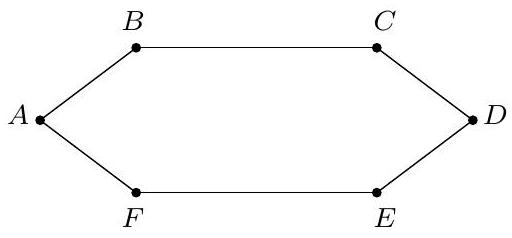
olympiads | IMO 1982 Problem B2 The diagonals AC and CE of the regular hexagon ABCDEF are divided by inner points M and N respectively, so that: AM/AC = CN/CE = r. Determine r if B, M and N are collinear. | <think>
Alright, so I need to solve this geometry problem from the IMO 1982. Let me try to visualize the regular hexagon ABCDEF. A regular hexagon has all sides equal and all internal angles equal to 120 degrees. The diagonals AC and CE are mentioned. Wait, in a regular hexagon, the diagonals can be of different length... |
olympiads | In a class, there are 70 students, such that:
I) 14 boys passed in Mathematics;
II) 12 boys passed in Physics;
III) 10 boys and 16 girls did not pass in Mathematics or Physics;
IV) 32 are boys;
V) 10 passed in both subjects;
VI) 22 passed only in Mathematics.
How many girls passed only in Physics? | <think>
Okay, let's see. So we have a class of 70 students. Let me jot down all the given information first to make sense of it.
First, there are 32 boys in the class. That means the number of girls is 70 - 32 = 38 girls. Got that.
Now, let's break down the other data:
I) 14 boys passed in Mathematics.
II) 12 boys p... |
olympiads | 11. Let $f(x)$ be a function defined on $\mathbf{R}$, if $f(0)=2008$, and for any $x \in \mathbf{R}$, it satisfies $f(x+2)-f(x) \leqslant 3 \cdot 2^{x}, f(x+6)-f(x) \geqslant 63 \cdot 2^{x}$, then $f(2008)=$ $\qquad$ | <think>
Okay, let's see. The problem is about a function f defined on all real numbers. We know two things: first, f(0) = 2008. Then there are two inequalities given for any real number x. The first inequality is f(x + 2) - f(x) ≤ 3·2^x, and the second one is f(x + 6) - f(x) ≥ 63·2^x. We need to find f(2008).
Hmm. So... |
olympiads | 3. Two baby squirrels are located at points $A$ and $B$, and start jumping simultaneously along lines $A O$ and $B O$ towards point $O$ (after passing point $O$, each continues moving along its own line). The distance $A O=120$ meters, $B O=80$ meters, and the angle $A O B=60^{\circ}$. The baby squirrels have a constan... | <think>
Okay, so we have two baby squirrels starting at points A and B, moving towards point O along lines AO and BO. After passing O, they keep moving along their respective lines. The distances are AO = 120 meters and BO = 80 meters. The angle between AO and BO is 60 degrees. Both squirrels have the same constant spe... |
olympiads | 1. In the expression $2: 2: 2: 2: 2$ place parentheses so that the result is equal to 2. Find two different ways! | <think>
Okay, let's see. The problem is to take the expression 2:2:2:2:2 and add parentheses in two different ways so that the result is 2. The colon operator here must represent division, right? Because in some contexts, a colon can denote ratio or division. So, assuming each colon is a division symbol, the expression... |
olympiads | 11. (20 points) The function $f$ defined on $\mathbf{R}$ satisfies
$$
f(1+x)=f(9-x)=f(9+x) \text {. }
$$
If $f(0)=0$, and $f(x)=0$ has $n$ roots in the interval $[-4020$, 4020 ], find the minimum value of $n$. | <think>
Okay, let's try to figure out this problem step by step. The function f defined on the real numbers satisfies three conditions: f(1 + x) = f(9 - x) = f(9 + x). Also, we know that f(0) = 0, and we need to find the minimum number of roots (n) in the interval [-4020, 4020]. Hmm, let me start by understanding what ... |
aops_forum | Find the smallest positive integer $N$ for which $N$ is divisible by $19$, and when the digits of $N$ are read in reverse order, the result (after removing any leading zeroes) is divisible by $36$.
[i]Proposed by Michael Tang[/i] | <think>
Okay, so I need to find the smallest positive integer N such that two conditions are satisfied: first, N is divisible by 19, and second, when the digits of N are reversed (and any leading zeros are removed), the resulting number is divisible by 36. Alright, let me break this down step by step.
First, let me re... |
olympiads | 3. $A B D E, B C E F, C D F A$ - cyclic quadrilaterals with the intersection points of the diagonals $K, L$ and $M$ respectively. It is known that point $K$ lies on segments $B L$ and $A M$, point $M$ - on segment $C L$. Moreover, $E L=F L=K L=5, D M=4, A K=M K=6$. Find the length of segment $M C$. If there are multipl... | <think>
Okay, let's try to tackle this problem step by step. It seems like a geometry problem involving cyclic quadrilaterals and the intersection points of their diagonals. The problem gives several lengths and asks for the length of segment MC. Let's parse the information given and see how we can approach this.
Firs... |
olympiads | Question 56, Find the value of $a$ that makes $\sin 4 x \cdot \sin 2 x-\sin x \cdot \sin 3 x=a$ have a unique solution in $[0, \pi)$.
Translate the text above into English, please keep the original text's line breaks and format, and output the translation result directly. | <think>
Okay, let's tackle this problem. The question is asking for the value of 'a' such that the equation sin4x·sin2x - sinx·sin3x = a has exactly one unique solution in the interval [0, π). Hmm, trigonometric equation with multiple sine terms. I need to simplify the left-hand side first, probably using trigonometric... |
olympiads | Example 3 Let $P_{m}=\left\{A_{1}, A_{2}, \cdots, A_{m}\right\}$ be a partition of an $n$-element set $X$ (i.e., $A_{1}, A_{2}, \cdots, A_{m}$ is a partition of $X$). If one of the $A_{i}$ is further divided into two sets, this results in a partition $P_{m+1}$ of $X$, which consists of $m+1$ sets. $P_{m+1}$ is called a... | <think>
Alright, let's try to figure out the number of chains of length n for a set X with n elements. Hmm, okay, so we start with a partition P₁ that has just one set, which is X itself. Then each subsequent partition is a refinement of the previous one, until we get to Pₙ, which has n singleton sets. Each step in the... |
olympiads | 3. Four spheres of radius $r$ touch each other externally. A sphere of radius $\sqrt{6}+2$ touches all of them internally. Find $r$. | <think>
Okay, let's see. There's this problem with four spheres of radius r that all touch each other externally. Then there's another bigger sphere with radius sqrt(6) + 2 that touches all four of the smaller spheres internally. We need to find r. Hmm, interesting.
So, first, I need to visualize this setup. Four sphe... |
olympiads | 10. In $\triangle A B C$, $A B=A C, \angle A=80^{\circ}, D$ is a point inside the triangle, and $\angle D A B=\angle D B A=10^{\circ}$, find the degree measure of $\angle A C D$.
(Problem 432 from "Mathematics Teaching") | <think>
Okay, so I need to solve this geometry problem. Let me read it again to make sure I understand.
In triangle ABC, AB equals AC, angle A is 80 degrees. There's a point D inside the triangle such that angles DAB and DBA are both 10 degrees. I need to find the measure of angle ACD. Hmm, okay.
First, let's try to ... |
olympiads_ref | 23. (USA 4) Find all natural numbers $n$ for which $2^{8}+2^{11}+2^{n}$ is a perfect square. | <think>
Okay, so I need to find all natural numbers n such that 2^8 + 2^11 + 2^n is a perfect square. Hmm, let me start by understanding the problem. We have three terms here, all powers of 2. The first two are fixed: 2^8 and 2^11, and the third term is 2^n where n is a natural number we need to determine. The sum of t... |
olympiads | 4B. Find all values of the real parameter $a \neq 0,1$ for which the equations $x^{2}-(2 a+1) x+a=0$ and $x^{2}+(a-4) x+a-1=0$ have real roots $x_{1}, x_{2}$ and $x_{3}, x_{4}$, respectively, such that the equality
$$
\frac{x_{1}}{x_{3}}+\frac{x_{4}}{x_{2}}=\frac{x_{1} x_{4}\left(x_{1}+x_{2}+x_{3}+x_{4}\right)}{a}
$$
... | <think>
Okay, so I need to find all real values of a (where a ≠ 0,1) such that both quadratic equations have real roots, and the given equation involving the roots is satisfied. Let me break this down step by step.
First, let me recall that for a quadratic equation \( x^2 + bx + c = 0 \), the roots are real if and onl... |
olympiads | Problem 3. Let's call a three-digit number interesting if at least one of its digits is divisible by 3. What is the maximum number of consecutive interesting numbers that can exist? (Provide an example and prove that it is impossible to have more consecutive numbers.)
| <think>
Okay, so I need to figure out the maximum number of consecutive interesting three-digit numbers. An interesting number is defined as one where at least one of its digits is divisible by 3. Hmm, let's start by understanding the problem better.
First, a three-digit number ranges from 100 to 999. Each digit can b... |
olympiads | Problem 6.8. There are exactly 120 ways to color five cells in a $5 \times 5$ table so that each column and each row contains exactly one colored cell.
There are exactly 96 ways to color five cells in a $5 \times 5$ table without a corner cell so that each column and each row contains exactly one colored cell.
How ma... | <think>
Okay, let's tackle this problem step by step. The question is about counting the number of ways to color five cells in a 5x5 grid (without two corner cells) such that each row and column has exactly one colored cell. Essentially, this is about counting permutations with some restrictions because each colored ce... |
olympiads | \left[\begin{array}{l}{[\text { Decimal numeral system }]} \\ {[\text { Case enumeration }}\end{array}\right]
Author: Raskina I.V.
The year 2009 has the following property: by rearranging the digits of the number 2009, it is impossible to obtain a smaller four-digit number (numbers do not start with zero). In which y... | <think>
Okay, so I need to figure out the next year after 2009 where you can't rearrange its digits to form a smaller four-digit number. Let's break this down step by step.
First, let me understand the problem with 2009. The digits are 2, 0, 0, and 9. If we try to rearrange them to make a smaller number, we can't beca... |
aops_forum | Find all triples $ \left(p,x,y\right)$ such that $ p^x\equal{}y^4\plus{}4$, where $ p$ is a prime and $ x$ and $ y$ are natural numbers. | <think>
Okay, so I need to find all triples (p, x, y) where p is a prime number, and x and y are natural numbers such that p^x = y^4 + 4. Hmm, let me start by understanding the problem better.
First, let's rewrite the equation: p^x = y^4 + 4. I know that y^4 is a perfect fourth power, so maybe I can factor y^4 + 4 som... |
cn_contest | 4. As shown in Figure $3, M$ and $N$ are internal points on the diagonals $A C$ and $C E$ of the regular hexagon $A B C D E F$, and $\frac{A M}{A C}=\frac{C N}{C E}=\lambda$. If points $B, M, N$ are collinear, then $\lambda$ $=$ | <think>
Okay, so I need to find the value of λ such that points B, M, and N are collinear in a regular hexagon ABCDEF. M is a point on diagonal AC, and N is a point on diagonal CE. The ratios given are AM/AC = CN/CE = λ. Hmm, let me try to visualize this first.
First, a regular hexagon has all sides equal and all inte... |
olympiads | 7. Given a square $A B C D$ with side length $a$, vertex $A$ lies in plane $\beta$, and the other vertices are on the same side of plane $\beta$. The distances from points $B$ and $D$ to plane $\beta$ are $1$ and $2$, respectively. If the angle between plane $A B C D$ and plane $\beta$ is $30^{\circ}$, then $a=$ $\qqua... | <think>
Alright, let's tackle this geometry problem. So, we have a square ABCD with side length 'a'. Vertex A is in plane β, and the other vertices B, C, D are on the same side of β. The distances from B and D to plane β are 1 and 2, respectively. The angle between the plane of the square and plane β is 30 degrees. We ... |
olympiads | 4. Let $a, b$, and $c$ be three distinct real numbers. Find the minimum possible value of the expression
$$
\left|\frac{a}{b-c}\right|+\left|\frac{b}{c-a}\right|+\left|\frac{c}{a-b}\right|
$$
if it exists, as well as all triples $(a, b, c)$ for which this value is achieved. | <think>
Okay, so I have this problem here: given three distinct real numbers a, b, and c, find the minimum possible value of the expression |a/(b−c)| + |b/(c−a)| + |c/(a−b)|, and also determine all triples (a, b, c) where this minimum is achieved. Alright, let me start by understanding what exactly is being asked here.... |
olympiads | 4. $3 x=\left(x-\frac{2}{3}\right)+(x+1)+\left(x-\frac{1}{3}\right)$, from which
$$
\begin{aligned}
& L=\lim _{x \rightarrow \infty} x\left(\sqrt[3]{x^{3}-2 x^{2}+a x+b}-\left(x-\frac{2}{3}\right)\right)+\lim _{x \rightarrow \infty} x\left(\sqrt[3]{x^{3}+3 x^{2}+\alpha x+\beta}-(x+1)\right)+ \\
& +\lim _{x \rightarrow... | <think>
Okay, let's see. The problem involves finding the value of L, which is the sum of three limits: L₁, L₂, and L₃. Each of these limits is of the form x multiplied by the difference between a cube root expression and a linear term as x approaches infinity. The given equation is 3x equals the sum of three linear te... |
olympiads | ## Task 1
In 5 windows of a residential building, there are a total of 40 glass panes.
How many panes are in 3 windows? | <think>
Okay, let's see. So the problem is about figuring out how many glass panes are in 3 windows of a residential building, given that 5 windows have a total of 40 panes. Hmm, okay. Let me think step by step.
First, I need to understand the relationship between the number of windows and the number of glass panes. T... |
olympiads | 6. Solve the following system in real numbers:
$$
\begin{aligned}
2^{x^{2}+y}+2^{x+y^{2}} & =8 \\
\sqrt{x}+\sqrt{y} & =2
\end{aligned}
$$
## Analysis | <think>
Okay, let's see. I need to solve this system of equations with real numbers. The equations are:
1. \(2^{x^{2} + y} + 2^{x + y^{2}} = 8\)
2. \(\sqrt{x} + \sqrt{y} = 2\)
Hmm, starting with the second equation because it might be simpler. It's a sum of square roots equal to 2. Maybe I can express one variable in... |
olympiads | 5. In the number $2 * 0 * 1 * 6 * 0 * 2 *$, each of the 6 asterisks needs to be replaced with any of the digits $1,2,3,4,5,6,7,8,9$ (digits can repeat) so that the resulting 12-digit number is divisible by 18. In how many ways can this be done | <think>
Okay, so I need to figure out how many ways I can replace the six asterisks in the number 2*0*1*6*0*2* with the digits 1 through 9 (they can repeat) such that the resulting 12-digit number is divisible by 18. Let me start by recalling what makes a number divisible by 18.
Divisibility by 18 means the number ha... |
olympiads | Problem 6.1. The set includes 8 weights: 5 identical round, 2 identical triangular, and one rectangular weight weighing 90 grams.
It is known that 1 round and 1 triangular weight balance 3 round weights. Additionally, 4 round weights and 1 triangular weight balance 1 triangular, 1 round, and 1 rectangular weight.
How... | <think>
Okay, let me try to figure out this problem step by step. So, there are 8 weights in total: 5 round ones, 2 triangular ones, and 1 rectangular one that's 90 grams. The problem gives two balancing conditions, and we need to find the weight of a triangular weight.
First, let's note down what we know:
1. There a... |
olympiads | 20th Putnam 1959 Problem A3 Let C be the complex numbers. f : C → C satisfies f(z) + z f(1 - z) = 1 + z for all z. Find f. | <think>
Okay, so I have this functional equation to solve: f(z) + z f(1 - z) = 1 + z for all complex numbers z. I need to find the function f that satisfies this. Hmm, functional equations can be tricky, but maybe if I substitute specific values for z, I can get some equations that will help me solve for f(z).
Let me ... |
olympiads | Example 17 Let $x, y \in \mathbf{R}$, find the minimum value of the function $f(x, y)=\sqrt{x^{2}+y^{2}}+\sqrt{(x-1)^{2}+(y-1)^{2}}+$ $\sqrt{(x+2)^{2}+(y+2)^{2}}$. | <think>
Okay, so I have this problem here where I need to find the minimum value of the function f(x, y) which is the sum of three square roots. Each square root looks like the distance formula between two points. Let me try to parse this out.
The function is f(x, y) = sqrt(x² + y²) + sqrt((x - 1)² + (y - 1)²) + sqrt(... |
olympiads | ## Problem 2:
a) Study whether there exists a non-monotonic sequence $\left(x_{n}\right)_{n \geqslant 1}$ such that $\lim _{n \rightarrow \infty} x_{n}=\infty$.
b) Consider the sequence $\left(x_{n}\right)_{n \geq 1}$ for which $x_{n}^{2}-2 n x_{n}+n^{2}-1 \leq 0, \forall n \geq 1$. Calculate $\lim _{n \rightarrow \i... | <think>
Okay, let's tackle part a) first. The question is asking whether there's a non-monotonic sequence that tends to infinity as n approaches infinity. Hmm, non-monotonic means that the sequence isn't always increasing or always decreasing; it has some ups and downs. But even with those fluctuations, it still needs ... |
olympiads | Five, (20 points) How many $n$-digit numbers can be formed by the digits $1,2, \cdots, 6$ such that 1 and 6 are adjacent? | <think>
Okay, so I need to figure out how many n-digit numbers can be formed using the digits 1 through 6, with the condition that 1 and 6 must be adjacent. Hmm, let's start by understanding the problem.
First, an n-digit number where each digit is from 1 to 6. So, normally, without any restrictions, the number of pos... |
olympiads | Exercise 3. In the figure below, \( AB = AF = CD = DE = 18 \), \( BC = EF = a \), and \( BF = 24 \). Additionally, the quadrilateral \( BCEF \) is a rectangle.
We assume that the area of the... | <think>
Okay, let's try to solve this problem step by step. First, I need to visualize the hexagon ABCDEF based on the given information. The quadrilateral BCEF is a rectangle, so that gives me some structure to work with. Let me jot down the given lengths:
- AB = AF = CD = DE = 18
- BC = EF = a
- BF = 24
Also, the a... |
olympiads_ref | Let $S$ be the set of positive real numbers. Find all functions $f: S^{3} \rightarrow S$ such that, for all positive real numbers $x, y, z$ and $k$, the following three conditions are satisfied:
(i) $x f(x, y, z)=z f(z, y, x)$;
(ii) $f\left(x, k y, k^{2} z\right)=k f(x, y, z)$;
(iii) $f(1, k, k+1)=k+1$.
(United Kingdom... | <think>
Okay, let's try to solve this functional equation problem. There are three conditions given, so I need to consider each one and see how they can help me find the function f. Let's start by restating the problem to make sure I understand it correctly.
We have a function f that takes three positive real numbers ... |
olympiads | 2. For the quadratic trinomial $p(x)=(a-1) x^{2}-(a-1) x+2022$, it is known that $-2022 \leq p(x) \leq 2022$ for $x \in[0 ; 1]$. Find the greatest possible value of $a$. | <think>
Okay, let me try to figure out this problem. So, we have a quadratic trinomial p(x) = (a - 1)x² - (a - 1)x + 2022. The condition is that for all x in the interval [0, 1], the value of p(x) is between -2022 and 2022. We need to find the greatest possible value of 'a'.
First, let's parse this. The quadratic is ... |
olympiads | 6. If the function $y=3 \sin x-4 \cos x$ attains its maximum value at $x_{0}$, then the value of $\tan x_{0}$ is $\qquad$. | <think>
Okay, so I need to find the value of tan x₀ where x₀ is the point at which the function y = 3 sin x - 4 cos x reaches its maximum value. Hmm, let's think about how to approach this.
First, I remember that when dealing with functions that are combinations of sine and cosine, one common method is to rewrite the... |
olympiads | 2. Polynomial $f(x)=x^{2}+p x+q$ when divided by polynomial $g_{1}(x)=x-1$ gives a remainder
(8) 6, and when divided by $g_{2}(x)=x-2$ the remainder is 12. Determine the polynomial $f(x)$. | <think>
Okay, let's see. I need to find the polynomial f(x) = x² + p x + q. They told me that when f(x) is divided by g₁(x) = x - 1, the remainder is 6. And when divided by g₂(x) = x - 2, the remainder is 12. Hmm, how do I approach this?
I remember something called the Remainder Theorem. Let me recall. The Remainder T... |
olympiads | 12. (10 points) The numbers of 100 athletes range from 1 to 100. If each athlete writes down the largest odd factor of their number on the blackboard, what is the sum of all the numbers written on the blackboard? | <think>
Okay, so there's this problem where 100 athletes each have a number from 1 to 100. Each one writes down the largest odd factor of their number on a blackboard. We need to find the sum of all these numbers. Hmm, let's think about how to approach this.
First off, I know that every number can be expressed as a pr... |
olympiads | 3. (7p) Given the sets $A=\left\{x / x=11 a-3 ; a \in \mathbb{N}^{*}\right\}$ and $B=\{y / y=103-2 b ; b \in \mathbb{N}\}$. Determine $A \cap B$.
G.M. nr. 11/2015 | <think>
Okay, so I need to find the intersection of sets A and B. Let me start by understanding what each set is.
Set A is defined as all numbers x such that x = 11a - 3, where a is a positive integer (since a ∈ ℕ*). So, ℕ* usually means natural numbers starting from 1, right? So a can be 1, 2, 3, etc. Therefore, the ... |
olympiads | 7. Given that $x, y, z$ are positive real numbers, satisfying $x+y+z=1$, if $\frac{a}{x y z}=\frac{1}{x}+\frac{1}{y}+\frac{1}{z}-2$, then the range of the real number $a$ is | <think>
Okay, let's see. I have this problem where x, y, z are positive real numbers, and they add up to 1. So x + y + z = 1. Then there's this equation: a/(xyz) = 1/x + 1/y + 1/z - 2. I need to find the range of the real number a. Hmm. So essentially, I need to figure out all possible values of a given that x, y, z ar... |
olympiads | 6. On the plane $x O y$, the lines $y=3 x-3$ and $x=-1$ intersect at point $\mathrm{B}$, and the line passing through point $M(1 ; 2)$ intersects the given lines at points A and C respectively. For what positive value of the abscissa of point A will the area of triangle $\mathrm{ABC}$ be the smallest?
(12 points) | <think>
Okay, so I need to solve this geometry problem where two lines intersect at point B, and another line passing through point M(1, 2) intersects those two lines at points A and C. The goal is to find the positive abscissa (x-coordinate) of point A that minimizes the area of triangle ABC. Hmm, let me break this do... |
olympiads | G2.1 If $p=2-2^{2}-2^{3}-2^{4}-\ldots-2^{9}-2^{10}+2^{11}$, find the value of $p$. | <think>
Okay, let's see here. I need to find the value of p, which is given by this expression: p = 2 - 2² - 2³ - ... - 2⁹ - 2¹⁰ + 2¹¹. Hmm, that's a series of terms with exponents from 1 up to 11, but with a mix of subtraction and addition. Let me break this down step by step.
First, let me rewrite the expression to ... |
olympiads | 10.1. The sequences $\left\{x_{n}\right\},\left\{y_{n}\right\}$ are defined by the conditions $x_{1}=11, y_{1}=7, x_{n+1}=3 x_{n}+2 y_{n}$, $y_{n+1}=4 x_{n}+3 y_{n}, n \in \mathbb{N}$. Find the remainder of the division of the number $y_{1855}^{2018}-2 x_{1855}^{2018}$ by 2018. | <think>
Okay, let's try to solve this problem. We have two sequences defined by x₁ = 11, y₁ = 7, and then recursive relations for xₙ₊₁ and yₙ₊₁ in terms of xₙ and yₙ. We need to find the remainder when y₁₈₅₅²⁰¹⁸ - 2x₁₈₅₅²⁰¹⁸ is divided by 2018. Hmm, that seems pretty involved. Let me break it down step by step.
First,... |
olympiads | Problem 7.2. Three pirates were dividing a treasure. The first one got a third of the initial number of coins and one more coin, the second one got a quarter of the initial number of coins and five more coins, the third one got a fifth of the initial number of coins and twenty more coins (thus all the coins were distri... | <think>
Okay, let's try to figure out this pirate treasure problem. Hmm, three pirates dividing coins with specific portions and extra coins. All the coins were distributed, so the sum of what each pirate got should equal the total number of coins. Let's break it down step by step.
First, let's denote the total number... |
olympiads | (given to François Caddet and Philippe Cloarec). We play on a chessboard with a side of 100. A move consists of choosing a rectangle formed by squares of the chessboard and inverting their colors. What is the smallest number of moves that allows the entire chessboard to be turned black? | <think>
Okay, so the problem is about turning an entire 100x100 chessboard completely black using the fewest number of moves. Each move involves selecting a rectangle formed by squares on the chessboard and inverting their colors. Hmm, interesting. Let me try to figure this out step by step.
First, let me make sure I ... |
olympiads | ## Problem Statement
Calculate the indefinite integral:
$$
\int \frac{x}{\cos ^{2} x} d x
$$ | <think>
Okay, so I need to find the indefinite integral of x over cos squared x. Let me write that down properly: ∫ x / cos²x dx. Hmm, cos squared x in the denominator, so that's the same as x times sec squared x, right? Because 1/cos²x is sec²x. So the integral becomes ∫ x sec²x dx.
Alright, now I need to think abou... |
olympiads |
Problem 3. Find the smallest positive integer $n$, such that there exist $n$ integers $x_{1}, x_{2}, \ldots, x_{n}$ (not necessarily different), with $1 \leq x_{k} \leq n, 1 \leq k \leq n$, and such that
$$
x_{1}+x_{2}+\cdots+x_{n}=\frac{n(n+1)}{2}, \quad \text { and } \quad x_{1} x_{2} \cdots x_{n}=n!
$$
but $\left... | <think>
Okay, let's try to figure out this problem. We need to find the smallest positive integer n such that there exist n integers x₁, x₂, ..., xₙ (not necessarily distinct) where each xₖ is between 1 and n inclusive. The sum of these integers should be n(n+1)/2, which is the same as the sum of the first n natural nu... |
olympiads | 4.2. One sixth of the fourth-grade students received fives on their math test, one third received threes, and half received fours. How many students in this class received unsatisfactory grades?
$$
\text { (4-5 grade) }
$$ | <think>
Okay, so I need to figure out how many fourth-grade students received unsatisfactory grades based on the given fractions. Let's see... The problem says that one sixth of the students got fives, one third got threes, and half got fours. The question is asking for the number of students who got unsatisfactory gra... |
olympiads | 1142. Find the integrals:
1) $\int \frac{3 x-5}{\sqrt{x^{2}-4 x+5}} d x$
2) $\int \frac{d x}{\sqrt{1+2 x-3 x^{2}}}$ | <think>
Okay, so I have these two integrals to solve. Let's start with the first one: ∫(3x - 5)/√(x² - 4x + 5) dx. Hmm, integrating a rational function over a square root. I remember that when dealing with integrals involving square roots of quadratics, completing the square might be helpful. Let me try that first for ... |
aops_forum | A regular pentagon can have the line segments forming its boundary extended to lines, giving an arrangement of lines that intersect at ten points. How many ways are there to choose five points of these ten so that no three of the points are collinear? | <think>
Okay, so the problem is about a regular pentagon. If we extend the sides of the pentagon into lines, these lines intersect at ten points. We need to find how many ways there are to choose five points out of these ten such that no three of the chosen points are collinear. Hmm, that sounds a bit tricky, but let m... |
olympiads | 9. (FRG) A sequence $\left(a_{n}\right)$ is defined by means of the recursion
$$
a_{1}=1, \quad a_{n+1}=\frac{1+4 a_{n}+\sqrt{1+24 a_{n}}}{16} .
$$
Find an explicit formula for $a_{n}$. | <think>
Alright, let's try to figure out this recursive sequence problem. The sequence is defined by \( a_1 = 1 \) and \( a_{n+1} = \frac{1 + 4a_n + \sqrt{1 + 24a_n}}{16} \). We need to find an explicit formula for \( a_n \).
Hmm, recursion with a square root... That seems a bit tricky. Maybe I can simplify the recurs... |
olympiads_ref | Let $\mathbb{N}$ be the set of positive integers. Find all functions $f: \mathbb{N} \rightarrow \mathbb{N}$ such that:
$$
n+f(m) \text { divides } f(n)+n f(m)
$$ | <think>
Okay, so I have this problem: Find all functions f from the positive integers to the positive integers such that for any n and m in N, n + f(m) divides f(n) + n f(m). Hmm, let me try to wrap my head around this. Functional equations can be tricky, but let's take it step by step.
First, let's parse the conditio... |
olympiads | 2. Let $f(x)=a x^{2}+b x+c$ be a quadratic trinomial with integer coefficients. If integers $m, n$ satisfy $f(m)-f(n)=1$, then $|m-n|=$ $\qquad$ . | <think>
Okay, so I need to figure out what |m - n| is when f(m) - f(n) = 1, where f(x) is a quadratic trinomial with integer coefficients. Let me start by writing down what I know.
First, f(x) = ax² + bx + c, where a, b, c are integers. The problem says that m and n are integers satisfying f(m) - f(n) = 1. I need to f... |
olympiads | Task 1. (5 points) Find $\frac{a^{12}+729^{2}}{729 a^{6}}$, if $\frac{a}{3}-\frac{3}{a}=4$.
# | <think>
Okay, so I need to find the value of (a¹² + 729²)/(729a⁶) given that (a/3) - (3/a) = 4. Hmm, let's see. First, maybe I should simplify the expression we're supposed to find. The numerator is a to the 12th power plus 729 squared, and the denominator is 729 times a to the 6th. Hmm, 729 is a number I recognize. Wa... |
olympiads | 63. A large batch of car tires contains $1.5\%$ defects. What should be the volume of a random sample so that the probability of finding at least one defective car tire in it would be more than $0.92?$ | <think>
Alright, let's try to figure out this problem. So, we have a large batch of car tires with 1.5% defects. We need to find the sample size such that the probability of finding at least one defective tire in the sample is more than 0.92. Hmm, okay.
First, I remember that when dealing with probabilities of at leas... |
olympiads | Example 1. Out of 500 randomly taken parts, 8 were defective. Find the frequency of defective parts. | <think>
Okay, let's see. The problem is about finding the frequency of defective parts. They took 500 parts randomly and found 8 defective ones. Hmm, frequency in this context probably refers to how often defective parts occur, right? So maybe it's just the number of defective parts divided by the total number of parts... |
olympiads | 66. In how many ways can three items be chosen from $n$ items? | <think>
Okay, so I need to figure out how many ways there are to choose three items from n items. Hmm, this sounds like a combinatorics problem. Let me recall. When we choose items from a set without considering the order, that's called a combination, right? So, combinations are different from permutations because the ... |
olympiads | Problem 4
Find all integers $x, y$ and $z$ greater than or equal to 0 such that
$$
2^{x}+9 \times 7^{y}=z^{3}
$$
## $\S$ | <think>
Alright, let's try to solve this problem: find all non-negative integers x, y, z such that 2^x + 9×7^y = z³. Hmm, okay. So, I need to find triples (x, y, z) where each component is a non-negative integer, and when you compute 2 to the power of x, add nine times 7 to the power of y, you get a perfect cube.
Fir... |
olympiads | B. Given that $a$ is an integer. If there exist two unequal integers $x, y$ satisfying the system of equations $\left\{\begin{array}{l}x-y^{2}=a, \\ y-x^{2}=a,\end{array}\right.$ and $|x| \leqslant 10$, then the minimum value of $a$ is . $\qquad$ | <think>
Okay, so I have this problem where I need to find the minimum integer value of 'a' such that there exist two unequal integers x and y satisfying the system of equations:
x - y² = a
y - x² = a
And also, the absolute value of x has to be less than or equal to 10. Alright, let's start breaking this down step... |
olympiads | 1. Let complex numbers $z_{1}, z_{2}, z_{3}$ satisfy $\left|z_{1}\right|=\left|z_{2}\right|=\left|z_{3}\right|=r$, then $\left|\frac{z_{1} z_{2}+z_{2} z_{3}+z_{3} z_{1}}{z_{1}+z_{2}+z_{3}}\right|$ is equal to | <think>
Okay, so I need to find the modulus of the complex number expression \(\left|\frac{z_{1} z_{2} + z_{2} z_{3} + z_{3} z_{1}}{z_{1} + z_{2} + z_{3}}\right|\) given that all three complex numbers \(z_1, z_2, z_3\) have the same modulus \(r\). Hmm, complex numbers can sometimes be tricky, especially when dealing wi... |
olympiads | 9. (6 points) As shown in the figure, the area of $\triangle A B C$ is 36, point $D$ is on $A B$, $B D=2 A D$, point $E$ is on $D C$, $D E=2 E C$, then the area of $\triangle B E C$ is $\qquad$ . | <think>
Okay, let's see. The problem is about finding the area of triangle BEC given some conditions. The area of triangle ABC is 36. Point D is on AB such that BD is twice AD, so BD = 2 AD. Then point E is on DC such that DE = 2 EC. We need to find the area of triangle BEC. Hmm, let me try to visualize the figure firs... |
olympiads | An ice cream vendor offers three different flavors. A person buys an ice cream with 5 scoops. How many possibilities are there (the order of the scoops does not matter). | <think>
Okay, let's see. The problem is about an ice cream vendor with three different flavors. Someone buys an ice cream with five scoops, and we need to figure out how many possible combinations there are, considering that the order of the scoops doesn't matter. Hmm, right. So, this sounds like a combinatorics proble... |
olympiads | (3) Let $n$ be a positive integer, $x=\left(1+\frac{1}{n}\right)^{n}, y=\left(1+\frac{1}{n}\right)^{n+1}$, then ( ).
(A) $x^{y}>y^{x}$
(B) $x^{y}=y^{x}$
(C) $x^{y}<y^{x}$
(D) Any of the above is possible | <think>
Okay, so I have this problem here where I need to compare x^y and y^x, given that x and y are defined as (1 + 1/n)^n and (1 + 1/n)^{n+1} respectively. The options are whether x^y is greater than, equal to, or less than y^x, or if any of those could be possible. Let me try to figure this out step by step.
First... |
olympiads | 11. In the arithmetic expression below, each square represents a digit. Question: What is the sum of the 6 digits in the squares?
$$
\begin{array}{r}
\square \square \square \\
+\square \square \square \\
\hline 1991
\end{array}
$$ | <think>
Alright, let me try to solve this problem. So, we have two three-digit numbers being added together, and their sum is 1991. Each square represents a digit, and we need to find the sum of all six digits. Hmm, okay. Let me break this down step by step.
First, let's visualize the problem again:
```
+ ... |
olympiads | 1. Vintik and Shpuntik use the following encryption system. The original text, written without spaces, is divided sequentially into parts of 10 letters. In each part, the letters are numbered from left to right from 1 to 10 and then rearranged according to the rule specified by Table 1. That is, the first letter of eac... | <think>
Okay, let's see. So the problem is about decrypting a message that's been encrypted multiple times using a specific permutation. Vintik and Shpuntik use this system where they split the text into parts of 10 letters each, rearrange them according to a table, and then Vintik encrypted it 335 times in total (333 ... |
olympiads | 5. If $x=\sqrt{19-8 \sqrt{3}}$, then the fraction $\frac{x^{4}-6 x^{3}-2 x^{2}+18 x+23}{x^{2}-8 x+15}=$ $\qquad$ | <think>
Okay, let's see. I need to find the value of the fraction \(\frac{x^{4}-6 x^{3}-2 x^{2}+18 x+23}{x^{2}-8 x+15}\) where \(x = \sqrt{19 - 8 \sqrt{3}}\). Hmm, this looks a bit complicated, but maybe if I simplify \(x\) first, the rest will follow.
Starting with \(x = \sqrt{19 - 8 \sqrt{3}}\). Radical expressions... |
olympiads | 15. ILLUSTRATIVE EXERCISE
a) What is the smallest positive integer $c$ such that there exists at least one pair $(a, b)$ of distinct positive integers such that $2 c^{2}=a^{2}+b^{2}$?
b) Prove that there are infinitely many triples $(a, b, c)$ of distinct positive integers such that $2 c^{2}=a^{2}+b^{2}$. SOLUTION | <think>
Okay, let's tackle part a) first. The problem is asking for the smallest positive integer c such that there's a pair of distinct positive integers a and b where 2c² equals a² + b². Hmm, so we need to find the smallest c where this equation holds true with a ≠ b. Let me start by understanding what this equation ... |
olympiads | 3. Solve the equation
$$
2 x+1+x \sqrt{x^{2}+1}+(x+1) \sqrt{x^{2}+2 x+2}=0 .
$$ | <think>
Okay, so I have this equation to solve: 2x + 1 + x√(x² + 1) + (x + 1)√(x² + 2x + 2) = 0. Hmm, that looks a bit complicated with the square roots and all. Let me try to break it down step by step.
First, maybe I should see if there's a way to simplify the square roots. Let me look at the expressions inside them... |
olympiads | In parallelogram $A B C D$, the longer side $A D$ is equal to 5. The angle bisectors of angles $A$ and $B$ intersect at point $M$.
Find the area of the parallelogram if $B M=2$, and $\cos \angle B A M=\frac{4}{5}$. | <think>
Okay, so I need to find the area of parallelogram ABCD where AD, the longer side, is 5. The angle bisectors of angles A and B intersect at point M. We know that BM = 2 and cos∠BAM = 4/5. Hmm, let's start by sketching the parallelogram to visualize the problem.
First, in a parallelogram, opposite sides are equa... |
olympiads | 3. Let the midpoint of the chord $AB$ of the circle $x^{2}+y^{2}=9$ be $(1,1)$, and the line $AB$ intersects the $x$-axis at point $P$, then $|PA| \cdot |PB|=$
Translate the text above into English, please keep the original text's line breaks and format, and output the translation result directly. | <think>
Alright, let's tackle this problem step by step. So, we have a circle defined by the equation x² + y² = 9. That means it's centered at the origin (0,0) with a radius of 3. The chord AB has its midpoint at (1,1), and the line AB intersects the x-axis at point P. We need to find the product |PA| · |PB|.
First, s... |
olympiads | Example 2.8 In the integers from 1 to 100, how many integers can be divided by exactly two of the four integers 2, $3, 5, 7$? | <think>
Okay, so I need to figure out how many integers between 1 and 100 are divisible by exactly two of the numbers 2, 3, 5, or 7. Hmm, let's start by understanding the problem properly.
First, when the question says "divided by exactly two of the four integers," it means that the number should be divisible by two ... |
cn_contest | 4. In $\triangle A B C$, it is known that the sides opposite to $\angle A, \angle B, \angle C$ are $a, b, c$ respectively, and $1+\frac{\tan A}{\tan B}=\frac{2 c}{b}$. Then the size of $\angle A$ is ( ).
(A) $\frac{\pi}{6}$
(B) $\frac{\pi}{4}$
(C) $\frac{\pi}{3}$
(D) $\frac{2 \pi}{3}$ | <think>
Okay, so I need to solve this triangle problem. Let me first read it again carefully.
In triangle ABC, the sides opposite angles A, B, C are a, b, c respectively. There's an equation given: 1 + (tan A)/(tan B) = 2c/b. Then I have to find the measure of angle A, with options from π/6 to 2π/3. The answer choices... |
olympiads | 6. In tetrahedron $ABCD$, $AD=2\sqrt{3}$, $\angle BAC=60^{\circ}$, $\angle BAD=\angle CAD=45^{\circ}$. If a sphere passing through point $D$ is tangent to plane $ABC$ and internally tangent to the circumscribed sphere of the tetrahedron with a radius of 1, then the radius of the circumscribed sphere of tetrahedron $ABC... | <think>
Okay, so I have this problem about a tetrahedron ABCD. Let me try to visualize it first. A tetrahedron has four triangular faces, so ABCD means four points in 3D space. The given information is:
- AD = 2√3.
- Angle BAC is 60 degrees.
- Angles BAD and CAD are both 45 degrees.
- There's a sphere passing through ... |
olympiads | Problem 8.6. In a $3 \times 3$ table, real numbers are arranged. It turns out that the product of the numbers in any row and any column is 10, and the product of the numbers in any $2 \times 2$ square is 3. Find the number in the central cell. | <think>
Okay, let's see. So there's this 3x3 table with real numbers. The conditions are that the product of the numbers in any row and any column is 10. Also, the product of the numbers in any 2x2 square is 3. We need to find the number in the central cell. Hmm.
Let me start by visualizing the table. Let's denote the... |
olympiads | Let's examine $y$ as a function of $x$, given that the following relationship holds:
$$
y=2 x-1-\sqrt{y^{2}-2 x y+3 x-2} .
$$
Plot the function. | <think>
Okay, so I need to figure out how to plot the function given by the equation \( y = 2x - 1 - \sqrt{y^2 - 2xy + 3x - 2} \). Hmm, this looks a bit complicated because y is defined in terms of x, but y is also inside a square root. Maybe I should start by simplifying the equation or trying to isolate the square ro... |
aops_forum | Suppose $ 2015= a_1 <a_2 < a_3<\cdots <a_k $ be a finite sequence of positive integers, and for all $ m, n \in \mathbb{N} $ and $1\le m,n \le k $, $$ a_m+a_n\ge a_{m+n}+|m-n| $$ Determine the largest possible value $ k $ can obtain.
| <think>
Okay, let's see. The problem is about finding the largest possible value of k for a sequence of positive integers starting at 2015, where each subsequent term is larger than the previous one. The key condition here is that for any natural numbers m and n between 1 and k, the sum of the m-th and n-th terms of th... |
olympiads | 10. (12 points) As shown in the figure, $A$ and $B$ are the two endpoints of a diameter of a circular track. Three miniature robots, Jia, Yi, and Bing, start moving simultaneously on the circular track at a uniform speed. Jia and Yi start from $A$, and Bing starts from $B$; Yi moves clockwise, while Jia and Bing move c... | <think>
Okay, let's try to figure out this problem step by step. First, let me try to understand the setup. There's a circular track with points A and B being the endpoints of a diameter. So the distance from A to B along the track is half the circumference. Three robots—Jia, Yi, and Bing—start moving at the same time ... |
olympiads | How many integers exist from 0 to 999999, in the decimal representation of which there are no two adjacent identical digits?
# | <think>
Okay, so the problem is to find out how many integers from 0 to 999,999 have no two adjacent identical digits in their decimal representation. Hmm, let me think about how to approach this.
First, I need to consider all numbers from 0 up to 999,999. That range includes all 6-digit numbers, right? But numbers w... |
olympiads | 8. Every day, Xiaoming has to pass through a flat section $A B$, an uphill section $B C$, and a downhill section $C D$ (as shown in the right figure). It is known that $A B: B C: C D=1: 2: 1$, and the speed ratio of Xiaoming on the flat, uphill, and downhill sections is $3: 2: 4$. If the time ratio for Xiaoming to go t... | <think>
Okay, let's see. The problem is about Xiaoming going to school and returning home, passing through different sections: flat AB, uphill BC, and downhill CD. The ratios of the lengths are given as AB:BC:CD = 1:2:1. The speed ratio on flat, uphill, and downhill sections is 3:2:4. We need to find the time ratio for... |
olympiads | 8,9
What is the maximum number of numbers that can be chosen from the set $1,2, \ldots, 1963$, so that the sum of no two numbers is divisible by their difference? | <think>
Okay, so I need to figure out the maximum number of numbers that can be chosen from the set {1, 2, ..., 1963} such that the sum of any two numbers is not divisible by their difference. Hmm, that seems a bit tricky. Let me start by understanding the problem better.
First, let me restate the condition: For any t... |
olympiads | 5. Let $x$ be a natural number. Solve the equation
$$
\frac{x-1}{x}+\frac{x-2}{x}+\frac{x-3}{x} \cdots+\frac{1}{x}=3
$$ | <think>
Okay, let's try to solve this equation step by step. The problem is:
$$
\frac{x-1}{x} + \frac{x-2}{x} + \frac{x-3}{x} + \cdots + \frac{1}{x} = 3
$$
First, I need to understand what this equation is saying. It looks like a sum of fractions where each term has the same denominator, which is x. The numerators st... |
olympiads | 30. Establish the pattern in the arrangement of numbers in the sequence
$$
2,3,0,-2,-7,-14, \ldots
$$
and add two more numbers. | <think>
Okay, so I need to figure out the pattern in this sequence: 2, 3, 0, -2, -7, -14, … and then add two more numbers. Let me start by looking at the differences between consecutive terms. That usually helps in spotting patterns.
First term is 2, then it goes to 3. The difference here is 3 - 2 = 1. Next, from 3 to... |
olympiads | 9.4. Six different natural numbers from 6 to 11 are placed on the faces of a cube. The cube was rolled twice. The first time, the sum of the numbers on the four side faces was 36, and the second time it was 33. What number is written on the face opposite the one with the number 10? Justify your answer. | <think>
Okay, let me try to figure out this problem. So, we have a cube with six different natural numbers from 6 to 11 on each face. The cube is rolled twice, and the first time the sum of the four side faces is 36, and the second time it's 33. We need to find which number is opposite the face with 10.
First, let me ... |
olympiads | In the garden of Anya and Vitya, there were 2006 rose bushes. Vitya watered half of all the bushes, and Anya watered half of all the bushes. It turned out that exactly three bushes, the most beautiful ones, were watered by both Anya and Vitya. How many rose bushes remained unwatered? | <think>
Okay, so I need to figure out how many rose bushes remained unwatered in Anya and Vitya's garden. Let me start by understanding the problem step by step.
First, there are 2006 rose bushes in total. Both Vitya and Anya watered half of all the bushes each. That means Vitya watered half of 2006, and Anya also wat... |
cn_contest | 10. (15 points) Given that $P$ is a point on the hyperbola $E: \frac{x^{2}}{a^{2}}-\frac{y^{2}}{b^{2}}=1$ $(a>0, b>0)$, and points $A$ and $B$ are on the two asymptotes of the hyperbola, with $A$ in the first quadrant and $B$ in the fourth quadrant. When $P$, $A$, and $B$ are collinear, find the range of the area of $\... | <think>
Okay, so I need to find the range of the area of triangle AOB when points A and B are on the asymptotes of the hyperbola E, with A in the first quadrant and B in the fourth quadrant, and P is a point on the hyperbola such that P, A, B are collinear. Let me try to unpack this step by step.
First, let's recall t... |
olympiads | 3. Find the sum of the squares of the natural divisors of the number 1800. (For example, the sum of the squares of the natural divisors of the number 4 is $\left.1^{2}+2^{2}+4^{2}=21\right)$.
| <think>
Okay, so I need to find the sum of the squares of the natural divisors of 1800. Hmm, let's see. I remember that for problems involving divisors, prime factorization is usually a good starting point. Let me recall how that works.
First, I should factorize 1800 into its prime components. Let's start by breaking ... |
olympiads | 9.1. At the school for slackers, a competition on cheating and giving hints was organized. It is known that $75 \%$ of the students did not show up for the competition at all, and all the rest participated in at least one of the competitions. When the results were announced, it turned out that $10 \%$ of all those who ... | <think>
Okay, let me try to work through this problem step by step. So, first, let me read it again and make sure I understand all the parts.
The problem is about a school for slackers where a competition on cheating and giving hints was organized. Here's what we know:
1. 75% of the students did not show up for the c... |
olympiads | 128. The trainer brings three lions A, B, C and two tigers D and E onto the circus arena and seats them in a row on pedestals. At the same time, the tigers cannot be placed next to each other, otherwise a fight between them is inevitable. How many ways are there to arrange the animals? | <think>
Okay, so I need to figure out how many ways the trainer can arrange three lions (A, B, C) and two tigers (D, E) in a row on pedestals, with the condition that the two tigers can't be placed next to each other. If they are next to each other, they'll fight, which is bad. Alright, let's start breaking this down.
... |
olympiads | ## 5. Integers
Let $x_{1}, x_{2}, x_{3}, x_{4}, \ldots, x_{1013}$ be consecutive integers, in increasing order. If
$$
-x_{1}+x_{2}-x_{3}+x_{4}-\cdots-x_{1011}+x_{1012}-x_{1013}=1013
$$
determine the absolute value of the number $x_{1013}$.
Result: $\quad 507$ | <think>
Okay, so I need to solve this problem where there are 1013 consecutive integers in increasing order: x₁, x₂, x₃, ..., x₁₀₁₃. The equation given is a alternating sum where the signs go -, +, -, +, and so on, ending with -x₁₀₁₃ equals 1013. The task is to find the absolute value of x₁₀₁₃. Hmm, let's break this do... |
olympiads | In $\triangle A B C$, the sides $a, b, c$ are opposite to the angles $\angle A, \angle B, \angle C$ respectively. If
$$
2 \sin ^{2} B+3 \sin ^{2} C=2 \sin A \cdot \sin B \cdot \sin C+\sin ^{2} A \text {, }
$$
then $\tan A=$ $\qquad$ | <think>
Okay, so I need to find tan A in triangle ABC given that 2 sin² B + 3 sin² C = 2 sin A sin B sin C + sin² A. Hmm, let's start by recalling some trigonometric identities and laws related to triangles. Since it's a triangle, the sum of angles is π radians, so A + B + C = π. Maybe the Law of Sines could be helpful... |
olympiads | 2. Use the four digits 1, 2, 3, 4 to form a four-digit number $\overline{a b c d}$, with the following requirements:
(1) $a$, $b$, $c$, $d$ are all different; (2) $b$ is greater than both $a$ and $d$, and $c$ is also greater than both $a$ and $d$. How many such four-digit numbers are there? $\qquad$ | <think>
Okay, let's tackle this problem. We need to form four-digit numbers using digits 1, 2, 3, 4 without repetition. The requirements are that both the second digit (b) and the third digit (c) are greater than the first (a) and the fourth (d) digits. Hmm, so a and d need to be smaller than both b and c. Let's break ... |
olympiads | 4. Let the function $f(x)=\frac{1-4^{x}}{2^{x}}-x$, then the solution set of the inequality $f\left(1-x^{2}\right)+f(5 x-7)<0$ is | <think>
Okay, so I need to solve this inequality involving the function f(x). Let me first understand what the function f(x) is. The problem says f(x) = (1 - 4^x)/2^x - x. Hmm, let me simplify that expression first. Maybe rewriting 4^x as (2^2)^x = 2^(2x). So substituting that in, we have:
f(x) = [1 - 2^(2x)] / 2^x - ... |
olympiads | 4. Find all positive integers $n$, such that
$$
\frac{n^{3 n-2}-3 n+1}{3 n-2} \in \mathbf{Z} \text {. }
$$ | <think>
Okay, so I need to find all positive integers n where the expression (n^{3n−2} − 3n + 1)/(3n − 2) is an integer. Hmm, let's see. Alright, let me break this down step by step.
First, let me understand the problem. I have a fraction here, with numerator n^{3n−2} − 3n + 1 and denominator 3n − 2. The task is to fi... |
olympiads | 2. A stack of A4 sheets was folded in half and folded in two (resulting in an A5 booklet). After that, the pages of the resulting booklet were renumbered: $1,2,3, \ldots$ It turned out that the sum of the numbers on one of the sheets was 74. How many sheets were in the stack? | <think>
Okay, so I need to figure out how many sheets of A4 paper were in the original stack. The problem says that the stack was folded in half and then folded in two again, resulting in an A5 booklet. After that, the pages were renumbered starting from 1, and one of the sheets has the sum of its page numbers equal to... |
olympiads | Problem 1. Two positive numbers $x$ and $y$ are written on the board in non-decreasing order, i.e., $x \leq y$. Maria writes $x^{2}$ in her notebook and then replaces the numbers on the board with $x$ and $y-x$, written again in non-decreasing order. She repeats the same operation with the new numbers and so on until o... | <think>
Okay, let's see. So the problem is about two positive numbers x and y, initially written in non-decreasing order, meaning x ≤ y. Maria writes down x² in her notebook and then replaces the numbers with x and y - x, again in non-decreasing order. She keeps doing this until one of the numbers becomes 0. We need to... |
olympiads | Task 3. On the ceiling of a room, there are 15 lamps, numbered from 1 to 15. Initially, all the lamps are off. In another room, there are 15 switches: one switch for lamp 1 and 2, one switch for lamp 2 and 3, one switch for lamp 3 and 4, and so on, up to a switch for lamp 15 and 1. When the switch for such a pair of la... | <think>
Okay, let's try to figure out this problem step by step. So, there are 15 lamps arranged in a circle, each numbered from 1 to 15. Each switch controls two adjacent lamps, like switch 1 controls lamp 1 and 2, switch 2 controls lamp 2 and 3, and so on up to switch 15, which controls lamp 15 and 1. All the switche... |
cn_contest | Example 5 A scientist stored the design blueprint of his time machine in a computer, setting the password to open the file as a permutation of $\{1,2, \cdots, 64\}$. He also designed a program that, when eight positive integers between $1 \sim 64$ are input each time, the computer will indicate the order (from left to ... | <think>
Okay, so the problem here is about figuring out a way to determine a permutation of the numbers 1 through 64 using a computer program that, when given eight numbers, tells you their order in the password. The goal is to do this with at most 45 inputs. Hmm, let me try to wrap my head around this.
First, let me ... |
olympiads | 4. A table tennis tournament proceeds according to the following rule. In each round, if the number of participants is odd, one is randomly selected to automatically advance to the next round. The remaining participants $\mathrm{z}$ are paired by random draw. The players of each pair compete against each other, and the... | <think>
Okay, so I need to figure out f(2013), which is the number of rounds in a table tennis tournament with 2013 participants. The rules are a bit specific: if the number of participants in a round is odd, one person is randomly selected to automatically advance to the next round. The remaining participants are pair... |
olympiads | 12.148. The ratio of the area of rectangle $ABCD (BC \| AD)$ to the square of its diagonal is $k$. Find $\angle EAF$, where $E$ and $\boldsymbol{F}$ are the midpoints of sides $BC$ and $CD$, respectively. | <think>
Okay, so I need to solve this geometry problem. Let me read it again carefully. The problem says:
"The ratio of the area of rectangle ABCD (BC parallel to AD) to the square of its diagonal is k. Find angle EAF, where E and F are the midpoints of sides BC and CD, respectively."
First, let me visualize the rect... |
olympiads | In the room, there are 12 people; some of them are honest, meaning they always tell the truth, while the rest always lie. "There is not a single honest person here," said the first. "There is no more than one honest person here," said the second. The third said that there are no more than two honest people, the fourth ... | <think>
Alright, so there's this problem with 12 people in a room, some honest (always tell the truth) and some liars (always lie). Each person makes a statement about the number of honest people. The first one says, "There is not a single honest person here," the second says, "There is no more than one honest person h... |
olympiads | 36. [25] How many numbers less than $1,000,000$ are the product of exactly 2 distinct primes? You will receive $\left\lfloor 25-50 \cdot\left|\frac{N}{A}-1\right|\right\rfloor$ points, if you submit $N$ and the correct answer is $A$. | <think>
Okay, let's try to figure out how many numbers less than 1,000,000 are the product of exactly two distinct primes. Hmm, so these numbers are called semiprimes, right? Each semiprime is the product of two different prime numbers. So I need to count all such numbers below one million.
First, maybe I should recal... |
cn_contest | Example 3. If $x>0, y>0$, and $21 \lg(x-2 y)=\lg x+\lg y$, then $x: y$ is ( )
(A) 4. (B) 1 .
(C) 1 or 4 .
(D) $\frac{1}{4}$. | <think>
Okay, let's try to solve this problem step by step. The problem says:
If \( x > 0 \), \( y > 0 \), and \( 21 \lg(x - 2y) = \lg x + \lg y \), then find the ratio \( x : y \). The options are A) 4, B) 1, C) 1 or 4, D) \( \frac{1}{4} \).
First, I need to recall some logarithm properties. The equation given is \(... |
Subsets and Splits
No community queries yet
The top public SQL queries from the community will appear here once available.