
source stringclasses 7
values | problem stringlengths 19 6.18k | generation stringlengths 345 68.1k |
|---|---|---|
olympiads | 4- [ Increase and Decrease. Function Analysis ]
Ilya Muromets meets the three-headed Zmey Gorynych. Every minute, Ilya cuts off one head of the Zmey. Let $x$ be the resilience of the Zmey ( $x>0$ ). The probability $p_{s}$ that $s$ new heads will grow in place of the cut head ( $s=0$,
1, 2), is $\frac{x^{s}}{1+x+x^{... | <think>
Okay, so I need to find the resilience x of Zmey Gorynych that maximizes the probability of observing the vector K = (1, 2, 2, 1, 0, 2, 1, 0, 1, 2). Each element in K represents the number of heads that grew back each minute when Ilya cut off a head. The probability of s new heads growing back is given by x^s /... |
olympiads | João lives in Salvador and his parents in Recife. To alleviate his longing, he calls his parents every three days. The first call was made on a Sunday, the second call on the following Wednesday, the third call on Saturday, and so on. On which day of the week did João call his parents for the hundredth time? | <think>
Okay, so João calls his parents every three days. The first call was on a Sunday, then the next one was Wednesday, then Saturday, and so on. The question is, on which day of the week did he make the 100th call? Hmm, let's break this down.
First, let's confirm the pattern. If he calls every three days, starting... |
olympiads | 5. Find the smallest positive integer $n$ such that among any $n$ chosen integers, there exist at least two integers whose sum or difference is divisible by 1997. | <think>
Okay, so I need to find the smallest positive integer n such that among any n chosen integers, there are at least two whose sum or difference is divisible by 1997. Hmm, let me think. This seems like a problem that might involve the pigeonhole principle.
First, let me recall that the pigeonhole principle state... |
olympiads | Let $A$ and $G$ be two opposite vertices of a unit cube. What is the distance between the plane $S_{A}$ determined by the vertices adjacent to $A$, and the plane $S_{G}$ determined by the vertices adjacent to $G$? | <think>
Okay, so I need to find the distance between two planes, S_A and S_G, which are determined by the vertices adjacent to A and G, respectively. A and G are opposite vertices of a unit cube. Hmm, first, I should probably visualize the cube and figure out which vertices we're talking about.
Let me start by conside... |
olympiads | (9) Let the sum of the first $n$ terms of the real geometric sequence $\left\{a_{n}\right\}$ be $S_{n}$. If $S_{10}=10, S_{30}=$ 70, then $S_{40}=$ $\qquad$ | <think>
Alright, let me try to figure out this problem. So, we have a geometric sequence {a_n}, and we're given that the sum of the first 10 terms, S₁₀, is 10, and the sum of the first 30 terms, S₃₀, is 70. We need to find the sum of the first 40 terms, S₄₀.
First, I remember that the sum of the first n terms of a geo... |
olympiads | 8. The sequence $\left\{a_{n}\right\}$ satisfies $a_{n+1}=(-1)^{n} n-a_{n}, n=1,2,3, \cdots$, and $a_{10}=a_{1}$, then the maximum value of $a_{n} a_{n+1}$ is $\qquad$ . | <think>
Okay, let's try to tackle this problem step by step. So, we have a sequence defined by the recurrence relation a_{n+1} = (-1)^n * n - a_n for n = 1, 2, 3, ... and it's given that a_{10} = a_1. We need to find the maximum value of the product a_n * a_{n+1}.
First, let me make sure I understand the recurrence re... |
olympiads | 15. The quadratic function $f(x)=a x^{2}+b x+c(a, b, c \in \mathbf{R}, a \neq 0)$ satisfies the following conditions:
(1) $f(-1)=0$;
(2) For $x \in \mathbf{R}$, $f(x) \geqslant x$;
(3) For $x \in(0,2)$, $f(x) \leqslant \frac{(x+1)^{2}}{4}$.
If $x_{1}, x_{2}, x_{3} \in(0,2)$, and $\frac{1}{x_{1}}+\frac{1}{x_{2}}+\frac{1... | <think>
Okay, so I need to solve this problem where I have a quadratic function f(x) = ax² + bx + c. There are three conditions given:
1. f(-1) = 0
2. For all real x, f(x) is greater than or equal to x.
3. For x in the interval (0, 2), f(x) is less than or equal to (x + 1)² / 4.
Then, given that x₁, x₂, x₃ are in (0,... |
cn_contest | 9. Several rectangular prisms with edge lengths of $2, 3, 5$ are combined in the same direction to form a cube with an edge length of 90. The number of small rectangular prisms that a diagonal of the cube passes through is ( ).
(A) 64
(B) 66
(C) 68
(D) 70 | <think>
Okay, so I have this problem here about combining several rectangular prisms with edge lengths 2, 3, and 5 to form a cube with an edge length of 90. Then, we need to find how many small rectangular prisms a diagonal of the cube passes through. The answer choices are 64, 66, 68, or 70. Hmm, let's try to figure t... |
olympiads | Problem 4. A circle with radius 2 is inscribed in trapezoid $ABCD$, touching the base $CD$ at point $N$. Find the area of the trapezoid if $DN=1$ and $AB=12$. | <think>
Okay, let's tackle this trapezoid problem. Hmm, so there's a trapezoid ABCD with an inscribed circle of radius 2. The circle touches the base CD at point N, and DN is 1. Also, the top base AB is 12. We need to find the area of the trapezoid.
First off, I remember that if a trapezoid has an inscribed circle (i... |
olympiads | 13. (6 points) A fraction, if the denominator is reduced by 1, simplifies to $\frac{1}{3}$; if the numerator is increased by 4, it simplifies to $\frac{1}{2}$. This fraction is $\qquad$ | <think>
Okay, let's see. I have a problem here where I need to find a fraction. The problem states two conditions: first, if the denominator is reduced by 1, the fraction simplifies to 1/3. Second, if the numerator is increased by 4, it simplifies to 1/2. Hmm, I need to find the original fraction. Alright, let's break ... |
olympiads | 1. Let $A B$ and $C D$ be the bases of trapezoid $A B C D$, and $E$ the midpoint of leg $B C$. If $A E=10, D E=8$ and $\measuredangle A E D=30^{\circ}$, determine the area of this trapezoid. | <think>
Okay, so I have this trapezoid ABCD where AB and CD are the bases. E is the midpoint of leg BC. They gave me that AE is 10 units, DE is 8 units, and the angle AED is 30 degrees. I need to find the area of this trapezoid. Hmm, let me think step by step.
First, I remember that the area of a trapezoid is calculat... |
olympiads | 4. (30 points) On the sides $B C$ and $A C$ of the isosceles triangle $A B C (A B = A C)$, points $D$ and $E$ were found respectively such that $A E = A D, \angle E D C = 18^{\circ}$. Find the measure of the angle $\angle B A D$. | <think>
Okay, let's see. I need to find the measure of angle BAD in this isosceles triangle ABC where AB equals AC. Points D and E are on sides BC and AC respectively such that AE equals AD, and angle EDC is 18 degrees. Hmm, okay. Let me try to visualize the triangle first.
Since ABC is isosceles with AB = AC, vertex ... |
olympiads | 5. In the number $2 * 0 * 1 * 6 * 0 * 2 *$, each of the 6 asterisks needs to be replaced with any of the digits $0,1,2,3,4,5,6,7,8$ (digits can be repeated) so that the resulting 12-digit number is divisible by 45. In how many ways can this be done | <think>
Okay, so I need to figure out how many ways I can replace the six asterisks in the number 2*0*1*6*0*2* with digits from 0 to 9 (wait, actually the problem says 0,1,2,3,4,5,6,7,8, so no 9s? Wait, the original problem says "each of the 6 asterisks needs to be replaced with any of the digits 0,1,2,3,4,5,6,7,8 (dig... |
olympiads | 2.108. $\left(\frac{a}{b}+\frac{b}{a}+2\right) \cdot\left(\frac{a+b}{2 a}-\frac{b}{a+b}\right):\left(\left(a+2 b+\frac{b^{2}}{a}\right) \cdot\left(\frac{a}{a+b}+\frac{b}{a-b}\right)\right) ;$ $a=0.75 ; b=4 / 3$. | <think>
Okay, so I need to solve this algebraic expression when a is 0.75 and b is 4/3. Let me first write down the expression clearly so I can see all the parts.
The main expression is:
$\left(\frac{a}{b} + \frac{b}{a} + 2\right) \cdot \left(\frac{a + b}{2a} - \frac{b}{a + b}\right) : \left(\left(a + 2b + \frac{b^... |
aops_forum | Consider $7$-gons inscribed in a circle such that all sides of the $7$-gon are of different length. Determine the maximal number of $120^\circ$ angles in this kind of a $7$-gon. | <think>
Okay, so I need to figure out the maximal number of 120-degree angles in a 7-sided polygon (heptagon) that's inscribed in a circle, with all sides of different lengths. Hmm, let's start by understanding the problem better.
First, since it's inscribed in a circle, it's a cyclic heptagon. All the vertices lie on... |
olympiads | EST-
Find all functions $f: \mathbb{R} \rightarrow \mathbb{R}$ for which
$$
f(x+y)=f(x-y)+f(f(1-x y))
$$
holds for all real numbers $x$ and $y$.
Answer: $f(x) \equiv 0$. | <think>
Alright, so I need to find all functions \( f: \mathbb{R} \rightarrow \mathbb{R} \) that satisfy the functional equation:
\[
f(x + y) = f(x - y) + f(f(1 - xy))
\]
for all real numbers \( x \) and \( y \). Hmm, okay. Let's start by trying to figure out what kind of function this could be. The equation relates ... |
olympiads | [Periodicity and Aperiodicity]
Let's start counting the fingers on the right hand: the first is the pinky, the second is the ring finger, the third is the middle finger, the fourth is the index finger, the fifth is the thumb, the sixth is the index finger again, the seventh is the middle finger again, the eighth is th... | <think>
Okay, let's see. So the problem is about counting fingers on the right hand in a specific order, and we need to figure out which finger corresponds to the 2004th count. Hmm. Let's break it down step by step.
First, let me visualize the counting sequence as described. Starting with the pinky as the first finger... |
olympiads | B3. A digital clock displays times from 00:00:00 to 23:59:59 throughout a day. Every second of the day, you can add up the digits, resulting in an integer. At 13:07:14, for example, the sum is $1+3+0+7+1+4=16$. If you write down the sum for every possible time on the clock and then take the average of all these numbers... | <think>
Okay, so I need to find the average of all the digit sums for every possible time displayed on a digital clock in a day. The clock goes from 00:00:00 to 23:59:59, which means there are 24 hours, 60 minutes, and 60 seconds in each minute. First, let me figure out how many total seconds there are in a day. That w... |
olympiads | 5.2. A smooth sphere with a radius of 1 cm was dipped in red paint and launched between two perfectly smooth concentric spheres with radii of 4 cm and 6 cm, respectively (this sphere ended up outside the smaller sphere but inside the larger one). Upon touching both spheres, the sphere leaves a red trail. During its mov... | <think>
Okay, let me try to figure out this problem. So, we have a small sphere with radius 1 cm that's been dipped in red paint. It's launched between two smooth concentric spheres with radii 4 cm and 6 cm. The small sphere touches both the inner (4 cm) and outer (6 cm) spheres, leaving red trails. The path it takes i... |
aops_forum | Are there positive integers $a, b, c$, such that the numbers $a^2bc+2, b^2ca+2, c^2ab+2$ be perfect squares? | <think>
Okay, let's see. The problem is asking if there are positive integers a, b, c such that each of the expressions a²bc + 2, b²ca + 2, and c²ab + 2 are perfect squares. Hmm, interesting. So, we need to find a, b, c where each of those three expressions results in a square number.
First, maybe I can start by anal... |
olympiads | 1. [5 points] $S$ - the sum of the first 7 terms of an increasing arithmetic progression $a_{1}, a_{2}, a_{3}, \ldots$, consisting of integers. It is known that $a_{8} a_{17}>S+27, a_{11} a_{14}<S+60$. Indicate all possible values of $a_{1}$. | <think>
Okay, so I need to find all possible values of \( a_1 \) in an increasing arithmetic progression of integers where the sum of the first 7 terms is \( S \). The given inequalities are \( a_8 a_{17} > S + 27 \) and \( a_{11} a_{14} < S + 60 \). Hmm, let's break this down step by step.
First, recall that in an ar... |
olympiads | 25. Three integers are selected from the set $S=1,2,3, \ldots, 19,20$. Find the number of selections where the sum of the three integers is divisible by 3 . | <think>
Alright, so I need to find the number of ways to select three integers from the set S = {1, 2, 3, ..., 20} such that their sum is divisible by 3. Hmm, okay. Let's think about how to approach this.
First, divisibility by 3 often has to do with the remainders when numbers are divided by 3. So maybe I should cate... |
olympiads | What is the minimum number of weights needed to be able to weigh any number of grams from 1 to 100 on a balance scale, if the weights can be placed on either pan of the scale?
# | <think>
Okay, so the problem is asking for the minimum number of weights needed to weigh any number of grams from 1 to 100 on a balance scale, and the weights can be placed on either pan. Hmm, interesting. Let me think about how balance scales work. Normally, if you can only put weights on one side, you might use a sys... |
olympiads | 15th USAMO 1986 Problem 3 What is the smallest n > 1 for which the average of the first n (non-zero) squares is a square? Solution | <think>
Okay, so the problem is asking for the smallest integer n greater than 1 such that the average of the first n non-zero squares is a perfect square. Let me break this down step by step.
First, the average of the first n squares. The first n non-zero squares are 1², 2², 3², ..., n². The sum of these squares is g... |
olympiads | 17. Compute
$$
2 \sqrt{2 \sqrt[3]{2 \sqrt[4]{2 \sqrt[5]{2 \cdots}}}}
$$ | <think>
Okay, so I need to compute this infinite nested radical expression: 2 times the square root of 2 times the cube root of 2 times the fourth root of 2 times the fifth root of 2 and so on. Hmm, that looks pretty complicated. Let me try to write it down step by step to visualize it better.
The expression is: \( 2 ... |
cn_contest | Four, a certain project, if contracted by Team A and Team B, can be completed in $2 \frac{2}{5}$ days, with a payment of 1800 yuan; if contracted by Team B and Team C, it can be completed in $3 \frac{3}{4}$ days, with a payment of 1500 yuan; if contracted by Team C and Team A, it can be completed in $2 \frac{6}{7}$ day... | <think>
Okay, let's try to figure out this problem step by step. So, we have three teams: A, B, and C. They can complete a project in different combinations with different time and cost. The goal is to choose the team that can do it alone within one week (which is 7 days) and has the minimum cost.
First, let's list o... |
olympiads | Zaslavsky A.A.
Given a triangle $ABC$. On side $AB$ as the base, an isosceles triangle $ABC'$ is constructed externally with the angle at the vertex being $120^{\circ}$, and on side $AC$ an equilateral triangle $ACB'$ is constructed internally. Point $K$ is the midpoint of segment $BB'$. Find the angles of triangle $K... | <think>
Okay, so I need to find the angles of triangle KCC' in this given configuration. Let me try to visualize the problem first. We have triangle ABC. On AB as the base, there's an isosceles triangle ABC' constructed externally with the vertex angle at C' being 120 degrees. Then, on AC, an equilateral triangle ACB' ... |
aops_forum | Let $\mathbb{Z^+}$ denote the set of positive integers. Find all functions $f:\mathbb{Z^+} \to \mathbb{Z^+}$ satisfying the condition
$$ f(a) + f(b) \mid (a + b)^2$$
for all $a,b \in \mathbb{Z^+}$ | <think>
Okay, so I have this problem where I need to find all functions \( f: \mathbb{Z^+} \to \mathbb{Z^+} \) such that for any positive integers \( a \) and \( b \), the sum \( f(a) + f(b) \) divides \( (a + b)^2 \). Hmm, interesting. Let me start by trying to understand what this condition means.
First, since \( f... |
olympiads | 32. Find the value: $M=\frac{1^{2}+2^{2}}{1 \times 2}+\frac{2^{2}+3^{2}}{2 \times 3}+\cdots+\frac{1008^{2}+1009^{2}}{1008 \times 1009}=$ | <think>
Alright, let's tackle this problem step by step. The problem is to find the value of M, which is the sum of fractions from (1² + 2²)/(1×2) up to (1008² + 1009²)/(1008×1009).
First, I need to understand the structure of each term in the sum. Each term looks like (n² + (n+1)²)/(n(n+1)). Let me write that down f... |
olympiads | (3) If the equation $x^{3}-3 x^{2}-9 x=a$ has exactly two distinct real roots in the interval $[-2,3]$, then the range of the real number $a$ is $\qquad$ . | <think>
Okay, let's try to tackle this problem. So, we have the equation \( x^3 - 3x^2 - 9x = a \), and we need to find the range of real number \( a \) such that this equation has exactly two distinct real roots in the interval \([-2, 3]\). Hmm, that sounds a bit challenging, but let's break it down step by step.
Fir... |
olympiads | 3. (16 points) Mitya, Anton, Gosha, and Boris bought a lottery ticket for 20 rubles. Mitya paid $24\%$ of the ticket's cost, Anton - 3 rubles 70 kopecks, Gosha - 0.21 of the ticket's cost, and Boris contributed the remaining amount. The boys agreed to divide the winnings in proportion to their contributions. The ticket... | <think>
Okay, let me try to figure out how much Boris should get from the 1000 rubles winnings. So, first, the total cost of the lottery ticket was 20 rubles, and four people contributed different amounts. Mitya paid 24%, Anton paid 3 rubles 70 kopecks, Gosha paid 0.21 of the ticket's cost, and Boris paid the rest. The... |
olympiads | Three, (50 points) Given the sequence $a_{1}, a_{2}, a_{3}, \cdots, a_{n}, \cdots, n \geqslant 1, a_{i} \in \mathbf{N}^{*}$, and $a_{a_{n}}+a_{n}=2 n$, find $a_{1}, a_{2}, a_{n}$.
---
The translation maintains the original text's line breaks and formatting. | <think>
Okay, so I need to find the sequence \( a_1, a_2, a_3, \ldots \) where each term is a positive integer, and it satisfies the condition \( a_{a_n} + a_n = 2n \) for all \( n \geq 1 \). Hmm, let me try to unpack this step by step.
First, let me make sure I understand the problem. The sequence is defined such tha... |
olympiads | Exercise 10. Let $A B C D$ be a square and $E$ a point on the segment $[B D]$ such that $E B=A B$. We define the point $F$ as the intersection of the lines $(C E)$ and $(A D)$. Find the value of the angle $\widehat{F E A}$. | <think>
Alright, let's tackle this geometry problem step by step. So, we have a square ABCD. Let me first visualize that. Let's name the square with vertices A, B, C, D in order, so that AB, BC, CD, DA are the sides, and the diagonals are AC and BD. Now, point E is on segment BD such that EB equals AB. Since ABCD is a ... |
cn_contest | 7. If a non-zero complex number $x$ satisfies $x+\frac{1}{x}=1$, then $x^{2014}+\frac{1}{x^{2014}}=$ $\qquad$ | <think>
Alright, let me try to figure out this problem. So, we have a non-zero complex number x that satisfies the equation x + 1/x = 1. We need to find the value of x^2014 + 1/x^2014. Hmm, okay. Let me start by recalling some algebraic manipulations or perhaps using complex numbers properties here.
First, maybe I can... |
olympiads | 【Question 13】
Use "+, -, $\times$, $\div$" and add $(\quad)$ to calculate $3, 8, 8, 10$ to make the result 24. Please write down the expression. | <think>
Okay, so I need to use the numbers 3, 8, 8, and 10 with the operations +, -, ×, ÷ and parentheses to make 24. Hmm, let's see. First, I'll list out the numbers and the target. The target is 24. The numbers are 3, 8, 8, 10. Each number has to be used exactly once, right? I think that's the usual rule for these pr... |
olympiads | ## 5. In the Zoo
Let's assume that in all zoos where there are hippos and rhinos, there are no giraffes; in all zoos where there are rhinos and no giraffes, there are hippos; finally, in all zoos where there are hippos and giraffes, there are also rhinos. How do you think, can there be a zoo where there are hippos, bu... | <think>
Okay, let me try to figure out this zoo problem. So, the question is asking if there can be a zoo that has hippos, but no giraffes or rhinos. Hmm. Let me break down the given conditions first. Maybe writing them out logically will help.
First, the problem states three conditions:
1. In all zoos where there ar... |
olympiads | 12. Find all values of integers $x$ and $y$ satisfying $2^{3 x}+5^{3 y}=189$. | <think>
Okay, so I need to find all integer values of x and y that satisfy the equation 2^{3x} + 5^{3y} = 189. Hmm, let's see. First, maybe I should simplify the exponents. Since it's 2 raised to the power of 3x and 5 raised to the power of 3y, maybe I can let a = 2^{x} and b = 5^{y}, so that the equation becomes a^3 +... |
olympiads | 16. Let $\alpha, \beta$ be real numbers. If for any real numbers $x, y, z$, we have $\alpha(x y+y z+z x) \leqslant M \leqslant \beta\left(x^{2}+y^{2}+z^{2}\right)$ always holds, where $M=\sqrt{x^{2}+x y+y^{2}} \cdot \sqrt{y^{2}+y z+z^{2}}+\sqrt{y^{2}+y z+z^{2}} \cdot \sqrt{z^{2}+z x+x^{2}}+\sqrt{z^{2}+z x+x^{2}} \cdot ... | <think>
Okay, so I need to find the maximum value of α and the minimum value of β such that for any real numbers x, y, z, the inequality α(xy + yz + zx) ≤ M ≤ β(x² + y² + z²) holds, where M is that complicated expression involving square roots and products. Hmm, let me start by understanding what M is.
M is the sum o... |
olympiads | B1. Write a linear function that has a zero at 4, and its graph passes through the intersection of the lines with equations $x-2 y-9=0$ and $2 x+y-3=0$. | <think>
Okay, so I need to write a linear function that has a zero at 4. That means when x is 4, the function equals zero. So the function crosses the x-axis at (4, 0). Also, the graph of this function has to pass through the intersection point of the two lines given by the equations x - 2y - 9 = 0 and 2x + y - 3 = 0. ... |
cn_contest | 9. In tetrahedron $\mathrm{ABCD}$, the length of edge $\mathrm{AB}$ is $3 \mathrm{~cm}$, the area of face $\mathrm{ABC}$ is $15 \mathrm{~cm}^{2}$, and the area of face $\mathrm{ABD}$ is $12 \mathrm{~cm}^{2}$. The angle between these two faces is $30^{\circ}$. Find the volume of the tetrahedron (in $\mathrm{cm}^{3}$). | <think>
Okay, so I need to find the volume of tetrahedron ABCD. Let me recall what information is given here. The length of edge AB is 3 cm. The areas of faces ABC and ABD are 15 cm² and 12 cm² respectively. The angle between these two faces is 30 degrees. Hmm, right. So, how do I approach this?
First, I remember that... |
olympiads | 5. There was a whole number of cheese heads on the kitchen. At night, rats came and ate 10 heads, and everyone ate equally. Several rats got stomachaches from overeating. The remaining seven rats the next night finished off the remaining cheese, but each rat could eat only half as much cheese as the night before. How m... | <think>
Alright, let me try to figure out this cheese head problem. So, the problem says there was a whole number of cheese heads in the kitchen. Then, rats came at night and ate 10 heads, and each rat ate equally. Some rats got stomachaches from overeating. The next night, the remaining seven rats finished off the rem... |
olympiads | 1. Compute the area of the figure defined by the inequality
$$
x^{2}+y^{2} \leqslant 4(x+y)
$$ | <think>
Okay, so I have this problem here where I need to compute the area of the figure defined by the inequality \( x^{2} + y^{2} \leqslant 4(x + y) \). Hmm, let's see. I remember that inequalities like this usually represent regions in the plane, and sometimes they can be equations of circles or other conic sections... |
olympiads | $1 \cdot 60$ Given that $a, b$ and $\sqrt{a}+\sqrt{b}$ are all rational numbers, then we can conclude
(A) $\sqrt{a}, \sqrt{b}$ are both rational numbers.
(B) $\sqrt{a}, \sqrt{b}$ are both irrational numbers.
(C) $\sqrt{a}, \sqrt{b}$ can be both rational numbers, or both irrational numbers.
(D) One of $\sqrt{a}, \sqrt{b... | <think>
Okay, let me try to work through this problem. The question says that a, b, and √a + √b are all rational numbers. Then we have to choose the correct conclusion among the options A to D. Let me start by understanding each option.
Option A states that both √a and √b are rational. Option B says both are irrationa... |
olympiads | 1. Karlson filled a conical glass with lemonade and drank half of it by height (measuring from the surface of the liquid to the apex of the cone), and Little Man drank the second half. How many times more lemonade did Karlson drink compared to Little Man? | <think>
Okay, so I need to figure out how many times more lemonade Karlson drank compared to Little Man. The problem says that Karlson drank half of the lemonade by height from the surface to the apex of the cone, and Little Man drank the second half. Hmm, okay, so the glass is conical, right? That means it's a cone sh... |
olympiads | 2. The area of triangle $A B C$ is 1. On the rays $A B, B C$, $C A$, points $B^{\prime}, C^{\prime}, A^{\prime}$ are laid out respectively, such that
$$
B B^{\prime}=A B, \quad C C^{\prime}=2 B C, \quad A A^{\prime}=3 C A
$$
Calculate the area of triangle $A^{\prime} B^{\prime} C^{\prime}$. | <think>
Okay, so I need to find the area of triangle A'B'C' given the original triangle ABC has an area of 1. The points B', C', and A' are laid out on the rays AB, BC, and CA respectively, with specific extensions: BB' = AB, CC' = 2 BC, and AA' = 3 CA. Hmm, let's break this down step by step.
First, let me visualize ... |
olympiads | A lock has a combination that is a four-digit positive integer. The first digit is 4 and the four-digit combination is divisible by 45 . How many different possible combinations are there? | <think>
Okay, so I need to figure out how many four-digit combinations there are for a lock where the first digit is 4, and the combination is divisible by 45. Hmm, let me think about this step by step.
First, let's recall that a four-digit number has the form ABCD, where each letter represents a digit, and the first ... |
olympiads | 43. Points $A$ and $B$ are located on a straight highway running from west to east. Point $B$ is 9 km east of $A$. A car departs from point $A$ heading east at a speed of 40 km per hour. At the same time, a motorcycle departs from $B$ in the same direction with a constant acceleration of 32 km/hour ${ }^{2}$. Determine... | <think>
Okay, so I need to find the greatest distance between the car and the motorcycle during the first two hours of their travel. Let's see. Both start at the same time: the car from point A going east at 40 km/h, and the motorcycle from point B, which is 9 km east of A. The motorcycle is also going east but with a ... |
cn_contest | 12. Function f is defined on the real number domain, and satisfies the following conditions: For any real number $\mathrm{x}, \mathrm{f}(2+\mathrm{x})=\mathrm{f}(2-\mathrm{x})$, and $f(7+x)=f(7-x)$. If $x=0$ is a root of $f(x)=0$, find the minimum number of roots of $f(x)=0$ in the interval -1000 $\leqslant x \leqslant... | <think>
Okay, so I need to find the minimum number of roots of the function f(x) = 0 in the interval from -1000 to 1000. The function f has two symmetries given: f(2 + x) = f(2 - x) for any real number x, and f(7 + x) = f(7 - x) for any real number x. Also, x = 0 is a root, meaning f(0) = 0.
First, let me parse the s... |
cn_contest | 4. In $\triangle A B C$, $A C=2, D$ is the midpoint of $A B, E$ is a point on $C D$, $E D=\frac{1}{3} C D$. If $C E=\frac{1}{3} A B$, and $C E \perp$ $A E$, then $B C=$ $\qquad$. | <think>
Okay, let me try to figure out this geometry problem. It's about triangle ABC with some midpoints and points dividing segments in certain ratios. Let me first try to visualize the triangle and the points mentioned.
First, the problem states: In triangle ABC, AC = 2. D is the midpoint of AB. E is a point on CD ... |
olympiads | 5. (20 points) Given a cyclic quadrilateral $A B C D$. The rays $A B$ and $D C$ intersect at point $E$, and the rays $D A$ and $C B$ intersect at point $F$. The ray $B A$ intersects the circumcircle of triangle $D E F$ at point $L$, and the ray $B C$ intersects the same circle at point $K$. The length of segment $L K$ ... | <think>
Okay, let's try to tackle this problem. Hmm, cyclic quadrilateral ABCD. So, points A, B, C, D lie on a circle. Then, the rays AB and DC intersect at point E, and rays DA and CB intersect at point F. So, E and F are the intersections of the opposite sides' extensions, making them the ex-intersections? Not sure, ... |
olympiads | 1. Natural numbers a and b are such that 5 LCM $(a, b)+2$ GCD $(a, b)=120$. Find the greatest possible value of the number a. | <think>
Okay, let's tackle this problem. So, we have two natural numbers a and b, and they satisfy the equation 5 LCM(a, b) + 2 GCD(a, b) = 120. We need to find the greatest possible value of a. Hmm, interesting. Let me think how to approach this.
First, I remember that LCM(a, b) and GCD(a, b) have a relationship with... |
olympiads | 334. Multiply: $(\sqrt{8}-\sqrt{2}) \cdot(\sqrt{7}-\sqrt{3})$.
## Problems by N. Tartaglia from "Generale trattato". | <think>
Okay, so I need to multiply these two expressions: (√8 - √2) and (√7 - √3). Hmm, let's see. I remember that when you multiply two binomials, you use the distributive property, right? That's often called the FOIL method when dealing with two terms each. FOIL stands for First, Outer, Inner, Last. Let me try that ... |
olympiads | 20. On the Flower and Fruit Mountain, 3 little monkeys eat 30 peaches in 3 days. At this rate, 9 little monkeys would eat $\qquad$ peaches in 9 days. | <think>
Okay, let's see. The problem is about monkeys eating peaches on Flower and Fruit Mountain. So, 3 little monkeys eat 30 peaches in 3 days. We need to figure out how many peaches 9 little monkeys would eat in 9 days at the same rate. Hmm, okay, let me break this down step by step.
First, I need to understand the... |
olympiads | PROBLEM 3. Consider the sequence with the general term
$$
I_{n}=\int_{0}^{\frac{\pi}{4}} e^{n x}\left(\tan^{n-1} x+\tan^{n} x+\tan^{n+1} x\right) d x, n \geq 1
$$
Calculate $\lim _{n \rightarrow \infty} n\left(\sqrt[n^{2}]{n I_{n}}-1\right)$. | <think>
Okay, let's see. I need to compute the limit as n approaches infinity of n times (the n²-th root of (n times I_n) minus 1). That's a mouthful. Let me parse it again.
First, I have the integral I_n defined as the integral from 0 to π/4 of e^{n x} times (tan^{n-1}x + tan^n x + tan^{n+1}x) dx. Then, I need to tak... |
aops_forum | Let's consider the inequality $ a^3\plus{}b^3\plus{}c^3<k(a\plus{}b\plus{}c)(ab\plus{}bc\plus{}ca)$ where $ a,b,c$ are the sides of a triangle and $ k$ a real number.
[b]a)[/b] Prove the inequality for $ k\equal{}1$.
[b]b) [/b]Find the smallest value of $ k$ such that the inequality holds for all triangles. | <think>
Okay, so I need to tackle this inequality problem involving the sides of a triangle. Let's see, part a) asks to prove that \( a^3 + b^3 + c^3 < (a + b + c)(ab + bc + ca) \) when \( a, b, c \) are the sides of a triangle. Part b) is about finding the smallest possible \( k \) such that the inequality holds for a... |
olympiads | 102. Find a four-digit number that, when divided by 131, gives a remainder of 112, and when divided by 132, gives a remainder of 98. | <think>
Okay, so I need to find a four-digit number that when divided by 131 leaves a remainder of 112, and when divided by 132 leaves a remainder of 98. Hmm, let me think about how to approach this.
First, let me recall that if a number N divided by 131 gives a remainder of 112, then we can express N as 131k + 112 fo... |
olympiads | Example 4 Try to find the minimum value of the function $f(x, y)=6\left(x^{2}+y^{2}\right)(x+y)-4\left(x^{2}+x y+y^{2}\right)-3(x+y)+5$ in the region $D=\{(x, y) \mid x>0, y>0\}$. | <think>
Okay, so I have this problem where I need to find the minimum value of the function \( f(x, y) = 6(x^2 + y^2)(x + y) - 4(x^2 + xy + y^2) - 3(x + y) + 5 \) in the region \( D = \{(x, y) \mid x > 0, y > 0\} \). Alright, let's start by understanding what the function looks like and how to approach finding its mini... |
olympiads | 9. Four spheres, each of radius $r$, lie inside a regular tetrahedron with side length 1 such that each sphere is tangent to three faces of the tetrahedron and to the other three spheres. Find $r$. | <think>
Okay, so I need to find the radius r of four spheres inside a regular tetrahedron with side length 1. Each sphere is tangent to three faces of the tetrahedron and to the other three spheres. Hmm, let me try to visualize this. A regular tetrahedron has four triangular faces, all equilateral triangles. Each spher... |
cn_contest | 3. In the 100th year of Besmiki's tenure as the President of the Currency Authority, he decided to issue new gold coins. In this year, he put into circulation an unlimited number of gold coins with a face value of $2^{100}-1$ yuan. In the following year, he put into circulation an unlimited number of gold coins with a ... | <think>
Okay, let's try to figure out when Besmiki got dismissed. So, the problem says that each year he issues a new gold coin with a face value of \(2^{100 + n} - 1\) yuan, starting from the 100th year with \(2^{100} - 1\), then the next year \(2^{101} - 1\), and so on. He keeps doing this until the face value of a n... |
olympiads | Similar Triangles
In triangle $ABC$, point $K$ on side $AB$ and point $M$ on side $AC$ are positioned such that $AK: KB = 3: 2$, and $AM: NC = 4: 5$.
Find the ratio in which the line passing through point $K$ parallel to side $BC$ divides the segment $BM$. | <think>
Okay, let me try to figure out this problem step by step. So, we have triangle ABC. Points K on AB and M on AC. The ratios given are AK:KB = 3:2 and AM:NC = 4:5. Wait, hold on, AM:NC? But NC isn't mentioned before. Is that a typo? Maybe it's supposed to be AM:MC? Because M is on AC, right? Let me check the prob... |
olympiads | 8 Let $x \in \mathbf{R}$, then the minimum value of the function $f(x)=\sqrt{x^{2}+1}+\sqrt{(x-12)^{2}+16}$ is $\qquad$ | <think>
Okay, so I have this problem here where I need to find the minimum value of the function f(x) = sqrt(x² + 1) + sqrt((x - 12)² + 16) for any real number x. Hmm, let me think about how to approach this.
First, the function looks like the sum of two square roots. Each of those square roots resembles the distance ... |
olympiads | (5) Let $f(x)$ be an odd function defined on $\mathbf{R}$, $f(1)=2$, when $x>0$, $f(x)$ is an increasing function, and for any $x, y \in \mathbf{R}$, we have $f(x+y)=f(x)+$ $f(y)$, then the maximum value of the function $f(x)$ on the interval $[-3,-2]$ is $\qquad$. | <think>
Okay, so I have this problem here about an odd function f(x) defined on all real numbers. They told me that f(1) is 2, and when x is greater than 0, f(x) is an increasing function. Also, for any x and y in real numbers, f(x + y) equals f(x) + f(y). The question is asking for the maximum value of f(x) on the int... |
olympiads | 46. The line $y=\frac{5}{4} x-\frac{95}{4}$ intersects the $x$-axis and $y$-axis at points $A, B$, respectively. The number of points on segment $AB$ (including endpoints $A, B$) with both integer coordinates is $\qquad$.
Translating the text to English while preserving the original format and line breaks:
46. The li... | <think>
Okay, let's try to figure out this problem. So, the line given is y = (5/4)x - 95/4. We need to find where it intersects the x-axis and y-axis, which are points A and B respectively. Then, we have to count how many points on the segment AB have both integer coordinates. Alright, let's start step by step.
First... |
olympiads | 9. Find the sum of the areas of all different rectangles that can be formed using 9 squares (not necessarily all), if the side of each square is $1 \mathrm{~cm}$. | <think>
Okay, so I need to find the sum of the areas of all different rectangles that can be formed using 9 squares, each with side length 1 cm. The problem says "not necessarily all," so I can use anywhere from 1 to 9 squares. Hmm, rectangles require different length and width, right? Wait, no, rectangles can also be ... |
olympiads | 46. A square field can be completely covered by $n$ identical larger square tiles, and also by $n+76$ identical smaller square tiles, given that $n$ is an integer, then the value of $n$ is $\qquad$ . | <think>
Okay, let's see. So the problem says that a square field can be completely covered by n identical larger square tiles, and also by n+76 identical smaller square tiles. We need to find the value of n. Hmm, okay. Let's break this down step by step.
First, since both the larger and smaller tiles are covering the ... |
olympiads | 15. $\left\{a_{n}\right\},\left\{b_{n}\right\},\left\{c_{n}\right\}$ are three sequences satisfying $a_{1}=1, b_{1}=3, c_{1}=2$ and
$$
\left\{\begin{array}{l}
a_{i+1}=a_{i}+c_{i}-b_{i}+2 \\
b_{i+1}=\frac{1}{2}\left(3 c_{i}-a_{i}+5\right) \\
c_{i+1}=2 a_{i}+2 b_{i}-3 \\
(i=1,2, \cdots)
\end{array}\right.
$$
Find $\left... | <think>
Okay, so I have this problem with three sequences: {a_n}, {b_n}, and {c_n}. The initial terms are a₁ = 1, b₁ = 3, c₁ = 2. Then there are these recursive relations for each next term. I need to find the general formulas for these sequences. Hmm, let me try to figure this out step by step.
First, let me write do... |
olympiads | Problem 11-2. Mr. $A$ stood at the point with coordinates $(0,0)$ for an hour. During the same hour, moving uniformly and in a straight line, Mr. $B$ traveled from the point $(22,0)$ to the point $(2,20)$. During this same hour, Miss $C$, also moving uniformly and in a straight line, traveled from the point $(30,4)$ to... | <think>
Okay, so I need to figure out how many times the area of triangle ABC takes on integer values during the hour when Mr. B and Miss C are moving. Let's start by understanding the problem step by step.
First, all the action happens over one hour. Mr. A is stationary at (0,0) the entire time. Mr. B starts at (22,0... |
olympiads | 10. (20 points) The rules of a card game are as follows: Arrange nine cards labeled $1,2, \cdots, 9$ in a random row. If the number on the first card (from the left) is $k$, then reverse the order of the first $k$ cards, which is considered one operation. The game stops when no operation can be performed (i.e., the num... | <think>
Okay, let's see. I need to find the probability that a permutation of the numbers 1 through 9 is a "secondary terminal permutation." From the problem statement, a secondary terminal permutation is one that can't be operated on (meaning the first card is 1) and is obtained from exactly one other permutation by o... |
olympiads | Task 1. Over each side of a given rectangle, outside of it, we construct an equilateral triangle. Calculate the perimeter of the resulting figure if the perimeter of the rectangle is 72cm. | <think>
Okay, so I have this problem here: Over each side of a given rectangle, outside of it, we construct an equilateral triangle. Calculate the perimeter of the resulting figure if the perimeter of the rectangle is 72cm. Hmm, let me try to visualize this first.
Alright, a rectangle has four sides. If we're building... |
olympiads | 5. Vasya is coming up with a 4-digit password for a code lock. He doesn't like the digit 2, so he doesn't use it. Additionally, he doesn't like when two identical digits are next to each other. He also wants the first digit to match the last digit. How many options need to be tried to guarantee guessing Vasya's passwor... | <think>
Okay, let's see. Vasya is creating a 4-digit password, and there are some constraints here. First, he doesn't like the digit 2, so he won't use it. That means the digits he can use are 0,1,3,4,5,6,7,8,9. Wait, but hold on, 0 is a digit, right? So normally, the first digit of a password can't be 0 because it's a... |
olympiads | 3. (7 points) Four mole burrows $A, B, C, D$ are connected sequentially by three tunnels. Each minute, the mole runs through a tunnel to one of the adjacent burrows. In how many ways can the mole get from burrow $A$ to $C$ in 14 minutes?
 0.
(B) 2.
(C) 4.
(D) Infinitely many.
(3rd "Five Sheep Cup" Junior High School Mathematics Competition, 1991) | <think>
Okay, let's see. I need to solve this equation: sqrt(x² + 12x + 36) + x + 6 = 0. And figure out how many roots it has. The options are 0, 2, 4, or infinitely many. Hmm. Let me start by understanding each part of the equation.
First, the square root term: sqrt(x² + 12x + 36). I wonder if I can simplify the expr... |
olympiads_ref | A chess knight has injured his leg and is limping. He alternates between a normal move and a short move where he moves to any diagonally neighbouring cell.
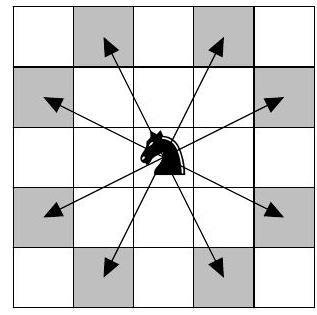
Normal move
 such that the inequality \( \sqrt{3 - a} - \sqrt{a + 1} > \frac{1}{2} \) always holds. Hmm, okay. Let me break this down step by step.
First, since we have square roots, the expressions inside them must be non-nega... |
olympiads | Problem 5. Multiply both sides of the equation by $\sin \frac{x}{2}$ (this transformation is equivalent, as this expression does not turn to zero on the specified interval). Rewrite $2 \sin \frac{x}{2} \sin k x$ as $\cos \frac{2 k-1}{2} x-\cos \frac{2 k+1}{2} x$. After this, all terms will cancel out except the first a... | <think>
Okay, so I need to figure out how to solve this trigonometric equation that was given in the problem. The original equation isn't explicitly stated, but based on the explanation, it seems like they multiplied both sides by sin(x/2) to simplify it. Then they used a trigonometric identity to rewrite 2 sin(x/2) si... |
olympiads | 13. Find $\cos ^{2} 10^{\circ}+\cos ^{2} 50^{\circ}-\sin 40^{\circ} \sin 80^{\circ}$. | <think>
Alright, let's tackle this problem step by step. The expression we need to find is cos²10° + cos²50° - sin40° sin80°. Hmm, trigonometric identities might be helpful here. Let me recall some identities that could simplify this expression.
First, cos²θ can be written using the double-angle identity: cos²θ = (1 +... |
olympiads | 2. For any natural values $\quad m$ and $n(n>1)$, the function $f\left(\frac{m}{n}\right)=\frac{\sqrt[n]{3^{m}}}{\sqrt[n]{3^{m}}+3}$ is defined. Calculate the sum
$f\left(\frac{1}{2020}\right)+f\left(\frac{2}{2020}\right)+f\left(\frac{3}{2020}\right)+\cdots+f\left(\frac{4039}{2020}\right)+f\left(\frac{4040}{2020}\righ... | <think>
Okay, so I need to calculate the sum of the function f(m/n) from m/n = 1/2020 up to 4040/2020. The function is given by f(m/n) = (sqrt[n]{3^m}) / (sqrt[n]{3^m} + 3). Let me try to unpack this step by step.
First, let's understand the function f. The notation sqrt[n]{3^m} means the n-th root of 3^m, which is eq... |
olympiads | 4. Let's highlight the complete squares: $\left\{\begin{array}{l}(x-2)^{2}+(y+1)^{2}=5, \\ (x-2)^{2}+(z-3)^{2}=13, \\ (y+1)^{2}+(z-3)^{2}=10 .\end{array}\right.$
Add all the equations $\left\{\begin{array}{c}(x-2)^{2}+(y+1)^{2}=5, \\ (x-2)^{2}+(z-3)^{2}=13, \\ (x-2)^{2}+(y+1)^{2}+(z-3)^{2}=14 .\end{array}\right.$
And... | <think>
Okay, let's see. I have this system of three equations:
1. \((x - 2)^2 + (y + 1)^2 = 5\)
2. \((x - 2)^2 + (z - 3)^2 = 13\)
3. \((y + 1)^2 + (z - 3)^2 = 10\)
And then there's a step where they add all the equations and get:
\[
\begin{cases}
(x - 2)^2 + (y + 1)^2 = 5, \\
(x - 2)^2 + (z - 3)^2 = 13, \\
(x - 2)^... |
olympiads | 13. The product of two of the four roots of the quartic equation $x^{4}-18 x^{3}+k x^{2}+200 x-1984=0$ is -32 . Determine the value of $k$. | <think>
Okay, let's see. The problem is about a quartic equation: \(x^4 - 18x^3 + kx^2 + 200x - 1984 = 0\). It says that the product of two of the four roots is -32, and we need to find the value of \(k\). Hmm, quartic equations can be tricky, but maybe I can use Vieta's formulas here. Vieta relates the coefficients of... |
olympiads | 10.1. Natural numbers starting from 1 are written in a row. This results in a sequence of digits: 1234567891011121314... What digit is in the 2021st position? | <think>
Okay, so I need to find the 2021st digit in the sequence of natural numbers written in a row: 1, 2, 3, ..., 10, 11, 12, ..., 100, 101, etc. Let me think how to approach this step by step.
First, I remember that when numbers are written out in sequence, each number contributes a certain number of digits dependi... |
cn_contest | 8. As shown in the figure, the perimeter of square $A B C D$ is $40 \mathrm{~m}$. Two people, Jia and Yi, start from $A$ and $B$ respectively at the same time and walk along the edges of the square. Jia walks $35 \mathrm{~m}$ per minute in a counterclockwise direction, and Yi walks $30 \mathrm{~m}$ per minute in a cloc... | <think>
Okay, let me try to figure out this problem step by step. So, there's a square ABCD with a perimeter of 40 meters. That means each side is 10 meters because the perimeter of a square is 4 times the side length. So, each side is 40 divided by 4, which is 10 meters. Got that down.
Now, there are two people, Jia ... |
olympiads | If $a, b$ and $c$ are positive, consecutive terms of a geometric sequence (that is, $\frac{c}{b}=\frac{b}{a}$ ), then the graph of $y=a x^{2}+b x+c$ is
(A) a curve that intersects the $x$-axis at two distinct points
(B) entirely below the $x$-axis
(C) entirely above the $x$-axis
(D) a straight line
(E) tangent to ... | <think>
Okay, so I need to figure out what the graph of the quadratic equation y = a x² + b x + c looks like when a, b, and c are positive consecutive terms of a geometric sequence. The options are about whether it intersects the x-axis at two points, is entirely below, entirely above, a straight line, or tangent to th... |
aops_forum | Let $n\geq 2$ be a positive integer. The sets $A_{1},A_{2},\ldots, A_{n}$ and $B_{1},B_{2},\ldots, B_{n}$ of positive integers are such that $A_{i}\cap B_{j}$ is non-empty $\forall i,j\in\{1,2,\ldots ,n\}$ and $A_{i}\cap A_{j}=\o$, $B_{i}\cap B_{j}=\o$ $\forall i\neq j\in \{1,2,\ldots, n\}$. We put the elements of each... | <think>
Okay, let me try to work through this problem step by step. So, we have two collections of sets, A₁, A₂, ..., Aₙ and B₁, B₂, ..., Bₙ. Each of these sets is made up of positive integers. The conditions given are that the intersection of any A_i and B_j is non-empty for all i, j. Also, the A sets are pairwise dis... |
olympiads | 10,11
In the parallelepiped $A B C D A 1 B 1 C 1 D 1$, the face $A B C D$ is a square with side 5, the edge $A A 1$ is also 5, and this edge forms angles of $60^{\circ}$ with the edges $A B$ and $A D$. Find the diagonal $B D 1$. | <think>
Okay, so I have this geometry problem here about a parallelepiped called ABCD A1B1C1D1. The face ABCD is a square with side length 5, and the edge AA1 is also 5. Plus, AA1 forms 60-degree angles with both edges AB and AD. I need to find the length of the diagonal BD1. Alright, let's break this down step by step... |
olympiads | 461. The law of temperature change $T$ of a body depending on time $t$ is given by the equation $T=0.2 t^{2}$. At what rate is this body heating at the moment of time $10 \mathrm{c}$? | <think>
Okay, so I need to figure out the rate at which the body is heating at time t = 10 seconds. The problem gives me the temperature as a function of time, T = 0.2 t². Hmm, the rate of heating would be how fast the temperature is changing with respect to time. That sounds like taking a derivative. Right, the deriva... |
olympiads | 6. Let $x \in \mathbf{R}_{+}$, then the maximum value of the function $y=\sqrt{\frac{1}{1+x^{2}}}+2 \sqrt{\frac{x}{1+x}}$ is | <think>
Okay, so I need to find the maximum value of the function y = sqrt(1/(1 + x²)) + 2*sqrt(x/(1 + x)) where x is a positive real number. Hmm, let's see. Alright, first, maybe I can simplify the function a bit to make it easier to work with. Let me write it out again:
y = √(1/(1 + x²)) + 2√(x/(1 + x))
Hmm, maybe ... |
olympiads | 5-1. A square with a side of 100 was cut into two equal rectangles. They were placed next to each other as shown in the figure. Find the perimeter of the resulting figure.
 | <think>
Okay, so I need to find the perimeter of the resulting figure after cutting a square with a side length of 100 into two equal rectangles and placing them next to each other. Hmm, let me visualize this. The original square has sides of 100 each. If we cut it into two equal rectangles, we must be cutting it eithe... |
olympiads | Exercise 13. For any real number $x$, we denote $\lfloor x\rfloor$ as the greatest integer less than or equal to $x$, and we call the fractional part of $x$ the number $\langle x\rangle$ defined as $\langle x\rangle=x-\lfloor x\rfloor$. How many real numbers $x$ satisfy $1 \leqslant x \leqslant 10$ and $\langle x\rangl... | <think>
Alright, so I need to solve this problem where I have to find how many real numbers x between 1 and 10 (inclusive) satisfy the equation ⟨x⟩² = ⟨x²⟩. The fractional part ⟨x⟩ is defined as x minus the floor of x, which is the greatest integer less than or equal to x.
First, let me make sure I understand the def... |
cn_contest | 3. The equation about $x$
$$
\frac{x-a}{b c}+\frac{x-b}{a c}+\frac{x-c}{a b}=2\left(\frac{1}{a}+\frac{1}{b}+\frac{1}{c}\right) \text {, }
$$
where $a+b+c \neq 0$, the solution of the equation is $\qquad$ . | <think>
Okay, let's see. I need to solve this equation for x:
\[
\frac{x - a}{b c} + \frac{x - b}{a c} + \frac{x - c}{a b} = 2\left(\frac{1}{a} + \frac{1}{b} + \frac{1}{c}\right)
\]
Hmm, the equation has fractions with denominators involving products of a, b, and c. Maybe I should start by simplifying the left side a... |
olympiads | The sum of the angles of two polygons, expressed in degrees, is 21 times less 39 than the sum of all sides and all diagonals. The number of all diagonals is 99 more than the number of all sides. How many sides do the polygons have? | <think>
Okay, so I need to figure out how many sides each of the two polygons has based on the given information. Let me start by breaking down the problem step by step.
First, the problem states: "The sum of the angles of two polygons, expressed in degrees, is 21 times less 39 than the sum of all sides and all diagon... |
cn_contest | 1. Define the operation " $*$ ":
$$
a * b=\log _{2}\left(2^{a}+2^{b}\right)(a 、 b \in \mathbf{R}) \text {. }
$$
Let $A=(1 * 3) * 5, B=(2 * 4) * 6$. Then the value of $1 *(A * B)$ is $\qquad$ | <think>
Okay, let's try to figure out this problem step by step. So, we have this operation defined as a * b = log₂(2ᵃ + 2ᵇ). We need to find the value of 1 * (A * B), where A = (1 * 3) * 5 and B = (2 * 4) * 6. Hmm, that seems a bit complex, but let's break it down.
First, let's understand what the * operation does. I... |
olympiads | Task 1. The year 2009 has the following property: by swapping the digits of the number 2009, it is impossible to obtain a smaller four-digit number (numbers do not start with zero). In which year will this property reoccur for the first time? | <think>
Alright, so the problem here is about finding the next year after 2009 where you can't rearrange the digits to make a smaller four-digit number without leading zeros. Let me think through this step by step.
First, let me understand the original example: 2009. If we try to swap its digits, we have the digits 2,... |
olympiads | ## Task 4 - 341234
Determine the smallest natural number $n$ with $n \geq 2$ and the following property ( $\left.{ }^{*}\right)$ :
$(*)$ In every set of $n$ natural numbers, there are (at least) two numbers whose sum or whose difference is divisible by 7. | <think>
Alright, so I need to find the smallest natural number n (where n is at least 2) such that in any set of n natural numbers, there are at least two numbers whose sum or difference is divisible by 7. Hmm, okay. Let's break this down step by step.
First, let me understand the problem. The question is about the pi... |
olympiads | 5. All edges of a regular quadrilateral pyramid $S A B C D$ with base $A B C D$ have equal length. Plane $\alpha$ is perpendicular to line $S A$, and plane $\beta$ is parallel to line $C D$. Determine the smallest possible angle between planes $\alpha$ and $\beta$. (7 points) Answer: $\frac{\pi}{6}$. | <think>
Okay, let me try to tackle this problem. So, we have a regular quadrilateral pyramid SABCD with base ABCD, and all edges are of equal length. We need to find the smallest possible angle between two planes: plane α, which is perpendicular to line SA, and plane β, which is parallel to line CD. The answer is suppo... |
olympiads | 5. Let $f(x)$ be a function defined on $\mathbf{R}$ with a period of 2, which is even, strictly decreasing on the interval $[0,1]$, and satisfies $f(\pi)=1, f(2 \pi)=2$. Then the solution set of the inequality system $\left\{\begin{array}{l}1 \leqslant x \leqslant 2, \\ 1 \leqslant f(x) \leqslant 2\end{array}\right.$ i... | <think>
Okay, let me try to figure out this problem step by step. So, we have a function f(x) defined on all real numbers, right? It's periodic with period 2, which means f(x + 2) = f(x) for every x. Also, it's an even function, so f(-x) = f(x). Additionally, it's strictly decreasing on the interval [0,1], and we know ... |
aops_forum | Given a real number $a$ and a sequence $(x_n)_{n=1}^\infty$ defined by:
$$\left\{\begin{matrix} x_1=1 \\ x_2=0 \\ x_{n+2}=\frac{x_n^2+x_{n+1}^2}{4}+a\end{matrix}\right.$$
for all positive integers $n$.
1. For $a=0$, prove that $(x_n)$ converges.
2. Determine the largest possible value of $a$ such that $(x_n)$ converges... | <think>
Okay, so I need to tackle this problem about the sequence defined by the recurrence relation. Let's take it step by step. First, part 1 says that when a = 0, we need to prove that the sequence converges. Then part 2 asks for the largest possible value of a such that the sequence still converges. Let's start wit... |
olympiads | Albert, Ben, Cyril, Dan, Erik, Filip, and Gábo entered a cave with many doors one after another in this order. They only change their order when passing through a door, and they do so as follows: the first in line opens the door, holds it for everyone else, and then takes the last position. So, the first door is opened... | <think>
Okay, so there's this problem where seven people—Albert, Ben, Cyril, Dan, Erik, Filip, and Gábo—enter a cave one after another in that specific order. Each time they go through a door, the first person in line opens the door, holds it for everyone else, and then goes to the back of the line. The question is, wh... |
Subsets and Splits
No community queries yet
The top public SQL queries from the community will appear here once available.