Hmm , this seems a bit complex, but let's break it down.\n\nStarting with the first part: Given angles A, B, C of triangle ABC, the vector α is defined as (cos[(A-B)/2], √3 sin[(A+B)/2]), and the magnitude of this vector is √2. When angle C is maximized, there exists a moving point M such that |MA|, |AB|, |MB| form an arithmetic sequence. Then, find the maximum value of |MC| / |AB|.\n\nTherefore,\n\ncos²[(A - B)/2] + 3 sin²[(A + B)/2] = 2.\n\n Hmm , simplifying this equation might help find a relationship between angles A and B. Let's denote D = (A - B)/2 and E = (A + B)/2. Then, note that D + E = A and E - D = B. Also, since A + B + C = π, we have C = π - (A + B) = π - 2E. Therefore, maximizing angle C would be equivalent to minimizing 2E, so minimizing E. Thus, to maximize C, we need to minimize E = (A + B)/2, which is equivalent to minimizing A + B.\n\nBut first, let's substitute D and E into our equation:\n\ncos²(D) + 3 sin²(E) = 2.\n\nBut since E = (A + B)/2 and D = (A - B)/2, we can also note that E is related to angle C through C = π - 2E.\n\n-sin²(D) + 3 sin²(E) = 1\n\nOr\n\n3 sin²(E) - sin²(D) = 1.\n\n Hmm , not sure if that's helpful. Alternatively, perhaps express cos²(D) + 3 sin²(E) = 2. Let's try to manipulate this equation. Let's consider that D and E are variables, but since A and B are related through the triangle's angles, perhaps there's another relation.\n\n Wait , since A + B = 2E, and A - B = 2D, then we can solve for A and B in terms of E and D: A = E + D, B = E - D. Then, since A + B + C = π, C = π - 2E. So, angles A, B, C are expressed in terms of E and D. So maybe we can express the equation cos²(D) + 3 sin²(E) = 2 in terms of E and D and find some constraints.\n\nAlternatively, let's use trigonometric identities to simplify the original equation. Let's note that cos²(theta) = (1 + cos(2 theta))/2 and sin²(theta) = (1 - cos(2 theta))/2. Maybe substituting those in:\n\n[ (1 + cos(A - B)) / 2 ] + 3 [ (1 - cos(A + B)) / 2 ] = 2\n\nMultiply through by 2:\n\n(1 + cos(A - B)) + 3(1 - cos(A + B)) = 4\n\nExpand:\n\n1 + cos(A - B) + 3 - 3 cos(A + B) = 4\n\nSo, in summary, when angle C is maximized, A = B, and C = π - 2A. Then, substituting into the equation cos(D) = 3 cos(S), with D = 0 (since A = B), we have cos(0) = 1 = 3 cos(S), so cos(S) = 1/3, so S = arccos(1/3). Therefore, angle C = π - arccos(1/3). But let's compute that. Since S = arccos(1/3), then C = π - S ≈ π - 1.23096 ≈ 1.91063 radians, as before.\n\nSo now, the problem states that when angle C is maximized, there exists a moving point M such that |MA|, |AB|, |MB| form an arithmetic sequence. Then, we need to find the maximum value of |MC| / |AB|.\n\nFirst, let's recall that an arithmetic sequence has the middle term as the average of the other two. So, if |MA|, |AB|, |MB| are in arithmetic sequence, then |AB| must be the average of |MA| and |MB|. Therefore:\n\n2 |AB| = |MA| + |MB|.\n\nSo, 2 |AB| = |MA| + |MB|. Therefore, the point M must satisfy this condition. We need to find the locus of point M such that this equation holds, and then find the maximum value of |MC| divided by |AB|.\n\nGiven that ABC is an isoceles triangle with A = B, since angle C is maximized, which we established earlier. So triangle ABC is isoceles with AC = BC.\n\n Wait , hold on. If angles A and B are equal, then sides opposite them are equal. In triangle ABC, side opposite angle A is BC, side opposite angle B is AC, so BC = AC. Therefore, triangle ABC is isoceles with AC = BC, so vertex C is the apex with angle C, and AB is the base.\n\nSo, in this triangle, AC = BC. Let me sketch this mentally: triangle ABC with AC = BC, angle at C is maximized. So point C is such that angle C is the largest angle. Then, AB is the base, and AC = BC.\n\nTherefore, coordinates: Maybe we can place this triangle in coordinate system for easier calculations. Let's place point C at the origin (0,0), point A at (-d, 0), and point B at (d, 0), so that AB is the base. Wait , but then angle C is at (0,0), and AB is from (-d, 0) to (d, 0). However, in this case, angles at A and B would be equal, and angle at C would be determined by the sides. But maybe this coordinate system would complicate things. Alternatively, place point A at (0,0), point B at (c, 0), and point C somewhere in the plane.\n\nBut perhaps it's better to use coordinates with the triangle being isoceles. Let me think. Let me set coordinate system such that point C is at the origin (0,0), side AB is horizontal, and the triangle is isoceles with AC = BC. Let me denote the length AC = BC = l, and AB = 2d. Then coordinates:\n\nPoint B: (d, h)\n\n Wait , but if AC = BC = l, then the distance from C(0,0) to A(-d, h) is sqrt(d² + h²) = l, similarly for B(d, h). Then AB is the distance between (-d, h) and (d, h), which is 2d. So AB = 2d, AC = BC = sqrt(d² + h²). Then, angle at C is maximized. Since angle C is between AC and BC, but in this coordinate system, points A and B are symmetric over the y-axis.\n\nBut maybe this is getting too complicated. Alternatively, let's use a different coordinate system. Let's place point C at (0,0), point A at (-1,0), and point B at (1,0). Then, the triangle is isoceles with AC = BC. Wait , but in this case, angle C is at the origin, but AC and BC would both be of length 1, and AB would be 2 units. Then angle C is 180 degrees, which is impossible. Wait , no. Wait , if points A and B are at (-1,0) and (1,0), and point C is somewhere above the x-axis, then AC and BC would be equal if C is on the y-axis. So, point C is at (0, h). Then AC = BC = sqrt(1 + h²), AB = 2, angle C is the angle at (0, h) between points A and B.\n\nTherefore, angle C = arccos[(h² - 1)/(h² + 1)]\n\nBut earlier, we found that angle C is arccos(1/3) subtracted from pi? Wait , no. Wait , earlier, when we maximized angle C, we found that angle C ≈ 109.47 degrees, which is arccos(-1/3). Wait , let me check:\n\nIf angle C is maximized, and in that case, cos(angle C) = -1/3, so angle C = arccos(-1/3) ≈ 109.47 degrees.\n\n Wait , how does this connect to the previous calculation?\n\n Wait , in the coordinate system where point C is at (0, h), angle C is arccos[(h² - 1)/(h² + 1)]. If angle C is arccos(-1/3), then:\n\n(h² - 1)/(h² + 1) = -1/3\n\nSolving for h²:\n\n3(h² - 1) = - (h² + 1)\n\n3h² - 3 = -h² -1\n\nGiven that AB = 2, then 2*2 = |MA| + |MB| ⇒ |MA| + |MB| = 4.\n\nSo, the locus of points M such that |MA| + |MB| = 4 is an ellipse with foci at A and B, and major axis length 4. However, since in our coordinate system AB = 2, the distance between the foci is 2. For an ellipse, the sum of distances from any point on the ellipse to the foci is constant, which is 2a, where 2a is the major axis length. The distance between the foci is 2c, and the relationship is a² = b² + c², where b is the semi-minor axis.\n\nIn our case, the sum is 4, so 2a = 4 ⇒ a = 2. The distance between foci (A and B) is 2c = 2 ⇒ c = 1. Therefore, b² = a² - c² = 4 - 1 = 3 ⇒ b = √3. So, the ellipse is centered at the midpoint of AB, which in our coordinate system is the origin (0,0). The major axis is along AB, which is the x-axis in our coordinate system. Therefore, the equation of the ellipse is (x² / a²) + (y² / b²) = 1 ⇒ (x² / 4) + (y² / 3) = 1.\n\nTherefore, the moving point M lies on this ellipse. Now, we need to find the maximum value of |MC| / |AB|. Since |AB| = 2, this is equivalent to finding the maximum value of |MC| / 2, so half of the maximum |MC|.\n\nPoint C is at (0, 1/√2). Wait , no, in our coordinate system earlier, point C was at (0, h) where h = 1/√2. Wait , let's recap:\n\nPreviously, we considered point C at (0, h), with h = 1/√2, points A(-1,0), B(1,0). Therefore, AB = 2, AC = BC = sqrt(1 + (1/√2)^2) = sqrt(3/2). Therefore, in this coordinate system, point C is at (0, 1/√2). So, the coordinates:\n\nA: (-1, 0)\n\nTo find the maximum distance, we can use the method of Lagrange multipliers or parametrize the ellipse and maximize the distance function.\n\nAlternatively, note that the maximum distance from a fixed point to an ellipse occurs along the line connecting the fixed point to the center of the ellipse, extended through the farthest vertex. But since the ellipse is not centered at C, but at the origin (midpoint of AB), and point C is at (0, 1/√2), which is along the y-axis. The ellipse has its major axis along the x-axis and minor axis along the y-axis.\n\nTherefore, the farthest point from C on the ellipse would likely be at one of the endpoints of the major axis or the top/bottom of the minor axis. Wait , let's check:\n\nThe ellipse has vertices at (±2, 0) on the x-axis and (0, ±√3) on the y-axis. The distance from C(0, 1/√2) to (2,0):\n\nsqrt((2 - 0)^2 + (0 - 1/√2)^2) = sqrt(4 + 1/2) = sqrt(9/2) = (3)/√2 ≈ 2.121\n\nDistance from C to (-2,0):\n\nTo (-2,0): ≈ 2.121\n\nTo (0, √3): ≈ 1.025\n\nTo (0, -√3): ≈ 2.439\n\nSo the maximum distance occurs at (0, -√3), which is approximately 2.439. Therefore, the maximum |MC| is approximately 2.439, so |MC| / |AB| ≈ 2.439 / 2 ≈ 1.219. However, we need to calculate this exactly.\n\nBut wait , we can compute the exact distance from C(0, 1/√2) to (0, -√3):\n\n(√3 + 1/√2)/2 = (√3)/2 + 1/(2√2). But we can rationalize the denominator:\n\n1/(2√2) = √2/(4). Therefore, the expression becomes (√3)/2 + √2/4 = (2√3 + √2)/4. However, this may not be the correct maximum. Wait , but is (0, -√3) actually the farthest point?\n\nAlternatively, maybe there's another point on the ellipse where the distance is greater. To confirm, let's parametrize the ellipse and maximize the distance.\n\nParametrization of the ellipse (x² / 4) + (y² / 3) = 1 can be done using:\n\nx = 2 cos θ\n\ny = √3 sin θ\n\nfor θ in [0, 2π).\n\nThen, the distance squared from C(0, 1/√2) to M(x, y) is:\n\n(2 cos θ - 0)^2 + (√3 sin θ - 1/√2)^2\n\n= 4 cos² θ + (3 sin² θ - 2 * √3 sin θ * 1/√2 + 1/2)\n\nSimplify term by term:\n\n4 cos² θ + 3 sin² θ - 2 * √3 * (1/√2) sin θ + 1/2\n\nSimplify the cross term:\n\n-2 * √3 / √2 sin θ = -2 * √(3/2) sin θ = -√6 sin θ\n\nTherefore, the distance squared is:\n\nx = 2 cos(π/2) = 0\n\ny = √3 sin(π/2) = √3\n\nDistance squared: (0 - 0)^2 + (√3 - 1/√2)^2 = (√3 - 1/√2)^2 = 3 - 2*√3*(1/√2) + 1/2 = 3 - √6 + 1/2 = 3.5 - √6 ≈ 3.5 - 2.449 ≈ 1.051\n\nAt θ = 3π/2:\n\nx = 2 cos(3π/2) = 0\n\ny = √3 sin(3π/2) = -√3\n\nDistance squared: (0 - 0)^2 + (-√3 - 1/√2)^2 = (√3 + 1/√2)^2 = 3 + 2*√3*(1/√2) + 1/2 = 3 + √6 + 1/2 = 3.5 + √6 ≈ 3.5 + 2.449 ≈ 5.949\n\nTherefore, the maximum distance squared is approximately 5.949, so the maximum distance is sqrt(5.949) ≈ 2.439, which corresponds to the point (0, -√3), as we saw earlier.\n\nTherefore, the maximum |MC| is √3 + 1/√2, and the maximum value of |MC| / |AB| is (√3 + 1/√2)/2. Let's rationalize and simplify this expression:\n\nFirst, write 1/√2 as √2/2:\n\n√3 + √2/2 = (2√3 + √2)/2\n\nDivide by 2:\n\n(2√3 + √2)/4\n\nSo, (2√3 + √2)/4 is the maximum value.\n\nBut let's check if this is indeed the case. Wait , let me compute |MC| when M is at (0, -√3):\n\nPoint C is at (0, 1/√2), and point M is at (0, -√3). So the distance is |1/√2 - (-√3)| = 1/√2 + √3. Therefore, |MC| = √3 + 1/√2. Therefore, |MC| / |AB| = (√3 + 1/√2)/2. Which is equal to (√3)/2 + 1/(2√2). Converting to same denominator:\n\nMultiply numerator and denominator to rationalize:\n\n1/(2√2) = √2/(4)\n\nSo, (√3)/2 + √2/4 = (2√3 + √2)/4. Therefore, the expression is (2√3 + √2)/4.\n\nBut the problem says \"the maximum value of |MC| / |AB|\", so that would be (2√3 + √2)/4. Is there a way to simplify this further or write it in a different form? Let's see:\n\nFactor out √2:\n\n= √2( (2√3)/√2 + 1 ) / 4\n\nBut 2√3 / √2 = 2√(3/2) = √(4*(3/2)) = √6\n\nSo:\n\nBut y must satisfy the ellipse equation. Let's check:\n\nIf x ≠ 0, then substituting y = -3/(√2) into the ellipse equation:\n\nx² /4 + ( (-3/√2)^2 ) /3 = 1 ⇒ x² /4 + (9/2)/3 = x² /4 + 3/2 = 1 ⇒ x² /4 = -1/2, which is impossible. Therefore, no solution in this case.\n\nCase 2: x = 0\n\nThen, from the ellipse equation:\n\n0 + y² / 3 = 1 ⇒ y² = 3 ⇒ y = ±√3\n\nSo points M are (0, √3) and (0, -√3). Compute F(x,y) for these points:\n\nAt (0, √3): F = 0 + (√3 - 1/√2)^2 ≈ (1.732 - 0.707)^2 ≈ (1.025)^2 ≈ 1.051\n\nAt (0, -√3): F = 0 + (-√3 - 1/√2)^2 ≈ ( -1.732 - 0.707 )^2 ≈ (-2.439)^2 ≈ 5.949\n\nThus, confirming that maximum occurs at (0, -√3) with distance squared ≈5.949, distance ≈2.439, which is the same as before. Therefore, the maximum |MC| is indeed √3 + 1/√2, and divided by |AB|=2, it is (√3 + 1/√2)/2 = (2√3 + √2)/4.\n\nBut wait , let me compute this exact value numerically to check if it's the maximum. Let's compute (2√3 + √2)/4:\n\n√3 ≈1.732, √2≈1.414\n\n2√3 ≈3.464, √2≈1.414\n\n(2√3 + √2)/4 = (√3/2) + (√2/4)\n\nBut I don't think there's a more simplified form. However, maybe the problem expects a different form or maybe we made a miscalculation.\n\n Wait , let's check the coordinates again. In the coordinate system where AB is the base of the isoceles triangle with length 2, and C is at (0,1/√2). Then, when we computed the maximum distance from C to M on the ellipse, the maximum occurs at (0, -√3). But is this point (0, -√3) actually part of the original triangle?\n\n Wait , in our coordinate system, the triangle has points A(-1,0), B(1,0), C(0,1/√2). The ellipse is (x² /4) + (y² /3) =1. The point (0, -√3) is outside the triangle, but since M is any moving point in the plane (presumably), not necessarily inside the triangle, this is acceptable.\n\nBut let's confirm if the arithmetic sequence condition is satisfied at point (0, -√3). Let's compute |MA|, |AB|, |MB|.\n\nPoint M is (0, -√3). Point A is (-1, 0). Distance MA:\n\nBut the problem says \"when angle C is maximized, there exists a moving point M...\". So, in the scenario where angle C is maximized (i.e., the triangle is set with angle C at its maximum), the point M moves such that |MA|, |AB|, |MB| form an arithmetic sequence. Then, from all such points M (which lie on the ellipse), find the maximum |MC| / |AB|.\n\nBut in our calculation, the maximum occurs at (0, -√3), which gives |MC| / |AB| = (2√3 + √2)/4. However, let me check whether this is indeed correct.\n\nAlternatively, maybe the maximum occurs at another point on the ellipse. Wait , but according to both the parametrization and Lagrange multipliers, the maximum distance is achieved at (0, -√3). Therefore, the value should be correct.\n\nBut let's check if there's a different interpretation of the problem.\n\n Wait , the problem states: \"when angle C is maximized, there exists a moving point M, such that |MA|, |AB|, |MB| form an arithmetic sequence\". The wording could imply that for the triangle where angle C is maximized, there exists such a point M (moving), but maybe M is constrained to lie within the triangle or something else. But the problem doesn't specify any constraints on M, so M can be any point in the plane.\n\nTherefore, with that in mind, the maximum |MC| is achieved at (0, -√3), giving the maximum value (2√3 + √2)/4. But let me compute this expression to check if it's a standard form.\n\nAlternatively, perhaps rationalizing or combining terms:\n\n(2√3 + √2)/4 = √3/2 + √2/4. If we rationalize denominators:\n\nAlternatively, in exact terms, (2√3 + √2)/4 can be written as (√3/2) + (√2/4), but not sure if further simplification is required.\n\nAlternatively, rationalizing:\n\nBut perhaps the problem expects the answer in terms of sqrt(6) or something. Let's see:\n\n Wait , (2√3 + √2)/4 can also be written as (√3/2 + √2/4). Alternatively, factor out 1/4:\n\n(2√3 + √2)/4 = (1/4)(2√3 + √2). Not sure.\n\nAlternatively, write as sqrt(3)/2 + sqrt(2)/4. However, this might be the simplest form.\n\nTherefore, the answer is (2√3 + √2)/4. So boxed:\n\n\\boxed{\\dfrac{2\\sqrt{3} + \\sqrt{2}}{4}}\n\n**Final Answer**\nThe maximum value of \\(\\frac{|\\overrightarrow{M C}|}{|\\overrightarrow{A B}|}\\) is \\boxed{\\dfrac{2\\sqrt{3} + \\sqrt{2}}{4}}.\n</think>\n\nGiven the angles \\( \\angle A, \\angle B, \\angle C \\) of triangle \\( \\triangle ABC \\), the vector \\( \\boldsymbol{\\alpha} = \\left( \\cos \\frac{A - B}{2}, \\sqrt{3} \\sin \\frac{A + B}{2} \\right) \\) has a magnitude of \\( \\sqrt{2} \\). When \\( \\angle C \\) is maximized, there exists a moving point \\( M \\) such that \\( |\\overrightarrow{MA}| \\), \\( |\\overrightarrow{AB}| \\), \\( |\\overrightarrow{MB}| \\) form an arithmetic sequence. We need to find the maximum value of \\( \\frac{|\\overrightarrow{MC}|}{|\\overrightarrow{AB}|} \\).\n\n1. **Vector Magnitude Condition**:\n The magnitude of the vector \\( \\boldsymbol{\\alpha} \\) is given by:\n \\[\n \\cos^2 \\left( \\frac{A - B}{2} \\right) + 3 \\sin^2 \\left( \\frac{A + B}{2} \\right) = 2\n \\]\n Simplifying this, we find:\n \\[\n \\cos(A - B) = 3 \\cos(A + B)\n \\]\n This leads to \\( \\cos D = 3 \\cos S \\) where \\( D = \\frac{A - B}{2} \\) and \\( S = \\frac{A + B}{2} \\). Maximizing \\( \\angle C \\) implies minimizing \\( S \\), leading to \\( S = \\arccos \\left( \\frac{1}{3} \\right) \\) and \\( \\angle C = \\pi - 2 \\arccos \\left( \\frac{1}{3} \\right) \\approx 109.47^\\circ \\).\n\n2. **Arithmetic Sequence Condition**:\n For \\( |\\overrightarrow{MA}|, |\\overrightarrow{AB}|, |\\overrightarrow{MB}| \\) to form an arithmetic sequence:\n \\[\n 2 |\\overrightarrow{AB}| = |\\overrightarrow{MA}| + |\\overrightarrow{MB}|\n \\]\n Given \\( |\\overrightarrow{AB}| = 2 \\), this implies:\n \\[\n |\\overrightarrow{MA}| + |\\overrightarrow{MB}| = 4\n \\]\n The locus of \\( M \\) is an ellipse with foci at \\( A \\) and \\( B \\), major axis 4.\n\n3. **Maximizing \\( |\\overrightarrow{MC}| \\)**:\n The coordinates of \\( A \\), \\( B \\), and \\( C \\) are set as \\( A(-1, 0) \\), \\( B(1, 0) \\), and \\( C(0, \\frac{1}{\\sqrt{2}}) \\). The ellipse equation is \\( \\frac{x^2}{4} + \\frac{y^2}{3} = 1 \\). The maximum distance from \\( C \\) to a point \\( M \\) on this ellipse is found to be at \\( (0, -\\sqrt{3}) \\).\n\n4. **Calculating the Maximum Value**:\n The distance \\( |\\overrightarrow{MC}| \\) from \\( C(0, \\frac{1}{\\sqrt{2}}) \\) to \\( M(0, -\\sqrt{3}) \\) is:\n \\[\n \\sqrt{ \\left( 0 - 0 \\right)^2 + \\left( -\\sqrt{3} - \\frac{1}{\\sqrt{2}} \\right)^2 } = \\sqrt{3} + \\frac{1}{\\sqrt{2}}\n \\]\n The maximum value of \\( \\frac{|\\overrightarrow{MC}|}{|\\overrightarrow{AB}|} \\) is:\n \\[\n \\frac{\\sqrt{3} + \\frac{1}{\\sqrt{2}}}{2} = \\frac{2\\sqrt{3} + \\sqrt{2}}{4}\n \\]\n\nThe maximum value of \\( \\frac{|\\overrightarrow{MC}|}{|\\overrightarrow{AB}|} \\) is \\boxed{\\dfrac{2\\sqrt{3} + \\sqrt{2}}{4}}.","role":"assistant"}],"string":"[\n {\n \"content\": \"8. Given $\\\\angle A, \\\\angle B, \\\\angle C$ are the three interior angles of $\\\\triangle ABC$, and the vector $\\\\boldsymbol{\\\\alpha}=\\\\left(\\\\cos \\\\frac{A-B}{2}, \\\\sqrt{3} \\\\sin \\\\frac{A+B}{2}\\\\right),|\\\\boldsymbol{\\\\alpha}|=$ $\\\\sqrt{2}$. If when $\\\\angle C$ is maximized, there exists a moving point $M$, such that $|\\\\overrightarrow{M A}|$, $|\\\\overrightarrow{A B}|$, $|\\\\overrightarrow{M B}|$ form an arithmetic sequence, then the maximum value of $\\\\frac{|\\\\overrightarrow{M C}|}{|\\\\overrightarrow{A B}|}$ is\",\n \"role\": \"user\"\n },\n {\n \"content\": \"<think>Hmm , this seems a bit complex, but let's break it down.\\n\\nStarting with the first part: Given angles A, B, C of triangle ABC, the vector α is defined as (cos[(A-B)/2], √3 sin[(A+B)/2]), and the magnitude of this vector is √2. When angle C is maximized, there exists a moving point M such that |MA|, |AB|, |MB| form an arithmetic sequence. Then, find the maximum value of |MC| / |AB|.\\n\\nTherefore,\\n\\ncos²[(A - B)/2] + 3 sin²[(A + B)/2] = 2.\\n\\n Hmm , simplifying this equation might help find a relationship between angles A and B. Let's denote D = (A - B)/2 and E = (A + B)/2. Then, note that D + E = A and E - D = B. Also, since A + B + C = π, we have C = π - (A + B) = π - 2E. Therefore, maximizing angle C would be equivalent to minimizing 2E, so minimizing E. Thus, to maximize C, we need to minimize E = (A + B)/2, which is equivalent to minimizing A + B.\\n\\nBut first, let's substitute D and E into our equation:\\n\\ncos²(D) + 3 sin²(E) = 2.\\n\\nBut since E = (A + B)/2 and D = (A - B)/2, we can also note that E is related to angle C through C = π - 2E.\\n\\n-sin²(D) + 3 sin²(E) = 1\\n\\nOr\\n\\n3 sin²(E) - sin²(D) = 1.\\n\\n Hmm , not sure if that's helpful. Alternatively, perhaps express cos²(D) + 3 sin²(E) = 2. Let's try to manipulate this equation. Let's consider that D and E are variables, but since A and B are related through the triangle's angles, perhaps there's another relation.\\n\\n Wait , since A + B = 2E, and A - B = 2D, then we can solve for A and B in terms of E and D: A = E + D, B = E - D. Then, since A + B + C = π, C = π - 2E. So, angles A, B, C are expressed in terms of E and D. So maybe we can express the equation cos²(D) + 3 sin²(E) = 2 in terms of E and D and find some constraints.\\n\\nAlternatively, let's use trigonometric identities to simplify the original equation. Let's note that cos²(theta) = (1 + cos(2 theta))/2 and sin²(theta) = (1 - cos(2 theta))/2. Maybe substituting those in:\\n\\n[ (1 + cos(A - B)) / 2 ] + 3 [ (1 - cos(A + B)) / 2 ] = 2\\n\\nMultiply through by 2:\\n\\n(1 + cos(A - B)) + 3(1 - cos(A + B)) = 4\\n\\nExpand:\\n\\n1 + cos(A - B) + 3 - 3 cos(A + B) = 4\\n\\nSo, in summary, when angle C is maximized, A = B, and C = π - 2A. Then, substituting into the equation cos(D) = 3 cos(S), with D = 0 (since A = B), we have cos(0) = 1 = 3 cos(S), so cos(S) = 1/3, so S = arccos(1/3). Therefore, angle C = π - arccos(1/3). But let's compute that. Since S = arccos(1/3), then C = π - S ≈ π - 1.23096 ≈ 1.91063 radians, as before.\\n\\nSo now, the problem states that when angle C is maximized, there exists a moving point M such that |MA|, |AB|, |MB| form an arithmetic sequence. Then, we need to find the maximum value of |MC| / |AB|.\\n\\nFirst, let's recall that an arithmetic sequence has the middle term as the average of the other two. So, if |MA|, |AB|, |MB| are in arithmetic sequence, then |AB| must be the average of |MA| and |MB|. Therefore:\\n\\n2 |AB| = |MA| + |MB|.\\n\\nSo, 2 |AB| = |MA| + |MB|. Therefore, the point M must satisfy this condition. We need to find the locus of point M such that this equation holds, and then find the maximum value of |MC| divided by |AB|.\\n\\nGiven that ABC is an isoceles triangle with A = B, since angle C is maximized, which we established earlier. So triangle ABC is isoceles with AC = BC.\\n\\n Wait , hold on. If angles A and B are equal, then sides opposite them are equal. In triangle ABC, side opposite angle A is BC, side opposite angle B is AC, so BC = AC. Therefore, triangle ABC is isoceles with AC = BC, so vertex C is the apex with angle C, and AB is the base.\\n\\nSo, in this triangle, AC = BC. Let me sketch this mentally: triangle ABC with AC = BC, angle at C is maximized. So point C is such that angle C is the largest angle. Then, AB is the base, and AC = BC.\\n\\nTherefore, coordinates: Maybe we can place this triangle in coordinate system for easier calculations. Let's place point C at the origin (0,0), point A at (-d, 0), and point B at (d, 0), so that AB is the base. Wait , but then angle C is at (0,0), and AB is from (-d, 0) to (d, 0). However, in this case, angles at A and B would be equal, and angle at C would be determined by the sides. But maybe this coordinate system would complicate things. Alternatively, place point A at (0,0), point B at (c, 0), and point C somewhere in the plane.\\n\\nBut perhaps it's better to use coordinates with the triangle being isoceles. Let me think. Let me set coordinate system such that point C is at the origin (0,0), side AB is horizontal, and the triangle is isoceles with AC = BC. Let me denote the length AC = BC = l, and AB = 2d. Then coordinates:\\n\\nPoint B: (d, h)\\n\\n Wait , but if AC = BC = l, then the distance from C(0,0) to A(-d, h) is sqrt(d² + h²) = l, similarly for B(d, h). Then AB is the distance between (-d, h) and (d, h), which is 2d. So AB = 2d, AC = BC = sqrt(d² + h²). Then, angle at C is maximized. Since angle C is between AC and BC, but in this coordinate system, points A and B are symmetric over the y-axis.\\n\\nBut maybe this is getting too complicated. Alternatively, let's use a different coordinate system. Let's place point C at (0,0), point A at (-1,0), and point B at (1,0). Then, the triangle is isoceles with AC = BC. Wait , but in this case, angle C is at the origin, but AC and BC would both be of length 1, and AB would be 2 units. Then angle C is 180 degrees, which is impossible. Wait , no. Wait , if points A and B are at (-1,0) and (1,0), and point C is somewhere above the x-axis, then AC and BC would be equal if C is on the y-axis. So, point C is at (0, h). Then AC = BC = sqrt(1 + h²), AB = 2, angle C is the angle at (0, h) between points A and B.\\n\\nTherefore, angle C = arccos[(h² - 1)/(h² + 1)]\\n\\nBut earlier, we found that angle C is arccos(1/3) subtracted from pi? Wait , no. Wait , earlier, when we maximized angle C, we found that angle C ≈ 109.47 degrees, which is arccos(-1/3). Wait , let me check:\\n\\nIf angle C is maximized, and in that case, cos(angle C) = -1/3, so angle C = arccos(-1/3) ≈ 109.47 degrees.\\n\\n Wait , how does this connect to the previous calculation?\\n\\n Wait , in the coordinate system where point C is at (0, h), angle C is arccos[(h² - 1)/(h² + 1)]. If angle C is arccos(-1/3), then:\\n\\n(h² - 1)/(h² + 1) = -1/3\\n\\nSolving for h²:\\n\\n3(h² - 1) = - (h² + 1)\\n\\n3h² - 3 = -h² -1\\n\\nGiven that AB = 2, then 2*2 = |MA| + |MB| ⇒ |MA| + |MB| = 4.\\n\\nSo, the locus of points M such that |MA| + |MB| = 4 is an ellipse with foci at A and B, and major axis length 4. However, since in our coordinate system AB = 2, the distance between the foci is 2. For an ellipse, the sum of distances from any point on the ellipse to the foci is constant, which is 2a, where 2a is the major axis length. The distance between the foci is 2c, and the relationship is a² = b² + c², where b is the semi-minor axis.\\n\\nIn our case, the sum is 4, so 2a = 4 ⇒ a = 2. The distance between foci (A and B) is 2c = 2 ⇒ c = 1. Therefore, b² = a² - c² = 4 - 1 = 3 ⇒ b = √3. So, the ellipse is centered at the midpoint of AB, which in our coordinate system is the origin (0,0). The major axis is along AB, which is the x-axis in our coordinate system. Therefore, the equation of the ellipse is (x² / a²) + (y² / b²) = 1 ⇒ (x² / 4) + (y² / 3) = 1.\\n\\nTherefore, the moving point M lies on this ellipse. Now, we need to find the maximum value of |MC| / |AB|. Since |AB| = 2, this is equivalent to finding the maximum value of |MC| / 2, so half of the maximum |MC|.\\n\\nPoint C is at (0, 1/√2). Wait , no, in our coordinate system earlier, point C was at (0, h) where h = 1/√2. Wait , let's recap:\\n\\nPreviously, we considered point C at (0, h), with h = 1/√2, points A(-1,0), B(1,0). Therefore, AB = 2, AC = BC = sqrt(1 + (1/√2)^2) = sqrt(3/2). Therefore, in this coordinate system, point C is at (0, 1/√2). So, the coordinates:\\n\\nA: (-1, 0)\\n\\nTo find the maximum distance, we can use the method of Lagrange multipliers or parametrize the ellipse and maximize the distance function.\\n\\nAlternatively, note that the maximum distance from a fixed point to an ellipse occurs along the line connecting the fixed point to the center of the ellipse, extended through the farthest vertex. But since the ellipse is not centered at C, but at the origin (midpoint of AB), and point C is at (0, 1/√2), which is along the y-axis. The ellipse has its major axis along the x-axis and minor axis along the y-axis.\\n\\nTherefore, the farthest point from C on the ellipse would likely be at one of the endpoints of the major axis or the top/bottom of the minor axis. Wait , let's check:\\n\\nThe ellipse has vertices at (±2, 0) on the x-axis and (0, ±√3) on the y-axis. The distance from C(0, 1/√2) to (2,0):\\n\\nsqrt((2 - 0)^2 + (0 - 1/√2)^2) = sqrt(4 + 1/2) = sqrt(9/2) = (3)/√2 ≈ 2.121\\n\\nDistance from C to (-2,0):\\n\\nTo (-2,0): ≈ 2.121\\n\\nTo (0, √3): ≈ 1.025\\n\\nTo (0, -√3): ≈ 2.439\\n\\nSo the maximum distance occurs at (0, -√3), which is approximately 2.439. Therefore, the maximum |MC| is approximately 2.439, so |MC| / |AB| ≈ 2.439 / 2 ≈ 1.219. However, we need to calculate this exactly.\\n\\nBut wait , we can compute the exact distance from C(0, 1/√2) to (0, -√3):\\n\\n(√3 + 1/√2)/2 = (√3)/2 + 1/(2√2). But we can rationalize the denominator:\\n\\n1/(2√2) = √2/(4). Therefore, the expression becomes (√3)/2 + √2/4 = (2√3 + √2)/4. However, this may not be the correct maximum. Wait , but is (0, -√3) actually the farthest point?\\n\\nAlternatively, maybe there's another point on the ellipse where the distance is greater. To confirm, let's parametrize the ellipse and maximize the distance.\\n\\nParametrization of the ellipse (x² / 4) + (y² / 3) = 1 can be done using:\\n\\nx = 2 cos θ\\n\\ny = √3 sin θ\\n\\nfor θ in [0, 2π).\\n\\nThen, the distance squared from C(0, 1/√2) to M(x, y) is:\\n\\n(2 cos θ - 0)^2 + (√3 sin θ - 1/√2)^2\\n\\n= 4 cos² θ + (3 sin² θ - 2 * √3 sin θ * 1/√2 + 1/2)\\n\\nSimplify term by term:\\n\\n4 cos² θ + 3 sin² θ - 2 * √3 * (1/√2) sin θ + 1/2\\n\\nSimplify the cross term:\\n\\n-2 * √3 / √2 sin θ = -2 * √(3/2) sin θ = -√6 sin θ\\n\\nTherefore, the distance squared is:\\n\\nx = 2 cos(π/2) = 0\\n\\ny = √3 sin(π/2) = √3\\n\\nDistance squared: (0 - 0)^2 + (√3 - 1/√2)^2 = (√3 - 1/√2)^2 = 3 - 2*√3*(1/√2) + 1/2 = 3 - √6 + 1/2 = 3.5 - √6 ≈ 3.5 - 2.449 ≈ 1.051\\n\\nAt θ = 3π/2:\\n\\nx = 2 cos(3π/2) = 0\\n\\ny = √3 sin(3π/2) = -√3\\n\\nDistance squared: (0 - 0)^2 + (-√3 - 1/√2)^2 = (√3 + 1/√2)^2 = 3 + 2*√3*(1/√2) + 1/2 = 3 + √6 + 1/2 = 3.5 + √6 ≈ 3.5 + 2.449 ≈ 5.949\\n\\nTherefore, the maximum distance squared is approximately 5.949, so the maximum distance is sqrt(5.949) ≈ 2.439, which corresponds to the point (0, -√3), as we saw earlier.\\n\\nTherefore, the maximum |MC| is √3 + 1/√2, and the maximum value of |MC| / |AB| is (√3 + 1/√2)/2. Let's rationalize and simplify this expression:\\n\\nFirst, write 1/√2 as √2/2:\\n\\n√3 + √2/2 = (2√3 + √2)/2\\n\\nDivide by 2:\\n\\n(2√3 + √2)/4\\n\\nSo, (2√3 + √2)/4 is the maximum value.\\n\\nBut let's check if this is indeed the case. Wait , let me compute |MC| when M is at (0, -√3):\\n\\nPoint C is at (0, 1/√2), and point M is at (0, -√3). So the distance is |1/√2 - (-√3)| = 1/√2 + √3. Therefore, |MC| = √3 + 1/√2. Therefore, |MC| / |AB| = (√3 + 1/√2)/2. Which is equal to (√3)/2 + 1/(2√2). Converting to same denominator:\\n\\nMultiply numerator and denominator to rationalize:\\n\\n1/(2√2) = √2/(4)\\n\\nSo, (√3)/2 + √2/4 = (2√3 + √2)/4. Therefore, the expression is (2√3 + √2)/4.\\n\\nBut the problem says \\\"the maximum value of |MC| / |AB|\\\", so that would be (2√3 + √2)/4. Is there a way to simplify this further or write it in a different form? Let's see:\\n\\nFactor out √2:\\n\\n= √2( (2√3)/√2 + 1 ) / 4\\n\\nBut 2√3 / √2 = 2√(3/2) = √(4*(3/2)) = √6\\n\\nSo:\\n\\nBut y must satisfy the ellipse equation. Let's check:\\n\\nIf x ≠ 0, then substituting y = -3/(√2) into the ellipse equation:\\n\\nx² /4 + ( (-3/√2)^2 ) /3 = 1 ⇒ x² /4 + (9/2)/3 = x² /4 + 3/2 = 1 ⇒ x² /4 = -1/2, which is impossible. Therefore, no solution in this case.\\n\\nCase 2: x = 0\\n\\nThen, from the ellipse equation:\\n\\n0 + y² / 3 = 1 ⇒ y² = 3 ⇒ y = ±√3\\n\\nSo points M are (0, √3) and (0, -√3). Compute F(x,y) for these points:\\n\\nAt (0, √3): F = 0 + (√3 - 1/√2)^2 ≈ (1.732 - 0.707)^2 ≈ (1.025)^2 ≈ 1.051\\n\\nAt (0, -√3): F = 0 + (-√3 - 1/√2)^2 ≈ ( -1.732 - 0.707 )^2 ≈ (-2.439)^2 ≈ 5.949\\n\\nThus, confirming that maximum occurs at (0, -√3) with distance squared ≈5.949, distance ≈2.439, which is the same as before. Therefore, the maximum |MC| is indeed √3 + 1/√2, and divided by |AB|=2, it is (√3 + 1/√2)/2 = (2√3 + √2)/4.\\n\\nBut wait , let me compute this exact value numerically to check if it's the maximum. Let's compute (2√3 + √2)/4:\\n\\n√3 ≈1.732, √2≈1.414\\n\\n2√3 ≈3.464, √2≈1.414\\n\\n(2√3 + √2)/4 = (√3/2) + (√2/4)\\n\\nBut I don't think there's a more simplified form. However, maybe the problem expects a different form or maybe we made a miscalculation.\\n\\n Wait , let's check the coordinates again. In the coordinate system where AB is the base of the isoceles triangle with length 2, and C is at (0,1/√2). Then, when we computed the maximum distance from C to M on the ellipse, the maximum occurs at (0, -√3). But is this point (0, -√3) actually part of the original triangle?\\n\\n Wait , in our coordinate system, the triangle has points A(-1,0), B(1,0), C(0,1/√2). The ellipse is (x² /4) + (y² /3) =1. The point (0, -√3) is outside the triangle, but since M is any moving point in the plane (presumably), not necessarily inside the triangle, this is acceptable.\\n\\nBut let's confirm if the arithmetic sequence condition is satisfied at point (0, -√3). Let's compute |MA|, |AB|, |MB|.\\n\\nPoint M is (0, -√3). Point A is (-1, 0). Distance MA:\\n\\nBut the problem says \\\"when angle C is maximized, there exists a moving point M...\\\". So, in the scenario where angle C is maximized (i.e., the triangle is set with angle C at its maximum), the point M moves such that |MA|, |AB|, |MB| form an arithmetic sequence. Then, from all such points M (which lie on the ellipse), find the maximum |MC| / |AB|.\\n\\nBut in our calculation, the maximum occurs at (0, -√3), which gives |MC| / |AB| = (2√3 + √2)/4. However, let me check whether this is indeed correct.\\n\\nAlternatively, maybe the maximum occurs at another point on the ellipse. Wait , but according to both the parametrization and Lagrange multipliers, the maximum distance is achieved at (0, -√3). Therefore, the value should be correct.\\n\\nBut let's check if there's a different interpretation of the problem.\\n\\n Wait , the problem states: \\\"when angle C is maximized, there exists a moving point M, such that |MA|, |AB|, |MB| form an arithmetic sequence\\\". The wording could imply that for the triangle where angle C is maximized, there exists such a point M (moving), but maybe M is constrained to lie within the triangle or something else. But the problem doesn't specify any constraints on M, so M can be any point in the plane.\\n\\nTherefore, with that in mind, the maximum |MC| is achieved at (0, -√3), giving the maximum value (2√3 + √2)/4. But let me compute this expression to check if it's a standard form.\\n\\nAlternatively, perhaps rationalizing or combining terms:\\n\\n(2√3 + √2)/4 = √3/2 + √2/4. If we rationalize denominators:\\n\\nAlternatively, in exact terms, (2√3 + √2)/4 can be written as (√3/2) + (√2/4), but not sure if further simplification is required.\\n\\nAlternatively, rationalizing:\\n\\nBut perhaps the problem expects the answer in terms of sqrt(6) or something. Let's see:\\n\\n Wait , (2√3 + √2)/4 can also be written as (√3/2 + √2/4). Alternatively, factor out 1/4:\\n\\n(2√3 + √2)/4 = (1/4)(2√3 + √2). Not sure.\\n\\nAlternatively, write as sqrt(3)/2 + sqrt(2)/4. However, this might be the simplest form.\\n\\nTherefore, the answer is (2√3 + √2)/4. So boxed:\\n\\n\\\\boxed{\\\\dfrac{2\\\\sqrt{3} + \\\\sqrt{2}}{4}}\\n\\n**Final Answer**\\nThe maximum value of \\\\(\\\\frac{|\\\\overrightarrow{M C}|}{|\\\\overrightarrow{A B}|}\\\\) is \\\\boxed{\\\\dfrac{2\\\\sqrt{3} + \\\\sqrt{2}}{4}}.\\n</think>\\n\\nGiven the angles \\\\( \\\\angle A, \\\\angle B, \\\\angle C \\\\) of triangle \\\\( \\\\triangle ABC \\\\), the vector \\\\( \\\\boldsymbol{\\\\alpha} = \\\\left( \\\\cos \\\\frac{A - B}{2}, \\\\sqrt{3} \\\\sin \\\\frac{A + B}{2} \\\\right) \\\\) has a magnitude of \\\\( \\\\sqrt{2} \\\\). When \\\\( \\\\angle C \\\\) is maximized, there exists a moving point \\\\( M \\\\) such that \\\\( |\\\\overrightarrow{MA}| \\\\), \\\\( |\\\\overrightarrow{AB}| \\\\), \\\\( |\\\\overrightarrow{MB}| \\\\) form an arithmetic sequence. We need to find the maximum value of \\\\( \\\\frac{|\\\\overrightarrow{MC}|}{|\\\\overrightarrow{AB}|} \\\\).\\n\\n1. **Vector Magnitude Condition**:\\n The magnitude of the vector \\\\( \\\\boldsymbol{\\\\alpha} \\\\) is given by:\\n \\\\[\\n \\\\cos^2 \\\\left( \\\\frac{A - B}{2} \\\\right) + 3 \\\\sin^2 \\\\left( \\\\frac{A + B}{2} \\\\right) = 2\\n \\\\]\\n Simplifying this, we find:\\n \\\\[\\n \\\\cos(A - B) = 3 \\\\cos(A + B)\\n \\\\]\\n This leads to \\\\( \\\\cos D = 3 \\\\cos S \\\\) where \\\\( D = \\\\frac{A - B}{2} \\\\) and \\\\( S = \\\\frac{A + B}{2} \\\\). Maximizing \\\\( \\\\angle C \\\\) implies minimizing \\\\( S \\\\), leading to \\\\( S = \\\\arccos \\\\left( \\\\frac{1}{3} \\\\right) \\\\) and \\\\( \\\\angle C = \\\\pi - 2 \\\\arccos \\\\left( \\\\frac{1}{3} \\\\right) \\\\approx 109.47^\\\\circ \\\\).\\n\\n2. **Arithmetic Sequence Condition**:\\n For \\\\( |\\\\overrightarrow{MA}|, |\\\\overrightarrow{AB}|, |\\\\overrightarrow{MB}| \\\\) to form an arithmetic sequence:\\n \\\\[\\n 2 |\\\\overrightarrow{AB}| = |\\\\overrightarrow{MA}| + |\\\\overrightarrow{MB}|\\n \\\\]\\n Given \\\\( |\\\\overrightarrow{AB}| = 2 \\\\), this implies:\\n \\\\[\\n |\\\\overrightarrow{MA}| + |\\\\overrightarrow{MB}| = 4\\n \\\\]\\n The locus of \\\\( M \\\\) is an ellipse with foci at \\\\( A \\\\) and \\\\( B \\\\), major axis 4.\\n\\n3. **Maximizing \\\\( |\\\\overrightarrow{MC}| \\\\)**:\\n The coordinates of \\\\( A \\\\), \\\\( B \\\\), and \\\\( C \\\\) are set as \\\\( A(-1, 0) \\\\), \\\\( B(1, 0) \\\\), and \\\\( C(0, \\\\frac{1}{\\\\sqrt{2}}) \\\\). The ellipse equation is \\\\( \\\\frac{x^2}{4} + \\\\frac{y^2}{3} = 1 \\\\). The maximum distance from \\\\( C \\\\) to a point \\\\( M \\\\) on this ellipse is found to be at \\\\( (0, -\\\\sqrt{3}) \\\\).\\n\\n4. **Calculating the Maximum Value**:\\n The distance \\\\( |\\\\overrightarrow{MC}| \\\\) from \\\\( C(0, \\\\frac{1}{\\\\sqrt{2}}) \\\\) to \\\\( M(0, -\\\\sqrt{3}) \\\\) is:\\n \\\\[\\n \\\\sqrt{ \\\\left( 0 - 0 \\\\right)^2 + \\\\left( -\\\\sqrt{3} - \\\\frac{1}{\\\\sqrt{2}} \\\\right)^2 } = \\\\sqrt{3} + \\\\frac{1}{\\\\sqrt{2}}\\n \\\\]\\n The maximum value of \\\\( \\\\frac{|\\\\overrightarrow{MC}|}{|\\\\overrightarrow{AB}|} \\\\) is:\\n \\\\[\\n \\\\frac{\\\\sqrt{3} + \\\\frac{1}{\\\\sqrt{2}}}{2} = \\\\frac{2\\\\sqrt{3} + \\\\sqrt{2}}{4}\\n \\\\]\\n\\nThe maximum value of \\\\( \\\\frac{|\\\\overrightarrow{MC}|}{|\\\\overrightarrow{AB}|} \\\\) is \\\\boxed{\\\\dfrac{2\\\\sqrt{3} + \\\\sqrt{2}}{4}}.\",\n \"role\": \"assistant\"\n }\n]","isConversational":true}}},{"rowIdx":22396,"cells":{"problem":{"kind":"string","value":"Let $n$ be a positive integer. A panel of dimenisions $2n\\times2n$ is divided in $4n^2$ squares with dimensions $1\\times1$. What is the highest possible number of diagonals that can be drawn in $1\\times1$ squares, such that each two diagonals have no common points. "},"solution":{"kind":"string","value":"1. **Understanding the Problem:**\n We have a \\(2n \\times 2n\\) panel divided into \\(4n^2\\) squares of dimensions \\(1 \\times 1\\). We need to find the maximum number of diagonals that can be drawn in these \\(1 \\times 1\\) squares such that no two diagonals share a common point.\n\n2. **Counting Vertices:**\n The \\(2n \\times 2n\\) panel has \\((2n+1) \\times (2n+1)\\) vertices. This is because each side of the panel has \\(2n+1\\) vertices (including the boundaries).\n\n3. **Drawing Diagonals:**\n Each \\(1 \\times 1\\) square can have one of its two diagonals drawn. We need to ensure that no two diagonals share a common vertex.\n\n4. **Strategy for Drawing Diagonals:**\n To avoid any two diagonals sharing a common vertex, we can use a checkerboard pattern. In a checkerboard pattern, we can draw diagonals in every alternate square.\n\n5. **Checkerboard Pattern:**\n - For a \\(2n \\times 2n\\) grid, there are \\(2n \\times 2n = 4n^2\\) squares.\n - In a checkerboard pattern, half of these squares will have diagonals, and the other half will not.\n - Therefore, the number of squares with diagonals is \\(\\frac{4n^2}{2} = 2n^2\\).\n\n6. **Verification:**\n - In a checkerboard pattern, no two diagonals will share a common vertex because each diagonal is separated by at least one square without a diagonal.\n - This ensures that the maximum number of diagonals is achieved without any two diagonals intersecting.\n\n7. **Example for \\(n=4\\):**\n - For \\(n=4\\), the panel is \\(8 \\times 8\\).\n - Using the checkerboard pattern, we can draw diagonals in \\(2 \\times 4^2 = 32\\) squares.\n\nThe final answer is \\(\\boxed{2n^2}\\)."},"answer":{"kind":"string","value":"2n^2"},"problem_type":{"kind":"string","value":"Combinatorics"},"question_type":{"kind":"string","value":"math-word-problem"},"source":{"kind":"string","value":"aops_forum"},"uuid":{"kind":"string","value":"24ace339-76b5-502a-8738-1438fd532581"},"is_reasoning_complete":{"kind":"list like","value":[true,true],"string":"[\n true,\n true\n]","isConversational":false},"generations":{"kind":"list like","value":["<think>\nOkay, let me try to figure out this problem. So, we have a 2n×2n panel divided into 1×1 squares, and we need to draw the maximum number of diagonals such that no two diagonals share any common points. Hmm, interesting. I need to visualize this. Maybe start with small n?\n\nLet’s start with n=1, so a 2x2 panel. Each of the four 1x1 squares can have a diagonal. But if we draw diagonals in all four, they would intersect at the center point. So, the maximum without any common points would be two diagonals. For example, top-left to bottom-right in the top-left square and bottom-left to top-right in the bottom-right square. That way, they don't touch each other. So for n=1, the answer is 2.\n\nNow n=2, a 4x4 panel. Hmm, need to maximize the number of diagonals without any intersections. How to approach this? Maybe think about a checkerboard pattern? If we color the panel like a chessboard, alternating black and white squares. Then, maybe in each black square, draw a diagonal from top-left to bottom-right, and in white squares, the other diagonal. Wait, but that would create intersections at the corners. For example, adjacent squares would have diagonals that meet at a corner. So that’s not allowed. Because the problem states that each two diagonals have no common points. So, even if two diagonals meet at a corner, that's a common point and they can't both be there.\n\nSo maybe a different approach. Let's think about each diagonal occupying a kind of \"space\" and conflicting with others. It's similar to placing non-attacking kings or something. But with diagonals.\n\nAlternatively, maybe model this as a graph where each possible diagonal is a vertex, and edges connect diagonals that share a point. Then the problem reduces to finding the maximum independent set in this graph. But that seems too abstract and difficult to compute for general n. Maybe there's a pattern or formula.\n\nWait, let's think in terms of layers. In a 2n×2n grid, how can we place diagonals so they don't touch each other? Each diagonal is in a square, and a diagonal can potentially conflict with diagonals in adjacent squares (horizontally, vertically, and diagonally adjacent). So each diagonal \"blocks\" its neighboring squares from having conflicting diagonals.\n\nThis reminds me of the problem of placing non-attacking something, like rooks or bishops. But bishops move diagonally and attack along diagonals, but here it's different. Here, two diagonals in adjacent squares might intersect at a corner, which is a common point, so they can't both be there. So actually, if two squares share a corner, their diagonals can't both be present. So even diagonally adjacent squares can't have conflicting diagonals.\n\nWait, so each square has eight neighbors (except edge cases). If we place a diagonal in a square, then all eight surrounding squares can't have diagonals that share a common point. But since diagonals are only in the square, maybe the conflict is only with adjacent squares. Let me think.\n\nSuppose we have two squares that share a common edge. If each has a diagonal, do they share a common point? Yes, if they are adjacent horizontally or vertically, the diagonals meet at the midpoint of the shared edge. For example, if two squares are side by side, and each has a diagonal from top-left to bottom-right, then those diagonals meet at the center of the shared edge. Therefore, those two diagonals share a common point and cannot both be present.\n\nSimilarly, if two squares are diagonally adjacent (like up and to the right), then the diagonals in those squares share a common corner. For example, the bottom-right corner of the top-left square is the same as the top-left corner of the bottom-right square. So if both squares have diagonals going through that corner, then those diagonals share a common point. Therefore, they can't both be present.\n\nSo in essence, diagonals cannot be placed in squares that are adjacent in any way—horizontally, vertically, or diagonally. Therefore, the problem reduces to selecting as many squares as possible such that no two selected squares are adjacent (even diagonally), and then drawing a diagonal in each selected square. However, there might be a twist here because the orientation of the diagonal (direction) might affect the common points. Wait, is that true?\n\nWait, if two squares are adjacent, regardless of the direction of their diagonals, their diagonals will share a common point. For example, if two squares are adjacent horizontally, and one has a diagonal from top-left to bottom-right, the other could have a diagonal from top-right to bottom-left. These two diagonals intersect at the center of the shared edge. So even with different orientations, they still share a common point. Therefore, regardless of the direction of the diagonals, if two squares are adjacent (horizontally, vertically, or diagonally), their diagonals will share a point. Therefore, the problem is equivalent to selecting the maximum number of squares such that no two are adjacent (even diagonally), and then drawing any diagonal in each. So the direction of the diagonal doesn't matter for the maximum count; it's purely about the selection of non-adjacent squares.\n\nTherefore, the problem reduces to finding the maximum independent set in the grid graph where adjacency includes all eight directions. This is known as the independent set problem on a grid with Moore neighborhood (including diagonally adjacent cells). For a chessboard, the maximum independent set is n² for an n×n grid, but here we have a 2n×2n grid. Wait, but maybe in this case, the maximum independent set is different?\n\nWait, for a grid graph with adjacency including diagonals, the problem is equivalent to placing objects such that none are adjacent, similar to placing kings on a chessboard such that none attack each other. The maximum number of non-attacking kings on a chessboard is roughly n²/2, but I need to check.\n\nWait, for an 8x8 chessboard, the maximum number of non-attacking kings is 16. Because each 2x2 block can have at most one king. So for an 8x8, dividing into 16 2x2 blocks, each holding one king. So in general, for a 2n×2n grid, dividing into 2x2 blocks, each of which can contribute one square to the independent set, so total n². But wait, 2n×2n divided into 2x2 blocks gives n² blocks, each contributing one square. So that would make n² diagonals. But let's check with small n.\n\nFor n=1, 2x2 grid, divided into one 2x2 block. If we pick one square, say the top-left, and draw a diagonal there. Then that's one diagonal. But earlier, I thought for n=1, the maximum was two diagonals. Wait, but according to the independent set with adjacency including diagonals, maximum independent set in 2x2 grid is two. Wait, in a 2x2 grid, if you pick two squares that are not adjacent. For example, the top-left and bottom-right. Those are diagonally opposite and not adjacent. So you can have two. Similarly, top-right and bottom-left. So maximum independent set is 2. But according to the 2x2 block idea, if each 2x2 block can have one square, then for 2x2 grid, it would be one. But that contradicts. So my previous idea is wrong.\n\nWait, perhaps for the Moore neighborhood (including diagonally adjacent), the maximum independent set on a grid is actually higher. For the 2x2 grid, it's 2. For a 4x4 grid, maybe 8? Let's see. If we color the grid in a checkerboard pattern, with alternating black and white squares. Then, selecting all squares of one color would give an independent set, because no two squares of the same color are adjacent. But in the Moore neighborhood, two squares of the same color are diagonally adjacent, which are considered adjacent here. So in the usual chessboard coloring, each color class is an independent set for the Moore neighborhood? Wait, no. Because in the usual chessboard coloring, two squares of the same color are not adjacent in the Moore neighborhood. Wait, actually, in the chessboard coloring, adjacent squares (including diagonally) are of opposite colors. So the maximum independent set would be half of the total squares, which is (2n×2n)/2 = 2n². But wait, for 2x2 grid, that gives 2, which matches. For 4x4 grid, 8, which would be 2n² with n=2. Wait, but 2n² for a 2n×2n grid. But 2n×2n is 4n² squares. So half of that is 2n². So if we color the grid in a checkerboard pattern, the maximum independent set would be 2n². But in the problem, we are supposed to place diagonals in squares such that no two share a common point, which is equivalent to an independent set in the Moore neighborhood. Therefore, the maximum number is 2n². But wait, that seems too high.\n\nWait, for n=1, 2x2 grid, maximum independent set is 2, which is 2*(1)^2=2. That works. For n=2, 4x4 grid, maximum independent set would be 8. Let me see. If we color the grid in a checkerboard pattern and choose all black squares, which are 8 in a 4x4 grid. Then, no two black squares are adjacent, even diagonally. So that's correct. So 8 diagonals. But wait, if we place diagonals in all black squares, then each diagonal is in a black square, and since no two black squares are adjacent, the diagonals don't share any points. That seems correct.\n\nBut wait, in the 4x4 grid, if we choose all black squares (8 squares), each with a diagonal, then the diagonals would be in squares that are not adjacent. Therefore, their diagonals would not share any points. So that's valid.\n\nWait, but earlier, when I thought about the 2x2 grid, the maximum independent set is 2, which is half of 4. So for 2n×2n grid, half of 4n² is 2n². Therefore, the maximum number is 2n². But that contradicts my initial thought for n=1, where I thought the answer was 2, which is indeed 2n². So maybe the answer is 2n². But wait, let's test for n=2.\n\nTake a 4x4 grid. If we color it like a chessboard, and place diagonals on all black squares. Each black square is not adjacent to another black square. So diagonals in these squares won't intersect. So total number is 8, which is 2*(2)^2=8. That works. Similarly, for n=3, 6x6 grid, maximum diagonals would be 2*(3)^2=18. That seems plausible.\n\nBut let me check another way. Suppose we have a 2n×2n grid. If we can tile the grid with 2x2 blocks, each 2x2 block can have two diagonals. Wait, but in a 2x2 block, if you place two diagonals, they would intersect at the center. Wait, no. If in each 2x2 block, we place two diagonals such that they don't intersect. For example, in the top-left and bottom-right squares of the 2x2 block, draw diagonals from top-left to bottom-right. Then these two diagonals meet at the center point. So they share a common point. Therefore, that's not allowed. Alternatively, if we place one diagonal in each 2x2 block, then for the entire 2n×2n grid, we would have n² diagonals. But that contradicts the previous result of 2n².\n\nWait, so there's a conflict here. If we tile the grid with 2x2 blocks and place one diagonal in each block, that gives n² diagonals. But the checkerboard coloring gives 2n² diagonals. So which one is correct?\n\nWait, let's visualize a 4x4 grid. Using the checkerboard coloring, there are 8 black squares. Each black square is separated by at least one white square in all directions. Therefore, placing a diagonal in each black square would result in 8 diagonals with no common points. That seems valid. For example, take the top-left square (black), then skip one square to the right (white), then next black square, etc. Similarly, vertically. So diagonals in all black squares don't interfere. Therefore, 8 diagonals. But if I try to tile the 4x4 grid with four 2x2 blocks, each 2x2 block can only have one diagonal. So 4 diagonals total, which is much less than 8. Therefore, the checkerboard approach is better.\n\nTherefore, the maximum number of diagonals is 2n².\n\nWait, but in the 2x2 grid, 2n²=2*1=2, which is correct. For 4x4, 2*(2)^2=8, which seems correct. So that must be the answer.\n\nBut let me think again. The problem states \"each two diagonals have no common points\". So even if two diagonals are in squares that are not adjacent but share a common point through some other means. Wait, but in the checkerboard pattern, two black squares are not adjacent, so their diagonals don't share any points. Because the squares are separated by at least one square in all directions, so their diagonals can't intersect or meet at any point.\n\nFor example, in the 4x4 grid, the black squares are spaced out such that their diagonals are in different regions. Therefore, their diagonals don't intersect or share endpoints. So yes, this should work. Therefore, the maximum number is 2n².\n\nBut wait, the user mentioned \"each two diagonals have no common points\". So even if two diagonals are in squares that are far apart, but their diagonals cross each other somewhere in the panel. Wait, but in a 2n×2n grid of 1×1 squares, diagonals within each square are only from corner to corner of that square. So two diagonals in non-adjacent squares cannot intersect each other unless their squares are adjacent. Because the diagonals are confined to their own squares. Therefore, as long as the squares are not adjacent, their diagonals won't intersect or share any points. Therefore, the maximum number is indeed the size of the maximum independent set on the grid with Moore neighborhood, which is 2n².\n\nTherefore, the answer should be 2n². But let me confirm with another example. Take n=1, 2x2 grid: 2 diagonals. Correct. For n=2, 4x4 grid: 8 diagonals. Let me try to draw them. Suppose we color the grid like a chessboard. Each black square has a diagonal. Since no two black squares are adjacent, their diagonals are isolated. So yes, 8 diagonals. Each diagonal is within its own square, no overlaps. So that works.\n\nTherefore, the general formula is 2n². So the highest possible number is 2n squared. Therefore, the answer is \\boxed{2n^2}.\n\n**Final Answer**\n\\boxed{2n^2}\n</think>\n\nTo solve the problem of finding the highest possible number of diagonals that can be drawn in a $2n \\times 2n$ panel such that no two diagonals share any common points, we need to consider the following steps:\n\n1. **Understanding the Problem**: We need to draw the maximum number of diagonals in $1 \\times 1$ squares such that no two diagonals share any common points. This means that diagonals cannot be placed in adjacent squares (horizontally, vertically, or diagonally adjacent).\n\n2. **Checkerboard Pattern Insight**: By coloring the panel in a checkerboard pattern (alternating black and white squares), we can ensure that no two squares of the same color are adjacent. This pattern helps in selecting squares such that no two selected squares are adjacent.\n\n3. **Maximum Independent Set**: The problem reduces to finding the maximum independent set in a grid graph where adjacency includes all eight directions (Moore neighborhood). In a checkerboard pattern, the maximum independent set is half of the total number of squares, as each color class (black or white) forms an independent set.\n\n4. **Calculation**: For a $2n \\times 2n$ panel, there are $4n^2$ squares. Half of these squares, which is $2n^2$, form an independent set. Therefore, the maximum number of diagonals that can be drawn without any common points is $2n^2$.\n\nThus, the highest possible number of diagonals that can be drawn in the $2n \\times 2n$ panel such that each two diagonals have no common points is:\n\n\\[\n\\boxed{2n^2}\n\\]","<think>\nOkay, so I need to figure out the maximum number of diagonals I can draw in a 2n×2n grid of 1×1 squares such that no two diagonals share any common points. Hmm, that sounds like a combinatorial geometry problem. Let me start by visualizing smaller cases to see if I can spot a pattern or come up with a formula.\n\nFirst, let's consider n=1, which gives a 2×2 panel. Each of the four 1×1 squares can have a diagonal. But the problem states that no two diagonals can share any common points. In a 2×2 grid, each square's diagonal would intersect at the center point. So if I draw all four diagonals, they all meet at the center. But that's not allowed because they share a common point. So, what's the maximum here?\n\nIf I pick diagonals that don't intersect. For example, in the 2×2 grid, if I draw two diagonals going from top-left to bottom-right in the top-left and bottom-right squares, they don't share any points. Similarly, the other two squares can have diagonals going the other way (top-right to bottom-left). Wait, but those would cross at the center again. So maybe the maximum is two diagonals? Let me check.\n\nAlternatively, arrange the diagonals so that they don't intersect. If I choose diagonals in the top-left and bottom-right squares both going from top-left to bottom-right, they don't share any points. Similarly, if I choose the top-right and bottom-left squares with diagonals going the opposite direction, but again, these would cross. So maybe in a 2×2 grid, the maximum is two diagonals without any shared points. Let me confirm:\n\nIf I draw diagonals in two squares that are not adjacent. For example, top-left and bottom-right. If both are top-left to bottom-right diagonals, they don't share any points. Similarly, top-right and bottom-left. But if I draw two diagonals in adjacent squares, say top-left and top-right, their diagonals would meet at the common edge's midpoint. So that's not allowed either. Therefore, in the 2×2 case, the maximum is 2 diagonals.\n\nWait, but another configuration: maybe all four diagonals can be arranged without overlapping points? But in a 2x2 grid, all diagonals cross at the center. So even if they are in different directions, they intersect at the center. So actually, maximum is 2 diagonals. Either two in one diagonal direction or the other. So maybe n=1 gives 2. But wait, 2n×2n is 2×2 here, and 2n^2 would be 2*(1)^2=2. Hmm, maybe that's a pattern? For n=1, it's 2. Let me check n=2.\n\nFor n=2, the panel is 4×4, divided into 16 squares. Each square can have a diagonal, but no two diagonals can share any points. So I need to place as many diagonals as possible such that none share a vertex or midpoint.\n\nThis is similar to a matching problem in graph theory, maybe? Each diagonal is an edge, and we need a matching where edges don't share vertices. But here, the \"edges\" are diagonals, which occupy two vertices (the endpoints) and also the midpoint. Wait, the problem says \"each two diagonals have no common points\". So not just the endpoints, but any point along the diagonal. So if two diagonals cross at a midpoint, that's not allowed. Therefore, we need to place diagonals such that they are non-overlapping and non-intersecting.\n\nThis reminds me of non-attacking queens, but instead, non-intersecting diagonals. Maybe similar techniques can be applied. Alternatively, maybe tiling the grid with dominoes, but with diagonals?\n\nWait, but domino tiling covers the grid with dominoes, which are 2x1 or 1x2 rectangles. But here, we need to place diagonals in squares such that they don't intersect. Let's think in terms of the chessboard coloring. If we color the grid in the standard chessboard pattern, alternating black and white squares. Then, each diagonal in a square connects two corners of the same color. For example, a top-left to bottom-right diagonal connects two black squares (assuming top-left corner is black). Similarly, a top-right to bottom-left diagonal connects two white squares.\n\nIf we only use diagonals of one type, say all top-left to bottom-right, then two diagonals in adjacent squares might share a midpoint. Wait, but if they are placed in a checkerboard pattern, maybe we can avoid that.\n\nAlternatively, maybe maximum matching where diagonals are edges, and no two edges share a vertex. But in a grid, each square's diagonal connects two vertices. So if we model the grid as a graph where vertices are the grid points, and edges are the possible diagonals, then the problem reduces to finding the maximum matching in this graph, where edges (diagonals) cannot share any vertices.\n\nBut in a 2n×2n grid, how many vertices do we have? It's (2n+1)×(2n+1) points. Each diagonal connects two of these points. So we need a set of edges (diagonals) such that no two edges share a vertex, and they don't cross each other. Wait, but the problem statement says \"no common points\", which includes both vertices and midpoints where diagonals might cross.\n\nBut if two diagonals cross each other, they share a common midpoint. So even if their endpoints are all distinct, if they cross, they share a point. Therefore, the constraint is stronger than just a matching; we need a set of edges that are non-crossing and form a matching.\n\nThis is similar to a non-crossing matching or planar matching. For a grid graph, determining the maximum non-crossing matching might be a known problem.\n\nAlternatively, perhaps we can model this as a bipartite graph. If we color the grid points in chessboard fashion, then the diagonals connect black to black or white to white, depending on direction. Wait, actually, a diagonal in a square connects two corners. If the square is black (assuming standard chessboard coloring where (i+j) is even for black), then the diagonal connects two corners of the same color. For example, a square at (i,j) where i+j is even: top-left and bottom-right are both black, top-right and bottom-left are both white. So a diagonal in the square is either connecting two blacks or two whites.\n\nBut if we use only one type of diagonal, say top-left to bottom-right, then all diagonals connect black to black. But since each diagonal uses two black vertices, and we want no two diagonals to share any vertices. So in effect, this becomes a matching on the black vertices, or the white vertices.\n\nBut the problem allows diagonals in either direction, so maybe we can alternate directions to maximize the number.\n\nWait, but if two diagonals cross, even if they are of different directions, they share a midpoint. So even alternating directions, crossing diagonals are not allowed.\n\nTherefore, regardless of direction, we need to place diagonals such that they don't cross and don't share endpoints. So it's a combination of non-crossing and non-adjacent.\n\nThis seems complex, maybe looking for a pattern with small n.\n\nFor n=1, 2x2 grid: maximum 2 diagonals. If we draw two diagonals in opposite corners, they don't intersect.\n\nWait, actually, if you draw both diagonals in the top-left and bottom-right squares (each being a 1x1 square), going from top-left to bottom-right, then these two diagonals don't share any points. Similarly, the other two squares can have diagonals going the other way, but those would cross with the first two. So in the 2x2 grid, maximum is 2.\n\nBut if n=1, the answer is 2, which is equal to 2n. For n=2, maybe 4n? Let me check n=2.\n\nFor a 4x4 grid. Let me try to draw as many non-intersecting diagonals as possible.\n\nIf I divide the grid into 2x2 blocks. In each 2x2 block, I can place 2 diagonals as before. Since there are 4 blocks in a 4x4 grid, that would give 2*4=8 diagonals. But wait, each 2x2 block is separate, so in a 4x4 grid, dividing into four 2x2 blocks, each contributing 2 diagonals, would result in 8 diagonals. However, does that lead to any shared points?\n\nWait, in each 2x2 block, the two diagonals are in opposite corners, so they don't share points within the block. But when you put them together in the 4x4 grid, the diagonals in adjacent blocks might share a point at the boundary.\n\nWait, let's visualize:\n\nSuppose in the top-left 2x2 block, we place diagonals in the top-left and bottom-right squares. Then in the top-right 2x2 block, we do the same. However, the bottom-right square of the top-left block is adjacent to the top-left square of the top-right block. If both have diagonals, do they share a point?\n\nYes, the bottom-right square of the top-left block has a diagonal from its top-left to bottom-right. The adjacent top-left square of the top-right block has a diagonal from its top-left to bottom-right. These two diagonals share the common edge's midpoint. Wait, the midpoint of the edge between the two blocks. Therefore, they share a common point, which is not allowed.\n\nTherefore, this approach doesn't work. So perhaps dividing into 2x2 blocks and placing two diagonals per block isn't feasible due to shared midpoints on the edges.\n\nAlternative approach: tile the entire grid with non-overlapping dominoes, and then for each domino, place a diagonal in one of its squares. Wait, but dominoes are 2x1 or 1x2. If we tile the grid with dominoes, each domino covers two squares. If we place one diagonal per domino, then the total number of diagonals would be the number of dominoes, which is (2n×2n)/2 = 2n². But since each domino is two squares, and we draw one diagonal per domino, that gives 2n² diagonals. However, the problem allows diagonals in either direction, but we need to ensure that no two diagonals share any points.\n\nBut if we tile the grid with dominoes and choose diagonals in such a way that they don't intersect, maybe this works. Wait, each domino can be covered with a diagonal in one of its two squares. If we choose the diagonals such that they don't create intersections. For example, if the domino is horizontal, place the diagonal in the left square going top-left to bottom-right, and in the right square, maybe top-right to bottom-left? Wait, but if adjacent dominoes have diagonals that might cross.\n\nAlternatively, if all dominoes are placed vertically, and in each vertical domino, the diagonal is in the top square going top-left to bottom-right, then the diagonal in the bottom square would go top-left to bottom-right as well. However, these two diagonals in the same domino would share a midpoint. So that's not allowed. Wait, actually, each domino is two squares, but we can only place one diagonal per domino. So maybe in each domino, choose one square to draw a diagonal, and leave the other empty. Then, since dominoes don't overlap, their diagonals won't share points. Wait, but domino tiling covers the entire grid with dominoes, each domino covering two squares. If we choose one square from each domino to draw a diagonal, then the diagonals would be in non-adjacent squares, since dominoes are adjacent but we only pick one per domino. However, diagonals in adjacent dominoes could still share a common point if the squares are adjacent.\n\nWait, for example, suppose we have two horizontal dominoes side by side. If we choose the left square of the left domino and the right square of the right domino, their diagonals would be in adjacent squares. If both are top-left to bottom-right, then their diagonals share a common edge midpoint. So that's not allowed. Therefore, this approach might not work either.\n\nHmm, maybe domino tiling is not the right way. Let me think differently.\n\nAnother approach: The problem resembles independent sets in graphs. Each diagonal is a vertex in the graph, and edges connect diagonals that share a point. Then, the maximum independent set would give the maximum number of diagonals with no shared points. However, independent sets are hard to compute, especially in such a graph. Maybe there's a better way.\n\nAlternatively, since each diagonal occupies a square and certain points, perhaps color the grid in a way that allows selecting diagonals without conflict. For example, using a checkerboard pattern, color the squares alternately. Then, selecting diagonals from squares of the same color might prevent adjacency. Wait, but diagonals on squares of the same color can still cross if they are placed in certain positions.\n\nAlternatively, 3-coloring the points. Since diagonals connect two points, if we can color the points such that no two diagonals share a color, but this seems vague.\n\nWait, perhaps the key is to model the problem as a graph where each possible diagonal is a node, and edges connect diagonals that intersect. Then, the problem reduces to finding the maximum independent set in this graph. However, maximum independent set is NP-hard, so there must be a pattern or formula for this specific case.\n\nLooking back at smaller cases:\n\nn=1: 2x2 grid, maximum diagonals=2.\n\nn=2: 4x4 grid. Let me try to manually find the maximum.\n\nIn a 4x4 grid, how to place diagonals without any shared points. Let's attempt:\n\nStart from the top-left corner. Place a diagonal from top-left to bottom-right in the first square. Then, skip the adjacent squares (right and down) because their diagonals would share a vertex or cross. Move to the square (1,3). Place a diagonal there. Similarly, skip (1,4). Next row, skip (2,1), place a diagonal in (2,3). Wait, this is getting messy. Maybe a better approach is to tile the grid in a way that allows maximum non-overlapping diagonals.\n\nAnother idea: If we draw all diagonals in one direction (say, top-left to bottom-right) in a checkerboard pattern. That is, color the grid in a checkerboard, and place diagonals on the black squares. But each diagonal occupies a square, so if we place a diagonal on every other square in both rows and columns, maybe we can fit n² diagonals. But in a 2n×2n grid, n² would be 4 for n=2. Wait, but in a 4x4 grid, n=2, n²=4. But I think we can do better.\n\nWait, in a 2x2 grid, n=1, maximum diagonals=2=2n. For n=2, maybe 4n=8? Let's check.\n\nIf I can place 8 diagonals in a 4x4 grid without any shared points. Let's try:\n\nDivide the grid into 2x2 blocks. In each 2x2 block, place two diagonals as in the n=1 case. But earlier, we saw that adjacent blocks might share midpoints. However, if we alternate the direction of diagonals in adjacent blocks, perhaps we can avoid that.\n\nFor example, in the top-left 2x2 block, place diagonals from top-left to bottom-right in the top-left and bottom-right squares. Then, in the top-right 2x2 block, place diagonals from top-right to bottom-left in the top-right and bottom-left squares. Similarly, alternate directions in the lower blocks. This way, diagonals in adjacent blocks don't cross because they are in different directions. Let's visualize:\n\nTop-left block: diagonals \\ and \\ in (1,1) and (2,2).\n\nTop-right block: diagonals / and / in (1,4) and (2,3).\n\nBottom-left block: diagonals / and / in (3,1) and (4,2).\n\nBottom-right block: diagonals \\ and \\ in (3,4) and (4,3).\n\nWait, but in this configuration, do any diagonals cross?\n\nIn the top row, between blocks, the diagonals in (1,1) is \\, (1,4) is /. These don't cross. Similarly, in the middle of the grid, the diagonals in (2,2) is \\, (2,3) is /, which don't cross. Similarly, (3,1) is / and (3,4) is \\, which don't cross. And (4,2) is / and (4,3) is \\, which don't cross. So overall, no diagonals cross. Each 2x2 block contributes 2 diagonals, so total 8 diagonals. That seems to work for n=2, giving 8=2*(2)^2. Wait, but 2n² would be 8 for n=2, yes. But earlier for n=1, 2n²=2, which matches. So maybe the formula is 2n². But let's check for n=3.\n\nBut before moving to n=3, let's confirm that in the 4x4 grid with 8 diagonals, there are indeed no shared points. Each diagonal is in its own square, and due to the alternating directions in adjacent blocks, diagonals that are adjacent don't share midpoints. Additionally, the diagonals within each block are placed in non-adjacent squares, so their endpoints don't touch. Therefore, this seems valid. So for n=2, the maximum is 8=2n².\n\nWait, but the problem states \"each two diagonals have no common points\". So endpoints and midpoints. In the 4x4 grid with 8 diagonals as described, do any diagonals share endpoints? Each diagonal is in a separate square, so their endpoints are the four corners of their respective squares. Since each square is unique and non-overlapping, the endpoints are all distinct. Additionally, the diagonals are arranged such that their midpoints (the center of each square's diagonal) don't coincide with any other diagonal's points. Because in the 4x4 grid, each diagonal's midpoint is at the center of its square, and since each square is unique, these midpoints are all distinct. Therefore, no two diagonals share any points. Therefore, 8 diagonals work for n=2.\n\nSo perhaps the general formula is 2n². Let me check for n=3.\n\nA 6x6 grid. If we apply the same method: divide into 2x2 blocks. There will be (3x3)=9 blocks of 2x2 each. In each block, place 2 diagonals, alternating directions between adjacent blocks. Each block contributes 2 diagonals, so total 18 diagonals. But 2n² for n=3 is 18, which fits.\n\nBut again, we need to ensure that no two diagonals share any points. Since each diagonal is in its own square, and the blocks are arranged with alternating directions, the diagonals won't cross, and their endpoints are all unique. Therefore, this seems to hold.\n\nThus, the pattern seems to be 2n² diagonals for a 2n×2n grid. Therefore, the highest possible number is 2n².\n\nBut let me check another configuration for n=2. Suppose instead of dividing into 2x2 blocks, arrange diagonals in a larger pattern. Maybe a snake-like pattern? However, I think dividing into blocks and alternating directions is a systematic way to achieve 2n² diagonals without any shared points. Since each block contributes 2 diagonals and there are n² blocks (since the grid is 2n×2n, each 2x2 block is a unit, so (2n/2)×(2n/2)=n×n blocks), so total diagonals are 2n². This seems to hold.\n\nTherefore, the answer should be 2n², which is \\boxed{2n^2}.\n\nWait, but let me verify once more. For n=1, 2n²=2, which matches. For n=2, 8, which matches. For n=3, 18, which seems correct. The key idea is that in each 2x2 block, you can place 2 diagonals without them sharing points, and by alternating the direction in adjacent blocks, you prevent crossing diagonals. Since the entire grid is covered by these 2x2 blocks, and each contributes 2 diagonals, the total is 2n². Therefore, the maximum number of diagonals is 2n².\n\n**Final Answer**\nThe highest possible number of diagonals is \\boxed{2n^2}.\n</think>\n\nTo determine the highest possible number of diagonals that can be drawn in a \\(2n \\times 2n\\) grid such that no two diagonals share any common points, we start by analyzing smaller cases and identifying patterns.\n\nFor \\(n=1\\) (a \\(2 \\times 2\\) grid), the maximum number of non-intersecting diagonals is 2. This is achieved by placing diagonals in opposite corners of the grid, ensuring they do not share any common points.\n\nFor \\(n=2\\) (a \\(4 \\times 4\\) grid), we can divide the grid into \\(2 \\times 2\\) blocks. In each block, we place two diagonals in non-adjacent squares. By alternating the direction of diagonals in adjacent blocks, we ensure that no diagonals intersect or share common points. This results in 8 diagonals, which is \\(2 \\times 2^2\\).\n\nGeneralizing this approach, we divide the \\(2n \\times 2n\\) grid into \\(n \\times n\\) blocks of \\(2 \\times 2\\) each. In each \\(2 \\times 2\\) block, we can place 2 diagonals without any common points. By alternating the direction of diagonals in adjacent blocks, we prevent intersections and shared points across the entire grid. This results in \\(2n^2\\) diagonals.\n\nThus, the highest possible number of diagonals that can be drawn in a \\(2n \\times 2n\\) grid such that each two diagonals have no common points is \\(\\boxed{2n^2}\\).\n\n\\[\n\\boxed{2n^2}\n\\]"],"string":"[\n \"<think>\\nOkay, let me try to figure out this problem. So, we have a 2n×2n panel divided into 1×1 squares, and we need to draw the maximum number of diagonals such that no two diagonals share any common points. Hmm, interesting. I need to visualize this. Maybe start with small n?\\n\\nLet’s start with n=1, so a 2x2 panel. Each of the four 1x1 squares can have a diagonal. But if we draw diagonals in all four, they would intersect at the center point. So, the maximum without any common points would be two diagonals. For example, top-left to bottom-right in the top-left square and bottom-left to top-right in the bottom-right square. That way, they don't touch each other. So for n=1, the answer is 2.\\n\\nNow n=2, a 4x4 panel. Hmm, need to maximize the number of diagonals without any intersections. How to approach this? Maybe think about a checkerboard pattern? If we color the panel like a chessboard, alternating black and white squares. Then, maybe in each black square, draw a diagonal from top-left to bottom-right, and in white squares, the other diagonal. Wait, but that would create intersections at the corners. For example, adjacent squares would have diagonals that meet at a corner. So that’s not allowed. Because the problem states that each two diagonals have no common points. So, even if two diagonals meet at a corner, that's a common point and they can't both be there.\\n\\nSo maybe a different approach. Let's think about each diagonal occupying a kind of \\\"space\\\" and conflicting with others. It's similar to placing non-attacking kings or something. But with diagonals.\\n\\nAlternatively, maybe model this as a graph where each possible diagonal is a vertex, and edges connect diagonals that share a point. Then the problem reduces to finding the maximum independent set in this graph. But that seems too abstract and difficult to compute for general n. Maybe there's a pattern or formula.\\n\\nWait, let's think in terms of layers. In a 2n×2n grid, how can we place diagonals so they don't touch each other? Each diagonal is in a square, and a diagonal can potentially conflict with diagonals in adjacent squares (horizontally, vertically, and diagonally adjacent). So each diagonal \\\"blocks\\\" its neighboring squares from having conflicting diagonals.\\n\\nThis reminds me of the problem of placing non-attacking something, like rooks or bishops. But bishops move diagonally and attack along diagonals, but here it's different. Here, two diagonals in adjacent squares might intersect at a corner, which is a common point, so they can't both be there. So actually, if two squares share a corner, their diagonals can't both be present. So even diagonally adjacent squares can't have conflicting diagonals.\\n\\nWait, so each square has eight neighbors (except edge cases). If we place a diagonal in a square, then all eight surrounding squares can't have diagonals that share a common point. But since diagonals are only in the square, maybe the conflict is only with adjacent squares. Let me think.\\n\\nSuppose we have two squares that share a common edge. If each has a diagonal, do they share a common point? Yes, if they are adjacent horizontally or vertically, the diagonals meet at the midpoint of the shared edge. For example, if two squares are side by side, and each has a diagonal from top-left to bottom-right, then those diagonals meet at the center of the shared edge. Therefore, those two diagonals share a common point and cannot both be present.\\n\\nSimilarly, if two squares are diagonally adjacent (like up and to the right), then the diagonals in those squares share a common corner. For example, the bottom-right corner of the top-left square is the same as the top-left corner of the bottom-right square. So if both squares have diagonals going through that corner, then those diagonals share a common point. Therefore, they can't both be present.\\n\\nSo in essence, diagonals cannot be placed in squares that are adjacent in any way—horizontally, vertically, or diagonally. Therefore, the problem reduces to selecting as many squares as possible such that no two selected squares are adjacent (even diagonally), and then drawing a diagonal in each selected square. However, there might be a twist here because the orientation of the diagonal (direction) might affect the common points. Wait, is that true?\\n\\nWait, if two squares are adjacent, regardless of the direction of their diagonals, their diagonals will share a common point. For example, if two squares are adjacent horizontally, and one has a diagonal from top-left to bottom-right, the other could have a diagonal from top-right to bottom-left. These two diagonals intersect at the center of the shared edge. So even with different orientations, they still share a common point. Therefore, regardless of the direction of the diagonals, if two squares are adjacent (horizontally, vertically, or diagonally), their diagonals will share a point. Therefore, the problem is equivalent to selecting the maximum number of squares such that no two are adjacent (even diagonally), and then drawing any diagonal in each. So the direction of the diagonal doesn't matter for the maximum count; it's purely about the selection of non-adjacent squares.\\n\\nTherefore, the problem reduces to finding the maximum independent set in the grid graph where adjacency includes all eight directions. This is known as the independent set problem on a grid with Moore neighborhood (including diagonally adjacent cells). For a chessboard, the maximum independent set is n² for an n×n grid, but here we have a 2n×2n grid. Wait, but maybe in this case, the maximum independent set is different?\\n\\nWait, for a grid graph with adjacency including diagonals, the problem is equivalent to placing objects such that none are adjacent, similar to placing kings on a chessboard such that none attack each other. The maximum number of non-attacking kings on a chessboard is roughly n²/2, but I need to check.\\n\\nWait, for an 8x8 chessboard, the maximum number of non-attacking kings is 16. Because each 2x2 block can have at most one king. So for an 8x8, dividing into 16 2x2 blocks, each holding one king. So in general, for a 2n×2n grid, dividing into 2x2 blocks, each of which can contribute one square to the independent set, so total n². But wait, 2n×2n divided into 2x2 blocks gives n² blocks, each contributing one square. So that would make n² diagonals. But let's check with small n.\\n\\nFor n=1, 2x2 grid, divided into one 2x2 block. If we pick one square, say the top-left, and draw a diagonal there. Then that's one diagonal. But earlier, I thought for n=1, the maximum was two diagonals. Wait, but according to the independent set with adjacency including diagonals, maximum independent set in 2x2 grid is two. Wait, in a 2x2 grid, if you pick two squares that are not adjacent. For example, the top-left and bottom-right. Those are diagonally opposite and not adjacent. So you can have two. Similarly, top-right and bottom-left. So maximum independent set is 2. But according to the 2x2 block idea, if each 2x2 block can have one square, then for 2x2 grid, it would be one. But that contradicts. So my previous idea is wrong.\\n\\nWait, perhaps for the Moore neighborhood (including diagonally adjacent), the maximum independent set on a grid is actually higher. For the 2x2 grid, it's 2. For a 4x4 grid, maybe 8? Let's see. If we color the grid in a checkerboard pattern, with alternating black and white squares. Then, selecting all squares of one color would give an independent set, because no two squares of the same color are adjacent. But in the Moore neighborhood, two squares of the same color are diagonally adjacent, which are considered adjacent here. So in the usual chessboard coloring, each color class is an independent set for the Moore neighborhood? Wait, no. Because in the usual chessboard coloring, two squares of the same color are not adjacent in the Moore neighborhood. Wait, actually, in the chessboard coloring, adjacent squares (including diagonally) are of opposite colors. So the maximum independent set would be half of the total squares, which is (2n×2n)/2 = 2n². But wait, for 2x2 grid, that gives 2, which matches. For 4x4 grid, 8, which would be 2n² with n=2. Wait, but 2n² for a 2n×2n grid. But 2n×2n is 4n² squares. So half of that is 2n². So if we color the grid in a checkerboard pattern, the maximum independent set would be 2n². But in the problem, we are supposed to place diagonals in squares such that no two share a common point, which is equivalent to an independent set in the Moore neighborhood. Therefore, the maximum number is 2n². But wait, that seems too high.\\n\\nWait, for n=1, 2x2 grid, maximum independent set is 2, which is 2*(1)^2=2. That works. For n=2, 4x4 grid, maximum independent set would be 8. Let me see. If we color the grid in a checkerboard pattern and choose all black squares, which are 8 in a 4x4 grid. Then, no two black squares are adjacent, even diagonally. So that's correct. So 8 diagonals. But wait, if we place diagonals in all black squares, then each diagonal is in a black square, and since no two black squares are adjacent, the diagonals don't share any points. That seems correct.\\n\\nBut wait, in the 4x4 grid, if we choose all black squares (8 squares), each with a diagonal, then the diagonals would be in squares that are not adjacent. Therefore, their diagonals would not share any points. So that's valid.\\n\\nWait, but earlier, when I thought about the 2x2 grid, the maximum independent set is 2, which is half of 4. So for 2n×2n grid, half of 4n² is 2n². Therefore, the maximum number is 2n². But that contradicts my initial thought for n=1, where I thought the answer was 2, which is indeed 2n². So maybe the answer is 2n². But wait, let's test for n=2.\\n\\nTake a 4x4 grid. If we color it like a chessboard, and place diagonals on all black squares. Each black square is not adjacent to another black square. So diagonals in these squares won't intersect. So total number is 8, which is 2*(2)^2=8. That works. Similarly, for n=3, 6x6 grid, maximum diagonals would be 2*(3)^2=18. That seems plausible.\\n\\nBut let me check another way. Suppose we have a 2n×2n grid. If we can tile the grid with 2x2 blocks, each 2x2 block can have two diagonals. Wait, but in a 2x2 block, if you place two diagonals, they would intersect at the center. Wait, no. If in each 2x2 block, we place two diagonals such that they don't intersect. For example, in the top-left and bottom-right squares of the 2x2 block, draw diagonals from top-left to bottom-right. Then these two diagonals meet at the center point. So they share a common point. Therefore, that's not allowed. Alternatively, if we place one diagonal in each 2x2 block, then for the entire 2n×2n grid, we would have n² diagonals. But that contradicts the previous result of 2n².\\n\\nWait, so there's a conflict here. If we tile the grid with 2x2 blocks and place one diagonal in each block, that gives n² diagonals. But the checkerboard coloring gives 2n² diagonals. So which one is correct?\\n\\nWait, let's visualize a 4x4 grid. Using the checkerboard coloring, there are 8 black squares. Each black square is separated by at least one white square in all directions. Therefore, placing a diagonal in each black square would result in 8 diagonals with no common points. That seems valid. For example, take the top-left square (black), then skip one square to the right (white), then next black square, etc. Similarly, vertically. So diagonals in all black squares don't interfere. Therefore, 8 diagonals. But if I try to tile the 4x4 grid with four 2x2 blocks, each 2x2 block can only have one diagonal. So 4 diagonals total, which is much less than 8. Therefore, the checkerboard approach is better.\\n\\nTherefore, the maximum number of diagonals is 2n².\\n\\nWait, but in the 2x2 grid, 2n²=2*1=2, which is correct. For 4x4, 2*(2)^2=8, which seems correct. So that must be the answer.\\n\\nBut let me think again. The problem states \\\"each two diagonals have no common points\\\". So even if two diagonals are in squares that are not adjacent but share a common point through some other means. Wait, but in the checkerboard pattern, two black squares are not adjacent, so their diagonals don't share any points. Because the squares are separated by at least one square in all directions, so their diagonals can't intersect or meet at any point.\\n\\nFor example, in the 4x4 grid, the black squares are spaced out such that their diagonals are in different regions. Therefore, their diagonals don't intersect or share endpoints. So yes, this should work. Therefore, the maximum number is 2n².\\n\\nBut wait, the user mentioned \\\"each two diagonals have no common points\\\". So even if two diagonals are in squares that are far apart, but their diagonals cross each other somewhere in the panel. Wait, but in a 2n×2n grid of 1×1 squares, diagonals within each square are only from corner to corner of that square. So two diagonals in non-adjacent squares cannot intersect each other unless their squares are adjacent. Because the diagonals are confined to their own squares. Therefore, as long as the squares are not adjacent, their diagonals won't intersect or share any points. Therefore, the maximum number is indeed the size of the maximum independent set on the grid with Moore neighborhood, which is 2n².\\n\\nTherefore, the answer should be 2n². But let me confirm with another example. Take n=1, 2x2 grid: 2 diagonals. Correct. For n=2, 4x4 grid: 8 diagonals. Let me try to draw them. Suppose we color the grid like a chessboard. Each black square has a diagonal. Since no two black squares are adjacent, their diagonals are isolated. So yes, 8 diagonals. Each diagonal is within its own square, no overlaps. So that works.\\n\\nTherefore, the general formula is 2n². So the highest possible number is 2n squared. Therefore, the answer is \\\\boxed{2n^2}.\\n\\n**Final Answer**\\n\\\\boxed{2n^2}\\n</think>\\n\\nTo solve the problem of finding the highest possible number of diagonals that can be drawn in a $2n \\\\times 2n$ panel such that no two diagonals share any common points, we need to consider the following steps:\\n\\n1. **Understanding the Problem**: We need to draw the maximum number of diagonals in $1 \\\\times 1$ squares such that no two diagonals share any common points. This means that diagonals cannot be placed in adjacent squares (horizontally, vertically, or diagonally adjacent).\\n\\n2. **Checkerboard Pattern Insight**: By coloring the panel in a checkerboard pattern (alternating black and white squares), we can ensure that no two squares of the same color are adjacent. This pattern helps in selecting squares such that no two selected squares are adjacent.\\n\\n3. **Maximum Independent Set**: The problem reduces to finding the maximum independent set in a grid graph where adjacency includes all eight directions (Moore neighborhood). In a checkerboard pattern, the maximum independent set is half of the total number of squares, as each color class (black or white) forms an independent set.\\n\\n4. **Calculation**: For a $2n \\\\times 2n$ panel, there are $4n^2$ squares. Half of these squares, which is $2n^2$, form an independent set. Therefore, the maximum number of diagonals that can be drawn without any common points is $2n^2$.\\n\\nThus, the highest possible number of diagonals that can be drawn in the $2n \\\\times 2n$ panel such that each two diagonals have no common points is:\\n\\n\\\\[\\n\\\\boxed{2n^2}\\n\\\\]\",\n \"<think>\\nOkay, so I need to figure out the maximum number of diagonals I can draw in a 2n×2n grid of 1×1 squares such that no two diagonals share any common points. Hmm, that sounds like a combinatorial geometry problem. Let me start by visualizing smaller cases to see if I can spot a pattern or come up with a formula.\\n\\nFirst, let's consider n=1, which gives a 2×2 panel. Each of the four 1×1 squares can have a diagonal. But the problem states that no two diagonals can share any common points. In a 2×2 grid, each square's diagonal would intersect at the center point. So if I draw all four diagonals, they all meet at the center. But that's not allowed because they share a common point. So, what's the maximum here?\\n\\nIf I pick diagonals that don't intersect. For example, in the 2×2 grid, if I draw two diagonals going from top-left to bottom-right in the top-left and bottom-right squares, they don't share any points. Similarly, the other two squares can have diagonals going the other way (top-right to bottom-left). Wait, but those would cross at the center again. So maybe the maximum is two diagonals? Let me check.\\n\\nAlternatively, arrange the diagonals so that they don't intersect. If I choose diagonals in the top-left and bottom-right squares both going from top-left to bottom-right, they don't share any points. Similarly, if I choose the top-right and bottom-left squares with diagonals going the opposite direction, but again, these would cross. So maybe in a 2×2 grid, the maximum is two diagonals without any shared points. Let me confirm:\\n\\nIf I draw diagonals in two squares that are not adjacent. For example, top-left and bottom-right. If both are top-left to bottom-right diagonals, they don't share any points. Similarly, top-right and bottom-left. But if I draw two diagonals in adjacent squares, say top-left and top-right, their diagonals would meet at the common edge's midpoint. So that's not allowed either. Therefore, in the 2×2 case, the maximum is 2 diagonals.\\n\\nWait, but another configuration: maybe all four diagonals can be arranged without overlapping points? But in a 2x2 grid, all diagonals cross at the center. So even if they are in different directions, they intersect at the center. So actually, maximum is 2 diagonals. Either two in one diagonal direction or the other. So maybe n=1 gives 2. But wait, 2n×2n is 2×2 here, and 2n^2 would be 2*(1)^2=2. Hmm, maybe that's a pattern? For n=1, it's 2. Let me check n=2.\\n\\nFor n=2, the panel is 4×4, divided into 16 squares. Each square can have a diagonal, but no two diagonals can share any points. So I need to place as many diagonals as possible such that none share a vertex or midpoint.\\n\\nThis is similar to a matching problem in graph theory, maybe? Each diagonal is an edge, and we need a matching where edges don't share vertices. But here, the \\\"edges\\\" are diagonals, which occupy two vertices (the endpoints) and also the midpoint. Wait, the problem says \\\"each two diagonals have no common points\\\". So not just the endpoints, but any point along the diagonal. So if two diagonals cross at a midpoint, that's not allowed. Therefore, we need to place diagonals such that they are non-overlapping and non-intersecting.\\n\\nThis reminds me of non-attacking queens, but instead, non-intersecting diagonals. Maybe similar techniques can be applied. Alternatively, maybe tiling the grid with dominoes, but with diagonals?\\n\\nWait, but domino tiling covers the grid with dominoes, which are 2x1 or 1x2 rectangles. But here, we need to place diagonals in squares such that they don't intersect. Let's think in terms of the chessboard coloring. If we color the grid in the standard chessboard pattern, alternating black and white squares. Then, each diagonal in a square connects two corners of the same color. For example, a top-left to bottom-right diagonal connects two black squares (assuming top-left corner is black). Similarly, a top-right to bottom-left diagonal connects two white squares.\\n\\nIf we only use diagonals of one type, say all top-left to bottom-right, then two diagonals in adjacent squares might share a midpoint. Wait, but if they are placed in a checkerboard pattern, maybe we can avoid that.\\n\\nAlternatively, maybe maximum matching where diagonals are edges, and no two edges share a vertex. But in a grid, each square's diagonal connects two vertices. So if we model the grid as a graph where vertices are the grid points, and edges are the possible diagonals, then the problem reduces to finding the maximum matching in this graph, where edges (diagonals) cannot share any vertices.\\n\\nBut in a 2n×2n grid, how many vertices do we have? It's (2n+1)×(2n+1) points. Each diagonal connects two of these points. So we need a set of edges (diagonals) such that no two edges share a vertex, and they don't cross each other. Wait, but the problem statement says \\\"no common points\\\", which includes both vertices and midpoints where diagonals might cross.\\n\\nBut if two diagonals cross each other, they share a common midpoint. So even if their endpoints are all distinct, if they cross, they share a point. Therefore, the constraint is stronger than just a matching; we need a set of edges that are non-crossing and form a matching.\\n\\nThis is similar to a non-crossing matching or planar matching. For a grid graph, determining the maximum non-crossing matching might be a known problem.\\n\\nAlternatively, perhaps we can model this as a bipartite graph. If we color the grid points in chessboard fashion, then the diagonals connect black to black or white to white, depending on direction. Wait, actually, a diagonal in a square connects two corners. If the square is black (assuming standard chessboard coloring where (i+j) is even for black), then the diagonal connects two corners of the same color. For example, a square at (i,j) where i+j is even: top-left and bottom-right are both black, top-right and bottom-left are both white. So a diagonal in the square is either connecting two blacks or two whites.\\n\\nBut if we use only one type of diagonal, say top-left to bottom-right, then all diagonals connect black to black. But since each diagonal uses two black vertices, and we want no two diagonals to share any vertices. So in effect, this becomes a matching on the black vertices, or the white vertices.\\n\\nBut the problem allows diagonals in either direction, so maybe we can alternate directions to maximize the number.\\n\\nWait, but if two diagonals cross, even if they are of different directions, they share a midpoint. So even alternating directions, crossing diagonals are not allowed.\\n\\nTherefore, regardless of direction, we need to place diagonals such that they don't cross and don't share endpoints. So it's a combination of non-crossing and non-adjacent.\\n\\nThis seems complex, maybe looking for a pattern with small n.\\n\\nFor n=1, 2x2 grid: maximum 2 diagonals. If we draw two diagonals in opposite corners, they don't intersect.\\n\\nWait, actually, if you draw both diagonals in the top-left and bottom-right squares (each being a 1x1 square), going from top-left to bottom-right, then these two diagonals don't share any points. Similarly, the other two squares can have diagonals going the other way, but those would cross with the first two. So in the 2x2 grid, maximum is 2.\\n\\nBut if n=1, the answer is 2, which is equal to 2n. For n=2, maybe 4n? Let me check n=2.\\n\\nFor a 4x4 grid. Let me try to draw as many non-intersecting diagonals as possible.\\n\\nIf I divide the grid into 2x2 blocks. In each 2x2 block, I can place 2 diagonals as before. Since there are 4 blocks in a 4x4 grid, that would give 2*4=8 diagonals. But wait, each 2x2 block is separate, so in a 4x4 grid, dividing into four 2x2 blocks, each contributing 2 diagonals, would result in 8 diagonals. However, does that lead to any shared points?\\n\\nWait, in each 2x2 block, the two diagonals are in opposite corners, so they don't share points within the block. But when you put them together in the 4x4 grid, the diagonals in adjacent blocks might share a point at the boundary.\\n\\nWait, let's visualize:\\n\\nSuppose in the top-left 2x2 block, we place diagonals in the top-left and bottom-right squares. Then in the top-right 2x2 block, we do the same. However, the bottom-right square of the top-left block is adjacent to the top-left square of the top-right block. If both have diagonals, do they share a point?\\n\\nYes, the bottom-right square of the top-left block has a diagonal from its top-left to bottom-right. The adjacent top-left square of the top-right block has a diagonal from its top-left to bottom-right. These two diagonals share the common edge's midpoint. Wait, the midpoint of the edge between the two blocks. Therefore, they share a common point, which is not allowed.\\n\\nTherefore, this approach doesn't work. So perhaps dividing into 2x2 blocks and placing two diagonals per block isn't feasible due to shared midpoints on the edges.\\n\\nAlternative approach: tile the entire grid with non-overlapping dominoes, and then for each domino, place a diagonal in one of its squares. Wait, but dominoes are 2x1 or 1x2. If we tile the grid with dominoes, each domino covers two squares. If we place one diagonal per domino, then the total number of diagonals would be the number of dominoes, which is (2n×2n)/2 = 2n². But since each domino is two squares, and we draw one diagonal per domino, that gives 2n² diagonals. However, the problem allows diagonals in either direction, but we need to ensure that no two diagonals share any points.\\n\\nBut if we tile the grid with dominoes and choose diagonals in such a way that they don't intersect, maybe this works. Wait, each domino can be covered with a diagonal in one of its two squares. If we choose the diagonals such that they don't create intersections. For example, if the domino is horizontal, place the diagonal in the left square going top-left to bottom-right, and in the right square, maybe top-right to bottom-left? Wait, but if adjacent dominoes have diagonals that might cross.\\n\\nAlternatively, if all dominoes are placed vertically, and in each vertical domino, the diagonal is in the top square going top-left to bottom-right, then the diagonal in the bottom square would go top-left to bottom-right as well. However, these two diagonals in the same domino would share a midpoint. So that's not allowed. Wait, actually, each domino is two squares, but we can only place one diagonal per domino. So maybe in each domino, choose one square to draw a diagonal, and leave the other empty. Then, since dominoes don't overlap, their diagonals won't share points. Wait, but domino tiling covers the entire grid with dominoes, each domino covering two squares. If we choose one square from each domino to draw a diagonal, then the diagonals would be in non-adjacent squares, since dominoes are adjacent but we only pick one per domino. However, diagonals in adjacent dominoes could still share a common point if the squares are adjacent.\\n\\nWait, for example, suppose we have two horizontal dominoes side by side. If we choose the left square of the left domino and the right square of the right domino, their diagonals would be in adjacent squares. If both are top-left to bottom-right, then their diagonals share a common edge midpoint. So that's not allowed. Therefore, this approach might not work either.\\n\\nHmm, maybe domino tiling is not the right way. Let me think differently.\\n\\nAnother approach: The problem resembles independent sets in graphs. Each diagonal is a vertex in the graph, and edges connect diagonals that share a point. Then, the maximum independent set would give the maximum number of diagonals with no shared points. However, independent sets are hard to compute, especially in such a graph. Maybe there's a better way.\\n\\nAlternatively, since each diagonal occupies a square and certain points, perhaps color the grid in a way that allows selecting diagonals without conflict. For example, using a checkerboard pattern, color the squares alternately. Then, selecting diagonals from squares of the same color might prevent adjacency. Wait, but diagonals on squares of the same color can still cross if they are placed in certain positions.\\n\\nAlternatively, 3-coloring the points. Since diagonals connect two points, if we can color the points such that no two diagonals share a color, but this seems vague.\\n\\nWait, perhaps the key is to model the problem as a graph where each possible diagonal is a node, and edges connect diagonals that intersect. Then, the problem reduces to finding the maximum independent set in this graph. However, maximum independent set is NP-hard, so there must be a pattern or formula for this specific case.\\n\\nLooking back at smaller cases:\\n\\nn=1: 2x2 grid, maximum diagonals=2.\\n\\nn=2: 4x4 grid. Let me try to manually find the maximum.\\n\\nIn a 4x4 grid, how to place diagonals without any shared points. Let's attempt:\\n\\nStart from the top-left corner. Place a diagonal from top-left to bottom-right in the first square. Then, skip the adjacent squares (right and down) because their diagonals would share a vertex or cross. Move to the square (1,3). Place a diagonal there. Similarly, skip (1,4). Next row, skip (2,1), place a diagonal in (2,3). Wait, this is getting messy. Maybe a better approach is to tile the grid in a way that allows maximum non-overlapping diagonals.\\n\\nAnother idea: If we draw all diagonals in one direction (say, top-left to bottom-right) in a checkerboard pattern. That is, color the grid in a checkerboard, and place diagonals on the black squares. But each diagonal occupies a square, so if we place a diagonal on every other square in both rows and columns, maybe we can fit n² diagonals. But in a 2n×2n grid, n² would be 4 for n=2. Wait, but in a 4x4 grid, n=2, n²=4. But I think we can do better.\\n\\nWait, in a 2x2 grid, n=1, maximum diagonals=2=2n. For n=2, maybe 4n=8? Let's check.\\n\\nIf I can place 8 diagonals in a 4x4 grid without any shared points. Let's try:\\n\\nDivide the grid into 2x2 blocks. In each 2x2 block, place two diagonals as in the n=1 case. But earlier, we saw that adjacent blocks might share midpoints. However, if we alternate the direction of diagonals in adjacent blocks, perhaps we can avoid that.\\n\\nFor example, in the top-left 2x2 block, place diagonals from top-left to bottom-right in the top-left and bottom-right squares. Then, in the top-right 2x2 block, place diagonals from top-right to bottom-left in the top-right and bottom-left squares. Similarly, alternate directions in the lower blocks. This way, diagonals in adjacent blocks don't cross because they are in different directions. Let's visualize:\\n\\nTop-left block: diagonals \\\\ and \\\\ in (1,1) and (2,2).\\n\\nTop-right block: diagonals / and / in (1,4) and (2,3).\\n\\nBottom-left block: diagonals / and / in (3,1) and (4,2).\\n\\nBottom-right block: diagonals \\\\ and \\\\ in (3,4) and (4,3).\\n\\nWait, but in this configuration, do any diagonals cross?\\n\\nIn the top row, between blocks, the diagonals in (1,1) is \\\\, (1,4) is /. These don't cross. Similarly, in the middle of the grid, the diagonals in (2,2) is \\\\, (2,3) is /, which don't cross. Similarly, (3,1) is / and (3,4) is \\\\, which don't cross. And (4,2) is / and (4,3) is \\\\, which don't cross. So overall, no diagonals cross. Each 2x2 block contributes 2 diagonals, so total 8 diagonals. That seems to work for n=2, giving 8=2*(2)^2. Wait, but 2n² would be 8 for n=2, yes. But earlier for n=1, 2n²=2, which matches. So maybe the formula is 2n². But let's check for n=3.\\n\\nBut before moving to n=3, let's confirm that in the 4x4 grid with 8 diagonals, there are indeed no shared points. Each diagonal is in its own square, and due to the alternating directions in adjacent blocks, diagonals that are adjacent don't share midpoints. Additionally, the diagonals within each block are placed in non-adjacent squares, so their endpoints don't touch. Therefore, this seems valid. So for n=2, the maximum is 8=2n².\\n\\nWait, but the problem states \\\"each two diagonals have no common points\\\". So endpoints and midpoints. In the 4x4 grid with 8 diagonals as described, do any diagonals share endpoints? Each diagonal is in a separate square, so their endpoints are the four corners of their respective squares. Since each square is unique and non-overlapping, the endpoints are all distinct. Additionally, the diagonals are arranged such that their midpoints (the center of each square's diagonal) don't coincide with any other diagonal's points. Because in the 4x4 grid, each diagonal's midpoint is at the center of its square, and since each square is unique, these midpoints are all distinct. Therefore, no two diagonals share any points. Therefore, 8 diagonals work for n=2.\\n\\nSo perhaps the general formula is 2n². Let me check for n=3.\\n\\nA 6x6 grid. If we apply the same method: divide into 2x2 blocks. There will be (3x3)=9 blocks of 2x2 each. In each block, place 2 diagonals, alternating directions between adjacent blocks. Each block contributes 2 diagonals, so total 18 diagonals. But 2n² for n=3 is 18, which fits.\\n\\nBut again, we need to ensure that no two diagonals share any points. Since each diagonal is in its own square, and the blocks are arranged with alternating directions, the diagonals won't cross, and their endpoints are all unique. Therefore, this seems to hold.\\n\\nThus, the pattern seems to be 2n² diagonals for a 2n×2n grid. Therefore, the highest possible number is 2n².\\n\\nBut let me check another configuration for n=2. Suppose instead of dividing into 2x2 blocks, arrange diagonals in a larger pattern. Maybe a snake-like pattern? However, I think dividing into blocks and alternating directions is a systematic way to achieve 2n² diagonals without any shared points. Since each block contributes 2 diagonals and there are n² blocks (since the grid is 2n×2n, each 2x2 block is a unit, so (2n/2)×(2n/2)=n×n blocks), so total diagonals are 2n². This seems to hold.\\n\\nTherefore, the answer should be 2n², which is \\\\boxed{2n^2}.\\n\\nWait, but let me verify once more. For n=1, 2n²=2, which matches. For n=2, 8, which matches. For n=3, 18, which seems correct. The key idea is that in each 2x2 block, you can place 2 diagonals without them sharing points, and by alternating the direction in adjacent blocks, you prevent crossing diagonals. Since the entire grid is covered by these 2x2 blocks, and each contributes 2 diagonals, the total is 2n². Therefore, the maximum number of diagonals is 2n².\\n\\n**Final Answer**\\nThe highest possible number of diagonals is \\\\boxed{2n^2}.\\n</think>\\n\\nTo determine the highest possible number of diagonals that can be drawn in a \\\\(2n \\\\times 2n\\\\) grid such that no two diagonals share any common points, we start by analyzing smaller cases and identifying patterns.\\n\\nFor \\\\(n=1\\\\) (a \\\\(2 \\\\times 2\\\\) grid), the maximum number of non-intersecting diagonals is 2. This is achieved by placing diagonals in opposite corners of the grid, ensuring they do not share any common points.\\n\\nFor \\\\(n=2\\\\) (a \\\\(4 \\\\times 4\\\\) grid), we can divide the grid into \\\\(2 \\\\times 2\\\\) blocks. In each block, we place two diagonals in non-adjacent squares. By alternating the direction of diagonals in adjacent blocks, we ensure that no diagonals intersect or share common points. This results in 8 diagonals, which is \\\\(2 \\\\times 2^2\\\\).\\n\\nGeneralizing this approach, we divide the \\\\(2n \\\\times 2n\\\\) grid into \\\\(n \\\\times n\\\\) blocks of \\\\(2 \\\\times 2\\\\) each. In each \\\\(2 \\\\times 2\\\\) block, we can place 2 diagonals without any common points. By alternating the direction of diagonals in adjacent blocks, we prevent intersections and shared points across the entire grid. This results in \\\\(2n^2\\\\) diagonals.\\n\\nThus, the highest possible number of diagonals that can be drawn in a \\\\(2n \\\\times 2n\\\\) grid such that each two diagonals have no common points is \\\\(\\\\boxed{2n^2}\\\\).\\n\\n\\\\[\\n\\\\boxed{2n^2}\\n\\\\]\"\n]","isConversational":false},"correctness_math_verify":{"kind":"list like","value":[true,true],"string":"[\n true,\n true\n]","isConversational":false},"correctness_llama":{"kind":"null"},"finish_reasons":{"kind":"null"},"correctness_count":{"kind":"number","value":2,"string":"2"},"messages":{"kind":"list like","value":[{"content":"Let $n$ be a positive integer. A panel of dimenisions $2n\\times2n$ is divided in $4n^2$ squares with dimensions $1\\times1$. What is the highest possible number of diagonals that can be drawn in $1\\times1$ squares, such that each two diagonals have no common points. ","role":"user"},{"content":"<think>Hmm , interesting. I need to visualize this. Maybe start with small n?\n\nLet’s start with n=1, so a 2x2 panel. Each of the four 1x1 squares can have a diagonal. But if we draw diagonals in all four, they would intersect at the center point. So, the maximum without any common points would be two diagonals. For example, top-left to bottom-right in the top-left square and bottom-left to top-right in the bottom-right square. That way, they don't touch each other. So for n=1, the answer is 2.\n\nNow n=2, a 4x4 panel. Hmm , need to maximize the number of diagonals without any intersections. How to approach this? Maybe think about a checkerboard pattern? If we color the panel like a chessboard, alternating black and white squares. Then, maybe in each black square, draw a diagonal from top-left to bottom-right, and in white squares, the other diagonal. Wait , but that would create intersections at the corners. For example, adjacent squares would have diagonals that meet at a corner. So that’s not allowed. Because the problem states that each two diagonals have no common points. So, even if two diagonals meet at a corner, that's a common point and they can't both be there.\n\nAlternatively, maybe model this as a graph where each possible diagonal is a vertex, and edges connect diagonals that share a point. Then the problem reduces to finding the maximum independent set in this graph. But that seems too abstract and difficult to compute for general n. Maybe there's a pattern or formula.\n\n Wait , let's think in terms of layers. In a 2n×2n grid, how can we place diagonals so they don't touch each other? Each diagonal is in a square, and a diagonal can potentially conflict with diagonals in adjacent squares (horizontally, vertically, and diagonally adjacent). So each diagonal \"blocks\" its neighboring squares from having conflicting diagonals.\n\nThis reminds me of the problem of placing non-attacking something, like rooks or bishops. But bishops move diagonally and attack along diagonals, but here it's different. Here, two diagonals in adjacent squares might intersect at a corner, which is a common point, so they can't both be there. So actually, if two squares share a corner, their diagonals can't both be present. So even diagonally adjacent squares can't have conflicting diagonals.\n\n Wait , so each square has eight neighbors (except edge cases). If we place a diagonal in a square, then all eight surrounding squares can't have diagonals that share a common point. But since diagonals are only in the square, maybe the conflict is only with adjacent squares. Let me think.\n\nSimilarly, if two squares are diagonally adjacent (like up and to the right), then the diagonals in those squares share a common corner. For example, the bottom-right corner of the top-left square is the same as the top-left corner of the bottom-right square. So if both squares have diagonals going through that corner, then those diagonals share a common point. Therefore, they can't both be present.\n\nSo in essence, diagonals cannot be placed in squares that are adjacent in any way—horizontally, vertically, or diagonally. Therefore, the problem reduces to selecting as many squares as possible such that no two selected squares are adjacent (even diagonally), and then drawing a diagonal in each selected square. However, there might be a twist here because the orientation of the diagonal (direction) might affect the common points. Wait , is that true?\n\n Wait , if two squares are adjacent, regardless of the direction of their diagonals, their diagonals will share a common point. For example, if two squares are adjacent horizontally, and one has a diagonal from top-left to bottom-right, the other could have a diagonal from top-right to bottom-left. These two diagonals intersect at the center of the shared edge. So even with different orientations, they still share a common point. Therefore, regardless of the direction of the diagonals, if two squares are adjacent (horizontally, vertically, or diagonally), their diagonals will share a point. Therefore, the problem is equivalent to selecting the maximum number of squares such that no two are adjacent (even diagonally), and then drawing any diagonal in each. So the direction of the diagonal doesn't matter for the maximum count; it's purely about the selection of non-adjacent squares.\n\nTherefore, the problem reduces to finding the maximum independent set in the grid graph where adjacency includes all eight directions. This is known as the independent set problem on a grid with Moore neighborhood (including diagonally adjacent cells). For a chessboard, the maximum independent set is n² for an n×n grid, but here we have a 2n×2n grid. Wait , but maybe in this case, the maximum independent set is different?\n\n Wait , for a grid graph with adjacency including diagonals, the problem is equivalent to placing objects such that none are adjacent, similar to placing kings on a chessboard such that none attack each other. The maximum number of non-attacking kings on a chessboard is roughly n²/2, but I need to check.\n\n Wait , for an 8x8 chessboard, the maximum number of non-attacking kings is 16. Because each 2x2 block can have at most one king. So for an 8x8, dividing into 16 2x2 blocks, each holding one king. So in general, for a 2n×2n grid, dividing into 2x2 blocks, each of which can contribute one square to the independent set, so total n². But wait , 2n×2n divided into 2x2 blocks gives n² blocks, each contributing one square. So that would make n² diagonals. But let's check with small n.\n\nFor n=1, 2x2 grid, divided into one 2x2 block. If we pick one square, say the top-left, and draw a diagonal there. Then that's one diagonal. But earlier, I thought for n=1, the maximum was two diagonals. Wait , but according to the independent set with adjacency including diagonals, maximum independent set in 2x2 grid is two. Wait , in a 2x2 grid, if you pick two squares that are not adjacent. For example, the top-left and bottom-right. Those are diagonally opposite and not adjacent. So you can have two. Similarly, top-right and bottom-left. So maximum independent set is 2. But according to the 2x2 block idea, if each 2x2 block can have one square, then for 2x2 grid, it would be one. But that contradicts. So my previous idea is wrong.\n\n Wait , perhaps for the Moore neighborhood (including diagonally adjacent), the maximum independent set on a grid is actually higher. For the 2x2 grid, it's 2. For a 4x4 grid, maybe 8? Let's see. If we color the grid in a checkerboard pattern, with alternating black and white squares. Then, selecting all squares of one color would give an independent set, because no two squares of the same color are adjacent. But in the Moore neighborhood, two squares of the same color are diagonally adjacent, which are considered adjacent here. So in the usual chessboard coloring, each color class is an independent set for the Moore neighborhood? Wait , no. Because in the usual chessboard coloring, two squares of the same color are not adjacent in the Moore neighborhood. Wait , actually, in the chessboard coloring, adjacent squares (including diagonally) are of opposite colors. So the maximum independent set would be half of the total squares, which is (2n×2n)/2 = 2n². But wait , for 2x2 grid, that gives 2, which matches. For 4x4 grid, 8, which would be 2n² with n=2. Wait , but 2n² for a 2n×2n grid. But 2n×2n is 4n² squares. So half of that is 2n². So if we color the grid in a checkerboard pattern, the maximum independent set would be 2n². But in the problem, we are supposed to place diagonals in squares such that no two share a common point, which is equivalent to an independent set in the Moore neighborhood. Therefore, the maximum number is 2n². But wait , that seems too high.\n\n Wait , for n=1, 2x2 grid, maximum independent set is 2, which is 2*(1)^2=2. That works. For n=2, 4x4 grid, maximum independent set would be 8. Let me see. If we color the grid in a checkerboard pattern and choose all black squares, which are 8 in a 4x4 grid. Then, no two black squares are adjacent, even diagonally. So that's correct. So 8 diagonals. But wait , if we place diagonals in all black squares, then each diagonal is in a black square, and since no two black squares are adjacent, the diagonals don't share any points. That seems correct.\n\nBut wait , in the 4x4 grid, if we choose all black squares (8 squares), each with a diagonal, then the diagonals would be in squares that are not adjacent. Therefore, their diagonals would not share any points. So that's valid.\n\n Wait , but earlier, when I thought about the 2x2 grid, the maximum independent set is 2, which is half of 4. So for 2n×2n grid, half of 4n² is 2n². Therefore, the maximum number is 2n². But that contradicts my initial thought for n=1, where I thought the answer was 2, which is indeed 2n². So maybe the answer is 2n². But wait , let's test for n=2.\n\nTake a 4x4 grid. If we color it like a chessboard, and place diagonals on all black squares. Each black square is not adjacent to another black square. So diagonals in these squares won't intersect. So total number is 8, which is 2*(2)^2=8. That works. Similarly, for n=3, 6x6 grid, maximum diagonals would be 2*(3)^2=18. That seems plausible.\n\nBut let me check another way. Suppose we have a 2n×2n grid. If we can tile the grid with 2x2 blocks, each 2x2 block can have two diagonals. Wait , but in a 2x2 block, if you place two diagonals, they would intersect at the center. Wait , no. If in each 2x2 block, we place two diagonals such that they don't intersect. For example, in the top-left and bottom-right squares of the 2x2 block, draw diagonals from top-left to bottom-right. Then these two diagonals meet at the center point. So they share a common point. Therefore, that's not allowed. Alternatively, if we place one diagonal in each 2x2 block, then for the entire 2n×2n grid, we would have n² diagonals. But that contradicts the previous result of 2n².\n\n Wait , so there's a conflict here. If we tile the grid with 2x2 blocks and place one diagonal in each block, that gives n² diagonals. But the checkerboard coloring gives 2n² diagonals. So which one is correct?\n\n Wait , let's visualize a 4x4 grid. Using the checkerboard coloring, there are 8 black squares. Each black square is separated by at least one white square in all directions. Therefore, placing a diagonal in each black square would result in 8 diagonals with no common points. That seems valid. For example, take the top-left square (black), then skip one square to the right (white), then next black square, etc. Similarly, vertically. So diagonals in all black squares don't interfere. Therefore, 8 diagonals. But if I try to tile the 4x4 grid with four 2x2 blocks, each 2x2 block can only have one diagonal. So 4 diagonals total, which is much less than 8. Therefore, the checkerboard approach is better.\n\nTherefore, the maximum number of diagonals is 2n².\n\n Wait , but in the 2x2 grid, 2n²=2*1=2, which is correct. For 4x4, 2*(2)^2=8, which seems correct. So that must be the answer.\n\nBut let me think again. The problem states \"each two diagonals have no common points\". So even if two diagonals are in squares that are not adjacent but share a common point through some other means. Wait , but in the checkerboard pattern, two black squares are not adjacent, so their diagonals don't share any points. Because the squares are separated by at least one square in all directions, so their diagonals can't intersect or meet at any point.\n\nFor example, in the 4x4 grid, the black squares are spaced out such that their diagonals are in different regions. Therefore, their diagonals don't intersect or share endpoints. So yes, this should work. Therefore, the maximum number is 2n².\n\nBut wait , the user mentioned \"each two diagonals have no common points\". So even if two diagonals are in squares that are far apart, but their diagonals cross each other somewhere in the panel. Wait , but in a 2n×2n grid of 1×1 squares, diagonals within each square are only from corner to corner of that square. So two diagonals in non-adjacent squares cannot intersect each other unless their squares are adjacent. Because the diagonals are confined to their own squares. Therefore, as long as the squares are not adjacent, their diagonals won't intersect or share any points. Therefore, the maximum number is indeed the size of the maximum independent set on the grid with Moore neighborhood, which is 2n².\n\nTherefore, the general formula is 2n². So the highest possible number is 2n squared. Therefore, the answer is \\boxed{2n^2}.\n\n**Final Answer**\n\\boxed{2n^2}\n</think>\n\nTo solve the problem of finding the highest possible number of diagonals that can be drawn in a $2n \\times 2n$ panel such that no two diagonals share any common points, we need to consider the following steps:\n\n1. **Understanding the Problem**: We need to draw the maximum number of diagonals in $1 \\times 1$ squares such that no two diagonals share any common points. This means that diagonals cannot be placed in adjacent squares (horizontally, vertically, or diagonally adjacent).\n\n2. **Checkerboard Pattern Insight**: By coloring the panel in a checkerboard pattern (alternating black and white squares), we can ensure that no two squares of the same color are adjacent. This pattern helps in selecting squares such that no two selected squares are adjacent.\n\n3. **Maximum Independent Set**: The problem reduces to finding the maximum independent set in a grid graph where adjacency includes all eight directions (Moore neighborhood). In a checkerboard pattern, the maximum independent set is half of the total number of squares, as each color class (black or white) forms an independent set.\n\n4. **Calculation**: For a $2n \\times 2n$ panel, there are $4n^2$ squares. Half of these squares, which is $2n^2$, form an independent set. Therefore, the maximum number of diagonals that can be drawn without any common points is $2n^2$.\n\nThus, the highest possible number of diagonals that can be drawn in the $2n \\times 2n$ panel such that each two diagonals have no common points is:\n\n\\[\n\\boxed{2n^2}\n\\]","role":"assistant"}],"string":"[\n {\n \"content\": \"Let $n$ be a positive integer. A panel of dimenisions $2n\\\\times2n$ is divided in $4n^2$ squares with dimensions $1\\\\times1$. What is the highest possible number of diagonals that can be drawn in $1\\\\times1$ squares, such that each two diagonals have no common points. \",\n \"role\": \"user\"\n },\n {\n \"content\": \"<think>Hmm , interesting. I need to visualize this. Maybe start with small n?\\n\\nLet’s start with n=1, so a 2x2 panel. Each of the four 1x1 squares can have a diagonal. But if we draw diagonals in all four, they would intersect at the center point. So, the maximum without any common points would be two diagonals. For example, top-left to bottom-right in the top-left square and bottom-left to top-right in the bottom-right square. That way, they don't touch each other. So for n=1, the answer is 2.\\n\\nNow n=2, a 4x4 panel. Hmm , need to maximize the number of diagonals without any intersections. How to approach this? Maybe think about a checkerboard pattern? If we color the panel like a chessboard, alternating black and white squares. Then, maybe in each black square, draw a diagonal from top-left to bottom-right, and in white squares, the other diagonal. Wait , but that would create intersections at the corners. For example, adjacent squares would have diagonals that meet at a corner. So that’s not allowed. Because the problem states that each two diagonals have no common points. So, even if two diagonals meet at a corner, that's a common point and they can't both be there.\\n\\nAlternatively, maybe model this as a graph where each possible diagonal is a vertex, and edges connect diagonals that share a point. Then the problem reduces to finding the maximum independent set in this graph. But that seems too abstract and difficult to compute for general n. Maybe there's a pattern or formula.\\n\\n Wait , let's think in terms of layers. In a 2n×2n grid, how can we place diagonals so they don't touch each other? Each diagonal is in a square, and a diagonal can potentially conflict with diagonals in adjacent squares (horizontally, vertically, and diagonally adjacent). So each diagonal \\\"blocks\\\" its neighboring squares from having conflicting diagonals.\\n\\nThis reminds me of the problem of placing non-attacking something, like rooks or bishops. But bishops move diagonally and attack along diagonals, but here it's different. Here, two diagonals in adjacent squares might intersect at a corner, which is a common point, so they can't both be there. So actually, if two squares share a corner, their diagonals can't both be present. So even diagonally adjacent squares can't have conflicting diagonals.\\n\\n Wait , so each square has eight neighbors (except edge cases). If we place a diagonal in a square, then all eight surrounding squares can't have diagonals that share a common point. But since diagonals are only in the square, maybe the conflict is only with adjacent squares. Let me think.\\n\\nSimilarly, if two squares are diagonally adjacent (like up and to the right), then the diagonals in those squares share a common corner. For example, the bottom-right corner of the top-left square is the same as the top-left corner of the bottom-right square. So if both squares have diagonals going through that corner, then those diagonals share a common point. Therefore, they can't both be present.\\n\\nSo in essence, diagonals cannot be placed in squares that are adjacent in any way—horizontally, vertically, or diagonally. Therefore, the problem reduces to selecting as many squares as possible such that no two selected squares are adjacent (even diagonally), and then drawing a diagonal in each selected square. However, there might be a twist here because the orientation of the diagonal (direction) might affect the common points. Wait , is that true?\\n\\n Wait , if two squares are adjacent, regardless of the direction of their diagonals, their diagonals will share a common point. For example, if two squares are adjacent horizontally, and one has a diagonal from top-left to bottom-right, the other could have a diagonal from top-right to bottom-left. These two diagonals intersect at the center of the shared edge. So even with different orientations, they still share a common point. Therefore, regardless of the direction of the diagonals, if two squares are adjacent (horizontally, vertically, or diagonally), their diagonals will share a point. Therefore, the problem is equivalent to selecting the maximum number of squares such that no two are adjacent (even diagonally), and then drawing any diagonal in each. So the direction of the diagonal doesn't matter for the maximum count; it's purely about the selection of non-adjacent squares.\\n\\nTherefore, the problem reduces to finding the maximum independent set in the grid graph where adjacency includes all eight directions. This is known as the independent set problem on a grid with Moore neighborhood (including diagonally adjacent cells). For a chessboard, the maximum independent set is n² for an n×n grid, but here we have a 2n×2n grid. Wait , but maybe in this case, the maximum independent set is different?\\n\\n Wait , for a grid graph with adjacency including diagonals, the problem is equivalent to placing objects such that none are adjacent, similar to placing kings on a chessboard such that none attack each other. The maximum number of non-attacking kings on a chessboard is roughly n²/2, but I need to check.\\n\\n Wait , for an 8x8 chessboard, the maximum number of non-attacking kings is 16. Because each 2x2 block can have at most one king. So for an 8x8, dividing into 16 2x2 blocks, each holding one king. So in general, for a 2n×2n grid, dividing into 2x2 blocks, each of which can contribute one square to the independent set, so total n². But wait , 2n×2n divided into 2x2 blocks gives n² blocks, each contributing one square. So that would make n² diagonals. But let's check with small n.\\n\\nFor n=1, 2x2 grid, divided into one 2x2 block. If we pick one square, say the top-left, and draw a diagonal there. Then that's one diagonal. But earlier, I thought for n=1, the maximum was two diagonals. Wait , but according to the independent set with adjacency including diagonals, maximum independent set in 2x2 grid is two. Wait , in a 2x2 grid, if you pick two squares that are not adjacent. For example, the top-left and bottom-right. Those are diagonally opposite and not adjacent. So you can have two. Similarly, top-right and bottom-left. So maximum independent set is 2. But according to the 2x2 block idea, if each 2x2 block can have one square, then for 2x2 grid, it would be one. But that contradicts. So my previous idea is wrong.\\n\\n Wait , perhaps for the Moore neighborhood (including diagonally adjacent), the maximum independent set on a grid is actually higher. For the 2x2 grid, it's 2. For a 4x4 grid, maybe 8? Let's see. If we color the grid in a checkerboard pattern, with alternating black and white squares. Then, selecting all squares of one color would give an independent set, because no two squares of the same color are adjacent. But in the Moore neighborhood, two squares of the same color are diagonally adjacent, which are considered adjacent here. So in the usual chessboard coloring, each color class is an independent set for the Moore neighborhood? Wait , no. Because in the usual chessboard coloring, two squares of the same color are not adjacent in the Moore neighborhood. Wait , actually, in the chessboard coloring, adjacent squares (including diagonally) are of opposite colors. So the maximum independent set would be half of the total squares, which is (2n×2n)/2 = 2n². But wait , for 2x2 grid, that gives 2, which matches. For 4x4 grid, 8, which would be 2n² with n=2. Wait , but 2n² for a 2n×2n grid. But 2n×2n is 4n² squares. So half of that is 2n². So if we color the grid in a checkerboard pattern, the maximum independent set would be 2n². But in the problem, we are supposed to place diagonals in squares such that no two share a common point, which is equivalent to an independent set in the Moore neighborhood. Therefore, the maximum number is 2n². But wait , that seems too high.\\n\\n Wait , for n=1, 2x2 grid, maximum independent set is 2, which is 2*(1)^2=2. That works. For n=2, 4x4 grid, maximum independent set would be 8. Let me see. If we color the grid in a checkerboard pattern and choose all black squares, which are 8 in a 4x4 grid. Then, no two black squares are adjacent, even diagonally. So that's correct. So 8 diagonals. But wait , if we place diagonals in all black squares, then each diagonal is in a black square, and since no two black squares are adjacent, the diagonals don't share any points. That seems correct.\\n\\nBut wait , in the 4x4 grid, if we choose all black squares (8 squares), each with a diagonal, then the diagonals would be in squares that are not adjacent. Therefore, their diagonals would not share any points. So that's valid.\\n\\n Wait , but earlier, when I thought about the 2x2 grid, the maximum independent set is 2, which is half of 4. So for 2n×2n grid, half of 4n² is 2n². Therefore, the maximum number is 2n². But that contradicts my initial thought for n=1, where I thought the answer was 2, which is indeed 2n². So maybe the answer is 2n². But wait , let's test for n=2.\\n\\nTake a 4x4 grid. If we color it like a chessboard, and place diagonals on all black squares. Each black square is not adjacent to another black square. So diagonals in these squares won't intersect. So total number is 8, which is 2*(2)^2=8. That works. Similarly, for n=3, 6x6 grid, maximum diagonals would be 2*(3)^2=18. That seems plausible.\\n\\nBut let me check another way. Suppose we have a 2n×2n grid. If we can tile the grid with 2x2 blocks, each 2x2 block can have two diagonals. Wait , but in a 2x2 block, if you place two diagonals, they would intersect at the center. Wait , no. If in each 2x2 block, we place two diagonals such that they don't intersect. For example, in the top-left and bottom-right squares of the 2x2 block, draw diagonals from top-left to bottom-right. Then these two diagonals meet at the center point. So they share a common point. Therefore, that's not allowed. Alternatively, if we place one diagonal in each 2x2 block, then for the entire 2n×2n grid, we would have n² diagonals. But that contradicts the previous result of 2n².\\n\\n Wait , so there's a conflict here. If we tile the grid with 2x2 blocks and place one diagonal in each block, that gives n² diagonals. But the checkerboard coloring gives 2n² diagonals. So which one is correct?\\n\\n Wait , let's visualize a 4x4 grid. Using the checkerboard coloring, there are 8 black squares. Each black square is separated by at least one white square in all directions. Therefore, placing a diagonal in each black square would result in 8 diagonals with no common points. That seems valid. For example, take the top-left square (black), then skip one square to the right (white), then next black square, etc. Similarly, vertically. So diagonals in all black squares don't interfere. Therefore, 8 diagonals. But if I try to tile the 4x4 grid with four 2x2 blocks, each 2x2 block can only have one diagonal. So 4 diagonals total, which is much less than 8. Therefore, the checkerboard approach is better.\\n\\nTherefore, the maximum number of diagonals is 2n².\\n\\n Wait , but in the 2x2 grid, 2n²=2*1=2, which is correct. For 4x4, 2*(2)^2=8, which seems correct. So that must be the answer.\\n\\nBut let me think again. The problem states \\\"each two diagonals have no common points\\\". So even if two diagonals are in squares that are not adjacent but share a common point through some other means. Wait , but in the checkerboard pattern, two black squares are not adjacent, so their diagonals don't share any points. Because the squares are separated by at least one square in all directions, so their diagonals can't intersect or meet at any point.\\n\\nFor example, in the 4x4 grid, the black squares are spaced out such that their diagonals are in different regions. Therefore, their diagonals don't intersect or share endpoints. So yes, this should work. Therefore, the maximum number is 2n².\\n\\nBut wait , the user mentioned \\\"each two diagonals have no common points\\\". So even if two diagonals are in squares that are far apart, but their diagonals cross each other somewhere in the panel. Wait , but in a 2n×2n grid of 1×1 squares, diagonals within each square are only from corner to corner of that square. So two diagonals in non-adjacent squares cannot intersect each other unless their squares are adjacent. Because the diagonals are confined to their own squares. Therefore, as long as the squares are not adjacent, their diagonals won't intersect or share any points. Therefore, the maximum number is indeed the size of the maximum independent set on the grid with Moore neighborhood, which is 2n².\\n\\nTherefore, the general formula is 2n². So the highest possible number is 2n squared. Therefore, the answer is \\\\boxed{2n^2}.\\n\\n**Final Answer**\\n\\\\boxed{2n^2}\\n</think>\\n\\nTo solve the problem of finding the highest possible number of diagonals that can be drawn in a $2n \\\\times 2n$ panel such that no two diagonals share any common points, we need to consider the following steps:\\n\\n1. **Understanding the Problem**: We need to draw the maximum number of diagonals in $1 \\\\times 1$ squares such that no two diagonals share any common points. This means that diagonals cannot be placed in adjacent squares (horizontally, vertically, or diagonally adjacent).\\n\\n2. **Checkerboard Pattern Insight**: By coloring the panel in a checkerboard pattern (alternating black and white squares), we can ensure that no two squares of the same color are adjacent. This pattern helps in selecting squares such that no two selected squares are adjacent.\\n\\n3. **Maximum Independent Set**: The problem reduces to finding the maximum independent set in a grid graph where adjacency includes all eight directions (Moore neighborhood). In a checkerboard pattern, the maximum independent set is half of the total number of squares, as each color class (black or white) forms an independent set.\\n\\n4. **Calculation**: For a $2n \\\\times 2n$ panel, there are $4n^2$ squares. Half of these squares, which is $2n^2$, form an independent set. Therefore, the maximum number of diagonals that can be drawn without any common points is $2n^2$.\\n\\nThus, the highest possible number of diagonals that can be drawn in the $2n \\\\times 2n$ panel such that each two diagonals have no common points is:\\n\\n\\\\[\\n\\\\boxed{2n^2}\\n\\\\]\",\n \"role\": \"assistant\"\n }\n]","isConversational":true}}},{"rowIdx":22397,"cells":{"problem":{"kind":"string","value":"1. $(-2)^{2016}+(-2)^{2017}=(\\quad)$.\n(A) $-2^{2016}$.\n(B) $2^{2016}$.\n(C) $-2^{2017}$.\n(D) $2^{2017}$."},"solution":{"kind":"string","value":"Answer: A.\nSolution: $(-2)^{2016}+(-2)^{2017}=2^{2016}-2^{2017}=2^{2016}(1-2)=-2^{2016}$. Therefore, the correct choice is A."},"answer":{"kind":"string","value":"-2^{2016}"},"problem_type":{"kind":"string","value":"Algebra"},"question_type":{"kind":"string","value":"MCQ"},"source":{"kind":"string","value":"olympiads"},"uuid":{"kind":"string","value":"fac195f5-dfb1-562f-ada7-02f04af713fb"},"is_reasoning_complete":{"kind":"list like","value":[true,true],"string":"[\n true,\n true\n]","isConversational":false},"generations":{"kind":"list like","value":["<think>\nOkay, let me try to solve this problem step by step. So, the question is: (-2)^2016 + (-2)^2017, and we need to choose the correct answer from the options given. The options are A through D, with various powers of 2, some positive and some negative. \n\nFirst, let me understand the problem. We have two terms here: (-2) raised to the power of 2016 and (-2) raised to the power of 2017. Then we need to add these two terms together. The exponents are consecutive numbers, 2016 and 2017, which might hint that there's a way to factor or simplify the expression by taking a common factor out.\n\nStarting with the first term: (-2)^2016. Since the exponent is an even number, raising a negative number to an even power results in a positive number. So, (-2)^2016 is the same as 2^2016. Right? Because when you multiply a negative by itself an even number of times, it becomes positive. For example, (-2)^2 = 4, (-2)^4 = 16, and so on. So, yes, (-2)^2016 = 2^2016.\n\nNow, the second term is (-2)^2017. Here, the exponent is an odd number. Raising a negative number to an odd power keeps it negative. So, (-2)^2017 is the same as -2^2017. For example, (-2)^3 = -8, (-2)^5 = -32, etc. So, that term becomes negative.\n\nSo now, substituting these back into the original expression:\n\n(-2)^2016 + (-2)^2017 = 2^2016 + (-2^2017)\n\nWhich can also be written as:\n\n2^2016 - 2^2017\n\nNow, looking at these two terms: 2^2016 and 2^2017. Notice that 2^2017 is equal to 2 * 2^2016. Because when you multiply exponents with the same base, you add the exponents. Wait, no, actually, 2^2017 is 2^(2016 + 1) = 2^2016 * 2^1 = 2*2^2016. So yes, that's correct.\n\nTherefore, 2^2017 = 2 * 2^2016. So, substituting that into the expression:\n\n2^2016 - 2*2^2016\n\nWhich simplifies to:\n\n(1 - 2) * 2^2016\n\nBecause both terms have a common factor of 2^2016. So factoring that out, we get:\n\n(-1) * 2^2016 = -2^2016\n\nLooking back at the options, option A is -2^2016. So that would be the answer. Let me verify that again step by step to make sure I haven't made a mistake.\n\nStarting over:\n\nOriginal expression: (-2)^2016 + (-2)^2017\n\nFirst term: (-2)^2016. Even exponent, so positive. Equals 2^2016.\n\nSecond term: (-2)^2017. Odd exponent, so negative. Equals -2^2017.\n\nSo expression becomes: 2^2016 - 2^2017.\n\nFactor out 2^2016: 2^2016*(1 - 2) = 2^2016*(-1) = -2^2016.\n\nYes, that's correct. So the answer is A.\n\nWait, but let me check the options again. The options are:\n\n(A) −2²⁰¹⁶\n\n(B) 2²⁰¹⁶\n\n(C) −2²⁰¹⁷\n\n(D) 2²⁰¹⁷\n\nSo, according to my calculation, it's -2^2016, which is option A. So that's the answer. Let me just make sure that I didn't mix up the exponents.\n\nAlternatively, another way to approach this is to factor out (-2)^2016 from both terms. Let's see:\n\nOriginal expression: (-2)^2016 + (-2)^2017\n\nFactor out (-2)^2016:\n\n(-2)^2016 * [1 + (-2)]\n\nBecause (-2)^2017 is equal to (-2)^2016 * (-2)^1.\n\nTherefore:\n\n= (-2)^2016 * (1 - 2)\n\n= (-2)^2016 * (-1)\n\nNow, since (-2)^2016 is equal to (2)^2016, as the exponent is even, so:\n\n= 2^2016 * (-1) = -2^2016\n\nAgain, same result. So that's confirming the same answer. So, option A is correct.\n\nAnother way to check is to plug in smaller exponents to see if the pattern holds. For example, let's take exponents 2 and 3 instead of 2016 and 2017.\n\nCompute (-2)^2 + (-2)^3.\n\nWhich is 4 + (-8) = -4.\n\nNow, according to the options, in this case, the answer would be -2^2 = -4, which is correct. So that's another way to confirm that the process works.\n\nSimilarly, if we take exponents 1 and 2:\n\n(-2)^1 + (-2)^2 = -2 + 4 = 2. Which would be equivalent to -2^1 = -2. Wait, that's not matching. Wait, no, in this case, the sum is 2, which would be 2^1, which would be B. Wait, but according to our previous logic, if exponents are 1 and 2, then the answer would be (-2)^1 + (-2)^2 = -2 + 4 = 2. But according to the same formula, it would be (-2)^1*(1 + (-2)) = (-2)*(-1) = 2. Hmm, but according to our earlier steps, if we factor out (-2)^1, we get (-2)^1*(1 + (-2)) = (-2)*(-1) = 2. So in this case, the answer is 2, which is 2^1, so in the original problem's options, if the exponents were 1 and 2, the answer would be B: 2^1. But in the original problem, when the exponents are even and odd, with the even being first, we get a negative. But in this test case with exponents 1 and 2, which are odd and even, we get a positive. So why the difference?\n\nWait, in the original problem, the exponents are 2016 (even) and 2017 (odd). In the test case, the exponents are 1 (odd) and 2 (even). So the order is reversed. Let me check.\n\nWait, no. Wait, the original expression is (-2)^{2016} + (-2)^{2017}, which is even exponent plus odd exponent. In my test case, if I take exponents 2 and 3 (even and odd), that's similar. Let's compute that:\n\n(-2)^2 + (-2)^3 = 4 + (-8) = -4. Which is equal to -2^2 = -4, which is the same as option A. If exponents are even followed by odd, the result is negative. But in the other test case where exponents are 1 and 2 (odd followed by even), the result is positive. So depending on which exponent is first, the result's sign changes.\n\nBut in the original problem, the first term is even, so the result is negative. If the first term were odd, the result might be positive. So the key is the order of the exponents? Wait, actually, in the problem, the exponents are 2016 and 2017, so they are consecutive exponents. Therefore, when you factor out the smaller exponent, which is 2016, then the remaining term is 1 + (-2) = -1, leading to a negative result.\n\nBut in the test case with exponents 1 and 2, if we factor out the smaller exponent, which is 1, we get (-2)^1*(1 + (-2)) = (-2)*(-1) = 2. So in that case, the result is positive. But in the original problem, factoring out (-2)^2016 gives us (-2)^2016*(1 + (-2)) = (-2)^2016*(-1) = - (2^2016). So, yeah, the sign depends on the exponent we factor out and the remaining terms. \n\nBut in any case, in the problem given, the answer is -2^2016, so option A. Let me just confirm once more by directly calculating with exponents.\n\nLet me compute (-2)^2016. Since 2016 is even, it's positive 2^2016. Then (-2)^2017 is negative 2^2017. Therefore, adding them together: 2^2016 - 2^2017.\n\nExpressed as 2^2016 - 2*2^2016 = (1 - 2)*2^2016 = -1*2^2016 = -2^2016. So that's the same as option A. Therefore, the correct answer is A.\n\nBut just to make sure that there's no trick here with parentheses or order of operations. Let me check the original problem again:\n\n$(-2)^{2016} + (-2)^{2017}$.\n\nSo both terms have parentheses around the -2, so the exponent applies to -2, including the negative sign. So that's correct. If it were written as -2^2016 without parentheses, that would be different, but here it's (-2) raised to the exponent. So, yes, (-2)^2016 is positive, and (-2)^2017 is negative. So the calculation is correct.\n\nTherefore, after verifying in multiple ways and checking with smaller exponents, I'm confident that the answer is option A, which is -2^2016.\n\n**Final Answer**\n\\boxed{A}\n</think>\n\nTo solve the problem \\((-2)^{2016} + (-2)^{2017}\\), we start by analyzing each term separately.\n\n1. The term \\((-2)^{2016}\\) has an even exponent, so it results in a positive value:\n \\[\n (-2)^{2016} = 2^{2016}\n \\]\n\n2. The term \\((-2)^{2017}\\) has an odd exponent, so it results in a negative value:\n \\[\n (-2)^{2017} = -2^{2017}\n \\]\n\nSubstituting these back into the original expression, we get:\n\\[\n2^{2016} + (-2^{2017}) = 2^{2016} - 2^{2017}\n\\]\n\nNext, we factor out the common term \\(2^{2016}\\):\n\\[\n2^{2016} - 2^{2017} = 2^{2016}(1 - 2) = 2^{2016}(-1) = -2^{2016}\n\\]\n\nThus, the result of the expression \\((-2)^{2016} + (-2)^{2017}\\) is \\(-2^{2016}\\).\n\nThe correct answer is \\(\\boxed{A}\\).","<think>\nOkay, let me try to figure out this problem step by step. The question is asking for the value of $(-2)^{2016} + (-2)^{2017}$ and then to choose the correct answer from the given options. The options are A through D, with some involving negative signs and different exponents. \n\nFirst, I need to recall how exponents work with negative bases. When you have a negative number raised to an even exponent, the result is positive, and when raised to an odd exponent, it stays negative. Since 2016 is an even number and 2017 is odd, that should affect the signs of each term here.\n\nSo, let me break it down. Let's look at each term separately. \n\nStarting with the first term: $(-2)^{2016}$. Since the exponent is 2016, which is even, this should be a positive number. Specifically, it's the same as $2^{2016}$ because the negative sign is being multiplied by itself an even number of times, which cancels out. So, $(-2)^{2016} = 2^{2016}$.\n\nNow the second term: $(-2)^{2017}$. Here, the exponent is 2017, which is odd. So, when you raise a negative number to an odd power, the result remains negative. Therefore, this term will be $-2^{2017}$. \n\nSo now, substituting these back into the original expression, we have:\n\n$2^{2016} + (-2^{2017})$.\n\nHmm, let me write that out again to make sure I didn't mix up any signs. Yes, the first term is positive $2^{2016}$ and the second term is negative $2^{2017}$. So, the expression simplifies to:\n\n$2^{2016} - 2^{2017}$.\n\nNow, I need to combine these two terms. To do that, perhaps I can factor out a common factor. Both terms have $2^{2016}$ as a factor. Let me check:\n\n$2^{2016}$ is obviously a factor of itself, and $2^{2017}$ can be written as $2^{2016} \\times 2^1 = 2^{2016} \\times 2$. So, factoring out $2^{2016}$ from both terms, we get:\n\n$2^{2016} \\times (1 - 2)$.\n\nBecause $2^{2016} \\times 1$ is just $2^{2016}$, and $2^{2016} \\times 2$ is $2^{2017}$, so when we factor out $2^{2016}$, the remaining terms inside the parentheses are 1 and -2. So:\n\n$2^{2016} \\times (1 - 2) = 2^{2016} \\times (-1) = -2^{2016}$.\n\nTherefore, combining the two terms gives us $-2^{2016}$, which corresponds to option A.\n\nWait, but let me verify once more to be sure I didn't make a mistake in factoring. Let's see:\n\nOriginal expression after substituting:\n\n$2^{2016} - 2^{2017}$.\n\nYes, $2^{2017}$ is equal to $2^{2016} \\times 2$, so factoring out $2^{2016}$ gives:\n\n$2^{2016}(1 - 2) = 2^{2016}(-1) = -2^{2016}$.\n\nThat seems correct. Therefore, the answer should be option A: $-2^{2016}$.\n\nBut hold on, let me check the answer choices again to ensure I didn't misread them. The options are:\n\n(A) $-2^{2016}$.\n\n(B) $2^{2016}$.\n\n(C) $-2^{2017}$.\n\n(D) $2^{2017}$.\n\nYes, so option A is $-2^{2016}$, which matches our result. Therefore, the correct answer is A.\n\nBut just to be thorough, let me consider another approach. Maybe by expressing both terms with the same exponent. Let's see:\n\nWe have $(-2)^{2016} + (-2)^{2017}$. Notice that $(-2)^{2017}$ can be written as $(-2)^{2016} \\times (-2)^1 = (-2)^{2016} \\times (-2)$. \n\nSo, substituting back into the original equation:\n\n$(-2)^{2016} + (-2)^{2016} \\times (-2)$.\n\nFactor out $(-2)^{2016}$:\n\n$(-2)^{2016} \\times [1 + (-2)] = (-2)^{2016} \\times (-1)$.\n\nNow, compute $(-2)^{2016} \\times (-1)$. Since 2016 is even, $(-2)^{2016} = 2^{2016}$, so this becomes:\n\n$2^{2016} \\times (-1) = -2^{2016}$.\n\nSame result as before. So, again, this gives us option A. \n\nTherefore, regardless of the method used—whether factoring after converting to positive exponents or factoring first with the original negative base—the result is the same: $-2^{2016}$.\n\nJust to ensure that there's no oversight in the exponent rules, let me recall:\n\n1. For any real number a and integers m, n: $a^{m} \\times a^{n} = a^{m+n}$.\n\n2. For negative bases: $(-a)^n$ is positive if n is even, negative if n is odd.\n\nApplied here, both uses check out. \n\nAnother check: Maybe plug in smaller exponents to see if the pattern holds. Let's take exponent 2 and 3, for example.\n\nCompute $(-2)^2 + (-2)^3 = 4 + (-8) = -4$.\n\nNow, following the same method:\n\nFactor: $(-2)^2 + (-2)^3 = (-2)^2 [1 + (-2)] = 4 \\times (-1) = -4$, which is equal to $-2^2 = -4$. \n\nIndeed, the result is $-2^2$, which is -4. Similarly, if we followed the options given here, the answer would be A.\n\nTherefore, this test case confirms that the method is correct, and the answer should indeed be A.\n\nHence, I can be confident that the correct answer is option A: $-2^{2016}$.\n\n**Final Answer**\n\\boxed{A}\n</think>\n\nTo solve the problem $(-2)^{2016} + (-2)^{2017}$, we start by analyzing each term separately.\n\n1. The term $(-2)^{2016}$ has an even exponent, resulting in a positive value: \n \\[\n (-2)^{2016} = 2^{2016}\n \\]\n\n2. The term $(-2)^{2017}$ has an odd exponent, resulting in a negative value:\n \\[\n (-2)^{2017} = -2^{2017}\n \\]\n\nSubstituting these back into the original expression, we get:\n\\[\n2^{2016} + (-2^{2017}) = 2^{2016} - 2^{2017}\n\\]\n\nNext, we factor out the common term $2^{2016}$:\n\\[\n2^{2016} - 2^{2017} = 2^{2016}(1 - 2) = 2^{2016}(-1) = -2^{2016}\n\\]\n\nThus, the result of the expression $(-2)^{2016} + (-2)^{2017}$ is $-2^{2016}$, which corresponds to option A.\n\n\\[\n\\boxed{A}\n\\]"],"string":"[\n \"<think>\\nOkay, let me try to solve this problem step by step. So, the question is: (-2)^2016 + (-2)^2017, and we need to choose the correct answer from the options given. The options are A through D, with various powers of 2, some positive and some negative. \\n\\nFirst, let me understand the problem. We have two terms here: (-2) raised to the power of 2016 and (-2) raised to the power of 2017. Then we need to add these two terms together. The exponents are consecutive numbers, 2016 and 2017, which might hint that there's a way to factor or simplify the expression by taking a common factor out.\\n\\nStarting with the first term: (-2)^2016. Since the exponent is an even number, raising a negative number to an even power results in a positive number. So, (-2)^2016 is the same as 2^2016. Right? Because when you multiply a negative by itself an even number of times, it becomes positive. For example, (-2)^2 = 4, (-2)^4 = 16, and so on. So, yes, (-2)^2016 = 2^2016.\\n\\nNow, the second term is (-2)^2017. Here, the exponent is an odd number. Raising a negative number to an odd power keeps it negative. So, (-2)^2017 is the same as -2^2017. For example, (-2)^3 = -8, (-2)^5 = -32, etc. So, that term becomes negative.\\n\\nSo now, substituting these back into the original expression:\\n\\n(-2)^2016 + (-2)^2017 = 2^2016 + (-2^2017)\\n\\nWhich can also be written as:\\n\\n2^2016 - 2^2017\\n\\nNow, looking at these two terms: 2^2016 and 2^2017. Notice that 2^2017 is equal to 2 * 2^2016. Because when you multiply exponents with the same base, you add the exponents. Wait, no, actually, 2^2017 is 2^(2016 + 1) = 2^2016 * 2^1 = 2*2^2016. So yes, that's correct.\\n\\nTherefore, 2^2017 = 2 * 2^2016. So, substituting that into the expression:\\n\\n2^2016 - 2*2^2016\\n\\nWhich simplifies to:\\n\\n(1 - 2) * 2^2016\\n\\nBecause both terms have a common factor of 2^2016. So factoring that out, we get:\\n\\n(-1) * 2^2016 = -2^2016\\n\\nLooking back at the options, option A is -2^2016. So that would be the answer. Let me verify that again step by step to make sure I haven't made a mistake.\\n\\nStarting over:\\n\\nOriginal expression: (-2)^2016 + (-2)^2017\\n\\nFirst term: (-2)^2016. Even exponent, so positive. Equals 2^2016.\\n\\nSecond term: (-2)^2017. Odd exponent, so negative. Equals -2^2017.\\n\\nSo expression becomes: 2^2016 - 2^2017.\\n\\nFactor out 2^2016: 2^2016*(1 - 2) = 2^2016*(-1) = -2^2016.\\n\\nYes, that's correct. So the answer is A.\\n\\nWait, but let me check the options again. The options are:\\n\\n(A) −2²⁰¹⁶\\n\\n(B) 2²⁰¹⁶\\n\\n(C) −2²⁰¹⁷\\n\\n(D) 2²⁰¹⁷\\n\\nSo, according to my calculation, it's -2^2016, which is option A. So that's the answer. Let me just make sure that I didn't mix up the exponents.\\n\\nAlternatively, another way to approach this is to factor out (-2)^2016 from both terms. Let's see:\\n\\nOriginal expression: (-2)^2016 + (-2)^2017\\n\\nFactor out (-2)^2016:\\n\\n(-2)^2016 * [1 + (-2)]\\n\\nBecause (-2)^2017 is equal to (-2)^2016 * (-2)^1.\\n\\nTherefore:\\n\\n= (-2)^2016 * (1 - 2)\\n\\n= (-2)^2016 * (-1)\\n\\nNow, since (-2)^2016 is equal to (2)^2016, as the exponent is even, so:\\n\\n= 2^2016 * (-1) = -2^2016\\n\\nAgain, same result. So that's confirming the same answer. So, option A is correct.\\n\\nAnother way to check is to plug in smaller exponents to see if the pattern holds. For example, let's take exponents 2 and 3 instead of 2016 and 2017.\\n\\nCompute (-2)^2 + (-2)^3.\\n\\nWhich is 4 + (-8) = -4.\\n\\nNow, according to the options, in this case, the answer would be -2^2 = -4, which is correct. So that's another way to confirm that the process works.\\n\\nSimilarly, if we take exponents 1 and 2:\\n\\n(-2)^1 + (-2)^2 = -2 + 4 = 2. Which would be equivalent to -2^1 = -2. Wait, that's not matching. Wait, no, in this case, the sum is 2, which would be 2^1, which would be B. Wait, but according to our previous logic, if exponents are 1 and 2, then the answer would be (-2)^1 + (-2)^2 = -2 + 4 = 2. But according to the same formula, it would be (-2)^1*(1 + (-2)) = (-2)*(-1) = 2. Hmm, but according to our earlier steps, if we factor out (-2)^1, we get (-2)^1*(1 + (-2)) = (-2)*(-1) = 2. So in this case, the answer is 2, which is 2^1, so in the original problem's options, if the exponents were 1 and 2, the answer would be B: 2^1. But in the original problem, when the exponents are even and odd, with the even being first, we get a negative. But in this test case with exponents 1 and 2, which are odd and even, we get a positive. So why the difference?\\n\\nWait, in the original problem, the exponents are 2016 (even) and 2017 (odd). In the test case, the exponents are 1 (odd) and 2 (even). So the order is reversed. Let me check.\\n\\nWait, no. Wait, the original expression is (-2)^{2016} + (-2)^{2017}, which is even exponent plus odd exponent. In my test case, if I take exponents 2 and 3 (even and odd), that's similar. Let's compute that:\\n\\n(-2)^2 + (-2)^3 = 4 + (-8) = -4. Which is equal to -2^2 = -4, which is the same as option A. If exponents are even followed by odd, the result is negative. But in the other test case where exponents are 1 and 2 (odd followed by even), the result is positive. So depending on which exponent is first, the result's sign changes.\\n\\nBut in the original problem, the first term is even, so the result is negative. If the first term were odd, the result might be positive. So the key is the order of the exponents? Wait, actually, in the problem, the exponents are 2016 and 2017, so they are consecutive exponents. Therefore, when you factor out the smaller exponent, which is 2016, then the remaining term is 1 + (-2) = -1, leading to a negative result.\\n\\nBut in the test case with exponents 1 and 2, if we factor out the smaller exponent, which is 1, we get (-2)^1*(1 + (-2)) = (-2)*(-1) = 2. So in that case, the result is positive. But in the original problem, factoring out (-2)^2016 gives us (-2)^2016*(1 + (-2)) = (-2)^2016*(-1) = - (2^2016). So, yeah, the sign depends on the exponent we factor out and the remaining terms. \\n\\nBut in any case, in the problem given, the answer is -2^2016, so option A. Let me just confirm once more by directly calculating with exponents.\\n\\nLet me compute (-2)^2016. Since 2016 is even, it's positive 2^2016. Then (-2)^2017 is negative 2^2017. Therefore, adding them together: 2^2016 - 2^2017.\\n\\nExpressed as 2^2016 - 2*2^2016 = (1 - 2)*2^2016 = -1*2^2016 = -2^2016. So that's the same as option A. Therefore, the correct answer is A.\\n\\nBut just to make sure that there's no trick here with parentheses or order of operations. Let me check the original problem again:\\n\\n$(-2)^{2016} + (-2)^{2017}$.\\n\\nSo both terms have parentheses around the -2, so the exponent applies to -2, including the negative sign. So that's correct. If it were written as -2^2016 without parentheses, that would be different, but here it's (-2) raised to the exponent. So, yes, (-2)^2016 is positive, and (-2)^2017 is negative. So the calculation is correct.\\n\\nTherefore, after verifying in multiple ways and checking with smaller exponents, I'm confident that the answer is option A, which is -2^2016.\\n\\n**Final Answer**\\n\\\\boxed{A}\\n</think>\\n\\nTo solve the problem \\\\((-2)^{2016} + (-2)^{2017}\\\\), we start by analyzing each term separately.\\n\\n1. The term \\\\((-2)^{2016}\\\\) has an even exponent, so it results in a positive value:\\n \\\\[\\n (-2)^{2016} = 2^{2016}\\n \\\\]\\n\\n2. The term \\\\((-2)^{2017}\\\\) has an odd exponent, so it results in a negative value:\\n \\\\[\\n (-2)^{2017} = -2^{2017}\\n \\\\]\\n\\nSubstituting these back into the original expression, we get:\\n\\\\[\\n2^{2016} + (-2^{2017}) = 2^{2016} - 2^{2017}\\n\\\\]\\n\\nNext, we factor out the common term \\\\(2^{2016}\\\\):\\n\\\\[\\n2^{2016} - 2^{2017} = 2^{2016}(1 - 2) = 2^{2016}(-1) = -2^{2016}\\n\\\\]\\n\\nThus, the result of the expression \\\\((-2)^{2016} + (-2)^{2017}\\\\) is \\\\(-2^{2016}\\\\).\\n\\nThe correct answer is \\\\(\\\\boxed{A}\\\\).\",\n \"<think>\\nOkay, let me try to figure out this problem step by step. The question is asking for the value of $(-2)^{2016} + (-2)^{2017}$ and then to choose the correct answer from the given options. The options are A through D, with some involving negative signs and different exponents. \\n\\nFirst, I need to recall how exponents work with negative bases. When you have a negative number raised to an even exponent, the result is positive, and when raised to an odd exponent, it stays negative. Since 2016 is an even number and 2017 is odd, that should affect the signs of each term here.\\n\\nSo, let me break it down. Let's look at each term separately. \\n\\nStarting with the first term: $(-2)^{2016}$. Since the exponent is 2016, which is even, this should be a positive number. Specifically, it's the same as $2^{2016}$ because the negative sign is being multiplied by itself an even number of times, which cancels out. So, $(-2)^{2016} = 2^{2016}$.\\n\\nNow the second term: $(-2)^{2017}$. Here, the exponent is 2017, which is odd. So, when you raise a negative number to an odd power, the result remains negative. Therefore, this term will be $-2^{2017}$. \\n\\nSo now, substituting these back into the original expression, we have:\\n\\n$2^{2016} + (-2^{2017})$.\\n\\nHmm, let me write that out again to make sure I didn't mix up any signs. Yes, the first term is positive $2^{2016}$ and the second term is negative $2^{2017}$. So, the expression simplifies to:\\n\\n$2^{2016} - 2^{2017}$.\\n\\nNow, I need to combine these two terms. To do that, perhaps I can factor out a common factor. Both terms have $2^{2016}$ as a factor. Let me check:\\n\\n$2^{2016}$ is obviously a factor of itself, and $2^{2017}$ can be written as $2^{2016} \\\\times 2^1 = 2^{2016} \\\\times 2$. So, factoring out $2^{2016}$ from both terms, we get:\\n\\n$2^{2016} \\\\times (1 - 2)$.\\n\\nBecause $2^{2016} \\\\times 1$ is just $2^{2016}$, and $2^{2016} \\\\times 2$ is $2^{2017}$, so when we factor out $2^{2016}$, the remaining terms inside the parentheses are 1 and -2. So:\\n\\n$2^{2016} \\\\times (1 - 2) = 2^{2016} \\\\times (-1) = -2^{2016}$.\\n\\nTherefore, combining the two terms gives us $-2^{2016}$, which corresponds to option A.\\n\\nWait, but let me verify once more to be sure I didn't make a mistake in factoring. Let's see:\\n\\nOriginal expression after substituting:\\n\\n$2^{2016} - 2^{2017}$.\\n\\nYes, $2^{2017}$ is equal to $2^{2016} \\\\times 2$, so factoring out $2^{2016}$ gives:\\n\\n$2^{2016}(1 - 2) = 2^{2016}(-1) = -2^{2016}$.\\n\\nThat seems correct. Therefore, the answer should be option A: $-2^{2016}$.\\n\\nBut hold on, let me check the answer choices again to ensure I didn't misread them. The options are:\\n\\n(A) $-2^{2016}$.\\n\\n(B) $2^{2016}$.\\n\\n(C) $-2^{2017}$.\\n\\n(D) $2^{2017}$.\\n\\nYes, so option A is $-2^{2016}$, which matches our result. Therefore, the correct answer is A.\\n\\nBut just to be thorough, let me consider another approach. Maybe by expressing both terms with the same exponent. Let's see:\\n\\nWe have $(-2)^{2016} + (-2)^{2017}$. Notice that $(-2)^{2017}$ can be written as $(-2)^{2016} \\\\times (-2)^1 = (-2)^{2016} \\\\times (-2)$. \\n\\nSo, substituting back into the original equation:\\n\\n$(-2)^{2016} + (-2)^{2016} \\\\times (-2)$.\\n\\nFactor out $(-2)^{2016}$:\\n\\n$(-2)^{2016} \\\\times [1 + (-2)] = (-2)^{2016} \\\\times (-1)$.\\n\\nNow, compute $(-2)^{2016} \\\\times (-1)$. Since 2016 is even, $(-2)^{2016} = 2^{2016}$, so this becomes:\\n\\n$2^{2016} \\\\times (-1) = -2^{2016}$.\\n\\nSame result as before. So, again, this gives us option A. \\n\\nTherefore, regardless of the method used—whether factoring after converting to positive exponents or factoring first with the original negative base—the result is the same: $-2^{2016}$.\\n\\nJust to ensure that there's no oversight in the exponent rules, let me recall:\\n\\n1. For any real number a and integers m, n: $a^{m} \\\\times a^{n} = a^{m+n}$.\\n\\n2. For negative bases: $(-a)^n$ is positive if n is even, negative if n is odd.\\n\\nApplied here, both uses check out. \\n\\nAnother check: Maybe plug in smaller exponents to see if the pattern holds. Let's take exponent 2 and 3, for example.\\n\\nCompute $(-2)^2 + (-2)^3 = 4 + (-8) = -4$.\\n\\nNow, following the same method:\\n\\nFactor: $(-2)^2 + (-2)^3 = (-2)^2 [1 + (-2)] = 4 \\\\times (-1) = -4$, which is equal to $-2^2 = -4$. \\n\\nIndeed, the result is $-2^2$, which is -4. Similarly, if we followed the options given here, the answer would be A.\\n\\nTherefore, this test case confirms that the method is correct, and the answer should indeed be A.\\n\\nHence, I can be confident that the correct answer is option A: $-2^{2016}$.\\n\\n**Final Answer**\\n\\\\boxed{A}\\n</think>\\n\\nTo solve the problem $(-2)^{2016} + (-2)^{2017}$, we start by analyzing each term separately.\\n\\n1. The term $(-2)^{2016}$ has an even exponent, resulting in a positive value: \\n \\\\[\\n (-2)^{2016} = 2^{2016}\\n \\\\]\\n\\n2. The term $(-2)^{2017}$ has an odd exponent, resulting in a negative value:\\n \\\\[\\n (-2)^{2017} = -2^{2017}\\n \\\\]\\n\\nSubstituting these back into the original expression, we get:\\n\\\\[\\n2^{2016} + (-2^{2017}) = 2^{2016} - 2^{2017}\\n\\\\]\\n\\nNext, we factor out the common term $2^{2016}$:\\n\\\\[\\n2^{2016} - 2^{2017} = 2^{2016}(1 - 2) = 2^{2016}(-1) = -2^{2016}\\n\\\\]\\n\\nThus, the result of the expression $(-2)^{2016} + (-2)^{2017}$ is $-2^{2016}$, which corresponds to option A.\\n\\n\\\\[\\n\\\\boxed{A}\\n\\\\]\"\n]","isConversational":false},"correctness_math_verify":{"kind":"list like","value":[false,false],"string":"[\n false,\n false\n]","isConversational":false},"correctness_llama":{"kind":"list like","value":[true,false],"string":"[\n true,\n false\n]","isConversational":false},"finish_reasons":{"kind":"null"},"correctness_count":{"kind":"number","value":1,"string":"1"},"messages":{"kind":"list like","value":[{"content":"1. $(-2)^{2016}+(-2)^{2017}=(\\quad)$.\n(A) $-2^{2016}$.\n(B) $2^{2016}$.\n(C) $-2^{2017}$.\n(D) $2^{2017}$.","role":"user"},{"content":"<think>\nOkay, let me try to solve this problem step by step. So, the question is: (-2)^2016 + (-2)^2017, and we need to choose the correct answer from the options given. The options are A through D, with various powers of 2, some positive and some negative. \n\nFirst, let me understand the problem. We have two terms here: (-2) raised to the power of 2016 and (-2) raised to the power of 2017. Then we need to add these two terms together. The exponents are consecutive numbers, 2016 and 2017, which might hint that there's a way to factor or simplify the expression by taking a common factor out.\n\nWhich can also be written as:\n\n2^2016 - 2^2017\n\nNow, looking at these two terms: 2^2016 and 2^2017. Notice that 2^2017 is equal to 2 * 2^2016. Because when you multiply exponents with the same base, you add the exponents. Wait , no, actually, 2^2017 is 2^(2016 + 1) = 2^2016 * 2^1 = 2*2^2016. So yes, that's correct.\n\nTherefore, 2^2017 = 2 * 2^2016. So, substituting that into the expression:\n\n2^2016 - 2*2^2016\n\nWhich simplifies to:\n\nSecond term: (-2)^2017. Odd exponent, so negative. Equals -2^2017.\n\nSo expression becomes: 2^2016 - 2^2017.\n\nFactor out 2^2016: 2^2016*(1 - 2) = 2^2016*(-1) = -2^2016.\n\nYes, that's correct. So the answer is A.\n\n Wait , but let me check the options again. The options are:\n\n(A) −2²⁰¹⁶\n\n(B) 2²⁰¹⁶\n\n(C) −2²⁰¹⁷\n\n(D) 2²⁰¹⁷\n\nSo, according to my calculation, it's -2^2016, which is option A. So that's the answer. Let me just make sure that I didn't mix up the exponents.\n\nAnother way to check is to plug in smaller exponents to see if the pattern holds. For example, let's take exponents 2 and 3 instead of 2016 and 2017.\n\nCompute (-2)^2 + (-2)^3.\n\nWhich is 4 + (-8) = -4.\n\nNow, according to the options, in this case, the answer would be -2^2 = -4, which is correct. So that's another way to confirm that the process works.\n\nSimilarly, if we take exponents 1 and 2:\n\n(-2)^1 + (-2)^2 = -2 + 4 = 2. Which would be equivalent to -2^1 = -2. Wait , that's not matching. Wait , no, in this case, the sum is 2, which would be 2^1, which would be B. Wait , but according to our previous logic, if exponents are 1 and 2, then the answer would be (-2)^1 + (-2)^2 = -2 + 4 = 2. But according to the same formula, it would be (-2)^1*(1 + (-2)) = (-2)*(-1) = 2. Hmm , but according to our earlier steps, if we factor out (-2)^1, we get (-2)^1*(1 + (-2)) = (-2)*(-1) = 2. So in this case, the answer is 2, which is 2^1, so in the original problem's options, if the exponents were 1 and 2, the answer would be B: 2^1. But in the original problem, when the exponents are even and odd, with the even being first, we get a negative. But in this test case with exponents 1 and 2, which are odd and even, we get a positive. So why the difference?\n\n Wait , in the original problem, the exponents are 2016 (even) and 2017 (odd). In the test case, the exponents are 1 (odd) and 2 (even). So the order is reversed. Let me check.\n\n Wait , no. Wait , the original expression is (-2)^{2016} + (-2)^{2017}, which is even exponent plus odd exponent. In my test case, if I take exponents 2 and 3 (even and odd), that's similar. Let's compute that:\n\n(-2)^2 + (-2)^3 = 4 + (-8) = -4. Which is equal to -2^2 = -4, which is the same as option A. If exponents are even followed by odd, the result is negative. But in the other test case where exponents are 1 and 2 (odd followed by even), the result is positive. So depending on which exponent is first, the result's sign changes.\n\nBut in the original problem, the first term is even, so the result is negative. If the first term were odd, the result might be positive. So the key is the order of the exponents? Wait , actually, in the problem, the exponents are 2016 and 2017, so they are consecutive exponents. Therefore, when you factor out the smaller exponent, which is 2016, then the remaining term is 1 + (-2) = -1, leading to a negative result.\n\nBut in the test case with exponents 1 and 2, if we factor out the smaller exponent, which is 1, we get (-2)^1*(1 + (-2)) = (-2)*(-1) = 2. So in that case, the result is positive. But in the original problem, factoring out (-2)^2016 gives us (-2)^2016*(1 + (-2)) = (-2)^2016*(-1) = - (2^2016). So, yeah, the sign depends on the exponent we factor out and the remaining terms. \n\nBut in any case, in the problem given, the answer is -2^2016, so option A. Let me just confirm once more by directly calculating with exponents.\n\nSo both terms have parentheses around the -2, so the exponent applies to -2, including the negative sign. So that's correct. If it were written as -2^2016 without parentheses, that would be different, but here it's (-2) raised to the exponent. So, yes, (-2)^2016 is positive, and (-2)^2017 is negative. So the calculation is correct.\n\nTherefore, after verifying in multiple ways and checking with smaller exponents, I'm confident that the answer is option A, which is -2^2016.\n\n**Final Answer**\n\\boxed{A}\n</think>\n\nTo solve the problem \\((-2)^{2016} + (-2)^{2017}\\), we start by analyzing each term separately.\n\n1. The term \\((-2)^{2016}\\) has an even exponent, so it results in a positive value:\n \\[\n (-2)^{2016} = 2^{2016}\n \\]\n\n2. The term \\((-2)^{2017}\\) has an odd exponent, so it results in a negative value:\n \\[\n (-2)^{2017} = -2^{2017}\n \\]\n\nSubstituting these back into the original expression, we get:\n\\[\n2^{2016} + (-2^{2017}) = 2^{2016} - 2^{2017}\n\\]\n\nNext, we factor out the common term \\(2^{2016}\\):\n\\[\n2^{2016} - 2^{2017} = 2^{2016}(1 - 2) = 2^{2016}(-1) = -2^{2016}\n\\]\n\nThus, the result of the expression \\((-2)^{2016} + (-2)^{2017}\\) is \\(-2^{2016}\\).\n\nThe correct answer is \\(\\boxed{A}\\).","role":"assistant"}],"string":"[\n {\n \"content\": \"1. $(-2)^{2016}+(-2)^{2017}=(\\\\quad)$.\\n(A) $-2^{2016}$.\\n(B) $2^{2016}$.\\n(C) $-2^{2017}$.\\n(D) $2^{2017}$.\",\n \"role\": \"user\"\n },\n {\n \"content\": \"<think>\\nOkay, let me try to solve this problem step by step. So, the question is: (-2)^2016 + (-2)^2017, and we need to choose the correct answer from the options given. The options are A through D, with various powers of 2, some positive and some negative. \\n\\nFirst, let me understand the problem. We have two terms here: (-2) raised to the power of 2016 and (-2) raised to the power of 2017. Then we need to add these two terms together. The exponents are consecutive numbers, 2016 and 2017, which might hint that there's a way to factor or simplify the expression by taking a common factor out.\\n\\nWhich can also be written as:\\n\\n2^2016 - 2^2017\\n\\nNow, looking at these two terms: 2^2016 and 2^2017. Notice that 2^2017 is equal to 2 * 2^2016. Because when you multiply exponents with the same base, you add the exponents. Wait , no, actually, 2^2017 is 2^(2016 + 1) = 2^2016 * 2^1 = 2*2^2016. So yes, that's correct.\\n\\nTherefore, 2^2017 = 2 * 2^2016. So, substituting that into the expression:\\n\\n2^2016 - 2*2^2016\\n\\nWhich simplifies to:\\n\\nSecond term: (-2)^2017. Odd exponent, so negative. Equals -2^2017.\\n\\nSo expression becomes: 2^2016 - 2^2017.\\n\\nFactor out 2^2016: 2^2016*(1 - 2) = 2^2016*(-1) = -2^2016.\\n\\nYes, that's correct. So the answer is A.\\n\\n Wait , but let me check the options again. The options are:\\n\\n(A) −2²⁰¹⁶\\n\\n(B) 2²⁰¹⁶\\n\\n(C) −2²⁰¹⁷\\n\\n(D) 2²⁰¹⁷\\n\\nSo, according to my calculation, it's -2^2016, which is option A. So that's the answer. Let me just make sure that I didn't mix up the exponents.\\n\\nAnother way to check is to plug in smaller exponents to see if the pattern holds. For example, let's take exponents 2 and 3 instead of 2016 and 2017.\\n\\nCompute (-2)^2 + (-2)^3.\\n\\nWhich is 4 + (-8) = -4.\\n\\nNow, according to the options, in this case, the answer would be -2^2 = -4, which is correct. So that's another way to confirm that the process works.\\n\\nSimilarly, if we take exponents 1 and 2:\\n\\n(-2)^1 + (-2)^2 = -2 + 4 = 2. Which would be equivalent to -2^1 = -2. Wait , that's not matching. Wait , no, in this case, the sum is 2, which would be 2^1, which would be B. Wait , but according to our previous logic, if exponents are 1 and 2, then the answer would be (-2)^1 + (-2)^2 = -2 + 4 = 2. But according to the same formula, it would be (-2)^1*(1 + (-2)) = (-2)*(-1) = 2. Hmm , but according to our earlier steps, if we factor out (-2)^1, we get (-2)^1*(1 + (-2)) = (-2)*(-1) = 2. So in this case, the answer is 2, which is 2^1, so in the original problem's options, if the exponents were 1 and 2, the answer would be B: 2^1. But in the original problem, when the exponents are even and odd, with the even being first, we get a negative. But in this test case with exponents 1 and 2, which are odd and even, we get a positive. So why the difference?\\n\\n Wait , in the original problem, the exponents are 2016 (even) and 2017 (odd). In the test case, the exponents are 1 (odd) and 2 (even). So the order is reversed. Let me check.\\n\\n Wait , no. Wait , the original expression is (-2)^{2016} + (-2)^{2017}, which is even exponent plus odd exponent. In my test case, if I take exponents 2 and 3 (even and odd), that's similar. Let's compute that:\\n\\n(-2)^2 + (-2)^3 = 4 + (-8) = -4. Which is equal to -2^2 = -4, which is the same as option A. If exponents are even followed by odd, the result is negative. But in the other test case where exponents are 1 and 2 (odd followed by even), the result is positive. So depending on which exponent is first, the result's sign changes.\\n\\nBut in the original problem, the first term is even, so the result is negative. If the first term were odd, the result might be positive. So the key is the order of the exponents? Wait , actually, in the problem, the exponents are 2016 and 2017, so they are consecutive exponents. Therefore, when you factor out the smaller exponent, which is 2016, then the remaining term is 1 + (-2) = -1, leading to a negative result.\\n\\nBut in the test case with exponents 1 and 2, if we factor out the smaller exponent, which is 1, we get (-2)^1*(1 + (-2)) = (-2)*(-1) = 2. So in that case, the result is positive. But in the original problem, factoring out (-2)^2016 gives us (-2)^2016*(1 + (-2)) = (-2)^2016*(-1) = - (2^2016). So, yeah, the sign depends on the exponent we factor out and the remaining terms. \\n\\nBut in any case, in the problem given, the answer is -2^2016, so option A. Let me just confirm once more by directly calculating with exponents.\\n\\nSo both terms have parentheses around the -2, so the exponent applies to -2, including the negative sign. So that's correct. If it were written as -2^2016 without parentheses, that would be different, but here it's (-2) raised to the exponent. So, yes, (-2)^2016 is positive, and (-2)^2017 is negative. So the calculation is correct.\\n\\nTherefore, after verifying in multiple ways and checking with smaller exponents, I'm confident that the answer is option A, which is -2^2016.\\n\\n**Final Answer**\\n\\\\boxed{A}\\n</think>\\n\\nTo solve the problem \\\\((-2)^{2016} + (-2)^{2017}\\\\), we start by analyzing each term separately.\\n\\n1. The term \\\\((-2)^{2016}\\\\) has an even exponent, so it results in a positive value:\\n \\\\[\\n (-2)^{2016} = 2^{2016}\\n \\\\]\\n\\n2. The term \\\\((-2)^{2017}\\\\) has an odd exponent, so it results in a negative value:\\n \\\\[\\n (-2)^{2017} = -2^{2017}\\n \\\\]\\n\\nSubstituting these back into the original expression, we get:\\n\\\\[\\n2^{2016} + (-2^{2017}) = 2^{2016} - 2^{2017}\\n\\\\]\\n\\nNext, we factor out the common term \\\\(2^{2016}\\\\):\\n\\\\[\\n2^{2016} - 2^{2017} = 2^{2016}(1 - 2) = 2^{2016}(-1) = -2^{2016}\\n\\\\]\\n\\nThus, the result of the expression \\\\((-2)^{2016} + (-2)^{2017}\\\\) is \\\\(-2^{2016}\\\\).\\n\\nThe correct answer is \\\\(\\\\boxed{A}\\\\).\",\n \"role\": \"assistant\"\n }\n]","isConversational":true}}},{"rowIdx":22398,"cells":{"problem":{"kind":"string","value":"The average of $2, x$ and 12 is 8 . What is the value of $x$ ?\n(A) 8\n(B) -2\n(C) 12\n(D) 24\n(E) 10"},"solution":{"kind":"string","value":"Solution 1\n\nSince the average of $2, x$ and 12 is 8 ,\n\n$$\n\\begin{aligned}\n\\frac{2+x+12}{3} & =8 \\\\\n14+x & =24 \\\\\nx & =10\n\\end{aligned}\n$$\n\n## Solution 2\n\nSince the average of three numbers is 8 , their sum must be 24 . Since the sum of $2, x$ and 12 is 24 , then $x$ must be 10 .\n\nAnswer: (E)"},"answer":{"kind":"string","value":"10"},"problem_type":{"kind":"string","value":"Algebra"},"question_type":{"kind":"string","value":"MCQ"},"source":{"kind":"string","value":"olympiads"},"uuid":{"kind":"string","value":"f3e1b101-b50c-540d-a6ba-16b753fa2cd1"},"is_reasoning_complete":{"kind":"list like","value":[true,true],"string":"[\n true,\n true\n]","isConversational":false},"generations":{"kind":"list like","value":["<think>\nOkay, so the problem says that the average of 2, x, and 12 is 8. I need to find the value of x. Let me think about how averages work. The average of numbers is the sum of the numbers divided by how many numbers there are. In this case, there are three numbers: 2, x, and 12. \n\nThe formula for average is: (sum of terms) divided by (number of terms). So, if the average is 8, then (2 + x + 12) divided by 3 should equal 8. Let me write that down as an equation to make it clearer.\n\n(2 + x + 12) / 3 = 8\n\nOkay, now I need to solve for x. First, maybe I can simplify the numerator. 2 + 12 is 14, so that simplifies to:\n\n(14 + x) / 3 = 8\n\nNow, to get rid of the denominator, I can multiply both sides by 3. That should help me isolate the term with x.\n\n14 + x = 8 * 3\n\nCalculating the right side: 8 * 3 is 24. So now the equation is:\n\n14 + x = 24\n\nNow, I need to solve for x. To do that, subtract 14 from both sides.\n\nx = 24 - 14\n\n24 minus 14 is 10. So x equals 10. Let me check the answer choices. The options are A)8, B)-2, C)12, D)24, E)10. So E)10 is the answer. \n\nWait, let me double-check my steps to make sure I didn't make a mistake. Starting with the average formula: sum divided by number equals average. So sum is 2 + x +12, which is 14 + x. Divide by 3 gives 8. Then multiplying both sides by 3 gives 14 + x =24. Subtract 14 gives x=10. That seems right.\n\nAlternatively, maybe I can check by plugging the value back in. If x is 10, then the numbers are 2, 10, and 12. Adding those up: 2 +10 is 12, plus 12 is 24. Divide by 3: 24/3=8. Yep, that's correct. So the answer is E)10.\n\n**Final Answer**\n\\boxed{E}\n</think>\n\nThe average of \\(2\\), \\(x\\), and \\(12\\) is given as \\(8\\). To find the value of \\(x\\), we use the formula for the average:\n\n\\[\n\\frac{2 + x + 12}{3} = 8\n\\]\n\nFirst, simplify the numerator:\n\n\\[\n\\frac{14 + x}{3} = 8\n\\]\n\nNext, multiply both sides by \\(3\\) to eliminate the denominator:\n\n\\[\n14 + x = 24\n\\]\n\nThen, subtract \\(14\\) from both sides to solve for \\(x\\):\n\n\\[\nx = 24 - 14\n\\]\n\n\\[\nx = 10\n\\]\n\nTo verify, substituting \\(x = 10\\) into the original numbers gives \\(2\\), \\(10\\), and \\(12\\). Their sum is \\(24\\), and dividing by \\(3\\) gives an average of \\(8\\), which confirms the solution is correct.\n\n\\[\n\\boxed{E}\n\\]","<think>\nOkay, so the problem says that the average of 2, x, and 12 is 8. I need to find the value of x from the given options. Let me think about how averages work. \n\nThe average of numbers is the sum of the numbers divided by how many numbers there are. So in this case, there are three numbers: 2, x, and 12. The average of these three is given as 8. So, if I set up the equation for the average, it should be (2 + x + 12) divided by 3 equals 8. Let me write that down to visualize it better.\n\nSo, (2 + x + 12)/3 = 8. Hmm, that looks right. To solve for x, I should first multiply both sides of the equation by 3 to get rid of the denominator. Let's do that. \n\nMultiplying both sides by 3 gives me 2 + x + 12 = 24. Wait, because 8 times 3 is 24. Okay, so now I have 2 + x + 12 equals 24. Let me simplify the left side by combining the numbers. 2 and 12 are constants, so adding those together: 2 + 12 is 14. So the equation becomes 14 + x = 24. \n\nNow, to solve for x, I need to subtract 14 from both sides. That would leave x by itself. So, subtracting 14 from both sides: x = 24 - 14. Calculating that, 24 minus 14 is 10. So, x equals 10. \n\nWait, let me check that again. If x is 10, then the three numbers are 2, 10, and 12. Adding those up: 2 + 10 is 12, plus 12 is 24. Then, the average would be 24 divided by 3, which is 8. That matches the given average. So, the calculation seems correct. \n\nLooking at the answer options, (E) is 10, so that should be the right answer. But let me just make sure I didn't make any arithmetic mistakes. Let me go through the steps once more. \n\nStarting with the average formula: (sum of numbers)/(number of numbers) = average. So, (2 + x + 12)/3 = 8. Multiply both sides by 3: 2 + x + 12 = 24. Combine like terms: 14 + x = 24. Subtract 14: x = 10. Yep, that checks out. \n\nI might have thought to check if there's a trick here, but it seems straightforward. The problem didn't mention any special conditions or anything. It's just a simple average problem. So, unless I'm missing something, x is definitely 10. Let me look at the options again to confirm that 10 is option (E). Yes, (E) 10. \n\nSo, I feel confident that the answer is (E) 10. Maybe the other options are there to test if someone adds or subtracts incorrectly. For example, if someone thought the average was the sum instead of dividing by 3, they might get 24, which is an option (D). Or if someone miscalculates 24 - 12 instead of 24 - 14, they might get 12, which is (C). But since I double-checked my steps, I think I'm good. \n\nAnother way to approach this is to think about how much each number contributes to the average. Since the average is 8, each number contributes 8. So, 2 is 6 less than 8, x is some amount, and 12 is 4 more than 8. The total deviations should balance out. So, the sum of deviations should be zero. Let's see:\n\nDeviation of 2: 2 - 8 = -6\nDeviation of 12: 12 - 8 = +4\nSo, total deviations so far: -6 + 4 = -2\nTherefore, the deviation of x needs to be +2 to balance it out. That means x is 8 + 2 = 10. \n\nOh, that's another way to think about it and arrives at the same answer. So, that reinforces that x is 10. \n\nYeah, I think that's solid. The answer is (E) 10.\n\n**Final Answer**\n\\boxed{E}\n</think>\n\nThe average of the numbers 2, \\( x \\), and 12 is given as 8. To find the value of \\( x \\), we start by setting up the equation for the average:\n\n\\[\n\\frac{2 + x + 12}{3} = 8\n\\]\n\nMultiplying both sides by 3 to clear the denominator:\n\n\\[\n2 + x + 12 = 24\n\\]\n\nCombining the constants on the left side:\n\n\\[\n14 + x = 24\n\\]\n\nSubtracting 14 from both sides to solve for \\( x \\):\n\n\\[\nx = 24 - 14\n\\]\n\n\\[\nx = 10\n\\]\n\nTo verify, we check that the sum of 2, 10, and 12 is 24, and dividing by 3 gives an average of 8, confirming our solution. The answer is \\(\\boxed{E}\\)."],"string":"[\n \"<think>\\nOkay, so the problem says that the average of 2, x, and 12 is 8. I need to find the value of x. Let me think about how averages work. The average of numbers is the sum of the numbers divided by how many numbers there are. In this case, there are three numbers: 2, x, and 12. \\n\\nThe formula for average is: (sum of terms) divided by (number of terms). So, if the average is 8, then (2 + x + 12) divided by 3 should equal 8. Let me write that down as an equation to make it clearer.\\n\\n(2 + x + 12) / 3 = 8\\n\\nOkay, now I need to solve for x. First, maybe I can simplify the numerator. 2 + 12 is 14, so that simplifies to:\\n\\n(14 + x) / 3 = 8\\n\\nNow, to get rid of the denominator, I can multiply both sides by 3. That should help me isolate the term with x.\\n\\n14 + x = 8 * 3\\n\\nCalculating the right side: 8 * 3 is 24. So now the equation is:\\n\\n14 + x = 24\\n\\nNow, I need to solve for x. To do that, subtract 14 from both sides.\\n\\nx = 24 - 14\\n\\n24 minus 14 is 10. So x equals 10. Let me check the answer choices. The options are A)8, B)-2, C)12, D)24, E)10. So E)10 is the answer. \\n\\nWait, let me double-check my steps to make sure I didn't make a mistake. Starting with the average formula: sum divided by number equals average. So sum is 2 + x +12, which is 14 + x. Divide by 3 gives 8. Then multiplying both sides by 3 gives 14 + x =24. Subtract 14 gives x=10. That seems right.\\n\\nAlternatively, maybe I can check by plugging the value back in. If x is 10, then the numbers are 2, 10, and 12. Adding those up: 2 +10 is 12, plus 12 is 24. Divide by 3: 24/3=8. Yep, that's correct. So the answer is E)10.\\n\\n**Final Answer**\\n\\\\boxed{E}\\n</think>\\n\\nThe average of \\\\(2\\\\), \\\\(x\\\\), and \\\\(12\\\\) is given as \\\\(8\\\\). To find the value of \\\\(x\\\\), we use the formula for the average:\\n\\n\\\\[\\n\\\\frac{2 + x + 12}{3} = 8\\n\\\\]\\n\\nFirst, simplify the numerator:\\n\\n\\\\[\\n\\\\frac{14 + x}{3} = 8\\n\\\\]\\n\\nNext, multiply both sides by \\\\(3\\\\) to eliminate the denominator:\\n\\n\\\\[\\n14 + x = 24\\n\\\\]\\n\\nThen, subtract \\\\(14\\\\) from both sides to solve for \\\\(x\\\\):\\n\\n\\\\[\\nx = 24 - 14\\n\\\\]\\n\\n\\\\[\\nx = 10\\n\\\\]\\n\\nTo verify, substituting \\\\(x = 10\\\\) into the original numbers gives \\\\(2\\\\), \\\\(10\\\\), and \\\\(12\\\\). Their sum is \\\\(24\\\\), and dividing by \\\\(3\\\\) gives an average of \\\\(8\\\\), which confirms the solution is correct.\\n\\n\\\\[\\n\\\\boxed{E}\\n\\\\]\",\n \"<think>\\nOkay, so the problem says that the average of 2, x, and 12 is 8. I need to find the value of x from the given options. Let me think about how averages work. \\n\\nThe average of numbers is the sum of the numbers divided by how many numbers there are. So in this case, there are three numbers: 2, x, and 12. The average of these three is given as 8. So, if I set up the equation for the average, it should be (2 + x + 12) divided by 3 equals 8. Let me write that down to visualize it better.\\n\\nSo, (2 + x + 12)/3 = 8. Hmm, that looks right. To solve for x, I should first multiply both sides of the equation by 3 to get rid of the denominator. Let's do that. \\n\\nMultiplying both sides by 3 gives me 2 + x + 12 = 24. Wait, because 8 times 3 is 24. Okay, so now I have 2 + x + 12 equals 24. Let me simplify the left side by combining the numbers. 2 and 12 are constants, so adding those together: 2 + 12 is 14. So the equation becomes 14 + x = 24. \\n\\nNow, to solve for x, I need to subtract 14 from both sides. That would leave x by itself. So, subtracting 14 from both sides: x = 24 - 14. Calculating that, 24 minus 14 is 10. So, x equals 10. \\n\\nWait, let me check that again. If x is 10, then the three numbers are 2, 10, and 12. Adding those up: 2 + 10 is 12, plus 12 is 24. Then, the average would be 24 divided by 3, which is 8. That matches the given average. So, the calculation seems correct. \\n\\nLooking at the answer options, (E) is 10, so that should be the right answer. But let me just make sure I didn't make any arithmetic mistakes. Let me go through the steps once more. \\n\\nStarting with the average formula: (sum of numbers)/(number of numbers) = average. So, (2 + x + 12)/3 = 8. Multiply both sides by 3: 2 + x + 12 = 24. Combine like terms: 14 + x = 24. Subtract 14: x = 10. Yep, that checks out. \\n\\nI might have thought to check if there's a trick here, but it seems straightforward. The problem didn't mention any special conditions or anything. It's just a simple average problem. So, unless I'm missing something, x is definitely 10. Let me look at the options again to confirm that 10 is option (E). Yes, (E) 10. \\n\\nSo, I feel confident that the answer is (E) 10. Maybe the other options are there to test if someone adds or subtracts incorrectly. For example, if someone thought the average was the sum instead of dividing by 3, they might get 24, which is an option (D). Or if someone miscalculates 24 - 12 instead of 24 - 14, they might get 12, which is (C). But since I double-checked my steps, I think I'm good. \\n\\nAnother way to approach this is to think about how much each number contributes to the average. Since the average is 8, each number contributes 8. So, 2 is 6 less than 8, x is some amount, and 12 is 4 more than 8. The total deviations should balance out. So, the sum of deviations should be zero. Let's see:\\n\\nDeviation of 2: 2 - 8 = -6\\nDeviation of 12: 12 - 8 = +4\\nSo, total deviations so far: -6 + 4 = -2\\nTherefore, the deviation of x needs to be +2 to balance it out. That means x is 8 + 2 = 10. \\n\\nOh, that's another way to think about it and arrives at the same answer. So, that reinforces that x is 10. \\n\\nYeah, I think that's solid. The answer is (E) 10.\\n\\n**Final Answer**\\n\\\\boxed{E}\\n</think>\\n\\nThe average of the numbers 2, \\\\( x \\\\), and 12 is given as 8. To find the value of \\\\( x \\\\), we start by setting up the equation for the average:\\n\\n\\\\[\\n\\\\frac{2 + x + 12}{3} = 8\\n\\\\]\\n\\nMultiplying both sides by 3 to clear the denominator:\\n\\n\\\\[\\n2 + x + 12 = 24\\n\\\\]\\n\\nCombining the constants on the left side:\\n\\n\\\\[\\n14 + x = 24\\n\\\\]\\n\\nSubtracting 14 from both sides to solve for \\\\( x \\\\):\\n\\n\\\\[\\nx = 24 - 14\\n\\\\]\\n\\n\\\\[\\nx = 10\\n\\\\]\\n\\nTo verify, we check that the sum of 2, 10, and 12 is 24, and dividing by 3 gives an average of 8, confirming our solution. The answer is \\\\(\\\\boxed{E}\\\\).\"\n]","isConversational":false},"correctness_math_verify":{"kind":"list like","value":[false,false],"string":"[\n false,\n false\n]","isConversational":false},"correctness_llama":{"kind":"list like","value":[true,true],"string":"[\n true,\n true\n]","isConversational":false},"finish_reasons":{"kind":"null"},"correctness_count":{"kind":"number","value":2,"string":"2"},"messages":{"kind":"list like","value":[{"content":"The average of $2, x$ and 12 is 8 . What is the value of $x$ ?\n(A) 8\n(B) -2\n(C) 12\n(D) 24\n(E) 10","role":"user"},{"content":"<think>\nOkay, so the problem says that the average of 2, x, and 12 is 8. I need to find the value of x. Let me think about how averages work. The average of numbers is the sum of the numbers divided by how many numbers there are. In this case, there are three numbers: 2, x, and 12. \n\nThe formula for average is: (sum of terms) divided by (number of terms). So, if the average is 8, then (2 + x + 12) divided by 3 should equal 8. Let me write that down as an equation to make it clearer.\n\n(2 + x + 12) / 3 = 8\n\nNow, I need to solve for x. To do that, subtract 14 from both sides.\n\nx = 24 - 14\n\n24 minus 14 is 10. So x equals 10. Let me check the answer choices. The options are A)8, B)-2, C)12, D)24, E)10. So E)10 is the answer. \n\n Wait , let me double-check my steps to make sure I didn't make a mistake. Starting with the average formula: sum divided by number equals average. So sum is 2 + x +12, which is 14 + x. Divide by 3 gives 8. Then multiplying both sides by 3 gives 14 + x =24. Subtract 14 gives x=10. That seems right.\n\nAlternatively, maybe I can check by plugging the value back in. If x is 10, then the numbers are 2, 10, and 12. Adding those up: 2 +10 is 12, plus 12 is 24. Divide by 3: 24/3=8. Yep, that's correct. So the answer is E)10.\n\n**Final Answer**\n\\boxed{E}\n</think>\n\nThe average of \\(2\\), \\(x\\), and \\(12\\) is given as \\(8\\). To find the value of \\(x\\), we use the formula for the average:\n\n\\[\n\\frac{2 + x + 12}{3} = 8\n\\]\n\nFirst, simplify the numerator:\n\n\\[\n\\frac{14 + x}{3} = 8\n\\]\n\nNext, multiply both sides by \\(3\\) to eliminate the denominator:\n\n\\[\n14 + x = 24\n\\]\n\nThen, subtract \\(14\\) from both sides to solve for \\(x\\):\n\n\\[\nx = 24 - 14\n\\]\n\n\\[\nx = 10\n\\]\n\nTo verify, substituting \\(x = 10\\) into the original numbers gives \\(2\\), \\(10\\), and \\(12\\). Their sum is \\(24\\), and dividing by \\(3\\) gives an average of \\(8\\), which confirms the solution is correct.\n\n\\[\n\\boxed{E}\n\\]","role":"assistant"}],"string":"[\n {\n \"content\": \"The average of $2, x$ and 12 is 8 . What is the value of $x$ ?\\n(A) 8\\n(B) -2\\n(C) 12\\n(D) 24\\n(E) 10\",\n \"role\": \"user\"\n },\n {\n \"content\": \"<think>\\nOkay, so the problem says that the average of 2, x, and 12 is 8. I need to find the value of x. Let me think about how averages work. The average of numbers is the sum of the numbers divided by how many numbers there are. In this case, there are three numbers: 2, x, and 12. \\n\\nThe formula for average is: (sum of terms) divided by (number of terms). So, if the average is 8, then (2 + x + 12) divided by 3 should equal 8. Let me write that down as an equation to make it clearer.\\n\\n(2 + x + 12) / 3 = 8\\n\\nNow, I need to solve for x. To do that, subtract 14 from both sides.\\n\\nx = 24 - 14\\n\\n24 minus 14 is 10. So x equals 10. Let me check the answer choices. The options are A)8, B)-2, C)12, D)24, E)10. So E)10 is the answer. \\n\\n Wait , let me double-check my steps to make sure I didn't make a mistake. Starting with the average formula: sum divided by number equals average. So sum is 2 + x +12, which is 14 + x. Divide by 3 gives 8. Then multiplying both sides by 3 gives 14 + x =24. Subtract 14 gives x=10. That seems right.\\n\\nAlternatively, maybe I can check by plugging the value back in. If x is 10, then the numbers are 2, 10, and 12. Adding those up: 2 +10 is 12, plus 12 is 24. Divide by 3: 24/3=8. Yep, that's correct. So the answer is E)10.\\n\\n**Final Answer**\\n\\\\boxed{E}\\n</think>\\n\\nThe average of \\\\(2\\\\), \\\\(x\\\\), and \\\\(12\\\\) is given as \\\\(8\\\\). To find the value of \\\\(x\\\\), we use the formula for the average:\\n\\n\\\\[\\n\\\\frac{2 + x + 12}{3} = 8\\n\\\\]\\n\\nFirst, simplify the numerator:\\n\\n\\\\[\\n\\\\frac{14 + x}{3} = 8\\n\\\\]\\n\\nNext, multiply both sides by \\\\(3\\\\) to eliminate the denominator:\\n\\n\\\\[\\n14 + x = 24\\n\\\\]\\n\\nThen, subtract \\\\(14\\\\) from both sides to solve for \\\\(x\\\\):\\n\\n\\\\[\\nx = 24 - 14\\n\\\\]\\n\\n\\\\[\\nx = 10\\n\\\\]\\n\\nTo verify, substituting \\\\(x = 10\\\\) into the original numbers gives \\\\(2\\\\), \\\\(10\\\\), and \\\\(12\\\\). Their sum is \\\\(24\\\\), and dividing by \\\\(3\\\\) gives an average of \\\\(8\\\\), which confirms the solution is correct.\\n\\n\\\\[\\n\\\\boxed{E}\\n\\\\]\",\n \"role\": \"assistant\"\n }\n]","isConversational":true}}},{"rowIdx":22399,"cells":{"problem":{"kind":"string","value":"3.10 The solutions to the equation $x^{2}+3 x+\\frac{1}{x-1}=a+\\frac{1}{x-1}$ and the solutions to the equation $x^{2}+$ $3 x=a$ are\n(A) the same.\n(B) not the same.\n(C) uncertain whether the same or not, depending on the value of $a$.\n(D) none of the above conclusions is correct.\n(2nd \"Jinyun Cup\" Junior High School Mathematics Invitational, 1985)"},"solution":{"kind":"string","value":"[Solution] From $x^{2}+3 x=a$ i.e., $x^{2}+3 x-a=0$,\nwe get\n$$\nx=\\frac{-3 \\pm \\sqrt{9+4 a}}{2} \\text{. }\n$$\n\nIf $x \\neq 1$, i.e., $a \\neq 4$, the solutions of the two equations in the problem are the same; if $a=4$, the two equations have different solutions (the first equation does not hold when $x=1$). Therefore, the answer is $(C)$."},"answer":{"kind":"string","value":"C"},"problem_type":{"kind":"string","value":"Algebra"},"question_type":{"kind":"string","value":"MCQ"},"source":{"kind":"string","value":"olympiads"},"uuid":{"kind":"string","value":"2b640113-75c3-5988-b73d-9bcfcff16abb"},"is_reasoning_complete":{"kind":"list like","value":[true,true],"string":"[\n true,\n true\n]","isConversational":false},"generations":{"kind":"list like","value":["<think>\nAlright, let me try to figure out this problem. So, we have two equations here:\n\nFirst equation: \\( x^{2} + 3x + \\frac{1}{x-1} = a + \\frac{1}{x-1} \\)\n\nSecond equation: \\( x^{2} + 3x = a \\)\n\nAnd the question is asking whether their solutions are the same, not the same, uncertain depending on \\( a \\), or none of the above. The options are A, B, C, D accordingly.\n\nHmm, okay. Let me start by simplifying both equations and see if I can relate them.\n\nLooking at the first equation: \\( x^{2} + 3x + \\frac{1}{x-1} = a + \\frac{1}{x-1} \\)\n\nWait, both sides have the term \\( \\frac{1}{x-1} \\). Maybe I can subtract that term from both sides to simplify?\n\nLet me try that. Subtract \\( \\frac{1}{x-1} \\) from both sides:\n\nLeft side becomes \\( x^{2} + 3x \\)\n\nRight side becomes \\( a \\)\n\nSo after simplifying, the first equation becomes \\( x^{2} + 3x = a \\)\n\nWait, that's exactly the same as the second equation!\n\nHold on, but that seems too straightforward. So if we subtract \\( \\frac{1}{x-1} \\) from both sides, the equations become identical. So then, does that mean their solutions are the same?\n\nBut wait, maybe there's a catch here. Because when we subtract \\( \\frac{1}{x-1} \\) from both sides, we're assuming that \\( \\frac{1}{x-1} \\) is defined. That is, the denominator \\( x - 1 \\) cannot be zero. So, \\( x \\neq 1 \\).\n\nTherefore, even though the simplified equation is the same as the second equation, the first equation has a restriction that \\( x \\neq 1 \\), while the second equation doesn't. So, if the second equation \\( x^{2} + 3x = a \\) has a solution at \\( x = 1 \\), then that solution would be valid for the second equation but not for the first one. Therefore, the solutions might not be exactly the same.\n\nSo, the key here is to check whether \\( x = 1 \\) is a solution to the second equation for some \\( a \\), and if so, then the first equation would exclude that solution, making the solution sets different. Therefore, the answer might be B: not the same. But wait, let's check this step by step.\n\nFirst, let's solve the second equation \\( x^{2} + 3x = a \\). This is a quadratic equation, so for any given \\( a \\), we can solve for \\( x \\). The solutions would be:\n\n\\( x = \\frac{ -3 \\pm \\sqrt{9 + 4a} }{2} \\)\n\nNow, let's consider the first equation. After simplification, it's the same as the second equation, but with the restriction \\( x \\neq 1 \\). So, all solutions to the first equation must satisfy \\( x \\neq 1 \\). Therefore, if the second equation has a solution at \\( x = 1 \\), then the first equation would exclude that solution. Therefore, in that case, the solution sets would be different. If the second equation doesn't have \\( x = 1 \\) as a solution, then the solution sets would be the same.\n\nSo, let's check when \\( x = 1 \\) is a solution to the second equation. Substitute \\( x = 1 \\) into \\( x^{2} + 3x = a \\):\n\n\\( 1 + 3(1) = a \\implies a = 4 \\)\n\nTherefore, when \\( a = 4 \\), the second equation has \\( x = 1 \\) as a solution, but the first equation does not. Hence, in that case, the solution sets would differ. However, for other values of \\( a \\), where \\( x = 1 \\) is not a solution to the second equation, the solutions would be the same.\n\nTherefore, whether the solutions are the same or not depends on the value of \\( a \\). So, the answer might be C: uncertain whether the same or not, depending on the value of \\( a \\).\n\nBut wait, the question says \"the solutions to the equation...\" and \"the solutions to the equation...\", so perhaps the answer is A: the same, if we consider that when \\( a = 4 \\), the first equation's solution set is the same as the second equation's solution set minus \\( x = 1 \\), but maybe in the problem statement, the answer is considered different if there's any value of \\( a \\) where they differ. Hmm, this is a bit confusing.\n\nAlternatively, perhaps the answer is B: not the same, because even though they are mostly the same, there exists at least one value of \\( a \\) (namely, \\( a = 4 \\)) where the solution sets differ. Therefore, in general, they are not the same.\n\nBut the problem is not saying \"for all \\( a \\)\" or \"for some \\( a \\)\". Wait, let me check the original problem statement again:\n\n\"The solutions to the equation ... and the solutions to the equation ... are (A) the same. (B) not the same. (C) uncertain..., (D) none...\"\n\nSo, the question is about the solutions of the two equations in general. So, for a general \\( a \\), are the solutions the same or not? But the answer is that sometimes they are the same (when \\( a \\neq 4 \\)) and sometimes not (when \\( a = 4 \\)). Therefore, depending on \\( a \\), the answer can vary. Therefore, the correct choice is C: uncertain whether the same or not, depending on the value of \\( a \\).\n\nBut wait, let me think again. Let's see:\n\nThe first equation simplifies to \\( x^2 + 3x = a \\) with \\( x \\neq 1 \\). The second equation is \\( x^2 + 3x = a \\). Therefore, the solutions to the first equation are all solutions to the second equation except possibly \\( x = 1 \\). However, \\( x = 1 \\) is only a solution to the second equation if substituting \\( x = 1 \\) into \\( x^2 + 3x \\) gives \\( a \\), which happens when \\( a = 4 \\). So, for \\( a \\neq 4 \\), the solutions to both equations are exactly the same. But for \\( a = 4 \\), the second equation includes \\( x = 1 \\), which is not a solution to the first equation. Therefore, for \\( a = 4 \\), the solutions are different.\n\nTherefore, depending on the value of \\( a \\), the solutions are sometimes the same and sometimes different. Therefore, the answer is C.\n\nBut let me check the options again:\n\n(A) the same.\n\n(B) not the same.\n\n(C) uncertain whether the same or not, depending on the value of \\( a \\).\n\n(D) none of the above conclusions is correct.\n\nTherefore, the answer is C. Because whether they are the same or not depends on \\( a \\). If \\( a = 4 \\), they are different; otherwise, they are the same. So, you can't say they are always the same (A is wrong), nor can you say they are always not the same (B is wrong). C says it's uncertain unless you know \\( a \\), which is correct. D would be if none of A, B, C is correct, but C is correct.\n\nWait, but the problem is phrased as \"The solutions ... and the solutions ... are (A) the same...\" without specifying for all \\( a \\) or something. So, perhaps the answer is A? But that can't be, because when \\( a = 4 \\), they are different. So, unless the problem is considering equations in terms of equivalence for all \\( a \\), but the equations are given as separate equations, each with a parameter \\( a \\). So, when solving each equation, their solutions for a particular \\( a \\) could be different. So, depending on \\( a \\), so the answer is C.\n\nBut let me verify with an example.\n\nTake \\( a = 0 \\). Then, the first equation is \\( x^2 + 3x + 1/(x-1) = 0 + 1/(x-1) \\). Simplify to \\( x^2 + 3x = 0 \\). So solutions are \\( x = 0 \\) and \\( x = -3 \\). Neither of these is \\( x = 1 \\), so both equations have the same solutions.\n\nTake \\( a = 4 \\). Then, the second equation is \\( x^2 + 3x = 4 \\). Solutions are \\( x = [-3 ± sqrt(9 + 16)]/2 = [-3 ± 5]/2 \\), so \\( x = 1 \\) and \\( x = -4 \\). The first equation, however, would exclude \\( x = 1 \\), so only \\( x = -4 \\). Therefore, when \\( a = 4 \\), the solutions differ.\n\nTherefore, the answer is C: uncertain depending on \\( a \\).\n\nBut wait, in the problem statement, are they considering \\( a \\) as a parameter? So, the equations have parameter \\( a \\), and the solutions depend on \\( a \\). So, for some \\( a \\), the solutions are the same, for others not. Therefore, the answer is C.\n\nAlternatively, another perspective: the first equation is equivalent to the second equation but with the restriction \\( x \\neq 1 \\). So, the solutions of the first equation are the solutions of the second equation minus \\( x = 1 \\) if \\( x = 1 \\) is a solution of the second equation. Therefore, the solution sets can differ by at most one point. Thus, unless \\( x = 1 \\) is a solution of the second equation, which occurs only when \\( a = 4 \\), the solutions are the same. So, unless \\( a = 4 \\), they are the same. Therefore, whether they are the same or not depends on \\( a \\), hence the answer is C.\n\nTherefore, the correct answer is C.\n\n**Final Answer**\n\\boxed{C}\n</think>\n\nThe problem involves comparing the solutions to two equations:\n\n1. \\( x^{2} + 3x + \\frac{1}{x-1} = a + \\frac{1}{x-1} \\)\n2. \\( x^{2} + 3x = a \\)\n\nTo simplify the first equation, we subtract \\(\\frac{1}{x-1}\\) from both sides, resulting in \\( x^{2} + 3x = a \\), which is identical to the second equation. However, the first equation has a restriction that \\( x \\neq 1 \\) because the term \\(\\frac{1}{x-1}\\) is undefined when \\( x = 1 \\).\n\nFor the second equation \\( x^{2} + 3x = a \\), the solutions are given by:\n\\[ x = \\frac{-3 \\pm \\sqrt{9 + 4a}}{2} \\]\n\nWe need to check if \\( x = 1 \\) is a solution to the second equation. Substituting \\( x = 1 \\) into the second equation gives:\n\\[ 1^2 + 3 \\cdot 1 = a \\implies a = 4 \\]\n\nWhen \\( a = 4 \\), the second equation includes \\( x = 1 \\) as a solution, but the first equation excludes it. For other values of \\( a \\), the solutions to both equations are the same because \\( x = 1 \\) is not a solution to the second equation.\n\nThus, whether the solutions are the same or not depends on the value of \\( a \\). Therefore, the correct answer is \\(\\boxed{C}\\).","<think>\nOkay, let me try to figure out this problem. So, we have two equations here. The first one is \\( x^{2} + 3x + \\frac{1}{x - 1} = a + \\frac{1}{x - 1} \\), and the second one is \\( x^{2} + 3x = a \\). The question is asking whether the solutions to these two equations are the same, not the same, uncertain depending on the value of \\( a \\), or none of the above. The options are A, B, C, D accordingly.\n\nFirst, let me look at the first equation. Let me write it down again: \\( x^{2} + 3x + \\frac{1}{x - 1} = a + \\frac{1}{x - 1} \\). Hmm. If I subtract \\( \\frac{1}{x - 1} \\) from both sides, I get \\( x^{2} + 3x = a \\). Wait, that's exactly the second equation. So does that mean that the two equations are equivalent? But wait, hold on. There might be a catch here because when we subtract \\( \\frac{1}{x - 1} \\) from both sides, we're assuming that \\( \\frac{1}{x - 1} \\) is defined, right? Which would mean that \\( x \\neq 1 \\), because if \\( x = 1 \\), then the denominator becomes zero, and that term is undefined. \n\nSo, the first equation has a domain restriction: \\( x \\neq 1 \\). The second equation, \\( x^{2} + 3x = a \\), is a quadratic equation, and its solutions are all real numbers \\( x \\) that satisfy the equation, including potentially \\( x = 1 \\), if that solves the equation. So, even though algebraically subtracting \\( \\frac{1}{x - 1} \\) from both sides of the first equation gives the second equation, we have to consider the domain. \n\nSo, let's think about the solutions. Suppose we solve the second equation \\( x^{2} + 3x = a \\). Let's call the solutions to this equation \\( S_1 \\). Then, the solutions to the first equation would be \\( S_1 \\) excluding \\( x = 1 \\), if \\( x = 1 \\) is a solution to the second equation. So, if \\( x = 1 \\) is a solution to \\( x^{2} + 3x = a \\), then the first equation would not have that solution, because \\( x = 1 \\) is excluded from its domain. Therefore, in that case, the solutions would not be the same. However, if \\( x = 1 \\) is not a solution to the second equation, then the solutions to both equations would be the same. \n\nTherefore, whether the solutions are the same or not depends on whether \\( x = 1 \\) is a solution to \\( x^{2} + 3x = a \\). Let's check when \\( x = 1 \\) satisfies \\( x^{2} + 3x = a \\). Plugging \\( x = 1 \\) into the equation, we get \\( 1 + 3(1) = a \\), so \\( 4 = a \\). Therefore, when \\( a = 4 \\), \\( x = 1 \\) is a solution to the second equation but not to the first equation. Hence, for \\( a = 4 \\), the solutions differ. For other values of \\( a \\), \\( x = 1 \\) is not a solution to the second equation, so the solutions to both equations would be the same. \n\nTherefore, depending on the value of \\( a \\), the solutions might be the same or not. So, the answer would be option C: uncertain whether the same or not, depending on the value of \\( a \\). But wait, let me confirm this reasoning. \n\nLet me take an example. Let's choose \\( a = 0 \\). Then, the first equation becomes \\( x^{2} + 3x + \\frac{1}{x - 1} = 0 + \\frac{1}{x - 1} \\). Subtract \\( \\frac{1}{x - 1} \\): \\( x^{2} + 3x = 0 \\), so solutions are \\( x = 0 \\) and \\( x = -3 \\). Neither of these is \\( x = 1 \\), so the solutions are the same for both equations. \n\nNow, take \\( a = 4 \\). The second equation is \\( x^{2} + 3x = 4 \\), which is \\( x^2 + 3x - 4 = 0 \\). Factoring: \\( (x + 4)(x - 1) = 0 \\), so solutions \\( x = -4 \\) and \\( x = 1 \\). However, the first equation for \\( a = 4 \\) would be \\( x^{2} + 3x + \\frac{1}{x - 1} = 4 + \\frac{1}{x - 1} \\). Subtract \\( \\frac{1}{x - 1} \\): \\( x^{2} + 3x = 4 \\), same as before, but in this case, the first equation's solutions exclude \\( x = 1 \\). So, the solutions to the first equation would only be \\( x = -4 \\), whereas the second equation has solutions \\( x = -4 \\) and \\( x = 1 \\). Therefore, for \\( a = 4 \\), the solutions are different. \n\nHence, when \\( a = 4 \\), the solutions are different, but for other values of \\( a \\), they are the same. Therefore, the answer is C: uncertain whether the same or not, depending on the value of \\( a \\). \n\nBut let me check the answer options again. The options are (A) the same, (B) not the same, (C) uncertain depending on \\( a \\), (D) none of the above. So, based on the reasoning, the correct answer should be C. \n\nWait, but let me double-check. The problem says \"the solutions to the equation [first equation] and the solutions to [second equation] are...\" So, in some cases, like when \\( a \\neq 4 \\), the solutions are the same. When \\( a = 4 \\), the solutions differ. Therefore, the relationship between the solutions depends on \\( a \\). Therefore, option C is correct.\n\nAlternatively, maybe there's a different perspective. Let's see. Suppose someone argues that the equations are equivalent except when \\( a = 4 \\), but since the problem is asking about whether the solutions are the same in general, and since for some \\( a \\) they are the same and for others they are not, then the answer is C. \n\nAlternatively, maybe the test maker intended another approach. Let me see. Let's subtract \\( \\frac{1}{x - 1} \\) from both sides of the first equation. But before doing that, we have to note that \\( x \\neq 1 \\). So, if \\( x \\neq 1 \\), then the first equation simplifies to the second equation. Therefore, the solutions to the first equation are the solutions to the second equation with \\( x \\neq 1 \\). Therefore, the solutions to the first equation are a subset of the solutions to the second equation. However, if the second equation has a solution at \\( x = 1 \\), then that solution is excluded from the first equation. \n\nTherefore, the solutions to the first equation are all solutions of the second equation except possibly \\( x = 1 \\). So, if the second equation does not have \\( x = 1 \\) as a solution, then they are the same. If the second equation does have \\( x = 1 \\), then they are different. Since the second equation can have \\( x = 1 \\) as a solution only when \\( a = 4 \\), then for \\( a = 4 \\), the solutions are different; for other \\( a \\), they are the same. \n\nTherefore, whether the solutions are the same or not depends on \\( a \\), so the answer is C. \n\nBut let me think again. Let's suppose we have two equations: \n\nEquation 1: \\( x^2 + 3x + \\frac{1}{x - 1} = a + \\frac{1}{x - 1} \\)\n\nEquation 2: \\( x^2 + 3x = a \\)\n\nEquation 1 can be rewritten as Equation 2 with the constraint that \\( x \\neq 1 \\). Therefore, the solutions to Equation 1 are exactly those solutions to Equation 2 where \\( x \\neq 1 \\). Therefore, if Equation 2 has a solution at \\( x = 1 \\), then Equation 1 does not, but all other solutions are the same. \n\nTherefore, if Equation 2 has \\( x = 1 \\) as a solution, then the solutions are different; otherwise, they are the same. But whether Equation 2 has \\( x = 1 \\) as a solution depends on \\( a \\). Specifically, when \\( a = 4 \\), then \\( x = 1 \\) is a solution to Equation 2, hence the solutions differ. For all other \\( a \\), \\( x = 1 \\) is not a solution to Equation 2, so the solutions are the same. \n\nThus, the answer is C: uncertain whether the same or not, depending on the value of \\( a \\). Therefore, the correct option is C.\n\n**Final Answer**\n\\boxed{C}\n</think>\n\nWe are given two equations and need to determine if their solutions are the same, not the same, or uncertain depending on the value of \\(a\\).\n\n1. The first equation is \\( x^{2} + 3x + \\frac{1}{x - 1} = a + \\frac{1}{x - 1} \\).\n2. The second equation is \\( x^{2} + 3x = a \\).\n\nBy subtracting \\(\\frac{1}{x - 1}\\) from both sides of the first equation, we simplify it to the second equation \\( x^{2} + 3x = a \\). However, the first equation has a domain restriction \\( x \\neq 1 \\) because the term \\(\\frac{1}{x - 1}\\) is undefined when \\( x = 1 \\).\n\nTo determine if the solutions are the same, we need to check if \\( x = 1 \\) is a solution to the second equation. Substituting \\( x = 1 \\) into the second equation gives \\( 1^2 + 3 \\cdot 1 = a \\), which simplifies to \\( a = 4 \\). \n\n- When \\( a \\neq 4 \\), the solutions to both equations are the same because \\( x = 1 \\) is not a solution to the second equation.\n- When \\( a = 4 \\), the second equation includes \\( x = 1 \\) as a solution, but the first equation excludes \\( x = 1 \\), leading to different solutions.\n\nThus, whether the solutions are the same or not depends on the value of \\(a\\). Therefore, the correct answer is \\(\\boxed{C}\\)."],"string":"[\n \"<think>\\nAlright, let me try to figure out this problem. So, we have two equations here:\\n\\nFirst equation: \\\\( x^{2} + 3x + \\\\frac{1}{x-1} = a + \\\\frac{1}{x-1} \\\\)\\n\\nSecond equation: \\\\( x^{2} + 3x = a \\\\)\\n\\nAnd the question is asking whether their solutions are the same, not the same, uncertain depending on \\\\( a \\\\), or none of the above. The options are A, B, C, D accordingly.\\n\\nHmm, okay. Let me start by simplifying both equations and see if I can relate them.\\n\\nLooking at the first equation: \\\\( x^{2} + 3x + \\\\frac{1}{x-1} = a + \\\\frac{1}{x-1} \\\\)\\n\\nWait, both sides have the term \\\\( \\\\frac{1}{x-1} \\\\). Maybe I can subtract that term from both sides to simplify?\\n\\nLet me try that. Subtract \\\\( \\\\frac{1}{x-1} \\\\) from both sides:\\n\\nLeft side becomes \\\\( x^{2} + 3x \\\\)\\n\\nRight side becomes \\\\( a \\\\)\\n\\nSo after simplifying, the first equation becomes \\\\( x^{2} + 3x = a \\\\)\\n\\nWait, that's exactly the same as the second equation!\\n\\nHold on, but that seems too straightforward. So if we subtract \\\\( \\\\frac{1}{x-1} \\\\) from both sides, the equations become identical. So then, does that mean their solutions are the same?\\n\\nBut wait, maybe there's a catch here. Because when we subtract \\\\( \\\\frac{1}{x-1} \\\\) from both sides, we're assuming that \\\\( \\\\frac{1}{x-1} \\\\) is defined. That is, the denominator \\\\( x - 1 \\\\) cannot be zero. So, \\\\( x \\\\neq 1 \\\\).\\n\\nTherefore, even though the simplified equation is the same as the second equation, the first equation has a restriction that \\\\( x \\\\neq 1 \\\\), while the second equation doesn't. So, if the second equation \\\\( x^{2} + 3x = a \\\\) has a solution at \\\\( x = 1 \\\\), then that solution would be valid for the second equation but not for the first one. Therefore, the solutions might not be exactly the same.\\n\\nSo, the key here is to check whether \\\\( x = 1 \\\\) is a solution to the second equation for some \\\\( a \\\\), and if so, then the first equation would exclude that solution, making the solution sets different. Therefore, the answer might be B: not the same. But wait, let's check this step by step.\\n\\nFirst, let's solve the second equation \\\\( x^{2} + 3x = a \\\\). This is a quadratic equation, so for any given \\\\( a \\\\), we can solve for \\\\( x \\\\). The solutions would be:\\n\\n\\\\( x = \\\\frac{ -3 \\\\pm \\\\sqrt{9 + 4a} }{2} \\\\)\\n\\nNow, let's consider the first equation. After simplification, it's the same as the second equation, but with the restriction \\\\( x \\\\neq 1 \\\\). So, all solutions to the first equation must satisfy \\\\( x \\\\neq 1 \\\\). Therefore, if the second equation has a solution at \\\\( x = 1 \\\\), then the first equation would exclude that solution. Therefore, in that case, the solution sets would be different. If the second equation doesn't have \\\\( x = 1 \\\\) as a solution, then the solution sets would be the same.\\n\\nSo, let's check when \\\\( x = 1 \\\\) is a solution to the second equation. Substitute \\\\( x = 1 \\\\) into \\\\( x^{2} + 3x = a \\\\):\\n\\n\\\\( 1 + 3(1) = a \\\\implies a = 4 \\\\)\\n\\nTherefore, when \\\\( a = 4 \\\\), the second equation has \\\\( x = 1 \\\\) as a solution, but the first equation does not. Hence, in that case, the solution sets would differ. However, for other values of \\\\( a \\\\), where \\\\( x = 1 \\\\) is not a solution to the second equation, the solutions would be the same.\\n\\nTherefore, whether the solutions are the same or not depends on the value of \\\\( a \\\\). So, the answer might be C: uncertain whether the same or not, depending on the value of \\\\( a \\\\).\\n\\nBut wait, the question says \\\"the solutions to the equation...\\\" and \\\"the solutions to the equation...\\\", so perhaps the answer is A: the same, if we consider that when \\\\( a = 4 \\\\), the first equation's solution set is the same as the second equation's solution set minus \\\\( x = 1 \\\\), but maybe in the problem statement, the answer is considered different if there's any value of \\\\( a \\\\) where they differ. Hmm, this is a bit confusing.\\n\\nAlternatively, perhaps the answer is B: not the same, because even though they are mostly the same, there exists at least one value of \\\\( a \\\\) (namely, \\\\( a = 4 \\\\)) where the solution sets differ. Therefore, in general, they are not the same.\\n\\nBut the problem is not saying \\\"for all \\\\( a \\\\)\\\" or \\\"for some \\\\( a \\\\)\\\". Wait, let me check the original problem statement again:\\n\\n\\\"The solutions to the equation ... and the solutions to the equation ... are (A) the same. (B) not the same. (C) uncertain..., (D) none...\\\"\\n\\nSo, the question is about the solutions of the two equations in general. So, for a general \\\\( a \\\\), are the solutions the same or not? But the answer is that sometimes they are the same (when \\\\( a \\\\neq 4 \\\\)) and sometimes not (when \\\\( a = 4 \\\\)). Therefore, depending on \\\\( a \\\\), the answer can vary. Therefore, the correct choice is C: uncertain whether the same or not, depending on the value of \\\\( a \\\\).\\n\\nBut wait, let me think again. Let's see:\\n\\nThe first equation simplifies to \\\\( x^2 + 3x = a \\\\) with \\\\( x \\\\neq 1 \\\\). The second equation is \\\\( x^2 + 3x = a \\\\). Therefore, the solutions to the first equation are all solutions to the second equation except possibly \\\\( x = 1 \\\\). However, \\\\( x = 1 \\\\) is only a solution to the second equation if substituting \\\\( x = 1 \\\\) into \\\\( x^2 + 3x \\\\) gives \\\\( a \\\\), which happens when \\\\( a = 4 \\\\). So, for \\\\( a \\\\neq 4 \\\\), the solutions to both equations are exactly the same. But for \\\\( a = 4 \\\\), the second equation includes \\\\( x = 1 \\\\), which is not a solution to the first equation. Therefore, for \\\\( a = 4 \\\\), the solutions are different.\\n\\nTherefore, depending on the value of \\\\( a \\\\), the solutions are sometimes the same and sometimes different. Therefore, the answer is C.\\n\\nBut let me check the options again:\\n\\n(A) the same.\\n\\n(B) not the same.\\n\\n(C) uncertain whether the same or not, depending on the value of \\\\( a \\\\).\\n\\n(D) none of the above conclusions is correct.\\n\\nTherefore, the answer is C. Because whether they are the same or not depends on \\\\( a \\\\). If \\\\( a = 4 \\\\), they are different; otherwise, they are the same. So, you can't say they are always the same (A is wrong), nor can you say they are always not the same (B is wrong). C says it's uncertain unless you know \\\\( a \\\\), which is correct. D would be if none of A, B, C is correct, but C is correct.\\n\\nWait, but the problem is phrased as \\\"The solutions ... and the solutions ... are (A) the same...\\\" without specifying for all \\\\( a \\\\) or something. So, perhaps the answer is A? But that can't be, because when \\\\( a = 4 \\\\), they are different. So, unless the problem is considering equations in terms of equivalence for all \\\\( a \\\\), but the equations are given as separate equations, each with a parameter \\\\( a \\\\). So, when solving each equation, their solutions for a particular \\\\( a \\\\) could be different. So, depending on \\\\( a \\\\), so the answer is C.\\n\\nBut let me verify with an example.\\n\\nTake \\\\( a = 0 \\\\). Then, the first equation is \\\\( x^2 + 3x + 1/(x-1) = 0 + 1/(x-1) \\\\). Simplify to \\\\( x^2 + 3x = 0 \\\\). So solutions are \\\\( x = 0 \\\\) and \\\\( x = -3 \\\\). Neither of these is \\\\( x = 1 \\\\), so both equations have the same solutions.\\n\\nTake \\\\( a = 4 \\\\). Then, the second equation is \\\\( x^2 + 3x = 4 \\\\). Solutions are \\\\( x = [-3 ± sqrt(9 + 16)]/2 = [-3 ± 5]/2 \\\\), so \\\\( x = 1 \\\\) and \\\\( x = -4 \\\\). The first equation, however, would exclude \\\\( x = 1 \\\\), so only \\\\( x = -4 \\\\). Therefore, when \\\\( a = 4 \\\\), the solutions differ.\\n\\nTherefore, the answer is C: uncertain depending on \\\\( a \\\\).\\n\\nBut wait, in the problem statement, are they considering \\\\( a \\\\) as a parameter? So, the equations have parameter \\\\( a \\\\), and the solutions depend on \\\\( a \\\\). So, for some \\\\( a \\\\), the solutions are the same, for others not. Therefore, the answer is C.\\n\\nAlternatively, another perspective: the first equation is equivalent to the second equation but with the restriction \\\\( x \\\\neq 1 \\\\). So, the solutions of the first equation are the solutions of the second equation minus \\\\( x = 1 \\\\) if \\\\( x = 1 \\\\) is a solution of the second equation. Therefore, the solution sets can differ by at most one point. Thus, unless \\\\( x = 1 \\\\) is a solution of the second equation, which occurs only when \\\\( a = 4 \\\\), the solutions are the same. So, unless \\\\( a = 4 \\\\), they are the same. Therefore, whether they are the same or not depends on \\\\( a \\\\), hence the answer is C.\\n\\nTherefore, the correct answer is C.\\n\\n**Final Answer**\\n\\\\boxed{C}\\n</think>\\n\\nThe problem involves comparing the solutions to two equations:\\n\\n1. \\\\( x^{2} + 3x + \\\\frac{1}{x-1} = a + \\\\frac{1}{x-1} \\\\)\\n2. \\\\( x^{2} + 3x = a \\\\)\\n\\nTo simplify the first equation, we subtract \\\\(\\\\frac{1}{x-1}\\\\) from both sides, resulting in \\\\( x^{2} + 3x = a \\\\), which is identical to the second equation. However, the first equation has a restriction that \\\\( x \\\\neq 1 \\\\) because the term \\\\(\\\\frac{1}{x-1}\\\\) is undefined when \\\\( x = 1 \\\\).\\n\\nFor the second equation \\\\( x^{2} + 3x = a \\\\), the solutions are given by:\\n\\\\[ x = \\\\frac{-3 \\\\pm \\\\sqrt{9 + 4a}}{2} \\\\]\\n\\nWe need to check if \\\\( x = 1 \\\\) is a solution to the second equation. Substituting \\\\( x = 1 \\\\) into the second equation gives:\\n\\\\[ 1^2 + 3 \\\\cdot 1 = a \\\\implies a = 4 \\\\]\\n\\nWhen \\\\( a = 4 \\\\), the second equation includes \\\\( x = 1 \\\\) as a solution, but the first equation excludes it. For other values of \\\\( a \\\\), the solutions to both equations are the same because \\\\( x = 1 \\\\) is not a solution to the second equation.\\n\\nThus, whether the solutions are the same or not depends on the value of \\\\( a \\\\). Therefore, the correct answer is \\\\(\\\\boxed{C}\\\\).\",\n \"<think>\\nOkay, let me try to figure out this problem. So, we have two equations here. The first one is \\\\( x^{2} + 3x + \\\\frac{1}{x - 1} = a + \\\\frac{1}{x - 1} \\\\), and the second one is \\\\( x^{2} + 3x = a \\\\). The question is asking whether the solutions to these two equations are the same, not the same, uncertain depending on the value of \\\\( a \\\\), or none of the above. The options are A, B, C, D accordingly.\\n\\nFirst, let me look at the first equation. Let me write it down again: \\\\( x^{2} + 3x + \\\\frac{1}{x - 1} = a + \\\\frac{1}{x - 1} \\\\). Hmm. If I subtract \\\\( \\\\frac{1}{x - 1} \\\\) from both sides, I get \\\\( x^{2} + 3x = a \\\\). Wait, that's exactly the second equation. So does that mean that the two equations are equivalent? But wait, hold on. There might be a catch here because when we subtract \\\\( \\\\frac{1}{x - 1} \\\\) from both sides, we're assuming that \\\\( \\\\frac{1}{x - 1} \\\\) is defined, right? Which would mean that \\\\( x \\\\neq 1 \\\\), because if \\\\( x = 1 \\\\), then the denominator becomes zero, and that term is undefined. \\n\\nSo, the first equation has a domain restriction: \\\\( x \\\\neq 1 \\\\). The second equation, \\\\( x^{2} + 3x = a \\\\), is a quadratic equation, and its solutions are all real numbers \\\\( x \\\\) that satisfy the equation, including potentially \\\\( x = 1 \\\\), if that solves the equation. So, even though algebraically subtracting \\\\( \\\\frac{1}{x - 1} \\\\) from both sides of the first equation gives the second equation, we have to consider the domain. \\n\\nSo, let's think about the solutions. Suppose we solve the second equation \\\\( x^{2} + 3x = a \\\\). Let's call the solutions to this equation \\\\( S_1 \\\\). Then, the solutions to the first equation would be \\\\( S_1 \\\\) excluding \\\\( x = 1 \\\\), if \\\\( x = 1 \\\\) is a solution to the second equation. So, if \\\\( x = 1 \\\\) is a solution to \\\\( x^{2} + 3x = a \\\\), then the first equation would not have that solution, because \\\\( x = 1 \\\\) is excluded from its domain. Therefore, in that case, the solutions would not be the same. However, if \\\\( x = 1 \\\\) is not a solution to the second equation, then the solutions to both equations would be the same. \\n\\nTherefore, whether the solutions are the same or not depends on whether \\\\( x = 1 \\\\) is a solution to \\\\( x^{2} + 3x = a \\\\). Let's check when \\\\( x = 1 \\\\) satisfies \\\\( x^{2} + 3x = a \\\\). Plugging \\\\( x = 1 \\\\) into the equation, we get \\\\( 1 + 3(1) = a \\\\), so \\\\( 4 = a \\\\). Therefore, when \\\\( a = 4 \\\\), \\\\( x = 1 \\\\) is a solution to the second equation but not to the first equation. Hence, for \\\\( a = 4 \\\\), the solutions differ. For other values of \\\\( a \\\\), \\\\( x = 1 \\\\) is not a solution to the second equation, so the solutions to both equations would be the same. \\n\\nTherefore, depending on the value of \\\\( a \\\\), the solutions might be the same or not. So, the answer would be option C: uncertain whether the same or not, depending on the value of \\\\( a \\\\). But wait, let me confirm this reasoning. \\n\\nLet me take an example. Let's choose \\\\( a = 0 \\\\). Then, the first equation becomes \\\\( x^{2} + 3x + \\\\frac{1}{x - 1} = 0 + \\\\frac{1}{x - 1} \\\\). Subtract \\\\( \\\\frac{1}{x - 1} \\\\): \\\\( x^{2} + 3x = 0 \\\\), so solutions are \\\\( x = 0 \\\\) and \\\\( x = -3 \\\\). Neither of these is \\\\( x = 1 \\\\), so the solutions are the same for both equations. \\n\\nNow, take \\\\( a = 4 \\\\). The second equation is \\\\( x^{2} + 3x = 4 \\\\), which is \\\\( x^2 + 3x - 4 = 0 \\\\). Factoring: \\\\( (x + 4)(x - 1) = 0 \\\\), so solutions \\\\( x = -4 \\\\) and \\\\( x = 1 \\\\). However, the first equation for \\\\( a = 4 \\\\) would be \\\\( x^{2} + 3x + \\\\frac{1}{x - 1} = 4 + \\\\frac{1}{x - 1} \\\\). Subtract \\\\( \\\\frac{1}{x - 1} \\\\): \\\\( x^{2} + 3x = 4 \\\\), same as before, but in this case, the first equation's solutions exclude \\\\( x = 1 \\\\). So, the solutions to the first equation would only be \\\\( x = -4 \\\\), whereas the second equation has solutions \\\\( x = -4 \\\\) and \\\\( x = 1 \\\\). Therefore, for \\\\( a = 4 \\\\), the solutions are different. \\n\\nHence, when \\\\( a = 4 \\\\), the solutions are different, but for other values of \\\\( a \\\\), they are the same. Therefore, the answer is C: uncertain whether the same or not, depending on the value of \\\\( a \\\\). \\n\\nBut let me check the answer options again. The options are (A) the same, (B) not the same, (C) uncertain depending on \\\\( a \\\\), (D) none of the above. So, based on the reasoning, the correct answer should be C. \\n\\nWait, but let me double-check. The problem says \\\"the solutions to the equation [first equation] and the solutions to [second equation] are...\\\" So, in some cases, like when \\\\( a \\\\neq 4 \\\\), the solutions are the same. When \\\\( a = 4 \\\\), the solutions differ. Therefore, the relationship between the solutions depends on \\\\( a \\\\). Therefore, option C is correct.\\n\\nAlternatively, maybe there's a different perspective. Let's see. Suppose someone argues that the equations are equivalent except when \\\\( a = 4 \\\\), but since the problem is asking about whether the solutions are the same in general, and since for some \\\\( a \\\\) they are the same and for others they are not, then the answer is C. \\n\\nAlternatively, maybe the test maker intended another approach. Let me see. Let's subtract \\\\( \\\\frac{1}{x - 1} \\\\) from both sides of the first equation. But before doing that, we have to note that \\\\( x \\\\neq 1 \\\\). So, if \\\\( x \\\\neq 1 \\\\), then the first equation simplifies to the second equation. Therefore, the solutions to the first equation are the solutions to the second equation with \\\\( x \\\\neq 1 \\\\). Therefore, the solutions to the first equation are a subset of the solutions to the second equation. However, if the second equation has a solution at \\\\( x = 1 \\\\), then that solution is excluded from the first equation. \\n\\nTherefore, the solutions to the first equation are all solutions of the second equation except possibly \\\\( x = 1 \\\\). So, if the second equation does not have \\\\( x = 1 \\\\) as a solution, then they are the same. If the second equation does have \\\\( x = 1 \\\\), then they are different. Since the second equation can have \\\\( x = 1 \\\\) as a solution only when \\\\( a = 4 \\\\), then for \\\\( a = 4 \\\\), the solutions are different; for other \\\\( a \\\\), they are the same. \\n\\nTherefore, whether the solutions are the same or not depends on \\\\( a \\\\), so the answer is C. \\n\\nBut let me think again. Let's suppose we have two equations: \\n\\nEquation 1: \\\\( x^2 + 3x + \\\\frac{1}{x - 1} = a + \\\\frac{1}{x - 1} \\\\)\\n\\nEquation 2: \\\\( x^2 + 3x = a \\\\)\\n\\nEquation 1 can be rewritten as Equation 2 with the constraint that \\\\( x \\\\neq 1 \\\\). Therefore, the solutions to Equation 1 are exactly those solutions to Equation 2 where \\\\( x \\\\neq 1 \\\\). Therefore, if Equation 2 has a solution at \\\\( x = 1 \\\\), then Equation 1 does not, but all other solutions are the same. \\n\\nTherefore, if Equation 2 has \\\\( x = 1 \\\\) as a solution, then the solutions are different; otherwise, they are the same. But whether Equation 2 has \\\\( x = 1 \\\\) as a solution depends on \\\\( a \\\\). Specifically, when \\\\( a = 4 \\\\), then \\\\( x = 1 \\\\) is a solution to Equation 2, hence the solutions differ. For all other \\\\( a \\\\), \\\\( x = 1 \\\\) is not a solution to Equation 2, so the solutions are the same. \\n\\nThus, the answer is C: uncertain whether the same or not, depending on the value of \\\\( a \\\\). Therefore, the correct option is C.\\n\\n**Final Answer**\\n\\\\boxed{C}\\n</think>\\n\\nWe are given two equations and need to determine if their solutions are the same, not the same, or uncertain depending on the value of \\\\(a\\\\).\\n\\n1. The first equation is \\\\( x^{2} + 3x + \\\\frac{1}{x - 1} = a + \\\\frac{1}{x - 1} \\\\).\\n2. The second equation is \\\\( x^{2} + 3x = a \\\\).\\n\\nBy subtracting \\\\(\\\\frac{1}{x - 1}\\\\) from both sides of the first equation, we simplify it to the second equation \\\\( x^{2} + 3x = a \\\\). However, the first equation has a domain restriction \\\\( x \\\\neq 1 \\\\) because the term \\\\(\\\\frac{1}{x - 1}\\\\) is undefined when \\\\( x = 1 \\\\).\\n\\nTo determine if the solutions are the same, we need to check if \\\\( x = 1 \\\\) is a solution to the second equation. Substituting \\\\( x = 1 \\\\) into the second equation gives \\\\( 1^2 + 3 \\\\cdot 1 = a \\\\), which simplifies to \\\\( a = 4 \\\\). \\n\\n- When \\\\( a \\\\neq 4 \\\\), the solutions to both equations are the same because \\\\( x = 1 \\\\) is not a solution to the second equation.\\n- When \\\\( a = 4 \\\\), the second equation includes \\\\( x = 1 \\\\) as a solution, but the first equation excludes \\\\( x = 1 \\\\), leading to different solutions.\\n\\nThus, whether the solutions are the same or not depends on the value of \\\\(a\\\\). Therefore, the correct answer is \\\\(\\\\boxed{C}\\\\).\"\n]","isConversational":false},"correctness_math_verify":{"kind":"list like","value":[true,true],"string":"[\n true,\n true\n]","isConversational":false},"correctness_llama":{"kind":"null"},"finish_reasons":{"kind":"list like","value":["stop","stop"],"string":"[\n \"stop\",\n \"stop\"\n]","isConversational":false},"correctness_count":{"kind":"number","value":2,"string":"2"},"messages":{"kind":"list like","value":[{"content":"3.10 The solutions to the equation $x^{2}+3 x+\\frac{1}{x-1}=a+\\frac{1}{x-1}$ and the solutions to the equation $x^{2}+$ $3 x=a$ are\n(A) the same.\n(B) not the same.\n(C) uncertain whether the same or not, depending on the value of $a$.\n(D) none of the above conclusions is correct.\n(2nd \"Jinyun Cup\" Junior High School Mathematics Invitational, 1985)","role":"user"},{"content":"<think>\nAlright, let me try to figure out this problem. So, we have two equations here:\n\nAnd the question is asking whether their solutions are the same, not the same, uncertain depending on \\( a \\), or none of the above. The options are A, B, C, D accordingly.\n\n Hmm , okay. Let me start by simplifying both equations and see if I can relate them.\n\nLooking at the first equation: \\( x^{2} + 3x + \\frac{1}{x-1} = a + \\frac{1}{x-1} \\)\n\n Wait , both sides have the term \\( \\frac{1}{x-1} \\). Maybe I can subtract that term from both sides to simplify?\n\nLet me try that. Subtract \\( \\frac{1}{x-1} \\) from both sides:\n\nSo after simplifying, the first equation becomes \\( x^{2} + 3x = a \\)\n\n Wait , that's exactly the same as the second equation!\n\nHold on, but that seems too straightforward. So if we subtract \\( \\frac{1}{x-1} \\) from both sides, the equations become identical. So then, does that mean their solutions are the same?\n\nBut wait , maybe there's a catch here. Because when we subtract \\( \\frac{1}{x-1} \\) from both sides, we're assuming that \\( \\frac{1}{x-1} \\) is defined. That is, the denominator \\( x - 1 \\) cannot be zero. So, \\( x \\neq 1 \\).\n\nTherefore, even though the simplified equation is the same as the second equation, the first equation has a restriction that \\( x \\neq 1 \\), while the second equation doesn't. So, if the second equation \\( x^{2} + 3x = a \\) has a solution at \\( x = 1 \\), then that solution would be valid for the second equation but not for the first one. Therefore, the solutions might not be exactly the same.\n\nSo, the key here is to check whether \\( x = 1 \\) is a solution to the second equation for some \\( a \\), and if so, then the first equation would exclude that solution, making the solution sets different. Therefore, the answer might be B: not the same. But wait , let's check this step by step.\n\nFirst, let's solve the second equation \\( x^{2} + 3x = a \\). This is a quadratic equation, so for any given \\( a \\), we can solve for \\( x \\). The solutions would be:\n\nTherefore, when \\( a = 4 \\), the second equation has \\( x = 1 \\) as a solution, but the first equation does not. Hence, in that case, the solution sets would differ. However, for other values of \\( a \\), where \\( x = 1 \\) is not a solution to the second equation, the solutions would be the same.\n\nTherefore, whether the solutions are the same or not depends on the value of \\( a \\). So, the answer might be C: uncertain whether the same or not, depending on the value of \\( a \\).\n\nBut wait , the question says \"the solutions to the equation...\" and \"the solutions to the equation...\", so perhaps the answer is A: the same, if we consider that when \\( a = 4 \\), the first equation's solution set is the same as the second equation's solution set minus \\( x = 1 \\), but maybe in the problem statement, the answer is considered different if there's any value of \\( a \\) where they differ. Hmm , this is a bit confusing.\n\nAlternatively, perhaps the answer is B: not the same, because even though they are mostly the same, there exists at least one value of \\( a \\) (namely, \\( a = 4 \\)) where the solution sets differ. Therefore, in general, they are not the same.\n\nBut the problem is not saying \"for all \\( a \\)\" or \"for some \\( a \\)\". Wait , let me check the original problem statement again:\n\nSo, the question is about the solutions of the two equations in general. So, for a general \\( a \\), are the solutions the same or not? But the answer is that sometimes they are the same (when \\( a \\neq 4 \\)) and sometimes not (when \\( a = 4 \\)). Therefore, depending on \\( a \\), the answer can vary. Therefore, the correct choice is C: uncertain whether the same or not, depending on the value of \\( a \\).\n\nBut wait , let me think again. Let's see:\n\nThe first equation simplifies to \\( x^2 + 3x = a \\) with \\( x \\neq 1 \\). The second equation is \\( x^2 + 3x = a \\). Therefore, the solutions to the first equation are all solutions to the second equation except possibly \\( x = 1 \\). However, \\( x = 1 \\) is only a solution to the second equation if substituting \\( x = 1 \\) into \\( x^2 + 3x \\) gives \\( a \\), which happens when \\( a = 4 \\). So, for \\( a \\neq 4 \\), the solutions to both equations are exactly the same. But for \\( a = 4 \\), the second equation includes \\( x = 1 \\), which is not a solution to the first equation. Therefore, for \\( a = 4 \\), the solutions are different.\n\nTherefore, depending on the value of \\( a \\), the solutions are sometimes the same and sometimes different. Therefore, the answer is C.\n\n(D) none of the above conclusions is correct.\n\nTherefore, the answer is C. Because whether they are the same or not depends on \\( a \\). If \\( a = 4 \\), they are different; otherwise, they are the same. So, you can't say they are always the same (A is wrong), nor can you say they are always not the same (B is wrong). C says it's uncertain unless you know \\( a \\), which is correct. D would be if none of A, B, C is correct, but C is correct.\n\n Wait , but the problem is phrased as \"The solutions ... and the solutions ... are (A) the same...\" without specifying for all \\( a \\) or something. So, perhaps the answer is A? But that can't be, because when \\( a = 4 \\), they are different. So, unless the problem is considering equations in terms of equivalence for all \\( a \\), but the equations are given as separate equations, each with a parameter \\( a \\). So, when solving each equation, their solutions for a particular \\( a \\) could be different. So, depending on \\( a \\), so the answer is C.\n\nBut let me verify with an example.\n\nTherefore, the answer is C: uncertain depending on \\( a \\).\n\nBut wait , in the problem statement, are they considering \\( a \\) as a parameter? So, the equations have parameter \\( a \\), and the solutions depend on \\( a \\). So, for some \\( a \\), the solutions are the same, for others not. Therefore, the answer is C.\n\nTherefore, the correct answer is C.\n\n**Final Answer**\n\\boxed{C}\n</think>\n\nThe problem involves comparing the solutions to two equations:\n\n1. \\( x^{2} + 3x + \\frac{1}{x-1} = a + \\frac{1}{x-1} \\)\n2. \\( x^{2} + 3x = a \\)\n\nTo simplify the first equation, we subtract \\(\\frac{1}{x-1}\\) from both sides, resulting in \\( x^{2} + 3x = a \\), which is identical to the second equation. However, the first equation has a restriction that \\( x \\neq 1 \\) because the term \\(\\frac{1}{x-1}\\) is undefined when \\( x = 1 \\).\n\nFor the second equation \\( x^{2} + 3x = a \\), the solutions are given by:\n\\[ x = \\frac{-3 \\pm \\sqrt{9 + 4a}}{2} \\]\n\nWe need to check if \\( x = 1 \\) is a solution to the second equation. Substituting \\( x = 1 \\) into the second equation gives:\n\\[ 1^2 + 3 \\cdot 1 = a \\implies a = 4 \\]\n\nWhen \\( a = 4 \\), the second equation includes \\( x = 1 \\) as a solution, but the first equation excludes it. For other values of \\( a \\), the solutions to both equations are the same because \\( x = 1 \\) is not a solution to the second equation.\n\nThus, whether the solutions are the same or not depends on the value of \\( a \\). Therefore, the correct answer is \\(\\boxed{C}\\).","role":"assistant"}],"string":"[\n {\n \"content\": \"3.10 The solutions to the equation $x^{2}+3 x+\\\\frac{1}{x-1}=a+\\\\frac{1}{x-1}$ and the solutions to the equation $x^{2}+$ $3 x=a$ are\\n(A) the same.\\n(B) not the same.\\n(C) uncertain whether the same or not, depending on the value of $a$.\\n(D) none of the above conclusions is correct.\\n(2nd \\\"Jinyun Cup\\\" Junior High School Mathematics Invitational, 1985)\",\n \"role\": \"user\"\n },\n {\n \"content\": \"<think>\\nAlright, let me try to figure out this problem. So, we have two equations here:\\n\\nAnd the question is asking whether their solutions are the same, not the same, uncertain depending on \\\\( a \\\\), or none of the above. The options are A, B, C, D accordingly.\\n\\n Hmm , okay. Let me start by simplifying both equations and see if I can relate them.\\n\\nLooking at the first equation: \\\\( x^{2} + 3x + \\\\frac{1}{x-1} = a + \\\\frac{1}{x-1} \\\\)\\n\\n Wait , both sides have the term \\\\( \\\\frac{1}{x-1} \\\\). Maybe I can subtract that term from both sides to simplify?\\n\\nLet me try that. Subtract \\\\( \\\\frac{1}{x-1} \\\\) from both sides:\\n\\nSo after simplifying, the first equation becomes \\\\( x^{2} + 3x = a \\\\)\\n\\n Wait , that's exactly the same as the second equation!\\n\\nHold on, but that seems too straightforward. So if we subtract \\\\( \\\\frac{1}{x-1} \\\\) from both sides, the equations become identical. So then, does that mean their solutions are the same?\\n\\nBut wait , maybe there's a catch here. Because when we subtract \\\\( \\\\frac{1}{x-1} \\\\) from both sides, we're assuming that \\\\( \\\\frac{1}{x-1} \\\\) is defined. That is, the denominator \\\\( x - 1 \\\\) cannot be zero. So, \\\\( x \\\\neq 1 \\\\).\\n\\nTherefore, even though the simplified equation is the same as the second equation, the first equation has a restriction that \\\\( x \\\\neq 1 \\\\), while the second equation doesn't. So, if the second equation \\\\( x^{2} + 3x = a \\\\) has a solution at \\\\( x = 1 \\\\), then that solution would be valid for the second equation but not for the first one. Therefore, the solutions might not be exactly the same.\\n\\nSo, the key here is to check whether \\\\( x = 1 \\\\) is a solution to the second equation for some \\\\( a \\\\), and if so, then the first equation would exclude that solution, making the solution sets different. Therefore, the answer might be B: not the same. But wait , let's check this step by step.\\n\\nFirst, let's solve the second equation \\\\( x^{2} + 3x = a \\\\). This is a quadratic equation, so for any given \\\\( a \\\\), we can solve for \\\\( x \\\\). The solutions would be:\\n\\nTherefore, when \\\\( a = 4 \\\\), the second equation has \\\\( x = 1 \\\\) as a solution, but the first equation does not. Hence, in that case, the solution sets would differ. However, for other values of \\\\( a \\\\), where \\\\( x = 1 \\\\) is not a solution to the second equation, the solutions would be the same.\\n\\nTherefore, whether the solutions are the same or not depends on the value of \\\\( a \\\\). So, the answer might be C: uncertain whether the same or not, depending on the value of \\\\( a \\\\).\\n\\nBut wait , the question says \\\"the solutions to the equation...\\\" and \\\"the solutions to the equation...\\\", so perhaps the answer is A: the same, if we consider that when \\\\( a = 4 \\\\), the first equation's solution set is the same as the second equation's solution set minus \\\\( x = 1 \\\\), but maybe in the problem statement, the answer is considered different if there's any value of \\\\( a \\\\) where they differ. Hmm , this is a bit confusing.\\n\\nAlternatively, perhaps the answer is B: not the same, because even though they are mostly the same, there exists at least one value of \\\\( a \\\\) (namely, \\\\( a = 4 \\\\)) where the solution sets differ. Therefore, in general, they are not the same.\\n\\nBut the problem is not saying \\\"for all \\\\( a \\\\)\\\" or \\\"for some \\\\( a \\\\)\\\". Wait , let me check the original problem statement again:\\n\\nSo, the question is about the solutions of the two equations in general. So, for a general \\\\( a \\\\), are the solutions the same or not? But the answer is that sometimes they are the same (when \\\\( a \\\\neq 4 \\\\)) and sometimes not (when \\\\( a = 4 \\\\)). Therefore, depending on \\\\( a \\\\), the answer can vary. Therefore, the correct choice is C: uncertain whether the same or not, depending on the value of \\\\( a \\\\).\\n\\nBut wait , let me think again. Let's see:\\n\\nThe first equation simplifies to \\\\( x^2 + 3x = a \\\\) with \\\\( x \\\\neq 1 \\\\). The second equation is \\\\( x^2 + 3x = a \\\\). Therefore, the solutions to the first equation are all solutions to the second equation except possibly \\\\( x = 1 \\\\). However, \\\\( x = 1 \\\\) is only a solution to the second equation if substituting \\\\( x = 1 \\\\) into \\\\( x^2 + 3x \\\\) gives \\\\( a \\\\), which happens when \\\\( a = 4 \\\\). So, for \\\\( a \\\\neq 4 \\\\), the solutions to both equations are exactly the same. But for \\\\( a = 4 \\\\), the second equation includes \\\\( x = 1 \\\\), which is not a solution to the first equation. Therefore, for \\\\( a = 4 \\\\), the solutions are different.\\n\\nTherefore, depending on the value of \\\\( a \\\\), the solutions are sometimes the same and sometimes different. Therefore, the answer is C.\\n\\n(D) none of the above conclusions is correct.\\n\\nTherefore, the answer is C. Because whether they are the same or not depends on \\\\( a \\\\). If \\\\( a = 4 \\\\), they are different; otherwise, they are the same. So, you can't say they are always the same (A is wrong), nor can you say they are always not the same (B is wrong). C says it's uncertain unless you know \\\\( a \\\\), which is correct. D would be if none of A, B, C is correct, but C is correct.\\n\\n Wait , but the problem is phrased as \\\"The solutions ... and the solutions ... are (A) the same...\\\" without specifying for all \\\\( a \\\\) or something. So, perhaps the answer is A? But that can't be, because when \\\\( a = 4 \\\\), they are different. So, unless the problem is considering equations in terms of equivalence for all \\\\( a \\\\), but the equations are given as separate equations, each with a parameter \\\\( a \\\\). So, when solving each equation, their solutions for a particular \\\\( a \\\\) could be different. So, depending on \\\\( a \\\\), so the answer is C.\\n\\nBut let me verify with an example.\\n\\nTherefore, the answer is C: uncertain depending on \\\\( a \\\\).\\n\\nBut wait , in the problem statement, are they considering \\\\( a \\\\) as a parameter? So, the equations have parameter \\\\( a \\\\), and the solutions depend on \\\\( a \\\\). So, for some \\\\( a \\\\), the solutions are the same, for others not. Therefore, the answer is C.\\n\\nTherefore, the correct answer is C.\\n\\n**Final Answer**\\n\\\\boxed{C}\\n</think>\\n\\nThe problem involves comparing the solutions to two equations:\\n\\n1. \\\\( x^{2} + 3x + \\\\frac{1}{x-1} = a + \\\\frac{1}{x-1} \\\\)\\n2. \\\\( x^{2} + 3x = a \\\\)\\n\\nTo simplify the first equation, we subtract \\\\(\\\\frac{1}{x-1}\\\\) from both sides, resulting in \\\\( x^{2} + 3x = a \\\\), which is identical to the second equation. However, the first equation has a restriction that \\\\( x \\\\neq 1 \\\\) because the term \\\\(\\\\frac{1}{x-1}\\\\) is undefined when \\\\( x = 1 \\\\).\\n\\nFor the second equation \\\\( x^{2} + 3x = a \\\\), the solutions are given by:\\n\\\\[ x = \\\\frac{-3 \\\\pm \\\\sqrt{9 + 4a}}{2} \\\\]\\n\\nWe need to check if \\\\( x = 1 \\\\) is a solution to the second equation. Substituting \\\\( x = 1 \\\\) into the second equation gives:\\n\\\\[ 1^2 + 3 \\\\cdot 1 = a \\\\implies a = 4 \\\\]\\n\\nWhen \\\\( a = 4 \\\\), the second equation includes \\\\( x = 1 \\\\) as a solution, but the first equation excludes it. For other values of \\\\( a \\\\), the solutions to both equations are the same because \\\\( x = 1 \\\\) is not a solution to the second equation.\\n\\nThus, whether the solutions are the same or not depends on the value of \\\\( a \\\\). Therefore, the correct answer is \\\\(\\\\boxed{C}\\\\).\",\n \"role\": \"assistant\"\n }\n]","isConversational":true}}}],"truncated":false,"partial":false},"paginationData":{"pageIndex":223,"numItemsPerPage":100,"numTotalItems":93733,"offset":22300,"length":100}},"jwt":"eyJhbGciOiJFZERTQSIsImtpZCI6IjVHZDBvd0g5MTM2eDZjc1FvbE1zcktNWUZoRVFoUm5PVVVybEpjOUhaUEEifQ.eyJyZWFkIjp0cnVlLCJwZXJtaXNzaW9ucyI6eyJyZXBvLmNvbnRlbnQucmVhZCI6dHJ1ZX0sInJlcG9JZHMiOlsiNjgxYzQ4MDFjODBjZjY0ZTYwMDkyNWEwIl0sImlhdCI6MTc5NTk0NjQ4MiwianRpIjoiZTA2OGIyNGMtNDdiZC00YmJjLWFlZDAtZGNkMGU5NzFjM2IyIiwic3ViIjoiL2RhdGFzZXRzL2ZseWluZ2J1Z3MvT3BlblIxLU1hdGgtMjIway1wcnVuZWQtdGhpbmtfbWlkIiwiZXhwIjoxNzk1OTUwMDgyLCJpc3MiOiJodHRwczovL2h1Z2dpbmdmYWNlLmNvIn0.-jBk2xtD6yYw-WtIhfF1xL0U7Y7mi_a1KMx_oJLGX1GCHhci90NqEqEvDRoB_DEnxyGj1sQ4x_uOsU0E4mtKDw","displayUrls":true,"splitSizeSummaries":[{"config":"default","split":"train","numRows":93733,"numBytesParquet":1976837002}]},"discussionsStats":{"total":1,"hasOpen":true},"fullWidth":true,"hasGatedAccess":true,"hasFullAccess":true,"isEmbedded":false,"savedQueries":{"community":[],"user":[]}}">

problem string | solution string | answer string | problem_type string | question_type string | source string | uuid string | is_reasoning_complete list | generations list | correctness_math_verify list | correctness_llama list | finish_reasons list | correctness_count int64 | messages list |
|---|---|---|---|---|---|---|---|---|---|---|---|---|---|
122. Four different three-digit integers, starting with the same digit, have the property that their sum is divisible by three of them without a remainder. Find these numbers. | 122. Answer: $108,135,180,117$.
Let $x_{1}, x_{2}, x_{3}, x_{4}$ be the unknown numbers, $S$ be their sum, and $a$ be the first digit of each of them. It is clear that $100 a \leqslant x_{i}<100(a+1)$ $(i=1,2,3,4)$.
Using these inequalities, we get $x_{t}+300 a \leqslant S<$ l $<x_{i}+300(a+1)$, from which
$$
1+\fra... | 108,135,180,117 | Number Theory | math-word-problem | olympiads | f13afe37-055d-5414-a794-17e155605eac | [
true,
true
] | [
"<think>\nOkay, let's see. I need to find four different three-digit integers that start with the same digit. So, they all have the same hundreds place, right? For example, numbers like 123, 145, 167, 189—they all start with 1. The problem says their sum is divisible by three of them without a remainder. Hmm, that'... | [
false,
false
] | [
true,
false
] | null | 1 | [
{
"content": "122. Four different three-digit integers, starting with the same digit, have the property that their sum is divisible by three of them without a remainder. Find these numbers.",
"role": "user"
},
{
"content": "<think>Hmm , that's interesting. So, if I add all four numbers together, the... |
4.028. Find the number of terms in a finite geometric progression, where the first, second, and last terms are 3, 12, and 3072, respectively. | Solution.
From the condition we have $b_{1}=3, b_{2}=12, \ldots, b_{n}=3072$.
By formula (4.6) we get
$$
\left\{\begin{array} { l }
{ b _ { 1 } = 3 , } \\
{ b _ { 1 } q = 1 2 , } \\
{ b _ { 1 } q ^ { n - 1 } = 3 0 7 2 }
\end{array} \Leftrightarrow \left\{\begin{array}{l}
b_{1}=3, \\
q=4, \\
4^{n-1}=1024
\end{array}... | 6 | Algebra | math-word-problem | olympiads | d05694e2-c830-594c-82f2-14704038939a | [
true,
true
] | [
"<think>\nOkay, let's see. I need to find the number of terms in a finite geometric progression where the first term is 3, the second term is 12, and the last term is 3072. Hmm, geometric progression, so each term is multiplied by a common ratio to get the next term. Let me recall the formula for the nth term of a ... | [
true,
true
] | null | null | 2 | [
{
"content": "4.028. Find the number of terms in a finite geometric progression, where the first, second, and last terms are 3, 12, and 3072, respectively.",
"role": "user"
},
{
"content": "<think>Hmm , geometric progression, so each term is multiplied by a common ratio to get the next term. Let me ... |
16. Elsa makes ice sculptures with ice blocks, 1 ice block can make 1 small ice sculpture, 3 ice blocks can make 1 large ice sculpture. The leftover shavings from making 2 small ice sculptures or 1 large ice sculpture are just enough to make 1 ice block. Given 30 ice blocks, to make the number of small ice sculptures m... | $11$ | 11 | Algebra | math-word-problem | olympiads | d440a1c0-5165-54a9-837f-3703828e6dad | [
true,
true
] | [
"<think>\nOkay, so I need to figure out the maximum number of large ice sculptures Elsa can make with 30 ice blocks, given that the number of small sculptures has to be more than the large ones. Let me try to break this down step by step.\n\nFirst, the problem says:\n- 1 ice block makes 1 small sculpture.\n- 3 ice ... | [
true,
true
] | null | null | 2 | [
{
"content": "16. Elsa makes ice sculptures with ice blocks, 1 ice block can make 1 small ice sculpture, 3 ice blocks can make 1 large ice sculpture. The leftover shavings from making 2 small ice sculptures or 1 large ice sculpture are just enough to make 1 ice block. Given 30 ice blocks, to make the number of ... |
11. Given the sequence $\left\{a_{n}\right\}_{\text {, }} a_{1}=1, a_{2}=\frac{1}{4}$, and $a_{n+1}=\frac{(n-1) a_{n}}{n-a_{n}}(n=2,3, \cdots)$
(1) Find the general term formula for the sequence $\left\{a_{n}\right\}$;
(2) Prove that for all $n \in N_{+}$, $\sum_{k=1}^{n} a_{k}^{2}<\frac{7}{6}$ | 【Answer】(1)
$$
a_{n}=\frac{1}{3 n-2}\left(n \in N_{+}\right) \text {; }
$$
See explanation.
【Explanation】【Detailed】
$$
\frac{1}{a_{n+1}}=\frac{n-a_{n}}{(n-1) a_{n}}=\frac{n}{(n-1) a_{n}}-\frac{1}{n-1}
$$
(1) From the given, for $n \geq 2$, we have $a_{n+1}$ (n-1) $a_{n}(n-1) a_{n} n-1$. Dividing both sides by $n$ and... | \sum_{k=1}^{n}a_{k}^{2}<\frac{7}{6} | Algebra | math-word-problem | olympiads | 5f60607c-530c-5ec4-8315-3505dbc779ff | [
true,
true
] | [
"<think>\nOkay, so I have this sequence problem here. Let me try to figure it out step by step. The problem says:\n\nGiven the sequence {a_n}, with a₁ = 1, a₂ = 1/4, and the recurrence relation a_{n+1} = (n - 1)a_n / (n - a_n) for n = 2, 3, ...\n\nPart (1) asks to find the general term formula for the sequence {a_n... | [
true,
true
] | null | [
"length",
"stop"
] | 2 | [
{
"content": "11. Given the sequence $\\left\\{a_{n}\\right\\}_{\\text {, }} a_{1}=1, a_{2}=\\frac{1}{4}$, and $a_{n+1}=\\frac{(n-1) a_{n}}{n-a_{n}}(n=2,3, \\cdots)$\n(1) Find the general term formula for the sequence $\\left\\{a_{n}\\right\\}$;\n(2) Prove that for all $n \\in N_{+}$, $\\sum_{k=1}^{n} a_{k}^{2}... |
1. Find the ratio $\frac{2023 a c}{b^{2}}$, if it is known that one of the roots of the equation $a x^{2}+b x+c=0$ is 2022 times the other. Here $a \cdot b \cdot c \neq 0$. | Solution. Let $x_{1}=2022 x_{2}$. Then, by Vieta's theorem,
$x_{1}+x_{2}=2023 x_{2}=-\frac{b}{a} \quad x_{1} \cdot x_{2}=2022 x_{2}^{2}=\frac{c}{a}$.
Then
$$
\begin{gathered}
x_{2}=-\frac{b}{2023 a} \\
\frac{c}{a}=\frac{2022 b^{2}}{2023^{2} \cdot a^{2}} \\
a c=\frac{2022 b^{2}}{2023^{2}} \\
2023 a c=\frac{2022 b^{2}... | \frac{2022}{2023} | Algebra | math-word-problem | olympiads | 0895a2ed-640b-5b3e-83d5-c8d891d12a91 | [
true,
true
] | [
"<think>\nOkay, so I need to find the ratio (2023ac)/b² given that one root of the quadratic equation ax² + bx + c = 0 is 2022 times the other. Hmm, let me recall what I know about quadratic equations and their roots. \n\nFirst, for a general quadratic equation ax² + bx + c = 0, the roots can be found using the qua... | [
true,
true
] | null | null | 2 | [
{
"content": "1. Find the ratio $\\frac{2023 a c}{b^{2}}$, if it is known that one of the roots of the equation $a x^{2}+b x+c=0$ is 2022 times the other. Here $a \\cdot b \\cdot c \\neq 0$.",
"role": "user"
},
{
"content": "<think>Hmm , let me recall what I know about quadratic equations and their ... |
In $\triangle ABC$ the median from $A$ is given perpendicular to the median from $B$. If $BC=7$ and $AC=6$, find the length of $AB$.
$\textbf{(A)}\ 4\qquad \textbf{(B)}\ \sqrt{17} \qquad \textbf{(C)}\ 4.25\qquad \textbf{(D)}\ 2\sqrt{5} \qquad \textbf{(E)}\ 4.5$ | By SAS Similarity, $\triangle ABC \sim \triangle MNC$, so $AB \parallel MN$. Thus, by AA Similarity, $\triangle AGB \sim \triangle NGM$.
Let $a = GN$ and $b = GM$, so $AG = 2a$ and $BG = 2b$. By the [Pythagorean Theorem](https://artofproblemsolving.com/wiki/index.php/Pythagorean_Theorem),
\[4a^2 + b^2 = 9\]
\[a^2 + 4... | \sqrt{17} | Geometry | MCQ | amc_aime | c7e6086c-606d-59e2-b8db-8ef477afd0f6 | [
true,
true
] | [
"<think>\nOkay, let's tackle this geometry problem step by step. The problem states:\n\nIn triangle ABC, the median from A is perpendicular to the median from B. If BC = 7 and AC = 6, find the length of AB. The answer choices are given.\n\nFirst, let's recall what a median is. A median of a triangle is a line segme... | [
false,
false
] | [
true,
true
] | null | 2 | [
{
"content": "In $\\triangle ABC$ the median from $A$ is given perpendicular to the median from $B$. If $BC=7$ and $AC=6$, find the length of $AB$. \n$\\textbf{(A)}\\ 4\\qquad \\textbf{(B)}\\ \\sqrt{17} \\qquad \\textbf{(C)}\\ 4.25\\qquad \\textbf{(D)}\\ 2\\sqrt{5} \\qquad \\textbf{(E)}\\ 4.5$",
"role": "us... |
7.1. (14 points) We will call a natural number a snail if its representation consists of the representations of three consecutive natural numbers, concatenated in some order: for example, 312 or 121413. Snail numbers can sometimes be squares of natural numbers: for example, $324=18^{2}$ or $576=24^{2}$. Find a four-dig... | Answer: 1089.
Solution. Note that a snail number can only be a four-digit number if the three numbers from which its record is formed are $8, 9, 10$ (numbers $7, 8, 9$ and smaller still form a three-digit number, while $9, 10, 11$ and larger - already form a number of no less than five digits). It remains to figure ou... | 1089 | Number Theory | math-word-problem | olympiads | a15d385f-0068-5c60-a6fb-5169c481e852 | [
true,
true
] | [
"<think>\nOkay, so I need to find a four-digit snail number that is a perfect square. Let me start by understanding what exactly a snail number is. The problem says a snail number is a natural number whose digits consist of the concatenation of three consecutive natural numbers in some order. For example, 312 is a ... | [
true,
true
] | null | null | 2 | [
{
"content": "7.1. (14 points) We will call a natural number a snail if its representation consists of the representations of three consecutive natural numbers, concatenated in some order: for example, 312 or 121413. Snail numbers can sometimes be squares of natural numbers: for example, $324=18^{2}$ or $576=24... |
Continue the sequence $x . y, z, w$ satisfying $x y+2 y z+z w \leqslant A\left(x^{2}+y^{2}+z^{2}+w^{2}\right)$, then the minimum value of the real number $A$ is | 9. $\frac{1+\sqrt{2}}{2}$.
Let $\lambda, \mu>0 (\lambda, \mu$ to be determined $)$, then $2 x y \leqslant \lambda x^{2}+\frac{1}{\lambda} y^{2}, 2 y z \leqslant y^{2}+z^{2}, 2 z w \leqslant \ldots z^{2}+\frac{1}{\mu} z^{2} \cdot$ F is $x y+2 y z+z w \leqslant-\frac{\lambda}{2} x^{2}+\left(\frac{1}{2 \lambda}+1\right) ... | \frac{1+\sqrt{2}}{2} | Inequalities | math-word-problem | olympiads | 1fffe880-eeb3-52de-9568-a0b769109bfb | [
true,
true
] | [
"<think>\nOkay, let's see. I need to find the minimum real number A such that the inequality xy + 2yz + zw ≤ A(x² + y² + z² + w²) holds for all real numbers x, y, z, w. Hmm, so the problem is about finding the smallest A possible where this inequality is always true, no matter what values x, y, z, w take. \n\nFirst... | [
true,
true
] | null | null | 2 | [
{
"content": "Continue the sequence $x . y, z, w$ satisfying $x y+2 y z+z w \\leqslant A\\left(x^{2}+y^{2}+z^{2}+w^{2}\\right)$, then the minimum value of the real number $A$ is",
"role": "user"
},
{
"content": "<think>Hmm , so the problem is about finding the smallest A possible where this inequali... |
6. What is the maximum area that a rectangle can have, the coordinates of whose vertices satisfy the equation
$$
|y+1|\left(y^{2}+2 y+28\right)+|x-2|=9\left(y^{2}+2 y+4\right)
$$
and whose sides are parallel to the coordinate axes?
(12 points)
# | # Solution.
$$
|y+1|\left((y+1)^{2}+27\right)+|x-2|=9(y+1)^{2}+27
$$
Substitution: $x_{1}=y+1, y_{1}=x-2$.
Then $\quad\left|y_{1}\right|=-\left(\left|x_{1}\right|-3\right)^{3}$
The area of the rectangle does not change with this substitution. The area is calculated using the formula $S(x)=-4 x(x-3)^{3}, x \in[0 ; 3... | 34.171875 | Algebra | math-word-problem | olympiads | cf00b790-5bd7-52e7-abb1-71d01d2972d7 | [
true,
true
] | [
"<think>\nOkay, so I need to find the maximum area of a rectangle with sides parallel to the coordinate axes, where the coordinates of its vertices satisfy this equation:\n\n$$\n|y+1|\\left(y^{2}+2 y+28\\right)+|x-2|=9\\left(y^{2}+2 y+4\\right)\n$$\n\nHmm, first, let me try to understand this equation. It involves ... | [
true,
true
] | null | null | 2 | [
{
"content": "6. What is the maximum area that a rectangle can have, the coordinates of whose vertices satisfy the equation\n\n$$\n|y+1|\\left(y^{2}+2 y+28\\right)+|x-2|=9\\left(y^{2}+2 y+4\\right)\n$$\n\nand whose sides are parallel to the coordinate axes?\n\n(12 points)\n\n#",
"role": "user"
},
{
... |
A passenger train traveling from $A$ to $B$ has a speed of $60 \mathrm{~km} / \mathrm{h}$. The train, which departs later, is a fast train with a speed of $120 \mathrm{~km} / \mathrm{h}$ and must catch up to the passenger train at $B$. After covering $2 / 3$ of its journey, the passenger train continues at half its ori... | The express train departs when the passenger train is halfway through its journey. Therefore, by the time the passenger train has covered $2 / 3$ of the route, the express train has covered $1 / 3$ of the route. If we denote the distance $A B$ as $3 s$, then we can write:
$$
\frac{2 s-80}{120}=\frac{s-80}{30}
$$
From... | 360\mathrm{~} | Algebra | math-word-problem | olympiads | 027c80cd-e6ec-5d36-8592-18d4d7a3542a | [
true,
true
] | [
"<think>\nOkay, let's see. I need to figure out the distance between points A and B based on the information given about the two trains. Let me try to parse all the details step by step.\n\nFirst, there's a passenger train going from A to B at 60 km/h. Then there's a faster train, which departs later, going from A ... | [
true,
true
] | null | null | 2 | [
{
"content": "A passenger train traveling from $A$ to $B$ has a speed of $60 \\mathrm{~km} / \\mathrm{h}$. The train, which departs later, is a fast train with a speed of $120 \\mathrm{~km} / \\mathrm{h}$ and must catch up to the passenger train at $B$. After covering $2 / 3$ of its journey, the passenger train... |
2. (10 points) A rectangular piece of paper $A B C D$ is folded and pressed flat in the manner shown in the right figure, so that triangle $D C F$ falls onto the position of triangle $D E F$, with vertex $E$ landing exactly on side $A B$. Given that $\angle 1=22^{\circ}$, then $\angle 2$ is $\qquad$ degrees. | 【Solution】Solution: Since the fold, $\angle C F D=\angle E F D=90^{\circ}-22^{\circ}=68^{\circ}$, $\angle 2=180^{\circ}-68^{\circ}-68^{\circ}=44^{\circ}$.
Therefore, the answer is: 44 . | 44 | Geometry | math-word-problem | olympiads | 9682983f-f08e-5733-9f60-a76269f85d61 | [
true,
true
] | [
"<think>\nOkay, so I need to find the measure of angle 2 given that angle 1 is 22 degrees. The problem involves a rectangular piece of paper ABCD that's folded so that triangle DCF falls onto triangle DEF, with vertex E landing on side AB. Hmm, let me try to visualize this.\n\nFirst, let me sketch the rectangle men... | [
false,
true
] | null | null | 1 | [
{
"content": "2. (10 points) A rectangular piece of paper $A B C D$ is folded and pressed flat in the manner shown in the right figure, so that triangle $D C F$ falls onto the position of triangle $D E F$, with vertex $E$ landing exactly on side $A B$. Given that $\\angle 1=22^{\\circ}$, then $\\angle 2$ is $\\... |
For every 3 chocolates that Claire buys at the regular price, she buys a fourth chocolate for 25 cents. Claire buys 12 chocolates in total for $\$ 6.15$. What is the regular price of one chocolate, in cents?
(A) 180
(B) 45
(C) 60
(D) 54
(E) 57 | For every 3 chocolates that Claire buys at the regular price, she buys a fourth for 25 cents. Consider dividing the 12 chocolates that Claire buys into 3 groups of 4 chocolates. In each group of 4, Claire buys 3 chocolates at the regular price and the fourth chocolate is
purchased for 25 cents.
That is, of the 12 choc... | 60 | Algebra | MCQ | olympiads | a8cd51b1-a066-502f-be62-20fb55cabdb1 | [
true,
true
] | [
"<think>\nOkay, let's see. The problem is about Claire buying chocolates. For every 3 chocolates she buys at the regular price, she gets a fourth one for 25 cents. She buys 12 chocolates in total and pays $6.15. We need to find the regular price of one chocolate in cents. The options are given from 180 down to 57. ... | [
false,
false
] | [
true,
true
] | null | 2 | [
{
"content": "For every 3 chocolates that Claire buys at the regular price, she buys a fourth chocolate for 25 cents. Claire buys 12 chocolates in total for $\\$ 6.15$. What is the regular price of one chocolate, in cents?\n(A) 180\n(B) 45\n(C) 60\n(D) 54\n(E) 57",
"role": "user"
},
{
"content": "<t... |
6. The sequence $a_{n}$ is defined as follows:
$$
a_{1}=1, a_{n+1}=a_{n}+\frac{2 a_{n}}{n}, \text { for } n \geq 1 . \text { Find } a_{200}
$$ | Answer: 20100.
## Variant 3a (Chelyabinsk) | 20100 | Algebra | math-word-problem | olympiads | c49a2604-173c-587d-ac71-abe44fbd4290 | [
true,
true
] | [
"<think>\nOkay, so I need to find the 200th term of this sequence where the first term is 1, and each subsequent term is defined by adding twice the previous term divided by the current index. Let me write that down again to make sure I have it right:\n\na₁ = 1,\n\naₙ₊₁ = aₙ + (2aₙ)/n for n ≥ 1.\n\nHmm, let me try ... | [
true,
true
] | null | [
"stop",
"stop"
] | 2 | [
{
"content": "6. The sequence $a_{n}$ is defined as follows:\n\n$$\na_{1}=1, a_{n+1}=a_{n}+\\frac{2 a_{n}}{n}, \\text { for } n \\geq 1 . \\text { Find } a_{200}\n$$",
"role": "user"
},
{
"content": "<think>\nOkay, so I need to find the 200th term of this sequence where the first term is 1, and each... |
5. Let $p$ be a prime number greater than 3, then the remainder when $p^{2}$ is divided by 6 is ( ).
(A) 5
(B) 3
(C) 1
(D) Cannot be determined, depends on the value of $p$ | 5.C.
For primes greater than 3, when divided by 3, the remainder is 1 or 2, which can be expressed as $3m+1$ or $3m+2$. Since primes greater than 3 are necessarily odd, when $p=3m+1$, $m$ must be even $(m=2k)$; when $p=3m+2$, $m$ must be odd $(m=2k-1)$.
Therefore, $p$ can be expressed as $p=6k \pm 1$, yielding
$$
p^{2... | C | Number Theory | MCQ | cn_contest | d477d439-b67d-51a2-badc-b9c237029d38 | [
true,
true
] | [
"<think>\nAlright, so I have this problem here: Let p be a prime number greater than 3. Then the remainder when p squared is divided by 6 is... and there are options. Hmm. Let me think through this step by step.\n\nFirst off, primes greater than 3 are numbers like 5, 7, 11, 13, and so on. I notice that all these pr... | [
true,
true
] | null | [
"stop",
"stop"
] | 2 | [
{
"content": "5. Let $p$ be a prime number greater than 3, then the remainder when $p^{2}$ is divided by 6 is ( ).\n(A) 5\n(B) 3\n(C) 1\n(D) Cannot be determined, depends on the value of $p$",
"role": "user"
},
{
"content": "<think>Hmm . Let me think through this step by step.\n\nFirst off, primes g... |
2. A person writes the number $2^{x} 9^{y}$ as a four-digit number $2 x 9 y$, by substituting $x$ and $y$ with positive integers less than 10, and it turns out that $2 x 9 y=2^{x} 9^{y}$. What are the values of $x$ and $y$? | 答: $\left\{\begin{array}{l}x=5, \\ y=2 .\end{array}\right.$
Answer: $\left\{\begin{array}{l}x=5, \\ y=2 .\end{array}\right.$ | x=5, y=2 | Number Theory | math-word-problem | cn_contest | 35e06b95-1f51-5cba-887c-456a00af14d1 | [
true,
true,
true,
true,
true,
true
] | [
"<think>\nAlright, let's see here. The problem is about finding positive integers x and y, each less than 10, such that when you substitute them into the four-digit number 2x9y, it equals 2^x multiplied by 9^y. Hmm, interesting.\n\nOkay, so first, let me parse this properly. The four-digit number is written as 2, t... | [
true,
true,
true,
true,
true,
true
] | null | [
"stop",
"stop",
"stop",
"stop",
"stop",
"stop"
] | 6 | [
{
"content": "2. A person writes the number $2^{x} 9^{y}$ as a four-digit number $2 x 9 y$, by substituting $x$ and $y$ with positive integers less than 10, and it turns out that $2 x 9 y=2^{x} 9^{y}$. What are the values of $x$ and $y$?",
"role": "user"
},
{
"content": "<think>Hmm , interesting.\n\... |
## Subject 1.
$$
\text { a. } \begin{aligned}
\mathrm{a} & =2^{2 n+2} \cdot 7^{n+3}+11 \cdot 2^{2 n+5} \cdot 7^{n}+2^{2 n} \cdot 7^{n+3}-27 \cdot 2^{2 n+1} \cdot 7^{n} \\
& =2^{2 n} \cdot 2^{2} \cdot 7^{n} \cdot 7^{3}+11 \cdot 2^{2 n} \cdot 2^{5} \cdot 7^{n}+2^{2 n} \cdot 7^{n} \cdot 7^{3}-27 \cdot 2^{2 n} \cdot 2^{1}... | ## Subject 1.
a. Show that the number $a=2^{2 n+2} \cdot 7^{n+3}+11 \cdot 2^{2 n+5} \cdot 7^{n}+2^{2 n} \cdot 7^{n+3}-27 \cdot 2^{2 n+1} \cdot 7^{n}$ is divisible by 2013, for any $n \in \mathbf{N}$.
b. Find the greatest common divisor of the numbers $a=3^{\mathrm{n}+1} \cdot 7^{\mathrm{n}}+4$ and $b=3^{\mathrm{n}} \... | 1 | Number Theory | math-word-problem | olympiads | 3159c905-97ac-5143-a08f-16be185537da | [
true,
true
] | [
"<think>\nOkay, let's try to tackle these two problems step by step. \n\nStarting with part a. The expression given is:\n\na = 2^{2n+2} * 7^{n+3} + 11 * 2^{2n+5} * 7^n + 2^{2n} * 7^{n+3} - 27 * 2^{2n+1} * 7^n\n\nThe goal is to factor this expression and show that it's divisible by 2013. Let me try to follow the ste... | [
true,
true
] | null | null | 2 | [
{
"content": "## Subject 1.\n\n$$\n\\text { a. } \\begin{aligned}\n\\mathrm{a} & =2^{2 n+2} \\cdot 7^{n+3}+11 \\cdot 2^{2 n+5} \\cdot 7^{n}+2^{2 n} \\cdot 7^{n+3}-27 \\cdot 2^{2 n+1} \\cdot 7^{n} \\\\\n& =2^{2 n} \\cdot 2^{2} \\cdot 7^{n} \\cdot 7^{3}+11 \\cdot 2^{2 n} \\cdot 2^{5} \\cdot 7^{n}+2^{2 n} \\cdot 7... |
9. The market annual demand for a product over the next four years forms a sequence $\left\{a_{n}\right\}(n=1,2,3,4)$, and it is predicted that the annual demand will increase by a percentage $p_{1}$ from the first year to the second year, by a percentage $p_{2}$ from the second year to the third year, and by a percent... | 9. A, C.
Let the average growth rate be $p$, then $(1+p)^{3}=\left(1+p_{1}\right)\left(1+p_{2}\right)\left(1+p_{3}\right) \leqslant$ $\left(\frac{3+p_{1}+p_{2}+p_{3}}{3}\right)^{3}$, hence $p \leqslant \frac{1}{3}\left(p_{1}+p_{2}+p_{3}\right)=\frac{1}{3}$. | A,C | Algebra | MCQ | olympiads | 9c272f4b-621c-5cf0-b6a8-a68a855a5503 | [
true,
true
] | [
"<think>\nOkay, let's see. The problem is about finding the annual average growth rate over four years, given that the total percentage increase over the three intervals (from year 1 to 2, 2 to 3, and 3 to 4) adds up to 1, or 100%. The options are fractions: 2/7, 2/5, 1/3, 1/2, 2/3. So, we need to figure out which ... | [
false,
false
] | [
false,
true
] | null | 1 | [
{
"content": "9. The market annual demand for a product over the next four years forms a sequence $\\left\\{a_{n}\\right\\}(n=1,2,3,4)$, and it is predicted that the annual demand will increase by a percentage $p_{1}$ from the first year to the second year, by a percentage $p_{2}$ from the second year to the th... |
13.040. Three employees received a bonus of 2970 rubles, with the second receiving $1 / 3$ of what the first received, plus 180 rubles, and the third receiving $1 / 3$ of the second's amount, plus 130 rubles. How much did each receive? | ## Solution.
Let $x$ rubles be the bonus of the first employee. Then $\frac{1}{3} x+180$ rubles for the second; $\frac{1}{3}\left(\frac{1}{3} x+180\right)+130$ rubles for the third. According to the condition, $x+\frac{1}{3} x+180+\frac{1}{3}\left(\frac{1}{3} x+180\right)+130=2970$, from which $x=1800$ rubles - the bo... | 1800,780,390 | Algebra | math-word-problem | olympiads | ab017a01-0b56-562e-a2d9-1b57bb601693 | [
true,
true
] | [
"<think>\nOkay, let's see. There are three employees who got a total bonus of 2970 rubles. The problem gives relationships between their bonuses. The second one received 1/3 of what the first got plus 180 rubles. The third got 1/3 of the second's amount plus 130 rubles. I need to figure out how much each person rec... | [
false,
false
] | [
false,
true
] | null | 1 | [
{
"content": "13.040. Three employees received a bonus of 2970 rubles, with the second receiving $1 / 3$ of what the first received, plus 180 rubles, and the third receiving $1 / 3$ of the second's amount, plus 130 rubles. How much did each receive?",
"role": "user"
},
{
"content": "<think>Hmm , let... |
8. Let $\{a, b, c, d\}$ be a subset of $\{1,2, \cdots, 17\}$. If 17 divides $(a-b+c-d)$, then $\{a, b, c, d\}$ is called a "good subset". Then, the number of good subsets is $\qquad$ | 8.476.
Construct a regular 17-gon $P_{1} P_{2} \cdots P_{17}$. Then
$$
\begin{array}{l}
17 \text { divides }(a-b+c-d) \\
\Leftrightarrow a-b \equiv d-c(\bmod 17) \\
\Leftrightarrow P_{a} P_{c} \parallel P_{b} P_{d} .
\end{array}
$$
Remove one vertex, and the remaining 16 vertices can be paired into 8 pairs, forming 8... | 476 | Combinatorics | math-word-problem | olympiads | 8dcb3322-0bd2-5533-83eb-d904a0052fae | [
true,
false
] | [
"<think>\nOkay, let's try to tackle this problem. So, we need to find the number of good subsets {a, b, c, d} from the set {1, 2, ..., 17}, where a good subset is defined as one where 17 divides (a - b + c - d). Hmm, okay. Let's break this down step by step.\n\nFirst, let me understand the condition. The expression... | [
true,
false
] | null | null | 1 | [
{
"content": "8. Let $\\{a, b, c, d\\}$ be a subset of $\\{1,2, \\cdots, 17\\}$. If 17 divides $(a-b+c-d)$, then $\\{a, b, c, d\\}$ is called a \"good subset\". Then, the number of good subsets is $\\qquad$",
"role": "user"
},
{
"content": "<think>Hmm , okay. Let's break this down step by step.\n\nF... |
In the unit cube $A B C D-A_{1} B_{1} C_{1} D_{1}$, point $E$ is on edge $A \Lambda_{1}$, and $A E=\frac{3-\sqrt{6}}{3}$. A plane $\alpha$ is constructed through points $E, C, D_{1}$. The dihedral angle between $\alpha$ and the face $D C C_{1} D_{1}$ is $\qquad$ | 9. $60^{\circ}$.
$\alpha k_{j}$ face $I C C_{1} D_{1}$ has two common points, therefore line $C D_{1}, \alpha$ intersects face $\triangle B B_{1} A_{1}$ at point $E$, thus forming intersection line $E F$, and $E F / / C D_{1}$, forming trapezoid $E F C D_{1}$ (as shown in the figure).
Draw a line through $E$ parallel ... | 60 | Geometry | math-word-problem | olympiads | f9f7b22c-048e-5a8a-a724-03c68fe4d518 | [
true,
true
] | [
"<think>\nOkay, so I have this geometry problem here about a unit cube labeled ABCD-A₁B₁C₁D₁. Point E is on edge AA₁, and the length AE is given as (3 - √6)/3. A plane α is constructed through points E, C, D₁. The question is asking for the dihedral angle between plane α and the face DCC₁D₁. Hmm, dihedral angle... ... | [
true,
false
] | null | null | 1 | [
{
"content": "In the unit cube $A B C D-A_{1} B_{1} C_{1} D_{1}$, point $E$ is on edge $A \\Lambda_{1}$, and $A E=\\frac{3-\\sqrt{6}}{3}$. A plane $\\alpha$ is constructed through points $E, C, D_{1}$. The dihedral angle between $\\alpha$ and the face $D C C_{1} D_{1}$ is $\\qquad$",
"role": "user"
},
{... |
4. Determine all pairs of positive real numbers $(a, b)$ with $a>b$ for which:
$$
a \sqrt{a}+b \sqrt{b}=134 \quad \text{and} \quad a \sqrt{b}+b \sqrt{a}=126 .
$$ | 4. For convenience, write $y=\sqrt{a}$ and $z=\sqrt{b}$. The equations then become
$$
y^{3}+z^{3}=134 \quad \text { and } \quad y^{2} z+y z^{2}=126 .
$$
By cleverly combining these two equations, we see that
$$
(y+z)^{3}=\left(y^{3}+z^{3}\right)+3\left(y^{2} z+y z^{2}\right)=134+3 \cdot 126=512=8^{3} .
$$
From this... | (\frac{81}{4},\frac{49}{4}) | Algebra | math-word-problem | olympiads | 71d65489-7e57-595f-a486-83a2c84c0d0b | [
true,
true
] | [
"<think>\nOkay, so I need to find all pairs of positive real numbers (a, b) where a is greater than b, and they satisfy these two equations:\n\n1. a√a + b√b = 134\n2. a√b + b√a = 126\n\nHmm, let's start by trying to understand what these equations represent. Both equations are symmetric in a way, but they mix a and... | [
true,
true
] | null | [
"stop",
"stop"
] | 2 | [
{
"content": "4. Determine all pairs of positive real numbers $(a, b)$ with $a>b$ for which:\n\n$$\na \\sqrt{a}+b \\sqrt{b}=134 \\quad \\text{and} \\quad a \\sqrt{b}+b \\sqrt{a}=126 .\n$$",
"role": "user"
},
{
"content": "<think>Hmm , let's start by trying to understand what these equations represen... |
Question 4 Let $P$ be a polynomial of degree $3n$, such that
$$
\begin{array}{l}
P(0)=P(3)=\cdots=P(3 n)=2, \\
P(1)=P(4)=\cdots=P(3 n-2)=1, \\
P(2)=P(5)=\cdots=P(3 n-1)=0 .
\end{array}
$$
$$
\text { If } P(3 n+1)=730 \text {, find } n \text {. }
$$ | Solving, we know
$$
\sum_{k=0}^{3 n+1}(-1)^{k} \dot{\mathrm{C}}_{3 n+1}^{k} P(3 n+1-k)=0,
$$
which means $729+2 \sum_{j=0}^{n}(-1)^{3 j+1} \mathrm{C}_{3 n+1}^{3 j+1}+\sum_{j=0}^{n}(-1)^{3 j} \mathrm{C}_{3 n+1}^{3 j}=0$
Using the multi-section formula, we can find
$$
\begin{array}{l}
\sum_{j=0}^{n}(-1)^{3 j+1} \mathrm{... | 4 | Algebra | math-word-problem | cn_contest | 0824b106-7d3b-5764-8560-1a33f80be027 | [
false,
true
] | [
"<think>\nOkay, so I have this problem where there's a polynomial P of degree 3n. The polynomial satisfies certain conditions at specific points. Specifically, P(0) = P(3) = ... = P(3n) = 2; then P(1) = P(4) = ... = P(3n - 2) = 1; and P(2) = P(5) = ... = P(3n - 1) = 0. Then, it's given that P(3n + 1) = 730, and we ... | [
false,
true
] | null | [
"length",
"stop"
] | 1 | [
{
"content": "Question 4 Let $P$ be a polynomial of degree $3n$, such that\n$$\n\\begin{array}{l}\nP(0)=P(3)=\\cdots=P(3 n)=2, \\\\\nP(1)=P(4)=\\cdots=P(3 n-2)=1, \\\\\nP(2)=P(5)=\\cdots=P(3 n-1)=0 .\n\\end{array}\n$$\n$$\n\\text { If } P(3 n+1)=730 \\text {, find } n \\text {. }\n$$",
"role": "user"
},
... |
Let's find a perfect square consisting of 4 digits, knowing that the number formed by the first two digits exceeds the number formed by the last two digits by one. | Let $x$ denote the two-digit number formed by the last two digits, the equation solving the problem is:
$$
100(x+1)+x=y^{2}
$$
which can also be written as:
$$
101 x=y^{2}-100=(y+10)(y-10)
$$
Since 101 is a prime number, either $y+10$ or $y-10$ must be divisible by 101. However, since $y^2$ is a four-digit number, ... | 8281 | Number Theory | math-word-problem | olympiads | 9e15559a-e222-5e1e-b799-c7028381d125 | [
true,
true
] | [
"<think>\nOkay, so I need to find a four-digit perfect square. Let me think. A perfect square is a number that's the square of an integer. Since it's a four-digit number, it must be between 1000 and 9999. Therefore, the square roots must be between 32 (since 32²=1024) and 99 (since 99²=9801) or 100²=10000 which is ... | [
true,
true
] | null | null | 2 | [
{
"content": "Let's find a perfect square consisting of 4 digits, knowing that the number formed by the first two digits exceeds the number formed by the last two digits by one.",
"role": "user"
},
{
"content": "<think>\nOkay, so I need to find a four-digit perfect square. Let me think. A perfect sq... |
1. Calculate: $2012-2011-2010+2009+2008-2007-2006+2005+\ldots+8-7-6+5+4-3=($ | 【Answer】 1 ; Four by four in groups, finally only $4-3=1$ remains | 1 | Algebra | math-word-problem | olympiads | 74ddfc81-b783-5823-86a7-efc7fc30cfbd | [
true,
true
] | [
"<think>\nOkay, let's see. I need to calculate this expression: 2012 minus 2011 minus 2010 plus 2009 plus 2008 minus 2007 minus 2006 plus 2005 and so on, all the way down to plus 4 minus 3. Hmm, that looks a bit complicated with all those alternating signs. Let me try to find a pattern or group the numbers somehow ... | [
true,
true
] | null | null | 2 | [
{
"content": "1. Calculate: $2012-2011-2010+2009+2008-2007-2006+2005+\\ldots+8-7-6+5+4-3=($",
"role": "user"
},
{
"content": "<think>Hmm , that looks a bit complicated with all those alternating signs. Let me try to find a pattern or group the numbers somehow to make it easier.\n\nFirst, let me writ... |
Once in a restaurant [b][i]Dr. Strange[/i][/b] found out that there were 12 types of food items from 1 to 12 on the menu. He decided to visit the restaurant 12 days in a row and try a different food everyday. 1st day, he tries one of the items from the first two. On the 2nd day, he eats either item 3 or the item he did... | 1. **Understanding the Problem:**
Dr. Strange has 12 types of food items numbered from 1 to 12. He visits the restaurant for 12 consecutive days and tries a different food item each day. The selection process is as follows:
- On the 1st day, he tries one of the items from the first two (1 or 2).
- On the 2nd d... | 2048 | Combinatorics | math-word-problem | aops_forum | 0dcedd46-9cb8-5656-b47d-46037cf4cf5a | [
true,
true
] | [
"<think>\nAlright, let's try to tackle this problem step by step. So, Dr. Strange is trying food items over 12 days, with specific rules each day about what he can choose. The goal is to figure out how many different ways he can eat all 12 items following these rules. Hmm, okay, let's break it down.\n\nFirst, the p... | [
true,
true
] | null | null | 2 | [
{
"content": "Once in a restaurant [b][i]Dr. Strange[/i][/b] found out that there were 12 types of food items from 1 to 12 on the menu. He decided to visit the restaurant 12 days in a row and try a different food everyday. 1st day, he tries one of the items from the first two. On the 2nd day, he eats either ite... |
## Task A-2.4.
In each field of a $10 \times 10$ table, a natural number is written, and all 20 sums of the numbers in its rows and columns are mutually different. What is the smallest possible sum of all the numbers in such a filled table? | ## Solution.
There are 10 rows and 10 columns, making a total of 20 different sums. The smallest possible sums of rows and columns are $10,11,12, \ldots, 29$.
Since adding all the sums of the numbers both by rows and by columns gives us twice the sum of all the numbers in the table, the theoretically smallest sum of ... | 195 | Combinatorics | math-word-problem | olympiads | 47c1f8ee-6283-5ce5-9f9c-d554d5e7219a | [
true,
true
] | [
"<think>\nOkay, let's tackle this problem. So, we have a 10x10 table where each cell contains a natural number. All 20 sums of the rows and columns must be mutually different. We need to find the smallest possible total sum of all the numbers in the table. Hmm, interesting. Let me break this down.\n\nFirst, natural... | [
true,
false
] | null | null | 1 | [
{
"content": "## Task A-2.4.\n\nIn each field of a $10 \\times 10$ table, a natural number is written, and all 20 sums of the numbers in its rows and columns are mutually different. What is the smallest possible sum of all the numbers in such a filled table?",
"role": "user"
},
{
"content": "<think>... |
Example 4 Given that $\triangle XYZ$ is an isosceles right triangle with legs of length 1 $\left(\angle Z=90^{\circ}\right)$, its three vertices are on the three sides of isosceles right $\triangle ABC\left(\angle C=90^{\circ}\right)$. Find the maximum possible length of the legs of $\triangle ABC$.
$(2002$, Shanghai J... | (1) As shown in Figure 7, if vertex $Z$ is on the hypotenuse $A B$, take the midpoint $M$ of $X Y$, and connect $C M$, $Z M$, $C Z$, and draw the altitude $C N$ from $C$ to $A B$. Then
$$
\begin{array}{l}
C N \leqslant C Z \leqslant C M+M Z \\
=\frac{1}{2} X Y+\frac{1}{2} X Y=X Y=\sqrt{2} .
\end{array}
$$
Thus, $C A=\... | \sqrt{5} | Geometry | math-word-problem | cn_contest | ae89192f-da0f-5239-abd4-bbfe8cfd6417 | [
true,
true
] | [
"<think>\nOkay, so I need to find the maximum possible length of the legs of triangle ABC, which is an isosceles right triangle with angle C being 90 degrees. The problem states that the three vertices of another isosceles right triangle XYZ (with legs of length 1 and angle Z being 90 degrees) lie on the three side... | [
false,
true
] | null | null | 1 | [
{
"content": "Example 4 Given that $\\triangle XYZ$ is an isosceles right triangle with legs of length 1 $\\left(\\angle Z=90^{\\circ}\\right)$, its three vertices are on the three sides of isosceles right $\\triangle ABC\\left(\\angle C=90^{\\circ}\\right)$. Find the maximum possible length of the legs of $\\t... |
If $x$ and $y$ are positive integers such that $x y z=240, x y+z=46$ and $x+y z=64$, what is the value of $x+y+z$?
(a) 19
(b) 20
(c) 21
(d) 24
(e) 36 | The correct option is (b).
Solution 1: From $x y z=240$, it follows that $x y=\frac{240}{z}$. Substituting in $x y+z=46$, we get $\frac{240}{z}+z=46$, that is, $z^{2}-46 z+240=0$. The roots of this equation are numbers whose sum is 46 and whose product is 240, and it is easy to verify that these roots are 6 and 40. Th... | 20 | Algebra | MCQ | olympiads | e5d68cf0-62b7-53c7-a21d-686687e52674 | [
true,
true
] | [
"<think>\nOkay, let's see. I need to solve for x, y, z where they are positive integers. The equations given are:\n\n1. x * y * z = 240\n2. x * y + z = 46\n3. x + y * z = 64\n\nAnd then find x + y + z. The options are (a) 19, (b) 20, (c) 21, (d) 24, (e) 36.\n\nHmm, let me think step by step. Maybe I can express som... | [
false,
false
] | [
true,
false
] | null | 1 | [
{
"content": "If $x$ and $y$ are positive integers such that $x y z=240, x y+z=46$ and $x+y z=64$, what is the value of $x+y+z$?\n(a) 19\n(b) 20\n(c) 21\n(d) 24\n(e) 36",
"role": "user"
},
{
"content": "<think>\nOkay, let's see. I need to solve for x, y, z where they are positive integers. The equat... |
## problem statement
Derive the equations of the tangent and normal lines to the curve at the point corresponding to the parameter value $t=t_{0}$.
$\left\{\begin{array}{l}x=\frac{t+1}{t} \\ y=\frac{t-1}{t}\end{array}\right.$
$t_{0}=-1$ | ## Solution
Since $t_{0}=-1$, then
$x_{0}=\frac{-1+1}{-1}=0$
$y_{0}=\frac{-1-1}{-1}=2$
Find the derivatives:
$x_{t}^{\prime}=\left(\frac{t+1}{t}\right)^{\prime}=\frac{1 \cdot t-(t+1) \cdot 1}{t^{2}}=\frac{t-t-1}{t^{2}}=-\frac{1}{t^{2}}$
$y_{t}^{\prime}=\left(\frac{t-1}{t}\right)^{\prime}=\frac{1 \cdot t-(t-1) \cd... | -x+2x+2 | Calculus | math-word-problem | olympiads | 34e44da8-b0d8-54b2-b5d6-15949076fa33 | [
true,
true
] | [
"<think>\nOkay, let me try to figure out how to find the tangent and normal lines to the given parametric curve at the point where t = -1. Hmm, the parametric equations are x = (t + 1)/t and y = (t - 1)/t. Alright, first step is probably to find the point (x, y) when t = t₀ = -1. Let me compute that.\n\nSo plugging... | [
true,
true
] | null | [
"stop",
"stop"
] | 2 | [
{
"content": "## problem statement\n\nDerive the equations of the tangent and normal lines to the curve at the point corresponding to the parameter value $t=t_{0}$.\n\n$\\left\\{\\begin{array}{l}x=\\frac{t+1}{t} \\\\ y=\\frac{t-1}{t}\\end{array}\\right.$\n\n$t_{0}=-1$",
"role": "user"
},
{
"content"... |
A subset of $\{1, \ldots, n\}$ is selfish if it contains its own cardinality, and if all its other elements are greater than this cardinality, in other words, if its cardinality is equal to its smallest element. Calculate the number $\mathrm{b}(\mathfrak{n})$ of selfish subsets of $\{1, \ldots, \mathfrak{n}\}$.
## - S... | The calculation of the first terms suggests that $b(n)=F_{n}$ where $F_{n}$ is the $n$th term of the Fibonacci sequence defined by $F_{0}=0, F_{1}=1$ and $F_{n+2}=F_{n+1}+F_{n}$. We will present two methods to achieve this:
1. With a bijection: The goal is to establish the recurrence relation $b_{n+2}=b_{n+1}+b_{n}$. ... | b(n)=F_n | Combinatorics | math-word-problem | olympiads | 8d163538-a66c-5fba-bf61-5b1228d336f8 | [
true,
true
] | [
"<think>\nOkay, so I need to find the number of selfish subsets of the set {1, 2, ..., n}. Let me first make sure I understand the problem correctly. A subset is called selfish if it contains its own cardinality, and all the other elements in the subset are greater than this cardinality. Also, the problem mentions ... | [
true,
true
] | null | [
"stop",
"stop"
] | 2 | [
{
"content": "A subset of $\\{1, \\ldots, n\\}$ is selfish if it contains its own cardinality, and if all its other elements are greater than this cardinality, in other words, if its cardinality is equal to its smallest element. Calculate the number $\\mathrm{b}(\\mathfrak{n})$ of selfish subsets of $\\{1, \\ld... |
(treated during the session)
Let $ABCD$ be a quadrilateral, $P$ the intersection of $(AC)$ and $(BD)$. Suppose that $\widehat{CAD}=50^{\circ}$, $\widehat{BAC}=70^{\circ}$, $\widehat{DCA}=40^{\circ}$, and $\widehat{ACB}=20^{\circ}$. Calculate the angle $\widehat{CPD}$. | We notice that $\widehat{B A D}+\widehat{D C B}=\widehat{B A C}+\widehat{C A D}+\widehat{D C A}+\widehat{A C B}=70^{\circ}+50^{\circ}+40^{\circ}+20^{\circ}=180^{\circ}$.
Therefore, $A, B, C, D$ are concyclic. Thus $\widehat{P D C}=\widehat{B D C}=\widehat{B A C}=70^{\circ}$. So $\widehat{C P D}=180^{\circ}-\widehat{P ... | 70 | Geometry | math-word-problem | olympiads | c7dc2dd6-d553-5eab-af7d-1c4645fea187 | [
true,
true
] | [
"<think>\nOkay, so I need to find the angle ∠CPD in this quadrilateral ABCD where diagonals AC and BD intersect at point P. The given angles are ∠CAD = 50°, ∠BAC = 70°, ∠DCA = 40°, and ∠ACB = 20°. Hmm, let me try to visualize this first.\n\nFirst, let me sketch the quadrilateral ABCD. Points A, B, C, D with diagona... | [
false,
true
] | null | [
"stop",
"stop"
] | 1 | [
{
"content": "(treated during the session)\n\nLet $ABCD$ be a quadrilateral, $P$ the intersection of $(AC)$ and $(BD)$. Suppose that $\\widehat{CAD}=50^{\\circ}$, $\\widehat{BAC}=70^{\\circ}$, $\\widehat{DCA}=40^{\\circ}$, and $\\widehat{ACB}=20^{\\circ}$. Calculate the angle $\\widehat{CPD}$.",
"role": "us... |
There are $5$ yellow pegs, $4$ red pegs, $3$ green pegs, $2$ blue pegs, and $1$ orange peg on a triangular peg board. In how many ways can the pegs be placed so that no (horizontal) row or (vertical) column contains two pegs of the same color?
[asy]
unitsize(20);
dot((0,0));
dot((1,0));
dot((2,0));
dot((3,0));
dot((4,... | 1. **Understanding the Problem:**
We need to place pegs of different colors on a triangular peg board such that no horizontal row or vertical column contains two pegs of the same color. The peg board has 15 positions arranged in a triangular shape.
2. **Analyzing the Peg Board:**
The peg board can be visualized ... | 34560 | Combinatorics | MCQ | aops_forum | 468aa222-88ef-5b32-8781-564237f4e518 | [
true,
true
] | [
"<think>\nOkay, so we need to figure out how many ways to place these pegs on a triangular board such that no row or column has two pegs of the same color. The triangular board is shown in the Asymptote code, which probably looks like a triangle with rows from 0 to 4, each row having one fewer peg as we go down. Wa... | [
false,
false
] | [
true,
false
] | null | 1 | [
{
"content": "There are $5$ yellow pegs, $4$ red pegs, $3$ green pegs, $2$ blue pegs, and $1$ orange peg on a triangular peg board. In how many ways can the pegs be placed so that no (horizontal) row or (vertical) column contains two pegs of the same color?\n\n[asy]\nunitsize(20);\ndot((0,0));\ndot((1,0));\ndot... |
181. a) The device consists of a large number of independently operating elements with the same (very small) probability of failure of each element over time $T$. Find the average number of elements that fail over time $T$, if the probability that at least one element will fail during this time is 0.98. | Solution. From the condition of the problem (since the number of elements is large, the elements work independently, and the probability of failure of each element is small), it follows that the number of failures is distributed according to the Poisson law, and it is required to find the parameter $\lambda$ (the avera... | 3.9 | Combinatorics | math-word-problem | olympiads | 0552cd8c-e9b9-5426-b264-b141550a36b4 | [
true,
true
] | [
"<think>\nOkay, let's see. The problem is about a device with many independently operating elements. Each has a very small probability of failing over time T. We need to find the average number of elements that fail over time T, given that the probability that at least one element fails during this time is 0.98.\n\... | [
false,
false
] | [
true,
false
] | null | 1 | [
{
"content": "181. a) The device consists of a large number of independently operating elements with the same (very small) probability of failure of each element over time $T$. Find the average number of elements that fail over time $T$, if the probability that at least one element will fail during this time is... |
What is the $111^{\text{st}}$ smallest positive integer which does not have $3$ and $4$ in its base-$5$ representation?
$
\textbf{(A)}\ 760
\qquad\textbf{(B)}\ 756
\qquad\textbf{(C)}\ 755
\qquad\textbf{(D)}\ 752
\qquad\textbf{(E)}\ 750
$ | 1. **Understanding the problem**: We need to find the 111th smallest positive integer that does not contain the digits 3 or 4 in its base-5 representation. This means the digits of the number in base-5 can only be 0, 1, or 2.
2. **Counting in base-3**: Since we are restricted to the digits 0, 1, and 2 in base-5, we ca... | 755 | Number Theory | MCQ | aops_forum | 89bad861-66c0-5d3d-acf9-16513ad1cdce | [
true,
true
] | [
"<think>\nOkay, let me try to figure out this problem. So the question is asking for the 111th smallest positive integer that doesn't have 3 or 4 in its base-5 representation. The answer choices are given, and I need to pick the correct one. Hmm, let's break this down step by step.\n\nFirst, I know that numbers in ... | [
false,
false
] | [
true,
false
] | null | 1 | [
{
"content": "What is the $111^{\\text{st}}$ smallest positive integer which does not have $3$ and $4$ in its base-$5$ representation?\n\n$ \n\\textbf{(A)}\\ 760\n\\qquad\\textbf{(B)}\\ 756\n\\qquad\\textbf{(C)}\\ 755\n\\qquad\\textbf{(D)}\\ 752\n\\qquad\\textbf{(E)}\\ 750\n$",
"role": "user"
},
{
"... |
5. Given a right triangular prism $A B C-A_{1} B_{1} C_{1}$ with a right-angled triangle base, $\angle A C B=90^{\circ}, A C=$ $6, B C=C C_{1}=\sqrt{2}, P$ is a moving point on $B C_{1}$, then the minimum value of $C P+P A_{1}$ is | As shown in the figure, construct the rectangular prism $A C B D-A_{1} C_{1} B_{1} D_{1}$,
fold $\triangle B C C_{1}$ onto the diagonal face $A_{1} C_{1} B D$, becoming $\triangle B C^{\prime} C_{1}$. Connect $C^{\prime} A_{1}$, intersecting $B C_{1}$ at point $P$, at this moment $C P+P A_{1}=C^{\prime} A_{1}$ is the... | 5\sqrt{2} | Geometry | math-word-problem | olympiads | f80ef2c0-ec54-5313-95b8-f8d80fb2df56 | [
true,
true
] | [
"<think>\nOkay, so I need to solve this geometry problem about a right triangular prism. Let me first try to visualize the prism. The base is a right-angled triangle ACB with the right angle at C. The given lengths are AC = 6, BC = √2, and CC₁ = √2. Point P is moving along BC₁, and I need to find the minimum value ... | [
true,
true
] | null | null | 2 | [
{
"content": "5. Given a right triangular prism $A B C-A_{1} B_{1} C_{1}$ with a right-angled triangle base, $\\angle A C B=90^{\\circ}, A C=$ $6, B C=C C_{1}=\\sqrt{2}, P$ is a moving point on $B C_{1}$, then the minimum value of $C P+P A_{1}$ is",
"role": "user"
},
{
"content": "<think>Hmm , okay.... |
6. Calculate: $\frac{1}{3+6}+\frac{1}{3+6+9}+\frac{1}{3+6+9+12}+\ldots+\frac{1}{3+6+9+\ldots+150}=$ | Reference answer: $\frac{49}{153}$ | \frac{49}{153} | Algebra | math-word-problem | olympiads | feecd670-5f73-582e-9f9d-31b0e8b116ce | [
true,
true
] | [
"<think>\nOkay, so I need to calculate this sum: 1/(3+6) + 1/(3+6+9) + 1/(3+6+9+12) + ... + 1/(3+6+9+...+150). Hmm, let's see. First, I should figure out the pattern here. Each term in the denominator is a sum of numbers that start at 3 and keep adding 3 each time. Wait, so the denominators are like the sum of mult... | [
true,
true
] | null | [
"stop",
"stop"
] | 2 | [
{
"content": "6. Calculate: $\\frac{1}{3+6}+\\frac{1}{3+6+9}+\\frac{1}{3+6+9+12}+\\ldots+\\frac{1}{3+6+9+\\ldots+150}=$",
"role": "user"
},
{
"content": "<think>Hmm , let's see. First, I should figure out the pattern here. Each term in the denominator is a sum of numbers that start at 3 and keep add... |
12. (5 points) $A, B, C, D$ four people are carrying a flashlight and need to cross a dark tunnel that only allows 2 people to walk at a time. Each time, 2 people take the flashlight to cross, then one person returns with the flashlight, and again 2 people take the flashlight to cross $\cdots$, if $A, B, C, D$ four peo... | 【Analysis】To minimize the time for four people to pass, the person who takes less time to go through the tunnel should run back and forth, which leads to the conclusion.
【Solution】We discuss in two scenarios:
First scenario: $A$ and $B$ cross, $A$ returns, $4+3=7$ (minutes)
$C$ and $D$ cross, $B$ returns, $6+4=10$ (min... | 21 | Logic and Puzzles | math-word-problem | olympiads | ed9ca272-fb69-5868-b73f-868d6a9757b6 | [
true,
true
] | [
"<think>\nOkay, so there's this problem where four people—A, B, C, D—need to cross a dark tunnel. They have one flashlight, and only two people can go through the tunnel at a time. Each time two people go across, one has to come back with the flashlight, and then another two go, and so on. The times each person tak... | [
true,
true
] | null | [
"stop",
"stop"
] | 2 | [
{
"content": "12. (5 points) $A, B, C, D$ four people are carrying a flashlight and need to cross a dark tunnel that only allows 2 people to walk at a time. Each time, 2 people take the flashlight to cross, then one person returns with the flashlight, and again 2 people take the flashlight to cross $\\cdots$, i... |
2. The bisector of angle $B A D$ of a rectangular trapezoid $A B C D$ (with bases $A D$ and $B C, \angle B A D=90^{\circ}$) intersects the lateral side $C D$ at point $E$. Find the ratio $C E: E D$, if $A D+B C=A B$.
## Answer: $1: 1$. | # Solution:
Let's extend the bisector $A E$ until it intersects with line $B C$ (denote the intersection point as $F$). Since $\angle A B C$ is a right angle and $\angle F A B=45^{\circ}$, then $\angle A F B=45^{\circ}$, so $F A B$ is an isosceles right triangle, and $A B=B F$.
Therefore, $C F=B F-B C=A B-B C=A D$.
... | 1:1 | Geometry | math-word-problem | olympiads | 73918c91-1d61-5f0a-92cb-5f9f4b8c70e6 | [
false,
true
] | [
"<think>\nOkay, let me try to solve this problem step by step. So, we have a rectangular trapezoid ABCD. Let me first recall what a rectangular trapezoid is. If I remember correctly, a rectangular trapezoid is a trapezoid with two adjacent right angles. Since it's given that angle BAD is 90 degrees, that means side... | [
false,
true
] | null | null | 1 | [
{
"content": "2. The bisector of angle $B A D$ of a rectangular trapezoid $A B C D$ (with bases $A D$ and $B C, \\angle B A D=90^{\\circ}$) intersects the lateral side $C D$ at point $E$. Find the ratio $C E: E D$, if $A D+B C=A B$.\n\n## Answer: $1: 1$.",
"role": "user"
},
{
"content": "<think>\nOk... |
8.1. Of the three boys named Anton, Vanya, and Sasha, only one always tells the truth. Anton said: "Vanya does not always tell the truth," Vanya said: "I do not always tell the truth," and Sasha said: "Anton does not always tell the truth." Who among them always tells the truth, given that at least one of them lied?
# | # Solution
1) It is easy to see that Vanya is telling the truth (if we assume that he is lying and the statement "I do not always tell the truth" is not true, then the truth would be: "I always tell the truth," which would lead to a contradiction).
2) Since Anton's statement has the same meaning, Anton is also telling... | Anton | Logic and Puzzles | math-word-problem | olympiads | 49f5a89b-56b4-5062-a07c-8caac760cf27 | [
true,
true
] | [
"<think>\nOkay, let's try to figure out this problem step by step. So we have three boys: Anton, Vanya, and Sasha. Only one of them always tells the truth, and the other two must sometimes lie. Also, it's given that at least one of them lied. Each of them made a statement:\n\n- Anton said: \"Vanya does not always t... | [
true,
true
] | null | [
"stop",
"stop"
] | 2 | [
{
"content": "8.1. Of the three boys named Anton, Vanya, and Sasha, only one always tells the truth. Anton said: \"Vanya does not always tell the truth,\" Vanya said: \"I do not always tell the truth,\" and Sasha said: \"Anton does not always tell the truth.\" Who among them always tells the truth, given that a... |
Consider a function $ f(x)\equal{}xe^{\minus{}x^3}$ defined on any real numbers.
(1) Examine the variation and convexity of $ f(x)$ to draw the garph of $ f(x)$.
(2) For a positive number $ C$, let $ D_1$ be the region bounded by $ y\equal{}f(x)$, the $ x$-axis and $ x\equal{}C$. Denote $ V_1(C)$ the volume obtai... | 1. **Variation and Convexity of \( f(x) = xe^{-x^3} \)**
To analyze the variation and convexity of \( f(x) \), we need to find the first and second derivatives of \( f(x) \).
- **First Derivative:**
\[
f'(x) = \frac{d}{dx} \left( xe^{-x^3} \right)
\]
Using the product rule:
\[
f'(x... | \pi \left( e^{-\frac{1}{3}} - \frac{2}{3} \right) | Calculus | math-word-problem | aops_forum | 98663bf2-558d-57d1-a722-0334c41e2ff3 | [
true,
false,
true,
false
] | [
"<think>\nAlright, let's tackle this problem step by step. It has three parts, so I'll need to handle each one carefully. Let me start with part (1), which is about analyzing the variation and convexity of the function f(x) = x e^{-x³} to draw its graph. \n\nFirst, I remember that analyzing variation usually involv... | [
false,
false,
true,
false
] | null | null | 1 | [
{
"content": "Consider a function $ f(x)\\equal{}xe^{\\minus{}x^3}$ defined on any real numbers.\r\n\r\n(1) Examine the variation and convexity of $ f(x)$ to draw the garph of $ f(x)$.\r\n\r\n(2) For a positive number $ C$, let $ D_1$ be the region bounded by $ y\\equal{}f(x)$, the $ x$-axis and $ x\\equal{}C$.... |
13. What is the remainder when $12345 \times 54321$ is divided by 9 ?
A 0
B 1
С 2
D 3
E 4 | 13. A Note that the sum of the digits of 12345 is 15 . So 12345 is a multiple of 3 .
Similarly, 54321 is a multiple of 3 . Therefore the product of these two integers is a multiple of 9 . Hence the remainder when $12345 \times 54321$ is divided by 9 is 0 . | 0 | Number Theory | MCQ | olympiads | 59adb19f-b31e-5f2e-9075-846fa6e102f4 | [
true,
true
] | [
"<think>\nOkay, so I need to find the remainder when 12345 multiplied by 54321 is divided by 9. Hmm, that's a multiplication of two pretty large numbers, and then division by 9. But calculating 12345 times 54321 directly might be time-consuming and prone to errors. There has to be a smarter way to do this using pro... | [
false,
false
] | [
true,
true
] | null | 2 | [
{
"content": "13. What is the remainder when $12345 \\times 54321$ is divided by 9 ?\nA 0\nB 1\nС 2\nD 3\nE 4",
"role": "user"
},
{
"content": "<think>Hmm , that's a multiplication of two pretty large numbers, and then division by 9. But calculating 12345 times 54321 directly might be time-consuming... |
4. Students from one of the schools are tasked with making 455 Christmas tree ornaments for kindergartens in the city. All students should make the same number of ornaments. More than 10, but fewer than 70 people participated in making the ornaments. How many students made the ornaments, and how many did each of them m... | 4. Let's represent the number 455 as the product of several numbers. Since the number ends in 5, it is divisible by $5 (455: 5=91)$. The number 91 is also divisible by $7 (91: 7=13)$. Thus, the number 455 can be represented as the product of the following numbers: $455=5 \times 7 \times 13$.
Now let's represent the nu... | 65 | Number Theory | math-word-problem | olympiads | 77109ae4-7ab5-5d0e-b428-7518e9692627 | [
true,
true
] | [
"<think>\nAlright, let me try to figure out this problem. So, the problem says that students from a school need to make 455 Christmas tree ornaments. All students should make the same number of ornaments. The number of students is more than 10 but fewer than 70. We need to find out how many students there were and ... | [
false,
false
] | [
true,
true
] | null | 2 | [
{
"content": "4. Students from one of the schools are tasked with making 455 Christmas tree ornaments for kindergartens in the city. All students should make the same number of ornaments. More than 10, but fewer than 70 people participated in making the ornaments. How many students made the ornaments, and how m... |
Exercise 6. In 5 boxes are found respectively $402, 403, 404, 405$ and 406 stones. The only allowed operation is to take 4 stones from a pile that has at least 4 stones and to put one in each of the other piles. What is the maximum number of stones that can be in a single pile? | Solution to Exercise 6 The statement presents a sequence of operations and describes a certain initial situation. A first idea to try in this case is to look for an invariant.
A second idea is to test the statement for smaller values, for example for piles of size $0,1,2,3$ and 4. After several trials, one notices tha... | 2014 | Logic and Puzzles | math-word-problem | olympiads | e13ce92e-aa6f-542a-9230-8b666cc503ec | [
false,
true
] | [
"<think>\nOkay, so there's this problem with five boxes of stones: 402, 403, 404, 405, and 406. The operation allowed is taking 4 stones from a pile that has at least 4 and putting one in each of the other piles. The question is asking for the maximum number of stones that can be in a single pile. Hmm, interesting.... | [
false,
true
] | null | null | 1 | [
{
"content": "Exercise 6. In 5 boxes are found respectively $402, 403, 404, 405$ and 406 stones. The only allowed operation is to take 4 stones from a pile that has at least 4 stones and to put one in each of the other piles. What is the maximum number of stones that can be in a single pile?",
"role": "user... |
29. In 5 lottery tickets, there is 1 winning ticket. 5 people draw 1 ticket each in a predetermined order to decide who gets the winning ticket. Would the probability of drawing the winning ticket be the same for the first drawer and the later drawers (later drawers do not know the results of the earlier drawers)? | 29. Obviously, for the first ticket drawer, the probability of drawing a winning ticket from 5 tickets is $P_{1}=\frac{1}{5}$; To find the probability that the second ticket drawer draws a winning ticket, we need to analyze the first two drawers as a whole. Drawing 2 tickets from 5 tickets can be seen as arranging 2 el... | \frac{1}{5} | Combinatorics | math-word-problem | olympiads | b9cd41b8-fb53-5e68-ae45-7ecaede52305 | [
true,
true
] | [
"<think>\nOkay, let's see. The problem is about five lottery tickets where one is a winning ticket. Five people take turns drawing one ticket each, in a predetermined order. The question is whether the probability of drawing the winning ticket is the same for the first person and the later drawers, especially since... | [
false,
false
] | [
true,
true
] | null | 2 | [
{
"content": "29. In 5 lottery tickets, there is 1 winning ticket. 5 people draw 1 ticket each in a predetermined order to decide who gets the winning ticket. Would the probability of drawing the winning ticket be the same for the first drawer and the later drawers (later drawers do not know the results of the ... |
2. For the function $f(x)=\lg \frac{1+x}{1-x}$, there are three numbers satisfying $|a|<1,|b|<1,|c|<1$, and
$$
f\left(\frac{a+b}{1+a b}\right)=1, f\left(\frac{b-c}{1-b c}\right)=2 .
$$
Then, the value of $f\left(\frac{a+c}{1+a c}\right)$ is $(\quad)$.
(A) -1
(B) $\lg 2$
(C) $\sqrt{10}$
(D) 3 | 2.A.
Given $|a|<1,|b|<1,|c|<1$, we know
$$
\begin{array}{l}
\left|\frac{a+b}{1+a b}\right|<1,\left|\frac{b-c}{1-b c}\right|<1,\left|\frac{a+c}{1+a c}\right|<1 . \\
\text { and } f\left(\frac{a+b}{1+a b}\right)=\lg \frac{1+\frac{a+b}{1+a b}}{1-\frac{a+b}{1+a b}} \\
=\lg \frac{a b+1+a+b}{a b+1-a-b}=\lg \frac{(a+1)(b+1)}... | A | Algebra | MCQ | cn_contest | 5a7494f0-d33b-5e6d-aac8-05e8d08ab3b9 | [
true,
true
] | [
"<think>\nOkay, let me try to figure out this problem step by step. The function given is \\( f(x) = \\lg \\frac{1+x}{1-x} \\), and we have three numbers \\( a, b, c \\) with absolute values less than 1. The equations provided are:\n\n1. \\( f\\left(\\frac{a+b}{1+ab}\\right) = 1 \\)\n2. \\( f\\left(\\frac{b - c}{1 ... | [
true,
true
] | null | null | 2 | [
{
"content": "2. For the function $f(x)=\\lg \\frac{1+x}{1-x}$, there are three numbers satisfying $|a|<1,|b|<1,|c|<1$, and\n$$\nf\\left(\\frac{a+b}{1+a b}\\right)=1, f\\left(\\frac{b-c}{1-b c}\\right)=2 .\n$$\n\nThen, the value of $f\\left(\\frac{a+c}{1+a c}\\right)$ is $(\\quad)$.\n(A) -1\n(B) $\\lg 2$\n(C) $... |
Example 3 If a positive integer has eight positive divisors, and the sum of these eight positive divisors is 3240, then this positive integer is called a "good number". For example, 2006 is a good number, because the sum of its divisors 1, $2,17,34,59,118,1003,2006$ is 3240. Find the smallest good number. ${ }^{[3]}$
(... | \left(1+\alpha_{1}\right)\left(1+\alpha_{2}\right) \cdots\left(1+\alpha_{k}\right)=8.
Therefore, when $k=1$, $\alpha_{1}=7$;
when $k=2$, $\alpha_{1}=1, \alpha_{2}=3$ or $\alpha_{1}=3, \alpha_{2}=1$;
when $k=3$, $\alpha_{1}=\alpha_{2}=\alpha_{3}=1$;
when $k \geqslant 4$, there is no solution.
(1) If $n=p^{7}$ ( $p$ is a... | 1614 | Number Theory | math-word-problem | cn_contest | 9ca1c15e-3480-50bd-ab84-70f1a5b99b07 | [
true,
true
] | [
"<think>\nOkay, so I need to find the smallest positive integer that has exactly eight positive divisors and the sum of those divisors is 3240. Hmm, let's break this down step by step.\n\nFirst, let me recall that the number of divisors of a positive integer is determined by its prime factorization. If a number n c... | [
true,
true
] | null | null | 2 | [
{
"content": "Example 3 If a positive integer has eight positive divisors, and the sum of these eight positive divisors is 3240, then this positive integer is called a \"good number\". For example, 2006 is a good number, because the sum of its divisors 1, $2,17,34,59,118,1003,2006$ is 3240. Find the smallest go... |
## Aufgabe $3 / 72$
Gegeben seien die vier Scheitelpunkte einer Ellipse. Man konstruiere unter ausschließlicher Verwendung von Zirkel und Lineal das der Ellipse umbeschriebene Quadrat.
|
Vorüberlegung: Aus Symmetriegründen müssen die Eckpunkte des gesuchten Quadrates auf den Symmetrieachsen der Ellipse liegen. Da man diese allein mit dem Lineal durch Verbinden der beiden Hauptscheitelpunkte bzw. der beiden Nebenscheitelpunkte finden kann, genügt es, den Radius eines Kreises zu
finden, dessen Durchmes... | \sqrt{^{2}+b^{2}} | Geometry | math-word-problem | olympiads | 7eecf6c7-a7b4-56c7-b9bc-52ca69ae9892 | [
true,
true
] | [
"<think>\nOkay, so I need to construct a square around an ellipse using only a compass and straightedge, given the four vertices of the ellipse. Hmm, first, let me recall some properties of ellipses and squares. An ellipse has major and minor axes, which are perpendicular to each other. The vertices are the endpoin... | [
false,
false
] | [
false,
true
] | null | 1 | [
{
"content": "## Aufgabe $3 / 72$\n\nGegeben seien die vier Scheitelpunkte einer Ellipse. Man konstruiere unter ausschließlicher Verwendung von Zirkel und Lineal das der Ellipse umbeschriebene Quadrat.\n\n",
"role": "user"
},
{
"content": "<think>Hmm , first, I need to recall some properties of elli... |
In the world gap, a $m$ mass, $q$ charged particle is placed at a distance $d$ from an infinitely large conducting plane. After releasing the particle, how long will it take to hit the plane? ( $d=1 \mathrm{~m}, q=1.6 \cdot 10^{-19} \mathrm{C}, m=1.67 \cdot 10^{-27} \mathrm{~kg}$. ) | I. solution. The electric field formed between the infinite conducting plane and the point charge $q$ is as if we placed a so-called "image charge" of $-q$ at the same distance on the other side of the plane. Thus, a force of magnitude $F(x) = \frac{1}{4 \pi \varepsilon_{0}} \frac{q^{2}}{(2 x)^{2}}$ acts on the charge ... | 5.98 | Other | math-word-problem | olympiads | c955b936-31c5-5c0d-9793-cf014fc4505f | [
true,
true
] | [
"<think>\nOkay, so I need to figure out how long it takes for a charged particle to hit an infinitely large conducting plane after being released from a distance d. The given values are d = 1 meter, charge q = 1.6×10^-19 C, and mass m = 1.67×10^-27 kg. Hmm, let me think about this step by step.\n\nFirst, I remember... | [
false,
false
] | [
true,
true
] | null | 2 | [
{
"content": "In the world gap, a $m$ mass, $q$ charged particle is placed at a distance $d$ from an infinitely large conducting plane. After releasing the particle, how long will it take to hit the plane? ( $d=1 \\mathrm{~m}, q=1.6 \\cdot 10^{-19} \\mathrm{C}, m=1.67 \\cdot 10^{-27} \\mathrm{~kg}$. )",
"ro... |
70. At Wang Wang's fruit wholesale store, on a certain day in the morning, $\frac{3}{8}$ of the inventory of fruits was sold, and in the afternoon, $\frac{2}{5}$ of the remaining fruits plus 10 tons were sold, leaving 2 tons. Wang Wang's fruit wholesale store had an initial inventory of $\qquad$ tons that day. | Reference answer: 32 | 32 | Algebra | math-word-problem | olympiads | d95c82c0-7721-5da5-b13f-40c95e1fea29 | [
true,
true
] | [
"<think>\nOkay, let me try to figure out this problem. So, Wang Wang's fruit store sold some fruits in the morning and afternoon, and we need to find out how much they started with. Let's break it down step by step.\n\nFirst, the problem says that in the morning, they sold 3/8 of the inventory. That means whatever ... | [
true,
true
] | null | [
"stop",
"stop"
] | 2 | [
{
"content": "70. At Wang Wang's fruit wholesale store, on a certain day in the morning, $\\frac{3}{8}$ of the inventory of fruits was sold, and in the afternoon, $\\frac{2}{5}$ of the remaining fruits plus 10 tons were sold, leaving 2 tons. Wang Wang's fruit wholesale store had an initial inventory of $\\qquad... |
5. The number of pairs of positive integer solutions $(x, y)$ for the equation $\frac{1}{x}+\frac{1}{y}+\frac{1}{x y}=\frac{1}{2006}$ is ( ).
(A) 16
(B) 24
(C) 32
(D) 48 | 5.D.
From $\frac{1}{x}+\frac{1}{y}+\frac{1}{x y}=\frac{1}{2006}$, we get
$x y-2006 x-2006 y-2006=0$.
Rearranging gives
$$
\begin{array}{l}
(x-2006)(y-2006)=2006 \times 2007 \\
=2 \times 3^{2} \times 17 \times 59 \times 223 .
\end{array}
$$
Thus, the positive integer solutions to the original equation are
$$
(1+1)(2+1... | D | Algebra | MCQ | cn_contest | 98ef79dc-f0e6-58c5-811c-c761cac52625 | [
true,
true
] | [
"<think>\nOkay, so I need to solve this equation: 1/x + 1/y + 1/(xy) = 1/2006. And I have to find the number of positive integer solutions (x, y). The answer choices are 16, 24, 32, 48. Hmm, let's see how to approach this.\n\nFirst, maybe I can manipulate the equation to make it easier to work with. Let me start by... | [
true,
true
] | null | null | 2 | [
{
"content": "5. The number of pairs of positive integer solutions $(x, y)$ for the equation $\\frac{1}{x}+\\frac{1}{y}+\\frac{1}{x y}=\\frac{1}{2006}$ is ( ).\n(A) 16\n(B) 24\n(C) 32\n(D) 48",
"role": "user"
},
{
"content": "<think>Hmm , let's see how to approach this.\n\nFirst, maybe I can manipul... |
7.2. Find the sum of all three-digit natural numbers that do not contain the digit 0 or the digit 5. | Answer: 284160. Solution. We will add the numbers in a column. Each last digit appears in the units place as many times as there are three-digit numbers ending with this digit. Therefore, it will appear $8 \cdot 8=64$ times (since a total of 8 digits are used for the hundreds and tens places). Thus, the sum of the digi... | 284160 | Combinatorics | math-word-problem | olympiads | abe74573-71e1-58a0-bc9c-5063aa5e0b30 | [
true,
true
] | [
"<think>\nOkay, so I need to find the sum of all three-digit natural numbers that don't contain the digit 0 or 5. Let me think about how to approach this. \n\nFirst, three-digit numbers range from 100 to 999. But the problem says they shouldn't have 0 or 5 in any digit. That means each digit (hundreds, tens, ones) ... | [
true,
true
] | null | null | 2 | [
{
"content": "7.2. Find the sum of all three-digit natural numbers that do not contain the digit 0 or the digit 5.",
"role": "user"
},
{
"content": "<think>Wait , that's 8 choices for each digit. So, first, I need to figure out how many such numbers there are and then find their sum. \n\nBut maybe i... |
$9.17 C_{x}^{x-1}+C_{x}^{x-2}+C_{x}^{x-3}+\ldots+C_{x}^{x-9}+C_{x}^{x-10}=1023$. | 9.17 Obviously, when $x=10$ the left side of the equation is 1 less than the sum of the binomial coefficients in the expansion of the binomial $(a+b)^{10}$. This sum is 1024. Therefore, $x=10$ is a solution to the equation. There are no other solutions, as for $x>10$ the left side of the equation is greater than 1023.
... | 10 | Combinatorics | math-word-problem | olympiads | a46a3d80-4eba-5194-842e-f8d38283325c | [
true,
true
] | [
"<think>\nAlright, let me try to figure out this problem. The equation given is:\n\n\\(9.17 C_{x}^{x-1} + C_{x}^{x-2} + C_{x}^{x-3} + \\ldots + C_{x}^{x-10} = 1023\\)\n\nFirst, I need to understand what each term represents. The notation \\(C_{x}^{k}\\) usually stands for combinations, which is the number of ways t... | [
true,
true
] | null | null | 2 | [
{
"content": "$9.17 C_{x}^{x-1}+C_{x}^{x-2}+C_{x}^{x-3}+\\ldots+C_{x}^{x-9}+C_{x}^{x-10}=1023$.",
"role": "user"
},
{
"content": "<think>\nAlright, let me try to figure out this problem. The equation given is:\n\n\\(9.17 C_{x}^{x-1} + C_{x}^{x-2} + C_{x}^{x-3} + \\ldots + C_{x}^{x-10} = 1023\\)\n\nS... |
6. Let the two foci of the ellipse $\Gamma$ be $F_{1}$ and $F_{2}$, and a line passing through point $F_{1}$ intersects the ellipse $\Gamma$ at points $P$ and $Q$. If $\left|P F_{2}\right|=\left|F_{1} F_{2}\right|$, and $3\left|P F_{1}\right|=4\left|Q F_{1}\right|$, then the ratio of the minor axis to the major axis of... | 6. $\frac{2 \sqrt{6}}{7}$.
Assume $\left|P F_{1}\right|=4,\left|Q F_{1}\right|=3$.
Let the lengths of the major axis and minor axis of the ellipse $\Gamma$ be $2 a$ and $2 b$, respectively, and the focal distance be $2 c$.
Then $\left|P F_{2}\right|=\left|F_{1} F_{2}\right|=2 c$, and by the definition of an ellipse, $... | \frac{2 \sqrt{6}}{7} | Geometry | math-word-problem | cn_contest | d6636ce2-e019-5bbc-b01d-becde31d583a | [
true,
true
] | [
"<think>\nOkay, let's try to tackle this problem step by step. First, I need to recall some properties of ellipses. An ellipse is defined as the set of points where the sum of the distances from any point on the ellipse to the two foci is constant. That constant sum is equal to the major axis length, which is 2a, w... | [
false,
true
] | null | null | 1 | [
{
"content": "6. Let the two foci of the ellipse $\\Gamma$ be $F_{1}$ and $F_{2}$, and a line passing through point $F_{1}$ intersects the ellipse $\\Gamma$ at points $P$ and $Q$. If $\\left|P F_{2}\\right|=\\left|F_{1} F_{2}\\right|$, and $3\\left|P F_{1}\\right|=4\\left|Q F_{1}\\right|$, then the ratio of the... |
Example 6. (USAMO problem) Solve the system of equations
$$
\left\{\begin{array}{l}
x+y+z=3, \\
x^{2}+y^{2}+z^{2}=3, \\
x^{5}+y^{5}+z^{5}=3,
\end{array}\right.
$$
Find all real or complex roots. | Let $x, y, z$ be the roots of the cubic equation $r^{3}-a r^{2}+b r -c=0$. Then, by (1) and (2), we know
$$
x y+y z+z x=3 \text {, }
$$
Therefore, the cubic equation is
$$
r^{3}-3 r^{2}+3 r-c=0 \text {. }
$$
Let $c=1+m^{3}$ (where $m$ is a complex number), then $(r-1)^{3} = m^{3}$. Thus, $r=1+m, 1+\omega m, 1+\omega^... | x=y=z=1 | Algebra | math-word-problem | cn_contest | a7349f1f-9581-5fad-8675-86511b0d8e1e | [
true,
true
] | [
"<think>\nOkay, so I have this system of equations to solve:\n\n1. \\( x + y + z = 3 \\)\n2. \\( x^2 + y^2 + z^2 = 3 \\)\n3. \\( x^5 + y^5 + z^5 = 3 \\)\n\nAnd I need to find all real or complex solutions. Let me start by thinking about how to approach this. Since it's a system involving sums of powers, maybe using... | [
true,
false
] | null | null | 1 | [
{
"content": "Example 6. (USAMO problem) Solve the system of equations\n$$\n\\left\\{\\begin{array}{l}\nx+y+z=3, \\\\\nx^{2}+y^{2}+z^{2}=3, \\\\\nx^{5}+y^{5}+z^{5}=3,\n\\end{array}\\right.\n$$\n\nFind all real or complex roots.",
"role": "user"
},
{
"content": "<think>\nOkay, so I have this system o... |
What is the difference between the maximum value and the minimum value of the sum $a_1 + 2a_2 + 3a_3 + 4a_4 + 5a_5$ where $\{a_1,a_2,a_3,a_4,a_5\} = \{1,2,3,4,5\}$?
$
\textbf{(A)}\ 20
\qquad\textbf{(B)}\ 15
\qquad\textbf{(C)}\ 10
\qquad\textbf{(D)}\ 5
\qquad\textbf{(E)}\ 0
$ | 1. We are given the sum \( S = a_1 + 2a_2 + 3a_3 + 4a_4 + 5a_5 \) where \(\{a_1, a_2, a_3, a_4, a_5\} = \{1, 2, 3, 4, 5\}\). We need to find the difference between the maximum and minimum values of \( S \).
2. To find the maximum value of \( S \), we should assign the largest coefficients to the largest values of \(a_... | 20 | Combinatorics | MCQ | aops_forum | 017ac7d3-829d-5925-8a3b-769150b99dee | [
true,
true
] | [
"<think>\nOkay, let's see. I need to find the difference between the maximum and minimum values of the sum \\( a_1 + 2a_2 + 3a_3 + 4a_4 + 5a_5 \\), where each \\( a_1, a_2, a_3, a_4, a_5 \\) is a permutation of the numbers 1 through 5. So, basically, we have to assign the numbers 1 to 5 to each coefficient from 1 t... | [
false,
false
] | [
true,
false
] | null | 1 | [
{
"content": "What is the difference between the maximum value and the minimum value of the sum $a_1 + 2a_2 + 3a_3 + 4a_4 + 5a_5$ where $\\{a_1,a_2,a_3,a_4,a_5\\} = \\{1,2,3,4,5\\}$?\n\n$ \n\\textbf{(A)}\\ 20\n\\qquad\\textbf{(B)}\\ 15\n\\qquad\\textbf{(C)}\\ 10\n\\qquad\\textbf{(D)}\\ 5\n\\qquad\\textbf{(E)}\\... |
## Task 2 - 010922
a) A hemp rope with a diameter of $15 \mathrm{~mm}$ can withstand a load of $175 \mathrm{kp}$ without breaking.
What length of the rope corresponds to this load, i.e., when does the rope break under its own weight, if a rope of $1 \mathrm{~m}$ length weighs $1 \mathrm{p}$ per $\mathrm{mm}^{2}$ cros... | a) The hemp rope has a cross-sectional area of $A=\frac{\pi}{4} d^{2}=176.7 \mathrm{~mm}^{2}$, so it weighs $176.7 \mathrm{p}$ per meter. Therefore, it can be at most
$$
l_{\max }=\frac{175000 p}{176.7 \frac{p}{m}}=990.3 m
$$
long without tearing under its own weight.
b) For the maximum length of the Dederon rope, o... | 990.3 | Algebra | math-word-problem | olympiads | d00d51a4-7489-59e8-a7fd-363adeb255f9 | [
true,
true
] | [
"<think>\nOkay, so I need to solve part a) and b) of this problem. Let me start with part a). \n\nThe problem says: A hemp rope with a diameter of 15 mm can withstand a load of 175 kp without breaking. We need to find the length of the rope that corresponds to this load, meaning the length at which the rope breaks ... | [
false,
false
] | [
false,
true
] | null | 1 | [
{
"content": "## Task 2 - 010922\n\na) A hemp rope with a diameter of $15 \\mathrm{~mm}$ can withstand a load of $175 \\mathrm{kp}$ without breaking.\n\nWhat length of the rope corresponds to this load, i.e., when does the rope break under its own weight, if a rope of $1 \\mathrm{~m}$ length weighs $1 \\mathrm{... |
156. Given a cube $A B C D A_{1} B_{1} C_{1} D_{1}$. Points $M$ and $N$ are taken on segments $A A_{1}$ and $B C_{1}$ such that the line $M N$ intersects the line $B_{1} D$. Find
$$
\frac{\left|B C_{1}\right|}{|B N|}-\frac{|A M|}{\left|A A_{1}\right|}
$$ | 156. Projecting a cube onto a plane perpendicular to $B_{i} D_{\text {, }}$ we obtain a regular hexagon $A B C C_{1} D_{1} A_{1}$ (Fig. 35) with side
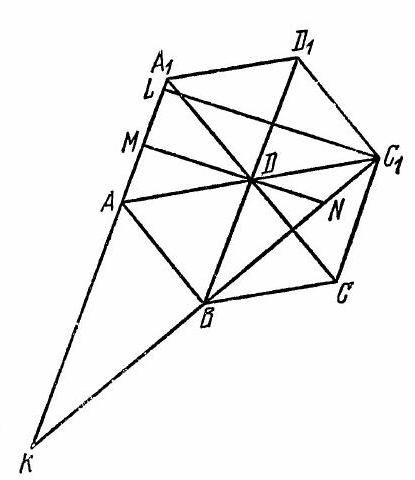
Fig. $35_{s}$ equal to $\sqrt{\frac{2}... | 1 | Geometry | math-word-problem | olympiads | 3b929122-a59a-5b75-b744-7546b731e3c9 | [
true,
true
] | [
"<think>\nOkay, let's see. We have a cube labeled ABCD A₁B₁C₁D₁. Points M and N are on segments AA₁ and BC₁ respectively, such that the line MN intersects the line B₁D. We need to find the value of |BC₁|/|BN| - |AM|/|AA₁|.\n\nFirst, I need to visualize the cube. Let me try to draw it mentally. The cube has vertices... | [
true,
true
] | null | null | 2 | [
{
"content": "156. Given a cube $A B C D A_{1} B_{1} C_{1} D_{1}$. Points $M$ and $N$ are taken on segments $A A_{1}$ and $B C_{1}$ such that the line $M N$ intersects the line $B_{1} D$. Find\n\n$$\n\\frac{\\left|B C_{1}\\right|}{|B N|}-\\frac{|A M|}{\\left|A A_{1}\\right|}\n$$",
"role": "user"
},
{
... |
In an enterprise, no two employees have jobs of the same difficulty and no two of them take the same salary. Every employee gave the following two claims:
(i) Less than $12$ employees have a more difficult work;
(ii) At least $30$ employees take a higher salary.
Assuming that an employee either always lies or always te... | 1. Let there be \( n \) people in the enterprise. Each employee makes two claims:
- (i) Less than 12 employees have a more difficult job.
- (ii) At least 30 employees take a higher salary.
2. We need to determine the number of employees \( n \) such that the conditions hold true for either all truth-tellers or a... | 42 | Logic and Puzzles | math-word-problem | aops_forum | 53bafca1-36f5-59ad-8636-6e10e875338f | [
true,
true
] | [
"<think>\nOkay, let's try to figure out how many employees are in this enterprise. So, the problem says that each employee makes two claims:\n\n(i) Less than 12 employees have a more difficult job.\n\n(ii) At least 30 employees take a higher salary.\n\nAnd we know that each employee is either a truth-teller or a li... | [
true,
true
] | null | null | 2 | [
{
"content": "In an enterprise, no two employees have jobs of the same difficulty and no two of them take the same salary. Every employee gave the following two claims:\n(i) Less than $12$ employees have a more difficult work;\n(ii) At least $30$ employees take a higher salary.\nAssuming that an employee either... |
12.12 If $i^{2}=-1$, then the sum $S=\cos 45^{\circ}+i \cos 135^{\circ}+\cdots+i^{n} \cos (45+90 n)^{\circ}+\cdots+i^{40} \cos 3645^{\circ}$ equals
(A) $\frac{\sqrt{2}}{2}$.
(B) $-10 \sqrt{2} i$.
(C) $\frac{21 \sqrt{2}}{2}$.
(D) $\frac{\sqrt{2}}{2}(21-20 i)$.
(E) $\frac{\sqrt{2}}{2}(21+20 i)$.
(28th American High Schoo... | [Solution] Since $i^{n} \cos (45+90 n)^{\circ}=\left\{\begin{array}{ll}\frac{\sqrt{2}}{2}, & n \text { is even. } \\ \frac{-i \sqrt{2}}{2}, & n \text { is odd. }\end{array}\right.$
$$
\begin{aligned}
\therefore \quad S & =\frac{\sqrt{2}}{2}(\underbrace{1-i+1-i+\cdots+1-i+1}_{41 \text { terms }}) \\
& =\frac{\sqrt{2}}{2... | \frac{\sqrt{2}}{2}(21-20i) | Algebra | MCQ | olympiads | 9696033a-bb91-56ce-b758-6e0817521ef9 | [
true,
true
] | [
"<think>\nOkay, let's see. The problem is about finding the sum S, which is given by a series: cos 45° + i cos 135° + ... + i^n cos(45 + 90n)° + ... + i^40 cos 3645°. The options are given from A to E, and we need to pick the correct one. Hmm, this looks like a complex series involving powers of i and cosine terms ... | [
false,
false
] | [
true,
false
] | null | 1 | [
{
"content": "12.12 If $i^{2}=-1$, then the sum $S=\\cos 45^{\\circ}+i \\cos 135^{\\circ}+\\cdots+i^{n} \\cos (45+90 n)^{\\circ}+\\cdots+i^{40} \\cos 3645^{\\circ}$ equals\n(A) $\\frac{\\sqrt{2}}{2}$.\n(B) $-10 \\sqrt{2} i$.\n(C) $\\frac{21 \\sqrt{2}}{2}$.\n(D) $\\frac{\\sqrt{2}}{2}(21-20 i)$.\n(E) $\\frac{\\sq... |
2. If the equation $\frac{x+7}{x-1}+\frac{1}{x}-\frac{4 x+k}{x^{2}-x}=0$ has only one real root (counting repeated roots as one). Then the value of $k$ is ( ).
(A) -5
(B) -1 or 4
(C) -5 or -1
(D) -5 or -1 or 4 | 2. (I)).
The original equation can be transformed into $x^{2}+4 x-(k+1)=0$.
By $\Delta=16+4(k+1)=0$, we get $k=-5$. Therefore, when $k=-5$, the roots of the original equation are $x=-2$.
When $k>-5$, equation (1) has two equal real roots. According to the problem, one of the roots must be an extraneous root of the or... | D | Algebra | MCQ | cn_contest | a2f2a4ae-3601-5af3-a0b4-ff5a46706b22 | [
true,
true
] | [
"<think>\nOkay, let's try to tackle this problem. So, the equation given is a rational equation: (x + 7)/(x - 1) + 1/x - (4x + k)/(x² - x) = 0. We need to find the value of k such that the equation has only one real root, considering repeated roots as one. The options are given as (A) -5, (B) -1 or 4, (C) -5 or -1,... | [
true,
true
] | null | null | 2 | [
{
"content": "2. If the equation $\\frac{x+7}{x-1}+\\frac{1}{x}-\\frac{4 x+k}{x^{2}-x}=0$ has only one real root (counting repeated roots as one). Then the value of $k$ is ( ).\n(A) -5\n(B) -1 or 4\n(C) -5 or -1\n(D) -5 or -1 or 4",
"role": "user"
},
{
"content": "<think>Hmm .\n\nFirst, I remember t... |
Example 3. Evaluate the integral $I=\int_{-\pi / 2}^{\pi / 2} \frac{2 d x}{7-3 \cos 2 x}$. | Solution. If $x \in\left(-\frac{\pi}{2} ; \frac{\pi}{2}\right)$, then $-1<\cos 2 x<1$, and therefore $4<7-3 \cos 2 x<10$. Consequently, $\frac{1}{5}<\frac{2}{7-3 \cos 2 x}<\frac{1}{2}$. Applying property 6.3) of the definite integral with $m=\frac{1}{5}, M=\frac{1}{2}, b-a=\pi$, we obtain the estimate $\frac{\pi}{5}<I<... | \frac{\pi}{5}<I<\frac{\pi}{2} | Calculus | math-word-problem | olympiads | 9415fcef-9849-5236-b766-f3aeb11cf2bf | [
true,
true
] | [
"<think>\nOkay, so I need to evaluate the integral I = ∫ from -π/2 to π/2 of [2 dx / (7 - 3 cos 2x)]. Hmm, let me think. First, integrals involving trigonometric functions can sometimes be tricky. Maybe I can simplify the denominator or use a substitution. Let me recall some integral techniques. \n\nThe denominator... | [
false,
false
] | [
true,
true
] | null | 2 | [
{
"content": "Example 3. Evaluate the integral $I=\\int_{-\\pi / 2}^{\\pi / 2} \\frac{2 d x}{7-3 \\cos 2 x}$.",
"role": "user"
},
{
"content": "<think>Hmm , let me think. First, integrals involving trigonometric functions can sometimes be tricky. Maybe I can simplify the denominator or use a substit... |
4. For an integer $a, a \neq 0$, denote by $v_{2}(a)$ the largest non-negative integer $k$ such that $2^{k} \mid a$. For a given $n \in \mathbb{N}$, determine the largest possible cardinality of a subset $A$ of the set $\left\{1,2,3, \ldots, 2^{n}\right\}$ with the following property:
$$
\text { for all } x, y \in A, ... | 4. We will prove by induction on $k$ that the set $A$ contains at most $2^k$ distinct elements modulo $2^{2k}$. This trivially holds for $k=0$. Let $k>0$. By the induction hypothesis, the elements of the set $A$ give at most $2^{k-1}$ remainders modulo $2^{2k-2}$. Assume that the elements of $A$ give more than $2^k$ re... | 2^{[\frac{n+1}{2}]} | Number Theory | math-word-problem | olympiads | e1c70a0c-8f82-5350-af69-89c665e1437e | [
true,
true
] | [
"<think>\nAlright, let's try to tackle this problem. So, we need to find the largest subset A of {1, 2, 3, ..., 2ⁿ} such that for any two distinct elements x and y in A, the 2-adic valuation v₂(x - y) is even. Hmm, okay. Let me first make sure I understand the problem correctly.\n\nThe 2-adic valuation v₂(a) of an ... | [
false,
false
] | [
true,
true
] | null | 2 | [
{
"content": "4. For an integer $a, a \\neq 0$, denote by $v_{2}(a)$ the largest non-negative integer $k$ such that $2^{k} \\mid a$. For a given $n \\in \\mathbb{N}$, determine the largest possible cardinality of a subset $A$ of the set $\\left\\{1,2,3, \\ldots, 2^{n}\\right\\}$ with the following property:\n\n... |
2. Solve in the set of real numbers the equation:
$$
\sqrt{|x-1|}+\sqrt{|x-2015|}=\sqrt{2014}
$$
(Problem E:14587 from G.M. nr. 12/2013) | 2. Case I: $x2014 \Rightarrow$
$\sqrt{|x-2015|}>\sqrt{2014}$, so the equation has no solution.
$2 \mathrm{p}$
Case II: $1 \leq \mathrm{x} \leq 2015 \Rightarrow \mathrm{x}-1 \geq 0 \Rightarrow|\mathrm{x}-1|=\mathrm{x}-1$
$$
\Rightarrow x-2015 \leq 0 \Rightarrow|x-2015|=-x+2015
$$
After squaring the equation becomes... | x\in{1,2015} | Algebra | math-word-problem | olympiads | 096bc5b4-2895-504d-aab6-6dfcbcca28b5 | [
true,
true
] | [
"<think>\nOkay, so I need to solve the equation √|x - 1| + √|x - 2015| = √2014. Hmm, let me think. First, the equation involves square roots and absolute values, so I need to be careful about the domains and possible cases.\n\nThe square roots are defined for non-negative arguments, so |x - 1| and |x - 2015| are al... | [
true,
true
] | null | null | 2 | [
{
"content": "2. Solve in the set of real numbers the equation:\n\n$$\n\\sqrt{|x-1|}+\\sqrt{|x-2015|}=\\sqrt{2014}\n$$\n\n(Problem E:14587 from G.M. nr. 12/2013)",
"role": "user"
},
{
"content": "<think>Hmm , let me think. First, the equation involves square roots and absolute values, so I need to b... |
## Task A-1.5.
Friends Anica and Neda are playing a game where, in each move, after one of them says a number $n$, the other must say a number of the form $a \cdot b$ where $a$ and $b$ are natural numbers such that $a + b = n$. The game then continues in the same way, from the number just spoken. With which numbers co... | ## Solution.
Notice that with the move
$$
n=(n-1)+1 \quad \mapsto \quad(n-1) \cdot 1=n-1
$$
the spoken number decreases exactly by 1,
so by a sequence of such moves, the spoken number can be decreased at will.
With the move
$$
n=(n-2)+2 \quad \mapsto \quad(n-2) \cdot 2=2 n-4
$$
the spoken number $n$ increases if... | n\geqslant5 | Number Theory | math-word-problem | olympiads | f692085f-1207-54ef-a068-00b4d67016ab | [
true,
true
] | [
"<think>\nOkay, so Anica and Neda are playing this game where they take turns saying numbers. The rule is, when someone says a number n, the other has to respond with a number that's the product of two natural numbers a and b such that a + b = n. Then the game continues with that new number. The question is, what s... | [
false,
false
] | [
false,
true
] | null | 1 | [
{
"content": "## Task A-1.5.\n\nFriends Anica and Neda are playing a game where, in each move, after one of them says a number $n$, the other must say a number of the form $a \\cdot b$ where $a$ and $b$ are natural numbers such that $a + b = n$. The game then continues in the same way, from the number just spok... |
Let $a, b, c$ be integers not all the same with $a, b, c\ge 4$ that satisfy $$4abc = (a + 3) (b + 3) (c + 3).$$
Find the numerical value of $a + b + c$. | 1. Given the equation:
\[
4abc = (a + 3)(b + 3)(c + 3)
\]
where \(a, b, c\) are integers not all the same and \(a, b, c \geq 4\).
2. Divide both sides by \(abc\):
\[
4 = \left(1 + \frac{3}{a}\right)\left(1 + \frac{3}{b}\right)\left(1 + \frac{3}{c}\right)
\]
3. Consider the case where none of \(a,... | 16 | Number Theory | math-word-problem | aops_forum | 8cf67a0c-4bf9-52ea-93b4-7ddf6ffd00c0 | [
true,
true
] | [
"<think>\nAlright, so I need to solve this problem where we have integers a, b, c all greater than or equal to 4, not all the same, and they satisfy the equation 4abc = (a + 3)(b + 3)(c + 3). The goal is to find the numerical value of a + b + c. Hmm, okay. Let me try to think through this step by step.\n\nFirst, si... | [
true,
true
] | null | null | 2 | [
{
"content": "Let $a, b, c$ be integers not all the same with $a, b, c\\ge 4$ that satisfy $$4abc = (a + 3) (b + 3) (c + 3).$$\nFind the numerical value of $a + b + c$.",
"role": "user"
},
{
"content": "<think>Hmm , okay. Let me try to think through this step by step.\n\nFirst, since a, b, c are all... |
3. Three consecutive terms of a geometric progression with a common ratio $q$ were used as coefficients of a quadratic trinomial, with the middle term being the leading coefficient. For what largest integer $q$ will the resulting trinomial have two distinct roots regardless of how the other two coefficients are arrange... | Answer: -1
## Examples of answer notation:
2
5;9
# | -1 | Algebra | math-word-problem | olympiads | b4c91a84-32d8-5b44-9792-25937e247ebe | [
true,
true
] | [
"<think>\nOkay, let's see. The problem is about a geometric progression with three consecutive terms. These terms are used as coefficients of a quadratic trinomial, with the middle term being the leading coefficient. We need to find the largest integer q (common ratio) such that no matter how the other two coeffici... | [
true,
true
] | null | null | 2 | [
{
"content": "3. Three consecutive terms of a geometric progression with a common ratio $q$ were used as coefficients of a quadratic trinomial, with the middle term being the leading coefficient. For what largest integer $q$ will the resulting trinomial have two distinct roots regardless of how the other two co... |
1. Let $A$ and $B$ be two moving points on the ellipse $\frac{x^{2}}{2}+y^{2}=1$, and $O$ be the origin. Also, $\overrightarrow{O A} \cdot \overrightarrow{O B}=0$. Let point $P$ be on $AB$, and $O P \perp A B$. Find the value of $|O P|$. | Three, 1. Let $A(a \cos \alpha, a \sin \alpha), B(-b \sin \alpha, b \cos \alpha)$.
Substituting into the ellipse equation, we get
$$
\begin{array}{l}
a^{2}\left(\frac{1}{2} \cos ^{2} \alpha+\sin ^{2} \alpha\right)=1, b^{2}\left(\frac{1}{2} \sin ^{2} \alpha+\cos ^{2} \alpha\right)=1 \\
\Rightarrow \frac{1}{a^{2}}+\frac{... | \frac{\sqrt{6}}{3} | Geometry | math-word-problem | cn_contest | a15893a7-9f40-53d8-b8df-98638a00a30d | [
true,
true
] | [
"<think>\nOkay, so I have this problem here. Let me try to parse it step by step. \n\nFirst, there are two moving points, A and B, on the ellipse given by the equation x²/2 + y² = 1. The origin is labeled as O. The condition given is that the vectors OA and OB are perpendicular to each other, which means their dot ... | [
true,
true
] | null | null | 2 | [
{
"content": "1. Let $A$ and $B$ be two moving points on the ellipse $\\frac{x^{2}}{2}+y^{2}=1$, and $O$ be the origin. Also, $\\overrightarrow{O A} \\cdot \\overrightarrow{O B}=0$. Let point $P$ be on $AB$, and $O P \\perp A B$. Find the value of $|O P|$.",
"role": "user"
},
{
"content": "<think>Hm... |
7. Given a positive integer $n(n \geqslant 2)$, find the largest real number $\lambda$, such that the inequality $a_{n}^{2} \geqslant \lambda\left(a_{1}+a_{2}+\cdots+a_{n-1}\right)+$ $2 a_{n}$, holds for any positive integers $a_{1}, a_{2}, \cdots, a_{n}$ satisfying $a_{1}<a_{2}<\cdots<a_{n}$. | 7. First, derive the range of $\lambda$ for a special sequence $\left\{a_{n}\right\}$, then provide a proof for any sequence $\left\{a_{n}\right\}$.
Let $a_{i}=i(i=1,2, \cdots, n)$.
From the inequality, it is easy to find that $\lambda \leqslant \frac{2(n-2)}{n-1}$.
We now prove: For any positive integers $a_{1}<a_{2}... | \frac{2(n-2)}{n-1} | Inequalities | math-word-problem | olympiads | 313d8aa9-8a28-5452-b01b-19cada449876 | [
true,
true
] | [
"<think>\nOkay, so I need to find the largest real number λ such that for any positive integers a₁ < a₂ < ... < aₙ, the inequality aₙ² ≥ λ(a₁ + a₂ + ... + a_{n-1}) + 2aₙ holds. Hmm, let's try to break this down step by step.\n\nFirst, since all a_i are positive integers in increasing order, the smallest possible va... | [
true,
true
] | null | null | 2 | [
{
"content": "7. Given a positive integer $n(n \\geqslant 2)$, find the largest real number $\\lambda$, such that the inequality $a_{n}^{2} \\geqslant \\lambda\\left(a_{1}+a_{2}+\\cdots+a_{n-1}\\right)+$ $2 a_{n}$, holds for any positive integers $a_{1}, a_{2}, \\cdots, a_{n}$ satisfying $a_{1}<a_{2}<\\cdots<a_... |
Please practice yourself: Let $z_{\mathrm{A}}=1, z_{B}=2+i$ $\triangle A B C$ be an equilateral triangle, $C$ is in the first quadrant, find $z$.
| (Answer $\frac{1}{2}(3-\sqrt{3})+\frac{1}{2}(1+\sqrt{3}) i$.
) | \frac{1}{2}(3-\sqrt{3})+\frac{1}{2}(1+\sqrt{3}) i | Algebra | math-word-problem | cn_contest | b249ffd2-e2be-55e0-a78f-ed426bd82f42 | [
true,
true
] | [
"<think>\nOkay, let's see. I have to find the complex number z representing point C in an equilateral triangle ABC, where A is at 1 and B is at 2 + i. C is in the first quadrant. Hmm, complex numbers and geometry. Alright, let me start by recalling some concepts.\n\nFirst, in the complex plane, points are represent... | [
true,
true
] | null | null | 2 | [
{
"content": "Please practice yourself: Let $z_{\\mathrm{A}}=1, z_{B}=2+i$ $\\triangle A B C$ be an equilateral triangle, $C$ is in the first quadrant, find $z$.\n\n",
"role": "user"
},
{
"content": "<think>Hmm , complex numbers and geometry. Alright, let me start by recalling some concepts.\n\nFirs... |
Danica wants to arrange her model cars in rows with exactly 6 cars in each row. She now has 23 model cars. What is the greatest number of additional cars she must buy in order to be able to arrange all her cars this way?
$\textbf{(A)}\ 3 \qquad \textbf{(B)}\ 2 \qquad \textbf{(C)}\ 1 \qquad \textbf{(D)}\ 4 \qquad \textb... | The least multiple of 6 greater than 23 is 24. So she will need to add $24-23=\boxed{\textbf{(A)}\ 1}$ more model car.
~avamarora | 1 | Number Theory | MCQ | amc_aime | 80935447-2b45-5dfa-b0b3-28424bba5e90 | [
true,
true
] | [
"<think>\nOkay, let's see. Danica has 23 model cars and she wants to arrange them in rows with exactly 6 cars in each row. The question is asking for the greatest number of additional cars she must buy so that she can arrange all her cars this way. The answer choices are A through E, with E being 533, which seems w... | [
false,
false
] | [
true,
true
] | null | 2 | [
{
"content": "Danica wants to arrange her model cars in rows with exactly 6 cars in each row. She now has 23 model cars. What is the greatest number of additional cars she must buy in order to be able to arrange all her cars this way?\n$\\textbf{(A)}\\ 3 \\qquad \\textbf{(B)}\\ 2 \\qquad \\textbf{(C)}\\ 1 \\qqu... |
## Task A-4.4.
Find all triples of natural numbers $(m, n, k)$ such that $3^{m}+7^{n}=k^{2}$. | ## Solution.
Let $m, n$ and $k$ be natural numbers that satisfy the given equation.
Since $7^{n}=k^{2}-3^{m}$ is divisible by 7, it follows that $k^{2}$ and $3^{m}$ must give the same remainder when divided by 7, which is only possible if $m$ is an even number.
Thus, $m=2 l$ for some natural number $l$, and we can w... | (2,1,4) | Number Theory | math-word-problem | olympiads | 2eed548c-66d7-50aa-8d40-1248068602b1 | [
true,
true
] | [
"<think>\nOkay, so I need to find all triples of natural numbers (m, n, k) such that 3^m + 7^n = k^2. Hmm, let's start by understanding what the problem is asking. Natural numbers are positive integers, right? So m, n, and k have to be 1, 2, 3, and so on. The equation combines two exponential terms, 3^m and 7^n, wh... | [
true,
true
] | null | null | 2 | [
{
"content": "## Task A-4.4.\n\nFind all triples of natural numbers $(m, n, k)$ such that $3^{m}+7^{n}=k^{2}$.",
"role": "user"
},
{
"content": "<think>Hmm , let's start by understanding what the problem is asking. Natural numbers are positive integers, right? So m, n, and k have to be 1, 2, 3, and ... |
3. The sum of the x-coordinates of the points where the graph of the function $y=x^{2}-2009|x|+2010$ intersects the x-axis is $\qquad$ . | 3. 0 .
The original problem can be transformed into finding the sum of all real roots of the equation
$$
x^{2}-2009|x|+2010=0
$$
If a real number $x_{0}$ is a root of equation (1), then its opposite number $-x_{0}$ is also a root of equation (1).
Therefore, the sum of all real roots of the equation is 0, that is, th... | 0 | Algebra | math-word-problem | cn_contest | cba13ab4-9950-5ac0-946d-9ff337083763 | [
true,
true
] | [
"<think>\nOkay, let's see. The problem is asking for the sum of the x-coordinates where the graph of the function y = x² - 2009|x| + 2010 intersects the x-axis. So, basically, we need to find the roots of the equation x² - 2009|x| + 2010 = 0 and then add up all the x-coordinates of these roots. Hmm, since there's a... | [
true,
true
] | null | null | 2 | [
{
"content": "3. The sum of the x-coordinates of the points where the graph of the function $y=x^{2}-2009|x|+2010$ intersects the x-axis is $\\qquad$ .",
"role": "user"
},
{
"content": "<think>Hmm , since there's an absolute value here, the equation is going to behave differently depending on whethe... |
1061. There are candies in three boxes. In the first box, there are 8 candies less than in the other two together, and in the second box, there are 12 less than in the first and third together. How many candies are in the third box? | $\triangle$ Let the number of candies in the first, second, and third boxes be denoted by $a, b$, and $c$ respectively. We obtain the system of equations:
$$
\left\{\begin{array}{l}
a=b+c-8 \\
b=a+c-12
\end{array}\right.
$$
Adding these equations term by term:
$$
a+b=(a+b)+2 c-20
$$
Then
$$
2 c-20=0, \quad c=10
$$... | 10 | Algebra | math-word-problem | olympiads | c73102d6-ae66-5bc7-908e-04c7a35fbe26 | [
true,
true
] | [
"<think>\nAlright, let's see. I need to figure out how many candies are in the third box. The problem says there are three boxes with candies. The first box has 8 candies less than the other two together, and the second box has 12 less than the first and third together. Hmm, okay, so maybe I can set up some equatio... | [
true,
true
] | null | null | 2 | [
{
"content": "1061. There are candies in three boxes. In the first box, there are 8 candies less than in the other two together, and in the second box, there are 12 less than in the first and third together. How many candies are in the third box?",
"role": "user"
},
{
"content": "<think>Hmm , okay, ... |
4. In trapezoid $A B C D$, $A D / / B C, \angle B=$ $30^{\circ}, \angle C=60^{\circ}, E, M, F, N$ are the midpoints of $A B, B C$. $C D, D A$ respectively. Given $B C=7, M N=3$. Then $E F$ | 4. 4(Extend $B A, C D$ to meet at $H$, then $\triangle B H C$ is a right triangle.) | 4 | Geometry | math-word-problem | cn_contest | 19034d3e-c30e-5afe-b128-9c66b4c44abc | [
false,
true
] | [
"<think>\nOkay, let's try to solve this trapezoid problem. Hmm, so we have trapezoid ABCD with AD parallel to BC. The angles at B and C are 30 degrees and 60 degrees, respectively. E, M, F, N are midpoints of AB, BC, CD, DA. BC is given as 7 units, and MN is 3 units. We need to find the length of EF.\n\nFirst, let ... | [
false,
true
] | null | null | 1 | [
{
"content": "4. In trapezoid $A B C D$, $A D / / B C, \\angle B=$ $30^{\\circ}, \\angle C=60^{\\circ}, E, M, F, N$ are the midpoints of $A B, B C$. $C D, D A$ respectively. Given $B C=7, M N=3$. Then $E F$",
"role": "user"
},
{
"content": "<think>Hmm , trapezoid midpoints... Maybe using the midline... |
6.1. A three-digit number is 56 times greater than its last digit. How many times greater is it than its first digit? Justify your answer.
# | # Solution:
Method 1. The last digit is such that when multiplied by 6, the resulting number ends with the same digit. By exhaustive search, we confirm that this can be any even digit (and only it). Therefore, this three-digit number is either 112, 224, 336, or 448 (the option with the last digit 0 is not valid, as it... | 112 | Number Theory | math-word-problem | olympiads | 2a54c9b4-3910-5447-9a72-e5b86969615e | [
true,
true
] | [
"<think>\nOkay, let's see. So the problem is: A three-digit number is 56 times greater than its last digit. How many times greater is it than its first digit? Hmm, I need to find this three-digit number and then determine how many times greater it is than its first digit. Let me break it down step by step.\n\nFirst... | [
true,
true
] | null | null | 2 | [
{
"content": "6.1. A three-digit number is 56 times greater than its last digit. How many times greater is it than its first digit? Justify your answer.\n\n#",
"role": "user"
},
{
"content": "<think>Hmm , I need to find this three-digit number and then determine how many times greater it is than its... |
2. Given the indeterminate equation $x+2 y+3 z=15$,
(1) Find the number of non-negative integer solutions;
(2) Find the number of positive integer solutions. | 2.(1) From the problem, we have the generating function $f(x)=\frac{1}{(1-x)\left(1-x^{2}\right)\left(1-x^{3}\right)}$,
and $f(x)=\frac{1}{(1-x)^{3}} \cdot \frac{1}{1+x} \cdot \frac{1}{1+x+x^{2}}$
$$
=\frac{A}{1+x}+\frac{B}{1-x}+\frac{C}{(1-x)^{2}}+\frac{D}{(1-x)^{3}}+\frac{E}{1-\omega x}+\frac{F}{1-\omega^{2} x} \tex... | 27 | Combinatorics | math-word-problem | olympiads | 1f4854dc-0b4a-5cca-84b2-02aa72f6b24e | [
true,
true
] | [
"<think>\nOkay, so I need to solve this indeterminate equation problem. The equation is x + 2y + 3z = 15. There are two parts: first, finding the number of non-negative integer solutions, and second, finding the number of positive integer solutions. Hmm, let me start with part (1).\n\nI remember that for equations ... | [
false,
false
] | [
true,
true
] | null | 2 | [
{
"content": "2. Given the indeterminate equation $x+2 y+3 z=15$,\n(1) Find the number of non-negative integer solutions;\n(2) Find the number of positive integer solutions.",
"role": "user"
},
{
"content": "<think>Hmm , let me start with part (1).\n\nI remember that for equations like this, generat... |
## Problem Statement
Calculate the indefinite integral:
$$
\int \frac{x^{3}+x+2}{(x+2) x^{3}} d x
$$ | ## Solution
$$
\int \frac{x^{3}+x+2}{(x+2) x^{3}} d x=
$$
Decompose the proper rational fraction into partial fractions using the method of undetermined coefficients:
$$
\begin{aligned}
& \frac{x^{3}+x+2}{(x+2) x^{3}}=\frac{A}{x+2}+\frac{B_{1}}{x}+\frac{B_{2}}{x^{2}}+\frac{B_{3}}{x^{3}}= \\
& =\frac{A x^{3}+B_{1}(x+... | \ln|x+2|-\frac{1}{2x^{2}}+C | Calculus | math-word-problem | olympiads | 26b23ff0-09aa-59fe-ab79-7692710e7df8 | [
true,
true
] | [
"<think>\nAlright, let's tackle this integral: ∫(x³ + x + 2)/( (x + 2)x³ ) dx. Hmm, okay. So first, the integrand is a rational function, which makes me think of partial fraction decomposition. That's usually the way to go when integrating rational functions. Let me recall how partial fractions work. \n\nThe denomi... | [
true,
true
] | null | null | 2 | [
{
"content": "## Problem Statement\n\nCalculate the indefinite integral:\n\n$$\n\\int \\frac{x^{3}+x+2}{(x+2) x^{3}} d x\n$$",
"role": "user"
},
{
"content": "<think>Hmm , okay. So first, the integrand is a rational function, which makes me think of partial fraction decomposition. That's usually the... |
## Problem Statement
Calculate the definite integral:
$$
\int_{-\frac{\pi}{2}}^{0} \frac{\sin x d x}{(1+\cos x-\sin x)^{2}}
$$ | ## Solution
We will use the universal substitution:
$$
t=\operatorname{tg} \frac{x}{2}
$$
From which:
$$
\begin{aligned}
& \sin x=\frac{2 t}{1+t^{2}}, \cos x=\frac{1-t^{2}}{1+t^{2}}, d x=\frac{2 d t}{1+t^{2}} \\
& x=-\frac{\pi}{2} \Rightarrow t=\operatorname{tg} \frac{\left(-\frac{\pi}{2}\right)}{2}=\operatorname{t... | \frac{1}{2}-\ln2 | Calculus | math-word-problem | olympiads | ea432b2c-ea1e-5e06-aba4-e4b111b5f013 | [
true,
true
] | [
"<think>\nOkay, so I need to compute the definite integral of sin x divided by (1 + cos x - sin x) squared, from -π/2 to 0. Hmm, let me write that down again to make sure I have it right:\n\n∫ from -π/2 to 0 of [sin x / (1 + cos x - sin x)^2] dx\n\nAlright. Integrals can be tricky, especially with trigonometric fun... | [
true,
true
] | null | [
"stop",
"stop"
] | 2 | [
{
"content": "## Problem Statement\n\nCalculate the definite integral:\n\n$$\n\\int_{-\\frac{\\pi}{2}}^{0} \\frac{\\sin x d x}{(1+\\cos x-\\sin x)^{2}}\n$$",
"role": "user"
},
{
"content": "<think>Hmm , let me write that down again to make sure I have it right:\n\n∫ from -π/2 to 0 of [sin x / (1 + c... |
Example 10 Let real numbers $x, y, z, w$ satisfy
$$
\left\{\begin{array}{l}
\frac{x^{2}}{2^{2}-1^{2}}+\frac{y^{2}}{2^{2}-3^{2}}+\frac{z^{2}}{2^{2}-5^{2}}+\frac{w^{2}}{2^{2}-7^{2}}=1, \\
\frac{x^{2}}{4^{2}-1^{2}}+\frac{y^{2}}{4^{2}-3^{2}}+\frac{z^{2}}{4^{2}-5^{2}}+\frac{w^{2}}{4^{2}-7^{2}}=1, \\
\frac{x^{2}}{6^{2}-1^{2}... | Let $1^{2}=a_{1}, 3^{2}=a_{2}, 5^{2}=a_{3}, 7^{2}=a_{4}, 2^{2}=\lambda_{1}, 4^{2}=\lambda_{2}, 6^{2}=\lambda_{3}, 8^{2}=\lambda_{4}$. Construct $f(x)=\prod_{i=1}^{4}\left(x-a_{i}\right)-\prod_{i=1}^{4}\left(x-\lambda_{i}\right)=\left[\sum_{i=1}^{4}\left(\lambda_{i}-a_{i}\right)\right] x^{3}+\cdots$
Then $f\left(\lambda... | 36 | Algebra | math-word-problem | olympiads | 2423e661-425a-5e3f-8ddf-f12d1c56a5f9 | [
true,
true
] | [
"<think>\nOkay, let's see. I need to solve this system of equations involving x², y², z², w². The problem gives me four equations with four variables, each equation is a sum of these squared variables divided by different denominators. The denominators seem to follow a pattern: for each equation, they take the form... | [
true,
true
] | null | null | 2 | [
{
"content": "Example 10 Let real numbers $x, y, z, w$ satisfy\n$$\n\\left\\{\\begin{array}{l}\n\\frac{x^{2}}{2^{2}-1^{2}}+\\frac{y^{2}}{2^{2}-3^{2}}+\\frac{z^{2}}{2^{2}-5^{2}}+\\frac{w^{2}}{2^{2}-7^{2}}=1, \\\\\n\\frac{x^{2}}{4^{2}-1^{2}}+\\frac{y^{2}}{4^{2}-3^{2}}+\\frac{z^{2}}{4^{2}-5^{2}}+\\frac{w^{2}}{4^{2... |
Problem 1. a) Determine the real numbers a, b, c knowing that $a^{2}+b^{2}+c^{2}=14$ and $2a+4b+6c=28$.
b) Let $t=(\sqrt{2}+\sqrt{3}) \cdot(a \sqrt{2}+b \sqrt{3})$, where a and b are integers. If $t$ is a rational number, calculate $x=a|b|+b|a|$. | Solution:

The relation above can be written as: $\left(a^{2}-2 a+1\right)+\left(b^{2}-4 b+4\right)+\left(c^{2}-6 c+9\right)=0$. 1 point
This results in: $(a-1)^{2}+(b-2)^{2}+(c-3)^{2}=0$ 1 ... | =1,b=2,=3 | Algebra | math-word-problem | olympiads | c906734d-a6e7-5dce-9acf-c468f3375f37 | [
true,
true
] | [
"<think>\nOkay, let's tackle part a) first. The problem states that we need to determine the real numbers a, b, c given two equations: \n\n1. \\( a^2 + b^2 + c^2 = 14 \\)\n2. \\( 2a + 4b + 6c = 28 \\)\n\nHmm, so we have one equation involving the squares of a, b, c and another linear equation. Since there are three... | [
false,
false
] | [
false,
true
] | null | 1 | [
{
"content": "Problem 1. a) Determine the real numbers a, b, c knowing that $a^{2}+b^{2}+c^{2}=14$ and $2a+4b+6c=28$.\n\nb) Let $t=(\\sqrt{2}+\\sqrt{3}) \\cdot(a \\sqrt{2}+b \\sqrt{3})$, where a and b are integers. If $t$ is a rational number, calculate $x=a|b|+b|a|$.",
"role": "user"
},
{
"content"... |
24. Find the number whose sum of digits equals the difference between 328 and the sought number. | 24. Obviously, the desired number is a three-digit number. Let it be $100a + 10b + c$, then $328 - 100a - 10b - c = a + b + c$, which simplifies to $328 = 101a + 11b + 2c$, from which $a = 3$. Therefore, $11b + 2c = 328 - 303 = 25$, from which $b = 1$ and $c = 7$. Thus, the desired number is 317. | 317 | Algebra | math-word-problem | olympiads | b9365ef5-a677-53ae-8c85-0aafed87ed51 | [
true,
true
] | [
"<think>\nOkay, let's see. The problem is asking for a number where the sum of its digits equals the difference between 328 and the number itself. Hmm, so if I let the number be x, then the sum of its digits is equal to 328 - x. So the equation would be:\n\nsum_digits(x) = 328 - x\n\nMy goal is to find such an x. A... | [
true,
true
] | null | null | 2 | [
{
"content": "24. Find the number whose sum of digits equals the difference between 328 and the sought number.",
"role": "user"
},
{
"content": "<think>Hmm , so if I let the number be x, then the sum of its digits is equal to 328 - x. So the equation would be:\n\nFirst, let's note that x must be les... |
1. (8 points) The calculation result of the expression $2015-20 \times 15$ is $\qquad$ | 【Solution】Solve: $2015-20 \times 15$
$$
\begin{array}{l}
=2015-300 \\
=1715
\end{array}
$$
Therefore, the answer is: 1715. | 1715 | Algebra | math-word-problem | olympiads | 8eb6986b-1e88-5b2b-89b1-6c65ca43f85b | [
true,
true
] | [
"<think>\nOkay, let's tackle this math problem: 2015 minus 20 multiplied by 15. Hmm, right. So the expression is 2015 - 20 × 15. Wait, I need to remember the order of operations here. What's the rule again? Oh yeah, PEMDAS: Parentheses, Exponents, Multiplication and Division (from left to right), Addition and Subtr... | [
true,
true
] | null | [
"stop",
"stop"
] | 2 | [
{
"content": "1. (8 points) The calculation result of the expression $2015-20 \\times 15$ is $\\qquad$",
"role": "user"
},
{
"content": "<think>Hmm , right. So the expression is 2015 - 20 × 15. Wait , I need to remember the order of operations here. What's the rule again? Oh yeah, PEMDAS: Parenthes... |
Let $a\geq b\geq c\geq 0$ are real numbers such that $a+b+c=3$. Prove that $ab^{2}+bc^{2}+ca^{2}\leq\frac{27}{8}$ and find cases of equality. | 1. Given \(a \geq b \geq c \geq 0\) and \(a + b + c = 3\), we need to prove that \(ab^2 + bc^2 + ca^2 \leq \frac{27}{8}\).
2. To approach this, we can use the method of homogenization. We start by expressing the inequality in a form that allows us to use the given condition \(a + b + c = 3\).
3. Consider the expressi... | \frac{27}{8} | Inequalities | math-word-problem | aops_forum | bd7edc02-4f04-566e-a297-16d93546e756 | [
true,
true,
true,
true
] | [
"<think>\nOkay, so I need to prove that for real numbers a, b, c where a ≥ b ≥ c ≥ 0 and a + b + c = 3, the expression ab² + bc² + ca² is less than or equal to 27/8. Then I have to find the cases where equality holds. Hmm, let me start by understanding the problem better.\n\nFirst, since a, b, c are non-negative an... | [
true,
true,
true,
true
] | null | null | 4 | [
{
"content": "Let $a\\geq b\\geq c\\geq 0$ are real numbers such that $a+b+c=3$. Prove that $ab^{2}+bc^{2}+ca^{2}\\leq\\frac{27}{8}$ and find cases of equality.",
"role": "user"
},
{
"content": "<think>Hmm , let me start by understanding the problem better.\n\nLet me think about possible cases. Sinc... |
10. Given that the circumcenter of $\triangle A B C$ is $O$, and $2 \overrightarrow{O A}+3 \overrightarrow{O B}+4 \overrightarrow{O C}=\mathbf{0}$, then the value of $\cos \angle B A C$ is $\qquad$ | $$
\begin{array}{l}
3 \overrightarrow{O B}+4 \overrightarrow{O C}=-2 \overrightarrow{O A} \Rightarrow 9+16+24 \cos \angle B O C=4 \Rightarrow \cos \angle B O C=-\frac{7}{8} \\
\Rightarrow 2 \cos ^{2} \angle B A C-1=-\frac{7}{8} \Rightarrow \cos \angle B A C=\frac{1}{4} .
\end{array}
$$ | \frac{1}{4} | Geometry | math-word-problem | olympiads | ffa8ec54-7de9-53f6-ae72-1ad4a45e5317 | [
true,
true
] | [
"<think>\nOkay, so I have this problem here: In triangle ABC, the circumcenter is O. The equation given is 2 times the vector OA plus 3 times the vector OB plus 4 times the vector OC equals the zero vector. I need to find the cosine of angle BAC. Hmm, okay. Let's see.\n\nFirst, let me recall some properties about c... | [
true,
true
] | null | null | 2 | [
{
"content": "10. Given that the circumcenter of $\\triangle A B C$ is $O$, and $2 \\overrightarrow{O A}+3 \\overrightarrow{O B}+4 \\overrightarrow{O C}=\\mathbf{0}$, then the value of $\\cos \\angle B A C$ is $\\qquad$",
"role": "user"
},
{
"content": "<think>Hmm , okay. Let's see.\n\nFirst, let me... |
Example 3. In $\triangle A B C$, $D$ is a point on side $B C$. It is known that $A B=13, A D=12, A C=15, B D=5$. What is $D C$? (3rd Zu Chongzhi Cup Junior High School Mathematics Invitational Competition) | According to Stewart's Theorem, we have
$$
A D^{2}=A B^{2} \cdot \frac{C D}{B C}+A C^{2} \cdot \frac{B D}{B C}-B D \cdot D C \text {. }
$$
Let $D C=x$,
then $B C=5+x$.
Substituting the known data
into the above equation, we get
$$
\begin{array}{l}
12^{2}=13^{2} \\
\cdot \frac{x}{5+x}+15^{2} \cdot \frac{5}{5+x}-5 x,
\e... | 9 | Geometry | math-word-problem | cn_contest | 15937501-7795-5f47-971b-da69f1f3e0bc | [
true,
true
] | [
"<think>\nOkay, so I have this geometry problem here. Let me read it again to make sure I understand. It says: In triangle ABC, point D is on side BC. We know that AB is 13 units, AD is 12 units, AC is 15 units, and BD is 5 units. The question is asking for the length of DC. Hmm, okay.\n\nFirst, let me visualize th... | [
true,
true
] | null | null | 2 | [
{
"content": "Example 3. In $\\triangle A B C$, $D$ is a point on side $B C$. It is known that $A B=13, A D=12, A C=15, B D=5$. What is $D C$? (3rd Zu Chongzhi Cup Junior High School Mathematics Invitational Competition)",
"role": "user"
},
{
"content": "<think>Hmm , okay.\n\nFirst, let me visualize... |
7. Find the smallest three-digit number with the property that if a number, which is 1 greater, is appended to it on the right, then the result (a six-digit number) will be a perfect square. Answer: 183 | Solution: Let the required number be \(a\), then \(1000a + a + 1 = n^2\). We can write it as: \(1001a = (n - 1)(n + 1)\). Factorize \(1001 = 7 \times 11 \times 13\), so the product \((n - 1)(n + 1)\) must be divisible by 7, 11, and 13. Moreover, for the square to be a six-digit number, \(n\) must be in the interval \([... | 183 | Number Theory | math-word-problem | olympiads | 00035394-a67b-5ac3-b887-0e7ce58caa6b | [
true,
true
] | [
"<think>\nAlright, let's tackle this problem. We need to find the smallest three-digit number, let's call it N, such that when we append N + 1 to the right of N, we get a six-digit number that's a perfect square. So, for example, if N is 123, then appending 124 would make 123124, and we need to check if that's a pe... | [
true,
true
] | null | null | 2 | [
{
"content": "7. Find the smallest three-digit number with the property that if a number, which is 1 greater, is appended to it on the right, then the result (a six-digit number) will be a perfect square. Answer: 183",
"role": "user"
},
{
"content": "<think>wait , hold on. If N is 999, then N + 1 is... |
Subject 3. Determine the cardinality of the set $A=\left\{\overline{a b} \left\lvert\, \frac{16}{a^{2}+b} \in \mathbb{N}\right.\right\}$. | Subject 3.
| | $\frac{16}{a^{2}+b} \in \mathbb{N} \Rightarrow a^{2}+b \mid 16 \Rightarrow a^{2}+b \in\{1,2,4,8,16\}$ | $\mathbf{2 p}$ |
| :--- | :--- | :--- |
| | $a^{2}+b=16 \Rightarrow a=4$ and $b=0$ or $a=3$ and $b=7 \Rightarrow$ the numbers 40 and 37 | $\mathbf{1 p}$ |
| | $a^{2}+b=8 \Rightarrow a=2$ and $b=4$ ... | 8 | Number Theory | math-word-problem | olympiads | 54c3ebb8-0be2-5bcf-8db5-111721f6e3b7 | [
true,
true
] | [
"<think>\nOkay, so I need to find the cardinality of set A, which consists of two-digit numbers \\(\\overline{ab}\\) such that \\( \\frac{16}{a^2 + b} \\) is a natural number. Let me break this down step by step.\n\nFirst, let's understand what \\(\\overline{ab}\\) means. In the context of two-digit numbers, \\(\\o... | [
true,
true
] | null | [
"stop",
"stop"
] | 2 | [
{
"content": "Subject 3. Determine the cardinality of the set $A=\\left\\{\\overline{a b} \\left\\lvert\\, \\frac{16}{a^{2}+b} \\in \\mathbb{N}\\right.\\right\\}$.",
"role": "user"
},
{
"content": "<think>\nOkay, so I need to find the cardinality of set A, which consists of two-digit numbers \\(\\ov... |
1. If $f(x)$ is a decreasing function on $\mathbf{R}$, and the graph of $f(x)$ passes through the points $A(0,3)$ and $B(3,-1)$, then the solution set of the inequality $|f(x+1)-1|<2$ is ( ).
(A) $(-\infty, 3)$
(B) $(-\infty, 2)$
(C) $(0,3)$
(D) $(-1,2)$ | -、1.(D).
It is easy to get $-1<f(x+1)<3$.
$\because f(0)=3, f(3)=-1$, and $f(x)$ is a decreasing function,
$\therefore$ the solution to the inequality $-1<f(x)<3$ is $0<x<3$.
Therefore, when $-1<f(x+1)<3$, we have $0<x+1<3$. | D | Inequalities | MCQ | cn_contest | abccfc77-449c-5e85-9600-329ba79bf070 | [
true,
true,
true,
true
] | [
"<think>\nOkay, let's try to solve this problem step by step. So, the question is about finding the solution set of the inequality |f(x + 1) - 1| < 2, given that f(x) is a decreasing function on the real numbers, and its graph passes through points A(0, 3) and B(3, -1). The options are four intervals: (-∞, 3), (-∞,... | [
true,
true,
true,
true
] | null | null | 4 | [
{
"content": "1. If $f(x)$ is a decreasing function on $\\mathbf{R}$, and the graph of $f(x)$ passes through the points $A(0,3)$ and $B(3,-1)$, then the solution set of the inequality $|f(x+1)-1|<2$ is ( ).\n(A) $(-\\infty, 3)$\n(B) $(-\\infty, 2)$\n(C) $(0,3)$\n(D) $(-1,2)$",
"role": "user"
},
{
"c... |
10. There are three right-angled triangles containing a
$30^{\circ}$ angle, they are of different sizes,
but they have one side equal. Then, in the order of the areas of these three triangles from largest to smallest, the ratio of their hypotenuses is | 10. $2: \frac{2 \sqrt{3}}{3}: 1$.
Let the shorter leg of Triangle A equal the longer leg of Triangle B equal the hypotenuse of Triangle C. Then the hypotenuses of Triangles A, B, and C are $2$, $\frac{2 \sqrt{3}}{3}$, and $1$, respectively, i.e., the required ratio is $2: \frac{2 \sqrt{3}}{3}: 1$. | 2: \frac{2 \sqrt{3}}{3}: 1 | Geometry | math-word-problem | cn_contest | 1c052225-61a0-5db8-8772-3d6b80165625 | [
true,
true
] | [
"<think>\nOkay, let's tackle this problem step by step. So, we have three right-angled triangles, each containing a 30-degree angle. They are different sizes but share one equal side. We need to determine the ratio of their hypotenuses when ordered from largest to smallest area. Hmm, right-angled triangles with a 3... | [
false,
false
] | [
false,
true
] | null | 1 | [
{
"content": "10. There are three right-angled triangles containing a \n$30^{\\circ}$ angle, they are of different sizes, \nbut they have one side equal. Then, in the order of the areas of these three triangles from largest to smallest, the ratio of their hypotenuses is",
"role": "user"
},
{
"conten... |
6. The median of a set of five positive integers is one more than the mode and one less than the mean. What is the largest possible value of the range of the five integers? | 6. 7 Let the five integers be $p, q, r, s$ and $t$ with $p \leqslant q \leqslant r \leqslant s \leqslant t$. The median of the list is $r$ and, since the mode is one less than the median, $p=q=r-1$ and $r<s<t$. The mean is one more than the median and hence the total of the five integers is $5(r+1)$. Therefore $r-1+r-1... | 7 | Algebra | math-word-problem | olympiads | ee39fb36-9d68-5f15-b6d6-1c183b945899 | [
true,
true
] | [
"<think>\nOkay, let's try to figure out this problem. So, we have a set of five positive integers. The median is one more than the mode and one less than the mean. We need to find the largest possible value of the range. Hmm, okay. Let me break this down step by step.\n\nFirst, let's recall some definitions. The me... | [
true,
true
] | null | null | 2 | [
{
"content": "6. The median of a set of five positive integers is one more than the mode and one less than the mean. What is the largest possible value of the range of the five integers?",
"role": "user"
},
{
"content": "<think>Hmm , okay. Let me break this down step by step.\n\nFirst, let's recall ... |
Let $g:\mathbb{N} \to \mathbb{N}$ with $g(n)$ being the product of the digits of $n$.
(a) Prove that $g(n) \le n$ for all $n\in \mathbb{N}$
(b) Find all $n\in \mathbb{N}$ for which $n^2-12n+36=g(n)$ | (a) To prove that \( g(n) \leq n \) for all \( n \in \mathbb{N} \), we start by expressing \( n \) in terms of its digits. Let \( n \) be represented as:
\[ n = \sum_{i=0}^{k} 10^i a_i \]
where \( a_i \) are the digits of \( n \).
We need to show that:
\[ \sum_{i=0}^{k} 10^i a_i \geq \prod_{j=0}^{k} a_j \]
We will us... | n = 4, 9 | Number Theory | math-word-problem | aops_forum | b601e98d-168c-5205-a06e-04666788f510 | [
true,
true
] | [
"<think>\nOkay, so I have this problem here with two parts. Let me start with part (a): Prove that g(n) ≤ n for all natural numbers n, where g(n) is the product of the digits of n. Hmm, let's see. \n\nFirst, I need to understand what g(n) actually does. For any natural number n, like 23, g(n) would be 2*3=6. If n i... | [
false,
false
] | [
false,
true
] | null | 1 | [
{
"content": "Let $g:\\mathbb{N} \\to \\mathbb{N}$ with $g(n)$ being the product of the digits of $n$.\n\n(a) Prove that $g(n) \\le n$ for all $n\\in \\mathbb{N}$\n\n(b) Find all $n\\in \\mathbb{N}$ for which $n^2-12n+36=g(n)$",
"role": "user"
},
{
"content": "<think>Hmm , so I need to prove that mu... |
24. C4 (BUL) Let \( T \) be the set of ordered triples \((x, y, z)\), where \( x, y, z \) are integers with \( 0 \leq x, y, z \leq 9 \). Players \( A \) and \( B \) play the following guessing game: Player \( A \) chooses a triple \((x, y, z)\) in \( T \), and Player \( B \) has to discover \( A \)'s triple in as few m... | 24. Two moves are not sufficient. Indeed, the answer to each move is an even number between 0 and 54, so the answer takes at most 28 distinct values. Consequently, two moves give at most \(28^2 = 784\) distinct outcomes, which is less than \(10^3 = 1000\). We now show that three moves are sufficient. With the first mov... | 3 | Combinatorics | math-word-problem | olympiads_ref | NaN | [
true,
true
] | [
"<think>\nOkay, so I need to figure out the minimum number of moves Player B needs to determine Player A's triple (x, y, z) where each of x, y, z is between 0 and 9 inclusive. Each move involves Player B guessing a triple (a, b, c) and getting back the value |x + y - a - b| + |y + z - b - c| + |z + x - c - a|. Hmm,... | [
true,
true
] | null | [
"stop",
"stop"
] | 2 | [
{
"content": "24. C4 (BUL) Let \\( T \\) be the set of ordered triples \\((x, y, z)\\), where \\( x, y, z \\) are integers with \\( 0 \\leq x, y, z \\leq 9 \\). Players \\( A \\) and \\( B \\) play the following guessing game: Player \\( A \\) chooses a triple \\((x, y, z)\\) in \\( T \\), and Player \\( B \\) ... |
Cassie leaves Escanaba at 8:30 AM heading for Marquette on her bike. She bikes at a uniform rate of 12 miles per hour. Brian leaves Marquette at 9:00 AM heading for Escanaba on his bike. He bikes at a uniform rate of 16 miles per hour. They both bike on the same 62-mile route between Escanaba and Marquette. At what tim... | If Cassie leaves $\frac{1}{2}$ an hour earlier then Brian, when Brian starts, the distance between them will be $62-\frac{12}{2}=56$. Every hour, they will get $12+16=28$ miles closer. $\frac{56}{28}=2$, so 2 hours from $9:00$ AM is when they meet, which is $\boxed{\textbf{(D)}\ 11: 00}$. | 11:00 | Algebra | MCQ | amc_aime | 0c109425-1151-5607-9928-f4be1c9024b9 | [
true,
true
] | [
"<think>\nOkay, so here's this problem about Cassie and Brian biking between Escanaba and Marquette. Let me try to visualize it. They're on the same 62-mile route, right? Cassie starts from Escanaba at 8:30 AM going towards Marquette, biking at 12 mph. Brian starts from Marquette at 9:00 AM going towards Escanaba, ... | [
false,
false
] | [
true,
true
] | null | 2 | [
{
"content": "Cassie leaves Escanaba at 8:30 AM heading for Marquette on her bike. She bikes at a uniform rate of 12 miles per hour. Brian leaves Marquette at 9:00 AM heading for Escanaba on his bike. He bikes at a uniform rate of 16 miles per hour. They both bike on the same 62-mile route between Escanaba and ... |
In the competition, 50 shooters participated. The first scored 60 points; the second - 80; the third - the arithmetic mean of the points of the first two; the fourth - the arithmetic mean of the points of the first three. Each subsequent shooter scored the arithmetic mean of the points of all previous shooters. How man... | If a number equal to the arithmetic mean of a group of numbers is added to the group, then the arithmetic mean of the new group will be equal to the arithmetic mean of the initial group.
## Solution
The third player scored $(60+80): 2=70$ points. Each subsequent player also scored 70 points.
## Answer
70 points; 70... | 70 | Algebra | math-word-problem | olympiads | 3d52aaf4-11bc-5510-8113-1a9fd1d157aa | [
true,
true
] | [
"<think>\nOkay, let's see. We have this problem with 50 shooters. The first one scored 60 points, the second 80, the third is the average of the first two, the fourth is the average of the first three, and each subsequent shooter is the average of all previous ones. We need to find the points for the 42nd and 50th ... | [
true,
false
] | null | [
"stop",
"stop"
] | 1 | [
{
"content": "In the competition, 50 shooters participated. The first scored 60 points; the second - 80; the third - the arithmetic mean of the points of the first two; the fourth - the arithmetic mean of the points of the first three. Each subsequent shooter scored the arithmetic mean of the points of all prev... |
10.1. Replace the two asterisks with two numbers so that the identity equality is obtained: $(2 x+*)^{3}=5 x^{3}+(3 x+*)\left(x^{2}-x-1\right)-10 x^{2}+10 x$ | Answer: replace the first asterisk with -1, the second with 1. Solution. See problem 9.1. | -1,1 | Algebra | math-word-problem | olympiads | 68a9e56b-6a9f-5f0d-8efe-2dc42f7d0469 | [
true,
true
] | [
"<think>\nOkay, so I need to solve this problem where I have to replace the two asterisks with numbers so that the equation holds true. The equation given is:\n\n(2x + *)³ = 5x³ + (3x + *)(x² - x - 1) - 10x² + 10x\n\nHmm, let's start by understanding what's required here. The left side is a cube of a binomial, and ... | [
true,
true
] | null | null | 2 | [
{
"content": "10.1. Replace the two asterisks with two numbers so that the identity equality is obtained: $(2 x+*)^{3}=5 x^{3}+(3 x+*)\\left(x^{2}-x-1\\right)-10 x^{2}+10 x$",
"role": "user"
},
{
"content": "<think>Hmm , let's start by understanding what's required here. The left side is a cube of a... |
8. Given $\angle A, \angle B, \angle C$ are the three interior angles of $\triangle ABC$, and the vector $\boldsymbol{\alpha}=\left(\cos \frac{A-B}{2}, \sqrt{3} \sin \frac{A+B}{2}\right),|\boldsymbol{\alpha}|=$ $\sqrt{2}$. If when $\angle C$ is maximized, there exists a moving point $M$, such that $|\overrightarrow{M A... | 8. $\frac{2 \sqrt{3}+\sqrt{2}}{4}$.
Notice that,
$$
\begin{array}{l}
|\boldsymbol{\alpha}|=\sqrt{2} \Leftrightarrow \cos ^{2} \frac{A-B}{2}+3 \sin ^{2} \frac{A+B}{2}=2 \\
\Leftrightarrow \cos (A-B)=3 \cos (A+B) \\
\Leftrightarrow 2 \sin A \cdot \sin B=\cos A \cdot \cos B \\
\Leftrightarrow \tan A \cdot \tan B=\frac{1}... | \frac{2\sqrt{3}+\sqrt{2}}{4} | Geometry | math-word-problem | olympiads | 29a646b7-d84d-5205-8414-f5ec469322f4 | [
true,
true
] | [
"<think>\nOkay, let's try to tackle this problem step by step. First, I need to understand what's being asked here. The problem has two main parts: one involving the angles of triangle ABC and vectors, and another involving a moving point M related to the sides MA, AB, MB forming an arithmetic sequence. Then, we ne... | [
true,
true
] | null | null | 2 | [
{
"content": "8. Given $\\angle A, \\angle B, \\angle C$ are the three interior angles of $\\triangle ABC$, and the vector $\\boldsymbol{\\alpha}=\\left(\\cos \\frac{A-B}{2}, \\sqrt{3} \\sin \\frac{A+B}{2}\\right),|\\boldsymbol{\\alpha}|=$ $\\sqrt{2}$. If when $\\angle C$ is maximized, there exists a moving poi... |
Let $n$ be a positive integer. A panel of dimenisions $2n\times2n$ is divided in $4n^2$ squares with dimensions $1\times1$. What is the highest possible number of diagonals that can be drawn in $1\times1$ squares, such that each two diagonals have no common points. | 1. **Understanding the Problem:**
We have a \(2n \times 2n\) panel divided into \(4n^2\) squares of dimensions \(1 \times 1\). We need to find the maximum number of diagonals that can be drawn in these \(1 \times 1\) squares such that no two diagonals share a common point.
2. **Counting Vertices:**
The \(2n \tim... | 2n^2 | Combinatorics | math-word-problem | aops_forum | 24ace339-76b5-502a-8738-1438fd532581 | [
true,
true
] | [
"<think>\nOkay, let me try to figure out this problem. So, we have a 2n×2n panel divided into 1×1 squares, and we need to draw the maximum number of diagonals such that no two diagonals share any common points. Hmm, interesting. I need to visualize this. Maybe start with small n?\n\nLet’s start with n=1, so a 2x2 p... | [
true,
true
] | null | null | 2 | [
{
"content": "Let $n$ be a positive integer. A panel of dimenisions $2n\\times2n$ is divided in $4n^2$ squares with dimensions $1\\times1$. What is the highest possible number of diagonals that can be drawn in $1\\times1$ squares, such that each two diagonals have no common points. ",
"role": "user"
},
... |
1. $(-2)^{2016}+(-2)^{2017}=(\quad)$.
(A) $-2^{2016}$.
(B) $2^{2016}$.
(C) $-2^{2017}$.
(D) $2^{2017}$. | Answer: A.
Solution: $(-2)^{2016}+(-2)^{2017}=2^{2016}-2^{2017}=2^{2016}(1-2)=-2^{2016}$. Therefore, the correct choice is A. | -2^{2016} | Algebra | MCQ | olympiads | fac195f5-dfb1-562f-ada7-02f04af713fb | [
true,
true
] | [
"<think>\nOkay, let me try to solve this problem step by step. So, the question is: (-2)^2016 + (-2)^2017, and we need to choose the correct answer from the options given. The options are A through D, with various powers of 2, some positive and some negative. \n\nFirst, let me understand the problem. We have two te... | [
false,
false
] | [
true,
false
] | null | 1 | [
{
"content": "1. $(-2)^{2016}+(-2)^{2017}=(\\quad)$.\n(A) $-2^{2016}$.\n(B) $2^{2016}$.\n(C) $-2^{2017}$.\n(D) $2^{2017}$.",
"role": "user"
},
{
"content": "<think>\nOkay, let me try to solve this problem step by step. So, the question is: (-2)^2016 + (-2)^2017, and we need to choose the correct ans... |
The average of $2, x$ and 12 is 8 . What is the value of $x$ ?
(A) 8
(B) -2
(C) 12
(D) 24
(E) 10 | Solution 1
Since the average of $2, x$ and 12 is 8 ,
$$
\begin{aligned}
\frac{2+x+12}{3} & =8 \\
14+x & =24 \\
x & =10
\end{aligned}
$$
## Solution 2
Since the average of three numbers is 8 , their sum must be 24 . Since the sum of $2, x$ and 12 is 24 , then $x$ must be 10 .
Answer: (E) | 10 | Algebra | MCQ | olympiads | f3e1b101-b50c-540d-a6ba-16b753fa2cd1 | [
true,
true
] | [
"<think>\nOkay, so the problem says that the average of 2, x, and 12 is 8. I need to find the value of x. Let me think about how averages work. The average of numbers is the sum of the numbers divided by how many numbers there are. In this case, there are three numbers: 2, x, and 12. \n\nThe formula for average is:... | [
false,
false
] | [
true,
true
] | null | 2 | [
{
"content": "The average of $2, x$ and 12 is 8 . What is the value of $x$ ?\n(A) 8\n(B) -2\n(C) 12\n(D) 24\n(E) 10",
"role": "user"
},
{
"content": "<think>\nOkay, so the problem says that the average of 2, x, and 12 is 8. I need to find the value of x. Let me think about how averages work. The ave... |
3.10 The solutions to the equation $x^{2}+3 x+\frac{1}{x-1}=a+\frac{1}{x-1}$ and the solutions to the equation $x^{2}+$ $3 x=a$ are
(A) the same.
(B) not the same.
(C) uncertain whether the same or not, depending on the value of $a$.
(D) none of the above conclusions is correct.
(2nd "Jinyun Cup" Junior High School Mat... | [Solution] From $x^{2}+3 x=a$ i.e., $x^{2}+3 x-a=0$,
we get
$$
x=\frac{-3 \pm \sqrt{9+4 a}}{2} \text{. }
$$
If $x \neq 1$, i.e., $a \neq 4$, the solutions of the two equations in the problem are the same; if $a=4$, the two equations have different solutions (the first equation does not hold when $x=1$). Therefore, the... | C | Algebra | MCQ | olympiads | 2b640113-75c3-5988-b73d-9bcfcff16abb | [
true,
true
] | [
"<think>\nAlright, let me try to figure out this problem. So, we have two equations here:\n\nFirst equation: \\( x^{2} + 3x + \\frac{1}{x-1} = a + \\frac{1}{x-1} \\)\n\nSecond equation: \\( x^{2} + 3x = a \\)\n\nAnd the question is asking whether their solutions are the same, not the same, uncertain depending on \\... | [
true,
true
] | null | [
"stop",
"stop"
] | 2 | [
{
"content": "3.10 The solutions to the equation $x^{2}+3 x+\\frac{1}{x-1}=a+\\frac{1}{x-1}$ and the solutions to the equation $x^{2}+$ $3 x=a$ are\n(A) the same.\n(B) not the same.\n(C) uncertain whether the same or not, depending on the value of $a$.\n(D) none of the above conclusions is correct.\n(2nd \"Jiny... |
Subsets and Splits
No community queries yet
The top public SQL queries from the community will appear here once available.