
instruction_seed stringlengths 2 10.7k | solution stringlengths 0 10.8k ⌀ | answer stringlengths 0 575 ⌀ | problem_type stringclasses 9
values | question_type stringclasses 5
values | problem_is_valid stringclasses 5
values | solution_is_valid stringclasses 4
values | source stringclasses 11
values | synthetic bool 2
classes |
|---|---|---|---|---|---|---|---|---|
Mark has some candy bars in total between Mars bars, Snickers, and Butterfingers. He has 3 Snickers and 2 Mars bars. He has 7 Butterfingers. How many candy bars does he have in total? | Mark has 3 Snickers, 2 Mars bars, and 7 Butterfingers. To find the total number of candy bars, we add these numbers together:
3 (Snickers) + 2 (Mars bars) + 7 (Butterfingers) = 12 candy bars
So, Mark has $\boxed{12}$ candy bars in total. | 12 | Logic and Puzzles | math-word-problem | Yes | Yes | orca_math | true |
Determine all values of $k$ so that the denominator of the function
\[ f(x) = \frac{kx^2 + 2x - 5}{-2x^2 + 8x + k} \]
has exactly one real root. | The problem requires the quadratic $-2x^2 + 8x + k$ in the denominator of $f(x)$ to have exactly one real solution. This occurs when the discriminant of the quadratic is exactly zero:
\[D = b^2 - 4ac = 8^2 - 4(-2)k = 64 + 8k = 0.\]
Solving for $k$, we have:
\[ 64 + 8k = 0 \implies 8k = -64 \implies k = -8. \]
Therefore... | -8 | Algebra | math-word-problem | Yes | Yes | synthetic_math | true |
5. Real numbers $x, y, a$ satisfy $x+y=a+1$ and $xy=a^2-7a+16$. Then the maximum value of $x^2+y^2$ is $\qquad$ . | 5. 32 .
Notice that,
$$
\begin{array}{l}
x^{2}+y^{2}=(x+y)^{2}-2 x y \\
=(a+1)^{2}-2\left(a^{2}-7 a+16\right) \\
=-a^{2}+16 a-31=-(a-8)^{2}+33 . \\
\text { Also, }(x-y)^{2}=(a+1)^{2}-4\left(a^{2}-7 a+16\right) \geqslant 0 \\
\Rightarrow-3 a^{2}+30 a-63 \geqslant 0 \Rightarrow 3 \leqslant a \leqslant 7 .
\end{array}
$$... | 32 | Algebra | math-word-problem | Yes | Yes | olympiads | false |
The solution set of the inequality $x+5 \gt -1$ is ( ).
A: $x \gt -6$
B: $x\geqslant -6$
C: $x \gt 6$
D: $x\geqslant 6$ | To solve the inequality $x+5 > -1$, we follow these steps:
1. Start with the given inequality:
\[x + 5 > -1\]
2. Subtract 5 from both sides to isolate $x$:
\[x + 5 - 5 > -1 - 5\]
\[x > -6\]
Therefore, the solution set of the inequality is $x > -6$.
Hence, the correct answer is $\boxed{\text{A}}$. | \text{A} | Inequalities | MCQ | Yes | Yes | cn_k12 | false |
In $\triangle ABC$, the sides opposite to angles $A$, $B$, and $C$ are $a$, $b$, and $c$ respectively. Given that $2b\cos A=c\cdot\cos A+a\cdot\cos C$,
(1) Find the measure of angle $A$;
(2) If $a= \sqrt{7}$, and $b+c=4$, find the area of $\triangle ABC$. | (I) Using the sine law, we have $2b\cdot\cos A=c\cdot\cos A+a\cdot\cos C$.
Dividing both sides by $\sin B\neq 0$ yields:
$2\cdot\frac{\sin B}{\sin A}\cdot\cos A=\frac{\sin C}{\sin A}\cdot\cos A+\cos C$,
$2\sin B\cdot\cos A=\sin C\cdot\cos A+\sin A\cdot\cos C$.
Since $\sin B \neq 0$, we can simplify the equation as:... | \frac{3 \sqrt {3}}{4} | Geometry | math-word-problem | Yes | Yes | cn_k12 | false |
1. Point $O$ inside a convex quadrilateral $ABCD$ is such that
$$
O A^{2}+O B^{2}+O C^{2}+O D^{2}=2 \cdot P(ABCD)
$$
where $P(ABCD)$ denotes the area of quadrilateral $ABCD$. Prove that $ABCD$ is a square with center $O$.
(Yugoslavia) | 1. We have $O A^{2}+O B^{2} \geqslant 2 O A \cdot O B \geqslant 4 P_{O A B}$, with equality if and only if $O A=O B$ and $\angle A O B=90^{\circ}$. By adding similar inequalities $O B^{2}+O C^{2} \geqslant 4 P_{O B C}, O C^{2}+$ $O D^{2} \geqslant 4 P_{O C D}$ and $O D^{2}+O A^{2} \geqslant 4 P_{O D A}$, we obtain $O A... | proof | Geometry | proof | Yes | Yes | olympiads | false |
p, q, and r have Rs. 6000 among themselves. r has a certain fraction of the total amount with p and q. r has Rs. 2400. What is the fraction of the total amount that r has? | The total amount among p, q, and r is Rs. 6000.
r has Rs. 2400.
To find the fraction of the total amount that r has, we divide the amount r has by the total amount:
Fraction that r has = Amount r has / Total amount
Fraction that r has = 2400 / 6000
Now, we simplify the fraction:
Fraction that r has = 2/5
So, r ha... | 2/5 | Algebra | math-word-problem | Yes | Yes | orca_math | true |
150 people were surveyed and asked: "Is teal more green or blue?" Of them, 90 believe that teal is "more green" and 40 believe it is both "more green" and "more blue." Another 25 think that teal is neither "more green" nor "more blue."
How many of those 150 people believe that teal is "more blue"? | Start by analyzing the problem using a Venn diagram. We know that 40 people believe teal is both "more green" and "more blue" which is the intersection of the two sets. There are 25 people who believe teal is neither "more green" nor "more blue," placing them outside both circles.
The set "more green" has a total of 9... | 75 | Logic and Puzzles | math-word-problem | Yes | Yes | synthetic_math | true |
What is the smallest positive integer with exactly 15 positive integer divisors? | To determine the smallest integer with exactly 15 divisors, we start with identifying how exponent combinations can give us 15 as a product upon adding 1 to each exponent and multiplying:
- $(1+1)(4+1)(1+1)=2\cdot5\cdot2=20$ (incorrect combination as 20 is not 15)
- $(2+1)(2+1)(2+1)=3\cdot3\cdot3=27$ ($3^3$ does not eq... | 900 | Number Theory | math-word-problem | Yes | Incomplete | synthetic_math | true |
5.3.3 * Let the complex number $z$ satisfy that the absolute value of an argument of $\frac{z+1}{z+2}$ is $\frac{\pi}{6}$. Find the locus of the point $Z$ corresponding to the complex number $z$ and the range of the principal value of the argument of the complex number $z$. | Let $-2, -1$ correspond to points $A, B$ respectively. According to the problem, let $\angle A Z B = \frac{\pi}{6}$. As shown in the figure, the trajectory of point $Z$ is two segments of arcs (excluding the endpoints). Their centers are $O_{1}, O_{2}$, and the corresponding complex numbers are
$$
-\frac{3}{2} + \frac{... | [\frac{5\pi}{6}-\arcsin\frac{\sqrt{3}}{3},\pi)\cup(\pi,\frac{7\pi}{6}+\arcsin\frac{\sqrt{3}}{3}] | Algebra | math-word-problem | Yes | Yes | olympiads | false |
If the complex number $z= \frac{2}{1-i}$, then the modulus of complex number $z$ is ( )
A: 1
B: $\sqrt {2}$
C: $\sqrt {3}$
D: 2$\sqrt {2}$ | To find the modulus of the complex number $z= \frac{2}{1-i}$, we can first simplify the expression by removing the imaginary part from the denominator. We multiply both the numerator and the denominator by the conjugate of the denominator:
$$
z = \frac{2}{1-i} \cdot \frac{1+i}{1+i} = \frac{2(1+i)}{(1-i)(1+i)} = \frac{... | |z| = \sqrt{2} | Algebra | MCQ | Yes | Yes | cn_k12 | false |
Given that the plane vectors $\overrightarrow{{e_1}}$ and $\overrightarrow{{e_2}}$ are two unit vectors with an angle of $\frac{π}{3}$ between them, and $\overrightarrow{a}=3\overrightarrow{{e_1}}+({λ-1})\overrightarrow{{e_2}}$ is perpendicular to $\overrightarrow{b}=({2λ-1})\overrightarrow{{e_1}}-2\overrightarrow{{e_2... | Given that $\overrightarrow{a}=3\overrightarrow{e_1}+(\lambda-1)\overrightarrow{e_2}$ is perpendicular to $\overrightarrow{b}=(2\lambda-1)\overrightarrow{e_1}-2\overrightarrow{e_2}$, we use the dot product to set up an equation because for two vectors to be perpendicular, their dot product must equal zero.
1. Calculat... | \text{A and C} | Algebra | MCQ | Yes | Yes | cn_k12 | false |
If one side of a square is increased by 3.5 times and the other side is decreased by 30 cm, resulting in a rectangle that has twice the area of the square, then the area of the square is ( ) square centimeters.
A: 2500
B: 4900
C: 22500
D: 44100 | Let the original side length of the square be $x$ cm. According to the problem, we have
$3.5x \times (x - 30) = 2 \times x^2$,
Solving this equation, we get $x_1 = 70$, $x_2 = 0$ (which does not meet the conditions of the problem, so it is discarded),
Therefore, the area of the original square is $70^2 = 4900$; ... | B | Algebra | MCQ | Yes | Yes | cn_k12 | false |
In the arithmetic sequence $\{a_n\}$, if $a_2 + a_8 = 15 - a_5$, then $a_5$ equals ( )
A: 3
B: 4
C: 5
D: 6 | Since $a_2 + a_8 = 2a_5$,
from $a_2 + a_8 = 15 - a_5$, we know $3a_5 = 15$,
thus $a_5 = 5$.
Therefore, the correct choice is $\boxed{C}$. | C | Algebra | MCQ | Yes | Yes | cn_k12 | false |
In three baseball games this week, eighty people watched the second game while 20 fewer people watched the first game than the second game. Then some more people watched the third than the second game. There were a total of 200 people who watched the games last week. This week, 35 more people watched the games than las... | Let's break down the information given:
- 80 people watched the second game.
- 20 fewer people watched the first game than the second game, so 80 - 20 = 60 people watched the first game.
- A total of 200 people watched the games last week.
- This week, 35 more people watched the games than last week, so 200 + 35 = 235... | 15 | Algebra | math-word-problem | Yes | Yes | orca_math | true |
The points $P(3,-2), Q(3,1), R(7,1)$, and $S$ form a rectangle. What are the coordinates of $S$ ?
(A) $(-1,-2)$
(B) $(7,-2)$
(C) $(7,4)$
(D) $(3,7)$
(E) $(1,-2)$ | Based on the diagram shown, the order of the vertices of the rectangle must be $P Q R S$. (In any other configuration, either $\angle Q R P$ or $\angle Q P R$ would be an angle in the rectangle, which is not possible.)
Since $P$ and $Q$ have the same $x$-coordinate, then side $P Q$ of the rectangle is vertical.
This ... | (7,-2) | NaN | NaN | NaN | NaN | olympiads | false |
328. Prove that if in triangle $ABC$ angle $B$ is obtuse and $|AB|=|AC| / 2$, then $\angle C>\angle A / 2$. | 328. Let $D$ be the midpoint of $A C$. Construct a perpendicular to $A C$ at $D$ and denote by $M$ the point of intersection of this perpendicular with $B C$; $\triangle A M C$ is isosceles, so $\angle M A C = \angle B C A$. By the problem's condition, $\triangle A B D$ is also isosceles, $\angle A B D = \angle B D A$,... | proof | Geometry | proof | Yes | Yes | olympiads | false |
Let
\[ g(x) = x^3 + 9x^2 + 18x + 38. \]
Determine the intersection point of the graphs of \( y = g(x) \) and \( y = g^{-1}(x) \), given they intersect at exactly one point \((c,d)\). | Since the graphs of \( y = g(x) \) and \( y = g^{-1}(x) \) intersect at exactly one point, it must be the case that \( c = d \), by the same symmetry argument as in the original problem.
Thus, we need \( c = g(c) \), or
\[ c = c^3 + 9c^2 + 18c + 38. \]
Rearranging gives:
\[ c^3 + 9c^2 + 17c + 38 = 0. \]
To solve, we ca... | (-2, -2) | Algebra | math-word-problem | Yes | Yes | synthetic_math | true |
Kevin starts with 20 cards. He finds 47 cards at the park, but on the way home he loses 7 cards. When he checks his pockets later, he realizes he lost 12 more cards. That night, he wins 15 cards in a game with his friends. How many cards does Kevin have in the end? | Kevin starts with 20 cards.
He finds 47 cards at the park, so now he has:
20 + 47 = 67 cards
On the way home, he loses 7 cards, so he has:
67 - 7 = 60 cards
Later, he realizes he lost 12 more cards, so he has:
60 - 12 = 48 cards
That night, he wins 15 cards in a game, so he has:
48 + 15 = 63 cards
In the end, Kevi... | 63 | Logic and Puzzles | math-word-problem | Yes | Yes | orca_math | true |
Given triangle $\triangle ABC$ with internal angles $A$, $B$, $C$, and opposite sides $a$, $b$, $c$ respectively, where $A < \frac{\pi}{2}$ and $\sin\left(A - \frac{\pi}{4}\right) = \frac{\sqrt{2}}{10}$.
(1) Find the value of $\sin A$;
(2) If the area of $\triangle ABC$, denoted as $s=24$, and $b=10$, find the value... | (1) Given the internal angles $A$, $B$, $C$ of $\triangle ABC$, and the opposite sides $a$, $b$, $c$ respectively, with $A < \frac{\pi}{2}$ and $\sin\left(A - \frac{\pi}{4}\right) = \frac{\sqrt{2}}{10}$,
Therefore, $A - \frac{\pi}{4}$ is an acute angle, hence $\cos\left(A - \frac{\pi}{4}\right) = \sqrt{1 - \sin^2\left... | 8 | Geometry | math-word-problem | Yes | Yes | cn_k12 | false |
15. Let $d>1$ be a non-square number, and $\xi, \eta$ be two positive integers, satisfying $\xi^{2}-d \eta^{2}=1$. Prove: If $\xi>\eta^{2} / 2-1$, then $\xi+\eta \sqrt{d}$ is the smallest positive solution of the indefinite equation $x^{2}-d y^{2}=1$. | 15. When $\eta=1$, the conclusion holds. Let $\eta>1$. Use proof by contradiction. Suppose $x_{0}+y_{0} \sqrt{d}$ is the smallest positive solution, $1 \leqslant y_{1}0$, and thus we get
$$x_{1} \eta+y_{1} \xi=c_{1}>0, \quad x_{1} \eta-y_{1} \xi=c_{2}>0, \quad c_{1} c_{2}=\eta^{2}-y_{1}^{2}$$
This implies $\xi \leqsla... | proof | Number Theory | proof | Yes | Yes | number_theory | false |
Express the following as a common fraction: $\sqrt[3]{6.4\div 12.8}$. | First, recognize that 12.8 can be represented as $\frac{128}{10}$, making our expression $\sqrt[3]{6.4\div 12.8}$.
Now convert $6.4$ to fraction form, which is $\frac{64}{10}$. This gives us:
\[
\sqrt[3]{\frac{64}{10} \div \frac{128}{10}} = \sqrt[3]{\frac{64}{128}}.
\]
Simplify $\frac{64}{128}$ to $\frac{1}{2}$. We now... | \sqrt[3]{\frac{1}{2}} | Algebra | math-word-problem | Yes | Yes | synthetic_math | true |
Find the smallest positive solution to
\[\tan 3x - \tan 2x = \sec 2x\]
in radians. | Given the equation
\[\tan 3x - \tan 2x = \sec 2x\]
we begin by converting the right side of the equation in terms of cosine:
\[\sec 2x = \frac{1}{\cos 2x}\]
Rewrite the equation:
\[\tan 3x - \tan 2x = \frac{1}{\cos 2x}\]
\[\tan 3x = \tan 2x + \frac{1}{\cos 2x}\]
Recalling the identity
\[\tan \alpha - \tan \beta =\fra... | \frac{\pi}{6} | Algebra | math-word-problem | Yes | Yes | synthetic_math | true |
How many three-digit numbers are multiples of neither 5 nor 9? | First, let's calculate the number of three-digit numbers that are multiples of 5. The smallest multiple is $100$ (as $20 \times 5$), and the largest multiple within three-digit numbers is $995$ (as $199 \times 5$), resulting in $199 - 20 + 1 = 180$ multiples of 5.
Next, determine the numbers that are multiples of 9 wi... | 640 | Number Theory | math-word-problem | Yes | Yes | synthetic_math | true |
Example 3 Proof:
$$
\frac{C_{n}^{h}}{C_{k}^{h}} \leqslant M_{(n, k, h)} \leqslant C_{n-k+h}^{h} .
$$ | Let the family of $h$-element subsets of $X$ have property $P_{k}(X)$, and $|\mathscr{A}|=M_{(n, k, h)}$. Consider each $h$-element subset as a point, and each $k$-element subset of $X$ also as a point. This gives us two point sets $X_{1}, X_{2},\left|X_{1}\right|=M_{(n, k, h)}$, $\left|X_{2}\right|=C_{n}^{k}$.
If a c... | proof | Combinatorics | proof | Yes | Yes | olympiads | false |
2.12. Solve the equation $x+\sqrt{3+\sqrt{x}}=3$. | 2.12. If $x>1$, then $x+\sqrt{3+\sqrt{x}}>3$, and if $x<1$, then $x+$ $+\sqrt{3+\sqrt{x}}<3$. Only the root $x=1$ remains. | 1 | Algebra | math-word-problem | Yes | Yes | olympiads | false |
A pair of skis originally priced at $200 was discounted by 40% on Wednesday morning. At noon, the sale price increased by 25% before a final discount of 20% was applied on Wednesday afternoon. What is the price of the skis at the end of Wednesday? | 1. **Initial discount**: Calculate the price after the initial 40% discount: $$\$200 - 40\% \cdot \$200 = \$200 - \$80 = \$120.$$
2. **Midday price increase**: Increase the discounted price by 25% at noon: $$\$120 + 25\% \cdot \$120 = \$120 + \$30 = \$150.$$
3. **Final afternoon discount**: Apply a 20% discount t... | \$120 | Algebra | math-word-problem | Yes | Yes | synthetic_math | true |
Carrie wants to buy a new iPhone. The new iPhone costs $800. She can trade in her Samsung Galaxy for $240. She can make $80 per week babysitting. How many weeks does she have to work before she can purchase the iPhone? | First, we need to determine how much more money Carrie needs to buy the new iPhone after trading in her Samsung Galaxy.
The cost of the new iPhone is $800, and she can get $240 for her Samsung Galaxy. So, she still needs:
$800 - $240 = $560
Now, we need to find out how many weeks she needs to work to make $560 if s... | 7 | Algebra | math-word-problem | Yes | Yes | orca_math | true |
Let $x \in \mathbb{R}$, then "$x=1$" is a ______ condition for "$x^3 = x$". | When $x=1$, $x^3 = x$ holds true.
If $x^3 = x$, then $x(x^2 - 1) = 0$, which gives $x = -1, 0, 1$; it does not necessarily lead to $x=1$.
Therefore, the answer is: sufficient but not necessary.
Hence, the final answer is $\boxed{\text{sufficient but not necessary}}$. | \text{sufficient but not necessary} | Algebra | math-word-problem | Yes | Yes | cn_k12 | false |
Task 4. Determine all positive integers $n$ with the following property: for every triple $(a, b, c)$ of positive real numbers, there is a triple $(k, \ell, m)$ of non-negative integers such that $a n^{k}, b n^{\ell}$ and $c n^{m}$ are the lengths of the sides of a (non-degenerate) triangle. | Solution. It is clear that $n=1$ does not work, because not every three positive real numbers $a, b$, and $c$ are the lengths of a triangle. We now first prove that $n \geq 5$ does not work by considering the triplet $(1,2,3)$. Suppose there exist $k, \ell, m$ such that $n^{k}, 2 n^{\ell}$, and $3 n^{m}$ are the length... | proof | Number Theory | math-word-problem | Yes | Yes | olympiads | false |
$10 \cdot 61$ The algebraic expression $\frac{1}{\log _{2} 100!}+\frac{1}{\log _{3} 100!}+\frac{1}{\log _{4} 100!}+\cdots+\frac{1}{\log _{100} 100!}$ has the value
(A) 0.01 .
(B) 0.1 .
(C) 1 .
(D) 2 .
(E) 0 .
(49th American High School Mathematics Examination, 1998) | [Solution] By the properties of logarithms, we have
$$
\begin{aligned}
\text { Original expression } & =\log _{100!} 2+\log _{100!} 3+\cdots+\log _{100!} 100 \\
& =\log _{100!} 100! \\
& =1
\end{aligned}
$$
Therefore, the correct choice is (C). | 1 | Algebra | MCQ | Yes | Yes | olympiads | false |
Given a point P(x, y) moves on the circle $x^2 + (y - 1)^2 = 1$.
(1) Find the maximum and minimum values of $k$;
(2) Find the maximum and minimum values of $2x + y$. | (1) Let $k$ be the slope of the line connecting point P(x, y) and point (2, 1).
When the line $y - 1 = k(x - 2)$ is tangent to the circle, $k$ reaches its maximum and minimum values. By solving $x^2 + (y - 1)^2 = 1$, we get $k = \pm\sqrt{2}$, thus the maximum value of $k$ is $\boxed{\sqrt{2}}$, and the minimum value ... | 1 - \sqrt{5} | Algebra | math-word-problem | Yes | Yes | cn_k12 | false |
One, (40 points) Let $p_{1}^{2}, p_{2}^{2}, \cdots, p_{n}^{2}$ be $n$ distinct perfect squares greater than 1. Prove:
$$
\left(1-\frac{1}{p_{1}^{2}}\right)\left(1-\frac{1}{p_{2}^{2}}\right) \cdots\left(1-\frac{1}{p_{n}^{2}}\right)>\frac{1}{2} .
$$ | $$
\begin{array}{l}
\text { Let the largest of these perfect squares be } m. \\
\text { Then }\left(1-\frac{1}{p_{1}^{2}}\right)\left(1-\frac{1}{p_{2}^{2}}\right) \cdots\left(1-\frac{1}{p_{n}^{2}}\right) \\
\geqslant\left(1-\frac{1}{2^{2}}\right)\left(1-\frac{1}{3^{2}}\right) \cdots\left(1-\frac{1}{m^{2}}\right) \\
=\f... | proof | Inequalities | proof | Yes | Yes | olympiads | false |
For example, 330 football teams, each team has played the same number of matches, and each match has a winner (no draws). What is the maximum number of teams that can have more wins than losses?
Each team has played the same number of matches, and each match has a winner (no draws). The number of teams with more wins ... | In each match, there is one win and one loss, so the total number of wins by all teams is exactly equal to the total number of losses by all teams.
If each team has more wins than losses, then the total number of wins by all teams would be greater than the total number of losses by all teams, which is a contradiction.... | 29 | Combinatorics | math-word-problem | Yes | Yes | olympiads | false |
The derivative of the function $y= \sqrt {x}$ is ( )
A: $\frac {1}{2 \sqrt {x}}$
B: $\frac {1}{ \sqrt {x}}$
C: $2 \sqrt {x}$
D: $\frac {1}{2} \sqrt {x}$ | Solution: Given $y= \sqrt {x} = x^{ \frac {1}{2}}$,
the derivative $y′= \frac {1}{2}x^{- \frac {1}{2}} = \frac {1}{2 \sqrt {x}}$,
thus, the correct answer is: $\boxed{A}$.
Since $y= \sqrt {x} = x^{ \frac {1}{2}}$, by applying the rules of differentiation, we can easily find that $y′= \frac {1}{2}x^{- \frac {1}{2}... | A | Calculus | MCQ | Yes | Yes | cn_k12 | false |
We know the following to be true:
- \( A \) and \( B \) are integers with \( 800 1 \);
- \( A = B \times B^3 \).
What is the value of \( B \) for which \( A \) is a perfect square? | From the second fact, we have \( A = B^4 \). For \( A \) to be a perfect square, \( B^4 \) itself is always a perfect square since it's raised to an even power. We need to find \( B \) such that \( 800 < B^4 < 1300 \).
Calculating possible values for \( B \):
- \( B = 3 \) gives \( B^4 = 3^4 = 81 \) (too small)
- \( B... | B = 5 \text{ or } 6 | Number Theory | math-word-problem | Incomplete | Yes | synthetic_math | true |
If $a^{2}+3 b=33$, where $a$ and $b$ are positive integers, what is the value of $a b$ ?
(A) 11
(B) 24
(C) 16
(D) 32
(E) 27 | We try positive integer values for $a$ to see the resulting value of $b$ is a positive integer.
If $a=1$, then $a^{2}=1$, so $3 b=32$, so $b$ is not a positive integer.
If $a=2$, then $a^{2}=4$, so $3 b=29$, so $b$ is not a positive integer.
If $a=3$, then $a^{2}=9$, so $3 b=24$, so $b=8$.
If $a=4$, then $a^{2}=16$... | 24 | Algebra | MCQ | Yes | Yes | olympiads | false |
Given $S=\{x|x=2n,n\in\mathbb{Z}\}$ and $T=\{x|x=4k\pm1,k\in\mathbb{Z}\}$, then ( )
A: $S\subsetneq T$
B: $T\subsetneq S$
C: $S\neq T$
D: $S=T$ | The set $S=\{x|x=2n,n\in\mathbb{Z}\}$ represents the set of even numbers,
while $T=\{x|x=4k\pm1,k\in\mathbb{Z}\}$ represents the set of odd numbers.
Therefore, $S\neq T$.
Hence, the correct choice is $\boxed{C}$.
From the given information, we can analyze that $S$ is the set of even numbers, and $T$ is the set ... | C | Number Theory | MCQ | Yes | Yes | cn_k12 | false |
Let $b_1, b_2, b_3,\dots$ be an increasing arithmetic sequence of integers. If $b_4b_5 = 30$, what is $b_3b_6$? | Since $30 = 5 \times 6$, we must have $b_4 = 5$ and $b_5 = 6$ because the sequence is increasing. Then the common difference $d$ is $6 - 5 = 1$. Compute $b_3$ and $b_6$ using this difference:
- $b_3 = b_4 - d = 5 - 1 = 4$
- $b_6 = b_5 + d = 6 + 1 = 7$
Now calculate $b_3b_6$:
- $b_3b_6 = 4 \times 7 = 28$
Thus, $b_3b_6... | 28 | Algebra | math-word-problem | Yes | Yes | synthetic_math | true |
Poyannnky A.
In the described quadrilateral $ABCD$, $AB = CD \neq BC$. The diagonals of the quadrilateral intersect at point $L$. Prove that angle $ALB$ is acute. | Suppose that $\angle A L B \geq 90^{\circ}$. Then $A B^{2} \geq A L^{2}+B L^{2}$ and $C D^{2} \geq C L^{2}+D L^{2}$; from this, we also get that $A D^{2} \leq$ $A L^{2}+D L^{2}$ and $B C^{2} \leq B L^{2}+C L^{2}$. Therefore, $2 A B^{2}=A B^{2}+C D^{2} \geq A D^{2}+B C^{2}$.
On the other hand, from the tangential prope... | proof | Geometry | proof | Incomplete | Yes | olympiads | false |
A school estimates its student population to be between $1000$ and $1200$ students. Each student studies either German or Russian, and some study both. The number studying German is between $70\%$ and $75\%$ of the student population, while those studying Russian are between $35\%$ and $45\%$. Let $m$ be the smallest n... | Let $n$ be the estimated student population, so $1000 \leq n \leq 1200$. Let $G$ represent the number of students studying German and $R$ the number studying Russian. Using the given percentage ranges:
$$ \left\lceil 70\% \cdot 1000 \right\rceil = 700 \leq G \leq \left\lfloor 75\% \cdot 1200 \right\rfloor = 900 $$
$$ \... | 190 | Combinatorics | math-word-problem | Yes | Incomplete | synthetic_math | true |
Bella needs to buy 20 identical books and has $200$ dollars. There is a $5$ dollar entrance fee for shopping at the book store. Assuming a $7\%$ sales tax is added to the price of each book, what is the greatest possible price (in dollars) of a book that would allow Bella to buy the 20 books? | First, calculate the amount Bella has left after paying the entrance fee:
\[ 200 - 5 = 195 \text{ dollars} \]
Next, consider the added sales tax of $7\%$. The total price with tax for one book must allow her to buy 20 books:
\[ \text{Total price of books} \leq 195 \]
Therefore, the total price for 20 books including ... | 9 | Algebra | math-word-problem | Yes | Yes | synthetic_math | true |
Shapovalov A.V.
A bag of seeds was passed around the table. The first person took 1 seed, the second took 2, the third took 3, and so on: each subsequent person took one more seed than the previous one. It is known that in the second round, the total number of seeds taken was 100 more than in the first round. How many... | Let there be $n$ people sitting at the table. Then on the second round, each took $n$ more seeds than on the first, and all together took $n \cdot n=n^{2}$ more seeds than on the first. Since $n^{2}=100$, then $n=10$.
## Answer
10 people. | 10 | Algebra | math-word-problem | Yes | Yes | olympiads | false |
Given that all terms of a geometric sequence are positive and the common ratio is greater than $1$, the product of the first $n$ terms is $T_n$, and it is given that $2a_4 > a_3$, then the minimum value of $n > 1$ is __( ).
A: $4$
B: $5$
C: $6$
D: $7$ | Since $a_2 \cdot a_4 = a_3^2$,
$\therefore$ to make the maximum value of $\frac{T_n}{n}$ equal to $6$,
and since $T = a_3^5 = 1$, $T(a_3 \cdot a_4)^3 = 1$,
$\therefore a_3 = 1$; $2 1$
Thus, we can deduce $a_3 = 1$, $a_2 1$, and while $T_5 = a_5 = 1$, $T_6 = (a \cdot a_4)^3 > 1$.
This question examines the p... | \text{C: }6 | Algebra | MCQ | Yes | Incomplete | cn_k12 | false |
Parallelogram $ABCD$ is given such that $\angle ABC$ equals $30^o$ . Let $X$ be the foot of the perpendicular from $A$ onto $BC$, and $Y$ the foot of the perpendicular from $C$ to $AB$. If $AX = 20$ and $CY = 22$, find the area of the parallelogram.
| 1. Given that $\angle ABC = 30^\circ$ in parallelogram $ABCD$, we need to find the area of the parallelogram.
2. Let $X$ be the foot of the perpendicular from $A$ onto $BC$, and $Y$ be the foot of the perpendicular from $C$ onto $AB$.
3. We are given $AX = 20$ and $CY = 22$.
4. In $\triangle CYB$, we know that $\angle ... | 880 | Geometry | math-word-problem | Yes | Yes | aops_forum | false |
What is the smallest number that must be added to 956734 to make it exactly divisible by a combination of prime numbers, such as the product of 751 and 503? | First, let's find the product of the prime numbers 751 and 503:
751 * 503 = 377753
Now, we want to find the smallest number that must be added to 956734 to make it exactly divisible by 377753. To do this, we will find the remainder when 956734 is divided by 377753:
956734 mod 377753 = 201228
This remainder represen... | 176525 | Number Theory | math-word-problem | Yes | Yes | orca_math | true |
The positive integers from 1 to $n^2$ are placed arbitrarily on the $n^2$ squares of a $n\times n$ chessboard. Two squares are called [i]adjacent[/i] if they have a common side. Show that two opposite corner squares can be joined by a path of $2n-1$ adjacent squares so that the sum of the numbers placed on them is at l... | 1. **Identify the Path:**
We need to find a path from one corner of the \( n \times n \) chessboard to the opposite corner, consisting of \( 2n-1 \) adjacent squares. Consider the path starting from the top-left corner (NW) to the bottom-right corner (SE). One possible path is:
- Move down along the first column ... | null | Combinatorics | proof | Yes | Yes | aops_forum | false |
18. 1 (IMO 32 Preliminary) Given in $\triangle A B C$, $\angle A=60^{\circ}$, a line through the incenter $I$ of the triangle is drawn parallel to $A C$, intersecting $A B$ at $F$. Take a point $P$ on $B C$ such that $3 B P=B C$. Prove that $\angle B F P=\frac{1}{2} \angle B$. | 18.1 Establish a complex coordinate system, with point $B$ as the origin, and point $A$ on the $x$-axis. Let $|B I|=a$, and express various quantities using $A, B, C$, and $a$: the inradius $r=a \sin B / 2$, construct $I D \perp A B, Z_{F}=a\left(\cos \frac{B}{2}+\frac{\sqrt{3}}{3} i \sin \frac{B}{2}\right)$,
$$
\begin... | proof | Geometry | proof | Yes | Yes | olympiads | false |
What is the smallest integer $n$ such that $n^2 - 13n + 36 \leq 0$? | First, we need to factorize the quadratic expression $n^2 - 13n + 36$. We look for two numbers whose product is $36$ and whose sum is $13$. These numbers are $4$ and $9$. Therefore, we can write:
$$ n^2 - 13n + 36 = (n - 4)(n - 9). $$
Next, we determine where this expression is less than or equal to zero. We set up th... | 4 | Inequalities | math-word-problem | Yes | Yes | synthetic_math | true |
Show that every subset of {1,2,...,99,100} with 55 elements contains at least 2 numbers with a difference of 9. | null | null | Combinatorics | proof | Yes | Yes | aops_forum | false |
$4.2 \frac{\tan 2 \alpha+\cot 3 \beta}{\cot 2 \alpha+\tan 3 \beta}=\frac{\tan 2 \alpha}{\tan 3 \beta}$. | 4.2 Let's factor out $\operatorname{tg} 2 \alpha$ in the numerator and $\operatorname{tg} 3 \beta$ in the denominator, and use formula (4.4):
$\frac{\operatorname{tg} 2 \alpha+\operatorname{ctg} 3 \beta}{\operatorname{ctg} 2 \alpha+\operatorname{tg} 3 \beta}=\frac{\operatorname{tg} 2 \alpha(1+\operatorname{ctg} 2 \alp... | \frac{\tan2\alpha}{\tan3\beta} | Algebra | proof | Yes | Yes | olympiads | false |
If the line $y = a$ is tangent to the circle $x^2 + y^2 - 2y = 0$, find the value of $a$. | Let's rewrite the equation of the circle in its standard form. Completing the square for the $y$ terms in the given equation $x^2 + y^2 - 2y = 0$, we get:
\[
x^2 + (y^2 - 2y + 1) = 1 \Rightarrow x^2 + (y - 1)^2 = 1.
\]
The circle is now in the standard form $(x - h)^2 + (y - k)^2 = r^2$, with a center at $(h, k) = (0, ... | 2 | Geometry | math-word-problem | Yes | Yes | cn_k12 | false |
1. (10 points) If four consecutive natural numbers are all composite, then the minimum value of the sum of these four numbers is ( )
A. 100
B. 101
C. 102
D. 103 | 【Analysis】Since the sum of any four consecutive natural numbers must be divisible by 4 with a remainder of 2, among the four options given in the question, only 102 satisfies this condition.
【Solution】Solution: Since the sum of any four consecutive natural numbers must be divisible by 4 with a remainder of 2,
$$
102 \... | 102 | Number Theory | MCQ | Yes | Yes | olympiads | false |
38. Using 80 squares with a side length of 2 cm, you can form $\qquad$ types of rectangles with an area of 320 square cm. | answer: 5 | 5 | Combinatorics | math-word-problem | Yes | Yes | olympiads | false |
Determine the smallest positive period of the function $f(x)=\sin \left(2x+\frac{π}{3}\right)$. The options are:
A: $4π$
B: $2π$
C: $π$
D: $\frac{π}{2}$ | 1. To find the smallest positive period of a function in the form $f(x)=sin(ax+b)$, we can use the formula $\frac{2π}{|a|}$. In this case, $a=2$.
2. Substitute $a$ into the formula: $\frac{2π}{|2|} = \boxed{π}$. | π | Algebra | MCQ | Yes | Yes | cn_k12 | false |
The total surface area of a regular triangular pyramid, whose lateral faces are all right-angled triangles, and base edge length is $a$, is ( ).
A: $\frac{3 + \sqrt{3}}{4}a^2$
B: $\frac{3}{4}a^2$
C: $\frac{3 + \sqrt{3}}{2}a^2$
D: $\frac{6 + \sqrt{3}}{4}a^2$ | Let the slant height of the regular triangular pyramid be $b$. Given that the lateral faces are right-angled triangles, the slant height and base edge relationship can be established through the Pythagorean theorem. Specifically, since the base edges form an equilateral triangle, the height of each right-angled triangl... | \frac{3 + \sqrt{3}}{4}a^2 | Geometry | MCQ | Yes | Yes | cn_k12 | false |
Given that $a > 0$, let $f(x)=x+ \frac{a^{2}}{x}$ and $g(x)=x-\ln x$. If for any $x\_2 \in [\frac{1}{e}, 1]$, there exists an $x\_1 \in [\frac{1}{e}, 1]$ such that $f(x\_1) \geq g(x\_2)$, then the range of values for the real number $a$ is $\_\_\_\_\_\_\_\_\_\_\_\_\_\_.$ | Since $g(x)=x-\ln x$,
Then $g'(x)=1-\frac{1}{x}$. For $x \in [\frac{1}{e}, 1]$, $g'(x) \leq 0$, so the function $g(x)$ is monotonically decreasing, and the minimum value of $g(x)$ is $g(1)=1$.
Then, $f'(x)=\frac{x^{2}-a^{2}}{x^{2}}$. Let $f'(x)=0$. Since $a > 0$, then $x=a$.
When $a \geq 1$, $f(x)$ is monotonically d... | [\frac{1}{2}, +\infty) \cup [\frac{\sqrt{e-1}}{e}, \frac{1}{e}] | Algebra | math-word-problem | Yes | Yes | cn_k12 | false |
What is the result of the expression [ ( 3.241 x 14 ) / 100 ]? | To calculate the result of the expression [(3.241 x 14) / 100], follow these steps:
1. Multiply 3.241 by 14:
3.241 * 14 = 45.374
2. Divide the result by 100:
45.374 / 100 = 0.45374
So, the result of the expression [(3.241 x 14) / 100] is $\boxed{0.45374}$ . | 0.45374 | Algebra | math-word-problem | Yes | Yes | orca_math | true |
69. As shown in the figure, it is known that the graph of the inverse proportion function $y=\frac{k}{x}(k>0)$ passes through the midpoint $\mathrm{D}$ of the hypotenuse $\mathrm{OB}$ of $\mathrm{Rt} O A B$, and intersects the right-angle side $\mathrm{AB}$ at point $\mathrm{C}$. If the area of $O B C$ is 3, then $k=$ ... | Answer: 2
Solution: Draw a perpendicular line from point $\mathrm{D}$ to the $x$-axis, intersecting the $x$-axis at point $\mathrm{E}$.
By the property of the inverse proportion function, we know that the area of $\triangle ODE$ is equal to the area of $\triangle OAC$.
Therefore, the area of $\triangle OBC$ is equal to... | 2 | Algebra | math-word-problem | Yes | Yes | olympiads | false |
The sum of the prices of 4 roses and 5 peonies in a flower shop is not less than 27 yuan, while the sum of the prices of 6 roses and 3 peonies does not exceed 27 yuan. What is the maximum sum of the prices for 3 roses and 4 peonies in this flower shop? | Let's denote the price of a rose by $R$ and the price of a peony by $P$. According to the problem, we have the following inequalities:
1. $4R + 5P \geq 27$
2. $6R + 3P \leq 27$
We are asked to find the maximum value of $3R + 4P$.
To solve this, we can manipulate the given inequalities to express them in terms of $3R... | 36 | Inequalities | math-word-problem | Yes | Problem not solved | cn_k12 | false |
An equilateral triangle is placed on top of a rectangle. The height of the triangle is the same as the length of the rectangle’s shorter side, which is half the length of its longer side. What percent of the total area (pentagon formed by the rectangle and triangle) is occupied by the triangle? | Let the shorter side of the rectangle be \( s \), making the longer side \( 2s \). The height \( h \) of the equilateral triangle, which is also the shorter side of the rectangle, is given by the formula for the height of an equilateral triangle: \( h = \frac{\sqrt{3}}{2} s \).
The area of the rectangle \( A_{\text{re... | 30.2\% | Geometry | math-word-problem | Yes | Yes | synthetic_math | true |
The domain of the function $f(x)= \sqrt {x-4}+ \frac {1}{x-5}$ is _____. | Given the function $f(x)= \sqrt {x-4}+ \frac {1}{x-5}$,
We have the conditions:
$\begin{cases} x-4 \geqslant 0 \\ x-5 \neq 0 \end{cases}$;
Solving these conditions gives us $x \geqslant 4$, and $x \neq 5$;
Hence, the domain of the function $f(x)$ is $[4,5) \cup (5,+\infty)$.
Therefore, the answer is $\boxed{[4,5) \... | [4,5) \cup (5,+\infty) | Algebra | math-word-problem | Yes | Yes | cn_k12 | false |
Is there a finite abelian group $ G$ such that the product of the orders of all its elements is $ 2^{2009}?$ | To determine if there exists a finite abelian group \( G \) such that the product of the orders of all its elements is \( 2^{2009} \), we will use the structure theorem for finite abelian groups and properties of orders of elements in such groups.
1. **Structure of Finite Abelian Groups:**
By the Fundamental Theore... | null | Number Theory | math-word-problem | Yes | Yes | aops_forum | false |
A starts a business with Rs. 3500 and after 5 months, B joins with A as his partner. After a year, the profit is divided in the ratio 2:3. What is B's contribution in the capital? | Let's assume B's contribution to the capital is Rs. x.
A invested Rs. 3500 for 12 months, while B invested x for 12 - 5 = 7 months since B joined after 5 months.
The profit-sharing ratio is given as 2:3, which means A's share of the profit is 2 parts and B's share is 3 parts. This ratio should be equal to the ratio o... | 9000 | Algebra | math-word-problem | Yes | Yes | orca_math | true |
30. $A B C$ is an acute triangle with incircle $\omega$. $\omega$ is tangent to sides $\overline{B C}, \overline{C A}$, and $\overline{A B}$ at $D, E$, and $F$ respectively. $P$ is a point on the altitude from $A$ such that $\Gamma$, the circle with diameter $\overline{A P}$, is tangent to $\omega$. $\Gamma$ intersects... | Answer: $\frac{675}{4}$
Solution: By the Law of Sines we have $\sin \angle A=\frac{X Y}{A P}=\frac{4}{5}$. Let $I, T$, and $Q$ denote the center of $\omega$, the point of tangency between $\omega$ and $\Gamma$, and the center of $\Gamma$ respectively. Since we are told $A B C$ is acute, we can compute $\tan \angle \fra... | \frac{675}{4} | NaN | NaN | NaN | NaN | olympiads | false |
Shapovalov A.V.
A dog and a cat simultaneously grabbed a sausage loaf with their teeth from different sides. If the dog bites off its piece and runs away, the cat will get 300 g more than the dog. If the cat bites off its piece and runs away, the dog will get 500 g more than the cat. How much sausage will be left if b... | If two (identical) dogs grab a sausage from both sides, there will be a piece of 300 g between them. If two cats grab a sausage from both sides, there will be a piece of 500 g between them (see figure).
 = 6
$$
Plugging in $a_1 = 1$, we get:
$$
q + q^2 = 6
$$
This simplifies to:
$$
q^2 + q - 6 = 0
$$
Solving this quadratic equation, we find the possible values for $q$:
$$
(q + 3)(q - 2) = 0
... | a_n = 2^{n-1} | Algebra | math-word-problem | Yes | Yes | cn_k12 | false |
Evochikov M.A.
At the conference, representatives of two competing companies “Index” and “Zugl” were present: Alexei, Boris, and Vladimir. Representatives of the same company always tell the truth to each other and lie to competitors. Alexei said to Boris: “I am from the company ‘Index’”. Boris replied: “Oh! You and V... | Let's consider two cases: Alexei and Boris either work in the same company or in different ones.
In the first case, Alexei told Boris the truth, meaning Alexei indeed works at company "Index". But then Boris also told the truth, meaning both Vladimir and Alexei work at company "Index".
In the second case, Alexei lied... | proof | Logic and Puzzles | math-word-problem | Yes | Yes | olympiads | false |
If the operation € is defined for all x and y by the equation x € y = 2 * x * y, and 9 € (4 € x) equals 720, what is the value of x? | Let's solve the equation step by step using the definition of the operation €.
Given that x € y = 2 * x * y, we have:
9 € (4 € x) = 720
First, we need to find the value of (4 € x). According to the definition of €:
4 € x = 2 * 4 * x
4 € x = 8x
Now we substitute (4 € x) with 8x in the original equation:
9 € (8x) =... | 5 | Algebra | math-word-problem | Yes | Yes | orca_math | true |
2.9. Write the decomposition of vector $\vec{a}$ in terms of vectors
$$
\vec{p}=\{1,2,4\} ; \vec{q}=\{1,-1,1\} ; \vec{r}=\{2,2,4\} ; \vec{a}=\{-1,-4,-2\} .
$$ | Solution. According to (2.20), we need to find such numbers $\lambda, \mu, v$ that
$$
\ddot{a}=\lambda \cdot \vec{p}+\mu \cdot \vec{q}+v \cdot \vec{r}
$$
Substituting into this equality the expansions of vectors $\vec{a}, \vec{p}, \vec{q}, \vec{r}$ in terms of the basis $\vec{i}, \vec{j}, \vec{k}$, as given in the pr... | \vec{}=\vec{p}+2\vec{q}-2\vec{r} | Algebra | math-word-problem | Yes | Yes | olympiads | false |
nina has exactly enough money to purchase 6 widgets . if the cost of each widget were reduced by $ 1 , then nina would have exactly enough money to purchase 8 widgets . how much money does nina have ? | Let's denote the original cost of each widget as \( C \) dollars. Nina has enough money to purchase 6 widgets, so the total amount of money she has is \( 6C \).
If the cost of each widget is reduced by $1, the new cost of each widget is \( C - 1 \). Nina would then have enough money to purchase 8 widgets at this reduc... | \$24 | Algebra | math-word-problem | Yes | Yes | orca_math | true |
Given F1 and F2 as the left and right foci of the hyperbola $x^{2}- \frac{y^{2}}{4}=1$ respectively, and point P lies on the hyperbola with $|PF_{1}|=5$, find the value of $|PF_{2}|$.
A: 1
B: 3
C: 3 or 7
D: 1 or 9 | The given hyperbola equation is $x^{2}- \frac{y^{2}}{4}=1$; we can determine that $a=1$.
F1 and F2 are the left and right foci of the hyperbola $x^{2}- \frac{y^{2}}{4}=1$ respectively. For point P on the hyperbola with $|PF_{1}|=5$:
- When P is on the left branch of the hyperbola, we have $|PF_{2}|=2a+|PF_{1}|=2+5=... | |PF_{2}|=3 \text{ or } 7 | Geometry | MCQ | Yes | Yes | cn_k12 | false |
# Problem №3 (10 points)
The graph shows the dependence of the speed of a cyclist rolling in a straight line on time. What distance did he cover in two minutes?
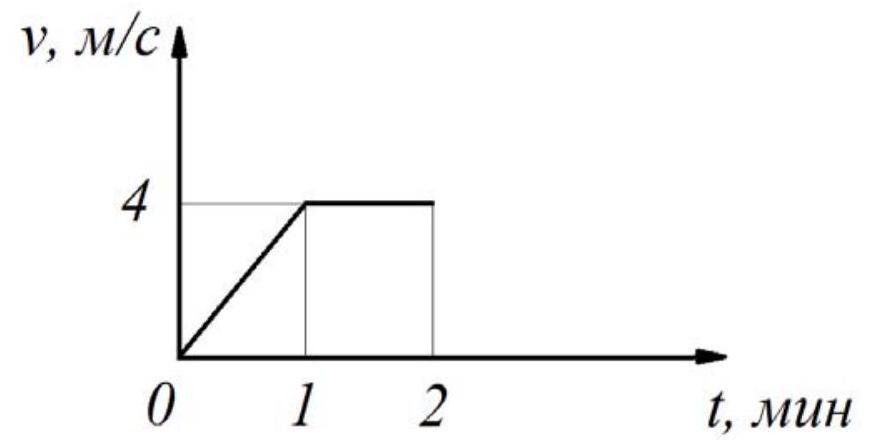 | # Solution:
Path for the first minute:
$S=v t=2 \cdot 1 \cdot 60=120 \text{ m}$
Path for the second minute:
$S=4 \cdot 1 \cdot 60=240 \text{ m}$
In total:
$S=120+240=360$ meters
A beetle is crawling along a horizontal log at a speed of $v_{\text{beetle}}=2 \text{ cm/s}$. A spider is crawling towards it, and at t... | 360,4/,5.3 | Calculus | math-word-problem | Incomplete | Yes | olympiads | false |
Example 1 Prove: In any group of people, there are at least two people who have the same number of friends within the group. | Proof: Let the group have $n$ people, and take these $n$ people as $n$ vertices. If two people are friends, then connect the corresponding vertices with an edge, resulting in a simple graph. Thus, by property 1, we know: there are at least two vertices with the same degree, i.e., at least two people have the same numbe... | proof | Combinatorics | proof | Yes | Yes | olympiads | false |
Problem 7. Let $A B C$ be an acute-angled triangle with circumcircle $\Gamma$ and orthocentre $H$. Let $K$ be a point of $\Gamma$ on the other side of $B C$ from $A$. Let $L$ be the reflection of $K$ in the line $A B$, and let $M$ be the reflection of $K$ in the line $B C$. Let $E$ be the second point of intersection ... |
Solution 1 (submitter). Since the quadrilateral $B M E L$ is cyclic, we have $\angle B E M=\angle B L M$. By construction, $|B K|=|B L|=|B M|$, and so (using directed angles)
$$
\begin{aligned}
\angle B L M & =90^{\circ}-\frac{1}{2} \angle M B L=90^{\circ}-\left(180^{\circ}-\frac{1}{2} \angle L B K-\frac{1}{2} \angle... | proof | Geometry | proof | Yes | Yes | olympiads | false |
James opens up a flower shop. He needs to pay rent of $1200 a week with an additional 20% of rent to pay for utilities and he has 2 employees per shift with the store open 16 hours a day for x days a week. If he pays each employee $12.50 an hour, what are his weekly expenses to run the store?
If we know the answer to... | To determine James' weekly expenses to run the store, we need to account for rent, utilities, and employee wages. Let's break it down step by step.
1. **Calculate the total rent:**
The rent is $1200 per week.
2. **Calculate the cost of utilities:**
Utilities cost 20% of the rent.
\[
\text{Utilities} = 0.2... | 10 | Algebra | math-word-problem | Yes | Yes | metamath | true |
13. (POL 5) Given two congruent triangles $A_{1} A_{2} A_{3}$ and $B_{1} B_{2} B_{3}\left(A_{1} A_{k}=\right.$ $B_{i} B_{k}$ ), prove that there exists a plane such that the orthogonal projections of these triangles onto it are congruent and equally oriented. | 13. Translating one of the triangles if necessary, we may assume w.l.o.g. that $B_{1} \equiv A_{1}$. We also assume that $B_{2} \neq A_{2}$ and $B_{3} \not \equiv A_{3}$, since the result is obvious otherwise.
There exists a plane $\pi$ through $A_{1}$ that is parallel to both $A_{2} B_{2}$ and $A_{3} B_{3}$. Let $A_{2... | proof | Geometry | proof | Yes | Yes | olympiads | false |
4. Lucia, after drawing the square $A B C D$ with a unit side, draws a circle centered at $C$ with a radius equal to the side of the square. She then indicates with $X$ the intersection between the diagonal $A C$ and the circle, and with $Y$ the intersection of the line $D X$ with the side $A B$. What is the length of ... | 4. The answer is $\mathbf{( B )}$. Draw the line $r$ perpendicular to side $A D$ and passing through $X$. Let $H$ be the intersection of $r$ and $A D$, and let $K$ be the intersection of $C B$ and $r$. Let $J$ be the projection of $X$ onto side $C D$. First, we show that triangles $D H X$ and $D A Y$ are similar. Indee... | \sqrt{2}-1 | Geometry | MCQ | Yes | Yes | olympiads | false |
Eight, E Know: $P Q$ is the diameter of $\odot 0$, $MN$ is tangent to $\odot 0$ at $R$, $PA \perp MN$ at $A$, $QB \perp MN$ at $B$ (Figure 4). Prove that the circle with center $R$ and radius $RA$ passes through point $B$, and is tangent to $PQ$. (10 points) | Eight, prove as shown in the figure, connect $0 R, P R$, draw RC $\perp \mathrm{RQ}$ at C,
$$
\Rightarrow \underset{O \text { is the midpoint of } P Q}{\mathrm{PA} / / \mathrm{QB}}\} \Rightarrow \mathrm{AR}=\mathrm{BR},
$$
$$
\left.\begin{array}{l}
\angle \mathrm{ARP}=\angle \mathrm{RQP} \\
\mathrm{PQ} \text { is the d... | proof | Geometry | proof | Yes | Yes | cn_contest | false |
6. Drawing Lots. In a deck of 36 playing cards of four suits, from six to ace. Vasya and Masha each draw one card. Vasya draws first, and then Masha. Masha wins if she draws a card higher than Vasya's. Otherwise, Vasya wins.
a) (for 6th grade. 1 point). Prove that the lot is unfair.
b) (for 6th grade. 1 point). How c... | Solution: a) The draw is unfair because Vasya's probability of winning is higher. He wins not only when his card is higher than Masha's but also when the cards are of the same rank - since there are four cards of each rank in the deck.
b) For example, we can order the suits. The usual order is: spades, clubs, diamonds... | proof | Combinatorics | math-word-problem | Yes | Yes | olympiads | false |
4. Given $x_{i}, y_{i}$ are real numbers, $y_{i}>0(i=1,2, \cdots, n)$, prove:
$$
\left(y_{1}+y_{2}+\cdots+y_{n}\right)\left(\frac{x_{1}^{2}}{y_{1}}+\frac{x_{2}^{2}}{y_{2}}+\cdots+\frac{x_{n}^{2}}{y_{n}}\right) \geqslant\left(x_{1}+x_{2}+\cdots+x_{n}\right)^{2} .
$$ | For two sets of numbers:
$$
\sqrt{y_{1}}, \sqrt{y_{2}}, \cdots, \sqrt{y_{n}} ; \frac{x_{1}}{\sqrt{y_{1}}}, \frac{x_{2}}{\sqrt{y_{2}}}, \cdots, \frac{x_{n}}{\sqrt{y_{n}}} .
$$
According to the Cauchy-Schwarz inequality, we have
$$
\begin{aligned}
& {\left[\left(\sqrt{y_{1}}\right)^{2}+\left(\sqrt{y_{2}}\right)^{2}+\cdo... | proof | Inequalities | proof | Yes | Yes | olympiads | false |
Example 39 (1995 National High School League Question) Let $M=\{1,2, \cdots, 1995\}, A$ be a subset of $M$ and satisfy the condition: when $x \in A$, $15 x \notin A$, then the maximum number of elements in $A$ is $\qquad$.
Translate the above text into English, please retain the original text's line breaks and format,... | Analysis and Solution: Fill in 1870. Reason: Notice that $1995=133 \times 15$, and $133<9 \times 15$. Therefore, in the following 125 pairs of numbers $\{9,9 \times 15\},\{10,10 \times 15\}, \cdots,\{133,133 \times 15\}$, at least one number in each pair does not belong to $A$. Hence, $A$ can have at most $1995-125=187... | Number Theory | math-word-problem | Yes | Yes | olympiads | false | |
10. As shown in the left figure, the 8 squares around the potato mine cannot be entered. Now a communication soldier starts from point A in the right figure, and needs to deliver an urgent message to point B. He needs to pass through $\qquad$ squares at least. (A and B are not counted, and diagonal moves are not allowe... | $19$ | 19 | Combinatorics | math-word-problem | Incomplete | Incomplete | olympiads | false |
In the Cartesian coordinate system $xOy$, the parametric equation of circle $C_1$ is $$\begin{cases} x=2\cos\alpha \\ y=2+2\sin\alpha \end{cases}$$ (where $\alpha$ is the parameter), and the polar coordinate equation of circle $C_2$ with the origin $O$ as the pole and the positive $x$-axis as the polar axis is $p=2\sqr... | 1. The parametric equation of circle $C_1$ is $$\begin{cases} x=2\cos\alpha \\ y=2+2\sin\alpha \end{cases}$$ (where $\alpha$ is the parameter).
Converting to the Cartesian coordinate equation, we get: $x^2+(y-2)^2=4$.
The polar coordinate equation of circle $C_2$ is $p=2\sqrt{2}\cos\left(\theta+\frac{\pi}{4}\right)$.... | 4 | Geometry | math-word-problem | Yes | Yes | cn_k12 | false |
Given that point P(-8, 6) lies on the terminal side of angle α, find the value of sinα.
A: $$- \frac {4}{5}$$
B: $$- \frac {3}{4}$$
C: $$\frac {3}{5}$$
D: $$- \frac {4}{3}$$ | Since point P(-8, 6) lies on the terminal side of angle α, we have x = -8 and y = 6. The distance from the origin O to point P (r) can be calculated as the square root of the sum of squares of x and y, which is 10.
Using the definition of the sine function, sinα = y/r, we substitute the given values to get sinα = 6/10... | \frac{3}{5} | Geometry | MCQ | Yes | Yes | cn_k12 | false |
Given the function $f(x) = xe^{ax} - e^{x}$.
1. When $a=1$, discuss the monotonicity of $f(x)$.
2. When $x > 0$, $f(x) \ln(n+1)$. | ### Solution:
#### Part 1: Monotonicity when $a=1$
Given $f(x) = xe^{ax} - e^{x}$, when $a=1$, we have:
$$f(x) = xe^{x} - e^{x} = e^{x}(x-1)$$
Differentiating $f(x)$ with respect to $x$ gives:
$$f'(x) = \frac{d}{dx}[e^{x}(x-1)] = e^{x}(x-1) + e^{x} = xe^{x}$$
Since $e^{x} > 0$ for all $x$, we analyze the sign of ... | \frac{1}{{\sqrt{{1^2}+1}}} + \frac{1}{{\sqrt{{2^2}+2}}} + \ldots + \frac{1}{{\sqrt{{n^2}+n}}} > \ln(n+1) | Calculus | math-word-problem | Incomplete | Incomplete | cn_k12 | false |
If $\mathbf{A}^{-1} = \begin{pmatrix} -3 & k \\ 0 & 3 \end{pmatrix},$ then find the inverse of $\mathbf{A}^2.$ | To find the inverse of $\mathbf{A}^2$, we first compute $(\mathbf{A}^{-1})^2$:
\[
\begin{pmatrix} -3 & k \\ 0 & 3 \end{pmatrix}^2 = \begin{pmatrix} (-3)^2 & (-3)k + k \cdot 3 \\ 0 \cdot (-3) + 0 \cdot k & 0 \cdot k + 3^2 \end{pmatrix} = \begin{pmatrix} 9 & 0 \\ 0 & 9 \end{pmatrix}
\]
This means that $(\mathbf{A}^{-1})^... | \begin{pmatrix} 9 & 0 \\ 0 & 9 \end{pmatrix} | Algebra | math-word-problem | Yes | Yes | synthetic_math | true |
A and B are different natural numbers. When A is divided by 17, the quotient is 25 and the remainder is B. Find A when B is the largest number possible. | When A is divided by 17, the quotient is 25 and the remainder is B. This means that A can be expressed as:
A = 17 * quotient + remainder
A = 17 * 25 + B
The largest possible remainder when dividing by 17 is 16, because if the remainder were 17 or more, it would mean that the quotient was not the largest possible (sin... | 441 | Number Theory | math-word-problem | Yes | Yes | orca_math | true |
Find all real \(x\) such that \[\left\lfloor x \lfloor x \rfloor\right\rfloor = 144.\] | 1. Start by setting up the equation under analysis:
\[
\left\lfloor x \lfloor x \rfloor \right\rfloor = 144
\]
which implies:
\[
144 \leq x \lfloor x \rfloor 145\).
- For lower bound, \(29 \leq x^2\) (from \(144 \leq x^2\)), \( \lfloor x \rfloor \geq 12 \).
- Combining these, \( \lfloor x \rflo... | [12, 12.08333) | Number Theory | math-word-problem | Yes | Yes | synthetic_math | true |
In the Cartesian coordinate system $(xOy)$, $\overrightarrow{i}$ and $\overrightarrow{j}$ are the unit vectors in the directions of the $x$-axis and $y$-axis respectively. Given $\overrightarrow{OA} = \overrightarrow{i} + 2\overrightarrow{j}$, $\overrightarrow{OB} = 3\overrightarrow{i} + 4\overrightarrow{j}$, and $\ove... | Since $\overrightarrow{OA} = \overrightarrow{i} + 2\overrightarrow{j}$, $\overrightarrow{OB} = 3\overrightarrow{i} + 4\overrightarrow{j}$, and $\overrightarrow{OC} = 2t\overrightarrow{i} + (t + 5)\overrightarrow{j}$,
we have $\overrightarrow{AB} = \overrightarrow{OB} - \overrightarrow{OA} = (3\overrightarrow{i} + 4\ov... | 4 | Algebra | math-word-problem | Yes | Yes | cn_k12 | false |
25. Let $A B C$ be an isosceles triangle with apex $A$. Let $I$ be the incenter. If $A I=3$ and the distance from $I$ to $B C$ is 2 , then what is the length of $B C$ ? | Solution: $\square$
Let $X$ and $Y$ be the points where the incircle touches $A B$ and $B C$, respectively. Then $A X I$ and $A Y B$ are similar right triangles. Since $I$ is the incenter, we have $I X=I Y=2$. Using the Pythagorean theorem on triangle $A X I$, we find $A X=\sqrt{5}$. By similarity, $A Y / A X=B Y / I X... | 4\sqrt{5} | NaN | NaN | NaN | NaN | olympiads | false |
Given $a=0.6^{0.6}$, $b=0.6^{1.5}$, and $c=1.5^{0.6}$, determine the relationship between $a$, $b$, and $c$.
Options:
A: $a < b < c$
B: $a < c < b$
C: $b < a < c$
D: $b < c < a$ | First, we observe that $0.6 b = 0.6^{1.5} $$
because $0.6^{0.6}$ is raised to a smaller power than $0.6^{1.5}$.
Next, we note that $1.5 > 1$, which implies that when taking a power of $1.5$, the result will increase as opposed to decrease. Thus, we have:
$$ c = 1.5^{0.6} > 1 $$
Combining these facts, we determine th... | \text{C: } b < a < c | Algebra | MCQ | Yes | Yes | cn_k12 | false |
A man has Rs. 10350 in the form of Rs. 50 notes and another denomination notes. The total number of notes are 72, and he has 57 notes of Rs. 50 denomination. What is the denomination of the remaining notes? | Let's denote the denomination of the remaining notes as Rs. X.
We know that the man has 57 notes of Rs. 50 denomination. So, the total amount from the Rs. 50 notes is:
57 notes * Rs. 50/note = Rs. 2850
The total amount of money the man has is Rs. 10350. So, the amount in the form of the X denomination notes is:
Rs. 1... | 500 | Algebra | math-word-problem | Yes | Yes | orca_math | true |
Mrs. Hilt baked pies last weekend for a holiday dinner. She baked 16 pecan pies and 14 apples pies. If she wants to arrange all of the pies in rows of 5 pies each, how many rows will she have? | Mrs. Hilt baked a total of 16 pecan pies + 14 apple pies = 30 pies.
If she arranges the pies in rows of 5 pies each, we can find out how many rows she will have by dividing the total number of pies by the number of pies in each row.
30 pies ÷ 5 pies per row = 6 rows.
So, Mrs. Hilt will have $\boxed{6}$ rows of pies... | 6 | Logic and Puzzles | math-word-problem | Yes | Yes | orca_math | true |
Suppose that the number $a$ satisfies the equation $6 = a + a^{-1}$. What is the value of $a^{4} + a^{-4}$? | Starting with the equation $6 = a + a^{-1}$, we square both sides:
\[ 36 = (a + a^{-1})^2 = a^2 + 2 + a^{-2} \]
\[ a^2 + a^{-2} = 36 - 2 = 34 \]
To find $a^4 + a^{-4}$, we square $a^2 + a^{-2}$:
\[ 34^2 = (a^2 + a^{-2})^2 = a^4 + 2 + a^{-4} \]
\[ 1156 = a^4 + 2 + a^{-4} \]
\[ a^4 + a^{-4} = 1156 - 2 = 1154 \]
Conclus... | 1154 | Algebra | math-word-problem | Yes | Yes | synthetic_math | true |
Given the function $f(x) = (x^2 - 1)(x^2 + ax + b)$, its graph is symmetric about the line $x = 3$. Determine the range of the function $f(x)$. | Since the graph of the function $f(x) = (x^2 - 1)(x^2 + ax + b)$ is symmetric about the line $x = 3$,
We have $f(6 - x) = f(x)$,
Expanding and solving the equation, we get $a = -12$ and $b = 35$.
So, $f(x) = (x^2 - 1)(x^2 - 12x + 35)$.
Taking the derivative, we have $f'(x) = 4(x - 3)(x^2 - 6x - 1) = 0$.
Solving fo... | [-36, +\infty) | Algebra | math-word-problem | Yes | Yes | cn_k12 | false |
In a large population, a certain characteristic has a distribution that is symmetric about the mean a. A certain percentage of the distribution lies one standard deviation d of the mean, and 84% of the distribution is less than a + d. What percentage of the distribution lies within one standard deviation of the mean? | If the distribution is symmetric about the mean and 84% of the distribution is less than a + d (one standard deviation above the mean), then 16% of the distribution is greater than a + d (since 100% - 84% = 16%).
Because the distribution is symmetric, the same percentage that lies above a + d also lies below a - d. Th... | 68\% | Algebra | math-word-problem | Yes | Yes | orca_math | true |
Simplify $\sqrt{50y} \cdot \sqrt{18y} \cdot \sqrt{32y}$. Express your answer in simplest radical form in terms of $y$. | First, express each term inside the square root as a product of prime factors:
- $\sqrt{50y} = \sqrt{2 \cdot 5^2 \cdot y}$
- $\sqrt{18y} = \sqrt{2 \cdot 3^2 \cdot y}$
- $\sqrt{32y} = \sqrt{2^5 \cdot y}$
Now, multiply these terms under a single square root:
\[
\sqrt{50y} \cdot \sqrt{18y} \cdot \sqrt{32y} = \sqrt{(2 \cd... | 30y \sqrt{2y} | Algebra | math-word-problem | Yes | Yes | synthetic_math | true |
Subsets and Splits
No community queries yet
The top public SQL queries from the community will appear here once available.