

File size: 9,967 Bytes
1845d69 40aefde 1845d69 b821782 670e005 e30648a 1845d69 | 1 2 3 4 5 6 7 8 9 10 11 12 13 14 15 16 17 18 19 20 21 22 23 24 25 26 27 28 29 30 31 32 33 34 35 36 37 38 39 40 41 42 43 44 45 46 47 48 49 50 51 52 53 54 55 56 57 58 59 60 61 62 63 64 65 66 67 68 69 70 71 72 73 74 75 76 77 78 79 80 81 82 83 84 85 86 87 88 89 90 91 92 93 94 95 96 97 98 99 100 101 102 103 104 105 106 107 108 109 110 111 112 113 114 115 116 117 118 119 120 121 122 123 124 125 126 127 128 129 130 131 132 133 134 135 136 137 138 139 140 141 142 143 144 145 146 147 148 149 150 151 152 153 154 155 156 157 158 159 160 161 162 163 164 165 166 167 168 169 170 171 172 173 174 175 176 177 178 179 180 181 182 183 184 185 186 187 188 189 190 191 192 193 194 195 196 197 198 199 200 201 202 203 204 205 206 207 208 209 210 211 212 213 214 215 216 217 218 219 220 221 222 | ---
base_model: PramaLLC/BEN2
base_model_relation: quantized
license: mit
pipeline_tag: image-segmentation
library_name: mlx
tags:
- mlx
- moonbox
- ben2
- background-removal
- image-matting
---
# BEN2 Base MLX
MLX builds of [BEN2 Base](https://huggingface.co/PramaLLC/BEN2), made by Moonbox for Apple Silicon Macs. Each precision is a folder; keep a folder's
files together. Only the parts listed below are converted: the rest of the pipeline comes from the original
repository unless the section below says otherwise.
## Files
The last column is how far each build is from the original PyTorch model on the same inputs (see the section below
for what was measured).
| Precision | File | Size | sha256 | Checked against the original |
|---|---|---|---|---|
| bf16 | [`bf16/config.json`](https://huggingface.co/moonbox-ai/BEN2-MLX/blob/main/bf16/config.json) | 0.2 kB | `1832ec222caf` | MAE <= 0.0002, mask IoU >= 0.9987 |
| bf16 | [`bf16/mlx_model.py`](https://huggingface.co/moonbox-ai/BEN2-MLX/blob/main/bf16/mlx_model.py) | 20.5 kB | `eff7a4afb5ad` | MAE <= 0.0002, mask IoU >= 0.9987 |
| bf16 | [`bf16/model.safetensors`](https://huggingface.co/moonbox-ai/BEN2-MLX/blob/main/bf16/model.safetensors) | 188.3 MB | `5b8344c88ff8` | MAE <= 0.0002, mask IoU >= 0.9987 |
| fp16 | [`fp16/config.json`](https://huggingface.co/moonbox-ai/BEN2-MLX/blob/main/fp16/config.json) | 0.2 kB | `cdad08ebd797` | MAE <= 0.00003, mask IoU >= 0.9996 |
| fp16 | [`fp16/mlx_model.py`](https://huggingface.co/moonbox-ai/BEN2-MLX/blob/main/fp16/mlx_model.py) | 20.5 kB | `eff7a4afb5ad` | MAE <= 0.00003, mask IoU >= 0.9996 |
| fp16 | [`fp16/model.safetensors`](https://huggingface.co/moonbox-ai/BEN2-MLX/blob/main/fp16/model.safetensors) | 188.3 MB | `5c446d204f3f` | MAE <= 0.00003, mask IoU >= 0.9996 |
| 8bit | [`8bit/config.json`](https://huggingface.co/moonbox-ai/BEN2-MLX/blob/main/8bit/config.json) | 0.3 kB | `8e36d767bc3b` | MAE <= 0.0003, mask IoU >= 0.9983 |
| 8bit | [`8bit/mlx_model.py`](https://huggingface.co/moonbox-ai/BEN2-MLX/blob/main/8bit/mlx_model.py) | 20.5 kB | `eff7a4afb5ad` | MAE <= 0.0003, mask IoU >= 0.9983 |
| 8bit | [`8bit/model.safetensors`](https://huggingface.co/moonbox-ai/BEN2-MLX/blob/main/8bit/model.safetensors) | 105.6 MB | `c4a4142ef47b` | MAE <= 0.0003, mask IoU >= 0.9983 |
| 6bit | [`6bit/config.json`](https://huggingface.co/moonbox-ai/BEN2-MLX/blob/main/6bit/config.json) | 0.3 kB | `9c6f176e545f` | MAE <= 0.0004, mask IoU >= 0.9966 |
| 6bit | [`6bit/mlx_model.py`](https://huggingface.co/moonbox-ai/BEN2-MLX/blob/main/6bit/mlx_model.py) | 20.5 kB | `eff7a4afb5ad` | MAE <= 0.0004, mask IoU >= 0.9966 |
| 6bit | [`6bit/model.safetensors`](https://huggingface.co/moonbox-ai/BEN2-MLX/blob/main/6bit/model.safetensors) | 83.5 MB | `5f055f598925` | MAE <= 0.0004, mask IoU >= 0.9966 |
| 4bit | [`4bit/config.json`](https://huggingface.co/moonbox-ai/BEN2-MLX/blob/main/4bit/config.json) | 0.3 kB | `0fa35f574f4a` | MAE <= 0.0012, mask IoU >= 0.9923 |
| 4bit | [`4bit/mlx_model.py`](https://huggingface.co/moonbox-ai/BEN2-MLX/blob/main/4bit/mlx_model.py) | 20.5 kB | `eff7a4afb5ad` | MAE <= 0.0012, mask IoU >= 0.9923 |
| 4bit | [`4bit/model.safetensors`](https://huggingface.co/moonbox-ai/BEN2-MLX/blob/main/4bit/model.safetensors) | 61.4 MB | `ada7dec10880` | MAE <= 0.0012, mask IoU >= 0.9923 |
## How to run
BEN2 Base ported to MLX. Each folder holds `model.safetensors`, `config.json` and `mlx_model.py`, the port (only
`mlx`, `numpy` and `pillow` needed):
```python
import numpy as np, mlx_model
from PIL import Image
model = mlx_model.load("fp16")
rgb = np.array(Image.open("in.jpg").convert("RGB"))
alpha = mlx_model.matte(model, rgb) # HxW uint8, as BEN2.py's inference() (1024x1024 internally)
Image.fromarray(np.dstack([rgb, alpha])).save("cutout.png")
```
The port runs `BEN_Base` as released (Swin-B on four 512 px crops plus the whole image, MCLM / MCRM decoder). The
quantized folders quantize the linear layers (Swin, attention, feed-forward; group size 64); the convolutions stay
bf16. The original's optional `refine_foreground` colour decontamination isn't ported.
| Precision | Size | MAE vs PyTorch fp32 (worst image) | Mask IoU (worst) |
|---|---|---|---|
| `fp16/` | 188 MB | 0.00003 | 0.9996 |
| `bf16/` | 188 MB | 0.0002 | 0.9987 |
| `8bit/` | 106 MB | 0.0003 | 0.9983 |
| `6bit/` | 84 MB | 0.0004 | 0.9966 |
| `4bit/` | 62 MB | 0.0012 | 0.9923 |
About 0.7 s per image on an Apple M5 at every precision.
## How these were made
From [BEN2 Base](https://huggingface.co/PramaLLC/BEN2) at revision `e48a20765f`: the original weights loaded in MLX and stored as bf16 or fp16, or
quantized with MLX's affine quantization (`8bit`, `6bit`, `4bit`, group size 64; layers MLX can't quantize, such as
convolutions and norms, stay bf16). Every build was checked against the original before upload; the `sha256` column
above is what the files must hash to.
## License
MIT. These files are a derivative of the original model and carry its license: it is copied in this
repository, and it governs your use of these files. The original model card follows unchanged.
---
# Original model card
# BEN2: Background Erase Network
[](https://arxiv.org/abs/2501.06230)
[](https://github.com/PramaLLC/BEN2/)
[](https://backgrounderase.net)
## Overview
BEN2 (Background Erase Network) introduces a novel approach to foreground segmentation through its innovative Confidence Guided Matting (CGM) pipeline. The architecture employs a refiner network that targets and processes pixels where the base model exhibits lower confidence levels, resulting in more precise and reliable matting results. This model is built on BEN:
[](https://paperswithcode.com/sota/dichotomous-image-segmentation-on-dis-vd?p=ben-using-confidence-guided-matting-for)
## BEN2 access
BEN2 was trained on the DIS5k and our 22K proprietary segmentation dataset. Our enhanced model delivers superior performance in hair matting, 4K processing, object segmentation, and edge refinement. Our Base model is open source. To try the full model through our free web demo or integrate BEN2 into your project with our API:
- 🌐 [backgrounderase.com](https://backgrounderase.com)
## Contact us
- For access to our commercial model email us at sales@backgrounderase.com
- Our website: https://backgrounderase.com/
- Follow us on X: https://x.com/PramaResearch/
## Installation
```
pip install -e "git+https://github.com/PramaLLC/BEN2.git#egg=ben2"
```
## Quick start code
```python
from ben2 import BEN_Base
from PIL import Image
import torch
device = torch.device('cuda' if torch.cuda.is_available() else 'cpu')
file = "./image.png" # input image
model = BEN_Base.from_pretrained("PramaLLC/BEN2")
model.to(device).eval()
image = Image.open(file)
foreground = model.inference(image, refine_foreground=False,) #Refine foreground is an extract postprocessing step that increases inference time but can improve matting edges. The default value is False.
foreground.save("./foreground.png")
```
## Batch image processing
```python
from ben2 import BEN_Base
from PIL import Image
import torch
device = torch.device('cuda' if torch.cuda.is_available() else 'cpu')
model = BEN_Base.from_pretrained("PramaLLC/BEN2")
model.to(device).eval()
file1 = "./image1.png" # input image1
file2 = "./image2.png" # input image2
image1 = Image.open(file1)
image2 = Image.open(file2)
foregrounds = model.inference([image1, image2]) # We recommend that the batch size not exceed 3 for consumer GPUs as there are minimal inference gains due to our custom batch processing for the MVANet decoding steps.
foregrounds[0].save("./foreground1.png")
foregrounds[1].save("./foreground2.png")
```
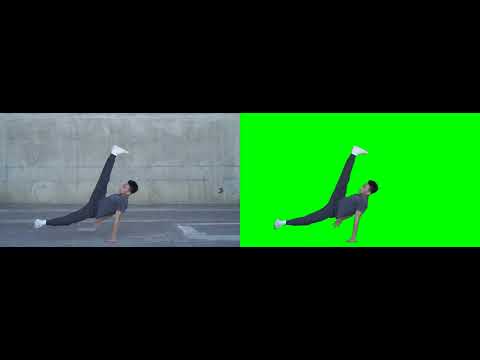
# BEN2 video segmentation
[](https://www.youtube.com/watch?v=skEXiIHQcys)
## Video Segmentation
```bash
sudo apt update
sudo apt install ffmpeg
```
```python
from ben2 import BEN_Base
from PIL import Image
import torch
device = torch.device('cuda' if torch.cuda.is_available() else 'cpu')
video_path = "/path_to_your_video.mp4"# input video
model = BEN_Base.from_pretrained("PramaLLC/BEN2")
model.to(device).eval()
model.segment_video(
video_path= video_path,
output_path="./", # Outputs will be saved as foreground.webm or foreground.mp4. The default value is "./"
fps=0, # If this is set to 0 CV2 will detect the fps in the original video. The default value is 0.
refine_foreground=False, #refine foreground is an extract postprocessing step that increases inference time but can improve matting edges. The default value is False.
batch=1, # We recommended that batch size not exceed 3 for consumer GPUs as there are minimal inference gains. The default value is 1.
print_frames_processed=True, #Informs you what frame is being processed. The default value is True.
webm = False, # This will output an alpha layer video but this defaults to mp4 when webm is false. The default value is False.
rgb_value= (0, 255, 0) # If you do not use webm this will be the RGB value of the resulting background only when webm is False. The default value is a green background (0,255,0).
)
```
**# BEN2 evaluation**

RMBG 2.0 did not preserve the DIS 5k validation dataset


|