new

Get trending papers in your email inbox!

Subscribe

Daily Papers

byAK and the research community

Nov 10

MultiPartyTurnBench: Benchmarking Floor Control in Multi-Party Spoken Dialogue

Full-duplex speech systems must decide when to enter, hold, or relinquish the conversational floor, even as multiple speakers overlap or backchannel without taking it. Existing evaluations study dyadic turn-taking or end-to-end agent behavior, but lack a unified, controlled evaluation of genuine floor transitions against confusable non-events in multi-party settings. We introduce MultiPartyTurnBench (MPTB), a benchmark of 240 synthetically generated, channel-separated conversations spanning two to five speakers and six interaction types. MPTB evaluates two complementary tasks: End-of-Turn (EOT) detection distinguishes genuine turn completion from temporary holds, while Interruption (INT) detection distinguishes successful floor takeovers from non-floor-taking speech. Exact event-conditioned annotations enable causal evaluation using false-positive-constrained recall and signed latency. Across acoustic, semantic, and turn-projection baselines, we find a stark asymmetry: learned systems achieve 82.5-92.6% EOT recall at 4.3-11.8% false-positive rates, while INT detection suffers from missed takeovers or excessive false activations. This asymmetry extends to five full-duplex agents which achieve 86.1-95.8% balanced accuracy on turn entry, yet perform near chance (46.9-54.7%) on selective interruption handling. Gemini-3.8-Live yields to 97.7% of backchannels, whereas MiniCPM-o-4.5 yields to only 1.4% of genuine interruptions. These findings establish selective floor control as a distinct, unresolved challenge for reliable multi-party voice interaction.

  • 2 authors
·
Oct 13

MSI-Bench: Evaluating Multi-Speaker Voice Interaction for Collaborative AI Agents

Voice provides a natural and immediate interface for AI agents. Many settings in which voice agents could be useful, including meetings, households, and collaborative work, are inherently multi-speaker. Supporting these settings introduces challenges that are largely absent from one-on-one interaction. We introduce the Multi-Speaker Interaction Benchmark (MSI-Bench) for evaluating multi-speaker voice interaction. Each test case is a short multi-party multi-turn audio scene with participant context, expected tool calls, and atomic rubrics. The benchmark targets three capability families: multi-speaker memory, multi-speaker instruction following, and multi-speaker reasoning. It comprises 1,152 test cases, evenly split between Mandarin Chinese and English (576 each). The strongest configuration on each split passes all rubrics on only 66.8% of English and 54.5% of Mandarin cases, and the strongest open-weight configuration on 34.0% and 19.3%. Failure analysis separates perception from reasoning: open-weight models are bottlenecked by the multi-speaker audio front-end, while frontier systems still fail speaker-scoped decision making on clean transcripts---and models across the board often respond when no one has addressed them. These results identify speaker-grounded perception, speaker-scoped decision making, and conversational restraint as concrete targets for future voice agents.

  • 6 authors
·
Sep 20

Enabling Chatbots with Eyes and Ears: An Immersive Multimodal Conversation System for Dynamic Interactions

As chatbots continue to evolve toward human-like, real-world, interactions, multimodality remains an active area of research and exploration. So far, efforts to integrate multimodality into chatbots have primarily focused on image-centric tasks, such as visual dialogue and image-based instructions, placing emphasis on the "eyes" of human perception while neglecting the "ears", namely auditory aspects. Moreover, these studies often center around static interactions that focus on discussing the modality rather than naturally incorporating it into the conversation, which limits the richness of simultaneous, dynamic engagement. Furthermore, while multimodality has been explored in multi-party and multi-session conversations, task-specific constraints have hindered its seamless integration into dynamic, natural conversations. To address these challenges, this study aims to equip chatbots with "eyes and ears" capable of more immersive interactions with humans. As part of this effort, we introduce a new multimodal conversation dataset, Multimodal Multi-Session Multi-Party Conversation (M^3C), and propose a novel multimodal conversation model featuring multimodal memory retrieval. Our model, trained on the M^3C, demonstrates the ability to seamlessly engage in long-term conversations with multiple speakers in complex, real-world-like settings, effectively processing visual and auditory inputs to understand and respond appropriately. Human evaluations highlight the model's strong performance in maintaining coherent and dynamic interactions, demonstrating its potential for advanced multimodal conversational agents.

  • 5 authors
·
May 31, 2025

Step-Audio: Unified Understanding and Generation in Intelligent Speech Interaction

Real-time speech interaction, serving as a fundamental interface for human-machine collaboration, holds immense potential. However, current open-source models face limitations such as high costs in voice data collection, weakness in dynamic control, and limited intelligence. To address these challenges, this paper introduces Step-Audio, the first production-ready open-source solution. Key contributions include: 1) a 130B-parameter unified speech-text multi-modal model that achieves unified understanding and generation, with the Step-Audio-Chat version open-sourced; 2) a generative speech data engine that establishes an affordable voice cloning framework and produces the open-sourced lightweight Step-Audio-TTS-3B model through distillation; 3) an instruction-driven fine control system enabling dynamic adjustments across dialects, emotions, singing, and RAP; 4) an enhanced cognitive architecture augmented with tool calling and role-playing abilities to manage complex tasks effectively. Based on our new StepEval-Audio-360 evaluation benchmark, Step-Audio achieves state-of-the-art performance in human evaluations, especially in terms of instruction following. On open-source benchmarks like LLaMA Question, shows 9.3% average performance improvement, demonstrating our commitment to advancing the development of open-source multi-modal language technologies. Our code and models are available at https://github.com/stepfun-ai/Step-Audio.

  • 121 authors
·
Feb 17, 2025

FireRedChat: A Pluggable, Full-Duplex Voice Interaction System with Cascaded and Semi-Cascaded Implementations

Full-duplex voice interaction allows users and agents to speak simultaneously with controllable barge-in, enabling lifelike assistants and customer service. Existing solutions are either end-to-end, difficult to design and hard to control, or modular pipelines governed by turn-taking controllers that ease upgrades and per-module optimization; however, prior modular frameworks depend on non-open components and external providers, limiting holistic optimization. In this work, we present a complete, practical full-duplex voice interaction system comprising a turn-taking controller, an interaction module, and a dialogue manager. The controller integrates streaming personalized VAD (pVAD) to suppress false barge-ins from noise and non-primary speakers, precisely timestamp primary-speaker segments, and explicitly enable primary-speaker barge-ins; a semantic end-of-turn detector improves stop decisions. It upgrades heterogeneous half-duplex pipelines, cascaded, semi-cascaded, and speech-to-speech, to full duplex. Using internal models, we implement cascaded and semi-cascaded variants; the semi-cascaded one captures emotional and paralinguistic cues, yields more coherent responses, lowers latency and error propagation, and improves robustness. A dialogue manager extends capabilities via tool invocation and context management. We also propose three system-level metrics, barge-in, end-of-turn detection accuracy, and end-to-end latency, to assess naturalness, control accuracy, and efficiency. Experiments show fewer false interruptions, more accurate semantic ends, and lower latency approaching industrial systems, enabling robust, natural, real-time full-duplex interaction. Demos: https://fireredteam.github.io/demos/firered_chat.

  • 15 authors
·
Sep 8, 2025

WavChat: A Survey of Spoken Dialogue Models

Recent advancements in spoken dialogue models, exemplified by systems like GPT-4o, have captured significant attention in the speech domain. Compared to traditional three-tier cascaded spoken dialogue models that comprise speech recognition (ASR), large language models (LLMs), and text-to-speech (TTS), modern spoken dialogue models exhibit greater intelligence. These advanced spoken dialogue models not only comprehend audio, music, and other speech-related features, but also capture stylistic and timbral characteristics in speech. Moreover, they generate high-quality, multi-turn speech responses with low latency, enabling real-time interaction through simultaneous listening and speaking capability. Despite the progress in spoken dialogue systems, there is a lack of comprehensive surveys that systematically organize and analyze these systems and the underlying technologies. To address this, we have first compiled existing spoken dialogue systems in the chronological order and categorized them into the cascaded and end-to-end paradigms. We then provide an in-depth overview of the core technologies in spoken dialogue models, covering aspects such as speech representation, training paradigm, streaming, duplex, and interaction capabilities. Each section discusses the limitations of these technologies and outlines considerations for future research. Additionally, we present a thorough review of relevant datasets, evaluation metrics, and benchmarks from the perspectives of training and evaluating spoken dialogue systems. We hope this survey will contribute to advancing both academic research and industrial applications in the field of spoken dialogue systems. The related material is available at https://github.com/jishengpeng/WavChat.

  • 19 authors
·
Nov 14, 2024

MPCEval: A Benchmark for Multi-Party Conversation Generation

Multi-party conversation generation, such as smart reply and collaborative assistants, is an increasingly important capability of generative AI, yet its evaluation remains a critical bottleneck. Compared to two-party dialogue, multi-party settings introduce distinct challenges, including complex turn-taking, role-dependent speaker behavior, long-range conversational structure, and multiple equally valid continuations. Accordingly, we introduce MPCEval, a task-aware evaluation and benchmarking suite for multi-party conversation generation. MPCEval decomposes generation quality into speaker modeling, content quality, and speaker--content consistency, and explicitly distinguishes local next-turn prediction from global full-conversation generation. It provides novel, quantitative, reference-free, and reproducible metrics that scale across datasets and models. We apply MPCEval to diverse public and real-world datasets and evaluate modern generation methods alongside human-authored conversations. The results reveal systematic, dimension-specific model characteristics in participation balance, content progression and novelty, and speaker--content consistency, demonstrating that evaluation objectives critically shape model assessment and that single-score evaluation obscures fundamental differences in multi-party conversational behavior. The implementation of MPCEval and the associated evaluation code are publicly available at https://github.com/Owen-Yang-18/MPCEval.

  • 8 authors
·
Mar 4

Voice-Light: A Full-Duplex Cascaded Voice Agent with Causal Turn-Taking and Speculative Generation

Natural spoken interaction requires more than streaming ASR, language generation, and speech synthesis: a system must react to overlap without canceling on every acknowledgment, prepare a response before a turn is certain, and ensure canceled audio cannot enter conversation history. We present Voice-Light, a full-duplex cascaded voice agent that combines immediate acoustic onset, a causal adapter sharing a streaming ASR encoder, reversible playback control, and private speculative response generation. Structured tool calls execute concurrently with audible bridge speech, while browser acknowledgments make rendered audio authoritative for durable history. Locked evaluation on 1,673 real-conversation silence candidates found that an earlier learned completion checkpoint preserved a 2.70% false-cutoff rate but reached only 12.53% end-of-turn recall, compared with 95.60% for a Silero timing policy. The deployed system therefore retains a hybrid controller rather than claiming a learned-policy replacement. Across three unscripted operator-run microphone sessions, 36 measured response turns had a 758 ms median from final VAD endpoint to first server audio; 21 turns were below 800 ms. These sessions are an instrumented case study, not a controlled user evaluation. We release the synthetic data, model artifacts, evaluation code and summaries, source code, and deployment configuration supporting the result.

  • 1 authors
·
Sep 16

MinMo: A Multimodal Large Language Model for Seamless Voice Interaction

Recent advancements in large language models (LLMs) and multimodal speech-text models have laid the groundwork for seamless voice interactions, enabling real-time, natural, and human-like conversations. Previous models for voice interactions are categorized as native and aligned. Native models integrate speech and text processing in one framework but struggle with issues like differing sequence lengths and insufficient pre-training. Aligned models maintain text LLM capabilities but are often limited by small datasets and a narrow focus on speech tasks. In this work, we introduce MinMo, a Multimodal Large Language Model with approximately 8B parameters for seamless voice interaction. We address the main limitations of prior aligned multimodal models. We train MinMo through multiple stages of speech-to-text alignment, text-to-speech alignment, speech-to-speech alignment, and duplex interaction alignment, on 1.4 million hours of diverse speech data and a broad range of speech tasks. After the multi-stage training, MinMo achieves state-of-the-art performance across various benchmarks for voice comprehension and generation while maintaining the capabilities of text LLMs, and also facilitates full-duplex conversation, that is, simultaneous two-way communication between the user and the system. Moreover, we propose a novel and simple voice decoder that outperforms prior models in voice generation. The enhanced instruction-following capabilities of MinMo supports controlling speech generation based on user instructions, with various nuances including emotions, dialects, and speaking rates, and mimicking specific voices. For MinMo, the speech-to-text latency is approximately 100ms, full-duplex latency is approximately 600ms in theory and 800ms in practice. The MinMo project web page is https://funaudiollm.github.io/minmo, and the code and models will be released soon.

  • 36 authors
·
Jan 10, 2025 8

Fun-Audio-Chat Technical Report

Recent advancements in joint speech-text models show great potential for seamless voice interactions. However, existing models face critical challenges: temporal resolution mismatch between speech tokens (25Hz) and text tokens (~3Hz) dilutes semantic information, incurs high computational costs, and causes catastrophic forgetting of text LLM knowledge. We introduce Fun-Audio-Chat, a Large Audio Language Model addressing these limitations via two innovations from our previous work DrVoice. First, Dual-Resolution Speech Representations (DRSR): the Shared LLM processes audio at efficient 5Hz (via token grouping), while the Speech Refined Head generates high-quality tokens at 25Hz, balancing efficiency (~50% GPU reduction) and quality. Second, Core-Cocktail Training, a two-stage fine-tuning with intermediate merging that mitigates catastrophic forgetting. We then apply Multi-Task DPO Training to enhance robustness, audio understanding, instruction-following and voice empathy. This multi-stage post-training enables Fun-Audio-Chat to retain text LLM knowledge while gaining powerful audio understanding, reasoning, and generation. Unlike recent LALMs requiring large-scale audio-text pre-training, Fun-Audio-Chat leverages pre-trained models and extensive post-training. Fun-Audio-Chat 8B and MoE 30B-A3B achieve competitive performance on Speech-to-Text and Speech-to-Speech tasks, ranking top among similar-scale models on Spoken QA benchmarks. They also achieve competitive to superior performance on Audio Understanding, Speech Function Calling, Instruction-Following and Voice Empathy. We develop Fun-Audio-Chat-Duplex, a full-duplex variant with strong performance on Spoken QA and full-duplex interactions. We open-source Fun-Audio-Chat-8B with training and inference code, and provide an interactive demo.

  • 12 authors
·
Dec 23, 2025

MultiTalk: Scaling Full-Duplex Speech Models to Long, Multi-Party, Bilingual Conversation

End-to-end full-duplex speech models have brought open-source machine conversation closer to human-like interaction, yet existing systems remain limited in two intertwined dimensions: long-context robustness and multi-party interaction. Real-world scenarios such as meetings, group lessons, and social-robot reception require a single model to track, contextualize, and respond to multiple speakers over extended durations. Progress is constrained by both data and evaluation: open multi-party speech corpora remain small and are not designed for codec-frame-level full-duplex modeling, while existing long-audio benchmarks focus on passive listening and speech-to-speech benchmarks are mostly short and dyadic. We extend the Moshi paradigm jointly along the long-horizon and multi-party axes in English and Chinese. First, we release 57.6k hours of synthetic training data (https://huggingface.co/datasets/MultiTalk/MultiTalkPT{MultiTalkPT} and https://huggingface.co/datasets/MultiTalk/MultiTalkFT{MultiTalkFT}) for long-form, multi-party, English-Chinese full-duplex dialogue, with controllable length, participant count, turn-taking, overlap, backchannels, interruptions, addressee shifts, and long-range coreference. Second, we introduce https://huggingface.co/datasets/MultiTalk/MultiTalkBench{MultiTalkBench}, built from real human recordings, for evaluating long-form, multi-party, bilingual full-duplex dialogue. Conversations average 32.6 minutes and include probes for long-range entity tracking, topic coherence, and addressee selection. Third, we train a bilingual Moshi-style model that sustains coherent multi-party English-Chinese conversations over extended durations and substantially outperforms open-source baselines including Moshi, MiniCPM-o-4.5, and Qwen3-Omni-30B-A3B-Instruct on MultiTalkBench.

  • 7 authors
·
Sep 28

TellWhisper: Tell Whisper Who Speaks When

Multi-speaker automatic speech recognition (MASR) aims to predict ''who spoke when and what'' from multi-speaker speech, a key technology for multi-party dialogue understanding. However, most existing approaches decouple temporal modeling and speaker modeling when addressing ''when'' and ''who'': some inject speaker cues before encoding (e.g., speaker masking), which can cause irreversible information loss; others fuse identity by mixing speaker posteriors after encoding, which may entangle acoustic content with speaker identity. This separation is brittle under rapid turn-taking and overlapping speech, often leading to degraded performance. To address these limitations, we propose TellWhisper, a unified framework that jointly models speaker identity and temporal within the speech encoder. Specifically, we design TS-RoPE, a time-speaker rotary positional encoding: time coordinates are derived from frame indices, while speaker coordinates are derived from speaker activity and pause cues. By applying region-specific rotation angles, the model explicitly captures per-speaker continuity, speaker-turn transitions, and state dynamics, enabling the attention mechanism to simultaneously attend to ''when'' and ''who''. Moreover, to estimate frame-level speaker activity, we develop Hyper-SD, which casts speaker classification in hyperbolic space to enhance inter-class separation and refine speaker-activity estimates. Extensive experiments demonstrate the effectiveness of the proposed approach.

  • 5 authors
·
Jan 7

Conversation Is a Two-Body Problem: Dyadic Evaluation of Full-Duplex Dialogue Models

Full-duplex spoken dialogue models listen and speak at the same time, enabling voice agents to have natural, low-latency interactions that turn-based systems cannot offer. However, they are commonly evaluated against single-sided interlocutors: pre-recorded audio that cannot react, or an automated examiner that reacts in real time but only administers a fixed sequence of tests and is never graded. These single-sided frameworks evaluate only half of a two-body problem, where turn-taking, overlap, and interruption are joint products of two coupled speakers. We propose DyaFDB, a framework that evaluates full-duplex models in a dyadic setup: two models converse directly under assigned roles with cooperative or conflicting goals, and both sides are scored offline with an external judge. DyaFDB probes how the two models behave toward each other, such as how they take turns or carry an assigned role under different interests. We instantiate four tasks as 140 scenarios and record 7,560 conversations, covering six self- and cross-play pairings. Throughout the experiments, we observe that how a model behaves continually reshapes its partner. We thus demonstrate that each model must be both the examiner and examinee of the other, and no single fixed interlocutor can play both parts. We will release the scenarios, role prompts, and recording protocols between two full-duplex models, without any pre-recorded audio.

  • 4 authors
·
Oct 5

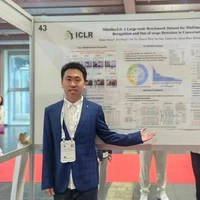
MIntRec2.0: A Large-scale Benchmark Dataset for Multimodal Intent Recognition and Out-of-scope Detection in Conversations

Multimodal intent recognition poses significant challenges, requiring the incorporation of non-verbal modalities from real-world contexts to enhance the comprehension of human intentions. Existing benchmark datasets are limited in scale and suffer from difficulties in handling out-of-scope samples that arise in multi-turn conversational interactions. We introduce MIntRec2.0, a large-scale benchmark dataset for multimodal intent recognition in multi-party conversations. It contains 1,245 dialogues with 15,040 samples, each annotated within a new intent taxonomy of 30 fine-grained classes. Besides 9,304 in-scope samples, it also includes 5,736 out-of-scope samples appearing in multi-turn contexts, which naturally occur in real-world scenarios. Furthermore, we provide comprehensive information on the speakers in each utterance, enriching its utility for multi-party conversational research. We establish a general framework supporting the organization of single-turn and multi-turn dialogue data, modality feature extraction, multimodal fusion, as well as in-scope classification and out-of-scope detection. Evaluation benchmarks are built using classic multimodal fusion methods, ChatGPT, and human evaluators. While existing methods incorporating nonverbal information yield improvements, effectively leveraging context information and detecting out-of-scope samples remains a substantial challenge. Notably, large language models exhibit a significant performance gap compared to humans, highlighting the limitations of machine learning methods in the cognitive intent understanding task. We believe that MIntRec2.0 will serve as a valuable resource, providing a pioneering foundation for research in human-machine conversational interactions, and significantly facilitating related applications. The full dataset and codes are available at https://github.com/thuiar/MIntRec2.0.

  • 9 authors
·
Mar 16, 2024

Omni Demand Understanding: A Benchmark for Contextual User-Intent Inference in Multimodal Interaction

Natural audio-visual interaction is emerging as an important interface for AI assistants, allowing users to communicate through speech and vision rather than carefully composed text prompts. However, existing benchmarks of interactive capabilities still focus primarily on response quality, leaving a more fundamental question underexplored: can a model correctly infer the user's underlying demand from complex multimodal interaction? Real-world user demands are often underspecified in speech and must be inferred from multimodal cues and dialogue history. This inference is further complicated by ambiguous or disfluent expression and noisy acoustic environments. Conversely, request-like speech may not constitute a demand to the assistant, leading to false triggers. We establish Omni Demand Understanding (ODU) as a distinct multimodal contextual inference problem: given an interaction stream, a model must detect whether a user demand is present and infer intent from multimodal and conversational context. ODU evaluates this capability along five dimensions, covering both single-turn and multi-turn interactions. We construct ODU-Bench using a challenge-driven taxonomy, taxonomy-guided agentic video generation, and human-recorded interactions, followed by media-grounded annotation and human verification. We evaluate 14 native MLLMs. Even the strongest, Gemini 3.1 Pro, recovers only 44.7% of key information that must be inferred from visual, acoustic, or conversational context. Moreover, 11 of the 14 models exhibit false-trigger rates above 50% on non-demand scenarios. These results reveal a systematic capability gap in current MLLMs' ability to infer contextual user demands. We hope ODU can establish the evaluation of a previously underexplored yet essential capability in multimodal interaction: correctly understanding user demands before generating an appropriate response.

  • 18 authors
·
Sep 17

UAF: A Unified Audio Front-end LLM for Full-Duplex Speech Interaction

Full-duplex speech interaction, as the most natural and intuitive mode of human communication, is driving artificial intelligence toward more human-like conversational systems. Traditional cascaded speech processing pipelines suffer from critical limitations, including accumulated latency, information loss, and error propagation across modules. To address these issues, recent efforts focus on the end-to-end audio large language models (LLMs) like GPT-4o, which primarily unify speech understanding and generation task. However, most of these models are inherently half-duplex, and rely on a suite of separate, task-specific front-end components, such as voice activity detection (VAD) and turn-taking detection (TD). In our development of speech assistant, we observed that optimizing the speech front-end is equally crucial as advancing the back-end unified model for achieving seamless, responsive interactions. To bridge this gap, we propose the first unified audio front-end LLM (UAF) tailored for full-duplex speech systems. Our model reformulates diverse audio front-end tasks into a single auto-regressive sequence prediction problem, including VAD, TD, speaker recognition (SR), automatic speech recognition (ASR) and question answer (QA). It takes streaming fixed-duration audio chunk (e.g., 600 ms) as input, leverages a reference audio prompt to anchor the target speaker at the beginning, and regressively generates discrete tokens encoding both semantic content and system-level state controls (e.g., interruption signals). Experiments demonstrate that our model achieves leading performance across multiple audio front-end tasks and significantly enhances response latency and interruption accuracy in real-world interaction scenarios.

  • 4 authors
·
Apr 29

Reference-Driven Multi-Speaker Audio Scene Generation from In-the-Wild Priors

Existing multi-speaker dialogue systems bind speakers to utterances through structured supervision: per-turn tags, multi-stream transcriptions, or learnable speaker embeddings. These systems operate within speech-only pipelines that produce clean vocal sequences without the ambient texture of real conversations. We take a different approach. Our method, ScenA, conditions a text-to-audio flow-matching foundation model, pretrained on large-scale in-the-wild data, directly on multiple reference voices and a free-form natural language prompt that describes an entire multi-speaker audio scene. Leveraging such a foundational model allows us to inherit its capacity for natural, non-studio audio: background noise, room acoustics, overlapping dialogue, and spontaneous paralinguistic events, while adding multi-speaker control without any per-turn structure. Concretely, reference latents are concatenated into the model's token sequence and distinguished by lightweight identity-aware positional encodings. However, we identify a critical obstacle to this approach: the Reference Shortcut. During training under standard noise schedules, the model can identify the matching reference by acoustic similarity to the noisy target, bypassing the text prompt entirely. We address this with a high-noise-biased timestep distribution that forces the model to rely on the text prompt for speaker assignment. We evaluate ScenA on the CoVoMix2-Dialogue benchmark, showing that it outperforms existing multi-speaker systems on speaker-binding metrics while generating rich conversational audio with overlapping speech, emotional vocalizations, and ambient sound. Our results demonstrate the advantage of using a general-purpose audio model conditioned on a free-form scene description, rather than passing structured dialog scripts through a speech-only pipeline.

  • 10 authors
·
Jun 16

Predicting Turn-Taking Outcomes in Multi-Party Conversation: Interpretable Modelling of Speech and Gaze Dynamics with Interpersonal Closeness

Smooth speaker transitions are fundamental to effective conversation and rely on an interlocutor's ability to predict when to enter the conversation. This ability depends on accurately interpreting and expressing the verbal and non-verbal cues that signal when a speaker wishes to take or relinquish the floor. The process becomes even more complex in noisy, natural, multi-party settings, with multiple interlocutors available. This study models how gaze and speech, together with perceived interpersonal closeness, signal conversational floor changes in free four-person dialogue. Using the GaMMA corpus, we trained logistic regression models using interpretable, behaviourally motivated features extracted before each turn-taking event to classify floor-transfer outcomes as gaps or overlaps. Predictors included gaze features such as transition motifs and behavioural contrasts, entropy, gaze-based addressee identity, and mutual gaze, alongside speech features derived from speaker loudness, as well as perceived interpersonal closeness (IOS) between speakers. Results show that gaze features capture predictive structure, and that combining them with loudness improves performance (ROC AUC = 0.76 +- 0.04). Loudness reflected speaker control, while gaze dispersion and addressing indexed listener readiness and competitive entry. Performance remained robust across noise conditions, indicating that gaze provides a complementary, noise-resilient cue to turn-taking dynamics.

  • 4 authors
·
Aug 27

Friends-MMC: A Dataset for Multi-modal Multi-party Conversation Understanding

Multi-modal multi-party conversation (MMC) is a less studied yet important topic of research due to that it well fits real-world scenarios and thus potentially has more widely-used applications. Compared with the traditional multi-modal conversations, MMC requires stronger character-centered understanding abilities as there are many interlocutors appearing in both the visual and textual context. To facilitate the study of this problem, we present Friends-MMC in this paper, an MMC dataset that contains 24,000+ unique utterances paired with video context. To explore the character-centered understanding of the dialogue, we also annotate the speaker of each utterance, the names and bounding bboxes of faces that appear in the video. Based on this Friends-MMC dataset, we further study two fundamental MMC tasks: conversation speaker identification and conversation response prediction, both of which have the multi-party nature with the video or image as visual context. For conversation speaker identification, we demonstrate the inefficiencies of existing methods such as pre-trained models, and propose a simple yet effective baseline method that leverages an optimization solver to utilize the context of two modalities to achieve better performance. For conversation response prediction, we fine-tune generative dialogue models on Friend-MMC, and analyze the benefits of speaker information. The code and dataset is publicly available at https://github.com/yellow-binary-tree/Friends-MMC and thus we call for more attention on modeling speaker information when understanding conversations.

  • 6 authors
·
Dec 23, 2024 2

Audio Interaction Model

Audio is an inherently interactive modality, yet today's Large Audio Language Models (LALMs) are offline, and streaming audio models each handle only a single task such as streaming ASR or voice chatting. It is time to unify them into one online LALM: a model that, through an always-on perceive-decide-respond loop, listens to sound, environment, and instructions in real time and reacts on the fly. We formalize this regime as the Audio Interaction Model, and realize it with Audio-Interaction, a unified streaming model that retains offline task execution while adding online general audio instruction following, from dialogue to full voice chatting, deciding when to respond from the semantics of the stream. To enable this, we propose SoundFlow, a framework that instantiates the perceive-decide-respond loop end to end, from data to training to deployment, through streaming-native data construction, comprehension-aware training, and asynchronous low-latency inference for stable real-time interaction. We further construct StreamAudio-2M, a 2.6M-item streaming corpus spanning 7 fundamental abilities and 28 sub-tasks, and Proactive-Sound-Bench for evaluating proactive audio intervention. Across 8 benchmarks, Audio-Interaction preserves competitive performance on mainstream audio tasks while unlocking capabilities inaccessible to offline LALMs, including real-time ASR, streaming audio instruction following, and proactive help.

Qwen-Audio-Agent Technical Report

We present Qwen-Audio-Agent, a harness that combines full-duplex voice interaction with asynchronous task execution through a foreground-background architecture. A Frontend Agent manages dialogue and selects between direct tool use and delegation, while a Backend Agent carries out delegated tasks in a separate context. An Orchestration Runtime maintains task state, coordinates requests for user input and authorization, and schedules the return of results to the conversation. The runtime separates speech interruption from task cancellation and execution completion from result delivery, allowing conversation to continue while delegated work proceeds. Environmental events and persistent memory provide context within and across sessions. Independent adapters support integration with different frontend models, backend agents, and clients. We instantiate the architecture in desktop assistance, intelligent cockpits, and voice customer service. On an in-house cockpit benchmark of 134 cases, mixed execution achieves a task success rate of 91.04%, compared with 72.39% and 80.60% for the direct and all delegated configurations, respectively. In a separate latency evaluation on matched successful turns, mixed execution reduces mean task execution latency by 26.73% and 30.91% relative to these baselines, respectively. These results support the complementary use of direct tool calls for immediate operations and backend delegation for multi-step tasks.

  • 8 authors
·
Sep 20

Audio MultiChallenge: A Multi-Turn Evaluation of Spoken Dialogue Systems on Natural Human Interaction

End-to-end (E2E) spoken dialogue systems are increasingly replacing cascaded pipelines for voice-based human-AI interaction, processing raw audio directly without intermediate transcription. Existing benchmarks primarily evaluate these models on synthetic speech and single-turn tasks, leaving realistic multi-turn conversational ability underexplored. We introduce Audio MultiChallenge, an open-source benchmark to evaluate E2E spoken dialogue systems under natural multi-turn interaction patterns. Building on the text-based MultiChallenge framework, which evaluates Inference Memory, Instruction Retention, and Self Coherence, we introduce a new axis Voice Editing that tests robustness to mid-utterance speech repairs and backtracking. We further augment each axis to the audio modality, such as introducing Audio-Cue challenges for Inference Memory that require recalling ambient sounds and paralinguistic signals beyond semantic content. We curate 452 conversations from 47 speakers with 1,712 instance-specific rubrics through a hybrid audio-native agentic and human-in-the-loop pipeline that exposes model failures at scale while preserving natural disfluencies found in unscripted human speech. Our evaluation of proprietary and open-source models reveals that even frontier models struggle on our benchmark, with Gemini 3 Pro Preview (Thinking), our highest-performing model achieving a 54.65% pass rate. Error analysis shows that models fail most often on our new axes and that Self Coherence degrades with longer audio context. These failures reflect difficulty of tracking edits, audio cues, and long-range context in natural spoken dialogue. Audio MultiChallenge provides a reproducible testbed to quantify them and drive improvements in audio-native multi-turn interaction capability.

  • 11 authors
·
Dec 16, 2025

Beyond Dyadic Memory: Interaction-Aware Multimodal Memory with Adaptive Agentic Retrieval for Multi-Party Spoken Conversations

Long-term memory enables agents to accumulate information and reason across sessions, yet existing research primarily focuses on dyadic text or image-text conversations, leaving long-term memory for multi-party spoken conversations underexplored. This setting requires preserving conversational content, identifying participants across sessions, and retaining who speaks to whom. To this end, we propose VoxPolyMem, an interaction-aware multimodal memory framework combining incremental speaker identification with a memory hierarchy comprising interaction memory, fact memory, and participant profiles. We formulate retrieval as sequential decision-making, where an agent rewrites queries and selects retrieval tools and memory layers based on accumulated evidence to address information gaps. We further introduce Evidence-Gain GRPO (EG-GRPO), which uses round-wise credit assignment to encourage complementary evidence acquisition. We also construct VoxPolyBench to evaluate memory evolution, personalized answering, memory retrieval and reasoning, and interaction reasoning and attribution in multi-party spoken conversations. VoxPolyMem achieves an overall score of 85.0 on VoxPolyBench, surpassing the strongest evaluated baseline by 23.6 points. On Mem-Gallery and H2HMem-Multi, it scores 89.6 and 74.4, respectively, exceeding the strongest evaluated public memory baselines by over 8 points each. These results highlight its potential for persistent, personalized assistance in multi-party multimodal interactions. Code and datasets are available at https://voxpolymem.github.io/VoxPolyBench/demo/

Selective Attention System (SAS): Device-Addressed Speech Detection for Real-Time On-Device Voice AI

We study device-addressed speech detection under pre-ASR edge deployment constraints, where systems must decide whether to forward audio before transcription under strict latency and compute limits. We show that, in multi-speaker environments with temporally ambiguous utterances, this task is more effectively modelled as a sequential routing problem over interaction history than as an utterance-local classification task. We formalize this as Sequential Device-Addressed Routing (SDAR) and present the Selective Attention System (SAS), an on-device implementation that instantiates this formulation. On a held-out 60-hour multi-speaker English test set, the primary audio-only configuration achieves F1=0.86 (precision=0.89, recall=0.83); with an optional camera, audio+video fusion raises F1 to 0.95 (precision=0.97, recall=0.93). Removing causal interaction history (Stage~3) reduced F1 from 0.95 to 0.57+/-0.03 in the audio+video configuration under our evaluation protocol. Among the tested components, this was the largest observed ablation effect, indicating that short-horizon interaction history carries substantial decision-relevant information in the evaluated setting. SAS runs fully on-device on ARM Cortex-A class hardware (<150 ms latency, <20 MB footprint). All results are from internal evaluation on a proprietary dataset evaluated primarily in English; a 5-hour evaluation subset may be shared for independent verification (Section 8.8).

  • 4 authors
·
Apr 8

SALMONN-duo: Adaptive Dual-System Coordination for Full-Duplex Voice Agents

Full-duplex speech large language models (LLMs) enable low-latency, natural voice interaction. However, real-world agents must also use tools and perform deliberative reasoning-operations whose variable latency and computational cost conflict with the stringent timing requirements of real-time conversation. To reconcile these demands, we propose SALMONN-duo, an adaptive dual-system voice agent inspired by dual-process theories of cognition. SALMONN-duo separates real-time interaction from deliberative computation by pairing an always-on, fast-thinking full-duplex speech LLM (system 1) with a powerful asynchronous slow-thinking LLM agent (system 2). Beyond handling real-time interaction, system 1 learns when to answer directly and when to delegate, remaining responsive during backend execution and seamlessly integrating returned information into the ongoing dialogue without exposing tool traces or losing conversational context. Evaluations on single-turn spoken question answering (QA) and multi-turn conversations demonstrate that adaptive delegation substantially improves accuracy on knowledge-intensive and multi-hop reasoning questions, while knowledge-boundary-aware training avoids unnecessary system 2 invocations. On a customized version of τ-Voice, SALMONN-duo further demonstrates its ability to complete environment-grounded, policy-constrained tasks through multi-turn interactions in realistic business scenarios. Finally, cost-aware reinforcement learning further enhances the trade-off between task performance and backend usage across the QA and conversation tasks, while improving task success and response safety on τ-Voice with an acceptable increase in the delegation rate.

  • 8 authors
·
Sep 27

Language Model Can Listen While Speaking

Dialogue serves as the most natural manner of human-computer interaction (HCI). Recent advancements in speech language models (SLM) have significantly enhanced speech-based conversational AI. However, these models are limited to turn-based conversation, lacking the ability to interact with humans in real-time spoken scenarios, for example, being interrupted when the generated content is not satisfactory. To address these limitations, we explore full duplex modeling (FDM) in interactive speech language models (iSLM), focusing on enhancing real-time interaction and, more explicitly, exploring the quintessential ability of interruption. We introduce a novel model design, namely listening-while-speaking language model (LSLM), an end-to-end system equipped with both listening and speaking channels. Our LSLM employs a token-based decoder-only TTS for speech generation and a streaming self-supervised learning (SSL) encoder for real-time audio input. LSLM fuses both channels for autoregressive generation and detects turn-taking in real time. Three fusion strategies -- early fusion, middle fusion, and late fusion -- are explored, with middle fusion achieving an optimal balance between speech generation and real-time interaction. Two experimental settings, command-based FDM and voice-based FDM, demonstrate LSLM's robustness to noise and sensitivity to diverse instructions. Our results highlight LSLM's capability to achieve duplex communication with minimal impact on existing systems. This study aims to advance the development of interactive speech dialogue systems, enhancing their applicability in real-world contexts.

  • 8 authors
·
Aug 5, 2024 6

Integrating Audio, Visual, and Semantic Information for Enhanced Multimodal Speaker Diarization

Speaker diarization, the process of segmenting an audio stream or transcribed speech content into homogenous partitions based on speaker identity, plays a crucial role in the interpretation and analysis of human speech. Most existing speaker diarization systems rely exclusively on unimodal acoustic information, making the task particularly challenging due to the innate ambiguities of audio signals. Recent studies have made tremendous efforts towards audio-visual or audio-semantic modeling to enhance performance. However, even the incorporation of up to two modalities often falls short in addressing the complexities of spontaneous and unstructured conversations. To exploit more meaningful dialogue patterns, we propose a novel multimodal approach that jointly utilizes audio, visual, and semantic cues to enhance speaker diarization. Our method elegantly formulates the multimodal modeling as a constrained optimization problem. First, we build insights into the visual connections among active speakers and the semantic interactions within spoken content, thereby establishing abundant pairwise constraints. Then we introduce a joint pairwise constraint propagation algorithm to cluster speakers based on these visual and semantic constraints. This integration effectively leverages the complementary strengths of different modalities, refining the affinity estimation between individual speaker embeddings. Extensive experiments conducted on multiple multimodal datasets demonstrate that our approach consistently outperforms state-of-the-art speaker diarization methods.

  • 8 authors
·
Aug 21, 2024

Beyond Two Tracks: Speaker-Anchored Full-Duplex Dialogue Recovery

Spoken interaction is moving from alternating turns to full-duplex conversation, where an agent listens while speaking. Learning this coordination requires natural dialogue with persistent speaker-resolved tracks, a data requirement that remains difficult to satisfy at scale. Generative recovery offers a route from ordinary recordings, but recovering two voices is not enough: their track assignments can drift as the conversation unfolds. We address this missing link with speaker-anchored routing before diffusion: a 1.84M-parameter module matches the separator's coarse streams to fixed enrollment identities and orders them before a frozen generator reconstructs the speech, without retraining the generator or altering the reconstructed audio. On 25-minute remote conversations, routing cuts wrong-track time from 43.9% to 4.1%, below the 6.2% of matched-enrollment waveform re-identification, with its largest advantage when one participant holds the floor (17.8% versus 28.6%), and raises fixed-track activity F1 from 0.46 to 0.84 while per-chunk reconstruction quality is unchanged. The same router transfers to unseen face-to-face and telephone recordings, and a margin-gated verification step brings their wrong-track time to 0.9-1.7% while embedding 20-36% of the output, where full re-identification embeds all of it. Recovered voices thus become the participant-consistent tracks that full-duplex dialogue modeling needs. Audio examples: https://elpsykongloo.github.io/beyond-two-tracks/

  • 6 authors
·
Oct 18

ViBES: A Conversational Agent with Behaviorally-Intelligent 3D Virtual Body

Human communication is inherently multimodal and social: words, prosody, and body language jointly carry intent. Yet most prior systems model human behavior as a translation task co-speech gesture or text-to-motion that maps a fixed utterance to motion clips-without requiring agentic decision-making about when to move, what to do, or how to adapt across multi-turn dialogue. This leads to brittle timing, weak social grounding, and fragmented stacks where speech, text, and motion are trained or inferred in isolation. We introduce ViBES (Voice in Behavioral Expression and Synchrony), a conversational 3D agent that jointly plans language and movement and executes dialogue-conditioned body actions. Concretely, ViBES is a speech-language-behavior (SLB) model with a mixture-of-modality-experts (MoME) backbone: modality-partitioned transformer experts for speech, facial expression, and body motion. The model processes interleaved multimodal token streams with hard routing by modality (parameters are split per expert), while sharing information through cross-expert attention. By leveraging strong pretrained speech-language models, the agent supports mixed-initiative interaction: users can speak, type, or issue body-action directives mid-conversation, and the system exposes controllable behavior hooks for streaming responses. We further benchmark on multi-turn conversation with automatic metrics of dialogue-motion alignment and behavior quality, and observe consistent gains over strong co-speech and text-to-motion baselines. ViBES goes beyond "speech-conditioned motion generation" toward agentic virtual bodies where language, prosody, and movement are jointly generated, enabling controllable, socially competent 3D interaction. Code and data will be made available at: ai.stanford.edu/~juze/ViBES/

  • 8 authors
·
Dec 16, 2025

Qwen-Audio: Advancing Universal Audio Understanding via Unified Large-Scale Audio-Language Models

Recently, instruction-following audio-language models have received broad attention for audio interaction with humans. However, the absence of pre-trained audio models capable of handling diverse audio types and tasks has hindered progress in this field. Consequently, most existing works have only been able to support a limited range of interaction capabilities. In this paper, we develop the Qwen-Audio model and address this limitation by scaling up audio-language pre-training to cover over 30 tasks and various audio types, such as human speech, natural sounds, music, and songs, to facilitate universal audio understanding abilities. However, directly co-training all tasks and datasets can lead to interference issues, as the textual labels associated with different datasets exhibit considerable variations due to differences in task focus, language, granularity of annotation, and text structure. To overcome the one-to-many interference, we carefully design a multi-task training framework by conditioning on a sequence of hierarchical tags to the decoder for encouraging knowledge sharing and avoiding interference through shared and specified tags respectively. Remarkably, Qwen-Audio achieves impressive performance across diverse benchmark tasks without requiring any task-specific fine-tuning, surpassing its counterparts. Building upon the capabilities of Qwen-Audio, we further develop Qwen-Audio-Chat, which allows for input from various audios and text inputs, enabling multi-turn dialogues and supporting various audio-central scenarios.

  • 8 authors
·
Nov 14, 2023

TIDES: A Longitudinal Bilingual Dataset for Modeling Multi-Party Social Dynamics

Group conversations are fundamental to human collaboration, yet standard large language models (LLMs) still struggle with the complexities of multi-party interaction. This challenge persists in part because existing group conversation datasets are often limited to short-term lab settings with contrived tasks, failing to capture the long-term social dynamics of real-world teams. To bridge this gap, we introduce TIDES, a high-resolution longitudinal dataset tracking 12 university project teams over a full semester. Comprising 75,971 utterances in both English and Korean from in-person meetings, TIDES provides a naturalistic record of teams working on self-managed projects. Our socio-structural annotations-covering interaction types, emergent roles, and development stages-allow for modeling of team evolution over months. Experiments show that fine-tuning on TIDES improves next-speaker prediction by 13.8 percentage points over a bigram baseline (64.53%) and yields performance comparable to strong proprietary zero-shot models. The model also comes within 2.1 percentage points of the published state of the art on the AMI Meeting Corpus while using approximately 42% less training data. However, human evaluations suggest that better next-speaker prediction does not necessarily yield more natural or coherent utterances, as fine-tuned models were generally less preferred than vanilla models. This potential mismatch motivates further study of how structural modeling can support natural multi-party generation.

  • 6 authors
·
Aug 2

NemotronLabs VoiceChat: An Open Full-duplex Speech-to-Speech Model with Tool Calling Capabilities

We introduce NemotronLabs VoiceChat, an open full-duplex speech-to-speech model with native tool-calling capabilities. NemotronLabs VoiceChat combines a streaming speech encoder and decoder-only language model with parallel specialized output streams for agent text and structured function calls, an auxiliary RNN-T branch for incremental user transcription, and a streaming TTS decoder. This design enables the model to listen, transcribe, reason, invoke tools, and speak within a unified streaming architecture while preserving the temporal behavior required for natural conversation. On Full-Duplex-Bench 1.0, NemotronLabs VoiceChat achieves the lowest pause-handling takeover rates among evaluated open-weight systems, 100\% takeover following user interruptions, and a 4.33/5 post-interruption response-quality score. On Full-Duplex-Bench 1.5, it resumes its response after user backchannels in 93\% of cases. NemotronLabs VoiceChat obtains a 55.1 normalized average on VoiceBench and, on Full-Duplex-Bench 3.0 (FDB 3.0), achieves 82.5\% tool-selection F1, while argument accuracy and end-to-end tool execution remain areas for improvement. These results demonstrate that full-duplex interaction, speech recognition and generation, general language capabilities, and external tool use can be integrated in a single open speech-to-speech model without sacrificing real-time conversational behavior.

  • 49 authors
·
Sep 17 1

Piggybacking on Perception: Stealthy Concurrent Audio Prompt Injections against Multimodal LLM Agents

Large Language Model (LLM)-driven multimodal agents are increasingly deployed to execute autonomous tasks via continuous audio interaction. While this paradigm enhances interaction naturalness, it introduces a critical yet under-explored attack surface, as audio inputs inevitably contain environmental noise beyond user control. In this paper, we investigate concurrent audio prompt injection attacks targeting multimodal agents. Distinct from traditional acoustic attacks on voice devices, we propose novel techniques for instruction augmentation and scenario concealment. These methods allow malicious audio instructions to imperceptibly "piggyback" onto user speech, thereby hijacking agents to execute malicious actions. To systematically quantify this threat, we construct AudioAgentSecurity, the first comprehensive benchmark for audio instruction injection attacks, encompassing 8 real-world task scenarios and 10 distinct attack patterns. We evaluate 11 state-of-the-art agents, including Gemini 3 Pro and GPT-4o-audio. Notably, our methods achieve an average Attack Success Rate (ASR) of 69.10\% against the advanced Gemini 3 Pro. To counter this threat, we further introduce Cascaded Audio Decoupling and Verification (CADV), a defense mechanism based on source separation and consistency analysis. Compared with existing prompt-level defenses, CADV achieving up to 96\% detection accuracy and providing effective protection against a broad range of acoustic injection attacks. Finally, real-world experiments with human volunteers on Doubao AI Smartphone in diverse dynamic real-world scenarios confirm the attacks' high stealth and efficacy, while demonstrating that our defense reliably mitigates these vulnerabilities.

  • 9 authors
·
Jul 30

Mixed-Session Conversation with Egocentric Memory

Recently introduced dialogue systems have demonstrated high usability. However, they still fall short of reflecting real-world conversation scenarios. Current dialogue systems exhibit an inability to replicate the dynamic, continuous, long-term interactions involving multiple partners. This shortfall arises because there have been limited efforts to account for both aspects of real-world dialogues: deeply layered interactions over the long-term dialogue and widely expanded conversation networks involving multiple participants. As the effort to incorporate these aspects combined, we introduce Mixed-Session Conversation, a dialogue system designed to construct conversations with various partners in a multi-session dialogue setup. We propose a new dataset called MiSC to implement this system. The dialogue episodes of MiSC consist of 6 consecutive sessions, with four speakers (one main speaker and three partners) appearing in each episode. Also, we propose a new dialogue model with a novel memory management mechanism, called Egocentric Memory Enhanced Mixed-Session Conversation Agent (EMMA). EMMA collects and retains memories from the main speaker's perspective during conversations with partners, enabling seamless continuity in subsequent interactions. Extensive human evaluations validate that the dialogues in MiSC demonstrate a seamless conversational flow, even when conversation partners change in each session. EMMA trained with MiSC is also evaluated to maintain high memorability without contradiction throughout the entire conversation.

  • 3 authors
·
Oct 3, 2024 2

Covo-Audio Technical Report

In this work, we present Covo-Audio, a 7B-parameter end-to-end LALM that directly processes continuous audio inputs and generates audio outputs within a single unified architecture. Through large-scale curated pretraining and targeted post-training, Covo-Audio achieves state-of-the-art or competitive performance among models of comparable scale across a broad spectrum of tasks, including speech-text modeling, spoken dialogue, speech understanding, audio understanding, and full-duplex voice interaction. Extensive evaluations demonstrate that the pretrained foundation model exhibits strong speech-text comprehension and semantic reasoning capabilities on multiple benchmarks, outperforming representative open-source models of comparable scale. Furthermore, Covo-Audio-Chat, the dialogue-oriented variant, demonstrates strong spoken conversational abilities, including understanding, contextual reasoning, instruction following, and generating contextually appropriate and empathetic responses, validating its applicability to real-world conversational assistant scenarios. Covo-Audio-Chat-FD, the evolved full-duplex model, achieves substantially superior performance on both spoken dialogue capabilities and full-duplex interaction behaviors, demonstrating its competence in practical robustness. To mitigate the high cost of deploying end-to-end LALMs for natural conversational systems, we propose an intelligence-speaker decoupling strategy that separates dialogue intelligence from voice rendering, enabling flexible voice customization with minimal text-to-speech (TTS) data while preserving dialogue performance. Overall, our results highlight the strong potential of 7B-scale models to integrate sophisticated audio intelligence with high-level semantic reasoning, and suggest a scalable path toward more capable and versatile LALMs.

tencent Tencent
·
Feb 10 1

τ-Voice: Benchmarking Full-Duplex Voice Agents on Real-World Domains

Full-duplex voice agents--systems that listen and speak simultaneously--are rapidly moving from research to production. However, existing evaluations address conversational dynamics and task completion in isolation. We introduce τ-voice, a benchmark for evaluating voice agents on grounded tasks with real-world complexity: agents must navigate complex multi-turn conversations, adhere to domain policies, and interact with the environment. The framework extends τ^2-bench into a novel voice agent benchmark combining verifiable completion of complex grounded tasks, full-duplex interaction, and realistic audio--enabling direct comparison between voice and text performance. A controllable and realistic voice user simulator provides diverse accents, realistic audio environments, and rich turn-taking dynamics; by decoupling simulation from wall-clock time, the user simulator can use the most capable LLM without real-time constraints. We evaluate task completion (pass@1) and voice interaction quality across 278 tasks: while GPT-5 (reasoning) achieves 85%, voice agents reach only 31--51% under clean conditions and 26--38% under realistic conditions with noise and diverse accents--retaining only 30--45% of text capability; qualitative analysis confirms 79--90% of failures stem from agent behavior, suggesting that observed failures primarily reflect agent behavior under our evaluation setup. τ-voice provides a reproducible testbed for measuring progress toward voice agents that are natural, conversational, and reliable.

  • 4 authors
·
Mar 13

SpeechAgents: Human-Communication Simulation with Multi-Modal Multi-Agent Systems

Human communication is a complex and diverse process that not only involves multiple factors such as language, commonsense, and cultural backgrounds but also requires the participation of multimodal information, such as speech. Large Language Model (LLM)-based multi-agent systems have demonstrated promising performance in simulating human society. Can we leverage LLM-based multi-agent systems to simulate human communication? However, current LLM-based multi-agent systems mainly rely on text as the primary medium. In this paper, we propose SpeechAgents, a multi-modal LLM based multi-agent system designed for simulating human communication. SpeechAgents utilizes multi-modal LLM as the control center for individual agent and employes multi-modal signals as the medium for exchanged messages among agents. Additionally, we propose Multi-Agent Tuning to enhance the multi-agent capabilities of LLM without compromising general abilities. To strengthen and evaluate the effectiveness of human communication simulation, we build the Human-Communication Simulation Benchmark. Experimental results demonstrate that SpeechAgents can simulate human communication dialogues with consistent content, authentic rhythm, and rich emotions and demonstrate excellent scalability even with up to 25 agents, which can apply to tasks such as drama creation and audio novels generation. Code and models will be open-sourced at https://github. com/0nutation/SpeechAgents

  • 6 authors
·
Jan 8, 2024

LPM 1.0: Video-based Character Performance Model

Performance, the externalization of intent, emotion, and personality through visual, vocal, and temporal behavior, is what makes a character alive. Learning such performance from video is a promising alternative to traditional 3D pipelines. However, existing video models struggle to jointly achieve high expressiveness, real-time inference, and long-horizon identity stability, a tension we call the performance trilemma. Conversation is the most comprehensive performance scenario, as characters simultaneously speak, listen, react, and emote while maintaining identity over time. To address this, we present LPM 1.0 (Large Performance Model), focusing on single-person full-duplex audio-visual conversational performance. Concretely, we build a multimodal human-centric dataset through strict filtering, speaking-listening audio-video pairing, performance understanding, and identity-aware multi-reference extraction; train a 17B-parameter Diffusion Transformer (Base LPM) for highly controllable, identity-consistent performance through multimodal conditioning; and distill it into a causal streaming generator (Online LPM) for low-latency, infinite-length interaction. At inference, given a character image with identity-aware references, LPM 1.0 generates listening videos from user audio and speaking videos from synthesized audio, with text prompts for motion control, all at real-time speed with identity-stable, infinite-length generation. LPM 1.0 thus serves as a visual engine for conversational agents, live streaming characters, and game NPCs. To systematically evaluate this setting, we propose LPM-Bench, the first benchmark for interactive character performance. LPM 1.0 achieves state-of-the-art results across all evaluated dimensions while maintaining real-time inference.

  • 25 authors
·
Apr 8 4

SpeakerLM: End-to-End Versatile Speaker Diarization and Recognition with Multimodal Large Language Models

The Speaker Diarization and Recognition (SDR) task aims to predict "who spoke when and what" within an audio clip, which is a crucial task in various real-world multi-speaker scenarios such as meeting transcription and dialogue systems. Existing SDR systems typically adopt a cascaded framework, combining multiple modules such as speaker diarization (SD) and automatic speech recognition (ASR). The cascaded systems suffer from several limitations, such as error propagation, difficulty in handling overlapping speech, and lack of joint optimization for exploring the synergy between SD and ASR tasks. To address these limitations, we introduce SpeakerLM, a unified multimodal large language model for SDR that jointly performs SD and ASR in an end-to-end manner. Moreover, to facilitate diverse real-world scenarios, we incorporate a flexible speaker registration mechanism into SpeakerLM, enabling SDR under different speaker registration settings. SpeakerLM is progressively developed with a multi-stage training strategy on large-scale real data. Extensive experiments show that SpeakerLM demonstrates strong data scaling capability and generalizability, outperforming state-of-the-art cascaded baselines on both in-domain and out-of-domain public SDR benchmarks. Furthermore, experimental results show that the proposed speaker registration mechanism effectively ensures robust SDR performance of SpeakerLM across diverse speaker registration conditions and varying numbers of registered speakers.

  • 9 authors
·
Aug 8, 2025

A Multimodal Conversational Agent for Tabular Data Analysis

Large language models (LLMs) can reshape information processing by handling data analysis, visualization, and interpretation in an interactive, context-aware dialogue with users, including voice interaction, while maintaining high performance. In this article, we present Talk2Data, a multimodal LLM-driven conversational agent for intuitive data exploration. The system lets users query datasets with voice or text instructions and receive answers as plots, tables, statistics, or spoken explanations. Built on LLMs, the suggested design combines OpenAI Whisper automatic speech recognition (ASR) system, Qwen-coder code generation LLM/model, custom sandboxed execution tools, and Coqui library for text-to-speech (TTS) within an agentic orchestration loop. Unlike text-only analysis tools, it adapts responses across modalities and supports multi-turn dialogues grounded in dataset context. In an evaluation of 48 tasks on three datasets, our prototype achieved 95.8% accuracy with model-only generation time under 1.7 seconds (excluding ASR and execution time). A comparison across five LLM sizes (1.5B-32B) revealed accuracy-latency-cost trade-offs, with a 7B model providing the best balance for interactive use. By routing between conversation with user and code execution, constrained to a transparent sandbox, with simultaneously grounding prompts in schema-level context, the Talk2Data agent reliably retrieves actionable insights from tables while making computations verifiable. In the article, except for the Talk2Data agent itself, we discuss implications for human-data interaction, trust in LLM-driven analytics, and future extensions toward large-scale multimodal assistants.

  • 4 authors
·
Nov 22, 2025

Beyond the Turn-Based Game: Enabling Real-Time Conversations with Duplex Models

As large language models (LLMs) increasingly permeate daily lives, there is a growing demand for real-time interactions that mirror human conversations. Traditional turn-based chat systems driven by LLMs prevent users from verbally interacting with the system while it is generating responses. To overcome these limitations, we adapt existing LLMs to duplex models so that these LLMs can listen for users while generating output and dynamically adjust themselves to provide users with instant feedback. % such as in response to interruptions. Specifically, we divide the queries and responses of conversations into several time slices and then adopt a time-division-multiplexing (TDM) encoding-decoding strategy to pseudo-simultaneously process these slices. Furthermore, to make LLMs proficient enough to handle real-time conversations, we build a fine-tuning dataset consisting of alternating time slices of queries and responses as well as covering typical feedback types in instantaneous interactions. Our experiments show that although the queries and responses of conversations are segmented into incomplete slices for processing, LLMs can preserve their original performance on standard benchmarks with a few fine-tuning steps on our dataset. Automatic and human evaluation indicate that duplex models make user-AI interactions more natural and human-like, and greatly improve user satisfaction compared to vanilla LLMs. Our duplex model and dataset will be released.

  • 9 authors
·
Jun 21, 2024 2

Beyond Single-Turn: A Survey on Multi-Turn Interactions with Large Language Models

Recent advancements in large language models (LLMs) have revolutionized their ability to handle single-turn tasks, yet real-world applications demand sophisticated multi-turn interactions. This survey provides a comprehensive review of recent advancements in evaluating and enhancing multi-turn interactions in LLMs. Focusing on task-specific scenarios, from instruction following in diverse domains such as math and coding to complex conversational engagements in roleplay, healthcare, education, and even adversarial jailbreak settings, we systematically examine the challenges of maintaining context, coherence, fairness, and responsiveness over prolonged dialogues. The paper organizes current benchmarks and datasets into coherent categories that reflect the evolving landscape of multi-turn dialogue evaluation. In addition, we review a range of enhancement methodologies under multi-turn settings, including model-centric strategies (contextual learning, supervised fine-tuning, reinforcement learning, and new architectures), external integration approaches (memory-augmented, retrieval-based methods, and knowledge graph), and agent-based techniques for collaborative interactions. Finally, we discuss open challenges and propose future directions for research to further advance the robustness and effectiveness of multi-turn interactions in LLMs. Related resources and papers are available at https://github.com/yubol-cmu/Awesome-Multi-Turn-LLMs.

  • 7 authors
·
Apr 7, 2025

GroupGPT: A Token-efficient and Privacy-preserving Agentic Framework for Multi-User Chat Assistant

Recent advances in large language models (LLMs) have enabled increasingly capable chatbots. However, most existing systems focus on single-user settings and do not generalize well to multi-user group chats, where agents require more proactive and accurate intervention under complex, evolving contexts. Existing approaches typically rely on LLMs for both reasoning and generation, leading to high token consumption, limited scalability, and potential privacy risks. To address these challenges, we propose GroupGPT, a token-efficient and privacy-preserving agentic framework for multi-user chat assistant. GroupGPT adopts a small-large model collaborative architecture to decouple intervention timing from response generation, enabling efficient and accurate decision-making. The framework also supports multimodal inputs, including memes, images, videos, and voice messages. We further introduce MUIR, a benchmark dataset for multi-user chat assistant intervention reasoning. MUIR contains 2,500 annotated group chat segments with intervention labels and rationales, supporting evaluation of timing accuracy and response quality. We evaluate a range of models on MUIR, from large language models to smaller counterparts. Extensive experiments demonstrate that GroupGPT produces accurate and well-timed responses, achieving an average score of 4.72/5.0 in LLM-based evaluation, and is well received by users across diverse group chat scenarios. Moreover, GroupGPT reduces token usage by up to 3 times compared to baseline methods, while providing privacy sanitization of user messages before cloud transmission. Code is available at: https://github.com/Eliot-Shen/GroupGPT .

  • 5 authors
·
Mar 1 2