
Get trending papers in your email inbox once a day!
Get trending papers in your email inbox!
Subscribe

ShadowDraw: From Any Object to Shadow-Drawing Compositional Art
We introduce ShadowDraw, a framework that transforms ordinary 3D objects into shadow-drawing compositional art. Given a 3D object, our system predicts scene parameters, including object pose and lighting, together with a partial line drawing, such that the cast shadow completes the drawing into a recognizable image. To this end, we optimize scene configurations to reveal meaningful shadows, employ shadow strokes to guide line drawing generation, and adopt automatic evaluation to enforce shadow-drawing coherence and visual quality. Experiments show that ShadowDraw produces compelling results across diverse inputs, from real-world scans and curated datasets to generative assets, and naturally extends to multi-object scenes, animations, and physical deployments. Our work provides a practical pipeline for creating shadow-drawing art and broadens the design space of computational visual art, bridging the gap between algorithmic design and artistic storytelling. Check out our project page https://red-fairy.github.io/ShadowDraw/ for more results and an end-to-end real-world demonstration of our pipeline!

VolRecon: Volume Rendering of Signed Ray Distance Functions for Generalizable Multi-View Reconstruction
The success of the Neural Radiance Fields (NeRF) in novel view synthesis has inspired researchers to propose neural implicit scene reconstruction. However, most existing neural implicit reconstruction methods optimize per-scene parameters and therefore lack generalizability to new scenes. We introduce VolRecon, a novel generalizable implicit reconstruction method with Signed Ray Distance Function (SRDF). To reconstruct the scene with fine details and little noise, VolRecon combines projection features aggregated from multi-view features, and volume features interpolated from a coarse global feature volume. Using a ray transformer, we compute SRDF values of sampled points on a ray and then render color and depth. On DTU dataset, VolRecon outperforms SparseNeuS by about 30% in sparse view reconstruction and achieves comparable accuracy as MVSNet in full view reconstruction. Furthermore, our approach exhibits good generalization performance on the large-scale ETH3D benchmark.


Transforming a Non-Differentiable Rasterizer into a Differentiable One with Stochastic Gradient Estimation
We show how to transform a non-differentiable rasterizer into a differentiable one with minimal engineering efforts and no external dependencies (no Pytorch/Tensorflow). We rely on Stochastic Gradient Estimation, a technique that consists of rasterizing after randomly perturbing the scene's parameters such that their gradient can be stochastically estimated and descended. This method is simple and robust but does not scale in dimensionality (number of scene parameters). Our insight is that the number of parameters contributing to a given rasterized pixel is bounded. Estimating and averaging gradients on a per-pixel basis hence bounds the dimensionality of the underlying optimization problem and makes the method scalable. Furthermore, it is simple to track per-pixel contributing parameters by rasterizing ID- and UV-buffers, which are trivial additions to a rasterization engine if not already available. With these minor modifications, we obtain an in-engine optimizer for 3D assets with millions of geometry and texture parameters.

RISE-SDF: a Relightable Information-Shared Signed Distance Field for Glossy Object Inverse Rendering
In this paper, we propose a novel end-to-end relightable neural inverse rendering system that achieves high-quality reconstruction of geometry and material properties, thus enabling high-quality relighting. The cornerstone of our method is a two-stage approach for learning a better factorization of scene parameters. In the first stage, we develop a reflection-aware radiance field using a neural signed distance field (SDF) as the geometry representation and deploy an MLP (multilayer perceptron) to estimate indirect illumination. In the second stage, we introduce a novel information-sharing network structure to jointly learn the radiance field and the physically based factorization of the scene. For the physically based factorization, to reduce the noise caused by Monte Carlo sampling, we apply a split-sum approximation with a simplified Disney BRDF and cube mipmap as the environment light representation. In the relighting phase, to enhance the quality of indirect illumination, we propose a second split-sum algorithm to trace secondary rays under the split-sum rendering framework. Furthermore, there is no dataset or protocol available to quantitatively evaluate the inverse rendering performance for glossy objects. To assess the quality of material reconstruction and relighting, we have created a new dataset with ground truth BRDF parameters and relighting results. Our experiments demonstrate that our algorithm achieves state-of-the-art performance in inverse rendering and relighting, with particularly strong results in the reconstruction of highly reflective objects.

DTA: Physical Camouflage Attacks using Differentiable Transformation Network
To perform adversarial attacks in the physical world, many studies have proposed adversarial camouflage, a method to hide a target object by applying camouflage patterns on 3D object surfaces. For obtaining optimal physical adversarial camouflage, previous studies have utilized the so-called neural renderer, as it supports differentiability. However, existing neural renderers cannot fully represent various real-world transformations due to a lack of control of scene parameters compared to the legacy photo-realistic renderers. In this paper, we propose the Differentiable Transformation Attack (DTA), a framework for generating a robust physical adversarial pattern on a target object to camouflage it against object detection models with a wide range of transformations. It utilizes our novel Differentiable Transformation Network (DTN), which learns the expected transformation of a rendered object when the texture is changed while preserving the original properties of the target object. Using our attack framework, an adversary can gain both the advantages of the legacy photo-realistic renderers including various physical-world transformations and the benefit of white-box access by offering differentiability. Our experiments show that our camouflaged 3D vehicles can successfully evade state-of-the-art object detection models in the photo-realistic environment (i.e., CARLA on Unreal Engine). Furthermore, our demonstration on a scaled Tesla Model 3 proves the applicability and transferability of our method to the real world.


Neural Multi-View Self-Calibrated Photometric Stereo without Photometric Stereo Cues
We propose a neural inverse rendering approach that jointly reconstructs geometry, spatially varying reflectance, and lighting conditions from multi-view images captured under varying directional lighting. Unlike prior multi-view photometric stereo methods that require light calibration or intermediate cues such as per-view normal maps, our method jointly optimizes all scene parameters from raw images in a single stage. We represent both geometry and reflectance as neural implicit fields and apply shadow-aware volume rendering. A spatial network first predicts the signed distance and a reflectance latent code for each scene point. A reflectance network then estimates reflectance values conditioned on the latent code and angularly encoded surface normal, view, and light directions. The proposed method outperforms state-of-the-art normal-guided approaches in shape and lighting estimation accuracy, generalizes to view-unaligned multi-light images, and handles objects with challenging geometry and reflectance.
TimberVision: A Multi-Task Dataset and Framework for Log-Component Segmentation and Tracking in Autonomous Forestry Operations
Timber represents an increasingly valuable and versatile resource. However, forestry operations such as harvesting, handling and measuring logs still require substantial human labor in remote environments posing significant safety risks. Progressively automating these tasks has the potential of increasing their efficiency as well as safety, but requires an accurate detection of individual logs as well as live trees and their context. Although initial approaches have been proposed for this challenging application domain, specialized data and algorithms are still too scarce to develop robust solutions. To mitigate this gap, we introduce the TimberVision dataset, consisting of more than 2k annotated RGB images containing a total of 51k trunk components including cut and lateral surfaces, thereby surpassing any existing dataset in this domain in terms of both quantity and detail by a large margin. Based on this data, we conduct a series of ablation experiments for oriented object detection and instance segmentation and evaluate the influence of multiple scene parameters on model performance. We introduce a generic framework to fuse the components detected by our models for both tasks into unified trunk representations. Furthermore, we automatically derive geometric properties and apply multi-object tracking to further enhance robustness. Our detection and tracking approach provides highly descriptive and accurate trunk representations solely from RGB image data, even under challenging environmental conditions. Our solution is suitable for a wide range of application scenarios and can be readily combined with other sensor modalities.
Is Multiple Object Tracking a Matter of Specialization?
End-to-end transformer-based trackers have achieved remarkable performance on most human-related datasets. However, training these trackers in heterogeneous scenarios poses significant challenges, including negative interference - where the model learns conflicting scene-specific parameters - and limited domain generalization, which often necessitates expensive fine-tuning to adapt the models to new domains. In response to these challenges, we introduce Parameter-efficient Scenario-specific Tracking Architecture (PASTA), a novel framework that combines Parameter-Efficient Fine-Tuning (PEFT) and Modular Deep Learning (MDL). Specifically, we define key scenario attributes (e.g, camera-viewpoint, lighting condition) and train specialized PEFT modules for each attribute. These expert modules are combined in parameter space, enabling systematic generalization to new domains without increasing inference time. Extensive experiments on MOTSynth, along with zero-shot evaluations on MOT17 and PersonPath22 demonstrate that a neural tracker built from carefully selected modules surpasses its monolithic counterpart. We release models and code.


3D Reconstruction with Spatial Memory
We present Spann3R, a novel approach for dense 3D reconstruction from ordered or unordered image collections. Built on the DUSt3R paradigm, Spann3R uses a transformer-based architecture to directly regress pointmaps from images without any prior knowledge of the scene or camera parameters. Unlike DUSt3R, which predicts per image-pair pointmaps each expressed in its local coordinate frame, Spann3R can predict per-image pointmaps expressed in a global coordinate system, thus eliminating the need for optimization-based global alignment. The key idea of Spann3R is to manage an external spatial memory that learns to keep track of all previous relevant 3D information. Spann3R then queries this spatial memory to predict the 3D structure of the next frame in a global coordinate system. Taking advantage of DUSt3R's pre-trained weights, and further fine-tuning on a subset of datasets, Spann3R shows competitive performance and generalization ability on various unseen datasets and can process ordered image collections in real time. Project page: https://hengyiwang.github.io/projects/spanner

Parallel Neural Computing for Scene Understanding from LiDAR Perception in Autonomous Racing
Autonomous driving in high-speed racing, as opposed to urban environments, presents significant challenges in scene understanding due to rapid changes in the track environment. Traditional sequential network approaches may struggle to meet the real-time knowledge and decision-making demands of an autonomous agent covering large displacements in a short time. This paper proposes a novel baseline architecture for developing sophisticated models capable of true hardware-enabled parallelism, achieving neural processing speeds that mirror the agent's high velocity. The proposed model (Parallel Perception Network (PPN)) consists of two independent neural networks, segmentation and reconstruction networks, running parallelly on separate accelerated hardware. The model takes raw 3D point cloud data from the LiDAR sensor as input and converts it into a 2D Bird's Eye View Map on both devices. Each network independently extracts its input features along space and time dimensions and produces outputs parallelly. The proposed method's model is trained on a system with two NVIDIA T4 GPUs, using a combination of loss functions, including edge preservation, and demonstrates a 2x speedup in model inference time compared to a sequential configuration. Implementation is available at: https://github.com/suwesh/Parallel-Perception-Network. Learned parameters of the trained networks are provided at: https://huggingface.co/suwesh/ParallelPerceptionNetwork.

Unsupervised Scene Adaptation with Memory Regularization in vivo
We consider the unsupervised scene adaptation problem of learning from both labeled source data and unlabeled target data. Existing methods focus on minoring the inter-domain gap between the source and target domains. However, the intra-domain knowledge and inherent uncertainty learned by the network are under-explored. In this paper, we propose an orthogonal method, called memory regularization in vivo to exploit the intra-domain knowledge and regularize the model training. Specifically, we refer to the segmentation model itself as the memory module, and minor the discrepancy of the two classifiers, i.e., the primary classifier and the auxiliary classifier, to reduce the prediction inconsistency. Without extra parameters, the proposed method is complementary to the most existing domain adaptation methods and could generally improve the performance of existing methods. Albeit simple, we verify the effectiveness of memory regularization on two synthetic-to-real benchmarks: GTA5 -> Cityscapes and SYNTHIA -> Cityscapes, yielding +11.1% and +11.3% mIoU improvement over the baseline model, respectively. Besides, a similar +12.0% mIoU improvement is observed on the cross-city benchmark: Cityscapes -> Oxford RobotCar.
Scene Coordinate Reconstruction: Posing of Image Collections via Incremental Learning of a Relocalizer
We address the task of estimating camera parameters from a set of images depicting a scene. Popular feature-based structure-from-motion (SfM) tools solve this task by incremental reconstruction: they repeat triangulation of sparse 3D points and registration of more camera views to the sparse point cloud. We re-interpret incremental structure-from-motion as an iterated application and refinement of a visual relocalizer, that is, of a method that registers new views to the current state of the reconstruction. This perspective allows us to investigate alternative visual relocalizers that are not rooted in local feature matching. We show that scene coordinate regression, a learning-based relocalization approach, allows us to build implicit, neural scene representations from unposed images. Different from other learning-based reconstruction methods, we do not require pose priors nor sequential inputs, and we optimize efficiently over thousands of images. Our method, ACE0 (ACE Zero), estimates camera poses to an accuracy comparable to feature-based SfM, as demonstrated by novel view synthesis. Project page: https://nianticlabs.github.io/acezero/

Compact 3D Scene Representation via Self-Organizing Gaussian Grids
3D Gaussian Splatting has recently emerged as a highly promising technique for modeling of static 3D scenes. In contrast to Neural Radiance Fields, it utilizes efficient rasterization allowing for very fast rendering at high-quality. However, the storage size is significantly higher, which hinders practical deployment, e.g.~on resource constrained devices. In this paper, we introduce a compact scene representation organizing the parameters of 3D Gaussian Splatting (3DGS) into a 2D grid with local homogeneity, ensuring a drastic reduction in storage requirements without compromising visual quality during rendering. Central to our idea is the explicit exploitation of perceptual redundancies present in natural scenes. In essence, the inherent nature of a scene allows for numerous permutations of Gaussian parameters to equivalently represent it. To this end, we propose a novel highly parallel algorithm that regularly arranges the high-dimensional Gaussian parameters into a 2D grid while preserving their neighborhood structure. During training, we further enforce local smoothness between the sorted parameters in the grid. The uncompressed Gaussians use the same structure as 3DGS, ensuring a seamless integration with established renderers. Our method achieves a reduction factor of 8x to 26x in size for complex scenes with no increase in training time, marking a substantial leap forward in the domain of 3D scene distribution and consumption. Additional information can be found on our project page: https://fraunhoferhhi.github.io/Self-Organizing-Gaussians/

PROSE: Training-Free Egocentric Scene Registration with Vision-Language Models
Registering two captures of the same indoor space taken at different times underpins persistent spatial memory for robots and AR systems, yet the realistic version of this task is egocentric and its most scalable form is RGB-only. Head-mounted cameras yield blurry, fast-moving, partially overlapping views from which dense geometry is hard to recover. Classical registration leans on exactly the clean point clouds this setting lacks, while learned scene-graph methods require a pre-built or annotated graph and a trained matcher that we find brittle under egocentric data. We take a different route, using a pretrained vision-language model as the source of both scene understanding and cross-scan matching. Our method, PROSE (Prompted Scene rEgistration), lifts each RGB sequence into an object-level 3D scene graph using off-the-shelf foundation models for geometry, segmentation, and language, then prompts the same VLM to match object instances across the two RGB sequences. To make this matching tractable and reliable, we leverage object heights as a prior and verify each proposed match with a paired same/different query, then solve for the rigid transform by hypothesizing a candidate per matched object and selecting the one with the strongest geometric consensus. PROSE adds no learned parameters and requires no depth sensor, training, or annotated graph. On the egocentric Aria Digital Twin and Aria Everyday Activities benchmarks, it outperforms both geometric and learned scene-graph baselines in registration accuracy, on ground-truth and RGB-reconstructed point clouds alike, and the scene graph it produces transfers directly to downstream tasks.

SLayR: Scene Layout Generation with Rectified Flow
We introduce SLayR, Scene Layout Generation with Rectified flow. State-of-the-art text-to-image models achieve impressive results. However, they generate images end-to-end, exposing no fine-grained control over the process. SLayR presents a novel transformer-based rectified flow model for layout generation over a token space that can be decoded into bounding boxes and corresponding labels, which can then be transformed into images using existing models. We show that established metrics for generated images are inconclusive for evaluating their underlying scene layout, and introduce a new benchmark suite, including a carefully designed repeatable human-evaluation procedure that assesses the plausibility and variety of generated layouts. In contrast to previous works, which perform well in either high variety or plausibility, we show that our approach performs well on both of these axes at the same time. It is also at least 5x times smaller in the number of parameters and 37% faster than the baselines. Our complete text-to-image pipeline demonstrates the added benefits of an interpretable and editable intermediate representation.
FilmSceneDesigner: Chaining Set Design for Procedural Film Scene Generation
Film set design plays a pivotal role in cinematic storytelling and shaping the visual atmosphere. However, the traditional process depends on expert-driven manual modeling, which is labor-intensive and time-consuming. To address this issue, we introduce FilmSceneDesigner, an automated scene generation system that emulates professional film set design workflow. Given a natural language description, including scene type, historical period, and style, we design an agent-based chaining framework to generate structured parameters aligned with film set design workflow, guided by prompt strategies that ensure parameter accuracy and coherence. On the other hand, we propose a procedural generation pipeline which executes a series of dedicated functions with the structured parameters for floorplan and structure generation, material assignment, door and window placement, and object retrieval and layout, ultimately constructing a complete film scene from scratch. Moreover, to enhance cinematic realism and asset diversity, we construct SetDepot-Pro, a curated dataset of 6,862 film-specific 3D assets and 733 materials. Experimental results and human evaluations demonstrate that our system produces structurally sound scenes with strong cinematic fidelity, supporting downstream tasks such as virtual previs, construction drawing and mood board creation.
DFIR-DETR: Frequency Domain Enhancement and Dynamic Feature Aggregation for Cross-Scene Small Object Detection
Detecting small objects in UAV remote sensing images and identifying surface defects in industrial inspection remain difficult tasks. These applications face common obstacles: features are sparse and weak, backgrounds are cluttered, and object scales vary dramatically. Current transformer-based detectors, while powerful, struggle with three critical issues. First, features degrade severely as networks downsample progressively. Second, spatial convolutions cannot capture long-range dependencies effectively. Third, standard upsampling methods inflate feature maps unnecessarily. We introduce DFIR-DETR to tackle these problems through dynamic feature aggregation combined with frequency-domain processing. Our architecture builds on three novel components. The DCFA module uses dynamic K-sparse attention, cutting complexity from O(N2) down to O(NK), and employs spatial gated linear units for better nonlinear modeling. The DFPN module applies amplitude-normalized upsampling to prevent feature inflation and uses dual-path shuffle convolution to retain spatial details across scales. The FIRC3 module operates in the frequency domain, achieving global receptive fields without sacrificing efficiency. We tested our method extensively on NEU-DET and VisDrone datasets. Results show mAP50 scores of 92.9% and 51.6% respectively-both state-of-the-art. The model stays lightweight with just 11.7M parameters and 41.2 GFLOPs. Strong performance across two very different domains confirms that DFIR-DETR generalizes well and works effectively in resource-limited settings for cross-scene small object detection.
UniQ: Unified Decoder with Task-specific Queries for Efficient Scene Graph Generation
Scene Graph Generation(SGG) is a scene understanding task that aims at identifying object entities and reasoning their relationships within a given image. In contrast to prevailing two-stage methods based on a large object detector (e.g., Faster R-CNN), one-stage methods integrate a fixed-size set of learnable queries to jointly reason relational triplets <subject, predicate, object>. This paradigm demonstrates robust performance with significantly reduced parameters and computational overhead. However, the challenge in one-stage methods stems from the issue of weak entanglement, wherein entities involved in relationships require both coupled features shared within triplets and decoupled visual features. Previous methods either adopt a single decoder for coupled triplet feature modeling or multiple decoders for separate visual feature extraction but fail to consider both. In this paper, we introduce UniQ, a Unified decoder with task-specific Queries architecture, where task-specific queries generate decoupled visual features for subjects, objects, and predicates respectively, and unified decoder enables coupled feature modeling within relational triplets. Experimental results on the Visual Genome dataset demonstrate that UniQ has superior performance to both one-stage and two-stage methods.
Unleashing the Potential of Multi-modal Foundation Models and Video Diffusion for 4D Dynamic Physical Scene Simulation
Realistic simulation of dynamic scenes requires accurately capturing diverse material properties and modeling complex object interactions grounded in physical principles. However, existing methods are constrained to basic material types with limited predictable parameters, making them insufficient to represent the complexity of real-world materials. We introduce a novel approach that leverages multi-modal foundation models and video diffusion to achieve enhanced 4D dynamic scene simulation. Our method utilizes multi-modal models to identify material types and initialize material parameters through image queries, while simultaneously inferring 3D Gaussian splats for detailed scene representation. We further refine these material parameters using video diffusion with a differentiable Material Point Method (MPM) and optical flow guidance rather than render loss or Score Distillation Sampling (SDS) loss. This integrated framework enables accurate prediction and realistic simulation of dynamic interactions in real-world scenarios, advancing both accuracy and flexibility in physics-based simulations.

SwinTextSpotter v2: Towards Better Synergy for Scene Text Spotting
End-to-end scene text spotting, which aims to read the text in natural images, has garnered significant attention in recent years. However, recent state-of-the-art methods usually incorporate detection and recognition simply by sharing the backbone, which does not directly take advantage of the feature interaction between the two tasks. In this paper, we propose a new end-to-end scene text spotting framework termed SwinTextSpotter v2, which seeks to find a better synergy between text detection and recognition. Specifically, we enhance the relationship between two tasks using novel Recognition Conversion and Recognition Alignment modules. Recognition Conversion explicitly guides text localization through recognition loss, while Recognition Alignment dynamically extracts text features for recognition through the detection predictions. This simple yet effective design results in a concise framework that requires neither an additional rectification module nor character-level annotations for the arbitrarily-shaped text. Furthermore, the parameters of the detector are greatly reduced without performance degradation by introducing a Box Selection Schedule. Qualitative and quantitative experiments demonstrate that SwinTextSpotter v2 achieved state-of-the-art performance on various multilingual (English, Chinese, and Vietnamese) benchmarks. The code will be available at https://github.com/mxin262/SwinTextSpotterv2{SwinTextSpotter v2}.
Efficient Computation Sharing for Multi-Task Visual Scene Understanding
Solving multiple visual tasks using individual models can be resource-intensive, while multi-task learning can conserve resources by sharing knowledge across different tasks. Despite the benefits of multi-task learning, such techniques can struggle with balancing the loss for each task, leading to potential performance degradation. We present a novel computation- and parameter-sharing framework that balances efficiency and accuracy to perform multiple visual tasks utilizing individually-trained single-task transformers. Our method is motivated by transfer learning schemes to reduce computational and parameter storage costs while maintaining the desired performance. Our approach involves splitting the tasks into a base task and the other sub-tasks, and sharing a significant portion of activations and parameters/weights between the base and sub-tasks to decrease inter-task redundancies and enhance knowledge sharing. The evaluation conducted on NYUD-v2 and PASCAL-context datasets shows that our method is superior to the state-of-the-art transformer-based multi-task learning techniques with higher accuracy and reduced computational resources. Moreover, our method is extended to video stream inputs, further reducing computational costs by efficiently sharing information across the temporal domain as well as the task domain. Our codes and models will be publicly available.
AsySplat: Efficient Asymmetric 3D Gaussian Splatting for Long-Sequence Scene Modeling
Recent generalizable 3D Gaussian Splatting models have advanced long-sequence novel view synthesis (NVS), but at the cost of substantial redundant computation. We identify that the redundancy can be mitigated based on two observations: (i) high-precision geometry is not strictly required for high-quality NVS; (ii) appearance learning is generally easier than geometry recovery. Motivated by these insights, we propose an asymmetric architecture that decouples geometry and appearance modeling. The geometry branch processes coarse-grained tokens with most of the parameters for multi-view reconstruction, while the appearance branch operates on fine-grained tokens to capture details using significantly fewer parameters. The two branches interact through bilateral connections, enabling mutual guidance for their respective tasks. This task-aware asymmetry reduces the computational redundancy and allocates the computation more judiciously, thereby increasing parameter efficiency and enabling smaller models to achieve strong performance. On 32-view 960P inputs, our model matches optimization-based methods while delivering nearly 800x speedup, and surpasses the zero-shot performance of state-of-the-art generalizable models with markedly fewer parameters and reduced training/inference overhead, achieving an overall efficiency improvement.

SoftNav: Injecting 3D Scene Tokens into VLMs for Embodied Navigation
In goal-directed embodied navigation, where an agent must locate a specified target in an unseen environment, 3D scene understanding and navigation reasoning must work in concert. Current approaches transmit 3D scene information to vision-language models (VLMs) through text, suggesting a representation gap in our tested configurations; a controlled ablation confirms that direct embedding-level transfer significantly outperforms the evaluated text serialization formats. We introduce SoftNav, which injects entity-level 3D continuous representations -- one token per detected object or frontier -- into a VLM's hidden space as soft tokens through a lightweight projector. With the 3D encoder and VLM frozen, only ~1,200 samples and ~17M trainable parameters are needed. On HM3D-OVON, SoftNav achieves 74.2%/68.3%/66.7% SR across three splits, surpassing all prior methods in both SR and SPL; the same navigation policy transfers zero-shot to GOAT-Bench (67.2% SR), SG3D (47.2% s-SR), and real-world robot deployment without retraining or architectural modification. Injecting 3D scene tokens directly into VLMs bridges the representation gap, enabling transferable navigation with minimal training.
Accurate Scene Text Recognition with Efficient Model Scaling and Cloze Self-Distillation
Scaling architectures have been proven effective for improving Scene Text Recognition (STR), but the individual contribution of vision encoder and text decoder scaling remain under-explored. In this work, we present an in-depth empirical analysis and demonstrate that, contrary to previous observations, scaling the decoder yields significant performance gains, always exceeding those achieved by encoder scaling alone. We also identify label noise as a key challenge in STR, particularly in real-world data, which can limit the effectiveness of STR models. To address this, we propose Cloze Self-Distillation (CSD), a method that mitigates label noise by distilling a student model from context-aware soft predictions and pseudolabels generated by a teacher model. Additionally, we enhance the decoder architecture by introducing differential cross-attention for STR. Our methodology achieves state-of-the-art performance on 10 out of 11 benchmarks using only real data, while significantly reducing the parameter size and computational costs.

FrozenRecon: Pose-free 3D Scene Reconstruction with Frozen Depth Models
3D scene reconstruction is a long-standing vision task. Existing approaches can be categorized into geometry-based and learning-based methods. The former leverages multi-view geometry but can face catastrophic failures due to the reliance on accurate pixel correspondence across views. The latter was proffered to mitigate these issues by learning 2D or 3D representation directly. However, without a large-scale video or 3D training data, it can hardly generalize to diverse real-world scenarios due to the presence of tens of millions or even billions of optimization parameters in the deep network. Recently, robust monocular depth estimation models trained with large-scale datasets have been proven to possess weak 3D geometry prior, but they are insufficient for reconstruction due to the unknown camera parameters, the affine-invariant property, and inter-frame inconsistency. Here, we propose a novel test-time optimization approach that can transfer the robustness of affine-invariant depth models such as LeReS to challenging diverse scenes while ensuring inter-frame consistency, with only dozens of parameters to optimize per video frame. Specifically, our approach involves freezing the pre-trained affine-invariant depth model's depth predictions, rectifying them by optimizing the unknown scale-shift values with a geometric consistency alignment module, and employing the resulting scale-consistent depth maps to robustly obtain camera poses and achieve dense scene reconstruction, even in low-texture regions. Experiments show that our method achieves state-of-the-art cross-dataset reconstruction on five zero-shot testing datasets.


TPS++: Attention-Enhanced Thin-Plate Spline for Scene Text Recognition
Text irregularities pose significant challenges to scene text recognizers. Thin-Plate Spline (TPS)-based rectification is widely regarded as an effective means to deal with them. Currently, the calculation of TPS transformation parameters purely depends on the quality of regressed text borders. It ignores the text content and often leads to unsatisfactory rectified results for severely distorted text. In this work, we introduce TPS++, an attention-enhanced TPS transformation that incorporates the attention mechanism to text rectification for the first time. TPS++ formulates the parameter calculation as a joint process of foreground control point regression and content-based attention score estimation, which is computed by a dedicated designed gated-attention block. TPS++ builds a more flexible content-aware rectifier, generating a natural text correction that is easier to read by the subsequent recognizer. Moreover, TPS++ shares the feature backbone with the recognizer in part and implements the rectification at feature-level rather than image-level, incurring only a small overhead in terms of parameters and inference time. Experiments on public benchmarks show that TPS++ consistently improves the recognition and achieves state-of-the-art accuracy. Meanwhile, it generalizes well on different backbones and recognizers. Code is at https://github.com/simplify23/TPS_PP.
Fillerbuster: Multi-View Scene Completion for Casual Captures
We present Fillerbuster, a method that completes unknown regions of a 3D scene by utilizing a novel large-scale multi-view latent diffusion transformer. Casual captures are often sparse and miss surrounding content behind objects or above the scene. Existing methods are not suitable for handling this challenge as they focus on making the known pixels look good with sparse-view priors, or on creating the missing sides of objects from just one or two photos. In reality, we often have hundreds of input frames and want to complete areas that are missing and unobserved from the input frames. Additionally, the images often do not have known camera parameters. Our solution is to train a generative model that can consume a large context of input frames while generating unknown target views and recovering image poses when desired. We show results where we complete partial captures on two existing datasets. We also present an uncalibrated scene completion task where our unified model predicts both poses and creates new content. Our model is the first to predict many images and poses together for scene completion.
In Defense of Scene Graphs for Image Captioning
The mainstream image captioning models rely on Convolutional Neural Network (CNN) image features to generate captions via recurrent models. Recently, image scene graphs have been used to augment captioning models so as to leverage their structural semantics, such as object entities, relationships and attributes. Several studies have noted that the naive use of scene graphs from a black-box scene graph generator harms image captioning performance and that scene graph-based captioning models have to incur the overhead of explicit use of image features to generate decent captions. Addressing these challenges, we propose SG2Caps, a framework that utilizes only the scene graph labels for competitive image captioning performance. The basic idea is to close the semantic gap between the two scene graphs - one derived from the input image and the other from its caption. In order to achieve this, we leverage the spatial location of objects and the Human-Object-Interaction (HOI) labels as an additional HOI graph. SG2Caps outperforms existing scene graph-only captioning models by a large margin, indicating scene graphs as a promising representation for image captioning. Direct utilization of scene graph labels avoids expensive graph convolutions over high-dimensional CNN features resulting in 49% fewer trainable parameters. Our code is available at: https://github.com/Kien085/SG2Caps
TriSplat: Simulation-Ready Feed-Forward 3D Scene Reconstruction
Sparse-view 3D reconstruction is increasingly addressed with feed-forward splatting networks that predict explicit primitives directly from images. Yet most existing methods remain centered on Gaussian primitives and expose surfaces only indirectly: extracting a usable mesh for downstream simulation, physics reasoning, or embodied interaction still requires expensive post-hoc steps that break the feed-forward promise. This limitation is especially pronounced in pose-free settings, where scene structure and camera parameters must be estimated jointly from sparse observations. We present TriSplat, a feed-forward reconstruction network that represents scenes with oriented triangle primitives and directly exports simulation-ready mesh scenes from a single forward pass. Given input images, the network predicts local 3D point maps, triangle attributes, camera poses, and optional intrinsics. Rather than regressing triangle orientation as an unconstrained latent variable, our approach constructs geometry normals from the predicted point maps, refines them with an image-conditioned normal head, and converts them into stable local frames for triangle parameterization. A mono-normal bootstrap schedule further stabilizes early training, while opacity and blur scheduling progressively sharpens the learned surface representation for direct mesh extraction. Experiments on RealEstate10K and DL3DV show that this representation produces more geometry-faithful reconstructions than Gaussian feed-forward baselines while maintaining competitive novel-view rendering quality. Because the rendering primitives are themselves surface triangles, the output can be directly ingested by physics engines, collision detectors, and standard rendering pipelines without any conversion, making it a practical simulation-ready solution for feed-forward 3D scene reconstruction.

Niagara: Normal-Integrated Geometric Affine Field for Scene Reconstruction from a Single View
Recent advances in single-view 3D scene reconstruction have highlighted the challenges in capturing fine geometric details and ensuring structural consistency, particularly in high-fidelity outdoor scene modeling. This paper presents Niagara, a new single-view 3D scene reconstruction framework that can faithfully reconstruct challenging outdoor scenes from a single input image for the first time. Our approach integrates monocular depth and normal estimation as input, which substantially improves its ability to capture fine details, mitigating common issues like geometric detail loss and deformation. Additionally, we introduce a geometric affine field (GAF) and 3D self-attention as geometry-constraint, which combines the structural properties of explicit geometry with the adaptability of implicit feature fields, striking a balance between efficient rendering and high-fidelity reconstruction. Our framework finally proposes a specialized encoder-decoder architecture, where a depth-based 3D Gaussian decoder is proposed to predict 3D Gaussian parameters, which can be used for novel view synthesis. Extensive results and analyses suggest that our Niagara surpasses prior SoTA approaches such as Flash3D in both single-view and dual-view settings, significantly enhancing the geometric accuracy and visual fidelity, especially in outdoor scenes.



Sketch3DVE: Sketch-based 3D-Aware Scene Video Editing
Recent video editing methods achieve attractive results in style transfer or appearance modification. However, editing the structural content of 3D scenes in videos remains challenging, particularly when dealing with significant viewpoint changes, such as large camera rotations or zooms. Key challenges include generating novel view content that remains consistent with the original video, preserving unedited regions, and translating sparse 2D inputs into realistic 3D video outputs. To address these issues, we propose Sketch3DVE, a sketch-based 3D-aware video editing method to enable detailed local manipulation of videos with significant viewpoint changes. To solve the challenge posed by sparse inputs, we employ image editing methods to generate edited results for the first frame, which are then propagated to the remaining frames of the video. We utilize sketching as an interaction tool for precise geometry control, while other mask-based image editing methods are also supported. To handle viewpoint changes, we perform a detailed analysis and manipulation of the 3D information in the video. Specifically, we utilize a dense stereo method to estimate a point cloud and the camera parameters of the input video. We then propose a point cloud editing approach that uses depth maps to represent the 3D geometry of newly edited components, aligning them effectively with the original 3D scene. To seamlessly merge the newly edited content with the original video while preserving the features of unedited regions, we introduce a 3D-aware mask propagation strategy and employ a video diffusion model to produce realistic edited videos. Extensive experiments demonstrate the superiority of Sketch3DVE in video editing. Homepage and code: http://http://geometrylearning.com/Sketch3DVE/

Enhancing MLLM Spatial Understanding via Active 3D Scene Exploration for Multi-Perspective Reasoning
Although Multimodal Large Language Models have achieved remarkable progress, they still struggle with complex 3D spatial reasoning due to the reliance on 2D visual priors. Existing approaches typically mitigate this limitation either through computationally expensive post-training procedures on limited 3D datasets or through rigid tool-calling mechanisms that lack explicit geometric understanding and viewpoint flexibility. To address these challenges, we propose a training-free framework that introduces a Visual Chain-of-Thought mechanism grounded in explicit 3D reconstruction. The proposed pipeline first reconstructs a high-fidelity 3D mesh from a single image using MLLM-guided keyword extraction and mask generation at multiple granularities. Subsequently, the framework leverages an external knowledge base to iteratively compute optimal camera extrinsic parameters and synthesize novel views, thereby emulating human perspective-taking. Extensive experiments demonstrate that the proposed approach significantly enhances spatial comprehension. Specifically, the framework outperforms specialized spatial models and general-purpose MLLMs, including GPT-5.2 and Gemini-2.5-Flash, on major benchmarks such as 3DSRBench and Rel3D.

InvSplat: Inverse Feed-Forward Scene Splatting
Inverse rendering aims to recover both 3D geometry and physically meaningful material properties from images, enabling applications such as relighting and novel view synthesis. Optimization-based methods achieve high fidelity but require costly per-scene fitting, while image-space learning-based approaches often suffer from multi-view inconsistencies and lack an explicit 3D representation for stable novel view rendering. We present a feed-forward multi-view reconstruction framework for inverse rendering that directly predicts a structured 3D Gaussian representation with intrinsic material attributes. Each Gaussian primitive is parameterized by mean, normal, opacity, rotation, scale, albedo, metallic, and roughness, enabling a disentangled and physically grounded scene representation. Our model integrates priors from a material estimation network with a multi-view 3D reconstruction backbone, allowing joint prediction of geometry and reflectance parameters in a single forward pass. Experiments on synthetic and real-world datasets demonstrate improved multi-view consistency compared to 2D baselines, accurate material recovery, and stable novel view rendering. Our representation further supports physically-based relighting and more faithful modeling of view-dependent effects compared to existing RGB-based feed-forward reconstruction methods. Our project webpage is: https://poliik.github.io/invsplat/{https://poliik.github.io/invsplat/}.
Articulated 3D Scene Graphs for Open-World Mobile Manipulation
Semantics has enabled 3D scene understanding and affordance-driven object interaction. However, robots operating in real-world environments face a critical limitation: they cannot anticipate how objects move. Long-horizon mobile manipulation requires closing the gap between semantics, geometry, and kinematics. In this work, we present MoMa-SG, a novel framework for building semantic-kinematic 3D scene graphs of articulated scenes containing a myriad of interactable objects. Given RGB-D sequences containing multiple object articulations, we temporally segment object interactions and infer object motion using occlusion-robust point tracking. We then lift point trajectories into 3D and estimate articulation models using a novel unified twist estimation formulation that robustly estimates revolute and prismatic joint parameters in a single optimization pass. Next, we associate objects with estimated articulations and detect contained objects by reasoning over parent-child relations at identified opening states. We also introduce the novel Arti4D-Semantic dataset, which uniquely combines hierarchical object semantics including parent-child relation labels with object axis annotations across 62 in-the-wild RGB-D sequences containing 600 object interactions and three distinct observation paradigms. We extensively evaluate the performance of MoMa-SG on two datasets and ablate key design choices of our approach. In addition, real-world experiments on both a quadruped and a mobile manipulator demonstrate that our semantic-kinematic scene graphs enable robust manipulation of articulated objects in everyday home environments. We provide code and data at: https://momasg.cs.uni-freiburg.de.
SketchingReality: From Freehand Scene Sketches To Photorealistic Images
Recent years have witnessed remarkable progress in generative AI, with natural language emerging as the most common conditioning input. As underlying models grow more powerful, researchers are exploring increasingly diverse conditioning signals, such as depth maps, edge maps, camera parameters, and reference images, to give users finer control over generation. Among different modalities, sketches are a natural and long-standing form of human communication, enabling rapid expression of visual concepts. Previous literature has largely focused on edge maps, often misnamed 'sketches', yet algorithms that effectively handle true freehand sketches, with their inherent abstraction and distortions, remain underexplored. We pursue the challenging goal of balancing photorealism with sketch adherence when generating images from freehand input. A key obstacle is the absence of ground-truth, pixel-aligned images: by their nature, freehand sketches do not have a single correct alignment. To address this, we propose a modulation-based approach that prioritizes semantic interpretation of the sketch over strict adherence to individual edge positions. We further introduce a novel loss that enables training on freehand sketches without requiring ground-truth pixel-aligned images. We show that our method outperforms existing approaches in both semantic alignment with freehand sketch inputs and in the realism and overall quality of the generated images.

UniSH: Unifying Scene and Human Reconstruction in a Feed-Forward Pass
We present UniSH, a unified, feed-forward framework for joint metric-scale 3D scene and human reconstruction. A key challenge in this domain is the scarcity of large-scale, annotated real-world data, forcing a reliance on synthetic datasets. This reliance introduces a significant sim-to-real domain gap, leading to poor generalization, low-fidelity human geometry, and poor alignment on in-the-wild videos. To address this, we propose an innovative training paradigm that effectively leverages unlabeled in-the-wild data. Our framework bridges strong, disparate priors from scene reconstruction and HMR, and is trained with two core components: (1) a robust distillation strategy to refine human surface details by distilling high-frequency details from an expert depth model, and (2) a two-stage supervision scheme, which first learns coarse localization on synthetic data, then fine-tunes on real data by directly optimizing the geometric correspondence between the SMPL mesh and the human point cloud. This approach enables our feed-forward model to jointly recover high-fidelity scene geometry, human point clouds, camera parameters, and coherent, metric-scale SMPL bodies, all in a single forward pass. Extensive experiments demonstrate that our model achieves state-of-the-art performance on human-centric scene reconstruction and delivers highly competitive results on global human motion estimation, comparing favorably against both optimization-based frameworks and HMR-only methods. Project page: https://murphylmf.github.io/UniSH/

ColorGS: High-fidelity Surgical Scene Reconstruction with Colored Gaussian Splatting
High-fidelity reconstruction of deformable tissues from endoscopic videos remains challenging due to the limitations of existing methods in capturing subtle color variations and modeling global deformations. While 3D Gaussian Splatting (3DGS) enables efficient dynamic reconstruction, its fixed per-Gaussian color assignment struggles with intricate textures, and linear deformation modeling fails to model consistent global deformation. To address these issues, we propose ColorGS, a novel framework that integrates spatially adaptive color encoding and enhanced deformation modeling for surgical scene reconstruction. First, we introduce Colored Gaussian Primitives, which employ dynamic anchors with learnable color parameters to adaptively encode spatially varying textures, significantly improving color expressiveness under complex lighting and tissue similarity. Second, we design an Enhanced Deformation Model (EDM) that combines time-aware Gaussian basis functions with learnable time-independent deformations, enabling precise capture of both localized tissue deformations and global motion consistency caused by surgical interactions. Extensive experiments on DaVinci robotic surgery videos and benchmark datasets (EndoNeRF, StereoMIS) demonstrate that ColorGS achieves state-of-the-art performance, attaining a PSNR of 39.85 (1.5 higher than prior 3DGS-based methods) and superior SSIM (97.25\%) while maintaining real-time rendering efficiency. Our work advances surgical scene reconstruction by balancing high fidelity with computational practicality, critical for intraoperative guidance and AR/VR applications.
SLAM3R: Real-Time Dense Scene Reconstruction from Monocular RGB Videos
In this paper, we introduce SLAM3R, a novel and effective monocular RGB SLAM system for real-time and high-quality dense 3D reconstruction. SLAM3R provides an end-to-end solution by seamlessly integrating local 3D reconstruction and global coordinate registration through feed-forward neural networks. Given an input video, the system first converts it into overlapping clips using a sliding window mechanism. Unlike traditional pose optimization-based methods, SLAM3R directly regresses 3D pointmaps from RGB images in each window and progressively aligns and deforms these local pointmaps to create a globally consistent scene reconstruction - all without explicitly solving any camera parameters. Experiments across datasets consistently show that SLAM3R achieves state-of-the-art reconstruction accuracy and completeness while maintaining real-time performance at 20+ FPS. Code and weights at: https://github.com/PKU-VCL-3DV/SLAM3R.

SAMoE-VLA: A Scene Adaptive Mixture-of-Experts Vision-Language-Action Model for Autonomous Driving
Recent advances in Vision-Language-Action (VLA) models have shown promising capabilities in autonomous driving by leveraging the understanding and reasoning strengths of Large Language Models(LLMs).However, our empirical analysis reveals that directly applying existing token-level MoE mechanisms--which are inherited from LLM architectures--to VLA models results in unstable performance and safety degradation in autonomous driving, highlighting a misalignment between token-based expert specialization and scene-level decision-making.To address this, we propose SAMoE-VLA, a scene-adaptive Vision-Language-Action framework that conditions expert selection on structured scene representations instead of token embeddings. Our key idea is to derive the MoE routing signal from bird's-eye-view (BEV) features that encapsulates traffic scene context, enabling scenario-dependent expert weighting and merging tailored to distinct driving conditions. Furthermore, to support temporally consistent reasoning across world-knowledge, perception, language, and action, we introduce a Conditional Cross-Modal Causal Attention mechanism that integrates world state, linguistic intent, and action history into a unified causal reasoning process. Extensive experiments on the nuScenes open loop planning dataset and LangAuto closed-loop benchmark demonstrate that SAMoE-VLA achieves state-of-the-art performance, outperforming prior VLA-based and world-model-based approaches with fewer parameters.Our code will be released soon.
The Surprisingly Straightforward Scene Text Removal Method With Gated Attention and Region of Interest Generation: A Comprehensive Prominent Model Analysis
Scene text removal (STR), a task of erasing text from natural scene images, has recently attracted attention as an important component of editing text or concealing private information such as ID, telephone, and license plate numbers. While there are a variety of different methods for STR actively being researched, it is difficult to evaluate superiority because previously proposed methods do not use the same standardized training/evaluation dataset. We use the same standardized training/testing dataset to evaluate the performance of several previous methods after standardized re-implementation. We also introduce a simple yet extremely effective Gated Attention (GA) and Region-of-Interest Generation (RoIG) methodology in this paper. GA uses attention to focus on the text stroke as well as the textures and colors of the surrounding regions to remove text from the input image much more precisely. RoIG is applied to focus on only the region with text instead of the entire image to train the model more efficiently. Experimental results on the benchmark dataset show that our method significantly outperforms existing state-of-the-art methods in almost all metrics with remarkably higher-quality results. Furthermore, because our model does not generate a text stroke mask explicitly, there is no need for additional refinement steps or sub-models, making our model extremely fast with fewer parameters. The dataset and code are available at this https://github.com/naver/garnet.
Towards Open-vocabulary Scene Graph Generation with Prompt-based Finetuning
Scene graph generation (SGG) is a fundamental task aimed at detecting visual relations between objects in an image. The prevailing SGG methods require all object classes to be given in the training set. Such a closed setting limits the practical application of SGG. In this paper, we introduce open-vocabulary scene graph generation, a novel, realistic and challenging setting in which a model is trained on a set of base object classes but is required to infer relations for unseen target object classes. To this end, we propose a two-step method that firstly pre-trains on large amounts of coarse-grained region-caption data and then leverages two prompt-based techniques to finetune the pre-trained model without updating its parameters. Moreover, our method can support inference over completely unseen object classes, which existing methods are incapable of handling. On extensive experiments on three benchmark datasets, Visual Genome, GQA, and Open-Image, our method significantly outperforms recent, strong SGG methods on the setting of Ov-SGG, as well as on the conventional closed SGG.

Semantic-Aware Scene Recognition
Scene recognition is currently one of the top-challenging research fields in computer vision. This may be due to the ambiguity between classes: images of several scene classes may share similar objects, which causes confusion among them. The problem is aggravated when images of a particular scene class are notably different. Convolutional Neural Networks (CNNs) have significantly boosted performance in scene recognition, albeit it is still far below from other recognition tasks (e.g., object or image recognition). In this paper, we describe a novel approach for scene recognition based on an end-to-end multi-modal CNN that combines image and context information by means of an attention module. Context information, in the shape of semantic segmentation, is used to gate features extracted from the RGB image by leveraging on information encoded in the semantic representation: the set of scene objects and stuff, and their relative locations. This gating process reinforces the learning of indicative scene content and enhances scene disambiguation by refocusing the receptive fields of the CNN towards them. Experimental results on four publicly available datasets show that the proposed approach outperforms every other state-of-the-art method while significantly reducing the number of network parameters. All the code and data used along this paper is available at https://github.com/vpulab/Semantic-Aware-Scene-Recognition

Hybrid 3D-4D Gaussian Splatting for Fast Dynamic Scene Representation
Recent advancements in dynamic 3D scene reconstruction have shown promising results, enabling high-fidelity 3D novel view synthesis with improved temporal consistency. Among these, 4D Gaussian Splatting (4DGS) has emerged as an appealing approach due to its ability to model high-fidelity spatial and temporal variations. However, existing methods suffer from substantial computational and memory overhead due to the redundant allocation of 4D Gaussians to static regions, which can also degrade image quality. In this work, we introduce hybrid 3D-4D Gaussian Splatting (3D-4DGS), a novel framework that adaptively represents static regions with 3D Gaussians while reserving 4D Gaussians for dynamic elements. Our method begins with a fully 4D Gaussian representation and iteratively converts temporally invariant Gaussians into 3D, significantly reducing the number of parameters and improving computational efficiency. Meanwhile, dynamic Gaussians retain their full 4D representation, capturing complex motions with high fidelity. Our approach achieves significantly faster training times compared to baseline 4D Gaussian Splatting methods while maintaining or improving the visual quality.


Motion Blender Gaussian Splatting for Dynamic Scene Reconstruction
Gaussian splatting has emerged as a powerful tool for high-fidelity reconstruction of dynamic scenes. However, existing methods primarily rely on implicit motion representations, such as encoding motions into neural networks or per-Gaussian parameters, which makes it difficult to further manipulate the reconstructed motions. This lack of explicit controllability limits existing methods to replaying recorded motions only, which hinders a wider application in robotics. To address this, we propose Motion Blender Gaussian Splatting (MBGS), a novel framework that uses motion graphs as an explicit and sparse motion representation. The motion of a graph's links is propagated to individual Gaussians via dual quaternion skinning, with learnable weight painting functions that determine the influence of each link. The motion graphs and 3D Gaussians are jointly optimized from input videos via differentiable rendering. Experiments show that MBGS achieves state-of-the-art performance on the highly challenging iPhone dataset while being competitive on HyperNeRF. We demonstrate the application potential of our method in animating novel object poses, synthesizing real robot demonstrations, and predicting robot actions through visual planning. The source code, models, video demonstrations can be found at http://mlzxy.github.io/motion-blender-gs.

EndoGSim: Physics-Aware 4D Dynamic Endoscopic Scene Simulations via MLLM-Guided Gaussian Splatting
In robot-assisted minimally invasive surgery, high-fidelity dynamic endoscopic scene reconstruction and simulation are crucial to enhancing downstream tasks and advancing surgical outcomes. However, existing methods primarily focus on visual reconstruction, lacking physics-based descriptions of the scene required for realistic simulation. We propose a unified framework that achieves physics-aware reconstruction and physical simulation of endoscopic scenes through Multi-modal Large Language Models (MLLMs)-guided Gaussian Splatting. Our approach utilizes 4D Gaussian Splatting (4DGS) integrated with pre-trained segmentation and depth estimation to represent deformable tissues and tools. To achieve automatic inference of physical properties, we introduce an object-wise material field that initializes material parameters via MLLM and refines them through a differentiable Material Point Method (MPM) under joint supervision from rendered images and optical flow. Validated on both open-source and in-house datasets, our framework achieves superior simulation fidelity and physical accuracy compared to state-of-the-art methods, underscoring its potential to advance robot-assisted surgical applications.
Pano3DComposer: Feed-Forward Compositional 3D Scene Generation from Single Panoramic Image
Current compositional image-to-3D scene generation approaches construct 3D scenes by time-consuming iterative layout optimization or inflexible joint object-layout generation. Moreover, most methods rely on limited field-of-view perspective images, hindering the creation of complete 360-degree environments. To address these limitations, we design Pano3DComposer, an efficient feed-forward framework for panoramic images. To decouple object generation from layout estimation, we propose a plug-and-play Object-World Transformation Predictor. This module converts the 3D objects generated by off-the-shelf image-to-3D models from local to world coordinates. To achieve this, we adapt the VGGT architecture to Alignment-VGGT by using target object crop, multi-view object renderings and camera parameters to predict the transformation. The predictor is trained using pseudo-geometric supervision to address the shape discrepancy between generated and ground-truth objects. For input images from unseen domains, we further introduce a Coarse-to-Fine (C2F) alignment mechanism for Pano3DComposer that iteratively refines geometric consistency with feedback of scene rendering. Our method achieves superior geometric accuracy for image/text-to-3D tasks on synthetic and real-world datasets. It can generate a high-fidelity 3D scene in approximately 20 seconds on an RTX 4090 GPU. Project page: https://qiuzidian.github.io/pano3dcomposer-page/.
Holistic Understanding of 3D Scenes as Universal Scene Description
3D scene understanding is a long-standing challenge in computer vision and a key component in enabling mixed reality, wearable computing, and embodied AI. Providing a solution to these applications requires a multifaceted approach that covers scene-centric, object-centric, as well as interaction-centric capabilities. While there exist numerous datasets approaching the former two problems, the task of understanding interactable and articulated objects is underrepresented and only partly covered by current works. In this work, we address this shortcoming and introduce (1) an expertly curated dataset in the Universal Scene Description (USD) format, featuring high-quality manual annotations, for instance, segmentation and articulation on 280 indoor scenes; (2) a learning-based model together with a novel baseline capable of predicting part segmentation along with a full specification of motion attributes, including motion type, articulated and interactable parts, and motion parameters; (3) a benchmark serving to compare upcoming methods for the task at hand. Overall, our dataset provides 8 types of annotations - object and part segmentations, motion types, movable and interactable parts, motion parameters, connectivity, and object mass annotations. With its broad and high-quality annotations, the data provides the basis for holistic 3D scene understanding models. All data is provided in the USD format, allowing interoperability and easy integration with downstream tasks. We provide open access to our dataset, benchmark, and method's source code.

Cross-Task Affinity Learning for Multitask Dense Scene Predictions
Multitask learning (MTL) has become prominent for its ability to predict multiple tasks jointly, achieving better per-task performance with fewer parameters than single-task learning. Recently, decoder-focused architectures have significantly improved multitask performance by refining task predictions using features from related tasks. However, most refinement methods struggle to efficiently capture both local and long-range dependencies between task-specific representations and cross-task patterns. In this paper, we introduce the Cross-Task Affinity Learning (CTAL) module, a lightweight framework that enhances task refinement in multitask networks. CTAL effectively captures local and long-range cross-task interactions by optimizing task affinity matrices for parameter-efficient grouped convolutions without concern for information loss. Our results demonstrate state-of-the-art MTL performance for both CNN and transformer backbones, using significantly fewer parameters than single-task learning. Our code is publicly available at https://github.com/Armanfard-Lab/EMA-Net.

Vision Transformer for Fast and Efficient Scene Text Recognition
Scene text recognition (STR) enables computers to read text in natural scenes such as object labels, road signs and instructions. STR helps machines perform informed decisions such as what object to pick, which direction to go, and what is the next step of action. In the body of work on STR, the focus has always been on recognition accuracy. There is little emphasis placed on speed and computational efficiency which are equally important especially for energy-constrained mobile machines. In this paper we propose ViTSTR, an STR with a simple single stage model architecture built on a compute and parameter efficient vision transformer (ViT). On a comparable strong baseline method such as TRBA with accuracy of 84.3%, our small ViTSTR achieves a competitive accuracy of 82.6% (84.2% with data augmentation) at 2.4x speed up, using only 43.4% of the number of parameters and 42.2% FLOPS. The tiny version of ViTSTR achieves 80.3% accuracy (82.1% with data augmentation), at 2.5x the speed, requiring only 10.9% of the number of parameters and 11.9% FLOPS. With data augmentation, our base ViTSTR outperforms TRBA at 85.2% accuracy (83.7% without augmentation) at 2.3x the speed but requires 73.2% more parameters and 61.5% more FLOPS. In terms of trade-offs, nearly all ViTSTR configurations are at or near the frontiers to maximize accuracy, speed and computational efficiency all at the same time.
SceneFrom3D: Geometry-Conditioned Outdoor 3D Scene Generation via View Scheduling with Object-Level Control
Geometry-conditioned 3D scene generation enables the creation of 3D environments from user-provided geometry, offering direct control over scene structure and object layout. To generate such 3D scenes, current methods commonly adopt a three-stage design that first defines a view schedule, then synthesizes multi-view observations along the scheduled views, and finally reconstructs a 3D representation from the generated images. However, defining the view schedule becomes a major bottleneck for outdoor scenes, where large, unstructured, and unbounded geometry makes it difficult to obtain views that provide sufficient coverage while supporting stable generation. To address this bottleneck, we present SceneFrom3D, a framework that automatically schedules views from outdoor input geometries. SceneFrom3D constructs a directed generation graph whose nodes represent anchor views and whose edges represent interpolation trajectories, defining which views to synthesize, which view pairs to interpolate, and in which order generation should proceed. Beyond automatic view scheduling, SceneFrom3D further improves controllability through object-level conditioning, assigning each object an identity image for appearance guidance and a geometry-adherence parameter for region-wise control over the input geometry. Experiments demonstrate that SceneFrom3D achieves state-of-the-art geometry-conditioned outdoor 3D scene generation, producing high-quality scenes with controllable object appearance and geometry adherence.

Learning to Efficiently Adapt Foundation Models for Self-Supervised Endoscopic 3D Scene Reconstruction from Any Cameras
Accurate 3D scene reconstruction is essential for numerous medical tasks. Given the challenges in obtaining ground truth data, there has been an increasing focus on self-supervised learning (SSL) for endoscopic depth estimation as a basis for scene reconstruction. While foundation models have shown remarkable progress in visual tasks, their direct application to the medical domain often leads to suboptimal results. However, the visual features from these models can still enhance endoscopic tasks, emphasizing the need for efficient adaptation strategies, which still lack exploration currently. In this paper, we introduce Endo3DAC, a unified framework for endoscopic scene reconstruction that efficiently adapts foundation models. We design an integrated network capable of simultaneously estimating depth maps, relative poses, and camera intrinsic parameters. By freezing the backbone foundation model and training only the specially designed Gated Dynamic Vector-Based Low-Rank Adaptation (GDV-LoRA) with separate decoder heads, Endo3DAC achieves superior depth and pose estimation while maintaining training efficiency. Additionally, we propose a 3D scene reconstruction pipeline that optimizes depth maps' scales, shifts, and a few parameters based on our integrated network. Extensive experiments across four endoscopic datasets demonstrate that Endo3DAC significantly outperforms other state-of-the-art methods while requiring fewer trainable parameters. To our knowledge, we are the first to utilize a single network that only requires surgical videos to perform both SSL depth estimation and scene reconstruction tasks. The code will be released upon acceptance.


MVP: Meta Visual Prompt Tuning for Few-Shot Remote Sensing Image Scene Classification
Vision Transformer (ViT) models have recently emerged as powerful and versatile models for various visual tasks. Recently, a work called PMF has achieved promising results in few-shot image classification by utilizing pre-trained vision transformer models. However, PMF employs full fine-tuning for learning the downstream tasks, leading to significant overfitting and storage issues, especially in the remote sensing domain. In order to tackle these issues, we turn to the recently proposed parameter-efficient tuning methods, such as VPT, which updates only the newly added prompt parameters while keeping the pre-trained backbone frozen. Inspired by VPT, we propose the Meta Visual Prompt Tuning (MVP) method. Specifically, we integrate the VPT method into the meta-learning framework and tailor it to the remote sensing domain, resulting in an efficient framework for Few-Shot Remote Sensing Scene Classification (FS-RSSC). Furthermore, we introduce a novel data augmentation strategy based on patch embedding recombination to enhance the representation and diversity of scenes for classification purposes. Experiment results on the FS-RSSC benchmark demonstrate the superior performance of the proposed MVP over existing methods in various settings, such as various-way-various-shot, various-way-one-shot, and cross-domain adaptation.
Pts3D-LLM: Studying the Impact of Token Structure for 3D Scene Understanding With Large Language Models
Effectively representing 3D scenes for Multimodal Large Language Models (MLLMs) is crucial yet challenging. Existing approaches commonly only rely on 2D image features and use varied tokenization approaches. This work presents a rigorous study of 3D token structures, systematically comparing video-based and point-based representations while maintaining consistent model backbones and parameters. We propose a novel approach that enriches visual tokens by incorporating 3D point cloud features from a Sonata pretrained Point Transformer V3 encoder. Our experiments demonstrate that merging explicit 3D features significantly boosts performance. Furthermore, we show that point-based token structures can rival video-based ones when the points are cleverly sampled and ordered. Our best models from both structures achieve state-of-the-art results on multiple 3D understanding benchmarks. We emphasize our analysis of token structures as a key contribution, alongside transparent reporting of results averaged over multiple seeds, a practice we believe is vital for robust progress in the field.
REACT: Real-time Efficiency and Accuracy Compromise for Tradeoffs in Scene Graph Generation
Scene Graph Generation (SGG) is a task that encodes visual relationships between objects in images as graph structures. SGG shows significant promise as a foundational component for downstream tasks, such as reasoning for embodied agents. To enable real-time applications, SGG must address the trade-off between performance and inference speed. However, current methods tend to focus on one of the following: (1) improving relation prediction accuracy, (2) enhancing object detection accuracy, or (3) reducing latency, without aiming to balance all three objectives simultaneously. To address this limitation, we propose the Real-time Efficiency and Accuracy Compromise for Tradeoffs in Scene Graph Generation (REACT) architecture, which achieves the highest inference speed among existing SGG models, improving object detection accuracy without sacrificing relation prediction performance. Compared to state-of-the-art approaches, REACT is 2.7 times faster and improves object detection accuracy by 58\%. Furthermore, our proposal significantly reduces model size, with an average of 5.5x fewer parameters. The code is available at https://github.com/Maelic/SGG-Benchmark

Vision-Free Retrieval: Rethinking Multimodal Search with Textual Scene Descriptions
Contrastively-trained Vision-Language Models (VLMs), such as CLIP, have become the standard approach for learning discriminative vision-language representations. However, these models often exhibit shallow language understanding, manifesting bag-of-words behaviour. These limitations are reinforced by their dual-encoder design, which induces a modality gap. Additionally, the reliance on vast web-collected data corpora for training makes the process computationally expensive and introduces significant privacy concerns. To address these limitations, in this work, we challenge the necessity of vision encoders for retrieval tasks by introducing a vision-free, single-encoder retrieval pipeline. Departing from the traditional text-to-image retrieval paradigm, we migrate to a text-to-text paradigm with the assistance of VLLM-generated structured image descriptions. We demonstrate that this paradigm shift has significant advantages, including a substantial reduction of the modality gap, improved compositionality, and better performance on short and long caption queries, all attainable with only a few hours of calibration on two GPUs. Additionally, substituting raw images with textual descriptions introduces a more privacy-friendly alternative for retrieval. To further assess generalisation and address some of the shortcomings of prior compositionality benchmarks, we release two benchmarks derived from Flickr30k and COCO, containing diverse compositional queries made of short captions, which we coin subFlickr and subCOCO. Our vision-free retriever matches and often surpasses traditional multimodal models. Importantly, our approach achieves state-of-the-art zero-shot performance on multiple retrieval and compositionality benchmarks, with models as small as 0.3B parameters. Code is available at: https://github.com/IoannaNti/LexiCLIP

DeepASA: An Object-Oriented One-for-All Network for Auditory Scene Analysis
We propose DeepASA, a one-for-all model for auditory scene analysis that performs multi-input multi-output (MIMO) source separation, dereverberation, sound event detection (SED), audio classification, and direction-of-arrival estimation (DoAE) within a unified framework. DeepASA is designed for complex auditory scenes where multiple, often similar, sound sources overlap in time and move dynamically in space. To achieve robust and consistent inference across tasks, we introduce an object-oriented processing (OOP) strategy. This approach encapsulates diverse auditory features into object-centric representations and refines them through a chain-of-inference (CoI) mechanism. The pipeline comprises a dynamic temporal kernel-based feature extractor, a transformer-based aggregator, and an object separator that yields per-object features. These features feed into multiple task-specific decoders. Our object-centric representations naturally resolve the parameter association ambiguity inherent in traditional track-wise processing. However, early-stage object separation can lead to failure in downstream ASA tasks. To address this, we implement temporal coherence matching (TCM) within the chain-of-inference, enabling multi-task fusion and iterative refinement of object features using estimated auditory parameters. We evaluate DeepASA on representative spatial audio benchmark datasets, including ASA2, MC-FUSS, and STARSS23. Experimental results show that our model achieves state-of-the-art performance across all evaluated tasks, demonstrating its effectiveness in both source separation and auditory parameter estimation under diverse spatial auditory scenes.
Vid2Avatar: 3D Avatar Reconstruction from Videos in the Wild via Self-supervised Scene Decomposition
We present Vid2Avatar, a method to learn human avatars from monocular in-the-wild videos. Reconstructing humans that move naturally from monocular in-the-wild videos is difficult. Solving it requires accurately separating humans from arbitrary backgrounds. Moreover, it requires reconstructing detailed 3D surface from short video sequences, making it even more challenging. Despite these challenges, our method does not require any groundtruth supervision or priors extracted from large datasets of clothed human scans, nor do we rely on any external segmentation modules. Instead, it solves the tasks of scene decomposition and surface reconstruction directly in 3D by modeling both the human and the background in the scene jointly, parameterized via two separate neural fields. Specifically, we define a temporally consistent human representation in canonical space and formulate a global optimization over the background model, the canonical human shape and texture, and per-frame human pose parameters. A coarse-to-fine sampling strategy for volume rendering and novel objectives are introduced for a clean separation of dynamic human and static background, yielding detailed and robust 3D human geometry reconstructions. We evaluate our methods on publicly available datasets and show improvements over prior art.
Photorealistic Object Insertion with Diffusion-Guided Inverse Rendering
The correct insertion of virtual objects in images of real-world scenes requires a deep understanding of the scene's lighting, geometry and materials, as well as the image formation process. While recent large-scale diffusion models have shown strong generative and inpainting capabilities, we find that current models do not sufficiently "understand" the scene shown in a single picture to generate consistent lighting effects (shadows, bright reflections, etc.) while preserving the identity and details of the composited object. We propose using a personalized large diffusion model as guidance to a physically based inverse rendering process. Our method recovers scene lighting and tone-mapping parameters, allowing the photorealistic composition of arbitrary virtual objects in single frames or videos of indoor or outdoor scenes. Our physically based pipeline further enables automatic materials and tone-mapping refinement.

LiveStre4m: Feed-Forward Live Streaming of Novel Views from Unposed Multi-View Video
Live-streaming Novel View Synthesis (NVS) from unposed multi-view video remains an open challenge in a wide range of applications. Existing methods for dynamic scene representation typically require ground-truth camera parameters and involve lengthy optimizations (approx 2.67s), which makes them unsuitable for live streaming scenarios. To address this issue, we propose a novel viewpoint video live-streaming method (LiveStre4m), a feed-forward model for real-time NVS from unposed sparse multi-view inputs. LiveStre4m introduces a multi-view vision transformer for keyframe 3D scene reconstruction coupled with a diffusion-transformer interpolation module that ensures temporal consistency and stable streaming. In addition, a Camera Pose Predictor module is proposed to efficiently estimate both poses and intrinsics directly from RGB images, removing the reliance on known camera calibration information. Our approach enables temporally consistent novel-view video streaming in real-time using as few as two synchronized unposed input streams. LiveStre4m attains an average reconstruction time of 0.07s per-frame at 1024 times 768 resolution, outperforming the optimization-based dynamic scene representation methods by orders of magnitude in runtime. These results demonstrate that LiveStre4m makes real-time NVS streaming feasible in practical settings, marking a substantial step toward deployable live novel-view synthesis systems. Code available at: https://github.com/pedro-quesado/LiveStre4m

BEHAVIOR Vision Suite: Customizable Dataset Generation via Simulation
The systematic evaluation and understanding of computer vision models under varying conditions require large amounts of data with comprehensive and customized labels, which real-world vision datasets rarely satisfy. While current synthetic data generators offer a promising alternative, particularly for embodied AI tasks, they often fall short for computer vision tasks due to low asset and rendering quality, limited diversity, and unrealistic physical properties. We introduce the BEHAVIOR Vision Suite (BVS), a set of tools and assets to generate fully customized synthetic data for systematic evaluation of computer vision models, based on the newly developed embodied AI benchmark, BEHAVIOR-1K. BVS supports a large number of adjustable parameters at the scene level (e.g., lighting, object placement), the object level (e.g., joint configuration, attributes such as "filled" and "folded"), and the camera level (e.g., field of view, focal length). Researchers can arbitrarily vary these parameters during data generation to perform controlled experiments. We showcase three example application scenarios: systematically evaluating the robustness of models across different continuous axes of domain shift, evaluating scene understanding models on the same set of images, and training and evaluating simulation-to-real transfer for a novel vision task: unary and binary state prediction. Project website: https://behavior-vision-suite.github.io/


HyRF: Hybrid Radiance Fields for Memory-efficient and High-quality Novel View Synthesis
Recently, 3D Gaussian Splatting (3DGS) has emerged as a powerful alternative to NeRF-based approaches, enabling real-time, high-quality novel view synthesis through explicit, optimizable 3D Gaussians. However, 3DGS suffers from significant memory overhead due to its reliance on per-Gaussian parameters to model view-dependent effects and anisotropic shapes. While recent works propose compressing 3DGS with neural fields, these methods struggle to capture high-frequency spatial variations in Gaussian properties, leading to degraded reconstruction of fine details. We present Hybrid Radiance Fields (HyRF), a novel scene representation that combines the strengths of explicit Gaussians and neural fields. HyRF decomposes the scene into (1) a compact set of explicit Gaussians storing only critical high-frequency parameters and (2) grid-based neural fields that predict remaining properties. To enhance representational capacity, we introduce a decoupled neural field architecture, separately modeling geometry (scale, opacity, rotation) and view-dependent color. Additionally, we propose a hybrid rendering scheme that composites Gaussian splatting with a neural field-predicted background, addressing limitations in distant scene representation. Experiments demonstrate that HyRF achieves state-of-the-art rendering quality while reducing model size by over 20 times compared to 3DGS and maintaining real-time performance. Our project page is available at https://wzpscott.github.io/hyrf/.


Generative Models: What Do They Know? Do They Know Things? Let's Find Out!
Generative models excel at mimicking real scenes, suggesting they might inherently encode important intrinsic scene properties. In this paper, we aim to explore the following key questions: (1) What intrinsic knowledge do generative models like GANs, Autoregressive models, and Diffusion models encode? (2) Can we establish a general framework to recover intrinsic representations from these models, regardless of their architecture or model type? (3) How minimal can the required learnable parameters and labeled data be to successfully recover this knowledge? (4) Is there a direct link between the quality of a generative model and the accuracy of the recovered scene intrinsics? Our findings indicate that a small Low-Rank Adaptators (LoRA) can recover intrinsic images-depth, normals, albedo and shading-across different generators (Autoregressive, GANs and Diffusion) while using the same decoder head that generates the image. As LoRA is lightweight, we introduce very few learnable parameters (as few as 0.04% of Stable Diffusion model weights for a rank of 2), and we find that as few as 250 labeled images are enough to generate intrinsic images with these LoRA modules. Finally, we also show a positive correlation between the generative model's quality and the accuracy of the recovered intrinsics through control experiments.

Adaptive Human Trajectory Prediction via Latent Corridors
Human trajectory prediction is typically posed as a zero-shot generalization problem: a predictor is learnt on a dataset of human motion in training scenes, and then deployed on unseen test scenes. While this paradigm has yielded tremendous progress, it fundamentally assumes that trends in human behavior within the deployment scene are constant over time. As such, current prediction models are unable to adapt to scene-specific transient human behaviors, such as crowds temporarily gathering to see buskers, pedestrians hurrying through the rain and avoiding puddles, or a protest breaking out. We formalize the problem of scene-specific adaptive trajectory prediction and propose a new adaptation approach inspired by prompt tuning called latent corridors. By augmenting the input of any pre-trained human trajectory predictor with learnable image prompts, the predictor can improve in the deployment scene by inferring trends from extremely small amounts of new data (e.g., 2 humans observed for 30 seconds). With less than 0.1% additional model parameters, we see up to 23.9% ADE improvement in MOTSynth simulated data and 16.4% ADE in MOT and Wildtrack real pedestrian data. Qualitatively, we observe that latent corridors imbue predictors with an awareness of scene geometry and scene-specific human behaviors that non-adaptive predictors struggle to capture. The project website can be found at https://neerja.me/atp_latent_corridors/.

OFVL-MS: Once for Visual Localization across Multiple Indoor Scenes
In this work, we seek to predict camera poses across scenes with a multi-task learning manner, where we view the localization of each scene as a new task. We propose OFVL-MS, a unified framework that dispenses with the traditional practice of training a model for each individual scene and relieves gradient conflict induced by optimizing multiple scenes collectively, enabling efficient storage yet precise visual localization for all scenes. Technically, in the forward pass of OFVL-MS, we design a layer-adaptive sharing policy with a learnable score for each layer to automatically determine whether the layer is shared or not. Such sharing policy empowers us to acquire task-shared parameters for a reduction of storage cost and task-specific parameters for learning scene-related features to alleviate gradient conflict. In the backward pass of OFVL-MS, we introduce a gradient normalization algorithm that homogenizes the gradient magnitude of the task-shared parameters so that all tasks converge at the same pace. Furthermore, a sparse penalty loss is applied on the learnable scores to facilitate parameter sharing for all tasks without performance degradation. We conduct comprehensive experiments on multiple benchmarks and our new released indoor dataset LIVL, showing that OFVL-MS families significantly outperform the state-of-the-arts with fewer parameters. We also verify that OFVL-MS can generalize to a new scene with much few parameters while gaining superior localization performance.
AnyDoor: Zero-shot Object-level Image Customization
This work presents AnyDoor, a diffusion-based image generator with the power to teleport target objects to new scenes at user-specified locations in a harmonious way. Instead of tuning parameters for each object, our model is trained only once and effortlessly generalizes to diverse object-scene combinations at the inference stage. Such a challenging zero-shot setting requires an adequate characterization of a certain object. To this end, we complement the commonly used identity feature with detail features, which are carefully designed to maintain texture details yet allow versatile local variations (e.g., lighting, orientation, posture, etc.), supporting the object in favorably blending with different surroundings. We further propose to borrow knowledge from video datasets, where we can observe various forms (i.e., along the time axis) of a single object, leading to stronger model generalizability and robustness. Extensive experiments demonstrate the superiority of our approach over existing alternatives as well as its great potential in real-world applications, such as virtual try-on and object moving. Project page is https://damo-vilab.github.io/AnyDoor-Page/.


Strivec: Sparse Tri-Vector Radiance Fields
We propose Strivec, a novel neural representation that models a 3D scene as a radiance field with sparsely distributed and compactly factorized local tensor feature grids. Our approach leverages tensor decomposition, following the recent work TensoRF, to model the tensor grids. In contrast to TensoRF which uses a global tensor and focuses on their vector-matrix decomposition, we propose to utilize a cloud of local tensors and apply the classic CANDECOMP/PARAFAC (CP) decomposition to factorize each tensor into triple vectors that express local feature distributions along spatial axes and compactly encode a local neural field. We also apply multi-scale tensor grids to discover the geometry and appearance commonalities and exploit spatial coherence with the tri-vector factorization at multiple local scales. The final radiance field properties are regressed by aggregating neural features from multiple local tensors across all scales. Our tri-vector tensors are sparsely distributed around the actual scene surface, discovered by a fast coarse reconstruction, leveraging the sparsity of a 3D scene. We demonstrate that our model can achieve better rendering quality while using significantly fewer parameters than previous methods, including TensoRF and Instant-NGP.




Pause and Think: A Dataset and Benchmark for Video-Grounded Assistive Action Suggestion
Recent Vision-Language Models (VLMs) struggle with grounded reasoning, temporal consistency, and context aware planning in videos. We introduce pause-and-think-T, a reasoning-centric training dataset that encourages models to pause, reason over visual evidence, and produce concise, actionable responses. The dataset promotes structured reasoning prior to answer generation, guiding models toward human-like, scene-grounded assistance. We fine-tune a compact 4B-parameter model and evaluate it on our pause-and-think-B benchmark targeting contextual understanding and goal planning tasks. The model achieves 58.0% accuracy at 59x fewer parameters than Qwen3-VL-235B (58.9%), matching GPT-5.2 on scene understanding and surpassing GPT-4o. Beyond our benchmark, it also shows strong out-of-distribution performance on EgoThink and TempCompass, with substantial gains in affordance, assistance, attribution recognition, situated reasoning, and temporal order, without benchmark-specific training. Our results indicate that targeted reasoning supervision enables compact models to deliver actionable, visually grounded guidance while generalizing beyond training data, without requiring large-scale model expansion.
IDESplat: Iterative Depth Probability Estimation for Generalizable 3D Gaussian Splatting
Generalizable 3D Gaussian Splatting aims to directly predict Gaussian parameters using a feed-forward network for scene reconstruction. Among these parameters, Gaussian means are particularly difficult to predict, so depth is usually estimated first and then unprojected to obtain the Gaussian sphere centers. Existing methods typically rely solely on a single warp to estimate depth probability, which hinders their ability to fully leverage cross-view geometric cues, resulting in unstable and coarse depth maps. To address this limitation, we propose IDESplat, which iteratively applies warp operations to boost depth probability estimation for accurate Gaussian mean prediction. First, to eliminate the inherent instability of a single warp, we introduce a Depth Probability Boosting Unit (DPBU) that integrates epipolar attention maps produced by cascading warp operations in a multiplicative manner. Next, we construct an iterative depth estimation process by stacking multiple DPBUs, progressively identifying potential depth candidates with high likelihood. As IDESplat iteratively boosts depth probability estimates and updates the depth candidates, the depth map is gradually refined, resulting in accurate Gaussian means. We conduct experiments on RealEstate10K, ACID, and DL3DV. IDESplat achieves outstanding reconstruction quality and state-of-the-art performance with real-time efficiency. On RE10K, it outperforms DepthSplat by 0.33 dB in PSNR, using only 10.7% of the parameters and 70% of the memory. Additionally, our IDESplat improves PSNR by 2.95 dB over DepthSplat on the DTU dataset in cross-dataset experiments, demonstrating its strong generalization ability.
HollowNeRF: Pruning Hashgrid-Based NeRFs with Trainable Collision Mitigation
Neural radiance fields (NeRF) have garnered significant attention, with recent works such as Instant-NGP accelerating NeRF training and evaluation through a combination of hashgrid-based positional encoding and neural networks. However, effectively leveraging the spatial sparsity of 3D scenes remains a challenge. To cull away unnecessary regions of the feature grid, existing solutions rely on prior knowledge of object shape or periodically estimate object shape during training by repeated model evaluations, which are costly and wasteful. To address this issue, we propose HollowNeRF, a novel compression solution for hashgrid-based NeRF which automatically sparsifies the feature grid during the training phase. Instead of directly compressing dense features, HollowNeRF trains a coarse 3D saliency mask that guides efficient feature pruning, and employs an alternating direction method of multipliers (ADMM) pruner to sparsify the 3D saliency mask during training. By exploiting the sparsity in the 3D scene to redistribute hash collisions, HollowNeRF improves rendering quality while using a fraction of the parameters of comparable state-of-the-art solutions, leading to a better cost-accuracy trade-off. Our method delivers comparable rendering quality to Instant-NGP, while utilizing just 31% of the parameters. In addition, our solution can achieve a PSNR accuracy gain of up to 1dB using only 56% of the parameters.


PhotoFlow: Agentic 3D Virtual Photography Missions
Virtual photography asks an agent to enter a prepared 3D scene with no preselected camera pose or reference image, infer a suitable shot from scene information and a language intent, choose executable camera parameters, and render the final photograph. Recent progress in vision-language models makes this kind of spatial agent increasingly plausible, but the task stresses two capabilities that remain hard to evaluate together: complex 3D spatial understanding and abstract aesthetic judgment. We introduce PhotoFlow, a Director-Reviewer-Reflector agent for closed-loop camera search. The Director builds a soft photographic blueprint and proposes diverse candidate cameras; the Reviewer combines rule checks, visual critique, and pairwise incumbent selection; and the Reflector converts failures into region memory, dead-zone suppression, and high-explore relocation. We also introduce VPhotoBench, a benchmark of 47 open-license Blender scenes and 141 language-conditioned photography missions spanning subject placement, relational composition, and atmosphere/style. On held-out experiments, PhotoFlow achieves the strongest external quality-alignment composite and success rate among one-shot prediction, single-chain reflection, anchor-bank selection, and random search under a six-round rendering budget. To our knowledge, this is the first work to make language-conditioned virtual photography in arbitrary Blender scenes an executable agent task, and our results show that an LLM-centered spatial agent can already produce strong photographs in a setting designed to challenge both 3D reasoning and aesthetic choice.

Relightable 3D Gaussian: Real-time Point Cloud Relighting with BRDF Decomposition and Ray Tracing
We present a novel differentiable point-based rendering framework for material and lighting decomposition from multi-view images, enabling editing, ray-tracing, and real-time relighting of the 3D point cloud. Specifically, a 3D scene is represented as a set of relightable 3D Gaussian points, where each point is additionally associated with a normal direction, BRDF parameters, and incident lights from different directions. To achieve robust lighting estimation, we further divide incident lights of each point into global and local components, as well as view-dependent visibilities. The 3D scene is optimized through the 3D Gaussian Splatting technique while BRDF and lighting are decomposed by physically-based differentiable rendering. Moreover, we introduce an innovative point-based ray-tracing approach based on the bounding volume hierarchy for efficient visibility baking, enabling real-time rendering and relighting of 3D Gaussian points with accurate shadow effects. Extensive experiments demonstrate improved BRDF estimation and novel view rendering results compared to state-of-the-art material estimation approaches. Our framework showcases the potential to revolutionize the mesh-based graphics pipeline with a relightable, traceable, and editable rendering pipeline solely based on point cloud. Project page:https://nju-3dv.github.io/projects/Relightable3DGaussian/.

RealCam-I2V: Real-World Image-to-Video Generation with Interactive Complex Camera Control
Recent advancements in camera-trajectory-guided image-to-video generation offer higher precision and better support for complex camera control compared to text-based approaches. However, they also introduce significant usability challenges, as users often struggle to provide precise camera parameters when working with arbitrary real-world images without knowledge of their depth nor scene scale. To address these real-world application issues, we propose RealCam-I2V, a novel diffusion-based video generation framework that integrates monocular metric depth estimation to establish 3D scene reconstruction in a preprocessing step. During training, the reconstructed 3D scene enables scaling camera parameters from relative to absolute values, ensuring compatibility and scale consistency across diverse real-world images. In inference, RealCam-I2V offers an intuitive interface where users can precisely draw camera trajectories by dragging within the 3D scene. To further enhance precise camera control and scene consistency, we propose scene-constrained noise shaping, which shapes high-level noise and also allows the framework to maintain dynamic, coherent video generation in lower noise stages. RealCam-I2V achieves significant improvements in controllability and video quality on the RealEstate10K and out-of-domain images. We further enables applications like camera-controlled looping video generation and generative frame interpolation. We will release our absolute-scale annotation, codes, and all checkpoints. Please see dynamic results in https://zgctroy.github.io/RealCam-I2V.

MatSpray: Fusing 2D Material World Knowledge on 3D Geometry
Manual modeling of material parameters and 3D geometry is a time consuming yet essential task in the gaming and film industries. While recent advances in 3D reconstruction have enabled accurate approximations of scene geometry and appearance, these methods often fall short in relighting scenarios due to the lack of precise, spatially varying material parameters. At the same time, diffusion models operating on 2D images have shown strong performance in predicting physically based rendering (PBR) properties such as albedo, roughness, and metallicity. However, transferring these 2D material maps onto reconstructed 3D geometry remains a significant challenge. We propose a framework for fusing 2D material data into 3D geometry using a combination of novel learning-based and projection-based approaches. We begin by reconstructing scene geometry via Gaussian Splatting. From the input images, a diffusion model generates 2D maps for albedo, roughness, and metallic parameters. Any existing diffusion model that can convert images or videos to PBR materials can be applied. The predictions are further integrated into the 3D representation either by optimizing an image-based loss or by directly projecting the material parameters onto the Gaussians using Gaussian ray tracing. To enhance fine-scale accuracy and multi-view consistency, we further introduce a light-weight neural refinement step (Neural Merger), which takes ray-traced material features as input and produces detailed adjustments. Our results demonstrate that the proposed methods outperform existing techniques in both quantitative metrics and perceived visual realism. This enables more accurate, relightable, and photorealistic renderings from reconstructed scenes, significantly improving the realism and efficiency of asset creation workflows in content production pipelines.
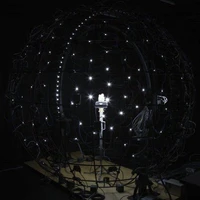
VisPhyWorld: Probing Physical Reasoning via Code-Driven Video Reconstruction
Evaluating whether Multimodal Large Language Models (MLLMs) genuinely reason about physical dynamics remains challenging. Most existing benchmarks rely on recognition-style protocols such as Visual Question Answering (VQA) and Violation of Expectation (VoE), which can often be answered without committing to an explicit, testable physical hypothesis. We propose VisPhyWorld, an execution-based framework that evaluates physical reasoning by requiring models to generate executable simulator code from visual observations. By producing runnable code, the inferred world representation is directly inspectable, editable, and falsifiable. This separates physical reasoning from rendering. Building on this framework, we introduce VisPhyBench, comprising 209 evaluation scenes derived from 108 physical templates and a systematic protocol that evaluates how well models reconstruct appearance and reproduce physically plausible motion. Our pipeline produces valid reconstructed videos in 97.7% on the benchmark. Experiments show that while state-of-the-art MLLMs achieve strong semantic scene understanding, they struggle to accurately infer physical parameters and to simulate consistent physical dynamics.

3DGS-LM: Faster Gaussian-Splatting Optimization with Levenberg-Marquardt
We present 3DGS-LM, a new method that accelerates the reconstruction of 3D Gaussian Splatting (3DGS) by replacing its ADAM optimizer with a tailored Levenberg-Marquardt (LM). Existing methods reduce the optimization time by decreasing the number of Gaussians or by improving the implementation of the differentiable rasterizer. However, they still rely on the ADAM optimizer to fit Gaussian parameters of a scene in thousands of iterations, which can take up to an hour. To this end, we change the optimizer to LM that runs in conjunction with the 3DGS differentiable rasterizer. For efficient GPU parallization, we propose a caching data structure for intermediate gradients that allows us to efficiently calculate Jacobian-vector products in custom CUDA kernels. In every LM iteration, we calculate update directions from multiple image subsets using these kernels and combine them in a weighted mean. Overall, our method is 30% faster than the original 3DGS while obtaining the same reconstruction quality. Our optimization is also agnostic to other methods that acclerate 3DGS, thus enabling even faster speedups compared to vanilla 3DGS.

Stronger, Fewer, & Superior: Harnessing Vision Foundation Models for Domain Generalized Semantic Segmentation
In this paper, we first assess and harness various Vision Foundation Models (VFMs) in the context of Domain Generalized Semantic Segmentation (DGSS). Driven by the motivation that Leveraging Stronger pre-trained models and Fewer trainable parameters for Superior generalizability, we introduce a robust fine-tuning approach, namely Rein, to parameter-efficiently harness VFMs for DGSS. Built upon a set of trainable tokens, each linked to distinct instances, Rein precisely refines and forwards the feature maps from each layer to the next layer within the backbone. This process produces diverse refinements for different categories within a single image. With fewer trainable parameters, Rein efficiently fine-tunes VFMs for DGSS tasks, surprisingly surpassing full parameter fine-tuning. Extensive experiments across various settings demonstrate that Rein significantly outperforms state-of-the-art methods. Remarkably, with just an extra 1% of trainable parameters within the frozen backbone, Rein achieves a mIoU of 78.4% on the Cityscapes, without accessing any real urban-scene datasets.Code is available at https://github.com/w1oves/Rein.git.

Long Context Tuning for Video Generation
Recent advances in video generation can produce realistic, minute-long single-shot videos with scalable diffusion transformers. However, real-world narrative videos require multi-shot scenes with visual and dynamic consistency across shots. In this work, we introduce Long Context Tuning (LCT), a training paradigm that expands the context window of pre-trained single-shot video diffusion models to learn scene-level consistency directly from data. Our method expands full attention mechanisms from individual shots to encompass all shots within a scene, incorporating interleaved 3D position embedding and an asynchronous noise strategy, enabling both joint and auto-regressive shot generation without additional parameters. Models with bidirectional attention after LCT can further be fine-tuned with context-causal attention, facilitating auto-regressive generation with efficient KV-cache. Experiments demonstrate single-shot models after LCT can produce coherent multi-shot scenes and exhibit emerging capabilities, including compositional generation and interactive shot extension, paving the way for more practical visual content creation. See https://guoyww.github.io/projects/long-context-video/ for more details.



C4D: 4D Made from 3D through Dual Correspondences
Recovering 4D from monocular video, which jointly estimates dynamic geometry and camera poses, is an inevitably challenging problem. While recent pointmap-based 3D reconstruction methods (e.g., DUSt3R) have made great progress in reconstructing static scenes, directly applying them to dynamic scenes leads to inaccurate results. This discrepancy arises because moving objects violate multi-view geometric constraints, disrupting the reconstruction. To address this, we introduce C4D, a framework that leverages temporal Correspondences to extend existing 3D reconstruction formulation to 4D. Specifically, apart from predicting pointmaps, C4D captures two types of correspondences: short-term optical flow and long-term point tracking. We train a dynamic-aware point tracker that provides additional mobility information, facilitating the estimation of motion masks to separate moving elements from the static background, thus offering more reliable guidance for dynamic scenes. Furthermore, we introduce a set of dynamic scene optimization objectives to recover per-frame 3D geometry and camera parameters. Simultaneously, the correspondences lift 2D trajectories into smooth 3D trajectories, enabling fully integrated 4D reconstruction. Experiments show that our framework achieves complete 4D recovery and demonstrates strong performance across multiple downstream tasks, including depth estimation, camera pose estimation, and point tracking. Project Page: https://littlepure2333.github.io/C4D


InstantSplat: Unbounded Sparse-view Pose-free Gaussian Splatting in 40 Seconds
While novel view synthesis (NVS) has made substantial progress in 3D computer vision, it typically requires an initial estimation of camera intrinsics and extrinsics from dense viewpoints. This pre-processing is usually conducted via a Structure-from-Motion (SfM) pipeline, a procedure that can be slow and unreliable, particularly in sparse-view scenarios with insufficient matched features for accurate reconstruction. In this work, we integrate the strengths of point-based representations (e.g., 3D Gaussian Splatting, 3D-GS) with end-to-end dense stereo models (DUSt3R) to tackle the complex yet unresolved issues in NVS under unconstrained settings, which encompasses pose-free and sparse view challenges. Our framework, InstantSplat, unifies dense stereo priors with 3D-GS to build 3D Gaussians of large-scale scenes from sparseview & pose-free images in less than 1 minute. Specifically, InstantSplat comprises a Coarse Geometric Initialization (CGI) module that swiftly establishes a preliminary scene structure and camera parameters across all training views, utilizing globally-aligned 3D point maps derived from a pre-trained dense stereo pipeline. This is followed by the Fast 3D-Gaussian Optimization (F-3DGO) module, which jointly optimizes the 3D Gaussian attributes and the initialized poses with pose regularization. Experiments conducted on the large-scale outdoor Tanks & Temples datasets demonstrate that InstantSplat significantly improves SSIM (by 32%) while concurrently reducing Absolute Trajectory Error (ATE) by 80%. These establish InstantSplat as a viable solution for scenarios involving posefree and sparse-view conditions. Project page: instantsplat.github.io.


Splatting Physical Scenes: End-to-End Real-to-Sim from Imperfect Robot Data
Creating accurate, physical simulations directly from real-world robot motion holds great value for safe, scalable, and affordable robot learning, yet remains exceptionally challenging. Real robot data suffers from occlusions, noisy camera poses, dynamic scene elements, which hinder the creation of geometrically accurate and photorealistic digital twins of unseen objects. We introduce a novel real-to-sim framework tackling all these challenges at once. Our key insight is a hybrid scene representation merging the photorealistic rendering of 3D Gaussian Splatting with explicit object meshes suitable for physics simulation within a single representation. We propose an end-to-end optimization pipeline that leverages differentiable rendering and differentiable physics within MuJoCo to jointly refine all scene components - from object geometry and appearance to robot poses and physical parameters - directly from raw and imprecise robot trajectories. This unified optimization allows us to simultaneously achieve high-fidelity object mesh reconstruction, generate photorealistic novel views, and perform annotation-free robot pose calibration. We demonstrate the effectiveness of our approach both in simulation and on challenging real-world sequences using an ALOHA 2 bi-manual manipulator, enabling more practical and robust real-to-simulation pipelines.


VTM-Nav: Hierarchical Visual-Topological Memory for Cross-Episode Object-Goal Navigation
Object-goal navigation requires an embodied agent to locate and reach an instance of a specified object category in an indoor environment. Recent training-free approaches leverage vision-language models (VLMs) for open-vocabulary semantic reasoning, but are typically evaluated under an episodic protocol that resets all scene-specific state after each episode. We introduce Cross-Episode Object-Goal Navigation, in which an agent repeatedly operates in the same scene, retains only self-acquired experience, and keeps its model parameters fixed. To support experience reuse, we present \method, a training-free VLM navigation framework with a persistent hierarchical Visual-Topological Memory (VTM). The VTM organizes scene knowledge at room and object levels and retrieves relevant experience through coarse-to-fine matching, providing memory as soft guidance only when it agrees with current observations. A conservative execution guard further mitigates oscillations, blocked motions, and premature stopping. Under a controlled same-scene protocol, we evaluate on three benchmarks, HM3D v0.1, HM3D v0.2, and MP3D, and compare it with a strengthened WMNav baseline augmented with cross-episode textual memory, while keeping the VLM backbone and action pipeline identical. achieves the best performance across all three benchmarks, demonstrating the effectiveness and robustness of structured visual-topological experience reuse across datasets.
Beyond Reconstruction: A Physics Based Neural Deferred Shader for Photo-realistic Rendering
Deep learning based rendering has demonstrated major improvements for photo-realistic image synthesis, applicable to various applications including visual effects in movies and photo-realistic scene building in video games. However, a significant limitation is the difficulty of decomposing the illumination and material parameters, which limits such methods to reconstruct an input scene, without any possibility to control these parameters. This paper introduces a novel physics based neural deferred shading pipeline to decompose the data-driven rendering process, learn a generalizable shading function to produce photo-realistic results for shading and relighting tasks, we also provide a shadow estimator to efficiently mimic shadowing effect. Our model achieves improved performance compared to classical models and a state-of-art neural shading model, and enables generalizable photo-realistic shading from arbitrary illumination input.
Self-Calibrating Gaussian Splatting for Large Field of View Reconstruction
In this paper, we present a self-calibrating framework that jointly optimizes camera parameters, lens distortion and 3D Gaussian representations, enabling accurate and efficient scene reconstruction. In particular, our technique enables high-quality scene reconstruction from Large field-of-view (FOV) imagery taken with wide-angle lenses, allowing the scene to be modeled from a smaller number of images. Our approach introduces a novel method for modeling complex lens distortions using a hybrid network that combines invertible residual networks with explicit grids. This design effectively regularizes the optimization process, achieving greater accuracy than conventional camera models. Additionally, we propose a cubemap-based resampling strategy to support large FOV images without sacrificing resolution or introducing distortion artifacts. Our method is compatible with the fast rasterization of Gaussian Splatting, adaptable to a wide variety of camera lens distortion, and demonstrates state-of-the-art performance on both synthetic and real-world datasets.

DDLP: Unsupervised Object-Centric Video Prediction with Deep Dynamic Latent Particles
We propose a new object-centric video prediction algorithm based on the deep latent particle (DLP) representation. In comparison to existing slot- or patch-based representations, DLPs model the scene using a set of keypoints with learned parameters for properties such as position and size, and are both efficient and interpretable. Our method, deep dynamic latent particles (DDLP), yields state-of-the-art object-centric video prediction results on several challenging datasets. The interpretable nature of DDLP allows us to perform ``what-if'' generation -- predict the consequence of changing properties of objects in the initial frames, and DLP's compact structure enables efficient diffusion-based unconditional video generation. Videos, code and pre-trained models are available: https://taldatech.github.io/ddlp-web

Lighting-grounded Video Generation with Renderer-based Agent Reasoning
Diffusion models have achieved remarkable progress in video generation, but their controllability remains a major limitation. Key scene factors such as layout, lighting, and camera trajectory are often entangled or only weakly modeled, restricting their applicability in domains like filmmaking and virtual production where explicit scene control is essential. We present LiVER, a diffusion-based framework for scene-controllable video generation. To achieve this, we introduce a novel framework that conditions video synthesis on explicit 3D scene properties, supported by a new large-scale dataset with dense annotations of object layout, lighting, and camera parameters. Our method disentangles these properties by rendering control signals from a unified 3D representation. We propose a lightweight conditioning module and a progressive training strategy to integrate these signals into a foundational video diffusion model, ensuring stable convergence and high fidelity. Our framework enables a wide range of applications, including image-to-video and video-to-video synthesis where the underlying 3D scene is fully editable. To further enhance usability, we develop a scene agent that automatically translates high-level user instructions into the required 3D control signals. Experiments show that LiVER achieves state-of-the-art photorealism and temporal consistency while enabling precise, disentangled control over scene factors, setting a new standard for controllable video generation.
Spatial-TTT: Streaming Visual-based Spatial Intelligence with Test-Time Training
Humans perceive and understand real-world spaces through a stream of visual observations. Therefore, the ability to streamingly maintain and update spatial evidence from potentially unbounded video streams is essential for spatial intelligence. The core challenge is not simply longer context windows but how spatial information is selected, organized, and retained over time. In this paper, we propose Spatial-TTT towards streaming visual-based spatial intelligence with test-time training (TTT), which adapts a subset of parameters (fast weights) to capture and organize spatial evidence over long-horizon scene videos. Specifically, we design a hybrid architecture and adopt large-chunk updates parallel with sliding-window attention for efficient spatial video processing. To further promote spatial awareness, we introduce a spatial-predictive mechanism applied to TTT layers with 3D spatiotemporal convolution, which encourages the model to capture geometric correspondence and temporal continuity across frames. Beyond architecture design, we construct a dataset with dense 3D spatial descriptions, which guides the model to update its fast weights to memorize and organize global 3D spatial signals in a structured manner. Extensive experiments demonstrate that Spatial-TTT improves long-horizon spatial understanding and achieves state-of-the-art performance on video spatial benchmarks. Project page: https://liuff19.github.io/Spatial-TTT.

VGGT: Visual Geometry Grounded Transformer
We present VGGT, a feed-forward neural network that directly infers all key 3D attributes of a scene, including camera parameters, point maps, depth maps, and 3D point tracks, from one, a few, or hundreds of its views. This approach is a step forward in 3D computer vision, where models have typically been constrained to and specialized for single tasks. It is also simple and efficient, reconstructing images in under one second, and still outperforming alternatives that require post-processing with visual geometry optimization techniques. The network achieves state-of-the-art results in multiple 3D tasks, including camera parameter estimation, multi-view depth estimation, dense point cloud reconstruction, and 3D point tracking. We also show that using pretrained VGGT as a feature backbone significantly enhances downstream tasks, such as non-rigid point tracking and feed-forward novel view synthesis. Code and models are publicly available at https://github.com/facebookresearch/vggt.

RawGen: Learning Camera Raw Image Generation
Cameras capture scene-referred linear raw images, which are processed by onboard image signal processors (ISPs) into display-referred 8-bit sRGB outputs. Although raw data is more faithful for low-level vision tasks, collecting large-scale raw datasets remains a major bottleneck, as existing datasets are limited and tied to specific camera hardware. Generative models offer a promising way to address this scarcity -- however, existing diffusion frameworks are designed to synthesize photo-finished sRGB images rather than physically consistent linear representations. This paper presents RawGen, to our knowledge the first diffusion-based framework enabling text-to-raw generation for arbitrary target cameras, alongside sRGB-to-raw inversion. RawGen leverages the generative priors of large-scale sRGB diffusion models to synthesize physically meaningful linear outputs, such as CIE XYZ or camera-specific raw representations, via specialized processing in latent and pixel spaces. To handle unknown and diverse ISP pipelines and photo-finishing effects in diffusion-model training data, we build a many-to-one inverse-ISP dataset where multiple sRGB renditions of the same scene generated using diverse ISP parameters are anchored to a common scene-referred target. Fine-tuning a conditional denoiser and specialized decoder on this dataset allows RawGen to obtain camera-centric linear reconstructions that effectively invert the rendering pipeline. We demonstrate RawGen's superior performance over traditional inverse-ISP methods that assume a fixed ISP. Furthermore, we show that augmenting training pipelines with RawGen's scalable, text-driven synthetic data can benefit downstream low-level vision tasks.

Control3D: Towards Controllable Text-to-3D Generation
Recent remarkable advances in large-scale text-to-image diffusion models have inspired a significant breakthrough in text-to-3D generation, pursuing 3D content creation solely from a given text prompt. However, existing text-to-3D techniques lack a crucial ability in the creative process: interactively control and shape the synthetic 3D contents according to users' desired specifications (e.g., sketch). To alleviate this issue, we present the first attempt for text-to-3D generation conditioning on the additional hand-drawn sketch, namely Control3D, which enhances controllability for users. In particular, a 2D conditioned diffusion model (ControlNet) is remoulded to guide the learning of 3D scene parameterized as NeRF, encouraging each view of 3D scene aligned with the given text prompt and hand-drawn sketch. Moreover, we exploit a pre-trained differentiable photo-to-sketch model to directly estimate the sketch of the rendered image over synthetic 3D scene. Such estimated sketch along with each sampled view is further enforced to be geometrically consistent with the given sketch, pursuing better controllable text-to-3D generation. Through extensive experiments, we demonstrate that our proposal can generate accurate and faithful 3D scenes that align closely with the input text prompts and sketches.

Agentic Real2Sim: Physics-based World Modeling with Vision-Language Agents
Real-to-sim conversion for robotic interaction with objects remains labor-intensive because it requires more than visual reconstruction: a streamlined real2sim process must recover scene geometries and object states, infer physical parameters, and assemble actors, objects, cameras, poses, and trajectories into a runnable physical simulation. Today this process still depends on manual tuning of visual foundation models, mesh cleanup, coordinate-frame alignment, and brittle workflow glue across visual perception tools and simulators. We introduce Agentic Real2Sim, a framework for generalized physical world modeling with vision-language agents, converting a real-world recording of object-robot interaction into a simulatable episodic twin which preserves observations, geometries, robot interactions, and object states. We evaluate Agentic Real2Sim on rigid-object manipulation, deformable-object interaction, and humanoid motion scenes, spanning domains that are usually handled by separate Real2Sim pipelines, marking a first step toward scalable conversion. The framework's agentic decisions can be driven by an open-weight VLM backend at a small fraction of the cost of frontier models, while attaining comparable conversion success rate. We aim to use the resulting real-world-aligned twins for downstream robotics tasks, specifically policy learning and evaluation. The project site is available at https://agentic-real2sim.github.io/.
On the Generalization Capacities of MLLMs for Spatial Intelligence
Multimodal Large Language Models (MLLMs) that directly process RGB inputs for tasks like 3D localization and navigation have shown remarkable potential. However, we argue that these RGB-only approaches are fundamentally flawed in their ability to generalize across cameras. By ignoring camera parameters, they entangle an object's physical properties with the camera's perspective, creating an irresolvable ambiguity. We show this leads MLLMs to overfit to the training camera distribution, rather than learning true and generalizable 3D geometric principles. To address this, we propose Camera-Aware MLLM framework for spatial MLLMs. It learns generalizable spatial reasoning by: (i) injecting camera intrinsics via a dense embedding that conditions each visual token; (ii) introducing a camera-aware data augmentation strategy that synthetically varies camera parameters, forcing the model to disentangle camera properties from scene content; and (iii) distilling geometric priors from a 3D vision foundation model. Extensive experiments demonstrate that camera-aware MLLMs substantially outperform their naive counterparts, particularly in cross-camera generalization tests on spatially-grounded tasks, indicating that camera-awareness is not only beneficial but also a prerequisite for robust and generalizable spatial intelligence in MLLMs.

REACT3D: Recovering Articulations for Interactive Physical 3D Scenes
Interactive 3D scenes are increasingly vital for embodied intelligence, yet existing datasets remain limited due to the labor-intensive process of annotating part segmentation, kinematic types, and motion trajectories. We present REACT3D, a scalable zero-shot framework that converts static 3D scenes into simulation-ready interactive replicas with consistent geometry, enabling direct use in diverse downstream tasks. Our contributions include: (i) openable-object detection and segmentation to extract candidate movable parts from static scenes, (ii) articulation estimation that infers joint types and motion parameters, (iii) hidden-geometry completion followed by interactive object assembly, and (iv) interactive scene integration in widely supported formats to ensure compatibility with standard simulation platforms. We achieve state-of-the-art performance on detection/segmentation and articulation metrics across diverse indoor scenes, demonstrating the effectiveness of our framework and providing a practical foundation for scalable interactive scene generation, thereby lowering the barrier to large-scale research on articulated scene understanding. Our project page is https://react3d.github.io/
GP3: A 3D Geometry-Aware Policy with Multi-View Images for Robotic Manipulation
Effective robotic manipulation relies on a precise understanding of 3D scene geometry, and one of the most straightforward ways to acquire such geometry is through multi-view observations. Motivated by this, we present GP3 -- a 3D geometry-aware robotic manipulation policy that leverages multi-view input. GP3 employs a spatial encoder to infer dense spatial features from RGB observations, which enable the estimation of depth and camera parameters, leading to a compact yet expressive 3D scene representation tailored for manipulation. This representation is fused with language instructions and translated into continuous actions via a lightweight policy head. Comprehensive experiments demonstrate that GP3 consistently outperforms state-of-the-art methods on simulated benchmarks. Furthermore, GP3 transfers effectively to real-world robots without depth sensors or pre-mapped environments, requiring only minimal fine-tuning. These results highlight GP3 as a practical, sensor-agnostic solution for geometry-aware robotic manipulation.
TUGS: Physics-based Compact Representation of Underwater Scenes by Tensorized Gaussian
Underwater 3D scene reconstruction is crucial for undewater robotic perception and navigation. However, the task is significantly challenged by the complex interplay between light propagation, water medium, and object surfaces, with existing methods unable to model their interactions accurately. Additionally, expensive training and rendering costs limit their practical application in underwater robotic systems. Therefore, we propose Tensorized Underwater Gaussian Splatting (TUGS), which can effectively solve the modeling challenges of the complex interactions between object geometries and water media while achieving significant parameter reduction. TUGS employs lightweight tensorized higher-order Gaussians with a physics-based underwater Adaptive Medium Estimation (AME) module, enabling accurate simulation of both light attenuation and backscatter effects in underwater environments. Compared to other NeRF-based and GS-based methods designed for underwater, TUGS is able to render high-quality underwater images with faster rendering speeds and less memory usage. Extensive experiments on real-world underwater datasets have demonstrated that TUGS can efficiently achieve superior reconstruction quality using a limited number of parameters, making it particularly suitable for memory-constrained underwater UAV applications

RayZer: A Self-supervised Large View Synthesis Model
We present RayZer, a self-supervised multi-view 3D Vision model trained without any 3D supervision, i.e., camera poses and scene geometry, while exhibiting emerging 3D awareness. Concretely, RayZer takes unposed and uncalibrated images as input, recovers camera parameters, reconstructs a scene representation, and synthesizes novel views. During training, RayZer relies solely on its self-predicted camera poses to render target views, eliminating the need for any ground-truth camera annotations and allowing RayZer to be trained with 2D image supervision. The emerging 3D awareness of RayZer is attributed to two key factors. First, we design a self-supervised framework, which achieves 3D-aware auto-encoding of input images by disentangling camera and scene representations. Second, we design a transformer-based model in which the only 3D prior is the ray structure, connecting camera, pixel, and scene simultaneously. RayZer demonstrates comparable or even superior novel view synthesis performance than ``oracle'' methods that rely on pose annotations in both training and testing. Project: https://hwjiang1510.github.io/RayZer/
Efficient Architectures for High Resolution Vision-Language Models
Vision-Language Models (VLMs) have recently experienced significant advancements. However, challenges persist in the accurate recognition of fine details within high resolution images, which limits performance in multiple tasks. This work introduces Pheye, a novel architecture that efficiently processes high-resolution images while training fewer parameters than similarly sized VLMs. Notably, Pheye achieves a high efficiency while maintaining strong performance, particularly in tasks that demand fine-grained image understanding and/or the handling of scene-text.
ViT-TTS: Visual Text-to-Speech with Scalable Diffusion Transformer
Text-to-speech(TTS) has undergone remarkable improvements in performance, particularly with the advent of Denoising Diffusion Probabilistic Models (DDPMs). However, the perceived quality of audio depends not solely on its content, pitch, rhythm, and energy, but also on the physical environment. In this work, we propose ViT-TTS, the first visual TTS model with scalable diffusion transformers. ViT-TTS complement the phoneme sequence with the visual information to generate high-perceived audio, opening up new avenues for practical applications of AR and VR to allow a more immersive and realistic audio experience. To mitigate the data scarcity in learning visual acoustic information, we 1) introduce a self-supervised learning framework to enhance both the visual-text encoder and denoiser decoder; 2) leverage the diffusion transformer scalable in terms of parameters and capacity to learn visual scene information. Experimental results demonstrate that ViT-TTS achieves new state-of-the-art results, outperforming cascaded systems and other baselines regardless of the visibility of the scene. With low-resource data (1h, 2h, 5h), ViT-TTS achieves comparative results with rich-resource baselines.~Audio samples are available at \url{https://ViT-TTS.github.io/.}
WristCompass: Kinematic Coupling as a Learnable Visual Concept for Ego-Camera Orientation
Recovering ego-camera orientation from manipulation video is a prerequisite for disentangling hand motion from camera motion, a key step in imitation learning from egocentric demonstrations. The obvious approach, inferring orientation from scene geometry, fails when hands occlude the frame: VGGT, a 1B-parameter scene reconstruction model, scores worse than a constant predictor on the TACO benchmark. We identify an alternative visual concept that is present precisely when scene geometry is absent: kinematic coupling dynamics, the structured physical relationship between wrist motion and camera orientation imposed by the arm-shoulder-head chain. We find that this concept is compact (4D inter-wrist features outperform 126D full hand keypoints), temporal (requiring a GRU over short windows rather than per-frame retrieval), and physically grounded (transferring zero-shot across datasets because it is rooted in anatomy rather than scene appearance). Trained only on tabletop manipulation, WristCompass transfers zero-shot to Epic Kitchens cooking video, achieving 14.3^circ median geodesic error and approaching the performance of a 1B-parameter scene model at 200K GRU parameters.
ActCam: Zero-Shot Joint Camera and 3D Motion Control for Video Generation
For artistic applications, video generation requires fine-grained control over both performance and cinematography, i.e., the actor's motion and the camera trajectory. We present ActCam, a zero-shot method for video generation that jointly transfers character motion from a driving video into a new scene and enables per-frame control of intrinsic and extrinsic camera parameters. ActCam builds on any pretrained image-to-video diffusion model that accepts conditioning in terms of scene depth and character pose. Given a source video with a moving character and a target camera motion, ActCam generates pose and depth conditions that remain geometrically consistent across frames. We then run a single sampling process with a two-phase conditioning schedule: early denoising steps condition on both pose and sparse depth to enforce scene structure, after which depth is dropped and pose-only guidance refines high-frequency details without over-constraining the generation. We evaluate ActCam on multiple benchmarks spanning diverse character motions and challenging viewpoint changes. We find that, compared to pose-only control and other pose and camera methods, ActCam improves camera adherence and motion fidelity, and is preferred in human evaluations, especially under large viewpoint changes. Our results highlight that careful camera-consistent conditioning and staged guidance can enable strong joint camera and motion control without training. Project page: https://elkhomar.github.io/actcam/.
ScenePilot-Bench: A Large-Scale Dataset and Benchmark for Evaluation of Vision-Language Models in Autonomous Driving
In this paper, we introduce ScenePilot-Bench, a large-scale first-person driving benchmark designed to evaluate vision-language models (VLMs) in autonomous driving scenarios. ScenePilot-Bench is built upon ScenePilot-4K, a diverse dataset comprising 3,847 hours of driving videos, annotated with multi-granularity information including scene descriptions, risk assessments, key participant identification, ego trajectories, and camera parameters. The benchmark features a four-axis evaluation suite that assesses VLM capabilities in scene understanding, spatial perception, motion planning, and GPT-Score, with safety-aware metrics and cross-region generalization settings. We benchmark representative VLMs on ScenePilot-Bench, providing empirical analyses that clarify current performance boundaries and identify gaps for driving-oriented reasoning. ScenePilot-Bench offers a comprehensive framework for evaluating and advancing VLMs in safety-critical autonomous driving contexts.
Generative Camera Dolly: Extreme Monocular Dynamic Novel View Synthesis
Accurate reconstruction of complex dynamic scenes from just a single viewpoint continues to be a challenging task in computer vision. Current dynamic novel view synthesis methods typically require videos from many different camera viewpoints, necessitating careful recording setups, and significantly restricting their utility in the wild as well as in terms of embodied AI applications. In this paper, we propose GCD, a controllable monocular dynamic view synthesis pipeline that leverages large-scale diffusion priors to, given a video of any scene, generate a synchronous video from any other chosen perspective, conditioned on a set of relative camera pose parameters. Our model does not require depth as input, and does not explicitly model 3D scene geometry, instead performing end-to-end video-to-video translation in order to achieve its goal efficiently. Despite being trained on synthetic multi-view video data only, zero-shot real-world generalization experiments show promising results in multiple domains, including robotics, object permanence, and driving environments. We believe our framework can potentially unlock powerful applications in rich dynamic scene understanding, perception for robotics, and interactive 3D video viewing experiences for virtual reality.


SceneDreamer: Unbounded 3D Scene Generation from 2D Image Collections
In this work, we present SceneDreamer, an unconditional generative model for unbounded 3D scenes, which synthesizes large-scale 3D landscapes from random noise. Our framework is learned from in-the-wild 2D image collections only, without any 3D annotations. At the core of SceneDreamer is a principled learning paradigm comprising 1) an efficient yet expressive 3D scene representation, 2) a generative scene parameterization, and 3) an effective renderer that can leverage the knowledge from 2D images. Our approach begins with an efficient bird's-eye-view (BEV) representation generated from simplex noise, which includes a height field for surface elevation and a semantic field for detailed scene semantics. This BEV scene representation enables 1) representing a 3D scene with quadratic complexity, 2) disentangled geometry and semantics, and 3) efficient training. Moreover, we propose a novel generative neural hash grid to parameterize the latent space based on 3D positions and scene semantics, aiming to encode generalizable features across various scenes. Lastly, a neural volumetric renderer, learned from 2D image collections through adversarial training, is employed to produce photorealistic images. Extensive experiments demonstrate the effectiveness of SceneDreamer and superiority over state-of-the-art methods in generating vivid yet diverse unbounded 3D worlds.
CityDreamer4D: Compositional Generative Model of Unbounded 4D Cities
3D scene generation has garnered growing attention in recent years and has made significant progress. Generating 4D cities is more challenging than 3D scenes due to the presence of structurally complex, visually diverse objects like buildings and vehicles, and heightened human sensitivity to distortions in urban environments. To tackle these issues, we propose CityDreamer4D, a compositional generative model specifically tailored for generating unbounded 4D cities. Our main insights are 1) 4D city generation should separate dynamic objects (e.g., vehicles) from static scenes (e.g., buildings and roads), and 2) all objects in the 4D scene should be composed of different types of neural fields for buildings, vehicles, and background stuff. Specifically, we propose Traffic Scenario Generator and Unbounded Layout Generator to produce dynamic traffic scenarios and static city layouts using a highly compact BEV representation. Objects in 4D cities are generated by combining stuff-oriented and instance-oriented neural fields for background stuff, buildings, and vehicles. To suit the distinct characteristics of background stuff and instances, the neural fields employ customized generative hash grids and periodic positional embeddings as scene parameterizations. Furthermore, we offer a comprehensive suite of datasets for city generation, including OSM, GoogleEarth, and CityTopia. The OSM dataset provides a variety of real-world city layouts, while the Google Earth and CityTopia datasets deliver large-scale, high-quality city imagery complete with 3D instance annotations. Leveraging its compositional design, CityDreamer4D supports a range of downstream applications, such as instance editing, city stylization, and urban simulation, while delivering state-of-the-art performance in generating realistic 4D cities.




Phemenological Modelling of a Group of Eclipsing Binary Stars
Phenomenological modeling of variable stars allows determination of a set of the parameters, which are needed for classification in the "General Catalogue of Variable Stars" and similar catalogs. We apply a recent method NAV ("New Algol Variable") to eclipsing binary stars of different types. Although all periodic functions may be represented as Fourier series with an infinite number of coefficients, this is impossible for a finite number of the observations. Thus one may use a restricted Fourier series, i.e. a trigonometric polynomial (TP) of order s either for fitting the light curve, or to make a periodogram analysis. However, the number of parameters needed drastically increases with decreasing width of minimum. In the NAV algorithm, the special shape of minimum is used, so the number of parameters is limited to 10 (if the period and initial epoch are fixed) or 12 (not fixed). We illustrate the NAV method by application to a recently discovered Algol-type eclipsing variable 2MASS J11080308-6145589 (in the field of previously known variable star RS Car) and compare results to that obtained using the TP fits. For this system, the statistically optimal number of parameters is 44, but the fit is still worse than that of the NAV fit. Application to the system GSC 3692-00624 argues that the NAV fit is better than the TP one even for the case of EW-type stars with much wider eclipses. Model parameters are listed.
The Scene Language: Representing Scenes with Programs, Words, and Embeddings
We introduce the Scene Language, a visual scene representation that concisely and precisely describes the structure, semantics, and identity of visual scenes. It represents a scene with three key components: a program that specifies the hierarchical and relational structure of entities in the scene, words in natural language that summarize the semantic class of each entity, and embeddings that capture the visual identity of each entity. This representation can be inferred from pre-trained language models via a training-free inference technique, given text or image inputs. The resulting scene can be rendered into images using traditional, neural, or hybrid graphics renderers. Together, this forms a robust, automated system for high-quality 3D and 4D scene generation. Compared with existing representations like scene graphs, our proposed Scene Language generates complex scenes with higher fidelity, while explicitly modeling the scene structures to enable precise control and editing.
Virtual KITTI 2
This paper introduces an updated version of the well-known Virtual KITTI dataset which consists of 5 sequence clones from the KITTI tracking benchmark. In addition, the dataset provides different variants of these sequences such as modified weather conditions (e.g. fog, rain) or modified camera configurations (e.g. rotated by 15 degrees). For each sequence, we provide multiple sets of images containing RGB, depth, class segmentation, instance segmentation, flow, and scene flow data. Camera parameters and poses as well as vehicle locations are available as well. In order to showcase some of the dataset's capabilities, we ran multiple relevant experiments using state-of-the-art algorithms from the field of autonomous driving. The dataset is available for download at https://europe.naverlabs.com/Research/Computer-Vision/Proxy-Virtual-Worlds.
Enhancing Intent Understanding for Ambiguous prompt: A Human-Machine Co-Adaption Strategy
Today's image generation systems are capable of producing realistic and high-quality images. However, user prompts often contain ambiguities, making it difficult for these systems to interpret users' actual intentions. Consequently, many users must modify their prompts several times to ensure the generated images meet their expectations. While some methods focus on enhancing prompts to make the generated images fit user needs, the model is still hard to understand users' real needs, especially for non-expert users. In this research, we aim to enhance the visual parameter-tuning process, making the model user-friendly for individuals without specialized knowledge and better understand user needs. We propose a human-machine co-adaption strategy using mutual information between the user's prompts and the pictures under modification as the optimizing target to make the system better adapt to user needs. We find that an improved model can reduce the necessity for multiple rounds of adjustments. We also collect multi-round dialogue datasets with prompts and images pairs and user intent. Various experiments demonstrate the effectiveness of the proposed method in our proposed dataset. Our annotation tools and several examples of our dataset are available at https://zenodo.org/records/14876029 for easier review. We will make open source our full dataset and code.
SceneEval: Evaluating Semantic Coherence in Text-Conditioned 3D Indoor Scene Synthesis
Despite recent advances in text-conditioned 3D indoor scene generation, there remain gaps in the evaluation of these methods. Existing metrics primarily assess the realism of generated scenes by comparing them to a set of ground-truth scenes, often overlooking alignment with the input text - a critical factor in determining how effectively a method meets user requirements. We present SceneEval, an evaluation framework designed to address this limitation. SceneEval includes metrics for both explicit user requirements, such as the presence of specific objects and their attributes described in the input text, and implicit expectations, like the absence of object collisions, providing a comprehensive assessment of scene quality. To facilitate evaluation, we introduce SceneEval-100, a dataset of scene descriptions with annotated ground-truth scene properties. We evaluate recent scene generation methods using SceneEval and demonstrate its ability to provide detailed assessments of the generated scenes, highlighting strengths and areas for improvement across multiple dimensions. Our results show that current methods struggle at generating scenes that meet user requirements, underscoring the need for further research in this direction.

Newly Discovered Eclipsing Binary 2MASS J18024395+4003309 (VSX J180243.9+400331):Two-Color Photometry vs Phenomenological Modeling
We report on analysis of the two-color VR CCD observations of the newly discovered variable 2MASS J18024395+4003309=VSX J180243.9+400331 obtained using the 1-m telescope of the Mt. Lemmon Observatory (LOAO) in the field of the intermediate polar V1323 Her. The extended version of this conference talk we published in 2015JASS...32..127A. The variability was reported in 2012OAP....25..150A, and the object was monitored. The two-color observations covered all phase interval. The object is classified as an Algol-type variable with tidally distorted components, and shows an asymmetry of the maxima (the O\'Connell effect). For phenomenological modeling, we used the trigonometric polynomial approximation of statistically optimal degree, and a recent method "NAV" (New Algol Variable) using local specific shapes for the eclipse. Methodological aspects are described, especially for the case of few color observations. Estimates of the physical parameters based on analysis of phenomenological parameters, are presented.
CamCtrl3D: Single-Image Scene Exploration with Precise 3D Camera Control
We propose a method for generating fly-through videos of a scene, from a single image and a given camera trajectory. We build upon an image-to-video latent diffusion model. We condition its UNet denoiser on the camera trajectory, using four techniques. (1) We condition the UNet's temporal blocks on raw camera extrinsics, similar to MotionCtrl. (2) We use images containing camera rays and directions, similar to CameraCtrl. (3) We reproject the initial image to subsequent frames and use the resulting video as a condition. (4) We use 2D<=>3D transformers to introduce a global 3D representation, which implicitly conditions on the camera poses. We combine all conditions in a ContolNet-style architecture. We then propose a metric that evaluates overall video quality and the ability to preserve details with view changes, which we use to analyze the trade-offs of individual and combined conditions. Finally, we identify an optimal combination of conditions. We calibrate camera positions in our datasets for scale consistency across scenes, and we train our scene exploration model, CamCtrl3D, demonstrating state-of-theart results.
VGG-T^3: Offline Feed-Forward 3D Reconstruction at Scale
We present a scalable 3D reconstruction model that addresses a critical limitation in offline feed-forward methods: their computational and memory requirements grow quadratically w.r.t. the number of input images. Our approach is built on the key insight that this bottleneck stems from the varying-length Key-Value (KV) space representation of scene geometry, which we distill into a fixed-size Multi-Layer Perceptron (MLP) via test-time training. VGG-T^3 (Visual Geometry Grounded Test Time Training) scales linearly w.r.t. the number of input views, similar to online models, and reconstructs a 1k image collection in just 54 seconds, achieving a 11.6times speed-up over baselines that rely on softmax attention. Since our method retains global scene aggregation capability, our point map reconstruction error outperforming other linear-time methods by large margins. Finally, we demonstrate visual localization capabilities of our model by querying the scene representation with unseen images.

Veni Vidi Vici, A Three-Phase Scenario For Parameter Space Analysis in Image Analysis and Visualization
Automatic analysis of the enormous sets of images is a critical task in life sciences. This faces many challenges such as: algorithms are highly parameterized, significant human input is intertwined, and lacking a standard meta-visualization approach. This paper proposes an alternative iterative approach for optimizing input parameters, saving time by minimizing the user involvement, and allowing for understanding the workflow of algorithms and discovering new ones. The main focus is on developing an interactive visualization technique that enables users to analyze the relationships between sampled input parameters and corresponding output. This technique is implemented as a prototype called Veni Vidi Vici, or "I came, I saw, I conquered." This strategy is inspired by the mathematical formulas of numbering computable functions and is developed atop ImageJ, a scientific image processing program. A case study is presented to investigate the proposed framework. Finally, the paper explores some potential future issues in the application of the proposed approach in parameter space analysis in visualization.
RGB-Only Supervised Camera Parameter Optimization in Dynamic Scenes
Although COLMAP has long remained the predominant method for camera parameter optimization in static scenes, it is constrained by its lengthy runtime and reliance on ground truth (GT) motion masks for application to dynamic scenes. Many efforts attempted to improve it by incorporating more priors as supervision such as GT focal length, motion masks, 3D point clouds, camera poses, and metric depth, which, however, are typically unavailable in casually captured RGB videos. In this paper, we propose a novel method for more accurate and efficient camera parameter optimization in dynamic scenes solely supervised by a single RGB video. Our method consists of three key components: (1) Patch-wise Tracking Filters, to establish robust and maximally sparse hinge-like relations across the RGB video. (2) Outlier-aware Joint Optimization, for efficient camera parameter optimization by adaptive down-weighting of moving outliers, without reliance on motion priors. (3) A Two-stage Optimization Strategy, to enhance stability and optimization speed by a trade-off between the Softplus limits and convex minima in losses. We visually and numerically evaluate our camera estimates. To further validate accuracy, we feed the camera estimates into a 4D reconstruction method and assess the resulting 3D scenes, and rendered 2D RGB and depth maps. We perform experiments on 4 real-world datasets (NeRF-DS, DAVIS, iPhone, and TUM-dynamics) and 1 synthetic dataset (MPI-Sintel), demonstrating that our method estimates camera parameters more efficiently and accurately with a single RGB video as the only supervision.


Adjustable Visual Appearance for Generalizable Novel View Synthesis
We present a generalizable novel view synthesis method which enables modifying the visual appearance of an observed scene so rendered views match a target weather or lighting condition without any scene specific training or access to reference views at the target condition. Our method is based on a pretrained generalizable transformer architecture and is fine-tuned on synthetically generated scenes under different appearance conditions. This allows for rendering novel views in a consistent manner for 3D scenes that were not included in the training set, along with the ability to (i) modify their appearance to match the target condition and (ii) smoothly interpolate between different conditions. Experiments on real and synthetic scenes show that our method is able to generate 3D consistent renderings while making realistic appearance changes, including qualitative and quantitative comparisons. Please refer to our project page for video results: https://ava-nvs.github.io/

Visual symbolic mechanisms: Emergent symbol processing in vision language models
To accurately process a visual scene, observers must bind features together to represent individual objects. This capacity is necessary, for instance, to distinguish an image containing a red square and a blue circle from an image containing a blue square and a red circle. Recent work has found that language models solve this 'binding problem' via a set of symbol-like, content-independent indices, but it is unclear whether similar mechanisms are employed by Vision Language Models (VLMs). This question is especially relevant, given the persistent failures of VLMs on tasks that require binding. Here, we identify a previously unknown set of emergent symbolic mechanisms that support binding specifically in VLMs, via a content-independent, spatial indexing scheme. Moreover, we find that binding errors, when they occur, can be traced directly to failures in these mechanisms. Taken together, these results shed light on the mechanisms that support symbol-like processing in VLMs, and suggest possible avenues for reducing the number of binding failures exhibited by these models.
E^2VPT: An Effective and Efficient Approach for Visual Prompt Tuning
As the size of transformer-based models continues to grow, fine-tuning these large-scale pretrained vision models for new tasks has become increasingly parameter-intensive. Parameter-efficient learning has been developed to reduce the number of tunable parameters during fine-tuning. Although these methods show promising results, there is still a significant performance gap compared to full fine-tuning. To address this challenge, we propose an Effective and Efficient Visual Prompt Tuning (E^2VPT) approach for large-scale transformer-based model adaptation. Specifically, we introduce a set of learnable key-value prompts and visual prompts into self-attention and input layers, respectively, to improve the effectiveness of model fine-tuning. Moreover, we design a prompt pruning procedure to systematically prune low importance prompts while preserving model performance, which largely enhances the model's efficiency. Empirical results demonstrate that our approach outperforms several state-of-the-art baselines on two benchmarks, with considerably low parameter usage (e.g., 0.32% of model parameters on VTAB-1k). Our code is available at https://github.com/ChengHan111/E2VPT.

Measuring the Intrinsic Dimension of Objective Landscapes
Many recently trained neural networks employ large numbers of parameters to achieve good performance. One may intuitively use the number of parameters required as a rough gauge of the difficulty of a problem. But how accurate are such notions? How many parameters are really needed? In this paper we attempt to answer this question by training networks not in their native parameter space, but instead in a smaller, randomly oriented subspace. We slowly increase the dimension of this subspace, note at which dimension solutions first appear, and define this to be the intrinsic dimension of the objective landscape. The approach is simple to implement, computationally tractable, and produces several suggestive conclusions. Many problems have smaller intrinsic dimensions than one might suspect, and the intrinsic dimension for a given dataset varies little across a family of models with vastly different sizes. This latter result has the profound implication that once a parameter space is large enough to solve a problem, extra parameters serve directly to increase the dimensionality of the solution manifold. Intrinsic dimension allows some quantitative comparison of problem difficulty across supervised, reinforcement, and other types of learning where we conclude, for example, that solving the inverted pendulum problem is 100 times easier than classifying digits from MNIST, and playing Atari Pong from pixels is about as hard as classifying CIFAR-10. In addition to providing new cartography of the objective landscapes wandered by parameterized models, the method is a simple technique for constructively obtaining an upper bound on the minimum description length of a solution. A byproduct of this construction is a simple approach for compressing networks, in some cases by more than 100 times.
Enhancing Photorealism Enhancement
We present an approach to enhancing the realism of synthetic images. The images are enhanced by a convolutional network that leverages intermediate representations produced by conventional rendering pipelines. The network is trained via a novel adversarial objective, which provides strong supervision at multiple perceptual levels. We analyze scene layout distributions in commonly used datasets and find that they differ in important ways. We hypothesize that this is one of the causes of strong artifacts that can be observed in the results of many prior methods. To address this we propose a new strategy for sampling image patches during training. We also introduce multiple architectural improvements in the deep network modules used for photorealism enhancement. We confirm the benefits of our contributions in controlled experiments and report substantial gains in stability and realism in comparison to recent image-to-image translation methods and a variety of other baselines.

Convex Decomposition of Indoor Scenes
We describe a method to parse a complex, cluttered indoor scene into primitives which offer a parsimonious abstraction of scene structure. Our primitives are simple convexes. Our method uses a learned regression procedure to parse a scene into a fixed number of convexes from RGBD input, and can optionally accept segmentations to improve the decomposition. The result is then polished with a descent method which adjusts the convexes to produce a very good fit, and greedily removes superfluous primitives. Because the entire scene is parsed, we can evaluate using traditional depth, normal, and segmentation error metrics. Our evaluation procedure demonstrates that the error from our primitive representation is comparable to that of predicting depth from a single image.
