new

Get trending papers in your email inbox!

Subscribe

Daily Papers

byAK and the research community

Nov 27

SeaLLMs-Audio: Large Audio-Language Models for Southeast Asia

We introduce SeaLLMs-Audio, the first large audio-language model (LALM) tailored for multiple Southeast Asian (SEA) languages-Indonesian (id), Thai (th), and Vietnamese (vi)-alongside English (en) and Chinese (zh). Trained on a large-scale audio corpus, SeaLLMs-Audio exhibits strong performance across diverse audio-centric tasks, spanning fine-grained audio understanding and voice-based interaction. Its key features include: 1) Multilingual: the model primarily supports 5 languages, namely Indonesian, Thai, Vietnamese, English, and Chinese; 2) Multimodal: the model accepts flexible input modalities, including audio only, text only, as well as audio with text; 3) Multi-task: the model supports a wide range of tasks, including audio analysis tasks such as Audio Captioning, Automatic Speech Recognition, Speech-to-Text Translation, Speech Emotion Recognition, Speech Question Answering, and Speech Summarization. It also enables voice-based dialogue, including answering factual, mathematical, and general knowledge queries. As a significant step towards advancing audio LLMs in Southeast Asia, we expect SeaLLMs-Audio to benefit both the regional research community and industry. To automate LALM evaluation for Southeast Asia, we introduce SeaBench-Audio, a benchmark spanning multiple tasks. Experiments show that SeaLLMs-Audio achieves competitive performance compared with other LALMs on SEA languages.

  • 7 authors
·
Nov 3, 2025

SilVar: Speech Driven Multimodal Model for Reasoning Visual Question Answering and Object Localization

Visual Language Models have demonstrated remarkable capabilities across tasks, including visual question answering and image captioning. However, most models rely on text-based instructions, limiting their effectiveness in human-machine interactions. Moreover, the quality of language models depends on reasoning and prompting techniques, such as COT, which remain underexplored when using speech instructions. To address these challenges, we propose SilVar, a novel end-to-end multimodal model that uses speech instructions for reasoning in visual question answering. In addition, we investigate reasoning techniques with levels including conversational, simple, and complex speech instruction. SilVar is built upon CLIP, Whisper, and LLaMA 3.1-8B, enabling intuitive interactions by allowing users to provide verbal or text instructions. To this end, we introduce a dataset designed to challenge models with speech-based reasoning tasks for object localization. This dataset enhances the model ability to process and explain visual scenes from spoken input, moving beyond object recognition to reasoning-based interactions. The experiments show that SilVar achieves SOTA performance on the MMMU and ScienceQA benchmarks despite the challenge of speech-based instructions. We believe SilVar will inspire next-generation multimodal reasoning models, toward expert artificial general intelligence. Our code and dataset are available here.

  • 5 authors
·
Dec 21, 2024

A RAG-based Question Answering System Proposal for Understanding Islam: MufassirQAS LLM

There exist challenges in learning and understanding religions as the presence of complexity and depth of religious doctrines and teachings. Chatbots as question-answering systems can help in solving these challenges. LLM chatbots use NLP techniques to establish connections between topics and accurately respond to complex questions. These capabilities make it perfect to be used in enlightenment on religion as a question answering chatbot. However, LLMs also have a tendency to generate false information, known as hallucination. The responses of the chatbots can include content that insults personal religious beliefs, interfaith conflicts, and controversial or sensitive topics. It needs to avoid such cases without promoting hate speech or offending certain groups of people or their beliefs. This study uses a vector database-based Retrieval Augmented Generation (RAG) approach to enhance the accuracy and transparency of LLMs. Our question-answering system is called as "MufassirQAS". We created a vector database with several open-access books that include Turkish context. These are Turkish translations, and interpretations on Islam. We worked on creating system prompts with care, ensuring they provide instructions that prevent harmful, offensive, or disrespectful responses. We also tested the MufassirQAS and ChatGPT with sensitive questions. We got better performance with our system. Study and enhancements are still in progress. Results and future works are given.

  • 3 authors
·
Jan 27, 2024

RAVEN: Query-Guided Representation Alignment for Question Answering over Audio, Video, Embedded Sensors, and Natural Language

Multimodal question answering (QA) often requires identifying which video, audio, or sensor tokens are relevant to the question. Yet modality disagreements are common: off-camera speech, background noise, or motion outside the field of view often mislead fusion models that weight all streams equally. We present RAVEN, a unified QA architecture whose core is QuART, a query-conditioned cross-modal gating module that assigns scalar relevance scores to each token across modalities, enabling the model to amplify informative signals and suppress distractors before fusion. RAVEN is trained through a three-stage pipeline comprising unimodal pretraining, query-aligned fusion, and disagreement-oriented fine-tuning -- each stage targeting a distinct challenge in multi-modal reasoning: representation quality, cross-modal relevance, and robustness to modality mismatch. To support training and evaluation, we release AVS-QA, a dataset of 300K synchronized Audio--Video-Sensor streams paired with automatically generated question-answer pairs. Experimental results on seven multi-modal QA benchmarks -- including egocentric and exocentric tasks -- show that RAVEN achieves up to 14.5\% and 8.0\% gains in accuracy compared to state-of-the-art multi-modal large language models, respectively. Incorporating sensor data provides an additional 16.4\% boost, and the model remains robust under modality corruption, outperforming SOTA baselines by 50.23\%. Our code and dataset are available at https://github.com/BASHLab/RAVEN.

  • 3 authors
·
May 21, 2025

VLSP2022-EVJVQA Challenge: Multilingual Visual Question Answering

Visual Question Answering (VQA) is a challenging task of natural language processing (NLP) and computer vision (CV), attracting significant attention from researchers. English is a resource-rich language that has witnessed various developments in datasets and models for visual question answering. Visual question answering in other languages also would be developed for resources and models. In addition, there is no multilingual dataset targeting the visual content of a particular country with its own objects and cultural characteristics. To address the weakness, we provide the research community with a benchmark dataset named EVJVQA, including 33,000+ pairs of question-answer over three languages: Vietnamese, English, and Japanese, on approximately 5,000 images taken from Vietnam for evaluating multilingual VQA systems or models. EVJVQA is used as a benchmark dataset for the challenge of multilingual visual question answering at the 9th Workshop on Vietnamese Language and Speech Processing (VLSP 2022). This task attracted 62 participant teams from various universities and organizations. In this article, we present details of the organization of the challenge, an overview of the methods employed by shared-task participants, and the results. The highest performances are 0.4392 in F1-score and 0.4009 in BLUE on the private test set. The multilingual QA systems proposed by the top 2 teams use ViT for the pre-trained vision model and mT5 for the pre-trained language model, a powerful pre-trained language model based on the transformer architecture. EVJVQA is a challenging dataset that motivates NLP and CV researchers to further explore the multilingual models or systems for visual question answering systems. We released the challenge on the Codalab evaluation system for further research.

  • 5 authors
·
Feb 22, 2023

Summary of DCASE 2026 Task 5: Audio-Dependent Question Answering

DCASE~2026 Task~5 introduces Audio-Dependent Question Answering (ADQA), which tests whether large audio-language models answer from the audio rather than from textual priors. An Audio-Dependency Filtering (ADF) pipeline combines silent-audio probing, per-option perplexity, a large language model (LLM) commonsense check, and human review to remove items solvable from text alone. The 3000 items that pass form the ADQA-Bench evaluation set, spanning music, speech, and environmental audio. The inaugural edition draws 14 teams and 36 submissions across two tracks defined by total parameter count (up to 100B and under 10B). A Chung-Ang University ensemble of MOSS-Audio-8B-Thinking and Qwen3-Omni-30B reaches the top overall accuracy at 58.33, and a MOSS-only configuration from the same team leads the sub-10B track at 57.30. Across the 30 submissions with a comparable development score, evaluation accuracy falls by 11.91 percentage points (pp) on average (median 10.91\,pp) on the hidden evaluation split, which is designed to be harder than the development split. The most common building blocks are: the MOSS-Audio-8B-Thinking backbone (13 of 36 submissions), Low-Rank Adaptation (LoRA) fine-tuning on AudioMCQ-StrongAC, and preference or reinforcement-learning objectives -- Group Relative Policy Optimization (GRPO) in five teams, Group reward-Decoupled Normalization Policy Optimization (GDPO) in two. At test time, prompt engineering is near-universal, and majority or choice-permutation voting is common. Every system misses the same set of 233 evaluation items.

  • 19 authors
·
Jul 20

iPerceive: Applying Common-Sense Reasoning to Multi-Modal Dense Video Captioning and Video Question Answering

Most prior art in visual understanding relies solely on analyzing the "what" (e.g., event recognition) and "where" (e.g., event localization), which in some cases, fails to describe correct contextual relationships between events or leads to incorrect underlying visual attention. Part of what defines us as human and fundamentally different from machines is our instinct to seek causality behind any association, say an event Y that happened as a direct result of event X. To this end, we propose iPerceive, a framework capable of understanding the "why" between events in a video by building a common-sense knowledge base using contextual cues to infer causal relationships between objects in the video. We demonstrate the effectiveness of our technique using the dense video captioning (DVC) and video question answering (VideoQA) tasks. Furthermore, while most prior work in DVC and VideoQA relies solely on visual information, other modalities such as audio and speech are vital for a human observer's perception of an environment. We formulate DVC and VideoQA tasks as machine translation problems that utilize multiple modalities. By evaluating the performance of iPerceive DVC and iPerceive VideoQA on the ActivityNet Captions and TVQA datasets respectively, we show that our approach furthers the state-of-the-art. Code and samples are available at: iperceive.amanchadha.com.

  • 3 authors
·
Nov 16, 2020

Towards Spoken Mathematical Reasoning: Benchmarking Speech-based Models over Multi-faceted Math Problems

Recent advances in large language models (LLMs) and multimodal LLMs (MLLMs) have led to strong reasoning ability across a wide range of tasks. However, their ability to perform mathematical reasoning from spoken input remains underexplored. Prior studies on speech modality have mostly focused on factual speech understanding or simple audio reasoning tasks, providing limited insight into logical step-by-step reasoning, such as that required for mathematical problem solving. To address this gap, we introduce Spoken Math Question Answering (Spoken-MQA), a new benchmark designed to evaluate the mathematical reasoning capabilities of speech-based models, including both cascade models (ASR + LLMs) and end-to-end speech LLMs. Spoken-MQA covers a diverse set of math problems, including pure arithmetic, single-step and multi-step contextual reasoning, and knowledge-oriented reasoning problems, all presented in unambiguous natural spoken language. Through extensive experiments, we find that: (1) while some speech LLMs perform competitively on contextual reasoning tasks involving basic arithmetic, they still struggle with direct arithmetic problems; (2) current LLMs exhibit a strong bias toward symbolic mathematical expressions written in LaTex and have difficulty interpreting verbalized mathematical expressions; and (3) mathematical knowledge reasoning abilities are significantly degraded in current speech LLMs.

  • 4 authors
·
May 20, 2025

Scaling Speech-Text Pre-training with Synthetic Interleaved Data

Speech language models (SpeechLMs) accept speech input and produce speech output, allowing for more natural human-computer interaction compared to text-based large language models (LLMs). Traditional approaches for developing SpeechLMs are constrained by the limited availability of unsupervised speech data and parallel speech-text data, which are significantly less abundant than text pre-training data, thereby limiting their scalability as LLMs. We propose a novel approach to scaling speech-text pre-training by leveraging large-scale synthetic interleaved data derived from text corpora, eliminating the need for parallel speech-text datasets. Our method efficiently constructs speech-text interleaved data by sampling text spans from existing text corpora and synthesizing corresponding speech spans using a text-to-token model, bypassing the need to generate actual speech. We also employ a supervised speech tokenizer derived from an automatic speech recognition (ASR) model by incorporating a vector-quantized bottleneck into the encoder. This supervised training approach results in discrete speech tokens with strong semantic preservation even at lower sampling rates (e.g. 12.5Hz), while still maintaining speech reconstruction quality. Starting from a pre-trained language model and scaling our pre-training to 1 trillion tokens (with 600B synthetic interleaved speech-text data), we achieve state-of-the-art performance in speech language modeling and spoken question answering, improving performance on spoken questions tasks from the previous SOTA of 13% (Moshi) to 31%. We further demonstrate that by fine-tuning the pre-trained model with speech dialogue data, we can develop an end-to-end spoken chatbot that achieves competitive performance comparable to existing baselines in both conversational abilities and speech quality, even operating exclusively in the speech domain.

  • 7 authors
·
Nov 26, 2024

Unifying Speech Editing Detection and Content Localization via Prior-Enhanced Audio LLMs

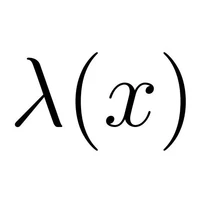
Speech editing achieves semantic inversion by performing fine-grained segment-level manipulation on original utterances, while preserving global perceptual naturalness. Existing detection studies mainly focus on manually edited speech with explicit splicing artifacts, and therefore struggle to cope with emerging end-to-end neural speech editing techniques that generate seamless acoustic transitions. To address this challenge, we first construct a large-scale bilingual dataset, AiEdit, which leverages large language models to drive precise semantic tampering logic and employs multiple advanced neural speech editing methods for data synthesis, thereby filling the gap of high-quality speech editing datasets. Building upon this foundation, we propose PELM (Prior-Enhanced Audio Large Language Model), the first large-model framework that unifies speech editing detection and content localization by formulating them as an audio question answering task. To mitigate the inherent forgery bias and semantic-priority bias observed in existing audio large models, PELM incorporates word-level probability priors to provide explicit acoustic cues, and further designs a centroid-aggregation-based acoustic consistency perception loss to explicitly enforce the modeling of subtle local distribution anomalies. Extensive experimental results demonstrate that PELM significantly outperforms state-of-the-art methods on both the HumanEdit and AiEdit datasets, achieving equal error rates (EER) of 0.57\% and 9.28\% (localization), respectively.

  • 9 authors
·
Jan 29

Raon-Speech Technical Report

We present Raon-Speech, a top-performing 9B-parameter speech language model (SpeechLM) for English and Korean speech understanding, answering, and generation, and Raon-SpeechChat, a high-performing full-duplex extension for natural real-time conversation. Raon-Speech successfully transforms a pre-trained LLM into a SpeechLM that both understands and generates speech while preserving strong text capabilities. It trains on 1.38M hours of highly curated English and Korean speech and text datasets with the following training stages: (1) speech modules alignment, (2) end-to-end SpeechLM pre-training with knowledge distillation, and (3) multi-task preference optimization-based post-training. Across 42 English and Korean speech and text benchmarks, Raon-Speech establishes the strongest overall profile on speech-centric tasks in our comparison against eight similarly sized recent audio foundation models, including Qwen2.5-Omni and Fun-Audio-Chat, while preserving strong text question answering performance. Building upon it, Raon-SpeechChat enables natural full-duplex conversation by continual training on 119K hours of time-aligned real and synthetic dialogue data. It proceeds through three complementary training stages: (1) causal encoder adaptation, (2) full-duplex pre-training, (3) full-duplex fine-tuning for voice and role-control. On multiple full-duplex benchmarks, Raon-SpeechChat shows its clearest strengths on the turn-taking and interruption-sensitive behaviors covered by FDB v1.0, and remains competitive across the broader full-duplex evaluation suite. We open-source all model checkpoints, the training and inference pipeline, and an interactive demo.

  • 26 authors
·
Apr 7

Training-Free Speech-Centric Omni Understanding with Frozen VLMs

Audio-visual understanding remains challenging because models must jointly interpret spoken content, visual events, and their temporal relationships. Existing omni models typically introduce dedicated audio encoders and rely on expensive audio-video-text training, tightly coupling omni capability to specific VLM backbones and potentially weakening their existing visual and reasoning abilities. This raises three questions: whether native omni training is necessary for every new VLM, whether speech-centric omni capability can be added while preserving the original backbone, and where richer acoustic representations remain essential. We introduce Training-Free Omni (TFO), a plug-and-play framework that converts a frozen VLM into a speech-centric omni model without architectural modification, or multimodal re-alignment. TFO uses Whisper to extract confidence-filtered, timestamped transcripts and routes them through the VLM's existing language interface, while leaving its visual pathway unchanged. Across matched comparisons with native omni models on 56 benchmarks and 21 languages, TFO is competitive on audio-visual understanding, improves average audio-only performance across all five model settings, and achieves substantial multilingual speech gains. Freezing the VLM also generally preserves stronger image/video understanding, visual grounding, coding, mathematical reasoning, and medical question answering than the corresponding native omni checkpoints. These results show that strong speech-centric omni understanding can often be obtained through modular audio-to-language routing rather than costly backbone-specific training.

StressTest: Can YOUR Speech LM Handle the Stress?

Sentence stress refers to emphasis, placed on specific words within a spoken utterance to highlight or contrast an idea, or to introduce new information. It is often used to imply an underlying intention that is not explicitly stated. Recent advances in speech-aware language models (SLMs) have enabled direct processing of audio, allowing models to bypass transcription and access the full richness of the speech signal and perform audio reasoning tasks such as spoken question answering. Despite the crucial role of sentence stress in shaping meaning and speaker intent, it remains largely overlooked in evaluation and development of such models. In this work, we address this gap by introducing StressTest, a benchmark specifically designed to evaluate a model's ability to distinguish between interpretations of spoken sentences based on the stress pattern. We assess the performance of several leading SLMs and find that, despite their overall capabilities, they perform poorly on such tasks. To overcome this limitation, we propose a novel synthetic data generation pipeline, and create Stress17k, a training set that simulates change of meaning implied by stress variation. Then, we empirically show that optimizing models with this synthetic dataset aligns well with real-world recordings and enables effective finetuning of SLMs. Results suggest, that our finetuned model, StresSLM, significantly outperforms existing models on both sentence stress reasoning and detection tasks. Code, models, data, and audio samples - pages.cs.huji.ac.il/adiyoss-lab/stresstest.

  • 3 authors
·
May 28, 2025 2

VideoFDB: Evaluating Full-Duplex Vision-Speech Capabilities in Conversational Agents

Natural human conversation is full-duplex and audio-visual: people simultaneously speak and listen while continuously interpreting and producing nonverbal cues, such as nods, smiles, and gestures. To support successful human-agent interaction, agents must model full-duplex audiovisual conversation; however, existing full-duplex benchmarks evaluate only speech. In this work, we present VideoFDB, the first benchmark to evaluate full-duplex audio-visual-to-audio-visual (AV2AV) conversational agents. VideoFDB contributes (i) 237 dyadic clips spanning 11 nonverbal conversational dynamics from real-world video calls, (ii) a taxonomy separating perception from generation behaviors, and (iii) a rubric-based LM-as-judge evaluation framework with interpretable axes for assessing conversational quality with respect to nonverbal conversational dynamics. Across open- and closed-source vision-speech agents, we find systematic failure modes: captioning collapse and visual-stream ignorance, and we show that current systems exploit vision for explicit visual question answering but not for the streaming joint audiovisual grounding required in natural conversation. We further evaluate cascaded speech-to-avatar systems and find that their architecture fundamentally precludes the production of full-duplex nonverbal cues. As the first benchmark for full-duplex AV2AV interaction, VideoFDB establishes a foundation for systematic evaluation and, we hope, will accelerate the advancement and development of next-generation multimodal conversational agents.

  • 9 authors
·
May 27

UltraVoice: Scaling Fine-Grained Style-Controlled Speech Conversations for Spoken Dialogue Models

Spoken dialogue models currently lack the ability for fine-grained speech style control, a critical capability for human-like interaction that is often overlooked in favor of purely functional capabilities like reasoning and question answering. To address this limitation, we introduce UltraVoice, the first large-scale speech dialogue dataset engineered for multiple fine-grained speech style control. Encompassing over 830 hours of speech dialogues, UltraVoice provides instructions across six key speech stylistic dimensions: emotion, speed, volume, accent, language, and composite styles. Fine-tuning leading models such as SLAM-Omni and VocalNet on UltraVoice significantly enhances their fine-grained speech stylistic controllability without degrading core conversational abilities. Specifically, our fine-tuned models achieve improvements of 29.12-42.33% in Mean Opinion Score (MOS) and 14.61-40.09 percentage points in Instruction Following Rate (IFR) on multi-dimensional control tasks designed in the UltraVoice. Moreover, on the URO-Bench benchmark, our fine-tuned models demonstrate substantial gains in core understanding, reasoning, and conversational abilities, with average improvements of +10.84% on the Basic setting and +7.87% on the Pro setting. Furthermore, the dataset's utility extends to training controllable Text-to-Speech (TTS) models, underscoring its high quality and broad applicability for expressive speech synthesis. The complete dataset and model checkpoints are available at: https://github.com/bigai-nlco/UltraVoice.

  • 9 authors
·
Oct 26, 2025

VITA-Audio: Fast Interleaved Cross-Modal Token Generation for Efficient Large Speech-Language Model

With the growing requirement for natural human-computer interaction, speech-based systems receive increasing attention as speech is one of the most common forms of daily communication. However, the existing speech models still experience high latency when generating the first audio token during streaming, which poses a significant bottleneck for deployment. To address this issue, we propose VITA-Audio, an end-to-end large speech model with fast audio-text token generation. Specifically, we introduce a lightweight Multiple Cross-modal Token Prediction (MCTP) module that efficiently generates multiple audio tokens within a single model forward pass, which not only accelerates the inference but also significantly reduces the latency for generating the first audio in streaming scenarios. In addition, a four-stage progressive training strategy is explored to achieve model acceleration with minimal loss of speech quality. To our knowledge, VITA-Audio is the first multi-modal large language model capable of generating audio output during the first forward pass, enabling real-time conversational capabilities with minimal latency. VITA-Audio is fully reproducible and is trained on open-source data only. Experimental results demonstrate that our model achieves an inference speedup of 3~5x at the 7B parameter scale, but also significantly outperforms open-source models of similar model size on multiple benchmarks for automatic speech recognition (ASR), text-to-speech (TTS), and spoken question answering (SQA) tasks.

  • 14 authors
·
May 6, 2025 1

SALMONN-omni: A Codec-free LLM for Full-duplex Speech Understanding and Generation

Full-duplex multimodal large language models (LLMs) provide a unified framework for addressing diverse speech understanding and generation tasks, enabling more natural and seamless human-machine conversations. Unlike traditional modularised conversational AI systems, which separate speech recognition, understanding, and text-to-speech generation into distinct components, multimodal LLMs operate as single end-to-end models. This streamlined design eliminates error propagation across components and fully leverages the rich non-verbal information embedded in input speech signals. We introduce SALMONN-omni, a codec-free, full-duplex speech understanding and generation model capable of simultaneously listening to its own generated speech and background sounds while speaking. To support this capability, we propose a novel duplex spoken dialogue framework incorporating a ``thinking'' mechanism that facilitates asynchronous text and speech generation relying on embeddings instead of codecs (quantized speech and audio tokens). Experimental results demonstrate SALMONN-omni's versatility across a broad range of streaming speech tasks, including speech recognition, speech enhancement, and spoken question answering. Additionally, SALMONN-omni excels at managing turn-taking, barge-in, and echo cancellation scenarios, establishing its potential as a robust prototype for full-duplex conversational AI systems. To the best of our knowledge, SALMONN-omni is the first codec-free model of its kind. A full technical report along with model checkpoints will be released soon.

  • 10 authors
·
Nov 27, 2024

SLUE Phase-2: A Benchmark Suite of Diverse Spoken Language Understanding Tasks

Spoken language understanding (SLU) tasks have been studied for many decades in the speech research community, but have not received as much attention as lower-level tasks like speech and speaker recognition. In particular, there are not nearly as many SLU task benchmarks, and many of the existing ones use data that is not freely available to all researchers. Recent work has begun to introduce such benchmark datasets for several tasks. In this work, we introduce several new annotated SLU benchmark tasks based on freely available speech data, which complement existing benchmarks and address gaps in the SLU evaluation landscape. We contribute four tasks: question answering and summarization involve inference over longer speech sequences; named entity localization addresses the speech-specific task of locating the targeted content in the signal; dialog act classification identifies the function of a given speech utterance. We follow the blueprint of the Spoken Language Understanding Evaluation (SLUE) benchmark suite. In order to facilitate the development of SLU models that leverage the success of pre-trained speech representations, we will be publishing for each task (i) annotations for a relatively small fine-tuning set, (ii) annotated development and test sets, and (iii) baseline models for easy reproducibility and comparisons. In this work, we present the details of data collection and annotation and the performance of the baseline models. We also perform sensitivity analysis of pipeline models' performance (speech recognizer + text model) to the speech recognition accuracy, using more than 20 state-of-the-art speech recognition models.

  • 10 authors
·
Dec 20, 2022

Realtime-Venus: A full-duplex interaction system with asynchronous delegation

Natural interaction in digital and physical environments requires continuous perception and timely responses. Spoken dialogue relies on acoustic and linguistic cues, while video interaction also requires grounding the conversation in evolving visual context. We present Realtime-Venus, a proactive full-duplex interaction system with two separately trained 9B models: Realtime-Venus-Omni for audio-visual interaction and Realtime-Venus-Audio for spoken interaction. Each model serves as a complete conversational frontend, integrating continuous perception, conversational control, and native speech generation through a shared causal timeline for user inputs, model outputs, and delegation events. A dual-loop runtime coordinates live interaction with background reasoning and tool execution. Foreground interaction continues while Realtime-Venus-Harness executes tasks asynchronously and returns results for integration into the ongoing dialogue. Both models follow a common post-training recipe combining offline understanding, proactive full-duplex trajectories, and delegation workflows. Among the evaluated online models, Realtime-Venus-Omni achieves the highest scores on six of eight video benchmarks, including StreamingBench (70.2%), OVO-Bench (64.7%), and Daily-Omni (81.3%). Across eight audio understanding and spoken question answering benchmarks, Realtime-Venus-Audio leads the compared models on MMAU (78.0%), MMAU-Pro (63.2%), Llama Questions (83.8%), and Speech CMMLU (67.8%), while matching the best VoiceBench AlpacaEval score of 4.81. On Full-Duplex-Bench v1.5, Realtime-Venus-Audio responds to 75% of user interruptions and achieves continuation rates of 97%, 88%, and 86% under backchannels, other-directed speech, and background speech, respectively, exceeding Gemini 3.1 Live and GPT-4o on all three continuation metrics.

inclusionAI inclusionAI
·
Sep 11 4

AAD-LLM: Neural Attention-Driven Auditory Scene Understanding

Auditory foundation models, including auditory large language models (LLMs), process all sound inputs equally, independent of listener perception. However, human auditory perception is inherently selective: listeners focus on specific speakers while ignoring others in complex auditory scenes. Existing models do not incorporate this selectivity, limiting their ability to generate perception-aligned responses. To address this, we introduce Intention-Informed Auditory Scene Understanding (II-ASU) and present Auditory Attention-Driven LLM (AAD-LLM), a prototype system that integrates brain signals to infer listener attention. AAD-LLM extends an auditory LLM by incorporating intracranial electroencephalography (iEEG) recordings to decode which speaker a listener is attending to and refine responses accordingly. The model first predicts the attended speaker from neural activity, then conditions response generation on this inferred attentional state. We evaluate AAD-LLM on speaker description, speech transcription and extraction, and question answering in multitalker scenarios, with both objective and subjective ratings showing improved alignment with listener intention. By taking a first step toward intention-aware auditory AI, this work explores a new paradigm where listener perception informs machine listening, paving the way for future listener-centered auditory systems. Demo and code available: https://aad-llm.github.io.

  • 9 authors
·
Feb 23, 2025 3

Kencorpus: A Kenyan Language Corpus of Swahili, Dholuo and Luhya for Natural Language Processing Tasks

Indigenous African languages are categorized as under-served in Natural Language Processing. They therefore experience poor digital inclusivity and information access. The processing challenge with such languages has been how to use machine learning and deep learning models without the requisite data. The Kencorpus project intends to bridge this gap by collecting and storing text and speech data that is good enough for data-driven solutions in applications such as machine translation, question answering and transcription in multilingual communities. The Kencorpus dataset is a text and speech corpus for three languages predominantly spoken in Kenya: Swahili, Dholuo and Luhya. Data collection was done by researchers from communities, schools, media, and publishers. The Kencorpus' dataset has a collection of 5,594 items - 4,442 texts (5.6M words) and 1,152 speech files (177hrs). Based on this data, Part of Speech tagging sets for Dholuo and Luhya (50,000 and 93,000 words respectively) were developed. We developed 7,537 Question-Answer pairs for Swahili and created a text translation set of 13,400 sentences from Dholuo and Luhya into Swahili. The datasets are useful for downstream machine learning tasks such as model training and translation. We also developed two proof of concept systems: for Kiswahili speech-to-text and machine learning system for Question Answering task, with results of 18.87% word error rate and 80% Exact Match (EM) respectively. These initial results give great promise to the usability of Kencorpus to the machine learning community. Kencorpus is one of few public domain corpora for these three low resource languages and forms a basis of learning and sharing experiences for similar works especially for low resource languages.

  • 6 authors
·
Aug 25, 2022

End-to-end Listen, Look, Speak and Act

Human interaction is inherently multimodal and full-duplex: we listen while watching, speak while acting, and fluidly adapt to turn-taking and interruptions. Realizing these capabilities is essential for building models simulating humans. We present ELLSA (End-to-end Listen, Look, Speak and Act), which, to our knowledge, is the first full-duplex, end-to-end model that simultaneously perceives and generates across vision, text, speech, and action within a single architecture, enabling interaction patterns previously out of reach, yielding more natural, human-like behaviors. At its core is a novel SA-MoE architecture (Self-Attention Mixture-of-Experts) that routes each modality to specialized experts and fuses them through a unified attention backbone. This provides a generalizable solution for joint multimodal perception and concurrent generation, leveraging strong pre-trained components while enabling efficient modality integration and mitigating modality interference. On speech-interaction and robot-manipulation benchmarks, ELLSA matches modality-specific baselines, while uniquely supporting advanced multimodal and full-duplex behaviors such as dialogue and action turn-taking, defective instruction rejection, speaking-while-acting, context-grounded visual question answering, and action barge-ins. We contend that ELLSA represents a step toward more natural and general interactive intelligence, contributing to the broader pursuit of artificial general intelligence. All data, code and model checkpoints will be released upon acceptance.

  • 7 authors
·
Oct 18, 2025

MOSS-Audio Technical Report

MOSS-Audio is a unified audio-language model for speech, environmental sound, and music understanding, supporting audio captioning, time-aware question answering, timestamped transcription, and audio-grounded reasoning. MOSS-Audio couples a dedicated audio encoder with a modality adapter and a large language model: the encoder produces 12.5 Hz temporal representations, the adapter projects them into the decoder space, and the decoder generates autoregressive text outputs. Two design choices are central to the system: DeepStack cross-layer feature injection, which exposes the decoder to acoustic information from multiple encoder depths, and time markers, which provide explicit temporal cues by inserting timestamp markers into the audio-token stream. At the data level, we design an event-preserving audio annotation pipeline that segments raw audio at coherent event boundaries, applies branch-specific annotation to speech, music, and general audio, and merges the results into unified captions for pretraining. The intermediate branch-specific captions are further retained to support the construction of task-oriented SFT data. The model is pretrained on large-scale audio-language data, with time-aware objectives incorporated to support temporal grounding, and then undergoes multi-stage post-training to enhance instruction following and audio-grounded reasoning. We release 4B and 8B variants in both Instruct and Thinking configurations. MOSS-Audio achieves strong performance across general audio understanding, speech captioning, ASR, and timestamped ASR, positioning it as a promising understanding foundation for future voice agents.

  • 26 authors
·
Jun 1

Fine-grained Audio-Visual Joint Representations for Multimodal Large Language Models

Audio-visual large language models (LLM) have drawn significant attention, yet the fine-grained combination of both input streams is rather under-explored, which is challenging but necessary for LLMs to understand general video inputs. To this end, a fine-grained audio-visual joint representation (FAVOR) learning framework for multimodal LLMs is proposed in this paper, which extends a text-based LLM to simultaneously perceive speech and audio events in the audio input stream and images or videos in the visual input stream, at the frame level. To fuse the audio and visual feature streams into joint representations and to align the joint space with the LLM input embedding space, we propose a causal Q-Former structure with a causal attention module to enhance the capture of causal relations of the audio-visual frames across time. An audio-visual evaluation benchmark (AVEB) is also proposed which comprises six representative single-modal tasks with five cross-modal tasks reflecting audio-visual co-reasoning abilities. While achieving competitive single-modal performance on audio, speech and image tasks in AVEB, FAVOR achieved over 20% accuracy improvements on the video question-answering task when fine-grained information or temporal causal reasoning is required. FAVOR, in addition, demonstrated remarkable video comprehension and reasoning abilities on tasks that are unprecedented by other multimodal LLMs. An interactive demo of FAVOR is available at https://github.com/BriansIDP/AudioVisualLLM.git, and the training code and model checkpoints will be released soon.

  • 9 authors
·
Oct 9, 2023

Qwen-Audio-3.1-ASR Technical Report

We present Qwen-Audio-3.1-ASR, a family of audio-language models that builds upon its predecesor Qwen-Audio-3.0-ASR with improved speech recognition and expanded capabilities in speaker-diarized transcription and general audio understanding. The family retains support for 30 languages and 16 Chinese dialects, together with instruction-controlled capabilities including historical-context conditioning, hierarchical hotword customization, and native transcription polishing. Speaker-diarized ASR produces structured outputs containing speaker labels, timestamps, and recognized text, maintaining consistent speaker labels across turns and the representation of overlapping speech. The general audio understanding capabilities cover audio-, speech-, and music-captioning, temporal grounding and sound event detection, as well as audio question answering and multiple-choice reasoning. These tasks broaden the application scope from recognizing spoken words to interpreting speakers, acoustic events, and their temporal relations. To accommodate different deployment requirements, the family includes variants for asynchronous file transcription, low-latency streaming, interactive voice input, and non-streaming recognition, with speaker-diarized transcription and general audio understanding available in certain variants. Evaluations span conventional ASR, multilingual and dialectal speech, speaker-diarized transcription, and general audio understanding, demonstrating the capabilities of the Qwen-Audio-3.1-ASR family across transcription and broader audio analysis tasks.

  • 48 authors
·
Oct 19 1

SALMONN: Towards Generic Hearing Abilities for Large Language Models

Hearing is arguably an essential ability of artificial intelligence (AI) agents in the physical world, which refers to the perception and understanding of general auditory information consisting of at least three types of sounds: speech, audio events, and music. In this paper, we propose SALMONN, a speech audio language music open neural network, built by integrating a pre-trained text-based large language model (LLM) with speech and audio encoders into a single multimodal model. SALMONN enables the LLM to directly process and understand general audio inputs and achieve competitive performances on a number of speech and audio tasks used in training, such as automatic speech recognition and translation, auditory-information-based question answering, emotion recognition, speaker verification, and music and audio captioning etc. SALMONN also has a diverse set of emergent abilities unseen in the training, which includes but is not limited to speech translation to untrained languages, speech-based slot filling, spoken-query-based question answering, audio-based storytelling, and speech audio co-reasoning etc. The presence of the cross-modal emergent abilities is studied, and a novel few-shot activation tuning approach is proposed to activate such abilities of SALMONN. To our knowledge, SALMONN is the first model of its type and can be regarded as a step towards AI with generic hearing abilities. An interactive demo of SALMONN is available at \url{https://github.com/bytedance/SALMONN}, and the training code and model checkpoints will be released upon acceptance.

  • 9 authors
·
Oct 20, 2023 1

Brilla AI: AI Contestant for the National Science and Maths Quiz

The African continent lacks enough qualified teachers which hampers the provision of adequate learning support. An AI could potentially augment the efforts of the limited number of teachers, leading to better learning outcomes. Towards that end, this work describes and evaluates the first key output for the NSMQ AI Grand Challenge, which proposes a robust, real-world benchmark for such an AI: "Build an AI to compete live in Ghana's National Science and Maths Quiz (NSMQ) competition and win - performing better than the best contestants in all rounds and stages of the competition". The NSMQ is an annual live science and mathematics competition for senior secondary school students in Ghana in which 3 teams of 2 students compete by answering questions across biology, chemistry, physics, and math in 5 rounds over 5 progressive stages until a winning team is crowned for that year. In this work, we built Brilla AI, an AI contestant that we deployed to unofficially compete remotely and live in the Riddles round of the 2023 NSMQ Grand Finale, the first of its kind in the 30-year history of the competition. Brilla AI is currently available as a web app that livestreams the Riddles round of the contest, and runs 4 machine learning systems: (1) speech to text (2) question extraction (3) question answering and (4) text to speech that work together in real-time to quickly and accurately provide an answer, and then say it with a Ghanaian accent. In its debut, our AI answered one of the 4 riddles ahead of the 3 human contesting teams, unofficially placing second (tied). Improvements and extensions of this AI could potentially be deployed to offer science tutoring to students and eventually enable millions across Africa to have one-on-one learning interactions, democratizing science education.

  • 7 authors
·
Mar 3, 2024

Fleurs-SLU: A Massively Multilingual Benchmark for Spoken Language Understanding

While recent multilingual automatic speech recognition models claim to support thousands of languages, ASR for low-resource languages remains highly unreliable due to limited bimodal speech and text training data. Better multilingual spoken language understanding (SLU) can strengthen massively the robustness of multilingual ASR by levering language semantics to compensate for scarce training data, such as disambiguating utterances via context or exploiting semantic similarities across languages. Even more so, SLU is indispensable for inclusive speech technology in roughly half of all living languages that lack a formal writing system. However, the evaluation of multilingual SLU remains limited to shallower tasks such as intent classification or language identification. To address this, we present Fleurs-SLU, a multilingual SLU benchmark that encompasses topical speech classification in 102 languages and multiple-choice question answering through listening comprehension in 92 languages. We extensively evaluate both end-to-end speech classification models and cascaded systems that combine speech-to-text transcription with subsequent classification by large language models on Fleurs-SLU. Our results show that cascaded systems exhibit greater robustness in multilingual SLU tasks, though speech encoders can achieve competitive performance in topical speech classification when appropriately pre-trained. We further find a strong correlation between robust multilingual ASR, effective speech-to-text translation, and strong multilingual SLU, highlighting the mutual benefits between acoustic and semantic speech representations.

  • 4 authors
·
Jan 10, 2025

VABench: A Comprehensive Benchmark for Audio-Video Generation

Recent advances in video generation have been remarkable, enabling models to produce visually compelling videos with synchronized audio. While existing video generation benchmarks provide comprehensive metrics for visual quality, they lack convincing evaluations for audio-video generation, especially for models aiming to generate synchronized audio-video outputs. To address this gap, we introduce VABench, a comprehensive and multi-dimensional benchmark framework designed to systematically evaluate the capabilities of synchronous audio-video generation. VABench encompasses three primary task types: text-to-audio-video (T2AV), image-to-audio-video (I2AV), and stereo audio-video generation. It further establishes two major evaluation modules covering 15 dimensions. These dimensions specifically assess pairwise similarities (text-video, text-audio, video-audio), audio-video synchronization, lip-speech consistency, and carefully curated audio and video question-answering (QA) pairs, among others. Furthermore, VABench covers seven major content categories: animals, human sounds, music, environmental sounds, synchronous physical sounds, complex scenes, and virtual worlds. We provide a systematic analysis and visualization of the evaluation results, aiming to establish a new standard for assessing video generation models with synchronous audio capabilities and to promote the comprehensive advancement of the field.

PekingUniversity Peking University
·
Dec 9, 2025 2

Are Multilingual Models the Best Choice for Moderately Under-resourced Languages? A Comprehensive Assessment for Catalan

Multilingual language models have been a crucial breakthrough as they considerably reduce the need of data for under-resourced languages. Nevertheless, the superiority of language-specific models has already been proven for languages having access to large amounts of data. In this work, we focus on Catalan with the aim to explore to what extent a medium-sized monolingual language model is competitive with state-of-the-art large multilingual models. For this, we: (1) build a clean, high-quality textual Catalan corpus (CaText), the largest to date (but only a fraction of the usual size of the previous work in monolingual language models), (2) train a Transformer-based language model for Catalan (BERTa), and (3) devise a thorough evaluation in a diversity of settings, comprising a complete array of downstream tasks, namely, Part of Speech Tagging, Named Entity Recognition and Classification, Text Classification, Question Answering, and Semantic Textual Similarity, with most of the corresponding datasets being created ex novo. The result is a new benchmark, the Catalan Language Understanding Benchmark (CLUB), which we publish as an open resource, together with the clean textual corpus, the language model, and the cleaning pipeline. Using state-of-the-art multilingual models and a monolingual model trained only on Wikipedia as baselines, we consistently observe the superiority of our model across tasks and settings.

  • 8 authors
·
Jul 16, 2021

BERT-CoQAC: BERT-based Conversational Question Answering in Context

As one promising way to inquire about any particular information through a dialog with the bot, question answering dialog systems have gained increasing research interests recently. Designing interactive QA systems has always been a challenging task in natural language processing and used as a benchmark to evaluate a machine's ability of natural language understanding. However, such systems often struggle when the question answering is carried out in multiple turns by the users to seek more information based on what they have already learned, thus, giving rise to another complicated form called Conversational Question Answering (CQA). CQA systems are often criticized for not understanding or utilizing the previous context of the conversation when answering the questions. To address the research gap, in this paper, we explore how to integrate conversational history into the neural machine comprehension system. On one hand, we introduce a framework based on a publically available pre-trained language model called BERT for incorporating history turns into the system. On the other hand, we propose a history selection mechanism that selects the turns that are relevant and contributes the most to answer the current question. Experimentation results revealed that our framework is comparable in performance with the state-of-the-art models on the QuAC leader board. We also conduct a number of experiments to show the side effects of using entire context information which brings unnecessary information and noise signals resulting in a decline in the model's performance.

  • 6 authors
·
Apr 22, 2021

OP-CAD: On-Policy Clean-Audio Distillation for Robust Audio-Visual Reasoning

Omni-modal large language models deployed in real-world environments encounter external noise that can interfere with their perception and understanding of multimodal inputs. We study their robustness in audio-visual understanding, focusing on question answering under environmental noise and competing speech. The challenge is to resist acoustic interference while preserving useful audio evidence. On-policy distillation provides dense teacher feedback on student-generated responses, but uniform token weighting does not explicitly prioritize positions affected by acoustic interference. We introduce OP-CAD (On-Policy Clean-Audio Distillation), a curriculum-based privileged self-distillation framework for robust audio-visual understanding. Training progresses from mild to severe environmental noise and competing speech, with selective token-level supervision at each stage. The student generates responses from corrupted audio-visual input, while a frozen teacher uses clean audio and the verified answer to supervise the same response prefixes. To allocate this supervision, OP-CAD compares teacher predictions under clean, corrupted, and visual-only contexts without revealing the answer. These matched comparisons measure sensitivity to audio removal and corruption; a bounded weighting rule emphasizes positions identified by either signal while retaining supervision throughout the response. OP-CAD outperforms the compared methods across all evaluated noise conditions. Paired analyses further show improved preservation of clean-correct answers under strong interference, with no observed aggregate clean-accuracy penalty. These results demonstrate the value of directing clean-teacher supervision toward acoustically sensitive predictions for robust audio-visual reasoning.

  • 8 authors
·
Sep 29

MMA-ASIA: A Multilingual and Multimodal Alignment Framework for Culturally-Grounded Evaluation

Large language models (LLMs) are now used worldwide, yet their multimodal understanding and reasoning often degrade outside Western, high-resource settings. We propose MMA-ASIA, a comprehensive framework to evaluate LLMs' cultural awareness with a focus on Asian contexts. MMA-ASIA centers on a human-curated, multilingual, and multimodally aligned multiple-choice benchmark covering 8 Asian countries and 10 languages, comprising 27,000 questions; over 79 percent require multi-step reasoning grounded in cultural context, moving beyond simple memorization. To our knowledge, this is the first dataset aligned at the input level across three modalities: text, image (visual question answering), and speech. This enables direct tests of cross-modal transfer. Building on this benchmark, we propose a five-dimensional evaluation protocol that measures: (i) cultural-awareness disparities across countries, (ii) cross-lingual consistency, (iii) cross-modal consistency, (iv) cultural knowledge generalization, and (v) grounding validity. To ensure rigorous assessment, a Cultural Awareness Grounding Validation Module detects "shortcut learning" by checking whether the requisite cultural knowledge supports correct answers. Finally, through comparative model analysis, attention tracing, and an innovative Vision-ablated Prefix Replay (VPR) method, we probe why models diverge across languages and modalities, offering actionable insights for building culturally reliable multimodal LLMs.

  • 35 authors
·
Oct 6, 2025

Improving Answer Extraction in Context-based Question Answering Systems Using LLMs

Question answering (QA) systems have achieved notable progress with the advent of large language models (LLMs). However, they still face challenges in accurately extracting and generating precise answers from given contexts, particularly when dealing with complex or ambiguous queries. Existing approaches often struggle with contextual understanding, answer consistency, and generalization across diverse domains. In this work, we propose a question answering system based on large language models, where the input consists of a textual context and a corresponding question, and the output is a concise and accurate answer. The motivation behind this research lies in addressing the limitations of current QA systems, particularly their tendency to produce irrelevant or imprecise responses despite having access to the correct context. Our methodology involves fine-tuning a pre-trained LLM on a benchmark QA dataset to improve its contextual comprehension and answer extraction capabilities. Specifically, we utilize the Stanford Question Answering Dataset (SQuAD1.1), which provides high-quality context-question-answer triplets for supervised training and evaluation. Experimental results show that the fine-tuned Roberta-base model achieves the highest performance, attaining a ROUGE-L score of 86.84%, a BLEU score of 28.24%, and a BERTScore of 95.38%. These results indicate strong accuracy and answer relevance, demonstrating the effectiveness of the proposed approach for context-based question answering tasks. Furthermore, the findings confirm that targeted fine-tuning substantially improves the reliability and precision of QA systems.

  • 3 authors
·
Jun 3

STOC-TOT: Stochastic Tree-of-Thought with Constrained Decoding for Complex Reasoning in Multi-Hop Question Answering

Multi-hop question answering (MHQA) requires a model to retrieve and integrate information from multiple passages to answer a complex question. Recent systems leverage the power of large language models and integrate evidence retrieval with reasoning prompts (e.g., chain-of-thought reasoning) for the MHQA task. However, the complexities in the question types (bridge v.s. comparison questions) and the reasoning types (sequential v.s. parallel reasonings) require more novel and fine-grained prompting methods to enhance the performance of MHQA under the zero-shot setting. In this paper, we propose STOC-TOT, a stochastic tree-of-thought reasoning prompting method with constrained decoding for MHQA and conduct a detailed comparison with other reasoning prompts on different question types and reasoning types. Specifically, we construct a tree-like reasoning structure by prompting the model to break down the original question into smaller sub-questions to form different reasoning paths. In addition, we prompt the model to provide a probability estimation for each reasoning path at each reasoning step. At answer time, we conduct constrained decoding on the model to generate more grounded answers and reduce hallucination. Experiments comparing STOC-TOT with two MHQA datasets and five large language models showed that our framework outperforms other reasoning prompts by a significant margin.

  • 5 authors
·
Jul 4, 2024

When to Retrieve: Teaching LLMs to Utilize Information Retrieval Effectively

In this paper, we demonstrate how Large Language Models (LLMs) can effectively learn to use an off-the-shelf information retrieval (IR) system specifically when additional context is required to answer a given question. Given the performance of IR systems, the optimal strategy for question answering does not always entail external information retrieval; rather, it often involves leveraging the parametric memory of the LLM itself. Prior research has identified this phenomenon in the PopQA dataset, wherein the most popular questions are effectively addressed using the LLM's parametric memory, while less popular ones require IR system usage. Following this, we propose a tailored training approach for LLMs, leveraging existing open-domain question answering datasets. Here, LLMs are trained to generate a special token, <RET>, when they do not know the answer to a question. Our evaluation of the Adaptive Retrieval LLM (Adapt-LLM) on the PopQA dataset showcases improvements over the same LLM under three configurations: (i) retrieving information for all the questions, (ii) using always the parametric memory of the LLM, and (iii) using a popularity threshold to decide when to use a retriever. Through our analysis, we demonstrate that Adapt-LLM is able to generate the <RET> token when it determines that it does not know how to answer a question, indicating the need for IR, while it achieves notably high accuracy levels when it chooses to rely only on its parametric memory.

  • 3 authors
·
Apr 30, 2024

VoiceTrace: A Benchmark and Retrieval Framework for Who-Said-What Speech Retrieval

Speech retrieval has become increasingly important as spoken content continues to grow across meetings, lectures, podcasts, and videos. Existing benchmarks and models have advanced semantic search over spoken content, but largely focus on what is said while overlooking who says it. In many real-world scenarios, however, users need to retrieve speech based jointly on semantic content and a target speaker, where the speaker may be specified naturally through a reference speech utterance rather than a predefined identity. To address this gap, we introduce VoiceTrace-Bench, a benchmark for hybrid speech retrieval in which each query combines text specifying what to retrieve with reference speech specifying who to retrieve. This setting requires models to integrate complementary semantic and speaker information directly from heterogeneous query inputs. Motivated by the joint audio-text modeling capabilities of audio-language models (ALMs), we develop VoiceTrace, a two-stage retrieval framework consisting of VoiceTrace-Emb, an embedding model that learns unified representations for efficient large-scale retrieval, and VoiceTrace-Reranker, a reranking model that jointly examines each query--candidate pair for fine-grained relevance estimation. Experiments show that VoiceTrace achieves state-of-the-art performance on established semantic speech retrieval benchmarks, while substantially outperforming cascade-based approaches on VoiceTrace-Bench, demonstrating its effectiveness for both conventional semantic retrieval and the new hybrid retrieval setting.

  • 8 authors
·
Sep 15