new

Get trending papers in your email inbox!

Subscribe

Daily Papers

byAK and the research community

Oct 30

GlyphDraw: Seamlessly Rendering Text with Intricate Spatial Structures in Text-to-Image Generation

Recent breakthroughs in the field of language-guided image generation have yielded impressive achievements, enabling the creation of high-quality and diverse images based on user instructions.Although the synthesis performance is fascinating, one significant limitation of current image generation models is their insufficient ability to generate text coherently within images, particularly for complex glyph structures like Chinese characters. To address this problem, we introduce GlyphDraw, a general learning framework aiming to endow image generation models with the capacity to generate images coherently embedded with text for any specific language.We first sophisticatedly design the image-text dataset's construction strategy, then build our model specifically on a diffusion-based image generator and carefully modify the network structure to allow the model to learn drawing language characters with the help of glyph and position information.Furthermore, we maintain the model's open-domain image synthesis capability by preventing catastrophic forgetting by using parameter-efficient fine-tuning techniques.Extensive qualitative and quantitative experiments demonstrate that our method not only produces accurate language characters as in prompts, but also seamlessly blends the generated text into the background.Please refer to our https://1073521013.github.io/glyph-draw.github.io/{project page}. abstract

  • 7 authors
·
Mar 31, 2023

Text-to-Image Synthesis for Any Artistic Styles: Advancements in Personalized Artistic Image Generation via Subdivision and Dual Binding

Recent advancements in text-to-image models, such as Stable Diffusion, have demonstrated their ability to synthesize visual images through natural language prompts. One approach of personalizing text-to-image models, exemplified by DreamBooth, fine-tunes the pre-trained model by binding unique text identifiers with a few images of a specific subject. Although existing fine-tuning methods have demonstrated competence in rendering images according to the styles of famous painters, it is still challenging to learn to produce images encapsulating distinct art styles due to abstract and broad visual perceptions of stylistic attributes such as lines, shapes, textures, and colors. In this paper, we introduce a new method, Single-StyleForge, for personalization. It fine-tunes pre-trained text-to-image diffusion models to generate diverse images in specified styles from text prompts. By using around 15-20 images of the target style, the approach establishes a foundational binding of a unique token identifier with a broad range of the target style. It also utilizes auxiliary images to strengthen this binding, resulting in offering specific guidance on representing elements such as persons in a target style-consistent manner. In addition, we present ways to improve the quality of style and text-image alignment through a method called Multi-StyleForge, which inherits the strategy used in StyleForge and learns tokens in multiple. Experimental evaluation conducted on six distinct artistic styles demonstrates substantial improvements in both the quality of generated images and the perceptual fidelity metrics, such as FID, KID, and CLIP scores.

  • 3 authors
·
Apr 8, 2024

Grounding Text-to-Image Diffusion Models for Controlled High-Quality Image Generation

Text-to-image (T2I) generative diffusion models have demonstrated outstanding performance in synthesizing diverse, high-quality visuals from text captions. Several layout-to-image models have been developed to control the generation process by utilizing a wide range of layouts, such as segmentation maps, edges, and human keypoints. In this work, we propose ObjectDiffusion, a model that conditions T2I diffusion models on semantic and spatial grounding information, enabling the precise rendering and placement of desired objects in specific locations defined by bounding boxes. To achieve this, we make substantial modifications to the network architecture introduced in ControlNet to integrate it with the grounding method proposed in GLIGEN. We fine-tune ObjectDiffusion on the COCO2017 training dataset and evaluate it on the COCO2017 validation dataset. Our model improves the precision and quality of controllable image generation, achieving an AP_{50} of 46.6, an AR of 44.5, and an FID of 19.8, outperforming the current SOTA model trained on open-source datasets across all three metrics. ObjectDiffusion demonstrates a distinctive capability in synthesizing diverse, high-quality, high-fidelity images that seamlessly conform to the semantic and spatial control layout. Evaluated in qualitative and quantitative tests, ObjectDiffusion exhibits remarkable grounding capabilities in closed-set and open-set vocabulary settings across a wide variety of contexts. The qualitative assessment verifies the ability of ObjectDiffusion to generate multiple detailed objects in varying sizes, forms, and locations.

  • 2 authors
·
Jan 15, 2025 1

Scaling Text-to-Image Diffusion Transformers with Representation Autoencoders

Representation Autoencoders (RAEs) have shown distinct advantages in diffusion modeling on ImageNet by training in high-dimensional semantic latent spaces. In this work, we investigate whether this framework can scale to large-scale, freeform text-to-image (T2I) generation. We first scale RAE decoders on the frozen representation encoder (SigLIP-2) beyond ImageNet by training on web, synthetic, and text-rendering data, finding that while scale improves general fidelity, targeted data composition is essential for specific domains like text. We then rigorously stress-test the RAE design choices originally proposed for ImageNet. Our analysis reveals that scaling simplifies the framework: while dimension-dependent noise scheduling remains critical, architectural complexities such as wide diffusion heads and noise-augmented decoding offer negligible benefits at scale Building on this simplified framework, we conduct a controlled comparison of RAE against the state-of-the-art FLUX VAE across diffusion transformer scales from 0.5B to 9.8B parameters. RAEs consistently outperform VAEs during pretraining across all model scales. Further, during finetuning on high-quality datasets, VAE-based models catastrophically overfit after 64 epochs, while RAE models remain stable through 256 epochs and achieve consistently better performance. Across all experiments, RAE-based diffusion models demonstrate faster convergence and better generation quality, establishing RAEs as a simpler and stronger foundation than VAEs for large-scale T2I generation. Additionally, because both visual understanding and generation can operate in a shared representation space, the multimodal model can directly reason over generated latents, opening new possibilities for unified models.

Are Text-to-Image Models Inductivist Turkeys? A Counterfactual Benchmark for Causal Reasoning

Text-to-image (T2I) generation models have achieved remarkable progress in producing visually realistic images from natural language prompts. Yet it remains unclear whether their success reflects genuine causal understanding or sophisticated pattern matching over visual-textual correlations. Inspired by Russell's inductivist turkey, we introduce Counterfactual-World (CF-World), a counterfactual benchmark designed to investigate whether text-to-image models can generate images under rules that systematically contradict real-world priors. CF-World organizes each scenario into three progressive levels: factual generation under ordinary world knowledge, explicit counterfactual generation with direct visual instructions, and implicit counterfactual generation requiring causal deduction from altered rules. We evaluate both open-source and closed-source T2I models using a Vision Language Model (VLM)-based evaluator (CF-Eval). Furthermore, we introduce two metrics: Prior Resistance Rate (PRR), which measures a model's ability to overcome entrenched real-world priors, and Reasoning Retention Rate (RRR), which assesses whether models can maintain reasoning-dependent counterfactual generation without explicit visual cues. Experiments show that all models exhibit sharp degradation from factual to counterfactual settings. Further analyses suggest that these failures arise because current T2I models encode world knowledge and visual appearances as tightly coupled patterns. Consequently, their heavy reliance on frequent visual co-occurrences within the training data forces them to default to familiar commonsense priors when tasked with rendering counterfactual worlds.

  • 11 authors
·
Jun 22 1

Progressive Rendering Distillation: Adapting Stable Diffusion for Instant Text-to-Mesh Generation without 3D Data

It is highly desirable to obtain a model that can generate high-quality 3D meshes from text prompts in just seconds. While recent attempts have adapted pre-trained text-to-image diffusion models, such as Stable Diffusion (SD), into generators of 3D representations (e.g., Triplane), they often suffer from poor quality due to the lack of sufficient high-quality 3D training data. Aiming at overcoming the data shortage, we propose a novel training scheme, termed as Progressive Rendering Distillation (PRD), eliminating the need for 3D ground-truths by distilling multi-view diffusion models and adapting SD into a native 3D generator. In each iteration of training, PRD uses the U-Net to progressively denoise the latent from random noise for a few steps, and in each step it decodes the denoised latent into 3D output. Multi-view diffusion models, including MVDream and RichDreamer, are used in joint with SD to distill text-consistent textures and geometries into the 3D outputs through score distillation. Since PRD supports training without 3D ground-truths, we can easily scale up the training data and improve generation quality for challenging text prompts with creative concepts. Meanwhile, PRD can accelerate the inference speed of the generation model in just a few steps. With PRD, we train a Triplane generator, namely TriplaneTurbo, which adds only 2.5% trainable parameters to adapt SD for Triplane generation. TriplaneTurbo outperforms previous text-to-3D generators in both efficiency and quality. Specifically, it can produce high-quality 3D meshes in 1.2 seconds and generalize well for challenging text input. The code is available at https://github.com/theEricMa/TriplaneTurbo.

  • 6 authors
·
Mar 27, 2025 2

DreamBooth: Fine Tuning Text-to-Image Diffusion Models for Subject-Driven Generation

Large text-to-image models achieved a remarkable leap in the evolution of AI, enabling high-quality and diverse synthesis of images from a given text prompt. However, these models lack the ability to mimic the appearance of subjects in a given reference set and synthesize novel renditions of them in different contexts. In this work, we present a new approach for "personalization" of text-to-image diffusion models (specializing them to users' needs). Given as input just a few images of a subject, we fine-tune a pretrained text-to-image model (Imagen, although our method is not limited to a specific model) such that it learns to bind a unique identifier with that specific subject. Once the subject is embedded in the output domain of the model, the unique identifier can then be used to synthesize fully-novel photorealistic images of the subject contextualized in different scenes. By leveraging the semantic prior embedded in the model with a new autogenous class-specific prior preservation loss, our technique enables synthesizing the subject in diverse scenes, poses, views, and lighting conditions that do not appear in the reference images. We apply our technique to several previously-unassailable tasks, including subject recontextualization, text-guided view synthesis, appearance modification, and artistic rendering (all while preserving the subject's key features). Project page: https://dreambooth.github.io/

  • 6 authors
·
Aug 25, 2022 12

3DIS: Depth-Driven Decoupled Instance Synthesis for Text-to-Image Generation

The increasing demand for controllable outputs in text-to-image generation has spurred advancements in multi-instance generation (MIG), allowing users to define both instance layouts and attributes. However, unlike image-conditional generation methods such as ControlNet, MIG techniques have not been widely adopted in state-of-the-art models like SD2 and SDXL, primarily due to the challenge of building robust renderers that simultaneously handle instance positioning and attribute rendering. In this paper, we introduce Depth-Driven Decoupled Instance Synthesis (3DIS), a novel framework that decouples the MIG process into two stages: (i) generating a coarse scene depth map for accurate instance positioning and scene composition, and (ii) rendering fine-grained attributes using pre-trained ControlNet on any foundational model, without additional training. Our 3DIS framework integrates a custom adapter into LDM3D for precise depth-based layouts and employs a finetuning-free method for enhanced instance-level attribute rendering. Extensive experiments on COCO-Position and COCO-MIG benchmarks demonstrate that 3DIS significantly outperforms existing methods in both layout precision and attribute rendering. Notably, 3DIS offers seamless compatibility with diverse foundational models, providing a robust, adaptable solution for advanced multi-instance generation. The code is available at: https://github.com/limuloo/3DIS.

  • 4 authors
·
Oct 16, 2024

AcT2I: Evaluating and Improving Action Depiction in Text-to-Image Models

Text-to-Image (T2I) models have recently achieved remarkable success in generating images from textual descriptions. However, challenges still persist in accurately rendering complex scenes where actions and interactions form the primary semantic focus. Our key observation in this work is that T2I models frequently struggle to capture nuanced and often implicit attributes inherent in action depiction, leading to generating images that lack key contextual details. To enable systematic evaluation, we introduce AcT2I, a benchmark designed to evaluate the performance of T2I models in generating images from action-centric prompts. We experimentally validate that leading T2I models do not fare well on AcT2I. We further hypothesize that this shortcoming arises from the incomplete representation of the inherent attributes and contextual dependencies in the training corpora of existing T2I models. We build upon this by developing a training-free, knowledge distillation technique utilizing Large Language Models to address this limitation. Specifically, we enhance prompts by incorporating dense information across three dimensions, observing that injecting prompts with temporal details significantly improves image generation accuracy, with our best model achieving an increase of 72%. Our findings highlight the limitations of current T2I methods in generating images that require complex reasoning and demonstrate that integrating linguistic knowledge in a systematic way can notably advance the generation of nuanced and contextually accurate images.

  • 5 authors
·
Sep 19, 2025

FLUX-Reason-6M & PRISM-Bench: A Million-Scale Text-to-Image Reasoning Dataset and Comprehensive Benchmark

The advancement of open-source text-to-image (T2I) models has been hindered by the absence of large-scale, reasoning-focused datasets and comprehensive evaluation benchmarks, resulting in a performance gap compared to leading closed-source systems. To address this challenge, We introduce FLUX-Reason-6M and PRISM-Bench (Precise and Robust Image Synthesis Measurement Benchmark). FLUX-Reason-6M is a massive dataset consisting of 6 million high-quality FLUX-generated images and 20 million bilingual (English and Chinese) descriptions specifically designed to teach complex reasoning. The image are organized according to six key characteristics: Imagination, Entity, Text rendering, Style, Affection, and Composition, and design explicit Generation Chain-of-Thought (GCoT) to provide detailed breakdowns of image generation steps. The whole data curation takes 15,000 A100 GPU days, providing the community with a resource previously unattainable outside of large industrial labs. PRISM-Bench offers a novel evaluation standard with seven distinct tracks, including a formidable Long Text challenge using GCoT. Through carefully designed prompts, it utilizes advanced vision-language models for nuanced human-aligned assessment of prompt-image alignment and image aesthetics. Our extensive evaluation of 19 leading models on PRISM-Bench reveals critical performance gaps and highlights specific areas requiring improvement. Our dataset, benchmark, and evaluation code are released to catalyze the next wave of reasoning-oriented T2I generation. Project page: https://flux-reason-6m.github.io/ .

  • 10 authors
·
Sep 11, 2025 2

STAR: SpatioTemporal Adaptive Reward Allocation for Text-to-Image RL Post-Training

Existing RL post-training methods for text-to-image generation usually convert the final-image reward into a single scalar advantage and apply it with the same strength to the entire generative trajectory. However, text-to-image generation naturally has temporal and spatial structure: different denoising steps are responsible for different generation stages, and the content that truly determines text alignment often appears only in part of the image. This granularity mismatch makes it difficult for policy updates to focus on the generative components that actually affect the reward. To address this issue, we propose SpatioTemporal Adaptive Reward (STAR) Allocation for RL post-training of text-to-image diffusion and flow models. STAR uses text-image attention inside the generative model and starts from the core content that the user truly cares about in the prompt. It constructs spatial allocation maps that dynamically vary across denoising steps and rollouts, and allocates the same group-relative advantage to more relevant latent regions with almost no additional computational overhead. STAR then applies stronger policy updates to these regions through a spatially resolved policy objective. We use Stable Diffusion 3.5 Medium as the base model and evaluate on three tasks: GenEval, OCR text rendering, and PickScore. Experimental results show that STAR improves compositional semantic alignment, text rendering, and preference optimization without changing the external reward source, achieving 0.9759, 0.9757, and 23.60 on GenEval, OCR, and PickScore, respectively.

  • 5 authors
·
Jun 17

Think-Then-Generate: Reasoning-Aware Text-to-Image Diffusion with LLM Encoders

Recent progress in text-to-image (T2I) diffusion models (DMs) has enabled high-quality visual synthesis from diverse textual prompts. Yet, most existing T2I DMs, even those equipped with large language model (LLM)-based text encoders, remain text-pixel mappers -- they employ LLMs merely as text encoders, without leveraging their inherent reasoning capabilities to infer what should be visually depicted given the textual prompt. To move beyond such literal generation, we propose the think-then-generate (T2G) paradigm, where the LLM-based text encoder is encouraged to reason about and rewrite raw user prompts; the states of the rewritten prompts then serve as diffusion conditioning. To achieve this, we first activate the think-then-rewrite pattern of the LLM encoder with a lightweight supervised fine-tuning process. Subsequently, the LLM encoder and diffusion backbone are co-optimized to ensure faithful reasoning about the context and accurate rendering of the semantics via Dual-GRPO. In particular, the text encoder is reinforced using image-grounded rewards to infer and recall world knowledge, while the diffusion backbone is pushed to produce semantically consistent and visually coherent images. Experiments show substantial improvements in factual consistency, semantic alignment, and visual realism across reasoning-based image generation and editing benchmarks, achieving 0.79 on WISE score, nearly on par with GPT-4. Our results constitute a promising step toward next-generation unified models with reasoning, expression, and demonstration capacities.

Robust and Generalizable Safety Steering for Text-to-Image Diffusion Transformers

Diffusion Transformers have become a powerful backbone for text-to-image generation, but their layered and cross-modal generation process makes safety control fundamentally different from prompt-level filtering or output-level detection. Harmful semantics may be weakly expressed in text representations, progressively bound to visual latents, and finally entangled with rendering dynamics. As a result, safety steering at a fixed layer can be unstable, and a steering mechanism learned from known risks may not transfer reliably to a shifted target risk domain. We propose SafeDIG, a safety steering framework that formulates DiT safety adaptation as position-aware sparse feature transfer. SafeDIG first constructs Sparse Autoencoders over functionally distinct DiT intervention positions and uses robustness-aware pre-training routing to prioritize intervention sites that are expected to remain stable under source-target risk shift. It then separates transferable safety features from domain-specific activation geometry by freezing the SAE encoder as a reusable sparse safety dictionary and adapting only the decoder to the target-domain activation manifold. During inference, SafeDIG combines Blend and Repel operations to steer unsafe activations toward transferred safety manifolds or away from harmful sparse directions. Experiments on FLUX.1 Dev and Stable Diffusion 3.5 Large show that SafeDIG consistently reduces target-domain and overall unsafe generation rates while preserving source-domain safety and image quality.

  • 10 authors
·
May 27

MultiBanana: A Challenging Benchmark for Multi-Reference Text-to-Image Generation

Recent text-to-image generation models have acquired the ability of multi-reference generation and editing; the ability to inherit the appearance of subjects from multiple reference images and re-render them under new contexts. However, the existing benchmark datasets often focus on the generation with single or a few reference images, which prevents us from measuring the progress on how model performance advances or pointing out their weaknesses, under different multi-reference conditions. In addition, their task definitions are still vague, typically limited to axes such as "what to edit" or "how many references are given", and therefore fail to capture the intrinsic difficulty of multi-reference settings. To address this gap, we introduce MultiBanana, which is carefully designed to assesses the edge of model capabilities by widely covering multi-reference-specific problems at scale: (1) varying the number of references, (2) domain mismatch among references (e.g., photo vs. anime), (3) scale mismatch between reference and target scenes, (4) references containing rare concepts (e.g., a red banana), and (5) multilingual textual references for rendering. Our analysis among a variety of text-to-image models reveals their superior performances, typical failure modes, and areas for improvement. MultiBanana will be released as an open benchmark to push the boundaries and establish a standardized basis for fair comparison in multi-reference image generation. Our data and code are available at https://github.com/matsuolab/multibanana .

  • 7 authors
·
Nov 28, 2025 2

DreamRenderer: Taming Multi-Instance Attribute Control in Large-Scale Text-to-Image Models

Image-conditioned generation methods, such as depth- and canny-conditioned approaches, have demonstrated remarkable abilities for precise image synthesis. However, existing models still struggle to accurately control the content of multiple instances (or regions). Even state-of-the-art models like FLUX and 3DIS face challenges, such as attribute leakage between instances, which limits user control. To address these issues, we introduce DreamRenderer, a training-free approach built upon the FLUX model. DreamRenderer enables users to control the content of each instance via bounding boxes or masks, while ensuring overall visual harmony. We propose two key innovations: 1) Bridge Image Tokens for Hard Text Attribute Binding, which uses replicated image tokens as bridge tokens to ensure that T5 text embeddings, pre-trained solely on text data, bind the correct visual attributes for each instance during Joint Attention; 2) Hard Image Attribute Binding applied only to vital layers. Through our analysis of FLUX, we identify the critical layers responsible for instance attribute rendering and apply Hard Image Attribute Binding only in these layers, using soft binding in the others. This approach ensures precise control while preserving image quality. Evaluations on the COCO-POS and COCO-MIG benchmarks demonstrate that DreamRenderer improves the Image Success Ratio by 17.7% over FLUX and enhances the performance of layout-to-image models like GLIGEN and 3DIS by up to 26.8%. Project Page: https://limuloo.github.io/DreamRenderer/.

  • 4 authors
·
Mar 17, 2025 3

Beyond Starry Night: Shortcut-Aware Control-State Planning for Artist-Grounded Text to Image Generation

Artist-grounded image generation requires more than appending an artist name to a prompt. Image models often respond to artist names through canonical shortcuts, such as recurring motifs, generic palettes, or overrepresented period signatures, rather than preserving the user's intended scene. We introduce Atelier, a shortcut-aware control-state planning framework for artist-grounded image generation. Atelier translates underspecified artistic intent into an explicit control state that separates scene anchors, preserve/transform decisions, style-regime hypotheses, role-bound artist evidence, and shortcut-avoidance constraints. It grounds this state using artist-level knowledge and local patch references, compiles backend-aware generation plans, and iteratively refines candidates through global and local authenticity feedback. We further introduce ArtIntentBench, a benchmark covering Van Gogh and Qi Baishi across artwork re-rendering, period/style-controlled generation, historically unseen subjects, shortcut auditing, and human preference evaluation. Across open-weight and closed-source generators, Atelier improves artist-level style fidelity, preserves source structure more faithfully, and substantially reduces shortcut substitution compared with prompt-engineered, retrieval-augmented, and general-purpose agent baselines. These results suggest that artist-grounded generation is bottlenecked not only by image synthesis, but by the upstream inference of explicit, evidence-grounded artistic controls.

adobe Adobe
·
Aug 6 2

CRAFT: Continuous Reasoning and Agentic Feedback Tuning for Multimodal Text-to-Image Generation

Recent work has shown that inference-time reasoning and reflection can improve text-to-image generation without retraining. However, existing approaches often rely on implicit, holistic critiques or unconstrained prompt rewrites, making their behavior difficult to interpret, control, or stop reliably. In contrast, large language models have benefited from explicit, structured forms of **thinking** based on verification, targeted correction, and early stopping. We introduce CRAFT (Continuous Reasoning and Agentic Feedback Tuning), a training-free and model-agnostic framework for multimodal image generation. CRAFT transforms a user prompt into a set of explicit, dependency-structured visual constraints, verifies generated images using a vision-language model, and performs targeted prompt updates only when specific constraints are violated. This iterative process includes an explicit stopping criterion, resulting in an interpretable and controllable inference-time refinement loop. Across multiple model families and challenging benchmarks, CRAFT consistently improves compositional accuracy, text rendering, and preference-based evaluations, with particularly strong gains for lightweight generators. Importantly, these improvements incur only a negligible inference-time overhead, allowing smaller or cheaper models to approach the quality of substantially more expensive systems. Our results suggest that explicitly structured, constraint-driven inference-time reasoning is a key ingredient for improving the reliability of multimodal generative models.

  • 5 authors
·
Dec 23, 2025

FreeText: Training-Free Text Rendering in Diffusion Transformers via Attention Localization and Spectral Glyph Injection

Large-scale text-to-image (T2I) diffusion models excel at open-domain synthesis but still struggle with precise text rendering, especially for multi-line layouts, dense typography, and long-tailed scripts such as Chinese. Prior solutions typically require costly retraining or rigid external layout constraints, which can degrade aesthetics and limit flexibility. We propose FreeText, a training-free, plug-and-play framework that improves text rendering by exploiting intrinsic mechanisms of Diffusion Transformer (DiT) models. FreeText decomposes the problem into where to write and what to write. For where to write, we localize writing regions by reading token-wise spatial attribution from endogenous image-to-text attention, using sink-like tokens as stable spatial anchors and topology-aware refinement to produce high-confidence masks. For what to write, we introduce Spectral-Modulated Glyph Injection (SGMI), which injects a noise-aligned glyph prior with frequency-domain band-pass modulation to strengthen glyph structure and suppress semantic leakage (rendering the concept instead of the word). Extensive experiments on Qwen-Image, FLUX.1-dev, and SD3 variants across longText-Benchmark, CVTG, and our CLT-Bench show consistent gains in text readability while largely preserving semantic alignment and aesthetic quality, with modest inference overhead.

  • 6 authors
·
Jan 1

RepText: Rendering Visual Text via Replicating

Although contemporary text-to-image generation models have achieved remarkable breakthroughs in producing visually appealing images, their capacity to generate precise and flexible typographic elements, especially non-Latin alphabets, remains constrained. To address these limitations, we start from an naive assumption that text understanding is only a sufficient condition for text rendering, but not a necessary condition. Based on this, we present RepText, which aims to empower pre-trained monolingual text-to-image generation models with the ability to accurately render, or more precisely, replicate, multilingual visual text in user-specified fonts, without the need to really understand them. Specifically, we adopt the setting from ControlNet and additionally integrate language agnostic glyph and position of rendered text to enable generating harmonized visual text, allowing users to customize text content, font and position on their needs. To improve accuracy, a text perceptual loss is employed along with the diffusion loss. Furthermore, to stabilize rendering process, at the inference phase, we directly initialize with noisy glyph latent instead of random initialization, and adopt region masks to restrict the feature injection to only the text region to avoid distortion of the background. We conducted extensive experiments to verify the effectiveness of our RepText relative to existing works, our approach outperforms existing open-source methods and achieves comparable results to native multi-language closed-source models. To be more fair, we also exhaustively discuss its limitations in the end.

  • 8 authors
·
Apr 28, 2025 4

Decompose Radicals, Then Reward: Fine-Grained Inspection for Accurate Chinese Text Rendering

Rendering accurate Chinese text remains challenging for text-to-image models. Existing OCR-based reinforcement-learning rewards compare decoded transcripts with target strings. Such rewards overlook the compositional nature of Chinese writing: an ideograph consists of reusable components arranged through explicit spatial relations, yet OCR evaluates it as an atomic character. Consequently, visually different radical-level errors may receive equally coarse feedback, encouraging glyphs that merely resemble the target instead of faithfully reproducing its internal structure. We employ Ideographic Description Sequences (IDS), which comprise spatial operators and character components, and train an expert IDS recognizer to transcribe rendered Chinese text into this representation. Building on this recognizer, we introduce IDSpect, which deterministically decomposes the target text into IDS tokens and aligns crop-level visual IDS predictions with the target sequence. Globally unique token credit makes this comparison robust to the order of detected text regions. Combined with a whole-character semantic reward, IDSpect supplies fine-grained credit with component and spatial-relation without changing the image generator or adding inference-time cost. Experiments with GRPO post-training of Qwen-Image demonstrate that IDSpect achieves leading structural quality and semantic alignment on LongText and GenTextEval.

BizGen: Advancing Article-level Visual Text Rendering for Infographics Generation

Recently, state-of-the-art text-to-image generation models, such as Flux and Ideogram 2.0, have made significant progress in sentence-level visual text rendering. In this paper, we focus on the more challenging scenarios of article-level visual text rendering and address a novel task of generating high-quality business content, including infographics and slides, based on user provided article-level descriptive prompts and ultra-dense layouts. The fundamental challenges are twofold: significantly longer context lengths and the scarcity of high-quality business content data. In contrast to most previous works that focus on a limited number of sub-regions and sentence-level prompts, ensuring precise adherence to ultra-dense layouts with tens or even hundreds of sub-regions in business content is far more challenging. We make two key technical contributions: (i) the construction of scalable, high-quality business content dataset, i.e., Infographics-650K, equipped with ultra-dense layouts and prompts by implementing a layer-wise retrieval-augmented infographic generation scheme; and (ii) a layout-guided cross attention scheme, which injects tens of region-wise prompts into a set of cropped region latent space according to the ultra-dense layouts, and refine each sub-regions flexibly during inference using a layout conditional CFG. We demonstrate the strong results of our system compared to previous SOTA systems such as Flux and SD3 on our BizEval prompt set. Additionally, we conduct thorough ablation experiments to verify the effectiveness of each component. We hope our constructed Infographics-650K and BizEval can encourage the broader community to advance the progress of business content generation.

  • 9 authors
·
Mar 26, 2025 3

Vision-Language Models as Differentiable Semantic and Spatial Rewards for Text-to-3D Generation

Score Distillation Sampling (SDS) enables high-quality text-to-3D generation by supervising 3D models through the denoising of multi-view 2D renderings, using a pretrained text-to-image diffusion model to align with the input prompt and ensure 3D consistency. However, existing SDS-based methods face two fundamental limitations: (1) their reliance on CLIP-style text encoders leads to coarse semantic alignment and struggles with fine-grained prompts; and (2) 2D diffusion priors lack explicit 3D spatial constraints, resulting in geometric inconsistencies and inaccurate object relationships in multi-object scenes. To address these challenges, we propose VLM3D, a novel text-to-3D generation framework that integrates large vision-language models (VLMs) into the SDS pipeline as differentiable semantic and spatial priors. Unlike standard text-to-image diffusion priors, VLMs leverage rich language-grounded supervision that enables fine-grained prompt alignment. Moreover, their inherent vision language modeling provides strong spatial understanding, which significantly enhances 3D consistency for single-object generation and improves relational reasoning in multi-object scenes. We instantiate VLM3D based on the open-source Qwen2.5-VL model and evaluate it on the GPTeval3D benchmark. Experiments across diverse objects and complex scenes show that VLM3D significantly outperforms prior SDS-based methods in semantic fidelity, geometric coherence, and spatial correctness.

  • 5 authors
·
Sep 19, 2025

UniGlyph: Unified Segmentation-Conditioned Diffusion for Precise Visual Text Synthesis

Text-to-image generation has greatly advanced content creation, yet accurately rendering visual text remains a key challenge due to blurred glyphs, semantic drift, and limited style control. Existing methods often rely on pre-rendered glyph images as conditions, but these struggle to retain original font styles and color cues, necessitating complex multi-branch designs that increase model overhead and reduce flexibility. To address these issues, we propose a segmentation-guided framework that uses pixel-level visual text masks -- rich in glyph shape, color, and spatial detail -- as unified conditional inputs. Our method introduces two core components: (1) a fine-tuned bilingual segmentation model for precise text mask extraction, and (2) a streamlined diffusion model augmented with adaptive glyph conditioning and a region-specific loss to preserve textual fidelity in both content and style. Our approach achieves state-of-the-art performance on the AnyText benchmark, significantly surpassing prior methods in both Chinese and English settings. To enable more rigorous evaluation, we also introduce two new benchmarks: GlyphMM-benchmark for testing layout and glyph consistency in complex typesetting, and MiniText-benchmark for assessing generation quality in small-scale text regions. Experimental results show that our model outperforms existing methods by a large margin in both scenarios, particularly excelling at small text rendering and complex layout preservation, validating its strong generalization and deployment readiness.

  • 11 authors
·
Jul 1, 2025

TIQA: Human-Aligned Perceptual Text Quality Assessment in Generated Images

Recent text-to-image models have improved global realism, but text rendering remains a persistent failure mode: images may look convincing overall, yet local typography often contains malformed glyphs, broken strokes, irregular spacing, and other artifacts that humans heavily penalize. We formulate Text-in-Image Quality Assessment (TIQA), a no-reference task that estimates a human-aligned perceptual quality score for detected text regions while disentangling visual text quality from semantic correctness. To support this setting, we introduce two datasets. TIQA-Crops contains 120k text crops from 36k AI-generated images produced by 12 generators, with 10k mean-opinion-score (MOS) labels and 110k proxy labels for pretraining. TIQA-Images contains 1,500 text-heavy images from 10 recent generators, including proprietary systems, with paired overall-quality and text-quality subjective scores. We also propose ANTIQA, a lightweight predictor with text-specific inductive biases. Across crop-level and image-level evaluations, ANTIQA achieves the best alignment with human judgments, reaching PLCC/SROCC of 0.942/0.935 on TIQA-Crops and 0.842/0.837 for text-quality MOS on unseen generators in TIQA-Images. In best-of-5 AI-generated image ranking, ANTIQA improves the text quality of the selected image by 0.36 MOS (14%), demonstrating utility for benchmarking, filtering, and generation-time selection. Together, these findings establish perceptual text quality as a distinct evaluation target for modern text-to-image generation.

  • 4 authors
·
Sep 28

3DIS-FLUX: simple and efficient multi-instance generation with DiT rendering

The growing demand for controllable outputs in text-to-image generation has driven significant advancements in multi-instance generation (MIG), enabling users to define both instance layouts and attributes. Currently, the state-of-the-art methods in MIG are primarily adapter-based. However, these methods necessitate retraining a new adapter each time a more advanced model is released, resulting in significant resource consumption. A methodology named Depth-Driven Decoupled Instance Synthesis (3DIS) has been introduced, which decouples MIG into two distinct phases: 1) depth-based scene construction and 2) detail rendering with widely pre-trained depth control models. The 3DIS method requires adapter training solely during the scene construction phase, while enabling various models to perform training-free detail rendering. Initially, 3DIS focused on rendering techniques utilizing U-Net architectures such as SD1.5, SD2, and SDXL, without exploring the potential of recent DiT-based models like FLUX. In this paper, we present 3DIS-FLUX, an extension of the 3DIS framework that integrates the FLUX model for enhanced rendering capabilities. Specifically, we employ the FLUX.1-Depth-dev model for depth map controlled image generation and introduce a detail renderer that manipulates the Attention Mask in FLUX's Joint Attention mechanism based on layout information. This approach allows for the precise rendering of fine-grained attributes of each instance. Our experimental results indicate that 3DIS-FLUX, leveraging the FLUX model, outperforms the original 3DIS method, which utilized SD2 and SDXL, and surpasses current state-of-the-art adapter-based methods in terms of both performance and image quality. Project Page: https://limuloo.github.io/3DIS/.

  • 4 authors
·
Jan 9, 2025 2

UTDesign: A Unified Framework for Stylized Text Editing and Generation in Graphic Design Images

AI-assisted graphic design has emerged as a powerful tool for automating the creation and editing of design elements such as posters, banners, and advertisements. While diffusion-based text-to-image models have demonstrated strong capabilities in visual content generation, their text rendering performance, particularly for small-scale typography and non-Latin scripts, remains limited. In this paper, we propose UTDesign, a unified framework for high-precision stylized text editing and conditional text generation in design images, supporting both English and Chinese scripts. Our framework introduces a novel DiT-based text style transfer model trained from scratch on a synthetic dataset, capable of generating transparent RGBA text foregrounds that preserve the style of reference glyphs. We further extend this model into a conditional text generation framework by training a multi-modal condition encoder on a curated dataset with detailed text annotations, enabling accurate, style-consistent text synthesis conditioned on background images, prompts, and layout specifications. Finally, we integrate our approach into a fully automated text-to-design (T2D) pipeline by incorporating pre-trained text-to-image (T2I) models and an MLLM-based layout planner. Extensive experiments demonstrate that UTDesign achieves state-of-the-art performance among open-source methods in terms of stylistic consistency and text accuracy, and also exhibits unique advantages compared to proprietary commercial approaches. Code and data for this paper are available at https://github.com/ZYM-PKU/UTDesign.

  • 7 authors
·
Dec 22, 2025

Boogu-Image-0.1: Boosting Open Agentic Multimodal Generation via Understanding under a Minimal Budget

We introduce Boogu-Image-0.1, an open-source unified multimodal understanding and generation model family, comprising Base, Turbo, Edit, and Edit-Turbo variants. It delivers competitive performance in high-quality text-to-image generation, fast inference, instruction-based editing, and bilingual (Chinese-English) text rendering. Closed-source multimodal systems like Nano-Banana-Pro and GPT-Image-2 achieve strong performance through system-level integration rather than a single model, yet their internal practices remain largely undisclosed. In this work, we demonstrate that strengthening the understanding capability of the system, through a stronger multimodal encoder, agentic prompt rewriting, and related techniques, together with improvements in data quality, training pipelines, and agentic inference-time scaling, can substantially enhance generation and editing performance even under highly constrained compute budgets. Comprehensive evaluations show that Boogu-Image-0.1 consistently matches or surpasses other open-source models across standard benchmarks, and achieves results approaching leading closed-source systems. Notably, this is accomplished with only 208.62 million unique images. The base model's theoretical training cost is only approximately \$400K. We share practical discussions that we believe are valuable to the broader research community, and release weights, code, and recipes under Apache 2.0 to advance the open ecosystem for unified multimodal understanding and generation. Our code is available here: https://github.com/Boogu-Project/Boogu-Image.

Boogu Boogu
·
Jul 17 4

OneIG-Bench: Omni-dimensional Nuanced Evaluation for Image Generation

Text-to-image (T2I) models have garnered significant attention for generating high-quality images aligned with text prompts. However, rapid T2I model advancements reveal limitations in early benchmarks, lacking comprehensive evaluations, for example, the evaluation on reasoning, text rendering and style. Notably, recent state-of-the-art models, with their rich knowledge modeling capabilities, show promising results on the image generation problems requiring strong reasoning ability, yet existing evaluation systems have not adequately addressed this frontier. To systematically address these gaps, we introduce OneIG-Bench, a meticulously designed comprehensive benchmark framework for fine-grained evaluation of T2I models across multiple dimensions, including prompt-image alignment, text rendering precision, reasoning-generated content, stylization, and diversity. By structuring the evaluation, this benchmark enables in-depth analysis of model performance, helping researchers and practitioners pinpoint strengths and bottlenecks in the full pipeline of image generation. Specifically, OneIG-Bench enables flexible evaluation by allowing users to focus on a particular evaluation subset. Instead of generating images for the entire set of prompts, users can generate images only for the prompts associated with the selected dimension and complete the corresponding evaluation accordingly. Our codebase and dataset are now publicly available to facilitate reproducible evaluation studies and cross-model comparisons within the T2I research community.

  • 9 authors
·
Jun 9, 2025 2

Cached Multi-Lora Composition for Multi-Concept Image Generation

Low-Rank Adaptation (LoRA) has emerged as a widely adopted technique in text-to-image models, enabling precise rendering of multiple distinct elements, such as characters and styles, in multi-concept image generation. However, current approaches face significant challenges when composing these LoRAs for multi-concept image generation, resulting in diminished generated image quality. In this paper, we initially investigate the role of LoRAs in the denoising process through the lens of the Fourier frequency domain. Based on the hypothesis that applying multiple LoRAs could lead to "semantic conflicts", we find that certain LoRAs amplify high-frequency features such as edges and textures, whereas others mainly focus on low-frequency elements, including the overall structure and smooth color gradients. Building on these insights, we devise a frequency domain based sequencing strategy to determine the optimal order in which LoRAs should be integrated during inference. This strategy offers a methodical and generalizable solution compared to the naive integration commonly found in existing LoRA fusion techniques. To fully leverage our proposed LoRA order sequence determination method in multi-LoRA composition tasks, we introduce a novel, training-free framework, Cached Multi-LoRA (CMLoRA), designed to efficiently integrate multiple LoRAs while maintaining cohesive image generation. With its flexible backbone for multi-LoRA fusion and a non-uniform caching strategy tailored to individual LoRAs, CMLoRA has the potential to reduce semantic conflicts in LoRA composition and improve computational efficiency. Our experimental evaluations demonstrate that CMLoRA outperforms state-of-the-art training-free LoRA fusion methods by a significant margin -- it achieves an average improvement of 2.19% in CLIPScore, and 11.25% in MLLM win rate compared to LoraHub, LoRA Composite, and LoRA Switch.

  • 4 authors
·
Feb 7, 2025

VLM-Guided Adaptive Negative Prompting for Creative Generation

Creative generation is the synthesis of new, surprising, and valuable samples that reflect user intent yet cannot be envisioned in advance. This task aims to extend human imagination, enabling the discovery of visual concepts that exist in the unexplored spaces between familiar domains. While text-to-image diffusion models excel at rendering photorealistic scenes that faithfully match user prompts, they still struggle to generate genuinely novel content. Existing approaches to enhance generative creativity either rely on interpolation of image features, which restricts exploration to predefined categories, or require time-intensive procedures such as embedding optimization or model fine-tuning. We propose VLM-Guided Adaptive Negative-Prompting, a training-free, inference-time method that promotes creative image generation while preserving the validity of the generated object. Our approach utilizes a vision-language model (VLM) that analyzes intermediate outputs of the generation process and adaptively steers it away from conventional visual concepts, encouraging the emergence of novel and surprising outputs. We evaluate creativity through both novelty and validity, using statistical metrics in the CLIP embedding space. Through extensive experiments, we show consistent gains in creative novelty with negligible computational overhead. Moreover, unlike existing methods that primarily generate single objects, our approach extends to complex scenarios, such as generating coherent sets of creative objects and preserving creativity within elaborate compositional prompts. Our method integrates seamlessly into existing diffusion pipelines, offering a practical route to producing creative outputs that venture beyond the constraints of textual descriptions.

  • 4 authors
·
Oct 12, 2025 2

NeuralRemaster: Phase-Preserving Diffusion for Structure-Aligned Generation

Standard diffusion corrupts data using Gaussian noise whose Fourier coefficients have random magnitudes and random phases. While effective for unconditional or text-to-image generation, corrupting phase components destroys spatial structure, making it ill-suited for tasks requiring geometric consistency, such as re-rendering, simulation enhancement, and image-to-image translation. We introduce Phase-Preserving Diffusion φ-PD, a model-agnostic reformulation of the diffusion process that preserves input phase while randomizing magnitude, enabling structure-aligned generation without architectural changes or additional parameters. We further propose Frequency-Selective Structured (FSS) noise, which provides continuous control over structural rigidity via a single frequency-cutoff parameter. φ-PD adds no inference-time cost and is compatible with any diffusion model for images or videos. Across photorealistic and stylized re-rendering, as well as sim-to-real enhancement for driving planners, φ-PD produces controllable, spatially aligned results. When applied to the CARLA simulator, φ-PD improves CARLA-to-Waymo planner performance by 50\%. The method is complementary to existing conditioning approaches and broadly applicable to image-to-image and video-to-video generation. Videos, additional examples, and code are available on our https://yuzeng-at-tri.github.io/ppd-page/{project page}.

  • 6 authors
·
Dec 4, 2025 2

Graphic-Design-Bench: A Comprehensive Benchmark for Evaluating AI on Graphic Design Tasks

We introduce GraphicDesignBench (GDB), the first comprehensive benchmark suite designed specifically to evaluate AI models on the full breadth of professional graphic design tasks. Unlike existing benchmarks that focus on natural-image understanding or generic text-to-image synthesis, GDB targets the unique challenges of professional design work: translating communicative intent into structured layouts, rendering typographically faithful text, manipulating layered compositions, producing valid vector graphics, and reasoning about animation. The suite comprises 50 tasks organized along five axes: layout, typography, infographics, template & design semantics and animation, each evaluated under both understanding and generation settings, and grounded in real-world design templates drawn from the LICA layered-composition dataset. We evaluate a set of frontier closed-source models using a standardized metric taxonomy covering spatial accuracy, perceptual quality, text fidelity, semantic alignment, and structural validity. Our results reveal that current models fall short on the core challenges of professional design: spatial reasoning over complex layouts, faithful vector code generation, fine-grained typographic perception, and temporal decomposition of animations remain largely unsolved. While high-level semantic understanding is within reach, the gap widens sharply as tasks demand precision, structure, and compositional awareness. GDB provides a rigorous, reproducible testbed for tracking progress toward AI systems that can function as capable design collaborators. The full evaluation framework is publicly available.

  • 5 authors
·
Apr 6

DreamPolish: Domain Score Distillation With Progressive Geometry Generation

We introduce DreamPolish, a text-to-3D generation model that excels in producing refined geometry and high-quality textures. In the geometry construction phase, our approach leverages multiple neural representations to enhance the stability of the synthesis process. Instead of relying solely on a view-conditioned diffusion prior in the novel sampled views, which often leads to undesired artifacts in the geometric surface, we incorporate an additional normal estimator to polish the geometry details, conditioned on viewpoints with varying field-of-views. We propose to add a surface polishing stage with only a few training steps, which can effectively refine the artifacts attributed to limited guidance from previous stages and produce 3D objects with more desirable geometry. The key topic of texture generation using pretrained text-to-image models is to find a suitable domain in the vast latent distribution of these models that contains photorealistic and consistent renderings. In the texture generation phase, we introduce a novel score distillation objective, namely domain score distillation (DSD), to guide neural representations toward such a domain. We draw inspiration from the classifier-free guidance (CFG) in textconditioned image generation tasks and show that CFG and variational distribution guidance represent distinct aspects in gradient guidance and are both imperative domains for the enhancement of texture quality. Extensive experiments show our proposed model can produce 3D assets with polished surfaces and photorealistic textures, outperforming existing state-of-the-art methods.

  • 8 authors
·
Nov 3, 2024 2

VII: Visual Instruction Injection for Jailbreaking Image-to-Video Generation Models

Image-to-Video (I2V) generation models, which condition video generation on reference images, have shown emerging visual instruction-following capability, allowing certain visual cues in reference images to act as implicit control signals for video generation. However, this capability also introduces a previously overlooked risk: adversaries may exploit visual instructions to inject malicious intent through the image modality. In this work, we uncover this risk by proposing Visual Instruction Injection (VII), a training-free and transferable jailbreaking framework that intentionally disguises the malicious intent of unsafe text prompts as benign visual instructions in the safe reference image. Specifically, VII coordinates a Malicious Intent Reprogramming module to distill malicious intent from unsafe text prompts while minimizing their static harmfulness, and a Visual Instruction Grounding module to ground the distilled intent onto a safe input image by rendering visual instructions that preserve semantic consistency with the original unsafe text prompt, thereby inducing harmful content during I2V generation. Empirically, our extensive experiments on four state-of-the-art commercial I2V models (Kling-v2.5-turbo, Gemini Veo-3.1, Seedance-1.5-pro, and PixVerse-V5) demonstrate that VII achieves Attack Success Rates of up to 83.5% while reducing Refusal Rates to near zero, significantly outperforming existing baselines.

  • 7 authors
·
Feb 24

IntroSVG: Learning from Rendering Feedback for Text-to-SVG Generation via an Introspective Generator-Critic Framework

Scalable Vector Graphics (SVG) are central to digital design due to their inherent scalability and editability. Despite significant advancements in content generation enabled by Visual Language Models (VLMs), existing text-to-SVG generation methods are limited by a core challenge: the autoregressive training process does not incorporate visual perception of the final rendered image, which fundamentally constrains generation quality. To address this limitation, we propose an Introspective SVG Generation Framework (IntroSVG). At its core, the framework instantiates a unified VLM that operates in a closed loop, assuming dual roles of both generator and critic. Specifically, through Supervised Fine-Tuning (SFT), the model learns to draft SVGs and to provide feedback on their rendered outputs; moreover, we systematically convert early-stage failures into high-quality error-correction training data, thereby enhancing model robustness. Subsequently, we leverage a high-capacity teacher VLM to construct a preference dataset and further align the generator's policy through Direct Preference Optimization (DPO). During inference, the optimized generator and critic operate collaboratively in an iterative "generate-review-refine" cycle, starting from imperfect intermediate drafts to autonomously improve output quality. Experimental results demonstrate that our method achieves state-of-the-art performance across several key evaluation metrics, generating SVGs with more complex structures, stronger semantic alignment, and greater editability. These results corroborate the effectiveness of incorporating explicit visual feedback into the generation loop.

  • 7 authors
·
Mar 9

PLA4D: Pixel-Level Alignments for Text-to-4D Gaussian Splatting

As text-conditioned diffusion models (DMs) achieve breakthroughs in image, video, and 3D generation, the research community's focus has shifted to the more challenging task of text-to-4D synthesis, which introduces a temporal dimension to generate dynamic 3D objects. In this context, we identify Score Distillation Sampling (SDS), a widely used technique for text-to-3D synthesis, as a significant hindrance to text-to-4D performance due to its Janus-faced and texture-unrealistic problems coupled with high computational costs. In this paper, we propose Pixel-Level Alignments for Text-to-4D Gaussian Splatting (PLA4D), a novel method that utilizes text-to-video frames as explicit pixel alignment targets to generate static 3D objects and inject motion into them. Specifically, we introduce Focal Alignment to calibrate camera poses for rendering and GS-Mesh Contrastive Learning to distill geometry priors from rendered image contrasts at the pixel level. Additionally, we develop Motion Alignment using a deformation network to drive changes in Gaussians and implement Reference Refinement for smooth 4D object surfaces. These techniques enable 4D Gaussian Splatting to align geometry, texture, and motion with generated videos at the pixel level. Compared to previous methods, PLA4D produces synthesized outputs with better texture details in less time and effectively mitigates the Janus-faced problem. PLA4D is fully implemented using open-source models, offering an accessible, user-friendly, and promising direction for 4D digital content creation. Our project page: https://github.com/MiaoQiaowei/PLA4D.github.io{https://github.com/MiaoQiaowei/PLA4D.github.io}.

  • 3 authors
·
May 30, 2024

Qwen-Image Technical Report

We present Qwen-Image, an image generation foundation model in the Qwen series that achieves significant advances in complex text rendering and precise image editing. To address the challenges of complex text rendering, we design a comprehensive data pipeline that includes large-scale data collection, filtering, annotation, synthesis, and balancing. Moreover, we adopt a progressive training strategy that starts with non-text-to-text rendering, evolves from simple to complex textual inputs, and gradually scales up to paragraph-level descriptions. This curriculum learning approach substantially enhances the model's native text rendering capabilities. As a result, Qwen-Image not only performs exceptionally well in alphabetic languages such as English, but also achieves remarkable progress on more challenging logographic languages like Chinese. To enhance image editing consistency, we introduce an improved multi-task training paradigm that incorporates not only traditional text-to-image (T2I) and text-image-to-image (TI2I) tasks but also image-to-image (I2I) reconstruction, effectively aligning the latent representations between Qwen2.5-VL and MMDiT. Furthermore, we separately feed the original image into Qwen2.5-VL and the VAE encoder to obtain semantic and reconstructive representations, respectively. This dual-encoding mechanism enables the editing module to strike a balance between preserving semantic consistency and maintaining visual fidelity. Qwen-Image achieves state-of-the-art performance, demonstrating its strong capabilities in both image generation and editing across multiple benchmarks.

  • 39 authors
·
Aug 4, 2025 6

Omni-Recon: Harnessing Image-based Rendering for General-Purpose Neural Radiance Fields

Recent breakthroughs in Neural Radiance Fields (NeRFs) have sparked significant demand for their integration into real-world 3D applications. However, the varied functionalities required by different 3D applications often necessitate diverse NeRF models with various pipelines, leading to tedious NeRF training for each target task and cumbersome trial-and-error experiments. Drawing inspiration from the generalization capability and adaptability of emerging foundation models, our work aims to develop one general-purpose NeRF for handling diverse 3D tasks. We achieve this by proposing a framework called Omni-Recon, which is capable of (1) generalizable 3D reconstruction and zero-shot multitask scene understanding, and (2) adaptability to diverse downstream 3D applications such as real-time rendering and scene editing. Our key insight is that an image-based rendering pipeline, with accurate geometry and appearance estimation, can lift 2D image features into their 3D counterparts, thus extending widely explored 2D tasks to the 3D world in a generalizable manner. Specifically, our Omni-Recon features a general-purpose NeRF model using image-based rendering with two decoupled branches: one complex transformer-based branch that progressively fuses geometry and appearance features for accurate geometry estimation, and one lightweight branch for predicting blending weights of source views. This design achieves state-of-the-art (SOTA) generalizable 3D surface reconstruction quality with blending weights reusable across diverse tasks for zero-shot multitask scene understanding. In addition, it can enable real-time rendering after baking the complex geometry branch into meshes, swift adaptation to achieve SOTA generalizable 3D understanding performance, and seamless integration with 2D diffusion models for text-guided 3D editing.

  • 6 authors
·
Mar 17, 2024

SteerVTE: Seamless Video Text Editing with Style and Glyph Control

Visual text editing aims to precisely modify text in images and videos while preserving stylistic consistency and visual realism. Despite significant advances in the image domain, video text editing remains largely unexplored: it is a localized task demanding stroke-level precision within small text regions, which compounds the challenges of cross-frame accuracy, temporal coherence, and stylistic fidelity. We introduce SteerVTE, a unified framework that \textbf{steer}s a frozen video diffusion model to perform precise \textbf{V}ideo \textbf{T}ext \textbf{E}diting through style and glyph control. Built on a frozen diffusion transformer, SteerVTE attaches a lightweight text context adapter with two complementary modules: a style encoder capturing the original text's visual attributes, and dual-granularity glyph encoders encoding the target text at both the line and character levels. To overcome the inherently weak text rendering priors of video foundation models, we further propose a glyph-aware spatial-focal loss and a three-stage progressive training curriculum that scales from image to video data. To support large-scale training, we also develop an automatic synthesis pipeline and construct SteerVTE-1M, a dataset of one million triplets spanning diverse scenes, fonts, and stylistic effects. Extensive experiments demonstrate that SteerVTE substantially outperforms existing video editing baselines across text accuracy, style consistency, and temporal coherence.

  • 9 authors
·
Jun 21

OmniText: A Training-Free Generalist for Controllable Text-Image Manipulation

Recent advancements in diffusion-based text synthesis have demonstrated significant performance in inserting and editing text within images via inpainting. However, despite the potential of text inpainting methods, three key limitations hinder their applicability to broader Text Image Manipulation (TIM) tasks: (i) the inability to remove text, (ii) the lack of control over the style of rendered text, and (iii) a tendency to generate duplicated letters. To address these challenges, we propose OmniText, a training-free generalist capable of performing a wide range of TIM tasks. Specifically, we investigate two key properties of cross- and self-attention mechanisms to enable text removal and to provide control over both text styles and content. Our findings reveal that text removal can be achieved by applying self-attention inversion, which mitigates the model's tendency to focus on surrounding text, thus reducing text hallucinations. Additionally, we redistribute cross-attention, as increasing the probability of certain text tokens reduces text hallucination. For controllable inpainting, we introduce novel loss functions in a latent optimization framework: a cross-attention content loss to improve text rendering accuracy and a self-attention style loss to facilitate style customization. Furthermore, we present OmniText-Bench, a benchmark dataset for evaluating diverse TIM tasks. It includes input images, target text with masks, and style references, covering diverse applications such as text removal, rescaling, repositioning, and insertion and editing with various styles. Our OmniText framework is the first generalist method capable of performing diverse TIM tasks. It achieves state-of-the-art performance across multiple tasks and metrics compared to other text inpainting methods and is comparable with specialist methods.

  • 6 authors
·
Oct 27, 2025

UniTranslator: A Unified Multi-modal Framework for End-to-end In-Image Machine Translation

In-Image Machine Translation (IIMT) aims to translate scene text in an image and render the translated text back into the original regions while preserving the overall visual appearance. Recent unified multimodal models provide a promising solution by combining visual-text understanding and image generation within a single framework. However, directly adapting such models to IIMT remains challenging. In particular, they often suffer from understanding-generation conflicts, where the translation inferred during understanding is inconsistent with the text supervision used in generation, and spatial position misalignment, where the rendered text does not accurately match the target text regions. To address these issues, we present UniTranslator, a unified multimodal framework for IIMT that tightly couples translation understanding and text editing. Specifically, we introduce an Understand-Generation Alignment Module (UGAM) to bridge the representation gap between understanding and generation, encouraging semantic consistency between translated content prediction and text rendering. We further propose a Spatial Mask Decoder (SMD) with pixel-level supervision over text regions to improve spatial grounding, geometric alignment, and layout controllability during generation. Extensive experiments on multiple benchmarks demonstrate that UniTranslator achieves state-of-the-art performance across diverse language directions and complex real-world layouts. Moreover, our results reveal a strong mutual reinforcement effect between translation understanding and image generation, highlighting the advantage of unified translation multimodal learning. Code is available at https://github.com/SeerRay-Lab/Unitranslator.

  • 9 authors
·
Jun 22

Text-Printed Image: Bridging the Image-Text Modality Gap for Text-centric Training of Large Vision-Language Models

Recent large vision-language models (LVLMs) have been applied to diverse VQA tasks. However, achieving practical performance typically requires task-specific fine-tuning with large numbers of image-text pairs, which are costly to collect. In this work, we study text-centric training, a setting where only textual descriptions are available and no real images are provided, as a paradigm for low-cost data scaling. Unlike images, whose collection is often restricted by privacy constraints and scarcity in niche domains, text is widely available. Moreover, text is easily editable, enabling automatic diversification and expansion with LLMs at minimal human effort. While this offers clear advantages over image collection in terms of scalability and cost, training on raw text without images still yields limited gains on VQA tasks because of the image-text modality gap. To address this issue, we propose a Text-Printed Image (TPI), which generates synthetic images by directly rendering the given textual description on a plain white canvas. This simple rendering projects text into the image modality and can be integrated into arbitrary existing LVLM training pipelines at low cost. Moreover, TPI preserves the semantics of the text, whereas text-to-image models often fail to do. Across four models and seven benchmarks, our systematic experiments show that TPI enables more effective text-centric training than synthetic images generated by a diffusion model. We further explore TPI as a low-cost data-augmentation strategy and demonstrate its practical utility. Overall, our findings highlight the significant potential of text-centric training and, more broadly, chart a path toward fully automated data generation for LVLMs.

  • 4 authors
·
Dec 3, 2025

TextAtlas5M: A Large-scale Dataset for Dense Text Image Generation

Text-conditioned image generation has gained significant attention in recent years and are processing increasingly longer and comprehensive text prompt. In everyday life, dense and intricate text appears in contexts like advertisements, infographics, and signage, where the integration of both text and visuals is essential for conveying complex information. However, despite these advances, the generation of images containing long-form text remains a persistent challenge, largely due to the limitations of existing datasets, which often focus on shorter and simpler text. To address this gap, we introduce TextAtlas5M, a novel dataset specifically designed to evaluate long-text rendering in text-conditioned image generation. Our dataset consists of 5 million long-text generated and collected images across diverse data types, enabling comprehensive evaluation of large-scale generative models on long-text image generation. We further curate 3000 human-improved test set TextAtlasEval across 3 data domains, establishing one of the most extensive benchmarks for text-conditioned generation. Evaluations suggest that the TextAtlasEval benchmarks present significant challenges even for the most advanced proprietary models (e.g. GPT4o with DallE-3), while their open-source counterparts show an even larger performance gap. These evidences position TextAtlas5M as a valuable dataset for training and evaluating future-generation text-conditioned image generation models.

  • 12 authors
·
Feb 11, 2025 2

Dream3DAvatar: Text-Controlled 3D Avatar Reconstruction from a Single Image

With the rapid advancement of 3D representation techniques and generative models, substantial progress has been made in reconstructing full-body 3D avatars from a single image. However, this task remains fundamentally ill-posedness due to the limited information available from monocular input, making it difficult to control the geometry and texture of occluded regions during generation. To address these challenges, we redesign the reconstruction pipeline and propose Dream3DAvatar, an efficient and text-controllable two-stage framework for 3D avatar generation. In the first stage, we develop a lightweight, adapter-enhanced multi-view generation model. Specifically, we introduce the Pose-Adapter to inject SMPL-X renderings and skeletal information into SDXL, enforcing geometric and pose consistency across views. To preserve facial identity, we incorporate ID-Adapter-G, which injects high-resolution facial features into the generation process. Additionally, we leverage BLIP2 to generate high-quality textual descriptions of the multi-view images, enhancing text-driven controllability in occluded regions. In the second stage, we design a feedforward Transformer model equipped with a multi-view feature fusion module to reconstruct high-fidelity 3D Gaussian Splat representations (3DGS) from the generated images. Furthermore, we introduce ID-Adapter-R, which utilizes a gating mechanism to effectively fuse facial features into the reconstruction process, improving high-frequency detail recovery. Extensive experiments demonstrate that our method can generate realistic, animation-ready 3D avatars without any post-processing and consistently outperforms existing baselines across multiple evaluation metrics.

  • 6 authors
·
Sep 16, 2025

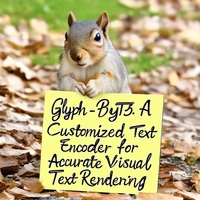
Glyph-ByT5-v2: A Strong Aesthetic Baseline for Accurate Multilingual Visual Text Rendering

Recently, Glyph-ByT5 has achieved highly accurate visual text rendering performance in graphic design images. However, it still focuses solely on English and performs relatively poorly in terms of visual appeal. In this work, we address these two fundamental limitations by presenting Glyph-ByT5-v2 and Glyph-SDXL-v2, which not only support accurate visual text rendering for 10 different languages but also achieve much better aesthetic quality. To achieve this, we make the following contributions: (i) creating a high-quality multilingual glyph-text and graphic design dataset consisting of more than 1 million glyph-text pairs and 10 million graphic design image-text pairs covering nine other languages, (ii) building a multilingual visual paragraph benchmark consisting of 1,000 prompts, with 100 for each language, to assess multilingual visual spelling accuracy, and (iii) leveraging the latest step-aware preference learning approach to enhance the visual aesthetic quality. With the combination of these techniques, we deliver a powerful customized multilingual text encoder, Glyph-ByT5-v2, and a strong aesthetic graphic generation model, Glyph-SDXL-v2, that can support accurate spelling in 10 different languages. We perceive our work as a significant advancement, considering that the latest DALL-E3 and Ideogram 1.0 still struggle with the multilingual visual text rendering task.

  • 6 authors
·
Jun 14, 2024 2

CLIP-NeRF: Text-and-Image Driven Manipulation of Neural Radiance Fields

We present CLIP-NeRF, a multi-modal 3D object manipulation method for neural radiance fields (NeRF). By leveraging the joint language-image embedding space of the recent Contrastive Language-Image Pre-Training (CLIP) model, we propose a unified framework that allows manipulating NeRF in a user-friendly way, using either a short text prompt or an exemplar image. Specifically, to combine the novel view synthesis capability of NeRF and the controllable manipulation ability of latent representations from generative models, we introduce a disentangled conditional NeRF architecture that allows individual control over both shape and appearance. This is achieved by performing the shape conditioning via applying a learned deformation field to the positional encoding and deferring color conditioning to the volumetric rendering stage. To bridge this disentangled latent representation to the CLIP embedding, we design two code mappers that take a CLIP embedding as input and update the latent codes to reflect the targeted editing. The mappers are trained with a CLIP-based matching loss to ensure the manipulation accuracy. Furthermore, we propose an inverse optimization method that accurately projects an input image to the latent codes for manipulation to enable editing on real images. We evaluate our approach by extensive experiments on a variety of text prompts and exemplar images and also provide an intuitive interface for interactive editing. Our implementation is available at https://cassiepython.github.io/clipnerf/

  • 5 authors
·
Dec 9, 2021

LensVLM: Selective Context Expansion for Compressed Visual Representation of Text

Vision Language Models (VLMs) offer the exciting possibility of processing text as rendered images, bypassing the need for tokenizing the text into long token sequences. Since VLM image encoders map fixed-size images to a fixed number of visual tokens, varying rendering resolution provides a fine-grained compression knob. However, accuracy deteriorates quickly as compression increases: characters shrink below the vision encoder's effective resolution, making them indistinguishable. To address this, we propose LensVLM, an inference framework and post-training recipe that enables VLMs to scan compressed images, then selectively expand only the relevant images to their uncompressed form via learned tools. Building on Qwen3.5-9B-Base, LensVLM maintains accuracy comparable to the full-text upper bound at 4.3x effective compression and outperforms retrieval-based, text- and visual-compression baselines up to 10.1x effective compression across seven text QA benchmarks. LensVLM also generalizes to multimodal document and code understanding tasks, with the accuracy gain over baselines growing as compression increases. Our analysis validates this approach: training makes visual compression robust to rendering choices, and as compression grows the model increasingly relies on expanded content rather than unreliable visual reading. The analysis also yields practical tool-choice guidance: text expansion is preferable for rendered text, while high-resolution image expansion suits native documents whose layout cues carry task-relevant information.

  • 10 authors
·
May 6

Qwen-Image-VAE-2.0 Technical Report

We present Qwen-Image-VAE-2.0, a suite of high-compression Variational Autoencoders (VAEs) that achieve significant advances in both reconstruction fidelity and diffusability. To address the reconstruction bottlenecks of high compression, we adopt an improved architecture featuring Global Skip Connections (GSC) and expanded latent channels. Moreover, we scale training to billions of images and incorporate a synthetic rendering engine to improve performance in text-rich scenarios. To tackle the convergence challenges of high-dimensional latent space, we implement an enhanced semantic alignment strategy to make the latent space highly amenable to diffusion modeling. To optimize computational efficiency, we leverage an asymmetric and attention-free encoder-decoder backbone to minimize encoding overhead. We present a comprehensive evaluation of Qwen-Image-VAE-2.0 on public reconstruction benchmarks. To evaluate performance in text-rich scenarios, we propose OmniDoc-TokenBench, a new benchmark comprising a diverse collection of real-world documents coupled with specialized OCR-based evaluation metrics. Qwen-Image-VAE-2.0 achieves state-of-the-art reconstruction performance, demonstrating exceptional capabilities in both general domains and text-rich scenarios at high compression ratio. Furthermore, downstream DiT experiments reveal our models possess superior diffusability, significantly accelerating convergence compared to existing high-compression baselines. These establish Qwen-Image-VAE-2.0 as a leading model with high compression, superior reconstruction, and exceptional diffusability.

Qwen Qwen
·
May 12 1

Seedream 2.0: A Native Chinese-English Bilingual Image Generation Foundation Model

Rapid advancement of diffusion models has catalyzed remarkable progress in the field of image generation. However, prevalent models such as Flux, SD3.5 and Midjourney, still grapple with issues like model bias, limited text rendering capabilities, and insufficient understanding of Chinese cultural nuances. To address these limitations, we present Seedream 2.0, a native Chinese-English bilingual image generation foundation model that excels across diverse dimensions, which adeptly manages text prompt in both Chinese and English, supporting bilingual image generation and text rendering. We develop a powerful data system that facilitates knowledge integration, and a caption system that balances the accuracy and richness for image description. Particularly, Seedream is integrated with a self-developed bilingual large language model as a text encoder, allowing it to learn native knowledge directly from massive data. This enable it to generate high-fidelity images with accurate cultural nuances and aesthetic expressions described in either Chinese or English. Beside, Glyph-Aligned ByT5 is applied for flexible character-level text rendering, while a Scaled ROPE generalizes well to untrained resolutions. Multi-phase post-training optimizations, including SFT and RLHF iterations, further improve the overall capability. Through extensive experimentation, we demonstrate that Seedream 2.0 achieves state-of-the-art performance across multiple aspects, including prompt-following, aesthetics, text rendering, and structural correctness. Furthermore, Seedream 2.0 has been optimized through multiple RLHF iterations to closely align its output with human preferences, as revealed by its outstanding ELO score. In addition, it can be readily adapted to an instruction-based image editing model, such as SeedEdit, with strong editing capability that balances instruction-following and image consistency.

  • 28 authors
·
Mar 10, 2025 3