| --- |
| license: gpl-3.0 |
| datasets: |
| - Kaynaaf/Brain-Tumour-MRI |
| metrics: |
| - accuracy 0.90 |
| - precision 0.90 |
| library_name: keras |
| tags: |
| - medical |
| - healthcare |
| --- |
| |
| # Model Card |
|
|
| An Image Classifier that predicts the presence of certain Brain tumours from their MRI scans |
|
|
| ## Model Details |
| A 134M Parameter ConvNet designed for classification of Brain tumours in MRI scans. |
|
|
| ## Paper |
|
|
| Interpretable Deep Learning for Brain Tumor Diagnosis: Occlusion Sensitivity-Driven Explainability in MRI Classification |
| DOI: [10.21015/vtse.v13i2.2082](10.21015/vtse.v13i2.2082) |
|
|
| ## Uses |
|
|
|
|
| ### Direct Use |
|
|
| Load the model, finetune the model if needed or just go straight towards generating inferences using the model. |
|
|
|
|
|
|
| ### Downstream Use |
|
|
| Finetune the model on other diagnostic scans, though the model only accepts grayscale images of size 256x256. |
|
|
| ## How to Get Started with the Model |
|
|
| [](https://colab.research.google.com/drive/1SfK9d2In3JHDvyXH4jpwznVGEG_wXRuQ?usp=sharing) |
|
|
| ## Training |
| The colab notebook used to train the model can be found below |
|
|
| [](https://colab.research.google.com/drive/1SfK9d2In3JHDvyXH4jpwznVGEG_wXRuQ?usp=sharing) |
|
|
| ## Evaluation |
|
|
| ### Metrics |
|
|
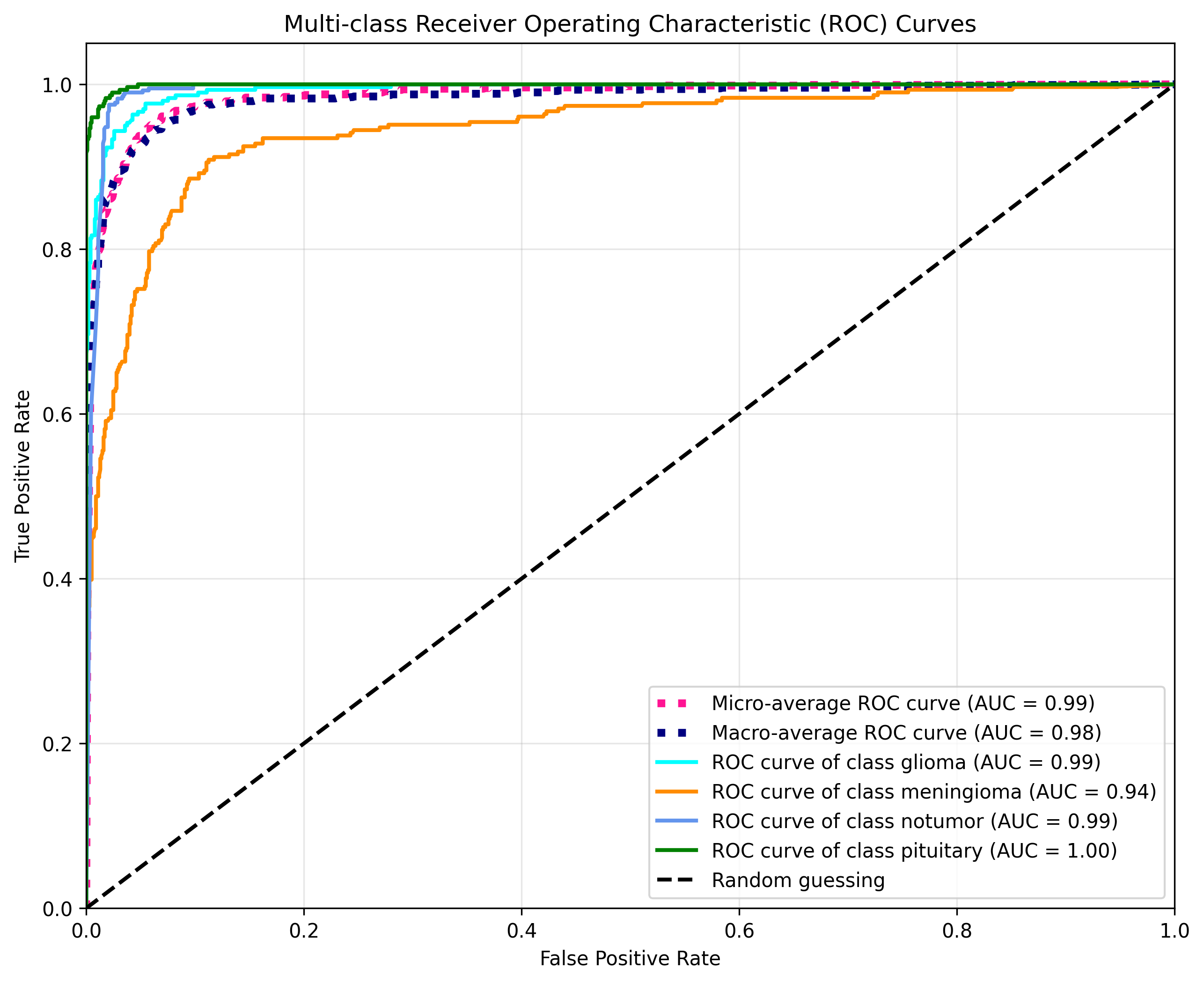
| | Class | Precision | Recall | F1-Score | Support | |
| |-------------|-----------|--------|----------|---------| |
| | Glioma | 0.96 | 0.87 | 0.91 | 300 | |
| | Meningioma | 0.84 | 0.71 | 0.77 | 306 | |
| | No Tumor | 0.88 | 1.00 | 0.93 | 405 | |
| | Pituitary | 0.93 | 0.99 | 0.96 | 300 | |
| | **Accuracy**| | | **0.90** | 1311 | |
| | **Macro Avg** | 0.90 | 0.89 | 0.89 | 1311 | |
| | **Weighted Avg** | 0.90 | 0.90 | 0.90 | 1311 | |
|
|
|  |
| ### Results |
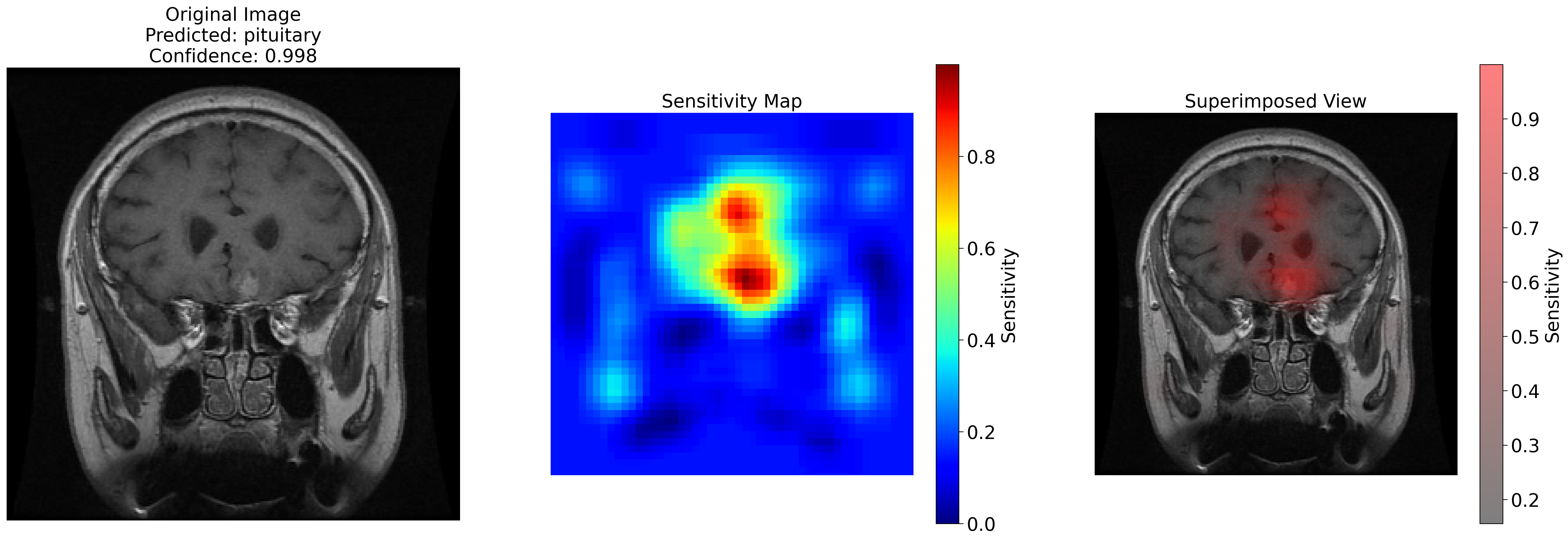
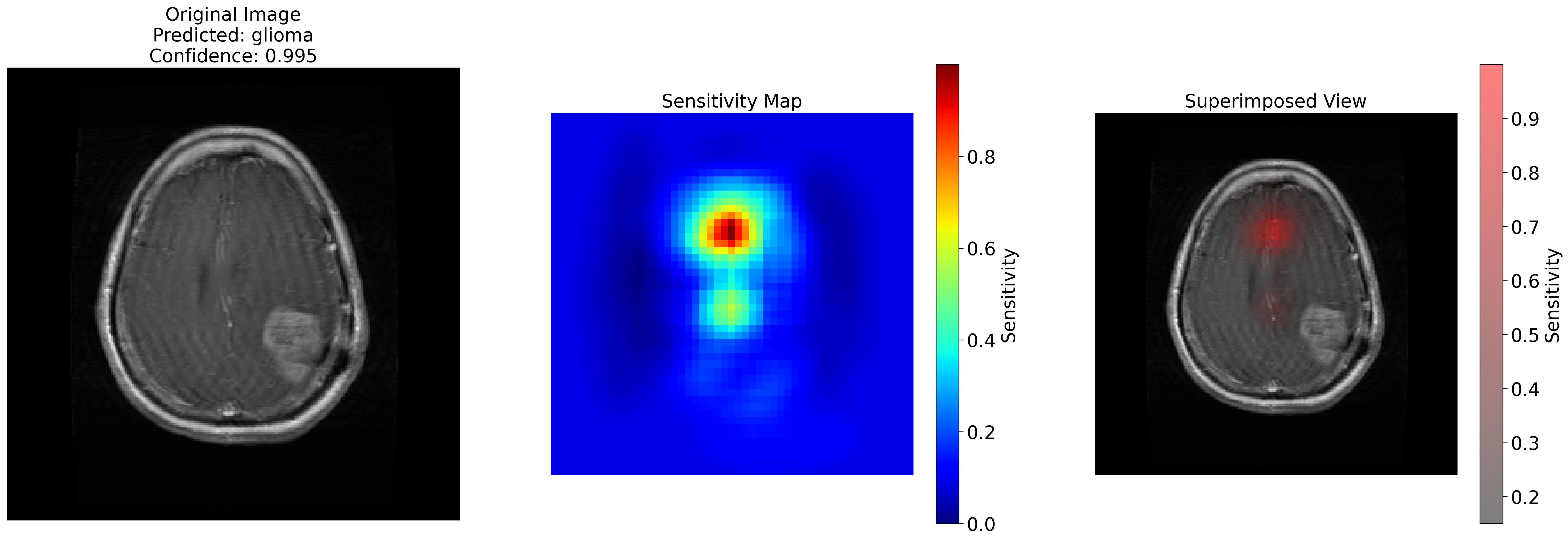
| This model was developed for my project that can be found on github [here](https://github.com/Kaynaaf/BrainMRI-Classifier) |
| . This project involved generating sensitivity maps to explain the predictions of the model. |
| These maps assign values to areas of the image that act as feature importance markers. |
|  |
|  |
|
|
|
|
|
|

