
problem stringlengths 15 4.7k | solution stringlengths 2 11.9k | answer stringclasses 51
values | problem_type stringclasses 8
values | question_type stringclasses 4
values | problem_is_valid stringclasses 1
value | solution_is_valid stringclasses 1
value | source stringclasses 6
values | synthetic bool 1
class |
|---|---|---|---|---|---|---|---|---|
2. Five students are competing in a 10 km race. It is known that after 5 km, the first was Ace, the second Bojan, the third Vuk, the fourth Goran, and the fifth Dejan, while at the end, the first was Vuk, the second Dejan, the third Ace, the fourth Goran, and the fifth Bojan. How many different rankings were there at l... | 2. The number of different arrangements is equal to the number of pairs of students who have swapped places in the meantime, increased by 1 (due to the first observed arrangement). Since Vuk must overtake Aca and Bojan, Dejan must overtake Aca, Bojan, and Goran, and Goran must overtake Bojan, the number of different ar... | 7 | Combinatorics | math-word-problem | Yes | Yes | olympiads | false |
1. Find the maximum value of the function $f(x)=(\sin x)^{\cos x}$ on the interval $\left[0, \frac{\pi}{2}\right]$. | 1. On the observed interval, $0 \leqslant \sin x \leqslant 1$ and $0 \leqslant \cos x \leqslant 1$ hold, so $(\sin x)^{\cos x} \leqslant 1^{\cos x}=1$. This value is indeed achieved for $x=\frac{\pi}{2}$, so the desired maximum value is 1. | 1 | Calculus | math-word-problem | Yes | Yes | olympiads | false |
1. Determine the value of the parameter $k$ so that for the solutions $x_{1}$ and $x_{2}$ of the equation
$$
2 x^{2}+3 x+3 k+1=0
$$
the following holds
$$
2 x_{1}-x_{2}=3
$$ | 1. From Vieta's formulas, we have $x_{1}+x_{2}=-\frac{3}{2}$, so we can write $3=$ $2 x_{1}-x_{2}=2\left(x_{1}+x_{2}\right)-3 x_{2}=-3-3 x_{2}$, and we calculate $x_{2}=-2$. Substituting $x=-2$ into the given equation, we have $2(-2)^{2}+3(-2)+3 k+1=0$, i.e., $3+3 k=0$, from which we obtain $k=-1$. | -1 | Algebra | math-word-problem | Yes | Yes | olympiads | false |
4. Find all natural numbers $n$ for which all numbers $n+1, n+3, n+7$, $n+9, n+13$ and $n+15$ are prime. | 4. The only such number is $n=4$ (the observed numbers are then $5,7,11,13,17$ and 19).
We claim that one of the numbers $n+1, n+3, n+7, n+9, n+13$ and $n+15$ is divisible by 5. Indeed, depending on whether $n$ gives a remainder of 0, 1, 2, 3, or 4 when divided by 5, the number divisible by 5 will be $n+15, n+9, n+3, ... | 4 | Number Theory | math-word-problem | Yes | Yes | olympiads | false |
5. In a box, there are 67 balls of two sizes (small and large) and two colors (white and red). It is known:
- the number of red balls is divisible by 5;
- the number of large red balls is equal to the number of white balls;
- of the four types of balls, the smallest number is small white;
- the number of balls of each... | 5. Let $C$ be the number of large red balls, $c$ the number of small red balls, $B$ the number of large white balls, and $b$ the number of small white balls. Then all these numbers are prime and $C+c+B+b=67$. For the sum of four prime numbers to be odd, one of them must be 2 (since the sum of four odd numbers is even).... | 7 | Number Theory | math-word-problem | Yes | Yes | olympiads | false |
1. What is the maximum number of sides a convex polygon can have if all its diagonals are of equal length? | 1. The answer is 5. First, note that a regular pentagon is an example of such a polygon. Now let a convex $n$-gon $A_{1} A_{2} \ldots A_{n}$ be given for $n \geqslant 6$. The quadrilateral $A_{1} A_{2} A_{n-2} A_{n-1}$ is also convex; from the triangle inequality we have $A_{n-1} A_{2} + A_{1} A_{n-2} > A_{n-1} A_{1} +... | 5 | Geometry | math-word-problem | Yes | Yes | olympiads | false |
3. Let the function odraz map the digits $0,1,2,5,8$ to the digits $0,1,5,2,8$, respectively. A natural number $n=\overline{t_{k} t_{k-1} \cdots t_{1} t_{0}}$ is called reflectable if all its digits are from the set $\{0,1,2,5,8\}$ and $t_{0} \neq 0$, and we define
$$
\operatorname{odraz}(n)=\overline{\operatorname{od... | 3. The only such number is $n=1$.
Let us prove by induction on $a \in \mathbb{N}_{0}$ the following statement: if the number $n=\overline{t_{k} t_{k-1} \ldots t_{1} t_{0}}$ satisfies the given conditions, for $k \geqslant a$, then $t_{0}=1$ and $t_{1}=t_{2}=\cdots=t_{a}=0$. This statement directly solves the problem, ... | 1 | Number Theory | math-word-problem | Yes | Yes | olympiads | false |
3. In how few moves can a knight from the lower left square of a chessboard (a1) reach the upper right (h8)? Prove it! | 3. It can be done in 6 moves: $\mathrm{a} 1 \rightarrow \mathrm{b} 3 \rightarrow \mathrm{c} 5 \rightarrow \mathrm{e} 4 \rightarrow \mathrm{g} 5 \rightarrow \mathrm{f} 7 \rightarrow \mathrm{h} 8$. Let's also show that it cannot be done in fewer than 6 moves.
First, note that with each move, the knight moves from a whit... | 6 | Logic and Puzzles | proof | Yes | Yes | olympiads | false |
4. Let $c$ be a natural number. The sequence $a_{1}, a_{2}, \ldots$ is defined by $a_{1}=c$ and $a_{n+1}=a_{n}^{2}+a_{n}+c^{3}$ for every natural number $n$. Determine all values of $c$ for which there exist integers $k \geqslant 1$ and $m \geqslant 2$ such that the number $a_{k}^{2}+c^{3}$ is equal to the $m$-th power... | 4. For $k>1$ from the recurrence relation we get
$$
a_{k}^{2}+c^{3}=a_{k+1}-a_{k}=a_{k}^{2}+a_{k}-a_{k-1}^{2}-a_{k-1}^{2}=\left(a_{k}-a_{k-1}\right)\left(a_{k}+a_{k-1}+1\right)
$$
Assume that $d \mid a_{k}-a_{k-1}$ and $d \mid a_{k}+a_{k-1}+1$. Then $d \mid 2 a_{k}+1$ and $d \mid 2 a_{k-1}+1$. From the recurrence rel... | +1 | Number Theory | math-word-problem | Yes | Yes | olympiads | false |
1. Given is the sequence $x_{1}=1, x_{2}=4$ and $x_{n+2}=4 x_{n+1}-x_{n}$ for $n \geqslant 1$. Find all natural numbers $m$ such that the number $3 x_{n}^{2}+m$ is a perfect square for every natural number $n$. | 1. The characteristic polynomial of the given recurrence sequence is $x^{2}-4 x+1$, whose roots are $x_{1,2}=2 \pm \sqrt{3}$. Therefore, the sequence $\left(x_{n}\right)$ is of the form $x_{n}=A(2+\sqrt{3})^{n}+B(2-$ $\sqrt{3})^{n}$ for some constants $A$ and $B$; it is easy to find that $A=-B=\frac{1}{2 \sqrt{3}}$, i.... | 1 | Number Theory | math-word-problem | Yes | Yes | olympiads | false |
## Problem 2
Find the smallest positive integer $k$ for which there exist a colouring of the positive integers $\mathbb{Z}_{>0}$ with $k$ colours and a function $f: \mathbb{Z}_{>0} \rightarrow \mathbb{Z}_{>0}$ with the following two properties:
(i) For all positive integers $m, n$ of the same colour, $f(m+n)=f(m)+f(n... | ## Solution 1:
The answer is $k=3$.
First we show that there is such a function and coloring for $k=3$. Consider $f: \mathbb{Z}_{>0} \rightarrow \mathbb{Z}_{>0}$ given by $f(n)=n$ for all $n \equiv 1$ or 2 modulo 3 , and $f(n)=2 n$ for $n \equiv 0$ modulo 3 . Moreover, give a positive integer $n$ the $i$-th color if ... | 3 | Number Theory | math-word-problem | Yes | Yes | olympiads | false |
4. 25 students took the exam. The exam consists of several questions, and for each question, five answers are provided. It turned out that the answers of any two students matched on at most one question. Prove that there were no more than 6 questions on the exam. | 4. Let the number of questions be denoted by $n$. If 6 students gave the same answer to one question, at least two of them would have given the same answer to another question, which contradicts the condition of the problem. Therefore, on each question, each of the 5 provided answers was given by exactly 5 students. Co... | 6 | Combinatorics | proof | Yes | Yes | olympiads | false |
1. Each of the 4 colors has 6 pencils. Each of the six children received 4 pencils. For what smallest $k$ can we always choose $k$ children and decorate their pencils so that we have at least one in each color? | 1. Let's denote colors by numbers from 1 to 4. If the distribution of pencils among children is
$$
(1,1,1,1), \quad(2,2,2,2), \quad(3,3,3,3), \quad(1,1,4,4), \quad(2,2,4,4), \quad(3,3,4,4)
$$
each child has only one of the colors $1,2,3$, so we need at least three children.
On the other hand, $k=3$ is sufficient: at... | 3 | Combinatorics | math-word-problem | Yes | Yes | olympiads | false |
4. Let $a, b$, and $c$ be three distinct real numbers. Find the minimum possible value of the expression
$$
\left|\frac{a}{b-c}\right|+\left|\frac{b}{c-a}\right|+\left|\frac{c}{a-b}\right|
$$
if it exists, as well as all triples $(a, b, c)$ for which this value is achieved. | 4. If we denote $x=\frac{a}{b-c}, y=\frac{b}{c-a}$ and $z=\frac{c}{a-b}$, we have $x-1=\frac{a-b+c}{b-c}, x+1=\frac{a+b-c}{b-c}$, etc., from which we conclude that
$$
(x-1)(y-1)(z-1)=(x+1)(y+1)(z+1), \quad \text { i.e. } \quad x y+y z+z x=-1
$$
Then $|x y|+|y z|+|z x| \geqslant 1$, from which it follows that
$$
(|x|... | 2 | Algebra | math-word-problem | Yes | Yes | olympiads | false |
Problem 2. Determine all positive integers $n$ satisfying the following condition: for every monic polynomial $P$ of degree at most $n$ with integer coefficients, there exists a positive integer $k \leq n$, and $k+1$ distinct integers $x_{1}, x_{2}, \ldots, x_{k+1}$ such that
$$
P\left(x_{1}\right)+P\left(x_{2}\right... |
Solution. There is only one such integer, namely, $n=2$. In this case, if $P$ is a constant polynomial, the required condition is clearly satisfied; if $P=X+c$, then $P(c-1)+P(c+1)=$ $P(3 c)$; and if $P=X^{2}+q X+r$, then $P(X)=P(-X-q)$.
To rule out all other values of $n$, it is sufficient to exhibit a monic polynom... | 2 | Algebra | proof | Yes | Yes | olympiads | false |
Problem 3. A cubic sequence is a sequence of integers given by $a_{n}=n^{3}+b n^{2}+c n+d$, where $b, c$ and $d$ are integer constants and $n$ ranges over all integers, including negative integers.
(a) Show that there exists a cubic sequence such that the only terms of the sequence which are squares of integers are $... |
Solution. The only possible value of $a_{2015} \cdot a_{2016}$ is 0 . For simplicity, by performing a translation of the sequence (which may change the defining constants $b, c$ and $d$ ), we may instead concern ourselves with the values $a_{0}$ and $a_{1}$, rather than $a_{2015}$ and $a_{2016}$.
Suppose now that we ... | 0 | Algebra | proof | Yes | Yes | olympiads | false |
Problem 1. For a positive integer $a$, define a sequence of integers $x_{1}, x_{2}, \ldots$ by letting $x_{1}=a$ and $x_{n+1}=2 x_{n}+1$. Let $y_{n}=2^{x_{n}}-1$. Determine the largest possible $k$ such that, for some positive integer $a$, the numbers $y_{1}, \ldots, y_{k}$ are all prime.
(Russia) VALERY Senderov
|
Solution. The largest such is $k=2$. Notice first that if $y_{i}$ is prime, then $x_{i}$ is prime as well. Actually, if $x_{i}=1$ then $y_{i}=1$ which is not prime, and if $x_{i}=m n$ for integer $m, n>1$ then $2^{m}-1 \mid 2^{x_{i}}-1=y_{i}$, so $y_{i}$ is composite. In particular, if $y_{1}, y_{2}, \ldots, y_{k}$ ar... | 2 | Number Theory | math-word-problem | Yes | Yes | olympiads | false |
1. Given various real numbers $x$ and $y$ such that $x / y + x = y / x + y$. What can $1 / x + 1 / y$ be equal to? Find all possible values and prove that there are no others. | 1. Solution. Transform the equality from the condition: $y-x=\frac{x}{y}-\frac{y}{x}=\frac{x^{2}-y^{2}}{x y}$. Using $x \neq y$, we get $-1=\frac{x+y}{x y}=\frac{1}{x}+\frac{1}{y}$. Answer: -1. | -1 | Algebra | math-word-problem | Yes | Yes | olympiads | false |
2. A cruciform labyrinth represents the intersection of two segments, each 2 kilometers long, with a common midpoint. A nearsighted policeman on a defective motorcycle is chasing a gangster. The policeman's speed is 20 times that of the gangster, but he can only see 1 meter (in all directions), and his motorcycle can t... | 2. Solution. Let's conduct the reasoning in the general case. Let the lengths of all corridors be $a$, and the speed of the policeman be $n$ times the speed of the cyclist. We will drive around all the corridors (this will take five turns), and return to the center. If the gangster is not caught, it means he has moved ... | 1 | Logic and Puzzles | math-word-problem | Yes | Yes | olympiads | false |
1.1. Find the maximum value of the function $\sin ^{13} x+\cos ^{14} x$. | 1.1. Answer: 1. Note that $\sin ^{13} x+\cos ^{14} x \leqslant \sin ^{2} x+\cos ^{2} x=1$, and, for example, at $x=\pi / 2$ equality is achieved. | 1 | Algebra | math-word-problem | Yes | Yes | olympiads | false |
4.2. Given a rectangular trapezoid $A B C D (B C \| A D$ and $A B \perp A D)$, the diagonals of which are perpendicular and intersect at point $M$. Points $K$ and $L$ are chosen on sides $A B$ and $C D$ respectively, such that $M K$ is perpendicular to $C D$, and $M L$ is perpendicular to $A B$. It is known that $A B=1... | 4.2. Solution. Let $P$ be the intersection point of $ML$ and $AB$ (see Fig. 21). Triangles $AKM$ and $MLD$ are similar because $\angle KAM = \angle LMD$ (they complement $\angle ABM$ to a right angle) and $\angle KMA = \angle LDM$ (they complement $\angle MCD$ to a right angle),
^{2016}+\left(\frac{y^{2}+z^{2}-x^{2}}{2 y z}\right)^{2016}+\left(\frac{z^{2}+x^{2}-y^{2}}{2 ... | Answer: 3.
Solution: Multiply by $2 x y z$, move to one side, we get $z\left(x^{2}+y^{2}-z^{2}\right)+$ $x\left(y^{2}+z^{2}-x^{2}\right)+y\left(z^{2}+x^{2}-y^{2}\right)-2 x y z=0$. Factorize: $(x+y-z)(x-$ $y+z)(-x+y+z)=0$. Therefore, one of the numbers is equal to the sum of the other two. Then the expressions in the ... | 3 | Algebra | math-word-problem | Yes | Yes | olympiads | false |
6. A factory produces sets of $n>2$ elephants of different sizes. According to the standard, the difference in mass between adjacent elephants within each set should be the same. The inspector checks the sets one by one using a balance scale without weights. For what smallest $n$ is this possible? | - Omвem: for $n=5$. Let's number the elephants in ascending order of their size, then it is enough to verify that $C_{1}+C_{4}=C_{2}+C_{3}, C_{1}+C_{5}=C_{2}+C_{4}$ and $C_{2}+$ $C_{5}=C_{3}+C_{4}$. These equalities are equivalent to $C_{4}-C_{3}=C_{2}-C_{1}$, $C_{2}-C_{1}=C_{5}-C_{4}$ and $C_{5}-C_{4}=C_{3}-C_{2}$, th... | 5 | Number Theory | math-word-problem | Yes | Yes | olympiads | false |
56. (7) Given a sequence of natural numbers $u_{0}, u_{1}, \ldots$, where $u_{0}=1$. It turns out that there exists a natural number $k$ such that the equality $u_{n+1} u_{n-1} = k u_{n}$ holds for all natural numbers $n$. It is also known that $u_{2013}=100$. Find $k$. | - Answer: $k=10$. Let $u_{1}$ be denoted by $a$. Simple calculations show that $u_{2}=k a, u_{3}=k^{2}, u_{4}=k^{2} / a, u_{5}=k / a, u_{6}=1, u_{7}=a$, which means the sequence
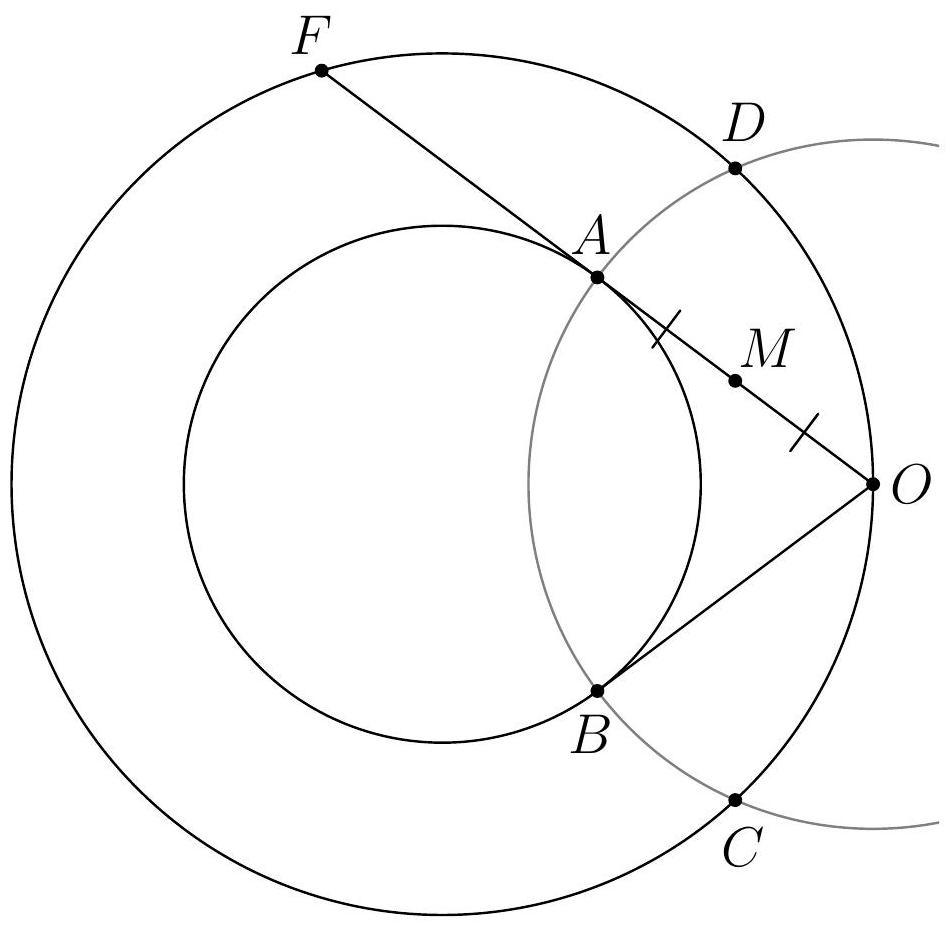
Fig. 12: to ... | 10 | Algebra | math-word-problem | Yes | Yes | olympiads | false |
4. Different real numbers $a, b, c$ are such that among the three equations
$$
x^{2}+a x+b=0, \quad x^{2}+b x+c=0, \quad x^{2}+c x+a=0
$$
any two have exactly one common root. Find $a^{2}+b^{2}+c^{2}$.
## Senior League | 4. Note that the common root of the first two equations is also the root of their difference. We get that it is equal to $p=\frac{c-b}{a-b}$; similarly for the other common roots: $q=\frac{a-c}{b-c}$ and $r=\frac{b-a}{c-a}$. Among numbers of this form, there must be two of different signs, that is, $p, q, r$ are not al... | 6 | Algebra | math-word-problem | Yes | Yes | olympiads | false |
1.1. Five non-negative numbers are written in a row. The sum of any two adjacent numbers does not exceed 1. What is the maximum value that the sum of all five numbers can take? | 1.1. Answer: 3. Example: $1,0,1,0,1$.
Denoting our numbers as $a, b, c, d, e$, we get that $a+b+c+d+e=(a+b)+(c+d)+(d+e)-d \leqslant 3$. | 3 | Inequalities | math-word-problem | Yes | Yes | olympiads | false |
2.1. Given real numbers \(a, b, c\) such that \(a+b+c=0\). Find
\[
\left(\frac{a}{b-c}+\frac{b}{c-a}+\frac{c}{a-b}\right)\left(\frac{b-c}{a}+\frac{c-a}{b}+\frac{a-b}{c}\right)
\] | ### 2.1. Answer: 9.
Notice that for three numbers $x, y, z$ the identity holds:
$$
\frac{x-z}{y}+\frac{z-y}{x}+\frac{y-x}{z}=\frac{(x-y)(y-z)(z-x)}{x y z}
$$
Apply this to the set $(x, y, z)=(b-c, c-a, a-b)$. Notice that $x-z=2 b-a-c=3 b$ and so on, so we get
$$
\frac{3 a}{b-c}+\frac{3 b}{c-a}+\frac{3 c}{a-b}=\frac... | 9 | Algebra | math-word-problem | Yes | Yes | olympiads | false |
14. All vertices of a regular polygon lie on the surface of a cube, but its plane does not coincide with any of the faces. What is the maximum number of vertices this polygon can have? | $\square \quad$ Omвem: 12 .
Assessment. It is clear that no more than 2 vertices of the polygon lie on each face, so there are no more than 12 vertices.
Example. Draw a section in the form of a regular hexagon through the midpoints of 6 edges. Inscribed in this hexagon, place a regular 12-sided polygon such that the ... | 12 | Geometry | math-word-problem | Yes | Yes | olympiads | false |
21. For any coloring of the cells of a grid board in black and white, the board is divided into monochromatic areas (with a checkerboard coloring, all areas are single-cell). Each move, Petya selects one area and repaints it to the opposite color. The repainted area merges with adjacent areas of the same color, and the... | $\square$ Answer: in 12.
Example. With each move, we repaint the area containing the central cell.
Estimate. We glue together cells of the same color into one area not only if they touch by sides, but also if they touch by the bottom right and top left corners. Then initially we have only 17 diagonal areas, their adj... | 12 | Combinatorics | math-word-problem | Yes | Yes | olympiads | false |
25. The train from Moscow to Petushki travels the initial segment - from Kursk station to Drezna - three times longer than from Leonovo to Petushki. At the same time, from Drezna to Petushki, it travels twice as fast as from Kursk station to Leonovo. How many times greater is the travel time from Kursk station to Petus... | $\square$ Answer: five times.
Let the travel time from Moscow to Petushki be 1 (one Metaphysical Unit of Time). Then, if the time from Moscow to Drezna is $x$ MEB, and from Leonovo to Petushki is $-y$ MEB, we have $x=3 y, 1-y=2(1-x)=2(1-3 y)$, hence $5 y=1, y=1 / 5, x=3 / 5, 1-x-y=1 / 5-$ the time from Drezna to Leono... | 5 | Algebra | math-word-problem | Yes | Yes | olympiads | false |
27. Find all perfect numbers whose prime factorization includes each prime to an odd power. (Recall that a natural number is called perfect if it is equal to the sum of all its natural divisors, less than the number itself - for example, $28=1+2+4+7+14$.) | $\square$ Answer: $n=6$.
Let $p$ be the smallest prime divisor of our number $n$, and $2k+1$ be the power of its occurrence in the prime factorization of $n$. We can divide all divisors of $n$ into pairs $(x, px), (p^2x, p^3x), \ldots, (p^{2k}x, p^{2k+1}x)$, where $x$ is a divisor not divisible by $p$. The sum in each... | 6 | Number Theory | math-word-problem | Yes | Yes | olympiads | false |
41. The class won a prize of a bag with 2014 coins, which initially is with the class president (and the other children in the class have no money). When two classmates meet, they split the money equally between themselves if the total number of coins they have is even. If the total number is odd, they give one coin to... | $\square$ Answer: 12 children.
We will show by induction on $k$ that $k+1$ people can get rid of $2^{k}-1$ coins initially held by one of them (and from a smaller number of coins). For $k=1$, this is clear, and the inductive step from $k$ to $k+1$ is also clear: after the first meeting, there remain 2 people, each hav... | 12 | Number Theory | math-word-problem | Yes | Yes | olympiads | false |
24. From the results table of a single-round football tournament with 10 teams, only the total number of goals scored and conceded for each team remained. This was enough for the mathematician to restore the score in each match. What is the smallest number of these 20 numbers that could have been zeros? | Answer: 0. Solution. If the total number of goals scored by team $A$ equals the total number of goals conceded by the other teams, and the same is true for the goals conceded by team $A$ and the total number of goals scored by the other teams, then all goals were scored and conceded only in matches involving team $A$. ... | 0 | Logic and Puzzles | math-word-problem | Yes | Yes | olympiads | false |
3. (5) The $(n, k)$-knight figure moves by $n$ positions in one of two directions and by $k$ in the other (the usual knight is thus a $(2,1)$-knight). Given $n$ and $k$, determine the smallest number of colors needed to color an infinite checkerboard such that the $(n, k)$-knight always changes color with each move. | 3. Answer: two colors are sufficient.
If $n$ and $k$ have different parity, a checkerboard coloring will work. If $n$ and $k$ are both odd, a vertical stripe pattern of width 1 will suffice. If $n$ and $k$ are both even, the knight will only move within a certain subset of vertices with the same parity of coordinates.... | 2 | Combinatorics | math-word-problem | Yes | Yes | olympiads | false |
1.2. Inside the rectangle $A B C D$, whose sides are $A B=C D=15$ and $B C=A D=10$, there is a point $P$ such that $A P=9, B P=12$. Find $C P$. | 1.2. $A B=15, B P=12, A P=9$. Therefore, $A B P$ is a right triangle. Drop the heights $P S$ and $P T$ onto $A B$ and $B C$ respectively. From similarity, we get $P S=A P \cdot B P / A B=36 / 5, P T=B P^{2} / A B=48 / 5$. Then $C P^{2}=$ $(B C-P S)^{2}+P T^{2}=2500 / 25=100, C P=10$. | 10 | Geometry | math-word-problem | Yes | Yes | olympiads | false |
2.2. Given a convex pentagon $A B C D E$, such that
$$
A B=A E=D C=B C+D E=1 \text { and } \angle A B C=D E A=90^{\circ} .
$$
What is the area of this pentagon? | 2.2. Let's construct triangle $\triangle P S F$ with height $P H$ such that $\triangle P H S=\triangle A B C$ and $\triangle P H F=\triangle A E D$ (simply "combine" triangles $\triangle A B C$ and $\triangle A E D$ together). Then $\triangle P S F=\triangle A C D$ (by three sides). Therefore, $S(\triangle A C D)=S(\tr... | 1 | Geometry | math-word-problem | Yes | Yes | olympiads | false |
3.2. A quadrilateral $ABCD$ is inscribed in a circle $\omega$ such that $AB = AD$ and $BC = CD$ (a deltoid). It turns out that the radius of the inscribed circle of triangle $ABC$ is equal to the radius of the circle that touches the smaller arc $BC$ of circle $\omega$ and the side $BC$ at its midpoint (see Fig. 3). Fi... | 3.2. Let $I$ be the center of the inscribed circle of triangle $ABC$, $P$ the point of tangency of this inscribed circle with side $AB$, $M$ the midpoint of side $AB$, and $Q$ the midpoint of arc $AB$ (see Fig. 5).
Note that triangle $IPB$ is isosceles and right-angled. Moreover, by the trident theorem, triangle $IQB$... | 6 | Geometry | math-word-problem | Yes | Yes | olympiads | false |
2. In a set of 20 elements there are $2 k+1$ different subsets of 7 elements such that each of these subsets intersects exactly $k$ other subsets. Find the maximum $k$ for which this is possible.
The answer is $k=2$.
|
Solution. Let $M$ be the set of residues mod20. An example is given by the sets $A_{i}=\{4 i+1,4 i+$ $2,4 i+3,4 i+4,4 i+5,4 i+6,4 i+7\} \subset M, i=0,1,2,3,4$.
Let $k \geq 2$. Obviously among any three 7-element subsets there are two intersecting subsets.
Let $A$ be any of the $2 k+1$ subsets. It intersects $k$ oth... | 2 | Combinatorics | math-word-problem | Yes | Yes | olympiads | false |
A2. Two ants start at the same point in the plane. Each minute they choose whether to walk due north, east, south or west. They each walk 1 meter in the first minute. In each subsequent minute the distance they walk is multiplied by a rational number $q>0$. They meet after a whole number of minutes, but have not taken... | ## Solution.
Answer: $q=1$.
Let $x_{A}^{(n)}$ (resp. $x_{B}^{(n)}$ ) be the $x$-coordinates of the first (resp. second) ant's position after $n$ minutes. Then $x_{A}^{(n)}-x_{A}^{(n-1)} \in\left\{q^{n},-q^{n}, 0\right\}$, and so $x_{A}^{(n)}, x_{B}^{(n)}$ are given by polynomials in $q$ with coefficients in $\{-1,0,1... | 1 | Combinatorics | math-word-problem | Yes | Yes | olympiads | false |
A1. A set $A$ is endowed with a binary operation $*$ satisfying the following four conditions:
(1) If $a, b, c$ are elements of $A$, then $a *(b * c)=(a * b) * c$;
(2) If $a, b, c$ are elements of $A$ such that $a * c=b * c$, then $a=b$;
(3) There exists an element $e$ of $A$ such that $a * e=a$ for all $a$ in $A$;... |
Solution. The required maximum is 3 , in which case $A$ is necessarily a copy of the additive group of residue classes modulo 3 ; that is, $A=\left\{a, a^{2}, a^{3}=e\right\}$, which clearly satisfies the conditions.
We show that if $|A| \geq 3$, then $A$ has the above form. For convenience, write $x y=x * y$ for all... | 3 | Algebra | math-word-problem | Yes | Yes | olympiads | false |
C1. We start with any finite list of distinct positive integers. We may replace any pair $n, n+1$ (not necessarily adjacent in the list) by the single integer $n-2$, now allowing negatives and repeats in the list. We may also replace any pair $n, n+4$ by $n-1$. We may repeat these operations as many times as we wish. ... |
Solution. The minimal value that can be achieved is -3 , for instance by
$$
1,2,3,4,5 \mapsto 0,1,4,5 \mapsto 0,1,2 \mapsto-1,0 \mapsto-3
$$
To show that no lesser value is achievable, let $\alpha$ be the root of the polynomial $X^{3}+X^{2}-1$ lying between 0 and 1 , and note that $\alpha$ is also a root of the poly... | -3 | Number Theory | proof | Yes | Yes | olympiads | false |
4.3. In a triangle $A B C$ the following relation holds:
$$
\sin ^{23} \frac{\alpha}{2} \cdot \cos ^{48} \frac{\beta}{2}=\sin ^{23} \frac{\beta}{2} \cdot \cos ^{48} \frac{\alpha}{2}
$$
where $\alpha$ and $\beta$ are the corresponding angles at $A$ and $B$. Find the ratio $A C / B C$.
(Cyprus) | 4.3. For every $s$ and $t$ such that $0\cos ^{48} t$. Therefore the function
$$
f(t)=\frac{\sin ^{23} t}{\cos ^{48} t}
$$
is strictly increasing on $(0, \pi / 2)$. So from $f(\alpha / 2)=f(\beta / 2)$ we get $\alpha=\beta$, that is $A C / B C=1$.
## Figure 4.4. | 1 | Geometry | math-word-problem | Yes | Yes | olympiads | false |
7.4. Find the minimal cardinality of a finite set $A$, for which there is a function $f: \mathbf{N} \rightarrow A$ such that if the number $|i-j|$ is prime, then $f(i) \neq f(j)$.
## 8th BALKANIAN MATHEMATICAL OLYMPIAD
CONSTANTGA, Romania, 1991. | 7.4. For integers $1,3,6,8$, differences of any two are primes. According to the condition in our problem, $f(1), f(3), f(6), f(8)$ must all be mutualy different, so that $A$ has at least four elements.
Let us define $A=\{1,2,3,4\}$ and $f(n) \equiv n(\bmod 4)$. From $f(i)=f(j)$ we conclude $i \equiv j(\bmod 4)$, i.e.... | 4 | Combinatorics | math-word-problem | Yes | Yes | olympiads | false |
6. Solve the following system in real numbers:
$$
\begin{aligned}
2^{x^{2}+y}+2^{x+y^{2}} & =8 \\
\sqrt{x}+\sqrt{y} & =2
\end{aligned}
$$
## Analysis | 6. From the first equation we deduce
$$
8=2^{x^{2}+y}+2^{x+y^{2}} \geq 2 \sqrt{2^{x^{2}+y} \cdot 2^{x+y^{2}}}
$$
or equivalently
$$
4 \geq x^{2}+x+y+y^{2}
$$
Since $(x+y)^{2} \leq 2\left(x^{2}+y^{2}\right)$, we get further
$$
(x+y)^{2}+2(x+y)-8 \leq 0
$$
From this relation we deduce that
$$
x+y \leq-1+\sqrt{9}=2... | 1 | Algebra | math-word-problem | Yes | Yes | olympiads | false |
1. We call polynomials $A(x)=a_{n} x^{n}+\ldots+a_{1} x+a_{0}$ and $B(x)=b_{m} x^{m}+\ldots+b_{1} x+b_{0}$ $\left(a_{n} b_{m} \neq 0\right)$ similar if the following conditions hold:
(i) $n=m$;
(ii) There is a permutation $\pi$ of the set $\{0,1, \ldots, n\}$ such that $b_{i}=a_{\pi(i)}$ for each $i \in\{0,1, \ldots,... | 1. Since $3^{2012} \equiv 1(\bmod 5)$, it holds that $Q\left(3^{2012}\right) \equiv Q(1)=P(1) \equiv P(16) \equiv 1$ $(\bmod 5)$, so $\left|Q\left(3^{2012}\right)\right| \geqslant 1$.
Now we construct polynomials $P$ and $Q$ satisfying the conditions for which $Q\left(3^{2012}\right)=1$. Set $P(x)=a x^{2}+b x+c$ and $... | 1 | Algebra | math-word-problem | Yes | Yes | olympiads | false |
3. Let $p>3$ be a given prime number. For a set $S \subseteq \mathbb{Z}$ and $a \in \mathbb{Z}$, define
$$
S_{a}=\left\{x \in\{0,1, \ldots, p-1\} \mid(\exists s \in S) x \equiv_{p} a \cdot s\right\}
$$
(a) How many sets $S \subseteq\{1,2, \ldots, p-1\}$ are there for which the sequence $S_{1}, S_{2}, \ldots, S_{p-1}$... | 3. Let $g$ be a primitive root modulo $p$. The sequence $S_{1}, S_{2}, \ldots, S_{p-1}$ is a permutation of $S_{1}, S_{g}, \ldots, S_{g^{p-2}}$. Since the sequence $S_{1}, S_{g}, S_{g^{2}}, \ldots$ is periodic with period $p-1$, its minimal period $d$ divides $p-1$ and the sets $S_{1}, S_{g}, \ldots, S_{g^{d-1}}$ are m... | 2 | Combinatorics | math-word-problem | Yes | Yes | olympiads | false |
3. In some vertices of a square grid $2012 \times 2012$ there are a fly and $k$ spiders. In each second, the fly moves to a neighboring vertex or waits, followed by each of the $k$ spiders moving to a neighboring vertex or waiting (there can be more than one spider in the same vertex). At all times, the fly and the spi... | 3. One spider cannot catch the fly if the fly waits for the spider to arrive to a neighboring cell, and then repeatedly moves onto a cell diagonally adjacent to the spider's. We shall show that the two spiders are enough in both (a) and (b) - denote them by $P$ and $Q$, the fly by $M$, and $x$ - and $y$-coordinates of ... | 2 | Combinatorics | math-word-problem | Yes | Yes | olympiads | false |
6. A train consists of $n>1$ waggons with gold coins. Some coins are genuine and some are fake, although they all look the same and can only be distinguished by mass: all genuine coins have the same mass, and so do all fake ones, where the two masses differ. The mass of a genuine coin is known. Each waggon contains onl... | 6. We show that the smallest number of measurements is 2 . Denote the masses of a genuine and fake coin by $x$ and $y$ respectively, and let $a_{i}=1$ if the $i$-th waggon contains genuine coins, and $a_{i}=0$ otherwise.
In the first measurement, take one coin from each waggon; let $m_{1}$ be the result. Then $a_{1}+a... | 2 | Combinatorics | math-word-problem | Yes | Yes | olympiads | false |
5. The edge length of a wooden cube is a natural number greater than 2. We paint the cube and then cut it into unit cubes. The number of unit cubes that have exactly two painted faces is a divisor of the number of unit cubes that have no painted faces. Determine the smallest natural number that can be the edge length o... | I/5. Cubes that have exactly two faces painted are located along the edges, but not at the corners of the original cube. Along each edge, there are $a-2$ of them. There are 12 edges in total, so there are $12 \cdot (a-2)$ of them.
Let's count the unit cubes that have no faces painted. In the original cube, these are l... | 8 | Combinatorics | math-word-problem | Yes | Yes | olympiads | false |
3. Let $E$ be a point on the side $AB$ of square $ABCD$ such that $|AE|=3|EB|$, and let $F$ be a point on the side $DA$ such that $|AF|=5|FD|$. Denote the intersection of segments $DE$ and $FC$ by $K$, the intersection of $DE$ and $BF$ by $L$, and the intersection of $FB$ and $EC$ by $M$. Let $p_{1}$ be the sum of the ... | ## III/3. Let $p$ be the area of quadrilateral $C K L M$. Then
$p_{2}+p$ is equal to the area of triangle $F B C$. The length of the height to side $B C$ in triangle $F B C$ is equal to $|A B|$, so the area of the triangle is $\frac{|A B| \cdot|B C|}{2}=\frac{|A B|^{2}}{2}$. Therefore,
$$
p_{2}=\frac{|A B|^{2}}{2}-p... | 1 | Geometry | math-word-problem | Yes | Yes | olympiads | false |
4. Let $a, b, c$ and $d$ be real numbers greater than 1. Calculate the value of the expression
$$
a^{\left(\log _{b} c\right)-1} b^{\left(\log _{c} d\right)-1} c^{\left(\log _{d} a\right)-1} d^{\left(\log _{a} b\right)-1}
$$
if you know that $\log _{b} a \cdot \log _{d} c=1$ | III/4. Let $S=a^{\left(\log _{b} c\right)-1} b^{\left(\log _{c} d\right)-1} c^{\left(\log _{d} a\right)-1} d^{\left(\log _{a} b\right)-1}$. We write $1=\log _{b} a \cdot \log _{d} c=$ $\frac{\log a \cdot \log c}{\log b \cdot \log d}$. Using this, we calculate
$$
\begin{aligned}
& \log (a b c d S)=\log \left(a^{\log _{... | 1 | Algebra | math-word-problem | Yes | Yes | olympiads | false |
2. For every natural number $n$, we write the sum $1^{n}+2^{n}+3^{n}+4^{n}$ as a number $\mathrm{v}$ in decimal notation. With how many zeros can these numbers end at most? | IV/2. First, $1+2+3+4=10, 1^{2}+2^{2}+3^{2}+4^{2}=30$ and $1^{3}+2^{3}+3^{3}+4^{3}=100$. Suppose that for some natural number $n>3$ we could express the sum $1^{n}+2^{n}+3^{n}+4^{n}$ as a number that would end with three zeros. This number would be divisible by $1000=8 \cdot 125$. Let's look at the remainder of each te... | 2 | Number Theory | math-word-problem | Yes | Yes | olympiads | false |
2. Let $n$ be a natural number that is equal to the sum of its divisors that are less than $n$. For example, the number 28. What is the sum of the reciprocals of all its divisors? | III/2. Let $d_{1}, d_{2}, \ldots, d_{k}$ be the divisors of the number $n$ and let $1=d_{1}<d_{2}<\ldots<d_{k}=n$. Then $d_{i} \cdot d_{k+1-i}=n$, so $\frac{1}{d_{1}}+\frac{1}{d_{2}}+\ldots+\frac{1}{d_{k}}=\frac{d_{k}}{n}+\frac{d_{k-1}}{n}+\ldots+\frac{d_{1}}{n}=\frac{d_{k}+\left(d_{k-1}+\ldots+d_{1}\right)}{n}=$ $\fra... | 2 | Number Theory | math-word-problem | Yes | Yes | olympiads | false |
2. For which values of the parameter $a$ does the system of equations $|x-1|+|y-a|=1$ and $y=-2|x-1|-1$ have exactly 3 solutions? | I/2. We draw curves defined by equations. The first equation defines the perimeter of a square centered at the point $(1, a)$, the second defines 2 half-rays with a common origin at the point $(1,-1)$. The system has exactly 3 solutions when the common origin of the half-rays coincides with the upper vertex of the squa... | -2 | Algebra | math-word-problem | Yes | Yes | olympiads | false |
3. For real numbers $a$ and $b$, it holds that $a^{3}=3 a b^{2}+11$ and $b^{3}=3 a^{2} b+2$. Calculate the value of the expression $a^{2}+b^{2}$. | I/3. We rewrite the equations as $a^{3}-3 a b^{2}=11, b^{3}-3 a^{2} b=2$ and square them: $a^{6}-6 a^{4} b^{2}+9 a^{2} b^{4}=$ $121, b^{6}-6 a^{2} b^{4}+9 a^{4} b^{2}=4$. We add these two equations and get $125=a^{6}+3 a^{4} b^{2}+3 a^{2} b^{4}+b^{6}=$ $\left(a^{2}+b^{2}\right)^{3}$, so $a^{2}+b^{2}=5$.
Correct squari... | 5 | Algebra | math-word-problem | Yes | Yes | olympiads | false |
3. Let $a$ and $b$ be positive real numbers. Prove that the value of the expression
$$
\frac{\sqrt{\frac{a b}{2}}+\sqrt{8}}{\sqrt{\frac{a b+16}{8}+\sqrt{a b}}}
$$
is independent of $a$ and $b$. | II/3. If the numbers $a$ and $b$ are positive, the expression is defined for any $a$ and $b$, so we can write
$$
\begin{gathered}
\frac{\sqrt{\frac{a b}{2}}+\sqrt{8}}{\sqrt{\frac{a b+16}{8}+\sqrt{a b}}}=\frac{\sqrt{\left(\sqrt{\frac{a b}{2}}+\sqrt{8}\right)^{2}}}{\sqrt{\frac{a b+16+8 \sqrt{a b}}{8}}}=\frac{\sqrt{\frac... | 2 | Algebra | proof | Yes | Yes | olympiads | false |
1. Find all positive real numbers $x$ that satisfy the equation $x^{x \sqrt[3]{x}}=(x \sqrt[3]{x})^{x}$. | III/1. We take the logarithm of both sides of the equation and get \( x \sqrt[3]{x} \log x = x \log x^{\frac{4}{3}} = \frac{4}{3} x \log x \), which we rearrange to \( x \log x \left( \sqrt[3]{x} - \frac{4}{3} \right) = 0 \). Since \( x > 0 \), we get one solution of the equation from \( \log x = 0 \), which is \( x = ... | 1 | Algebra | math-word-problem | Yes | Yes | olympiads | false |
3. For how many natural numbers $n$ is the value of the expression $n^{3}-14 n^{2}+64 n-93$ a prime number? | III/3. Let's try to factor the expression. Since $93=3 \cdot 31$, the integer roots of the polynomial $p(x) = x^{3}-14 x^{2}+64 x-93$ can only be $\pm 1, \pm 3, \pm 31$ and $\pm 93$. By mental calculation, we verify that neither 1 nor -1 are roots. Using Horner's algorithm, we determine that 3 is a root:
| | 1 | -14 ... | 3 | Algebra | math-word-problem | Yes | Yes | olympiads | false |
1. The first two terms of the sequence are $a_{1}=1$ and $a_{2}=3$. From the second term onwards, it holds that if we subtract the term before it from a given term, we get the term after it. Find the sum of the first 2005 terms of the sequence. | IV /1. For $i \geq 2$, it holds that $a_{i+1}=a_{i}-a_{i-1}$. Thus, $a_{1}+a_{2}+a_{3}+\cdots+a_{2005}=a_{1}+a_{2}+\left(a_{2}-\right.$ $\left.a_{1}\right)+\left(a_{3}-a_{2}\right)+\left(a_{4}-a_{3}\right)+\cdots+\left(a_{2003}-a_{2002}\right)+\left(a_{2004}-a_{2003}\right)=a_{2}+a_{2004}$. If we write out the first fe... | 1 | Algebra | math-word-problem | Yes | Yes | olympiads | false |
2. Let $a_{1}, a_{2}, a_{3}, a_{4}$, and $a_{5}$ be distinct real numbers. Denote by $m$ the number of distinct numbers of the form $a_{i}+a_{j}$, where $1 \leq i<j \leq 5$. What is the smallest possible value of the number $m$? | IV /2. We arrange the numbers in order: $a_{1}<a_{2}<\ldots<a_{5}$. Then we have
$$
a_{1}+a_{2}<a_{1}+a_{3}<a_{1}+a_{4}<a_{1}+a_{5}<a_{2}+a_{5}<a_{3}+a_{5}<a_{4}+a_{5}
$$
At least 7 numbers of the form $a_{i}+a_{j}$ for $i<j$ are distinct. On the other hand, for $a_{i}=i$ for $i=1,2,3,4,5$, there are only 7 distinct ... | 7 | Combinatorics | math-word-problem | Yes | Yes | olympiads | false |
4. What is the minimum number of stars we must draw in a $4 \times 4$ table so that after erasing any 2 columns and any 2 rows, at least 1 star remains in the table?
Solve the problems independently. You have $3 \frac{1}{2} \mathrm{~h}$ for solving.
The use of notes, literature, or a pocket calculator is not allowed.... | I/4. The image shows that 7 stars suffice. Let's prove that 6 stars do not suffice. In this case, at least in 2 columns there is at most 1 star. If we delete the remaining 2 columns, only 2 stars will be left, which we can delete by emptying the rows in which they lie.
}{2} \cdot h$ and $S_{C D M N}=\frac{x+1}{2} \cdot(v-h)$. Since $S_{A B N M}=2 S_{C D M N}$ and $S_{A B N M}+S_{C D M N}=S_{A B C D}$, we get the equations
$$
\beg... | 3 | Geometry | math-word-problem | Yes | Yes | olympiads | false |
4. Barbara scored 98 points on the second-to-last test of the school year, thus increasing the average of the points she had achieved so far by 1 point. On the last test, she scored 70 points and lowered the new average by 2 points. How many tests did she take in the entire school year? | II/4. Namely, if Barbara had written $n$ tests and had an average of $m$ points before the last 2 tests, then
$$
\begin{aligned}
& \frac{n \cdot m+98}{n+1}=m+1 \\
\text { and } \quad & \frac{n \cdot m+98+70}{n+2}=m+1-2=m-1
\end{aligned}
$$
From the first equation, we get $n \cdot m+98=n \cdot m+n+m+1$ or $m+n=97$, an... | 10 | Algebra | math-word-problem | Yes | Yes | olympiads | false |
For positive real numbers $x$ and $y$, the following holds:
$$
2 \log (x-2 y)=\log x+\log y
$$
What is $\frac{x}{y} ?$ | III/1. For $\log (x-2 y)$ to be defined, it must hold that $x>2 y$. The equation can be written as $\log (x-2 y)^{2}=\log (x y)$, from which it follows that $(x-2 y)^{2}=x y$ or $(x-4 y)(x-y)=0$. Due to the condition that $x$ and $y$ must satisfy, the solution $x=y$ is not possible, so $x=4 y$ or $\frac{x}{y}=4$.
Cond... | 4 | Algebra | math-word-problem | Yes | Yes | olympiads | false |
For real numbers $x, y$ and $z$ it holds that $x y z=1$. Calculate the value of the expression
$$
\frac{x+1}{x y+x+1}+\frac{y+1}{y z+y+1}+\frac{z+1}{z x+z+1}
$$ | I/1. Let's calculate: $\frac{x+1}{x y+x+1}+\frac{y+1}{y z+y+1}+\frac{z+1}{z x+z+1}=\frac{x+1}{x y+x+x y z}+\frac{y+1}{y z+y+1}+\frac{z+1}{z x+z+1}=\frac{x+1+x(y+1)}{x(y z+y+1)}+$ $\frac{z+1}{z x+z+1}=\frac{x y+2 x+1}{x y(z+1+x z)}+\frac{z+1}{z+1+z x}=\frac{x y+2 x+1+z x y+x y}{x y(z+1+x z)}=\frac{2\left(x y+x^{2} y z+x... | 2 | Algebra | math-word-problem | Yes | Yes | olympiads | false |
4. In a football tournament, only teams from Small Town and Big City participated. There were 9 more teams from Big City than from Small Town. Each team met exactly once, with the winning team getting 1 point, the losing team 0 points, and no draws were possible. Teams from Big City scored 9 times as many points as tea... | III/4. Let the number of teams from Small Town be denoted by $x$. Then the number of teams from Big City is $x+9$. The teams from Small Town played $\frac{x(x-1)}{2}$ matches among themselves and thus scored $\frac{x(x-1)}{2}+k$ points, where $k$ is the number of wins over teams from Big City. The teams from Big City t... | 11 | Combinatorics | math-word-problem | Yes | Yes | olympiads | false |
2. Let $(a_{n})$ be a geometric sequence with positive terms. Denote
$$
S_{n}=\log a_{1}+\log a_{2}+\ldots+\log a_{n-1}+\log a_{n}
$$
Prove: if for some $m \neq n$ it holds that $S_{n}=S_{m}$, then $S_{n+m}=0$. | IV/2. The nth term of a geometric sequence can be written in the form $a_{n}=a_{1} q^{n-1}$. Since the terms are positive, $a_{1}>0$ and $q>0$. Then,
$$
S_{n}=\log a_{1}+\log a_{1} q+\ldots+\log a_{1} q^{n-1}=\log a_{1}^{n} q^{\frac{n(n-1)}{2}}
$$
If $S_{n}=S_{m}$, it follows that
$$
a_{1}^{n} q^{\frac{n(n-1)}{2}}=a... | 0 | Algebra | proof | Yes | Yes | olympiads | false |
5. Nika and Tim were playing cards. An undecided outcome was not possible. They had agreed in advance that the winner of each game would receive more points than the loser and that the loser would receive a positive number of points. They determined how many points the winner would receive after each game and how many ... | I/5. After a few games, Nika and Tim together have $30+25=55$ points. Let's say the winner of each game gets $m$ points, and the loser gets $n$ points. Since after each game they gain a total of $m+n$ points and they have played more than 2 games, $m+n=11$ or $m+n=5$.
If $m+n=5$, Nika and Tim have played 11 games, of ... | 8 | Logic and Puzzles | math-word-problem | Yes | Yes | olympiads | false |
2. Find all prime numbers $p$ for which $p+28$ and $p+56$ are also prime numbers. | IV/2. When dividing the number 28 by 3, we get a remainder of 1, and when dividing the number 56 by 3, we get a remainder of 2. This means that the prime number $p$ must not have a remainder of 1 or 2 when divided by 3, as otherwise, one of the numbers $p+28$ or $p+56$ would be divisible by 3. The only prime number tha... | 3 | Number Theory | math-word-problem | Yes | Yes | olympiads | false |
4. Let $A B C$ be an acute triangle, $\mathcal{K}$ a circle with diameter $A B$, $E$ and $F$ the intersections of the circle with sides $A C$ and $B C$, and $P$ the intersection of the tangents to the circle $\mathcal{K}$ at points $E$ and $F$. Calculate the ratio of the radii of the circumcircles of triangles $A B C$ ... | IV/4. Let's denote the lengths of the sides and the sizes of the angles of the triangle as usual. The radius of the circumcircle of triangle $ABC$ is $\frac{c}{2 \sin \gamma}$, and the radius of the other circle is $\frac{|EF|}{2 \sin \angle EPF}$.
Triangle $AOE$ is isosceles with vertex $O$, so $\angle AEO = \alpha$,... | 2 | Geometry | math-word-problem | Yes | Yes | olympiads | false |
4. In the plane, there are 16 black points, as shown in the figure. What is the minimum number of these points that we need to color red so that no square with vertices in the remaining black points and sides parallel to the coordinate axes exists? Justify your answer.
\left(m+3 p^{2}\right)$. Therefore, $m-3 p^{2}=7^{r}$ and $m+3 p^{2}=7^{p-r-2}$ for some $r \geq 0$ and $p-r-2>r$. Subtracting the equations, we get $6 p^{2}=7^{r}\left(7^{p-2 r-2}-1\right)$. Thus, $p=7$ or $r=0$. The first case is in... | 7 | Number Theory | math-word-problem | Yes | Yes | olympiads | false |
2. For an integer $x$, the following holds
$$
|\ldots||| x-1|-10|-10^{2}\left|-\ldots-10^{2006}\right|=10^{2007}
$$
Find the hundredth digit of the number $|x|$. | IV/2. Let
$$
x_{n}=|\ldots||| x-1|-10|-10^{2}\left|-\ldots-10^{n-1}\right|-10^{n}
$$
The equation in the problem thus states that $\left|x_{2006}\right|=10^{2007}$, so $x_{2006}= \pm 10^{2007}$. Since we can estimate
$$
x_{2006}=\left|x_{2005}\right|-10^{2006} \geq-10^{2006}
$$
it follows that $x_{2006}=10^{2007}$,... | 1 | Number Theory | math-word-problem | Yes | Yes | olympiads | false |
4. In the plane, there are 16 black points, as shown in the figure. What is the minimum number of these points that we need to color red so that no square with vertices in the remaining black points and sides of natural number lengths or $\sqrt{2}$ exists? Justify your answer.

Since at least one vertex in each of the 4 squares \(A, B, C, D\), marked in the first figure, must be red, we need at least 4 red poin... | 5 | Combinatorics | math-word-problem | Yes | Yes | olympiads | false |
4. A mole has dug underground rooms and connected them with tunnels so that from each room, exactly 3 tunnels lead to 3 different rooms. The tunnels do not intersect. Among any 3 rooms, there are always 2 that are not connected by a tunnel. Prove that the mole has dug at least 6 rooms. Is it possible that the mole has ... | I/4. Let's choose 1 room. From it, 3 corridors lead to 3 new rooms, and from each of these, 2 more corridors lead, as shown in the first image on the right. If we connected 2 of the unconnected corridors in this image, we would get 3 rooms that are pairwise connected. Therefore, there are at least
$ be an arithmetic sequence. Denote by $s_{i}$ the sum of the first $i$ terms of this sequence, by $s_{j}$ the sum of the first $j$ terms, and by $s_{k}$ the sum of the first $k$ terms. Prove that the value of the expression
$$
\frac{s_{i}}{i}(j-k)+\frac{s_{j}}{j}(k-i)+\frac{s_{k}}... | IV/1. The sum of the first $i$ terms of the sequence is $s_{i}=a_{1}+a_{2}+a_{3}+\ldots+a_{i}=a_{1}+\left(a_{1}+d\right)+\left(a_{1}+2 d\right)+\ldots+\left(a_{1}+(i-1) d\right)=i \cdot a_{1}+\frac{(i-1) i}{2} \cdot d$
and similarly $s_{j}=j \cdot a_{1}+\frac{(j-1) j}{2} \cdot d$ and $s_{k}=k \cdot a_{1}+\frac{(k-1) k}... | 0 | Algebra | proof | Yes | Yes | olympiads | false |
2. Find all rational numbers $r$ for which all solutions of the equation
$$
r x^{2}+(r+1) x+r=1
$$
are integers. | III/2. Let's write $r=\frac{a}{b}$, where $a$ and $b$ are coprime integers, $a>0$, and assume that the equation has integer solutions. We get $a x^{2}+(a+b) x+(a-b)=0$, from which it follows that $a \mid (a-b)$, so $a=1$. For the quadratic equation $x^{2}+(1+b) x+(1-b)=0$ to have an integer solution, its discriminant m... | 1 | Algebra | math-word-problem | Yes | Yes | olympiads | false |
4. A table of dimensions $8 \times 8$ is divided into 64 unit squares. We place dominoes in the shape of a + (see image) on the table such that their interiors do not overlap, the edges of the dominoes overlap with the edges of the corresponding unit squares, and the dominoes themselves lie entirely on the table. What ... | III/4. Obviously, at each edge of the table, at most two unit squares are covered. Therefore, the maximum number of unit squares that can be fully covered is $4 \cdot 2 + 6 \cdot 6 = 44$ unit squares. Since each domino covers 5 unit squares, the maximum number of dominos that can be placed on the table is $\frac{44}{5}... | 8 | Combinatorics | math-word-problem | Yes | Yes | olympiads | false |
2. Find all prime numbers $p$ for which the number $3^{p}-(p+2)^{2}$ is a prime number. | IV /2. For $p=2$, the number $3^{2}-4^{2}$ is negative. If $p$ is an odd number, $3^{p}-(p+2)^{2}$ is even; hence equal to 2. The equation $3^{p}-(p+2)^{2}=2$ has an obvious solution $p=3$. To show there are no others, we prove by induction.
More precisely: By induction, we prove that for $n>3$, $3^{n}-(n+2)^{2}>2$ or... | 3 | Number Theory | math-word-problem | Yes | Yes | olympiads | false |
2. Find the smallest natural number that can be written in the form $3 a^{2}-a b^{2}-2 b-4$, where $a$ and $b$ are natural numbers. | III/2. The answer is 2. If we take $a=4$ and $b=3$, we get $3 a^{2}-a b^{2}-2 b-4=2$. It is sufficient to show that the equation $3 a^{2}-a b^{2}-2 b-4=1$ has no solutions in natural numbers. We rearrange the equation to $3 a^{2}-a b^{2}=2 b+5$. Since the right side is odd, the left side must also be odd, so $a$ must b... | 2 | Number Theory | math-word-problem | Yes | Yes | olympiads | false |
4. On the board, a natural number $n$ is written. At each step, the number on the board can be replaced by the sum of two natural numbers whose product is equal to the number on the board. Determine the smallest number that can be written on the board after a finite number of steps, in dependence on the initial number ... | IV/4. Let's first show that if the number on the board decreases during a swap, then the new number is greater than or equal to 5. The number 1 cannot be obtained after a swap, since the sum of two natural numbers is never equal to 1. The number $2=1+1$ can only be obtained from the number 1, the number $3=1+2$ only fr... | 5 | Number Theory | math-word-problem | Yes | Yes | olympiads | false |
2. Let $a$ and $b$ be distinct real numbers such that the equations $x^{2}+a x+b=0$ and $x^{2}+b x+a=0$ have a common solution. What is $a+b$? | II/2. We equate the quadratic equations and get $x^{2}+a x+b=x^{2}+b x+a$. This leads to $a x+b=b x+a$ and $(x-1)(a-b)=0$. Since $a \neq b$, it follows that $x=1$. Substituting $x=1$ into one of the equations, we get $a+b=-1$.
(1-b)(1-c)(1-d)=10
$$
What values can the expression $a+b-c-d$ take? | I/1. If the numbers $a, b, c$ and $d$ are distinct, the numbers $1-a, 1-b, 1-c$ and $1-d$ are also distinct. Since 10 is the product of only two prime numbers, we can write 10 as the product of four integers only if two of these integers are 1 and -1. The remaining numbers are then -2 and 5 or 2 and -5.
Given $a>b>c>d... | 9 | Number Theory | math-word-problem | Yes | Yes | olympiads | false |
2. For non-zero real numbers $x, y$, and $z$, it holds that $3x + 2y = z$ and $\frac{3}{x} + \frac{1}{y} = \frac{2}{z}$. Prove that the value of the expression $5x^2 - 4y^2 - z^2$ is always an integer. | I/2. 1. way We substitute $z=3 x+2 y$ into the second equation and eliminate the fractions. We get $x^{2}+3 x y+2 y^{2}=0$ or $(x+y)(x+2 y)=0$. From this, it follows that $x=-y$ or $x=-2 y$.
In the first case, $x=-y$ and $z=-y$, so $5 x^{2}-4 y^{2}-z^{2}=5 y^{2}-4 y^{2}-y^{2}=0$.
In the second case, $x=-2 y$ and $z=-... | 0 | Algebra | proof | Yes | Yes | olympiads | false |
5. At the national competition, students solved 4 problems. Each was rated with an integer number of points, at least 0 and at most 7 points. The competition was attended by 42 students. Exactly half of the participants achieved at least $50 \%$ of the points. To win an award, it was necessary to score at least 22 poin... | I/5. One sixth of the participants received an award, which is 7. 21 participants placed in the upper half, so $21-7=14$ achieved between 14 and 21 points.
Each awarded participant achieved at least 22 points, so all awarded participants together achieved at least $22 \cdot 7=154$ points.
Let $x$ denote the number of... | 6 | Combinatorics | proof | Yes | Yes | olympiads | false |
3. For numbers $a$ and $b$, it holds that $a^{3}+b^{3}=13$ and $a^{9}+b^{9}=-299$. What is $a b$, given that the number $a b$ is real? | II/3. 1. way Since $a^{9}+b^{9}=\left(a^{3}+b^{3}\right)\left(a^{6}-a^{3} b^{3}+b^{6}\right)$, we have $a^{6}-a^{3} b^{3}+b^{6}=-\frac{299}{13}=-23$. We also note that $a^{6}+2 a^{3} b^{3}+b^{6}=\left(a^{3}+b^{3}\right)^{2}=13^{2}=169$. Subtracting the equations, we get $3 a^{3} b^{3}=192$, from which it follows that $... | 4 | Algebra | math-word-problem | Yes | Yes | olympiads | false |
2. Find all prime numbers $p$ for which the polynomial
$$
q(x)=2 x^{3}-2 p x^{2}+(1-p) x+p
$$
has at least one rational root. | III/2. If $p=2$, then $q(x)=2 x^{3}-4 x^{2}-x+2=(x-2)\left(2 x^{2}-1\right)$ and has a rational root $x=2$. Now let $p$ be an odd prime. The only candidates for rational roots are $\pm 1, \pm p, \pm \frac{1}{2}$, and $\pm \frac{p}{2}$. Let's calculate all possibilities.
We have $q(1)=3-2 p$ and since $3-2 p$ is odd, $... | 2 | Number Theory | math-word-problem | Yes | Yes | olympiads | false |
3. Let $n=\left(p^{2}-1\right)\left(p^{2}-4\right)+9$. What is the smallest possible sum of the digits of the number $n$, if $p$ is a prime number? For which prime numbers $p$ is this sum achieved? | IV/3. Let's calculate the first few numbers $n$. For $p=2$, we get $n=9$, for $p=3$, $n=49$, and for $p=5$, $n=513$. Now let $p>5$. Write $n$ as $n=(p-2)(p-1)(p+1)(p+2)+9$. Since $(p-2),(p-1), p,(p+1),(p+2)$ are five consecutive numbers, at least one is divisible by 5. If $p>5$, the number $p$ is not divisible by 5, so... | 9 | Number Theory | math-word-problem | Yes | Yes | olympiads | false |
2. For real numbers $x$ and $y$, the following holds:
$$
x^{3}+x^{2}+x y+x+y+2=0 \quad \text { and } \quad y^{3}-y^{2}+3 y-x=0
$$
Determine the value of the expression $x-y$. | I/2. 1. method. We subtract the equations to get
$$
x^{3}-y^{3}+x^{2}+y^{2}+x y+2 x-2 y+2=0
$$
We rearrange the left side
$$
\begin{aligned}
& x^{3}-y^{3}+x^{2}+y^{2}+x y+2 x-2 y+2= \\
& =(x-y)\left(x^{2}+x y+y^{2}\right)+\left(x^{2}+x y+y^{2}\right)+2(x-y+1)= \\
& =(x-y+1)\left(x^{2}+x y+y^{2}\right)+2(x-y+1)= \\
&... | -1 | Algebra | math-word-problem | Yes | Yes | olympiads | false |
4. Dana je pravokotna mreža velikosti $7 \times 9$ (glej sliko). V spodnjem levem vozlišču mreže je kolonija mravelj, v zgornjem desnem vozlišču pa je njihovo mravljišče. V vseh ostalih vozliččih mreže je po eno zrno riža. Vsaka mravlja iz kolonije se na poti do mravljišča sprehaja po povezavah mreže, vendar le v smere... | I/4. The colony must contain at least 8 ants.
First, let's prove that 8 ants can collect all the grains of rice. For example, the $i$-th of these 8 ants can first move vertically upwards to the $i$-th row of the grid, then move to the right along the $i$-th row to the far right edge of the grid, and finally move upwar... | 8 | Combinatorics | math-word-problem | Yes | Yes | olympiads | false |
4. Dana is a triangular grid of size $9 \times 9$ (see figure). At the top node of the grid, there is an ant colony, and at the rightmost node, there is their anthill. In all other nodes of the grid, there is one grain of rice. Each ant from the colony travels along the edges of the grid, but only in the directions rig... | II/4. The colony must contain at least 5 ants.
First, let's prove that 4 ants cannot collect all the grains of rice. Consider the grains of rice that lie on the five marked nodes of the grid.

each covering two squares. What is the minimum number of tiles we need to place on the table so that each unc... | II/4. We can place nine tiles on the table as shown in the first image. Each uncovered field has at least one adjacent field covered. Justify that we cannot do this with fewer than nine tiles. Consider the tile that lies on the table.
+b(c+a)+c(a+b)=a b+b c+c a
$$
then the value of the expression $\frac{a^{2}(b+c)+b^{2}(a+c)+c^{2}(a+b)}{a b c}$ is an integer. | I/2. From the given equation it follows that $a b+b c+c a=0$. Therefore, we can write
$$
\frac{a^{2}(b+c)+b^{2}(a+c)+c^{2}(a+b)}{a b c}=\frac{a(a b+a c)+b(b a+b c)+c(c a+c b)}{a b c}
$$
Considering that $a b+a c=-b c, b a+b c=-c a$ and $c a+c b=-a b$, we get
$$
\frac{a(a b+a c)+b(b a+b c)+c(c a+c b)}{a b c}=\frac{a(... | -3 | Algebra | proof | Yes | Yes | olympiads | false |
2. For a real number $a$, let $[a]$ denote the greatest integer not greater than $a$. Find all integers $y$ for which there exists a real number $x$ such that $\left[\frac{x+23}{8}\right]=[\sqrt{x}]=y$. | Let $y$ be such a number. Then $\sqrt{x} \geq[\sqrt{x}]=y$. Since $\sqrt{x} \geq 0$, it follows that $y=[\sqrt{x}] \geq 0$, so we can square the inequality to get $x \geq y^{2}$. Additionally, $\frac{x+23}{8}<$ $\left[\frac{x+23}{8}\right]+1=y+1$ or $x<8 y-15$. From this, it follows that $y^{2}<8 y-15$ or $(y-3)(y-5)<0... | 4 | Number Theory | math-word-problem | Yes | Yes | olympiads | false |
Subsets and Splits
No community queries yet
The top public SQL queries from the community will appear here once available.