
instruction_seed stringlengths 2 10.7k | solution stringlengths 0 10.8k ⌀ | answer stringlengths 0 575 ⌀ | problem_type stringclasses 9
values | question_type stringclasses 5
values | problem_is_valid stringclasses 5
values | solution_is_valid stringclasses 4
values | source stringclasses 11
values | synthetic bool 2
classes |
|---|---|---|---|---|---|---|---|---|
A 6-liter solution is 35% alcohol. How many liters of pure alcohol must be added to produce a solution that is 50% alcohol? | Let's call the amount of pure alcohol to be added "x" liters.
The initial 6-liter solution contains 35% alcohol, which means it has 0.35 * 6 = 2.1 liters of pure alcohol.
After adding x liters of pure alcohol, the total volume of the solution will be 6 + x liters, and the total amount of pure alcohol will be 2.1 + x ... | 50\% | Algebra | math-word-problem | Yes | Yes | orca_math | true |
3. Let $a, b$ be positive real numbers and $\frac{1}{a}+\frac{1}{b}-\frac{1}{a-b}=0$. Then, the value of $\frac{b}{a}$ is ( ).
(A) $\frac{1+\sqrt{5}}{2}$
(B) $\frac{1-\sqrt{5}}{2}$ (C) $\frac{-1+\sqrt{5}}{2}$
(D) $\frac{-1-\sqrt{5}}{2}$ | 3. (C).
From the given, we have $\frac{a+b}{a b}=\frac{1}{a-b}$, which means $a^{2}-b^{2}=a b$. Therefore, $\frac{a}{b}-\frac{b}{a}=1$. Solving this, we get $\frac{b}{a}=\frac{-1+\sqrt{5}}{2}$ (the negative value is discarded). | C | Algebra | MCQ | Yes | Yes | cn_contest | false |
Given a finite arithmetic sequence $\{{a}_{n}\}:{a}_{1},{a}_{2},⋯,{a}_{m}(m≥3,m∈{N}^{*})$ with a common difference $d$ greater than zero.$(1)$ Prove that $\{a_{n}\}$ is not a geometric sequence;$(2)$ Does there exist an exponential function $y=f\left(x\right)$ such that the tangent line of $y=f\left(x\right)$ at $x=a_{... | **Solution:**
**(1)** To prove that $\{a_{n}\}$ is not a geometric sequence, we examine the relationship between three consecutive terms in the sequence. Specifically, we look at ${a}_{2}^{2}-{a}_{1}{a}_{3}$:
\[
\begin{align*}
{a}_{2}^{2}-{a}_{1}{a}_{3} & = {a}_{2}^{2}-({a}_{2}-d)({a}_{2}+d) \\
& = {a}_{2}^{2} - ({a}... | m = 3 | Algebra | math-word-problem | Yes | Yes | cn_k12 | false |
Let $A=\{x \mid x^2 - 3x + 2 < 0\}$, $B=\{x \mid \frac{1}{2} < 2^{x-1} < 8\}$, and $C=\{x \mid (x+2)(x-m) < 0\}$, where $m$ is a real number.
(I) Find $A \cap B$;
(II) If $(A \cup B) \subseteq C$, determine the range of values for the real number $m$. | (I) To find $A$, we need to solve the quadratic inequality $x^2 - 3x + 2 -2$, then $C = (-2, m)$. For $A \cup B = (0, 4)$ to be a subset of $C$, we must have $m \geq 4$.
2. If $m = -2$, then $C$ is the empty set, which can't contain $(0, 4)$.
3. If $m < -2$, then $C = (m, -2)$, which also can't contain $(0, 4)$.
Ther... | m \in [4, +\infty) | Inequalities | math-word-problem | Yes | Yes | cn_k12 | false |
Given the lines $l_{1}$: $x+y-4=0$, $l_{2}$: $x-y+2=0$, and $l_{3}$: $ax-y+1-4a=0$. $(1)$ If there exists a triangle with its sides represented by the lines $l_{1}$, $l_{2}$, and $l_{3}$, find the range of real numbers for $a$; $(2)$ If a line $l$ passes through the intersection point of $l_{1}$ and $l_{2}$, and the di... | ### Solution:
#### Part (1)
To find the range of real numbers for $a$ such that the lines $l_{1}$, $l_{2}$, and $l_{3}$ form a triangle, we first find the intersection point of $l_{1}$ and $l_{2}$.
- Solving the system $\left\{\begin{array}{l}{x+y-4=0}\\{x-y+2=0}\end{array}\right.$, we find the intersection point $A... | x=3 \text{ or } 3x+4y-15=0 | Geometry | math-word-problem | Yes | Yes | cn_k12 | false |
Suppose the even function $f(x)$ is monotonically decreasing in the interval $(-\infty, 0]$, and $a = \log_{2}3$, $b = \log_{4}5$, $c = {2}^{\frac{{3}}{{2}}}$. Determine the relationship between $f(a)$, $f(b)$, and $f(c)$.
A: $f(a) < f(b) < f(c)$
B: $f(b) < f(a) < f(c)$
C: $f(c) < f(a) < f(b)$
D: $f(c) < f(b) < f(a)$ | [Analysis]
The problem examines the understanding of the properties of even and odd functions. Mastering the properties of even and odd functions is the key to solving the problem.
[Solution]
Even function $f(x)$ is monotonically decreasing in the interval $(-\infty, 0]$. Consequently, $f(x)$ is monotonically increasi... | B | Algebra | MCQ | Yes | Yes | cn_k12 | false |
Some welders work at a constant rate and complete an order in 8 days. If after the first day, 9 welders start to work on the other project, the remaining welders will need 16 more days to complete the rest of the order. How many welders were initially working on the order? | Let's denote the initial number of welders as W.
If the welders work at a constant rate, we can say that the work done by one welder in one day is 1/W. Therefore, the work done by W welders in one day is W/W = 1 (the whole work).
After the first day, 9 welders leave, so there are W - 9 welders left. These remaining w... | 16 | Algebra | math-word-problem | Yes | Yes | orca_math | true |
The image shows a payment order for electricity to a certain energy sales company.
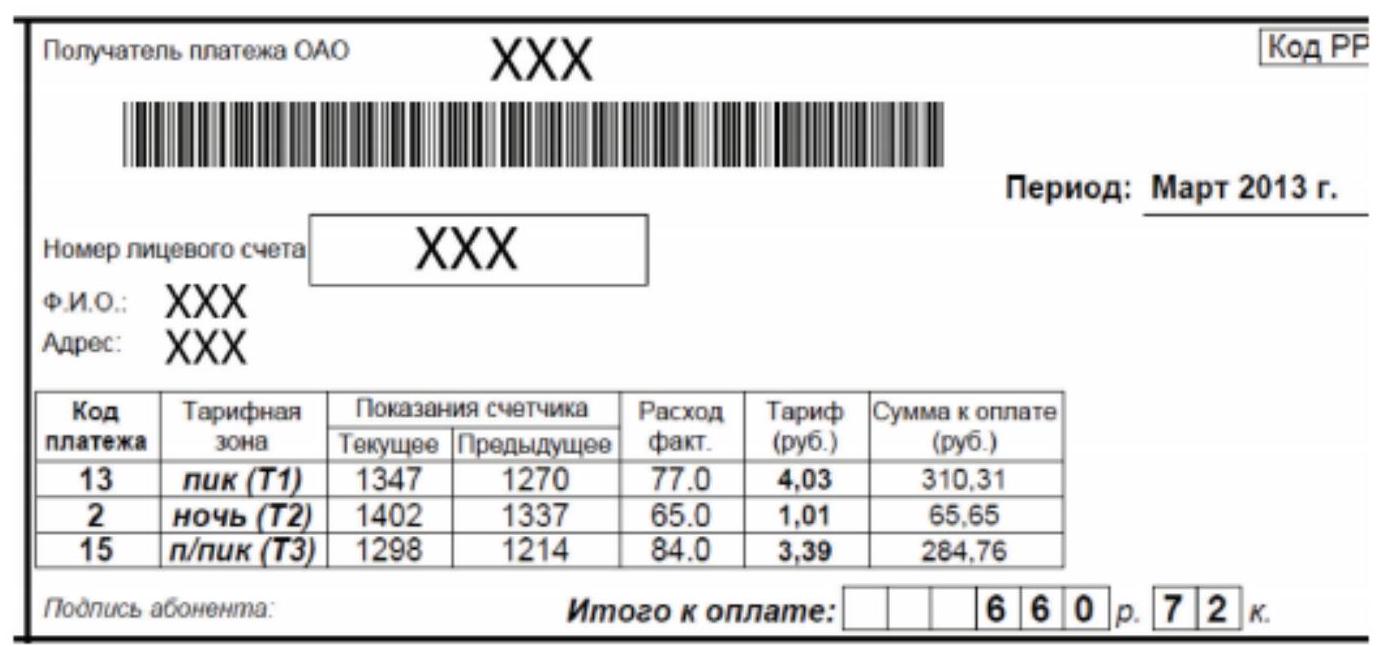
Each month, the client provides the company with readings from a three-tariff meter installed in the apar... | a) It is obvious that the amount the company will require will be the highest if the consumption at the highest tariff is the highest possible, and at the medium tariff - the highest possible from the remaining. The highest possible amount in this case is 4.03$\cdot$(1402 - 1214) + 3.39$\cdot$(1347 - 1270) + 1.01$\cdot... | 397.34 | Combinatorics | math-word-problem | Yes | Yes | olympiads | false |
Maddie bought some packs of white T-shirts and 4 packs of blue T-shirts for her basketball team. The white T-shirts come in packs of 5, and the blue T-shirts come in packs of 3. Each T-shirt cost $3. Maddie spent $66 in all. How many packs of white T-shirts did Maddie buy? | Let's denote the number of packs of white T-shirts Maddie bought as \( W \).
We know that each pack of white T-shirts contains 5 T-shirts and each pack of blue T-shirts contains 3 T-shirts. We also know that Maddie bought 4 packs of blue T-shirts.
The cost of each T-shirt is $3, so the cost of a pack of white T-shirt... | 2 | Algebra | math-word-problem | Yes | Yes | orca_math | true |
28. On the number line, draw line segments according to the following rules:
(1) The numbers corresponding to the endpoints of the line segments are non-negative numbers not exceeding 2020;
(2) The number corresponding to the midpoint of the line segment is an integer.
The number of such line segments that can be drawn... | \begin{tabular}{c}
$\mathbf{2 8}$ \\
\hline 1020100
\end{tabular} | 1020100 | Number Theory | math-word-problem | Yes | Incomplete | olympiads | false |
## Task 6 - 340736
Someone constructs a square $A B C D$ with the diagonal length $A C=10 \mathrm{~cm}$. Then he chooses an arbitrary point $E$ on the side $A B$ and constructs the intersection point $F$ of $B C$ with the line through $E$ parallel to $A C$, the intersection point $G$ of $C D$ with the line through $F$... | a) Since the diagonals of the square are perpendicular to each other, it follows from \( F G \| B D \) that \( F G \perp A C \) (see figure).
Since the diagonals bisect the interior angles of the square, for the intersection point \( P \) of \( F G \) with \( A C \), it also holds that \( \angle F C P = \angle G C P \... | 20\, | Geometry | proof | Yes | Yes | olympiads | false |
16. A2 (YUG) Let \( a_{1}, a_{2}, \ldots \) be an infinite sequence of real numbers for which there exists a real number \( c \) with \( 0 \leq a_{i} \leq c \) for all \( i \) such that
\[ \left|a_{i}-a_{j}\right| \geq \frac{1}{i+j} \quad \text { for all } i, j \text { with } i \neq j \]
Prove that \( c \geq 1 \). | 16. For $n \geq 2$, let $\left(k_{1}, k_{2}, \ldots, k_{n}\right)$ be the permutation of $\{1,2, \ldots, n\}$ with $a_{k_{1}} \leq a_{k_{2}} \leq \cdots \leq a_{k_{n}}$. Then from the condition of the problem, using the Cauchy-Schwarz inequality, we obtain
$$
\begin{aligned}
c & \geq a_{k_{n}}-a_{k_{1}}=\left|a_{k_{n}}... | c \geq 1 | Inequalities | proof | Yes | Yes | olympiads_ref | false |
There is a plane $S$, a line $g$ perpendicular to it, and a point $Q$ on the line. The sphere to be determined has one point that is at a distance $a$ from the line, and at the same time, only this point is at the same distance from $Q$ as it is from $S$. Finally, the sphere should touch the plane $S$ and the line $l$ ... | The points that are equidistant from $Q$ and $S$ are points on a rotational paraboloid whose axis is $g$, focus is $Q$, and directrix is $S$. The points that are at a distance $a$ from $g$ are points on a rotational cylinder whose axis is $g$ and radius is $a$. The points of intersection $(P)$ of the common circle $k$ ... | notfound | Geometry | math-word-problem | Incomplete | Yes | olympiads | false |
1. In a pile of 200 coins, $2 \%$ are gold coins and the rest are silver. Simple Simon removes one silver coin every day until the pile contains $20 \%$ gold coins. How many silver coins does Simon remove? | 1. 180 The number of gold coins in the original pile is $0.02 \times 200=4$. These form $20 \%$ of the final pile. Therefore there are $4 \times 5=20$ coins left. Hence the number of silver coins Simon removes is $200-20=180$. | 180 | Number Theory | math-word-problem | Yes | Yes | olympiads | false |
In an entrance exam, a certain number of marks are awarded for every correct answer and (-1) for every wrong answer. A student gets 38 marks after attempting all 70 questions. The student answered 27 questions correctly. How many marks are awarded for each correct answer? | Let's denote the number of marks awarded for each correct answer as \( x \).
The student answered 27 questions correctly, so the total marks obtained from correct answers is \( 27x \).
The student attempted all 70 questions, so the number of wrong answers is \( 70 - 27 = 43 \).
For each wrong answer, the student los... | 3 | Algebra | math-word-problem | Yes | Yes | orca_math | true |
The function $f(x)= \begin{cases} a^{x} & (x < 0) \\ (a-3)x+4a & (x\geqslant 0) \end{cases}$ satisfies $[f(x_{1})-f(x_{2})](x_{1}-x_{2}) < 0$ for any $x_{1}$, $x_{2}$ in its domain. Determine the range of values for $a$. | Since $[f(x_{1})-f(x_{2})](x_{1}-x_{2}) < 0$ holds for any $x_{1}$, $x_{2}$ in the function's domain,
The function $f(x)$ is strictly decreasing in its domain. Given $f(x)= \begin{cases} a^{x} & (x < 0) \\ (a-3)x+4a & (x\geqslant 0) \end{cases}$,
When $x < 0$, we have $0 < a < 1$. For $x\geqslant 0$, we have $a-3 < 0... | (0, \dfrac {1}{4}] | Algebra | math-word-problem | Yes | Yes | cn_k12 | false |
Since the opening of Shenzhen Metro Line 11 at the end of June this year, the line carried a total of 1.2 million passengers in July and 1.75 million passengers in September. If the average monthly growth rate is denoted as $x$, the equation can be written as ( ).
A: $120\left(1+x\right)^{2}=175$
B: $120\left(1-x\rig... | To solve this problem, we start by understanding that the number of passengers carried by Shenzhen Metro Line 11 grew from 1.2 million in July to 1.75 million in September. This growth happened over two months, which means we are looking for the average monthly growth rate, denoted as $x$.
Given that the growth from ... | A: 120(1+x)^2=175 | Algebra | MCQ | Yes | Yes | cn_k12 | false |
21 Can we take a ball, a tetrahedron, and a plane, such that every plane parallel to the chosen plane intersects the ball and the tetrahedron in sections of equal area? | 21 can. Take a tetrahedron $ABCD$, with $E$ and $F$ being the midpoints of $AB$ and $CD$ respectively, and $EF$ being the common perpendicular segment of the skew lines $AB$ and $CD$. Given $AB=CD=a$, $EF=h$. Place the edge $CD$ on the plane $\alpha$, and make $AB \parallel \alpha$, at this time $EF \perp \alpha$. Take... | \frac{}{}=\pi | Geometry | math-word-problem | Yes | Yes | olympiads | false |
Find the quotient when \( x^6 - 2x^5 + 3x^4 - 4x^3 + 5x^2 - 6x + 12 \) is divided by \( x - 1 \). | To solve this, we can use synthetic division or polynomial long division. We check if \( x-1 \) is a factor by substituting \( x = 1 \) into the polynomial:
\[
f(1) = 1^6 - 2 \cdot 1^5 + 3 \cdot 1^4 - 4 \cdot 1^3 + 5 \cdot 1^2 - 6 \cdot 1 + 12 = 1 - 2 + 3 - 4 + 5 - 6 + 12
\]
\[
f(1) = 9 - 9 + 12 = 12 - 12 + 12 = 12
\]
... | x^5 - x^4 + 2x^3 - 2x^2 + 3x - 3 | Algebra | math-word-problem | Yes | Yes | synthetic_math | true |
find a positive number which when increased by 17 is equal to 60 times the reciprocal of the number . | Let's call the positive number we are looking for \( x \).
According to the problem, when this number is increased by 17, it is equal to 60 times the reciprocal of the number. This can be written as an equation:
\[ x + 17 = 60 \cdot \frac{1}{x} \]
To solve for \( x \), we need to get rid of the fraction by multiplyi... | 3 | Algebra | math-word-problem | Yes | Yes | orca_math | true |
a committee is reviewing a total of 40 x black - and - white films and 10 y color films for a festival . if the committee selects y / x % of the black - and - white films and all of the color films , what fraction of the selected films are in color ? | Let's first find out how many black-and-white films are selected. Since the committee selects y/x % of the black-and-white films, we can write this as:
Number of selected black-and-white films = (y/x)% * (40x)
= (y/x)/100 * (40x)
= (... | 25/26 | Algebra | math-word-problem | Yes | Yes | orca_math | true |
A train 250 m long is running at a speed of 58 kmph. How long does it take to pass a man who is running at 8 kmph in the same direction as the train? | To calculate the time it takes for the train to pass the man, we need to determine the relative speed between the train and the man. Since they are moving in the same direction, we subtract the man's speed from the train's speed.
Train's speed = 58 kmph
Man's speed = 8 kmph
Relative speed = Train's speed - Man's spee... | 18 | Algebra | math-word-problem | Yes | Yes | orca_math | true |
The function $y=\log_a(2-ax)$ ($a>0$ and $a\neq 1$) is a decreasing function in the interval $[0,1]$. Then $a$ belongs to $(1,m)$, where $m=\boxed{2}$. | Let $y=\log_a t$, where $t=2-ax$,
(1) If $01$, then the function $y=\log_a t$ is an increasing function, which means $t$ is a decreasing function. This requires $a>0$ and $2-a\times1\geq0$. In this case, $1<a\leq2$.
In summary, the range of real numbers for $a$ is $(1,2]$.
Therefore, the answer is $\boxed{2}$. | 2 | Algebra | math-word-problem | Yes | Yes | cn_k12 | false |
A certain bus driver is paid a regular rate of $16 per hour for any number of hours that does not exceed 40 hours per week. For any overtime hours worked in excess of 40 hours per week, the bus driver is paid a rate that is 75% higher than his regular rate. Last week, the bus driver worked 57 hours that week. How much ... | To calculate the total compensation, we need to determine the regular pay for the first 40 hours and the overtime pay for the additional hours worked.
The regular pay is straightforward:
Regular hours worked = 40 hours
Regular rate = $16 per hour
Regular pay = Regular hours worked × Regular rate
Regular pay = 40 hours... | \$1116 | Algebra | math-word-problem | Yes | Yes | orca_math | true |
85% of the population of a city is 85,000. What is the total population of the city? | If 85% of the population is 85,000, we can set up a proportion to find the total population (P):
85% (or 0.85) of P = 85,000
0.85 * P = 85,000
To find P, we divide both sides by 0.85:
P = 85,000 / 0.85
P = 100,000
So, the total population of the city is $\boxed{100,000}$ . | 100,000 | Algebra | math-word-problem | Yes | Yes | orca_math | true |
Tetrahedron $ABCD$ has $AB=5$, $AC=3$, $BC=4$, $BD=4$, $AD=3$, and $CD=\tfrac{12}5\sqrt2$. What is the volume of the tetrahedron?
$\textbf{(A) }3\sqrt2\qquad\textbf{(B) }2\sqrt5\qquad\textbf{(C) }\dfrac{24}5\qquad\textbf{(D) }3\sqrt3\qquad\textbf{(E) }\dfrac{24}5\sqrt2$ | Drop altitudes of triangle $ABC$ and triangle $ABD$ down from $C$ and $D$, respectively. Both will hit the same point; let this point be $T$. Because both triangle $ABC$ and triangle $ABD$ are 3-4-5 triangles, $CT = DT = \dfrac{3\cdot4}{5} = \dfrac{12}{5}$. Because $CT^{2} + DT^{2} = 2\left(\frac{12}{5}\right)^{2} = \l... | \frac{24}{5} | Geometry | MCQ | Yes | Yes | amc_aime | false |
3. Solve the equation $\left(101 x^{2}-18 x+1\right)^{2}-121 x^{2} \cdot\left(101 x^{2}-18 x+1\right)+2020 x^{4}=0$ Answer: $\frac{1}{9}, \frac{1}{18}$ | Solution. Let $y=\left(101 x^{2}-18 x+1\right), z=\frac{y}{x^{2}}$. After dividing the equation by (non-zero number: $\mathrm{x}=0$ is not suitable) $x^{4}$, we get $z^{2}-121 z+2020=0$. The roots of this equation can be easily found using Vieta's theorem: $\mathrm{z}=101$ or $\mathrm{z}=20$. In the first case, we get ... | \frac{1}{9},\frac{1}{18} | Algebra | math-word-problem | Yes | Yes | olympiads | false |
Carla's brush is 12 inches long. If Carmen's brush is 50% longer than Carla's brush, how long is Carmen's brush in centimeters? (There are 2.5 centimeters per inch.) | First, we need to calculate the length of Carmen's brush in inches. Since Carmen's brush is 50% longer than Carla's brush, we can find the length by multiplying Carla's brush length by 1.5 (100% + 50% = 150% or 1.5 in decimal form).
Carmen's brush length in inches = Carla's brush length in inches × 1.5
Carmen's brush ... | 45 | Algebra | math-word-problem | Yes | Yes | orca_math | true |
Solve the following system of equations:
$$xy^2 = 108$$
$$\frac{x^3}{y}= 10^{10}$$
| null | null | Algebra | math-word-problem | Yes | Yes | aops_forum | false |
Daniel has 5 indistinguishable bronze coins and 3 indistinguishable copper coins. Each coin has an engraving of one face on one side. To stack these 8 coins such that no two adjacent coins have the same orientation (heads or tails) and no two coins of different types are adjacent in the stack, find the total number of ... | Step 1: Identify the arrangements for the type of coins.
- Since no two coins of different types can be adjacent and there are more bronze coins (5) than copper coins (3), the viable configurations are:
- Bronze (B), Copper (C) alternating starting with Bronze, which includes:
- BCBBCBBB
- BBBCBCBB
- BBBBCBBB
... | 6 | Combinatorics | math-word-problem | Yes | Yes | synthetic_math | true |
In rectangle $ADEH$, points $B$ and $C$ trisect $\overline{AD}$, and points $G$ and $F$ trisect $\overline{HE}$. In addition, $AH=AC=2$, and $AD=3$. What is the area of quadrilateral $WXYZ$ shown in the figure?
[asy] size(7cm); pathpen = linewidth(0.7); pointpen = black; pointfontpen = fontsize(10); pair A,B,C,D,E,F,G... | By [symmetry](https://artofproblemsolving.com/wiki/index.php/Symmetry), $WXYZ$ is a square.
[asy] size(7cm); pathpen = linewidth(0.7); pointpen = black; pointfontpen = fontsize(10); pair A,B,C,D,E,F,G,H,W,X,Y,Z; A=(0,2); B=(1,2); C=(2,2); D=(3,2); H=(0,0); G=(1,0); F=(2,0); E=(3,0); D('A',A, N); D('B',B,N); D('C',C,N);... | \frac{1}{2} | Geometry | MCQ | Yes | Yes | amc_aime | false |
Tara has a shoebox that is 4 inches tall, 6 inches wide, and 12 inches long. She puts three different irregular-shaped objects inside:
- The first object has dimensions of 5 inches long, 3 inches wide, and 1 inch tall.
- The second object has dimensions of 2 inches on each side and 3 inches tall.
- The third object ... | First, let's calculate the volume of the shoebox. The volume of a rectangular prism (which is the shape of the shoebox) is found by multiplying its length, width, and height.
Volume of shoebox = length × width × height
Volume of shoebox = 12 inches × 6 inches × 4 inches
Volume of shoebox = 288 cubic inches
Next, let'... | 229 | Geometry | math-word-problem | Yes | Yes | orca_math | true |
If a rectangular floor measuring 10 m in length and 8 m in width is to be covered with a square carpet with sides measuring 4 m, what is the total area of the floor that remains uncovered? | To determine the total area of the floor that remains uncovered, we need to follow these steps:
1. Calculate the area of the rectangular floor.
2. Calculate the area of one square carpet.
3. Determine how many square carpets can fit into the rectangular floor.
4. Calculate the total area covered by the square carpets.... | 16 | Geometry | math-word-problem | Yes | Yes | metamath | true |
In the arithmetic sequence $\{a\_n\}$, $S\_n$ represents the sum of the first $n$ terms of the sequence $\{a\_n\}$, and $S\_9 = a\_4 + a\_5 + a\_6 + 66$. Find $a\_2 + a\_8 =$ \_\_\_\_\_\_. | Since $S\_9 = a\_4 + a\_5 + a\_6 + 66$,
We know that $S\_9 = \frac{9(a\_1 + a\_9)}{2} = 9a\_5$,
So, $9a\_5 = 3a\_5 + 66$,
Solving for $a\_5$, we get $a\_5 = 11$.
Thus, $a\_2 + a\_8 = 2a\_5 = 22$.
Therefore, the answer is $\boxed{22}$.
This can be derived using the general term formula and sum formula of an arithm... | 22 | Algebra | math-word-problem | Yes | Yes | cn_k12 | false |
Given the function $f(x) = 2\sin x \cos x + 2\sqrt{3}\cos^2 x$.
(1) Find the smallest positive period of the function $f(x)$;
(2) When $x \in \left[-\frac{\pi}{3}, \frac{\pi}{3}\right]$, find the maximum and minimum values of the function $f(x)$. | (1) First, we simplify the function $f(x)$ using the double angle formula for sine and the Pythagorean identity for cosine:
$$
f(x) = \sin 2x + \sqrt{3}\cos 2x + \sqrt{3} = 2\sin(2x + \frac{\pi}{3}) + \sqrt{3}.
$$
Since the sine function has a period of $2\pi$, and the input to the sine function in $f(x)$ is multiplied... | 2 + \sqrt{3} | Algebra | math-word-problem | Yes | Yes | cn_k12 | false |
3. If
$$
\dot{z}=\frac{(1+i)^{2000}(6+2 i)-(1-i)^{1998}(3-i)}{(1+i)^{1996}(23-7 i)+(1-i)^{1994}(10+2 i)} \text {, }
$$
then $|z|=$ . $\qquad$ | 3.1.
$$
\begin{array}{l}
\text { When }(1+i)^{2}=2 i, (1-i)^{2}=-2 i \text { and } X \in \mathbb{Z}, \\
i^{4 k+1}=i, i^{4 k+2}=-1, i^{4 k+3}=-i, i^{4 k}=1. \\
\text { Therefore, }(1+i)^{2000}=(2 i)^{1000}=2^{1000}, \\
(1-i)^{1998}=(-2 i)^{999}=2^{999} \cdot i, \\
(1+i)^{1996}=(2 i)^{998}=-2^{998}, \\
(1-i)^{1994}=(-2 i... | 1 | Algebra | math-word-problem | Yes | Yes | cn_contest | false |
Given that the sufficient condition for the inequality $m-1 \lt x \lt m+1$ to hold is $\frac{1}{3}<x<\frac{1}{2}$, the range of real number $m$ is ( ).
A: $\{m|m<-\frac{1}{2}$ or $m>\frac{4}{3}\}$
B: $\{m|m<-\frac{1}{2}$ or $m≥\frac{4}{3}\}$
C: $\{m|-\frac{1}{2}<m<\frac{4}{3}\}$
D: $\{m|-\frac{1}{2}≤m≤\frac{4}{3}\}... | Given the conditions, we aim to find the range of $m$ such that the inequality $m-1 < x < m+1$ holds under the sufficient condition $\frac{1}{3} < x < \frac{1}{2}$. This means that the interval $(\frac{1}{3}, \frac{1}{2})$ must be a subset of the interval $(m-1, m+1)$.
To ensure this, we set up the following inequali... | D | Inequalities | MCQ | Yes | Yes | cn_k12 | false |
3. Let the set $E=\left\{a_{1}, a_{2}, \cdots, a_{10}\right\}$ have five-element subsets such that: any two elements of $E$ appear in at most two subsets. The maximum number of such five-element subsets is ( ).
A. 252
B. 10
C. 8
D. 18 | 3. C.
Let the number of 5-element subsets that satisfy the condition be $n$. Each element in $E$ appears no more than 4 times, so we have $5n \leqslant 10 \times 4$, which gives $n \leqslant 8$. The construction is as follows:
$$
\begin{array}{l}
\left\{a_{1}, a_{2}, a_{3}, a_{4}, a_{5}\right\},\left\{a_{1}, a_{6}, a_... | 8 | Combinatorics | MCQ | Yes | Yes | olympiads | false |
Example 1 In $\triangle ABC$, $E$ and $F$ are points on sides $AB$ and $AC$ respectively, and satisfy $\frac{BE}{AE} + \frac{CF}{AF} = 1$. Prove: $EF$ passes through the centroid of $\triangle ABC$.
(2009, Singapore Mathematical Olympiad) | Proof Let $D$ be the midpoint of side $A C$.
Since $\frac{C F}{A F}<1$, point $F$ lies on segment $C D$.
Connect $B D$, intersecting $E F$ at point $G$.
Apply Menelaus' theorem to $\triangle A B D$ and the transversal $E G F$ to get
$$
\begin{array}{l}
\frac{D G}{G B} \cdot \frac{B E}{E A} \cdot \frac{A F}{F D}=1 \\
\R... | proof | Geometry | proof | Yes | Yes | olympiads | false |
Find the distance between the points $(3,3)$ and $(-2,-2)$. | Using the distance formula:
\[ d = \sqrt{(x_2 - x_1)^2 + (y_2 - y_1)^2} \]
Here, $x_1 = 3$, $y_1 = 3$, $x_2 = -2$, $y_2 = -2$.
\[ d = \sqrt{((-2) - 3)^2 + ((-2) - 3)^2} \]
\[ d = \sqrt{(-5)^2 + (-5)^2} \]
\[ d = \sqrt{25 + 25} \]
\[ d = \sqrt{50} \]
\[ d = 5\sqrt{2} \]
Conclusion:
The distance between the points $(3, ... | 5\sqrt{2} | Geometry | math-word-problem | Yes | Yes | synthetic_math | true |
Find the dihedral angles of a trihedral angle, the plane angles of which are $90^{\circ}, 90^{\circ}$ and $\alpha$.
# | Consider the trihedral angle $PABC$ with vertex $P$. Let $\angle APC = \angle BPC = 90^{\circ}$, $\angle APB = \alpha$. Since $AP \perp CP$ and $BP \perp CP$, $APB$ is the linear angle of the dihedral angle with edge $CP$. According to the problem, $\angle APB = \alpha$. In the plane $APB$, draw a perpendicular $PM$ to... | \alpha,90,90 | Geometry | math-word-problem | Yes | Yes | olympiads | false |
Triangle $DEF$ has its vertices $D$, $E$, and $F$ on the sides of a rectangle 6 units by 4 units as shown. Calculate the area of triangle $DEF$.
- Vertex $D$ is at (0,2), vertex $E$ is at (6,0), and vertex $F$ is at (3,4). | Let the rectangle have vertices at $(0,0)$, $(6,0)$, $(6,4)$, and $(0,4)$. We calculate the areas of the three smaller triangles formed by the vertices of triangle $DEF$ and the rectangle's corners.
- **Triangle I**: with vertices $(0,0)$, $(0,2)$, and $(6,0)$. Area = $\frac{1}{2} \times 6 \times 2 = 6$ square units.
... | 9 | Geometry | math-word-problem | Yes | Yes | synthetic_math | true |
Sydney and Conner are having a three day rock collecting contest. Before they start, Sydney has 837 rocks and Conner has some rocks. On day one, Sydney collects 4 rocks and Conner collects 8 times as many. On day two Sydney rests and Conner collects 123. On the third day, Sydney collects twice as many as Conner did on ... | Let's calculate the number of rocks each person collects each day and their total at the end of the contest.
Day 1:
Sydney collects 4 rocks.
Conner collects 8 times as many as Sydney, so Conner collects 8 * 4 = 32 rocks.
Day 2:
Sydney rests, so she collects 0 rocks.
Conner collects 123 rocks.
Day 3:
Sydney collects ... | 723 | Algebra | math-word-problem | Yes | Yes | orca_math | true |
Given the inequality $x^{2} - \log_{m}{x} 0$ and $m \neq 1$) holds true in the interval $(0, \frac{1}{2})$, find the range of real number $m$.
A: $(0, \frac{1}{4})$
B: $[\frac{1}{4}, 1)$
C: $(\frac{1}{16}, 1)$
D: $[\frac{1}{16}, 1)$ | Since the inequality $x^{2} - \log_{m}{x} 0$ and $m \neq 1$) holds true in the interval $(0, \frac{1}{2})$, we have $\log_{m}{x} > x^{2}$ within the same interval. This implies that $0 0$ and $m \neq 1$) holds true in the interval $(0, \frac{1}{2})$ if and only if $\log_{m}{x} > x^{2}$ within the same interval. Using... | null | Inequalities | MCQ | Yes | Yes | cn_k12 | false |
Given a sequence $\{a_{n}\}$ where $a_{n} \gt 0$, let $S_{n}$ be the sum of the first $n$ terms of the sequence. If $2S_{n}=a_{n}(a_{n}+1)$.$(1)$ Prove that the sequence $\{a_{n}\}$ is an arithmetic sequence;$(2)$ If the inequality $\frac{1}{{a}_{n+1}}+\frac{1}{{a}_{n+2}}+\frac{1}{{a}_{n+3}}+\cdots +\frac{1}{{a}_{2n+1}... | ### Solution:
#### Part (1) Proof:
- **Step 1:** For $n=1$, we have $2S_{1} = a_{1}(a_{1} + 1)$. Given that $S_{1} = a_{1}$, we can write this as $2a_{1} = a_{1}(a_{1} + 1)$. Simplifying, we get $a_{1}^2 - a_{1} = 0$.
- **Step 2:** Solving the quadratic equation $a_{1}^2 - a_{1} = 0$, we find $a_{1} = 0$ or $a_{1} = ... | \left[1,+\infty \right) | Algebra | proof | Yes | Yes | cn_k12 | false |
Given that $a$ and $b$ are two distinct planes, and $m$ and $n$ are lines, which of the following statements is incorrect? ( )
A: If $m \parallel n$ and $m \perp a$, then $n \perp a$.
B: If $m \perp a$ and $m \subset b$, then $a \perp b$.
C: If $m \perp a$ and $a \parallel b$, then $m \perp b$.
D: If $a \perp b$ and $... | Solution: Since option A states that if one of two parallel lines is parallel to a plane, then the other line is also parallel to that plane, it is correct.
Option B satisfies the theorem for determining perpendicular planes.
Option C is in accordance with the theorem of parallel planes. However, option D is only t... | \text{D} | Geometry | MCQ | Yes | Yes | cn_k12 | false |
The negation of the proposition "For all $x \in \mathbb{R}, \sin x \geq -1$" is. | The negation of "For all $x \in \mathbb{R}, \sin x \geq -1$" is "There exists $x \in \mathbb{R}$ such that $\sin x < -1$".
Therefore, the answer is: $\boxed{\exists x \in \mathbb{R}, \sin x < -1}$. | \exists x \in \mathbb{R}, \sin x < -1 | Logic and Puzzles | math-word-problem | Yes | Yes | cn_k12 | false |
71. Cutting a Sphere. Into what maximum number of congruent pieces can a sphere be cut so that each side of each piece represents an arc of a great circle that is less than a quarter of such a circle? | 71. Inscribed in this sphere is a regular dodecahedron or icosahedron, and perpendiculars are dropped from the center of the sphere to each face. Construct 60 isosceles triangles whose vertices are at the bases of these perpendiculars and whose bases are the sides of the corresponding faces. Now project these triangles... | 60 | Geometry | math-word-problem | Yes | Yes | olympiads | false |
Let $\triangle ABC$ be a triangle satisfying $AB<AC$. Let $D$ be a point on the segment $AC$ such that $AB=AD$. Let then $X$ be a point on the segment $BC$ satisfying $BD^2=BX\cdot BC$. Let the circumcircles of the triangles $\triangle XDC$ and $\triangle ABC$ intersect at $M \neq C$. Prove that the line $MD$ goes thro... | null | null | Geometry | proof | Yes | Yes | aops_forum | false |
A majority of the 30 students in Ms. Deameanor's class bought pencils at the school bookstore. Each of these students bought the same number of pencils, and this number was greater than 1. The cost of a pencil in cents was greater than the number of pencils each student bought, and the total cost of all the pencils w... | null | null | Logic and Puzzles | MCQ | Yes | Yes | aops_forum | false |
Sweet Time Bakery just opened and is increasing the number of items they bake. For example, the bakery made 19 carrot cakes in October, 21 carrot cakes in November, 23 carrot cakes in December, and 25 carrot cakes in January. If this pattern continues, how many carrot cakes will the bakery make in February? | The pattern shows an increase of 2 carrot cakes each month. Starting with 19 in October, then 21 in November, 23 in December, and 25 in January, we can predict the number for February by adding 2 to January's total.
So, 25 (January) + 2 = $\boxed{27}$ carrot cakes in February. | 27 | Algebra | math-word-problem | Yes | Yes | orca_math | true |
A regular tetrahedron (whose base is an equilateral triangle, and the projection of the apex onto the base is the center of the base equilateral triangle) has a base edge length of 6 and a lateral edge length of 9. What is the volume of this regular tetrahedron? | The volume of the regular tetrahedron is $\boxed{9}$. | 9 | Geometry | math-word-problem | Yes | Problem not solved | cn_k12 | false |
A6. How many fractions between $\frac{1}{6}$ and $\frac{1}{3}$ inclusive can be written with a denominator of 15 ? | SolUtion
3
First note that $\frac{1}{6}=\frac{5}{30}$ and $\frac{1}{3}=\frac{10}{30}$. Any fraction of the form $\frac{k}{30}$ between (and including) these two values, where $k$ is an even number, will simplify to have a denominator of 15 . Therefore, $k=6,8$ or 10 and so there are three fractions. | 3 | Number Theory | math-word-problem | Yes | Yes | olympiads | false |
Given the equation $x^{2}+\left(2k-1\right)x+k^{2}-1=0$ has two real roots $x_{1}$ and $x_{2}$.
$(1)$ Find the range of real number $k$.
$(2)$ If $x_{1}$ and $x_{2}$ satisfy $x_{1}^{2}+x_{2}^{2}=16+x_{1}x_{2}$, find the value of real number $k$. | ### Step-by-Step Solution
#### Part 1: Finding the range of real number $k$
Given the quadratic equation $x^{2}+\left(2k-1\right)x+k^{2}-1=0$, for it to have two real roots, the discriminant $\Delta$ must be greater than or equal to zero. The discriminant $\Delta$ of a quadratic equation $ax^{2}+bx+c=0$ is given by $... | k = -2 | Algebra | math-word-problem | Yes | Yes | cn_k12 | false |
Given that the graph of the power function $f(x)$ passes through the point $(2, \frac{1}{4})$, find the value of $f(\frac{1}{2})$. | Let the power function be $f(x) = y = x^{\alpha}$, where $\alpha$ is a constant.
According to the given point $(2, \frac{1}{4})$, we have $\frac{1}{4} = 2^{\alpha}$. Solving for $\alpha$ yields $\alpha = -2$.
Therefore, the function is $f(x) = \frac{1}{x^{2}}$.
Substituting $x = \frac{1}{2}$ into the function gives $f(... | 4 | Algebra | math-word-problem | Yes | Yes | cn_k12 | false |
Given $a_1=3$ and $a_n=S_{n-1}+2^n$, find the expressions for $a_n$ and $S_n$. | Since $a_1=3$ and $a_n=S_{n-1}+2^n$, we have
$a_n-a_{n-1}=(S_{n-1}+2^n)-(S_{n-2}+2^{n-1})$
$=a_{n-1}+2^{n-1}$,
which implies $a_n=2a_{n-1}+2^{n-1}$.
Continuing this pattern, we get
$a_{n+1}=2(a_n+2^n)=2(2a_{n-1}+2^{n-1})+2^n=2^2a_{n-1}+2\times2^n=2^2(2a_{n-2}+2^{n-2})+2\times2^n=2^3a_{n-2}+3\times2^n=...$
$=2^n\c... | (n+1)\times2^n | Algebra | math-word-problem | Yes | Yes | cn_k12 | false |
The numerical value of a rectangle's area is half the numerical value of its perimeter. If the length of the rectangle is twice its width, what are the dimensions of the rectangle? | Let the width of the rectangle be $w$ and the length be $2w$.
The area, $A$, of the rectangle is given by:
\[ A = \text{length} \times \text{width} = 2w \times w = 2w^2. \]
The perimeter, $P$, of the rectangle is:
\[ P = 2(\text{length} + \text{width}) = 2(2w + w) = 6w. \]
According to the problem, the area is half... | \text{width} = 1.5 \text{ units}, \text{length} = 3 \text{ units} | Algebra | math-word-problem | Yes | Yes | synthetic_math | true |
Eight knights are randomly placed on a chessboard (not necessarily on distinct squares). A knight on a given square attacks all the squares that can be reached by moving either
(1) two squares up or down followed by one squares left or right, or
(2) two squares left or right followed by one square up or down.
Find t... | null | null | Combinatorics | math-word-problem | Yes | Yes | aops_forum | false |
# 2.2. Condition:
Roman, Oleg, Ekaterina, and Zhanna are four people of different ages, forming two family couples. It is known that each husband is older than his wife, and Zhanna is older than Oleg. Select all correct statements:
## Answer options:
Roman is older than Oleg and married to Ekaterina
$\square$ Roman... | # Solution.
Since Jeanne is older than Oleg, and each husband is older than his wife, Jeanne is married to Roman, and Oleg is married to Ekaterina. In order from youngest to oldest, they will line up as follows: Ekaterina, Oleg, Jeanne, Roman. | Logic and Puzzles | MCQ | Yes | Yes | olympiads | false | |
11. According to the "Personal Income Tax Law of the People's Republic of China," citizens do not need to pay tax on the portion of their monthly salary and wages that does not exceed 800 yuan. The portion exceeding 800 yuan is the monthly taxable income, which is taxed according to the following table in segments:
\be... | $=、 11.1350$ | 1350 | Algebra | math-word-problem | Yes | Yes | cn_contest | false |
3 [Radii of the inscribed, circumscribed, and exscribed circles (other).]
Let $O$ be the center of the circle circumscribed around triangle $A B C, \angle A O C=60^{\circ}$. Find the angle $A M C$, where $M-$ is the center of the circle inscribed in triangle $A B C$. | If points $O$ and $B$ lie on opposite sides of line $A C$ (Fig.1), then the degree measure of arc $A C$, not containing point $B$, is $360^{\circ}-60^{\circ}=300^{\circ}$, therefore
$$
\angle A B C=\frac{1}{2} \cdot 300^{\circ}=150^{\circ}
$$
The sum of the angles at vertices $A$ and $C$ of triangle $A B C$ is $180^{... | 165 | Geometry | math-word-problem | Yes | Yes | olympiads | false |
Given $$\overrightarrow {a} = (2, 1)$$, $$\overrightarrow {b} = (x, 3)$$, and $$\overrightarrow {a}$$ is parallel to $$\overrightarrow {b}$$, then the value of x is ( )
A: 2
B: 1
C: 3
D: 6 | Since the plane vectors $$\overrightarrow {a} = (2, 1)$$, $$\overrightarrow {b} = (x, 3)$$,
and $$\overrightarrow {a}$$ is parallel to $$\overrightarrow {b}$$,
then $x-2\times3=0$
Solving this, we get $x=6$
Therefore, the correct choice is: $\boxed{D}$.
Based on the principle that "two vectors are parallel if... | D | Algebra | MCQ | Yes | Yes | cn_k12 | false |
In the Cartesian coordinate system, the point $P(-2,3)$ with respect to the $x$-axis is the point ______. | To find the point symmetric to $P(-2,3)$ with respect to the $x$-axis, we follow the characteristics of symmetry in the Cartesian coordinate system.
- The rule for finding a point symmetric to another with respect to the $x$-axis is to keep the $x$-coordinate (abscissa) the same and take the opposite of the $y$-coord... | \left(-2,-3\right) | Geometry | math-word-problem | Yes | Yes | cn_k12 | false |
Given vectors $\overrightarrow{a}=(-3,4)$ and $\overrightarrow{b}=(1,m)$, if $\overrightarrow{a} \perp (\overrightarrow{a}-\overrightarrow{b})$, find $m=($ $)$.
A: $\frac{11}{2}$
B: $7$
C: $-7$
D: $-\frac{11}{2}$ | Since $\overrightarrow{a} \perp (\overrightarrow{a}-\overrightarrow{b})$, it implies that $\overrightarrow{a} \cdot (\overrightarrow{a}-\overrightarrow{b}) = 0$, which means $\overrightarrow{a}^2 = \overrightarrow{a} \cdot \overrightarrow{b}$.
Using the given vectors, we have:
$$(-3, 4) \cdot [(-3, 4) - (1, m)] = 0$$
... | 7 | Algebra | MCQ | Yes | Yes | cn_k12 | false |
If 5% more is gained by selling an article for Rs. 600 than by selling it for a certain amount, the cost of the article is Rs. 400. What is the lower selling price? | Let's denote the lower selling price as \( P \).
According to the problem, selling the article for Rs. 600 yields a 5% higher gain than selling it for \( P \).
First, let's find out what 5% of the cost price is. Since the cost price is Rs. 400, 5% of this is:
\[ 5\% \times 400 = \frac{5}{100} \times 400 = 20 \]
So, ... | 580 | Algebra | math-word-problem | Yes | Yes | orca_math | true |
Shekar scored 76 in mathematics, 65 in science, 82 in social studies, some marks in English, and 95 in biology. His average marks are 77. What are his marks in English? | To find Shekar's marks in English, we first need to calculate the total marks he has scored in the other subjects and then use the average to find the missing score.
He scored:
- 76 in mathematics
- 65 in science
- 82 in social studies
- 95 in biology
Let's call his English marks E.
The average is calculated by addi... | 67 | Algebra | math-word-problem | Yes | Yes | orca_math | true |
Among the following pairs of numbers, the pair that has equal values is:
A: $-|2^{3}|$ and $|-2^{3}|$
B: $-3^{2}$ and $\left(-3\right)^{2}$
C: ${(\frac{2}{3})}^{3}$ and $\frac{{2}^{3}}{3}$
D: $-2^{3}$ and $\left(-2\right)^{3}$ | To find the pair of numbers that have equal values among the given options, we evaluate each pair as follows:
**Option A:**
- For $-|2^{3}|$, we first calculate $2^{3} = 8$, and then take the absolute value, which remains $8$, and finally apply the negative sign to get $-8$.
- For $|-2^{3}|$, we first calculate $-2^{3... | D | Algebra | MCQ | Yes | Yes | cn_k12 | false |
A doctor needs to give medicine to a child, and he knows that he cannot give the same amount of medicine that he would give to an adult. The instructions say that for every kilogram of weight the child must be given 5 ml of medicine. The doctor knows that the child weighs 30 kilograms and that also the full dose has to... | To determine the value of the unknown variable \( x \), we need to follow these steps:
1. Calculate the total amount of medicine required for the child.
2. Determine how many 50 milligram parts are needed to make up this total amount.
**Step 1: Calculate the total amount of medicine required for the child.**
The ins... | 3000 | Algebra | math-word-problem | Yes | Yes | metamath | true |
Out of the 80 students who took the biology exam, only 2/5 of them managed to score 100%. If a score below 80% qualified as failing, and 50 percent of the remaining students who didn't score 100% managed to score over 80%, how many students failed the exam? | First, let's find out how many students scored 100%. Since 2/5 of the students scored 100%, we calculate:
2/5 * 80 = 32 students
Now, let's find out how many students did not score 100%. We subtract the number of students who scored 100% from the total number of students:
80 - 32 = 48 students
Out of these 48 stude... | 24 | Algebra | math-word-problem | Yes | Yes | orca_math | true |
Two planes travel a certain distance towards each other. They pass each other half way after 2 hours. One plane is going 126 miles faster than the other. Both of them are going 283 miles per hour. What is the total distance between the two planes? | If both planes are traveling towards each other and they pass each other halfway after 2 hours, then each plane has been flying for 2 hours when they meet.
The statement that one plane is going 126 miles faster than the other seems to be contradictory because it is also stated that both planes are going 283 miles per ... | 1384 | Algebra | math-word-problem | Incomplete | Yes | orca_math | true |
28. Each face of a cube has one of the numbers from 1 to 6, and they are all different. The following are views of the cube from different perspectives. What number does “?” represent? | answer: 6 | 6 | Logic and Puzzles | math-word-problem | Incomplete | Problem not solved | olympiads | false |
7.195. $\log _{x}(125 x) \cdot \log _{25}^{2} x=1$. | ## Solution.
Domain of definition: $0<x \neq 1$.
Switch to base 5. Then we get $\frac{\log _{5} 125 x}{\log _{5} x} \cdot \frac{\log _{5}^{2} x}{\log _{5}^{2} 25}=1 \Leftrightarrow$
$\Leftrightarrow \log _{5}^{2} x+3 \log _{5} x-4=0$. Solving this equation as a quadratic equation in terms of $\log _{5} x$, we have $\... | \frac{1}{625};5 | Algebra | math-word-problem | Yes | Yes | olympiads | false |
If a car went the first third of the distance at 60 kmh, the second third at 24 kmh, and the last third at 48 kmh, what was the average speed of the car for the entire trip? | To find the average speed for the entire trip, we need to know the total distance and the total time taken for the trip.
Let's assume the total distance of the trip is D kilometers. Since the car travels equal distances at different speeds, each third of the trip is D/3 kilometers.
Now, we'll calculate the time taken... | 37.89 | Algebra | math-word-problem | Yes | Yes | orca_math | true |
Given a geometric sequence $\left\{ a_n \right\}$ with a common ratio $q > 1$, and it satisfies: $a_2 + a_3 + a_4 = 28$, and $a_3 + 2$ is the arithmetic mean of $a_2$ and $a_4$.
$(1)$ Find the general formula for the sequence $\left\{ a_n \right\}$;
$(2)$ If the sequence $b_n = \log_2 a_{n+5}$, and the sum of the fir... | Solution:
$(1)$ Since $a_3 + 2$ is the arithmetic mean of $a_2$ and $a_4$, we have $2(a_3 + 2) = a_2 + a_4$. Therefore, $2(a_1q^2 + 2) = a_1q + a_1q^3$,
Also, $a_2 + a_3 + a_4 = 28$, which means $a_1(q + q^2 + q^3) = 28$,
Solving these equations, we get $\begin{cases} a_1 = 2 \\ q = 2 \end{cases}$ or $\begin{cases} ... | T_n = \frac{n^2 + 23n}{4} | Algebra | math-word-problem | Yes | Yes | cn_k12 | false |
Given the hyperbola $E: \frac{x^2}{a^2} - \frac{y^2}{b^2} = 1 (a > 0, b > 0)$ with its right vertex at $A(2,0)$, a line $l$ passes through the point $P(4,0)$. When the line $l$ intersects the hyperbola $E$ at exactly one point, the distance from point $A$ to line $l$ is $\frac{2\sqrt{5}}{5}$.
$(1)$ Find the standard ... | ### Solution:
#### Part (1): Finding the Standard Equation of Hyperbola $E$
Given that the right vertex of the hyperbola $E$ is at $A(2,0)$, we can directly infer that $a=2$.
For the line $l$ to intersect the hyperbola $E$ at exactly one point, it must be parallel to one of the asymptotes of the hyperbola. Assuming... | t=1 | Algebra | math-word-problem | Yes | Yes | cn_k12 | false |
A right circular cone is positioned on a table with its point upwards. The cross-section triangle, perpendicular to the base, is a right triangle with a vertex angle of 90 degrees. The diameter of the cone's base is \(24\) inches. A sphere is placed inside the cone such that it touches the sides of the cone and rests o... | - Since the vertex angle of the cross-section triangle is \(90^\circ\), the triangle is an isosceles right triangle.
- The diameter of the cone, \(24\) inches, is the hypotenuse of this triangle. Using the properties of an isosceles right triangle, each leg of the triangle is \( \frac{24}{\sqrt{2}} = 12\sqrt{2}\) inche... | 2304\pi | Geometry | math-word-problem | Yes | Yes | synthetic_math | true |
20. Each cell in this cross-number can be filled with a non-zero digit such that all of the conditions in the clues are satisfied. The digits used are not necessarily distinct. Determine T, the sum of all six answers to the clues. The answer to this question is $0.5 \times T$.
ACROSS:
1. Two less than a prime.
3. Exac... | SolUTION
582
1 DOWN is either 16 or 81 . If 3 ACROSS begins with a six then its largest proper factor is at most 349 , which violates the clue. Therefore 3 ACROSS begins with a one, and 1 DOWN must be 81 .
1 ACROSS is either 81 or 87 . If 2 DOWN begins with a one then it is 125 and 5 ACROSS must be 52. But this would m... | 582 | Number Theory | math-word-problem | Yes | Yes | olympiads | false |
Let $ G$ be a $ 2$-connected nonbipartite graph on $ 2n$ vertices. Show that the vertex set of $ G$ can be split into two classes of $ n$ elements such that the edges joining the two classes form a connected, spanning subgraph.
[i]L. Lovasz[/i] | 1. **Initial Setup and Definitions**:
Let \( G \) be a 2-connected nonbipartite graph on \( 2n \) vertices. We need to show that the vertex set \( V \) of \( G \) can be split into two classes \( A \) and \( B \) each containing \( n \) vertices such that the edges joining \( A \) and \( B \) form a connected, spann... | null | Combinatorics | proof | Yes | Yes | aops_forum | false |
The length of a room is 5.5 m and the width is some meters. The cost of paving the floor by slabs at the rate of Rs. 800 per sq. meter is Rs. 16500. What is the width of the room? | To find the width of the room, we can use the information given about the cost of paving the floor and the rate per square meter.
First, let's find the total area of the floor that was paved. We know the cost of paving and the rate per square meter, so we can use the following formula to find the area:
Total cost = A... | 3.75 | Geometry | math-word-problem | Yes | Yes | orca_math | true |
in an election between two candidates a and b , the number of valid votes received by a exceeds those received by b by 15 % of the total number of votes polled . if 20 % of the votes polled were invalid and a total of 5720 votes were polled , then how many valid votes did b get ? | Let's denote the total number of votes polled as V. According to the problem, V = 5720.
20% of the votes are invalid, so the number of valid votes is 80% of V. Therefore, the number of valid votes is:
0.80 * V = 0.80 * 5720 = 4576
Let's denote the number of valid votes received by candidate A as A_votes and by candid... | 1859 | Algebra | math-word-problem | Yes | Yes | orca_math | true |
$f$ is a polynomial of degree $n$ with integer coefficients and $f(x)=x^2+1$ for $x=1,2,\cdot ,n$. What are the possible values for $f(0)$? | 1. **Define the polynomial and the function \( g(x) \):**
Given that \( f \) is a polynomial of degree \( n \) with integer coefficients and \( f(x) = x^2 + 1 \) for \( x = 1, 2, \ldots, n \), we define the function \( g(x) = f(x) - (x^2 + 1) \). Since \( f(x) = x^2 + 1 \) for \( x = 1, 2, \ldots, n \), it follows t... | A (-1)^n n! + 1 | Number Theory | math-word-problem | Yes | Yes | aops_forum | false |
From Monday to Friday, Elle practices piano for 30 minutes. On Saturday, she practices piano for a certain amount of time compared to a weekday. There is no practice on Sunday. Elle spends 4 hours practicing piano each week. What is the ratio of the time Elle practices piano on Saturday to the time she practices on a w... | Let's first calculate the total time Elle practices from Monday to Friday. Since she practices for 30 minutes each day, and there are 5 weekdays, the total time for the weekdays is:
30 minutes/day * 5 days = 150 minutes
Now, we know that Elle practices for a total of 4 hours each week. To compare this with the minute... | 3:1 | Algebra | math-word-problem | Yes | Yes | orca_math | true |
[ Various cutting problems ] [ Pigeonhole Principle (etc.). $\quad]$
From a checkerboard of size $8 \times 8$, eight rectangles of size $2 \times 1$ have been cut out. After this, a square of size $2 \times 2$ needs to be cut out from the remaining part. Is this necessarily possible? | In the figure, there is an $8 \times 8$ board, on which nine $2 \times 2$ squares are highlighted in color such that no two of them can be "ruined" by a single $2 \times 1$ rectangle. Consequently, after cutting out eight such rectangles, at least one square will remain untouched and can be cut out.
$ of equation $x^{2n+1}-y^{2n+1}=xyz+2^{2n+1}$, where $n\ge 2$ and $z \le 5\times 2^{2n}$. | 1. Given the equation \( x^{2n+1} - y^{2n+1} = xyz + 2^{2n+1} \), we need to find all positive integer solutions \((x, y, z, n)\) where \( n \geq 2 \) and \( z \leq 5 \times 2^{2n} \).
2. First, observe that \( x - y \) must be even because the left-hand side \( x^{2n+1} - y^{2n+1} \) is odd (since \(2n+1\) is odd) an... | (3, 1, 70, 2) | Number Theory | math-word-problem | Yes | Yes | aops_forum | false |
In a specific ellipse, the endpoints of the major axis are $(-7, -1)$ and $(13, -1)$. Additionally, the ellipse passes through the point $(10, 2)$. Find the area of the ellipse. | From the given information, the center of the ellipse is calculated as follows:
Given endpoints of the major axis are $(-7, -1)$ and $(13, -1)$. Therefore, the midpoint (center of the ellipse) is
\[
\left( \frac{-7+13}{2}, \frac{-1-1}{2} \right) = (3, -1).
\]
The length of the semi-major axis is half the distance betw... | 42\pi | Geometry | math-word-problem | Yes | Yes | synthetic_math | true |
Ann is some years old. Her brother Tom is now two times older. The sum of their ages 10 years later will be 38. How old is Ann now? | Let's call Ann's current age "A" and Tom's current age "T". According to the information given:
1) Tom is currently two times older than Ann, so we can write this as:
T = 2A
2) The sum of their ages 10 years later will be 38. In 10 years, Ann will be A + 10 years old, and Tom will be T + 10 years old. So we can write... | 6 | Algebra | math-word-problem | Yes | Yes | orca_math | true |
Compute $65^2 - 35^2$ using mental math. | Recall the difference of squares formula, which states $a^2 - b^2 = (a+b)(a-b)$. We apply this to compute:
\[ 65^2 - 35^2 = (65+35)(65-35) = (100)(30) \]
Calculating the product:
\[ 100 \times 30 = 3000 \]
Thus, the solution to the problem is:
\[ \boxed{3000} \] | 3000 | Algebra | math-word-problem | Yes | Yes | synthetic_math | true |
In triangle $\triangle ABC$, point $M$ satisfies $\overrightarrow{MA} + \overrightarrow{MB} + \overrightarrow{MC} = \overrightarrow{0}$. If $\overrightarrow{AB} + \overrightarrow{AC} + m \overrightarrow{AM} = \overrightarrow{0}$, then the value of the real number $m$ is ______. | Given that in $\triangle ABC$, point $M$ satisfies $\overrightarrow{MA} + \overrightarrow{MB} + \overrightarrow{MC} = \overrightarrow{0}$, according to the properties of the centroid of a triangle, we conclude that:
- M is the centroid of $\triangle ABC$.
Therefore, we can deduce that $\overrightarrow{AM} = \frac{1}{... | -3 | Geometry | math-word-problem | Yes | Yes | cn_k12 | false |
What is the smallest positive integer \( n \) such that \( 19n \equiv 1589 \pmod{9}?\) | First, simplify \( 1589 \pmod{9} \). Performing the modulo operation, \( 1589 \div 9 = 176 \) with a remainder of \( 5 \). Thus, \( 1589 \equiv 5 \pmod{9} \). Therefore, we have the equation:
$$ 19n \equiv 5 \pmod{9} $$
This means \( 19n \) can be expressed as \( 9k + 5 \) for some integer \( k \). Simplifying \( 19 \... | 5 | Number Theory | math-word-problem | Yes | Yes | synthetic_math | true |
Calculate the value of $\arctan \sqrt {3} - \arcsin \left( -\frac {1}{2} \right) + \arccos 0$. | According to the definitions of inverse trigonometric functions, we have:
1. $\arctan \sqrt {3} = \frac {\pi}{3}$, since $\sqrt{3}$ is the tangent of an angle of $\frac{\pi}{3}$ in the first quadrant.
2. $\arcsin \left( -\frac {1}{2} \right) = -\frac {\pi}{6}$, as $-\frac{1}{2}$ is the sine of an angle of $-\frac{\pi}{... | \pi | Algebra | math-word-problem | Yes | Yes | cn_k12 | false |
Simplify first, then evaluate: $4(a^{2}-2ab)-(3a^{2}-5ab+1)$, where $a=-2$ and $b=\frac{1}{3}$. | To simplify and then evaluate the given expression $4(a^{2}-2ab)-(3a^{2}-5ab+1)$ with $a=-2$ and $b=\frac{1}{3}$, we follow these steps:
1. **Simplify the expression:**
First, distribute the coefficients through the parentheses:
\[
4(a^{2}-2ab)-(3a^{2}-5ab+1) = 4a^{2}-8ab-3a^{2}+5ab-1
\]
Combine like terms:
\[
= a... | 5 | Algebra | math-word-problem | Yes | Yes | cn_k12 | false |
Let \( a \) and \( b \) be the solutions of the equation \( 3x^2 + 9x - 21 = 0 \). Calculate the value of \( (3a-4)(6b-8) \). | First, identify the sum and product of the roots from the quadratic equation:
- Sum of the roots \( a + b = -\frac{b}{a} = -\frac{9}{3} = -3 \).
- Product of the roots \( ab = \frac{c}{a} = \frac{-21}{3} = -7 \).
Now substitute these into the expression \( (3a-4)(6b-8) \):
- Expand the expression:
\[ (3a-4)(6b-8) = 1... | 14 | Algebra | math-word-problem | Yes | Yes | synthetic_math | true |
Eddy’s spider plant produces 2 baby plants 2 times a year. After 4 years, how many baby plants will the mother plant have produced? | If Eddy's spider plant produces 2 baby plants 2 times a year, that means it produces 2 * 2 = 4 baby plants per year.
After 4 years, the mother plant will have produced 4 * 4 = $\boxed{16}$ baby plants. | 16 | Logic and Puzzles | math-word-problem | Yes | Yes | orca_math | true |
Which of the following sets of equations is a system of two linear equations?
A: $\left\{\begin{array}{c}x-{y}^{2}=5\\ x+3y=16\end{array}\right.$
B: $\left\{\begin{array}{c}2x+3z=5\\ y-x=2\end{array}\right.$
C: $\left\{\begin{array}{c}x+y=11\\ 5x-3y=-7\end{array}\right.$
D: $\left\{\begin{array}{c}2x+y=1\\-x+\frac{... | To identify which of the given sets of equations is a system of two linear equations, we analyze each option based on the definition of linear equations. A linear equation in two variables is of the form $ax + by = c$, where $a$, $b$, and $c$ are constants.
**Option A**: $\left\{\begin{array}{c}x-{y}^{2}=5\\ x+3y=16\e... | C | Algebra | MCQ | Yes | Yes | cn_k12 | false |
5. (20 points) The clock shows the time as four hours and fifteen minutes. Determine the angle between the minute and hour hands at this moment. | Answer: $37.5^{\circ}$
Solution. Five minutes is $\frac{5}{60}$ of the circumference, which is $30^{\circ}$. The minute hand shows fifteen minutes, which is $90^{\circ}$. The hour hand has moved a quarter of the distance between four $\left(120^{\circ}\right)$ and five $\left(150^{\circ}\right)$ hours in fifteen minut... | 37.5 | Geometry | math-word-problem | Yes | Yes | olympiads | false |
Problem 1
Find the largest integer $k$ having the following property: for any real numbers $x_{1}, x_{2}, \ldots, x_{2024}$ such that
$$
x_{1}^{2}=\left(x_{1}+x_{2}\right)^{2}=\cdots=\left(x_{1}+x_{2}+\cdots+x_{2024}\right)^{2}
$$
there are at least $k$ of them that are all equal. | Solution
First, note that if $x_{1}=1, x_{2 k}=-2$ for $k \in\{1, \ldots, 675\}, x_{2 k+1}=2$ for $k \in\{1, \ldots, 675\}$ and $x_{k}=0$ for $k \in\{1352, \ldots, 2024\}$, we verify that each of the sums is $\pm 1$, and there are no 676 real numbers all equal. Thus, $k \leqslant 675$.
Now, let's show that given 2024... | 675 | Algebra | math-word-problem | Yes | Yes | olympiads | false |
7. There are $2 n$ cards, each with a number from 1 to $n$ (each number appears on exactly two cards). The cards are lying on the table face down. A set of $n$ cards is called good if each number appears exactly once. Baron Munchausen claims that he can point out 80 sets of $n$ cards, at least one of which is guarantee... | Answer: $n=7$. We will present an algorithm for how to indicate $2^{n-1}$ sets on $2n$ cards, one of which is suitable. (In our case, this is $2^{6}=64<80$ sets.) Imagine that identical cards are connected by (invisible to us for now) red edges. We will arbitrarily pair the cards with blue edges. The red-blue graph is ... | 7 | Combinatorics | math-word-problem | Yes | Yes | olympiads | false |
Evaluate $(a^b)^{a+1} - (b^{a+1})^b$ for $a = 1$ and $b = 4$. | - First, compute $(a^b)^{a+1}$:
\[
(1^4)^{1+1} = (1)^2 = 1
\]
- Next, compute $(b^{a+1})^b$:
\[
(4^{1+1})^4 = (4^2)^4 = 16^4
\]
Using the fact that $16 = 2^4$, we find:
\[
16^4 = (2^4)^4 = 2^{16} = 65536
\]
- Subtract the results:
\[
1 - 65536 = -65535
\]
Thus, the final answer is $\boxed{-6... | -65535 | Algebra | math-word-problem | Yes | Yes | synthetic_math | true |
A certain sum is invested at simple interest at 15% p.a. for a certain time period instead of investing at 10% p.a. for the same time period. Therefore, the interest received is more by Rs. 840. The sum is Rs. 8400. What is the time period for which the sum was invested? | Let's denote the time period for which the sum was invested as \( T \) years.
When the sum is invested at 15% p.a., the interest received is:
\[ I_{15} = P \times \frac{R_{15}}{100} \times T \]
where \( P \) is the principal amount (Rs. 8400), and \( R_{15} \) is the rate of interest (15%).
When the sum is invested a... | 2 | Algebra | math-word-problem | Yes | Yes | orca_math | true |
Given the following four propositions:
① If two lines in a plane are parallel to another plane, then these two planes are parallel to each other;
② If a plane passes through a perpendicular line of another plane, then these two planes are perpendicular to each other;
③ Two lines that are perpendicular to the same... | For ①, if two intersecting lines in a plane are both parallel to another plane, then these two planes are parallel to each other. Therefore, ① is incorrect.
For ②, if a plane passes through a perpendicular line of another plane, then these two planes are perpendicular to each other. This is a theorem for determining ... | 2, 4 | Geometry | math-word-problem | Yes | Yes | cn_k12 | false |
Subsets and Splits
No community queries yet
The top public SQL queries from the community will appear here once available.