

source stringclasses 1
value | problem stringlengths 38 2.6k | solution stringlengths 480 6.25k | messages listlengths 2 2 |
|---|---|---|---|
olympiads | Consider the following figure:
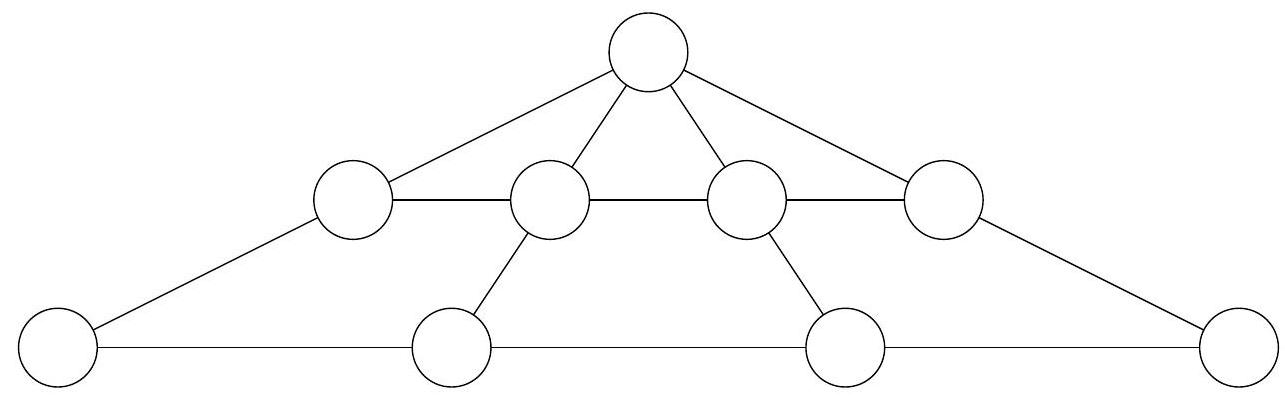
We seek to label the nine fields in the figure with the numbers 1, 2, .., 9, using each number exactly once. Furthermore, the ... |
1. Let's denote the numbers in the fields of the figure as follows:
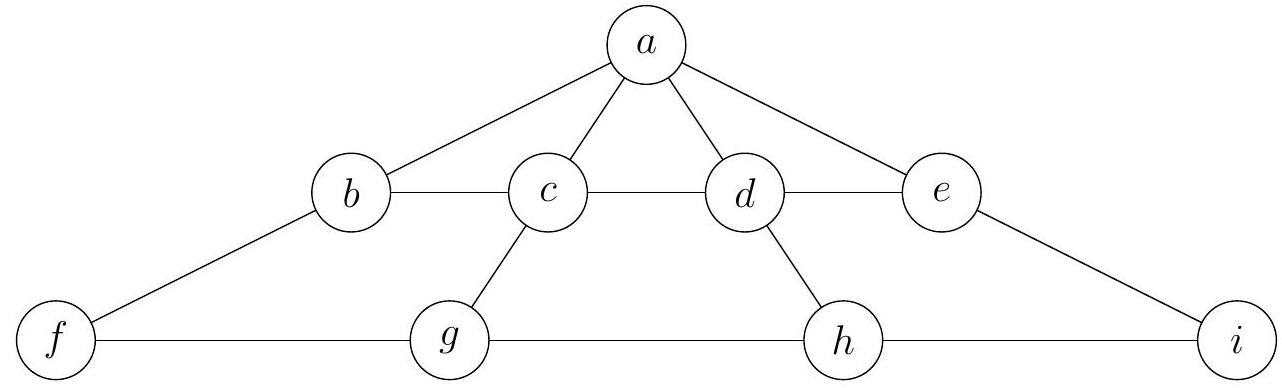
2. If we denote the common value of the six sums by \( s \), we obtain the following equations from the problem ... | [
{
"content": "Consider the following figure:\n\n\n\nWe seek to label the nine fields in the figure with the numbers 1, 2, .., 9, using each number exact... |
olympiads | As shown in the figure, the side length of square $\mathrm{ABCD}$ is $10$, and $O$ is its center. $O E \perp O F$. Find the area of the shaded region. |
**Step 1: Identify Given Data and Notations**
- Given: The square \( \mathrm{ABCD} \) has side length \(10\).
- \( O \) is the center of the square.
- \( O E \perp O F \).
**Step 2: Utilize Symmetry and Properties of Square**
- Since \( O \) is the center of the square, the coordinates of \( A, B, C, D \) are symmetr... | [
{
"content": "As shown in the figure, the side length of square $\\mathrm{ABCD}$ is $10$, and $O$ is its center. $O E \\perp O F$. Find the area of the shaded region.",
"role": "user"
},
{
"content": "\n**Step 1: Identify Given Data and Notations**\n- Given: The square \\( \\mathrm{ABCD} \\) has sid... |
olympiads | In the given figure, semicircles with centers at points \( A \) and \( B \) and radii 2 and 1, respectively, are inscribed in a larger semicircle with diameter \( JK \). The two smaller semicircles are also tangent to each other. \( \odot P \) is a circle that is tangent to both smaller semicircles and inscribed within... | To find the radius \(r\) of \(\odot P\) given the conditions in the problem, we need to apply a theorem known as Stewart's Theorem, which in a triangle \(ABC\) with a cevian \(AD\) (where \(D\) is on \(BC\)), relates the lengths of the sides and the cevian. Here are the steps:
1. **Setting up the problem:**
- The ... | [
{
"content": "In the given figure, semicircles with centers at points \\( A \\) and \\( B \\) and radii 2 and 1, respectively, are inscribed in a larger semicircle with diameter \\( JK \\). The two smaller semicircles are also tangent to each other. \\( \\odot P \\) is a circle that is tangent to both smaller s... |
olympiads |
King Arthur wants to order a new knight's shield from the blacksmith according to his sketch. The king used a compass and drew three arcs with a radius of 1 yard, as shown in the figure. What is the area of the shield? Round your answer to two decimal places. Recall that the area of a circle with radius \( r \) is \( ... |
To solve this problem, we need to find the area of the shield depicted in the sketch. According to the sketch, the shield is composed of three equal arcs, each with a radius of 1 yard. Here's a step-by-step breakdown:
1. **Understanding the Shape of the Shield**:
From the sketch, the shield seems to be a sector ... | [
{
"content": "\nKing Arthur wants to order a new knight's shield from the blacksmith according to his sketch. The king used a compass and drew three arcs with a radius of 1 yard, as shown in the figure. What is the area of the shield? Round your answer to two decimal places. Recall that the area of a circle wit... |
olympiads | As shown in the figure, $\odot \circ$ is the circumcircle of $\triangle ABC$, $D$ is the midpoint of arc $BAC$, $E$ is the midpoint of arc $BC$, and $CF \perp AB$. |
1. Given the sequence of points: The circumcircle \( \odot \circ \) of \( \triangle ABC \), the midpoint \( D \) of arc \( BAC \) and the midpoint \( E \) of arc \( BC \).
2. Given the points: \( D \), \( C \), and \( F \). We know \( CF \perp AB \).
3. Consider the line segment \( DE \), which intersects \( BC \) a... | [
{
"content": "As shown in the figure, $\\odot \\circ$ is the circumcircle of $\\triangle ABC$, $D$ is the midpoint of arc $BAC$, $E$ is the midpoint of arc $BC$, and $CF \\perp AB$.",
"role": "user"
},
{
"content": "\n1. Given the sequence of points: The circumcircle \\( \\odot \\circ \\) of \\( \\t... |
olympiads | As shown in the figure, \( AC = BC \). The tangents to the circumcircle of \(\triangle ABC\) at points \(A\) and \(C\) intersect at point \(D\). Line \(BD\) intersects the circle again at point \(E\). Ray \(AE\) intersects \(CD\) at point \(F\). Prove that \(F\) is the midpoint of \(CD\). |
1. We begin by noting from the problem that $AC = BC$ and $ \triangle ABC$ has an external circle, and line $AD$ intersects at point $D$ and line $BD$ intersects the circle at point $E$. The ray $AE$ intersects $CD$ at point $F$.
2. Using the information that $AC = BC$, we know $\triangle ABC$ is isosceles at $C$. Th... | [
{
"content": "As shown in the figure, \\( AC = BC \\). The tangents to the circumcircle of \\(\\triangle ABC\\) at points \\(A\\) and \\(C\\) intersect at point \\(D\\). Line \\(BD\\) intersects the circle again at point \\(E\\). Ray \\(AE\\) intersects \\(CD\\) at point \\(F\\). Prove that \\(F\\) is the midpo... |
olympiads | We want to create a square-based, open-top box from a circular piece of paper as shown in the figure. Determine the ratio of dimensions \( a \) and \( b \) seen in the figure such that the volume of the box is maximized. |
1. **Given Data**:
We are given that a rectangular box without a top is to be constructed from a circular piece of paper. Let the diameter of the circle be $D$, the side of the square base be $a$, and the height of the box be $b$.
2. **Volume Formula**:
The volume $V$ of the box can be expressed as:
\[
V... | [
{
"content": "We want to create a square-based, open-top box from a circular piece of paper as shown in the figure. Determine the ratio of dimensions \\( a \\) and \\( b \\) seen in the figure such that the volume of the box is maximized.",
"role": "user"
},
{
"content": "\n1. **Given Data**: \n W... |
olympiads | As shown in the figure, there is a toy clock. For each full circle that the hour hand makes, the minute hand makes 9 circles. If initially the two hands coincide, what is the degree turned by the hour hand when they next coincide? |
1. **Understanding the Problem:**
- We are given a toy clock where the hour hand and the minute hand coincide at the starting time.
- We need to find the angular movement of the hour hand until it coincides again with the minute hand.
2. **Relative Speeds of the Hands:**
- The hour hand takes \(12\) hours to... | [
{
"content": "As shown in the figure, there is a toy clock. For each full circle that the hour hand makes, the minute hand makes 9 circles. If initially the two hands coincide, what is the degree turned by the hour hand when they next coincide?",
"role": "user"
},
{
"content": "\n1. **Understanding ... |
olympiads | Through a point \( P \) three segments parallel to the sides of triangle \( ABC \) are drawn (see figure). Prove that the areas of triangles \( A_{1}B_{1}C_{1} \) and \( A_{2}B_{2}C_{2} \) are equal. |
To prove that the areas of the triangles \( A_1 B_1 C_1 \) and \( A_2 B_2 C_2 \) are equal, let us proceed with detailed steps.
1. **Express areas of larger triangles:**
We start with the triangles \( A_2 B_2 C_2 \) and \( A_1 B_1 C_1 \). Notice the following expressions for the areas:
\[
S_{A_2 B_2 C_2... | [
{
"content": "Through a point \\( P \\) three segments parallel to the sides of triangle \\( ABC \\) are drawn (see figure). Prove that the areas of triangles \\( A_{1}B_{1}C_{1} \\) and \\( A_{2}B_{2}C_{2} \\) are equal.",
"role": "user"
},
{
"content": "\nTo prove that the areas of the triangles \... |
olympiads | Some Christmas lights are arranged using magical wires. Each light can be either green or yellow. Each wire connects two lights and has a magical property: when someone touches a wire connecting two lights, each light changes color from green to yellow or from yellow to green.
a) In the following arrangement, each poi... |
**(a) Problem:**
Each edge we touch changes exactly the color of two lamps. Since there are 16 yellow lamps, we must touch at least 8 edges.
**1. Understand the mechanism:**
- Touching a wire connecting two lamps changes both lamps' colors.
- Goal is to turn all the lamps from yellow to green.
**2. Fundamental... | [
{
"content": "Some Christmas lights are arranged using magical wires. Each light can be either green or yellow. Each wire connects two lights and has a magical property: when someone touches a wire connecting two lights, each light changes color from green to yellow or from yellow to green.\n\na) In the followi... |
olympiads | As shown in the figure, \(AD\) is the angle bisector of \(\triangle ABC\) with \(AB < AC\). On \(AC\), point \(E\) is chosen such that \(CE = AB\). Let \(M\) and \(N\) be the midpoints of \(BC\) and \(AE\), respectively. Prove that \(MN \parallel AD\). |
Given: In $\triangle ABC$, $AD$ is the angle bisector of $\angle BAC$ with $AB < AC$. On $AC$, point $E$ is taken such that $CE = AB$. Points $M$ and $N$ are the midpoints of $BC$ and $AE$ respectively. We are to prove that $MN \parallel AD$.
1. **Join point $B$ to point $E$ and find midpoints**:
- Let $F$ be the ... | [
{
"content": "As shown in the figure, \\(AD\\) is the angle bisector of \\(\\triangle ABC\\) with \\(AB < AC\\). On \\(AC\\), point \\(E\\) is chosen such that \\(CE = AB\\). Let \\(M\\) and \\(N\\) be the midpoints of \\(BC\\) and \\(AE\\), respectively. Prove that \\(MN \\parallel AD\\).",
"role": "user"
... |
olympiads | As in the figure, an "L" shape composed of three small squares can be taken out. Now, it is required that all the squares taken out are completely white. How many different ways are there to do this (the "L" shape is allowed to rotate)? | Let's analyze the problem step by step.
1. We need to find out how many distinct ways we can choose an all-white "L"-shape consisting of three squares from the given grid.
2. According to the solution, there are 10 prominent "凸" shapes in the grid. Each of these "凸" shapes contains 2 distinct "L" shapes. Let's count ... | [
{
"content": "As in the figure, an \"L\" shape composed of three small squares can be taken out. Now, it is required that all the squares taken out are completely white. How many different ways are there to do this (the \"L\" shape is allowed to rotate)?",
"role": "user"
},
{
"content": "Let's analy... |
olympiads | Calculate the area of the figure bounded by the lines given by the equations:
$$
\begin{aligned}
& \left\{\begin{array}{l}
x=3(t-\sin t) \\
y=3(1-\cos t)
\end{array}\right. \\
& y=3(0<x<6 \pi, y \geq 3)
\end{aligned}
$$ |
1. **Determine the points of intersection:**
The given parametric equations are:
\[
\begin{aligned}
& \left\{
\begin{array}{l}
x = 3(t - \sin t) \\
y = 3(1 - \cos t)
\end{array}
\right. \\
& \text{with } 0 < x < 6\pi \text{ and } y \geq 3
\end{aligned}
\]
We need to find the values of $t$ where $y = 3$.
\begin{ali... | [
{
"content": "Calculate the area of the figure bounded by the lines given by the equations:\n\n$$\n\\begin{aligned}\n& \\left\\{\\begin{array}{l}\nx=3(t-\\sin t) \\\\\ny=3(1-\\cos t)\n\\end{array}\\right. \\\\\n& y=3(0<x<6 \\pi, y \\geq 3)\n\\end{aligned}\n$$",
"role": "user"
},
{
"content": "\n1. *... |
olympiads | In figure 1, $\triangle ABC$ is an acute triangle with $AB = 15$, $AC = 13$, and its altitude $AD = 12$. If the area of $\triangle ABC$ is $P$, find the value of $P$. |
#### Given:
- \(\triangle ABC\) is an acute triangle.
- \(AB = 15\), \(AC = 13\), and the altitude \(AD = 12\).
#### To find:
- The area \(P\) of \(\triangle ABC\).
We use the formula for the area of a triangle using its base and height:
\[
\text{Area} = \frac{1}{2} \times \text{base} \times \text{height}
\]
1. **C... | [
{
"content": "In figure 1, $\\triangle ABC$ is an acute triangle with $AB = 15$, $AC = 13$, and its altitude $AD = 12$. If the area of $\\triangle ABC$ is $P$, find the value of $P$.",
"role": "user"
},
{
"content": "\n#### Given:\n- \\(\\triangle ABC\\) is an acute triangle.\n- \\(AB = 15\\), \\(AC... |
olympiads | Let \( K \) be any arbitrary convex polygon with perimeter \( L \) and area \( S \); \( O_r \) be a circle of radius \( r \). Prove that the length of the curve \( K + O_r \) is \( L + 2\pi r \), and the area of the convex figure bounded by this curve is \( S + Lr + \pi r^2 \). | Let's break down the solution step by step to show that the length of the curve \( K + O_r \) is \( L + 2\pi r \) and the area of the convex figure bounded by this curve is \( S + Lr + \pi r^2 \).
#### Proof that the length of the curve \( K + O_r \) is \( L + 2\pi r \):
1. **Length of the sides of \( K + O_r \)**:
... | [
{
"content": "Let \\( K \\) be any arbitrary convex polygon with perimeter \\( L \\) and area \\( S \\); \\( O_r \\) be a circle of radius \\( r \\). Prove that the length of the curve \\( K + O_r \\) is \\( L + 2\\pi r \\), and the area of the convex figure bounded by this curve is \\( S + Lr + \\pi r^2 \\).",... |
olympiads | Eight 2x2 paper squares were laid out sequentially on a table until they formed a large 4x4 square. The last square to be placed on the table was square \( E \). In the figure, square \( E \) is completely visible, while the other squares are partially visible. Which square was placed on the table third? | 1. The problem states that eight paper squares of size \(2 \times 2\) were laid one by one to form a larger \(4 \times 4\) square, with square \(E\) being placed last. Each square is partially visible except \(E\), which is fully visible.
2. Begin by identifying the positions of squares \(A\), \(C\), \(G\), and \(F\), ... | [
{
"content": "Eight 2x2 paper squares were laid out sequentially on a table until they formed a large 4x4 square. The last square to be placed on the table was square \\( E \\). In the figure, square \\( E \\) is completely visible, while the other squares are partially visible. Which square was placed on the t... |
olympiads | a) The square $ABCD$ with side length $1 \text{ cm}$ is "flipped" around point $D$ as shown in the following figure. The dotted lines indicate the area occupied by the square during its flipping motion. What is the total area occupied by the square from the beginning to the end of its flipping?
b) Similarly to the squ... |
#### Part a)
1. **Identify regions in the figure**:
The figure can be divided into:
- Two right triangles: $\triangle ABD$ and $\triangle DB'C'$
- One quarter circle sector $DBB'$ with a $90^{\circ}$ central angle.
2. **Calculate the radius of the circular sector using the Pythagorean Theorem**:
\[
R ... | [
{
"content": "a) The square $ABCD$ with side length $1 \\text{ cm}$ is \"flipped\" around point $D$ as shown in the following figure. The dotted lines indicate the area occupied by the square during its flipping motion. What is the total area occupied by the square from the beginning to the end of its flipping?... |
olympiads | Calculate the areas of the figures bounded by the lines given in polar coordinates.
$$
r=\cos \phi, \quad r=\sin \phi, \quad \left(0 \leq \phi \leq \frac{\pi}{2}\right)
$$ |
1. **Set Up the Problem**:
- We are given the curves in polar coordinates:
\[
r = \cos \phi, \quad r = \sin \phi, \quad (0 \leq \phi \leq \frac{\pi}{2})
\]
- We need to find the area enclosed by these curves.
2. **Understand the Symmetry**:
- Notice that the figure formed by these curves... | [
{
"content": "Calculate the areas of the figures bounded by the lines given in polar coordinates.\n\n$$\nr=\\cos \\phi, \\quad r=\\sin \\phi, \\quad \\left(0 \\leq \\phi \\leq \\frac{\\pi}{2}\\right)\n$$",
"role": "user"
},
{
"content": "\n1. **Set Up the Problem**:\n - We are given the curves in... |
olympiads | As shown in the figure, \(ABCD\) is a parallelogram, \(AM = MB\), \(DN = CN\), and \(BE = EF = FC\). The area of quadrilateral \(EFGH\) is 1. Find the area of parallelogram \(ABCD\). |
1. **Step 1: Establish Geometrical Relationships**
Construct lines \(EQ \parallel CD\) and \(FP \parallel CD\), intersecting line \(BN\) at points \(Q\) and \(P\) respectively, as shown in the diagram.
2. **Step 2: Analyze Triangles and Quadrilaterals**
By properties of parallel lines and transversals in the pa... | [
{
"content": "As shown in the figure, \\(ABCD\\) is a parallelogram, \\(AM = MB\\), \\(DN = CN\\), and \\(BE = EF = FC\\). The area of quadrilateral \\(EFGH\\) is 1. Find the area of parallelogram \\(ABCD\\).",
"role": "user"
},
{
"content": "\n1. **Step 1: Establish Geometrical Relationships**\n\n ... |
olympiads | From 24 matches, a figure has been formed in the shape of a $3 \times 3$ square (see the figure), with the side length of each small square equal to the length of a matchstick. What is the minimum number of matchsticks that can be removed so that no whole $1 \times 1$ square formed by the matchsticks remains? |
1. **Understanding the problem:**
We have a figure made up of 24 matches forming a $3 \times 3$ grid of small squares, each with side length equal to the length of one match. The task is to determine the minimum number of matches needed to be removed so that no $1 \times 1$ square remains intact.
2. **Initial obse... | [
{
"content": "From 24 matches, a figure has been formed in the shape of a $3 \\times 3$ square (see the figure), with the side length of each small square equal to the length of a matchstick. What is the minimum number of matchsticks that can be removed so that no whole $1 \\times 1$ square formed by the matchs... |
olympiads | In the figure, $AB > AC$, $H$ is the orthocenter of $\triangle ABC$. Points $D$ and $E$ are on sides $AB$ and $AC$, respectively, such that $DE \parallel CH$. If $M$ is the midpoint of $DE$ and $\angle ABM = \angle ACM$, prove that $MH \perp BH$. | 1. **Identify Points and Lines:**
- Let $\triangle ABC$ be given with $AB > AC$.
- Let $H$ be the orthocenter (height intersection) of $\triangle ABC$.
- Points $D$ and $E$ lie on $AB$ and $AC$ respectively such that $DE \parallel CH$.
- Let $M$ be the midpoint of $DE$.
- Provided $\angle ABM = \angle AC... | [
{
"content": "In the figure, $AB > AC$, $H$ is the orthocenter of $\\triangle ABC$. Points $D$ and $E$ are on sides $AB$ and $AC$, respectively, such that $DE \\parallel CH$. If $M$ is the midpoint of $DE$ and $\\angle ABM = \\angle ACM$, prove that $MH \\perp BH$.",
"role": "user"
},
{
"content": "... |
olympiads | A small ant will walk from $A$ to $C$, passing through point $B$ exactly once and using only the paths indicated in the figure. How many different ways can the ant walk from $A$ to $C$?
(a) 3
(b) 5
(c) 7
(d) 8
(e) 9 | 1. **Identify the paths:**
- The formiguinha has 3 distinct paths to travel from point $A$ to point $B$.
- Similarly, there are 3 distinct paths to travel from point $B$ to point $C$.
2. **Total Path Calculation:**
- According to the problem, we need to find the total number of different ways the formiguinha ... | [
{
"content": "A small ant will walk from $A$ to $C$, passing through point $B$ exactly once and using only the paths indicated in the figure. How many different ways can the ant walk from $A$ to $C$?\n\n(a) 3\n(b) 5\n(c) 7\n(d) 8\n(e) 9",
"role": "user"
},
{
"content": "1. **Identify the paths:**\n ... |
olympiads | Along a circle, there are 12 fields. Four consecutive fields contain four different figures: in order, a red one, a yellow one, a green one, and a blue one. Each figure can be moved by jumping across four adjacent fields in either direction to the fifth field, provided that no figure already occupies the destination fi... |
Let's start by simplifying the problem before tackling the original restrictions. We'll disregard for now the rule that a figure cannot pass through a position already occupied by another figure.
#### Step 1: Simplified Scenario without Restrictions
1. Consider the figures moving on the 12 positions without any rest... | [
{
"content": "Along a circle, there are 12 fields. Four consecutive fields contain four different figures: in order, a red one, a yellow one, a green one, and a blue one. Each figure can be moved by jumping across four adjacent fields in either direction to the fifth field, provided that no figure already occup... |
olympiads |
Dasha cut a rectangular strip of paper into two rectangles: one white and one gray, both of which have integer side lengths. She noted the areas of these two rectangles in her notebook.
Then she overlaid the rectangles as shown in the figure. Three new rectangles were formed, and Dasha also noted the areas of these t... |
1. Let the shorter side of the original rectangular strip of paper be denoted by \(a\). The longer side of the white rectangle is \(b\) and the longer side of the gray rectangle is \(c\). Initially, Dasha recorded the areas of these two rectangles, which are \(a \cdot b\) and \(a \cdot c\).
2. When Dasha overlaid ... | [
{
"content": "\nDasha cut a rectangular strip of paper into two rectangles: one white and one gray, both of which have integer side lengths. She noted the areas of these two rectangles in her notebook.\n\nThen she overlaid the rectangles as shown in the figure. Three new rectangles were formed, and Dasha also n... |
olympiads | In the figure, the incircle of right triangle \( \triangle ABC \) touches the hypotenuse \( AB \) and the legs \( BC \) and \( CA \) at points \( D \), \( E \), and \( F \) respectively. Lines perpendicular to \( AC \) and \( BC \) are drawn through point \( D \), intersecting \( AC \) and \( BC \) at points \( M \) an... |
1. Given that $Rt \triangle ABC$ is a right triangle with the incircle $\odot O$ touching the hypotenuse $AB$ at point $D$, and the legs $BC$ and $CA$ at points $E$ and $F$ respectively. Additionally, from point $D$, perpendiculars are drawn to $AC$ and $BC$, meeting these sides at points $M$ and $N$ respectively. We ... | [
{
"content": "In the figure, the incircle of right triangle \\( \\triangle ABC \\) touches the hypotenuse \\( AB \\) and the legs \\( BC \\) and \\( CA \\) at points \\( D \\), \\( E \\), and \\( F \\) respectively. Lines perpendicular to \\( AC \\) and \\( BC \\) are drawn through point \\( D \\), intersecting... |
olympiads | A circle of radius 3 crosses the center of a square of side length 2. Find the difference between the areas of the nonoverlapping portions of the figures. |
To find the difference between the areas of the non-overlapping portions of a circle and a square, let us follow these steps:
1. **Find the area of the square.**
The side length of the square is given as 2 units.
\[
\text{Area of the square}, s = \text{side length}^2 = 2^2 = 4 \, \text{square units}
\]
... | [
{
"content": "A circle of radius 3 crosses the center of a square of side length 2. Find the difference between the areas of the nonoverlapping portions of the figures.",
"role": "user"
},
{
"content": "\nTo find the difference between the areas of the non-overlapping portions of a circle and a squa... |
olympiads | As shown in the figure, the sum of the angles $\angle 1 + \angle 2 + \angle 3 + \angle 4 + \angle 5 + \angle 6 + \angle 7$ is
(A) $450^\circ$
(B) $540^\circ$
(C) $630^\circ$
(D) $720^\circ$ |
The problem is to determine the sum of angles labeled as \( \angle 1, \angle 2, \angle 3, \angle 4, \angle 5, \angle 6, \) and \( \angle 7 \). Here is a detailed solution with step-by-step calculations.
#### Approach 1
1. Consider the given diagram with angles \( \angle 1, \angle 2, \angle 3, \angle 4, \angle 5, \ang... | [
{
"content": "As shown in the figure, the sum of the angles $\\angle 1 + \\angle 2 + \\angle 3 + \\angle 4 + \\angle 5 + \\angle 6 + \\angle 7$ is \n(A) $450^\\circ$ \n(B) $540^\\circ$ \n(C) $630^\\circ$ \n(D) $720^\\circ$",
"role": "user"
},
{
"content": "\nThe problem is to determine the sum of an... |
olympiads | Tangents are drawn through the endpoints of a circular arc containing $120^\circ$. A circle is inscribed in the figure bounded by these tangents and the given arc. Prove that the length of the inscribed circle is equal to the length of the original arc. |
Given:
- The radius of the original circle is \( R \).
- The arc subtends an angle of \( 120^{\circ} \) at the center.
- There is a smaller inscribed circle tangent to two tangents on the arc endpoints and the arc itself.
- We need to prove that the length of the smaller circle is equal to the length of the \(120^{\ci... | [
{
"content": "Tangents are drawn through the endpoints of a circular arc containing $120^\\circ$. A circle is inscribed in the figure bounded by these tangents and the given arc. Prove that the length of the inscribed circle is equal to the length of the original arc.",
"role": "user"
},
{
"content"... |
olympiads | As shown in the figure, \( AB \) is a chord with a slope of 1 in the ellipse \( m x^{2}+n y^{2}=1 \) (where \( m, n>0 \) and \( m \neq n \)). The perpendicular bisector of \( AB \) intersects the major ellipse at two points \( C \) and \( D \). Let \( E \) and \( F \) be the midpoints of \( AB \) and \( CD \), respecti... | :
1. Let's start by considering the diagonal chord \(AB\) of the ellipse given \(mx^2 + ny^2 = 1\) with slope 1. Thus, the equation of \(AB\) can be written as the line \(y = x + b\).
2. We simultaneously solve the equations \(y = x + b\) and the ellipse equation \(mx^2 + ny^2 = 1\):
\[
\begin{cases}
y = x +... | [
{
"content": "As shown in the figure, \\( AB \\) is a chord with a slope of 1 in the ellipse \\( m x^{2}+n y^{2}=1 \\) (where \\( m, n>0 \\) and \\( m \\neq n \\)). The perpendicular bisector of \\( AB \\) intersects the major ellipse at two points \\( C \\) and \\( D \\). Let \\( E \\) and \\( F \\) be the mid... |
olympiads | In a $3 \times 3$ table, the numbers from 1 to 9 are placed such that each number appears exactly once. The numbers 1, 2, 3, and 4 are positioned as shown in the figure below. It is also known that the sum of the numbers in the cells adjacent to the cell containing the number 5 is 9. Find the sum of the numbers in the ... |
1. **Placing Digits and Initial Analysis**:
- The digits 1, 2, 3, and 4 are positioned as follows:
\[
\begin{array}{ccc}
1 & & 3 \\
& & \\
2 & & 4 \\
\end{array}
\]
- We are given the constraint that the sum of the digits adjacent to the digit 5 is 9.
2. **D... | [
{
"content": "In a $3 \\times 3$ table, the numbers from 1 to 9 are placed such that each number appears exactly once. The numbers 1, 2, 3, and 4 are positioned as shown in the figure below. It is also known that the sum of the numbers in the cells adjacent to the cell containing the number 5 is 9. Find the sum... |
olympiads | The teacher Clotilde drew three figures on the blackboard, all with an area of $108 \mathrm{~cm}^{2}$.
a) The first figure is a rectangle with one side length equal to $12 \mathrm{~cm}$. What is the perimeter of this rectangle?
b) The second figure is a rectangle divided into a white rectangle and a grey square with ... |
#### Part (a)
We begin by determining the perimeter of the rectangle given its area and one side length.
1. Calculate the length of the unknown side:
\[
\text{Area} = \text{Length} \times \text{Width}
\]
Given, \(\text{Area} = 108 \ \text{cm}^2\) and one side (\(\text{Length}\)) \(= 12 \ \text{cm}\), we ... | [
{
"content": "The teacher Clotilde drew three figures on the blackboard, all with an area of $108 \\mathrm{~cm}^{2}$.\n\na) The first figure is a rectangle with one side length equal to $12 \\mathrm{~cm}$. What is the perimeter of this rectangle?\n\nb) The second figure is a rectangle divided into a white recta... |
olympiads | Cut the figure into 8 identical parts. | To solve the problem of dividing the figure into 8 identical parts, we can proceed as follows:
1. Identify the shape of the figure and assume it is a cube (as suggested by common geometry problems and the typical folktale context).
2. **Divide using plane cuts:**
**Method 1:**
a. **First Cut:**
Make... | [
{
"content": "Cut the figure into 8 identical parts.",
"role": "user"
},
{
"content": "To solve the problem of dividing the figure into 8 identical parts, we can proceed as follows:\n\n1. Identify the shape of the figure and assume it is a cube (as suggested by common geometry problems and the typic... |
olympiads | Anya arranges pebbles on the sand. First, she placed one pebble, then added pebbles to form a pentagon, then made a larger outer pentagon from pebbles, and then another outer pentagon, and so on, as shown in the figure. The number of pebbles arranged in the first four pictures are: 1, 5, 12, and 22. If she continues to... |
Let's denote the number of pebbles on the \( n \)-th picture by \( P(n) \).
1. For \( n = 1 \):
\[
P(1) = 1
\]
2. For \( n = 2 \):
\[
P(2) = 5
\]
3. To move from the second picture to the third picture:
- We add three edges each containing one corner pebble and two additional pebbles (as each n... | [
{
"content": "Anya arranges pebbles on the sand. First, she placed one pebble, then added pebbles to form a pentagon, then made a larger outer pentagon from pebbles, and then another outer pentagon, and so on, as shown in the figure. The number of pebbles arranged in the first four pictures are: 1, 5, 12, and 2... |
olympiads | Calculate the area of the figure bounded by the curves defined by the equations:
$$
\begin{aligned}
& \left\{\begin{array}{l}
x=4(t-\sin t) \\
y=4(1-\cos t)
\end{array}\right. \\
& y=6 \quad (0<x<8 \pi, \, y \geq 6)
\end{aligned}
$$ |
We begin by finding the points of intersection between the given parametric curve and the horizontal line \( y = 6 \).
1. **Setting up the equations for intersection:**
\[
y = 4(1 - \cos t) = 6
\]
\[
1 - \cos t = \frac{3}{2}
\]
Solving for \(\cos t\):
\[
\cos t = -\frac{1}{2}
\... | [
{
"content": "Calculate the area of the figure bounded by the curves defined by the equations:\n\n$$\n\\begin{aligned}\n& \\left\\{\\begin{array}{l}\nx=4(t-\\sin t) \\\\\ny=4(1-\\cos t)\n\\end{array}\\right. \\\\\n& y=6 \\quad (0<x<8 \\pi, \\, y \\geq 6)\n\\end{aligned}\n$$",
"role": "user"
},
{
"co... |
olympiads | Does there exist a convex figure that does not have axes of symmetry but is mapped onto itself by some rotation? | :
1. Consider the equilateral triangle \(ABC\).
2. Select points \(C'\), \(A'\), and \(B'\) on the sides \(AB\), \(BC\), and \(CA\), respectively, such that the ratios along the sides are as follows:
\[ \frac{AC'}{BC'} = \frac{BA'}{CA'} = \frac{CB'}{AB'} = \frac{3}{1} \]
This means that \(C'\) divides \(AB\) in... | [
{
"content": "Does there exist a convex figure that does not have axes of symmetry but is mapped onto itself by some rotation?",
"role": "user"
},
{
"content": ": \n1. Consider the equilateral triangle \\(ABC\\). \n2. Select points \\(C'\\), \\(A'\\), and \\(B'\\) on the sides \\(AB\\), \\(BC\\), an... |
olympiads | Through the vertex \( A \) of the rectangle \( ABCD \), a line \( \ell \) is drawn, as shown in the figure. From points \( B \) and \( D \), perpendiculars \( BX \) and \( DY \) are dropped onto the line \( \ell \). Find the length of segment \( XY \) if it is known that \( BX = 4 \), \( DY = 10 \), and \( BC = 2 AB \)... | Given:
- \(ABCD\) is a rectangle.
- A line \( \ell \) passes through vertex \( A \).
- Perpendiculars \( BX \) and \( DY \) are drawn from points \( B \) and \( D \) to line \( \ell \) with lengths \( BX = 4 \) and \( DY = 10 \) respectively.
- \( BC = 2 \cdot AB \).
#### Step-by-step solution:
1. **Triangle Similar... | [
{
"content": "Through the vertex \\( A \\) of the rectangle \\( ABCD \\), a line \\( \\ell \\) is drawn, as shown in the figure. From points \\( B \\) and \\( D \\), perpendiculars \\( BX \\) and \\( DY \\) are dropped onto the line \\( \\ell \\). Find the length of segment \\( XY \\) if it is known that \\( BX... |
olympiads | As shown in the figure, the coordinates \((x, y)\) of points on lines \(l_1\) and \(l_2\) satisfy the following equation:
(A) \( |x| + |y| = 0 \);
(B) \( |x| + \sqrt{y^{2}} = 1 \);
(C) \( x^{2} - |y| = 1 \);
(D) \( |x| - |y| = 0 \);
(E) \( x - |y| = 0 \).
Answer ( ). |
1. **Identify the requirements for points on the lines $l_1$ and $l_2$:**
- From the problem statement, points on the lines $l_1$ and $l_2$ are described by the Cartesian coordinates \((x, y)\). By interpreting the corresponding image (which we assume shows lines intersecting through the origin and symmetric about ... | [
{
"content": "As shown in the figure, the coordinates \\((x, y)\\) of points on lines \\(l_1\\) and \\(l_2\\) satisfy the following equation:\n(A) \\( |x| + |y| = 0 \\);\n(B) \\( |x| + \\sqrt{y^{2}} = 1 \\);\n(C) \\( x^{2} - |y| = 1 \\);\n(D) \\( |x| - |y| = 0 \\);\n(E) \\( x - |y| = 0 \\).\nAnswer ( ).",
... |
End of preview. Expand in Data Studio
README.md exists but content is empty.
- Downloads last month
- 68