

source stringclasses 1
value | problem stringlengths 38 2.6k | solution stringlengths 449 6.8k | messages stringclasses 1
value | gpt_difficulty stringclasses 29
values | gpt_difficulty_parsed int64 1 10 |
|---|---|---|---|---|---|
olympiads | Consider the following figure:
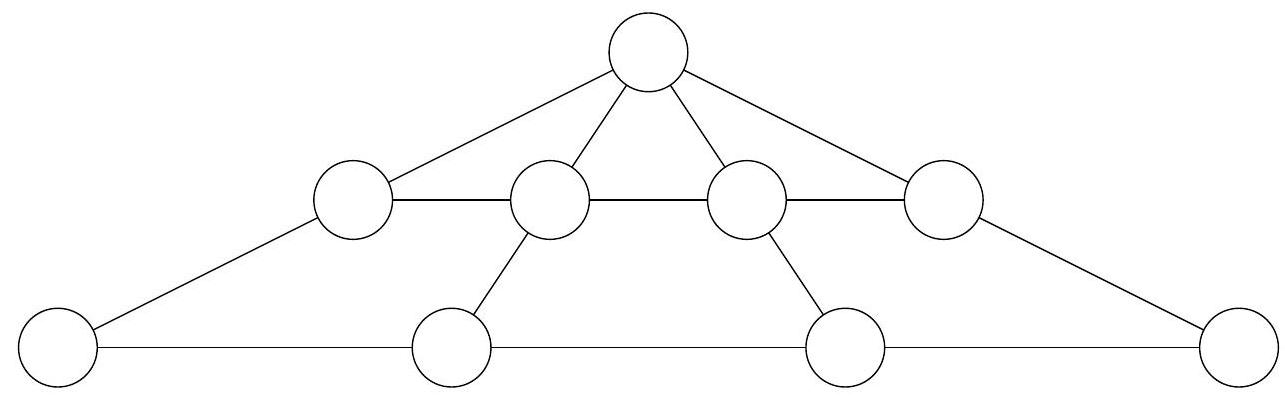
We seek to label the nine fields in the figure with the numbers 1, 2, .., 9, using each number exactly once. Furthermore, the ... |
1. Let's denote the numbers in the fields of the figure as follows:
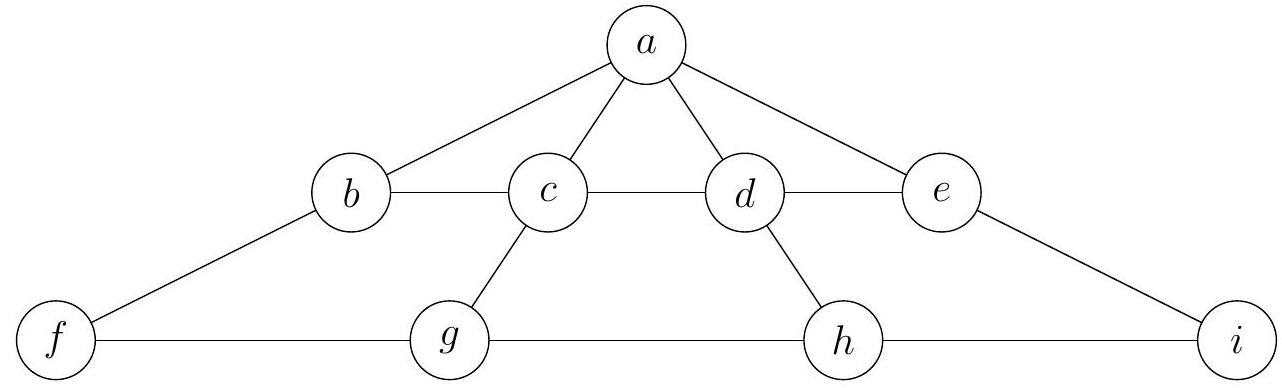
2. If we denote the common value of the six sums by \( s \), we obtain the following equations from the problem ... | [[7]] | 7 | |
olympiads | As shown in the figure, the side length of square $\mathrm{ABCD}$ is $10$, and $O$ is its center. $O E \perp O F$. Find the area of the shaded region. |
**Step 1: Identify Given Data and Notations**
- Given: The square \( \mathrm{ABCD} \) has side length \(10\).
- \( O \) is the center of the square.
- \( O E \perp O F \).
**Step 2: Utilize Symmetry and Properties of Square**
- Since \( O \) is the center of the square, the coordinates of \( A, B, C, D \) are symmetr... | [[3]] | 3 | |
olympiads | In the given figure, semicircles with centers at points \( A \) and \( B \) and radii 2 and 1, respectively, are inscribed in a larger semicircle with diameter \( JK \). The two smaller semicircles are also tangent to each other. \( \odot P \) is a circle that is tangent to both smaller semicircles and inscribed within... | To find the radius \(r\) of \(\odot P\) given the conditions in the problem, we need to apply a theorem known as Stewart's Theorem, which in a triangle \(ABC\) with a cevian \(AD\) (where \(D\) is on \(BC\)), relates the lengths of the sides and the cevian. Here are the steps:
1. **Setting up the problem:**
- The ... | [[6]] | 6 | |
olympiads |
King Arthur wants to order a new knight's shield from the blacksmith according to his sketch. The king used a compass and drew three arcs with a radius of 1 yard, as shown in the figure. What is the area of the shield? Round your answer to two decimal places. Recall that the area of a circle with radius \( r \) is \( ... |
To solve this problem, we need to find the area of the shield depicted in the sketch. According to the sketch, the shield is composed of three equal arcs, each with a radius of 1 yard. Here's a step-by-step breakdown:
1. **Understanding the Shape of the Shield**:
From the sketch, the shield seems to be a sector ... | [[2]] | 2 | |
olympiads | As shown in the figure, $\odot \circ$ is the circumcircle of $\triangle ABC$, $D$ is the midpoint of arc $BAC$, $E$ is the midpoint of arc $BC$, and $CF \perp AB$. |
1. Given the sequence of points: The circumcircle \( \odot \circ \) of \( \triangle ABC \), the midpoint \( D \) of arc \( BAC \) and the midpoint \( E \) of arc \( BC \).
2. Given the points: \( D \), \( C \), and \( F \). We know \( CF \perp AB \).
3. Consider the line segment \( DE \), which intersects \( BC \) a... | [[8]] | 8 | |
olympiads | As shown in the figure, \( AC = BC \). The tangents to the circumcircle of \(\triangle ABC\) at points \(A\) and \(C\) intersect at point \(D\). Line \(BD\) intersects the circle again at point \(E\). Ray \(AE\) intersects \(CD\) at point \(F\). Prove that \(F\) is the midpoint of \(CD\). |
1. We begin by noting from the problem that $AC = BC$ and $ \triangle ABC$ has an external circle, and line $AD$ intersects at point $D$ and line $BD$ intersects the circle at point $E$. The ray $AE$ intersects $CD$ at point $F$.
2. Using the information that $AC = BC$, we know $\triangle ABC$ is isosceles at $C$. Th... | [[7]] | 7 | |
olympiads | We want to create a square-based, open-top box from a circular piece of paper as shown in the figure. Determine the ratio of dimensions \( a \) and \( b \) seen in the figure such that the volume of the box is maximized. |
1. **Given Data**:
We are given that a rectangular box without a top is to be constructed from a circular piece of paper. Let the diameter of the circle be $D$, the side of the square base be $a$, and the height of the box be $b$.
2. **Volume Formula**:
The volume $V$ of the box can be expressed as:
\[
V... | [[5]] | 5 | |
olympiads | As shown in the figure, there is a toy clock. For each full circle that the hour hand makes, the minute hand makes 9 circles. If initially the two hands coincide, what is the degree turned by the hour hand when they next coincide? |
1. **Understanding the Problem:**
- We are given a toy clock where the hour hand and the minute hand coincide at the starting time.
- We need to find the angular movement of the hour hand until it coincides again with the minute hand.
2. **Relative Speeds of the Hands:**
- The hour hand takes \(12\) hours to... | [[2]] | 2 | |
olympiads | Through a point \( P \) three segments parallel to the sides of triangle \( ABC \) are drawn (see figure). Prove that the areas of triangles \( A_{1}B_{1}C_{1} \) and \( A_{2}B_{2}C_{2} \) are equal. |
To prove that the areas of the triangles \( A_1 B_1 C_1 \) and \( A_2 B_2 C_2 \) are equal, let us proceed with detailed steps.
1. **Express areas of larger triangles:**
We start with the triangles \( A_2 B_2 C_2 \) and \( A_1 B_1 C_1 \). Notice the following expressions for the areas:
\[
S_{A_2 B_2 C_2... | [[7]] | 7 | |
olympiads | Some Christmas lights are arranged using magical wires. Each light can be either green or yellow. Each wire connects two lights and has a magical property: when someone touches a wire connecting two lights, each light changes color from green to yellow or from yellow to green.
a) In the following arrangement, each poi... |
**(a) Problem:**
Each edge we touch changes exactly the color of two lamps. Since there are 16 yellow lamps, we must touch at least 8 edges.
**1. Understand the mechanism:**
- Touching a wire connecting two lamps changes both lamps' colors.
- Goal is to turn all the lamps from yellow to green.
**2. Fundamental... | [[4]] | 4 | |
olympiads | As shown in the figure, \(AD\) is the angle bisector of \(\triangle ABC\) with \(AB < AC\). On \(AC\), point \(E\) is chosen such that \(CE = AB\). Let \(M\) and \(N\) be the midpoints of \(BC\) and \(AE\), respectively. Prove that \(MN \parallel AD\). |
Given: In $\triangle ABC$, $AD$ is the angle bisector of $\angle BAC$ with $AB < AC$. On $AC$, point $E$ is taken such that $CE = AB$. Points $M$ and $N$ are the midpoints of $BC$ and $AE$ respectively. We are to prove that $MN \parallel AD$.
1. **Join point $B$ to point $E$ and find midpoints**:
- Let $F$ be the ... | [[7]] | 7 | |
olympiads | As in the figure, an "L" shape composed of three small squares can be taken out. Now, it is required that all the squares taken out are completely white. How many different ways are there to do this (the "L" shape is allowed to rotate)? | Let's analyze the problem step by step.
1. We need to find out how many distinct ways we can choose an all-white "L"-shape consisting of three squares from the given grid.
2. According to the solution, there are 10 prominent "凸" shapes in the grid. Each of these "凸" shapes contains 2 distinct "L" shapes. Let's count ... | [[3]] | 3 | |
olympiads | Calculate the area of the figure bounded by the lines given by the equations:
$$
\begin{aligned}
& \left\{\begin{array}{l}
x=3(t-\sin t) \\
y=3(1-\cos t)
\end{array}\right. \\
& y=3(0<x<6 \pi, y \geq 3)
\end{aligned}
$$ |
1. **Determine the points of intersection:**
The given parametric equations are:
\[
\begin{aligned}
& \left\{
\begin{array}{l}
x = 3(t - \sin t) \\
y = 3(1 - \cos t)
\end{array}
\right. \\
& \text{with } 0 < x < 6\pi \text{ and } y \geq 3
\end{aligned}
\]
We need to find the values of $t$ where $y = 3$.
\begin{ali... | [[6]] | 6 | |
olympiads | In figure 1, $\triangle ABC$ is an acute triangle with $AB = 15$, $AC = 13$, and its altitude $AD = 12$. If the area of $\triangle ABC$ is $P$, find the value of $P$. |
#### Given:
- \(\triangle ABC\) is an acute triangle.
- \(AB = 15\), \(AC = 13\), and the altitude \(AD = 12\).
#### To find:
- The area \(P\) of \(\triangle ABC\).
We use the formula for the area of a triangle using its base and height:
\[
\text{Area} = \frac{1}{2} \times \text{base} \times \text{height}
\]
1. **C... | [[3]] | 3 | |
olympiads | Let \( K \) be any arbitrary convex polygon with perimeter \( L \) and area \( S \); \( O_r \) be a circle of radius \( r \). Prove that the length of the curve \( K + O_r \) is \( L + 2\pi r \), and the area of the convex figure bounded by this curve is \( S + Lr + \pi r^2 \). | Let's break down the solution step by step to show that the length of the curve \( K + O_r \) is \( L + 2\pi r \) and the area of the convex figure bounded by this curve is \( S + Lr + \pi r^2 \).
#### Proof that the length of the curve \( K + O_r \) is \( L + 2\pi r \):
1. **Length of the sides of \( K + O_r \)**:
... | [[9]] | 9 | |
olympiads | Eight 2x2 paper squares were laid out sequentially on a table until they formed a large 4x4 square. The last square to be placed on the table was square \( E \). In the figure, square \( E \) is completely visible, while the other squares are partially visible. Which square was placed on the table third? | 1. The problem states that eight paper squares of size \(2 \times 2\) were laid one by one to form a larger \(4 \times 4\) square, with square \(E\) being placed last. Each square is partially visible except \(E\), which is fully visible.
2. Begin by identifying the positions of squares \(A\), \(C\), \(G\), and \(F\), ... | [[2]] | 2 | |
olympiads | a) The square $ABCD$ with side length $1 \text{ cm}$ is "flipped" around point $D$ as shown in the following figure. The dotted lines indicate the area occupied by the square during its flipping motion. What is the total area occupied by the square from the beginning to the end of its flipping?
b) Similarly to the squ... |
#### Part a)
1. **Identify regions in the figure**:
The figure can be divided into:
- Two right triangles: $\triangle ABD$ and $\triangle DB'C'$
- One quarter circle sector $DBB'$ with a $90^{\circ}$ central angle.
2. **Calculate the radius of the circular sector using the Pythagorean Theorem**:
\[
R ... | [[3]] | 3 | |
olympiads | Calculate the areas of the figures bounded by the lines given in polar coordinates.
$$
r=\cos \phi, \quad r=\sin \phi, \quad \left(0 \leq \phi \leq \frac{\pi}{2}\right)
$$ |
1. **Set Up the Problem**:
- We are given the curves in polar coordinates:
\[
r = \cos \phi, \quad r = \sin \phi, \quad (0 \leq \phi \leq \frac{\pi}{2})
\]
- We need to find the area enclosed by these curves.
2. **Understand the Symmetry**:
- Notice that the figure formed by these curves... | [[5]] | 5 | |
olympiads | As shown in the figure, \(ABCD\) is a parallelogram, \(AM = MB\), \(DN = CN\), and \(BE = EF = FC\). The area of quadrilateral \(EFGH\) is 1. Find the area of parallelogram \(ABCD\). |
1. **Step 1: Establish Geometrical Relationships**
Construct lines \(EQ \parallel CD\) and \(FP \parallel CD\), intersecting line \(BN\) at points \(Q\) and \(P\) respectively, as shown in the diagram.
2. **Step 2: Analyze Triangles and Quadrilaterals**
By properties of parallel lines and transversals in the pa... | [[5]] | 5 | |
olympiads | From 24 matches, a figure has been formed in the shape of a $3 \times 3$ square (see the figure), with the side length of each small square equal to the length of a matchstick. What is the minimum number of matchsticks that can be removed so that no whole $1 \times 1$ square formed by the matchsticks remains? |
1. **Understanding the problem:**
We have a figure made up of 24 matches forming a $3 \times 3$ grid of small squares, each with side length equal to the length of one match. The task is to determine the minimum number of matches needed to be removed so that no $1 \times 1$ square remains intact.
2. **Initial obse... | [[3]] | 3 | |
olympiads | In the figure, $AB > AC$, $H$ is the orthocenter of $\triangle ABC$. Points $D$ and $E$ are on sides $AB$ and $AC$, respectively, such that $DE \parallel CH$. If $M$ is the midpoint of $DE$ and $\angle ABM = \angle ACM$, prove that $MH \perp BH$. | 1. **Identify Points and Lines:**
- Let $\triangle ABC$ be given with $AB > AC$.
- Let $H$ be the orthocenter (height intersection) of $\triangle ABC$.
- Points $D$ and $E$ lie on $AB$ and $AC$ respectively such that $DE \parallel CH$.
- Let $M$ be the midpoint of $DE$.
- Provided $\angle ABM = \angle AC... | [[7]] | 7 | |
olympiads | A small ant will walk from $A$ to $C$, passing through point $B$ exactly once and using only the paths indicated in the figure. How many different ways can the ant walk from $A$ to $C$?
(a) 3
(b) 5
(c) 7
(d) 8
(e) 9 | 1. **Identify the paths:**
- The formiguinha has 3 distinct paths to travel from point $A$ to point $B$.
- Similarly, there are 3 distinct paths to travel from point $B$ to point $C$.
2. **Total Path Calculation:**
- According to the problem, we need to find the total number of different ways the formiguinha ... | [[2]] | 2 | |
olympiads | Along a circle, there are 12 fields. Four consecutive fields contain four different figures: in order, a red one, a yellow one, a green one, and a blue one. Each figure can be moved by jumping across four adjacent fields in either direction to the fifth field, provided that no figure already occupies the destination fi... |
Let's start by simplifying the problem before tackling the original restrictions. We'll disregard for now the rule that a figure cannot pass through a position already occupied by another figure.
#### Step 1: Simplified Scenario without Restrictions
1. Consider the figures moving on the 12 positions without any rest... | [[5]] | 5 | |
olympiads |
Dasha cut a rectangular strip of paper into two rectangles: one white and one gray, both of which have integer side lengths. She noted the areas of these two rectangles in her notebook.
Then she overlaid the rectangles as shown in the figure. Three new rectangles were formed, and Dasha also noted the areas of these t... |
1. Let the shorter side of the original rectangular strip of paper be denoted by \(a\). The longer side of the white rectangle is \(b\) and the longer side of the gray rectangle is \(c\). Initially, Dasha recorded the areas of these two rectangles, which are \(a \cdot b\) and \(a \cdot c\).
2. When Dasha overlaid ... | [[4]] | 4 | |
olympiads | In the figure, the incircle of right triangle \( \triangle ABC \) touches the hypotenuse \( AB \) and the legs \( BC \) and \( CA \) at points \( D \), \( E \), and \( F \) respectively. Lines perpendicular to \( AC \) and \( BC \) are drawn through point \( D \), intersecting \( AC \) and \( BC \) at points \( M \) an... |
1. Given that $Rt \triangle ABC$ is a right triangle with the incircle $\odot O$ touching the hypotenuse $AB$ at point $D$, and the legs $BC$ and $CA$ at points $E$ and $F$ respectively. Additionally, from point $D$, perpendiculars are drawn to $AC$ and $BC$, meeting these sides at points $M$ and $N$ respectively. We ... | [[6]] | 6 | |
olympiads | A circle of radius 3 crosses the center of a square of side length 2. Find the difference between the areas of the nonoverlapping portions of the figures. |
To find the difference between the areas of the non-overlapping portions of a circle and a square, let us follow these steps:
1. **Find the area of the square.**
The side length of the square is given as 2 units.
\[
\text{Area of the square}, s = \text{side length}^2 = 2^2 = 4 \, \text{square units}
\]
... | [[3]] | 3 | |
olympiads | As shown in the figure, the sum of the angles $\angle 1 + \angle 2 + \angle 3 + \angle 4 + \angle 5 + \angle 6 + \angle 7$ is
(A) $450^\circ$
(B) $540^\circ$
(C) $630^\circ$
(D) $720^\circ$ |
The problem is to determine the sum of angles labeled as \( \angle 1, \angle 2, \angle 3, \angle 4, \angle 5, \angle 6, \) and \( \angle 7 \). Here is a detailed solution with step-by-step calculations.
#### Approach 1
1. Consider the given diagram with angles \( \angle 1, \angle 2, \angle 3, \angle 4, \angle 5, \ang... | [[2]] | 2 | |
olympiads | Tangents are drawn through the endpoints of a circular arc containing $120^\circ$. A circle is inscribed in the figure bounded by these tangents and the given arc. Prove that the length of the inscribed circle is equal to the length of the original arc. |
Given:
- The radius of the original circle is \( R \).
- The arc subtends an angle of \( 120^{\circ} \) at the center.
- There is a smaller inscribed circle tangent to two tangents on the arc endpoints and the arc itself.
- We need to prove that the length of the smaller circle is equal to the length of the \(120^{\ci... | [[8]] | 8 | |
olympiads | As shown in the figure, \( AB \) is a chord with a slope of 1 in the ellipse \( m x^{2}+n y^{2}=1 \) (where \( m, n>0 \) and \( m \neq n \)). The perpendicular bisector of \( AB \) intersects the major ellipse at two points \( C \) and \( D \). Let \( E \) and \( F \) be the midpoints of \( AB \) and \( CD \), respecti... | :
1. Let's start by considering the diagonal chord \(AB\) of the ellipse given \(mx^2 + ny^2 = 1\) with slope 1. Thus, the equation of \(AB\) can be written as the line \(y = x + b\).
2. We simultaneously solve the equations \(y = x + b\) and the ellipse equation \(mx^2 + ny^2 = 1\):
\[
\begin{cases}
y = x +... | [[8]] | 8 | |
olympiads | In a $3 \times 3$ table, the numbers from 1 to 9 are placed such that each number appears exactly once. The numbers 1, 2, 3, and 4 are positioned as shown in the figure below. It is also known that the sum of the numbers in the cells adjacent to the cell containing the number 5 is 9. Find the sum of the numbers in the ... |
1. **Placing Digits and Initial Analysis**:
- The digits 1, 2, 3, and 4 are positioned as follows:
\[
\begin{array}{ccc}
1 & & 3 \\
& & \\
2 & & 4 \\
\end{array}
\]
- We are given the constraint that the sum of the digits adjacent to the digit 5 is 9.
2. **D... | [[3]] | 3 | |
olympiads | The teacher Clotilde drew three figures on the blackboard, all with an area of $108 \mathrm{~cm}^{2}$.
a) The first figure is a rectangle with one side length equal to $12 \mathrm{~cm}$. What is the perimeter of this rectangle?
b) The second figure is a rectangle divided into a white rectangle and a grey square with ... |
#### Part (a)
We begin by determining the perimeter of the rectangle given its area and one side length.
1. Calculate the length of the unknown side:
\[
\text{Area} = \text{Length} \times \text{Width}
\]
Given, \(\text{Area} = 108 \ \text{cm}^2\) and one side (\(\text{Length}\)) \(= 12 \ \text{cm}\), we ... | [[2]] | 2 | |
olympiads | Cut the figure into 8 identical parts. | To solve the problem of dividing the figure into 8 identical parts, we can proceed as follows:
1. Identify the shape of the figure and assume it is a cube (as suggested by common geometry problems and the typical folktale context).
2. **Divide using plane cuts:**
**Method 1:**
a. **First Cut:**
Make... | [[2]] | 2 | |
olympiads | Anya arranges pebbles on the sand. First, she placed one pebble, then added pebbles to form a pentagon, then made a larger outer pentagon from pebbles, and then another outer pentagon, and so on, as shown in the figure. The number of pebbles arranged in the first four pictures are: 1, 5, 12, and 22. If she continues to... |
Let's denote the number of pebbles on the \( n \)-th picture by \( P(n) \).
1. For \( n = 1 \):
\[
P(1) = 1
\]
2. For \( n = 2 \):
\[
P(2) = 5
\]
3. To move from the second picture to the third picture:
- We add three edges each containing one corner pebble and two additional pebbles (as each n... | [[2]] | 2 | |
olympiads | Calculate the area of the figure bounded by the curves defined by the equations:
$$
\begin{aligned}
& \left\{\begin{array}{l}
x=4(t-\sin t) \\
y=4(1-\cos t)
\end{array}\right. \\
& y=6 \quad (0<x<8 \pi, \, y \geq 6)
\end{aligned}
$$ |
We begin by finding the points of intersection between the given parametric curve and the horizontal line \( y = 6 \).
1. **Setting up the equations for intersection:**
\[
y = 4(1 - \cos t) = 6
\]
\[
1 - \cos t = \frac{3}{2}
\]
Solving for \(\cos t\):
\[
\cos t = -\frac{1}{2}
\... | [[7]] | 7 | |
olympiads | Does there exist a convex figure that does not have axes of symmetry but is mapped onto itself by some rotation? | :
1. Consider the equilateral triangle \(ABC\).
2. Select points \(C'\), \(A'\), and \(B'\) on the sides \(AB\), \(BC\), and \(CA\), respectively, such that the ratios along the sides are as follows:
\[ \frac{AC'}{BC'} = \frac{BA'}{CA'} = \frac{CB'}{AB'} = \frac{3}{1} \]
This means that \(C'\) divides \(AB\) in... | [[6]] | 6 | |
olympiads | Through the vertex \( A \) of the rectangle \( ABCD \), a line \( \ell \) is drawn, as shown in the figure. From points \( B \) and \( D \), perpendiculars \( BX \) and \( DY \) are dropped onto the line \( \ell \). Find the length of segment \( XY \) if it is known that \( BX = 4 \), \( DY = 10 \), and \( BC = 2 AB \)... | Given:
- \(ABCD\) is a rectangle.
- A line \( \ell \) passes through vertex \( A \).
- Perpendiculars \( BX \) and \( DY \) are drawn from points \( B \) and \( D \) to line \( \ell \) with lengths \( BX = 4 \) and \( DY = 10 \) respectively.
- \( BC = 2 \cdot AB \).
#### Step-by-step solution:
1. **Triangle Similar... | [[3]] | 3 | |
olympiads | As shown in the figure, the coordinates \((x, y)\) of points on lines \(l_1\) and \(l_2\) satisfy the following equation:
(A) \( |x| + |y| = 0 \);
(B) \( |x| + \sqrt{y^{2}} = 1 \);
(C) \( x^{2} - |y| = 1 \);
(D) \( |x| - |y| = 0 \);
(E) \( x - |y| = 0 \).
Answer ( ). |
1. **Identify the requirements for points on the lines $l_1$ and $l_2$:**
- From the problem statement, points on the lines $l_1$ and $l_2$ are described by the Cartesian coordinates \((x, y)\). By interpreting the corresponding image (which we assume shows lines intersecting through the origin and symmetric about ... | [[2]] | 2 | |
olympiads | Sir Hugh de Fortibus called his chief builder and, pointing to a window in the tower, said:
- It seems to me that the sides of that square window are each one foot, and the sides of the gaps between the bars in it are half a foot (see figure $A$). I want to cut another window a little higher, also with four sides each... | 1. Let's consider the given conditions:
- The original window (Case A) is a square with each side measuring 1 foot.
- The "bars" in the window divide it into smaller square areas, each with a side length of 0.5 feet.
- We need to create another window (Case B) which also has sides 1 foot long and is divi... | [[6]] | 6 | |
olympiads | As shown in the figure, a grasshopper starts at position 1. For the 1st jump, it jumps 1 step and lands at position 2; for the 2nd jump, it jumps 2 steps and lands at position 4; for the 3rd jump, it jumps 3 steps and lands at position 1, and so on. On the $n$-th jump, it jumps $n$ steps. After jumping 100 times in a c... |
1. **Understand the Problem:**
- The ant starts at position 1.
- In the $n$-th jump, it jumps $n$ steps.
- We need to determine the final position after 100 jumps when the ant moves in a cyclic sequence of 6 positions (positions 1 through 6).
2. **Total Distance Calculation:**
- The total distance the ant... | [[2]] | 2 | |
olympiads | In some cells of a $20 \times 20$ square, there is an arrow in one of four directions. On the boundary of the square, all arrows point along the boundary in a clockwise direction (see figure). Additionally, arrows in neighboring cells (including diagonal neighbors) do not point in opposite directions. Prove that there ... |
1. Let's assume, for the sake of contradiction, that every cell of the \(20 \times 20\) square grid contains an arrow.
2. Label all cells with horizontal arrows (pointing left or right) as black, and all cells with vertical arrows (pointing up or down) as white.
3. **Lemma**: Either a "crippled rook" (which moves on... | [[7]] | 7 | |
olympiads | A square is divided into five rectangles of equal area, as shown in the figure. The width of one of the rectangles is 5. Find the area of the square. |
1. Let the width of one of the rectangles be 5, as given in the problem. Denote the vertical sides of the central rectangle and the rectangle below it by \( x \), as they share a common horizontal side and therefore have equal heights.
2. For the left bottom rectangle, let the vertical side be \( 2x \) because it occ... | [[3]] | 3 | |
olympiads | Let $F_{1}$ and $F_{2}$ be the left and right foci of the ellipse $E: \frac{x^{2}}{a^{2}}+\frac{y^{2}}{b^{2}}=1(a>b>0)$. A line passing through point $F_{1}$ intersects the ellipse $E$ at points $A$ and $B$ such that $\left|A F_{1}\right|=3\left|B F_{1}\right|$ and $\cos \angle A F_{2} B=\frac{3}{5}$, as shown in the f... |
1. **Given Data Analysis**:
- Let $F_1$ and $F_2$ be the left and right foci of the ellipse $E$ described by the equation $\frac{x^2}{a^2} + \frac{y^2}{b^2} = 1$ where \(a > b > 0\).
- A line passing through $F_1$ intersects the ellipse $E$ at points $A$ and $B$ with $\left|A F_{1}\right| = 3\left|B F_{1}\right|... | [[8]] | 8 | |
olympiads | In a circle with center O, three equal chords AB, CD, and PQ are drawn (see the figure). Prove that angle MOC is equal to half of angle BLD. |
1. **Recognizing the Setup and Key Points**:
We are given a circle with center \( O \), and three equal chords \( AB \), \( CD \), and \( PQ \). We need to show that the angle \( \angle MOK \) is equal to half of the angle \( \angle BLD \).
To begin, consider the auxiliary claim: through a point inside the c... | [[5]] | 5 | |
olympiads | Prove that when the origin is changed or a parallel translation of the summands is performed, the shape of a figure, which is the sum $\Phi_{1} + \Phi_{2}$ (or the shape of the curve $K_{1} + K_{2}$), does not change. This sum only undergoes a parallel translation as a result.
Thus, the shape of a figure (curve), whic... | :
1. **Initial Assumption and Setup**:
We start by considering the shapes defined, $K_1$ and $K_2$, with the initial reference point \(O\). Let us perform a parallel translation of $K_1$ while keeping $K_2$ and the origin \(O\) fixed.
2. **Define Translation Vector**:
Let \(OA\) be a vector from the origin t... | [[9]] | 9 | |
olympiads | In the figure 4-11, if $D$ is a point on the extension of side $BC$ of triangle $ABC$, then the necessary and sufficient condition for $AD$ to bisect the exterior angle at $A$ is $AD^{2} = BD \cdot CD - AB \cdot AC$. | ### Problem:
如图 4-11, 若 $D$ 是 $ \triangle ABC$ 的边 $BC$ 延长线上一点, 则 $AD$ 平分 $\angle A$ 的外角的充要条件是 $AD^{2} = BD \cdot CD - AB \cdot AC$.
#### Step-by-Step Proof for Necessity:
1. **Given**: $AD$ 平分 $\angle A$ 的外角。
2. **By**: 拓扑学4 (推论 4):
- 公式表述为
\[
AD^{2} = BD \cdot CD - AB \cdot AC.
\]
#### Sufficiency Part... | [[8]] | 8 | |
olympiads | As shown in the figure, the rectangle with a length of 9 cm and a width of 8 cm has a cross-shaped shaded area in the middle, which is composed of two rectangles. If the area of the shaded part is exactly equal to the area of the unshaded part, determine $X=$ $\qquad$ cm. |
1. **Define the Variables and Understand the Problem**:
- We are given a rectangle with length \(9\) cm and width \(8\) cm.
- There is an 'X'-shaped shadow formed by two rectangles inside this larger rectangle.
- The area of the shadow is equal to the area of the non-shadow portion.
2. **Calculate the Tot... | [[2]] | 2 | |
olympiads | As shown in the figure, given is trapezoid $ABCD$ with $AB \parallel CD$, and $M$ is the midpoint of $CD$. It is also given that $BD = BC$. Point $E$ lies on the extension of $AD$, and $EM$ intersects $AC$ at point $F$. Prove that $\angle DBE = \angle CBF$. |
1. Given that \(AB \parallel CD\), we are to analyze the geometric properties and relationships in the given trapezoid \(ABCD\) where \(M\) is the midpoint of \(CD\), \(BD = BC\), and \(E\) is a point on the extension of \(AD\). \(EM\) intersects \(AC\) at \(F\).
2. Extend the line \(EM\) to intersect \(AB\) at point... | [[7]] | 7 | |
olympiads | Petya has many copies of the figure shown in the picture. The figure is a rhombus, colored white and gray.
The figures are printed on one side of the sheet, so they can be rotated but cannot be flipped. Which of the larger figures can Petya NOT construct? | 1. **Observation**: Note that Petya has many instances of the rhombus shown in the figure. Each rhombus is colored half in white and half in gray.
2. **Rotation and Reflection**: The rhombuses can be rotated but not flipped over, meaning their orientation can change through rotation about the center but their front and... | [[3]] | 3 | |
olympiads | A unit is using wood to make the frame shown in the figure. The lower part of the frame is a rectangle with sides $x$ and $y$ (units: meters), and the upper part is an isosceles right triangle. It is required that the total area enclosed by the frame be 8 square meters. Determine the values of $x$ and $y$ (accurate to ... |
1. **Understanding the Problem**:
We need to find the dimensions \(x\) and \(y\) of the rectangular base of a frame such that the total area is 8 \(\mathrm{m}^2\). The frame has a rectangular bottom part with dimensions \(x\) and \(y\), and an upper part which is an isosceles right triangle with the base \(x\).
... | [[7]] | 7 | |
olympiads | Given that a spatial graph is composed of $n$ points and $l$ connecting line segments such that:
$$
n = q^{2} + q + 1, \quad l \geqslant \frac{1}{2} q(q + 1)^{2} + 1, \quad q \geqslant 2, \quad q \in \mathbf{N},
$$
and it is known that any four points in this graph are non-coplanar, each point is connected by at least... |
1. We start by defining the set of $n$ points $V = \{A_0, A_1, A_2, \ldots, A_{n-1}\}$ as the whole set of vertices. Let $B_i$ be the set of all neighbors of $A_i$ (i.e., the set of points connected to $A_i$ by an edge). Let $|B_i| = b_i$ denote the number of neighbors of $A_i$.
2. It's clear that the sum of the degr... | [[9]] | 9 | |
olympiads | As shown in the figure, a truck travels from $A$ to $C$ at a speed of 50 km/h, while at the same time, delivery person A and delivery person B set out from $B$ to travel to $A$ and $C$ respectively, with both traveling at the same speed. If A travels 3 km before meeting the truck, and 12 minutes later, the truck and B ... | Given:
1. Cargo vehicle moves from \( A \) to \( C \) at a speed of \( 50 \, \text{km/h} \).
2. At the same time, two couriers (\( \alpha \) and \( \beta \)) start from \( B \):
- \( \alpha \) moves towards \( A \)
- \( \beta \) moves towards \( C \)
3. \( \alpha \) encounters the cargo vehicle after traveling \(... | [[4]] | 4 | |
olympiads | In the figure below, \(ABCD\) is a square and points \(K\), \(L\), and \(M\) are on the sides \(AB\), \(BC\), and \(CD\) respectively, such that \(\triangle KLM\) is a right isosceles triangle at \(L\). Prove that \(AL\) and \(DK\) are perpendicular.
 is a square.
- Points \(K\), \(L\), and \(M\) lie on sides \(AB\), \(BC\), and \(CD\) respectively.
- \(\triangle KLM\) is an isosceles right triangle at \(L\).
2. **Identify Key Angles:**
- Since \(\triangle KLM\) is an isosceles right triangle at \(L\), we know:
\[
... | [[6]] | 6 | |
olympiads | Cut the checkered triangle (see the figure) into several parts of different areas so that the sums of the numbers in each part are equal. |
1. **Calculate the Total Sum of Numbers in the Triangle**:
The problem states that the total sum of numbers in the triangle is 63.
2. **Determine the Required Sum for Each Part**:
Since we want to divide the triangle into parts with equal sums and the sum of numbers in each part should obviously be not less tha... | [[5]] | 5 | |
olympiads | The given figure was made with 12 square tiles, each with sides equal to $10 \mathrm{~cm}$. What is the area of the highlighted region? | ### Problema:
A figura dada foi montada com 12 azulejos quadrados de lados iguais a $10 \, \text{cm}$. Qual é a área da região destacada?
### Solução:
1. Observamos que a área destacada na figura pode ser decomposta em quatro triângulos congruentes.
2. Para calcular a área de um desses triângulos congruentes, identifi... | [[2]] | 2 | |
olympiads | From a \(55 \times 55\) grid square, 400 three-cell corner pieces (oriented in any direction) and 500 additional cells were cut out along the cell boundaries.
Prove that some two of the cut-out figures share a boundary segment. |
To prove that some two cut-out pieces have a common segment of the boundary, follow these steps:
### First method:
1. **Assumption**: Assume that none of the cut-out shapes share any sides.
2. **Adding Border**: Add a border around each cut-out figure as shown in the illustration. The border consists of points with... | [[8]] | 8 | |
olympiads | The parts of a toy railway track are shaped like a quarter circle with radius \( R \). Prove that sequentially connecting them end-to-end such that they smoothly transition from one to the next cannot form a path where the start coincides with the end, and the first and last links form a dead end as depicted in the fig... |
1. **Divide the plane into equal squares**:
To start, consider dividing the plane into squares with a side length of \(2R\). Inside each square, inscribe a circle of radius \(R\). This approach helps us visualize how the quarter-circle track pieces can be arranged within each square while maintaining their geomet... | [[7]] | 7 | |
olympiads | In the "Secret Escape" game shown in the figure, Shuai Shuai must travel through 16 rooms, moving from Room 1 to Room 16. The doors between the rooms are one-way and can only be opened in the correct direction (as shown in the figure). Shuai Shuai needs to complete the task while passing through as few rooms as possibl... |
1. **Understanding the Problem**:
- We need to navigate from Room 1 to Room 16 using the minimum number of rooms.
- Each door allows passage in only one direction as specified.
2. **Constructing the Path**:
- From the problem, we can visually or theoretically construct a path that takes the least number of s... | [[2]] | 2 | |
olympiads | As shown in the figure, $E$ is a point on the extension of side $BC$ of square $ABCD$ with side length 12, and $BE = 16$. Point $P$ moves from point $C$ to point $E$ along $CE$. Construct a square $APFG$ with $AP$ as one of its sides, such that points $A$ and $G$ are on the same side of $BE$. During the movement of $P$... |
Let's solve this problem step by step:
1. **Understanding the setup and given information:**
- $ABCD$ is a square with side length 12.
- $E$ is a point on the extension of side $BC$ such that $BE = 16$.
- Point $P$ moves from $C$ to $E$ along $CE$.
- We need to trace the length of the path followed by... | [[7]] | 7 | |
olympiads | Patrick was walking with his father and grandfather. He wanted to imagine the time when their combined ages would be 100 years.
The father said: "I will be 28 years older than you, and you will be six-fifths of your current age." The grandfather added: "I will be twice as old as your father would be at the time of yo... |
Let \( e \) be the current age of Patrick, \( p \) be the current age of his father, and \( g \) be the current age of his grandfather. Let \( x \) be the number of years required until the sum of the ages of all three is 100 years.
From the problem, we derive the following equations based on the information provide... | [[6]] | 6 | |
olympiads | In the figure, intersecting squares with sides \(12, 9, 7, 3\) respectively are shown from left to right. By how much is the sum of the black areas greater than the sum of the gray areas? |
1. **Identify Areas:**
Let's denote the areas as follows:
- $A$: The area of the square with side length 12.
- $B$: The area of the square with side length 9.
- $C$: The area of the square with side length 7.
- $D$: The area of the square with side length 3.
2. **Calculating Each Area:**
The area of... | [[4]] | 4 | |
olympiads | a) Prove that the feet of the perpendiculars dropped from any point on the circumcircle to the sides of an inscribed triangle lie on one straight line (figure 35a).
b) On three chords \(MA\), \(MB\), and \(MC\) of a circle that pass through one point, three new circles are constructed with these chords as diameters. P... |
#### Part (a)
1. **Problem Restatement**:
Let \(ABC\) be an arbitrary triangle inscribed in a circle, and let \(P\) be any point on the circle. Let \(X, Y, Z\) be the feet of the perpendiculars dropped from \(P\) to the sides \(BC, CA, AB\) of the triangle \(ABC\). We need to prove that points \(X, Y,\) and \(Z\) ... | [[8]] | 8 | |
olympiads | As shown in the figure, the diameter \( AB \) of circle \( O \) is perpendicular to \( CD \), where \( AB = 10 \) cm. An arc is drawn with center \( C \) and radius \( CA \). Find the area of the crescent-shaped region \( ADEBA \) (the shaded part). |
1. Given that the diameter \(AB\) of circle \(O\) is perpendicular to \(CD\) and \(AB = 10\) meters.
2. Let's denote the radius of circle \(O\) as \(r\). Since \(AB\) is the diameter, we have:
\[
AB = 2r \implies 2r = 10 \implies r = 5 \text{ meters}
\]
3. Next, we consider the semicircle with center \(C... | [[5]] | 5 | |
olympiads | On the sides of a square, semicircles are constructed as diameters. Determine the area of the shaded figure (four petals) if the side of the square is equal to \(a\). | 1. Given that the side of the square is \( a \), we first calculate the area of one semicircle constructed on a side of the square as its diameter.
2. The radius of each semicircle is \( \frac{a}{2} \), since the diameter of the semicircle is the side length of the square, \( a \).
3. The area of a full circle with rad... | [[5]] | 5 | |
olympiads | On a chessboard, 32 dominoes (rectangles $1 \times 2$) are placed arbitrarily so that the dominoes do not overlap. Then, one cell is added to the board, as shown in the figure. It is allowed to remove any domino and then place it on two adjacent empty cells.
Prove that all dominoes can be arranged horizontally. |
1. Each $1 \times 2$ domino tile on an $8 \times 8$ chessboard covers exactly 2 cells. With 32 domino tiles, the entire board would be covered completely since \(32 \times 2 = 64\).
2. Now we add one extra cell to this fully covered board, making it a total of 65 cells. Hence, there is exactly one cell that is not co... | [[8]] | 8 | |
olympiads | In the figure, quadrilateral $ABCD$ is inscribed in a circle, $AC \perp BD$, $I$ is the incenter of $\triangle ABD$, $IE \perp BD$ at point $E$, and $IA = IC$. Prove that $EC = EI$. |
Given: In a cyclic quadrilateral $ABCD$, $AC \perp BD$, and $I$ is the incenter of $\triangle ABD$. Additionally, $IE \perp BD$ at point $E$ and $IA = IC$. We need to prove that $EC = EI$.
Let’s break the proof into detailed steps:
1. **Cyclic Nature and Perpendicularity**:
Since $ABCD$ is a cyclic quadrilateral... | [[7]] | 7 | |
olympiads | A centrally symmetric figure on graph paper consists of $n$ "corners" and $k$ rectangles of size $1 \times 4$. Prove that $n$ is even. | **Problem:**
A centrally symmetric figure on a grid paper consists of \( n \) "corners" and \( k \) \(1 \times 4\) rectangles as shown in Fig. 14.1. Prove that \( n \) is even.
**Reference Solution:**
1. Place unit masses at the centers of the cells from which the "corners" and the rectangles are made.
2. Divide each ... | [[7]] | 7 | |
olympiads |
Median of the sum of numerical sets. Let there be two numerical sets:
$$
X=\left\{x_{1}, x_{2}, \ldots, x_{n}\right\} \text { and } Y=\left\{y_{1}, y_{2}, \ldots, y_{m}\right\}
$$
The first set has \(n\) numbers, and the second set has \(m\) numbers. The direct sum or simply the sum \(X \oplus Y\) of these sets is d... |
a) First, we want to provide an example of two numeric sets where the median of the sum of the sets differs from the sum of their medians by 1.
Let's consider the following two identical sets:
\[ X = \{0, 0, 1\} \quad \text{and} \quad Y = \{0, 0, 1\}. \]
We calculate their medians:
\[ M_X = 0, \quad M_Y = 0. \]
Nex... | [[7]] | 7 | |
olympiads | A convex figure $\Phi$ has an area $S$ and a semiperimeter $p$. Prove that if $S > n p$ for some natural number $n$, then $\Phi$ contains at least $n$ integer points. |
In this solution, we are using the Minkowski theorem and mathematical induction to prove the given statement. Let's go step-by-step.
1. **Base Case ($n=1$):**
- When $n=1$, we need to show that if $S > 1\cdot p$, then $\Phi$ contains at least $1$ integer point.
- This is self-evident as with $S > p$, any con... | [[8]] | 8 | |
olympiads | As shown in the figure, a multiplication problem has already filled in the digits 2, 0, 1, and 6. What is the smaller factor in this multiplication? | 1. We are given several digits \(2, 0, 1, 6\) and are required to identify the smallest product that can be formed by these digits.
2. To form numbers, we need to consider all possible permutations of these digits.
Let's list all possible permutations of these digits:
- \(2016\)
- \(2061\)
- \(2106\)
- \(2160\)
- \(26... | [[2]] | 2 | |
olympiads | In a $5 \times 5$ square, some cells have been painted black as shown in the figure. Consider all possible squares whose sides follow the grid lines. How many of them have an equal number of black and white cells? |
1. **Understanding the Problem:**
We are given a $5 \times 5$ grid where certain cells are colored black. We need to find the number of sub-square grids within this $5 \times 5$ grid that have an equal number of black and white cells. Possible sub-square sizes include $2 \times 2$ and $4 \times 4$, as only these si... | [[4]] | 4 | |
olympiads | Prove that any convex polygon can be divided into four figures of equal area by two mutually perpendicular lines. | ### Problem:
Prove that any convex polygon can be divided into four parts of equal area using two mutually perpendicular lines.
1. **Define Area of Polygon:**
Let \( S \) denote the area of the convex polygon.
2. **Introduce Arbitrary Line and Coordinate System:**
Suppose \( l \) is an arbitrary line. Intr... | [[5]] | 5 | |
olympiads | As shown in the figure, $\angle 1$ is equal to 100 degrees, $\angle 2$ is equal to 60 degrees, and $\angle 3$ is equal to 90 degrees. Find $\angle 4$. |
1. Given angles:
- \( \angle 1 = 100^\circ \)
- \( \angle 2 = 60^\circ \)
- \( \angle 3 = 90^\circ \)
2. According to the sum of the exterior angles of any polygon, we have:
\[
\angle 1 + \angle 2 + \angle 3 + \angle 4 = 360^\circ
\]
3. Substituting the given values into the equation, we get:
\[... | [[1]] | 1 |
End of preview. Expand in Data Studio
README.md exists but content is empty.
- Downloads last month
- 40