new

Get trending papers in your email inbox!

Subscribe

Daily Papers

byAK and the research community

Oct 22

PatientAct: Theory-Grounded Mental Health Client Simulation

LLM-based simulated clients are increasingly used to train novice counselors, evaluate LLM therapists, and generate synthetic data. However, current simulators produce overly cooperative clients that disclose too readily, accept therapeutic reframes without resistance, and resolve core issues within a single session. We trace these issues to profiles that lack causal depth and behavioral mechanisms that treat all content as equally accessible. We present PatientAct, a framework for client simulation grounded in established clinical theories. Our profiles integrate the 5Ps clinical case formulation, providing causal depth without tying the design to any single therapeutic modality. During simulation, profiles include a dynamic memory layer in which items carry trust thresholds (e.g., symptoms are available early, whereas formative memories require a sustained therapeutic alliance). At each turn, the client's emotional reaction and behavior are modeled before generating a response. If the therapist approaches gated content, PatientAct expresses resistance in terms of quantity, content, and style rather than defaulting to cooperation or a single resistance pattern. We evaluate our framework on 40 clinical situations and demonstrate that it generates diverse profiles with high clinical plausibility. Moreover, PatientAct significantly outperforms the baselines, yielding substantial gains in resistance quality and behavioral realism. Our code and data will be publicly available via github.com/Sahandfer/PatientHub.

  • 6 authors
·
Aug 12

PhyAgentOS: A Self-Evolving Operating System for Embodied Agents with Decoupled Cognitive Planning and Physical Execution

Vision-language-action models, world models, and agentic planners each advance physical intelligence, yet their composition lacks a common execution abstraction, shared state, semantic verification, and persistent experience across heterogeneous embodiments. We present PhyAgentOS, a runtime foundation delivering scheduling, verification, memory, benchmarking, and safety as system-level services. Its Session-Centered Runtime treats a session, not an action, as the minimum unit of scheduling, compatibility preflight, supervised execution, evidence collection, and acceptance. To decouple cognition from physical execution, the cognition-physics boundary is a file system: the State-as-a-File protocol materializes cross-layer state as Markdown with YAML, yielding inspectable, versionable records without code dependencies between Agent and Runtime layers. These views form a unified cognitive state space aligning intent, capabilities, environment, execution, and experience. The SessionVerifier distinguishes execution termination from semantic task completion via evidence-grounded verdicts of success, failure, or replan. Verified outcomes are consolidated through epistemic memory into reusable knowledge and corrective lessons, closing a trial-and-error loop without retraining. Benchmarking reuses the deployment session and verification path, so results trace to real execution. Layered safety constrains both policy-driven and agent-driven execution: preflight, action bridges, SafetyGuard, heartbeat monitoring, and target-local constraints. Validation is progressive: games test cognitive planning, simulation adds dynamics and control, real robots add hardware noise, with the cognitive layer held constant. PhyAgentOS is benchmarked on Optimus-67, StarDojo, and DST-Dojo, validated on 19+ simulated and physical embodiments, and gains on LIBERO, Calvin, and RoboCasa365 across multiple VLA models.

  • 11 authors
·
Jul 17

WorldParticle: Unified World Simulation of Lagrangian Particle Dynamics via Transformer

A unified simulator that can model diverse physical phenomena without solver-specific redesign is a long-standing goal across simulation science. We present a learning-based particle simulator built on a single transformer architecture to model cloth, elastic solds, Newtonian and non-Newtonian fluids, granular materials, and molecular dynamics. Our model follows a prediction-correction design on a shared Lagrangian particle representation. An explicit predictor first advances particles under the known external forces, producing an intermediate state that captures externally driven motion but not inter-particle interactions. A learned corrector then predicts the residual position and velocity updates through three stages: a particle tokenizer that encodes local particle-particle, particle-boundary, and topology-guided interactions; a super-token encoder that hierarchically merges particle tokens into a compact set of super tokens via alternating self-attention and token merging; and a super-token decoder that lifts these super tokens back to particle resolution through cross-attention to predict per-particle position and velocity corrections. Progressive token merging reduces the attention cost at successive encoder layers by halving the token count at each level, and the decoder communicates through the compact super-token set rather than full particle-to-particle attention. Across the six dynamics categories, the same architecture generalizes to unseen materials, boundary configurations, initial conditions, and external forces. We further demonstrate downstream interactive control, inverse design, and learning from real-world manipulation data, reducing the need for per-phenomenon solver engineering.

  • 16 authors
·
May 19

Dandelion: A Spherical Flower for Neural Simulation of Planetary Dynamics

Many dynamical processes unfold on the sphere but the default scientific machine learning architectures are Euclidean. Applying these architectures on a regular lat-lon grid causes problems: Cartesian convolutions become distorted at high latitude; 2D FFTs in Fourier neural operators incorrectly assume double periodicity; Cartesian positional encodings in ViTs distort spherical geodesic distances. Recent work moves towards natively spherical primitives, including spherical convolutions (e.g., DeepSphere or DISCO), Spherical Fourier Neural Operators (SFNOs), and geodesic attention. Here we propose Dandelion, a spherical version of Flower, a warp-based neural PDE solver. Layers of Dandelion predict a tangent-plane displacement and transport features along great circles. We obtain a U-Net-like structure by implementing hierarchical pooling entirely in the spherical-harmonic domain. There are thus no convolutions: spatial mixing is achieved only through spherical coordinate changes, or warps. To compare Dandelion with existing spherical architectures, we release an evolving benchmark suite of challenging, natively-spherical PDE datasets including a modified Galewsky jet, anomalous chained turbulence, Cahn-Hilliard decomposition, spherical Riemann shocks, Held-Suarez dry atmospheric transport and global ocean dynamics. This new benchmark fills the gap in existing spherical datasets which are either too small and stylized, or much too large (ERA5) for model iteration. Dandelion is best or second-best on every dataset, and the gap to non-warp baselines widens with resolution: at 256times 512, Dandelion and Flower2D occupy the top two slots in both single-step prediction and rollout.

  • 3 authors
·
Aug 26

Multimodal Safety Evaluation in Generative Agent Social Simulations

Can generative agents be trusted in multimodal environments? Despite advances in large language and vision-language models that enable agents to act autonomously and pursue goals in rich settings, their ability to reason about safety, coherence, and trust across modalities remains limited. We introduce a reproducible simulation framework for evaluating agents along three dimensions: (1) safety improvement over time, including iterative plan revisions in text-visual scenarios; (2) detection of unsafe activities across multiple categories of social situations; and (3) social dynamics, measured as interaction counts and acceptance ratios of social exchanges. Agents are equipped with layered memory, dynamic planning, multimodal perception, and are instrumented with SocialMetrics, a suite of behavioral and structural metrics that quantifies plan revisions, unsafe-to-safe conversions, and information diffusion across networks. Experiments show that while agents can detect direct multimodal contradictions, they often fail to align local revisions with global safety, reaching only a 55 percent success rate in correcting unsafe plans. Across eight simulation runs with three models - Claude, GPT-4o mini, and Qwen-VL - five agents achieved average unsafe-to-safe conversion rates of 75, 55, and 58 percent, respectively. Overall performance ranged from 20 percent in multi-risk scenarios with GPT-4o mini to 98 percent in localized contexts such as fire/heat with Claude. Notably, 45 percent of unsafe actions were accepted when paired with misleading visuals, showing a strong tendency to overtrust images. These findings expose critical limitations in current architectures and provide a reproducible platform for studying multimodal safety, coherence, and social dynamics.

  • 6 authors
·
Oct 8, 2025

Effect of Added Salts on the Interfacial Dynamics of Monovalent Metal Ions and Model Water-Soluble Polymers

Traditional theories of electrolyte and polyelectrolyte solutions overlook ion and polymer hydration, yielding an overly idealized perspective of the thermodynamic and dynamic properties of these solutions. In particular, the propensity of certain ions to increase or decrease the water diffusion coefficient at low solution concentrations, is poorly understood, a phenomenon that correlates strongly with the Hofmeister series describing the influence of salts on the solubility and self-assembly of synthetic and biomacromolecules as well as colloidal particles. These ion-specific effects have profound ramifications in diverse biological, medical science and technological applications. We address the general problem of understanding ion and uncharged water-soluble polymer hydration through molecular dynamics (MD) simulations of representative water-soluble polymers, polyacrylamide (PAM) and polyethylene oxide (PEO), in aqueous salt solutions. Careful attention is given to the capacity of our model to reproduce observed trends of added monovalent salts on the diffusion coefficient of water. Reproducing these ion-specific trends in the mobility of water has been a recurrent challenge in prior MD simulations of aqueous solutions based on a physically realistic model of water. Our work on salt solutions represents an important advance on which we build our modeling of aqueous polymer solutions with added salts. Simulations of our model polymers reveal an extended nanoscale dynamic hydration layer having a scale on the order of one nanometer (nm) in which the mobility is perturbed from its bulk value, and the mobility gradient in this layer appears to obey a near universal functional form.

  • 3 authors
·
Oct 3

DynamicCity: Large-Scale LiDAR Generation from Dynamic Scenes

LiDAR scene generation has been developing rapidly recently. However, existing methods primarily focus on generating static and single-frame scenes, overlooking the inherently dynamic nature of real-world driving environments. In this work, we introduce DynamicCity, a novel 4D LiDAR generation framework capable of generating large-scale, high-quality LiDAR scenes that capture the temporal evolution of dynamic environments. DynamicCity mainly consists of two key models. 1) A VAE model for learning HexPlane as the compact 4D representation. Instead of using naive averaging operations, DynamicCity employs a novel Projection Module to effectively compress 4D LiDAR features into six 2D feature maps for HexPlane construction, which significantly enhances HexPlane fitting quality (up to 12.56 mIoU gain). Furthermore, we utilize an Expansion & Squeeze Strategy to reconstruct 3D feature volumes in parallel, which improves both network training efficiency and reconstruction accuracy than naively querying each 3D point (up to 7.05 mIoU gain, 2.06x training speedup, and 70.84% memory reduction). 2) A DiT-based diffusion model for HexPlane generation. To make HexPlane feasible for DiT generation, a Padded Rollout Operation is proposed to reorganize all six feature planes of the HexPlane as a squared 2D feature map. In particular, various conditions could be introduced in the diffusion or sampling process, supporting versatile 4D generation applications, such as trajectory- and command-driven generation, inpainting, and layout-conditioned generation. Extensive experiments on the CarlaSC and Waymo datasets demonstrate that DynamicCity significantly outperforms existing state-of-the-art 4D LiDAR generation methods across multiple metrics. The code will be released to facilitate future research.

  • 6 authors
·
Oct 23, 2024 2

DynaWeb: Model-Based Reinforcement Learning of Web Agents

The development of autonomous web agents, powered by Large Language Models (LLMs) and reinforcement learning (RL), represents a significant step towards general-purpose AI assistants. However, training these agents is severely hampered by the challenges of interacting with the live internet, which is inefficient, costly, and fraught with risks. Model-based reinforcement learning (MBRL) offers a promising solution by learning a world model of the environment to enable simulated interaction. This paper introduces DynaWeb, a novel MBRL framework that trains web agents through interacting with a web world model trained to predict naturalistic web page representations given agent actions. This model serves as a synthetic web environment where an agent policy can dream by generating vast quantities of rollout action trajectories for efficient online reinforcement learning. Beyond free policy rollouts, DynaWeb incorporates real expert trajectories from training data, which are randomly interleaved with on-policy rollouts during training to improve stability and sample efficiency. Experiments conducted on the challenging WebArena and WebVoyager benchmarks demonstrate that DynaWeb consistently and significantly improves the performance of state-of-the-art open-source web agent models. Our findings establish the viability of training web agents through imagination, offering a scalable and efficient way to scale up online agentic RL.

  • 10 authors
·
Jan 29

Environmental Injection Attacks against GUI Agents in Realistic Dynamic Environments

Graphical User Interface (GUI) agents are increasingly deployed to interact with online web services, yet their exposure to open-world content renders them vulnerable to Environmental Injection Attacks (EIAs). In these attacks, an attacker can inject crafted triggers into website to manipulate the behavior of GUI agents used by other users. In this paper, we find that most existing EIA studies fall short of realism. In particular, they fail to capture the dynamic nature of real-world web content, often assuming that a trigger's on-screen position and surrounding visual context remain largely consistent between training and testing. To better reflect practice, we introduce a realistic dynamic-environment threat model in which the attacker is a regular user and the trigger is embedded within a dynamically changing environment. Under this threat model, existing approaches largely fail, suggesting that their effectiveness in exposing GUI agent vulnerabilities has been substantially overestimated. To expose the hidden vulnerabilities of existing GUI agents effectively, we propose Chameleon, an attack framework with two key novelties designed for dynamic environments. (1) To synthesize more realistic training data, we introduce LLM-Driven Environment Simulation, which automatically generates diverse, high-fidelity webpage simulations that mimic the variability of real-world dynamic environments. (2) To optimize the trigger more effectively, we introduce Attention Black Hole, which converts attention weights into explicit supervisory signals. This mechanism encourages the agent to remain insensitive to irrelevant surrounding content, thereby improving robustness in dynamic environments. We evaluate Chameleon on six realistic websites and four representative LVLM-powered GUI agents, where it significantly outperforms existing methods.

  • 4 authors
·
Jan 30

Pre-Trained Video Generative Models as World Simulators

Video generative models pre-trained on large-scale internet datasets have achieved remarkable success, excelling at producing realistic synthetic videos. However, they often generate clips based on static prompts (e.g., text or images), limiting their ability to model interactive and dynamic scenarios. In this paper, we propose Dynamic World Simulation (DWS), a novel approach to transform pre-trained video generative models into controllable world simulators capable of executing specified action trajectories. To achieve precise alignment between conditioned actions and generated visual changes, we introduce a lightweight, universal action-conditioned module that seamlessly integrates into any existing model. Instead of focusing on complex visual details, we demonstrate that consistent dynamic transition modeling is the key to building powerful world simulators. Building upon this insight, we further introduce a motion-reinforced loss that enhances action controllability by compelling the model to capture dynamic changes more effectively. Experiments demonstrate that DWS can be versatilely applied to both diffusion and autoregressive transformer models, achieving significant improvements in generating action-controllable, dynamically consistent videos across games and robotics domains. Moreover, to facilitate the applications of the learned world simulator in downstream tasks such as model-based reinforcement learning, we propose prioritized imagination to improve sample efficiency, demonstrating competitive performance compared with state-of-the-art methods.

  • 5 authors
·
Feb 10, 2025

Benchmarking and Improving GUI Agents in High-Dynamic Environments

Recent advancements in Graphical User Interface (GUI) agents have predominantly focused on training paradigms like supervised fine-tuning (SFT) and reinforcement learning (RL). However, the challenge of high-dynamic GUI environments remains largely underexplored. Existing agents typically rely on a single screenshot after each action for decision-making, leading to a partially observable (or even unobservable) Markov decision process, where the key GUI state including important information for actions is often inadequately captured. To systematically explore this challenge, we introduce DynamicGUIBench, a comprehensive online GUI benchmark spanning ten applications and diverse interaction scenarios characterized by important interface changes between actions. Furthermore, we present DynamicUI, an agent designed for dynamic interfaces, which takes screen-recording videos of the interaction process as input and consists of three components: a dynamic perceiver, a refinement strategy, and a reflection. Specifically, the dynamic perceiver clusters frames of the GUI video, generates captions for the centroids, and iteratively selects the most informative frames as the salient dynamic context. Considering that there may be inconsistencies and noise between the selected frames and the textual context of the agent, the refinement strategy employs an action-conditioned filtering to refine thoughts to mitigate thought-action inconsistency and redundancy. Based on the refined agent trajectories, the reflection module provides effective and accurate guidance for further actions. Experiments on DynamicGUIBench demonstrate that DynamicUI significantly improves the performance in dynamic GUI environments, while maintaining competitive performance on other public benchmarks.

  • 8 authors
·
May 7

APEX: An Extensible and Dynamism-Aware Simulator for Automated Parallel Execution in LLM Serving

Efficiently serving Large Language Models (LLMs) requires selecting an optimal parallel execution plan, balancing computation, memory, and communication overhead. However, determining the best strategy is challenging due to varying parallelism techniques (data, pipeline, tensor) and workload characteristics (e.g., compute-intensive tasks with long prompts vs. memory-intensive tasks with long generation). We propose APEX, an LLM serving system simulator that efficiently identifies optimal parallel execution plans by considering key factors of LLM serving systems, such as memory usage, batching behavior, etc. APEX performs dynamism-aware simulation to model iteration-level batching, and leverages LLMs' repetitive structure to reduce design space, scaling efficiently to trillion-scale models. APEX abstracts the key components of LLM serving systems, including the model, batching module, quantization formats, and device clusters, enabling the simulator to be general and extensible. Simulating on a CPU, APEX evaluates execution plans for various device clusters, covering diverse LLMs and workloads. APEX finds plans up to 3.37x faster than heuristics, and also plans that reduce energy consumption by up to 45% compared to latency-optimal plans. APEX performs comprehensive evaluations, reporting key system metrics like time per output token and time to first token, which can help service providers meet SLOs. APEX identifies an optimal plan within 15 minutes on a CPU, making it 71x faster and 1234x more cost-effective than cloud-based GPU deployment. APEX can be accessed at https://github.com/microsoft/apex_plus

  • 4 authors
·
Nov 26, 2024

GeoDrive: 3D Geometry-Informed Driving World Model with Precise Action Control

Recent advancements in world models have revolutionized dynamic environment simulation, allowing systems to foresee future states and assess potential actions. In autonomous driving, these capabilities help vehicles anticipate the behavior of other road users, perform risk-aware planning, accelerate training in simulation, and adapt to novel scenarios, thereby enhancing safety and reliability. Current approaches exhibit deficiencies in maintaining robust 3D geometric consistency or accumulating artifacts during occlusion handling, both critical for reliable safety assessment in autonomous navigation tasks. To address this, we introduce GeoDrive, which explicitly integrates robust 3D geometry conditions into driving world models to enhance spatial understanding and action controllability. Specifically, we first extract a 3D representation from the input frame and then obtain its 2D rendering based on the user-specified ego-car trajectory. To enable dynamic modeling, we propose a dynamic editing module during training to enhance the renderings by editing the positions of the vehicles. Extensive experiments demonstrate that our method significantly outperforms existing models in both action accuracy and 3D spatial awareness, leading to more realistic, adaptable, and reliable scene modeling for safer autonomous driving. Additionally, our model can generalize to novel trajectories and offers interactive scene editing capabilities, such as object editing and object trajectory control.

  • 8 authors
·
May 28, 2025 3

Dynamic Cheatsheet: Test-Time Learning with Adaptive Memory

Despite their impressive performance on complex tasks, current language models (LMs) typically operate in a vacuum: Each input query is processed separately, without retaining insights from previous attempts. Here, we present Dynamic Cheatsheet (DC), a lightweight framework that endows a black-box LM with a persistent, evolving memory. Rather than repeatedly re-discovering or re-committing the same solutions and mistakes, DC enables models to store and reuse accumulated strategies, code snippets, and general problem-solving insights at inference time. This test-time learning enhances performance substantially across a range of tasks without needing explicit ground-truth labels or human feedback. Leveraging DC, Claude 3.5 Sonnet's accuracy more than doubled on AIME math exams once it began retaining algebraic insights across questions. Similarly, GPT-4o's success rate on Game of 24 increased from 10% to 99% after the model discovered and reused a Python-based solution. In tasks prone to arithmetic mistakes, such as balancing equations, DC enabled GPT-4o and Claude to reach near-perfect accuracy by recalling previously validated code, whereas their baselines stagnated around 50%. Beyond arithmetic challenges, DC yields notable accuracy gains on knowledge-demanding tasks. Claude achieved a 9% improvement in GPQA-Diamond and an 8% boost on MMLU-Pro problems. Crucially, DC's memory is self-curated, focusing on concise, transferable snippets rather than entire transcript. Unlike finetuning or static retrieval methods, DC adapts LMs' problem-solving skills on the fly, without modifying their underlying parameters. Overall, our findings present DC as a promising approach for augmenting LMs with persistent memory, bridging the divide between isolated inference events and the cumulative, experience-driven learning characteristic of human cognition.

  • 5 authors
·
Apr 10, 2025

Dynamic Neural Network is All You Need: Understanding the Robustness of Dynamic Mechanisms in Neural Networks

Deep Neural Networks (DNNs) have been used to solve different day-to-day problems. Recently, DNNs have been deployed in real-time systems, and lowering the energy consumption and response time has become the need of the hour. To address this scenario, researchers have proposed incorporating dynamic mechanism to static DNNs (SDNN) to create Dynamic Neural Networks (DyNNs) performing dynamic amounts of computation based on the input complexity. Although incorporating dynamic mechanism into SDNNs would be preferable in real-time systems, it also becomes important to evaluate how the introduction of dynamic mechanism impacts the robustness of the models. However, there has not been a significant number of works focusing on the robustness trade-off between SDNNs and DyNNs. To address this issue, we propose to investigate the robustness of dynamic mechanism in DyNNs and how dynamic mechanism design impacts the robustness of DyNNs. For that purpose, we evaluate three research questions. These evaluations are performed on three models and two datasets. Through the studies, we find that attack transferability from DyNNs to SDNNs is higher than attack transferability from SDNNs to DyNNs. Also, we find that DyNNs can be used to generate adversarial samples more efficiently than SDNNs. Then, through research studies, we provide insight into the design choices that can increase robustness of DyNNs against the attack generated using static model. Finally, we propose a novel attack to understand the additional attack surface introduced by the dynamic mechanism and provide design choices to improve robustness against the attack.

  • 2 authors
·
Aug 16, 2023

Learning to Fly in Seconds

Learning-based methods, particularly Reinforcement Learning (RL), hold great promise for streamlining deployment, enhancing performance, and achieving generalization in the control of autonomous multirotor aerial vehicles. Deep RL has been able to control complex systems with impressive fidelity and agility in simulation but the simulation-to-reality transfer often brings a hard-to-bridge reality gap. Moreover, RL is commonly plagued by prohibitively long training times. In this work, we propose a novel asymmetric actor-critic-based architecture coupled with a highly reliable RL-based training paradigm for end-to-end quadrotor control. We show how curriculum learning and a highly optimized simulator enhance sample complexity and lead to fast training times. To precisely discuss the challenges related to low-level/end-to-end multirotor control, we also introduce a taxonomy that classifies the existing levels of control abstractions as well as non-linearities and domain parameters. Our framework enables Simulation-to-Reality (Sim2Real) transfer for direct RPM control after only 18 seconds of training on a consumer-grade laptop as well as its deployment on microcontrollers to control a multirotor under real-time guarantees. Finally, our solution exhibits competitive performance in trajectory tracking, as demonstrated through various experimental comparisons with existing state-of-the-art control solutions using a real Crazyflie nano quadrotor. We open source the code including a very fast multirotor dynamics simulator that can simulate about 5 months of flight per second on a laptop GPU. The fast training times and deployment to a cheap, off-the-shelf quadrotor lower the barriers to entry and help democratize the research and development of these systems.

  • 3 authors
·
Nov 21, 2023

DynaVid: Learning to Generate Highly Dynamic Videos using Synthetic Motion Data

Despite recent progress, video diffusion models still struggle to synthesize realistic videos involving highly dynamic motions or requiring fine-grained motion controllability. A central limitation lies in the scarcity of such examples in commonly used training datasets. To address this, we introduce DynaVid, a video synthesis framework that leverages synthetic motion data in training, which is represented as optical flow and rendered using computer graphics pipelines. This approach offers two key advantages. First, synthetic motion offers diverse motion patterns and precise control signals that are difficult to obtain from real data. Second, unlike rendered videos with artificial appearances, rendered optical flow encodes only motion and is decoupled from appearance, thereby preventing models from reproducing the unnatural look of synthetic videos. Building on this idea, DynaVid adopts a two-stage generation framework: a motion generator first synthesizes motion, and then a motion-guided video generator produces video frames conditioned on that motion. This decoupled formulation enables the model to learn dynamic motion patterns from synthetic data while preserving visual realism from real-world videos. We validate our framework on two challenging scenarios, vigorous human motion generation and extreme camera motion control, where existing datasets are particularly limited. Extensive experiments demonstrate that DynaVid improves the realism and controllability in dynamic motion generation and camera motion control.

Mobile GUI Agents under Real-world Threats: Are We There Yet?

Recent years have witnessed a rapid development of mobile GUI agents powered by large language models (LLMs), which can autonomously execute diverse device-control tasks based on natural language instructions. The increasing accuracy of these agents on standard benchmarks has raised expectations for large-scale real-world deployment, and there are already several commercial agents released and used by early adopters. However, are we really ready for GUI agents integrated into our daily devices as system building blocks? We argue that an important pre-deployment validation is missing to examine whether the agents can maintain their performance under real-world threats. Specifically, unlike existing common benchmarks that are based on simple static app contents (they have to do so to ensure environment consistency between different tests), real-world apps are filled with contents from untrustworthy third parties, such as advertisement emails, user-generated posts and medias, etc. ... To this end, we introduce a scalable app content instrumentation framework to enable flexible and targeted content modifications within existing applications. Leveraging this framework, we create a test suite comprising both a dynamic task execution environment and a static dataset of challenging GUI states. The dynamic environment encompasses 122 reproducible tasks, and the static dataset consists of over 3,000 scenarios constructed from commercial apps. We perform experiments on both open-source and commercial GUI agents. Our findings reveal that all examined agents can be significantly degraded due to third-party contents, with an average misleading rate of 42.0% and 36.1% in dynamic and static environments respectively. The framework and benchmark has been released at https://agenthazard.github.io.

LychSim: A Controllable and Interactive Simulation Framework for Vision Research

While self-supervised pretraining has reduced vision systems' reliance on synthetic data, simulation remains an indispensable tool for closed-loop optimization and rigorous out-of-distribution (OOD) evaluation. However, modern simulation platforms often present steep technical barriers, requiring extensive expertise in computer graphics and game development. In this work, we present LychSim, a highly controllable and interactive simulation framework built upon Unreal Engine 5 to bridge this gap. LychSim is built around three key designs: (1) a streamlined Python API that abstracts away underlying engine complexities; (2) a procedural data pipeline capable of generating diverse, high-fidelity environments with varying out-of-distribution (OOD) visual challenges, paired with rich 2D and 3D ground truths; and (3) a native integration of the Model Context Protocol (MCP) that transforms the simulator into a dynamic, closed-loop playground for reasoning agentic LLMs. We further annotate scene-level procedural rules and object-level pose alignments to enable semantically aligned 3D ground truths and automated scene modification. We demonstrate LychSim's capability across multiple downstream applications, including serving as a synthetic data engine, powering reinforcement learning-based adversarial examiners, and facilitating interactive, language-driven scene layout generation. To benefit the broader vision community, LychSim will be made publicly available, including full source code and various data annotations.

ProARD: progressive adversarial robustness distillation: provide wide range of robust students

Adversarial Robustness Distillation (ARD) has emerged as an effective method to enhance the robustness of lightweight deep neural networks against adversarial attacks. Current ARD approaches have leveraged a large robust teacher network to train one robust lightweight student. However, due to the diverse range of edge devices and resource constraints, current approaches require training a new student network from scratch to meet specific constraints, leading to substantial computational costs and increased CO2 emissions. This paper proposes Progressive Adversarial Robustness Distillation (ProARD), enabling the efficient one-time training of a dynamic network that supports a diverse range of accurate and robust student networks without requiring retraining. We first make a dynamic deep neural network based on dynamic layers by encompassing variations in width, depth, and expansion in each design stage to support a wide range of architectures. Then, we consider the student network with the largest size as the dynamic teacher network. ProARD trains this dynamic network using a weight-sharing mechanism to jointly optimize the dynamic teacher network and its internal student networks. However, due to the high computational cost of calculating exact gradients for all the students within the dynamic network, a sampling mechanism is required to select a subset of students. We show that random student sampling in each iteration fails to produce accurate and robust students.

  • 3 authors
·
Jun 9, 2025

Dyna-Mind: Learning to Simulate from Experience for Better AI Agents

Reasoning models have recently shown remarkable progress in domains such as math and coding. However, their expert-level abilities in math and coding contrast sharply with their performance in long-horizon, interactive tasks such as web navigation and computer/phone-use. Inspired by literature on human cognition, we argue that current AI agents need ''vicarious trial and error'' - the capacity to mentally simulate alternative futures before acting - in order to enhance their understanding and performance in complex interactive environments. We introduce Dyna-Mind, a two-stage training framework that explicitly teaches (V)LM agents to integrate such simulation into their reasoning. In stage 1, we introduce Reasoning with Simulations (ReSim), which trains the agent to generate structured reasoning traces from expanded search trees built from real experience gathered through environment interactions. ReSim thus grounds the agent's reasoning in faithful world dynamics and equips it with the ability to anticipate future states in its reasoning. In stage 2, we propose Dyna-GRPO, an online reinforcement learning method to further strengthen the agent's simulation and decision-making ability by using both outcome rewards and intermediate states as feedback from real rollouts. Experiments on two synthetic benchmarks (Sokoban and ALFWorld) and one realistic benchmark (AndroidWorld) demonstrate that (1) ReSim effectively infuses simulation ability into AI agents, and (2) Dyna-GRPO leverages outcome and interaction-level signals to learn better policies for long-horizon, planning-intensive tasks. Together, these results highlight the central role of simulation in enabling AI agents to reason, plan, and act more effectively in the ever more challenging environments.

  • 9 authors
·
Oct 10, 2025 2

RoboVerse: Towards a Unified Platform, Dataset and Benchmark for Scalable and Generalizable Robot Learning

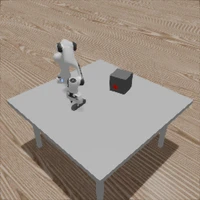
Data scaling and standardized evaluation benchmarks have driven significant advances in natural language processing and computer vision. However, robotics faces unique challenges in scaling data and establishing evaluation protocols. Collecting real-world data is resource-intensive and inefficient, while benchmarking in real-world scenarios remains highly complex. Synthetic data and simulation offer promising alternatives, yet existing efforts often fall short in data quality, diversity, and benchmark standardization. To address these challenges, we introduce RoboVerse, a comprehensive framework comprising a simulation platform, a synthetic dataset, and unified benchmarks. Our simulation platform supports multiple simulators and robotic embodiments, enabling seamless transitions between different environments. The synthetic dataset, featuring high-fidelity physics and photorealistic rendering, is constructed through multiple approaches. Additionally, we propose unified benchmarks for imitation learning and reinforcement learning, enabling evaluation across different levels of generalization. At the core of the simulation platform is MetaSim, an infrastructure that abstracts diverse simulation environments into a universal interface. It restructures existing simulation environments into a simulator-agnostic configuration system, as well as an API aligning different simulator functionalities, such as launching simulation environments, loading assets with initial states, stepping the physics engine, etc. This abstraction ensures interoperability and extensibility. Comprehensive experiments demonstrate that RoboVerse enhances the performance of imitation learning, reinforcement learning, world model learning, and sim-to-real transfer. These results validate the reliability of our dataset and benchmarks, establishing RoboVerse as a robust solution for advancing robot learning.
  • 37 authors
·
Apr 26, 2025 2

Auto-Formulating Dynamic Programming Problems with Large Language Models

Dynamic programming (DP) is a fundamental method in operations research, but formulating DP models has traditionally required expert knowledge of both the problem context and DP techniques. Large Language Models (LLMs) offer the potential to automate this process. However, DP problems pose unique challenges due to their inherently stochastic transitions and the limited availability of training data. These factors make it difficult to directly apply existing LLM-based models or frameworks developed for other optimization problems, such as linear or integer programming. We introduce DP-Bench, the first benchmark covering a wide range of textbook-level DP problems to enable systematic evaluation. We present Dynamic Programming Language Model (DPLM), a 7B-parameter specialized model that achieves performance comparable to state-of-the-art LLMs like OpenAI's o1 and DeepSeek-R1, and surpasses them on hard problems. Central to DPLM's effectiveness is DualReflect, our novel synthetic data generation pipeline, designed to scale up training data from a limited set of initial examples. DualReflect combines forward generation for diversity and backward generation for reliability. Our results reveal a key insight: backward generation is favored in low-data regimes for its strong correctness guarantees, while forward generation, though lacking such guarantees, becomes increasingly valuable at scale for introducing diverse formulations. This trade-off highlights the complementary strengths of both approaches and the importance of combining them.

  • 6 authors
·
Mar 31

Telecom World Models: Unifying Digital Twins, Foundation Models, and Predictive Planning for 6G

The integration of machine learning tools into telecom networks, has led to two prevailing paradigms, namely, language-based systems, such as Large Language Models (LLMs), and physics-based systems, such as Digital Twins (DTs). While LLM-based approaches enable flexible interaction and automation, they lack explicit representations of network dynamics. DTs, in contrast, offer a high-fidelity network simulation, but remain scenario-specific and are not designed for learning or decision-making under uncertainty. This gap becomes critical for 6G systems, where decisions must take into account the evolving network states, uncertainty, and the cascading effects of control actions across multiple layers. In this article, we introduce the {Telecom World Model}~(TWM) concept, an architecture for learned, action-conditioned, uncertainty-aware modeling of telecom system dynamics. We decompose the problem into two interacting worlds, a controllable system world consisting of operator-configurable settings and an external world that captures propagation, mobility, traffic, and failures. We propose a three-layer architecture, comprising a field world model for spatial environment prediction, a control/dynamics world model for action-conditioned Key Performance Indicator (KPI) trajectory prediction, and a telecom foundation model layer for intent translation and orchestration. We showcase a comparative analysis between existing paradigms, which demonstrates that TWM jointly provides telecom state grounding, fast action-conditioned roll-outs, calibrated uncertainty, multi-timescale dynamics, model-based planning, and LLM-integrated guardrails. Furthermore, we present a proof-of-concept on network slicing to validate the proposed architecture, showing that the full three-layer pipeline outperforms single-world baselines and accurately predicts KPI trajectories.

  • 18 authors
·
Apr 7

PsyBer-Agent: A Psychology-Driven User Agent for Recommender Systems

Evaluating recommender systems before deployment requires simulators that remain realistic over long, closed-loop interaction cycles. Current LLM-based agents generally function as surface imitators that generate realistic short-term responses but fail to capture the underlying user dynamics such as fatigue, affect, and shifting preferences. We propose PsyBer-Agent, a psychology-inspired simulator that models these dynamics through its Psy-Engine. This engine represents each user with three evolving, model-defined latent states. To calibrate simulated behavior against real interaction logs, we align log-conditioned reference trajectories with simulator-generated latent-state trajectories via Unbalanced Gromov--Wasserstein optimal transport. This approach provides structured supervision for a lightweight policy without the computational burden of fine-tuning the backbone LLM. We also introduce WebSim and the PsyBer Benchmark, which encompass multimodal scenarios and seven recommender backbones. Our framework evaluates behavioral fidelity, latent-state consistency, robustness, and responses to social-cue perturbations. On the tested horizons, PsyBer-Agent shows lower behavioral discrepancy than the prompt-only simulators while maintaining stable performance under large-scale concurrent simulation for up to 5M queued simulation tasks under bounded concurrency. Code is available in the supplementary material and at: PsyBer-Agent: https://anonymous.4open.science/r/CC66F/, WebSim Platform: https://anonymous.4open.science/r/D8EAX/.

TIC-VLA: A Think-in-Control Vision-Language-Action Model for Robot Navigation in Dynamic Environments

Robots in dynamic, human-centric environments must follow language instructions while maintaining real-time reactive control. Vision-language-action (VLA) models offer a promising framework, but they assume temporally aligned reasoning and control, despite semantic inference being inherently delayed relative to real-time action. We introduce Think-in-Control (TIC)-VLA, a latency-aware framework that explicitly models delayed semantic reasoning during action generation. TIC-VLA defines a delayed semantic-control interface that conditions action generation on delayed vision-language semantic states and explicit latency metadata, in addition to current observations, enabling policies to compensate for asynchronous reasoning. We further propose a latency-consistent training pipeline that injects reasoning inference delays during imitation learning and online reinforcement learning, aligning training with asynchronous deployment. To support realistic evaluation, we present DynaNav, a physics-accurate, photo-realistic simulation suite for language-guided navigation in dynamic environments. Extensive experiments in simulation and on a real robot show that TIC-VLA consistently outperforms prior VLA models while maintaining robust real-time control under multi-second reasoning latency. Project website: https://ucla-mobility.github.io/TIC-VLA/

DynamicScaler: Seamless and Scalable Video Generation for Panoramic Scenes

The increasing demand for immersive AR/VR applications and spatial intelligence has heightened the need to generate high-quality scene-level and 360{\deg} panoramic video. However, most video diffusion models are constrained by limited resolution and aspect ratio, which restricts their applicability to scene-level dynamic content synthesis. In this work, we propose the DynamicScaler, addressing these challenges by enabling spatially scalable and panoramic dynamic scene synthesis that preserves coherence across panoramic scenes of arbitrary size. Specifically, we introduce a Offset Shifting Denoiser, facilitating efficient, synchronous, and coherent denoising panoramic dynamic scenes via a diffusion model with fixed resolution through a seamless rotating Window, which ensures seamless boundary transitions and consistency across the entire panoramic space, accommodating varying resolutions and aspect ratios. Additionally, we employ a Global Motion Guidance mechanism to ensure both local detail fidelity and global motion continuity. Extensive experiments demonstrate our method achieves superior content and motion quality in panoramic scene-level video generation, offering a training-free, efficient, and scalable solution for immersive dynamic scene creation with constant VRAM consumption regardless of the output video resolution. Our project page is available at https://dynamic-scaler.pages.dev/.

  • 4 authors
·
Dec 15, 2024 3

HyperBones: Realtime Bone-driven Neural Garment Simulation with Hypernetwork Conditioning

Recent advances in garment simulation have brought high-quality results closer to real-time performance. Physics-based simulators can produce accurate motion, but remain too computationally expensive for interactive applications. In contrast, linear blend skinning is efficient, but cannot capture the complex dynamics of loose-fitting garments, often leading to unrealistic motion and visual artifacts. Neural methods offer a promising alternative, yet they still struggle to animate loose clothing plausibly under strict runtime constraints. We present a fast and physically plausible approach for dynamic garment simulation. Our method trains a reduced-space neural dynamics simulator composed of independent coarse- and fine-level components. At the coarse level, the garment is driven by a set of virtual bones integrated with a lightweight neural network. Fine-scale wrinkle details are then recovered using a trained convolutional neural map. By decoupling identity-specific computation from real-time neural integration, our architecture maintains high performance while supporting diverse body shapes and motions. We further introduce an effective physics-supervision scheme that enables accurate results without relying on an external simulator. Experiments show that our method produces physically plausible garment dynamics, generalizes across a range of motions and body shapes, and supports a fixed set of garments. Our simulator runs at 300+ FPS on a commodity GPU, making it suitable for real-time applications.

  • 12 authors
·
May 27

ASID: Active Exploration for System Identification in Robotic Manipulation

Model-free control strategies such as reinforcement learning have shown the ability to learn control strategies without requiring an accurate model or simulator of the world. While this is appealing due to the lack of modeling requirements, such methods can be sample inefficient, making them impractical in many real-world domains. On the other hand, model-based control techniques leveraging accurate simulators can circumvent these challenges and use a large amount of cheap simulation data to learn controllers that can effectively transfer to the real world. The challenge with such model-based techniques is the requirement for an extremely accurate simulation, requiring both the specification of appropriate simulation assets and physical parameters. This requires considerable human effort to design for every environment being considered. In this work, we propose a learning system that can leverage a small amount of real-world data to autonomously refine a simulation model and then plan an accurate control strategy that can be deployed in the real world. Our approach critically relies on utilizing an initial (possibly inaccurate) simulator to design effective exploration policies that, when deployed in the real world, collect high-quality data. We demonstrate the efficacy of this paradigm in identifying articulation, mass, and other physical parameters in several challenging robotic manipulation tasks, and illustrate that only a small amount of real-world data can allow for effective sim-to-real transfer. Project website at https://weirdlabuw.github.io/asid

  • 6 authors
·
Apr 18, 2024

Learning the Right Abstraction: Neural Reduced Dynamics for Complex Robot Control

High-fidelity embodied AI simulators provide realistic evaluation of complex robotic systems, but their computational cost limits their direct use for large-scale reinforcement learning campaigns. We advocate the use of less accurate but more expeditious simulations, which might draw on data-driven, e.g., neural dynamics, models. This contribution argues that the practical value of a neural dynamics model for complex robot control lies in learning the right abstraction: a reduced state that preserves the control-relevant physics of the high-fidelity system while enabling high-throughput policy learning. We develop a neural reduced dynamics (NRD) framework that separates the state the model propagates from what can be supplied as an input or recovered analytically, trains policies entirely inside the frozen learned model, and validates them back in the high-fidelity simulator. Two case studies instantiate it across three control tasks: terrain-aware HMMWV trajectory tracking on rigid, bumpy and deformable Continuum Representation Model (CRM) terrain; and goal reaching for a stock tracked vehicle and its front-mounted articulated arm. Every policy transfers back to the high-fidelity simulator. A single policy trained inside the terrain-conditioned dynamics model, and given no terrain input of its own, attains lower median and mean tracking error than both single-terrain specialists on all three terrains, including zero-shot bumpy terrain. Quantitatively, the tracked vehicle reaches 100 of 100 goals and the arm 97 of 100, with zero contacts or joint-limit violations. The NRD models advance roughly four orders of magnitude faster in simulated time than the high-fidelity simulator scenes they replace, making iterative on-policy learning practical and supporting neural reduced dynamics as a bridge between accurate but expensive physics simulation and scalable robot learning.

  • 2 authors
·
Aug 18

DynamicVerse: A Physically-Aware Multimodal Framework for 4D World Modeling

Understanding the dynamic physical world, characterized by its evolving 3D structure, real-world motion, and semantic content with textual descriptions, is crucial for human-agent interaction and enables embodied agents to perceive and act within real environments with human-like capabilities. However, existing datasets are often derived from limited simulators or utilize traditional Structurefrom-Motion for up-to-scale annotation and offer limited descriptive captioning, which restricts the capacity of foundation models to accurately interpret real-world dynamics from monocular videos, commonly sourced from the internet. To bridge these gaps, we introduce DynamicVerse, a physical-scale, multimodal 4D world modeling framework for dynamic real-world video. We employ large vision, geometric, and multimodal models to interpret metric-scale static geometry, real-world dynamic motion, instance-level masks, and holistic descriptive captions. By integrating window-based Bundle Adjustment with global optimization, our method converts long real-world video sequences into a comprehensive 4D multimodal format. DynamicVerse delivers a large-scale dataset consisting of 100K+ videos with 800K+ annotated masks and 10M+ frames from internet videos. Experimental evaluations on three benchmark tasks, namely video depth estimation, camera pose estimation, and camera intrinsics estimation, demonstrate that our 4D modeling achieves superior performance in capturing physical-scale measurements with greater global accuracy than existing methods.

Dynamics-X Dynamics-X
·
Dec 2, 2025 3

Fire Together Wire Together: A Dynamic Pruning Approach with Self-Supervised Mask Prediction

Dynamic model pruning is a recent direction that allows for the inference of a different sub-network for each input sample during deployment. However, current dynamic methods rely on learning a continuous channel gating through regularization by inducing sparsity loss. This formulation introduces complexity in balancing different losses (e.g task loss, regularization loss). In addition, regularization based methods lack transparent tradeoff hyperparameter selection to realize a computational budget. Our contribution is two-fold: 1) decoupled task and pruning losses. 2) Simple hyperparameter selection that enables FLOPs reduction estimation before training. Inspired by the Hebbian theory in Neuroscience: "neurons that fire together wire together", we propose to predict a mask to process k filters in a layer based on the activation of its previous layer. We pose the problem as a self-supervised binary classification problem. Each mask predictor module is trained to predict if the log-likelihood for each filter in the current layer belongs to the top-k activated filters. The value k is dynamically estimated for each input based on a novel criterion using the mass of heatmaps. We show experiments on several neural architectures, such as VGG, ResNet and MobileNet on CIFAR and ImageNet datasets. On CIFAR, we reach similar accuracy to SOTA methods with 15% and 24% higher FLOPs reduction. Similarly in ImageNet, we achieve lower drop in accuracy with up to 13% improvement in FLOPs reduction.

  • 4 authors
·
Oct 15, 2021

NeuROK: Generative 4D Neural Object Kinematics

Data-driven approaches have revolutionized 3D vision, enabling transformers to effectively reconstruct and generate static 3D objects. However, generating simulative 4D dynamics -- realistic temporal deformations of static objects under various physical conditions -- remains challenging and often ad hoc, despite its importance in building comprehensive 3D world models. Most existing methods assume a predefined physical model and use system identification to estimate parameters, restricting these methods to specific categories and small-scale datasets. We propose that these restrictions can be overcome by learning a data-driven kinematic state parameterization for object-centric physical systems. Specifically, we learn both a latent space representing all possible states of the object and a decoder that maps any sampled latent to a plausibly deformed shape of the object. We refer to this parameterization as Neural Object Kinematics (NeuROK), and learn a transformer-based encoder-decoder model on a curated large-scale 4D dataset. This formulation and the learned model significantly simplify the generation of simulative dynamics since we only need to consider the dynamics within a low-dimensional latent space from the Lagrangian mechanics' perspective in classical physics. We demonstrate the effectiveness and generality of this neural simulation framework across diverse dynamic object types, showing clear advantages over prior works. Project page: https://chen-geng.com/neurok

  • 6 authors
·
May 27 2

DADP: Domain Adaptive Diffusion Policy

Learning domain adaptive policies that can generalize to unseen transition dynamics, remains a fundamental challenge in learning-based control. Substantial progress has been made through domain representation learning to capture domain-specific information, thus enabling domain-aware decision making. We analyze the process of learning domain representations through dynamical prediction and find that selecting contexts adjacent to the current step causes the learned representations to entangle static domain information with varying dynamical properties. Such mixture can confuse the conditioned policy, thereby constraining zero-shot adaptation. To tackle the challenge, we propose DADP (Domain Adaptive Diffusion Policy), which achieves robust adaptation through unsupervised disentanglement and domain-aware diffusion injection. First, we introduce Lagged Context Dynamical Prediction, a strategy that conditions future state estimation on a historical offset context; by increasing this temporal gap, we unsupervisedly disentangle static domain representations by filtering out transient properties. Second, we integrate the learned domain representations directly into the generative process by biasing the prior distribution and reformulating the diffusion target. Extensive experiments on challenging benchmarks across locomotion and manipulation demonstrate the superior performance, and the generalizability of DADP over prior methods. More visualization results are available on the https://outsider86.github.io/DomainAdaptiveDiffusionPolicy/.

  • 7 authors
·
Jun 16

LatticeWorld: A Multimodal Large Language Model-Empowered Framework for Interactive Complex World Generation

Recent research has been increasingly focusing on developing 3D world models that simulate complex real-world scenarios. World models have found broad applications across various domains, including embodied AI, autonomous driving, entertainment, etc. A more realistic simulation with accurate physics will effectively narrow the sim-to-real gap and allow us to gather rich information about the real world conveniently. While traditional manual modeling has enabled the creation of virtual 3D scenes, modern approaches have leveraged advanced machine learning algorithms for 3D world generation, with most recent advances focusing on generative methods that can create virtual worlds based on user instructions. This work explores such a research direction by proposing LatticeWorld, a simple yet effective 3D world generation framework that streamlines the industrial production pipeline of 3D environments. LatticeWorld leverages lightweight LLMs (LLaMA-2-7B) alongside the industry-grade rendering engine (e.g., Unreal Engine 5) to generate a dynamic environment. Our proposed framework accepts textual descriptions and visual instructions as multimodal inputs and creates large-scale 3D interactive worlds with dynamic agents, featuring competitive multi-agent interaction, high-fidelity physics simulation, and real-time rendering. We conduct comprehensive experiments to evaluate LatticeWorld, showing that it achieves superior accuracy in scene layout generation and visual fidelity. Moreover, LatticeWorld achieves over a 90times increase in industrial production efficiency while maintaining high creative quality compared with traditional manual production methods. Our demo video is available at https://youtu.be/8VWZXpERR18

  • 10 authors
·
Sep 5, 2025 3

COPlanner: Plan to Roll Out Conservatively but to Explore Optimistically for Model-Based RL

Dyna-style model-based reinforcement learning contains two phases: model rollouts to generate sample for policy learning and real environment exploration using current policy for dynamics model learning. However, due to the complex real-world environment, it is inevitable to learn an imperfect dynamics model with model prediction error, which can further mislead policy learning and result in sub-optimal solutions. In this paper, we propose COPlanner, a planning-driven framework for model-based methods to address the inaccurately learned dynamics model problem with conservative model rollouts and optimistic environment exploration. COPlanner leverages an uncertainty-aware policy-guided model predictive control (UP-MPC) component to plan for multi-step uncertainty estimation. This estimated uncertainty then serves as a penalty during model rollouts and as a bonus during real environment exploration respectively, to choose actions. Consequently, COPlanner can avoid model uncertain regions through conservative model rollouts, thereby alleviating the influence of model error. Simultaneously, it explores high-reward model uncertain regions to reduce model error actively through optimistic real environment exploration. COPlanner is a plug-and-play framework that can be applied to any dyna-style model-based methods. Experimental results on a series of proprioceptive and visual continuous control tasks demonstrate that both sample efficiency and asymptotic performance of strong model-based methods are significantly improved combined with COPlanner.

  • 7 authors
·
Oct 11, 2023

Efficient Prompting via Dynamic In-Context Learning

The primary way of building AI applications is shifting from training specialist models to prompting generalist models. A common practice for prompting generalist models, often referred to as in-context learning, is to append a few examples (demonstrations) to the prompt to help the model better understand the task. While effective, in-context learning can be inefficient because it makes the input prompt much longer, consuming valuable space in the context window and leading to larger computational costs. In this paper, we propose DynaICL, a recipe for efficient prompting with black-box generalist models that dynamically allocate in-context examples according to the input complexity and the computational budget. To achieve this, we train a meta controller that predicts the number of in-context examples suitable for the generalist model to make a good prediction based on the performance-efficiency trade-off for a specific input. We then dynamically allocate the number of demonstrations for an input according to predictions from the meta controller and the given computation budget. Experimental results show that dynamic example allocation helps achieve a better performance-efficiency trade-off in two practical settings where computational resources or the required performance is constrained. Specifically, DynaICL saves up to 46% token budget compared to the common practice that allocates the same number of in-context examples to each input. We also find that a meta controller trained on a certain backbone model and tasks can successfully generalize to unseen models and tasks.

  • 4 authors
·
May 18, 2023

4LC: 4D Latent Cache for Efficient Conditioning in Dynamic World Modeling

For video generation in dynamic world modeling, observed static and dynamic content should be efficiently reused to provide conditions for repeated generation at different times and viewpoints. We introduce 4LC, a 4D latent cache with composite visual representations and a flexible spatiotemporal access interface. As a latent cache, 4LC directly reuses visual representations of static and dynamic content to provide generation conditions, avoiding per-request RGB rendering and re-encoding. As a composite cache, 4LC binds visual representations from multiple visual encoders (e.g., VAE, DINO, V-JEPA, VGGT) to shared geometry and motion, allowing the composite representations to describe the dynamic world with rich information. Besides, we design a flexible spatiotemporal interface, which directly reads the cache at independently specified times and viewpoints and combines readouts across observations, providing a common conditioning format for diverse downstream tasks. Building on 4LC, we develop 4LC-Video to address multiple video generation tasks through different configurations of source observations, spatiotemporal requests, and historical reuse, including camera control, temporal control, novel-view synthesis, scene revisits, and long-term generation. Our experiments show more efficient condition acquisition, effective spatiotemporal controllability, and scene consistency across tasks using a single 4LC-Video model without task-specific fine-tuning.

TurtleBench: Evaluating Top Language Models via Real-World Yes/No Puzzles

As the application of Large Language Models (LLMs) expands, the demand for reliable evaluations increases. Existing LLM evaluation benchmarks primarily rely on static datasets, making it challenging to assess model performance in dynamic interactions with users. Moreover, these benchmarks often depend on specific background knowledge, complicating the measurement of a model's logical reasoning capabilities. Other dynamic evaluation methods based on strong models or manual efforts may introduce biases and incur high costs and time demands, hindering large-scale application. To address these issues, we propose TurtleBench. TurtleBench collects real user guesses from our online Turtle Soup Puzzle platform that we developed. This approach allows for the relatively dynamic generation of evaluation datasets, mitigating the risk of model cheating while aligning assessments more closely with genuine user needs for reasoning capabilities, thus enhancing the reliability of evaluations. TurtleBench includes 1,532 user guesses along with the correctness of guesses after annotation. Using this dataset, we thoroughly evaluated nine of the most advanced LLMs available today. Notably, the OpenAI o1 series models did not achieve leading results in these evaluations. We propose several hypotheses for further research, such as "the latent reasoning of o1 utilizes trivial Chain-of-Thought (CoT) techniques" and "increasing CoT length not only provides reasoning benefits but also incurs noise costs."

  • 8 authors
·
Oct 7, 2024 2

OmniSimulator: Aligning Small Language Models for Authentic Heterogeneous Behavior Modeling

Large language models (LLMs) have shown great potential as general-purpose user simulators for interactive systems. Prior studies have demonstrated that training on high-quality data can substantially improve model reasoning and downstream task performance. However, the upper bound of user simulation is still constrained by the model's reasoning paradigm: native chain-of-thought often degenerates into shallow pattern matching and fails to adequately model the behavioral factors underlying real user decisions. In this paper, we propose OmniSimulator, a novel training framework designed to improve the predictive ability of small LLMs for realistic user simulation on short-video platform environments. Specifically, OmniSimulator organizes behavior-oriented reasoning through a structured schema with five dimensions, carefully selects data from real user-behavior scenarios, and introduces a teacher model to generate high-quality reasoning traces under the proposed schema, helping small models learn behavior-relevant reasoning patterns rather than relying on superficial behavioral correlations. Based on this process, we construct 9,881 high-quality training instances from three months of historical interaction trajectories of 200 real users, averaging about 50 distilled examples per user. Experimental results show that OmniSimulator improves the average score of Qwen3-8B by 34.33%, achieves performance competitive with Claude-Sonnet-4.5, and supports smaller-scale, self-hosted deployment. These results suggest that learning structured behavior-oriented reasoning patterns is a promising direction towards scalable and high-fidelity LLM-based user simulation.

  • 15 authors
·
Oct 20

DynamicVis: An Efficient and General Visual Foundation Model for Remote Sensing Image Understanding

The advancement of remote sensing technology has improved the spatial resolution of satellite imagery, facilitating more detailed visual representations for diverse interpretations. However, existing methods exhibit limited generalization capabilities across varied applications. While some contemporary foundation models demonstrate potential, they are hindered by insufficient cross-task adaptability and primarily process low-resolution imagery of restricted sizes, thus failing to fully exploit high-resolution data or leverage comprehensive large-scene semantics. Crucially, remote sensing imagery differs fundamentally from natural images, as key foreground targets (eg., maritime objects, artificial structures) often occupy minimal spatial proportions (~1%) and exhibit sparse distributions. Efficiently modeling cross-task generalizable knowledge from lengthy 2D tokens (~100,000) poses a significant challenge yet remains critical for remote sensing image understanding. Motivated by the selective attention mechanisms inherent to the human visual system, we propose DynamicVis, a dynamic visual perception foundation model for remote sensing imagery. The framework integrates a novel dynamic region perception backbone based on the selective state space model, which strategically balances localized detail extraction with global contextual integration, enabling computationally efficient encoding of large-scale data while maintaining architectural scalability. To enhance cross-task knowledge transferring, we introduce a multi-instance learning paradigm utilizing meta-embedding representations, trained on million-scale region-level annotations. Evaluations across nine downstream tasks demonstrate the model's versatility. DynamicVis achieves multi-level feature modeling with exceptional efficiency, processing (2048x2048) pixels with 97 ms latency (6% of ViT's) and 833 MB GPU memory (3% of ViT's).

  • 6 authors
·
Mar 20, 2025 2

The Predicted-Updates Dynamic Model: Offline, Incremental, and Decremental to Fully Dynamic Transformations

We formulate the predicted-updates dynamic model, one of the first beyond-worst-case models for dynamic algorithms, which generalizes a large set of well-studied dynamic models including the offline dynamic, incremental, and decremental models to the fully dynamic setting when given predictions about the update times of the elements. In the most basic form of our model, we receive a set of predicted update times for all of the updates that occur over the event horizon. We give a novel framework that "lifts" offline divide-and-conquer algorithms into the fully dynamic setting with little overhead. Using this, we are able to interpolate between the offline and fully dynamic settings; when the ell_1 error of the prediction is linear in the number of updates, we achieve the offline runtime of the algorithm (up to poly log n factors). Provided a fully dynamic backstop algorithm, our algorithm will never do worse than the backstop algorithm regardless of the prediction error. Furthermore, our framework achieves a smooth linear trade-off between ell_1 error in the predictions and runtime. These correspond to the desiderata of consistency, robustness, and graceful degradation of the algorithms-with-predictions literature. We further extend our techniques to incremental and decremental settings, transforming algorithms in these settings when given predictions of only the deletion and insertion times, respectively. Our framework is general, and we apply it to obtain improved efficiency bounds over the state-of-the-art dynamic algorithms for a variety of problems including triconnectivity, planar digraph all pairs shortest paths, k-edge connectivity, and others, for prediction error of reasonable magnitude.

  • 2 authors
·
Jul 17, 2023

CyberArena: Benchmarking AI Agents in Live Symmetric Attack-and-Defense Combat

AI agents are demonstrating increasingly strong offensive and defensive cybersecurity capabilities in the real world. Current benchmarks mostly evaluate agents in isolation against static targets. Real cyber operations, however, are dynamic and coupled: security postures constantly change as attackers and defenders adapt to each other in real time. Static benchmarks quickly saturate and miss an agent's ability to attack and defend simultaneously under live pressure. To address this gap, we present CyberArena, a dynamic, symmetric adversarial benchmark built around multi-round attack-and-defense combat. In isolated sandboxes, two agents compete under identical rules, acting concurrently as both attackers and defenders over continuously changing services. This converts static targets into evolving, semi-open challenges, directly testing an agent's speed and precision in discovering, exploiting, and patching vulnerabilities. To sustain the benchmark's longevity, an automated agentic pipeline continuously generates, reviews, and validates new environments. Furthermore, because pairwise contests are notoriously hard to quantify, we introduce a dynamical model that maps match dynamics into unified, multidimensional scores across offensive, defensive, and domain-specific capabilities. Evaluating 12 frontier LLM agents across 40 challenges in 466 matches, CyberArena separates model capabilities where single-agent baselines hit a ceiling. The trajectories read like a fight rather than an exam: defenders patch one hole and miss the next and certify repairs on stale evidence, while capable agents think a move ahead, planting backdoors for later rounds and, in one case, writing their own packet sniffer to watch the opponent. Beyond a benchmark, CyberArena serves as an adaptable, scalable experimental platform for future research on cybersecurity agents.

2077AIDataFoundation 2077AI
·
Oct 13 2

FlickerFusion: Intra-trajectory Domain Generalizing Multi-Agent RL

Multi-agent reinforcement learning has demonstrated significant potential in addressing complex cooperative tasks across various real-world applications. However, existing MARL approaches often rely on the restrictive assumption that the number of entities (e.g., agents, obstacles) remains constant between training and inference. This overlooks scenarios where entities are dynamically removed or added during the inference trajectory -- a common occurrence in real-world environments like search and rescue missions and dynamic combat situations. In this paper, we tackle the challenge of intra-trajectory dynamic entity composition under zero-shot out-of-domain (OOD) generalization, where such dynamic changes cannot be anticipated beforehand. Our empirical studies reveal that existing MARL methods suffer significant performance degradation and increased uncertainty in these scenarios. In response, we propose FlickerFusion, a novel OOD generalization method that acts as a universally applicable augmentation technique for MARL backbone methods. FlickerFusion stochastically drops out parts of the observation space, emulating being in-domain when inferenced OOD. The results show that FlickerFusion not only achieves superior inference rewards but also uniquely reduces uncertainty vis-\`a-vis the backbone, compared to existing methods. Benchmarks, implementations, and model weights are organized and open-sourced at flickerfusion305.github.io, accompanied by ample demo video renderings.

  • 8 authors
·
Oct 21, 2024

When Neural Code Completion Models Size up the Situation: Attaining Cheaper and Faster Completion through Dynamic Model Inference

Leveraging recent advancements in large language models, modern neural code completion models have demonstrated the capability to generate highly accurate code suggestions. However, their massive size poses challenges in terms of computational costs and environmental impact, hindering their widespread adoption in practical scenarios. Dynamic inference emerges as a promising solution, as it allocates minimal computation during inference while maintaining the model's performance. In this research, we explore dynamic inference within the context of code completion. Initially, we conducted an empirical investigation on GPT-2, focusing on the inference capabilities of intermediate layers for code completion. We found that 54.4% of tokens can be accurately generated using just the first layer, signifying significant computational savings potential. Moreover, despite using all layers, the model still fails to predict 14.5% of tokens correctly, and the subsequent completions continued from them are rarely considered helpful, with only a 4.2% Acceptance Rate. These findings motivate our exploration of dynamic inference in code completion and inspire us to enhance it with a decision-making mechanism that stops the generation of incorrect code. We thus propose a novel dynamic inference method specifically tailored for code completion models. This method aims not only to produce correct predictions with largely reduced computation but also to prevent incorrect predictions proactively. Our extensive evaluation shows that it can averagely skip 1.7 layers out of 16 layers in the models, leading to an 11.2% speedup with only a marginal 1.1% reduction in ROUGE-L.

  • 5 authors
·
Jan 18, 2024

Cloud-Edge Training Architecture for Sim-to-Real Deep Reinforcement Learning

Deep reinforcement learning (DRL) is a promising approach to solve complex control tasks by learning policies through interactions with the environment. However, the training of DRL policies requires large amounts of training experiences, making it impractical to learn the policy directly on physical systems. Sim-to-real approaches leverage simulations to pretrain DRL policies and then deploy them in the real world. Unfortunately, the direct real-world deployment of pretrained policies usually suffers from performance deterioration due to the different dynamics, known as the reality gap. Recent sim-to-real methods, such as domain randomization and domain adaptation, focus on improving the robustness of the pretrained agents. Nevertheless, the simulation-trained policies often need to be tuned with real-world data to reach optimal performance, which is challenging due to the high cost of real-world samples. This work proposes a distributed cloud-edge architecture to train DRL agents in the real world in real-time. In the architecture, the inference and training are assigned to the edge and cloud, separating the real-time control loop from the computationally expensive training loop. To overcome the reality gap, our architecture exploits sim-to-real transfer strategies to continue the training of simulation-pretrained agents on a physical system. We demonstrate its applicability on a physical inverted-pendulum control system, analyzing critical parameters. The real-world experiments show that our architecture can adapt the pretrained DRL agents to unseen dynamics consistently and efficiently.

  • 4 authors
·
Jul 27, 2022

Forecasting from Counterfactual Simulator Rollouts: A Sim2Real Evaluation

Deploying a new decision policy creates a cold-start problem for prediction models whose targets depend on the policy's actions: historical observations reflect earlier policies, while real observations under the new policy are not yet available. Simulation offers a way to address this gap by rolling out the target policy across counterfactual scenarios and using the resulting trajectories to learn how the system responds to those controls. The simulation-to-reality (Sim2Real) transfer of this simulator-trained model can then be backtested by evaluating it against real observations from past deployments. Using two real-world inventory-control deployments, we evaluate this process from three angles: simulator fidelity, zero-shot transfer to real behavior, and adaptation as real target-policy observations accumulate. The simulator-trained forecaster achieves lower point-estimate mean absolute percentage error (MAPE) than the same architecture trained on historical real data, reducing MAPE by 1.2-3.1 percentage points in Study 1 and 12.5-18.7 points in Study 2. After deployment, lightweight calibration using early real observations further reduces error by up to 2.5 percentage points. These results provide empirical evidence that simulator-generated counterfactual data can support cold-start forecasting under a new policy, and the resulting model can be further refined as real deployment data become available.

  • 5 authors
·
Oct 1

LLMServingSim 2.0: A Unified Simulator for Heterogeneous and Disaggregated LLM Serving Infrastructure

Large language model (LLM) serving infrastructures are undergoing a shift toward heterogeneity and disaggregation. Modern deployments increasingly integrate diverse accelerators and near-memory processing technologies, introducing significant hardware heterogeneity, while system software increasingly separates computation, memory, and model components across distributed resources to improve scalability and efficiency. As a result, LLM serving performance is no longer determined by hardware or software choices in isolation, but by their runtime interaction through scheduling, data movement, and interconnect behavior. However, understanding these interactions remains challenging, as existing simulators lack the ability to jointly model heterogeneous hardware and disaggregated serving techniques within a unified, runtime-driven framework. This paper presents LLMServingSim 2.0, a unified system-level simulator designed to make runtime-driven hardware-software interactions in heterogeneous and disaggregated LLM serving infrastructures explicit and analyzable. LLMServingSim 2.0 embeds serving decisions and hardware behavior into a single runtime loop, enabling interaction-aware modeling of batching, routing, offloading, memory, and power. The simulator supports extensible integration of emerging accelerators and memory systems through profile-based modeling, while capturing dynamic serving behavior and system-level effects. We validate LLMServingSim 2.0 against real deployments, showing that it reproduces key performance, memory, and power metrics with an average error of 0.95%, while maintaining simulation times of around 10 minutes even for complex configurations. These results demonstrate that LLMServingSim 2.0 provides a practical bridge between hardware innovation and serving-system design, enabling systematic exploration and co-design for next-generation LLM serving infrastructures.

  • 4 authors
·
Feb 26

Experiments with Large Language Models on Retrieval-Augmented Generation for Closed-Source Simulation Software

Large Language Models (LLMs) are increasingly helpful in text generation, even writing code in programming languages based on user prompts written in natural language. They are even applied to generate simulation models for multibody systems from natural language. Research results suggest that LLMs surpass the mere replication of existing code examples, where some LLMs have been trained on an open-source multibody simulation code. However, for closed-source simulation software, such results are not to be expected as their ideas and concepts might differ from other publicly available ones. LLMs can hallucinate for knowledge-intensive tasks, such as model creation, which can lead to wrong responses. This is especially the case for the LLM unknown closed-source simulation software. The same applies to other internal knowledge kept private to protect intellectual property or data privacy. The Retrieval-Augmented Generation (RAG) approach might yield a solution for these knowledge-intensive tasks. This paper explores the application of RAG to closed-source simulation software and presents first experiments. After a brief introduction to LLMs, the RAG approach, and the simulation method applied by the close-source simulation software, several examples are provided to test LLMs' knowledge of the simulation software and the creation of simulation models using two RAG systems. The examples show promising results indicating the benefits of applying RAG systems to closed-source simulation software, helping to access their knowledge. Nevertheless, they also reveal gaps in the applied information and open questions for further research.

  • 2 authors
·
Feb 6, 2025

One Model for All Tasks: Leveraging Efficient World Models in Multi-Task Planning

In heterogeneous multi-task decision-making, tasks not only exhibit diverse observation and action spaces but also vary substantially in their underlying complexities. While conventional multi-task world models like UniZero excel in single-task settings, we find that when handling a broad and diverse suite of tasks, gradient conflicts and the loss of model plasticity often constrain their sample efficiency. In this work, we address these challenges from two complementary perspectives: the single learning iteration and the overall learning process. First, to mitigate the gradient conflicts, we systematically investigate key architectural designs for extending UniZero. Our investigation identifies a Mixture-of-Experts (MoE) architecture as the most effective approach. We demonstrate, both theoretically and empirically, that this architecture alleviates gradient conflicts by routing task-specific representations to specialized sub-networks. This finding leads to our proposed model, ScaleZero. Second, to dynamically allocate model capacity throughout the learning process, we introduce an online Dynamic Parameter Scaling (DPS) strategy. This strategy progressively integrates LoRA adapters in response to task-specific progress, enabling adaptive knowledge retention and parameter expansion. Evaluations on a diverse set of standard benchmarks (Atari, DMC, Jericho) demonstrate that ScaleZero, utilizing solely online reinforcement learning with one model, performs on par with specialized single-task agents. With the DPS strategy, it remains competitive while using just 71.5% of the environment interactions. These findings underscore the potential of ScaleZero for effective multi-task planning. Our code is available at magenta{https://github.com/opendilab/LightZero}.

  • 6 authors
·
Sep 9, 2025

Multiplayer Interactive World Models with Representation Autoencoders

We introduce the first multiplayer world model for highly dynamic environments governed by complex physical interactions. Whereas single-player world models treat the other agents as part of the environment, ours conditions on the action streams of multiple agents, learning to attribute changes in the scene to the correct player and to stay coherent under arbitrary combinations of their actions. We study this problem in the game of Rocket League, where players compete and cooperate under fast, tightly coupled dynamics. Trained on 10,000 hours of gameplay collected with publicly available bots, our 5-billion-parameter latent diffusion model generates four-player matches in real time, producing 20 frames per second on a single Nvidia B200 GPU. Although trained only on short clips, its rollouts stay stable far beyond the training horizon: distributional quality holds steady out to five minutes, the longest horizon we measure, and in practice we observe rollouts continuing for hours with no sign of collapse. We systematically investigate the central design choices: the video codec, the generative objective, and the multiplayer conditioning scheme. In addition, we characterize how behavior changes with model and data scale, including the capabilities that emerge and the failure modes that persist. We further develop targeted evaluations that probe the model's physical understanding rather than visual appearance alone. To support continued research on multiplayer world models, we release our dataset, our full training and inference codebase, and a live demo.

  • 27 authors
·
Jul 5 1

Data Agent: Learning to Select Data via End-to-End Dynamic Optimization

Dynamic Data selection aims to accelerate training by prioritizing informative samples during online training. However, existing methods typically rely on task-specific handcrafted metrics or static/snapshot-based criteria to estimate sample importance, limiting scalability across learning paradigms and making it difficult to capture the evolving utility of data throughout training. To address this challenge, we propose Data Agent, an end-to-end dynamic data selection framework that formulates data selection as a training-aware sequential decision-making problem. The agent learns a sample-wise selection policy that co-evolves with model optimization, guided by a composite reward that integrates loss-based difficulty and confidence-based uncertainty signals. The reward signals capture complementary objectives of optimization impact and information gain, together with a tuning-free adaptive weighting mechanism that balances these signals over training. Extensive experiments across a wide range of datasets and architectures demonstrate that Data Agent consistently accelerates training while preserving or improving performance, e.g., reducing costs by over 50\% on ImageNet-1k and MMLU with lossless performance. Moreover, its dataset-agnostic formulation and modular reward make it plug-and-play across tasks and scenarios, e.g., robustness to noisy datasets, highlighting its potential in real-world scenarios. Code is available at https://github.com/Jackbrocp/Data-Agent.

  • 8 authors
·
May 12

SOUS VIDE: Cooking Visual Drone Navigation Policies in a Gaussian Splatting Vacuum

We propose a new simulator, training approach, and policy architecture, collectively called SOUS VIDE, for end-to-end visual drone navigation. Our trained policies exhibit zero-shot sim-to-real transfer with robust real-world performance using only onboard perception and computation. Our simulator, called FiGS, couples a computationally simple drone dynamics model with a high visual fidelity Gaussian Splatting scene reconstruction. FiGS can quickly simulate drone flights producing photorealistic images at up to 130 fps. We use FiGS to collect 100k-300k image/state-action pairs from an expert MPC with privileged state and dynamics information, randomized over dynamics parameters and spatial disturbances. We then distill this expert MPC into an end-to-end visuomotor policy with a lightweight neural architecture, called SV-Net. SV-Net processes color image, optical flow and IMU data streams into low-level thrust and body rate commands at 20 Hz onboard a drone. Crucially, SV-Net includes a learned module for low-level control that adapts at runtime to variations in drone dynamics. In a campaign of 105 hardware experiments, we show SOUS VIDE policies to be robust to 30% mass variations, 40 m/s wind gusts, 60% changes in ambient brightness, shifting or removing objects from the scene, and people moving aggressively through the drone's visual field. Code, data, and experiment videos can be found on our project page: https://stanfordmsl.github.io/SousVide/.

  • 5 authors
·
Dec 20, 2024