
Spaces:
Configuration error

Hidden Bias in Race Purity Tests: Gender, Sexuality, and Social Class

Have you ever wondered what it truly means to be “pure”? The word sounds harmless, almost admirable. Yet, when purity is used to define people, it becomes a weapon. Race purity tests, both old and new, claim to reveal who we are and where we come from.
These tests don’t just talk about race. They quietly shape how society views gender, sexuality, and social class. Women were once seen as guardians of bloodlines, their freedom tied to racial “honor.”
Queer identities were erased, dismissed as threats to purity. It turned into a quiet barrier that determined who should be proud of their background and who shouldn't.
In this post, we’ll uncover the hidden biases within race purity tests, how they shape our views of gender, sexuality, and social class, and why understanding them is the first step toward breaking free from the illusion of purity itself.
Quick Overview of the Race Purity Test
A race purity test is an idea or practice that tries to measure how “pure” a person’s racial background is.
In the past, these tests were often used to divide people, control marriages, or prove the superiority of one group over another. They were based on prejudiced and false beliefs that some races were superior or more "pure" than others.
In truth, race purity tests have no scientific basis. Human DNA is deeply mixed and shared across all populations. These tests mainly reflect social and political biases, not biological facts.
They have been used to justify discrimination, control people’s identities, and maintain power structures in society.
Why Sexuality Gets Overlooked in Purity Test?
The website racepuritytest.net presents a quiz that measures people’s racial bias or prejudice, not their actual race or genetics. It asks users questions about their views on race, culture, and equality to reflect on their own attitudes.
However, the test does not address sexuality or gender identity because it focuses only on racial and ethnic attitudes. This reflects a larger issue found in many “purity” ideas they’re built around race and reproduction, assuming everyone is heterosexual and part of a traditional family structure.
Sexuality gets overlooked because the concept of “purity” was historically tied to who people marry and have children with, not who they love or identify as. Non-heterosexual identities do not suit the restricted focus on lineage, hence they are frequently overlooked or omitted.
In short, the Race Purity Test overlooks sexuality because it’s based on outdated views of identity that see race as biological and family-based, rather than as a diverse, social, and personal experience.
The Untold Bias Behind the Race Purity Tests
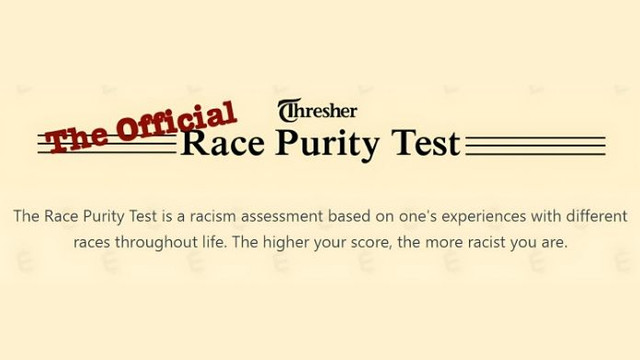
Race purity tests may appear scientific, but they frequently conceal societal prejudices. These tests don’t just divide people by race; but they also reflect harmful beliefs about gender, sexuality, and socioeconomic status.
- Gender Bias
In history, women’s bodies were often controlled to “protect” racial purity. Many cultures believed women carried the honor and future of the race, so their choices, especially about love and marriage, were restricted. On the other hand, men were seldom treated equally. This demonstrates how concepts of racial purity were also employed to restrict the autonomy and conduct of women.
- Sexuality Bias
Purity ideas often assume that only heterosexual relationships are normal. Because race purity depends on reproduction, people who are LGBTQ+ are unfairly seen as outsiders. In the past, eugenics movements even called queer people “impure” or “unfit.” These beliefs still influence societies that see “pure” families as only male-female and traditional.
Social Class Bias
The concept of purity also connects to social class. Wealthier people were often seen as more “pure” or superior, while the poor and working class were treated as less worthy. Even today, access to things like genealogical testing and the capacity to claim lineage is mostly reserved for the rich, resulting in yet another type of exclusion.
Conclusion
The race purity test was never just about color. It was about control over bodies, over desire, over destiny. It punished those who dared to love differently, live freely, or rise above their assigned place.
The truth is, no test can measure the worth of a soul. No label can capture the vastness of human identity. And no system built on exclusion can ever produce purity, only pain.
The desire for purity has caused enough destruction. It’s time we nurture a new desire, a desire for connection, for equality, for truth. Because the future doesn’t belong to those who cling to the myth of purity. It belongs to those who have the courage to love beyond it.
About Author;
Hi I’m Mikhail Devis, a cultural anthropologist passionate about exploring how our experiences shape the way we see one another. The Race Purity Test was created to encourage honest reflection and meaningful conversations around bias, equality, and the society we live in. My goal is not to judge, but to raise awareness in a way that inspires understanding and growth.